AB 578: Occupational safety and health.
- Session Year: 2015-2016
- House: Assembly
- Latest Version Date: 2015-09-10
Existing law establishes the Occupational Safety and Health Standards Board in the Department of Industrial Relations to adopt, amend, or repeal employment safety standards and laws. Existing law authorizes the board, upon the application of an employer, to grant a permanent variance from an occupational standard or order after specified notice and hearing requirements are met. The California Occupational Safety and Health Act of 1973 also authorizes an employer to apply to the Division of Occupational Safety and Health, that enforces employment safety laws, for a temporary order granting a variance from an occupational safety or health standard and requires the order to be granted only if the employers application satisfies specified requirements. Existing law provides that a temporary order may be granted only after notice to employees and an opportunity for a hearing. Existing law specifies the information that an application for a temporary order is required to contain.
This bill would require an employer to also give notice to workers at the place of employment who will be affected by a permanent or temporary variance, or representatives of affected workers, who may be affected by or exposed to the hazards by the permanent or temporary variance from an occupational safety and health standard. The bill would require any affected worker, or representative of affected workers, upon request, to be granted party status to the variance proceedings. The bill would require the variance application to include a certification that the employer has given notice to affected workers as required. Because a violation of the new requirements for employers would be a crime under certain circumstances, this bill would impose a state-mandated local program.
The California Constitution requires the state to reimburse local agencies and school districts for certain costs mandated by the state. Statutory provisions establish procedures for making that reimbursement.
This bill would provide that no reimbursement is required by this act for a specified reason.
Existing law establishes the Division of Occupational Safety and Health Standards Board in the Department of Industrial Relations to enforce adopt, amend, or repeal employment safety standards and laws. Existing law authorizes the board, upon the application of an employer, to grant a permanent variance from an occupational standard or order after specified notice and hearing requirements are met. The California Occupational Safety and Health Act of 1973 also authorizes an employer to apply to the division Division of Occupational Safety and Health, that enforces employment safety laws, for a temporary order granting a variance from an occupational safety or health standard and requires the order to be granted only if the employers application satisfies specified requirements. Existing law provides that a temporary order may be granted only after notice to employees and an opportunity for a hearing. Existing law specifies the information that an application for a temporary order is required to contain.
This bill would require an employer to also give notice to workers at the place of employment who will be affected by the a permanent or temporary variance, or representatives of affected workers, who may be affected by or exposed to the hazards by the permanent or temporary variance from an occupational safety and health standard. The bill would require any affected worker, or representative of affected workers, upon request, to be granted party status to the variance proceedings. The bill would require the temporary variance application to include a certification that the employer has given notice to affected workers as required. Because a violation of the new requirements for employers would be a crime under certain circumstances, this bill would impose a state-mandated local program.
The California Constitution requires the state to reimburse local agencies and school districts for certain costs mandated by the state. Statutory provisions establish procedures for making that reimbursement.
This bill would provide that no reimbursement is required by this act for a specified reason.
Existing law establishes the Division of Occupational Safety and Health in the Department of Industrial Relations to enforce employment safety laws. The California Occupational Safety and Health Act of 1973 authorizes an employer to apply to the division for a temporary order granting a variance from an occupational safety or health standard and requires the order to be granted only if the employers application satisfies specified requirements. Existing law provides that a temporary order may be granted only after notice to employees and an opportunity for a hearing. Existing law specifies the information that an application for a temporary order is required to contain.
This bill would require an employer to also give notice to workers at the place of employment who will be affected by the temporary variance, or representatives of affected workers, who may be affected by or exposed to the hazards by the temporary variance from an occupational safety and health standard. The bill would require any affected worker, or representative of affected workers, upon request, to be granted party status to the variance proceedings. The bill would require the temporary variance application to include a certification that the employer has given notice to affected workers as required. Because a violation of the new requirements for employers would be a crime under certain circumstances, this bill would impose a state-mandated local program.
The California Constitution requires the state to reimburse local agencies and school districts for certain costs mandated by the state. Statutory provisions establish procedures for making that reimbursement.
This bill would provide that no reimbursement is required by this act for a specified reason.
(a)The board shall conduct hearings on such requests for a permanent variance after employees or employee representatives of the applicant are properly notified. The applicant shall also give notice to workers at the place of employment who will be affected by the permanent variance, or representatives of affected employees who may be affected by, or exposed to, hazards by the permanent variance from an occupational safety and health standard. The applicant shall provide certification that the affected employees have been given notice of the request for a permanent variance.
(b)Upon request to the board, affected employees or their representatives shall be granted party status to the variance proceeding.
(c)All board decisions on a permanent variance shall be final except for a rehearing or judicial review provided for by law.
SEC. 2.Section 6450 of the Labor Code is amended to read:6450.(a)Any employer may apply to the division for a temporary order granting a variance from an occupational safety or health standard. A temporary order shall be granted only if the employer files an application that meets the requirements of Section 6451, and establishes the following:
(1)The employer is unable to comply with a standard by its effective date because of unavailability of professional or technical personnel or of materials and equipment needed to come into compliance with the standard or because necessary construction or alteration of facilities cannot be completed by the effective date.
(2)The employer is taking all available steps to safeguard employees against the hazards covered by the standard.
(3)The employer has an effective program for coming into compliance with the standard as quickly as practicable.
(b)Any temporary order issued under this section shall prescribe the practices, means, methods, operations, and processes the employer is required to adopt and use while the order is in effect and state in detail a program for coming into compliance with the standard. Such a temporary order may be granted only after notice to employees and other affected workers as described in Section 6450.5 and an opportunity for a hearing. However, the division may issue one interim order for a temporary variance upon submission of an application showing that the employment or place of employment will be safe for employees and other affected workers pending a hearing on the application for a temporary variance. A temporary order shall not be in effect for longer than the period needed by the employer to achieve compliance with the standard or one year, whichever is shorter, except that such an order may be renewed not more than twice provided that the requirements of this section are met and an application for renewal is filed before the expiration date of the order. A single renewal of an order shall not remain in effect for longer than 180 days.
SEC. 3.Section 6450.5 is added to the Labor Code, to read:6450.5.The employer shall also give notice to workers at the place of employment who will be affected by the temporary variance, or representatives of affected workers, who may be affected by or exposed to the hazard covered by the standard, by the temporary variance from an occupational safety and health standard. Upon request to the division, or to the standards board upon appeal pursuant to Section 6455, any affected worker, or representative of affected workers, shall be granted party status to the variance proceedings.
SEC. 4.Section 6451 of the Labor Code is amended to read:6451.An application for a temporary order under Section 6450 shall contain all of the following:
(a)A specification of the standard or portion thereof from which the employer seeks a variance.
(b)A representation by the employer, supported by representations from qualified persons having firsthand knowledge of the facts represented, that the employer is unable to comply with the standard or portion thereof and a detailed statement of the reasons therefor.
(c)A statement of the steps the employer has taken and will take, with specific dates, to protect employees against the hazard covered by the standard.
(d)A statement of when the employer expects to be able to comply with the standard and what steps the employer has taken and will take, with dates specified, to come into compliance with the standard.
(e)A certification that the employer has informed employees of the application by giving a copy thereof to their authorized representative, posting a statement giving a summary of the application and specifying where a copy may be examined at the place or places where notices to employees are normally posted, and by other appropriate means. A description of how employees have been informed shall be contained in the certification. The information to employees shall also inform them of their right to petition the division for a hearing.
(f)A certification that the employer has given notice as required in Section 6450.5.
SEC. 5.No reimbursement is required by this act pursuant to Section 6 of Article XIIIB of the California Constitution because the only costs that may be incurred by a local agency or school district will be incurred because this act creates a new crime or infraction, eliminates a crime or infraction, or changes the penalty for a crime or infraction, within the meaning of Section 17556 of the Government Code, or changes the definition of a crime within the meaning of Section 6 of Article XIIIB of the California Constitution.
(a)The board shall conduct hearings on such requests for a permanent variance after employees or employee representatives of the applicant are properly notified and given an opportunity to appear. All board decisions on permanent variance requests shall be final except for any rehearing or judicial review provided for by law. notified. The applicant shall also give notice to workers at the place of employment who will be affected by the permanent variance, or representatives of affected employees who may be affected by, or exposed to, hazards by the permanent variance from an occupational safety and health standard. The applicant shall provide certification that the affected employees have been given notice of the request for a permanent variance.
(b)Upon request to the board, affected employees or their representatives shall be granted party status to the variance proceeding.
(c)All board decisions on a permanent variance shall be final except for a rehearing or judicial review provided for by law.
SECTION 1.SEC. 2.Section 6450 of the Labor Code is amended to read:6450.(a)Any employer may apply to the division for a temporary order granting a variance from an occupational safety or health standard. A temporary order shall be granted only if the employer files an application that meets the requirements of Section 6451, and establishes the following:
(1)The employer is unable to comply with a standard by its effective date because of unavailability of professional or technical personnel or of materials and equipment needed to come into compliance with the standard or because necessary construction or alteration of facilities cannot be completed by the effective date.
(2)The employer is taking all available steps to safeguard employees against the hazards covered by the standard.
(3)The employer has an effective program for coming into compliance with the standard as quickly as practicable.
(b)Any temporary order issued under this section shall prescribe the practices, means, methods, operations, and processes the employer is required to adopt and use while the order is in effect and state in detail a program for coming into compliance with the standard. Such a temporary order may be granted only after notice to employees and other affected workers as described in Section 6450.5 and an opportunity for a hearing. However, the division may issue one interim order for a temporary variance upon submission of an application showing that the employment or place of employment will be safe for employees and other affected workers pending a hearing on the application for a temporary variance. A temporary order shall not be in effect for longer than the period needed by the employer to achieve compliance with the standard or one year, whichever is shorter, except that such an order may be renewed not more than twice provided that the requirements of this section are met and an application for renewal is filed before the expiration date of the order. A single renewal of an order shall not remain in effect for longer than 180 days.
SEC. 2.SEC. 3.Section 6450.5 is added to the Labor Code, to read:6450.5.The employer shall also give notice to workers at the place of employment who will be affected by the temporary variance, or representatives of affected workers, who may be affected by or exposed to the hazards hazard covered by the standard, by the temporary variance from an occupational safety and health standard. Upon request to the division, or to the standards board upon appeal pursuant to Section 6455, any affected worker, or representative of affected workers, shall be granted party status to the variance proceedings.
SEC. 3.SEC. 4.Section 6451 of the Labor Code is amended to read:6451.An application for a temporary order under Section 6450 shall contain all of the following:
(a)A specification of the standard or portion thereof from which the employer seeks a variance.
(b)A representation by the employer, supported by representations from qualified persons having firsthand knowledge of the facts represented, that the employer is unable to comply with the standard or portion thereof and a detailed statement of the reasons therefor.
(c)A statement of the steps the employer has taken and will take, with specific dates, to protect employees against the hazard covered by the standard.
(d)A statement of when the employer expects to be able to comply with the standard and what steps the employer has taken and will take, with dates specified, to come into compliance with the standard.
(e)A certification that the employer has informed employees of the application by giving a copy thereof to their authorized representative, posting a statement giving a summary of the application and specifying where a copy may be examined at the place or places where notices to employees are normally posted, and by other appropriate means. A description of how employees have been informed shall be contained in the certification. The information to employees shall also inform them of their right to petition the division for a hearing.
(f)A certification that the employer has given notice as required in Section 6450.5.
SEC. 4.SEC. 5.No reimbursement is required by this act pursuant to Section 6 of Article XIIIB of the California Constitution because the only costs that may be incurred by a local agency or school district will be incurred because this act creates a new crime or infraction, eliminates a crime or infraction, or changes the penalty for a crime or infraction, within the meaning of Section 17556 of the Government Code, or changes the definition of a crime within the meaning of Section 6 of Article XIIIB of the California Constitution.
(a)Any employer may apply to the division for a temporary order granting a variance from an occupational safety or health standard. Such A temporary order shall be granted only if the employer files an application which that meets the requirements of Section 6451, and establishes that (1) he the following:
(1)The employer is unable to comply with a standard by its effective date because of unavailability of professional or technical personnel or of materials and equipment needed to come into compliance with the standard or because necessary construction or alteration of facilities cannot be completed by the effective date, (2) he date.
(2)The employer is taking all available steps to safeguard his employees against the hazards covered by the standard, and (3) he standard.
(3)The employer has an effective program for coming into compliance with the standard as quickly as practicable.
(b)Any temporary order issued under this section shall prescribe the practices, means, methods, operations, and processes which the employer must is required to adopt and use while the order is in effect and state in detail his a program for coming into compliance with the standard. Such a temporary order may be granted only after notice to employees and other affected workers as described in Section 6450.5 and an opportunity for a hearing. However, the division may issue one interim order for a temporary variance upon submission of an application showing that the employment or place of employment will be safe for employees and other affected workers pending a hearing on the application for a temporary variance. No A temporary order may shall not be in effect for longer than the period needed by the employer to achieve compliance with the standard or one year, whichever is shorter, except that such an order may be renewed not more than twice provided that the requirements of this section are met and an application for renewal is filed prior to before the expiration date of the order. No A single renewal of an order may shall not remain in effect for longer than 180 days.
SEC. 2.Section 6450.5 is added to the Labor Code, to read:6450.5.The employer shall also give notice to workers at the place of employment who will be affected by the temporary variance, or representatives of affected workers, who may be affected by or exposed to the hazards by the temporary variance from an occupational safety and health standard. Upon request to the division, or to the standards board upon appeal pursuant to Section 6455, any affected worker, or representative of affected workers, shall be granted party status to the variance proceedings.
SEC. 3.Section 6451 of the Labor Code is amended to read:6451.An application for a temporary order under Section 6450 shall contain all of the following:
(a)A specification of the standard or portion thereof from which the employer seeks a variance.
(b)A representation by the employer, supported by representations from qualified persons having firsthand knowledge of the facts represented, that he the employer is unable to comply with the standard or portion thereof and a detailed statement of the reasons therefor.
(c)A statement of the steps he the employer has taken and will take, with specific dates, to protect employees against the hazard covered by the standard.
(d)A statement of when he the employer expects to be able to comply with the standard and what steps he the employer has taken and what steps he will take, with dates specified, to come into compliance with the standard.
(e)A certification that he the employer has informed his employees of the application by giving a copy thereof to their authorized representative, posting a statement giving a summary of the application and specifying where a copy may be examined at the place or places where notices to employees are normally posted, and by other appropriate means. A description of how employees have been informed shall be contained in the certification. The information to employees shall also inform them of their right to petition the division for a hearing.
(f)A certification that the employer has given notice as required in Section 6450.5.
SEC. 4.No reimbursement is required by this act pursuant to Section 6 of Article XIIIB of the California Constitution because the only costs that may be incurred by a local agency or school district will be incurred because this act creates a new crime or infraction, eliminates a crime or infraction, or changes the penalty for a crime or infraction, within the meaning of Section 17556 of the Government Code, or changes the definition of a crime within the meaning of Section 6 of Article XIIIB of the California Constitution.
|
Date
|
Status
|
|---|---|
| Jun 2, 2015 | Read third time. Passed. Ordered to the Senate. (Ayes 52. Noes 27. Page 1779.) |
| Jan 15, 2016 | Consideration of Governor's veto stricken from file. |
| Oct 11, 2015 | Vetoed by Governor. |
| Sep 17, 2015 | Enrolled and presented to the Governor at 11:30 a.m. |
| Sep 8, 2015 | Read third time. Passed. Ordered to the Assembly. (Ayes 23. Noes 16. Page 2570.). |
| Sep 8, 2015 | Read third time. Passed. Ordered to the Assembly. |
| Sep 8, 2015 | In Assembly. Ordered to Engrossing and Enrolling. |
| Aug 31, 2015 | Read second time. Ordered to third reading. |
| Aug 27, 2015 | From committee: Do pass. (Ayes 5. Noes 2.) (August 27). |
| Jul 6, 2015 | In committee: Referred to APPR. suspense file. |
| Jun 25, 2015 | From committee: Do pass and re-refer to Com. on APPR. (Ayes 4. Noes 1.) (June 24). Re-referred to Com. on APPR. |
| Jun 11, 2015 | Referred to Com. on L. & I.R. |
| Feb 24, 2015 | Read first time. To print. |
| Jun 2, 2015 | Read third time. Passed. Ordered to the Senate. |
| Jun 2, 2015 | In Senate. Read first time. To Com. on RLS. for assignment. |
| Jun 1, 2015 | Read second time. Ordered to third reading. |
| May 28, 2015 | From committee: Do pass. (Ayes 12. Noes 5.) (May 28). |
| Apr 29, 2015 | In committee: Set, first hearing. Referred to APPR. suspense file. |
| Apr 14, 2015 | Re-referred to Com. on APPR. |
| Apr 13, 2015 | Read second time and amended. |
| Apr 9, 2015 | From committee: Amend, and do pass as amended and re-refer to Com. on APPR. (Ayes 5. Noes 2.) (April 8). |
| Mar 9, 2015 | Referred to Com. on L. & E. |
| Feb 25, 2015 | From printer. May be heard in committee March 27. |
|
Date
|
Description
|
Location
|
Votes
|
|
|---|---|---|---|---|
| Sep 8, 2015 | Assembly 3rd Reading AB578 Low By Leno | Senate Floor |
Passed |
|
| Aug 27, 2015 | Do pass | Senate Standing Committee on Appropriations |
Passed |
|
| Jul 6, 2015 | Placed on suspense file | Senate Standing Committee on Appropriations |
Passed |
|
| Jun 24, 2015 | Do pass, but first be re-referred to the Committee on [Appropriations] | Senate Standing Committee on Labor and Industrial Relations |
Passed |
|
| Jun 2, 2015 | AB 578 LOW Assembly Third Reading | Assembly Floor |
Passed |
|
| May 28, 2015 | Do pass. | Assembly Standing Committee on Appropriations |
Passed |
|
| Apr 8, 2015 | Do pass as amended and be re-referred to the Committee on [Appropriations] | Assembly Standing Committee on Labor and Employment |
Passed |
This list shows positions taken on this bill by organizations on the date displayed, which is linked to the original source.
Positions by individuals are not included.
|
Organization
|
Position
|
Date
|
|---|---|---|
| Associated Builders And Contractors Of California | ** Against | Sep 8, 2015 |
| California Business Properties Association | * Against | Jun 24, 2015 |
| California Chamber of Commerce California Citrus Mutual | ** Against | Sep 8, 2015 |
| California Conference Board Of The Amalgamated Transit Union | ** Support | Sep 8, 2015 |
| California Conference Of Machinists | ** Support | Sep 8, 2015 |
| California Farm Bureau Federation | ** Against | Sep 8, 2015 |
| California Framing Contractors Association | ** Against | Sep 8, 2015 |
| California Hotel and Lodging Association | ** Against | Sep 8, 2015 |
| California Labor Federation, Afl-Cio | ** Support | Sep 8, 2015 |
| California Lodging Industry Association | ** Against | Sep 8, 2015 |
| California Manufacturers And Technology Association | ** Against | Sep 8, 2015 |
| California Professional Association Of Specialty Contractors | ** Against | Sep 8, 2015 |
| California Professional Firefighters | ** Support | Sep 8, 2015 |
| California School Employees Association, AFL-CIO | ** Support | Sep 8, 2015 |
| California State Association Of Electrical Workers | ** Support | Sep 8, 2015 |
| California State Pipe Trades Council | ** Support | Sep 8, 2015 |
| California Teamsters Public Affairs Council | ** Support | Sep 8, 2015 |
| Coalition of California Utility Employees | ** Support | Sep 8, 2015 |
| Engineers and Scientists of California | ** Support | Sep 8, 2015 |
| International Longshore & Warehouse Union | ** Support | Sep 8, 2015 |
| International Union of Elevator Constructors | ** Support | Sep 8, 2015 |
| Professional & Technical Engineers | ** Support | Sep 8, 2015 |
| Residential Contractors Association | ** Against | Sep 8, 2015 |
| State Building & Construction Trades Council Of California | * Support | Jun 24, 2015 |
| UNITE-HERE, AFL-CIO | ** Support | Sep 8, 2015 |
| Utility Workers Union of America | ** Support | Sep 8, 2015 |
| Walter and Prince, LLP | ** Against | Sep 8, 2015 |
| Western Growers | ** Against | Sep 8, 2015 |
| Western Occupational & Environmental Medical Association | ** Support | Sep 8, 2015 |
| Western States Council Of Sheet Metal Workers | * Support | Jun 24, 2015 |
| Western Steel Council | ** Against | Sep 8, 2015 |
GOVERNOR'S VETO
AB 578
(Low)
As Enrolled September 10, 2015
2/3 vote
Committee |
Votes |
Ayes |
Noes |
Labor |
5-2 |
Roger Hernández, Chu, Low, McCarty, Thurmond |
Harper, Patterson |
Appropriations |
12-5 |
Gomez, Bonta, Calderon, Daly, Eggman, Eduardo Garcia, Gordon, Holden, Quirk, Rendon, Weber, Wood |
Bigelow, Chang, Gallagher, Jones, Wagner |
ASSEMBLY: |
52-27 |
(June 2, 2015) |
SENATE: |
23-16 |
(September 8, 2015) |
SUMMARY: Makes changes to existing law related to variances from occupational safety and health standards. Specifically, this bill:
Requires an applicant for a permanent variance to an occupational safety and health standard to also give notice to workers at the place of employment who will be "affected" by the permanent variance, or representatives of the affected employees.
Provides that an applicant for a permanent variance shall provide certification that the affected employees have been provided notice of the request.
Provides that, upon request, "affected employees" or their representatives shall be granted party status in permanent variance proceedings.
Requires an employer applying for a temporary variance to an occupational safety and health standard to also give notice to workers at the place of employment who will be "affected" by the temporary variance, or representative of the affected workers.
Provides that a temporary variance may be granted only after notice to employees and other "affected workers" and an opportunity for a hearing.
Requires an employer's application for a temporary variance to contain a certification that the employer has given the required notice to "affected workers" or their representatives.
Provides that, upon request, any "affected worker" or representative of affected workers, shall be granted party status to the variance proceedings.
Makes related and conforming changes.
FISCAL EFFECT: According to the Assembly Appropriations Committee, ongoing costs of approximately $275,000 to $290,000 (special funds) to the Department of Industrial Relations to provide additional staff to the Occupational Safety and Health Standards Board (Standards Board) due to proposed changes to the temporary and permanent variance hearing process.
COMMENTS: The sponsors argue that the Standards Board has the authority to grant variances to occupational safety and health standards. Existing law requires that affected employees be notified of the variance request. Requests for variances for elevator construction and other public conveyances generally come from the building owner. In these instances, the owner rarely has affected employees. The workers, hired by the elevator manufacturer, will be installing the public conveyance but will not have been a party to the variance proceeding.
The sponsors state that this legislation will simply provide that those employees who are directly affected by the variance be notified of the variance application and be granted party status upon request.
A coalition of organizations, including the California Chamber of Commerce, opposes this measure. They argue that this bill proposes to significantly expand the employer's notice obligations not only beyond affected employees and their representatives, but into an unknown region of "workers at the place of employment who will be affected by the permanent variance, or representatives of affected workers who may be affected by or exposed to the hazards by the temporary variance." The other workers would not be employees of the employer seeking the variance, making it difficult for the employer to identify the universe of workers to be notified.
Opponents acknowledge that current regulation language "appears to create the concern" giving rise to this bill. However, rather than adopt a change in statute that would impact all industries, they urge the author to look at changes in regulation that would address any notification challenges that may exist in the process for permanent or temporary variance applications for conveyances.
This bill requires employers who apply for variances of existing occupational safety or health standards to formally notice workers, or representatives of workers, who will be impacted.
While this bill is intended to provide an opportunity for affected workers to be notified of variances and raise concerns during a relevant hearing, it is unclear what workers would be affected, and why the current process at the Occupational Safety and Health Standards Board is not sufficient. In fact the board routinely works with stakeholders to provide timely written notice of variance requests and permits those parties to intervene in the proceedings. I believe that process is one that provides adequate opportunity for interested and affected workers to be heard.
Analysis Prepared by: Ben Ebbink / L. & E. / (916) 319-2091 FN: 0002492
AB 578
Page 8
|
Office of Senate Floor Analyses (916) 651-1520 Fax: (916) 327-4478 |
THIRD READING
Bill No: AB 578
Amended: 4/13/15 in Assembly
SENATE LABOR & IND. REL. COMMITTEE: 4-1, 6/24/15
AYES: Mendoza, Jackson, Leno, Mitchell
NOES: Stone
SENATE APPROPRIATIONS COMMITTEE: 5-2, 8/27/15
AYES: Lara, Beall, Hill, Leyva, Mendoza
NOES: Bates, Nielsen
ASSEMBLY FLOOR: 52-27, 6/2/15 - See last page for vote
SUBJECT: Occupational safety and health
SOURCE: International Union of Elevator Constructors
DIGEST: This bill requires an applicant for a temporary or permanent variance to an occupational safety and health standard to give notice to affected workers (or their representatives) at the place of employment, as specified.
Existing
law:
Provides that an employer may apply to the Occupational Safety and Health Standards Board for a permanent variance from an occupational safety health standard, order, or special order upon showing an alternate program, method, practice, means, device, or process which will provide equal or superior safety for the employees. (Labor Code §143)
Provides that the board shall issue such a variance if it determines on the record, after opportunity for an investigation where appropriate and a hearing, that the proponent of the variance has demonstrated by a preponderance of the evidence that the conditions, practices, means, methods, operations, or processes used or proposed to be used by an employer are as safe and healthful as those which would prevail if he complied with the standard. (Labor Code §143)
States that the variance shall prescribe the conditions the employer must maintain and the practices, means, methods, operations, and processes which he must adopt and utilize to the extent they differ from the standard in question. (Labor Code §143)
Gives the board authority to grant a variance from any standard or portion where it determines a variance is necessary to permit an employer to participate in an experiment approved by the director designed to demonstrate or validate new and improved techniques to safeguard the health or safety of workers. (Labor Code §143)
States the board shall conduct hearing on such requests for a permanent variance after employees or employee representatives are properly notified and given an opportunity to appear. (Labor Code §143.1)
States that all board decisions on permanent variance requests shall be final except for any rehearing or judicial review provided by law. (Labor Code §143.1)
Allows an employer to apply for a temporary order granting a variance from an occupational safety or health standard and specifies such an order shall only be granted if an employer establishes he or she (a) is unable to comply with a standard by its effective date because of unavailability of professional or technical personnel or of materials and equipment needed, (b) is taking all available steps to safeguard his employees against the hazards covered by the standard, and (c) has an effective program for coming into compliance with the standard as quickly as practicable. (Labor Code §6450)
Provides that any temporary order issued shall prescribe the practices, means, methods, operations, and processes which the employer must adopt and use while the order is in effect and state in detail his program for coming in compliance with the standard. (Labor Code §6450)
States that such a temporary order may be granted only after notice to employees and an opportunity for a hearing (Labor Code §6450)
States that an application for a temporary variance contains the following:
A specification of the standard or portion from which the employer seeks a variance.
A representation by the employer, supported by representations from qualified persons having firsthand knowledge of the facts represented, that he is unable to comply with the standard and a detailed statement of the reasons.
A statement of the steps he has taken and will take, with specific dates, to protect employees against the hazard covered by the standard.
A statement of when he expects to be able to comply with the standard and what steps he has taken and what steps he will take, with dates specified to come into compliance with the standard.
A certification that he has informed his employees of the application by giving a copy to their authorized presentative, posting a statement giving a summary of the application and specifying where a copy may be examined at the place or places where notices to employees are normally posted, and by other appropriate means. The information to employees shall also inform them of their right to petition the division of a hearing.
This bill makes changes to existing law related to variances from occupational safety and health standards. Specifically, this bill:
Requires an applicant for a permanent variance to an occupational safety and health standard to also give notice to workers at the place of employment who will be "affected" by or exposed to hazards by the permanent variance, or representatives of the affected employees.
Provides that an applicant for a permanent variance shall provide certification that the affected employees have been provided notice of the request.
Provides that, upon request, "affected employees" or their representatives shall be granted party status in permanent variance proceedings.
States all board decisions on a permanent variance shall be final except for a rehearing or judicial review provided for by law.
Requires an employer applying for a temporary variance to an occupational safety and health standard to also give notice to workers at the place of employment who will be "affected" by the temporary variance, or representative of the affected workers.
Provides that a temporary variance may be granted only after notice to employees and other "affected workers" and an opportunity for a hearing.
Requires an employer's application for a temporary variance to contain a certification that the employer has given the required notice to "affected workers" or their representatives.
Provides that, upon request, any "affected worker" or representative of affected workers, shall be granted party status to the variance proceedings.
Comments
The Standards Board adopts occupational safety and health standards that are designed to protect California workers. However, existing law sets forth a process whereby an employer may apply for a "variance," which is generally permission to deviate or not follow an existing standard. These variances fall into two categories – permanent variances and temporary variances.
Permanent Variances
An employer may apply to the Standards Board for a permanent variance from a standard (or portion thereof), upon a showing of an alternative program, method, practice, means, device, or process which will provide equal or superior safety for employees (Labor Code 143(a)). The Standards Board shall grant the request if it determines, by a preponderance of the evidence, that the condition or practice proposed to be used by the employer will provide employment and places of employment which are as safe and healthful as those which would prevail if he or she complied with the standard. (Labor Code 143(b)). The law requires the Standards Board to conduct hearings on requests for permanent variances after employees or employee representatives are properly notified and given an opportunity to appear. (Labor Code 143.1). Standards Board regulations provide that "affected employees" and authorized employee representatives may elect to participate as parties at any time before commencement of the variance hearing. (California Code of Regulations, Title 8, Section 406(a)).
The regulations define "affected employee" to mean:
"[A]n employee of the employer seeking the variance who is exposed, as a result of his or her assigned duties, to the condition or hazards covered by the standard for which the variance is sought." (California Code of Regulations, Title 8, Section 403(l))[emphasis provided].
Temporary Variances
Temporary variances differ from permanent variances in that they are temporary in nature. Temporary variances also have different procedures and standards that apply. First, applications for temporary variances are made to the Division, rather than the Standards Board. However, the decision by the Division to allow or deny the variance may be appealed to the Standards Board.
The criteria for the granting of a temporary variance also differ from those governing permanent variances. A temporary variance shall be granted only if the employer establishes that:
He or she is unable to comply with a standard by its effective date because of unavailability of professional or technical personnel or of materials and equipment needed to come into compliance with the standard or because necessary construction or alteration of facilities cannot be completed by the effective date;
He or she is taking all available steps to safeguard the employees against the hazards covered by the standard; and
He or she has an effective program for coming into compliance with the standard as quickly as practicable. (Labor Code 6450(a).
Currently, the Cal/OSHA Standards Board has authority under the Labor Code to consider variances to Cal/OSHA standards when a building is being constructed, repaired, or updated – the vast majority of these variances are requests for conveyances such as elevators and escalators. Existing law provides that a variance may be considered by the Standards Board only after notice is given to employees. According to the author and sponsors of this bill, in practice ‘employees’ are considered to be the employees of the applicant who is seeking the variance. They provide an example of a building owner that is seeking a variance from a Cal/OSHA standard for the installation of a public conveyance, such as an elevator, and the owner may have no employees or very few that would be exposed to the installation activity, whereas the workers that may be a part of the installation may not be informed because they are not employees of the employer seeking the variance.
According to the author, the lack of notification to affected employees negatively impacts their ability to participate as a party to the necessary variance proceedings. This bill will provide that upon request, any "affected worker" or representative of affected workers receive notification of an application for a variance and shall be granted party status to the variance proceedings.
FISCAL EFFECT: Appropriation: No Fiscal Com.: Yes Local: Yes
According to
the Senate Appropriations Committee, the Department of Industrial
Relations would incur first-year costs (special funds) of $291,000
and ongoing costs of $275,000 to implement the provisions of this
bill.
International Union of Elevator Constructors (source)
California Conference Board of the Amalgamated Transit Union
California Conference of Machinists
California Labor Federation, AFL-CIO
California Professional Firefighters
California School Employees Association, AFL-CIO
California State Association of Electrical Workers
California State Pipe Trades Council
California Teamsters Public Affairs Council
Coalition of California Utility Employees
Engineers and Scientists of California
International Longshore & Warehouse Union
Professional & Technical Engineers
UNITE-HERE, AFL-CIO
Utility Workers Union of America
Western Occupational & Environmental Medical Association
OPPOSITION: (Verified 8/28/15)
Associated Builders and Contractors of California
California Chamber of Commerce
California Citrus Mutual
California Farm Bureau Federation
California Framing Contractors Association
California Hotel and Lodging Association
California Lodging Industry Association
California Manufacturers and Technology Association
California Professional Association of Specialty Contractors
Residential Contractors Association
Walter and Prince, LLP
Western Growers
Western
Steel Council
ARGUMENTS IN SUPPORT: Proponents of this bill note that the Cal/OSHA Standards Board is responsible for hearing applications for variances from Cal/OSHA health and safety standards – receiving approximately 400 requests for permanent variances each year. Proponents also note that about 90 percent of these applications are for elevators and other public conveyances and that 95 percent of these elevators are installed by the members of the International Union of Elevator Constructors. Proponents contend that the large number of variances are due to two factors: One, the Elevator Safety Orders have not been amended for quite some time, although that process is underway and hopefully will be complete within the next year and secondly, the elevator manufacturers are always developing new and creative systems that may not be anticipated by Cal/OSHA standards.
Proponents
argue that the variance application requires that the applicant give
notice to their affected employees. They note that the applicant is
generally the building owner and the building owner will rarely have
any affected employees which as a result, those workers who will be
doing the installation of the elevator will not receive notice of the
variance proceeding. Proponents argue that AB 578 simply requires
that the applicant provide notice to those workers or their
authorized representative of the application for a variance from the
safety orders and that this notice will allow the workers to
participate in the proceeding, if they wish, but more importantly
will add an experienced voice to the variance process. Proponents
contend that AB 578 will provide additional transparency to the
variance process with the anticipated benefit of a collaborative
exchange resulting in a safer installation.
ARGUMENTS IN OPPOSITION: A coalition of organizations, including the California Chamber of Commerce, opposes this bill. They argue that this bill proposes to significantly expand the employer’s notice obligations not only beyond affected employees and their representatives, but into an unknown region of “workers at the place of employment who will be affected by the permanent variance, or representatives of affected workers who may be affected by or exposed to the hazards by the temporary variance.” The other workers would not be employees of the employer seeking the variance, making it difficult for the employer to identify the universe of workers to be notified.
Opponents also state that this bill is unnecessary and opens the door to abuse. Employers are currently required to notice affected employees and their representative; other interested parties may apply for intervener status, or appeal a temporary variance decision. This bill instead proposes to shift the burden to the employer to determine who in the universe may be interested. This not only creates additional and unnecessary administrative and search burdens for employers, it also allows interference with the employer’s legitimate pursuit of a variance.
Finally, opponents acknowledge that current regulation language "appears to create the concern" giving rise to this bill. However, rather than adopt a change in statute that would impact all industries, they urge the author to look at changes in regulation that would address any notification challenges that may exist in the process for permanent or temporary variance applications for conveyances.
ASSEMBLY FLOOR: 52-27, 6/2/15
AYES: Alejo, Bloom, Bonilla, Bonta, Brown, Burke, Calderon, Campos, Chau, Chiu, Chu, Cooley, Cooper, Dababneh, Daly, Dodd, Eggman, Frazier, Cristina Garcia, Eduardo Garcia, Gatto, Gipson, Gomez, Gonzalez, Gordon, Gray, Roger Hernández, Holden, Irwin, Jones-Sawyer, Levine, Lopez, Low, McCarty, Medina, Mullin, Nazarian, O'Donnell, Perea, Quirk, Rendon, Ridley-Thomas, Rodriguez, Salas, Santiago, Mark Stone, Thurmond, Ting, Weber, Williams, Wood, Atkins
NOES: Achadjian, Travis Allen, Baker, Bigelow, Brough, Chang, Dahle, Beth Gaines, Gallagher, Grove, Hadley, Harper, Jones, Kim, Lackey, Linder, Maienschein, Mathis, Mayes, Melendez, Obernolte, Olsen, Patterson, Steinorth, Wagner, Waldron, Wilk
NO VOTE RECORDED: Chávez
Prepared by: Deanna Ping / L. & I.R. / (916) 651-1556
8/31/15 8:54:47
**** END ****
AB 578 (Low) Page 3 of 3
SENATE COMMITTEE ON APPROPRIATIONS
Senator Ricardo Lara, Chair
2015 - 2016 Regular Session
AB 578 (Low) - Occupational safety and health.
|
|
Version: April 13, 2015 |
Policy Vote: L. & I.R. 4 - 1 |
Urgency: No |
Mandate: Yes |
Hearing Date: July 6, 2015 |
Consultant: Robert Ingenito |
This bill meets the criteria for referral to the Suspense File.
Bill Summary:
AB 578 would require an applicant for a temporary or permanent variance to an occupational safety and health standard to give notice to affected workers (or their representatives) at the place of employment, as specified.
Fiscal Impact:
The Department of Industrial Relations (DIR) would incur first-year costs (special funds) of $291,000 and ongoing costs of $275,000 to implement the provisions of the bill.
Background:
The Occupational Safety and Health Standards Board (Standards Board) adopts occupational safety and health standards that are designed to protect California workers. However, current law includes a process whereby an employer may apply for permission to deviate or not follow an existing standard (also known as a variance). Variances can be either permanent or temporary in nature.
Permanent Variances. An employer may apply to the Standards Board for a permanent variance from a standard (or portion of one), upon a showing of an alternative program, method, practice, means, device, or process which will provide equal or superior safety for employees. The Standards Board will grant the request if it determines that the condition or practice proposed to be used by the employer will provide places of employment which are as safe and healthful as those which would prevail if he or she complied with the existing standard. The Standards Board is required to conduct hearings on requests for permanent variances after employees or employee representatives are properly notified.
Temporary Variances. In contrast, temporary variances are short-term in duration. Temporary variances also have different procedures and standards that apply. First, applications for temporary variances are made to the Division of Occupational Safety and Health (DOSH), rather than the Standards Board. However, the decision by DOSH to allow or deny the variance may be appealed to the Standards Board.
The criteria for the granting of a temporary variance also differ from those governing permanent variances. A temporary variance shall be granted only if it has been established that the employer (1) is unable to comply with a standard by its effective date because of unavailability of professional or technical personnel or of materials and equipment needed to come into compliance with the standard or because necessary construction or alteration of facilities cannot be completed by the effective date, (2) is taking all available steps to safeguard the employees against the hazards covered by the standard; and (3) has an effective program for coming into compliance with the standard as quickly as practicable.
Proposed Law:
This bill would amend current law related to variances from occupational safety and health standards. Specifically, this bill would, among other things, do the following:
Require an applicant for a permanent variance to an occupational safety and health standard to also give notice to workers at the place of employment who will be "affected" by or exposed to hazards by the permanent variance, or representatives of the affected employees.
Provide that an applicant for a permanent variance shall provide certification that the affected employees have been provided notice of the request.
Provide that, upon request, "affected employees" or their representatives shall be granted party status in permanent variance proceedings.
Require an employer applying for a temporary variance to an occupational safety and health standard to also give notice to workers at the place of employment who will be "affected" by the temporary variance, or representative of the affected workers.
Provide that a temporary variance may be granted only after notice to employees and other "affected workers" and an opportunity for a hearing.
Require an employer's application for a temporary variance to contain a certification that the employer has given the required notice to "affected workers" or their representatives.
Provide that, upon request, any "affected worker" or representative of affected workers, shall be granted party status to the variance proceedings.
Related Legislation:
AB 1277 (Skinner, 2014), among other things, attempted to address issues related to notification and due process rights of affected employees in variance proceedings. However, the language was not identical to that contained in this bill. AB 1277 was held in the Assembly Appropriations Committee.
Staff Comments:
As noted above, current law requires the Standards Board to conduct hearings on requests for variances after employees or their representatives are properly notified and given an opportunity to appear. Standards Board regulations provide that "affected employees" and an authorized employee representative may elect to participate as parties at any time before commencement of the variance hearing. "Affected employee" includes employees of the employer seeking the variance (rather than those of other employers).
Regarding instances of requests for variances for elevator construction and other public conveyances, such requests generally come from the building owner. However, the owner typically has few affected employees. Instead, employees performing the labor to repair an elevator would be installing the public conveyance but would not have been a party to the variance proceeding.
DIR indicates that the increased workload resulting from the bill would require additional staff, at a cost of $291,000 initially and $275,000 ongoing.
-- END --
AB 578 (Low) Page 6 of 6
SENATE COMMITTEE ON LABOR AND INDUSTRIAL RELATIONS
Senator Tony Mendoza, Chair
2015 - 2016 Regular
Bill No: AB 578 Hearing Date: June 24, 2015
Author: |
Low |
||
Version: |
April 13, 2015 |
||
Urgency: |
No |
Fiscal: |
Yes |
Consultant: |
Deanna Ping |
||
Subject: Occupational safety and health.
KEY ISSUE
Should the Legislature extend the notification requirement for permanent and temporary variance applications to include ‘affected workers?’
Should the Legislature grant party status to affected workers or representatives of affected workers to participate in variance proceedings?
ANALYSIS
Existing law provides that an employer may apply to the Occupational Safety and Health Standards Board for a permanent variance from an occupational safety health standard, order, or special order upon showing an alternate program, method, practice, means, device, or process which will provide equal or superior safety for the employees. (Labor Code §143)
Existing law provides that the board shall issue such a variance if it determines on the record, after opportunity for an investigation where appropriate and a hearing, that the proponent of the variance has demonstrated by a preponderance of the evidence that the conditions, practices, means, methods, operations, or processes used or proposed to be used by an employer are as safe and healthful as those which would prevail if he complied with the standard. (Labor Code §143)
Existing law states that the variance shall prescribe the conditions the employer must maintain and the practices, means, methods, operations, and processes which he must adopt and utilize to the extent they differ from the standard in question. (Labor Code §143)
Existing law gives the board authority to grant a variance from any standard or portion where is determines a variance is necessary to permit an employer to participate in an experiment approved by the director designed to demonstrate or validate new and improved techniques to safeguard the health or safety of workers. (Labor Code §143)
Existing law states the board shall conduct hearing on such requests for a permanent variance after employees or employee representatives are properly notified and given an opportunity to appear. (Labor Code §143.1)
Existing law states that all board decisions on permanent variance requests shall be final except for any rehearing or judicial review provided by law. (Labor Code §143.1)
Existing law allows an employer to apply for a temporary order granting a variance from an occupational safety of health standard and specifies such an order shall only be granted if an employer establishes (1) he or she is unable to comply with a standard by its effective date because of unavailability of professional or technical personnel or of materials and equipment needed, (2) is taking all available steps to safeguard his employees against the hazards covered by the standard, and (3) has an effective program for coming into compliance with the standard as quickly as practicable. (Labor Code §6450)
Existing law provides that any temporary order issued shall prescribe the practices, means, methods, operations, and processes which the employer must adopt and use while the order is in effect and state in detail that his program for coming in compliance with the standard. (Labor Code §6450)
Existing law states such a temporary order may be granted only after notice to employees and an opportunity for a hearing (Labor Code §6450)
Existing law states that an application for a temporary variance contains the following:
A specification of the standard or portion from which the employer seeks a variance
A representation by the employer, supported by representations from qualified persons having firsthand knowledge of the facts represented, that he is unable to comply with the standard and a detailed statement of the reasons
A statement of the steps he has taken and will take, with specific dates, to protect employees against the hazard covered by the standard.
A statement of when he expects to be able to comply with the standard and what steps he has taken and what steps he will take, with dates specified to come into compliance with the standard.
A certification that he has informed his employees of the application by giving a copy to their authorized presentative, posting a statement giving a summary of the application and specifying where a copy may be examined at the place or places where notices to employees are normally posted, and by other appropriate means. The information to employees shall also inform them of their right to petition the division of a hearing.
This Bill makes changes to existing law related to variances from occupational safety and health standards. Specifically, this bill:
Requires an applicant for a permanent variance to an occupational safety and health standard to also give notice to workers at the place of employment who will be "affected" by or exposed to hazards by the permanent variance, or representatives of the affected employees.
Provides that an applicant for a permanent variance shall provide certification that the affected employees have been provided notice of the request.
Provides that, upon request, "affected employees" or their representatives shall be granted party status in permanent variance proceedings.
Requires an employer applying for a temporary variance to an occupational safety and health standard to also give notice to workers at the place of employment who will be "affected" by the temporary variance, or representative of the affected workers.
Provides that a temporary variance may be granted only after notice to employees and other "affected workers" and an opportunity for a hearing.
Requires an employer's application for a temporary variance to contain a certification that the employer has given the required notice to "affected workers" or their representatives.
Provides that, upon request, any "affected worker" or representative of affected workers, shall be granted party status to the variance proceedings.
COMMENTS
1. Background
on Variances and the Occupational Health and Safety Standards Board
The Standards Board adopts occupational safety and health standards that are designed to protect California workers. However, existing law sets forth a process whereby an employer may apply for a "variance," which is generally permission to deviate or not follow an existing standard. These variances fall into two categories – permanent variances and temporary variances.
Permanent Variances
An employer may apply to the Standards Board for a permanent variance from a standard (or portion thereof), upon a showing of an alternative program, method, practice, means, device, or process which will provide equal or superior safety for employees (Labor Code 143(a)). The Standards Board shall grant the request if it determines, by a preponderance of the evidence, that the condition or practice proposed to be used by the employer will provide employment and places of employment which are as safe and healthful as those which would prevail if he or she complied with the standard. (Labor Code 143(b)). The law requires the Standards Board to conduct hearings on requests for permanent variances after employees or employee representatives are properly notified and given an opportunity to appear. (Labor Code 143.1). Standards Board regulations provide that "affected employees" and authorized employee representative may elect to participate as parties as any time before commencement of the variance hearing. (California Code of Regulations, Title 8, Section 406(a)).
The regulations define "affected employee" to mean:
"[A]n employee of the employer seeking the variance who is exposed, as a result of his or her assigned duties, to the condition or hazards covered by the standard for which the variance is sought." (California Code of Regulations, Title 8, Section 403(l))[emphasis provided].
As will be made clear below, the limitation of the definition of "affected employee" to employees of the employer seeking the variance (rather than other employees of other employers) has become an issue of concern in some recent cases.
Temporary Variances
As the name suggests, temporary variances differ from permanent variances in that they are temporary in nature. Temporary variances also have different procedures and standards that apply. First, applications for temporary variances are made to the Division, rather than the Standards Board. However, the decision by the Division to allow or deny the variance may be appealed to the Standards Board.
The criteria for the granting of a temporary variance also differ from those governing permanent variances. A temporary variance shall be granted only if the employer establishes that:
He or she is unable to comply with a standard by its effective date because of unavailability of professional or technical personnel or of materials and equipment needed to come into compliance with the standard or because necessary construction or alteration of facilities cannot be completed by the effective date;
He or she is taking all available steps to safeguard the employees against the hazards covered by the standard; and
He or she has an effective program for coming into compliance with the standard as quickly as practicable. (Labor Code 6450(a).
2. Need for this bill?
Currently, the Cal/OSHA Standards Board has authority under the Labor Code to consider variances to Cal/OSHA standards when a building is being constructed, repaired, or updated – the vast majority of these variances are requests for conveyances such as elevators and escalators. Existing law provides that a variance may be considered by the Standards Board only after notice is given to employees. According to the author and sponsors of the bill, in practice ‘employees’ are considered to be the employees of the applicant who is seeking the variance. They provide an example of a building owner that is seeking a variance from a Cal/OSHA standard for the installation of a public conveyance, such as an elevator, and the owner may have no employees or very few that would be exposed to the installation activity, whereas the workers that may be a part of the installation may not be informed because they are not employees of the employer seeking the variance.
According to the author, the lack of notification to affected employees negatively impacts their ability to participate as a party to the necessary variance proceedings. This bill will provide that upon request, any "affected worker" or representative of affected workers receive notification of an application for a variance and shall be granted party status to the variance proceedings.
3. Proponent Arguments:
Proponents of the bill note that the Cal/OSHA Standards Board is responsible for hearing applications for variances from Cal/OSHA health and safety standards – receiving approximately 400 requests for permanent variances each year. Proponents also note that about 90 percent of these applications are for elevators and other public conveyances and that 95 percent of these elevators are installed by the members of the International Union of Elevator Constructors. Proponents contend that the large number of variances are due to two factors: One, the Elevator Safety Orders have not been amended for quite some time, although that process is underway and hopefully will be complete within the next year and secondly, the elevator manufacturers are always developing new and creative systems that may not be anticipated by Cal/OSHA standards.
Proponents argue that the variance application requires that the applicant give notice to their affected employees. They note that the applicant is generally the building owner and the building owner will rarely have any affected employees which as a result, those workers who will be doing the installation of the elevator will not receive notice of the variance proceeding. Proponents argue that AB 578 simply requires that the applicant provide notice to those workers or their authorized representative of the application for a variance from the safety orders and that this notice will allow the workers to participate in the proceeding, if they wish, but more importantly will add an experienced voice to the variance process. Proponents contend that AB 578 will provide additional transparency to the variance process with the anticipated benefit of a collaborative exchange resulting in a safer installation.
4. Opponent Arguments:
A coalition of organizations, including the California Chamber of Commerce, opposes this measure. They argue that this bill proposes to significantly expand the employer’s notice obligations not only beyond affected employees and their representatives, but into an unknown region of “workers at the place of employment who will be affected by the permanent variance, or representatives of affected workers who may be affected by or exposed to the hazards by the temporary variance.” The other workers would not be employees of the employer seeking the variance, making it difficult for the employer to identify the universe of workers to be notified.
Opponents also state that this bill is unnecessary and opens the door to abuse. Employers are currently required to notice affected employees and their representative; other interested parties may apply for intervener status, or appeal a temporary variance decision. This bill instead proposes to shift the burden to the employer to determine who in the universe may be interested. This not only creates additional and unnecessary administrative and search burdens for employers, it also allows interference with the employer’s legitimate pursuit of a variance.
Finally, opponents acknowledge that current regulation language "appears to create the concern" giving rise to this bill. However, rather than adopt a change in statute that would impact all industries, they urge the author to look at changes in regulation that would address any notification challenges that may exist in the process for permanent or temporary variance applications for conveyances.
5. Prior Legislation:
AB 1277 (Skinner) of 2014, among other things, had language that attempted to address issues related to notification and due process rights of affected employees in variance proceedings. However, the language was not identical to that contained in this bill. AB 1277 was held in the Assembly Appropriations Committee.
SUPPORT
International Union of Elevator Constructors (Sponsor)
California Conference Board of the Amalgamated Transit Union
California Conference of Machinists
California Labor Federation, AFL-CIO
California Professional Firefighters
California School Employees Association, AFL-CIO
California State Association of Electrical Workers
California State Pipe Trades Council
California Teamsters Public Affairs Council
Coalition of California Utility Employees
Engineers and Scientists of California
International Longshore & Warehouse Union
Professional & Technical Engineers
UNITE-HERE, AFL-CIO
Utility Workers Union of America
Western Occupational & Environmental Medical Association
OPPOSITION
Associated Builders and Contractors of California
California Chamber of Commerce
California Citrus Mutual
California Farm Bureau Federation
California Framing Contractors Association
California Hotel and Lodging Association
California Lodging Industry Association
California Manufacturers and Technology Association
California Professional Association of Specialty Contractors
Residential Contractors Association
Walter and Prince, LLP
Western Growers
Western Steel Council
-- END --
AB 578
Page 2
ASSEMBLY THIRD READING
AB 578
(Low)
As Amended April 13, 2015
Majority vote
Committee |
Votes |
Ayes |
Noes |
Labor |
5-2 |
Roger Hernández, Chu, Low, McCarty, Thurmond |
Harper, Patterson |
Appropriations |
12-5 |
Gomez, Bonta, Calderon, Daly, Eggman, Eduardo Garcia, Gordon, Holden, Quirk, Rendon, Weber, Wood |
Bigelow, Chang, Gallagher, Jones, Wagner |
SUMMARY: Makes changes to existing law related to variances from occupational safety and health standards. Specifically, this bill:
Requires an applicant for a permanent variance to an occupational safety and health standard to also give notice to workers at the place of employment who will be "affected" by the permanent variance, or representatives of the affected employees.
Provides that an applicant for a permanent variance shall provide certification that the affected employees have been provided notice of the request.
Provides that, upon request, "affected employees" or their representatives shall be granted party status in permanent variance proceedings.
Requires an employer applying for a temporary variance to an occupational safety and health standard to also give notice to workers at the place of employment who will be "affected" by the temporary variance, or representative of the affected workers.
Provides that a temporary variance may be granted only after notice to employees and other "affected workers" and an opportunity for a hearing.
Requires an employer's application for a temporary variance to contain a certification that the employer has given the required notice to "affected workers" or their representatives.
Provides that, upon request, any "affected worker" or representative of affected workers, shall be granted party status to the variance proceedings.
Makes related and conforming changes.
FISCAL EFFECT: According to the Assembly Appropriations Committee, ongoing costs of approximately $275,000 to $290,000 (special funds) to the Department of Industrial Relations to provide additional staff to the Occupational Safety and Health Standards Board (Standards Board) due to proposed changes to the temporary and permanent variance hearing process.
COMMENTS: The sponsors argue that the Standards Board has the authority to grant variances to occupational safety and health standards. Existing law requires that affected employees be notified of the variance request. Requests for variances for elevator construction and other public conveyances generally come from the building owner. In these instances, the owner rarely has affected employees. The workers, hired by the elevator manufacturer, will be installing the public conveyance but will not have been a party to the variance proceeding.
The sponsors state that this legislation will simply provide that those employees who are directly affected by the variance be notified of the variance application and be granted party status upon request.
A coalition of organizations, including the California Chamber of Commerce, opposes this measure. They argue that this bill proposes to significantly expand the employer's notice obligations not only beyond affected employees and their representatives, but into an unknown region of "workers at the place of employment who will be affected by the permanent variance, or representatives of affected workers who may be affected by or exposed to the hazards by the temporary variance." The other workers would not be employees of the employer seeking the variance, making it difficult for the employer to identify the universe of workers to be notified.
Opponents acknowledge that current regulation language "appears to create the concern" giving rise to this bill. However, rather than adopt a change in statute that would impact all industries, they urge the author to look at changes in regulation that would address any notification challenges that may exist in the process for permanent or temporary variance applications for conveyances.
Analysis Prepared by: Ben Ebbink / L. & E. / (916) 319-2091 FN: 0000570
AB 578
Page 2
Date of Hearing: April 29, 2015
ASSEMBLY COMMITTEE ON APPROPRIATIONS
Jimmy Gomez, Chair
AB 578
(Low) – As Amended April 13, 2015
Policy Committee: |
Labor and Employment |
Vote: |
5 - 2 |
|
|
|
|
|
|
|
|
Urgency: No State Mandated Local Program: Yes Reimbursable: No
SUMMARY:
This bill requires an applicant for a temporary or permanent variance to an occupational safety and health standard to give notice to affected workers at the place of employment, or representatives of the affected employees. Specifically, this bill:
Requires an applicant for a permanent variance to provide certification that the affected employees have been provided notice of the request.
Grants party status in temporary or permanent variance proceedings, upon request, to affected employees or their representatives.
Provides that a temporary variance may be granted only after specified is provided.
Requires an employer's application for a temporary variance to contain a certification that the employer has given the required notice to "affected workers" or their representatives.
FISCAL EFFECT:
Administrative costs of approximately $275,000 to $290,000 (special funds) to the Department of Industrial Relations (DIR) to provide additional staff to the Occupational Safety and Health Standards Board (Standards Board) due to proposed changes to the temporary and permanent variance hearing process.
COMMENTS:
Background. The Division of Occupational Safety and Health (DOSH) (under the Department of Industrial Relations) enforces the health and safety standards adopted by the Occupational Safety and Health Standards Board (Standards Board). The duties of the Standards Board include adopting occupational safety and health standards, considering petitions for new or revised standards, and granting variances from such standards.
Current law authorizes the board, upon the application of an employer, to grant a permanent variance from an occupational standard or order after specified notice and hearing requirements are met. Current law also authorizes an employer to apply to DOSH, for a temporary variance from an occupational safety or health standard and requires the order to be granted only if the employer’s application satisfies specified requirements. Existing law provides that a temporary order may be granted only after notice to employees, and an opportunity for a hearing, is provided.
Purpose. Current law requires the Standards Board to conduct hearings on requests for variances after employees or employee representatives are properly notified and given an opportunity to appear. Standards Board regulations provide that "affected employees" and an authorized employee representative may elect to participate as parties at any time before commencement of the variance hearing. "Affected employee" includes employees of the employer seeking the variance (rather than other employees of other employers).
According to the author, requests for variances for elevator construction and other public conveyances generally come from the building owner. In these instances, the owner rarely has affected employees. The workers, hired by the elevator manufacturer, will be installing the public conveyance but will not have been a party to the variance proceeding.
The International Union of Elevator Constructors, Local 18 and Local 8, are sponsoring this bill to provide employees who are affected by the variance to be notified of the variance application and be granted party status upon request.
Opposition. Opposition, including the California Chamber of Commerce, are concerned the employer’s notice obligations would expand not only beyond affected employees and their representatives, but into an unknown region of “workers at the place of employment who will be affected by the permanent variance, or representatives of affected workers who may be affected by or exposed to the hazards by the temporary variance.” The other workers would not be employees of the employer seeking the variance, making it difficult for the employer to identify the universe of workers to be notified.
Opponents acknowledge concerns over existing regulatory language, however, rather than adopt a change in statute that would impact all industries; they urge the author to look at changes in regulation that would address any notification challenges for permanent or temporary variance applications for conveyances.
Prior legislation. AB 1277 (Skinner) from 2014, among other things, had language that attempted to address issues related to notification and due process rights of affected employees in variance proceedings. AB 1277 was held on the Suspense file in this committee.
Analysis Prepared by: Misty Feusahrens / APPR. / (916) 319-2081
AB 578
Page 5
Date of Hearing: April 8, 2015
ASSEMBLY COMMITTEE ON LABOR AND EMPLOYMENT
Roger Hernández, Chair
AB 578
(Low) – As Proposed to be Amended April 8, 2015
SUBJECT: Occupational safety and health
SUMMARY: Makes changes to existing law related to variances from occupational safety and health standards. Specifically, this bill:
Requires an applicant for a permanent variance to an occupational safety and health standard to also give notice to workers at the place of employment who will be "affected" by the permanent variance, or representatives of the affected employees.
Provides that an applicant for a permanent variance shall provide certification that the affected employees have been provided notice of the request.
Provides that, upon request, "affected employees" or their representatives shall be granted party status in permanent variance proceedings.
Requires an employer applying for a temporary variance to an occupational safety and health standard to also give notice to workers at the place of employment who will be "affected" by the temporary variance, or representative of the affected workers.
Provides that a temporary variance may be granted only after notice to employees and other "affected workers" and an opportunity for a hearing.
Requires an employer's application for a temporary variance to contain a certification that the employer has given the required notice to "affected workers" or their representatives.
Provides that, upon request, any "affected worker" or representative of affected workers, shall be granted party status to the variance proceedings.
Makes related and conforming changes.
FISCAL EFFECT: Unknown
COMMENTS: The Occupational Safety and Health Standards Board (Standards Board) was created by the Legislature in 1973. The duties of the Standards Board include (1) adopting occupational safety and health standards, (2) considering petitions for new or revised standards, and (3) granting variances from such standards. The Division of Occupational Safety and Health (Division) enforces the health and safety standards adopted by the Standards Board.
General Background on Variances to Safety Standards
As discussed above, the Standards Board adopts occupational safety and health standards that are designed to protect California workers. However, existing law sets forth a process whereby an employer may apply for a "variance," which is generally permission to deviate or not follow an existing standard. These variances fall into two categories – permanent variances and temporary variances.
Permanent Variances
An employer may apply to the Standards Board for a permanent variance from a standard (or portion thereof), upon a showing of an alternative program, method, practice, means, device, or process which will provide equal or superior safety for employees (Labor Code 143(a)). The Standards Board shall grant the request if it determines, by a preponderance of the evidence, that the condition or practice proposed to be used by the employer will provide employment and places of employment which are as safe and healthful as those which would prevail if he or she complied with the standard. (Labor Code 143(b)). A permanent variance may be modified or revoked upon application by an employer, employees, or the Division, or by the Standards Board on its own motion. (Labor Code 143(d)).
The law requires the Standards Board to conduct hearings on requests for permanent variances after employees or employee representatives are properly notified and given an opportunity to appear. (Labor Code 143.1). Standards Board regulations provide that "affected employees" and authorized employee representative may elect to participate as parties as any time before commencement of the variance hearing. (California Code of Regulations, Title 8, Section 406(a)).
The regulations define "affected employee" to mean:
"[A]n employee of the employer seeking the variance who is exposed, as a result of his or her assigned duties, to the condition or hazards covered by the standard for which the variance is sought." (California Code of Regulations, Title 8, Section 403(l))[emphasis provided].
As will be made clear below, the limitation of the definition of "affected employee" to employees of the employer seeking the variance (rather than other employees of other employers) has become an issue of concern in some recent cases.
Temporary Variances
As the name suggests, temporary variances differ from permanent variances in that they are temporary in nature. Temporary variances also have different procedures and standards that apply. First, applications for temporary variances are made to the Division, rather than the Standards Board. However, the decision by the Division to allow or deny the variance may be appealed to the Standards Board.
The criteria for the granting of a temporary variance also differ from those governing permanent variances. A temporary variance shall be granted only if the employer establishes that:
He or she is unable to comply with a standard by its effective date because of unavailability of professional or technical personnel or of materials and equipment needed to come into compliance with the standard or because necessary construction or alteration of facilities cannot be completed by the effective date;
He or she is taking all available steps to safeguard the employees against the hazards covered by the standard; and
He or she has an effective program for coming into compliance with the standard as quickly as practicable. (Labor Code 6450(a).
No temporary variance may be in effect for longer than the period needed by the employer to achieve compliance with the standard, or one year, whichever is shorter, except that such a variance may be renewed not more than twice (for no longer than 180 days per renewal). (Labor Code 6450(b)).
Recent Elevator Variances Highlight Reported "Gaps" in the Existing Process
According to the Standards Board, in recent years the overwhelming majority (over 90 percent) of all variance applications have been for standards related to public conveyances (including elevators). There is speculation that this is due to the fact that the elevator safety orders have not been amended in some time, resulting in a high number of variance applications to deviate from the "outdated" standards. Proceedings are reportedly currently underway to revise the elevator safety orders, which may decrease the number of variance applications.
When a variance application related to an elevator safety order is filed, the variance applicant is technically the building owner. In fact, the regulations define employer to include "conveyance owners," defined as the "person or entity that has custody of a conveyance covered by the elevator safety orders, or that owns property on or in which such a conveyance is to be installed." (California Code of Regulations, Title 8, Section 403(n) and (o)). However, past practice at the Standards Board has reportedly been to allow the elevator manufacturer to "stand in the shoes" of the building owner and pursue the variance application.
Current regulations specify that in lieu of posting conveyance documents, conveyance owners shall provide copies to the building maintenance provider and to the maintenance provider for the conveyance, and contain an exception in situations where the building is under construction or otherwise unoccupied. (California Code of Regulations, Title 8, Section 411.3).
As discussed above, current regulations provide that "affected employees" and authorized employee representative may elect to participate as parties as any time before commencement of the variance hearing. However, because the current definition of "affected employees" means employees of the "employer seeking the variance," this would technically only apply to employees of the building owner, who are not the employees who would be most impacted by a variance. This bill is sponsored by the International Union of Elevator Constructors, Local 8 and 18. The sponsors state that they represent the workers who install, repair, maintain, and inspect the elevators – the workers who will be directly affected by the variance. However, because these workers are not employees of the "employer seeking the variance," they are not covered by the notice and other related provisions of the law. They contend that broadening the definition of affected employee will appropriately include all employees who will be affected by the variance and ensure that they receive notice of these important variance applications.
In several variance proceedings in recent months, the Sponsors have petitioned to be designated as "parties" in the proceedings, but report that some of the requests have been denied and they have instead been granted "intervenor" status. In general, a party to a proceeding has full rights to present evidence, call witnesses, and cross-examine witnesses. In contrast, while an intervenor may exercise similar rights, it remains the discretion of the administrative law judge or presiding officer to determine whether such rights will be afforded to the intervenor. This bill will provide that upon request, any "affected worker" or representative of affected workers shall be granted party status to the variance proceedings.
ARGUMENTS IN SUPPORT
The sponsors argue that the Standards Board has the authority to grant variances to occupational safety and health standards. Existing law requires that affected employees be notified of the variance request. Requests for variances for elevator construction and other public conveyances generally come from the building owner. In these instances, the owner rarely has affected employees. The workers, hired by the elevator manufacturer, will be installing the public conveyance but will not have been a party to the variance proceeding.
The sponsors state that this legislation will simply provide that those employees who are directly affected by the variance be notified of the variance application and be granted party status upon request.
ARGUMENTS IN OPPOSITION
A coalition of organizations, including the California Chamber of Commerce, opposes this measure. They argue that this bill proposes to significantly expand the employer’s notice obligations not only beyond affected employees and their representatives, but into an unknown region of “workers at the place of employment who will be affected by the permanent variance, or representatives of affected workers who may be affected by or exposed to the hazards by the temporary variance.” The other workers would not be employees of the employer seeking the variance, making it difficult for the employer to identify the universe of workers to be notified.
Opponents also state that this bill is unnecessary and opens the door to abuse. Employers are currently required to notice affected employees and their representative; other interested parties may apply for intervener status, or appeal a temporary variance decision. This bill instead proposes to shift the burden to the employer to determine who in the universe may be interested. This not only creates additional and unnecessary administrative and search burdens for employers, it also allows interference with the employer’s legitimate pursuit of a variance.
Finally, opponents acknowledge that current regulation language "appears to create the concern" giving rise to this bill. However, rather than adopt a change in statute that would impact all industries, they urge the author to look at changes in regulation that would address any notification challenges that may exist in the process for permanent or temporary variance applications for conveyances.
PRIOR RELATED LEGISLATION
AB 1277 (Skinner) from 2014, among other things, had language that attempted to address issues related to notification and due process rights of affected employees in variance proceedings. However, the language was not identical to that contained in this bill. AB 1277 was held in the Assembly Appropriations Committee.
REGISTERED SUPPORT / OPPOSITION:
Support
CA Conference Board of the Amalgamated Transit Union
CA Conference of Machinists
California Labor Federation, AFL-CIO
California State Council of Electrical Workers
California State Pipe Trades Council
California Teamsters Public Affairs Council
Coalition of California Utility Employees
Engineers & Scientists of California
International Longshore & Warehouse Union
International Union of Elevator Constructors, Local 18 (co-sponsor)
International Union of Elevator Constructors, Local 8 (co-sponsor)
Professional & Technical Engineers
State Building and Construction Trades Council
UNITE-HERE
Utility Workers Union of America
Western States Council of Sheet Metal Workers
Opposition
Associated Builders and Contractors of California
California Chamber of Commerce
California Farm Bureau Federation
California Framing Contractors Association
California Hotel and Lodging Association
California Lodging Industry Association
California Manufacturers and Technology Association
California Professional Association of Specialty Contractors
Residential Contractors Association
Walter and Prince, LLC
Western Growers
Western Steel Council
Analysis Prepared by: Ben Ebbink / L. & E. / (916) 319-2091
Discussed in Hearing
 2MIN
Senate Floor
 32SEC
Senate Standing Committee on Appropriations
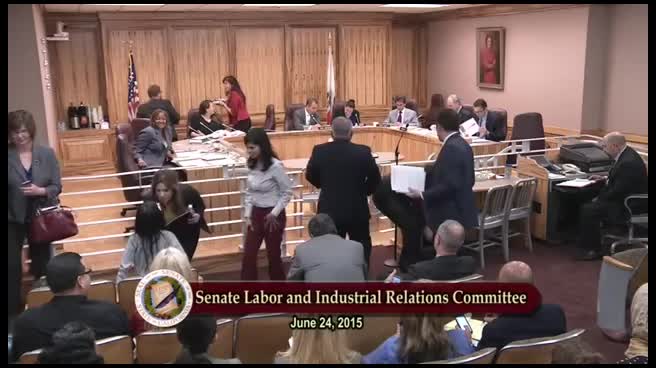 7MIN
Senate Standing Committee on Labor and Industrial Relations
 1MIN
Assembly Floor
 10MIN
Assembly Standing Committee on Labor and Employment
Bill Author

Bill Co-Author(s):