AB 592: Juveniles: proof of dependency or wardship.
- Session Year: 2015-2016
- House: Assembly
- Latest Version Date: 2015-08-17
Existing law provides that a minor may be adjudged a dependent child or a ward of the juvenile court under specified circumstances. Existing law authorizes the court to place a minor who has been removed from the custody of his or her parent or guardian in foster care, among other placements. Existing law provides for the termination of the juvenile court jurisdiction when the minor reaches a specified age.
This bill would authorize the State Department of Social Services to provide to a person who was previously adjudged a dependent or ward of the juvenile court, was placed in foster care, and whose dependency or wardship has been dismissed, upon request by that person, the information included in the proof of dependency or wardship document, as specified, or any information necessary to provide verification that the person was formerly a dependent or ward of the juvenile court and placed in foster care.
This bill would declare that it is to take effect immediately as an urgency statute.
Existing law provides that a minor may be adjudged a dependent child or a ward of the juvenile court under specified circumstances. Existing law authorizes the court to place a minor who has been removed from the custody of his or her parent or guardian in foster care, among other placements. Existing law provides for the termination of the juvenile court jurisdiction when the minor reaches a specified age.
This bill would authorize the State Department of Social Services to provide to a person who was previously adjudged a dependent or ward of the juvenile court and court, was placed in foster care, and whose dependency or wardship has been dismissed, upon request by that person, the information included in the proof of dependency or wardship document, as specified, or any information necessary to provide verification that the person was formerly a dependent or ward of the juvenile court and placed in foster care.
Existing law provides that a minor may be adjudged a dependent child or a ward of the juvenile court under specified circumstances. Existing law authorizes the court to place a minor who has been removed from the custody of his or her parent or guardian in foster care, among other placements. Existing law provides for the termination of the juvenile court jurisdiction when the minor reaches a specified age.
This bill would authorize the State Department of Social Services to provide to a person who was previously adjudged a dependent or ward of the juvenile court and placed in foster care, upon request by that person, the proof of dependency or wardship document, as specified, or any information necessary to provide verification that the person was formerly a dependent or ward of the juvenile court and placed in foster care.
Existing law provides that the order and findings of the superior court in each case under the provisions related to juvenile court proceedings shall be entered in a suitable book or other form of written record kept for that purpose and known as the juvenile court record.
This bill would make a technical, nonsubstantive change to that provision.
Notwithstanding Section 827 and in order to assist with establishing eligibility for programs or services, the State Department of Social Services may provide to a person who was previously adjudged a dependent or ward of the juvenile court, was placed in foster care, and whose dependency or wardship has been dismissed, upon request by that person, the information included in the proof of dependency or wardship document described in subparagraph (E) of paragraph (2) of subdivision (e) of Section 391, or any information necessary to provide verification that the person was formerly a dependent or ward of the juvenile court and placed in foster care.
SEC. 2.This act is an urgency statute necessary for the immediate preservation of the public peace, health, or safety within the meaning of Article IV of the Constitution and shall go into immediate effect. The facts constituting the necessity are:
In order to assist persons who were previously adjudged a dependent or ward of the juvenile court, placed in foster care, and whose dependency or wardship has been dismissed in establishing their eligibility for vital programs and services available to them as soon as possible, it is necessary that this act take immediate effect.
Notwithstanding Section 827, 827 and in order to assist with establishing eligibility for programs or services, the State Department of Social Services may provide to a person who was previously adjudged a dependent or ward of the juvenile court and court, was placed in foster care, and whose dependency or wardship has been dismissed, upon request by that person, the information included in the proof of dependency or wardship document described in All-County Letter 07-33 and Section 31-525.6 of Chapter 31-500 of Division 31 of the State Department of Social Services Manual of Policies and Procedures, as it existed on January 1, 2015, subparagraph (E) of paragraph (2) of subdivision (e) of Section 391, or any information necessary to provide verification that the person was formerly a dependent or ward of the juvenile court and placed in foster care.
Notwithstanding Section 827, the State Department of Social Services may provide to a person who was previously adjudged a dependent or ward of the juvenile court and placed in foster care, upon request by that person, the proof of dependency or wardship document described in All-County Letter 07-33 and Section 31-525.6 of Chapter 31-500 of Division 31 of the State Department of Social Services Manual of Policies and Procedures, as it existed on January 1, 2015, or any information necessary to provide verification that the person was formerly a dependent or ward of the juvenile court and placed in foster care.
SECTION 1.Section 825 of the Welfare and Institutions Code is amended to read:825.The order and findings of the superior court in each case under the provisions of this chapter shall be entered in a suitable book or other form of written record kept for that purpose and known as the juvenile court record.
The order and findings of the superior court in each case under the provisions of this chapter shall be entered in a suitable book or other form of written record which shall be kept for that purpose and known as the juvenile court record.
|
Date
|
Status
|
|---|---|
| Jun 23, 2015 | From committee: Do pass and re-refer to Com. on APPR. with recommendation: To Consent Calendar. (Ayes 5. Noes 0.) (June 23). Re-referred to Com. on APPR. |
| Aug 17, 2015 | Chaptered by Secretary of State - Chapter 215, Statutes of 2015. |
| Aug 17, 2015 | Approved by the Governor. |
| Aug 3, 2015 | Enrolled and presented to the Governor at 3 p.m. |
| Jul 13, 2015 | Urgency clause adopted. Senate amendments concurred in. To Engrossing and Enrolling. (Ayes 79. Noes 0. Page 2354.). |
| Jul 13, 2015 | Urgency clause adopted. Senate amendments concurred in. To Engrossing and Enrolling. |
| Jul 9, 2015 | Read third time. Urgency clause adopted. Passed. Ordered to the Assembly. (Ayes 39. Noes 0. Page 1879.). |
| Jul 9, 2015 | Read third time. Urgency clause adopted. Passed. Ordered to the Assembly. |
| Jul 9, 2015 | In Assembly. Concurrence in Senate amendments pending. May be considered on or after July 11 pursuant to Assembly Rule 77. |
| Jul 7, 2015 | Read second time. Ordered to Consent Calendar. |
| Jul 6, 2015 | From committee: Be placed on second reading file pursuant to Senate Rule 28.8 and ordered to consent calendar. |
| Jun 30, 2015 | From committee chair, with author's amendments: Amend, and re-refer to committee. Read second time, amended, and re-referred to Com. on APPR. |
| Feb 24, 2015 | Read first time. To print. |
| Jun 18, 2015 | From committee chair, with author's amendments: Amend, and re-refer to committee. Read second time, amended, and re-referred to Com. on HUMAN S. |
| Jun 4, 2015 | Referred to Com. on HUMAN S. |
| May 22, 2015 | Read third time. Passed. Ordered to the Senate. (Ayes 74. Noes 0. Page 1561.) |
| May 22, 2015 | In Senate. Read first time. To Com. on RLS. for assignment. |
| May 14, 2015 | Read second time. Ordered to Consent Calendar. |
| May 13, 2015 | From committee: Do pass. To Consent Calendar. (Ayes 17. Noes 0.) (May 13). |
| Apr 29, 2015 | From committee: Do pass and re-refer to Com. on APPR. with recommendation: To Consent Calendar. (Ayes 7. Noes 0.) (April 28). Re-referred to Com. on APPR. |
| Apr 6, 2015 | Re-referred to Com. on HUM. S. |
| Mar 26, 2015 | Referred to Com. on HUM. S. |
| Mar 26, 2015 | From committee chair, with author's amendments: Amend, and re-refer to Com. on HUM. S. Read second time and amended. |
| Feb 25, 2015 | From printer. May be heard in committee March 27. |
|
Date
|
Description
|
Location
|
Votes
|
|
|---|---|---|---|---|
| Jul 13, 2015 | AB 592 STONE Concurrence in Senate Amendments | Assembly Floor |
Passed |
|
| Jul 9, 2015 | Consent Calendar 2nd AB592 Mark Stone Urgency Clause | Senate Floor |
Passed |
|
| Jun 23, 2015 | Do pass, but first be re-referred to the Committee on [Appropriations] with the recommendation: To Consent Calendar | Senate Standing Committee on Human Services |
Passed |
|
| May 22, 2015 | AB 592 STONE Consent Calendar Second Day Regular Session | Assembly Floor |
Passed |
|
| May 13, 2015 | Do pass. To Consent Calendar. | Assembly Standing Committee on Appropriations |
Passed |
|
| Apr 28, 2015 | Do pass and be re-referred to the Committee on [Appropriations] with recommendation: To Consent Calendar | Assembly Standing Committee on Human Services |
Passed |
This list shows positions taken on this bill by organizations on the date displayed, which is linked to the original source.
Positions by individuals are not included.
|
Organization
|
Position
|
Date
|
|---|---|---|
| AdvoKids | ** Support | Jul 13, 2015 |
| California Alliance Of Child And Family Services | ** Support | Jul 13, 2015 |
| California Youth Connection | ** Support | Jul 13, 2015 |
| Children Now | ** Support | Jul 13, 2015 |
| Children's Advocacy Institute | ** Support | Jul 13, 2015 |
| Children's Law Center of CA | ** Support | Jul 13, 2015 |
| Children'S Law Center Of California | ** Support | Jul 13, 2015 |
| Children's Right Project at Public Counsel | ** Support | Jul 13, 2015 |
| John Burton Foundation for Children Without Homes | ** Support | Jul 13, 2015 |
| National Center for Youth Law | ** Support | Jul 13, 2015 |
| Public Counsel's Children's Rights Project | ** Support | Jul 13, 2015 |
| Santa Cruz County Children's Network | ** Support | Jul 13, 2015 |
AB 592
Page 4
CONCURRENCE IN SENATE AMENDMENTS
AB 592
(Mark Stone)
As Amended June 30, 2015
2/3 vote. Urgency
ASSEMBLY: |
74-0 |
(May 22, 2015) |
SENATE: |
39-0 |
(July 9, 2015) |
Original Committee Reference: HUM. S.
SUMMARY: Reduces barriers to benefits for foster youth. Specifically, this bill permits the Department of Social Services to provide a former foster youth, upon his or her request, with proof of dependency or wardship, as specified.
The Senate amendments:
State that the purpose of the Department of Social Services (DSS) providing a former foster youth with proof of dependency or wardship is to assist with establishing eligibility for programs or services.
Require a youth requesting proof of former dependency or wardship to have had his or her dependency or wardship dismissed.
Clarify that DSS may provide the information included in the proof of dependency or wardship document in lieu of the original document itself.
Specify the information to be provided, including the individual's name and date of birth, the dates during which he or she was within the jurisdiction of the juvenile court, and a statement that he or she was a foster youth in compliance with state and federal financial aid documentation requirements.
Add an urgency clause, stating that, in order to assist former foster youth in establishing their eligibility for vital programs and services available to them as soon as possible, it is necessary that this act take immediate effect.
EXISTING LAW:
Establishes a state and local system of child welfare services, including foster care, for children who have been adjudged by the court to be at risk of abuse or neglect, or to have been abused or neglected, as specified. (Welfare and Institutions Code (WIC) Section 202)
Allows a juvenile court to adjudge a child a ward or a dependent of the court for specified reasons, including but not limited to if the child has been left without any provision for support, as specified. (WIC Section 300)
Permits the juvenile court to retain jurisdiction over a ward or dependent of the court until he or she reaches the age of 21. (WIC Section 303)
Allows the juvenile court to terminate jurisdiction over a nonminor dependent between the ages of 18 and 21, as specified. (WIC Section 303)
Prohibits a dependency court from terminating jurisdiction over a minor unless a hearing is conducted, as specified. (WIC Section 391)
Specifies information to be provided to a nonminor prior to dependency jurisdiction over him or her being terminated, including a letter prepared by the county welfare department containing the nonminor's name and date of birth, the dates during which the nonminor was within the jurisdiction of the juvenile court, and a statement that the nonminor was a foster youth in compliance with state and federal financial aid documentation requirements. (WIC Section 391 (e))
Defines "juvenile case file" to mean a petition filed in any juvenile court proceeding, reports of the probation officer, and all other documents filed in that case or made available to, and thereafter retained by, the probation office, judge, referee, or other hearing officer, as specified. (WIC Section 827(e))
Specifies entities permitted to inspect juvenile case files. Further specifies conditions under, and purposes for, which the Department of Social Services (DSS) may inspect juvenile case files. (WIC Section 827(a)(1))
Limits access to juvenile case files and requires unauthorized entities to petition the juvenile court for access to case files. (WIC Section 827(a))
Prohibits receiving agencies from disseminating any portion of a juvenile case file or related information to unauthorized entities. (WIC Section 827(a)(4))
Establishes the Office of the State Foster Care Ombudsperson as an autonomous entity within DSS to carry out a number of responsibilities, as specified, in order to provide children placed in foster care with a means to resolve issues related to their care, placement, or services. (WIC Sections 16160 to 16167)
FISCAL EFFECT: According to the Senate Appropriations Committee, pursuant to Senate Rule 28.8, negligible state costs.
COMMENTS:
Transition-age and former foster youth: On January 1, 2015, there were 7,828 youth in California's Child Welfare System (CWS) between the ages of 18 and 20. In 2014, 2,425 youth ages 18 and over exited foster care, with 1,586 (65.4%) of them exiting to emancipation.
Research points to the barriers often faced by youth exiting foster care. For example, a longitudinal study of over 600 former foster youth in the Midwest conducted by researchers at the University of Chicago's Chapin Hall found that, by the time these youth were between 23 and 24 years old, 37% had been homeless or couch-surfed since exiting foster care, and many of these youth had been homeless or couch-surfed more than one time. Additionally, when asked about their highest level of education, 24% responded that they had no high school degree (compared to 7% of their non-foster peers), 34% reported having a high school diploma, and 10% had a GED. For those that did attend, or attempt to attend, college, many stated that the cost of post-secondary education was a significant barrier. When asked if they had health insurance, 57% of the former foster youth said they did, compared to 78% of their non-foster peers; of those that did have health insurance, 58% had Medicaid or medical assistance, compared to 8% of their non-foster peers.
Given these challenges, access to supports and services can serve a vital role for many former foster youth. Some benefits and programs are specific to foster youth, such as emancipation stipends, certain transitional housing programs, and financial aid support like the Education and Training Vouchers offered through the John H. Chafee Foster Care Independence Program. Other benefits, like Medi-Cal, have certain eligibility rules specific to foster youth. In either case, these programs and services often require youth to prove their former dependency or wardship.
Proof of dependency or wardship: Currently, a youth exiting foster care must be supplied a document from the county, "proof of county dependency status," that verifies their time within foster care. Should the youth misplace or no longer have this verification, he or she must request a replacement from the county in which he or she received care, regardless of where he or she is currently living.
Need for this bill: According to the author, former foster youth who need to obtain replacement documentation verifying their time spent in foster care can face difficulties that ultimately impede their ability to promptly apply and become eligible for necessary benefits. A youth may not know where to go to request verification, or may be living in a different county that lacks the ability to readily obtain this information from the county in which the youth received care. Supporters of this bill state that financial aid officers, health care professionals, and others have reported cases in which accessing verification documentation for former foster youth has proven challenging. This bill would provide clear authority to DSS, and by extension, the Foster Care Ombudsman, to provide youth with pertinent documentation.
DSS does not specifically track the number of requests made for documentation each year. The Foster Care Ombudsman tracks overall requests for information; of the 1,998 requests for information made in Fiscal Year 2013-14, it is likely that some of those were requests regarding proof of dependency. Supporters state that, while the issue occurs for a small number of youth, the implications for their futures is significant.
The author states that:
In several life quality and self-sufficiency areas such as health, employment prospects, and educational attainment, former foster youth have significantly worse outcomes than their peers. In recognition of their hardships endured that led them to foster care, the state allows and provides several benefits specifically designed to help former foster you transition into adulthood successfully.
Unfortunately, some former foster youth are unable to access these benefits because they cannot verify their previous foster youth status through documentation. Most foster youth receive their verification letter through the county; however, it can be difficult to gain access to this information if a former foster youth has received care in multiple counties or moved out of the county of placement after leaving care.
With many programs and benefits adhering to strict application deadlines, it is especially important for former foster youth to have the ability to access their verification document in a timely manner. This bill will give the Department of Social Services legal permission to give former foster youth this documentation.
There is no opposition on file.
Analysis Prepared by: Daphne Hunt / HUM. S. / (916) 319-2089 FN: 0001170
AB 592
Page 5
|
Office of Senate Floor Analyses (916) 651-1520 Fax: (916) 327-4478 |
CONSENT
Bill No: AB 592
Amended: 6/30/15 in Senate
SENATE HUMAN SERVICES COMMITTEE: 5-0, 6/23/15
AYES: McGuire, Berryhill, Hancock, Liu, Nguyen
SENATE APPROPRIATIONS COMMITTEE: Senate Rule 28.8
ASSEMBLY FLOOR: 74-0, 5/22/15 (Consent) - See last page for vote
SUBJECT: Juveniles: proof of dependency or wardship
DIGEST: This bill permits the California Department of Social Services (CDSS) to provide to a person who was formerly placed in foster care, upon request, proof of his or her placement in foster care, as specified.
Existing law:
Provides that any child who has suffered, or is at risk of suffering, serious physical or emotional harm, as defined, shall be within the jurisdiction of the juvenile court which may adjudge that person to be a dependent child of the court, as specified. (WIC 300)
Permits a court to terminate its dependency, delinquency, or transition jurisdiction over a nonminor dependent between the time the nonminor reaches the age of majority and 21 years of age. (WIC 303)
Requires, at any termination hearing, a county welfare department to submit a report that verifies that the following information has been provided to the nonminor (WIC 391):
Written information about the nonminor’s dependency case, including family history, Indian heritage, available family photographs, except as specified, whereabouts of siblings under the jurisdiction of the juvenile court, except as specified, and information about how to access their case file.
Essential personal documents including the social security card, a certified copy of the birth certificate, the health and education summary, as specified, driver’s license or identification card, any applicable death certificates for the nonminor’s parents, proof of citizenship, an advance health care directive, forms used to resume dependency, and a written 90-day transition plan.
A letter containing information about the nonminor including name and date of birth, and the dates during which the nonminor was a foster youth.
Referrals to transitional housing, assistance in obtaining employment or other financial support, assistance in applying to college or to a vocational education program, assistance in maintaining relationships with individuals who are important to the nonminor, assistance in accessing the Independent Living Aftercare Program, and other information.
This bill permits CDSS to provide a former dependent or ward who was in foster care, upon request by that person, the proof of dependency of wardship document that was provided to the youth in the dependency or wardship termination hearing report, or any information necessary to provide verification that the person was formerly a dependent or ward and placed in foster care.
Background
According to the author, former foster youth must meet strict application deadlines when applying for benefits or programs, many of which require county verification of the youth’s prior foster care status. The author states that, as youth move across counties, it can be difficult to obtain this documentation from the county in which the youth emancipated from foster care. According to the author, many youth request this information from the foster care ombudsman, however CDSS has determined it does not have legal authority to disseminate the documentation. This bill would provide CDSS with the authority needed to provide this documentation to a former foster youth who has requested it.
While this process is typically uncomplicated, financial aid officers, health care professionals and other supportive adults have reported unique cases in which accessing verification documents proves challenging. This most often occurs when the youth has lived in multiple counties, cannot identify the county that had jurisdiction over their case and are unable to make contact with their former social worker. In these instances, the youth may give up on obtaining verification or miss important deadlines that disqualify them from receiving critical supports.
Post-Secondary Educational Attainment for Former Foster Youth. A 2013 report published by the Stuart Foundation entitled “At Greater Risk: California Foster Youth and the Path from High School to College,” states that foster youth confront multiple risk factors for low educational attainment including disabilities, language barriers, emotional trauma, lower educational attainment in high school, and less of a support system due to disrupted social connections. The report states that foster youth are among the most vulnerable young Californians, are more likely to attend schools with low performance rankings according to the Academic Performance Index, and that about one quarter of foster youth have a disability, in contrast to one-tenth of the general population.
Additionally, a December 2005 report by the Institute for Higher Education Policy entitled, “Higher Education Opportunities for Foster Youth,” states that of the foster youth who complete high school and are college-qualified, only about 20% enrolled in higher education compared to about 60% of their peers. In 2011 there were between 600 and 800 former foster youth attending the University of California, 1,200 attending the California State University system, and 6,500 attending the California community college system. California provides numerous supports specifically targeted to current and former foster youth in higher education including priority registration at most campuses, substantially reduced community college tuition, a number of other initiatives and financial aid opportunities, and Guardian Scholars Programs available on many community college and CSU campuses which offer housing, tuition, and academic support to former foster youth.
Access to Healthcare for Former Foster Youth. A recent study performed by Northwest Foster Care Alumni found that one-third of emancipated foster youth had no health insurance, a rate that is roughly double that of young adults ages 18 to 44 nationally. The study also found that more than half of emancipated foster youth had one or more mental disorders and experienced post-traumatic stress at twice the rate that of U.S. war veterans.
Pursuant to federal law under the Foster Care Independence Act of 1999 and the Affordable Care Act, California permits children who are transitioning out of foster care to continue their Medi-Cal coverage under the Former Foster Care Children (FFCC) program up to age 26. In order to be eligible for FFCC, an individual must have aged out of Foster Care at age 18 or older. Former Foster Care status must be verified in order for the individual to be eligible for FFCC.
FISCAL EFFECT: Appropriation: No Fiscal Com.: Yes Local: No
Children Now (source)
Advokids
California Alliance of Child and Family Services
California Youth Connection
Children’s Advocacy Institute
Children’s Law Center of California
Children’s Right Project at Public Counsel
John Burton Foundation for Children Without Homes
National Center for Youth Law
Santa Cruz County Children’s Network
None received
ARGUMENTS IN SUPPORT: The California Youth Connection writes in support of the bill that many critical programs and benefits have aimed to close these gaps in achievement and well-being for former foster youth: expanded Medi-Cal, FAFSA, priority college course work enrollment and more. However, CYC states that in some unique cases, eligible former foster youth are unable to access these necessary supports because they cannot verify their foster youth status. Currently, when a foster youth leaves care at the age of 18, he or she is provided with a letter verifying their status as a former foster youth, including the dates of care. For former foster youth who no longer have this document or were not provided it because they left care before the age of 18, verification can be requested from the county.
ASSEMBLY FLOOR: 74-0, 5/22/15
AYES: Achadjian, Travis Allen, Baker, Bigelow, Bloom, Bonilla, Bonta, Brough, Brown, Burke, Calderon, Campos, Chang, Chau, Chávez, Chiu, Chu, Cooley, Cooper, Dababneh, Dahle, Daly, Dodd, Eggman, Frazier, Beth Gaines, Gallagher, Cristina Garcia, Eduardo Garcia, Gatto, Gipson, Gomez, Gonzalez, Gordon, Gray, Grove, Hadley, Harper, Roger Hernández, Holden, Irwin, Jones-Sawyer, Kim, Lackey, Levine, Linder, Lopez, Low, Maienschein, Mathis, Mayes, McCarty, Medina, Melendez, Mullin, Nazarian, Obernolte, Patterson, Perea, Quirk, Rendon, Ridley-Thomas, Rodriguez, Salas, Santiago, Steinorth, Mark Stone, Thurmond, Ting, Wagner, Wilk, Williams, Wood, Atkins
NO VOTE RECORDED: Alejo, Jones, O'Donnell, Olsen, Waldron, Weber
Prepared by: Sara Rogers / HUMAN S. / (916) 651-1524
7/8/15 16:16:52
**** END ****
AB 592 (Mark Stone) Page 4 of 4
SENATE COMMITTEE ON HUMAN SERVICES
Senator McGuire, Chair
2015 - 2016 Regular
Bill No: AB 592
Author: |
Mark Stone |
||
Version: |
June 18, 2015 |
Hearing Date: |
June 23, 2015 |
Urgency: |
No |
Fiscal: |
Yes |
Consultant: |
Sara Rogers |
||
Subject: Juveniles: proof of dependency or wardship
SUMMARY
This bill permits the California Department of Social Services (CDSS) to provide to a person who was formerly placed in foster care, upon request, proof of his or her placement in foster care, as specified.
ABSTRACT
Existing law:
Provides that any child who has suffered, or is at risk of suffering, serious physical or emotional harm, as defined, shall be within the jurisdiction of the juvenile court which may adjudge that person to be a dependent child of the court, as specified. (WIC 300)
Permits a court to terminate its dependency, delinquency, or transition jurisdiction over a nonminor dependent between the time the nonminor reaches the age of majority and 21 years of age. (WIC 303)
At any termination hearing, requires a county welfare department to submit a report that verifies that the following information has been provided to the nonminor (WIC 391):
Written information about the nonminor’s dependency case, including family history, Indian heritage, available family photographs, except as specified, whereabouts of siblings under the jurisdiction of the juvenile court, except as specified, and information about how to access their case file.
Essential personal documents including the social security card, a certified copy of the birth certificate, the health and education summary, as specified, driver’s license or identification card, any applicable death certificates for the nonminor’s parents, proof of citizenship, an advance health care directive, forms used to resume dependency, and a written 90-day transition plan.
A letter containing information about the nonminor including name and date of birth, and the dates during which the nonminor was a foster youth.
Referrals to transitional housing, assistance in obtaining employment or other financial support, assistance in applying to college or to a vocational education program, assistance in maintaining relationships with individuals who are important to the nonminor, assistance in accessing the Independent Living Aftercare Program, and other information.
This bill:
Permits CDSS to provide a former dependent or ward who was in foster care, upon request by that person, the proof of dependency of wardship document that was provided to the youth in the dependency or wardship termination hearing report, or any information necessary to provide verification that the person was formerly a dependent or ward and placed in foster care.
FISCAL IMPACT
According to an Assembly Appropriations analysis, this bill is estimated to have minor, likely absorbable costs to CDSS, depending on the number of requests received.
BACKGROUND AND DISCUSSION
Purpose of the bill:
According to the author, former foster youth must meet strict application deadlines when applying for benefits or programs, many of which require county verification of the youth’s prior foster care status. The author states that, as youth move across counties, it can be difficult to obtain this documentation from the county in which the youth emancipated from foster care. According to the author, many youth request this information from the foster care ombudsman, however CDSS has determined it does not have legal authority to disseminate the documentation. This bill would provide CDSS with the authority needed to provide this documentation to a former foster youth who has requested it.
The California Youth Connection writes in support of the bill that many critical programs and benefits have aimed to close these gaps in achievement and well-being for former foster youth: expanded Medi-Cal, FAFSA, priority college course work enrollment and more. However, CYC states that in some unique cases, eligible former foster youth are unable to access these necessary supports because they cannot verify their foster youth status. Currently, when a foster youth leaves care at the age of 18, her or she is provided with a letter verifying their status as a former foster youth, including the dates of care. For former foster youth who no longer have this document or were not provided it because they left care before the age of 18, verification can be requested from the county.
While this process is typically uncomplicated, financial aid officers, health care professionals and other supportive adults have reported unique cases in which accessing verification documents proves challenging. This most often occurs when the youth has lived in multiple counties, cannot identify the county that had jurisdiction over their case and are unable to make contact with their former social worker. In these instances, the youth may give up on obtaining verification or miss important deadlines that disqualify them from receiving critical supports.
Post-Secondary Educational Attainment for Former Foster Youth
A 2013 report published by the Stuart Foundation entitled “At Greater Risk: California Foster Youth and the Path from High School to College,” states that foster youth confront multiple risk factors for low educational attainment including disabilities, language barriers, emotional trauma, lower educational attainment in high school, and less of a support system due to disrupted social connections. The report states that foster youth are among the most vulnerable young Californians, are more likely to attend schools with low performance rankings according to the Academic Performance Index, and that about one quarter of foster youth have a disability, in contrast to one-tenth of the general population.
Additionally, a December 2005 report by the Institute for Higher Education Policy entitled, “Higher Education Opportunities for Foster Youth,” states that of the foster youth who complete high school and are college-qualified, only about 20% enrolled in higher education compared to about 60% of their peers. In 2011 there were between 600 and 800 former foster youth attending the University of California, 1,200 attending the California State University system, and 6,500 attending the California community college system.1 California provides numerous supports specifically targeted to current and former foster youth in higher education including priority registration at most campuses, substantially reduced community college tuition, a number of other initiatives and financial aid opportunities, and Guardian Scholars Programs available on many community college and CSU campuses which offer housing, tuition, and academic support to former foster youth.
Access to Healthcare for Former Foster Youth
A recent study performed by Northwest Foster Care Alumni found that one-third of emancipated foster youth had no health insurance, a rate that is roughly double that of young adults ages 18 to 44 nationally. The study also found that more than half of emancipated foster youth had one or more mental disorders and experienced post-traumatic stress at twice the rate that of U.S. war veterans.2
Pursuant to federal law under the Foster Care Independence Act of 19993 and the Affordable Care Act, California permits children who are transitioning out of foster care to continue their Medi-Cal coverage under the Former Foster Care Children (FFCC) program up to age 26. In order to be eligible for FFCC, an individual must have aged out of Foster Care at age 18 or older. Former Foster Care status must be verified in order for the individual to be eligible for FFCC.4
PRIOR VOTES
Assembly Floor: |
74 - 0 |
Assembly Appropriations Committee: |
17 - 0 |
Assembly Human Services Committee: |
7 - 0 |
POSITIONS
Support:
Children Now (Sponsor)
Advokids
California Alliance of Child and Family Services
California Youth Connection
Children’s Advocacy Institute
Children’s Law Center of California
Children’s Right Project at Public Counsel
John Burton Foundation for Children Without Homes
National Center for Youth Law
Santa Cruz County Children’s Network
Oppose:
None received.
-- END --
1 Assembly Higher Education analysis of AB 194 (Beall, Statutes of 2011, Chapter 458).
2 NGA Center for Best Practices. http://www.nga.org/files/live/sites/NGA/files/pdf/0701YOUTH.PDF
3 P.L. No. 106-169
4 http://coveredtil26.childrennow.org/wp-content/uploads/2014/02/FFCC-Desk-Aid-3.pdf
AB 592
Page 1
Date of Hearing: May 13, 2015
ASSEMBLY COMMITTEE ON APPROPRIATIONS
Jimmy Gomez, Chair
AB 592
(Mark Stone) – As Amended March 26, 2015
Policy Committee: |
Human Services |
Vote: |
7 - 0 |
|
|
|
|
|
|
|
|
Urgency: No State Mandated Local Program: No Reimbursable: No
SUMMARY:
This bill permits the Department of Social Services (DSS) to provide a former foster youth, upon his or her request, with proof of dependency or wardship, as specified.
FISCAL EFFECT:
Minor costs (GF) to DSS, likely absorbable, depending on the number of requests received.
COMMENTS:
Purpose and Background. Currently, a youth exiting foster care must be supplied a document from the county, “proof of county dependency status,” that verifies their time within foster care. Most foster youth receive their verification letter through the county; however, it can be difficult to gain access to this information if a former foster youth has received care in multiple counties or moved out of the county of placement after leaving care. Should the youth misplace or no longer have this verification, he or she must request a replacement from the county in which he or she received care, regardless of where he or she is currently living.
In 2014, 2,425 youth ages 18 and over exited foster care. The state allows and provides several benefits specifically designed to help former foster youth transition into adulthood successfully. According to the author, former foster youth who need to obtain replacement documentation verifying their time spent in foster care can face difficulties that ultimately impede their ability to promptly apply and become eligible for necessary benefits. Some former foster youth are unable to access these benefits because they cannot verify their previous foster youth status through documentation.
This bill would provide clear authority to DSS, and by extension, the Foster Care Ombudsman, to provide youth this documentation. This will give youth who are having difficulty accessing their information the option of obtaining the documentation from DSS.
Analysis Prepared by: Jennifer Swenson / APPR. / (916) 319-2081
AB 592
Page 3
Date of Hearing: April 28, 2015
ASSEMBLY COMMITTEE ON HUMAN SERVICES
Kansen Chu, Chair
AB 592
(Mark Stone) – As Amended March 26, 2015
SUBJECT: Juveniles: proof of dependency or wardship
SUMMARY: Reduces barriers to benefits for foster youth. Specifically, this bill: Permits the Department of Social Services to provide a former foster youth, upon his or her request, with proof of dependency or wardship, as specified.
EXISTING LAW:
Establishes a state and local system of child welfare services, including foster care, for children who have been adjudged by the court to be at risk of abuse or neglect, or to have been abused or neglected, as specified. (WIC 202)
Allows a juvenile court to adjudge a child a ward or a dependent of the court for specified reasons, including but not limited to if the child has been left without any provision for support, as specified. (WIC 300)
Permits the juvenile court to retain jurisdiction over a ward or dependent of the court until he or she reaches the age of 21. (WIC 303)
Allows the juvenile court to terminate jurisdiction over a nonminor dependent between the ages of 18 and 21, as specified. (WIC 303)
Prohibits a dependency court from terminating jurisdiction over a minor unless a hearing is conducted, as specified. (WIC 391)
Defines “juvenile case file” to mean a petition filed in any juvenile court proceeding, reports of the probation officer, and all other documents filed in that case or made available to, and thereafter retained by, the probation office, judge, referee, or other hearing officer, as specified. (WIC 827(e))
Specifies entities permitted to inspect juvenile case files. Further specifies conditions under, and purposes for, which the Department of Social Services (DSS) may inspect juvenile case files. (WIC 827(a)(1))
Limits access to juvenile case files and requires unauthorized entities to petition the juvenile court for access to case files. (WIC 827(a))
Prohibits receiving agencies from disseminating any portion of a juvenile case file or related information to unauthorized entities. (WIC 827(a)(4))
Establishes the Office of the State Foster Care Ombudsperson as an autonomous entity within DSS to carry out a number of responsibilities, as specified, in order to provide children placed in foster care with a means to resolve issues related to their care, placement, or services. (WIC 16160-16167)
FISCAL EFFECT: Unknown
COMMENTS:
Transition-age and former foster youth: On January 1, 2015, there were 7,828 youth in California’s Child Welfare System (CWS) between the ages of 18 and 20. In 2014, 2,425 youth ages 18 and over exited foster care, with 1,586 (65.4%) of them exiting to emancipation.
Research points to the barriers often faced by youth exiting foster care. For example, a longitudinal study of over 600 former foster youth in the Midwest conducted by researchers at the University of Chicago’s Chapin Hall found that, by the time these youth were between 23 and 24 years old, 37% had been homeless or couch-surfed since exiting foster care, and many of these youth had been homeless or couch-surfed more than one time. Additionally, when asked about their highest level of education, 24% responded that they had no high school degree (compared to 7% of their non-foster peers), 34% reported having a high school diploma, and 10% had a GED. For those that did attend, or attempt to attend, college, many stated that the cost of post-secondary education was a significant barrier. When asked if they had health insurance, 57% of the former foster youth said they did, compared to 78% of their non-foster peers; of those that did have health insurance, 58% had Medicaid or medical assistance, compared to 8% of their non-foster peers.
Given these challenges, access to supports and services can serve a vital role for many former foster youth. Some benefits and programs are specific to foster youth, such as emancipation stipends, certain transitional housing programs, and financial aid support like the Education and Training Vouchers offered through the John H. Chafee Foster Care Independence Program. Other benefits, like Medi-Cal, have certain eligibility rules specific to foster youth. In either case, these programs and services often require youth to prove their former dependency or wardship.
Proof of dependency or wardship: Currently, a youth exiting foster care must be supplied a document from the county, “proof of county dependency status,” that verifies their time within foster care. Should the youth misplace or no longer have this verification, he or she must request a replacement from the county in which he or she received care, regardless of where he or she is currently living.
Need for this bill: According to the author, former foster youth who need to obtain replacement documentation verifying their time spent in foster care can face difficulties that ultimately impede their ability to promptly apply and become eligible for necessary benefits. A youth may not know where to go to request verification, or may be living in a different county that lacks the ability to readily obtain this information from the county in which the youth received care. Supporters of this bill state that financial aid officers, health care professionals, and others have reported cases in which accessing verification documentation for former foster youth has proven challenging. This bill would provide clear authority to DSS, and by extension, the Foster Care Ombudsman, to provide youth this documentation.
DSS does not specifically track the number of requests made for documentation each year. The Foster Care Ombudsman tracks overall requests for information; of the 1,998 requests for information made in fiscal year 2013-14, it is likely that some of those were requests regarding proof of dependency. Supporters state that, while the issue occurs for a small number of youth, the implications for their futures is significant.
The author states that, “In several life quality and self-sufficiency areas such as health, employment prospects, and educational attainment, former foster youth have significantly worse outcomes than their peers. In recognition of their hardships endured that led them to foster care, the state allows and provides several benefits specifically designed to help former foster you transition into adulthood successfully.
Unfortunately, some
former foster youth are unable to access these benefits because they
cannot verify their previous foster youth status through
documentation. Most foster youth receive their verification letter
through the county; however, it can be difficult to gain access to
this information if a former foster youth has received care in
multiple counties or moved out of the county of placement after
leaving care.
With many programs and benefits adhering to
strict application deadlines, it is especially important for former
foster youth to have the ability to access their verification
document in a timely manner. This bill will give the Department of
Social Services legal permission to give former foster youth this
documentation.”
REGISTERED SUPPORT / OPPOSITION:
Support
John Burton Foundation for Children Without Homes - co-sponsor
Advokids
California Alliance of Child and Family Services
Children NOW
Children’s Advocacy Institute
Children’s Law Center of CA (CLC)
National Center for Youth Law
Public Counsel’s Children’s Rights Project
Opposition
None on file.
Analysis Prepared by: Daphne Hunt / HUM. S. / (916) 319-2089
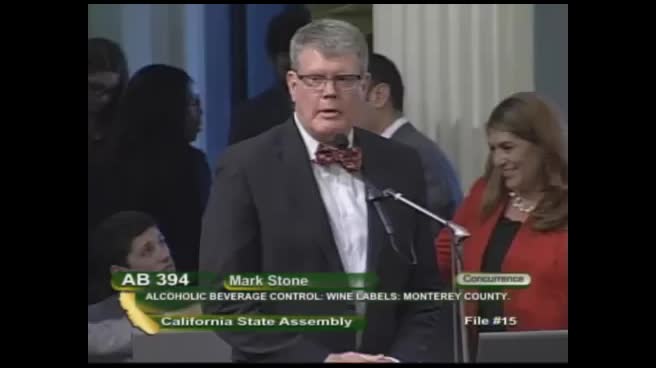
Bill Author

Bill Co-Author(s):