AB 606: Water conservation.
- Session Year: 2015-2016
- House: Assembly
- Latest Version Date: 2015-10-09
Existing law requires the Department of General Services to provide planning, acquisition, construction, and maintenance of state buildings and property, and maintain a statewide property inventory of all real property held by the state. Existing law requires the department, in consultation with the State Energy Resources Conservation and Development Commission, and with the concurrence of the Department of Finance, to identify each public building in the departments state property inventory where it is feasible for that building to reduce energy consumption and achieve energy efficiencies, as specified, and make retrofits, as specified.
Existing law provides that the Department of Transportation has full possession and control of all state highways and associated property. Existing law authorizes the Department of Transportation to perform work required to alleviate or repair damage to property during declared emergencies, as specified.
This bill would, when a state agency builds upon state-owned real property, purchases real property, or replaces landscaping or irrigation, require the state agency to reduce water consumption and increase water efficiencies for that property where feasible, as defined, through specified water efficiency measures. The bill would exempt from its requirements state-owned real property that is leased for agricultural purposes.
Existing law requires the Department of General Services to provide planning, acquisition, construction, and maintenance of state buildings and property, and maintain a statewide property inventory of all real property held by the state. Existing law requires the department, in consultation with the State Energy Resources Conservation and Development Commission, and with the concurrence of the Department of Finance, to identify each public building in the departments state property inventory where it is feasible for that building to reduce energy consumption and achieve energy efficiencies, as specified, and make retrofits, as specified.
Existing law provides that the Department of Transportation has full possession and control of all state highways and associated property. Existing law authorizes the Department of Transportation to perform work required to alleviate or repair damage to property during declared emergencies, as specified.
This bill would, when the Department of General Services replaces landscaping or irrigation on property or when new property is added to the departments statewide property inventory, require the department to reduce water consumption and increase water efficiencies for that property, where feasible, through replacement of landscaping, irrigation timers, or spray sprinkler heads, implementation of recycled water irrigation, or any combination thereof. The bill also would impose similar water conservation requirements on the Department of Transportation. a state agency builds upon state-owned real property, purchases real property, or replaces landscaping or irrigation, require the state agency to reduce water consumption and increase water efficiencies for that property where feasible, as defined, through specified water efficiency measures. The bill would exempt from its requirements state-owned real property that is leased for agricultural purposes.
Existing law requires the Department of General Services to provide planning, acquisition, construction, and maintenance of state buildings and property, and maintain a statewide property inventory of all real property held by the state. Existing law requires the department, in consultation with the State Energy Resources Conservation and Development Commission, and with the concurrence of the Department of Finance, to identify each public building in the departments state property inventory where it is feasible for that building to reduce energy consumption and achieve energy efficiencies, as specified, and make retrofits, as specified.
Existing law provides that the Department of Transportation has full possession and control of all state highways and associated property. Existing law authorizes the Department of Transportation to perform work required to alleviate or repair damage to property during declared emergencies, as specified.
This bill would, when the Department of General Services replaces landscaping or irrigation on public property or when new public property is added to the departments statewide property inventory, require the department to reduce water consumption and increase water efficiencies for that property, where feasible, through replacement of landscaping, irrigation timers, or spray sprinkler heads, implementation of recycled water irrigation, or any combination thereof. The bill also would impose similar water conservation requirements on the Department of Transportation.
Existing law requires the Department of General Services to provide planning, acquisition, construction, and maintenance of state buildings and property. property, and maintain a statewide property inventory of all real property held by the state. Existing law requires the department, in consultation with the State Energy Resources Conservation and Development Commission, and with the concurrence of the Department of Finance, to identify each public building in the departments state property inventory where it is feasible for that building to reduce energy consumption and achieve energy efficiencies, as specified, and make retrofits, as specified.
This bill would require would, when the Department of General Services replaces landscaping or irrigation on public property or when new public property is added to the departments statewide property inventory, require the department to identify each public property added to the departments state property inventory beginning January 1, 2015, where it is feasible for reduce water consumption to be reduced and increase water efficiencies to be achieved for that property, where feasible, through replacement of landscaping, irrigation timers, or spray sprinkler heads, implementation of recycled water irrigation, or any combination thereof, and would require the appropriate replacements where feasible, except as specified. thereof.
Existing law requires the Department of General Services to provide planning, acquisition, construction, and maintenance of state buildings and property. Existing law requires the department, in consultation with the State Energy Resources Conservation and Development Commission, and with the concurrence of the Department of Finance, to identify each public building in the departments state property inventory where it is feasible for that building to reduce energy consumption and achieve energy efficiencies, as specified, and make retrofits, as specified.
This bill would require the Department of General Services to identify each public property added to the departments state property inventory beginning January 1, 2015, where it is feasible for water consumption to be reduced and water efficiencies to be achieved through replacement of landscaping, irrigation timers, or spray sprinkler heads, or any combination thereof, and would require the appropriate replacements where feasible, except as specified.
(a)When a state agency builds upon state-owned real property, purchases real property, or replaces landscaping or irrigation, the state agency shall reduce water consumption and increase water efficiencies for that property, where feasible, through any or all of the following measures:
(1)Replacement of landscaping with drought-tolerant plants with an emphasis on native plant species.
(2)Replacement of irrigation timers to permit efficient watering schedules.
(3)Replacement of existing irrigation with drip irrigation, bubblers, or low precipitation spray nozzles, or a combination of these irrigation methods.
(4)Implementation of recycled water irrigation or rainwater capture irrigation or both.
(5)Installation of irrigation submeters.
(6)Use of on-site water recycling.
(b)This section shall not apply to state-owned real property that is leased to a private party for agricultural purposes.
(c)For purposes of this section, feasible means that the water efficiency measures may be accomplished in a cost-effective manner within a reasonable period of time, taking into account life-cycle cost analyses and technological factors, as determined by the state agency.
(a)When a state agency builds upon state-owned real property, purchases real property, or replaces landscaping or irrigation, the state agency shall reduce water consumption and increase water efficiencies for that property, where feasible, through any or all of the following measures:
(1)Replacement of landscaping with drought-tolerant plants with an emphasis on native plant species.
(2)Replacement of irrigation timers to permit efficient watering schedules.
(3)Replacement of existing irrigation with drip irrigation, bubblers, or low precipitation spray nozzles, or a combination of these irrigation methods.
(4)Implementation of recycled water irrigation or rainwater capture irrigation or both.
(5)Installation of irrigation submeters.
(b)This section shall not apply to state-owned real property that is leased to a private party for agricultural purposes.
(c)For purposes of this section, feasible means that the water efficiency measures may be accomplished in a cost-effective manner within a reasonable period of time, taking into account life-cycle cost analyses and technological factors, as determined by the state agency.
SECTION 1.Section 14107 is added to the Government Code, to read:14107.(a)When the department replaces landscaping or irrigation on property or acquires new property, the department shall reduce water consumption and increase water efficiencies for that property, where feasible, through any or all of the following:
(1)Replacement of landscaping with drought-tolerant plants with an emphasis on native plant species.
(2)Replacement of irrigation timers to permit efficient watering schedules.
(3)Replacement of spray sprinkler heads with bubblers, drip irrigation, and soaker hoses.
(4)Implementation of recycled water irrigation.
(b)For purposes of this section, feasible means capable of being accomplished in a successful manner within a reasonable period of time, taking into account life-cycle cost analyses, and environmental, social, historical, and technological factors.
SEC. 2.Article 6.5 (commencing with Section 14714) is added to Chapter 2 of Part 5.5 of Division 3 of Title 2 of the Government Code, to read:6.5.State Property Water Use14714.(a)When the department replaces landscaping or irrigation on property or when new property is added to the departments statewide property inventory, the department shall reduce water consumption and increase water efficiencies for that property, where feasible, through any or all of the following:
(1)Replacement of landscaping with drought-tolerant plants with an emphasis on native plant species.
(2)Replacement of irrigation timers to permit efficient watering schedules.
(3)Replacement of spray sprinkler heads with bubblers, drip irrigation, and soaker hoses.
(4)Implementation of recycled water irrigation.
(b)Work on public property of the California State University shall be subject to the consent of the California State University.
(c)For purposes of this section, feasible means capable of being accomplished in a successful manner within a reasonable period of time, taking into account life-cycle cost analyses, and environmental, social, historical, and technological factors.
(a)When the department replaces landscaping or irrigation on property or acquires new property, the department shall reduce water consumption and increase water efficiencies for that property, where feasible, through any or all of the following:
(1)Replacement of landscaping with drought-tolerant plants with an emphasis on native plant species.
(2)Replacement of irrigation timers to permit efficient watering schedules.
(3)Replacement of spray sprinkler heads with bubblers, drip irrigation, and soaker hoses.
(4)Implementation of recycled water irrigation.
(b)For purposes of this section, feasible means capable of being accomplished in a successful manner within a reasonable period of time, taking into account life-cycle cost analyses, and environmental, social, historical, and technological factors.
SECTION 1.SEC. 2.Article 6.5 (commencing with Section 14714) is added to Chapter 2 of Part 5.5 of Division 3 of Title 2 of the Government Code, to read:6.5.State Property Water Use14714.(a)When the department replaces landscaping or irrigation on public property or when new public property is added to the departments statewide property inventory, the department shall reduce water consumption and increase water efficiencies for that property, where feasible, through any or all of the following:
(1)Replacement of landscaping with drought-tolerant plants with an emphasis on native plant species.
(2)Replacement of irrigation timers to permit efficient watering schedules.
(3)Replacement of spray sprinkler heads with bubblers, drip irrigation, and soaker hoses.
(4)Implementation of recycled water irrigation.
(b)Work on public property of the California State University shall be subject to the consent of the California State University.
(c)For purposes of this section, the following terms have the following meanings:
(1)Feasible feasible means capable of being accomplished in a successful manner within a reasonable period of time, taking into account life-cycle cost analyses, and environmental, social, historical, and technological factors.
(2)Public property means property managed by the department or the Department of Transportation.
(a)The When the department shall identify each replaces landscaping or irrigation on public property or when new public property that is added to the departments state statewide property inventory beginning January 1, 2016, including, but not limited to, property managed by the Department of Transportation, inventory, the department shall reduce water consumption and increase water efficiencies for that property, where it is feasible for water consumption to be reduced and water efficiencies to be achieved feasible, through any or all of the following:
(1)Replacement of landscaping with drought tolerant drought-tolerant plants with an emphasis on native plant species.
(2)Replacement of irrigation timers to permit efficient watering schedules.
(3)Replacement of spray sprinkler heads with bubblers, drip irrigation, and soaker hoses.
(b)The department shall make the appropriate replacements for each public property identified pursuant to subdivision (a) to reduce overall water consumption where feasible, except that work
(4)Implementation of recycled water irrigation.
(b)Work on public property of the California State University shall be subject to the consent of the California State University.
(c)For purposes of this section, feasible the following terms have the following meanings:
(1)Feasible means capable of being accomplished in a successful manner within a reasonable period of time, taking into account life-cycle cost analyses, and environmental, social, historical, and technological factors.
(2)Public property means property managed by the department or the Department of Transportation.
(a)The department shall identify each public property that is added to the departments state property inventory beginning January 1, 2016, including, but not limited to, property managed by the Department of Transportation, where it is feasible for water consumption to be reduced and water efficiencies to be achieved through any or all of the following:
(1)Replacement of landscaping with drought tolerant plants with an emphasis on native plant species.
(2)Replacement of irrigation timers to permit efficient watering schedules.
(3)Replacement of spray sprinkler heads with bubblers, drip irrigation, and soaker hoses.
(b)The department shall make the appropriate replacements for each public property identified pursuant to subdivision (a) to reduce overall water consumption where feasible, except that work on public property of the California State University shall be subject to the consent of the California State University.
(c)For purposes of this section, feasible means capable of being accomplished in a successful manner within a reasonable period of time, taking into account life-cycle cost analyses, and environmental, social, and technological factors.
|
Date
|
Status
|
|---|---|
| Jul 6, 2015 | In committee: Hearing postponed by committee. |
| Oct 9, 2015 | Chaptered by Secretary of State - Chapter 665, Statutes of 2015. |
| Oct 9, 2015 | Approved by the Governor. |
| Sep 10, 2015 | Enrolled and presented to the Governor at 4 p.m. |
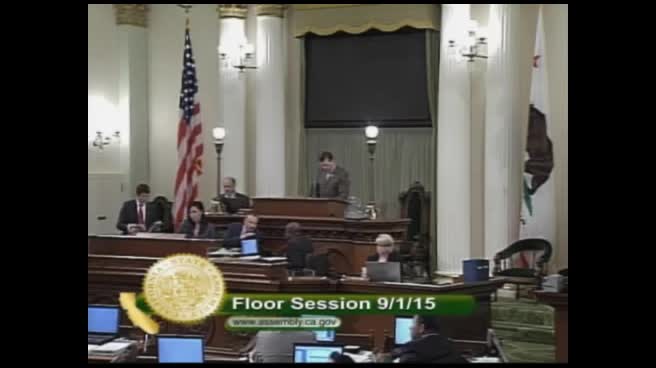
| Sep 1, 2015 | Senate amendments concurred in. To Engrossing and Enrolling. (Ayes 79. Noes 0.). |
| Sep 1, 2015 | Senate amendments concurred in. To Engrossing and Enrolling. (Ayes 79. Noes 0. Page 2737.). |
| Sep 1, 2015 | Assembly Rule 77 suspended. (Page 2729.) |
| Sep 1, 2015 | Assembly Rule 77 suspended. |
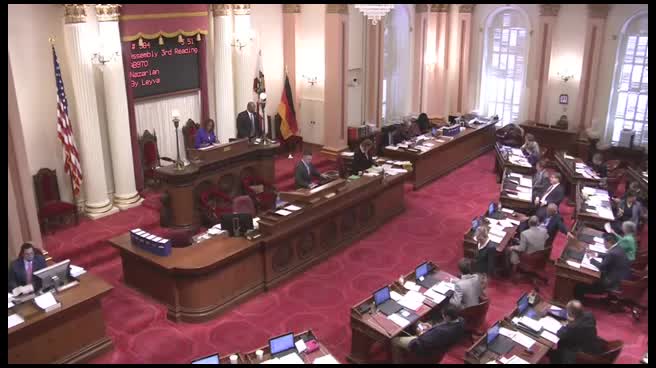
| Aug 31, 2015 | Read third time. Passed. Ordered to the Assembly. (Ayes 40. Noes 0. Page 2302.). |
| Aug 31, 2015 | Read third time. Passed. Ordered to the Assembly. |
| Aug 31, 2015 | In Assembly. Concurrence in Senate amendments pending. May be considered on or after September 2 pursuant to Assembly Rule 77. |
| Aug 26, 2015 | Read second time. Ordered to third reading. |
| Aug 25, 2015 | Read third time and amended. Ordered to second reading. |
| Aug 19, 2015 | Read second time. Ordered to third reading. |
| Aug 18, 2015 | From committee: Do pass. (Ayes 7. Noes 0.) (August 17). |
| Aug 17, 2015 | From committee chair, with author's amendments: Amend, and re-refer to committee. Read second time, amended, and re-referred to Com. on APPR. |
| Feb 24, 2015 | Read first time. To print. |
| Jun 29, 2015 | From committee: Do pass and re-refer to Com. on APPR. (Ayes 12. Noes 0.) (June 29). Re-referred to Com. on APPR. |
| Jun 4, 2015 | Referred to Com. on G.O. |
| May 26, 2015 | Read third time. Passed. Ordered to the Senate. (Ayes 76. Noes 0. Page 1594.) |
| May 26, 2015 | Read third time. Passed. Ordered to the Senate. |
| May 26, 2015 | In Senate. Read first time. To Com. on RLS. for assignment. |
| May 21, 2015 | Read second time. Ordered to Consent Calendar. |
| May 20, 2015 | From committee: Do pass. To Consent Calendar. (Ayes 15. Noes 0.) (May 20). |
| May 13, 2015 | Re-referred to Com. on APPR. |
| May 12, 2015 | From committee chair, with author's amendments: Amend, and re-refer to Com. on APPR. Read second time and amended. |
| Apr 29, 2015 | From committee: Do pass and re-refer to Com. on APPR. (Ayes 9. Noes 0.) (April 29). Re-referred to Com. on APPR. |
| Apr 14, 2015 | Re-referred to Com. on A. & A.R. |
| Apr 13, 2015 | From committee chair, with author's amendments: Amend, and re-refer to Com. on A. & A.R. Read second time and amended. |
| Mar 9, 2015 | Referred to Com. on A. & A.R. |
| Feb 25, 2015 | From printer. May be heard in committee March 27. |
|
Date
|
Description
|
Location
|
Votes
|
|
|---|---|---|---|---|
| Sep 1, 2015 | AB 606 LEVINE Concurrence in Senate Amendments | Assembly Floor |
Passed |
|
| Aug 31, 2015 | Assembly 3rd Reading AB606 Levine By Wolk | Senate Floor |
Passed |
|
| Aug 17, 2015 | Do pass | Senate Standing Committee on Appropriations |
Passed |
|
| Jun 29, 2015 | Do pass, but first be re-referred to the Committee on [Appropriations] | Senate Standing Committee on Governmental Organization |
Passed |
|
| May 26, 2015 | AB 606 LEVINE Consent Calendar Second Day Regular Session | Assembly Floor |
Passed |
|
| May 20, 2015 | Do pass. To Consent Calendar. | Assembly Standing Committee on Appropriations |
Passed |
|
| Apr 29, 2015 | Do pass and be re-referred to the Committee on [Appropriations] | Assembly Standing Committee on Accountability and Administrative Review |
Passed |
This list shows positions taken on this bill by organizations on the date displayed, which is linked to the original source.
Positions by individuals are not included.
|
Organization
|
Position
|
Date
|
|---|---|---|
| Association Of California Water Agencies | ** Support | Aug 31, 2015 |
| California Landscape Contractor'S Association | ** Support | Aug 31, 2015 |
| California Municipal Utilities Association | ** Support | Aug 31, 2015 |
| California Native Plant Society | ** Support | Aug 31, 2015 |
| East Valley Water District | ** Support | Aug 31, 2015 |
| Irvine Ranch Water District | ** Support | Aug 31, 2015 |
| Manor Elementary School | * Indeterminate | Jun 29, 2015 |
| Nevada City | * Indeterminate | Jun 29, 2015 |
| Regional Water Authority | ** Support | Aug 31, 2015 |
| Sacramento, County Of | * Indeterminate | Jun 29, 2015 |
| San Diego County Water Authority | ** Support | Aug 31, 2015 |
| Sierra Club California | ** Support | Aug 31, 2015 |
| Snow McKinney Water Agency | * Indeterminate | Jun 29, 2015 |
| Sonoma County Water Agency | ** Support | Aug 31, 2015 |
| Southern California Water Committee | ** Support | Aug 31, 2015 |
| The Metropolitan Water District Of Southern California | ** Support | Aug 31, 2015 |
| Water Reuse California | ** Support | Aug 31, 2015 |
| WateReuse California | ** Support | Jun 29, 2015 |
AB 606
Page 1
CONCURRENCE IN SENATE AMENDMENTS
AB 606
(Levine)
As Amended August 25, 2015
Majority vote
ASSEMBLY: |
76-0 |
(May 26, 2015) |
SENATE: |
40-0 |
(August 31, 2015) |
Original Committee Reference: A. & A.R.
SUMMARY: Requires state agencies to reduce water consumption and increase water efficiencies when building on state-owned real property, purchasing real property, or replacing landscaping or irrigation, where feasible, and provides an exemption for state property that is leased to a private party for agricultural purposes.
The Senate amendments expand the scope of this bill to apply to all state agencies, with the specified exception for agricultural purposes, rather than to only properties owned and managed by the Department of General Services.
FISCAL EFFECT: According to the Senate Appropriations Committee:
State agencies are not likely to incur significant costs to incorporate water-saving measures in the course of construction on state property or replacing landscaping or irrigation. This bill provides sufficient flexibility to state departments to make efficiency improvements only when feasible and cost-effective.
Unknown future savings related to reduced water consumption on state properties.
Analysis Prepared by: William Herms / A. & A.R. / (916) 319-3600 FN: 0001540
AB 606
Page 5
|
Office of Senate Floor Analyses (916) 651-1520 Fax: (916) 327-4478 |
THIRD READING
Bill No: AB 606
Amended: 8/25/15 in Senate
SENATE GOVERNMENTAL ORG. COMMITTEE: 12-0, 6/29/15
AYES: Hall, Berryhill, Block, Gaines, Glazer, Hernandez, Hill, Hueso, Lara, McGuire, Runner, Vidak
NO VOTE RECORDED: Galgiani
SENATE APPROPRIATIONS COMMITTEE: 7-0, 8/17/15
AYES: Lara, Bates, Beall, Hill, Leyva, Mendoza, Nielsen
ASSEMBLY FLOOR: 76-0, 5/26/15 - See last page for vote
SOURCE: Ms. Honda's fourth grade class, Manor Elementary, Fairfax, CA
DIGEST: This bill requires state agencies to reduce water consumption and increase water efficiencies on state property when building on state-owned property, purchasing, or replacing landscaping or irrigation, as specified. This requirement only applies when feasible and cost effective, as determined by the state agency.
Senate Floor Amendments of 8/25/15 add the use of on-site water recycling to the list of measures that are encouraged to be used to reduce water consumption and increase water efficiency by state agencies.
ANALYSIS:
Existing law:
Requires the Department of General Services (DGS) to provide planning, acquisition, construction, and maintenance of state buildings and property, and maintain a statewide property inventory of all real property held by the state.
Requires DGS, in consultation with the State Energy Resources Conservation and Development Commission, and with the concurrence of the Department of Finance, to identify each public building in DGS’s state property inventory where it is feasible for that building to reduce energy consumption and achieve energy efficiencies, as specified, and make retrofits, as specified.
Provides that the California Department of Transportation (Caltrans) has full possession and control of all state highways and associated property.
Authorizes Caltrans to perform work required to alleviate or repair damage to property during declared emergencies, as specified.
This bill:
Requires state agencies to reduce water consumption and increase water efficiencies on state property when building on state-owned property, purchasing, or replacing landscaping or irrigation, where feasible, through any or all of the following measures:
Replacement of landscaping with drought-tolerant plants with an emphasis on native plant species.
Replacement of irrigation timers to permit efficient watering schedules.
Replacement of existing irrigation with drip irrigation, bubblers, or low precipitation spray nozzles, or a combination of these irrigation methods.
Implementation of recycled water irrigation or rainwater capture irrigation or both.
Installation of irrigation submeters.
Use of on-site water recycling.
Exempts state-owned real property that is leased to a private party for agricultural purposes.
Defines “feasible” to mean that the water efficiency measures may be accomplished in a cost-effective manner within a reasonable period of time, taking into account life-cycle cost analyses and technological factors, as determined by the state agency.
Background
Purpose of the bill. According to the author, “as we enter into our fourth year of drought, the U.S. Geological Services reports that California reservoirs were 57% below average levels as of September 2014. These conditions have led Californians to engage in creative measures to reduce water consumption across the spectrum. AB 606 will require state owned lands to reduce water consumption where feasible.”`
California’s Response to the Drought. On January 17, 2014 the Governor of the State of California proclaimed a State of Emergency because of the prolonged California drought and asked all Californians to reduce water consumption by 20 percent. The proclamation directed local water suppliers to immediately implement local water shortage contingency plans. In addition, the proclamation directed the California Department of Water Resources and the State Water Resources Control Board (SWRCB) to accelerate funding for projects that could break ground in 2014 and enhance water supplies as well as ordering the SWRCB to consider modifying requirements for release of water from reservoirs or diversion limitations so that water may be conserved in reservoirs and maintain water supplies and improve water quality.
On April 25, 2014, the Governor issued as executive order to speed up actions necessary to reduce the harmful effects of the drought and called on all Californians to double their efforts to conserve water. At the end of 2014 Governor Brown issued Executive Order B-28-12 to extend the operation of provisions of the previous executive order.
On April 1, 2015 Governor Brown issued Executive Order B-29-15 and ordered the SWRCB to impose restrictions to achieve a 25 percent reduction in potable urban water usage through February 28, 2016; directed the California Department of Water Resources to lead a statewide initiative, in partnership with local agencies, to collectively replace 50 million square feet of lawns and ornamental turf with drought tolerant landscapes; and directed the California Energy Commission to implement a statewide appliance rebate program to provide monetary incentives for the replacement of inefficient household devices.
Prior/Related Legislation
SB 553 (Wolk, 2015) requires DGS to identify each public property in the department’s state property inventory where it is feasible for water consumption to be reduced and water efficiencies to be achieved through implementation of the relevant recommendations made in the model water efficient landscape ordinance and would require DGS to implement relevant recommendations where feasible, except as specified. (Held in Senate Appropriations Committee)
SB 552 (Wolk, 2015) requires the SWRCB to report to the Legislature on recommendations for solutions to the managerial, technical and maintenance fund hurdle that small, disadvantaged communities face in building and maintaining water treatment facilities and thereby obtaining funding to do so. (Pending in Assembly Environmental Safety and Toxic Materials Committee)
FISCAL EFFECT: Appropriation: No Fiscal Com.: Yes Local: No
According to the Senate Appropriations Committee, state agencies are not likely to incur significant costs to incorporate water-water saving measures in the course of construction on state property or replacing landscaping or irrigation. The bill provides sufficient flexibility to state departments to make efficiency improvement only when feasible and cost-effective. The bill could also result in unknown future savings related to reduced water consumption on state properties.
Ms. Honda's fourth grade class, Manor Elementary, Fairfax, CA (source)
Association of California Water Agencies
California Landscape Contractors Association
California Municipal Utilities Association
California Native Plant Society
City of Sacramento
East Valley Water District
Irvine Ranch Water District
Nexus eWater, Inc.
Regional Water Authority
San Diego County Water Authority
Sierra Club California
Sonoma County Water Agency
Southern California Water Committee
The Metropolitan Water District of Southern California
Water Reuse California
OPPOSITION: (Verified 8/25/15)
None received
ARGUMENTS IN SUPPORT: Ms. Honda, 4th grade teacher at Manor Elementary School in Fairfax, California, writes in support of the bill stating that her students helped to inspire and write AB 606. She argues that the bill focuses on using water efficient irrigation methods and replacing landscaping with drought tolerant plants with an emphasis on native plant species. Ms. Honda argues that, “this would help our birds and bees and other wildlife by creating pockets of habitat for them.”
According to the San Diego Water Authority, “given that landscape irrigation represents approximately 43 percent of urban water use, according to the Department of Water Resources, and that California is prone to cycles of drought and water shortage, such as the prolonged multi-year drought the state is presently experiencing, AB 606 would ensure the state take an important leadership role in implementing water efficient landscape practices.”
ASSEMBLY FLOOR: 76-0, 5/26/15
AYES: Achadjian, Alejo, Travis Allen, Baker, Bigelow, Bonilla, Bonta, Brough, Brown, Burke, Calderon, Campos, Chang, Chau, Chiu, Chu, Cooley, Cooper, Dababneh, Dahle, Daly, Dodd, Eggman, Frazier, Beth Gaines, Gallagher, Cristina Garcia, Eduardo Garcia, Gatto, Gipson, Gomez, Gonzalez, Gordon, Gray, Grove, Hadley, Roger Hernández, Holden, Irwin, Jones, Jones-Sawyer, Kim, Lackey, Levine, Linder, Lopez, Low, Maienschein, Mayes, McCarty, Medina, Melendez, Mullin, Nazarian, Obernolte, O'Donnell, Olsen, Patterson, Perea, Quirk, Rendon, Ridley-Thomas, Rodriguez, Salas, Santiago, Steinorth, Mark Stone, Thurmond, Ting, Wagner, Waldron, Weber, Wilk, Williams, Wood, Atkins
NO VOTE RECORDED: Bloom, Chávez, Harper, Mathis
Prepared by: Felipe Lopez / G.O. / (916) 651-1530
8/26/15 17:08:44
**** END ****
AB 606
Page 5
|
Office of Senate Floor Analyses (916) 651-1520 Fax: (916) 327-4478 |
THIRD READING
Bill No: AB 606
Amended: 8/17/15 in Senate
SENATE GOVERNMENTAL ORG. COMMITTEE: 12-0, 6/29/15
AYES: Hall, Berryhill, Block, Gaines, Glazer, Hernandez, Hill, Hueso, Lara, McGuire, Runner, Vidak
NO VOTE RECORDED: Galgiani
SENATE APPROPRIATIONS COMMITTEE: 7-0, 8/17/15
AYES: Lara, Bates, Beall, Hill, Leyva, Mendoza, Nielsen
ASSEMBLY FLOOR: 76-0, 5/26/15 - See last page for vote
SOURCE: Ms. Honda's fourth grade class, Manor Elementary, Fairfax, CA
DIGEST: This bill requires state agencies to reduce water consumption and increase water efficiencies on state property when building on state-owned property, purchasing, or replacing landscaping or irrigation, as specified. This requirement only applies when feasible and cost effective, as determined by the state agency.
ANALYSIS:
Existing law:
Requires the Department of General Services (DGS) to provide planning, acquisition, construction, and maintenance of state buildings and property, and maintain a statewide property inventory of all real property held by the state.
Requires DGS, in consultation with the State Energy Resources Conservation and Development Commission, and with the concurrence of the Department of Finance, to identify each public building in DGS’s state property inventory where it is feasible for that building to reduce energy consumption and achieve energy efficiencies, as specified, and make retrofits, as specified.
Provides that the California Department of Transportation (Caltrans) has full possession and control of all state highways and associated property.
Authorizes Caltrans to perform work required to alleviate or repair damage to property during declared emergencies, as specified.
This bill:
Requires state agencies to reduce water consumption and increase water efficiencies on state property when building on state-owned property, purchasing, or replacing landscaping or irrigation, where feasible, through any or all of the following measures:
Replacement of landscaping with drought-tolerant plants with an emphasis on native plant species.
Replacement of irrigation timers to permit efficient watering schedules.
Replacement of existing irrigation with drip irrigation, bubblers, or low precipitation spray nozzles, or a combination of these irrigation methods.
Implementation of recycled water irrigation or rainwater capture irrigation or both.
Installation of irrigation submeters.
Exempts state-owned real property that is leased to a private party for agricultural purposes.
Defines “feasible” to mean that the water efficiency measures may be accomplished in a cost-effective manner within a reasonable period of time, taking into account life-cycle cost analyses and technological factors, as determined by the state agency.
Background
Purpose of the bill. According to the author, “as we enter into our fourth year of drought, the U.S. Geological Services reports that California reservoirs were 57% below average levels as of September 2014. These conditions have led Californians to engage in creative measures to reduce water consumption across the spectrum. AB 606 will require state owned lands to reduce water consumption where feasible.”`
California’s Response to the Drought. On January 17, 2014 the Governor of the State of California proclaimed a State of Emergency because of the prolonged California drought and asked all Californians to reduce water consumption by 20 percent. The proclamation directed local water suppliers to immediately implement local water shortage contingency plans. In addition, the proclamation directed the California Department of Water Resources and the State Water Resources Control Board (SWRCB) to accelerate funding for projects that could break ground in 2014 and enhance water supplies as well as ordering the SWRCB to consider modifying requirements for release of water from reservoirs or diversion limitations so that water may be conserved in reservoirs and maintain water supplies and improve water quality.
On April 25, 2014, the Governor issued as executive order to speed up actions necessary to reduce the harmful effects of the drought and called on all Californians to double their efforts to conserve water. At the end of 2014 Governor Brown issued Executive Order B-28-12 to extend the operation of provisions of the previous executive order.
On April 1, 2015 Governor Brown issued Executive Order B-29-15 and ordered the SWRCB to impose restrictions to achieve a 25 percent reduction in potable urban water usage through February 28, 2016; directed the California Department of Water Resources to lead a statewide initiative, in partnership with local agencies, to collectively replace 50 million square feet of lawns and ornamental turf with drought tolerant landscapes; and directed the California Energy Commission to implement a statewide appliance rebate program to provide monetary incentives for the replacement of inefficient household devices.
Prior/Related Legislation
SB 553 (Wolk, 2015) requires DGS to identify each public property in the department’s state property inventory where it is feasible for water consumption to be reduced and water efficiencies to be achieved through implementation of the relevant recommendations made in the model water efficient landscape ordinance and would require DGS to implement relevant recommendations where feasible, except as specified. (Held in Senate Appropriations Committee)
SB 552 (Wolk, 2015) requires the SWRCB to report to the Legislature on recommendations for solutions to the managerial, technical and maintenance fund hurdle that small, disadvantaged communities face in building and maintaining water treatment facilities and thereby obtaining funding to do so. (Pending in Assembly Environmental Safety and Toxic Materials Committee)
FISCAL EFFECT: Appropriation: No Fiscal Com.: Yes Local: No
According to the Senate Appropriations Committee, state agencies are not likely to incur significant costs to incorporate water-water saving measures in the course of construction on state property or replacing landscaping or irrigation. The bill provides sufficient flexibility to state departments to make efficiency improvement only when feasible and cost-effective. The bill could also result in unknown future savings related to reduced water consumption on state properties.
Ms. Honda's fourth grade class, Manor Elementary, Fairfax, CA (source)
Association of California Water Agencies
California Landscape Contractors Association
California Municipal Utilities Association
California Native Plant Society
City of Sacramento
East Valley Water District
Irvine Ranch Water District
Regional Water Authority
San Diego County Water Authority
Sierra Club California
Sonoma County Water Agency
Southern California Water Committee
The Metropolitan Water District of Southern California
Water Reuse California
OPPOSITION: (Verified 8/18/15)
None received
ARGUMENTS IN SUPPORT: Ms. Honda, 4th grade teacher at Manor Elementary School in Fairfax, California, writes in support of the bill stating that her students helped to inspire and write AB 606. She argues that the bill focuses on using water efficient irrigation methods and replacing landscaping with drought tolerant plants with an emphasis on native plant species. Ms. Honda argues that, “this would help our birds and bees and other wildlife by creating pockets of habitat for them.”
According to the San Diego Water Authority, “given that landscape irrigation represents approximately 43 percent of urban water use, according to the Department of Water Resources, and that California is prone to cycles of drought and water shortage, such as the prolonged multi-year drought the state is presently experiencing, AB 606 would ensure the state take an important leadership role in implementing water efficient landscape practices.”
ASSEMBLY FLOOR: 76-0, 5/26/15
AYES: Achadjian, Alejo, Travis Allen, Baker, Bigelow, Bonilla, Bonta, Brough, Brown, Burke, Calderon, Campos, Chang, Chau, Chiu, Chu, Cooley, Cooper, Dababneh, Dahle, Daly, Dodd, Eggman, Frazier, Beth Gaines, Gallagher, Cristina Garcia, Eduardo Garcia, Gatto, Gipson, Gomez, Gonzalez, Gordon, Gray, Grove, Hadley, Roger Hernández, Holden, Irwin, Jones, Jones-Sawyer, Kim, Lackey, Levine, Linder, Lopez, Low, Maienschein, Mayes, McCarty, Medina, Melendez, Mullin, Nazarian, Obernolte, O'Donnell, Olsen, Patterson, Perea, Quirk, Rendon, Ridley-Thomas, Rodriguez, Salas, Santiago, Steinorth, Mark Stone, Thurmond, Ting, Wagner, Waldron, Weber, Wilk, Williams, Wood, Atkins
NO VOTE RECORDED: Bloom, Chávez, Harper, Mathis
Prepared by: Felipe Lopez / G.O. / (916) 651-1530
8/19/15 20:56:31
**** END ****
AB 606 (Levine) Page 2 of 2
SENATE COMMITTEE ON APPROPRIATIONS
Senator Ricardo Lara, Chair
2015 - 2016 Regular Session
AB 606 (Levine) - Water conservation
|
|
Version: August 17, 2015 |
Policy Vote: G.O. 12 - 0 |
Urgency: No |
Mandate: No |
Hearing Date: August 17, 2015 |
Consultant: Mark McKenzie |
This bill does not meet the criteria for referral to the Suspense File.
Bill Summary:
AB 606 would require state agencies to reduce water consumption and increase water efficiencies on state property when building on state-owned property, purchasing property, or replacing landscaping or irrigation, as specified. This requirement would only apply when feasible and cost effective, as determined by the state agency.
Fiscal Impact:
State agencies are not likely to incur significant costs to incorporate water-saving measures in the course of construction on state property or replacing landscaping or irrigation. The bill provides sufficient flexibility to state departments to make efficiency improvements only when feasible and cost-effective.
Unknown future savings related to reduced water consumption on state properties.
Background:
Existing law requires DGS to provide planning, acquisition, construction, and maintenance of state buildings and property. Existing law requires DGS to identify each public building in the DGS’s state property inventory where it is feasible for that building to reduce energy consumption and achieve energy efficiencies, as specified, and to retrofit those buildings.
Governor Brown issued two proclamations of a State of Emergency in early 2014 due to severe and ongoing drought conditions, and asked all Californians to reduce water consumption by 20 percent. In light of the impacts of the drought on water supply, the Governor issued Executive Order B-29-15 on April 1, 2015, which includes orders to save water, increase enforcement against water waste, invest in new technologies, and streamline government response, as specified. Among its provisions, the Executive Order requires the State Water Resources Control Board to impose restrictions to achieve a statewide 25 percent reduction in potable urban water usage through February 28, 2016, and requires DWR to lead a statewide initiative, in partnership with local agencies, to replace 50 million square feet of lawns and ornamental turf with drought tolerant landscapes.
Proposed Law:
AB 606 would require state agencies to reduce water consumption and increase water efficiencies when building on state-owned real property, purchasing real property, or replacing landscaping or irrigation, where feasible, through any of the following measures:
Replacement of landscaping with drought-tolerant plants, with an emphasis on native plant species.
Replacement of irrigation timers to permit efficient watering schedules.
Replacement of existing irrigation with drip irrigation, bubblers, or low precipitation spray nozzles, or a combination of these methods.
Implementation of recycled water irrigation or rainwater capture irrigation, or both.
Installation of irrigation submeters.
The feasibility of implementing water efficiency measures would be determined by the state agency as improvements that can be accomplished in a cost effective manner and within a reasonable period of time, accounting for the life-cycle costs and technological factors.
The bill provides an exemption for state property that is leased to a private party for agricultural purposes.
Staff Comments:
Both DGS and Caltrans, the primary entities responsible for state-owned property, have indicated that this bill is not likely to impose significant costs beyond those currently incurred for compliance with the Governor’s Executive Order. The bill provides adequate flexibility for state agencies to determine whether a water efficiency measure is feasible and cost-effective before implementing improvements that would save water. The bill would also only apply when an agency is making construction, landscaping, or irrigation improvements to current state-owned property, or purchasing new property.
-- END --
AB 606 (Levine) Page 4 of 4
SENATE COMMITTEE ON GOVERNMENTAL ORGANIZATION
Senator Isadore Hall, III
Chair
2015 - 2016 Regular
Bill No: AB 606 Hearing Date: 6/29/2015
Author: |
Levine |
||
Version: |
5/12/2015 Amended |
||
Urgency: |
No |
Fiscal: |
Yes |
Consultant: |
Felipe Lopez |
||
SUBJECT: Water conservation
DIGEST: This bill requires the Department of General Services (DGS) and the Department of Transportation (Caltrans) to reduce water consumption and increase water efficiencies when repairing, replacing or installing landscaping or irrigation on state properties
ANALYSIS:
Existing law:
Requires DGS to provide planning, acquisition, construction, and maintenance of state buildings and property, and maintain a statewide property inventory of all real property held by the state.
Requires DGS, in consultation with the State Energy Resources Conservation and Development Commission, and with the concurrence of the Department of Finance, to identify each public building in DGS’s state property inventory where it is feasible for that building to reduce energy consumption and achieve energy efficiencies, as specified, and make retrofits, as specified.
Provides that Caltrans has full possession and control of all state highways and associated property.
Authorizes Caltrans to perform work required to alleviate or repair damage to property during declared emergencies, as specified.
This bill:
Requires DGS and Caltrans to reduce water consumption and increase water efficiencies when repairing, replacing or installing landscaping or irrigation on state properties, where feasible, through any or all of the following:
Replacement of landscaping with drought-tolerant plants with an emphasis on native plant species.
Replacement of irrigation timers to permit efficient watering schedules.
Replacement of spray sprinkler heads with bubblers, drip irrigation, and soaker hoses.
Implementation of recycled water irrigation.
Defines “feasible” as capable of being accomplished in a successful manner within a reasonable period of time, taking into account life-cycle cost analyses, and environmental, social, historical, and technological factors.
Background
Purpose of the bill. According to the author, “as we enter into our fourth year of drought, the U.S. Geological Services reports that California reservoirs were 57% below average levels as of September 2014. These conditions have led Californians to engage in creative measures to reduce water consumption across the spectrum. AB 606 will require state owned lands to reduce water consumption where feasible.”`
California’s Response to the Drought. On January 17, 2014 the Governor of the State of California proclaimed a State of Emergency because of the prolonged California drought and asked all Californians to reduce water consumption by 20 percent. The proclamation directed local water suppliers to immediately implement local water shortage contingency plans. In addition, the proclamation directed the California Department of Water Resources and the State Water Resources Control Board (SWRCB) to accelerate funding for projects that could break ground in 2014 and enhance water supplies as well as ordering the SWRCB to consider modifying requirements for release of water from reservoirs or diversion limitations so that water may be conserved in reservoirs and maintain water supplies and improve water quality.
On April 25, 2014, the Governor issued as executive order to speed up actions necessary to reduce the harmful effects of the drought and called on all Californians to double their efforts to conserve water. At the end of 2014 Governor Brown issued Executive Order B-28-12 to extend the operation of provisions of the previous executive order.
On April 1, 2015 Governor Brown issued Executive Order B-29-15 and ordered the SWRCB to impose restrictions to achieve a 25 percent reduction in potable urban water usage through February 28, 2016; directed the California Department of Water Resources to lead a statewide initiative, in partnership with local agencies, to collectively replace 50 million square feet of lawns and ornamental turf with drought tolerant landscapes; and directed the California Energy Commission to implement a statewide appliance rebate program to provide monetary incentives for the replacement of inefficient household devices.
Prior/Related Legislation
SB 553 (Wolk, 2015) requires DGS to identify each public property in the department’s state property inventory where it is feasible for water consumption to be reduced and water efficiencies to be achieved through implementation of the relevant recommendations made in the model water efficient landscape ordinance and would require DGS to implement relevant recommendations where feasible, except as specified. (Held in Senate Appropriations Committee)
SB 552 (Wolk, 2015) requires the SWRCB to report to the Legislature on recommendations for solutions to the managerial, technical and maintenance fund hurdle that small, disadvantaged communities face in building and maintaining water treatment facilities and thereby obtaining funding to do so. (Pending in Assembly Environmental Safety and Toxic Materials Committee)
FISCAL EFFECT: Appropriation: No Fiscal Com.: Yes Local: No
SUPPORT:
Ms. Honda's fourth grade class, Manor Elementary, Fairfax, CA (Source)
Association of California Water Agencies
California Landscape Contractors Association
California Municipal Utilities Association
California Native Plant Society
East Valley Water District
Irvine Ranch Water District
Regional Water Authority
San Diego County Water Authority
Sierra Club California
Sonoma County Water Agency
The Metropolitan Water District of Southern California
Water Reuse California
OPPOSITION:
None received
ARGUMENTS IN SUPPORT: Ms. Honda, 4th grade teacher at Manor Elementary School in Fairfax, California, writes in support of the bill stating that her students helped to inspire and write AB 606. She argues that the bill focuses on using water efficient irrigation methods and replacing landscaping with drought tolerant plants with an emphasis on native plant species. Ms. Honda argues that, “this would help our birds and bees and other wildlife by creating pockets of habitat for them.”
According to the San Diego Water Authority, “given that landscape irrigation represents approximately 43 percent of urban water use, according to the Department of Water Resources, and that California is prone to cycles of drought and water shortage, such as the prolonged multi-year drought the state is presently experiencing, AB 606 would ensure the state take an important leadership role in implementing water efficient landscape practices.”
AB 606
Page 1
Date of Hearing: May 20, 2015
ASSEMBLY COMMITTEE ON APPROPRIATIONS
Jimmy Gomez, Chair
AB 606
(Levine) – As Amended May 12, 2015
Policy Committee: |
Accountability and Administrative Review |
Vote: |
9 - 0 |
|
|
|
|
|
|
|
|
Urgency: No State Mandated Local Program: No Reimbursable: No
SUMMARY:
Requires the Department of General Services (DGS) and Caltrans, when replacing or installing landscaping or irrigation on state property, as applicable, to reduce water consumption and increase water efficiency, where feasible, by installing drought tolerant plants, replacing spray sprinklers with less use-intensive devices like drip irrigation, and implementing recycled water irrigation.
FISCAL EFFECT:
Negligible fiscal impact on DGS and Caltrans, as the bill's requirements apply only when replacing existing irrigation systems or landscaping newly acquired state property, and when the specified measures are deemed to be feasible.
COMMENTS:
Purpose. According to the author's office, this bill seeks to direct the state in a proactive manner to conserve water on state-owned lands through drought-tolerant landscaping and replacement of irrigation timers, spray sprinkler heads and the use of recycled water. This bill seeks to reduce water consumption by requiring state properties to implement drought-tolerant landscaping, with an emphasis on native plant species, and to apply the use of recycled water irrigation wherever feasible.
This bill was brought to the author's office by Ms. Honda's fourth grade class at Manor Elementary in Fairfax, California.
Analysis Prepared by: Chuck Nicol / APPR. / (916) 319-2081
AB 606
Page 2
Date of Hearing: April 29, 2015
ASSEMBLY COMMITTEE ON ACCOUNTABILITY AND ADMINISTRATIVE REVIEW
Rudy Salas, Chair
AB 606
(Levine) – As Amended April 13, 2015
SUBJECT: Water conservation
SUMMARY: Requires the Department of General Services (DGS) to reduce water consumption and increase water efficiencies when repairing, replacing or installing landscaping or irrigation on state properties. Specifically, this bill requires DGS, when feasible, to:
Replace landscaping with drought-tolerant plants.
Replace irrigation timers to permit efficient watering schedules.
Replace spray sprinkler heads with bubblers, drip irrigation, and soaker hoses.
Implement the use of recycled water irrigation.
EXISTING LAW establishes the Water Conservation in Landscaping Act which provides, but is not limited to, guidance for local entities to adopt water model plans to achieve water conservation goals.
FISCAL EFFECT: Unknown
COMMENTS: According to the author's office, this bill seeks to direct the state in a proactive manner to conserve water on state-owned lands through drought-tolerant landscaping and replacement of irrigation timers, spray sprinkler heads and the use of recycled water. This bill seeks to reduce water consumption by requiring state properties to implement drought-tolerant landscaping, with an emphasis on native plant species, and to apply the use of recycled water irrigation wherever feasible.
Recent amendments add "implementation of recycled water irrigation" to the list of project types that DGS should consider. Supporters note that adding recycled water is "a cost effective, sustainable and drought-proof source of water and, whenever possible, the state should encourage the use of recycled water in place of potable water."
This bill was brought to the author's office by Ms. Honda's fourth grade class at Manor Elementary in Fairfax, California. These students are pursuing legislative action in order to do their part in addressing our state's very serious drought through water conservation. Ms. Honda's fourth grade class stands as the sponsor of the bill.
Currently, DGS is employing all of the strategies listed in the bill to achieve statewide water conservation goals. However, no specific statutory language mandates these specific strategies. This bill will contribute to the larger statewide water conservation efforts currently underway.
REGISTERED SUPPORT / OPPOSITION:
Support
Ms. Honda's fourth grade class, Manor Elementary, Fairfax, CA (Sponsor)
Association of California Water Agencies
California Municipal Utilities Association
California Native Plant Society
Irvine Ranch Water District
San Diego County Water Authority
Sonoma County Water Agency
WateReuse California
Opposition
None on file
Analysis Prepared by: William Herms / A. & A.R. / (916) 319-3600
Discussed in Hearing
 41SEC
Assembly Floor
 1MIN
Senate Floor
 1MIN
Senate Standing Committee on Appropriations
 6MIN
Senate Standing Committee on Governmental Organization
Bill Author

Bill Co-Author(s):