AB 622: Employment: E-Verify system: unlawful business practices.
- Session Year: 2015-2016
- House: Assembly
- Latest Version Date: 2015-10-09
The federal E-Verify system, administered by the United States Citizenship and Immigration Services, the United States Department of Homeland Security, and the United States Social Security Administration, enables participating employers to use the system, on a voluntary basis, to verify that the employees they hire are authorized to work in the United States.
Existing law prohibits the state, or a city, county, city and county, or special district, from requiring an employer, other than one of those government entities, to use an electronic employment verification system, including E-Verify, except when required by federal law or as a condition of receiving federal funds. Existing law prohibits an employer or any other person or entity from engaging in unfair immigration-related practices, as defined, against any person for the purpose of retaliating against the person for exercising specified rights.
This bill would expand the definition of an unlawful employment practice to prohibit an employer or any other person or entity from using the E-Verify system at a time or in a manner not required by a specified federal law or not authorized by a federal agency memorandum of understanding to check the employment authorization status of an existing employee or an applicant who has not received an offer of employment, except as required by federal law or as a condition of receiving federal funds. The bill would also require an employer that uses the E-Verify system to provide to the affected employee any notification issued by the Social Security Administration or the United States Department of Homeland Security containing information specific to the employees E-Verify case or any tentative nonconfirmation notice. The bill would provide for a civil penalty of $10,000 for an employer for each violation of these provisions. The bill would include a statement of intent.
The federal E-Verify system, administered by the United States Citizenship and Immigration Services, the United States Department of Homeland Security, and the United States Social Security Administration, enables participating employers to use the system, on a voluntary basis, to verify that the employees they hire are authorized to work in the United States.
Existing law prohibits the state, or a city, county, city and county, or special district, from requiring an employer, other than one of those government entities, to use an electronic employment verification system, including E-Verify, except when required by federal law or as a condition of receiving federal funds. Existing law prohibits an employer or any other person or entity from engaging in unfair immigration-related practices, as defined, against any person for the purpose of retaliating against the person for exercising specified rights.
This bill would expand the definition of an unlawful employment practice to prohibit an employer or any other person or entity from using the E-Verify system to check the employment authorization status of an existing employee or applicant, as specified, an applicant who has not received an offer of employment, except as required by federal law or as a condition of receiving federal funds. The bill would also require an employer that uses the E-Verify system to provide to the affected employee any notification issued by the Social Security Administration or the United States Department of Homeland Security containing information specific to the employees E-Verify case or any tentative nonconfirmation notice. The bill would provide for a civil penalty of $10,000 for an employer for each violation of these provisions. The bill would include a statement of intent.
The federal E-Verify system, administered by the United States Citizenship and Immigration Services, the United States Department of Homeland Security, and the United States Social Security Administration, enables participating employers to use the system, on a voluntary basis, to verify that the employees they hire are authorized to work in the United States.
Existing law prohibits the state, or a city, county, city and county, or special district, from requiring an employer, other than one of those government entities, to use an electronic employment verification system, including E-Verify, except when required by federal law or as a condition of receiving federal funds. Existing law prohibits an employer or any other person or entity from engaging in unfair immigration-related practices, as defined, against any person for the purpose of retaliating against the person for exercising specified rights.
This bill would expand the definition of an unlawful employment practice to prohibit an employer or any other person or entity from using the E-Verify system to check the employment authorization status of an employee or applicant, as specified, except as required by federal law or as a condition of receiving federal funds. The bill would also require an employer that uses the E-Verify system to provide to the affected employee any notification issued by the Social Security Administration or the United States Department of Homeland Security containing information specific to the employees E-Verify case or any tentative nonconfirmation notice. The bill would provide for a civil penalty of $10,000 for an employer for each violation of these provisions. The bill would include a statement of intent.
The federal E-Verify Program, system, administered by the United States Citizenship and Immigration Services, the United States Department of Homeland Security, and the United States Social Security Administration, enables participating employers to use the program, system, on a voluntary basis, to verify that the employees they hire are authorized to work in the United States.
Existing law prohibits the state, or a city, county, city and county, or special district, from requiring an employer, other than one of those government entities, to use an electronic employment verification system, including the E-Verify Program, E-Verify, except when required by federal law or as a condition of receiving federal funds. Existing law prohibits an employer or any other person or entity from engaging in unfair immigration-related practices, as defined, against any person for the purpose of retaliating against any the person for exercising specified rights.
This bill would state the intent of the Legislature to enact legislation that would prohibit employers or employment agencies, except as required by federal law or as a condition of receiving federal funds, from using the E-Verify Program for any applicant for employment, and that would expand the definition of an unlawful employment practice to prohibit an employer or employment agencys use of any electronic employment verification system on an applicant. any other person or entity from using the E-Verify system to check the employment authorization status of an employee or applicant, as specified, except as required by federal law or as a condition of receiving federal funds. The bill would also require an employer that uses the E-Verify system to provide to the affected employee any notification issued by the Social Security Administration or the United States Department of Homeland Security containing information specific to the employees E-Verify case or any tentative nonconfirmation notice. The bill would provide for a civil penalty of $10,000 for an employer for each violation of these provisions.
The federal E-Verify Program, administered by the United States Citizenship and Immigration Services, the United States Department of Homeland Security, and the United States Social Security Administration, enables participating employers to use the program, on a voluntary basis, to verify that the employees they hire are authorized to work in the United States.
Existing law prohibits the state, or a city, county, city and county, or special district, from requiring an employer, other than one of those government entities, to use an electronic employment verification system, including the E-Verify Program, except when required by federal law or as a condition of receiving federal funds. Existing law prohibits an employer or any other person or entity from engaging in unfair immigration-related practices, as defined, against any person for the purpose of retaliating against any person for exercising specified rights.
This bill would state the intent of the Legislature to enact legislation that would prohibit employers or employment agencies, except as required by federal law or as a condition of receiving federal funds, from using the E-Verify Program for any applicant for employment, and that would expand the definition of an unlawful employment practice to prohibit an employer or employment agencys use of any electronic employment verification system on an applicant.
(a)(1)Except as required by federal law or as a condition of receiving federal funds, it shall be unlawful for an employer, or any other person or entity to use the federal electronic employment verification system known as E-Verify to check the employment authorization status of an existing employee or an applicant who has not been offered employment at a time or in a manner not required under subsection (b) of Section 1324a of Title 8 of the United States Code or not authorized under any federal agency memorandum of understanding governing the use of a federal electronic employment verification system.
(2)Nothing in this section shall prohibit an employer from utilizing the federal E-Verify system, in accordance with federal law, to check the employment authorization status of a person who has been offered employment.
(b)Upon using the federal E-Verify system to check the employment authorization status of a person, if the employer receives a tentative nonconfirmation issued by the Social Security Administration or the United States Department of Homeland Security, which indicates the information entered in E-Verify did not match federal records, the employer shall comply with the required employee notification procedures under any memorandum of understanding governing the use of the federal E-Verify system. The employer shall furnish to the employee any notification issued by the Social Security Administration or the United States Department of Homeland Security containing information specific to the employees E-Verify case or any tentative nonconfirmation notice. The notification shall be furnished as soon as practicable.
(c)In addition to other remedies available, an employer who violates this section is liable for a civil penalty not to exceed ten thousand dollars ($10,000) for each violation of this section. Each unlawful use of the E-Verify system on an employee or applicant constitutes a separate violation.
(d)This section is intended to prevent discrimination in employment rather than to sanction the potential hiring and employment of persons who are not authorized for employment under federal law.
(a)(1)Except as required by federal law, law or as a condition of receiving federal funds, it shall be unlawful for an employer, or any other person or entity to use the federal electronic employment verification system known as E-Verify to check the employment authorization status of an existing employee or an applicant who has not been offered employment at a time or in a manner not required under subsection (b) of Section 1324a of Title 8 of the United States Code, Code or not authorized under any federal agency memorandum of understanding governing the use of a federal electronic employment verification system.
(2)Nothing in this section shall prohibit an employer from utilizing an employment verification the federal E-Verify system, in accordance with federal law, to check the employment authorization status of a person who has been offered employment.
(b)Upon using the federal E-Verify system to check the employment authorization status of a person, if the employer receives a tentative nonconfirmation issued by the Social Security Administration or the United States Department of Homeland Security, which indicates the information entered in E-Verify did not match federal records, the employer shall comply with the required employee notification procedures under any memorandum of understanding governing the use of the federal E-Verify system. The employer shall furnish to the employee any notification issued by the Social Security Administration or the United States Department of Homeland Security containing information specific to the employees E-Verify case or any tentative nonconfirmation notice. The notification shall be furnished promptly but not exceed the timeframe provided in the Referral Date Confirmation notice, which is generated by E-Verify after an employee chooses to contest the tentative nonconfirmation notice. as soon as practicable.
(c)In addition to other remedies available, an employer who violates this section is liable for a civil penalty not to exceed ten thousand dollars ($10,000) for each violation of this section. Each unlawful use of the E-Verify system on an employee or applicant constitutes a separate violation.
(d)This section is intended to prevent discrimination in employment rather than to sanction the potential hiring and employment of persons who are not authorized for employment under federal law.
(a)(1)Except as required by federal law, or as a condition of receiving federal funds, it shall be unlawful for an employer, or any other person or entity to use the federal electronic employment verification system known as E-Verify to check the employment authorization status of an existing employee or an applicant who has not been offered employment at a time or in a manner not required under subsection (b) of Section 1324a of Title 8 of the United States Code, or not authorized under any memorandum of understanding governing the use of a federal electronic employment verification system.
(2)Nothing in this section shall prohibit an employer from utilizing an employment verification system, in accordance with federal law, to check the employment authorization status of a person who has been offered employment.
(b)Upon using the federal E-Verify system to check the employment authorization status of a person, if the employer receives a tentative nonconfirmation issued by the Social Security Administration or the United States Department of Homeland Security, which indicates the information entered in E-Verify did not match federal records, the employer shall comply with the required employee notification procedures under any memorandum of understanding governing the use of the federal E-Verify system. The employer shall furnish to the employee any notification issued by the Social Security Administration or the United States Department of Homeland Security containing information specific to the employees E-Verify case or any tentative nonconfirmation notice. The notification shall be furnished promptly but not exceed the timeframe provided in the Referral Date Confirmation notice, which is generated by E-Verify after an employee chooses to contest the tentative nonconfirmation notice.
(c)In addition to other remedies available, an employer who violates this section is liable for a civil penalty not to exceed ten thousand dollars ($10,000) for each violation of this section. Each unlawful use of the E-Verify system on an employee or applicant constitutes a separate violation.
(d)This section is intended to prevent discrimination in employment rather than to sanction the potential hiring and employment of persons who are not authorized for employment under federal law.
(a)Except as required by federal law, or as a condition of receiving federal funds, it shall be unlawful for an employer, or any other person or entity to use the federal electronic employment verification system known as E-Verify to check the employment authorization status of an employee or applicant at a time or in a manner not required under subsection (b) of Section 1324a of Title 8 of the United States Code, or not authorized under any memorandum of understanding governing the use of a federal electronic employment verification system.
(b)Upon using the federal E-Verify system to check the employment authorization status of a person, if the employer receives a tentative nonconfirmation issued by the Social Security Administration or the United States Department of Homeland Security, which indicates the information entered in E-Verify did not match federal records, the employer shall comply with the required employee notification procedures under any memorandum of understanding governing the use of the federal E-Verify system. The employer shall furnish to the employee any notification issued by the Social Security Administration or the United States Department of Homeland Security containing information specific to the employees E-Verify case or any tentative nonconfirmation notice within the notice. The notification shall be furnished promptly but not exceed the timeframe provided in the Referral Date Confirmation notice, which is generated by E-Verify after an employee decides chooses to contest the tentative nonconfirmation notice.
(c)In addition to other remedies available, an employer who violates this section is liable for a civil penalty not to exceed ten thousand dollars ($10,000) for each violation of this section. Each unlawful use of the E-Verify system on an employee or applicant constitutes a separate violation.
(d)This section is intended to prevent discrimination in employment rather than to sanction the potential hiring and employment of persons who are not authorized for employment under federal law.
(a)Except as required by federal law, or as a condition of receiving federal funds, it shall be unlawful for an employer, or any other person or entity to use the federal electronic employment verification system known as E-Verify to check the employment authorization status of an employee or applicant at a time or in a manner not required under subsection (b) of Section 1324a of Title 8 of the United States Code, or not authorized under any memorandum of understanding governing the use of a federal electronic employment verification system.
(b)Upon using the federal E-Verify system to check the employment authorization status of a person, if the employer receives a tentative nonconfirmation issued by the Social Security Administration or the United States Department of Homeland Security, which indicates the information entered in E-Verify did not match federal records, the employer shall comply with the required employee notification procedures under any memorandum of understanding governing the use of the federal E-Verify system. The employer shall furnish to the employee any notification issued by the Social Security Administration or the United States Department of Homeland Security containing information specific to the employees E-Verify case or any tentative nonconfirmation notice within the timeframe provided in the Referral Date Confirmation notice, which is generated by E-Verify after an employee decides to contest the tentative nonconfirmation notice.
(c)In addition to other remedies available, an employer who violates this section is liable for a civil penalty not to exceed ten thousand dollars ($10,000) for each violation of this section. Each unlawful use of the E-Verify system on an employee or applicant constitutes a separate violation.
SECTION 1.It is the intent of the Legislature to enact legislation that would prohibit employers or employment agencies, except as required by federal law or as a condition of receiving federal funds, from using the E-Verify Program for any applicant for employment, and that would expand the definition of an unlawful employment practice to prohibit an employer or employment agencys use of any electronic employment verification system on an applicant.
It is the intent of the Legislature to enact legislation that would prohibit employers or employment agencies, except as required by federal law or as a condition of receiving federal funds, from using the E-Verify Program for any applicant for employment, and that would expand the definition of an unlawful employment practice to prohibit an employer or employment agencys use of any electronic employment verification system on an applicant.
|
Date
|
Status
|
|---|---|
| May 22, 2015 | Read third time. Passed. Ordered to the Senate. (Ayes 50. Noes 25. Page 1545.) |
| Oct 9, 2015 | Chaptered by Secretary of State - Chapter 696, Statutes of 2015. |
| Oct 9, 2015 | Approved by the Governor. |
| Sep 16, 2015 | Enrolled and presented to the Governor at 4 p.m. |
| Sep 4, 2015 | Senate amendments concurred in. To Engrossing and Enrolling. (Ayes 51. Noes 26.). |
| Sep 4, 2015 | Senate amendments concurred in. To Engrossing and Enrolling. (Ayes 51. Noes 26. Page 2910.). |
| Sep 4, 2015 | Senate amendments concurred in. To Engrossing and Enrolling. |
| Sep 2, 2015 | Read third time. Passed. Ordered to the Assembly. (Ayes 23. Noes 12. Page 2389.). |
| Sep 2, 2015 | Read third time. Passed. Ordered to the Assembly. |
| Sep 2, 2015 | In Assembly. Concurrence in Senate amendments pending. May be considered on or after September 4 pursuant to Assembly Rule 77. |
| Jul 7, 2015 | Read second time. Ordered to third reading. |
| Jul 6, 2015 | From committee: Be placed on second reading file pursuant to Senate Rule 28.8. |
| Jun 25, 2015 | From committee: Do pass and re-refer to Com. on APPR. (Ayes 4. Noes 1.) (June 24). Re-referred to Com. on APPR. |
| Jun 18, 2015 | From committee chair, with author's amendments: Amend, and re-refer to committee. Read second time, amended, and re-referred to Com. on L. & I.R. |
| Jun 4, 2015 | Referred to Com. on L. & I.R. |
| Feb 24, 2015 | Read first time. To print. |
| May 22, 2015 | Read third time. Passed. Ordered to the Senate. |
| May 22, 2015 | In Senate. Read first time. To Com. on RLS. for assignment. |
| May 14, 2015 | Read second time. Ordered to third reading. |
| May 13, 2015 | From committee: Do pass. (Ayes 12. Noes 5.) (May 13). |
| Apr 28, 2015 | Re-referred to Com. on APPR. |
| Apr 27, 2015 | Read second time and amended. |
| Apr 23, 2015 | From committee: Amend, and do pass as amended and re-refer to Com. on APPR. (Ayes 6. Noes 1.) (April 22). |
| Apr 16, 2015 | Re-referred to Com. on L. & E. |
| Apr 15, 2015 | From committee chair, with author's amendments: Amend, and re-refer to Com. on L. & E. Read second time and amended. |
| Apr 6, 2015 | Re-referred to Com. on L. & E. |
| Mar 26, 2015 | Referred to Com. on L. & E. |
| Mar 26, 2015 | From committee chair, with author's amendments: Amend, and re-refer to Com. on L. & E. Read second time and amended. |
| Feb 25, 2015 | From printer. May be heard in committee March 27. |
|
Date
|
Description
|
Location
|
Votes
|
|
|---|---|---|---|---|
| Sep 4, 2015 | AB 622 HERNÁNDEZ Concurrence in Senate Amendments | Assembly Floor |
Passed |
|
| Sep 2, 2015 | Assembly 3rd Reading AB622 Roger Hernández By Hall | Senate Floor |
Passed |
|
| Jun 24, 2015 | Do pass, but first be re-referred to the Committee on [Appropriations] | Senate Standing Committee on Labor and Industrial Relations |
Passed |
|
| May 22, 2015 | AB 622 HERNÁNDEZ Assembly Third Reading | Assembly Floor |
Passed |
|
| May 13, 2015 | Do pass. | Assembly Standing Committee on Appropriations |
Passed |
|
| Apr 22, 2015 | Do pass as amended and be re-referred to the Committee on [Appropriations] | Assembly Standing Committee on Labor and Employment |
Passed |
This list shows positions taken on this bill by organizations on the date displayed, which is linked to the original source.
Positions by individuals are not included.
|
Organization
|
Position
|
Date
|
|---|---|---|
| AFSCME, Local 3299 | ** Support | May 13, 2015 |
| API Equality-LA | ** Support | Sep 2, 2015 |
| Asian American's Advancing Justice-Sacramento | ** Support | Sep 2, 2015 |
| Asian Americans Advancing Justice-Los Angeles | ** Support | Sep 2, 2015 |
| Asian Law Alliance | ** Support | Sep 2, 2015 |
| CA Conference Board of the Amalgamated Transit Union | ** Support | Sep 2, 2015 |
| CA Conference of Machinists | ** Support | Sep 2, 2015 |
| California Bus Association | ** Against | Sep 2, 2015 |
| California Conference Board Of The Amalgamated Transit Union | ** Support | Sep 2, 2015 |
| California Conference Of Machinists | ** Support | Sep 2, 2015 |
| California Employment Lawyers Association | ** Support | Sep 2, 2015 |
| California Immigrant Policy Center | ** Support | Sep 2, 2015 |
| California Immigrant Youth Justice Alliance | ** Support | Sep 2, 2015 |
| California Partnership | ** Support | Sep 2, 2015 |
| California Professional Association Of Specialty Contractors | ** Against | Sep 2, 2015 |
| California Rural Legal Assistance Foundation, Inc. | ** Support | Sep 2, 2015 |
| California Teamsters Public Affairs Council | ** Support | Sep 2, 2015 |
| Central American Resource Center | ** Support | Sep 2, 2015 |
| CLEAN Carwash Campaign | ** Support | Sep 2, 2015 |
| Coalition for Humane Immigrant Rights of Los Angeles | ** Support | Sep 2, 2015 |
| Dolores Street Community Services | ** Support | Sep 2, 2015 |
| East Bay Alliance for a Sustainable Economy | ** Support | Sep 2, 2015 |
| EBASE | ** Support | May 13, 2015 |
| Educators for Fair Consideration | ** Support | Sep 2, 2015 |
| Employee Rights Center | ** Support | Sep 2, 2015 |
| Engineers and Scientists of California, IFPTE Local 20 | ** Support | Sep 2, 2015 |
| Garment Worker Center | ** Support | Sep 2, 2015 |
| Immigrant Legal Recourse Center | ** Support | Sep 2, 2015 |
| Inland Empire Immigrant Youth Coalition | ** Support | Sep 2, 2015 |
| International Longshore and Warehouse Union | ** Support | Sep 2, 2015 |
| Jobs with Justice San Francisco | ** Support | Sep 2, 2015 |
| Justice for Immigrants Coalition of Inland Southern California | ** Support | Sep 2, 2015 |
| Latino Coalition for a Healthy California | ** Support | Sep 2, 2015 |
| Mexican American Legal Defense and Educational Fund | ** Support | Sep 2, 2015 |
| National Association of Social Workers, CA Chapter | ** Support | Sep 2, 2015 |
| National Association Of Social Workers, California Chapter | ** Support | Sep 2, 2015 |
| National Day Laborer Organizing Network | ** Support | Sep 2, 2015 |
| Orange County Immigrant Youth United | ** Support | Sep 2, 2015 |
| Our Family Coalition | ** Support | Sep 2, 2015 |
| Page L | ** Support | May 13, 2015 |
| Page M | ** Support | May 13, 2015 |
| Page N | ** Support | May 13, 2015 |
| Pomona Economic Opportunity Center | ** Support | Sep 2, 2015 |
| Professional and Technical Engineers, IFPTE Local 21, AFL-CIO | ** Support | Sep 2, 2015 |
| RAIZ | ** Support | May 13, 2015 |
| Resistencia Autonomia Igualdad LideraZgo | ** Support | Sep 2, 2015 |
| Restaurant Opportunities Center of Los Angeles | ** Support | Sep 2, 2015 |
| Roots of Change | ** Support | Sep 2, 2015 |
| San Diego Immigrant Rights Consortium | ** Support | Sep 2, 2015 |
| Service Employees International Union California | ** Support | Sep 2, 2015 |
| Service, Immigrant Rights, and Education Network | ** Support | Sep 2, 2015 |
| Southern California Coalition for Occupational Safety and Health | ** Support | Sep 2, 2015 |
| Transforming Immigrant Communities through Education | ** Support | Sep 2, 2015 |
| UNITE-HERE, AFL-CIO | ** Support | Sep 2, 2015 |
| UNITE-HERE, Local 30 | ** Support | Sep 2, 2015 |
| Utility Workers Union of America | ** Support | Sep 2, 2015 |
| Voz Interpreting | ** Support | Sep 2, 2015 |
| Worksafe | ** Support | Sep 2, 2015 |
AB 622
Page 1
CONCURRENCE IN SENATE AMENDMENTS
AB 622
(Roger Hernández)
As Amended June 18, 2015
Majority vote
ASSEMBLY: |
50-25 |
(May 22, 2015) |
SENATE: |
23-12 |
(September 2, 2015) |
Original Committee Reference: L. & E.
SUMMARY: Enacts provisions of law related to the use of the federal electronic employment verification system known as E-Verify.
The Senate amendments:
Specify that an employer shall provide specified notice to an employee "as soon as practicable."
Make other minor changes.
FISCAL EFFECT: According to the Senate Appropriations Committee, pursuant to Senate Rule 28.8, negligible state costs.
COMMENTS: According to the author, this bill limits the misuse of E-Verify by prohibiting unscrupulous employers from engaging in unjust E-Verify practices against workers (consistent with federal law) and creates financial civil penalties for employers who maliciously use E-Verify against their workforce.
This bill is co-sponsored by the Mexican American Legal Defense and Educational Fund (MALDEF) and the California Immigrant Policy Center. They argue that this bill will strengthen California's protections for all workers by limiting misuse of the E-Verify program and creating penalties for abuse. The sponsors state that this bill would codify and clarify existing federal policy by prohibiting employers from engaging in potentially discriminatory E-Verify practices, clarifying the notification process for businesses and workers, and creating financial civil penalties for employer abuse.
The California Bus Association opposes this bill and argues that the federal government requires verification of citizenship or naturalization for purposes of employment, and that many of their members use E-Verify to comply with this requirement. They argue that this bill would hinder them from complying with federal law.
Analysis Prepared by: Ben Ebbink / L. & E. / (916) 319-2091 FN: 0001140
AB 622
Page 7
|
Office of Senate Floor Analyses (916) 651-1520 Fax: (916) 327-4478 |
THIRD READING
Bill No: AB 622
Author: Roger Hernández (D), et al.
Amended: 6/18/15 in Senate
SENATE LABOR & IND. REL. COMMITTEE: 4-1, 6/24/15
AYES: Mendoza, Jackson, Leno, Mitchell
NOES: Stone
SENATE APPROPRIATIONS COMMITTEE: Senate Rule 28.8
ASSEMBLY FLOOR: 50-25, 5/22/15 - See last page for vote
SUBJECT: Employment: E-Verify system: unlawful business practices
SOURCE: California Immigrant Policy Center
Mexican American Legal Defense and Educational Fund
DIGEST: This bill expands the definition of an unlawful employment practice to prohibit an employer or any other person or entity from using the E-Verify system at a time or in a manner not required by federal law or not authorized by a federal agency memorandum of understanding to check the employment authorization status of an existing employee or an applicant who has not received an offer of employment, as specified. This bill provides for a civil penalty of $10,000 for each violation of the provisions of the bill.
Existing federal law:
Prohibits a person from “knowingly” hiring, recruiting, or referring for employment an unauthorized individual or any individual without complying with specified employment verification procedures. Among other things, the law requires employers to verify that every new hire is either a U.S. citizen or authorized to work in the U.S. by completing form I-9, Employment Eligibility Verification, upon hire and submitting necessary documentation for verification.
Establishes the E-Verify Program (previously known as the Basic Pilot Program) of the U.S. Department of Homeland Security (DHS), as an Internet-based system operated by the U.S. Citizenship and Immigration Services (USCIS) in partnership with the Social Security Administration (SSA) to enable participating employers to use the program, on a voluntary basis, to verify that the employees they hire are authorized to work in the United States.
Requires employers to have all new employees complete form I-9 prior to submitting an E-Verify inquiry.
Existing state law:
Provides that all protections, rights, and remedies available under state law, except any reinstatement remedy prohibited by federal law, are available to all individuals regardless of immigration status who have applied for employment, or who are or have been employed in the state.
Prohibits the state, or a city, county, city and county, or special district, from requiring an employer, other than one of those government entities, to use an electronic employment verification system, including E-Verify, except when required by federal law or as a condition of receiving federal funds.
Prohibits an employer from engaging in (or directing another person or entity to engage in) unfair immigration-related practices against any person for the purpose of, or with the intent of, retaliating against any person for exercising any right protected under Labor Code or by any local ordinance applicable to employees. “Unfair immigration-related practice” means any of the following practices when undertaken for retaliatory purposes:
Requesting more or different employment verification documents than are required under law, or refusing to honor documents that on their face reasonably appear to be genuine.
Using the federal E-Verify system to check the employment authorization status of a person at a time or in a manner not required under federal law, or not authorized under any memorandum of understanding governing the use of the federal E-Verify system.
Threatening to file or the filing of a false police report, or a false report or complaint with any state or federal agency.
Threatening to contact or contacting immigration authorities.
This bill:
Prohibits an employer or other person, except as required by federal law or as a condition of receiving federal funds, from using E-Verify to check the employment authorization status of an existing employee or applicant at a time or in a manner not required under specified federal law or not authorized under any federal agency memorandum of understanding governing the use of a federal electronic employment verification system.
Specifies that nothing in this bill shall prohibit an employer from utilizing E-Verify in accordance with federal law to check the employment authorization status of an individual who has been offered employment.
Provides that if the employer receives a tentative nonconfirmation issued by the SSA or the DHS, the employer shall comply with the required employee notification procedures under any memorandum of understanding governing the use of the federal E-Verify system, including to furnish to the employee with the notification as soon as practicable.
Provides that, in addition to other remedies available, an employer is liable for a civil penalty not to exceed $10,000 for each unlawful use of the E-Verify system.
States that this bill is intended to prevent discrimination in employment rather than to sanction the potential hiring and employment of workers who are not authorized for employment under federal law.
Background
E-Verify: E-Verify is a voluntary Internet-based system operated by the USCIS in partnership with the SSA. The purpose of E-Verify is to electronically compare information entered on the I-9 form with records contained in SSA and USCIS databases to verify the identity and employment eligibility of newly hired employees. Currently, E-Verify is free to employers and available in all 50 states, the District of Columbia, Puerto Rico, Guam and the U.S. Virgin Islands. According to USCIS, the program is currently able to compare information taken from the I-9 form against more than 425 million records in SSA’s database, and more than 60 million records in DHS’s immigration databases. New enhancements to E-Verify also includes naturalization data which can help to instantly confirm the citizenship status of naturalized U.S. citizens; however, naturalized citizens who have not yet updated their records with SSA are the largest category of work authorized persons who initially face an SSA mismatch.
Once a case is submitted, E-Verify determines if the information entered matches the information in government records. After the information is provided, E-Verify provides an initial case result, which is either “Employment Authorized” or “Tentative Nonconfirmation” (TNC). If an employee receives a TNC, the employer must promptly provide the employee with a written notice, at which time the employee either elects to contest it or not to contest it. If an employee decides to contest the TNC, the employer must promptly provide a referral letter from E-Verify that contains specific instructions, contact information, and a deadline for contacting either DHS or SSA, depending on the source of the mismatch. The employee must be given eight federal government work days to contact the appropriate federal agency to resolve the information mismatch.
On March 21, 2011, USCIS launched E-Verify Self Check, the first online E-Verify program offered directly to the U.S. workforce. This program enables individuals to voluntarily check their own employment eligibility information to confirm that it is in order. If Self Check finds a data-mismatch, the individual can receive instructions to correct the records with the appropriate federal agency.
Accuracy of TNCs and Proper Use of E-Verify: The effectiveness of E-Verify has been questioned by the U.S. Government Accountability Office (GAO). On December 17, 2010, the GAO released a report to several Committees in the House of Representatives, titled “Employment Verification: Federal Agencies Have Taken Steps to Improve E-Verify, but Significant Challenges Remain.” According to GAO, the E-Verify system has improved since its creation, however, the system still faces challenges, including the rate of TNC letters that may occur because of an employee's failure to update his or her nationalization status in SSA databases, failure to report a change in his or her name to SSA or an employer's error in entering the employee's data into the E-Verify system.
The GAO report also notes that of the 22,512 TNCs resulting from name mismatches in 2009; approximately 76 percent were for citizens and approximately 24 percent for noncitizens. The GAO asserts that, an E-Verify mandate for all new hires would generate approximately 60 million queries and of these, about 164,000 citizens and noncitizens would receive a name-related TNC each year. However, GAO warns that this number would greatly increase if E-Verify were made mandatory for all employees nationwide.
FISCAL EFFECT: Appropriation: No Fiscal Com.: Yes Local: No
California Immigrant Policy Center (co-source)
Mexican American Legal Defense and Educational Fund (co-source)
American Federation of State, County and Municipal Employees, Local 3299
API Equality-LA
Asian Americans Advancing Justice-Los Angeles
Asian American's Advancing Justice-Sacramento
Asian Law Alliance
California Conference Board of the Amalgamated Transit Union
California Conference of Machinists
California Employment Lawyers Association
California Immigrant Youth Justice Alliance
California Partnership
California Rural Legal Assistance Foundation
California Teamsters Public Affairs Council
Central American Resource Center
CLEAN Carwash Campaign
Coalition for Humane Immigrant Rights of Los Angeles
Dolores Street Community Services
East Bay Alliance for a Sustainable Economy
Educators for Fair Consideration
Employee Rights Center
Engineers and Scientists of California, IFPTE Local 20
Filipino American Service Group Inc.
Garment Worker Center
Immigrant Legal Recourse Center
Inland Empire Immigrant Youth Coalition
International Longshore and Warehouse Union
Jobs with Justice San Francisco
Justice for Immigrants Coalition of Inland Southern California
Latino Coalition for a Healthy California
National Association of Social Workers, California Chapter
National Day Laborer Organizing Network
Orange County Immigrant Youth United
Our Family Coalition
Pomona Economic Opportunity Center
Professional and Technical Engineers, IFPTE Local 21, AFL-CIO
Resistencia Autonomia Igualdad LideraZgo
Restaurant Opportunities Center of Los Angeles
Roots of Change
San Diego Immigrant Rights Consortium
Service Employees International Union California
Service, Immigrant Rights, and Education Network
Southern California Coalition for Occupational Safety and Health
The CLEAN Carwash Campaign
Transforming Immigrant Communities through Education
UNITE-HERE, AFL-CIO
UNITE-HERE, Local 30
Utility Workers Union of America
Voz Interpreting
Worksafe
California Professional Association of Specialty Contractors
ARGUMENTS IN SUPPORT: According to the author, each year, thousands of people may be wrongly kept from working or even fired because of a federal program known as E-Verify. TNC rates are particularly high for employment-authorized immigrant workers even if they are employment authorized. This is of significant concern because companies have taken adverse actions against individuals and workers who receive TNCs. While the President’s “deferred action” deportation relief initiatives represent key steps forward, individuals eligible for these newly announced programs could potentially be erroneously flagged by the E-Verify system, at least half of California’s undocumented immigrant community members are excluded from protection. Misuse of E-Verify threatens to drive undocumented Californians deeper into the underground economy.
The author states that while the use of E-Verify is optional for most companies in California, it builds an added barrier within the employer-employee relationship. By using E-Verify, companies are positioned to act as immigration agents causing detriment to productivity and confusion in the workplace. Under federal regulations, E-Verify should not be used on job applicants and current workers yet there are virtually no accountability measures or penalties in place for unscrupulous employers who abuse E-Verify. Proponents argue that this bill will strengthen California's protections for all workers by limiting misuse of the E-Verify program and creating penalties for abuse.
ARGUMENTS IN OPPOSITION: The California Professional Association of Specialty Contractors believes that immigration policies and practices, including the E-Verify system, are federal government issues and that it is best to have the federal government deal with potential unlawful business practices.
ASSEMBLY FLOOR: 50-25, 5/22/15
AYES: Bloom, Bonilla, Bonta, Brown, Burke, Calderon, Campos, Chau, Chiu, Chu, Cooley, Cooper, Dababneh, Daly, Dodd, Eggman, Frazier, Cristina Garcia, Eduardo Garcia, Gatto, Gipson, Gomez, Gonzalez, Gordon, Gray, Roger Hernández, Holden, Irwin, Jones-Sawyer, Levine, Lopez, Low, Mathis, McCarty, Medina, Mullin, Nazarian, Perea, Quirk, Rendon, Ridley-Thomas, Rodriguez, Salas, Santiago, Mark Stone, Thurmond, Ting, Williams, Wood, Atkins
NOES: Achadjian, Travis Allen, Baker, Bigelow, Brough, Chang, Chávez, Dahle, Beth Gaines, Gallagher, Grove, Hadley, Harper, Jones, Kim, Lackey, Linder, Maienschein, Mayes, Melendez, Obernolte, Patterson, Steinorth, Wagner, Wilk
NO VOTE RECORDED: Alejo, O'Donnell, Olsen, Waldron, Weber
Prepared by: Alma Perez / L. & I.R. / (916) 651-1556
7/9/15 8:58:55
**** END ****
AB 622 (Roger Hernández) Page 7 of 7
SENATE COMMITTEE ON LABOR AND INDUSTRIAL RELATIONS
Senator Tony Mendoza, Chair
2015 - 2016 Regular
Bill No: AB 622 Hearing Date: June 24, 2015
Author: |
Roger Hernández |
||
Version: |
June 18, 2015 |
||
Urgency: |
No |
Fiscal: |
Yes |
Consultant: |
Alma Perez-Schwab |
||
Subject: Employment: E-Verify system: unlawful business practices.
KEY ISSUES
Should the Legislature prohibit an employer, or other person or entity, from using the E-Verify electronic employment verification system to check the employment authorization status of an existing employee or applicant at a time or in a manner inconsistent with federal law?
Should an employer who violates these provisions be liable for a civil penalty not to exceed $10,000 for each unlawful use of E-Verify, in addition to any other remedies available in law?
ANALYSIS
Under existing law, it is illegal for a person or other entity to “knowingly” hire, recruit, or refer for employment an unauthorized individual or any individual without complying with specified employment verification procedures. Among other things, the law requires employers to verify that every new hire is either a U.S. citizen or authorized to work in the United States by completing form I-9, Employment Eligibility Verification, upon hire and submitting necessary documentation for verification. In 1996, Congress passed the Illegal Immigration Reform and Immigrant Responsibility Act (IIRIRA), which required the Social Security Administration (SSA) and the Immigration and Naturalization Service (INS), now the U.S. Citizenship and Immigration Service (USCIS), to initiate employment verification pilot programs.
Under federal law, the E-Verify Program (previously known as the Basic Pilot Program) of the U.S. Department of Homeland Security (DHS), implements the employment verification mandate under the IIRIRA. The E-Verify Program is an internet-based system operated by the USCIS in partnership with the SSA. The E-Verify Program enables participating employers to use the program, on a voluntary basis, to verify that the employees they hire are authorized to work in the United States. In addition, employers are required by federal law to have new employees complete form I-9 prior to submitting an E-Verify inquiry.
Both state and federal law contains various provisions prohibiting employment discrimination on different bases, including, but not limited to, the race, color, sex, religion, or marital status of a person. In addition, existing federal law pertaining to E-Verify specifies, among others, that:
Employers may not use E-Verify to discriminate against any job applicant or new hire on the basis of his/her national origin, citizenship, or immigration status;
Employers may not use the system to pre-screen applicants for employment;
Employers may not verify newly hired employees selectively; and
Employers cannot take any adverse action against an employee based upon E-Verify unless the program issues a Final Non-confirmation.
Under existing California law, all protections, rights, and remedies available under state law, except any reinstatement remedy prohibited by federal law, are available to all individuals regardless of immigration status who have applied for employment, or who are or have been employed in the state. In addition, for purposes of enforcing state labor and employment laws, a person’s immigration status is irrelevant to the issue of liability or in proceedings, where no inquiry is permitted into a person’s immigration status except where the person seeking the inquiry has shown, by clear and convincing evidence, that the inquiry is necessary in order to comply with federal immigration law. (Labor Code §1171.5; Civic Code §3339; Health and Safety Code §24000; Government Code §7285)
Existing law prohibits an employer from engaging in (or directing another person or entity to engage in) unfair immigration-related practices against any person for the purpose of, or with the intent of, retaliating against any person for exercising any right protected under Labor Code or by any local ordinance applicable to employees. “Unfair immigration-related practice” means any of the following practices when undertaken for retaliatory purposes (Labor Code §1019):
Requesting more or different employment verification documents than are required under law, or refusing to honor documents that on their face reasonably appear to be genuine.
Using the federal E-Verify system to check the employment authorization status of a person at a time or in a manner not required under federal law, or not authorized under any memorandum of understanding governing the use of the federal E-Verify system.
Threatening to file or the filing of a false police report, or a false report or complaint with any state or federal agency.
Threatening to contact or contacting immigration authorities.
Existing law prohibits the state, or a city, county, city and county, or special district, from requiring an employer, other than one of those government entities, to use an electronic employment verification system, including E-Verify, except when required by federal law or as a condition of receiving federal funds. (Labor Code §2811-2813)
This Bill would enact provisions of law related to the use of the federal electronic employment verification system known as E-Verify.
Specifically, this bill:
Prohibits an employer or other person, except as required by federal law or as a condition of receiving federal funds, from using E-Verify to check the employment authorization status of an existing employee or applicant at a time or in a manner not required under specified federal law or not authorized under any federal agency memorandum of understanding governing the use of a federal electronic employment verification system.
Specifies that nothing in this bill shall prohibit an employer from utilizing E-Verify in accordance with federal law to check the employment authorization status of an individual who has been offered employment.
Provides that if the employer receives a tentative nonconfirmation issued by the Social Security Administration or the United States Department of Homeland Security, the employer shall comply with the required employee notification procedures under any memorandum of understanding governing the use of the federal E-Verify system, including to furnish to the employee with the notification as soon as practicable.
Provides that, in addition to other remedies available, an employer is liable for a civil penalty not to exceed $10,000 for each unlawful use of the E-Verify system.
States that this bill is intended to prevent discrimination in employment rather than to sanction the potential hiring and employment of workers who are not authorized for employment under federal law.
COMMENTS
1. Background on E-Verify:
E-Verify is a voluntary internet-based system operated by the USCIS in partnership with the SSA. The purpose of E-Verify is to electronically compare information entered on the I-9 form with records contained in SSA and USCIS databases to verify the identity and employment eligibility of newly hired employees. Currently, E-Verify is free to employers and available in all 50 states, the District of Columbia, Puerto Rico, Guam and the U.S. Virgin Islands. According to USCIS, the program is currently able to compare information taken from the I-9 form against more than 425 million records in SSA’s database, and more than 60 million records in DHS’s immigration databases. New enhancements to E-Verify also includes naturalization data which can help to instantly confirm the citizenship status of naturalized U.S. citizens; however, naturalized citizens who have not yet updated their records with SSA are the largest category of work authorized persons who initially face an SSA mismatch.
Once a case is submitted to E-Verify, E-Verify determines if the information entered matches the information in government records. After the information is provided, E-Verify provides an initial case result, which is either “Employment Authorized” or “Tentative Nonconfirmation” (TNC). If an employee receives a TNC in E-Verify, the employer must promptly provide the employee with a written notice about the TNC, at which time the employee either elects to contest it or not to contest it. If an employee decides to contest the TNC, the employer must promptly provide a referral letter from E-Verify that contains specific instructions, contact information, and a deadline for contacting either the Department of Homeland Security (DHS) or the Social Security Administration (SSA), depending on the source of the mismatch. The employee must be given eight federal government work days to contact the appropriate federal agency to resolve the information mismatch.
On March 21, 2011, USCIS launched E-Verify Self Check, the first online E-Verify program offered directly to the U.S. workforce. This program enables individuals to voluntarily check their own employment eligibility information to confirm that it is in order. If Self Check finds a data-mismatch, the individual can receive instructions to correct the records with the appropriate federal agency.
2. Accuracy of TNCs and Proper Use of E-Verify:
The effectiveness of E-Verify has been questioned by the U.S. Government Accountability Office (GAO). On December 17, 2010, the GAO released a report to several Committees in the House of Representatives, titled “Employment Verification: Federal Agencies Have Taken Steps to Improve E-Verify, but Significant Challenges Remain.” According to GAO, the E-Verify system has improved since its creation, however, the system still faces challenges, including the rate of tentative non-confirmation letters (TNCs) that may occur because of an employee's failure to update his or her nationalization status in SSA databases, failure to report a change in his or her name to SSA or an employer's error in entering the employee's data into the E-Verify system.
The GAO report also notes that of the 22,512 TNCs resulting from name mismatches in 2009; approximately 76 percent were for citizens and approximately 24 percent for noncitizens. The GAO asserts that, an E-Verify mandate for all new hires would generate approximately 60 million queries and of these, about 164,000 citizens and noncitizens would receive a name-related TNC each year. However, GAO warns that this number would greatly increase if E-Verify were made mandatory for all employees nationwide.
Existing law prohibits an employer from engaging in (or directing another person or entity to engage in) unfair immigration-related practices against any person for the purpose of, or with the intent of, retaliating against any person for exercising any right protected under Labor Code or by any local ordinance applicable to employees. “Unfair immigration-related practice” means any of the following practices when undertaken for retaliatory purposes:
Requesting more or different employment verification documents than are required under law, or refusing to honor documents that appear to be genuine.
Using the federal E-Verify system to check the employment authorization status of a person at a time or in a manner not required under federal law, or not authorized under any memorandum of understanding governing the use of the federal E-Verify system.
Threatening to file or the filing of a false police report, or a false report or complaint with any state or federal agency.
Threatening to contact or contacting immigration authorities.
3. Need for this bill?
The electronic employment verification program of E-Verify confirms the employment authorization of new hires based on information provided on the Federal Form I-9. However, because Form I-9 may only be completed after an employee has been offered and accepted employment, E-Verify may not be used to prescreen applicants. In addition, if an employer chooses to use E-Verify, it must be used for all new hires (both U.S. citizens and non-citizens) and cannot be used to verify current employees unless the employer is required to under a federal contract. Additionally, employers cannot take any adverse action based on an E-Verify TNC against an employee who contests the TNC. Adverse actions include firing, suspending, withholding pay or training, or otherwise infringing upon the employee’s employment. Lastly, employers must allow employees to work while they are contesting their TNCs and until the employee receives a Final Nonconfirmation (FNC).
As noted above, according to the U.S. Government Accountability Office, of the 22,512 TNCs resulting from name mismatches in 2009, approximately 76 percent were for U.S. citizens and approximately 24 percent for noncitizens. The error rate of E-Verify has resulted in several potential employees being misidentified as not being eligible for employment, and many having to utilize financial and legal resources to resolve the discrepancies. The author and the sponsors state that there have been reports of employers misusing E-verify against their workers. They believe this bill is necessary to limit the misuse of E-verify by prohibiting employers from engaging in unjust E-Verify practices against workers and imposing a civil penalty of a maximum of $10,000 for each unlawful use of the E-Verify system.
4. Proponent Arguments:
According to the author, each year, thousands of people may be wrongly kept from working or even fired because of a federal program known as E-Verify. TNC rates are particularly high for employment-authorized immigrant workers even if they are employment authorized. This is of significant concern because companies have taken adverse actions against individuals and workers who receive TNCs. While the President’s “deferred action” deportation relief initiatives represent key steps forward, individuals eligible for these newly announced programs could potentially be erroneously flagged by the E-Verify system, at least half of California’s undocumented immigrant community members are excluded from protection. Misuse of E-Verify threatens to drive undocumented Californians deeper into the underground economy.
The author states that while E-Verify is optional for most companies in California, it builds an added barrier within the employer-employee relationship. By using E-Verify, companies are positioned to act as immigration agents causing detriment to productivity and confusion in the workplace. Under federal regulations, E-Verify should not be used on job applicants and current workers yet there are virtually no accountability measures or penalties in place for unscrupulous employers who abuse E-Verify.
This bill is co-sponsored by the Mexican American Legal Defense and Educational Fund (MALDEF) and the California Immigrant Policy Center. They argue that this bill will strengthen California's protections for all workers by limiting misuse of the E-Verify program and creating penalties for abuse. The sponsors states that this bill would codify and clarify existing federal policy by prohibiting employers from engaging in potentially discriminatory E-Verify practices, clarifying the notification process for businesses and workers, and creating financial civil penalties for employer abuse.
5. Opponent Arguments:
The California Bus Association has major concerns over the fact that the federal government, who has jurisdiction of immigration and naturalization, requires verification of citizenship or naturalization for purposes of employment. Many of the companies in their association use E-Verify or something similar to comply with this law. They argue that this bill hinders their ability to comply with federal law by not allowing them to use the E-Verify system.
The California Professional Association of Specialty Contractors believes that immigration policies and practices, including the E-Verify system, are federal government issues and that it is best to have the federal government deal with potential unlawful business practices.
6. Prior Legislation:
AB 1065 (Chiu) of 2015: Held in Assembly Suspense
AB 1065 would make it an unlawful employment practice for an employer to request more or different documents than are required under federal law for employment eligibility verification (I-9 form), or to refuse to honor documents tendered that appear to be genuine, or to discriminate against an immigrant with authorization to work based upon the specific status or term of status that accompanies the authorization, or to attempt to reinvestigate or re-verify an incumbent employee’s authorization unless required by federal law.
AB 263 (R. Hernandez) of 2013: Chaptered
AB 263 prohibits an employer or any other person or entity from engaging in unfair immigration-related practices, as defined, against any person for the purpose of retaliating against the person for exercising specified rights. The law defines "unfair immigration-related practice" to include using E-Verify to check the employment authorization status at a time or in a manner not required under federal law or authorized under a federal memorandum of understanding.
AB 1236 (Fong) of 2011: Chaptered
AB 1236, enacted provisions of law that prohibit state and local entities from requiring an employer to use an electronic employment verification system, including E-Verify, except when required by federal law or as a condition of receiving federal funds.
SUPPORT
California Immigrant Policy Center (Sponsor)
Mexican American Legal Defense and Educational Fund (Sponsor)
American Federation of State, County and Municipal Employees, Local 3299
API Equality-LA
Asian Americans Advancing Justice-Los Angeles
Asian American's Advancing Justice-Sacramento
Asian Law Alliance
CA Conference Board of the Amalgamated Transit Union
CA Conference of Machinists
California Conference Board of the Amalgamated Transit Union
California Conference of Machinists
California Employment Lawyers Association
California Immigrant Youth Justice Alliance
California Partnership
California Rural Legal Assistance Foundation
California Teamsters Public Affairs Council
Central American Resource Center
CLEAN Carwash Campaign
Coalition for Humane Immigrant Rights of Los Angeles
Dolores Street Community Services
East Bay Alliance for a Sustainable Economy
Educators for Fair Consideration
Employee Rights Center
Engineers and Scientists of California, IFPTE Local 20
Filipino American Service Group Inc.
Garment Worker Center
Immigrant Legal Recourse Center
Inland Empire Immigrant Youth Coalition
International Longshore and Warehouse Union
Jobs with Justice San Francisco
Justice for Immigrants Coalition of Inland Southern California
Latino Coalition for a Healthy California
National Association of Social Workers, CA Chapter
National Day Laborer Organizing Network
Orange County Immigrant Youth United
Our Family Coalition
Pomona Economic Opportunity Center
Professional and Technical Engineers, IFPTE Local 21, AFL-CIO
Resistencia Autonomia Igualdad LideraZgo
Restaurant Opportunities Center of Los Angeles
Roots of Change
San Diego Immigrant Rights Consortium
Service Employees International Union California
Service, Immigrant Rights, and Education Network
Southern California Coalition for Occupational Safety and Health
The CLEAN Carwash Campaign
Transforming Immigrant Communities through Education
UNITE-HERE, AFL-CIO
UNITE-HERE, Local 30
Utility Workers Union of America
Voz Interpreting
Worksafe
OPPOSITION
California Bus Association
California Professional Association of Specialty Contractors
-- END –
AB 622
Page 2
ASSEMBLY THIRD READING
AB 622
(Roger Hernández)
As Amended April 27, 2015
Majority vote
Committee |
Votes |
Ayes |
Noes |
Labor |
6-1 |
Roger Hernández, Chu, Low, McCarty, Patterson, Thurmond |
Harper |
Appropriations |
12-5 |
Gomez, Bloom, Bonta, Calderon, Daly, Eggman, Eduardo Garcia, Holden, Quirk, Rendon, Weber, Wood |
Bigelow, Chang, Gallagher, Jones, Wagner |
SUMMARY: Enacts provisions of law related to the use of the federal electronic employment verification system known as E-Verify. Specifically, this bill:
Prohibits an employer or other person, except as required by federal law or as a condition of receiving federal funds, from using the federal electronic employment verification system known as E-Verify to check the employment authorization status of an employee or applicant at a time or in a manner not required under specified federal law or not authorized under any memorandum of understanding governing the use of a federal electronic employment verification system.
Specifies that nothing in this bill shall be interpreted to prohibit an employer from utilizing an employment verification system in accordance with federal law to check the employment authorization status of an individual who has been offered employment.
Provides that if the employer receives a tentative nonconfirmation (or "no-match letter") issued by the Social Security Administration or the United States Department of Homeland Security, the employer shall comply with the required employee notification procedures under any memorandum of understanding governing the use of the federal E-Verify system.
Requires the employer to furnish to the employee any specified notification containing information specific to the employee’s E-Verify case or any tentative nonconfirmation notice promptly, but not exceeding the timeframe provided in the Referral Date Confirmation notice, which is generated by E-Verify after an employee chooses to contest the tentative nonconfirmation notice.
Provides that, in addition to other remedies available, an employer who violates this bill is liable for a civil penalty not $10,000 for each unlawful use of the E-Verify system.
States that this bill is intended to prevent discrimination in employment rather than to sanction the potential hiring and employment of employees who are not authorized for employment under federal law.
FISCAL EFFECT: According to the Assembly Appropriations Committee, this bill will result in minor and absorbable costs to the Department of Industrial Relations.
COMMENTS: According to the author, this bill limits the misuse of E-Verify by prohibiting unscrupulous employers from engaging in unjust E-Verify practices against workers (consistent with federal law) and creates financial civil penalties for employers who maliciously use E-Verify against their workforce.
This bill is co-sponsored by the Mexican American Legal Defense and Educational Fund (MALDEF) and the California Immigrant Policy Center. They argue that this bill will strengthen California's protections for all workers by limiting misuse of the E-Verify program and creating penalties for abuse. The sponsors state that this bill would codify and clarify existing federal policy by prohibiting employers from engaging in potentially discriminatory E-Verify practices, clarifying the notification process for businesses and workers, and creating financial civil penalties for employer abuse.
The California Bus Association opposes this bill and argues that the federal government requires verification of citizenship or naturalization for purposes of employment, and that many of their members use E-Verify to comply with this requirement. They argue that this bill would hinder them from complying with federal law.
Analysis Prepared by: Ben Ebbink / L. & E. / (916) 319-2091 FN: 0000370
AB 622
Page 2
Date of Hearing: May 13, 2015
ASSEMBLY COMMITTEE ON APPROPRIATIONS
Jimmy Gomez, Chair
AB 622
(Roger Hernández) – As Amended April 27, 2015
Policy Committee: |
Labor and Employment |
Vote: |
6 - 1 |
|
|
|
|
|
|
|
|
Urgency: No State Mandated Local Program: No Reimbursable: No
SUMMARY:
This bill expands the definition of unlawful employment practice to prohibit an employer or other person, except as required by federal law or as a condition of receiving federal funds, from using the federal electronic employment verification system known as E-Verify to check the employment authorization status of an existing employee or an applicant who has not been offered employment. Specifically, this bill:
Specifies that nothing in this bill is to be interpreted to prohibit an employer from utilizing an employment verification system in accordance with federal law to check the employment authorization status of an individual who has been offered employment.
Provides that if the employer receives a tentative nonconfirmation (or "no-match letter") issued by the Social Security Administration or the United States Department of Homeland Security, the employer is required to comply with the required employee notification procedures under any memorandum of understanding governing the use of the federal E-Verify system.
Requires the employer to furnish to the employee any specified notification containing information specific to the employee’s E-Verify case or any tentative nonconfirmation notice promptly, but not exceeding the timeframe provided in the Referral Date Confirmation notice, which is generated by E-Verify after an employee chooses to contest the tentative nonconfirmation notice.
Provides that, in addition to other remedies available, an employer who violates this bill is liable for a civil penalty not $10,000 for each unlawful use of the E-Verify system.
States that this bill is intended to prevent discrimination in employment rather than to sanction the potential hiring and employment of employees who are not authorized for employment under federal law.
FISCAL EFFECT:
Minor/absorbable costs to the Department of Industrial Relations (DIR) Division of Labor Standards Enforcement to monitor compliance and enforcement related to discriminatory use of the E-Verify system.
COMMENTS:
Purpose. E-Verify is an Internet-based system that compares information from an employee's Form I-9, Employment Eligibility Verification, to data from U.S. Department of Homeland Security and Social Security Administration records to confirm employment eligibility.
Some critics of the program have argued that it has been hindered by inaccurate and outdated information in the DHS and SSA databases and misuse of the program by employers. According to the author, each year, thousands of people may be wrongly kept from working or even fired because of a federal program known as E-Verify.
This bill is co-sponsored by the Mexican American Legal Defense and Educational Fund (MALDEF) and the California Immigrant Policy Center with the goal of strengthening California's protections for all workers by limiting misuse of the E-Verify program and creating penalties for abuse.
Prior Legislation.
AB 1236 (Fong), Chapter 691, Statutes of 2011 enacted provisions of law that prohibit state and local entities from requiring an employer, other than one of those government entities, to use an electronic employment verification system, including E-Verify, except when required by federal law or as a condition of receiving federal funds.
AB 263 (Roger Hernández), Chapter 732, Statutes of 2013 prohibited an employer or any other person or entity from engaging in unfair immigration-related practices, as defined, against any person for the purpose of retaliating against the person for exercising specified rights. The law defines "unfair immigration-related practice" to include using E-Verify to check the employment authorization status at a time or in a manner not required under federal law or authorized under a federal memorandum of understanding.
Analysis Prepared by: Misty Feusahrens / APPR. / (916) 319-2081
AB 622
Page 6
Date of Hearing: April 22, 2015
ASSEMBLY COMMITTEE ON LABOR AND EMPLOYMENT
Roger Hernández, Chair
AB 622
(Roger Hernández) – As Proposed to be Amended April 22, 2015
SUBJECT: Employment: E-Verify system: unlawful business practices
SUMMARY: Enacts provisions of law related to the use of the federal electronic employment verification system known as E-Verify. Specifically, this bill:
Prohibits an employer or other person, except as required by federal law or as a condition of receiving federal funds, from using the federal electronic employment verification system known as E-Verify to check the employment authorization status of an employee or applicant at a time or in a manner not required under specified federal law or not authorized under any memorandum of understanding governing the use of a federal electronic employment verification system.
Specifies that nothing in this bill shall be interpreted to prohibit an employer from utilizing an employment verification system in accordance with federal law to check the employment authorization status of an individual who has been offered employment.
Provides that if the employer receives a tentative nonconfirmation (or "no-match letter") issued by the Social Security Administration or the United States Department of Homeland Security, the employer shall comply with the required employee notification procedures under any memorandum of understanding governing the use of the federal E-Verify system.
Requires the employer to furnish to the employee any specified notification containing information specific to the employee’s E-Verify case or any tentative nonconfirmation notice promptly, but not exceeding the timeframe provided in the Referral Date Confirmation notice, which is generated by E-Verify after an employee chooses to contest the tentative nonconfirmation notice.
Provides that, in addition to other remedies available, an employer who violates this bill is liable for a civil penalty not $10,000 for each unlawful use of the E-Verify system.
States that this bill is intended to prevent discrimination in employment rather than to sanction the potential hiring and employment of employees who are not authorized for employment under federal law.
EXISTING LAW:
Prohibits an employer or any other person or entity from engaging in unfair immigration-related practices, as defined, against any person for the purpose of retaliating against the person for exercising specified rights.
Prohibits the state, or a city, county, city and county, or special district, from requiring an employer, other than one of those government entities, to use an electronic employment verification system, including E-Verify, except when required by federal law or as a condition of receiving federal funds.
FISCAL EFFECT: Unknown
COMMENTS: According to the author, this bill limits the misuse of E-verify by prohibiting unscrupulous employers from engaging in unjust E-Verify practices against workers (consistent with federal law) and creates financial civil penalties for employers who maliciously use E-Verify against their workforce.
Background on the Basic Pilot Program/"E-Verify" Program
The Basic Pilot Program is a voluntary Internet-based program administered DHS. The program allows employers to electronically verify workers' employment eligibility by accessing information in databases maintained by the Social Security Administration (SSA) and the U.S. Citizenship and Immigration Services (USCIS).
The Immigration Reform and Control Act of 1986 (IRCA) made it unlawful for employers in the United States to "knowingly" hire workers who are not eligible to be employed in the U.S. Employers who knowingly hire such workers are subject to penalties, referred to as “employer sanctions.” All employers are also required to verify employees’ work eligibility, using an official government form called the “Employment Eligibility Verification Form” or “I-9 form.”
To enable employers to complete the form, workers are required to produce documents proving their identity and employment eligibility. Only certain documents, as set out in the law, may be used for this purpose, and IRCA’s antidiscrimination provisions provide that it is the worker’s choice which of the acceptable documents to present. To comply with IRCA, the employer has to certify on the I-9 form that the documents presented by the employee reasonably appear to be genuine on their face, and the employer must retain such information in its files for three years after the employee’s date of hire, or one year after the date that the worker’s employment is terminated, whichever is later.
The Basic Pilot Program modifies these existing procedures by also requiring the employer to submit an inquiry via computer to SSA and USCIS regarding whether the information presented by the individual matches records maintained by SSA and USCIS.
The Basic Pilot Program began as a pilot program created under the federal Illegal Immigration Reform and Immigrant Responsibility Act of 1996 IIRIRA. The program began operating in five states in 1997 and a sixth state in 1999. In 2003, Congress expanded the program to all 50 states and authorized it until November 30, 2008 under the Basic Pilot Program Extension and Expansion Act of 2003. In August 2007, DHS renamed the program "E-Verify."
Concerns Over Accuracy of E-Verify
Some critics of the program have argued that it has been hindered by inaccurate and outdated information in the DHS and SSA databases and misuse of the program by employers.
According to a 2012 report1 prepared by Westat and provided to the U.S. Department of Homeland Security, the overall accuracy of E-Verify for employment-authorized workers was approximately 94 percent. However, that means that there was a 6 percent inaccuracy rate. In addition, the report found that the erroneous TNC rate was 0.3 percent.
Concerns Over Proper Use of E-Verify and "Tentative Nonconfirmation" (TNC)
According to a document2 prepared by the U.S. Department of Justice, E-Verify confirms the employment authorization of new hires based on information provided on the Federal Form I-9. Because a Form I-9 may only be completed after an employee has been offered and accepted employment, E-Verify may not be used to prescreen applicants.
In addition, if an employer chooses to use E-Verify, it must be used for all new hires (both U.S. citizens and non-citizens) and cannot be used to verify current employees unless the employer is required to use E-Verify for current employees based on a federal contract containing a Federal Acquisition Regulation (FAR) clause. E-Verify cannot be used to re-verify an employee’s expired employment authorization.
Once a case is submitted to E-Verify, E-Verify determines if the information entered matches the information in government records. After the information is provided, E-Verify provides an initial case result, which is either “Employment Authorized” or “Tentative Nonconfirmation” (TNC).
If an employee receives a TNC in E-Verify, the employer must promptly provide the employee with a written notice about the TNC, at which time the employee either elects to contest it or not to contest it. If an employee decides to contest the TNC, the employer must promptly provide a referral letter from E-Verify that contains specific instructions, contact information, and a deadline for contacting either the Department of Homeland Security (DHS) or the Social Security Administration (SSA), depending on the source of the mismatch.
Employers cannot take any adverse action based on an E-Verify TNC against an employee who contests the TNC. Adverse actions include firing, suspending, withholding pay or training, or otherwise infringing upon the employee’s employment. Employers cannot ask employees who receive TNCs for more work authorization documentation. In the event of a TNC, the employee is provided eight (8) federal government work days from when the employer refers the case in the E-Verify system to contact the appropriate federal agency to begin the resolution process. The deadline on the referral letter is calculated from the date the letter is printed. Employers must allow employees to work while they are contesting their TNCs. It may take longer than 8 work days to resolve a TNC. Employers must not take adverse action against an employee unless and until the employee receives a Final Nonconfirmation (FNC).
PRIOR LEGISLATION
AB 1236 (Fong) of 2011 enacted provisions of law that prohibit state and local entities from requiring an employer, other than one of those government entities, to use an electronic employment verification system, including E-Verify, except when required by federal law or as a condition of receiving federal funds.
AB 263 (Roger Hernández) of 2013 prohibits an employer or any other person or entity from engaging in unfair immigration-related practices, as defined, against any person for the purpose of retaliating against the person for exercising specified rights. The law defines "unfair immigration-related practice" to include using E-Verify to check the employment authorization status at a time or in a manner not required under federal law or authorized under a federal memorandum of understanding.
RELATED LEGISLATION
AB 1065 (Chiu) makes it an unlawful employment practice for an employer to request more or different documents than are required under federal law, or to refuse to honor documents tendered that on their face reasonably appear to be genuine, or to discriminate against an immigrant with authorization to work based upon the specific status or term of status that accompanies the authorization to work, or to attempt to reinvestigate or re-verify an incumbent employee’s authorization to work unless required to do so by federal law or authority. AB 1065 is currently pending in this Committee.
ARGUMENTS IN SUPPORT
According to the author, each year, thousands of people may be wrongly kept from working or even fired because of a federal program known as E-Verify. TNC rates are particularly high for employment-authorized immigrant workers even if they are employment authorized. This is of significant concern because companies have taken adverse actions against individuals and workers who receive TNCs. While the President’s “deferred action” deportation relief initiatives represent key steps forward, individuals eligible for these newly announced programs could potentially be erroneously flagged by the E-Verify system, at least half of California’s undocumented immigrant community members are excluded from protection. Misuse of E-Verify threatens to drive undocumented Californians deeper into the underground economy.
The author states that while E-Verify is optional for most companies in California, it builds an added barrier within the employer-employee relationship. By using E-Verify, companies are positioned to act as immigration agents causing detriment to productivity and confusion in the workplace. Under federal regulations, E-Verify should not be used on job applicants and current workers yet there are virtually no accountability measures or penalties in place for unscrupulous employers who abuse E-Verify.
This bill is co-sponsored by the Mexican American Legal Defense and Educational Fund (MALDEF) and the California Immigrant Policy Center. They argue that this bill will strengthen California's protections for all workers by limiting misuse of the E-Verify program and creating penalties for abuse. The sponsors states that this bill would codify and clarify existing federal policy by prohibiting employers from engaging in potentially discriminatory E-Verify practices, clarifying the notification process for businesses and workers, and creating financial civil penalties for employer abuse.
ARGUMENTS IN OPPOSITION
The California Bus Association argues that the federal government requires verification of citizenship or naturalization for purposes of employment, and that many of their members use E-Verify to comply with this requirement. They argue that this bill would hinder them from complying with federal law.
COMMITTEE STAFF COMMENT
As noted above, at least one opponent has argued that this bill would prohibit them from utilizing E-Verify on an individual to whom an offer of employment has been made. However, the author and the sponsor have indicated that this is neither the effect nor the intent of this bill. Rather, this bill prohibits the use of E-Verify to screen applicants or re-verify current employees, except as required by federal law or as a condition of receiving federal funds.
In order to make this point more abundantly clear, the author proposes to amend this bill to expressly state that nothing in this bill shall be interpreted to prohibit an employer from utilizing an employment verification system in accordance with federal law to check the employment authorization status of an individual who has been offered employment.
REGISTERED SUPPORT / OPPOSITION:
Support
AFSCME, Local 3299
Asian American's Advancing Justice-Sacramento & Los Angeles
Asian Law Alliance
CA Conference Board of the Amalgamated Transit Union
CA Conference of Machinists
California Employment Lawyers Association
California Immigrant Policy Center (sponsor)
California Immigrant Youth Justice Alliance
California Rural Legal Assistance Foundation
California Teamsters Public Affairs Council
Central American Resource Center
CLEAN Carwash Campaign
Coalition for Humane Immigrant Rights of Los Angeles
Dolores Street Community Services
EBASE
Educators for Fair Consideration
Employee Rights Center
Engineers and Scientists of California, IFPTE Local 20
Filipino American Service Group Inc.
Garment Worker Center
Inland Empire Immigrant Youth Coalition
International Longshore and Warehouse Union
Jobs with Justice San Francisco
Justice for Immigrants Coalition of Inland Southern California
Mexican American Legal Defense and Educational Fund (sponsor)
National Association of Social Workers, CA Chapter
National Day Laborer Organizing Network
Our Family Coalition
Pomona Economic Opportunity Center
Professional and Technical Employees, IFPTE Local 21
RAIZ
Restaurant Opportunities Center of Los Angeles
Roots of Change
San Diego Immigrant Rights Consortium
SEIU California
Service, Immigrant Rights, and Education Network
Southern California Coalition for Occupational Safety and Health
Transforming Immigrant Communities through Education
UNITE-HERE
UNITE-HERE, Local 30
Utility Workers Union of America
Voz Interpreting
Worksafe
Opposition
California Bus Association
California Professional Association of Specialty Contractors
Analysis Prepared by: Ben Ebbink / L. & E. / (916) 319-2091
1 http://www.uscis.gov/sites/default/files/USCIS/Verification/E-Verify/E-Verify_Native_Documents/Everify%20Studies/Evaluation%20of%20the%20Accuracy%20of%20EVerify%20Findings.pdf
2 http://www.justice.gov/crt/about/osc/pdf/publications/E-VerifyAdvocateFlyer.pdf
Discussed in Hearing
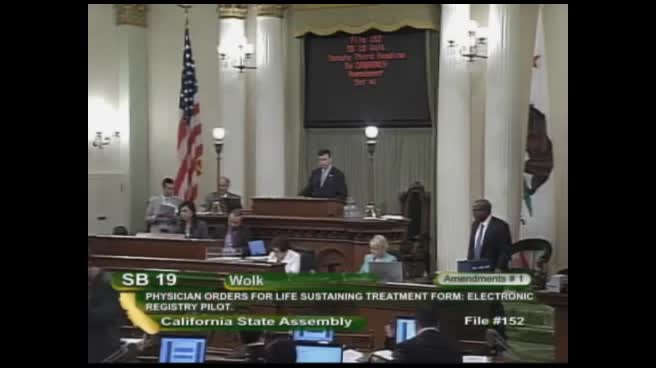 2MIN
Assembly Floor
 3MIN
Senate Floor
 3MIN
Assembly Floor
 2MIN
Assembly Standing Committee on Appropriations
Bill Author

Bill Co-Author(s):