AB 679: Controlled substances.
- Session Year: 2015-2016
- House: Assembly
- Latest Version Date: 2015-10-11
Existing law classifies certain controlled substances into designated schedules. Existing law requires the Department of Justice to maintain the Controlled Substance Utilization Review and Evaluation System (CURES) for the electronic monitoring of the prescribing and dispensing of Schedule II, Schedule III, and Schedule IV controlled substances by all practitioners authorized to prescribe or dispense these controlled substances. Existing law authorizes the Department of Justice to provide the history of controlled substances dispensed to an individual to a licensed health care practitioner, pharmacist, or both, providing care or services to the individual. By January 1, 2016, or upon licensure in the case of a pharmacist, or upon receipt of a federal Drug Enforcement Administration registration in the case of another health care practitioner authorized to prescribe, order, administer, furnish, or dispense controlled substances, whichever respective event occurs later, existing law requires those persons to apply to the Department of Justice to obtain approval to access information contained in the CURES database regarding the controlled substance history of a patient under his or her care.
This bill would extend those January 1, 2016, deadlines to July 1, 2016.
This bill would declare that it is to take effect immediately as an urgency statute.
Existing law requires the recorder of each county, upon payment of proper fees and taxes, to accept for recordation any instrument, paper, or notice that is authorized or required by law to be recorded. Existing law further requires the recorder, when any instrument authorized by law to be recorded is deposited in the recorders office for record, to endorse upon the instrument in the order in which it is deposited, the year, month, day, hour, and minute of its reception, the amount of fees recording, and the name of the person at whose request it is recorded.
This bill would delete the requirement that the recorder endorse the name of the person at whose request an instrument is recorded and would additionally require the recorder to endorse upon the instrument the number of pages of the instrument.
By imposing new duties upon the county recorder, this bill would impose a state-mandated local program.
The California Constitution requires the state to reimburse local agencies and school districts for certain costs mandated by the state. Statutory provisions establish procedures for making that reimbursement.
This bill would provide that no reimbursement is required by this act for a specified reason.
Existing law requires the recorder of each county, upon payment of proper fees and taxes, to accept for recordation any instrument, paper, or notice that is authorized or required by law to be recorded. Existing law further requires the recorder, when any instrument authorized by law to be recorded is deposited in the recorders office for record, to endorse upon the instrument in the order in which it is deposited, the year, month, day, hour, and minute of its reception, and the amount of fees for recording. recording, and the name of the person at whose request it is recorded.
This bill would delete the requirement that the recorder endorse the name of the person at whose request an instrument is recorded and would additionally require the recorder to endorse upon the instrument the number of pages of the instrument.
By imposing new duties upon the county recorder, this bill would impose a state-mandated local program.
The California Constitution requires the state to reimburse local agencies and school districts for certain costs mandated by the state. Statutory provisions establish procedures for making that reimbursement.
This bill would provide that no reimbursement is required by this act for a specified reason.
Existing law requires the recorder of each county, upon payment of proper fees and taxes, to accept for recordation any instrument, paper, or notice that is authorized or required by law to be recorded. Existing law further requires those documents to comply with specified standards respecting margins, quality of paper, print size and color, and other related matters. the recorder, when any instrument authorized by law to be recorded is deposited in the recorders office for record, to endorse upon the instrument in the order in which it is deposited, the year, month, day, hour, and minute of its reception, and the amount of fees for recording.
This bill would additionally require any instrument, paper, or notice presented for recordation to state the recorder to endorse upon the instrument the number of pages to be recorded. This bill would authorize the number of pages to be recorded to be stated on a cover page or a sticker, as specified, and would require the county recorder to verify that the number of pages to be recorded stated on the cover page or sticker match the number of pages presented for recordation. of the instrument.
By imposing new duties upon the county recorder, this bill would impose a state-mandated local program.
The California Constitution requires the state to reimburse local agencies and school districts for certain costs mandated by the state. Statutory provisions establish procedures for making that reimbursement.
This bill would provide that no reimbursement is required by this act for a specified reason.
Existing law requires the recorder of each county, upon payment of proper fees and taxes, to accept for recordation any instrument, paper, or notice that is authorized or required by law to be recorded. Existing law requires those documents to comply with specified standards respecting margins, quality of paper, print size and color, and other related matters.
This bill would require any instrument, paper, or notice presented for recordation to state the number of pages to be recorded. This bill would authorize the number of pages to be recorded to be stated on a cover page or a sticker, as specified, and would require the county recorder to verify that the number of pages to be recorded stated on the cover page or sticker match the number of pages presented for recordation.
By imposing new duties upon the county recorder, this bill would impose a state-mandated local program.
The California Constitution requires the state to reimburse local agencies and school districts for certain costs mandated by the state. Statutory provisions establish procedures for making that reimbursement.
This bill would provide that no reimbursement is required by this act for a specified reason.
Existing law requires the recorder of each county, upon payment of proper fees and taxes, to accept for recordation any instrument, paper, or notice that is authorized or required by law to be recorded. Existing law requires those documents to comply with specified standards respecting margins, quality of paper, print size and color, and other related matters.
This bill would require any instrument, paper, or notice presented for recordation to state the number of pages to be recorded.
Existing law requires the recorder of each county, upon payment of proper fees and taxes, to accept for recordation any instrument, paper, or notice that is authorized or required by law to be recorded. Existing law requires those documents to comply with specified standards respecting margins, quality of paper, print size and color, and other related matters.
This bill would make nonsubstantive changes to the provision requiring the documents to comply with specified standards.
(a)(1)(A)(i)A health care practitioner authorized to prescribe, order, administer, furnish, or dispense Schedule II, Schedule III, or Schedule IV controlled substances pursuant to Section 11150 shall, before July 1, 2016, or upon receipt of a federal Drug Enforcement Administration (DEA) registration, whichever occurs later, submit an application developed by the Department of Justice to obtain approval to access information online regarding the controlled substance history of a patient that is stored on the Internet and maintained within the Department of Justice, and, upon approval, the department shall release to that practitioner the electronic history of controlled substances dispensed to an individual under his or her care based on data contained in the CURES Prescription Drug Monitoring Program (PDMP).
(ii)A pharmacist shall, before July 1, 2016, or upon licensure, whichever occurs later, submit an application developed by the Department of Justice to obtain approval to access information online regarding the controlled substance history of a patient that is stored on the Internet and maintained within the Department of Justice, and, upon approval, the department shall release to that pharmacist the electronic history of controlled substances dispensed to an individual under his or her care based on data contained in the CURES PDMP.
(B)An application may be denied, or a subscriber may be suspended, for reasons which include, but are not limited to, the following:
(i)Materially falsifying an application for a subscriber.
(ii)Failure to maintain effective controls for access to the patient activity report.
(iii)Suspended or revoked federal DEA registration.
(iv)Any subscriber who is arrested for a violation of law governing controlled substances or any other law for which the possession or use of a controlled substance is an element of the crime.
(v)Any subscriber accessing information for any other reason than caring for his or her patients.
(C)Any authorized subscriber shall notify the Department of Justice within 30 days of any changes to the subscriber account.
(2)A health care practitioner authorized to prescribe, order, administer, furnish, or dispense Schedule II, Schedule III, or Schedule IV controlled substances pursuant to Section 11150 or a pharmacist shall be deemed to have complied with paragraph (1) if the licensed health care practitioner or pharmacist has been approved to access the CURES database through the process developed pursuant to subdivision (a) of Section 209 of the Business and Professions Code.
(b)Any request for, or release of, a controlled substance history pursuant to this section shall be made in accordance with guidelines developed by the Department of Justice.
(c)In order to prevent the inappropriate, improper, or illegal use of Schedule II, Schedule III, or Schedule IV controlled substances, the Department of Justice may initiate the referral of the history of controlled substances dispensed to an individual based on data contained in CURES to licensed health care practitioners, pharmacists, or both, providing care or services to the individual.
(d)The history of controlled substances dispensed to an individual based on data contained in CURES that is received by a practitioner or pharmacist from the Department of Justice pursuant to this section shall be considered medical information subject to the provisions of the Confidentiality of Medical Information Act contained in Part 2.6 (commencing with Section 56) of Division 1 of the Civil Code.
(e)Information concerning a patients controlled substance history provided to a prescriber or pharmacist pursuant to this section shall include prescriptions for controlled substances listed in Sections 1308.12, 1308.13, and 1308.14 of Title 21 of the Code of Federal Regulations.
SEC. 2.This act is an urgency statute necessary for the immediate preservation of the public peace, health, or safety within the meaning of Article IV of the Constitution and shall go into immediate effect. The facts constituting the necessity are:
In order to ensure that health care practitioners and pharmacists are not out of compliance with the requirement to apply to access data contained in the Controlled Substance Utilization Review and Evaluation System Prescription Drug Monitoring Program on January 1, 2016, it is necessary that this act take effect immediately.
(a)(1)(A)(i)A health care practitioner authorized to prescribe, order, administer, furnish, or dispense Schedule II, Schedule III, or Schedule IV controlled substances pursuant to Section 11150 shall, before January July 1, 2016, or upon receipt of a federal Drug Enforcement Administration (DEA) registration, whichever occurs later, submit an application developed by the Department of Justice to obtain approval to access information online regarding the controlled substance history of a patient that is stored on the Internet and maintained within the Department of Justice, and, upon approval, the department shall release to that practitioner the electronic history of controlled substances dispensed to an individual under his or her care based on data contained in the CURES Prescription Drug Monitoring Program (PDMP).
(ii)A pharmacist shall, before January July 1, 2016, or upon licensure, whichever occurs later, submit an application developed by the Department of Justice to obtain approval to access information online regarding the controlled substance history of a patient that is stored on the Internet and maintained within the Department of Justice, and, upon approval, the department shall release to that pharmacist the electronic history of controlled substances dispensed to an individual under his or her care based on data contained in the CURES PDMP.
(B)An application may be denied, or a subscriber may be suspended, for reasons which include, but are not limited to, the following:
(i)Materially falsifying an application for a subscriber.
(ii)Failure to maintain effective controls for access to the patient activity report.
(iii)Suspended or revoked federal DEA registration.
(iv)Any subscriber who is arrested for a violation of law governing controlled substances or any other law for which the possession or use of a controlled substance is an element of the crime.
(v)Any subscriber accessing information for any other reason than caring for his or her patients.
(C)Any authorized subscriber shall notify the Department of Justice within 30 days of any changes to the subscriber account.
(2)A health care practitioner authorized to prescribe, order, administer, furnish, or dispense Schedule II, Schedule III, or Schedule IV controlled substances pursuant to Section 11150 or a pharmacist shall be deemed to have complied with paragraph (1) if the licensed health care practitioner or pharmacist has been approved to access the CURES database through the process developed pursuant to subdivision (a) of Section 209 of the Business and Professions Code.
(b)Any request for, or release of, a controlled substance history pursuant to this section shall be made in accordance with guidelines developed by the Department of Justice.
(c)In order to prevent the inappropriate, improper, or illegal use of Schedule II, Schedule III, or Schedule IV controlled substances, the Department of Justice may initiate the referral of the history of controlled substances dispensed to an individual based on data contained in CURES to licensed health care practitioners, pharmacists, or both, providing care or services to the individual.
(d)The history of controlled substances dispensed to an individual based on data contained in CURES that is received by a practitioner or pharmacist from the Department of Justice pursuant to this section shall be considered medical information subject to the provisions of the Confidentiality of Medical Information Act contained in Part 2.6 (commencing with Section 56) of Division 1 of the Civil Code.
(e)Information concerning a patients controlled substance history provided to a prescriber or pharmacist pursuant to this section shall include prescriptions for controlled substances listed in Sections 1308.12, 1308.13, and 1308.14 of Title 21 of the Code of Federal Regulations.
SEC. 2.This act is an urgency statute necessary for the immediate preservation of the public peace, health, or safety within the meaning of Article IV of the Constitution and shall go into immediate effect. The facts constituting the necessity are:
In order to ensure that health care practitioners and pharmacists are not out of compliance with the requirement to apply to access data contained in the Controlled Substance Utilization Review and Evaluation System Prescription Drug Monitoring Program on January 1, 2016, it is necessary that this act take effect immediately.
SECTION 1.Section 27320 of the Government Code is amended to read:27320.When any instrument authorized by law to be recorded is deposited in the recorders office for record, the recorder shall endorse upon it in the order in which it is deposited, the year, month, day, hour, and minute of its reception, its number of pages, and the amount of fees for recording. The recorder shall record it without delay, together with the acknowledgments, proofs, certificates, and prior recording data written upon or annexed to it, with the plats, surveys, schedules, and other papers thereto annexed, and shall note on the record its identification number. Efforts shall be made to assign identification numbers sequentially, but an assignment of a nonsequential number may be made if not in violation of express recording instructions regarding a group of concurrently recorded instruments and if, in the discretion of the county recorder, such assignment best serves the interest of expeditious recording.
SEC. 2.No reimbursement is required by this act pursuant to Section 6 of Article XIIIB of the California Constitution because a local agency or school district has the authority to levy service charges, fees, or assessments sufficient to pay for the program or level of service mandated by this act, within the meaning of Section 17556 of the Government Code.
When any instrument authorized by law to be recorded is deposited in the recorders office for record, the recorder shall endorse upon it in the order in which it is deposited, the year, month, day, hour, and minute of its reception, its number of pages, and the amount of fees for recording. The recorder shall record it without delay, together with the acknowledgments, proofs, certificates, and prior recording data written upon or annexed to it, with the plats, surveys, schedules, and other papers thereto annexed, and shall note on the record its identification number, and the name of the person at whose request it is recorded. number. Efforts shall be made to assign identification numbers sequentially, but an assignment of a nonsequential number may be made if not in violation of express recording instructions regarding a group of concurrently recorded instruments and if, in the discretion of the county recorder, such assignment best serves the interest of expeditious recording.
SEC. 2.No reimbursement is required by this act pursuant to Section 6 of Article XIIIB of the California Constitution because a local agency or school district has the authority to levy service charges, fees, or assessments sufficient to pay for the program or level of service mandated by this act, within the meaning of Section 17556 of the Government Code.
(a)Except as otherwise provided by law or regulation, all documents submitted for recording shall have at least a 1/2-inch margin on the two vertical sides, except in the space reserved for recording information. At least the top 21/2 inches of the first page or sheet shall be reserved for recording information. The left-hand 31/2 inches of the space shall be used by the public to show the name of the person requesting recording and the name and address to which the document is to be returned following recording. In the event the first page or sheet of a document does not comply with these requirements, a separate page shall be attached by the party requesting recording to the front of the document that meets these criteria and that reflects the title or titles of the document as required by Section 27324. Any printed form accepted for recordation that does not comply with this subdivision shall not affect the notice otherwise imparted by recording.
(b)All instruments, papers, or notices presented for recordation shall be on a quality of paper and contain print of a size and color that will reproduce legibly by microphotographic or imaging processes as set forth in Sections 26205.5 and 27322.2.
(c)Any instrument, paper, or notice presented for recordation that in any way modifies, releases, or cancels the provisions of a previously recorded document shall state the recorder identification number or book and page of the document number being modified, released, or canceled.
(d)(1)Any instrument, paper, or notice presented for recordation shall state the number of pages to be recorded.
(2)(A)The number of pages to be recorded may be stated on a cover page or a sticker on the first page of the instrument, paper, or notice.
(B)The county recorder shall verify that the number of pages to be recorded stated on the cover page or sticker match the number of pages presented for recordation.
SECTION 1.Section 27320 of the Government Code is amended to read:27320.When any instrument authorized by law to be recorded is deposited in the recorders office for record, the recorder shall endorse upon it in the order in which it is deposited, the year, month, day, hour, and minute of its reception, its number of pages, and the amount of fees for recording. The recorder shall record it without delay, together with the acknowledgements, acknowledgments, proofs, certificates, and prior recording data written upon or annexed to it, with the plats, surveys, schedules, and other papers thereto annexed, and shall note on the record its identification number, and the name of the person at whose request it is recorded. Efforts shall be made to assign identification numbers sequentially, but an assignment of a nonsequential number may be made if not in violation of express recording instructions regarding a group of concurrently recorded instruments and if, in the discretion of the county recorder, such assignment best serves the interest of expeditious recording.
SEC. 2.No reimbursement is required by this act pursuant to Section 6 of Article XIIIB of the California Constitution because a local agency or school district has the authority to levy service charges, fees, or assessments sufficient to pay for the program or level of service mandated by this act, within the meaning of Section 17556 of the Government Code.
(a)Notwithstanding any other Except as otherwise provided by law or regulation, all documents submitted for recording shall have at least a 1/2-inch margin on the two vertical sides, except in the space reserved for recording information. At least the top 21/2 inches of the first page or sheet shall be reserved for recording information. The left-hand 31/2 inches of the space shall be used by the public to show the name of the person requesting recording and the name and address to which the document is to be returned following recording. In the event the first page or sheet of a document does not comply with these requirements, a separate page shall be attached by the party requesting recording to the front of the document that meets these criteria and that reflects the title or titles of the document as required by Section 27324. Any printed form accepted for recordation that does not comply with this subdivision shall not affect the notice otherwise imparted by recording.
(b)All instruments, papers, or notices presented for recordation shall be on a quality of paper and contain print of a size and color that will reproduce legibly by microphotographic or imaging processes as set forth in Sections 26205.5 and 27322.2.
(c)Any instrument, paper, or notice presented for recordation that in any way modifies, releases, or cancels the provisions of a previously recorded document shall state the recorder identification number or book and page of the document number being modified, released, or canceled.
(d)(1)Any instrument, paper, or notice presented for recordation shall state the number of pages to be recorded.
(2)(A)The number of pages to be recorded may be stated on a cover page or a sticker on the first page of the instrument, paper, or notice.
(B)The county recorder shall verify that the number of pages to be recorded stated on the cover page or sticker match the number of pages presented for recordation.
SEC. 2.No reimbursement is required by this act pursuant to Section 6 of Article XIIIB of the California Constitution because a local agency or school district has the authority to levy service charges, fees, or assessments sufficient to pay for the program or level of service mandated by this act, within the meaning of Section 17556 of the Government Code.
(a)Notwithstanding any other law or regulation, all documents submitted for recording shall have at least a 1/2-inch margin on the two vertical sides, except in the space reserved for recording information. At least the top 21/2 inches of the first page or sheet shall be reserved for recording information. The left-hand 31/2 inches of the space shall be used by the public to show the name of the person requesting recording and the name and address to which the document is to be returned following recording. In the event the first page or sheet of a document does not comply with these requirements, a separate page shall be attached by the party requesting recording to the front of the document that meets these criteria and that reflects the title or titles of the document as required by Section 27324. Any printed form accepted for recordation that does not comply with this subdivision shall not affect the notice otherwise imparted by recording.
(b)All instruments, papers, or notices presented for recordation shall be on a quality of paper and contain print of a size and color that will reproduce legibly by microphotographic or imaging processes as set forth in Sections 26205.5 and 27322.2.
(c)Any instrument, paper, or notice presented for recordation that in any way modifies, releases, or cancels the provisions of a previously recorded document shall state the recorder identification number or book and page of the document number being modified, released, or canceled.
(d)(1)Any instrument, paper, or notice presented for recordation shall state the number of pages to be recorded.
(2)The number of pages to be recorded may be stated on a cover page or a sticker on the first page of the instrument, paper, or notice.
(a)Notwithstanding any other law or regulation, all documents submitted for recording shall have at least a 1/2-inch margin on the two vertical sides, except in the space reserved for recording information. At least the top 21/2 inches of the first page or sheet shall be reserved for recording information. The left-hand 31/2 inches of the space shall be used by the public to show the name of the person requesting recording and the name and address to which the document is to be returned following recording. In the event the first page or sheet of a document does not comply with these requirements, a separate page shall be attached by the party requesting recording to the front of the document that meets these criteria and that reflects the title or titles of the document as required by Section 27324. Any printed form accepted for recordation that does not comply with this subdivision shall not affect the notice otherwise imparted by recording.
(b)All instruments, papers, or notices presented for recordation shall be on a quality of paper and contain print of a size and color that will reproduce legibly by microphotographic or imaging processes as set forth in Sections 26205.5 and 27322.2.
(c)Any instrument, paper, or notice presented for recordation that in any way modifies, releases, or cancels the provisions of a previously recorded document shall state the recorder identification number or book and page of the document number being modified, released, or canceled.
(d)Any instrument, paper, or notice presented for recordation shall state the number of pages to be recorded.
Except as otherwise provided by (a)Notwithstanding any other law or regulation, all documents submitted for recording shall have at least a 1/2-inch margin on the two vertical sides sides, except in the space reserved for recording information. At least the top 21/2 inches of the first page or sheet shall be reserved for recording information. The left-hand 31/2 inches of the space shall be used by the public to show the name of the person requesting recording and the name and address to which the document is to be returned following recording. In the event the first page or sheet of a document does not comply with these requirements, a separate page shall be attached by the party requesting recording to the front of the document which that meets these criteria and which that reflects the title or titles of the document as required by Section 27324. Any printed form accepted for recordation that does not comply with the foregoing this subdivision shall not affect the notice otherwise imparted by recording.
All
(b)All instruments, papers, or notices presented for recordation shall be on a quality of paper and contain print of a size and color which that will reproduce legibly by microphotographic or imaging processes as set forth in Sections 26205.5 and 27322.2.
Any
(c)Any instrument, paper, or notice presented for recordation which that in any way modifies, releases, or cancels the provisions of a previously recorded document shall state the recorder identification number or book and page of the document number being modified, released, or canceled.
|
Date
|
Status
|
|---|---|
| Sep 11, 2015 | From committee: Return to Senate floor for consideration. |
| Sep 4, 2015 | Read second time. Ordered to third reading. |
| Sep 10, 2015 | From committee chair, with author's amendments: Amend, and re-refer to committee. Read second time, amended, and re-referred to Com. on RLS. |
| Sep 10, 2015 | Joint Rule 61(a) suspended. (Ayes 27. Noes 6.) |
| Sep 10, 2015 | Joint Rule 62(a) suspended. (Ayes 27. Noes 6.) |
| Sep 10, 2015 | Joint Rules 61(a) and 62(a) suspended. (Ayes 27. Noes 6. Page 2715.) |
| Sep 10, 2015 | Re-referred to Com. on RLS. |
| Sep 10, 2015 | Senate Rule 29.3(b) suspended. (Ayes 26. Noes 1. Page 2715.) |
| Sep 10, 2015 | Senate Rule 29.3(b) suspended. (Ayes 26. Noes 1.) |
| Sep 11, 2015 | Assembly Rule 63 suspended. |
| Sep 11, 2015 | Assembly Rule 63 suspended. (Page 3194.) |
| Sep 11, 2015 | From committee: Do pass and re-refer to Com. on B., P. & E.D. Re-referred to Com. on B., P. & E.D. |
| Sep 3, 2015 | Ordered to second reading. |
| Sep 11, 2015 | From committee: Return to Senate floor for consideration. (Ayes 8. Noes 0.) (September 11). |
| Sep 11, 2015 | In Assembly. Concurrence in Senate amendments pending. |
| Sep 11, 2015 | Re-referred to Com. on B., P. & E.D. |
| Sep 11, 2015 | Read third time. Urgency clause adopted. Passed. Ordered to the Assembly. |
| Sep 11, 2015 | Read third time. Urgency clause adopted. Passed. Ordered to the Assembly. (Ayes 40. Noes 0. Page 2760.). |
| Sep 11, 2015 | Urgency clause adopted. Senate amendments concurred in. To Engrossing and Enrolling. |
| Sep 11, 2015 | Urgency clause adopted. Senate amendments concurred in. To Engrossing and Enrolling. (Ayes 78. Noes 0. Page 3197.). |
| Sep 11, 2015 | Urgency clause adopted. Senate amendments concurred in. To Engrossing and Enrolling. (Ayes 78. Noes 0.). |
| Sep 23, 2015 | Enrolled and presented to the Governor at 4 p.m. |
| Oct 11, 2015 | Approved by the Governor. |
| Oct 11, 2015 | Chaptered by Secretary of State - Chapter 778, Statutes of 2015. |
| May 28, 2015 | Read second time. Ordered to third reading. |
| Feb 26, 2015 | From printer. May be heard in committee March 28. |
| Mar 26, 2015 | From committee chair, with author's amendments: Amend, and re-refer to Com. on L. GOV. Read second time and amended. |
| Mar 26, 2015 | Referred to Com. on L. GOV. |
| Apr 6, 2015 | Re-referred to Com. on L. GOV. |
| Apr 20, 2015 | From committee chair, with author's amendments: Amend, and re-refer to Com. on L. GOV. Read second time and amended. |
| Apr 21, 2015 | Re-referred to Com. on L. GOV. |
| May 14, 2015 | From committee: Amend, and do pass as amended. (Ayes 6. Noes 1.) (May 13). |
| May 18, 2015 | Read second time and amended. Ordered returned to second reading. |
| May 19, 2015 | Re-referred to Com. on APPR. pursuant to Joint Rule 10.5. |
| May 19, 2015 | Read second time. Ordered to third reading. |
| May 27, 2015 | From committee: Do pass. (Ayes 16. Noes 0.) (May 27). |
| Feb 25, 2015 | Read first time. To print. |
| Jun 1, 2015 | In Senate. Read first time. To Com. on RLS. for assignment. |
| Jun 1, 2015 | Read third time. Passed. Ordered to the Senate. |
| Jun 1, 2015 | Read third time. Passed. Ordered to the Senate. (Ayes 52. Noes 14. Page 1689.) |
| Jun 11, 2015 | Referred to Com. on GOV. & F. |
| Jun 24, 2015 | In committee: Set, first hearing. Hearing canceled at the request of author. |
| Jun 25, 2015 | From committee chair, with author's amendments: Amend, and re-refer to committee. Read second time, amended, and re-referred to Com. on GOV. & F. |
| Jul 8, 2015 | From committee: Do pass and re-refer to Com. on APPR. (Ayes 7. Noes 0.) (July 8). Re-referred to Com. on APPR. |
| Aug 17, 2015 | From committee: Be placed on second reading file pursuant to Senate Rule 28.8 and be amended. |
| Aug 18, 2015 | Read second time and amended. Ordered to third reading. |
| Aug 31, 2015 | Ordered to inactive file at the request of Senator Bates. |
| Sep 3, 2015 | From inactive file. |
|
Date
|
Description
|
Location
|
Votes
|
|
|---|---|---|---|---|
| Sep 11, 2015 | AB 679 ALLEN Concurrence - Urgency Added | Assembly Floor |
Passed |
|
| Sep 11, 2015 | Assembly 3rd Reading (Supplemental File 1) AB679 Travis Allen By Lara Urgency Clause | Senate Floor |
Passed |
|
| Sep 11, 2015 | That the measure be returned to Senate Floor for consideration. Ordered to third reading. | Senate Standing Committee on Business, Professions and Economic Development |
Passed |
|
| Jul 8, 2015 | Do pass, but first be re-referred to the Committee on [Appropriations] | Senate Standing Committee on Governance and Finance |
Passed |
|
| Jun 1, 2015 | AB 679 ALLEN Assembly Third Reading | Assembly Floor |
Passed |
|
| May 27, 2015 | Do pass. | Assembly Standing Committee on Appropriations |
Passed |
|
| May 13, 2015 | Do pass as amended. | Assembly Standing Committee on Local Government |
Passed |
This list shows positions taken on this bill by organizations on the date displayed, which is linked to the original source.
Positions by individuals are not included.
|
Organization
|
Position
|
Date
|
|---|---|---|
| California Academy of Physician Assistants | * Indeterminate | Sep 11, 2015 |
| California Medical Association, Inc. | * Support | Sep 11, 2015 |
| California Retailers Association | * Support | Sep 11, 2015 |
| County Recorders Association | * Neutral | May 27, 2015 |
AB 679
Page 3
(Without Reference to File)
CONCURRENCE IN SENATE AMENDMENTS
AB 679
(Travis Allen)
As Amended September 10, 2015
2/3 vote. Urgency
ASSEMBLY: |
52-14 |
(June 1, 2015) |
SENATE: |
|
(September 11, 2015) |
(vote not available)
Original Committee Reference: L. GOV
SUMMARY: Extends the date by which specified health care practitioners and pharmacists must register with the Controlled Substance Utilization Review and Evaluation System (CURES) Prescription Drug Monitoring Program (PDMP) by six months, from January 1, 2016 to July 1, 2016.
The Senate amendments:
Requires that a healthcare practitioner authorized to prescribe, order, administer, furnish, or dispense Schedule II, Schedule III, or Schedule IV controlled substances submit an application to the Department of Justice (DOJ) to obtain approval to access CURES before July 1, 2016 or upon receipt of a federal Drug Enforcement Agency registration, whichever occurs later.
Requires a pharmacist to submit an application to the DOJ to obtain approval to access to CURES before July 1, 2016 or upon licensure, whichever occurs later.
Contains an urgency clause, stating that its immediate effect is necessary to ensure that health care practitioners and pharmacists are not out of compliance with the requirement to apply to access data contained in the CURES PDMP on January 1, 2016.
FISCAL EFFECT: Unknown. This bill is keyed fiscal by Legislative Counsel.
COMMENTS:
Purpose. This bill is author sponsored. According to the author, “This bill is necessary because the updated version of CURES is not fully operational at this time and licensees need an additional six months in order to comply with statutory registration mandates.”
Controlled Substances. Through the Controlled Substances Act of 1970, the federal government regulates the manufacture, distribution and dispensing of controlled substances. The act ranks into five schedules those drugs known to have potential for physical or psychological harm, based on three considerations: 1) their potential for abuse; 2) their accepted medical use; and, 3) their accepted safety under medical supervision. The schedules are as follows:
Schedule I controlled substances have a high potential for abuse and no generally accepted medical use such as heroin, ecstasy, and LSD.
Schedule II controlled substances have a currently accepted medical use in treatment, or a currently accepted medical use with severe restrictions, and have a high potential for abuse and psychological or physical dependence. Schedule II drugs can be narcotics or non-narcotic. Examples of Schedule II controlled substances include morphine, methadone, Ritalin, Demerol, Dilaudid, Percocet, Percodan, and Oxycontin.
Schedule III and IV controlled substances have a currently accepted medical use in treatment, less potential for abuse but are known to be mixed in specific ways to achieve a narcotic-like end product. Examples include drugs include Vicodin, Zanex, Ambien and other anti-anxiety drugs.
Schedule V drugs have a low potential for abuse relative to substances listed in Schedule IV and consist primarily of preparations containing limited quantities of certain narcotics.
The three classes of prescription drugs that are most commonly abused are: 1) opioids, which are most often prescribed to treat pain; 2) central nervous system depressants, which are used to treat disorders such as anxiety and sleep disorders; and 3) stimulants, which are prescribed to treat disorders such as narcolepsy and attention deficit hyperactivity disorder. Each class can induce euphoria, and when administered by routes other than recommended, such as snorting or dissolving into liquid to drink or inject, can intensify that sensation. Opioids, in particular, act on the same receptors as heroin and can be highly addictive. Common opioids include: hydrocodone (Vicodin), oxycodone (OxyContin), propoxyphene (Darvon), hydromorphone (Dilaudid), meperidine (Demerol), and diphenoxylate (Lomotil).
Controlled Substance Utilization Review and Evaluation System (CURES). In California, the CURES is an electronic tracking program that reports all pharmacy (and specified types of prescriber) dispensing of controlled drugs by drug name, quantity, prescriber, patient, and pharmacy. Data from the CURES is managed by the DOJ to assist state law enforcement and regulatory agencies in their efforts to reduce prescription drug diversion. The CURES provides information that offers the ability to identify if a person is “doctor shopping” (when a prescription drug addict visits multiple doctors to obtain multiple prescriptions for drugs, or uses multiple pharmacies to obtain prescription drugs). Information tracked in the system contains the patient name, prescriber name, pharmacy name, drug name, amount and dosage, and is available to law enforcement agencies, regulatory bodies and qualified researchers. The system can also report on the top drugs prescribed for a specific time period, drugs prescribed in a particular county, doctor prescribing data, pharmacy dispensing data, and assists in assessing whether multiple prescriptions for the same patient may exist. CURES data can be obtained by the Medical Board, the Dental Board, the Board of Registered Nursing, the Osteopathic Medical Board and the Veterinary Medical Board.
Senate Bill 809. In 2013, SB 809 (DeSaulnier, Chapter 400, Statutes of 2013) established the requirement and increased licensing fees to help fund the CURES database. However, a component of SB 809 related to the application process has not yet been implemented. In addition to the requirement for covered healthcare practitioners to apply for CURES, SB 809 required the DOJ, in conjunction with the DCA and the relevant licensing and regulatory entities, to establish a streamlined application to help facilitate the applications of the thousands of licensees. The application process was originally estimated to be available to licensees in the summer of 2015, which would have allowed six months for licensees to utilize the new process for their application; however, the streamlined registration process is now expected to be ready by July 1, 2016. This bill delays the implementation date by six months to ensure a more streamlined process for provider enrollment.
Analysis Prepared by: Le Ondra Clark Harvey, Ph.D. / B. & P. / (916) 319-3301 FN: 0002444
AB 679
Page 5
|
Office of Senate Floor Analyses (916) 651-1520 Fax: (916) 327-4478 |
THIRD READING
Bill No: AB 679
Amended: 9/10/15 in Senate
SENATE BUS., PROF. & ECON. DEV. COMMITTEE: 8-0, 9/11/15
AYES: Hill, Bates, Berryhill, Block, Hernandez, Jackson, Mendoza, Wieckowski
NO VOTE RECORDED: Galgiani
SUBJECT: Controlled substances
DIGEST: This bill extends the date by which specified health care practitioners and pharmacists must register with the Controlled Substance Utilization Review and Evaluation System (CURES) Prescription Drug Monitoring Program (PDMP) by six months, from January 1, 2016 to July 1, 2016. This measure contains an urgency clause.
Existing law:
Establishes the Medical Practice Act which provides for the licensing and regulation of physicians and surgeons by the Medial Board of California (MBC) within the Department of Consumer Affairs (DCA). (Business and Professions Code (BPC) §§ 2000 et seq.)
Establishes the Nursing Practice Act which provides for the certification and regulation of registered nurses, nurse practitioners and advanced practice nurses by the Board of Registered Nursing within DCA. (BPC §§ 2700 et seq.)
Authorizes a certified nurse-midwife to furnish or order drugs or devices, including controlled substances, if furnished or ordered incidentally to the provision of family planning services, routine health care or perinatal care, or care rendered consistent with the certified nurse-midwife’s practice; occurs under physician and surgeon supervision; and is in accordance with standardized procedures or protocols as specified. (BPC § 2746.51)
Authorizes a nurse practitioner to furnish or order drugs or devices, including controlled substances if it is consistent with a nurse practitioner’s educational preparation or for which clinical competency has been established and maintained; occurs under physician and surgeon supervision; and is in accordance with standardized procedures or protocols, as specified. (BPC § 2836.1)
Establishes the Physician Assistant Practice Act which provides for the licensing of physician assistants by the Physician Assistant Committee, under the MBC, within the DCA. (BPC §§ 3500 et seq.)
Authorizes a physician assistant under the supervision of a physician and surgeon to administer or provide medication to a patient, or transmit orally or in writing a drug order under specified conditions and protocols adopted by the supervising physician and surgeon. (BPC § 3502.1)
Defines “dispense” as the furnishing of drugs or devices upon a prescription from a physician, dentist, optometrist, podiatrist, veterinarian, or naturopathic doctor or upon an order to furnish drugs or transmit a prescription from a certified nurse-midwife, nurse practitioner, physician assistant, naturopathic doctor, or pharmacist acting within the scope of his or her practice. Dispense also means and refers to the furnishing of drugs or devices directly to a patient by a physician, dentist, optometrist, podiatrist, or veterinarian, or by a certified nurse-midwife, nurse practitioner, naturopathic doctor, or physician assistant acting within the scope of his or her practice. (BPC § 4024)
Classifies controlled substances in five schedules according to their danger and potential for abuse. (Health and Safety Code (HSC) §§ 11054-11058)
Establishes CURES to monitor Schedule II, III and IV controlled substance prescriptions. CURES provides for the electronic transmission of information related to the prescription of Schedule II, III and IV controlled substances to the Department of Justice (DOJ). (HSC § 11165)
Requires the dispensing pharmacy, clinic, or other dispenser to report specified information to CURES as soon as reasonably possible, but not more than seven days after the date a controlled substance is dispensed, in a format specified by the DOJ. (HSC § 11165)
Requires a health care practitioner eligible to prescribe Schedule II, III or IV controlled substances, and a pharmacist, to apply to participate in the CURES PDMP by January 1, 2016. (HSC § 11165.1)
This bill:
Requires that a healthcare practitioner authorized to prescribe, order, administer, furnish, or dispense Schedule II, Schedule III, or Schedule IV controlled substances submit an application to the DOJ to obtain approval to access CURES before July 1, 2016, or upon receipt of a federal Drug Enforcement Administration registration, whichever occurs later.
Requires a pharmacist to submit an application to the DOJ to obtain approval to access to CURES before July 1, 2016, or upon licensure, whichever occurs later.
Contains an urgency clause, stating that its immediate effect is necessary to ensure that health care practitioners and pharmacists are not out of compliance with the requirement to apply to access data contained in the CURES PDMP on January 1, 2016.
Background
CURES. With rising levels of abuse, PDMPs have become a critical tool in assisting law enforcement and regulatory bodies with their efforts to reduce drug abuse.
The California PDMP maintains the CURES database. CURES allows authorized users, including licensed healthcare prescribers eligible to prescribe controlled substances, pharmacists authorized to dispense controlled substances, law enforcement, and regulatory boards, to access patient controlled substance history information maintained in CURES. CURES is committed to assisting in the reduction of pharmaceutical drug diversion without affecting legitimate medical practice or patient care.
Pharmacists are required to report information relating to dispensing Schedules II-IV controlled substances at least weekly, but use of CURES by prescribers and dispensers for prescription abuse prevention and intervention is voluntary.
CURES' predecessor, the California Triplicate Prescription Program was created in 1939 and was replaced by CURES in 1998. In 2009, the PDMP system was introduced as a searchable, client-facing component of CURES. The California Budget Act of 2011 eliminated all General Fund support of CURES and PDMP, which included funding for system support, staff support and related operating expenses. SB 809 (DeSaulnier, Chapter 400, Statutes of 2013) established a funding mechanism to update and maintain CURES, required all prescribing health care practitioners to apply to access CURES information, and established processes and procedures for regulating prescribing licensees through CURES and securing private information.
DOJ is currently in the process of modernizing CURES to more efficiently serve prescribers, pharmacists and regulatory entities. DOJ originally anticipated that the new CURES 2.0 system would be operational on July 1, 2015, but among other functionalities, the streamlined registration process is now expected to be ready by July 1, 2016.
This bill delays licensee registration requirements to align statutory mandates with the ready date of the new system, although there has been no indication from regulatory bodies that licensees were in danger of prosecution during those six months.
FISCAL EFFECT: Appropriation: No Fiscal Com.: Yes Local: No
California Medical Association
OPPOSITION: (Verified 9/11/15)
None received
ARGUMENTS IN SUPPORT: Supporters argue that an important component of SB 809 (DeSaulnier) related to the application process for CURES has not yet come to fruition. In addition to the requirement for covered health care practitioners to apply for CURES, SB 809 required the DOJ, in conjunction with the DCA and the relevant licensing boards and commissions, to establish a streamlined application to help facilitate the application of the thousands of licenses who are required to meet the mandate.
This streamlined application process was originally estimated to be available to licensees in the summer of 2015, which would have allowed six months for licensees to utilize the new process for their application. Though supporters expect a new, automated application process very soon, it is not yet available.
The new application process will represent great progress toward establishing, as envisioned in SB 809, a system that meets the needs of health care providers and patients. However, supporters are concerned that the roll out of a new process in the few months before the application deadline will create unnecessary confusion among licensees. Extending the deadline to enroll by six months will allow time for the new process to be implemented and the changes to be fully communicated to the licensee community. A smooth enrollment process will help reinforce efforts to improve the CURES database and encourage its increased use.
Prepared by: Sarah Huchel and Mark Mendoza / B., P. & E.D. / (916) 651-4104
9/11/15 14:06:22
**** END ****
AB 679 (Travis Allen) Page 5 of 5
SENATE COMMITTEE ON
BUSINESS, PROFESSIONS AND ECONOMIC DEVELOPMENT
Senator Jerry Hill, Chair
2015 - 2016 Regular
Bill No: AB 679 Hearing Date: September 11, 2015
Author: |
Travis Allen |
||
Version: |
September 10, 2015 |
||
Urgency: |
Yes |
Fiscal: |
Yes |
Consultant: |
Mark Mendoza /Sarah Huchel |
||
Subject: Controlled substances.
SUMMARY:
Extends the date by which specified health care practitioners and pharmacists must register with the Controlled Substance Utilization Review and Evaluation System (CURES) Prescription Drug Monitoring Program (PDMP) by six months, from January 1, 2016 to July 1, 2016. This measure contains an urgency clause.
Existing law:
Establishes the Medical Practice Act which provides for the licensing and regulation of physicians and surgeons by the Medial Board of California (MBC) within the Department of Consumer Affairs (DCA). (Business and Professions Code (BPC) §§ 2000 et seq.)
Establishes the Nursing Practice Act which provides for the certification and regulation of registered nurses, nurse practitioners and advanced practice nurses by the Board of Registered Nursing within DCA. (BPC §§ 2700 et seq.)
Authorizes a certified nurse-midwife to furnish or order drugs or devices, including controlled substances, if furnished or ordered incidentally to the provision of family planning services, routine health care or perinatal care, or care rendered consistent with the certified nurse-midwife’s practice; occurs under physician and surgeon supervision; and is in accordance with standardized procedures or protocols as specified. (BPC § 2746.51)
Authorizes a nurse practitioner to furnish or order drugs or devices, including controlled substances if it is consistent with a nurse practitioner’s educational preparation or for which clinical competency has been established and maintained; occurs under physician and surgeon supervision; and is in accordance with standardized procedures or protocols as specified. (BPC § 2836.1)
Establishes the Physician Assistant Practice Act which provides for the licensing of physician assistants by the Physician Assistant Committee, under the MBC, within the DCA. (BPC §§ 3500 et seq.)
Authorizes a physician assistant under the supervision of a physician and surgeon to administer or provide medication to a patient, or transmit orally or in writing a drug order under specified conditions and protocols adopted by the supervising physician and surgeon. (BPC § 3502.1)
Defines “dispense” as the furnishing of drugs or devices upon a prescription from a physician, dentist, optometrist, podiatrist, veterinarian, or naturopathic doctor or upon an order to furnish drugs or transmit a prescription from a certified nurse-midwife, nurse practitioner, physician assistant, naturopathic doctor, or pharmacist acting within the scope of his or her practice. Dispense also means and refers to the furnishing of drugs or devices directly to a patient by a physician, dentist, optometrist, podiatrist, or veterinarian, or by a certified nurse-midwife, nurse practitioner, naturopathic doctor, or physician assistant acting within the scope of his or her practice. (BPC § 4024)
Classifies controlled substances in five schedules according to their danger and potential for abuse. (Health and Safety Code (HSC) §§ 11054-11058)
Establishes CURES to monitor Schedule II, III and IV controlled substance prescriptions. CURES provides for the electronic transmission of information related to the prescription of Schedule II, III and IV controlled substances to the Department of Justice (DOJ). (HSC § 11165)
Requires the dispensing pharmacy, clinic, or other dispenser to report specified information to CURES as soon as reasonably possible, but not more than seven days after the date a controlled substance is dispensed, in a format specified by the DOJ. (HSC § 11165)
Requires a health care practitioner eligible to prescribe Schedule II, III or IV controlled substances, and a pharmacist, to apply to participate in the CURES Prescription Drug Monitoring Program (PDMP) by January 1, 2016.
(HSC § 11165.1)
This
bill:
Requires that a healthcare practitioner authorized to prescribe, order, administer, furnish, or dispense Schedule II, Schedule III, or Schedule IV controlled substances submit an application to the DOJ to obtain approval to access CURES before July 1, 2016 or upon receipt of a federal DEA registration, whichever occurs later.
Requires a pharmacist to submit an application to the DOJ to obtain approval to access to CURES before July 1, 2016 or upon licensure, whichever occurs later.
Contains an urgency clause, stating that its immediate effect is necessary to ensure that health care practitioners and pharmacists are not out of compliance with the requirement to apply to access data contained in the CURES PDMP on January 1, 2016.
FISCAL EFFECT:
Unknown. This bill is keyed fiscal by Legislative Counsel.
COMMENTS:
Purpose. According to the Author, this bill is necessary because the updated version of CURES is not fully operational at this time and licensees need an additional six months in order to comply with statutory registration mandates.
Controlled Substances. The federal government regulates the manufacture, distribution and dispensing of controlled substances through the Controlled Substances Act of 1970. The act ranks drugs into five schedules based on their potential for abuse, accepted medical use, and accepted safety under medical supervision.
Schedule I substances have a high potential for abuse and no generally accepted medical use such as heroin, ecstasy, and LSD.
Schedule II substances have a currently accepted medical use in treatment, or a currently accepted medical use with severe restrictions, and have a high potential for abuse and psychological or physical dependence. Schedule II drugs can be narcotics or non-narcotic. Examples of Schedule II controlled substances include morphine, methadone, Ritalin, Demerol, Dilaudid, Percocet, Percodan, and Oxycontin.
Schedule III and IV substances have a currently accepted medical use in treatment, less potential for abuse but are known to be mixed in specific ways to achieve a narcotic-like end product. Examples include drugs include Vicodin, Zanex, Ambien and other anti-anxiety drugs.
Schedule V drugs have a low potential for abuse relative to substances listed in Schedule IV and consist primarily of preparations containing limited quantities of certain narcotics.
CURES. With rising levels of abuse, PDMPs have become a critical tool in assisting law enforcement and regulatory bodies with their efforts to reduce drug abuse.
The California PDMP maintains the CURES database. CURES allows authorized users, including licensed healthcare prescribers eligible to prescribe controlled substances, pharmacists authorized to dispense controlled substances, law enforcement, and regulatory boards, to access patient controlled substance history information maintained in CURES. CURES is committed to assisting in the reduction of pharmaceutical drug diversion without affecting legitimate medical practice or patient care.
Pharmacists are required to report information relating to dispensing Schedules II-IV controlled substances at least weekly, but use of CURES by prescribers and dispensers for prescription abuse prevention and intervention is voluntary.
CURES' predecessor, the California Triplicate Prescription Program was created in 1939 and was replaced by CURES in 1998. In 2009, the PDMP system was introduced as a searchable, client-facing component of CURES. The California Budget Act of 2011 eliminated all General Fund support of CURES and PDMP, which included funding for system support, staff support and related operating expenses. SB 809 (Chapter 400, Statutes of 2013) established a funding mechanism to update and maintain CURES, required all prescribing health care practitioners to apply to access CURES information, and established processes and procedures for regulating prescribing licensees through CURES and securing private information.
DOJ is currently in the process of modernizing CURES to more efficiently serve prescribers, pharmacists and regulatory entities. DOJ originally anticipated that the new CURES 2.0 system would be operational on July 1, 2015, but among other functionalities, the streamlined registration process is now expected to be ready by July 1, 2016.
This bill delays licensee registration requirements to align statutory mandates with the ready date of the new system, although there has been no indication from regulatory bodies that licensees were in danger of prosecution during those six months.
Prior Related Legislation. SB 500 (Lieu) of 2014 would have required the MBC to update prescriber standards for controlled substances once every five years and add the American Cancer Society, specialists in pharmacology and specialists in addiction medicine to the entities the MBC may consult with in developing the standards. (Status: The bill was amended to deal with a different subject.)
SB 1258 (DeSaulnier) of 2014 would have made several changes
to the ways that controlled substances are prescribed and tracked in
CURES and would have required medical providers to use electronic
prescribing systems, would have required additional reporting of
controlled substance prescribing, and would have placed additional
restrictions on the prescribing of controlled substances.
(Status:
The bill was held in the Senate Committee on Appropriations.)
SB 809 (DeSaulnier, Chapter 400, Statutes of 2013) established a funding mechanism to update and maintain CURES, required all prescribing health care practitioners to apply to access CURES information, and established processes and procedures for regulating prescribing licensees through CURES and securing private information.
SB 360 (DeSaulnier, Chapter 418, Statutes of 2011) updated CURES to reflect the new PDMP and authorizes DOJ to initiate administrative enforcement actions to prevent the misuse of confidential information collected through CURES.
Arguments in Support. The California Medical Association (CMA) writes, “In 2013, CMA supported SB 809 (DeSaulnier), which established the requirement [that all dispensers register for CURES] and increased licensing fees to help fund the CURES database. CURES compiles information on all Schedule II, III, and IV prescriptions that are dispensed within the state. This information can be used by health care practitioners to help prevent doctor-shopping for these medications, which have both a medical use and the potential for abuse. Physicians support the CURES database and want to have it a s a tool in their clinical practice.
“However, an important component of SB 809 related to the application process has not yet come to fruition. In addition to the requirement for covered health care practitioners to apply for CURES, SB 809 required the Department of Justice, in conjunction with the Department of Consumer Affairs and the relevant licensing boards and commissions, to establish a streamlined application to help facilitate the application of the thousands of licenses who are required to meet the mandate.
“This streamlined application process was originally estimated to be available to licensees in the summer of 2015, which would have allowed six months for licensees to utilize the new process for their application. Though we expect a new, automated application process very soon, it is not yet available.
“The new application process will represent great progress toward establishing, as envisioned in SB 809, a system that meets the needs of health care providers and patients. However, we are concerned that the roll out of a new process in the few months before the application deadline will create unnecessary confusion among licensees. Extending the deadline to enroll by six months will allow time for the new process to be implemented and the changes to be fully communicated to the licensee community. A smooth enrollment process will help reinforce efforts to improve the CURES database and encourage its increased use.”
NOTE:
Do Pass to the Senate Floor for Consideration.
SUPPORT AND OPPOSITION:
Support:
California Medical Association
Opposition:
None on file.
-- END --
AB 679
Page 3
|
Office of Senate Floor Analyses (916) 651-1520 Fax: (916) 327-4478 |
THIRD READING
Bill No: AB 679
Amended: 8/18/15 in Senate
SENATE GOVERNANCE & FIN. COMMITTEE: 7-0, 7/8/15
AYES: Hertzberg, Nguyen, Beall, Hernandez, Lara, Moorlach, Pavley
SENATE APPROPRIATIONS COMMITTEE: Senate Rule 28.8
ASSEMBLY FLOOR: 52-14, 6/1/15 - See last page for vote
SUBJECT: Documents: recordation
DIGEST: This bill requires a county recorder, upon recording any instrument, paper, or notice as authorized by law, to endorse upon the instrument the number of pages.
Existing law:
Requires county recorders (or, in some counties, clerk-recorders) to accept and record certain documents and archive them for public access upon payment of proper fees and taxes.
Requires county recorders to indicate, on each document they receive for recordation, the year, month, day, hour and minute of its reception and the amount of fees for recording and the name of the person at whose request it is recorded.
This bill:
Deletes the requirement that the recorder endorse the name of the person at whose request an instrument is recorded.
Requires a county recorder, upon recording any instrument, paper, or notice as authorized by law, to endorse upon the instrument the number of pages in addition to the year, month, day, hour and minute it was received.
Background
Sometimes, pages of recorded documents become lost. When it is unclear how many pages were originally in a recorded document, lost pages can result in lengthy and expensive court processes to restore the document to its original status, or to obtain new copies. To avoid this scenario, some county clerks’ offices, such as San Diego County’s, indicate not only when they received each document, but also its total number of pages, by affixing a label with this information to the front of the document.
To save consumers and taxpayers time and money, the author of AB 679 asserts that state law should be changed to require all county clerks to indicate “the number of pages to be recorded” on each document they receive, in addition to the year, month, day, hour and minute it was received.
Comments
Purpose of the bill. AB 679 will make it easier for individuals who are submitting documents to be recorded by the county, to ensure all pages of a given document are present, thereby reducing the incidence of lengthy and expensive court procedures to restore or verify recorded documents. Endorsing a document’s total number of pages up front, rather than after a discrepancy arises, will also reduce the administrative burden and cost of verifying recorded documents and making copies.
What’s new? Existing law permits county clerks to note the number of pages in recorded documents and at least some county clerks are already doing so. Many county clerks also charge by the page and therefore have to count the number of pages they record as a practical matter. It is unclear why a change to state law is necessary, if counties already can reflect the page numbers in recorded documents in the manner suggested by this bill if they so choose.
Mandate. The Legislative Counsel’s Office says that because this bill imposes new duties upon the county recorder, this bill imposes a state-mandated local program. But, this bill disclaims the state's responsibility for reimbursing counties for compliance with AB 679; this disclaimer is consistent with the California Constitution, which provides that the state does not have to reimburse local governments where local agencies or school districts have the authority to levy service charges, fees, or assessments sufficient to pay for the program mandated by the law (Article XIIIB).
FISCAL EFFECT: Appropriation: No Fiscal
Com.: Yes Local: Yes
None received
None received
ASSEMBLY FLOOR: 52-14, 6/1/15
AYES: Achadjian, Travis Allen, Baker, Bigelow, Bloom, Bonta, Brough, Brown, Calderon, Chang, Chau, Chávez, Chiu, Chu, Dababneh, Dahle, Beth Gaines, Gomez, Gonzalez, Gray, Grove, Hadley, Harper, Roger Hernández, Holden, Irwin, Jones, Kim, Lackey, Linder, Lopez, Low, Maienschein, Mathis, Melendez, Mullin, Obernolte, Olsen, Patterson, Perea, Quirk, Ridley-Thomas, Salas, Santiago, Steinorth, Thurmond, Wagner, Waldron, Wilk, Williams, Wood, Atkins
NOES: Alejo, Cooley, Cooper, Dodd, Eggman, Frazier, Cristina Garcia, Eduardo Garcia, Gatto, Levine, Medina, Mark Stone, Ting, Weber
NO VOTE RECORDED: Bonilla, Burke, Campos, Daly, Gallagher, Gipson, Gordon, Jones-Sawyer, Mayes, McCarty, Nazarian, O'Donnell, Rendon, Rodriguez
Prepared by: Toren Lewis / GOV. & F. / (916) 651-4119
9/4/15 17:25:08
**** END ****
AB 679
Page 3
|
Office of Senate Floor Analyses (916) 651-1520 Fax: (916) 327-4478 |
THIRD READING
Bill No: AB 679
Amended: 8/18/15 in Senate
SENATE GOVERNANCE & FIN. COMMITTEE: 7-0, 7/8/15
AYES: Hertzberg, Nguyen, Beall, Hernandez, Lara, Moorlach, Pavley
SENATE APPROPRIATIONS COMMITTEE: Senate Rule 28.8
ASSEMBLY FLOOR: 52-14, 6/1/15 - See last page for vote
SUBJECT: Documents: recordation
DIGEST: This bill requires a county recorder, upon recording any instrument, paper, or notice as authorized by law, to endorse upon the instrument the number of pages.
Existing law:
Requires county recorders (or, in some counties, clerk-recorders) to accept and record certain documents and archive them for public access upon payment of proper fees and taxes.
Requires county recorders to indicate, on each document they receive for recordation, the year, month, day, hour and minute of its reception and the amount of fees for recording and the name of the person at whose request it is recorded.
This bill:
Deletes the requirement that the recorder endorse the name of the person at whose request an instrument is recorded.
Requires a county recorder, upon recording any instrument, paper, or notice as authorized by law, to endorse upon the instrument the number of pages in addition to the year, month, day, hour and minute it was received.
Background
Sometimes, pages of recorded documents become lost. When it is unclear how many pages were originally in a recorded document, lost pages can result in lengthy and expensive court processes to restore the document to its original status, or to obtain new copies. To avoid this scenario, some county clerks’ offices, such as San Diego County’s, indicate not only when they received each document, but also its total number of pages, by affixing a label with this information to the front of the document.
To save consumers and taxpayers time and money, the author of AB 679 asserts that state law should be changed to require all county clerks to indicate “the number of pages to be recorded” on each document they receive, in addition to the year, month, day, hour and minute it was received.
Comments
Purpose of the bill. AB 679 will make it easier for individuals who are submitting documents to be recorded by the county, to ensure all pages of a given document are present, thereby reducing the incidence of lengthy and expensive court procedures to restore or verify recorded documents. Endorsing a document’s total number of pages up front, rather than after a discrepancy arises, will also reduce the administrative burden and cost of verifying recorded documents and making copies.
What’s new? Existing law permits county clerks to note the number of pages in recorded documents and at least some county clerks are already doing so. Many county clerks also charge by the page and therefore have to count the number of pages they record as a practical matter. It is unclear why a change to state law is necessary, if counties already can reflect the page numbers in recorded documents in the manner suggested by this bill if they so choose.
Mandate. The Legislative Counsel’s Office says that because this bill imposes new duties upon the county recorder, this bill imposes a state-mandated local program. But, this bill disclaims the state's responsibility for reimbursing counties for compliance with AB 679; this disclaimer is consistent with the California Constitution, which provides that the state does not have to reimburse local governments where local agencies or school districts have the authority to levy service charges, fees, or assessments sufficient to pay for the program mandated by the law (Article XIIIB).
FISCAL EFFECT: Appropriation: No Fiscal
Com.: Yes Local: Yes
None received
OPPOSITION: (Verified 8/19/15)
None received
ASSEMBLY FLOOR: 52-14, 6/1/15
AYES: Achadjian, Travis Allen, Baker, Bigelow, Bloom, Bonta, Brough, Brown, Calderon, Chang, Chau, Chávez, Chiu, Chu, Dababneh, Dahle, Beth Gaines, Gomez, Gonzalez, Gray, Grove, Hadley, Harper, Roger Hernández, Holden, Irwin, Jones, Kim, Lackey, Linder, Lopez, Low, Maienschein, Mathis, Melendez, Mullin, Obernolte, Olsen, Patterson, Perea, Quirk, Ridley-Thomas, Salas, Santiago, Steinorth, Thurmond, Wagner, Waldron, Wilk, Williams, Wood, Atkins
NOES: Alejo, Cooley, Cooper, Dodd, Eggman, Frazier, Cristina Garcia, Eduardo Garcia, Gatto, Levine, Medina, Mark Stone, Ting, Weber
NO VOTE RECORDED: Bonilla, Burke, Campos, Daly, Gallagher, Gipson, Gordon, Jones-Sawyer, Mayes, McCarty, Nazarian, O'Donnell, Rendon, Rodriguez
Prepared by: Toren Lewis / GOV. & F. / (916) 651-4119
8/19/15 20:26:55
**** END ****
AB 679 (Travis Allen) 7/1/15 Page 2 of 2
SENATE COMMITTEE ON GOVERNANCE AND FINANCE
Senator Robert M. Hertzberg, Chair
2015 - 2016 Regular
Bill No: |
AB 679 |
Hearing Date: |
7/8/15 |
Author: |
Travis Allen |
Tax Levy: |
No |
Version: |
7/1/15 Amended |
Fiscal: |
Yes |
Consultant: |
Lewis |
||
Documents: recordation.
Requires a county recorder, upon recording any instrument, paper, or notice as authorized by law, to endorse upon the instrument the number of pages.
Background and Existing Law
State law requires county recorders (or, in some counties, clerk-recorders) to accept and record certain documents and archive them for public access upon payment of proper fees and taxes. Commonly recorded documents include payments of taxes or fees, filings of fictitious business names, deeds, mortgage documents, easements, power of attorney documents, liens, and many other documents affecting property ownership.
Existing law requires county recorders to indicate, on each document they receive for recordation, the year, month, day, hour, and minute of its reception, and the amount of fees for recording. Most often, county clerk’s fees are based on the number of pages recorded.
Sometimes, pages of recorded documents become lost. When it is unclear how many pages were originally in a recorded document, lost pages can result in lengthy and expensive court processes to restore the document to its original status, or to obtain new copies. To avoid this scenario, some county clerks’ offices—such as San Diego County’s—indicate not only when they received each document, but also its total number of pages, by affixing a label with this information to the front of the document.
To save consumers and taxpayers time and money, the author of AB 679 assert that state law should be changed to require all county clerks to indicate “the number of pages to be recorded” on each document they receive, in addition to the year, month, day, hour, and minute it was received.
Proposed Law
Assembly Bill 679 requires a county recorder, upon recording any instrument, paper, or notice as authorized by law, to endorse upon the instrument the number of pages in addition to the year, month, day, hour, and minute it was received.
State Revenue Impact
No estimate.
Comments
1. Purpose of the bill. AB 679 will make it easier for individuals who are submitting documents to be recorded by the county to ensure all pages of a given document are present, thereby reducing the incidence of lengthy and expensive court procedures to restore or verify recorded documents. Endorsing a document’s total number of pages up front, rather than after a discrepancy arises, will also reduce the administrative burden and cost of verifying recorded documents and making copies.
2. What’s new? Existing law permits county clerks to note the number of pages in recorded documents, and at least some county clerks are already doing so. Many county clerks also charge by the page, and therefore have to count the number of pages they record as a practical matter. It is unclear why a change to state law is necessary if counties already can reflect the page numbers in recorded documents in the manner suggested by this bill if they so choose.
3. Mandate. Because, the Legislative Counsel’s Office says that because this bill imposing new duties upon the county recorder, this bill would impose a state-mandated local program. But the bill disclaims the state's responsibility for reimbursing counties for compliance with AB 679; this disclaimer is consistent with the California Constitution, which provides that the state does not have to reimburse local governments where local agencies or school districts have the authority to levy service charges, fees, or assessments sufficient to pay for the program mandated by the law (Article XIIIB).
Assembly Actions
Assembly Local Government 6-1
Assembly Appropriations 16-0
Assembly Floor 52-14
Support and Opposition
(7/2/15)
Support: Unknown.
Opposition: Unknown.
-- END --
AB 679
Page 3
ASSEMBLY THIRD READING
AB 679
(Travis Allen)
As Amended May 18, 2015
Majority vote
Committee |
Votes |
Ayes |
Noes |
Local Government |
6-1 |
Maienschein, Gonzalez, Chiu, Holden, Linder, Waldron |
Alejo |
Appropriations |
16-0 |
Gomez, Bigelow, Bonta, Calderon, Chang, Daly, Eggman, Gallagher, Eduardo Garcia, Holden, Jones, Quirk, Rendon, Wagner, Weber, Wood |
|
SUMMARY: Requires any document presented for county recording to state the number of pages to be recorded. Specifically, this bill:
Requires any instrument, paper, or notice presented for recordation to state the number of pages to be recorded.
Allows the number of pages to be recorded to be stated on a cover page or a sticker on the first page of the instrument, paper, or notice.
Requires the county recorder to verify that the number of pages to be recorded stated on the cover page or sticker matches the number of pages presented for recordation.
EXISTING LAW requires the recorder of each county, upon payment of proper fees and taxes, to accept for recordation any instrument, paper, or notice that is authorized or required by law to be recorded. These documents must comply with specified standards respecting margins, quality of paper, print size and color, and other related matters.
FISCAL EFFECT: According to the Assembly Appropriations Committee, minor nonreimbursable state mandated costs. County recorders are authorized to assess fees to recover the administrative cost of recording documents if the administrative cost increases.
COMMENTS:
Bill Summary. This bill requires any document presented for county recording to state the number of pages to be recorded, which can be satisfied with a cover page or a sticker attached to the first page of the filing. This bill also requires the recorder to verify this page count. This bill is sponsored by the author.
Author's Statement. According to the author, "This bill would require that a count of all pages to be submitted be on the front page of recorded documents to ensure that no documents are lost. AB 679 will make it easier for individuals who are submitting documents to be recorded by the county to ensure all pages of a given document are present. This will, therein, reduce the risk of lengthy and expensive court procedures to restore or verify recorded documents."
Background. Existing law requires the recorder of each county, upon payment of proper fees and taxes, to accept for recordation any instrument, paper, or notice that is authorized or required by law to be recorded. These documents must comply with specified standards respecting margins, quality of paper, print size and color, and other related matters.
This recording is done by a county-appointed official, the County Recorder (or, in some counties, the Clerk-Recorder), who officially records these documents and archives them for public access. Documents that are commonly recorded include payments of taxes or fees, filings of fictitious business names, deeds, mortgage documents, easements, power of attorney documents, liens, and any documents that affect the ownership of any given property.
According to the author, when documents are processed by a county recorder, pages can be lost or go missing, resulting in lengthy and expensive court processes to restore the document and/or provide a new copy. This bill requires documents submitted for recording to state the number of pages to be recorded on the first page, to ensure that no documents are lost. This bill also requires the county recorder to verify this page count.
Arguments in Support. None on file.
Arguments in Opposition. The California Land Title Association (CLTA), which has taken an "oppose, unless amended" position, writes:
AB 679 could render some documents unrecordable or invalid simply because a new pagination requirement is not fully met: AB 679 would require documents presented to county recorders for recordation to state the number of pages to be recorded sticker affixed to the cover page of the document. While CLTA applauds the intent of the legislation, AB 679 as drafted stands to unnecessarily complicate the recordation process and could unintentionally call into question the recordability or validity of documents that do not meet the statute’s requirements as currently drafted.
Furthermore, AB 679 provides no safeguards against instances of missing or inaccurate page counts, which could call into question the recordability or validity of documents that have not met the statute's requirements simply because the new pagination count requirement created by this bill is not met or is slightly inaccurate. Amendments need to be added that make clear that failing to comply with this new requirement do NOT render the document unrecordable or invalid.
AB 679 could result in delays in real property transactions: The new requirement, if it is interpreted to make a document unrecordable or invalid could substantially slow down real estate transactions if documents are rejected at the time of presentation, or complicate consummated transactions if the validity of documents is challenged after recordation due to missing or inaccurate page counts. It is vital that AB 679 expressly states that if the page counts are missing or inaccurate that the recordability or validity of the documents not be affected.
AB 679 should be optional for country recorders: Given that there has not been a [hue] and cry throughout California to require pagination up to this point, CLTA asserts that such a requirement is an isolated matter and county recorders, subject to retooling of operations and procedures every time a new recording requirement is created, should be free to adopt or reject this new requirement. In short, counties should be allowed to 'opt in' to such a program. CLTA believes amendments should be taken to make this opt in provision clear.
Analysis Prepared by: Angela Mapp / L. GOV. / (916) 319-3958 FN: 0000531
AB 679
Page 2
Date of Hearing: May 27, 2015
ASSEMBLY COMMITTEE ON APPROPRIATIONS
Jimmy Gomez, Chair
AB 679
(Travis Allen) – As Amended May 18, 2015
Policy Committee: |
Local Government |
Vote: |
6 - 1 |
|
|
|
|
|
|
|
|
Urgency: No State Mandated Local Program: Yes Reimbursable: No
SUMMARY:
This bill
requires any document presented for county recording to state the
number
of pages to be recorded, and requires the county
recorder to verify the number of pages stated on the cover page match
the number of pages presented for recordation.
FISCAL EFFECT:
Minor nonreimbursable state mandated costs. County recorders are authorized to assess fees to recover the administrative cost of recording documents if the administrative cost increases.
COMMENTS:
Purpose. According to the author, "This bill would require that a count of all pages to be submitted be on the front page of recorded documents to ensure that no documents are lost. AB 679 will make it easier for individuals who are submitting documents to be recorded by the county to ensure all pages of a given document are present. This will, therein, reduce the risk of lengthy and expensive court procedures to restore or verify recorded documents."
According to the author, when documents are processed by a county recorder, pages can be lost or go missing, resulting in lengthy and expensive court processes to restore the document and/or provide a new copy. This bill would require that a count of all pages to be submitted be on the front page of recorded documents to ensure that no documents are lost.
Background. Existing law requires the recorder of each county, upon payment of proper fees and taxes, to accept for recordation any instrument, paper, or notice that is authorized or required by law to be recorded. These documents must comply with specified standards respecting margins, quality of paper, print size and color, and other related matters. Documents that are commonly recorded include payments of taxes or fees, filings of fictitious business names, deeds, mortgage documents, easements, power of attorney documents, liens, and any documents that affect the ownership of any given property.
Opposition. The California Land Title Association (CLTA) has raised three issues: 1) this bill could render some documents unrecordable or invalid simply because they do not meet the new requirements; 2) this bill could result in delay in property transactions; 3) the new provisions should be optional.
Analysis Prepared by: Pedro R. Reyes / APPR. / (916) 319-2081
AB 679
Page 2
Date of Hearing: May 13, 2015
ASSEMBLY COMMITTEE ON LOCAL GOVERNMENT
Brian Maienschein, Chair
AB 679 (
Travis Allen) – As Amended April 20, 2015
SUBJECT: Documents: recordation.
SUMMARY:
Requires any document presented for county recording to state the
number
of pages to be recorded. Specifically, this bill:
Requires any instrument, paper, or notice presented for recordation to state the number
of pages to be recorded.
Allows the number of pages to be recorded to be stated on a cover page or a sticker on the first page of the instrument, paper, or notice.
EXISTING LAW requires the recorder of each county, upon payment of proper fees and taxes, to accept for recordation any instrument, paper, or notice that is authorized or required by law to be recorded. These documents must comply with specified standards respecting margins, quality of paper, print size and color, and other related matters.
FISCAL EFFECT: None
COMMENTS:
Bill Summary. This bill requires any document presented for county recording to state the number of pages to be recorded, which can be satisfied with a cover page or a sticker attached to the first page of the filing. This bill is sponsored by the author.
Author's Statement. According to the author, "This bill would require that a count of all pages to be submitted be on the front page of recorded documents to ensure that no documents are lost. AB 679 will make it easier for individuals who are submitting documents to be recorded by the county to ensure all pages of a given document are present. This will, therein, reduce the risk of lengthy and expensive court procedures to restore or verify recorded documents."
Background. Existing law requires the recorder of each county, upon payment of proper fees and taxes, to accept for recordation any instrument, paper, or notice that is authorized or required by law to be recorded. These documents must comply with specified standards respecting margins, quality of paper, print size and color, and other related matters.
This recording is done by a county-appointed official, the County
Recorder (or, in some counties, the Clerk-Recorder), who officially
records these documents and archives them
for public access.
Documents that are commonly recorded include payments of taxes or
fees, filings of fictitious business names, deeds, mortgage
documents, easements, power of attorney documents, liens, and any
documents that affect the ownership of any given property.
According to the author, when documents are processed by a county recorder, pages can be lost or go missing, resulting in lengthy and expensive court processes to restore the document and/or provide a new copy. This bill would require that a count of all pages to be submitted be on the front page of recorded documents to ensure that no documents are lost.
Arguments in Support. None on file.
Arguments in Opposition. The California Land Title Association (CLTA), which has taken an "oppose, unless amended" position, writes:
"AB 679 could render some documents unrecordable or invalid simply because a new pagination requirement is not fully met: AB 679 would require documents presented to county recorders for recordation to state the number of pages to be recorded sticker affixed to the cover page of the document. While CLTA applauds the intent of the legislation, AB 679 as drafted stands to unnecessarily complicate the recordation process and could unintentionally call into question the recordability or validity of documents that do not meet the statute’s requirements as currently drafted.
"Furthermore, AB 679 provides no safeguards against instances of missing or inaccurate page counts, which could call into question the recordability or validity of documents that have not met the statute’s requirements simply because the new pagination count requirement created by this bill is not met or is slightly inaccurate. Amendments need to be added that make clear that failing to comply with this new requirement do NOT render the document unrecordable or invalid.
"AB 679 could result in delays in real property transactions: The new requirement, if it is interpreted to make a document unrecordable or invalid could substantially slow down real estate transactions if documents are rejected at the time of presentation, or complicate consummated transactions if the validity of documents is challenged after recordation due to missing or inaccurate page counts. It is vital that AB 679 expressly states that if the page counts are missing or inaccurate that the recordability or validity of the documents not be affected.
"AB 679 should be optional for country recorders: Given that there has not been a hew and cry throughout California to require pagination up to this point, CLTA asserts that such a requirement is an isolated matter and county recorders, subject to retooling of operations and procedures every time a new recording requirement is created, should be free to adopt or reject this new requirement. In short, counties should be allowed to “opt in” to such a program. CLTA believes amendments should be taken to make this opt in provision clear."
REGISTERED SUPPORT / OPPOSITION:
Support Opposition
None on file California Land Title Association
Analysis Prepared by: Angela Mapp / L. GOV. / (916) 319-3958
Discussed in Hearing
 8MIN
Senate Standing Committee on Business, Professions and Economic Development
 3MIN
Assembly Floor
 7MIN
Senate Floor
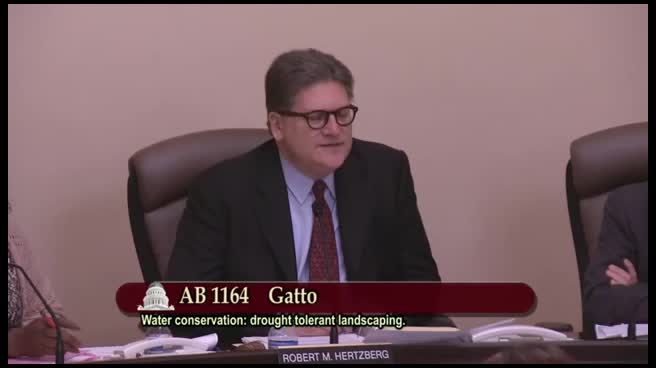 1MIN
Senate Standing Committee on Governance and Finance
 3MIN
Assembly Floor
 2MIN
Assembly Standing Committee on Appropriations
 2MIN
Assembly Standing Committee on Local Government
Bill Author

Bill Co-Author(s):