AB 69: Peace officers: body-worn cameras.
- Session Year: 2015-2016
- House: Assembly
- Latest Version Date: 2015-10-03
Existing law makes it a crime to intentionally record a confidential communication without the consent of all parties to the communication. Existing law exempts specified peace officers from that provision if they are acting within the scope of their authority.
This bill would require law enforcement agencies to consider specified best practices when establishing policies and procedures for downloading and storing data from body-worn cameras, including, among other things, prohibiting the unauthorized use, duplication, or distribution of the data, and establishing storage periods for evidentiary and nonevidentiary data, as defined.
Existing law makes it a crime to intentionally record a confidential communication without the consent of all parties to the communication. Existing law exempts specified peace officers from that provision if they are acting within the scope of their authority.
This bill would require law enforcement agencies to follow consider specified best practices when establishing policies and procedures for downloading and storing data from body-worn cameras, including, among other things, prohibiting the unauthorized use, duplication, or distribution of the data, and establishing storage periods for evidentiary and nonevidentiary data, as defined.
Existing law makes it a crime to intentionally record a confidential communication without the consent of all parties to the communication. Existing law exempts specified peace officers from that provision if they are acting within the scope of their authority.
This bill would require law enforcement agencies to follow specified best practices when establishing policies and procedures for downloading and storing data from body-worn cameras, including, among other things, prohibiting unauthorized use, duplication, or distribution of the data, storage periods for evidentiary and nonevidentiary data, as defined.
Existing law makes it a crime to intentionally record a confidential communication without the consent of all parties to the communication. Existing law exempts specified peace officers from that provision if they are acting within the scope of their authority.
This bill would state the intent of the legislature to enact legislation to require all peace officers statewide to wear body cameras to capture their interactions with the public.
This bill would require law enforcement agencies to follow specified best practices when establishing policies and procedures for downloading and storing data from body-worn cameras.
Existing law makes it a crime to intentionally record a confidential communication without the consent of all parties to the communication. Existing law exempts specified peace officers from that provision if they are acting within the scope of their authority.
This bill would state the intent of the legislature to enact legislation to require all peace officers statewide to wear body cameras to capture their interactions with the public.
(a)It is the intent of the Legislature to establish policies and procedures to address issues related to the downloading and storage data recorded by a body-worn camera worn by a peace officer. These policies and procedures shall be based on best practices.
(b)When establishing policies and procedures for the implementation and operation of a body-worn camera system, law enforcement agencies, departments, or entities shall consider the following best practices regarding the downloading and storage of body-worn camera data:
(1)Designate the person responsible for downloading the recorded data from the body-worn camera. If the storage system does not have automatic downloading capability, the officers supervisor should take immediate physical custody of the camera and should be responsible for downloading the data in the case of an incident involving the use of force by an officer, an officer-involved shooting, or other serious incident.
(2)Establish when data should be downloaded to ensure the data is entered into the system in a timely manner, the cameras are properly maintained and ready for the next use, and for purposes of tagging and categorizing the data.
(3)Establish specific measures to prevent data tampering, deleting, and copying, including prohibiting the unauthorized use, duplication, or distribution of body-worn camera data.
(4)Categorize and tag body-worn camera video at the time the data is downloaded and classified according to the type of event or incident captured in the data.
(5)Specifically state the length of time that recorded data is to be stored.
(A)Unless subparagraph (B) or (C) applies, nonevidentiary data including video and audio recorded by a body-worn camera should be retained for a minimum of 60 days, after which it may be erased, destroyed, or recycled. An agency may keep data for more than 60 days to have it available in case of a citizen complaint and to preserve transparency.
(B) Evidentiary data including video and audio recorded by a body-worn camera under this section should be retained for a minimum of two years under any of the following circumstances:
(i)The recording is of an incident involving the use of force by a peace officer or an officer-involved shooting.
(ii)The recording is of an incident that leads to the detention or arrest of an individual.
(iii)The recording is relevant to a formal or informal complaint against a law enforcement officer or a law enforcement agency.
(C)If evidence that may be relevant to a criminal prosecution is obtained from a recording made by a body-worn camera under this section, the law enforcement agency should retain the recording for any time in addition to that specified in paragraphs (A) and (B), and in the same manner as is required by law for other evidence that may be relevant to a criminal prosecution.
(D)In determining a retention schedule, the agency should work with its legal counsel to determine a retention schedule to ensure that storage policies and practices are in compliance with all relevant laws and adequately preserve evidentiary chains of custody.
(E)Records or logs of access and deletion of data from body-worn cameras should be retained permanently.
(6)State where the body-worn camera data will be stored, including, for example, an in-house server which is managed internally, or an online cloud database which is managed by a third-party vendor.
(7)If using a third-party vendor to manage the data storage system, the following factors should be considered to protect the security and integrity of the data:
(A)Using an experienced and reputable third-party vendor.
(B)Entering into contracts that govern the vendor relationship and protect the agencys data.
(C)Using a system that has a built-in audit trail to prevent data tampering and unauthorized access.
(D)Using a system that has a reliable method for automatically backing up data for storage.
(E)Consulting with internal legal counsel to ensure the method of data storage meets legal requirements for chain-of-custody concerns.
(F)Using a system that includes technical assistance capabilities.
(8)Require that all recorded data from body-worn cameras are property of their respective law enforcement agency and shall not be accessed or released for any unauthorized purpose, explicitly prohibit agency personnel from accessing recorded data for personal use and from uploading recorded data onto public and social media Internet Web sites, and include sanctions for violations of this prohibition.
(c)(1)For purposes of this section, evidentiary data refers to data of an incident or encounter that could prove useful for investigative purposes, including, but not limited to, a crime, an arrest or citation, a search, a use of force incident, or a confrontational encounter with a member of the public. The retention period for evidentiary data are subject to state evidentiary laws.
(2)For purposes of this section, nonevidentiary data refers to data that does not necessarily have value to aid in an investigation or prosecution, such as data of an incident or encounter that does not lead to an arrest or citation, or data of general activities the officer might perform while on duty.
(d)Nothing in this section shall be interpreted to limit the publics right to access recorded data under the California Public Records Act (Chapter 3.5 (commencing with Section 6250) of Division 7 of Title 1 of the Government Code).
(a)It is the intent of the Legislature to establish policies and procedures to address issues related to the downloading and storage data recorded by a body-worn camera worn by a peace officer. These policies and procedures shall be based on best practices.
(b)When establishing policies and procedures for the implementation and operation of a body-worn camera system, law enforcement agencies, departments, or entities shall consider the following best practices regarding the downloading and storage of body-worn camera data:
(1)Designate the person responsible for downloading the recorded data from the body-worn camera. If the storage system does not have automatic downloading capability, the officers supervisor should take immediate physical custody of the camera and should be responsible for downloading the data in the case of an incident involving the use of force by an officer, an officer-involved shooting, or other serious incident.
(2)Establish when data should be downloaded to ensure the data is entered into the system in a timely manner, the cameras are properly maintained and ready for the next use, and for purposes of tagging and categorizing the data.
(3)Establish specific measures to prevent data tampering, deleting, and copying, including prohibiting the unauthorized use, duplication, or distribution of body-worn camera data.
(4)Categorize and tag body-worn camera video at the time the data is downloaded and classified according to the type of event or incident captured in the data.
(5)Specifically state the length of time that recorded data shall is to be stored.
(A)Unless subparagraph (B) or (C) applies, a law enforcement agency shall retain nonevidentiary data including video and audio recorded by a body-worn camera should be retained for a minimum of 60 days, after which it may be erased, destroyed, or recycled. An agency may keep data for more than 60 days to have it available in case of a citizen complaint and to preserve transparency.
(B)A law enforcement agency shall retain evidentiary Evidentiary data including video and audio recorded by a body-worn camera under this section should be retained for a minimum of two years under any of the following circumstances:
(i)The recording is of an incident involving the use of force by a peace officer or an officer-involved shooting.
(ii)The recording is of an incident that leads to the detention or arrest of an individual.
(iii)The recording is relevant to a formal or informal complaint against a law enforcement officer or a law enforcement agency.
(C)If evidence that may be relevant to a criminal prosecution is obtained from a recording made by a body-worn camera under this section, the law enforcement agency shall should retain the recording for any time in addition to that specified in paragraphs (A) and (B), and in the same manner as is required by law for other evidence that may be relevant to a criminal prosecution.
(D)An agency establishing procedures for a body-worn camera system shall In determining a retention schedule, the agency should work with its legal counsel to determine a retention schedule to ensure that storage policies and practices are in compliance with all relevant laws and adequately preserve evidentiary chains of custody.
(E)Records or logs of access and deletion of data from body-worn cameras shall should be retained permanently.
(6)State where the body-worn camera data will be stored, including, for example, an in-house server which is managed internally, or an online cloud database which is managed by a third-party vendor.
(7)If using a third-party vendor to manage the data storage system, the following factors shall should be considered to protect the security and integrity of the data:
(A)Using an experienced and reputable third-party vendor.
(B)Entering into contracts that govern the vendor relationship and protect the agencys data.
(C)Using a system that has a built-in audit trail to prevent data tampering and unauthorized access.
(D)Using a system that has a reliable method for automatically backing up data for storage.
(E)Consulting with internal legal counsel to ensure the method of data storage meets legal requirements for chain-of-custody concerns.
(F)Using a system that includes technical assistance capabilities.
(8)Require that all recorded data from body-worn cameras are property of their respective law enforcement agency and shall not be accessed or released for any unauthorized purpose, explicitly prohibit agency personnel from accessing recorded data for personal use and from uploading recorded data onto public and social media Internet Web sites, and include sanctions for violations of this prohibition.
(c)(1)For purposes of this section, evidentiary data refers to data of an incident or encounter that could prove useful for investigative purposes, including, but not limited to, a crime, an arrest or citation, a search, a use of force incident, or a confrontational encounter with a member of the public. The retention period for evidentiary data are subject to state evidentiary laws.
(2)For purposes of this section, nonevidentiary data refers to data that does not necessarily have value to aid in an investigation or prosecution, such as data of an incident or encounter that does not lead to an arrest or citation, or data of general activities the officer might perform while on duty.
(d)Nothing in this section shall be interpreted to limit the publics right to access recorded data under the California Public Records Act (Chapter 3.5 (commencing with Section 6250) of Division 7 of Title 1 of the Government Code).
(a)It is the intent of the Legislature to establish policies and procedures to address issues related to the downloading and storage data recorded by a body-worn camera worn by a peace officer. These policies and procedures shall be based on best practices.
(b)When establishing policies and procedures for the implementation and operation of a body-worn camera system, law enforcement agencies, departments, or entities shall consider the following best practices regarding the downloading and storage of body-worn camera data:
(1)Designate the person responsible for downloading the recorded data from the body-worn camera. If the storage system does not have automatic downloading capability, the officers supervisor should take immediate physical custody of the camera and should be responsible for downloading the data in the case of an incident involving the use of force by an officer, an officer-involved shooting, or other serious incident.
(2)Establish when data should be downloaded to ensure the data is entered into the system in a timely manner, the cameras are properly maintained and ready for the next use, and for purposes of tagging and categorizing the data.
(3)Establish specific measures to prevent data tampering, deleting, and copying, including prohibiting the unauthorized use, duplication, or distribution of body-worn camera data.
(4)Categorize and tag body-worn camera video at the time the data is downloaded and classified according to the type of event or incident captured in the data.
(5)Specifically state the length of time that recorded data shall be stored.
(A)Unless subparagraph (B) or (C) applies, a law enforcement agency shall retain nonevidentiary data including video and audio recorded by a body-worn camera for a minimum of 60 days, after which it will may be erased, destroyed, or recycled. An agency may keep data for more than 60 days to have it available in case of a citizen complaint and to preserve transparency.
(B)A law enforcement agency shall retain evidentiary data including video and audio recorded by a body-worn camera under this section for a minimum of three two years under any of the following circumstances:
(i)The recording is of an incident involving the use of force by a peace officer or an officer-involved shooting.
(ii)The recording is of an incident that leads to the detention or arrest of an individual.
(iii)The recording is relevant to a formal or informal complaint against a law enforcement officer or a law enforcement agency.
(C)If evidence that may be relevant to a criminal prosecution is obtained from a recording made by a body-worn camera under this section, the law enforcement agency shall retain the recording for any time in addition to that specified in paragraphs (A) and (B), and in the same manner as is required by law for other evidence that may be relevant to a criminal prosecution.
(D)An agency establishing procedures for a body-worn camera system shall work with its legal counsel to determine a retention schedule to ensure that storage policies and practices are in compliance with all relevant laws and adequately preserve evidentiary chains of custody.
(E)Records or logs of access and deletion of data from body-worn cameras shall be retained permanently.
(6)State where the body-worn camera data will be stored, including, for example, an in-house server which is managed internally, or an online cloud database which is managed by a third-party vendor.
(7)If using a third-party vendor to manage the data storage system, the following factors shall be considered to protect the security and integrity of the data:
(A)Using an experienced and reputable third-party vendor.
(B)Entering into contracts that govern the vendor relationship and protect the agencys data.
(C)Using a system that has a built-in audit trail to prevent data tampering and unauthorized access.
(D)Using a system that has a reliable method for automatically backing up data for storage.
(E)Consulting with internal legal counsel to ensure the method of data storage meets legal requirements for chain-of-custody concerns.
(F)Using a system that includes technical assistance capabilities.
(8)Require that all recorded data from body-worn cameras are property of their respective law enforcement agency and shall not be accessed or released for any unauthorized purpose, explicitly prohibit agency personnel from accessing recorded data for personal use and from uploading recorded data onto public and social media Internet Web sites, and include sanctions for violations of this prohibition.
(c)(1)For purposes of this section, evidentiary data refers to data of an incident or encounter that could prove useful for investigative purposes, including, but not limited to, a crime, an arrest or citation, a search, a use of force incident, or a confrontational encounter with a member of the public. The retention period for evidentiary data are subject to state evidentiary laws.
(2)For purposes of this section, nonevidentiary data refers to data that does not necessarily have value to aid in an investigation or prosecution, such as data of an incident or encounter that does not lead to an arrest or citation, or data of general activities the officer might perform while on duty.
(d)Nothing in this section shall be interpreted to limit the publics right to access recorded data under the California Public Records Act (Chapter 3.5 (commencing with Section 6250) of Division 7 of Title 1 of the Government Code).
(a)It is the intent of the Legislature to establish policies and procedures to address issues related to the downloading and storage data recorded by a body-worn camera worn by a peace officer. These policies and procedures shall be based on best practices.
(b)When establishing policies and procedures for the implementation and operation of a body-worn camera system, law enforcement agencies, departments, or entities shall consider the following best practices regarding the downloading and storage of body-worn camera data:
(1)Designate the person responsible for downloading the recorded data from the body-worn camera. If the storage system does not have automatic downloading capability, the officers supervisor should take immediate physical custody of the camera and should be responsible for downloading the data in the case of an incident involving the use of force by an officer, an officer-involved shooting, or other serious incident.
(2)Establish when data should be downloaded to ensure the data is entered into the system in a timely manner, the cameras are properly maintained and ready for the next use, and for purposes of tagging and categorizing the data.
(3)Establish specific measures to prevent data tampering, deleting, and copying, including prohibiting the unauthorized use, duplication, or distribution of body-worn camera data.
(4)Categorize and tag body-worn camera video at the time the data is downloaded and classified according to the type of event or incident captured in the data.
(5)Specifically state the length of time that recorded data shall be stored.
(A)Unless subparagraph (B) or (C) applies, a law enforcement agency shall retain nonevidentiary data including video and audio recorded by a body-worn camera for a minimum of 60 days, after which it will be erased, destroyed, or recycled pursuant to Section 34090.6 of the Government Code. recycled.
(B)A law enforcement agency shall retain evidentiary data including video and audio recorded by a body-worn camera under this section for a minimum of three years under any of the following situations: circumstances:
(i)The recording is of an incident involving the use of force by a peace officer or an officer-involved shooting.
(ii)The recording is of an incident that leads to the detention or arrest of an individual.
(iii)The recording is relevant to a formal or informal complaint against a law enforcement officer or a law enforcement agency.
(C)If evidence that may be relevant to a criminal prosecution is obtained from a recording made by a body-worn camera under this section, the law enforcement agency shall retain the recording for any time in addition to that specified in paragraphs (A) and (B), and in the same manner as is required by law for other evidence that may be relevant to a criminal prosecution.
(6)State where the body-worn camera data will be stored, including, for example, an in-house server which is managed internally, or an online cloud database which is managed by a third-party vendor.
(7)If using a third-party vendor to manage the data storage system, the following factors shall be considered to protect the security and integrity of the data:
(A)Using an experienced and reputable third-party vendor.
(B)Entering into contracts that govern the vendor relationship and protect the agencys data.
(C)Using a system that has a built-in audit trail to prevent data tampering and unauthorized access.
(D)Using a system that has a reliable method for automatically backing up data for storage.
(E)Consulting with internal legal counsel to ensure the method of data storage meets legal requirements for chain-of-custody concerns.
(F)Using a system that includes technical assistance capabilities.
(8)Require that all recorded data from body-worn cameras are property of their respective law enforcement agency and shall not be accessed or released for any unauthorized purpose, explicitly prohibit agency personnel from accessing recorded data for personal use and from uploading recorded data onto public and social media Internet Web sites, and include sanctions for violations of this prohibition.
(c)(1)For purposes of this section, evidentiary data refers to data of an incident or encounter that could prove useful for investigative purposes, including, but not limited to, a crime, an arrest or citation, a search, a use of force incident, or a confrontational encounter with a member of the public. The retention period for evidentiary data are subject to state evidentiary laws.
(2)For purposes of this section, nonevidentiary data refers to data that does not necessarily have value to aid in an investigation or prosecution, such as data of an incident or encounter that does not lead to an arrest or citation, or data of general activities the officer might perform while on duty.
(d)All recorded media, images, and audio from body-worn cameras are property of their respective law enforcement agency, and shall not be copied, released, or disseminated in any form or manner outside the parameters of this section without the written consent of the head of the agency, unless otherwise authorized by law.
(d)Nothing in this section shall be interpreted to limit the publics right to access recorded data under the California Public Records Act (Chapter 3.5 (commencing with Section 6250) of Division 7 of Title 1 of the Government Code).
(a)It is the intent of the Legislature to establish policies and procedures to address issues related to the downloading and storage data recorded by a body-worn camera worn by a peace officer. These policies and procedures shall be based on best practices.
(b)When establishing policies and procedures for the implementation and operation of a body-worn camera system, law enforcement agencies, departments, or entities shall consider the following best practices regarding the downloading and storage of body-worn camera data:
(1)Designate the person responsible for downloading the recorded data from the body-worn camera. If the storage system does not have automatic downloading capability, the officers supervisor should take immediate physical custody of the camera and should be responsible for downloading the data in the case of an incident involving the use of force by an officer, an officer-involved shooting, or other serious incident.
(2)Establish when data should be downloaded to ensure the data is entered into the system in a timely manner, the cameras are properly maintained and ready for the next use, and for purposes of tagging and categorizing the data.
(3)Establish specific measures to prevent data tampering, deleting, and copying, including prohibiting the unauthorized use, duplication, or distribution of body-worn camera data.
(4)Categorize and tag body-worn camera video at the time the data is downloaded and classified according to the type of event or incident captured in the data.
(5)Specifically state the length of time that recorded data shall be stored.
(A)Unless subparagraph (B) or (C) applies, a law enforcement agency shall retain nonevidentiary data including video and audio recorded by a body-worn camera for a minimum of one year 60 days, after which it will be erased, destroyed, or recycled pursuant to Section 34090.6 of the Government Code.
(B)A law enforcement agency shall retain evidentiary data including video and audio recorded by a body-worn camera under this section for a minimum of three years under any of the following situations:
(i)The recording is of an incident involving the use of force by a peace officer or an officer-involved shooting.
(ii)The recording is of an incident that leads to the detention or arrest of an individual.
(iii)The recording is relevant to a formal or informal complaint against a law enforcement officer or a law enforcement agency.
(C)If evidence that may be relevant to a criminal prosecution is obtained from a recording made by a body-worn camera under this section, the law enforcement agency shall retain the recording for any time in addition to that specified in paragraphs (A) and (B), and in the same manner as is required by law for other evidence that may be relevant to a criminal prosecution.
(6)State where the body-worn camera data will be stored, including, for example, an in-house server which is managed internally, or an online cloud database which is managed by a third party third-party vendor.
(7)If using a third-party vendor to manage the data storage system, the following factors shall be considered to protect the security and integrity of the data:
(A)Using an experienced and reputable third-party vendor.
(B)Entering into contracts that govern the vendor relationship and protect the agencys data.
(C)Using a system that has a built-in audit trail to prevent data tampering and unauthorized access.
(D)Using a system that has a reliable method for automatically backing up data for storage.
(E)Consulting with internal legal counsel to ensure the method of data storage meets legal requirements for chain-of-custody concerns.
(F)Using a system that includes technical assistance capabilities.
(c)(1)For purposes of this section, evidentiary data refers to data of an incident or encounter that could prove useful for investigative purposes, including, but not limited to, a crime, an arrest or citation, a search, a use of force incident, or a confrontational encounter with a member of the public. The retention period for evidentiary data are subject to state evidentiary laws.
(2)For purposes of this section, nonevidentiary data refers to data that does not necessarily have value to aid in an investigation or prosecution, such as data of an incident or encounter that does not lead to an arrest or citation, or data of general activities the officer might perform while on duty.
(d)All recorded media, images, and audio from body-worn cameras are property of their respective law enforcement agency, and shall not be copied, released, or disseminated in any form or manner outside the parameters of this section without the written consent of the head of the agency, unless otherwise authorized by law.
(a)It is the intent of the Legislature to establish policies and procedures to address issues related to the downloading and storage data recorded by a body-worn camera worn by a peace officer. These policies and procedures shall be based on best practices.
(b)When establishing policies and procedures for the implementation and operation of a body-worn camera system, law enforcement agencies, departments, or entities shall consider the following best practices regarding the downloading and storage of body-worn camera data:
(1)Designate the person responsible for downloading the recorded data from the body-worn camera. If the storage system does not have automatic downloading capability, the officers supervisor should take immediate physical custody of the camera and should be responsible for downloading the data in the case of an incident involving the use of force by an officer, an officer-involved shooting, or other serious incident.
(2)Establish when data should be downloaded to ensure the data is entered into the system in a timely manner, the cameras are properly maintained and ready for the next use, and for purposes of tagging and categorizing the data.
(3)Include Establish specific measures to prevent data tampering, deleting, and copying copying, including prohibiting the unauthorized use, duplication, or distribution of body-worn camera data.
(4)Categorize and tag body-worn camera video at the time the data is downloaded and classified according to the type of event or incident captured in the data.
(5)State Specifically state the length of time that recorded data shall be stored.
(A)Unless subparagraph (B) or (C) applies, a law enforcement agency shall retain nonevidentiary data including video and audio recorded by a body-worn camera for a minimum of one year, after which it will be erased, destroyed, or recycled pursuant to Section 34090.6 of the Government Code.
(B)A law enforcement agency shall retain evidentiary data including video and audio recorded by a body-worn camera under this section for a minimum of three years under any of the following situations:
(i)The recording is of an incident involving the use of force by a peace officer or an officer-involved shooting.
(ii)The recording is of an incident that leads to the detention or arrest of an individual.
(iii)The recording is relevant to a formal or informal complaint against a law enforcement officer or a law enforcement agency.
(C)If evidence that may be relevant to a criminal prosecution is obtained from a recording made by a body-worn camera under this section, the law enforcement agency shall retain the recording for any time in addition to that specified in paragraphs (A) and (B), and in the same manner as is required by law for other evidence that may be relevant to a criminal prosecution.
(6)State where the body-worn camera data will be stored stored, including, for example, an in-house server which is managed internally, or an online cloud database which is managed by a third party vendor.
(7)If using a third-party vendor to manage the data storage system, the following factors shall be considered to protect the security and integrity of the data:
(A)Using an experienced and reputable third-party vendor.
(B)Entering into contracts that govern the vendor relationship and protect the agencys data.
(C)Using a system that has a built in built-in audit trail to prevent data tampering and unauthorized access.
(D)Using a system that has a reliable method for automatically backing up data for storage.
(E)Consulting with internal legal counsel to ensure the method of data storage meets legal requirements for chain-of-custody concerns.
(F)Using a system that includes technical assistance capabilities.
(c)(1)For purposes of this section, evidentiary data refers to data of an incident or encounter that could prove useful for investigative purposes, including, but not limited to, a crime, an arrest or citation, a search, a use of force incident, or a confrontational encounter with a member of the public. The retention period for evidentiary data are subject to state evidentiary laws.
(2)For purposes of this section, nonevidentiary data refers to data that does not necessarily have value to aid in an investigation or prosecution, such as data of an incident or encounter that does not lead to an arrest or citation, or data of general activities the officer might perform while on duty.
(d)All recorded media, images, and audio from body-worn cameras are property of their respective law enforcement agency, and shall not be copied, released, or disseminated in any form or manner outside the parameters of this section without the written consent of the head of the agency, unless otherwise authorized by law.
(a)It is the intent of the Legislature to establish policies and procedures to address issues related to the downloading and storage data recorded by a body-worn camera worn by a peace officer. These policies and procedures shall be based on best practices.
(b)When establishing policies and procedures for the implementation and operation of a body-worn camera system, law enforcement agencies, departments, or entities shall consider the following best practices regarding the downloading and storage of body-worn camera data:
(1)Designate the person responsible for downloading the recorded data from the body-worn camera.
(2)Establish when data should be downloaded.
(3)Include specific measures to prevent data tampering, deleting, and copying.
(4)Categorize and tag body-worn camera video at the time the data is downloaded and classified according to the type of event or incident captured in the data.
(5)State the length of time that recorded data shall be stored.
(6)State where the body-worn camera data will be stored.
(7)If using a third-party vendor to manage the data storage system, the following factors shall be considered to protect the security and integrity of the data:
(A)Using an experienced and reputable third-party vendor.
(B)Entering into contracts that govern the vendor relationship and protect the agencys data.
(C)Using a system that has a built in audit trail to prevent data tampering and unauthorized access.
(D)Using a system that has a reliable method for automatically backing up data for storage.
(E)Consulting with internal legal counsel to ensure the method of data storage meets legal requirements for chain-of-custody concerns.
(F)Using a system that includes technical assistance capabilities.
SECTION 1.It is the intent of the legislature to enact legislation to require all peace officers statewide to wear body cameras to capture their interactions with the public.
It is the intent of the legislature to enact legislation to require all peace officers statewide to wear body cameras to capture their interactions with the public.
|
Date
|
Status
|
|---|---|
| Sep 2, 2015 | Read third time. Passed. Ordered to the Assembly. (Ayes 40. Noes 0. Page 2396.). |
| Jul 2, 2015 | From committee chair, with author's amendments: Amend, and re-refer to committee. Read second time, amended, and re-referred to Com. on PUB. S. |
| Aug 17, 2015 | From committee: Amend, and do pass as amended and re-refer to Com. on APPR. (Ayes 7. Noes 0.) (July 14). |
| Aug 18, 2015 | Read second time and amended. Re-referred to Com. on APPR. |
| Aug 24, 2015 | In committee: Referred to APPR. suspense file. |
| Aug 27, 2015 | From committee: Do pass. (Ayes 7. Noes 0.) (August 27). |
| Aug 31, 2015 | Read second time. Ordered to third reading. |
| Sep 2, 2015 | In Assembly. Concurrence in Senate amendments pending. May be considered on or after September 4 pursuant to Assembly Rule 77. |
| Sep 2, 2015 | Read third time. Passed. Ordered to the Assembly. |
| Jun 11, 2015 | Referred to Com. on PUB. S. |
| Sep 3, 2015 | Assembly Rule 77 suspended. |
| Sep 3, 2015 | Assembly Rule 77 suspended. (Page 2859.) |
| Sep 3, 2015 | Senate amendments concurred in. To Engrossing and Enrolling. (Ayes 79. Noes 0. Page 2865.). |
| Sep 3, 2015 | Senate amendments concurred in. To Engrossing and Enrolling. (Ayes 79. Noes 0.). |
| Sep 15, 2015 | Enrolled and presented to the Governor at 4 p.m. |
| Oct 3, 2015 | Approved by the Governor. |
| Oct 3, 2015 | Chaptered by Secretary of State - Chapter 461, Statutes of 2015. |
| Apr 30, 2015 | From committee: Amend, and do pass as amended. (Ayes 11. Noes 0.) (April 30). |
| Dec 19, 2014 | From printer. May be heard in committee January 18. |
| Jan 5, 2015 | Read first time. |
| Mar 12, 2015 | Referred to Coms. on PUB. S. and P. & C.P. |
| Mar 16, 2015 | From committee chair, with author's amendments: Amend, and re-refer to Com. on PUB. S. Read second time and amended. |
| Mar 17, 2015 | Re-referred to Com. on PUB. S. |
| Apr 8, 2015 | From committee: Do pass and re-refer to Com. on P. & C.P. (Ayes 7. Noes 0.) (April 7). Re-referred to Com. on P. & C.P. |
| Apr 21, 2015 | From committee chair, with author's amendments: Amend, and re-refer to Com. on P. & C.P. Read second time and amended. |
| Apr 22, 2015 | Re-referred to Com. on P. & C.P. |
| Dec 18, 2014 | Introduced. To print. |
| May 4, 2015 | Read second time and amended. Ordered returned to second reading. |
| May 5, 2015 | Read second time. Ordered to third reading. |
| May 22, 2015 | Read third time and amended. Ordered to third reading. |
| May 22, 2015 | Read third time and amended. Ordered to third reading. (Page 1540.) |
| May 28, 2015 | In Senate. Read first time. To Com. on RLS. for assignment. |
| May 28, 2015 | Read third time. Passed. Ordered to the Senate. (Ayes 75. Noes 1. Page 1621.) |
| May 28, 2015 | Read third time. Passed. Ordered to the Senate. (Ayes 75. Noes 1.) |
|
Date
|
Description
|
Location
|
Votes
|
|
|---|---|---|---|---|
| Sep 3, 2015 | AB 69 RODRIGUEZ Concurrence in Senate Amendments | Assembly Floor |
Passed |
|
| Sep 2, 2015 | Assembly 3rd Reading AB69 Rodriguez By Hueso | Senate Floor |
Passed |
|
| Aug 27, 2015 | Do pass | Senate Standing Committee on Appropriations |
Passed |
|
| Aug 24, 2015 | Placed on suspense file | Senate Standing Committee on Appropriations |
Passed |
|
| Jul 14, 2015 | Do pass as amended, but first amend, and re-refer to the Committee on [Appropriations] | Senate Standing Committee on Public Safety |
Passed |
|
| May 28, 2015 | AB 69 RODRIGUEZ Assembly Third Reading | Assembly Floor |
Passed |
|
| Apr 30, 2015 | Do pass as amended. | Assembly Standing Committee on Privacy and Consumer Protection |
Passed |
|
| Apr 7, 2015 | Do pass and be re-referred to the Committee on [Privacy and Consumer Protection] | Assembly Standing Committee on Public Safety |
Passed |
This list shows positions taken on this bill by organizations on the date displayed, which is linked to the original source.
Positions by individuals are not included.
|
Organization
|
Position
|
Date
|
|---|---|---|
| California Public Defenders Association | ** Support | Sep 2, 2015 |
AB 69
Page 4
CONCURRENCE IN SENATE AMENDMENTS
AB 69
(Rodriguez)
As Amended August 18, 2015
Majority vote
ASSEMBLY: |
75-1 |
(May 28, 2015) |
SENATE: |
40-0 |
(September 2, 2015) |
Original Committee Reference: PUB. S.
SUMMARY: Requires law enforcement agencies to consider specified best practices when establishing policies and procedures for downloading and storing data from body-worn cameras.
The Senate amendments:
Authorize an agency to keep data for more than 60 days to have it available in case of a citizen complaint and to preserve transparency.
Reduce the minimum length of time that a law enforcement agency should retain evidentiary data recorded by a body-worn camera under specified circumstances from three years to two years.
Encourage an agency, in determining a retention schedule, to work with its legal counsel to ensure that storage policies and practices are in compliance with all relevant laws and adequately preserve evidentiary chains of custody.
Provide that records or logs of access and deletion of data from body-worn cameras should be retained permanently.
Provide that nonevidentiary data including video and audio recorded by a body-worn camera should be retained for a minimum of 60 days, after which it may be erased, destroyed, or recycled.
Encourage, rather than require, an agency to retain a body camera recording that is relevant to a criminal prosecution for any time in addition to that specified, and in the same manner as is required by law for other evidence that may be relevant to a criminal prosecution.
Encourage, rather than require, an agency to consider the enumerated factors to protect the security and integrity of the data when using a third-party vendor.
EXISTING LAW:
States that every person who, intentionally and without the consent of all parties to a confidential communication, by means of any electronic amplifying or recording device, eavesdrops upon or records the confidential communication, whether the communication is carried on among the parties in the presence of one another or by means of a telegraph, telephone, or other device, except a radio, shall be punished by a fine not exceeding $2,500, or imprisonment in the county jail not exceeding one year, or in the state prison, or by both that fine and imprisonment.
Defines "confidential communication" to include any communication carried on in circumstances as may reasonably indicate that any party to the communication desires it to be confined to the parties thereto, but excludes a communication made in a public gathering or any legislative, judicial, executive or administrative proceeding open to the public, or in any circumstance that the parties may reasonably expect that the communication may be overheard or recorded.
Provides that nothing in the sections prohibiting eavesdropping or wiretapping prohibits specified law enforcement officers or their assistants or deputies acting within the scope of his or her authority, from overhearing or recording any communication that they could lawfully overhear or record.
AS PASSED BY THE ASSEMBLY, this bill:
Stated the intent of the Legislature to establish policies and procedures to address issues related to the downloading and storage data recorded by a body-worn camera worn by a peace officer. These policies and procedures shall be based on best practices.
Stated that when establishing policies and procedures for the implementation and operation of a body-worn camera system, law enforcement agencies, departments, or entities shall consider the following best practices regarding the downloading and storage of body-worn camera data:
Designated the person responsible for downloading the recorded data from the body-worn camera. If the storage system does not have automatic downloading capability, the officer's supervisor should take immediate physical custody of the camera and should be responsible for downloading the data in the case of an incident involving the use of force by an officer, an officer-involved shooting, or other serious incident.
Established when data should be downloaded to ensure the data is entered into the system in a timely manner, the cameras are properly maintained and ready for the next use, and for purposes of tagging and categorizing the data.
Established specific measures to prevent data tampering, deleting, and copying, including prohibiting the unauthorized use, duplication, or distribution of body-worn camera data.
Categorized and tag body-worn camera video at the time the data is downloaded and classified according to the type of event or incident captured in the data;
Specifically state the length of time that recorded data shall be stored;
Unless either of the paragraphs below applies, a law enforcement agency shall retain nonevidentiary data including video and audio recorded by a body-worn camera for a minimum of 60 days, after which it will be erased, destroyed, or recycled.
A law enforcement agency shall retain evidentiary data including video and audio recorded by a body-worn camera under this section for a minimum of three years when the recording is of an incident involving use of force or an officer-involved shooting, an incident that leads to the detention or arrest of an individual, or is relevant to a formal or informal complaint against an officer or a law enforcement agency.
If evidence that may be relevant to a criminal prosecution is obtained from a recording made by a body-worn camera, the law enforcement agency shall retain the recording for any time in addition to the amount of time specified above and in the same manner as is required by law for other evidence that may be relevant to a criminal prosecution.
Stated where the body-worn camera data will be stored; including, for example, an in-house server which is managed internally, or an online cloud database which is managed by a third- party vendor.
If using a third-party vendor to manage the data storage system, the following factors shall be considered to protect the security and integrity of the data:
Using an experienced and reputable third-party vendor;
Entering into contracts that govern the vendor relationship and protect the agency’s data;
Using a system that has a built in audit trail to prevent data tampering and unauthorized access;
Using a system that has a reliable method for automatically backing up data for storage;
Consulting with internal legal counsel to ensure the method of data storage meets legal requirements for chain-of-custody concerns; and
Using a system that includes technical assistance capabilities.
Required that all recorded data from body-worn cameras are property of their respective law enforcement agency and shall not be accessed or released for any unauthorized purpose, explicitly prohibit agency personnel from accessing recorded data for personal use and from uploading recorded data onto public and social media Internet Web sites, and include sanctions for violations of this prohibition.
Defined "evidentiary data" as data of an incident or encounter that could prove useful for investigative purposes, including, but not limited to, a crime, an arrest or citation, a search, a use of force incident, or a confrontational encounter with a member of the public. The retention period for evidentiary data are subject to state evidentiary laws.
Defined "nonevidentiary data" refers to data that does not necessarily have value to aid in an investigation or prosecution, such as data of an incident or encounter that does not lead to an arrest or citation, or data of general activities the officer might perform while on duty.
Clarified that the provisions in the bill shall not be interpreted to limit the public's right to access recorded data under the California Public Records Act.
FISCAL EFFECT: According to the Senate Appropriations Committee:
Potentially major non-reimbursable local costs (Local Funds) to law enforcement and other local agencies that opt to implement a body-worn camera system.
Potential major future cost pressure (General Fund/Special Fund) to various state agencies including but not limited to the California Highway Patrol (CHP), Department of Justice, Department of Fish and Wildlife, and the Department of Corrections and Rehabilitation, to the extent these agencies implement a body-worn camera system in the future. The 2015 Budget Act includes $1 million for the CHP to conduct a pilot program to study the use of body-worn cameras.
COMMENTS: According to the author, "While the 2012 Rialto Study on body-worn cameras concluded that there is a correlation between the use of body-worn cameras and the reduction of excessive use of force complaints, we must not lose sight that this is a developing technology and we have yet to learn and fully understand how this technology is being used in the field and the impact it has on police-citizen behavior and on crime. AB 69 focuses on providing guidelines for downloading and storing body-worn camera data for those law enforcement agencies that choose to implement a body-worn camera program."
Analysis Prepared by: Stella Choe / PUB. S. / (916) 319-3744 FN: 0001808
AB 69
Page 6
|
Office of Senate Floor Analyses (916) 651-1520 Fax: (916) 327-4478 |
THIRD READING
Bill No: AB 69
Amended: 8/18/15 in Senate
SENATE PUBLIC SAFETY COMMITTEE: 7-0, 7/14/15
AYES: Hancock, Anderson, Glazer, Leno, Liu, Monning, Stone
SENATE APPROPRIATIONS COMMITTEE: 7-0, 8/27/15
AYES: Lara, Bates, Beall, Hill, Leyva, Mendoza, Nielsen
ASSEMBLY FLOOR: 75-1, 5/28/15 - See last page for vote
SUBJECT: Peace officers: body-worn cameras
DIGEST: This bill requires law enforcement agencies to consider specified best practices when establishing policies and procedures for downloading and storing data from body-worn cameras.
Existing law:
Defines “peace officer,” as specified. (Penal Code § 830, et seq.)
Makes it a crime for a person, intentionally and without requisite consent, to eavesdrop on a confidential communication by means of any electronic amplifying or recording device. (Penal Code § 632.)
Exempts a number of law enforcement agencies from the prohibition in Penal Code Section 632, including the Attorney General, any district attorney, or any assistant, deputy, or investigator of the Attorney General or any district attorney, any officer of the California Highway Patrol, any chief of police, assistant chief of police, or police officer of a city or city and county, any sheriff, undersheriff, or deputy sheriff regularly employed and paid in that capacity by a county, police officer of the County of Los Angeles, or any person acting pursuant to the direction of one of these law enforcement officers acting within the scope of his or her authority. (Penal Code § 633.)
This bill:
States the intent of the Legislature to establish policies and procedures to address issues related to the downloading and storage data recorded by a body-worn camera worn by a peace officer.
States that law enforcement agencies, departments, or entities must consider the following best practices when establishing policies and procedures for the implementation and operation of a body-worn camera system:
Designate the person responsible for downloading the recorded data from the body-worn camera. If the storage system does not have automatic downloading capability, the officer’s supervisor should take immediate physical custody of the camera and should be responsible for downloading the data in the case of an incident involving the use of force by an officer, an officer-involved shooting, or other serious incident.
Establish when data should be downloaded to ensure the data is entered into the system in a timely manner, the cameras are properly maintained and ready for the next use, and for purposes of tagging and categorizing the data.
Establish specific measures to prevent data tampering, deleting, and copying, including prohibiting the unauthorized use, duplication, or distribution of body-worn camera data.
Categorize and tag body-worn camera video at the time the data is downloaded and classified according to the type of event or incident captured in the data;
Specifically state the length of time that recorded data shall be stored;
Unless otherwise specified, a law enforcement agency shall retain nonevidentiary data including video and audio recorded by a body-worn camera for a minimum of 60 days, after which it will be erased, destroyed, or recycled. Agencies may keep data longer to preserve transparency and to have it available in case a citizen complaint arises.
A law enforcement agency shall retain evidentiary data including video and audio recorded by a body-worn camera under this section for a minimum of two years when the recording is of an incident involving use of force or an officer-involved shooting, an incident that leads to the detention or arrest of an individual, or is relevant to a formal or informal complaint against an officer or a law enforcement agency.
If evidence that may be relevant to a criminal prosecution is obtained from a recording made by a body-worn camera, the law enforcement agency shall retain the recording for any time in addition to the amount of time specified above and in the same manner as is required by law for other evidence that may be relevant to a criminal prosecution.
Each agency must work with their legal counsel to determine a retention schedule to ensure that storage policies and practices are in compliance with all relevant laws and adequately preserve evidentiary chain of custody.
Records or logs of access and deletion of data from body-worn cameras must be retained permanently.
State where the body-worn camera data will be stored; including, for example, an in-house server which is managed internally, or an online cloud database which is managed by a third- party vendor.
If using a third-party vendor to manage the data storage system, the following factors shall be considered to protect the security and integrity of the data:
Using an experienced and reputable third-party vendor;
Entering into contracts that govern the vendor relationship and protect the agency’s data;
Using a system that has a built in audit trail to prevent data tampering and unauthorized access;
Using a system that has a reliable method for automatically backing up data for storage;
Consulting with internal legal counsel to ensure the method of data storage meets legal requirements for chain-of-custody concerns; and,
Using a system that includes technical assistance capabilities.
Require that all recorded data from body-worn cameras are property of their respective law enforcement agency and shall not be accessed or released for any unauthorized purpose, explicitly prohibit agency personnel from accessing recorded data for personal use and from uploading recorded data onto public and social media Internet Web sites, and include sanctions for violations of this prohibition.
Defines “evidentiary data” as data of an incident or encounter that could prove useful for investigative purposes, including, but not limited to, a crime, an arrest or citation, a search, a use of force incident, or a confrontational encounter with a member of the public. The retention period for evidentiary data is subject to state evidentiary laws.
Defines “nonevidentiary data” refers to data that does not necessarily have value to aid in an investigation or prosecution, such as data of an incident or encounter that does not lead to an arrest or citation, or data of general activities the officer might perform while on duty.
Clarifies that the provisions in the bill shall not be interpreted to limit the public's right to access recorded data under the California Public Records Act.
Background
A number of law enforcement agencies are currently permitted to utilize body-worn cameras. Existing law, however, does not require these agencies to have a policy prior to utilizing them. This bill requires law enforcement to consider best practices for the retention of body-worn camera data should an agency draft a policy.
A recent report released by U.S. Department of Justice’s Office of Community Oriented Policing Services and the Police Executive Research Forum studied the use of body-worn cameras by police agencies. (Miller and Toliver, Implementing a Body-Worn Camera Program: Recommendations and Lessons Learned, Police Executive Research Forum (Nov. 2014).) This research included a survey of 250 police agencies, interviews with more than 40 police executives, a review of 20 existing body-camera policies, and a national conference at which more than 200 police chiefs, sheriffs, federal justice representatives, and other experts shared their knowledge of and experiences with body-worn cameras. (Id.) The report shows that body-worn cameras can help agencies demonstrate transparency and address the community's questions about controversial events. (Id.) Among other reported benefits are that the presence of a body-worn camera have helped strengthen officer professionalism and helped to de-escalate contentious situations, and when questions do arise following an event or encounter, police having a video record helps lead to a quicker resolution. (Id.) The report made specified recommendations related to data storage and retention policies―this bill seeks to help implement these recommendations by requiring law enforcement agencies to consider best practices regarding the downloading and storage of body-worn camera data.
FISCAL EFFECT: Appropriation: No Fiscal Com.: Yes Local: No
According to the Senate Appropriations Committee analysis:
Potentially major non-reimbursable local costs (Local Funds) to law enforcement and other local agencies that opt to implement a body-worn camera system.
Potential major future cost pressure (General Fund/Special Fund) to various state agencies including but not limited to the California Highway Patrol (CHP), Department of Justice, Department of Fish and Wildlife, and the Department of Corrections and Rehabilitation, to the extent these agencies implement a body-worn camera system in the future. The 2015 Budget Act includes $1 million for the CHP to conduct a pilot program to study the use of body-worn cameras.
California Public Defenders Association
OPPOSITION: (Verified 8/28/15)
None received
ARGUMENTS IN SUPPORT: The California Public Defenders Association (CPDA) states:
CPDA supports the use of body-worn cameras by law enforcement. Of
equal importance to the wearing of body-worn cameras are policies
concerning the use of these cameras and the proper storage of data
collected from these cameras.
CPDA believes that this bill
is a good start in establishing these policies. Once the use of
body-worn cameras by law enforcement becomes more common, these
policies may need to be revisited and updated to ensure integrity in
their use and integrity in the data captured by them.
Further,
CPDA believes that the use of body-worn cameras will help build trust
between communities and their law enforcement officers, and promote
the truth finding process.
ASSEMBLY FLOOR: 75-1, 5/28/15
AYES: Achadjian, Alejo, Travis Allen, Baker, Bigelow, Bonilla, Bonta, Brown, Burke, Calderon, Campos, Chang, Chau, Chávez, Chiu, Chu, Cooley, Cooper, Dababneh, Dahle, Daly, Dodd, Eggman, Frazier, Beth Gaines, Gallagher, Cristina Garcia, Eduardo Garcia, Gatto, Gipson, Gomez, Gonzalez, Gordon, Gray, Hadley, Roger Hernández, Holden, Irwin, Jones, Jones-Sawyer, Kim, Lackey, Levine, Linder, Lopez, Low, Maienschein, Mathis, Mayes, McCarty, Medina, Melendez, Mullin, Nazarian, Obernolte, O'Donnell, Olsen, Patterson, Perea, Quirk, Rendon, Ridley-Thomas, Rodriguez, Salas, Santiago, Steinorth, Mark Stone, Ting, Wagner, Waldron, Weber, Wilk, Williams, Wood, Atkins
NOES: Harper
NO VOTE RECORDED: Bloom, Brough, Grove, Thurmond
Prepared by: Jessica Devencenzi / PUB. S. /
8/30/15 19:48:57
**** END ****
AB 69 (Rodriguez) Page 4 of 4
SENATE COMMITTEE ON APPROPRIATIONS
Senator Ricardo Lara, Chair
2015 - 2016 Regular Session
AB 69 (Rodriguez) - Peace officers: body-worn cameras
|
|
Version: August 18, 2015 |
Policy Vote: PUB. S. 7 - 0 |
Urgency: No |
Mandate: No |
Hearing Date: August 24, 2015 |
Consultant: Jolie Onodera |
This bill meets the criteria for referral to the Suspense File.
Bill Summary:
AB 69 would require law enforcement agencies, departments, and entities to consider specified best practices when establishing policies and procedures for the implementation and operation of a body-worn camera system, including issues related to the downloading and storage of data from body-worn cameras.
Fiscal Impact:
Potentially major non-reimbursable local costs (Local Funds) to law enforcement and other local agencies that opt to implement a body-worn camera system.
Potential major future cost pressure (General Fund/Special Fund) to various state agencies including but not limited to the California Highway Patrol (CHP), Department of Justice (DOJ), Department of Fish and Wildlife (DFW), and the Department of Corrections and Rehabilitation (CDCR), to the extent these agencies implement a body-worn camera system in the future. The 2015 Budget Act includes $1 million for the CHP to conduct a pilot program to study the use of body-worn cameras.
Background:
As the use of body-worn cameras by law enforcement agencies becomes more prevalent, it is becoming increasingly important for agencies to consider and institute best practices for the utilization of this technology.
The U.S. Department of Justice noted in its report on the use of body-worn cameras by police agencies, Implementing a Body-Worn Camera Program: Recommendations and Lessons Learned (Miller and Toliver, November 2014), that body-worn cameras can assist agencies in demonstrating transparency and help address the community’s concerns regarding controversial events. The report discussed various benefits of the technology and made specified recommendations with regard to data storage and retention policies. This bill seeks to ensure that agencies choosing to implement body-worn cameras do so using best practices when establishing policies and procedures for downloading and storing data from body-worn cameras.
Proposed Law:
This bill states the intent of the Legislature to establish policies and procedures to address issues related to the downloading and storage data recorded by a body-worn camera worn by a peace officer. This bill requires law enforcement agencies, departments, or entities to consider the following best practices when establishing policies and procedures for the implementation and operation of a body-worn camera system:
Designate the person responsible for downloading the recorded data from the body-worn camera. If the storage system does not have automatic downloading capability, the officer’s supervisor should take immediate physical custody of the camera and should be responsible for downloading the data in the case of an incident involving the use of force by an officer, an officer-involved shooting, or other serious incident.
Establish when data should be downloaded to ensure the data is entered into the system in a timely manner, the cameras are properly maintained and ready for the next use, and for purposes of tagging and categorizing the data.
Establish specific measures to prevent data tampering, deleting, and copying, including prohibiting the unauthorized use, duplication, or distribution of body-worn camera data.
Categorize and tag body-worn camera video at the time the data is downloaded and classified according to the type of event or incident captured in the data;
Specifically state the length of time that recorded data is to be stored.
Unless either of the paragraphs below applies, nonevidentiary data including video and audio recorded by a body-worn camera should be retained for a minimum of 60 days, after which it will be erased, destroyed, or recycled. Agencies may keep data longer to preserve transparency and to have it available in case a citizen complaint arises.
Evidentiary data including video and audio recorded by a body-worn camera under this section should be retained for a minimum of two years when the recording is of an incident involving use of force or an officer-involved shooting, an incident that leads to the detention or arrest of an individual, or is relevant to a formal or informal complaint against an officer or a law enforcement agency.
If evidence that may be relevant to a criminal prosecution is obtained from a recording made by a body-worn camera, the law enforcement agency should retain the recording for any time in addition to the amount of time specified above and in the same manner as is required by law for other evidence that may be relevant to a criminal prosecution.
In determining a retention schedule, each agency should work with its legal counsel to ensure that storage policies and practices are in compliance with all relevant laws and adequately preserve evidentiary chain of custody.
Records or logs of access and deletion of data from body-worn cameras should be retained permanently.
State where the body-worn camera data will be stored; including, for example, an in-house server which is managed internally, or an online cloud database which is managed by a third- party vendor.
If using a third-party vendor to manage the data storage system, specifies factors that should be considered to protect the security and integrity of the data:
Require that all recorded data from body-worn cameras are property of their respective law enforcement agency and shall not be accessed or released for any unauthorized purpose, explicitly prohibit agency personnel from accessing recorded data for personal use and from uploading recorded data onto public and social media Internet Web sites, and include sanctions for violations of this prohibition.
Related Legislation:
SB 175 (Huff) 2015 would require every law enforcement department and agency that elects to require its peace officers to wear body-worn cameras to develop a policy relating to the use of those cameras, as specified. This bill is pending on the Assembly Floor.
SB 424 (Pan) Chapter 159/2015 would authorize peace officers of a university or college campus to eavesdrop in any criminal investigation related to sexual assault or other sexual offenses, and to use or operate body-worn cameras.
Staff Comments:
This bill requires agencies that opt to implement a body-worn camera system to consider best practices including guidelines for downloading and storing body-worn camera data. As a result, the provisions of this bill could result in significant non-reimbursable local costs for local agencies implementing the best practices outlined in the bill. The provisions of this bill also create significant future cost pressure on state agencies including but not limited to the CHP, DOJ, CDCR, and DFW to the extent these agencies implement a body-worn camera system in the future.
Staff notes the 2015 Budget Act (AB 93 (Chapter 10/2015)) authorizes $1 million from the Motor Vehicle Account for the CHP to conduct a pilot program to study the use of body-worn cameras. Prior to expenditure of these funds, the CHP is required to outline the proposed scope of the study in writing to the Joint Legislative Budget Committee and the chairpersons of the budget subcommittees in both houses.
According to a recent article by the Pew Charitable Trust entitled “States Struggle to Pay for Police Body Cameras,” (May 1, 2015):
As the nationwide push intensifies for police to wear body cameras, states and cities have encountered one consistent roadblock to adopting the technology: the cost.
The Police Executive Research Forum survey found most agencies spent between $800 and $1,200 per camera to purchase them, a daunting price tag for departments already strapped for cash.
But it is the ongoing costs that are the real challenge. The New Orleans Police Department plans to purchase 350 body cameras, but is budgeting $1.2 million over five years, mostly for data storage. Other departments, the police forum found, expect to spend $2 million for a few years of data storage.
Many states are debating the issues that surround police cameras without tackling the funding question, said Richard Williams, a criminal justice policy specialist with the NCSL. In many instances, he said, lawmakers are focused how long departments should have to keep video, and if or when recordings should be made public. …
Miller, with the Police Executive Research Forum, said those issues are important, but that for police departments, cost is the overriding concern.
Officers could potentially record millions of videos a year, any number of which could be used as part of a criminal proceeding, a public records request or for another official purpose. The cost of downloading, logging, handling and storing all that video can be staggering. …
Most of the agencies that we worked with say the biggest issue is the backend data storage,” she said. “It can cost hundreds of thousands of dollars to store video each year.”
-- END --
AB 69 (Rodriguez ) Page 8 of 8
SENATE COMMITTEE ON PUBLIC SAFETY
Senator Loni Hancock, Chair
2015 - 2016 Regular
Bill No: AB 69 Hearing Date: July 14, 2015
Author: |
Rodriguez |
||
Version: |
July 2, 2015 |
||
Urgency: |
No |
Fiscal: |
Yes |
Consultant: |
JRD |
||
Subject: Peace Officers: Body-Worn Cameras
HISTORY
Source: Author
Prior Legislation: None known
Support: California Public Defenders’ Association
Opposition: None known
Assembly Floor Vote: 75 - 1
PURPOSE
The purpose of this legislation is to require law enforcement agencies to consider specified best practices when establishing policies and procedures for downloading and storing data from body-worn cameras.
Existing law defines “peace officer,” as specified. (Penal Code § 830, et seq.)
Existing law makes it a crime for a person, intentionally and without requisite consent, to eavesdrop on a confidential communication by means of any electronic amplifying or recording
device. (Penal Code § 632.)
Existing law exempts a number of law enforcement agencies from the prohibition in Penal Code section 632,1 including the Attorney General, any district attorney, or any assistant, deputy, or investigator of the Attorney General or any district attorney, any officer of the California Highway Patrol, any chief of police, assistant chief of police, or police officer of a city or city and county, any sheriff, undersheriff, or deputy sheriff regularly employed and paid in that capacity by a county, police officer of the County of Los Angeles, or any person acting pursuant to the direction of one of these law enforcement officers acting within the scope of his or her authority. (Penal Code § 633.)
This bill states the intent of the Legislature to establish policies and procedures to address issues related to the downloading and storage data recorded by a body-worn camera worn by a peace officer.
This bill states that law enforcement agencies, departments, or entities must consider the following best practices when establishing policies and procedures for the implementation and operation of a body-worn camera system:
Designate the person responsible for downloading the recorded data from the body-worn camera. If the storage system does not have automatic downloading capability, the officer’s supervisor should take immediate physical custody of the camera and should be responsible for downloading the data in the case of an incident involving the use of force by an officer, an officer-involved shooting, or other serious incident.
Establish when data should be downloaded to ensure the data is entered into the system in a timely manner, the cameras are properly maintained and ready for the next use, and for purposes of tagging and categorizing the data.
Establish specific measures to prevent data tampering, deleting, and copying, including prohibiting the unauthorized use, duplication, or distribution of body-worn camera data.
Categorize and tag body-worn camera video at the time the data is downloaded and classified according to the type of event or incident captured in the data;
Specifically state the length of time that recorded data shall be stored;
Unless either of the paragraphs below applies, a law enforcement agency shall retain nonevidentiary data including video and audio recorded by a body-worn camera for a minimum of 60 days, after which it will be erased, destroyed, or recycled. Agencies may keep data longer to preserve transparency and to have it available in case a citizen complaint arises.
A law enforcement agency shall retain evidentiary data including video and audio recorded by a body-worn camera under this section for a minimum of two years when the recording is of an incident involving use of force or an officer-involved shooting, an incident that leads to the detention or arrest of an individual, or is relevant to a formal or informal complaint against an officer or a law enforcement agency.
If evidence that may be relevant to a criminal prosecution is obtained from a recording made by a body-worn camera, the law enforcement agency shall retain the recording for any time in addition to the amount of time specified above and in the same manner as is required by law for other evidence that may be relevant to a criminal prosecution.
Each agency must work with their legal counsel to determine a retention schedule to ensure that storage policies and practices are in compliance with all relevant laws and adequately preserve evidentiary chain of custody.
Records or logs of access and deletion of data from body-worn cameras must be retained permanently.
State where the body-worn camera data will be stored; including, for example, an in-house server which is managed internally, or an online cloud database which is managed by a third- party vendor.
If using a third-party vendor to manage the data storage system, the following factors shall be considered to protect the security and integrity of the data:
Using an experienced and reputable third-party vendor;
Entering into contracts that govern the vendor relationship and protect the agency’s data;
Using a system that has a built in audit trail to prevent data tampering and unauthorized access;
Using a system that has a reliable method for automatically backing up data for storage;
Consulting with internal legal counsel to ensure the method of data storage meets legal requirements for chain-of-custody concerns; and
Using a system that includes technical assistance capabilities.
Require that all recorded data from body-worn cameras are property of their respective law enforcement agency and shall not be accessed or released for any unauthorized purpose, explicitly prohibit agency personnel from accessing recorded data for personal use and from uploading recorded data onto public and social media Internet Web sites, and include sanctions for violations of this prohibition.
This bill defines “evidentiary data” as data of an incident or encounter that could prove useful for investigative purposes, including, but not limited to, a crime, an arrest or citation, a search, a use of force incident, or a confrontational encounter with a member of the public. The retention period for evidentiary data is subject to state evidentiary laws.
This bill defines “nonevidentiary data” refers to data that does not necessarily have value to aid in an investigation or prosecution, such as data of an incident or encounter that does not lead to an arrest or citation, or data of general activities the officer might perform while on duty.
This bill clarifies that the provisions in the bill shall not be interpreted to limit the public's right to access recorded data under the California Public Records Act.
RECEIVERSHIP/OVERCROWDING CRISIS AGGRAVATION
For the past eight years, this Committee has scrutinized legislation referred to its jurisdiction for any potential impact on prison overcrowding. Mindful of the United States Supreme Court ruling and federal court orders relating to the state’s ability to provide a constitutional level of health care to its inmate population and the related issue of prison overcrowding, this Committee has applied its “ROCA” policy as a content-neutral, provisional measure necessary to ensure that the Legislature does not erode progress in reducing prison overcrowding.
On February 10, 2014, the federal court ordered California to reduce its in-state adult institution population to 137.5% of design capacity by February 28, 2016, as follows:
143% of design bed capacity by June 30, 2014;
141.5% of design bed capacity by February 28, 2015; and,
137.5% of design bed capacity by February 28, 2016.
In February of this year the administration reported that as “of February 11, 2015, 112,993 inmates were housed in the State’s 34 adult institutions, which amounts to 136.6% of design bed capacity, and 8,828 inmates were housed in out-of-state facilities. This current population is now below the court-ordered reduction to 137.5% of design bed capacity.” ( Defendants’ February 2015 Status Report In Response To February 10, 2014 Order, 2:90-cv-00520 KJM DAD PC, 3-Judge Court, Coleman v. Brown, Plata v. Brown (fn. omitted).
While significant gains have been made in reducing the prison population, the state now must stabilize these advances and demonstrate to the federal court that California has in place the “durable solution” to prison overcrowding “consistently demanded” by the court. (Opinion Re: Order Granting in Part and Denying in Part Defendants’ Request For Extension of December 31, 2013 Deadline, NO. 2:90-cv-0520 LKK DAD (PC), 3-Judge Court, Coleman v. Brown, Plata v. Brown (2-10-14). The Committee’s consideration of bills that may impact the prison population therefore will be informed by the following questions:
Whether a proposal erodes a measure which has contributed to reducing the prison population;
Whether a proposal addresses a major area of public safety or criminal activity for which there is no other reasonable, appropriate remedy;
Whether a proposal addresses a crime which is directly dangerous to the physical safety of others for which there is no other reasonably appropriate sanction;
Whether a proposal corrects a constitutional problem or legislative drafting error; and
Whether a proposal proposes penalties which are proportionate, and cannot be achieved through any other reasonably appropriate remedy.
COMMENTS
1. Need for This Legislation
According to the author:
While the 2012 Rialto Study on body-worn cameras concluded that there is a correlation between the use of body-worn cameras and the reduction of excessive use of force complaints, we must not lose sight that this is a developing technology and we have yet to learn and fully understand how this technology is being used in the field and the impact it has on police-citizen behavior and on crime. AB 69 focuses on providing guidelines for downloading and storing body-worn camera data for those law enforcement agencies that choose to implement a body-worn camera program.
2. Effect of This Legislation
A number of law enforcement agencies are currently permitted to utilize body-worn cameras. Existing law, however, does not require these agencies to have a policy prior to utilizing them. This legislation would require law enforcement to consider best practices for the retention of body-worn camera data should an agency draft a policy.
A recent report released by U.S. Department of Justice’s Office of Community Oriented Policing Services and the Police Executive Research Forum studied the use of body-worn cameras by police agencies. (Miller and Toliver, Implementing a Body-Worn Camera Program: Recommendations and Lessons Learned, Police Executive Research Forum (Nov. 2014).) This research included a survey of 250 police agencies, interviews with more than 40 police executives, a review of 20 existing body-camera policies, and a national conference at which more than 200 police chiefs, sheriffs, federal justice representatives, and other experts shared their knowledge of and experiences with body-worn cameras. (Id.) The report shows that body-worn cameras can help agencies demonstrate transparency and address the community's questions about controversial events. (Id.) Among other reported benefits are that the presence of a body-worn camera have helped strengthen officer professionalism and helped to de-escalate contentious situations, and when questions do arise following an event or encounter, police having a video record helps lead to a quicker resolution. (Id.) The report made specified recommendations related to data storage and retention policies:
14. Policies should designate the officer as the person responsible for downloading recorded data from his or her body-worn camera. However, in certain clearly identified circumstances (e.g., officer-involved shootings, in-custody deaths, or other incidents involving the officer that result in a person’s bodily harm or death), the officer’s supervisor should immediately take physical custody of the camera and should be responsible for downloading the data.
15. Policies should include specific measures to prevent data tampering, deleting, and copying.
Common strategies include the following:
Using data storage systems with built-in audit trails;
Requiring the supervisor to physically take custody of the officer’s body-worn camera at the scene of a shooting or at another serious incident in which the officer was involved and to assume responsibility for downloading the data (see recommendation 14)
Conducting forensic reviews of the camera equipment when questions arise (e.g., if an officer claims that he or she failed to record an incident because the camera malfunctioned)
16. Data should be downloaded from the body-worn camera by the end of each shift in which the camera was used.
Rationale: First, many camera systems recharge and clear old data during the downloading process, so this policy helps to ensure cameras are properly maintained and ready for the next use. Second, events will be fresh in the officer’s memory for the purpose of tagging and categorizing. Third, this policy ensures evidence will be entered into the system in a timely manner.
17. Officers should properly categorize and tag body-worn camera videos at the time they are downloaded. Videos should be classified according to the type of event or incident captured in the footage.
If video contains footage that can be used in an investigation or captures a confrontational encounter between an officer and a member of the public, it should be deemed “evidentiary” and categorized and tagged according to the type of incident. If the video does not contain evidence or it captures a routine, non-confrontational encounter, it should be considered “non-evidentiary” or a “non-event.”
Rationale: Proper labeling of recorded data is critical for two reasons. First, the retention time for recorded data typically depends on the category of the event captured in the video. Thus, proper tagging is critical for determining how long the data will be retained in the agency’s system. Second, accurate tagging helps supervisors, prosecutors, and other authorized personnel to readily identify and access the data they need for investigations or court proceedings.
Lessons learned: Some agencies report that reviewing and tagging recorded data can be a time-consuming process that is prone to human error. One agency addressed this issue by working with the camera manufacturer to develop an automated process that links the recorded data to the agency’s records management system. Some camera systems can also be linked to electronic tablets that officers can use to review and tag recorded data while still in the field.
18. Policies should specifically state the length of time that recorded data must be retained. For example, many agencies provide 60-day or 90-day retention times for non-evidentiary data.
Agencies should clearly state all retention times in the policy and make the retention times public by posting them on their websites to ensure community members are aware of the amount of time they have to request copies of video footage.
Retention times for recorded data are typically subject to state laws and regulations that govern other types of evidence. Agencies should consult with legal counsel to ensure retention policies are in compliance with these laws:
For evidentiary data, most state laws provide specific retention times depending on the type of incident. Agencies should set retention times for recorded data to meet the minimum time required by law but may decide to keep recorded data longer.
For non-evidentiary data, policies should follow state law requirements when applicable. However, if the law does not provide specific requirements for non-evidentiary data, the agency should set a retention time that takes into account the following:
Departmental policies governing retention of other types of electronic records
Openness of the state’s public disclosure laws
Need to preserve footage to promote transparency and investigate citizen complaints
Capacity for data storage
Agencies should obtain written approval for retention schedules from their legal counsel and prosecutors.
19. Policies should clearly state where body-worn camera videos are to be stored.
The decision of where to store recorded data will depend on each agency’s needs and resources. PERF does not recommend any particular storage method. Agencies should consult with their department’s legal counsel and with prosecutors to ensure the method for data storage meets any legal requirements and chain-of-custody needs.
Common storage locations include in-house servers (managed internally) and online cloud databases (managed by a third-party vendor).Some agencies burn recorded data to discs as part of the evidence file folder.
Lessons learned: Factors that agency leaders should consider when determining storage location include the following:
Security concerns
Reliable methods for backing up data
Chain-of-custody issues
Capacity for data storage
Lessons learned: Police executives and prosecutors report that they have had no issues to date with using a third-party vendor to manage recorded data on an online cloud, so long as the chain of custody can be properly established. When using a third-party vendor, the keys to protecting the security and integrity of the data include the following:
Using a reputable, experienced third-party vendor
Entering into a legal contract that governs the vendor relationship and protects the agency’s data
Using a system that has a built-in audit trail to prevent data tampering and unauthorized access
Using a system that has a reliable method for automatically backing up data
Consulting with prosecutors and legal advisors
(Id. at 42-45.)
This legislation seeks to help implement these recommendations by requiring law enforcement agencies to consider best practices regarding the downloading and storage of body-worn camera data.
3. Argument in Support
The California Public Defenders Association states:
CPDA supports the use of
body-worn cameras by law enforcement. Of equal importance to the
wearing of body-worn cameras are policies concerning the use of these
cameras and the proper storage of data collected from these
cameras.
CPDA believes that this bill is a good start in
establishing these policies. Once the use of body-worn cameras by law
enforcement becomes more common, these policies may need to be
revisited and updated to ensure integrity in their use and integrity
in the data captured by them.
Further, CPDA believes that
the use of body-worn cameras will help build trust between
communities and their law enforcement officers, and promote the truth
finding process.
-- END –
1 Penal Code section 633 also exempts listed law enforcement from the prohibitions in sections 631, 632.5, 632.6, and 632.7.
AB 69
Page 3
ASSEMBLY THIRD READING
AB 69
(Rodriguez)
As Amended May 22, 2015
Majority vote
Committee |
Votes |
Ayes |
Noes |
Public Safety |
7-0 |
Quirk, Melendez, Gonzalez, Jones-Sawyer, Lackey, Low, Santiago |
|
Privacy |
11-0 |
Gatto, Wilk, Baker, Calderon, Chang, Chau, Cooper, Dababneh, Dahle, Gordon, Low |
|
SUMMARY: Requires law enforcement agencies to follow specified best practices when establishing policies and procedures for downloading and storing data from body-worn cameras. Specifically, this bill:
States the intent of the Legislature to establish policies and procedures to address issues related to the downloading and storage data recorded by a body-worn camera worn by a peace officer. These policies and procedures shall be based on best practices.
States that when establishing policies and procedures for the implementation and operation of a body-worn camera system, law enforcement agencies, departments, or entities shall consider the following best practices regarding the downloading and storage of body-worn camera data:
Designate the person responsible for downloading the recorded data from the body-worn camera. If the storage system does not have automatic downloading capability, the officer’s supervisor should take immediate physical custody of the camera and should be responsible for downloading the data in the case of an incident involving the use of force by an officer, an officer-involved shooting, or other serious incident.
Establish when data should be downloaded to ensure the data is entered into the system in a timely manner, the cameras are properly maintained and ready for the next use, and for purposes of tagging and categorizing the data.
Establish specific measures to prevent data tampering, deleting, and copying, including prohibiting the unauthorized use, duplication, or distribution of body-worn camera data.
Categorize and tag body-worn camera video at the time the data is downloaded and classified according to the type of event or incident captured in the data;
Specifically state the length of time that recorded data shall be stored;
Unless either of the paragraphs below applies, a law enforcement agency shall retain nonevidentiary data including video and audio recorded by a body-worn camera for a minimum of 60 days, after which it will be erased, destroyed, or recycled.
A law enforcement agency shall retain evidentiary data including video and audio recorded by a body-worn camera under this section for a minimum of three years when the recording is of an incident involving use of force or an officer-involved shooting, an incident that leads to the detention or arrest of an individual, or is relevant to a formal or informal complaint against an officer or a law enforcement agency.
If evidence that may be relevant to a criminal prosecution is obtained from a recording made by a body-worn camera, the law enforcement agency shall retain the recording for any time in addition to the amount of time specified above and in the same manner as is required by law for other evidence that may be relevant to a criminal prosecution.
State where the body-worn camera data will be stored; including, for example, an in-house server which is managed internally, or an online cloud database which is managed by a third- party vendor.
If using a third-party vendor to manage the data storage system, the following factors shall be considered to protect the security and integrity of the data:
Using an experienced and reputable third-party vendor;
Entering into contracts that govern the vendor relationship and protect the agency’s data;
Using a system that has a built in audit trail to prevent data tampering and unauthorized access;
Using a system that has a reliable method for automatically backing up data for storage;
Consulting with internal legal counsel to ensure the method of data storage meets legal requirements for chain-of-custody concerns; and
Using a system that includes technical assistance capabilities.
Require that all recorded data from body-worn cameras are property of their respective law enforcement agency and shall not be accessed or released for any unauthorized purpose, explicitly prohibit agency personnel from accessing recorded data for personal use and from uploading recorded data onto public and social media Internet Web sites, and include sanctions for violations of this prohibition.
Defines "evidentiary data" as data of an incident or encounter that could prove useful for investigative purposes, including, but not limited to, a crime, an arrest or citation, a search, a use of force incident, or a confrontational encounter with a member of the public. The retention period for evidentiary data are subject to state evidentiary laws.
Defines "nonevidentiary data" refers to data that does not necessarily have value to aid in an investigation or prosecution, such as data of an incident or encounter that does not lead to an arrest or citation, or data of general activities the officer might perform while on duty.
Clarifies that the provisions in the bill shall not be interpreted to limit the public's right to access recorded data under the California Public Records Act.
EXISTING LAW:
States that every person who, intentionally and without the consent of all parties to a confidential communication, by means of any electronic amplifying or recording device, eavesdrops upon or records the confidential communication, whether the communication is carried on among the parties in the presence of one another or by means of a telegraph, telephone, or other device, except a radio, shall be punished by a fine not exceeding $2,500, or imprisonment in the county jail not exceeding one year, or in the state prison, or by both that fine and imprisonment.
Defines "confidential communication" to include any communication carried on in circumstances as may reasonably indicate that any party to the communication desires it to be confined to the parties thereto, but excludes a communication made in a public gathering or any legislative, judicial, executive or administrative proceeding open to the public, or in any circumstance that the parties may reasonably expect that the communication may be overheard or recorded.
Provides that nothing in the sections prohibiting eavesdropping or wiretapping prohibits specified law enforcement officers or their assistants or deputies acting within the scope of his or her authority, from overhearing or recording any communication that they could lawfully overhear or record.
FISCAL EFFECT: Unknown. This bill is keyed non-fiscal by the Legislative Counsel.
COMMENTS: According to the author, "While the 2012 Rialto Study on body-worn cameras concluded that there is a correlation between the use of body-worn cameras and the reduction of excessive use of force complaints, we must not lose sight that this is a developing technology and we have yet to learn and fully understand how this technology is being used in the field and the impact it has on police-citizen behavior and on crime. AB 69 focuses on providing guidelines for downloading and storing body-worn camera data for those law enforcement agencies that choose to implement a body-worn camera program."
Analysis Prepared by: Stella Choe / PUB. S. / (916) 319-3744 FN: 0000448
AB 69
Page 3
ASSEMBLY THIRD READING
AB 69
(Rodriguez)
As Amended May 4, 2015
Majority vote
Committee |
Votes |
Ayes |
Noes |
Public Safety |
7-0 |
Quirk, Melendez, Gonzalez, Jones-Sawyer, Lackey, Low, Santiago |
|
Privacy |
11-0 |
Gatto, Wilk, Baker, Calderon, Chang, Chau, Cooper, Dababneh, Dahle, Gordon, Low |
|
SUMMARY: Requires law enforcement agencies to follow specified best practices when establishing policies and procedures for downloading and storing data from body-worn cameras. Specifically, this bill:
States the intent of the Legislature to establish policies and procedures to address issues related to the downloading and storage data recorded by a body-worn camera worn by a peace officer. These policies and procedures shall be based on best practices.
States that when establishing policies and procedures for the implementation and operation of a body-worn camera system, law enforcement agencies, departments, or entities shall consider the following best practices regarding the downloading and storage of body-worn camera data:
Designate the person responsible for downloading the recorded data from the body-worn camera. If the storage system does not have automatic downloading capability, the officer’s supervisor should take immediate physical custody of the camera and should be responsible for downloading the data in the case of an incident involving the use of force by an officer, an officer-involved shooting, or other serious incident.
Establish when data should be downloaded to ensure the data is entered into the system in a timely manner, the cameras are properly maintained and ready for the next use, and for purposes of tagging and categorizing the data.
Establish specific measures to prevent data tampering, deleting, and copying, including prohibiting the unauthorized use, duplication, or distribution of body-worn camera data.
Categorize and tag body-worn camera video at the time the data is downloaded and classified according to the type of event or incident captured in the data;
Specifically state the length of time that recorded data shall be stored;
Unless either of the paragraphs below applies, a law enforcement agency shall retain nonevidentiary data including video and audio recorded by a body-worn camera for a minimum of 60 days, after which it will be erased, destroyed, or recycled.
A law enforcement agency shall retain evidentiary data including video and audio recorded by a body-worn camera under this section for a minimum of three years when the recording is of an incident involving use of force or an officer-involved shooting, an incident that leads to the detention or arrest of an individual, or is relevant to a formal or informal complaint against an officer or a law enforcement agency.
If evidence that may be relevant to a criminal prosecution is obtained from a recording made by a body-worn camera, the law enforcement agency shall retain the recording for any time in addition to the amount of time specified above and in the same manner as is required by law for other evidence that may be relevant to a criminal prosecution.
State where the body-worn camera data will be stored; including, for example, an in-house server which is managed internally, or an online cloud database which is managed by a third- party vendor.
If using a third-party vendor to manage the data storage system, the following factors shall be considered to protect the security and integrity of the data:
Using an experienced and reputable third-party vendor;
Entering into contracts that govern the vendor relationship and protect the agency's data;
Using a system that has a built in audit trail to prevent data tampering and unauthorized access;
Using a system that has a reliable method for automatically backing up data for storage;
Consulting with internal legal counsel to ensure the method of data storage meets legal requirements for chain-of-custody concerns; and
Using a system that includes technical assistance capabilities.
Defines "evidentiary data" as data of an incident or encounter that could prove useful for investigative purposes, including, but not limited to, a crime, an arrest or citation, a search, a use of force incident, or a confrontational encounter with a member of the public. The retention period for evidentiary data are subject to state evidentiary laws.
Defines "nonevidentiary data" refers to data that does not necessarily have value to aid in an investigation or prosecution, such as data of an incident or encounter that does not lead to an arrest or citation, or data of general activities the officer might perform while on duty.
States that all recorded media, images, and audio from body-worn cameras are property of their respective law enforcement agency, and shall not be copied, released, or disseminated in any form or manner outside the parameters of this section without the written consent of the head of the agency, unless otherwise authorized by law.
EXISTING LAW:
States that every person who, intentionally and without the consent of all parties to a confidential communication, by means of any electronic amplifying or recording device, eavesdrops upon or records the confidential communication, whether the communication is carried on among the parties in the presence of one another or by means of a telegraph, telephone, or other device, except a radio, shall be punished by a fine not exceeding $2,500, or imprisonment in the county jail not exceeding one year, or in the state prison, or by both that fine and imprisonment.
Defines "confidential communication" to include any communication carried on in circumstances as may reasonably indicate that any party to the communication desires it to be confined to the parties thereto, but excludes a communication made in a public gathering or any legislative, judicial, executive or administrative proceeding open to the public, or in any circumstance that the parties may reasonably expect that the communication may be overheard or recorded.
Provides that nothing in the sections prohibiting eavesdropping or wiretapping prohibits specified law enforcement officers or their assistants or deputies acting within the scope of his or her authority, from overhearing or recording any communication that they could lawfully overhear or record.
FISCAL EFFECT: Unknown
COMMENTS: According to the author, "While the 2012 Rialto Study on body-worn cameras concluded that there is a correlation between the use of body-worn cameras and the reduction of excessive use of force complaints, we must not lose sight that this is a developing technology and we have yet to learn and fully understand how this technology is being used in the field and the impact it has on police-citizen behavior and on crime. AB 69 focuses on providing guidelines for downloading and storing body-worn camera data for those law enforcement agencies that choose to implement a body-worn camera program."
Analysis Prepared by: Stella Choe / PUB. S. / (916) 319-3744 FN: 0000276
AB 69
Page 6
Date of Hearing: April 30, 2015
ASSEMBLY COMMITTEE ON PRIVACY AND CONSUMER PROTECTION
Mike Gatto, Chair
AB 69
(Rodriguez) – As Amended April 21, 2015
SUBJECT: Peace officers: body-worn cameras
SUMMARY: Specifies a set of "best practices" that any law enforcement agency, department or entity establishing policies and procedures for the implementation and operation of a body-worn camera system must consider, and declares any data recorded thereby to be the property of the agency which produced it. Specifically, this bill:
Requires law enforcement agencies, departments, or entities that establish policies and procedures for the implementation and operation of a body-worn camera system to consider the following best practices:
Designate the person responsible for downloading the recorded data from the body-worn camera, as specified.
Establish when data should be downloaded to ensure the data is entered into the system in a timely manner, the cameras are properly maintained and ready for the next use, and for purposes of tagging and categorizing the data.
Establish specific measures to prevent data tampering, deleting, and copying, including prohibiting the unauthorized use, duplication, or distribution of body-worn camera data.
Categorize and tag body-worn camera video at the time the data is downloaded and classified according to the type of event or incident captured in the data.
Specifically state the length of time that recorded data shall be stored, as follows:
Except as provided below, a law enforcement agency shall retain non-evidentiary data including video and audio recorded by a body-worn camera for a minimum of one year, after which it will be erased, destroyed, or recycled.
A law enforcement agency shall retain evidentiary data including video and audio recorded by a body-worn camera under this section for a minimum of three years under any of the following situations:
The recording is of an incident involving the use of force by a peace officer or an officer-involved shooting.
The recording is of an incident that leads to the detention or arrest of an individual.
The recording is relevant to a formal or informal complaint against a law enforcement officer or a law enforcement agency.
If evidence that may be relevant to a criminal prosecution is obtained from a recording made by a body-worn camera, the law enforcement agency shall retain the recording for any time beyond that otherwise required, and in the same manner as is required by law for other evidence that may be relevant to a criminal prosecution.
Specify where the body-worn camera data will be stored.
Consider certain factors for protecting the security and integrity of the data where a third-party vendor is used to manage the data storage system.
Defines, for purposes of the required consideration, the term “evidentiary data” to mean "data of an incident or encounter that could prove useful for investigative purposes, including, but not limited to, a crime, an arrest or citation, a search, a use of force incident, or a confrontational encounter with a member of the public."
Clarifies that the retention period for evidentiary data is specified in state evidentiary laws.
Defines, for purposes of the required consideration, the term “nonevidentiary data” to mean "data that does not necessarily have value to aid in an investigation or prosecution, such as data of an incident or encounter that does not lead to an arrest or citation, or data of general activities the officer might perform while on duty."
Declares all recorded media, images, and audio from body-worn cameras to be the property of the law enforcement agency, department, or entity that produced it, and may not be copied, released, or disseminated without the written consent of the head of the agency, unless otherwise authorized by law.
Declares the intent of the Legislature to establish policies and procedures based on best practices for downloading and storing data recorded by a body-worn camera worn by a peace officer.
EXISTING LAW:
Makes it a crime to intentionally record a confidential communication without the consent of all parties to the communication. (Penal Code (PC) Section 632, subd. (a))
Exempts specified peace officers from that provision if they are acting within the scope of their authority. (PC 633)
Generally requires, pursuant to the CPRA, that public agencies disclose a government record to the public upon request, unless there is a specific reason to withhold it or if a public agency can establish that the public interest in nondisclosure clearly outweighs the public interest in disclosure. (Government Code Section 6250, et seq.)
FISCAL EFFECT: None. This bill is currently keyed non-fiscal by the Legislative Counsel.
COMMENTS:
Purpose of this bill. This bill is intended to provide law enforcement agencies with a list of best practices for the implementation of body-worn cameras to consider when developing their own policies and procedures. AB 69 is author-sponsored.
Author's statement. According to the author, "Body-worn cameras are the newest law enforcement tool being implemented by several police departments statewide to capture law enforcement officers’ interactions with the public..."
According to a September 2014 report by the
U.S. Department of Justice
(DOJ), "there is a correlation
between the use of body-worn cameras and the reduction of excessive
use of force complaints. Benefits cited
from having law enforcement officers wear cameras include documenting
evidence; providing the opportunity for officer training by reviewing
data of different situations to ensure officers are following best
practices and improving ways to best handle an incident; preventing
and resolving citizen complaints by members of the public; and
strengthening law enforcement transparency and accountability.
However, there are also concerns that need to be addressed as we
continue to learn how this new developing technology actually works
in the field including privacy rights and the impact on community
relations.
"Although many law enforcement departments currently using body-worn cameras have formal policies covering some key issues, such as when to record and how long to retain recordings, those policies will likely need to evolve as departments develop better understandings of how body-worn cameras affect policing practices on the ground.
"AB 69 seeks to provide guidelines for developing and
implementing policies and procedures for downloading and storing data
from body-worn cameras."
The use of body cameras in law enforcement. As a result of a string of well-publicized incidents involving the use of force by law enforcement officers against African-American men, beginning with the shooting of Michael Brown in Ferguson, Missouri, on August 9, 2014, a public debate has emerged over the use of body-worn cameras by peace officers. According to the National Conference of State Legislatures, there are no fewer than 30 states currently considering some form of legislation on the topic.
A body-worn camera is a small video camera – typically attached to an officer's clothing, helmet or sunglasses – can capture, from an officer's point of view, video and audio recordings of activities, including traffic stops, arrests, searches, interrogations, and critical incidents such as officer-involved shootings.
There is substantial evidence to suggest that body-worn cameras can have positive effects on policing. A 2012 study of the Rialto, CA police department's use of body-worn cameras found that the devices were correlated with a 60% reduction in officer use of force incidents following camera deployment, with twice the number of use of force incidents reported among the group of officers without cameras. The report also found an 88% reduction in the number of citizens' complaints in the year after cameras were introduced. To explain the effect of body-worn cameras, the Rialto Chief of Police was quoted as saying, "Whether the reduced number of complaints was because of the officers behaving better or the citizens behaving better – well, it was probably a little bit of both."
According to a November 2014 report by the U.S. Department of Justice's Office of Community Oriented Policing Services and the Police Executive Research Forum (PERF), a broad survey of police departments that had deployed body-worn cameras has many benefits: "body-worn cameras are useful for documenting evidence; officer training; preventing and resolving complaints brought by members of the public; and strengthening police transparency, performance and accountability...body-worn cameras [also] help police departments ensure events are also captured from an officer's perspective." However, the report also notes that "[t]he use of body-worn cameras also raises important questions about privacy and trust."The California Public Records Act. As noted above, the video and audio data produced by peace officers with body-worn cameras is considered a public record under the California Public Records Act (CPRA), and is therefore subject to disclosure to the public unless otherwise exempt.
The CPRA requires public agencies to generally respond to a records request within 10 days, and make eligible public records promptly available to a requester who pays the direct costs of duplication. In order to withhold a record, a public agency must demonstrate that a record is exempt under express provisions of the CPRA, or else must show that "on the facts of the particular case the public interest served by not disclosing the record clearly outweighs the public interest served by disclosure of the record." Whenever a state or local agency discloses a public record that would otherwise be exempt, that disclosure constitutes a waiver of the exemption.
The CPRA provides a detailed list of documents that are exempt from disclosure, including: personnel files; records of complaints; and investigatory and security files complied by state or local law enforcement agencies, although specified written information must be provided regarding the individuals involved in those incidents or investigations.Privacy considerations raised by this bill. This bill in its current form does not mandate the use of any of the specified 'best practices' – it simply requires a law enforce agency to consider these best practices when establishing policies and procedures for the implementation and operation of a body-worn camera system. In essence, the provisions of this bill are advisory only, and largely restricted to matters internal to the law enforcement agency implementing the system and the use of the data within the criminal justice system.
However, the bill contains one provision that deals directly with the privacy of civilians not formally the subject of a law enforcement investigation: the recommendation that a law enforcement agency retain non-evidentiary video and audio recordings for a minimum of one year before they may be erased, destroyed or recycled.
The PERF report from which many of the best practices in this bill are taken does not formally recommend that non-evidentiary data be retained for one year. It does recommend that the agency disclose the length of time such data is retained, and notes that "many agencies provide 60-day or 90-day retention times" for non-evidentiary data. It also says that states should set retention times in light of other factors, such as the agencies current retention policies for other data, the openness of the state's public records laws, the need to preserve footage to promote transparency and investigate citizen's complaints, and the agency's capacity for data storage.
To the extent that the PERF report does not actually recommend a one-year retention period for non-evidentiary data, instead pointing to 60-day or 90-day periods as closer to the norm, it would provide greater protection for individual privacy to shorten the recommended retention period, thereby reducing the amount of time that footage of civilians not under suspicion of having committed a crime is retained as a public record and available for disclosure to the public.
The Committee may wish to consider amending the recommended 'best practice' to reflect a shorter 60-day retention period for non-evidentiary data:
Page 2, line 35, strike and replace the words "one year" with "60 days"
Related Legislation. AB 66 (Weber) establishes mandatory requirements and recommended guidelines for the use of body-worn cameras by peace officers and the handling of the resulting video and audio data. AB 65 is currently pending in the Assembly Privacy and Consumer Protection Committee.
AB 65 (Alejo) would redirect funds from the Driver Training Penalty Assessment Fund and allocates that money to the Board of State and Community Corrections to be used to fund local law enforcement agencies to operate a body-worn camera program. AB 65 is currently pending on the Suspense File in the Assembly Appropriations Committee.
AB 1246 (Quirk) would prohibit the disclosure of a recording made by a body-worn camera, except to the person whose image is recorded by the body worn camera. AB 1246 is currently pending in the Assembly Public Safety Committee.
SB 175 (Huff) would require each department or agency that
employs peace officers and that elects to require those peace
officers to wear body-worn cameras to develop a policy relating to
the use of body-worn cameras. SB 175 is currently pending in on the
Senate Floor.
SB 195 (Anderson) would state the intent of the Legislature to enact legislation that protects the privacy of individuals recorded by body-worn cameras utilized by law enforcement officers and the privacy of the officers wearing these cameras. SB 195 is currently pending in the Senate Rules Committee.
Double-referral. This bill was double-referred to the Assembly Public Safety Committee, where it was heard on April 7, 2015, and passed on a 7-0 vote.
REGISTERED SUPPORT / OPPOSITION:
Support
None on file.
Opposition
None on file.
Analysis Prepared by: Hank Dempsey / P. & C.P. / (916) 319-2200
AB 69
Page 4
Date of Hearing: April 7, 2015
Counsel: Stella Choe
ASSEMBLY COMMITTEE ON PUBLIC SAFETY
Bill Quirk, Chair
AB 69
(Rodriguez) – As Amended March 16, 2015
SUMMARY: Requires law enforcement agencies to follow specified best practices when establishing policies and procedures for downloading and storing data from body-worn cameras. Specifically, this bill:
States the intent of the Legislature to establish policies and procedures to address issues related to the downloading and storage data recorded by a body-worn camera worn by a peace officer. These policies and procedures shall be based on best practices.
States that when establishing policies and procedures for the implementation and operation of a body-worn camera system, law enforcement agencies, departments, or entities shall consider the following best practices regarding the downloading and storage of body-worn camera data:
Designate the person responsible for downloading the recorded data from the body-worn camera;
Establish when data should be downloaded;
Include specific measures to prevent data tampering, deleting, and copying;
Categorize and tag body-worn camera video at the time the data is downloaded and classified according to the type of event or incident captured in the data;
State the length of time that recorded data shall be stored;
State where the body-worn camera data will be stored; and
If using a third-party vendor to manage the data storage system, the following factors shall be considered to protect the security and integrity of the data:
Using an experienced and reputable third-party vendor;
Entering into contracts that govern the vendor relationship and protect the agency’s data;
Using a system that has a built in audit trail to prevent data tampering and unauthorized access;
Using a system that has a reliable method for automatically backing up data for storage;
Consulting with internal legal counsel to ensure the method of data storage meets legal requirements for chain-of-custody concerns; and
Using a system that includes technical assistance capabilities.
EXISTING LAW:
Provides that it is a an alternate felony/misdemeanor for any person who, by means of any machine, instrument, or contrivance, or in any other manner, intentionally taps, or makes any unauthorized connection, whether physically, electrically, acoustically, inductively, or otherwise, with any telegraph or telephone wire, line, cable, or instrument, including the wire, line, cable, or instrument of any internal telephonic communication system, or who willfully and without the consent of all parties to the communication, or in any unauthorized manner, reads, or attempts to read, or to learn the contents or meaning of any message, report, or communication while the same is in transit or passing over any wire, line, or cable, or is being sent from, or received at any place within this state; or who uses, or attempts to use, in any manner, or for any purpose, or to communicate in any way, any information so obtained, or who aids, agrees with, employs, or conspires with any person or persons to unlawfully do, or permit, or cause to be done any of the acts or things mentioned above in this section, is punishable by a fine not exceeding $2,500, or by imprisonment in the county jail not exceeding one year, or by imprisonment in the county jail for 16 months, or two or three years, or by both a fine and imprisonment. (Pen. Code, § 631.)
States that every person who, intentionally and without the consent of all parties to a confidential communication, by means of any electronic amplifying or recording device, eavesdrops upon or records the confidential communication, whether the communication is carried on among the parties in the presence of one another or by means of a telegraph, telephone, or other device, except a radio, shall be punished by a fine not exceeding $2,500, or imprisonment in the county jail not exceeding one year, or in the state prison, or by both that fine and imprisonment. (Pen. Code, § 632, subd. (a).)
Defines "confidential communication" to include any communication carried on in circumstances as may reasonably indicate that any party to the communication desires it to be confined to the parties thereto, but excludes a communication made in a public gathering or any legislative, judicial, executive or administrative proceeding open to the public, or in any circumstance that the parties may reasonably expect that the communication may be overheard or recorded. (Pen. Code, § 632, subd. (c).)
Provides that nothing in the sections prohibiting eavesdropping or wiretapping prohibits specified law enforcement officers or their assistants or deputies acting within the scope of his or her authority, from overhearing or recording any communication that they could lawfully overhear or record. (Pen. Code, § 633.)
FISCAL EFFECT: Unknown.
COMMENTS:
Author's Statement: According to the author, "While the 2012 Rialto Study on body-worn cameras concluded that there is a correlation between the use of body-worn cameras and the reduction of excessive use of force complaints, we must not lose sight that this is a developing technology and we have yet to learn and fully understand how this technology is being used in the field and the impact it has on police-citizen behavior and on crime. AB 69 focuses on providing guidelines for downloading and storing body-worn camera data for those law enforcement agencies that choose to implement a body-worn camera program."
Background: A recent report released by U.S. Department of Justice's Office of Community Oriented Policing Services and the Police Executive Research Forum studied the use of body-worn cameras by police agencies. This research included a survey of 250 police agencies, interviews with more than 40 police executives, a review of 20 existing body-camera policies, and a national conference at which more than 200 police chiefs, sheriffs, federal justice representatives, and other experts shared their knowledge of and experiences with body-worn cameras. The report shows that body-worn cameras can help agencies demonstrate transparency and address the community's questions about controversial events. Among other reported benefits are that the presence of a body-worn camera have helped strengthen officer professionalism and helped to de-escalate contentious situations, and when questions do arise following an event or encounter, police having a video record helps lead to a quicker resolution. (Miller and Toliver, Implementing a Body-Worn Camera Program: Recommendations and Lessons Learned, Police Executive Research Forum (Nov. 2014).) The report made specified recommendations related to data storage and retention policies. These recommendations include who should download the video, when the video should be downloaded, where the data should be stored, how long to retain the data, and measure to prevent tampering, deleting and tampering. (Id. at pp. 42-45.)
Argument in Support: According to the California Public Defenders' Association (CPDA), "CPDA supports the use of body-worn cameras by law enforcement. Of equal importance to the wearing of body-worn cameras are policies concerning the use of these cameras and the proper storage of data collected from these cameras.
"CPDA believes that this bill is a good start in establishing these policies. Once the use of body-worn cameras by law enforcement becomes more common, these policies may need to be revisited and updated to ensure integrity in their use and integrity in the data captured by them.
"Further, CPDA believes that the use of body-worn cameras will help build trust between communities and their law enforcement officers, and promote the truth finding process."
Related Legislation:
AB 65 (Alejo), would redirect funds from the Driver Training Penalty Assessment Fund and allocates that money to the Board of State and Community Corrections to be used to fund local law enforcement agencies to operate a body worn camera program. AB 65 is pending a hearing by the Committee on Appropriations.
AB 66 (Weber), would state the intent of the Legislature to enact legislation to require local police departments that utilize police body-worn cameras to follow policies and procedures that will streamline best practices to better enhance the quality of the services that those departments provide to Californians. AB 66 is pending hearing by this Committee.
SB 175 (Huff), would require each department or agency that employs peace officers and that elects to require those peace officers to wear body-worn cameras to develop a policy relating to the use of body-worn cameras. The bill would require the policy to be developed in collaboration with nonsupervisory officers and to include certain provisions, including, among others, the duration, time, and place when body-worn cameras shall be worn and operational. SB 175 is pending hearing by the Senate Committee on Public Safety.
SB 195 (Anderson), would state the intent of the Legislature to enact legislation that protects the privacy of individuals recorded by body-worn cameras utilized by law enforcement officers and the privacy of law enforcement officers wearing body-worn cameras. SB 195 is pending referral by the Senate Rules Committee.
REGISTERED SUPPORT / OPPOSITION:
Support
California Public Defenders Association
Opposition
None
Analysis Prepared by:
Stella Choe / PUB. S. / (916) 319-3744
Discussed in Hearing
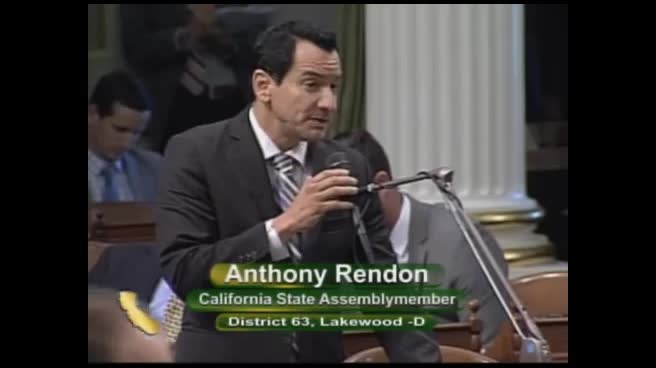 1MIN
Assembly Floor
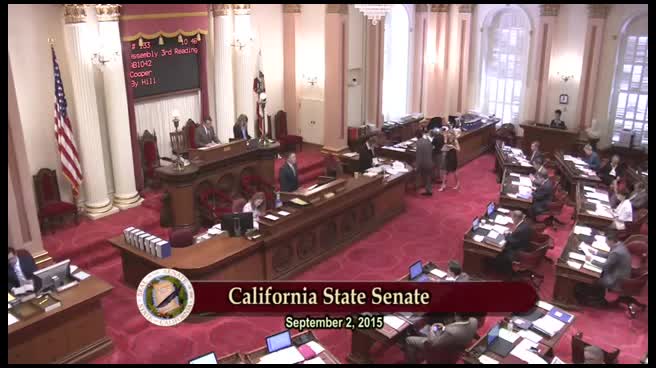 4MIN
Senate Floor
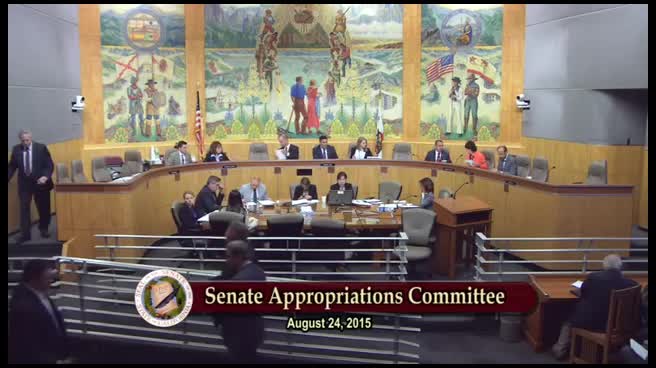 23SEC
Senate Standing Committee on Appropriations
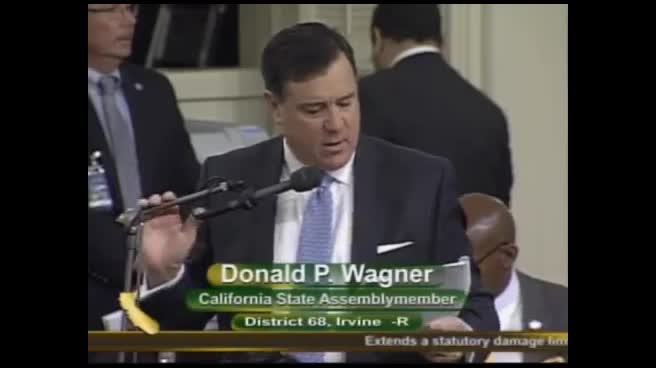 1MIN
Assembly Floor
 1MIN
Assembly Floor
 5MIN
Assembly Standing Committee on Privacy and Consumer Protection
 3MIN
Assembly Standing Committee on Public Safety
Bill Author

Bill Co-Author(s):
