AB 718: Local government: powers.
- Session Year: 2015-2016
- House: Assembly
- Latest Version Date: 2015-07-14
Existing law authorizes the legislative body of a city or county to pass ordinances not in conflict with state or federal law and the state or federal constitution.
This bill would prohibit the legislative body of a city, county, or city and county from prohibiting or otherwise subjecting to civil or criminal penalties, or removing or impounding a motor vehicle by reason of, the act of sleeping or resting in a lawfully parked motor vehicle. The bill would also find and declare that the provisions of the bill address the health and safety of homeless individuals, a matter of statewide concern, and that therefore, they apply to charter cities, charter counties, and charter cities and counties.
Existing law authorizes the legislative body of a city or county to pass ordinances not in conflict with state or federal law and the state or federal constitution.
This bill would prohibit the legislative body of a city, county, or city and county from prohibiting, prohibiting or otherwise subjecting to civil or criminal penalties, or removing or impounding a motor vehicle by reason of, the act of sleeping or resting in a lawfully parked motor vehicle. The bill would also find and declare that the provisions of the bill address the health and safety of homeless individuals, a matter of statewide concern, and that therefore, they apply to charter cities, charter counties, and charter cities and counties.
Existing law authorizes the legislative body of a city or county to pass ordinances not in conflict with state or federal law and the state or federal constitution.
This bill would prohibit the legislative body of a city, county, or city and county from prohibiting, or otherwise subjecting to civil or criminal penalties, the act of sleeping or resting in a lawfully parked motor vehicle.
Existing law regulates the stopping, parking, or leaving of vehicles on highways and off-street parking facilities, and also authorizes local authorities, by ordinance or resolution, to regulate the parking of vehicles on highways, if the ordinance or resolution is first approved by the Department of Transportation. Existing law further authorizes the impoundment of a vehicle that is parked where local authorities, by resolution or ordinance, have prohibited parking, or when the vehicle has been issued 5 or more notices of parking violations to which the owner or person in control of the vehicle has not responded within 21 calendar days, as specified.
This bill would prohibit a peace officer or an employee of a city or county from issuing a parking citation to the owner or person in control of a vehicle, or from impounding a vehicle, on the basis that the owner or other person is sleeping in the vehicle, if the vehicle is otherwise lawfully parked.
Existing law authorizes a peace officer who determines that a person was driving a vehicle while his or her driving privilege was suspended or revoked, driving in violation of a drivers license restriction, or driving a vehicle without ever having been issued a drivers license, to cause the removal and seizure of the vehicle. Existing law requires a 30-day impoundment period for seized vehicles, subject to exceptions allowing earlier release.
This bill would make technical, nonsubstantive changes to these provisions.
The Legislature finds and declares that the provisions of this measure address the health and safety of homeless individuals, a matter of statewide concern, and that therefore, they apply to charter cities, charter counties, and charter cities and counties.
SEC. 2.Section 50034 is added to the Government Code, to read:50034.(a)The legislative body of a city, county, or city and county shall not prohibit or otherwise subject to civil or criminal penalties, or remove and impound a motor vehicle by reason of, the act of sleeping or resting in a lawfully parked motor vehicle.
(b)Nothing in this section shall be interpreted to do any of the following:
(1)Prohibit a law enforcement officer from arresting, citing, or otherwise penalizing an occupant of a motor vehicle for any criminal activity or violation of the Vehicle Code.
(2)Exempt an occupant of a motor vehicle from compliance with any state or local law, including those relating to litter, sanitation, alcohol or drug consumption, weapons possession, animal control, or noise control.
(3)Exempt a vehicle owner from compliance with a local ordinance that restricts the use of public streets for vehicle storage.
The Legislature finds and declares that the provisions of this measure address the health and safety of homeless individuals, a matter of statewide concern, and that therefore, they apply to charter cities, charter counties, and charter cities and counties.
SECTION 1.SEC. 2.Section 50034 is added to the Government Code, to read:50034.The legislative body of a city, county, or city and county shall not prohibit, prohibit or otherwise subject to civil or criminal penalties, or remove and impound a motor vehicle by reason of, the act of sleeping or resting in a lawfully parked motor vehicle.
The legislative body of a city, county, or city and county shall not prohibit, or otherwise subject to civil or criminal penalties, the act of sleeping or resting in a lawfully parked motor vehicle.
SECTION 1.Section 22506.5 is added to the Vehicle Code, to read:22506.5.A peace officer, or a regularly employed and salaried employee of a city or county who is engaged in directing traffic or enforcing parking laws, shall not issue a parking citation to the owner or person in control of a vehicle for sleeping in the vehicle, if the vehicle is otherwise lawfully parked.
SEC. 2.Section 22651.06 is added to the Vehicle Code, to read:22651.06.A peace officer, or a regularly employed and salaried employee of a city or county who is engaged in directing traffic or enforcing parking laws, shall not remove and impound a vehicle on the basis that the owner or person in control of the vehicle is sleeping in the vehicle, if the vehicle is otherwise lawfully parked.
A peace officer, or a regularly employed and salaried employee of a city or county who is engaged in directing traffic or enforcing parking laws, shall not issue a parking citation to the owner or person in control of a vehicle for sleeping in the vehicle, if the vehicle is otherwise lawfully parked.
SEC. 2.Section 22651.06 is added to the Vehicle Code, to read:22651.06.A peace officer, or a regularly employed and salaried employee of a city or county who is engaged in directing traffic or enforcing parking laws, shall not remove and impound a vehicle on the basis that the owner or person in control of the vehicle is sleeping in the vehicle, if the vehicle is otherwise lawfully parked.
SECTION 1.Section 14602.6 of the Vehicle Code is amended to read:14602.6.(a)(1)If a peace officer determines that a person was driving a vehicle while his or her driving privilege was suspended or revoked, driving a vehicle while his or her driving privilege is restricted pursuant to Section 13352 or 23575 and the vehicle is not equipped with a functioning, certified interlock device, or driving a vehicle without ever having been issued a drivers license, the peace officer may either immediately arrest that person and cause the removal and seizure of that vehicle or, if the vehicle is involved in a traffic collision, cause the removal and seizure of the vehicle without the necessity of arresting the person in accordance with Chapter 10 (commencing with Section 22650) of Division 11. A vehicle impounded pursuant to this paragraph shall be impounded for 30 days.
(2)The impounding agency, within two working days of impoundment, shall send a notice by certified mail, return receipt requested, to the legal owner of the vehicle, at the address obtained from the department, informing the owner that the vehicle has been impounded. Failure to notify the legal owner within two working days shall prohibit the impounding agency from charging for more than 15 days impoundment when the legal owner redeems the impounded vehicle. The impounding agency shall maintain a published telephone number that provides information 24 hours a day regarding the impoundment of vehicles and the rights of a registered owner to request a hearing. The law enforcement agency shall be open to issue a release to the registered owner or legal owner, or the agent of either, whenever the agency is open to serve the public for regular, nonemergency business.
(b)The registered and legal owner of a vehicle that is removed and seized under subdivision (a) or their agents shall be provided the opportunity for a storage hearing to determine the validity of, or consider any mitigating circumstances attendant to, the storage, in accordance with Section 22852.
(c)Any period in which a vehicle is subjected to storage under this section shall be included as part of the period of impoundment ordered by the court pursuant to subdivision (a) of Section 14602.5.
(d)(1)An impounding agency shall release a vehicle to the registered owner or his or her agent prior to the end of 30 days impoundment under any of the following circumstances:
(A)The vehicle is a stolen vehicle.
(B)The vehicle is subject to bailment and is driven by an unlicensed employee of a business establishment, including a parking service or repair garage.
(C)The license of the driver was suspended or revoked for an offense other than those included in Article 2 (commencing with Section 13200) of Chapter 2 of Division 6 or Article 3 (commencing with Section 13350) of Chapter 2 of Division 6.
(D)The vehicle was seized pursuant to this section for an offense that does not authorize the seizure of the vehicle.
(E)The driver reinstates his or her drivers license or acquires a drivers license and proper insurance.
(2)A vehicle shall not be released pursuant to this subdivision without presentation of the registered owners or agents currently valid drivers license to operate the vehicle and proof of current vehicle registration, or upon order of a court.
(e)The registered owner or his or her agent is responsible for all towing and storage charges related to the impoundment and any administrative charges authorized under Section 22850.5.
(f)A vehicle removed and seized pursuant to subdivision (a) shall be released to the legal owner of the vehicle or the legal owners agent prior to the end of 30 days impoundment if all of the following conditions are met:
(1)The legal owner is a motor vehicle dealer, bank, credit union, acceptance corporation, or other licensed financial institution legally operating in this state or is another person, not the registered owner, holding a security interest in the vehicle.
(2)(A)The legal owner or the legal owners agent pays all towing and storage fees related to the seizure of the vehicle. No lien sale processing fees shall be charged to the legal owner who redeems the vehicle prior to the 15th day of impoundment. Neither the impounding authority nor any person having possession of the vehicle shall collect from the legal owner of the type specified in paragraph (1), or the legal owners agent, any administrative charges imposed pursuant to Section 22850.5 unless the legal owner voluntarily requested a poststorage hearing.
(B)A person operating or in charge of a storage facility where vehicles are stored pursuant to this section shall accept a valid bank credit card or cash for payment of towing, storage, and related fees by a legal or registered owner or the owners agent claiming the vehicle. A credit card shall be in the name of the person presenting the card. Credit card means credit card as defined in subdivision (a) of Section 1747.02 of the Civil Code, except, for the purposes of this section, credit card does not include a credit card issued by a retail seller.
(C)A person operating or in charge of a storage facility described in subparagraph (B) who violates subparagraph (B) shall be civilly liable to the owner of the vehicle or to the person who tendered the fees for four times the amount of the towing, storage, and related fees, but not to exceed five hundred dollars ($500).
(D)A person operating or in charge of a storage facility described in subparagraph (B) shall have sufficient funds on the premises of the primary storage facility during normal business hours to accommodate, and make change in, a reasonable monetary transaction.
(E)Credit charges for towing and storage services shall comply with Section 1748.1 of the Civil Code. Law enforcement agencies may include the costs of providing for payment by credit when making agreements with towing companies on rates.
(3)(A)The legal owner or the legal owners agent presents a copy of the assignment, as defined in subdivision (b) of Section 7500.1 of the Business and Professions Code, a release from the one responsible governmental agency, only if required by the agency, a government-issued photographic identification card, and any one of the following, as determined by the legal owner or the legal owners agent: a certificate of repossession for the vehicle, a security agreement for the vehicle, or title, whether paper or electronic, showing proof of legal ownership for the vehicle. Any documents presented may be originals, photocopies, or facsimile copies, or may be transmitted electronically. The law enforcement agency, impounding agency, or any other governmental agency, or any person acting on behalf of those agencies, shall not require any documents to be notarized. The law enforcement agency, impounding agency, or any person acting on behalf of those agencies may require the agent of the legal owner to produce a photocopy or facsimile copy of its repossession agency license or registration issued pursuant to Chapter 11 (commencing with Section 7500) of Division 3 of the Business and Professions Code, or to demonstrate, to the satisfaction of the law enforcement agency, impounding agency, or any person acting on behalf of those agencies, that the agent is exempt from licensure pursuant to Section 7500.2 or 7500.3 of the Business and Professions Code.
(B)Administrative costs authorized under subdivision (a) of Section 22850.5 shall not be charged to the legal owner of the type specified in paragraph (1) who redeems the vehicle unless the legal owner voluntarily requests a poststorage hearing. A city, county, city and county, or state agency shall not require a legal owner or a legal owners agent to request a poststorage hearing as a requirement for release of the vehicle to the legal owner or the legal owners agent. The law enforcement agency, impounding agency, or other governmental agency, or any person acting on behalf of those agencies, shall not require any documents other than those specified in this paragraph. The law enforcement agency, impounding agency, or other governmental agency, or any person acting on behalf of those agencies, shall not require any documents to be notarized. The legal owner or the legal owners agent shall be given a copy of any documents he or she is required to sign, except for a vehicle evidentiary hold logbook. The law enforcement agency, impounding agency, or any person acting on behalf of those agencies, or any person in possession of the vehicle, may photocopy and retain the copies of any documents presented by the legal owner or legal owners agent.
(4)A failure by a storage facility to comply with any applicable conditions set forth in this subdivision shall not affect the right of the legal owner or the legal owners agent to retrieve the vehicle, provided all conditions required of the legal owner or legal owners agent under this subdivision are satisfied.
(g)(1)A legal owner or the legal owners agent that obtains release of the vehicle pursuant to subdivision (f) shall not release the vehicle to the registered owner of the vehicle, or the person who was listed as the registered owner when the vehicle was impounded, or any agents of the registered owner, unless the registered owner is a rental car agency, until after the termination of the 30-day impoundment period.
(2)The legal owner or the legal owners agent shall not relinquish the vehicle to the registered owner or the person who was listed as the registered owner when the vehicle was impounded until the registered owner or that owners agent presents his or her valid drivers license or valid temporary drivers license to the legal owner or the legal owners agent. The legal owner or the legal owners agent or the person in possession of the vehicle shall make every reasonable effort to ensure that the license presented is valid and possession of the vehicle will not be given to the driver who was involved in the original impoundment proceeding until the expiration of the impoundment period.
(3)Prior to relinquishing the vehicle, the legal owner may require the registered owner to pay all towing and storage charges related to the impoundment and any administrative charges authorized under Section 22850.5 that were incurred by the legal owner in connection with obtaining custody of the vehicle.
(4)Any legal owner who knowingly releases or causes the release of a vehicle to a registered owner or the person in possession of the vehicle at the time of the impoundment or any agent of the registered owner in violation of this subdivision shall be guilty of a misdemeanor and subject to a fine in the amount of two thousand dollars ($2,000) in addition to any other penalties established by law.
(5)The legal owner, registered owner, or person in possession of the vehicle shall not change or attempt to change the name of the legal owner or the registered owner on the records of the department until the vehicle is released from the impoundment.
(h)(1)A vehicle removed and seized under subdivision (a) shall be released to a rental car agency prior to the end of 30 days impoundment if the agency is either the legal owner or registered owner of the vehicle and the agency pays all towing and storage fees related to the seizure of the vehicle.
(2)The owner of a rental vehicle that was seized under this section may continue to rent the vehicle upon recovery of the vehicle. However, the rental car agency may not rent another vehicle to the driver of the vehicle that was seized until 30 days after the date that the vehicle was seized.
(3)The rental car agency may require the person to whom the vehicle was rented to pay all towing and storage charges related to the impoundment and any administrative charges authorized under Section 22850.5 that were incurred by the rental car agency in connection with obtaining custody of the vehicle.
(i)Notwithstanding any other provision of this section, the registered owner and not the legal owner shall remain responsible for any towing and storage charges related to the impoundment, any administrative charges authorized under Section 22850.5, and any parking fines, penalties, and administrative fees incurred by the registered owner.
(j)The law enforcement agency and the impounding agency, including any storage facility acting on behalf of the law enforcement agency or impounding agency, shall comply with this section and shall not be liable to the registered owner for the improper release of the vehicle to the legal owner or the legal owners agent provided the release complies with the provisions of this section. The legal owner shall indemnify and hold harmless a storage facility from any claims arising out of the release of the vehicle to the legal owner or the legal owners agent and from any damage to the vehicle after its release, including the reasonable costs associated with defending any such claims. A law enforcement agency shall not refuse to issue a release to a legal owner or the agent of a legal owner on the grounds that it previously issued a release.
(a)(1)Whenever If a peace officer determines that a person was driving a vehicle while his or her driving privilege was suspended or revoked, driving a vehicle while his or her driving privilege is restricted pursuant to Section 13352 or 23575 and the vehicle is not equipped with a functioning, certified interlock device, or driving a vehicle without ever having been issued a drivers license, the peace officer may either immediately arrest that person and cause the removal and seizure of that vehicle or, if the vehicle is involved in a traffic collision, cause the removal and seizure of the vehicle without the necessity of arresting the person in accordance with Chapter 10 (commencing with Section 22650) of Division 11. A vehicle so impounded pursuant to this paragraph shall be impounded for 30 days.
(2)The impounding agency, within two working days of impoundment, shall send a notice by certified mail, return receipt requested, to the legal owner of the vehicle, at the address obtained from the department, informing the owner that the vehicle has been impounded. Failure to notify the legal owner within two working days shall prohibit the impounding agency from charging for more than 15 days impoundment when the legal owner redeems the impounded vehicle. The impounding agency shall maintain a published telephone number that provides information 24 hours a day regarding the impoundment of vehicles and the rights of a registered owner to request a hearing. The law enforcement agency shall be open to issue a release to the registered owner or legal owner, or the agent of either, whenever the agency is open to serve the public for regular, nonemergency business.
(b)The registered and legal owner of a vehicle that is removed and seized under subdivision (a) or their agents shall be provided the opportunity for a storage hearing to determine the validity of, or consider any mitigating circumstances attendant to, the storage, in accordance with Section 22852.
(c)Any period in which a vehicle is subjected to storage under this section shall be included as part of the period of impoundment ordered by the court under pursuant to subdivision (a) of Section 14602.5.
(d)(1)An impounding agency shall release a vehicle to the registered owner or his or her agent prior to the end of 30 days impoundment under any of the following circumstances:
(A)When the The vehicle is a stolen vehicle.
(B)When the The vehicle is subject to bailment and is driven by an unlicensed employee of a business establishment, including a parking service or repair garage.
(C)When the The license of the driver was suspended or revoked for an offense other than those included in Article 2 (commencing with Section 13200) of Chapter 2 of Division 6 or Article 3 (commencing with Section 13350) of Chapter 2 of Division 6.
(D)When the The vehicle was seized under pursuant to this section for an offense that does not authorize the seizure of the vehicle.
(E)When the The driver reinstates his or her drivers license or acquires a drivers license and proper insurance.
(2)No A vehicle shall not be released pursuant to this subdivision without presentation of the registered owners or agents currently valid drivers license to operate the vehicle and proof of current vehicle registration, or upon order of a court.
(e)The registered owner or his or her agent is responsible for all towing and storage charges related to the impoundment, impoundment and any administrative charges authorized under Section 22850.5.
(f)A vehicle removed and seized under pursuant to subdivision (a) shall be released to the legal owner of the vehicle or the legal owners agent prior to the end of 30 days impoundment if all of the following conditions are met:
(1)The legal owner is a motor vehicle dealer, bank, credit union, acceptance corporation, or other licensed financial institution legally operating in this state or is another person, not the registered owner, holding a security interest in the vehicle.
(2)(A)The legal owner or the legal owners agent pays all towing and storage fees related to the seizure of the vehicle. No lien sale processing fees shall be charged to the legal owner who redeems the vehicle prior to the 15th day of impoundment. Neither the impounding authority nor any person having possession of the vehicle shall collect from the legal owner of the type specified in paragraph (1), or the legal owners agent agent, any administrative charges imposed pursuant to Section 22850.5 unless the legal owner voluntarily requested a poststorage hearing.
(B)A person operating or in charge of a storage facility where vehicles are stored pursuant to this section shall accept a valid bank credit card or cash for payment of towing, storage, and related fees by a legal or registered owner or the owners agent claiming the vehicle. A credit card shall be in the name of the person presenting the card. Credit card means credit card as defined in subdivision (a) of Section 1747.02 of the Civil Code, except, for the purposes of this section, credit card does not include a credit card issued by a retail seller.
(C)A person operating or in charge of a storage facility described in subparagraph (B) who violates subparagraph (B) shall be civilly liable to the owner of the vehicle or to the person who tendered the fees for four times the amount of the towing, storage, and related fees, but not to exceed five hundred dollars ($500).
(D)A person operating or in charge of a storage facility described in subparagraph (B) shall have sufficient funds on the premises of the primary storage facility during normal business hours to accommodate, and make change in, a reasonable monetary transaction.
(E)Credit charges for towing and storage services shall comply with Section 1748.1 of the Civil Code. Law enforcement agencies may include the costs of providing for payment by credit when making agreements with towing companies on rates.
(3)(A)The legal owner or the legal owners agent presents a copy of the assignment, as defined in subdivision (b) of Section 7500.1 of the Business and Professions Code; Code, a release from the one responsible governmental agency, only if required by the agency; agency, a government-issued photographic identification card; card, and any one of the following, as determined by the legal owner or the legal owners agent: a certificate of repossession for the vehicle, a security agreement for the vehicle, or title, whether paper or electronic, showing proof of legal ownership for the vehicle. Any documents presented may be originals, photocopies, or facsimile copies, or may be transmitted electronically. The law enforcement agency, impounding agency, or any other governmental agency, or any person acting on behalf of those agencies, shall not require any documents to be notarized. The law enforcement agency, impounding agency, or any person acting on behalf of those agencies may require the agent of the legal owner to produce a photocopy or facsimile copy of its repossession agency license or registration issued pursuant to Chapter 11 (commencing with Section 7500) of Division 3 of the Business and Professions Code, or to demonstrate, to the satisfaction of the law enforcement agency, impounding agency, or any person acting on behalf of those agencies, that the agent is exempt from licensure pursuant to Section 7500.2 or 7500.3 of the Business and Professions Code.
No administrative
(B)Administrative costs authorized under subdivision (a) of Section 22850.5 shall not be charged to the legal owner of the type specified in paragraph (1), (1) who redeems the vehicle unless the legal owner voluntarily requests a poststorage hearing. No A city, county, city and county, or state agency shall not require a legal owner or a legal owners agent to request a poststorage hearing as a requirement for release of the vehicle to the legal owner or the legal owners agent. The law enforcement agency, impounding agency, or other governmental agency, or any person acting on behalf of those agencies, shall not require any documents other than those specified in this paragraph. The law enforcement agency, impounding agency, or other governmental agency, or any person acting on behalf of those agencies, shall not require any documents to be notarized. The legal owner or the legal owners agent shall be given a copy of any documents he or she is required to sign, except for a vehicle evidentiary hold logbook. The law enforcement agency, impounding agency, or any person acting on behalf of those agencies, or any person in possession of the vehicle, may photocopy and retain the copies of any documents presented by the legal owner or legal owners agent.
(4)A failure by a storage facility to comply with any applicable conditions set forth in this subdivision shall not affect the right of the legal owner or the legal owners agent to retrieve the vehicle, provided all conditions required of the legal owner or legal owners agent under this subdivision are satisfied.
(g)(1)A legal owner or the legal owners agent that obtains release of the vehicle pursuant to subdivision (f) shall not release the vehicle to the registered owner of the vehicle, or the person who was listed as the registered owner when the vehicle was impounded, or any agents of the registered owner, unless the registered owner is a rental car agency, until after the termination of the 30-day impoundment period.
(2)The legal owner or the legal owners agent shall not relinquish the vehicle to the registered owner or the person who was listed as the registered owner when the vehicle was impounded until the registered owner or that owners agent presents his or her valid drivers license or valid temporary drivers license to the legal owner or the legal owners agent. The legal owner or the legal owners agent or the person in possession of the vehicle shall make every reasonable effort to ensure that the license presented is valid and possession of the vehicle will not be given to the driver who was involved in the original impoundment proceeding until the expiration of the impoundment period.
(3)Prior to relinquishing the vehicle, the legal owner may require the registered owner to pay all towing and storage charges related to the impoundment and any administrative charges authorized under Section 22850.5 that were incurred by the legal owner in connection with obtaining custody of the vehicle.
(4)Any legal owner who knowingly releases or causes the release of a vehicle to a registered owner or the person in possession of the vehicle at the time of the impoundment or any agent of the registered owner in violation of this subdivision shall be guilty of a misdemeanor and subject to a fine in the amount of two thousand dollars ($2,000) in addition to any other penalties established by law.
(5)The legal owner, registered owner, or person in possession of the vehicle shall not change or attempt to change the name of the legal owner or the registered owner on the records of the department until the vehicle is released from the impoundment.
(h)(1)A vehicle removed and seized under subdivision (a) shall be released to a rental car agency prior to the end of 30 days impoundment if the agency is either the legal owner or registered owner of the vehicle and the agency pays all towing and storage fees related to the seizure of the vehicle.
(2)The owner of a rental vehicle that was seized under this section may continue to rent the vehicle upon recovery of the vehicle. However, the rental car agency may not rent another vehicle to the driver of the vehicle that was seized until 30 days after the date that the vehicle was seized.
(3)The rental car agency may require the person to whom the vehicle was rented to pay all towing and storage charges related to the impoundment and any administrative charges authorized under Section 22850.5 that were incurred by the rental car agency in connection with obtaining custody of the vehicle.
(i)Notwithstanding any other provision of this section, the registered owner and not the legal owner shall remain responsible for any towing and storage charges related to the impoundment, any administrative charges authorized under Section 22850.5, and any parking fines, penalties, and administrative fees incurred by the registered owner.
(j)The law enforcement agency and the impounding agency, including any storage facility acting on behalf of the law enforcement agency or impounding agency, shall comply with this section and shall not be liable to the registered owner for the improper release of the vehicle to the legal owner or the legal owners agent provided the release complies with the provisions of this section. The legal owner shall indemnify and hold harmless a storage facility from any claims arising out of the release of the vehicle to the legal owner or the legal owners agent and from any damage to the vehicle after its release, including the reasonable costs associated with defending any such claims. A law enforcement agency shall not refuse to issue a release to a legal owner or the agent of a legal owner on the grounds that it previously issued a release.
|
Date
|
Status
|
|---|---|
| Jun 16, 2015 | In committee: Hearing postponed by committee. |
| Aug 30, 2016 | Ordered to inactive file pursuant to Senate Rule 29. |
| Aug 22, 2016 | Read second time. Ordered to third reading. |
| Aug 19, 2016 | Ordered to second reading. |
| Aug 19, 2016 | From inactive file. |
| Sep 10, 2015 | Ordered to inactive file at the request of Senator Hueso. |
| Aug 31, 2015 | Reconsideration granted. (Ayes 40. Noes 0. Page 2289.) |
| Aug 31, 2015 | Reconsideration granted. |
| Aug 31, 2015 | Read third time. Refused passage. (Ayes 18. Noes 14. Page 2289.). |
| Aug 31, 2015 | Read third time. Refused passage. |
| Aug 31, 2015 | Ordered to third reading. |
| Aug 31, 2015 | Motion to reconsider made by Senator Hueso. |
| Jul 14, 2015 | Read second time and amended. Ordered to third reading. |
| Jul 13, 2015 | From committee: Amend, and do pass as amended. (Ayes 4. Noes 1.) (July 8). |
| Jul 1, 2015 | In committee: Testimony taken. Hearing postponed by committee. |
| Feb 25, 2015 | Read first time. To print. |
| Jun 11, 2015 | Referred to Com. on GOV. & F. |
| Jun 1, 2015 | Read third time. Passed. Ordered to the Senate. (Ayes 56. Noes 15. Page 1686.) |
| Jun 1, 2015 | Read third time. Passed. Ordered to the Senate. |
| Jun 1, 2015 | In Senate. Read first time. To Com. on RLS. for assignment. |
| May 19, 2015 | Read second time. Ordered to third reading. |
| May 18, 2015 | Read second time and amended. Ordered returned to second reading. |
| May 14, 2015 | From committee: Amend, and do pass as amended. (Ayes 7. Noes 1.) (May 13). |
| Apr 28, 2015 | From committee: Do pass and re-refer to Com. on L. GOV. (Ayes 12. Noes 1.) (April 27). Re-referred to Com. on L. GOV. |
| Apr 22, 2015 | Re-referred to Com. on TRANS. |
| Apr 21, 2015 | From committee chair, with author's amendments: Amend, and re-refer to Com. on TRANS. Read second time and amended. |
| Apr 6, 2015 | Re-referred to Com. on TRANS. |
| Mar 26, 2015 | Referred to Coms. on TRANS. and L. GOV. |
| Mar 26, 2015 | From committee chair, with author's amendments: Amend, and re-refer to Com. on TRANS. Read second time and amended. |
| Feb 26, 2015 | From printer. May be heard in committee March 28. |
|
Date
|
Description
|
Location
|
Votes
|
|
|---|---|---|---|---|
| Aug 31, 2015 | Assembly 3rd Reading AB718 Chu By Hueso Reconsider | Senate Floor |
Passed |
|
| Aug 31, 2015 | Assembly 3rd Reading AB718 Chu By Hueso | Senate Floor |
Failed |
|
| Jul 8, 2015 | Do pass as amended | Senate Standing Committee on Governance and Finance |
Passed |
|
| Jun 1, 2015 | AB 718 CHU Assembly Third Reading | Assembly Floor |
Passed |
|
| May 13, 2015 | Do pass as amended. | Assembly Standing Committee on Local Government |
Passed |
|
| Apr 27, 2015 | Do pass and be re-referred to the Committee on [Local Government] | Assembly Standing Committee on Transportation |
Passed |
This list shows positions taken on this bill by organizations on the date displayed, which is linked to the original source.
Positions by individuals are not included.
|
Organization
|
Position
|
Date
|
|---|---|---|
| Abode Services | ** Support | Aug 31, 2015 |
| Affordable Homeless Housing Alternatives, Humboldt County | ** Support | May 13, 2015 |
| American Civil Liberties Union of California | * Support | May 13, 2015 |
| American Planning Association, California Chapter | ** Against | Aug 31, 2015 |
| Caduceus Justice | ** Support | May 13, 2015 |
| California Association Of Code Enforcement Officers | ** Against | Aug 31, 2015 |
| California Business Properties Association | ** Against | Aug 31, 2015 |
| California Church Impact | * Support | May 13, 2015 |
| California College And University Police Chiefs Association | ** Against | Aug 31, 2015 |
| California Labor Federation, Afl-Cio | * Indeterminate | Jul 1, 2015 |
| Central City Association | ** Against | Aug 31, 2015 |
| City of Calimesa | ** Against | Aug 31, 2015 |
| City of Encinitas City of Fortuna | ** Against | Aug 31, 2015 |
| City of Highland | ** Against | Aug 31, 2015 |
| City of Montclair | ** Against | Aug 31, 2015 |
| City Of Ontario | ** Against | Aug 31, 2015 |
| City of Palos Verdes Estates | ** Against | Aug 31, 2015 |
| Colton, City Of | ** Against | Aug 31, 2015 |
| Corporation For Supportive Housing | ** Support | May 13, 2015 |
| County Welfare Directors Association of California | ** Support | Aug 31, 2015 |
| East Bay Community Law Center | ** Support | May 13, 2015 |
| Ella Baker Center For Human Rights | ** Support | May 13, 2015 |
| Encinitas, City Of | * Against | Jul 1, 2015 |
| Glendale, City Of | ** Against | Aug 31, 2015 |
| Housing California | ** Support | Aug 31, 2015 |
| Housing California [SPONSOR] | ** Support | May 13, 2015 |
| International Council of Shopping Centers | ** Against | Aug 31, 2015 |
| LA Human Right to Housing Collective | ** Support | May 13, 2015 |
| League Of California Cities | * Against | May 13, 2015 |
| Los Angeles Anti-Eviction Campaign | ** Support | May 13, 2015 |
| Los Angeles Community Action Network | ** Support | May 13, 2015 |
| Los Angeles, City Of | ** Against | Aug 31, 2015 |
| Palm Desert, City Of | ** Against | Aug 31, 2015 |
| River City Food Bank | ** Support | May 13, 2015 |
| Sacramento regional coalition to end homelessness | ** Support | May 13, 2015 |
| San Diego Housing Federation | ** Support | May 13, 2015 |
| San Francisco Coalition on Homelessness | ** Support | May 13, 2015 |
| San Rafael/Marin County Council Of Mayors & Council Members, City Of | * Against | Jul 8, 2015 |
| Share the Bulb | ** Support | May 13, 2015 |
| St. Anthony Foundation | ** Support | May 13, 2015 |
| St. Mary's Center | ** Support | May 13, 2015 |
| Tulare Homeless Alliance | ** Support | Aug 31, 2015 |
| Venice Community Housing Corporation | ** Support | May 13, 2015 |
| Wellspace Health | ** Support | May 13, 2015 |
| Western Center On Law And Poverty Inc. | ** Support | May 13, 2015 |
| Western Regional Advocacy Project | ** Support | May 13, 2015 |
| Yuba Sutter Homeless Consortium. | * Indeterminate | Jul 1, 2015 |
AB 718
Page 7
|
Office of Senate Floor Analyses (916) 651-1520 Fax: (916) 327-4478 |
THIRD READING
Bill No: AB 718
Amended: 7/14/15 in Senate
SENATE GOVERNANCE & FIN. COMMITTEE: 4-1, 7/8/15
AYES: Hertzberg, Beall, Hernandez, Lara
NOES: Pavley
NO VOTE RECORDED: Nguyen, Moorlach
SENATE FLOOR: 18-14, 8/31/15 (FAIL)
AYES: Anderson, Beall, Block, Cannella, De León, Hall, Hancock, Hernandez, Hertzberg, Hill, Hueso, Lara, Leno, Leyva, Liu, Mitchell, Stone, Wieckowski
NOES: Bates, Fuller, Gaines, Glazer, Huff, Jackson, McGuire, Moorlach, Morrell, Nguyen, Nielsen, Runner, Vidak, Wolk
NO VOTE RECORDED: Allen, Berryhill, Galgiani, Mendoza, Monning, Pan, Pavley, Roth
ASSEMBLY FLOOR: 56-15, 6/1/15 - See last page for vote
SUBJECT: Local government: powers
DIGEST: This bill prohibits local governments from penalizing, by impoundment or other method, the act of sleeping in a lawfully parked motor vehicle.
Existing law:
Allows a city to “make and enforce within its limits, all local, police, sanitary and other ordinances and regulations not in conflict with general laws, known as the police power of cities.”
Allows local governments to regulate parking in a variety of ways, including by establishing where vehicles may park or stop or requiring permits for parking in some areas.
This bill:
Prohibits any city, county, or city and county—including charter cities and counties—from prohibiting or otherwise penalizing the act of sleeping or resting in a lawfully parked vehicle.
Prohibits removing and impounding a vehicle for the same reason.
States that nothing in the bill shall be interpreted to:
Prohibit a law enforcement officer from arresting, citing, or otherwise penalizing an occupant of a motor vehicle for any criminal activity or violation of the vehicle code.
Exempt an occupant of a motor vehicle from any state and local laws, as specified.
Exempt a vehicle owner from compliance with a local ordinance that restricts the use of public streets for vehicle storage.
Background
According to the U.S. Department of Housing and Urban Development, California had 113,952 homeless people, or 20% of the nation’s overall homeless population, as of January 2014. Of California’s total homeless population, 27% were chronically homeless, 20% were in households with at least one parent and one child, 10% were veterans, and 10% were victims of domestic violence. California also had the largest number of homeless families, unaccompanied homeless youth, and homeless veterans. California has one of the nation’s highest rates of “poor renters,” or people that spend more than 50% of their income on rent. While most homeless people in the U.S. lived in emergency shelters or transitional housing in 2013, most homeless people in California were unsheltered. For example, in Los Angeles only 22% of homeless people had a bed in a shelter in 2013. As a result, many homeless people have no choice but to rest and sleep in public.
The California Constitution allows a city to “make and enforce within its limits, all local, police, sanitary and other ordinances and regulations not in conflict with general laws, known as the police power of cities.” It is from this fundamental power that local governments derive their authority to regulate behavior to preserve the health, safety, and welfare of the public. One way local governments exercise their police power is by regulating certain aspects of the use of vehicles, where not in conflict with state laws. State law allows local governments to regulate parking in a variety of ways, including by establishing where vehicles may park or stop or requiring permits for parking in some areas.
Some localities have used their police power to prohibit or penalize sleeping in cars. The Policy Advocacy Clinic at the University of California, Berkeley Law School released a report in February 2015 titled “California’s New Vagrancy Laws: The Growing Enactment and Enforcement of Anti-Homeless Laws in the Golden State.” According to the report, California cities are substantially more restrictive than the national average in terms of passing ordinances that penalize sleeping, resting or lodging in legally parked vehicles. While only 33% of non-California cities studied restrict sleeping or lodging in vehicles, 74% of California cities do so. Such a restriction was struck down by the U.S Court of Appeals for the Ninth Circuit in June 2014. The ruling struck down a Los Angeles ordinance that prohibited people from using a vehicle parked or standing on any city street or parking lot as living quarters either overnight, day-by-day, or otherwise (Desertrain v. City of Los Angeles). The court found that the ordinance paved the way for law enforcement to target the homeless and was therefore unconstitutionally vague.
Some housing advocates want to restrict the ability of local governments to prohibit sleeping or resting in cars.
Comments
Purpose of the bill. Some local jurisdictions have enacted ordinances that essentially criminalize the act of being homeless, by penalizing individuals for activities that they have no choice but to perform. However, for many individuals experiencing homelessness, sleeping or living in a vehicle is often the only option for shelter in the absence of adequate shelter beds across the state. Citing these individuals because they sleep in their car can subject them to fines they may not be able to afford to pay. As a result, they run the risk of arrest or vehicle seizure, which worsens their situation and exacerbates mental health problems, ensuring that more people remain homeless longer. AB 718 protects some of California’s most vulnerable citizens by preventing local jurisdictions from enacting or enforcing these policies and sends a clear message that these types of policies must be prohibited.
Unreasonable restriction on police power. The police power is a fundamental power of local governments. Local ordinances arise and are adopted by communities to address specific issues affecting health, safety, and broader public welfare. At the same time, local governments are sensitive to the challenges that the homeless face and the measures that are needed to provide them with assistance. These issues are debated in the chambers of local governments across the state, and the policies that result reflect elected officials’ best judgments of how to balance the needs of all of their constituents. AB 718 will severely constrain local governments from making and enforcing laws that elected officials consider necessary to preserve the welfare of their citizens. Furthermore, this bill may make it harder for local agencies to enforce other laws that preserve public safety. For example, would this bill prevent a police officer from approaching a vehicle to investigate potential criminal activity? Finally, some people who are not homeless may take advantage of AB 718 to camp on public streets, with potential negative impacts on public safety, traffic, and local businesses.
Sure, but will it work? AB 718 does not prevent local governments from establishing local parking regulations to address the hours a vehicle can be parked on the street. For example, this bill does not prevent a city from prohibiting overnight parking unless a vehicle obtains a residential permit. As a result, municipalities that wish to regulate this behavior may simply find other ways to enact and enforce laws that have the effect of criminalizing actions associated with homelessness without running afoul of the provisions of AB 718. Furthermore, AB 718 does not address the underlying factors that drive homelessness in California, such as a lack of affordable housing, access to jobs, and mental health treatment.
Related/Prior Legislation
SB 608 (Liu, 2015) enacts the Right to Rest Act and contains many of the same provisions as AB 5. SB 608 also includes the right to occupy a motor vehicle or a recreational vehicle, provided the vehicle is legally parked on public property or parked on private property with the permission of the property owner. SB 608 is currently a two-year bill.
AB 5 (Ammiano, 2013) would have established a number of rights for homeless people. Among the numerous provisions in AB 5, the bill would have provided the right to occupy a motor vehicle or recreational vehicle either to rest, sleep, or use for the purposes of shelter, provided that the vehicle is legally parked on public property, without being subject to criminal or civil sanctions, harassment, or arrest from law enforcement, public or private security personnel, or Business Improvement District agents. AB 5 was held in the Assembly Appropriations Committee.
FISCAL EFFECT: Appropriation: No Fiscal Com.: No Local: No
Housing California (source)
Abode Services
Affordable Homeless Housing Alternatives, Humboldt County
American Civil Liberties Union of California
Caduceus Justice
California Catholic Conference
California Labor Federation
Coalition of California Welfare Rights Organization
Corporation for Supportive Housing
County Welfare Directors Association of California
East Bay Community Law Center
Ella Baker Center for Human Rights
Homeless Lives Matter – Berkeley
Kings/Tulare Homeless Alliance
LA Human Right to Housing Collective
Law Foundation of Silicon Valley
Los Angeles Anti-Eviction Campaign
Los Angeles Community Action Network
National Association for the Education of Homeless Children and Youth
River City Food Bank
Sacramento Homeless Organizing Committee
Sacramento Regional Coalition to End Homelessness
San Diego Housing Federation
San Francisco Coalition on Homelessness
Share the Bulb
St. Anthony Foundation
St. Mary’s Center
Venice Community Housing Corporation
WellSpace Health
Western Center on Law and Poverty
Western Regional Advocacy Project
OPPOSITION: (Verified 7/14/15)
American Planning Association, California Chapter
California Association of Code Enforcement Officers
California Business Properties Association
California College and University Police Chiefs Association
California Law Enforcement Association of Records Supervisors
California Police Chiefs Association
Central City Association
City of Calimesa
City of Colton
City of Encinitas
City of Fortuna
City of Glendale
City of Hesperia
City of Highland
City of Los Angeles
City of Montclair
City of Ontario
City of Palm Desert
City of Palos Verdes Estates
City of Rocklin
International Council of Shopping Centers
League of California Cities
Los Angeles Area Chamber of Commerce
Marin County Council of Mayors and Council Members
Venice Stakeholders Association
AYES: Travis Allen, Bloom, Bonta, Brown, Calderon, Campos, Chang, Chau, Chávez, Chiu, Chu, Cooley, Cooper, Dababneh, Dahle, Daly, Dodd, Eggman, Frazier, Gallagher, Cristina Garcia, Gomez, Gonzalez, Gordon, Gray, Hadley, Roger Hernández, Holden, Jones, Jones-Sawyer, Kim, Linder, Lopez, Low, Maienschein, Mathis, Mayes, McCarty, Medina, Melendez, Mullin, Nazarian, Olsen, Quirk, Rendon, Rodriguez, Salas, Steinorth, Mark Stone, Thurmond, Ting, Wagner, Weber, Wilk, Williams, Atkins
NOES: Achadjian, Baker, Bonilla, Brough, Beth Gaines, Gatto, Grove, Harper, Irwin, Lackey, Levine, Obernolte, Patterson, Ridley-Thomas, Waldron
NO VOTE RECORDED: Alejo, Bigelow, Burke, Eduardo Garcia, Gipson, O’Donnell, Perea, Santiago, Wood
Prepared by: Anton Favorini-Csorba / GOV. & F. / (916) 651-4119
8/31/15 18:59:59
**** END ****
AB 718
Page 7
|
Office of Senate Floor Analyses (916) 651-1520 Fax: (916) 327-4478 |
THIRD READING
Bill No: AB 718
Amended: 7/14/15 in Senate
SENATE GOVERNANCE & FIN. COMMITTEE: 4-1, 7/8/15
AYES: Hertzberg, Beall, Hernandez, Lara
NOES: Pavley
NO VOTE RECORDED: Nguyen, Moorlach
ASSEMBLY FLOOR: 56-15, 6/1/15 - See last page for vote
SUBJECT: Local government: powers
DIGEST: This bill prohibits local governments from penalizing, by impoundment or other method, the act of sleeping in a lawfully parked motor vehicle.
Existing law:
Allows a city to “make and enforce within its limits, all local, police, sanitary and other ordinances and regulations not in conflict with general laws, known as the police power of cities.”
Allows local governments to regulate parking in a variety of ways, including by establishing where vehicles may park or stop or requiring permits for parking in some areas.
This bill:
Prohibits any city, county, or city and county—including charter cities and counties—from prohibiting or otherwise penalizing the act of sleeping or resting in a lawfully parked vehicle.
Prohibits removing and impounding a vehicle for the same reason.
States that nothing in the bill shall be interpreted to:
Prohibit a law enforcement officer from arresting, citing, or otherwise penalizing an occupant of a motor vehicle for any criminal activity or violation of the vehicle code.
Exempt an occupant of a motor vehicle from any state and local laws, as specified.
Exempt a vehicle owner from compliance with a local ordinance that restricts the use of public streets for vehicle storage.
Background
According to the U.S. Department of Housing and Urban Development, California had 113,952 homeless people, or 20% of the nation’s overall homeless population, as of January 2014. Of California’s total homeless population, 27% were chronically homeless, 20% were in households with at least one parent and one child, 10% were veterans, and 10% were victims of domestic violence. California also had the largest number of homeless families, unaccompanied homeless youth, and homeless veterans. California has one of the nation’s highest rates of “poor renters,” or people that spend more than 50% of their income on rent. While most homeless people in the U.S. lived in emergency shelters or transitional housing in 2013, most homeless people in California were unsheltered. For example, in Los Angeles only 22% of homeless people had a bed in a shelter in 2013. As a result, many homeless people have no choice but to rest and sleep in public.
The California Constitution allows a city to “make and enforce within its limits, all local, police, sanitary and other ordinances and regulations not in conflict with general laws, known as the police power of cities.” It is from this fundamental power that local governments derive their authority to regulate behavior to preserve the health, safety, and welfare of the public. One way local governments exercise their police power is by regulating certain aspects of the use of vehicles, where not in conflict with state laws. State law allows local governments to regulate parking in a variety of ways, including by establishing where vehicles may park or stop or requiring permits for parking in some areas.
Some localities have used their police power to prohibit or penalize sleeping in cars. The Policy Advocacy Clinic at the University of California, Berkeley Law School released a report in February 2015 titled “California’s New Vagrancy Laws: The Growing Enactment and Enforcement of Anti-Homeless Laws in the Golden State.” According to the report, California cities are substantially more restrictive than the national average in terms of passing ordinances that penalize sleeping, resting or lodging in legally parked vehicles. While only 33% of non-California cities studied restrict sleeping or lodging in vehicles, 74% of California cities do so. Such a restriction was struck down by the U.S Court of Appeals for the Ninth Circuit in June 2014. The ruling struck down a Los Angeles ordinance that prohibited people from using a vehicle parked or standing on any city street or parking lot as living quarters either overnight, day-by-day, or otherwise (Desertrain v. City of Los Angeles). The court found that the ordinance paved the way for law enforcement to target the homeless and was therefore unconstitutionally vague.
Some housing advocates want to restrict the ability of local governments to prohibit sleeping or resting in cars.
Comments
Purpose of the bill. Some local jurisdictions have enacted ordinances that essentially criminalize the act of being homeless, by penalizing individuals for activities that they have no choice but to perform. However, for many individuals experiencing homelessness, sleeping or living in a vehicle is often the only option for shelter in the absence of adequate shelter beds across the state. Citing these individuals because they sleep in their car can subject them to fines they may not be able to afford to pay. As a result, they run the risk of arrest or vehicle seizure, which worsens their situation and exacerbates mental health problems, ensuring that more people remain homeless longer. AB 718 protects some of California’s most vulnerable citizens by preventing local jurisdictions from enacting or enforcing these policies and sends a clear message that these types of policies must be prohibited.
Unreasonable restriction on police power. The police power is a fundamental power of local governments. Local ordinances arise and are adopted by communities to address specific issues affecting health, safety, and broader public welfare. At the same time, local governments are sensitive to the challenges that the homeless face and the measures that are needed to provide them with assistance. These issues are debated in the chambers of local governments across the state, and the policies that result reflect elected officials’ best judgments of how to balance the needs of all of their constituents. AB 718 will severely constrain local governments from making and enforcing laws that elected officials consider necessary to preserve the welfare of their citizens. Furthermore, this bill may make it harder for local agencies to enforce other laws that preserve public safety. For example, would this bill prevent a police officer from approaching a vehicle to investigate potential criminal activity? Finally, some people who are not homeless may take advantage of AB 718 to camp on public streets, with potential negative impacts on public safety, traffic, and local businesses.
Sure, but will it work? AB 718 does not prevent local governments from establishing local parking regulations to address the hours a vehicle can be parked on the street. For example, this bill does not prevent a city from prohibiting overnight parking unless a vehicle obtains a residential permit. As a result, municipalities that wish to regulate this behavior may simply find other ways to enact and enforce laws that have the effect of criminalizing actions associated with homelessness without running afoul of the provisions of AB 718. Furthermore, AB 718 does not address the underlying factors that drive homelessness in California, such as a lack of affordable housing, access to jobs, and mental health treatment.
Related/Prior Legislation
SB 608 (Liu, 2015) enacts the Right to Rest Act and contains many of the same provisions as AB 5. SB 608 also includes the right to occupy a motor vehicle or a recreational vehicle, provided the vehicle is legally parked on public property or parked on private property with the permission of the property owner. SB 608 is currently a two-year bill.
AB 5 (Ammiano, 2013) would have established a number of rights for homeless people. Among the numerous provisions in AB 5, the bill would have provided the right to occupy a motor vehicle or recreational vehicle either to rest, sleep, or use for the purposes of shelter, provided that the vehicle is legally parked on public property, without being subject to criminal or civil sanctions, harassment, or arrest from law enforcement, public or private security personnel, or Business Improvement District agents. AB 5 was held in the Assembly Appropriations Committee.
FISCAL EFFECT: Appropriation: No Fiscal Com.: No Local: No
Housing California (source)
Abode Services
Affordable Homeless Housing Alternatives, Humboldt County
American Civil Liberties Union of California
Caduceus Justice
California Catholic Conference
California Labor Federation
Coalition of California Welfare Rights Organization
Corporation for Supportive Housing
County Welfare Directors Association of California
East Bay Community Law Center
Ella Baker Center for Human Rights
Homeless Lives Matter – Berkeley
Kings/Tulare Homeless Alliance
LA Human Right to Housing Collective
Law Foundation of Silicon Valley
Los Angeles Anti-Eviction Campaign
Los Angeles Community Action Network
National Association for the Education of Homeless Children and Youth
River City Food Bank
Sacramento Homeless Organizing Committee
Sacramento Regional Coalition to End Homelessness
San Diego Housing Federation
San Francisco Coalition on Homelessness
Share the Bulb
St. Anthony Foundation
St. Mary’s Center
Venice Community Housing Corporation
WellSpace Health
Western Center on Law and Poverty
Western Regional Advocacy Project
OPPOSITION: (Verified 7/14/15)
American Planning Association, California Chapter
California Association of Code Enforcement Officers
California Business Properties Association
California College and University Police Chiefs Association
California Law Enforcement Association of Records Supervisors
California Police Chiefs Association
Central City Association
City of Calimesa
City of Colton
City of Encinitas
City of Fortuna
City of Glendale
City of Hesperia
City of Highland
City of Los Angeles
City of Montclair
City of Ontario
City of Palm Desert
City of Palos Verdes Estates
City of Rocklin
International Council of Shopping Centers
League of California Cities
Los Angeles Area Chamber of Commerce
Marin County Council of Mayors and Council Members
Venice Stakeholders Association
AYES: Travis Allen, Bloom, Bonta, Brown, Calderon, Campos, Chang, Chau, Chávez, Chiu, Chu, Cooley, Cooper, Dababneh, Dahle, Daly, Dodd, Eggman, Frazier, Gallagher, Cristina Garcia, Gomez, Gonzalez, Gordon, Gray, Hadley, Roger Hernández, Holden, Jones, Jones-Sawyer, Kim, Linder, Lopez, Low, Maienschein, Mathis, Mayes, McCarty, Medina, Melendez, Mullin, Nazarian, Olsen, Quirk, Rendon, Rodriguez, Salas, Steinorth, Mark Stone, Thurmond, Ting, Wagner, Weber, Wilk, Williams, Atkins
NOES: Achadjian, Baker, Bonilla, Brough, Beth Gaines, Gatto, Grove, Harper, Irwin, Lackey, Levine, Obernolte, Patterson, Ridley-Thomas, Waldron
NO VOTE RECORDED: Alejo, Bigelow, Burke, Eduardo Garcia, Gipson, O’Donnell, Perea, Santiago, Wood
Prepared by: Anton Favorini-Csorba / GOV. & F. / (916) 651-4119
7/15/15 16:43:19
**** END ****
AB 718 (Chu) 5/18/15 Page 4 of 4
SENATE COMMITTEE ON GOVERNANCE AND FINANCE
Senator Robert M. Hertzberg, Chair
2015 - 2016 Regular
Bill No: |
AB 718 |
Hearing Date: |
7/8/15 |
Author: |
Chu |
Tax Levy: |
No |
Version: |
5/18/15 |
Fiscal: |
No |
Consultant: |
Favorini-Csorba |
||
LOCAL GOVERNMENT: POWERS
Prohibits local governments from penalizing, by impoundment or other method, the act of sleeping in a lawfully parked motor vehicle.
Background and Existing Law
According to the U.S. Department of Housing and Urban Development, California had 113,952 homeless people, or 20% of the nation’s overall homeless population, as of January 2014. Of California’s total homeless population, 27% were chronically homeless, 20% were in households with at least one parent and one child, 10% were veterans, and 10% were victims of domestic violence. California also had the largest number of homeless families, unaccompanied homeless youth, and homeless veterans. California has one of the nation’s highest rates of “poor renters,” or people that spend more than 50% of their income on rent. While most homeless people in the U.S. lived in emergency shelters or transitional housing in 2013, most homeless people in California were unsheltered. For example, in Los Angeles only 22% of homeless people had a bed in a shelter in 2013. As a result, many homeless people have no choice but to rest and sleep in public.
The California Constitution allows a city to "make and enforce within its limits, all local, police, sanitary and other ordinances and regulations not in conflict with general laws, known as the police power of cities." It is from this fundamental power that local governments derive their authority to regulate behavior to preserve the health, safety, and welfare of the public. One way local governments exercise their police power is by regulating certain aspects of the use of vehicles, where not in conflict with state laws. State law allows local governments to regulate parking in a variety of ways, including by establishing where vehicles may park or stop or requiring permits for parking in some areas.
Some localities have used their police power to prohibit or penalize sleeping in cars. The Policy Advocacy Clinic at the University of California, Berkeley Law School released a report in February 2015 titled "California's New Vagrancy Laws: The Growing Enactment and Enforcement of Anti-Homeless Laws in the Golden State." According to the report, California cities are substantially more restrictive than the national average in terms of passing ordinances that penalize sleeping, resting or lodging in legally parked vehicles. While only 33% of non-California cities studied restrict sleeping or lodging in vehicles, 74% of California cities do so. Such a restriction was struck down by the U.S Court of Appeals for the Ninth Circuit in June 2014. The ruling struck down a Los Angeles ordinance that prohibited people from using a vehicle parked or standing on any city street or parking lot as living quarters either overnight, day-by-day, or otherwise (Desertrain v. City of Los Angeles). The court found that the ordinance paved the way for law enforcement to target the homeless and was therefore unconstitutionally vague.
Some housing advocates want to restrict the ability of local governments to prohibit sleeping or resting in cars.
Proposed Law
Assembly Bill 718 prohibits any city, county, or city and county—including charter cities and counties—from prohibiting or otherwise penalizing the act of sleeping or resting in a lawfully parked vehicle. It would also prohibit removing and impounding a vehicle for the same reason.
State Revenue Impact
No estimate.
Comments
1. Purpose of the bill. Some local jurisdictions have enacted ordinances that essentially criminalize the act of being homeless, by penalizing individuals for activities that they have no choice but to perform. However, for many individuals experiencing homelessness, sleeping or living in a vehicle is often the only option for shelter in the absence of adequate shelter beds across the state. Citing these individuals because they sleep in their car can subject them to fines they may not be able to afford to pay. As a result, they run the risk of arrest or vehicle seizure, which worsens their situation and exacerbates mental health problems, ensuring that more people remain homeless longer. AB 718 protects some of California’s most vulnerable citizens by preventing local jurisdictions from enacting or enforcing these policies and sends a clear message that these types of policies must be prohibited.
2. Unreasonable restriction on police power. The police power is a fundamental power of local governments. Local ordinances arise and are adopted by communities to address specific issues affecting health, safety, and broader public welfare. At the same time, local governments are sensitive to the challenges that the homeless face and the measures that are needed to provide them with assistance. These issues are debated in the chambers of local governments across the state, and the policies that result reflect elected officials’ best judgments of how to balance the needs of all of their constituents. AB 718 would severely constrain local governments from making and enforcing laws that elected officials consider necessary to preserve the welfare of their citizens. Furthermore, this bill may make it harder for local agencies to enforce other laws that preserve public safety. For example, would this bill prevent a police officer from approaching a vehicle to investigate potential criminal activity? Finally, some people who are not homeless may take advantage of AB 718 to camp on public streets, with potential negative impacts on public safety, traffic, and local businesses. The Committee may wish to consider amending AB 718 to identify the local government policies that the bill is not intended to restrict, as well as the individuals that this bill is intended to apply to.
3. Sure, but will it work? AB 718 does not prevent local governments from establishing local parking regulations to address the hours a vehicle can be parked on the street. For example, this bill would not prevent a city from prohibiting overnight parking unless a vehicle obtains a residential permit. As a result, municipalities that wish to regulate this behavior may simply find other ways to enact and enforce laws that have the effect of criminalizing actions associated with homelessness without running afoul of the provisions of AB 718. Furthermore, AB 718 does not address the underlying factors that drive homelessness in California, such as a lack of affordable housing, access to jobs, and mental health treatment.
4. Charter city. The California Constitution allows cities and counties that adopt charters to control their own “municipal affairs.” In all other matters, charter cities and counties must follow the general, statewide laws. AB 718 says that it applies to all cities and counties, including charter cities and counties and includes a legislative finding and declaration that the health and safety of homeless individuals is a matter of statewide concern.
5. Related legislation. AB 5 (Ammiano, 2013) would have established a number of rights for homeless people. Among the numerous provisions in AB 5, the bill would have provided the right to occupy a motor vehicle or recreational vehicle either to rest, sleep, or use for the purposes of shelter, provided that the vehicle is legally parked on public property, without being subject to criminal or civil sanctions, harassment, or arrest from law enforcement, public or private security personnel, or Business Improvement District agents. AB 5 was held in the Assembly Appropriations Committee.
Similarly, SB 608 (Liu) would enact the Right to Rest Act and contains many of the same provisions as AB 5. SB 608 also includes the right to occupy a motor vehicle or a recreational vehicle, provided the vehicle is legally parked on public property or parked on private property with the permission of the property owner. SB 608 is currently a two-year bill.
Assembly Actions
Assembly Transportation Committee: 12-1
Assembly Local Government Committee: 7-1
Assembly Floor: 56-15
Support and Opposition
(6/25/15)
Support: Housing California; Abode Services; Affordable Homeless Housing Alternatives, Humboldt County; American Civil Liberties Union of California; Caduceus Justice; California Labor Federation; Coalition of California Welfare Rights Organization; Corporation for Supportive Housing; County Welfare Directors Association of California; East Bay Community Law Center; Ella Baker Center for Human Rights; Homeless Lives Matter – Berkeley; Kings/Tulare Homeless Alliance; LA Human Right to Housing Collective; Law Foundation of Silicon Valley; Los Angeles Anti-Eviction Campaign; Los Angeles Community Action Network; National Association for the Education of Homeless Children and Youth; River City Food Bank; Sacramento Homeless Organizing Committee; Sacramento Regional Coalition to End Homelessness; San Diego Housing Federation; San Francisco Coalition on Homelessness; Share the Bulb; St. Anthony Foundation; St. Mary's Center; Venice Community Housing Corporation; WellSpace Health; Western Center on Law and Poverty; Western Regional Advocacy Project.
Opposition: City of Encinitas; League of California Cities; American Planning Association, California Chapter; California Business Properties Association; International Council of Shopping Centers; California Law Enforcement Association of Records Supervisors; California Police Chiefs Association; California Association of Code Enforcement Officers; California College and University Police Chiefs Association; City of Ontario; Los Angeles Area Chamber of Commerce; Venice Stakeholders Association.
-- END --
AB 718 (Chu) 5/18/15 Page 4 of 4
SENATE COMMITTEE ON GOVERNANCE AND FINANCE
Senator Robert M. Hertzberg, Chair
2015 - 2016 Regular
Bill No: |
AB 718 |
Hearing Date: |
7/1/15 |
Author: |
Chu |
Tax Levy: |
No |
Version: |
5/18/15 |
Fiscal: |
No |
Consultant: |
Favorini-Csorba |
||
LOCAL GOVERNMENT: POWERS
Prohibits local governments from penalizing, by impoundment or other method, the act of sleeping in a lawfully parked motor vehicle.
Background and Existing Law
According to the U.S. Department of Housing and Urban Development, California had 113,952 homeless people, or 20% of the nation’s overall homeless population, as of January 2014. Of California’s total homeless population, 27% were chronically homeless, 20% were in households with at least one parent and one child, 10% were veterans, and 10% were victims of domestic violence. California also had the largest number of homeless families, unaccompanied homeless youth, and homeless veterans. California has one of the nation’s highest rates of “poor renters,” or people that spend more than 50% of their income on rent. While most homeless people in the U.S. lived in emergency shelters or transitional housing in 2013, most homeless people in California were unsheltered. For example, in Los Angeles only 22% of homeless people had a bed in a shelter in 2013. As a result, many homeless people have no choice but to rest and sleep in public.
The California Constitution allows a city to "make and enforce within its limits, all local, police, sanitary, and other ordinances and regulations not in conflict with general laws, known as the police power of cities." It is from this fundamental power that local governments derive their authority to regulate behavior to preserve the health, safety, and welfare of the public. One way local governments exercise their police power is by regulating certain aspects of the use of vehicles, where not in conflict with state laws. State law allows local governments to regulate parking in a variety of ways, including by establishing where vehicles may park or stop or requiring permits for parking in some areas.
Some localities have used their police power to prohibit or penalize sleeping in cars. The Policy Advocacy Clinic at the University of California, Berkeley Law School released a report in February 2015 titled "California's New Vagrancy Laws: The Growing Enactment and Enforcement of Anti-Homeless Laws in the Golden State." According to the report, California cities are substantially more restrictive than the national average in terms of passing ordinances that penalize sleeping, resting or lodging in legally parked vehicles. While only 33% of non-California cities studied restrict sleeping or lodging in vehicles, 74% of California cities do so. Such a restriction was struck down by the U.S Court of Appeals for the Ninth Circuit in June 2014. The ruling struck down a Los Angeles ordinance that prohibited people from using a vehicle parked or standing on any city street or parking lot as living quarters either overnight, day-by-day, or otherwise (Desertrain v. City of Los Angeles). The court found that the ordinance paved the way for law enforcement to target the homeless and was therefore unconstitutionally vague.
Some housing advocates want to restrict the ability of local governments to prohibit sleeping or resting in cars.
Proposed Law
Assembly Bill 718 prohibits any city, county, or city and county—including charter cities and counties—from prohibiting or otherwise penalizing the act of sleeping or resting in a lawfully parked vehicle. It would also prohibit removing and impounding a vehicle for the same reason.
State Revenue Impact
No estimate.
Comments
1. Purpose of the bill. Some local jurisdictions have enacted ordinances that essentially criminalize the act of being homeless by penalizing individuals for activities that they have no choice but to perform. However, for many individuals experiencing homelessness, sleeping or living in a vehicle is often the only option for shelter in the absence of adequate shelter beds across the state. Citing these individuals because they sleep in their car can subject them to fines they may not be able to afford to pay. As a result, they run the risk of arrest or vehicle seizure, which worsens their situation and exacerbates mental health problems, ensuring that more people remain homeless longer. AB 718 protects some of California’s most vulnerable citizens by preventing local jurisdictions from enacting or enforcing these policies and sends a clear message that these types of policies must be prohibited.
2. Unreasonable restriction on police power. The police power is a fundamental power of local governments. Local ordinances arise and are adopted by communities to address specific issues affecting health, safety, and broader public welfare. At the same time, local governments are sensitive to the challenges that the homeless face and the measures that are needed to provide them with assistance. These issues are debated in the chambers of local governments across the state, and the policies that result reflect elected officials’ best judgments of how to balance the needs of all of their constituents. AB 718 would severely constrain local governments from making and enforcing laws that elected officials consider necessary to preserve the welfare of their citizens. Furthermore, this bill may make it harder for local agencies to enforce other laws that preserve public safety. For example, would this bill prevent a police officer from approaching a vehicle to investigate potential criminal activity? Finally, some people who are not homeless may take advantage of AB 718 to camp on public streets, with potential negative impacts on public safety, traffic, and local businesses. The Committee may wish to consider amending AB 718 to identify the local government policies that the bill is not intended to restrict, as well as the individuals that this bill is intended to apply to.
3. Sure, but will it work? AB 718 does not prevent local governments from establishing local parking regulations to address the hours a vehicle can be parked on the street. For example, this bill would not prevent a city from prohibiting overnight parking unless a vehicle obtains a residential permit. As a result, municipalities that wish to regulate this behavior may simply find other ways to enact and enforce laws that have the effect of criminalizing actions associated with homelessness without running afoul of the provisions of AB 718. Furthermore, AB 718 does not address the underlying factors that drive homelessness in California, such as a lack of affordable housing, access to jobs, and mental health treatment.
4. Charter city. The California Constitution allows cities and counties that adopt charters to control their own “municipal affairs.” In all other matters, charter cities and counties must follow the general, statewide laws. AB 718 says that it applies to all cities and counties, including charter cities and counties and includes a legislative finding and declaration that the health and safety of homeless individuals is a matter of statewide concern.
5. Related legislation. AB 5 (Ammiano, 2013) would have established a number of rights for homeless people. Among the numerous provisions in AB 5, the bill would have provided the right to occupy a motor vehicle or recreational vehicle either to rest, sleep, or use for the purposes of shelter, provided that the vehicle is legally parked on public property, without being subject to criminal or civil sanctions, harassment, or arrest from law enforcement, public or private security personnel, or Business Improvement District agents. AB 5 was held in the Assembly Appropriations Committee.
Similarly, SB 608 (Liu) would enact the Right to Rest Act and contains many of the same provisions as AB 5. SB 608 also includes the right to occupy a motor vehicle or a recreational vehicle, provided the vehicle is legally parked on public property or parked on private property with the permission of the property owner. SB 608 is currently a two-year bill.
Assembly Actions
Assembly Transportation Committee: 12-1
Assembly Local Government Committee: 7-1
Assembly Floor: 56-15
Support and Opposition
(6/25/15)
Support: Housing California; Abode Services; Affordable Homeless Housing Alternatives, Humboldt County; American Civil Liberties Union of California; Caduceus Justice; California Labor Federation; Coalition of California Welfare Rights Organization; Corporation for Supportive Housing; County Welfare Directors Association of California; East Bay Community Law Center; Ella Baker Center for Human Rights; Homeless Lives Matter – Berkeley; Kings/Tulare Homeless Alliance; LA Human Right to Housing Collective; Law Foundation of Silicon Valley; Los Angeles Anti-Eviction Campaign; Los Angeles Community Action Network; National Association for the Education of Homeless Children and Youth; River City Food Bank; Sacramento Homeless Organizing Committee; Sacramento Regional Coalition to End Homelessness; San Diego Housing Federation; San Francisco Coalition on Homelessness; Share the Bulb; St. Anthony Foundation; St. Mary's Center; Venice Community Housing Corporation; WellSpace Health; Western Center on Law and Poverty; Western Regional Advocacy Project.
Opposition: City of Encinitas; League of California Cities; American Planning Association, California Chapter; California Business Properties Association; International Council of Shopping Centers; California Law Enforcement Association of Records Supervisors; California Police Chiefs Association; California Association of Code Enforcement Officers; California College and University Police Chiefs Association; City of Ontario; Los Angeles Area Chamber of Commerce; Venice Stakeholders Association.
-- END --
AB 718
Page 2
ASSEMBLY THIRD READING
AB 718
(Chu)
As Amended May 18, 2015
Majority vote
Committee |
Votes |
Ayes |
Noes |
Transportation |
12-1 |
Frazier, Bloom, Chu, Dodd, Eduardo Garcia, Gomez, Kim, Linder, Medina, Melendez, Nazarian, Santiago |
Baker |
Local Government |
7-1 |
Maienschein, Gonzalez, Chiu, Cooley, Gordon, Holden, Linder |
Waldron |
SUMMARY: Prohibits cities and counties, including charter cities and counties, from prohibiting, otherwise subjecting to civil or criminal penalties, or impounding a vehicle by reason of the act of sleeping or resting in a lawfully parked motor vehicle.
EXISTING LAW:
Provides, under the California Constitution, that a city may make and enforce within its limits all local, police, sanitary, and other ordinances and regulations not in conflict with general laws.
Authorizes a legislative body to pass ordinances not in conflict with the California Constitution and laws of the state or the United States.
Prohibits local governments from regulating the movement or parking of vehicles unless specifically authorized by state law. With respect to parking, under current law local governments may, by ordinance or resolution, do the following:
Prohibit or restrict the stopping, standing, or parking of vehicles on a local road or on a state highway in their jurisdiction with the approval of the Department of Transportation.
Prohibit or restrict the stopping, standing, or parking of vehicles that are six feet or more in height within 100 feet of any intersection, street, or highway during all or certain hours of the day.
Designate certain streets for the exclusive parking privileges of residents and merchants adjacent to the streets for their use or the use of their guests and issue parking permits that exempt them from the restriction or prohibition of the ordinance or resolution.
Authorize preferential parking permits for members of organizations, professions, or other designated groups, including but not limited to, school personnel, to park on specified streets if the local authority determines that the use of the permits will not adversely affect parking conditions for residents and merchants in the area.
Makes it an infraction to violate any provision of the Vehicle Code or any local ordinance adopted pursuant to the Vehicle Code.
FISCAL EFFECT: None
COMMENTS: This bill restricts local governments from prohibiting, otherwise subjecting to civil or criminal penalties, or removing or impounding a vehicle by reason of the act of sleeping or resting in a lawfully parked vehicle. According to the author and sponsor, this bill is a response to an increasing number of local jurisdictions that have enacted ordinances that punish people for sleeping in a vehicle. They are concerned that these ordinances are thinly veiled attempts to criminalize homelessness that do not serve any legitimate public purpose.
According to the sponsor, Housing California, "For many women and children experiencing homelessness, sleeping or living in a vehicle affords them a sense of safety that they cannot fully experience sleeping outdoors. In the absence of adequate shelter beds across the state, a car is the most practical solution for many women and children. Many people who reside in their vehicles have some form of part-time employment that enables them to meet basic needs. A vehicle is not simple shelter for them, but the transit source that connects them to their only source of income. Likewise, a vehicle can also represent the difference between whether a homeless child gets to school or a disabled individual keeps in touch with a medical provider."
Cities and counties have broad authority to regulate parking within their communities. They can, among other things, establish time limits, install meters, prohibit parking entirely or at certain times of day on a particular street, and provide preferential parking privileges in certain areas to residents only. If a vehicle is parked in accordance with whatever regulations a local government has applied to that particular parking space, it is not clear what purpose is served by additionally regulating what is happening inside the vehicle, so long as the activity is otherwise legal. Sleeping is not inherently more objectionable than eating, reading, listening to music, talking on the phone, or any other number of activities that someone might undertake in a parked car. While some cities have attempted to justify these bans on public safety grounds, it is hard to imagine how a sleeping person poses a threat to public safety.
These types of ordinances not only appear to unfairly target the homeless, but they can also pose a threat to public safety. If a driver is fatigued, it is in the interest of public safety that he or she park and rest rather than continuing to drive. In cities that ban sleeping in cars, this would be prohibited.
Analysis Prepared by: Anya Lawler / TRANS. / (916) 319-2093 FN: 0000446
AB 718
Page 5
Date of Hearing: May 13, 2015
ASSEMBLY COMMITTEE ON LOCAL GOVERNMENT
Brian Maienschein, Chair
AB 718
(Chu) – As Amended April 21, 2015
SUBJECT: Local government: powers.
SUMMARY: Prohibits a city, county, or city and county from prohibiting or otherwise subjecting to civil or criminal penalties the act of sleeping or resting in a lawfully parked motor vehicle.
EXISTING LAW:
Provides, under the California Constitution, that a city may make and enforce within its limits all local, police, sanitary, and other ordinances and regulations not in conflict with general laws.
Authorizes a legislative body to pass ordinances not in conflict with the Constitution and laws of the state or the United States.
Prohibits local governments from regulating the movement or parking of vehicles, unless specifically authorized by state law. With respect to parking, under current law local governments may, by ordinance or resolution, do the following:
Prohibit or restrict the stopping, standing, or parking of vehicles on a local road or on a state highway in their jurisdiction with the approval of the Department of Transportation;
Prohibit or restrict the stopping, standing, or parking of vehicles that are six feet or more in height within 100 feet of any intersection, street, or highway during all or certain hours of the day;
Prohibit or restrict the parking or standing of vehicles on certain streets or highways, between the hours of 2 a.m. and 6 a.m.;
Designate certain streets for the exclusive parking privileges of residents and merchants adjacent to the streets for their use or the use of their guests and issue parking permits that exempt them from the restriction or prohibition of the ordinance or resolution;
Authorize preferential parking permits for members of organizations, professions, or other designated groups, including, but not limited to, school personnel, to park on specified streets, if the local authority determines that the use of the permits will not adversely affect parking conditions for residents and merchants in the area; and,
Establish procedures for the abatement and removal, as a public nuisance, of abandoned, wrecked, dismantled, or inoperative vehicles from private or public property.
Makes it an infraction to violate any provision of the Vehicle Code or any local ordinance adopted, pursuant to the Vehicle Code.
FISCAL EFFECT: None
COMMENTS:
Background. According to the U.S. Department of Housing and Urban Development, California had 113,952 homeless people, or 20% of the nation’s overall homeless population, as of January 2014. Of California’s total homeless population, 27% were chronically homeless, 20% were in households with at least one parent and one child, 10% were veterans, and 10% were victims of domestic violence. California also had the largest number of homeless families, unaccompanied homeless youth, and homeless veterans. California has one of the nation’s highest rates of “poor renters,” or people that spend more than 50% of their income on rent. While most homeless people in the U.S. lived in emergency shelters or transitional housing in 2013, most homeless people in California were unsheltered. For example, in Los Angeles only 22% of homeless people had a shelter bed in 2013. California’s high housing costs and shortage of shelters leave many homeless people with no choice, but to rest and sleep in public.
The Policy Advocacy Clinic at the University of California, Berkeley Law School released a report in February of this year titled "California's New Vagrancy Laws: The Growing Enactment and Enforcement of Anti-Homeless Laws in the Golden State." The report states, "Homelessness is a persistent problem in California. California cities have responded to this problem by enacting municipal codes that criminalize activities associated with homelessness. Most of the current municipal anti-homeless laws were enacted during the last 25 years. This proliferation of laws shows no signs of abating. Importantly, California cities are substantially more restrictive than the national average in terms of criminalizing sleeping, resting or lodging in legally parked vehicles. While only 33% of non-California cities studied by NLCHP [National Law Center on Homelessness and Poverty] restrict sleeping or lodging in vehicles, 74% of California cities do so." Homelessness not only has grave human consequences, it also creates challenges for local governments, both rural and urban. The researchers at the Policy Advocacy Clinic at the UC Berkeley Law School conclude that enforcement efforts may burden cities with significant financial costs.
In June of 2014 the U.S Court of Appeals for the Ninth Circuit struck down a Los Angeles ordinance that prohibited people from using a vehicle parked or standing on any city street or parking lot as living quarters either overnight, day-by-day, or otherwise (Desertrain v. City of Los Angeles). The court found that the ordinance paved the way for law enforcement to target the homeless and was therefore unconstitutionally vague. Additionally, the judge questioned if the conduct the ordinance was trying to prohibit criminalized otherwise innocent behavior, and posed a number of questions about what types of behavior in a vehicle would subject an individual to citation and arrest. The opinion stated "Is it impermissible to eat food in a vehicle? Is it illegal to keep a sleeping bag? Canned food? Books? What about speaking on a cell phone? Or staying in the car to get out of the rain? For many homeless persons, their automobile may be their last major possession – the means by which they can look for work and seek social services. The City of Los Angeles has many options at its disposal to alleviate the plight and suffering of its homeless citizens. Selectively preventing the homeless and the poor from using their vehicles for activities many other citizens also conduct in their cars should not be one of those options."
Bill Summary. This bill prohibits a city, county, or city and county from prohibiting or otherwise subjecting to civil or criminal penalties the act of sleeping or resting in a lawfully parked vehicle.
This bill does not prevent local governments from establishing local parking regulations, as authorized by the state, to address the hours a vehicle can be parked on the street. For example, this bill would not prevent a city from prohibiting overnight parking, unless a vehicle obtains a residential permit.
This bill is sponsored by Housing California.
Author's Statement. According to the author, "Local ordinances make it illegal for a person to rest or sleep in their own private vehicle, even if otherwise lawfully parked on a public way within a local jurisdiction. The aim of this type of ordinance has no other legitimate purpose than to target people experiencing homelessness. In fact, punishing people who have no other form of shelter by ticketing, citing/arresting them, or impounding their vehicle, has a disastrous effect on the person experiencing homelessness who rests in their vehicle. Many people who sleep in vehicles are women and children who do not feel safe in a shelter, are ineligible to stay in a family or women’s shelter because of the gender and age combination of their children, or who do not feel safe out on the street or in other unsheltered spaces. Contrary to belief, many people who rest in vehicles have some type of employment. For them, the vehicle is transportation to work as well as shelter. For a parent with children, it is transportation to a school or medical appointment. For all of these people, the vehicle is sometimes the last personal asset they own. Punishing a person with fines, impoundment or seizure of a vehicle that is shelter, transportation, the connection to employment, education or medical care, and an asset only deepens poverty and prolongs homelessness. Increasing the number of people without shelter or deepening their poverty reduces public safety and increases other types of local costs."
Related Legislation. AB 5 (Ammiano) of 2013 would have established a number of rights for homeless people. Among the numerous provisions in AB 5, the bill would have provided the right to occupy a motor vehicle or recreational vehicle either to rest, sleep, or use for the purposes of shelter, provided that the vehicle is legally parked on public property, without being subject to criminal or civil sanctions, harassment, or arrest from law enforcement, public or private security personnel, or Business Improvement District agents. AB 5 was held in the Assembly Appropriations Committee.
Similarly, SB 608 (Liu), currently pending in the Senate Transportation and Housing Committee, would enact the Right to Rest Act and contains many of the same provisions as AB 5. SB 608 also includes the right to occupy a motor vehicle or a recreational vehicle, provided the vehicle is legally parked on public property or parked on private property with the permission of the property owner.
Policy Considerations. The Committee may wish to consider the following:
Charter Cities and Counties. In order to fulfill the author's intent that this bill applies to all cities and counties, the author may wish to clarify that this bill applies to all general law and chartered cities and counties.
Impoundment. In support of the bill, the American Civil Liberties Union (ACLU) requests that the bill is clarified to include an explicit prohibition on the impoundment
of vehicles. In order to fulfill the author's intent, the author may wish to clarify that the prohibition in the bill includes, but is not limited to, the impoundment of vehicles.
Arguments in Support. Supporters argue, "Tragically, an increasing number of local jurisdictions have enacted ordinances that punish people for the mere fact that they sleep in a vehicle. This type of punishment reflects an alarming level of ignorance to the daily reality of people who experience homelessness. For many women and children experiencing homelessness, sleeping or living in a vehicle affords them a sense of safety that they cannot experience sleeping outdoors, which is often the only other option in the absence of adequate shelter beds across the state. A vehicle is not simply shelter for them, but also the transit source that connects them to their only source of income. Likewise, a vehicle can also represent the difference between whether a homeless child gets to school or a disabled individual keeps in touch with a medical provider. Educational attainment is a major predictor for leaving homelessness in adulthood. Access to healthcare is critical for people subjected to life’s elements. The average life span for an adult experiencing chronic homelessness is less than fifty years of age.
"Finally, a vehicle is perhaps the only asset that many people experiencing homelessness have left. Citing vehicle owners because they sleep in their car, subjecting them to fines they can never afford to pay, and putting them at risk of vehicle seizure deepens homelessness, exacerbates mental health problems, leads to increased contact with law enforcement, and lowers public health in the community. Further miring individuals, families, and children in homelessness by ticketing them for their poverty only deepens their health, education and economic problems, and ensures that more people remain homeless longer."
Arguments in Opposition. Opposition argues, "This bill is a preemption of local authority to regulate and enforce laws governing the use of public and private space. Local ordinances arise and are adopted by communities to address specific issues affecting health, safety, and broader public welfare. The issues raised by this bill are less about parking and more about the use of vehicles for human habitation, including sleeping and resting. City parking locations whether on public or private property – other than campgrounds – were never intended or designed for residential occupancy.
"While this bill seeks to remove local authority to regulate such activity, the community impacts that will be imposed by this bill cannot be avoided. By combining the terms 'sleeping and 'resting' within a vehicle, to the time that the occupant may be otherwise outside of the vehicle, the bill appears to be designed to allow an individual to live in a vehicle anywhere on either public or private property where it is not otherwise forbidden to park a vehicle. It is one thing to park an empty car in front of someone's house; it is quite another for an occupied vehicle to be parked 'resting' in front of the house for hours and days. Commercial properties would face similar issues. One or more vehicles could park in front of a business removing potential parking spots for customers, and depending on the conduct of the occupants, potentially intimidate the public from visiting the location."
Double-Referral. This bill was heard by the Transportation Committee on April 24, 2015, where it passed with a 12-1 vote.
REGISTERED SUPPORT / OPPOSITION:
Support
Housing California [SPONSOR]
Abode Services
Affordable Homeless Housing Alternatives, Humboldt County
American Civil Liberties Union of California
Caduceus Justice
California Labor Federation
Coalition of California Welfare Rights Organization
Corporation for Supportive Housing
East Bay Community Law Center
Ella Baker Center for Human Rights
Kings/Tulare Homeless Alliance
LA Human Right to Housing Collective
Los Angeles Anti-Eviction Campaign
Los Angeles Community Action Network
National Association for the Education of Homeless Children and Youth
River City Food Bank
Sacramento Homeless Organizing Committee
Sacramento Regional Coalition to End Homelessness
San Diego Housing Federation
San Francisco Coalition on Homelessness
Share the Bulb
St. Anthony Foundation
St. Mary's Center
Venice Community Housing Corporation
WellSpace Health
Western Center on Law and Poverty
Western Regional Advocacy Project
Opposition
American Planning Association, California Chapter
California Association of Code Enforcement Officers
California Business Properties Association
California College and University Police Chiefs Association
California Law Enforcement Association of Records Supervisors
California Police Chiefs Association
International Council of Shopping Centers
League of California Cities
Analysis Prepared by: Misa Lennox / L. GOV. / (916) 319-3958
AB 718
Page 2
Date of Hearing: April 27, 2015
ASSEMBLY COMMITTEE ON TRANSPORTATION
Jim Frazier, Chair
AB 718
(Chu) – As Amended April 21, 2015
SUBJECT: Local government: powers
SUMMARY: Prohibits a city, county, or city and county from prohibiting or otherwise subjecting to civil or criminal penalties the act of sleeping or resting in a lawfully parked motor vehicle.
EXISTING LAW:
Provides, under the California Constitution, that a city may make and enforce within its limits all local, police, sanitary, and other ordinances and regulations not in conflict with general laws.
Authorizes a legislative body to pass ordinances not in conflict with the Constitution and laws of the state or the United States.
Prohibits local governments from regulating the movement or parking of vehicles unless specifically authorized by state law. With respect to parking, under current law local governments may, by ordinance or resolution, do the following:
Prohibit or restrict the stopping, standing, or parking of vehicles on a local road or on a state highway in their jurisdiction with the approval of the Department of Transportation.
Prohibit or restrict the stopping, standing, or parking of vehicles that are six feet or more in height within 100 feet of any intersection, street, or highway during all or certain hours of the day.
Designate certain streets for the exclusive parking privileges of residents and merchants adjacent to the streets for their use or the use of their guests and issue parking permits that exempt them from the restriction or prohibition of the ordinance or resolution.
Authorize preferential parking permits for members of organizations, professions, or other designated groups, including but not limited to, school personnel, to park on specified streets if the local authority determines that the use of the permits will not adversely affect parking conditions for residents and merchants in the area.
Makes it an infraction to violate any provision of the Vehicle Code or any local ordinance adopted pursuant to the Vehicle Code.
FISCAL EFFECT: None
COMMENTS: AB 718 restricts local governments from prohibiting or otherwise subjecting to civil or criminal penalties the act of sleeping or resting in a lawfully parked vehicle. According to the author and sponsor, AB 718 is a response to an increasing number of local jurisdictions that have enacted ordinances that punish people for sleeping in a vehicle. They are concerned that these ordinances are thinly veiled attempts to criminalize homelessness that do not serve any legitimate public purpose.
According to the sponsor, Housing California, "For many women and children experiencing homelessness, sleeping or living in a vehicle affords them a sense of safety that they cannot fully experience sleeping outdoors. In the absence of adequate shelter beds across the state, a car is the most practical solution for many women and children. Many people who reside in their vehicles have some form of part-time employment that enables them to meet basic needs. A vehicle is not simple shelter for them, but the transit source that connects them to their only source of income. Likewise, a vehicle can also represent the difference between whether a homeless child gets to school or a disabled individual keeps in touch with a medical provider."
Cities and counties have broad authority to regulate parking within their communities. They can, among other things, establish time limits, install meters, prohibit parking entirely or at certain times of day on a particular street, and provide preferential parking privileges in certain areas to residents only. If a vehicle is parked in accordance with whatever regulations a local government has applied to that particular parking space, it is not clear what purpose is served by additionally regulating what is happening inside the vehicle, so long as the activity is otherwise legal. Sleeping is not inherently more objectionable than eating, reading, listening to music, talking on the phone, or any other number of activities that someone might undertake in a parked car. While some cities have attempted to justify these bans on public safety grounds, it is hard to imagine how a sleeping person poses a threat to public safety.
These types of ordinances not only appear to unfairly target the homeless, but they can also pose a threat to public safety. If a driver is fatigued, it is in the interest of public safety that he or she park and rest rather than continuing to drive. In cities that ban sleeping in cars, this would be prohibited.
Double referral: This bill will be referred to the Local Government Committee should it pass out of this committee.
REGISTERED SUPPORT / OPPOSITION:
Support
Housing California (Sponsor)
Western Regional Advocacy Project
Opposition
None on file
Analysis Prepared by: Anya Lawler / TRANS. / (916) 319-2093
Discussed in Hearing
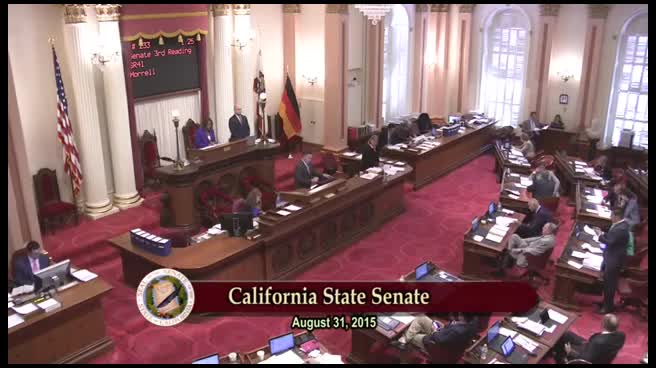 8MIN
Senate Floor
 7MIN
Senate Standing Committee on Governance and Finance
 45MIN
Senate Standing Committee on Governance and Finance
 4MIN
Assembly Floor
 24MIN
Assembly Standing Committee on Local Government
 13MIN
Assembly Standing Committee on Transportation
Bill Author

Bill Co-Author(s):
