AB 730: Controlled substances: transport.
- Session Year: 2015-2016
- House: Assembly
- Latest Version Date: 2015-07-13
Existing law categorizes controlled substances into 5 schedules and restrictions on those contained in Schedule I. Existing law, subject to exceptions, makes it an offense to, among other things, transport marijuana, phencyclidine, as specified, and mushrooms containing certain controlled substances, as provided.
This bill would instead define transport for those purposes to mean to transport for sale.
(a) Except as otherwise provided by this section or as authorized by law, every person who transports, imports into this state, sells, furnishes, administers, or gives away, or offers to transport, import into this state, sell, furnish, administer, or give away, or attempts to import into this state or transport any marijuana shall be punished by imprisonment pursuant to subdivision (h) of Section 1170 of the Penal Code for a period of two, three or four years.
(b) Except as authorized by law, every person who gives away, offers to give away, transports, offers to transport, or attempts to transport not more than 28.5 grams of marijuana, other than concentrated cannabis, is guilty of a misdemeanor and shall be punished by a fine of not more than one hundred dollars ($100). In any case in which a person is arrested for a violation of this subdivision and does not demand to be taken before a magistrate, such person shall be released by the arresting officer upon presentation of satisfactory evidence of identity and giving his written promise to appear in court, as provided in Section 853.6 of the Penal Code, and shall not be subjected to booking.
(c)For purposes of this section, transport means to transport for sale.
(d)This section does not preclude or limit prosecution for any aiding and abetting or conspiracy offenses.
SEC. 2.Section 11379.5 of the Health and Safety Code is amended to read:11379.5.(a) Except as otherwise provided in subdivision (b) and in Article 7 (commencing with Section 4211) of Chapter 9 of Division 2 of the Business and Professions Code, every person who transports, imports into this state, sells, furnishes, administers, or gives away, or offers to transport, import into this state, sell, furnish, administer, or give away, or attempts to import into this state or transport phencyclidine or any of its analogs which is specified in paragraph (21), (22), or (23) of subdivision (d) of Section 11054 or in paragraph (3) of subdivision (e) of Section 11055, or its precursors as specified in subparagraph (A) or (B) of paragraph (2) of subdivision (f) of Section 11055, unless upon the prescription of a physician, dentist, podiatrist, or veterinarian licensed to practice in this state, shall be punished by imprisonment pursuant to subdivision (h) of Section 1170 of the Penal Code for a period of three, four, or five years.
(b) Notwithstanding the penalty provisions of subdivision (a), any person who transports for sale any controlled substances specified in subdivision (a) within this state from one county to another noncontiguous county shall be punished by imprisonment pursuant to subdivision (h) of Section 1170 of the Penal Code for three, six, or nine years.
(c)For purposes of this section, transport means to transport for sale.
(d)This section does not preclude or limit prosecution for any aiding and abetting or conspiracy offenses.
SEC. 3.Section 11391 of the Health and Safety Code is amended to read:11391.(a)Except as otherwise authorized by law, every person who transports, imports into this state, sells, furnishes, gives away, or offers to transport, import into this state, sell, furnish, or give away any spores or mycelium capable of producing mushrooms or other material which contain a controlled substance specified in paragraph (18) or (19) of subdivision (d) of Section 11054 for the purpose of facilitating a violation of Section 11390 shall be punished by imprisonment in the county jail for a period of not more than one year or in the state prison.
(b)For purposes of this section, transport means to transport for sale.
(c)This section does not preclude or limit prosecution for any aiding and abetting or conspiracy offenses.
|
Date
|
Status
|
|---|---|
| Feb 25, 2015 | Read first time. To print. |
| Feb 26, 2015 | From printer. May be heard in committee March 28. |
| Mar 12, 2015 | Referred to Com. on PUB. S. |
| Apr 8, 2015 | From committee: Do pass. (Ayes 5. Noes 2.) (April 7). |
| Apr 9, 2015 | Read second time. Ordered to third reading. |
| Apr 20, 2015 | In Senate. Read first time. To Com. on RLS. for assignment. |
| Apr 20, 2015 | Read third time. Passed. Ordered to the Senate. (Ayes 49. Noes 29. Page 1012.) |
| May 7, 2015 | Referred to Com. on PUB. S. |
| Jun 9, 2015 | From committee: Do pass. (Ayes 5. Noes 2.) (June 9). |
| Jun 10, 2015 | Read second time. Ordered to third reading. |
| Jun 25, 2015 | In Assembly. Ordered to Engrossing and Enrolling. |
| Jun 25, 2015 | Read third time. Passed. Ordered to the Assembly. |
| Jun 25, 2015 | Read third time. Passed. Ordered to the Assembly. (Ayes 23. Noes 13. Page 1614.). |
| Jul 1, 2015 | Enrolled and presented to the Governor at 2:30 p.m. |
| Jul 13, 2015 | Approved by the Governor. |
| Jul 13, 2015 | Chaptered by Secretary of State - Chapter 77, Statutes of 2015. |
|
Date
|
Description
|
Location
|
Votes
|
|
|---|---|---|---|---|
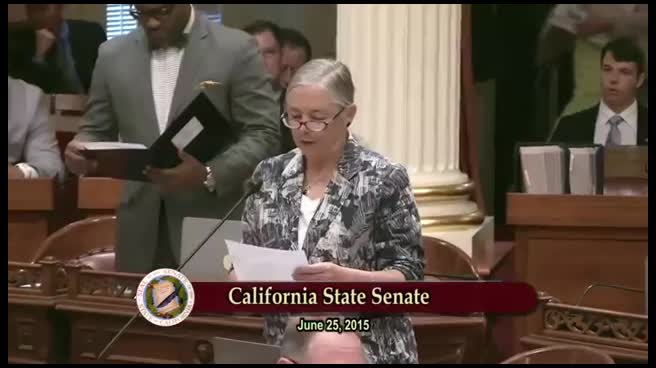
| Jun 25, 2015 | Assembly 3rd Reading AB730 Quirk By Hancock | Senate Floor |
Passed |
|
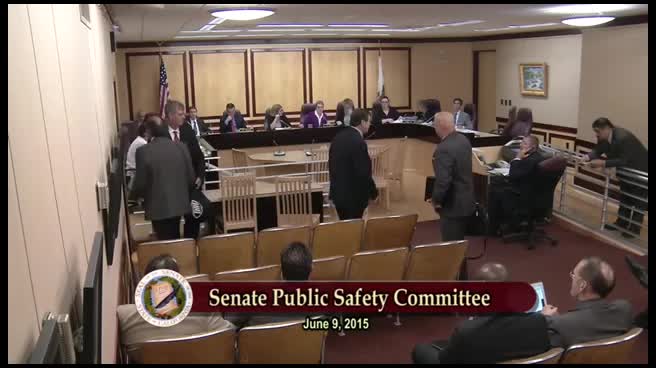
| Jun 9, 2015 | Do pass | Senate Standing Committee on Public Safety |
Passed |
|
| Apr 20, 2015 | AB 730 QUIRK Assembly Third Reading | Assembly Floor |
Passed |
|
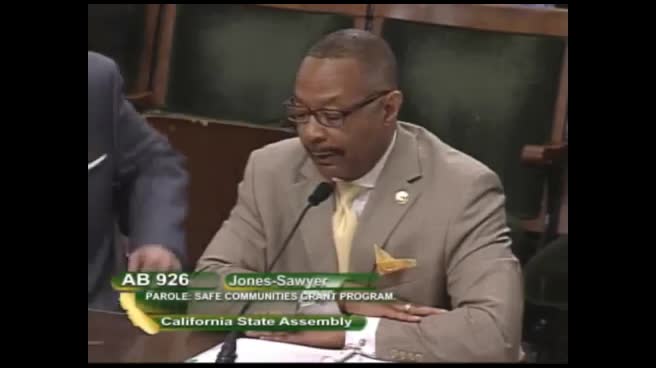
| Apr 7, 2015 | Do pass. | Assembly Standing Committee on Public Safety |
Passed |
This list shows positions taken on this bill by organizations on the date displayed, which is linked to the original source.
Positions by individuals are not included.
|
Organization
|
Position
|
Date
|
|---|---|---|
| ACLU of California | * Indeterminate | Jun 9, 2015 |
| California Attorneys For Criminal Justice | ** Support | Jun 25, 2015 |
| California NORML | ** Support | Apr 7, 2015 |
| California Public Defenders | ** Support | Jun 25, 2015 |
| Californians for Safety and Justice | ** Support | Jun 25, 2015 |
| Conference of California Bar Associations | ** Support | Jun 25, 2015 |
| Drug Policy Alliance | ** Support | Jun 25, 2015 |
| Legal Services for Prisoners with Children | ** Support | Jun 25, 2015 |
| Taxpayers for Improving Public Safety | ** Support | Jun 25, 2015 |
AB 730
Page 5
|
Office of Senate Floor Analyses (916) 651-1520 Fax: (916) 327-4478 |
THIRD READING
Bill No: AB 730
Introduced: 2/25/15
SENATE PUBLIC SAFETY COMMITTEE: 5-2, 6/9/15
AYES: Hancock, Glazer, Leno, Liu, Monning
NOES: Anderson, Stone
ASSEMBLY FLOOR: 49-29, 4/20/15 - See last page for vote
SUBJECT: Controlled substances: transport
DIGEST: This bill provides that a conviction for transportation of marijuana, psilocybin mushrooms or phencyclidine (PCP) requires proof of intent to sell, as is currently the case for cocaine, heroin and numerous other drugs.
Existing law:
Classifies controlled substances in five schedules according to their danger and potential for abuse. Schedule I controlled substances have the greatest restrictions and penalties, including prohibiting the prescribing of a Schedule I controlled substance. (Health & Saf. Code, §§ 11054 to 11058.)
Provides that every person who transports, imports into the state, sells, furnishes, administers, or gives away, or offers to transport, import into the state, sell, furnish, administer, or give away, or attempts to import into this state or transport marijuana shall be punished in the county jail pursuant to realignment for a period of two, three or four years. (Health & Saf. Code, § 11360, subd. (a)-(b).)
Provides that every person who transports, imports into this state, sells, furnishes, administers, or gives away, or offers to transport, import into this state, sell, furnish, administer, or give away, or attempts to import into this state or transport PCP or any of its specified analogs or precursors shall be punished by imprisonment pursuant to realignment for a period of three, four, or five years. (Health & Saf. Code, § 11379.5, subd. (a).)
Provides that every person who transports, imports into this state, sells, furnishes, gives away, or offers to transport, import into this state, sell, furnish, or give away any spores or mycelium capable of producing mushrooms or other material which contain a specified controlled substance shall be punished by imprisonment in the county jail for a period of not more than one year or in the state prison. (Health & Saf. Code, § 11391.)
Provides that every person that transports, imports into the state, sells, furnishes, administers, or gives away, or offers to transport, import into the state, sell, furnish, administer or give away, or attempts to import into this state or transport cocaine, cocaine base, or heroin, or any controlled substance which is a narcotic drug, without a written prescription shall be punished by imprisonment pursuant to realignment for three, four, or five years. (Health & Saf. Code, § 11352.) For purpose of this section, “transport” means to transport for sale.
Provides that every person that transports, imports into the state, sells, furnishes, administers, or gives away, or offers to transport, import into the state, sell, furnish, or give away, or attempts to import into this state or transport methamphetamine, or any controlled substance, which is not a narcotic, listed in the controlled substance schedule without a written prescription shall be punished by imprisonment for two, three, or four years. (Health & Saf. Code, § 11379.) For purposes of this section, “transport” means to transport for sale.
This bill:
Provides that to “transport” psilocybin mushrooms, PCP, or marijuana shall be defined to mean to “transport for sale.”
Provides that these provisions of law do not preclude or limit prosecution under an aiding and abetting, or conspiracy offenses.
Background
Prior to January 1, 2014, a person in possession of a controlled substance (a drug that cannot be possessed without a prescription) could be convicted felony drug transportation if the person even minimally moved the drug, regardless of the amount of the drug possessed or the intent of the possessor. “Transportation …is established by simply carrying or conveying a usable quantity of a controlled substance with knowledge of its presence and illegal character.” (People v. Emmal (1998) 68 Cal.App.4th 1313, 1316.) The crime includes transport of controlled substances for personal use. (People v. Rogers (1971) 5 Cal.3d 129, 134-135.)
In 2013, AB 721 (Bradford, Chapter 504) amended two Health and Safety Code sections - 11352 and 11379 - so as to provide the following: “For purposes of this section ‘transports’ means to transport for sale.” The new crime of transportation for sale applies to numerous drugs, including heroin, cocaine, methamphetamine. However, this new definition of drug transportation does not apply to marijuana, PCP, or psilocybin mushrooms. This bill, AB 730, requires that a person have the intent to sell these controlled substance in order to be convicted of felony transportation.
The Equal Protection Clause of the Fourteenth Amendment to the U.S. Constitution requires that all persons similarly situated be treated alike under the law. (Lawrence v. Texas (2003) 539 U.S. 558, 579.) Under existing law, a person can by punished more severely for transporting marijuana for personal use than for transporting methamphetamine or cocaine. That they are treated differently raises equal protection concerns.
SACPA – the Substance Abuse and Crime Prevention Act – requires that defendants be offered drug treatment on probation, without incarceration, if the defendant committed a non-violent drug possession offense. Non-violent drug possession includes “transportation for personal use.” (Pen. Code § 1210.1, subd. (a); People v. Harris (2009) 171 Cal.App.4th 1488, 1496.)
Under existing law, a conviction for transportation of heroin, cocaine, methamphetamine or one of a list of numerous other drugs necessarily involves the intent to sell and excludes the defendant from SACPA. Conversely, a person who moved a controlled substance, but intended to personally use the drug, would clearly be eligible for treatment under SACPA, unless otherwise excluded.
However, transportation of less than an ounce of marijuana, psilocybin mushrooms or PCP does not include an element that the defendant intended to sell the drug. Eligibility for treatment under SACPA of a defendant convicted of transportation of one of these three drugs must be determined by a special jury finding or by the court at sentencing. (People v. Harris, supra, 171 Cal.App.4th at p. 1496-1499.) As SACPA involves a reduction in penalty, the defendant bears the burden of proving that he or she transported a drug for personal use, not commerce. This bill requires the prosecution to prove intent to sell to convict a defendant of transportation of marijuana. If the element is not proved, a defendant in possession of the drug while moving or traveling would only be convicted of simple possession, and thus would be eligible for treatment under SACPA.
FISCAL EFFECT: Appropriation: No Fiscal Com.: No Local: No
American Civil Liberties Union
California Attorneys for Criminal Justice
California Public Defenders
Californians for Safety and Justice
Conference of California Bar Associations
Drug Policy Alliance
Legal Services for Prisoners with Children
National Organization for the Reform of Marijuana Laws, California Chapter
Taxpayers for Improving Public Safety
None received
ASSEMBLY FLOOR: 49-29, 4/20/15
AYES: Alejo, Bloom, Bonilla, Bonta, Brown, Burke, Calderon, Campos, Chau, Chiu, Chu, Cooley, Cooper, Dababneh, Daly, Dodd, Eggman, Frazier, Cristina Garcia, Eduardo Garcia, Gipson, Gomez, Gonzalez, Gordon, Gray, Hadley, Roger Hernández, Holden, Jones-Sawyer, Levine, Lopez, Low, McCarty, Mullin, Nazarian, Obernolte, O’Donnell, Quirk, Rendon, Ridley-Thomas, Rodriguez, Santiago, Mark Stone, Thurmond, Ting, Weber, Williams, Wood, Atkins
NOES: Achadjian, Travis Allen, Baker, Bigelow, Brough, Chávez, Dahle, Beth Gaines, Gallagher, Gatto, Grove, Harper, Irwin, Jones, Kim, Lackey, Linder, Maienschein, Mathis, Mayes, Medina, Melendez, Olsen, Patterson, Salas, Steinorth, Wagner, Waldron, Wilk
NO VOTE RECORDED: Chang, Perea
Prepared by: Jerome McGuire / PUB. S. /
6/10/15 10:51:03
**** END ****
AB 730 (Quirk ) Page 5 of 5
SENATE COMMITTEE ON PUBLIC SAFETY
Senator Loni Hancock, Chair
2015 - 2016 Regular
Bill No: AB 730 Hearing Date: June 9, 2015
Author: |
Quirk |
||
Version: |
February 25, 2015 |
||
Urgency: |
No |
Fiscal: |
No |
Consultant: |
JM |
||
Subject: Controlled Substances: Transport
HISTORY
Source: California Attorneys for Criminal Justice; Conference of California Bar Associations
Prior Legislation: AB 721 (Bradford) Ch. 504, Stats. 2013
Support: American Civil Liberties Union; California Chapter of the National Organization for the Reform of Marijuana Laws (NORML); California Public Defenders; Californians for Safety and Justice; Drug Policy Alliance; Legal Services for Prisoners with Children; Taxpayers for Improving Public Safety
Opposition: None known
Assembly Floor Vote: 49 - 29
PURPOSE
The purpose of this bill is to provide that a conviction for transportation of marijuana, psilocybin mushrooms or PCP requires proof of intent to sell, as is currently the case for cocaine, heroin and numerous other drugs.
Existing law classifies controlled substances in five schedules according to their danger and potential for abuse. Schedule I controlled substances have the greatest restrictions and penalties, including prohibiting the prescribing of a Schedule I controlled substance. (Health & Saf. Code, §§ 11054 to 11058.)
Existing law provides that every person who transports, imports into the state, sells, furnishes, administers, or gives away, or offers to transport, import into the state, sell, furnish, administer, or give away, or attempts to import into this state or transport marijuana shall be punished in the county jail pursuant to realignment for a period of two, three or four years. (Health & Saf. Code, § 11360, subd. (a)-(b).)
Existing law provides that every person who transports, imports into this state, sells, furnishes, administers, or gives away, or offers to transport, import into this state, sell, furnish, administer, or give away, or attempts to import into this state or transport PCP or any of its specified analogs or precursors shall be punished by imprisonment pursuant to realignment for a period of three, four, or five years. (Health & Saf. Code, § 11379.5, subd. (a).)
Existing law provides that every person who transports, imports into this state, sells, furnishes, gives away, or offers to transport, import into this state, sell, furnish, or give away any spores or mycelium capable of producing mushrooms or other material which contain a specified controlled substance shall be punished by imprisonment in the county jail for a period of not more than one year or in the state prison. (Health & Saf. Code, § 11391.)
Existing law provides that every person that transports, imports into the state, sells, furnishes, administers, or gives away, or offers to transport, import into the state, sell, furnish, administer or give away, or attempts to import into this state or transport cocaine, cocaine base, or heroin, or any controlled substance which is a narcotic drug, without a written prescription shall be punished by imprisonment pursuant to realignment for three, four, or five years. For purpose of this section, "transport" means to transport for sale (Health & Saf. Code, § 11352.) .
Existing law provides that every person that transports, imports into the state, sells, furnishes, administers, or gives away, or offers to transport, import into the state, sell, furnish, or give away, or attempts to import into this state or transport methamphetamine, or any controlled substance, which is not a narcotic, listed in the controlled substance schedule without a written prescription shall be punished by imprisonment for two, three, or four years. For purposes of this section, “transport” means to transport for sale. (Health & Saf. Code, § 11379.)
This bill provides that to "transport” psilocybin mushrooms, phencyclidine (PCP), or marijuana shall be defined to mean to “transport for sale.”
This bill provides that these provisions of law do not preclude or limit prosecution under an aiding and abetting, or conspiracy offenses.
RECEIVERSHIP/OVERCROWDING CRISIS AGGRAVATION
For the past eight years, this Committee has scrutinized legislation referred to its jurisdiction for any potential impact on prison overcrowding. Mindful of the United States Supreme Court ruling and federal court orders relating to the state’s ability to provide a constitutional level of health care to its inmate population and the related issue of prison overcrowding, this Committee has applied its “ROCA” policy as a content-neutral, provisional measure necessary to ensure that the Legislature does not erode progress in reducing prison overcrowding.
On February 10, 2014, the federal court ordered California to reduce its in-state adult institution population to 137.5% of design capacity by February 28, 2016, as follows:
143% of design bed capacity by June 30, 2014;
141.5% of design bed capacity by February 28, 2015; and,
137.5% of design bed capacity by February 28, 2016.
In February of this year the administration reported that as “of February 11, 2015, 112,993 inmates were housed in the State’s 34 adult institutions, which amounts to 136.6% of design bed capacity, and 8,828 inmates were housed in out-of-state facilities. This current population is now below the court-ordered reduction to 137.5% of design bed capacity.”( Defendants’ February 2015 Status Report In Response To February 10, 2014 Order, 2:90-cv-00520 KJM DAD PC, 3-Judge Court, Coleman v. Brown, Plata v. Brown (fn. omitted).
While significant gains have been made in reducing the prison population, the state now must stabilize these advances and demonstrate to the federal court that California has in place the “durable solution” to prison overcrowding “consistently demanded” by the court. (Opinion Re: Order Granting in Part and Denying in Part Defendants’ Request For Extension of December 31, 2013 Deadline, NO. 2:90-cv-0520 LKK DAD (PC), 3-Judge Court, Coleman v. Brown, Plata v. Brown (2-10-14). The Committee’s consideration of bills that may impact the prison population therefore will be informed by the following questions:
Whether a proposal erodes a measure which has contributed to reducing the prison population;
Whether a proposal addresses a major area of public safety or criminal activity for which there is no other reasonable, appropriate remedy;
Whether a proposal addresses a crime which is directly dangerous to the physical safety of others for which there is no other reasonably appropriate sanction;
Whether a proposal corrects a constitutional problem or legislative drafting error; and
Whether a proposal proposes penalties which are proportionate, and cannot be achieved through any other reasonably appropriate remedy.
COMMENTS
Need for This Bill
According to the author:
Prior to 2014, the use of the word “transportation” in many drug statutes was determined by the courts to mean simply that – moving a prohibited drug from point A to point B, regardless of intent. This meant that an individual walking or riding a bicycle with drugs could be found guilty of transportation, even if those drugs are for personal use. The way the statute used the term "transport" did not make clear that there needs to be intent to sell at the end of the act of transporting.
In 2013, the Legislature enacted AB 721 (Bradford), Chapter 504, Statutes of 2013, which amended Health and Safety Code §11379 and §11352 to specify that “transportation” of specified drugs, including cocaine and methamphetamine, meant transport for sale, and did not include transport for personal use. However, AB 721 neglected to make the same change in other, similar anti-drug statutes. Although almost certainly due to oversight, the act of changing certain statutes while leaving other unchanged has the effect of reinforcing an argument that the Legislature intended that simple transportation of psilocybin mushrooms, PCP, or marijuana warrants a higher penalty than simple possession alone.
AB 730 will conform the definition of “transportation” in the statutes overlooked during the consideration and enactment of AB 721, to specify that to “transport” means to “transport for sale,” not for personal use.
2. Transportation of a Controlled Substance Includes an Element That the Transportation be For Purposes of Sale, Except for Transportation of, Psilocybin Mushrooms, PCP Marijuana
Prior to January 1, 2014, a person in possession of a controlled substance (a drug that cannot be possessed without a prescription) could be convicted of the more serious crime of drug transportation if the person even minimally moved the drug. This was true regardless of the amount of the drug possessed or the intent of the possessor. "Transportation of a controlled substance is established by simply carrying or conveying a usable quantity of a controlled substance with knowledge of its presence and illegal character." (People v. Emmal (1998) 68 Cal.App.4th 1313, 1316.) Courts interpreted the word "transports" to include transport of controlled substances for personal use. (People v. Rogers (1971) 5 Cal.3d 129, 134-135; People v. Eastman (1993) 13 Cal.App.4th 668.) Further, although this initially appears to be illogical, transportation of a controlled substance does not necessarily include possession of it. That is, one could knowingly transport a controlled substance for another person who actually possesses the drug. (People v. Rogers (1971) 5 Cal.3d 129, 134-137; People v. Eastman, supra, 13 Cal App 4th 668, 674-678.)
In 2013, AB 7211 amended three statutes prohibiting transportation of a controlled substance to add an intent-to-sell element. Specifically, each statute was amended to add a new subdivision that states the following: "For purposes of this section 'transports' means to transport for sale." The new crime of transportation for sale applied to numerous drugs, including heroin, cocaine, methamphetamine and others. However, the new crime does not apply to transportation of marijuana, phencyclidine (PCP), or psilocybin mushrooms. This bill requires that a person have the intent to sell these specified controlled substance in order to be convicted of felony transportation.
3. Equal Protection: Persons Prosecuted for Transportation of Controlled Substances Under Separate Statues With Differing Major Elements
The Equal Protection Clause of the Fourteenth Amendment to the U.S. Constitution requires that all persons similarly situated be treated alike under the law. (Lawrence v. Texas (2003) 539 U.S. 558, 579.) Under current law, a person can by punished more severely for transporting marijuana for personal use than for transporting methamphetamine or cocaine. That they are treated differently raises equal protection concerns.
To prevail on an equal protection argument, the defendant must show that the state has enacted a law that affects similarly situated groups in an unequal manner. (In re Eric J. (1979) 25 Cal.3d 522, 530; Cooley v. Superior Court (2002) 29 Cal.4th 228, 253.) Under the equal protection clause, a court does not inquire "whether persons are similarly situated for all purposes, but 'whether they are similarly situated for purposes of the law challenged.” (Cooley v. Superior Court, supra, 29 Cal.4th at p. 253 internal quotation marks and citation omitted.) Defendants who have committed the "same quality" of offense are similarly situated. (Skinner v. Oklahoma (1942) 316 U.S. 535, 541 [thieves and embezzlers similarly situated]; In re King (1970) 3 Cal.3d 226 [out-of-state fathers who fail to support children are similarly situated with in-state nonsupporting fathers].) If the court finds that similarly situated persons are treated differently under the law, the court will then apply separate levels of scrutiny to different types of classifications. "In the absence of a classification that is inherently invidious or that impinges upon fundamental rights, a state statute is to be upheld against equal protection attack if it is rationally related to the achievement of legitimate governmental ends." (Gates v. Superior Court (1995) 32 Cal.App.4th 481, 514.) However, liberty is a fundamental right. Imposing different punishments upon similarly situated persons likely requires strict scrutiny, such that the state must show a compelling interest for the classification. (People v. Oliva (1976) 17 Cal.3d 236
The two groups at issue here are arguably similarly situated for purposes of these statutes. Where no sales element is proven, each group is transporting controlled substances for personal use. The only difference is the specific drug possessed for personal use. All other parts of the contested act, such as the method of transportation, are the same. Arguably, transporting marijuana for personal use should carry no greater of a penalty than transporting methamphetamine. However, the opposite is true. This by itself supports the notion of an equal protection violation as to transportation of marijuana. This bill would address those equal protection concerns.
ARE DEFENDANTS CONVICTED OF TRANSPORTATION OF MARIJUANA, PSILOCYBIN MUSHROOMS OR PCP DENIED EQUAL PROTECTION BECAUSE A CONVICTION FOR TRANSPORTATION OF THESE DRUGS DOES NOT REQUIRE PROOF OF INTENT TO SELL, WHILE TRANSPORATION OF OTHER DRUGS DOES INCLUDE AN ELEMENT OF INTENT TO SELL?
4. SACPA (Substance Abuse and Crime Prevention Act – Proposition 36 of the 2000 General Election – One who Transports a Drug for Personal use is Guilty of Non-Violent Drug Possession and Eligible for Drug Treatment on Probation
SACPA – the Substance Abuse and Crime Prevention Act – requires that defendants be offered drug treatment on probation, without incarceration, if the defendant committed a non-violent drug possession offense. Non-violent drug possession includes “transportation for personal use.” (Pen. Code § 1210.1, subd. (a); People v. Harris (2009) 171 Cal.App.4th 1488, 1496.)
Under existing law, a conviction for transportation of heroin, cocaine, methamphetamine or one of a list of numerous other drugs necessarily involves the intent to sell and excludes the defendant from SACPA. Conversely, a person who moved a controlled substance, but intended to personally use the drug, would clearly be eligible for treatment under SACPA, unless otherwise excluded.
However, it appears that transportation of less than an ounce of marijuana, psilocybin mushrooms or PCP does not include an element that the defendant intended to sell the drug. Eligibility for treatment under SACPA of a defendant convicted of transportation of one of these three drugs must be determined by a special jury finding or by the court at sentencing. (People v. Harris, supra, 171 Cal.App.4th at p. 1496-1499.) As SACPA involves a reduction in penalty, the defendant bears the burden of proving that he or she transported a drug for personal use, not commerce. This bill will require the prosecution to prove intent to sell to convict a defendant of transportation of marijuana. If the element is not proved, a defendant in possession of the drug while moving or traveling would only be convicted of simple possession, and thus would be eligible for treatment under SACPA.
-- END –
1 AB 721 (Bradford) - Ch. 504, Stats. 2013; effective January 1, 2014.
AB 730
Page 2
ASSEMBLY THIRD READING
AB 730
(Quirk)
As Introduced February 25, 2015
Majority vote
Committee |
Votes |
Ayes |
Noes |
Public Safety |
5-2 |
Quirk, Gonzalez, Jones-Sawyer, Low, Santiago |
Melendez, Lackey |
SUMMARY:
Provides that "transportation" of marijuana, phencyclidine (PCP), or mushrooms shall be defined to mean transportation for purposes of sale. Specifically, this bill:
Defines "transport" for purposes of the statute prohibiting the transportation of not more than 28.5 grams of marijuana or other concentrated cannabis as "transport for sale."
Defines "transport" for purposes of the statute prohibiting the transportation of PCP or any of its analogs or precursors as "transport for sale."
Defines "transport" for purposes of the statute prohibiting the transportation of any spores or mycelium capable of producing mushrooms or other materials which contain psilocybin or psilocin as "transport for sale."
Provides that these provisions of law do not preclude or limit prosecution under an aiding and abetting theory, or conspiracy offenses.
EXISTING LAW:
Provides that every person who transports, imports into the state, sells, furnishes, administers, or gives away, or offers to transport, import into the state, sell, furnish, administer, or give away, or attempts to import into this state or transport marijuana shall be punished in the county jail pursuant to realignment for a period of two, three or four years.
Provides that every person who transports, imports into this state, sells, furnishes, administers, or gives away, or offers to transport, import into this state, sell, furnish, administer, or give away, or attempts to import into this state or transport PCP or any of its specified analogs or precursors shall be punished by imprisonment pursuant to realignment for a period of three, four, or five years.
Provides that every person who transports, imports into this state, sells, furnishes, gives away, or offers to transport, import into this state, sell, furnish, or give away any spores or mycelium capable of producing mushrooms or other material which contain a specified controlled substance shall be punished by imprisonment in the county jail for a period of not more than one year or in the state prison.
Provides that every person that transports, imports into the state, sells, furnishes, administers, or gives away, or offers to transport, import into the state, sell, furnish, administer or give away, or attempts to import into this state or transport cocaine, cocaine base, or heroin, or any controlled substance which is a narcotic drug, without a written prescription shall be punished by imprisonment pursuant to realignment for three, four, or five years. Specifies that "transport" means transportation for sale.
Provides that every person that transports, imports into the state, sells, furnishes, administers, or gives away, or offers to transport, import into the state, sell, furnish, or give away, or attempts to import into this state or transport methamphetamine, or any controlled substance, which is not a narcotic, listed in the controlled substance schedule without a written prescription shall be punished by imprisonment for two, three, or four years. Specifies that transport means transportation for sale.
Classifies controlled substances in five schedules according to their danger and potential for abuse. Schedule I controlled substances have the greatest restrictions and penalties, including prohibiting the prescribing of a Schedule I controlled substance.
FISCAL EFFECT:
Unknown. This bill is keyed non-fiscal by the Legislative Counsel.
COMMENTS:
According to the author, "AB 730 is about fairness and consistency. Two years ago, the Legislature clarified that 'transportation' of illegal drugs was intended to apply to transportation of the drugs for sale, not for personal use. However, the Legislature overlooked certain statutes in its deliberations, resulting in a situation where transportation of some drugs for personal use can be charged only as a possession offense, while transportation of other drugs for personal use can be charged as both possession and transportation. AB 730 removes this unfair inconsistency and makes it clear that in Health & Safety Code [Section] 11360, [Section] 11379.5 and [Section] 11391 'transport' of those specified drugs means transportation with intent to sell."
Analysis Prepared by: Sandy Uribe / PUB. S. / (916) 319-3744 FN: 0000097
AB 730
Page 6
Date of Hearing: April 7, 2015
Counsel: Sandra Uribe
ASSEMBLY COMMITTEE ON PUBLIC SAFETY
Bill Quirk, Chair
AB 730
(Quirk) – As Introduced February 25, 2015
SUMMARY:
Provides that "transportation" of marijuana, phencyclidine
(PCP), or mushrooms shall be defined to mean transportation for
purposes of sale. Specifically, this bill:
Defines "transport" for purposes of the statute prohibiting the transportation of not more than 28.5 grams of marijuana or other concentrated cannabis as "transport for sale."
Defines "transport" for purposes of the statute prohibiting the transportation of PCP or any of its analogs or precursors as "transport for sale."
Defines "transport" for purposes of the statute prohibiting the transportation of any spores or mycelium capable of producing mushrooms or other materials which contain psilocybin or psilocin as "transport for sale."
Provides that these provisions of law do not preclude or limit prosecution under an aiding and abetting theory, or conspiracy offenses.
EXISTING LAW:
Provides that every person who transports, imports into the state, sells, furnishes, administers, or gives away, or offers to transport, import into the state, sell, furnish, administer, or give away, or attempts to import into this state or transport marijuana shall be punished in the county jail pursuant to realignment for a period of two, three or four years. (Health & Saf. Code, § 11360, subd. (a).)
Provides that every person who transports, imports into this state, sells, furnishes, administers, or gives away, or offers to transport, import into this state, sell, furnish, administer, or give away, or attempts to import into this state or transport PCP or any of its specified analogs or precursors shall be punished by imprisonment pursuant to realignment for a period of three, four, or five years. (Health & Saf. Code, § 11379.5, subd. (a).)
Provides that every person who transports, imports into this state, sells, furnishes, gives away, or offers to transport, import into this state, sell, furnish, or give away any spores or mycelium capable of producing mushrooms or other material which contain a specified controlled substance shall be punished by imprisonment in the county jail for a period of not more than one year or in the state prison. (Health & Saf. Code, § 11391.)
Provides that every person that transports, imports into the state, sells, furnishes, administers, or gives away, or offers to transport, import into the state, sell, furnish, administer or give away, or attempts to import into this state or transport cocaine, cocaine base, or heroin, or any controlled substance which is a narcotic drug, without a written prescription shall be punished by imprisonment pursuant to realignment for three, four, or five years. Specifies that "transport" means transportation for sale. (Health & Saf. Code, § 11352.)
Provides that every person that transports, imports into the state, sells, furnishes, administers, or gives away, or offers to transport, import into the state, sell, furnish, or give away, or attempts to import into this state or transport methamphetamine, or any controlled substance, which is not a narcotic, listed in the controlled substance schedule without a written prescription shall be punished by imprisonment for two, three, or four years. Specifies that transport means transportation for sale. (Health & Saf. Code, § 11379.)
Classifies controlled substances in five schedules according to their danger and potential for abuse. Schedule I controlled substances have the greatest restrictions and penalties, including prohibiting the prescribing of a Schedule I controlled substance. (Health & Saf. Code, §§ 11054 to 11058.)
FISCAL EFFECT:
Unknown
COMMENTS:
Author's Statement: According to the author, "AB 730 is about fairness and consistency. Two years ago, the Legislature clarified that 'transportation' of illegal drugs was intended to apply to transportation of the drugs for sale, not for personal use. However, the Legislature overlooked certain statutes in its deliberations, resulting in a situation where transportation of some drugs for personal use can be charged only as a possession offense, while transportation of other drugs for personal use can be charged as both possession and transportation. AB 730 removes this unfair inconsistency and makes it clear that in Health & Safety Code §11360, §11379.5 and §11391 'transport' of those specified drugs means transportation with intent to sell."
Transportation of a Controlled Substance: Previously, a person could be convicted of transportation of a controlled substance if such a substance was minimally moved, regardless of the amount of the controlled substance or intent of the possessor. "Transportation of a controlled substance is established by simply carrying or conveying a usable quantity of a controlled substance with knowledge of its presence and illegal character." (See e.g., People v. Emmal (1998) 68 Cal.App.4th 1313, 1316.) Courts had interpreted the word "transports" to include transport of controlled substances for personal use. (People v. Rogers (1971) 5 Cal.3d 129, 134-135; People v. Eastman (1993) 13 Cal.App.4th 668.)
Effective January 1, 2014, three statutes prohibiting transportation of a controlled substance were amended to add an intent-to-sell element. Specifically the statutes added a new subdivision which states "For purposes of this section 'transports' means to transport for sale."
However, other transportation-of-controlled-substance statutes were not affected. This bill requires that a person transporting marijuana, phencyclidine, or mushrooms have the intent to sell the controlled substance in order to be convicted of felony transportation of a controlled substance, eliminating the possibility of a person transporting a small amount of a controlled substance for personal use of being convicted of felony transportation.
Equal Protection: The Equal Protection Clause of the Fourteenth Amendment to the U.S. Constitution is essentially a direction that all persons similarly situated should be treated alike. (Lawrence v. Texas (2003) 539 U.S. 558, 579 (conc. opn. of O'Connor J., citations and quote marks omitted.) Under current law, a person can by punished more severely for transporting marijuana for personal use than for transporting methamphetamine or cocaine. That they are treated differently raises equal protection concerns.
"The first prerequisite to a meritorious claim under the equal protection clause is a showing that the state has adopted a classification that affects two or more similarly situated groups in an unequal manner." (In re Eric J. (1979) 25 Cal.3d 522, 530; Cooley v. Superior Court (2002) 29 Cal.4th 228, 253.) Under the equal protection clause, a court does not inquire "whether persons are similarly situated for all purposes, but 'whether they are similarly situated for purposes of the law challenged.'" (Cooley v. Superior Court, supra, 29 Cal.4th at p. 253, quoting People v. Gibson (1988) 204 Cal.App.3d 1425, 1438.) "The 'similarly situated' prerequisite simply means that an equal protection claim cannot succeed, and does not require further analysis, unless there is some showing that the two groups are sufficiently similar with respect to the purpose of the law in question that some level of scrutiny is required in order to determine whether the distinction is justified. (People v. Nguyen (1997) 54 Cal.App.4th 705, 714.)
Although "a defendant convicted of one crime is not similarly situated to a defendant convicted of a different crime" (People v. Jacobs (1984) 157 Cal.App.3d 797, 800; People v. Barrerra (1993) 14 Cal.App.4th 1555, 1565), defendants who have committed the "same quality" of offense are similarly situated. (Skinner v. Oklahoma (1942) 316 U.S. 535, 541 [thieves and embezzlers similarly situated]; In re King (1970) 3 Cal.3d 226 [out-of-state fathers who fail to support children are similarly situated with in-state nonsupporting fathers].)
The two groups at issue here are arguably similarly situated for purposes of these statutes. Where no sales element is proven, each group is transporting controlled substances for personal use. The only difference is the specific drug possessed for personal use. All other parts of the contested act, such as the method of transportation, are the same.
If it is found that that the groups are similarly situated, in the second prong of an equal protection analysis, the court will apply different levels of scrutiny to different types of classifications. "In the absence of a classification that is inherently invidious or that impinges upon fundamental rights, a state statute is to be upheld against equal protection attack if it is rationally related to the achievement of legitimate governmental ends." (Gates v. Superior Court (1995) 32 Cal.App.4th 481, 514.)
At first blush, the most obvious reason for the differing treatment is that controlled substances are on different schedules for drug classification. Marijuana is a schedule I drug while methamphetamine is a schedule II drug. Although schedule II through V drugs may be prescribed under certain conditions (see e.g., Health & Saf. Code, § 11158), no such provisions exist for schedule I.
However, California recognizes the use of marijuana for medicinal purposes. (See Health & Saf. Code, § 11362.5 et seq., the Compassionate Use Act.) Moreover, marijuana is certainly treated differently than any other schedule I drug throughout the Penal Code. The Legislature has deemed that mere possession of marijuana is a less serious offense than possession of methamphetamine. Possession of less than 28.5 grams of marijuana is an infraction, while possessing more than that amount is an misdemeanor warranting not more than six months in jail. (Health & Saf. Code, § 11357, subds. (b) & (c).) Compare that with possession of any usable amount of methamphetamine, which until the passage of Proposition 47 was an alternate felony/misdemeanor offense, and which is now a misdemeanor carrying a jail term of up to one year. (Health & Saf. Code, § 11377, subd. (a).) It stands to reason, then, that transporting marijuana for personal use should carry less of a penalty (or at least an equal penalty) than transporting methamphetamine. However, the opposite is true. This by itself supports the notion of an equal protection violation as to transportation of marijuana. This bill would address those equal protection concerns.
Argument in Support: According to the Conference of California Bar Associations, a co-sponsor of this bill, "AB 730 would conform the definition of 'transportation' of drugs in Health & Safety Code §§11360, 11379.5 and 11391 with the changes made in 2013 to Health & Safety Code §§11352 and 11379, making it applicable solely to transport for sale, not for personal use. This will add common sense, consistency and fairness to the statutes being conformed. It will also prevent problems resulting from the current inconsistency between the various statutes.
"Existing law penalizes the transportation of drugs more severely than the simple possession of drugs because transportation is most often linked with the sale of drugs. However, California courts have interpreted the term 'transportation' in the drug statutes in its most literal sense – moving a prohibited drug from point A to point B, regardless of intent. This means that a person riding a bicycle with drugs can be guilty of transportation (People. v. LaCross (2001) 91 Cal.App.4th 182), as can a person simply walking with drugs (People v. Ormiston (2003) 105 Cal. App. 4th 676), even if those drugs are for personal use. These rulings have created problems for persons otherwise eligible for Proposition 36 drug probation, with appellate courts allowing a judge to determine whether transportation was for sale even though a jury had acquitted the defendant of possession for sale (People v. Dove (2004) 124 Cal.App.4th 1.).
"In 2013, the Legislature enacted AB 721 (Bradford), Chapter 504, which amended Health & Safety Code §§11379 and 11352 to specify that 'transportation' of specified drugs, including cocaine and methamphetamine, meant transportation for sale, not for personal use. At the time, however, the Legislature neglected to make the same change to three other anti-drug sections of the Health and Safety Code – including those dealing with marijuana (§11360) and with PCP and other drugs (§11379.5) - that impose harsher penalties for transportation, even if the drug possession is for personal use and the transportation is simply incidental. In fact, the Legislature’s failure to make a consistent change in these statutes can and will be taken by the courts as evidence of the Legislature’s intent to impose the higher penalty on incidental transportation.
"AB 730 corrects this oversight by making the transportation-related language in all these anti-drug statutes consistent, with 'transportation' meaning transport for sale, not transport incidental to personal use. Simple possession remains a crime – it is not decriminalized. The only change is that a person walking down the street with drugs can only be charged with simple possession unless there is evidence the transportation is for sale."
Argument in Opposition: None submitted
Related Legislation:
AB 46 (Lackey), would reverse provisions recently enacted by Proposition 47 related to possession for personal use of specified controlled substances. AB 46 is pending hearing in this committee.
AB 947 (Chávez), would make the crime of unlawfully possess any amount of cocaine base, cocaine, heroin, methamphetamine, or phencyclidine while armed with a loaded, operable firearm punishable by imprisonment in the county jail rather than state prison. AB 947 is pending hearing in this committee.
SB 333 (Galgiani), is substantially similar to AB 46. SB 333 is pending in the Senate Public Safety Committee.
Prior Legislation: AB 721 (Bradford) Chapter 504, Statutes of 2013, made the transportation of specified controlled substances a felony only if the individual transports the controlled substance for purposes of sale.
REGISTERED SUPPORT / OPPOSITION:
Support
California Attorneys for Criminal Justice (Co-Sponsor)
Conference
of California Bar Associations (Co-Sponsor)
American Civil
Liberties Union
California NORML
California Public
Defenders Association
Drug Policy Alliance
Legal Services
for Prisoners with Children
Taxpayers for Improving Public
Safety
Opposition
None
Analysis Prepared by:
Sandy Uribe / PUB. S. / (916) 319-3744
Discussed in Hearing
 6MIN
Senate Floor
 5MIN
Senate Standing Committee on Public Safety
 1MIN
Assembly Floor
 5MIN
Assembly Standing Committee on Public Safety
Bill Author

Bill Co-Author(s):