AB 74: Child care facilities: regulatory visits.
- Session Year: 2015-2016
- House: Assembly
- Latest Version Date: 2015-09-11
Under existing law, the State Department of Social Services regulates the licensure and operation of child day care centers and family day care homes, and is required to inspect these centers or homes at least once every 5 years and, beginning January 1, 2017, at least once every 3 years. Existing law provides that a child day care center or family day care home is subject to an unannounced inspection by the department, and requires the department to conduct an annual unannounced inspection under specified circumstances, including when a license is on probation, and to conduct annual unannounced inspections of no less than 20%, and commencing January 1, 2017, 30% of these centers or homes that are not subject to an inspection under those specified circumstances.
This bill would revise the provisions requiring the department to conduct annual unannounced inspections of a child day care center or family day care home by instead requiring the department to conduct annual unannounced inspections of no less than 20% of those centers or homes on and after January 1, 2018, and until January 1, 2019. The bill would also require, on and after January 1, 2018, and until January 1, 2019, the department to inspect each center or home at least every 2 years. Beginning January 1, 2019, the bill would require the department to conduct an annual unannounced inspection of each child day care center or family day care home.
Under existing law, the State Department of Social Services regulates the licensure and operation of community care facilities, residential care facilities for the elderly, child day care centers, centers and family day care homes. homes, and is required to inspect these centers or homes at least once every 5 years and, beginning January 1, 2017, at least once every 3 years. Existing law provides that these facilities, except for foster family homes, are a child day care center or family day care home is subject to an unannounced visits inspection by the department at least once every 5 years. Existing law department, and requires the department to conduct an annual unannounced visit inspection under specified circumstances, including when a license is on probation, and to conduct annual unannounced visits to inspections of no less than 20% 20%, and commencing January 1, 2017, 30% of the facilities, other than foster family homes, these centers or homes that are not subject to an inspection under those specified circumstances.
This bill would instead make every facility of the types described above, except for foster family homes, subject to an annual unannounced visit by the department on and after July 1, 2018. The
This bill would revise the provisions requiring the department to conduct annual unannounced visits to no less than 20% of the facilities inspections of a child day care center or family day care home by instead requiring the department to conduct annual unannounced visits to inspections of no less than 30% of facilities on or before July 1, 2016, and no less than 40% 20% of those facilities on or before July 1, 2017. The bill would also delete the provisions requiring an unannounced visit at least once every 5 years. centers or homes on and after January 1, 2018, and until January 1, 2019. Beginning January 1, 2019, the bill would require the department to conduct an annual unannounced inspection of each child day care center or family day care home.
Under existing law, the State Department of Social Services regulates the licensure and operation of community care facilities, residential care facilities for the elderly, child day care centers, and family day care homes. Existing law provides that these facilities, except for foster family homes, are subject to unannounced visits by the department at least once every 5 years. Existing law requires the department to conduct an annual unannounced visit under specified circumstances, including when a license is on probation, and to conduct annual unannounced visits to no less than 20% of the facilities, other than foster family homes, that are not subject to an inspection under those specified circumstances.
This bill would instead make every facility of the types described above, except for foster family homes, subject to an annual unannounced visit by the department on and after July 1, 2018. The bill would revise the provisions requiring the department to conduct annual unannounced visits to no less than 20% of the facilities by instead requiring the department to conduct annual unannounced visits to no less than 30% of facilities on or before July 1, 2016, and no less than 40% of those facilities on or before July 1, 2017. The bill would also delete the provisions requiring an unannounced visit at least once every 5 years.
Under existing law, the State Department of Social Services regulates the licensure and operation of community care facilities, residential care facilities for the elderly, child day care centers, and family day care homes. Existing law provides that these facilities, except for foster family homes, are subject to unannounced visits by the department at least once every 5 years. Existing law requires the department to conduct an annual unannounced visit under specified circumstances, including when a license is on probation, and to conduct annual unannounced visits to no less than 20% of the facilities, other than foster family homes, that are not subject to an inspection under those specified circumstances.
This bill would instead make every facility of the types described above, except for foster family homes, subject to an annual unannounced visit by the department on and after July 1, 2018. The bill would revise the provisions requiring the department to conduct annual unannounced visits to no less than 20% of the facilities by instead requiring the department to conduct annual unannounced visits to no less than 30% of facilities on or before July 1, 2016, and no less than 20% 40% of those facilities on or before July 1, 2017. The bill would also delete the provisions requiring an unannounced visit at least once every 5 years.
Under existing law, the State Department of Social Services regulates the licensure and operation of community care facilities, residential care facilities for the elderly, child day care centers, and family day care homes. Existing law provides that these facilities, except for foster family homes, are subject to unannounced visits by the department at least once every 5 years. Existing law requires the department to conduct an annual unannounced visit under specified circumstances, including when a license is on probation, and to conduct annual unannounced visits to no less than 20% of the facilities, other than foster family homes, that are not subject to an inspection under those specified circumstances.
This bill would instead make every facility of the types described above, except for, subject to an annual unannounced visit by the department on and after July 1, 2018. The bill would revise the provisions requiring the department to conduct annual unannounced visits to no less than 20% of the facilities by instead requiring the department to conduct annual unannounced visits to no less than 30% of facilities on or before July 1, 2016, and no less than 20% of those facilities on or before July 1, 2017. The bill would also delete the provisions requiring an unannounced visit at least once every 5 years.
(a)Each licensed child day care center shall be subject to unannounced inspections by the department. The department shall inspect these facilities as often as necessary to ensure the quality of care provided.
(b)The department shall conduct an annual unannounced inspection of a licensed child day care center under any of the following circumstances:
(1)When a license is on probation.
(2)When the terms of agreement in a facility compliance plan require an annual inspection.
(3)When an accusation against a licensee is pending.
(4)In order to verify that a person who has been ordered out of a child day care center by the department is no longer at the facility.
(c)On and after January 1, 2017, and until January 1, 2018, the department shall do both of the following:
(1)(A)Conduct an annual unannounced inspection of no less than 30 percent of facilities not subject to an evaluation under subdivision (b).
(B)The unannounced inspections required by subparagraph (A) shall be conducted based on a random sampling methodology developed by the department.
(2)Inspect a licensed child day care center at least once every three years.
(d)On and after January 1, 2018, and until January 1, 2019, the department shall do both of the following:
(1)(A)Conduct an annual unannounced inspection of no less than 20 percent of facilities not subject to an evaluation under subdivision (b).
(B)The unannounced inspections required by subparagraph (A) shall be conducted based on a random sampling methodology developed by the department.
(2)The department shall inspect a licensed child day care center at least once every two years.
(e)On and after January 1, 2019, the department shall conduct annual unannounced inspections of all licensed child day care centers.
(f)This section shall become operative on January 1, 2017.
SEC. 2.Section 1597.55a of the Health and Safety Code, as added by Section 12 of Chapter 20 of the Statutes of 2015, is amended to read:1597.55a.Every family day care home shall be subject to unannounced inspections by the department as provided in this section. The department shall inspect these facilities as often as necessary to ensure the quality of care provided.
(a)The department shall conduct an announced site inspection prior to the initial licensing of the applicant.
(b)The department shall conduct an annual unannounced inspection of a facility under any of the following circumstances:
(1)When a license is on probation.
(2)When the terms of agreement in a facility compliance plan require an annual inspection.
(3)When an accusation against a licensee is pending.
(4)In order to verify that a person who has been ordered out of a family day care home by the department is no longer at the facility.
(c)On and after January 1, 2017, and until January 1, 2018, the department shall do both of the following:
(1)(A)Conduct annual unannounced inspections of no less than 30 percent of facilities not subject to an inspection under subdivision (b).
(B)These unannounced inspections shall be conducted based on a random sampling methodology developed by the department.
(2)The department shall inspect a licensed family day care home at least once every three years.
(d)On and after January 1, 2018, and until January 1, 2019, the department shall do both of the following:
(1)(A)Conduct annual unannounced inspections of no less than 20 percent of facilities not subject to an inspection under subdivision (b).
(B)These unannounced inspections shall be conducted based on a random sampling methodology developed by the department.
(2)Inspect a family day care home at least once every two years.
(e)On and after January 1, 2019, the department shall conduct annual unannounced inspections of all family day care homes.
(f)A public agency under contract with the department may make spot checks if it does not result in any cost to the state. However, spot checks shall not be required by the department.
(g)The department or licensing agency shall make an unannounced site inspection on the basis of a complaint and a followup inspection as provided in Section 1596.853.
(h)An unannounced site inspection shall adhere to both of the following conditions:
(1)The inspection shall take place only during the facilitys normal business hours or at any time family day care services are being provided.
(2)The inspection of the facility shall be limited to those parts of the facility in which family day care services are provided or to which the children have access.
(i)The department shall implement this section during periods that Section 1597.55b is not being implemented in accordance with Section 18285.5 of the Welfare and Institutions Code.
(j)This section shall become operative on January 1, 2017.
(a)Each licensed child day care center shall be subject to unannounced inspections by the department. The department shall inspect these facilities as often as necessary to ensure the quality of care provided.
(b)The department shall conduct an annual unannounced inspection of a licensed child day care center under any of the following circumstances:
(1)When a license is on probation.
(2)When the terms of agreement in a facility compliance plan require an annual inspection.
(3)When an accusation against a licensee is pending.
(4)In order to verify that a person who has been ordered out of a child day care center by the department is no longer at the facility.
(c)(1)On and after January 1, 2017, and until January 1, 2018, the department shall conduct do both of the following:
(1)(A)Conduct an annual unannounced inspection of no less than 30 percent of facilities not subject to an evaluation under subdivision (b).
(2) These
(B)The unannounced inspections required by subparagraph (A) shall be conducted based on a random sampling methodology developed by the department.
(2)Inspect a licensed child day care center at least once every three years.
(d)(1)On and after January 1, 2018, and until January 1, 2019, the department shall conduct do both of the following:
(1)(A)Conduct an annual unannounced inspection of no less than 20 percent of facilities not subject to an evaluation under subdivision (b).
(2) These
(B)The unannounced inspections required by subparagraph (A) shall be conducted based on a random sampling methodology developed by the department.
(2)The department shall inspect a licensed child day care center at least once every two years.
(e)On and after January 1, 2019, the department shall conduct annual unannounced inspections of all licensed child day care centers.
(f)This section shall become operative on January 1, 2017.
SEC. 2.Section 1597.55a of the Health and Safety Code, as added by Section 12 of Chapter 20 of the Statutes of 2015, is amended to read:1597.55a.Every family day care home shall be subject to unannounced inspections by the department as provided in this section. The department shall inspect these facilities as often as necessary to ensure the quality of care provided.
(a)The department shall conduct an announced site inspection prior to the initial licensing of the applicant.
(b)The department shall conduct an annual unannounced inspection of a facility under any of the following circumstances:
(1)When a license is on probation.
(2)When the terms of agreement in a facility compliance plan require an annual inspection.
(3)When an accusation against a licensee is pending.
(4)In order to verify that a person who has been ordered out of a family day care home by the department is no longer at the facility.
(c)(1)On and after January 1, 2017, and until January 1, 2018, the department shall conduct do both of the following:
(1)(A)Conduct annual unannounced inspections of no less than 30 percent of facilities not subject to an inspection under subdivision (b).
(2)
(B)These unannounced inspections shall be conducted based on a random sampling methodology developed by the department.
(2)The department shall inspect a licensed family day care home at least once every three years.
(d)(1)On and after January 1, 2018, and until January 1, 2019, the department shall conduct do both of the following:
(1)(A)Conduct annual unannounced inspections of no less than 20 percent of facilities not subject to an inspection under subdivision (b).
(2)
(B)These unannounced inspections shall be conducted based on a random sampling methodology developed by the department.
(2)Inspect a family day care home at least once every two years.
(e)On and after January 1, 2019, the department shall conduct annual unannounced inspections of all family day care homes.
(f)A public agency under contract with the department may make spot checks if it does not result in any cost to the state. However, spot checks shall not be required by the department.
(g)The department or licensing agency shall make an unannounced site inspection on the basis of a complaint and a followup inspection as provided in Section 1596.853.
(h)An unannounced site inspection shall adhere to both of the following conditions:
(1)The inspection shall take place only during the facilitys normal business hours or at any time family day care services are being provided.
(2)The inspection of the facility shall be limited to those parts of the facility in which family day care services are provided or to which the children have access.
(i)The department shall implement this section during periods that Section 1597.55b is not being implemented in accordance with Section 18285.5 of the Welfare and Institutions Code.
(j)This section shall become operative on January 1, 2017.
(a)Each licensed child day care center shall be subject to unannounced inspections by the department. The department shall inspect these facilities as often as necessary to ensure the quality of care provided.
(b)The department shall conduct an annual unannounced inspection of a licensed child day care center under any of the following circumstances:
(1)When a license is on probation.
(2)When the terms of agreement in a facility compliance plan require an annual inspection.
(3)When an accusation against a licensee is pending.
(4)In order to verify that a person who has been ordered out of a child day care center by the department is no longer at the facility.
(c)(1)The On and after January 1, 2017, and until January 1, 2018, the department shall conduct an annual unannounced inspection of no less than 30 percent of facilities not subject to an evaluation under subdivision (b).
(2)These unannounced inspections shall be conducted based on a random sampling methodology developed by the department.
(d)The department shall inspect a licensed child day care center at least once every three years.
(d)(1)On and after January 1, 2018, and until January 1, 2019, the department shall conduct an annual unannounced inspection of no less than 20 percent of facilities not subject to an evaluation under subdivision (b).
(2)These unannounced inspections shall be conducted based on a random sampling methodology developed by the department.
(e)On and after January 1, 2019, the department shall conduct annual unannounced inspections of all licensed child day care centers.
(e)
(f)This section shall become operative on January 1, 2017.
SEC. 2.Section 1597.55a of the Health and Safety Code, as added by Section 12 of Chapter 20 of the Statutes of 2015, is amended to read:1597.55a.Every family day care home shall be subject to unannounced inspections by the department as provided in this section. The department shall inspect these facilities as often as necessary to ensure the quality of care provided.
(a)The department shall conduct an announced site inspection prior to the initial licensing of the applicant.
(b)The department shall conduct an annual unannounced inspection of a facility under any of the following circumstances:
(1)When a license is on probation.
(2)When the terms of agreement in a facility compliance plan require an annual inspection.
(3)When an accusation against a licensee is pending.
(4)In order to verify that a person who has been ordered out of a family day care home by the department is no longer at the facility.
(c)(1)The On and after January 1, 2017, and until January 1, 2018, the department shall conduct annual unannounced inspections of no less than 30 percent of facilities not subject to an inspection under subdivision (b).
(2)These unannounced inspections shall be conducted based on a random sampling methodology developed by the department.
(d)The department shall inspect a licensed family day care home at least once every three years.
(d)(1)On and after January 1, 2018, and until January 1, 2019, the department shall conduct annual unannounced inspections of no less than 20 percent of facilities not subject to an inspection under subdivision (b).
(2)These unannounced inspections shall be conducted based on a random sampling methodology developed by the department.
(e)On and after January 1, 2019, the department shall conduct annual unannounced inspections of all family day care homes.
(e)
(f)A public agency under contract with the department may make spot checks if it does not result in any cost to the state. However, spot checks shall not be required by the department.
(f)
(g)The department or licensing agency shall make an unannounced site inspection on the basis of a complaint and a followup inspection as provided in Section 1596.853.
(g)
(h)An unannounced site inspection shall adhere to both of the following conditions:
(1)The inspection shall take place only during the facilitys normal business hours or at any time family day care services are being provided.
(2)The inspection of the facility shall be limited to those parts of the facility in which family day care services are provided or to which the children have access.
(h)
(i)The department shall implement this section during periods that Section 1597.55b is not being implemented in accordance with Section 18285.5 of the Welfare and Institutions Code.
(i)
(j)This section shall become operative on January 1, 2017.
All matter omitted in this version of the bill appears in the bill as amended in the Senate, June 25, 2015. (JR11)(a)(1)(A)Except for foster family homes, every licensed community care facility shall be subject to unannounced inspections by the department.
(B)Foster family homes shall be subject to announced inspections by the department, except that a foster family home shall be subject to unannounced inspections in response to a complaint, a plan of correction, or under any of the circumstances set forth in subparagraph (B) of paragraph (2).
(2)(A)The department may inspect these facilities as often as necessary to ensure the quality of care provided.
(B)The department shall conduct an annual unannounced inspection of a facility under any of the following circumstances:
(i)When a license is on probation.
(ii)When the terms of agreement in a facility compliance plan require an annual inspection.
(iii)When an accusation against a licensee is pending.
(iv)When a facility requires an annual inspection as a condition of receiving federal financial participation.
(v)In order to verify that a person who has been ordered out of a facility by the department is no longer at the facility.
(C)The department shall conduct annual announced inspections of no less than 20 percent of foster family homes not subject to an inspection under subparagraph (B).
(D)(i)On or before July 1, 2016, the department shall conduct annual unannounced visits to no less than 30 percent of facilities that are not subject to an evaluation pursuant to subparagraph (B). These unannounced visits shall be conducted based on a random sampling methodology developed by the department. Under no circumstances shall the department visit a licensed community care facility less often than once every three years.
(ii)On or before July 1, 2017, the department shall conduct annual unannounced visits to no less than 40 percent of facilities that are not subject to an evaluation pursuant to subparagraph (B). These unannounced visits shall be conducted based on a random sampling methodology developed by the department. Under no circumstances shall the department visit a licensed community care facility less often than once every two years.
(E)On and after July 1, 2018, the department shall conduct at least one annual unannounced visit to each licensed community care facility.
(3)In order to facilitate direct contact with group home clients, the department may interview children who are clients of group homes at any public agency or private agency at which the client may be found, including, but not limited to, a juvenile hall, recreation or vocational program, or a public or nonpublic school. The department shall respect the rights of the child while conducting the interview, including informing the child that he or she has the right not to be interviewed and the right to have another adult present during the interview.
(4)The department shall notify the community care facility in writing of all deficiencies in its compliance with the provisions of this chapter and the rules and regulations adopted pursuant to this chapter, and shall set a reasonable length of time for compliance by the facility.
(5)Reports on the results of each inspection, evaluation, or consultation shall be kept on file in the department, and all inspection reports, consultation reports, lists of deficiencies, and plans of correction shall be open to public inspection.
(b)(1)This section does not limit the authority of the department to inspect or evaluate a licensed foster family agency, a certified family home, or any aspect of a program in which a licensed community care facility is certifying compliance with licensing requirements.
(2)(A)A foster family agency shall conduct an announced inspection of a certified family home during the annual recertification described in Section 1506 in order to ensure that the certified family home meets all applicable licensing standards. A foster family agency may inspect a certified family home as often as necessary to ensure the quality of care provided.
(B)In addition to the inspections required pursuant to subparagraph (A), a foster family agency shall conduct an unannounced inspection of a certified family home under any of the following circumstances:
(i)When a certified family home is on probation.
(ii)When the terms of the agreement in a facility compliance plan require an annual inspection.
(iii)When an accusation against a certified family home is pending.
(iv)When a certified family home requires an annual inspection as a condition of receiving federal financial participation.
(v)In order to verify that a person who has been ordered out of a certified family home by the department is no longer at the home.
(3)Upon a finding of noncompliance by the department, the department may require a foster family agency to deny or revoke the certificate of approval of a certified family home, or take other action the department may deem necessary for the protection of a child placed with the certified family home. The certified parent or prospective foster parent shall be afforded the due process provided pursuant to this chapter.
(4)If the department requires a foster family agency to deny or revoke the certificate of approval, the department shall serve an order of denial or revocation upon the certified or prospective foster parent and foster family agency that shall notify the certified or prospective foster parent of the basis of the departments action and of the certified or prospective foster parents right to a hearing.
(5)Within 15 days after the department serves an order of denial or revocation, the certified or prospective foster parent may file a written appeal of the departments decision with the department. The departments action shall be final if the certified or prospective foster parent does not file a written appeal within 15 days after the department serves the denial or revocation order.
(6)The departments order of the denial or revocation of the certificate of approval shall remain in effect until the hearing is completed and the director has made a final determination on the merits.
(7)A certified or prospective foster parent who files a written appeal of the departments order with the department pursuant to this section shall, as part of the written request, provide his or her current mailing address. The certified or prospective foster parent shall subsequently notify the department in writing of any change in mailing address, until the hearing process has been completed or terminated.
(8)Hearings held pursuant to this section shall be conducted in accordance with Chapter 5 (commencing with Section 11500) of Part 1 of Division 3 of Title 2 of the Government Code. In all proceedings conducted in accordance with this section the standard of proof shall be by a preponderance of the evidence.
(9)The department may institute or continue a disciplinary proceeding against a certified or prospective foster parent upon any ground provided by this section or Section 1550, enter an order denying or revoking the certificate of approval, or otherwise take disciplinary action against the certified or prospective foster parent, notwithstanding any resignation, withdrawal of application, surrender of the certificate of approval, or denial or revocation of the certificate of approval by the foster family agency.
(10)A foster family agencys failure to comply with the departments order to deny or revoke the certificate of approval by placing or retaining children in care shall be grounds for disciplining the licensee pursuant to Section 1550.
SEC. 2.Section 1569.33 of the Health and Safety Code is amended to read:1569.33.(a)Every licensed residential care facility for the elderly shall be subject to unannounced visits by the department. The department shall visit these facilities as often as necessary to ensure the quality of care provided.
(b)The department shall conduct an annual unannounced visit of a facility under any of the following circumstances:
(1)When a license is on probation.
(2)When the terms of agreement in a facility compliance plan require an annual evaluation.
(3)When an accusation against a licensee is pending.
(4)When a facility requires an annual visit as a condition of receiving federal financial participation.
(5)In order to verify that a person who has been ordered out of the facility for the elderly by the department is no longer at the facility.
(c)(1)On or before July 1, 2016, the department shall conduct annual unannounced visits to no less than 30 percent of facilities that are not subject to an evaluation pursuant to subdivision (b). These unannounced visits shall be conducted based on a random sampling methodology developed by the department. Under no circumstances shall the department visit a licensed residential care facility for the elderly less often than once every three years.
(2)If the total citations issued by the department exceed the previous years total by 10 percent, the following year the department shall increase the random sample by 10 percent of the facilities not subject to an evaluation under subdivision (b). The department may request additional resources to increase the random sample by 10 percent.
(3)
(2)On or before July 1, 2017, the department shall conduct annual unannounced visits to no less than 40 percent of facilities that are not subject to an evaluation pursuant to subdivision (b). These unannounced visits shall be conducted based on a random sampling methodology developed by the department. Under no circumstance shall the department visit a licensed residential care facility for the elderly less often than once every two years.
(4)
(3)On and after July 1, 2018, the department shall conduct at least one annual unannounced visit to each licensed residential care facility for the elderly.
(d)(1)The department shall notify the residential care facility for the elderly in writing of all deficiencies in its compliance with the provisions of this chapter and the rules and regulations adopted pursuant to this chapter.
(2)Unless otherwise specified in the plan of correction, the residential care facility for the elderly shall remedy the deficiencies within 10 days of the notification.
(e)(1)Reports on the results of each inspection, evaluation, or consultation shall be kept on file in the department, and all inspection reports, consultation reports, lists of deficiencies, and plans of correction shall be open to public inspection.
(2)(A)The department shall post on its Internet Web site information on how to obtain an inspection report.
(B)It is the intent of the Legislature that the department shall make inspection reports available on its Internet Web site by January 1, 2020.
(f)As a part of the departments evaluation process, the department shall review the plan of operation, training logs, and marketing materials of any residential care facility for the elderly that advertises or promotes special care, special programming, or a special environment for persons with dementia to monitor compliance with Sections 1569.626 and 1569.627.
(g)(1)The department shall design, or cause to be designed, a poster that contains information on the appropriate reporting agency in case of a complaint or emergency.
(2)Each residential care facility for the elderly shall post this poster in the main entryway of its facility.
SEC. 3.Section 1597.09 of the Health and Safety Code is amended to read:1597.09.(a)Each licensed child day care center shall be subject to unannounced visits by the department. The department shall visit these facilities as often as necessary to ensure the quality of care provided.
(b)The department shall conduct an annual unannounced visit to a licensed child day care center under any of the following circumstances:
(1)When a license is on probation.
(2)When the terms of agreement in a facility compliance plan require an annual evaluation.
(3)When an accusation against a licensee is pending.
(4)In order to verify that a person who has been ordered out of a child day care center by the department is no longer at the facility.
(c)(1)On or before July 1, 2016, the department shall conduct an annual unannounced visit to no less than 30 percent of facilities not subject to an evaluation pursuant to subdivision (b). These unannounced visits shall be conducted based on a random sampling methodology developed by the department. Under no circumstance shall the department visit a licensed child day care center less often than once every three years.
(2)If the total citations issued by the department exceed the previous years total by 10 percent, the following year the department shall increase the random sample by 10 percent of facilities not subject to an evaluation under subdivision (b). The department may request additional resources to increase the random sample by 10 percent.
(3)
(2)On or before July 1, 2017, the department shall conduct annual unannounced visits to no less than 40 percent of the licensed child day care centers that are not subject to an evaluation pursuant to subdivision (b). These unannounced visits shall be conducted based on a random sampling methodology developed by the department. Under no circumstance shall the department visit a licensed child day care center less often than once every two years.
(d)On and after July 1, 2018, the department shall conduct at least one annual unannounced visit to each licensed child day care center.
SEC. 4.Section 1597.55a of the Health and Safety Code is amended to read:1597.55a.Every licensed family day care home shall be subject to unannounced visits by the department as provided in this section. The department shall visit these facilities as often as necessary to ensure the quality of care provided.
(a)The department shall conduct an announced site visit prior to the initial licensing of the applicant.
(b)The department shall conduct an annual unannounced visit to a facility under any of the following circumstances:
(1)When a license is on probation.
(2)When the terms of agreement in a facility compliance plan require an annual evaluation.
(3)When an accusation against a licensee is pending.
(4)In order to verify that a person who has been ordered out of a family day care home by the department is no longer at the facility.
(c)(1)On or before July 1, 2016, the department shall conduct annual unannounced visits to no less than 30 percent of facilities that are not subject to an evaluation pursuant to subdivision (b). These unannounced visits shall be conducted based on a random sampling methodology developed by the department. Under no circumstance shall the department visit a licensed family day care home less often than once every three years.
(2)If the total citations issued by the department exceed the previous years total by 10 percent, the following year the department shall increase the random sample by 10 percent of the facilities not subject to an evaluation under subdivision (b). The department may request additional resources to increase the random sample by 10 percent.
(3)
(2)On or before July 1, 2017, the department shall conduct annual unannounced visits to no less than 40 percent of the licensed family day care homes that are not subject to an evaluation pursuant to subdivision (b). These unannounced visits shall be conducted based on a random sampling methodology developed by the department. Under no circumstance shall the department visit a licensed family day care home less often than once every two years.
(d)On and after July 1, 2018, the department shall conduct at least one annual unannounced visit to each licensed family day care home.
(e)A public agency under contract with the department may make spot checks if it does not result in any cost to the state. However, spot checks shall not be required by the department.
(f)The department or licensing agency shall make an unannounced site visit on the basis of a complaint and a followup visit as provided in Section 1596.853.
(g)An unannounced site visit shall adhere to both of the following conditions:
(1)The visit shall take place only during the facilitys normal business hours or at any time family day care services are being provided.
(2)The inspection of the facility shall be limited to those parts of the facility in which family day care services are provided or to which the children have access.
(h)The department shall implement this section during periods that Section 1597.55b is not being implemented in accordance with Section 18285.5 of the Welfare and Institutions Code.
(a)(1)(A)Except for foster family homes, every licensed community care facility shall be subject to unannounced inspections by the department.
(B)Foster family homes shall be subject to announced inspections by the department, except that a foster family home shall be subject to unannounced inspections in response to a complaint, a plan of correction, or under any of the circumstances set forth in subparagraph (B) of paragraph (2).
(2)(A)The department may inspect these facilities as often as necessary to ensure the quality of care provided.
(B)The department shall conduct an annual unannounced inspection of a facility under any of the following circumstances:
(i)When a license is on probation.
(ii)When the terms of agreement in a facility compliance plan require an annual inspection.
(iii)When an accusation against a licensee is pending.
(iv)When a facility requires an annual inspection as a condition of receiving federal financial participation.
(v)In order to verify that a person who has been ordered out of a facility by the department is no longer at the facility.
(C)The department shall conduct annual announced inspections of no less than 20 percent of foster family homes not subject to an inspection under subparagraph (B).
(D)(1)(i)On or before July 1, 2016, the department shall conduct annual unannounced visits to no less than 30 percent of facilities that are not subject to an evaluation pursuant to subparagraph (B). These unannounced visits shall be conducted based on a random sampling methodology developed by the department. Under no circumstances shall the department visit a licensed community care facility less often than once every three years.
(2)
(ii)On or before July 1, 2017, the department shall conduct annual unannounced visits to no less than 20 40 percent of facilities that are not subject to an evaluation pursuant to subparagraph (B). These unannounced visits shall be conducted based on a random sampling methodology developed by the department. Under no circumstances shall the department visit a licensed community care facility less often than once every two years.
(E)On and after July 1, 2018, the department shall conduct at least one annual unannounced visit to each licensed community care facility.
(3)In order to facilitate direct contact with group home clients, the department may interview children who are clients of group homes at any public agency or private agency at which the client may be found, including, but not limited to, a juvenile hall, recreation or vocational program, or a public or nonpublic school. The department shall respect the rights of the child while conducting the interview, including informing the child that he or she has the right not to be interviewed and the right to have another adult present during the interview.
(4)The department shall notify the community care facility in writing of all deficiencies in its compliance with the provisions of this chapter and the rules and regulations adopted pursuant to this chapter, and shall set a reasonable length of time for compliance by the facility.
(5)Reports on the results of each inspection, evaluation, or consultation shall be kept on file in the department, and all inspection reports, consultation reports, lists of deficiencies, and plans of correction shall be open to public inspection.
(b)(1)This section does not limit the authority of the department to inspect or evaluate a licensed foster family agency, a certified family home, or any aspect of a program in which a licensed community care facility is certifying compliance with licensing requirements.
(2)(A)A foster family agency shall conduct an announced inspection of a certified family home during the annual recertification described in Section 1506 in order to ensure that the certified family home meets all applicable licensing standards. A foster family agency may inspect a certified family home as often as necessary to ensure the quality of care provided.
(B)In addition to the inspections required pursuant to subparagraph (A), a foster family agency shall conduct an unannounced inspection of a certified family home under any of the following circumstances:
(i)When a certified family home is on probation.
(ii)When the terms of the agreement in a facility compliance plan require an annual inspection.
(iii)When an accusation against a certified family home is pending.
(iv)When a certified family home requires an annual inspection as a condition of receiving federal financial participation.
(v)In order to verify that a person who has been ordered out of a certified family home by the department is no longer at the home.
(3)Upon a finding of noncompliance by the department, the department may require a foster family agency to deny or revoke the certificate of approval of a certified family home, or take other action the department may deem necessary for the protection of a child placed with the certified family home. The certified parent or prospective foster parent shall be afforded the due process provided pursuant to this chapter.
(4)If the department requires a foster family agency to deny or revoke the certificate of approval, the department shall serve an order of denial or revocation upon the certified or prospective foster parent and foster family agency that shall notify the certified or prospective foster parent of the basis of the departments action and of the certified or prospective foster parents right to a hearing.
(5)Within 15 days after the department serves an order of denial or revocation, the certified or prospective foster parent may file a written appeal of the departments decision with the department. The departments action shall be final if the certified or prospective foster parent does not file a written appeal within 15 days after the department serves the denial or revocation order.
(6)The departments order of the denial or revocation of the certificate of approval shall remain in effect until the hearing is completed and the director has made a final determination on the merits.
(7)A certified or prospective foster parent who files a written appeal of the departments order with the department pursuant to this section shall, as part of the written request, provide his or her current mailing address. The certified or prospective foster parent shall subsequently notify the department in writing of any change in mailing address, until the hearing process has been completed or terminated.
(8)Hearings held pursuant to this section shall be conducted in accordance with Chapter 5 (commencing with Section 11500) of Part 1 of Division 3 of Title 2 of the Government Code. In all proceedings conducted in accordance with this section the standard of proof shall be by a preponderance of the evidence.
(9)The department may institute or continue a disciplinary proceeding against a certified or prospective foster parent upon any ground provided by this section or Section 1550, enter an order denying or revoking the certificate of approval, or otherwise take disciplinary action against the certified or prospective foster parent, notwithstanding any resignation, withdrawal of application, surrender of the certificate of approval, or denial or revocation of the certificate of approval by the foster family agency.
(10)A foster family agencys failure to comply with the departments order to deny or revoke the certificate of approval by placing or retaining children in care shall be grounds for disciplining the licensee pursuant to Section 1550.
SEC. 2.Section 1569.33 of the Health and Safety Code is amended to read:1569.33.(a)Every licensed residential care facility for the elderly shall be subject to unannounced visits by the department. The department shall visit these facilities as often as necessary to ensure the quality of care provided.
(b)The department shall conduct an annual unannounced visit of a facility under any of the following circumstances:
(1)When a license is on probation.
(2)When the terms of agreement in a facility compliance plan require an annual evaluation.
(3)When an accusation against a licensee is pending.
(4)When a facility requires an annual visit as a condition of receiving federal financial participation.
(5)In order to verify that a person who has been ordered out of the facility for the elderly by the department is no longer at the facility.
(c)(1)On or before July 1, 2016, the department shall conduct annual unannounced visits to no less than 30 percent of facilities that are not subject to an evaluation pursuant to subdivision (b). These unannounced visits shall be conducted based on a random sampling methodology developed by the department. Under no circumstances shall the department visit a licensed residential care facility for the elderly less often than once every three years.
(2)If the total citations issued by the department exceed the previous years total by 10 percent, the following year the department shall increase the random sample by 10 percent of the facilities not subject to an evaluation under subdivision (b). The department may request additional resources to increase the random sample by 10 percent.
(3)On or before July 1, 2017, the department shall conduct annual unannounced visits to no less than 20 40 percent of facilities that are not subject to an evaluation pursuant to subdivision (b). These unannounced visits shall be conducted based on a random sampling methodology developed by the department. Under no circumstance shall the department visit a licensed residential care facility for the elderly less often than once every two years.
(4)On and after July 1, 2018, the department shall conduct at least one annual unannounced visit to each licensed residential care facility for the elderly.
(d)(1)The department shall notify the residential care facility for the elderly in writing of all deficiencies in its compliance with the provisions of this chapter and the rules and regulations adopted pursuant to this chapter.
(2)Unless otherwise specified in the plan of correction, the residential care facility for the elderly shall remedy the deficiencies within 10 days of the notification.
(e)(1)Reports on the results of each inspection, evaluation, or consultation shall be kept on file in the department, and all inspection reports, consultation reports, lists of deficiencies, and plans of correction shall be open to public inspection.
(2)(A)The department shall post on its Internet Web site information on how to obtain an inspection report.
(B)It is the intent of the Legislature that the department shall make inspection reports available on its Internet Web site by January 1, 2020.
(f)As a part of the departments evaluation process, the department shall review the plan of operation, training logs, and marketing materials of any residential care facility for the elderly that advertises or promotes special care, special programming, or a special environment for persons with dementia to monitor compliance with Sections 1569.626 and 1569.627.
(g)(1)The department shall design, or cause to be designed, a poster that contains information on the appropriate reporting agency in case of a complaint or emergency.
(2)Each residential care facility for the elderly shall post this poster in the main entryway of its facility.
SEC. 3.Section 1597.09 of the Health and Safety Code is amended to read:1597.09.(a)Each licensed child day care center shall be subject to unannounced visits by the department. The department shall visit these facilities as often as necessary to ensure the quality of care provided.
(b)The department shall conduct an annual unannounced visit to a licensed child day care center under any of the following circumstances:
(1)When a license is on probation.
(2)When the terms of agreement in a facility compliance plan require an annual evaluation.
(3)When an accusation against a licensee is pending.
(4)In order to verify that a person who has been ordered out of a child day care center by the department is no longer at the facility.
(c)(1)On or before July 1, 2016, the department shall conduct an annual unannounced visit to no less than 30 percent of facilities not subject to an evaluation pursuant to subdivision (b). These unannounced visits shall be conducted based on a random sampling methodology developed by the department. Under no circumstance shall the department visit a licensed child day care center less often than once every three years.
(2)If the total citations issued by the department exceed the previous years total by 10 percent, the following year the department shall increase the random sample by 10 percent of facilities not subject to an evaluation under subdivision (b). The department may request additional resources to increase the random sample by 10 percent.
(3)On or before July 1, 2017, the department shall conduct annual unannounced visits to no less than 20 40 percent of the licensed child day care centers that are not subject to an evaluation pursuant to subdivision (b). These unannounced visits shall be conducted based on a random sampling methodology developed by the department. Under no circumstance shall the department visit a licensed child day care center less often than once every two years.
(d)On and after July 1, 2018, the department shall conduct at least one annual unannounced visit to each licensed child day care center.
SEC. 4.Section 1597.55a of the Health and Safety Code is amended to read:1597.55a.Every licensed family day care home shall be subject to unannounced visits by the department as provided in this section. The department shall visit these facilities as often as necessary to ensure the quality of care provided.
(a)The department shall conduct an announced site visit prior to the initial licensing of the applicant.
(b)The department shall conduct an annual unannounced visit to a facility under any of the following circumstances:
(1)When a license is on probation.
(2)When the terms of agreement in a facility compliance plan require an annual evaluation.
(3)When an accusation against a licensee is pending.
(4)In order to verify that a person who has been ordered out of a family day care home by the department is no longer at the facility.
(c)(1)On or before July 1, 2016, the department shall conduct annual unannounced visits to no less than 30 percent of facilities that are not subject to an evaluation pursuant to subdivision (b). These unannounced visits shall be conducted based on a random sampling methodology developed by the department. Under no circumstance shall the department visit a licensed family day care home less often than once every three years.
(2)If the total citations issued by the department exceed the previous years total by 10 percent, the following year the department shall increase the random sample by 10 percent of the facilities not subject to an evaluation under subdivision (b). The department may request additional resources to increase the random sample by 10 percent.
(3)On or before July 1, 2017, the department shall conduct annual unannounced visits to no less than 20 40 percent of the licensed family day care homes that are not subject to an evaluation pursuant to subdivision (b). These unannounced visits shall be conducted based on a random sampling methodology developed by the department. Under no circumstance shall the department visit a licensed family day care home less often than once every two years.
(d)On and after July 1, 2018, the department shall conduct at least one annual unannounced visit to each licensed family day care home.
(e)A public agency under contract with the department may make spot checks if it does not result in any cost to the state. However, spot checks shall not be required by the department.
(f)The department or licensing agency shall make an unannounced site visit on the basis of a complaint and a followup visit as provided in Section 1596.853.
(g)An unannounced site visit shall adhere to both of the following conditions:
(1)The visit shall take place only during the facilitys normal business hours or at any time family day care services are being provided.
(2)The inspection of the facility shall be limited to those parts of the facility in which family day care services are provided or to which the children have access.
(h)The department shall implement this section during periods that Section 1597.55b is not being implemented in accordance with Section 18285.5 of the Welfare and Institutions Code.
(a)(1)(A)Except for foster family homes, every licensed community care facility shall be subject to unannounced inspections by the department.
(B)Foster family homes shall be subject to announced inspections by the department, except that a foster family home shall be subject to unannounced inspections in response to a complaint, a plan of correction, or under any of the circumstances set forth in subparagraph (B) of paragraph (2).
(2)(A)The department may inspect these facilities as often as necessary to ensure the quality of care provided.
(B)The department shall conduct an annual unannounced inspection of a facility under any of the following circumstances:
(i)When a license is on probation.
(ii)When the terms of agreement in a facility compliance plan require an annual inspection.
(iii)When an accusation against a licensee is pending.
(iv)When a facility requires an annual inspection as a condition of receiving federal financial participation.
(v)In order to verify that a person who has been ordered out of a facility by the department is no longer at the facility.
(C)(i)The department shall conduct annual unannounced inspections of no less than 20 percent of facilities, except for foster family homes, not subject to an inspection under subparagraph (B).
(ii)
(C)The department shall conduct annual announced inspections of no less than 20 percent of foster family homes not subject to an inspection under subparagraph (B).
(iii)These inspections shall be conducted based on a random sampling methodology developed by the department.
(iv)If the total citations issued by the department to facilities exceed the previous years total by 10 percent, the following year the department shall increase the random sample by an additional 10 percent of the facilities not subject to an inspection under subparagraph (B). The department may request additional resources to increase the random sample by 10 percent.
(v)The department shall not inspect a licensed community care facility less often than once every five years.
(D)(1)On or before July 1, 2016, the department shall conduct annual unannounced visits to no less than 30 percent of facilities that are not subject to an evaluation pursuant to subparagraph (B). These unannounced visits shall be conducted based on a random sampling methodology developed by the department. Under no circumstances shall the department visit a licensed community care facility less often than once every three years.
(2)On or before July 1, 2017, the department shall conduct annual unannounced visits to no less than 20 percent of facilities that are not subject to an evaluation pursuant to subparagraph (B). These unannounced visits shall be conducted based on a random sampling methodology developed by the department. Under no circumstances shall the department visit a licensed community care facility less often than once every two years.
(E)On and after July 1, 2018, the department shall conduct at least one annual unannounced visit to each licensed community care facility.
(3)In order to facilitate direct contact with group home clients, the department may interview children who are clients of group homes at any public agency or private agency at which the client may be found, including, but not limited to, a juvenile hall, recreation or vocational program, or a public or nonpublic school. The department shall respect the rights of the child while conducting the interview, including informing the child that he or she has the right not to be interviewed and the right to have another adult present during the interview.
(4)The department shall notify the community care facility in writing of all deficiencies in its compliance with the provisions of this chapter and the rules and regulations adopted pursuant to this chapter, and shall set a reasonable length of time for compliance by the facility.
(5)Reports on the results of each inspection, evaluation, or consultation shall be kept on file in the department, and all inspection reports, consultation reports, lists of deficiencies, and plans of correction shall be open to public inspection.
(b)(1)This section does not limit the authority of the department to inspect or evaluate a licensed foster family agency, a certified family home, or any aspect of a program in which a licensed community care facility is certifying compliance with licensing requirements.
(2)(A)A foster family agency shall conduct an announced inspection of a certified family home during the annual recertification described in Section 1506 in order to ensure that the certified family home meets all applicable licensing standards. A foster family agency may inspect a certified family home as often as necessary to ensure the quality of care provided.
(B)In addition to the inspections required pursuant to subparagraph (A), a foster family agency shall conduct an unannounced inspection of a certified family home under any of the following circumstances:
(i)When a certified family home is on probation.
(ii)When the terms of the agreement in a facility compliance plan require an annual inspection.
(iii)When an accusation against a certified family home is pending.
(iv)When a certified family home requires an annual inspection as a condition of receiving federal financial participation.
(v)In order to verify that a person who has been ordered out of a certified family home by the department is no longer at the home.
(3)Upon a finding of noncompliance by the department, the department may require a foster family agency to deny or revoke the certificate of approval of a certified family home, or take other action the department may deem necessary for the protection of a child placed with the certified family home. The certified parent or prospective foster parent shall be afforded the due process provided pursuant to this chapter.
(4)If the department requires a foster family agency to deny or revoke the certificate of approval, the department shall serve an order of denial or revocation upon the certified or prospective foster parent and foster family agency that shall notify the certified or prospective foster parent of the basis of the departments action and of the certified or prospective foster parents right to a hearing.
(5)Within 15 days after the department serves an order of denial or revocation, the certified or prospective foster parent may file a written appeal of the departments decision with the department. The departments action shall be final if the certified or prospective foster parent does not file a written appeal within 15 days after the department serves the denial or revocation order.
(6)The departments order of the denial or revocation of the certificate of approval shall remain in effect until the hearing is completed and the director has made a final determination on the merits.
(7)A certified or prospective foster parent who files a written appeal of the departments order with the department pursuant to this section shall, as part of the written request, provide his or her current mailing address. The certified or prospective foster parent shall subsequently notify the department in writing of any change in mailing address, until the hearing process has been completed or terminated.
(8)Hearings held pursuant to this section shall be conducted in accordance with Chapter 5 (commencing with Section 11500) of Part 1 of Division 3 of Title 2 of the Government Code. In all proceedings conducted in accordance with this section the standard of proof shall be by a preponderance of the evidence.
(9)The department may institute or continue a disciplinary proceeding against a certified or prospective foster parent upon any ground provided by this section or Section 1550, enter an order denying or revoking the certificate of approval, or otherwise take disciplinary action against the certified or prospective foster parent, notwithstanding any resignation, withdrawal of application, surrender of the certificate of approval, or denial or revocation of the certificate of approval by the foster family agency.
(10)A foster family agencys failure to comply with the departments order to deny or revoke the certificate of approval by placing or retaining children in care shall be grounds for disciplining the licensee pursuant to Section 1550.
SEC. 2.Section 1569.33 of the Health and Safety Code is amended to read:1569.33.(a)Every licensed residential care facility for the elderly shall be subject to unannounced visits by the department. The department shall visit these facilities as often as necessary to ensure the quality of care provided.
(b)The department shall conduct an annual unannounced visit of a facility under any of the following circumstances:
(1)When a license is on probation.
(2)When the terms of agreement in a facility compliance plan require an annual evaluation.
(3)When an accusation against a licensee is pending.
(4)When a facility requires an annual visit as a condition of receiving federal financial participation.
(5)In order to verify that a person who has been ordered out of the facility for the elderly by the department is no longer at the facility.
(c)(1)The On or before July 1, 2016, the department shall conduct annual unannounced visits to no less than 20 30 percent of facilities that are not subject to an evaluation under pursuant to subdivision (b). These unannounced visits shall be conducted based on a random sampling methodology developed by the department. Under no circumstances shall the department visit a licensed residential care facility for the elderly less often than once every three years.
(2)If the total citations issued by the department exceed the previous years total by 10 percent, the following year the department shall increase the random sample by 10 percent of the facilities not subject to an evaluation under subdivision (b). The department may request additional resources to increase the random sample by 10 percent.
(d)Under no circumstance shall the department visit a residential care facility for the elderly less often than once every five years.
(3)On or before July 1, 2017, the department shall conduct annual unannounced visits to no less than 20 percent of facilities that are not subject to an evaluation pursuant to subdivision (b). These unannounced visits shall be conducted based on a random sampling methodology developed by the department. Under no circumstance shall the department visit a licensed residential care facility for the elderly less often than once every two years.
(4)On and after July 1, 2018, the department shall conduct at least one annual unannounced visit to each licensed residential care facility for the elderly.
(e)
(d)(1)The department shall notify the residential care facility for the elderly in writing of all deficiencies in its compliance with the provisions of this chapter and the rules and regulations adopted pursuant to this chapter.
(2)Unless otherwise specified in the plan of correction, the residential care facility for the elderly shall remedy the deficiencies within 10 days of the notification.
(f)
(e)(1)Reports on the results of each inspection, evaluation, or consultation shall be kept on file in the department, and all inspection reports, consultation reports, lists of deficiencies, and plans of correction shall be open to public inspection.
(2)(A)The department shall post on its Internet Web site information on how to obtain an inspection report.
(B)It is the intent of the Legislature that the department shall make inspection reports available on its Internet Web site by January 1, 2020.
(g)
(f)As a part of the departments evaluation process, the department shall review the plan of operation, training logs, and marketing materials of any residential care facility for the elderly that advertises or promotes special care, special programming, or a special environment for persons with dementia to monitor compliance with Sections 1569.626 and 1569.627.
(h)
(g)(1)The department shall design, or cause to be designed, a poster that contains information on the appropriate reporting agency in case of a complaint or emergency.
(2)Each residential care facility for the elderly shall post this poster in the main entryway of its facility.
SEC. 3.Section 1597.09 of the Health and Safety Code is amended to read:1597.09.(a)Each licensed child day care center shall be subject to unannounced visits by the department. The department shall visit these facilities as often as necessary to ensure the quality of care provided.
(b)The department shall conduct an annual unannounced visit to a licensed child day care center under any of the following circumstances:
(1)When a license is on probation.
(2)When the terms of agreement in a facility compliance plan require an annual evaluation.
(3)When an accusation against a licensee is pending.
(4)In order to verify that a person who has been ordered out of a child day care center by the department is no longer at the facility.
(c)(1)The On or before July 1, 2016, the department shall conduct an annual unannounced visit to no less than 20 30 percent of facilities not subject to an evaluation under pursuant to subdivision (b). These unannounced visits shall be conducted based on a random sampling methodology developed by the department. Under no circumstance shall the department visit a licensed child day care center less often than once every three years.
(2)If the total citations issued by the department exceed the previous years total by 10 percent, the following year the department shall increase the random sample by 10 percent of facilities not subject to an evaluation under subdivision (b). The department may request additional resources to increase the random sample by 10 percent.
(d)Under no circumstance shall the department visit a licensed child day care center less often than once every five years.
(3)On or before July 1, 2017, the department shall conduct annual unannounced visits to no less than 20 percent of the licensed child day care centers that are not subject to an evaluation pursuant to subdivision (b). These unannounced visits shall be conducted based on a random sampling methodology developed by the department. Under no circumstance shall the department visit a licensed child day care center less often than once every two years.
(d)On and after July 1, 2018, the department shall conduct at least one annual unannounced visit to each licensed child day care center.
SEC. 4.Section 1597.55a of the Health and Safety Code is amended to read:1597.55a.Every licensed family day care home shall be subject to unannounced visits by the department as provided in this section. The department shall visit these facilities as often as necessary to ensure the quality of care provided.
(a)The department shall conduct an announced site visit prior to the initial licensing of the applicant.
(b)The department shall conduct an annual unannounced visit to a facility under any of the following circumstances:
(1)When a license is on probation.
(2)When the terms of agreement in a facility compliance plan require an annual evaluation.
(3)When an accusation against a licensee is pending.
(4)In order to verify that a person who has been ordered out of a family day care home by the department is no longer at the facility.
(c)(1)The department On or before July 1, 2016, the department shall conduct annual unannounced visits to no less than 20 30 percent of facilities that are not subject to an evaluation under pursuant to subdivision (b). These unannounced visits shall be conducted based on a random sampling methodology developed by the department. Under no circumstance shall the department visit a licensed family day care home less often than once every three years.
(2)If the total citations issued by the department exceed the previous years total by 10 percent, the following year the department shall increase the random sample by 10 percent of the facilities not subject to an evaluation under subdivision (b). The department may request additional resources to increase the random sample by 10 percent.
(d)Under no circumstance shall the department visit a licensed family day care home less often than once every five years.
(3)On or before July 1, 2017, the department shall conduct annual unannounced visits to no less than 20 percent of the licensed family day care homes that are not subject to an evaluation pursuant to subdivision (b). These unannounced visits shall be conducted based on a random sampling methodology developed by the department. Under no circumstance shall the department visit a licensed family day care home less often than once every two years.
(d)On and after July 1, 2018, the department shall conduct at least one annual unannounced visit to each licensed family day care home.
(e)A public agency under contract with the department may make spot checks if it does not result in any cost to the state. However, spot checks shall not be required by the department.
(f)The department or licensing agency shall make an unannounced site visit on the basis of a complaint and a followup visit as provided in Section 1596.853.
(g)An unannounced site visit shall adhere to both of the following conditions:
(1)The visit shall take place only during the facilitys normal business hours or at any time family day care services are being provided.
(2)The inspection of the facility shall be limited to those parts of the facility in which family day care services are provided or to which the children have access.
(h)The department shall implement this section during periods that Section 1597.55b is not being implemented in accordance with Section 18285.5 of the Welfare and Institutions Code.
|
Date
|
Status
|
|---|---|
| Jul 13, 2015 | In committee: Referred to suspense file. |
| Jan 15, 2016 | Consideration of Governor's veto stricken from file. |
| Sep 30, 2015 | Vetoed by Governor. |
| Sep 17, 2015 | Enrolled and presented to the Governor at 11:30 a.m. |
| Sep 9, 2015 | Senate amendments concurred in. To Engrossing and Enrolling. (Ayes 78. Noes 0.). |
| Sep 9, 2015 | Senate amendments concurred in. To Engrossing and Enrolling. (Ayes 78. Noes 0. Page 2995.). |
| Sep 9, 2015 | Senate amendments concurred in. To Engrossing and Enrolling. |
| Sep 9, 2015 | Assembly Rule 77 suspended. (Page 2990.) |
| Sep 9, 2015 | Assembly Rule 77 suspended. |
| Sep 8, 2015 | Read third time. Passed. Ordered to the Assembly. (Ayes 40. Noes 0. Page 2587.). |
| Sep 8, 2015 | Read third time. Passed. Ordered to the Assembly. |
| Sep 8, 2015 | In Assembly. Concurrence in Senate amendments pending. May be considered on or after September 10 pursuant to Assembly Rule 77. |
| Sep 3, 2015 | Read second time. Ordered to third reading. |
| Sep 2, 2015 | Read third time and amended. Ordered to second reading. |
| Aug 31, 2015 | Read second time and amended. Ordered to third reading. |
| Aug 27, 2015 | From committee: Amend, and do pass as amended. (Ayes 7. Noes 0.) (August 27). |
| Jan 5, 2015 | Read first time. To print. |
| Jun 25, 2015 | Read second time and amended. Re-referred to Com. on APPR. |
| Jun 24, 2015 | From committee: Amend, and do pass as amended and re-refer to Com. on APPR. with recommendation: To Consent Calendar. (Ayes 5. Noes 0.) (June 23). |
| Jun 11, 2015 | Referred to Com. on HUMAN S. |
| Jun 1, 2015 | Read third time. Passed. Ordered to the Senate. (Ayes 80. Noes 0. Page 1697.) |
| Jun 1, 2015 | Read third time. Passed. Ordered to the Senate. |
| Jun 1, 2015 | In Senate. Read first time. To Com. on RLS. for assignment. |
| May 28, 2015 | Read second time. Ordered to third reading. |
| May 28, 2015 | From committee: Do pass. (Ayes 17. Noes 0.) (May 28). |
| May 6, 2015 | In committee: Set, first hearing. Referred to APPR. suspense file. |
| Apr 22, 2015 | From committee: Do pass and re-refer to Com. on APPR. with recommendation: To Consent Calendar. (Ayes 7. Noes 0.) (April 21). Re-referred to Com. on APPR. |
| Apr 8, 2015 | Re-referred to Com. on AGING & L.T.C. |
| Apr 7, 2015 | Read second time and amended. |
| Apr 6, 2015 | From committee: Amend, and do pass as amended and re-refer to Com. on AGING & L.T.C. (Ayes 7. Noes 0.) (March 24). |
| Feb 9, 2015 | Referred to Coms. on HUM. S. and AGING & L.T.C. |
| Jan 6, 2015 | From printer. May be heard in committee February 5. |
|
Date
|
Description
|
Location
|
Votes
|
|
|---|---|---|---|---|
| Sep 9, 2015 | AB 74 CALDERON Concurrence in Senate Amendments | Assembly Floor |
Passed |
|
| Sep 8, 2015 | Assembly 3rd Reading AB74 Calderon By Beall | Senate Floor |
Passed |
|
| Aug 27, 2015 | Do pass as amended | Senate Standing Committee on Appropriations |
Passed |
|
| Jul 13, 2015 | Placed on suspense file | Senate Standing Committee on Appropriations |
Passed |
|
| Jun 23, 2015 | Do pass as amended, but first amend, and re-refer to the Committee on [Appropriations] with the recommendation: To Consent Calendar | Senate Standing Committee on Human Services |
Passed |
|
| Jun 1, 2015 | AB 74 CALDERON Assembly Third Reading | Assembly Floor |
Passed |
|
| May 28, 2015 | Do pass. | Assembly Standing Committee on Appropriations |
Passed |
|
| Apr 21, 2015 | Do pass and be re-referred to the Committee on [Appropriations] with recommendation: To Consent Calendar | Assembly Standing Committee on Aging and Long-Term Care |
Passed |
|
| Mar 24, 2015 | Do pass as amended and be re-referred to the Committee on [Aging and Long-Term Care] | Assembly Standing Committee on Human Services |
Passed |
This list shows positions taken on this bill by organizations on the date displayed, which is linked to the original source.
Positions by individuals are not included.
|
Organization
|
Position
|
Date
|
|---|---|---|
| Advancement Project | ** Support | Sep 8, 2015 |
| Alliance | ** Support | Sep 8, 2015 |
| Burbank, City of | ** Support | Sep 8, 2015 |
| California Advocates for Nursing Home Reform | ** Support | Sep 8, 2015 |
| California Alternative Payment Program Association | ** Support | Sep 8, 2015 |
| California Assisted Living Association | ** Support | Sep 8, 2015 |
| California Association Of Area Agencies On Aging | ** Support | Jun 1, 2015 |
| California Childcare Resource & Referral Network | ** Support | Sep 8, 2015 |
| California Commission Aging | ** Support | Jun 1, 2015 |
| California Commission on Aging | ** Support | Sep 8, 2015 |
| California Communities United Institute | ** Support | Sep 8, 2015 |
| California Continuing Care Residents Association | ** Support | Sep 8, 2015 |
| California Retired Teachers Association | ** Support | Sep 8, 2015 |
| California State PTA | ** Support | Sep 8, 2015 |
| California State Retirees | ** Support | Sep 8, 2015 |
| Child Care Alliance Los Angeles | ** Support | Jun 1, 2015 |
| Child Development Resources | ** Support | Jun 1, 2015 |
| Childcare Alliance of Los Angeles | ** Support | Sep 8, 2015 |
| Childcare Development Resources of Ventura County | ** Support | Sep 8, 2015 |
| Children Now | ** Support | Sep 8, 2015 |
| Community Action Partnership of Madera County | ** Support | Sep 8, 2015 |
| Community Residential Care Association of California | ** Support | Jun 1, 2015 |
| Community Resources for Children | ** Support | Sep 8, 2015 |
| Consumer Federation Of California | ** Support | Sep 8, 2015 |
| County of San Bernardino | ** Support | Sep 8, 2015 |
| County Of San Diego | ** Support | Sep 8, 2015 |
| Del Norte Child Care Council | ** Support | Sep 8, 2015 |
| Early Edge California | ** Support | Sep 8, 2015 |
| First 5 California | ** Support | Sep 8, 2015 |
| LAUP | ** Support | Sep 8, 2015 |
| Leading Age California | ** Support | Sep 8, 2015 |
| League Of California Cities | ** Support | Sep 8, 2015 |
| Los Angeles Universal Preschool | ** Support | Jun 1, 2015 |
| National Association of Social Workers | ** Support | Sep 8, 2015 |
| Office of State Long-Term Care Ombudsman | ** Support | Jun 1, 2015 |
| Office of the State Long-Term Care Ombudsman | ** Support | Sep 8, 2015 |
| Solano Family and Children Services | ** Support | Sep 8, 2015 |
| State Council on Developmental Disabilities | ** Support | Sep 8, 2015 |
| United States Department of Defense State Liaison | ** Support | Sep 8, 2015 |
GOVERNOR'S VETO
AB 74
(Calderon)
As Enrolled September 11, 2015
2/3 vote
ASSEMBLY: |
80-0 |
(June 1, 2015) |
SENATE: |
40-0 |
(September 8, 2015) |
ASSEMBLY: |
78-0 |
(September 9, 2015) |
|
|
|
Original Committee Reference: HUM. S.
SUMMARY: Phases in annual unannounced inspection visits in licensed child day care centers and family day care homes. Specifically, this bill:
Requires the Department of Social Services (DSS) to increase the frequency of annual unannounced licensing visits of licensed child day care centers and family day care homes per the following:
Between January 1, 2018, and January 1, 2019, requires DSS to conduct annual unannounced visits to at least a 20% random sample of facilities that are not otherwise subject to annual inspections to address compliance issues or meet federal funding requirements. Requires facilities to be visited at least once every two years.
Requires DSS to conduct at least one annual unannounced visit in each licensed child day care center and family day care home on and after January 1, 2019.
The Senate amendments:
Delete provisions related to community care facilities and residential care facilities for the elderly.
Establish a new phased-in schedule for annual unannounced inspections in licensed child day care centers and family day care homes beginning on January 1, 2018, and delete the previous phased-in schedule for such visits, which required annual unannounced visits in 40% of facilities by July 1, 2017, and annual unannounced visits in all facilities by July 1, 2018.
Clarify the timeline for phasing in annual visits, as specified.
Delete provisions related to additional unannounced visit requirements due to the number of citations issued by DSS.
FISCAL EFFECT: According to the Senate Appropriations Committee, this bill may result in first-year licensing costs to the DSS of $13.5 million and $10.5 million (General Fund) annually thereafter.
COMMENTS:
Background: The Community Care Licensing Division (CCLD) of the Department of Social Services is responsible for the regulatory and licensing activities related to residential and non-residential programs. CCLD is charged with providing preventative and protective services to people in "community care facilities" (24-hour senior, adult, and child residential care homes, as well as non-residential programs, such as child care centers and adult day programs). CCLD is responsible for conducting facility inspections within the facilities it licenses, pursuing administrative actions when licensing standards are not met and assisting providers to maintain compliance with licensing regulations. CCLD also conducts criminal background checks of licensees, employees and all adults providing direct services to, or having routine contact with, clients in care. Approximately 500 licensing analysts are employed by CCLD to conduct inspections and complaint investigations.
Prior to 2003, annual inspections were required for most facilities; the 2003-04 state Budget Act reduced this to once every five years. The last two state budgets enhanced supports and made changes related to inspections. The 2014-15 Budget Act included a 10% increase in annual licensing and application fees, and investments in quality enhancement, including increased staff, training, a quality assurance unit, and centralization of application and complaint processes. The 2015-16 Budget Act adopted further supports and reforms, including enacting upcoming changes to the frequency of inspections: starting in January 2017, DSS will increase inspections to once every three years for all facilities, then to once every two years for all facilities except child care by 2018, then to annually for adult day care facilities and the California Residential Care Facility for the Elderly's by 2019.
According to the author, "Increasing the frequency of licensing visits will demonstrate that California is serious about addressing the deficiency in our inspection process for Community Care Facilities and will put California on par with the inspection procedures of other states. Currently we have a complaint based oversight system that is reactive to issues in our facilities instead of being proactive to prevent issues or fix and stop these issues before they become deadly. By at least having a licensing program analyst, or inspector, in these facilities, boots on the ground, once a year we will be able to be proactive and no longer be operating under a complaints based system. Facilities are in need of frequent inspections because of the vulnerability of the clients these facilities serve and it is our job to make sure these individuals are being properly taken care of."
This bill would require the Department of Social Services to inspect licensed child care facilities once a year beginning January 1, 2019.
Earlier this year, the 2015-16 Budget Act increased the frequency of inspections of licensed child care facilities to once every three years. Further increasing the frequency of these inspections may be a worthy goal, but the cost of this change should be considered in the budget process.
Analysis Prepared by: Myesha Jackson / HUM. S. / (916) 319-2089 FN: 0002531
AB 74
Page 2
CONCURRENCE IN SENATE AMENDMENTS
AB 74
(Calderon)
As Amended September 2, 2015
Majority vote
ASSEMBLY: |
80-0 |
(June 1, 2015) |
SENATE: |
40-0 |
(September 8, 2015) |
Original Committee Reference: HUM. S.
SUMMARY: Phases in annual unannounced inspection visits in licensed child day care centers and family day care homes. Specifically, this bill:
Requires the Department of Social Services (DSS) to increase the frequency of annual unannounced licensing visits of licensed child day care centers and family day care homes per the following:
Between January 1, 2018, and January 1, 2019, requires DSS to conduct annual unannounced visits to at least a 20% random sample of facilities that are not otherwise subject to annual inspections to address compliance issues or meet federal funding requirements. Requires facilities to be visited at least once every two years.
Requires DSS to conduct at least one annual unannounced visit in each licensed child day care center and family day care home on and after January 1, 2019.
The Senate amendments:
Delete provisions related to community care facilities and residential care facilities for the elderly.
Establish a new phased-in schedule for annual unannounced inspections in licensed child day care centers and family day care homes beginning on January 1, 2018, and delete the previous phased-in schedule for such visits, which required annual unannounced visits in 40% of facilities by July 1, 2017, and annual unannounced visits in all facilities by July 1, 2018.
Clarify the timeline for phasing in annual visits, as specified.
Delete provisions related to additional unannounced visit requirements due to the number of citations issued by DSS.
FISCAL EFFECT:
According to the Senate Appropriations Committee, this bill may result in first-year licensing costs to the DSS of $13.5 million and $10.5 million (General Fund) annually thereafter.
COMMENTS:
Background: The Community Care Licensing Division (CCLD) of the Department of Social Services is responsible for the regulatory and licensing activities related to residential and non-residential programs. CCLD is charged with providing preventative and protective services to people in "community care facilities" (24-hour senior, adult, and child residential care homes, as well as non-residential programs, such as child care centers and adult day programs). CCLD is responsible for conducting facility inspections within the facilities it licenses, pursuing administrative actions when licensing standards are not met and assisting providers to maintain compliance with licensing regulations. CCLD also conducts criminal background checks of licensees, employees and all adults providing direct services to, or having routine contact with, clients in care. Approximately 500 licensing analysts are employed by CCLD to conduct inspections and complaint investigations.
Prior to 2003, annual inspections were required for most facilities; the 2003-04 state Budget Act reduced this to once every five years. The last two state budgets enhanced supports and made changes related to inspections. The 2014-15 Budget Act included a 10% increase in annual licensing and application fees, and investments in quality enhancement, including increased staff, training, a quality assurance unit, and centralization of application and complaint processes. The 2015-16 Budget Act adopted further supports and reforms, including enacting upcoming changes to the frequency of inspections: starting in January 2017, DSS will increase inspections to once every three years for all facilities, then to once every two years for all facilities except child care by 2018, then to annually for adult day care facilities and the California Residential Care Facility for the Elderly's by 2019.
According to the author, "Increasing the frequency of licensing visits will demonstrate that California is serious about addressing the deficiency in our inspection process for Community Care Facilities and will put California on par with the inspection procedures of other states. Currently we have a complaint based oversight system that is reactive to issues in our facilities instead of being proactive to prevent issues or fix and stop these issues before they become deadly. By at least having a licensing program analyst, or inspector, in these facilities, boots on the ground, once a year we will be able to be proactive and no longer be operating under a complaints based system. Facilities are in need of frequent inspections because of the vulnerability of the clients these facilities serve and it is our job to make sure these individuals are being properly taken care of."
Analysis Prepared by: Myesha Jackson / HUM. S. / (916) 319-2089 FN: 0002100
AB 74
Page 6
|
Office of Senate Floor Analyses (916) 651-1520 Fax: (916) 327-4478 |
THIRD READING
Bill No: AB 74
Amended: 9/2/15 in Senate
SENATE HUMAN SERVICES COMMITTEE: 5-0, 6/23/15
AYES: McGuire, Berryhill, Hancock, Liu, Nguyen
SENATE APPROPRIATIONS COMMITTEE: 7-0, 8/27/15
AYES: Lara, Bates, Beall, Hill, Leyva, Mendoza, Nielsen
ASSEMBLY FLOOR: 80-0, 6/1/15 - See last page for vote
SUBJECT: Care facilities: regulatory visits
DIGEST: This bill incrementally increases unannounced inspections of all licensed child day care centers and family child care homes such that on and after January 1, 2019, all licensed facilities shall be inspected annually.
Senate Floor Amendments of 9/2/15 clarify the timelines for incrementally increasing the frequency of inspections for child day care centers and family day care homes.
Existing Law:
Establishes the California Child Day Care Facilities Act to provide for the licensure and regulation of child day care and family day care facilities as a separate licensing category within the existing licensing structure of CDSS (HSC 1596.72 et seq.)
Provides for the CDSS licensure and regulation of small family day care homes serving between six and eight children, as specified, in a residentially zoned and occupied property. (HSC 1597.30 et seq.)
Provides that licensed facilities shall be subject to unannounced visits by CDSS and that the department shall visit facilities as often as necessary to ensure the quality of care provided. (HSC 1534, 1569.33, 1597.09 and 1597.55a)
Requires CDSS to perform random inspections each year on no fewer than 20 percent of facilities not subject to annual inspections. Provides that this percentage shall increase by 10 percent if the total citations issued by the department exceeds the previous year by 10 percent. As a result of this trigger, CDSS currently is required to perform random inspections on 30 percent of the facilities not subject to annual inspection. Requires CDSS to visit every facility no less than every 5 years. (HSC 1534, 1569.33, 1597.09, 1597.55 (a))
Pursuant to SB 79 (Committee on Budget and Fiscal Review, Chapter 20, Statutes of 2015), incrementally increases the inspection frequency for licensed community care facilities as follows:
Adult residential facilities and adult day programs:
Beginning January 1, 2017 facilities shall be inspected no less than every 3 years;
Beginning January 1, 2018, facilities shall be inspected no less than every 2 years;
Beginning January 1, 2019, facilities shall be inspected annually.
Children’s residential facilities and foster family homes:
Beginning January 1, 2017 facilities shall be inspected no less than every 3 years;
Beginning January 1, 2018, facilities shall be inspected no less than every 2 years.
Child day care centers and family day care homes:
Beginning January 1, 2017 day care centers shall be inspected at least every three years.
This bill:
Provides that, on and after January 1, 2018 and until January 1, 2019, CDSS shall do both of the following:
Conduct an annual unannounced inspection of no less than 20 percent of facilities not otherwise subject to annual inspections.
Inspect all licensed child day care centers and family day care homes at least once every two years.
Provides that, beginning January 1, 2019, child care centers and family day care homes shall be inspected annually.
Conforms with existing law enacted by SB 79 (Committee on Budget and Fiscal Review, Chapter 20, Statutes of 2015) which provided that on or after January 1, 2017, and until January 1 2018, CDSS shall do both of the following:
Conduct an annual unannounced inspection of no less than 30 percent of facilities not otherwise subject to annual inspections.
Inspect all licensed child day care centers and family day care homes at least once every three years.
Background
Regulatory Oversight
The Community Care Licensing Division (CCLD) of CDSS provides the primary regulatory oversight over the quality and care in nearly 65,000 licensed community care facilities. Counties are contracted with the department to license an additional 6,100 facilities. These facilities fall under 23 separate licensure categories including adoption agencies, foster family homes, RCFEs, group homes, adult residential facilities, adult day care, child day care facilities and others which provide primarily non-medical care and supervision to 1.4 million children and adults in California.
Prior to January 2004, CCLD was required to conduct at least annual visits for all licensed community care facilities within its jurisdiction. However, in 2003 under a budget trailer bill enacting substantial budget cuts due to the ongoing deficit, this statute was changed to require that only those facilities which warrant close monitoring because of a poor history of compliance or are federally required to be inspected annually are subject to annual visits (about 10 percent of facilities). The trailer bill required that 10 percent of the remaining facilities not subject to annual inspection would be randomly inspected each year and that no facility shall be visited less than once every five years.
The bill included a trigger increasing the percentage of random inspections by 10 percent if total citations increased over the prior year by 10 percent or more. Later statute was changed to impose a 20 percent random inspection standard. Today, as a result of the trigger, 30 percent of facilities are randomly selected for inspection each year.
Currently, CDSS reports it makes more than 24,000 annual inspections and investigates more than 14,000 complaints involving licensed care. Due to extremely antiquated technology, the department is unable to provide detailed information on the nature of those complaints or how they were resolved.
Impact of reduced visit frequency
A 2008 study published by the California Health Care Foundation investigated the impact on the truncated frequency of visits on RCFEs, and found that “routine visits were replaced with significant increases in the number of complaint and problem-driven visits” and that “the monitoring of quality of care in RCFEs has become a complaint and problem driven process.” CCL has repeatedly sought to restore the cuts made to licensing, arguing that the cuts to staff and resulting changed protocols “have put client health and safety at risk. By not consistently inspecting facilities, or inspecting a facility only as the result of a complaint, CCL (analysts) have lost rapport with licensees, which in turn has not been conducive to helping clients in those facilities.”
Recent Budget Actions
SB 855 (Committee on Budget and Fiscal Review) Chapter 27, Statutes of 2014, among other provisions, included legislative intent language stating, “It is the intent of the Legislature to, over a period of time, increase the frequency of facility inspections resulting in annual inspections for some or all facility types. This year, SB 79 (Committee on Budget and Fiscal Review) Chapter 20, Statutes of 2015 statutorily increased the frequency of inspections for all facilities as described in the table below. However, SB 79 does not achieve annual inspections for children’s residential care facilities or child care facilities. This bill would expand on the budget action to additionally implement annual inspections for child care facilities, while children’s residential facilities would remain subject to inspections every two years.
Inspection Frequency Summary: SB 79 compared to AB 74
Facility Type |
Current Law |
January 1, 2017 |
January 1, 2018 |
January 1, 2019 |
|
Budget
|
Budget |
Budget |
AB 74 |
||
Childcare facilities |
5 years |
3 years |
3 years |
3 years |
Annually |
Children’s residential care facilities |
5 years |
3 years |
2 years |
2 years |
N/A |
Adult and senior care facilities |
5 years |
3 years |
2 years |
Annual |
N/A |
Percentage of facilities randomly inspected annually |
30% |
30 % |
20% |
30% (for those not annually inspected) |
N/A |
FISCAL EFFECT: Appropriation: No Fiscal Com.: Yes Local: No
According to the Senate Appropriations Committee, this bill would incur first-year licensing costs to the Department of Social Services of $13.5 million and $10.5 million (General Fund) annually thereafter.
Advancement Project
AFSCME
Alliance
California Advocates for Nursing Home Reform
California Alternative Payment Program Association
California Assisted Living Association
California Childcare Resource & Referral Network
California Commission on Aging
California Communities United Institute
California Continuing Care Residents Association
California Long-Term Care Ombudsman Association
California Retired Teachers Association
California State PTA
California State Retirees
Childcare Alliance of Los Angeles
Childcare Development Resources of Ventura County
Children Now
City of Burbank
City of Fountain Valley
Community Action Partnership of Madera County
Community Resources for Children
Consumer Federation of California
County of San Bernardino
County of San Diego
Del Norte Child Care Council
Early Edge California
First 5 California
First 5 LA
LAUP
Leading Age California
League of California Cities
National Association of Social Workers
Office of the State long-Term Care Ombudsman
Solano Family and Children Services
Special Needs Network
State Council on Developmental Disabilities
United States Department of Defense State Liaison
OPPOSITION: (Verified 8/28/15)
None received
ASSEMBLY FLOOR: 80-0, 6/1/15
AYES: Achadjian, Alejo, Travis Allen, Baker, Bigelow, Bloom, Bonilla, Bonta, Brough, Brown, Burke, Calderon, Campos, Chang, Chau, Chávez, Chiu, Chu, Cooley, Cooper, Dababneh, Dahle, Daly, Dodd, Eggman, Frazier, Beth Gaines, Gallagher, Cristina Garcia, Eduardo Garcia, Gatto, Gipson, Gomez, Gonzalez, Gordon, Gray, Grove, Hadley, Harper, Roger Hernández, Holden, Irwin, Jones, Jones-Sawyer, Kim, Lackey, Levine, Linder, Lopez, Low, Maienschein, Mathis, Mayes, McCarty, Medina, Melendez, Mullin, Nazarian, Obernolte, O'Donnell, Olsen, Patterson, Perea, Quirk, Rendon, Ridley-Thomas, Rodriguez, Salas, Santiago, Steinorth, Mark Stone, Thurmond, Ting, Wagner, Waldron, Weber, Wilk, Williams, Wood, Atkins
Prepared by: Sara Rogers / HUMAN S. / (916) 651-1524
9/3/15 14:10:53
**** END ****
AB 74
Page 6
|
Office of Senate Floor Analyses (916) 651-1520 Fax: (916) 327-4478 |
THIRD READING
Bill No: AB 74
Amended: 8/31/15 in Senate
SENATE HUMAN SERVICES COMMITTEE: 5-0, 6/23/15
AYES: McGuire, Berryhill, Hancock, Liu, Nguyen
SENATE APPROPRIATIONS COMMITTEE: 7-0, 8/27/15
AYES: Lara, Bates, Beall, Hill, Leyva, Mendoza, Nielsen
ASSEMBLY FLOOR: 80-0, 6/1/15 - See last page for vote
SUBJECT: Care facilities: regulatory visits
DIGEST: This bill requires annual unannounced inspections of all licensed child day care centers and family child care homes on and after January 1, 2019.
Existing law:
Establishes the California Child Day Care Facilities Act to provide for the licensure and regulation of child day care and family day care facilities as a separate licensing category within the existing licensing structure of California Department of Social Services (CDSS). (HSC 1596.72 et seq.)
Provides for the CDSS licensure and regulation of small family day care homes serving between six and eight children, as specified, in a residentially zoned and occupied property. (HSC 1597.30 et seq.)
Provides that facilities licensed by CDSS shall be subject to unannounced visits by CDSS and that the CDSS shall visit facilities as often as necessary to ensure the quality of care provided. (HSC 1534, 1569.33, 1597.09 and 1597.55a)
Requires CDSS to perform random inspections each year on no fewer than 20 percent of facilities not subject to annual inspections. Provides that this percentage shall increase by 10 percent if the total citations issued by CDSS exceeds the previous year by 10 percent. As a result of this trigger, CDSS currently is required to perform random inspections on 30 percent of the facilities not subject to annual inspection. Requires CDSS to visit every facility no less than every 5 years. (HSC 1534, 1569.33, 1597.09, 1597.55 (a))
Increases incrementally, pursuant to SB 79 (Committee on Budget and Fiscal Review, Chapter 20, Statutes of 2015), the inspection frequency for licensed community care facilities as follows:
Adult residential facilities and adult day programs:
Beginning January 1, 2017 facilities shall be inspected no less than every 3 years;
Beginning January 1, 2018, facilities shall be inspected no less than every 2 years;
Beginning January 1, 2019, facilities shall be inspected annually.
Children’s residential facilities and foster family homes:
Beginning January 1, 2017 facilities shall be inspected no less than every 3 years;
Beginning January 1, 2018, facilities shall be inspected no less than every 2 years.
Child care centers and family day care homes:
Beginning January 1, 2017 day care centers shall be inspected at least every three years.
This bill provides that, beginning January 1, 2019, child care centers and family day care homes shall be inspected annually.
Background
Regulatory Oversight: The Community Care Licensing Division (CCLD) of CDSS provides the primary regulatory oversight over the quality and care in nearly 65,000 licensed community care facilities. Counties are contracted with the department to license an additional 6,100 facilities. These facilities fall under 23 separate licensure categories including adoption agencies, foster family homes, RCFEs, group homes, adult residential facilities, adult day care, child day care facilities and others which provide primarily non-medical care and supervision to 1.4 million children and adults in California.
Prior to January 2004, CCLD was required to conduct at least annual visits for all licensed community care facilities within its jurisdiction. However, in 2003 under a budget trailer bill enacting substantial budget cuts due to the ongoing deficit, this statute was changed to require that only those facilities which warrant close monitoring because of a poor history of compliance or are federally required to be inspected annually are subject to annual visits (about 10 percent of facilities). The trailer bill required that 10 percent of the remaining facilities not subject to annual inspection would be randomly inspected each year and that no facility shall be visited less than once every five years.
The bill included a trigger increasing the percentage of random inspections by 10 percent if total citations increased over the prior year by 10 percent or more. Later statute was changed to impose a 20 percent random inspection standard. Today, as a result of the trigger, 30 percent of facilities are randomly selected for inspection each year.
Currently, CDSS reports it makes more than 24,000 annual inspections and investigates more than 14,000 complaints involving licensed care. Due to extremely antiquated technology, the department is unable to provide detailed information on the nature of those complaints or how they were resolved.
Impact of reduced visit frequency: A 2008 study published by the California Health Care Foundation investigated the impact on the truncated frequency of visits on RCFEs, and found that “routine visits were replaced with significant increases in the number of complaint and problem-driven visits” and that “the monitoring of quality of care in RCFEs has become a complaint and problem driven process.” CCL has repeatedly sought to restore the cuts made to licensing, arguing that the cuts to staff and resulting changed protocols “have put client health and safety at risk. By not consistently inspecting facilities, or inspecting a facility only as the result of a complaint, CCL (analysts) have lost rapport with licensees, which in turn has not been conducive to helping clients in those facilities.”
Recent Budget Actions: SB 855 (Committee on Budget and Fiscal Review, Chapter 27, Statutes of 2014) among other provisions, included legislative intent language stating, “It is the intent of the Legislature to, over a period of time, increase the frequency of facility inspections resulting in annual inspections for some or all facility types. This year, SB 79 (Committee on Budget and Fiscal Review, Chapter 20, Statutes of 2015) statutorily increased the frequency of inspections for all facilities as described in the table below. However, SB 79 does not achieve annual inspections for children’s residential care facilities or child care facilities. This bill would expand on the budget action to additionally implement annual inspections for child care facilities, while children’s residential facilities would remain subject to inspections every two years.
Inspection Frequency Summary: SB 79 compared to AB 74
Facility Type |
Current Law |
January 1, 2017 |
January 1, 2018 |
January 1, 2019 |
|
Budget
|
Budget |
Budget |
AB 74 |
||
Childcare facilities |
5 years |
3 years |
3 years |
3 years |
Annually |
Children’s residential care facilities |
5 years |
3 years |
2 years |
2 years |
N/A |
Adult and senior care facilities |
5 years |
3 years |
2 years |
Annual |
N/A |
Percentage of facilities randomly inspected annually |
30% |
30 % |
20% |
30% (for those not annually inspected) |
N/A |
FISCAL EFFECT: Appropriation: No Fiscal Com.: Yes Local: No
According to the Senate Appropriations Committee, this bill would incur first-year licensing costs to the Department of Social Services of $13.5 million and $10.5 million (General Fund) annually thereafter.
Advancement Project
AFSCME
Alliance
California Advocates for Nursing Home Reform
California Alternative Payment Program Association
California Assisted Living Association
California Childcare Resource & Referral Network
California Commission on Aging
California Communities United Institute
California Continuing Care Residents Association
California Long-Term Care Ombudsman Association
California Retired Teachers Association
California State PTA
California State Retirees
Childcare Alliance of Los Angeles
Childcare Development Resources of Ventura County
Children Now
City of Burbank
City of Fountain Valley
Community Action Partnership of Madera County
Community Resources for Children
Consumer Federation of California
County of San Bernardino
County of San Diego
Del Norte Child Care Council
Early Edge California
First 5 California
First 5 LA
LAUP
Leading Age California
League of California Cities
National Association of Social Workers
Office of the State long-Term Care Ombudsman
Solano Family and Children Services
Special Needs Network
State Council on Developmental Disabilities
United States Department of Defense State Liaison
OPPOSITION: (Verified 8/28/15)
None received
ASSEMBLY FLOOR: 80-0, 6/1/15
AYES: Achadjian, Alejo, Travis Allen, Baker, Bigelow, Bloom, Bonilla, Bonta, Brough, Brown, Burke, Calderon, Campos, Chang, Chau, Chávez, Chiu, Chu, Cooley, Cooper, Dababneh, Dahle, Daly, Dodd, Eggman, Frazier, Beth Gaines, Gallagher, Cristina Garcia, Eduardo Garcia, Gatto, Gipson, Gomez, Gonzalez, Gordon, Gray, Grove, Hadley, Harper, Roger Hernández, Holden, Irwin, Jones, Jones-Sawyer, Kim, Lackey, Levine, Linder, Lopez, Low, Maienschein, Mathis, Mayes, McCarty, Medina, Melendez, Mullin, Nazarian, Obernolte, O'Donnell, Olsen, Patterson, Perea, Quirk, Rendon, Ridley-Thomas, Rodriguez, Salas, Santiago, Steinorth, Mark Stone, Thurmond, Ting, Wagner, Waldron, Weber, Wilk, Williams, Wood, Atkins
Prepared by: Sara Rogers / HUMAN S. / (916) 651-1524
8/30/15 19:07:11
**** END ****
AB 74 (Calderon) Page 0 of 1
SENATE COMMITTEE ON APPROPRIATIONS
Senator Ricardo Lara, Chair
2015 - 2016 Regular Session
AB 74 (Calderon) - Care facilities: regulatory visits
|
|
Version: June 25, 2015 |
Policy Vote: HUMAN S. 5 - 0 |
Urgency: No |
Mandate: No |
Hearing Date: August 27, 2015 |
Consultant: Jolie Onodera |
*********** ANALYSIS ADDENDUM – SUSPENSE FILE ***********
The following information is revised to reflect amendments
adopted by the committee on August 27, 2015
Bill Summary:
AB 74 would require annual unannounced inspections of all licensed child day care centers and family child care homes on and after January 1, 2019.
Fiscal Impact:
First-year licensing costs to the Department of Social Services of $13.5 million and $10.5 million (General Fund) annually thereafter.
Author Amendments:
Delete provisions related to adult facilities and require annual inspections of child day care centers and family day care homes commencing January 1, 2019.
-- END --
AB 74 (Calderon) Page 3 of 3
SENATE COMMITTEE ON APPROPRIATIONS
Senator Ricardo Lara, Chair
2015 - 2016 Regular Session
AB 74 (Calderon) - Care facilities: regulatory visits
|
|
Version: June 25, 2015 |
Policy Vote: HUMAN S. 5 - 0 |
Urgency: No |
Mandate: No |
Hearing Date: July 13, 2015 |
Consultant: Jolie Onodera |
This bill meets the criteria for referral to the Suspense File.
Bill Summary:
AB 74 would require the Department of Social Services (DSS) to increase the frequency of random unannounced licensing visits of community care facilities, residential care facilities for the elderly (RCFEs), and child day care centers, except foster care homes, as specified, achieving annual unannounced visits for all facilities by July 1, 2018.
Fiscal Impact:
Increased annual General Fund costs in the low millions of dollars in 2016-17 and 2017-18, approximately $20 million in 2018-19, and about $15 million annually thereafter to increase the visitation frequency to annually for all facilities.
Staff notes this bill would chapter out several provisions of SB 79 (Committee on Budget and Fiscal Review) Chapter 20/2015, the Human Services budget trailer bill.
Background:
The Community Care Licensing Division (CCLD) of the DSS administers the licensure and oversight of over 66,000 licensed community care facilities in California. These facilities are classified under 23 separate licensure categories including adoption agencies, foster family homes, RCFEs, group homes, adult residential facilities, adult day care, child day care facilities and others that provide primarily non-medical care and supervision to 1.4 million children and adults in California.
Prior to 2003, the required frequency of CCLD facility visits was annually for most facility types. Subsequently, in response to the state's fiscal situation, legislation was enacted to lengthen the interval between visits in an effort to reduce program costs. As a result, the CCLD is now required to conduct unannounced visits annually only in circumstances in which a facility has a history of compliance issues. For those residential facilities not subject to annual inspections, the CCLD is currently required to conduct comprehensive compliance inspections on a 30 percent random sample basis each year, with no facility being visited less than once every five years.
In response to numerous health and safety issues discovered at facilities licensed by the CCLD, the 2014 and 2015 Budget Acts include funding for a comprehensive plan to reform the CCLD program. The 2014 Budget Act included an increase of $7.5 million ($5.8 million General Fund) and 71.5 positions to improve the timeliness of investigations, ensure the CCLD inspects all facilities at least once every five years, increase staff training, and establish clear fiscal, program, and corporate accountability. The 2014 Budget also increased licensing and application fees by 10 percent. The recently enacted 2015 Budget Act additionally includes $3 million General Fund and 28.5 positions to address a backlog of complaint cases and expand training and technical assistance. Beginning in January 2017, the DSS will begin increasing inspection frequency to every three years for all facilities, every two years by 2018 for all facility types except child care, and annually by 2019 for adult day care and RCFEs.
Proposed Law:
This bill would require the DSS to increase the frequency of unannounced licensing visits of community care facilities, RCFEs, child day care centers, and family day care homes, as follows:
On or before July 1, 2016, requires DSS to conduct annual unannounced visits to no less than 30 percent of facilities, as specified, and visit all facilities at least once every three years.
On or before July 1, 2017, requires DSS to conduct annual unannounced visits to no less than 40 percent of facilities, as specified, and visit all facilities at least once every two years.
On and after July 1, 2018, requires DSS to conduct at least one annual unannounced visit to each licensed community care facility.
Prior Legislation:
AB 1454 (Calderon) 2014 was substantially similar to this measure and would have phased in annual licensing inspections by July 1, 2017. This bill was held on the Suspense File of this Committee.
SB 855 (Committee on Budget and Fiscal Review) Chapter 27/2014, among other provisions, included legislative intent language stating, “it is the intent of the Legislature to, over a period of time, increase the frequency of facility inspections resulting in annual inspections for some or all facility types. The bill would require the DSS to update the Legislature on the status of the structural and quality enhancement improvements during the 2015–16 legislative budget subcommittee hearings.” No statutory increase to the frequency of licensed facility visits was included in SB 855.
AB 364 (Calderon) 2013 would have required the DSS CCLD inspectors to make unannounced visits to most licensed facilities (with the exception of licensed child care facilities) at least once every two years. This bill was held on the Suspense File of the Assembly Committee on Appropriations.
AB 419 (Mitchell) 2011 would have required the DSS to conduct an unannounced inspection of a care facility at least once each year and as often as necessary to ensure the quality of care provided. This bill was held on the Suspense File of the Assembly Committee on Appropriations.
Staff Comments:
By increasing the frequency of facility visits beyond what the 2015 Budget Act requires, the provisions of this bill will result in additional General Fund costs. The marginal increase over the 2015 Budget Act requirements for unannounced facility visits are estimated in the low millions of dollars in each of 2016-17 and 2017-18, approximately $20 million in 2018-19, and about $15 million annually thereafter to conduct annual visits above and beyond what is required under existing law as recently enacted under SB 79, the Human Services budget trailer bill.
-- END --
AB 74 (Calderon) Page 6 of 6
SENATE COMMITTEE ON HUMAN SERVICES
Senator McGuire, Chair
2015 - 2016 Regular
Bill No: AB 74
Author: |
Calderon |
||
Version: |
April 7, 2015 |
Hearing Date: |
June 23, 2015 |
Urgency: |
No |
Fiscal: |
Yes |
Consultant: |
Sara Rogers |
||
Subject: Care facilities: regulatory visits
SUMMARY
This bill requires the California Department of Social Services (CDSS) to increase the frequency of random unannounced licensing visits of Community Care Facilities, Residential Care Facilities for the Elderly and child day care centers, except Foster Care Homes, as specified, achieving annual inspections for all facilities by January 1, 2018.
ABSTRACT
Existing law:
Establishes the Community Care Facilities Act, which provides for the licensure and regulation by CDSS of CCFs defined as nonmedical residential and non-residential facilities for mentally ill, developmentally and physically disabled, and children and adults who require care or services. (HSC 1500 et seq.)
Establishes the Residential Care Facilities for the Elderly Act, which provides for the licensure and regulation of RCFEs as a separate category within the existing residential care licensing structure of CDSS. (HSC 1569 et seq.)
Establishes the California Child Day Care Facilities Act to provide for the licensure and regulation of child day care and family day care facilities as a separate licensing category within the existing licensing structure of CDSS (HSC 1596.72 et seq.)
Provides for the CDSS licensure and regulation of small family day care homes serving between six and eight children, as specified, in a residentially zoned and occupied property. (HSC 1597.30 et seq.)
Provides that facilities licensed by CDSS shall be subject to unannounced visits by CDSS and that the department shall visit facilities as often as necessary to ensure the quality of care provided. (HSC 1534, 1569.33, 1597.09 and 1597.55a)
Requires annual unannounced inspections when a licensee is on probation, when required by the terms of a facility compliance plan, when an accusation is pending, when required for federal financial participation (CCFs and RCFEs), or to verify that a person who has been ordered out of the facility is no longer present. (HSC 1534, 1569.33, 1597.09, 1597.55(a))
Requires CDSS to perform random inspections each year on no fewer than 20 percent of facilities not subject to annual inspections. Provides that this percentage shall increase by 10 percent if the total citations issued by the department exceeds the previous year by 10 percent. As a result of this trigger, CDSS currently is required to perform random inspections on 30 percent of the facilities not subject to annual inspection. Requires CDSS to visit every facility no less than every 5 years. (HSC 1534, 1569.33, 1597.09, 1597.55 (a))
Requires CDSS to make a determination regarding the completeness of an RCFE license application, and to arrange a time for a prelicensure survey if the license is complete. (HSC 1569.20)
This bill:
Requires CDSS to increase the frequency of unannounced licensing visits of CCFs, RCFEs and child day care centers, except Foster Care Homes, as follows:
By July 1, 2016, every facility shall be visited at least once every three years and establishes in statute the current practice that 30 percent of all facilities are required to receive a random unannounced visit each year.
By July 1, 2017 every facility shall be visited at least once every two years, and 40 percent of all facilities are required to receive a random unannounced visit each year.
By July 1, 2018 every facility shall be visited annually.
Deletes provisions requiring CDSS to conduct an unannounced visit at least once every five years.
Deletes the requirement that CDSS increase by 10 percent the random sampling of community care facilities if there has been a 10 percent increase in the number of citations the previous year.
FISCAL IMPACT
This bill would increase inspection frequency to annual inspections for all facilities except foster care homes. According to an analysis of the Assembly Appropriations Committee, costs associated with these provisions are estimated to be in the range of $20 million, once the frequency of inspections in all facility types is completed annually.
The Senate and Assembly both have approved the Governor’s budget proposal and trailer bill language to increase inspection frequency to once every three years for child care facilities; once every two years for children’s residential facilities; and annual inspections for adult and senior care facilities. Ongoing staffing cost for the budget proposal is estimated at $14 million.
BACKGROUND AND DISCUSSION
Purpose of the bill:
According to the author, California’s licensing program performs the essential function of protecting the basic health and safety of children and adults in care. The author states that, due to budget cuts, the frequency of facility visits declined from annually for most facility types (and tri-annually for family child care) to the current standard of every five years.
The author writes that recent news reports have highlighted the lack of frequent inspections in facilities across California and the dangers faced by children and the elderly, stating that seniors have suffered broken bones, deadly bed sores, sexual assaults and other injuries in assisted living facilities while children have been victims of neglect, endangerment, unkempt conditions, and injuries. The author states that this bill will work to address these problems by requiring annual unannounced visits for all community care facilities licensed by CDSS, which are fundamental in protecting the health and safety of children and adults receiving care through facility or home-based care.
Budget Proposal
Both the Senate and Assembly have approved the Governor’s budget proposal and trailer bill language to incrementally increase inspection frequency such that by January 1, 2019 child care facilities will be visited once every three years; children’s residential facilities will be visited once every two years; and adult and senior care facilities will be inspected annually. In contrast, over the same period of time, AB 74 would achieve annual inspections for all three facility types.
Inspection Frequency: Budget proposal compared to AB 74
Facility Type |
Current Law |
January 1, 2016 |
January 1, 2018 |
January 1, 2019 |
|||
Budget |
AB 74 |
Budget |
AB 74 |
Budget |
AB 74 |
||
Childcare facilities |
5 years |
3 years |
3 years |
3 years |
2 years |
3 years |
Annual |
Children’s residential care facilities |
5 years |
3 years |
3 years |
2 years |
2 years |
2 years |
Annual |
Adult and senior care facilities |
5 years |
3 years |
3 years |
2 years |
2 years |
Annual |
Annual |
Percentage of facilities randomly inspected annually |
30% |
30 % |
30 % |
30% |
40% |
30% (for those not annually inspected) |
100% |
Regulatory Oversight
The Community Care Licensing Division (CCLD) of CDSS provides the primary regulatory oversight over the quality and care in 70,907 licensed community care facilities. Counties are contracted with the department to license an additional 6,222 facilities. These facilities fall under 23 separate licensure categories including adoption agencies, foster family homes, RCFEs, group homes, adult residential facilities, adult day care, child day care facilities and others which provide primarily non-medical care and supervision to 1.4 million children and adults in California.1
Prior to January 2004, CCLD was required to conduct at least annual visits for all licensed community care facilities within its jurisdiction. However, in 2003 under a budget trailer bill enacting substantial budget cuts due to the ongoing deficit, this statute was changed to require that only those facilities which warrant close monitoring because of a poor history of compliance or are federally required to be inspected annually are subject to annual visits (about 10 percent of facilities). The trailer bill required that 10 percent of the remaining facilities not subject to annual inspection would be randomly inspected each year and that no facility shall be visited less than once every five years.2
The bill included a trigger increasing the percentage of random inspections by 10 percent if total citations increased over the prior year by 10 percent or more. Later statute was changed to impose a 20 percent random inspection standard. Today, as a result of the trigger, 30 percent of facilities are randomly selected for inspection each year.
Currently, CDSS reports there are approximately 500 licensing analysts monitoring the care of more than 66,000 licensed facilities. In California, 40 counties contract to provide licensing oversight to foster family homes and a handful of counties contract to license family child care homes. The department reports it makes more than 24,000 annual inspections and investigates more than 14,000 complaints involving licensed care. Due to extremely antiquated technology, the department is unable to provide detailed information on the nature of those complaints or how they were resolved.
Impact of reduced visit frequency
A 2008 study published by the California Health Care Foundation investigated the impact on the truncated frequency of visits on RCFEs, and found that “routine visits were replaced with significant increases in the number of complaint and problem-driven visits” and that “the monitoring of quality of care in RCFEs has become a complaint and problem driven process.” 3 CCL has repeatedly sought to restore the cuts made to licensing, arguing that the cuts to staff and resulting changed protocols “have put client health and safety at risk. By not consistently inspecting facilities, or inspecting a facility only as the result of a complaint, CCL (analysts) have lost rapport with licensees, which in turn has not been conducive to helping clients in those facilities.”4
Related legislation:
AB 1454 (Calderon, 2014) was substantially similar to this bill. It would have phased in annual licensing inspection visits by July 1, 2017 and deleted language requiring inspection visits at least once every 5 years. It died on the Senate Appropriations Suspense File.
SB 895 (Corbett, Chapter 704, Statutes of 2014) initially included provisions pertaining only to RCFEs that would have required three-year inspections by July 1, 2016, two-year inspections by July 1, 2017, and annual inspections by July 1, 2018 and removed the provisions requiring a certain percentage of facilities be inspected each year. Those provisions were removed from the bill in the Assembly Appropriations Committee.
AB 364 (Calderon, 2013) required CCL to conduct licensing inspections in most community care facilities at least once every two years. It died on the Assembly Appropriations Suspense File.
AB 419 (Mitchell, 2011) would have required CDSS to conduct an unannounced inspection of a care facility, using prescribed inspection protocols, at least once each year and as often as necessary to ensure the quality of care provided, except for family day care centers, which the department would have been required to inspect at least once every 2 years. It died on the Assembly Appropriations Committee Suspense File.
COMMENTS
Staff recommends a technical amendment to strike provisions in current law calling for a 10 percent increase in the random sample of inspections the following year, if total citations increase by 10 percent, since the provisions of this bill would implement a 10 percent increase in random inspections the following year and achieve 100% random inspections the year following, regardless of this provision.
Specifically, staff recommends the following amendments:
Page 6, lines 5-10, strike inclusive.
Page 7, lines 30-35, strike inclusive.
Page 8, lines 31-36, strike inclusive.
PRIOR VOTES
Assembly Floor: |
80 - 0 |
Assembly Appropriations Committee: |
17 - 0 |
Assembly Human Services Committee: |
7 - 0 |
POSITIONS
Support:
Advancement Project
AFSCME
Alliance
California Advocates for Nursing Home Reform
California Alternative Payment Program Association
California Assisted Living Association
California Childcare Resource & Referral Network
California Commission on Aging
California Communities United Institute
California Continuing Care Residents Association
California Long-Term Care Ombudsman Association.
California Retired Teachers Association
California State PTA
California State Retirees
Childcare Alliance of Los Angeles
Children Now
City of Burbank
City of Fountain Valley
Community Action Partnership of Madera County
Community Resources for Children
Consumer Federation of California
County of San Bernardino
County of San Diego
Del Norte Child Care Council
Early Edge California
First 5 California
First 5 LA
LAUP
Leading Age California
League of California Cities
National Association of Social Workers
Office of the State long-Term Care Ombudsman
Solano Family and Children Services
State Council on Developmental Disabilities
United States Department of Defense
Oppose:
None received.
-- END --
2 AB 1752 (Committee on Budget) Chapter 225, Statutes of 2003
3 Inspection Visits in Residential Care Facilities for the Elderly. C. Flores, A. Bostrom, and R. Newcomer. California Health Care Foundation, 2008.
4 Department of Social Services spring finance letter CCLD-1, 2011-12
AB 74
Page 4
ASSEMBLY THIRD READING
AB 74
(Calderon)
As Amended April 7, 2015
Majority vote
Committee |
Votes |
Ayes |
Noes |
Human Services |
7-0 |
Chu, Mayes, Calderon, Lopez, Maienschein, Mark Stone, Thurmond |
|
Aging |
7-0 |
Brown, Hadley, Gipson, Gray, Levine, Lopez, Mathis |
|
Appropriations |
17-0 |
Gomez, Bigelow, Bonta, Calderon, Chang, Daly, Eggman, Gallagher, Eduardo Garcia, Gordon, Holden, Jones, Quirk, Rendon, Wagner, Weber, Wood |
|
SUMMARY: Phases in annual unannounced inspection visits in community care facilities, residential care facilities for the elderly, child day care centers, and family day care homes licensed by the Department of Social Services. Specifically, this bill:
Requires the Department of Social Services (DSS) to increase the frequency of annual unannounced licensing visits of Community Care Facilities, Residential Care Facilities for the Elderly, licensed child day care centers and family day care homes per the following:
By July 1, 2016, requires DSS to conduct annual unannounced visits to at least a 30% random sample of facilities not otherwise subject to an annual inspections to address compliance issues or meet federal funding requirements, and requires that facilities are visited at least once every three years;
By July 1, 2017, requires DSS to conduct annual unannounced visits to no less than a 40% random sample of facilities not otherwise subject to an annual inspection, and requires that facilities are visited at least once every two years; and
Requires DSS to conduct at least one annual unannounced visit in each licensed facility on and after July 1, 2018.
Deletes provisions requiring DSS to conduct an unannounced visit at least once every five years.
EXISTING LAW:
Establishes the California Community Care Facilities Act (CCFA) to provide a comprehensive statewide service system of quality community care for people who have a mental illness, a developmental or physical disability, and children and adults who require care or services by a facility or organization. (Health and Safety Code (H&S Code) Sections 1500 and 1501)
Defines a "Community care facility" (CCF) as a facility, place, or building maintained and operated to provide nonmedical residential care, day treatment, adult day care, or foster family agency services for children, adults, or children and adults, including, but not limited to, individuals with cognitive or physical disabilities, as specified, and abused or neglected children. (H&S Code Section 1502)
Authorizes DSS to license facilities or organizations that provide services under the jurisdiction of the CCFA, including, residential facilities, as defined, adult day programs, therapeutic day services facilities, foster family agencies and homes, social rehabilitation facilities, community treatment facilities, full-service adoption agencies, noncustodial, adoption agencies, transitional shelter care facilities, and transitional housing placement providers for foster youth. (H&S Code Section 1520)
Establishes the California Residential Care Facility for the Elderly (RCFE) Act, which requires facilities that provide personal care and supervision, protective supervision, or health related services for persons 60 years of age or older who voluntarily choose to reside in those facilities to be licensed by DSS. (H&S Code Section 1569 et seq.)
Establishes the California Child Day Care Facilities Act to provide a comprehensive, quality system for licensing child day care facilities to ensure that working families have access to healthy and safe child care providers and that child care programs contribute positively to a child’s emotional, cognitive, and educational development, and are able to respond to, and provide for, the unique characteristics and needs of children. (H&S Code Section1596.70 et seq.)
Subjects all licensed community care facilities to unannounced inspections by DSS, with certain exceptions in foster family homes, as specified. (H&S Code Sections 1534, 1569.33, 1597.09 and 1597.55a)
Provides that facilities licensed by DSS shall be subject to unannounced visits by DSS and that the department shall visit facilities as often as necessary to ensure the quality of care provided. (H&S Code Sections 1534, 1569.33, 1597.09 and 1597.55a)
Requires annual unannounced inspections when a license is on probation, when required by the terms of a facility compliance plan, when an accusation is pending, when required for federal financial participation (CCFs and RCFEs), or to verify that a person who has been ordered out of the facility is no longer present. (H&S Code Sections 1534, 1569.33, 1597.09 and 1597.55a)
Requires DSS to perform random inspections each year in no fewer than 20% of facilities not subject to annual inspections. Provides that this percentage shall increase by 10% if the total citations issued by the department exceeds the previous year by 10%. Requires DSS to visit every facility no less than every five years. (H&S Code Sections 1534, 1569.33, 1597.09 and 1597.55a)
FISCAL EFFECT:
According to the Assembly Appropriations Committee:
Ongoing major future costs in the range of $20 million General Fund (GF) once the frequency of inspections in all facility types is completed annually.
The Governor's 2015-16 January budget proposal includes $3 million (GF) and 28.5 positions for CCLD to address a backlog of complaint cases and to expand training and technical assistance. In addition, the proposal requires DSS to phase-in increased inspection frequency to once every three years starting January 2017, for all facilities, once every two years by 2018 for all facility types except child care, and annually by 2019 for adult day care and residential care facilities for the elderly. Ongoing staffing costs are estimated at $14 million (GF).
COMMENTS:
Background: The Community Care Licensing Division (CCLD) of the Department of Social Services is responsible for the regulatory and licensing activities related to residential and non-residential programs. CCLD is charged with providing preventative and protective services to people in "community care facilities" (24-hour senior, adult, and child residential care homes, as well as non-residential programs, such as child care centers and adult day programs). CCLD is responsible for conducting facility inspections within the facilities it licenses, pursuing administrative actions when licensing standards are not met and assisting providers to maintain compliance with licensing regulations. CCLD also conducts criminal background checks of licensees, employees and all adults providing direct services to, or having routine contact with, clients in care.
According to CCLD data, as of June, 2014, there were nearly 1.4 million children and adults served in 76,416 licensed residential and non-residential programs overseen by CCLD (these include 8,700 foster family homes and family child care homes licensed by counties through contracts with DSS).
Facility inspection priorities: Prior to 2003, the required frequency of unannounced licensing visits was annually for most facility types (and tri-annually for family child care). However, the state’s ongoing budget deficit and declining revenues resulted in decreased visit frequency in order to reduce costs. As a result, CCLD is now required to conduct unannounced visits annually only when a facility is experiencing program compliance problems, or when it is required as a condition of federal funding participation.
For all other facilities not subject to annual inspections, CCLD is required to conduct comprehensive compliance inspections of a 20% random sample of facilities each year, with no facility being visited less than once every five years. CCLD also conducts investigations when a complaint is filed against a facility, and there are additional inspection requirements for new facilities or when changes occur to the license. However, in most cases, five years could pass between CCLD inspection visits at a residential facility, often jeopardizing resident or client safety. Today, according to DSS, there are approximately 500 licensing program analysts responsible for conducting inspections in licensed community care facilities.
Need for this bill: Unannounced licensing visits are of fundamental importance in protecting the health and safety of children and adults receiving care through facility or home-based care in the community. They ensure that basic health and safety requirements are being met and provide opportunities for increased technical assistance to programs, enhanced information sharing, the development of best practices and, overall, an improvement in the quality of life for clients of care facilities.
According to the author, "Increasing the frequency of licensing visits will demonstrate that California is serious about addressing the deficiency in our inspection process for Community Care Facilities and will put California on par with the inspection procedures of other states. Currently we have a complaint based oversight system that is reactive to issues in our facilities instead of being proactive to prevent issues or fix and stop these issues before they become deadly. By at least having a licensing program analyst, or inspector, in these facilities, boots on the ground, once a year we will be able to be proactive and no longer be operating under a complaints based system. Facilities are in need of frequent inspections because of the vulnerability of the clients these facilities serve and it is our job to make sure these individuals are being properly taken care of."
Analysis Prepared by: Myesha Jackson / HUM. S. / (916) 319-2089 FN: 0000569
AB 74
Page 3
Date of Hearing: May 6, 2015
ASSEMBLY COMMITTEE ON APPROPRIATIONS
Jimmy Gomez, Chair
AB 74
(Calderon) – As Amended April 7, 2015
Policy Committee: |
Human Services |
Vote: |
7 - 0 |
|
Aging and Long Term Care |
|
7 - 0 |
|
|
|
|
Urgency: No State Mandated Local Program: No Reimbursable: No
SUMMARY: This bill revises inspection schedules of facilities licensed by the Department of Social Services, except Foster Care Homes. Specifically, this bill:
Requires the Department of Social Services (DSS) to increase the frequency of annual unannounced licensing visits of community care facilities, residential care facilities for the elderly (RCFEs), licensed child day care centers and family day care homes, from once every 5 years to:
Once every 3 years beginning July 1, 2016.
Once every 2 years beginning July 1, 2017.
Annually beginning July 1, 2018.
Unless, (for a and b above), the license for a facility is on probation, the facility is under annual inspection orders based upon a plan of correction, a formal accusation against a facility license is pending, or the terms of federal financial participation already dictate annual unannounced inspections.
Provides for a random sampling process to select which facilities will be subject to a once-every-three year unannounced inspection beginning July 1, 2016, and a once-every-two year inspection beginning July 1, 2017.
FISCAL EFFECT:
Ongoing major future costs in the range of $20 million (GF) once the frequency of inspections in all facility types is completed annually.
The Governor's 2015-16 January budget proposal includes $3 million (GF) and 28.5 positions for CCLD to address a backlog of complaint cases and to expand training and technical assistance. In addition, the proposal requires DSS to phase-in increased inspection frequency to once every three years starting January 2017, for all facilities, once every two years by 2018 for all facility types except child care, and annually by 2019 for adult day care and residential care facilities for the elderly. Ongoing staffing costs are estimated at $14 million (GF).
COMMENTS:
Purpose. This legislation seeks to significantly increase the number of inspection visits to licensed facilities such as child care centers, residential care facilities for the elderly, and family child care homes. The author notes that increasing the frequency of licensing visits "will demonstrate that California is serious about addressing the deficiency in our inspection process for Community Care Facilities and will put California on par with the inspection procedures of other states. Currently we have a complaint based oversight system that is reactive to issues in our facilities instead of being proactive to prevent issues or fix and stop these issues before they become deadly. Facilities are in need of frequent inspections because of the vulnerability of the clients these facilities serve and it is our job to make sure these individuals are being properly taken care of."
Background. The Community Care Licensing Division (CCLD) of DSS is responsible for the regulatory and licensing activities related to residential and non-residential programs licensed by DSS. These include 24-hour senior, adult, and child residential care homes, as well as non-residential programs (e.g., child care centers and adult day programs). CCLD is responsible for conducting facility inspections, pursuing administrative actions when licensing standards are not met, and assisting providers to maintain compliance with licensing regulations.
Prior to 2003, the required frequency of CCLD licensing visits was annually for most facility types. Subsequently, in response to the state's fiscal situation, legislation was enacted to lengthen the interval between visits in an effort to reduce program costs. CCLD now conducts unannounced visits annually only when a facility is experiencing program compliance problems, or when it is required as a condition of federal funding participation. For all other facilities not subject to annual inspections, CCLD is required to conduct comprehensive compliance inspections of a 20% random sample of facilities each year, with no facility being visited less than once every five years.
In response to health and safety issues discovered at facilities licensed by the CCLD, the 2014-15 Governor's Budget included a comprehensive plan to reform the CCLD program. The plan included an increase of $7.5 million ($5.8 million GF) and 71.5 positions to improve the timeliness of investigations, ensure the CCLD inspects all facilities at least once every five years, increase staff training, and establish clear fiscal, program, and corporate accountability. The plan did not change the mandated inspection frequency, but the number and frequency of visits was expected to increase due to the additional resources dedicated to specialized workloads, thereby permitting licensing program analysts to conduct more facility inspections.
In addition, SB 855 (Committee on Budget and Fiscal Review) Chapter 29, Statutes of 2014, included legislative intent language stating “it is the intent of the Legislature to, over a period of time, increase the frequency of facility inspections resulting in annual inspections for some or all facility types."
Prior Legislation.
AB 1454 (Calderon), 2014, was substantially similar to this bill. It would have phased in annual licensing inspection visits by July 1, 2017. It was held on the Senate Appropriations Suspense File.
AB 364 (Calderon), 2013, required CCL to conduct licensing inspections in most community care facilities at least once every two years. It was held on the Assembly Appropriations Suspense File.
AB 419 (Mitchell), 2011, would have required DSS to conduct an unannounced inspection of a care facility, using prescribed inspection protocols, at least once each year and as often as necessary to ensure the quality of care provided, except for family day care centers, which the department would have been required to inspect at least once every 2 years. It was held on the Assembly Appropriations Committee Suspense File.
Analysis Prepared by: Jennifer Swenson / APPR. / (916) 319-2081
AB 74
Page 5
Date of Hearing: March 24, 2015
ASSEMBLY COMMITTEE ON HUMAN SERVICES
Chu, Chair
AB 74
(Calderon) – As Introduced January 5, 2015
SUBJECT: Care facilities: regulatory visits
SUMMARY: Phases in annual unannounced inspection visits in community care facilities, residential care facilities for the elderly, child day care centers, and family day care homes licensed by the Department of Social Services.
Specifically, this bill:
Requires the Department of Social Services (DSS) to increase the frequency of annual unannounced licensing visits of Community Care Facilities, Residential Care Facilities for the Elderly, licensed child day care centers and family day care homes per the following:
By July 1, 2016, requires DSS to conduct annual unannounced visits to at least a 30% random sample of facilities not otherwise subject to an annual inspections to address compliance issues or meet federal funding requirements, and requires that facilities are visited at least once every three years;
By July 1, 2017, requires DSS to conduct annual unannounced visits to no less than a 20% random sample of facilities not otherwise subject to an annual inspection, and requires that facilities are visited at least once every two years; and
Requires DSS to conduct at least one annual unannounced visit in each licensed facility on and after July 1, 2018.
Deletes provisions requiring DSS to conduct an unannounced visit at least once every five years.
EXISTING LAW:
Establishes the California Community Care Facilities Act (CCFA) to provide a comprehensive statewide service system of quality community care for people who have a mental illness, a developmental or physical disability, and children and adults who require care or services by a facility or organization. (H&S Code 1500 and 1501)
Defines a “Community care facility” (CCF) as a facility, place, or building maintained and operated to provide nonmedical residential care, day treatment, adult day care, or foster family agency services for children, adults, or children and adults, including, but not limited to, individuals with cognitive or physical disabilities, as specified, and abused or neglected children. (H&S Code 1502)
Authorizes DSS to license facilities or organizations that provide services under the jurisdiction of the CCFA, including, residential facilities, as defined, adult day programs, therapeutic day services facilities, foster family agencies and homes, social rehabilitation facilities, community treatment facilities, full-service adoption agencies, noncustodial, adoption agencies, transitional shelter care facilities, and transitional housing placement providers for foster youth. (H&S Code 1520)
Establishes the California Residential Care Facility for the Elderly (RCFE) Act, which requires facilities that provide personal care and supervision, protective supervision, or health related services for persons 60 years of age or older who voluntarily choose to reside in those facilities to be licensed by DSS. (H&S Code 1569 et seq.)
Establishes the California Child Day Care Facilities Act to provide a comprehensive, quality system for licensing child day care facilities to ensure that working families have access to healthy and safe child care providers and that child care programs contribute positively to a child's emotional, cognitive, and educational development, and are able to respond to, and provide for, the unique characteristics and needs of children. (H&S Code 1596.70 et seq.)
Subjects all licensed community care facilities to unannounced inspections by DSS, with certain exceptions in foster family homes, as specified. (H&S 1534, 1569.33, 1597.09 and 1597.55a)
Provides that facilities licensed by DSS shall be subject to unannounced visits by DSS and that the department shall visit facilities as often as necessary to ensure the quality of care provided. (H&S 1534, 1569.33, 1597.09 and 1597.55a)
Requires annual unannounced inspections when a license is on probation, when required by the terms of a facility compliance plan, when an accusation is pending, when required for federal financial participation (CCFs and RCFEs), or to verify that a person who has been ordered out of the facility is no longer present. (H&S 1534, 1569.33, 1597.09 and 1597.55a)
Requires DSS to perform random inspections each year in no fewer than 20% of facilities not subject to annual inspections. Provides that this percentage shall increase by 10% if the total citations issued by the department exceeds the previous year by 10%. Requires DSS to visit every facility no less than every 5 years. (H&S 1534, 1569.33, 1597.09 and 1597.55a)
FISCAL EFFECT:
Unknown
COMMENTS:
Background: The Community Care Licensing Division (CCLD) of the Department of Social Services is responsible for the regulatory and licensing activities related to residential and non-residential programs. CCLD is charged with providing preventative and protective services to people in "community care facilities"; 24-hour senior, adult, and child residential care homes, as well as non-residential programs (e.g., child care centers and adult day programs). In the facilities it licenses, CCLD is responsible for conducting facility inspections, pursuing administrative actions when licensing standards are not met and assisting providers to maintain compliance with licensing regulations. CCLD also conducts criminal background checks of licensees, employees and all adults providing direct services to, or having routine contact with, clients in care.
According to CCLD statistics, as of June, 2014, there were nearly 1.4 million children and adults served in 76,416 licensed residential and non-residential programs overseen by CCLD (these include 8,700 foster family homes and family child care homes licensed by counties through contracts with DSS).
Facility inspection priorities: Prior to 2003, the required frequency of unannounced licensing visits was annually for most facility types (and tri-annually for family child care). However, due to the state's ongoing budget deficit and declining revenues, it was deemed necessary to find ways to reduce costs. As a result, CCLD is now required to conduct unannounced visits annually only when a facility is experiencing program compliance problems, or when it is required as a condition of federal funding participation.
For all other facilities not subject to annual inspections, CCLD is required to conduct comprehensive compliance inspections of a 20% random sample of facilities each year, with no facility being visited less than once every five years. CCLD also conducts investigations when a complaint is filed against a facility, and there are additional inspection requirements for new facilities or when changes occur to the license, which helps to ensure that a new licensee starts off correctly. However, in most cases, five years could pass between CCLD inspection visits at a residential facility, often jeopardizing resident or client safety. Today, according to DSS, there are approximately 500 licensing program analysts responsible for conducting inspections in licensed community care facilities.
It is clear that the ongoing budget deficit of the last ten years has had a significant impact on DSS' ability to monitor the health and safety of residents and clients of community care facilities throughout the state. An increase in oversight responsibility for certain mental health facilities, staff reductions and vacancies, and on-again off-again work furloughs and hiring freezes have all severely reduced the department's administrative capacity. Although this does not clear the state of its responsibility to ensure community care facilities' compliance with statutory program requirements, it does demonstrate the significant challenges DSS faces in ensuring that children, adults and seniors in need of care and supervision are not put at risk.
Governor's budget proposal: The Governor's 2015-16 January budget proposal included increased funding and 28.5 positions within CCLD to address a facility complaint backlog and to expand training and technical assistance. This proposal for licensing positions was accompanied by a plan to phase-in increased inspection frequency to once every three years by 2017, for all facilities, once every two years by 2018 for all facility types except child care, and annually by 2019 for adult day care and residential care facilities for the elderly.
Need for this bill: Unannounced licensing visits are of fundamental importance in protecting the health and safety of children and adults receiving care through facility- or home-based care in the community. They ensure that basic health and safety requirements are being met and provide opportunities for increased technical assistance to programs, enhanced information sharing, the development of best practices and, overall, an improvement in the quality of life for clients of care facilities.
Additionally,
regular and frequent unannounced inspection visits allow for state
and local agencies to provide relevant and up-to-date information to
the public on the quality of care being provided to consumers.
According to Child Care Aware of America, a study conducted by the
National Bureau of Economic Research in Florida found that frequent
inspections, which were made available to the public, "increased
the quality of the inspections and the productivity of the
inspectors" and resulted in an increased number of inspections
that were carried out more consistently. Further, in a 2010-11
Spring Finance Letter, DSS stated that "regular and frequent
inspections of facilities improve client health and safety as
evidenced by reductions in the percentage of the more serious
imminent risk to total citations." DSS went on to note that
increased annual inspections result in better quality of care and a
smaller risk to the health and safety of clients.
According to the author, "Increasing the frequency of licensing visits will demonstrate that California is serious about addressing the deficiency in our inspection process for Community Care Facilities and will put California on par with the inspection procedures of other states. Currently we have a complaint based oversight system that is reactive to issues in our facilities instead of being proactive to prevent issues or fix and stop these issues before they become deadly. By at least having a licensing program analyst, or inspector, in these facilities, boots on the ground, once a year we will be able to be proactive and no longer be operating under a complaints based system. Facilities are in need of frequent inspections because of the vulnerability of the clients these facilities serve and it is our job to make sure these individuals are being properly taken care of."
Recommended amendments: As introduced, this bill requires that the phase-in toward annual unannounced CCLD visits begins with an increase to a 30% random sampling of facilities not otherwise necessitating annual inspections, and a visit no less than once every three years, by July 1, 2016. This bill goes on to require that facilities are visited no less than once every two years by July 1, 2017, but only requires CCLD to conduct annual inspections in a 20% random sampling of facilities not otherwise necessitating annual inspections to meet that goal.
In order to gradually increase the number of annual unannounced inspections, committee staff recommends that the 20% sampling of facilities in which annual unannounced visits are required to take place on or before July 1, 2017 be replaced with a 40% sampling in the following sections of the bill in print: Health & Safety Code Sections 1534(a)(2)(D)(2), 1569.33(c)(3), 1597.09(c)(3), and 1597.55a(c)(3).
PRIOR LEGISLATION:
AB 1454 (Calderon), 2014, was substantially similar to this bill. It would have phased in annual licensing inspection visits by July 1, 2017 and deleted language requiring inspection visits at least once every 5 years. It died on the Senate Appropriations Suspense File.
AB 364 (Calderon), 2013, required CCL to conduct licensing inspections in most community care facilities at least once every two years. It died on the Assembly Appropriations Suspense File.
AB 419 (Mitchell), 2011, would have required DSS to conduct an unannounced inspection of a care facility, using prescribed inspection protocols, at least once each year and as often as necessary to ensure the quality of care provided, except for family day care centers, which the department would have been required to inspect at least once every 2 years. It died on the Assembly Appropriations Committee Suspense File.
DOUBLE REFERRAL. This bill has been double-referred. Should this bill pass out of this committee, it will be referred to the Assembly Committee on Aging and Long-Term Care.
REGISTERED SUPPORT / OPPOSITION:
Support
American Federation of State, County and Municipal Employees (AFSCME) AFL-CIO
California Commission on Aging
Advancement Project
California Alternative Payment Program Association (CAPPA)
California Assisted Living Association (CALA)
California Child care Resource & Referral Network
California Communities United Institute
California Retired Teachers Association (CalRTA)
Child Care Alliance of Los Angeles
Child Development Resources of Ventura County
Community Action Partnership of Madera County (CAPMC)
Community Resources for Children
Del Norte Child Care Council
FIRST 5 Santa Clara
Leading Age California
Solano Family & Children's Services
Special Needs Network (SNN)
Opposition
None on file.
Analysis Prepared by:
Myesha Jackson/HUM. S./(916) 319-2089
Discussed in Hearing
 40SEC
Assembly Floor
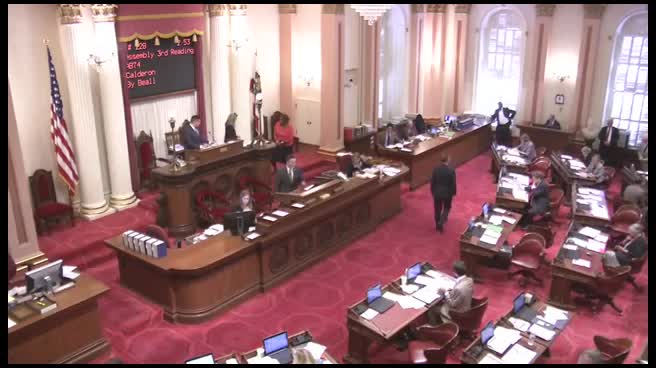 3MIN
Senate Floor
 1MIN
Senate Standing Committee on Appropriations
 1MIN
Assembly Floor
Bill Author





