AB 746: San Francisco Bay Restoration Authority.
- Session Year: 2015-2016
- House: Assembly
- Latest Version Date: 2015-09-01
(1)Existing law, the San Francisco Bay Restoration Authority Act, until January 1, 2029, establishes the San Francisco Bay Restoration Authority to raise and allocate resources for the restoration, enhancement, protection, and enjoyment of wetlands and wildlife habitat in the San Francisco Bay and along its shoreline. The act establishes a governing board of the authority composed of specified members, including a member who is a resident of the San Francisco Bay area with expertise in the implementation of the San Francisco Bay Conservancy Program, who serves as the chair. The act grants to the board all powers that are necessary to carry out the act, including, among other things, the power to levy specified benefit assessments, special taxes, and property-related fees, and to issue revenue bonds and general obligation bonds. However, the act limits the total amount of outstanding indebtedness incurred pursuant to those provisions authorizing the issuance of general obligation bonds to 10% of the authoritys total revenues in the preceding fiscal year. Existing law generally requires a district to reimburse the county elections official for the actual costs incurred in conducting an election for the district. However, the act authorizes, until January 1, 2017, the authority to reimburse only the incremental costs, as defined, that are incurred by the county elections official related to submitting a special tax measure to the voters.
This bill would delete the requirement that one member of the board, who serves as the chair, be a resident of the San Francisco Bay area with expertise in the implementation of the San Francisco Bay Conservancy Program and would instead require that member to be an elected official of a bayside city or county, or an elected member of a special district, with expertise in the implementation of the San Francisco Bay Conservancy Program. The bill would also delete the limit on the authoritys total amount of outstanding general obligation bonded indebtedness and would, instead, prohibit the authority from having a total amount of outstanding bonded indebtedness that exceeds $1,500,000,000. The bill would specify that the authority may incur general obligation bonded indebtedness for the acquisition or improvement of real property or for the funding or refunding of any outstanding bonded indebtness incurred by the authority. The bill would extend to January 1, 2019, the operation of the provision authorizing the authority to reimburse county elections officials for only the incremental costs of submitting a special tax measure to the voters, expanded to apply to other specified measures that would generate revenues for the authority. The bill would postpone to January 1, 2049, the repeal date for the act, and would make related conforming changes. By imposing additional duties on local government officials with regard to implementation of the act, the bill would impose a state-mandated local program.
The act specifies that the special taxes are to be levied, and submitted to the voters, consistent with specified provisions of the California Constitution relating to voter approval for local tax levies and property-related fees, charges, and assessments.
This bill would instead specify that measures that will generate revenues are to be submitted to the voters, consistent with those requirements of the California Constitution and the requirements of the California Constitution relating to general obligation bond indebtedness and ad valorem taxes.
(2)The California Constitution requires the state to reimburse local agencies and school districts for certain costs mandated by the state. Statutory provisions establish procedures for making that reimbursement.
This bill would provide that no reimbursement is required by this act for a specified reason.
(1)Existing law, the San Francisco Bay Restoration Authority Act, until January 1, 2029, establishes the San Francisco Bay Restoration Authority to raise and allocate resources for the restoration, enhancement, protection, and enjoyment of wetlands and wildlife habitat in the San Francisco Bay and along its shoreline. The act establishes a governing board of the authority composed of specified members, including a member who is a resident of the San Francisco Bay area with expertise in the implementation of the San Francisco Bay Conservancy Program, who serves as the chair. The act grants to the board all powers that are necessary to carry out the act, including, among other things, the power to levy specified benefit assessments, special taxes, and property-related fees, and to issue revenue bonds and general obligation bonds. However, the act limits the total amount of outstanding indebtedness incurred pursuant to those provisions authorizing the issuance of general obligation bonds to 10% of the authoritys total revenues in the preceding fiscal year. Existing law generally requires a district to reimburse the county elections official for the actual costs incurred in conducting an election for the district. However, the act authorizes, until January 1, 2017, the authority to reimburse only the incremental costs, as defined, that are incurred by the county elections official related to submitting a special tax measure to the voters.
This bill would delete the requirement that one member of the board, who serves as the chair, be a resident of the San Francisco Bay area with expertise in the implementation of the San Francisco Bay Conservancy Program and would instead require that member to be an elected official of a bayside city or county. county, or an elected member of a special district, with expertise in the implementation of the San Francisco Bay Conservancy Program. The bill would also delete the limit on the authoritys total amount of outstanding general obligation bonded indebtedness based on prior fiscal year revenues. and would, instead, prohibit the authority from having a total amount of outstanding bonded indebtedness that exceeds $1,500,000,000. The bill would specify that the authority may incur general obligation bonded indebtedness for the acquisition or improvement of real property or for the funding or refunding of any outstanding bonded indebtness incurred by the authority. The bill would extend to January 1, 2019, the operation of the provision authorizing the authority to reimburse county elections officials for only the incremental costs of submitting a special tax measure to the voters, expanded to apply to other specified measures that would generate revenues for the authority. The bill would postpone to January 1, 2049, the repeal date for the act, and would make related conforming changes. By imposing additional duties on local government officials with regard to implementation of the act, the bill would impose a state-mandated local program.
The act specifies that the special taxes are to be levied, and submitted to the voters, consistent with specified provisions of the California Constitution relating to voter approval for local tax levies and property-related fees, charges, and assessments.
This bill would instead specify that measures that will generate revenues are to be submitted to the voters, consistent with those requirements of the California Constitution and the requirements of the California Constitution relating to general obligation bond indebtedness and ad valorem taxes.
(2)The California Constitution requires the state to reimburse local agencies and school districts for certain costs mandated by the state. Statutory provisions establish procedures for making that reimbursement.
This bill would provide that no reimbursement is required by this act for a specified reason.
(1)Existing law, the San Francisco Bay Restoration Authority Act, until January 1, 2029, establishes the San Francisco Bay Restoration Authority to raise and allocate resources for the restoration, enhancement, protection, and enjoyment of wetlands and wildlife habitat in the San Francisco Bay and along its shoreline. The act establishes a governing board of the authority composed of specified members, including a member who is a resident of the San Francisco Bay area who serves as the chair. The act grants to the board all powers that are necessary to carry out the act, including, among other things, the power to levy specified benefit assessments, special taxes, and property-related fees, and to issue revenue bonds and general obligation bonds. However, the act limits the total amount of indebtedness incurred pursuant to those provisions authorizing the issuance of revenue general obligation bonds from exceeding to 10% of the authoritys total revenues in the preceding fiscal year. Existing law generally requires a district to reimburse the county elections official for the actual costs incurred in conducting an election for the district. However, the act authorizes, until January 1, 2017, the authority to reimburse only the incremental costs, as defined, that are incurred by the county elections official related to submitting a special tax measure to the voters.
This bill would delete the requirement that one member of the board, who serves as the chair, be a resident of the San Francisco Bay area and would instead require that member to be an elected official of a bayside city or county. The bill would also delete the limit on the authoritys total amount of general obligation bonded indebtedness based on prior fiscal year revenues. The bill would extend to January 1, 2019, the operation of the provision authorizing the authority to reimburse county elections officials for only the incremental costs of submitting a special tax measure to the voters, expanded to apply to other specified measures that would generate revenues for the authority. The bill would postpone to January 1, 2049, the repeal date for the act, and would make related conforming changes. By imposing additional duties on local government officials with regard to implementation of the act, the bill would impose a state-mandated local program.
The act requires specifies that the special taxes are to be levied, and submitted to the voters, consistent with specified provisions of the California Constitution. Constitution relating to voter approval for local tax levies and property-related fees, charges, and assessments.
This bill would additionally require the special taxes to be levied, and instead specify that measures that will generate revenues are to be submitted to the voters, consistent with those requirements of the California Constitution and the requirements of Article XIII A of the California Constitution relating to general obligation bond indebtedness and ad valorem taxes.
(2)The California Constitution requires the state to reimburse local agencies and school districts for certain costs mandated by the state. Statutory provisions establish procedures for making that reimbursement.
This bill would provide that no reimbursement is required by this act for a specified reason.
(1)Existing law, the San Francisco Bay Restoration Authority Act, until January 1, 2029, establishes the San Francisco Bay Restoration Authority to raise and allocate resources for the restoration, enhancement, protection, and enjoyment of wetlands and wildlife habitat in the San Francisco Bay and along its shoreline. The act establishes a governing board of the authority composed of specified members, including a member who is a resident of the San Francisco Bay area who serves as the chair. The act grants to the board all powers that are necessary to carry out the act, including, among other things, the power to levy specified benefit assessments, special taxes, and property-related fees, and to issue revenue bonds. However, the act limits the total amount of indebtedness incurred pursuant to those provisions authorizing the issuance of revenue bonds from exceeding 10% of the authoritys total revenues in the preceding fiscal year. Existing law generally requires a district to reimburse the county elections official for the actual costs incurred in conducting an election for the district. However, the act authorizes, until January 1, 2017, the authority to reimburse only the incremental costs, as defined, that are incurred by the county elections official related to submitting a special tax measure to the voters.
This bill would delete the requirement that one member of the board, who serves as the chair, be a resident of the San Francisco Bay area and would instead require that member to be an elected official of a bayside city or county. The bill would also delete the limit on the authoritys total amount of bonded indebtedness based on prior fiscal year revenues. The bill would extend to January 1, 2019, the operation of the provision authorizing the authority to reimburse county elections officials for only the incremental costs of submitting a special tax measure to the voters, expanded to apply to other specified measures that would generate revenues for the authority. The bill would postpone to January 1, 2049, the repeal date for the act, and would make related conforming changes. By imposing additional duties on local government officials with regard to implementation of the act, the bill would impose a state-mandated local program.
The act requires that the special taxes be levied, and submitted to the voters, consistent with specified provisions of the California Constitution.
This bill would additionally require the special taxes to be levied, and submitted to the voters, consistent with the requirements of Article XIII A of the California Constitution.
(2)The California Constitution requires the state to reimburse local agencies and school districts for certain costs mandated by the state. Statutory provisions establish procedures for making that reimbursement.
This bill would provide that no reimbursement is required by this act for a specified reason.
(1)Existing law, the San Francisco Bay Restoration Authority Act, until January 1, 2029, establishes the San Francisco Bay Restoration Authority to raise and allocate resources for the restoration, enhancement, protection, and enjoyment of wetlands and wildlife habitat in the San Francisco Bay and along its shoreline. The act establishes a governing board of the authority composed of specified members, including a member who is a resident of the San Francisco Bay area who serves as the chair. The act grants to the board all powers that are necessary to carry out the act, including, among other things, the power to levy specified benefit assessments, special taxes, and fees, and to issue revenue bonds. However, the act limits the total amount of indebtedness incurred pursuant to those provisions authorizing the issuance of revenue bonds from exceeding 10% of the authoritys total revenues in the preceding fiscal year. Existing law generally requires a district to reimburse the county elections official for the actual costs incurred in conducting an election for the district. However, the act authorizes, until January 1, 2017, the authority to reimburse only the incremental costs, as defined, that are incurred by the county elections official related to submitting a special tax measure to the voters.
This bill would delete the requirement that one member of the board, who serves as the chair, be a resident of the San Francisco Bay area and would instead require that member to be an elected official of a bayside city or county. The bill would also delete the limit on the authoritys total amount of bonded indebtedness based on prior fiscal year revenues. The bill would extend to January 1, 2019, the operation of the provision authorizing the authority to reimburse county elections officials for only the incremental costs of submitting a special tax measure to the voters, expanded to apply to other specified measures that would generate revenues for the authority. The bill would postpone to January 1, 2049, the repeal date for the act, and would make related conforming changes. By imposing additional duties on local government officials with regard to implementation of the act, the bill would impose a state-mandated local program.
(2)The California Constitution requires the state to reimburse local agencies and school districts for certain costs mandated by the state. Statutory provisions establish procedures for making that reimbursement.
This bill would provide that no reimbursement is required by this act for a specified reason.
Existing law establishes the San Francisco Bay Restoration Authority as a regional entity with jurisdiction extending throughout the San Francisco Bay Area, and specifies that the authority is responsible for raising and allocating resources for the restoration, enhancement, protection, and enjoyment of wetlands and wildlife habitats in the San Francisco Bay and along its shoreline. Existing law further prescribes the membership and functions and duties of the authority.
This bill would make a nonsubstantive change in those provisions establishing the authority.
(a)The authority shall be governed by a board composed of seven voting members, as follows:
(1)One member shall be an elected official of a bayside city or county, or an elected member of a special district, with expertise in the implementation of Chapter 4.5 (commencing with Section 31160) of Division 21 of the Public Resources Code and shall serve as the chair.
(2)One member shall be an elected official of a bayside city or county in the North Bay. For purposes of this subdivision, the North Bay consists of the Counties of Marin, Napa, Solano, and Sonoma.
(3)One member shall be an elected official of a bayside city or county in the East Bay. For purposes of this subdivision, the East Bay consists of Contra Costa County and the portion of Alameda County that is north of the southern boundary of the City of Hayward, excluding the Delta primary zone.
(4)One member shall be an elected official of a bayside city or county in the South Bay. For purposes of this subdivision, the South Bay consists of Santa Clara County, the portion of Alameda County that is south of the southern boundary of the City of Hayward, and the portion of San Mateo County that is south of the northern boundary of Redwood City.
(5)One member shall be an elected official of a bayside city or county in the West Bay. For purposes of this subdivision, the West Bay consists of the City and County of San Francisco and the portion of San Mateo County that is north of the northern boundary of Redwood City.
(6)Two members shall be elected officials of one or more of the following:
(A)A bayside city or county.
(B)A regional park district, regional open-space district, or regional park and open-space district formed pursuant to Article 3 (commencing with Section 5500) of Chapter 3 of Division 5 of the Public Resources Code that owns or operates one or more San Francisco Bay shoreline parcels.
(b)The Association of Bay Area Governments shall appoint the members.
(c)Each member shall serve at the pleasure of his or her appointing authority.
(d)A vacancy shall be filled by the Association of Bay Area Governments within 90 days from the date on which the vacancy occurs.
SEC. 2.Section 66704 of the Government Code is amended to read:66704.The authority has, and may exercise, all powers, expressed or implied, that are necessary to carry out the intent and purposes of this title, including, but not limited to, the power to do all of the following:
(a)(1)Levy a benefit assessment, special tax levied pursuant to Article 3.5 (commencing with Section 50075) of Chapter 1 of Part 1 of Division 1 of Title 5, or property-related fee consistent with the requirements of Articles XIII A, XIIIC, and XIIID of the California Constitution, including, but not limited to, a benefit assessment levied pursuant to paragraph (2), except that a benefit assessment, special tax, or property-related fee shall not be levied pursuant to this subdivision after December 31, 2048.
(2)The authority may levy a benefit assessment pursuant to any of the following:
(A)The Improvement Act of 1911 (Division 7 (commencing with Section 5000) of the Streets and Highways Code).
(B)The Improvement Bond Act of 1915 (Division 10 (commencing with Section 8500) of the Streets and Highways Code).
(C)The Municipal Improvement Act of 1913 (Division 12 (commencing with Section 10000) of the Streets and Highways Code).
(D)The Landscaping and Lighting Act of 1972 (Part 2 (commencing with Section 22500) of Division 15 of the Streets and Highways Code), notwithstanding Section 22501 of the Streets and Highways Code.
(E)Any other statutory authorization.
(b)Apply for and receive grants from federal and state agencies.
(c)Solicit and accept gifts, fees, grants, and allocations from public and private entities.
(d)Issue revenue bonds for any of the purposes authorized by this title pursuant to the Revenue Bond Law of 1941 (Chapter 6 (commencing with Section 54300) of Part 1 of Division 2 of Title 5).
(e)Incur general obligation bonded indebtedness for the acquisition or improvement of real property or for funding or refunding of any outstanding indebtedness, subject to the following requirements:
(1)The principal and interest of any general obligation bonded indebtedness incurred pursuant to this subdivision shall be paid and discharged prior to January 1, 2049.
(2)For purposes of incurring general obligation bonded indebtedness pursuant to this subdivision, the authority shall comply with the requirements of Article 11 (commencing with Section 5790) of Chapter 4 of Division 5 of the Public Resources Code. For purposes of this subdivision, all references in Article 11 (commencing with Section 5790) of Chapter 4 of Division 5 of the Public Resources Code to a board of directors shall mean the board and all references to a district shall mean the authority.
(3)Notwithstanding any other law, the total amount of outstanding bonded indebtedness the authority may incur pursuant to this subdivision and subdivision (d) shall not exceed one billion five hundred million dollars ($1,500,000,000).
(f)Receive and manage a dedicated revenue source.
(g)Deposit or invest moneys of the authority in banks or financial institutions in the state in accordance with state law.
(h)Sue and be sued, except as otherwise provided by law, in all actions and proceedings, in all courts and tribunals of competent jurisdiction.
(i)Engage counsel and other professional services.
(j)Enter into and perform all necessary contracts.
(k)Enter into joint powers agreements pursuant to the Joint Exercise of Powers Act (Chapter 5 (commencing with Section 6500) of Division 7 of Title 1).
(l)Hire staff, define their qualifications and duties, and provide a schedule of compensation for the performance of their duties.
(m)Use interim or temporary staff provided by appropriate state agencies or the Association of Bay Area Governments. A person who performs duties as interim or temporary staff shall not be considered an employee of the authority.
SEC. 3.Section 66704.05 of the Government Code is amended to read:66704.05.(a)If the authority proposes a measure pursuant to subdivision (a) or (e) of Section 66704 that will generate revenues, the board of supervisors of the county or counties in which the measure is proposed shall call a special election on the measure. The special election shall be consolidated with the next regularly scheduled statewide election and the measure shall be submitted to the voters in the appropriate counties, consistent with the requirements of Articles XIIIA, XIIIC, and XIIID of the California Constitution, as applicable.
(b)(1)The authority is a district, as defined in Section 317 of the Elections Code. Except as otherwise provided in this section, a measure proposed by the authority that requires voter approval shall be submitted to the voters of the authority in accordance with the provisions of the Elections Code applicable to districts, including the provisions of Chapter 4 (commencing with Section 9300) of Division 9 of the Elections Code.
(2)Because the authority has no revenues as of the effective date of this paragraph, the appropriations limit for the authority shall be originally established based on receipts from the initial measure that would generate revenues for the authority pursuant to subdivision (a), and that establishment of an appropriations limit shall not be deemed a change in an appropriations limit for purposes of Section 4 of Article XIIIB of the California Constitution.
(c)The authority shall file with the board of supervisors of each county in which the measure shall appear on the ballot a resolution of the authority requesting consolidation, and setting forth the exact form of the ballot question, in accordance with Section 10403 of the Elections Code.
(d)The legal counsel for the authority shall prepare an impartial analysis of the measure. The impartial analysis prepared by the legal counsel for the authority shall be subject to review and revision by the county counsel of the county that contains the largest population, as determined by the most recent federal decennial census, among those counties in which the measure will be submitted to the voters.
(e)Each county included in the measure shall use the exact ballot question, impartial analysis, and ballot language provided by the authority. If two or more counties included in the measure are required to prepare a translation of ballot materials into the same language other than English, the county that contains the largest population, as determined by the most recent federal decennial census, among those counties that are required to prepare a translation of ballot materials into the same language other than English shall prepare the translation and that translation shall be used by the other county or counties, as applicable.
(f)Notwithstanding Section 13116 of the Elections Code, if a measure proposed by the authority pursuant to this article is submitted to the voters of the authority in two or more counties, the elections officials of those counties shall mutually agree to use the same letter designation for the measure.
(g)The county clerk of each county shall report the results of the special election to the authority.
(h)(1)Notwithstanding Section 10520 of the Elections Code, for the first election at which the authority proposes a measure pursuant to subdivision (a) or (e) of Section 66704 that would generate revenues, the authority shall reimburse each county in which that measure appears on the ballot only for the incremental costs incurred by the county elections official related to submitting the measure to the voters.
(2)For purposes of this subdivision, incremental costs include all of the following:
(A)The cost to prepare, review, and revise the impartial analysis of the measure that is required by subdivision (d).
(B)The cost to prepare a translation of ballot materials into a language other than English by any county, as described in subdivision (e).
(C)The additional costs that exceed the costs incurred for other election races or ballot measures, if any, appearing on the same ballot in each county in which the measure appears on the ballot, including both of the following:
(i)The printing and mailing of ballot materials.
(ii)The canvass of the vote regarding the measure pursuant to Division 15 of the Elections Code.
(3)This subdivision is repealed on January 1, 2019.
SEC. 4.Section 66706 of the Government Code is amended to read:66706.This title shall remain in effect only until January 1, 2049, and as of that date is repealed, unless a later enacted statute, that is enacted before January 1, 2049, deletes or extends that date.
SEC. 5.The Legislature finds and declares that the San Francisco Bay Restoration Authority has not assumed any existing duties from another local or state government entity and has received no state or local government revenues not counted toward another entitys appropriations limit. Therefore, the authority has no associated appropriations limit pursuant to Article XIIIB of the California Constitution as of the date of enactment of this bill.
SEC. 6.The Legislature finds and declares that the changes made by this act to subdivision (e) of Section 66704 of the Government Code explicitly affirm the authority of the San Francisco Bay Restoration Authority to incur general obligation bonded indebtedness, so as to implement the Legislatures intent when the statute first became operative on January 1, 2009.
SEC. 7.No reimbursement is required by this act pursuant to Section 6 of Article XIIIB of the California Constitution because a local agency or school district has the authority to levy service charges, fees, or assessments sufficient to pay for the program or level of service mandated by this act, within the meaning of Section 17556 of the Government Code.
(a)It is the intent of the Legislature that the authority should complement existing efforts by cities, counties, districts, the San Francisco Bay Conservation and Development Commission, the State Coastal Conservancy, and other local, regional, and state entities, related to addressing the goals described in this title.
(b)It is further the intent of the Legislature to explicitly affirm the San Francisco Bay Restoration Authoritys authority to incur general obligation bond indebtedness under paragraph (2) of subdivision (b) of Section 1 of Article XIII A of the California Constitution, and Article 11 (commencing with Section 5790) of Chapter 4 of Division 5 of the Public Resources Code.
SEC. 2.SECTION 1.Section 66703 of the Government Code is amended to read:66703.(a)The authority shall be governed by a board composed of seven voting members, as follows:
(1)One member shall be an elected official of a bayside city or county, or an elected member of a special district, with expertise in the implementation of Chapter 4.5 (commencing with Section 31160) of Division 21 of the Public Resources Code and shall serve as the chair.
(2)One member shall be an elected official of a bayside city or county in the North Bay. For purposes of this subdivision, the North Bay consists of the Counties of Marin, Napa, Solano, and Sonoma.
(3)One member shall be an elected official of a bayside city or county in the East Bay. For purposes of this subdivision, the East Bay consists of Contra Costa County and the portion of Alameda County that is north of the southern boundary of the City of Hayward, excluding the Delta primary zone.
(4)One member shall be an elected official of a bayside city or county in the South Bay. For purposes of this subdivision, the South Bay consists of Santa Clara County, the portion of Alameda County that is south of the southern boundary of the City of Hayward, and the portion of San Mateo County that is south of the northern boundary of Redwood City.
(5)One member shall be an elected official of a bayside city or county in the West Bay. For purposes of this subdivision, the West Bay consists of the City and County of San Francisco and the portion of San Mateo County that is north of the northern boundary of Redwood City.
(6)Two members shall be elected officials of one or more of the following:
(A)A bayside city or county.
(B)A regional park district, regional open-space district, or regional park and open-space district formed pursuant to Article 3 (commencing with Section 5500) of Chapter 3 of Division 5 of the Public Resources Code that owns or operates one or more San Francisco Bay shoreline parcels.
(b)The Association of Bay Area Governments shall appoint the members.
(c)Each member shall serve at the pleasure of his or her appointing authority.
(d)A vacancy shall be filled by the Association of Bay Area Governments within 90 days from the date on which the vacancy occurs.
SEC. 3.SEC. 2.Section 66704 of the Government Code is amended to read:66704.The authority has, and may exercise, all powers, expressed or implied, that are necessary to carry out the intent and purposes of this title, including, but not limited to, the power to do all of the following:
(a)(1)Levy a benefit assessment, special tax levied pursuant to Article 3.5 (commencing with Section 50075) of Chapter 1 of Part 1 of Division 1 of Title 5, or property-related fee consistent with the requirements of Articles XIII A, XIIIC, and XIIID of the California Constitution, including, but not limited to, a benefit assessment levied pursuant to paragraph (2), except that a benefit assessment, special tax, or property-related fee shall not be levied pursuant to this subdivision after December 31, 2048.
(2)The authority may levy a benefit assessment pursuant to any of the following:
(A)The Improvement Act of 1911 (Division 7 (commencing with Section 5000) of the Streets and Highways Code).
(B)The Improvement Bond Act of 1915 (Division 10 (commencing with Section 8500) of the Streets and Highways Code).
(C)The Municipal Improvement Act of 1913 (Division 12 (commencing with Section 10000) of the Streets and Highways Code).
(D)The Landscaping and Lighting Act of 1972 (Part 2 (commencing with Section 22500) of Division 15 of the Streets and Highways Code), notwithstanding Section 22501 of the Streets and Highways Code.
(E)Any other statutory authorization.
(b)Apply for and receive grants from federal and state agencies.
(c)Solicit and accept gifts, fees, grants, and allocations from public and private entities.
(d)Issue revenue bonds for any of the purposes authorized by this title pursuant to the Revenue Bond Law of 1941 (Chapter 6 (commencing with Section 54300) of Part 1 of Division 2 of Title 5).
(e)Incur bond indebtedness, consistent with paragraph (2) of subdivision (b) of Section 1 of Article XIIIA of the California Constitution, general obligation bonded indebtedness for the acquisition or improvement of real property or for funding or refunding of any outstanding indebtedness, subject to the following requirements:
(1)The principal and interest of any bond general obligation bonded indebtedness incurred pursuant to this subdivision shall be paid and discharged prior to January 1, 2049.
(2)For purposes of incurring bond general obligation bonded indebtedness pursuant to this subdivision, the authority shall comply with the requirements of Article 11 (commencing with Section 5790) of Chapter 4 of Division 5 of the Public Resources Code. For purposes of this subdivision, all references in Article 11 (commencing with Section 5790) of Chapter 4 of Division 5 of the Public Resources Code to a board of directors shall mean the board and all references to a district shall mean the authority.
(3)Notwithstanding any other law, the total amount of outstanding bonded indebtedness the authority may incur pursuant to this subdivision and subdivision (d) shall not exceed one billion five hundred million dollars ($1,500,000,000).
(f)Receive and manage a dedicated revenue source.
(g)Deposit or invest moneys of the authority in banks or financial institutions in the state in accordance with state law.
(h)Sue and be sued, except as otherwise provided by law, in all actions and proceedings, in all courts and tribunals of competent jurisdiction.
(i)Engage counsel and other professional services.
(j)Enter into and perform all necessary contracts.
(k)Enter into joint powers agreements pursuant to the Joint Exercise of Powers Act (Chapter 5 (commencing with Section 6500) of Division 7 of Title 1).
(l)Hire staff, define their qualifications and duties, and provide a schedule of compensation for the performance of their duties.
(m)Use interim or temporary staff provided by appropriate state agencies or the Association of Bay Area Governments. A person who performs duties as interim or temporary staff shall not be considered an employee of the authority.
SEC. 4.SEC. 3.Section 66704.05 of the Government Code is amended to read:66704.05.(a)If the authority proposes a measure pursuant to subdivision (a) or (e) of Section 66704 that will generate revenues, the board of supervisors of the county or counties in which the measure is proposed shall call a special election on the measure. The special election shall be consolidated with the next regularly scheduled statewide election and the measure shall be submitted to the voters in the appropriate counties, consistent with the requirements of Articles XIIIA, XIIIC, and XIIID of the California Constitution, as applicable.
(b)(1)The authority is a district, as defined in Section 317 of the Elections Code. Except as otherwise provided in this section, a measure proposed by the authority that requires voter approval shall be submitted to the voters of the authority in accordance with the provisions of the Elections Code applicable to districts, including the provisions of Chapter 4 (commencing with Section 9300) of Division 9 of the Elections Code.
(2)Because the authority has no state revenues as of the effective date of this paragraph, the appropriations limit for the authority shall be originally established based on receipts from the initial measure that would generate revenues for the authority pursuant to subdivision (a), and that establishment of an appropriations limit shall not be deemed a change in an appropriations limit for purposes of Section 4 of Article XIIIB of the California Constitution.
(c)The authority shall file with the board of supervisors of each county in which the measure shall appear on the ballot a resolution of the authority requesting consolidation, and setting forth the exact form of the ballot question, in accordance with Section 10403 of the Elections Code.
(d)The legal counsel for the authority shall prepare an impartial analysis of the measure. The impartial analysis prepared by the legal counsel for the authority shall be subject to review and revision by the county counsel of the county that contains the largest population, as determined by the most recent federal decennial census, among those counties in which the measure will be submitted to the voters.
(e)Each county included in the measure shall use the exact ballot question, impartial analysis, and ballot language provided by the authority. If two or more counties included in the measure are required to prepare a translation of ballot materials into the same language other than English, the county that contains the largest population, as determined by the most recent federal decennial census, among those counties that are required to prepare a translation of ballot materials into the same language other than English shall prepare the translation and that translation shall be used by the other county or counties, as applicable.
(f)Notwithstanding Section 13116 of the Elections Code, if a measure proposed by the authority pursuant to this article is submitted to the voters of the authority in two or more counties, the elections officials of those counties shall mutually agree to use the same letter designation for the measure.
(g)The county clerk of each county shall report the results of the special election to the authority.
(h)(1)Notwithstanding Section 10520 of the Elections Code, for the first election at which the authority proposes a measure pursuant to subdivision (a) or (e) of Section 66704 that would generate revenues, the authority shall reimburse each county in which that measure appears on the ballot only for the incremental costs incurred by the county elections official related to submitting the measure to the voters.
(2)For purposes of this subdivision, incremental costs include all of the following:
(A)The cost to prepare, review, and revise the impartial analysis of the measure that is required by subdivision (d).
(B)The cost to prepare a translation of ballot materials into a language other than English by any county, as described in subdivision (e).
(C)The additional costs that exceed the costs incurred for other election races or ballot measures, if any, appearing on the same ballot in each county in which the measure appears on the ballot, including both of the following:
(i)The printing and mailing of ballot materials.
(ii)The canvass of the vote regarding the measure pursuant to Division 15 of the Elections Code.
(3)This subdivision is repealed on January 1, 2019.
SEC. 5.SEC. 4.Section 66706 of the Government Code is amended to read:66706.This title shall remain in effect only until January 1, 2049, and as of that date is repealed, unless a later enacted statute, that is enacted before January 1, 2049, deletes or extends that date.
SEC. 6.SEC. 5.The Legislature finds and declares that the San Francisco Bay Restoration Authority has not assumed any existing duties from another local or state government entity and has received no state or local government revenues not counted toward another entitys appropriations limit. Therefore, the authority has no associated appropriations limit pursuant to Article XIIIB of the California Constitution as of the date of enactment of this bill.
SEC. 6.The Legislature finds and declares that the changes made by this act to subdivision (e) of Section 66704 of the Government Code explicitly affirm the authority of the Francisco Bay Restoration Authority to incur general obligation bonded indebtedness, so as to implement the Legislatures intent when the statute first became operative on January 1, 2009.
SEC. 7.No reimbursement is required by this act pursuant to Section 6 of Article XIIIB of the California Constitution because a local agency or school district has the authority to levy service charges, fees, or assessments sufficient to pay for the program or level of service mandated by this act, within the meaning of Section 17556 of the Government Code.
(a)It is the intent of the Legislature that the authority should complement existing efforts by cities, counties, districts, the San Francisco Bay Conservation and Development Commission, the State Coastal Conservancy, and other local, regional, and state entities, related to addressing the goals described in this title.
(b)It is further the intent of the Legislature to explicitly affirm the San Francisco Bay Restoration Authoritys authority to incur general obligation bond indebtedness under paragraph (2) of subdivision (b) of Section 1 of Article XIII A of the California Constitution, and Article 11 (commencing with Section 5790) of Chapter 4 of Division 5 of the Public Resources Code.
SECTION 1.SEC. 2.Section 66703 of the Government Code is amended to read:66703.(a)The authority shall be governed by a board composed of seven voting members, as follows:
(1)One member shall be an elected official of a bayside city or county with expertise in the implementation of Chapter 4.5 (commencing with Section 31160) of Division 21 of the Public Resources Code and shall serve as the chair.
(2)One member shall be an elected official of a bayside city or county in the North Bay. For purposes of this subdivision, the North Bay consists of the Counties of Marin, Napa, Solano, and Sonoma.
(3)One member shall be an elected official of a bayside city or county in the East Bay. For purposes of this subdivision, the East Bay consists of Contra Costa County and the portion of Alameda County that is north of the southern boundary of the City of Hayward, excluding the Delta primary zone.
(4)One member shall be an elected official of a bayside city or county in the South Bay. For purposes of this subdivision, the South Bay consists of Santa Clara County, the portion of Alameda County that is south of the southern boundary of the City of Hayward, and the portion of San Mateo County that is south of the northern boundary of Redwood City.
(5)One member shall be an elected official of a bayside city or county in the West Bay. For purposes of this subdivision, the West Bay consists of the City and County of San Francisco and the portion of San Mateo County that is north of the northern boundary of Redwood City.
(6)Two members shall be elected officials of one or more of the following:
(A)A bayside city or county.
(B)A regional park district, regional open-space district, or regional park and open-space district formed pursuant to Article 3 (commencing with Section 5500) of Chapter 3 of Division 5 of the Public Resources Code that owns or operates one or more San Francisco Bay shoreline parcels.
(b)The Association of Bay Area Governments shall appoint the members.
(c)Each member shall serve at the pleasure of his or her appointing authority.
(d)A vacancy shall be filled by the Association of Bay Area Governments within 90 days from the date on which the vacancy occurs.
SEC. 2.SEC. 3.Section 66704 of the Government Code is amended to read:66704.The authority has, and may exercise, all powers, expressed or implied, that are necessary to carry out the intent and purposes of this title, including, but not limited to, the power to do all of the following:
(a)(1)Levy a benefit assessment, special tax levied pursuant to Article 3.5 (commencing with Section 50075) of Chapter 1 of Part 1 of Division 1 of Title 5, or property-related fee consistent with the requirements of Articles XIII A, XIIIC, and XIIID of the California Constitution, including, but not limited to, a benefit assessment levied pursuant to paragraph (2), except that a benefit assessment, special tax, or property-related fee shall not be levied pursuant to this subdivision after December 31, 2048.
(2)The authority may levy a benefit assessment pursuant to any of the following:
(A)The Improvement Act of 1911 (Division 7 (commencing with Section 5000) of the Streets and Highways Code).
(B)The Improvement Bond Act of 1915 (Division 10 (commencing with Section 8500) of the Streets and Highways Code).
(C)The Municipal Improvement Act of 1913 (Division 12 (commencing with Section 10000) of the Streets and Highways Code).
(D)The Landscaping and Lighting Act of 1972 (Part 2 (commencing with Section 22500) of Division 15 of the Streets and Highways Code), notwithstanding Section 22501 of the Streets and Highways Code.
(E)Any other statutory authorization.
(b)Apply for and receive grants from federal and state agencies.
(c)Solicit and accept gifts, fees, grants, and allocations from public and private entities.
(d)Issue revenue bonds for any of the purposes authorized by this title pursuant to the Revenue Bond Law of 1941 (Chapter 6 (commencing with Section 54300) of Part 1 of Division 2 of Title 5).
(e)Incur bond indebtedness, consistent with paragraph (2) of subdivision (b) of Section 1 of Article XIIIA of the California Constitution, subject to the following requirements:
(1)The principal and interest of any bond indebtedness incurred pursuant to this subdivision shall be paid and discharged prior to January 1, 2049.
(2)For purposes of incurring bond indebtedness pursuant to this subdivision, the authority shall comply with the requirements of Article 11 (commencing with Section 5790) of Chapter 4 of Division 5 of the Public Resources Code except where those requirements are in conflict with this provision. Code. For purposes of this subdivision, all references in Article 11 (commencing with Section 5790) of Chapter 4 of Division 5 of the Public Resources Code to a board of directors shall mean the board and all references to a district shall mean the authority.
(f)Receive and manage a dedicated revenue source.
(g)Deposit or invest moneys of the authority in banks or financial institutions in the state in accordance with state law.
(h)Sue and be sued, except as otherwise provided by law, in all actions and proceedings, in all courts and tribunals of competent jurisdiction.
(i)Engage counsel and other professional services.
(j)Enter into and perform all necessary contracts.
(k)Enter into joint powers agreements pursuant to the Joint Exercise of Powers Act (Chapter 5 (commencing with Section 6500) of Division 7 of Title 1).
(l)Hire staff, define their qualifications and duties, and provide a schedule of compensation for the performance of their duties.
(m)Use interim or temporary staff provided by appropriate state agencies or the Association of Bay Area Governments. A person who performs duties as interim or temporary staff shall not be considered an employee of the authority.
SEC. 3.SEC. 4.Section 66704.05 of the Government Code is amended to read:66704.05.(a)If the authority proposes a measure pursuant to subdivision (a) or (e) of Section 66704 that will generate revenues, the board of supervisors of the county or counties in which the measure is proposed shall call a special election on the measure. The special election shall be consolidated with the next regularly scheduled statewide election and the measure shall be submitted to the voters in the appropriate counties, consistent with the requirements of Articles XIIIA, XIIIC, and XIIID of the California Constitution, as applicable.
(b)(1)The authority is a district, as defined in Section 317 of the Elections Code. Except as otherwise provided in this section, a measure proposed by the authority that requires voter approval shall be submitted to the voters of the authority in accordance with the provisions of the Elections Code applicable to districts, including the provisions of Chapter 4 (commencing with Section 9300) of Division 9 of the Elections Code.
(2)Because the authority has no state revenues as of the effective date of this paragraph, the appropriations limit for the authority shall be originally established based on receipts from the initial measure that would generate revenues for the authority pursuant to subdivision (a), and that establishment of an appropriations limit shall not be deemed a change in an appropriations limit for purposes of Section 4 of Article XIIIB of the California Constitution.
(c)The authority shall file with the board of supervisors of each county in which the measure shall appear on the ballot a resolution of the authority requesting consolidation, and setting forth the exact form of the ballot question, in accordance with Section 10403 of the Elections Code.
(d)The legal counsel for the authority shall prepare an impartial analysis of the measure. The impartial analysis prepared by the legal counsel for the authority shall be subject to review and revision by the county counsel of the county that contains the largest population, as determined by the most recent federal decennial census, among those counties in which the measure will be submitted to the voters.
(e)Each county included in the measure shall use the exact ballot question, impartial analysis, and ballot language provided by the authority. If two or more counties included in the measure are required to prepare a translation of ballot materials into the same language other than English, the county that contains the largest population, as determined by the most recent federal decennial census, among those counties that are required to prepare a translation of ballot materials into the same language other than English shall prepare the translation and that translation shall be used by the other county or counties, as applicable.
(f)Notwithstanding Section 13116 of the Elections Code, if a measure proposed by the authority pursuant to this article is submitted to the voters of the authority in two or more counties, the elections officials of those counties shall mutually agree to use the same letter designation for the measure.
(g)The county clerk of each county shall report the results of the special election to the authority.
(h)(1)Notwithstanding Section 10520 of the Elections Code, for the first election at which the authority proposes a measure pursuant to subdivision (a) or (e) of Section 66704 that would generate revenues, the authority shall reimburse each county in which that measure appears on the ballot only for the incremental costs incurred by the county elections official related to submitting the measure to the voters.
(2)For purposes of this subdivision, incremental costs include all of the following:
(A)The cost to prepare, review, and revise the impartial analysis of the measure that is required by subdivision (d).
(B)The cost to prepare a translation of ballot materials into a language other than English by any county, as described in subdivision (e).
(C)The additional costs that exceed the costs incurred for other election races or ballot measures, if any, appearing on the same ballot in each county in which the measure appears on the ballot, including both of the following:
(i)The printing and mailing of ballot materials.
(ii)The canvass of the vote regarding the measure pursuant to Division 15 of the Elections Code.
(3)This subdivision is repealed on January 1, 2019.
SEC. 4.SEC. 5.Section 66706 of the Government Code is amended to read:66706.This title shall remain in effect only until January 1, 2049, and as of that date is repealed, unless a later enacted statute, that is enacted before January 1, 2049, deletes or extends that date.
SEC. 5.SEC. 6.The Legislature finds and declares that the San Francisco Bay Restoration Authority has not assumed any existing duties from another local or state government entity and has received no state or local government revenues not counted toward another entitys appropriations limit. Therefore, the authority has no associated appropriations limit pursuant to Article XIIIB of the California Constitution as of the date of enactment of this bill.
SEC. 6.SEC. 7.No reimbursement is required by this act pursuant to Section 6 of Article XIIIB of the California Constitution because a local agency or school district has the authority to levy service charges, fees, or assessments sufficient to pay for the program or level of service mandated by this act, within the meaning of Section 17556 of the Government Code.
(a)The authority shall be governed by a board composed of seven voting members, as follows:
(1)One member shall be an elected official of a bayside city or county with expertise in the implementation of Chapter 4.5 (commencing with Section 31160) of Division 21 of the Public Resources Code and shall serve as the chair.
(2)One member shall be an elected official of a bayside city or county in the North Bay. For purposes of this subdivision, the North Bay consists of the Counties of Marin, Napa, Solano, and Sonoma.
(3)One member shall be an elected official of a bayside city or county in the East Bay. For purposes of this subdivision, the East Bay consists of Contra Costa County and the portion of Alameda County that is north of the southern boundary of the City of Hayward, excluding the Delta primary zone.
(4)One member shall be an elected official of a bayside city or county in the South Bay. For purposes of this subdivision, the South Bay consists of Santa Clara County, the portion of Alameda County that is south of the southern boundary of the City of Hayward, and the portion of San Mateo County that is south of the northern boundary of Redwood City.
(5)One member shall be an elected official of a bayside city or county in the West Bay. For purposes of this subdivision, the West Bay consists of the City and County of San Francisco and the portion of San Mateo County that is north of the northern boundary of Redwood City.
(6)Two members shall be elected officials of one or more of the following:
(A)A bayside city or county.
(B)A regional park district, regional open-space district, or regional park and open-space district formed pursuant to Article 3 (commencing with Section 5500) of Chapter 3 of Division 5 of the Public Resources Code that owns or operates one or more San Francisco Bay shoreline parcels.
(b)The Association of Bay Area Governments shall appoint the members.
(c)Each member shall serve at the pleasure of his or her appointing authority.
(d)A vacancy shall be filled by the Association of Bay Area Governments within 90 days from the date on which the vacancy occurs.
SEC. 2.Section 66704 of the Government Code is amended to read:66704.The authority has, and may exercise, all powers, expressed or implied, that are necessary to carry out the intent and purposes of this title, including, but not limited to, the power to do all of the following:
(a)(1)Levy a benefit assessment, special tax levied pursuant to Article 3.5 (commencing with Section 50075) of Chapter 1 of Part 1 of Division 1 of Title 5, or property-related fee consistent with the requirements of Articles XIII A, XIIIC, and XIIID of the California Constitution, including, but not limited to, a benefit assessment levied pursuant to paragraph (2), except that a benefit assessment, special tax, or property-related fee shall not be levied pursuant to this subdivision after December 31, 2048.
(2)The authority may levy a benefit assessment pursuant to any of the following:
(A)The Improvement Act of 1911 (Division 7 (commencing with Section 5000) of the Streets and Highways Code).
(B)The Improvement Bond Act of 1915 (Division 10 (commencing with Section 8500) of the Streets and Highways Code).
(C)The Municipal Improvement Act of 1913 (Division 12 (commencing with Section 10000) of the Streets and Highways Code).
(D)The Landscaping and Lighting Act of 1972 (Part 2 (commencing with Section 22500) of Division 15 of the Streets and Highways Code), notwithstanding Section 22501 of the Streets and Highways Code.
(E)Any other statutory authorization.
(b)Apply for and receive grants from federal and state agencies.
(c)Solicit and accept gifts, fees, grants, and allocations from public and private entities.
(d)Issue revenue bonds for any of the purposes authorized by this title pursuant to the Revenue Bond Law of 1941 (Chapter 6 (commencing with Section 54300) of Part 1 of Division 2 of Title 5).
(e)Incur bond indebtedness, subject to the following requirements:
(1)The principal and interest of any bond indebtedness incurred pursuant to this subdivision shall be paid and discharged prior to January 1, 2049.
(2)For purposes of incurring bond indebtedness pursuant to this subdivision, the authority shall comply with the requirements of Article 11 (commencing with Section 5790) of Chapter 4 of Division 5 of the Public Resources Code except where those requirements are in conflict with this provision. For purposes of this subdivision, all references in Article 11 (commencing with Section 5790) of Chapter 4 of Division 5 of the Public Resources Code to a board of directors shall mean the board and all references to a district shall mean the authority.
(f)Receive and manage a dedicated revenue source.
(g)Deposit or invest moneys of the authority in banks or financial institutions in the state in accordance with state law.
(h)Sue and be sued, except as otherwise provided by law, in all actions and proceedings, in all courts and tribunals of competent jurisdiction.
(i)Engage counsel and other professional services.
(j)Enter into and perform all necessary contracts.
(k)Enter into joint powers agreements pursuant to the Joint Exercise of Powers Act (Chapter 5 (commencing with Section 6500) of Division 7 of Title 1).
(l)Hire staff, define their qualifications and duties, and provide a schedule of compensation for the performance of their duties.
(m)Use interim or temporary staff provided by appropriate state agencies or the Association of Bay Area Governments. A person who performs duties as interim or temporary staff shall not be considered an employee of the authority.
SEC. 3.Section 66704.05 of the Government Code is amended to read:66704.05.(a)If the authority proposes a measure pursuant to subdivision (a) or (e) of Section 66704 that will generate revenues, the board of supervisors of the county or counties in which the measure is proposed shall call a special election on the measure. The special election shall be consolidated with the next regularly scheduled statewide election and the measure shall be submitted to the voters in the appropriate counties, consistent with the requirements of Article XIIIC or Articles XIIIA, XIIIC, and XIIID of the California Constitution, as applicable.
(b)(1)The authority is a district, as defined in Section 317 of the Elections Code. Except as otherwise provided in this section, a measure proposed by the authority that requires voter approval shall be submitted to the voters of the authority in accordance with the provisions of the Elections Code applicable to districts, including the provisions of Chapter 4 (commencing with Section 9300) of Division 9 of the Elections Code.
(2)Because the authority has no state revenues as of the effective date of this paragraph, the appropriations limit for the authority shall be originally established based on receipts from the initial measure that would generate revenues for the authority pursuant to subdivision (a), and that establishment of an appropriations limit shall not be deemed a change in an appropriations limit for purposes of Section 4 of Article XIIIB of the California Constitution.
(c)The authority shall file with the board of supervisors of each county in which the measure shall appear on the ballot a resolution of the authority requesting consolidation, and setting forth the exact form of the ballot question, in accordance with Section 10403 of the Elections Code.
(d)The legal counsel for the authority shall prepare an impartial analysis of the measure. The impartial analysis prepared by the legal counsel for the authority shall be subject to review and revision by the county counsel of the county that contains the largest population, as determined by the most recent federal decennial census, among those counties in which the measure will be submitted to the voters.
(e)Each county included in the measure shall use the exact ballot question, impartial analysis, and ballot language provided by the authority. If two or more counties included in the measure are required to prepare a translation of ballot materials into the same language other than English, the county that contains the largest population, as determined by the most recent federal decennial census, among those counties that are required to prepare a translation of ballot materials into the same language other than English shall prepare the translation and that translation shall be used by the other county or counties, as applicable.
(f)Notwithstanding Section 13116 of the Elections Code, if a measure proposed by the authority pursuant to this article is submitted to the voters of the authority in two or more counties, the elections officials of those counties shall mutually agree to use the same letter designation for the measure.
(g)The county clerk of each county shall report the results of the special election to the authority.
(h)(1)Notwithstanding Section 10520 of the Elections Code, for the first election at which the authority proposes a measure pursuant to subdivision (a) or (e) of Section 66704 that would generate revenues, the authority shall reimburse each county in which that measure appears on the ballot only for the incremental costs incurred by the county elections official related to submitting the measure to the voters.
(2)For purposes of this subdivision, incremental costs include all of the following:
(A)The cost to prepare, review, and revise the impartial analysis of the measure that is required by subdivision (d).
(B)The cost to prepare a translation of ballot materials into a language other than English by any county, as described in subdivision (e).
(C)The additional costs that exceed the costs incurred for other election races or ballot measures, if any, appearing on the same ballot in each county in which the measure appears on the ballot, including both of the following:
(i)The printing and mailing of ballot materials.
(ii)The canvass of the vote regarding the measure pursuant to Division 15 of the Elections Code.
(3)This subdivision is repealed on January 1, 2019.
SEC. 4.Section 66706 of the Government Code is amended to read:66706.This title shall remain in effect only until January 1, 2049, and as of that date is repealed, unless a later enacted statute, that is enacted before January 1, 2049, deletes or extends that date.
SEC. 5.The Legislature finds and declares that the San Francisco Bay Restoration Authority has not assumed any existing duties from another local or state government entity and has received no state or local government revenues not counted toward another entitys appropriations limit. Therefore, the authority has no associated appropriations limit pursuant to Article XIIIB of the California Constitution as of the date of enactment of this bill.
SEC. 6.No reimbursement is required by this act pursuant to Section 6 of Article XIIIB of the California Constitution because a local agency or school district has the authority to levy service charges, fees, or assessments sufficient to pay for the program or level of service mandated by this act, within the meaning of Section 17556 of the Government Code.
(a)The authority shall be governed by a board composed of seven voting members, as follows:
(1)One member shall be a resident of the San Francisco Bay area an elected official of a bayside city or county with expertise in the implementation of Chapter 4.5 (commencing with Section 31160) of Division 21 of the Public Resources Code and shall serve as the chair.
(2)One member shall be an elected official of a bayside city or county in the North Bay. For purposes of this subdivision, the North Bay consists of the Counties of Marin, Napa, Solano, and Sonoma.
(3)One member shall be an elected official of a bayside city or county in the East Bay. For purposes of this subdivision, the East Bay consists of Contra Costa County and the portion of Alameda County that is north of the southern boundary of the City of Hayward, excluding the Delta primary zone.
(4)One member shall be an elected official of a bayside city or county in the South Bay. For purposes of this subdivision, the South Bay consists of Santa Clara County, the portion of Alameda County that is south of the southern boundary of the City of Hayward, and the portion of San Mateo County that is south of the northern boundary of Redwood City.
(5)One member shall be an elected official of a bayside city or county in the West Bay. For purposes of this subdivision, the West Bay consists of the City and County of San Francisco and the portion of San Mateo County that is north of the northern boundary of Redwood City.
(6)Two members shall be elected officials of one or more of the following:
(A)A bayside city or county.
(B)A regional park district, regional open-space district, or regional park and open-space district formed pursuant to Article 3 (commencing with Section 5500) of Chapter 3 of Division 5 of the Public Resources Code that owns or operates one or more San Francisco Bay shoreline parcels.
(b)The Association of Bay Area Governments shall appoint the members.
(c)Each member shall serve at the pleasure of his or her appointing authority.
(d)A vacancy shall be filled by the Association of Bay Area Governments within 90 days from the date on which the vacancy occurs.
SEC. 2.Section 66704 of the Government Code is amended to read:66704.The authority has, and may exercise, all powers, expressed or implied, that are necessary to carry out the intent and purposes of this title, including, but not limited to, the power to do all of the following:
(a)(1)Levy a benefit assessment, special tax levied pursuant to Article 3.5 (commencing with Section 50075) of Chapter 1 of Part 1 of Division 1 of Title 5, or property-related fee consistent with the requirements of Articles XIIIC and XIIID of the California Constitution, including, but not limited to, a benefit assessment levied pursuant to paragraph (2), except that a benefit assessment, special tax, or property-related fee shall not be levied pursuant to this subdivision after December 31, 2028. 2048.
(2)The authority may levy a benefit assessment pursuant to any of the following:
(A)The Improvement Act of 1911 (Division 7 (commencing with Section 5000) of the Streets and Highways Code).
(B)The Improvement Bond Act of 1915 (Division 10 (commencing with Section 8500) of the Streets and Highways Code).
(C)The Municipal Improvement Act of 1913 (Division 12 (commencing with Section 10000) of the Streets and Highways Code).
(D)The Landscaping and Lighting Assessment Act of 1972 (Part 2 (commencing with Section 22500) of Division 15 of the Streets and Highways Code), notwithstanding Section 22501 of the Streets and Highways Code.
(E)Any other statutory authorization.
(b)Apply for and receive grants from federal and state agencies.
(c)Solicit and accept gifts, fees, grants, and allocations from public and private entities.
(d)Issue revenue bonds for any of the purposes authorized by this title pursuant to the Revenue Bond Law of 1941 (Chapter 6 (commencing with Section 54300) of Part 1 of Division 2 of Title 5).
(e)Incur bond indebtedness, subject to the following requirements:
(1)The principal and interest of any bond indebtedness incurred pursuant to this subdivision shall be paid and discharged prior to January 1, 2029. 2049.
(2)For purposes of incurring bond indebtedness pursuant to this subdivision, the authority shall comply with the requirements of Article 11 (commencing with Section 5790) of Chapter 4 of Division 5 of the Public Resources Code except where those requirements are in conflict with this provision. For purposes of this subdivision, all references in Article 11 (commencing with Section 5790) of Chapter 4 of Division 5 of the Public Resources Code to a board of directors shall mean the board and all references to a district shall mean the authority.
(3)The total amount of indebtedness incurred pursuant to this subdivision outstanding at any one time shall not exceed 10 percent of the authoritys total revenues in the preceding fiscal year.
(f)Receive and manage a dedicated revenue source.
(g)Deposit or invest moneys of the authority in banks or financial institutions in the state in accordance with state law.
(h)Sue and be sued, except as otherwise provided by law, in all actions and proceedings, in all courts and tribunals of competent jurisdiction.
(i)Engage counsel and other professional services.
(j)Enter into and perform all necessary contracts.
(k)Enter into joint powers agreements pursuant to the Joint Exercise of Powers Act (Chapter 5 (commencing with Section 6500) of Division 7 of Title 1).
(l)Hire staff, define their qualifications and duties, and provide a schedule of compensation for the performance of their duties.
(m)Use interim or temporary staff provided by appropriate state agencies or the Association of Bay Area Governments. A person who performs duties as interim or temporary staff shall not be considered an employee of the authority.
SEC. 3.Section 66704.05 of the Government Code is amended to read:66704.05.(a)If the authority proposes to levy a special tax a measure pursuant to subdivision (a) or (e) of Section 66704 that will generate revenues, the board of supervisors of the county or counties in which the special tax measure is proposed to be levied shall call a special election on the measure. The special election shall be consolidated with the next regularly scheduled statewide election and the measure shall be submitted to the voters in the appropriate counties, consistent with the requirements of Article XIIIC or XIIID of the California Constitution, as applicable.
(b)(1)The authority is a district, as defined in Section 317 of the Elections Code. Except as otherwise provided in this section, a measure proposed by the authority that requires voter approval shall be submitted to the voters of the authority in accordance with the provisions of the Elections Code applicable to districts, including the provisions of Chapter 4 (commencing with Section 9300) of Division 9 of the Elections Code.
(2)Because the authority has no state revenues as of the effective date of this paragraph, the appropriations limit for the authority shall be originally established based on receipts from the initial measure that would generate revenues for the authority pursuant to subdivision (a), and that establishment of an appropriations limit shall not be deemed a change in an appropriations limit for purposes of Section 4 of Article XIIIB of the California Constitution.
(c)The authority shall file with the board of supervisors of each county in which the measure shall appear on the ballot a resolution of the authority requesting consolidation, and setting forth the exact form of the ballot question, in accordance with Section 10403 of the Elections Code.
(d)The legal counsel for the authority shall prepare an impartial analysis of the measure. The impartial analysis prepared by the legal counsel for the authority shall be subject to review and revision by the county counsel of the county that contains the largest population, as determined by the most recent federal decennial census, among those counties in which the measure will be submitted to the voters.
(e)Each county included in the measure shall use the exact ballot question, impartial analysis, and ballot language provided by the authority. If two or more counties included in the measure are required to prepare a translation of ballot materials into the same language other than English, the county that contains the largest population, as determined by the most recent federal decennial census, among those counties that are required to prepare a translation of ballot materials into the same language other than English shall prepare the translation and that translation shall be used by the other county or counties, as applicable.
(f)Notwithstanding Section 13116 of the Elections Code, if a measure proposed by the authority pursuant to this article is submitted to the voters of the authority in two or more counties, the elections officials of those counties shall mutually agree to use the same letter designation for the measure.
(g)The county clerk of each county shall report the results of the special election to the authority.
(h)(1)Notwithstanding Section 10520 of the Elections Code, for the first election at which the authority proposes a special tax measure pursuant to subdivision (a) or (e) of Section 66704 that would generate revenues, the authority shall reimburse each county in which the special tax that measure appears on the ballot only for the incremental costs incurred by the county elections official related to submitting the measure to the voters.
(2)For purposes of this subdivision, incremental costs include all of the following:
(A)The cost to prepare, review, and revise the impartial analysis of the measure that is required by subdivision (d).
(B)The cost to prepare a translation of ballot materials into a language other than English by any county, as described in subdivision (e).
(C)The additional costs that exceed the costs incurred for other election races or ballot measures, if any, appearing on the same ballot in each county in which the special tax measure appears on the ballot, including both of the following:
(i)The printing and mailing of ballot materials.
(ii)The canvass of the vote regarding the special tax measure pursuant to Division 15 of the Elections Code.
(3)This subdivision is repealed on January 1, 2017. 2019.
SEC. 4.Section 66706 of the Government Code is amended to read:66706.This title shall remain in effect only until January 1, 2029, 2049, and as of that date is repealed, unless a later enacted statute, that is enacted before January 1, 2029, 2049, deletes or extends that date.
SEC. 5.The Legislature finds and declares that the San Francisco Bay Restoration Authority has not assumed any existing duties from another local or state government entity and has received no state or local government revenues not counted toward another entitys appropriations limit. Therefore, the authority has no associated appropriations limit pursuant to Article XIIIB of the California Constitution as of the date of enactment of this bill.
SEC. 6.No reimbursement is required by this act pursuant to Section 6 of Article XIIIB of the California Constitution because a local agency or school district has the authority to levy service charges, fees, or assessments sufficient to pay for the program or level of service mandated by this act, within the meaning of Section 17556 of the Government Code.
SECTION 1.Section 66702 of the Government Code is amended to read:66702.(a)The San Francisco Bay Restoration Authority is hereby established as a regional entity with jurisdiction that extends throughout the San Francisco Bay Area.
(b)The jurisdiction of the authority is not subject to the Cortese-Knox-Hertzberg Local Government Reorganization Act of 2000 (Division 3 (commencing with Section 56000) of Title 5).
(c)The authoritys purpose is to raise and allocate resources for the restoration, enhancement, protection, and enjoyment of wetlands and wildlife habitats in the San Francisco Bay and along its shoreline.
(a)The San Francisco Bay Restoration Authority is hereby established as a regional entity with jurisdiction extending that extends throughout the San Francisco Bay Area.
(b)The jurisdiction of the authority is not subject to the Cortese-Knox-Hertzberg Local Government Reorganization Act of 2000 (Division 3 (commencing with Section 56000) of Title 5).
(c)The authoritys purpose is to raise and allocate resources for the restoration, enhancement, protection, and enjoyment of wetlands and wildlife habitats in the San Francisco Bay and along its shoreline.
|
Date
|
Status
|
|---|---|
| May 28, 2015 | Referred to Com. on GOV. & F. |
| Sep 1, 2015 | Chaptered by Secretary of State - Chapter 226, Statutes of 2015. |
| Sep 1, 2015 | Approved by the Governor. |
| Aug 27, 2015 | Enrolled and presented to the Governor at 3:30 p.m. |
| Aug 20, 2015 | Senate amendments concurred in. To Engrossing and Enrolling. (Ayes 49. Noes 28.). |
| Aug 20, 2015 | Senate amendments concurred in. To Engrossing and Enrolling. (Ayes 49. Noes 28. Page 2524.). |
| Aug 20, 2015 | Senate amendments concurred in. To Engrossing and Enrolling. |
| Aug 18, 2015 | In Assembly. Concurrence in Senate amendments pending. May be considered on or after August 20 pursuant to Assembly Rule 77. |
| Aug 17, 2015 | Read third time. Passed. Ordered to the Assembly. (Ayes 26. Noes 11. Page 2052.). |
| Aug 17, 2015 | Read third time. Passed. Ordered to the Assembly. |
| Jul 7, 2015 | Read second time. Ordered to third reading. |
| Jul 6, 2015 | From committee: Be placed on second reading file pursuant to Senate Rule 28.8. |
| Jun 22, 2015 | Read second time and amended. Re-referred to Com. on APPR. |
| Jun 19, 2015 | From committee: Amend, and do pass as amended and re-refer to Com. on APPR. (Ayes 5. Noes 2.) (June 17). |
| Jun 10, 2015 | From committee chair, with author's amendments: Amend, and re-refer to committee. Read second time, amended, and re-referred to Com. on GOV. & F. |
| Feb 25, 2015 | Read first time. To print. |
| May 18, 2015 | Read third time. Passed. Ordered to the Senate. (Ayes 51. Noes 24. Page 1480.) |
| May 18, 2015 | Read third time. Passed. Ordered to the Senate. |
| May 18, 2015 | In Senate. Read first time. To Com. on RLS. for assignment. |
| May 14, 2015 | Read third time and amended. Ordered to third reading. (Page 1437.) |
| May 14, 2015 | Read third time and amended. Ordered to third reading. |
| May 7, 2015 | Read second time. Ordered to third reading. |
| May 6, 2015 | From committee: Do pass. (Ayes 12. Noes 5.) (May 6). |
| Apr 23, 2015 | From committee: Do pass and re-refer to Com. on APPR. (Ayes 6. Noes 3.) (April 22). Re-referred to Com. on APPR. |
| Apr 15, 2015 | Re-referred to Com. on L. GOV. |
| Apr 14, 2015 | From committee chair, with author's amendments: Amend, and re-refer to Com. on L. GOV. Read second time and amended. |
| Apr 6, 2015 | Re-referred to Com. on L. GOV. |
| Mar 26, 2015 | Referred to Com. on L. GOV. |
| Mar 26, 2015 | From committee chair, with author's amendments: Amend, and re-refer to Com. on L. GOV. Read second time and amended. |
| Feb 26, 2015 | From printer. May be heard in committee March 28. |
|
Date
|
Description
|
Location
|
Votes
|
|
|---|---|---|---|---|
| Aug 20, 2015 | AB 746 TING Concurrence in Senate Amendments | Assembly Floor |
Passed |
|
| Aug 17, 2015 | Assembly 3rd Reading AB746 Ting By Hancock | Senate Floor |
Passed |
|
| Jun 17, 2015 | Do pass as amended, but first amend, and re-refer to the Committee on [Appropriations] | Senate Standing Committee on Governance and Finance |
Passed |
|
| May 18, 2015 | AB 746 TING Assembly Third Reading | Assembly Floor |
Passed |
|
| May 6, 2015 | Do pass. | Assembly Standing Committee on Appropriations |
Passed |
|
| Apr 22, 2015 | Do pass and be re-referred to the Committee on [Appropriations] | Assembly Standing Committee on Local Government |
Passed |
This list shows positions taken on this bill by organizations on the date displayed, which is linked to the original source.
Positions by individuals are not included.
|
Organization
|
Position
|
Date
|
|---|---|---|
| Audubon California | ** Support | Aug 17, 2015 |
| Bay Area Council | ** Support | Aug 17, 2015 |
| California League Of Conservation Voters | ** Support | Aug 17, 2015 |
| City of Redwood City | ** Support | Aug 17, 2015 |
| East Bay Regional Park District | ** Support | Aug 17, 2015 |
| Howard Jarvis Taxpayers Association | ** Against | Aug 17, 2015 |
| San Francisco Bay Conservation and Development Commission | ** Support | Aug 17, 2015 |
| San Francisco Bay Restoration Authority | ** Support | Aug 17, 2015 |
| San Francisco Bay Restoration Authority [SPONSOR] | ** Support | May 6, 2015 |
| San Mateo County Board of Supervisors | ** Support | Aug 17, 2015 |
| Santa Clara County Open Space Authority | ** Support | Aug 17, 2015 |
| Santa Clara Valley Water District | ** Support | Aug 17, 2015 |
| Save The Bay | ** Support | Aug 17, 2015 |
| Silicon Valley Leadership Group | ** Support | Aug 17, 2015 |
| Sonoma Agricultural Preservation and Open Space District | ** Support | Aug 17, 2015 |
| Sonoma Land Trust | ** Support | Aug 17, 2015 |
| The Nature Conservancy | ** Support | Aug 17, 2015 |
AB 746
Page 5
CONCURRENCE IN SENATE AMENDMENTS
AB 746
(Ting)
As Amended June 22, 2015
Majority vote
ASSEMBLY: |
51-24 |
(May 18, 2015) |
SENATE: |
26-11 |
(August 17, 2015) |
Original Committee Reference: L. GOV.
SUMMARY: Extends the sunset date from January 1, 2029, to January 1, 2049, for statutes governing the San Francisco Bay Restoration Authority (Authority) and makes other specified changes.
The Senate amendments:
Specify that the Authority may incur general obligation bonded indebtedness for the acquisition or improvement of real property or for funding or refunding of any outstanding indebtedness.
Establish a cap for the total amount of outstanding bonded indebtedness the Authority may incur not to exceed $1.5 billion.
Add an elected official of a bayside special district to the list of elected officials that may serve as the Chair of the Authority, instead of a resident of the San Francisco Bay Area.
Find and declare that the changes made by this bill explicitly affirm the authority of the Authority to incur general obligation (GO) bonded indebtedness, so as to implement the Legislature's intent when the statute first became operative on January 1, 2009.
Make technical and conforming changes.
EXISTING LAW:
Establishes the San Francisco Bay Restoration Authority Act (Act), which establishes the jurisdiction of the Authority to include all areas within the San Francisco Bay Area Conservancy Program, which includes the Counties of Alameda, Contra Costa, Marin, Napa, San Francisco, San Mateo, Santa Clara, Solano, and Sonoma.
Establishes the governing board for the Authority composed of seven members, as specified, to be appointed by the Association of Bay Area Governments, including one member, to serve as chair, who must be a resident of the Bay Area with expertise in the implementation of the San Francisco Bay Area Conservancy Program.
Authorizes the Authority, until December 31, 2028, to levy a benefit assessment, special tax, or property-related fee consistent with the requirements of California Constitution Articles XIII C and XIII D, as specified.
Allows the Authority to issue revenue bonds and incur bond indebtedness, subject to the following requirements:
Requires the principal and interest of any bond indebtedness to be paid and discharged prior to January 1, 2029;
Requires the Authority to comply with provisions in existing law that govern recreation and park districts incurring GO bonded indebtedness; and,
Prohibits the total amount of indebtedness incurred outstanding at any one time from exceeding 10% of the Authority's total revenue in the preceding fiscal year.
Requires, when the Authority proposes to levy a special tax, the board of supervisors of the county or counties in which the special tax is proposed to be levied, to call a special election on the measure.
Repeals the Act as of January 1, 2029.
AS PASSED BY THE ASSEMBLY, this bill:
Extended the sunset date for the Authority from January 1, 2029, to January 1, 2049.
Extended the sunset date for the Authority to levy a benefit assessment, special tax, or property-related fee, as specified, from December 31, 2028, to December 31, 2048.
Added a cross reference to California Constitution Article XIII A to a provision in existing law that authorizes the Authority to levy a benefit assessment, special tax or property-related fee pursuant to the requirements in California Constitution Articles XIII C and XIII D.
Specified that the Authority may incur bond indebtedness consistent with California Constitution Article XIIIA, Section 1 (tax limitation relating to ad valorem property tax).
Extended the date that the Authority must pay and discharge the principal and interest of any bond indebtedness from January 1, 2029, to January 1, 2049.
Repealed a provision of current law that prohibits the Authority from incurring more bonded indebtedness than 10% of the Authority's total revenues in the preceding fiscal year.
Made changes to provisions in current law that establish procedures for the Authority in conducting a multi-county election for a proposed special tax measure, as follows:
Deletes references to a "special tax" and replaces with the term "measure";
Adds to the list of provisions in existing law the Authority can propose a measure to generate revenues, a cross reference to current law which allows the Authority to incur indebtedness, subject to certain requirements; and,
Adds to the list of constitutional requirements a proposed measure must comply with, a cross reference to California Constitution (tax limitation relating to ad valorem property tax).
Extended the repeal date, from January 1, 2017, to January 1, 2019, for provisions in existing law which requires the Authority to reimburse each county for the incremental costs of the first election at which the Authority proposes a measure.
Required the appropriations limit for the Authority to be originally established based on the receipt from the initial revenue generating measure because the Authority has no state revenues as of the effective date of this bill. Prohibits the establishment of an appropriations limit from being deemed a change in an appropriations limit for purposes of California Constitution Article XIII B, Section 4.
Required an elected official of a bayside city or county, instead of a resident of the San Francisco Bay Area, to serve as the Chair of the Authority.
Found and declared that it is the intent of the Legislature to explicitly affirm the Authority's ability to incur GO bond indebtedness, pursuant to a specified paragraph and subdivision in California Constitution Article XIIIA, Section 1 of the Constitution and existing law which governs recreation and park districts incurring GO bonded indebtedness.
Found and declared that the Authority has not assumed any existing duties from another local or state government entity and has received no state or local government revenues not counted toward another entity's appropriations limit; therefore, the Authority has no associated appropriations limit pursuant to California Constitution Article XIII B as of the date of enactment of this bill.
Provided that no reimbursement is required by this bill because the local agency has the authority to levy service charges, fees, or assessments sufficient to pay for the program or level or service mandated by this bill.
Made other technical changes.
FISCAL EFFECT: According to the Senate Appropriations Committee, pursuant to Senate Rule 28.8, negligible state costs.
COMMENTS:
The San Francisco Bay Restoration Authority. AB 2954 (Lieber), Chapter 690, Statutes of 2008, created the Authority as a regional government agency charged with raising and allocating resources for the restoration, enhancement, protection, and enjoyment of wetlands and wildlife habitat in the San Francisco Bay and along its shoreline. The Authority's mission is to formulate a strategy for raising local revenues to help restore 36,000 acres of publicly owned Bay shoreline into tidal wetlands. The estimated cost of such an endeavor is about $1.43 billion over 50 years.
The Legislature granted the Authority the ability to utilize several financial tools to raise revenue, including levying a benefit assessment, special tax, or property-related fee, subject to constitutional requirements. Proposition 218 (1996) established that a tax levied by a special-purpose authority is a special tax which requires two-thirds voter approval. Additionally, the Authority can issue revenue bonds under the Revenue Bond Law of 1941 and incur bond indebtedness, subject to specified requirements.
As a regional government agency, the Authority spans across nine counties. AB 2103 (Hill), Chapter 373, Statutes of 2010, prescribes the method of how the Authority places a proposal to levy a special tax before the voters. The Authority's officials wanted to specify the procedures for conducting a special election on a special tax proposed by the Authority and to clarify their existing statutory authority to levy special taxes.
AB 1656 (Fong), Chapter 535, Statutes of 2012, made membership and project eligibility changes, but also contained a provision to extend the sunset date for the Authority from 2029 to 2036. At the time, the Authority wanted the extension to ensure that they would be able to administer revenues from a regional ballot measure they planned to submit to voters. The sunset date extension was removed from AB 1656 following policy concerns raised over the lack of information about the timing of a proposed ballot measure. Most recently, SB 279 (Hancock), Chapter 514, Statutes of 2013, specified procedures for conducting a multi-county election to approve a special tax measure proposed by the Authority.
Bill Summary. Current law provides several sunset dates that govern the Authority. This bill provides a 20-year sunset date extension for the following: a) The Authority, until January 1, 2049; b) The power to levy a benefit assessment, special tax, or property-related fee, until December 31, 2048; and, c) The date the principal and interest of any bond indebtedness must be paid, until January 1, 2049. Additionally, this bill specifies that the Authority may incur GO bonded indebtedness for the acquisition or improvement of real property or for funding or refunding any outstanding indebtedness.
Current law establishes appropriations limits to create a restriction on the amount of government revenue that can be appropriated in any fiscal year. This bill finds and declares that the Authority has no appropriations limit pursuant to the Constitution because it has not received any state or local government revenues. Under this bill, the appropriations limit for the Authority would be established based on the revenue generated by receipt of a measure adopted by the voters.
Current law requires a resident of the San Francisco Bay Area to serve as Chair of the Authority. This bill replaces the public member, and instead, requires an elected official of a bayside city, county, or special district to serve as Chair.
This bill is sponsored by the Authority.
Author's Statement. According to the author, "The San Francisco Bay is one of our nation's greatest natural treasures, and has a critical impact on the health and well-being of all the local communities it surrounds. However, the San Francisco Bay has endured enormous harm over the last century caused by landfill and toxic pollution. In 2008, following years of budget cuts for natural resources protection, the Legislature created the Authority, to determine how to raise local revenues to restore over 36,000 acres of publicly-owned bay shoreline into tidal wetlands, and to provide oversight of funded restoration projects. Since limited state and federal funds are available for these projects, the Authority is in the process of raising new revenue to narrow the funding gap and is authorized to do so by a variety of means.
"This bill allows the Authority to effectively carry out its statutory mission to restore critical bay wetlands along the San Francisco Bay shoreline, by ensuring it has the ability to issue bonds in an amount and for a duration that will leverage the greatest impact. The bill would eliminate the restrictive limitation of the Authority's bonding authority to 10% of its prior year's revenue, which makes significant projects nearly impossible, and extend its existence to January 1, 2049, long enough for it to meet the obligations of any bonds issued. The bill would also ensure that any bond measure is uniformly submitted to voters across the nine counties within the Authority's jurisdiction, allowing the Authority to move forward in planning and seeking voter approval for an initial revenue measure to fund needed restoration projects."
Revenue Options Identified by the Authority. The Authority decided against placing a parcel tax measure on the ballot in 2014 and has continued to examine revenue options. Most recently, the Authority has discussed at several meetings of their governing board the feasibility of placing a parcel tax measure or a general obligation bond (GO bond) measure backed by ad valorem property taxes on the ballot in 2016.
In addition to cities, counties, and school districts, the Legislature has granted the authority to several types of special districts to issue GO bonds. GO bonds are secured by the legal obligation to levy an ad valorem property tax on taxable property in an amount sufficient to pay the debt service. Two-thirds of voters must approve the issuance of a GO bond, and in doing so, approve the levy of an ad valorem tax to pay the bond.
Policy Consideration. The Legislature established the Authority in 2008, and since then, the Legislature has passed three bills making additional changes to their enabling Act, as requested by the Authority. However, the Authority has yet to raise any revenue to fulfill their statutory purpose. Supporters of this bill argue that the sunset extension is necessary to accommodate a 30-year GO bond or revenue bond term that would allow the Authority to fulfill their statutory mission. The Legislature may wish to consider, given recent history, if this is a reasonable extension.
Arguments in Support. Supporters argue that this bill is essential for the Authority to propose a revenue measure to the voters in 2016 and accomplish its statutory mission.
Arguments in Opposition. Opposition argues that by removing bonding caps and increasing the number of years to generate revenue, this bill inhibits accountability and exposes Bay Area residents to the threat of higher taxes and assessments.
Analysis Prepared by: Misa Lennox / L. GOV. / (916) 319-3958 FN: 0001261
AB 746
Page 5
|
Office of Senate Floor Analyses (916) 651-1520 Fax: (916) 327-4478 |
THIRD READING
Bill No: AB 746
Amended: 6/22/15 in Senate
SENATE GOVERNANCE & FIN. COMMITTEE: 5-2, 6/17/15
AYES: Hertzberg, Beall, Hernandez, Lara, Pavley
NOES: Nguyen, Moorlach
SENATE APPROPRIATIONS COMMITTEE: Senate Rule 28.8
ASSEMBLY FLOOR: 51-24, 5/18/15 - See last page for vote
SUBJECT: San Francisco Bay Restoration Authority
DIGEST: This bill makes several changes to statutes relating to the San Francisco Bay Restoration Authority’s governing board and financing powers.
Existing law:
Creates the San Francisco Bay Restoration Authority (SFBRA) as a regional entity with jurisdiction extending throughout the San Francisco Bay Area (AB 2954, Lieber, Chapter 690, Statutes of 2008). The SFBRA’s purpose is to raise and allocate resources for the restoration, enhancement, protection, and enjoyment of wetlands and wildlife habitats in the San Francisco Bay and along its shoreline.
Allows the SFBRA to issue revenues bonds.
Allows the SFBRA to incur bonded indebtedness subject to a requirement that the it must comply with specified statutes that allow recreation and park districts’ boards of directors, with 2/3 voter approval, to issue general obligation bonds to pay for acquiring or improving real property.
Establishes and defines annual appropriation limits on each local government based on an annual appropriation for the prior fiscal year and requires adjustments for changes in the cost of living, changes in population, and other specified factors.
Prohibits the SFBRA from levying a benefit assessment, special tax, or property-related fee after December 31, 2028.
Requires that the SFBRA must reimburse counties only for the incremental costs incurred by the county elections official related to submitting a ballot measure proposed by the SFBRA to the voters.
Repeals the San Francisco Bay Restoration Authority Act on January 1, 2029.
Requires that the SFBRA’s governing board must be comprised of seven members, including a Chair, who must be a resident of the San Francisco Bay Area and have expertise in the implementation of the California Coastal Conservancy’s San Francisco Bay Area Conservancy Program.
This bill:
Specifies that the SFBRA may incur a general obligation bonded indebtedness for the acquisition or improvement of real property or for funding or refunding of any outstanding indebtedness.
Requires that the total amount of bonded indebtedness that the SFBRA may incur pursuant to both its revenue bond and general obligation bond authority must not exceed $1.5 billion.
Contains a legislative finding and declaration that the changes this bill makes to specified provisions in existing law explicitly affirm the SFBRA’s authority to incur general obligation bond indebtedness so as to implement the Legislature's intent when those provisions were first enacted.
Contains a legislative finding and declaration that the SFBRA has no associated appropriations limit as of this bill’s effective date because the SFBRA has not assumed any existing duties from another local or state government entity and has received no state or local government revenues not counted toward another entity’s appropriations limit.
Requires that the appropriations limit for the SFBRA must be originally established based on receipts from the initial measure that would generate revenues for the authority, and that establishment of an appropriations limit must not be deemed a change in an appropriations limit for purposes of the California Constitution.
Extends the period of time during which the SFBRA can levy a benefit assessment, special tax, or property-related fee by 20 years, through December 31, 2048.
Extends by two years, from January 1, 2017 to January 1, 2019, the sunset date on the election cost reimbursement requirements.
Extends the sunset date on the statutes governing the SFBRA by 20 years, until January 1, 2049
Requires that the Chair of the SFBRA’s governing board must be an elected official of a bayside county, city, or special district who has expertise in the implementation of the California Coastal Conservancy’s San Francisco Bay Area Conservancy Program.
Makes additional technical and conforming changes to the statutes governing the SFBRA.
Background
Since 2009, the SFBRA has been planning to submit a ballot measure to voters in the nine San Francisco Bay Area counties seeking approval of revenues to fund the Authority’s restoration activities. In recent years, the Legislature has amended the SFBRA’s enabling act to:
Specify requirements that apply to a regional ballot measure submitted to voters by the SFBRA (AB 2103, Hill, Chapter 373, Statutes of 2010).
Revise the SFBRA’s boundaries and revise the definition of eligible projects (AB 1656, Fong, Chapter 535, Statutes of 2012).
Specify procedures for conducting a multi-county election to approve a special tax measure proposed by the SFBRA (SB 279, Hancock, Chapter 514, Statutes of 2013).
The SFBRA’s governing board is now preparing to submit a ballot measure to voters in 2016 seeking approval either of parcel taxes or general obligation bonds to finance restoration projects around the San Francisco Bay. In anticipation of submitting a ballot measure to voters, SFBRA officials want to amend the statutes that govern the SFBRA to:
Clarify the SFBRA’s powers to incur general obligation bonded indebtedness.
Define the manner in which the SFBRA’s appropriations limit is to be established.
Extend statutory sunset dates in the SFBRA’s enabling act.
Modify the qualifications that apply to the Chair of the SFBRA’s governing board.
FISCAL EFFECT: Appropriation: No Fiscal Com.: Yes Local: Yes
San Francisco Bay Restoration Authority
Audubon California
Bay Area Council
California League of Conservation Voters
City of Redwood City
Ducks Unlimited
East Bay Regional Park District
San Francisco Bay Conservation and Development Commission
San Mateo County Board of Supervisors
Santa Clara County Open Space Authority
Santa Clara Valley Water District
Save the Bay
Silicon Valley Leadership Group
Sonoma Agricultural Preservation and Open Space District
Sonoma Land Trust
The Nature Conservancy
Howard Jarvis Taxpayers Association
ASSEMBLY FLOOR: 51-24, 5/18/15
AYES: Alejo, Baker, Bloom, Bonilla, Bonta, Brown, Burke, Calderon, Campos, Chau, Chiu, Chu, Cooley, Cooper, Dababneh, Daly, Dodd, Eggman, Frazier, Cristina Garcia, Eduardo Garcia, Gatto, Gipson, Gomez, Gonzalez, Gordon, Gray, Roger Hernández, Holden, Jones-Sawyer, Levine, Lopez, Low, McCarty, Medina, Mullin, Nazarian, O'Donnell, Perea, Quirk, Rendon, Ridley-Thomas, Rodriguez, Santiago, Mark Stone, Thurmond, Ting, Weber, Williams, Wood, Atkins
NOES: Achadjian, Travis Allen, Bigelow, Brough, Chang, Chávez, Dahle, Beth Gaines, Grove, Hadley, Harper, Irwin, Jones, Lackey, Linder, Maienschein, Mayes, Obernolte, Olsen, Patterson, Salas, Steinorth, Wagner, Waldron
NO VOTE RECORDED: Gallagher, Kim, Mathis, Melendez, Wilk
Prepared by: Brian Weinberger / GOV. & F. / (916) 651-4119
7/7/15 15:01:37
**** END ****
AB 746 (Ting) 6/10/15 Page 4 of 4
SENATE COMMITTEE ON GOVERNANCE AND FINANCE
Senator Robert M. Hertzberg, Chair
2015 - 2016 Regular
Bill No: |
AB 746 |
Hearing Date: |
6/17/15 |
Author: |
Ting |
Tax Levy: |
No |
Version: |
6/10/15 |
Fiscal: |
Yes |
Consultant: |
Weinberger |
||
SAN FRANCISCO BAY RESTORATION AUTHORITY
Makes several changes to statutes relating to the San Francisco Bay Restoration Authority’s governing board and financing powers.
Background
State law creates the San Francisco Bay Restoration Authority (SFBRA) as a regional entity with jurisdiction extending throughout the San Francisco Bay Area (AB 2954, Lieber, 2008). The Authority’s purpose is to raise and allocate resources for the restoration, enhancement, protection, and enjoyment of wetlands and wildlife habitats in the San Francisco Bay and along its shoreline.
Since 2009, the SFBRA has been planning to submit a ballot measure to voters in the nine San Francisco Bay Area counties seeking approval of revenues to fund the Authority’s restoration activities. In recent years, the Legislature has amended the SFBRA’s enabling act to:
Specify requirements that apply to a regional ballot measure submitted to voters by the Authority (AB 2103, Hill, 2010).
Revise the Authority’s boundaries and revise the definition of eligible projects (AB 1656, Fong, 2012).
Specify procedures for conducting a multi-county election to approve a special tax measure proposed by the Authority (SB 279, Hancock, 2013).
The SFBRA’s governing board is now preparing to submit a ballot measure to voters in 2016 seeking approval either of parcel taxes or general obligation bonds to finance restoration projects around the San Francisco Bay. In anticipation of submitting a ballot measure to voters, SFBRA officials want to amend the statutes that govern the Authority to:
Clarify the Authority’s powers to incur general obligation bonded indebtedness.
Define the manner in which the Authority’s appropriations limit is to be established.
Extend statutory sunset dates in the Authority’s enabling act.
Modify the qualifications that apply to the Chair of the Authority’s governing board.
Proposed Law
General obligation bonds. Current law, the San Francisco Bay Restoration Authority Act, explicitly allows the Authority to issue revenues bonds. The Act also allows the Authority to incur bonded indebtedness subject to a requirement that the Authority must comply with specified statutes that allow recreation and park districts’ boards of directors, with 2/3 voter approval, to issue general obligation bonds to pay for acquiring or improving real property. Assembly Bill 746:
Specifies that the Authority may incur a general obligation bonded indebtedness for the acquisition or improvement of real property or for funding or refunding of any outstanding indebtedness.
Requires that the total amount of bonded indebtedness that the Authority may incur pursuant to both its revenue bond and general obligation bond authority must not exceed $1.5 billion.
Contain a legislative finding and declaration that the changes the bill makes to specified provisions in existing law explicitly affirm the San Francisco Bay Restoration Authority’s authority to incur general obligation bond indebtedness so as to implement the Legislature's intent when those provisions were first enacted.
Appropriations limit. Article XIIIB of the California Constitution establishes and defines annual appropriation limits on each local government based on an annual appropriation for the prior fiscal year and requires adjustments for changes in the cost of living, changes in population, and other specified factors. Assembly Bill 746:
Contains a legislative finding and declaration that the Authority has no associated appropriations limit as of the bill’s effective date because the Authority has not assumed any existing duties from another local or state government entity and has received no state or local government revenues not counted toward another entity’s appropriations limit.
Requires that the appropriations limit for the Authority must be originally established based on receipts from the initial measure that would generate revenues for the authority, and that establishment of an appropriations limit must not be deemed a change in an appropriations limit for purposes of the California Constitution.
Sunset extensions. Current law prohibits the Authority from levying a benefit assessment, special tax, or property-related fee after December 31, 2028. Assembly Bill 746 extends the period of time during which the Authority can levy a benefit assessment, special tax, or property-related fee by 20 years, through December 31, 2048.
Current law requires that the Authority must reimburse counties only for the incremental costs incurred by the county elections official related to submitting a ballot measure proposed by the Authority to the voters. Assembly Bill 746 extends by two years, from January 1, 2017 to January 1, 2019, the sunset date on the election cost reimbursement requirements.
Current law automatically repeals the San Francisco Bay Restoration Authority Act on January 1, 2029. Assembly Bill 746 extends the sunset date on the statutes governing the San Francisco Bay Restoration Authority by 20 years, until January 1, 2049.
Chair of the governing board. Current law requires that the Authority’s governing board must be comprised of seven members, including a Chair, who must be a resident of the San Francisco Bay Area and have expertise in the implementation of the California Coastal Conservancy’s San Francisco Bay Area Conservancy Program. Assembly Bill 746 requires that the Chair of the Authority’s governing board must be an elected official of a bayside county, city, or special district who has expertise in the implementation of the California Coastal Conservancy’s San Francisco Bay Area Conservancy Program.
Assembly Bill 746 makes additional technical and conforming changes to the statutes governing the San Francisco Bay Restoration Authority.
State Revenue Impact
No estimate.
Comments
1. Purpose of the bill. Providing clean water, flood control, habitat, and economic benefits, wetlands are crucial to the health of the San Francisco Bay and the well-being of the millions of residents in the communities that surround it. In 2008, following years of budget cuts for natural resources protection, the Legislature created the San Francisco Bay Restoration Authority, to determine how to raise local revenues to restore over 36,000 acres of publicly-owned bay shoreline into tidal wetlands, and to provide oversight of funded restoration projects. Restoring the wetlands along the San Francisco Bay requires long-term investment, estimated to cost about $1.43 billion over 50 years. Because limited state and federal funds are available for these projects, the Authority is in the process of raising new revenue to narrow the funding gap and is authorized to do so by a variety of means. The Authority has statutory power to levy benefit assessments, property-related fees, and special taxes consistent with the requirements of Proposition 218 throughout its nine-county jurisdiction, in addition to applying for grants, fundraising, and issuing bonds. After years of careful consideration, the Authority believes that a bond, rather than an assessment, fee, or tax, would provide the most stable source of revenue for ongoing restoration projects. However, the SFBRA’s enabling act contains ambiguities and limitations could preclude the Authority from using its bonding authority to maximum benefit. AB 746 will allow the Authority to effectively carry out its statutory mission to restore critical bay wetlands along the San Francisco Bay shoreline, by ensuring it has the ability to issue bonds in an amount and for a duration that will leverage the greatest impact.
2. Expanded powers. By adding 20 years to the period of time during which current law allows the SFBRA to raise revenues and work on restoration projects, AB 746 makes it easier to finance the Authority’s activities using long-term debt. However, these sunset extensions and the repeal of an existing cap on the Authority’s bonding capacity may result in Bay Area taxpayers paying more in taxes over a longer period of time than they would under existing law. Despite the fact that the Authority must obtain voter approval before imposing any new taxes, assessments, or fees, some taxpayer advocates object to any expansion of the Authority’s current revenue and financing powers.
3. Crunching numbers. The $1.5 billion cap on the SFBRA’s bonding capacity that would be imposed by AB 746 represents slightly more than 0.1% of the $1.3 trillion total assessed value of taxable property within the nine counties that are included within the Authority’s boundaries. SFBRA officials estimate that, if the full amount of $1.5 billion in general obligation debt were authorized over 30 years, it would result in ad valorem taxes of approximately $9.66 per $100K of assessed value of taxable property within the Authority’s jurisdiction. Between 2012 and 2014, voters in six Bay Area counties approved seven local general obligation bond ballot measures requiring a 2/3 vote that authorized, in total, more than $1.5 billion in long-term bonded indebtedness.
4. Let’s get technical. To clarify AB 746’s provisions, the Committee may wish to consider amending the bill to insert “San” before “Francisco” on page 9, line 1.
5. Mandate. The California Constitution requires the state to reimburse local governments for the costs of new or expanded state mandated local programs. Because AB 746 imposes additional duties on local officials who must implement the bill’s provisions, Legislative Counsel says that it imposes a new state mandate. However, AB 746 disclaims the state’s responsibility for reimbursing local costs because the local agencies have the authority to levy service charges, fees, or assessments sufficient to pay for the program or level of service mandated by the bill.
Assembly Actions
Assembly Local Government Committee: 6-3
Assembly Appropriations Committee: 12-5
Assembly Floor: 51-24
Support and Opposition
(6/11/15)
Support: San Francisco Bay Restoration Authority; Audubon California; Bay Area Council; California League of Conservation Voters; City of Redwood City; Ducks Unlimited; San Francisco Bay Conservation and Development Commission; San Mateo County Board of Supervisors; Santa Clara County Open Space Authority; Save the Bay; Silicon Valley Leadership Group; Sonoma Agricultural Preservation and Open Space District; Sonoma Land Trust; The Nature Conservancy.
Opposition: Howard Jarvis Taxpayers Association.
-- END --
AB 746
Page 5
ASSEMBLY THIRD READING
AB 746
(Ting)
As Amended May 14, 2015
Majority vote
Committee |
Votes |
Ayes |
Noes |
Local Government |
6-3 |
Gonzalez, Alejo, Chiu, Cooley, Gordon, Holden |
Maienschein, Linder, Waldron |
Appropriations |
12-5 |
Gomez, Bloom, Bonta, Calderon, Daly, Eggman, Eduardo Garcia, Holden, Quirk, Rendon, Weber, Wood |
Bigelow, Chang, Gallagher, Jones, Wagner |
SUMMARY: Extends the sunset date from January 1, 2029, to January 1, 2049, for statutes governing the San Francisco Bay Restoration Authority (Authority) and makes other specified changes. Specifically, this bill:
Extends the sunset date for the Authority from January 1, 2029, to January 1, 2049.
Extends the sunset date for the Authority to levy a benefit assessment, special tax, or property-related fee, as specified, from December 31, 2028, to December 31, 2048.
Adds a cross reference to California Constitution Article XIII A to a provision in existing law that authorizes the Authority to levy a benefit assessment, special tax or property-related fee pursuant to the requirements in California Constitution Articles XIII C and XIII D.
Specifies that the Authority may incur bond indebtedness consistent with California Constitution Article XIIIA, Section 1 (tax limitation relating to ad valorem property tax).
Extends the date that the Authority must pay and discharge the principal and interest of any bond indebtedness from January 1, 2029, to January 1, 2049.
Repeals a provision of current law that prohibits the Authority from incurring more bonded indebtedness than 10% of the Authority's total revenues in the preceding fiscal year.
Makes changes to provisions in current law that establish procedures for the Authority in conducting a multi-county election for a proposed special tax measure, as follows:
Deletes references to a "special tax" and replaces with the term "measure";
Adds to the list of provisions in existing law the Authority can propose a measure to generate revenues, a cross reference to current law which allows the Authority to incur indebtedness, subject to certain requirements; and,
Adds to the list of constitutional requirements a proposed measure must comply with, a cross reference to California Constitution (tax limitation relating to ad valorem property tax).
Extends the repeal date, from January 1, 2017, to January 1, 2019, for provisions in existing law which requires the Authority to reimburse each county for the incremental costs of the first election at which the Authority proposes a measure.
Requires the appropriations limit for the Authority to be originally established based on the receipt from the initial revenue generating measure because the Authority has no state revenues as of the effective date of this bill. Prohibits the establishment of an appropriations limit from being deemed a change in an appropriations limit for purposes of California Constitution Article XIII B, Section 4.
Requires an elected official of a bayside city or county, instead of a resident of the San Francisco Bay Area, to serve as the Chair of the Authority.
Finds and declares that it is the intent of the Legislature to explicitly affirm the Authority's ability to incur general obligation bond indebtedness, pursuant to a specified paragraph and subdivision in California Constitution Article XIIIA, Section 1 of the Constitution and existing law which governs recreation and park districts incurring general obligation bonded indebtedness.
Finds and declares that the Authority has not assumed any existing duties from another local or state government entity and has received no state or local government revenues not counted toward another entity's appropriations limit; therefore, the Authority has no associated appropriations limit pursuant to California Constitution Article XIII B as of the date of enactment of this bill.
Provides that no reimbursement is required by this bill because the local agency has the authority to levy service charges, fees, or assessments sufficient to pay for the program or level or service mandated by this bill.
Makes other technical changes.
EXISTING LAW:
Establishes the San Francisco Bay Restoration Authority Act (Act), which establishes the jurisdiction of the Authority to include all areas within the San Francisco Bay Area Conservancy Program, which includes the Counties of Alameda, Contra Costa, Marin, Napa, San Francisco, San Mateo, Santa Clara, Solano, and Sonoma.
Establishes the governing board for the Authority composed of seven members, as specified, to be appointed by the Association of Bay Area Governments, including one member, to serve as chair, who must be a resident of the Bay Area with expertise in the implementation of the San Francisco Bay Area Conservancy Program.
Authorizes the Authority, until December 31, 2028, to levy a benefit assessment, special tax, or property-related fee consistent with the requirements of California Constitution Articles XIII C and XIII D, as specified.
Allows the Authority to issue revenue bonds and incur bond indebtedness, subject to the following requirements:
Requires the principal and interest of any bond indebtedness to be paid and discharged prior to January 1, 2029;
Requires the Authority to comply with provisions in existing law that govern recreation and park districts incurring general obligation bonded indebtedness; and,
Prohibits the total amount of indebtedness incurred outstanding at any one time from exceeding 10% of the Authority's total revenue in the preceding fiscal year.
Requires, when the Authority proposes to levy a special tax, the board of supervisors of the county or counties in which the special tax is proposed to be levied, to call a special election on the measure.
Repeals the Act as of January 1, 2029.
FISCAL EFFECT: According to the Assembly Appropriations Committee, negligible state fiscal impact.
COMMENTS:
The San Francisco Bay Restoration Authority. AB 2954 (Lieber), Chapter 690, Statutes of 2008, created the Authority as a regional government agency charged with raising and allocating resources for the restoration, enhancement, protection, and enjoyment of wetlands and wildlife habitat in the San Francisco Bay and along its shoreline. The Authority's mission is to formulate a strategy for raising local revenues to help restore 36,000 acres of publicly owned Bay shoreline into tidal wetlands. The estimated cost of such an endeavor is about $1.43 billion over 50 years.
The Legislature granted the Authority the ability to utilize several financial tools to raise revenue, including levying a benefit assessment, special tax, or property-related fee, subject to constitutional requirements. Proposition 218 (1996) established that a tax levied by a special-purpose authority is a special tax which requires two-thirds voter approval. Additionally, the Authority can issue revenue bonds under the Revenue Bond Law of 1941 and incur bond indebtedness, subject to specified requirements.
As a regional government agency, the Authority spans across nine counties. AB 2103 (Hill), Chapter 373, Statutes of 2010, prescribes the method of how the Authority places a proposal to levy a special tax before the voters. The Authority's officials wanted to specify the procedures for conducting a special election on a special tax proposed by the Authority and to clarify their existing statutory authority to levy special taxes.
AB 1656 (Fong), Chapter 535, Statutes of 2012, made membership and project eligibility changes, but also contained a provision to extend the sunset date for the Authority from 2029 to 2036. At the time, the Authority wanted the extension to ensure that they would be able to administer revenues from a regional ballot measure they planned to submit to voters. The sunset date extension was removed from AB 1656 following policy concerns raised over the lack of information about the timing of a proposed ballot measure. Most recently, SB 279 (Hancock), Chapter 514, Statutes of 2013, specified procedures for conducting a multi-county election to approve a special tax measure proposed by the Authority.
Bill Summary. Current law provides several sunset dates that govern the Authority. This bill provides a 20-year sunset date extension for the following: 1) The Authority, until January 1, 2049; 2) The power to levy a benefit assessment, special tax, or property-related fee, until December 31, 2048; and, 3) The date the principal and interest of any bond indebtedness must be paid, until January 1, 2049.
Current law requires the board of supervisors of a county or counties to call a special election if the Authority proposes to levy a special tax pursuant to existing law, which allows the Authority to levy special taxes, pursuant to California Constitution Article XIII C (voter approval for local tax levy) and California Constitution Article XIII D (assessment and property-related fees). This bill makes changes to this provision by requiring a county or counties to call a special election if the Authority proposes a measure to incur bond indebtedness pursuant to existing law which establishes requirements for general obligation bonded indebtedness, pursuant to California Constitution Article XIII A, relating to ad valorem taxes. Additionally, this bill specifies that the Authority may incur bonded indebtedness consistent with the provisions in the Constitution which establish a tax limitation for ad valorem property tax.
Current law establishes appropriations limits to create a restriction on the amount of government revenue that can be appropriated in any fiscal year. This bill finds and declares that the Authority has no appropriations limit pursuant to the Constitution because it has not received any state or local government revenues. Under this bill, the appropriations limit for the Authority would be established based on the revenue generated by receipt of a measure adopted by the voters.
Current law requires a resident of the San Francisco Bay Area to serve as Chair of the Authority. This bill replaces the public member, and instead, requires an elected official of a bayside city or county to serve as Chair.
This bill is sponsored by the Authority.
Author's Statement. According to the author, "The San Francisco Bay is one of our nation's greatest natural treasures, and has a critical impact on the health and well-being
of all the local communities it surrounds. However, the San Francisco Bay has endured enormous harm over the last century caused by landfill and toxic pollution. In 2008, following years of budget cuts for natural resources protection, the Legislature created the Authority, to determine how to raise local revenues to restore over 36,000 acres of publicly-owned bay shoreline into tidal wetlands, and to provide oversight of funded restoration projects. Since limited state and federal funds are available for these projects, the Authority is in the process of raising new revenue to narrow the funding gap and is authorized to do so by a variety of means.
"This bill allows the Authority to effectively carry out its statutory mission to restore critical bay wetlands along the San Francisco Bay shoreline, by ensuring it has the ability to issue bonds in an amount and for a duration that will leverage the greatest impact. The bill would eliminate the restrictive limitation of the Authority's bonding authority to 10% of its prior year's revenue, which makes significant projects nearly impossible, and extend its existence to January 1, 2049, long enough for it to meet the obligations of any bonds issued. The bill would also ensure that any bond measure is uniformly submitted to voters across the nine counties within the Authority's jurisdiction, allowing the Authority to move forward in planning and seeking voter approval for an initial revenue measure to fund needed restoration projects."
Revenue Options Identified by the Authority. The Authority decided against placing a parcel tax measure on the ballot in 2014 and has continued to examine revenue options. Most recently, the Authority has discussed at several meetings of their governing board the feasibility of placing a parcel tax measure or a general obligation bond (GO bond) measure backed by ad valorem property taxes on the ballot in 2016.
In addition to cities, counties, and school districts, the Legislature has granted the authority to several types of special districts to issue GO bonds. GO bonds are secured by the legal obligation to levy an ad valorem property tax on taxable property in an amount sufficient to pay the debt service. Two-thirds of voters must approve the issuance of a GO bond, and in doing so, approve the levy of an ad valorem tax to pay the bond.
Policy Consideration. The Legislature established the Authority in 2008, and since then, the Legislature has passed three bills making additional changes to their enabling Act, as requested by the Authority. However, the Authority has yet to raise any revenue to fulfill their statutory purpose. Supporters of this bill argue that the sunset extension is necessary to accommodate a 30-year GO bond or revenue bond term that would allow the Authority to fulfill their statutory mission. The Legislature may wish to consider, given recent history, if this is a reasonable extension.
Arguments in Support. Supporters argue that this bill is essential for the Authority to propose a revenue measure to the voters in 2016 and accomplish its statutory mission.
Arguments in Opposition. Opposition argues that by removing bonding caps and increasing the number of years to generate revenue, this bill inhibits accountability and exposes Bay Area residents to the threat of higher taxes and assessments.
Analysis Prepared by: Misa Lennox / L. GOV. / (916) 319-3958 FN: 0000383
AB 746
Page 5
ASSEMBLY THIRD READING
AB 746
(Ting)
As Amended April 14, 2015
Majority vote
Committee |
Votes |
Ayes |
Noes |
Local Government |
6-3 |
Gonzalez, Alejo, Chiu, Cooley, Gordon, Holden |
Maienschein, Linder, Waldron |
Appropriations |
12-5 |
Gomez, Bloom, Bonta, Calderon, Daly, Eggman, Eduardo Garcia, Holden, Quirk, Rendon, Weber, Wood |
Bigelow, Chang, Gallagher, Jones, Wagner |
SUMMARY: Extends the sunset date from January 1, 2029, to January 1, 2049, for statutes governing the San Francisco Bay Restoration Authority (Authority) and makes other specified changes. Specifically, this bill:
Extends the sunset date for the Authority from January 1, 2029, to January 1, 2049.
Extends the sunset date for the Authority to levy a benefit assessment, special tax, or property-related fee, as specified, from December 31, 2028, to December 31, 2048.
Adds a cross reference to California Constitution Article XIII A to a provision in existing law that authorizes the Authority to levy a benefit assessment, special tax or property-related fee pursuant to the requirements in California Constitution Articles XIII C and XIII D.
Extends the date that the Authority must pay and discharge the principal and interest of any bond indebtedness from January 1, 2029, to January 1, 2049.
Repeals a provision of current law that prohibits the Authority from incurring more bonded indebtedness than 10% of the Authority's total revenues in the preceding fiscal year.
Makes changes to provisions in current law that establish procedures for the Authority in conducting a multi-county election for a proposed special tax measure, as follows:
Deletes references to a "special tax" and replaces with the term "measure";
Adds to the list of provisions in existing law the Authority can propose a measure to generate revenues, a cross reference to current law which allows the Authority to incur indebtedness, subject to certain requirements; and,
Adds to the list of constitutional requirements a proposed measure must comply with, a cross reference to California Constitution (tax limitation relating to ad valorem property tax).
Extends the repeal date, from January 1, 2017, to January 1, 2019, for provisions in existing law which requires the Authority to reimburse each county for the incremental costs of the first election at which the Authority proposes a measure.
Requires the appropriations limit for the Authority to be originally established based on the receipt from the initial revenue generating measure because the Authority has no state revenues as of the effective date of this bill. Prohibits the establishment of an appropriations limit from being deemed a change in an appropriations limit for purposes of California Constitution Article XIII B, Section 4.
Requires an elected official of a bayside city or county, instead of a resident of the San Francisco Bay Area, to serve as the Chair of the Authority.
Finds and declares that the Authority has not assumed any existing duties from another local or state government entity and has received no state or local government revenues not counted toward another entity's appropriations limit; therefore, the Authority has no associated appropriations limit pursuant to California Constitution Article XIII B as of the date of enactment of this bill.
Provides that no reimbursement is required by this bill because the local agency has the authority to levy service charges, fees, or assessments sufficient to pay for the program or level or service mandated by this bill.
Makes other technical changes.
EXISTING LAW:
Establishes the San Francisco Bay Restoration Authority Act (Act), which establishes the jurisdiction of the Authority to include all areas within the San Francisco Bay Area Conservancy Program, which includes the Counties of Alameda, Contra Costa, Marin, Napa, San Francisco, San Mateo, Santa Clara, Solano, and Sonoma.
States the Authority's purpose is to raise and allocate resources for the restoration, enhancement, protection, and enjoyment of wetlands and wildlife habitats in the San Francisco Bay and along its shoreline.
Establishes the governing board for the Authority composed of seven members, as specified, to be appointed by the Association of Bay Area Governments, including one member, to serve as chair, who must be a resident of the Bay Area with expertise in the implementation of the San Francisco Bay Area Conservancy Program.
Authorizes the Authority, until December 31, 2028, to levy a benefit assessment, special tax, or property-related fee consistent with the requirements of California Constitution Articles XIII C and XIII D, as specified.
Allows the Authority to issue revenue bonds and incur bond indebtedness, subject to the following requirements:
Requires the principal and interest of any bond indebtedness to be paid and discharged prior to January 1, 2029;
Requires the Authority to comply with provisions in existing law that govern recreation and park districts incurring general obligation bonded indebtedness; and,
Prohibits the total amount of indebtedness incurred outstanding at any one time from exceeding 10% of the Authority's total revenue in the preceding fiscal year.
Requires, when the Authority proposes to levy a special tax, the board of supervisors of the county or counties in which the special tax is proposed to be levied, to call a special election on the measure.
Repeals the Act as of January 1, 2029.
FISCAL EFFECT: According to the Assembly Appropriations Committee, negligible state fiscal impact.
COMMENTS:
The San Francisco Bay Restoration Authority. AB 2954 (Lieber), Chapter 690, Statutes of 2008, created the Authority as a regional government agency charged with raising and allocating resources for the restoration, enhancement, protection, and enjoyment of wetlands and wildlife habitat in the San Francisco Bay and along its shoreline. The Authority's mission is to formulate a strategy for raising local revenues to help restore 36,000 acres of publicly owned Bay shoreline into tidal wetlands. The estimated cost of such an endeavor is about $1.43 billion over 50 years.
The Legislature granted the Authority the ability to utilize several financial tools to raise revenue, including levying a benefit assessment, special tax, or property-related fee, subject to constitutional requirements. Proposition 218 (1996) established that a tax levied by a special-purpose authority is a special tax which requires two-thirds voter approval. Additionally, the Authority can issue revenue bonds under the Revenue Bond Law of 1941 and incur bond indebtedness, subject to specified requirements.
As a regional government agency, the Authority spans across nine counties. AB 2103 (Hill), Chapter 373, Statutes of 2010, prescribes the method of how the Authority places a proposal to levy a special tax before the voters. The Authority's officials wanted to specify the procedures for conducting a special election on a special tax proposed by the Authority and to clarify their existing statutory authority to levy special taxes.
AB 1656 (Fong), Chapter 535, Statutes of 2012, made membership and project eligibility changes, but also contained a provision to extend the sunset date for the Authority from 2029 to 2036. At the time, the Authority wanted the extension to ensure that they would be able to administer revenues from a regional ballot measure they planned to submit to voters. The sunset date extension was removed from AB 1656 following policy concerns raised over the lack of information about the timing of a proposed ballot measure. Most recently, SB 279 (Hancock), Chapter 514, Statutes of 2013, specified procedures for conducting a multi-county election to approve a special tax measure proposed by the Authority.
Bill Summary. Current law provides several sunset dates that govern the Authority. This bill provides a 20-year sunset date extension for the following: 1) The Authority, until January 1, 2049; 2) The power to levy a benefit assessment, special tax, or property-related fee, until December 31, 2048; and, 3) The date the principal and interest of any bond indebtedness must be paid, until January 1, 2049.
Current law requires the board of supervisors of a county or counties to call a special election if the Authority proposes to levy a special tax pursuant to existing law, which allows the Authority to levy special taxes, pursuant to California Constitution Article XIII C (voter approval for local tax levy) and California Constitution Article XIII D (assessment and property-related fees). This bill makes changes to this provision by requiring a county or counties to call a special election if the Authority proposes a measure to incur bond indebtedness pursuant to existing law which establishes requirements for general obligation bonded indebtedness, pursuant to California Constitution Article XIII A, relating to ad valorem taxes.
Current law establishes appropriations limits to create a restriction on the amount of government revenue that can be appropriated in any fiscal year. This bill finds and declares that the Authority has no appropriations limit pursuant to the Constitution because it has not received any state or local government revenues. Under this bill, the appropriations limit for the Authority would be established based on the revenue generated by receipt of a measure adopted by the voters.
Current law requires a resident of the San Francisco Bay Area to serve as Chair of the Authority. This bill replaces the public member, and instead, requires an elected official of a bayside city or county to serve as Chair.
This bill is sponsored by the Authority.
Author's Statement. According to the author, "The San Francisco Bay is one of our nation's greatest natural treasures, and has a critical impact on the health and well-being
of all the local communities it surrounds. However, the San Francisco Bay has endured enormous harm over the last century caused by landfill and toxic pollution. In 2008, following years of budget cuts for natural resources protection, the Legislature created the Authority, to determine how to raise local revenues to restore over 36,000 acres of publicly-owned bay shoreline into tidal wetlands, and to provide oversight of funded restoration projects.
"In addition to providing clean water, flood control, habitat protection, and recreational benefits, there are significant economic advantages that stem from wetlands restoration. Restoration provides hundreds of jobs by creating long-term projects that require project planning, implementation, assessments, and observation after completion. In addition, over $60 billion worth of goods pass through the narrow channel of the Golden Gate Strait every year, and the effects of pollution and other environmental threats directly affect the security of the local Bay Area economy.
"Restoring the wetlands along the San Francisco Bay requires long-term investment, estimated to cost about $1.43 billion over 50 years. Since limited state and federal funds are available for these projects, the Authority is in the process of raising new revenue to narrow the funding gap and is authorized to do so by a variety of means. The Authority has statutory power to levy benefit assessments, property-related fees, and special taxes consistent with the requirements of Proposition 218 throughout its nine-county jurisdiction, in addition to applying for grants, fundraising, and issuing bonds. After years of careful consideration, the Authority believes that a bond, rather than an assessment, fee, or tax, would provide the most stable source of revenue for ongoing restoration projects. However, the SFBRA's [Authority] underlying statute also inadvertently includes certain limitations that effectively preclude it from using its bonding authority to maximum benefit.
"This bill allows the Authority to effectively carry out its statutory mission to restore critical bay wetlands along the San Francisco Bay shoreline, by ensuring it has the ability to issue bonds in an amount and for a duration that will leverage the greatest impact. The bill would eliminate the restrictive limitation of the Authority's bonding authority to 10% of its prior year's revenue, which makes significant projects nearly impossible, and extend its existence to January 1, 2049, long enough for it to meet the obligations of any bonds issued. The bill would also ensure that any bond measure is uniformly submitted to voters across the nine counties within the Authority's jurisdiction, allowing the Authority to move forward in planning and seeking voter approval for an initial revenue measure to fund needed restoration projects."
Revenue Options Identified by the Authority. The Authority decided against placing a parcel tax measure on the ballot in 2014 and has continued to examine revenue options. Most recently, the Authority has discussed at several meetings of their governing board the feasibility of placing a parcel tax measure or a general obligation bond (GO bond) measure backed by ad valorem property taxes on the ballot in 2016.
In addition to cities, counties, and school districts, the Legislature has granted the authority to several types of special districts to issue GO bonds. GO bonds are secured by the legal obligation to levy an ad valorem property tax on taxable property in an amount sufficient to pay the debt service. Two-thirds of voters must approve the issuance of a GO bond, and in doing so, approve the levy of an ad valorem tax to pay the bond.
Policy Considerations. The Legislature may wish to consider the following:
GO Bonds. Supporters of this bill argue that current law provides the Authority the ability to issue GO bonds backed by ad valorem taxes. Absent any specific discussions in any past analysis of the four Authority bills prior to this one, or more explicit statutory authority, the Legislature may wish to consider, if it was, and continues to be, the Legislature's intent to give the Authority the power to issue GO bonds backed by ad valorem property taxes. Additionally, the Committee may wish to consider, if this bill will provide the Authority with sufficient assurances to place a GO bond on the ballot and aid in protecting it from any future legal challenges.
Fourth Time is a Charm? The Legislature established the Authority in 2008, and since then, the Legislature has passed three bills making additional changes to their enabling Act, as requested by the Authority. However, the Authority has yet to raise any revenue to fulfill their statutory purpose. Supporters of this bill argue that the sunset extension is necessary to accommodate a 30-year GO bond or revenue bond term that would allow the Authority to fulfill their statutory mission. The Legislature may wish to consider, given recent history, if this is a reasonable extension.
Arguments in Support. Supporters argue that this bill is essential for the Authority to propose a revenue measure to the voters in 2016 and accomplish its statutory mission.
Arguments in Opposition. Opposition argues that by removing bonding caps and increasing the number of years to generate revenue, this bill inhibits accountability and exposes Bay Area residents to the threat of higher taxes and assessments.
Analysis Prepared by: Misa Lennox / L. GOV. / (916) 319-3958 FN: 0000336
AB 746
Page 3
Date of Hearing: May 6, 2015
ASSEMBLY COMMITTEE ON APPROPRIATIONS
Jimmy Gomez, Chair
AB 746
(Ting) – As Amended April 14, 2015
Policy Committee: |
Local Government |
Vote: |
6 - 3 |
|
|
|
|
|
|
|
|
Urgency: No State Mandated Local Program: Yes Reimbursable: No
SUMMARY: This bill grants a 20 year sunset extension to the San Francisco Bay Restoration Authority (Authority). Specifically, this bill:
Extends the sunset date for the Authority from January 1, 2029, to January 1, 2049.
Extends the sunset date for the Authority to levy a benefit assessment, special tax, or property-related fee, as specified, from December 31, 2028, to December 31, 2048.
Extends the date that the Authority must pay and discharge the principal and interest of bond indebtedness from January 1, 2029, to January 1, 2049.
Repeals the law that prohibits the Authority from incurring more bonded indebtedness than 10% of the Authority's total revenues in the preceding fiscal year.
Broadens the ballot authority from a special tax to any measure that will generate revenues for the Authority to conduct a multi-county election for a proposed special tax measure.
Requires the Authority to call a special election when it proposes any measure that will generate revenues, not just for a special tax.
Extends the repeal date, from January 1, 2017, to January 1, 2019, for the Authority to reimburse each county for the incremental costs of the first election at which the Authority proposes a measure.
Requires an elected official of a bayside city or county, instead of a resident of the San Francisco Bay Area, to serve as the Chair of the Authority.
FISCAL EFFECT:
Negligible state fiscal impact.
COMMENTS:
Purpose. According to the author, "This bill allows the Authority to effectively carry out its statutory mission to restore critical bay wetlands along the San Francisco Bay shoreline, by ensuring it has the ability to issue bonds in an amount and for a duration that will leverage the greatest impact. The bill would eliminate the restrictive limitation of the Authority’s bonding authority to 10% of its prior year’s revenue, which makes significant projects nearly impossible, and extend its existence to January 1, 2049, long enough for it to meet the obligations of any bonds issued. The bill would also ensure that any bond measure is uniformly submitted to voters across the nine counties within the Authority’s jurisdiction, allowing the Authority to move forward in planning and seeking voter approval for an initial revenue measure to fund needed restoration projects."
Background. The Legislature established the Authority in 2008, as a regional government agency charged with raising and allocating resources for the restoration, enhancement, protection, and enjoyment of wetlands and wildlife habitat in the San Francisco Bay and along its shoreline. The Authority’s mission is to formulate a strategy for raising local revenues to help restore 36,000 acres of publicly owned Bay shoreline into tidal wetlands. The estimated cost of such an endeavor is about $1.43 billion over 50 years.
The Legislature authorized the Authority to raise revenue to support its mission by levying benefit assessments, special taxes, or property-related fees, subject to constitutional requirements. Proposition 218 (1996) established that a tax levied by a special-purpose authority is a special tax which requires two-thirds voter approval. Additionally, the Authority can issue revenue bonds under the Revenue Bond Law of 1941 and incur bond indebtedness, subject to specified requirements. To date, the Authority has not exercised its statutory authority to raise revenue.
The Authority recently has discussed placing a parcel tax measure or a general obligation bond (GO bond) measure backed by ad valorem property taxes on the ballot in 2016. GO bonds are secured by the legal obligation to levy an ad valorem property tax on taxable property in an amount sufficient to pay the debt service. Two-thirds of voters must approve the issuance of a GO bond, and in doing so, approve the levy of an ad valorem tax to pay the bond.
Arguments in Support. The Authority and other environmental groups argue that this bill is essential for the Authority to propose a revenue measure to the voters in 2016 and accomplish its statutory mission.
Arguments in Opposition. Opposition argues that by removing bonding caps and increasing the number of years to generate revenue, this bill inhibits accountability and exposes Bay Area residents to the threat of higher taxes and assessments.
Prior Legislation.
SB 279 (Hancock), Chapter 514, Statutes of 2013, specified procedures for the Authority to conduct a multi-county election to approve a special tax measure.
AB 1656 (Fong), Chapter 535, Statutes of 2012, made membership and project eligibility changes, and proposed extending the sunset date for the Authority from 2029 to 2036. The sunset date extension was later removed from the bill.
AB 2103 (Hill), Chapter 373, Statutes of 2010, prescribes the method for the Authority to place a special tax before the voters.
AB 2954 (Lieber), Chapter 690, Statutes of 2008, created the Authority as a regional government agency charged with raising and allocating resources for the restoration, enhancement, protection, and enjoyment of wetlands and wildlife habitat in the San Francisco Bay and along its shoreline.
Analysis Prepared by: Jennifer Swenson / APPR. / (916) 319-2081
AB 746
Page 6
Date of Hearing: April 22, 2015
ASSEMBLY COMMITTEE ON LOCAL GOVERNMENT
Brian Maienschein, Chair
AB 746
(Ting) – As Amended April 14, 2015
SUBJECT: San Francisco Bay Restoration Authority.
SUMMARY: Extends the sunset date from January 1, 2029, to January 1, 2049, for statutes governing the San Francisco Bay Restoration Authority (Authority) and makes other specified changes. Specifically, this bill:
Extends the sunset date for the Authority from January 1, 2029, to January 1, 2049.
Extends the sunset date for the Authority to levy a benefit assessment, special tax, or property-related fee, as specified, from December 31, 2028, to December 31, 2048.
Adds a cross reference to Article XIII A of the California Constitution to a provision in existing law that authorizes the Authority to levy a benefit assessment, special tax or property-related fee pursuant to the requirements in Section XIII C and D of the California Constitution.
Extends the date that the Authority must pay and discharge the principal and interest of any bond indebtedness from January 1, 2029, to January 1, 2049.
Repeals a provision of current law that prohibits the Authority from incurring more bonded indebtedness than 10% of the Authority's total revenues in the preceding fiscal year.
Makes changes to provisions in current law that establish procedures for the Authority in conducting a multi-county election for a proposed special tax measure, as follows:
Deletes references to a "special tax" and replaces with the term "measure";
Adds to the list of provisions in existing law the Authority can propose a measure to generate revenues, a cross reference to current law which allows the Authority to incur indebtedness, subject to certain requirements; and,
Adds to the list of constitutional requirements a proposed measure must comply with, a cross reference to Article XIII A of the Constitution (tax limitation relating to ad valorem property tax).
Extends the repeal date, from January 1, 2017, to January 1, 2019, for provisions in existing law which requires the Authority to reimburse each county for the incremental costs of the first election at which the Authority proposes a measure.
Requires the appropriations limit for the Authority to be originally established based on the receipt from the initial revenue generating measure because the Authority has no state revenues as of the effective date of this bill. Prohibits the establishment of an appropriations limit from being deemed a change in an appropriations limit for purposes of Article XIII B, Section 4 of the Constitution.
Requires an elected official of a bayside city or county, instead of a resident of the San Francisco Bay Area, to serve as the Chair of the Authority.
Finds and declares that the Authority has not assumed any existing duties from another local or state government entity and has received no state or local government revenues not counted toward another entity's appropriations limit; therefore, the Authority has no associated appropriations limit pursuant to Article XIII B of the Constitution as of the date of enactment of this bill.
Provides that no reimbursement is required by this bill because the local agency has the authority to levy service charges, fees, or assessments sufficient to pay for the program or level or service mandated by this bill.
Makes other technical changes.
EXISTING LAW:
Establishes the San Francisco Bay Restoration Authority Act (Act), which establishes the jurisdiction of the Authority to include all areas within the San Francisco Bay Area Conservancy Program, which includes the Counties of Alameda, Contra Costa, Marin, Napa, San Francisco, San Mateo, Santa Clara, Solano, and Sonoma.
States the Authority's purpose is to raise and allocate resources for the restoration, enhancement, protection, and enjoyment of wetlands and wildlife habitats in the San Francisco Bay and along its shoreline.
Establishes the governing board for the Authority composed of seven members, as specified, to be appointed by the Association of Bay Area Governments, including one member, to serve as chair, who must be a resident of the Bay Area with expertise in the implementation of the San Francisco Bay Area Conservancy Program.
Authorizes the Authority, until December 31, 2028, to levy a benefit assessment, special tax, or property-related fee consistent with the requirements of Articles XIIIC and XIIID of the California Constitution, as specified.
Allows the Authority to issue revenue bonds and incur bond indebtedness, subject to the following requirements:
Requires the principal and interest of any bond indebtedness to be paid and discharged prior to January 1, 2029;
Requires the Authority to comply with provisions in existing law that govern recreation and park districts incurring general obligation bonded indebtedness; and,
Prohibits the total amount of indebtedness incurred outstanding at any one time from exceeding 10% of the Authority's total revenue in the preceding fiscal year.
Requires, when the Authority proposes to levy a special tax, the board of supervisors of the county or counties in which the special tax is proposed to be levied, to call a special election on the measure.
Repeals the Act as of January 1, 2029.
FISCAL EFFECT: This bill is keyed fiscal and contains a state-mandated local program.
COMMENTS:
The San Francisco Bay Restoration Authority. AB 2954 (Lieber), Chapter 690, Statutes of 2008, created the Authority as a regional government agency charged with raising and allocating resources for the restoration, enhancement, protection, and enjoyment of wetlands and wildlife habitat in the San Francisco Bay and along its shoreline. The Authority’s mission is to formulate a strategy for raising local revenues to help restore 36,000 acres of publicly owned Bay shoreline into tidal wetlands. The estimated cost of such an endeavor is about $1.43 billion over 50 years.
The Legislature granted the Authority the ability to utilize several financial tools to raise revenue, including levying a benefit assessment, special tax, or property-related fee, subject to constitutional requirements. Proposition 218 (1996) established that a tax levied by a special-purpose authority is a special tax which requires two-thirds voter approval. Additionally, the Authority can issue revenue bonds under the Revenue Bond Law of 1941 and incur bond indebtedness, subject to specified requirements.
As a regional government agency, the Authority spans across nine counties. AB 2103 (Hill), Chapter 373, Statutes of 2010, prescribes the method of how the Authority places a proposal to levy a special tax before the voters. The Authority's officials wanted to specify the procedures for conducting a special election on a special tax proposed by the Authority and to clarify their existing statutory authority to levy special taxes.
AB 1656 (Fong), Chapter 535, Statutes of 2012, made membership and project eligibility changes, but also contained a provision to extend the sunset date for the Authority from 2029 to 2036. At the time, the Authority wanted the extension to ensure that they would be able to administer revenues from a regional ballot measure they planned to submit to voters. The sunset date extension was removed from AB 1656 following policy concerns raised over the lack of information about the timing of a proposed ballot measure.
SB 279 (Hancock), Chapter 514, Statutes of 2013, specified procedures for conducting a multi-county election to approve a special tax measure proposed by the Authority.
Bill Summary. Current law provides several sunset dates that govern the Authority. This bill provides a 20-year sunset date extension for the following: 1) The Authority, until January 1, 2049; 2) The power to levy a benefit assessment, special tax, or property-related fee, until December 31, 2048; and, 3) The date the principal and interest of any bond indebtedness must be paid, until January 1, 2049.
Current law requires the board of supervisors of a county or counties to call a special election if the Authority proposes to levy a special tax pursuant to existing law, which allows the Authority to levy special taxes, pursuant to Article XIII C (voter approval for local tax levy) and Article XIII D (assessment and property-related fees), of the Constitution. This bill makes changes to this provision by requiring a county or counties to call a special election if the Authority proposes a measure to incur bond indebtedness pursuant to existing law which establishes requirements for general obligation bonded indebtedness, pursuant to Article XIIIA, relating to ad valorem taxes.
Current law establishes appropriations limits to create a restriction on the amount of government revenue that can be appropriated in any fiscal year. This bill finds and declares that the Authority has no appropriations limit pursuant to the Constitution because it has not received any state or local government revenues. Under this bill, the appropriations limit for the Authority would be established based on the revenue generated by receipt of a measure adopted by the voters.
Current law requires a resident of the San Francisco Bay Area to serve as Chair of the Authority. This bill replaces the public member, and instead, requires an elected official of a bayside city or county to serve as Chair.
This bill is sponsored by the Authority.
Author's Statement. According to the author, "The San Francisco Bay is one of our nation’s greatest natural treasures, and has a critical impact on the health and well-being
of all the local communities it surrounds. However, the San Francisco Bay has endured enormous harm over the last century caused by landfill and toxic pollution. In 2008, following years of budget cuts for natural resources protection, the Legislature created the Authority, to determine how to raise local revenues to restore over 36,000 acres of publicly-owned bay shoreline into tidal wetlands, and to provide oversight of funded restoration projects.
"In addition to providing clean water, flood control, habitat protection, and recreational benefits, there are significant economic advantages that stem from wetlands restoration. Restoration provides hundreds of jobs by creating long-term projects that require project planning, implementation, assessments, and observation after completion. In addition, over $60 billion worth of goods pass through the narrow channel of the Golden Gate Strait every year, and the effects of pollution and other environmental threats directly affect the security of the local Bay Area economy.
"Restoring the wetlands along the San Francisco Bay requires
long-term investment, estimated to cost about $1.43 billion over 50
years. Since limited state and federal funds are available for these
projects, the Authority is in the process of raising new revenue to
narrow the funding gap and is authorized to do so by a variety of
means. The Authority has statutory power to levy benefit
assessments, property-related fees, and special taxes consistent with
the requirements of Proposition 218 throughout its nine-county
jurisdiction, in addition to applying for grants, fundraising, and
issuing bonds. After years of careful consideration, the Authority
believes that a bond, rather than an assessment, fee, or tax, would
provide the most stable source of revenue for ongoing restoration
projects. However, the SFBRA’s underlying statute also
inadvertently includes certain limitations that effectively preclude
it from using its bonding authority to maximum benefit.
"This bill allows the Authority to effectively carry out its statutory mission to restore critical bay wetlands along the San Francisco Bay shoreline, by ensuring it has the ability to issue bonds in an amount and for a duration that will leverage the greatest impact. The bill would eliminate the restrictive limitation of the Authority’s bonding authority to 10% of its prior year’s revenue, which makes significant projects nearly impossible, and extend its existence to January 1, 2049, long enough for it to meet the obligations of any bonds issued. The bill would also ensure that any bond measure is uniformly submitted to voters across the nine counties within the Authority’s jurisdiction, allowing the Authority to move forward in planning and seeking voter approval for an initial revenue measure to fund needed restoration projects."
Revenue Options Identified by the Authority. The Authority decided against placing a parcel tax measure on the ballot in 2014 and has continued to examine revenue options. Most recently, the Authority has discussed at several meetings of their governing board the feasibility of placing a parcel tax measure or a general obligation bond (GO bond) measure backed by ad valorem property taxes on the ballot in 2016.
In addition to cities, counties, and school districts, the Legislature has granted the authority to several types of special districts to issue GO bonds. GO bonds are secured by the legal obligation to levy an ad valorem property tax on taxable property in an amount sufficient to pay the debt service. Two-thirds of voters must approve the issuance of a GO bond, and in doing so, approve the levy of an ad valorem tax to pay the bond.
Policy Considerations. The Committee may wish to consider the following:
GO Bonds. Supporters of this bill argue that current law provides the Authority the ability to issue GO bonds backed by ad valorem taxes. Absent any specific discussions in any past analysis of the four Authority bills prior to this one, or more explicit statutory authority, the Committee may wish to consider, if it was, and continues to be, the Legislature's intent to give the Authority the power to issue GO bonds backed by ad valorem property taxes. Additionally, the Committee may wish to consider, if this bill will provide the Authority with sufficient assurances to place a GO bond on the ballot and aid in protecting it from any future legal challenges.
Fourth Time is a Charm? The Legislature established the Authority in 2008, and since then, the Legislature has passed three bills making additional changes to their enabling Act, as requested by the Authority. However, the Authority has yet to raise any revenue to fulfill their statutory purpose. Supporters of this bill argue that the sunset extension is necessary to accommodate a 30-year GO bond or revenue bond term that would allow the Authority to fulfill their statutory mission. The Committee may wish to consider, given recent history, if this is a reasonable extension.
Arguments in Support. Supporters argue that this bill is essential for the Authority to propose a revenue measure to the voters in 2016 and accomplish its statutory mission.
Arguments in Opposition. Opposition argues that by removing bonding caps and increasing the number of years to generate revenue, this bill inhibits accountability and exposes Bay Area residents to the threat of higher taxes and assessments.
REGISTERED SUPPORT / OPPOSITION:
Support
San Francisco Bay Restoration Authority [SPONSOR]
Audubon California
Bay Area Council
California League of Conservation Voters
Ducks Unlimited
San Francisco Bay Conservation and Development Commission
Save the Bay
Opposition
Howard Jarvis Taxpayers Association
Analysis Prepared by: Misa Lennox / L. GOV. / (916) 319-3958
Discussed in Hearing
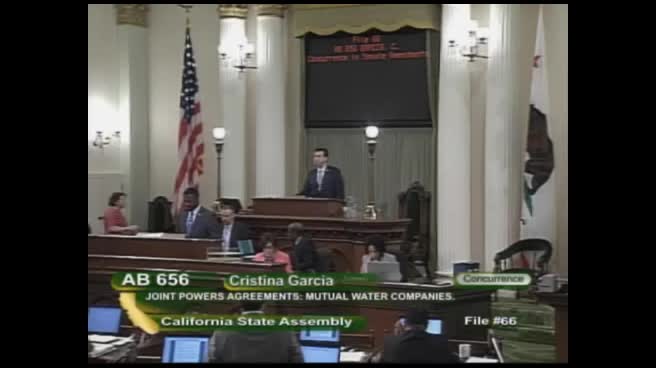 1MIN
Assembly Floor
 3MIN
Senate Floor
 48SEC
Assembly Floor
 1MIN
Assembly Standing Committee on Appropriations
Bill Author