AB 751: Vertebrate pest control research: repeal extension.
- Session Year: 2015-2016
- House: Assembly
- Latest Version Date: 2015-09-30
Existing law requires the Secretary of Food and Agriculture to establish and administer a research program to control vertebrate pests, as specified. Existing law requires the secretary to establish the Vertebrate Pest Control Research Advisory Committee, and requires the committee to make recommendations to the secretary regarding vertebrate pest control research each year. Existing law requires each county agricultural commissioner to pay a specified fee to the secretary based on the amount of vertebrate pest control material sold, distributed, or applied in the county. Existing law establishes the Vertebrate Pest Control Research Account in the Department of Food and Agriculture Fund, and continuously appropriates the funds in the account to the secretary for purposes of carrying out the provisions relating to vertebrate pest control research. Existing law repeals all of the provisions specified above on January 1, 2016.
This bill would extend the operation of those provisions until January 1, 2026. By extending the secretarys authority to expend funds in a continuously appropriated fund, the bill would make an appropriation.
Except as specified in Section 6025.4, this article shall remain in effect only until January 1, 2026, and as of that date is repealed, unless a later enacted statute, which is enacted before January 1, 2026, deletes or extends that date.
Except as specified in Section 6025.4, this article shall remain in effect only until January 1, 2026, and as of that date is repealed, unless a later enacted statute, which is enacted before January 1, 2026, deletes or extends that date.
This Except as specified in Section 6025.4, this article shall remain in effect only until January 1, 2016, 2026, and as of that date is repealed, unless a later enacted statute, which is enacted before January 1, 2016, 2026, deletes or extends that date.
|
Date
|
Status
|
|---|---|
| Jun 11, 2015 | Referred to Com. on AGRI. |
| Sep 30, 2015 | Chaptered by Secretary of State - Chapter 372, Statutes of 2015. |
| Sep 30, 2015 | Approved by the Governor. |
| Sep 1, 2015 | Enrolled and presented to the Governor at 4 p.m. |
| Aug 25, 2015 | In Assembly. Ordered to Engrossing and Enrolling. |
| Aug 24, 2015 | Read third time. Passed. Ordered to the Assembly. (Ayes 40. Noes 0. Page 2149.). |
| Aug 24, 2015 | Read third time. Passed. Ordered to the Assembly. |
| Jul 14, 2015 | Read second time. Ordered to third reading. |
| Jul 13, 2015 | From committee: Do pass. (Ayes 7. Noes 0.) (July 13). |
| Jun 30, 2015 | From committee: Do pass and re-refer to Com. on APPR. with recommendation: To Consent Calendar. (Ayes 3. Noes 0.) (June 30). Re-referred to Com. on APPR. |
| Feb 25, 2015 | Read first time. To print. |
| Jun 1, 2015 | Read third time. Passed. Ordered to the Senate. (Ayes 80. Noes 0. Page 1716.) |
| Jun 1, 2015 | Read third time. Passed. Ordered to the Senate. |
| Jun 1, 2015 | In Senate. Read first time. To Com. on RLS. for assignment. |
| May 28, 2015 | Read second time. Ordered to third reading. |
| May 28, 2015 | From committee: Do pass. (Ayes 17. Noes 0.) (May 28). |
| Apr 22, 2015 | In committee: Set, first hearing. Referred to APPR. suspense file. |
| Apr 16, 2015 | From committee: Do pass and re-refer to Com. on APPR. (Ayes 10. Noes 0.) (April 15). Re-referred to Com. on APPR. |
| Mar 12, 2015 | Referred to Com. on AGRI. |
| Feb 26, 2015 | From printer. May be heard in committee March 28. |
|
Date
|
Description
|
Location
|
Votes
|
|
|---|---|---|---|---|
| Aug 24, 2015 | Assembly 3rd Reading AB751 Cooper By Galgiani | Senate Floor |
Passed |
|
| Jul 13, 2015 | Do pass | Senate Standing Committee on Appropriations |
Passed |
|
| Jun 30, 2015 | Do pass, but first be re-referred to the Committee on [Appropriations] with the recommendation: To Consent Calendar | Senate Standing Committee on Agriculture |
Passed |
|
| Jun 1, 2015 | AB 751 COOPER Assembly Third Reading | Assembly Floor |
Passed |
|
| May 28, 2015 | Do pass. | Assembly Standing Committee on Appropriations |
Passed |
|
| Apr 15, 2015 | Do pass and be re-referred to the Committee on [Appropriations] | Assembly Standing Committee on Agriculture |
Passed |
This list shows positions taken on this bill by organizations on the date displayed, which is linked to the original source.
Positions by individuals are not included.
|
Organization
|
Position
|
Date
|
|---|---|---|
| California Agricultural Commissioners And Sealers Association | ** Support | Aug 24, 2015 |
| California Alfalfa & Forage Association | ** Support | Aug 24, 2015 |
| California Citrus Mutual | ** Support | Aug 24, 2015 |
| California Farm Bureau Federation | ** Support | Aug 24, 2015 |
| California Fresh Fruit Association | ** Support | Aug 24, 2015 |
AB 751
Page 4
|
Office of Senate Floor Analyses (916) 651-1520 Fax: (916) 327-4478 |
THIRD READING
Bill No: AB 751
Introduced: 2/25/15
SENATE AGRICULTURE COMMITTEE: 3-0, 6/30/15
AYES: Galgiani, Cannella, Pan
NO VOTE RECORDED: Berryhill, Wolk
SENATE APPROPRIATIONS COMMITTEE: 7-0, 7/13/15
AYES: Lara, Bates, Beall, Hill, Leyva, Mendoza, Nielsen
ASSEMBLY FLOOR: 80-0, 6/1/15 - See last page for vote
SUBJECT: Vertebrate pest control research: repeal extension
DIGEST: This bill extends the repeal date for provisions relating to vertebrate pest control from January 1, 2016 to January 1, 2026.
Existing law:
Requires the California Department of Food and Agriculture (CDFA) to establish a research program on the control of vertebrate pests that pose a significant threat to the welfare of the state’s agricultural economy, infrastructure, and the public. (Food and Agricultural Code §6025.5).
Requires the secretary of CDFA to establish the Vertebrate Pest Control Research Advisory Committee (VPCRAC) to annually recommend priorities and costs for conducting various vertebrate pest control research projects.
Requires county agricultural commissioners to pay to CDFA a maximum assessment fee of $0.50 per pound of vertebrate pest control material sold, distributed, or applied by the county. The maximum may be increased to $1 after consultation with VPCRAC.
Limits expenditure of funds to reasonable administrative and operational expenses, federal and state regulatory fees for material registration, basic and applied research, and educational outreach.
Repeals provisions relating to vertebrate pest control on January 1, 2016.
Authorizes the use of carbon monoxide (CO) for the control of burrowing rodent pests, provided that proper warning labels are visible, permanently affixed, and compliant with existing laws and regulations. This code section has a sunset date of January 1, 2018, which is different than the sunset date for the remaining provisions in this article (Food and Agricultural Code §6025.4).
This bill extends the repeal date for provisions relating to vertebrate pest control from January 1, 2016 to January 1, 2026.
Background
The CDFA is required to establish a vertebrate pest control research program to investigate effective and economical alternative methods for the control of vertebrate pests. The program cooperates with the United States Department of Agriculture to fund research programs to maintain, develop, and register vertebrate pest control products used in California. Vertebrate pest control materials registered by CDFA may only be sold or distributed by a county agricultural commissioner (Food and Agricultural Code § 6025 et seq.).
Rodents and other vertebrate pests cause millions of dollars of damage to California agricultural crops every year, and these pests are known to carry diseases that may be spread to livestock, other animals, or humans. Pest control efforts help to mitigate crop damage and the spread of diseases, and new controls are continuously researched to find alternative methods and materials that are humane, effective, and economical.
Comments
Sunset Date. The sunset dates for these provisions have been extended several times since their enactment in 1990, and this bill marks the third extension within 15 years. Given that these provisions fund research projects, the Legislature may wish to consider if the sunset date should be repealed and provisions made permanent, thus providing stability to multi-year research projects.
FISCAL EFFECT: Appropriation: Yes Fiscal Com.: Yes Local: No
According to the Senate Appropriations Committee, this bill likely would not impact any state agencies or departments. CDFA indicates that that the Program’s annual budget is $548,000, funded exclusively by cost recovery and an assessment on the sale of vertebrate pest control materials sold, distributed, or used by County Agricultural Commissioners.
California Agricultural Commissioners and Sealers Association
California Alfalfa & Forage Association
California Citrus Mutual
California Farm Bureau Federation
California Fresh Fruit Association
OPPOSITION: (Verified 7/14/15)
None received
ARGUMENTS IN SUPPORT: According to the author, “Each year rodents such as ground squirrels, pocket gophers, and rats along with coyotes, birds and other animals cause millions of dollars of damage to California’s agriculture, infrastructure, and public health. Farmers, park managers, foresters, and others, including homeowners, use an integrated approach to deal with these important and frequently devastating pest problems. To address serious vertebrate pest problems in the State, rodenticide baits are sold by county agricultural commissioner's offices. These materials are essential for farmers, resource managers, public health agents and others to deal with the many vertebrate pest problems throughout the state.”
ASSEMBLY FLOOR: 80-0, 6/1/15
AYES: Achadjian, Alejo, Travis Allen, Baker, Bigelow, Bloom, Bonilla, Bonta, Brough, Brown, Burke, Calderon, Campos, Chang, Chau, Chávez, Chiu, Chu, Cooley, Cooper, Dababneh, Dahle, Daly, Dodd, Eggman, Frazier, Beth Gaines, Gallagher, Cristina Garcia, Eduardo Garcia, Gatto, Gipson, Gomez, Gonzalez, Gordon, Gray, Grove, Hadley, Harper, Roger Hernández, Holden, Irwin, Jones, Jones-Sawyer, Kim, Lackey, Levine, Linder, Lopez, Low, Maienschein, Mathis, Mayes, McCarty, Medina, Melendez, Mullin, Nazarian, Obernolte, O'Donnell, Olsen, Patterson, Perea, Quirk, Rendon, Ridley-Thomas, Rodriguez, Salas, Santiago, Steinorth, Mark Stone, Thurmond, Ting, Wagner, Waldron, Weber, Wilk, Williams, Wood, Atkins
Prepared by: Anne Megaro / AGRI. / (916) 651-1508
7/14/15 16:55:13
**** END ****
AB 751 (Cooper) Page 2 of 2
SENATE COMMITTEE ON APPROPRIATIONS
Senator Ricardo Lara, Chair
2015 - 2016 Regular Session
AB 751 (Cooper) - Vertebrate pest control research: repeal extension
|
|
Version: February 25, 2015 |
Policy Vote: AGRI. 3 - 0 |
Urgency: No |
Mandate: No |
Hearing Date: July 13, 2015 |
Consultant: Robert Ingenito |
This bill does not meet the criteria for referral to the Suspense File.
Bill Summary:
AB 751 would extend the Vertebrate Pest Control Research (VPCR) Program and Advisory Committee within the California Department of Food and Agriculture (CDFA), until January 1, 2026.
Fiscal Impact:
This bill likely would not impact any state agencys or department. CDFA indicates that that the Program’s annual budget is $548,000, funded exclusively by cost recovery and an assessment on the sale of vertebrate pest control materials sold, distributed, or used by County Agricultural Commissioners.
Background:
Vertebrate pests (such as rats and gophers) cause substantial damage to California agricultural crops annually; in addition, they carry diseases that could potentially spread to animals or humans. Pest control efforts help to mitigate crop damage and the spread of diseases, and new controls are continuously researched.
CDFA created the VPCR Program and Advisory Committee to support research and funding to meet federal requirements for registration of rodenticides, enabling manufacturers to continue developing and register their products for use. Funding is supported with an assessment on pest control materials, which CDFA may set at up to $1.00 per pound. For several years, that assessment has remained at $0.50 per pound.
Proposed Law:
This bill would extend the repeal date for provisions relating to vertebrate pest control from January 1, 2016 to January 1, 2026.
Related Legislation:
SB 1332 (Wolk), Chapter 257, Statutes of 2014. Authorizes the Director of the California Department of Pesticide Regulation to adopt and enforce regulations that provide for the proper, safe, and efficient use of carbon monoxide pest control devices.
SB 872 (Denham), Chapter 176, Statutes of 2005. Extends the repeal date for provisions relating to vertebrate pest control from January 1, 2006 to January 1, 2016. This bill also defines “research,” limits fund expenditures as specified, and makes other technical changes.
-- END --
AB 751 (Cooper) Page 4 of 4
SENATE COMMITTEE ON AGRICULTURE
Senator Cathleen Galgiani, Chair
2015 - 2016 Regular
Bill No: AB 751 Hearing Date: 6/30/15
Author: |
Cooper |
||
Version: |
2/25/15 |
||
Urgency: |
No |
Fiscal: |
Yes |
Consultant: |
Anne Megaro |
||
Subject: Vertebrate pest control research: repeal extension
SUMMARY
:
This bill would extend the repeal date for provisions relating to vertebrate pest control from January 1, 2016 to January 1, 2026.
BACKGROUND AND EXISTING LAW
:
The California Department of Food and Agriculture (CDFA) is required to establish a vertebrate pest control research program to investigate effective and economical alternative methods for the control of vertebrate pests. The program cooperates with the United States Department of Agriculture to fund research programs to maintain, develop, and register vertebrate pest control products used in California. Vertebrate pest control materials registered by CDFA may only be sold or distributed by a county agricultural commissioner (Food and Agricultural Code § 6025 et seq.).
Rodents and other vertebrate pests cause millions of dollars of damage to California agricultural crops every year, and these pests are known to carry diseases that may be spread to livestock, other animals, or humans. Pest control efforts help to mitigate crop damage and the spread of diseases, and new controls are continuously researched to find alternative methods and materials that are humane, effective, and economical.
Existing law:
Requires CDFA to establish a research program on the control of vertebrate pests that pose a significant threat to the welfare of the state’s agricultural economy, infrastructure, and the public. (Food and Agricultural Code §6025.5).
Requires the secretary to establish the Vertebrate Pest Control Research Advisory Committee (VPCRAC) to annually recommend priorities and costs for conducting various vertebrate pest control research projects.
Requires county agricultural commissioners to pay to CDFA a maximum assessment fee of $0.50 per pound of vertebrate pest control material sold, distributed, or applied by the county. The maximum may be increased to $1 after consultation with VPCRAC.
Limits expenditure of funds to reasonable administrative and operational expenses, federal and state regulatory fees for material registration, basic and applied research, and educational outreach.
Repeals provisions relating to vertebrate pest control on January 1, 2016.
Authorizes the use of carbon monoxide (CO) for the control of burrowing rodent pests, provided that proper warning labels are visible, permanently affixed, and compliant with existing laws and regulations. This code section has a sunset date of January 1, 2018, which is different than the sunset date for the remaining provisions in this article (Food and Agricultural Code §6025.4).
PROPOSED LAW
:
This bill:
Extends the repeal date for provisions relating to vertebrate pest control from January 1, 2016 to January 1, 2026.
ARGUMENTS IN SUPPORT:
According to the author, “Each year rodents such as ground squirrels, pocket gophers, and rats along with coyotes, birds and other animals cause millions of dollars of damage to California’s agriculture, infrastructure, and public health. Farmers, park managers, foresters, and others, including homeowners, use an integrated approach to deal with these important and frequently devastating pest problems. To address serious vertebrate pest problems in the State, rodenticide baits are sold by county agricultural commissioner's offices. These materials are essential for farmers, resource managers, public health agents and others to deal with the many vertebrate pest problems throughout the state.”
COMMENTS
:
Sunset Date. The sunset dates for these provisions have been extended several times since their enactment in 1990, and this bill marks the third extension within 15 years. Given that these provisions fund research projects, the committee may wish to consider if the sunset date should be repealed and provisions made permanent, thus providing stability to multi-year research projects.
RELATED LEGISLATION
:
SB 1332 (Wolk), Chapter 257, Statutes of 2014. Authorizes the director of the California Department of Pesticide Regulation to adopt and enforce regulations that provide for the proper, safe, and efficient use of carbon monoxide pest control devices.
AB 634 (Huber), Chapter 407, Statutes of 2011. Allows the use of carbon monoxide to control burrowing vertebrate pests.
SB 872 (Denham/Florez), Chapter 176, Statutes of 2005. Extends the repeal date for provisions relating to vertebrate pest control from January 1, 2006 to January 1, 2016. This bill also defines “research,” limits fund expenditures as specified, and makes other technical changes.
AB 2071 (Briggs), Chapter 338, Statutes of 2000. Among other provisions, extends the repeal date for provisions relating to vertebrate pest control from January 1, 2001 to January 1, 2006.
PRIOR ACTIONS
:
Assembly Floor: |
80 - 0 |
Assembly Appropriations Committee: |
17 - 0 |
Assembly Agriculture Committee: |
10 - 0 |
SUPPORT
:
California Alfalfa & Forage Association
California Citrus Mutual
California Farm Bureau Federation
California Fresh Fruit Association
OPPOSITION
:
None received
-- END --
AB 751
Page 2
ASSEMBLY THIRD READING
AB 751
(Cooper)
As Introduced February 25, 2015
Majority vote
Committee |
Votes |
Ayes |
Noes |
Agriculture |
10-0 |
Perea, Gallagher, Cooper, Dahle, Dodd, Eggman, Grove, Irwin, Quirk, Salas |
|
Appropriations |
17-0 |
Gomez, Bigelow, Bonta, Calderon, Chang, Daly, Eggman, Gallagher, Eduardo Garcia, Gordon, Holden, Jones, Quirk, Rendon, Wagner, Weber, Wood |
|
SUMMARY: Extends the Vertebrate Pest Control Research (VPCR) Program and Advisory Committee until January 1, 2026.
EXISTING LAW:
Requires the California Department of Food and Agriculture (CDFA) to establish and administer a research program to control vertebrate pests, as specified.
Requires CDFA to establish the VPCR Advisory Committee, and requires the VPCR Advisory Committee to make recommendations to CFDA regarding VPRC each year.
Requires each county agricultural commissioner to pay a specified fee to CDFA based on the amount of vertebrate pest control material sold, distributed, or applied in the county.
Establishes the VPCR Account in the CDFA Fund, and continuously appropriates the funds in the account for purposes of carrying out the provisions relating to VPRC.
Repeals all of the provisions specified above on January 1, 2016.
FISCAL EFFECT: According to the Assembly Committee on Appropriations this bill has an annual special fund cost of approximately $500,000 for program research and activities, funded through a $0.50 assessment per pound on pest control materials. Over recent years, assessment revenues have been sufficient to fund program research and activities.
COMMENTS: The VPCR Program was established in 1990, in response to changes by the federal Environmental Protection Agency (EPA) that relate to the requirements of manufacturers of rodenticides and similar products. The manufacturers concluded that they could not recover the cost for development of such data and dropped the registration of the products. CDFA recognized that there was a need for such products and developed an oversight and fiscal structure to support the research and funding of data requirements for EPA, thereby creating this research program. The VPCR law was updated in 2005 to provide a more defined scope for this research program, as well as, better parameters on how the funds are used. CDFA, upon recommendation from the VPCR Advisory Committee, may charge up to one dollar per pound of vertebrate pest control material sold, distributed, or applied.
The VPCR program focuses on finding safer alternative methods to control pest. The research is funded with the sale of rodenticides, which has helped develop or improve control of vertebrate pests. The program raises and spends an average of roughly $480,000 per year. The author states that without this program, CDFA loses the authority to register rodenticides and could cause the rodenticides to be unavailable to the public.
The sunset to these provisions has been extended three times, in 1995, 2000 and 2005. This bill will extend the VPCR Program and Advisory Committee until 2026.
Analysis Prepared by: Victor Francovich / AGRI. / (916) 319-2084 FN: 0000557
AB 751
Page 1
Date of Hearing: April 22, 2015
ASSEMBLY COMMITTEE ON APPROPRIATIONS
Jimmy Gomez, Chair
AB 751
(Cooper) – As Introduced February 25, 2015
Policy Committee: |
Agriculture |
Vote: |
10-0 |
Urgency: No State Mandated Local Program: No Reimbursable: No
SUMMARY:
This bill extends the Vertebrate Pest Control Research Program and Advisory Committee within the Department of Food and Agriculture (DFA), until January 1, 2026.
FISCAL EFFECT:
Annual special fund costs of approximately $500,000 for program research and activities, funded through a $0.50 assessment per pound on pest control materials. Over recent years, assessment revenues have been sufficient to fund program research and activities.
COMMENTS:
1) Purpose. The Vertebrate Pest Control Research (VPCR) Program focuses on finding safe alternative methods to control vertebrate pests. Research and activities are funded with an assessment on the sale of rodenticides, which raises approximately $500,000 per year. The author asserts that without this program, DFA would lose its authority to register rodenticides, which could result in rodenticides becoming unavailable in California.
2) Vertebrate Pest Control Research Program and Advisory Committee. The VPCR Program was established in 1990 following changes by the federal Environmental Protection Agency (EPA) to data submission requirements for registering rodenticides and similar products. Certain manufacturers of rodenticides had withdrawn registration of their products with the EPA as a result of additional costs from the data submission requirements.
DFA created the VPCR Program and Advisory Committee to support research and funding to meet the EPA's data requirements for registration of rodenticides, enabling manufacturers to continue developing and register their products for use. Funding is supported with an assessment on pest control materials, which DFA may set at up to $1.00 per pound. For several years, that assessment has remained at $0.50 per pound, which the VPCR Advisory Committee contends is sufficient to support current research and activities.
3) Permanent Program? Given this program has existed 25 years and continues to function at current funding levels despite significant headroom in the statute for DFA to raise fees, the Committee may wish to consider whether eliminating the sunset would provide even greater stability to the program and its research projects.
Analysis Prepared by: Joel Tashjian / APPR. / (916) 319-2081
AB 751
Page 2
Date of Hearing: April 15, 2015
ASSEMBLY COMMITTEE ON AGRICULTURE
Henry T. Perea, Chair
AB 751
(Cooper) – As Introduced February 25, 2015
SUBJECT: Vertebrate pest control research: repeal extension.
SUMMARY: Extends the Vertebrate Pest Control Research (VPCR) Program and Advisory Committee until January 1, 2026.
EXISTING LAW:
Requires the California Department of Food and Agriculture (CDFA) to establish and administer a research program to control vertebrate pests, as specified.
Requires CDFA to establish the VPCR Advisory Committee, and requires the Advisory Committee to make recommendations to CFDA regarding VPRC each year.
Requires each county agricultural commissioner to pay a specified fee to CDFA based on the amount of vertebrate pest control material sold, distributed, or applied in the county.
Establishes the VPCR Account in the CDFA Fund, and continuously appropriates the funds in the account for purposes of carrying out the provisions relating to VPRC.
Repeals all of the provisions specified above on January 1, 2016.
FISCAL EFFECT: Unknown. This bill has been keyed fiscal by Legislative Counsel.
COMMENTS: The VPCR Program was established in 1990, in response to changes by the federal Environmental Protection Agency (EPA) that relate to the requirements of manufacturers of rodenticides and similar products. The manufacturers concluded that they could not recover the cost for development of such data and dropped the registration of the products. CDFA recognized that there was a need for such products and developed an oversight and fiscal structure to support the research and funding of data requirements for EPA, thereby creating this research program. The VPCR law was updated in 2005 to provide a more defined scope for this research program, as well as, better parameters on how the funds are used. CDFA, upon recommendation from the VPCR Advisory Committee, may charge up to one dollar per pound of vertebrate pest control material sold, distributed, or applied.
The VPCR program focuses on finding safer alternative methods to control pest. The research is funded with the sale of rodenticides, which has helped develop or improve control of vertebrate pests. The program raises and spends an average of roughly $480,000 per year. The author states that without this program, CDFA loses the authority to register rodenticides and could cause the rodenticides to be unavailable to the public.
The sunset to these provisions has been extended three times, in 1995, 2000 and 2005. This bill will extend the VPCR Program and Advisory Committee until 2026.
The Committee may wish to consider the policy of extending the sunset ten years versus eliminating the sunset. If the VPCR program has benefited the affected parties and there is no controversy regarding the structure, eliminating the sunset could provide more stability to long term research projects.
REGISTERED SUPPORT / OPPOSITION:
Support
California Farm Bureau Federation
California Fresh
Fruit Association
California Alfalfa & Forage Association
Opposition
None on file
Analysis Prepared by: Victor Francovich / AGRI. / (916) 319-2084
Discussed in Hearing
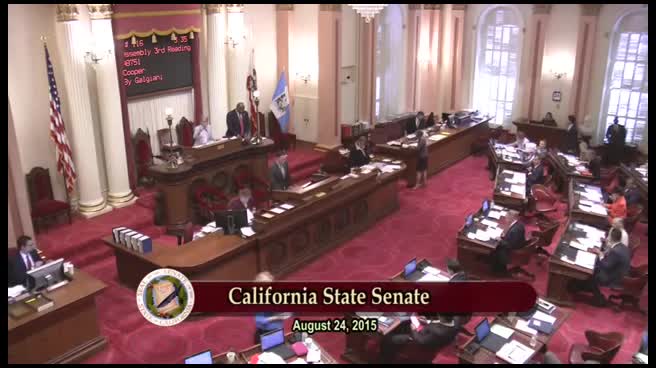 1MIN
Senate Floor
 1MIN
Senate Standing Committee on Appropriations
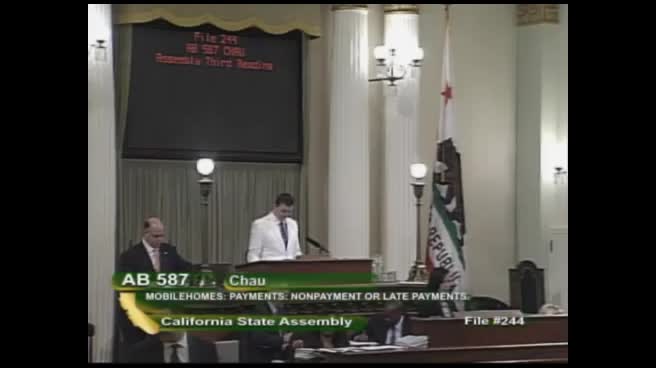 51SEC
Assembly Floor
 1MIN
Assembly Standing Committee on Agriculture
Bill Author

Bill Co-Author(s):