AB 804: Shorthand reporters: continuing education requirements.
- Session Year: 2015-2016
- House: Assembly
- Latest Version Date: 2015-09-09
Existing law provides for the certification and regulation of shorthand reporters by the Court Reporters Board of California in the Department of Consumer Affairs, and provides for the regulation of shorthand reporting schools by the board. Existing law provides for the renewal of a shorthand reporters certificate if specified requirements are met. Existing law sets forth specified fees for the examination for, and the issuance and renewal of, a shorthand reporters certificate.
This bill would require the board, on or before July 1, 2017, to adopt regulations to establish, for renewal of a shorthand reporters certificate, minimum approved continuing education requirements, with certain exceptions, and would require the board to establish a procedure for approving providers of those continuing education courses, as specified. The bill would also require the board to collaborate with the Judicial Council to develop a list of courses that satisfy the continuing education requirements of both these provisions and a specified rule, applicable to trial court personnel, of the California Rules of Court. The bill would also authorize the board to, by regulation, establish a fee for approval of those continuing education providers, not to exceed the reasonable regulatory costs, if any, to the board of approving those providers.
Existing law provides for the certification and regulation of shorthand reporters by the Court Reporters Board of California in the Department of Consumer Affairs, and provides for the regulation of shorthand reporting schools by the board. Existing law provides for the renewal of a shorthand reporters certificate if specified requirements are met. Existing law sets forth specified fees for the examination for, and the issuance and renewal of, a shorthand reporters certificate.
This bill would require the board, on or before July 1, 2016, 2017, to adopt regulations to establish, for renewal of a shorthand reporters certificate, minimum approved continuing education requirements, with certain exceptions, and would require the board to establish a procedure for approving providers of those continuing education courses, as specified. The bill would also require the board to collaborate with the Judicial Council to develop a list of courses that satisfy the continuing education requirements of both these provisions and a specified rule, applicable to trial court personnel, of the California Rules of Court. The bill would also authorize the board to, by regulation, establish a fee for approval of those continuing education providers, not to exceed the reasonable regulatory costs, if any, to the board of approving those providers.
Existing law provides for the certification and regulation of shorthand reporters by the Court Reporters Board of California in the Department of Consumer Affairs, and provides for the regulation of shorthand reporting schools by the board. Existing law provides for the renewal of a shorthand reporters certificate if specified requirements are met. Existing law sets forth specified fees for the examination for, and the issuance and renewal of, a shorthand reporters certificate.
This bill would require the board, on or before July 1, 2016, to adopt regulations to establish, for renewal of a shorthand reporters certificate, minimum approved continuing education requirements, with certain exceptions, and would require the board to establish a procedure for approving providers of those continuing education courses, as specified. The bill would also authorize the board to, by regulation, establish a fee for approval of those continuing education providers, not to exceed the reasonable regulatory costs, if any, to the board of approving those providers.
Existing law requires the charge of an official court reporter fee, in addition to any other fee required in civil actions or cases. For each proceeding lasting more than one hour, existing law imposes a fee equal to the actual cost of providing that service per 1/2 day of services to the parties, on a pro rata basis. For each proceeding anticipated to last one hour or less, existing law imposes a fee of $30 for the reasonable cost of court reporting services provided at the expense of the court by an official court reporter.
This bill would make a technical, nonsubstantive change to these provisions.
(a)On or before July 1, 2017, the board shall adopt regulations to establish minimum continuing education requirements for renewal of a certificate issued pursuant to this chapter. No earlier than six months after the effective date of the regulations, to renew his or her certificate, a certificate holder shall, in addition to the requirements of Section 8024, submit to the board, on a form prescribed by the board, that he or she has completed the minimum continuing education requirements.
(b)The board shall ensure that the continuing education required by this section is relevant to the practice of shorthand reporting.
(c)The board shall ensure that the continuing education required by this section includes a minimum of two hours of course credits in ethics and professional conduct of shorthand reporting.
(d)The board shall ensure that the continuing education required by this section is not less than 8 hours and not more than 12 hours of course credits every two years.
(e)The board shall also establish a procedure for approving providers of continuing education courses, and all providers of continuing education shall comply with procedures established by the board. The board may establish a fee for providers of continuing education courses pursuant to Section 8031. The board may revoke or deny the right of a provider to offer continuing education coursework pursuant to this section for failure to comply with the requirements of this section or any regulation adopted pursuant to this section.
(f)The board may establish exceptions to the continuing education requirements of this section for a certificate holder who cannot meet the continuing education requirements for reasons of health, military service, or undue hardship.
(g)The continuing education requirements of this section shall comply with the guidelines for mandatory continuing education established by the Department of Consumer Affairs pursuant to Section 166.
(h)The board shall, in collaboration with the Judicial Council, develop a list of courses that satisfy the requirements of both this section and Rule 10.474 of Title 10 of the California Rules of Court. The courses on this list may be used to satisfy the requirements of both this section and Rule 10.474.
(i)The board may adopt regulations as necessary to implement this section.
SEC. 2.Section 8031 of the Business and Professions Code is amended to read:8031.The amount of the fees required by this chapter is that fixed by the board in accordance with the following schedule:
(a)The fee for filing an application for each examination shall be no more than forty dollars ($40).
(b)The fee for examination and reexamination for the written or practical part of the examination shall be in an amount fixed by the board, which shall be equal to the actual cost of preparing, administering, grading, and analyzing the examination, but shall not exceed seventy-five dollars ($75) for each separate part, for each administration.
(c)The initial certificate fee is an amount equal to the renewal fee in effect on the last regular renewal date before the date on which the certificate is issued, except that, if the certificate will expire less than 180 days after its issuance, then the fee is 50 percent of the renewal fee in effect on the last regular renewal date before the date on which the certificate is issued, or fifty dollars ($50), whichever is greater. The board may, by appropriate regulation, provide for the waiver or refund of the initial certificate fee where the certificate is issued less than 45 days before the date on which it will expire.
(d)By a resolution adopted by the board, a renewal fee may be established in such amounts and at such times as the board may deem appropriate to meet its operational expenses and funding responsibilities as set forth in this chapter. The renewal fee shall not be more than one hundred twenty-five dollars ($125) nor less than ten dollars ($10) annually, with the following exception:
Any person who is employed full time by the State of California as a hearing reporter and who does not otherwise render shorthand reporting services for a fee shall be exempt from licensure while in state employment and shall not be subject to the renewal fee provisions of this subdivision until 30 days after leaving state employment. The renewal fee shall, in addition to the amount fixed by this subdivision, include any unpaid fees required by this section plus any delinquency fee.
(e)The duplicate certificate fee shall be no greater than ten dollars ($10).
(f)The penalty for failure to notify the board of a change of name or address as required by Section 8024.6 shall be no greater than fifty dollars ($50).
(g)The fee for approval of a continuing education provider shall be fixed by the board through regulation in an amount to cover the reasonable regulatory cost to the board of approving those continuing education providers, but shall be no greater than forty dollars ($40).
(a)On or before July 1, 2016, 2017, the board shall adopt regulations to establish minimum continuing education requirements for renewal of a certificate issued pursuant to this chapter. No earlier than six months after the effective date of the regulations, to renew his or her certificate, a certificate holder shall, in addition to the requirements of Section 8024, submit to the board, on a form prescribed by the board, that he or she has completed the minimum continuing education requirements.
(b)The board shall ensure that the continuing education required by this section is relevant to the practice of shorthand reporting.
(c)The board shall ensure that the continuing education required by this section includes a minimum of two hours of course credits in ethics and professional conduct of shorthand reporting.
(d)The board shall ensure that the continuing education required by this section is not less than 8 hours and not more than 12 hours of course credits every two years.
(c)
(e)The board shall also establish a procedure for approving providers of continuing education courses, and all providers of continuing education shall comply with procedures established by the board. The board may establish a fee for providers of continuing education courses pursuant to Section 8031. The board may revoke or deny the right of a provider to offer continuing education coursework pursuant to this section for failure to comply with the requirements of this section or any regulation adopted pursuant to this section.
(d)
(f)The board may establish exceptions to the continuing education requirements of this section for a certificate holder who cannot meet the continuing education requirements for reasons of health, military service, or undue hardship.
(e)
(g)The continuing education requirements of this section shall comply with the guidelines for mandatory continuing education established by the Department of Consumer Affairs pursuant to Section 166.
(h)The board shall, in collaboration with the Judicial Council, develop a list of courses that satisfy the requirements of both this section and Rule 10.474 of Title 10 of the California Rules of Court. The courses on this list may be used to satisfy the requirements of both this section and Rule 10.474.
(f)
(i)The board may adopt regulations as necessary to implement this section.
SEC. 2.Section 8031 of the Business and Professions Code is amended to read:8031.The amount of the fees required by this chapter is that fixed by the board in accordance with the following schedule:
(a)The fee for filing an application for each examination shall be no more than forty dollars ($40).
(b)The fee for examination and reexamination for the written or practical part of the examination shall be in an amount fixed by the board, which shall be equal to the actual cost of preparing, administering, grading, and analyzing the examination, but shall not exceed seventy-five dollars ($75) for each separate part, for each administration.
(c)The initial certificate fee is an amount equal to the renewal fee in effect on the last regular renewal date before the date on which the certificate is issued, except that, if the certificate will expire less than 180 days after its issuance, then the fee is 50 percent of the renewal fee in effect on the last regular renewal date before the date on which the certificate is issued, or fifty dollars ($50), whichever is greater. The board may, by appropriate regulation, provide for the waiver or refund of the initial certificate fee where the certificate is issued less than 45 days before the date on which it will expire.
(d)By a resolution adopted by the board, a renewal fee may be established in such amounts and at such times as the board may deem appropriate to meet its operational expenses and funding responsibilities as set forth in this chapter. The renewal fee shall not be more than one hundred twenty-five dollars ($125) nor less than ten dollars ($10) annually, with the following exception:
Any person who is employed full time by the State of California as a hearing reporter and who does not otherwise render shorthand reporting services for a fee shall be exempt from licensure while in state employment and shall not be subject to the renewal fee provisions of this subdivision until 30 days after leaving state employment. The renewal fee shall, in addition to the amount fixed by this subdivision, include any unpaid fees required by this section plus any delinquency fee.
(e)The duplicate certificate fee shall be no greater than ten dollars ($10).
(f)The penalty for failure to notify the board of a change of name or address as required by Section 8024.6 shall be no greater than fifty dollars ($50).
(g)The fee for approval of a continuing education provider shall be fixed by the board through regulation in an amount to cover the reasonable regulatory cost to the board of approving those continuing education providers, but shall be no greater than forty dollars ($40).
(a)On or before July 1, 2016, the board shall adopt regulations to establish minimum continuing education requirements for renewal of a certificate issued pursuant to this chapter. No earlier than six months after the effective date of the regulations, to renew his or her certificate, a certificate holder shall, in addition to the requirements of Section 8024, submit to the board, on a form prescribed by the board, that he or she has completed the minimum continuing education requirements.
(b)The board shall ensure that the continuing education required by this section is relevant to the practice of shorthand reporting.
(c)The board shall also establish a procedure for approving providers of continuing education courses, and all providers of continuing education shall comply with procedures established by the board. The board may establish a fee for providers of continuing education courses pursuant to Section 8031. The board may revoke or deny the right of a provider to offer continuing education coursework pursuant to this section for failure to comply with the requirements of this section or any regulation adopted pursuant to this section.
(d)The board may establish exceptions to the continuing education requirements of this section for a certificate holder who cannot meet the continuing education requirements for reasons of health, military service, or undue hardship.
(e)The continuing education requirements of this section shall comply with the guidelines for mandatory continuing education established by the Department of Consumer Affairs pursuant to Section 166.
(f)The board may adopt regulations as necessary to implement this section.
SEC. 2.Section 8031 of the Business and Professions Code is amended to read:8031.The amount of the fees required by this chapter is that fixed by the board in accordance with the following schedule:
(a)The fee for filing an application for each examination shall be no more than forty dollars ($40).
(b)The fee for examination and reexamination for the written or practical part of the examination shall be in an amount fixed by the board, which shall be equal to the actual cost of preparing, administering, grading, and analyzing the examination, but shall not exceed seventy-five dollars ($75) for each separate part, for each administration.
(c)The initial certificate fee is an amount equal to the renewal fee in effect on the last regular renewal date before the date on which the certificate is issued, except that, if the certificate will expire less than 180 days after its issuance, then the fee is 50 percent of the renewal fee in effect on the last regular renewal date before the date on which the certificate is issued, or fifty dollars ($50), whichever is greater. The board may, by appropriate regulation, provide for the waiver or refund of the initial certificate fee where the certificate is issued less than 45 days before the date on which it will expire.
(d)By a resolution adopted by the board, a renewal fee may be established in such amounts and at such times as the board may deem appropriate to meet its operational expenses and funding responsibilities as set forth in this chapter. The renewal fee shall not be more than one hundred twenty-five dollars ($125) nor less than ten dollars ($10) annually, with the following exception:
Any person who is employed full time by the State of California as a hearing reporter and who does not otherwise render shorthand reporting services for a fee shall be exempt from licensure while in state employment and shall not be subject to the renewal fee provisions of this subdivision until 30 days after leaving state employment. The renewal fee shall, in addition to the amount fixed by this subdivision, include any unpaid fees required by this section plus any delinquency fee.
(e)The duplicate certificate fee shall be no greater than ten dollars ($10).
(f)The penalty for failure to notify the board of a change of name or address as required by Section 8024.6 shall be no greater than fifty dollars ($50).
(g)The fee for approval of a continuing education provider shall be fixed by the board through regulation in an amount to cover the reasonable regulatory cost to the board of approving those continuing education providers, but shall be no greater than forty dollars ($40).
SECTION 1.Section 68086 of the Government Code is amended to read:68086.The following provisions apply in superior court:
(a)In addition to any other fee required in civil actions or cases:
(1)For each proceeding anticipated to last one hour or less, a fee of thirty dollars ($30) shall be charged for the reasonable cost of the court reporting services provided at the expense of the court by an official court reporter pursuant to Section 269 of the Code of Civil Procedure.
(A)The fee shall be charged to the party, or parties if filing jointly, that filed the paper that resulted in the proceeding being scheduled. If no fee has been charged, and a party subsequently requests a court reporter, that party shall be charged the fee if a reporter is to be provided by the court.
(B)All parties paying the fee shall deposit the fee with the clerk of the court as specified by the court, but not later than the conclusion of each days court session.
(C)The fee shall be charged once per case for all proceedings conducted within the same hour if the total time taken by those proceedings is one hour or less. If the total time taken exceeds one hour, the fee shall be charged and collected pursuant to paragraph (2).
(D)The fee shall be deposited into the Trial Court Trust Fund and distributed back to the court from which the fee was collected on a dollar-for-dollar basis.
(E)The fee shall be refunded as soon as practicable to the remitting party or parties if no court reporting services were provided.
(2)For each proceeding lasting more than one hour, a fee equal to the actual cost of providing that service shall be charged per one-half day of services to the parties, on a pro rata basis, for the services of an official court reporter on the first and each succeeding judicial day those services are provided pursuant to Section 269 of the Code of Civil Procedure.
(A)All parties shall deposit their pro rata shares of these fees with the clerk of the court as specified by the court, but not later than the conclusion of each days court session.
(B)For purposes of this paragraph, one-half day means any period of judicial time, in excess of one hour, but not more than four hours, during either the morning or afternoon court session.
(b)The fee shall be waived for a person who has been granted a fee waiver under Section 68631.
(c)The costs for the services of the official court reporter shall be recoverable as taxable costs by the prevailing party as otherwise provided by law.
(d)The Judicial Council shall adopt rules to ensure all of the following:
(1)That the parties are given adequate and timely notice of the availability of an official court reporter.
(2)That if an official court reporter is not available, a party may arrange for the presence of a certified shorthand reporter to serve as an official pro tempore reporter, the costs therefor recoverable as provided in subdivision (c).
(3)That if the services of an official pro tempore reporter are utilized pursuant to paragraph (2), no other charge shall be made to the parties.
(e)The fees collected pursuant to this section shall be used only to pay the cost for services of an official court reporter in civil proceedings.
(f)The Judicial Council shall report on or before February 1 of each year to the Joint Legislative Budget Committee on the fees collected by courts pursuant to this section and Section 68086.1 and on the total amount spent for services of official court reporters in civil proceedings statewide in the prior fiscal year.
The following provisions apply in superior court:
(a)In addition to any other fee required in civil actions or cases:
(1)For each proceeding anticipated to last one hour or less, a fee of thirty dollars ($30) shall be charged for the reasonable cost of the court reporting services provided at the expense of the court by an official court reporter pursuant to Section 269 of the Code of Civil Procedure.
(A)The fee shall be charged to the party, or parties if filing jointly, that filed the paper that resulted in the proceeding being scheduled. If no fee has been charged, and a party subsequently requests a court reporter, that party shall be charged the fee if a reporter is to be provided by the court.
(B)All parties paying the fee shall deposit the fee with the clerk of the court as specified by the court, but not later than the conclusion of each days court session.
(C)The fee shall be charged once per case for all proceedings conducted within the same hour if the total time taken by those proceedings is one hour or less. If the total time taken exceeds one hour, the fee shall be charged and collected pursuant to paragraph (2).
(D)The fee shall be deposited into the Trial Court Trust Fund and distributed back to the court from which the fee was collected on a dollar-for-dollar basis.
(E)The fee shall be refunded as soon as practicable to the remitting party or parties if no court reporting services were provided.
(2)For each proceeding lasting more than one hour, a fee equal to the actual cost of providing that service shall be charged per one-half day of services to the parties, on a pro rata basis, for the services of an official court reporter on the first and each succeeding judicial day those services are provided pursuant to Section 269 of the Code of Civil Procedure.
(A)All parties shall deposit their pro rata shares of these fees with the clerk of the court as specified by the court, but not later than the conclusion of each days court session.
(B)For purposes of this paragraph, one-half day means any period of judicial time, in excess of one hour, but not more than four hours, during either the morning or afternoon court session.
(b)The fee shall be waived for a person who has been granted a fee waiver under Section 68631.
(c)The costs for the services of the official court reporter shall be recoverable as taxable costs by the prevailing party as otherwise provided by law.
(d)The Judicial Council shall adopt rules to ensure all of the following:
(1)That the parties are given adequate and timely notice of the availability of an official court reporter.
(2)That if an official court reporter is not available, a party may arrange for the presence of a certified shorthand reporter to serve as an official pro tempore reporter, the costs therefor recoverable as provided in subdivision (c).
(3)That if the services of an official pro tempore reporter are utilized pursuant to paragraph (2), no other charge shall be made to the parties.
(e)The fees collected pursuant to this section shall be used only to pay the cost for services of an official court reporter in civil proceedings.
(f)The Judicial Council shall report on or before February 1 of each year to the Joint Legislative Budget Committee on the fees collected by courts pursuant to this section and Section 68086.1 and on the total amount spent for services of official court reporters in civil proceedings statewide in the prior fiscal year.
|
Date
|
Status
|
|---|---|
| Jun 22, 2015 | From committee: Do pass. (Ayes 5. Noes 1.) (June 22). |
| Jan 15, 2016 | Consideration of Governor's veto stricken from file. |
| Sep 28, 2015 | Vetoed by Governor. |
| Sep 16, 2015 | Enrolled and presented to the Governor at 4 p.m. |
| Sep 4, 2015 | Senate amendments concurred in. To Engrossing and Enrolling. (Ayes 78. Noes 1.). |
| Sep 4, 2015 | Senate amendments concurred in. To Engrossing and Enrolling. (Ayes 78. Noes 1. Page 2903.). |
| Sep 4, 2015 | Senate amendments concurred in. To Engrossing and Enrolling. |
| Sep 2, 2015 | Read third time. Passed. Ordered to the Assembly. (Ayes 28. Noes 12. Page 2410.). |
| Sep 2, 2015 | Read third time. Passed. Ordered to the Assembly. |
| Sep 2, 2015 | In Assembly. Concurrence in Senate amendments pending. May be considered on or after September 4 pursuant to Assembly Rule 77. |
| Sep 1, 2015 | Read second time. Ordered to third reading. |
| Aug 31, 2015 | Read third time and amended. Ordered to second reading. |
| Jun 23, 2015 | Read second time. Ordered to third reading. |
| Feb 26, 2015 | Read first time. To print. |
| Jun 8, 2015 | From committee: Do pass and re-refer to Com. on APPR. (Ayes 7. Noes 2.) (June 8). Re-referred to Com. on APPR. |
| May 7, 2015 | Referred to Com. on B., P. & E.D. |
| Apr 23, 2015 | Read third time. Passed. Ordered to the Senate. (Ayes 76. Noes 0.) |
| Apr 23, 2015 | Read third time. Passed. Ordered to the Senate. (Ayes 76. Noes 0. Page 1101.) |
| Apr 23, 2015 | In Senate. Read first time. To Com. on RLS. for assignment. |
| Apr 16, 2015 | Read second time. Ordered to third reading. |
| Apr 15, 2015 | From committee: Do pass. (Ayes 16. Noes 0.) (April 15). |
| Apr 7, 2015 | From committee: Do pass and re-refer to Com. on APPR. (Ayes 14. Noes 0.) (April 7). Re-referred to Com. on APPR. |
| Mar 24, 2015 | Re-referred to Com. on B. & P. |
| Mar 23, 2015 | From committee chair, with author's amendments: Amend, and re-refer to Com. on B. & P. Read second time and amended. |
| Mar 19, 2015 | Referred to Com. on B. & P. |
| Feb 27, 2015 | From printer. May be heard in committee March 29. |
|
Date
|
Description
|
Location
|
Votes
|
|
|---|---|---|---|---|
| Sep 4, 2015 | AB 804 HERNÁNDEZ Concurrence in Senate Amendments | Assembly Floor |
Passed |
|
| Sep 2, 2015 | Assembly 3rd Reading AB804 Roger Hernández By Hill | Senate Floor |
Passed |
|
| Jun 22, 2015 | Do pass | Senate Standing Committee on Appropriations |
Passed |
|
| Jun 8, 2015 | Do pass, but first be re-referred to the Committee on [Appropriations] | Senate Standing Committee on Business, Professions and Economic Development |
Passed |
|
| Apr 23, 2015 | AB 804 HERNÁNDEZ Assembly Third Reading | Assembly Floor |
Passed |
|
| Apr 15, 2015 | Do pass. | Assembly Standing Committee on Appropriations |
Passed |
|
| Apr 7, 2015 | Do pass and be re-referred to the Committee on [Appropriations] | Assembly Standing Committee on Business and Professions |
Passed |
This list shows positions taken on this bill by organizations on the date displayed, which is linked to the original source.
Positions by individuals are not included.
|
Organization
|
Position
|
Date
|
|---|---|---|
| American Federation of State, County, and Municipal Employees | ** Support | Sep 2, 2015 |
| California Attorneys For Criminal Justice | * Indeterminate | Apr 15, 2015 |
| California Court Reporters Association | ** Support | Sep 2, 2015 |
| Deposition Reporters Association Of California | ** Support | Sep 2, 2015 |
| Judicial Council of California | ** Support | Sep 2, 2015 |
| Northern California Court Reporters Association | ** Support | Sep 2, 2015 |
| Sacramento Official Court Reporters Association | ** Support | Sep 2, 2015 |
| San Diego Superior Court Reporters Association | ** Support | Sep 2, 2015 |
GOVERNOR'S VETO
AB 804
(Roger Hernández)
As Enrolled September 9, 2015
2/3 vote
ASSEMBLY: |
76-0 |
(April 23, 2015) |
SENATE: |
28-12 |
(September 2, 2015) |
ASSEMBLY: |
78-1 |
(September 4, 2015) |
|
|
|
Original Committee Reference: B. & P.
SUMMARY: Requires the Court Reporters Board of California (CRB) to establish continuing education (CE) requirements for renewal of a shorthand reporter certificate. Specifically, this bill:
Requires the CRB to adopt regulations that establish minimum CE requirements for renewal of a Certified Shorthand Reporter (CSR) certificate by July 1, 2017.
Requires certificate holders, six months after the effective date of the regulations, to certify completion of minimum CE requirements to the CRB when renewing a certificate.
Requires the CRB to ensure that the CE requirement is relevant to the practice of shorthand reporting.
Requires the CRB to ensure that the CE required includes a minimum of two hours of course credits in ethics and professional conduct of shorthand reporting.
Requires the CRB to ensure that the CE required is not less than eight hours and not more than 12 hours of course credits every two years.
Requires the CRB to establish a procedure for approving CE course providers, and requires CE providers to comply with procedures established by the CRB.
Authorizes the CRB to establish a fee, as specified, for the approval of CE providers.
Permits the CRB to revoke or deny the right of a CE provider for failure to comply with requirements or regulations as specified.
Authorizes the CRB to establish exceptions to the CE requirements for individuals who cannot meet the CE requirements for reasons of health, military service, or undue hardship.
Requires that the requirements comply with the guidelines for mandatory CE established by the Department of Consumer Affairs (DCA).
Requires the CRB, in collaboration with the Judicial Council, to develop a list of courses that satisfy both these CE requirements and the requirements of Rule 10.474 of Title 10 of the California Rules of Court. The courses on the list may be used to satisfy both these requirements and the requirements of Rule 10.474.
Authorizes the CRB to adopt regulations to implement the above provisions.
The Senate amendments:
Add three additional obligations for the CRB, requiring that:
The CRB ensure that the CE required includes a minimum of two hours of course credits in ethics and professional conduct of shorthand reporting;
The CRB ensure that the CE required is not less than eight hours and not more than 12 hours of course credits every two years; and,
The CRB, in collaboration with the Judicial Council, develop a list of courses that satisfy both these CE requirements and the requirements of Rule 10.474 of Title 10 of the California Rules of Court. The courses on the list may be used to satisfy both these requirements and Rule 10.474.
FISCAL EFFECT: According to the Senate Appropriations Committee, one-time staff costs of $51,000 in 2016-17 and $43,000 in 2017-18 for the Board to develop and adopt regulations to establish continuing education requirements and establish a process for approving providers of continuing education. (Court Reporters Fund).
Ongoing staff costs of $21,000 in 2017-18 and $34,000 annually thereafter to process continuing education documentation from licensees. (Court Reporters Fund)
Negligible revenue increase to the extent the Board established the maximum fee of $40 to approve continuing education providers. The Board has only identified eight potential providers currently offering courses or seminars that would address the bill’s continuing education requirements.
COMMENTS:
Purpose. This bill is co-sponsored by the California Court Reporters Association and the Deposition Reporters Association of California. According to the author, this bill "requires the [CRB] to adopt regulations to establish continuing education requirements for renewal of a shorthand reporter’s certification that are relevant to the practice of shorthand reporting, and requires the board to establish a procedure for approving providers of [CE] courses.
"Once a shorthand reporter passes their initial test for licensing, they do not ever have to be retested in order to renew their license. The only time a CSR is ever retested for a license is if the CSR relinquishes their licenses then decides down the road to begin working again or becomes re-licensed."
Background. Currently, the CRB receives about 100 consumer complaints a year, which is divided between untimely production of transcripts, inaccuracy, and other deficiencies. In the 2013-14 Fiscal Year, the CRB received 106 complaints.
For the same year, other similarly-sized boards received similar numbers: the acupuncture board received 189; the board of optometry received 238; the osteopathic medical board received 360; and the physician assistant board received 351.
The CRB has noted industry changes that may lead to consumer harm. It noted that the court reporting business model has changed, which now results in a larger percentage of independent contractors working for large corporate firms owned by non-licensees. Because the larger conglomerates tend not to provide as much oversight of CSRs, CSRs working as independent contractors have less incentive to stay current with the profession.
However, the CRB does not track the number of CSRs that work as independent contractors, for firms, or for courts. Further, the enforcement data shows that CRB has not received a particularly high number of consumer complaints. Therefore, it is not clear what impact this industry change has made.
Nonetheless, imposing CE may be a useful preventive measure, given the risk to a litigant's legal rights. Therefore, the benefits to the profession and consumers will have to be weighed against the costs of a CE requirement to the consumers, licensees, and the CRB.
Prior Veto. Legislation requiring CE's for CSRs has been passed and vetoed two separate times in past legislative sessions. The most recent was SB 671 (Price) of 2011. The provisions of SB 671 were substantially similar to those contained in this bill; however, it was vetoed by Governor Brown, citing concerns about the burden of CE requirements.
This bill would require the Court Reporters Board to establish continuing education requirements for renewal of a shorthand reporter certificate.
This measure is very similar to SB 671, which I vetoed in 2011. My view then was that, "the whole idea of legally mandated continuing education is suspect in my mind." My thinking hasn’t changed.
Analysis Prepared by: Vincent Chee / B. & P. / (916) 319-3301 FN: 0002449
AB 804
Page 3
CONCURRENCE IN SENATE AMENDMENTS
AB 804
(Roger Hernández)
As Amended August 31, 2015
Majority vote
ASSEMBLY: |
76-0 |
(April 23, 2015) |
SENATE: |
28-12 |
(September 2, 2015) |
Original Committee Reference: B. & P.
SUMMARY: Requires the Court Reporters Board of California (CRB) to establish continuing education (CE) requirements for renewal of a shorthand reporter certificate. Specifically, this bill:
Requires the CRB to adopt regulations that establish minimum CE requirements for renewal of a Certified Shorthand Reporter (CSR) certificate by July 1, 2017.
Requires certificate holders, six months after the effective date of the regulations, to certify completion of minimum CE requirements to the CRB when renewing a certificate.
Requires the CRB to ensure that the CE requirement is relevant to the practice of shorthand reporting.
Requires the CRB to ensure that the CE required includes a minimum of two hours of course credits in ethics and professional conduct of shorthand reporting.
Requires the CRB to ensure that the CE required is not less than eight hours and not more than 12 hours of course credits every two years.
Requires the CRB to establish a procedure for approving CE course providers, and requires CE providers to comply with procedures established by the CRB.
Authorizes the CRB to establish a fee, as specified, for the approval of CE providers.
Permits the CRB to revoke or deny the right of a CE provider for failure to comply with requirements or regulations as specified.
Authorizes the CRB to establish exceptions to the CE requirements for individuals who cannot meet the CE requirements for reasons of health, military service, or undue hardship.
Requires that the requirements comply with the guidelines for mandatory CE established by the Department of Consumer Affairs (DCA).
Requires the CRB, in collaboration with the Judicial Council, to develop a list of courses that satisfy both these CE requirements and the requirements of Rule 10.474 of Title 10 of the California Rules of Court. The courses on the list may be used to satisfy both these requirements and the requirements of Rule 10.474.
Authorizes the CRB to adopt regulations to implement the above provisions.
The Senate amendments:
Add three additional obligations for the CRB, requiring that:
The CRB ensure that the CE required includes a minimum of two hours of course credits in ethics and professional conduct of shorthand reporting;
The CRB ensure that the CE required is not less than eight hours and not more than 12 hours of course credits every two years; and,
The CRB, in collaboration with the Judicial Council, develop a list of courses that satisfy both these CE requirements and the requirements of Rule 10.474 of Title 10 of the California Rules of Court. The courses on the list may be used to satisfy both these requirements and Rule 10.474.
FISCAL EFFECT: According to the Senate Appropriations Committee, one-time staff costs of $51,000 in 2016-17 and $43,000 in 2017-18 for the Board to develop and adopt regulations to establish continuing education requirements and establish a process for approving providers of continuing education. (Court Reporters Fund).
Ongoing staff costs of $21,000 in 2017-18 and $34,000 annually thereafter to process continuing education documentation from licensees. (Court Reporters Fund)
Negligible revenue increase to the extent the Board established the maximum fee of $40 to approve continuing education providers. The Board has only identified eight potential providers currently offering courses or seminars that would address the bill’s continuing education requirements.
COMMENTS:
Purpose. This bill is co-sponsored by the California Court Reporters Association and the Deposition Reporters Association of California. According to the author, this bill "requires the [CRB] to adopt regulations to establish continuing education requirements for renewal of a shorthand reporter’s certification that are relevant to the practice of shorthand reporting, and requires the board to establish a procedure for approving providers of [CE] courses.
"Once a shorthand reporter passes their initial test for licensing, they do not ever have to be retested in order to renew their license. The only time a CSR is ever retested for a license is if the CSR relinquishes their licenses then decides down the road to begin working again or becomes re-licensed."
Background. Currently, the CRB receives about 100 consumer complaints a year, which is divided between untimely production of transcripts, inaccuracy, and other deficiencies. In the 2013-14 Fiscal Year, the CRB received 106 complaints.
For the same year, other similarly-sized boards received similar numbers: the acupuncture board received 189; the board of optometry received 238; the osteopathic medical board received 360; and the physician assistant board received 351.
The CRB has noted industry changes that may lead to consumer harm. It noted that the court reporting business model has changed, which now results in a larger percentage of independent contractors working for large corporate firms owned by non-licensees. Because the larger conglomerates tend not to provide as much oversight of CSRs, CSRs working as independent contractors have less incentive to stay current with the profession.
However, the CRB does not track the number of CSRs that work as independent contractors, for firms, or for courts. Further, the enforcement data shows that CRB has not received a particularly high number of consumer complaints. Therefore, it is not clear what impact this industry change has made.
Nonetheless, imposing CE may be a useful preventive measure, given the risk to a litigant's legal rights. Therefore, the benefits to the profession and consumers will have to be weighed against the costs of a CE requirement to the consumers, licensees, and the CRB.
Prior Veto. Legislation requiring CE's for CSRs has been passed and vetoed two separate times in past legislative sessions. The most recent was SB 671 (Price) of 2011. The provisions of SB 671 were substantially similar to those contained in this bill; however, it was vetoed by Governor Brown, citing concerns about the burden of CE requirements.
Analysis Prepared by: Vincent Chee / B. & P. / (916) 319-3301 FN: 0002061
AB 804
Page 4
|
Office of Senate Floor Analyses (916) 651-1520 Fax: (916) 327-4478 |
THIRD READING
Bill No: AB 804
Amended: 8/31/15 in Senate
SENATE BUS, PROF. & ECON. DEV. COMMITTEE: 7-2, 6/8/15
AYES: Hill, Block, Galgiani, Hernandez, Jackson, Mendoza, Wieckowski
NOES: Bates, Berryhill
SENATE APPROPRIATIONS COMMITTEE: 5-1, 6/22/15
AYES: Lara, Beall, Hill, Leyva, Mendoza
NOES: Bates
NO VOTE RECORDED: Nielsen
ASSEMBLY FLOOR: 76-0, 4/23/15 - See last page for vote
SUBJECT: Shorthand reporters: continuing education requirements
SOURCE: California Court Reporters Association
Deposition Reporters Association of California
DIGEST: This bill requires the Court Reporters Board of California (CRB) to adopt regulations establishing minimum continuing education requirements as a condition for renewal of a court reporters certificate and to establish a procedure for approving providers of continuing education courses.
Senate Floor Amendments of 8/31/15 change the CRB’s deadline to adopt regulations for continuing education requirements to July 1, 2017, outline the specifics of the continuing education requirements, underscore that the CRB will collaborate with the Judicial Council to develop a list of courses that satisfy both entities’ requirements, and make various technical and clarifying changes.
Existing law:
Provides for the certification and regulation of short hand reporters and for the regulation of shorthand reporting corporations by the CRB within the Department of Consumer Affairs (DCA). (Business and Professions Code (BPC) § 8000 et seq.)
Provides that a certified shorthand reporter (CSR) certificate is valid for one year, and may be renewed by applying for the certificate renewal, paying the renewal fee, and notifying the CRB of any substantially related criminal convictions or of any disciplinary action taken by any regulatory agency against the licensee. (BPC § 8024)
Requires the Director of the DCA, by regulation, to develop guidelines to prescribe components for mandatory continuing education (CE) programs administered by the DCA boards and bureaus to ensure that mandatory CE is used as a means to create a more competent licensing population, thereby enhancing public protection and specifies what the guidelines shall require in terms of providing CE programs. (BPC § 166)
This bill:
Requires the CRB to adopt regulations that establish minimum CE requirements for renewal of a CSR certificate by July 1, 2017. Requires certificate holders, six months after the effective date of the regulations, to certify completion of minimum CE requirements to the CRB when renewing a certificate. Requires the CRB to ensure that the CE requirement is relevant to the practice of shorthand reporting. Requires the CRB to establish a procedure for approving CE course providers, and requires CE providers to comply with procedures established by the CRB. Permits the CRB to revoke or deny the right of a CE provider for failure to comply with requirements or regulations as specified.
Authorizes the CRB to establish exceptions to the CE requirements for individuals who cannot meet the CE requirements for reasons of health, military service, or undue hardship.
Provides that the continuing education requirements for a CSR to include a minimum of two hours of course credits in ethics and professional conduct; additionally, provides that the CE requirement is not less than 8 hours and not more than 12 hours every 2 years.
Provides that the CRB will collaborate with the Judicial Council to develop a list of courses that satisfy both the CSR and Judicial Council’s CER requirements.
Background
The issue of CE has been raised several times during the Legislature’s oversight of CRB. Years ago CRB stated that many in the profession believe that the pre-license testing system keeps the standard of entry at an appropriate level, and the intensity demanded in the day-to-day requirements in the occupation drives the individual licensees to seek and find the educational training requirements necessary on their own initiative. Other stakeholders have held that because the industry changes quickly, there should be higher standards for the profession.
In the past, CSRs primarily worked in firms owned by licensees that strongly encouraged the CSRs to stay current with changes in technology and litigation support services. Now, however, CSRs tend to work as independent contractors that are hired by large conglomerates. Because the larger conglomerates tend not to provide as much oversight of CSRs, CSRs working as independent contractors may have less incentive to stay current with the profession. While it is not clear what impact this industry change has made, imposing CE may be a useful preventive measure, given the risk to a litigant’s legal rights.
Proponents of this bill cite the difficulty of the profession, the constant changes in legal terms, and the steady stream of new and complex technologies as contributing to an increased risk of harm to the legal rights of consumers. Proponents also highlight the fact that many other states require CSRs to complete CE as rationale for this measure.
FISCAL EFFECT: Appropriation: No Fiscal Com.: Yes Local: No
According to the Senate Appropriations Committee, this bill will result in one time staff costs for CRB to develop and adopt regulations for CE requirements, ongoing staff costs to process CE documentation for licensees, and a negligible revenue increase to the extent CRB establishes the maximum fee of $40 to approve continuing education providers.
California Court Reporters Association (source)
Deposition Reporters Association of California (source)
American Federation of State, County, and Municipal Employees (AFSCME)
Judicial Council of California
Northern California Court Reporters Association
Sacramento Official Court Reporters Association
San Diego Superior Court Reporters Association
Service Employees International Union
None received
ARGUMENTS IN SUPPORT: Supporters believe that there is nothing in current law to ensure that a CSR is maintaining the education needed to stay updated on rules, regulations, statutes and advancing technologies that affect the profession. Supporters note that while in many cases, continuing professional development and education is undertaken voluntarily, some reporters who practice in more isolated settings may not have access to information related to advancements or changes in the profession and that continuing education requirements ensure that every CSR can produce a verbatim record that continues to be held to the highest possible standard.
ASSEMBLY FLOOR: 76-0, 4/23/15
AYES: Achadjian, Alejo, Baker, Bigelow, Bloom, Bonilla, Bonta, Brough, Brown, Burke, Calderon, Chang, Chau, Chávez, Chiu, Chu, Cooley, Cooper, Dababneh, Dahle, Daly, Dodd, Eggman, Frazier, Beth Gaines, Gallagher, Cristina Garcia, Eduardo Garcia, Gatto, Gipson, Gomez, Gonzalez, Gordon, Gray, Grove, Hadley, Harper, Roger Hernández, Holden, Irwin, Jones-Sawyer, Kim, Lackey, Levine, Linder, Lopez, Low, Maienschein, Mathis, Mayes, McCarty, Medina, Melendez, Mullin, Nazarian, Obernolte, O'Donnell, Olsen, Patterson, Perea, Quirk, Rendon, Ridley-Thomas, Rodriguez, Santiago, Steinorth, Mark Stone, Thurmond, Ting, Wagner, Waldron, Weber, Wilk, Williams, Wood, Atkins
NO VOTE RECORDED: Travis Allen, Campos, Jones, Salas
Prepared by: Mark Mendoza / B., P. & E.D. / (916) 651-4104
9/1/15 20:29:42
**** END ****
AB 804
Page 6
|
Office of Senate Floor Analyses (916) 651-1520 Fax: (916) 327-4478 |
THIRD READING
Bill No: AB 804
Amended: 3/23/15 in Assembly
SENATE BUS, PROF. & ECON. DEV. COMMITTEE: 7-2, 6/8/15
AYES: Hill, Block, Galgiani, Hernandez, Jackson, Mendoza, Wieckowski
NOES: Bates, Berryhill
SENATE APPROPRIATIONS COMMITTEE: 5-1, 6/22/15
AYES: Lara, Beall, Hill, Leyva, Mendoza
NOES: Bates
NO VOTE RECORDED: Nielsen
ASSEMBLY FLOOR: 76-0, 4/23/15 - See last page for vote
SUBJECT: Shorthand reporters: continuing education requirements
SOURCE: California Court Reporters Association
Deposition Reporters Association of California
DIGEST: This bill requires the Court Reporters Board of California to adopt regulations establishing minimum continuing education requirements as a condition for renewal of a court reporters certificate and to establish a procedure for approving providers of continuing education courses.
Existing law:
Provides for the certification and regulation of short hand reporters and for the regulation of shorthand reporting corporations by the Court Reporters Board (CRB) within the Department of Consumer Affairs (DCA). (Business and Professions Code (BPC) § 8000 et seq.)
Provides that a certified shorthand reporter (CSR) certificate is valid for one year, and may be renewed by applying for the certificate renewal, paying the renewal fee, and notifying the CRB of any substantially related criminal convictions or of any disciplinary action taken by any regulatory agency against the licensee. (BPC § 8024)
Establishes the fees the CRB may charge, including fees for examinations, initial and renewal CSR certificates. (BPC § 8031)
Authorizes the CRB to investigate complaints against licensees. (BPC § 8008)
Authorizes the CRB to suspend, revoke, or deny a certificate, or take other disciplinary action for negligence, incompetence, and unprofessional conduct. (BPC § 8025)
Authorizes the CRB to issue administrative citations and assess fines for violations of the rules and regulations pertaining to CSRs. (BPC § 8027.5)
Requires the Director of the DCA, by regulation, to develop guidelines to prescribe components for mandatory continuing education (CE) programs administered by the DCA boards and bureaus to ensure that mandatory CE is used as a means to create a more competent licensing population, thereby enhancing public protection and specifies what the guidelines shall require in terms of providing CE programs. (BPC § 166)
This bill:
Requires the CRB to adopt regulations that establish minimum CE requirements for renewal of a CSR certificate by July 1, 2016.
Requires certificate holders, six months after the effective date of the regulations, to certify completion of minimum CE requirements to the CRB when renewing a certificate.
Requires the CRB to ensure that the CE requirement is relevant to the practice of shorthand reporting.
Requires the CRB to establish a procedure for approving CE course providers, and requires CE providers to comply with procedures established by the CRB.
Permits the CRB to revoke or deny the right of a CE provider for failure to comply with requirements or regulations as specified.
Authorizes the CRB to establish exceptions to the CE requirements for individuals who cannot meet the CE requirements for reasons of health, military service, or undue hardship.
Requires that the CE requirements comply with the guidelines for mandatory CE established by the DCA.
Authorizes the CRB to adopt regulations to implement the above provisions.
Authorizes the CRB to establish a $40 fee for the approval of CE providers.
Background:
Judicial Counsel Continuing Education Requirement. In 2007, the Judicial Counsel of California adopted a CE requirement for all personnel employed by the Court, including court reporters (California Rules of Court, Title 10, Division 2, Chapter 7). It requires court employees to take at least 8 hours of CE every 2 years.
While not specific to court reporting, employees have two choices for CE: (1) they may choose from approved providers; or (2) they may choose a course that is relevant to the work of the courts or the judicial branch, is one hour long, and has identified anticipated learning outcomes (how new knowledge, skills, or abilities will be applied, demonstrated, or used). The Court’s executive officers, managers, and supervisors must grant employees enough leave to complete the education, develop educational plans, and ensure proper reimbursement for travel.
Continuing Education for Court Reporters: A Legislative Sunset Review Issue. The issue of CE was discussed several times during the CRB’s sunset review process. In 1996, the process covered the pros and cons of CE requirements, but the CRB deleted a CE proposal from its 1994 legislation when it learned that the Governor would not approve it.
At that time, the CRB stated that many in the profession believe that the CRB's pre-license testing system keeps the standard of entry at an appropriate level, and the intensity demanded in the day-to-day requirements in the occupation drives the individual licensees to seek and find the educational training requirements necessary on their own initiative. However, others believed that, because the industry changes quickly, there should be higher standards for the profession.
In the end, the Joint Committee's recommendation did not include pursuing CE. The issue was again raised in the 2004-2005 review of the CRB; however, the Joint Oversight Committee did not recommend establishing a CE requirement.
Necessity of CE for CSRs and Consumer Protection. The Co-Sponsors and Author of this bill note that the difficulty of the profession, the constant changes in legal terms, and the steady stream of new and complex technologies increase the risk of harm to the legal rights of consumers. In addition, many other states require CSRs to complete CE. Therefore, they state that the CRB should require CSRs to complete CE.
Further, the CRB has also noted industry changes that may lead to consumer harm. It noted that the court reporting business model has changed, which now results in a larger percentage of independent contractors working for large corporate firms owned by non-licensees.
In the past, CSRs primarily worked in firms owned by licensees that strongly encouraged the CSRs to stay current with changes in technology and litigation support services. Now, however, CSRs tend to work as independent contractors that are hired by large conglomerates. Because the larger conglomerates tend not to provide as much oversight of CSRs, CSRs working as independent contractors have less incentive to stay current with the profession.
However, the CRB does not track the number of CSRs that work as independent contractors, for firms, or for the courts. Further, the enforcement data shows that CRB has not received a particularly high number of consumer complaints. Therefore, it is not clear what impact this industry change has made. One answer may be that issues in quality are rectified through the normal processes—sometimes inaccuracies can be resolved through the fact checking and proofreading process CSRs go through before delivering a final product. Without data, though, there is no clear answer and no issue to rectify.
Nonetheless, imposing CE may be a useful preventive measure, given the risk to a litigant’s legal rights. However, past analyses have noted a distinction between licensees that voluntarily seek out CE to better themselves and unwilling licensees that take CE because it is required. Because CSRs that consistently produce inaccurate transcripts may be disciplined by the CRB or have trouble finding work, they already have reasons to stay up to date with their practice. Therefore, an additional mandatory requirement may impact educational outcomes.
There is also an argument that CSRs (and all professions) can benefit from CE, and there are many professional organizations in support. For example, there are ethical rules that court reporters must follow, and CE may strengthen faith in the profession. Therefore, the benefits to the profession and consumers will have to be weighed against the costs of a CE requirement to the consumers, licensees, and the CRB.
FISCAL EFFECT: Appropriation: No Fiscal Com.: Yes Local: No
According to the Senate Appropriations Committee:
One-time staff costs of $51,000 in 2016-17 and $43,000 in 2017-18 for the CRB to develop and adopt regulations to establish continuing education requirements and establish a process for approving providers of continuing education. (Court Reporters Fund)
Ongoing staff costs of $21,000 in 2017-18 and $34,000 annually thereafter to process continuing education documentation from licensees. (Court Reporters Fund)
Negligible revenue increase to the extent the CRB established the maximum fee of $40 to approve continuing education providers. The CRB has only identified eight potential providers currently offering courses or seminars that would address the bill’s continuing education requirements.
California Court Reporters Association (co-source)
Deposition Reporters Association of California (co-source)
American Federation of State, County, and Municipal Employees
Northern California Court Reporters Association
Sacramento Official Court Reporters Association
San Diego Superior Court Reporters Association
Service Employees International Union
OPPOSITION: (Verified 6/23/15)
None received
ARGUMENTS IN SUPPORT: The California Court Reporters Association (Co-Sponsor) writes, “Under current law, there are no requirements in place to ensure that a CSR is maintaining the education needed to stay updated on rules, regulations, statutes and advancing technologies that affect the profession. While in many cases, continuing professional development and education is undertaken voluntarily, some reporters who practice in more isolated settings may not have access to information related to advancements or changes in the profession. Consumers of the products and services, offered by a CSR, expect to receive the latest available technology, i.e., real-time reporting, Internet text streaming, transcript repositories, exhibit scanning and linking to transcripts, and much more. Continuing education requirements ensure that every CSR can produce a verbatim record that continues to be held to the highest possible standard.”
ASSEMBLY FLOOR: 76-0, 4/23/15
AYES: Achadjian, Alejo, Baker, Bigelow, Bloom, Bonilla, Bonta, Brough, Brown, Burke, Calderon, Chang, Chau, Chávez, Chiu, Chu, Cooley, Cooper, Dababneh, Dahle, Daly, Dodd, Eggman, Frazier, Beth Gaines, Gallagher, Cristina Garcia, Eduardo Garcia, Gatto, Gipson, Gomez, Gonzalez, Gordon, Gray, Grove, Hadley, Harper, Roger Hernández, Holden, Irwin, Jones-Sawyer, Kim, Lackey, Levine, Linder, Lopez, Low, Maienschein, Mathis, Mayes, McCarty, Medina, Melendez, Mullin, Nazarian, Obernolte, O'Donnell, Olsen, Patterson, Perea, Quirk, Rendon, Ridley-Thomas, Rodriguez, Santiago, Steinorth, Mark Stone, Thurmond, Ting, Wagner, Waldron, Weber, Wilk, Williams, Wood, Atkins
NO VOTE RECORDED: Travis Allen, Campos, Jones, Salas
Prepared by: Mark Mendoza / B., P. & E.D. / (916) 651-1868
6/24/15 18:41:35
AB 804 (Roger Hernández) Page 3 of 3
SENATE COMMITTEE ON APPROPRIATIONS
Senator Ricardo Lara, Chair
2015 - 2016 Regular Session
AB 804 (Roger Hernández) - Shorthand reporters: continuing education requirements
|
|
Version: March 23, 2015 |
Policy Vote: B., P. & E.D. 7 - 2 |
Urgency: No |
Mandate: No |
Hearing Date: June 22, 2015 |
Consultant: Mark McKenzie |
This bill does not meet the criteria for referral to the Suspense File.
Bill Summary:
AB 804 would require the Court Reporters Board of California (Board) to adopt regulations establishing minimum continuing education requirements as a condition for renewal of a court reporters certificate, and to establish a procedure for approving providers of continuing education courses.
Fiscal Impact:
One-time staff costs of $51,000 in 2016-17 and $43,000 in 2017-18 for the Board to develop and adopt regulations to establish continuing education requirements and establish a process for approving providers of continuing education. (Court Reporters Fund).
Ongoing staff costs of $21,000 in 2017-18 and $34,000 annually thereafter to process continuing education documentation from licensees. (Court Reporters Fund)
Negligible revenue increase to the extent the Board established the maximum fee of $40 to approve continuing education providers. The Board has only identified eight potential providers currently offering courses or seminars that would address the bill’s continuing education requirements.
Background:
Existing law provides for the certification and regulation of shorthand reporters and the regulation of shorthand reporting corporations by the Board. There are currently approximately 7,000 certified persons who have met the basic minimum standards of practice to provide the public with competent and impartial verbatim reporting of depositions and oral court and judicial proceedings. The Board also specifies curriculum for court reporting schools, receives and investigates complaints, disciplines court reporters and schools, and administers a fund that provides free transcripts to indigent civil litigants.
Existing law authorizes the Board to charge a fee of $40 for filing an application for each examination for a certified shorthand reporter certificate (commonly known as court reporters certificate), an initial license fee of $125, and an annual renewal fee of $125. The fees are currently established at the statutory maximum. In order to obtain a license, court reporters must attend a Board-approved court reporting school and pass two written exams and a performance exam.
Court reporters who are employees of the court system (known as “official” court reporters), are required by the Administrative Office of the Courts to take at least eight hours of continuing education every two years as a condition of employment. “Freelance” court reporters, individuals hired by court reporting businesses, firms, or attorneys to report depositions, do not have a continuing education requirement.
Proposed Law:
AB 804 would require the Board to adopt regulations to establish minimum continuing education requirements for renewal of a certified shorthand reporter certificate by July 1, 2016, and require a certificate holder to submit proof of completion of continuing education as a condition of certificate renewal no sooner than six months after the adoption of the regulations. The bill would authorize the Board to establish exceptions to the continuing education requirements for a certificate holder who cannot meet the requirements for reasons of health, military service, or undue hardship.
The bill also requires the Board to establish a procedure for approving providers of continuing education courses, and authorizes the Board to establish a fee of up to $40 on providers of continuing education courses.
Related Legislation:
SB 671 (Price, 2011) was substantially similar to this bill and would have required the Board to adopt regulations to establish continuing education requirements as a condition for certificate renewal and to establish a procedure for approving providers of continuing education. SB 671 was vetoed by Governor Brown with the following statement:
This bill would make license renewal for court reporters contingent on continuing education. The whole idea of legally mandated "continuing education" is suspect in my mind. Professionals already are motivated to hone their skills - or risk not getting business. Requiring them to pay fees to "continuing education providers" is an unwarranted burden.
AB 2189 (Karnette, 2008) was also substantially similar to this bill and was vetoed by Governor Schwarzenegger, who noted that the proposed continuing education requirements impose additional burdens on a regulated profession without a compelling need.
Staff Comments:
Staff notes that the Court Reporters Fund currently has a structural deficit. According to the Fund Condition Statement in the Governor’s Budget, the fund balance has declined from $1.1 million at the end of the 2013-14 fiscal year to $776,000 at the end of the current fiscal year, and the fund is projected to have a reserve of only $368,000 at the end of the 2015-16 fiscal year. Licensing and regulatory fees generate approximately $935,000 annually, and state operations expenditures are approximately $1 million annually. In addition, there are annual transfers of $300,000 to the Transcript Reimbursement Fund that is used to provide free transcripts to indigent civil litigants. All licensing fees are currently at the statutory maximums. At the current pace, the fund will have a negative balance in 2017-18. The Board is up for sunset review hearings in the coming year, at which time the structural funding deficit will be discussed in detail. Staff notes that the costs related to this bill, although minor, would exacerbate the structural deficit in the Court Reporters Fund.
-- END --
AB 804 (Roger Hernández) Page 6 of 6
SENATE COMMITTEE ON
BUSINESS, PROFESSIONS AND ECONOMIC DEVELOPMENT
Senator Jerry Hill, Chair
2015 - 2016 Regular
Bill No: AB 804 Hearing Date: June 8, 2015
Author: |
Roger Hernández |
||
Version: |
March 23, 2015 |
||
Urgency: |
No |
Fiscal: |
Yes |
Consultant: |
Mark Mendoza |
||
Subject: Shorthand reporters: continuing education requirements.
SUMMARY:
Requires the Court Reporters Board of California to establish continuing education requirements for renewal of a shorthand reporter certificate.
Existing law:
Provides for the certification and regulation of short hand reporters and for the regulation of shorthand reporting corporations by the Court Reporters Board (CRB) within the Department of Consumer Affairs (DCA). (Business and Professions Code (BPC) § 8000 et seq.)
Provides that a certified shorthand reporter (CSR) certificate is valid for one year, and may be renewed by applying for the certificate renewal, paying the renewal fee, and notifying the CRB of any substantially related criminal convictions or of any disciplinary action taken by any regulatory agency against the licensee.
(Business and Professions Code (BPC) § 8024)Establishes the fees the CRB may charge, including fees for examinations, initial and renewal CSR certificates. (BPC § 8031)
Authorizes the CRB to investigate complaints against licensees. (BPC § 8008)
Authorizes the CRB to suspend, revoke, or deny a certificate, or take other disciplinary action for negligence, incompetence, and unprofessional conduct.
(BPC § 8025)Authorizes the CRB to issue administrative citations and assess fines for violations of the rules and regulations pertaining to CSRs. (BPC § 8027.5)
Requires the Director of the DCA, by regulation, to develop guidelines to prescribe components for mandatory continuing education (CE) programs administered by the DCA boards and bureaus to ensure that mandatory CE is used as a means to create a more competent licensing population, thereby enhancing public protection and specifies what the guidelines shall require in terms of providing CE programs. (BPC § 166)
This
bill:
Requires the CRB to adopt regulations that establish minimum CE requirements for renewal of a CSR certificate by July 1, 2016.
Requires certificate holders, six months after the effective date of the regulations, to certify completion of minimum CE requirements to the CRB when renewing a certificate.
Requires the CRB to ensure that the CE requirement is relevant to the practice of shorthand reporting.
Requires the CRB to establish a procedure for approving CE course providers, and requires CE providers to comply with procedures established by the CRB.
Permits the CRB to revoke or deny the right of a CE provider for failure to comply with requirements or regulations as specified.
Authorizes the CRB to establish exceptions to the CE requirements for individuals who cannot meet the CE requirements for reasons of health, military service, or undue hardship.
Requires that the CE requirements comply with the guidelines for mandatory CE established by the DCA.
Authorizes the CRB to adopt regulations to implement the above provisions.
Authorizes the CRB to establish a fee, as specified, for the approval of CE providers.
FISCAL EFFECT:
This measure has been keyed “fiscal” by Legislative Counsel. According to the Assembly Appropriations analysis, dated April 14, 2015, this bill would have “minor and absorbable costs to the CRB to implement the changes. Any additional costs incurred to approve continuing education providers could be covered by the fee authority granted in the bill.”
COMMENTS:
Purpose. The California Court Reporters Association and the Deposition Reporters Association of California are Co-Sponsors of the bill. According to the Author, this bill “requires the Court Reporters Board of California to adopt regulations to establish continuing education requirements for renewal of a shorthand reporter’s certification that are relevant to the practice of shorthand reporting, and requires the board to establish a procedure for approving providers of (CE) courses.
The Judicial Council rules mandate CE for all staff, including court reporters, but does not specifically mandate that the official court reporter obtain CE specifically as it relates to the job of court reporting.
Once a shorthand reporter passes their initial test for licensing, they do not ever have to be retested in order to renew their license. The only time a CSR is ever retested for a license is if the CSR relinquishes their licenses then decides down the road to begin working again or becomes re-licensed.”
Court Reporters. There are two types of CSRs (commonly known as court reporters). "Official" reporters are individuals who work as employees of the court system. "Freelance" reporters are individuals hired privately by court reporting businesses, firms, or attorneys to report depositions. In order to obtain a license, CSRs must attend a CRB-approved court reporting school and pass two written exams and a performance exam. There are 14 shorthand reporting schools in California and approximately 7,000 CSRs. The CRB issues a CSR certificate for a one-year period, which expires on the last day of the birth month of the licensee.
Enforcement Data. When a consumer makes a complaint against a licensee, the CRB reviews the complaint for jurisdiction and severity. Where the Board notices an error or mistake that is benign to the consumer, it may choose not to sanction the licensee—CSRs will often refund the payment for an unsatisfactory transcript. However, where the error greatly harms the consumer, the Board will initiate enforcement proceedings, which can include fines, license revocation citation, fine, probation, suspension and, in the most egregious of cases, revocation.
Currently, the CRB receives about 100 consumer complaints a year, which is divided between untimely production of transcripts, inaccuracy, and other deficiencies. In the 2013-2014 Fiscal Year, the CRB received 106 complaints.
For the same year, other similarly-sized boards received similar numbers: the Acupuncture Board received 189; the Board of Optometry received 238; the Osteopathic Medical Board received 360; and the Physician Assistant Board received 351.
Judicial Counsel Continuing Education Requirement. In 2007, the Judicial Counsel of California adopted a CE requirement for all personnel employed by the Court, including court reporters (California Rules of Court, Title 10, Division 2, Chapter 7). It requires court employees to take at least 8 hours of CE every
2 years.
While not specific to court reporting, employees have two choices for CE: (1) they may choose from approved providers; or (2) they may choose a course that is relevant to the work of the courts or the judicial branch, is one hour long, and has identified anticipated learning outcomes (how new knowledge, skills, or abilities will be applied, demonstrated, or used). The Court’s executive officers, managers, and supervisors must grant employees enough leave to complete the education, develop educational plans, and ensure proper reimbursement for travel.
Continuing Education for Court Reporters: A Legislative Sunset Review Issue. The issue of CE was discussed several times during the CRB’s sunset review process. In 1996, the process covered the pros and cons of CE requirements, but the CRB deleted a CE proposal from its 1994 legislation when it learned that the Governor would not approve it.
At that time, the CRB stated that many in the profession believe that the Board's pre-license testing system keeps the standard of entry at an appropriate level, and the intensity demanded in the day-to-day requirements in the occupation drives the individual licensees to seek and find the educational training requirements necessary on their own initiative. However, others believed that, because the industry changes quickly, there should be higher standards for the profession.
In the end, the Joint Committee's recommendation did not include pursuing CE. The issue was again raised in the 2004-2005 review of the Board; however, the Joint Oversight Committee did not recommend establishing a CE requirement.
Necessity of CE for CSRs and Consumer Protection. The Co-Sponsors and Author of the bill note that the difficulty of the profession, the constant changes in legal terms, and the steady stream of new and complex technologies increase the risk of harm to the legal rights of consumers. In addition, many other states require CSRs to complete CE. Therefore, they state that the CRB should require CSRs to complete CE.
Further, the CRB has also noted industry changes that may lead to consumer harm. It noted that the court reporting business model has changed, which now results in a larger percentage of independent contractors working for large corporate firms owned by non-licensees.
In the past, CSRs primarily worked in firms owned by licensees that strongly encouraged the CSRs to stay current with changes in technology and litigation support services. Now, however, CSRs tend to work as independent contractors that are hired by large conglomerates. Because the larger conglomerates tend not to provide as much oversight of CSRs, CSRs working as independent contractors have less incentive to stay current with the profession.
However, the CRB does not track the number of CSRs that work as independent contractors, for firms, or for the courts. Further, the enforcement data shows that CRB has not received a particularly high number of consumer complaints. Therefore, it is not clear what impact this industry change has made. One answer may be that issues in quality are rectified through the normal processes—sometimes inaccuracies can be resolved through the fact checking and proofreading process CSRs go through before delivering a final product. Without data, though, there is no clear answer and no issue to rectify.
Nonetheless, imposing CE may be a useful preventive measure, given the risk to a litigant’s legal rights. However, past analyses have noted a distinction between licensees that voluntarily seek out CE to better themselves and unwilling licensees that take CE because it is required. Because CSRs that consistently produce inaccurate transcripts may be disciplined by the CRB or have trouble finding work, they already have reasons to stay up to date with their practice. Therefore, an additional mandatory requirement may impact educational outcomes.
There is also an argument that CSRs (and all professions) can benefit from CE, and there are many professional organizations in support. For example, there are ethical rules that court reporters must follow, and CE may strengthen faith in the profession. Therefore, the benefits to the profession and consumers will have to be weighed against the costs of a CE requirement to the consumers, licensees, and the CRB.
Prior Legislation. SB 671 (Price, 2011) would have required the CRB to adopt regulations to establish CE requirements for renewal of CSR certificate and requires the CRB to establish a procedure for approving providers of CE courses. (Status: This bill was vetoed by Governor Brown).
AB 2189 (Karnette, 2008) would have required the CRB to establish continuing education requirements for renewal of a shorthand reporter's certificate and makes other changes related to the certification and regulation of shorthand reporters.. (Status: This bill was vetoed by Governor Brown).
Policy Issues:
Prior unsuccessful bills. Legislation requiring CE for CSRs has been passed and vetoed two separate times in past legislative sessions. The most recent was SB 671 (Price) of 2011. The provisions of SB 671 were substantially similar to those contained in this bill; however, it was vetoed by Governor Brown, citing concerns about the burden of CE requirements. According to the Governor's veto message:
“This bill would make license renewal for court reporters contingent on continuing education. The whole idea of legally mandated ‘continuing education’ is suspect in my mind. Professionals already are motivated to hone their skills - or risk not getting business.
Requiring them to pay fees to ‘continuing education providers’ is an unwarranted burden.”
The Committee may wish to inquire of the Author, what, if anything, has been done to alleviate the Governor's concerns as explained in his veto message.
Silent on dual credit. Currently, this bill would add on an additional continuing education requirement to CSRs. Thus, CSRs would have to attend and fulfill both the CE requirements by the Judicial Council and CRB. The Author may wish to inquire with the Judicial Council about whether or not continued education acquired via a CRB-approved course provider would satisfy its CE requirements. In other words, will a licensed CSR who is employed by the court and who must complete the continuing education required by the Judicial Council be required to fulfill as separate continuing education requirement to renew their license from the Board?
Court Reporter fees for attendance. When attending a continuing education seminar, professionals pay about $35-$45 per session. This bill does not specify a range for how much licensees would have to pay to attend a CRB-approved, continuing education course.
Unspecified hours for CE. The bill does not specify the number of hours of continuing education would be required for each annual license renewal period. As stated above, the Judicial Council requirement for official reporters is to complete eight hours of continuing education every two years. The Board will need to determine an appropriate number of hours through its regulatory process.
Arguments in Support. The California Court Reporters Association (Co-Sponsor) writes, “Under current law, there are no requirements in place to ensure that a CSR is maintaining the education needed to stay updated on rules, regulations, statutes and advancing technologies that affect the profession. While in many cases, continuing professional development and education is undertaken voluntarily, some reporters who practice in more isolated settings may not have access to information related to advancements or changes in the profession. Consumers of the products and services, offered by a CSR, expect to receive the latest available technology, i.e., real-time reporting, Internet text streaming, transcript repositories, exhibit scanning and linking to transcripts, and much more.
Continuing education requirements ensure that every CSR can produce a verbatim record that continues to be held to the highest possible standard.”
SUPPORT AND OPPOSITION:
Support:
California Court Reporters Association (Sponsor)
Deposition Reporters Association of California (Sponsor)
American Federation of State, County, and Municipal Employees (AFSCME)
Northern California Court Reporters Association
Sacramento Official Court Reporters Association
San Diego Superior Court Reporters Association
Service Employees International Union
Opposition:
None on file as of June 2, 2015.
-- END --
AB 804
Page 3
ASSEMBLY THIRD READING
AB 804
(Roger Hernández)
As Amended March 23, 2015
Majority vote
Committee |
Votes |
Ayes |
Noes |
Business & Professions |
14-0 |
Bonilla, Jones, Baker, Bloom, Campos, Chang, Dodd, Eggman, Gatto, Holden, Mullin, Ting, Wilk, Wood |
|
Appropriations |
16-0 |
Gomez, Bigelow, Bonta, Calderon, Chang, Daly, Eggman, Gallagher, Eduardo Garcia, Holden, Jones, Quirk, Rendon, Wagner, Weber, Wood |
|
SUMMARY: Requires the Court Reporters Board of California (CRB) to establish continuing education (CE) requirements for renewal of a shorthand reporter certificate. Specifically, this bill:
Requires the CRB to adopt regulations that establish minimum CE requirements for renewal of a Certified Shorthand Reporter (CSR) certificate by July 1, 2016.
Requires certificate holders, six months after the effective date of the regulations, to certify completion of minimum CE requirements to the CRB when renewing a certificate.
Requires the CRB to ensure that the CE requirement is relevant to the practice of shorthand reporting.
Requires the CRB to establish a procedure for approving CE course providers, and requires CE providers to comply with procedures established by the CRB.
Authorizes the CRB to establish a fee, as specified, for the approval of CE providers.
Permits the CRB to revoke or deny the right of a CE provider for failure to comply with requirements or regulations as specified.
Authorizes the CRB to establish exceptions to the CE requirements for individuals who cannot meet the CE requirements for reasons of health, military service, or undue hardship.
Requires that the requirements comply with the guidelines for mandatory CE established by the Department of Consumer Affairs (DCA).
Authorizes the CRB to adopt regulations to implement the above provisions.
FISCAL EFFECT: According the Assembly Appropriations Committee, minor and absorbable costs to the CRB to implement the changes. Any additional costs incurred to approve continuing education providers could be covered by the fee authority granted in the bill.
COMMENTS
Purpose. This bill is co-sponsored by the California Court Reporters Association and the Deposition Reporters Association of California. According to the author, this bill "requires the [CRB] to adopt regulations to establish continuing education requirements for renewal of a shorthand reporter’s certification that are relevant to the practice of shorthand reporting, and requires the board to establish a procedure for approving providers of [CE] courses.
"Once a shorthand reporter passes their initial test for licensing, they do not ever have to be retested in order to renew their license. The only time a CSR is ever retested for a license is if the CSR relinquishes their licenses then decides down the road to begin working again or becomes re-licensed."
Background. There are two types of CSRs (commonly known as court reporters). "Official" reporters are individuals who work as employees of the court system. "Freelance" reporters are individuals hired privately by court reporting businesses, firms, or attorneys to report depositions. In order to obtain a license, CSRs must attend a CRB-approved court reporting school and pass two written exams and a performance exam. There are 14 shorthand reporting schools in California and approximately 7,000 CSRs.
Enforcement Data. Currently, the CRB receives about 100 consumer complaints a year, which is divided between untimely production of transcripts, inaccuracy, and other deficiencies. In the 2013-14 Fiscal Year, the CRB received 106 complaints.
For the same year, other similarly-sized boards received similar numbers: the acupuncture board received 189; the board of optometry received 238; the osteopathic medical board received 360; and the physician assistant board received 351.
Judicial Counsel CE Requirement. In 2007, the Judicial Counsel of California adopted a CE requirement for all personnel employed by the Court, including court reporters (California Rules of Court, Title 10, Division 2, Chapter 7). It requires court employees to take at least eight hours of CE every two years. The CE does not have to be related to court reporting.
CE Issues During Sunset Oversight Hearings. In the CRBs 1996 sunset review, the Joint Committee's recommendation did not include pursuing CE. The issue was again raised in the 2004-05 review of the Board; however, the joint oversight committee did not recommend establishing a CE requirement.
Necessity of CEs for CSRs. The CRB has noted industry changes that may lead to consumer harm. It noted that the court reporting business model has changed, which now results in a larger percentage of independent contractors working for large corporate firms owned by non-licensees. Because the larger conglomerates tend not to provide as much oversight of CSRs, CSRs working as independent contractors have less incentive to stay current with the profession.
However, the CRB does not track the number of CSRs that work as independent contractors, for firms, or for courts. Further, the enforcement data shows that CRB has not received a particularly high number of consumer complaints. Therefore, it is not clear what impact this industry change has made.
Nonetheless, imposing CE may be a useful preventive measure, given the risk to a litigant’s legal rights. Therefore, the benefits to the profession and consumers will have to be weighed against the costs of a CE requirement to the consumers, licensees, and the CRB.
Policy Issues for Consideration. Legislation requiring CE's for CSRs has been passed and vetoed two separate times in past legislative sessions. The most recent was SB 671 (Price) of 2011. The provisions of SB 671 were substantially similar to those contained in this bill; however, it was vetoed by Governor Brown, citing concerns about the burden of CE requirements.
Arguments in Support: The California Court Reporters Association (co-sponsor) writes in support, "Under current law, there are no requirements in place to ensure that a CSR is maintaining the education needed to stay updated on rules, regulations, statutes and advancing technologies that affect the profession. Continuing education requirements ensure that every CSR can produce a verbatim record that continues to be held to the highest possible standard. "
The Deposition Reporters Association of California (co-sponsor) wrote six arguments in support of this measure: 1) CSRs are important to the legal system, but are not required to take CE like other legal professionals; 2) CE is a useful consumer protection tool. CEs would address key differences between freelance and official court reporters; 3) CE was addressed in the 2005 Joint Committee sunset report; 4) New technology and laws necessitate CE; 5) Many states also require CE for court reporters; and 6) The CEs will be left to the CRB and the CRB will be able to absorb the cost.
Arguments in Opposition: None on file.
Analysis Prepared by: Vincent Chee / B. & P. / (916) 319-3301 FN: 0000156
AB 804
Page 2
Date of Hearing: April 15, 2015
ASSEMBLY COMMITTEE ON APPROPRIATIONS
Jimmy Gomez, Chair
AB 804
(Roger Hernández) – As Amended March 23, 2015
Policy Committee: |
Business and Professions |
Vote: |
14 - 0 |
|
|
|
|
|
|
|
|
Urgency: No State Mandated Local Program: No Reimbursable:
SUMMARY: This bill establishes continuing education requirements as a condition for state license renewal of all court reporters. Specifically, this bill:
Requires the Court Reporters Board of California in the Department of Consumer Affairs establish minimum continuing education requirements by July 1, 2016.
Requires the Board to establish a procedure for approving providers of continuing education courses.
Authorizes the Board to establish a fee for the approval of continuing education providers to cover reasonable regulatory costs, but not to exceed $40.
Permits the Board to revoke or deny the right of a continuing education provider for failure to comply with requirements or regulations.
FISCAL EFFECT:
Minor and absorbable costs to the Court Reporters Board to implement the changes. Any additional costs incurred to approve continuing education providers could be covered by the fee authority granted in the bill.
COMMENTS:
Purpose and Background. There are two types of certified shorthand reporters: those who work as employees of the court system and freelance reporters who report depositions. In order to qualify for licensure, all reporters must attend one of the 14 California schools authorized by the board, and pass two written exams and a performance exam. There are approximately 7,000 court reporters in California. The Board issues a certificate for a one-year period, expiring on the last day of the birth month of the licensee.
Currently, only reporters employed by the courts are required by the Judicial Council to take continuing education courses, which are intended to ensure these reporters maintain a high level of professionalism, including technical skills and knowledge of the constantly changing relevant statutes. There is no similar requirement for freelance reporters, which creates an inequity in the professional standards of the licensee. This bill closes a loophole in the licensing requirements by mandating that all reporters update their skills through continuing education, consistent with standards adopted by the board.
Prior Legislation.
SB 671 (Price) of 2011 was substantially similar to this bill. It would have required the Board to adopt regulations to establish continuing education requirements for renewal of a certificate and to establish a procedure for approving providers of continuing education courses. SB 671 was vetoed by Governor Brown. In his veto message he expressed distaste for legally mandated "continuing education" and found the paying of fees to 'continuing education providers" to be an "unwarranted burden."
AB 2189 (Karnette) of 2008 was also substantially similar and would have required the Board to establish continuing education requirements for renewal of a shorthand reporter's certificate and made other changes related to the certification and regulation of shorthand reporters. This bill was vetoed by Governor Schwarzenegger who noted, "The proposed continuing education requirements in this bill impose an additional burden on the regulated profession without justifying a compelling need."
Analysis Prepared by: Jennifer Swenson / APPR. / (916) 319-2081
AB 804
Page 6
Date of Hearing: April 7, 2015
ASSEMBLY COMMITTEE ON BUSINESS AND PROFESSIONS
Susan Bonilla, Chair
AB 804
(Roger Hernández) – As Amended March 23, 2015
SUBJECT: MERGEFIELD bill \* MERGEFORMAT Shorthand reporters: continuing education requirements.
SUMMARY: Requires the Court Reporters Board of California (CRB) to establish continuing education (CE) requirements for renewal of a shorthand reporter certificate.
EXISTING LAW
Provides that a certified shorthand reporter (CSR) certificate is valid for one year, and may be renewed by applying for the certificate renewal, paying the renewal fee, and notifying the CRBB of any substantially related criminal convictions or of any disciplinary action taken by any regulatory agency against the licensee. (Business and Professions Code (BPC) § 8024)
Establishes the fees the CRB may charge, including fees for examinations, initial and renewal CSR certificates. (BPC § 8031)
Authorizes the CRB to investigate complaints against licensees. (BPC § 8008)
Authorizes the CRB to suspend, revoke, or deny a certificate, or take other disciplinary action for negligence, incompetence, and unprofessional conduct. (BPC § 8025)
Authorizes the CRB to issue administrative citations and assess fines for violations of the rules and regulations pertaining to CSRs. (BPC § 8027.5)
Requires the director of The Department of Consumer Affairs (DCA) to develop regulatory guidelines for CE programs to ensure that mandatory continuing education is used as a means to create a more competent licensing population. (BPC § 166)
THIS BILL
Requires the CRB to adopt regulations that establish minimum CE requirements for renewal of a CSR certificate by July 1, 2016.
Requires certificate holders, six months after the effective date of the regulations, to certify completion of minimum CE requirements to the CRB when renewing a certificate.
Requires the CRB to ensure that the CE requirement is relevant to the practice of shorthand reporting.
Requires the CRB to establish a procedure for approving CE course providers, and requires CE providers to comply with procedures established by the CRB.
Authorizes the CRB to establish a fee, as specified, for the approval of CE providers.
Permits the CRB to revoke or deny the right of a CE provider for failure to comply with requirements or regulations as specified.
Authorizes the CRB to establish exceptions to the CE requirements for individuals who cannot meet the CE requirements for reasons of health, military service, or undue hardship.
Requires that the requirements comply with the guidelines for mandatory CE established by the DCA.
Authorizes the CRB to adopt regulations to implement the above provisions.
FISCAL EFFECT: Unknown. This bill has been keyed fiscal by the Legislative Counsel.
COMMENTS
Purpose. This bill is co-sponsored by the California Court Reporters Association and the Deposition Reporters Association of California. According to the author, this bill “requires the Court Reporters Board of California to adopt regulations to establish continuing education requirements for renewal of a shorthand reporter’s certification that are relevant to the practice of shorthand reporting, and requires the board to establish a procedure for approving providers of [CE] courses.
Currently there are no structures in place that ensure that [a] CSR is gaining or maintaining the education necessary to stay updated on the rules, regulations and statutes affecting the practice of shorthand reporting. The Judicial Council rules [mandate CE] for all staff, including court reporters, [but] does not specifically mandate that the official court reporter obtain [CE] specifically as it relates to the job of court reporting.
Once a shorthand reporter passes their initial test for licensing, they do not ever have to be retested in order to renew their license. The only time a CSR is ever retested for a license is if the CSR relinquishes their licenses then decides down the road to begin working again or becomes re-licensed.”
Background. There are two types of CSRs (commonly known as court reporters). "Official" reporters are individuals who work as employees of the court system. "Freelance" reporters are individuals hired privately by court reporting businesses, firms, or attorneys to report depositions. In order to obtain a license, CSRs must attend a CRB-approved court reporting school and pass two written exams and a performance exam. There are 14 shorthand reporting schools in California and approximately 7,000 CSRs. The CRB issues a CSR certificate for a one-year period, which expires on the last day of the birth month of the licensee.
Enforcement data. When a consumer makes a complaint against a licensee, the CRB reviews the complaint for jurisdiction and severity. Where the Board notices an error or mistake that is benign to the consumer, it may choose not to sanction the licensee—CSRs will often refund the payment for an unsatisfactory transcript. However, where the error greatly harms the consumer, the Board will initiate enforcement proceedings, which can include fines, license revocation citation, fine, probation, suspension and, in the most egregious of cases, revocation.
Currently, the CRB receives about 100 consumer complaints a year, which is divided between untimely production of transcripts, inaccuracy, and other deficiencies. In the 2013-2014 Fiscal Year, the CRB received 106 complaints.
For the same year, other similarly-sized boards received similar numbers: the acupuncture board received 189; the board of optometry received 238; the osteopathic medical board received 360; and the physician assistant board received 351.
Judicial Counsel CE requirement. In 2007, the Judicial Counsel of California adopted a CE requirement for all personnel employed by the Court, including court reporters (California Rules of Court, Title 10, Division 2, Chapter 7). It requires court employees to take at least 8 hours of CE every 2 years.
While not specific to court reporting, employees have two choices for CE: (1) they may choose from approved providers; or (2) they may choose a course that is relevant to the work of the courts or the judicial branch, is one hour long, and has identified anticipated learning outcomes (how new knowledge, skills, or abilities will be applied, demonstrated, or used). The Court’s executive officers, managers, and supervisors must grant employees enough leave to complete the education, develop educational plans, and ensure proper reimbursement for travel.
CE issues during sunset oversight hearings. The issue of CE was discussed several times during the CRB’s sunset review process. In 1996, the process covered the pros and cons of CE requirements, but the CRB deleted a CE proposal from its 1994 legislation when it learned that the Governor would not approve it.
At that time, the CRB stated that many in the profession believe that the Board's pre-license testing system keeps the standard of entry at an appropriate level, and the intensity demanded in the day-to-day requirements in the occupation drives the individual licensees to seek and find the educational training requirements necessary on their own initiative. However, others believed that, because the industry changes quickly, there should be higher standards for the profession.
In the end, the Joint Committee's recommendation did not include pursuing CE. The issue was again raised in the 2004-2005 review of the Board; however, the joint oversight committee did not recommend establishing a CE requirement.
Necessity of CEs for CSRs and consumer protection. The sponsors and author of the bill note that the difficulty of the profession, the constant changes in legal terms, and the steady stream of new and complex technologies increase the risk of harm to the legal rights of consumers. In addition, many other states require CSRs to complete CE. Therefore, they state that the CBR should require CSRs to complete CE.
Further, the CRB has also noted industry changes that may lead to consumer harm. It noted that the court reporting business model has changed, which now results in a larger percentage of independent contractors working for large corporate firms owned by non-licensees.
In the past, CSRs primarily worked in firms owned by licensees that strongly encouraged the CSRs to stay current with changes in technology and litigation support services. Now, however, CSRs tend to work as independent contractors that are hired by large conglomerates. Because the larger conglomerates tend not to provide as much oversight of CSRs, CSRs working as independent contractors have less incentive to stay current with the profession.
However, the CRB does not track the number of CSRs that work as independent contractors, for firms, or for courts. Further, the enforcement data shows that CRB has not received a particularly high number of consumer complaints. Therefore, it is not clear what impact this industry change has made. One answer may be that issues in quality are rectified through the normal processes—sometimes inaccuracies can be resolved through the fact checking and proofreading process CSRs go through before delivering a final product. Without data, though, there is no clear answer and no issue to rectify.
Nonetheless, imposing CE may be a useful preventive measure, given the risk to a litigant’s legal rights. However, past analyses have noted a distinction between licensees that voluntarily seek out CE to better themselves and unwilling licensees that take CE because they are required to. Because CSRs that consistently produce inaccurate transcripts may be disciplined by the CRB or have trouble finding work, they already have reasons to stay up to date with their practice. Therefore, an additional mandatory requirement may impact educational outcomes.
There is also an argument that CSRs (and all professions) can benefit from CE, and there are many professional organizations in support. For example, there are ethical rules that court reporters must follow, and CE may strengthen faith in the profession. Therefore, the benefits to the profession and consumers will have to be weighed against the costs of a CE requirement to the consumers, licensees, and the CRB.
Policy issues for consideration. Legislation requiring CE's for CSRs has been passed and vetoed two separate times in past legislative sessions. The most recent was SB 671 (Price) of 2011. The provisions of SB 671 were substantially similar to those contained in this bill; however, it was vetoed by Governor Brown, citing concerns about the burden of CE requirements. According to the Governor's veto message:
“This bill would make license renewal for court reporters contingent on continuing education. The whole idea of legally mandated ‘continuing education’ is suspect in my mind. Professionals already are motivated to hone their skills - or risk not getting business.
Requiring them to pay fees to ‘continuing education providers’ is an unwarranted burden.”
The Committee may wish to inquire of the author, what, if anything, has been done to alleviate the Governor's concerns as explained in his veto message.
Prior Legislation. SB 671 (Price) of 2011 would have required the CRB to adopt regulations to establish CE requirements for renewal of CSR certificate and requires the CRB to establish a procedure for approving providers of CE courses. (STATUS: This bill was vetoed by Governor Brown because he believed it was an unwarranted burden)
AB 2189 (Karnette) of 2008 would have required the CRB to establish continuing education requirements for renewal of a shorthand reporter's certificate and makes other changes related to the certification and regulation of shorthand reporters.. (STATUS: This bill was vetoed by Governor Brown because he believed it was an unwarranted burden)
ARGUMENTS IN SUPPORT
The California Court Reporters Association (co-sponsor) writes, “Under current law, there are no requirements in place to ensure that a CSR is maintaining the education needed to stay updated on rules, regulations, statutes and advancing technologies that affect the profession. While in many cases, continuing professional development and education is undertaken voluntarily, some reporters who practice in more isolated settings may not have access to information related to advancements or changes in the profession. Consumers of the products and services, offered by a CSR, expect to receive the latest available technology, i.e., realtime reporting, Internet text streaming, transcript repositories, exhibit scanning and linking to transcripts, and much more.
Continuing education requirements ensure that every CSR can produce a verbatim record that continues to be held to the highest possible standard.”
The Deposition Reporters Association of California (co-sponsor) submitted a lengthy support letter to the Committee. Its six arguments in support of this measure were:
First, “deposition reporting is one of the most critical parts of our formal system of resolving disputes. However, they are currently the only licensees in the legal profession that are not required to undergo monitoring of their enduring competence through continuing education.”
Second, “Continuing education and competency is a critical compliment to the other tools available to regulators to protect consumers, and one of the few tools available.”
Third, “official court reporters who work in courtrooms transcribing court hearings under the protective eyes of the judge must currently take eight hours of continuing education every two years. This continuing education requirement reflects the considered judgment of the Judicial Council – judges -- and is embraced by California Rules of Court 10.464.”
On the other hand “Freelance deposition reporters are officers of the court – literally extensions of the court. But – and this is key -- unlike other impartial judicial officers, deposition reporters must ensure the integrity and accuracy of the vital written record while working in a private commercial setting, and notwithstanding that they are hired by one of the parties in often hotly contested litigation.”
“Moreover, the NCRA and the Court Reporters Board have, for example, recently adopted new rules strictly curbing freebies and kickbacks some freelance deposition reporters provide to law firm employees to drum-up business. Every licensee must be aware of these rules, the pernicious conflicts of interest that prompted their enactment, and the consequences to litigants and the profession if they are disobeyed. But, today, without this bill, that is left to happenstance.”
Fourth, “the Joint Committee has in the past pointed the Board toward continuing education as a worthwhile goal. Issue #4 of the 2005 sunset review report appears to chastise the Board for not more aggressively pursuing continuing education. Continuing education was an issue as far back as in the 1996 Sunset Review Report.”
Fifth, “the number of laws and the rapidly evolving technologies that hallmark the profession amply support requiring deposition professionals to keep their skills up-to-date, not for their sake but to ensure the enduring integrity and caliber of a product so essential for fair adjudications.”
“This is no way to run a legal system where licensees doing a critical job worthy of a license are concerned. In fact, this is why a majority of states require continuing education of court reporters.”
Sixth, “AB 804 is carefully crafted. DCA has rightly said the cost of implementing the program – tracking those who have and have not satisfied the requirements -- are minor and absorbable. To the extent there might be costs that are unanticipated, the bill wisely permits – but does not require – the Board to charge those who wish to provide continuing education programs a modest fee. The measure establishes the parameters of the continuing education program (e.g., guaranteeing that it must be relevant to the practice of the profession) but does not micromanage the Board’s discretion – either at the start-up or over time -- to craft the program around practical considerations, convenience to licensees, and similar considerations.”
ARGUMENTS IN OPPOSITION
None on file.
REGISTERED SUPPORT / OPPOSITION:
Support
California Court Reporters Association (co-sponsor)
Deposition Reporters Association of California (co-sponsor)
Northern California Court Reporters Association
Sacramento Official Court Reporters Association
San Diego Superior Court Reporters Association
Service Employees International Union
Opposition
None on File.
Analysis Prepared by: Vincent Chee / B. & P. / (916) 319-3301
Discussed in Hearing
 1MIN
Assembly Floor
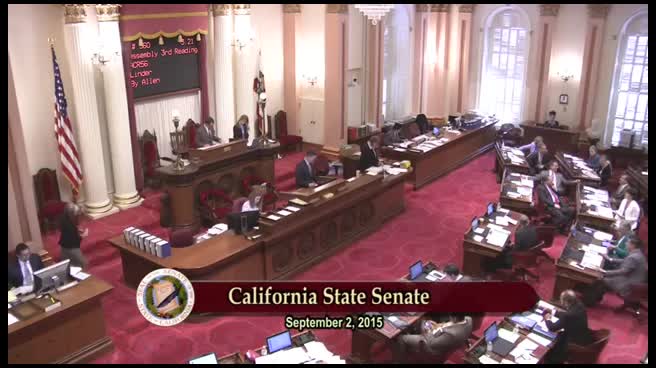 2MIN
Senate Floor
 3MIN
Senate Standing Committee on Appropriations
 6MIN
Senate Standing Committee on Business, Professions and Economic Development
 6MIN
Senate Standing Committee on Business, Professions and Economic Development
 1MIN
Assembly Floor
 2MIN
Assembly Standing Committee on Appropriations
Bill Author

Bill Co-Author(s):