AB 807: Real estate transfer fees: recorded documents.
- Session Year: 2015-2016
- House: Assembly
- Latest Version Date: 2015-10-08
Existing law defines a transfer fee as a fee payment requirement imposed in any covenant, restriction, or condition contained in any deed, contract, security instrument, or other document affecting the transfer or sale of real property that requires a fee be paid upon transfer of the real property, with specified exceptions. Existing law, with regard to a transfer fee imposed upon real property on or after January 1, 2008, requires the person or entity imposing the transfer fee, as a condition of payment of the fee, to record a specified document describing the transfer fee concurrently with the instrument creating the transfer fee requirement. Existing law requires these recorded documents to include information on the amount of the fee and actual dollar examples of the fee for a residential property, among other things. Existing law requires a transferor of residential real property subject to transfer fees to make a specified disclosure regarding those fees.
This bill would specify that the required information on the recorded document include the method for calculating the amount of the transfer fee, if not a flat amount or a percentage of the sales price, and include the actual dollar examples of the fee for a residential property if the amount of the fee is based on the price of the real property. The bill would also require the transferor of residential real property subject to transfer fees to make the specified disclosure regarding those fees if the recorded document describing the transfer fees has not already been provided. The bill would also clarify the definition of a transfer fee.
Existing law excludes from the definition of a transfer fee any fee reflected in a document recorded against the property on or before December 31, 2007, that is separate from any covenants, conditions, and restrictions, and that provides a prospective transferee notice of specified information, including the amount or method of calculation of the fee.
This bill would specify that the information shall be set forth in a single document and may not be incorporated by reference from any other document.
This bill would provide that a fee reflected in a document recorded against the property on or before December 31, 2007, that is not separate from any covenants, conditions, and restrictions, or that incorporates by reference from another document, constitutes a transfer fee for the purposes of requirements relating to these fees. The bill would make unenforceable a transfer fee recorded against the property on or before December 31, 2007, that complies with the provisions described above and that incorporates by reference from another document unless it is recorded against the property on or before December 31, 2016, in a single document that complies with the provisions described above.
This bill would also make a legislative finding that certain changes made by this bill are clarifying and declaratory of existing law.
Existing law defines a transfer fee as a fee payment requirement imposed in any covenant, restriction, or condition contained in any deed, contract, security instrument, or other document affecting the transfer or sale of real property that requires a fee be paid upon transfer of the real property, with specified exceptions. Existing law, with regard to a transfer fee imposed upon real property on or after January 1, 2008, requires the person or entity imposing the transfer fee, as a condition of payment of the fee, to record a specified document describing the transfer fee concurrently with the instrument creating the transfer fee requirement. Existing law requires these recorded documents to include information on the amount of the fee and actual dollar examples of the fee for a residential property, among other things. Existing law requires a transferor of residential real property subject to transfer fees to make a specified disclosure regarding those fees.
This bill would specify that the required information on the recorded document include the method for calculating the amount of the transfer fee, if not a flat amount or a percentage of the sales price, and include the actual dollar examples of the fee for a residential property if the amount of the fee is based on the price of the real property. The bill would also require the transferor of residential real property subject to transfer fees to make the specified disclosure regarding those fees if the recorded document describing the transfer fees has not already been provided. The bill would also clarify the definition of a transfer fee.
Existing law excludes from the definition of a transfer fee any fee reflected in a document recorded against the property on or before December 31, 2007, that is separate from any covenants, conditions, and restrictions, and that provides a prospective transferee notice of specified information, including the amount or method of calculation of the fee.
This bill would specify that the information shall be set forth in a single document and may not be incorporated by reference from any other document.
This bill would provide that a fee reflected in a document recorded against the property on or before December 31, 2007, that is not separate from any covenants, conditions, and restrictions, or that incorporates by reference from another document, constitutes a transfer fee for the purposes of requirements relating to these fees. The bill would make unenforceable a transfer fee recorded against the property on or before December 31, 2007, that complies with the provisions described above and that incorporates by reference from another document unless it is recorded against the property on or before December 31, 2016, in a single document that complies with the provisions described above.
This bill would also make a legislative finding that certain changes made by this bill are clarifying and declaratory of existing law.
Existing law defines a transfer fee as a fee payment requirement imposed in any covenant, restriction, or condition contained in any deed, contract, security instrument, or other document affecting the transfer or sale of real property that requires a fee be paid upon transfer of the real property, with specified exceptions. Existing law, with regard to a transfer fee imposed upon real property on or after January 1, 2008, requires the person or entity imposing the transfer fee, as a condition of payment of the fee, to record a specified document describing the transfer fee concurrently with the instrument creating the transfer fee requirement. Existing law requires these recorded documents to include information on the amount of the fee and actual dollar examples of the fee for a residential property, among other things. Existing law requires a transferor of residential real property subject to transfer fees to make a specified disclosure regarding those fees.
This bill would specify that the required information on the recorded document include the method for calculating the amount of the transfer fee, if not a flat amount or a percentage of the sales price and include the actual dollar examples of the fee for a residential property if the amount of the fee is based on the price of the real property. The bill would also require the transferor of residential real property subject to transfer fees to make the specified disclosure regarding those fees if the recorded document describing the transfer fees has not already been provided. The bill would also clarify the definition of a transfer fee.
Existing law excludes from the definition of a transfer fee any fee reflected in a document recorded against the property on or before December 31, 2007, that is separate from any covenants, conditions, and restrictions, and that provides a prospective transferee notice of specified information, including the amount or method of calculation of the fee.
This bill would specify that the information shall be set forth in a single document and may not be incorporated by reference from any other document.
This bill would provide that any a fee reflected in a document recorded against the property on or before December 31, 2007, that is not separate from any covenants, conditions, and restrictions, or that incorporates by reference from another document, constitutes a transfer fee transfer fee for the purposes of requirements relating to these fees. The bill would make unenforceable a transfer fee recorded against the property on or before December 31, 2007, that complies with the provisions described above and that incorporates by reference from another document unless it is recorded against the property on or before December 31, 2016, in a single document that complies with the provisions described above.
This bill would also make a legislative finding that certain changes made by this bill are clarifying and declaratory of existing law.
Existing law defines a transfer fee as a fee payment requirement imposed in any covenant, restriction, or condition contained in any deed, contract, security instrument, or other document affecting the transfer or sale of real property that requires a fee be paid upon transfer of the real property, with specified exceptions. Existing law, with regard to a transfer fee imposed upon real property on or after January 1, 2008, requires the person or entity imposing the transfer fee, as a condition of payment of the fee, to record a specified document describing the transfer fee concurrently with the instrument creating the transfer fee requirement. Existing law requires these recorded documents to include information on the amount of the fee and actual dollar examples of the fee for a residential property, among other things. Existing law requires a transferor of residential real property subject to transfer fees to make a specified disclosure regarding those fees.
This bill would specify that the required information on the recorded document include the method for calculating the amount of the transfer fee, if not a flat amount or a percentage of the sales price and include the actual dollar examples of the fee for a residential property if the amount of the fee is based on the price of the real property. The bill would also require the transferor of residential real property subject to transfer fees to make the specified disclosure regarding those fees if the recorded document describing the transfer fees has not already been provided. The bill would also clarify the definition of a transfer fee.
Existing law excludes from the definition of a transfer fee any fee reflected in a document recorded against the property on or before December 31, 2007, that is separate from any covenants, conditions, and restrictions, and that provides a prospective transferee notice of specified information, including the amount or method of calculation of the fee.
This bill would specify that the information shall be set forth in a single document and may not be incorporated by reference from any other document.
This bill would provide that any fee reflected in a document recorded against the property on or before December 31, 2007, that is not separate from any covenants, conditions, and restrictions, or that incorporates by reference from another document, constitutes a transfer fee unless it is recorded against the property on or before December 31, 2016, in a single document that complies with the provisions described above.
This bill would also make a legislative finding that certain changes made by this bill is are clarifying and declaratory of existing law.
Existing law defines a transfer fee as a fee payment requirement imposed in any covenant, restriction, or condition contained in any deed, contract, security instrument, or other document affecting the transfer or sale of real property that requires a fee be paid upon transfer of the real property, with specified exceptions. Existing law, with regard to a transfer fee imposed upon real property on or after January 1, 2008, requires the person or entity imposing the transfer fee, as a condition of payment of the fee, to record a specified document describing the transfer fee concurrently with the instrument creating the transfer fee requirement. Existing law requires these recorded documents to include information on the amount of the fee and actual dollar examples of the fee for a residential property, among other things. Existing law requires a transferor of residential real property subject to transfer fees to make a specified disclosure regarding those fees.
This bill would specify that the required information on the recorded document include the method for calculating the amount of the transfer fee, if not a flat amount or a percentage of the sales price and include the actual dollar examples of the fee for a residential property if the amount of the fee is based on the price of the real property. The bill would also require the transferor of residential real property subject to transfer fees to make the specified disclosure regarding those fees if the recorded document describing the transfer fees has not already been provided. The bill would also clarify the definition of a transfer fee.
Existing law excludes from the definition of a transfer fee any fee reflected in a document recorded against the property on or before December 31, 2007, that is separate from any covenants, conditions, and restrictions, and that provides a prospective transferee notice of specified information, including the amount or method of calculation of the fee.
This bill would specify that the information shall be set forth in a single document and may not be incorporated by reference from any other document.
This bill would also make a legislative finding that this bill is clarifying and declaratory of existing law.
Existing law defines a transfer fee as a fee payment requirement imposed in any covenant, restriction, or condition contained in any deed, contract, security instrument, or other document affecting the transfer or sale of real property that requires a fee be paid upon transfer of the real property, with specified exceptions. Existing law, with regard to a transfer fee imposed upon real property on or after January 1, 2008, requires the person or entity imposing the transfer fee, as a condition of payment of the fee, to record a specified document describing the transfer fee concurrently with the instrument creating the transfer fee requirement. Existing law requires these recorded documents to include information on the amount of the fee and actual dollar examples of the fee for a residential property, among other things. Existing law requires a transferor of residential real property subject to transfer fees to make a specified disclosure regarding those fees.
This bill would specify that the required information on the recorded document include the method for calculating the amount of the transfer fee, if not a flat amount or a percentage of the sales price and include the actual dollar examples of the fee for a residential property if the amount of the fee is based on the price of the real property. The bill would also require the transferor of residential real property subject to transfer fees to make the specified disclosure regarding those fees if the recorded document describing the transfer fees has not already been provided. The bill would also clarify the definition of a transfer fee.
This bill would also make a legislative finding that this bill is clarifying and declaratory of existing law.
(a)A transfer fee is any fee payment requirement imposed within a covenant, restriction, or condition contained in any deed, contract, security instrument, or other document affecting the transfer or sale of, or any interest in, real property that requires a fee be paid as a result of transfer of the real property. A transfer fee does not include any of the following:
(1)Fees or taxes imposed by a governmental entity.
(2)Fees pursuant to mechanics liens.
(3)Fees pursuant to court-ordered transfers, payments, or judgments.
(4)Fees pursuant to property agreements in connection with a legal separation or dissolution of marriage.
(5)Fees, charges, or payments in connection with the administration of estates or trusts pursuant to Division 7 (commencing with Section 7000), Division 8 (commencing with Section 13000), or Division 9 (commencing with Section 15000) of the Probate Code.
(6)Fees, charges, or payments imposed by lenders or purchasers of loans, as these entities are described in subdivision (c) of Section 10232 of the Business and Professions Code.
(7)Assessments, charges, penalties, or fees authorized by the Davis-Stirling Common Interest Development Act (Part 5 (commencing with Section 4000) of Division 4) or by the Commercial and Industrial Common Interest Development Act (Part 5.3 (commencing with Section 6500) of Division 4).
(8)Fees, charges, or payments for failing to comply with, or for transferring the real property prior to satisfying, an obligation to construct residential improvements on the real property.
(9)(A)Any fee reflected in a document recorded against the property on or before December 31, 2007, that is separate from any covenants, conditions, and restrictions, and that substantially complies with subdivision (a) of Section 1098.5 by providing a prospective transferee notice of the following:
(i)Payment of a transfer fee is required.
(ii)The amount or method of calculation of the fee.
(iii)The date or circumstances under which the transfer fee payment requirement expires, if any.
(iv)The entity to which the fee will be paid.
(v)The general purposes for which the fee will be used.
(B)A fee reflected in a document recorded against the property on or before December 31, 2007, that is not separate from any covenants, conditions, and restrictions, or that incorporates by reference from another document, is a transfer fee for purposes of Section 1098.5. A transfer fee recorded against the property on or before December 31, 2007, that complies with subparagraph (A) and incorporates by reference from another document is unenforceable unless recorded against the property on or before December 31, 2016, in a single document that complies with subdivision (b) and with Section 1098.5.
(b)The information in paragraph (9) of subdivision (a) shall be set forth in a single document and shall not be incorporated by reference from any other document.
SEC. 2.Section 1098.5 of the Civil Code is amended to read:1098.5.(a)For transfer fees, as defined in Section 1098, imposed prior to January 1, 2008, the receiver of the fee, as a condition of payment of the fee on or after January 1, 2009, shall record, on or before December 31, 2008, against the real property in the office of the county recorder for the county in which the real property is located a separate document that meets all of the following requirements:
(1)The title of the document shall be Payment of Transfer Fee Required in at least 14-point boldface type.
(2)The document shall include all of the following information:
(A)The names of all current owners of the real property subject to the transfer fee, and the legal description and assessors parcel number for the affected real property.
(B)The amount, if the fee is a flat amount, or the percentage of the sales price constituting the cost of the fee.
(C)If the real property is residential property, actual dollar-cost examples of the fee for a home priced at two hundred fifty thousand dollars ($250,000), five hundred thousand dollars ($500,000), and seven hundred fifty thousand dollars ($750,000).
(D)The date or circumstances under which the transfer fee payment requirement expires, if any.
(E)The purpose for which the funds from the fee will be used.
(F)The entity to which funds from the fee will be paid and specific contact information regarding where the funds are to be sent.
(G)The signature of the authorized representative of the entity to which funds from the fee will be paid.
(b)When a transfer fee, as defined in Section 1098, is imposed upon real property on or after January 1, 2008, the person or entity imposing the transfer fee, as a condition of payment of the fee, shall record in the office of the county recorder for the county in which the real property is located, concurrently with the instrument creating the transfer fee requirement, a separate document that meets all of the following requirements:
(1)The title of the document shall be Payment of Transfer Fee Required in at least 14-point boldface type.
(2)The document shall include all of the following information:
(A)The names of all current owners of the real property subject to the transfer fee, and the legal description and assessors parcel number for the affected real property.
(B)The amount, if the fee is a flat amount, the percentage of the sales price constituting the cost of the fee, or the method for calculating the amount.
(C)If the real property is residential property and the amount of the fee is based on the price of the real property, actual dollar-cost examples of the fee for a home priced at two hundred fifty thousand dollars ($250,000), five hundred thousand dollars ($500,000), and seven hundred fifty thousand dollars ($750,000).
(D)The date or circumstances under which the transfer fee payment requirement expires, if any.
(E)The purpose for which the funds from the fee will be used.
(F)The entity to which funds from the fee will be paid and specific contact information regarding where the funds are to be sent.
(G)The signature of the authorized representative of the entity to which funds from the fee will be paid.
(c)The recorder shall only be responsible for examining that the document required by subdivision (a) or (b) contains the information required by subparagraphs (A), (F), and (G) of paragraph (2) of subdivision (a) or (b). The recorder shall index the document under the names of the persons and entities identified in subparagraphs (A) and (F) of paragraph (2) of subdivision (a) or (b). The recorder shall not examine any other information contained in the document required by subdivision (a) or (b).
SEC. 3.Section 1102.6e of the Civil Code is amended to read:1102.6e.If a property being transferred on or after January 1, 2008, is subject to a transfer fee, as defined in Section 1098, the transferor shall provide, at the same time as the transfer disclosure statement required pursuant to Section 1102.6 is provided if the document required by subdivision (b) of Section 1098.5 has not already been provided, an additional disclosure statement containing all of the following:
(a)Notice that payment of a transfer fee is required as a result of transfer of the property.
(b)The amount of the fee required for the asking price of the real property, if the amount of the fee is based on the price of the real property, and a description of how the fee is calculated.
(c)Notice that the final amount of the fee may be different if the fee is based upon a percentage of the final sale price.
(d)The entity to which funds from the fee will be paid.
(e)The purposes for which funds from the fee will be used.
(f)The date or circumstances under which the obligation to pay the transfer fee expires, if any.
SEC. 4.The Legislature finds and declares that the addition of subdivision (b) to Section 1098 of, and the amendments to Sections 1098.5 and 1102.6e of, the Civil Code made by this act are clarifying and declaratory of existing law.
(a)A transfer fee is any fee payment requirement imposed within a covenant, restriction, or condition contained in any deed, contract, security instrument, or other document affecting the transfer or sale of, or any interest in, real property that requires a fee be paid as a result of transfer of the real property. A transfer fee does not include any of the following:
(1)Fees or taxes imposed by a governmental entity.
(2)Fees pursuant to mechanics liens.
(3)Fees pursuant to court-ordered transfers, payments, or judgments.
(4)Fees pursuant to property agreements in connection with a legal separation or dissolution of marriage.
(5)Fees, charges, or payments in connection with the administration of estates or trusts pursuant to Division 7 (commencing with Section 7000), Division 8 (commencing with Section 13000), or Division 9 (commencing with Section 15000) of the Probate Code.
(6)Fees, charges, or payments imposed by lenders or purchasers of loans, as these entities are described in subdivision (c) of Section 10232 of the Business and Professions Code.
(7)Assessments, charges, penalties, or fees authorized by the Davis-Stirling Common Interest Development Act (Part 5 (commencing with Section 4000) of Division 4) or by the Commercial and Industrial Common Interest Development Act (Part 5.3 (commencing with Section 6500) of Division 4).
(8)Fees, charges, or payments for failing to comply with, or for transferring the real property prior to satisfying, an obligation to construct residential improvements on the real property.
(9)(A)Any fee reflected in a document recorded against the property on or before December 31, 2007, that is separate from any covenants, conditions, and restrictions, and that substantially complies with subdivision (a) of Section 1098.5 by providing a prospective transferee notice of the following:
(i)Payment of a transfer fee is required.
(ii)The amount or method of calculation of the fee.
(iii)The date or circumstances under which the transfer fee payment requirement expires, if any.
(iv)The entity to which the fee will be paid.
(v)The general purposes for which the fee will be used.
(B)A fee reflected in a document recorded against the property on or before December 31, 2007, that is not separate from any covenants, conditions, and restrictions, or that incorporates by reference from another document, is a transfer fee for purposes of Section 1098.5. A transfer fee recorded against the property on or before December 31, 2007, that complies with subparagraph (A) and incorporates by reference from another document is unenforceable unless recorded against the property on or before December 31, 2016, in a single document that complies with subdivision (b) and with Section 1098.5.
(b)The information in paragraph (9) of subdivision (a) shall be set forth in a single document and shall not be incorporated by reference from any other document.
SEC. 2.Section 1098.5 of the Civil Code is amended to read:1098.5.(a)For transfer fees, as defined in Section 1098, imposed prior to January 1, 2008, the receiver of the fee, as a condition of payment of the fee on or after January 1, 2009, shall record, on or before December 31, 2008, against the real property in the office of the county recorder for the county in which the real property is located a separate document that meets all of the following requirements:
(1)The title of the document shall be Payment of Transfer Fee Required in at least 14-point boldface type.
(2)The document shall include all of the following information:
(A)The names of all current owners of the real property subject to the transfer fee, and the legal description and assessors parcel number for the affected real property.
(B)The amount, if the fee is a flat amount, or the percentage of the sales price constituting the cost of the fee.
(C)If the real property is residential property, actual dollar-cost examples of the fee for a home priced at two hundred fifty thousand dollars ($250,000), five hundred thousand dollars ($500,000), and seven hundred fifty thousand dollars ($750,000).
(D)The date or circumstances under which the transfer fee payment requirement expires, if any.
(E)The purpose for which the funds from the fee will be used.
(F)The entity to which funds from the fee will be paid and specific contact information regarding where the funds are to be sent.
(G)The signature of the authorized representative of the entity to which funds from the fee will be paid.
(b)When a transfer fee, as defined in Section 1098, is imposed upon real property on or after January 1, 2008, the person or entity imposing the transfer fee, as a condition of payment of the fee, shall record in the office of the county recorder for the county in which the real property is located, concurrently with the instrument creating the transfer fee requirement, a separate document that meets all of the following requirements:
(1)The title of the document shall be Payment of Transfer Fee Required in at least 14-point boldface type.
(2)The document shall include all of the following information:
(A)The names of all current owners of the real property subject to the transfer fee, and the legal description and assessors parcel number for the affected real property.
(B)The amount, if the fee is a flat amount, the percentage of the sales price constituting the cost of the fee, or the method for calculating the amount.
(C)If the real property is residential property and the amount of the fee is based on the price of the real property, actual dollar-cost examples of the fee for a home priced at two hundred fifty thousand dollars ($250,000), five hundred thousand dollars ($500,000), and seven hundred fifty thousand dollars ($750,000).
(D)The date or circumstances under which the transfer fee payment requirement expires, if any.
(E)The purpose for which the funds from the fee will be used.
(F)The entity to which funds from the fee will be paid and specific contact information regarding where the funds are to be sent.
(G)The signature of the authorized representative of the entity to which funds from the fee will be paid.
(c)The recorder shall only be responsible for examining that the document required by subdivision (a) or (b) contains the information required by subparagraphs (A), (F), and (G) of paragraph (2) of subdivision (a) or (b). The recorder shall index the document under the names of the persons and entities identified in subparagraphs (A) and (F) of paragraph (2) of subdivision (a) or (b). The recorder shall not examine any other information contained in the document required by subdivision (a) or (b).
SEC. 3.Section 1102.6e of the Civil Code is amended to read:1102.6e.If a property being transferred on or after January 1, 2008, is subject to a transfer fee, as defined in Section 1098, the transferor shall provide, at the same time as the transfer disclosure statement required pursuant to Section 1102.6 is provided if the document required by subdivision (b) of Section 1098.5 has not already been provided, an additional disclosure statement containing all of the following:
(a)Notice that payment of a transfer fee is required as a result of transfer of the property.
(b)The amount of the fee required for the asking price of the real property, if the amount of the fee is based on the price of the real property, and a description of how the fee is calculated.
(c)Notice that the final amount of the fee may be different if the fee is based upon a percentage of the final sale price.
(d)The entity to which funds from the fee will be paid.
(e)The purposes for which funds from the fee will be used.
(f)The date or circumstances under which the obligation to pay the transfer fee expires, if any.
SEC. 4.The Legislature finds and declares that the addition of subdivision (b) to Section 1098 of, and the amendments to Sections 1098.5 and 1102.6e of, the Civil Code made by this act are clarifying and declaratory of existing law.
(a)A transfer fee is any fee payment requirement imposed within a covenant, restriction, or condition contained in any deed, contract, security instrument, or other document affecting the transfer or sale of, or any interest in, real property that requires a fee be paid as a result of transfer of the real property. A transfer fee does not include any of the following:
(1)Fees or taxes imposed by a governmental entity.
(2)Fees pursuant to mechanics liens.
(3)Fees pursuant to court-ordered transfers, payments, or judgments.
(4)Fees pursuant to property agreements in connection with a legal separation or dissolution of marriage.
(5)Fees, charges, or payments in connection with the administration of estates or trusts pursuant to Division 7 (commencing with Section 7000), Division 8 (commencing with Section 13000), or Division 9 (commencing with Section 15000) of the Probate Code.
(6)Fees, charges, or payments imposed by lenders or purchasers of loans, as these entities are described in subdivision (c) of Section 10232 of the Business and Professions Code.
(7)Assessments, charges, penalties, or fees authorized by the Davis-Stirling Common Interest Development Act (Part 5 (commencing with Section 4000) of Division 4) or by the Commercial and Industrial Common Interest Development Act (Part 5.3 (commencing with Section 6500) of Division 4).
(8)Fees, charges, or payments for failing to comply with, or for transferring the real property prior to satisfying, an obligation to construct residential improvements on the real property.
(9)(A)Any fee reflected in a document recorded against the property on or before December 31, 2007, that is separate from any covenants, conditions, and restrictions, and that substantially complies with subdivision (a) of Section 1098.5 by providing a prospective transferee notice of the following:
(A)
(i)Payment of a transfer fee is required.
(B)
(ii)The amount or method of calculation of the fee.
(C)
(iii)The date or circumstances under which the transfer fee payment requirement expires, if any.
(D)
(iv)The entity to which the fee will be paid.
(E)
(v)The general purposes for which the fee will be used.
(B)A fee reflected in a document recorded against the property on or before December 31, 2007, that is not separate from any covenants, conditions, and restrictions, or that incorporates by reference from another document, is a transfer fee for purposes of Section 1098.5. A transfer fee recorded against the property on or before December 31, 2007, that complies with subparagraph (A) and incorporates by reference from another document is unenforceable unless recorded against the property on or before December 31, 2016, in a single document that complies with subdivision (b) and with Section 1098.5.
(b)The information in paragraph (9) of subdivision (a) shall be set forth in a single document and may shall not be incorporated by reference from any other document.
(c)Any fee reflected in a document recorded against the property on or before December 31, 2007, that is not separate from any covenants, conditions, and restrictions, or that incorporates by reference from another document, shall constitute a transfer fee for purposes of Section 1098.5, unless it is recorded against the property on or before December 31, 2016, in a single document that complies with paragraph (9) of subdivision (a) and subdivision (b).
SEC. 2.Section 1098.5 of the Civil Code is amended to read:1098.5.(a)For transfer fees, as defined in Section 1098, imposed prior to January 1, 2008, the receiver of the fee, as a condition of payment of the fee on or after January 1, 2009, shall record, on or before December 31, 2008, against the real property in the office of the county recorder for the county in which the real property is located a separate document that meets all of the following requirements:
(1)The title of the document shall be Payment of Transfer Fee Required in at least 14-point boldface type.
(2)The document shall include all of the following information:
(A)The names of all current owners of the real property subject to the transfer fee, and the legal description and assessors parcel number for the affected real property.
(B)The amount, if the fee is a flat amount, or the percentage of the sales price constituting the cost of the fee.
(C)If the real property is residential property, actual dollar-cost examples of the fee for a home priced at two hundred fifty thousand dollars ($250,000), five hundred thousand dollars ($500,000), and seven hundred fifty thousand dollars ($750,000).
(D)The date or circumstances under which the transfer fee payment requirement expires, if any.
(E)The purpose for which the funds from the fee will be used.
(F)The entity to which funds from the fee will be paid and specific contact information regarding where the funds are to be sent.
(G)The signature of the authorized representative of the entity to which funds from the fee will be paid.
(b)When a transfer fee, as defined in Section 1098, is imposed upon real property on or after January 1, 2008, the person or entity imposing the transfer fee, as a condition of payment of the fee, shall record in the office of the county recorder for the county in which the real property is located, concurrently with the instrument creating the transfer fee requirement, a separate document that meets all of the following requirements:
(1)The title of the document shall be Payment of Transfer Fee Required in at least 14-point boldface type.
(2)The document shall include all of the following information:
(A)The names of all current owners of the real property subject to the transfer fee, and the legal description and assessors parcel number for the affected real property.
(B)The amount, if the fee is a flat amount, the percentage of the sales price constituting the cost of the fee, or the method for calculating the amount.
(C)If the real property is residential property and the amount of the fee is based on the price of the real property, actual dollar-cost examples of the fee for a home priced at two hundred fifty thousand dollars ($250,000), five hundred thousand dollars ($500,000), and seven hundred fifty thousand dollars ($750,000).
(D)The date or circumstances under which the transfer fee payment requirement expires, if any.
(E)The purpose for which the funds from the fee will be used.
(F)The entity to which funds from the fee will be paid and specific contact information regarding where the funds are to be sent.
(G)The signature of the authorized representative of the entity to which funds from the fee will be paid.
(c)The recorder shall only be responsible for examining that the document required by subdivision (a) or (b) contains the information required by subparagraphs (A), (F), and (G) of paragraph (2) of subdivision (a) or (b). The recorder shall index the document under the names of the persons and entities identified in subparagraphs (A) and (F) of paragraph (2) of subdivision (a) or (b). The recorder shall not examine any other information contained in the document required by subdivision (a) or (b).
SEC. 3.Section 1102.6e of the Civil Code is amended to read:1102.6e.If a property being transferred on or after January 1, 2008, is subject to a transfer fee, as defined in Section 1098, the transferor shall provide, at the same time as the transfer disclosure statement required pursuant to Section 1102.6 is provided if the document required by subdivision (b) of Section 1098.5 has not already been provided, an additional disclosure statement containing all of the following:
(a)Notice that payment of a transfer fee is required as a result of transfer of the property.
(b)The amount of the fee required for the asking price of the real property, if the amount of the fee is based on the price of the real property, and a description of how the fee is calculated.
(c)Notice that the final amount of the fee may be different if the fee is based upon a percentage of the final sale price.
(d)The entity to which funds from the fee will be paid.
(e)The purposes for which funds from the fee will be used.
(f)The date or circumstances under which the obligation to pay the transfer fee expires, if any.
SEC. 4.The Legislature finds and declares that the addition of subdivision (b) to Section 1098 of, and the amendments to Sections 1098.5 and 1102.6e of, the Civil Code made by this act are clarifying and declaratory of existing law.
(a)A transfer fee is any fee payment requirement imposed within a covenant, restriction, or condition contained in any deed, contract, security instrument, or other document affecting the transfer or sale of, or any interest in, real property that requires a fee be paid as a result of transfer of the real property. A transfer fee does not include any of the following:
(1)Fees or taxes imposed by a governmental entity.
(2)Fees pursuant to mechanics liens.
(3)Fees pursuant to court-ordered transfers, payments, or judgments.
(4)Fees pursuant to property agreements in connection with a legal separation or dissolution of marriage.
(5)Fees, charges, or payments in connection with the administration of estates or trusts pursuant to Division 7 (commencing with Section 7000), Division 8 (commencing with Section 13000), or Division 9 (commencing with Section 15000) of the Probate Code.
(6)Fees, charges, or payments imposed by lenders or purchasers of loans, as these entities are described in subdivision (c) of Section 10232 of the Business and Professions Code.
(7)Assessments, charges, penalties, or fees authorized by the Davis-Stirling Common Interest Development Act (Part 5 (commencing with Section 4000) of Division 4) or by the Commercial and Industrial Common Interest Development Act (Part 5.3 (commencing with Section 6500) of Division 4).
(8)Fees, charges, or payments for failing to comply with, or for transferring the real property prior to satisfying, an obligation to construct residential improvements on the real property.
(9)Any fee reflected in a document recorded against the property on or before December 31, 2007, that is separate from any covenants, conditions, and restrictions, and that substantially complies with subdivision (a) of Section 1098.5 by providing a prospective transferee notice of the following:
(A)Payment of a transfer fee is required.
(B)The amount or method of calculation of the fee.
(C)The date or circumstances under which the transfer fee payment requirement expires, if any.
(D)The entity to which the fee will be paid.
(E)The general purposes for which the fee will be used.
(b)The information in paragraph (9) of subdivision (a) shall be set forth in a single document and may not be incorporated by reference from any other document.
(c)Any fee reflected in a document recorded against the property on or before December 31, 2007, that is not separate from any covenants, conditions, and restrictions, or that incorporates by reference from another document, shall constitute a transfer fee for purposes of Section 1098.5, unless it is recorded against the property on or before December 31, 2016, in a single document that complies with paragraph (9) of subdivision (a) and subdivision (b).
SEC. 2.Section 1098.5 of the Civil Code is amended to read:1098.5.(a)For transfer fees, as defined in Section 1098, imposed prior to January 1, 2008, the receiver of the fee, as a condition of payment of the fee on or after January 1, 2009, shall record, on or before December 31, 2008, against the real property in the office of the county recorder for the county in which the real property is located a separate document that meets all of the following requirements:
(1)The title of the document shall be Payment of Transfer Fee Required in at least 14-point boldface type.
(2)The document shall include all of the following information:
(A)The names of all current owners of the real property subject to the transfer fee, and the legal description and assessors parcel number for the affected real property.
(B)The amount, if the fee is a flat amount, or the percentage of the sales price constituting the cost of the fee.
(C)If the real property is residential property, actual dollar-cost examples of the fee for a home priced at two hundred fifty thousand dollars ($250,000), five hundred thousand dollars ($500,000), and seven hundred fifty thousand dollars ($750,000).
(D)The date or circumstances under which the transfer fee payment requirement expires, if any.
(E)The purpose for which the funds from the fee will be used.
(F)The entity to which funds from the fee will be paid and specific contact information regarding where the funds are to be sent.
(G)The signature of the authorized representative of the entity to which funds from the fee will be paid.
(b)When a transfer fee, as defined in Section 1098, is imposed upon real property on or after January 1, 2008, the person or entity imposing the transfer fee, as a condition of payment of the fee, shall record in the office of the county recorder for the county in which the real property is located, concurrently with the instrument creating the transfer fee requirement, a separate document that meets all of the following requirements:
(1)The title of the document shall be Payment of Transfer Fee Required in at least 14-point boldface type.
(2)The document shall include all of the following information:
(A)The names of all current owners of the real property subject to the transfer fee, and the legal description and assessors parcel number for the affected real property.
(B)The amount, if the fee is a flat amount, the percentage of the sales price constituting the cost of the fee, or the method for calculating the amount.
(C)If the real property is residential property and the amount of the fee is based on the price of the real property, actual dollar-cost examples of the fee for a home priced at two hundred fifty thousand dollars ($250,000), five hundred thousand dollars ($500,000), and seven hundred fifty thousand dollars ($750,000).
(D)The date or circumstances under which the transfer fee payment requirement expires, if any.
(E)The purpose for which the funds from the fee will be used.
(F)The entity to which funds from the fee will be paid and specific contact information regarding where the funds are to be sent.
(G)The signature of the authorized representative of the entity to which funds from the fee will be paid.
(c)The recorder shall only be responsible for examining that the document required by subdivision (a) or (b) contains the information required by subparagraphs (A), (F), and (G) of paragraph (2) of subdivision (a) or (b). The recorder shall index the document under the names of the persons and entities identified in subparagraphs (A) and (F) of paragraph (2) of subdivision (a) or (b). The recorder shall not examine any other information contained in the document required by subdivision (a) or (b).
SEC. 3.Section 1102.6e of the Civil Code is amended to read:1102.6e.If a property being transferred on or after January 1, 2008, is subject to a transfer fee, as defined in Section 1098, the transferor shall provide, at the same time as the transfer disclosure statement required pursuant to Section 1102.6 is provided if the document required by subdivision (b) of Section 1098.5 has not already been provided, an additional disclosure statement containing all of the following:
(a)Notice that payment of a transfer fee is required as a result of transfer of the property.
(b)The amount of the fee required for the asking price of the real property, if the amount of the fee is based on the price of the real property, and a description of how the fee is calculated.
(c)Notice that the final amount of the fee may be different if the fee is based upon a percentage of the final sale price.
(d)The entity to which funds from the fee will be paid.
(e)The purposes for which funds from the fee will be used.
(f)The date or circumstances under which the obligation to pay the transfer fee expires, if any.
SEC. 4.The Legislature finds and declares that the amendments made by this act to Sections 1098, 1098.5, and 1102.6e of the Civil Code addition of subdivision (b) to Section 1098 of, and the amendments to Sections 1098.5 and 1102.6e of, the Civil Code made by this act are clarifying and declaratory of existing law.
(a)A transfer fee is any fee payment requirement imposed within a covenant, restriction, or condition contained in any deed, contract, security instrument, or other document affecting the transfer or sale of, or any interest in, real property that requires a fee be paid as a result of transfer of the real property. A transfer fee does not include any of the following:
(a)
(1)Fees or taxes imposed by a governmental entity.
(b)
(2)Fees pursuant to mechanics liens.
(c)
(3)Fees pursuant to court-ordered transfers, payments, or judgments.
(d)
(4)Fees pursuant to property agreements in connection with a legal separation or dissolution of marriage.
(e)
(5)Fees, charges, or payments in connection with the administration of estates or trusts pursuant to Division 7 (commencing with Section 7000), Division 8 (commencing with Section 13000), or Division 9 (commencing with Section 15000) of the Probate Code.
(f)
(6)Fees, charges, or payments imposed by lenders or purchasers of loans, as these entities are described in subdivision (c) of Section 10232 of the Business and Professions Code.
(g)
(7)Assessments, charges, penalties, or fees authorized by the Davis-Stirling Common Interest Development Act (Part 5 (commencing with Section 4000) of Division 4) or by the Commercial and Industrial Common Interest Development Act (Part 5.3 (commencing with Section 6500) of Division 4).
(h)
(8)Fees, charges, or payments for failing to comply with, or for transferring the real property prior to satisfying, an obligation to construct residential improvements on the real property.
(i)
(9)Any fee reflected in a document recorded against the property on or before December 31, 2007, that is separate from any covenants, conditions, and restrictions, and that substantially complies with subdivision (a) of Section 1098.5 by providing a prospective transferee notice of the following:
(1)
(A)Payment of a transfer fee is required.
(2)
(B)The amount or method of calculation of the fee.
(3)
(C)The date or circumstances under which the transfer fee payment requirement expires, if any.
(4)
(D)The entity to which the fee will be paid.
(5)
(E)The general purposes for which the fee will be used.
(b)The information in paragraph (9) of subdivision (a) shall be set forth in a single document and may not be incorporated by reference from any other document.
SEC. 2.Section 1098.5 of the Civil Code is amended to read:1098.5.(a)For transfer fees, as defined in Section 1098, imposed prior to January 1, 2008, the receiver of the fee, as a condition of payment of the fee on or after January 1, 2009, shall record, on or before December 31, 2008, against the real property in the office of the county recorder for the county in which the real property is located a separate document that meets all of the following requirements:
(1)The title of the document shall be Payment of Transfer Fee Required in at least 14-point boldface type.
(2)The document shall include all of the following information:
(A)The names of all current owners of the real property subject to the transfer fee, and the legal description and assessors parcel number for the affected real property.
(B)The amount, if the fee is a flat amount, or the percentage of the sales price constituting the cost of the fee.
(C)If the real property is residential property, actual dollar-cost examples of the fee for a home priced at two hundred fifty thousand dollars ($250,000), five hundred thousand dollars ($500,000), and seven hundred fifty thousand dollars ($750,000).
(D)The date or circumstances under which the transfer fee payment requirement expires, if any.
(E)The purpose for which the funds from the fee will be used.
(F)The entity to which funds from the fee will be paid and specific contact information regarding where the funds are to be sent.
(G)The signature of the authorized representative of the entity to which funds from the fee will be paid.
(b)When a transfer fee, as defined in Section 1098, is imposed upon real property on or after January 1, 2008, the person or entity imposing the transfer fee, as a condition of payment of the fee, shall record in the office of the county recorder for the county in which the real property is located, concurrently with the instrument creating the transfer fee requirement, a separate document that meets all of the following requirements:
(1)The title of the document shall be Payment of Transfer Fee Required in at least 14-point boldface type.
(2)The document shall include all of the following information:
(A)The names of all current owners of the real property subject to the transfer fee, and the legal description and assessors parcel number for the affected real property.
(B)The amount, if the fee is a flat amount, the percentage of the sales price constituting the cost of the fee, or the method for calculating the amount.
(C)If the real property is residential property and the amount of the fee is based on the price of the real property, actual dollar-cost examples of the fee for a home priced at two hundred fifty thousand dollars ($250,000), five hundred thousand dollars ($500,000), and seven hundred fifty thousand dollars ($750,000).
(D)The date or circumstances under which the transfer fee payment requirement expires, if any.
(E)The purpose for which the funds from the fee will be used.
(F)The entity to which funds from the fee will be paid and specific contact information regarding where the funds are to be sent.
(G)The signature of the authorized representative of the entity to which funds from the fee will be paid.
(c)The recorder shall only be responsible for examining that the document required by subdivision (a) or (b) contains the information required by subparagraphs (A), (F), and (G) of paragraph (2) of subdivision (a) or (b). The recorder shall index the document under the names of the persons and entities identified in subparagraphs (A) and (F) of paragraph (2) of subdivision (a) or (b). The recorder shall not examine any other information contained in the document required by subdivision (a) or (b).
SEC. 3.Section 1102.6e of the Civil Code is amended to read:1102.6e.If a property being transferred on or after January 1, 2008, is subject to a transfer fee, as defined in Section 1098, the transferor shall provide, at the same time as the transfer disclosure statement required pursuant to Section 1102.6 is provided if the document required by subdivision (b) of Section 1098.5 has not already been provided, an additional disclosure statement containing all of the following:
(a)Notice that payment of a transfer fee is required as a result of transfer of the property.
(b)The amount of the fee required for the asking price of the real property, if the amount of the fee is based on the price of the real property, and a description of how the fee is calculated.
(c)Notice that the final amount of the fee may be different if the fee is based upon a percentage of the final sale price.
(d)The entity to which funds from the fee will be paid.
(e)The purposes for which funds from the fee will be used.
(f)The date or circumstances under which the obligation to pay the transfer fee expires, if any.
SEC. 4.The Legislature finds and declares that the amendments made by this act to Sections 1098, 1098.5, and 1102.6e of the Civil Code are clarifying and declaratory of existing law.
A transfer fee is any fee payment requirement imposed within a covenant, restriction, or condition contained in any deed, contract, security instrument, or other document affecting the transfer or sale of, or any interest in, real property that requires a fee be paid upon as a result of transfer of the real property. A transfer fee does not include any of the following:
(a)Fees or taxes imposed by a governmental entity.
(b)Fees pursuant to mechanics liens.
(c)Fees pursuant to court-ordered transfers, payments, or judgments.
(d)Fees pursuant to property agreements in connection with a legal separation or dissolution of marriage.
(e)Fees, charges, or payments in connection with the administration of estates or trusts pursuant to Division 7 (commencing with Section 7000), Division 8 (commencing with Section 13000), or Division 9 (commencing with Section 15000) of the Probate Code.
(f)Fees, charges, or payments imposed by lenders or purchasers of loans, as these entities are described in subdivision (c) of Section 10232 of the Business and Professions Code.
(g)Assessments, charges, penalties, or fees authorized by the Davis-Stirling Common Interest Development Act (Part 5 (commencing with Section 4000) of Division 4) or by the Commercial and Industrial Common Interest Development Act (Part 5.3 (commencing with Section 6500) of Division 4).
(h)Fees, charges, or payments for failing to comply with, or for transferring the real property prior to satisfying, an obligation to construct residential improvements on the real property.
(i)Any fee reflected in a document recorded against the property on or before December 31, 2007, that is separate from any covenants, conditions, and restrictions, and that substantially complies with subdivision (a) of Section 1098.5 by providing a prospective transferee notice of the following:
(1)Payment of a transfer fee is required.
(2)The amount or method of calculation of the fee.
(3)The date or circumstances under which the transfer fee payment requirement expires, if any.
(4)The entity to which the fee will be paid.
(5)The general purposes for which the fee will be used.
SEC. 2.Section 1098.5 of the Civil Code is amended to read:1098.5.(a)For transfer fees, as defined in Section 1098, imposed prior to January 1, 2008, the receiver of the fee, as a condition of payment of the fee on or after January 1, 2009, shall record, on or before December 31, 2008, against the real property in the office of the county recorder for the county in which the real property is located a separate document that meets all of the following requirements:
(1)The title of the document shall be Payment of Transfer Fee Required in at least 14-point boldface type.
(2)The document shall include all of the following information:
(A)The names of all current owners of the real property subject to the transfer fee, and the legal description and assessors parcel number for the affected real property.
(B)The amount, if the fee is a flat amount, or the percentage of the sales price constituting the cost of the fee.
(C)If the real property is residential property, actual dollar-cost examples of the fee for a home priced at two hundred fifty thousand dollars ($250,000), five hundred thousand dollars ($500,000), and seven hundred fifty thousand dollars ($750,000).
(D)The date or circumstances under which the transfer fee payment requirement expires, if any.
(E)The purpose for which the funds from the fee will be used.
(F)The entity to which funds from the fee will be paid and specific contact information regarding where the funds are to be sent.
(G)The signature of the authorized representative of the entity to which funds from the fee will be paid.
(b)When a transfer fee, as defined in Section 1098, is imposed upon real property on or after January 1, 2008, the person or entity imposing the transfer fee, as a condition of payment of the fee, shall record in the office of the county recorder for the county in which the real property is located, concurrently with the instrument creating the transfer fee requirement, a separate document that meets all of the following requirements:
(1)The title of the document shall be Payment of Transfer Fee Required in at least 14-point boldface type.
(2)The document shall include all of the following information:
(A)The names of all current owners of the real property subject to the transfer fee, and the legal description and assessors parcel number for the affected real property.
(B)The amount, if the fee is a flat amount, or the percentage of the sales price constituting the cost of the fee, or the method for calculating the amount.
(C)If the real property is residential property and the amount of the fee is based on the price of the real property, actual dollar-cost examples of the fee for a home priced at two hundred fifty thousand dollars ($250,000), five hundred thousand dollars ($500,000), and seven hundred fifty thousand dollars ($750,000).
(D)The date or circumstances under which the transfer fee payment requirement expires, if any.
(E)The purpose for which the funds from the fee will be used.
(F)The entity to which funds from the fee will be paid and specific contact information regarding where the funds are to be sent.
(G)The signature of the authorized representative of the entity to which funds from the fee will be paid.
(c)The recorder shall only be responsible for examining that the document required by subdivision (a) or (b) contains the information required by subparagraphs (A), (F), and (G) of paragraph (2) of subdivision (a) or (b). The recorder shall index the document under the names of the persons and entities identified in subparagraphs (A) and (F) of paragraph (2) of subdivision (a) or (b). The recorder shall not examine any other information contained in the document required by subdivision (a) or (b).
SEC. 3.Section 1102.6e of the Civil Code is amended to read:1102.6e.If a property being transferred on or after January 1, 2008, is subject to a transfer fee, as defined in Section 1098, the transferor shall provide, at the same time as the transfer disclosure statement required pursuant to Section 1102.6 is provided if the document required by subdivision (b) of Section 1098.5 has not already been provided, an additional disclosure statement containing all of the following:
(a)Notice that payment of a transfer fee is required upon as a result of transfer of the property.
(b)The amount of the fee required for the asking price of the real property, if the amount of the fee is based on the price of the real property, and a description of how the fee is calculated.
(c)Notice that the final amount of the fee may be different if the fee is based upon a percentage of the final sale price.
(d)The entity to which funds from the fee will be paid.
(e)The purposes for which funds from the fee will be used.
(f)The date or circumstances under which the obligation to pay the transfer fee expires, if any.
SEC. 4.The Legislature finds and declares that the amendments made by this act to Sections 1098, 1098.5, and 1102.6e of the Civil Code are clarifying and declaratory of existing law.
|
Date
|
Status
|
|---|---|
| Jun 17, 2015 | Ordered to special consent calendar. |
| Oct 8, 2015 | Chaptered by Secretary of State - Chapter 634, Statutes of 2015. |
| Oct 8, 2015 | Approved by the Governor. |
| Sep 18, 2015 | Enrolled and presented to the Governor at 4 p.m. |
| Sep 9, 2015 | Senate amendments concurred in. To Engrossing and Enrolling. (Ayes 78. Noes 0.). |
| Sep 9, 2015 | Senate amendments concurred in. To Engrossing and Enrolling. (Ayes 78. Noes 0. Page 3018.). |
| Sep 9, 2015 | Senate amendments concurred in. To Engrossing and Enrolling. |
| Sep 9, 2015 | Assembly Rule 77 suspended. (Page 2990.) |
| Sep 9, 2015 | Assembly Rule 77 suspended. |
| Sep 8, 2015 | Read third time. Passed. Ordered to the Assembly. (Ayes 40. Noes 0. Page 2591.). |
| Sep 8, 2015 | Read third time. Passed. Ordered to the Assembly. |
| Sep 8, 2015 | In Assembly. Concurrence in Senate amendments pending. May be considered on or after September 10 pursuant to Assembly Rule 77. |
| Sep 4, 2015 | Read second time. Ordered to third reading. |
| Sep 3, 2015 | Read third time and amended. Ordered to second reading. |
| Jun 18, 2015 | Ordered to third reading. |
| Feb 26, 2015 | Read first time. To print. |
| Jun 16, 2015 | Read second time and amended. Ordered to third reading. |
| Jun 15, 2015 | From committee: Amend, and do pass as amended. (Ayes 7. Noes 0.) (June 9). |
| May 21, 2015 | Referred to Com. on JUD. |
| May 11, 2015 | Read third time. Passed. Ordered to the Senate. (Ayes 79. Noes 0. Page 1389.) |
| May 11, 2015 | Read third time. Passed. Ordered to the Senate. |
| May 11, 2015 | In Senate. Read first time. To Com. on RLS. for assignment. |
| May 6, 2015 | Read second time. Ordered to Consent Calendar. |
| May 5, 2015 | From committee: Do pass. To Consent Calendar. (Ayes 10. Noes 0.) (May 5). |
| Apr 15, 2015 | In committee: Hearing postponed by committee. |
| Apr 9, 2015 | Re-referred to Com. on JUD. |
| Apr 8, 2015 | From committee chair, with author's amendments: Amend, and re-refer to Com. on JUD. Read second time and amended. |
| Mar 12, 2015 | Referred to Com. on JUD. |
| Feb 27, 2015 | From printer. May be heard in committee March 29. |
|
Date
|
Description
|
Location
|
Votes
|
|
|---|---|---|---|---|
| Sep 9, 2015 | AB 807 STONE Concurrence in Senate Amendments | Assembly Floor |
Passed |
|
| Sep 8, 2015 | Assembly 3rd Reading AB807 Mark Stone By Wieckowski | Senate Floor |
Passed |
|
| Jun 9, 2015 | Do pass as amended | Senate Standing Committee on Judiciary |
Passed |
|
| May 11, 2015 | AB 807 STONE Consent Calendar Second Day Regular Session | Assembly Floor |
Passed |
|
| May 5, 2015 | Do pass. To Consent Calendar. | Assembly Standing Committee on Judiciary |
Passed |
This list shows positions taken on this bill by organizations on the date displayed, which is linked to the original source.
Positions by individuals are not included.
|
Organization
|
Position
|
Date
|
|---|---|---|
| California Association Of Realtors | ** Support | Sep 8, 2015 |
| Community Associations Institute | ** Support | Sep 8, 2015 |
| Southwest California Legislative Council | ** Support | Sep 8, 2015 |
AB 807
Page 4
CONCURRENCE IN SENATE AMENDMENTS
AB 807
(Mark Stone)
As Amended September 3, 2015
Majority vote
ASSEMBLY: |
79-0 |
(May 11, 2015) |
SENATE: |
40-0 |
(September 8, 2015) |
Original Committee Reference: JUD.
SUMMARY: Clarifies existing law to ensure that all private transfer fees on real property are disclosed to prospective purchasers. Specifically, this bill:
Clarifies that "transfer fee" means any fee payment requirement imposed within a covenant, restriction, or condition contained in any deed, contract, security instrument, or other document affecting the transfer or sale of, or any interest in, real property that requires a fee be paid as a result of transfer of the real property.
Provides that the following information, required to be recorded under existing law, shall be set forth in a single document and may not be incorporated by reference from any other document:
Payment of a transfer fee is required.
The amount or method of calculation of the fee.
The date or circumstances under which the transfer fee payment requirement expires, if any.
The entity to which the fee will be paid.
The general purposes for which the fee will be used.
Finds and declares that changes made by this bill are clarifying and declaratory of existing law.
The Senate amendments clarify that any fee reflected in a document recorded against the property on or before December 31, 2007, that is not separate from any covenants, conditions, and restrictions, or that incorporates by reference from another document constitutes a "transfer fee," and that any such transfer fee is unenforceable unless recorded against the property, in a single document, on or before December 31, 2016 (i.e. one year after the operative date of this bill, if enacted.)
FISCAL EFFECT: None
COMMENTS: This bill, sponsored by the California Association of Realtors (CAR), seeks to ensure that all private transfer fees on real property are recorded with the county and disclosed to prospective purchasers in a transparent manner, consistent with the intent of existing law, AB 980 (Charles Calderon), Chapter 689, Statutes of 2007. To further the intent of this current law, this bill clarifies the following: 1) the definition of private transfer fees (PTF) to capture any fee that must be paid "as the result of" the transfer of the property; 2) the method of calculating the PTF if the fee is neither a flat fee, nor a percentage of the sales price; and 3) required disclosures about the PTF must appear in a single document and cannot be incorporated by reference into other documents.
Background on Private Transfer Fees. Existing law allows various required fees to be included in the price of a residential real estate transfer. These include public fees such as transfer taxes and document recording fees as well as private fees, such as homeowner association processing fees. All of these required fees and payments must be disclosed on statutorily required forms. In addition, various types of voluntary fees, including escrow fees, title insurance premiums, and realtor commissions, as well as liens, including mechanics' liens, judgment liens, and lender liens, are all paid out of escrow.
PTF are generally imposed by the developer and require the homebuyer – and any subsequent purchaser of the home – to pay a fee upon transfer based on some percentage of the sale price. The money generated by the imposition of the PTF is sometimes used for environmental mitigation or development of affordable housing, but in other cases may simply operate as a deferred profit for the developer or property owner imposing the fee. While PTFs are not prohibited by law, in practice their use has been tempered in recent years because under Federal Housing Finance Agency regulations promulgated in 2012, Freddie Mac and Fannie Mae backed mortgages must require any funds generated by a PTF to provide a direct benefit to the encumbered property.
In order to ensure transparency and proper notification of PTFs to prospective homebuyers, the Legislature passed and the Governor signed AB 980. This law provides that when a PTF is imposed on real property on or after January 1, 2008, the person or entity imposing the transfer fee, as a condition of payment of the fee, shall concurrently record against the property a separate document entitled "Payment of Transfer Fee Required." This document must state, among other things, the following information: 1) the amount, if the fee is a flat amount, or the percentage of the home price constituting the amount of the fee; 2) actual dollar-examples of the amount of the fee based on various home prices; 3) the date or circumstances under which the obligation to pay the fee will expire; and 4) the purposes for which the funds from the fee will be used.
According to the author, "AB 807 is needed to ensure continued notification and disclosure of PTFs to homebuyers because some PTFs are now being structured very differently than previously seen since AB 980 became law in 2007. Recent court cases have documented various efforts to structure PTFs to avoid the recordation requirements of AB 980; therefore, elements of the current statute should be clarified to further the Legislature’s intent to protect homebuyers."
A recent court case illustrates the author's contention that existing law needs to be clarified to ensure that all private transfer fees are recorded and disclosed to prospective homebuyers. In Marina Pacific Homeowners Association v. Southern California Financial Corporation (2014), defendants imposed an "assignment fee" due every month in an amount based on a complicated formula that included the fair market value of the property and the monthly land rent. In ruling for the plaintiff homeowner's association, both the trial and appellate courts agreed that the fee at issue was a private transfer fee under the meaning of Civil Code Section 1098. However, the case demonstrates that payment of a PTF: 1) did not have to occur upon transfer of the property, but could be required a number of years after the property had been transferred; and 2) did not have to be based on the sale price of the property, but could be in any amount or calculated by any other method. In March 2015, the California Supreme Court declined to review the case, letting the Court of Appeals decision stand and effectively ending the litigation.
Although the fee in Marina Pacific was recognized as a PTF, the case illustrates that if these newly structured types of PTFs are ever determined by other courts to fall outside the current statute, disclosure to prospective homebuyers is not necessarily assured.
Clarification of definition of PTF to mean a fee paid "as a result of transfer". Accordingly, this bill seeks to clarify the definition of PTF to ensure that prospective home purchasers receive required disclosures even if a new type of PTF were to require payment some period of time after transfer of the home, rather than "upon transfer." Under existing law, private transfer fee means "any fee payment requirement… that requires a fee be paid upon transfer of the real property" (italics added.) This bill would clarify this definition by specifying that a PTF means "any fee payment requirement… that requires a fee be paid as a result of transfer of the real property" – the essence of a transfer fee.
The Assembly Judiciary Committee's review of the legislative history around the current definition of PTFs indicates that this simple clarification reflects the original intent of AB 980 - to require disclosure for fees that were required to be paid as a result of or upon the event of the property being transferred. There is no evidence from the record that the Legislature ever intended to exclude fees that would otherwise meet the definition of PTF simply because payment was structured to occur after some indefinite period of time after transfer, rather than immediately upon transfer of the property. For this reason, the bill also specifies that this amendment is clarifying and declaratory of existing law (as enacted by AB 980).
Clarification that the fee may not be based on a percentage of the sales price. Under existing law, among the items of information that must be recorded and disclosed to the purchaser is the amount of the PTF, if the fee is a flat amount, or "the percentage of the sales price constituting the cost of the fee." In order to ensure disclosure of the amount of the PTF if the fee represents neither of those two figures, the bill clarifies that the method of calculating the amount may be disclosed instead, and makes corresponding changes to the disclosure notices.
Clarification of the form of the disclosure to require a single document and not by reference to other documents. According to the author, prospective homebuyers may not be made aware of PTFs when required disclosures are made only by reference to one or more secondary documents that contain the relevant information, instead of being consolidated and recorded in a separate individual document, as was the intent of AB 980. The legislative record shows that the intent of AB 980 was to ensure disclosure of key PTF information to prospective transferees was accomplished up front and not buried in other documents. The bill sought to do this by requiring "a separate document" to be recorded concurrently with the instrument creating the transfer fee requirement. In addition, for property being transferred on or after January 1, 2008, AB 980 required the transferor to provide the transferee with an "additional disclosure statement" containing the PTF information at the same time as the more general transfer disclosure statement required under Civil Code Section 1102.6 (also known as the "TDS.")
Accordingly, this bill seeks to clarify that specified PTF information must be set forth in a single document and not incorporated by reference from any other document. The bill also clarifies that the additional disclosure notice, required under Civil Code Section 1102.6e, must be provided to the transferee at the same time as the TDS, and only if that information has not already been provided pursuant to this single document.
Lastly, this bill finds and declares that these amendments are clarifying and declaratory of existing law, especially in light of the legislative history showing that the intent of AB 980 was a "separate document" to ensure disclosure of a PTF and its parameters.
With respect to any fee reflected in a document recorded against a property on or before December 31, 2007 that is not separate from any covenants, conditions, and restrictions, or that incorporates by reference from another document, the Senate Judiciary Committee noted a concern that, when this bill goes into effect, such fees will cease to comply with the new law. Accordingly, in order to ensure that such fees do not automatically become uncollectable overnight, recent amendments to the bill provide a one year time period for the separate recording of such fees, running from January 1, 2016 (the operative date of this bill, if enacted) until December 31, 2016.
Analysis Prepared by: Anthony Lew / JUD. / (916) 319-2334 FN: 0001956
AB 807
Page 7
|
Office of Senate Floor Analyses (916) 651-1520 Fax: (916) 327-4478 |
THIRD READING
Bill No: AB 807
Author: Mark Stone (D), et al.
Amended: 9/3/15 in Senate
SENATE JUDICIARY COMMITTEE: 7-0, 6/9/15
AYES: Jackson, Moorlach, Anderson, Hertzberg, Leno, Monning, Wieckowski
ASSEMBLY FLOOR: 79-0, 5/11/15 (Consent) - See last page for vote
SUBJECT: Real estate transfer fees: recorded documents
SOURCE: California Association of Realtors
DIGEST: This bill makes declaratory and clarifying changes to existing law pertaining to the disclosure of real estate transfer fees, including, among other things, providing that transfer fees due at times other than upon the transfer or sale of a property are subject to disclosure under existing law.
Senate Floor Amendments of 9/3/15 make clarifying changes to provisions specifying that transfer fees may not be recorded through incorporation by reference to another document, and requiring transfer fees to be separately recorded from any other covenants, conditions, and restrictions.
Existing law:
Requires the transferor to deliver a transfer disclosure statement (TDS), and other disclosures, as soon as practicable before transfer of title, or close of escrow, when transferring real property and manufactured homes or mobilehomes. (Civ. Code Sec. 1102.3a(a).)
States that for transfer fees imposed prior to January 1, 2008, the receiver of the fee, as a condition of payment of the fee on or after January 1, 2009, shall record, on or before December 31, 2008, against the real property in the office of the county recorder for the county in which the real property is located a separate document entitled “Payment of Transfer Fee Required,” with the title appearing in at least 14-point boldface type. The document shall include all of the following information:
The names of all current owners of the real property subject to the transfer fee, and the legal description and assessor’s parcel number for the affected real property;
The amount, if the fee is a flat amount, or the percentage of the sales price constituting the cost of the fee;
If the real property is residential property, actual dollar-cost examples of the fee for a home priced at $250,000, $500,000, and $750,000;
The date or circumstances under which the transfer fee payment requirement expires, if any;
The purpose for which the funds from the fee will be used;
The entity to which funds from the fee will be paid and specific contact information regarding where the funds are to be sent; and
The signature of the authorized representative of the entity to which funds from the fee will be paid. (Civ. Code Sec. 1098.5.)
Provides that when a transfer fee is imposed upon real property on or after January 1, 2008, the person or entity imposing the transfer fee, as a condition of payment of the fee, shall record in the office of the county recorder for the county in which the real property is located, concurrently with the instrument creating the transfer fee requirement, a separate document that meets all of the above requirements. (Civ. Code Sec. 1098.5.)
Provides that if a property being transferred on or after January 1, 2008, is subject to a transfer fee, the transferor shall provide, at the same time as the TDS is provided, an additional disclosure statement containing all of the following:
Notice that payment of a transfer fee is required upon transfer of the property;
The amount of the fee required for the asking price of the real property and a description of how the fee is calculated;
Notice that the final amount of the fee may be different if the fee is based upon a percentage of the final sale price;
The entity to which funds from the fee will be paid;
The purposes for which funds from the fee will be used; and
The date or circumstances under which the obligation to pay the transfer fee expires, if any. (Civ. Code Sec. 1102.6e.)
Defines a “transfer fee” as any fee payment requirement imposed within a covenant, restriction, or condition contained in any deed, contract, security instrument, or other document affecting the transfer or sale of, or any interest in, real property that requires a fee be paid upon transfer of the real property, except as provided. (Civ. Code Sec. 1098.)
Exempts from the definition of “transfer fee” any fee reflected in a document recorded against the property on or before December 31, 2007, that is separate from any covenants, conditions, and restrictions, and substantially complies with the above requirements by providing a prospective transferee with notice of the following:
That payment of a transfer fee is required;
The amount or method of calculation of the fee;
The date or circumstances under which the transfer fee payment requirement expires, if any;
The entity to which the fee will be paid; and
The general purposes for which the fee will be used. (Civ. Code Sec. 1098.)
This bill:
Clarifies that a “transfer fee” is any fee payment requirement imposed within a covenant, restriction, or condition contained in any deed, contract, security instrument, or other document affecting the transfer or sale of, or any interest in, real property that requires a fee be paid as a result of transfer of the real property, except as provided.
Provides that, for a document that was recorded against a property on or before December 31, 2007, to be excluded from the definition of a “transfer fee,” it must set forth information about the fee in a single document and may not incorporate by reference such information from another document.
Specifies that disclosures providing notice of transfer fees must describe the method for calculating the fee amount, and whether or not the fee is a flat amount or is based on the sale price of the real property.
Provides that any fee reflected in a document recorded against the property on or before December 31, 2007, that is not separate from any covenants, conditions, and restrictions, or that incorporates by reference from another document shall constitute a “transfer fee” unless it is recorded against the property on or before December 31, 2016, in a single document, as specified.
Makes other technical and clarifying changes to existing law pertaining to the recording of real property transfer fees.
Finds and declares that amendments made by this act are clarifying and declaratory of existing law.
Background
Under existing law, various fees may be included in the price of a residential real estate transfer. Those fees, such as transfer taxes and homeowner association processing fees, are generally expected when purchasing homes within California. In recent years, a new type of transfer fee has appeared within California. Deemed a “private real estate transfer fee,” the fee amounts to a percentage of the sale price of a home, and is generally paid to a third party not involved in the transaction. According to a recent news story:
A private transfer fee, sometimes called a “property transfer fee,” occurs when the builder adds a covenant to the deed of each new home. Sometimes the recipient of the fee is a charity or government agency, which provides housing for low-income families. But sometimes builders themselves pocket the money as pure profit.
In Placer County . . . one builder agreed to impose the fee, effective for 20 years, as part of a deal to placate two environmental groups, the Sierra Club and the Audubon Society.
In some cases, though, the covenant runs with the deed for 99 years, meaning that each time the house changes hands, subsequent buyers must also pay the fee. And because the charge is a covenanted mandate, it is difficult to reverse once in place . . . Moreover, most buyers often don’t realize they are paying the fee. The builder or seller (if a subsequent seller even knows of it) doesn’t tell them about it, and because they pay so little attention to the closing statement, it escapes their view altogether. But even if they do question the charge, there isn’t anything they can do about it short of backing out of the deal. (Herald-Tribune, Some States Ban Private Transfer Fees (July 4, 2010) <http://www.heraldtribune.com/article/20100704/ARTICLE /7041002 [as of May 29, 2015].)
In 2007, the Legislature passed AB 980 (Calderon, Chapter 689, Statutes of 2007), which requires any person or entity that imposes, or has imposed, a transfer fee on real property to document and record the fee in the property’s records held by the county recorder prior to collecting the fee. AB 980 also imposed a duty on sellers of residential property to provide a disclosure statement notifying buyers about the transfer fee, as well as the amount, recipients, purpose, and expiration (if any) of the fee.
This bill makes several clarifying changes to the requirements enacted by AB 980, including clarifying that transfer fee disclosures must be made whenever the obligation to pay such a fee arises “as a result of” the transfer of real property.
Comments
The author writes:
This bill seeks to ensure that all private transfer fees [PTFs] on real property are recorded with the county and disclosed to prospective purchasers in a transparent manner, consistent with the intent of existing law, AB 980 (Stats. 2007). To further the intent of this current law, this bill clarifies the following: (1) the definition of PTF to capture any fee that must be paid “as the result of” the transfer of the property; (2) the method of calculating the PTF if the fee is neither a flat fee, nor a percentage of the sales price; and (3) required disclosures about the PTF must appear in a single document and cannot be incorporated by reference into other documents.
AB 807 is needed to ensure continued notification and disclosure of PTFs to homebuyers because some PTFs are now being structured very differently than previously seen since AB 980 became law in 2007. For example, these new types of PTFs may be structured so that they are not necessarily based on the sale price of the home or paid immediately upon transfer of the home, as was contemplated by AB 980.
As a result, prospective homebuyers may not be made aware of such fees, contrary to the intent of existing law, if these new types of PTFs are ever determined by the courts to fall outside the current statute requiring recordation and disclosure. Recent court cases have documented various efforts to structure PTFs to avoid the recordation requirements of AB 980; therefore, elements of the current statute should be clarified to further the Legislature’s intent to protect homebuyers.
Related/Prior Legislation
SB 670 (Correa, 2007) would have restricted the use of private transfer fees recorded against real property by, among other things, directing that transfer fee funds go to a non-profit entity to fund facilities or services that provide a public benefit to the real property subject to the fee. The bill died in the Senate Transportation and Housing Committee.
AB 980 (Calderon, Chapter 689, Statutes of 2007) requires any person or entity that imposes, or has imposed, a transfer fee on real property to record a specified document with the county recorder as a prerequisite to any payment of that fee, as specified. The bill also requires the seller of residential property to provide a disclosure statement notifying the buyer about the transfer fee, as well as the amount, recipients, purpose, and expiration of the fee.
AB 1574 (Houston, 2007) would have limited the imposition of residential real property transfer fees to properties for which the Department of Real Estate has issued a public report under the Subdivision Map Act. The bill would have also restricted the prospective use of transfer fees by requiring that the fee: (1) only go to public entities or nonprofit organizations identified in the public report; (2) constitute no more than two percent of the sale price; (3) be imposed for no greater than 99 years; (4) provide a public benefit within the region; and (5) not be used for expenses relating to lobbying. The bill was gutted and amended to address a different issue.
FISCAL EFFECT: Appropriation: No Fiscal Com.: No Local: No
California Association of Realtors (source)
Community Associations Institute
Southwest California Legislative Council
None received
ASSEMBLY FLOOR: 79-0, 5/11/15
AYES: Achadjian, Alejo, Travis Allen, Baker, Bigelow, Bloom, Bonilla, Bonta, Brough, Brown, Burke, Calderon, Campos, Chang, Chau, Chávez, Chiu, Chu, Cooley, Cooper, Dababneh, Dahle, Daly, Dodd, Eggman, Frazier, Beth Gaines, Gallagher, Cristina Garcia, Eduardo Garcia, Gatto, Gipson, Gomez, Gonzalez, Gordon, Gray, Grove, Hadley, Harper, Roger Hernández, Holden, Irwin, Jones, Jones-Sawyer, Kim, Lackey, Levine, Linder, Lopez, Low, Maienschein, Mathis, Mayes, McCarty, Medina, Melendez, Mullin, Nazarian, Obernolte, O'Donnell, Olsen, Patterson, Perea, Quirk, Rendon, Ridley-Thomas, Rodriguez, Salas, Santiago, Steinorth, Mark Stone, Thurmond, Ting, Wagner, Waldron, Weber, Wilk, Williams, Wood
NO VOTE RECORDED: Atkins
Prepared by: Tobias Halvarson / JUD. / (916) 651-4113
9/4/15 18:18:45
**** END ****
AB 807
Page 7
|
Office of Senate Floor Analyses (916) 651-1520 Fax: (916) 327-4478 |
THIRD READING
Bill No: AB 807
Author: Mark Stone (D), et al.
Amended: 6/16/15 in Senate
SENATE JUDICIARY COMMITTEE: 7-0, 6/9/15
AYES: Jackson, Moorlach, Anderson, Hertzberg, Leno, Monning, Wieckowski
ASSEMBLY FLOOR: 79-0, 5/11/15 (Consent) - See last page for vote
SUBJECT: Real estate transfer fees: recorded documents
SOURCE: California Association of Realtors
DIGEST: This bill makes declaratory and clarifying changes to existing law pertaining to the disclosure of real estate transfer fees, including, among other things, providing that transfer fees due at times other than upon the transfer or sale of a property are subject to disclosure under existing law.
Existing law:
Requires the transferor to deliver a transfer disclosure statement (TDS), and other disclosures, as soon as practicable before transfer of title, or close of escrow, when transferring real property and manufactured homes or mobilehomes. (Civ. Code Sec. 1102.3a(a).)
States that for transfer fees imposed prior to January 1, 2008, the receiver of the fee, as a condition of payment of the fee on or after January 1, 2009, shall record, on or before December 31, 2008, against the real property in the office of the county recorder for the county in which the real property is located a separate document entitled “Payment of Transfer Fee Required,” with the title appearing in at least 14-point boldface type. The document shall include all of the following information:
The names of all current owners of the real property subject to the transfer fee, and the legal description and assessor’s parcel number for the affected real property;
The amount, if the fee is a flat amount, or the percentage of the sales price constituting the cost of the fee;
If the real property is residential property, actual dollar-cost examples of the fee for a home priced at $250,000, $500,000, and 750,000;
The date or circumstances under which the transfer fee payment requirement expires, if any;
The purpose for which the funds from the fee will be used;
The entity to which funds from the fee will be paid and specific contact information regarding where the funds are to be sent; and
The signature of the authorized representative of the entity to which funds from the fee will be paid. (Civ. Code Sec. 1098.5.)
Provides that when a transfer fee is imposed upon real property on or after January 1, 2008, the person or entity imposing the transfer fee, as a condition of payment of the fee, shall record in the office of the county recorder for the county in which the real property is located, concurrently with the instrument creating the transfer fee requirement, a separate document that meets all of the above requirements. (Civ. Code Sec. 1098.5.)
Provides that if a property being transferred on or after January 1, 2008, is subject to a transfer fee, the transferor shall provide, at the same time as the TDS is provided, an additional disclosure statement containing all of the following:
Notice that payment of a transfer fee is required upon transfer of the property;
The amount of the fee required for the asking price of the real property and a description of how the fee is calculated;
Notice that the final amount of the fee may be different if the fee is based upon a percentage of the final sale price;
The entity to which funds from the fee will be paid;
The purposes for which funds from the fee will be used; and
The date or circumstances under which the obligation to pay the transfer fee expires, if any. (Civ. Code Sec. 1102.6e.)
Defines a “transfer fee” as any fee payment requirement imposed within a covenant, restriction, or condition contained in any deed, contract, security instrument, or other document affecting the transfer or sale of, or any interest in, real property that requires a fee be paid upon transfer of the real property, except as provided. (Civ. Code Sec. 1098.)
Exempts from the definition of “transfer fee” any fee reflected in a document recorded against the property on or before December 31, 2007, that is separate from any covenants, conditions, and restrictions, and substantially complies with the above requirements by providing a prospective transferee with notice of the following:
That payment of a transfer fee is required;
The amount or method of calculation of the fee;
The date or circumstances under which the transfer fee payment requirement expires, if any;
The entity to which the fee will be paid; and
The general purposes for which the fee will be used. (Civ. Code Sec. 1098.)
This bill:
Clarifies that a “transfer fee” is any fee payment requirement imposed within a covenant, restriction, or condition contained in any deed, contract, security instrument, or other document affecting the transfer or sale of, or any interest in, real property that requires a fee be paid as a result of transfer of the real property, except as provided.
Provides that, for a document that was recorded against a property on or before December 31, 2007, to be excluded from the definition of a “transfer fee,” it must set forth information about the fee, as currently required, in a single document and may not incorporate by reference such information from another document.
Specifies that disclosures providing notice of transfer fees must describe the method for calculating the fee amount, and whether or not the fee is a flat amount or is based on the sale price of the real property.
Provides that any fee reflected in a document recorded against the property on or before December 31, 2007, that is not separate from any covenants, conditions, and restrictions, or that incorporates by reference from another document shall constitute a “transfer fee” unless it is recorded against the property on or before December 31, 2016, in a single document, as specified.
Makes other technical and clarifying changes to existing law pertaining to the recording of real property transfer fees.
Finds and declares that amendments made by this bill are clarifying and declaratory of existing law.
Background
Under existing law, various fees may be included in the price of a residential real estate transfer. Those fees, such as transfer taxes and homeowner association processing fees, are generally expected when purchasing homes within California. In recent years, a new type of transfer fee has appeared within California. Deemed a “private real estate transfer fee,” the fee amounts to a percentage of the sale price of a home, and is generally paid to a third party not involved in the transaction. According to a recent news story:
A private transfer fee, sometimes called a “property transfer fee,” occurs when the builder adds a covenant to the deed of each new home. Sometimes the recipient of the fee is a charity or government agency, which provides housing for low-income families. But sometimes builders themselves pocket the money as pure profit.
In Placer County . . . one builder agreed to impose the fee, effective for 20 years, as part of a deal to placate two environmental groups, the Sierra Club and the Audubon Society.
In some cases, though, the covenant runs with the deed for 99 years, meaning that each time the house changes hands, subsequent buyers must also pay the fee. And because the charge is a covenanted mandate, it is difficult to reverse once in place . . . Moreover, most buyers often don’t realize they are paying the fee. The builder or seller (if a subsequent seller even knows of it) doesn’t tell them about it, and because they pay so little attention to the closing statement, it escapes their view altogether. But even if they do question the charge, there isn’t anything they can do about it short of backing out of the deal. (Herald-Tribune, Some States Ban Private Transfer Fees (July 4, 2010) <http://www.heraldtribune.com/article/20100704/ARTICLE /7041002> [as of May 29, 2015].)
In 2007, the Legislature passed AB 980 (Calderon, Chapter 689, Statutes of 2007), which requires any person or entity that imposes, or has imposed, a transfer fee on real property to document and record the fee in the property’s records held by the county recorder prior to collecting the fee. AB 980 also imposed a duty on sellers of residential property to provide a disclosure statement notifying buyers about the transfer fee, as well as the amount, recipients, purpose, and expiration (if any) of the fee.
This bill makes several clarifying changes to the requirements enacted by AB 980, including clarifying that transfer fee disclosures must be made whenever the obligation to pay such a fee arises “as a result of” the transfer of real property.
Comments
The author writes:
This bill seeks to ensure that all private transfer fees [PTFs] on real property are recorded with the county and disclosed to prospective purchasers in a transparent manner, consistent with the intent of existing law, AB 980 (Stats. 2007). To further the intent of this current law, this bill clarifies the following: (1) the definition of PTF to capture any fee that must be paid “as the result of” the transfer of the property; (2) the method of calculating the PTF if the fee is neither a flat fee, nor a percentage of the sales price; and (3) required disclosures about the PTF must appear in a single document and cannot be incorporated by reference into other documents.
AB 807 is needed to ensure continued notification and disclosure of PTFs to homebuyers because some PTFs are now being structured very differently than previously seen since AB 980 became law in 2007. For example, these new types of PTFs may be structured so that they are not necessarily based on the sale price of the home or paid immediately upon transfer of the home, as was contemplated by AB 980.
As a result, prospective homebuyers may not be made aware of such fees, contrary to the intent of existing law, if these new types of PTFs are ever determined by the courts to fall outside the current statute requiring recordation and disclosure. Recent court cases have documented various efforts to structure PTFs to avoid the recordation requirements of AB 980; therefore, elements of the current statute should be clarified to further the Legislature’s intent to protect homebuyers.
Prior Legislation
SB 670 (Correa, 2007) would have restricted the use of private transfer fees recorded against real property by, among other things, directing that transfer fee funds go to a non-profit entity to fund facilities or services that provide a public benefit to the real property subject to the fee. The bill died in the Senate Transportation and Housing Committee.
AB 980 (Calderon, Chapter 689, Statutes of 2007) requires any person or entity that imposes, or has imposed, a transfer fee on real property to record a specified document with the county recorder as a prerequisite to any payment of that fee, as specified. The bill also requires the seller of residential property to provide a disclosure statement notifying the buyer about the transfer fee, as well as the amount, recipients, purpose, and expiration of the fee.
AB 1574 (Houston, 2007) would have limited the imposition of residential real property transfer fees to properties for which the Department of Real Estate has issued a public report under the Subdivision Map Act. The bill would have also restricted the prospective use of transfer fees by requiring that the fee: (1) only go to public entities or nonprofit organizations identified in the public report; (2) constitute no more than 2% of the sale price; (3) be imposed for no greater than 99 years; (4) provide a public benefit within the region; and (5) not be used for expenses relating to lobbying. The bill was gutted and amended to address a different issue.
FISCAL EFFECT: Appropriation: No Fiscal Com.: No Local: No
California Association of Realtors (source)
Community Associations Institute
None received
ASSEMBLY FLOOR: 79-0, 5/11/15
AYES: Achadjian, Alejo, Travis Allen, Baker, Bigelow, Bloom, Bonilla, Bonta, Brough, Brown, Burke, Calderon, Campos, Chang, Chau, Chávez, Chiu, Chu, Cooley, Cooper, Dababneh, Dahle, Daly, Dodd, Eggman, Frazier, Beth Gaines, Gallagher, Cristina Garcia, Eduardo Garcia, Gatto, Gipson, Gomez, Gonzalez, Gordon, Gray, Grove, Hadley, Harper, Roger Hernández, Holden, Irwin, Jones, Jones-Sawyer, Kim, Lackey, Levine, Linder, Lopez, Low, Maienschein, Mathis, Mayes, McCarty, Medina, Melendez, Mullin, Nazarian, Obernolte, O'Donnell, Olsen, Patterson, Perea, Quirk, Rendon, Ridley-Thomas, Rodriguez, Salas, Santiago, Steinorth, Mark Stone, Thurmond, Ting, Wagner, Waldron, Weber, Wilk, Williams, Wood
NO VOTE RECORDED: Atkins
Prepared by: Tobias Halvarson / JUD. / (916) 651-4113
6/17/15 16:53:25
**** END ****
AB 807 (Mark Stone)
Page 9 of 9
Senator Hannah-Beth Jackson, Chair
2015-2016 Regular Session
AB 807 (Mark Stone)
Version: April 8, 2015
Hearing Date: June 9, 2015
Fiscal: No
Urgency: No
TH
SUBJECT
Real Estate Transfer Fees: Recorded Documents
DESCRIPTION
This bill would make declaratory and clarifying changes to existing law pertaining to the disclosure of real estate transfer fees, including, among other things, providing that transfer fees due at times other than upon the transfer or sale of a property are subject to disclosure under existing law.
BACKGROUND
Under existing law, various fees may be included in the price of a residential real estate transfer. Those fees, such as transfer taxes and homeowner association processing fees, are generally expected when purchasing homes within California. In recent years, a new type of transfer fee has appeared within California. Deemed a “private real estate transfer fee,” the fee amounts to a percentage of the sale price of a home, and is generally paid to a third party not involved in the transaction. According to a recent news story:
A private transfer fee, sometimes called a “property transfer fee,” occurs when the builder adds a covenant to the deed of each new home. Sometimes the recipient of the fee is a charity or government agency, which provides housing for low-income families. But sometimes builders themselves pocket the money as pure profit.
In Placer County . . . one builder agreed to impose the fee, effective for 20 years, as part of a deal to placate two environmental groups, the Sierra Club and the Audubon Society.
In some cases, though, the covenant runs with the deed for 99 years, meaning that each time the house changes hands, subsequent buyers must also pay the fee. And because the charge is a covenanted mandate, it is difficult to reverse once in place . . . Moreover, most buyers often don’t realize they are paying the fee. The builder or seller (if a subsequent seller even knows of it) doesn’t tell them about it, and because they pay so little attention to the closing statement, it escapes their view altogether. But even if they do question the charge, there isn’t anything they can do about it short of backing out of the deal. (Herald-Tribune, Some States Ban Private Transfer Fees (July 4, 2010) <http://www.heraldtribune.com/article/20100704/ARTICLE /7041002> [as of May 29, 2015].)
In 2007, the Legislature passed AB 980 (Calderon, Ch. 689, Stats. 2007), which requires any person or entity that imposes, or has imposed, a transfer fee on real property to document and record the fee in the property’s records held by the county recorder prior to collecting the fee. AB 980 also imposed a duty on sellers of residential property to provide a disclosure statement notifying buyers about the transfer fee, as well as the amount, recipients, purpose, and expiration (if any) of the fee.
This bill makes several clarifying changes to the requirements enacted by AB 980, including clarifying that transfer fee disclosures must be made whenever the obligation to pay such a fee arises “as a result of” the transfer of real property.
CHANGES TO EXISTING LAW
Existing law requires the transferor to deliver a transfer disclosure statement (TDS), and other disclosures, as soon as practicable before transfer of title, or close of escrow, when transferring real property and manufactured homes or mobilehomes. (Civ. Code Sec. 1102.3a(a).)
Existing law states that for transfer fees imposed prior to January 1, 2008, the receiver of the fee, as a condition of payment of the fee on or after January 1, 2009, shall record, on or before December 31, 2008, against the real property in the office of the county recorder for the county in which the real property is located a separate document entitled “Payment of Transfer Fee Required,” with the title appearing in at least 14-point boldface type. The document shall include all of the following information:
the names of all current owners of the real property subject to the transfer fee, and the legal description and assessor’s parcel number for the affected real property;
the amount, if the fee is a flat amount, or the percentage of the sales price constituting the cost of the fee;
if the real property is residential property, actual dollar-cost examples of the fee for a home priced at two hundred fifty thousand dollars ($250,000), five hundred thousand dollars ($500,000), and seven hundred fifty thousand dollars ($750,000);
the date or circumstances under which the transfer fee payment requirement expires, if any;
the purpose for which the funds from the fee will be used;
the entity to which funds from the fee will be paid and specific contact information regarding where the funds are to be sent; and
the signature of the authorized representative of the entity to which funds from the fee will be paid. (Civ. Code Sec. 1098.5.)
Existing law provides that when a transfer fee is imposed upon real property on or after January 1, 2008, the person or entity imposing the transfer fee, as a condition of payment of the fee, shall record in the office of the county recorder for the county in which the real property is located, concurrently with the instrument creating the transfer fee requirement, a separate document that meets all of the above requirements. (Civ. Code Sec. 1098.5.)
Existing law provides that if a property being transferred on or after January 1, 2008, is subject to a transfer fee, the transferor shall provide, at the same time as the transfer disclosure statement is provided, an additional disclosure statement containing all of the following:
notice that payment of a transfer fee is required upon transfer of the property;
the amount of the fee required for the asking price of the real property and a description of how the fee is calculated;
notice that the final amount of the fee may be different if the fee is based upon a percentage of the final sale price;
the entity to which funds from the fee will be paid;
the purposes for which funds from the fee will be used; and
the date or circumstances under which the obligation to pay the transfer fee expires, if any. (Civ. Code Sec. 1102.6e.)
Existing law defines a “transfer fee” as any fee payment requirement imposed within a covenant, restriction, or condition contained in any deed, contract, security instrument, or other document affecting the transfer or sale of, or any interest in, real property that requires a fee be paid upon transfer of the real property, except as provided. (Civ. Code Sec. 1098.)
Existing law exempts from the definition of “transfer fee” any fee reflected in a document recorded against the property on or before December 31, 2007, that is separate from any covenants, conditions, and restrictions, and substantially complies with the above requirements by providing a prospective transferee with notice of the following:
that payment of a transfer fee is required;
the amount or method of calculation of the fee;
the date or circumstances under which the transfer fee payment requirement expires, if any;
the entity to which the fee will be paid; and
the general purposes for which the fee will be used. (Civ. Code Sec. 1098.)
This bill would clarify that a “transfer fee” is any fee payment requirement imposed within a covenant, restriction, or condition contained in any deed, contract, security instrument, or other document affecting the transfer or sale of, or any interest in, real property that requires a fee be paid as a result of transfer of the real property, except as provided.
This bill would provide that, for a document that was recorded against a property on or before December 31, 2007, to be excluded from the definition of a “transfer fee,” it must set forth information about the fee, as currently required, in a single document and may not incorporate by reference such information from another document.
This bill would specify that disclosures providing notice of transfer fees must describe the method for calculating the fee amount, and whether or not the fee is a flat amount or is based on the sale price of the real property.
This bill would make other technical and clarifying changes to existing law pertaining to the recording of real property transfer fees.
This bill would find and declare that amendments made by this act are clarifying and declaratory of existing law.
COMMENT
Stated need for the bill
The author writes:
This bill seeks to ensure that all private transfer fees [PTFs] on real property are recorded with the county and disclosed to prospective purchasers in a transparent manner, consistent with the intent of existing law, AB 980 (Stats. 2007) To further the intent of this current law, this bill clarifies the following: (1) the definition of PTF to capture any fee that must be paid “as the result of” the transfer of the property; (2) the method of calculating the PTF if the fee is neither a flat fee, nor a percentage of the sales price; and (3) required disclosures about the PTF must appear in a single document and cannot be incorporated by reference into other documents.
AB 807 is needed to ensure continued notification and disclosure of PTFs to homebuyers because some PTFs are now being structured very differently than previously seen since AB 980 became law in 2007. For example, these new types of PTFs may be structured so that they are not necessarily based on the sale price of the home or paid immediately upon transfer of the home, as was contemplated by AB 980.
As a result, prospective homebuyers may not be made aware of such fees, contrary to the intent of existing law, if these new types of PTFs are ever determined by the courts to fall outside the current statute requiring recordation and disclosure. Recent court cases have documented various efforts to structure PTFs to avoid the recordation requirements of AB 980; therefore, elements of the current statute should be clarified to further the Legislature’s intent to protect homebuyers.
Clarifying Transfer Fee Disclosure Requirements
Residential real property disclosures include, among other things, the broad transfer disclosure statement (TDS), information about Mello-Roos liens, property taxes, former use as a federal or state military training location that could possibly contain explosive munitions, and a natural hazard disclosure statement (NHDS), disclosing risks of flooding, fire, and other natural hazards to the property. (Civ. Code Sec. 1102 et seq.) Failure to provide the statutory disclosures does not, by itself, invalidate a transfer, but any negligent or willful violation subjects the seller to liability for damages as a result of that failure. (Civ. Code Secs. 1102.13, 1103.12.) Existing law requires the receiver of a transfer fee payable upon transfer of real property to record a document disclosing information about the fee against the property as a condition of receiving payment of the fee. According to the California Association of Realtors, transfer fees may be payable “[not only] upon transfer but could be required, for example, five years after the property has transferred.” This bill would clarify that transfer fee disclosures must be provided whenever such a fee must be paid “as a result of” the transfer of real property, regardless of when or how often payment occurs. This clarification will help ensure that prospective purchasers of real property subject to a transfer fee are fully informed of the financial obligations they will assume should they obtain the property.
Requiring Separate Recording of Transfer Fees
This bill would, among other things, specify that, in order for a document recorded against a property on or before December 31, 2007, to be excluded from the definition of a “transfer fee,” it must set forth specified information about the fee in a single document and may not incorporate by reference such information from another document. The issue of whether information about a fee could be incorporated by reference into other recorded documents and still be excluded from the definition of a “transfer fee” was recently examined by the Court of Appeals for the Second District in Marina Pacifica Homeowners Assn. v. Southern California Financial Corp. (Cal.Ct.App. 2014) 232 Cal.App.4th 494. In Marina Pacifica Homeowners Assn., the court considered whether a monthly “assignment fee” paid by residents to a condominium developer constituted a “transfer fee” subject to recording and disclosure under existing law. The case involved a 570-unit condominium complex constructed in the early 1970s along the Long Beach waterfront. Unit owners, who purchased their units as well an undivided leasehold interest in the land underlying the complex, were required to make two monthly payments under their leases: rent payable to the landowner and an “assignment fee” payable to the developer. Individual unit leases containing the assignment fee provision were not recorded, but a “Memorandum of Condominium Common Area and Unit Space Leases” was recorded in 1973, which incorporated by reference the unit leases containing the assignment fee provision. When the assignment fee was due to be readjusted in 2006 under the terms of the leases, the homeowners filed suit alleging, among other things, that the assignment fee was a “transfer fee” under Civil Code Section 1098, and since the defendant developers had not recorded the assignment fee, the fee became uncollectable after December 31, 2008, pursuant to Civil Code Section 1098.5.
On appeal, the court determined that the assignment fee met the general definition of a transfer fee under Section 1098, but that a statutory exemption pertaining to fees reflected in documents recorded against a property on or before December 31, 2007, that provide prospective transferees with notice of the fee, excluded the assignment fee from transfer fee statutes barring its collection. (See Marina Pacifica Homeowners Assn., 232 Cal.App.4th at 505.) While not separately recorded, the court found that the unit leases incorporated by reference in the recorded documents contained all the information required to qualify under the statutory exemption, and that the fee was thus “reflected” in documents recorded against the property. (Id. at 511.)
By specifying that a recorded document providing notice of fees may not rely on other information incorporated by reference and still qualify under the statutory exemption, this bill seeks to overrule the holding in Marina Pacifica Homeowners Assn. Furthermore, as a matter of policy, by requiring record documents to contain pertinent information about fees for which a prospective transferee will be responsible arguably provides better notice about the obligation the transferee will take on should they purchase or obtain the real property at issue.
Retroactive Application
This bill would find and declare that amendments made by it to existing law pertaining to transfer fees are clarifying and declaratory of existing law. However, as noted above, some of these amendments may substantively change the way existing law has been interpreted, raising the possibility that they could be given retroactive application.
“Generally, statutes operate prospectively only.” (McClung v. Employment Dev. Dept. (2004) 34 Cal.4th 467, 475.)
[T]he presumption against retroactive legislation is deeply rooted in our jurisprudence, and embodies a legal doctrine centuries older than our Republic. Elementary considerations of fairness dictate that individuals should have an opportunity to know what the law is and to conform their conduct accordingly; settled expectations should not be lightly disrupted. For that reason, the principle that the legal effect of conduct should ordinarily be assessed under the law that existed when the conduct took place has timeless and universal appeal. (Landgraf v. USI Film Products (1994) 511 U.S. 244, 265 (internal citations omitted).)
“A statute does not operate [retroactively] merely because it is applied in a case arising from conduct antedating the statute’s enactment, or upsets expectations based in prior law. Rather, the court must ask whether the new provision attaches new legal consequences to events completed before its enactment.” (Landgraf, 511 U.S. at 269-70 (internal citations omitted).) “This is not to say,” however, “that a statute may never apply retroactively.” (McClung, 34 Cal.4th at 475.) In California, “[a] statute’s retroactivity is, in the first instance, a policy determination for the Legislature and one to which courts defer absent some constitutional objection to retroactivity.” (Id., at 475.) Under California law, “a statute may be applied retroactively only if it contains express language of retroactivity or if other sources provide a clear and unavoidable implication that the Legislature intended retroactive application.” (Myers v. Philip Morris Companies, Inc. (2002) 28 Cal.4th 828, 844.)
On the other hand, legislation that merely clarifies existing law may be found not retroactive in effect. (See, e.g., Colmenares v. Braemar Country Club, Inc. (2003) 29 Cal.4th 1019, 1028). “Courts are not to infer that legislation merely clarifies existing law unless (1) the nature of the amendment clearly demonstrates such an intent or (2) the legislature has itself stated that the particular amendment is merely declaratory of existing law.” (Goldman v. Standard Ins. Co. (9th Cir. 2003) 341 F.3d 1023, 1029.)
This bill contains express language indicating that its provisions are clarifying and declaratory of existing law irrespective of the fact that its provisions may attach new legal consequences to events completed before its enactment. To ensure that fees reflected in documents recorded against a property on or before December 31, 2007, that do not comply with this bill’s provisions do not become automatically uncollectable by this change in the law, the author offers the following amendment that would allow a one-year time period for the separate recording of such fees.
Author’s Amendment:
On page 3, after line 40, insert: “(c) Any fee reflected in a document recorded against the property on or before December 31, 2007, that is not separate from any covenants, conditions, and restrictions, or that incorporates by reference from another document shall constitute a “transfer fee” for purposes of Section 1098.5, unless it is recorded against the property on or before December 31, 2016, in a single document that complies with subdivision (a)(9) and (b) of this section.”
Federal Restraints on Private Transfer Fees
Five years after California mandated the disclosure of transfer fees in AB 980 (Calderon, Ch. 689, Stats. 2007), the Federal Housing Finance Agency issued federal regulations restricting certain regulated entities, including the Federal National Mortgage Association, Federal Home Loan Mortgage Corporation, and Federal Home Loan Banks, from dealing in mortgages on properties encumbered by private transfer fee covenants created on or after February 8, 2011. (See Federal Housing Finance Agency Final Rule on Private Transfer Fees, 77 Fed. Reg. 15566 (Mar. 16, 2012).) The federal regulations exempt from the restriction private transfer fees used to obtain membership in nonprofit mandatory membership organizations comprising homeowners, including homeowners’ associations formed under the Davis-Stirling Common Interest Development Act (Civ. Code. Sec. 4000 et seq.). (See 12 C.F.R. Sec. 1228.1.) The regulations also exempt private transfer fees that are used exclusively to maintain and improve to encumbered properties, or to acquire, improve, maintain, and administer property owned by an association comprised of the owners of encumbered property. (Id.) While not banning private transfer fees outright, these federal restrictions may effectively eliminate any secondary market for mortgage loans on properties burdened by non-exempt transfer fee covenants.
Support: Community Associations Institute
Opposition: None Known
HISTORY
Source: California Association of Realtors
Related Pending Legislation: None Known
Prior Legislation:
SB 670 (Correa, 2007) would have restricted the use of private transfer fees recorded against real property by, among other things, directing that transfer fee funds go to a non-profit entity to fund facilities or services that provide a public benefit to the real property subject to the fee. This bill died in the Senate Transportation and Housing Committee.
AB 980 (Calderon, Ch. 689, Stats. 2007) requires any person or entity that imposes, or has imposed, a transfer fee on real property to record a specified document with the county recorder as a prerequisite to any payment of that fee, as specified. This bill also requires the seller of residential property to provide a disclosure statement notifying the buyer about the transfer fee, as well as the amount, recipients, purpose, and expiration of the fee.
AB 1574 (Houston, 2007) would have limited the imposition of residential real property transfer fees to properties for which the Department of Real Estate has issued a public report under the Subdivision Map Act. This bill would have also restricted the prospective use of transfer fees by requiring that the fee: (1) only go to public entities or nonprofit organizations identified in the public report; (2) constitute no more than 2 percent of the sale price; (3) be imposed for no greater than 99 years; (4) provide a public benefit within the region; and (5) not be used for expenses relating to lobbying. This bill was gutted and amended to address a different issue.
Prior Vote:
Assembly Floor (Ayes 79, Noes 0)
Assembly Judiciary Committee (Ayes 10, Noes 0)
**************
AB 807
Page 6
Date of Hearing: May 5, 2015
ASSEMBLY COMMITTEE ON JUDICIARY
Mark Stone, Chair
AB 807
(Mark Stone) – As Amended April 8, 2015
PROPOSED CONSENT
SUBJECT: REAL ESTATE TRANSFER FEES: RECORDED DOCUMENTS
KEY ISSUE: SHOULD existing law be clarified to ensure that private transfer fees are always disclosed to prospective property buyers in a transparent and meaningful fashion, and that newly structured typeS OF TRANSFER fees do not circumvent current disclosure requirements?
SYNOPSIS
Private transfer fees (PTF) are generally imposed by a developer and require a homebuyer -- and any subsequent purchaser of a home -- to pay the fee every time a property is re-sold, in an amount typically based on a percentage of the sale price. The money generated by the PTF is sometimes used for environmental mitigation or development of affordable housing, but in other cases simply operates as a deferred profit for the developer or property owner who imposes the fee. In order to ensure transparency and proper notification of PTFs to prospective homebuyers, the Legislature passed and the Governor signed AB 980 (Ch. 689, Stats. 2007). Among other things, this law provides that when a PTF is imposed on real property on or after January 1, 2008, the person or entity imposing the transfer fee must, as a condition of payment of the fee, concurrently record against the property a separate document entitled "Payment of Transfer Fee Required."
This bill, sponsored by the California Association of Realtors, seeks to further the intent of AB 980 and ensure that all PTFs on real property continue to be recorded with the county and disclosed to prospective purchasers in a transparent manner. According to the author, this bill is needed to ensure continued notification and disclosure of PTFs to homebuyers because some PTFs are being structured differently since AB 980 became law in 2007. For example, these new types of PTFs may be structured so that they are not necessarily based on the sale price of the home or paid immediately upon transfer of the home, as was contemplated by AB 980. As a result, there may not be appropriate disclosure of all PTFs, contrary to the intent of existing law. To nip this potential problem in the bud, this bill does the following: (1) clarifies the definition of PTF to capture any fee that must be paid "as the result of" the transfer of the property; (2) clarifies that the method of calculating the amount of the PTF is disclosed if the fee is neither a flat fee, nor a percentage of the sales price; and (3) clarifies that required disclosures about the PTF must appear in a single document and cannot be incorporated by reference into other documents. The bill provides that these changes are clarifying and declaratory of existing law. The bill is also supported by the Community Associations Institute and has no known opposition.
SUMMARY: Clarifies existing law to ensure that all private transfer fees on real property are disclosed to prospective purchasers. Specifically, this bill:
Clarifies that “transfer fee” means any fee payment requirement imposed within a covenant, restriction, or condition contained in any deed, contract, security instrument, or other document affecting the transfer or sale of, or any interest in, real property that requires a fee be paid as a result of transfer of the real property.
Provides that the following information, required to be recorded under existing law, shall be set forth in a single document and may not be incorporated by reference from any other document:
Payment of a transfer fee is required.
The amount or method of calculation of the fee.
The date or circumstances under which the transfer fee payment requirement expires, if any.
The entity to which the fee will be paid.
The general purposes for which the fee will be used.
Finds and declares that changes made by this bill are clarifying and declaratory of existing law.
EXISTING LAW:
Defines “transfer fee” to mean any fee payment requirement imposed within a covenant, restriction, or condition contained in any deed, contract, security instrument, or other document affecting the transfer or sale of, or any interest in, real property that requires a fee be paid upon transfer of the real property. (Civil Code Section 1098(a). All further references are to this code unless otherwise stated.)
Specifies several categories of fees that are not included in the above definition of a transfer fee, including, among others:
Fees or taxes imposed by a governmental entity.
Fees pursuant to mechanics’ liens.
Fees pursuant to court-ordered transfers, payments, or judgments.
Fees pursuant to property agreements in connection with a legal separation or dissolution of marriage. (Section 1098.)
Also excludes from the definition of "transfer fee" any fee reflected in a document recorded against the property on or before December 31, 2007, that is separate from any covenants, conditions, and restrictions, and that substantially complies with subdivision (a) of Section 1098.5 by providing a prospective transferee notice of the following:
Payment of a transfer fee is required.
The amount or method of calculation of the fee.
The date or circumstances under which the transfer fee payment requirement expires, if any.
The entity to which the fee will be paid.
The general purposes for which the fee will be used. (Section 1098(i).)
Provides that when a transfer fee, as defined, is imposed on real property on or after January 1, 2008, the person or entity imposing the transfer fee, as a condition of payment of the fee, shall concurrently record against the property a separate document entitled “Payment of Transfer Fee Required” in at least 14 point bold face type that includes all of the following:
The names of all current owners of the property subject to the transfer fee, a legal description and assessor’s parcel number of the property.
The amount, if the fee is a flat amount, or the percentage of the sale price constituting the fee.
For residential property, actual dollar-cost examples of the fee for specified prices.
Date or circumstance under which the transfer fee payment requirement expires.
Purpose for which the funds will be used.
Entity which will receive funds from the fee, including contract information.
The signature of the authorized representative of the entity receiving the funds. (Section 1098.5(b).)
Provides that if a property being transferred on or after January 1, 2008 is subject to a transfer fee, the transferor must provide, at the same time as the transfer disclosure statement required pursuant to Section 1102.6 is provided, an additional disclosure statement containing all of the following:
Notice that payment of a transfer fee is required upon transfer of the property.
The amount of the fee required for the asking price of the real property and a description of how the fee is calculated.
Notice that the final amount of the fee may be different if the fee is based upon a percentage of the final sale price.
The entity to which funds from the fee will be paid.
The purposes for which funds from the fee will be used.
The date or circumstances under which the obligation to pay the transfer fee expires, if any. (Section 1102.6(e).)
FISCAL EFFECT: As currently in print this bill is keyed non-fiscal.
COMMENTS: This bill, sponsored by the California Association of Realtors (CAR), seeks to ensure that all private transfer fees on real property are recorded with the county and disclosed to prospective purchasers in a transparent manner, consistent with the intent of existing law, AB 980, enacted in 2007. To further the intent of this current law, this bill clarifies the following: (1) the definition of PTF to capture any fee that must be paid "as the result of" the transfer of the property; (2) the method of calculating the PTF if the fee is neither a flat fee, nor a percentage of the sales price; and (3) required disclosures about the PTF must appear in a single document and cannot be incorporated by reference into other documents.
Background on Private Transfer Fees. Existing law allows various required fees to be included in the price of a residential real estate transfer. These include public fees such as transfer taxes and document recording fees as well as private fees, such as homeowner association processing fees. All of these required fees and payments must be disclosed on statutorily required forms. In addition, various types of voluntary fees, including escrow fees, title insurance premiums, and realtor commissions, as well as liens, including mechanics' liens, judgment liens, and lender liens, are all paid out of escrow.
Private transfer fees (PTF) are generally imposed by the developer and require the homebuyer -- and any subsequent purchaser of the home -- to pay a fee upon transfer based on some percentage of the sale price. The money generated by the imposition of the PTF is sometimes used for environmental mitigation or development of affordable housing, but in other cases may simply operate as a deferred profit for the developer or property owner imposing the fee. While PTFs are not prohibited by law, in practice their use has been tempered in recent years because under Federal Housing Finance Agency regulations (12 CFR Part 1228) promulgated in 2012, Freddie Mac and Fannie Mae backed mortgages must require any funds generated by a PTF to provide a direct benefit to the encumbered property.
According to the sponsor, some of the first private transfer fees appeared in Roseville over ten years ago when a project developer and the city agreed to a legal settlement with environmentalists allowing for the development of 8,400 new homes on the city's last large expanse of vacant land while preserving nearly 6,000 acres of open space. The $85 million needed to purchase the agreed-upon open space results from a charge of a percentage of the sales price each time a home within the development is sold over the next 20 years. The fee goes to the private, non-profit Placer Land Trust for the purchase of the open space, and these fees are required as part of the covenants (CC&Rs) recorded against the property.
In order to ensure transparency and proper notification of PTFs to prospective homebuyers, the Legislature passed and the Governor signed AB 980 (Ch. 689, Stats. 2007). This law provides that when a PTF is imposed on real property on or after January 1, 2008, the person or entity imposing the transfer fee, as a condition of payment of the fee, shall concurrently record against the property a separate document entitled "Payment of Transfer Fee Required." This document must state, among other things, the following information: (1) The amount, if the fee is a flat amount, or the percentage of the home price constituting the amount of the fee; (2) Actual dollar-examples of the amount of the fee based on various home prices; (3) The date or circumstances under which the obligation to pay the fee will expire; and (4) the purposes for which the funds from the fee will be used.
Need for the bill. According to the author:
AB 807 is needed to ensure continued notification and disclosure of PTFs to homebuyers because some PTFs are now being structured very differently than previously seen since AB 980 became law in 2007. For example, these new types of PTFs may be structured so that they are not necessarily based on the sale price of the home or paid immediately upon transfer of the home, as was contemplated by AB 980.
As a result, prospective homebuyers may not be made aware of such fees, contrary to the intent of existing law, if these new types of PTFs are ever determined by the courts to fall outside the current statute requiring recordation and disclosure. Recent court cases have documented various efforts to structure PTFs to avoid the recordation requirements of AB 980; therefore, elements of the current statute should be clarified to further the Legislature’s intent to protect homebuyers.
A recent court case illustrates the author's contention that existing law needs to be clarified to ensure that all private transfer fees are recorded and disclosed to prospective homebuyers. In Marina Pacific Homeowners Association v. Southern California Financial Corporation (2014), defendants imposed an "assignment fee" due every month in an amount based on a complicated formula that included the fair market value of the property and the monthly land rent. In ruling for the plaintiff homeowner's association, both the trial and appellate courts agreed that the fee at issue was a private transfer fee under the meaning of Section 1098. However, the case demonstrates that payment of a PTF: (1) did not have to occur upon transfer of the property, but could be required a number of years after the property had been transferred; and (2) did not have to be based on the sale price of the property, but could be in any amount or calculated by any other method. (It should be noted that in March 2015, the CA Supreme Court declined to review the case, letting the Court of Appeals decision stand and effectively ending the litigation.)
Although the fee in Marina Pacific was recognized as a PTF, the case illustrates that if these newly structured types of PTFs are ever determined by other courts to fall outside the current statute, disclosure to prospective homebuyers is not necessarily assured.
Clarification of definition of PTF to mean a fee paid "as a result of transfer." Accordingly, the bill seeks to clarify the definition of PTF to ensure that prospective home purchasers receive required disclosures even if a new type of PTF were to require payment some period of time after transfer of the home, rather than "upon transfer." Under existing law, private transfer fee means "any fee payment requirement . . . that requires a fee be paid upon transfer of the real property" (italics added.) The bill would clarify this definition by specifying that a PTF means "any fee payment requirement . . . that requires a fee be paid as a result of transfer of the real property"—the essence of a transfer fee.
The Committee's review of the legislative history around the current definition of PTFs indicates that this simple clarification reflects the original intent of AB 980—to require disclosure for fees that were required to be paid as a result of or upon the event of the property being transferred. There is no evidence from the record that the Legislature ever intended to exclude fees that would otherwise meet the definition of PTF simply because payment was structured to occur after some indefinite period of time after transfer, rather than immediately upon transfer of the property. For this reason, the bill also specifies that this amendment is clarifying and declaratory of existing law (as enacted by AB 980 of 2007.)
Clarification that the fee may not be a percentage of the sales price. Under existing law, among the items of information that must be recorded and disclosed to the purchaser is the amount of the PTF, if the fee is a flat amount, or "the percentage of the sales price constituting the cost of the fee." (Section 1098.5(a)(2)(B).) In order to ensure disclosure of the amount of the PTF if the fee represents neither of those two figures, the bill clarifies that the method of calculating the amount may be disclosed instead, and makes corresponding changes to the disclosure notices.
Clarification of the form of the disclosure to require a single document and not by reference to other documents. According to the author, prospective homebuyers may not be made aware of PTFs when required disclosures are made only by reference to one or more secondary documents that contain the relevant information, instead of being consolidated and recorded in a separate individual document, as was the intent of AB 980. According to the Senate Judiciary Committee analysis of AB 980 (July 10, 2007):
The California Association of Realtors, sponsor, further notes: "Regrettably, transfer fee payment requirements are often not well disclosed to prospective homebuyers . . . As a result, C.A.R. is sponsoring AB 980 to require that a separate document be recorded that discloses the transfer fee payment obligation. Recordation of a separate document will insure that the transfer fee payment requirement is brought to the attention of prospective homebuyers."
The legislative record shows that the intent of AB 980 was to ensure disclosure of key PTF information to prospective transferees was accomplished up front and not buried in other documents. The bill sought to do this by requiring "a separate document" to be recorded concurrently with the instrument creating the transfer fee requirement. (Section 1098.5, subd. (a) and (b).) In addition, for property being transferred on or after January 1, 2008, AB 980 required the transferor to provide the transferee with an "additional disclosure statement" containing the PTF information at the same time as the more general transfer disclosure statement required under Section 1102.6 (also known as the "TDS.")
Accordingly, this bill seeks to clarify that specified PTF information must be set forth in a single document and not incorporated by reference from any other document. The bill also clarifies that the additional disclosure notice, required under Section 1102.6e, must be provided to the transferee at the same time as the TDS, and only if that information has not already been provided pursuant to this single document.
Lastly, the bill finds and declares that these amendments are clarifying and declaratory of existing law, especially in light of the legislative history showing that the intent of AB 980 was a "separate document" to ensure disclosure of a PTF and its parameters.
Previous related legislation. AB 980 (Calderon), Ch. 689, Stats. 2007, established the current definition of private transfer fees, and required recordation and specified disclosure statements of the PTF to be provided to prospective transferees of property.
AB 1574 (Houston) of 2007 would have imposed greater restrictions on the use of PTFs, including capping the amount of the fee at 2% of the sale price of the property. This bill was amended in the Senate to address an unrelated subject.
SB 670 (Correa) of 2007 would have prohibited PTFs altogether, but the bill failed in the Senate Transportation and Housing Committee.
REGISTERED SUPPORT / OPPOSITION:
Support
California Association of Realtors (sponsor)
Community Associations Institute
Opposition
None on file
Analysis Prepared by: Anthony Lew / JUD. / (916) 319-2334
Discussed in Hearing
 1MIN
Assembly Floor
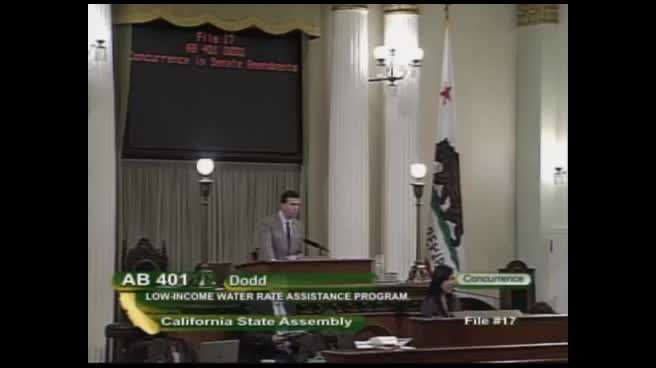 37SEC
Assembly Floor
 37SEC
Senate Floor
 11MIN
Senate Standing Committee on Judiciary
Bill Author

Bill Co-Author(s):