AB 830: Civil actions: gender violence.
- Session Year: 2015-2016
- House: Assembly
- Latest Version Date: 2015-08-13
Existing law allows a person who has been subjected to gender violence to bring a civil action for damages against any responsible party and defines gender violence for this purpose as a crime of violence motivated by the gender of the victim or a physical intrusion or invasion of a sexual nature, as specified. The Unruh Civil Rights Act prohibits discrimination based on a persons sex, race, religion, or sexual orientation, among others, and specifies that sex includes gender, which includes a persons gender identity and gender expression.
This bill, for the purposes of the former provision, would specify that gender has the same meaning as in the Unruh Civil Rights Act. The bill would also allow a person who has been subject to sexual orientation violence, as defined, to bring a civil action for damages against any responsible party under provisions identical to those for gender violence.
Existing law allows a person who has been subjected to gender violence to bring a civil action for damages against any responsible party and defines gender violence for this purpose as a crime of violence motivated by the gender of the victim or a physical intrusion or invasion of a sexual nature, as specified. The Unruh Civil Rights Act prohibits discrimination based on a persons sex, race, religion, or sexual orientation, among others, and specifies that sex includes gender, which includes a persons gender identity and gender expression.
This bill, for the purposes of the former provision, would expand the definition of gender violence to include violence committed at least in part based on the sexual orientation of the victim, as specified, and would specify that gender has the same meaning as in the Unruh Civil Rights Act. The bill would also allow a person who has been subject to sexual orientation violence, as defined, to bring a civil action for damages against any responsible party under provisions identical to those for gender violence.
Existing law allows a person who has been subjected to gender violence to bring a civil action for damages against any responsible party and defines gender violence for this purpose as a crime of violence motivated by the gender of the victim or a physical intrusion or invasion of a sexual nature, as specified. The Unruh Civil Rights Act prohibits discrimination based on a persons sex, race, religion, or sexual orientation, among others, and specifies that sex includes gender, which includes a persons gender identity and gender expression.
This bill, for the purposes of the former provision, would expand the definition of gender violence to include violence committed at least in part based on the sexual orientation of the victim, as specified, and would specify that gender has the same meaning as in the Unruh Civil Rights Act.
(a)Any person who has been subjected to gender violence may bring a civil action for damages against any responsible party. The plaintiff may seek actual damages, compensatory damages, punitive damages, injunctive relief, any combination of those, or any other appropriate relief. A prevailing plaintiff may also be awarded attorneys fees and costs.
(b)An action brought pursuant to this section shall be commenced within three years of the act, or if the victim was a minor when the act occurred, within eight years after the date the plaintiff attains the age of majority or within three years after the date the plaintiff discovers or reasonably should have discovered the psychological injury or illness occurring after the age of majority that was caused by the act, whichever date occurs later.
(c)For purposes of this section, gender violence is a form of sex discrimination and means either of the following:
(1)One or more acts that would constitute a criminal offense under state law that has as an element the use, attempted use, or threatened use of physical force against the person or property of another, committed at least in part based on the gender of the victim, whether or not those acts have resulted in criminal complaints, charges, prosecution, or conviction.
(2)A physical intrusion or physical invasion of a sexual nature under coercive conditions, whether or not those acts have resulted in criminal complaints, charges, prosecution, or conviction.
(d)For purposes of this section, gender has the meaning set forth in Section 51.
(e) Notwithstanding any other laws that may establish the liability of an employer for the acts of an employee, this section does not establish any civil liability of a person because of his or her status as an employer, unless the employer personally committed an act of gender violence.
SEC. 2.Section 52.45 is added to the Civil Code, immediately following Section 52.4, to read:52.45.(a)Any person who has been subjected to sexual orientation violence may bring a civil action for damages against any responsible party. The plaintiff may seek actual damages, compensatory damages, punitive damages, injunctive relief, any combination of those, or any other appropriate relief. A prevailing plaintiff may also be awarded attorneys fees and costs.
(b)An action brought pursuant to this section shall be commenced within three years of the act, or if the victim was a minor when the act occurred, within eight years after the date the plaintiff attains the age of majority or within three years after the date the plaintiff discovers or reasonably should have discovered the psychological injury or illness occurring after the age of majority that was caused by the act, whichever date occurs later.
(c)For purposes of this section, sexual orientation violence means one or more acts that would constitute a criminal offense under state law that has as an element the use, attempted use, or threatened use of physical force against the person or property of another, committed at least in part based on the sexual orientation of the victim, whether or not those acts have resulted in criminal complaints, charges, prosecution, or conviction.
(d)Notwithstanding any other laws that may establish the liability of an employer for the acts of an employee, this section does not establish any civil liability of a person because of his or her status as an employer, unless the employer personally committed an act of sexual orientation violence.
(a)Any person who has been subjected to gender violence may bring a civil action for damages against any responsible party. The plaintiff may seek actual damages, compensatory damages, punitive damages, injunctive relief, any combination of those, or any other appropriate relief. A prevailing plaintiff may also be awarded attorneys fees and costs.
(b)An action brought pursuant to this section shall be commenced within three years of the act, or if the victim was a minor when the act occurred, within eight years after the date the plaintiff attains the age of majority or within three years after the date the plaintiff discovers or reasonably should have discovered the psychological injury or illness occurring after the age of majority that was caused by the act, whichever date occurs later.
(c)For purposes of this section, gender violence is a form of sex discrimination and means either of the following:
(1)One or more acts that would constitute a criminal offense under state law that has as an element the use, attempted use, or threatened use of physical force against the person or property of another, committed at least in part based on the gender or sexual orientation of the victim, whether or not those acts have resulted in criminal complaints, charges, prosecution, or conviction.
(2)A physical intrusion or physical invasion of a sexual nature under coercive conditions, whether or not those acts have resulted in criminal complaints, charges, prosecution, or conviction.
(d)For purposes of this section, gender has the meaning set forth in Section 51.
(e) Notwithstanding any other laws that may establish the liability of an employer for the acts of an employee, this section does not establish any civil liability of a person because of his or her status as an employer, unless the employer personally committed an act of gender violence.
SEC. 2.Section 52.45 is added to the Civil Code, immediately following Section 52.4, to read:52.45.(a)Any person who has been subjected to sexual orientation violence may bring a civil action for damages against any responsible party. The plaintiff may seek actual damages, compensatory damages, punitive damages, injunctive relief, any combination of those, or any other appropriate relief. A prevailing plaintiff may also be awarded attorneys fees and costs.
(b)An action brought pursuant to this section shall be commenced within three years of the act, or if the victim was a minor when the act occurred, within eight years after the date the plaintiff attains the age of majority or within three years after the date the plaintiff discovers or reasonably should have discovered the psychological injury or illness occurring after the age of majority that was caused by the act, whichever date occurs later.
(c)For purposes of this section, sexual orientation violence means one or more acts that would constitute a criminal offense under state law that has as an element the use, attempted use, or threatened use of physical force against the person or property of another, committed at least in part based on the sexual orientation of the victim, whether or not those acts have resulted in criminal complaints, charges, prosecution, or conviction.
(d)Notwithstanding any other laws that may establish the liability of an employer for the acts of an employee, this section does not establish any civil liability of a person because of his or her status as an employer, unless the employer personally committed an act of sexual orientation violence.
(a)Any person who has been subjected to gender violence may bring a civil action for damages against any responsible party. The plaintiff may seek actual damages, compensatory damages, punitive damages, injunctive relief, any combination of those, or any other appropriate relief. A prevailing plaintiff may also be awarded attorneys fees and costs.
(b)An action brought pursuant to this section shall be commenced within three years of the act, or if the victim was a minor when the act occurred, within eight years after the date the plaintiff attains the age of majority or within three years after the date the plaintiff discovers or reasonably should have discovered the psychological injury or illness occurring after the age of majority that was caused by the act, whichever date occurs later.
(c)For purposes of this section, gender violence, violence is a form of sex discrimination and means any either of the following:
(1)One or more acts that would constitute a criminal offense under state law that has as an element the use, attempted use, or threatened use of physical force against the person or property of another, committed at least in part based on the gender or sexual orientation of the victim, whether or not those acts have resulted in criminal complaints, charges, prosecution, or conviction.
(2)A physical intrusion or physical invasion of a sexual nature under coercive conditions, whether or not those acts have resulted in criminal complaints, charges, prosecution, or conviction.
(3)Violence, as set forth in paragraph (1) or (2), committed at least in part based on the sexual orientation of the victim.
(d)For purposes of this section, gender has the meaning set forth in Section 51.
(e) Notwithstanding any other laws that may establish the liability of an employer for the acts of an employee, this section does not establish any civil liability of a person because of his or her status as an employer, unless the employer personally committed an act of gender violence.
(a)Any person who has been subjected to gender violence may bring a civil action for damages against any responsible party. The plaintiff may seek actual damages, compensatory damages, punitive damages, injunctive relief, any combination of those, or any other appropriate relief. A prevailing plaintiff may also be awarded attorneys fees and costs.
(b)An action brought pursuant to this section shall be commenced within three years of the act, or if the victim was a minor when the act occurred, within eight years after the date the plaintiff attains the age of majority or within three years after the date the plaintiff discovers or reasonably should have discovered the psychological injury or illness occurring after the age of majority that was caused by the act, whichever date occurs later.
(c)For purposes of this section, gender violence, is a form of sex discrimination and means any of the following:
(1)One or more acts that would constitute a criminal offense under state law that has as an element the use, attempted use, or threatened use of physical force against the person or property of another, committed at least in part based on the gender of the victim, whether or not those acts have resulted in criminal complaints, charges, prosecution, or conviction.
(2)A physical intrusion or physical invasion of a sexual nature under coercive conditions, whether or not those acts have resulted in criminal complaints, charges, prosecution, or conviction.
(3)Violence, as set forth in paragraph (1) or (2), committed at least in part based on the sexual orientation of the victim.
(d)For purposes of this section, gender has the meaning set forth in Section 51.
(d)
(e) Notwithstanding any other laws that may establish the liability of an employer for the acts of an employee, this section does not establish any civil liability of a person because of his or her status as an employer, unless the employer personally committed an act of gender violence.
|
Date
|
Status
|
|---|---|
| Jun 22, 2015 | From committee: Amend, and do pass as amended. (Ayes 6. Noes 1.) (June 16). |
| Aug 13, 2015 | Chaptered by Secretary of State - Chapter 202, Statutes of 2015. |
| Aug 13, 2015 | Approved by the Governor. |
| Aug 3, 2015 | Enrolled and presented to the Governor at 3 p.m. |
| Jul 13, 2015 | Senate amendments concurred in. To Engrossing and Enrolling. (Ayes 72. Noes 0. Page 2356.). |
| Jul 13, 2015 | Senate amendments concurred in. To Engrossing and Enrolling. |
| Jul 9, 2015 | Read third time. Passed. Ordered to the Assembly. (Ayes 37. Noes 0. Page 1876.). |
| Jul 9, 2015 | Read third time. Passed. Ordered to the Assembly. |
| Jul 9, 2015 | In Assembly. Concurrence in Senate amendments pending. May be considered on or after July 11 pursuant to Assembly Rule 77. |
| Jun 23, 2015 | Read second time and amended. Ordered to third reading. |
| Feb 26, 2015 | Read first time. To print. |
| May 28, 2015 | Referred to Com. on JUD. |
| May 14, 2015 | Read third time. Passed. Ordered to the Senate. (Ayes 74. Noes 0. Page 1441.) |
| May 14, 2015 | Read third time. Passed. Ordered to the Senate. |
| May 14, 2015 | In Senate. Read first time. To Com. on RLS. for assignment. |
| May 11, 2015 | Read second time. Ordered to third reading. |
| May 7, 2015 | Read second time and amended. Ordered returned to second reading. |
| May 6, 2015 | From committee: Amend, and do pass as amended. (Ayes 9. Noes 0.) (May 5). |
| Mar 12, 2015 | Referred to Com. on JUD. |
| Feb 27, 2015 | From printer. May be heard in committee March 29. |
|
Date
|
Description
|
Location
|
Votes
|
|
|---|---|---|---|---|
| Jul 13, 2015 | AB 830 EGGMAN Concurrence in Senate Amendments | Assembly Floor |
Passed |
|
| Jul 9, 2015 | Assembly 3rd Reading AB830 Eggman By Leno | Senate Floor |
Passed |
|
| Jun 16, 2015 | Do pass as amended | Senate Standing Committee on Judiciary |
Passed |
|
| May 14, 2015 | AB 830 EGGMAN Assembly Third Reading | Assembly Floor |
Passed |
|
| May 5, 2015 | Do pass as amended. | Assembly Standing Committee on Judiciary |
Passed |
This list shows positions taken on this bill by organizations on the date displayed, which is linked to the original source.
Positions by individuals are not included.
|
Organization
|
Position
|
Date
|
|---|---|---|
| American Federation Of State, County And Municipal Employees, Afl-Cio | ** Support | Jul 9, 2015 |
| Bay Area Lawyers for Individual Freedom | ** Support | Jul 9, 2015 |
| California Communities United Institute | ** Support | Jul 9, 2015 |
| California Women Lawyers | ** Support | Jul 9, 2015 |
| California Women's Law Center | ** Support | Jul 9, 2015 |
| Conference of California Bar Associations | ** Support | Jul 9, 2015 |
| Consumer Attorneys Of California | ** Support | Jul 9, 2015 |
| Equal Rights Advocate | ** Support | Jul 9, 2015 |
| Equality CA | ** Support | Jul 9, 2015 |
| Legal Aid Society | ** Support | Jul 9, 2015 |
| National Association of Social Workers | ** Support | Jul 9, 2015 |
| National Association Of Social Workers, California Chapter | * Support | Jun 16, 2015 |
| Transgender Law Center | ** Support | Jul 9, 2015 |
| Women Lawyers Association of Los Angeles | ** Support | Jul 9, 2015 |
AB 830
Page 2
CONCURRENCE IN SENATE AMENDMENTS
AB 830
(Eggman)
As Amended June 23, 2015
Majority vote
ASSEMBLY: |
74-0 |
(May 14, 2015) |
SENATE: |
37-0 |
(July 9, 2015) |
Original Committee Reference: JUD.
SUMMARY: Amends the definition of "gender" in Civil Code Section 52.4 to conform with the definition of that term in the Unruh Civil Rights Act and provides a new civil action for an act of violence that is committed at least in part based on the sexual orientation of the victim. Specifically, this bill:
Defines the term "gender" to include a person's gender identity and gender expression.
Allows any person who has been subjected to sexual orientation violence to bring a civil action for damages against any responsible party.
The Senate amendments move the new civil action for sexual orientation violence, which was in this bill when it passed out of the Assembly, into a new section of the Civil Code.
EXISTING LAW:
Provides that "gender violence," is a form of sex discrimination and means any of the following:
One or more acts that would constitute a criminal offense under state law that has as an element the use, attempted use, or threatened use of physical force against the person or property of another, committed at least in part based on the gender of the victim, whether or not those acts have resulted in criminal complaints, charges, prosecution, or conviction.
A physical intrusion or physical invasion of a sexual nature under coercive conditions, whether or not those acts have resulted in criminal complaints, charges, prosecution, or conviction.
Provides that any person who has been subjected to gender violence may bring a civil action for damages against any responsible party.
Allows the plaintiff in a civil action for gender violence to seek actual damages, compensatory damages, punitive damages, injunctive relief, any combination of those, or any other appropriate relief and, if the plaintiff prevails, to be awarded attorney’s fees and costs.
Pursuant to the Unruh Civil Rights Act (Unruh), provides that all persons, regardless of sex, race, color, religion, ancestry, national origin, disability, medical condition, genetic information, marital status, or sexual orientation, are entitled to the full and equal accommodations, advantages, facilities, privileges, or services in all business establishments of every kind whatsoever.
Defines "sex" to include, but not be limited to, a person's gender and defines "gender" to mean sex and include a person's gender identity and gender expression.
Defines "gender expression" to mean a person's gender-related appearance and behavior, whether or not stereotypically associated with the person's assigned sex at birth.
FISCAL EFFECT: None
COMMENTS: California law has long afforded its residents with broad protection against unreasonable, arbitrary, or invidious discrimination based on personal characteristics. In 1959 the California Legislature enacted these broad principals by passing the Unruh. Unruh originally listed only race, color, religion, ancestry, and national origin as the grounds of impermissible discrimination, but Unruh was subsequently amended in 1974 to explicitly prohibit arbitrary discrimination based on sex. Most recently, it was amended in 2011 (by AB 887 (Atkins), Chapter 719, Statutes of 2011) to specify that gender identity and gender expression are included in Unruh's prohibition against discrimination on the basis of sex.
It may not be necessary to list all protected personal characteristics in Unruh, however, because the United States Supreme Court has rejected the argument that the act reached only the protected classifications that are expressly included in its wording. (See Harris v. Capital Growth Investors XIV (1991) 52 Cal.3d 1142, 1154-55.) Instead, the courts have made it clear that Unruh has always prohibited arbitrary discrimination based on other non-enumerated "personal characteristics." (Koebke v Bernardo Heights (2005) 36 Cal. 4th 824; Stoumen v. Reilly (1951) 37 Cal. 2d 713, 715-16.) Therefore, the inclusion of gender identity and gender expression in Unruh – both deeply personal characteristics – may not have been necessary. Nevertheless, it may be helpful to include such characteristics in the law for clarity and guidance. For example, when AB 887 was pending in 2011, the bill's co-sponsor (the Transgender Law Center), wrote that, "Under the current statutory scheme, if an HR manager looks up the Fair Employment and Housing Act in an effort to list the protected categories in their business’ employee handbook, they will only see 'gender.' They will not clearly see gender identity and gender expression because they are contained in the definition of gender in a separate section of the law."
Prevalence of Violence Based Upon Sexual Orientation, Gender Identity, and Gender Expression. According to a 2010 National Intimate Partner and Sexual Violence Survey (NISVS) by the Centers for Disease Control and Prevention, National Center for Injury Prevention and Control, approximately one in eight lesbian women and nearly half (46%) of bisexual women experience rape in their lifetime. Most striking is that 64% of transgender people have experienced sexual assault in their lifetime. The study also showed that one in three bisexual women and one in six heterosexual women have experienced stalking victimization at some point during their lifetime. (Walters, Chen, and Breiding, National Intimate Partner and Sexual Violence Survey (NISVS): 2010 Findings on Victimization by Sexual Orientation, Centers for Disease Control and Prevention, National Center for Injury Prevention and Control (Atlanta), 2013.)
Analysis Prepared by: Alison Merrilees / JUD. / (916) 319-2334 FN: 0001071
AB 830
Page 8
|
Office of Senate Floor Analyses (916) 651-1520 Fax: (916) 327-4478 |
THIRD READING
Bill No: AB 830
Amended: 6/23/15 in Senate
SENATE JUDICIARY COMMITTEE: 6-1, 6/16/15
AYES: Jackson, Moorlach, Hertzberg, Leno, Monning, Wieckowski
NOES: Anderson
ASSEMBLY FLOOR: 74-0, 5/14/15 - See last page for vote
SUBJECT: Civil actions: gender violence
SOURCE: Conference of California Bar Associations
DIGEST: This bill applies existing law remedies for victims of gender-related violence to victims of sexual orientation-based violence and otherwise defines “gender” in accordance with the Unruh Civil Rights Act, to include “gender expression” and “gender identity.”
Existing law:
Provides, under the Unruh Civil Rights Act, that all persons in California are free and equal, and that regardless of a person’s sex, race, color, religion, ancestry, national origin, disability, medical condition, genetic information, marital status, or sexual orientation, everyone is entitled to the full and equal accommodations, advantages, facilities, privileges, or services in all business establishments.
Defines “sex” for the above purposes to include, among other things, a person’s gender, and defines “gender” to mean sex, and includes a person’s gender identity and “gender expression.” Existing law further defines “gender expression” to mean person’s gender-related appearance and behavior whether or not stereotypically associated with the person’s assigned sex at birth.
Generally defines “sex, race, color, religion, ancestry, national origin, disability, medical condition, genetic information, marital status, or sexual orientation” to include a perception that the person has any particular characteristic or characteristics within the listed categories or that the person is associated with a person who has, or is perceived to have, any particular characteristic or characteristics within the listed categories.
Prohibits, under the Ralph Civil Rights Act, any act of violence, or intimidation by threat of violence, committed against a person or the person’s property because of the person’s race, color, religion, ancestry, national origin, political affiliation, sex, sexual orientation, age, disability, or position in a labor dispute, or because another person perceives them to have one or more of those characteristics.
Provides that whoever denies, aids or incites a denial, or makes any discrimination or distinction contrary to Section 51 (Unruh), 51.5 (the Civil Rights Act of 2005, extending the prohibition against discrimination as provided in the Unruh to a person who is perceived to have one or more of the characteristics enumerated in the Act or because the person is associated with a person who has or is perceived to have any of those characteristics), or 51.6 (the Gender Tax Repeal Act prohibiting discrimination, with respect to the price charged for services of similar or like kind, against a person because of the person’s gender), is liable for each and every offense for the actual damages, and any amount that may be determined by a jury, or a court sitting without a jury, up to a maximum of three times the amount of actual damage but in no case less than four thousand dollars ($4,000), and any attorney’s fees that may be determined by the court in addition thereto, suffered by any person denied the rights provided in those sections.
Provides that whoever denies a right provided by Section 51.7 (the Ralph Civil Rights Act) or 51.9 (pertaining to sexual harassment), or aids, incites, or conspires in that denial, is liable for each and every offense for the actual damages suffered by any person denied that right and, in addition:
An amount to be determined by a jury, or a court sitting without a jury, for exemplary damages;
A civil penalty of twenty-five thousand dollars ($25,000) to be awarded to the person denied the right provided by the Section 51.7 (Ralph Civil Rights Act) in any action brought by the person denied the right, or by the Attorney General, a district attorney, or a city attorney. An action for that penalty brought pursuant to the Section 51.7 (Ralph Civil Rights Act) shall be commenced within three years of the alleged practice; and
Attorney’s fees as may be determined by the court.
Provides that actions brought pursuant to the above provisions are independent of any other actions, remedies, or procedures that may be available to an aggrieved party pursuant to any other law.
Authorizes, under the Tom Bane Civil Rights Act, the Attorney General, or any district attorney or city attorney, to bring an action seeking injunctive and equitable relief in order to protect the peaceable exercise or enjoyment by an individual or individuals of rights secured by the Constitution or laws of the United States or this state, whenever a person interferes by threats, intimidation, or coercion, or attempts to interfere by threats, intimidation, or coercion, with those rights. Existing law permits the AG, district attorney or city attorney seeking injunctive or equitable relief to protect the peaceable exercise of a person’s constitutional rights to also seek a civil penalty of $25,000, to be awarded to the person whose rights were violated, and to be assessed against each person who violated those rights.
Permits, under the Bane Act, any individual whose exercise or enjoyment of rights secured by the Constitution or laws of the United States or this state has been interfered with, or attempted to be interfered with, as described above, to institute and prosecute in his or her own behalf a civil action for damages, including, but not limited to, damages under Section 52 (the Ralph Civil Rights Act), injunctive relief, and other appropriate equitable relief to protect the peaceable exercise or enjoyment of the right or rights secured.
Creates, under Section 52.4, a statutory basis for civil liability for acts of “gender violence,” referred to as a form of sex discrimination and defined as:
one or more acts that would constitute a criminal offense under state law that has as an element the use, attempted use, or threatened use of physical force against the person or property of another, committed at least in part based on the gender of the victim, whether or not those acts have resulted in criminal complaints, charges, prosecution, or conviction; or
a physical intrusion or physical invasion of a sexual nature under coercive conditions, whether or not those acts have resulted in criminal complaints, charges, prosecution, or conviction.
Further provides that any person who has been subject to gender violence may bring a civil action for damages under this section against “any responsible party,” and may sue for actual damages, compensatory damages, punitive damages, injunctive relief, any combination of those, or any other appropriate relief. A prevailing plaintiff also may be awarded attorney’s fees and costs.
Further provides that an action brought pursuant to this section must be brought within three years of the act, or within eight years after the victim reaches the age of majority (i.e., age 18), or within three years after the date the victim discovers or reasonably should have discovered a psychological injury or illness occurring after the age of majority that was caused by the act, whichever occurs later.
Further provides that this section does not establish any civil liability of a person because of his or her status as an employer, unless the employer personally committed an act of gender violence.
This bill:
Adds an express definition of “gender” to Section 52.4 (creating a cause of action for gender violence), above, and, for purposes of that section, define it to have the same meaning set forth in Unruh.
Adds a new section immediately following Section 52.4, to extend the same existing law remedies that are available to victims of gender-based violence to victims of sexual-orientation based violence, as specified.
Background
In California, actions for violations of civil rights have been founded on state statutory provisions, federal statutes, and common-law principles. California’s four primary civil rights acts are the Unruh Civil Rights Act, the Fair Employment and Housing Act, the Ralph Civil Rights Act, and the Tom Bane Civil Rights Act.
In 2002, the Legislature enacted AB 1928 (Jackson, Chapter 842, Statutes of 2002) which created a statutory civil action for injuries resulting from acts of gender-related violence and allowed plaintiffs to seek compensatory and punitive damages from the defendant. AB 1928 contained legislative findings that acts of domestic violence and sexual abuse on the basis of gender constitute a form of sexual discrimination. Also in 2002, the Legislature enacted AB 1933 (Reyes, Chapter 193, Statutes of 2002) which created a statutory tort for injuries resulting from victims of domestic violence. Prior to the enactment of AB 1933, a victim of domestic violence would have only been able to sue under the general assault and battery statutes, which were subject to a one-year statute of limitations, and did not authorize the recovery of attorney’s fees. AB 1928 and AB 1933, thus, filled a gap in law in order to provide more tools for victims of gender and domestic violence to recover damages for their abuse.
Both bills were prompted by a U.S. Supreme Court decision, U.S. v. Morrison (2000) 529 U.S. 598, that had declared the federal civil remedy for gender-motivated violence under the Violence Against Women Act (VAWA) invalid. VAWA, as enacted in 1994, had asserted that violent crimes motivated by the victim’s gender are discriminatory and violate the victim’s civil rights and allowed victims of gender-motivated violence to sue in federal court for compensatory and punitive damages, injunctive relief, and attorneys’ fees. While acknowledging that “a voluminous congressional record” supported the assertion that some state justice systems exhibited a pervasive bias against victims of sexual and domestic violence, the Court pointed out that the Fourteenth Amendment permitted Congress to address only state-sponsored violations of civil rights, not torts by persons who are not acting under color of state authority. As such, the Morrison Court concluded that individual states were the appropriate authorities to provide civil remedies for private torts, including acts of sexual and domestic violence.
AB 1928, of particular relevance to this bill, thus incorporated language from the invalidated VAWA provision into a state civil rights action for gender-related violence under Section 52.4 of the Civil Code, and set forth the following legislative findings: (1) existing laws do not adequately prevent and remedy gender-related violence which disproportionately occurs against women; (2) sexual abuse harms many women, children, and families, and is often not reported to the authorities or prosecuted; (3) that acts of domestic violence and sexual abuse on the basis of gender constitute a form of sexual discrimination; (4) all persons within California have the right to be free from crimes of violence motivated by gender; and (5) that the purpose of this act is to protect the civil rights of victims of gender-motivated violence and thereby to promote the public safety, health, and well-being of all persons within California.
Generally, Section 52.4 permits a person injured by a crime of violence motivated by gender to bring a civil action for various types of relief against the responsible party, as long as it is brought within the later of the following possible statutes of limitations: (1) three years of the act; (2) if the victim was a minor when the act occurred, within eight years after the date the plaintiff attains the age of majority; or (3) within three years after the date the plaintiff discovers or reasonably should have discovered the psychological injury or illness occurring after the age of majority that was caused by the act. Gender violence for these purposes includes either an act that would constitute a criminal offense under state law that has as an element the use, attempted use, or threatened use of physical force against the person or property of another committed at least in part based on the gender of the victim, or a physical intrusion or invasion of a sexual nature under coercive conditions.
This bill now adds a definition of “gender” for these purposes and conforms it to the definition of that same term under the Unruh Civil Rights Act (which defines the term to mean sex and to include a person’s gender identity and gender expression, as those terms are further defined). This bill also adds a new section that will make available to victims of sexual orientation-based violence the same Section 52.4 remedies currently provided to victims of gender-related violence.
Comment
According to the author:
Civil Code [Sec.] 52.4 provides protection for victims of gender violence by permitting a person who has been subjected to gender violence to bring a civil action for damages against any responsible party and defines gender violence for this purpose as a crime of violence motivated by the gender of the victim or a physical intrusion or invasion of a sexual nature, as specified. “Gender” is not defined for purposes of the section.
The Unruh Civil Rights Act (Civil Code [Sec.] 51) prohibits discrimination based on a person’s sex, race, religion, or sexual orientation, among others, and specifies that sex includes gender. In 2011, the Act – along with many other statutory provisions (not including [Sec.] 52.4) was amended to specify that “gender” includes a person’s gender identity and gender expression.
The Ralph Act (Civil Code [Secs.] 51.7 and 52) provides that it is a civil right for a person to be free of violence or its threat against the person or his or her property, because of a person's race, color, religion, ancestry, national origin, political affiliation, sex, sexual orientation, age or disability or position in a labor dispute, or because a person is perceived to have one or more of these characteristics. “Sex” for purposes of the Ralph Act takes its definition from reference to the Unruh Act, and therefore includes gender, which includes a person’s gender identity and gender expression.
AB 830 would conform the definition of “gender” in the anti-gender violence statute, Civil Code [Sec.] 52.4, to the definition in the Unruh Act and numerous other places in statute, so that it, too, includes gender identity and gender expression within the definition. This will clarify that the act’s provisions and remedies extend to transgender victims of gender-motivated violence. The bill also would extend the act’s protections and remedies to victims of violence due to their sexual orientation.
FISCAL EFFECT: Appropriation: No Fiscal Com.: No Local: No
Conference of California Bar Associations (source)
American Federation of State, County and Municipal Employees, AFL-CIO
Bay Area Lawyers for Individual Freedom
California Communities United Institute
California Women Lawyers
California Women’s Law Center
Consumer Attorneys of California
Equality CA
Equal Rights Advocate
Legal Aid Society
National Association of Social Workers
Transgender Law Center
Women Lawyers Association of Los Angeles
OPPOSITION: (Verified 6/23/15)
None received
ARGUMENTS IN SUPPORT: The sponsor of this bill, the Conference of California Bar Associations (CCBA) writes that while AB 887 (Atkins, Chapter 719, Statutes of 2011) refined the definition of “gender” to include gender identity and gender expression in other sections, it did not include Section 52.4 of the Civil Code among the provisions that it updated. CCBA writes:
AB 830 will correct this oversight by specifying that “gender” in Civil Code §52.4, has the same meaning as in the Unruh Act and numerous other code sections. The bill also will extend the protections of the section to the victims of violence committed at least in part based on the sexual orientation of the victim. In light of the violence and bullying inflicted upon LGBT individuals, this additional protection is needed and overdue.
Violence against members of the LGBT community – and particularly the transgender members of that community – continues at a frightening rate. According to the Human Rights Campaign [HRC], “The level of violence targeting transgender people, particularly transgender women of color, is a national crisis that the LGBT movement has a responsibility to confront.” The HRC reports that at least 13 transgender women were murdered in 2014. At least another six have been killed this year.
The National Center for Lesbian Rights (NCLR) reports that “approximately 1 in 8 lesbian women and nearly half of bisexual women experience rape in their lifetime, and statistics likely increase when a broader definition of sexual assault is used. Nearly half of bisexual men and four in ten gay men have experienced sexual violence other than rape in their lifetime, and though statistics regarding rape vary, it is likely that the rate is higher or comparable to heterosexual men. As with most hate-based violence, transgender individuals are the most likely to be affected in the LGBT community. A staggering 64 [percent] of transgender people have experienced sexual assault in their lifetime.”
AB 830 will provide transgender and other LGBT individuals with an important tool to fight against violence.
ASSEMBLY FLOOR: 74-0, 5/14/15
AYES: Achadjian, Alejo, Travis Allen, Baker, Bigelow, Bloom, Bonilla, Bonta, Brown, Burke, Calderon, Campos, Chang, Chau, Chávez, Chiu, Chu, Cooley, Cooper, Dababneh, Dahle, Daly, Dodd, Eggman, Frazier, Gallagher, Cristina Garcia, Eduardo Garcia, Gatto, Gipson, Gomez, Gonzalez, Gordon, Gray, Grove, Hadley, Roger Hernández, Holden, Irwin, Jones, Jones-Sawyer, Kim, Lackey, Levine, Linder, Lopez, Low, Maienschein, Mayes, McCarty, Medina, Mullin, Nazarian, Obernolte, O'Donnell, Olsen, Perea, Quirk, Rendon, Ridley-Thomas, Rodriguez, Salas, Santiago, Steinorth, Mark Stone, Thurmond, Ting, Wagner, Waldron, Weber, Wilk, Williams, Wood, Atkins
NO VOTE RECORDED: Brough, Beth Gaines, Harper, Mathis, Melendez, Patterson
Prepared by: Ronak Daylami / JUD. / (916) 651-4113
6/25/15 9:01:06
AB 830 (Eggman)
Page 11 of 11
Senator Hannah-Beth Jackson, Chair
2015-2016 Regular Session
AB 830 (Eggman)
Version: May 7, 2015
Hearing Date: June 16, 2015
Fiscal: No
Urgency: No
RD
SUBJECT
Civil actions: gender violence
DESCRIPTION
Existing law provides a statutory private right of action for injuries resulting from acts of gender-related violence, allows plaintiffs to seek compensatory and punitive damages from the defendant, and extends the statute of limitations for bringing such a claim, as specified. This bill would expand these remedies to victims of sexual orientation-based violence and would otherwise define “gender” to include “gender expression” and “gender identity.”
BACKGROUND
In California, actions for violations of civil rights have been founded on state statutory provisions, federal statutes, and common-law principles. California’s four primary civil rights acts are the Unruh Civil Rights Act, the Fair Employment and Housing Act, the Ralph Civil Rights Act, and the Tom Bane Civil Rights Act. (12 Cal. Jur. Civil Rights Sec. 2; see also Civ. Code Secs. 51, 51.7, 52, 52.1 and Gov. Code Sec. 12900 et seq.)
In 2002, the Legislature enacted AB 1928 (Jackson, Chapter 842, Statutes of 2002) which created a statutory civil action for injuries resulting from acts of gender-related violence and allowed plaintiffs to seek compensatory and punitive damages from the defendant. AB 1928 contained legislative findings that acts of domestic violence and sexual abuse on the basis of gender constitute a form of sexual discrimination. Additionally in 2002, the Legislature enacted AB 1933 (Reyes, Chapter 193, Statutes of 2002) which created a statutory tort for injuries resulting from victims of domestic violence. Prior to the enactment of AB 1933 a victim of domestic violence would have only been able to sue under the general assault and battery statutes, which were subject to a one-year statute of limitations, and did not authorize the recovery of attorney’s fees. AB 1928 and AB 1933, thus, filled a gap in law in order to provide more tools for victims of gender and domestic violence to recover damages for their abuse.
Both of those bills were, in fact, prompted by a U.S. Supreme Court decision, U.S. v. Morrison (2000) 529 U.S. 598, that had declared the federal civil remedy for gender-motivated violence under the Violence Against Women Act (VAWA) invalid. VAWA, as enacted in 1994, had asserted that violent crimes motivated by the victim’s gender are discriminatory and violate the victim’s civil rights under federal law and allowed victims of gender-motivated violence to sue in federal court for compensatory and punitive damages, injunctive relief, and attorneys’ fees. While acknowledging that “a voluminous congressional record” supported the assertion that some state justice systems exhibited a pervasive bias against victims of sexual and domestic violence, the Court pointed out that the Fourteenth Amendment permitted Congress to address only state-sponsored violations of civil rights, not torts by persons who are not acting under color of state authority. Accordingly, the Morrison Court concluded that individual states were the appropriate authorities to provide civil remedies for private torts, including acts of sexual and domestic violence.
AB 1928 (Jackson, Ch. 842, Stats. 2002), of particular relevance to this bill, thus incorporated language from the invalidated VAWA provision into a state civil rights action for gender-related violence under Section 52.4 of the Civil Code, and set forth the following legislative findings: (1) existing laws do not adequately prevent and remedy gender-related violence which disproportionately occurs against women; (2) sexual abuse harms many women, children, and families, and is often not reported to the authorities or prosecuted; (3) that acts of domestic violence and sexual abuse on the basis of gender constitute a form of sexual discrimination; (4) all persons within California have the right to be free from crimes of violence motivated by gender; and (5) that the purpose of this act is to protect the civil rights of victims of gender-motivated violence and thereby to promote the public safety, health, and well-being of all persons within California.
Generally, Section 52.4 permits a person injured by a crime of violence motivated by gender to bring a civil action for various types of relief against the responsible party, as long as it is brought within the later of the following possible statutes of limitations: (1) three years of the act; (2) if the victim was a minor when the act occurred, within eight years after the date the plaintiff attains the age of majority; or (3) within three years after the date the plaintiff discovers or reasonably should have discovered the psychological injury or illness occurring after the age of majority that was caused by the act. Gender violence for these purposes includes either an act that would constitute a criminal offense under state law that has as an element the use, attempted use, or threatened use of physical force against the person or property of another committed at least in part based on the gender of the victim or a physical intrusion or invasion of a sexual nature under coercive conditions.
This bill would now add a definition of “gender” for these purposes and conform it to the definition of that same term under the Unruh Civil Rights Act (which defines the term to mean sex and to include a person’s gender identity and gender expression, as those terms are further defined) and would also expand the existing Section 52.4 remedies to victims of sexual orientation-based violence.
CHANGES TO EXISTING LAW
Existing law, the Unruh Civil Rights Act, provides that all persons in California are free and equal, and regardless of a person’s sex, race, color, religion, ancestry, national origin, disability, medical condition, genetic information, marital status, or sexual orientation, everyone is entitled to the full and equal accommodations, advantages, facilities, privileges, or services in all business establishments. (Civ. Code Sec. 51.)
Existing law defines “sex” for these purposes to include, among other things, a person’s gender. Existing law further defines “gender” to mean sex, and includes a person’s gender identity and “gender expression,” which means a person’s gender-related appearance and behavior whether or not stereotypically associated with the person’s assigned sex at birth. (Civ. Code Sec. 51(e)(5).)
Existing law more generally defines “sex, race, color, religion, ancestry, national origin, disability, medical condition, genetic information, marital status, or sexual orientation” to include a perception that the person has any particular characteristic or characteristics within the listed categories or that the person is associated with a person who has, or is perceived to have, any particular characteristic or characteristics within the listed categories. (Civ. Code Sec. 51(e)(6).)
Existing law, the Ralph Civil Rights Act, prohibits any act of violence, or intimidation by threat of violence, committed against a person or the person’s property because of the person’s race, color, religion, ancestry, national origin, political affiliation, sex, sexual orientation, age, disability, or position in a labor dispute, or because another person perceives them to have one or more of those characteristics. (Civ. Code Sec. 51.7.)
Existing law provides that whoever denies, aids or incites a denial, or makes any discrimination or distinction contrary to Section 51 (Unruh), 51.5 (the Civil Rights Act of 2005, extending the prohibition against discrimination as provided in the Unruh to a person who is perceived to have one or more of the characteristics enumerated in the Act or because the person is associated with a person who has or is perceived to have any of those characteristics), or 51.6 (the Gender Tax Repeal Act prohibiting discrimination, with respect to the price charged for services of similar or like kind, against a person because of the person’s gender), is liable for each and every offense for the actual damages, and any amount that may be determined by a jury, or a court sitting without a jury, up to a maximum of three times the amount of actual damage but in no case less than four thousand dollars ($4,000), and any attorney’s fees that may be determined by the court in addition thereto, suffered by any person denied the rights provided in Section 51 (Unruh), 51.5, or 51.6. (Civ. Code Sec. 52(a).)
Existing law provides that whoever denies a right provided by Section 51.7 (the Ralph Civil Rights Act) or 51.9 (pertaining to sexual harassment), or aids, incites, or conspires in that denial, is liable for each and every offense for the actual damages suffered by any person denied that right and, in addition, the following:
an amount to be determined by a jury, or a court sitting without a jury, for exemplary damages;
a civil penalty of twenty-five thousand dollars ($25,000) to be awarded to the person denied the right provided by the Section 51.7 (Ralph Civil Rights Act) in any action brought by the person denied the right, or by the Attorney General, a district attorney, or a city attorney. An action for that penalty brought pursuant to the Section 51.7 (Ralph Civil Rights Act) shall be commenced within three years of the alleged practice; and
attorney’s fees as may be determined by the court. (Civ. Code Sec. 52(b)(1)-(3).)
Existing law provides that actions brought pursuant to the above provisions are independent of any other actions, remedies, or procedures that may be available to an aggrieved party pursuant to any other law. (Civ. Code Sec. 52(e).)
Existing law, the Tom Bane Civil Rights Act, authorizes the Attorney General, or any district attorney or city attorney, to bring an action seeking injunctive and equitable relief in order to protect the peaceable exercise or enjoyment by an individual or individuals of rights secured by the Constitution or laws of the United States or this state, whenever a person interferes by threats, intimidation, or coercion, or attempts to interfere by threats, intimidation, or coercion, with those rights. Existing law permits the AG, district attorney or city attorney seeking injunctive or equitable relief to protect the peaceable exercise of a person’s constitutional rights to also seek a civil penalty of $25,000, to be awarded to the person whose rights were violated, and to be assessed against each person who violated those rights. (Civ. Code Sec. 52.1(a).)
Existing law, the Tom Bane Act, permits any individual whose exercise or enjoyment of rights secured by the Constitution or laws of the United States or this state has been interfered with, or attempted to be interfered with, as described above, to institute and prosecute in his or her own behalf a civil action for damages, including, but not limited to, damages under Section 52 (the Ralph Civil Rights Act), injunctive relief, and other appropriate equitable relief to protect the peaceable exercise or enjoyment of the right or rights secured. (Civ. Code Sec. 52.1(b).)
Existing law provides a statutory basis for civil liability for acts of “gender violence,” referred to as a form of sex discrimination and defined as either of the following:
one or more acts that would constitute a criminal offense under state law that has as an element the use, attempted use, or threatened use of physical force against the person or property of another, committed at least in part based on the gender of the victim, whether or not those acts have resulted in criminal complaints, charges, prosecution, or conviction; or
a physical intrusion or physical invasion of a sexual nature under coercive conditions, whether or not those acts have resulted in criminal complaints, charges, prosecution, or conviction. (Civ. Code Sec. 52.4(c).)
Existing law provides that any person who has been subject to gender violence may bring a civil action for damages under this section against “any responsible party,” and may sue for actual damages, compensatory damages, punitive damages, injunctive relief, any combination of those, or any other appropriate relief. A prevailing plaintiff also may be awarded attorney’s fees and costs. (Civ. Code Sec. 52.4(a).)
Existing law provides that an action brought pursuant to this section must be brought within three years of the act, or within eight years after the victim reaches the age of majority (i.e., age 18), or within three years after the date the victim discovers or reasonably should have discovered a psychological injury or illness occurring after the age of majority that was caused by the act, whichever occurs later. (Civ. Code Sec. 52.4(b).)
Existing law further provides that this section does not establish any civil liability of a person because of his or her status as an employer, unless the employer personally committed an act of gender violence. (Civ. Code Sec. 52.4(d).)
This bill would add an express definition of “gender” to Section 52.4 (creating a cause of action for gender violence), above, and, for purposes of that section, define it to have the same meaning set forth in Unruh.
This bill would amend the definition of gender violence above to also include one or more acts that would constitute a criminal offense under state law that has as an element the use, attempted use, or threatened use of physical force against the person or property of another, committed at least in part based on the sexual orientation of the victim, whether or not those acts have resulted in criminal complaints, charges, prosecution, or conviction.
COMMENT
1. Stated need for the bill
According to the author:
Civil Code [Sec.] 52.4 provides protection for victims of gender violence by permitting a person who has been subjected to gender violence to bring a civil action for damages against any responsible party and defines gender violence for this purpose as a crime of violence motivated by the gender of the victim or a physical intrusion or invasion of a sexual nature, as specified. “Gender” is not defined for purposes of the section.
The Unruh Civil Rights Act (Civil Code [Sec.] 51) prohibits discrimination based on a person’s sex, race, religion, or sexual orientation, among others, and specifies that sex includes gender. In 2011, the Act – along with many other statutory provisions (not including [Sec.] 52.4) was amended to specify that “gender” includes a person’s gender identity and gender expression.
The Ralph Act (Civil Code [Secs.] 51.7 and 52) provides that it is a civil right for a person to be free of violence or its threat against the person or his or her property, because of a person's race, color, religion, ancestry, national origin, political affiliation, sex, sexual orientation, age or disability or position in a labor dispute, or because a person is perceived to have one or more of these characteristics. “Sex” for purposes of the Ralph Act takes its definition from reference to the Unruh Act, and therefore includes gender, which includes a person’s gender identity and gender expression.
AB 830 would conform the definition of “gender” in the anti-gender violence statute, Civil Code [Sec.] 52.4, to the definition in the Unruh Act and numerous other places in statute, so that it, too, includes gender identity and gender expression within the definition. This will clarify that the act’s provisions and remedies extend to transgender victims of gender-motivated violence. The bill also would extend the act’s protections and remedies to victims of violence due to their sexual orientation.
The sponsor of this bill, the Conference of California Bar Associations (CCBA) adds that while AB 887 (Atkins, Chapter 719, Statutes of 2011) refined the definition of “gender” to include gender identity and gender expression in other sections, it did not include Section 52.4 of the Civil Code among the provisions that it updated. CCBA writes:
AB 830 will correct this oversight by specifying that “gender” in Civil Code §52.4, has the same meaning as in the Unruh Act and numerous other code sections. The bill also will extend the protections of the section to the victims of violence committed at least in part based on the sexual orientation of the victim. In light of the violence and bullying inflicted upon LGBT individuals, this additional protection is needed and overdue.
Violence against members of the LGBT community – and particularly the transgender members of that community – continues at a frightening rate. According to the Human Rights Campaign [HRC], “The level of violence targeting transgender people, particularly transgender women of color, is a national crisis that the LGBT movement has a responsibility to confront.” The HRC reports that at least 13 transgender women were murdered in 2014. At least another six have been killed this year.
The National Center for Lesbian Rights (NCLR) reports that “approximately 1 in 8 lesbian women and nearly half of bisexual women experience rape in their lifetime, and statistics likely increase when a broader definition of sexual assault is used. Nearly half of bisexual men and four in ten gay men have experienced sexual violence other than rape in their lifetime, and though statistics regarding rape vary, it is likely that the rate is higher or comparable to heterosexual men. As with most hate-based violence, transgender individuals are the most likely to be affected in the LGBT community. A staggering 64 [percent] of transgender people have experienced sexual assault in their lifetime.”
AB 830 will provide transgender and other LGBT individuals with an important tool to fight against violence.
2. Bill expands current remedies for victims of gender-based violence to victims of sexual orientation-based violence
As noted in the Background, in 2002, AB 1928 (Jackson, Ch. 842, Stats. 2002) was enacted to create a statutory civil action for injuries resulting from acts of gender-related violence and allow plaintiffs to seek compensatory and punitive damages, among other things, from the defendant. Under that law, Section 52.4 of the Civil Code, “gender violence” is specifically defined as either of the following: (1) one or more acts that would constitute a criminal offense under state law that has as an element the use, attempted use, or threatened use of physical force against the person or property of another, committed at least in part based on the gender of the victim, whether or not those acts have resulted in criminal complaints, charges, prosecution, or conviction; or (2) a physical intrusion or physical invasion of a sexual nature under coercive conditions, whether or not those acts have resulted in criminal complaints, charges, prosecution, or conviction.
Additionally, while, prior to 2002, a victim of gender violence traditionally might have had one year to bring their case arising out of an assault or battery under general statutes of limitations, today, a person may have a longer period to bring their suit for injuries resulting from acts of gender related violence pursuant to Section 52.4. Specifically, under existing law, an action for gender violence may be commenced within three years of the act, or if the victim was a minor when the act occurred, within eight years after the date the plaintiff attains the age of majority or within three years after the date the plaintiff discovers or reasonably should have discovered the psychological injury or illness occurring after the age of majority that was caused by the act, whichever date occurs later.
This bill would now extend those more extensive remedies and extended statute of limitations to victims of gender violence where that gender violence was committed at least in part based on the sexual orientation of the victim. The National Association of Social Workers writes in support that “violence that is based on the sexual orientation of the victim cannot be permitted and victims should have the full protection of the law in order to [obtain] civil damages for this type of violence. Current law is insufficient to protect these victims and it is critical that this oversight be corrected.”
Staff notes that protection against sexual orientation violence arguably exists under current civil rights statutes, but that the remedies proposed by this bill for victims of such violence would potentially be greater than those provided under existing law, particularly in light of the gender violence statute’s extended statute of limitations period. It should also be noted that while violence based upon the sexual orientation of the victim is inexcusable, the language of the bill mixes two related, but distinct, characteristics – gender and sexual orientation. The following amendment is suggested to clarify the language by separating the issues. Specifically, this language would provide the same remedies and protections of the gender violence statute for victims of sexual orientation-based violence, but under a separate section.
Suggested amendment:
On page 2, lines 22-23, strike “or sexual orientation”
On page 2, after line 36, add a new section to immediately follow Section 52.4 of the Civil Code, to read:
“(a) Any person who has been subjected to sexual orientation violence may bring a civil action for damages against any responsible party. The plaintiff may seek actual damages, compensatory damages, punitive damages, injunctive relief, any combination of those, or any other appropriate relief. A prevailing plaintiff may also be awarded attorney’s fees and costs.
(b) An action brought pursuant to this section shall be commenced within three years of the act, or if the victim was a minor when the act occurred, within eight years after the date the plaintiff attains the age of majority or within three years after the date the plaintiff discovers or reasonably should have discovered the psychological injury or illness occurring after the age of majority that was caused by the act, whichever date occurs later.
(c) For purposes of this section, “sexual orientation violence” means one or more acts that would constitute a criminal offense under state law that has as an element the use, attempted use, or threatened use of physical force against the person or property of another, committed at least in part based on the sexual orientation of the victim, whether or not those acts have resulted in criminal complaints, charges, prosecution, or conviction.
(d) Notwithstanding any other laws that may establish the liability of an employer for the acts of an employee, this section does not establish any civil liability of a person because of his or her status as an employer, unless the employer personally committed an act of sexual orientation violence.”
3. Bill incorporates an existing law definition of gender into the gender-violence statute
While it’s unclear that AB 887’s exclusion of Section 52.4 when that bill amended various sections to clarify the definition of gender in various other sections was, in fact, an oversight or whether it was intentional given the history of that section to enact an overruled federal VAWA provision into state law (see Background), the addition of a definition of gender to conform to Unruh would appear consistent with the use of that term in other anti-discrimination and anti-hate crime civil rights based statutes.
The California Women’s Law Center (CWLC), supports both that the bill expands the definition of the term gender to include “gender identity” and “gender expression” by conforming to the Unruh definition of the term, and that the bill would also explicitly provide statutory protection against violence that is motivated by a victim’s sexual orientation. CWLC writes:
By extending the code’s protections to cases of gender identity, gender expression and sexual orientation, this bill significantly increases the number of women who are protected against gender violence.
Recent findings from the National Intimate Partner and Sexual Violence Survey conducted by the Center for Disease Control and Prevention (CDC) indicate that the proposed changes are both important and necessary, as it extends protections to a population that may be at a heightened risk for gender violence. For example, the CDC survey found that individuals who self-identify as lesbian, gay and bisexual have an equal or higher prevalence of experiencing intimate partner and sexual violence compared to heterosexual individuals. In fact, certain groups of women within this population, such as bisexual women, report a much higher prevalence of rape, physical violence, and/or stalking by an intimate partner compared to their heterosexual counterparts (61.1 percent compared to 35 percent, respectively).
Equality California also writes in support, noting that by conforming the definition of gender to Unruh, this bill “will make clear that Civil Code [Sec.] 52.4’s provisions and remedies extend to transgender victims of gender bias-motivated violence” as well as to victims of violence that was based upon their sexual orientation. AFSCME, also in support, adds that “[t]his change is necessary to serve justice to those who commit gender violence against members of the LGBT community, especially transgender individuals. According to a 2014 report from the National Coalition of Anti-Violence Programs, reports of hate violence against transgender individuals increased by 13 percent in 2013. Transgender women, and specifically, transgender women of color, were more likely than their lesbian, gay, or bisexual counterparts to experience violence based on their gender identity or sexual orientation.”
As a matter of public policy, given that the term “gender” has clearly come to be recognized as a broader term than it was traditionally understood to mean and given that this now 13 year old statute does not incorporate any particular definition of gender, by assigning the use of the term “gender” in the gender violence statute a definition that aligns with existing law (i.e. Unruh’s definition of “gender”), the bill would arguably provide added clarity and certainty for victims of various types of gender violence who might seek to pursue available remedies under California law.
Support: American Federation of State, County and Municipal Employees, AFL-CIO; Bay Area Lawyers for Individual Freedom; California Communities United Institute
California Women Lawyers; California Women’s Law Center; Consumer Attorneys of California; Equality CA; Equal Rights Advocate; Legal Aid Society; National Association of Social Workers
Opposition: None Known
HISTORY
Source: Conference of California Bar Associations
Related Pending Legislation: None Known
Prior Legislation:
AB 887 (Atkins, Ch. 719, Stats. 2011) clarified the Fair Employment and Housing Act, Unruh, and other anti-discrimination laws’ definition of “gender” by including “gender identity” and “gender expression” as well as “sex.” The bill further specified that “gender expression” means “a person’s gender-related appearance and behavior whether or not stereotypically associated with the person’s assigned sex at birth.”
AB
2487 (Berg, 2004) would have further assisted victims of gender and
domestic violence by authorizing the referral of judgments to the
California Victim Compensation and Government Claims Board and the
Franchise Tax Board for collection on behalf of the plaintiffs. This
bill was placed on the Suspense file and died in the Senate
Appropriations Committee.
AB 1933 (Reyes, Ch. 193, Stats. 2002) created a statutory tort for victims of domestic violence.
AB 1928 (Jackson, Ch. 842, Stats. 2002) See Background.
Prior Vote:
Assembly Floor (Ayes 74, Noes 0)
Assembly Judiciary Committee (Ayes 9, Noes 0)
**************
AB 830
Page 2
ASSEMBLY THIRD READING
AB 830
(Eggman)
As Amended May 7, 2015
Majority vote
Committee |
Votes |
Ayes |
Noes |
Judiciary |
9-0 |
Mark Stone, Wagner, Alejo, Chau, Chiu, Cristina Garcia, Holden, Maienschein, O'Donnell |
|
SUMMARY: Amends the definition of "gender" in Civil Code Section 52.4 to conform with the definition of that term in the Unruh Civil Rights Act and provides a new civil action for an act of violence that is committed at least in part based on the sexual orientation of the victim. Specifically, this bill:
Expands the definition of gender violence to include violence committed at least in part based on the sexual orientation of the victim and would defines the term "gender" to include a person's gender identity and gender expression.
Provides that an act of violence that is committed, at least in part, based on the sexual orientation of the victim is defined as "gender violence."
EXISTING LAW:
Provides that "gender violence," is a form of sex discrimination and means any of the following:
One or more acts that would constitute a criminal offense under state law that has as an element the use, attempted use, or threatened use of physical force against the person or property of another, committed at least in part based on the gender of the victim, whether or not those acts have resulted in criminal complaints, charges, prosecution, or conviction.
A physical intrusion or physical invasion of a sexual nature under coercive conditions, whether or not those acts have resulted in criminal complaints, charges, prosecution, or conviction.
Provides that any person who has been subjected to gender violence may bring a civil action for damages against any responsible party.
Allows the plaintiff in a civil action for gender violence to seek actual damages, compensatory damages, punitive damages, injunctive relief, any combination of those, or any other appropriate relief and, if the plaintiff prevails, to be awarded attorney’s fees and costs.
Pursuant to the Unruh Civil Rights Act (Unruh), provides that all persons, regardless of sex, race, color, religion, ancestry, national origin, disability, medical condition, genetic information, marital status, or sexual orientation, are entitled to the full and equal accommodations, advantages, facilities, privileges, or services in all business establishments of every kind whatsoever.
Defines "sex" to include, but not be limited to, a person's gender and defines "gender" to mean sex and include a person's gender identity and gender expression.
Defines "gender expression" to mean a person's gender-related appearance and behavior, whether or not stereotypically associated with the person's assigned sex at birth.
FISCAL EFFECT: None
COMMENTS: California law has long afforded its residents with broad protection against unreasonable, arbitrary, or invidious discrimination based on personal characteristics. In 1959 the California Legislature enacted these broad principals by passing the Unruh. Unruh originally listed only race, color, religion, ancestry, and national origin as the grounds of impermissible discrimination, but Unruh was subsequently amended in 1974 to explicitly prohibit arbitrary discrimination based on sex. Most recently, it was amended in 2011 (by AB 887 (Atkins), Chapter 719, Statutes of 2011) to specify that gender identity and gender expression are included in Unruh's prohibition against discrimination on the basis of sex.
It may not be necessary to list all protected personal characteristics in Unruh, however, because the United States Supreme Court has rejected the argument that the act reached only the protected classifications that are expressly included in its wording. (See Harris v. Capital Growth Investors XIV (1991) 52 Cal.3d 1142, 1154-55.) Instead, the courts have made it clear that Unruh has always prohibited arbitrary discrimination based on other non-enumerated "personal characteristics." (Koebke v Bernardo Heights (2005) 36 Cal. 4th 824; Stoumen v. Reilly (1951) 37 Cal. 2d 713, 715-16.) Therefore, the inclusion of gender identity and gender expression in Unruh – both deeply personal characteristics – may not have been necessary. Nevertheless, it may be helpful to include such characteristics in the law for clarity and guidance. For example, when AB 887 was pending in 2011, the bill's co-sponsor (the Transgender Law Center), wrote that, "Under the current statutory scheme, if an HR manager looks up the Fair Employment and Housing Act in an effort to list the protected categories in their business’ employee handbook, they will only see 'gender.' They will not clearly see gender identity and gender expression because they are contained in the definition of gender in a separate section of the law."
Prevalence of Violence Based Upon Sexual Orientation, Gender Identity, and Gender Expression. According to a 2010 National Intimate Partner and Sexual Violence Survey (NISVS) by the National Center for Injury Prevention and Control Centers for Disease Control and Prevention, approximately one in eight lesbian women and nearly half (46%) of bisexual women experience rape in their lifetime. Most striking is that 64% of transgender people have experienced sexual assault in their lifetime. The study also showed that one in three bisexual women and one in six heterosexual women have experienced stalking victimization at some point during their lifetime. (Walters, Chen, and Breiding, National Intimate Partner and Sexual Violence Survey (NISVS): 2010 Findings on Victimization by Sexual Orientation, National Center for Injury Prevention and Control Centers for Disease Control and Prevention (Atlanta), 2013.)
Analysis Prepared by: Alison Merrilees / JUD. / (916) 319-2334 FN: 0000280
AB 830
Page 5
Date of Hearing: May 5, 2015
ASSEMBLY COMMITTEE ON JUDICIARY
Mark Stone, Chair
AB 830
(Eggman) – As Introduced February 26, 2015
As Proposed to be Amended
SUBJECT: CIVIL ACTIONS: GENDER VIOLENCE
KEY ISSUES:
SHOULD THE DEFINITION OF THE TERM “GENDER” IN THE SECTION OF THE CIVIL CODE GOVERNING CIVIL ACTIONS FOR GENDER VIOLENCE CONFORM TO THE DEFINITION OF THAT TERM IN THE UNRUH CIVIL RIGHTS ACT SO THAT THE PROTECTIONS AND REMEDIES IN CURRENT LAW AGAINST VIOLENCE BASED UPON A PERSON’S GENDER WOULD BE EXTENDED TO VIOLENCE BASED UPON A PERSON’S SEXUAL ORIENTATION AND GENDER IDENTITY?
SHOULD THE CIVIL CODE GOVERNING CIVIL ACTIONS FOR GENDER VIOLENCE BE AMENDED TO PROVIDE A NEW CIVIL ACTION FOR AN ACT OF VIOLENCE THAT IS COMMITTED, AT LEAST IN PART, BASED UPON THE SEXUAL ORIENTATION OF THE VICTIM?
SYNOPSIS
California law has long afforded its residents with broad protection against unreasonable, arbitrary, or invidious discrimination based on personal characteristics. In 1959 the California Legislature enacted these broad principals by passing the Unruh Civil Rights Act (Unruh). Most recently, Unruh was amended (by AB 887 (Atkins), Chapter 719, Statutes of 2011) to specify that gender identity and gender expression are included in Unruh’s prohibition against discrimination on the basis of sex. This non-controversial bill would amend the definition of “gender” in Civil Code Section 52.4 to conform with the definition of that term in the Unruh Civil Rights Act. It would also provide a new civil action for an act of violence that is committed, at least in part, based on the sexual orientation of the victim. The author and sponsor say that these changes are necessitated by the prevalence of violence against the LGBTQ community. This bill is sponsored by the Conference of California Bar Associations and supported by a number of organizations, including AFSCME, California Women Lawyers, Consumer Attorneys of California, Equality California, and the National Association of Social Workers. It has no known opposition.
SUMMARY: Amends the definition of “gender” in Civil Code Section 52.4 to conform with the definition of that term in the Unruh Civil Rights Act and provides a new civil action for an act of violence that is committed at least in part based on the sexual orientation of the victim. Specifically, this bill:
Expands the definition of gender violence to include violence committed at least in part based on the sexual orientation of the victim and would defines the term “gender” to include a person’s gender identity and gender expression.
Provides that an act of violence that is committed, at least in part, based on the sexual orientation of the victim is defined as “gender violence.”
EXISTING LAW:
Provides that “gender violence,” is a form of sex discrimination and means any of the following:
One or more acts that would constitute a criminal offense under state law that has as an element the use, attempted use, or threatened use of physical force against the person or property of another, committed at least in part based on the gender of the victim, whether or not those acts have resulted in criminal complaints, charges, prosecution, or conviction.
A physical intrusion or physical invasion of a sexual nature under coercive conditions, whether or not those acts have resulted in criminal complaints, charges, prosecution, or conviction. (Civil Code Section 52.4(c). All further statutory references are to the California Civil Code, unless otherwise indicated.)
Provides that any person who has been subjected to gender violence may bring a civil action for damages against any responsible party. (Section 52.4(a).)
Allows the plaintiff in a civil action for gender violence to seek actual damages, compensatory damages, punitive damages, injunctive relief, any combination of those, or any other appropriate relief and, if the plaintiff prevails, to be awarded attorney’s fees and costs. (Section 52.4(a).)
Pursuant to the Unruh Civil Rights Act (Unruh), provides that all persons, regardless of sex, race, color, religion, ancestry, national origin, disability, medical condition, genetic information, marital status, or sexual orientation, are entitled to the full and equal accommodations, advantages, facilities, privileges, or services in all business establishments of every kind whatsoever. (Section 51(b).)
Defines “sex” to include, but not be limited to, a person’s gender and defines “gender” to mean sex and include a person’s gender identity and gender expression. (Section 51(e)(5).)
Defines “gender expression” to mean a person’s gender-related appearance and behavior, whether or not stereotypically associated with the person’s assigned sex at birth. (Section 51(e)(5).)
FISCAL EFFECT: As currently in print the bill is keyed non-fiscal.
COMMENTS: California law has long afforded its residents with broad protection against unreasonable, arbitrary, or invidious discrimination based on personal characteristics. In 1959 the California Legislature enacted these broad principals by passing the Unruh Civil Rights Act (Unruh). Unruh originally listed only race, color, religion, ancestry, and national origin as the grounds of impermissible discrimination, but the Act was subsequently amended in 1974 to explicitly prohibit arbitrary discrimination based on sex. (Section 51.) Most recently, it was amended in 2011 (by AB 887 (Atkins), Chapter 719, Statutes of 2011) to specify that gender identity and gender expression are included in Unruh’s prohibition against discrimination on the basis of sex.
It may not be necessary to list all protected personal characteristics in Unruh, however, because the Supreme Court has rejected the argument that the act reached only the protected classifications that are expressly included in its wording. (See Harris v. Capital Growth Investors XIV (1991) 52 Cal.3d 1142, 1154-55.) Instead, the courts have made it clear that Unruh has always prohibited arbitrary discrimination based on other non-enumerated “personal characteristics.” (Koebke v Bernardo Heights (2005) 36 Cal. 4th 824; Stoumen v. Reilly (1951) 37 Cal. 2d 713, 715-16.) Therefore, the inclusion of gender identity and gender expression in Unruh – both deeply personal characteristics – may not have been necessary. Nevertheless, it may be helpful to include such characteristics in the law for clarity and guidance. For example, when AB 887 was pending in 2011, the bill’s co-sponsor (the Transgender Law Center), wrote that, “Under the current statutory scheme, if an HR manager looks up the Fair Employment and Housing Act in an effort to list the protected categories in their business’ employee handbook, they will only see “gender.” They will not clearly see gender identity and gender expression because they are contained in the definition of gender in a separate section of the law.”
Prevalence of Violence Based Upon Sexual Orientation, Gender Identity, and Gender Expression. According to a 2010 National Intimate Partner and Sexual Violence Survey (NISVS) by the National Center for Injury Prevention and Control Centers for Disease Control and Prevention, approximately one in eight lesbian women and nearly half (46%) of bisexual women experience rape in their lifetime. Most striking is that 64% of transgender people have experienced sexual assault in their lifetime. The study also showed that one in three bisexual women and one in six heterosexual women have experienced stalking victimization at some point during their lifetime. (Walters, Chen, and Breiding, National Intimate Partner and Sexual Violence Survey (NISVS): 2010 Findings on Victimization by Sexual Orientation, National Center for Injury Prevention and Control Centers for Disease Control and Prevention
(Atlanta), 2013.)
According to the author:
Although the lesbian, gay and bisexual community has made tremendous progress in civil rights protections, violence motivated by a person’s sexual orientation remains a serious problem. The problem is particularly acute for transgender individuals, who continue to face discrimination, violence and even death.
. . .
Civil Code §52.4 provides strong protection and remedies for victims of gender violence, by permitting them to bring a civil action for damages - including actual damages, compensatory damages, punitive damages, and/or injunctive relief - against any responsible party. This is greater protection than is currently found under other provisions of law (e.g., Civil Code §51.7, which establishes a right to be free from any violence, or intimidation by threat of violence, for persons because of race, gender, sexual orientation, etc., but which permits recovery only for actual damages under §52). However, because §52.4 was not included in legislation (AB 887, Chapter 719, Statutes of 2011) the refined the definition of “gender” to include gender identity and gender expression, the case law to date has held that “gender” for purposes of §52.4 and related provisions continues to refer to biological gender only, and does not include gender expression and gender identity.
AB 830 will correct this oversight by specifying that “gender,” as used in Civil Code §52.4, has the same meaning as in the Unruh Act and numerous other code sections. The bill also will extend the protections of the section to the victims of violence committed at least in part based on the sexual orientation of the victim. The author and sponsors feel strongly that this additional protection is warranted, given the violence and bullying inflicted upon LGBT individuals.
According to the National Center for Lesbian Rights:
Approximately 1 in 8 lesbian women and nearly half of bisexual women experience rape in their lifetime, and statistics likely increase when a broader definition of sexual assault is used. Nearly half of bisexual men and four in ten gay men have experienced sexual violence other than rape in their lifetime, and though statistics regarding rape vary, it is likely that the rate is higher or comparable to heterosexual men. As with most hate-based violence, transgender individuals are the most likely to be affected in the LGBT community. A staggering 64% of transgender people have experienced sexual assault in their lifetime.
Though the Violence Against Women Act of 2013 (VAWA) recently extended LGBT nondiscrimination protections in resources for domestic and sexual violence, service providers across the country still lack the cultural competency needed to serve the LGBT community. . . LGBT people must also face the specter of hate violence in the form of sexual assault.
Finally, the bill’s sponsor, the Conference of California Bar Associations, writes in support of the bill:
Violence against members of the LGBT community – and particularly the transgender members of that community – continues at a frightening rate. According to the Human Rights Campaign, "The level of violence targeting transgender people, particularly transgender women of color, is a national crisis that the LGBT movement has a responsibility to confront.” The HRC reports that at least 13 transgender women were murdered in 2014. At least another six have been killed this year.
. . .
AB 830 would conform the definition of “gender” in the anti-gender violence statute, Civil Code §52.4, to the definition in the Unruh Act and numerous other places in statute, which includes gender identity and gender expression within the definition. This will clarify that the act’s provisions and remedies extend to transgender victims of gender-motivated violence. The bill also would extend the act’s protections and remedies to victims of violence due to their sexual orientation.
Author’s Clarifying Amendments. As introduced, this bill added a new type of gender violence to Section 52.4: “(3) Violence, as set forth in paragraph (1) or (2), committed at least in part based on the sexual orientation of the victim.” This wording was potentially confusing for two reasons in relation to the existing paragraph (2), regarding gender violence perpetrated by the unlawful act of “physical intrusion or physical invasion of a sexual nature under coercive conditions.” First, the term “committed at least in part based upon the sexual orientation of the victim” implied that “sexual orientation” is relevant to the proof of that unlawful act when, in fact, sexual orientation, like gender, is irrelevant. Second, it implies that a new element-- “committed at least in part based upon the sexual orientation of the victim”—must be proved by the victim when the attack is motivated by the victim’s sexual orientation. In order to remove this ambiguity, the author proposes the following clarifying amendments:
On Page 2, line 19, after “gender” insert: “or sexual orientation”
On Page 2: strike out lines 25-26.
Prior relevant legislation. AB 887 (Atkins, Chapter 719, Statutes of 2011 – redefined gender in the Unruh Civil Rights Act, and a number of other code sections, to include gender identity and gender expression.
AB 196 (Leno, Chapter 164, Statutes of 2003) – expanded the definition of sex to include gender, actual or perceived, for purposes of defining unlawful employment discrimination.
AB 1928 (Jackson, Chapter 842, Statutes of 2002) – enacted Section 52.4, regarding gender violence.
REGISTERED SUPPORT / OPPOSITION:
Support
Conference of California Bar Associations (sponsor)
AFSCME
Bay Area Lawyers for Individual Freedom
California Communities United Institute
California Women Lawyers
California Women's Law Center
Consumer Attorneys of California
Equality CA
Equal Rights Advocate
Legal Aid Society
National Association of Social Workers
Opposition
None on file
Analysis Prepared by: Alison Merrilees / JUD. / (916) 319-2334
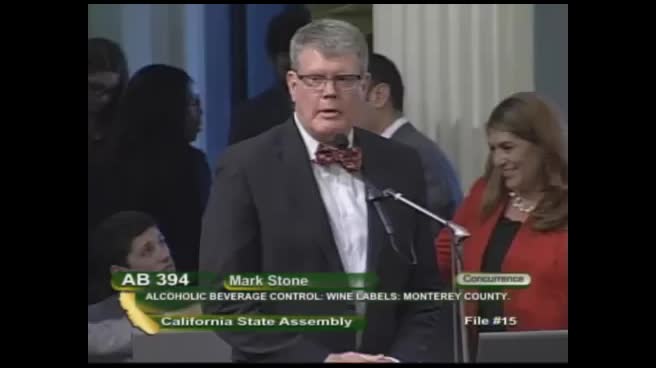
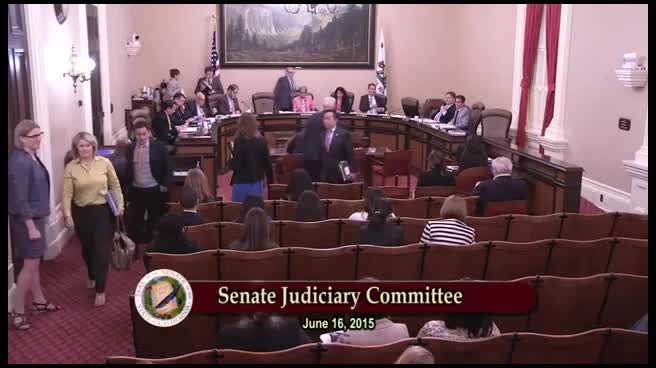
Bill Author