AB 835: Vehicular manslaughter: statute of limitation.
- Session Year: 2015-2016
- House: Assembly
- Latest Version Date: 2015-09-28
Existing law defines the crime of vehicular manslaughter as the unlawful killing of a human being without malice while driving a vehicle under specified circumstances, including the commission of an unlawful act, not amounting to a felony, with or without gross negligence. Existing law provides that vehicular manslaughter is punishable as a misdemeanor or felony.
Existing law provides various time limits within which crimes may be prosecuted, except as specified. Existing law authorizes, if a person flees the scene of an accident that caused death or permanent, serious injury, a criminal complaint brought pursuant to specified provisions to be filed within one or 3 years after the completion of the offense, as specified, or one year after the person is initially identified by law enforcement as a suspect in the commission of the offense, whichever is later, but in no case later than 6 years after the commission of the offense.
This bill would additionally authorize, if a person flees the scene of an accident, a criminal complaint brought for a violation of specified vehicular manslaughter crimes to be filed either one or 3 years after the commission of the offense, as specified, or one year after the person is initially identified by law enforcement as a suspect in the commission of that offense, whichever is later, but in no case later than 6 years after the commission of the offense.
Existing law defines the crime of vehicular manslaughter as the unlawful killing of a human being without malice while driving a vehicle under specified circumstances, including the commission of an unlawful act, not amounting to a felony, with or without gross negligence. Existing law provides that vehicular manslaughter is punishable as a misdemeanor or felony.
Existing law provides various time limits within which crimes may be prosecuted, except as specified. Existing law authorizes, if a person flees the scene of an accident that caused death or permanent, serious injury, a criminal complaint brought pursuant to specified provisions to be filed within one or 3 years after the completion of the offense, as specified, or one year after the person is initially identified by law enforcement as a suspect in the commission of the offense, whichever is later, but in no case later than 6 years after the commission of the offense.
This bill would additionally authorize, if a person flees the scene of an accident, a criminal complaint brought for a violation of specified vehicular manslaughter crimes to be filed either one or 3 years after the commission of the offense, as specified, or one year after the person is initially identified by law enforcement as a suspect in the commission of that offense, whichever is later. later, but in no case later than 6 years after the commission of the offense.
Existing law defines the crime of vehicular manslaughter as the unlawful killing of a human being without malice while driving a vehicle under specified circumstances, including the commission of an unlawful act, not amounting to a felony, with or without gross negligence. Existing law provides that vehicular manslaughter is punishable as a misdemeanor or felony.
Existing law provides various time limits within which crimes may be prosecuted, except as specified. Existing law authorizes, if a person flees the scene of an accident that caused death or permanent, serious injury, a criminal complaint brought pursuant to specified provisions to be filed within one or 3 years after the completion of the offense, as specified, or one year after the person is initially identified by law enforcement as a suspect in the commission of the offense, whichever is later, but in no case later than 6 years after the commission of the offense.
This bill would additionally authorize, if a person flees the scene of an accident, a criminal complaint brought for a violation of specified vehicular manslaughter crimes to be filed either one or 3 years after the commission of the offense, as specified, or one year after the person is initially identified by law enforcement as a suspect in the commission of that offense, whichever is later.
Existing law proscribes various types of vehicular manslaughter, including gross vehicular manslaughter while intoxicated, vehicular manslaughter while intoxicated, and vehicular manslaughter, as defined. Existing law prescribes the punishment for those crimes, including imprisonment in the state prison for 4, 6, or 10 years for gross vehicular manslaughter and imprisonment in the state prison for 2, 4, or 6 years, or in a county jail for not more than one year, as specified, for vehicular manslaughter. Existing law imposes an additional term of imprisonment of 5 years in the state prison upon a person who flees the scene of the crime after committing certain types of vehicular manslaughter, as specified.
Existing law also provides that the crime of 2nd degree murder is generally punishable by imprisonment in the state prison for a term of 15 years to life, as specified.
This bill would make a person who commits an act of vehicular manslaughter and flees the scene of the accident guilty of 2nd degree murder and subject to imprisonment in the state prison for a term of 15 years to life, as specified. By changing the penalty for existing crimes, the bill would impose a state-mandated local program.
The California Constitution requires the state to reimburse local agencies and school districts for certain costs mandated by the state. Statutory provisions establish procedures for making that reimbursement.
This bill would provide that no reimbursement is required by this act for a specified reason.
Existing law makes a person who, with the intent to extort money or other property from another, sends or delivers to any person a letter or other writing expressing or implying a threat, as specified, punishable in the same manner as if that money or property were actually obtained by means of the threat.
This bill would make technical, nonsubstantive changes to these provisions.
(a)Except as provided in this section, a limitation of time prescribed in this chapter is not tolled or extended for any reason.
(b)No time during which prosecution of the same person for the same conduct is pending in a court of this state is a part of a limitation of time prescribed in this chapter.
(c)A limitation of time prescribed in this chapter does not commence to run until the discovery of an offense described in this subdivision. This subdivision applies to an offense punishable by imprisonment in the state prison or imprisonment pursuant to subdivision (h) of Section 1170, a material element of which is fraud or breach of a fiduciary obligation, the commission of the crimes of theft or embezzlement upon an elder or dependent adult, or the basis of which is misconduct in office by a public officer, employee, or appointee, including, but not limited to, the following offenses:
(1)Grand theft of any type, forgery, falsification of public records, or acceptance of, or asking, receiving, or agreeing to receive, a bribe, by a public official or a public employee, including, but not limited to, a violation of Section 68, 86, or 93.
(2)A violation of Section 72, 118, 118a, 132, 134, or 186.10.
(3)A violation of Section 25540, of any type, or Section 25541 of the Corporations Code.
(4)A violation of Section 1090 or 27443 of the Government Code.
(5)Felony welfare fraud or Medi-Cal fraud in violation of Section 11483 or 14107 of the Welfare and Institutions Code.
(6)Felony insurance fraud in violation of Section 548 or 550 of this code or former Section 1871.1, or Section 1871.4, of the Insurance Code.
(7)A violation of Section 580, 581, 582, 583, or 584 of the Business and Professions Code.
(8)A violation of Section 22430 of the Business and Professions Code.
(9)A violation of Section 103800 of the Health and Safety Code.
(10)A violation of Section 529a.
(11)A violation of subdivision (d) or (e) of Section 368.
(d)If the defendant is out of the state when or after the offense is committed, the prosecution may be commenced as provided in Section 804 within the limitations of time prescribed by this chapter, and no time up to a maximum of three years during which the defendant is not within the state shall be a part of those limitations.
(e)A limitation of time prescribed in this chapter does not commence to run until the offense has been discovered, or could have reasonably been discovered, with regard to offenses under Division 7 (commencing with Section 13000) of the Water Code, under Chapter 6.5 (commencing with Section 25100) of, Chapter 6.7 (commencing with Section 25280) of, or Chapter 6.8 (commencing with Section 25300) of, Division 20 of, or Part 4 (commencing with Section 41500) of Division 26 of, the Health and Safety Code, or under Section 386, or offenses under Chapter 5 (commencing with Section 2000) of Division 2 of, Chapter 9 (commencing with Section 4000) of Division 2 of, Section 6126 of, Chapter 10 (commencing with Section 7301) of Division 3 of, or Chapter 19.5 (commencing with Section 22440) of Division 8 of, the Business and Professions Code.
(f)(1)Notwithstanding any other limitation of time described in this chapter, a criminal complaint may be filed within one year of the date of a report to a California law enforcement agency by a person of any age alleging that he or she, while under 18 years of age, was the victim of a crime described in Section 261, 286, 288, 288a, 288.5, or 289, or Section 289.5, as enacted by Chapter 293 of the Statutes of 1991 relating to penetration by an unknown object.
(2)This subdivision applies only if all of the following occur:
(A)The limitation period specified in Section 800, 801, or 801.1, whichever is later, has expired.
(B)The crime involved substantial sexual conduct, as described in subdivision (b) of Section 1203.066, excluding masturbation that is not mutual.
(C)There is independent evidence that corroborates the victims allegation. If the victim was 21 years of age or older at the time of the report, the independent evidence shall clearly and convincingly corroborate the victims allegation.
(3)No evidence may be used to corroborate the victims allegation that otherwise would be inadmissible during trial. Independent evidence does not include the opinions of mental health professionals.
(4)(A)In a criminal investigation involving any of the crimes listed in paragraph (1) committed against a child, when the applicable limitations period has not expired, that period shall be tolled from the time a party initiates litigation challenging a grand jury subpoena until the end of the litigation, including any associated writ or appellate proceeding, or until the final disclosure of evidence to the investigating or prosecuting agency, if that disclosure is ordered pursuant to the subpoena after the litigation.
(B)Nothing in this subdivision affects the definition or applicability of any evidentiary privilege.
(C)This subdivision shall not apply if a court finds that the grand jury subpoena was issued or caused to be issued in bad faith.
(g)(1)Notwithstanding any other limitation of time described in this chapter, a criminal complaint may be filed within one year of the date on which the identity of the suspect is conclusively established by DNA testing, if both of the following conditions are met:
(A)The crime is one that is described in subdivision (c) of Section 290.
(B)The offense was committed prior to January 1, 2001, and biological evidence collected in connection with the offense is analyzed for DNA type no later than January 1, 2004, or the offense was committed on or after January 1, 2001, and biological evidence collected in connection with the offense is analyzed for DNA type no later than two years from the date of the offense.
(2)For purposes of this section, DNA means deoxyribonucleic acid.
(h)For any crime, the proof of which depends substantially upon evidence that was seized under a warrant, but which is unavailable to the prosecuting authority under the procedures described in People v. Superior Court (Laff) (2001) 25 Cal.4th 703, People v. Superior Court (Bauman & Rose) (1995) 37 Cal.App.4th 1757, or subdivision (c) of Section 1524, relating to claims of evidentiary privilege or attorney work product, the limitation of time prescribed in this chapter shall be tolled from the time of the seizure until final disclosure of the evidence to the prosecuting authority. Nothing in this section otherwise affects the definition or applicability of any evidentiary privilege or attorney work product.
(i)Notwithstanding any other limitation of time described in this chapter, a criminal complaint may be filed within one year of the date on which a hidden recording is discovered related to a violation of paragraph (2) or (3) of subdivision (j) of Section 647.
(j)Notwithstanding any other limitation of time described in this chapter, if a person flees the scene of an accident that caused death or permanent, serious injury, as defined in subdivision (d) of Section 20001 of the Vehicle Code, a criminal complaint brought pursuant to paragraph (2) of subdivision (b) of Section 20001 of the Vehicle Code may be filed within the applicable time period described in Section 801 or 802 or one year after the person is initially identified by law enforcement as a suspect in the commission of the offense, whichever is later, but in no case later than six years after the commission of the offense.
(k)Notwithstanding any other limitation of time described in this chapter, if a person flees the scene of an accident, a criminal complaint brought pursuant to paragraph (1) or (2) of subdivision (c) of Section 192 may be filed within the applicable time period described in Section 801 or 802, or one year after the person is initially identified by law enforcement as a suspect in the commission of that offense, whichever is later, but in no case later than six years after the commission of the offense.
(l)A limitation of time prescribed in this chapter does not commence to run until the discovery of an offense involving the offering or giving of a bribe to a public official or public employee, including, but not limited to, a violation of Section 67, 67.5, 85, 92, or 165, or Section 35230 or 72530 of the Education Code.
(a)Except as provided in this section, a limitation of time prescribed in this chapter is not tolled or extended for any reason.
(b)No time during which prosecution of the same person for the same conduct is pending in a court of this state is a part of a limitation of time prescribed in this chapter.
(c)A limitation of time prescribed in this chapter does not commence to run until the discovery of an offense described in this subdivision. This subdivision applies to an offense punishable by imprisonment in the state prison or imprisonment pursuant to subdivision (h) of Section 1170, a material element of which is fraud or breach of a fiduciary obligation, the commission of the crimes of theft or embezzlement upon an elder or dependent adult, or the basis of which is misconduct in office by a public officer, employee, or appointee, including, but not limited to, the following offenses:
(1)Grand theft of any type, forgery, falsification of public records, or acceptance of, or asking, receiving, or agreeing to receive, a bribe, by a public official or a public employee, including, but not limited to, a violation of Section 68, 86, or 93.
(2)A violation of Section 72, 118, 118a, 132, 134, or 186.10.
(3)A violation of Section 25540, of any type, or Section 25541 of the Corporations Code.
(4)A violation of Section 1090 or 27443 of the Government Code.
(5)Felony welfare fraud or Medi-Cal fraud in violation of Section 11483 or 14107 of the Welfare and Institutions Code.
(6)Felony insurance fraud in violation of Section 548 or 550 of this code or former Section 1871.1, or Section 1871.4, of the Insurance Code.
(7)A violation of Section 580, 581, 582, 583, or 584 of the Business and Professions Code.
(8)A violation of Section 22430 of the Business and Professions Code.
(9)A violation of Section 103800 of the Health and Safety Code.
(10)A violation of Section 529a.
(11)A violation of subdivision (d) or (e) of Section 368.
(d)If the defendant is out of the state when or after the offense is committed, the prosecution may be commenced as provided in Section 804 within the limitations of time prescribed by this chapter, and no time up to a maximum of three years during which the defendant is not within the state shall be a part of those limitations.
(e)A limitation of time prescribed in this chapter does not commence to run until the offense has been discovered, or could have reasonably been discovered, with regard to offenses under Division 7 (commencing with Section 13000) of the Water Code, under Chapter 6.5 (commencing with Section 25100) of, Chapter 6.7 (commencing with Section 25280) of, or Chapter 6.8 (commencing with Section 25300) of, Division 20 of, or Part 4 (commencing with Section 41500) of Division 26 of, the Health and Safety Code, or under Section 386, or offenses under Chapter 5 (commencing with Section 2000) of Division 2 of, Chapter 9 (commencing with Section 4000) of Division 2 of, Section 6126 of, Chapter 10 (commencing with Section 7301) of Division 3 of, or Chapter 19.5 (commencing with Section 22440) of Division 8 of, the Business and Professions Code.
(f)(1)Notwithstanding any other limitation of time described in this chapter, a criminal complaint may be filed within one year of the date of a report to a California law enforcement agency by a person of any age alleging that he or she, while under 18 years of age, was the victim of a crime described in Section 261, 286, 288, 288a, 288.5, or 289, or Section 289.5, as enacted by Chapter 293 of the Statutes of 1991 relating to penetration by an unknown object.
(2)This subdivision applies only if all of the following occur:
(A)The limitation period specified in Section 800, 801, or 801.1, whichever is later, has expired.
(B)The crime involved substantial sexual conduct, as described in subdivision (b) of Section 1203.066, excluding masturbation that is not mutual.
(C)There is independent evidence that corroborates the victims allegation. If the victim was 21 years of age or older at the time of the report, the independent evidence shall clearly and convincingly corroborate the victims allegation.
(3)No evidence may be used to corroborate the victims allegation that otherwise would be inadmissible during trial. Independent evidence does not include the opinions of mental health professionals.
(4)(A)In a criminal investigation involving any of the crimes listed in paragraph (1) committed against a child, when the applicable limitations period has not expired, that period shall be tolled from the time a party initiates litigation challenging a grand jury subpoena until the end of the litigation, including any associated writ or appellate proceeding, or until the final disclosure of evidence to the investigating or prosecuting agency, if that disclosure is ordered pursuant to the subpoena after the litigation.
(B)Nothing in this subdivision affects the definition or applicability of any evidentiary privilege.
(C)This subdivision shall not apply if a court finds that the grand jury subpoena was issued or caused to be issued in bad faith.
(g)(1)Notwithstanding any other limitation of time described in this chapter, a criminal complaint may be filed within one year of the date on which the identity of the suspect is conclusively established by DNA testing, if both of the following conditions are met:
(A)The crime is one that is described in subdivision (c) of Section 290.
(B)The offense was committed prior to January 1, 2001, and biological evidence collected in connection with the offense is analyzed for DNA type no later than January 1, 2004, or the offense was committed on or after January 1, 2001, and biological evidence collected in connection with the offense is analyzed for DNA type no later than two years from the date of the offense.
(2)For purposes of this section, DNA means deoxyribonucleic acid.
(h)For any crime, the proof of which depends substantially upon evidence that was seized under a warrant, but which is unavailable to the prosecuting authority under the procedures described in People v. Superior Court (Laff) (2001) 25 Cal.4th 703, People v. Superior Court (Bauman & Rose) (1995) 37 Cal.App.4th 1757, or subdivision (c) of Section 1524, relating to claims of evidentiary privilege or attorney work product, the limitation of time prescribed in this chapter shall be tolled from the time of the seizure until final disclosure of the evidence to the prosecuting authority. Nothing in this section otherwise affects the definition or applicability of any evidentiary privilege or attorney work product.
(i)Notwithstanding any other limitation of time described in this chapter, a criminal complaint may be filed within one year of the date on which a hidden recording is discovered related to a violation of paragraph (2) or (3) of subdivision (j) of Section 647.
(j)Notwithstanding any other limitation of time described in this chapter, if a person flees the scene of an accident that caused death or permanent, serious injury, as defined in subdivision (d) of Section 20001 of the Vehicle Code, a criminal complaint brought pursuant to paragraph (2) of subdivision (b) of Section 20001 of the Vehicle Code may be filed within the applicable time period described in Section 801 or 802 or one year after the person is initially identified by law enforcement as a suspect in the commission of the offense, whichever is later, but in no case later than six years after the commission of the offense.
(k)Notwithstanding any other limitation of time described in this chapter, if a person flees the scene of an accident, a criminal complaint brought pursuant to paragraph (1) or (2) of subdivision (c) of Section 192 may be filed within the applicable time period described in Section 801 or 802, or one year after the person is initially identified by law enforcement as a suspect in the commission of that offense, whichever is later. later, but in no case later than six years after the commission of the offense.
(l)A limitation of time prescribed in this chapter does not commence to run until the discovery of an offense involving the offering or giving of a bribe to a public official or public employee, including, but not limited to, a violation of Section 67, 67.5, 85, 92, or 165, or Section 35230 or 72530 of the Education Code.
(a)Except as provided in this section, a limitation of time prescribed in this chapter is not tolled or extended for any reason.
(b)No time during which prosecution of the same person for the same conduct is pending in a court of this state is a part of a limitation of time prescribed in this chapter.
(c)A limitation of time prescribed in this chapter does not commence to run until the discovery of an offense described in this subdivision. This subdivision applies to an offense punishable by imprisonment in the state prison or imprisonment pursuant to subdivision (h) of Section 1170, a material element of which is fraud or breach of a fiduciary obligation, the commission of the crimes of theft or embezzlement upon an elder or dependent adult, or the basis of which is misconduct in office by a public officer, employee, or appointee, including, but not limited to, the following offenses:
(1)Grand theft of any type, forgery, falsification of public records, or acceptance of, or asking, receiving, or agreeing to receive, a bribe, by a public official or a public employee, including, but not limited to, a violation of Section 68, 86, or 93.
(2)A violation of Section 72, 118, 118a, 132, 134, or 186.10.
(3)A violation of Section 25540, of any type, or Section 25541 of the Corporations Code.
(4)A violation of Section 1090 or 27443 of the Government Code.
(5)Felony welfare fraud or Medi-Cal fraud in violation of Section 11483 or 14107 of the Welfare and Institutions Code.
(6)Felony insurance fraud in violation of Section 548 or 550 of this code or former Section 1871.1, or Section 1871.4, of the Insurance Code.
(7)A violation of Section 580, 581, 582, 583, or 584 of the Business and Professions Code.
(8)A violation of Section 22430 of the Business and Professions Code.
(9)A violation of Section 103800 of the Health and Safety Code.
(10)A violation of Section 529a.
(11)A violation of subdivision (d) or (e) of Section 368.
(d)If the defendant is out of the state when or after the offense is committed, the prosecution may be commenced as provided in Section 804 within the limitations of time prescribed by this chapter, and no time up to a maximum of three years during which the defendant is not within the state shall be a part of those limitations.
(e)A limitation of time prescribed in this chapter does not commence to run until the offense has been discovered, or could have reasonably been discovered, with regard to offenses under Division 7 (commencing with Section 13000) of the Water Code, under Chapter 6.5 (commencing with Section 25100) of, Chapter 6.7 (commencing with Section 25280) of, or Chapter 6.8 (commencing with Section 25300) of, Division 20 of, or Part 4 (commencing with Section 41500) of Division 26 of, the Health and Safety Code, or under Section 386, or offenses under Chapter 5 (commencing with Section 2000) of Division 2 of, Chapter 9 (commencing with Section 4000) of Division 2 of, Section 6126 of, Chapter 10 (commencing with Section 7301) of Division 3 of, or Chapter 19.5 (commencing with Section 22440) of Division 8 of, the Business and Professions Code.
(f)(1)Notwithstanding any other limitation of time described in this chapter, a criminal complaint may be filed within one year of the date of a report to a California law enforcement agency by a person of any age alleging that he or she, while under 18 years of age, was the victim of a crime described in Section 261, 286, 288, 288a, 288.5, or 289, or Section 289.5, as enacted by Chapter 293 of the Statutes of 1991 relating to penetration by an unknown object.
(2)This subdivision applies only if all of the following occur:
(A)The limitation period specified in Section 800, 801, or 801.1, whichever is later, has expired.
(B)The crime involved substantial sexual conduct, as described in subdivision (b) of Section 1203.066, excluding masturbation that is not mutual.
(C)There is independent evidence that corroborates the victims allegation. If the victim was 21 years of age or older at the time of the report, the independent evidence shall clearly and convincingly corroborate the victims allegation.
(3)No evidence may be used to corroborate the victims allegation that otherwise would be inadmissible during trial. Independent evidence does not include the opinions of mental health professionals.
(4)(A)In a criminal investigation involving any of the crimes listed in paragraph (1) committed against a child, when the applicable limitations period has not expired, that period shall be tolled from the time a party initiates litigation challenging a grand jury subpoena until the end of the litigation, including any associated writ or appellate proceeding, or until the final disclosure of evidence to the investigating or prosecuting agency, if that disclosure is ordered pursuant to the subpoena after the litigation.
(B)Nothing in this subdivision affects the definition or applicability of any evidentiary privilege.
(C)This subdivision shall not apply if a court finds that the grand jury subpoena was issued or caused to be issued in bad faith.
(g)(1)Notwithstanding any other limitation of time described in this chapter, a criminal complaint may be filed within one year of the date on which the identity of the suspect is conclusively established by DNA testing, if both of the following conditions are met:
(A)The crime is one that is described in subdivision (c) of Section 290.
(B)The offense was committed prior to January 1, 2001, and biological evidence collected in connection with the offense is analyzed for DNA type no later than January 1, 2004, or the offense was committed on or after January 1, 2001, and biological evidence collected in connection with the offense is analyzed for DNA type no later than two years from the date of the offense.
(2)For purposes of this section, DNA means deoxyribonucleic acid.
(h)For any crime, the proof of which depends substantially upon evidence that was seized under a warrant, but which is unavailable to the prosecuting authority under the procedures described in People v. Superior Court (Laff) (2001) 25 Cal.4th 703, People v. Superior Court (Bauman & Rose) (1995) 37 Cal.App.4th 1757, or subdivision (c) of Section 1524, relating to claims of evidentiary privilege or attorney work product, the limitation of time prescribed in this chapter shall be tolled from the time of the seizure until final disclosure of the evidence to the prosecuting authority. Nothing in this section otherwise affects the definition or applicability of any evidentiary privilege or attorney work product.
(i)Notwithstanding any other limitation of time described in this chapter, a criminal complaint may be filed within one year of the date on which a hidden recording is discovered related to a violation of paragraph (2) or (3) of subdivision (j) of Section 647.
(j)Notwithstanding any other limitation of time described in this chapter, if a person flees the scene of an accident that caused death or permanent, serious injury, as defined in subdivision (d) of Section 20001 of the Vehicle Code, a criminal complaint brought pursuant to paragraph (2) of subdivision (b) of Section 20001 of the Vehicle Code may be filed within the applicable time period described in Section 801 or 802 or one year after the person is initially identified by law enforcement as a suspect in the commission of the offense, whichever is later, but in no case later than six years after the commission of the offense.
(k)Notwithstanding any other limitation of time described in this chapter, if a person flees the scene of an accident, a criminal complaint brought pursuant to paragraph (1) or (2) of subdivision (c) of Section 192 may be filed within the applicable time period described in Section 801 or 802, or one year after the person is initially identified by law enforcement as a suspect in the commission of that offense, whichever is later.
(k)
(l)A limitation of time prescribed in this chapter does not commence to run until the discovery of an offense involving the offering or giving of a bribe to a public official or public employee, including, but not limited to, a violation of Section 67, 67.5, 85, 92, or 165, or Section 35230 or 72530 of the Education Code.
SECTION 1.Section 191.5 of the Penal Code is amended to read:191.5.(a)Gross vehicular manslaughter while intoxicated is the unlawful killing of a human being without malice aforethought, in the driving of a vehicle, where the driving was in violation of Section 23140, 23152, or 23153 of the Vehicle Code, and the killing was either the proximate result of the commission of an unlawful act, not amounting to a felony, and with gross negligence, or the proximate result of the commission of a lawful act that might produce death, in an unlawful manner, and with gross negligence.
(b)Vehicular manslaughter while intoxicated is the unlawful killing of a human being without malice aforethought, in the driving of a vehicle, where the driving was in violation of Section 23140, 23152, or 23153 of the Vehicle Code, and the killing was either the proximate result of the commission of an unlawful act, not amounting to a felony, but without gross negligence, or the proximate result of the commission of a lawful act that might produce death, in an unlawful manner, but without gross negligence.
(c)(1)Except as provided in subdivision (d), gross vehicular manslaughter while intoxicated in violation of subdivision (a) is punishable by imprisonment in the state prison for 4, 6, or 10 years.
(2)Vehicular manslaughter while intoxicated in violation of subdivision (b) is punishable by imprisonment in a county jail for not more than one year or by imprisonment pursuant to subdivision (h) of Section 1170 for 16 months or two or four years.
(d)(1)A person convicted of violating subdivision (a) who has one or more prior convictions of this section or of paragraph (1) of subdivision (c) of Section 192, subdivision (a) or (b) of Section 192.5 of this code, or of violating Section 23152 punishable under Sections 23540, 23542, 23546, 23548, 23550, or 23552 of, or convicted of Section 23153 of, the Vehicle Code, shall be punished by imprisonment in the state prison for a term of 15 years to life. Article 2.5 (commencing with Section 2930) of Chapter 7 of Title 1 of Part 3 shall apply to reduce the term imposed pursuant to this subdivision.
(2)Notwithstanding any other law, a person who violates subdivision (a) or (b) and flees the scene of the accident, is guilty of murder in the second degree.
(e)This section shall not be construed as prohibiting or precluding a charge of murder under Section 188 upon facts exhibiting wantonness and a conscious disregard for life to support a finding of implied malice, or upon facts showing malice consistent with the holding of the California Supreme Court in People v. Watson, 30 Cal. 3d 290.
(f)This section shall not be construed as making any homicide in the driving of a vehicle or the operation of a vessel punishable which is not a proximate result of the commission of an unlawful act, not amounting to felony, or of the commission of a lawful act which might produce death, in an unlawful manner.
(g)For the penalties in subdivision (c) to apply, the existence of any fact required under subdivision (c) shall be alleged in the information or indictment and either admitted by the defendant in open court or found to be true by the trier of fact.
SEC. 2.Section 193 of the Penal Code is amended to read:193.(a)Voluntary manslaughter is punishable by imprisonment in the state prison for 3, 6, or 11 years.
(b)Involuntary manslaughter is punishable by imprisonment pursuant to subdivision (h) of Section 1170 for two, three, or four years.
(c)Vehicular manslaughter is punishable as follows:
(1)A violation of paragraph (1) of subdivision (c) of Section 192 is punishable either by imprisonment in the county jail for not more than one year or by imprisonment in the state prison for two, four, or six years.
(2)A violation of paragraph (2) of subdivision (c) of Section 192 is punishable by imprisonment in the county jail for not more than one year.
(3)A violation of paragraph (3) of subdivision (c) of Section 192 is punishable by imprisonment in the state prison for 4, 6, or 10 years.
(4)Notwithstanding any other law, a person who commits vehicular manslaughter and flees the scene of the accident, is guilty of murder in the second degree.
SEC. 3.No reimbursement is required by this act pursuant to Section 6 of Article XIIIB of the California Constitution because the only costs that may be incurred by a local agency or school district will be incurred because this act creates a new crime or infraction, eliminates a crime or infraction, or changes the penalty for a crime or infraction, within the meaning of Section 17556 of the Government Code, or changes the definition of a crime within the meaning of Section 6 of Article XIIIB of the California Constitution.
(a)Gross vehicular manslaughter while intoxicated is the unlawful killing of a human being without malice aforethought, in the driving of a vehicle, where the driving was in violation of Section 23140, 23152, or 23153 of the Vehicle Code, and the killing was either the proximate result of the commission of an unlawful act, not amounting to a felony, and with gross negligence, or the proximate result of the commission of a lawful act that might produce death, in an unlawful manner, and with gross negligence.
(b)Vehicular manslaughter while intoxicated is the unlawful killing of a human being without malice aforethought, in the driving of a vehicle, where the driving was in violation of Section 23140, 23152, or 23153 of the Vehicle Code, and the killing was either the proximate result of the commission of an unlawful act, not amounting to a felony, but without gross negligence, or the proximate result of the commission of a lawful act that might produce death, in an unlawful manner, but without gross negligence.
(c)(1)Except as provided in subdivision (d), gross vehicular manslaughter while intoxicated in violation of subdivision (a) is punishable by imprisonment in the state prison for 4, 6, or 10 years.
(2)Vehicular manslaughter while intoxicated in violation of subdivision (b) is punishable by imprisonment in a county jail for not more than one year or by imprisonment pursuant to subdivision (h) of Section 1170 for 16 months or two or four years.
(d)(1)A person convicted of violating subdivision (a) who has one or more prior convictions of this section or of paragraph (1) of subdivision (c) of Section 192, subdivision (a) or (b) of Section 192.5 of this code, or of violating Section 23152 punishable under Sections 23540, 23542, 23546, 23548, 23550, or 23552 of, or convicted of Section 23153 of, the Vehicle Code, shall be punished by imprisonment in the state prison for a term of 15 years to life. Article 2.5 (commencing with Section 2930) of Chapter 7 of Title 1 of Part 3 shall apply to reduce the term imposed pursuant to this subdivision.
(2)Notwithstanding any other law, a person who violates subdivision (a) or (b) and flees the scene of the accident, is guilty of murder in the second degree.
(e)This section shall not be construed as prohibiting or precluding a charge of murder under Section 188 upon facts exhibiting wantonness and a conscious disregard for life to support a finding of implied malice, or upon facts showing malice consistent with the holding of the California Supreme Court in People v. Watson, 30 Cal. 3d 290.
(f)This section shall not be construed as making any homicide in the driving of a vehicle or the operation of a vessel punishable which is not a proximate result of the commission of an unlawful act, not amounting to felony, or of the commission of a lawful act which might produce death, in an unlawful manner.
(g)For the penalties in subdivision (d) (c) to apply, the existence of any fact required under subdivision (d) (c) shall be alleged in the information or indictment and either admitted by the defendant in open court or found to be true by the trier of fact.
SEC. 2.Section 193 of the Penal Code is amended to read:193.(a)Voluntary manslaughter is punishable by imprisonment in the state prison for 3, 6, or 11 years.
(b)Involuntary manslaughter is punishable by imprisonment pursuant to subdivision (h) of Section 1170 for two, three, or four years.
(c)Vehicular manslaughter is punishable as follows:
(1)A violation of paragraph (1) of subdivision (c) of Section 192 is punishable either by imprisonment in the county jail for not more than one year or by imprisonment in the state prison for two, four, or six years.
(2)A violation of paragraph (2) of subdivision (c) of Section 192 is punishable by imprisonment in the county jail for not more than one year.
(3)A violation of paragraph (3) of subdivision (c) of Section 192 is punishable by imprisonment in the state prison for 4, 6, or 10 years.
(4)Notwithstanding any other law, a person who commits vehicular manslaughter and flees the scene of the accident, is guilty of murder in the second degree.
SEC. 3.No reimbursement is required by this act pursuant to Section 6 of Article XIIIB of the California Constitution because the only costs that may be incurred by a local agency or school district will be incurred because this act creates a new crime or infraction, eliminates a crime or infraction, or changes the penalty for a crime or infraction, within the meaning of Section 17556 of the Government Code, or changes the definition of a crime within the meaning of Section 6 of Article XIIIB of the California Constitution.
SECTION 1.Section 523 of the Penal Code is amended to read:523.A person who, with intent to extort money or other property from another, sends or delivers to any person a letter or other writing, whether subscribed or not, expressing or implying, or adapted to imply, a threat, as specified in Section 519, is punishable in the same manner as if that money or property were actually obtained by means of the threat.
Every A person who, with intent to extort any money or other property from another, sends or delivers to any person any a letter or other writing, whether subscribed or not, expressing or implying, or adapted to imply, any a threat such as is, as specified in Section 519, is punishable in the same manner as if such that money or property were actually obtained by means of such the threat.
|
Date
|
Status
|
|---|---|
| May 22, 2015 | Read third time. Passed. Ordered to the Senate. (Ayes 75. Noes 0. Page 1549.) |
| Sep 28, 2015 | Chaptered by Secretary of State - Chapter 338, Statutes of 2015. |
| Sep 28, 2015 | Approved by the Governor. |
| Sep 16, 2015 | Enrolled and presented to the Governor at 4 p.m. |
| Sep 3, 2015 | Senate amendments concurred in. To Engrossing and Enrolling. (Ayes 80. Noes 0.). |
| Sep 3, 2015 | Senate amendments concurred in. To Engrossing and Enrolling. (Ayes 80. Noes 0. Page 2871.). |
| Sep 3, 2015 | Assembly Rule 77 suspended. (Page 2859.) |
| Sep 3, 2015 | Assembly Rule 77 suspended. |
| Sep 2, 2015 | Read third time. Passed. Ordered to the Assembly. (Ayes 40. Noes 0. Page 2407.). |
| Sep 2, 2015 | Read third time. Passed. Ordered to the Assembly. |
| Sep 2, 2015 | In Assembly. Concurrence in Senate amendments pending. May be considered on or after September 4 pursuant to Assembly Rule 77. |
| Sep 1, 2015 | Read second time and amended. Ordered to third reading. |
| Aug 31, 2015 | From committee: Amend, and do pass as amended. (Ayes 7. Noes 0.) (August 27). |
| Jul 6, 2015 | In committee: Referred to APPR. suspense file. |
| Jun 23, 2015 | From committee: Do pass and re-refer to Com. on APPR. (Ayes 7. Noes 0.) (June 23). Re-referred to Com. on APPR. |
| Jun 4, 2015 | Referred to Com. on PUB. S. |
| Feb 26, 2015 | Read first time. To print. |
| May 22, 2015 | Read third time. Passed. Ordered to the Senate. |
| May 22, 2015 | In Senate. Read first time. To Com. on RLS. for assignment. |
| May 14, 2015 | Ordered to third reading. |
| May 14, 2015 | From Consent Calendar. |
| May 7, 2015 | Read second time. Ordered to Consent Calendar. |
| May 6, 2015 | From committee: Do pass. To Consent Calendar. (Ayes 17. Noes 0.) (May 6). |
| Apr 28, 2015 | From committee: Do pass and re-refer to Com. on APPR. (Ayes 7. Noes 0.) (April 28). Re-referred to Com. on APPR. |
| Apr 21, 2015 | In committee: Set, first hearing. Hearing canceled at the request of author. |
| Apr 15, 2015 | Re-referred to Com. on PUB. S. |
| Apr 14, 2015 | From committee chair, with author's amendments: Amend, and re-refer to Com. on PUB. S. Read second time and amended. |
| Apr 6, 2015 | Re-referred to Com. on PUB. S. |
| Mar 26, 2015 | Referred to Com. on PUB. S. |
| Mar 26, 2015 | From committee chair, with author's amendments: Amend, and re-refer to Com. on PUB. S. Read second time and amended. |
| Feb 27, 2015 | From printer. May be heard in committee March 29. |
|
Date
|
Description
|
Location
|
Votes
|
|
|---|---|---|---|---|
| Sep 3, 2015 | AB 835 GIPSON Concurrence in Senate Amendments | Assembly Floor |
Passed |
|
| Sep 2, 2015 | Assembly 3rd Reading AB835 Gipson By Anderson | Senate Floor |
Passed |
|
| Aug 27, 2015 | Do pass as amended | Senate Standing Committee on Appropriations |
Passed |
|
| Jul 6, 2015 | Placed on suspense file | Senate Standing Committee on Appropriations |
Passed |
|
| Jun 23, 2015 | Do pass, but first be re-referred to the Committee on [Appropriations] | Senate Standing Committee on Public Safety |
Passed |
|
| May 22, 2015 | AB 835 GIPSON Assembly Third Reading | Assembly Floor |
Passed |
|
| May 6, 2015 | Do pass. To Consent Calendar. | Assembly Standing Committee on Appropriations |
Passed |
|
| Apr 28, 2015 | Do pass and be re-referred to the Committee on [Appropriations] | Assembly Standing Committee on Public Safety |
Passed |
This list shows positions taken on this bill by organizations on the date displayed, which is linked to the original source.
Positions by individuals are not included.
|
Organization
|
Position
|
Date
|
|---|---|---|
| ACLU of California | * Against Unless Amend | Jun 23, 2015 |
| Association For Los Angeles Deputy Sheriffs | ** Support | Sep 2, 2015 |
| Association of Deputy District Attorneys | ** Support | Sep 2, 2015 |
| California Association Of Highway Patrolmen | ** Support | May 22, 2015 |
| California Attorneys For Criminal Justice | ** Against | Sep 2, 2015 |
| California District Attorneys Association | ** Support | Sep 2, 2015 |
| Crime Victims Action Alliance | * Support | Jun 23, 2015 |
| Crime Victims United | ** Support | Sep 2, 2015 |
| Fraternal Order of Police California State Lodge | ** Support | May 22, 2015 |
| Legal Services for Prisoners with Children | ** Against | Sep 2, 2015 |
| Long Beach Police Officers Association | ** Support | May 22, 2015 |
| Los Angeles County District Attorney's Association | ** Support | Sep 2, 2015 |
| Los Angeles County Professional Peace Officers Association | ** Support | May 22, 2015 |
| Los Angeles District Attorney's Office | * Support | Jun 23, 2015 |
| Los Angeles Police Protective League | ** Support | Sep 2, 2015 |
| Los Angeles Probation Officers Union, AFSCME, Local 685 | ** Support | Sep 2, 2015 |
| PUB. S. | ** Against | May 22, 2015 |
| Riverside Sheriffs' Association | ** Support | Sep 2, 2015 |
| Sacramento County Deputy Sheriffs' Association | ** Support | May 22, 2015 |
| Santa Ana Police Officers Association | ** Support | May 22, 2015 |
AB 835
Page 3
CONCURRENCE IN SENATE AMENDMENTS
AB 835
(Gipson)
As Amended September 1, 2015
Majority vote
ASSEMBLY: |
75-0 |
(May 22, 2015) |
SENATE: |
40-0 |
(September 2, 2015) |
Original Committee Reference: PUB. S.
SUMMARY:
Provides that, in addition to filing a criminal complaint within the existing statute of limitations, if a person flees the scene of an accident that results in a vehicular manslaughter, as specified, a criminal complaint may be filed within one year after the person is initially identified by law enforcement as a suspect in the commission of the offense but in no case later than the offense date.
The Senate amendments limit the statute of limitations for vehicular manslaughter, when the defendant flees the scene of the accident, at six years from the date of the offense.
EXISTING LAW:
States that vehicular manslaughter is the unlawful killing of a human being without malice while driving a vehicle in the commission of an unlawful act, not amounting to a felony, and with gross negligence or driving a vehicle in the commission of a lawful act which might produce death, in an unlawful manner, and with gross negligence.
States that violation of vehicular manslaughter is punishable by either imprisonment in the county jail for not more than one year or by imprisonment in the state prison for two, four or six years.
States that vehicular manslaughter also is the unlawful killing of a human being without malice while a) driving a vehicle in the commission of an unlawful act, not amounting to a felony, but without gross negligence or b) driving a vehicle in the commission of a lawful act which might produce death, in an unlawful manner, but without gross negligence. States that violation of this offense is punishable by imprisonment in the county jail for not more than one year.
Requires that prosecution for an offense punishable by imprisonment in the state prison or county jail pursuant to realignment be commenced within three years after commission of the offense, except as specified.
Requires that prosecution for a misdemeanor offense be commenced within one year after commission of the offense, except as specified.
Allows a criminal complaint to be filed within the standard period, or one year after the person is initially identified by law enforcement as a suspect in the commission of the offense, whichever is later, but in no case later than six years after the commission of the offense, if a person flees the scene of an accident that caused death or permanent, serious injury
States that the driver of a vehicle involved in an accident resulting in injury to a person, other than himself or herself, or in the death of a person shall immediately stop the vehicle at the scene of the accident and provide assistance and information.
Specifies that if the results in death or permanent, serious injury, a person who violates subdivision shall be punished by imprisonment in the state prison for two, three, or four years, or in a county jail for not less than 90 days nor more than one year, or by a fine of not less than $1,000 nor more than $10,000, or by both that imprisonment and fine. However, the court, in the interests of justice and for reasons stated in the record, may reduce or eliminate the minimum imprisonment.
States that a person who flees the scene of the crime after committing a violation of vehicular manslaughter while intoxicated of, or gross vehicular manslaughter upon conviction of any of those sections, in addition and consecutive to the punishment prescribed, shall be punished by an additional term of imprisonment of five years in the state prison. This additional term shall not be imposed unless the allegation is charged in the accusatory pleading and admitted by the defendant or found to be true by the trier of fact. The court shall not strike a finding that brings a person within the provisions of this subdivision or an allegation made pursuant to this subdivision.
AS PASSED BY THE ASSEMBLY, this bill provided that, in addition to filing a criminal complaint within the existing statute of limitations, if a person flees the scene of an accident that results in a vehicular manslaughter, as specified, a criminal complaint may be filed within one year after the person is initially identified by law enforcement as a suspect in the commission of the offense.
FISCAL EFFECT:
According to the Senate Appropriations Committee:
Potential future increase in state costs, potentially in excess of $50,000 (General Fund) in any one year to the extent additional commitments to state prison occur under the extended statute of limitations that otherwise would not have occurred under existing law. While the number of new commitments to state prison is estimated to be minimal, given the potential length of the applicable prison term including the five-year sentence enhancement under Vehicle Code Section 20001(c), even two commitments within a seven to 11-year time period could result in annual prison costs in excess of the Suspense File threshold.
Potential future increase in non-reimbursable local costs (General Fund*) to the extent additional misdemeanor convictions to jail occur under the extended statute of limitations that otherwise would not have occurred under existing law. Any increased costs to local agencies could potentially require a subvention of funds from the State (General Fund*).
COMMENTS:
According to the author, "Currently, the statute of limitation provides an incentive for vehicular homicide suspects to flee the scene of serious traffic accidents in order to avoid identification and possible prosecution. Our laws should not encourage flight, and discourage rendering aid.
"Assembly Bill (AB) 835 will ensure those who commit vehicular homicide and flee the scene of the incident are held accountable for their crime by tolling the statute of limitations until the suspect is identified by law enforcement."
Analysis Prepared by: David Billingsley / PUB. S. / (916) 319-3744 FN: 0001961
AB 835
Page 5
|
Office of Senate Floor Analyses (916) 651-1520 Fax: (916) 327-4478 |
THIRD READING
Bill No: AB 835
Amended: 9/1/15 in Senate
SENATE PUBLIC SAFETY COMMITTEE: 7-0, 6/23/15
AYES: Hancock, Anderson, Glazer, Leno, Liu, Monning, Stone
SENATE APPROPRIATIONS COMMITTEE: 7-0, 8/27/15
AYES: Lara, Bates, Beall, Hill, Leyva, Mendoza, Nielsen
ASSEMBLY FLOOR: 75-0, 5/22/15 - See last page for vote
SUBJECT: Vehicular manslaughter: statute of limitation
DIGEST: This bill allows for a longer statute of limitations when a person flees the scene of an accident where vehicular manslaughter has occurred, but no longer than six years.
Existing law:
States that vehicular manslaughter is the unlawful killing of a human being without malice while driving a vehicle in the commission of an unlawful act, not amounting to a felony, and with gross negligence or driving a vehicle in the commission of a lawful act which might produce death, in an unlawful manner, and with gross negligence. (Penal Code, § 192 (c)(1).)
States that violation of vehicular manslaughter is punishable by either imprisonment in the county jail for not more than one year or by imprisonment in the state prison for two, four or six years. (Penal Code, § 193 (c)(1).)
States that vehicular manslaughter also is the unlawful killing of a human being without malice while (i) driving a vehicle in the commission of an unlawful act, not amounting to a felony, but without gross negligence or (ii) driving a vehicle in the commission of a lawful act which might produce death, in an unlawful manner, but without gross negligence. States that violation of this offense is punishable by imprisonment in the county jail for not more than one year. (Penal Code §§ 192(c)(2) and 193 (c) (2).)
Requires that prosecution for an offense punishable by imprisonment in the state prison or county jail pursuant to realignment be commenced within three years after commission of the offense, except as specified. (Penal Code, § 801.)
States that the driver of a vehicle involved in an accident resulting in injury to a person, other than himself or herself, or in the death of a person shall immediately stop the vehicle at the scene of the accident and provide assistance and information. (Vehicle Code, § 20001 (a).)
Specifies that if the results is death or permanent, serious injury, a person who violates subdivision shall be punished by imprisonment in the state prison for two, three, or four years, or in a county jail for not less than 90 days nor more than one year, or by a fine of not less than one thousand dollars ($1,000) nor more than ten thousand dollars ($10,000), or by both that imprisonment and fine. However, the court, in the interests of justice and for reasons stated in the record, may reduce or eliminate the minimum imprisonment. (Vehicle Code, § 20001 (b)(2).)
States that a person who flees the scene of the crime after committing a violation of vehicular manslaughter while intoxicated of, or gross vehicular manslaughter upon conviction of any of those sections, in addition and consecutive to the punishment prescribed, shall be punished by an additional term of imprisonment of five years in the state prison. This additional term shall not be imposed unless the allegation is charged in the accusatory pleading and admitted by the defendant or found to be true by the trier of fact. The court shall not strike a finding that brings a person within the provisions of this subdivision or an allegation made pursuant to this subdivision. (Vehicle Code, § 20001 (c).)
Requires that prosecution for a misdemeanor offense be commenced within one year after commission of the offense, except as specified. (Penal Code, § 802 (a).)
Allows a criminal complaint to be filed within the standard period, or one year after the person is initially identified by law enforcement as a suspect in the commission of the offense, whichever is later, but in no case later than six years after the commission of the offense, if a person flees the scene of an accident that caused death or permanent, serious injury. (Penal Code, § 803 (j).)
This bill provides that notwithstanding any other limitation of time, if a person flees the scene of an accident where the person is charged with vehicular manslaughter, the statute of limitation is one year after the person is initially identified by law enforcement as a suspect in the offense or the existing statute of limitations, whichever is later, but in no case later than six years after the commission of the offense.
Comments
This bill allows for an extension of the statute of limitations for vehicular manslaughter when a person flees the scene. The existing statute of limitations is 3 years for a felony and one year for a misdemeanor. This bill provides that the statute of limitations would be one year after the person is initially identified by law enforcement as a suspect or the existing statute of limitations, whichever is later, but in no case later than six years after the commission of the offense.
FISCAL EFFECT: Appropriation: No Fiscal Com.: Yes Local: No
According to the Senate Appropriations analysis:
Potential future increase in state costs, potentially in excess of $50,000 (General Fund) in any one year to the extent additional commitments to state prison occur under the extended statute of limitations that otherwise would not have occurred under existing law. While the number of new commitments to state prison is estimated to be minimal, given the potential length of the applicable prison term including the five-year sentence enhancement under VC § 20001(c), even two commitments within a seven to 11-year time period could result in annual prison costs in excess of the Suspense File threshold.
Potential future increase in non-reimbursable local costs (General Fund*) to the extent additional misdemeanor convictions to jail occur under the extended statute of limitations that otherwise would not have occurred under existing law. Any increased costs to local agencies could potentially require a subvention of funds from the State (General Fund*).
*Proposition 30 (2012) provides that legislation enacted after September 30, 2012, that has an overall effect of increasing the costs already borne by a local agency for public safety services, as defined, are not subject to mandate reimbursement, however, apply to local agencies only to the extent the State provides annual funding for the cost increase. Legislation creating a new crime or changing the definition of an existing crime is exempt from this funding provision; however, legislation changing the penalty for a crime is not similarly exempted. To the extent it is determined that the provisions of this bill change the penalty for the crime of vehicular manslaughter by extending the period within which violations can be prosecuted, any increase in costs to local agencies attributable to provisions of this legislation could potentially require annual funding from the State.
Crime Victims United (source)
Association of Deputy District Attorneys
Association for Los Angeles Deputy Sheriffs
The California Association of Highway Patrolman
California District Attorneys Association
California Police Chiefs Association, Inc.
Los Angeles County District Attorney’s Association
Los Angeles Police Protective League
Los Angeles Probation Officers Union, AFSCME, Local 685
Riverside Sheriffs’ Association
OPPOSITION: (Verified 8/31/15)
American Civil Liberties Union
California Attorneys for Criminal Justice
Legal Services for Prisoners with Children
ASSEMBLY FLOOR: 75-0, 5/22/15
AYES: Achadjian, Travis Allen, Baker, Bigelow, Bloom, Bonilla, Bonta, Brough, Brown, Burke, Calderon, Campos, Chang, Chau, Chávez, Chiu, Chu, Cooley, Cooper, Dababneh, Dahle, Daly, Dodd, Eggman, Frazier, Beth Gaines, Gallagher, Cristina Garcia, Eduardo Garcia, Gatto, Gipson, Gomez, Gonzalez, Gordon, Gray, Grove, Hadley, Harper, Roger Hernández, Holden, Irwin, Jones, Jones-Sawyer, Kim, Lackey, Levine, Linder, Lopez, Low, Maienschein, Mathis, Mayes, McCarty, Medina, Melendez, Mullin, Nazarian, Obernolte, Patterson, Perea, Quirk, Rendon, Ridley-Thomas, Rodriguez, Salas, Santiago, Steinorth, Mark Stone, Thurmond, Ting, Wagner, Wilk, Williams, Wood, Atkins
NO VOTE RECORDED: Alejo, O'Donnell, Olsen, Waldron, Weber
Prepared by: Mary Kennedy / PUB. S. /
9/1/15 20:20:16
**** END ****
AB 835 (Gipson) Page 2 of 2
SENATE COMMITTEE ON APPROPRIATIONS
Senator Ricardo Lara, Chair
2015 - 2016 Regular Session
AB 835 (Gipson) - Vehicular manslaughter: statute of limitation
|
|
Version: April 14, 2015 |
Policy Vote: PUB. S. 7 - 0 |
Urgency: No |
Mandate: No |
Hearing Date: August 27, 2015 |
Consultant: Jolie Onodera |
*********** ANALYSIS ADDENDUM – SUSPENSE FILE ***********
The following information is revised to reflect amendments
adopted by the committee on August 27, 2015
Bill Summary:
AB 835 would revise the statute of limitations for the crime of vehicular manslaughter if the person flees the scene of an accident to one year after the person is initially identified by law enforcement as a suspect, or within the existing statute of limitations, whichever is later, but no case later than six years after the commission of the offense.
Fiscal Impact:
Potential future increase in state costs, potentially in excess of $50,000 (General Fund) in any one year to the extent additional commitments to state prison occur under the extended statute of limitations that otherwise would not have occurred under existing law. While the number of new commitments to state prison is estimated to be minimal, given the potential length of the applicable prison term including the five-year sentence enhancement under VC § 20001(c), even two commitments within a seven to 11-year time period could result in annual prison costs in excess of the Suspense File threshold.
Potential future increase in non-reimbursable local costs (General Fund*) to the extent additional misdemeanor convictions to jail occur under the extended statute of limitations that otherwise would not have occurred under existing law. Any increased costs to local agencies could potentially require a subvention of funds from the State (General Fund*).
*Proposition 30 (2012) provides that legislation enacted after September 30, 2012, that has an overall effect of increasing the costs already borne by a local agency for public safety services, as defined, are not subject to mandate reimbursement, however, apply to local agencies only to the extent the State provides annual funding for the cost increase. Legislation creating a new crime or changing the definition of an existing crime is exempt from this funding provision, however, legislation changing the penalty for a crime is not similarly exempted. To the extent it is determined that the provisions of this bill change the penalty for the crime of vehicular manslaughter by extending the period within which violations can be prosecuted, any increase in costs to local agencies attributable to provisions of this legislation could potentially require annual funding from the State.
Committee Amendments:
Provide an outside statute of limitations of six years after the commission of the offense, consistent with the statute of limitations for the offense of fleeing the scene of an accident that caused death or permanent, serious injury, as specified.
-- END --
AB 835 (Gipson) Page 3 of 3
SENATE COMMITTEE ON APPROPRIATIONS
Senator Ricardo Lara, Chair
2015 - 2016 Regular Session
AB 835 (Gipson) - Vehicular manslaughter: statute of limitation
|
|
Version: April 14, 2015 |
Policy Vote: PUB. S. 7 - 0 |
Urgency: No |
Mandate: No |
Hearing Date: July 6, 2015 |
Consultant: Jolie Onodera |
This bill meets the criteria for referral to the Suspense File.
Bill Summary:
AB 835 would revise the statute of limitations for the crime of vehicular manslaughter if the person flees the scene of an accident to one year after the person is initially identified by law enforcement as a suspect, or within the existing statute of limitations, whichever is later.
Fiscal Impact:
Potential future increase in state costs, potentially in excess of $50,000 (General Fund) in any one year to the extent additional commitments to state prison occur under the extended statute of limitations that otherwise would not have occurred under existing law. While the number of new commitments to state prison is estimated to be minimal, given the potential length of the applicable prison term including the five-year sentence enhancement under VC § 20001(c), even two commitments within a seven to 11-year time period could result in annual prison costs in excess of the Suspense File threshold.
Potential future increase in non-reimbursable local costs (General Fund*) to the extent additional misdemeanor convictions to jail occur under the extended statute of limitations that otherwise would not have occurred under existing law. Any increased costs to local agencies could potentially require a subvention of funds from the State (General Fund*).
*Proposition 30 (2012) provides that legislation enacted after September 30, 2012, that has an overall effect of increasing the costs already borne by a local agency for public safety services, as defined, are not subject to mandate reimbursement, however, apply to local agencies only to the extent the State provides annual funding for the cost increase. Legislation creating a new crime or changing the definition of an existing crime is exempt from this funding provision, however, legislation changing the penalty for a crime is not similarly exempted. To the extent it is determined that the provisions of this bill change the penalty for the crime of vehicular manslaughter by extending the period within which violations can be prosecuted, any increase in costs to local agencies attributable to provisions of this legislation could potentially require annual funding from the State.
Background:
Existing law provides that vehicular manslaughter is punishable by either imprisonment in the county jail for not more than one year or by imprisonment in state prison for two, four, or six years. (Penal Code (PC) § 193(c)(1)-(2).)
Under existing law, a driver of a vehicle involved in an accident resulting in the death of a person who does not immediately stop the vehicle at the scene of the accident may be punished by imprisonment in the state prison for two, three, or four years, or in a county jail for not less than 90 days nor more than one year, or by a fine of not less than $1,000 nor more than $10,000, or by both that imprisonment and fine. (Vehicle Code (VC) § 20001(b)(2).)
Further, existing law provides that a person who flees the scene of the crime after committing a violation of, or upon conviction of, vehicular manslaughter, in addition and consecutive to the punishment prescribed, is subject to an additional term of imprisonment of five years in state prison. (VC § 20001(c).)
Under existing law, the statute of limitations for an offense punishable by imprisonment in state prison or county jail pursuant to realignment may be commenced within three years after commission of the offense, except as specified. Existing law additionally provides that prosecution for a misdemeanor must be commenced within one year after commission of the offense, except as specified. (PC §§ 801, 802.)
Existing law allows a criminal complaint to be filed within the standard period or one year after the person is initially identified by law enforcement as a suspect in the commission of the offense, whichever is later, but in no case later than six years after the commission of the offense, if a person flees the scene of an accident that caused death, or permanent, serious injury. (PC 803(j).)
Proposed Law:
This bill would revise the statute of limitations for the crime of vehicular manslaughter if a person flees the scene of an accident to one year after the person is initially identified by law enforcement as a suspect in the commission of that offense, or within the existing statute of limitations, whichever is later.
Related Legislation:
AB 184 (Gatto) Chapter 765/2013 extends the statute of limitations for fleeing the scene of an accident that caused death or permanent, serious injury, to one year after the person is initially identified by law enforcement as a suspect in the commission of the offense, or within the existing statute of limitations, whichever is later, but in no case later than six years after the commission of the offense.
Staff Comments:
By extending the statute of limitations on the prosecution of the offense of vehicular manslaughter if a person flees the scene of an accident, the provisions of this bill could result in additional prosecutions, court trials, and convictions with sentences to county jail and state prison. The magnitude of these costs would be dependent on various factors including the number of violations that otherwise would not have been subject to prosecution under existing law, and the details of each particular case.
Based on CDCR data for the past three years (2012-2014), the average number of commitments to state prison under PC § 192(c) for vehicular manslaughter is 25 per year and commitments under VC § 20001 is 84 per year. While the number of commitments to state prison under the extended statute of limitations is expected to be minimal, to the extent even two cases are impacted by the extended statute of limitations, and considering the potential length of the applicable prison term including the five-year sentence enhancement per VC § 20001, as well as the absence of a time limitation on the number of years since the commission of the offense, even two commitments within a seven to 11-year time period could result in annual prison costs in excess of the Suspense File threshold of $50,000. This estimate assumes an in-state contract bed cost of $27,000 per inmate per year.
Under 2011 Realignment Legislation, the state provided funding to the counties to place offenders in county jail for specified felonies that previously would have required a state prison sentence. Pursuant to Proposition 30 (2012), legislation enacted after September 30, 2012, that has an overall effect of increasing the costs already borne by a local agency for programs or levels of service mandated by the 2011 Realignment Legislation apply to local agencies only to the extent that the state provides annual funding for the cost increase. Proposition 30 specifies that legislation defining a new crime or changing the definition of an existing crime is not subject to this provision, however, legislation changing the penalty for a crime is not similarly exempted. To the extent it is determined that the provisions of this bill change the penalty for the crime of vehicular manslaughter by extending the period within which violations can be prosecuted, any increase in costs to local agencies attributable to provisions of this legislation could potentially require annual funding from the State.
The Three-Judge Court has ordered the State to reduce its prison population to 137.5 percent of the prison system’s design capacity by February 28, 2016. Pursuant to its February 10, 2014 order, the Court has ordered the CDCR to implement several population reduction measures, prohibited an increase in the population of inmates housed in out-of-state facilities, and indicated the Court will maintain jurisdiction over the State for as long as necessary to ensure the State’s compliance with the 137.5 percent final benchmark is durable, and that such durability is firmly established. Any future increases to the State's prison population challenge the ability of the State to reach and maintain such a “durable solution,” and could require the State to pursue one of several options, including contracting-out for additional bed space or releasing current inmates early onto parole.
-- END --
AB 835 (Gipson ) Page 6 of 6
SENATE COMMITTEE ON PUBLIC SAFETY
Senator Loni Hancock, Chair
2015 - 2016 Regular
Bill No: AB 835 Hearing Date: June 23, 2015
Author: |
Gipson |
||
Version: |
April 14, 2015 |
||
Urgency: |
No |
Fiscal: |
Yes |
Consultant: |
MK |
||
Subject: Vehicular Manslaughter: Statute of Limitation
HISTORY
Source: Crime Victims United
Prior Legislation: AB 184 (Gatto), Chapter 765, Statutes of 2013
SB 387 (LaMalfa) held SCoPS ROCA 2012
AB 2484 (Davis) not heard SCoPS ROCA 2012
Support: The California Association of Highway Patrolman; California District Attorneys Association; California Police Chiefs Association, Inc.; Los Angeles County District Attorney’s Association
Opposition: American Civil Liberties Union; California Attorneys for Criminal Justice; Legal Services for Prisoners with Children
Assembly Floor Vote: 75 - 0
PURPOSE
The purpose of this bill is to allow for a longer statute of limitations when a person flees the scene of an accident where vehicular manslaughter has occurred.
Existing law states that vehicular manslaughter is the unlawful killing of a human being without malice while driving a vehicle in the commission of an unlawful act, not amounting to a felony, and with gross negligence or driving a vehicle in the commission of a lawful act which might produce death, in an unlawful manner, and with gross negligence. (Penal Code, § 192 (c)(1).)
Existing law states that violation of vehicular manslaughter is punishable by either imprisonment in the county jail for not more than one year or by imprisonment in the state prison for two, four or six years. (Penal Code, § 193 (c)(1).)
Existing law states that vehicular manslaughter also is the unlawful killing of a human being without malice while (i) driving a vehicle in the commission of an unlawful act, not amounting to a felony, but without gross negligence or (ii) driving a vehicle in the commission of a lawful act which might produce death, in an unlawful manner, but without gross negligence. States that violation of this offense is punishable by imprisonment in the county jail for not more than one year. (Penal Code §§ 192(c)(2) and 193 (c) (2).)
Existing law requires that prosecution for an offense punishable by imprisonment in the state prison or county jail pursuant to realignment be commenced within three years after commission of the offense, except as specified. (Penal Code, § 801.)
Existing law states that the driver of a vehicle involved in an accident resulting in injury to a person, other than himself or herself, or in the death of a person shall immediately stop the vehicle at the scene of the accident and provide assistance and information. (Vehicle Code, § 20001 (a).)
Existing law specifies that if the results is death or permanent, serious injury, a person who violates subdivision shall be punished by imprisonment in the state prison for two, three, or four years, or in a county jail for not less than 90 days nor more than one year, or by a fine of not less than one thousand dollars ($1,000) nor more than ten thousand dollars ($10,000), or by both that imprisonment and fine. However, the court, in the interests of justice and for reasons stated in the record, may reduce or eliminate the minimum imprisonment. (Vehicle Code, § 20001 (b)(2).)
Existing law states that a person who flees the scene of the crime after committing a violation of vehicular manslaughter while intoxicated of, or gross vehicular manslaughter upon conviction of any of those sections, in addition and consecutive to the punishment prescribed, shall be punished by an additional term of imprisonment of five years in the state prison. This additional term shall not be imposed unless the allegation is charged in the accusatory pleading and admitted by the defendant or found to be true by the trier of fact. The court shall not strike a finding that brings a person within the provisions of this subdivision or an allegation made pursuant to this subdivision. (Vehicle Code, § 20001 (c).)
Existing law requires that prosecution for a misdemeanor offense be commenced within one year after commission of the offense, except as specified. (Penal Code, § 802 (a).)
Existing law allows a criminal complaint to be filed within the standard period, or one year after the person is initially identified by law enforcement as a suspect in the commission of the offense, whichever is later, but in no case later than six years after the commission of the offense, if a person flees the scene of an accident that caused death or permanent, serious injury. (Penal Code, § 803 (j).)
This bill provides that notwithstanding any other limitation of time, if a person flees the scene of an accident where the person is charged with vehicular manslaughter, the statute of limitation is one year after the person is initially identified by law enforcement as a suspect in the offense or the existing statute of limitations, whichever is later.
RECEIVERSHIP/OVERCROWDING CRISIS AGGRAVATION
For the past eight years, this Committee has scrutinized legislation referred to its jurisdiction for any potential impact on prison overcrowding. Mindful of the United States Supreme Court ruling and federal court orders relating to the state’s ability to provide a constitutional level of health care to its inmate population and the related issue of prison overcrowding, this Committee has applied its “ROCA” policy as a content-neutral, provisional measure necessary to ensure that the Legislature does not erode progress in reducing prison overcrowding.
On February 10, 2014, the federal court ordered California to reduce its in-state adult institution population to 137.5% of design capacity by February 28, 2016, as follows:
143% of design bed capacity by June 30, 2014;
141.5% of design bed capacity by February 28, 2015; and,
137.5% of design bed capacity by February 28, 2016.
In February of this year the administration reported that as “of February 11, 2015, 112,993 inmates were housed in the State’s 34 adult institutions, which amounts to 136.6% of design bed capacity, and 8,828 inmates were housed in out-of-state facilities. This current population is now below the court-ordered reduction to 137.5% of design bed capacity.”( Defendants’ February 2015 Status Report In Response To February 10, 2014 Order, 2:90-cv-00520 KJM DAD PC, 3-Judge Court, Coleman v. Brown, Plata v. Brown (fn. omitted).
While significant gains have been made in reducing the prison population, the state now must stabilize these advances and demonstrate to the federal court that California has in place the “durable solution” to prison overcrowding “consistently demanded” by the court. (Opinion Re: Order Granting in Part and Denying in Part Defendants’ Request For Extension of December 31, 2013 Deadline, NO. 2:90-cv-0520 LKK DAD (PC), 3-Judge Court, Coleman v. Brown, Plata v. Brown (2-10-14). The Committee’s consideration of bills that may impact the prison population therefore will be informed by the following questions:
Whether a proposal erodes a measure which has contributed to reducing the prison population;
Whether a proposal addresses a major area of public safety or criminal activity for which there is no other reasonable, appropriate remedy;
Whether a proposal addresses a crime which is directly dangerous to the physical safety of others for which there is no other reasonably appropriate sanction;
Whether a proposal corrects a constitutional problem or legislative drafting error; and
Whether a proposal proposes penalties which are proportionate, and cannot be achieved through any other reasonably appropriate remedy.
COMMENTS
1. Need for This Bill
According to the author:
Assembly Bill 835 will ensure those who commit vehicular homicide and flee the scene of a fatality are held accountable for their crime. By tolling – or suspending – the statute of limitations so it does not begin to expire until a suspect is identified, AB 835 would give law enforcement a one year period to file charges against those who commit this crime. In LA County alone, there is an average of 6,000 hit and run accidents that result in death or injury every year. We need to give law enforcement the tools to prosecute these cases, and provide justice for the families shattered by these crimes.”
2. The Statute of Limitations Generally; Law Revision Commission Report
The statute of limitations requires commencement of a prosecution within a certain period of time after the commission of a crime. A prosecution is initiated by filing an indictment or information, filing a complaint, certifying a case to superior court, or issuing an arrest or bench warrant. (Penal Code § 804.) The failure of a prosecution to be commenced within the applicable period of limitation is a complete defense to the charge. The statute of limitations is jurisdictional and may be raised as a defense at any time, before or after judgment. People v. Morris (1988) 46 Cal.3d 1, 13. The defense may only be waived under limited circumstances. (See Cowan v. Superior Court (1996) 14 Cal.4th 367.)
The Legislature enacted the current statutory scheme regarding statutes of limitations for crimes in 1984 in response to a report of the California Law Revision Commission:
The Commission identified various factors to be considered in drafting a limitations statute. These factors include: (a) The staleness factor. A person accused of crime should be protected from having to face charges based on possibly unreliable evidence and from losing access to the evidentiary means to defend. (b) The repose factor. This reflects society's lack of a desire to prosecute for crimes committed in the distant past. (c) The motivation factor. This aspect of the statute imposes a priority among crimes for investigation and prosecution. (d) The seriousness factor. The statute of limitations is a grant of amnesty to a defendant; the more serious the crime, the less willing society is to grant that amnesty. (e) The concealment factor. Detection of certain concealed crimes may be quite difficult and may require long investigations to identify and prosecute the perpetrators.
The Commission concluded that a felony limitations statute generally should be based on the seriousness of the crime. Seriousness is easily determined based on classification of a crime as felony or misdemeanor and the punishment specified, and a scheme based on seriousness generally will accommodate the other factors as well. Also, the simplicity of a limitations period based on seriousness provides predictability and promotes uniformity of treatment.1
3. Existing Statute of Limitations for Fleeing a Scene
AB 184 (Gatto) in 2013 extended the statute of limitations when a person flees the scene of an accident and causes death or permanent serious injury. The law now allows a case to be filed within the applicable time period or one year after the person was initially identified by law enforcement, but in no case later than six years. The six year limitation was put in AB 184 (Gatto) to strike a balance between not letting a case get stale, encouraging law enforcement to continue to pursue leads and the difficulty a person facing in defending a years old case.
4. Expanding Statute of Limitations for Vehicular Manslaughter
This bill would allow for an extension of the statute of limitations for vehicular manslaughter when a person flees the scene. The existing statute of limitations is 3 years for a felony and one year for a misdemeanor. This bill would provide that the statute of limitations would be one year after the person is initially identified by law enforcement as a suspect or the existing statute of limitations, whichever is later.
5. Support
In support the Los Angeles District Attorney’s Office states:
AB 835 provides that, in addition to filing a criminal complaint within the existing statute of limitations, if a person flees the scene of an accident that results in a vehicular manslaughter a criminal complaint may be filed within one year after the person is initially identified by law enforcement as a suspect in the commission of the offense, whichever is later.
Although these cases are rare, when they do occur, it is a terrible injustice. AB 835 will give law enforcement one year after the subject is identified to arrest and charge that individual. Unfortunately, current law gives hit and run drivers and incentive to evade law enforcement in cases where they have caused the death of the victim. The defendant should not be permitted the benefit of the current statute of limitations since it is the defendant’s own action in fleeing from the scene of the accident and then evading law enforcement that caused the statute of limitations to expire.
Under current law, there are similar statutes for other offenses where the identity of the perpetrator may not be learned within the regular statute of limitation. For example, in fraud cases, the statute of limitation does not begin to run until the discovery of the offense, even if the crime was committed years before it was discovered. Similarly, in sex crime cases involving minors, a criminal case may be filed within one year after it is reported to law enforcement after the minor turns 18, regardless of when the crime was committed. Similar states of limitation exist for welfare fraud, bribery of a public official and certain environmental crimes. Victims killed in cases involving vehicular manslaughter should be entitled to the same protection.
6. Opposition
The ACLU opposes this bill unless the six-year limit that was put in for the statute of limitations where a person flees the scene of an accident is added to this bill. Specifically they state:
AB 835 would effectively eliminate the statute of limitations for charges under Penal Code section 192(c)(1) or (2) in cases where a person flees the scene of an accident. The bill would permit the prosecution to pursue charges within one year of identifying a suspect, without any outer-limit on when charges may be filed. Practically speaking, this is effectively the same as no statute of limitations, as the prosecution may pursue charges decades after the events at issue. In contrast, Penal Code section 803(j) currently provides that, in cases where a person flees the scene of an accident causing death, the prosecution may file charges within one year of identifying a suspect “but in no case later than six years after the commission of the offense.”
Creating two different statutes of limitations for these offenses will create confusion. A prosecutor may choose to charge the more severe offense of Penal Code section 192(c) for the specific purpose of evading the six year statute of limitations provided for the offense of fleeing the scene of an accident causing death. People charged with this more severe crime more than six years after the events may raise legitimate due process and equal protection concerns.
Moreover, statutes of limitations promote one of the core principles of our justice system: that crimes are solved and brought to trial quickly, to ensure that a person accused of a crime faces reliable evidence and has a fair opportunity to mount a defense. The United States Supreme Court stated that statutes of limitations are the primary guarantee against bringing overly stale criminal charges. (United States v. Ewell (1966) 383 U.S. 116, 122.) People should not face criminal charges based on evidence that may be unreliable or after they have lost access to evidence to defend against the charge. With time memory fades, witnesses become unavailable, and physical evidence becomes unobtainable or contaminated.
Offenses that charged under Penal Code section 192(c) are particularly likely to raise these concerns. These offenses do not require intent but, rather, a finding of gross negligence. Determining whether the accused person committed an act with gross negligence requires a careful assessment of all of the circumstances of the accident and many of the circumstances leading up to the accident. A person facing charges of gross vehicular manslaughter decades after the event will have lost the ability to identify and interview key witnesses and to collect physical evidence that may be relevant to his or her defense.
For these reasons, we oppose AB 835 unless amended to provide an outer-limit of six years for filing these charges.
-- END –
1 1 Witkin Cal. Crim. Law Defenses, Section 214 (3rd Ed. 2004), citing 17 Cal. Law Rev. Com. Reports, pp.308-314.
AB 835
Page 2
ASSEMBLY THIRD READING
AB 835
(Gipson)
As Amended April 14, 2015
Majority vote
Committee |
Votes |
Ayes |
Noes |
Public Safety |
7-0 |
Quirk, Melendez, Jones-Sawyer, Lackey, Low, Santiago, Weber |
|
Appropriations |
17-0 |
Gomez, Bigelow, Bloom, Bonta, Calderon, Chang, Daly, Eggman, Gallagher, Eduardo Garcia, Holden, Jones, Quirk, Rendon, Wagner, Weber, Wood |
|
SUMMARY:
Provides that, in addition to filing a criminal complaint within the existing statute of limitations, if a person flees the scene of an accident that results in a vehicular manslaughter, as specified, a criminal complaint may be filed within one year after the person is initially identified by law enforcement as a suspect in the commission of the offense.
EXISTING LAW:
States that vehicular manslaughter is the unlawful killing of a human being without malice while driving a vehicle in the commission of an unlawful act, not amounting to a felony, and with gross negligence or driving a vehicle in the commission of a lawful act which might produce death, in an unlawful manner, and with gross negligence.
States that violation of vehicular manslaughter is punishable by either imprisonment in the county jail for not more than one year or by imprisonment in the state prison for two, four or six years.
States that vehicular manslaughter also is the unlawful killing of a human being without malice while a) driving a vehicle in the commission of an unlawful act, not amounting to a felony, but without gross negligence or b) driving a vehicle in the commission of a lawful act which might produce death, in an unlawful manner, but without gross negligence. States that violation of this offense is punishable by imprisonment in the county jail for not more than one year.
Requires that prosecution for an offense punishable by imprisonment in the state prison or county jail pursuant to realignment be commenced within three years after commission of the offense, except as specified.
Requires that prosecution for a misdemeanor offense be commenced within one year after commission of the offense, except as specified.
Allows a criminal complaint to be filed within the standard period, or one year after the person is initially identified by law enforcement as a suspect in the commission of the offense, whichever is later, but in no case later than six years after the commission of the offense, if a person flees the scene of an accident that caused death or permanent, serious injury
States that the driver of a vehicle involved in an accident resulting in injury to a person, other than himself or herself, or in the death of a person shall immediately stop the vehicle at the scene of the accident and provide assistance and information.
Specifies that if the results in death or permanent, serious injury, a person who violates subdivision shall be punished by imprisonment in the state prison for two, three, or four years, or in a county jail for not less than 90 days nor more than one year, or by a fine of not less than $1,000 nor more than $10,000, or by both that imprisonment and fine. However, the court, in the interests of justice and for reasons stated in the record, may reduce or eliminate the minimum imprisonment.
States that a person who flees the scene of the crime after committing a violation of vehicular manslaughter while intoxicated of, or gross vehicular manslaughter upon conviction of any of those sections, in addition and consecutive to the punishment prescribed, shall be punished by an additional term of imprisonment of five years in the state prison. This additional term shall not be imposed unless the allegation is charged in the accusatory pleading and admitted by the defendant or found to be true by the trier of fact. The court shall not strike a finding that brings a person within the provisions of this subdivision or an allegation made pursuant to this subdivision.
FISCAL EFFECT:
According to the Assembly Appropriations Committee, minor absorbable costs (General Fund) to the Department of Corrections if an individual is convicted under the felony provisions beyond the current statute of limitations, which is six years.
COMMENTS:
According to the author, "Currently, the statute of limitation provides an incentive for vehicular homicide suspects to flee the scene of serious traffic accidents in order to avoid identification and possible prosecution. Our laws should not encourage flight, and discourage rendering aid.
"Assembly Bill (AB) 835 will ensure those who commit vehicular homicide and flee the scene of the incident are held accountable for their crime by tolling the statute of limitations until the suspect is identified by law enforcement."
Analysis Prepared by: David Billingsley / PUB. S. / (916) 319-3744 FN: 0000415
AB 835
Page 2
Date of Hearing: May 6, 2015
ASSEMBLY COMMITTEE ON APPROPRIATIONS
Jimmy Gomez, Chair
AB 835
(Gipson) – As Amended April 14, 2015
Policy Committee: |
Public Safety |
Vote: |
7 - 0 |
|
|
|
|
|
|
|
|
Urgency: No State Mandated Local Program: No Reimbursable: No
SUMMARY:
This bill provides that, in addition to filing a criminal complaint within the existing statute of limitations, if a person flees the scene of an accident resulting in a vehicular manslaughter, as specified, a criminal complaint may be filed within one year after the person is initially identified by law enforcement as a suspect in the commission of the offense.
FISCAL EFFECT:
Minor absorbable costs (GF) to the Department of Corrections if an individual is convicted under the felony provisions beyond the current statute of limitations, which is six years.
COMMENTS:
Purpose. According to the author, "“Currently, the statute of limitation provides an incentive for vehicular homicide suspects to flee the scene of serious traffic accidents in order to avoid identification and possible prosecution. Our laws should not encourage flight, and discourage rendering aid.
”Assembly Bill (AB) 835 will ensure those who commit vehicular homicide and flee the scene of the incident are held accountable for their crime by tolling the statute of limitations until the suspect is identified by law enforcement.”
Background. Criminal statutes of limitations are laws that limit the time during which a prosecution can be commenced. A prosecution is initiated by filing an indictment or information, filing a complaint, arraigning a defendant charged with a felony, or issuing an arrest or bench warrant. If prosecution is not commenced within the applicable period of limitation, it is a complete defense to the charge. The statute of limitations is jurisdictional and may be raised as a defense at any time before or after judgment.
Current law allows a criminal complaint to be filed within the standard period, or one year after the person is initially identified by law enforcement as a suspect in the commission of the offense, whichever is later, but in no case later than six years after the commission of the offense, if a person flees the scene of an accident that caused death or permanent, serious injury.
Analysis Prepared by: Pedro Reyes / APPR. / (916) 319-2081
AB 835
Page 5
Date of Hearing: April 28, 2015
Counsel: David Billingsley
ASSEMBLY COMMITTEE ON PUBLIC SAFETY
Bill Quirk, Chair
AB 835
(Gipson) – As Amended April 14, 2015
SUMMARY:
Provides that, in addition to filing a criminal complaint within the existing statute of limitations, if a person flees the scene of an accident that results in a vehicular manslaughter, as specified, a criminal complaint may be filed within one year after the person is initially identified by law enforcement as a suspect in the commission of the offense.
EXISTING LAW:
States that vehicular manslaughter is the unlawful killing of a human being without malice while driving a vehicle in the commission of an unlawful act, not amounting to a felony, and with gross negligence or driving a vehicle in the commission of a lawful act which might produce death, in an unlawful manner, and with gross negligence. (Pen. Code, § 192, subd. (c)(1).)
States that violation of vehicular manslaughter is punishable by either imprisonment in the county jail for not more than one year or by imprisonment in the state prison for two, four or six years. (Pen. Code, § 193, subd. (c), par. (1).)
States that vehicular manslaughter also is the unlawful killing of a human being without malice while (i) driving a vehicle in the commission of an unlawful act, not amounting to a felony, but without gross negligence or (ii) driving a vehicle in the commission of a lawful act which might produce death, in an unlawful manner, but without gross negligence. [Penal Code section 192, subd. (c), par. (2).] States that violation of this offense is punishable by imprisonment in the county jail for not more than one year. (Pen. Code, § 193, subd. (c), par. (2).)
Requires that prosecution for an offense punishable by imprisonment in the state prison or county jail pursuant to realignment be commenced within three years after commission of the offense, except as specified. (Pen. Code, § 801.)
Requires that prosecution for a misdemeanor offense be commenced within one year after commission of the offense, except as specified. (Pen. Code, § 802, subd. (a).)
Allows a criminal complaint to be filed within the standard period, or one year after the person is initially identified by law enforcement as a suspect in the commission of the offense, whichever is later, but in no case later than six years after the commission of the offense, if a person flees the scene of an accident that caused death or permanent, serious injury (Pen. Code, § 803, subd. (j).)
States that the driver of a vehicle involved in an accident resulting in injury to a person, other than himself or herself, or in the death of a person shall immediately stop the vehicle at the scene of the accident and provide assistance and information. (Veh. Code, § 20001, subd. (a).)
Specifies that if the results in death or permanent, serious injury, a person who violates subdivision shall be punished by imprisonment in the state prison for two, three, or four years, or in a county jail for not less than 90 days nor more than one year, or by a fine of not less than one thousand dollars ($1,000) nor more than ten thousand dollars ($10,000), or by both that imprisonment and fine. However, the court, in the interests of justice and for reasons stated in the record, may reduce or eliminate the minimum imprisonment. (Veh. Code, § 20001, subd. (b)(2).)
States that a person who flees the scene of the crime after committing a violation of vehicular manslaughter while intoxicated of, or gross vehicular manslaughter upon conviction of any of those sections, in addition and consecutive to the punishment prescribed, shall be punished by an additional term of imprisonment of five years in the state prison. This additional term shall not be imposed unless the allegation is charged in the accusatory pleading and admitted by the defendant or found to be true by the trier of fact. The court shall not strike a finding that brings a person within the provisions of this subdivision or an allegation made pursuant to this subdivision. (Veh. Code, § 20001, subd. (c).)
FISCAL EFFECT:
Unknown
COMMENTS:
Author's Statement: According to the author, "“Currently, the statute of limitation provides an incentive for vehicular homicide suspects to flee the scene of serious traffic accidents in order to avoid identification and possible prosecution. Our laws should not encourage flight, and discourage rendering aid.
”Assembly Bill (AB) 835 will ensure those who commit vehicular homicide and flee the scene of the incident are held accountable for their crime by tolling the statute of limitations until the suspect is identified by law enforcement.”
Statute of Limitations: Criminal statutes of limitations are laws that limit the time during which a prosecution can be commenced. A prosecution is initiated by filing an indictment or information, filing a complaint, arraigning a defendant charged with a felony, or issuing an arrest or bench warrant. (Pen. Code, § 804.) If prosecution is not commenced within the applicable period of limitation, it is a complete defense to the charge. The statute of limitations is jurisdictional and may be raised as a defense at any time before or after judgment. People v. McGee (1934) 1 Cal.2d 611, 613. The defense may be waived only under limited circumstances for the benefit of the defendant. Cowan v. Superior Court (1996) 14 Cal.4th 367, 370.
Statutes of limitations have been in operation for over 350 years and are deeply rooted in the American legal system. "There are several rationales underlying statutes of limitations. First, they ensure that prosecutions are based upon reasonably fresh evidence. The idea is that over time, memories fade, witnesses die or leave the area, and physical evidence becomes more difficult to obtain, identify, or preserve. In short, the possibility of erroneous conviction is minimized when prosecution is prompt. Second, statutes of limitations encourage law enforcement officials to investigate suspected criminal activity in a timely fashion. In addition, it is thought that (statutes of limitations) may reduce the possibility of blackmail based on threats to disclose information to prosecutors or law enforcement officials. Another rationale is that as time goes by, the likelihood increases that an offender has reformed, making punishment less necessary. In addition, society's retributive impulse may lessen over time, making punishment less desirable. Finally, there is the thought that statutes of limitations provide an overall sense of security and stability to human affairs." (Lauren Kerns, Incorporating Tolling Provisions into Sex Crimes Statutes of Limitations, 13 Temp. Pol. & Civ. Rts. L. Rev. 325, 327 (2003) (internal quotations and citations omitted).)
In considering revisions to California's statutes of limitations, the California Law Revision Commission identified five factors to be considered by the Legislature in drafting a limitations statute: "(a) The staleness factor. A person accused of crime should be protected from having to face charges based on possibly unreliable evidence and from losing access to the evidentiary means to defend. (b) The repose factor. This reflects society's lack of a desire to prosecute for crimes committed in the distant past. (c) The motivation factor. This aspect of the statute imposes a priority among crimes for investigation and prosecution. (d) The seriousness factor. The statute of limitations is a grant of amnesty to a defendant; the more serious the crime, the less willing society is to grant that amnesty. (e) The concealment factor. Detection of certain concealed crimes may be quite difficult and may require long investigations to identify and prosecute the perpetrators." (1 Witkin Cal. Crim. Law Defenses Section 234 (3rd ed. 2010), citing 17 Cal. Law Rev. Com. Reports, pp.308-311.)
The Proposed Legislation has Similar Language to the Existing Statute of Limitations for the Crime of Hit and Run with Injury or Death, but it Does Not Include Any Cap on Time: This bill would allow the statute of limitations to be extended for crimes of vehicular manslaughter where the suspect left the scene of the accident. The statute of limitations for vehicular manslaughter is one year (misdemeanor vehicular manslaughter), or three years (felony vehicular manslaughter). This bill would allow the statute of limitations to be extended indefinitely beyond those time periods, if a suspect has not been identified. If a suspect is identified at any point in the future, a criminal complaint can be filed within one year of identification of the suspect. Under existing law, the statute of limitation for a hit and run with injury or death, includes a provision which extends the statute of limitations to allow the filing of a complaint within one year of identification of a suspect. However, there is a six year cap, beyond which charges cannot be filed. (Pen. Code, § 803(j).) The proposed legislation mirrors the language extending the statute of limitations in hit and run with injury or death, but does not include any cap.
Argument in Support: According to The Los Angeles County Professional Peace Officers Association, “This bill would authorize a criminal complaint to be brought against a person who flees the scene of an accident for violation of specified vehicular manslaughter crimes to be filed either one or 3 years after the commission of the offense.
“The additional time would aid law enforcement officers in their investigations of these specified crimes, and seeks to ensure justice is served and closure provided for the families of the victims.”
Argument in Opposition: According to The American Civil Liberties Union of California, “AB 835 would effectively eliminate the statute of limitations for charges under Penal Code section 192(c)(1) or (2) in cases where a person flees the scene of an accident. The bill would permit the prosecution to pursue charges within one year of identifying a suspect, without any outer-limit on when charges may be filed. Practically speaking, this is effectively the same as no statute of limitations, as the prosecution may pursue charges decades after the events at issue. In contrast, Penal Code section 803(j) currently provides that, in cases where a person flees the scene of an accident causing death, the prosecution may file charges within one year of identifying a suspect “but in no case later than six years after the commission of the offense.”
“Creating two different statutes of limitations for these offenses will create confusion. A prosecutor may choose to charge the more severe offense of Penal Code section 192(c) for the specific purpose of evading the six year statute of limitations provided for the offense of fleeing the scene of an accident causing death. People charged with this more severe crime more than six years after the events may raise legitimate due process and equal protection concerns.”
“Moreover, statutes of limitations promote one of the core principles of our justice system: that crimes are solved and brought to trial quickly, to ensure that a person accused of a crime faces reliable evidence and has a fair opportunity to mount a defense. The United States Supreme Court stated that statutes of limitations are the primary guarantee against bringing overly stale criminal charges. (United States v. Ewell (1966) 383 U.S. 116, 122.) People should not face criminal charges based on evidence that may be unreliable or after they have lost access to evidence to defend against the charge. With time memory fades, witnesses become unavailable, and physical evidence becomes unobtainable or contaminated.
Offenses that charged under Penal Code section 192(c) are particularly likely to raise these concerns. These offenses do not require intent but, rather, a finding of gross negligence. Determining whether the accused person committed an act with gross negligence requires a careful assessment of all of the circumstances of the accident and many of the circumstances leading up to the accident. A person facing charges of gross vehicular manslaughter decades after the event will have lost the ability to identify and interview key witnesses and to collect physical evidence that may be relevant to his or her defense.”
“For these reasons, we oppose AB 835 unless amended to provide an outer-limit of six years for filing these charges.”
Prior Legislation:
AB 184 (Gatto), Chapter 765, Statutes of 2013, provides that, notwithstanding any other limitation of time specified, if a person flees the scene of an accident that has caused death or permanent, serious injury, charges may be brought either one or 3 years after the completion of the offense, as specified, or one year after the person is initially identified as a suspect in the commission of the offense, whichever is later, but in no case later than 6 years after the commission of the offense.
AB 2484 (Davis), of the 2011-2012 Legislative Session, would have provided that notwithstanding any other limitation of time, as specified, if a person flees the scene of an accident, a criminal complaint for the crimes described above may be filed either one or 3 years after the commission of the offense, as specified, or one year after the person is initially identified by law enforcement as a suspect in the commission of that offense, whichever is later. The bill was never heard in the Senate Public Safety Committee.
REGISTERED SUPPORT / OPPOSITION:
Support
California
Association of Highway Patrolmen
California District Attorneys Association
Crime Victims United
Fraternal Order of Police California State Lodge
Long Beach Police Officers Association
Los Angeles County Professional Peace Officers Association
Sacramento County Deputy Sheriffs’ Association
Santa Ana Police Officers Association
Opposition
American
Civil Liberties Union of California
California
Attorneys for Criminal Justice
Legal Services for Prisoners with
Children
Analysis Prepared by:
David Billingsley / PUB. S. / (916) 319-3744
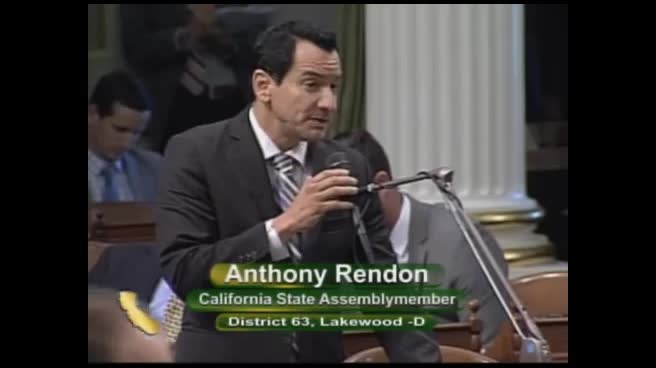
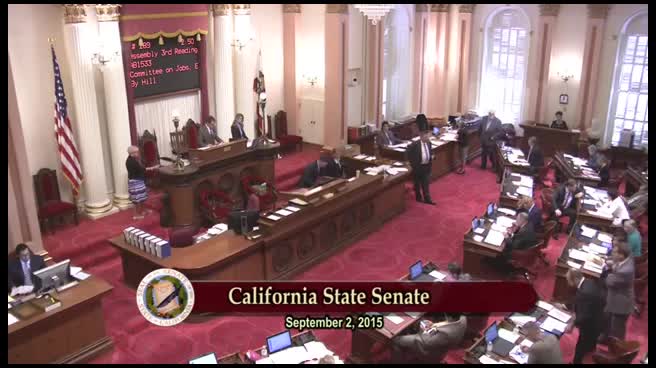
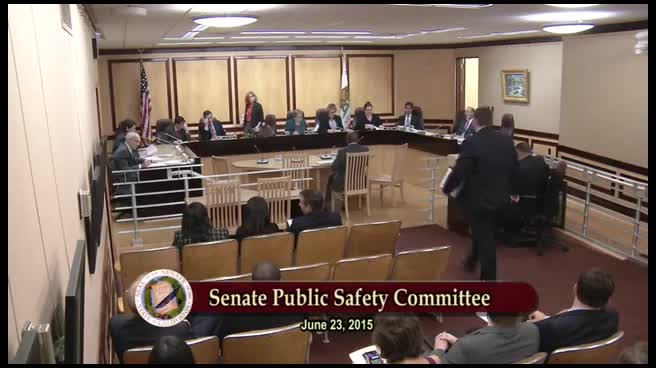
Bill Author

Bill Co-Author(s):