AB 861: Mental health: community-based services.
- Session Year: 2015-2016
- House: Assembly
- Latest Version Date: 2015-09-11
Existing law provides for the Medi-Cal program, which is administered by the State Department of Health Care Services and under which qualified low-income persons receive health care benefits. The Medi-Cal program is, in part, governed and funded by federal Medicaid provisions. Existing law provides for a schedule of benefits under the Medi-Cal program and provides for specified services, including various mental health services. Existing federal law, the Protecting Access to Medicare Act of 2014, requires the United States Secretary of Health and Human Services to, among other things, award, no later than January 1, 2016, planning grants to states for the purpose of developing proposals to participate in time-limited demonstration programs to improve mental health services provided by certified community behavioral health clinics to Medi-Cal beneficiaries.
This bill would require the department to apply to the United States Secretary of Health and Human Services to be selected as a participating state in the time-limited demonstration program to receive enhanced federal matching funds for mental health services provided by certified community behavioral health clinics if the department applies for, and is awarded, a planning grant to develop its proposal to participate in the demonstration program. The bill would require the department to work with counties and other stakeholders in developing its proposal. The bill would also require the proposal to require that counties may not be selected to participate unless they include plans to redirect a portion of the funds currently used to match federal funds to providing increased housing opportunities for individuals with severe mental illnesses, as specified.
Existing law provides for the Medi-Cal program, which is administered by the State Department of Health Care Services and under which qualified low-income persons receive health care benefits. The Medi-Cal program is, in part, governed and funded by federal Medicaid provisions. Existing law provides for a schedule of benefits under the Medi-Cal program and provides for specified services, including various mental health services. Existing federal law, the Protecting Access to Medicare Act of 2014, requires the United States Secretary of Health and Human Services to, among other things, award, no later than January 1, 2016, planning grants to states for the purpose of developing proposals to participate in time-limited demonstration programs to improve mental health services provided by certified community behavioral health clinics to Medi-Cal beneficiaries.
This bill would require the department to apply to the United States Secretary of Health and Human Services to be selected as a participating state in the time-limited demonstration program to receive enhanced federal matching funds for mental health services provided by certified community behavioral health clinics if the department applies for, and is awarded, a planning grant to develop its proposal to participate in the demonstration program. The bill would require the department to work with counties and other stakeholders in developing its proposal. The bill would also require the proposal to include plans for counties require that counties may not be selected to participate unless they include plans to redirect a portion of the funds currently used to match federal funds to providing increased housing opportunities for individuals with severe mental illnesses, as specified.
Existing law provides for the Medi-Cal program, which is administered by the State Department of Health Care Services and under which qualified low-income persons receive health care benefits. The Medi-Cal program is, in part, governed and funded by federal Medicaid provisions. Existing law provides for a schedule of benefits under the Medi-Cal program and provides for specified services, including various mental health services. Existing federal law, the Protecting Access to Medicare Act of 2014, requires the federal United States Secretary of Health and Human Services to, among other things, award, no later than January 1, 2016, planning grants to states for the purpose of developing proposals to participate in time-limited demonstration programs to improve mental health services provided by certified community behavioral health clinics to Medi-Cal beneficiaries.
This bill would require the department to apply for that planning grant. to the United States Secretary of Health and Human Services to be selected as a participating state in the time-limited demonstration program to receive enhanced federal matching funds for mental health services provided by certified community behavioral health clinics if the department applies for, and is awarded, a planning grant to develop its proposal to participate in the demonstration program. The bill would require the department to work with counties and other stakeholders in developing its proposal. The bill would also require the proposal to include plans for counties to redirect a portion of the funds currently used to match federal funds to providing increased housing opportunities for individuals with severe mental illnesses, as specified.
This bill would declare that it is to take effect immediately as an urgency statute.
Existing law provides for the Medi-Cal program, which is administered by the State Department of Health Care Services and under which qualified low-income persons receive health care benefits. The Medi-Cal program is, in part, governed and funded by federal Medicaid provisions. Existing law provides for a schedule of benefits under the Medi-Cal program and provides for specified services, including various mental health services. Existing federal law, the Protecting Access to Medicare Act of 2014, requires the federal Secretary of Health and Human Services to, among other things, award, no later than January 1, 2016, planning grants to states for the purpose of developing proposals to participate in time-limited demonstration programs to improve mental health services provided by certified community behavioral health clinics to Medi-Cal beneficiaries.
This bill would require the department to apply for that planning grant. This The bill would require the department to work with counties and other stakeholders in developing its proposal. The bill would also require the proposal to include plans for counties to redirect a portion of the funds currently used to match federal funds to providing increased housing opportunities for individuals with severe mental illnesses, as specified.
This bill would declare that it is to take effect immediately as an urgency statute.
Existing law provides for the Medi-Cal program, which is administered by the State Department of Health Care Services and under which qualified low-income persons receive health care benefits. The Medi-Cal program is, in part, governed and funded by federal Medicaid provisions. Existing law provides for a schedule of benefits under the Medi-Cal program and provides for specified services, including various mental health services. Existing federal law, the Protecting Access to Medicare Act of 2014, requires the federal Secretary of Health and Human Services to, among other things, award, no later than January 1, 2016, planning grants to states for the purpose of developing proposals to participate in time-limited demonstration programs to improve mental health services provided by certified community behavioral health clinics to Medi-Cal beneficiaries.
This bill would require the department to apply for that planning grant. This bill would require the department to work with counties and other stakeholders in developing its proposal. The bill would also require the proposal to include plans for counties to redirect a portion of the funds currently used to match federal funds to providing increased housing opportunities for individuals with severe mental illnesses, as specified.
Existing law directs the State Department of State Hospitals and the State Department of Health Care Services to ensure that mental health laws, regulations, and policies on the rights of recipients of mental health services are observed and protected in state hospitals and in licensed health and community care facilities. Existing law requires departments to contract with a single nonprofit entity for protection and advocacy services for persons with mental disabilities and requires the prescribed training of county patients rights advocates to be provided by that contractor.
This bill would make a technical, nonsubstantive change to these provisions.
The Legislature finds and declares the following:
(a)In 2014 Congress enacted the Protecting Access to Medicare Act of 2014.
(b)Under the Protecting Access to Medicare Act, eight states will be selected to have their federal share of costs increased to 90 percent for two years for outpatient behavioral health care for individuals with severe mental illnesses or serious emotional disturbances.
(c)If successful, this federal opportunity would enable California to serve the tens of thousands of individuals with those conditions that it now lacks the funding to serve.
(d)A major challenge in serving that population is that many are homeless and in need of housing assistance. Federal funding cannot pay for that housing assistance.
(e)This federal funding would free up nearly $2 billion in county funds now being used to match federal funds. The money that is currently being used to match federal funds will now be available to be used to meet the housing needs of those individuals who are not currently receiving the behavioral health care that they need.
SEC. 2.Section 14021.2 is added to the Welfare and Institutions Code, to read:14021.2.(a)If the department applies to the United States Secretary of Health and Human Services for, and is awarded, the planning grant awarded pursuant to Section 223 of the federal Protecting Access to Medicare Act of 2014 for the purpose of developing proposals to participate in time-limited demonstration programs to improve mental health services furnished by certified community behavioral health clinics to Medi-Cal beneficiaries, the department shall submit an application for the subsequent competitive grant competition to be selected as a participating state in the demonstration program.
(b)In planning to develop its proposal for the competitive grant, the department shall work with counties and other stakeholders to identify the unmet need for the covered services and to estimate the number of individuals who will need housing assistance.
(c)The competitive grant proposal shall require that counties shall not be selected to participate unless they include plans to redirect a portion of the funds that are currently used to match federal funds but will not be needed for that purpose during the grant period to provide increased housing opportunities for individuals with severe mental illnesses.
The Legislature finds and declares the following:
(a)In 2014 Congress enacted the Protecting Access to Medicare Act of 2014.
(b)Under the Protecting Access to Medicare Act, eight states will be selected to have their federal share of costs increased to 90 percent for two years for outpatient behavioral health care for individuals with severe mental illnesses or serious emotional disturbances.
(c)If successful, this federal opportunity would enable California to serve the tens of thousands of individuals with those conditions that it now lacks the funding to serve.
(d)A major challenge in serving that population is that many are homeless and in need of housing assistance. Federal funding cannot pay for that housing assistance.
(e)This federal funding would free up nearly $2 billion in county funds now being used to match federal funds. The money that is currently being used to match federal funds will now be available to be used to meet the housing needs of those individuals who are not currently receiving the behavioral health care that they need.
SEC. 2.Section 14021.2 is added to the Welfare and Institutions Code, to read:14021.2.(a)If the department applies to the United States Secretary of Health and Human Services for, and is awarded, the planning grant awarded pursuant to Section 223 of the federal Protecting Access to Medicare Act of 2014 for the purpose of developing proposals to participate in time-limited demonstration programs to improve mental health services furnished by certified community behavioral health clinics to Medi-Cal beneficiaries, the department shall submit an application for the subsequent competitive grant competition to be selected as a participating state in the demonstration program.
(b)In planning to develop its proposal for the competitive grant, the department shall work with counties and other stakeholders to identify the unmet need for the covered services and to estimate the number of individuals who will need housing assistance.
(c)The competitive grant proposal shall include plans for counties require that counties shall not be selected to participate unless they include plans to redirect a portion of the funds that are currently used to match federal funds but will not be needed for that purpose during the grant period to provide increased housing opportunities for individuals with severe mental illnesses.
The Legislature finds and declares the following:
(a)In 2014 Congress enacted the Protecting Access to Medicare Act of 2014.
(b)Under the Protecting Access to Medicare Act, eight states will be selected to have their federal share of costs increased to 90 percent for two years for outpatient behavioral health care for individuals with severe mental illnesses or serious emotional disturbances.
(c)If successful, this federal opportunity would enable California to serve the tens of thousands of individuals with those conditions that it now lacks the funding to serve.
(d)A major challenge in serving that population is that many are homeless and in need of housing assistance. Federal funding cannot pay for that housing assistance.
(e)This federal funding would free up nearly $2 billion in county funds now being used to match federal funds. The money that is currently being used to match federal funds will now be available to be used to meet the housing needs of those individuals who are not currently receiving the behavioral health care that they need.
SEC. 2.Section 14021.2 is added to the Welfare and Institutions Code, to read:14021.2.(a)The If the department shall apply applies to the federal United States Secretary of Health and Human Services for for, and is awarded, the planning grant awarded pursuant to Section 223 of the federal Protecting Access to Medicare Act of 2014 for the purpose of developing proposals to participate in time-limited demonstration programs to improve mental health services furnished by certified community behavioral health clinics to Medi-Cal beneficiaries. The beneficiaries, the department shall also submit an application for the subsequent competitive grant competition to be selected as a participating state in the demonstration program.
(b)In planning to develop its proposal for the competitive grant, the department shall work with counties and other stakeholders to identify the unmet need for the covered services and to estimate the number of individuals who will need housing assistance.
(c)The competitive grant proposal shall include plans for counties to redirect a portion of the funds that are currently used to match federal funds but will not be needed for that purpose during the grant period to provide increased housing opportunities for individuals with severe mental illnesses.
SEC. 3.This act is an urgency statute necessary for the immediate preservation of the public peace, health, or safety within the meaning of Article IV of the Constitution and shall go into immediate effect. The facts constituting the necessity are:
The federal Protecting Access to Medicare Act of 2014 requires the federal Secretary of Health and Human Services to award planning grants no later than January 1, 2016. In order to require the State Department of Health Care Services to apply for a planning grant before the federal Secretary of Health and Human Services awards the planning grants to states, it is necessary that this bill go into immediate effect.
The Legislature finds and declares the following:
(a)In 2014 Congress enacted the Protecting Access to Medicare Act of 2014.
(b)Under the Protecting Access to Medicare Act, eight states will be selected to have their federal share of costs increased to 90 percent for two years for outpatient behavioral health care for individuals with severe mental illnesses or serious emotional disturbances.
(c)If successful, this federal opportunity would enable California to serve the tens of thousands of individuals with those conditions that it now lacks the funding to serve.
(d)A major challenge in serving that population is that many are homeless and in need of housing assistance. Federal funding cannot pay for that housing assistance.
(e)This federal funding would free up nearly $2 billion in county funds now being used to match federal funds. The money that is currently being used to match federal funds will now be available to be used to meet the housing needs of those individuals who are not currently receiving the behavioral health care that they need.
SEC. 2.Section 14021.2 is added to the Welfare and Institutions Code, to read:14021.2.(a)The department shall apply to the federal Secretary of Health and Human Services for the planning grant awarded pursuant to Section 223 of the federal Protecting Access to Medicare Act of 2014 for the purpose of developing proposals to participate in time-limited demonstration programs to improve mental health services furnished by certified community behavioral health clinics to Medi-Cal beneficiaries. The department shall also submit an application for the subsequent competitive grant competition to be selected as a participating state in the demonstration program.
(b)In planning to develop its proposal for the competitive grant, the department shall work with counties and other stakeholders to identify the unmet need for the covered services and to estimate the number of individuals who will need housing assistance.
(c)The competitive grant proposal shall include plans for counties to redirect a portion of the funds that are currently used to match federal funds but will not be needed for that purpose during the grant period to provide increased housing opportunities for individuals with severe mental illnesses.
SECTION 1.Section 5512 of the Welfare and Institutions Code is amended to read:5512.Training of county patients rights advocates shall be provided by the contractor specified in Section 5510 responsible for the provision of protection and advocacy services to persons with mental disabilities. Training shall be directed at ensuring that all county patients rights advocates possess all of the following:
(a)Knowledge of the service system, financial entitlements, and service rights of persons receiving mental health services. This knowledge shall include, but need not be limited to, knowledge of available treatment and service resources in order to ensure timely access to treatment and services.
(b)Knowledge of patients rights in institutional and community facilities.
(c)Knowledge of civil commitment statutes and procedures.
(d)Knowledge of state and federal laws and regulations affecting recipients of mental health services.
(e)Ability to work effectively and respectfully with service recipients and providers, public administrators, community groups, and the judicial system.
(f)Skill in interviewing and counseling service recipients, including giving information and appropriate referrals.
(g)Ability to investigate and assess complaints and screen for legal problems.
(h)Knowledge of administrative and judicial due process proceedings in order to provide representation at administrative hearings and to assist in judicial hearings when necessary to carry out the intent of Section 5522 regarding cooperation between advocates and legal representatives.
(i)Knowledge of, and commitment to, advocacy ethics and principles.
(j)This section shall become operative on January 1, 1996.
Training of county patients rights advocates shall be provided by the contractor specified in Section 5510 responsible for the provision of protection and advocacy services to persons with mental disabilities. Training shall be directed at ensuring that all county patients rights advocates possess all of the following:
(a)Knowledge of the service system, financial entitlements, and service rights of persons receiving mental health services. This knowledge shall include, but need not be limited to, knowledge of available treatment and service resources in order to ensure timely access to treatment and services.
(b)Knowledge of patients rights in institutional and community facilities.
(c)Knowledge of civil commitment statutes and procedures.
(d)Knowledge of state and federal laws and regulations affecting recipients of mental health services.
(e)Ability to work effectively and respectfully with service recipients and providers, public administrators, community groups, and the judicial system.
(f)Skill in interviewing and counseling service recipients, including giving information and appropriate referrals.
(g)Ability to investigate and assess complaints and screen for legal problems.
(h)Knowledge of administrative and judicial due process proceedings in order to provide representation at administrative hearings and to assist in judicial hearings when necessary to carry out the intent of Section 5522 regarding cooperation between advocates and legal representatives.
(i)Knowledge of, and commitment to, advocacy ethics and principles.
(j)This section shall become operative on January 1, 1996.
|
Date
|
Status
|
|---|---|
| Sep 9, 2015 | Assembly Rule 77 suspended. |
| Jul 6, 2015 | In committee: Referred to APPR. suspense file. |
| Aug 27, 2015 | From committee: Do pass. (Ayes 7. Noes 0.) (August 27). |
| Aug 31, 2015 | Read second time. Ordered to third reading. |
| Sep 3, 2015 | Read third time and amended. Ordered to second reading. |
| Sep 4, 2015 | Read second time. Ordered to third reading. |
| Sep 8, 2015 | In Assembly. Concurrence in Senate amendments pending. May be considered on or after September 10 pursuant to Assembly Rule 77. |
| Sep 8, 2015 | Read third time. Passed. Ordered to the Assembly. |
| Sep 8, 2015 | Read third time. Passed. Ordered to the Assembly. (Ayes 40. Noes 0. Page 2592.). |
| Jun 18, 2015 | From committee: Do pass and re-refer to Com. on APPR. (Ayes 9. Noes 0.) (June 17). Re-referred to Com. on APPR. |
| Sep 9, 2015 | Assembly Rule 77 suspended. (Page 2990.) |
| Sep 9, 2015 | Senate amendments concurred in. To Engrossing and Enrolling. |
| Sep 9, 2015 | Senate amendments concurred in. To Engrossing and Enrolling. (Ayes 79. Noes 0. Page 3000.). |
| Sep 9, 2015 | Senate amendments concurred in. To Engrossing and Enrolling. (Ayes 79. Noes 0.). |
| Sep 17, 2015 | Enrolled and presented to the Governor at 4 p.m. |
| Oct 10, 2015 | Vetoed by Governor. |
| Jan 15, 2016 | Consideration of Governor's veto stricken from file. |
| May 12, 2015 | From committee chair, with author's amendments: Amend, and re-refer to Com. on APPR. Read second time and amended. |
| Feb 27, 2015 | From printer. May be heard in committee March 29. |
| Mar 26, 2015 | From committee chair, with author's amendments: Amend, and re-refer to Com. on HEALTH. Read second time and amended. |
| Mar 26, 2015 | Referred to Com. on HEALTH. |
| Apr 6, 2015 | Re-referred to Com. on HEALTH. |
| Apr 29, 2015 | From committee: Amend, and do pass as amended and re-refer to Com. on APPR. with recommendation: To Consent Calendar. (Ayes 19. Noes 0.) (April 28). |
| Apr 30, 2015 | Read second time and amended. |
| May 4, 2015 | Re-referred to Com. on APPR. |
| May 5, 2015 | In committee: Hearing postponed by committee. |
| Feb 26, 2015 | Read first time. To print. |
| May 13, 2015 | From committee: Do pass. To Consent Calendar. (Ayes 17. Noes 0.) (May 13). |
| May 13, 2015 | Re-referred to Com. on APPR. |
| May 14, 2015 | Read second time. Ordered to Consent Calendar. |
| May 22, 2015 | In Senate. Read first time. To Com. on RLS. for assignment. |
| May 22, 2015 | Read third time. Passed. Ordered to the Senate. |
| May 22, 2015 | Read third time. Passed. Ordered to the Senate. (Ayes 74. Noes 0. Page 1562.) |
| Jun 4, 2015 | Referred to Com. on HEALTH. |
|
Date
|
Description
|
Location
|
Votes
|
|
|---|---|---|---|---|
| Sep 9, 2015 | AB 861 MAIENSCHEIN Concurrence in Senate Amendments | Assembly Floor |
Passed |
|
| Sep 8, 2015 | Assembly 3rd Reading AB861 Maienschein By Beall | Senate Floor |
Passed |
|
| Aug 27, 2015 | Do pass | Senate Standing Committee on Appropriations |
Passed |
|
| Jul 6, 2015 | Placed on suspense file | Senate Standing Committee on Appropriations |
Passed |
|
| Jun 17, 2015 | Do pass, but first be re-referred to the Committee on [Appropriations] | Senate Standing Committee on Health |
Passed |
|
| May 22, 2015 | AB 861 MAIENSCHEIN Consent Calendar Second Day Regular Session | Assembly Floor |
Passed |
|
| May 13, 2015 | Do pass. To Consent Calendar. | Assembly Standing Committee on Appropriations |
Passed |
|
| Apr 28, 2015 | Do pass as amended, and be re-referred to the Committee on [Appropriations] with recommendation: To Consent Calendar | Assembly Standing Committee on Health |
Passed |
This list shows positions taken on this bill by organizations on the date displayed, which is linked to the original source.
Positions by individuals are not included.
|
Organization
|
Position
|
Date
|
|---|---|---|
| California Chapter of the American College of Emergency Physicians | ** Support | Sep 8, 2015 |
| California Council of the Community Health Agencies and Mental Health America | * Indeterminate | Jun 17, 2015 |
| California Primary Care Association | * Indeterminate | Jun 17, 2015 |
| Disability Rights California | ** Support | Sep 8, 2015 |
| Easter Seals | ** Support | Sep 8, 2015 |
| Steinberg Institute | * Support | Jun 17, 2015 |
| Steinburg Institute | * Indeterminate | Jun 17, 2015 |
| Western Center On Law And Poverty Inc. | ** Support | Sep 8, 2015 |
GOVERNOR'S VETO
AB 861
(Maienschein)
As Enrolled September 11, 2015
2/3 vote
ASSEMBLY: |
74-0 |
(May 22, 2015) |
SENATE: |
40-0 |
(September 8, 2015) |
ASSEMBLY: |
79-0 |
(September 9, 2015) |
|
|
|
Original Committee Reference: HEALTH
SUMMARY: Requires the Department of Health Care Services (DHCS) to apply to the federal Secretary of Health and Human Services (HHS Secretary) for the planning grant awarded for the purpose of developing proposals to participate in demonstration programs to improve mental health services furnished by certified community behavioral health clinics to Medi-Cal beneficiaries.
The Senate amendments require counties participating in the competitive grant proposal for funds to establish a plan to ensure that any funds offset by receipt of the grant be used to provide increased housing opportunities for individuals with severe mental illnesses.
FISCAL EFFECT: According to the Senate Appropriations Committee, one-time costs likely from $1 million to $2 million to develop an application for the demonstration grant program by the DHCS.
COMMENTS: According to the author, federal law enables successful states to nearly double federal funds to support community mental health and alcohol and drug services with no additional costs to the state or county. These additional funds will significantly help California's counties serve more people who are homeless due to an untreated mental illness and get them off the streets, out of hospitals and jails, and into treatment. The author states that if California is successful in its bid for the additional funding, it would benefit the state to the tune of about $2 billion. The savings to the counties will free up Proposition 63 (2004) funds and other county mental health funds that are now expended on hospital care. The author concludes that those savings can then be redirected to supportive housing efforts which will help make the effects of these dollars more permanent.
Protecting Access to Medicare Act. On March 31, 2014, Congress passed the Protecting Access to Medicare Act (H.R. 4302), which included a demonstration program aimed at increasing Americans’ access to community mental health and substance use treatment services while improving Medicaid reimbursement for these services. This legislation:
Creates criteria for "Certified Community Behavioral Health Clinics" (CCBHCs) as entities designed to serve individuals with serious mental illnesses and substance use disorders that provide intensive, person-centered, multidisciplinary, evidence-based screening, assessment, diagnostics, treatment, prevention, and wellness services. The HHS Secretary is directed to establish a process for selecting states to participate in a two year pilot program;
Provides $25 million that will be available to states as planning grants to develop applications to participate in the two year pilot. Only states that have received a planning grant will be eligible to apply to participate in the pilot;
Stipulates that eight states will be selected to participate in the two year pilot program. The match rate for CCBHC services is either the Enhanced Federal Medical Assistance Program (FMAP) /Children's Health Insurance Program rate or, for newly eligible "expansion" Medicaid beneficiaries, the current FMAP for that population – which is 100% now and moves down to 90% by 2020;
Requires participating states to develop a prospective payment system for reimbursing CCBHCs for required services provided by these entities.
Program Timeline.
September 1, 2015: Deadline for the HHS Secretary to publish: criteria for a clinic to be certified by a State as a certified community behavioral health clinic; and, guidance for states on the establishment of a prospective payment system for certified clinics participating in the demonstration program;
January 1, 2016: Deadline for the HHS Secretary to award planning grants to states for the purpose of developing proposals to participate in the demonstration program; and,
September 1, 2017: Deadline for the HHS Secretary to select the states that will participate in the demonstration program. Only states that have received a planning grant are eligible to participate. The states will be selected through a competitive application process and must represent a diverse selection of geographic areas, including rural and underserved areas.
Disability Rights California (DRC), supporters of the bill, state that this bill would require DHCS to apply for a planning grant and work with counties and other stakeholders in developing its proposal. DRC state that this bill would also require the proposal to include plans for increasing housing opportunities for individuals with severe mental health disabilities. Housing is one of the most needed options people with mental health disabilities need. DRC concludes that while this grant is to plan rather than develop housing options at least it brings counties closer to developing housing options for people.
There is no known opposition to this bill.
This bill would require the Department of Health Care Services to mandate counties, as a condition of participation in a federal behavioral health demonstration program, to redirect a portion of any local savings to increasing housing opportunities for individuals with severe mental illness.
The department has not been awarded the federal grant nor approved as one of eight states to participate in the federal demonstration program. As such, this bill is premature.
Analysis Prepared by: Paula Villescaz / HEALTH / (916) 319-2097 FN: 0002507
AB 861
Page 2
CONCURRENCE IN SENATE AMENDMENTS
AB 861
(Maienschein)
As Amended September 3, 2015
Majority vote
ASSEMBLY: |
74-0 |
(May 22, 2015) |
SENATE: |
40-0 |
(September 8, 2015) |
Original Committee Reference: HEALTH
SUMMARY: Requires the Department of Health Care Services (DHCS) to apply to the federal Secretary of Health and Human Services (HHS Secretary) for the planning grant awarded for the purpose of developing proposals to participate in demonstration programs to improve mental health services furnished by certified community behavioral health clinics to Medi-Cal beneficiaries.
The Senate amendments require counties participating in the competitive grant proposal for funds to establish a plan to ensure that any funds offset by receipt of the grant be used to provide increased housing opportunities for individuals with severe mental illnesses.
FISCAL EFFECT: According to the Senate Appropriations Committee, one-time costs likely from $1 million to $2 million to develop an application for the demonstration grant program by the DHCS.
COMMENTS: According to the author, federal law enables successful states to nearly double federal funds to support community mental health and alcohol and drug services with no additional costs to the state or county. These additional funds will significantly help California's counties serve more people who are homeless due to an untreated mental illness and get them off the streets, out of hospitals and jails, and into treatment. The author states that if California is successful in its bid for the additional funding, it would benefit the state to the tune of about $2 billion. The savings to the counties will free up Proposition 63 (2004) funds and other county mental health funds that are now expended on hospital care. The author concludes that those savings can then be redirected to supportive housing efforts which will help make the effects of these dollars more permanent.
Protecting Access to Medicare Act. On March 31, 2014, Congress passed the Protecting Access to Medicare Act (H.R. 4302), which included a demonstration program aimed at increasing Americans’ access to community mental health and substance use treatment services while improving Medicaid reimbursement for these services. This legislation:
Creates criteria for "Certified Community Behavioral Health Clinics" (CCBHCs) as entities designed to serve individuals with serious mental illnesses and substance use disorders that provide intensive, person-centered, multidisciplinary, evidence-based screening, assessment, diagnostics, treatment, prevention, and wellness services. The HHS Secretary is directed to establish a process for selecting states to participate in a two year pilot program;
Provides $25 million that will be available to states as planning grants to develop applications to participate in the two year pilot. Only states that have received a planning grant will be eligible to apply to participate in the pilot;
Stipulates that eight states will be selected to participate in the two year pilot program. The match rate for CCBHC services is either the Enhanced Federal Medical Assistance Program (FMAP) /Children's Health Insurance Program rate or, for newly eligible "expansion" Medicaid beneficiaries, the current FMAP for that population – which is 100% now and moves down to 90% by 2020;
Requires participating states to develop a prospective payment system for reimbursing CCBHCs for required services provided by these entities.
Program Timeline.
September 1, 2015: Deadline for the HHS Secretary to publish: criteria for a clinic to be certified by a State as a certified community behavioral health clinic; and, guidance for states on the establishment of a prospective payment system for certified clinics participating in the demonstration program;
January 1, 2016: Deadline for the HHS Secretary to award planning grants to states for the purpose of developing proposals to participate in the demonstration program; and,
September 1, 2017: Deadline for the HHS Secretary to select the states that will participate in the demonstration program. Only states that have received a planning grant are eligible to participate. The states will be selected through a competitive application process and must represent a diverse selection of geographic areas, including rural and underserved areas.
Disability Rights California (DRC), supporters of the bill, state that this bill would require DHCS to apply for a planning grant and work with counties and other stakeholders in developing its proposal. DRC state that this bill would also require the proposal to include plans for increasing housing opportunities for individuals with severe mental health disabilities. Housing is one of the most needed options people with mental health disabilities need. DRC concludes that while this grant is to plan rather than develop housing options at least it brings counties closer to developing housing options for people.
There is no known opposition to this bill.
Analysis Prepared by: Paula Villescaz / HEALTH / (916) 319-2097 FN: 0002216
AB 861
Page 6
|
Office of Senate Floor Analyses (916) 651-1520 Fax: (916) 327-4478 |
THIRD READING
Bill No: AB 861
Amended: 9/3/15 in Senate
SENATE HEALTH COMMITTEE: 9-0, 6/17/15
AYES: Hernandez, Nguyen, Hall, Mitchell, Monning, Nielsen, Pan, Roth, Wolk
SENATE APPROPRIATIONS COMMITTEE: 7-0, 8/27/15
AYES: Lara, Bates, Beall, Hill, Leyva, Mendoza, Nielsen
ASSEMBLY FLOOR: 74-0, 5/22/15 (Consent) - See last page for vote
SUBJECT: Mental health: community-based services
SOURCE: The Steinberg Institute
DIGEST: This bill requires the Department of Health Care Services (DHCS) to submit an application for a specified federal competitive grant for purposes of improving mental health services to Medi-Cal beneficiaries, as specified. This bill requires DHCS to work with counties and stakeholders, as specified, to identify the unmet need for covered services and to estimate the number of individuals who need housing assistance. This bill requires the competitive grant proposal to require counties that select to participate to include a plan to redirect current funds, as specified, to provide housing for those with severe mental illnesses.
Senate Floor Amendments of 9/3/15 delete the requirement that the competitive grant proposal include a plan for counties to redirect existing funds and, instead, clarify that only counties that select to participate in the competitive grant process are required to have a plan to redirect existing funds.
Existing federal law:
Enacts the Patient Protection and Affordable Care Act (ACA) to increase access to health care through a number of measures, including expanding Medicaid eligibility, subsidizing insurance premiums, and setting aside funds for health promotion and disease prevention.
Authorizes, in Section 223 of the Protecting Access to Medicare Act (PAMA) of 2014 (P.L. 113-93), a two-year demonstration program, to include up to eight states, that creates criteria for certified community behavioral health clinics (CCBHCs) and provides planning grants to develop applications to participate in the demonstration program.
Existing state law:
Establishes the Medi-Cal program, administered by DHCS, under which qualified low-income persons receive health care benefits. The Medi-Cal program is, in part, governed and funded by the federal Medicaid provisions.
Establishes, under the terms of a federal Medicaid waiver, a managed care program providing Medi-Cal specialty mental health services for eligible low-income persons administered through local county mental health plans under contract with DHCS.
This bill:
Requires DHCS, if it is awarded the planning grant for the purpose of improving mental health services furnished by CCBHCs to Medi-Cal beneficiaries, to submit an application for the subsequent competitive grant competition to be selected as a participating state in the demonstration program authorized under PAMA.
Requires DHCS, in planning to develop its proposal for the competitive grant, to work with counties and other stakeholders to identify the unmet need for the covered services and to estimate the number of individuals who will need housing assistance.
Requires the competitive grant proposal to require counties that select to participate to include a plan to redirect a portion of current funds, which would be made available during the demonstration program, to provide increased housing opportunities for individuals with severe mental illness.
Comments
Author’s statement. According to the author, in 2014, Congress enacted PAMA, under which up to eight states will be selected to have their federal share of costs for outpatient behavioral health care for individuals with severe mental illnesses or serious emotional disturbances increased to be equivalent to the enhanced federal matching rate for the Children’s Health Insurance Program (CHIP). The federal law would enable successful states to nearly double federal funds to support community mental health and Substance Use Disorder (SUD) services with no additional costs to the state or county. These are extremely important funds that California could use to serve some its most vulnerable populations.
Background. Federal law authorizes PAMA to establish a demonstration program, to include up to eight states, that creates criteria for CCBHCs, which are facilities designed to serve individuals with serious mental illnesses and SUDs. PAMA provides nearly $25 million that will be available to states as planning grants to develop applications. PAMA also directs the Secretary of the U.S. Department of Health and Human Services (USHHS) to award planning grants to states for the development of demonstration proposals by January 1, 2016, and to select states to participate in the demonstration program by September 1, 2017. Section 223 of PAMA authorizes the USHHS to:
Establish criteria that states will use to certify CCBHCs for a two-year demonstration program;
Provide guidance on the development of a Prospective Payment System (PPS) for payment of services provided by CCBHCs;
Award grants to states for planning purposes to develop proposals to participate in the demonstration program;
Select up to eight states to participate in the demonstration program;
Pay states participating in the demonstration program federal matching funds equivalent to the standard CHIP matching rate for services provided to currently enrolled Medicaid beneficiaries; and,
Evaluate the program and prepare annual reports to Congress.
As indicated on the Substance Abuse and Mental Health Services Administration’s (SAMHSA) Web site, states may submit applications for the planning grants through August 5, 2015. According to DHCS, the department will apply for the planning grants.
CCBHCs. SAMHSA is currently in the process of determining what the eligibility criteria will be for states to certify CCBHCs. The CCBHC demonstration program and the PPS are designed to work within the scope of State Medicaid Plans and to apply only to individuals who are Medicaid enrollees. According to SAMHSA, this demonstration program provides an opportunity for states to improve the behavioral health of their residents by providing community-based mental health and SUD treatment, and by helping to further integrate behavioral health with physical health care, utilize evidence-based practices on a more consistent basis, and improve access to high quality care. According to SAMHSA, populations to be served are adults with serious mental illness, children with serious emotional disturbance, and those with long term and serious SUDs, as well as others with mental illness and SUDs.
National data on mental illness and homelessness. In the “Current Statistics on the Prevalence and Characteristics of People Experiencing Homelessness in the United States,” last updated in July 2011 by SAMHSA, data from 2010 shows that, nationally, on a given night 407,966 individuals were homeless in shelters, transitional housing programs, or on the streets (not including those who were sleeping at the homes of family or friends), and 109,812 individuals were chronically homeless (a one percent decrease from the previous year). Of these individuals, 26.2% had a severe mental illness, and 34.7% of adults had chronic SUDs. Over the course of that year, data shows that a total of 1,593,150 individuals experienced homelessness.
Related Legislation
AB 847 (Mullin) requires DHCS to apply to the Secretary of the USHHS for the PAMA federal planning grant for the purpose of developing proposals to improve mental health services provided by CCBHCs to Medi-Cal beneficiaries. AB 847 is pending in the Senate Appropriations Committee.
AB 745 (Chau) requires the Governor to appoint an additional member to the Mental Health Services Oversight and Accountability Commission in existing law who has experience providing supportive housing to people with a severe mental illness. AB 745 is in Engrossing and Enrolling.
AB 253 (Roger Hernández) makes specified changes to the Mental Health Services Act (MHSA), the Veterans Housing and Homeless Prevention Bond Act of 2014, and mental health plan requirements. AB 253 is pending in the Senate Transportation and Housing Committee.
Prior Legislation
AB 1929 (Chau, Chapter 674, Statutes of 2014) allows county mental health departments to deposit MHSA funding with the California Housing Finance Agency (CalHFA), as specified, and allows CalHFA to use those funds for special housing needs for those with mental illness. Requires counties to dedicate funds to provide housing assistance to those with serious mental illness who are homeless or to the mentally ill at risk of being homeless.
AB 2287 (Monning, 2010) would have required the California Health and Human Services Agency to direct the appropriate state departments within the agency to apply for community transformation grants under the ACA. AB 2287 died in the Senate Appropriations Committee.
FISCAL EFFECT: Appropriation: No Fiscal Com.: Yes Local: No
According to the Senate Appropriations Committee, one-time costs likely from $1 million to $2 million to develop an application for the demonstration grant program by DHCS (federal funds).
The Steinberg Institute (source)
California Chapter of the American College of Emergency Physicians
Disability Rights California
Easter Seals
Western Center on Law and Poverty
None received
ARGUMENTS IN SUPPORT: Supporters of this bill, including behavioral health and disability advocates, argue that the savings to counties will free up MHSA funds and other county mental health funds that are now expended on hospital care. The Western Center on Law and Poverty states that homeless people often visit emergency departments for conditions that could be controlled and contained if the people had access to safe housing.
ASSEMBLY FLOOR: 74-0, 5/22/15
AYES: Achadjian, Travis Allen, Baker, Bigelow, Bloom, Bonilla, Bonta, Brough, Brown, Burke, Calderon, Campos, Chang, Chau, Chávez, Chiu, Chu, Cooley, Cooper, Dababneh, Dahle, Daly, Dodd, Eggman, Frazier, Beth Gaines, Gallagher, Cristina Garcia, Eduardo Garcia, Gatto, Gipson, Gomez, Gonzalez, Gordon, Gray, Grove, Hadley, Harper, Roger Hernández, Holden, Irwin, Jones-Sawyer, Kim, Lackey, Levine, Linder, Lopez, Low, Maienschein, Mathis, Mayes, McCarty, Medina, Melendez, Mullin, Nazarian, Obernolte, Patterson, Perea, Quirk, Rendon, Ridley-Thomas, Rodriguez, Salas, Santiago, Steinorth, Mark Stone, Thurmond, Ting, Wagner, Wilk, Williams, Wood, Atkins
NO VOTE RECORDED: Alejo, Jones, O'Donnell, Olsen, Waldron, Weber
Prepared by: Reyes Diaz / HEALTH /
9/4/15 13:29:01
**** END ****
AB 861
Page 6
|
Office of Senate Floor Analyses (916) 651-1520 Fax: (916) 327-4478 |
THIRD READING
Bill No: AB 861
Amended: 5/12/15 in Assembly
SENATE HEALTH COMMITTEE: 9-0, 6/17/15
AYES: Hernandez, Nguyen, Hall, Mitchell, Monning, Nielsen, Pan, Roth, Wolk
SENATE APPROPRIATIONS COMMITTEE: 7-0, 8/27/15
AYES: Lara, Bates, Beall, Hill, Leyva, Mendoza, Nielsen
ASSEMBLY FLOOR: 74-0, 5/22/15 (Consent) - See last page for vote
SUBJECT: Mental health: community-based services
SOURCE: The Steinberg Institute
DIGEST: This bill requires the Department of Health Care Services (DHCS) to submit an application for a specified federal competitive grant for purposes of improving mental health services to Medi-Cal beneficiaries, as specified. This bill requires DHCS to work with counties and stakeholders, as specified, to identify the unmet need for covered services and to estimate the number of individuals who need housing assistance. This bill requires the competitive grant proposal to include plans for counties to redirect current funds, as specified, to provide housing for those with severe mental illnesses.
Existing federal law:
Enacts the Patient Protection and Affordable Care Act (ACA) to increase access to health care through a number of measures, including expanding Medicaid eligibility, subsidizing insurance premiums, and setting aside funds for health promotion and disease prevention.
Authorizes, in Section 223 of the Protecting Access to Medicare Act (PAMA) of 2014 (P.L. 113-93), a two-year demonstration program, to include up to eight states, that creates criteria for certified community behavioral health clinics (CCBHCs) and provides planning grants to develop applications to participate in the demonstration program.
Existing state law:
Establishes the Medi-Cal program, administered by DHCS, under which qualified low-income persons receive health care benefits. The Medi-Cal program is, in part, governed and funded by the federal Medicaid provisions.
Establishes, under the terms of a federal Medicaid waiver, a managed care program providing Medi-Cal specialty mental health services for eligible low-income persons administered through local county mental health plans under contract with DHCS.
This bill:
Requires DHCS, if it is awarded the planning grant for the purpose of improving mental health services furnished by CCBHCs to Medi-Cal beneficiaries, to submit an application for the subsequent competitive grant competition to be selected as a participating state in the demonstration program authorized under PAMA.
Requires DHCS, in planning to develop its proposal for the competitive grant, to work with counties and other stakeholders to identify the unmet need for the covered services and to estimate the number of individuals who will need housing assistance.
Requires the competitive grant proposal to include plans for counties to redirect a portion of current funds, which would be made available during the demonstration program, to provide increased housing opportunities for individuals with severe mental illness.
Comments
Author’s statement. According to the author, in 2014, Congress enacted PAMA, under which up to eight states will be selected to have their federal share of costs for outpatient behavioral health care for individuals with severe mental illnesses or serious emotional disturbances increased to be equivalent to the enhanced federal matching rate for the Children’s Health Insurance Program (CHIP). The federal law would enable successful states to nearly double federal funds to support community mental health and Substance Use Disorder (SUD) services with no additional costs to the state or county. These are extremely important funds that California could use to serve some its most vulnerable populations.
Background. Federal law authorizes PAMA to establish a demonstration program, to include up to eight states, that creates criteria for CCBHCs, which are facilities designed to serve individuals with serious mental illnesses and SUDs. PAMA provides nearly $25 million that will be available to states as planning grants to develop applications. PAMA also directs the Secretary of the U.S. Department of Health and Human Services (USHHS) to award planning grants to states for the development of demonstration proposals by January 1, 2016, and to select states to participate in the demonstration program by September 1, 2017. Section 223 of PAMA authorizes the USHHS to:
Establish criteria that states will use to certify CCBHCs for a two-year demonstration program;
Provide guidance on the development of a Prospective Payment System (PPS) for payment of services provided by CCBHCs;
Award grants to states for planning purposes to develop proposals to participate in the demonstration program;
Select up to eight states to participate in the demonstration program;
Pay states participating in the demonstration program federal matching funds equivalent to the standard CHIP matching rate for services provided to currently enrolled Medicaid beneficiaries; and,
Evaluate the program and prepare annual reports to Congress.
As indicated on the Substance Abuse and Mental Health Services Administration’s (SAMHSA) Web site, states may submit applications for the planning grants through August 5, 2015. According to DHCS, the department will apply for the planning grants.
CCBHCs. SAMHSA is currently in the process of determining what the eligibility criteria will be for states to certify CCBHCs. The CCBHC demonstration program and the PPS are designed to work within the scope of State Medicaid Plans and to apply only to individuals who are Medicaid enrollees. According to SAMHSA, this demonstration program provides an opportunity for states to improve the behavioral health of their residents by providing community-based mental health and SUD treatment, and by helping to further integrate behavioral health with physical health care, utilize evidence-based practices on a more consistent basis, and improve access to high quality care. According to SAMHSA, populations to be served are adults with serious mental illness, children with serious emotional disturbance, and those with long term and serious SUDs, as well as others with mental illness and SUDs.
National data on mental illness and homelessness. In the “Current Statistics on the Prevalence and Characteristics of People Experiencing Homelessness in the United States,” last updated in July 2011 by SAMHSA, data from 2010 shows that, nationally, on a given night 407,966 individuals were homeless in shelters, transitional housing programs, or on the streets (not including those who were sleeping at the homes of family or friends), and 109,812 individuals were chronically homeless (a one percent decrease from the previous year). Of these individuals, 26.2% had a severe mental illness, and 34.7% of adults had chronic SUDs. Over the course of that year, data shows that a total of 1,593,150 individuals experienced homelessness.
Related Legislation
AB 847 (Mullin) requires DHCS to apply to the Secretary of the USHHS for the PAMA federal planning grant for the purpose of developing proposals to improve mental health services provided by CCBHCs to Medi-Cal beneficiaries. AB 847 is pending in the Senate Appropriations Committee.
AB 745 (Chau) requires the Governor to appoint an additional member to the Mental Health Services Oversight and Accountability Commission in existing law who has experience providing supportive housing to people with a severe mental illness. AB 745 is on Third Reading on the Senate Floor.
AB 253 (Roger Hernández) makes specified changes to the Mental Health Services Act (MHSA), the Veterans Housing and Homeless Prevention Bond Act of 2014, and mental health plan requirements. AB 253 is pending in the Senate Transportation and Housing Committee.
Prior Legislation
AB 1929 (Chau, Chapter 674, Statutes of 2014) allows county mental health departments to deposit MHSA funding with the California Housing Finance Agency (CalHFA), as specified, and allows CalHFA to use those funds for special housing needs for those with mental illness. Requires counties to dedicate funds to provide housing assistance to those with serious mental illness who are homeless or to the mentally ill at risk of being homeless.
AB 2287 (Monning, 2010) would have required the California Health and Human Services Agency to direct the appropriate state departments within the agency to apply for community transformation grants under the ACA. AB 2287 died in the Senate Appropriations Committee.
FISCAL EFFECT: Appropriation: No Fiscal Com.: Yes Local: No
According to the Senate Appropriations Committee, one-time costs likely from $1 million to $2 million to develop an application for the demonstration grant program by DHCS (federal funds).
The Steinberg Institute (source)
California Chapter of the American College of Emergency Physicians
Disability Rights California
Easter Seals
Western Center on Law and Poverty
OPPOSITION: (Verified 8/31/15)
None received
ARGUMENTS IN SUPPORT: Supporters of this bill, including behavioral health and disability advocates, argue that the savings to counties will free up MHSA funds and other county mental health funds that are now expended on hospital care. The Western Center on Law and Poverty states that homeless people often visit emergency departments for conditions that could be controlled and contained if the people had access to safe housing.
ASSEMBLY FLOOR: 74-0, 5/22/15
AYES: Achadjian, Travis Allen, Baker, Bigelow, Bloom, Bonilla, Bonta, Brough, Brown, Burke, Calderon, Campos, Chang, Chau, Chávez, Chiu, Chu, Cooley, Cooper, Dababneh, Dahle, Daly, Dodd, Eggman, Frazier, Beth Gaines, Gallagher, Cristina Garcia, Eduardo Garcia, Gatto, Gipson, Gomez, Gonzalez, Gordon, Gray, Grove, Hadley, Harper, Roger Hernández, Holden, Irwin, Jones-Sawyer, Kim, Lackey, Levine, Linder, Lopez, Low, Maienschein, Mathis, Mayes, McCarty, Medina, Melendez, Mullin, Nazarian, Obernolte, Patterson, Perea, Quirk, Rendon, Ridley-Thomas, Rodriguez, Salas, Santiago, Steinorth, Mark Stone, Thurmond, Ting, Wagner, Wilk, Williams, Wood, Atkins
NO VOTE RECORDED: Alejo, Jones, O'Donnell, Olsen, Waldron, Weber
Prepared by: Reyes Diaz / HEALTH /
8/31/15 12:50:21
**** END ****
AB 861 (Maienschein) Page 2 of 2
SENATE COMMITTEE ON APPROPRIATIONS
Senator Ricardo Lara, Chair
2015 - 2016 Regular Session
AB 861 (Maienschein) - Mental health: community-based services
|
|
Version: May 12, 2015 |
Policy Vote: HEALTH 9 - 0 |
Urgency: No |
Mandate: No |
Hearing Date: July 6, 2015 |
Consultant: Brendan McCarthy |
This bill meets the criteria for referral to the Suspense File.
Bill Summary:
AB 861 would require the Department of Health Care Services to apply for a specified federal demonstration grant program, provided that the Department receives an initial planning grant related to the demonstration grant program.
Fiscal Impact:
One-time costs likely from $1 million to $2 million to develop an application for the demonstration grant program by the Department of Health Care Services (federal funds).
Background:
Federal law authorizes a demonstration program that would allow certified community behavioral health clinics in selected states to receive enhanced federal matching funds for services provided to Medicaid beneficiaries (Medi-Cal in California). The program includes an initial grant process under which states can apply for planning grants, in order to develop their applications for the larger demonstration grant program. The Department of Health Care Services is in the process of developing its application for a planning grant. According to the Department, if it is successful in receiving a planning grant, the grant amount is likely to be $1 million to $2 million and should be sufficient to pay for the costs to develop an application to participate in the demonstration grant program.
Proposed Law:
AB 861 would require the Department of Health Care Services to apply for a specified federal demonstration grant program, provided that the Department receives an initial planning grant related to the demonstration grant program.
The bill would require the Department to work with counties and other stakeholders to identify unmet needs for services and estimate the number of individuals that will need housing services in the development of the application for a demonstration grant. The bill would also require the demonstration grant proposal to include provisions for the use of county funds currently used to draw down federal matching funds that will be freed up by the additional federal funding that would be available under the demonstration grant program.
Related Legislation:
AB 847 (Mullin) would require the Department of Health Care Services to apply for a planning grant under the federal grant program addressed by this bill. That bill is in this committee.
Staff Comments:
The Department of Health Care Services is currently in the process of developing their application for a planning grant, under this federal program. If the Department is awarded a planning grant, it is likely that the Department would apply for the larger demonstration grant. However, the Department does not believe that it would be obligated to do so by federal law. This bill would require the Department to apply for the demonstration grant. If successfully awarded a demonstration grant, the state would receive an unknown amount of additional federal funding to provide mental health and behavioral health services to Medi-Cal beneficiaries.
-- END --
AB 861 (Maienschein) Page 4 of 4
SENATE COMMITTEE ON HEALTH
Senator Ed Hernandez, O.D., Chair
BILL NO: AB 861
AUTHOR: |
Maienschein |
||
VERSION: |
May 12, 2015 |
||
HEARING DATE: |
June 17, 2015 |
|
|
CONSULTANT: |
Reyes Diaz |
||
SUBJECT: Mental health: community-based services.
SUMMARY:
Requires the Department of Health Care Services (DHCS) to submit an application for a specified federal competitive grant for purposes of improving mental health services to Medi-Cal beneficiaries, as specified. Requires DHCS to work with counties and stakeholders, as specified, to identify the unmet need for covered services and to estimate the number of individuals who need housing assistance. Requires the competitive grant proposal to include plans for counties to redirect current funds, as specified, to provide housing for those with severe mental illnesses.
Existing law:
Federal law
Enacts the Patient Protection and Affordable Care Act (ACA) to increase access to health care through a number of measures, including expanding Medicaid eligibility, subsidizing insurance premiums, and setting aside funds for health promotion and disease prevention.
Authorizes, in Section 223 of the Protecting Access to Medicare Act (PAMA) of 2014 (P.L. 113-93), a two-year demonstration program, to include up to eight states, that creates criteria for certified community behavioral health clinics (CCBHCs) and provides planning grants to develop applications to participate in the demonstration program.
State law
Establishes the Medi-Cal program, administered by DHCS, under which qualified low-income persons receive health care benefits. The Medi-Cal program is, in part, governed and funded by the federal Medicaid provisions.
Establishes, under the terms of a federal Medicaid waiver, a managed care program providing Medi-Cal specialty mental health services for eligible low-income persons administered through local county mental health plans under contract with DHCS.
This bill:
Requires DHCS, if it is awarded the planning grant for the purpose of improving mental health services furnished by CCBHCs to Medi-Cal beneficiaries, to submit an application for the subsequent competitive grant competition to be selected as a participating state in the demonstration program authorized under PAMA.
Requires DHCS, in planning to develop its proposal for the competitive grant, to work with counties and other stakeholders to identify the unmet need for the covered services and to estimate the number of individuals who will need housing assistance.
Requires the competitive grant proposal to include plans for counties to redirect a portion of current funds, which would be made available during the demonstration program, to provide increased housing opportunities for individuals with severe mental illness.
FISCAL EFFECT:
According to the Assembly Appropriations Committee, this bill has minor and absorbable costs to DHCS to ensure a grant application, if the department applies and meets the criteria.
PRIOR VOTES:
Assembly Floor: |
74 - 0 |
Assembly Appropriations Committee: |
17 - 0 |
Assembly Health Committee: |
19 - 0 |
COMMENTS:
Author’s statement. According to the author, in 2014, Congress enacted PAMA, under which up to eight states will be selected to have their federal share of costs for outpatient behavioral health care for individuals with severe mental illnesses or serious emotional disturbances increased to be equivalent to the enhanced federal matching rate for the Children’s Health Insurance Program (CHIP). The federal law would enable successful states to nearly double federal funds to support community mental health and Substance Use Disorder (SUD) services with no additional costs to the state or county. These are extremely important funds that California could use to serve some its most vulnerable populations.
Background. Federal law authorizes PAMA to establish a demonstration program, to include up to eight states, that creates criteria for CCBHCs, which are facilities designed to serve individuals with serious mental illnesses and SUDs. PAMA provides nearly $25 million that will be available to states as planning grants to develop applications. PAMA also directs the Secretary of the US Department of Health and Human Services (USHHS) to award planning grants to states for the development of demonstration proposals by January 1, 2016, and to select states to participate in the demonstration program by September 1, 2017. Section 223 of PAMA authorizes the USHHS to:
Establish criteria that states will use to certify CCBHCs for a two-year demonstration program;
Provide guidance on the development of a Prospective Payment System (PPS) for payment of services provided by CCBHCs;
Award grants to states for planning purposes to develop proposals to participate in the demonstration program;
Select up to eight states to participate in the demonstration program;
Pay states participating in the demonstration program federal matching funds equivalent to the standard CHIP matching rate for services provided to currently enrolled Medicaid beneficiaries; and,
Evaluate the program and prepare annual reports to Congress.
As indicated on the Substance Abuse and Mental Health Services Administration’s (SAMHSA) Web site, states may submit applications for the planning grants through August 5, 2015. According to DHCS, the department will apply for the planning grants.
CCBHCs. SAMHSA is currently in the process of determining what the eligibility criteria will be for states to certify CCBHCs. The CCBHC demonstration program and the PPS are designed to work within the scope of State Medicaid Plans and to apply only to individuals who are Medicaid enrollees. According to SAMHSA, this demonstration program provides an opportunity for states to improve the behavioral health of their residents by providing community-based mental health and SUD treatment, and by helping to further integrate behavioral health with physical health care, utilize evidence-based practices on a more consistent basis, and improve access to high quality care. According to SAMHSA, populations to be served are adults with serious mental illness, children with serious emotional disturbance, and those with long term and serious SUDs, as well as others with mental illness and SUDs.
National data on mental illness and homelessness. In the “Current Statistics on the Prevalence and Characteristics of People Experiencing Homelessness in the United States,” last updated in July 2011 by SAMHSA, data from 2010 shows that, nationally, on a given night 407,966 individuals were homeless in shelters, transitional housing programs, or on the streets (not including those who were sleeping at the homes of family or friends), and 109,812 individuals were chronically homeless (a one percent decrease from the previous year). Of these individuals, 26.2 percent had a severe mental illness, and 34.7 percent of adults had chronic substance use disorders. Over the course of that year, data shows that a total of 1,593,150 individuals experienced homelessness.
Related legislation. AB 847 (Mullin), would require DHCS to apply to the Secretary of the USHHS for the PAMA federal planning grant for the purpose of developing proposals to improve mental health services provided by CCBHCs to Medi-Cal beneficiaries. AB 847 is set to be heard in the Senate Health Committee on June 17, 2015.
AB 745 (Chau), would require the Governor to appoint an additional member to the Mental Health Services Oversight and Accountability Commission in existing law who has experience providing supportive housing to people with a severe mental illness. AB 745 passed out of the Senate Health Committee on June 10, 2015, with a 9-0 vote.
AB 253 (Roger Hernández), would make specified changes to the Mental Health Services Act (MHSA), the Veterans Housing and Homeless Prevention Bond Act of 2014, and mental health plan requirements. AB 253 is pending in this committee.
Prior legislation. AB 1929 (Chau, Chapter 674, Statutes of 2014), allows county mental health departments to deposit MHSA funding with the California Housing Finance Agency (CalHFA), as specified, and allows CalHFA to use those funds for special housing needs for those with mental illness. Requires counties to dedicate funds to provide housing assistance to those with serious mental illness who are homeless or to the mentally ill at risk of being homeless.
AB 2287 (Monning, 2010), would have required the California Health and Human Services Agency to direct the appropriate state departments within the agency to apply for community transformation grants under the ACA. AB 2287 died in Senate Appropriations Committee.
Support. Supporters of the bill, including behavioral health and disability advocates, argue that the savings to counties will free up Proposition 63 funds and other county mental health funds that are now expended on hospital care. The Western Center on Law and Poverty states that homeless people often visit emergency departments for conditions that could be controlled and contained if the people had access to safe housing.
SUPPORT AND OPPOSITION:
Support: The Steinberg Institute (sponsor)
California Chapter of the American College of Emergency Physicians
Disability Rights California
Easter Seals
Western Center on Law and Poverty
Oppose: None received.
-- END --
AB 861
Page 1
Date of Hearing: May 13, 2015
ASSEMBLY COMMITTEE ON APPROPRIATIONS
Jimmy Gomez, Chair
AB 861
(Maienschein) – As Amended April 30, 2015
Policy Committee: |
Health |
Vote: |
19 - 0 |
|
|
|
|
|
|
|
|
Urgency: Yes State Mandated Local Program: No Reimbursable: No
SUMMARY:
This bill, as proposed to be amended, requires Department of Health Care Services (DHCS), in conjunction with, and contingent on, an application for a specified federal demonstration grant, to do the following: identify the unmet need for the covered services; estimate the number of individuals who will need housing assistance; and include a plan for counties to redirect potential county savings for behavioral health services to provide increased housing opportunities for individuals with severe mental illnesses.
FISCAL EFFECT:
Minor and absorbable costs to DHCS to ensure a grant application, if the department applies, meets the criteria.
COMMENTS:
Purpose. According to the author, receiving the federal demonstration project, for which planning funds are sought through this bill, would nearly double federal funds to support community mental health and alcohol and drug services, with no additional state or county cost.
Background. Federal law authorizes the Protecting Access to Medicare Act of 2014 (H.R. 4302) (Act) to establish an eight-state demonstration project that creates criteria for “Certified Community Behavioral Health Clinics,” facilities designed to serve individuals with serious mental illnesses and substance use disorders. The Act provides $25 million that will be available to states as planning grants to develop applications, and the National Conference of State Legislatures indicates federal cost estimates for the actual demonstration project are $600 million nationally over five years. The Act also directs the secretary to award planning grants to states for the development of demonstration proposals by January 1, 2016, and to select states to participate in the demonstration program by September 1, 2017.
Related Legislation. AB 847 (Mullin), also on today's agenda, requires DHCS to apply for a planning grant for the demonstration project discussed above.
Analysis Prepared by: Lisa Murawski / APPR. / (916) 319-2081
AB 861
Page 4
Date of Hearing: April 28, 2015
ASSEMBLY COMMITTEE ON HEALTH
Rob Bonta, Chair
AB 861
(Maienschein) – As Amended March 26, 2015
SUBJECT: Mental health: community-based services.
SUMMARY: Requires the Department of Health Care Services (DHCS) to apply to the federal Secretary of Health and Human Services (HHS Secretary) for the planning grant awarded for the purpose of developing proposals to participate in demonstration programs to improve mental health services furnished by certified community behavioral health clinics to Medi-Cal beneficiaries. Specifically, this bill:
Requires DHCS to submit an application for the subsequent competitive grant competition to be selected as a participating state in the demonstration program.
Requires DHCS to, in planning to develop its proposal for the competitive grant, work with counties and other stakeholders to identify the unmet need for the covered services and to estimate the number of individuals who will need housing assistance.
Requires the competitive grant proposal to include plans for counties to redirect a portion of the funds that are currently used to match federal funds but will not be needed for that purpose during the grant period to provide increased housing opportunities for individuals with severe mental illnesses.
EXISTING FEDERAL LAW:
Federal law authorizes the Patient Protection and Affordable Care Act (ACA) to increase access to health care through a number of measures, including expanding Medicaid eligibility, subsidizing insurance premiums, and setting aside funds for health promotion and disease prevention, among others.
Federal law authorizes the Protecting Access to Medicare Act (H.R. 4302) to establish an eight-state demonstration project that creates criteria for “Certified Community Behavioral Health Clinics” (CCBHCs), entities designed to serve individuals with serious mental illnesses and substance use disorders, and provides $25 million that will be available to states as planning grants to develop applications to participate in the two year pilot.
EXISTING STATE LAW:
Establishes the Medi-Cal Program, administered by DHCS, which provides comprehensive health benefits to low-income children, their parents or caretaker relatives, pregnant women, elderly, blind or disabled persons, nursing home residents, and refugees who meet specified eligibility criteria.
Establishes, under the terms of a federal Medicaid waiver, a managed care program providing Medi-Cal specialty mental health services for eligible low-income persons administered through local county MHPs under contract with the state.
FISCAL EFFECT: This bill has not yet been analyzed by a fiscal committee.
COMMENTS:
PURPOSE OF THIS BILL. According to the author, federal law enables successful states to nearly double federal funds to support community mental health and alcohol and drug services with no additional costs to the state or county. These additional funds will significantly help California's counties serve more people who are homeless due to an untreated mental illness and get them off the streets, out of hospitals and jails, and into treatment. The author states that if California is successful in its bid for the additional funding, it would benefit the state to the tune of about $2 billion. The savings to the counties will free up Proposition 63 funds and other county mental health funds that are now expended on hospital care. The author concludes that those savings can then be redirected to supportive housing efforts which will help make the effects of these dollars more permanent.
BACKGROUND.
Protecting Access to Medicare Act. On March 31, 2014, Congress passed the Protecting Access to Medicare Act (H.R. 4302), which included a demonstration program aimed at increasing Americans’ access to community mental health and substance use treatment services while improving Medicaid reimbursement for these services. This legislation:
Creates criteria for CCBHCs as entities designed to serve individuals with serious mental illnesses and substance use disorders that provide intensive, person-centered, multidisciplinary, evidence-based screening, assessment, diagnostics, treatment, prevention, and wellness services. The HHS Secretary is directed to establish a process for selecting states to participate in a two year pilot program;
Provides $25 million that will be available to states as planning grants to develop applications to participate in the two year pilot. Only states that have received a planning grant will be eligible to apply to participate in the pilot;
Stipulates that eight states will be selected to participate in the two year pilot program. The match rate for CCBHC services is either the Enhanced Federal Medical Assistance Program (FMAP) /Children's Health Insurance Program rate or, for newly eligible “expansion” Medicaid beneficiaries, the current FMAP for that population – which is 100% now and moves down to 90% by 2020;
Requires participating states to develop a prospective payment system for reimbursing CCBHCs for required services provided by these entities.
Program Timeline.
September 1, 2015: Deadline for the HHS Secretary to publish: criteria for a clinic to be certified by a State as a certified community behavioral health clinic; and, guidance for states on the establishment of a prospective payment system for certified clinics participating in the demonstration program;
January 1, 2016: Deadline for the HHS Secretary to award planning grants to states for the purpose of developing proposals to participate in the demonstration program; and,
September 1, 2017: Deadline for the HHS Secretary to select the states that will participate in the demonstration program. Only states that have received a planning grant are eligible to participate. The states will be selected through a competitive application process and must represent a diverse selection of geographic areas, including rural and underserved areas.
Certified Community Behavioral Health Clinics. The Substance Abuse and Mental Health Services Administration (SAMHSA) is currently in the process of determining what the eligibility criteria will be for the CCBHCs. The CCBHC demonstration program and prospective payment system are designed to work within the scope of State Medicaid Plans and to apply specifically to individuals who are Medicaid enrollees. The statute also requires that the CCBHCs not refuse service to any person based either on ability to pay or residence. According to SAMHSA, this requirement, together with the fact that improving access to and the quality of health care for the Medicaid population may also positively affect the health of others, means that the CCBHC demonstration program may have long-lasting and beneficial effects beyond the realm of Medicaid enrollees. Further, while the statute is clear that the CCBHCs are to provide services to all who seek help, it is expected that the CCBHCs will prove particularly valuable for individuals with serious mental illness, children and adolescents with serious emotional disturbance, and those with co-occurring mental health, substance use, and/or physical health disorders. Finally, the statute directs that the care provided be “patient-centered.” It is expected that CCBHCs will offer care that is person-centered and family-centered in accordance with the requirements of the ACA.
SUPPORT. Disability Rights California (DRC), supporters of the bill, state that this bill would require DHCS to apply for a planning grant and work with counties and other stakeholders in developing its proposal. DRC state that this bill would also require the proposal to include plans for increasing housing opportunities for individuals with severe mental health disabilities. Housing is one of the most needed options people with mental health disabilities need. DRC concludes that while this grant is to plan rather than develop housing options at least it brings counties closer to developing housing options for people.
RELATED LEGISLATION. AB 847 (Mullin) is substantially similar to this bill and is currently pending in the Assembly Health Committee.
PREVIOUS LEGISLATION. AB 2287 (Monning) of 2010 required the California Health and Human Services Agency to direct the appropriate state departments within the agency to apply for Community Transformation Grants under the ACA. This bill died in the Senate Appropriations Committee.
AMENDMENTS. The Committee is adopting amendments to add an urgency clause to the bill to ensure the provisions of this bill go into immediate effect upon enactment.
REGISTERED SUPPORT / OPPOSITION:
Support
Disability Rights California
Steinberg Institute
Western Center on Law & Poverty
Opposition
None on file.
Analysis Prepared by: Paula Villescaz / HEALTH / (916) 319-2097
Discussed in Hearing
 37SEC
Assembly Floor
 4MIN
Senate Floor
 33SEC
Senate Standing Committee on Appropriations
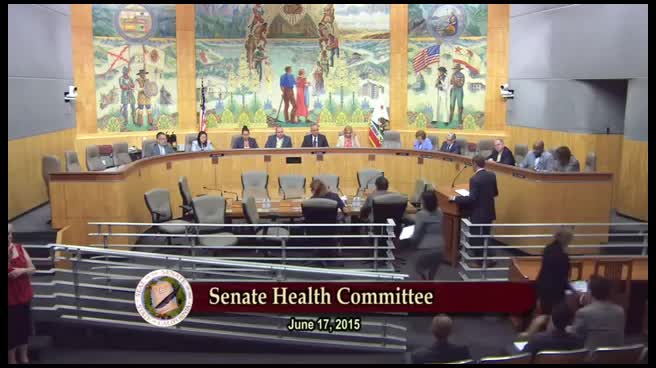 5MIN
Senate Standing Committee on Health
Bill Author

Bill Co-Author(s):