AB 883: Employment: public employee status.
- Session Year: 2015-2016
- House: Assembly
- Latest Version Date: 2015-09-14
Existing law regulates the terms and conditions of employment and, in particular, contracts and applications for employment. Existing law prohibits private employers from requiring an applicant for employment to take a polygraph test as a condition of employment or continued employment. Existing law generally prohibits public and private employers from requiring an applicant to disclose an arrest or detention that did not result in a conviction, subject to various exceptions. Existing law makes a violation of these provisions a misdemeanor.
This bill would, on and after July 1, 2016, prohibit a state or local agency, as defined, from publishing or posting a job advertisement or announcement that states or indicates that an individuals status as a current or former public employee disqualifies an individual from eligibility for employment. The bill would, on and after July 1, 2016, also prohibit a state or local agency from asking an applicant to specifically disclose, orally or in writing, the applicants status as a current or former public employee until the employer has determined that the applicant meets the minimum employment qualifications for the position. The bill would except these provisions from the misdemeanor provisions described above.
Existing law regulates the terms and conditions of employment and, in particular, contracts and applications for employment. Existing law prohibits private employers from requiring an applicant for employment to take a polygraph test as a condition of employment or continued employment. Existing law generally prohibits public and private employers from requiring an applicant to disclose an arrest or detention that did not result in a conviction, subject to various exceptions. Existing law makes a violation of these provisions a misdemeanor.
This bill would would, on and after July 1, 2016, prohibit a state or local agency, as defined, from publishing or posting a job advertisement or announcement that states or indicates directly or indirectly that the applicant for employment must not be a current or former public employee, as described. The bill would also prohibit these employers from communicating, directly or indirectly, that an applicants status as a current or former public employee disqualifies an individual from eligibility for employment or from basing an adverse employment decision on an applicants current or former employment as a public employee. The bill would create a related prohibition for a person who operates an Internet Web site for posting jobs in this state. that an individuals status as a current or former public employee disqualifies an individual from eligibility for employment. The bill would, on and after July 1, 2016, also prohibit a state or local agency from asking an applicant to specifically disclose, orally or in writing, the applicants status as a current or former public employee until the employer has determined that the applicant meets the minimum employment qualifications for the position. The bill would except these provisions from the misdemeanor provisions described above.
Existing law regulates the terms and conditions of employment and, in particular, contracts and applications for employment. Existing law prohibits private employers from requiring an applicant for employment to take a polygraph test as a condition of employment or continued employment. Existing law generally prohibits public and private employers from requiring an applicant to disclose an arrest or detention that did not result in a conviction, subject to various exceptions. Existing law makes a violation of these provisions a misdemeanor.
This bill would prohibit private and public employers a state or local agency, as defined, from publishing or posting a job advertisement or announcement that states or indicates directly or indirectly that the applicant for employment must not be a current or former public employee, as described. The bill would also prohibit these employers from communicating, directly or indirectly, that an applicants status as a current or former public employee disqualifies an individual from eligibility for employment or from basing an adverse employment decision on an applicants current or former employment as a public employee. The bill would create a related prohibition for a person who operates an Internet Web site for posting jobs in this state. The bill would except these provisions from the misdemeanor provisions described above.
Existing law regulates the terms and conditions of employment and, in particular, contracts and applications for employment. Existing law prohibits private employers from requiring an applicant for employment to take a polygraph test as a condition of employment or continued employment. Existing law generally prohibits public and private employers from requiring an applicant to disclose an arrest or detention that did not result in a conviction, subject to various exceptions. Existing law makes a violation of these provisions a misdemeanor.
This bill would prohibit private and public employers from publishing or posting a job advertisement or announcement that states or indicates directly or indirectly that the applicant for employment must not be a current or former public employee. employee, as described. The bill would also prohibit these employers from communicating, directly or indirectly, that an applicants status as a current or former public employee disqualifies an individual from eligibility for employment or from basing an adverse employment decision on an applicants current or former employment as a public employee. The bill would create a related prohibition for a person who operates an Internet Web site for posting jobs in this state. The bill would except these provisions from the misdemeanor provisions described above.
Existing law regulates the terms and conditions of employment and, in particular, contracts and applications for employment. Existing law prohibits private employers from requiring an applicant for employment to take a polygraph test as a condition of employment or continued employment. Existing law generally prohibits public and private employers from requiring an applicant to disclose an arrest or detention that did not result in a conviction, subject to various exceptions. Existing law makes a violation of these provisions a misdemeanor.
This bill would prohibit private and public employers from publishing or posting a job advertisement or announcement that states or indicates directly or indirectly that the applicant for employment must not be a current or former public employee. The bill would also prohibit these employers from communicating, directly or indirectly, that an applicants status as a current or former public employee disqualifies an individual from eligibility for employment or from basing an adverse employment decision on an applicants current or former employment as a public employee. The bill would create a related prohibition for a person who operates an Internet Web site for posting jobs in this state. The bill would except these provisions from the misdemeanor provisions described above. The bill would prescribe penalties for a violation of these provisions and would provide that an intentional violation of these provisions is an infraction, as specified. By creating a new crime, this bill would impose a state-mandated local program.
The California Constitution requires the state to reimburse local agencies and school districts for certain costs mandated by the state. Statutory provisions establish procedures for making that reimbursement.
This bill would provide that no reimbursement is required by this act for a specified reason.
Existing law regulates the terms and conditions of employment and, in particular, contracts and applications for employment. Existing law prohibits private employers from requiring an applicant for employment to take a polygraph test as a condition of employment or continued employment. Existing law generally prohibits public and private employers from requiring an applicant to disclose an arrest or detention that did not result in a conviction, subject to various exceptions. Existing law makes a violation of these provisions a misdemeanor.
This bill would prohibit private and public employers from publishing or posting a job advertisement or announcement that states or indicates directly or indirectly that the applicant for employment must not be a current or former public employee. The bill would also prohibit these employers from communicating, directly or indirectly, that an applicants status as a current or former public employee disqualifies an individual from eligibility for employment or from basing an employment decision on an applicants current or former employment as a public employee. The bill would create a related prohibition for a person who operates an Internet Web site for posting jobs in this state. The bill would except these provisions form from the misdemeanor provisions described above. The bill would prescribe penalties for a violation of these provisions and would provide that an intentional violation of these provisions is an infraction, as specified. By creating a new crime, this bill would impose a state-mandated local program.
The California Constitution requires the state to reimburse local agencies and school districts for certain costs mandated by the state. Statutory provisions establish procedures for making that reimbursement.
This bill would provide that no reimbursement is required by this act for a specified reason.
Existing law regulates the terms and conditions of employment and, in particular, contracts and applications for employment. Existing law prohibits private employers from requiring an applicant for employment to take a polygraph test as a condition of employment or continued employment. Existing law generally prohibits public and private employers from requiring an applicant to disclose an arrest or detention that did not result in a conviction, subject to various exceptions. Existing law makes a violation of these provisions a misdemeanor.
This bill would prohibit private and public employers from publishing or posting a job advertisement or announcement that states or indicates directly or indirectly that the applicant for employment must not be a current or former public employee. The bill would also prohibit these employers from communicating, directly or indirectly, that an applicants status as a current or former public employee disqualifies an individual from eligibility for employment or from basing an employment decision on an applicants current or former employment as a public employee. The bill would create a related prohibition for a person who operates an Internet Web site for posting jobs in this state. The bill would except these provisions form the misdemeanor provisions described above.
(a)A state or local agency shall not do any of the following:
(1)Publish in print, on an Internet Web site, or in any other medium, an advertisement or announcement for any job that includes a provision stating or indicating that an individuals status as a current or former public employee disqualifies an individual from eligibility for employment.
(2)Ask an applicant to specifically disclose, orally or in writing, the applicants status as a current or former public employee until the employer has determined that the applicant meets the minimum employment qualifications for the position, as stated in the published notice for the job.
(b)This section shall not be construed to prohibit an employer or a person who operates an Internet Web site for posting jobs from:
(1)Publishing in print, on an Internet Web site, or in any other medium, an advertisement or announcement for a job that contains provisions setting forth qualifications for the job, including:
(A)Holding a current and valid professional or occupational license, certificate, registration, permit, or other credential.
(B)Requiring a minimum level of education or training or professional, occupational, or field experience.
(C)Stating that only individuals who are current employees of the employer will be considered for that job.
(2)Setting forth qualifications for a job, including:
(A)Holding a current and valid professional or occupational license, certificate, registration, permit, or other credential.
(B)Requiring a minimum level of education, training, or professional, occupational, or field experience.
(C)Stating that only individuals who are current employees of the employer will be considered for that job.
(3)Obtaining information regarding an individuals current or former status as a public employee, including recent relevant experience.
(4)Having knowledge of a persons current or former status as a public employee.
(5)Otherwise making employment decisions pertaining to that individual.
(c)Section 433 does not apply to this section.
(d)As used in this section, current or former public employee includes any person who is currently, or was previously, employed by a public entity, as well as any person who is a participant in a government retirement system.
(e)As used in this section:
(1)State agency means any state office, officer, department, division, bureau, board, commission, or agency.
(2)Local agency means any county, city, city and county, including a charter city or county, or any special district.
(f)This section shall become operative on July 1, 2016.
(a)A state or local agency shall not do any of the following:
(1)Publish in print, on an Internet Web site, or in any other medium, an advertisement or announcement for any job that includes a provision stating or indicating directly or indirectly that the applicant for employment must not be a current or former public employee. that an individuals status as a current or former public employee disqualifies an individual from eligibility for employment.
(2)Communicate or disclose directly or indirectly, through any written form or verbally, that an applicants status as a current or former public employee disqualifies an individual from eligibility for employment.
(3)Make an adverse employment decision based on an applicants current or former employment as a public employee.
(b)A person who operates an Internet Web site for posting jobs in this state shall not publish on that Internet Web site an advertisement or announcement for any job that includes a provision stating or indicating directly or indirectly that the applicant for employment must not be a current or former public employee.
(2)Ask an applicant to specifically disclose, orally or in writing, the applicants status as a current or former public employee until the employer has determined that the applicant meets the minimum employment qualifications for the position, as stated in the published notice for the job.
(c)
(b)This section shall not be construed to prohibit an employer or a person who operates an Internet Web site for posting jobs from:
(1)Publishing in print, on an Internet Web site, or in any other medium, an advertisement or announcement for a job that contains provisions setting forth qualifications for the job, including:
(A)Holding a current and valid professional or occupational license, certificate, registration, permit, or other credential.
(B)Requiring a minimum level of education or training or professional, occupational, or field experience.
(C)Stating that only individuals who are current employees of the employer will be considered for that job.
(2)Setting forth qualifications for a job, including:
(A)Holding a current and valid professional or occupational license, certificate, registration, permit, or other credential.
(B)Requiring a minimum level of education, training, or professional, occupational, or field experience.
(C)Stating that only individuals who are current employees of the employer will be considered for that job.
(3)Obtaining information regarding an individuals current or former status as a public employee, including recent relevant experience.
(4)Having knowledge of a persons current or former status as a public employee.
(5)Otherwise making employment decisions pertaining to that individual.
(d)
(c)Section 433 does not apply to this section.
(e)
(d)As used in this section, current or former public employee includes any person who is currently, or was previously, employed by a public entity, as well as any person who is a participant in a government retirement system.
(f)
(e)As used in this section:
(1)State agency means any state office, officer, department, division, bureau, board, commission, or agency.
(2)Local agency means any county, city, city and county, including a charter city or county, or any special district.
(f)This section shall become operative on July 1, 2016.
(a)An employer, including a public employer, A state or local agency shall not do any of the following:
(1)Publish in print, on an Internet Web site, or in any other medium, an advertisement or announcement for any job that includes a provision stating or indicating directly or indirectly that the applicant for employment must not be a current or former public employee.
(2)Communicate or disclose directly or indirectly, through any written form or verbally, that an applicants status as a current or former public employee disqualifies an individual from eligibility for employment.
(3)Make an adverse employment decision based on an applicants current or former employment as a public employee.
(b)A person who operates an Internet Web site for posting jobs in this state shall not publish on that Internet Web site an advertisement or announcement for any job that includes a provision stating or indicating directly or indirectly that the applicant for employment must not be a current or former public employee.
(c)This section shall not be construed to prohibit an employer or a person who operates an Internet Web site for posting jobs from:
(1)Publishing in print, on an Internet Web site, or in any other medium, an advertisement or announcement for a job that contains provisions setting forth qualifications for the job, including:
(A)Holding a current and valid professional or occupational license, certificate, registration, permit, or other credential.
(B)Requiring a minimum level of education or training or professional, occupational, or field experience.
(C)Stating that only individuals who are current employees of the employer will be considered for that job.
(2)Setting forth qualifications for a job, including:
(A)Holding a current and valid professional or occupational license, certificate, registration, permit, or other credential.
(B)Requiring a minimum level of education, training, or professional, occupational, or field experience.
(C)Stating that only individuals who are current employees of the employer will be considered for that job.
(3)Obtaining information regarding an individuals current or former status as a public employee, including recent relevant experience.
(4)Having knowledge of a persons current or former status as a public employee.
(5)Otherwise making employment decisions pertaining to that individual.
(d)Section 433 does not apply to this section.
(e)As used in this section, current or former public employee includes any person who is currently, or was previously, employed by a public entity, as well as any person who is a participant in a government retirement system.
(f)As used in this section:
(1)State agency means any state office, officer, department, division, bureau, board, commission, or agency.
(2)Local agency means any county, city, city and county, including a charter city or county, or any special district.
(a)An employer, including a public employer, shall not do any of the following:
(1)Publish in print, on an Internet Web site, or in any other medium, an advertisement or announcement for any job that includes a provision stating or indicating directly or indirectly that the applicant for employment must not be a current or former public employee.
(2)Communicate or disclose directly or indirectly, through any written form or verbally, that an applicants status as a current or former public employee disqualifies an individual from eligibility for employment.
(3)Make an adverse employment decision based on an applicants current or former employment as a public employee.
(b)A person who operates an Internet Web site for posting jobs in this state shall not publish on that Internet Web site an advertisement or announcement for any job that includes a provision stating or indicating directly or indirectly that the applicant for employment must not be a current or former public employee.
(c)This section shall not be construed to prohibit an employer or a person who operates an Internet Web site for posting jobs from:
(1)Publishing in print, on an Internet Web site, or in any other medium, an advertisement or announcement for a job that contains provisions setting forth qualifications for the job, including:
(A)Holding a current and valid professional or occupational license, certificate, registration, permit, or other credential.
(B)Requiring a minimum level of education or training or professional, occupational, or field experience.
(C)Stating that only individuals who are current employees of the employer will be considered for that job.
(2)Setting forth qualifications for a job, including:
(A)Holding a current and valid professional or occupational license, certificate, registration, permit, or other credential.
(B)Requiring a minimum level of education, training, or professional, occupational, or field experience.
(C)Stating that only individuals who are current employees of the employer will be considered for that job.
(3)Obtaining information regarding an individuals current or former status as a public employee, including recent relevant experience.
(4)Having knowledge of a persons current or former status as a public employee.
(5)Otherwise making employment decisions pertaining to that individual.
(d)Section 433 does not apply to this section.
(e)As used in this section, current or former public employee includes any person who is currently, or was previously, employed by a public entity, as well as any person who is a participant in a government retirement system.
(a)An employer, including a public employer, shall not do any of the following:
(1)Publish in print, on an Internet Web site, or in any other medium, an advertisement or announcement for any job that includes a provision stating or indicating directly or indirectly that the applicant for employment must not be a current or former public employee.
(2)Communicate or disclose directly or indirectly, through any written form or verbally, that an applicants status as a current or former public employee disqualifies an individual from eligibility for employment.
(3)Make an adverse employment decision based on an applicants current or former employment as a public employee.
(b)A person who operates an Internet Web site for posting jobs in this state shall not publish on that Internet Web site an advertisement or announcement for any job that includes a provision stating or indicating directly or indirectly that the applicant for employment must not be a current or former public employee.
(c)This section shall not be construed to prohibit an employer or a person who operates an Internet Web site for posting jobs from:
(1)Publishing in print, on an Internet Web site, or in any other medium, an advertisement or announcement for a job that contains provisions setting forth qualifications for the job, including:
(A)Holding a current and valid professional or occupational license, certificate, registration, permit, or other credential.
(B)Requiring a minimum level of education or training or professional, occupational, or field experience.
(C)Stating that only individuals who are current employees of the employer will be considered for that job.
(2)Setting forth qualifications for a job, including:
(A)Holding a current and valid professional or occupational license, certificate, registration, permit, or other credential.
(B)Requiring a minimum level of education, training, or professional, occupational, or field experience.
(C)Stating that only individuals who are current employees of the employer will be considered for that job.
(3)Obtaining information regarding an individuals current or former status as a public employee, including recent relevant experience.
(4)Having knowledge of a persons current or former status as a public employee.
(5)Otherwise making employment decisions pertaining to that individual.
(d)If an employer violates this section, a job applicant or prospective applicant may bring an action to recover from that employer actual damages or two hundred dollars ($200), whichever is greater, plus costs, and reasonable attorneys fees. An intentional violation of this section shall entitle the applicant or prospective applicant to treble actual damages, or five hundred dollars ($500), whichever is greater, plus costs, and reasonable attorneys fees. An intentional violation of this section is also a infraction punishable by a fine not to exceed five hundred dollars ($500).
(e)The remedies under this section shall be in addition to and not in derogation of all other rights and remedies that an applicant may have under any other law.
(f)
(d)Section 433 does not apply to this section.
SEC. 2.No reimbursement is required by this act pursuant to Section 6 of Article XIIIB of the California Constitution because the only costs that may be incurred by a local agency or school district will be incurred because this act creates a new crime or infraction, eliminates a crime or infraction, or changes the penalty for a crime or infraction, within the meaning of Section 17556 of the Government Code, or changes the definition of a crime within the meaning of Section 6 of Article XIIIB of the California Constitution.
(a)An employer, including a public employer, shall not do any of the following:
(1)Publish in print, on an Internet Web site, or in any other medium, an advertisement or announcement for any job that includes a provision stating or indicating directly or indirectly that the applicant for employment must not be a current or former public employee.
(2)Communicate or disclose directly or indirectly, through any written form or verbally, that an applicants status as a current or former public employee disqualifies an individual from eligibility for employment.
(3)Make an adverse employment decision based on an applicants current or former employment as a public employee.
(b)A person who operates an Internet Web site for posting jobs in this state shall not publish on that Internet Web site an advertisement or announcement for any job that includes a provision stating or indicating directly or indirectly that the applicant for employment must not be a current or former public employee.
(c)This section shall not be construed to prohibit an employer or a person who operates an Internet Web site for posting jobs from:
(1)Publishing in print, on an Internet Web site, or in any other medium, an advertisement or announcement for a job that contains provisions setting forth qualifications for the job, including:
(A)Holding a current and valid professional or occupational license, certificate, registration, permit, or other credential.
(B)Requiring a minimum level of education or training or professional, occupational, or field experience.
(C)Stating that only individuals who are current employees of the employer will be considered for that job.
(2)Setting forth qualifications for a job, including:
(A)Holding a current and valid professional or occupational license, certificate, registration, permit, or other credential.
(B)Requiring a minimum level of education, training, or professional, occupational, or field experience.
(C)Stating that only individuals who are current employees of the employer will be considered for that job.
(3)Obtaining information regarding an individuals current or former status as a public employee, including recent relevant experience.
(4)Having knowledge of a persons current or former status as a public employee.
(5)Otherwise making employment decisions pertaining to that individual.
(c)
(d)If an employer violates this section, a job applicant or prospective applicant may bring an action to recover from that employer actual damages or two hundred dollars ($200), whichever is greater, plus costs, and reasonable attorneys fees. An intentional violation of this section shall entitle the applicant or prospective applicant to treble actual damages, or five hundred dollars ($500), whichever is greater, plus costs, and reasonable attorneys fees. An intentional violation of this section is also a infraction punishable by a fine not to exceed five hundred dollars ($500).
(d)
(e)The remedies under this section shall be in addition to and not in derogation of all other rights and remedies that an applicant may have under any other law.
(e)
(f)Section 433 does not apply to this section.
SEC. 2.No reimbursement is required by this act pursuant to Section 6 of Article XIIIB of the California Constitution because the only costs that may be incurred by a local agency or school district will be incurred because this act creates a new crime or infraction, eliminates a crime or infraction, or changes the penalty for a crime or infraction, within the meaning of Section 17556 of the Government Code, or changes the definition of a crime within the meaning of Section 6 of Article XIIIB of the California Constitution.
(a)An employer, including a public employer, shall not do any of the following:
(1)Publish in print, on an Internet Web site site, or in any other medium, an advertisement or announcement for any job that includes a provision stating or indicating directly or indirectly that the applicant for employment must not be a current or former public employee.
(2)Communicate or disclose directly or indirectly, through any written form or verbally, that an applicants status as a current or former public employee disqualifies an individual from eligibility for employment.
(3)Make an employment decision based on an applicants current or former employment as a public employee.
(b)A person who operates an Internet Web site for posting jobs in this state shall not publish on that Internet Web site an advertisement or announcement for any job that includes a provision stating or indicating directly or indirectly that the applicant for employment must not be a current or former public employee.
(c)If an employer violates this section, a job applicant or prospective applicant may bring an action to recover from that employer actual damages or two hundred dollars ($200), whichever is greater, plus costs, and reasonable attorneys fees. An intentional violation of this section shall entitle the applicant or prospective applicant to treble actual damages, or five hundred dollars ($500), whichever is greater, plus costs, and reasonable attorneys fees. An intentional violation of this section is also a infraction punishable by a fine not to exceed five hundred dollars ($500).
(d)The remedies under this section shall be in addition to and not in derogation of all other rights and remedies that an applicant may have under any other law.
(c)
(e)Section 433 does not apply to this section.
SEC. 2.No reimbursement is required by this act pursuant to Section 6 of Article XIIIB of the California Constitution because the only costs that may be incurred by a local agency or school district will be incurred because this act creates a new crime or infraction, eliminates a crime or infraction, or changes the penalty for a crime or infraction, within the meaning of Section 17556 of the Government Code, or changes the definition of a crime within the meaning of Section 6 of Article XIIIB of the California Constitution.
(a)An employer, including a public employer, shall not do any of the following:
(1)Publish in print, on an Internet Web site or in any other medium, an advertisement or announcement for any job that includes a provision stating or indicating directly or indirectly that the applicant for employment must not be a current or former public employee.
(2)Communicate or disclose directly or indirectly, through any written form or verbally, that an applicants status as a current or former public employee disqualifies an individual from eligibility for employment.
(3)Make an employment decision based on an applicants current or former employment as a public employee.
(b)A person who operates an Internet Web site for posting jobs in this state shall not publish on that Internet Web site an advertisement or announcement for any job that includes a provision stating or indicating directly or indirectly that the applicant for employment must not be a current or former public employee.
(c)Section 433 does not apply to this section.
|
Date
|
Status
|
|---|---|
| Sep 9, 2015 | Read third time. Passed. Ordered to the Assembly. |
| Jul 15, 2015 | From committee: Amend, and do pass as amended and re-refer to Com. on APPR. (Ayes 5. Noes 2.) (July 14). |
| Jul 16, 2015 | Read second time and amended. Re-referred to Com. on APPR. |
| Aug 17, 2015 | In committee: Referred to APPR. suspense file. |
| Aug 27, 2015 | From committee: Amend, and do pass as amended. (Ayes 5. Noes 2.) (August 27). |
| Aug 31, 2015 | Read second time and amended. Ordered to third reading. |
| Sep 4, 2015 | Read third time and amended. Ordered to second reading. |
| Sep 8, 2015 | Read second time. Ordered to third reading. |
| Sep 9, 2015 | In Assembly. Concurrence in Senate amendments pending. |
| Jul 7, 2015 | In committee: Set, first hearing. Testimony taken. Further hearing to be set. |
| Sep 9, 2015 | Read third time. Passed. Ordered to the Assembly. (Ayes 29. Noes 9. Page 2637.). |
| Sep 10, 2015 | Senate amendments concurred in. To Engrossing and Enrolling. |
| Sep 10, 2015 | Senate amendments concurred in. To Engrossing and Enrolling. (Ayes 65. Noes 13. Page 3063.). |
| Sep 10, 2015 | Senate amendments concurred in. To Engrossing and Enrolling. (Ayes 65. Noes 13.). |
| Sep 18, 2015 | Enrolled and presented to the Governor at 4 p.m. |
| Oct 10, 2015 | Vetoed by Governor. |
| Jan 15, 2016 | Consideration of Governor's veto stricken from file. |
| May 28, 2015 | From committee: Amend, and do pass as amended. (Ayes 12. Noes 5.) (May 28). |
| Feb 27, 2015 | From printer. May be heard in committee March 29. |
| Mar 16, 2015 | Referred to Com. on L. & E. |
| Mar 24, 2015 | From committee chair, with author's amendments: Amend, and re-refer to Com. on L. & E. Read second time and amended. |
| Mar 25, 2015 | Re-referred to Com. on L. & E. |
| Apr 6, 2015 | From committee chair, with author's amendments: Amend, and re-refer to Com. on L. & E. Read second time and amended. |
| Apr 7, 2015 | Re-referred to Com. on L. & E. |
| Apr 9, 2015 | From committee: Do pass and re-refer to Com. on APPR. (Ayes 5. Noes 1.) (April 8). Re-referred to Com. on APPR. |
| Apr 22, 2015 | In committee: Set, first hearing. Referred to APPR. suspense file. |
| Feb 26, 2015 | Read first time. To print. |
| Jun 1, 2015 | Read second time and amended. Ordered returned to second reading. |
| Jun 2, 2015 | Read second time. Ordered to third reading. |
| Jun 3, 2015 | In Senate. Read first time. To Com. on RLS. for assignment. |
| Jun 3, 2015 | Read third time. Passed. Ordered to the Senate. |
| Jun 3, 2015 | Read third time. Passed. Ordered to the Senate. (Ayes 52. Noes 27. Page 1872.) |
| Jun 18, 2015 | Referred to Coms. on L. & I.R. and JUD. |
| Jun 25, 2015 | From committee: Do pass and re-refer to Com. on JUD. (Ayes 4. Noes 1.) (June 24). Re-referred to Com. on JUD. |
|
Date
|
Description
|
Location
|
Votes
|
|
|---|---|---|---|---|
| Sep 10, 2015 | AB 883 LOW Concurrence in Senate Amendments | Assembly Floor |
Passed |
|
| Sep 9, 2015 | Assembly 3rd Reading AB883 Low By Pan | Senate Floor |
Passed |
|
| Aug 27, 2015 | Do pass as amended | Senate Standing Committee on Appropriations |
Passed |
|
| Aug 17, 2015 | Placed on suspense file | Senate Standing Committee on Appropriations |
Passed |
|
| Jul 14, 2015 | Do pass as amended, but first amend, and re-refer to the Committee on [Appropriations] | Senate Standing Committee on Judiciary |
Passed |
|
| Jun 24, 2015 | Do pass, but first be re-referred to the Committee on [Judiciary] | Senate Standing Committee on Labor and Industrial Relations |
Passed |
|
| Jun 3, 2015 | AB 883 LOW Assembly Third Reading | Assembly Floor |
Passed |
|
| May 28, 2015 | Do pass as amended. | Assembly Standing Committee on Appropriations |
Passed |
|
| Apr 8, 2015 | Do pass and be re-referred to the Committee on [Appropriations] | Assembly Standing Committee on Labor and Employment |
Passed |
This list shows positions taken on this bill by organizations on the date displayed, which is linked to the original source.
Positions by individuals are not included.
|
Organization
|
Position
|
Date
|
|---|---|---|
| Association For Los Angeles Deputy Sheriffs | ** Support | Sep 9, 2015 |
| Association of Deputy District Attorneys | ** Support | Sep 9, 2015 |
| California Association of Bed and Breakfast Inns | ** Against | Jun 24, 2015 |
| California Association of Professional Employees | ** Support | Sep 9, 2015 |
| California Chamber Of Commerce | * Against | Jul 7, 2015 |
| California Employment Lawyers Association | ** Support | Sep 9, 2015 |
| California Federation Of Teachers | ** Support | Sep 9, 2015 |
| California Hotel and Lodging Association | ** Against | Jun 24, 2015 |
| California Labor Federation, Afl-Cio | ** Support | Sep 9, 2015 |
| California League of Food Processors | ** Against | Jun 24, 2015 |
| California Manufacturers And Technology Association | ** Against | Jun 24, 2015 |
| California Nurses Association | ** Support | Sep 9, 2015 |
| California Professional Firefighters | ** Support | Sep 9, 2015 |
| California Retailers Association | ** Against | Jun 24, 2015 |
| California School Employees Association | ** Support | Sep 9, 2015 |
| California State Firefighters' Association | * Support | Jul 14, 2015 |
| California State Pipe Trades Council | * Support | Apr 8, 2015 |
| California Teamsters Public Affairs Council | * Support | Apr 8, 2015 |
| CAWA - Representing the Automotive Parts Industry | ** Against | Jun 24, 2015 |
| Chamber of Commerce Mountain View | ** Against | Sep 9, 2015 |
| Civil Justice Association Of California | * Against | Jul 14, 2015 |
| El Centro Chamber of Commerce & Visitors Bureau | ** Against | Sep 9, 2015 |
| Fullerton Chamber of Commerce | ** Against | Sep 9, 2015 |
| Glendale City Employees Association | ** Support | Sep 9, 2015 |
| Greater Bakersfield Chamber of Commerce | ** Against | Sep 9, 2015 |
| Greater Fresno Area Chamber of Commerce | ** Against | Sep 9, 2015 |
| Irvine Chamber of Commerce | ** Against | Sep 9, 2015 |
| Laborers' International Union Of North America Local 777 | ** Support | Sep 9, 2015 |
| Laborers' International Union Of North America Local 792 | ** Support | Sep 9, 2015 |
| Los Angeles Police Protective League | ** Support | Sep 9, 2015 |
| National Federation Of Independent Business | ** Against | Jun 24, 2015 |
| Organization Of Smud Employees | ** Support | Sep 9, 2015 |
| Palm Desert Area Chamber of Commerce | ** Against | Sep 9, 2015 |
| Redondo Beach Chamber of Commerce and Visitors Bureau | ** Against | Sep 9, 2015 |
| Riverside Sheriffs' Association | ** Support | Sep 9, 2015 |
| San Bernardino Public Employees Association | ** Support | Sep 9, 2015 |
| San Diego County Court Employees Association | ** Support | Sep 9, 2015 |
| San Jose Firefighters, IAFF Local 230 | ** Support | Sep 9, 2015 |
| San Luis Obispo County Employees Association | ** Support | Sep 9, 2015 |
| Service Employees International Union, AFL-CIO | ** Support | Sep 9, 2015 |
| Simi Valley Chamber of Commerce | ** Against | Jun 24, 2015 |
| South Bay Association of Chambers of Commerce | ** Against | Sep 9, 2015 |
| State Building & Construction Trades Council Of California | * Indeterminate | Jun 24, 2015 |
| Western Electrical Contractors Association | ** Against | Jun 24, 2015 |
GOVERNOR'S VETO
AB 883
(Low)
As Enrolled September 14, 2015
2/3 vote
ASSEMBLY: |
52-27 |
(June 3, 2015) |
SENATE: |
29-9 |
(September 9, 2015) |
ASSEMBLY: |
65-13 |
(September 10, 2015) |
|
|
|
Original Committee Reference: L. & E.
SUMMARY: Enacts various provisions related to discrimination based on current or former public employee status.
The Senate amendments:
Revise this bill to provide that a state or local agency shall not do any of the following:
Publish an advertisement or announcement for any job that includes a provision stating or indicating that an individual's status as a current or former public employee disqualifies an individual from eligibility for employment.
Ask an applicant to specifically disclose the applicant's status as a current or former public employee until the employer has determined that the applicant meets the minimum employment qualifications for the position, as stated in the published notice for the job.
Provide that this bill applies only to a state or local agency (and not private employers).
Define "state agency" to mean any state office, officer, department, division, bureau, board, commission, or agency.
Define "local agency" to mean any county, city, city and county, including a charter city or county, or any special district.
Define "current or former public employee" to include any person who is currently, or was previously, employed by a public entity, as well as any person who is a participant in a government retirement system.
Provide that this bill shall become operative on July 1, 2016.
FISCAL EFFECT: According to the Senate Appropriations Committee, this bill would result in unknown costs, potentially in the hundreds of thousands of dollars, (special funds) for the Department of Industrial Relations (DIR) to process, review, and investigate complaints.
COMMENTS: This bill is sponsored by the California Professional Firefighters (CPF), who argue that a new trend in employment practices has surfaced – one that requires an applicant for employment to not be a participant of a governmental retirement plan. Consequently, qualified job applicants are now being discriminated against and penalized when their work history shows that they currently hold or previously held a position in which they were classified as a public employee since only public employees are eligible to be members of a governmental retirement plan.
The sponsor argues that punishing a potential applicant due to his or her previous experience as a public employee is not only divisive; it is a true disservice to the employer that has posted the job advertisement. By discriminating against potential applicants in this way, an employer may be excluding an entire group of the most qualified applicants that could be considered for the position.
For example, firefighters are highly-skilled and highly-trained first responders. CPF states that its members are also public employees. Many of the skills that firefighters acquire in their profession come from firsthand experience on the front lines – responding to fires and mitigating other emergencies. The amount of time a firefighter spends on his or her education, training, and previous experience should not be barrier to continued employment. With respect to a fire department, the first priority is to engage a firefighting force that is best capable of keeping a community safe and therefore, fire department applicants should be viewed as first rate candidates.
The sponsor argues that this bill levels the playing field for job applicants by allowing their credentials and qualifications for the position – earned in service to the citizens of California – speak instead of their status as a current or former public employee.
A coalition of employer groups opposes this bill. They argue that even if the decision to hire is based upon a separate, unrelated reason other than the individual's status as a former or public employee, once the "protected" information is discovered, it creates the opportunity for a discrimination lawsuit against the business. Unlike other protected classifications currently in California law, including age, marital status, or disability, an applicant’s prior employment history is not something that an employer can easily navigate away from while inquiring about an applicant's work experience when interviewing or reviewing a candidate for employment in order to avoid a discrimination claim.
With the recent amendment to apply this bill only to a state or local agency, several opponents, including the California Chamber of Commerce, have removed their opposition to the bill.
This bill seeks to vest in the Division of Labor Standards Enforcement an entirely new responsibility: to enforce a prohibition on job advertisements and communications that relate to a person's prior status as a public employee.
I think I understand what the sponsors intend, but the provisions in this bill could limit legitimate efforts of public jurisdictions to manage their workforce.
For this reason, I am unable to sign the bill.
Analysis Prepared by: Ben Ebbink / L. & E. / (916) 319-2091 FN: 0002494
AB 883
Page 2
CONCURRENCE IN SENATE AMENDMENTS
AB 883
(Low)
As Amended September 4, 2015
Majority vote
ASSEMBLY: |
52-27 |
(June 3, 2015) |
SENATE: |
29-9 |
(September 9, 2015) |
Original Committee Reference: L. & E.
SUMMARY: Enacts various provisions related to discrimination based on current or former public employee status.
The Senate amendments:
Revise this bill to provide that a state or local agency shall not do any of the following:
Publish an advertisement or announcement for any job that includes a provision stating or indicating that an individual's status as a current or former public employee disqualifies an individual from eligibility for employment.
Ask an applicant to specifically disclose the applicant's status as a current or former public employee until the employer has determined that the applicant meets the minimum employment qualifications for the position, as stated in the published notice for the job.
Provide that this bill applies only to a state or local agency (and not private employers).
Define "state agency" to mean any state office, officer, department, division, bureau, board, commission, or agency.
Define "local agency" to mean any county, city, city and county, including a charter city or county, or any special district.
Define "current or former public employee" to include any person who is currently, or was previously, employed by a public entity, as well as any person who is a participant in a government retirement system.
Provide that this bill shall become operative on July 1, 2016.
FISCAL EFFECT: According to the Senate Appropriations Committee, this bill would result in unknown costs, potentially in the hundreds of thousands of dollars, (special funds) for the Department of Industrial Relations (DIR) to process, review, and investigate complaints.
COMMENTS: This bill is sponsored by the California Professional Firefighters (CPF), who argue that a new trend in employment practices has surfaced – one that requires an applicant for employment to not be a participant of a governmental retirement plan. Consequently, qualified job applicants are now being discriminated against and penalized when their work history shows that they currently hold or previously held a position in which they were classified as a public employee since only public employees are eligible to be members of a governmental retirement plan.
The sponsor argues that punishing a potential applicant due to his or her previous experience as a public employee is not only divisive; it is a true disservice to the employer that has posted the job advertisement. By discriminating against potential applicants in this way, an employer may be excluding an entire group of the most qualified applicants that could be considered for the position.
For example, firefighters are highly-skilled and highly-trained first responders. CPF states that its members are also public employees. Many of the skills that firefighters acquire in their profession come from firsthand experience on the front lines – responding to fires and mitigating other emergencies. The amount of time a firefighter spends on his or her education, training, and previous experience should not be barrier to continued employment. With respect to a fire department, the first priority is to engage a firefighting force that is best capable of keeping a community safe and therefore, fire department applicants should be viewed as first rate candidates.
The sponsor argues that this bill levels the playing field for job applicants by allowing their credentials and qualifications for the position – earned in service to the citizens of California – speak instead of their status as a current or former public employee.
A coalition of employer groups opposes this bill. They argue that even if the decision to hire is based upon a separate, unrelated reason other than the individual's status as a former or public employee, once the "protected" information is discovered, it creates the opportunity for a discrimination lawsuit against the business. Unlike other protected classifications currently in California law, including age, marital status, or disability, an applicant’s prior employment history is not something that an employer can easily navigate away from while inquiring about an applicant's work experience when interviewing or reviewing a candidate for employment in order to avoid a discrimination claim.
With the recent amendment to apply this bill only to a state or local agency, several opponents, including the California Chamber of Commerce, have removed their opposition to the bill.
Analysis Prepared by: Benjamin Ebbink / L. & E. / (916) 319-2091 FN: 0002221
AB 883
Page 7
|
Office of Senate Floor Analyses (916) 651-1520 Fax: (916) 327-4478 |
THIRD READING
Bill No: AB 883
Amended: 9/4/15 in Senate
SENATE LABOR & IND. REL. COMMITTEE: 4-1, 6/24/15
AYES: Mendoza, Jackson, Leno, Mitchell
NOES: Stone
SENATE JUDICIARY COMMITTEE: 5-2, 7/14/15
AYES: Jackson, Hertzberg, Leno, Monning, Wieckowski
NOES: Moorlach, Anderson
SENATE APPROPRIATIONS COMMITTEE: 5-2, 8/27/15
AYES: Lara, Beall, Hill, Leyva, Mendoza
NOES: Bates, Nielsen
ASSEMBLY FLOOR: 52-27, 6/3/15 - See last page for vote
SUBJECT: Employment: public employee status
SOURCE: California Professional Firefighters
DIGEST: This bill prohibits a state or local agency, as defined, from advertising or announcing a job that discriminates against an applicant who is a current or former public employee.
Senate Floor Amendments of 9/4/15 specify job posting requirements for state and local agencies; remove various provisions related to a state or local agency communicating or disclosing that an applicant’s status as a current or former public employee disqualifies them from employment or making an adverse employment decision as well as the section related to a person operating an Internet Web site; specify that a local or state agency must determine the applicant meets minimum employment qualifications before asking for disclosure of status as a public employee; and states that the section shall become operable on July 1, 2017.
ANALYSIS: Existing federal and state law contains provisions that define unlawful discrimination and lawful employment practices by employers and employment agencies to protect both prospective and current employees against employment discrimination.
Existing state law prohibits harassment and discrimination in employment because of, among other things, race, color, religion, sex, sexual orientation, marital status, mental and physical disability, age and/or retaliation for protesting illegal discrimination related to one of these categories or for reporting patient abuse in tax supported institutions. (Government Code §12940, 12945, 12945.2)
This bill enacts various provisions related to discrimination based on current or former public employee status. Specifically, this bill:
Prohibits a state or local agency, from doing the following:
Publishing an advertisement or announcement for any job that includes a provision stating or indicating that an individual’s status as a current or former public employee disqualifies an individual from eligibility for employment.
Ask an applicant to specifically disclose, orally or in writing, the applicant’s status as a current or former public employee until the employer has determined that the applicant meets the minimum employment qualifications for the position.
Provides that this bill shall not be construed to prohibit an employer or a person who operates an Internet Web site for posting jobs from:
Publishing in print, on an Internet Web site, or in any other medium, an advertisement or announcement for any job that contains any provision setting forth qualifications for a job, including:
Holding a current and valid professional or occupational license, certificate, registration, permit, or other credential.
Requiring a minimum level of education or training or professional, occupational, or field experience.
Stating that only individuals who are current employees of the employer will be considered for that job.
Setting forth qualifications for any job, including:
Holding a current and valid professional or occupational license, certificate, registration, permit, or other credential.
Requiring a minimum level of education or training or professional, occupational, or field experience.
Stating that only individuals who are current employees of the employer will be considered for that job.
Obtaining information regarding an individual’s current or former status as a public employee, including recent relevant experience.
Having knowledge of a person’s current or former status as a public employee.
Otherwise making employment decisions pertaining to that individual.
States that a violation of the section does not result in a misdemeanor.
Sets the following definitions:
Current or former public employee includes any person who is currently, or was previously, employed by a public entity, as well as any person who is a participant in a government retirement system.
State agency means any state office, officer, department, division, bureau, board, commission, or agency.
Local agency means any county, city, city and county, including a charter city or county, or any special district.
States that the section shall become operative on July 1, 2016.
Comments
Existing federal and state law contain provisions that define unlawful discrimination and unlawful employment practices by employers and employment agencies. These provisions exist to protect both prospective and current employees against employment discrimination.
The Fair Employment and Housing Act, prohibits harassment and discrimination in employment because of, among other things, race, color, religion, sex, gender, sexual orientation, marital status, mental and physical disability, age and/or retaliation for protesting illegal discrimination related to one of these categories.
Such protections seek to ensure a workplace free from discrimination as well as establish clear prohibitions of employment practices that would deprive or tend to deprive any individual of employment opportunities, limit such employment opportunities or otherwise adversely affect a person’s status as an employee or as an applicant for employment.
According to the author, a new trend in employment practices has surfaced, one that requires an applicant for employment to not be a participant of a governmental retirement plan. The author specifically brought attention to a posting from the San Ramon Valley Fire Protection District regarding openings for firefighter/paramedic positions that had under qualifications, “must not be a current participant in a government retirement system.” The author argues that by discriminating against potential applicants in this way, an employer may be excluding an entire group of qualified applicants. The author states that AB 883 helps level the playing field and will prohibit an employer from discriminating against a current or former public employee.
FISCAL EFFECT: Appropriation: No Fiscal Com.: Yes Local: No
According to the Senate Appropriations Committee, unknown costs, potentially in the hundreds of thousands of dollars, (special funds) for the Department of Industrial Relations to process, review, and investigate complaints.
California Professional Firefighters (source)
Association for Los Angeles Deputy Sheriffs
Association of Deputy District Attorneys
California Association of Professional Employees
California Employment Lawyers Association
California Federation of Teachers
California Labor Federation, AFL-CIO
California Nurses Association
California School Employees Association
Glendale City Employees Association
Laborers’ International Union of North America Local 777
Laborers’ International Union of North America Local 792
Los Angeles County Probation Officers Union, AFSCME, Local 685
Los Angeles Police Protective League
Organization of SMUD Employees
Riverside Sheriffs’ Association
San Bernardino Public Employees Association
San Diego County Court Employees Association
San Jose Firefighters, IAFF Local 230
San Luis Obispo County Employees Association
Service Employees International Union, AFL-CIO
Chamber of Commerce Mountain View
El Centro Chamber of Commerce & Visitors Bureau
Fullerton Chamber of Commerce
Greater Bakersfield Chamber of Commerce
Greater Fresno Area Chamber of Commerce
Irvine Chamber of Commerce
Palm Desert Area Chamber of Commerce
Redondo Beach Chamber of Commerce and Visitors Bureau
Santa Clara Chamber of Commerce and Convention Visitors Bureau
South Bay Association of Chambers of Commerce
ARGUMENTS IN SUPPORT: This bill is sponsored by the California Professional Firefighters, who argue that a new trend in employment practices has surfaced – one that requires an applicant for employment to not be a participant of a governmental retirement plan. They argue that consequently, qualified job applicants are now being discriminated against and penalized when their work history shows that they currently hold or previously held a position in which they were classified as a public employee since only public employees are eligible to be members of a governmental retirement plan.
The sponsor argues that punishing a potential applicant due to his or her previous experience as a public employee is not only divisive; it is a true disservice to the employer that has posted the job advertisement. They argue that by discriminating against potential applicants in this way, an employer may be excluding an entire group of the most qualified applicants that could be considered for the position.
The sponsor notes that firefighters are highly-skilled and highly-trained first responders and many are also public employees. They argue that many of the skills that firefighters acquire in their profession come from firsthand experience on the front lines – responding to fires and mitigating other emergencies and the amount of time a firefighter spends on his or her education, training, and previous experience should not be barrier to continued employment.
The sponsor argues that this bill levels the playing field for job applicants by allowing their credentials and qualifications for the position speak instead of their status as a current or former public employee.
ARGUMENTS IN OPPOSITION: Opponents argue that under AB 883 if the employer inquiries into the applicant’s relevant background either through a written job application that asks the applicant to list his or her prior employers, or through an in-person interview to discuss the applicant’s work experience, and discovers the applicant’s protected status as a former or current public employee, then the employer will be subject to potential civil litigation if the employer does not ultimately hire the individual.
Opponents contend that even if the decision to hire is based upon a separate, unrelated reason other than the individual’s status as a former or public employee, once the “protected” information is discovered, it creates the opportunity for a discrimination lawsuit against the business. They argue that unlike other protected classifications currently in California law, including age, marital status, or disability, an applicant’s prior employment history is not something that an employer can easily navigate away from while inquiring about an applicant’s work experience when interviewing or reviewing a candidate for employment in order to avoid a discrimination claim.
Lastly, opponents argue that they are not aware of any systematic discrimination in the private sector against individuals who are either current or former public employees that AB 883 seeks to address and that the private sector should not be subject to the provisions of this bill. Opponents contend that AB 883 will simply create more opportunities for civil litigation against employers, with the additional threat of treble damages, statutory fines and employee-only attorney’s fees.
ASSEMBLY FLOOR: 52-27, 6/3/15
AYES: Alejo, Bloom, Bonilla, Bonta, Brown, Burke, Calderon, Campos, Chau, Chiu, Chu, Cooley, Cooper, Dababneh, Daly, Dodd, Eggman, Frazier, Cristina Garcia, Eduardo Garcia, Gatto, Gipson, Gomez, Gonzalez, Gordon, Gray, Roger Hernández, Holden, Irwin, Jones-Sawyer, Levine, Linder, Lopez, Low, McCarty, Medina, Mullin, Nazarian, O'Donnell, Perea, Quirk, Rendon, Ridley-Thomas, Rodriguez, Salas, Santiago, Mark Stone, Ting, Weber, Williams, Wood, Atkins
NOES: Achadjian, Travis Allen, Baker, Bigelow, Brough, Chang, Chávez, Dahle, Beth Gaines, Gallagher, Grove, Hadley, Harper, Jones, Kim, Lackey, Maienschein, Mathis, Mayes, Melendez, Obernolte, Olsen, Patterson, Steinorth, Wagner, Waldron, Wilk
NO VOTE RECORDED: Thurmond
Prepared by: Deanna Ping / L. & I.R. / (916) 651-1556
9/8/15 14:42:01
AB 883
Page 7
|
Office of Senate Floor Analyses (916) 651-1520 Fax: (916) 327-4478 |
THIRD READING
Bill No: AB 883
Amended: 8/31/15 in Senate
SENATE LABOR & IND. REL. COMMITTEE: 4-1, 6/24/15
AYES: Mendoza, Jackson, Leno, Mitchell
NOES: Stone
SENATE JUDICIARY COMMITTEE: 5-2, 7/14/15
AYES: Jackson, Hertzberg, Leno, Monning, Wieckowski
NOES: Moorlach, Anderson
SENATE APPROPRIATIONS COMMITTEE: 5-2, 8/27/15
AYES: Lara, Beall, Hill, Leyva, Mendoza
NOES: Bates, Nielsen
ASSEMBLY FLOOR: 52-27, 6/3/15 - See last page for vote
SUBJECT: Employment: public employee status
SOURCE: California Professional Firefighters
DIGEST: This bill prohibits a state or local agency, as defined, from advertising or announcing a job that discriminates against an applicant who is a current or former public employee.
ANALYSIS: Existing federal and state law contains provisions that define unlawful discrimination and lawful employment practices by employers and employment agencies to protect both prospective and current employees against employment discrimination.
Existing state law prohibits harassment and discrimination in employment because of, among other things, race, color, religion, sex, sexual orientation, marital status, mental and physical disability, age and/or retaliation for protesting illegal discrimination related to one of these categories or for reporting patient abuse in tax supported institutions. (Government Code §12940, 12945, 12945.2)
This bill enacts various provisions related to discrimination based on current or former public employee status. Specifically, this bill:
Prohibits a state or local agency, from doing the following:
Publishing an advertisement or announcement for any job that includes a provision stating or indicating directly or indirectly that the applicant for employment must not be a current or former public employee.
Communicating or disclosing that an applicant's status as a current or former public employee disqualifies an individual from eligibility for employment.
Making an employment decision based on an applicant's current or former status as a public employee.
Prohibits a person who operates specified job posting Internet Web sites from including in advertisements or announcements a provision stating or indicating directly or indirectly that the applicant for employment must not be a current or former employee.
Provides that this bill shall not be construed to prohibit an employer or a person who operates an Internet Web site for posting jobs from:
Publishing in print, on an Internet Web site, or in any other medium, an advertisement or announcement for any job that contains any provision setting forth qualifications for a job, including:
Holding a current and valid professional or occupational license, certificate, registration, permit, or other credential.
Requiring a minimum level of education or training or professional, occupational, or field experience.
Stating that only individuals who are current employees of the employer will be considered for that job.
Setting forth qualifications for any job, including:
Holding a current and valid professional or occupational license, certificate, registration, permit, or other credential.
Requiring a minimum level of education or training or professional, occupational, or field experience.
Stating that only individuals who are current employees of the employer will be considered for that job.
Obtaining information regarding an individual’s current or former status as a public employee, including recent relevant experience.
Having knowledge of a person’s current or former status as a public employee.
Otherwise making employment decisions pertaining to that individual.
States that a violation of the section does not result in a misdemeanor.
Sets the following definitions:
Current or former public employee includes any person who is currently, or was previously, employed by a public entity, as well as any person who is a participant in a government retirement system.
State agency means any state office, officer, department, division, bureau, board, commission, or agency.
Local agency means any county, city, city and county, including a charter city or county, or any special district.
Comments
Existing federal and state law contain provisions that define unlawful discrimination and unlawful employment practices by employers and employment agencies. These provisions exist to protect both prospective and current employees against employment discrimination.
The Fair Employment and Housing Act prohibits harassment and discrimination in employment because of, among other things, race, color, religion, sex, gender, sexual orientation, marital status, mental and physical disability, age and/or retaliation for protesting illegal discrimination related to one of these categories. In addition, current law generally prohibits public and private employers from requiring an applicant to disclose an arrest or detention that did not result in a conviction.
These statutes seek to ensure a workplace free from discrimination as well as establish clear prohibitions of employment practices that would deprive or tend to deprive any individual of employment opportunities, limit such employment opportunities or otherwise adversely affect a person’s status as an employee or as an applicant for employment.
According
to the author, a new trend in employment practices has surfaced, one
that requires an applicant for employment to not be a participant of
a governmental retirement plan. The author specifically brought
attention to a posting from the San Ramon Valley Fire Protection
District regarding openings for firefighter/paramedic positions that
had under qualifications, “must not be a current participant in a
government retirement system.” The author argues that by
discriminating against potential applicants in this way, an employer
may be excluding an entire group of qualified applicants. The author
states that AB 883 helps level the playing field and will prohibit an
employer from discriminating against a current or former public
employee.
FISCAL EFFECT: Appropriation: No Fiscal Com.: Yes Local: No
According
to the Senate Appropriations Committee, unknown costs, potentially in
the hundreds of thousands of dollars, (special funds) for the
Department of Industrial Relations to process, review, and
investigate complaints.
California Professional Firefighters (source)
Association for Los Angeles Deputy Sheriffs
Association of Deputy District Attorneys
California Association of Professional Employees
California Employment Lawyers Association
California Federation of Teachers
California Labor Federation, AFL-CIO
California Nurses Association
California School Employees Association
Glendale City Employees Association
Laborers’ International Union of North America Local 777
Laborers’ International Union of North America Local 792
Los Angeles County Probation Officers Union, AFSCME, Local 685
Los Angeles Police Protective League
Organization of SMUD Employees
Riverside Sheriffs’ Association
San Bernardino Public Employees Association
San Diego County Court Employees Association
San Jose Firefighters, IAFF Local 230
San Luis Obispo County Employees Association
Service Employees International Union, AFL-CIO
OPPOSITION: (Verified 8/28/15)
Chamber of Commerce Mountain View
El Centro Chamber of Commerce & Visitors Bureau
Fullerton Chamber of Commerce
Greater Bakersfield Chamber of Commerce
Greater Fresno Area Chamber of Commerce
Irvine Chamber of Commerce
Palm Desert Area Chamber of Commerce
Redondo Beach Chamber of Commerce and Visitors Bureau
Santa Clara Chamber of Commerce and Convention Visitors Bureau
South
Bay Association of Chambers of Commerce
ARGUMENTS IN SUPPORT: This bill is sponsored by the California Professional Firefighters, who argue that a new trend in employment practices has surfaced – one that requires an applicant for employment to not be a participant of a governmental retirement plan. They argue that consequently, qualified job applicants are now being discriminated against and penalized when their work history shows that they currently hold or previously held a position in which they were classified as a public employee since only public employees are eligible to be members of a governmental retirement plan.
The sponsor argues that punishing a potential applicant due to his or her previous experience as a public employee is not only divisive; it is a true disservice to the employer that has posted the job advertisement. They argue that by discriminating against potential applicants in this way, an employer may be excluding an entire group of the most qualified applicants that could be considered for the position.
The sponsor notes that firefighters are highly-skilled and highly-trained first responders and many are also public employees. They argue that many of the skills that firefighters acquire in their profession come from firsthand experience on the front lines – responding to fires and mitigating other emergencies and the amount of time a firefighter spends on his or her education, training, and previous experience should not be barrier to continued employment.
The
sponsor argues that this bill levels
the playing field for job applicants by allowing their credentials
and qualifications for the position – earned in service to the
citizens of California - speak instead of their status as a current
or former public employee.
ARGUMENTS IN OPPOSITION: Opponents argue that under AB 883 if the employer inquiries into the applicant’s relevant background either through a written job application that asks the applicant to list his or her prior employers, or through an in-person interview to discuss the applicant’s work experience, and discovers the applicant’s protected status as a former or current public employee, then the employer will be subject to potential civil litigation if the employer does not ultimately hire the individual.
Opponents contend that even if the decision to hire is based upon a separate, unrelated reason other than the individual’s status as a former or public employee, once the “protected” information is discovered, it creates the opportunity for a discrimination lawsuit against the business. They argue that unlike other protected classifications currently in California law, including age, marital status, or disability, an applicant’s prior employment history is not something that an employer can easily navigate away from while inquiring about an applicant’s work experience when interviewing or reviewing a candidate for employment in order to avoid a discrimination claim.
Lastly, opponents argue that they are not aware of any systematic discrimination in the private sector against individuals who are either current or former public employees that AB 883 seeks to address and that the private sector should not be subject to the provisions of this bill. Opponents contend that AB 883 will simply create more opportunities for civil litigation against employers, with the additional threat of treble damages, statutory fines and employee-only attorney’s fees.
ASSEMBLY FLOOR: 52-27, 6/3/15
AYES: Alejo, Bloom, Bonilla, Bonta, Brown, Burke, Calderon, Campos, Chau, Chiu, Chu, Cooley, Cooper, Dababneh, Daly, Dodd, Eggman, Frazier, Cristina Garcia, Eduardo Garcia, Gatto, Gipson, Gomez, Gonzalez, Gordon, Gray, Roger Hernández, Holden, Irwin, Jones-Sawyer, Levine, Linder, Lopez, Low, McCarty, Medina, Mullin, Nazarian, O'Donnell, Perea, Quirk, Rendon, Ridley-Thomas, Rodriguez, Salas, Santiago, Mark Stone, Ting, Weber, Williams, Wood, Atkins
NOES: Achadjian, Travis Allen, Baker, Bigelow, Brough, Chang, Chávez, Dahle, Beth Gaines, Gallagher, Grove, Hadley, Harper, Jones, Kim, Lackey, Maienschein, Mathis, Mayes, Melendez, Obernolte, Olsen, Patterson, Steinorth, Wagner, Waldron, Wilk
NO VOTE RECORDED: Thurmond
Prepared by: Deanna Ping / L. & I.R. / (916) 651-1556
8/31/15 9:06:09
**** END ****
AB 883 (Low) Page 0 of 1
SENATE COMMITTEE ON APPROPRIATIONS
Senator Ricardo Lara, Chair
2015 - 2016 Regular Session
AB 883 (Low) - Employment: public employee status.
|
|
Version: July 16, 2015 |
Policy Vote: L. & I.R. 4 - 1, JUD. 5 - 2 |
Urgency: No |
Mandate: No |
Hearing Date: August 27, 2015 |
Consultant: Robert Ingenito |
*********** ANALYSIS ADDENDUM – SUSPENSE FILE ***********
The following information is revised to reflect amendments
adopted by the committee on August 27, 2015
Bill Summary:
AB 883 would prohibit a state or local agency, as defined, from advertising or announcing a job that discriminates against an applicant who is a current or former public employee.
Fiscal Impact:
Unknown costs, potentially in the hundreds of thousands of dollars, (special funds) for the Department of Industrial Relations (DIR) to process, review, and investigate complaints.
Author Amendments:
Remove private employers from the bill.
-- END --
AB 883 (Low) Page 3 of 3
SENATE COMMITTEE ON APPROPRIATIONS
Senator Ricardo Lara, Chair
2015 - 2016 Regular Session
AB 883 (Low) - Employment: public employee status.
|
|
Version: July 16, 2015 |
Policy Vote: L. & I.R. 4 - 1, JUD. 5 - 2 |
Urgency: No |
Mandate: No |
Hearing Date: August 17, 2015 |
Consultant: Robert Ingenito |
This bill meets the criteria for referral to the Suspense File.
Bill Summary:
AB 883 would prohibit an employer or person who operates an Internet Web site from advertising or announcing a job that discriminates against an applicant who is a current or former public employee.
Fiscal Impact:
Unknown costs, potentially in the range of $1 million to $3 million (special funds) for the Department of Industrial Relations (DIR) to process, review, and investigate complaints.
Background:
Current law prohibits employment discrimination based on race, color, religion, sex or national origin. Specifically, various California statutes, such as the Fair Employment and Housing Act (FEHA) and the Unruh Civil Rights Act, prohibit discrimination in employment, housing, public accommodation and services provided by business establishments on the basis of specified personal characteristics such as sex, race, color, national origin, religion, and disability. These statutes have been subsequently modified to include other characteristics, such as medical conditions, marital status, and sexual orientation.
Proposed Law:
This bill would prohibit employment discrimination against current or former public employees applying for public or private employment. Specifically, this bill would prohibit an employer, including a public employer, from doing any of the following:
Publishing in print, on an Internet Web site, or in any other medium, an advertisement or announcement for any job that includes a provision stating or indicating directly or indirectly that the applicant for employment must not be a current or former public employee.
Communicating or disclosing directly or indirectly, through any written form or verbally, that an applicant’s status as a current or former public employee disqualifies an individual from eligibility for employment.
Making an adverse employment decision based on an applicant’s current or former employment as a public employee.
Additionally, the bill would prohibit a person who operates an Internet Web site for posting jobs in this state from publishing on that Internet site an advertisement or announcement for any job that includes a provision stating or indicating directly or indirectly that the applicant for employment must not be a current or former public employee.
This bill would not prohibit an employer or a person who operates an Internet Web site for posting jobs from doing the following:
Publishing in print, on an Internet Web site, or in any other medium, an advertisement or announcement for a job that contains provisions setting forth qualifications for the job, including:
holding a current and valid professional or occupational license, certificate, registration, permit, or other credential;
requiring a minimum level of education or training or professional, occupational, or field experience; or
stating that only individuals who are current employees of the employer will be considered for that job;
Setting forth qualifications for a job, including:
holding a current and valid professional or occupational license, certificate, registration, permit, or other credential;
requiring a minimum level of education, training, or professional, occupational, or field experience; or
stating that only individuals who are current employees of the employer will be considered for that job;
Obtaining information regarding an individual’s current or former status as a public employee, including recent relevant experience;
Having knowledge of a person’s current or former status as a public employee; or
Otherwise making employment decisions pertaining to that individual.
Finally, the bill would clarify that an employer would not be subject to a misdemeanor for violating this bill.
Related Legislation: AB 676 (Calderon) would prohibit an employer, employment agency, or a person who operates an internet web site from including in a job posting that an applicant cannot be unemployed. The bill is up for hearing in this Committee today.
Staff Comments:
DIR indicates that the number of the claims that may come before it pursuant to this bill is difficult to determine. Cases involving retaliation generally involve lengthy, resource intensive investigations. Public employees in the State total 2.1 million. DIR cannot accurately project how many of those individuals would make use of the bill’s protections. Additionally, DIR would now have enforcement authority for a new group besides employers - 3rd party internet website providers. This is a unique addition to DIR. DIR estimates it may need roughly $1 to $3 million to cover staff costs to handle the potential influx of claims resulting from the bill. These numbers estimate that even if only .001 percent of potential claimants file claims - it could require over two dozen staff to process the retaliation cases.
-- END --
AB 883 (Low)
Page 9 of 9
Senator Hannah-Beth Jackson, Chair
2015-2016 Regular Session
AB 883 (Low)
Version: June 1, 2015
Hearing Date: July 14, 2015
Fiscal: Yes
Urgency: No
TMW
SUBJECT
Employment: public employee status
DESCRIPTION
This bill would prohibit an employer or person who operates an Internet Web site from advertising or announcing a job that discriminates against an applicant who is a current or former public employee.
BACKGROUND
The Equal Employment Opportunity Commission (EEOC) enforces Title VII of the Civil Rights Act of 1964 (Title VII), which prohibits employment discrimination based on race, color, religion, sex or national origin. Various California statutes, such as the Fair Employment and Housing Act (FEHA) and the Unruh Civil Rights Act, prohibit discrimination in employment, housing, public accommodation and services provided by business establishments on the basis of specified personal characteristics such as sex, race, color, national origin, religion, and disability. Over time, these statutes have been amended to include other characteristics such as medical conditions, marital status, and sexual orientation. Also over time, other statutes were amended to reflect the state’s public policy against discrimination in all forms.
This bill seeks to prohibit employment discrimination against current or former public employees applying for public or private employment.
This bill was heard by the Senate Labor and Industrial Relations Committee on June 24, 2015, and was approved by a vote of 4-1.
CHANGES TO EXISTING LAW
Existing federal law, Title VII of the Civil Rights Act, prohibits discrimination and harassment of employees. (42 U.S.C. Sec. 2000e et seq.)
Existing law, the Fair Employment and Housing Act (FEHA), prohibits, as a matter of public policy, discrimination and harassment in employment on the basis of race, religious creed, color, national origin, ancestry, physical disability, mental disability, medical condition, genetic information, marital status, sex, gender, gender identity, gender expression, age, sexual orientation, or military and veteran status. (Gov. Code Sec. 12940 et seq.)
Existing law prohibits various employment practices relating to contracts and applications for employment. (Lab. Code Sec. 430 et seq.)
Existing law prohibits a public or private employer from asking an applicant to disclose information concerning an arrest or detention that did not result in a conviction, as specified. (Lab. Code Sec. 432.7.)
Existing law prohibits a state or local agency from asking an applicant for employment to disclose information concerning the conviction history of the applicant until the agency has determined the applicant meets the minimum employment qualifications, as stated in any notice issued for the position. (Lab. Code Sec. 432.9.)
Existing law makes it a misdemeanor for violating those prohibitions on employment practices. (Lab. Code Sec. 433.)
This bill would prohibit an employer, including a public employer, from doing any of the following:
publishing in print, on an Internet Web site, or in any other medium, an advertisement or announcement for any job that includes a provision stating or indicating directly or indirectly that the applicant for employment must not be a current or former public employee;
communicating or disclosing directly or indirectly, through any written form or verbally, that an applicant’s status as a current or former public employee disqualifies an individual from eligibility for employment; and
making an adverse employment decision based on an applicant’s current or former employment as a public employee.
This bill would prohibit a person who operates an Internet Web site for posting jobs in this state from publishing on that Internet Web site an advertisement or announcement for any job that includes a provision stating or indicating directly or indirectly that the applicant for employment must not be a current or former public employee.
This bill would not prohibit an employer or a person who operates an Internet Web site for posting jobs from:
publishing in print, on an Internet Web site, or in any other medium, an advertisement or announcement for a job that contains provisions setting forth qualifications for the job, including:
holding a current and valid professional or occupational license, certificate, registration, permit, or other credential;
requiring a minimum level of education or training or professional, occupational, or field experience; or
stating that only individuals who are current employees of the employer will be considered for that job;
setting forth qualifications for a job, including:
holding a current and valid professional or occupational license, certificate, registration, permit, or other credential;
requiring a minimum level of education, training, or professional, occupational, or field experience; or
stating that only individuals who are current employees of the employer will be considered for that job;
obtaining information regarding an individual’s current or former status as a public employee, including recent relevant experience;
having knowledge of a person’s current or former status as a public employee; or
otherwise making employment decisions pertaining to that individual.
This bill would clarify that an employer would not be subject to a misdemeanor for violating this bill.
COMMENT
1. Stated need for the bill
The author writes:
Existing federal and state law contain provisions that define unlawful discrimination and unlawful employment practices by employers and employment agencies. These provisions exist to protect both prospective and current employees against employment discrimination.
The Fair Employment and Housing Act (FEHA), prohibits harassment and discrimination in employment because of, among other things, race, color, religion, sex, gender, sexual orientation, marital status, mental and physical disability, age and/or retaliation for protesting illegal discrimination related to one of these categories (Government Code [Sections] 12940, 12945). In addition, current law generally prohibits public and private employers from requiring an applicant to disclose an arrest or detention that did not result in a conviction (Labor Code [Section] 432.7).
In addition, AB 218 (Dickinson) which was signed into law in 2013 provided additional protections for job applicants by prohibiting a state or local agency from asking an applicant for employment to disclose information concerning their conviction history, until the agency has determined [the] applicant meets the minimum employment qualifications for the position.
These statutes seek to ensure a workplace free from discrimination as well as establish clear prohibitions of employment practices that would deprive or tend to deprive any individual of employment opportunities, limit such employment opportunities or otherwise adversely affect a person’s status as an employee or as an applicant for employment.
Unfortunately, a new trend in employment practices has surfaced – one that requires an applicant for employment to not be a participant of a governmental retirement plan. Consequently, qualified job applicants are now being discriminated against and penalized when their work history shows that they currently hold or previously held a position in which they were classified as a public employee since only public employees are eligible to be members of a governmental retirement plan.
AB 883 prohibits employers from publishing or posting a job advertisement that would disqualify an applicant who is currently, or was at one point, a public employee.
2. Prohibiting discrimination against employment applicants who are current or former public employees
This bill would prohibit an employer, including a public employer, from discriminating against employment applicants who are current or former public employees by prohibiting the employer from:
publishing in print, on an Internet Web site, or in any other medium, an advertisement or announcement for any job that includes a provision stating or indicating directly or indirectly that the applicant for employment must not be a current or former public employee;
communicating or disclosing directly or indirectly, through any written form or verbally, that an applicant’s status as a current or former public employee disqualifies an individual from eligibility for employment; and
making an adverse employment decision based on an applicant’s current or former employment as a public employee.
This bill would also prohibit a person who operates an Internet Web site for posting jobs in this state from discriminating against current or former public employees by publishing on that Internet Web site an advertisement or announcement for any job that includes a provision stating or indicating directly or indirectly that the applicant for employment must not be a current or former public employee. However, this bill would not prohibit an employer or a person who operates an Internet Web site for posting jobs from setting forth qualifications for a job or publishing in print, on an Internet Web site, or in any other medium, an advertisement or announcement for a job that contains provisions setting forth qualifications for the job, including:
holding a current and valid professional or occupational license, certificate, registration, permit, or other credential;
requiring a minimum level of education or training or professional, occupational, or field experience; or
stating that only individuals who are current employees of the employer will be considered for that job.
This bill would also authorize an employer or Internet Web site job poster to obtain information regarding an individual’s current or former status as a public employee, including recent relevant experience and have knowledge of a person’s current or former status as a public employee; or otherwise make employment decisions pertaining to that individual.
According to the author, employers are beginning to discriminate against qualified job applicants that disclose they are current or former public employees. The San Jose Fire Firefighters, IAFF Local 230, in support, report that “it was brought to our attention that job postings for other fire departments, including the San Ramon Valley Protection District, specifically stated that current public safety employees who participated in a government retirement system were not allowed to apply for firefighter positions.” Indeed, the author provided a job posting from the San Ramon Valley Fire Protection District seeking applicants for a firefighter/paramedic position. The job posting stated under qualifications that the applicant “[m]ust not be a current participant in a government retirement system and must not be eligible for reciprocity with [the Contra Costa County Employees Retirement Association (CCCERA)].”
LIUNA Locals 777 and 792, in support, state that this discrimination is aimed at “requiring applicants to not be participants in governmental retirement plans. Consequently and unfortunately, qualified job applicants – often even the most qualified job applicants, are now being discriminated against and penalized when their work history shows that they currently hold or previously held a position in which they were classified as a public employee (as only public employees are eligible to be members of a governmental retirement plan.)”
The California Labor Federation, AFL-CIO, in support, contends that “[s]uch discriminatory employment practices are simply bad public policy for the State of California. Punishing potential applicants due to his or her previous experience as a public employee potentially [disincentivizes] public service. Further, by discriminating against applicants in this way, an employer may be excluding an entire group of highly qualified applicants from consideration.”
According to the Contra Costa County Employees Retirement Association (CCCERA), “[r]eciprocity encourages career public service by allowing retirement benefit credits to accrue and link together from one public employer to another public employer. For example, if you are employed with Contra Costa County and decide to take a job with Alameda County, your service may qualify as reciprocal, since Contra Costa County and Alameda County are both 1937 Act counties (retirement benefits legislated under the 1937 Act). There are advantages to being a reciprocal member of a retirement system:
Your retirement contribution rate in all reciprocal systems, which is usually based on your age at entry into the first reciprocal system, will be lower. (Younger members pay a lower contribution rate, since they have more time to contribute before retirement.)
Service credits earned in all reciprocal systems may be used to meet system vesting and retirement eligibility.
When you retire, your highest rate of final compensation from any reciprocal system will be used by all reciprocal systems to calculate your benefit. (For Contra Costa County, the final average salary will be based on either a 12 month or 36 month final average salary calculation, depending on your retirement tier.)
Benefits are computed by each system based on the benefit formula for each retirement system.” (CCCERA, Reciprocity <http://www.cccera.org/reciprocity. htm> [as of June 22, 2015].)
Notably, the San Ramon Valley Fire Protection District disqualifies an applicant who is “a current participant in a government retirement system and must not be eligible for reciprocity with CCCERA,” but it is not specifically discriminating against current or former government employees, who would be provided protection under this bill. Rather, it appears that the District is trying to hire applicants who may opt to invest in their retirement as a new member at higher contribution rates than what they are currently contributing based on current membership in a government retirement program. Adding new members at a higher contribution rate would help stabilize the District’s retirement system, which has been a major concern for retirement programs following the Great Recession, which began in December, 2007.
Although this bill may not actually remedy the discrimination against a member of a government retirement program, this bill would prohibit an employer from discriminating against a current or former public employee, as long as the applicant is not a member of a government retirement program. Accordingly, the author offers the following amendment in Committee to clarify that the bill would provide discrimination protection for current and former public employees, as well as individuals who are participants in a government retirement program.
Author’s amendment:
On page 3, below line 40, insert “(e) As used in this section, “current or former public employee” includes any person who is currently, or was previously, employed by a public entity, as well as any person who is a participant in a government retirement system.”
3. Oppositions’ concerns
A coalition of opposition argues that this bill would preclude an employer from adequately inquiring into relevant employment work history without the threat of costly litigation, including treble damages. The opposition argues that this bill prohibits an employer from inquiring into an applicant’s relevant work experience for a position and finds that the applicant is either a current or former public employee, the employer would not be able to hire the employee for the position as that would be an “employment decision.” Further, the opposition argues that if the employer inquires into the applicant’s relevant background and discovers the applicant’s protected status as a former or current public employee, the employer would be subject to potential civil litigation under this bill if the employer does not ultimately hire the applicant, regardless of whether there may be unrelated concerns that would otherwise disqualify the applicant.
Conversely, if the employer fails to adequately investigate the applicant’s work history prior to hiring the applicant out of a desire to avoid liability under this bill, the employer could be exposed to a potential negligent hiring claim if the employee ultimately engages in dangerous conduct that the employer could or should have discovered by conducting a pre-hire background investigation. The opposition also notes that they are unaware of any systematic discrimination in the private sector against individuals who are current or former employees that this bill seeks to address, so the private sector should not be subject to the provisions of this bill. The opposition argues that this bill will simply create more opportunities for civil litigation against employers.
Support: Association for Los Angeles Deputy Sheriffs; Association of Deputy District Attorneys; California Association of Professional Employees; California Federation of Teachers, AFT, AFL-CIO; California Labor Federation, AFL-CIO; California-Nevada Conference of Operating Engineers; California Nurses Association; California School Employees Association, AFL-CIO; Glendale City Employees Association; LIUNA Local 777; LIUNA Local 792; Los Angeles County Probation Officers Union, AFSCME, Local 685; Los Angeles Police Protective League; Organization of SMUD Employees; Riverside Sheriffs Association; San Bernardino Public Employees Association; San Diego County Court Employees Association; San Jose Firefighters, IAFF Local 230; San Luis Obispo County Employees Association; Service Employees International Union, AFL-CIO
Opposition: California Association of Bed and Breakfast Inns; California Chamber of Commerce; California Hotel and Lodging Association; California League of Food Processors; California Manufacturers and Technology Association; California Retailers Association; CAWA – Representing the Automotive Parts Industry; Chamber of Commerce Mountain View; Civil Justice Association of California; El Centro Chamber of Commerce & Visitors Bureau; Fullerton Chamber of Commerce; Greater Bakersfield Chamber of Commerce; Greater Fresno Area Chamber of Commerce; Irvine Chamber of Commerce; Lake Tahoe South Shore Chamber of Commerce; National Federation of Independent Business; Palm Desert Area Chamber of Commerce; Redondo Beach Chamber of Commerce and Visitors Bureau; Santa Clara Chamber of Commerce and Convention Visitors Bureau; Santa Maria Valley Chamber of Commerce and Visitors Convention Bureau; Simi Valley Chamber of Commerce; South Bay Association of Chambers of Commerce; Western Electrical Contractors Association
HISTORY
Source: California Professional Firefighters
Related Pending Legislation: AB 676 (Calderon, 2015) would prohibit discrimination by an employer based on a prospective job applicant’s employment status. AB 676 is currently in the Senate Appropriations Committee.
Prior Legislation:
AB 2271 (Calderon, 2014) was substantially similar to AB 676 and was vetoed because Governor Brown believed it could impede the state’s efforts to connect unemployed workers to prospective employers, and that the bill would not provide the proper path to helping unemployed Californians get back to work.
AB 218 (Dickinson, Chapter 699, Statutes of 2013) prohibits a state or local agency from asking an employment applicant to disclose information concerning the applicant’s conviction history until the agency has determined the applicant meets the minimum employment qualifications as stated in any notice issued for the employment position.
AB 1450 (Allen, 2012) was substantially similar to AB 676 and was vetoed by Governor Brown because he believed AB 1450 would lead to unnecessary confusion.
Prior Vote:
Senate Labor & Industrial Relations Committee (Ayes 4, Noes 1)
Assembly Floor (Ayes 52, Noes 27)
Assembly Appropriations Committee (Ayes 12, Noes 5)
Assembly Labor and Employment Committee (Ayes 5, Noes 1)
**************
AB 883 (Low)
Page 9 of 9
Senator Hannah-Beth Jackson, Chair
2015-2016 Regular Session
AB 883 (Low)
Version: June 1, 2015
Hearing Date: July 7, 2015
Fiscal: Yes
Urgency: No
TMW
SUBJECT
Employment: public employee status
DESCRIPTION
This bill would prohibit an employer or person who operates an Internet Web site from advertising or announcing a job that discriminates against an applicant who is a current or former public employee.
BACKGROUND
The Equal Employment Opportunity Commission (EEOC) enforces Title VII of the Civil Rights Act of 1964 (Title VII), which prohibits employment discrimination based on race, color, religion, sex or national origin. Various California statutes, such as the Fair Employment and Housing Act (FEHA) and the Unruh Civil Rights Act, prohibit discrimination in employment, housing, public accommodation and services provided by business establishments on the basis of specified personal characteristics such as sex, race, color, national origin, religion, and disability. Over time, these statutes have been amended to include other characteristics such as medical conditions, marital status, and sexual orientation. Also over time, other statutes were amended to reflect the state’s public policy against discrimination in all forms.
This bill seeks to prohibit employment discrimination against current or former public employees applying for public or private employment.
This bill was heard by the Senate Labor and Industrial Relations Committee on June 24, 2015, and was approved by a vote of 4-1.
CHANGES TO EXISTING LAW
Existing federal law, Title VII of the Civil Rights Act, prohibits discrimination and harassment of employees. (42 U.S.C. Sec. 2000e et seq.)
Existing law, the Fair Employment and Housing Act (FEHA), prohibits, as a matter of public policy, discrimination and harassment in employment on the basis of race, religious creed, color, national origin, ancestry, physical disability, mental disability, medical condition, genetic information, marital status, sex, gender, gender identity, gender expression, age, sexual orientation, or military and veteran status. (Gov. Code Sec. 12940 et seq.)
Existing law prohibits various employment practices relating to contracts and applications for employment. (Lab. Code Sec. 430 et seq.)
Existing law prohibits a public or private employer from asking an applicant to disclose information concerning an arrest or detention that did not result in a conviction, as specified. (Lab. Code Sec. 432.7.)
Existing law prohibits a state or local agency from asking an applicant for employment to disclose information concerning the conviction history of the applicant until the agency has determined the applicant meets the minimum employment qualifications, as stated in any notice issued for the position. (Lab. Code Sec. 432.9.)
Existing law makes it a misdemeanor for violating those prohibitions on employment practices. (Lab. Code Sec. 433.)
This bill would prohibit an employer, including a public employer, from doing any of the following:
publishing in print, on an Internet Web site, or in any other medium, an advertisement or announcement for any job that includes a provision stating or indicating directly or indirectly that the applicant for employment must not be a current or former public employee;
communicating or disclosing directly or indirectly, through any written form or verbally, that an applicant’s status as a current or former public employee disqualifies an individual from eligibility for employment; and
making an adverse employment decision based on an applicant’s current or former employment as a public employee.
This bill would prohibit a person who operates an Internet Web site for posting jobs in this state from publishing on that Internet Web site an advertisement or announcement for any job that includes a provision stating or indicating directly or indirectly that the applicant for employment must not be a current or former public employee.
This bill would not prohibit an employer or a person who operates an Internet Web site for posting jobs from:
publishing in print, on an Internet Web site, or in any other medium, an advertisement or announcement for a job that contains provisions setting forth qualifications for the job, including:
holding a current and valid professional or occupational license, certificate, registration, permit, or other credential;
requiring a minimum level of education or training or professional, occupational, or field experience; or
stating that only individuals who are current employees of the employer will be considered for that job;
setting forth qualifications for a job, including:
holding a current and valid professional or occupational license, certificate, registration, permit, or other credential;
requiring a minimum level of education, training, or professional, occupational, or field experience; or
stating that only individuals who are current employees of the employer will be considered for that job;
obtaining information regarding an individual’s current or former status as a public employee, including recent relevant experience;
having knowledge of a person’s current or former status as a public employee; or
otherwise making employment decisions pertaining to that individual.
This bill would clarify that an employer would not be subject to a misdemeanor for violating this bill.
COMMENT
1. Stated need for the bill
The author writes:
Existing federal and state law contain provisions that define unlawful discrimination and unlawful employment practices by employers and employment agencies. These provisions exist to protect both prospective and current employees against employment discrimination.
The Fair Employment and Housing Act (FEHA), prohibits harassment and discrimination in employment because of, among other things, race, color, religion, sex, gender, sexual orientation, marital status, mental and physical disability, age and/or retaliation for protesting illegal discrimination related to one of these categories (Government Code [Sections] 12940, 12945). In addition, current law generally prohibits public and private employers from requiring an applicant to disclose an arrest or detention that did not result in a conviction (Labor Code [Section] 432.7).
In addition, AB 218 (Dickinson) which was signed into law in 2013 provided additional protections for job applicants by prohibiting a state or local agency from asking an applicant for employment to disclose information concerning their conviction history, until the agency has determined [the] applicant meets the minimum employment qualifications for the position.
These statutes seek to ensure a workplace free from discrimination as well as establish clear prohibitions of employment practices that would deprive or tend to deprive any individual of employment opportunities, limit such employment opportunities or otherwise adversely affect a person’s status as an employee or as an applicant for employment.
Unfortunately, a new trend in employment practices has surfaced – one that requires an applicant for employment to not be a participant of a governmental retirement plan. Consequently, qualified job applicants are now being discriminated against and penalized when their work history shows that they currently hold or previously held a position in which they were classified as a public employee since only public employees are eligible to be members of a governmental retirement plan.
AB 883 prohibits employers from publishing or posting a job advertisement that would disqualify an applicant who is currently, or was at one point, a public employee.
2. Prohibiting discrimination against employment applicants who are current or former public employees
This bill would prohibit an employer, including a public employer, from discriminating against employment applicants who are current or former public employees by prohibiting the employer from:
publishing in print, on an Internet Web site, or in any other medium, an advertisement or announcement for any job that includes a provision stating or indicating directly or indirectly that the applicant for employment must not be a current or former public employee;
communicating or disclosing directly or indirectly, through any written form or verbally, that an applicant’s status as a current or former public employee disqualifies an individual from eligibility for employment; and
making an adverse employment decision based on an applicant’s current or former employment as a public employee.
This bill would also prohibit a person who operates an Internet Web site for posting jobs in this state from discriminating against current or former public employees by publishing on that Internet Web site an advertisement or announcement for any job that includes a provision stating or indicating directly or indirectly that the applicant for employment must not be a current or former public employee. However, this bill would not prohibit an employer or a person who operates an Internet Web site for posting jobs from setting forth qualifications for a job or publishing in print, on an Internet Web site, or in any other medium, an advertisement or announcement for a job that contains provisions setting forth qualifications for the job, including:
holding a current and valid professional or occupational license, certificate, registration, permit, or other credential;
requiring a minimum level of education or training or professional, occupational, or field experience; or
stating that only individuals who are current employees of the employer will be considered for that job.
This bill would also authorize an employer or Internet Web site job poster to obtain information regarding an individual’s current or former status as a public employee, including recent relevant experience and have knowledge of a person’s current or former status as a public employee; or otherwise make employment decisions pertaining to that individual.
According to the author, employers are beginning to discriminate against qualified job applicants that disclose they are current or former public employees. The San Jose Fire Firefighters, IAFF Local 230, in support, report that “it was brought to our attention that job postings for other fire departments, including the San Ramon Valley Protection District, specifically stated that current public safety employees who participated in a government retirement system were not allowed to apply for firefighter positions.” Indeed, the author provided a job posting from the San Ramon Valley Fire Protection District seeking applicants for a firefighter/paramedic position. The job posting stated under qualifications that the applicant “[m]ust not be a current participant in a government retirement system and must not be eligible for reciprocity with [the Contra Costa County Employees Retirement Association (CCCERA)].”
LIUNA Locals 777 and 792, in support, state that this discrimination is aimed at “requiring applicants to not be participants in governmental retirement plans. Consequently and unfortunately, qualified job applicants – often even the most qualified job applicants, are now being discriminated against and penalized when their work history shows that they currently hold or previously held a position in which they were classified as a public employee (as only public employees are eligible to be members of a governmental retirement plan.)”
The California Labor Federation, AFL-CIO, in support, contends that “[s]uch discriminatory employment practices are simply bad public policy for the State of California. Punishing potential applicants due to his or her previous experience as a public employee potentially [disincentivizes] public service. Further, by discriminating against applicants in this way, an employer may be excluding an entire group of highly qualified applicants from consideration.”
According to the Contra Costa County Employees Retirement Association (CCCERA), “[r]eciprocity encourages career public service by allowing retirement benefit credits to accrue and link together from one public employer to another public employer. For example, if you are employed with Contra Costa County and decide to take a job with Alameda County, your service may qualify as reciprocal, since Contra Costa County and Alameda County are both 1937 Act counties (retirement benefits legislated under the 1937 Act). There are advantages to being a reciprocal member of a retirement system:
Your retirement contribution rate in all reciprocal systems, which is usually based on your age at entry into the first reciprocal system, will be lower. (Younger members pay a lower contribution rate, since they have more time to contribute before retirement.)
Service credits earned in all reciprocal systems may be used to meet system vesting and retirement eligibility.
When you retire, your highest rate of final compensation from any reciprocal system will be used by all reciprocal systems to calculate your benefit. (For Contra Costa County, the final average salary will be based on either a 12 month or 36 month final average salary calculation, depending on your retirement tier.)
Benefits are computed by each system based on the benefit formula for each retirement system.” (CCCERA, Reciprocity <http://www.cccera.org/reciprocity. htm> [as of June 22, 2015].)
Notably, the San Ramon Valley Fire Protection District disqualifies an applicant who is “a current participant in a government retirement system and must not be eligible for reciprocity with CCCERA,” but it is not specifically discriminating against current or former government employees, who would be provided protection under this bill. Rather, it appears that the District is trying to hire applicants who may opt to invest in their retirement as a new member at higher contribution rates than what they are currently contributing based on current membership in a government retirement program. Adding new members at a higher contribution rate would help stabilize the District’s retirement system, which has been a major concern for retirement programs following the Great Recession, which began in December, 2007.
Although this bill may not actually remedy the discrimination against a member of a government retirement program, this bill would prohibit an employer from discriminating against a current or former public employee, as long as the applicant is not a member of a government retirement program. Accordingly, the author offers the following amendment in Committee to clarify that the bill would provide discrimination protection for current and former public employees, as well as individuals who are participants in a government retirement program.
Author’s amendment:
On page 3, below line 40, insert “(e) As used in this section, “current or former public employee” includes any person who is currently, or was previously, employed by a public entity, as well as any person who is a participant in a government retirement system.”
3. Oppositions’ concerns
A coalition of opposition argues that this bill would preclude an employer from adequately inquiring into relevant employment work history without the threat of costly litigation, including treble damages. The opposition argues that this bill prohibits an employer from inquiring into an applicant’s relevant work experience for a position and finds that the applicant is either a current or former public employee, the employer would not be able to hire the employee for the position as that would be an “employment decision.” Further, the opposition argues that if the employer inquires into the applicant’s relevant background and discovers the applicant’s protected status as a former or current public employee, the employer would be subject to potential civil litigation under this bill if the employer does not ultimately hire the applicant, regardless of whether there may be unrelated concerns that would otherwise disqualify the applicant.
Conversely, if the employer fails to adequately investigate the applicant’s work history prior to hiring the applicant out of a desire to avoid liability under this bill, the employer could be exposed to a potential negligent hiring claim if the employee ultimately engages in dangerous conduct that the employer could or should have discovered by conducting a pre-hire background investigation. The opposition also notes that they are unaware of any systematic discrimination in the private sector against individuals who are current or former employees that this bill seeks to address, so the private sector should not be subject to the provisions of this bill. The opposition argues that this bill will simply create more opportunities for civil litigation against employers.
Support: Association for Los Angeles Deputy Sheriffs; Association of Deputy District Attorneys; California Association of Professional Employees; California Federation of Teachers, AFT, AFL-CIO; California Labor Federation, AFL-CIO; California-Nevada Conference of Operating Engineers; California Nurses Association; California School Employees Association, AFL-CIO; Glendale City Employees Association; LIUNA Local 777; LIUNA Local 792; Los Angeles County Probation Officers Union, AFSCME, Local 685; Los Angeles Police Protective League; Organization of SMUD Employees; Riverside Sheriffs Association; San Bernardino Public Employees Association; San Diego County Court Employees Association; San Jose Firefighters, IAFF Local 230; San Luis Obispo County Employees Association; Service Employees International Union, AFL-CIO
Opposition: California Association of Bed and Breakfast Inns; California Chamber of Commerce; California Hotel and Lodging Association; California League of Food Processors; California Manufacturers and Technology Association; California Retailers Association; CAWA – Representing the Automotive Parts Industry; Chamber of Commerce Mountain View; Civil Justice Association of California; El Centro Chamber of Commerce & Visitors Bureau; Fullerton Chamber of Commerce; Greater Bakersfield Chamber of Commerce; Greater Fresno Area Chamber of Commerce; Irvine Chamber of Commerce; Lake Tahoe South Shore Chamber of Commerce; National Federation of Independent Business; Palm Desert Area Chamber of Commerce; Redondo Beach Chamber of Commerce and Visitors Bureau; Santa Clara Chamber of Commerce and Convention Visitors Bureau; Santa Maria Valley Chamber of Commerce and Visitors Convention Bureau; Simi Valley Chamber of Commerce; South Bay Association of Chambers of Commerce; Western Electrical Contractors Association
HISTORY
Source: California Professional Firefighters
Related Pending Legislation: AB 676 (Calderon, 2015) would prohibit discrimination by an employer based on a prospective job applicant’s employment status. AB 676 is currently in the Senate Appropriations Committee.
Prior Legislation:
AB 2271 (Calderon, 2014) was substantially similar to AB 676 and was vetoed because Governor Brown believed it could impede the state’s efforts to connect unemployed workers to prospective employers, and that the bill would not provide the proper path to helping unemployed Californians get back to work.
AB 218 (Dickinson, Chapter 699, Statutes of 2013) prohibits a state or local agency from asking an employment applicant to disclose information concerning the applicant’s conviction history until the agency has determined the applicant meets the minimum employment qualifications as stated in any notice issued for the employment position.
AB 1450 (Allen, 2012) was substantially similar to AB 676 and was vetoed by Governor Brown because he believed AB 1450 would lead to unnecessary confusion.
Prior Vote:
Senate Labor & Industrial Relations Committee (Ayes 4, Noes 1)
Assembly Floor (Ayes 52, Noes 27)
Assembly Appropriations Committee (Ayes 12, Noes 5)
Assembly Labor and Employment Committee (Ayes 5, Noes 1)
**************
AB 883 (Low) Page 5 of 5
SENATE COMMITTEE ON LABOR AND INDUSTRIAL RELATIONS
Senator Tony Mendoza, Chair
2015 - 2016 Regular
Bill No: AB 883 Hearing Date: June 24, 2015
Author: |
Low |
||
Version: |
June 1, 2015 |
||
Urgency: |
No |
Fiscal: |
Yes |
Consultant: |
Deanna Ping |
||
Subject: Employment: public employee status.
KEY ISSUE
Should the Legislature prohibit an employer from making an employment decision based on an applicant’s current or former status as a public employee?
Should the Legislature prohibit an employer or person that operates a specified job posting website from posting a job announcement stating that an applicant must not be a current or former public employee?
ANALYSIS
Existing federal and state law contains provisions that define unlawful discrimination and lawful employment practices by employers and employment agencies to protect both prospective and current employees against employment discrimination.
Existing law prohibits harassment and discrimination in employment because of, among other things, race, color, religion, sex, sexual orientation, marital status, mental and physical disability, age and/or retaliation for protesting illegal discrimination related to one of these categories or for reporting patient abuse in tax supported institutions. (Government Code §12940, 12945, 12945.2)
This Bill enacts various provisions related to discrimination based on current or former public employee status. Specifically, this bill:
Prohibits an employer, including a public employer, from doing the following:
Publishing an advertisement or announcement for any job that includes a provision stating or indicating directly or indirectly that the applicant for employment must not be a current or former public employee.
Communicating or disclosing that an applicant's status as a current or former public employee disqualifies an individual from eligibility for employment.
Making an employment decision based on an applicant's current or former status as a public employee.
Prohibits a person who operates specified job posting Internet Web sites from including in advertisements or announcements a provision stating or indicating directly or indirectly that the applicant for employment must not be a current or former employee.
Provides that this bill shall not be construed to prohibit an employer or a person who operates an Internet Web site for posting jobs from:
Publishing in print, on an Internet Web site, or in any other medium, an advertisement or announcement for any job that contains any provision setting forth qualifications for a job, including:
Holding a current and valid professional or occupational license, certificate, registration, permit, or other credential.
Requiring a minimum level of education or training or professional, occupational, or field experience.
Stating that only individuals who are current employees of the employer will be considered for that job.
Setting forth qualifications for any job, including:
Holding a current and valid professional or occupational license, certificate, registration, permit, or other credential.
Requiring a minimum level of education or training or professional, occupational, or field experience.
Stating that only individuals who are current employees of the employer will be considered for that job.
Obtaining information regarding an individual’s current or former status as a public employee, including recent relevant experience.
Having knowledge of a person’s current or former status as a public employee.
Otherwise making employment decisions pertaining to that individual.
States that a violation of the section does not result in a misdemeanor.
COMMENTS
1. Need for this bill?
Existing federal and state law contain provisions that define unlawful discrimination and unlawful employment practices by employers and employment agencies. These provisions exist to protect both prospective and current employees against employment discrimination.
The Fair Employment and Housing Act (FEHA), prohibits harassment and discrimination in employment because of, among other things, race, color, religion, sex, gender, sexual orientation, marital status, mental and physical disability, age and/or retaliation for protesting illegal discrimination related to one of these categories. In addition, current law generally prohibits public and private employers from requiring an applicant to disclose an arrest or detention that did not result in a conviction.
These statutes seek to ensure a workplace free from discrimination as well as establish clear prohibitions of employment practices that would deprive or tend to deprive any individual of employment opportunities, limit such employment opportunities or otherwise adversely affect a person’s status as an employee or as an applicant for employment.
According to the author, a new trend in employment practices has surfaced, one that requires an applicant for employment to not be a participant of a governmental retirement plan. The author specifically brought attention to a posting from the San Ramon Valley Fire Protection District regarding openings for firefighter/paramedic positions that had under qualifications, “must not be a current participant in a government retirement system.” The author argues that by discriminating against potential applicants in this way, an employer may be excluding an entire group of qualified applicants. The author states that AB 883 helps level the playing field and will prohibit an employer from discriminating against a current or former public employee.
2. Double Referral:
AB 883 has been double referred to Senate Judiciary Committee.
3. Proponent Arguments:
This bill is sponsored by the California Professional Firefighters, who argue that a new trend in employment practices has surfaced – one that requires an applicant for employment to not be a participant of a governmental retirement plan. They argue that consequently, qualified job applicants are now being discriminated against and penalized when their work history shows that they currently hold or previously held a position in which they were classified as a public employee since only public employees are eligible to be members of a governmental retirement plan.
The sponsor argues that punishing a potential applicant due to his or her previous experience as a public employee is not only divisive; it is a true disservice to the employer that has posted the job advertisement. They argue that by discriminating against potential applicants in this way, an employer may be excluding an entire group of the most qualified applicants that could be considered for the position.
The sponsor notes that firefighters are highly-skilled and highly-trained first responders and many are also public employees. They argue that many of the skills that firefighters acquire in their profession come from firsthand experience on the front lines – responding to fires and mitigating other emergencies and the amount of time a firefighter spends on his or her education, training, and previous experience should not be barrier to continued employment.
The sponsor argues that this bill levels the playing field for job applicants by allowing their credentials and qualifications for the position – earned in service to the citizens of California - speak instead of their status as a current or former public employee.
4. Opponent Arguments:
Opponents argue that under AB 883 if the employer inquiries into the applicant’s relevant background either through a written job application that asks the applicant to list his or her prior employers, or through an in-person interview to discuss the applicant’s work experience, and discovers the applicant’s protected status as a former or current public employee, then the employer will be subject to potential civil litigation if the employer does not ultimately hire the individual.
Opponents contend that even if the decision to hire is based upon a separate, unrelated reason other than the individual’s status as a former or public employee, once the “protected” information is discovered, it creates the opportunity for a discrimination lawsuit against the business. They argue that unlike other protected classifications currently in California law, including age, marital status, or disability, an applicant’s prior employment history is not something that an employer can easily navigate away from while inquiring about an applicant’s work experience when interviewing or reviewing a candidate for employment in order to avoid a discrimination claim.
Lastly, opponents argue that they are not aware of any systematic discrimination in the private sector against individuals who are either current or former public employees that AB 883 seeks to address and that the private sector should not be subject to the provisions of this bill. Opponents contend that AB 883 will simply create more opportunities for civil litigation against employers, with the additional threat of treble damages, statutory fines and employee-only attorney’s fees.
5. Prior Legislation:
AB 2271 (Calderon) of 2014, would have prohibited an employer, employment agency, or a person who operates an internet web site from including in a job posting that an applicant cannot be unemployed. This bill was vetoed by the Governor
AB 1450 (Allen) of 2012, would have prohibited an employer from publishing in print, on the internet, or any other medium an advertisement or announcement that stated or indicated that an individual’s current employment is a requirement for a job. This bill was vetoed by the Governor.
AB 218 (Dickinson), Chapter 699, Statutes of 2013, prohibits a state or local agency from asking an applicant for employment to disclose information concerning the conviction history of the applicant, including any inquiry about conviction history on any employment application, until the agency has determined the applicant meets the minimum employment qualifications, as stated in any notice issued for the position. This bill (AB2271) is more consistent with this approach.
SUPPORT
California Professional Firefighters (Sponsor)
Association for Los Angeles Deputy Sheriffs
Association of Deputy District Attorneys
California Association of Professional Employees
California Employment Lawyers Association
California Federation of Teachers
California Labor Federation, AFL-CIO
California Nurses Association
California School Employees Association
Glendale City Employees Association
LIUNA Local 777
LIUNA Local 792
Los Angeles County Probation Officers Union, AFSCME, Local 685
Los Angeles Police Protective League
Organization of SMUD Employees
Riverside Sheriffs Association
San Bernardino Public Employees Association
San Diego County Court Employees Association
San Jose Firefighters, IAFF Local 230
San Luis Obispo County Employees Association
Service Employees International Union, AFL-CIO
OPPOSITION
California Association of Bed and Breakfast Inns
California Chamber of Commerce
California Hotel and Lodging Association
California League of Food Processors
California Manufacturers and Technology Association
California Retailers Association
CAWA – Representing the Automotive Parts Industry
Chamber of Commerce Mountain View
Civil Justice Association of California
El Centro Chamber of Commerce & Visitors Bureau
Fullerton Chamber of Commerce
Greater Bakersfield Chamber of Commerce
Greater Fresno Area Chamber of Commerce
Irvine Chamber of Commerce
National Federation of Independent Business
Palm Desert Area Chamber of Commerce
Redondo Beach Chamber of Commerce and Visitors Bureau
Santa Clara Chamber of Commerce and Convention Visitors Bureau
Santa Maria Valley Chamber of Commerce and Visitors Convention Bureau
Simi Valley Chamber of Commerce
South Bay Association of Chambers of Commerce
Western Electrical Contractors Association (WECA)
-- END --
AB 883
Page 3
ASSEMBLY THIRD READING
AB 883
(Low)
As Amended June 1, 2015
Majority vote
Committee |
Votes |
Ayes |
Noes |
Labor |
5-1 |
Roger Hernández, Chu, Low, McCarty, Thurmond |
Harper |
Appropriations |
12-5 |
Gomez, Bonta, Calderon, Daly, Eggman, Eduardo Garcia, Gordon, Holden, Quirk, Rendon, Weber, Wood |
Bigelow, Chang, Gallagher, Jones, Wagner |
SUMMARY: Enacts various provisions related to discrimination based on current or former public employee status. Specifically, this bill:
Prohibits an employer, including a public employer, from doing the following:
Publishing an advertisement or announcement for any job that includes a provision stating or indicating directly or indirectly that the applicant for employment must not be a current or former public employee.
Communicating or disclosing that an applicant's status as a current or former public employee disqualifies an individual from eligibility for employment.
Making an employment decision based on an applicant's current or former status as a public employee.
Prohibits a person who operates specified job posting Internet Web sites from including in advertisements or announcements a provision stating or indicating directly or indirectly that the applicant for employment must not be a current or former employee.
Provides that this bill shall not be construed to prohibit an employer or a person who operates an Internet Web site for posting jobs from:
Publishing in print, on an Internet Web site, or in any other medium, an advertisement or announcement for any job that contains any provision setting forth qualifications for a job, including:
Holding a current and valid professional or occupational license, certificate, registration, permit, or other credential.
Requiring a minimum level of education or training or professional, occupational, or field experience.
Stating that only individuals who are current employees of the employer will be considered for that job.
Setting forth qualifications for any job, including:
Holding a current and valid professional or occupational license, certificate, registration, permit, or other credential.
Requiring a minimum level of education or training or professional, occupational, or field experience.
Stating that only individuals who are current employees of the employer will be considered for that job.
Obtaining information regarding an individual’s current or former status as a public employee, including recent relevant experience.
Having knowledge of a person's current or former status as a public employee.
Otherwise making employment decisions pertaining to that individual.
FISCAL EFFECT: According to the Assembly Appropriations Committee:
Unknown costs, potentially in excess of $1 million (special funds) for the Department of Industrial Relations to process, review, and investigate complaints.
Predicting the number and nature of the claims that may come before the Department of Industrial Relations Division of Labor Standards Enforcement (DLSE) is difficult. According to DLSE, cases involving retaliation often involve lengthy, resource intensive investigations. This bill also expands DLSE enforcement authority to include 3rd party internet website providers. This is a new addition to the DLSE statutory framework and associated costs are difficult to determine.
COMMENTS: This bill is sponsored by the California Professional Firefighters (CPF), who argue that a new trend in employment practices has surfaced – one that requires an applicant for employment to not be a participant of a governmental retirement plan. Consequently, qualified job applicants are now being discriminated against and penalized when their work history shows that they currently hold or previously held a position in which they were classified as a public employee since only public employees are eligible to be members of a governmental retirement plan.
The sponsor argues that punishing a potential applicant due to his or her previous experience as a public employee is not only divisive; it is a true disservice to the employer that has posted the job advertisement. By discriminating against potential applicants in this way, an employer may be excluding an entire group of the most qualified applicants that could be considered for the position.
For example, firefighters are highly-skilled and highly-trained first responders. CPF states that its members are also public employees. Many of the skills that firefighters acquire in their profession come from firsthand experience on the front lines – responding to fires and mitigating other emergencies. The amount of time a firefighter spends on his or her education, training, and previous experience should not be barrier to continued employment. With respect to a fire department, the first priority is to engage a firefighting force that is best capable of keeping a community safe and therefore, fire department applicants should be viewed as first rate candidates.
The sponsor argues that this bill levels the playing field for job applicants by allowing their credentials and qualifications for the position – earned in service to the citizens of California – speak instead of their status as a current or former public employee.
A coalition of employer groups, including the California Chamber of Commerce, opposes this bill. They argue that even if the decision to hire is based upon a separate, unrelated reason other than the individual’s status as a former or public employee, once the "protected" information is discovered, it creates the opportunity for a discrimination lawsuit against the business. Unlike other protected classifications currently in California law, including age, marital status, or disability, an applicant’s prior employment history is not something that an employer can easily navigate away from while inquiring about an applicant’s work experience when interviewing or reviewing a candidate for employment in order to avoid a discrimination claim.
In addition, they argue that there is no evidence of any systematic discrimination in the private sector against individuals who are either current or former public employees that this bill seeks to address. The private sector should not be subject to the provisions of this bill.
Analysis Prepared by: Ben Ebbink / L. & E. / (916) 319-2091 FN: 0000576
AB 883
Page 2
Date of Hearing: April 22, 2015
ASSEMBLY COMMITTEE ON APPROPRIATIONS
Jimmy Gomez, Chair
AB 883
(Low) – As Amended April 6, 2015
Policy Committee: |
Labor and Employment |
Vote: |
5 - 1 |
|
|
|
|
|
|
|
|
Urgency: No State Mandated Local Program: Yes Reimbursable: No
SUMMARY:
This bill prohibits employers, or a person who operates specified job posting Internet Web site, from publishing or posting a job advertisement that would disqualify an applicant who is currently, or was at one point, a public employee, authorizes a job applicant or prospective applicant to bring an action against the perspective employer, and provides for a fine for an intentional violation.
FISCAL EFFECT: Unknown costs, potentially in excess of $1 million (special funds) for the Department of Industrial Relations to process, review, and investigate complaints.
Predicting the number and nature of the claims that may come before the DLSE is difficult. According to DLSE, cases involving retaliation often involve lengthy, resource intensive investigations. This bill also expands DLSE enforcement authority to include 3rd party internet website providers. This is a new addition to the DLSE statutory framework and associated costs are difficult to determine.
COMMENTS:
Purpose. The California Professional Firefighters are sponsoring this bill in response to employment practices that require an applicant for employment to not be a participant of a governmental retirement plan. According to the sponsor, qualified job applicants are being discriminated against and penalized when their work history shows that they currently hold, or previously held, a position in which they were classified as a public employee since only public employees are eligible to be members of a governmental retirement plan.
Background. Existing federal and state law contain provisions that define unlawful discrimination and unlawful employment practices by employers and employment agencies. These provisions exist to protect both prospective and current employees against employment discrimination.
The Fair Employment and Housing Act (FEHA), prohibits harassment and discrimination in employment because of, among other things, race, color, religion, sex, gender, sexual orientation, marital status, mental and physical disability, age and/or retaliation for protesting illegal discrimination related to one of these categories. In addition, current law generally prohibits public and private employers from requiring an applicant to disclose an arrest or detention that did not result in a conviction.
The Retaliation Complaint Investigation (RCI) unit within DIR's Division of Labor Standards Enforcement (DLSE) investigates complaints of violations of approximately 20 statutory rights, such as using sick leave to attend to illness of a family member, reporting violations of state or federal law, and freedom from gender-based wage discrimination. Based on data for 2009 to 2012, approximately 1,200 cases were filed annually.
Opposition. A coalition of employer groups, including the California Chamber of Commerce, opposes this bill. According to their letter:
"If the employer inquires into the applicant’s relevant background either through a written job application that asks the applicant to list his or her prior employers, or through an in-person interview to discuss the applicant’s work experience, and discovers the applicant’s protected status as a former or current public employee, then the employer will be subject to potential civil litigation under [this bill] if the employer does not ultimately hire the individual. Even if the decision to hire is based upon a separate, unrelated reason other than the individual’s status as a former or public employee, once the “protected” information is discovered, it creates the opportunity for a discrimination lawsuit against the business. Unlike other protected classifications currently in California law, an applicant’s prior employment history is not something that an employer can easily navigate away from while inquiring about an applicant’s work experience when interviewing or reviewing a candidate for employment in order to avoid a discrimination claim."
Analysis Prepared by: Misty Feusahrens / APPR. / (916) 319-2081
AB 883
Page 5
Date of Hearing: April 8, 2015
ASSEMBLY COMMITTEE ON LABOR AND EMPLOYMENT
Roger Hernández, Chair
AB 883
(Low) – As Amended April 6, 2015
SUBJECT: Employment: public employee status
SUMMARY: Enacts various provisions related to discrimination based on current or former public employee status. Specifically, this bill:
Prohibits an employer, including a public employer, from doing the following:
Publishing an advertisement or announcement for any job that includes a provision stating or indicating directly or indirectly that the applicant for employment must not be a current or former public employee.
Communicating or disclosing that an applicant's status as a current or former public employee disqualifies an individual from eligibility for employment.
Making an employment decision based on an applicant's current or former status as a public employee.
Prohibits a person who operates specified job posting Internet Web sites from including in advertisements or announcements a provision stating or indicating directly or indirectly that the applicant for employment must not be a current or former employee.
Provides that this bill shall not be construed to prohibit an employer or a person who operates an Internet Web site for posting jobs from:
Publishing in print, on an Internet Web site, or in any other medium, an advertisement or announcement for any job that contains any provision setting forth qualifications for a job, including:
Holding a current and valid professional or occupational license, certificate, registration, permit, or other credential.
Requiring a minimum level of education or training or professional, occupational, or field experience.
Stating that only individuals who are current employees of the employer will be considered for that job.
Setting forth qualifications for any job, including:
Holding a current and valid professional or occupational license, certificate, registration, permit, or other credential.
Requiring a minimum level of education or training or professional, occupational, or field experience.
Stating that only individuals who are current employees of the employer will be considered for that job.
Obtaining information regarding an individual’s current or former status as a public employee, including recent relevant experience.
Having knowledge of a person’s current or former status as a public employee.
Otherwise making employment decisions pertaining to that individual.
Provides that if an employer violates this bill, a job applicant or prospective applicant may bring an action to recover actual damages or $200, whichever is greater, plus costs and reasonable attorney's fees.
Provides that an intentional violation shall entitle the applicant or prospective applicant to treble actual damages or $500, whichever is greater, plus costs and reasonable attorney's fees. In addition, an intentional violation is an infraction punishable by a fine not to exceed $500.
EXISTING LAW regulates the terms and conditions of employment and, in particular, contracts and applications for employment. Existing law prohibits private employers from requiring an applicant for employment to take a polygraph test as a condition of employment or continued employment. Existing law generally prohibits public and private employers from requiring an applicant to disclose an arrest or detention that did not result in a conviction, subject to various exceptions.
FISCAL EFFECT: Unknown
COMMENTS: Existing federal and state law contain provisions that define unlawful discrimination and unlawful employment practices by employers and employment agencies. These provisions exist to protect both prospective and current employees against employment discrimination.
The Fair Employment and Housing Act (FEHA), prohibits harassment and discrimination in employment because of, among other things, race, color, religion, sex, gender, sexual orientation, marital status, mental and physical disability, age and/or retaliation for protesting illegal discrimination related to one of these categories (Government Code §12940, 12945). In addition, current law generally prohibits public and private employers from requiring an applicant to disclose an arrest or detention that did not result in a conviction (Labor Code § 432.7).
In addition, AB 218 (Dickinson) which was signed into law in 2013 provided additional protections for job applicants by prohibiting a state or local agency from asking an applicant for employment to disclose information concerning their conviction history, until the agency has determined applicant meets the minimum employment qualifications for the position.
These statutes seek to ensure a workplace free from discrimination as well as establish clear prohibitions of employment practices that would deprive or tend to deprive any individual of employment opportunities, limit such employment opportunities or otherwise adversely affect a person’s status as an employee or as an applicant for employment.
ARGUMENTS IN SUPPORT
This bill is sponsored by the California Professional Firefighters, who argue that a new trend in employment practices has surfaced – one that requires an applicant for employment to not be a participant of a governmental retirement plan. Consequently, qualified job applicants are now being discriminated against and penalized when their work history shows that they currently hold or previously held a position in which they were classified as a public employee since only public employees are eligible to be members of a governmental retirement plan.
The sponsor argues that punishing a potential applicant due to his or her previous experience as a public employee is not only divisive; it is a true disservice to the employer that has posted the job advertisement. By discriminating against potential applicants in this way, an employer may be excluding an entire group of the most qualified applicants that could be considered for the position.
For example, firefighters are highly-skilled and highly-trained first responders. CPF states that its members are also public employees. Many of the skills that firefighters acquire in their profession come from firsthand experience on the front lines – responding to fires and mitigating other emergencies. The amount of time a firefighter spends on his or her education, training, and previous experience should not be barrier to continued employment. With respect to a fire department, the first priority is to engage a firefighting force that is best capable of keeping a community safe and therefore, fire department applicants should be viewed as first rate candidates.
The sponsor argues that this bill levels the playing field for job applicants by allowing their credentials and qualifications for the position – earned in service to the citizens of California - speak instead of their status as a current or former public employee.
ARGUMENTS IN OPPOSITION
A coalition of employer groups, including the California Chamber of Commerce, opposes this bill and states the following:
"If the employer inquires into the applicant’s relevant background either through a written job application that asks the applicant to list his or her prior employers, or through an in-person interview to discuss the applicant’s work experience, and discovers the applicant’s protected status as a former or current public employee, then the employer will be subject to potential civil litigation under [this bill] if the employer does not ultimately hire the individual.
Even if the decision to hire is based upon a separate, unrelated reason other than the individual’s status as a former or public employee, once the “protected” information is discovered, it creates the opportunity for a discrimination lawsuit against the business. Unlike other protected classifications currently in California law, including age, marital status, or disability, an applicant’s prior employment history is not something that an employer can easily navigate away from while inquiring about an applicant’s work experience when interviewing or reviewing a candidate for employment in order to avoid a discrimination claim…
…Moreover, we are not aware of any systematic discrimination in the private sector against individuals who are either current or former public employees that [this bill] seeks to address. The private sector should not be subject to the provisions of this bill. [This bill] will simply create more opportunities for civil litigation against employers, with the additional threat of treble damages, statutory fines and employee-only attorney’s fees."
REGISTERED SUPPORT / OPPOSITION:
Support
Association for Los Angeles Deputy Sheriffs
Association of Deputy District Attorneys
California Association of Professional Employees
California Employment Lawyers Association
California Federation of Teachers
California Nurses Association
California Professional Firefighters (Sponsor)
Glendale City Employees Association
LIUNA Local 777
LIUNA Local 792
Los Angeles County Probation Officers Union, AFSCME, Local 685
Los Angeles Police Protective League
Organization of SMUD Employees
Riverside Sheriffs Association
San Bernardino Public Employees Association
San Diego County Court Employees Association
San Luis Obispo County Employees Association
Opposition
California Association of Bed and Breakfast Inns
California Chamber of Commerce
California Hotel and Lodging Association
California League of Food Processors
California Manufacturers and Technology Association
California Retailers Association
CAWA – Representing the Automotive Parts Industry
Chamber of Commerce Mountain View
Civil Justice Association of California
El Centro Chamber of Commerce & Visitors Bureau
Fullerton Chamber of Commerce
Greater Bakersfield Chamber of Commerce
Greater Fresno Area Chamber of Commerce
Irvine Chamber of Commerce
National Federation of Independent Business
Palm Desert Area Chamber of Commerce
Redondo Beach Chamber of Commerce and Visitors Bureau
Santa Clara Chamber of Commerce and Convention Visitors Bureau
Santa Maria Valley Chamber of Commerce and Visitors Convention Bureau
Simi Valley Chamber of Commerce
South Bay Association of Chambers of Commerce
Western Electrical Contractors Association
Analysis Prepared by: Ben Ebbink / L. & E. / (916) 319-2091
Discussed in Hearing
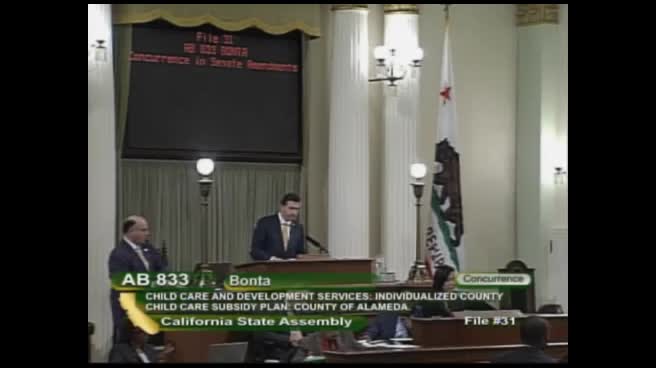 49SEC
Assembly Floor
 2MIN
Senate Floor
 1MIN
Senate Standing Committee on Appropriations
 8MIN
Senate Standing Committee on Judiciary
 17MIN
Senate Standing Committee on Judiciary
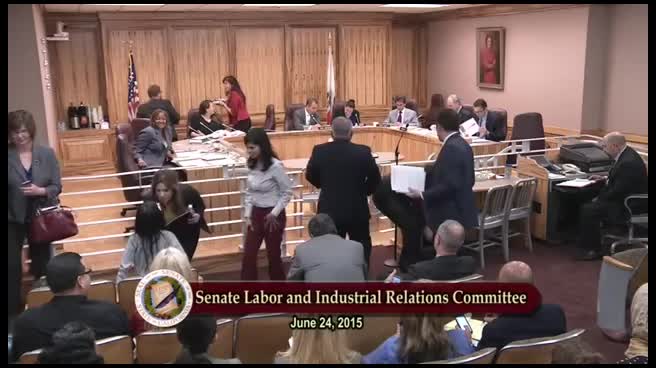 11MIN
Senate Standing Committee on Labor and Industrial Relations
 57SEC
Assembly Floor
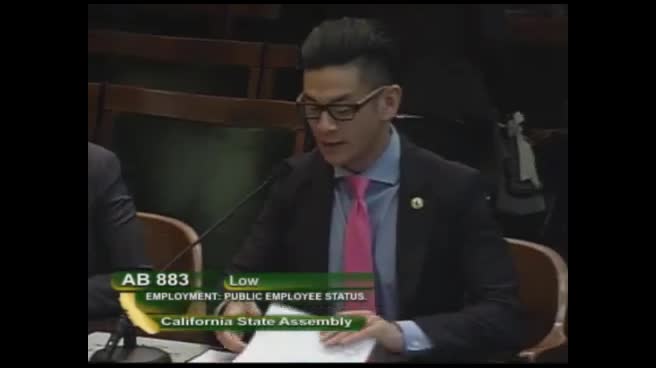 10MIN
Assembly Standing Committee on Labor and Employment
Bill Author

Bill Co-Author(s):