AB 896: Counties: search or rescue: costs.
- Session Year: 2015-2016
- House: Assembly
- Latest Version Date: 2015-10-02
Existing law provides that persons whose specified actions cause an incident resulting in an appropriate emergency response are liable for the expenses of an emergency response by a public agency to the incident, up to $12,000 per incident.
Existing law provides that the board of supervisors of a county may authorize the sheriff to search for and rescue persons, and that the expenses incurred by the sheriff in the performance of those duties are a proper county charge. Existing law also requires the county or city and county of residence of a person, searched for or rescued by a sheriff, to pay to the county or city and county conducting the search or rescue all of the reasonable search or rescue expenses in excess of $100 within 30 days after the submission of a reimbursement claim.
This bill, notwithstanding the existing provisions relating to liability for specified emergency response expenses, would provide that whenever a county or city and county either receives a reimbursement claim from another county or city and county for a search or rescue, or conducts its own search or rescue, of one of its residents who is 16 years of age or older, the county or city and county may in turn seek reimbursement for the actual costs incurred from that resident, if the need for the search or rescue necessitated the use of extraordinary methods and was caused by an intentional act in knowing violation of any federal or state law or local ordinance that resulted in a criminal conviction of that person for that act. The bill would require the resident to pay within 30 days after being billed. This bill would prohibit the county or city and county from collecting reimbursement from persons whom the county or city and county determines are unable to pay the charges. The bill would prohibit a county or city and county from billing a resident more than $12,000, adjusted annually for inflation as determined by the Department of Industrial Relations, for a search or rescue, unless the search or rescue was caused by an act that resulted in a felony conviction of that resident under federal or state law. This bill would provide that the county or city and county may only seek reimbursement if the board of supervisors of that county or city and county passes an ordinance consistent with this bill.
Existing law provides that persons whose specified actions cause an incident resulting in an appropriate emergency response are liable for the expenses of an emergency response by a public agency to the incident, up to $12,000 per incident.
Existing law provides that the board of supervisors of a county may authorize the sheriff to search for and rescue persons, and that the expenses incurred by the sheriff in the performance of those duties are a proper county charge. Existing law also requires the county or city and county of residence of a person, searched for or rescued by a sheriff, to pay to the county or city and county conducting the search or rescue all of the reasonable search or rescue expenses in excess of $100 within 30 days after the submission of a reimbursement claim.
This bill, notwithstanding the existing provisions relating to liability for specified emergency response expenses, would provide that whenever a county or city and county either receives a reimbursement claim from another county or city and county for a search or rescue, or conducts its own search or rescue, of one of its residents who is 16 years of age or older, the county or city and county may in turn seek reimbursement for the actual costs incurred from that resident, if the need for the search or rescue necessitated the use of extraordinary methods and was caused by specified acts or omissions. an intentional act in knowing violation of any federal or state law or local ordinance that resulted in a criminal conviction of that person for that act. The bill would require the resident to pay within 30 days after being billed. This bill would prohibit the county or city and county from collecting reimbursement from persons whom the county or city and county determines are unable to pay the charges. The bill would prohibit a county or city and county from billing a resident more than $12,000, adjusted annually for inflation as determined by the Department of Industrial Relations, for a search or rescue, unless the search or rescue is the result of a criminal violation punishable as a felony. was caused by an act that resulted in a felony conviction of that resident under federal or state law. This bill would provide that the county or city and county may only seek reimbursement if the board of supervisors of that county or city and county passes an ordinance consistent with this bill.
Existing law provides that persons whose specified actions cause an incident resulting in an appropriate emergency response are liable for the expenses of an emergency response by a public agency to the incident, up to $12,000 per incident.
Existing law provides that the board of supervisors of a county may authorize the sheriff to search for and rescue persons, and that the expenses incurred by the sheriff in the performance of those duties are a proper county charge. Existing law also requires the county or city and county of residence of a person, searched for or rescued by a sheriff, to pay to the county or city and county conducting the search or rescue all of the reasonable search or rescue expenses in excess of $100 within 30 days after the submission of a reimbursement claim.
This bill, notwithstanding the existing provisions relating to liability for specified emergency response expenses, would provide that whenever a county or city and county either receives a reimbursement claim from another county or city and county for a search or rescue, or conducts its own search or rescue, of one of its residents who is 16 years of age or older, the county or city and county may in turn seek reimbursement for the actual costs incurred from that resident, if the need for the search or rescue necessitated the use of extraordinary methods and was caused by specified acts or omissions. The bill would require the resident to pay within 30 days after being billed. This bill would prohibit the county or city and county from collecting reimbursement from persons whom the county or city and county determines are unable to pay the charges. The bill would prohibit a county or city and county from billing a resident more than $12,000, adjusted annually for inflation as determined by the Department of Industrial Relations, for a search or rescue, unless the search or rescue is the result of a criminal violation punishable as a felony. This bill would provide that the county or city and county may only seek reimbursement if the board of supervisors of that county or city and county passes an ordinance consistent with this bill.
(a)Notwithstanding Article 8 (commencing with Section 53150) of Chapter 1 of Part 1 of Division 2 of Title 5, whenever a county or city and county is billed for a search or rescue of one of its residents who is 16 years of age or older by another county or city and county, the county or city and county receiving the bill may in turn seek reimbursement for the actual costs incurred, including, but not limited to, the cost of operating vehicles or aircraft, the salaries of employees, and the cost of providing emergency medical services, from that resident if the need for the search or rescue necessitated the use of extraordinary methods and was caused by an intentional act in knowing violation of any federal or state law or local ordinance that resulted in a criminal conviction of that person for that act.
(b)(1)The county or city and county shall not collect charges from those persons whom the county or city and county determines are unable to pay the charges.
(2)A county or city and county shall not bill a resident under this section more than twelve thousand dollars ($12,000), adjusted annually for inflation as measured by the percentage change in the California Consumer Price Index from January 1 of the prior year to January 1 of the current year, as determined by the Department of Industrial Relations, for a search or rescue unless the search or rescue was caused by an act described in subdivision (a) that resulted in a felony conviction of that resident under any federal or state law.
(c)The county or city and county may only seek reimbursement as authorized by this section if the board of supervisors of that county or city and county passes an ordinance consistent with this section.
SEC. 2.Section 26614.7 is added to the Government Code, to read:26614.7.(a)Notwithstanding Article 8 (commencing with Section 53150) of Chapter 1 of Part 1 of Division 2 of Title 5, when a person 16 years of age or older is a resident of a county or city and county that conducts a search or rescue of that person, that person shall pay the county or city and county conducting the search or rescue for the actual cost incurred for the search or rescue, including, but not limited to, the cost of operating vehicles or aircraft, the salaries of employees, and the cost of providing emergency medical services, within 30 days after being billed for those charges if the need for the search or rescue necessitated the use of extraordinary methods and was caused by an intentional act in knowing violation of any federal or state law or local ordinance that resulted in a criminal conviction of that person for that act.
(b)(1)The county or city and county shall not collect charges from those persons whom the county or city and county determines are unable to pay the charges.
(2)A county or city and county shall not bill a resident under this section more than twelve thousand dollars ($12,000), adjusted annually for inflation as measured by the percentage change in the California Consumer Price Index from January 1 of the prior year to January 1 of the current year, as determined by the Department of Industrial Relations, for a search or rescue unless the search or rescue was caused by an act described in subdivision (a) that resulted in a felony conviction of that resident under any federal or state law.
(c)The county or city and county may only seek reimbursement as authorized by this section if the board of supervisors of that county or city and county passes an ordinance consistent with this section.
(a)Notwithstanding Article 8 (commencing with Section 53150) of Chapter 1 of Part 1 of Division 2 of Title 5, whenever a county or city and county is billed for a search or rescue of one of its residents who is 16 years of age or older by another county or city and county, the county or city and county receiving the bill may in turn seek reimbursement for the actual costs incurred, including, but not limited to, the cost of operating vehicles or aircraft, the salaries of employees, and the cost of providing emergency medical services, from that resident if the need for the search or rescue necessitated the use of extraordinary methods and was caused by any of the following:
(1)Any an intentional act in knowing violation of any federal or state law or local ordinance. ordinance that resulted in a criminal conviction of that person for that act.
(2)Any act or omission by the person searched for or rescued that shows wanton and reckless misconduct in disregard for his or her safety.
(b)(1)The county or city and county shall not collect charges from those persons whom the county or city and county determines are unable to pay the charges.
(2)A county or city and county shall not bill a resident under this section more than twelve thousand dollars ($12,000), adjusted annually for inflation as measured by the percentage change in the California Consumer Price Index from January 1 of the prior year to January 1 of the current year, as determined by the Department of Industrial Relations, for a search or rescue unless the search or rescue was caused by a criminal violation of an act described in subdivision (a) that resulted in a felony conviction of that resident under any federal or state law punishable as a felony. law.
(c)The county or city and county may only seek reimbursement as authorized by this section if the board of supervisors of that county or city and county passes an ordinance consistent with this section.
SEC. 2.Section 26614.7 is added to the Government Code, to read:26614.7.(a)Notwithstanding Article 8 (commencing with Section 53150) of Chapter 1 of Part 1 of Division 2 of Title 5, when a person 16 years of age or older who is a resident of a county or city and county that conducts a search or rescue of that person, that person shall pay the county or city and county conducting the search or rescue for the actual cost incurred for the search or rescue, including, but not limited to, the cost of operating vehicles or aircraft, the salaries of employees, and the cost of providing emergency medical services, within 30 days after being billed for those charges if the need for the search or rescue necessitated the use of extraordinary methods and was caused by any of the following:
(1)Any an intentional act in knowing violation of any federal or state law or local ordinance. ordinance that resulted in a criminal conviction of that person for that act.
(2)Any act or omission by the person searched for or rescued that shows wanton and reckless misconduct in disregard for his or her safety.
(b)(1)The county or city and county shall not collect charges from those persons whom the county or city and county determines are unable to pay the charges.
(2)A county or city and county shall not bill a resident under this section more than twelve thousand dollars ($12,000), adjusted annually for inflation as measured by the percentage change in the California Consumer Price Index from January 1 of the prior year to January 1 of the current year, as determined by the Department of Industrial Relations, for a search or rescue unless the search or rescue was caused by a criminal violation of an act described in subdivision (a) that resulted in a felony conviction of that resident under any federal or state law punishable as a felony. law.
(c)The county or city and county may only seek reimbursement as authorized by this section if the board of supervisors of that county or city and county passes an ordinance consistent with this section.
(a)Notwithstanding Article 8 (commencing with Section 53150) of Chapter 1 of Part 1 of Division 2 of Title 5, whenever a county or city and county is billed for a search or rescue of one of its residents who is 16 years of age or older by another county or city and county, the county or city and county receiving the bill may in turn seek reimbursement for the actual costs incurred, including, but not limited to, the cost of operating vehicles or aircraft, the salaries of employees, and the cost of providing emergency medical services, from that resident if the need for the search or rescue necessitated the use of extraordinary methods and was caused by any of the following:
(1)Any intentional act in knowing violation of any federal or state law or local ordinance.
(2)Any act or omission by the person searched for or rescued that shows wanton and reckless misconduct in disregard for his or her safety.
(b)(1)The county or city and county shall not collect charges from those persons whom the county or city and county determines are unable to pay the charges.
(2)A county or city and county shall not bill a resident under this section more than twelve thousand dollars ($12,000), adjusted annually for inflation as measured by the percentage change in the California Consumer Price Index from January 1 of the prior year to January 1 of the current year, as determined by the Department of Industrial Relations, for a search or rescue unless the search or rescue was caused by a criminal violation of any federal or state law punishable as a felony.
(c)The county or city and county may only seek reimbursement as authorized by this section if the board of supervisors of that county or city and county passes an ordinance consistent with this section.
SEC. 2.Section 26614.7 is added to the Government Code, to read:26614.7.(a)Notwithstanding Article 8 (commencing with Section 53150) of Chapter 1 of Part 1 of Division 2 of Title 5, when a person 16 years of age or older who is a resident of a county or city and county that conducts a search or rescue of that person, that person shall pay the county or city and county conducting the search or rescue for the actual cost incurred for the search or rescue, including, but not limited to, the cost of operating vehicles or aircraft, the salaries of employees, and the cost of providing emergency medical services, within 30 days after being billed for those charges if the need for the search or rescue necessitated the use of extraordinary methods and was caused by any of the following:
(1)Any intentional act in knowing violation of any federal or state law or local ordinance.
(2)Any act or omission by the person searched for or rescued that shows wanton and reckless misconduct in disregard for his or her safety.
(b)(1)The county or city and county shall not collect charges from those persons whom the county or city and county determines are unable to pay the charges.
(2)A county or city and county shall not bill a resident under this section more than twelve thousand dollars ($12,000), adjusted annually for inflation as measured by the percentage change in the California Consumer Price Index from January 1 of the prior year to January 1 of the current year, as determined by the Department of Industrial Relations, for a search or rescue unless the search or rescue was caused by a criminal violation of any federal or state law punishable as a felony.
(c)The county or city and county may only seek reimbursement as authorized by this section if the board of supervisors of that county or city and county passes an ordinance consistent with this section.
|
Date
|
Status
|
|---|---|
| Aug 19, 2015 | Read second time. Ordered to third reading. |
| Oct 2, 2015 | Chaptered by Secretary of State - Chapter 436, Statutes of 2015. |
| Oct 2, 2015 | Approved by the Governor. |
| Sep 16, 2015 | Enrolled and presented to the Governor at 4 p.m. |
| Sep 10, 2015 | Enrolled measure version corrected. |
| Sep 9, 2015 | Enrolled measure version corrected. |
| Sep 1, 2015 | Senate amendments concurred in. To Engrossing and Enrolling. (Ayes 79. Noes 1.). |
| Sep 1, 2015 | Senate amendments concurred in. To Engrossing and Enrolling. (Ayes 79. Noes 1. Page 2747.). |
| Sep 1, 2015 | Assembly Rule 77 suspended. (Page 2729.) |
| Sep 1, 2015 | Assembly Rule 77 suspended. |
| Aug 31, 2015 | Read third time. Passed. Ordered to the Assembly. (Ayes 40. Noes 0. Page 2312.). |
| Aug 31, 2015 | Read third time. Passed. Ordered to the Assembly. |
| Aug 31, 2015 | In Assembly. Concurrence in Senate amendments pending. May be considered on or after September 2 pursuant to Assembly Rule 77. |
| Aug 26, 2015 | Ordered to special consent calendar. |
| Feb 26, 2015 | Read first time. To print. |
| Aug 18, 2015 | Read third time and amended. Ordered to second reading. |
| Jul 16, 2015 | Read second time. Ordered to third reading. |
| Jul 15, 2015 | From committee: Do pass. (Ayes 6. Noes 0.) (July 15). |
| Jun 24, 2015 | In committee: Testimony taken. Hearing postponed by committee. |
| Jun 11, 2015 | Referred to Com. on GOV. & F. |
| May 28, 2015 | Read third time. Passed. Ordered to the Senate. (Ayes 73. Noes 1.) |
| May 28, 2015 | Read third time. Passed. Ordered to the Senate. (Ayes 73. Noes 1. Page 1618.) |
| May 28, 2015 | In Senate. Read first time. To Com. on RLS. for assignment. |
| Apr 13, 2015 | Read second time. Ordered to third reading. |
| Apr 9, 2015 | From committee: Do pass. (Ayes 7. Noes 1.) (April 8). |
| Mar 16, 2015 | Referred to Com. on L. GOV. |
| Feb 27, 2015 | From printer. May be heard in committee March 29. |
|
Date
|
Description
|
Location
|
Votes
|
|
|---|---|---|---|---|
| Sep 1, 2015 | AB 896 WAGNER Concurrence in Senate Amendments | Assembly Floor |
Passed |
|
| Aug 31, 2015 | Special Consent #8 AB896 Wagner By Berryhill | Senate Floor |
Passed |
|
| Jul 15, 2015 | Do pass | Senate Standing Committee on Governance and Finance |
Passed |
|
| May 28, 2015 | AB 896 WAGNER Assembly Third Reading | Assembly Floor |
Passed |
|
| Apr 8, 2015 | Do pass. | Assembly Standing Committee on Local Government |
Passed |
This list shows positions taken on this bill by organizations on the date displayed, which is linked to the original source.
Positions by individuals are not included.
|
Organization
|
Position
|
Date
|
|---|---|---|
| California State Sheriffs' Association | ** Support | May 28, 2015 |
| Rural County Representatives of California | ** Support | Sep 1, 2015 |
AB 896
Page 3
CONCURRENCE IN SENATE AMENDMENTS
AB 896
(Wagner)
As Amended August 18, 2015
Majority vote
ASSEMBLY: |
73-1 |
(May 28, 2015) |
SENATE: |
40-0 |
(August 31, 2015) |
Original Committee Reference: L. GOV.
SUMMARY: Allows counties to seek reimbursement from residents age 16 or older for search or rescue costs under specified conditions.
The Senate amendments:
Remove a provision that would have allowed counties to seek reimbursement if the need for a search or rescue was caused by any act or omission by the person searched for or rescued that shows wanton and reckless misconduct in disregard for his or her safety.
Specify that, in order for a county to seek reimbursement, the need for a search or rescue must have been caused by an intentional act in knowing violation of any federal or state law or local ordinance that resulted in a criminal conviction of the person searched for or rescued.
Specify that a county shall not bill a resident more than $12,000 unless the search or rescue was caused by an act described in 2) above, that resulted in a felony conviction of that resident under any federal or state law.
EXISTING LAW:
Provides that a county board of supervisors may authorize the sheriff to search for and rescue persons who are lost or are in danger of their lives within or in the immediate vicinity of the county, and that the consequent expense incurred by the sheriff is a proper county charge.
Requires the county or city and county of residence of a person searched for or rescued by a sheriff to pay to the county or city and county conducting the search or rescue all of the reasonable search or rescue expenses in excess of $100 within 30 days, as specified.
Provides that any person whose intentionally wrongful conduct proximately causes an incident resulting in an appropriate emergency response is liable for the expenses of an emergency response by a public agency, up to $12,000 per incident. "Intentionally wrongful conduct" means conduct intended to injure another person or property.
Provides that any person who is under the influence of an alcoholic beverage or any drug, as specified, whose negligent operation of a motor vehicle, boat or vessel, or civil aircraft proximately causes any incident resulting in an appropriate emergency response, is liable for the expense of an emergency response by a public agency to the incident, as specified.
FISCAL EFFECT: None
COMMENTS:
Bill Summary. This bill allows counties to seek reimbursement for costs incurred in search or rescue efforts by billing any resident age 16 or older, who must pay within 30 days, if the need for a search for, or rescue of, that person necessitated the use of extraordinary methods and was caused by an intentional act in knowing violation of any federal or state law or local ordinance that resulted in a criminal conviction of that person for that act.
A county is not allowed to collect charges from a person who the county determines is unable to pay, nor is a county allowed to bill a resident more than $12,000 unless the search or rescue was caused by an act described above that resulted in a felony conviction of that resident under any federal or state law. A county must adopt an ordinance in order to exercise this bill's authority to seek reimbursement for search or rescue costs. This bill is sponsored by the author.
Author's Statement. According to the author, "California law does not allow a county to recover the actual cost of search or rescue of a resident who is 16 years of age or older if the need for the search or rescue of that resident was necessitated by the use of extraordinary methods and if any of the following was a contributing factor to the need for the search or rescue: a) any act in violation of any federal or state law or local ordinance; or b) any act or omission by the person searched for or rescued that shows wanton and reckless misconduct in disregard for his or her safety."
Background. In March of 2013, Nicholas Cendoya and Kyndall Jack became lost while hiking in Trabuco Canyon, resulting in an extensive search that cost responding agencies more than $160,000. For the Orange County agencies, the Orange County Sheriff’s Department’s costs were $32,273.23; the Orange County Fire Authority’s costs were $55,000; and, Orange County Parks’ costs were $6,421. The hikers admitted to being under the influence of drugs when they became disoriented and lost their way. Methamphetamine was recovered from Cendoya’s backpack in a car that the two hikers drove to the location.
This bill is modeled after former Government Code Sections 26614.6 and 26614.7. Under former Government Code Section 26614.6, whenever a county was billed for a search or rescue of one of its residents 16 years of age or older by another county, the county receiving the bill could in turn seek reimbursement for the actual cost incurred from that resident if the need for the search or rescue necessitated the use of extraordinary methods and was caused by any of the following: a) Any intentional act in knowing violation of any federal or state law or local ordinance; or b) Any act or omission by the person searched for or rescued that shows wanton and reckless misconduct in disregard for his or her safety.
Under former Government Code Section 26614.7, a county could bill the search and rescue costs, up to $5,000, to a resident 16 years of age or older if the need for that resident’s search or rescue necessitated the use of extraordinary methods and was caused by any of the following: a) Any intentional act in knowing violation of any federal or state law or local ordinance; or, b) Any act or omission by the person searched for or rescued that shows wanton and reckless misconduct in disregard for his or her safety. The prior statutes sunsetted on January 1, 1999.
Policy Considerations. This bill presents a number of policy considerations:
Liability Cap. Existing law limits liability for any person whose intentionally wrongful conduct proximately causes an incident resulting in an appropriate emergency response to $12,000 per incident. The provisions of prior law this bill seeks to reinstate also contained a cap of $5,000. This bill contains a limited cap of $12,000, but leaves unrestricted the amount a county can bill for a search or rescue that is caused by an intentional act in knowing violation of any federal or state law that results in a felony conviction.
Age. This bill would allow charges against anyone age 16 and above, with no explanation for this age limit aside from referring to the now-sunsetted provisions of prior law.
County Determination. This bill allows a county to determine whether a person subject to its provisions is able to pay for search or rescue costs, even though the county would have a financial interest in that determination.
Previous Legislation. AB 2151 (Wagner) of 2014 was similar to this bill. AB 2151 was vetoed with the following message:
While I agree with the author's intent to discourage unlawful actions that can place persons and rescue personnel in danger, this bill contains vague language that may create an incentive for counties to abuse the authority granted by this bill. Current law already allows counties to recover costs for search and rescue through a civil lawsuit if they can prove 'gross negligence' on behalf of the rescued individual. This bill would allow counties to bypass that due process completely and serve an individual with a bill for up to $12,000. I encourage the author to craft a bill that strikes the right balance between appropriate due process and cost recovery for reckless misconduct.
Arguments in Support. The California State Sheriffs' Association, in support, states, "Currently, California law does not provide for a county to recover costs from individuals for search and rescue operations that require the use of extraordinary methods and/or extensive search efforts and result in exorbitant costs to responding agencies. When these efforts are necessitated by a willful act of negligence, misconduct, or disregard for personal safety by a resident, the law should provide recourse for a public agency to collect on the resources expended."
Arguments in Opposition. None on file.
Analysis Prepared by: Angela Mapp / L. GOV. / (916) 319-3958 FN: 0001401
AB 896
Page 5
|
Office of Senate Floor Analyses (916) 651-1520 Fax: (916) 327-4478 |
THIRD READING
Bill No: AB 896
Amended: 8/18/15 in Senate
SENATE GOVERNANCE & FIN. COMMITTEE: 6-0, 7/15/15
AYES: Hertzberg, Nguyen, Beall, Lara, Moorlach, Pavley
NO VOTE RECORDED: Hernandez
ASSEMBLY FLOOR: 73-1, 5/28/15 - See last page for vote
SUBJECT: Counties: search or rescue: costs
DIGEST: This bill allows counties to seek reimbursement from residents age 16 or older for search and rescue costs under specified conditions.
Senate Floor Amendments of 8/18/15 require that a person’s actions leading to the emergency must have resulted in a criminal conviction in order to be billed by a county for his or her search or rescue, rather than a violation of the law, and not simply “wanton and reckless misconduct.”
Existing law:
Allows a county board of supervisors to authorize the sheriff to search for and rescue persons who are lost or are in danger of their lives within or in the immediate vicinity of the county.
Permits the county or city and county that performed the search and rescue to bill the county or city and county of residence of the person searched for or rescued for all the reasonable expenses exceeding $100.
Authorizes public agencies to recover up to $12,000 from the driver of a motor vehicle, boat, or plane under the influence of alcohol or drugs whose negligent operation of the vehicle resulted in an emergency response.
Makes any person who intentionally enters into an area that is closed to the public resulting in a search and rescue liable for search and rescue costs up to $12,000.
Allows counties and public agencies to charge a person who negligently or in violation of the law sets a fire or allows a fire to be set, for the cost of providing rescue or emergency medical services.
This bill:
Allows a county or city and county that is billed by another county or city and county, for a search and rescue of one of its residents who is 16 years or age or older, to seek reimbursement from that resident for the actual costs incurred, if the need for the search or rescue necessitated the use of extraordinary methods and was caused by any act in knowing violation of a federal or state law or local ordinance that results in a criminal conviction.
Requires a person 16 years of age or older living within a county or city and county, who is searched for or rescued, to pay the county or city and county conducting the search or rescue for the actual cost incurred within 30 days, of the need for the search and rescue necessitated the use of extraordinary methods and was caused an act in knowing violation of a federal or state law or local ordinance that results in a criminal conviction.
Prohibits the county or city and county from collecting charges from those persons who the county or city and county determine are unable to pay.
Prohibits a county or city and county from billing a resident more than $12,000, adjusted annually for inflation as determined by the Department of Industrial Relations, for a search or rescue, unless the search or rescue is was caused by an act that resulted in a felony conviction of that resident under federal or state law.
Provides that a county or a city and county may only seek reimbursement as authorized by the bill if the board of supervisors adopts an ordinance consistent with this bill.
Background
From 1995 to 1999, state law allowed a county or city and county that is billed by another county or city and county for a search and rescue of one of its residents who is 16 years of age or older to seek reimbursement from that resident for the cost incurred by the county. The law also required a person 16 years of age or older living within a county or city and county who is searched for or rescued to pay the county or city and county for the actual cost incurred for the search or rescue within 30 days after being billed for those charges. In order to recover the costs, the need for the search and rescue had to necessitate the use of extraordinary methods and be caused by one of the following factors:
Any intentional act in knowing violation of any federal or state law or local ordinance.
Any act or omission by the person searched for or rescued that shows wanton and reckless misconduct in disregard for his or her safety.
The law prohibited the county or city and county from collecting charges from those persons who the county or city and county determined were unable to pay. The city and county also could not bill a resident more than $5,000 for a search and rescue.
According to the courts, “wanton misconduct is intentional wrongful conduct, done either with a knowledge that serious injury to another will probably result, or with a wanton and reckless disregard of the possible results.” The courts have found that three essential elements must be present to raise a negligent act to the level of willful or wanton misconduct: (1) actual or constructive knowledge of the peril to be apprehended, (2) actual or constructive knowledge that injury is a probable, as opposed to a possible, result of the danger, and (3) conscious failure to act to avoid the peril.
Some local officials want to reinstate the statutory authority to allow counties to recover costs of search and rescue from residents that break the law and raise the liability cap from $5,000 to $12,000.
Comments
Purpose of the bill. In 2013, two teenagers became lost while hiking in Orange County, resulting in an extensive search that cost the responding agencies more than $160,000. The hikers later admitted to being under the influence of drugs, which led them to become disoriented and lost. Counties find it difficult to bear the financial burdens of extraordinary search and rescue costs. AB 896 would hold individuals who break the law accountable for the costs of an extraordinary search and rescue effort to aid them.
Stuck with the bill. Several states use methods other than billing their citizens to recoup some of their search and rescue costs. For example, Colorado and New Hampshire offer voluntary “hike safe” cards to hikers, ranging in price from $3-25 per year per person, the revenue from which is used to help offset state agencies’ search and rescue costs. In New Hampshire, which enacted a law similar to AB 896 in 1999, “hike safe” cardholders are indemnified from liability for any search and rescue costs brought about by their own negligence. As of last month, New Hampshire had sold approximately 1,400 “hike safe” cards, which generated about $36,000 in revenue. While indemnifying irresponsible hiking may be controversial, recovering search and rescue costs from hikers after the fact can prove difficult and time consuming for counties. Furthermore, the prospect of being billed thousands of dollars after being rescued could deter people in need from calling for help. It is unclear that billing hikers for their own search and rescue after the fact is an optimal way to of offset counties’ search and rescue costs.
Prior Legislation
This bill is virtually identical to AB 2151 (Wagner, 2014), which the Senate Governance and Finance Committee passed on June 18, 2014. Governor Brown eventually vetoed AB 2151, citing the bill’s “vague language that may create an incentive for counties to abuse the authority” granted by the bill, and the fact that “current law already allows counties to recover costs for search and rescue through a civil lawsuit if they can prove 'gross negligence' on behalf of the rescued individual.” In his veto message, the Governor expressed concern that charging individuals up to $12,000 without filing a civil suit could deprive citizens of their right to due process. This bill is indistinguishable from the legislation the Governor vetoed.
FISCAL EFFECT: Appropriation: No Fiscal Com.: No Local: No
California State Sheriff’s Association
Rural County
Representatives of California
OPPOSITION: (Verified 8/13/15)
None received
ASSEMBLY FLOOR: 73-1, 5/28/15
AYES: Achadjian, Alejo, Travis Allen, Baker, Bigelow, Bonilla, Bonta, Brough, Brown, Calderon, Campos, Chang, Chau, Chávez, Chiu, Chu, Cooley, Cooper, Dababneh, Dahle, Daly, Dodd, Eggman, Frazier, Beth Gaines, Gallagher, Cristina Garcia, Gatto, Gipson, Gomez, Gordon, Gray, Hadley, Harper, Roger Hernández, Holden, Irwin, Jones, Jones-Sawyer, Kim, Lackey, Levine, Linder, Lopez, Low, Maienschein, Mathis, McCarty, Medina, Melendez, Mullin, Nazarian, Obernolte, O'Donnell, Olsen, Patterson, Perea, Quirk, Rendon, Ridley-Thomas, Rodriguez, Salas, Santiago, Steinorth, Mark Stone, Thurmond, Ting, Wagner, Waldron, Wilk, Williams, Wood, Atkins
NOES: Gonzalez
NO VOTE RECORDED: Bloom, Burke, Eduardo Garcia, Grove, Mayes, Weber
Prepared by: Toren Lewis / GOV. & F. / (916) 651-4119
8/19/15 20:42:52
AB 896
Page 5
|
Office of Senate Floor Analyses (916) 651-1520 Fax: (916) 327-4478 |
THIRD READING
Bill No: AB 896
Introduced: 2/26/15
SENATE GOVERNANCE & FIN. COMMITTEE: 6-0, 7/15/15
AYES: Hertzberg, Nguyen, Beall, Lara, Moorlach, Pavley
NO VOTE RECORDED: Hernandez
ASSEMBLY FLOOR: 73-1, 5/28/15 - See last page for vote
SUBJECT: Counties: search or rescue: costs
DIGEST: This bill allows counties to seek reimbursement from residents age 16 or older for search and rescue costs under specified conditions.
Existing law:
Allows a county board of supervisors to authorize the sheriff to search for and rescue persons who are lost or are in danger of their lives within or in the immediate vicinity of the county.
Permits the county or city and county that performed the search and rescue to bill the county or city and county of residence of the person searched for or rescued for all the reasonable expenses exceeding $100.
Authorizes public agencies to recover up to $12,000 from the driver of a motor vehicle, boat, or plane under the influence of alcohol or drugs whose negligent operation of the vehicle resulted in an emergency response.
Makes any person who intentionally enters into an area that is closed to the public resulting in a search and rescue liable for search and rescue costs up to $12,000.
Allows counties and public agencies to charge a person who negligently or in violation of the law sets a fire or allows a fire to be set, for the cost of providing rescue or emergency medical services.
This bill:
Allows a county or city and county that is billed by another county or city and county, for a search and rescue of one of its residents who is 16 years or age or older, to seek reimbursement from that resident for the actual costs incurred, if the need for the search or rescue necessitated the use of extraordinary methods and was caused by either or both of the following:
Any intentional act in knowing violation of any federal or state law or local ordinance.
Any act or omission by the person searched for or rescued that shows wanton and reckless misconduct in disregard for his or her safety.
Requires a person 16 years of age or older living within a county or city and county, who is searched for or rescued, to pay the county or city and county conducting the search or rescue for the actual cost incurred within 30 days, of the need for the search and rescue necessitated the use of extraordinary methods and was caused by either, or both of the following:
Any intentional act in knowing violation of any federal or state law or local ordinance.
Any act or omission by the person searched for or rescued that shows wanton and reckless misconduct in disregard for his or her safety.
Prohibits the county or city and county from collecting charges from those persons who the county or city and county determine are unable to pay.
Prohibits a county or city and county from billing a resident more than $12,000, adjusted annually for inflation as determined by the Department of Industrial Relations, for a search or rescue, unless the search or rescue is the result of a criminal violation punishable as a felony.
Provides that a county or a city and county may only seek reimbursement as authorized by the bill if the board of supervisors adopts an ordinance consistent with this bill.
Background
From 1995 to 1999, state law allowed a county or city and county that is billed by another county or city and county for a search and rescue of one of its residents who is 16 years of age or older to seek reimbursement from that resident for the cost incurred by the county. The law also required a person 16 years of age or older living within a county or city and county who is searched for or rescued to pay the county or city and county for the actual cost incurred for the search or rescue within 30 days after being billed for those charges. In order to recover the costs, the need for the search and rescue had to necessitate the use of extraordinary methods and be caused by one of the following factors:
Any intentional act in knowing violation of any federal or state law or local ordinance.
Any act or omission by the person searched for or rescued that shows wanton and reckless misconduct in disregard for his or her safety.
The law prohibited the county or city and county from collecting charges from those persons who the county or city and county determined were unable to pay. The city and county also could not bill a resident more than $5,000 for a search and rescue.
According to the courts, “wanton misconduct is intentional wrongful conduct, done either with a knowledge that serious injury to another will probably result, or with a wanton and reckless disregard of the possible results.” The courts have found that three essential elements must be present to raise a negligent act to the level of willful or wanton misconduct: (1) actual or constructive knowledge of the peril to be apprehended, (2) actual or constructive knowledge that injury is a probable, as opposed to a possible, result of the danger, and (3) conscious failure to act to avoid the peril.
Some local officials want to reinstate the statutory authority to allow counties to recover costs of search and rescue from residents that break the law or behave recklessly, and raise the liability cap from $5,000 to $12,000.
Comments
Purpose of the bill. In 2013, two teenagers became lost while hiking in Orange County, resulting in an extensive search that cost the responding agencies more than $160,000. The hikers later admitted to being under the influence of drugs, which led them to become disoriented and lost. Counties find it difficult to bear the financial burdens of extraordinary search and rescue costs. AB 896 would hold individuals who break the law, or who are reckless, accountable for the costs of an extraordinary search and rescue effort to aid them.
Stuck with the bill. Several states use methods other than billing their citizens to recoup some of their search and rescue costs. For example, Colorado and New Hampshire offer voluntary “hike safe” cards to hikers, ranging in price from $3-25 per year per person, the revenue from which is used to help offset state agencies’ search and rescue costs. In New Hampshire, which enacted a law similar to AB 896 in 1999, “hike safe” cardholders are indemnified from liability for any search and rescue costs brought about by their own negligence. As of last month, New Hampshire had sold approximately 1,400 “hike safe” cards, which generated about $36,000 in revenue. While indemnifying irresponsible hiking may be controversial, recovering search and rescue costs from hikers after the fact can prove difficult and time consuming for counties. Furthermore, the prospect of being billed thousands of dollars after being rescued could deter people in need from calling for help. It is unclear that billing hikers for their own search and rescue after the fact is an optimal way to of offset counties’ search and rescue costs.
Prior Legislation
This bill is virtually identical to AB 2151 (Wagner, 2014), which the Senate Governance and Finance Committee passed on June 18, 2014. Governor Brown eventually vetoed AB 2151, citing the bill’s “vague language that may create an incentive for counties to abuse the authority” granted by the bill, and the fact that “current law already allows counties to recover costs for search and rescue through a civil lawsuit if they can prove 'gross negligence' on behalf of the rescued individual.” In his veto message, the Governor expressed concern that charging individuals up to $12,000 without filing a civil suit could deprive citizens of their right to due process. This bill is indistinguishable from the legislation the Governor vetoed.
FISCAL EFFECT: Appropriation: No Fiscal Com.: No Local: No
California State Sheriff’s Association
Rural County
Representatives of California
OPPOSITION: (Verified 8/13/15)
None received
AYES: Achadjian, Alejo, Travis Allen, Baker, Bigelow, Bonilla, Bonta, Brough, Brown, Calderon, Campos, Chang, Chau, Chávez, Chiu, Chu, Cooley, Cooper, Dababneh, Dahle, Daly, Dodd, Eggman, Frazier, Beth Gaines, Gallagher, Cristina Garcia, Gatto, Gipson, Gomez, Gordon, Gray, Hadley, Harper, Roger Hernández, Holden, Irwin, Jones, Jones-Sawyer, Kim, Lackey, Levine, Linder, Lopez, Low, Maienschein, Mathis, McCarty, Medina, Melendez, Mullin, Nazarian, Obernolte, O'Donnell, Olsen, Patterson, Perea, Quirk, Rendon, Ridley-Thomas, Rodriguez, Salas, Santiago, Steinorth, Mark Stone, Thurmond, Ting, Wagner, Waldron, Wilk, Williams, Wood, Atkins
NOES: Gonzalez
NO VOTE RECORDED: Bloom, Burke, Eduardo Garcia, Grove, Mayes, Weber
Prepared by: Toren Lewis / GOV. & F. / (916) 651-4119
8/13/15 15:03:54
**** END ****
AB 896 (Wagner) 2/26/15 Page 3 of 3
SENATE COMMITTEE ON GOVERNANCE AND FINANCE
Senator Robert M. Hertzberg, Chair
2015 - 2016 Regular
Bill No: |
AB 896 |
Hearing Date: |
7/15/15 |
Author: |
Wagner |
Tax Levy: |
No |
Version: |
2/26/15 |
Fiscal: |
No |
Consultant: |
Lewis |
||
Counties: search AND rescue: costs
Allows counties to seek reimbursement from residents age 16 or older for search and rescue costs under specified conditions.
Background and Existing Law
State law allows a county board of supervisors to authorize the sheriff to search for and rescue persons who are lost or are in danger of their lives within or in the immediate vicinity of the county. The expenses incurred by the sheriff for the search and rescue are a proper county charge. The county or city and county that performed the search and rescue can bill the county or city and county of residence of the person searched for or rescued for all the reasonable expenses exceeding $100.
State law allows public agencies to recover the costs of emergency response and search and rescue costs under certain circumstances. Public agencies may recover up to $12,000 from the driver of a motor vehicle, boat, or plane under the influence of alcohol or drugs whose negligent operation of the vehicle resulted in an emergency response. Any person who intentionally enters into an area that is closed to the public resulting in a search and rescue also is liable for search and rescue costs up to $12,000. State law also allows counties and public agencies to charge a person who negligently or in violation of the law sets a fire or allows a fire to be set, for the cost of providing rescue or emergency medical services.
From 1995 to 1999, state law allowed a county or city and county that is billed by another county or city and county for a search and rescue of one of its residents who is 16 years of age or older to seek reimbursement from that resident for the cost incurred by the county. The law also required a person 16 years of age or older living within a county or city and county who is searched for or rescued to pay the county or city and county for the actual cost incurred for the search or rescue within 30 days after being billed for those charges. In order to recover the costs, the need for the search and rescue had to necessitate the use of extraordinary methods and be caused by one of the following factors:
Any intentional act in knowing violation of any federal or state law or local ordinance.
Any act or omission by the person searched for or rescued that shows wanton and reckless misconduct in disregard for his or her safety.
The law prohibited the county or city and county from collecting charges from those persons who the county or city and county determined were unable to pay. The city and county also could not bill a resident more than $5,000 for a search and rescue.
According to the courts, “wanton misconduct is intentional wrongful conduct, done either with a knowledge that serious injury to another will probably result, or with a wanton and reckless disregard of the possible results.” The courts have found that three essential elements must be present to raise a negligent act to the level of willful or wanton misconduct: (1) actual or constructive knowledge of the peril to be apprehended, (2) actual or constructive knowledge that injury is a probable, as opposed to a possible, result of the danger, and (3) conscious failure to act to avoid the peril.
Some local officials want to reinstate the statutory authority to allow counties to recover costs of search and rescue from residents that break the law or behave recklessly, and raise the liability cap from $5,000 to $12,000.
Proposed Law
Assembly Bill 896 allows a county or city and county that is billed by another county or city and county, for a search and rescue of one of its residents who is 16 years or age or older, to seek reimbursement from that resident for the actual costs incurred, if the need for the search or rescue necessitated the use of extraordinary methods and was caused by either or both of the following:
Any intentional act in knowing violation of any federal or state law or local ordinance;
Any act or omission by the person searched for or rescued that shows wanton and reckless misconduct in disregard for his or her safety.
AB 896 requires a person 16 years of age or older living within a county or city and county, who is searched for or rescued, to pay the county or city and county conducting the search or rescue for the actual cost incurred within 30 days, of the need for the search and rescue necessitated the use of extraordinary methods and was caused by either, or both of the following:
Any intentional act in knowing violation of any federal or state law or local ordinance;
Any act or omission by the person searched for or rescued that shows wanton and reckless misconduct in disregard for his or her safety.
The bill prohibits the county or city and county from collecting charges from those persons who the county or city and county determine are unable to pay.
AB 896 prohibits a county or city and county from billing a resident more than $12,000, adjusted annually for inflation as determined by the Department of Industrial Relations, for a search or rescue, unless the search or rescue is the result of a criminal violation punishable as a felony.
The bill further provides that a county or a city and county may only seek reimbursement as authorized by the bill if the board of supervisors adopts an ordinance consistent with this bill.
State Revenue Impact
No estimate.
Comments
1. Purpose of the bill. In 2013, two teenagers became lost while hiking in Orange County, resulting in an extensive search that cost the responding agencies more than $160,000. The hikers later admitted to being under the influence of drugs, which led them to become disoriented and lost. Counties find it difficult to bear the financial burdens of extraordinary search and rescue costs. AB 896 would hold individuals who break the law, or who are reckless, accountable for the costs of an extraordinary search and rescue effort to aid them.
2. Stuck with the bill. Several states use methods other than billing their citizens to recoup some of their search and rescue costs. For example, Colorado and New Hampshire offer voluntary “hike safe” cards to hikers, ranging in price from $3-25 per year per person, the revenue from which is used to help offset state agencies’ search and rescue costs. In New Hampshire, which enacted a law similar to AB 896 in 1999, “hike safe” cardholders are indemnified from liability for any search and rescue costs brought about by their own negligence. As of last month, New Hampshire had sold approximately 1,400 “hike safe” cards, which generated about $36,000 in revenue. While indemnifying irresponsible hiking may be controversial, recovering search and rescue costs from hikers after the fact can prove difficult and time consuming for counties. Furthermore, the prospect of being billed thousands of dollars after being rescued could deter people in need from calling for help. It is unclear that billing hikers for their own search and rescue after the fact is an optimal way to of offset counties’ search and rescue costs.
3. Previous legislation. This bill is virtually identical to AB 2151 (Wagner, 2014), which this Committee passed on June 18, 2014. Governor Brown eventually vetoed AB 2151, citing the bill’s “vague language that may create an incentive for counties to abuse the authority” granted by the bill, and the fact that “current law already allows counties to recover costs for search and rescue through a civil lawsuit if they can prove 'gross negligence' on behalf of the rescued individual.” In his veto message, the Governor expressed concern that charging individuals up to $12,000 without filing a civil suit could deprive citizens of their right to due process. This bill is indistinguishable from the legislation the Governor vetoed.
Assembly Actions
Assembly Local Government 7-1
Assembly Floor 73-1
Support and Opposition
(7/9/15)
Support: California State Sheriff’s Association; Rural County Representatives of California.
Opposition: Unknown.
-- END --
AB 896 (Wagner) 2/26/15 Page 3 of 3
SENATE COMMITTEE ON GOVERNANCE AND FINANCE
Senator Robert M. Hertzberg, Chair
2015 - 2016 Regular
Bill No: |
AB 896 |
Hearing Date: |
6/24/15 |
Author: |
Wagner |
Tax Levy: |
No |
Version: |
2/26/15 |
Fiscal: |
No |
Consultant: |
Lewis |
||
Counties: search AND rescue: costs
Allows counties to seek reimbursement from residents age 16 or older for search and rescue costs under specified conditions.
Background and Existing Law
State law allows a county board of supervisors to authorize the sheriff to search for and rescue persons who are lost or are in danger of their lives within or in the immediate vicinity of the county. The expenses incurred by the sheriff for the search and rescue are a proper county charge. The county or city and county that performed the search and rescue can bill the county or city and county of residence of the person searched for or rescued for all the reasonable expenses exceeding $100.
State law allows public agencies to recover the costs of emergency response and search and rescue costs under certain circumstances. Public agencies may recover up to $12,000 from the driver of a motor vehicle, boat, or plane under the influence of alcohol or drugs whose negligent operation of the vehicle resulted in an emergency response. Any person who intentionally enters into an area that is closed to the public resulting in a search and rescue also is liable for search and rescue costs up to $12,000. State law also allows counties and public agencies to charge a person who negligently or in violation of the law sets a fire or allows a fire to be set, for the cost of providing rescue or emergency medical services.
From 1995 to 1999, state law allowed a county or city and county that is billed by another county or city and county for a search and rescue of one of its residents who is 16 years of age or older to seek reimbursement from that resident for the cost incurred by the county. The law also required a person 16 years of age or older living within a county or city and county who is searched for or rescued to pay the county or city and county for the actual cost incurred for the search or rescue within 30 days after being billed for those charges. In order to recover the costs, the need for the search and rescue had to necessitate the use of extraordinary methods and be caused by one of the following factors:
Any intentional act in knowing violation of any federal or state law or local ordinance.
Any act or omission by the person searched for or rescued that shows wanton and reckless misconduct in disregard for his or her safety.
The law prohibited the county or city and county from collecting charges from those persons who the county or city and county determined were unable to pay. The city and county also could not bill a resident more than $5,000 for a search and rescue.
According to the courts, “wanton misconduct is intentional wrongful conduct, done either with a knowledge that serious injury to another will probably result, or with a wanton and reckless disregard of the possible results.” The courts have found that three essential elements must be present to raise a negligent act to the level of willful or wanton misconduct: (1) actual or constructive knowledge of the peril to be apprehended, (2) actual or constructive knowledge that injury is a probable, as opposed to a possible, result of the danger, and (3) conscious failure to act to avoid the peril.
Some local officials want to reinstate the statutory authority to allow counties to recover costs of search and rescue from residents that break the law or behave recklessly, and raise the liability cap from $5,000 to $12,000.
Proposed Law
Assembly Bill 896 allows a county or city and county that is billed by another county or city and county, for a search and rescue of one of its residents who is 16 years or age or older, to seek reimbursement from that resident for the actual costs incurred, if the need for the search or rescue necessitated the use of extraordinary methods and was caused by either or both of the following:
Any intentional act in knowing violation of any federal or state law or local ordinance;
Any act or omission by the person searched for or rescued that shows wanton and reckless misconduct in disregard for his or her safety.
AB 896 requires a person 16 years of age or older living within a county or city and county, who is searched for or rescued, to pay the county or city and county conducting the search or rescue for the actual cost incurred within 30 days, of the need for the search and rescue necessitated the use of extraordinary methods and was caused by either, or both of the following:
Any intentional act in knowing violation of any federal or state law or local ordinance;
Any act or omission by the person searched for or rescued that shows wanton and reckless misconduct in disregard for his or her safety.
The bill prohibits the county or city and county from collecting charges from those persons who the county or city and county determine are unable to pay.
AB 896 prohibits a county or city and county from billing a resident more than $12,000, adjusted annually for inflation as determined by the Department of Industrial Relations, for a search or rescue, unless the search or rescue is the result of a criminal violation punishable as a felony.
The bill further provides that a county or a city and county may only seek reimbursement as authorized by the bill if the board of supervisors adopts an ordinance consistent with this bill.
State Revenue Impact
No estimate.
Comments
1. Purpose of the bill. In 2013, two teenagers became lost while hiking in Orange County, resulting in an extensive search that cost the responding agencies more than $160,000. The hikers later admitted to being under the influence of drugs, which led them to become disoriented and lost. Counties find it difficult to bear the financial burdens of extraordinary search and rescue costs. AB 896 would hold individuals who break the law, or who are reckless, accountable for the costs of an extraordinary search and rescue effort to aid them.
2. Stuck with the bill. Several states use methods other than billing their citizens to recoup some of their search and rescue costs. For example, Colorado and New Hampshire offer voluntary “hike safe” cards to hikers, ranging in price from $3-25 per year per person, the revenue from which is used to help offset state agencies’ search and rescue costs. In New Hampshire, which enacted a law similar to AB 896 in 1999, “hike safe” cardholders are indemnified from liability for any search and rescue costs brought about by their own negligence. As of last month, New Hampshire had sold approximately 1,400 “hike safe” cards, which generated about $36,000 in revenue. While indemnifying irresponsible hiking may be controversial, recovering search and rescue costs from hikers after the fact can prove difficult and time consuming for counties. Furthermore, the prospect of being billed thousands of dollars after being rescued could deter people in need from calling for help. It is unclear that billing hikers for their own search and rescue after the fact is an optimal way to of offset counties’ search and rescue costs.
3. Previous legislation. This bill is virtually identical to AB 2151 (Wagner, 2014), which this Committee passed on June 18, 2014. Governor Brown eventually vetoed AB 2151, citing the bill’s “vague language that may create an incentive for counties to abuse the authority” granted by the bill, and the fact that “current law already allows counties to recover costs for search and rescue through a civil lawsuit if they can prove 'gross negligence' on behalf of the rescued individual.” In his veto message, the Governor expressed concern that charging individuals up to $12,000 without filing a civil suit could deprive citizens of their right to due process. This bill is indistinguishable from the legislation the Governor vetoed.
Assembly Actions
Assembly Local Government 7-1
Assembly Floor 73-1
Support and Opposition
(6/18/15)
Support: California State Sheriff’s Association; Rural County Representatives of California.
Opposition: Unknown.
-- END --
AB 896
Page 4
ASSEMBLY THIRD READING
AB 896
(Wagner)
As Introduced February 26, 2015
Majority vote
Committee |
Votes |
Ayes |
Noes |
Local Government |
7-1 |
Maienschein, Chiu, Cooley, Gordon, Holden, Linder, Waldron |
Gonzalez |
SUMMARY: Allows counties to seek reimbursement from residents age 16 or older for search or rescue costs under specified conditions. Specifically, this bill:
Provides that, whenever a county or city and county is billed for a search or rescue of one of its residents who is 16 years of age or older by another county or city and county, the county or city and county receiving the bill may in turn seek reimbursement for the actual costs incurred, including, but not limited to, the cost of operating vehicles or aircraft, the salaries of employees, and the cost of providing emergency medical services, from that resident if the need for the search or rescue necessitated the use of extraordinary methods and was caused by any of the following:
Any intentional act in knowing violation of any federal or state law or local ordinance; or,
Any act or omission by the person searched for or rescued that shows wanton and reckless misconduct in disregard for his or her safety.
Prohibits the county or city and county from collecting charges from those persons whom the county or city and county determines are unable to pay the charges.
Prohibits a county or city and county from billing a resident more than $12,000, adjusted annually for inflation as measured by the percentage change in the California Consumer Price Index from January 1st of the prior year to January 1st of the current year, as determined by the Department of Industrial Relations, for a search or rescue unless the search or rescue was caused by a criminal violation of any federal or state law punishable as a felony.
Provides that, when a person 16 years of age or older living within a county or city and county that conducts a search or rescue of that person, that person shall pay the county or city and county conducting the search or rescue for the actual cost incurred for the search or rescue, including, but not limited to, the cost of operating vehicles or aircraft, the salaries of employees, and the cost of providing emergency medical services, within 30 days after being billed for those charges pursuant to 1) above.
Provides that a county or a city and county must adopt an ordinance in order to exercise this bill's authority to seek reimbursement for search or rescue costs, as specified above.
EXISTING LAW:
Provides that a county board of supervisors may authorize the sheriff to search for and rescue persons who are lost or are in danger of their lives within or in the immediate vicinity of the county, and that the consequent expense incurred by the sheriff is a proper county charge.
Requires the county or city and county of residence of a person searched for or rescued by a sheriff to pay to the county or city and county conducting the search or rescue all of the reasonable search or rescue expenses in excess of $100 within 30 days, as specified.
Provides that any person whose intentionally wrongful conduct proximately causes an incident resulting in an appropriate emergency response is liable for the expenses of an emergency response by a public agency, up to $12,000 per incident. "Intentionally wrongful conduct" means conduct intended to injure another person or property.
Provides that any person who is under the influence of an alcoholic beverage or any drug, as specified, whose negligent operation of a motor vehicle, boat or vessel, or civil aircraft proximately causes any incident resulting in an appropriate emergency response, is liable for the expense of an emergency response by a public agency to the incident, as specified.
FISCAL EFFECT: None
COMMENTS:
Bill Summary. This bill allows counties to seek reimbursement for costs incurred in search or rescue efforts by billing any resident age 16 or older, who must pay within 30 days, if the need for a search for, or rescue of, that person necessitated the use of extraordinary methods and was caused by any of the following:
Any intentional act in knowing violation of any federal or state law or local ordinance; or,
Any act or omission by the person searched for or rescued that shows wanton and reckless misconduct in disregard for his or her safety.
A county is not allowed to collect charges from a person who the county determines is unable to pay, nor is a county allowed to bill a resident more than $12,000 unless the search or rescue was caused by a criminal violation of any federal or state law punishable as a felony. A county must adopt an ordinance in order to exercise this bill's authority to seek reimbursement for search or rescue costs. This bill is sponsored by the author.
Author's Statement. According to the author, "California law does not allow a county to recover the actual cost of search or rescue of a resident who is 16 years of age or older if the need for the search or rescue of that resident was necessitated by the use of extraordinary methods and if any of the following was a contributing factor to the need for the search or rescue: a) any act in violation of any federal or state law or local ordinance; or b) any act or omission by the person searched for or rescued that shows wanton and reckless misconduct in disregard for his or her safety."
Background. In March of 2013, Nicholas Cendoya and Kyndall Jack became lost while hiking in Trabuco Canyon, resulting in an extensive search that cost responding agencies more than $160,000. For the Orange County agencies, the Orange County Sheriff’s Department’s costs were $32,273.23; the Orange County Fire Authority’s costs were $55,000; and, Orange County Parks’ costs were $6,421. The hikers admitted to being under the influence of drugs when they became disoriented and lost their way. Methamphetamine was recovered from Cendoya’s backpack in a car that the two hikers drove to the location.
This bill is modeled after former Government Code Sections 26614.6 and 26614.7. Under former Government Code Section 26614.6, whenever a county was billed for a search or rescue of one of its residents 16 years of age or older by another county, the county receiving the bill could in turn seek reimbursement for the actual cost incurred from that resident if the need for the search or rescue necessitated the use of extraordinary methods and was caused by any of the following: a) Any intentional act in knowing violation of any federal or state law or local ordinance; or b) Any act or omission by the person searched for or rescued that shows wanton and reckless misconduct in disregard for his or her safety.
Under former Government Code Section 26614.7, a county could bill the search and rescue costs, up to $5,000, to a resident 16 years of age or older if the need for that resident’s search or rescue necessitated the use of extraordinary methods and was caused by any of the following: a) Any intentional act in knowing violation of any federal or state law or local ordinance; or, b) Any act or omission by the person searched for or rescued that shows wanton and reckless misconduct in disregard for his or her safety. The prior statutes sunsetted on January 1, 1999.
Policy Considerations. This bill presents a number of policy considerations:
Liability Cap. Existing law limits liability for any person whose intentionally wrongful conduct proximately causes an incident resulting in an appropriate emergency response to $12,000 per incident. The provisions of prior law this bill seeks to reinstate also contained a cap of $5,000. This bill contains a limited cap of $12,000, but leaves unrestricted the amount a county can bill for a search or rescue that is caused by a criminal violation of any federal or state law punishable as a felony.
Age. This bill would allow charges against anyone age 16 and above, with no explanation for this age limit aside from referring to the now-sunsetted provisions of prior law.
County Determination. This bill allows a county to determine whether a person subject to its provisions is able to pay for search or rescue costs, even though the county would have a financial interest in that determination.
Terminology and Definitions. The use of the phrase "extraordinary methods" is not defined in this bill or in current law. This bill also does not specify who would determine: what "extraordinary methods" constitutes; what "wanton and reckless misconduct" encompasses; or, whether a federal or state law or local ordinance has been violated.
Previous Legislation. AB 2151 (Wagner) of 2014 was nearly identical to this bill. AB 2151 was vetoed with the following message:
While I agree with the author's intent to discourage unlawful actions that can place persons and rescue personnel in danger, this bill contains vague language that may create an incentive for counties to abuse the authority granted by this bill. Current law already allows counties to recover costs for search and rescue through a civil lawsuit if they can prove 'gross negligence' on behalf of the rescued individual. This bill would allow counties to bypass that due process completely and serve an individual with a bill for up to $12,000. I encourage the author to craft a bill that strikes the right balance between appropriate due process and cost recovery for reckless misconduct.
Arguments in Support. The California State Sheriffs' Association, in support, states, "Currently, California law does not provide for a county to recover costs from individuals for search and rescue operations that require the use of extraordinary methods and/or extensive search efforts and result in exorbitant costs to responding agencies. When these efforts are necessitated by a willful act of negligence, misconduct, or disregard for personal safety by a resident, the law should provide recourse for a public agency to collect on the resources expended."
Arguments in Opposition. None on file.
Analysis Prepared by: Angela Mapp / L. GOV. / (916) 319-3958 FN: 0000122
AB 896
Page 4
Date of Hearing: April 8, 2015
ASSEMBLY COMMITTEE ON LOCAL GOVERNMENT
Brian Maienschein, Chair
AB 896
(Wagner) – As Introduced February 26, 2015
SUBJECT: Counties: search or rescue: costs.
SUMMARY: Allows counties to seek reimbursement from residents age 16 or older for search or rescue costs under specified conditions. Specifically, this bill:
Provides that, whenever a county or city and county is billed for a search or rescue of one
of its residents who is 16 years of age or older by another county or city and county, the county or city and county receiving the bill may in turn seek reimbursement for the actual costs incurred, including, but not limited to, the cost of operating vehicles or aircraft, the salaries of employees, and the cost of providing emergency medical services, from that resident if the need for the search or rescue necessitated the use of extraordinary methods and was caused by any of the following:
Any intentional act in knowing violation of any federal or state law or local ordinance; or,
Any act or omission by the person searched for or rescued that shows wanton and reckless misconduct in disregard for his or her safety.
Prohibits the county or city and county from collecting charges from those persons whom the county or city and county determines are unable to pay the charges.
Prohibits a county or city and county from billing a resident more than $12,000, adjusted annually for inflation as measured by the percentage change in the California Consumer Price Index from January 1 of the prior year to January 1 of the current year, as determined by the Department of Industrial Relations, for a search or rescue unless the search or rescue was caused by a criminal violation of any federal or state law punishable as a felony.
Provides that, when a person 16 years of age or older living within a county or city and county that conducts a search or rescue of that person, that person shall pay the county or city and county conducting the search or rescue for the actual cost incurred for the search or rescue, including, but not limited to, the cost of operating vehicles or aircraft, the salaries of employees, and the cost of providing emergency medical services, within 30 days after being billed for those charges pursuant to 1), above.
Provides that a county or a city and county must adopt an ordinance in order to exercise this bill's authority to seek reimbursement for search or rescue costs, as specified above.
EXISTING LAW:
Provides that a county board of supervisors may authorize the sheriff to search for and rescue persons who are lost or are in danger of their lives within or in the immediate vicinity of the county, and that the consequent expense incurred by the sheriff is a proper county charge.
Requires the county or city and county of residence of a person searched for or rescued by a sheriff to pay to the county or city and county conducting the search or rescue all of the reasonable search or rescue expenses in excess of $100 within 30 days, as specified.
Provides that any person whose intentionally wrongful conduct proximately causes an incident resulting in an appropriate emergency response is liable for the expenses of an emergency response by a public agency, up to $12,000 per incident. "Intentionally wrongful conduct" means conduct intended to injure another person or property.
Provides that any person who is under the influence of an alcoholic beverage or any drug, as specified, whose negligent operation of a motor vehicle, boat or vessel, or civil aircraft proximately causes any incident resulting in an appropriate emergency response is liable for the expense of an emergency response by a public agency to the incident, as specified.
FISCAL EFFECT: None
COMMENTS:
Bill Summary. This bill allows counties to seek reimbursement for costs incurred in search or rescue efforts by billing any resident age 16 or older, who must pay within 30 days, if the need for a search for, or rescue of, that person necessitated the use of extraordinary methods and was caused by any of the following:
Any intentional act in knowing violation of any federal or state law or local ordinance; or,
Any act or omission by the person searched for or rescued that shows wanton and reckless misconduct in disregard for his or her safety.
A county is not allowed to collect charges from a person who the county determines is unable to pay, nor is a county allowed to bill a resident more than $12,000 unless the search or rescue was caused by a criminal violation of any federal or state law punishable as a felony. A county must adopt an ordinance in order to exercise this bill's authority to seek reimbursement for search or rescue costs. This bill is sponsored by the author.
Author's Statement. According to the author, "California law does not allow a county to recover the actual cost of search or rescue of a resident who is 16 years of age or older if the need for the search or rescue of that resident was necessitated by the use of extraordinary methods and if any of the following was a contributing factor to the need for the search or rescue: 1) any act in violation of any federal or state law or local ordinance; or 2) any act or omission by the person searched for or rescued that shows wanton and reckless misconduct in disregard for his or her safety."
Background. In March of 2013, Nicholas Cendoya and Kyndall Jack became lost while hiking in Trabuco Canyon, resulting in an extensive search that cost responding agencies more than $160,000. For the Orange County agencies, the Orange County Sheriff’s Department’s costs were $32,273.23; the Orange County Fire Authority’s costs were $55,000; and, Orange County Parks’ costs were $6,421. The hikers admitted to being under the influence of drugs when they became disoriented and lost their way. Methamphetamine was recovered from Cendoya’s backpack in a car that the two hikers drove to the location.
This bill is modeled after former Government Code Sections 26614.6 and 26614.7. Under former Government Code Section 26614.6, whenever a county was billed for a search or rescue of one of its residents 16 years of age or older by another county, the county receiving the bill could in turn seek reimbursement for the actual cost incurred from that resident if the need for the search or rescue necessitated the use of extraordinary methods and was caused by any of the following: 1) Any intentional act in knowing violation of any federal or state law or local ordinance; or 2) Any act or omission by the person searched for or rescued that shows wanton and reckless misconduct in disregard for his or her safety.
Under former Government Code Section 26614.7, a county could bill the search and rescue costs, up to $5,000, to a resident 16 years of age or older if the need for that resident’s search or rescue necessitated the use of extraordinary methods and was caused by any of the following: 1) Any intentional act in knowing violation of any federal or state law or local ordinance; or 2) Any act or omission by the person searched for or rescued that shows wanton and reckless misconduct in disregard for his or her safety. The prior statutes sunset on January 1, 1999.
Policy Considerations. This bill presents a number of policy considerations:
Liability Cap. Existing law limits liability for any person whose intentionally wrongful conduct proximately causes an incident resulting in an appropriate emergency response to $12,000 per incident. The provisions of prior law this bill seeks to reinstate also contained a cap of $5,000. This bill contains a limited cap of $12,000, but leaves unrestricted the amount a county can bill for a search or rescue that is caused by a criminal violation of any federal or state law punishable as a felony.
Age. This bill would allow charges against anyone age 16 and above, with no explanation for this age limit aside from referring to the now-sunsetted provisions of prior law.
County Determination. This bill allows a county to determine whether a person subject to its provisions is able to pay for search or rescue costs, even though the county would have a financial interest in that determination.
Terminology and Definitions. The use of the phrase "extraordinary methods" is not defined in this bill or in current law. This bill also does not specify who would determine: what "extraordinary methods" constitutes; what "wanton and reckless misconduct" encompasses; or, whether a federal or state law or local ordinance has been violated.
Previous Legislation. AB 2151 (Wagner) of 2014 was nearly identical to this bill. AB 2151 was vetoed with the following message:
"While I agree with the author's intent to discourage unlawful actions that can place persons and rescue personnel in danger, this bill contains vague language that may create an incentive for counties to abuse the authority granted by this bill. Current law already allows counties to recover costs for search and rescue through a civil lawsuit if they can prove 'gross negligence' on behalf of the rescued individual. This bill would allow counties to bypass that due process completely and serve an individual with a bill for up to $12,000. I encourage the author to craft a bill that strikes the right balance between appropriate due process and cost recovery for reckless misconduct."
Arguments in Support. The California State Sheriffs' Association, in support, states, "Currently, California law does not provide for a county to recover costs from individuals for search and rescue operations that require the use of extraordinary methods and/or extensive search efforts and result in exorbitant costs to responding agencies. When these efforts are necessitated by a willful act of negligence, misconduct, or disregard for personal safety by a resident, the law should provide recourse for a public agency to collect on the resources expended."
Arguments in Opposition. None on file.
REGISTERED SUPPORT / OPPOSITION:
Support
California State Sheriffs' Association
Rural County Representatives of California
Opposition
None on file
Analysis Prepared by: Angela Mapp / L. GOV. / (916) 319-3958
Discussed in Hearing
View Older Hearings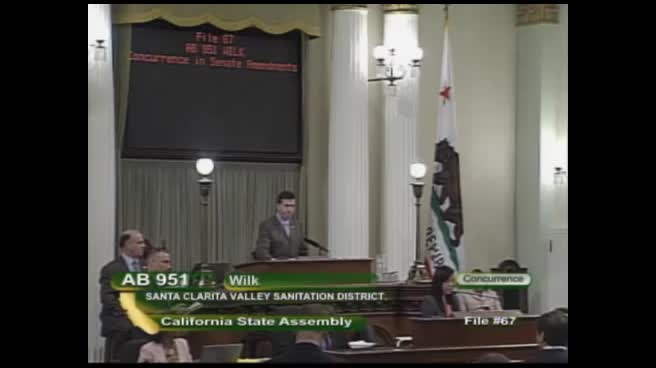

Bill Author

Bill Co-Author(s):