AB 906: Sacramento Regional Transit District.
- Session Year: 2015-2016
- House: Assembly
- Latest Version Date: 2015-09-28
Existing law provides for the creation of the Sacramento Regional Transit District, with specified powers and duties relative to the provision of public transit services and governed by a board of directors. Existing law provides for appointment of directors by member entities, and also provides that a city or county that is not annexed to the district may appoint at least one director as a participating entity if it enters into an agreement with the district that provides, among other things, for payment of the participating entitys proportionate share of the districts cost to provide rail or other districtwide transit services. Existing law, in that regard, provides for the proportionate share of the City of Elk Grove to be determined pursuant to a specified agreement between the city and the district.
This bill would repeal those provisions relating to the proportionate share of the City of Elk Grove to be determined pursuant to the specified agreement.
Existing law provides for the creation of the Sacramento Regional Transit District, with specified powers and duties relative to the provision of public transit services and governed by a board of directors. Existing law provides for appointment of directors by member entities, and also provides that a city or county that is not annexed to the district may appoint at least one director as a participating entity if it enters into an agreement with the district that provides, among other things, for payment of the participating entitys proportionate share of the districts cost to provide rail or other districtwide transit services. Existing law, in that regard, provides for the proportionate share of the City of Elk Grove to be determined pursuant to a specified agreement between the city and the district.
This bill would delete the reference to the specified agreement, and instead provide that the City of Elk Groves proportionate share shall be deemed fully satisfied through the districts receipt from the Sacramento Transportation Authority of specified transportation-related transaction and use tax revenues. repeal those provisions relating to the proportionate share of the City of Elk Grove to be determined pursuant to the specified agreement.
Existing law provides for the creation of the Sacramento Regional Transit District, with specified powers and duties relative to the provision of public transit services and governed by a board of directors. Existing law provides for appointment of directors by member entities, and also provides that a city or county that is not annexed to the district may appoint at least one director as a participating entity if it enters into an agreement with the district that provides, among other things, for payment of the participating entitys proportionate share of the districts cost to provide rail or other districtwide transit services. Existing law, in that regard, provides for the proportionate share of the City of Elk Grove to be determined pursuant to a specified agreement between the city and the district.
This bill would delete the reference to the specified agreement, and instead provide that the City of Elk Groves proportionate share shall be deemed fully satisfied through the districts receipt from the Sacramento Transportation Authority of specified transportation-related transaction and use tax revenues.
For purposes of paragraph (1) of subdivision (b) of Section 102100.3, the City of Elk Groves proportionate share shall be deemed fully satisfied through the districts receipt from the Sacramento Transportation Authority of transaction and use tax revenues from Measure A, as approved by the voters in November 2004 and effective as of April 2009. No further agreement between the City of Elk Grove and the district is required.
SECTION 1.Section 102100.9 of the Public Utilities Code is repealed.102100.9.For purposes of paragraph (1) of subdivision (b) of Section 102100.3, the City of Elk Groves proportionate share shall be determined in the manner provided in Section 4B(2) of the First Amendment to Interim Agreement for Elk Grove Bus Service, dated March 17, 2004, between the district and the City of Elk Grove.
For purposes of paragraph (1) of subdivision (b) of Section 102100.3, the City of Elk Groves proportionate share shall be determined in the manner provided in Section 4B(2) of the First Amendment to Interim Agreement for Elk Grove Bus Service, dated March 17, 2004, between the district and the City of Elk Grove deemed fully satisfied through the districts receipt from the Sacramento Transportation Authority of transaction and use tax revenues from Measure A, as approved by the voters in November 2004 and effective as of April 2009. No further agreement between the City of Elk Grove and the district is required.
|
Date
|
Status
|
|---|---|
| Jul 15, 2015 | From committee: Amend, and do pass as amended. (Ayes 10. Noes 1.) (July 14). |
| Sep 28, 2015 | Chaptered by Secretary of State - Chapter 339, Statutes of 2015. |
| Sep 28, 2015 | Approved by the Governor. |
| Sep 3, 2015 | Enrolled and presented to the Governor at 4 p.m. |
| Aug 27, 2015 | Senate amendments concurred in. To Engrossing and Enrolling. (Ayes 78. Noes 0.). |
| Aug 27, 2015 | Senate amendments concurred in. To Engrossing and Enrolling. (Ayes 78. Noes 0. Page 2614.). |
| Aug 25, 2015 | In Assembly. Concurrence in Senate amendments pending. May be considered on or after August 27 pursuant to Assembly Rule 77. |
| Aug 24, 2015 | Read third time. Passed. Ordered to the Assembly. (Ayes 38. Noes 0. Page 2152.). |
| Aug 24, 2015 | Read third time. Passed. Ordered to the Assembly. |
| Jul 16, 2015 | Read second time and amended. Ordered to third reading. |
| Feb 26, 2015 | Read first time. To print. |
| Jun 11, 2015 | Referred to Com. on T. & H. |
| Jun 2, 2015 | Read third time. Passed. Ordered to the Senate. (Ayes 57. Noes 17. Page 1760.) |
| Jun 2, 2015 | Read third time. Passed. Ordered to the Senate. |
| Jun 2, 2015 | In Senate. Read first time. To Com. on RLS. for assignment. |
| May 11, 2015 | Read second time. Ordered to third reading. |
| May 7, 2015 | From committee: Do pass. (Ayes 6. Noes 3.) (May 6). |
| Mar 16, 2015 | Referred to Com. on L. GOV. |
| Feb 27, 2015 | From printer. May be heard in committee March 29. |
|
Date
|
Description
|
Location
|
Votes
|
|
|---|---|---|---|---|
| Aug 27, 2015 | AB 906 COOPER Concurrence in Senate Amendments | Assembly Floor |
Passed |
|
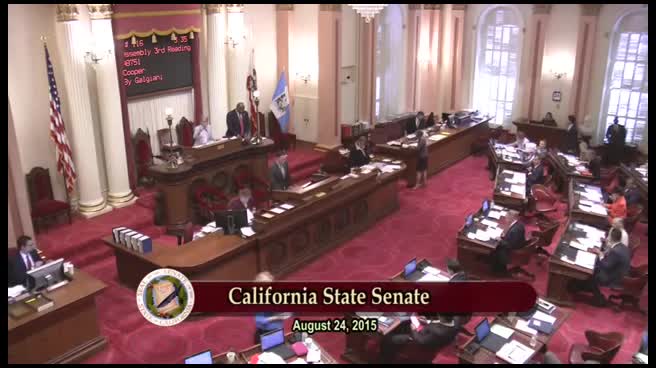
| Aug 24, 2015 | Assembly 3rd Reading AB906 Cooper By Pan | Senate Floor |
Passed |
|
| Jul 14, 2015 | Do pass as amended | Senate Standing Committee on Transportation and Housing |
Passed |
|
| Jun 2, 2015 | AB 906 COOPER Assembly Third Reading | Assembly Floor |
Passed |
|
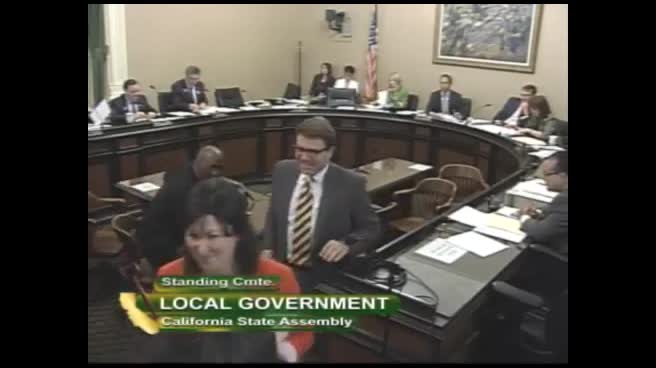
| May 6, 2015 | Do pass. | Assembly Standing Committee on Local Government |
Passed |
This list shows positions taken on this bill by organizations on the date displayed, which is linked to the original source.
Positions by individuals are not included.
|
Organization
|
Position
|
Date
|
|---|---|---|
| City of Elk Grove [SPONSOR] | ** Support | May 6, 2015 |
| Elk Grove | * Support | May 6, 2015 |
| L. GOV. | ** Against | May 6, 2015 |
| Sacramento Regional Transit District | * Against | Jul 14, 2015 |
| Sacramento Regional Transit District | * Indeterminate | Jul 14, 2015 |
AB 906
Page 3
CONCURRENCE IN SENATE AMENDMENTS
AB 906
(Cooper)
As Amended July 16, 2015
Majority vote
ASSEMBLY: |
57-17 |
(June 2, 2015) |
SENATE: |
38-0 |
(August 24, 2015) |
Original Committee Reference: L. GOV.
SUMMARY: Deletes the proportionate share payment in existing law that the City of Elk Grove must fulfill to maintain an appointment of a director to Sacramento Regional Transit District's (RT) Board of Directors.
The Senate amendments delete the Assembly version of this bill, and instead, repeal the proportionate share payment in existing law that the City of Elk Grove must fulfill to maintain an appointment of a director to RT's Board of Directors.
EXISTING LAW:
Establishes the Sacramento Regional Transit District Act which governs the powers and functions of RT, and establishes RT's territory and board of directors (Board).
Authorizes RT to comprise of the Cities of Citrus Heights, Elk Grove, Davis, Folsom, Rancho Cordova, Roseville, Sacramento, West Sacramento, and Woodland, and specified territory in Sacramento and Yolo Counties to the extent they are not included in the above-mentioned cities.
Provides any city or county may annex to and become part of RT, upon approval by the Board, following a written request by that city or county and approval of the Sacramento Area Council of Governments.
Authorizes a city or county that is not annexed to RT to become a participating entity entitled to make at least one appointment to the Board, if the participating entity enters into an agreement with RT that provides for all of the following:
The participating entity agrees to pay its proportionate share of RT's cost to provide rail or other districtwide transit services;
RT agrees to maintain a specified level of rail or other districtwide transit services; and,
RT is not obligated to provide transit services to any particular location or along any particular route.
Requires the City of Elk Grove's proportionate share, for the purposes of 4) above, to be determined in the manner provided in First Amendment, Section 4B(2) to Interim Agreement for Elk Grove Bus Service, dated March 17, 2004, between RT and Elk Grove.
Provides that a participating entity's seat on the Board shall terminate upon termination or cancellation of the agreement in 4) above.
Establishes a weighted voting procedure for RT's Board.
Defines a member entity to mean a city or county that is annexed to RT pursuant to 2) and 3), above.
Defines a participating entity to mean a city or county that is not annexed to RT, but has entered into a specified agreement pursuant to 4) above.
AS PASSED BY THE ASSEMBLY, this bill:
Made changes to the proportionate share payment in existing law that the City of Elk Grove must fulfill to become a participating entity and maintain a seat on RT's governing body.
Required the proportionate share for the City of Elk Grove to be deemed fully satisfied through RT's receipt from the Sacramento Transportation Authority of transaction and use tax revenues from Measure A, as approved by the voters in November 2004, and effective as of April 2009.
Repealed existing law, which requires the City of Elk Grove's proportionate share to be determined in the manner provided in First Amendment, Section 4B(2) to Interim Agreement for Elk Grove Bus Service, dated March 17, 2004, between RT and Elk Grove.
Provided that no further agreement between the City of Elk Grove and RT is required.
FISCAL EFFECT: None
COMMENTS:
RT. The Legislature authorized the creation of the Sacramento Regional Transit District in 1971 to operate a comprehensive public transportation system for the Sacramento region. RT serves an area encompassing 418 square miles and 1.4 million people; it operates 67 bus routes and 38.6 miles of light rail service. RT is governed by an 11-member Board of Directors comprised of eight directors that are appointed by the annexed jurisdictions, which are "member entities," including Sacramento County, and the Cities of Sacramento and Rancho Cordova. Additionally, three directors are appointed by non-annexed jurisdictions, which are "participating entities," including the Cities of Citrus Heights, Elk Grove, and Folsom.
City of Elk Grove. The City of Elk Grove incorporated as a city in 2001; prior to that time, RT provided transit services to areas within Sacramento County that were included within Elk Grove's boundaries. Following incorporation, Elk Grove opted to not activate membership as an annexed part of RT, and instead, entered into a service agreement, from 2001 to 2004, so that RT would continue providing transit services. Upon further study, Elk Grove decided to operate its own bus service within the city and to contract with RT for regional transit services.
RT's enabling act did not allow Elk Grove to have a seat on the Board, therefore, SB 466 (Steinberg), Chapter 620, Statutes of 2004, made several changes to RT's governance structure. SB 466 enabled Elk Grove to have a seat on the Board to vote on regional matters and allowed RT to recover operating costs from providing regional transit services to Elk Grove. SB 466 required that the City of Elk Grove's proportionate share be determined by First Amendment, Section 4B (2) to Interim Agreement for Elk Grove Bus Service, dated March 17, 2004, an agreement that RT and Elk Grove entered into.
AB 2137 (Niello), Chapter 227, Statutes of 2008, created a weighted voting system for RT based on membership status and each voting entity's financial contribution. AB 2137 was supported by RT, Elk Grove, and several other cities, including both member and participating entities.
Bill Summary. Current law allows a city or county that is not annexed to RT to have a seat on RT's Board, if they enter into a specified agreement with RT to pay their proportional share of RT's costs to provide rail or other districtwide transit services. Additionally, existing law requires that Elk Grove's proportionate share is determined in the manner provided by an Interim Agreement between the City of Elk Grove and RT. This bill deletes the reference to the interim agreement, and therefore, subjects the City of Elk Grove to the provisions under existing law that require a city to enter into a specified agreement with RT to pay a proportional share.
This bill is sponsored by the City of Elk Grove.
Arguments in Support. Elk Grove argues, "Existing law requires the City of Elk Grove to pay twice in order to have one seat on the RT Board by having the City pay a proportionate share payment determined solely by RT."
Arguments in Opposition. None on file.
Analysis Prepared by: Misa Lennox / L. GOV. / (916) 319-3958 FN: 0001305
AB 906
Page 3
|
Office of Senate Floor Analyses (916) 651-1520 Fax: (916) 327-4478 |
THIRD READING
Bill No: AB 906
Amended: 7/16/15 in Senate
SENATE TRANS. & HOUSING COMMITTEE: 10-1, 7/14/15
AYES: Beall, Cannella, Allen, Bates, Galgiani, Leyva, McGuire, Mendoza, Roth, Wieckowski
NOES: Gaines
ASSEMBLY FLOOR: 57-17, 6/2/15 - See last page for vote
SUBJECT: Sacramento Regional Transit District
DIGEST: This bill deletes the reference in existing law to how the City of Elk Grove’s proportionate share of the costs to operate a regional transit service is determined.
Existing law:
Establishes the Sacramento Regional Transit District (Sacramento RT) to operate a single unified public transportation system in the Sacramento region in order to meet the present and future public transportation, and mass and rapid transit, needs of the region.
Defines member entities of the Sacramento RT as cities or counties that are annexed to the district.
Defines participating entities of the Sacramento RT as cities or counties that are not annexed to the district, but that enter into an agreement with Sacramento RT that includes appointing a member to the board of directors.
Authorizes a participating entity to appoint at least one member to the Sacramento RT board of directors if it enters into an agreement providing for the following:
The participating entity agrees to pay its proportionate share of costs to provide rail or other districtwide transit services.
Sacramento RT agrees to maintain a specified level of service.
Sacramento RT is not obligated to provide transit services to any particular location or along any particular route.
Specifies that the City of Elk Grove’s proportionate share is to be determined in the manner provided by an agreement between the city and Sacramento RT dated March 17, 2004.
This bill deletes the reference in existing law to how the City of Elk Grove’s proportionate share of the costs to operate a regional transit service is determined.
Comments
Purpose. According to the author, Elk Grove’s proportionate share payment is based on outdated state law and does not take into account fiscal contributions from Elk Grove residents through Measure A, a countywide sales tax measure that provides roughly $35 million per year for transit service throughout the county. The author suggests that existing law makes Elk Grove pay twice for a seat on the Sacramento RT board and that no other city in the region pays twice for its regional transit use. This bill seeks to remedy this problem.
Compromise. This bill initially faced opposition from Sacramento RT for a number of reasons. This bill, however, was amended to strike a compromise between Sacramento RT and the City of Elk Grove. Existing law specifies how Elk Grove’s proportionate share is to be determined, and bases it on an agreement from 2004. At the time, Elk Grove was much smaller and Sacramento RT provided all transit service to the city. Today, Elk Grove is the second largest city in the county and operates its own transit system. In fact, after September 2015, Sacramento RT will not operate any service to or in Elk Grove. This bill strikes a balance and deletes the reference in existing law to how Elk Grove’s proportionate share is determined and instead allows them to negotiate their contribution to the Sacramento RT the same way the other participating entities do. With these amendments, Sacramento RT removed their opposition to the bill.
FISCAL EFFECT: Appropriation: No Fiscal Com.: No Local: No
City of Elk Grove (source)
OPPOSITION: (Verified 8/11/15)
None received
AYES: Alejo, Baker, Bloom, Bonilla, Bonta, Brown, Burke, Calderon, Campos, Chau, Chiu, Chu, Cooper, Dababneh, Dahle, Daly, Dodd, Eggman, Frazier, Cristina Garcia, Eduardo Garcia, Gipson, Gomez, Gonzalez, Gray, Hadley, Roger Hernández, Holden, Irwin, Jones-Sawyer, Kim, Lackey, Levine, Linder, Lopez, Low, Maienschein, Mathis, Mayes, Medina, Mullin, Nazarian, O'Donnell, Olsen, Perea, Rendon, Ridley-Thomas, Rodriguez, Salas, Santiago, Steinorth, Thurmond, Weber, Wilk, Williams, Wood, Atkins
NOES: Achadjian, Travis Allen, Bigelow, Brough, Cooley, Beth Gaines, Gallagher, Gatto, Gordon, Harper, Jones, McCarty, Obernolte, Patterson, Mark Stone, Ting, Wagner
NO VOTE RECORDED: Chang, Chávez, Grove, Melendez, Quirk, Waldron
Prepared by: Alison Dinmore & Eric Thronson / T. & H. / (916) 651-4121
8/13/15 13:10:12
**** END ****
AB 906 (Cooper) Page 4 of 4
SENATE COMMITTEE ON TRANSPORTATION AND HOUSING
Senator Jim Beall, Chair
2015 - 2016 Regular
Bill No: AB 906 Hearing Date: 7/14/2015
Author: |
Cooper |
||
Version: |
2/26/2015 |
||
Urgency: |
No |
Fiscal: |
No |
Consultant: |
Eric Thronson |
||
SUBJECT: Sacramento Regional Transit District.
DIGEST: This bill specifies that the City of Elk Grove’s obligation to pay its proportionate share for transit service provided by Sacramento Regional Transit District (Sacramento RT) is fully satisfied by the District’s receipt of revenues from a countywide sales tax measure dedicated to transit service.
ANALYSIS:
Existing law:
Establishes the Sacramento RT to operate a single unified public transportation system in the Sacramento region in order to meet the present and future public transportation, and mass and rapid transit, needs of the region.
Defines member entities of the Sacramento RT as cities or counties that are annexed to the district.
Defines participating entities of the Sacramento RT as cities or counties that are not annexed to the district, but that enter into an agreement with Sacramento RT that includes appointing a member to the board of directors.
Authorizes a participating entity to appoint at least one member to the Sacramento RT board of directors if it enters into an agreement providing for the following:
The participating entity agrees to pay its proportionate share of costs to provide rail or other districtwide transit services.
Sacramento RT agrees to maintain a specified level of service.
Sacramento RT is not obligated to provide transit services to any particular location or along any particular route.
Specifies that the City of Elk Grove’s proportionate share is to be determined in the manner provided by an agreement between the city and Sacramento RT dated March 17, 2004.
This bill specifies that the City of Elk Grove’s obligation to pay its proportionate share for transit service provided by Sacramento RT is fully satisfied by Sacramento RT’s receipt of revenues from a countywide sales tax measure that provides funds for transit service.
COMMENTS:
Purpose. According to the author, Elk Grove’s proportionate share payment is based on outdated state law and does not take into account fiscal contributions from Elk Grove residents through measure A, a countywide sales tax measure that provides roughly $35 million per year for transit service throughout the county. The author suggests that existing law makes Elk Grove pay twice for a seat on the Sacramento RT board and that no other city in the region pays twice for its regional transit use. This bill seeks to remedy this problem.
Opposition. Sacramento RT opposes this bill for a few reasons. First, this bill determines that Elk Grove’s share of the costs to operate a regional transit service should be covered in full through its residents’ contribution toward the countywide sales tax measure. If that were true, then Elk Grove would be the only entity in Sacramento County for which that would be the case. A countywide sales tax measure that dedicates some funds to transit service was passed by the voters with the understanding that the revenue would support transit whether or not a resident paying the tax ever takes advantage of the system, because the majority of the voters believed that transit service benefited them and the region regardless of whether they used the system. Everyone pays toward the countywide sales tax measure and everyone benefits. This is a fact regardless of any other funding mechanisms established to support the operation of Sacramento RT, and should not supplant other funds individuals or local entities owe Sacramento RT.
Another issue raised by the opponents is that the author states that no city in the region “pays twice for a seat on the Sacramento RT board.” The fact is every city in the region with a seat on the board, and the county, “pays twice” to participate in the regional transit system. All entities contribute through Measure A, and they also contribute in other ways. Member entities of Sacramento RT contribute all of their allocated state funding, while participating entities (specifically Elk Grove, Folsom, and Citrus Heights) all contribute their proportionate share as required in existing law.
If this bill became law, it would exempt the City of Elk Grove from the requirement to pay its proportionate share for which every other entity participating in Sacramento RT is responsible. Further, it would set a dangerous precedent, suggesting that countywide tax measures should somehow be return-to-source revenues despite the regional benefits attained through broad countywide programs or services.
Compromise. Given the disagreement on some of the facts upon which this bill is based, it seems there may be room for a compromise. Existing law specifies how Elk Grove’s proportionate share is to be determined, and bases it on an agreement from 2004. At the time, Elk Grove was much smaller and Sacramento RT provided all transit service to the city. Today, Elk Grove is the second largest city in the county and operates its own transit system. In fact, after September 2015, Sacramento RT will not operate any service to or in Elk Grove. It might be reasonable, at this point, to delete the reference in existing law to how Elk Grove’s proportionate share is determined and instead allow them to negotiate their contribution to the Sacramento RT the same way the other participating entities do. To accomplish this, the committee may wish to amend the bill to delete the reference in existing law to how Elk Grove’s proportionate share is determined.
Related Legislation:
AB 738 (Beth Gaines, 2015) — recasts membership in the Sacramento Regional Transit District and redefines the boundaries of the District. This bill is also being heard in this committee today.
Assembly Votes:
Floor: 57-17
LGov: 6-3
FISCAL EFFECT: Appropriation: No Fiscal Com.: No Local: No
POSITIONS: (Communicated to the committee before noon on Wednesday,
July 8, 2015.)
SUPPORT:
City of Elk Grove
OPPOSITION:
Sacramento Regional Transit District
-- END --
AB 906
Page 4
ASSEMBLY THIRD READING
AB 906
(Cooper)
As Introduced February 26, 2015
Majority vote
Committee |
Votes |
Ayes |
Noes |
Local Government |
6-3 |
Maienschein, Gonzalez, Alejo, Chiu, Holden, Linder |
Cooley, Gordon, Waldron |
SUMMARY: Makes changes to the proportionate share payment in existing law that the City of Elk Grove must fulfill to maintain an appointment of a director to Sacramento Regional Transit District's (RT) Board of Directors. Specifically, this bill:
Makes changes to the proportionate share payment in existing law that the City of Elk Grove must fulfill to become a participating entity and maintain a seat on RT's governing body.
Requires the proportionate share for the City of Elk Grove to be deemed fully satisfied through RT's receipt from the Sacramento Transportation Authority of transaction and use tax revenues from Measure A, as approved by the voters in November 2004, and effective as of April 2009.
Repeals existing law, which requires the City of Elk Grove's proportionate share to be determined in the manner provided in First Amendment, Section 4B(2) to Interim Agreement for Elk Grove Bus Service, dated March 17, 2004, between RT and Elk Grove.
Provides that no further agreement between the City of Elk Grove and RT is required.
EXISTING LAW:
Establishes the Sacramento Regional Transit District Act which governs the powers and functions of RT, and establishes RT's territory and board of directors (Board).
Authorizes RT to comprise of the Cities of Citrus Heights, Elk Grove, Davis, Folsom, Rancho Cordova, Roseville, Sacramento, West Sacramento, and Woodland, and specified territory in Sacramento and Yolo Counties to the extent they are not included in the above-mentioned cities.
Provides any city or county may annex to and become part of RT, upon approval by the Board, following a written request by that city or county and approval of the Sacramento Area Council of Governments.
Authorizes a city or county that is not annexed to RT to become a participating entity entitled to make at least one appointment to the Board, if the participating entity enters into an agreement with RT that provides for all of the following:
The participating entity agrees to pay its proportionate share of RT's cost to provide rail or other districtwide transit services;
RT agrees to maintain a specified level of rail or other districtwide transit services; and,
RT is not obligated to provide transit services to any particular location or along any particular route.
Requires the City of Elk Grove's proportionate share, for the purposes of 4) above, to be determined in the manner provided in First Amendment, Section 4B(2) to Interim Agreement for Elk Grove Bus Service, dated March 17, 2004, between RT and Elk Grove.
Provides that a participating entity's seat on the Board shall terminate upon termination or cancellation of the agreement in 4), above.
Establishes a weighted voting procedure for RT's Board.
Defines a member entity to mean a city or county that is annexed to RT pursuant to 2), and 3), above.
Defines a participating entity to mean a city or county that is not annexed to RT, but has entered into a specified agreement pursuant to 4), above.
FISCAL EFFECT: None
COMMENTS:
RT. The Legislature authorized the creation of the Sacramento Regional Transit District in 1971 to operate a comprehensive public transportation system for the Sacramento region. RT serves an area encompassing 418 square miles and 1.4 million people; it operates 67 bus routes and 38.6 miles of light rail service. RT is governed by an 11-member Board of Directors comprised of eight directors that are appointed by the annexed jurisdictions, which are "member entities," including Sacramento County, and the Cities of Sacramento and Rancho Cordova. Additionally, three directors are appointed by non-annexed jurisdictions, which are "participating entities," including the Cities of Citrus Heights, Elk Grove, and Folsom.
City of Elk Grove. The City of Elk Grove incorporated as a city in 2001; prior to that time, RT provided transit services to areas within Sacramento County that were included within Elk Grove's boundaries. Following incorporation, Elk Grove opted to not activate membership as an annexed part of RT, and instead, entered into a service agreement, from 2001 to 2004, so that RT would continue providing transit services. Upon further study, Elk Grove decided to operate its own bus service within the city and to contract with RT for regional transit services.
RT's enabling act did not allow Elk Grove to have a seat on the Board, therefore, SB 466 (Steinberg), Chapter 620, Statutes of 2004, made several changes to RT's governance structure. SB 466 enabled Elk Grove to have a seat on the Board to vote on regional matters and allowed RT to recover operating costs from providing regional transit services to Elk Grove. SB 466 required that the City of Elk Grove's proportionate share be determined by First Amendment, Section 4B (2) to Interim Agreement for Elk Grove Bus Service, dated March 17, 2004, an agreement that RT and Elk Grove entered into. An analysis of SB 466, which listed both RT and Elk Grove in support, stated, "Proponents state that the bill represents a consensus among RT, Elk Grove, and transit labor representatives."
AB 2137 (Niello), Chapter 227, Statutes of 2008, created a weighted voting system for RT based on membership status and each voting entity's financial contribution. AB 2137 was also supported by RT, Elk Grove, and several other cities, including both member and participating entities.
Bill Summary. Current law allows a city or county that is not annexed to RT to have a seat on RT's Board, if they enter into a specified agreement with RT to pay their proportional share of RT's costs to provide rail or other districtwide transit services. Additionally, existing law requires that Elk Grove's proportionate share is determined in the manner provided by an Interim Agreement between the City of Elk Grove and RT. This bill deletes the reference to the interim agreement, and instead, deems that the City of Elk Grove's proportionate share is satisfied through RT's receipt of transactions and use tax revenues generated from Measure A (2004) and provides that no further agreement between the City of Elk Grove and RT is required.
Measure A was approved by over two-thirds of the voters in Sacramento County to extend an existing transactions and use tax. RT receives Measure A revenue for operation and maintenance of transit capital and rail transit improvements, as specified in the expenditure plan. Revenue generated by Measure A also provides funding for things like pedestrian and bike facilities, traffic control and safety programs, and city street road maintenance programs, which are distributed proportionality to cities, including the City of Elk Grove. Since RT is already in receipt of Measure A revenues, this bill would not result in an additional allocation of funding for RT.
This bill is sponsored by the City of Elk Grove.
Author's Statement. According to the author, "This bill updates the city of Elk Grove’s proportionate share payment to RT to reflect changes since Elk Grove incorporated as a city in 2000. Currently, Elk Grove’s proportionate share payment is based on outdated state law and does not take into account Measure A contributions by Elk Grove residents.
"The proportionate share payment Elk Grove pays to RT reflects a time when the city did not operate its own transit service and is not equitable to the city and its residents. Outdated state law requires Elk Grove to pay twice in order to have one seat on the RT Board. The proportionate share payment paid by Elk Grove is determined solely by RT. However, RT also receives nearly $35 million in annual Measure A revenues dedicated for transit purposes from STA while Elk Grove receives none of the Measure A revenues dedicated for transit because Measure A was enacted before Elk Grove incorporated in (2000) and before the city assumed local control over transit services (2010). Since approximately 10% of all Measure A revenues come from Elk Grove generated taxes, Elk Grove is already contributing 10% of the annual $35 million (approximately $3.5 million annually) to RT for transit services. This $3.5 million annual contribution from Elk Grove to RT through the STA Measure is in addition to the fair share payment to RT to participate on the Board in the amount of $797,000 in Fiscal Year 2015-16. No other city in the region pays twice for its regional transit use. In spite of this double payment of $4.3 million dollars to RT, Elk Grove residents still pay regular fare when boarding RT buses and light rail."
Policy Considerations. The Legislature may wish to consider the following:
No Regional Consensus. The Legislature has supported prior bills that revised RT's board membership to allow non-annexed cities to have a seat on the Board and created weighted voting, all of which were brought forward with consensus. Without consensus, this bill creates winners and losers in a district-specific issue.
Measure A. This bill allows Elk Grove to maintain their seat on RT's Board at no cost to the City, except what their residents are already contributing via countywide transactions and use tax. Proponents argue that RT already receives a large contribution from Elk Grove in annual Measure A revenues that are dedicated for transit purposes, while Elk Grove receives none of that revenue. If the core policy issue is with the allocation of Measure A funds for transit in Sacramento County, which was established in an expenditure plan and passed by the voters in 2004, then the Legislature may wish to consider if this bill is an appropriate avenue to address those concerns.
Who Will Pay? The Legislature may wish to consider, absent a proportionate share payment from Elk Grove, what the potential impacts on services will be. Proponents argue that the City may have to reduce its own bus services due to lack of funding. However, this bill may require RT to reduce services to other cities and counties that do fulfill their payments to RTs. Additionally, the Legislature may wish to consider if those who will be impacted the most are individuals that may not have other resources and rely on public transportation.
Arguments in Support. Elk Grove argues, "Existing law requires the City of Elk Grove to pay twice in order to have one seat on the RT Board by having the City pay a proportionate share payment determined solely by RT. Currently, RT receives nearly $35 million in annual Measure A revenues (Elk Grove's contribution is 10% to these revenue funds which equate to $3.5 million annually) dedicated for transit purposes from the Sacramento Transportation Authority while the city of Elk Grove receives none."
Arguments in Opposition. RT argues, "This bill would relieve the City from its contractual proportionate share obligation under our joint agreement for the services provided by deeming the obligation satisfied by revenues already available to RT in the form of tax revenues under Sacramento County Measure A. The practical effect of this would be to reallocate the City's proportionate costs for regional transit services provided by RT among the other participating entities or RT and result in reduced services to full member entities of RT."
Analysis Prepared by: Misa Lennox / L. GOV. / (916) 319-3958 FN: 0000346
AB 906
Page 4
Date of Hearing: May 6, 2015
ASSEMBLY COMMITTEE ON LOCAL GOVERNMENT
Brian Maienschein, Chair
AB 906
(Cooper) – As Introduced February 26, 2015
SUBJECT: Sacramento Regional Transit District.
SUMMARY:
Makes changes to the proportionate share payment in existing law that
the
City of Elk Grove must fulfill to maintain an appointment
of a director to Sacramento Regional Transit District's Board of
Directors. Specifically, this bill:
Makes changes to the proportionate share payment in existing law that the City of Elk Grove must fulfill to become a participating entity and maintain a seat on Sacramento Regional Transit District's (RT) governing body.
Requires the proportionate share for the City of Elk Grove to be deemed fully satisfied through RT's receipt from the Sacramento Transportation Authority of transaction and use tax revenues from Measure A, as approved by the voters in November 2004, and effective as of April 2009.
Repeals existing law, which requires the City of Elk Grove's proportionate share to be determined in the manner provided in Section 4B(2) of the First Amendment to Interim Agreement for Elk Grove Bus Service, dated March 17, 2004, between RT and Elk Grove.
Provides that no further agreement between the City of Elk Grove and RT is required.
EXISTING LAW:
Establishes the Sacramento Regional Transit District Act which governs the powers and functions of RT, and establishes RT's territory and board of directors (Board).
Authorizes RT to comprise of the cities of Citrus Heights, Elk Grove, Davis, Folsom, Rancho Cordova, Roseville, Sacramento, West Sacramento, and Woodland, and specified territory in Sacramento and Yolo counties to the extent they are not included in the above-mentioned cities.
Provides any city or county may annex to and become part of RT, upon approval by the Board, following a written request by that city or county and approval of the Sacramento Area Council of Governments.
Authorizes a city or county that is not annexed to RT to become a participating entity entitled to make at least one appointment to the Board, if the participating entity enters into an agreement with RT that provides for all of the following:
The participating entity agrees to pay its proportionate share of RT's cost to provide rail or other districtwide transit services;
RT agrees to maintain a specified level of rail or other districtwide transit services; and,
RT is not obligated to provide transit services to any particular location or along any particular route.
Requires the City of Elk Grove's proportionate share, for the purposes of 4) above, to be determined in the manner provided in Section 4B (2) of the First Amendment to Interim Agreement for Elk Grove Bus Service, dated March 17, 2004, between RT and Elk Grove.
Provides that a participating entity's seat on the Board shall terminate upon termination or cancellation of the agreement in 4), above.
Establishes a weighted voting procedure for RT's Board.
Defines a member entity to mean a city or county that is annexed to RT pursuant to 2), and 3), above.
Defines a participating entity to mean a city or county that is not annexed to RT, but has entered into a specified agreement pursuant to 4), above.
FISCAL EFFECT: None
COMMENTS:
RT. The Legislature authorized the creation of the Sacramento Regional Transit District in 1971 to operate a comprehensive public transportation system for the Sacramento region. RT serves an area encompassing 418 square miles and 1.4 million people; it operates 67 bus routes and 38.6 miles of light rail service. RT is governed by an 11-member Board of Directors comprised of eight directors that are appointed by the annexed jurisdictions, which are "member entities," including Sacramento County, and the cities of Sacramento and Rancho Cordova. Additionally, three directors are appointed by non-annexed jurisdictions, which are "participating entities," including the cities of Citrus Heights, Elk Grove, and Folsom.
City of Elk Grove. The City of Elk Grove incorporated as a city in 2001; prior to that time,
RT provided transit services to areas within Sacramento County that were included within Elk Grove's boundaries. Following incorporation, Elk Grove opted to not activate membership as an annexed part of RT, and instead, entered into a service agreement, from 2001 to 2004, so that RT would continue providing transit services. Upon further study, Elk Grove decided to operate its own bus service within the city and to contract with RT for regional transit services.
RT's enabling act did not allow Elk Grove to have a seat on the
Board, therefore, SB 466 (Steinberg), Chapter 620, Statutes of 2004,
made several changes to RT's governance structure. SB 466 enabled
Elk Grove to have a seat on the Board to vote on regional matters and
allowed RT to recover operating costs from providing regional transit
services to Elk Grove. SB 466 required that the City of Elk Grove's
proportionate share be determined by Section 4B (2) of the First
Amendment to Interim Agreement for Elk Grove Bus Service, dated March
17, 2004, an agreement that RT and Elk Grove entered into. An
analysis of
AB 466, which listed both RT and Elk Grove in
support, stated, "Proponents state that the bill represents a
consensus among RT, Elk Grove, and transit labor representatives."
AB 2137 (Niello), Chapter 227, Statutes of 2008, created a weighted voting system for RT based on membership status and each voting entity's financial contribution. AB 2137 was also supported by RT, Elk Grove, and several other cities, including both member and participating entities.
Bill Summary. Current law allows a city or county that is not annexed to RT to have a seat on RT's Board, if they enter into a specified agreement with RT to pay their proportional share of RT's costs to provide rail or other districtwide transit services. Additionally, existing law requires that Elk Grove's proportionate share is determined in the manner provided by an Interim Agreement between the City of Elk Grove and RT. This bill deletes the reference to the interim agreement, and instead, deems that the City of Elk Grove's proportionate share is satisfied through RT's receipt of transactions and use tax revenues generated from Measure A (2004) and provides that no further agreement between the City of Elk Grove and RT is required.
Measure A was approved by over two-thirds of the voters in Sacramento County to extend an existing transactions and use tax. RT receives Measure A revenue for operation and maintenance of transit capital and rail transit improvements, as specified in the expenditure plan. Revenue generated by Measure A also provides funding for things like pedestrian and bike facilities, traffic control and safety programs, and city street road maintenance programs, which are distributed proportionality to cities, including the City of Elk Grove. Since RT is already in receipt of Measure A revenues, this bill would not result in an additional allocation of funding for RT.
This bill is sponsored by the City of Elk Grove.
Author's Statement. According to the author, "This bill updates the city of Elk Grove’s proportionate share payment to RT to reflect changes since Elk Grove incorporated as a city in 2000. Currently, Elk Grove’s proportionate share payment is based on outdated state law and does not take into account Measure A contributions by Elk Grove residents.
"The proportionate share payment Elk Grove pays to RT reflects a
time when the city did not operate its own transit service and is not
equitable to the city and its residents. Outdated state law requires
Elk Grove to pay twice in order to have one seat on the RT Board.
The proportionate share payment paid by Elk Grove is determined
solely by RT. However, RT also receives nearly $35 million in annual
Measure A revenues dedicated for transit purposes from STA while Elk
Grove receives none of the Measure A revenues dedicated for transit
because Measure A was enacted before Elk Grove incorporated in (2000)
and before the city assumed local control over transit services
(2010). Since approximately 10% of all Measure A revenues come from
Elk Grove generated taxes, Elk Grove is already contributing 10% of
the annual $35 million (approximately $3.5 million annually) to RT
for transit services. This $3.5 million annual contribution from Elk
Grove to RT through the STA Measure is in addition to the fair share
payment to RT to participate on the Board in the amount of $797,000
in FY2015-16. No other city in the region pays twice for its
regional transit use. In spite of this double payment of $4.3
million dollars to RT, Elk Grove residents still pay regular fare
when boarding RT buses and light rail."
Policy Considerations. The Committee may wish to consider the following:
No Regional Consensus. The Committee has supported prior bills that revised RT's board membership to allow non-annexed cities to have a seat on the Board and created weighted voting, all of which were brought forward with consensus. Without consensus, this bill creates winners and losers in a district-specific issue.
Measure A. This bill allows Elk Grove to maintain their seat on RT's Board at no cost to the City, except what their residents are already contributing via countywide transactions and use tax. Proponents argue that RT already receives a large contribution from Elk Grove in annual Measure A revenues that are dedicated for transit purposes, while Elk Grove receives none of that revenue. If the core policy issue is with the allocation of Measure A funds for transit in Sacramento County, which was established in an expenditure plan and passed by the voters in 2004, then the Committee may wish to consider if this bill is an appropriate avenue to address those concerns.
Who Will Pay? The Committee may wish to consider, absent a proportionate share payment from Elk Grove, what the potential impacts on services will be. Proponents argue that the City may have to reduce its own bus services due to lack of funding. However, this bill may require RT to reduce services to other cities and counties that do fulfill their payments to RTs. Additionally, the Committee may wish to consider if those who will be impacted the most are individuals that may not have other resources and rely on public transportation.
Arguments in Support. Elk Grove argues, "Existing law requires the City of Elk Grove to pay twice in order to have 1 seat on the RT Board by having the City pay a proportionate share payment determined solely by RT. Currently, RT receives nearly $35 million in annual Measure A revenues (Elk Grove's contribution is 10% to these revenue funds which equate to $3.5 million annually) dedicated for transit purposes from the Sacramento Transportation Authority while the city of Elk Grove receives none."
Arguments in Opposition. RT argues, "This bill would relieve the City from its contractual proportionate share obligation under our joint agreement for the services provided by deeming the obligation satisfied by revenues already available to RT in the form of tax revenues under Sacramento County Measure A. The practical effect of this would be to reallocate the City's proportionate costs for regional transit services provided by RT among the other participating entities or RT and result in reduced services to full member entities
of RT."
REGISTERED SUPPORT / OPPOSITION:
Support
City of Elk Grove [SPONSOR]
Opposition
Sacramento Regional Transit District
Analysis Prepared by: Misa Lennox / L. GOV. / (916) 319-3958
Bill Author

Bill Co-Author(s):