AB 913: Student safety.
- Session Year: 2015-2016
- House: Assembly
- Latest Version Date: 2015-10-09
The Kristin Smart Campus Safety Act of 1998 requires the governing boards of each community college district, the Trustees of the California State University, the Regents of the University of California, and the governing boards of independent postsecondary institutions, as defined, to adopt rules requiring each of their respective campuses to enter into a written agreement with local law enforcement agencies relating to certain violent crimes. These agreements are required to designate the law enforcement agency that will have operational responsibility for the investigation of these crimes. Existing law provides that these provisions do not apply to the University of California except to the extent that the regents, by appropriate resolution, make the provisions applicable.
This bill would, for the Trustees of the California State University, the governing boards of independent postsecondary institutions, and, subject to appropriate resolution, the Regents of the University of California, require these written agreements to designate the law enforcement agency that will have operational responsibility for the investigation of each sexual assault and hate crime, as defined, and require these written agreements to be reviewed, updated if necessary, and made available to the public by July 1, 2016, and every 5 years thereafter. Upon the governing board of a community college district adopting a rule requiring its campuses to update these agreements, the bill would subject the community college district and its campuses to the requirements imposed on other postsecondary institutions by the bill. The bill would encourage the governing board of each community college district to adopt a rule requiring its respective campuses to update these agreements. By expanding the duties of community college districts and local law enforcement agencies, this bill would impose a state-mandated local program.
The California Constitution requires the state to reimburse local agencies and school districts for certain costs mandated by the state. Statutory provisions establish procedures for making that reimbursement.
This bill would provide that, if the Commission on State Mandates determines that the bill contains costs mandated by the state, reimbursement for those costs shall be made pursuant to these statutory provisions.
The Kristin Smart Campus Safety Act of 1998 requires the governing boards of each community college district, the Trustees of the California State University, the Regents of the University of California, and the governing boards of independent postsecondary institutions, as defined, to adopt rules requiring each of their respective campuses to enter into a written agreement with local law enforcement agencies relating to certain violent crimes. These agreements are required to designate the law enforcement agency that will have operational responsibility for the investigation of these crimes. Existing law provides that these provisions do not apply to the University of California except to the extent that the regents, by appropriate resolution, make the provisions applicable.
This bill would, for the Trustees of the California State University, the Regents of the University of California, and the governing boards of independent postsecondary institutions, require these written agreements to designate the law enforcement agency that will have operational responsibility for the investigation of each sexual assault and hate crime, as defined. The bill would also defined, and would require these written agreements to be reviewed, updated if necessary, and made available to the public by July 1, 2016, and every 5 years thereafter. Upon the governing board of a community college district adopting a rule requiring its campuses to update these agreements, the bill would subject the community college district and its campuses to the requirements imposed on other postsecondary institutions by the bill. The bill would encourage the governing board of each community college district to adopt a rule requiring its respective campuses to update these agreements. By expanding the duties of community college districts and local law enforcement agencies, this bill would impose a state-mandated local program.
The California Constitution requires the state to reimburse local agencies and school districts for certain costs mandated by the state. Statutory provisions establish procedures for making that reimbursement.
This bill would provide that, if the Commission on State Mandates determines that the bill contains costs mandated by the state, reimbursement for those costs shall be made pursuant to these statutory provisions.
The Kristin Smart Campus Safety Act of 1998 requires the governing boards of each community college district, the Trustees of the California State University, the Regents of the University of California, and the governing boards of independent postsecondary institutions, as defined, to adopt rules requiring each of their respective campuses to enter into a written agreement with local law enforcement agencies relating to certain violent crimes. These agreements are required to designate the law enforcement agency that will have operational responsibility for the investigation of these crimes. Existing law provides that these provisions do not apply to the University of California except to the extent that the regents, by appropriate resolution, make the provisions applicable.
This bill would require these written agreements to designate the law enforcement agency that will have operational responsibility for the investigation of each sexual assault and hate crime, as defined. The bill would also require these written agreements to be updated reviewed, updated if necessary, and made available to the public by July 1, 2016, and every 5 years thereafter. By expanding the duties of community college districts and local law enforcement agencies, this bill would impose a state-mandated local program.
The California Constitution requires the state to reimburse local agencies and school districts for certain costs mandated by the state. Statutory provisions establish procedures for making that reimbursement.
This bill would provide that, if the Commission on State Mandates determines that the bill contains costs mandated by the state, reimbursement for those costs shall be made pursuant to these statutory provisions.
The Kristin Smart Campus Safety Act of 1998 requires the governing boards of each community college district, the Trustees of the California State University, the Regents of the University of California, and the governing boards of independent postsecondary institutions, as defined, to adopt rules requiring each of their respective campuses to enter into a written agreement with local law enforcement agencies relating to certain violent crimes. These agreements are required to designate the law enforcement agency that will have operational responsibility for the investigation of these crimes. Existing law provides that these provisions do not apply to the University of California except to the extent that the regents, by appropriate resolution, make the provisions applicable.
This bill would require these written agreements to designate the law enforcement agency that will have operational responsibility for the investigation of each sexual assault and hate crime, as defined. The bill would also require these written agreements to be updated and made available to the public by July 1, 2016, and every 5 years thereafter. By expanding the duties of community college districts and local law enforcement agencies, this bill would impose a state-mandated local program.
The California Constitution requires the state to reimburse local agencies and school districts for certain costs mandated by the state. Statutory provisions establish procedures for making that reimbursement.
This bill would provide that, if the Commission on State Mandates determines that the bill contains costs mandated by the state, reimbursement for those costs shall be made pursuant to these statutory provisions.
(a)The Legislature reaffirms that campus law enforcement agencies have the primary authority for providing police or security services, including the investigation of criminal activity, to their campuses.
(b)The Trustees of the California State University, the Regents of the University of California, and the governing board of independent postsecondary institutions, as defined, shall adopt rules requiring each of their respective campuses to enter into written agreements with local law enforcement agencies that clarify operational responsibilities for investigations of Part 1 violent crimes, sexual assaults, and hate crimes occurring on each campus.
(c)Local law enforcement agencies shall enter into written agreements with campus law enforcement agencies if there are college or university campuses of the governing entities specified in subdivision (b) located in the jurisdictions of the local law enforcement agencies.
(d)Each written agreement entered into pursuant to this section shall designate which law enforcement agency shall have operational responsibility for the investigation of each Part 1 violent crime, sexual assault, and hate crime, and delineate the specific geographical boundaries of each agencys operational responsibility, including maps as necessary.
(e)A written agreement entered into pursuant to this section shall be reviewed, updated if necessary, and made available for public viewing by July 1, 2016, and every five years thereafter.
(f)Each agency shall be responsible for its own costs of investigation unless otherwise specified in a written agreement.
(g)Nothing in this section shall affect existing written agreements between campus law enforcement agencies and local law enforcement agencies that otherwise meet the standards contained in subdivision (d) or any existing mutual aid procedures established pursuant to state or federal law.
(h)Nothing in this section shall be construed to limit the authority of campus law enforcement agencies to provide police services to their campuses.
(i)As used in this section, the following terms have the following meanings:
(1)Local law enforcement agencies means city or county law enforcement agencies with operational responsibilities for police services in the community in which a campus is located.
(2)Part 1 violent crimes means willful homicide, forcible rape, robbery, and aggravated assault, as defined in the Uniform Crime Reporting Handbook of the Federal Bureau of Investigation.
(3)Hate crime means any offense described in Section 422.55 of the Penal Code.
(4)Sexual assault includes, but is not limited to, rape, forced sodomy, forced oral copulation, rape by a foreign object, sexual battery, or threat of any of these.
(5)Independent postsecondary institutions means institutions operating pursuant to Section 830.6 of the Penal Code or pursuant to a memorandum of understanding as described in subdivision (b) of Section 830.7 of the Penal Code.
(j)This section shall be known and may be cited as the Kristin Smart Campus Safety Act of 1998.
(k)It is the intent of the Legislature by enacting this section to provide the public with clear information regarding the operational responsibilities for the investigation of crimes occurring on university and college campuses by setting minimum standards for written agreements to be entered into by campus law enforcement agencies and local law enforcement agencies.
SEC. 2.Section 67381.1 is added to the Education Code, to read:67381.1.(a)The Legislature reaffirms that campus law enforcement agencies have the primary authority for providing police or security services, including the investigation of criminal activity, to their campuses.
(b)The governing board of each community college district shall adopt rules requiring each of their respective campuses to enter into written agreements with local law enforcement agencies that clarify operational responsibilities for investigations of Part 1 violent crimes occurring on each campus.
(c)Local law enforcement agencies shall enter into written agreements with community college campus law enforcement agencies if there are community college campuses located in the jurisdictions of the local law enforcement agencies.
(d)Each written agreement entered into pursuant to this section shall designate which law enforcement agency shall have operational responsibility for the investigation of each Part 1 violent crime and delineate the specific geographical boundaries of each agencys operational responsibility, including maps as necessary.
(e)Written agreements regarding community college law enforcement agencies entered into pursuant to this section or pursuant to Section 67381 as that section read before January 1, 2016, shall be available for public viewing.
(f)Each agency shall be responsible for its own costs of investigation unless otherwise specified in a written agreement.
(g)Nothing in this section shall affect existing written agreements between community college campus law enforcement agencies and local law enforcement agencies that otherwise meet the standards contained in subdivision (d) or any existing mutual aid procedures established pursuant to state or federal law.
(h)Nothing in this section shall be construed to limit the authority of community college campus law enforcement agencies to provide police services to their campuses.
(i)As used in this section, the following terms have the following meanings:
(1)Local law enforcement agencies means city or county law enforcement agencies with operational responsibilities for police services in the community in which a campus is located.
(2)Part 1 violent crimes means willful homicide, forcible rape, robbery, and aggravated assault, as defined in the Uniform Crime Reporting Handbook of the Federal Bureau of Investigation.
(j)It is the intent of the Legislature by enacting this section to provide the public with clear information regarding the operational responsibilities for the investigation of crimes occurring on community college campuses by setting minimum standards for written agreements to be entered into by community college campus law enforcement agencies and local law enforcement agencies.
(k)(1)Upon the governing board of a community college district adopting a rule requiring each of its campuses to update an agreement entered into pursuant to this section or pursuant to Section 67381 as that section read before January 1, 2016, the governing board of the community college district shall be treated as a governing entity specified in subdivision (b) of Section 67381 and the community college district and its campuses shall be subject to the requirements of Section 67381 instead of this section.
(2)The Legislature encourages the governing board of each community college district to adopt a rule requiring each of its respective campuses to update these agreements.
SEC. 3.If the Commission on State Mandates determines that this act contains costs mandated by the state, reimbursement to local agencies and school districts for those costs shall be made pursuant to Part 7 (commencing with Section 17500) of Division 4 of Title 2 of the Government Code.
(a)The Legislature reaffirms that campus law enforcement agencies have the primary authority for providing police or security services, including the investigation of criminal activity, to their campuses.
(b)The governing board of each community college district, the Trustees of the California State University, the Regents of the University of California, and the governing board of independent postsecondary institutions, as defined, shall adopt rules requiring each of their respective campuses to enter into written agreements with local law enforcement agencies that clarify operational responsibilities for investigations of Part 1 violent crimes, sexual assaults, and hate crimes occurring on each campus.
(c)Local law enforcement agencies shall enter into written agreements with campus law enforcement agencies if there are college or university campuses of the governing entities specified in subdivision (b) located in the jurisdictions of the local law enforcement agencies.
(d)Each written agreement entered into pursuant to this section shall designate which law enforcement agency shall have operational responsibility for the investigation of each Part 1 violent crime, sexual assault, and hate crime, and delineate the specific geographical boundaries of each agencys operational responsibility, including maps as necessary.
(e)A written agreement entered into pursuant to this section shall be reviewed, updated if necessary, and made available for public viewing by July 1, 2016, and every five years thereafter.
(f)Each agency shall be responsible for its own costs of investigation unless otherwise specified in a written agreement.
(g)Nothing in this section shall affect existing written agreements between campus law enforcement agencies and local law enforcement agencies that otherwise meet the standards contained in subdivision (d) or any existing mutual aid procedures established pursuant to state or federal law.
(h)Nothing in this section shall be construed to limit the authority of campus law enforcement agencies to provide police services to their campuses.
(i)As used in this section, the following terms have the following meanings:
(1)Local law enforcement agencies means city or county law enforcement agencies with operational responsibilities for police services in the community in which a campus is located.
(2)Part 1 violent crimes means willful homicide, forcible rape, robbery, and aggravated assault, as defined in the Uniform Crime Reporting Handbook of the Federal Bureau of Investigation.
(3)Hate crime means any offense described in Section 422.55 of the Penal Code.
(4)Sexual assault includes, but is not limited to, rape, forced sodomy, forced oral copulation, rape by a foreign object, sexual battery, or threat of any of these.
(5)Independent postsecondary institutions means institutions operating pursuant to Section 830.6 of the Penal Code or pursuant to a memorandum of understanding as described in subdivision (b) of Section 830.7 of the Penal Code.
(j)This section shall be known and may be cited as the Kristin Smart Campus Safety Act of 1998.
(k)It is the intent of the Legislature by enacting this section to provide the public with clear information regarding the operational responsibilities for the investigation of crimes occurring on university and college campuses by setting minimum standards for written agreements to be entered into by campus law enforcement agencies and local law enforcement agencies.
SEC. 2.Section 67381.1 is added to the Education Code, to read:67381.1.(a)The Legislature reaffirms that campus law enforcement agencies have the primary authority for providing police or security services, including the investigation of criminal activity, to their campuses.
(b)The governing board of each community college district shall adopt rules requiring each of their respective campuses to enter into written agreements with local law enforcement agencies that clarify operational responsibilities for investigations of Part 1 violent crimes occurring on each campus.
(c)Local law enforcement agencies shall enter into written agreements with community college campus law enforcement agencies if there are community college campuses located in the jurisdictions of the local law enforcement agencies.
(d)Each written agreement entered into pursuant to this section shall designate which law enforcement agency shall have operational responsibility for the investigation of each Part 1 violent crime and delineate the specific geographical boundaries of each agencys operational responsibility, including maps as necessary.
(e)Written agreements regarding community college law enforcement agencies entered into pursuant to this section or pursuant to Section 67381 as that section read before January 1, 2016, shall be available for public viewing.
(f)Each agency shall be responsible for its own costs of investigation unless otherwise specified in a written agreement.
(g)Nothing in this section shall affect existing written agreements between community college campus law enforcement agencies and local law enforcement agencies that otherwise meet the standards contained in subdivision (d) or any existing mutual aid procedures established pursuant to state or federal law.
(h)Nothing in this section shall be construed to limit the authority of community college campus law enforcement agencies to provide police services to their campuses.
(i)As used in this section, the following terms have the following meanings:
(1)Local law enforcement agencies means city or county law enforcement agencies with operational responsibilities for police services in the community in which a campus is located.
(2)Part 1 violent crimes means willful homicide, forcible rape, robbery, and aggravated assault, as defined in the Uniform Crime Reporting Handbook of the Federal Bureau of Investigation.
(j)It is the intent of the Legislature by enacting this section to provide the public with clear information regarding the operational responsibilities for the investigation of crimes occurring on community college campuses by setting minimum standards for written agreements to be entered into by community college campus law enforcement agencies and local law enforcement agencies.
(k)(1)Upon the governing board of a community college district adopting a rule requiring each of its campuses to update an agreement entered into pursuant to this section or pursuant to Section 67381 as that section read before January 1, 2016, the governing board of the community college district shall be treated as a governing entity specified in subdivision (b) of Section 67381 and the community college district and its campuses shall be subject to the requirements of Section 67381 instead of this section.
(2)The Legislature encourages the governing board of each community college district to adopt a rule requiring each of its respective campuses to update these agreements.
SEC. 2.SEC. 3.If the Commission on State Mandates determines that this act contains costs mandated by the state, reimbursement to local agencies and school districts for those costs shall be made pursuant to Part 7 (commencing with Section 17500) of Division 4 of Title 2 of the Government Code.
(a)The Legislature reaffirms that campus law enforcement agencies have the primary authority for providing police or security services, including the investigation of criminal activity, to their campuses.
(b)The governing board of each community college district, the Trustees of the California State University, the Regents of the University of California, and the governing board of independent postsecondary institutions, as defined, shall adopt rules requiring each of their respective campuses to enter into written agreements with local law enforcement agencies that clarify operational responsibilities for investigations of Part 1 violent crimes, sexual assaults, and hate crimes occurring on each campus.
(c)Local law enforcement agencies shall enter into written agreements with campus law enforcement agencies if there are college or university campuses located in the jurisdictions of the local law enforcement agencies.
(d)Each written agreement entered into pursuant to this section shall designate which law enforcement agency shall have operational responsibility for the investigation of each Part 1 violent crime, sexual assault, and hate crime, and delineate the specific geographical boundaries of each agencys operational responsibility, including maps as necessary.
(e)A written agreement entered into pursuant to this section shall be updated reviewed, updated if necessary, and made available for public viewing by July 1, 2016, and every five years thereafter.
(f)Each agency shall be responsible for its own costs of investigation unless otherwise specified in a written agreement.
(g)Nothing in this section shall affect existing written agreements between campus law enforcement agencies and local law enforcement agencies that otherwise meet the standards contained in subdivision (d) or any existing mutual aid procedures established pursuant to state or federal law.
(h)Nothing in this section shall be construed to limit the authority of campus law enforcement agencies to provide police services to their campuses.
(i)As used in this section, the following terms have the following meanings:
(1)Local law enforcement agencies means city or county law enforcement agencies with operational responsibilities for police services in the community in which a campus is located.
(2)Part 1 violent crimes means willful homicide, forcible rape, robbery, and aggravated assault, as defined in the Uniform Crime Reporting Handbook of the Federal Bureau of Investigation.
(3)Hate crime means any offense described in Section 422.55 of the Penal Code.
(4)Sexual assault includes, but is not limited to, rape, forced sodomy, forced oral copulation, rape by a foreign object, sexual battery, or threat of any of these.
(5)Independent postsecondary institutions means institutions operating pursuant to Section 830.6 of the Penal Code or pursuant to a memorandum of understanding as described in subdivision (b) of Section 830.7 of the Penal Code.
(j)This section shall be known and may be cited as the Kristin Smart Campus Safety Act of 1998.
(k)It is the intent of the Legislature by enacting this section to provide the public with clear information regarding the operational responsibilities for the investigation of crimes occurring on university and college campuses by setting minimum standards for written agreements to be entered into by campus law enforcement agencies and local law enforcement agencies.
SEC. 2.If the Commission on State Mandates determines that this act contains costs mandated by the state, reimbursement to local agencies and school districts for those costs shall be made pursuant to Part 7 (commencing with Section 17500) of Division 4 of Title 2 of the Government Code.
(a)The Legislature reaffirms that campus law enforcement agencies have the primary authority for providing police or security services, including the investigation of criminal activity, to their campuses.
(b)The governing board of each community college district, the Trustees of the California State University, the Regents of the University of California, and the governing board of independent postsecondary institutions, as defined, shall adopt rules requiring each of their respective campuses to enter into written agreements with local law enforcement agencies that clarify operational responsibilities for investigations of Part 1 violent crimes, sexual assaults, and hate crimes occurring on each campus.
(c)Local law enforcement agencies shall enter into written agreements with campus law enforcement agencies if there are college or university campuses located in the jurisdictions of the local law enforcement agencies.
(d)Each written agreement entered into pursuant to this section shall designate which law enforcement agency shall have operational responsibility for the investigation of each Part 1 violent crime, sexual assault, and hate crime, and delineate the specific geographical boundaries of each agencys operational responsibility, including maps as necessary.
(e)Written agreements entered into pursuant to this section shall be in place and available for public viewing by July 1, 1999. Each of the entities identified in subdivision (b) shall transmit a copy of each written agreement it has entered into pursuant to this section, and any other information it deems pertinent to its implementation of this section, to the Legislative Analyst on or before September 1, 1999.
(e)A written agreement entered into pursuant to this section shall be updated and made available for public viewing by July 1, 2016, and every five years thereafter.
(f)Each agency shall be responsible for its own costs of investigation unless otherwise specified in a written agreement.
(g)Nothing in this section shall affect existing written agreements between campus law enforcement agencies and local law enforcement agencies that otherwise meet the standards contained in subdivision (d) or any existing mutual aid procedures established pursuant to state or federal law.
(h)Nothing in this section shall be construed to limit the authority of campus law enforcement agencies to provide police services to their campuses.
(i)As used in this section, the following terms have the following meanings:
(1)Local law enforcement agencies means city or county law enforcement agencies with operational responsibilities for police services in the community in which a campus is located.
(2)Part 1 violent crimes means willful homicide, forcible rape, robbery, and aggravated assault, as defined in the Uniform Crime Reporting Handbook of the Federal Bureau of Investigation.
(3)Hate crime means any offense described in Section 422.55 of the Penal Code.
(4)Sexual assault includes, but is not limited to, rape, forced sodomy, forced oral copulation, rape by a foreign object, sexual battery, or threat of any of these.
(3)
(5)Independent postsecondary institutions means institutions operating pursuant to Section 830.6 of the Penal Code or pursuant to a memorandum of understanding as described in subdivision (b) of Section 830.7 of the Penal Code.
(j)This section shall be known and may be cited as the Kristin Smart Campus Safety Act of 1998.
(k)It is the intent of the Legislature by enacting this section to provide the public with clear information regarding the operational responsibilities for the investigation of crimes occurring on university and college campuses by setting minimum standards for written agreements to be entered into by campus law enforcement agencies and local law enforcement agencies.
SEC. 2.If the Commission on State Mandates determines that this act contains costs mandated by the state, reimbursement to local agencies and school districts for those costs shall be made pursuant to Part 7 (commencing with Section 17500) of Division 4 of Title 2 of the Government Code.
|
Date
|
Status
|
|---|---|
| Jun 17, 2015 | From committee: Do pass and re-refer to Com. on APPR. with recommendation: To Consent Calendar. (Ayes 8. Noes 0.) (June 17). Re-referred to Com. on APPR. |
| Oct 9, 2015 | Chaptered by Secretary of State - Chapter 701, Statutes of 2015. |
| Oct 9, 2015 | Approved by the Governor. |
| Sep 16, 2015 | Enrolled and presented to the Governor at 4 p.m. |
| Sep 3, 2015 | Senate amendments concurred in. To Engrossing and Enrolling. (Ayes 79. Noes 0.). |
| Sep 3, 2015 | Senate amendments concurred in. To Engrossing and Enrolling. (Ayes 79. Noes 0. Page 2871.). |
| Sep 3, 2015 | Assembly Rule 77 suspended. (Page 2859.) |
| Sep 3, 2015 | Assembly Rule 77 suspended. |
| Sep 2, 2015 | Read third time. Passed. Ordered to the Assembly. (Ayes 39. Noes 0. Page 2404.). |
| Sep 2, 2015 | Read third time. Passed. Ordered to the Assembly. |
| Sep 2, 2015 | In Assembly. Concurrence in Senate amendments pending. May be considered on or after September 4 pursuant to Assembly Rule 77. |
| Aug 31, 2015 | Read second time and amended. Ordered to third reading. |
| Aug 27, 2015 | From committee: Amend, and do pass as amended. (Ayes 7. Noes 0.) (August 27). |
| Jun 29, 2015 | In committee: Referred to APPR. suspense file. |
| Feb 26, 2015 | Read first time. To print. |
| Jun 4, 2015 | Referred to Com. on ED. |
| May 22, 2015 | Read third time. Passed. Ordered to the Senate. (Ayes 75. Noes 0. Page 1547.) |
| May 22, 2015 | Read third time. Passed. Ordered to the Senate. |
| May 22, 2015 | In Senate. Read first time. To Com. on RLS. for assignment. |
| May 14, 2015 | Read second time. Ordered to third reading. |
| May 13, 2015 | From committee: Do pass. (Ayes 17. Noes 0.) (May 13). |
| Apr 28, 2015 | From committee: Do pass and re-refer to Com. on APPR. with recommendation: To Consent Calendar. (Ayes 7. Noes 0.) (April 28). Re-referred to Com. on APPR. |
| Apr 13, 2015 | Re-referred to Com. on PUB. S. |
| Apr 9, 2015 | Read second time and amended. |
| Apr 8, 2015 | From committee: Amend, and do pass as amended and re-refer to Com. on PUB. S. (Ayes 12. Noes 0.) (April 7). |
| Mar 16, 2015 | Referred to Coms. on HIGHER ED. and PUB. S. |
| Feb 27, 2015 | From printer. May be heard in committee March 29. |
|
Date
|
Description
|
Location
|
Votes
|
|
|---|---|---|---|---|
| Sep 3, 2015 | AB 913 SANTIAGO Concurrence in Senate Amendments | Assembly Floor |
Passed |
|
| Sep 2, 2015 | Assembly 3rd Reading AB913 Santiago By Jackson | Senate Floor |
Passed |
|
| Aug 27, 2015 | Do pass as amended | Senate Standing Committee on Appropriations |
Passed |
|
| Jun 29, 2015 | Placed on suspense file | Senate Standing Committee on Appropriations |
Passed |
|
| Jun 17, 2015 | Do pass, but first be re-referred to the Committee on [Appropriations] with the recommendation: To Consent Calendar | Senate Standing Committee on Education |
Passed |
|
| May 22, 2015 | AB 913 SANTIAGO Assembly Third Reading | Assembly Floor |
Passed |
|
| May 13, 2015 | Do pass. | Assembly Standing Committee on Appropriations |
Passed |
|
| Apr 28, 2015 | Do pass and be re-referred to the Committee on [Appropriations] with recommendation: To Consent Calendar | Assembly Standing Committee on Public Safety |
Passed |
|
| Apr 7, 2015 | Do pass as amended and be re-referred to the Committee on [Public Safety] | Assembly Standing Committee on Higher Education |
Passed |
This list shows positions taken on this bill by organizations on the date displayed, which is linked to the original source.
Positions by individuals are not included.
|
Organization
|
Position
|
Date
|
|---|---|---|
| Anti-Defamation League | ** Support | Jun 29, 2015 |
| Association For Los Angeles Deputy Sheriffs | ** Support | Jun 29, 2015 |
| California Association Of Code Enforcement Officers | ** Support | Jun 29, 2015 |
| California Coalition Against Sexual Assault | ** Support | Jun 29, 2015 |
| California College And University Police Chiefs Association | ** Support | Jun 29, 2015 |
| California District Attorneys Association | ** Support | Jun 29, 2015 |
| California Faculty Association | ** Support | Jun 29, 2015 |
| California Federation Of Teachers | ** Support | Jun 29, 2015 |
| California State Lodge, Fraternal Order of Police | ** Support | Jun 29, 2015 |
| California Women's Law Center | ** Support | Jun 29, 2015 |
| Community College League of California | ** Support | Jun 29, 2015 |
| Crime Victims United Of California | ** Support | Jun 29, 2015 |
| Long Beach Police Officers Association | ** Support | Jun 29, 2015 |
| Los Angeles Community College District | ** Support | Jun 29, 2015 |
| Los Angeles County Professional Peace Officers Association | ** Support | Jun 29, 2015 |
| Los Angeles Police Protective League | ** Support | Jun 29, 2015 |
| Sacramento County Deputy Sheriffs' Association | ** Support | Jun 29, 2015 |
| San Jose-Evergreen Community College District | ** Support | Jun 29, 2015 |
| Santa Ana Police Officers Association | ** Support | Jun 29, 2015 |
| u None received. | ** Against | Jun 29, 2015 |
AB 913
Page 2
CONCURRENCE IN SENATE AMENDMENTS
AB 913
(Santiago)
As Amended August 31, 2015
Majority vote
ASSEMBLY: |
75-0 |
(May 22, 2015) |
SENATE: |
39-0 |
(September 2, 2015) |
Original Committee Reference: HIGHER ED.
SUMMARY: Provides for changes to the written jurisdictional agreements between postsecondary educational institutions and local law enforcement. Specifically, this bill:
Requires the Trustees of the California State University (CSU), the Regents of the University of California (UC) and the governing board of independent postsecondary institutions to update their existing written jurisdictional agreements with local law enforcement for investigation of Part 1 violent crimes to include sexual assaults and hate crimes by July 1, 2016, and requires agreements to be reviewed, and updated if necessary, every five years;
Requires the governing board of each community college district (CCD) to adopt rules requiring each of their respective campuses to enter into written agreements; provides that upon adoption of such a rule, the CCD and its colleges shall be subject to 1) above; and, encourages the governing board of each CCD to adopt a rule requiring each of its respective campuses to update these agreements;
Defines "hate crime" to mean any offense described in Penal Code Section 422.55; and, defines "sexual assault" to include, but not be limited to, rape, forced sodomy, forced oral copulation, rape by a foreign object, sexual battery, or threat of any of these.
Deletes provisions requiring agreements be in place by July 1, 1999, and submitted to the Legislative Analyst by September 1, 1999.
Provides for reimbursement if the State Mandates Commission determines that this act contains costs mandated by the state.
The Senate amendments removed CCDs from the requirement to update agreements by July 1, 2016, and review agreements every five years and instead required CCD governing boards to adopt rules regarding campuses entering into written agreements.
EXISTING LAW: Requires, under the Kristen Smart Campus Safety Act, UC Regents, CSU Trustees, CCD governing boards, and independent colleges that meet specified conditions to enter into specific written agreements, by July 1, 1999, with local law enforcement agencies regarding the coordination and responsibilities for investigating Part 1 violent crimes which occur on campus.
FISCAL EFFECT: According to the Senate Appropriations Committee:
One-time costs per community college district of approximately $1,000 (statewide costs of $72,000) to review and update existing agreements with required information. These costs could be incurred over a number years depending on when agreements are updated. To the extent each community college district incurs at least $1,000 and submits a claim to the Commission on State Mandates, it could be determined to be reimbursable. Ongoing costs to update agreements every fifth year would be minor and absorbable. Similarly, a potential reimbursable state mandate could be created for local law enforcement agencies to participate in reviewing these agreements. (Proposition 98 (1988)/General Fund)
Both the California State University and the University of California indicate that any cost imposed by this bill would be minor and absorbable.
COMMENTS: Background. College students who are victims of sexual assault are entitled to the protections and services provided to victims of the general population (law enforcement investigation, rape crisis center services, district attorney criminal prosecutions, etc.) and to the services and remedies required to be provided by colleges and universities under state and federal laws. In recent years, there has been an increasing public awareness of sexual harassment and assault occurring on and near college campuses. State and federal governments have responded through laws and regulations that seek to strengthen partnerships between colleges and local law enforcement agencies (for criminal prosecutions) and to improve campus handling of sexual assault complaints (for campus-based remedies).
Campus based requirements and remedies required under federal law. Pursuant to Title IX of the Higher Education Amendments of 1972 and the Jeanne Clery Disclosure of Campus Security Policy and Campus Crime Statistics Act, postsecondary educational institutions that receive federal financial aid are required to disclose information about crimes on and around campuses (Clery Act) as well as establish certain rights for victims of sexual assault (Title IX). Title IX prohibits sex based discrimination in education. If an institution knows, or reasonably should know about discrimination, harassment or violence that is creating a "hostile environment" for any student, it must act to eliminate it, remedy the harm caused, and prevent its recurrence. The rights provided under Title IX include notification to victims of the right to file a complaint, available counseling services, the results of disciplinary proceedings, and the option for victims to change their academic schedule or living arrangements, and requires postsecondary institutions to offer prevention and awareness programs to new students and employees regarding rape, domestic and dating violence, sexual assault, and stalking.
Purpose of this bill. The author argues steps must be taken to ensure allegations of campus sexual assault are appropriately responded to and investigated; cooperation between campus and local law enforcement on sexual assault is critical. The author notes that the White House Task Force to Protect Students from Sexual Assault recommended campus and local law enforcement agencies establish written agreements regarding campus sexual assault. California law requires written agreements between local law enforcement and campuses regarding investigations of Part 1 violent crimes. However, existing California law does not require these agreements clarify responsibilities on non-Part 1 sexual assault or hate crimes. This bill specifically requires the written agreements between campus law enforcement and local law enforcement to designate the agency responsible for investigation of sexual assaults and hate crimes.
Analysis Prepared by: Laura Metune / HIGHER ED. / (916) 319-3960 FN: 0001856
AB 913
Page 5
|
Office of Senate Floor Analyses (916) 651-1520 Fax: (916) 327-4478 |
THIRD READING
Bill No: AB 913
Amended: 8/31/15 in Senate
SENATE EDUCATION COMMITTEE: 8-0, 6/17/15
AYES: Liu, Runner, Block, Hancock, Leyva, Monning, Pan, Vidak
NO VOTE RECORDED: Mendoza
SENATE APPROPRIATIONS COMMITTEE: 7-0, 8/27/15
AYES: Lara, Bates, Beall, Hill, Leyva, Mendoza, Nielsen
ASSEMBLY FLOOR: 75-0, 5/22/15 - See last page for vote
DIGEST: This bill expands the existing written jurisdictional agreements between postsecondary educational institutions and local law enforcement to include responsibility for investigating sexual assaults and hate crimes, and requires the written agreements to be updated every five years.
ANALYSIS: Existing federal law, the federal Jeanne Clery Disclosure of Campus Security Policy and Campus Crime Statistics Act (Clery Act), requires public and private postsecondary educational institutions that receive federal financial aid to disclose information about crimes on and around campuses as well as establish certain rights for victims of sexual assault. (United States Code, Title 20, § 1092)
Existing state law:
Requires, as a condition for participation in the Cal Grant program, the governing board of each community college district, the Trustees of the California State University, the Regents of the University of California, and the governing board of each private and independent postsecondary institution to adopt and implement written policies and procedures, by July 1, 2015, to ensure that any report of a Part 1 violent crime, sexual assault, or hate crime, committed on or off campus, received by a campus security authority, and made by the victim for purposes of notifying the institution or law enforcement, is immediately, or as soon as practicably possible, forwarded to the appropriate law enforcement agency. (Education Code § 67383)
Requires the governing board of each community college district, the Trustees of the California State University, the Regents of the University of California, and the governing board of independent postsecondary institutions to adopt rules requiring each of their respective campuses to enter into written agreements with local law enforcement agencies that clarify operational responsibilities for investigations of Part 1 violent crimes occurring on each campus. (EC § 67381)
Defines:
“Part 1 violent crime” as willful homicide, forcible rape, robbery, or aggravated assault, as defined in the Uniform Crime Reporting Handbook of the Federal Bureau of Investigation.
“Sexual assault” to include, but not be limited to, rape, forced sodomy, forced oral copulation, rape by a foreign object, sexual battery, or the threat of any of these.
“Hate crime” as any offense described in Penal Code § 422.55.
“Local law enforcement” as a city or county law enforcement agency with operational responsibilities for police services in the community in which a campus is located. (EC § 67383)
This bill:
Adds sexual assaults and hate crimes to offenses that are included in written agreements with local law enforcement agencies that clarify operational responsibilities for investigations of those offenses.
Strikes the July 1, 1999, deadline by which the written agreements are to be in place and instead requires written agreements specific to the University of California, California State University and the independent postsecondary institutions, to be reviewed and updated, if necessary, by July 1, 2016.
Requires written agreements specific to the University of California, California State University and the independent postsecondary institutions, to be reviewed and updated, if necessary, every five years.
Adds nearly identical provisions that are specific to the California Community Colleges. Requires the written agreements to be available for public viewing, and encourages the governing board of each community college district to adopt a rule requiring each of its respective campuses to update these agreements. Requires the governing board of a community college district to be treated as a governing entity (for purposes of the agreement with law enforcement), upon the adoption of a rule requiring each campus to update their agreement. Provides that subsequently, the community college district and its campuses are subject to the requirements of the provisions specific to the University of California, California State University and the independent postsecondary institutions rather than the provisions that are specific to the California Community Colleges.
Includes definitions of hate crime and sexual assault that are identical to definitions in existing law.
Comments
Written
agreements with law enforcement. Existing law requires
postsecondary education campuses to report to law enforcement any
Part 1 violent crime, sexual assault, or hate crime, committed on or
off campus. Existing law requires postsecondary education campuses
to enter into written agreements with local law enforcement agencies
that clarify operational responsibilities for investigations of Part
1 violent crimes occurring on each campus. Part 1 violent crimes
include willful homicide, forcible rape, robbery, or aggravated
assault, as defined in the Uniform Crime Reporting Handbook of the
Federal Bureau of Investigation. Part 1 violent crimes do not
include sexual assault or hate crimes, and therefore, written
agreements between campuses and law enforcement are not required to
describe operational responsibility for investigating those offenses.
Model Memorandum of Understanding. The California Attorney General’s Office recently released a model Memorandum of Understanding (MOU) to help law enforcement agencies and postsecondary education institutions improve their coordination and collaboration in response to incidents of campus sexual assault. The model MOU also may assist with compliance with other state and federal laws, including the federal Clery Act and Title IX. [http://oag.ca.gov/campus-sexual-assault]
FISCAL EFFECT: Appropriation: No Fiscal Com.: Yes Local: Yes
According to the Senate Appropriations Committee:
One-time costs per community college district of approximately $1,000 (statewide costs of $72,000) to review and update existing agreements with required information. These costs could be incurred over a number of years depending on when agreements are updated. To the extent each community college district incurs at least $1,000 and submits a claim to the Commission on State Mandates, it could be determined to be reimbursable. Ongoing costs to update agreements every fifth year would be minor and absorbable. Similarly, a potential reimbursable state mandate could be created for local law enforcement agencies to participate in reviewing these agreements. (Proposition 98/General Fund)
Both the California State University and the University of California indicate that any cost imposed by this bill will be minor and absorbable.
None received
OPPOSITION: (Verified 8/31/15)
None received
ASSEMBLY FLOOR: 75-0, 5/22/15
AYES: Achadjian, Travis Allen, Baker, Bigelow, Bloom, Bonilla, Bonta, Brough, Brown, Burke, Calderon, Campos, Chang, Chau, Chávez, Chiu, Chu, Cooley, Cooper, Dababneh, Dahle, Daly, Dodd, Eggman, Frazier, Beth Gaines, Gallagher, Cristina Garcia, Eduardo Garcia, Gatto, Gipson, Gomez, Gonzalez, Gordon, Gray, Grove, Hadley, Harper, Roger Hernández, Holden, Irwin, Jones, Jones-Sawyer, Kim, Lackey, Levine, Linder, Lopez, Low, Maienschein, Mathis, Mayes, McCarty, Medina, Melendez, Mullin, Nazarian, Obernolte, Patterson, Perea, Quirk, Rendon, Ridley-Thomas, Rodriguez, Salas, Santiago, Steinorth, Mark Stone, Thurmond, Ting, Wagner, Wilk, Williams, Wood, Atkins
NO VOTE RECORDED: Alejo, O'Donnell, Olsen, Waldron, Weber
Prepared by: Lynn Lorber / ED. / (916) 651-4105
8/31/15 15:11:56
**** END ****
AB 913 (Santiago) Page 0 of 1
SENATE COMMITTEE ON APPROPRIATIONS
Senator Ricardo Lara, Chair
2015 - 2016 Regular Session
AB 913 (Santiago) - Student safety.
|
|
Version: April 9, 2015 |
Policy Vote: ED. 8 - 0 |
Urgency: No |
Mandate: Yes |
Hearing Date: August 27, 2015 |
Consultant: Jillian Kissee |
*********** ANALYSIS ADDENDUM – SUSPENSE FILE ***********
The following information is revised to reflect amendments
adopted by the committee on August 27, 2015
Bill Summary:
This bill expands written agreements between each college or university campus and respective local law enforcement agency that clarify operational responsibilities for investigations of certain crimes to include sexual assault and hate crimes. It also requires that these agreements be reviewed, and updated if necessary, by July 1, 2016, and every five years thereafter.
Fiscal Impact:
One-time costs per community college district of approximately $1,000 (statewide costs of $72,000) to review and update existing agreements with required information. These costs could be incurred over a number years depending on when agreements are updated. To the extent each community college district incurs at least $1,000 and submits a claim to the Commission on State Mandates, it could be determined to be reimbursable. Ongoing costs to update agreements every fifth year would be minor and absorbable. Similarly, a potential reimbursable state mandate could be created for local law enforcement agencies to participate in reviewing these agreements. (Proposition 98/General Fund)
Both the California State University and the University of California indicate that any cost imposed by this bill would be minor and absorbable.
Author Amendments:
Authorize community college districts to include required information when their agreements are next updated and encourage each community college district to update their agreements.
-- END --
AB 913 (Santiago) Page 3 of 3
SENATE COMMITTEE ON APPROPRIATIONS
Senator Ricardo Lara, Chair
2015 - 2016 Regular Session
AB 913 (Santiago) - Student safety.
|
|
Version: April 9, 2015 |
Policy Vote: ED. 8 - 0 |
Urgency: No |
Mandate: Yes |
Hearing Date: June 29, 2015 |
Consultant: Jillian Kissee |
This bill meets the criteria for referral to the Suspense File.
Bill Summary:
This bill expands written agreements between each college or university campus and respective local law enforcement agency that clarify operational responsibilities for investigations of certain crimes to include sexual assault and hate crimes. It also requires that these agreements be reviewed by July 1, 2016, and every five years thereafter.
Fiscal Impact:
California Community Colleges Chancellor’s Office indicates one-time costs of $200,000 which would likely be reimbursed by the state, to review and update existing agreements. Ongoing costs to update agreements every fifth year would be minor and absorbable. Similarly, a potential reimbursable state mandate could be created for local law enforcement agencies to participate in reviewing these agreements. (Proposition 98/General Fund)
Both the California State University and the University of California indicate that any cost imposed by this bill would be minor and absorbable.
Background:
The federal Jeanne Clery Disclosure of Campus Security Policy and Campus Crime Statistics Act requires public and private postsecondary educational institutions that receive federal financial aid to disclose information about crimes on and around campuses as well as establish certain rights for victims of sexual assault.
(United States Code, Title 20, § 1092)
Current
state law requires local law enforcement agencies to enter into
written agreements with college or university campus law enforcement
agencies within their jurisdiction to clarify operational
responsibilities for certain violent crimes occurring on campuses by
July 1, 1999. Each written agreement must designate which law
enforcement agency has operational responsibility for the
investigation of each Part 1 violent crime and delineate the specific
geographical boundaries of each agency’s responsibility. This
requirement applies to each community college, California State
University, and University of California campus, and independent
postsecondary institution.
Part 1 violent crimes are defined as willful homicide, forcible rape, robbery, and aggravated assault, as defined in the Uniform Crime Reporting Handbook of the Federal Bureau of Investigation.
Current law also expresses the Legislature’s intent to provide the public with clear information regarding the operational responsibilities for the investigation of crimes occurring on university and college campuses. (Education Code § 67381)
Existing state law requires, as a condition for participation in the state student financial aid program, the governing board of each community college district, the Trustees of the California State University, the Regents of the University of California, and the governing board of each private and independent postsecondary institution to adopt and implement written policies and procedures, by July 1, 2015, to ensure that any report of a Part 1 violent crime, sexual assault, or hate crime, committed on or off campus, received by a campus security authority, and made by the victim for purposes of notifying the institution or law enforcement, is immediately, or as soon as practicably possible, forwarded to the appropriate law enforcement agency. (Education Code § 67383)
Proposed Law:
This bill requires that written agreements between college or
university campuses and respective local law enforcement agencies
include operational responsibilities for investigations regarding
sexual assault and hate crimes. This bill also requires that these
agreements be reviewed, updated if necessary, and made publicly
available by July 1, 2016, and every five years thereafter.
This
bill defines hate crime as any offense described in Section 422.55 of
the Penal Code which includes, but is not limited to, a criminal act
committed, related to one or more of the following characteristics of
the victim: disability, gender, nationality, race or ethnicity,
religion, sexual orientation, or association with a person or group
with one or more of these actual or perceived characteristics.
This bill defines sexual assault as including, but not limited to, rape, forced sodomy, forced oral copulation, rape by a foreign object, sexual battery, or threat of any of these.
Related Legislation:
AB 636 (Medina,
2015) requires postsecondary education institutions to disclose the
identity of an alleged assailant to law enforcement if the
institution determines that the alleged assailant represents a
serious or ongoing threat to the safety of the campus community and
the immediate assistance of law enforcement is necessary. AB 636 is
pending in the Senate Public Safety Committee.
AB 967
(Williams, 2015) requires private and public postsecondary
institutions, as a condition of receiving state funds for student
financial aid, to adopt and implement for each campus a uniform
process for disciplinary proceedings relating to any claims of sexual
assault. AB 967 is pending referral in the Senate Education
Committee.
Staff Comments:
Chapter 284, Statutes of 1998 (SB 1729) created the initial requirement for local law enforcement agencies to enter into written agreements with campus law enforcement agencies designating operational responsibility for the investigation of violent crimes, make them available to the public by July 1999, and submit them to the Legislative Analyst by September 1999.
The Commission on State Mandates determined Chapter 284 to impose the following four activities that constitute a reimbursable state mandate for community colleges:
Preparing the written agreements, or
Reviewing and modifying existing agreements to conform with the law
Placing agreements in a place of public viewing and transmitting them to the Legislative Analyst, and
Training staff on implementing the above activities.
According to the most recent State Controller’s Office annual unpaid claims and deficiency report referencing law enforcement and college jurisdiction agreements, unpaid annual claims ranged from $102,000 to $179,000 over a five year span. This mandate is currently suspended and therefore its requirements are optional.
AB 913 adds sexual assault and hate crimes to the offenses that must be included in written agreements with local enforcement agencies that clarify operational responsibilities for investigations of those offenses. The California Community College Chancellor’s Office estimates one-time staff costs to update agreements to comply with this bill to be $200,000 statewide. Actual costs would vary by campus depending on whether existing agreements already include the requirements of this bill and to the extent community college districts actually submit claims. In addition, any costs incurred to update agreements every five years could be reimbursable to the extent a community college district, or group of districts submitting a consolidated claim, incur costs above the $1,000 threshold. However, the Chancellor’s Office anticipates these costs to be minor. In addition, since the state currently funds community college mandates through an optional block grant, this bill could create pressure to increase the block grant amount to account for any mandate cost that may be derived from this bill.
Finally, staff notes that local law enforcement agencies could be eligible to submit a reimbursable mandate claim for comparable activities to work with colleges and universities to update agreements to include additional offenses. However, a claim related to the previous mandate was not submitted by local law enforcement agencies.
-- END --
AB 913 (Santiago) Page 4 of 4
SENATE COMMITTEE ON EDUCATION
Senator Carol Liu, Chair
2015 - 2016 Regular
Bill No: AB 913
Author: |
Santiago |
||
Version: |
April 9, 2015 Hearing Date: June 17, 2015 |
||
Urgency: |
No |
Fiscal: |
Yes |
Consultant: |
Lynn Lorber |
||
Subject: Student safety
SUMMARY
This bill expands the existing written jurisdictional agreements between postsecondary educational institutions and local law enforcement to include responsibility for investigating sexual assaults and hate crimes, and requires the written agreements to be updated every five years.
BACKGROUND
The federal Jeanne Clery Disclosure of Campus Security Policy and Campus Crime Statistics Act requires public and private postsecondary educational institutions that receive federal financial aid to disclose information about crimes on and around campuses as well as establish certain rights for victims of sexual assault.
(United States Code, Title 20, § 1092)
Existing state law:
Requires, as a condition for participation in the Cal Grant program, the governing board of each community college district, the Trustees of the California State University, the Regents of the University of California, and the governing board of each private and independent postsecondary institution to adopt and implement written policies and procedures, by July 1, 2015, to ensure that any report of a Part 1 violent crime, sexual assault, or hate crime, committed on or off campus, received by a campus security authority, and made by the victim for purposes of notifying the institution or law enforcement, is immediately, or as soon as practicably possible, forwarded to the appropriate law enforcement agency. (Education Code § 67383)
Requires the governing board of each community college district, the Trustees of the California State University, the Regents of the University of California, and the governing board of independent postsecondary institutions to adopt rules requiring each of their respective campuses to enter into written agreements with local law enforcement agencies that clarify operational responsibilities for investigations of Part 1 violent crimes occurring on each campus. (EC § 67381)
Defines:
“Part 1 violent crime” as willful homicide, forcible rape, robbery, or aggravated assault, as defined in the Uniform Crime Reporting Handbook of the Federal Bureau of Investigation.
“Sexual assault” to include, but not be limited to, rape, forced sodomy, forced oral copulation, rape by a foreign object, sexual battery, or the threat of any of these.
“Hate crime” as any offense described in Penal Code § 422.55.
“Local law enforcement” as a city or county law enforcement agency with operational responsibilities for police services in the community in which a campus is located. (EC § 67383)
ANALYSIS
This bill expands the existing written jurisdictional agreements between postsecondary educational institutions and local law enforcement to include responsibility for investigating sexual assaults and hate crimes, and requires the written agreements to be updated every five years. Specifically, this bill:
Adds sexual assaults and hate crimes to offenses that are included in written agreements with local law enforcement agencies that clarify operational responsibilities for investigations of those offenses.
Strikes the July 1, 1999, deadline by which the written agreements are to be in place and instead requires written agreements to be reviewed and updated, if necessary, by July 1, 2016.
Requires written agreements to be reviewed and updated, if necessary, every five years.
Includes definitions of hate crime and sexual assault that are identical to definitions on existing law.
STAFF
COMMENTS
Need for the bill. According to the author, “The United States Department of Education’s Office for Civil Rights is investigating over one hundred postsecondary institutions over their handling of sexual violence complaints under Title IX. Complainants allege these schools violated Title IX by failing to thoroughly investigate sexual assaults, and other assert schools violated federal law requiring reporting of campus crime by underreporting sex crimes. The White House Task Force to Protect Students from Sexual Assault recommended campus and local law enforcement agencies establish written agreements regarding campus sexual assault, stating that cooperation between campus and local law enforcement on sexual assault is critical.”
Written agreements with law enforcement. Existing law requires postsecondary education campuses to report to law enforcement any Part 1 violent crime, sexual assault, or hate crime, committed on or off campus. Existing law requires postsecondary education campuses to enter into written agreements with local law enforcement agencies that clarify operational responsibilities for investigations of Part 1 violent crimes occurring on each campus. Part 1 violent crimes include willful homicide, forcible rape, robbery, or aggravated assault, as defined in the Uniform Crime Reporting Handbook of the Federal Bureau of Investigation. Part 1 violent crimes do not include sexual assault or hate crimes, and therefore, written agreements between campuses and law enforcement are not required to describe operational responsibility for investigating those offenses.
Model Memorandum of Understanding. The California Attorney General’s Office recently released a model Memorandum of Understanding (MOU) to help law enforcement agencies and postsecondary education institutions improve their coordination and collaboration in response to incidents of campus sexual assault. The model MOU also may assist with compliance with other state and federal laws, including the federal Clery Act and Title IX. http://oag.ca.gov/campus-sexual-assault
Fiscal impact. According to the Assembly Appropriations Committee, costs for each campus to modify their agreements with local law enforcement agencies to incorporate investigations for sexual assaults and hate crimes, and to review every five years, should be minor and absorbable. For most community colleges, the mandated costs for this activity should not exceed $1,000, and thus would not result in a claim for reimbursement.
Related legislation. AB 636 (Medina, 2015) requires postsecondary education institutions to disclose to law enforcement the identity of an alleged assailant if the institution determines that the alleged assailant represents a serious or ongoing threat to the safety of the campus community and the immediate assistance of law enforcement is necessary. AB 636 is pending in the Senate Public Safety Committee.
AB 967 (Williams, 2015) requires the governing board of each community college district, the Trustees of the California State University, the Regents of the University of California, and the governing board of each independent postsecondary institution, as a condition of receiving state funds for student financial aid, to adopt and implement a uniform process, applicable to each campus of the institution, for disciplinary proceedings relating to any claims of sexual assault. AB 967 is pending referral in the Senate.
SUPPORT
Anti-Defamation League
Association for Los Angeles Deputy Sheriffs
California Association of Code Enforcement Officers
California Coalition Against Sexual Assault
California College and University Police Chiefs Association
California District Attorneys Association
California Faculty Association
California Federation of Teachers
California Narcotic Officers Association
California State Lodge, Fraternal Order of Police
California Women’s Law Center
Community College League of California
Crime Victims United of California
Long Beach Police Officers Association
Los Angeles Community College District
Los Angeles County Professional Peace Officers Association
Los Angeles Police Protective League
Riverside Sheriffs Association
Sacramento County Deputy Sheriffs’ Association
San Jose-Evergreen Community College District
Santa Ana Police Officers Association
OPPOSITION
None received.
-- END --
AB 913
Page 2
ASSEMBLY THIRD READING
AB 913
(Santiago)
As Amended April 9, 2015
Majority vote
Committee |
Votes |
Ayes |
Noes |
Higher Education |
12-0 |
Medina, Baker, Bloom, Harper, Irwin, Jones-Sawyer, Levine, Linder, Low, Santiago, Weber, Williams |
|
Public Safety |
7-0 |
Quirk, Melendez, Jones-Sawyer, Lackey, Low, Santiago, Weber |
|
Appropriations |
17-0 |
Gomez, Bigelow, Bloom, Bonta, Calderon, Chang, Daly, Eggman, Gallagher, Eduardo Garcia, Holden, Jones, Quirk, Rendon, Wagner, Weber, Wood |
|
SUMMARY: Provides for changes to the written jurisdictional agreements between postsecondary educational institutions and local law enforcement. Specifically, this bill:
Requires the governing board of each community college district (CCD), the Trustees of the California State University (CSU), the Regents of the University of California (UC) and the governing board of independent postsecondary institutions to update their existing written jurisdictional agreements with local law enforcement for investigation of Part 1 violent crimes to include sexual assaults and hate crimes by July 1, 2016;
Requires written agreements to be reviewed, and updated if necessary, every five years;
Defines "hate crime" to mean any offense described in Penal Code Section 422.55; and, defines "sexual assault" to include, but not be limited to, rape, forced sodomy, forced oral copulation, rape by a foreign object, sexual battery, or threat of any of these.
Deletes provisions requiring agreements be in place by July 1, 1999, and submitted to the Legislative Analyst by September 1, 1999.
Provides for reimbursement if the State Mandates Commission determines that this act contains costs mandated by the state.
EXISTING LAW: Requires, under the Kristen Smart Campus Safety Act, UC Regents, CSU Trustees, CCD governing boards, and independent colleges that meet specified conditions to enter into specific written agreements, by July 1, 1999, with local law enforcement agencies regarding the coordination and responsibilities for investigating Part 1 violent crimes which occur on campus.
FISCAL EFFECT: According to the Assembly Appropriations Committee, costs for each campus to modify their agreements with local law enforcement agencies to incorporate investigations for sexual assaults and hate crimes, and to review every five years, should be minor and absorbable. For most community colleges, the mandated costs for this activity should not exceed $1,000, and thus would not result in a claim for reimbursement.
COMMENTS: Background. College students who are victims of sexual assault are entitled to the protections and services provided to victims of the general population (law enforcement investigation, rape crisis center services, district attorney criminal prosecutions, etc.) and to the services and remedies required to be provided by colleges and universities under state and federal laws. In recent years, there has been an increasing public awareness of sexual harassment and assault occurring on and near college campuses. State and federal governments have responded through laws and regulations that seek to strengthen partnerships between colleges and local law enforcement agencies (for criminal prosecutions) and to improve campus handling of sexual assault complaints (for campus-based remedies).
Campus based requirements and remedies required under federal law. Pursuant to Title IX of the Higher Education Amendments of 1972 and the Jeanne Clery Disclosure of Campus Security Policy and Campus Crime Statistics Act, postsecondary educational institutions that receive federal financial aid are required to disclose information about crimes on and around campuses (Clery Act) as well as establish certain rights for victims of sexual assault (Title IX). Title IX prohibits sex based discrimination in education. If an institution knows, or reasonably should know about discrimination, harassment or violence that is creating a "hostile environment" for any student, it must act to eliminate it, remedy the harm caused, and prevent its recurrence. The rights provided under Title IX include notification to victims of the right to file a complaint, available counseling services, the results of disciplinary proceedings, and the option for victims to change their academic schedule or living arrangements, and requires postsecondary institutions to offer prevention and awareness programs to new students and employees regarding rape, domestic and dating violence, sexual assault, and stalking.
Purpose of this bill. The author argues steps must be taken to ensure allegations of campus sexual assault are appropriately responded to and investigated; cooperation between campus and local law enforcement on sexual assault is critical. The author notes that the White House Task Force to Protect Students from Sexual Assault recommended campus and local law enforcement agencies establish written agreements regarding campus sexual assault. California law requires written agreements between local law enforcement and campuses regarding investigations of Part 1 violent crimes. However, existing California law does not require these agreements clarify responsibilities on non-Part 1 sexual assault or hate crimes. This bill specifically requires the written agreements between campus law enforcement and local law enforcement to designate the agency responsible for investigation of sexual assaults and hate crimes.
Analysis Prepared by: Laura Metune / HIGHER ED. / (916) 319-3960 FN: 0000410
AB 913
Page 2
Date of Hearing: May 13, 2015
ASSEMBLY COMMITTEE ON APPROPRIATIONS
Jimmy Gomez, Chair
AB 913
(Santiago) – As Amended April 9, 2015
Policy Committee: |
Higher Education |
Vote: |
12 - 0 |
|
Public Safety |
|
7 - 0 |
|
|
|
|
Urgency: No State Mandated Local Program: Yes Reimbursable: Yes
SUMMARY:
This bill:
Expands provisions, which require the governing boards of each community college district (CCD), the California State University (CSU), the University of California (UC), and independent postsecondary institutions to require their respective campuses to enter into written agreements with local law enforcement agencies clarifying operational responsibilities for investigating Part 1 violent crimes, to include sexual assaults and hate crimes.
Requires these agreements to be made available for public viewing by July 1, 2016, and to be reviewed and updated, if necessary, every five years thereafter.
FISCAL EFFECT:
Costs for each campus to modify their agreements with local law enforcement agencies to incorporate investigations for sexual assaults and hate crimes, and to review every five years, should be minor and absorbable. For most community colleges, the mandated costs for this activity should not exceed $1,000, and thus would not result in a claim for reimbursement.
COMMENTS:
Purpose. The author argues steps must be taken to ensure allegations of campus sexual assault are appropriately responded to and investigated; cooperation between campus and local law enforcement on sexual assault is critical. The author notes that the White House Task Force to Protect Students from Sexual Assault recommended campus and local law enforcement agencies establish written agreements regarding campus sexual assault.
Prior Legislation. AB 1433 (Gatto), Chapter 798, Statutes of 2014, requires the governing boards of the postsecondary educational institutions to establish policies regarding the reporting of certain crimes to local law enforcement agencies.
SB 967 (De León and Jackson), Chapter 748, Statutes of 2014, requires postsecondary educational institutions whose students receive state financial aid to uphold an affirmative consent standard in disciplinary hearings and to educate students about the standard.
Analysis Prepared by: Chuck Nicol / APPR. / (916) 319-2081
AB 913
Page 6
Date of Hearing: April 28, 2015
Counsel: Sandra Uribe
ASSEMBLY COMMITTEE ON PUBLIC SAFETY
Bill Quirk, Chair
AB 913
(Santiago) – As Amended April 9, 2015
SUMMARY:
Requires that the written jurisdictional agreements between
postsecondary educational institutions and local law enforcement
which designate the agency responsible for investigating specified
violent crimes to also make a designation with respect to the
investigation of sexual assaults and hate crimes. Specifically, this
bill:
Requires the governing board of each community college district (CCD), the Trustees of the California State University (CSU), the Regents of the University of California (UC), and the governing board of independent post-secondary institutions to update their existing written jurisdictional agreements with local law enforcement for investigation of Part 1 violent crimes to include sexual assaults and hate crimes.
Defines "hate crime" as a criminal act committed, in whole or in part, because of one or more of the following actual or perceived characteristics of the victim: disability, gender, nationality, race or ethnicity, religion, sexual orientation, or association with a person or group with one or more of these actual or perceived characteristics.
Defines "sexual assault" to include, but not be limited to, rape, forced sodomy, forced oral copulation, rape by a foreign object, sexual battery, or the threat of any of these.
Requires that the agreements be reviewed and updated as necessary by July 1, 2016, and every five years thereafter.
EXISTING LAW:
States that the governing board of each CCD, the CSU Trustees, the UC Regents, and the governing boards of independent postsecondary institutions receiving public funds for student financial assistance shall require the appropriate officials at each campus within their respective jurisdictions to compile records of all occurrences reported to campus police, campus security personnel, or campus safety authorities of, and arrests for, crimes that are committed on campus and that involve violence, hate violence, theft, destruction of property, illegal drugs, or alcohol intoxication. (Ed. Code, § 67380, subd. (a)(1)(A).)
Requires the governing board of each CCD, the CSU Trustees, the UC Regents, and the governing boards of independent postsecondary institutions receiving public funds for student financial assistance to adopt rules requiring each of their respective campuses to enter into written agreements with local law enforcement agencies that clarify operational responsibilities for investigations of Part 1 violent crimes occurring on each campus. (Ed. Code, § 67381, subd. (b).)
Defines "Part 1 violent crimes" as "willful homicide, forcible rape, robbery, or aggravated assault, as defined in the Uniform Crime Reporting Handbook of the Federal Bureau of Investigation." (Ed. Code, § 67381, subd. (h)(i)(2).)
States that each written agreement entered into pursuant to this section shall designate which law enforcement agency shall have operational responsibility for the investigation of each Part 1 violent crime and delineate the specific geographical boundaries of each agency's operational responsibility, including maps as necessary. (Ed. Code, § 67381, subd. (d).)
Requires the governing board of each CCD, the CSU Trustees, the Board of Directors of Hastings College of the Law, and the UC Regents to each adopt, and implement at each of their respective campuses or other facilities, a written procedure or protocols to ensure, to the fullest extent possible, that students, faculty, and staff who are victims of sexual assault committed on grounds maintained by the institution or affiliated student organizations, receive treatment and information. (Ed. Code, § 67385, subd. (a).)
States that the written procedures or protocols must contain at least the following information:
The college policy regarding sexual assault on campus;
Personnel on campus who should be notified, and procedures for notification, with the consent of the victim;
Legal reporting requirements, and procedures for fulfilling them;
Services available to victims, and personnel responsible for providing these services, such as the person assigned to transport the victim to the hospital, to refer the victim to a counseling center, and to notify the police, with the victim’s concurrence;
A description of campus resources available to victims, as well as appropriate off-campus services;
Procedures for ongoing case management, including procedures for keeping the victim informed of the status of any student disciplinary proceedings in connection with the sexual assault, and the results of any disciplinary action or appeal, and helping the victim deal with academic difficulties that may arise because of the victimization and its impact;
Procedures for guaranteeing confidentiality and appropriately handling requests for information from the press, concerned students, and parents; and,
Each victim of sexual assault should receive information about the existence of at least the following options: criminal prosecutions, civil prosecutions, the disciplinary process through the college, the availability of mediation, alternative housing assignments, and academic assistance alternatives. (Ed. Code, § 67385, subd. (b).)
Requires public postsecondary educational institution campuses to develop policies to encourage students to report any campus crimes involving sexual violence to the appropriate campus authorities. (Ed. Code, § 67385.7, subd. (c).)
Urges campuses to adopt policies to eliminate barriers for victims who come forward to report sexual assaults, and to advise students regarding these policies. These policies may include, but are not necessarily limited to, exempting the victim from campus sanctions for being in violation of any campus policies, including alcohol or substance abuse policies or other policies of the campus, at the time of the incident. (Ed. Code, § 67385.7, subd. (d).)
Requires the governing board of each CCD, the CSU Trustees, the UC Regents, and the governing boards of independent postsecondary institutions to adopt a policy concerning sexual assault, domestic violence, dating violence, and stalking in order to receive state funds for student financial assistance, as specified. (Ed. Code, § 67386, subd. (a).)
Requires, under the federal Title IX and the Jeanne Clery Disclosure of Campus Security Policy and Campus Crime Statistics Act (Clery Act), colleges and universities, as a condition of federal student aid program participation, to (a) publish annual campus security reports, maintain crime logs, provide timely warnings of crimes that present a public safety risk, and maintain ongoing crime statistics; and (b) establish certain rights for victims of sexual assault, including notification to victims of legal rights, availability of counselling, safety options for victims, and offering prevention and awareness programs. (20 U.S.C. §1681-1688; 20 U.S.C. §1092(f).)
FISCAL EFFECT:
Unknown
COMMENTS:
Author's Statement: According to the author, "The U.S. Department of Education's Office for Civil Rights is investigating 101 postsecondary institutions-including UC Berkeley, Stanford, UCLA, Occidental, UCSD, and USC-over their handling of sexual violence complaints under Title IX, the federal law that protects against discrimination in education. Complainants allege schools violated Title IX by failing to thoroughly investigate sexual assaults, and others assert schools violated the Clery Act-a federal law requiring reporting of campus crime-by underreporting sex crimes.
"Steps must be taken to ensure allegations of campus sexual assault are appropriately responded to and investigated. The White House Task Force to Protect Students from Sexual Assault recommended campus and local law enforcement agencies establish written agreements (MOUs) regarding campus sexual assault, stating that cooperation between campus and local law enforcement on sexual assault is critical.
"AB 913 requires the written agreements between campus law enforcement and local law enforcement-which currently designate the agency responsible for investigation of certain violent crimes-to additionally designate the agency responsible for investigation of sexual assaults and hate crimes. These MOUs can help protect students, address the needs of survivors, and ensure prompt, thorough, and fair responses to allegations of misconduct."
Campus-Based Requirements and Remedies Required Under Federal Law: Under Title IX of the Higher Education Amendments of 1972 and the Jeanne Clery Disclosure of Campus Security Policy and Campus Crime Statistics Act, post-secondary educational institutions receiving federal financial aid are required to disclose information about crimes on and around campuses (Clery Act), as well as establish certain rights for victims of sexual assault (Title IX). Title IX prohibits sex-based discrimination in education. If an institution knows, or reasonably should know, about discrimination, harassment, or violence that is creating a "hostile environment" for any student, it must act to eliminate it, remedy the harm caused, and prevent its recurrence. The rights provided under Title IX include notification to victims of the right to file a complaint, available counseling services, the results of disciplinary proceedings, and the option for victims to change their academic schedule or living arrangements, and requires postsecondary institutions to offer prevention and awareness programs to new students and employees regarding rape, domestic and dating violence, sexual assault, and stalking.
The United States Department of Education Office for Civil Rights (OCR) is responsible for enforcing campus compliance with Title IX requirements. In the past several years, OCR has issued strengthened guidance to colleges outlining campuses responsibilities and obligations to promptly investigate and respond to sexual violence. In May 2014, OCR publically identified campuses under investigation for failing to comply with the federal requirements. The initial list of campuses under investigation by OCR contained 55 institutions; by January 2015 the list had grown to 94 institutions.
California actions: In California, several highly publicized events and investigations have contributed to legislative attention and action on campus sexual assault. In April 2013, UC Berkeley students voted "no confidence" in the campus handling of sexual assault disciplinary actions. Subsequently, students at UC Berkeley, and at several other California campuses including Occidental, University of Southern California, and UC Santa Barbara, filed complaints with OCR.
In June 2014, the Bureau of State Audits released a report noting several deficiencies in the reporting and responding to sexual assault allegations on college campuses, as well as containing recommendations for improving training of faculty and staff regarding sexual assault prevention and response. Of particular significance, the report found that the universities do not ensure that all faculty and staff are sufficiently trained on responding to and reporting these incidents to appropriate officials, and that higher education institutions must do more to properly educate students on sexual harassment and sexual violence. (https://www.auditor.ca.gov/reports/summary/2013-124.)
In response, in the prior legislative session, two measures addressing sexual assault on college campuses were adopted. SB 967 (De León and Jackson), Chapter 748, Statutes of 2014, establishes a requirement for "affirmative consent" and other victim-centered standards and policies; and, AB 1433 (Gatto), Chapter 798, Statutes of 2014, requires campuses to immediately report specified crimes to law enforcement.
White House Task Force to Protect Students from Sexual Assault: In response to the prevalence of sexual assaults on college campuses, on January 22, 2014, the White House established the White House Task Force to Protect Students from Sexual Assault. The mission of the task force is to "work with agencies to develop a coordinated Federal response to campus rape and sexual assault." To this end, the task force is tasked with making recommendations to meet the following objectives:
"providing institutions with evidence-based best and promising practices for preventing and responding to rape and sexual assault;
"building on the Federal Government's existing enforcement efforts to ensure that institutions comply fully with their legal obligations to prevent and respond to rape and sexual assault;
"increasing the transparency of the Federal Government's enforcement activities concerning rape and sexual assault, consistent with applicable law and the interests of affected students;
"broadening the public's awareness of individual institutions' compliance with their legal obligation to address rape and sexual assault; and
"facilitating coordination among agencies engaged in addressing rape and sexual assault and those charged with helping bring institutions into compliance with the law." (https://www.whitehouse.gov/the-press-office/2014/01/22/memorandum-establishing-white-house-task-force-protect-students-sexual-a)
As to the last point, the first report issued by the task force
stated, "By June 2014, we will provide schools with a sample
Memorandum of Understanding (MOU) with local law enforcement. An MOU
can help open lines of communication and increase coordination among
campus security, local law enforcement and other community groups
that provide victim services. An MOU can also improve security on and
around campus, make investigations and prosecutions more efficient,
and increase officers’ understanding of the unique needs of sexual
assault victims." (https://www.notalone.gov/assets/report.pdf)
Argument in Support: According to the Anti-Defamation League, "While existing federal law requires colleges and universities to disclose information about crimes that happen on or near campuses, gaps in disclosure exist on several higher education campuses in California, resulting in lawsuits and investigations by the federal government. The U.S. Department of Education's Office for Civil Rights is investigating 88 postsecondary institutions—including UC Berkeley, UCLA, Occidental, and USC—over their handling of sexual violence complaints. Complainants allege schools fail to thoroughly investigate sexual assaults, and others assert schools underreport sex crimes. The White House Task Force to Protect Students from Sexual Assault has stated that cooperation between campus and local law enforcement on sexual assault is critical, and recommended these agencies establish memorandums of understanding (MOUs) that set forth respective roles and responsibilities.
"AB 913 requires MOUs between campus law enforcement and local law enforcement to additionally designate the agency responsible for investigation of sexual assaults and hate crimes. AB 913 results in a closer working relationship between campuses, local police and sheriffs' departments, which –in turn - will lead to more thorough investigations and better outcomes for victims. By altering local law enforcement agencies to crime trends within their jurisdiction, surrounding communities will be better served and protected. Additionally, this law helps ensure victims' privacy by allowing for their names to be redacted from the report to local law enforcement if they expressly request it."
Prior Legislation:
AB 1433 (Gatto), Chapter 798, Statutes of 2014, requires the governing board of each public, private and independent postsecondary educational institution, which receives public funds for student financial assistance, to adopt and implement written policies and procedures governing the reporting of specified crimes to law enforcement agencies.
SB 967 (De León and Jackson), Chapter 748, Statutes of 2014, requires higher education institutions whose students receive financial aid to uphold an affirmative consent standard in disciplinary hearings and to educate students about the standard.
REGISTERED SUPPORT / OPPOSITION:
Support
Anti-Defamation
League
California College and University Police Chiefs
Association
California State Lodge, Fraternal Order of
Police
California Women's Law Center
Community College
League of California
Crime Victims United
Long Beach Police
Officers Association
Los Angeles County Professional Peace
Officers Association
Sacramento County Deputy Sheriffs'
Association
Santa Ana Police Officers Association
Opposition
None
Analysis Prepared by:
Sandy Uribe / PUB. S. / (916) 319-3744
AB 913
Page 3
Date of Hearing: April 7, 2015
ASSEMBLY COMMITTEE ON HIGHER EDUCATION
Jose Medina, Chair
AB 913
(Santiago) – As Introduced February 26, 2015
[Note: This bill is double referred to the Assembly Committee on Public Safety and will be heard as it relates to issues under its jurisdiction.]
SUBJECT: Student safety
SUMMARY: Provides for changes to the written jurisdictional agreements between postsecondary educational institutions and local law enforcement. Specifically, this bill:
Requires the governing board of each community college district (CCD), the Trustees of the California State University (CSU), the Regents of the University of California (UC) and the governing board of independent postsecondary institutions to update their existing written jurisdictional agreements with local law enforcement for investigation of Part 1 violent crimes to include sexual assaults and hate crimes by July 1, 2016;
Requires written agreements to be updated every five years;
Defines “Hate crime” to mean any offense described in Section 422.55 of the Penal Code;
Defines “Sexual assault” to include, but not be limited to, rape, forced sodomy, forced oral copulation, rape by a foreign object, sexual battery, or threat of any of these.
Deletes provisions requiring agreements be in place by July 1, 1999 and submitted to the Legislative Analyst by September 1, 1999.
Provides for reimbursement if the Commission on State Mandates determines that this act contains costs mandated by the state.
EXISTING LAW: Requires, under the Kristen Smart Campus Safety Act, UC Regents, CSU Trustees, CCD governing boards, and independent colleges that meet specified conditions to enter into specific written agreements, by July 1, 1999, with local law enforcement agencies regarding the coordination and responsibilities for investigating Part 1 violent crimes which occur on campus.
FISCAL EFFECT: Unknown.
COMMENTS: Background. College students who are victims of sexual assault are entitled to the protections and services provided to victims of the general population (law enforcement investigation, rape crisis center services, district attorney criminal prosecutions, etc.) and to the services and remedies required to be provided by colleges and universities under state and federal laws. In recent years, there has been an increasing public awareness of sexual harassment and assault occurring on and near college campuses. State and federal governments have responded through laws and regulations that seek to strengthen partnerships between colleges and local law enforcement agencies (for criminal prosecutions) and to improve campus handling of sexual assault complaints (for campus-based remedies).
Campus based requirements and remedies required under federal law. Pursuant to Title IX of the Higher Education Amendments of 1972 and the Jeanne Clery Disclosure of Campus Security Policy and Campus Crime Statistics Act, postsecondary educational institutions that receive federal financial aid are required to disclose information about crimes on and around campuses (Clery Act) as well as establish certain rights for victims of sexual assault (Title IX). Title IX prohibits sex based discrimination in education. If an institution knows, or reasonably should know about discrimination, harassment or violence that is creating a "hostile environment" for any student, it must act to eliminate it, remedy the harm caused, and prevent its recurrence. The rights provided under Title IX include notification to victims of the right to file a complaint, available counseling services, the results of disciplinary proceedings, and the option for victims to change their academic schedule or living arrangements, and requires postsecondary institutions to offer prevention and awareness programs to new students and employees regarding rape, domestic and dating violence, sexual assault, and stalking.
Enforcement of federal requirements. The United States Department of Education (USDE) Office for Civil Rights (OCR) is responsible for enforcing campus compliance with federal Title IX requirements. In the past several years, OCR has issued strengthened guidance to colleges outlining campuses responsibilities and obligations to promptly investigate and respond to sexual violence. In May of 2014, OCR publically identified campuses under investigation for failing to comply with the federal requirements. The initial list of campuses under investigation by OCR contained 55 institutions; by January of 2015 the list had grown to 94 institutions.
California actions. In California, several highly publicized events and investigations have contributed to Legislative attention and action on campus sexual assault. In April of 2013, UC Berkeley students voted "no confidence" in the campus handling of sexual assault disciplinary actions. Subsequently, students at UC Berkeley, and at several other California campuses including Occidental, University of Southern California, and UC Santa Barbara, filed complaints with OCR. In June, 2014, the Bureau of State Audits released a report containing several recommendations for improving training of faculty and staff regarding sexual assault prevention and response. In 2014, two measures addressing sexual assault were adopted. SB 967 (De Leon), Chapter 748, Statutes of 2014, established a requirement for campus "affirmative consent" and other victim centered standards and policies; and, AB 1433 (Gatto), Chapter 798, Statutes of 2014, requires campuses to immediately report specified crimes to law enforcement.
Committee oversight. On June 30, 2014, the Assembly Higher Education Committee held a joint oversight hearing to review compliance with federal sexual harassment laws at California's public universities. There was overwhelming consensus among witnesses and Committee members that campuses can and should do more to protect and respond to sexual assault; several members committed to monitoring campus progress on these issues. In the fall of 2014, the Committee organized three roundtable discussions. The first took place at UC Berkeley in September, the second at UC Santa Barbara in November, and the third at UCLA in December. Among the recommendations presented, several witnesses spoke to the importance of strong coordination between campus administrators, law enforcement, and district attorneys.
Purpose of this bill. The author argues steps must be taken to ensure allegations of campus sexual assault are appropriately responded to and investigated; cooperation between campus and local law enforcement on sexual assault is critical. The author notes that the White House Task Force to Protect Students from Sexual Assault recommended campus and local law enforcement agencies establish written agreements regarding campus sexual assault. California law requires written agreements between local law enforcement and campuses regarding investigations of Part 1 violent crimes. However, existing California law does not require these agreements clarify responsibilities on non-Part 1 sexual assault or hate crimes. This bill specifically requires the written agreements between campus law enforcement and local law enforcement to designate the agency responsible for investigation of sexual assaults and hate crimes.
Suggested amendment. The author may wish to consider, rather than requiring written jurisdictional agreements to be updated every five years, an amendment specifying that the agreements must be reviewed at least every five years and updated as necessary.
REGISTERED SUPPORT / OPPOSITION:
Support
California College and University Police Chiefs
Opposition
None on File
Analysis Prepared by: Laura Metune / HIGHER ED. / (916) 319-3960
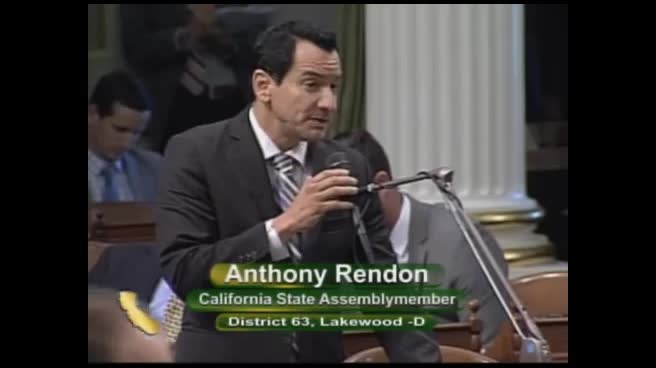
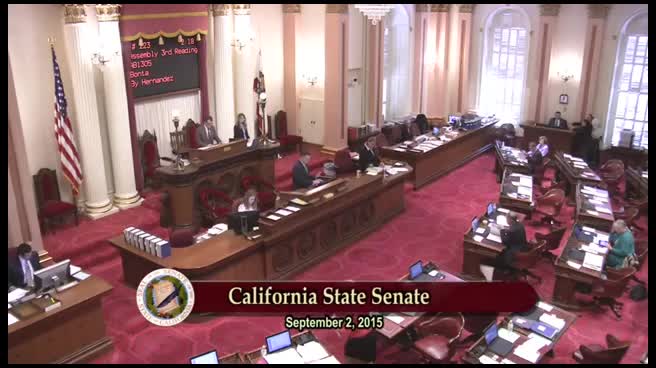
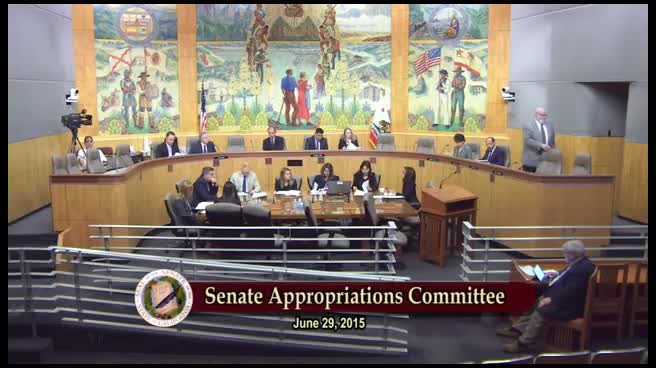
Bill Author

Bill Co-Author(s):