AB 952: Local government: vacancies.
- Session Year: 2015-2016
- House: Assembly
- Latest Version Date: 2015-08-12
Existing law requires a city council, within 60 days of a vacancy in an elective office, to fill that vacancy by appointment or call a special election to fill the vacancy, and provides that a person elected or appointed to fill a vacancy holds office for the unexpired term of the former incumbent.
This bill would instead provide that if the council fills a vacancy in an elective office by appointment, and that vacancy occurred in the first half of the term of office and at least 130 days prior to the next general municipal election, the person appointed to fill the vacancy holds office until the next general municipal election at which a person is elected to fill that vacancy, and thereafter, until the person elected is qualified. The bill would additionally provide that if the vacancy occurs in the first half of a term of office, but less than 130 days prior to the next general municipal election, or if the vacancy occurs in the second half of the term of office, the person appointed to fill the vacancy holds office for the unexpired term of the former incumbent.
Existing law requires a school district or community college district governing board, whenever a vacancy occurs or a resignation containing a deferred effective date has been filed with the county superintendent of schools, to either order an election or make a provisional appointment. Existing law requires a person appointed to fill a vacancy to hold office only until the next regularly scheduled election for district governing board members that is scheduled 130 or more days after the effective date of the vacancy, at which time an election is required to be held to fill the vacancy for the remainder of the unexpired term.
This bill would require the provisional appointee to serve on the board until the next regularly scheduled election. This bill would eliminate the requirement that an election be held 130 or more days after the effective date of the vacancy.
Existing law requires a person elected to fill a vacancy in an elective office on the governing board of a special district, or a person appointed to fill a vacancy in an appointed office or an elective office in a general law city, to fill the vacancy for the balance of the unexpired term of office or the unexpired term of the former incumbent, as applicable.
This bill would instead require those persons to fill the vacancy until the next regularly scheduled election.
(a)If a vacancy occurs in an appointive office provided for in this chapter, the council shall fill the vacancy by appointment. A person appointed to fill a vacancy holds office for the unexpired term of the former incumbent.
(b)If a vacancy occurs in an elective office provided for in this chapter, the council shall, within 60 days from the commencement of the vacancy, either fill the vacancy by appointment or call a special election to fill the vacancy.
(1)If the council calls a special election, the special election shall be held on the next regularly established election date not less than 114 days from the call of the special election. A person elected to fill a vacancy holds office for the unexpired term of the former incumbent.
(2)If the council fills the vacancy by appointment, the person appointed to fill the vacancy shall hold office pursuant to one of the following:
(A)If the vacancy occurs in the first half of a term of office and at least 130 days prior to the next general municipal election, the person appointed to fill the vacancy shall hold office until the next general municipal election that is scheduled 130 or more days after the date the council is notified of the vacancy, and thereafter until the person who is elected at that election to fill the vacancy has been qualified. The person elected to fill the vacancy shall hold office for the unexpired balance of the term of office.
(B)If the vacancy occurs in the first half of a term of office, but less than 130 days prior to the next general municipal election, or if the vacancy occurs in the second half of a term of office, the person appointed to fill the vacancy shall hold office for the unexpired term of the former incumbent.
(c)Notwithstanding subdivision (b) and Section 34902, a city may enact an ordinance that does any of the following:
(1)Requires that a special election be called immediately to fill every city council vacancy and the office of mayor designated pursuant to Section 34902. The ordinance shall provide that the special election shall be held on the next regularly established election date not less than 114 days from the call of the special election.
(2)Requires that a special election be held to fill a city council vacancy and the office of mayor designated pursuant to Section 34902 when petitions bearing a specified number of verified signatures are filed. The ordinance shall provide that the special election shall be held on the next regularly established election date not less than 114 days from the filing of the petition. A governing body that has enacted such an ordinance may also call a special election pursuant to subdivision (b) without waiting for the filing of a petition.
(3)Provides that a person appointed to fill a vacancy on the city council holds office only until the date of a special election which shall immediately be called to fill the remainder of the term. The special election may be held on the date of the next regularly established election or regularly scheduled municipal election to be held throughout the city not less than 114 days from the call of the special election.
(d)(1)Notwithstanding subdivision (b) and Section 34902, an appointment shall not be made to fill a vacancy on a city council if the appointment would result in a majority of the members serving on the council having been appointed. The vacancy shall be filled in the manner provided by this subdivision.
(2)The city council may call an election to fill the vacancy, to be held on the next regularly established election date not less than 114 days after the call.
(3)If the city council does not call an election pursuant to paragraph (2), the vacancy shall be filled at the next regularly established election date.
(e)(1)If the city council of a city that elects city council members by or from districts elects to fill a vacancy on the city council by appointment as a result of a city council member resigning from office, the resigning city council member may cast a vote on the appointment if the resignation will go into effect upon the appointment of a successor. A city council member shall not cast a vote for a family member or any other person with whom the city council member has a relationship that may create a potential conflict of interest.
(2)If a city council member elects to cast a vote under this subdivision, the city council member shall be prohibited from the following actions for a period of two years after the appointment of a successor:
(A)Advocating on any measure or issue coming before the city council in which the city council member may have a personal benefit.
(B)Entering into a contract of any kind with the city or a city vendor.
(C)Accepting a position of employment with the city or a city vendor.
(D)Applying for a permit that is subject to the approval of the city council.
(3)This subdivision shall not apply to any city council member who is resigning from the city council due to charges of, or conviction for, corruption or criminal behavior, or who is subject to a recall election.
(a)If a vacancy occurs in an appointive office provided for in this chapter, the council shall fill the vacancy by appointment. A person appointed to fill a vacancy holds office for the unexpired term of the former incumbent.
(b)If a vacancy occurs in an elective office provided for in this chapter, the council shall, within 60 days from the commencement of the vacancy, either fill the vacancy by appointment or call a special election to fill the vacancy.
(1)If the council calls a special election, the special election shall be held on the next regularly established election date not less than 114 days from the call of the special election. A person elected to fill a vacancy holds office for the unexpired term of the former incumbent.
(2)If the council fills the vacancy by appointment, the person appointed to fill the vacancy shall hold office pursuant to one of the following:
(A)If the vacancy occurs in the first half of a term of office and at least 130 days prior to the next general municipal election, the person appointed to fill the vacancy shall hold office until the next general municipal election that is scheduled 130 or more days after the date the council is notified of the vacancy, and thereafter until the person who is elected at that election to fill the vacancy has been qualified. The person elected to fill the vacancy shall hold office for the unexpired balance of the term of office.
(B)If the vacancy occurs in the first half of a term of office, but less than 130 days prior to the next general municipal election, or if the vacancy occurs in the second half of a term of office, the person appointed to fill the vacancy shall hold office for the unexpired term of the former incumbent.
(c)Notwithstanding subdivision (b) and Section 34902, a city may enact an ordinance that does any of the following:
(1)Requires that a special election be called immediately to fill every city council vacancy and the office of mayor designated pursuant to Section 34902. The ordinance shall provide that the special election shall be held on the next regularly established election date not less than 114 days from the call of the special election.
(2)Requires that a special election be held to fill a city council vacancy and the office of mayor designated pursuant to Section 34902 when petitions bearing a specified number of verified signatures are filed. The ordinance shall provide that the special election shall be held on the next regularly established election date not less than 114 days from the filing of the petition. A governing body that has enacted such an ordinance may also call a special election pursuant to subdivision (b) without waiting for the filing of a petition.
(3)Provides that a person appointed to fill a vacancy on the city council holds office only until the date of a special election which shall immediately be called to fill the remainder of the term or until the next regularly scheduled citywide election. term. The special election may be held on the date of the next regularly established election or regularly scheduled municipal election to be held throughout the city not less than 114 days from the call of the special election.
(d)(1)Notwithstanding subdivision (b) and Section 34902, an appointment shall not be made to fill a vacancy on a city council if the appointment would result in a majority of the members serving on the council having been appointed. The vacancy shall be filled in the manner provided by this subdivision.
(2)The city council may call an election to fill the vacancy, to be held on the next regularly established election date not less than 114 days after the call.
(3)If the city council does not call an election pursuant to paragraph (2), the vacancy shall be filled at the next regularly established election date.
(e)(1)If the city council of a city that elects city council members by or from districts elects to fill a vacancy on the city council by appointment as a result of a city council member resigning from office, the resigning city council member may cast a vote on the appointment if the resignation will go into effect upon the appointment of a successor. A city council member shall not cast a vote for a family member or any other person with whom the city council member has a relationship that may create a potential conflict of interest.
(2)If a city council member elects to cast a vote under this subdivision, the city council member shall be prohibited from the following actions for a period of two years after the appointment of a successor:
(A)Advocating on any measure or issue coming before the city council in which the city council member may have a personal benefit.
(B)Entering into a contract of any kind with the city or a city vendor.
(C)Accepting a position of employment with the city or a city vendor.
(D)Applying for a permit that is subject to the approval of the city council.
(3)This subdivision shall not apply to any city council member who is resigning from the city council due to charges of, or conviction for, corruption or criminal behavior, or who is subject to a recall election.
(a)(1)If a vacancy occurs, or if a resignation has been filed with the county superintendent of schools containing a deferred effective date, the school district or community college district governing board shall, within 60 days of the vacancy or the filing of the deferred resignation, either order an election or make a provisional appointment to fill the vacancy. A governing board member may not defer the effective date of his or her resignation for more than 60 days after he or she files the resignation with the county superintendent of schools. A provisional appointee shall serve on the board until the next regularly scheduled election.
(2)In the event that a governing board fails to make a provisional appointment or order an election within the prescribed 60-day period as required by this section, the county superintendent of schools shall order an election to fill the vacancy.
(b)When an election is ordered, it shall be held on the next established election date provided pursuant to Chapter 1 (commencing with Section 1000) of Division 1 of the Elections Code not less than 130 days after the order of the election.
(c)(1)If a provisional appointment is made within the 60-day period, the registered voters of the district may, within 30 days from the date of the appointment, petition for the conduct of a special election to fill the vacancy. A petition shall be deemed to bear a sufficient number of signatures if signed by at least the number of registered voters of the district equal to 11/2 percent of the number of registered voters of the district at the time of the last regular election for governing board members, or 25 registered voters, whichever is greater. However, in districts with less than 2,000 registered voters, a petition shall be deemed to bear a sufficient number of signatures if signed by at least 5 percent of the number of registered voters of the district at the time of the last regular election for governing board members.
(2)The petition shall be submitted to the county superintendent of schools having jurisdiction who shall have 30 days to verify the signatures. If the petition is determined to be legally sufficient by the county superintendent of schools, the provisional appointment is terminated, and the county superintendent of schools shall order a special election to be conducted no later than the 130th day after the determination. However, if an established election date, as defined in Section 1000 of the Elections Code, occurs between the 130th day and the 150th day following the order of the election, the county superintendent of schools may order the special election to be conducted on the established election date.
(3)For purposes of this section, registered voters means the following:
(A)If the district uses the at-large method of election, as defined in subdivision (a) of Section 14026 of the Elections Code, registered voters of the entire school district or community college district.
(B)If the district uses district-based elections, as defined in subdivision (b) of Section 14026 of the Elections Code, registered voters of the election district.
(d)A provisional appointment made pursuant to subdivision (a) confers all powers and duties of a governing board member upon the appointee immediately following his or her appointment.
(e)A person appointed to fill a vacancy shall hold office only until the next regularly scheduled election. A person elected at an election to fill the vacancy shall hold office for the remainder of the term in which the vacancy occurs or will occur.
(f)(1)If a petition calling for a special election is circulated, the petition shall meet all of the following requirements:
(A)The petition shall contain the estimate of the elections official of the cost of conducting the special election.
(B)The name and residence address of at least one, but not more than five, of the proponents of the petition shall appear on the petition, each of which proponents shall be a registered voter of the school district or community college district, as applicable.
(C)None of the text or other language of the petition shall appear in less than six-point type.
(D)The petition shall be prepared and circulated in conformity with Sections 100 and 104 of the Elections Code.
(2)If any of the requirements of this subdivision are not met as to any petition calling for a special election, the county superintendent of schools shall not verify the signatures, nor shall any further action be taken with respect to the petition.
(3)No person shall permit the list of names on petitions prescribed by this section to be used for any purpose other than qualification of the petition for the purpose of holding an election pursuant to this section.
(4)The petition filed with the county superintendent of schools shall be subject to the restrictions in Section 6253.5 of the Government Code.
(g)Elections held pursuant to subdivisions (b) and (c) shall be conducted in as nearly the same manner as practicable as other governing board member elections.
SEC. 2.Section 1780 of the Government Code is amended to read:1780.(a)Notwithstanding any other provision of law, a vacancy in any elective office on the governing board of a special district, other than those specified in Section 1781, shall be filled pursuant to this section.
(b)The district shall notify the county elections official of the vacancy no later than 15 days after either the date on which the district board is notified of the vacancy or the effective date of the vacancy, whichever is later.
(c)The remaining members of the district board may fill the vacancy either by appointment pursuant to subdivision (d) or by calling an election pursuant to subdivision (e).
(d)(1)The remaining members of the district board shall make the appointment pursuant to this subdivision within 60 days after either the date on which the district board is notified of the vacancy or the effective date of the vacancy, whichever is later. The district shall post a notice of the vacancy in three or more conspicuous places in the district at least 15 days before the district board makes the appointment. The district shall notify the county elections official of the appointment no later than 15 days after the appointment.
(2)If the vacancy occurs in the first half of a term of office and at least 130 days prior to the next general district election, the person appointed to fill the vacancy shall hold office until the next general district election that is scheduled 130 or more days after the date the district board is notified of the vacancy, and thereafter until the person who is elected at that election to fill the vacancy has been qualified. The person elected to fill the vacancy shall hold office until the next regularly scheduled election.
(3)If the vacancy occurs in the first half of a term of office, but less than 130 days prior to the next general district election, or if the vacancy occurs in the second half of a term of office, the person appointed to fill the vacancy shall serve until the next regularly scheduled election.
(e)(1)In lieu of making an appointment the remaining members of the board may within 60 days of the date the district board is notified of the vacancy or the effective date of the vacancy, whichever is later, call an election to fill the vacancy.
(2)The election called pursuant to this subdivision shall be held on the next established election date provided in Chapter 1 (commencing with Section 1000) of Division 1 of the Elections Code that is 130 or more days after the date the district board calls the election.
(f)(1)If the vacancy is not filled by the district board by appointment, or if the district board has not called for an election within 60 days of the date the district board is notified of the vacancy or the effective date of the vacancy, whichever is later, then the city council of the city in which the district is wholly located, or if the district is not wholly located within a city, the board of supervisors of the county representing the larger portion of the district area in which the election to fill the vacancy will be held, may appoint a person to fill the vacancy within 90 days of the date the district board is notified of the vacancy or the effective date of the vacancy, whichever is later, or the city council or board of supervisors may order the district to call an election to fill the vacancy.
(2)The election called pursuant to this subdivision shall be held on the next established election date provided in Chapter 1 (commencing with Section 1000) of Division 1 of the Elections Code that is 130 or more days after the date the city council or board of supervisors calls the election.
(g)(1)If within 90 days of the date the district board is notified of the vacancy or the effective date of the vacancy, whichever is later, the remaining members of the district board or the appropriate board of supervisors or city council have not filled the vacancy and no election has been called for, then the district board shall call an election to fill the vacancy.
(2)The election called pursuant to this subdivision shall be held on the next established election date provided in Chapter 1 (commencing with Section 1000) of Division 1 of the Elections Code that is 130 or more days after the date the district board calls the election.
(h)(1)Notwithstanding any other provision of this section, if the number of remaining members of the district board falls below a quorum, then at the request of the district secretary or a remaining member of the district board, the appropriate board of supervisors or the city council shall promptly appoint a person to fill the vacancy, or may call an election to fill the vacancy.
(2)The board of supervisors or the city council shall only fill enough vacancies by appointment or by election to provide the district board with a quorum.
(3)If the vacancy occurs in the first half of a term of office and at least 130 days prior to the next general district election, the person appointed to fill the vacancy shall hold the office until the next general district election that is scheduled 130 or more days after the date the district board is notified of the vacancy, and thereafter until the person who is elected at that election to fill the vacancy has been qualified. The person elected to fill the vacancy shall hold office for the unexpired balance of the term of office.
(4)If the vacancy occurs in the first half of a term of office, but less than 130 days prior to the next general district election, or if the vacancy occurs in the second half of a term of office, the person appointed to fill the vacancy shall fill the balance of the unexpired term of office.
(5)The election called pursuant to this subdivision shall be held on the next established election date provided in Chapter 1 (commencing with Section 1000) of Division 1 of the Elections Code that is held 130 or more days after the date the city council or board of supervisors calls the election.
SEC. 3.SECTION 1.Section 36512 of the Government Code is amended to read:36512.(a)If a vacancy occurs in an appointive office provided for in this chapter, the council shall fill the vacancy by appointment. A person appointed to fill a vacancy holds office until the next regularly scheduled election. for the unexpired term of the former incumbent.
(b)If a vacancy occurs in an elective office provided for in this chapter, the council shall, within 60 days from the commencement of the vacancy, either fill the vacancy by appointment or call a special election to fill the vacancy. The
(1)If the council calls a special election, the special election shall be held on the next regularly established election date not less than 114 days from the call of the special election. A person elected to fill a vacancy holds office for the unexpired term of the former incumbent.
(2)If the council fills the vacancy by appointment, the person appointed to fill the vacancy shall hold office pursuant to one of the following:
(A)If the vacancy occurs in the first half of a term of office and at least 130 days prior to the next general municipal election, the person appointed to fill the vacancy shall hold office until the next general municipal election that is scheduled 130 or more days after the date the council is notified of the vacancy, and thereafter until the person who is elected at that election to fill the vacancy has been qualified. The person elected to fill the vacancy shall hold office for the unexpired balance of the term of office.
(B)If the vacancy occurs in the first half of a term of office, but less than 130 days prior to the next general municipal election, or if the vacancy occurs in the second half of a term of office, the person appointed to fill the vacancy shall hold office for the unexpired term of the former incumbent.
(c)Notwithstanding subdivision (b) and Section 34902, a city may enact an ordinance that does any of the following:
(1)Requires that a special election be called immediately to fill every city council vacancy and the office of mayor designated pursuant to Section 34902. The ordinance shall provide that the special election shall be held on the next regularly established election date not less than 114 days from the call of the special election.
(2)Requires that a special election be held to fill a city council vacancy and the office of mayor designated pursuant to Section 34902 when petitions bearing a specified number of verified signatures are filed. The ordinance shall provide that the special election shall be held on the next regularly established election date not less than 114 days from the filing of the petition. A governing body that has enacted such an ordinance may also call a special election pursuant to subdivision (b) without waiting for the filing of a petition.
(3)Provides that a person appointed to fill a vacancy on the city council holds office only until the date of a special election which shall immediately be called to fill the remainder of the term or until the next regularly scheduled citywide election. The special election may be held on the date of the next regularly established election or regularly scheduled municipal election to be held throughout the city not less than 114 days from the call of the special election.
(d)(1)Notwithstanding subdivision (b) and Section 34902, an appointment shall not be made to fill a vacancy on a city council if the appointment would result in a majority of the members serving on the council having been appointed. The vacancy shall be filled in the manner provided by this subdivision.
(2)The city council may call an election to fill the vacancy, to be held on the next regularly established election date not less than 114 days after the call.
(3)If the city council does not call an election pursuant to paragraph (2), the vacancy shall be filled at the next regularly established election date.
(e)(1)If the city council of a city that elects city council members by or from districts elects to fill a vacancy on the city council by appointment as a result of a city council member resigning from office, the resigning city council member may cast a vote on the appointment if the resignation will go into effect upon the appointment of a successor. A city council member shall not cast a vote for a family member or any other person with whom the city council member has a relationship that may create a potential conflict of interest.
(2)If a city council member elects to cast a vote under this subdivision, the city council member shall be prohibited from the following actions for a period of two years after the appointment of a successor:
(A)Advocating on any measure or issue coming before the city council in which the city council member may have a personal benefit.
(B)Entering into a contract of any kind with the city or a city vendor.
(C)Accepting a position of employment with the city or a city vendor.
(D)Applying for a permit that is subject to the approval of the city council.
(3)This subdivision shall not apply to any city council member who is resigning from the city council due to charges of, or conviction for, corruption or criminal behavior, or who is subject to a recall election.
(a)(1)If a vacancy occurs, or if a resignation has been filed with the county superintendent of schools containing a deferred effective date, the school district or community college district governing board shall, within 60 days of the vacancy or the filing of the deferred resignation, either order an election or make a provisional appointment to fill the vacancy. A governing board member may not defer the effective date of his or her resignation for more than 60 days after he or she files the resignation with the county superintendent of schools. A provisional appointee shall serve on the board until the next regularly scheduled election.
(2)In the event that a governing board fails to make a provisional appointment or order an election within the prescribed 60-day period as required by this section, the county superintendent of schools shall order an election to fill the vacancy.
(b)When an election is ordered, it shall be held on the next established election date provided pursuant to Chapter 1 (commencing with Section 1000) of Division 1 of the Elections Code not less than 130 days after the order of the election.
(c)(1)If a provisional appointment is made within the 60-day period, the registered voters of the district may, within 30 days from the date of the appointment, petition for the conduct of a special election to fill the vacancy. A petition shall be deemed to bear a sufficient number of signatures if signed by at least the number of registered voters of the district equal to 11/2 percent of the number of registered voters of the district at the time of the last regular election for governing board members, or 25 registered voters, whichever is greater. However, in districts with less than 2,000 registered voters, a petition shall be deemed to bear a sufficient number of signatures if signed by at least 5 percent of the number of registered voters of the district at the time of the last regular election for governing board members.
(2)The petition shall be submitted to the county superintendent of schools having jurisdiction who shall have 30 days to verify the signatures. If the petition is determined to be legally sufficient by the county superintendent of schools, the provisional appointment is terminated, and the county superintendent of schools shall order a special election to be conducted no later than the 130th day after the determination. However, if an established election date, as defined in Section 1000 of the Elections Code, occurs between the 130th day and the 150th day following the order of the election, the county superintendent of schools may order the special election to be conducted on the established election date.
(3)For purposes of this section, registered voters means the following:
(A)If the district uses the at-large method of election, as defined in subdivision (a) of Section 14026 of the Elections Code, registered voters of the entire school district or community college district.
(B)If the district uses district-based elections, as defined in subdivision (b) of Section 14026 of the Elections Code, registered voters of the election district.
(d)A provisional appointment made pursuant to subdivision (a) confers all powers and duties of a governing board member upon the appointee immediately following his or her appointment.
(e)A person appointed to fill a vacancy shall hold office only until the next regularly scheduled election for district governing board members that is scheduled 130 or more days after the effective date of the vacancy, whereupon an election shall be held to fill the vacancy for the remainder of the unexpired term. election. A person elected at an election to fill the vacancy shall hold office for the remainder of the term in which the vacancy occurs or will occur.
(f)(1)If a petition calling for a special election is circulated, the petition shall meet all of the following requirements:
(A)The petition shall contain the estimate of the elections official of the cost of conducting the special election.
(B)The name and residence address of at least one, but not more than five, of the proponents of the petition shall appear on the petition, each of which proponents shall be a registered voter of the school district or community college district, as applicable.
(C)None of the text or other language of the petition shall appear in less than six-point type.
(D)The petition shall be prepared and circulated in conformity with Sections 100 and 104 of the Elections Code.
(2)If any of the requirements of this subdivision are not met as to any petition calling for a special election, the county superintendent of schools shall not verify the signatures, nor shall any further action be taken with respect to the petition.
(3)No person shall permit the list of names on petitions prescribed by this section to be used for any purpose other than qualification of the petition for the purpose of holding an election pursuant to this section.
(4)The petition filed with the county superintendent of schools shall be subject to the restrictions in Section 6253.5 of the Government Code.
(g)Elections held pursuant to subdivisions (b) and (c) shall be conducted in as nearly the same manner as practicable as other governing board member elections.
SEC. 2.Section 1780 of the Government Code is amended to read:1780.(a)Notwithstanding any other provision of law, a vacancy in any elective office on the governing board of a special district, other than those specified in Section 1781, shall be filled pursuant to this section.
(b)The district shall notify the county elections official of the vacancy no later than 15 days after either the date on which the district board is notified of the vacancy or the effective date of the vacancy, whichever is later.
(c)The remaining members of the district board may fill the vacancy either by appointment pursuant to subdivision (d) or by calling an election pursuant to subdivision (e).
(d)(1)The remaining members of the district board shall make the appointment pursuant to this subdivision within 60 days after either the date on which the district board is notified of the vacancy or the effective date of the vacancy, whichever is later. The district shall post a notice of the vacancy in three or more conspicuous places in the district at least 15 days before the district board makes the appointment. The district shall notify the county elections official of the appointment no later than 15 days after the appointment.
(2)If the vacancy occurs in the first half of a term of office and at least 130 days prior to the next general district election, the person appointed to fill the vacancy shall hold office until the next general district election that is scheduled 130 or more days after the date the district board is notified of the vacancy, and thereafter until the person who is elected at that election to fill the vacancy has been qualified. The person elected to fill the vacancy shall hold office for the unexpired balance of the term of office. until the next regularly scheduled election.
(3)If the vacancy occurs in the first half of a term of office, but less than 130 days prior to the next general district election, or if the vacancy occurs in the second half of a term of office, the person appointed to fill the vacancy shall fill the balance of the unexpired term of office. serve until the next regularly scheduled election.
(e)(1)In lieu of making an appointment the remaining members of the board may within 60 days of the date the district board is notified of the vacancy or the effective date of the vacancy, whichever is later, call an election to fill the vacancy.
(2)The election called pursuant to this subdivision shall be held on the next established election date provided in Chapter 1 (commencing with Section 1000) of Division 1 of the Elections Code that is 130 or more days after the date the district board calls the election.
(f)(1)If the vacancy is not filled by the district board by appointment, or if the district board has not called for an election within 60 days of the date the district board is notified of the vacancy or the effective date of the vacancy, whichever is later, then the city council of the city in which the district is wholly located, or if the district is not wholly located within a city, the board of supervisors of the county representing the larger portion of the district area in which the election to fill the vacancy will be held, may appoint a person to fill the vacancy within 90 days of the date the district board is notified of the vacancy or the effective date of the vacancy, whichever is later, or the city council or board of supervisors may order the district to call an election to fill the vacancy.
(2)The election called pursuant to this subdivision shall be held on the next established election date provided in Chapter 1 (commencing with Section 1000) of Division 1 of the Elections Code that is 130 or more days after the date the city council or board of supervisors calls the election.
(g)(1)If within 90 days of the date the district board is notified of the vacancy or the effective date of the vacancy, whichever is later, the remaining members of the district board or the appropriate board of supervisors or city council have not filled the vacancy and no election has been called for, then the district board shall call an election to fill the vacancy.
(2)The election called pursuant to this subdivision shall be held on the next established election date provided in Chapter 1 (commencing with Section 1000) of Division 1 of the Elections Code that is 130 or more days after the date the district board calls the election.
(h)(1)Notwithstanding any other provision of this section, if the number of remaining members of the district board falls below a quorum, then at the request of the district secretary or a remaining member of the district board, the appropriate board of supervisors or the city council shall promptly appoint a person to fill the vacancy, or may call an election to fill the vacancy.
(2)The board of supervisors or the city council shall only fill enough vacancies by appointment or by election to provide the district board with a quorum.
(3)If the vacancy occurs in the first half of a term of office and at least 130 days prior to the next general district election, the person appointed to fill the vacancy shall hold the office until the next general district election that is scheduled 130 or more days after the date the district board is notified of the vacancy, and thereafter until the person who is elected at that election to fill the vacancy has been qualified. The person elected to fill the vacancy shall hold office for the unexpired balance of the term of office.
(4)If the vacancy occurs in the first half of a term of office, but less than 130 days prior to the next general district election, or if the vacancy occurs in the second half of a term of office, the person appointed to fill the vacancy shall fill the balance of the unexpired term of office.
(5)The election called pursuant to this subdivision shall be held on the next established election date provided in Chapter 1 (commencing with Section 1000) of Division 1 of the Elections Code that is held 130 or more days after the date the city council or board of supervisors calls the election.
SEC. 3.Section 36512 of the Government Code is amended to read:36512.(a)If a vacancy occurs in an appointive office provided for in this chapter, the council shall fill the vacancy by appointment. A person appointed to fill a vacancy holds office for the unexpired term of the former incumbent. until the next regularly scheduled election.
(b)If a vacancy occurs in an elective office provided for in this chapter, the council shall, within 60 days from the commencement of the vacancy, either fill the vacancy by appointment or call a special election to fill the vacancy. The special election shall be held on the next regularly established election date not less than 114 days from the call of the special election. A person appointed or elected to fill a vacancy holds office for the unexpired term of the former incumbent.
(c)Notwithstanding subdivision (b) and Section 34902, a city may enact an ordinance that does any of the following:
(1)Requires that a special election be called immediately to fill every city council vacancy and the office of mayor designated pursuant to Section 34902. The ordinance shall provide that the special election shall be held on the next regularly established election date not less than 114 days from the call of the special election.
(2)Requires that a special election be held to fill a city council vacancy and the office of mayor designated pursuant to Section 34902 when petitions bearing a specified number of verified signatures are filed. The ordinance shall provide that the special election shall be held on the next regularly established election date not less than 114 days from the filing of the petition. A governing body that has enacted such an ordinance may also call a special election pursuant to subdivision (b) without waiting for the filing of a petition.
(3)Provides that a person appointed to fill a vacancy on the city council holds office only until the date of a special election which shall immediately be called to fill the remainder of the term. term or until the next regularly scheduled citywide election. The special election may be held on the date of the next regularly established election or regularly scheduled municipal election to be held throughout the city not less than 114 days from the call of the special election.
(d)(1)Notwithstanding subdivision (b) and Section 34902, an appointment shall not be made to fill a vacancy on a city council if the appointment would result in a majority of the members serving on the council having been appointed. The vacancy shall be filled in the manner provided by this subdivision.
(2)The city council may call an election to fill the vacancy, to be held on the next regularly established election date not less than 114 days after the call.
(3)If the city council does not call an election pursuant to paragraph (2), the vacancy shall be filled at the next regularly established election date.
(e)(1)If the city council of a city that elects city council members by or from districts elects to fill a vacancy on the city council by appointment as a result of a city council member resigning from office, the resigning city council member may cast a vote on the appointment if the resignation will go into effect upon the appointment of a successor. A city council member shall not cast a vote for a family member or any other person with whom the city council member has a relationship that may create a potential conflict of interest.
(2)If a city council member elects to cast a vote under this subdivision, the city council member shall be prohibited from the following actions for a period of two years after the appointment of a successor:
(A)Advocating on any measure or issue coming before the city council in which the city council member may have a personal benefit.
(B)Entering into a contract of any kind with the city or a city vendor.
(C)Accepting a position of employment with the city or a city vendor.
(D)Applying for a permit that is subject to the approval of the city council.
(3)This subdivision shall not apply to any city council member who is resigning from the city council due to charges of, or conviction for, corruption or criminal behavior, or who is subject to a recall election.
|
Date
|
Status
|
|---|---|
| May 22, 2015 | Read third time. Passed. Ordered to the Senate. |
| Aug 12, 2015 | Chaptered by Secretary of State - Chapter 185, Statutes of 2015. |
| Aug 12, 2015 | Approved by the Governor. |
| Aug 3, 2015 | Enrolled and presented to the Governor at 3 p.m. |
| Jul 13, 2015 | Read third time. Passed. Ordered to the Assembly. (Ayes 39. Noes 0. Page 1901.). |
| Jul 13, 2015 | Read third time. Passed. Ordered to the Assembly. |
| Jul 13, 2015 | In Assembly. Ordered to Engrossing and Enrolling. |
| Jul 2, 2015 | Read second time. Ordered to third reading. |
| Jul 1, 2015 | From committee: Do pass. (Ayes 6. Noes 0.) (July 1). |
| Jun 4, 2015 | Referred to Com. on GOV. & F. |
| May 22, 2015 | Read third time. Passed. Ordered to the Senate. (Ayes 74. Noes 0. Page 1560.) |
| Feb 26, 2015 | Read first time. To print. |
| May 22, 2015 | In Senate. Read first time. To Com. on RLS. for assignment. |
| May 14, 2015 | Read second time. Ordered to Consent Calendar. |
| May 13, 2015 | From committee: Do pass. To Consent Calendar. (Ayes 7. Noes 0.) (May 13). |
| Apr 21, 2015 | Re-referred to Com. on E. & R. |
| Apr 20, 2015 | Read second time and amended. |
| Apr 16, 2015 | From committee: Amend, and do pass as amended and re-refer to Com. on E. & R. (Ayes 8. Noes 0.) (April 15). |
| Apr 9, 2015 | Re-referred to Com. on L. GOV. |
| Apr 8, 2015 | From committee chair, with author's amendments: Amend, and re-refer to Com. on L. GOV. Read second time and amended. |
| Mar 16, 2015 | Referred to Coms. on L. GOV. and E. & R. |
| Feb 27, 2015 | From printer. May be heard in committee March 29. |
|
Date
|
Description
|
Location
|
Votes
|
|
|---|---|---|---|---|
| Jul 13, 2015 | Assembly 3rd Reading AB952 Cristina Garcia By Lara | Senate Floor |
Passed |
|
| Jul 1, 2015 | Do pass | Senate Standing Committee on Governance and Finance |
Passed |
|
| May 22, 2015 | AB 952 GARCIA, C. Consent Calendar Second Day Regular Session | Assembly Floor |
Passed |
|
| May 13, 2015 | Do pass. To Consent Calendar. | Assembly Standing Committee on Elections and Redistricting |
Passed |
|
| Apr 15, 2015 | Do pass as amended and be re-referred to the Committee on [Elections and Redistricting] | Assembly Standing Committee on Local Government |
Passed |
This list shows positions taken on this bill by organizations on the date displayed, which is linked to the original source.
Positions by individuals are not included.
|
Organization
|
Position
|
Date
|
|---|---|---|
| California Common Cause | ** Support | Jul 13, 2015 |
AB 952
Page 4
|
Office of Senate Floor Analyses (916) 651-1520 Fax: (916) 327-4478 |
THIRD READING
Bill No: AB 952
Amended: 4/20/15 in Assembly
SENATE GOVERNANCE & FIN. COMMITTEE: 6-0, 7/1/15
AYES: Hertzberg, Nguyen, Beall, Lara, Moorlach, Pavley
NO VOTE RECORDED: Hernandez
ASSEMBLY FLOOR: 74-0, 5/22/15 (Consent) - See last page for vote
SUBJECT: Local government: vacancies
DIGEST: This bill provides an alternative procedure for filling a vacancy on a city council that occurs in the first half of the term of office.
Existing law:
Outlines certain criteria for determining when a public office become vacant, including death, absence without leave, removal from office, felony convictions, and resignation.
Gives charter cities wide latitude to establish their own rules for filling vacancies on their governing bodies.
Makes general law cities subject to the general laws passed by the Legislature.
Provides that, when a spot becomes vacant on the city council of a general law city, the city council has 60 days from the start of a vacancy to either appoint someone to fill the position or call a special election (AB 1668, Knight, Chapter 38, Statutes of 2010).
Requires, if a general law city’s city council chooses to call a special election to fill a vacancy, that the election must be held on the next regularly established election date that is at least 114 days away from when the election is called.
Provides that a city councilmember who is elected or appointed to fill a vacancy holds office for the rest of term of the former officeholder, regardless of how much time is left in the term for that vacant office.
Gives general law cities the option of using alternative procedures to fill a vacant public office if they enact an ordinance that either:
Requires a special election to fill every city council vacancy and the office of mayor to be called immediately—rather than within 60 days from the time of the vacancy; or
Requires a special election to be held to fill a city council vacancy and the office of mayor upon the filing of petitions bearing a specified number of verified signatures.
Provides that, under either alternative procedure, state law requires a special election to be held no sooner than 114 days from the call of the special election or the filing of the petition.
This bill:
Repeals a requirement that a person appointed to fill a vacant city elective office for the unexpired term of the former incumbent.
Establishes the following procedure when a city council vacancy occurs (unless a council adopts an alternative ordinance as authorized pursuant to existing law):
If the council calls a special election, the special election shall be held on the next regularly established election date not less than 114 days from the call of the special election. A person elected to fill a vacancy holds office for the unexpired term of the former incumbent.
If the council fills the vacancy by appointment, the person appointed to fill the vacancy shall hold office pursuant to one of the following:
If the vacancy occurs in the first half of a term of office and at least 130 days prior to the next general municipal election, the person appointed to fill the vacancy shall hold office until the next general municipal election that is scheduled 130 or more days after the date the council is notified of the vacancy, and thereafter until the person who is elected at that election to fill the vacancy has been qualified. The person elected to fill the vacancy shall hold office for the unexpired balance of the term of office; or,
If the vacancy occurs in the first half of a term of office, but less than 130 days prior to the next general municipal election, or if the vacancy occurs in the second half of a term of office, the person appointed to fill the vacancy shall hold office for the unexpired term of the former incumbent.
Does not affect the ability that city councils have under existing law to adopt an alternative procedure that governs the filling of vacancies in elective city office.
Comments
Purpose of the bill. When a city elective office is vacant, a city council has two options: 1) to call a special election to fill the vacancy; or 2) fill the vacancy by appointment. But calling a special election can be prohibitively expensive, especially for smaller cities. Furthermore, appointments deprive the voters of the ability to choose their representative, especially when appointees get to serve out more than half of the remainder of the original officeholder’s term. Appointees may not face an election for years, by which time some will have already gained the advantage of being an “incumbent.” AB 952 reasonably limits the duration that an appointee can serve without having to stand for election to half a term, thereby making appointees more democratically accountable. In addition, requiring that the special election be held at the next general municipal election will usually result in higher voter participation, at less cost to taxpayers, than a stand-alone special election.
Nice, but not necessary. AB 952 allows voters to have a greater influence over whether city council appointees stay in office for the remainder of the original officeholder’s term. However, even in the event of a vacancy(s) a city council’s remaining members are already accountable to voters through the democratic process, and their votes on appointments are conducted in public. Therefore, it is unclear whether state law needs to be changed to authorize special elections to be held earlier, when citizens who are dissatisfied with the appointment of a replacement councilmember can express their dissatisfaction with the original councilmembers who voted for the appointee.
Charter cities. The California Constitution authorizes cities to adopt charters. Charter cities have greater autonomy over local affairs than general law cities do, including plenary authority, subject to limited restrictions, to provide for the manner in which and the method by which municipal officers are elected. As mentioned above, this bill would apply to all general law cities (unless they adopt an alternative ordinance as outlined above). But because the Constitution provides that properly adopted city charters “shall supersede all laws inconsistent” with the charter, AB 952 will only apply to charter cities whose charters do not provide a procedure for filling city council vacancies.
FISCAL EFFECT: Appropriation: No Fiscal Com.: No Local: No
California Common Cause
None received
ASSEMBLY FLOOR: 74-0, 5/22/15
AYES: Achadjian, Travis Allen, Baker, Bigelow, Bloom, Bonilla, Bonta, Brough, Brown, Burke, Calderon, Campos, Chang, Chau, Chávez, Chiu, Chu, Cooley, Cooper, Dababneh, Dahle, Daly, Dodd, Eggman, Frazier, Beth Gaines, Gallagher, Cristina Garcia, Eduardo Garcia, Gatto, Gipson, Gomez, Gonzalez, Gordon, Gray, Grove, Hadley, Harper, Roger Hernández, Holden, Irwin, Jones-Sawyer, Kim, Lackey, Levine, Linder, Lopez, Low, Maienschein, Mathis, Mayes, McCarty, Medina, Melendez, Mullin, Nazarian, Obernolte, Patterson, Perea, Quirk, Rendon, Ridley-Thomas, Rodriguez, Salas, Santiago, Steinorth, Mark Stone, Thurmond, Ting, Wagner, Wilk, Williams, Wood, Atkins
NO VOTE RECORDED: Alejo, Jones, O'Donnell, Olsen, Waldron, Weber
Prepared by: Toren Lewis / GOV. & F. / (916) 651-4119
7/2/15 14:58:11
AB 952 (Cristina Garcia) 4/20/15 Page 4 of 4
SENATE COMMITTEE ON GOVERNANCE AND FINANCE
Senator Robert M. Hertzberg, Chair
2015 - 2016 Regular
Bill No: |
AB 952 |
Hearing Date: |
7/1/15 |
Author: |
Cristina Garcia |
Tax Levy: |
No |
Version: |
4/20/15 |
Fiscal: |
No |
Consultant: |
Lewis |
||
CITY COUNCILS: VACANCIES
Provides an alternative procedure for filling a vacancy on a city council that occurs in the first half of the term of office.
Background and Existing Law
State law outlines certain criteria for determining when a public office become vacant, including death, absence without leave, removal from office, felony convictions, and resignation. The procedures for filling vacancies on local governmental bodies differ depending on the type of local government in question. The Constitution gives charter cities wide latitude to establish their own rules for filling vacancies on their governing bodies, and the state’s 121 charter cities employ a range of different procedures for doing so; general law cities are subject to the general laws passed by the Legislature.
When a spot becomes vacant on the city council of a general law city, current law gives the city council 60 days from the start of a vacancy to either appoint someone to fill the position or call a special election (AB 1668, Knight, 2010). If a general law city’s city council chooses to call a special election to fill a vacancy, the election must be held on the next regularly established election date that is at least 114 days away from when the election is called. A city councilmember who is elected or appointed to fill a vacancy holds office for the rest of term of the former officeholder, regardless of how much time is left in the term for that vacant office. For example, if a city council member resigns in the first months of a 4-year term, existing law would allow the remaining members of the city council to appoint someone to serve the 3 years and 11 months remaining on the term, without the need for a special election at the next general municipal election.
Under current law, general law cities also have the option of using alternative procedures to fill a vacant public office if they enact an ordinance that either:
Requires a special election to fill every city council vacancy and the office of mayor to be called immediately—rather than within 60 days from the time of the vacancy; or
Requires a special election to be held to fill a city council vacancy and the office of mayor upon the filing of petitions bearing a specified number of verified signatures.
Under either alternative procedure, state law requires a special election to be held no sooner than 114 days from the call of the special election or the filing of the petition.
Special elections can be costly to taxpayers: for example, a Sacramento city council special election earlier this year cost approximately $200,000. Some critics assert that general law cities face a Catch-22 in the event of a city council vacancy early in the officeholder’s term, in which they either must call a special election at taxpayers’ expense, or appoint a successor to serve for the full duration of the original officeholder’s term.
In most other cases where state law allows local governments to fill a vacancy on its governing body by appointment—such as in the case of vacancies on the governing board of school districts and other special districts—appointments are temporary if they occur early in the term of office. Proponents of AB 952 propose changing the procedure for filling vacancies in elective city offices to make them similar to the procedure for filling vacancies on the governing boards of most special districts.
Proposed Law
Assembly Bill 952 repeals a requirement that a person appointed to fill a vacant city elective office for the unexpired term of the former incumbent.
Instead, AB 952 establishes the following procedure when a city council vacancy occurs (unless a council adopts an alternative ordinance as authorized pursuant to existing law):
If the council calls a special election, the special election shall be held on the next regularly established election date not less than 114 days from the call of the special election. A person elected to fill a vacancy holds office for the unexpired term of the former incumbent.
If the council fills the vacancy by appointment, the person appointed to fill the vacancy shall hold office pursuant to one of the following:
If the vacancy occurs in the first half of a term of office and at least 130 days prior to the next general municipal election, the person appointed to fill the vacancy shall hold office until the next general municipal election that is scheduled 130 or more days after the date the council is notified of the vacancy, and thereafter until the person who is elected at that election to fill the vacancy has been qualified. The person elected to fill the vacancy shall hold office for the unexpired balance of the term of office; or,
If the vacancy occurs in the first half of a term of office, but less than 130 days prior to the next general municipal election, or if the vacancy occurs in the second half of a term of office, the person appointed to fill the vacancy shall hold office for the unexpired term of the former incumbent.
This bill would not affect the ability that city councils have under existing law, however, to adopt an alternative procedure, as detailed above, that governs the filling of vacancies in elective city office.
State Revenue Impact
No estimate.
Comments
1. Purpose of the bill. When a city elective office is vacant, a city council has two options: 1) to call a special election to fill the vacancy; or 2) fill the vacancy by appointment. But calling a special election can be prohibitively expensive, especially for smaller cities. Furthermore, appointments deprive the voters of the ability to choose their representative, especially when appointees get to serve out more than half of the remainder of the original officeholder’s term. Appointees may not face an election for years, by which time some will have already gained the advantage of being an “incumbent.” AB 952 reasonably limits the duration that an appointee can serve without having to stand for election to half a term, thereby making appointees more democratically accountable. In addition, requiring that the special election be held at the next general municipal election will usually result in higher voter participation, at less cost to taxpayers, than a stand-alone special election.
2. Nice, but not necessary. AB 952 would allow voters to have a greater influence over whether city council appointees stay in office for the remainder of the original officeholder’s term. However, even in the event of a vacancy(s) a city council’s remaining members are already accountable to voters through the democratic process, and their votes on appointments are conducted in public. Therefore, it is unclear whether state law needs to be changed to authorize special elections to be held earlier, when citizens who are dissatisfied with the appointment of a replacement councilmember can express their dissatisfaction with the original councilmembers who voted for the appointee.
3. Charter cities. The California Constitution authorizes cities to adopt charters. Charter cities have greater autonomy over local affairs than general law cities do, including plenary authority, subject to limited restrictions, to provide for the manner in which and the method by which municipal officers are elected. As mentioned above, this bill would apply to all general law cities (unless they adopt an alternative ordinance as outlined above). But because The Constitution provides that properly adopted city charters “shall supersede all laws inconsistent” with the charter, AB 952 will only apply to charter cities whose charters do not provide a procedure for filling city council vacancies.
Assembly Actions
Assembly Local Government 8-0
Assembly Elections and Redistricting 7-0
Assembly Floor 74-0
Support and Opposition
(6/25/15)
Support: California Common Cause.
Opposition: Unknown.
-- END --
AB 952
Page 4
Date of Hearing: May 13, 2015
ASSEMBLY COMMITTEE ON ELECTIONS AND REDISTRICTING
Sebastian Ridley-Thomas, Chair
AB 952
(Cristina Garcia) – As Amended April 20, 2015
SUBJECT: Local government: vacancies.
SUMMARY: Requires, if a city council fills a vacancy in an elective city office by appointment and that vacancy occurs before a specified time during the first half of the term of office, that a special election be held to fill the remainder of the term. Specifically, this bill:
Provides that if a city council fills a vacancy in an elective city office by appointment, and the vacancy occurs in the first half of the term of office and at least 130 days prior to the next general municipal election, that a special election shall be held at that general municipal election for the unexpired term of the former incumbent.
Provides that the person who was appointed to fill the vacancy shall hold office until the person who is elected to fill the vacancy has been qualified.
EXISTING LAW:
Requires a city council, within 60 days of a vacancy in an elective city office, to fill that vacancy by appointment or by calling a special election to fill the vacancy.
Requires, if the council calls a special election, that the special election be held on the next regularly established election date that is not less than 114 days from the call of the special election.
Provides that a person who is elected or appointed to fill a vacancy holds office for the unexpired term of the former incumbent.
Permits a city to enact an ordinance to require one of the following procedures to govern the filling of vacancies in elective city offices:
Requires a special election to be called immediately to fill every city council vacancy and the office of mayor. Requires the special election to be held on the next regularly established election date not less than 114 days from the call of the special election.
Requires a special election be held to fill a city council vacancy and the office of mayor when petitions bearing a specified number of verified signatures are filed. Requires the special election to be held on the next regularly established election date not less than 114 days from the filing of the petition. Permits a city council in a city that has adopted this procedure to call a special election to fill the vacancy without waiting for the filing of a petition.
Provides that a person appointed to fill a vacancy on the city council shall hold office only until the date of a special election which shall immediately be called to fill the remainder of the term. Permits the special election to be held on the date of the next regularly established election or regularly scheduled municipal election to be held throughout the city not less than 114 days from the call of the special election.
Permits a city to provide for its own governance through the adoption of a charter by a majority vote of its electors voting on the question.
Permits a city charter to provide for the conduct of city elections. Grants plenary authority, subject to limited restrictions, for a city's charter to provide for the manner in which and the method by which municipal officers are elected.
FISCAL EFFECT: None. This bill is keyed non-fiscal by the Legislative Counsel.
COMMENTS:
Purpose of the Bill: According to the author:
When a vacancy is created at a city council they have two options: 1) to call a special election to fill the vacancy or 2) fill the vacancy by appointment. The problem lies in that sometimes calling a special election is cost prohibitive, and in those situations appointments are made, it deprives the voters of the ability to choose their representative. The appointees may not face an election for years and by then, they have already gained the advantage of being an “incumbent”.
AB 952 would allow local governments the ability to hold an election, allowing voters to participate in the process, at the next regularly scheduled election. The appointee, if they wish to continue in their position would be placed on the ballot, to be essentially confirmed by voters to complete the remainder of their term
Filling of Vacancies in Local Government Bodies: State law contains different procedures for filling vacancies on local governmental bodies depending on the type of local government in question. For example, vacancies on the boards of supervisors of general law counties are filled by gubernatorial appointment, while vacancies at other levels of local government (including for cities, school districts, and special districts) typically can be filled by appointment or by a special election, at the discretion of the remaining members of the governing body on which there is a vacancy. Charter counties and charter cities are able to establish their own rules for filling vacancies on their governing bodies, and employ a range of different procedures for doing so.
In most cases where state law allows a vacancy on the governing body of a local government to be filled by appointment, that appointment is temporary in situations where the vacancy occurs early in the term of office. For example, when the Governor appoints a person to fill a vacancy on a county board of supervisors, that person holds office only until the next statewide general election unless the term for the vacant office is scheduled to expire shortly after the next statewide general election. Similarly, laws allowing for appointments to fill vacancies on the governing boards of school districts and special districts generally provide that those appointments are temporary, and last only until the next general district election, in situations where the vacancy occurs early in the term of office. (Generally, those laws apply when the vacancy occurs prior to the half-way point of the term of office, and sufficiently in advance of the next general district election such that there is time to add the special vacancy election to the ballot at that general district election.) By allowing vacancies to be filled on a temporary basis by appointment, these laws allow local governments to avoid the costs of a standalone special election while allowing vacancies to be filled by the electorate at the next election where voters in that jurisdiction are otherwise scheduled to vote on matters relating to that jurisdiction.
When a vacancy in an elective city office is filled by appointment, however, existing law permits the appointee to remain in office for the remainder of the term, regardless of how much time remains in the term for that vacant office. For example, if a city council member resigned in the first month of a 4-year term, existing law could allow the remaining members of the city council to appoint someone to serve the 3 years and 11 months remaining on the term, without the need for a special election at the next general municipal election. General law cities can choose to adopt an ordinance requiring a special election to be held in those circumstances, but they are not required to do so.
This bill would adopt a procedure for filling vacancies in elective city offices that is similar to the procedure that applies for filling vacancies on the governing boards of most special districts. Under that procedure, if a vacancy in office occurs during the first half of a term of office, and at least 130 days prior to the next general district election, the district has the option of appointing someone to fill the vacancy, but that appointment is temporary, and a special election is held at the same time as the next general district election to fill the remainder of the term. This bill would not affect the ability that city councils have under existing law, however, to adopt an alternative procedure, as detailed above, that governs the filling of vacancies in elective city office.Charter Cities and General Law Cities: As noted above, the California Constitution gives cities the ability to adopt charters, which give those jurisdictions greater autonomy over local affairs. Of California's 482 cities, 121 are charter cities. The state's 361 general law cities are subject to the general laws passed by the Legislature.
The Constitution gives a great deal of autonomy to charter cities over the rules governing the election of municipal officers, granting "plenary authority," subject to limited restrictions, for a city charter to provide "the manner in which, the method by which, the times at which, and the terms for which the several municipal officers and employees…shall be elected or appointed." The Constitution further provides that properly adopted city charters "shall supersede all laws inconsistent" with the charter.
The provisions of this bill would apply to all general law cities (unless they adopt an alternative ordinance as outlined above) and to any charter city that does not stipulate in its charter the procedure for filling vacancies on the city council.
Previous Legislation: AB 1668 (Knight), Chapter 38, Statutes of 2010, extended, from 30 to 60 days, the time for a city council to fill a vacancy by either appointing a replacement or calling a special election.
Double-Referral: On April 15, 2015, this bill was heard and approved by the Assembly Committee on Local Government on an 8-0 vote.
REGISTERED SUPPORT / OPPOSITION:
Support
None on file.
Opposition
None on file.
Analysis Prepared by: Ethan Jones / E. & R. / (916) 319-2094
AB 952
Page 4
Date of Hearing: April 15, 2015
ASSEMBLY COMMITTEE ON LOCAL GOVERNMENT
Brian Maienschein, Chair
AB 952
(Cristina Garcia) – As Amended April 8, 2015
SUBJECT: Local government: vacancies.
SUMMARY: Provides an alternative procedure for filling a vacancy on a city council, to allow for vacancies that occur early in a council member's term. Specifically, this bill:
Repeals a requirement that a person appointed to fill a vacancy on a city council holds office for the unexpired term of the former incumbent (absent an alternative ordinance as authorized pursuant to current law).
Requires, instead, for the following procedure when a city council vacancy occurs (unless a council adopts an alternative ordinance as authorized pursuant to current law):
If the council calls a special election, the special election shall be held on the next regularly established election date not less than 114 days from the call of the special election. A person elected to fill a vacancy holds office for the unexpired term of the former incumbent.
If the council fills the vacancy by appointment, the person appointed to fill the vacancy shall hold office pursuant to one of the following:
If the vacancy occurs in the first half of a term of office and at least 130 days prior to the next general municipal election, the person appointed to fill the vacancy shall hold office until the next general municipal election that is scheduled 130 or more days after the date the council is notified of the vacancy, and thereafter until the person who is elected at that election to fill the vacancy has been qualified. The person elected to fill the vacancy shall hold office for the unexpired balance of the term of office; or,
If the vacancy occurs in the first half of a term of office, but less than 130 days prior to the next general municipal election, or if the vacancy occurs in the second half of a term of office, the person appointed to fill the vacancy shall hold office for the unexpired term of the former incumbent.
Specifies that, if a city council adopts a specified alternative ordinance governing the procedures for filling council vacancies, the person appointed to fill a vacancy holds office only until a special election is held or until the next regularly scheduled citywide election.
EXISTING LAW:
Requires a city council, within 60 days of a vacancy in an elective office, to fill that vacancy by appointment or by calling a special election to fill the vacancy.
Requires a special election held pursuant to 1), above, to be held on the next regularly established election date not less than 114 days from the call of the special election.
Provides that a person elected or appointed to fill a city council vacancy holds office for the unexpired term of the former incumbent.
Provides alternative procedures that city councils can follow to fill a vacancy by enacting an ordinance that does any of the following:
Requires that a special election be called immediately to fill every city council vacancy and the office of mayor, as specified. The ordinance shall provide that the special election shall be held on the next regularly established election date not less than 114 days from the call of the special election.
Requires that a special election be held to fill a city council vacancy and the office of mayor, as specified, when petitions bearing a specified number of verified signatures are filed. The ordinance shall provide that the special election shall be held on the next regularly established election date not less than 114 days from the filing of the petition. A governing body that has enacted such an ordinance may also call a special election pursuant to 1) and 2), above, without waiting for the filing of a petition.
Provides that a person appointed to fill a vacancy on the city council holds office only until the date of a special election which shall immediately be called to fill the remainder of the term. The special election may be held on the date of the next regularly established election or regularly scheduled municipal election to be held throughout the city not less than 114 days from the call of the special election.
Provides, pursuant to the California Constitution (Constitution), for the formation of charter cities.
Provides, pursuant to the Constitution, that it shall be competent in any city charter to provide that the city governed thereunder may make and enforce all ordinances and regulations in respect to municipal affairs, subject only to restrictions and limitations provided in their several charters and in respect to other matters they shall be subject to general laws. City charters adopted pursuant to the Constitution shall supersede any existing charter, and with respect to municipal affairs shall supersede all laws inconsistent therewith.
Provides, pursuant to the Constitution, that it shall be competent in all city charters to provide for a number of items of governance, including conduct of city elections.
Provides a procedure for filling a vacancy in any elective office of the governing board of a special district that match those contained in this bill (except a municipal utility district or an irrigation district containing 500,000 acres or more).
FISCAL EFFECT: None
COMMENTS:
Bill Summary. This bill provides for an alternative procedure for filling city council vacancies to account for vacancies that occur early in a council member's term. It repeals law stating that an appointed successor holds office for the remainder of the term. Instead, it allows an appointed person to hold office for the unexpired term only if the vacancy occurs in the second half of the term or if it occurs in the first half but less than 130 days before the next general municipal election. Otherwise, an appointed successor holds office until the next general municipal election scheduled 130 days or more after the council is notified
of the vacancy, and thereafter until the person elected at that election has been qualified. This bill is sponsored by the author.
Author's Statement. According to the author, "When a vacancy is created at a city council…(the) body (has) two options: 1) to call a special election to fill the vacancy or
2) fill the vacancy by appointment. The problem lies in that sometimes calling a special election is cost prohibitive, and in those situations appointments are made, deprives the voters of the ability to choose their representative. The appointees may not face an election for years and by then, they have already gained the advantage of being an 'incumbent.'
AB 952 would allow local governments the ability to hold an election, allowing voters to participate in the process, at the next regularly scheduled election. The appointee, if they wish to continue in their position would be placed on the ballot, to be essentially confirmed by voters to complete the remainder of their term."
Background. According to materials provided by the author's office, this bill was prompted by "unfortunate events in Bell Gardens, where Mayor Daniel Crespo was killed. Crespo had just begun his term of four years. Not able to call a costly special election, his vacancy was filled by appointment. The appointee would be serving as an 'elected official' for over three years, without ever having to run for election."
Under existing law, when a vacancy occurs on a city council, the council must fill that vacancy by appointment or by calling a special election to fill the vacancy within 60 days. The person elected or appointed to fill the vacancy holds office for the remainder of the term. Cities may pass ordinances with alternative procedures, as specified above.
This bill amends the law governing this process to match the process used to fill vacancies in any elective office of the governing board of special districts.
Charter Cities and General Law Cities. The California Constitution gives cities the power to become charter cities, should voters in that city approve the charter. Of California's 482 cities, 121 are charter cities. The state's 361 general law cities are subject to the general laws passed by the Legislature. Under the Constitution, the ordinances of charter cities supersede state law with respect to "municipal affairs," while state law prevails with respect to matters of "statewide concern." This is often referred to as the home rule doctrine. The courts decide whether a matter falls within the home rule authority of charter cities.
While the Constitution does not explicitly define "municipal affair," it does outline four categories that are presumed to be municipal affairs, stating that "it shall be competent in all city charters to provide, in addition to those provisions allowable by the Constitution, and by the laws of the state for: a) the constitution, regulation, and government of the city police force; b) subgovernment in all or part of a city; c) conduct of city elections; and, d) plenary authority is hereby granted, subject only to the restrictions of this article, to provide therein or by amendment thereto, the manner in which, the method by which, the times at which, and the terms for which the several municipal officers and employees whose compensation is paid by the city shall be elected or appointed, and for their removal, and for their compensation, and for the number of deputies, clerks and other employees that each shall have, and for the compensation, method of appointment, qualifications, tenure of office and removal of such deputies, clerks and other employees."
The provisions of this bill would apply to all general law cities (unless they adopt an alternative ordinance as outlined above) and to any charter city that does not stipulate in its charter the procedure for filling vacancies on the city council.
Technical Amendment. The Committee may wish to amend the bill to correct a drafting error:
On page 8, in lines 27 and 28, delete "or until the next regularly scheduled citywide election"
Previous Legislation. AB 1795 (Alejo), Chapter 725, Statutes of 2014, allowed a resigning city council member to cast a vote on the appointment of his or her successor.
AB 1668 (Knight), Chapter 38, Statutes of 2010 extended, from 30 to 60 days, the time for a city council to fill a vacancy by either appointing a replacement or calling a special election.
Arguments in Support. None on file.
Arguments in Opposition. None on file.
Double-Referral. This bill is double-referred to the Elections and Redistricting Committee.
REGISTERED SUPPORT / OPPOSITION:
Support
None on file
Opposition
None on file
Analysis Prepared by: Angela Mapp / L. GOV. / (916) 319-3958
Discussed in Hearing
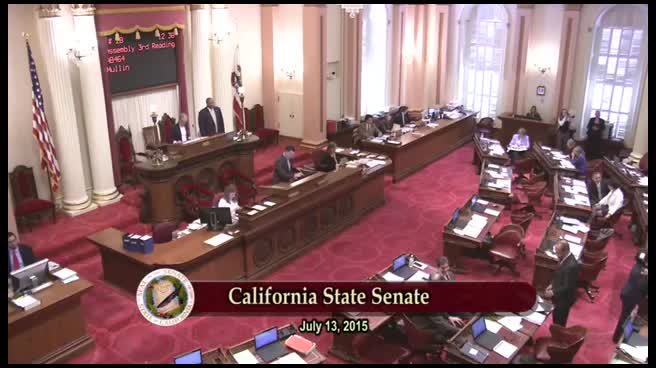 1MIN
Senate Floor
 1MIN
Senate Standing Committee on Governance and Finance
 3MIN
Assembly Standing Committee on Local Government
Bill Author

Bill Co-Author(s):