AB 959: Lesbian, Gay, Bisexual, and Transgender Disparities Reduction Act.
- Session Year: 2015-2016
- House: Assembly
- Latest Version Date: 2015-10-07
(1)Existing law requires a state agency, board, or commission that directly or by contract collects demographic data as to the ancestry or ethnic origin of Californians to use separate collection categories and tabulations for each major Asian and Pacific Islander groups, as specified.
This bill would require 4 specific state departments, in the course of collecting demographic data directly or by contract as to the ancestry or ethnic origin of Californians, to collect voluntary self-identification information pertaining to sexual orientation and gender identity, except as specified. This bill would require these state departments, during the regular process of reporting of demographic data to the Legislature, to report the collected data and method used to collect the data and make the data available to the public in accordance with state and federal law, except for personal identifying information, which shall be deemed confidential and prohibited from disclosure. The bill would prohibit these state departments from reporting demographic data that would permit identification of individuals or would result in statistical unreliability. The bill would limit the use of the collected data by these state departments, as specified. The bill would require these state departments to come into compliance with these provisions as early as possible, but no later than July 1, 2018. This bill would make legislative findings and declarations relating to this act.
(2)Existing constitutional provisions require that a statute that limits the right of access to the meetings of public bodies or the writings of public officials and agencies be adopted with findings demonstrating the interest protected by the limitation and the need for protecting that interest.
This bill would make legislative findings to that effect.
(1)Existing law requires a state agency, board, or commission that directly or by contract collects demographic data as to the ancestry or ethnic origin of Californians to use separate collection categories and tabulations for each major Asian and Pacific Islander groups, as specified.
This bill would require 4 specific state departments, in the course of collecting demographic data directly or by contract as to the ancestry or ethnic origin of Californians, to collect voluntary self-identification information pertaining to sexual orientation and gender identity. identity, except as specified. This bill would require these state departments, during the regular process of reporting of demographic data to the Legislature, to report the collected data and method used to collect the data and make the data available to the public in accordance with state and federal law, except for personal identifying information, which shall be deemed confidential and prohibited from disclosure. The bill would prohibit these state departments from reporting demographic data that would permit identification of individuals or would result in statistical unreliability. The bill would limit the use of the collected data by these state departments, as specified. The bill would require these state departments to come into compliance with these provisions as early as possible or whenever first updating forms, software, hardware, or information collection procedures, possible, but no later than July 1, 2018. This bill would make legislative findings and declarations relating to this act.
(2)Existing constitutional provisions require that a statute that limits the right of access to the meetings of public bodies or the writings of public officials and agencies be adopted with findings demonstrating the interest protected by the limitation and the need for protecting that interest.
This bill would make legislative findings to that effect.
(1)Existing law requires a state agency, board, or commission that directly or by contract collects demographic data as to the ancestry or ethnic origin of Californians to use separate collection categories and tabulations for each major Asian and Pacific Islander groups, as specified.
This bill would require 4 specific state departments, in the course of collecting demographic data directly or by contract as to the ancestry or ethnic origin of Californians, to collect voluntary self-identification information pertaining to sexual orientation and gender identity. This bill would require these state departments to report,, during the regular process of reporting of demographic data, data to the Legislature, to report the collected data and method used to collect the data annually to the Legislature. This bill would further require these state departments to and make the data available to the public in accordance with state and federal law, except for personal identifying information, which shall be deemed confidential and prohibited from disclosure. This The bill would limit the use of the collected data, data by these state departments, as specified. This The bill would require these state departments to comply come into compliance with these provisions as early as possible, possible or whenever first updating forms, software, hardware, or information collection procedures, but no later than July 1, 2017. 2018. This bill would make legislative findings and declarations relating to this act.
(2)Existing constitutional provisions require that a statute that limits the right of access to the meetings of public bodies or the writings of public officials and agencies be adopted with findings demonstrating the interest protected by the limitation and the need for protecting that interest.
This bill would make legislative findings to that effect.
(1)Existing law requires a state agency, board, or commission that directly or by contract collects demographic data as to the ancestry or ethnic origin of Californians to use separate collection categories and tabulations for each major Asian and Pacific Islander groups, as specified.
This bill would require 4 specific state departments, in the course of collecting demographic data directly or by contract as to the ancestry or ethnic origin of Californians, to collect voluntary self-identification information pertaining to sexual orientation and gender identity. This bill would require these state departments to report, during the regular process of reporting of demographic data, the collected data and method used to collect the data annually to the Legislature. This bill would further require these state departments to make the data available to the public in accordance with state and federal law, except for personal identifying information, which shall be deemed confidential and prohibited from disclosure. This bill would limit the use of the collected data, as specified. This bill would require these state departments to comply with these provisions as early as possible, but no later than July 1, 2017. This bill would make legislative findings and declarations relating to this act.
(2)Existing constitutional provisions require that a statute that limits the right of access to the meetings of public bodies or the writings of public officials and agencies be adopted with findings demonstrating the interest protected by the limitation and the need for protecting that interest.
This bill would make legislative findings to that effect.
(1)Existing law requires a state agency, board, or commission that directly or by contract collects demographic data as to the ancestry or ethnic origin of Californians to use separate collection categories and tabulations for each major Asian and Pacific Islander groups, as specified.
This bill would require 4 specific state departments, in the course of collecting demographic data directly or by contract as to the ancestry or ethnic origin of Californians, to collect voluntary self-identification information pertaining to sexual orientation and gender identity. This bill would require these state departments to report, during the regular process of reporting of demographic data, the collected data and method used to collect the data annually to the Legislature. This bill would further require these state departments to make the data available to the public in accordance with state and federal law, except for personal identifying information, which shall be deemed confidential and prohibited from disclosure. This bill would require these state departments to comply with these provisions as early as possible, but no later than July 1, 2017. This bill would make legislative findings and declarations relating to this act.
(2)Existing constitutional provisions require that a statute that limits the right of access to the meetings of public bodies or the writings of public officials and agencies be adopted with findings demonstrating the interest protected by the limitation and the need for protecting that interest.
This bill would make legislative findings to that effect.
The Information Practices Act of 1977 requires an agency to, among other things, maintain in its records only personal information, as defined, that is relevant and necessary for a required or authorized purpose. Existing law requires a department or agency to enact and maintain a permanent privacy policy in adherence with that act that includes, but is not limited to, specified principles. Existing law also requires a business that owns, licenses, or maintains personal information about a California resident to implement and maintain reasonable security procedures and practices appropriate to the nature of the information, and to protect the personal information from unauthorized access, destruction, use, modification, or disclosure.
This bill would declare it is the intent of the Legislature to enact legislation to effectively address the significant disparities that impact the lesbian, gay, bisexual, and transgender (LGBT) communities in regards to data collection.
The Legislature finds and declares all of the following:
(a)It is the goal of state government, in collecting demographic data, to gather accurate information in order to understand, compare, report, and apply that data to the enhancement and improvement of public services.
(b)Currently, the state does not consistently collect demographic data related to sexual orientation or gender identity.
(c)The limited data available for the Lesbian, Gay, Bisexual, and Transgender (LGBT) communities includes all of the following:
(1)According to a University of California, Los Angeles, study from the Williams Institute, nearly one in five children being raised by same-sex couples (approximately 24 percent) live in poverty compared to 14 percent of children being raised by different-sex couples.
(2)Data from a 2013 Williams Institute report on patterns of poverty of LGBT communities shows that one-third of lesbian couples and 20.1 percent of gay male couples without a high school diploma are in poverty, compared to 18.8 percent of different-sex married couples. The report further showed African American same-sex couples have poverty rates more than twice the rate of different-sex married African American couples and there are high levels of poverty in bisexual individuals in California reaching approximately 25 percent of bisexual people compared to 17 percent for heterosexual people.
(3)According to the California Department of Justice, in 2013, hate crimes with a sexual orientation bias motivation were the second most common type of hate crime, comprising 25 percent of all hate crimes.
(4)Various studies, including those by the United States Department of Health and Human Services and the Institute of Medicine, found that health disparities impacting lesbian, gay, bisexual, and transgender include higher risks for cancer, mental illness, and other diseases, as well as higher rates of smoking and substance abuse.
(5)Research from the Lesbian, Gay, Bisexual, Transgender, Queer, and Questioning (LGBTQ) Reducing Disparities Project found that LGBTQ respondents statewide reported troublesome experiences with service providers in regard to how accepting or rejecting service providers have been of their sexual orientation and gender identity/expression. Further, LGBTQ respondents reported difficulty finding providers knowledgeable and accepting of sexual orientation and gender identity concerns.
(d)Due to historical systemic exclusion of data collection of LGBT communities, significant disparities in their health and welfare have been prolonged compared to the broader community. LGBT communities face disproportionately high rates of poverty, suicide, homelessness, isolation, substance abuse, and violence, and low rates of health insurance. These problems are more prevalent for youth and seniors, communities of color, and bisexual and transgender and undocumented communities.
(e)It is in the best interests of the state to respect, embrace, and understand the full diversity of its residents and to collect accurate data to effectively implement and deliver critical state services and programs.
(f)It is the intent of the Legislature that the state departments specified in Section 8310.8 of the Government Code, as added by Section 2 of this act, utilize existing work and research, including, but not limited to, referencing research on promising and community-defined practices and stakeholders when developing questions to collect voluntary self-identified information pertaining to sexual orientation and gender identity. Further, it is the intent of the Legislature that the state departments specified in subdivision (a) of Section 8310.8 of the Government Code, as added by Section 2 of this act, that collect demographic data consider urging the collection of voluntary self-identified information pertaining to sexual orientation and gender identity in circumstances where an entity not covered by this act does not already collect this information.
SEC. 2.Section 8310.8 is added to the Government Code, to read:8310.8.(a)(1)This section shall only apply to the following state departments:
(A)The State Department of Health Care Services.
(B)The State Department of Public Health.
(C)The State Department of Social Services.
(D)The California Department of Aging.
(2)This section shall be known and may be cited as the Lesbian, Gay, Bisexual, and Transgender Disparities Reduction Act.
(b)(1)Except as specified in paragraph (2), in addition to the duties imposed by Section 8310.5 and to the extent permissible by federal law, the state departments identified in subdivision (a), in the course of collecting demographic data directly or by contract as to the ancestry or ethnic origin of Californians, shall collect voluntary self-identification information pertaining to sexual orientation and gender identity.
(2)The departments identified in subdivision (a) may, but are not required to, collect demographic data pursuant to this section under either of the following circumstances:
(A)Pursuant to federal programs or surveys, whereby the guidelines for demographic data collection categories are defined by the federal program or survey.
(B)Demographic data is collected by other entities including:
(i)State offices, departments, and agencies not included in subdivision (a).
(ii)Surveys administered by third-party entities and where the state department is not the sole funder.
(c)(1)During the regular process of reporting of demographic data to the Legislature, the state departments identified in subdivision (a) shall report the data collected pursuant to this section and the method used to collect that data, and make the data available to the public in accordance with state and federal law, except for personal identifying information, which shall be deemed confidential and shall not be disclosed.
(2)The state departments identified in subdivision (a) shall not report demographic data that would permit identification of individuals or would result in statistical unreliability. Demographic reports on data collected pursuant to this section, to prevent identification of individuals, may aggregate categories at a state, county, city, census tract, or zip code level to facilitate comparisons and identify disparities.
(3)The state departments identified in subdivision (a) may use information voluntarily provided about sexual orientation and gender identity only for demographic analysis, coordination of care, quality improvement of its services, conducting approved research, fulfilling reporting requirements, and guiding policy or funding decisions. All information about sexual orientation and gender identity collected pursuant to this section shall be used only for purposes specified in this section.
(d)The state departments identified in subdivision (a) shall come into compliance with the requirements of this section as early as possible following the effective date of this section, but no later than July 1, 2018.
SEC. 3.The Legislature finds and declares that Section 2 of this act, which adds Section 8310.8 to the Government Code, imposes a limitation on the publics right of access to the meetings of public bodies or the writings of public officials and agencies within the meaning of Section 3 of Article I of the California Constitution. Pursuant to that constitutional provision, the Legislature makes the following findings to demonstrate the interest protected by this limitation and the need for protecting that interest:
Due to the sensitive general nature of data relating to sexual orientation and gender identity and the need to protect the safety of those who would provide voluntary self-identification information pertaining to their sexual orientation and gender identity, it is necessary to prohibit the public disclosure of personal identifying information that would allow the identification of an individual who provided voluntary self-identification information pertaining to sexual orientation and gender identity.
The Legislature finds and declares all of the following:
(a)It is the goal of state government, in collecting demographic data, to gather accurate information in order to understand, compare, report, and apply that data to the enhancement and improvement of public services.
(b)Currently, the state does not consistently collect demographic data related to sexual orientation or gender identity.
(c)The limited data available for the Lesbian, Gay, Bisexual, and Transgender (LGBT) communities includes all of the following:
(1)According to a University of California, Los Angeles, study from the Williams Institute, nearly one in five children being raised by same-sex couples (approximately 24 percent) live in poverty compared to 14 percent of children being raised by different-sex couples.
(2)Data from a 2013 Williams Institute report on patterns of poverty of LGBT communities shows that one-third of lesbian couples and 20.1 percent of gay male couples without a high school diploma are in poverty, compared to 18.8 percent of different-sex married couples. The report further showed African American same-sex couples have poverty rates more than twice the rate of different-sex married African American couples and there are high levels of poverty in bisexual individuals in California reaching approximately 25 percent of bisexual people compared to 17 percent for heterosexual people.
(3)According to the California Department of Justice, in 2013, hate crimes with a sexual orientation bias motivation were the second most common type of hate crime, comprising 25 percent of all hate crimes.
(4)Various studies, including those by the United States Department of Health and Human Services and the Institute of Medicine, found that health disparities impacting lesbian, gay, bisexual, and transgender include higher risks for cancer, mental illness, and other diseases, as well as higher rates of smoking and substance abuse.
(5)Research from the Lesbian, Gay, Bisexual, Transgender, Queer, and Questioning (LGBTQ) Reducing Disparities Project found that LGBTQ respondents statewide reported troublesome experiences with service providers in regard to how accepting or rejecting service providers have been of their sexual orientation and gender identity/expression. Further, LGBTQ respondents reported difficulty finding providers knowledgeable and accepting of sexual orientation and gender identity concerns.
(d)Due to historical systemic exclusion of data collection of LGBT communities, significant disparities in their health and welfare have been prolonged compared to the broader community. LGBT communities face disproportionately high rates of poverty, suicide, homelessness, isolation, substance abuse, and violence, and low rates of health insurance. These problems are more prevalent for youth and seniors, communities of color, and bisexual and transgender and undocumented communities.
(e)It is in the best interests of the state to respect, embrace, and understand the full diversity of its residents and to collect accurate data to effectively implement and deliver critical state services and programs.
(f)It is the intent of the Legislature that the state departments specified in Section 8310.8 of the Government Code, as added by Section 2 of this act, utilize existing work and research, including, but not limited to, referencing research on promising and community-defined practices and stakeholders when developing questions to collect voluntary self-identified information pertaining to sexual orientation and gender identity. Further, it is the intent of the Legislature that the state departments specified in subdivision (a) of Section 8310.8 of the Government Code, as added by Section 2 of this act, that collect demographic data consider urging the collection of voluntary self-identified information pertaining to sexual orientation and gender identity in circumstances where an entity not covered by this act does not already collect this information.
SEC. 2.Section 8310.8 is added to the Government Code, to read:8310.8.(a)(1)This section shall only apply to the following state departments:
(A)The State Department of Health Care Services.
(B)The State Department of Public Health.
(C)The State Department of Social Services.
(D)The California Department of Aging.
(2)This section shall be known and may be cited as the Lesbian, Gay, Bisexual, and Transgender Disparities Reduction Act.
(b)In (1)Except as specified in paragraph (2), in addition to the duties imposed by Section 8310.5 and to the extent not prohibited permissible by federal law, the state departments identified in subdivision (a), in the course of collecting demographic data directly or by contract as to the ancestry or ethnic origin of Californians, shall collect voluntary self-identification information pertaining to sexual orientation and gender identity.
(2)The departments identified in subdivision (a) may, but are not required to, collect demographic data pursuant to this section under either of the following circumstances:
(A)Pursuant to federal programs or surveys, whereby the guidelines for demographic data collection categories are defined by the federal program or survey.
(B)Demographic data is collected by other entities including:
(i)State offices, departments, and agencies not included in subdivision (a).
(ii)Surveys administered by third-party entities and where the state department is not the sole funder.
(c)(1)During the regular process of reporting of demographic data to the Legislature, the state departments identified in subdivision (a) shall report the data collected pursuant to this section and the method used to collect that data, and make the data available to the public in accordance with state and federal law, except for personal identifying information, which shall be deemed confidential and shall not be disclosed. The
(2)The state departments identified in subdivision (a) shall not report demographic data that would permit identification of individuals or would result in statistical unreliability. Demographic reports on data collected pursuant to this section, to prevent identification of individuals, may aggregate categories at a state, county, city, census tract, or zip code level to facilitate comparisons and identify disparities.
(3)The state departments identified in subdivision (a) may use information voluntarily provided about sexual orientation and gender identity only for demographic analysis, coordination of care, quality improvement of its services, conducting approved research, fulfilling reporting requirements, and guiding policy or funding decisions. All information about sexual orientation and gender identity collected pursuant to this section shall be used only for purposes specified in this section.
(d)The state departments identified in subdivision (a) shall come into compliance with the requirements of this section as early as possible or whenever first updating forms, software, hardware, or information collection procedures following the effective date of this section, but no later than July 1, 2018.
SEC. 3.The Legislature finds and declares that Section 2 of this act, which adds Section 8310.8 to the Government Code, imposes a limitation on the publics right of access to the meetings of public bodies or the writings of public officials and agencies within the meaning of Section 3 of Article I of the California Constitution. Pursuant to that constitutional provision, the Legislature makes the following findings to demonstrate the interest protected by this limitation and the need for protecting that interest:
Due to the sensitive general nature of data relating to sexual orientation and gender identity and the need to protect the safety of those who would provide voluntary self-identification information pertaining to their sexual orientation and gender identity, it is necessary to prohibit the public disclosure of personal identifying information that would allow the identification of an individual who provided voluntary self-identification information pertaining to sexual orientation and gender identity.
The Legislature finds and declares all of the following:
(a)It is the goal of state government, in collecting demographic data, to gather accurate information in order to understand, compare, report, and apply that data to the enhancement and improvement of public services.
(b)Currently, the state does not consistently collect demographic data related to sexual orientation or gender identity.
(c)The limited data available for the Lesbian, Gay, Bisexual, and Transgender (LGBT) communities includes all of the following:
(1)According to a University of California, Los Angeles, study from the Williams Institute, nearly one in five children being raised by same-sex couples (approximately 24 percent) live in poverty compared to 14 percent of children being raised by different-sex couples.
(2)Data from a 2013 Williams Institute report on patterns of poverty of LGBT communities shows that one-third of lesbian couples and 20.1 percent of gay male couples without a high school diploma are in poverty, compared to 18.8 percent of different-sex married couples. The report further showed African American same-sex couples have poverty rates more than twice the rate of different-sex married African American couples and there are high levels of poverty in bisexual individuals in California reaching approximately 25 percent of bisexual people compared to 17 percent for heterosexual people.
(3)According to the California Department of Justice, in 2013, hate crimes with a sexual orientation bias motivation were the second most common type of hate crime, comprising 25 percent of all hate crimes.
(4)Various studies, including those by the United States Department of Health and Human Services and the Institute of Medicine, found that health disparities impacting lesbian, gay, bisexual, and transgender include higher risks for cancer, mental illness, and other diseases, as well as higher rates of smoking and substance abuse.
(5)Research from the Lesbian, Gay, Bisexual, Transgender, Queer, and Questioning (LGBTQ) Reducing Disparities Project found that LGBTQ respondents statewide reported troublesome experiences with service providers in regard to how accepting or rejecting service providers have been of their sexual orientation and gender identity/expression. Further, LGBTQ respondents reported difficulty finding providers knowledgeable and accepting of sexual orientation and gender identity concerns.
(d)Due to historical systemic exclusion of data collection of LGBT communities, significant disparities in their health and welfare have been prolonged compared to the broader community. LGBT communities face disproportionately high rates of poverty, suicide, homelessness, isolation, substance abuse, and violence, and low rates of health insurance. These problems are more prevalent for youth and seniors, communities of color, and bisexual and transgender and undocumented communities.
(e)It is in the best interests of the state to respect, embrace, and understand the full diversity of its residents and to collect accurate data to effectively implement and deliver critical state services and programs.
(f)It is the intent of the Legislature that the state departments specified in Section 8310.8 of the Government Code, as added by Section 2 of this act, utilize existing work and research, including, but not limited to, referencing research on promising and community-defined practices and stakeholders when developing questions to collect voluntary self-identified information pertaining to sexual orientation and gender identity.
SEC. 2.Section 8310.8 is added to the Government Code, to read:8310.8.(a)(1)This section shall only apply to the following state departments:
(A)The State Department of Health Care Services.
(B)The State Department of Public Health.
(C)The State Department of Social Services.
(D)The California Department of Aging.
(2)This section shall be known and may be cited as the Lesbian, Gay, Bisexual, and Transgender Disparities Reduction Act.
(b)In addition to the duties imposed by Section 8310.5, 8310.5 and to the extent not prohibited by federal law, the state departments identified in subdivision (a), in the course of collecting demographic data directly or by contract as to the ancestry or ethnic origin of Californians, shall collect voluntary self-identification information pertaining to sexual orientation and gender identity.
(c)During the regular process of reporting of demographic data to the Legislature, the state departments identified in subdivision (a) shall report the data collected pursuant to this section and the method used to collect that data, and make the data available to the public in accordance with state and federal law, except for personal identifying information, which shall be deemed confidential and shall not be disclosed. The state departments identified in subdivision (a) may use information voluntarily provided about sexual orientation and gender identity only for demographic analysis, coordination of care, quality improvement of its services, conducting approved research, fulfilling reporting requirements, and guiding policy or funding decisions. All information about sexual orientation and gender identity collected pursuant to this section shall be used only for purposes specified in this section.
(d)The state departments identified in subdivision (a) shall comply come into compliance with the requirements of this section as early as possible, possible or whenever first updating forms, software, hardware, or information collection procedures following the effective date of this section, but no later than July 1, 2017. 2018.
SEC. 3.The Legislature finds and declares that Section 2 of this act, which adds Section 8310.8 to the Government Code, imposes a limitation on the publics right of access to the meetings of public bodies or the writings of public officials and agencies within the meaning of Section 3 of Article I of the California Constitution. Pursuant to that constitutional provision, the Legislature makes the following findings to demonstrate the interest protected by this limitation and the need for protecting that interest:
Due to the sensitive general nature of data relating to sexual orientation and gender identity and the need to protect the safety of those who would provide voluntary self-identification information pertaining to their sexual orientation and gender identity, it is necessary to prohibit the public disclosure of personal identifying information that would allow the identification of an individual who provided voluntary self-identification information pertaining to sexual orientation and gender identity.
The Legislature finds and declares all of the following:
(a)It is the goal of state government, in collecting demographic data, to gather accurate information in order to understand, compare, report, and apply that data to the enhancement and improvement of public services.
(b)Currently, the state does not consistently collect demographic data related to sexual orientation or gender identity.
(c)The limited data available for the Lesbian, Gay, Bisexual, and Transgender (LGBT) communities includes all of the following:
(1)According to a University of California, Los Angeles, study from the Williams Institute, nearly one in five children being raised by same-sex couples (approximately 24 percent) live in poverty compared to 14 percent of children being raised by different-sex couples.
(2)Data from a 2013 Williams Institute report on patterns of poverty of LGBT communities shows that one-third of lesbian couples and 20.1 percent of gay male couples without a high school diploma are in poverty, compared to 18.8 percent of different-sex married couples. The report further showed African American same-sex couples have poverty rates more than twice the rate of different-sex married African Americans American couples and there are high levels of poverty in bisexual individuals in California reaching approximately 25 percent of bisexual people compared to 17 percent for heterosexual people.
(3)According to the California Department of Justice, in 2013, hate crimes with a sexual orientation bias motivation were the second most common type of hate crime, comprising 25 percent of all hate crimes.
(4)Various studies, including those by the United States Department of Health and Human Services and the Institute of Medicine, found that health disparities impacting lesbian, gay, bisexual, and transgender include higher risks for cancer, mental illness, and other diseases, as well as higher rates of smoking and substance abuse.
(5)Research and report a for the Lesbian Gay Bisexual Transgender Queer and Questioning Reducing Disparities Project found that Lesbian, Gay, Bisexual, Transgender, Queer and Questioning (LGBTQ) patients statewide reported primary care physicians, nurse practitioners, and dentists among the top six most dismissive providers.
(5)Research from the Lesbian, Gay, Bisexual, Transgender, Queer, and Questioning (LGBTQ) Reducing Disparities Project found that LGBTQ respondents statewide reported troublesome experiences with service providers in regard to how accepting or rejecting service providers have been of their sexual orientation and gender identity/expression. Further, LGBTQ respondents reported difficulty finding providers knowledgeable and accepting of sexual orientation and gender identity concerns.
(d)Due to historical systemic exclusion of data collection of LGBT communities, significant disparities in their health and welfare have been prolonged compared to the broader community. LGBT communities face disproportionately high rates of poverty, suicide, homelessness, isolation, substance abuse, and violence, and low rates of health insurance. These problems are more prevalent for youth and seniors, communities of color, and bisexual and transgender and undocumented communities.
(e)It is in the best interests of the state to respect, embrace, and understand the full diversity of its residents and to collect accurate data to effectively implement and deliver critical state services and programs.
(f)It is the intent of the Legislature that the state departments specified in Section 8310.8 of the Government Code, as added by Section 2 of this act, utilize existing work and research, including, but not limited to, referencing research on promising and community-defined practices and stakeholders when developing questions to collect voluntary self-identified information pertaining to sexual orientation and gender identity.
SEC. 2.Section 8310.8 is added to the Government Code, to read:8310.8.(a)(1)This section shall only apply to the following state departments:
(A)The State Department of Health Care Services.
(B)The State Department of Public Health.
(C)The State Department of Social Services.
(D)The California Department of Aging.
(2)This section shall be known and may be cited as the Lesbian, Gay, Bisexual, and Transgender Disparities Reduction Act.
(b)In addition to the duties imposed by Section 8310.5, the state departments identified in subdivision (a), in the course of collecting demographic data directly or by contract as to the ancestry or ethnic origin of Californians, shall collect voluntary self-identification information pertaining to sexual orientation and gender identity.
(c)During the regular process of reporting of demographic data to the Legislature, the state departments identified in subdivision (a) shall report the data collected pursuant to this section and the method used to collect that data, and make the data available to the public in accordance with state and federal law, except for personal identifying information, which shall be deemed confidential and shall not be disclosed. The state departments identified in subdivision (a) may use information voluntarily provided about sexual orientation and gender identity only for demographic analysis, coordination of care, quality improvement of its services, conducting approved research, fulfilling reporting requirements, and guiding policy or funding decisions. All information about sexual orientation and gender identity collected pursuant to this section shall be used only for purposes specified in this section.
(d)The state departments identified in subdivision (a) shall comply with the requirements of this section as early as possible, but no later than July 1, 2017.
SEC. 3.The Legislature finds and declares that Section 2 of this act, which adds Section 8310.8 to the Government Code, imposes a limitation on the publics right of access to the meetings of public bodies or the writings of public officials and agencies within the meaning of Section 3 of Article I of the California Constitution. Pursuant to that constitutional provision, the Legislature makes the following findings to demonstrate the interest protected by this limitation and the need for protecting that interest:
Due to the sensitive general nature of data relating to sexual orientation and gender identity and the need to protect the safety of those who would provide voluntary self-identification information pertaining to their sexual orientation and gender identity, it is necessary to prohibit the public disclosure of personal identifying information that would allow the identification of an individual who provided voluntary self-identification information pertaining to sexual orientation and gender identity.
The Legislature finds and declares all of the following:
(a)It is the goal of state government, in collecting demographic data, to gather accurate information in order to understand, compare, report, and apply that data to the enhancement and improvement of public services.
(b)Currently, the state does not consistently collect demographic data related to sexual orientation or gender identity.
(c) The limited data available for the Lesbian, Gay, Bisexual, and Transgender (LGBT) communities includes all of the following:
(1)According to a University of California, Los Angeles, study from the Williams Institute, nearly one in five children being raised by same-sex couples (approximately 24 percent) live in poverty compared to 14 percent of children being raised by different-sex couples.
(2)Data from a 2013 Williams Institute report on patterns of poverty of LGBT communities shows that one-third of lesbian couples and 20.1 percent of gay male couples without a high school diploma are in poverty, compared to 18.8 percent of different-sex married couples. The report further showed African American same-sex couples have poverty rates more than twice the rate of different-sex married African Americans couples and there are high levels of poverty in bisexual individuals in California reaching approximately 25 percent of bisexual people compared to 17 percent for heterosexual people.
(3)According to the California Department of Justice, in 2013, hate crimes with a sexual orientation bias motivation were the second most common type of hate crime, comprising 25 percent of all hate crimes.
(4)Various studies, including those by the United States Department of Health and Human Services and the Institute of Medicine, found that health disparities impacting lesbian, gay, bisexual, and transgender include higher risks for cancer, mental illness, and other diseases, as well as higher rates of smoking and substance abuse.
(5)Research and report a for the Lesbian Gay Bisexual Transgender Queer and Questioning Reducing Disparities Project found that Lesbian, Gay, Bisexual, Transgender, Queer and Questioning (LGBTQ) patients statewide reported primary care physicians, nurse practitioners, and dentists among the top six most dismissive providers.
(d)Due to historical systemic exclusion of data collection of LGBT communities, significant disparities in their health and welfare have been prolonged compared to the broader community. LGBT communities face disproportionately high rates of poverty, suicide, homelessness, isolation, substance abuse, and violence, and low rates of health insurance. These problems are more prevalent for youth and seniors, communities of color, and bisexual and transgender and undocumented communities.
(e)It is in the best interests of the state to respect, embrace, and understand the full diversity of its residents and to collect accurate data to effectively implement and deliver critical state services and programs.
SEC. 2.Section 8310.8 is added to the Government Code, to read:8310.8.(a)(1)This section shall only apply to the following state departments:
(A)The State Department of Health Care Services.
(B)The State Department of Public Health.
(C)The State Department of Social Services.
(D)The California Department of Aging.
(2)This section shall be known and may be cited as the Lesbian, Gay, Bisexual, and Transgender Disparities Reduction Act.
(b)In addition to the duties imposed by Section 8310.5, the state departments identified in subdivision (a), in the course of collecting demographic data directly or by contract as to the ancestry or ethnic origin of Californians, shall collect voluntary self-identification information pertaining to sexual orientation and gender identity.
(c)During the regular process of reporting of demographic data to the Legislature, the state departments identified in subdivision (a) shall report the data collected pursuant to this section and the method used to collect that data, and make the data available to the public in accordance with state and federal law, except for personal identifying information, which shall be deemed confidential and shall not be disclosed.
(d)The state departments identified in subdivision (a) shall comply with the requirements of this section as early as possible, but no later than July 1, 2017.
SEC. 3.The Legislature finds and declares that Section 2 of this act, which adds Section 8310.8 to the Government Code, imposes a limitation on the publics right of access to the meetings of public bodies or the writings of public officials and agencies within the meaning of Section 3 of Article I of the California Constitution. Pursuant to that constitutional provision, the Legislature makes the following findings to demonstrate the interest protected by this limitation and the need for protecting that interest:
Due to the sensitive general nature of data relating to sexual orientation and gender identity and the need to protect the safety of those would provide voluntary self-identification information pertaining to their sexual orientation and gender identity, it is necessary to prohibit the public disclosure of voluntary self-identification information pertaining to sexual orientation and gender identity.
SECTION 1.It is the intent of the Legislature to enact legislation to effectively address the significant disparities that impact the lesbian, gay, bisexual, and transgender (LGBT) communities in regards to data collection.
It is the intent of the Legislature to enact legislation to effectively address the significant disparities that impact the lesbian, gay, bisexual, and transgender (LGBT) communities in regards to data collection.
|
Date
|
Status
|
|---|---|
| Aug 17, 2015 | In committee: Referred to APPR. suspense file. |
| Oct 7, 2015 | Chaptered by Secretary of State - Chapter 565, Statutes of 2015. |
| Oct 7, 2015 | Approved by the Governor. |
| Sep 25, 2015 | Enrolled and presented to the Governor at 2 p.m. |
| Sep 11, 2015 | Senate amendments concurred in. To Engrossing and Enrolling. (Ayes 68. Noes 0.). |
| Sep 11, 2015 | Senate amendments concurred in. To Engrossing and Enrolling. (Ayes 68. Noes 0. Page 3147.). |
| Sep 11, 2015 | Senate amendments concurred in. To Engrossing and Enrolling. |
| Sep 10, 2015 | Read third time. Passed. Ordered to the Assembly. (Ayes 32. Noes 5. Page 2714.). |
| Sep 10, 2015 | Read third time. Passed. Ordered to the Assembly. |
| Sep 10, 2015 | In Assembly. Concurrence in Senate amendments pending. |
| Sep 8, 2015 | Read second time. Ordered to third reading. |
| Sep 4, 2015 | Read third time and amended. Ordered to second reading. |
| Aug 31, 2015 | Read second time and amended. Ordered to third reading. |
| Aug 27, 2015 | From committee: Amend, and do pass as amended. (Ayes 5. Noes 0.) (August 27). |
| Feb 26, 2015 | Read first time. To print. |
| Jul 14, 2015 | From committee: Do pass and re-refer to Com. on APPR. (Ayes 12. Noes 1.) (July 14). Re-referred to Com. on APPR. |
| Jul 7, 2015 | From committee chair, with author's amendments: Amend, and re-refer to committee. Read second time, amended, and re-referred to Com. on G.O. |
| Jun 11, 2015 | Referred to Com. on G.O. |
| Jun 1, 2015 | Read third time. Passed. Ordered to the Senate. (Ayes 69. Noes 0. Page 1690.) |
| Jun 1, 2015 | Read third time. Passed. Ordered to the Senate. |
| Jun 1, 2015 | In Senate. Read first time. To Com. on RLS. for assignment. |
| May 28, 2015 | Read second time. Ordered to third reading. |
| May 27, 2015 | From committee: Do pass. (Ayes 13. Noes 0.) (May 27). |
| Apr 29, 2015 | From committee: Do pass and re-refer to Com. on APPR. (Ayes 6. Noes 3.) (April 29). Re-referred to Com. on APPR. |
| Apr 6, 2015 | Re-referred to Com. on A. & A.R. |
| Mar 26, 2015 | Referred to Com. on A. & A.R. |
| Mar 26, 2015 | From committee chair, with author's amendments: Amend, and re-refer to Com. on A. & A.R. Read second time and amended. |
| Feb 27, 2015 | From printer. May be heard in committee March 29. |
|
Date
|
Description
|
Location
|
Votes
|
|
|---|---|---|---|---|
| Sep 11, 2015 | AB 959 CHIU Concurrence in Senate Amendments | Assembly Floor |
Passed |
|
| Sep 10, 2015 | Assembly 3rd Reading AB959 Chiu By Hall | Senate Floor |
Passed |
|
| Aug 27, 2015 | Do pass as amended | Senate Standing Committee on Appropriations |
Passed |
|
| Aug 17, 2015 | Placed on suspense file | Senate Standing Committee on Appropriations |
Passed |
|
| Jul 14, 2015 | Do pass, but first be re-referred to the Committee on [Appropriations] | Senate Standing Committee on Governmental Organization |
Passed |
|
| Jun 1, 2015 | AB 959 CHIU Assembly Third Reading | Assembly Floor |
Passed |
|
| May 27, 2015 | Do pass. | Assembly Standing Committee on Appropriations |
Passed |
|
| Apr 29, 2015 | Do pass and be re-referred to the Committee on [Appropriations] | Assembly Standing Committee on Accountability and Administrative Review |
Passed |
This list shows positions taken on this bill by organizations on the date displayed, which is linked to the original source.
Positions by individuals are not included.
|
Organization
|
Position
|
Date
|
|---|---|---|
| AIDS Legal Referral Panel | ** Support | Sep 10, 2015 |
| AIDS Nightline | ** Support | Sep 10, 2015 |
| AIDS Provider Network | ** Support | Sep 10, 2015 |
| Alcohol Justice | ** Support | Sep 10, 2015 |
| Alcoholic Justice | * Support | Jul 14, 2015 |
| American Civil Liberties Union of California | ** Support | Sep 10, 2015 |
| American Federation of State, County and Municipal Employees | ** Support | Sep 10, 2015 |
| American Federation of State, County, and Municipal Employees | ** Support | Sep 10, 2015 |
| Anti-Defamation League | ** Support | Sep 10, 2015 |
| Asian and Pacific Islander Wellness Center | ** Support | Sep 10, 2015 |
| ASUCD | * Support | Jul 14, 2015 |
| California Council Of Community Mental Health Agencies | ** Support | Sep 10, 2015 |
| California Immigrant Policy Center | ** Support | Sep 10, 2015 |
| California LGBT Health and Human Services Network | ** Support | Sep 10, 2015 |
| California Pan-Ethnic Health Network | ** Support | Sep 10, 2015 |
| Compassionate Community Care | ** Support | Sep 10, 2015 |
| Equality California | ** Support | Sep 10, 2015 |
| Gay-Straight Alliance Network of California | ** Support | Sep 10, 2015 |
| Lavender Youth Recreation and Information Center | ** Support | Sep 10, 2015 |
| LGBTQ Center of Long Beach | ** Support | Sep 10, 2015 |
| Los Angeles LGBT Center | ** Support | Sep 10, 2015 |
| Lutheran Social Services of Northern California | ** Support | Sep 10, 2015 |
| Maitri AIDS Hospice | ** Support | Sep 10, 2015 |
| Meals On Wheels Of San Francisco | ** Support | Sep 10, 2015 |
| Mental Health America of Northern California | ** Support | Sep 10, 2015 |
| National Center for Lesbian Rights | ** Support | Sep 10, 2015 |
| Native American Health Center | ** Support | Sep 10, 2015 |
| NorCal Mental Health America | ** Support | Sep 10, 2015 |
| Openhouse | ** Support | Sep 10, 2015 |
| Our Family Coalition | ** Support | Sep 10, 2015 |
| Queer LifeSpace | ** Support | Sep 10, 2015 |
| Rafiki Coalition for Health and Wellness | ** Support | Sep 10, 2015 |
| Rainbow Community Center of Contra Costa County | ** Support | Sep 10, 2015 |
| Sacramento LGBT Community Center | ** Support | Sep 10, 2015 |
| San Francisco Community Clinic Consortium | ** Support | Sep 10, 2015 |
| San Francisco Democratic Party | ** Support | Sep 10, 2015 |
| San Francisco Department of Aging and Adult Services | ** Support | Sep 10, 2015 |
| San Francisco Drug Users Union | ** Support | Sep 10, 2015 |
| San Francisco HIV | ** Support | Sep 10, 2015 |
| San Francisco LGBT Community Center | ** Support | Sep 10, 2015 |
| San Francisco Suicide Prevention | ** Support | May 27, 2015 |
| San Francisco Suicide Prevention's HIV | ** Support | Sep 10, 2015 |
| Shanti Project | ** Support | Sep 10, 2015 |
| SteppingStone Adult Day Health | ** Support | Sep 10, 2015 |
| UC San Francisco LGBT Resource Center | ** Support | Sep 10, 2015 |
| University of California San Francisco LGBT Resource Center | ** Support | May 27, 2015 |
AB 959
Page 2
CONCURRENCE IN SENATE AMENDMENTS
AB 959
(Chiu)
As Amended September 4, 2015
Majority vote
ASSEMBLY: |
69-0 |
(June 1, 2015) |
SENATE: |
32-5 |
(September 10, 2015) |
Original Committee Reference: A. & A.R.
SUMMARY: Requires the Department of Health Care Services (DHCS), the Department of Public Health (DPH), the Department of Social Services (DSS), and the Department of Aging (CDA) to collect voluntary self-identification information on sexual orientation and gender identity, beginning no later than July 1, 2018, when collecting demographic data.
The Senate amendments:
Require state departments use information voluntarily provided about sexual orientation and gender identity only for demographic analysis, coordination of care, quality improvement of its services, conducting approved research, fulfilling reporting requirements, and guiding policy or funding decisions.
Add a provision ensuring the data collection duties and reporting requirements are consistent with federal law.
Require the identified state departments come into compliance with these provisions as early as possible.
Change the compliance date from July 1, 2017, to no later than July 1, 2018.
Add provisions allowing departments to protect the identity of individuals within small data sets by aggregating data as specified.
Provide an exemption for those departments and agencies that receive demographic data from third-party entities where the department or agency is not the sole funder.
Add legislative intent language urging state departments to collect voluntary self-identified information pertaining to sexual orientation and gender identity in circumstances where an entity not covered by this act does not already collect this information.
EXISTING LAW requires a state agency, board, or commission that directly, or by contract, collects demographic data as to the ancestry or ethnic origin of Californians, to use separate collection categories and tabulations for each major Asian group and each major Pacific Islander group. This data is required to be made available to the public in accordance with state and federal law, except for personal identifying information, which shall be deemed confidential (Government Code Section 8310.5)
FISCAL EFFECT: According to the Senate Appropriations Committee:
DHCS: This department indicates costs to update paper and online versions of the single streamline application (SSApp) would not be significant because the department is currently working with the federal government regarding the placement of sexual orientation and gender identity information on the SSApp. Programming costs to add new fields into California Healthcare Eligibility, Enrollment, and Retention System would be approximately $170,000 (General Fund, federal funds, and/or special funds).
DPH: DPH administers two programs that would be impacted by this bill.
Under its Center for Health Statistics and Information (CHSI), DPH estimates one-time costs of approximately $165,000 (General Fund) to make programming changes to Birth and Death Registration systems. Ongoing costs for CHSI-related activities would be minor and absorbable.
Under its Genetic Disease Screening Program (GDSP), DPH estimates one-time programming costs of approximately $160,000 (General Fund) to update the Screening Information System. There would also be ongoing costs of approximately $105,000 (General Fund) related to printing an enlarged form, but only some of these ongoing costs can be attributed to this bill.
DSS: Unknown costs to DSS. The department was unable to provide information for purposes of this analysis. Staff estimates that there could be significant one-time costs to the extent that county welfare department information technology systems would need programming changes to provide for the collection of sexual orientation and gender identity information. (General Fund)
CDA: The CDA indicates minor and absorbable costs to implement this bill. CDA contracts with vendors for administering data systems require the vendors to make changes to the systems to meet federal and state requirements, at no additional cost to the state.
Analysis Prepared by: William Herms / A. & A.R. / (916) 319-3600 FN: 0002241
AB 959
Page 7
|
Office of Senate Floor Analyses (916) 651-1520 Fax: (916) 327-4478 |
THIRD READING
Bill No: AB 959
Amended: 9/4/15 in Senate
SENATE GOVERNMENTAL ORG. COMMITTEE: 12-1, 7/14/15
AYES: Hall, Berryhill, Block, Gaines, Galgiani, Glazer, Hernandez, Hill, Hueso, Lara, McGuire, Vidak
NOES: Runner
SENATE APPROPRIATIONS COMMITTEE: 5-0, 8/27/15
AYES: Lara, Beall, Hill, Leyva, Mendoza
NO VOTE RECORDED: Bates, Nielsen
ASSEMBLY FLOOR: 69-0, 6/1/15 - See last page for vote
SUBJECT: Lesbian, Gay, Bisexual, and Transgender Disparities Reduction Act
DIGEST: This bill enacts the Lesbian, Gay, Bisexual, and Transgender Disparities Reduction Act and requires four specified state entities – the Department of Health Care Services (DHCS), the Department of Public Health (DPH), the Department of Social Services (DSS), and the Department of Aging (CDA) – to collect voluntary self-identification information on sexual orientation and gender identity, beginning no later than July 1, 2018.
Senate Floor Amendments of 9/4/15 include additional legislative intent language; add language holding the departments harmless when collecting data under certain circumstances; add a provision exempting the collection of certain data that would permit identification of individuals or would result in statistical unreliability; and, make other minor clarifying changes.
ANALYSIS: Existing law requires a state agency, board, or commission that directly, or by contract, collects demographic data as to the ancestry or ethnic origin of Californians, to use separate collection categories and tabulations for each major Asian group and each major Pacific Islander group. This data is required to be made available to the public in accordance with state and federal law, except for personal identifying information, which shall be deemed confidential.
This bill:
Requires, to the extent permissible by federal law, the DHCS, the DPH, the DSS, and the CDA, in the course of collecting demographic data directly or by contract as to the ancestry or ethnic origin of Californians, to collect voluntary self-identification information pertaining to sexual orientation and gender identity.
Provides that the four state entities identified above may, but are not required to, collect demographic data under the following circumstances:
Pursuant to federal programs or surveys, whereby the guidelines for demographic data collection categories are defined by the federal program or survey.
Demographic data is collected by other entities, as specified.
Requires collected data to be reported to the public in accordance with state and federal law, except for personal identifying information, which shall be deemed confidential and shall not be disclosed.
Prohibits reporting of data that would permit identification of individuals or would result in statistical unreliability. Also, permits aggregate data reporting, as specified.
Stipulates that the four state entities identified above may use information voluntarily provided about sexual orientation and gender identity only for demographic analysis, coordination of care, quality improvement of services, conducting approved research, fulfilling reporting requirements, and guiding policy or funding decisions.
Makes it explicit that all information about sexual orientation and gender identity collected pursuant to this bill must be used only for purposes specified in this Act and requires the four state entities identified above to come into compliance with the provisions of this Act as soon as possible, but no later than July 1, 2018.
Finds and declares that due to the sensitive general nature of data relating to sexual orientation and gender identity and the need to protect the safety of those who would provide voluntary self-identification information pertaining to their sexual orientation and gender identity, it is necessary to prohibit the public disclosure of personal identifying information that would allow the identification of an individual who provided voluntary self-identification information pertaining to sexual orientation and gender identity.
States legislative intent that the state departments identified above utilize existing work and research, including, but not limited to, referencing research on promising and community-defined practices and stakeholders when developing questions to collect voluntary self-identified information pertaining to sexual orientation and gender identity. In addition, encourages the departments to urge other entities to voluntary collect information pertaining to sexual orientation and gender identity.
Contains various legislative findings and declarations relative to the limited data available for Lesbian, Gay, Bisexual, and Transgender (LGBT) communities and due to historical systematic exclusion of data collection of LGBT communities, significant disparities in their health and welfare have been prolonged compared to the broader community. Also, declares that it is in the best interests of the state to respect, embrace, and understand the full diversity of its residents and to collect accurate data to effectively implement and deliver critical state services and programs.
Background
State government agencies routinely collect demographic data on race, ethnicity, gender, and disability on a wide variety of state forms and surveys. The purpose of this data is to help better understand disparities in underserved communities. Current law only requires any state agency, board, or commission that directly, or by contract, collects demographic data to separate the collection of this data by major Asian groups. The law is silent on demographic data collection based on sexual orientation or gender identity.
Purpose of AB 959. According to the author’s office, this bill seeks to reduce health and well-being disparities for LGBT communities by ensuring that sexual orientation and gender identity data is collected on a statewide basis by key government agencies that deal with health and human services. The author’s office states, “Due to the systematic exclusion of data collection of LGBT communities, significant disparities in their health and welfare have been prolonged compared to the broader community. LGBT communities face disproportionately high rates of poverty, suicide, homelessness, isolation, substance abuse, and violence, and low rates of health insurance. These issues are more prevalent for youth and seniors, communities of color, and transgender and undocumented communities. Collecting voluntary data on sexual orientation and gender identity is a necessary first step to understand the extent to which LGBT communities are experiencing disparities and whether government programs are effectively reaching LBGT individuals in need of care and assistance.”
The author’s office emphasizes that the recent amendments are intended to provide greater flexibility for the identified departments in AB 959 to comply with the requirements of this bill. In addition, certain provisions hold the identified departments harmless if any future programmatic changes that include meeting the requirements of this bill are rejected by the federal government. Furthermore, certain other provisions hold the departments harmless in cases where the departments do not collect the data themselves but instead receive their data by other entities that collect the data directly.
Prior Legislation
SB 280 (Lieu, 2014) would have authorized, until January 1, 2015, the application form for insurance affordability program coverage to include additional voluntary questions on sexual orientation and gender identity or expression. Also, would have required, effective January 1, 2016, the application form to include voluntary questions regarding demographic data categories, including race, ethnicity, primary language, disability status, sexual orientation, gender identity or expression and other categories recognized by the federal Secretary of the Department of Health and Human Services. (Died on Senate Appropriations Committee Suspense File)
AB 1208 (Pan, 2013) contained similar provisions to SB 280 (Lieu, 2014). (Vetoed by the Governor who stated, “the state does not need to mandate these requirements in law as DHCS and Covered California already have the authority to modify these types of questions on the form, and they can work constructively with stakeholders to decide what is necessary to change for 2015 and beyond.”)
SB 416 (Kehoe, 2011) would have required the statewide Health Interview Survey and the Behavioral Risk Factor Surveillance System to include specified information related to sexual orientation or gender identity. (Vetoed by the Governor who stated, “what particular questions should be in these health surveys is better handled by the current process, not the Legislature or the Governor.”)
AB 1878 (Lieu, 2010) would have required all California agency forms that ask for demographic information to include sexual orientation or gender identity. (Died on Assembly Appropriations Suspense File)
FISCAL EFFECT: Appropriation: No Fiscal Com.: Yes Local: No
According to the Senate Appropriations Committee:
DHCS: Costs to implement this bill would not be significant. Programming costs to add new fields into California Healthcare Eligibility, Enrollment, and Retention System would be approximately $170,000 (General Fund, federal funds, and/or special funds).
DPH: One-time costs of approximately $165,000 (General Fund) to make programming changes to Birth and Death Registration systems; ongoing costs for Center for Health Statistics Information related activities would be minor and absorbable; one-time programming costs of approximately $160,000 (General Fund) to update the Genetic Disease Screening Information System; and, ongoing costs of approximately $105,000 (General Fund) related to printing an enlarged form, but only some of these ongoing costs can be attributed to this bill.
DSS: Significant one-time costs to the extent that county welfare department information technology systems would need programming changes to provide for the collection of sexual orientation and gender identity information. (General Fund)
CDA: Minor and absorbable costs to implement this bill however, there could be significant costs if certain systems need to be updated to allow for this functionality. (General Fund and/or federal funds)
SUPPORT: (Verified 9/8/15)
AIDS Legal Referral Panel
Alcohol Justice
American
Civil Liberties Union of California
American Federation of
State, County and Municipal Employees
Anti-Defamation League
Asian
and Pacific Islander Wellness Center
California Council of
Community Mental Health Agencies
California Immigrant Policy Center
California
LGBT Health and Human Services Network
California Pan-Ethnic
Health Network
Compassionate Community Care
Equality California
Gay-Straight
Alliance Network of California
Lavender Youth Recreation and
Information Center
LGBTQ Center of Long Beach
Los
Angeles LGBT Center
Lutheran Social Services of Northern
California
Maitri AIDS Hospice
Meals on Wheels of San Francisco
Mental
Health America of Northern California
National Center for
Lesbian Rights
Native American Health Center
NorCal Mental Health America
Openhouse
Our Family Coalition
Queer LifeSpace
Rafiki Coalition for Health and Wellness
Rainbow
Community Center of Contra Costa County
Sacramento LGBT
Community Center
San Francisco Community Clinic Consortium
San Francisco Democratic Party
San Francisco Department of Aging and Adult Services
San Francisco Drug Users Union
San Francisco HIV/AIDS Provider Network
San
Francisco LGBT Community Center
San Francisco Suicide
Prevention’s HIV/AIDS Nightline
Shanti Project
SteppingStone Adult Day Health
Trevor Project
UC San Francisco Center of Excellence for Transgender Health
UC San Francisco LGBT Resource Center
Westside Community Services AIDS Case Management & Home Care Program
OPPOSITION: (Verified 9/8/15)
None received
ASSEMBLY FLOOR: 69-0, 6/1/15
AYES: Achadjian, Alejo, Baker, Bloom, Bonilla, Bonta, Brough, Brown, Burke, Calderon, Campos, Chang, Chau, Chávez, Chiu, Chu, Cooley, Cooper, Dababneh, Daly, Dodd, Eggman, Frazier, Cristina Garcia, Eduardo Garcia, Gatto, Gipson, Gomez, Gonzalez, Gordon, Gray, Grove, Hadley, Roger Hernández, Holden, Irwin, Jones-Sawyer, Kim, Lackey, Levine, Linder, Lopez, Low, Maienschein, Mathis, Mayes, McCarty, Medina, Mullin, Nazarian, O'Donnell, Olsen, Perea, Quirk, Rendon, Ridley-Thomas, Rodriguez, Salas, Santiago, Steinorth, Mark Stone, Thurmond, Ting, Waldron, Weber, Wilk, Williams, Wood, Atkins
NO VOTE RECORDED: Travis Allen, Bigelow, Dahle, Beth Gaines, Gallagher, Harper, Jones, Melendez, Obernolte, Patterson, Wagner
Prepared by: Arthur Terzakis / G.O. / (916) 651-1530
9/8/15 14:55:34
**** END ****
AB 959
Page 6
|
Office of Senate Floor Analyses (916) 651-1520 Fax: (916) 327-4478 |
THIRD READING
Bill No: AB 959
Amended: 8/31/15 in Senate
SENATE GOVERNMENTAL ORG. COMMITTEE: 12-1, 7/14/15
AYES: Hall, Berryhill, Block, Gaines, Galgiani, Glazer, Hernandez, Hill, Hueso, Lara, McGuire, Vidak
NOES: Runner
SENATE APPROPRIATIONS COMMITTEE: 5-0, 8/27/15
AYES: Lara, Beall, Hill, Leyva, Mendoza
NO VOTE RECORDED: Bates, Nielsen
ASSEMBLY FLOOR: 69-0, 6/1/15 - See last page for vote
SUBJECT: Lesbian, Gay, Bisexual, and Transgender Disparities Reduction Act
DIGEST: This bill enacts the Lesbian, Gay, Bisexual, and Transgender Disparities Reduction Act and requires four specified state entities – the Department of Health Care Services (DHCS), the Department of Public Health (DPH), the Department of Social Services (DSS), and the Department of Aging (CDA) – to collect voluntary self-identification information on sexual orientation and gender identity, beginning no later than July 1, 2018.
ANALYSIS: Existing law requires a state agency, board, or commission that directly, or by contract, collects demographic data as to the ancestry or ethnic origin of Californians, to use separate collection categories and tabulations for each major Asian group and each major Pacific Islander group. This data is required to be made available to the public in accordance with state and federal law, except for personal identifying information, which shall be deemed confidential.
This bill:
Requires, to the extent not prohibited by federal law, the DHCS, the DPH, the DSS, and the CDA, in the course of collecting demographic data directly or by contract as to the ancestry or ethnic origin of Californians, to collect voluntary self-identification information pertaining to sexual orientation and gender identity.
Requires collected data to be reported to the public in accordance with state and federal law, except for personal identifying information, which shall be deemed confidential and shall not be disclosed.
Stipulates that the four state entities identified above may use information voluntarily provided about sexual orientation and gender identity only for demographic analysis, coordination of care, quality improvement of services, conducting approved research, fulfilling reporting requirements, and guiding policy or funding decisions.
Makes it explicit that all information about sexual orientation and gender identity collected pursuant to this bill must be used only for purposes specified in this Act.
Requires the four state entities identified above to come into compliance with the provisions of this Act as soon as possible, but no later than July 1, 2018.
Finds and declares that due to the sensitive general nature of data relating to sexual orientation and gender identity and the need to protect the safety of those who would provide voluntary self-identification information pertaining to their sexual orientation and gender identity, it is necessary to prohibit the public disclosure of personal identifying information that would allow the identification of an individual who provided voluntary self-identification information pertaining to sexual orientation and gender identity.
States legislative intent that the state departments identified above utilize existing work and research, including, but not limited to, referencing research on promising and community-defined practices and stakeholders when developing questions to collect voluntary self-identified information pertaining to sexual orientation and gender identity.
Contains various legislative findings and declarations relative to the limited data available for Lesbian, Gay, Bisexual, and Transgender (LGBT) communities and due to historical systematic exclusion of data collection of LGBT communities, significant disparities in their health and welfare have been prolonged compared to the broader community. Also, declares that it is in the best interests of the state to respect, embrace, and understand the full diversity of its residents and to collect accurate data to effectively implement and deliver critical state services and programs.
Background
State government agencies routinely collect demographic data on race, ethnicity, gender, and disability on a wide variety of state forms and surveys. The purpose of this data is to help better understand disparities in underserved communities. Current law only requires any state agency, board, or commission that directly, or by contract, collects demographic data to separate the collection of this data by major Asian groups. The law is silent on demographic data collection based on sexual orientation or gender identity.
Purpose of AB 959. According to the author’s office, this bill seeks to reduce health and well-being disparities for LGBT communities by ensuring that sexual orientation and gender identity data is collected on a statewide basis by key government agencies that deal with health and human services. The author’s office states, “Due to the systematic exclusion of data collection of LGBT communities, significant disparities in their health and welfare have been prolonged compared to the broader community. LGBT communities face disproportionately high rates of poverty, suicide, homelessness, isolation, substance abuse, and violence, and low rates of health insurance. These issues are more prevalent for youth and seniors, communities of color, and transgender and undocumented communities. Collecting voluntary data on sexual orientation and gender identity is a necessary first step to understand the extent to which LGBT communities are experiencing disparities and whether government programs are effectively reaching LBGT individuals in need of care and assistance.”
The author’s office emphasizes that the recent amendments (August 31, 2015) are intended to provide greater flexibility for the identified departments in AB 959 to comply with the requirements of this bill. In addition, certain provisions hold the identified departments harmless if any future programmatic changes that include meeting the requirements of this bill are rejected by the federal government.
Related/Prior Legislation
SB 280 (Lieu, 2014) would have authorized, until January 1, 2015, the application form for insurance affordability program coverage to include additional voluntary questions on sexual orientation and gender identity or expression. Also, would have required, effective January 1, 2016, the application form to include voluntary questions regarding demographic data categories, including race, ethnicity, primary language, disability status, sexual orientation, gender identity or expression and other categories recognized by the federal Secretary of the Department of Health and Human Services. (Died on Senate Appropriations Committee Suspense File)
AB 1208 (Pan, 2013) contained similar provisions to SB 280 (Lieu, 2014). (Vetoed by the Governor who stated, “the state does not need to mandate these requirements in law as DHCS and Covered California already have the authority to modify these types of questions on the form, and they can work constructively with stakeholders to decide what is necessary to change for 2015 and beyond.”)
SB 416 (Kehoe, 2011) would have required the statewide Health Interview Survey and the Behavioral Risk Factor Surveillance System to include specified information related to sexual orientation or gender identity. (Vetoed by the Governor who stated, “what particular questions should be in these health surveys is better handled by the current process, not the Legislature or the Governor.”)
AB 1878 (Lieu, 2010) would have required all California agency forms that ask for demographic information to include sexual orientation or gender identity. (Died on Assembly Appropriations Suspense File)
FISCAL
EFFECT: Appropriation: No
Fiscal Com.: Yes Local:
No
According to the Senate Appropriations Committee:
DHCS: Costs to implement this bill would not be significant. Programming costs to add new fields into California Healthcare Eligibility, Enrollment, and Retention System would be approximately $170,000 (General Fund, federal funds, and/or special funds).
DPH: One-time costs of approximately $165,000 (General Fund) to make programming changes to Birth and Death Registration systems; ongoing costs for Center for Health Statistics Information related activities would be minor and absorbable; one-time programming costs of approximately $160,000 (General Fund) to update the Genetic Disease Screening Information System; and, ongoing costs of approximately $105,000 (General Fund) related to printing an enlarged form, but only some of these ongoing costs can be attributed to this bill.
DSS: Significant one-time costs to the extent that county welfare department information technology systems would need programming changes to provide for the collection of sexual orientation and gender identity information. (General Fund)
CDA: Minor and absorbable costs to implement this bill however, there could be significant costs if certain systems need to be updated to allow for this functionality. (General Fund and/or federal funds)
SUPPORT: (Verified 8/28/15)
AIDS Legal Referral Panel
Alcohol Justice
American
Civil Liberties Union of California
American Federation of
State, County, and Municipal Employees
Anti-Defamation League
Asian
and Pacific Islander Wellness Center
California Council of
Community Mental Health Agencies
California Immigrant Policy Center
California
LGBT Health and Human Services Network
California Pan-Ethnic
Health Network
Compassionate Community Care
Equality California
Gay-Straight
Alliance Network of California
Lavender Youth Recreation and
Information Center
LGBTQ Center of Long Beach
Los
Angeles LGBT Center
Lutheran Social Services of Northern
California
Maitri AIDS Hospice
Meals on Wheels of San Francisco
Mental
Health America of Northern California
National Center for
Lesbian Rights
Native American Health Center
NorCal Mental Health America
Openhouse
Our Family Coalition
Queer LifeSpace
Rafiki Coalition for Health and Wellness
Rainbow
Community Center of Contra Costa County
Sacramento LGBT
Community Center
San Francisco Community Clinic Consortium
San Francisco Democratic Party
San Francisco Department of Aging and Adult Services
San Francisco Drug Users Union
San Francisco HIV/AIDS Provider Network
San
Francisco LGBT Community Center
San Francisco Suicide
Prevention’s HIV/AIDS Nightline
Shanti Project
SteppingStone Adult Day Health
Trevor Project
UC San Francisco Center of Excellence for Transgender Health
UC San Francisco LGBT Resource Center
Westside Community Services AIDS Case Management & Home Care Program
OPPOSITION: (Verified 8/28/15)
None received
ASSEMBLY FLOOR: 69-0, 6/1/15
AYES: Achadjian, Alejo, Baker, Bloom, Bonilla, Bonta, Brough, Brown, Burke, Calderon, Campos, Chang, Chau, Chávez, Chiu, Chu, Cooley, Cooper, Dababneh, Daly, Dodd, Eggman, Frazier, Cristina Garcia, Eduardo Garcia, Gatto, Gipson, Gomez, Gonzalez, Gordon, Gray, Grove, Hadley, Roger Hernández, Holden, Irwin, Jones-Sawyer, Kim, Lackey, Levine, Linder, Lopez, Low, Maienschein, Mathis, Mayes, McCarty, Medina, Mullin, Nazarian, O'Donnell, Olsen, Perea, Quirk, Rendon, Ridley-Thomas, Rodriguez, Salas, Santiago, Steinorth, Mark Stone, Thurmond, Ting, Waldron, Weber, Wilk, Williams, Wood, Atkins
NO VOTE RECORDED: Travis Allen, Bigelow, Dahle, Beth Gaines, Gallagher, Harper, Jones, Melendez, Obernolte, Patterson, Wagner
Prepared by: Arthur Terzakis / G.O. / (916) 651-1530
8/31/15 16:31:06
**** END ****
AB 959 (Chiu) Page 2 of 2
SENATE COMMITTEE ON APPROPRIATIONS
Senator Ricardo Lara, Chair
2015 - 2016 Regular Session
AB 959 (Chiu) - Lesbian, Gay, Bisexual, and Transgender Disparities Reduction Act.
|
|
Version: August 31, 2015 |
Policy Vote: G.O. 12 - 1 |
Urgency: No |
Mandate: No |
Hearing Date: August 27, 2015 |
Consultant: Mark McKenzie |
*********** ANALYSIS ADDENDUM – SUSPENSE FILE ***********
The following information is revised to reflect amendments
adopted by the committee on August 27, 2015
Bill Summary:
AB 959 would require the Department of Health Care Services (DHCS), the Department of Public Health (DPH), the Department of Social Services (DSS), and the Department of Aging (CDA) to collect voluntary self-identification information on sexual orientation and gender identity, beginning no later than January 1, 2018, when collecting demographic data.
Fiscal Impact:
DHCS: This department indicates costs to update paper and online versions of the single streamline application (SSApp) would not be significant because the department is currently working with the federal government regarding the placement of sexual orientation and gender identity information on the SSApp. Programming costs to add new fields into CalHEERS would be approximately $170,000 (General Fund, federal funds, and/or special funds).
DPH: DPH administers two programs that would be impacted by the bill.
Under its Center for Health Statistics and Information (CHSI), DPH estimates one-time costs of approximately $165,000 (General Fund) to make programming changes to Birth and Death Registration systems. Ongoing costs for CHSI-related activities would be minor and absorbable.
Under its Genetic Disease Screening Program (GDSP), DPH estimates one-time programming costs of approximately $160,000 (General Fund) to update the Screening Information System. There would also be ongoing costs of approximately $105,000 (General Fund) related to printing an enlarged form, but only some of these ongoing costs can be attributed to this bill.
DSS: Unknown costs to DSS. The department was unable to provide information for purposes of this analysis. Staff estimates that there could be significant one-time costs to the extent that county welfare department information technology systems would need programming changes to provide for the collection of sexual orientation and gender identity information. (General Fund)
CDA: The CDA indicates minor and absorbable costs to implement the bill. CDA contracts with vendors for administering data systems require the vendors to make changes to the systems to meet federal and state requirements, at no additional cost to the state.
Author Amendments:
Amendments would delay the deadline for compliance by one year, to January 1, 2018, and make several clarifying changes.
-- END --
AB 959 (Chiu) Page 3 of 3
SENATE COMMITTEE ON APPROPRIATIONS
Senator Ricardo Lara, Chair
2015 - 2016 Regular Session
AB 959 (Chiu) - Lesbian, Gay, Bisexual, and Transgender Disparities Reduction Act
|
|
Version: July 7, 2015 |
Policy Vote: G.O. 12 - 1 |
Urgency: No |
Mandate: No |
Hearing Date: August 17, 2015 |
Consultant: Mark McKenzie |
This bill meets the criteria for referral to the Suspense File.
Bill Summary:
AB 959 would require the Department of Health Care Services (DHCS), the Department of Public Health (DPH), the Department of Social Services (DSS), and the Department of Aging (CDA) to collect voluntary self-identification information on sexual orientation and gender identity, beginning no later than January 1, 2017, when collecting demographic data.
Fiscal Impact:
DHCS: This department indicates costs to implement the bill would be “indeterminate.” DHCS is currently engaged in dialogue with the federal Centers for Medicare and Medicaid Services (CMS) regarding the placement of sexual orientation and gender identity information on the paper and online single streamline application (SSApp). If CMS approves these efforts, costs to update the SSApp would not be attributable to this bill, but these costs would be accelerated as a result of the bill. In addition, staff estimates that DHCS could incur significant costs to modify various other databases and eligibility systems to provide for the collection of this information. (General Fund, federal funds, and/or special funds).
DPH: DPH administers two programs that would be impacted by the bill.
Under its Center for Health Statistics and Information (CHSI), DPH estimates one-time costs of approximately $165,000 (General Fund) to make programming changes to Birth and Death Registration systems. Ongoing costs for CHSI-related activities would be minor and absorbable.
Under its Genetic Disease Screening Program (GDSP), DPH estimates one-time programming costs of approximately $160,000 (General Fund) to update the Screening Information System. There would also be ongoing costs of approximately $105,000 (General Fund) related to printing an enlarged form, but only some of these ongoing costs can be attributed to this bill. (see staff comments)
DSS: Unknown costs to DSS. The department was unable to provide information for purposes of this analysis. Staff estimates that there could be significant one-time costs to the extent that county welfare department information technology systems would need programming changes to provide for the collection of sexual orientation and gender identity information. (General Fund)
CDA: The CDA indicates minor and absorbable costs to implement the bill, but was unable to provide information about whether specified information technology systems related to federal aging programs have current functionality for collecting demographic information on sexual orientation and gender identity. There could be significant costs if these systems would need to be updated to allow for this functionality. (General Fund and/or federal funds)
Background:
Existing law requires a state agency, board, or commission that directly, or by contract, collects demographic data as to the ancestry or ethnic origin of Californians, to use separate collection categories and tabulations for each major Asian group and each major Pacific Islander group. This data is required to be made available to the public in accordance with state and federal law, except for personal identifying information, which shall be deemed confidential.
Proposed Law:
AB 959 would enact the Lesbian, Gay, Bisexual, and Transgender Disparities Reduction Act, requiring DHCS, DPH, DSS, and CDA to collect voluntary self-identification information pertaining to sexual orientation and gender identity in the course of collecting demographic data directly or by contract. These departments must also report the data collected, and the method used to collect the data, and make the data available to the public, excluding any personal identifying information, in accordance with federal law. The data collected may only be used for demographic analysis, coordination of care, quality improvement of services, conducting approved research, fulfilling reporting requirements, and guiding policy or funding decisions.
Related Legislation:
SB 280 (Lieu and Lara), which was held on this Committee’s Suspense File last year, would have authorized the application form for insurance affordability programs to include questions on sexual orientation and gender identity, and would have required the application to include voluntary questions regarding specified demographic information, including sexual orientation and gender identity or expression, as of January 1, 2016.
AB 1208 (Pan), which was vetoed by Governor Brown in 2013, contained similar provisions to SB 280. The veto message included the following statement:
We don't need to mandate these requirements in law. The Department of Health Care Services and Covered California already have the authority to modify these types of questions on the form, and they can work constructively with stakeholders to decide what is necessary to change for 2015 and beyond.
Staff Comments:
Department
of Health Care Services: DHCS indicates that there will be
“indeterminate General Fund costs” to implement this bill. In
order to collect and report additional information on sexual
orientation and gender identity, DHCS would need to modify the paper
and online SSApp as well as various databases and eligibility
systems, including the Medi-Cal Eligibility Data System, Medi-Cal
Management Information System/Decision Support System and the
Statewide Automated Welfare System. DHCS is currently in discussion
with the federal CMS regarding the placement of sexual orientation
and gender identity information for the SSApp. If these efforts
are approved by CMS, DHCS will incur costs that would not be
attributable to this bill. These costs would be associated with the
bill if CMS does not approve the changes. In addition, staff
estimates that DHCS could incur significant costs to update the
various other database and eligibility systems noted above, although
DHCS was unable to provide information regarding these other systems.
Department of Public Health: The CHSI, within DPH and through the State Registrar, is responsible for registering each live birth, fetal death, death, and marriage that occurs in California, and for providing certified copies of vital records to the public. Current law requires the State Registrar to permanently preserve vital records in a systematic manner, and to prepare and maintain a comprehensive and continuous index of all registered certificates. This bill would require DPH to make one-time programming changes to the Birth and Death Registration systems at a cost of about $165,000. Any ongoing costs to develop new worksheets and forms required for entering information into the database would be minor and absorbable.
DPH, through the Genetic Disease Screening Program (GDSP), produces the results of the statewide Newborn Screening Program, which provides testing for nearly all babies born in the state, and the Prenatal Screening Program, an optional program which is offered to pregnant women who are in prenatal care before the twentieth week of gestation. DPH indicates the bill would require programming changes to the Screening Information System at a one-time cost of approximately $160,000. In addition, DPH notes that it would incur ongoing costs of approximately $105,000 annually in printing costs related to larger forms required to accommodate additional fields for sexual orientation and gender identity, as well as additional races and ethnicities. Only some of these ongoing costs would be related to this bill.
Department of Social Services: The department was unable to provide information for purposes of this analysis. Staff estimates the bill could result in significant costs to update county welfare department information technology systems (known as SAWS) and to reprint paper applications to provide for the collection of sexual orientation and gender identity information.
Department of Aging: CDA indicates that it collects and reports demographic information from 33 local Area Agencies on Aging (AAA) that use National Aging Programs Information System, and each AAA has its own management information system unique to its service area. It is unclear whether these systems currently provide functionality for collection of demographic information on sexual orientation and gender identity. Staff estimates that the bill could result in significant costs to either update those systems to provide necessary functionality, or to create stand-alone methods for collecting this data, to the extent existing systems do not provide for collecting this information.
-- END --
AB 959 (Chiu) Page 6 of 6
SENATE COMMITTEE ON GOVERNMENTAL ORGANIZATION
Senator Isadore Hall, III
Chair
2015 - 2016 Regular
Bill No: AB 959 Hearing Date: 7/14/2015
Author: |
Chiu |
||
Version: |
7/7/2015 Amended |
||
Urgency: |
No |
Fiscal: |
Yes |
Consultant: |
Arthur Terzakis |
||
SUBJECT: Lesbian, Gay, Bisexual, and Transgender Disparities Reduction Act
DIGEST: This bill enacts the Lesbian, Gay, Bisexual, and Transgender Disparities Reduction Act and requires four specified state entities (the Department of Health Care Services, the Department of Public Health, the Department of Social Services, and the Department of Aging) to include the collection of sexual orientation and gender identity data in the course of their current demographic data collection efforts.
ANALYSIS:
Existing law requires a state agency, board, or commission that directly, or by contract, collects demographic data as to the ancestry or ethnic origin of Californians, to use separate collection categories and tabulations for each major Asian group and each major Pacific Islander group. This data is required to be made available to the public in accordance with state and federal law, except for personal identifying information, which shall be deemed confidential.
This bill:
Requires the Department of Health Care Services, the Department of Public Health, the Department of Social Services, and the Department of Aging, in the course of collecting demographic data directly or by contract as to the ancestry or ethnic origin of Californians, to collect voluntary self-identification information pertaining to sexual orientation and gender identity.
Requires collected data to be reported to the public in accordance with state and federal law, except for personal identifying information, which shall be deemed confidential and shall not be disclosed.
Stipulates that the four state entities identified above may use information voluntarily provided about sexual orientation and gender identity only for demographic analysis, coordination of care, quality improvement of services, conducting approved research, fulfilling reporting requirements, and guiding policy or funding decisions.
Makes it explicit that all information about sexual orientation and gender identity collected pursuant to this bill must be used only for purposes specified in this Act.
Requires the four state entities identified above to comply with the provisions of this Act as soon as possible, but no later than July 1, 2017.
Finds and declares that due to the sensitive general nature of data relating to sexual orientation and gender identity and the need to protect the safety of those who would provide voluntary self-identification information pertaining to their sexual orientation and gender identity, it is necessary to prohibit the public disclosure of personal identifying information that would allow the identification of an individual who provided voluntary self-identification information pertaining to sexual orientation and gender identity.
States legislative intent that the state departments identified above utilize existing work and research, including, but not limited to, referencing research on promising and community-defined practices and stakeholders when developing questions to collect voluntary self-identified information pertaining to sexual orientation and gender identity.
Contains various legislative findings and declarations relative to the limited data available for Lesbian, Gay, Bisexual, and Transgender (LGBT) communities and due to historical systematic exclusion of data collection of LGBT communities, significant disparities in their health and welfare have been prolonged compared to the broader community. Also, declares that it is in the best interests of the state to respect, embrace, and understand the full diversity of its residents and to collect accurate data to effectively implement and deliver critical state services and programs.
Background
State government agencies routinely collect demographic data on race, ethnicity, gender, and disability on a wide variety of state forms and surveys. The purpose of this data is to help better understand disparities in underserved communities. Current law only requires any state agency, board, or commission that directly, or by contract, collects demographic data to separate the collection of this data by major Asian groups. The law is silent on demographic data collection based on sexual orientation or gender identity.
Purpose of AB 959. According to the author’s office, this bill seeks to reduce health and well-being disparities for LGBT communities by ensuring that sexual orientation and gender identity data is collected on a statewide basis by key government agencies that deal with health and human services. The author’s office states, “Due to the systematic exclusion of data collection of LGBT communities, significant disparities in their health and welfare have been prolonged compared to the broader community. LGBT communities face disproportionately high rates of poverty, suicide, homelessness, isolation, substance abuse, and violence, and low rates of health insurance. These issues are more prevalent for youth and seniors, communities of color, and transgender and undocumented communities. Collecting voluntary data on sexual orientation and gender identity is a necessary first step to understand the extent to which LGBT communities are experiencing disparities and whether government programs are effectively reaching LBGT individuals in need of care and assistance.”
Prior/Related Legislation
AB 532 (McCarty, 2015) requires any state agency, board, or commission that collects demographic data to provide forms that offer respondents the option of identifying as “multiracial” and selecting one or more ethnic or racial designations. (Pending in Senate Appropriations Committee)
AB 176 (Bonta, 2015) places certain requirements regarding the collection of demographic data, by the state's public segments of postsecondary education and by state health-related departments, pertaining to tabulation categories of Native Hawaiian, Asian, and Pacific Islander groups. (Pending in Senate policy committee)
SB 280 (Lieu, 2014) would have authorized, until January 1, 2015, the application form for insurance affordability program coverage to include additional voluntary questions on sexual orientation and gender identity or expression. Also, would have required, effective January 1, 2016, the application form to include voluntary questions regarding demographic data categories, including race, ethnicity, primary language, disability status, sexual orientation, gender identity or expression and other categories recognized by the federal Secretary of the Department of Health and Human Services. (Died on Senate Appropriations Suspense File)
AB 1208 (Pan, 2013) contained similar provisions to SB 280 (Lieu, 2014). (Vetoed by the Governor who stated, “the state does not need to mandate these requirements in law as DHCS and Covered California already have the authority to modify these types of questions on the form, and they can work constructively with stakeholders to decide what is necessary to change for 2015 and beyond.”)
SB 416 (Kehoe, 2011) would have required the statewide Health Interview Survey and the Behavioral Risk Factor Surveillance System to include specified information related to sexual orientation or gender identity. (Vetoed by the Governor who stated, “what particular questions should be in these health surveys is better handled by the current process, not the Legislature or the Governor.”)
AB 1088 (Eng, Chapter 689, Statutes of 2011) required certain state agencies to collect and tabulate data for additional major Asian groups, as listed, in order to better reflect the diversity of Asian American, Hawaiian and Pacific Islander communities in California.
AB 1878 (Lieu, 2010) would have required all California agency forms that ask for demographic information to include sexual orientation or gender identity. (Died on Assembly Appropriations Suspense File)
AB
1281 (Portantino, 2009) would have enacted the California School
Racial Equality Designation Act and required any state agency, board,
or commission that directly, or by contract, collects demographic
data on the race or ethnicity of pupils in any elementary or
secondary school to provide written instructions for reporting racial
information that specify that multiracial pupils may select 2 or more
racial categories. (Vetoed – Governor’s message stated the
California Department of Education has already put into place
processes to update forms and instructions to accommodate the
inclusion of multiracial students. Therefore, this bill is
unnecessary.)
SB 26 (Simitian, 2007) would have enacted
the “Ethnic Heritage Respect and Recognition Act of 2007”
requiring any state entity that collects demographic data on the
ancestry, ethnic origin, ethnicity, or race of Californians to
provide forms that offer respondents the option of selecting one or
more ethnic or racial designations. (Died in Assembly
Appropriations)
SB 1615 (Simitian, 2006) would have
enacted the “Ethnic Heritage Respect and Recognition Act” to
require any state agency, board, or commission that directly or by
contract collects demographic data, as soon as reasonably feasible
and in no event later than January 1, 2014, to provide forms that
offer respondents the option of selecting one more ethnic or racial
designation according to specified federal standards. (Died in
Senate Appropriations)
AB 2324 (Chan, 2004), among other things, would have required each state program directly involved in furnishing information to, or rendering services to, the public to collect data regarding the race, ethnicity, and primary language of all participants, on a voluntary basis. (Died in Assembly Appropriations)
FISCAL EFFECT: Appropriation: No Fiscal Com.: Yes Local: No
SUPPORT:
AIDS Legal Referral Panel
Alcohol Justice
American
Civil Liberties Union of California (ACLU)
American Federation
of State, County, and Municipal Employees (AFSCME)
Anti-Defamation
League
Asian
and Pacific Islander Wellness Center
California Council of
Community Mental Health Agencies
California Immigrant Policy Center
California
LGBT Health and Human Services Network
California Pan-Ethnic
Health Network
Compassionate Community Care
Equality California
Gay-Straight
Alliance Network of California
Lavender Youth Recreation and
Information Center
LGBTQ Center of Long Beach
Los
Angeles LGBT Center
Lutheran Social Services of Northern
California
Maitri AIDS Hospice
Meals on Wheels of San Francisco
Mental
Health America of Northern California
National Center for
Lesbian Rights
Native American Health Center
NorCal Mental Health America
Openhouse
Our Family Coalition
Queer LifeSpace
Rafiki Coalition for Health and Wellness
Rainbow
Community Center of Contra Costa County
Sacramento LGBT
Community Center
San Francisco Community Clinic Consortium
San Francisco Democratic Party
San Francisco Department of Aging and Adult Services
San Francisco Drug Users Union
San Francisco HIV/AIDS Provider Network
San
Francisco LGBT Community Center
San Francisco Suicide
Prevention’s HIV/AIDS Nightline
Shanti Project
SteppingStone Adult Day Health
Trevor Project
UC San Francisco Center of Excellence for Transgender Health
UC San Francisco LGBT Resource Center
Westside Community Services AIDS Case Management & Home Care Program
OPPOSITION:
None received
AB 959
Page 2
ASSEMBLY THIRD READING
AB 959
(Chiu)
As Amended March 26, 2015
Majority vote
Committee |
Votes |
Ayes |
Noes |
Accountability |
8-0 |
Salas, Lackey, Brough, Burke, Frazier, Irwin, Medina, Rodriguez |
|
Appropriations |
13-0 |
Gomez, Bonta, Calderon, Chang, Daly, Eggman, Eduardo Garcia, Gordon, Holden, Quirk, Rendon, Weber, Wood |
|
SUMMARY: Requires certain state departments, in the course of collecting demographic data directly or by contract as to the ancestry or ethnic origin of Californians, to collect voluntary self-identification information pertaining to sexual orientation and gender identity. Specifically, this bill:
Applies only to the following state departments:
The Department of Health Care Services;
The Department of Public Health;
The Department of Social Services; and,
The Department of Aging.
Requires collected data to be reported to the Legislature during the regular process of reporting demographic data.
Requires collected data to be reported to the public in accordance with state and federal law, except for personal identifying information, which shall be deemed confidential and shall not be disclosed.
Requires the specified state departments to comply as soon as possible, but no later than July 1, 2017.
EXISTING LAW requires a state agency, board, or commission that directly, or by contract, collects demographic data as to the ancestry or ethnic origin of Californians, to use separate collection categories and tabulations for each major Asian group and each major Pacific Islander group. This data is required to be made available to the public in accordance with state and federal law, except for personal identifying information, which shall be deemed confidential (Government Code Section 8310.5)
FISCAL EFFECT: According to the Assembly Appropriations Committee, minor costs to four state agencies to update forms and information collection procedures.
COMMENTS: State government agencies routinely collect demographic data on race, ethnicity, gender, and disability on a wide variety of state forms and surveys. The purpose of this data is to help better understand disparities in underserved communities. Current law only requires any state agency, board, or commission that directly, or by contract, collects demographic data to separate the collection of this data by major Asian groups. The law is silent on demographic data collection based on sexual orientation or gender identity. This bill would fill this gap in state-collected demographic data to include sexual orientation or gender identity data collection.
According to the author, the inclusion of this data collection would help to end the long-standing systematic discrimination towards lesbian, gay, bisexual and transgender (LGBT) communities. The author states that the lack of hard evidence on the health and well-being disparities impacting LGBT communities essentially keeps these individuals invisible to the state and hence excluded from government funding and services that address health disparities and the effects of stigma and discrimination.
The author seeks to reduce health and well-being disparities for LGBT communities by ensuring that sexual orientation and gender identity data is collected on a statewide basis by key government agencies that deal with health and human services. This bill requires the Departments of Health Care Services, Public Health, Aging and Social Services to include the collection of sexual orientation and gender identity data in the course of their current demographic data collection efforts.
This bill is intentionally non-specific about which programs or surveys currently conducted by each department should include sexual orientation and gender identity data to provide the departments the flexibility to implement its overall goal. It also explicitly emphasizes the need for privacy when collecting this data for the safety of those who voluntarily self-identify. The aggregated sexual orientation and gender identity data collected as a result of this bill would be reported to the Legislature and made publicly available.
Analysis Prepared by: William Herms / A. & A.R. / (916) 319-3600 FN: 0000536
AB 959
Page 2
Date of Hearing: May 27, 2015
ASSEMBLY COMMITTEE ON APPROPRIATIONS
Jimmy Gomez, Chair
AB 959
(Chiu) – As Amended March 26, 2015
Policy Committee: |
Accountability and Administrative Review |
Vote: |
8 - 0 |
|
|
|
|
|
|
|
|
Urgency: No State Mandated Local Program: No Reimbursable: No
SUMMARY:
This bill would require the Departments of Health Care Services, Public Health, Aging and Social Services to include the collection of sexual orientation and gender identity data in the course of their current demographic data collection efforts. Specifically, this bill:
Requires collected data to be reported to the Legislature during the regular process of reporting demographic data.
Requires collected data to be reported to the public in accordance with state and federal law, except for personal identifying information, which shall be deemed confidential and shall not be disclosed.
Requires the specified state departments to comply as soon as possible, but no later than July 1, 2017.
FISCAL EFFECT:
Minor costs to four state agencies to update forms and information collection procedures.
COMMENTS:
Purpose. This bill seeks to reduce health and well-being disparities for LGBT communities by ensuring that sexual orientation and gender identity data is collected on a statewide basis by key government agencies that deal with health and human services. According to the author, “Due to the systematic exclusion of data collection of LGBT communities, significant disparities in their health and welfare have been prolonged compared to the broader community. LGBT communities face disproportionately high rates of poverty, suicide, homelessness, isolation, substance abuse, and violence, and low rates of health insurance. Collecting voluntary date on SOGI is a necessary first step to understand the extent to which LGBT communities are experiencing disparities and whether government programs are effectively reaching LBGT individuals in need of care and assistance.”
Background. State government agencies routinely collect demographic data on race, ethnicity, gender, and disability on a wide variety of state forms and surveys. The purpose of this data is to help better understand disparities in underserved communities. Current law only requires any state agency, board, or commission that directly, or by contract, collects demographic data to separate the collection of this data by major Asian groups. The law is silent on demographic data collection based on sexual orientation or gender identity.
Related Legislation. AB 532 (McCarty), pending on the Assembly Floor, requires any state agency, board, or commission that collects demographic data to provide the option of identifying as multiracial and selecting one or more ethnic or racial designations.
Analysis Prepared by: Jennifer Swenson / APPR. / (916) 319-2081
AB 959
Page 2
Date of Hearing: April 29, 2015
ASSEMBLY COMMITTEE ON ACCOUNTABILITY AND ADMINISTRATIVE REVIEW
Rudy Salas, Chair
AB 959
(Chiu) – As Amended March 26, 2015
SUBJECT: Lesbian, Gay, Bisexual, and Transgender Disparities Reduction Act
SUMMARY: Requires certain state departments, in the course of collecting demographic data directly or by contract as to the ancestry or ethnic origin of Californians, to collect voluntary self-identification information pertaining to sexual orientation and gender identity. Specifically, this bill:
Applies only to the following state departments:
The Department of Health Care Services;
The Department of Public Health;
The Department of Social Services; and,
The Department of Aging.
Requires collected data to be reported to the Legislature during the regular process of reporting demographic data.
Requires collected data to be reported to the public in accordance with state and federal law, except for personal identifying information, which shall be deemed confidential and shall not be disclosed.
Requires the specified state departments to comply as soon as possible, but no later than July 1, 2017.
EXISTING LAW requires a state agency, board, or commission that directly, or by contract, collects demographic data as to the ancestry or ethnic origin of Californians, to use separate collection categories and tabulations for each major Asian group and each major Pacific Islander group. This data is required to be made available to the public in accordance with state and federal law, except for personal identifying information, which shall be deemed confidential (Government Code 8310.5)
FISCAL EFFECT: Unknown
COMMENTS: State government agencies routinely collect demographic data on race, ethnicity, gender, and disability on a wide variety of state forms and surveys. The purpose of this data is to help better understand disparities in underserved communities. Current law only requires any state agency, board, or commission that directly, or by contract, collects demographic data to separate the collection of this data by major Asian groups. The law is silent on demographic data collection based on sexual orientation or gender identity. This bill would fill this gap in state-collected demographic data to include sexual orientation or gender identity data collection.
According to the author, the inclusion of this data collection would help to end the long-standing systematic discrimination towards lesbian, gay, bisexual and transgender (LGBT) communities. The author states that the lack of hard evidence on the health and well-being disparities impacting LGBT communities essentially keeps these individuals invisible to the state and hence excluded from government funding and services that address health disparities and the effects of stigma and discrimination.
The author seeks to reduce health and well-being disparities for LGBT communities by ensuring that sexual orientation and gender identity data is collected on a statewide basis by key government agencies that deal with health and human services. This bill requires the Departments of Health Care Services, Public Health, Aging and Social Services to include the collection of sexual orientation and gender identity data in the course of their current demographic data collection efforts.
This bill is intentionally non-specific about which programs or surveys currently conducted by each department should include sexual orientation and gender identity data to provide the departments the flexibility to implement its overall goal. It also explicitly emphasizes the need for privacy when collecting this data for the safety of those who voluntarily self-identify. The aggregated sexual orientation and gender identity data collected as a result of this bill would be reported to the Legislature and made publicly available.
REGISTERED SUPPORT / OPPOSITION:
Support
Equality California (sponsor)
ACLU of California
American Federation of State, County and Municipal Employees, AFL-CIO
Asian & Pacific Islander Wellness Center
California Council of Community Mental Health Agencies
California Labor Federation
California LGBT Health & Human Services Network
California Pan-Ethnic Health Network
LGBTQ Center of Long Beach
Lutheran Social Services of Northern California
NorCal Mental Health America
Rainbow Community Center of Contra Costa County
San Francisco Drug Users Union
San Francisco HIV/AIDS Provider Network
San Francisco Suicide Prevention
University of California San Francisco LGBT Resource Center
Opposition
None on file
Analysis Prepared by: William Herms / A. & A.R. / (916) 319-3600
Discussed in Hearing
 1MIN
Assembly Floor
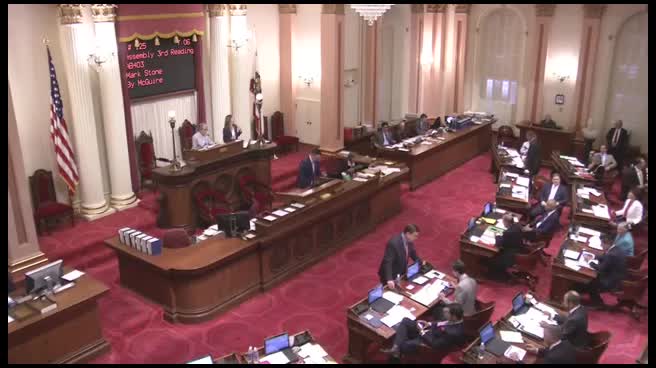 2MIN
Senate Floor
 48SEC
Senate Standing Committee on Appropriations
 4MIN
Senate Standing Committee on Governmental Organization
 2MIN
Assembly Floor
 1MIN
Assembly Standing Committee on Appropriations
Bill Author

Bill Co-Author(s):