AB 982: Child care and development: eligibility: homeless children.
- Session Year: 2015-2016
- House: Assembly
- Latest Version Date: 2015-10-07
Existing law requires the Superintendent of Public Instruction to adopt rules and regulations on eligibility, enrollment, and priority of services needed to implement laws relating to child care and development services. Existing law requires families to meet certain requirements in order to be eligible for subsidized child development services, including that the family needs child care services because the child is identified by a legal, medical, or social services agency, or emergency shelter as being a recipient of a protective service or being neglected, abused, or exploited, as provided.
This bill would expand the list of entities that can identify a child in need to include a local educational agency liaison for homeless children and youths, a Head Start program, or a transitional shelter. The bill would expand the list of children to be identified to include a homeless child.
Existing law provides that it is the intent of the Legislature that in providing child development programs the Superintendent of Public Instruction give priority to children of families that qualify for public assistance and other low-income and disadvantaged families.
This bill would also include homeless families as part of the intended priority for child development programs.
Existing law requires the Superintendent to adopt rules and regulations on eligibility, enrollment, and priority of services needed to implement laws relating to child care and development services. Existing law requires families to meet certain requirements in order to be eligible for subsidized child development services, including that the family needs child care services because the child is identified by a legal, medical, or social services agency, or emergency shelter as being a recipient of a protective service or being neglected, abused, or exploited, as provided.
This bill would expand the list of entities that can identify a child in need to include a local educational agency liaison for homeless children and youths, a Head Start program, or a transitional shelter. The bill would expand the list of children to be identified to include a homeless child.
Existing law provides priority for subsidized child development services. First priority, under the law, goes to neglected or abused children, as provided.
This bill would also provide first priority to homeless children, as provided.
(a)The Superintendent shall adopt rules and regulations on eligibility, enrollment, and priority of services needed to implement this chapter. In order to be eligible for federal and state subsidized child development services, families shall meet at least one requirement in each of the following areas:
(1)A family is (A) a current aid recipient, (B) income eligible, (C) homeless, or (D) one whose children are recipients of protective services, or whose children have been identified as being abused, neglected, or exploited, or at risk of being abused, neglected, or exploited.
(2)A family needs the child care services (A) because the child is identified by a legal, medical, or social services agency, a local educational agency liaison for homeless children and youths designated pursuant to Section 11432(g)(1)(J)(ii) of Title 42 of the United States Code, a Head Start program, or an emergency or transitional shelter as (i) a recipient of protective services, (ii) being neglected, abused, or exploited, or at risk of neglect, abuse, or exploitation, or (iii) being homeless or (B) because the parents are (i) engaged in vocational training leading directly to a recognized trade, paraprofession, or profession, (ii) employed or seeking employment, (iii) seeking permanent housing for family stability, or (iv) incapacitated.
(b)Except as provided in Article 15.5 (commencing with Section 8350), priority for federal and state subsidized child development services is as follows:
(1)(A)First priority shall be given to neglected or abused children who are recipients of child protective services, or children who are at risk of being neglected or abused, upon written referral from a legal, medical, or social services agency. If an agency is unable to enroll a child in the first priority category, the agency shall refer the family to local resource and referral services to locate services for the child.
(B)A family who is receiving child care on the basis of being a child at risk of abuse, neglect, or exploitation, as defined in subdivision (k) of Section 8208, is eligible to receive services pursuant to subparagraph (A) for up to three months, unless the family becomes eligible pursuant to subparagraph (C).
(C)A family may receive child care services for up to 12 months on the basis of a certification by the county child welfare agency that child care services continue to be necessary or, if the child is receiving child protective services during that period of time, and the family requires child care and remains otherwise eligible. This time limit does not apply if the familys child care referral is recertified by the county child welfare agency.
(2)Second priority shall be given equally to eligible families, regardless of the number of parents in the home, who are income eligible. Within this priority, families with the lowest gross monthly income in relation to family size, as determined by a schedule adopted by the Superintendent, shall be admitted first. If two or more families are in the same priority in relation to income, the family that has a child with exceptional needs shall be admitted first. If there is no family of the same priority with a child with exceptional needs, the same priority family that has been on the waiting list for the longest time shall be admitted first. For purposes of determining order of admission, the grants of public assistance recipients shall be counted as income.
(3)The Superintendent shall set criteria for, and may grant specific waivers of, the priorities established in this subdivision for agencies that wish to serve specific populations, including children with exceptional needs or children of prisoners. These new waivers shall not include proposals to avoid appropriate fee schedules or admit ineligible families, but may include proposals to accept members of special populations in other than strict income order, as long as appropriate fees are paid.
(c)Notwithstanding any other law, in order to promote continuity of services, a family enrolled in a state or federally funded child care and development program whose services would otherwise be terminated because the family no longer meets the program income, eligibility, or need criteria may continue to receive child development services in another state or federally funded child care and development program if the contractor is able to transfer the familys enrollment to another program for which the family is eligible before the date of termination of services or to exchange the familys existing enrollment with the enrollment of a family in another program, provided that both families satisfy the eligibility requirements for the program in which they are being enrolled. The transfer of enrollment may be to another program within the same administrative agency or to another agency that administers state or federally funded child care and development programs.
(d)In order to promote continuity of services, the Superintendent may extend the 60-working-day period specified in subdivision (a) of Section 18086.5 of Title 5 of the California Code of Regulations for an additional 60 working days if he or she determines that opportunities for employment have diminished to the degree that one or both parents cannot reasonably be expected to find employment within 60 working days and granting the extension is in the public interest. The scope of extensions granted pursuant to this subdivision shall be limited to the necessary geographic areas and affected persons, which shall be described in the Superintendents order granting the extension. It is the intent of the Legislature that extensions granted pursuant to this subdivision improve services in areas with high unemployment rates and areas with disproportionately high numbers of seasonal agricultural jobs.
(e)A physical examination and evaluation, including age-appropriate immunization, shall be required before, or within six weeks of, enrollment. A standard, rule, or regulation shall not require medical examination or immunization for admission to a child care and development program of a child whose parent or guardian files a letter with the governing board of the child care and development program stating that the medical examination or immunization is contrary to his or her religious beliefs, or provide for the exclusion of a child from the program because of a parent or guardian having filed the letter. However, if there is good cause to believe that a child is suffering from a recognized contagious or infectious disease, the child shall be temporarily excluded from the program until the governing board of the child care and development program is satisfied that the child is not suffering from that contagious or infectious disease.
(f)Regulations formulated and promulgated pursuant to this section shall include the recommendations of the State Department of Health Care Services relative to health care screening and the provision of health care services. The Superintendent shall seek the advice and assistance of these health authorities in situations where service under this chapter includes or requires care of children who are ill or children with exceptional needs.
(g)The Superintendent shall establish guidelines for the collection of employer-sponsored child care benefit payments from a parent whose child receives subsidized child care and development services. These guidelines shall provide for the collection of the full amount of the benefit payment, but not to exceed the actual cost of child care and development services provided, notwithstanding the applicable fee based on the fee schedule.
(h)The Superintendent shall establish guidelines according to which the director or a duly authorized representative of the child care and development program will certify children as eligible for state reimbursement pursuant to this section.
(i)Public funds shall not be paid directly or indirectly to an agency that does not pay at least the minimum wage to each of its employees.
It is the intent of the Legislature that in providing child development programs the Superintendent give priority to children of families that qualify under applicable federal statutes or regulations as recipients of public assistance and other low-income and disadvantaged families, including homeless families. Federal reimbursement shall be claimed for a child receiving services pursuant to this chapter for whom federal funds are available.
SEC. 2.SECTION 1.Section 8263 of the Education Code is amended to read:8263.(a)The Superintendent shall adopt rules and regulations on eligibility, enrollment, and priority of services needed to implement this chapter. In order to be eligible for federal and state subsidized child development services, families shall meet at least one requirement in each of the following areas:
(1)A family is (A) a current aid recipient, (B) income eligible, (C) homeless, or (D) one whose children are recipients of protective services, or whose children have been identified as being abused, neglected, or exploited, or at risk of being abused, neglected, or exploited.
(2)A family needs the child care services (A) because the child is identified by a legal, medical, or social services agency, a local educational agency liaison for homeless children and youths designated pursuant to Section 11432(g)(1)(J)(ii) of Title 42 of the United States Code, a Head Start program, or an emergency or transitional shelter as (i) a recipient of protective services, (ii) being neglected, abused, or exploited, or at risk of neglect, abuse, or exploitation, or (iii) being homeless or (B) because the parents are (i) engaged in vocational training leading directly to a recognized trade, paraprofession, or profession, (ii) employed or seeking employment, (iii) seeking permanent housing for family stability, or (iv) incapacitated.
(b)Except as provided in Article 15.5 (commencing with Section 8350), priority for federal and state subsidized child development services is as follows:
(1)(A)First priority shall be given to neglected or abused children who are recipients of child protective services, or children who are at risk of being neglected or abused, upon written referral from a legal, medical, or social services agency. If an agency is unable to enroll a child in the first priority category, the agency shall refer the family to local resource and referral services to locate services for the child.
(B)A family who is receiving child care on the basis of being a child at risk of abuse, neglect, or exploitation, as defined in subdivision (k) of Section 8208, is eligible to receive services pursuant to subparagraph (A) for up to three months, unless the family becomes eligible pursuant to subparagraph (C).
(C)A family may receive child care services for up to 12 months on the basis of a certification by the county child welfare agency that child care services continue to be necessary or, if the child is receiving child protective services during that period of time, and the family requires child care and remains otherwise eligible. This time limit does not apply if the familys child care referral is recertified by the county child welfare agency.
(2)Second priority shall be given equally to eligible families, regardless of the number of parents in the home, who are income eligible. Within this priority, families with the lowest gross monthly income in relation to family size, as determined by a schedule adopted by the Superintendent, shall be admitted first. If two or more families are in the same priority in relation to income, the family that has a child with exceptional needs shall be admitted first. If there is no family of the same priority with a child with exceptional needs, the same priority family that has been on the waiting list for the longest time shall be admitted first. For purposes of determining order of admission, the grants of public assistance recipients shall be counted as income.
(3)The Superintendent shall set criteria for, and may grant specific waivers of, the priorities established in this subdivision for agencies that wish to serve specific populations, including children with exceptional needs or children of prisoners. These new waivers shall not include proposals to avoid appropriate fee schedules or admit ineligible families, but may include proposals to accept members of special populations in other than strict income order, as long as appropriate fees are paid.
(c)Notwithstanding any other law, in order to promote continuity of services, a family enrolled in a state or federally funded child care and development program whose services would otherwise be terminated because the family no longer meets the program income, eligibility, or need criteria may continue to receive child development services in another state or federally funded child care and development program if the contractor is able to transfer the familys enrollment to another program for which the family is eligible before the date of termination of services or to exchange the familys existing enrollment with the enrollment of a family in another program, provided that both families satisfy the eligibility requirements for the program in which they are being enrolled. The transfer of enrollment may be to another program within the same administrative agency or to another agency that administers state or federally funded child care and development programs.
(d)In order to promote continuity of services, the Superintendent may extend the 60-working-day period specified in subdivision (a) of Section 18086.5 of Title 5 of the California Code of Regulations for an additional 60 working days if he or she determines that opportunities for employment have diminished to the degree that one or both parents cannot reasonably be expected to find employment within 60 working days and granting the extension is in the public interest. The scope of extensions granted pursuant to this subdivision shall be limited to the necessary geographic areas and affected persons, which shall be described in the Superintendents order granting the extension. It is the intent of the Legislature that extensions granted pursuant to this subdivision improve services in areas with high unemployment rates and areas with disproportionately high numbers of seasonal agricultural jobs.
(e)A physical examination and evaluation, including age-appropriate immunization, shall be required before, or within six weeks of, enrollment. A standard, rule, or regulation shall not require medical examination or immunization for admission to a child care and development program of a child whose parent or guardian files a letter with the governing board of the child care and development program stating that the medical examination or immunization is contrary to his or her religious beliefs, or provide for the exclusion of a child from the program because of a parent or guardian having filed the letter. However, if there is good cause to believe that a child is suffering from a recognized contagious or infectious disease, the child shall be temporarily excluded from the program until the governing board of the child care and development program is satisfied that the child is not suffering from that contagious or infectious disease.
(f)Regulations formulated and promulgated pursuant to this section shall include the recommendations of the State Department of Health Care Services relative to health care screening and the provision of health care services. The Superintendent shall seek the advice and assistance of these health authorities in situations where service under this chapter includes or requires care of children who are ill or children with exceptional needs.
(g)The Superintendent shall establish guidelines for the collection of employer-sponsored child care benefit payments from a parent whose child receives subsidized child care and development services. These guidelines shall provide for the collection of the full amount of the benefit payment, but not to exceed the actual cost of child care and development services provided, notwithstanding the applicable fee based on the fee schedule.
(h)The Superintendent shall establish guidelines according to which the director or a duly authorized representative of the child care and development program will certify children as eligible for state reimbursement pursuant to this section.
(i)Public funds shall not be paid directly or indirectly to an agency that does not pay at least the minimum wage to each of its employees.
It is the intent of the Legislature that in providing child development programs the Superintendent give priority to children of families that qualify under applicable federal statutes or regulations as recipients of public assistance and other low-income and disadvantaged families, including homeless families. Federal reimbursement shall be claimed for a child receiving services pursuant to this chapter for whom federal funds are available.
SEC. 2.Section 8263 of the Education Code is amended to read:8263.(a)The Superintendent shall adopt rules and regulations on eligibility, enrollment, and priority of services needed to implement this chapter. In order to be eligible for federal and state subsidized child development services, families shall meet at least one requirement in each of the following areas:
(1)A family is (A) a current aid recipient, (B) income eligible, (C) homeless, or (D) one whose children are recipients of protective services, or whose children have been identified as being abused, neglected, or exploited, or at risk of being abused, neglected, or exploited.
(2)A family needs the child care services (A) because the child is identified by a legal, medical, or social services agency, a local educational agency liaison for homeless children and youths designated pursuant to Section 11432(g)(1)(J)(ii) of Title 42 of the United States Code, a Head Start program, or an emergency or transitional shelter as (i) a recipient of protective services, (ii) being neglected, abused, or exploited, or at risk of neglect, abuse, or exploitation, or (iii) being homeless or (B) because the parents are (i) engaged in vocational training leading directly to a recognized trade, paraprofession, or profession, (ii) employed or seeking employment, (iii) seeking permanent housing for family stability, or (iv) incapacitated.
(b)Except as provided in Article 15.5 (commencing with Section 8350), priority for federal and state subsidized child development services is as follows:
(1)(A)(i)First priority shall be given to both of the following:
(I)Neglected to neglected or abused children who are recipients of child protective services, or children who are at risk of being neglected or abused, upon written referral from a legal, medical, or social services agency.
(II)Homeless children, upon written referral from a local educational agency liaison for homeless children and youths designated pursuant to Section 11432(g)(1)(J)(ii) of Title 42 of the United States Code, a Head Start program, or an emergency or transitional shelter.
(ii)If agency. If an agency is unable to enroll a child in the first priority category, the agency shall refer the family to local resource and referral services to locate services for the child.
(B)A family who is receiving child care on the basis of being a child at risk of abuse, neglect, or exploitation, as defined in subdivision (k) of Section 8208, is eligible to receive services pursuant to subparagraph (A) for up to three months, unless the family becomes eligible pursuant to subparagraph (C).
(C)A family may receive child care services for up to 12 months on the basis of a certification by the county child welfare agency that child care services continue to be necessary or, if the child is receiving child protective services during that period of time, and the family requires child care and remains otherwise eligible. This time limit does not apply if the familys child care referral is recertified by the county child welfare agency.
(2)Second priority shall be given equally to eligible families, regardless of the number of parents in the home, who are income eligible. Within this priority, families with the lowest gross monthly income in relation to family size, as determined by a schedule adopted by the Superintendent, shall be admitted first. If two or more families are in the same priority in relation to income, the family that has a child with exceptional needs shall be admitted first. If there is no family of the same priority with a child with exceptional needs, the same priority family that has been on the waiting list for the longest time shall be admitted first. For purposes of determining order of admission, the grants of public assistance recipients shall be counted as income.
(3)The Superintendent shall set criteria for, and may grant specific waivers of, the priorities established in this subdivision for agencies that wish to serve specific populations, including children with exceptional needs or children of prisoners. These new waivers shall not include proposals to avoid appropriate fee schedules or admit ineligible families, but may include proposals to accept members of special populations in other than strict income order, as long as appropriate fees are paid.
(c)Notwithstanding any other law, in order to promote continuity of services, a family enrolled in a state or federally funded child care and development program whose services would otherwise be terminated because the family no longer meets the program income, eligibility, or need criteria may continue to receive child development services in another state or federally funded child care and development program if the contractor is able to transfer the familys enrollment to another program for which the family is eligible before the date of termination of services or to exchange the familys existing enrollment with the enrollment of a family in another program, provided that both families satisfy the eligibility requirements for the program in which they are being enrolled. The transfer of enrollment may be to another program within the same administrative agency or to another agency that administers state or federally funded child care and development programs.
(d)In order to promote continuity of services, the Superintendent may extend the 60-working-day period specified in subdivision (a) of Section 18086.5 of Title 5 of the California Code of Regulations for an additional 60 working days if he or she determines that opportunities for employment have diminished to the degree that one or both parents cannot reasonably be expected to find employment within 60 working days and granting the extension is in the public interest. The scope of extensions granted pursuant to this subdivision shall be limited to the necessary geographic areas and affected persons, which shall be described in the Superintendents order granting the extension. It is the intent of the Legislature that extensions granted pursuant to this subdivision improve services in areas with high unemployment rates and areas with disproportionately high numbers of seasonal agricultural jobs.
(e)A physical examination and evaluation, including age-appropriate immunization, shall be required before, or within six weeks of, enrollment. A standard, rule, or regulation shall not require medical examination or immunization for admission to a child care and development program of a child whose parent or guardian files a letter with the governing board of the child care and development program stating that the medical examination or immunization is contrary to his or her religious beliefs, or provide for the exclusion of a child from the program because of a parent or guardian having filed the letter. However, if there is good cause to believe that a child is suffering from a recognized contagious or infectious disease, the child shall be temporarily excluded from the program until the governing board of the child care and development program is satisfied that the child is not suffering from that contagious or infectious disease.
(f)Regulations formulated and promulgated pursuant to this section shall include the recommendations of the State Department of Health Care Services relative to health care screening and the provision of health care services. The Superintendent shall seek the advice and assistance of these health authorities in situations where service under this chapter includes or requires care of children who are ill or children with exceptional needs.
(g)The Superintendent shall establish guidelines for the collection of employer-sponsored child care benefit payments from a parent whose child receives subsidized child care and development services. These guidelines shall provide for the collection of the full amount of the benefit payment, but not to exceed the actual cost of child care and development services provided, notwithstanding the applicable fee based on the fee schedule.
(h)The Superintendent shall establish guidelines according to which the director or a duly authorized representative of the child care and development program will certify children as eligible for state reimbursement pursuant to this section.
(i)Public funds shall not be paid directly or indirectly to an agency that does not pay at least the minimum wage to each of its employees.
It is the intent of the Legislature that in providing child development programs the Superintendent of Public Instruction give priority to children of families that qualify under applicable federal statutes or regulations as recipients of public assistance and other low-income and disadvantaged families, including homeless families. Federal reimbursement shall be claimed for any a child receiving services under pursuant to this chapter for whom federal funds are available.
SEC. 2.Section 8263 of the Education Code is amended to read:8263.(a)The Superintendent shall adopt rules and regulations on eligibility, enrollment, and priority of services needed to implement this chapter. In order to be eligible for federal and state subsidized child development services, families shall meet at least one requirement in each of the following areas:
(1)A family is (A) a current aid recipient, (B) income eligible, (C) homeless, or (D) one whose children are recipients of protective services, or whose children have been identified as being abused, neglected, or exploited, or at risk of being abused, neglected, or exploited.
(2)A family needs the child care services (A) because the child is identified by a legal, medical, or social services agency, a local educational agency liaison for homeless children and youths designated pursuant to Section 11432(g)(1)(J)(ii) of Title 42 of the United States Code, a Head Start program, or an emergency or transitional shelter as (i) a recipient of protective services or, (ii) being neglected, abused, or exploited, or at risk of neglect, abuse, or exploitation, or (iii) being homeless or (B) because the parents are (i) engaged in vocational training leading directly to a recognized trade, paraprofession, or profession, (ii) employed or seeking employment, (iii) seeking permanent housing for family stability, or (iv) incapacitated.
(b)Except as provided in Article 15.5 (commencing with Section 8350), priority for federal and state subsidized child development services is as follows:
(1)(A)(i)First priority shall be given to both of the following: neglected
(I)Neglected or abused children who are recipients of child protective services, or children who are at risk of being neglected or abused, upon written referral from a legal, medical, or social services agency. If
(II)Homeless children, upon written referral from a local educational agency liaison for homeless children and youths designated pursuant to Section 11432(g)(1)(J)(ii) of Title 42 of the United States Code, a Head Start program, or an emergency or transitional shelter.
(ii)If an agency is unable to enroll a child in the first priority category, the agency shall refer the family to local resource and referral services to locate services for the child.
(B)A family who is receiving child care on the basis of being a child at risk of abuse, neglect, or exploitation, as defined in subdivision (k) of Section 8208, is eligible to receive services pursuant to subparagraph (A) for up to three months, unless the family becomes eligible pursuant to subparagraph (C).
(C)A family may receive child care services for up to 12 months on the basis of a certification by the county child welfare agency that child care services continue to be necessary or, if the child is receiving child protective services during that period of time, and the family requires child care and remains otherwise eligible. This time limit does not apply if the familys child care referral is recertified by the county child welfare agency.
(2)Second priority shall be given equally to eligible families, regardless of the number of parents in the home, who are income eligible. Within this priority, families with the lowest gross monthly income in relation to family size, as determined by a schedule adopted by the Superintendent, shall be admitted first. If two or more families are in the same priority in relation to income, the family that has a child with exceptional needs shall be admitted first. If there is no family of the same priority with a child with exceptional needs, the same priority family that has been on the waiting list for the longest time shall be admitted first. For purposes of determining order of admission, the grants of public assistance recipients shall be counted as income.
(3)The Superintendent shall set criteria for, and may grant specific waivers of, the priorities established in this subdivision for agencies that wish to serve specific populations, including children with exceptional needs or children of prisoners. These new waivers shall not include proposals to avoid appropriate fee schedules or admit ineligible families, but may include proposals to accept members of special populations in other than strict income order, as long as appropriate fees are paid.
(c)Notwithstanding any other law, in order to promote continuity of services, a family enrolled in a state or federally funded child care and development program whose services would otherwise be terminated because the family no longer meets the program income, eligibility, or need criteria may continue to receive child development services in another state or federally funded child care and development program if the contractor is able to transfer the familys enrollment to another program for which the family is eligible before the date of termination of services or to exchange the familys existing enrollment with the enrollment of a family in another program, provided that both families satisfy the eligibility requirements for the program in which they are being enrolled. The transfer of enrollment may be to another program within the same administrative agency or to another agency that administers state or federally funded child care and development programs.
(d)In order to promote continuity of services, the Superintendent may extend the 60-working-day period specified in subdivision (a) of Section 18086.5 of Title 5 of the California Code of Regulations for an additional 60 working days if he or she determines that opportunities for employment have diminished to the degree that one or both parents cannot reasonably be expected to find employment within 60 working days and granting the extension is in the public interest. The scope of extensions granted pursuant to this subdivision shall be limited to the necessary geographic areas and affected persons, which shall be described in the Superintendents order granting the extension. It is the intent of the Legislature that extensions granted pursuant to this subdivision improve services in areas with high unemployment rates and areas with disproportionately high numbers of seasonal agricultural jobs.
(e)A physical examination and evaluation, including age-appropriate immunization, shall be required before, or within six weeks of, enrollment. A standard, rule, or regulation shall not require medical examination or immunization for admission to a child care and development program of a child whose parent or guardian files a letter with the governing board of the child care and development program stating that the medical examination or immunization is contrary to his or her religious beliefs, or provide for the exclusion of a child from the program because of a parent or guardian having filed the letter. However, if there is good cause to believe that a child is suffering from a recognized contagious or infectious disease, the child shall be temporarily excluded from the program until the governing board of the child care and development program is satisfied that the child is not suffering from that contagious or infectious disease.
(f)Regulations formulated and promulgated pursuant to this section shall include the recommendations of the State Department of Health Care Services relative to health care screening and the provision of health care services. The Superintendent shall seek the advice and assistance of these health authorities in situations where service under this chapter includes or requires care of children who are ill or children with exceptional needs.
(g)The Superintendent shall establish guidelines for the collection of employer-sponsored child care benefit payments from a parent whose child receives subsidized child care and development services. These guidelines shall provide for the collection of the full amount of the benefit payment, but not to exceed the actual cost of child care and development services provided, notwithstanding the applicable fee based on the fee schedule.
(h)The Superintendent shall establish guidelines according to which the director or a duly authorized representative of the child care and development program will certify children as eligible for state reimbursement pursuant to this section.
(i)Public funds shall not be paid directly or indirectly to an agency that does not pay at least the minimum wage to each of its employees.
|
Date
|
Status
|
|---|---|
| Jun 24, 2015 | In committee: Hearing postponed by committee. |
| Oct 7, 2015 | Chaptered by Secretary of State - Chapter 567, Statutes of 2015. |
| Oct 7, 2015 | Approved by the Governor. |
| Sep 9, 2015 | Enrolled and presented to the Governor at 4 p.m. |
| Aug 31, 2015 | Senate amendments concurred in. To Engrossing and Enrolling. (Ayes 79. Noes 0.). |
| Aug 31, 2015 | Senate amendments concurred in. To Engrossing and Enrolling. (Ayes 79. Noes 0. Page 2677.). |
| Aug 27, 2015 | Read third time. Passed. Ordered to the Assembly. (Ayes 38. Noes 0. Page 2197.). |
| Aug 27, 2015 | Read third time. Passed. Ordered to the Assembly. |
| Aug 27, 2015 | In Assembly. Concurrence in Senate amendments pending. May be considered on or after August 30 pursuant to Assembly Rule 77. |
| Aug 18, 2015 | Read second time. Ordered to third reading. |
| Aug 17, 2015 | From committee: Be placed on second reading file pursuant to Senate Rule 28.8. |
| Jul 15, 2015 | From committee: Do pass and re-refer to Com. on APPR. with recommendation: To Consent Calendar. (Ayes 5. Noes 0.) (July 14). Re-referred to Com. on APPR. |
| Jul 2, 2015 | From committee chair, with author's amendments: Amend, and re-refer to committee. Read second time, amended, and re-referred to Com. on HUMAN S. |
| Jul 1, 2015 | From committee: Do pass and re-refer to Com. on HUMAN S. (Ayes 6. Noes 0.) (July 1). Re-referred to Com. on HUMAN S. |
| Feb 26, 2015 | Read first time. To print. |
| Jun 9, 2015 | In committee: Set, first hearing. Hearing canceled at the request of author. |
| May 28, 2015 | Referred to Coms. on ED. and HUMAN S. |
| May 14, 2015 | Read third time. Passed. Ordered to the Senate. (Ayes 78. Noes 0. Page 1449.) |
| May 14, 2015 | Read third time. Passed. Ordered to the Senate. |
| May 14, 2015 | In Senate. Read first time. To Com. on RLS. for assignment. |
| May 7, 2015 | Read second time. Ordered to Consent Calendar. |
| May 6, 2015 | From committee: Do pass. To Consent Calendar. (Ayes 17. Noes 0.) (May 6). |
| Apr 22, 2015 | Re-referred to Com. on APPR. |
| Apr 21, 2015 | Read second time and amended. |
| Apr 20, 2015 | From committee: Amend, and do pass as amended and re-refer to Com. on APPR. with recommendation: To Consent Calendar. (Ayes 7. Noes 0.) (April 14). |
| Mar 19, 2015 | Referred to Com. on HUM. S. |
| Feb 27, 2015 | From printer. May be heard in committee March 29. |
|
Date
|
Description
|
Location
|
Votes
|
|
|---|---|---|---|---|
| Aug 31, 2015 | AB 982 EGGMAN Concurrence in Senate Amendments | Assembly Floor |
Passed |
|
| Aug 27, 2015 | Assembly 3rd Reading AB982 Eggman By Beall | Senate Floor |
Passed |
|
| Jul 14, 2015 | Do pass, but first be re-referred to the Committee on [Appropriations] with the recommendation: To Consent Calendar | Senate Standing Committee on Human Services |
Passed |
|
| Jul 1, 2015 | Do pass, but first be re-referred to the Committee on [Human Services] | Senate Standing Committee on Education |
Passed |
|
| May 14, 2015 | AB 982 EGGMAN Consent Calendar Second Day Regular Session | Assembly Floor |
Passed |
|
| May 6, 2015 | Do pass. To Consent Calendar. | Assembly Standing Committee on Appropriations |
Passed |
|
| Apr 14, 2015 | Do pass as amended, and be re-referred to the Committee on [Appropriations] with recommendation: To Consent Calendar | Assembly Standing Committee on Human Services |
Passed |
This list shows positions taken on this bill by organizations on the date displayed, which is linked to the original source.
Positions by individuals are not included.
|
Organization
|
Position
|
Date
|
|---|---|---|
| Alliance Against Family Violence and Sexual Assault | ** Support | Aug 27, 2015 |
| American Academy of Pediatrics | ** Support | Aug 27, 2015 |
| and Youth | ** Support | Aug 27, 2015 |
| Bakersfield Homeless Center | ** Support | Aug 27, 2015 |
| California Coalition Creative Statewide Advocacy Organization | * Support | Jul 1, 2015 |
| California Coalition For Youth | ** Support | Aug 27, 2015 |
| California Equity Leaders Network | ** Support | Aug 27, 2015 |
| California School Employees Association | ** Support | Aug 27, 2015 |
| California State PTA | ** Support | Aug 27, 2015 |
| California State PTA California Welfare Directors Association | ** Support | Aug 27, 2015 |
| Citrus Heights HART | ** Support | Aug 27, 2015 |
| Citrus Heights Homeless Assistance Resource Team | ** Support | Aug 27, 2015 |
| Coalition for Youth | ** Support | Jul 1, 2015 |
| County Welfare Directors Association of California | ** Support | Aug 27, 2015 |
| First 5 Marin Children and Families Commission | ** Support | Aug 27, 2015 |
| Hamilton Family Center | ** Support | Jul 1, 2015 |
| Hamilton Family Center Home Start, Inc. Housing California | ** Support | Aug 27, 2015 |
| Housing California | ** Support | Aug 27, 2015 |
| Junior Leagues of CA State Public Affairs Committee | ** Support | Aug 27, 2015 |
| LIUNA Locals 777 & 792 | ** Support | Aug 27, 2015 |
| Los Angeles Unified School District | ** Support | Aug 27, 2015 |
| LUNIA Locals 777 & 792 | ** Support | Aug 27, 2015 |
| National Association of Social Workers of California | * Support | Jul 1, 2015 |
| National Association of Social Workers-CA Chapter | ** Support | Aug 27, 2015 |
| National Center for Youth Law | ** Support | Aug 27, 2015 |
| Public Counsel | ** Support | Aug 27, 2015 |
| Public Counsel's Children's Rights Project | ** Support | Aug 27, 2015 |
| Santa Cruz County Homeless Action Partnership | ** Support | Aug 27, 2015 |
| Santa Cruz County Office Of Education | ** Support | Aug 27, 2015 |
| The Ed Ladder | ** Support | Aug 27, 2015 |
| u None received. | ** Against | Jul 1, 2015 |
| Western Center On Law And Poverty Inc. | ** Support | Aug 27, 2015 |
| Women's Empowerment | ** Support | Aug 27, 2015 |
AB 982
Page 2
CONCURRENCE IN SENATE AMENDMENTS
AB 982
(Eggman)
As Amended July 2, 2015
Majority vote
ASSEMBLY: |
78-0 |
(May 14, 2015) |
SENATE: |
37-0 |
(August 27, 2015) |
Original Committee Reference: HUM. S.
SUMMARY: Enhances the process for identifying homeless youth for subsidized child care services. Specifically, this bill:
Adds local educational agency liaisons for homeless children and youths, as specified, Head Start programs, and emergency and transitional shelters to the list of entities that may identify a child, and thereby confer eligibility, for subsidized child development services.
Adds "being homeless" as a criterion for which a child may be identified as eligible for subsidized child care services by specified entities.
The Senate amendments removed language that included the prioritization of homeless families within current legislative intent to prioritize certain low-income and disadvantaged families for subsidized child development programs.
EXISTING LAW:
Establishes the Child Care and Developmental Services Act to provide child care and development services as part of a coordinated, comprehensive, and cost-effective system serving children from birth to 13 years old and their parents and including a full range of supervision, health, and support services through full- and part-time programs. (Education Code (EDC) Section 8200 et seq.)
Defines "child care and development services" to mean services designed to meet a wide variety of children’s and families’ needs while parents and guardians are working, in training, seeking employment, incapacitated, or in need of respite. (EDC Section 8208)
States the intent of the Legislature that all families have access to child care and development services, through resource and referral where appropriate, and regardless of demographic background or special needs, and that families are provided the opportunity to attain financial stability through employment, while maximizing growth and development of their children, and enhancing their parenting skills through participation in child care and development programs. (EDC Section 8202)
Requires the Superintendent of Public Instruction to administer general child care and development programs to include, among other things as specified, age- and developmentally-appropriate activities, supervision, parenting education and involvement, and nutrition. Further allows such programs to be designed to meet child-related needs identified by parents or guardians, as specified. (EDC Sections 8240 and 8241)
Stipulates requirements families must meet in order to be eligible for federal and state subsidized child development services, and grants priority enrollment to children who have been or are at risk of being abused or neglected, as specified. (EDC Section 8263)
Defines a local educational liaison for homeless children and youth to be a staff person designated by a local educational agency to carry out specified duties, including ensuring that homeless children and youth are identified by school personnel and, in coordination with other entities, seeing to it that homeless children and youth have full and equal opportunity to succeed in school. (42 United States Code Section 11432(g)(1)(J)(ii))
FISCAL EFFECT: According to the Senate Appropriations Committee, pursuant to Senate Rule 28.8, negligible state costs.
COMMENTS:
Subsidized child care eligibility and prioritization: Certain eligibility and prioritization rules apply to subsidized child care in California. Families are eligible for non-CalWORKs subsidized child care if they meet at least one requirement in each of two areas: eligibility and need. First, they must meet one of the eligibility criteria, which are: currently receiving aid, being income-eligible, being homeless, or having children who are recipients of protective services or who have been identified as being, or are at risk of being, abused, neglected, or exploited. Secondly, the family must meet one of the "need" requirements: either the child has to have been identified by a legal, medical, or social services agency or emergency shelter as being a recipient of protective services or being (or at risk of being) abused, neglected or exploited, or the parents need to be employed or seeking employment, engaged in vocational training, as specified, seeking permanent housing for family stability, or incapacitated.
First priority for non-CalWORKs subsidized child care is given to abused or neglected children who are receiving protective services, or children who are at risk of abuse or neglect who are referred from a legal, medical or social services agency. Second priority is given to families with the lowest gross monthly income relative to family size.
Homeless children and youth: One commonly used definition of "homeless children and youths" comes from the federal McKinney-Vento Homeless Assistance Act of 2001. It defines homeless children and youths as individuals who "lack a fixed, regular, and adequate nighttime residence," and it includes children and youths who: have to share housing with others due to loss of housing or economic hardship; are living in motels, hotels, trailer parks, or camp grounds because they lack other accommodations; are living in emergency or transitional shelters; are awaiting foster placement; or have a primary nighttime residence that is not designed as a regular sleeping accommodation for human beings.
Over 520,000 children in the state were estimated to be homeless in 2012-13, prompting the National Center on Family Homelessness at American Institutes for Research to rank California the 48th worst in the nation with regards to the extent of child homelessness (adjusted for state population). Nationally, it is estimated that approximately 51% of all homeless children in the United States are under the age of 6, 34% are between the ages of 6 and 12, and 15% are between 13 and 17.
Analysis Prepared by: Daphne Hunt / HUM. S. / (916) 319-2089 FN:0001450
AB 982
Page 5
|
Office of Senate Floor Analyses (916) 651-1520 Fax: (916) 327-4478 |
THIRD READING
Bill No: AB 982
Amended: 7/2/15 in Senate
SENATE EDUCATION COMMITTEE: 6-0, 7/1/15
AYES: Liu, Leyva, Mendoza, Monning, Pan, Vidak
NO VOTE RECORDED: Runner, Block, Hancock
SENATE HUMAN SERVICES COMMITTEE: 5-0, 7/14/15
AYES: McGuire, Berryhill, Hancock, Liu, Nguyen
SENATE APPROPRIATIONS COMMITTEE: Senate Rule 28.8
ASSEMBLY FLOOR: 78-0, 5/14/15 (Consent) - See last page for vote
SUBJECT: Child care and development: eligibility: homeless children
DIGEST: This bill specifically identifies homeless youth as a criterion for meeting federal and state subsidized child development eligibility requirements and modifies the list of entities that may identify a child for such services.
Existing law:
Declares the legislative intent to give priority to children of families that qualify for applicable federal public assistance and other low-income and disadvantage families. (Education Code § 8205)
Specifies that children are eligible for subsidized child care if the family currently receives aid, meets specified income eligibility requirements, is homeless, or if the child is the recipient of protective services, or has been identified as neglected, abused or exploited (or at risk of such). (EC § 8263)
Requires in order to be eligible for subsidized child development services to be identified by a legal, medical, or social services agency, or emergency shelter as being a recipient of a protective service. (EC § 8263)
Requires, under the McKinney-Vento Act, each local educational agency to designate a staff person as a liaison for homeless children and youth, and carry out specific duties, such as ensuring immediate enrollment, access to educational opportunities offered to other students, and providing notice of the rights of homeless youth. (42 U.S.C. § 11432(g)(1)(j)(ii))
This bill identifies homeless youth as a criterion for meeting federal and state subsidized child development eligibility requirements and modifies the list of entities that may identify a child for such services. Specifically this bill:
Expands the existing list of entities that may identify a child for subsidized child development services to include local educational agency liaisons for homeless children and youth, Head Start programs, and emergency and transitional shelters.
Adds “being homeless” as a criterion for which a child may be identified as needing subsidized child cares services by specified entities.
Includes the prioritization of homeless families within existing legislative intent provisions.
Comments
Need for the bill. Local educational agency (LEA) liaisons for homeless children and youth are required to ensure homeless youth get the education and health care services they need. According to the author, LEA liaisons are not statutorily authorized to identify families as homeless for purposes of child care prioritization. The author also notes that parents experiencing homelessness are less able to access child care subsidies than other low-income parents. This bill seeks to enhance access to federal and state subsidized childcare and development services for homeless families by adding LEA liaisons for homeless children and youth, Head Start programs, and emergency and transitional shelters to the list of entities that may identify a child for subsidize care.
Child care eligibility. Existing law specifies that children are eligible for subsidized child care if the family currently receives aid, meets specified income eligibility requirements, is homeless, or if the child is the recipient of protective services, or has been identified as neglected, abused or exploited (or at risk of such). In addition, the family must be in need of the child care services due to specified social service circumstances, engaged in vocational training, seeking employment, searching for housing or other specified needs.
Homeless children and youth. State regulations define “homeless,” to mean a person or family that lacks a fixed, regular and adequate night time residence and further defines the term to mean a person or family to have a primary night time resident that is supervised publicly or privately, operated by shelter or a place not traditionally designed for sleeping accommodation. Research by the Institute for Children, Poverty, And Homelessness, reports that parents experiencing homelessness are less able to access child care subsidies than other low-income parents. Mothers who have experienced homelessness receive government subsidies for child care much less often than poor families at risk of homelessness and are more likely to be forced to leave jobs or school due to lack of child care.
This bill seeks to articulate legislative intent to prioritize homeless children and youth for child care services but does not require prioritization of the population for those services. To note, existing law identifies homelessness as a criteria for qualifying for subsidized child care services. This bill also attempts to include entities who regularly engage homeless and have experience addressing their unique needs.
FISCAL EFFECT: Appropriation: No Fiscal Com.: Yes Local: No
Alliance Against Family Violence and Sexual Assault
American Academy of Pediatrics
Bakersfield Homeless Center
California Coalition for Youth
California Equity Leaders Network
California School Employees Association
California State PTA
California Welfare Directors Association
Citrus Heights Homeless Assistance Resource Team
County Welfare Directors Association of California
First 5 Marin Children and Families Commission
Hamilton Family Center
Home Start, Inc.
Housing California
Junior Leagues of CA State Public Affairs Committee
LIUNA Locals 777 & 792
Los Angeles Unified School District
National Association for the Education of Homeless Children and Youth
National Association of Social Workers-CA Chapter
National Center for Youth Law
Public Counsel
Santa Cruz County Homeless Action Partnership
Santa Cruz County Office of Education
The Ed Ladder
Western Center on Law & Poverty
Women’s Empowerment
OPPOSITION: (Verified 8/19/15)
None received
ASSEMBLY FLOOR: 78-0, 5/14/15
AYES: Achadjian, Alejo, Travis Allen, Baker, Bigelow, Bloom, Bonilla, Bonta, Brough, Brown, Burke, Calderon, Campos, Chang, Chau, Chávez, Chiu, Chu, Cooley, Cooper, Dababneh, Dahle, Daly, Dodd, Eggman, Frazier, Beth Gaines, Gallagher, Cristina Garcia, Eduardo Garcia, Gatto, Gipson, Gomez, Gonzalez, Gordon, Gray, Grove, Hadley, Harper, Roger Hernández, Holden, Irwin, Jones, Jones-Sawyer, Kim, Lackey, Levine, Lopez, Low, Maienschein, Mathis, Mayes, McCarty, Melendez, Mullin, Nazarian, Obernolte, O'Donnell, Olsen, Patterson, Perea, Quirk, Rendon, Ridley-Thomas, Rodriguez, Salas, Santiago, Steinorth, Mark Stone, Thurmond, Ting, Wagner, Waldron, Weber, Wilk, Williams, Wood, Atkins
NO VOTE RECORDED: Linder, Medina
Prepared by: Olgalilia Ramirez / ED. / (916) 651-4105
8/19/15 20:39:07
**** END ****
AB 982 (Eggman) Page 5 of 5
SENATE COMMITTEE ON HUMAN SERVICES
Senator McGuire, Chair
2015 - 2016 Regular
Bill No: AB 982
Author: |
Eggman |
||
Version: |
July 2, 2015 |
Hearing Date: |
July 14, 2015 |
Urgency: |
No |
Fiscal: |
Yes |
Consultant: |
Mareva Brown |
||
Subject: Child care and development: eligibility: homeless children
SUMMARY
This bill expands the list of entities that can formally identify a child as being eligible for subsidized child care services to include a local educational agency liaison for homeless children and youths, a Head Start program, or a transitional shelter. The bill also expands the list of conditions that make a family eligible for child care to include a homeless child.
ABSTRACT
Existing law:
Establishes the Child Care and Development Services Act in California law to provide a comprehensive, coordinated, and cost-effective system of child care and development services for children from infancy to 13 years of age and their parents, including a full range of supervision, health, and support services through full- and part-time programs and to provide an environment that is healthy and nurturing for all children in child care and development programs. (EDC 8201)
Requires the Superintendent to adopt rules and regulations for eligibility, enrollment and priority of services and require that in order to be eligible for federal- and state-subsidized child development services a family must meet a least one of the following, in each of the following areas: (EDC 8263)
Is a current aid recipient, income eligible, homeless or the children are recipients of protective services, among others.
A family needs child care services because the child is identified by a legal, medical or social services agency as a recipient of protective services or being neglected, abused, or exploited, as defined, or because the parents are engaged in vocational training leading, as specified, or employed or seeking employment, seeking permanent housing for family stability or incapacitated.
Requires the following priorities be set for services:
First priority shall be given to abused or neglected children who are recipients of child protective services or children who are at risk of being neglected or abused, upon written referral from a legal, medical or social services agency, as specified.
Second priority shall be given equally to income-eligible families, as specified. (EDC 8263 (b))
Requires the Superintendent to set criteria for, and to grant specific waivers of, the priorities established in this subdivision for agencies that wish to serve specific populations, including children with exceptional needs or children of prisoners. These new waivers shall not include proposals to avoid appropriate fee schedules or admit ineligible families, but may include proposals to accept members of special populations in other than strict income order, as long as appropriate fees are paid. (EDC 8263 (b)(3))
Establishes criteria for promoting continuity of services within child care and development programs for enrolled children. (EDC 8263 (c))
Establishes, in federal law, the McKinney-Vento Homeless Assistance Act, which provides federal funding for local homeless assistance projects. (42 USC § 11301, et seq.)
Includes in the McKinney-Vento Homeless Assistance Act, a definition of a homeless child or youth as one who lacks a fixed, regular, and adequate nighttime residence including:
Children and youths who are sharing the housing of other persons due to loss of housing, economic hardship, or a similar reason; are living in motels, hotels, trailer parks, or camping grounds due to the lack of alternative adequate accommodations; are living in emergency or transitional shelters; are abandoned in hospitals; or are awaiting foster care placement;
Children and youths who have a primary nighttime residence that is a public or private place not designed for, or ordinarily used as, a regular sleeping accommodation for human beings;
Children and youths who are living in cars, parks, public spaces, abandoned buildings, substandard housing, bus or train stations, or similar settings; and
Migratory children living in the circumstances described above. (42 USC § 11434a)
States the intent of the Legislature that homeless youth are entitled to a meaningful opportunity to meet the challenging state pupil academic achievement standards to which all pupils are held. (EDC 48850(a)(1))
This bill:
Adds to the list of professionals who can identify a family as having eligibility for subsidized child care services a local educational agency liaison for homeless children and youths, as specified, a Head Start program or a transitional shelter. These professionals can affirm that specific conditions exist to qualify a child for subsidized care.
Adds homelessness to the risk factors to be considered in assessing eligibility for subusidized child care services in addition to the existing criteria of neglect, abuse, and parental engagement in work or work-finding activities, among others.
FISCAL IMPACT
An Assembly Appropriations Committee analysis identified this bill as having negligible state fiscal impact.
BACKGROUND AND DISCUSSION
Purpose of the bill:
The author states that early childhood services are extremely valuable for homeless children. Research overwhelmingly shows high quality educational experiences in the preschool years can have a positive effect and long-term benefit throughout a child’s education, according to the author. High-quality preschool education and early learning have been shown to increase high school graduation rates, reduce crime and delinquency, lead to greater employment and wages as adults, and contribute to more stable families, the author states.
Yet, according to the author, research shows that parents experiencing homelessness are less able to access childcare subsidies than other low-income parents.1 Mothers who have experienced homelessness receive government subsidies for childcare much less often than those at-risk of homelessness or those with stable housing. They are more likely to have unreliable childcare and are less likely to access center-based care, the author states. Mothers who have experienced homelessness are more likely to be forced to leave jobs or school due to lack of childcare, according to the author. This bill would allow professionals who work with homeless families to identify those families as meeting eligibility requirements for state or federally subsidized care.
Homelessness among children
Homeless families with children comprise 37 percent of the overall homeless population, according to data from the U.S. Department of Housing and Urban Development. In 2013, more than 1.2 million public school children were homeless, an increase of roughly 25 percent from the 2009-10 school, according to various U.S. Department of Education data sources. Overall, 2.5 million children experienced homelessness nationally in 2013 – or 1 in 30. State data indicates nearly a quarter of California’s homeless children live in Los Angeles County and more than 80 percent, or 224,161 children, were living in doubled-up situations, which include cohabitating with other families, "couch surfing," or living in a garage. Another 17,844 were living in shelters, 10,073 lived in motels and hotels, and 7,578 were unsheltered.
The National Center on Family Homelessness at the American Institutes for Research ranked California 48th overall on its report card of child homelessness, just above Mississippi and Alabama, respectively. It ranked 48th in the extent of child homelessness, just above New York and Kentucky, based on HUD data showing that nearly 530,000 children were homeless in California in 2012-13, an increase of 20,000 children from one year prior and of nearly 90,000 from two years earlier.
California also ranked second-to-last in policy and planning efforts, above only Wyoming. Despite positive marks for having a state housing trust fund, California continues to have poor access to housing for children and their families: Just 1,650 emergency shelter beds for families, 4,602 transitional housing units and 5,064 permanent supportive housing units exist statewide.
McKinney-Vento Homeless Assistance Act
The McKinney-Vento Homeless Assistance Act provides funding for shelters and addresses educational needs of homeless youth, among other identified responsibilities. The Act requires homeless children to be able to enroll in school even without all required paperwork and establishes other rights. It requires school districts to appoint local educational liaisons for homeless children. The Act also provides a definition of homelessness that is broader than the previously-used HUD definition: It includes individuals and families who lack a fixed, regular, and adequate nighttime residence, including those who live in shelters, transitional housing, cars, campgrounds, motels, or who share the housing of others temporarily due to loss of housing, economic hardship, or similar reasons.
Child care
Approximately 350,000 children receive subsidized child care in California through a variety of home-based and center-based programs which are intended to both support child development and the parents’ participation in work. To be eligible for subsidized child care, a family’s income must be below 70 percent of the state median income, or $42,000 for a family of three; parents must be working or participating in an education or training program; and children must be under the age of 13. Space in child care and early childhood education programs is limited, and shrunk considerably during the Great Recession. The Legislature has made significant effort in the past several years to recoup some of the lost slots; however there is not enough subsidized child care to meet the need.
Child care among homeless families
Access to child care provides two important benefits, according to research published in 2014 by the Institute for Children, Poverty and Homelessness in Washington, DC. Not only does stable child care provide parents an opportunity to work, search for work or find housing, but it provides a critical safe setting for children to grow and learn. “High-quality child care can, especially for young children, bolster the early learning skills necessary for success in school and beyond. By modeling nurturing interactions and behaviors, child care providers help shape young children’s development.” 2
Yet a 2012 report by the same organization found that homeless mothers are less likely to receive child care subsidies than either mothers at risk of becoming homeless or mothers who have housing stability.
Related legislation:
SB 177 (Liu, Chapter 491, Statutes of 2013) reduced barriers to school enrollment for homeless youth.
AB 905 (Arambula, Chapter 110, Statutes of 2007) allowed the Superintendent of Public Instruction to extend the period of eligibility an additional 60 days for families whose basis of need for child care is that they are seeking employment.
COMMENTS
While California’s statute has included homelessness as a criteria for subsidized child care, and has permitted prioritizing children for care within the category of families “at risk,” this bill would allow homeless liaisons and Head Start organizations, which often deal directly with homeless families, to be included in the list of professionals who can identify a family as needing child care.
PRIOR VOTES
Assembly Floor: |
78 - 0 |
Assembly Appropriations Committee: |
17 - 0 |
Assembly Human Services Committee: |
7 - 0 |
POSITIONS
Support:
Alliance Against Family Violence and Sexual Assault/Bakersfield Homeless Center
California Equity Leaders Network
California State PTA
Citrus Heights HART
Ed Ladder
Housing California
Los Angeles Unified School District
LUNIA Locals 777 & 792
National Association for the Education of Homeless Children and Youth
National Center for Youth Law
Public Counsel’s Children’s Rights Project
Santa Cruz County Homeless Action Partnership
Santa Cruz County Office of Education
Western Center on Law and Poverty
1 individual
Oppose:
None received.
-- END --
1 Institute for Children, Poverty & Homelessness (May 2012). Profiles of Risk: Child Care. New York: Author. (“This brief uses data from the Fragile Families and Child Wellbeing Study, a national survey tracking nearly 5,000 families for five years after the birth of each family’s focal child.”)
2 http://www.icphusa.org/PDF/reports/ICPH_policyreport_MeetingtheChildCareNeedsofHomelessFamilies.pdf
AB 982 (Eggman) Page 3 of 3
SENATE COMMITTEE ON EDUCATION
Senator Carol Liu, Chair
2015 - 2016 Regular
Bill No: AB 982
Author: |
Eggman |
||
Version: |
April 21, 2015 Hearing Date: July 1, 2015 |
||
Urgency: |
No |
Fiscal: |
Yes |
Consultant: |
Olgalilia Ramirez |
||
Subject: Child care and development: eligibility: homeless children
Note: This bill has been referred to the Committees on Education and Human Services. A "do pass" motion should include referral to the Committee on Human Services.
SUMMARY
This bill specifically identifies homeless youth as a criterion for meeting federal and state subsidized child development eligibility requirements and modifies the list of entities that may identify a child for such services.
BACKGROUND
Existing law declares the legislative intent to give priority to children of families that qualify for applicable federal public assistance and other low-income and disadvantage families. (Education Code § 8205)
Existing law specifies that children are eligible for subsidized child care if the family currently receives aid, meets specified income eligibility requirements, is homeless, or if the child is the recipient of protective services, or has been identified as neglected, abused or exploited (or at risk of such). (EC § 8263)
Existing law requires in order to be eligible for subsidized child development services to be identified by a legal, medical, or social services agency, or emergency shelter as being a recipient of a protective service. (EC § 8263)
The McKinney-Vento Act requires each local educational agency to designate a staff person as a liaison for homeless children and youth, and carry out specific duties, such as ensuring immediate enrollment, access to educational opportunities offered to other students, and providing notice of the rights of homeless youth.
(42 U.S.C. § 11432(g)(1)(j)(ii))
ANALYSIS
This bill specifically identifies homeless youth as a criterion for meeting federal and state subsidized child development eligibility requirements and modifies the list of entities that may identify a child for such services. Specifically this bill:
Expands the existing list of entities that may identify a child for subsidized child development services to include local educational agency liaisons for homeless children and youth, Head Start programs, and emergency and transitional shelters.
Adds “being homeless” as a criterion for which a child may be identified as needing subsidized child cares services by specified entities.
Includes the prioritization of homeless families within existing legislative intent provisions.
STAFF
COMMENTS
Need for the bill. Local educational agency (LEA) Liaisons for homeless children and youth are required to ensure homeless youth get the education and health care services they need. According to the author, LEA liaisons are not statutorily authorized to identify families as homeless for purposes of child care prioritization. The author also notes that parents experiencing homelessness are less able to access child care subsidies than other low-income parents. This bill seeks to enhance access to federal and state subsidized childcare and development services for homeless families by adding LEA liaisons for homeless children and youth, Head start programs, and emergency and transitional shelters to the list of entities that may identify a child for subsidize care.
Child care eligibility. Existing law specifies that children are eligible for subsidized child care if the family currently receives aid, meets specified income eligibility requirements, is homeless, or if the child is the recipient of protective services, or has been identified as neglected, abused or exploited (or at risk of such). In addition, the family must be in need of the child care services due to specified social service circumstances, engaged in vocational training, seeking employment, searching for housing or other specified needs.
Homeless children and youth. State regulations define “homeless,” to mean a person or family that lacks a fixed, regular and adequate night time residence and further defines the term to mean a person or family to have a primary night time resident that is supervised publicly or privately, operated by shelter or a place not traditionally designed for sleeping accommodation. Research by Institute for children, poverty, and homelessness reports that parents experiencing homelessness are less able to access child care subsidies than other low-income parents. Mothers who have experienced homelessness receive government subsidies for child care much less often than poor families at risk of homelessness and are more likely to be forced to leave jobs or school due to lack of child care.
This bill seeks to articulate legislative intent to prioritize homeless children and youth for child care services but does not require prioritization of the population for those services. To note, current law identifies homelessness as a criteria for qualifying for subsidized child care services. This bill also attempts to include entities who regularly engage homeless and have experience addressing their unique needs.
SUPPORT
Alliance Against Family Violence and Sexual Assault
Bakersfield Homeless Center
California Equity Leaders Network
California State PTA
Coalition for Youth
Citrus Heights HART
Housing California
LIUNA Locals 777 and 792
Los Angeles Unified School District
National Association for the Education of Homeless Children and Youth
National Center for Youth Law
Public Counsel
Santa Cruz County Office of Education
The Ed Ladder
Western Center on Law and Poverty
OPPOSITION
None received.
-- END --
AB 982 (Eggman) Page 3 of 3
SENATE COMMITTEE ON EDUCATION
Senator Carol Liu, Chair
2015 - 2016 Regular
Bill No: AB 982
Author: |
Eggman |
||
Version: |
April 21, 2015 Hearing Date: June 24, 2015 |
||
Urgency: |
No |
Fiscal: |
Yes |
Consultant: |
Olgalilia Ramirez |
||
Subject: Child care and development: eligibility: homeless children
Note: This bill has been referred to the Committees on Education and Human Services. A "do pass" motion should include referral to the Committee on Human Services.
SUMMARY
This bill specifically identifies homeless youth as a criterion for meeting federal and state subsidized child development eligibility requirements and modifies the list of entities that may identify a child for such services.
BACKGROUND
Existing law declares the legislative intent to give priority to children of families that qualify for applicable federal public assistance and other low-income and disadvantage families. (Education Code § 8205)
Existing law specifies that children are eligible for subsidized child care if the family currently receives aid, meets specified income eligibility requirements, is homeless, or if the child is the recipient of protective services, or has been identified as neglected, abused or exploited (or at risk of such). (EC § 8263)
Existing law requires in order to be eligible for subsidized child development services to be identified by a legal, medical, or social services agency, or emergency shelter as being a recipient of a protective service. (EC § 8263)
The McKinney-Vento Act requires each local educational agency to designate a staff person as a liaison for homeless children and youth, and carry out specific duties, such as ensuring immediate enrollment, access to educational opportunities offered to other students, and providing notice of the rights of homeless youth.
(42 U.S.C. § 11432(g)(1)(j)(ii))
ANALYSIS
This bill specifically identifies homeless youth as a criterion for meeting federal and state subsidized child development eligibility requirements and modifies the list of entities that may identify a child for such services. Specifically this bill:
Expands the existing list of entities that may identify a child for subsidized child development services to include local educational agency liaisons for homeless children and youth, Head Start programs, and emergency and transitional shelters.
Adds “being homeless” as a criterion for which a child may be identified as needing subsidized child cares services by specified entities.
Includes the prioritization of homeless families within existing legislative intent provisions.
STAFF
COMMENTS
Need for the bill. Local educational agency (LEA) Liaisons for homeless children and youth are required to ensure homeless youth get the education and health care services they need. According to the author, LEA liaisons are not statutorily authorized to identify families as homeless for purposes of child care prioritization. The author also notes that parents experiencing homelessness are less able to access child care subsidies than other low-income parents. This bill seeks to enhance access to federal and state subsidized childcare and development services for homeless families by adding LEA liaisons for homeless children and youth, Head start programs, and emergency and transitional shelters to the list of entities that may identify a child for subsidize care.
Child care eligibility. Existing law specifies that children are eligible for subsidized child care if the family currently receives aid, meets specified income eligibility requirements, is homeless, or if the child is the recipient of protective services, or has been identified as neglected, abused or exploited (or at risk of such). In addition, the family must be in need of the child care services due to specified social service circumstances, engaged in vocational training, seeking employment, searching for housing or other specified needs.
Homeless children and youth. State regulations define “homeless,” to mean a person or family that lacks a fixed, regular and adequate night time residence and further defines the term to mean a person or family to have a primary night time resident that is supervised publicly or privately, operated by shelter or a place not traditionally designed for sleeping accommodation. Research by Institute for children, poverty, and homelessness reports that parents experiencing homelessness are less able to access child care subsidies than other low-income parents. Mothers who have experienced homelessness receive government subsidies for child care much less often than poor families at risk of homelessness and are more likely to be forced to leave jobs or school due to lack of child care.
This bill seeks to articulate legislative intent to prioritize homeless children and youth for child care services but does not require prioritization of the population for those services. To note, current law identifies homelessness as a criteria for qualifying for subsidized child care services. This bill also attempts to include entities who regularly engage homeless and have experience addressing their unique needs.
SUPPORT
Alliance Against Family Violence and Sexual Assault
Bakersfield Homeless Center
California Equity Leaders Network
California State PTA
Citrus Heights HART
Housing California
LIUNA Locals 777 and 792
Los Angeles Unified School District
National Association for the Education of Homeless Children and Youth
National Center for Youth Law
Public Counsel
Santa Cruz County Office of Education
The Ed Ladder
Western Center on Law and Poverty
OPPOSITION
None received.
-- END --
AB 982
Page 2
Date of Hearing: May 6, 2015
ASSEMBLY COMMITTEE ON APPROPRIATIONS
Jimmy Gomez, Chair
AB 982
(Eggman) – As Amended April 21, 2015
Policy Committee: |
Human Services |
Vote: |
7 - 0 |
|
|
|
|
|
|
|
|
Urgency: No State Mandated Local Program: No Reimbursable: No
SUMMARY: This bill enhances the process for identifying homeless youth for subsidized child care services. Specifically, this bill:
Adds local educational agency liaisons for homeless children and youths, Head Start programs, and emergency and transitional shelters to the list of entities that may identify a child, and thereby confer eligibility, for subsidized child development services.
Adds “being homeless” as a criterion for which a child may be identified as needing subsidized child care services by specified entities.
FISCAL EFFECT:
Negligible state fiscal impact.
COMMENTS:
Purpose. According to the author’s office, research indicates that parents who are homeless face greater barriers to accessing child care subsidies compared to other low-income families, and mothers who have experienced homelessness receive child care subsidies much less frequently than those who are at risk of homelessness or who have stable housing. The author states that, “Despite their extreme need and documented lack of access, homeless families do not currently receive priority for child care and development services in California. This bill would help increase homeless families’ access to federal and state subsidized child care and development services.”
Subsidized Child Care. Families are eligible for non-CalWORKs subsidized child care if they meet at least one requirement in each of two areas:
Eligibility criteria include currently receiving aid, being income-eligible, being homeless, or having children who are recipients of protective services or who have been identified as being, or are at risk of being, abused, neglected, or exploited.
Need requirements include either the child has been identified as being a recipient of protective services or being, or at risk of being, abused, neglected or exploited, or the parents are employed or seeking employment, engaged in vocational training, seeking permanent housing for family stability, or incapacitated.
First priority for non-CalWORKs subsidized child care is given to abused or neglected children who are receiving protective services, or children who are at risk of abuse or neglect who are referred from a legal, medical or social services agency. Second priority is given to families with the lowest gross monthly income relative to family size.
Homeless Children and Youth. The federal McKinney-Vento Homeless Assistance Act of 2001 defines homeless children and youths as individuals who “lack a fixed, regular, and adequate nighttime residence,” and it includes children and youths who: have to share housing with others due to loss of housing or economic hardship; are living in motels, hotels, trailer parks, or camp grounds because they lack other accommodations; are living in emergency or transitional shelters; are awaiting foster placement; or have a primary nighttime residence that is not designed as a regular sleeping accommodation for human beings.
Over 520,000 children in the state were estimated to be homeless in 2012-13, prompting the National Center on Family Homelessness at American Institutes for Research to rank California the 48th worst in the nation with regards to the extent of child homelessness (adjusted for state population). Nationally, it is estimated that approximately 51% of all homeless children in the United States are under the age of 6, 34% are between the ages of 6 and 12, and 15% are between 13 and 17.
Analysis Prepared by: Jennifer Swenson / APPR. / (916) 319-2081
AB 982
Page 4
Date of Hearing: April 14, 2015
ASSEMBLY COMMITTEE ON HUMAN SERVICES
Kansen Chu, Chair
AB 982
(Eggman) – As Introduced February 26, 2015
SUBJECT: Child care and development: eligibility: priority: homeless children
SUMMARY: Prioritizes homeless youth for subsidized child care services.
Specifically, this bill:
Includes the prioritization of homeless families within current legislative intent to prioritize certain low-income and disadvantaged families for subsidized child development programs.
Adds local educational agency liaisons for homeless children and youths, as specified, Head Start programs, and emergency and transitional shelters to the list of entities that may identify a child, and thereby confer eligibility, for subsidized child development services.
Adds “being homeless” as a criterion for which a child may be identified as eligible for subsidized child care services by specified entities.
Includes homeless children in the “first priority” category for subsidized child development services alongside children who have been, or are at risk of being, neglected or abused, as specified.
EXISTING LAW:
Establishes the Child Care and Developmental Services Act to provide child care and development services as part of a coordinated, comprehensive, and cost-effective system serving children from birth to 13 years old and their parents and including a full range of supervision, health, and support services through full- and part-time programs. (EDC 8200 et seq.)
Defines “child care and development services” to mean services designed to meet a wide variety of children’s and families’ needs while parents and guardians are working, in training, seeking employment, incapacitated, or in need of respite. (EDC 8208)
States the intent of the Legislature that all families have access to child care and development services, through resource and referral where appropriate, and regardless of demographic background or special needs, and that families are provided the opportunity to attain financial stability through employment, while maximizing growth and development of their children, and enhancing their parenting skills through participation in child care and development programs. (EDC 8202)
Requires the Superintendent of Public Instruction to administer general child care and development programs to include, among other things as specified, age- and developmentally-appropriate activities, supervision, parenting education and involvement, and nutrition. Further allows such programs to be designed to meet child-related needs identified by parents or guardians, as specified. (EDC 8240 and 8241)
Stipulates requirements families must meet in order to be eligible for federal and state subsidized child development services, and grants priority enrollment to children who have been or are at risk of being abused or neglected, as specified. (EDC 8263)
Defines a local educational liaison for homeless children and youth to be a staff person designated by a local educational agency to carry out specified duties, including ensuring that homeless children and youth are identified by school personnel and, in coordination with other entities, seeing to it that homeless children and youth have full and equal opportunity to succeed in school. (42 U.S.C. Section 11432(g)(1)(J)(ii))
FISCAL EFFECT: Unknown
COMMENTS:
Subsidized child care eligibility and prioritization: Certain eligibility and prioritization rules apply to subsidized child care in California. Families are eligible for non-CalWORKs subsidized child care if they meet at least one requirement in each of two areas: eligibility and need. First, they must meet one of the eligibility criteria, which are: currently receiving aid, being income-eligible, being homeless, or having children who are recipients of protective services or who have been identified as being, or are at risk of being, abused, neglected, or exploited. Secondly, the family must meet one of the “need” requirements: either the child has to have been identified by a legal, medical, or social services agency or emergency shelter as being a recipient of protective services or being (or at risk of being) abused, neglected or exploited, or the parents need to be employed or seeking employment, engaged in vocational training, as specified, seeking permanent housing for family stability, or incapacitated.
First priority for non-CalWORKs subsidized child care is given to abused or neglected children who are receiving protective services, or children who are at risk of abuse or neglect who are referred from a legal, medical or social services agency. Second priority is given to families with the lowest gross monthly income relative to family size.
Homeless children and youth: One commonly used definition of “homeless children and youths” comes from the federal McKinney-Vento Homeless Assistance Act of 2001. It defines homeless children and youths as individuals who “lack a fixed, regular, and adequate nighttime residence,” and it includes children and youths who: have to share housing with others due to loss of housing or economic hardship; are living in motels, hotels, trailer parks, or camp grounds because they lack other accommodations; are living in emergency or transitional shelters; are awaiting foster placement; or have a primary nighttime residence that is not designed as a regular sleeping accommodation for human beings.
Over 520,000 children in the state were estimated to be homeless in 2012-13, prompting the National Center on Family Homelessness at American Institutes for Research to rank California the 48th worst in the nation with regards to the extent of child homelessness (adjusted for state population). Nationally, it is estimated that approximately 51% of all homeless children in the United States are under the age of 6, 34% are between the ages of 6 and 12, and 15% are between 13 and 17.
Need for this bill: According to the author’s office, research indicates that parents who are homeless face greater barriers to accessing child care subsidies compared to other low-income families, and mothers who have experienced homelessness receive child care subsidies much less frequently than those who are at risk of homelessness or who have stable housing. The author states that, “Despite their extreme need and documented lack of access, homeless families do not currently receive priority for child care and development services in California. This bill would help increase homeless families’ access to federal and state subsidized child care and development services by affording them priority for services upon a written referral from a specified agency.”
This can create a catch-22 for families experiencing homelessness: limited access to child care support can make it difficult to look for, obtain, and maintain employment. This resultant lack of employment, in turn, can contribute to continued experiences of homelessness.
Additionally, supporters of this bill point to the negative impacts the lack of stable child care can have for children. For example, the National Center for Youth Law states that, “The age at which a person is most likely to be found in a homeless shelter in the United States is infancy. Homelessness during infancy and toddlerhood has been linked to poor social emotional development, later child welfare involvement, and early school failure. Child care and development services are extremely valuable to mitigate the impacts of homelessness on these vulnerable children. Research overwhelmingly shows high quality educational experiences in the preschool years can have a positive effect and long-term benefit throughout a child’s education.”
Staff comments: The size of California’s homeless population, and an awareness of the many barriers that this population faces when it comes to securing stable and affordable housing, employment, and other services and supports, is cause for great concern. One significant barrier often faced by homeless families is lack of access to affordable child care, and this lack of access can have deleterious impacts both for homeless parents and their children.
In 2014-15, there are an estimated 78,000 subsidized child care slots (General Child Care and Alternative Payment) plus 148,588 State Preschool slots in California. As of January 1, 2015, there were almost 34,000 children between the ages of 0 and 10 in the state’s child welfare system for reasons of abuse or neglect. Applying the national estimate that approximately 85% of homeless youth are between the ages of 0 and 12 to the state’s overall homeless child population of 520,000, it can be estimated that there are approximately 442,000 homeless children in California under the age of 13.
This bill’s goal of increasing access to subsidized child care is an important one. However, without providing an increase in the number of funded child care slots, the current mechanism proposed for increasing that access – to give homeless children first priority alongside abused, neglected, and at-risk youth – runs the risk of crowding out this level of prioritization and unintentionally placing two very vulnerable populations of children in competition for a limited number of child care slots. Efforts to better supply homeless families with access to adequate child care should most certainly be made; however, this must be done with care so as to not consequently diminish access for other vulnerable populations.
This bill’s inclusion of local educational agency liaisons for homeless children and youths, Head Start programs, and emergency and transitional shelters as entities that may identify a child, and thereby confer eligibility, for subsidized child development services is an important step toward increasing child care access for homeless families. These entities, in many cases, are regularly exposed and particularly attuned to the needs of this population and could help make significant headway in facilitating access to child care. Moreover, this bill’s addition of “being homeless” as a criterion that meets the subsidized child care “eligibility” requirement (in addition to the already-existent inclusion of homelessness as a factor meeting the “need” requirement) stands to grant increased access to child care for homeless families.
Recommended amendments: For the reasons described above, committee staff recommends this bill be amended to delete provisions that add homeless children to first level prioritization for subsidized child care per the following, beginning on line 10 of page 3:
10 (1) (A)
(i)
First priority shall be given to
both
of the following:
11 neglected
12
(I)
Neglected
or abused children who are recipients of child
13 protective services, or children who are at risk of being neglected
14 or abused, upon written referral from a legal, medical, or social
15 services agency. If
16
(II)
Homeless children, upon written referral from a local
17
educational
agency liaison for homeless children and youths
18
designated
pursuant to Section 11432(g)(1)(J)(ii) of Title 42 of
19
the
United States Code, a Head Start program, or an emergency
20
or transitional shelter.
21
(ii)
If
an agency is unable to enroll a child in the first priority
22 category, the agency shall refer the family to local resource and
23 referral services to locate services for the child.
REGISTERED SUPPORT / OPPOSITION:
Support
Bakersfield Homeless Center
County Welfare Directors Association of CA (CWDA)
Hamilton Family Center
Home Start
National Association for the Education of Homeless Children and Youth (NAEHCY)
National Association of Social Workers, CA Chapter (NASW-CA)
National Center for Youth Law (NYCL)
Public Counsel's Children's Rights Project
Western Center on Law and Poverty
Opposition
None on file.
Analysis Prepared by: Daphne Hunt / HUM. S. / (916) 319-2089
Discussed in Hearing
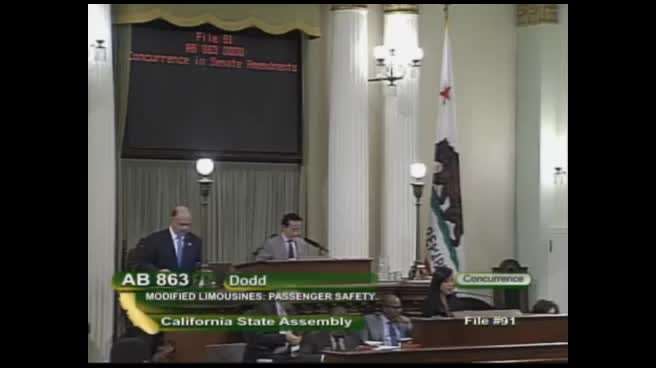 31SEC
Assembly Floor
38SEC
Assembly Floor
 3MIN
Senate Floor
 2MIN
Senate Standing Committee on Education
Bill Author

Bill Co-Author(s):