AB 989: Juveniles: sealing of records.
- Session Year: 2015-2016
- House: Assembly
- Latest Version Date: 2015-09-30
Existing law subjects any person under 18 years of age who commits a crime to the jurisdiction of the juvenile court, which may adjudge that person to be a ward of the court, except as specified. Under existing law, juvenile court proceedings to declare a minor a ward of the court are commenced by the filing of a petition by the probation officer, the district attorney after consultation with the probation officer, or the prosecuting attorney, as specified. Existing law requires the juvenile court to order the petition of a minor who is subject to the jurisdiction of the court dismissed if the minor satisfactorily completes a term of probation or an informal program of supervision, as specified, and requires the court to seal all records in the custody of the juvenile court pertaining to that dismissed petition, except that the prosecuting attorney and the probation department of any county may have access to the records for the limited purpose of determining whether the minor is eligible for deferred entry of judgment.
This bill would additionally authorize the prosecuting attorney and the probation department to have access to the records for the limited purpose of determining a minors eligibility for informal supervision and would authorize the probation department of any county to have access to the records for the limited purpose of meeting federal Title IV-B and Title IV-E compliance. The bill would also authorize the probation department to access the records for the limited purpose of identifying the minors previous court-ordered programs or placements, as specified. The bill would also authorize a law enforcement agency, probation department, court, or other local agency that has custody of the sealed record to access the record, as specified.
This bill would incorporate changes to Section 786 of the Welfare and Institutions Code proposed by both this bill and AB 666, which would become operative only if both bills are enacted and become effective on or before January 1, 2016, and this bill is chaptered last.
Existing law subjects any person under 18 years of age who commits a crime to the jurisdiction of the juvenile court, which may adjudge that person to be a ward of the court, except as specified. Under existing law, juvenile court proceedings to declare a minor a ward of the court are commenced by the filing of a petition by the probation officer, the district attorney after consultation with the probation officer, or the prosecuting attorney, as specified. Existing law requires the juvenile court to order the petition of a minor who is subject to the jurisdiction of the court dismissed if the minor satisfactorily completes a term of probation or an informal program of supervision, as specified, and requires the court to seal all records in the custody of the juvenile court pertaining to that dismissed petition, except that the prosecuting attorney and the probation department of any county may have access to the records for the limited purpose of determining whether the minor is eligible for deferred entry of judgment.
This bill would additionally authorize the prosecuting attorney and the probation department to have access to the records for the limited purpose of determining a minors eligibility for informal supervision and would authorize the probation department of any county to have access to the records for the limited purpose of determining a minors prior program referrals and risk-needs assessments and of meeting federal Title IV-E compliance. The bill would also authorize the probation department to access the records for the limited purpose of identifying the minors previous court-ordered programs or placements, as specified.
Existing law subjects any person under 18 years of age who commits a crime to the jurisdiction of the juvenile court, which may adjudge that person to be a ward of the court, except as specified. Under existing law, juvenile court proceedings to declare a minor a ward of the court are commenced by the filing of a petition by the probation officer, the district attorney after consultation with the probation officer, or the prosecuting attorney, as specified. Existing law requires the juvenile court to order the petition of a minor who is subject to the jurisdiction of the court dismissed if the minor satisfactorily completes a term of probation or an informal program of supervision, as specified, and requires the court to seal all records in the custody of the juvenile court pertaining to that dismissed petition, except that the prosecuting attorney and the probation department of any county may have access to the records for the limited purpose of determining whether the minor is eligible for deferred entry of judgment.
This bill would additionally authorize the prosecuting attorney and the probation department to have access to the records for the limited purpose of determining a minors eligibility for informal supervision and would authorize the probation department of any county to have access to the records for the limited purpose of determining a minors prior program referrals and risk-needs assessments. assessments and of meeting federal Title IV-E compliance.
Existing law subjects any person under 18 years of age who commits a crime to the jurisdiction of the juvenile court, which may adjudge that person to be a ward of the court, except as specified. Under existing law, juvenile court proceedings to declare a minor a ward of the court are commenced by the filing of a petition by the probation officer, the district attorney after consultation with the probation officer, or the prosecuting attorney, as specified. Existing law requires the juvenile court to order the petition of a minor who is subject to the jurisdiction of the court dismissed if the minor satisfactorily completes a term of probation or an informal program of supervision, as specified, and requires the court to seal all records in the custody of the juvenile court pertaining to that dismissed petition, except as specified. that the prosecuting attorney and the probation department of any county may have access to the records for the limited purpose of determining whether the minor is eligible for deferred entry of judgment.
This bill would make a technical, nonsubstantive change to those provisions. additionally authorize the prosecuting attorney and the probation department to have access to the records for the limited purpose of determining a minors eligibility for informal supervision and would authorize the probation department of any county to have access to the records for the limited purpose of determining a minors prior program referrals and risk-needs assessments.
Existing law subjects any person under 18 years of age who commits a crime to the jurisdiction of the juvenile court, which may adjudge that person to be a ward of the court, except as specified. Under existing law, juvenile court proceedings to declare a minor a ward of the court are commenced by the filing of a petition by the probation officer, the district attorney after consultation with the probation officer, or the prosecuting attorney, as specified. Existing law requires the juvenile court to order the petition of a minor who is subject to the jurisdiction of the court dismissed if the minor satisfactorily completes a term of probation or an informal program of supervision, as specified, and requires the court to seal all records in the custody of the juvenile court pertaining to that dismissed petition, except as specified.
This bill would make a technical, nonsubstantive change to those provisions.
(a)If the minor satisfactorily completes (1) an informal program of supervision pursuant to Section 654.2, (2) probation under Section 725, or (3) a term of probation served after a finding that the minor was a ward pursuant to Section 602 for any offense not listed in subdivision (b) of Section 707, the court shall order the petition dismissed, and the arrest shall be deemed not to have occurred.
(b)(1)The court shall order sealed all records pertaining to that dismissed petition in the custody of the juvenile court.
(2)The prosecuting attorney and the probation department of any county shall have access to the records after they are sealed for the limited purpose of determining whether the minor is eligible for deferred entry of judgment pursuant to Section 790 or ineligible for informal supervision pursuant to Section 654.3.
(3)If a new petition has been filed against the minor for a felony offense, the probation department of any county shall have access to the records for the limited purpose of identifying the minors previous court-ordered programs or placements, and in that event solely to determine the individuals eligibility or suitability for remedial programs or services. The information obtained pursuant to this paragraph shall not be disseminated to other agencies or individuals, except as necessary to implement a referral to a remedial program or service, and shall not be used to support the imposition of penalties, detention, or other sanctions upon the minor.
(4)The court may access a file that has been sealed pursuant to this section for the limited purpose of verifying the prior jurisdictional status of a ward who is petitioning the court to resume its jurisdiction pursuant to subdivision (e) of Section 388.
(5)The probation department of any county may access the records for the limited purpose of meeting federal Title IV-B and Title IV-E compliance.
(6)(A)Notwithstanding any other law, a record sealed pursuant to Section 781 and this section may be accessed by a law enforcement agency, probation department, court, or other local agency that has custody of the sealed record for the limited purpose of complying with data collection or data reporting requirements that are imposed by other law subject to subparagraph (B).
(B)Personally identifying information from a sealed record accessed under this paragraph shall not be released, disseminated, or published by or through a law enforcement agency, probation department, court, or other local agency.
(c)The access authorizations described in subdivision (b) shall not be deemed an unsealing of the record and shall not require notice to any other entity.
(d)(1)This section does not prohibit a court from enforcing a civil judgment for an unfulfilled order of restitution obtained pursuant to Section 730.6. A minor is not relieved from the obligation to pay victim restitution, a restitution fine, or court-ordered fines and fees or any combination thereof, because the minors records are sealed.
(2)A victim or local collection program may continue to enforce victim restitution orders, restitution fines, and court-ordered fines and fees after a record is sealed. The juvenile court shall have access to any records sealed pursuant to this section for the limited purpose of enforcing a civil judgment or restitution order.
(e)This section does not prohibit the Department of Social Services from meeting its obligations to monitor and conduct periodic evaluations of, and provide reports on, the programs carried under federal Title IV-B and Title IV-E as required by Sections 622, 629 et seq., and 671(a)(7) and (22) of Title 42 of the United States Code, as implemented by federal regulation and state statute.
SEC. 1.5.Section 786 of the Welfare and Institutions Code is amended to read:786.(a)If a minor satisfactorily completes (1) an informal program of supervision pursuant to Section 654.2, (2) probation under Section 725, or (3) a term of probation for any offense, the court shall order the petition dismissed. The court shall order sealed all records pertaining to that dismissed petition in the custody of the juvenile court, and in the custody of law enforcement agencies, the probation department, or the Department of Justice. The court shall send a copy of the order to each agency and official named in the order, direct the agency or official to seal its records, and specify a date by which the sealed records shall be destroyed. Each agency and official named in the order shall seal the records in its custody as directed by the order, shall advise the court of its compliance, and, after advising the court, shall seal the copy of the courts order that was received. The court shall also provide notice to the minor and minors counsel that it has ordered the petition dismissed and the records sealed in the case. The notice shall include an advisement of the minors right to nondisclosure of the arrest and proceedings, as specified in subdivision (b).
(b)Upon the courts order of dismissal of the petition, the arrest and other proceedings in the case shall be deemed not to have occurred and the person who was the subject of the petition may reply accordingly to any inquiry by employers, educational institutions, or other persons or entities regarding the arrest and proceedings in the case.
(c)(1)For purposes of this section, satisfactory completion of an informal program of supervision or another term of probation described in subdivision (a) shall be deemed to have occurred if the person has no new findings of wardship or conviction for a felony offense or a misdemeanor involving moral turpitude during the period of supervision or probation and if he or she has not failed to substantially comply with the reasonable orders of supervision or probation that are within his or her capacity to perform. The period of supervision or probation shall not be extended solely for the purpose of deferring or delaying eligibility for dismissal of the petition and sealing of the records under this section.
(2)An unfulfilled order or condition of restitution, including a restitution fine that can be converted to a civil judgment under Section 730.6 or an unpaid restitution fee shall not be deemed to constitute unsatisfactory completion of supervision or probation under this section.
(d)A court shall not seal a record or dismiss a petition pursuant to this section if the petition was sustained based on the commission of an offense listed in subdivision (b) of Section 707 that was committed when the individual was 14 years of age or older unless the finding on that offense was dismissed or was reduced to a lesser offense that is not listed in subdivision (b) of Section 707.
(e)(1)The court may, in making its order to seal the record and dismiss the instant petition pursuant to this section, include an order to seal a record relating to, or to dismiss, any prior petition or petitions that have been filed or sustained against the individual and that appear to the satisfaction of the court to meet the sealing and dismissal criteria otherwise described in this section.
(2)An individual who has a record that is eligible to be sealed under this section may ask the court to order the sealing of a record pertaining to the case that is in the custody of a public agency other than a law enforcement agency, the probation department, or the Department of Justice, and the court may grant the request and order that the public agency record be sealed if the court determines that sealing the additional record will promote the successful reentry and rehabilitation of the individual.
(f)(1)A record that has been ordered sealed by the court under this section may be accessed, inspected, or utilized only under any of the following circumstances:
(A)By the prosecuting attorney, the probation department, or the court for the limited purpose of determining whether the minor is eligible and suitable for deferred entry of judgment pursuant to Section 790 or is ineligible for a program of supervision as defined in Section 654.3.
(B)By the court for the limited purpose of verifying the prior jurisdictional status of a ward who is petitioning the court to resume its jurisdiction pursuant to subdivision (e) of Section 388.
(C)If a new petition has been filed against the minor for a felony offense, by the probation department for the limited purpose of identifying the minors previous court-ordered programs or placements, and in that event solely to determine the individuals eligibility or suitability for remedial programs or services. The information obtained pursuant to this subparagraph shall not be disseminated to other agencies or individuals, except as necessary to implement a referral to a remedial program or service, and shall not be used to support the imposition of penalties, detention, or other sanctions upon the minor.
(D)Upon a subsequent adjudication of a minor whose record has been sealed under this section and a finding that the minor is a person described by Section 602 based on the commission of a felony offense, by the probation department, the prosecuting attorney, counsel for the minor, or the court for the limited purpose of determining an appropriate juvenile court disposition. Access, inspection, or use of a sealed record as provided under this subparagraph shall not be construed as a reversal or modification of the courts order dismissing the petition and sealing record in the prior case.
(E)Upon the prosecuting attorneys motion, made in accordance with Section 707, to initiate court proceedings to determine the minors fitness to be dealt with under the juvenile court law, by the probation department, the prosecuting attorney, counsel for the minor, or the court for the limited purpose of evaluating and determining the minors fitness to be dealt with under the juvenile court law. Access, inspection, or use of a sealed record as provided under this subparagraph shall not be construed as a reversal or modification of the courts order dismissing the petition and sealing the record in the prior case.
(F)By the person whose record has been sealed, upon his or her request and petition to the court to permit inspection of the records.
(G)The probation department of any county may access the records for the limited purpose of meeting federal Title IV-B and Title IV-E compliance.
(2)Access to, or inspection of, a sealed record authorized by paragraph (1) shall not be deemed an unsealing of the record and shall not require notice to any other agency.
(g)(1)This section does not prohibit a court from enforcing a civil judgment for an unfulfilled order of restitution ordered pursuant to Section 730.6. A minor is not relieved from the obligation to pay victim restitution, restitution fines, and court-ordered fines and fees because the minors records are sealed.
(2)A victim or a local collection program may continue to enforce victim restitution orders, restitution fines, and court-ordered fines and fees after a record is sealed. The juvenile court shall have access to any records sealed pursuant to this section for the limited purpose of enforcing a civil judgment or restitution order.
(h)This section does not prohibit the Department of Social Services from meeting its obligations to monitor and conduct periodic evaluations of, and provide reports on, the programs carried under federal Title IV-B and Title IV-E as required by Sections 622, 629 et seq., and 671(a)(7) and (22) of Title 42 of the United States Code, as implemented by federal regulation and state statute.
(i)The Judicial Council shall adopt rules of court, and shall make available appropriate forms, providing for the standardized implementation of this section by the juvenile courts.
SEC. 2.Section 1.5 of this bill incorporates amendments to Section 786 of the Welfare and Institutions Code proposed by both this bill and Assembly Bill 666. It shall only become operative if (1) both bills are enacted and become effective on or before January 1, 2016, (2) each bill amends Section 786 of the Welfare and Institutions Code, and (3) this bill is enacted after Assembly Bill 666, in which case Section 1 of this bill shall not become operative.
(a)If the minor satisfactorily completes (1) an informal program of supervision pursuant to Section 654.2, (2) probation under Section 725, or (3) a term of probation served after a finding that the minor was a ward pursuant to Section 602 for any offense not listed in subdivision (b) of Section 707, the court shall order the petition dismissed, and the arrest upon which the judgment was deferred shall be deemed not to have occurred.
(b)(1)The court shall order sealed all records pertaining to that dismissed petition in the custody of the juvenile court.
(2)The prosecuting attorney and the probation department of any county shall have access to the records after they are sealed for the limited purpose of determining whether the minor is eligible for deferred entry of judgment pursuant to Section 790 or ineligible for informal supervision pursuant to Section 654.3.
(3)If a new petition has been filed against the minor for a felony offense, the probation department of any county shall have access to the records for the limited purpose of identifying the minors previous court-ordered programs or placements, and in that event solely to determine the individuals eligibility or suitability for remedial programs or services. The information obtained pursuant to this paragraph shall not be disseminated to other agencies or individuals, except as necessary to implement a referral to a remedial program or service, and shall not be used to support the imposition of penalties, detention, or other sanctions upon the minor.
(4)The court may access a file that has been sealed pursuant to this section for the limited purpose of verifying the prior jurisdictional status of a ward who is petitioning the court to resume its jurisdiction pursuant to subdivision (e) of Section 388.
(5)The probation department of any county may access the records for the limited purpose of meeting federal Title IV-B and Title IV-E compliance.
(6)(A)Notwithstanding any other law, a record sealed pursuant to Section 781 and this section may be accessed by a law enforcement agency, probation department, court, or other local agency that has custody of the sealed record for the limited purpose of complying with data collection or data reporting requirements that are imposed by other law subject to subparagraph (B).
(B)Personally identifying information from a sealed record accessed under this paragraph shall not be released, disseminated, or published by or through a law enforcement agency, probation department, court, or other local agency.
(c)The access authorizations described in subdivision (b) shall not be deemed an unsealing of the record and shall not require notice to any other entity.
(d)(1)This section does not prohibit a court from enforcing a civil judgment for an unfulfilled order of restitution obtained pursuant to Section 730.6. A minor is not relieved from the obligation to pay victim restitution, a restitution fine, or court-ordered fines and fees or any combination thereof, because the minors records are sealed.
(2)A victim or local collection program may continue to enforce victim restitution orders, restitution fines, and court-ordered fines and fees after a record is sealed. The juvenile court shall have access to any records sealed pursuant to this section for the limited purpose of enforcing a civil judgment or restitution order.
(e)This section does not prohibit the Department of Social Services from meeting its obligations to monitor and conduct periodic evaluations of, and provide reports on, the programs carried under federal Title IV-B and Title IV-E as required by Sections 622, 629 et seq., and 671(a)(7) and (22) of Title 42 of the United States Code, as implemented by federal regulation and state statute.
SEC. 1.5.Section 786 of the Welfare and Institutions Code is amended to read:786.(a)If the a minor satisfactorily completes (a) (1) an informal program of supervision pursuant to Section 654.2, (b) (2) probation under Section 725, or (c) (3) a term of probation for any offense not listed in subdivision (b) of Section 707, offense, the court shall order the petition dismissed, and the arrest upon which the judgment was deferred shall be deemed not to have occurred. dismissed. The court shall order sealed all records pertaining to that dismissed petition in the custody of the juvenile court, except that the prosecuting attorney and the probation department of any county shall have access to these records after they are sealed for the limited purpose of determining whether the minor is eligible for deferred entry of judgment pursuant to Section 790. The court may access a file that has been sealed pursuant to this section for the limited purpose of verifying the prior jurisdictional status of a ward who is petitioning the court to resume its jurisdiction pursuant to subdivision (e) of Section 388. This access shall not be deemed an unsealing of the record and shall not require notice to any other entity. and in the custody of law enforcement agencies, the probation department, or the Department of Justice. The court shall send a copy of the order to each agency and official named in the order, direct the agency or official to seal its records, and specify a date by which the sealed records shall be destroyed. Each agency and official named in the order shall seal the records in its custody as directed by the order, shall advise the court of its compliance, and, after advising the court, shall seal the copy of the courts order that was received. The court shall also provide notice to the minor and minors counsel that it has ordered the petition dismissed and the records sealed in the case. The notice shall include an advisement of the minors right to nondisclosure of the arrest and proceedings, as specified in subdivision (b).
(b)Upon the courts order of dismissal of the petition, the arrest and other proceedings in the case shall be deemed not to have occurred and the person who was the subject of the petition may reply accordingly to any inquiry by employers, educational institutions, or other persons or entities regarding the arrest and proceedings in the case.
(c)(1)For purposes of this section, satisfactory completion of an informal program of supervision or another term of probation described in subdivision (a) shall be deemed to have occurred if the person has no new findings of wardship or conviction for a felony offense or a misdemeanor involving moral turpitude during the period of supervision or probation and if he or she has not failed to substantially comply with the reasonable orders of supervision or probation that are within his or her capacity to perform. The period of supervision or probation shall not be extended solely for the purpose of deferring or delaying eligibility for dismissal of the petition and sealing of the records under this section.
(2)An unfulfilled order or condition of restitution, including a restitution fine that can be converted to a civil judgment under Section 730.6 or an unpaid restitution fee shall not be deemed to constitute unsatisfactory completion of supervision or probation under this section.
(d)A court shall not seal a record or dismiss a petition pursuant to this section if the petition was sustained based on the commission of an offense listed in subdivision (b) of Section 707 that was committed when the individual was 14 years of age or older unless the finding on that offense was dismissed or was reduced to a lesser offense that is not listed in subdivision (b) of Section 707.
(e)(1)The court may, in making its order to seal the record and dismiss the instant petition pursuant to this section, include an order to seal a record relating to, or to dismiss, any prior petition or petitions that have been filed or sustained against the individual and that appear to the satisfaction of the court to meet the sealing and dismissal criteria otherwise described in this section.
(2)An individual who has a record that is eligible to be sealed under this section may ask the court to order the sealing of a record pertaining to the case that is in the custody of a public agency other than a law enforcement agency, the probation department, or the Department of Justice, and the court may grant the request and order that the public agency record be sealed if the court determines that sealing the additional record will promote the successful reentry and rehabilitation of the individual.
(f)(1)A record that has been ordered sealed by the court under this section may be accessed, inspected, or utilized only under any of the following circumstances:
(A)By the prosecuting attorney, the probation department, or the court for the limited purpose of determining whether the minor is eligible and suitable for deferred entry of judgment pursuant to Section 790 or is ineligible for a program of supervision as defined in Section 654.3.
(B)By the court for the limited purpose of verifying the prior jurisdictional status of a ward who is petitioning the court to resume its jurisdiction pursuant to subdivision (e) of Section 388.
(C)If a new petition has been filed against the minor for a felony offense, by the probation department for the limited purpose of identifying the minors previous court-ordered programs or placements, and in that event solely to determine the individuals eligibility or suitability for remedial programs or services. The information obtained pursuant to this subparagraph shall not be disseminated to other agencies or individuals, except as necessary to implement a referral to a remedial program or service, and shall not be used to support the imposition of penalties, detention, or other sanctions upon the minor.
(D)Upon a subsequent adjudication of a minor whose record has been sealed under this section and a finding that the minor is a person described by Section 602 based on the commission of a felony offense, by the probation department, the prosecuting attorney, counsel for the minor, or the court for the limited purpose of determining an appropriate juvenile court disposition. Access, inspection, or use of a sealed record as provided under this subparagraph shall not be construed as a reversal or modification of the courts order dismissing the petition and sealing record in the prior case.
(E)Upon the prosecuting attorneys motion, made in accordance with Section 707, to initiate court proceedings to determine the minors fitness to be dealt with under the juvenile court law, by the probation department, the prosecuting attorney, counsel for the minor, or the court for the limited purpose of evaluating and determining the minors fitness to be dealt with under the juvenile court law. Access, inspection, or use of a sealed record as provided under this subparagraph shall not be construed as a reversal or modification of the courts order dismissing the petition and sealing the record in the prior case.
(F)By the person whose record has been sealed, upon his or her request and petition to the court to permit inspection of the records.
(G)The probation department of any county may access the records for the limited purpose of meeting federal Title IV-B and Title IV-E compliance.
(2)Access to, or inspection of, a sealed record authorized by paragraph (1) shall not be deemed an unsealing of the record and shall not require notice to any other agency.
(g)(1)This section does not prohibit a court from enforcing a civil judgment for an unfulfilled order of restitution ordered pursuant to Section 730.6. A minor is not relieved from the obligation to pay victim restitution, restitution fines, and court-ordered fines and fees because the minors records are sealed.
(2)A victim or a local collection program may continue to enforce victim restitution orders, restitution fines, and court-ordered fines and fees after a record is sealed. The juvenile court shall have access to any records sealed pursuant to this section for the limited purpose of enforcing a civil judgment or restitution order.
(h)This section does not prohibit the Department of Social Services from meeting its obligations to monitor and conduct periodic evaluations of, and provide reports on, the programs carried under federal Title IV-B and Title IV-E as required by Sections 622, 629 et seq., and 671(a)(7) and (22) of Title 42 of the United States Code, as implemented by federal regulation and state statute.
(i)The Judicial Council shall adopt rules of court, and shall make available appropriate forms, providing for the standardized implementation of this section by the juvenile courts.
SEC. 2.Section 1.5 of this bill incorporates amendments to Section 786 of the Welfare and Institutions Code proposed by both this bill and Assembly Bill 666. It shall only become operative if (1) both bills are enacted and become effective on or before January 1, 2016, (2) each bill amends Section 786 of the Welfare and Institutions Code, and (3) this bill is enacted after Assembly Bill 666, in which case Section 1 of this bill shall not become operative.
(a)If the minor satisfactorily completes (1) an informal program of supervision pursuant to Section 654.2, (2) probation under Section 725, or (3) a term of probation served after a finding that the minor was a ward pursuant to Section 602 for any offense not listed in subdivision (b) of Section 707, the court shall order the petition dismissed, and the arrest upon which the judgment was deferred shall be deemed not to have occurred.
(b)(1)The court shall order sealed all records pertaining to that dismissed petition in the custody of the juvenile court.
(2)The prosecuting attorney and the probation department of any county shall have access to the records after they are sealed for the limited purpose of determining whether the minor is eligible for deferred entry of judgment pursuant to Section 790 or ineligible for informal supervision pursuant to Section 654.3.
(3)The probation department of any county shall have access to the records after they are sealed for the limited purposes of determining a minors prior program referrals and risk-needs assessments. If a new petition has been filed against the minor for a felony offense, the probation department of any county shall have access to the records for the limited purpose of identifying the minors previous court-ordered programs or placements, and in that event solely to determine the individuals eligibility or suitability for remedial programs or services. The information obtained pursuant to this paragraph shall not be disseminated to other agencies or individuals, except as necessary to implement a referral to a remedial program or service, and shall not be used to support the imposition of penalties, detention, or other sanctions upon the minor.
(4)The court may access a file that has been sealed pursuant to this section for the limited purpose of verifying the prior jurisdictional status of a ward who is petitioning the court to resume its jurisdiction pursuant to subdivision (e) of Section 388.
(5)The probation department of any county may access the records for the limited purpose of meeting federal Title IV-E compliance.
(c)The access authorizations described in subdivision (b) shall not be deemed an unsealing of the record and shall not require notice to any other entity.
(a)If the minor satisfactorily completes (1) an informal program of supervision pursuant to Section 654.2, (2) probation under Section 725, or (3) a term of probation served after a finding that the minor was a ward pursuant to Section 602 for any offense not listed in subdivision (b) of Section 707, the court shall order the petition dismissed, and the arrest upon which the judgment was deferred shall be deemed not to have occurred.
(b)(1)The court shall order sealed all records pertaining to that dismissed petition in the custody of the juvenile court.
(2)The prosecuting attorney and the probation department of any county shall have access to the records after they are sealed for the limited purpose of determining whether the minor is eligible for deferred entry of judgment pursuant to Section 790 or ineligible for informal supervision pursuant to Section 654.3.
(3)The probation department of any county shall have access to the records after they are sealed for the limited purposes of determining a minors prior program referrals and risk-needs assessments.
(4)The court may access a file that has been sealed pursuant to this section for the limited purpose of verifying the prior jurisdictional status of a ward who is petitioning the court to resume its jurisdiction pursuant to subdivision (e) of Section 388.
(5)The probation department of any county may access the records for the limited purpose of meeting federal Title IV-E compliance.
(c)The access authorizations described in subdivision (b) shall not be deemed an unsealing of the record and shall not require notice to any other entity.
(a)If the minor satisfactorily completes (a) (1) an informal program of supervision pursuant to Section 654.2, (b) (2) probation under Section 725, or (c) (3) a term of probation served after a finding that the minor was a ward pursuant to Section 602 for any offense not listed in subdivision (b) of Section 707, the court shall order the petition dismissed, and the arrest upon which the judgment was deferred shall be deemed not to have occurred. The
(b)(1)The court shall order sealed all records pertaining to that dismissed petition in the custody of the juvenile court, except that the court.
(2)The prosecuting attorney and the probation department of any county shall have access to the records after they are sealed for the limited purpose of determining whether the minor is eligible for deferred entry of judgment pursuant to Section 790. The 790 or ineligible for informal supervision pursuant to Section 654.3.
(3)The probation department of any county shall have access to the records after they are sealed for the limited purposes of determining a minors prior program referrals and risk-needs assessments.
(4)The court may access a file that has been sealed pursuant to this section for the limited purpose of verifying the prior jurisdictional status of a ward who is petitioning the court to resume its jurisdiction pursuant to subdivision (e) of Section 388. This access
(c)The access authorizations described in subdivision (b) shall not be deemed an unsealing of the record and shall not require notice to any other entity.
If the minor satisfactorily completes (a) an informal program of supervision pursuant to Section 654.2, (b) probation under Section 725, or (c) a term of probation for any offense not listed in subdivision (b) of Section 707, the court shall order the petition dismissed, and the arrest upon which the judgment was deferred shall be deemed not to have occurred. The court shall order sealed all records pertaining to that dismissed petition in the custody of the juvenile court, except that the prosecuting attorney and the probation department of any county shall have access to these the records after they are sealed for the limited purpose of determining whether the minor is eligible for deferred entry of judgment pursuant to Section 790. The court may access a file that has been sealed pursuant to this section for the limited purpose of verifying the prior jurisdictional status of a ward who is petitioning the court to resume its jurisdiction pursuant to subdivision (e) of Section 388. This access shall not be deemed an unsealing of the record and shall not require notice to any other entity.
|
Date
|
Status
|
|---|---|
| Jun 23, 2015 | From committee: Do pass. (Ayes 7. Noes 0.) (June 23). |
| Sep 30, 2015 | Chaptered by Secretary of State - Chapter 375, Statutes of 2015. |
| Sep 30, 2015 | Approved by the Governor. |
| Sep 17, 2015 | Enrolled and presented to the Governor at 4 p.m. |
| Sep 9, 2015 | Senate amendments concurred in. To Engrossing and Enrolling. (Ayes 78. Noes 0.). |
| Sep 9, 2015 | Senate amendments concurred in. To Engrossing and Enrolling. (Ayes 78. Noes 0. Page 3001.). |
| Sep 9, 2015 | Senate amendments concurred in. To Engrossing and Enrolling. |
| Sep 9, 2015 | Assembly Rule 77 suspended. (Page 2990.) |
| Sep 9, 2015 | Assembly Rule 77 suspended. |
| Sep 8, 2015 | Read third time. Passed. Ordered to the Assembly. (Ayes 39. Noes 0. Page 2597.). |
| Sep 8, 2015 | Read third time. Passed. Ordered to the Assembly. |
| Sep 8, 2015 | In Assembly. Concurrence in Senate amendments pending. May be considered on or after September 10 pursuant to Assembly Rule 77. |
| Sep 3, 2015 | Read second time. Ordered to third reading. |
| Sep 2, 2015 | Read third time and amended. Ordered to second reading. |
| Jun 24, 2015 | Read second time. Ordered to third reading. |
| Feb 26, 2015 | Read first time. To print. |
| May 7, 2015 | Referred to Com. on PUB. S. |
| Apr 23, 2015 | Read third time. Passed. Ordered to the Senate. (Ayes 78. Noes 0.) |
| Apr 23, 2015 | Read third time. Passed. Ordered to the Senate. (Ayes 78. Noes 0. Page 1102.) |
| Apr 23, 2015 | In Senate. Read first time. To Com. on RLS. for assignment. |
| Apr 20, 2015 | Read second time. Ordered to third reading. |
| Apr 16, 2015 | Read second time and amended. Ordered returned to second reading. |
| Apr 15, 2015 | From committee: Amend, and do pass as amended. (Ayes 7. Noes 0.) (April 14). |
| Apr 9, 2015 | Re-referred to Com. on PUB. S. |
| Apr 8, 2015 | From committee chair, with author's amendments: Amend, and re-refer to Com. on PUB. S. Read second time and amended. |
| Apr 6, 2015 | Re-referred to Com. on PUB. S. |
| Mar 26, 2015 | Referred to Com. on PUB. S. |
| Mar 26, 2015 | From committee chair, with author's amendments: Amend, and re-refer to Com. on PUB. S. Read second time and amended. |
| Feb 27, 2015 | From printer. May be heard in committee March 29. |
|
Date
|
Description
|
Location
|
Votes
|
|
|---|---|---|---|---|
| Sep 9, 2015 | AB 989 COOPER Concurrence in Senate Amendments | Assembly Floor |
Passed |
|
| Sep 8, 2015 | Assembly 3rd Reading AB989 Cooper By Hall | Senate Floor |
Passed |
|
| Jun 23, 2015 | Do pass | Senate Standing Committee on Public Safety |
Passed |
|
| Apr 23, 2015 | AB 989 COOPER Assembly Third Reading | Assembly Floor |
Passed |
|
| Apr 14, 2015 | Do pass as amended. | Assembly Standing Committee on Public Safety |
Passed |
This list shows positions taken on this bill by organizations on the date displayed, which is linked to the original source.
Positions by individuals are not included.
|
Organization
|
Position
|
Date
|
|---|---|---|
| American Federation of State, County and Municipal Employees | ** Support | Sep 8, 2015 |
| Association For Los Angeles Deputy Sheriffs | ** Support | Sep 8, 2015 |
| Association of Probation Supervisors | ** Support | Sep 8, 2015 |
| California District Attorneys Association | ** Support | Sep 8, 2015 |
| California Probation, Parole And Correctional Association | ** Support | Sep 8, 2015 |
| California State Lodge, Fraternal Order of Police | ** Support | Sep 8, 2015 |
| Chief Probation Officers Of California | ** Support | Sep 8, 2015 |
| Contra Costa County | * Support | Jun 23, 2015 |
| County Of San Diego | ** Support | Sep 8, 2015 |
| County of San Diego; Fraternal Order of Police | ** Support | Sep 8, 2015 |
| Fraternal Order of Police | ** Support | Sep 8, 2015 |
| Kern County Probation Officers Association | ** Support | Sep 8, 2015 |
| Legal Services for Prisoners with Children | ** Against | Sep 8, 2015 |
| Long Beach Police Officers Association | ** Support | Sep 8, 2015 |
| Los Angeles County Probation Officers Union | ** Support | Sep 8, 2015 |
| Los Angeles County Professional Peace Officers Association | ** Support | Sep 8, 2015 |
| Los Angeles Police Protective League | ** Support | Sep 8, 2015 |
| Monterey County Probation Association | ** Support | Sep 8, 2015 |
| Orange County Employees Association | ** Support | Sep 8, 2015 |
| Riverside Sheriffs' Association | ** Support | Sep 8, 2015 |
| Sacramento County Deputy Sheriffs' Association | ** Support | Sep 8, 2015 |
| Sacramento County Probation Association | ** Support | Sep 8, 2015 |
| San Francisco Deputy Probation Officers' Association | ** Support | Sep 8, 2015 |
| San Joaquin Probation Officers Association | ** Support | Sep 8, 2015 |
| San Mateo County Probation and Detention Association | ** Support | Sep 8, 2015 |
| Santa Ana Police Officers Association | ** Support | Sep 8, 2015 |
| Santa Clara County Probation Peace Officers' Union | ** Support | Sep 8, 2015 |
| SEIU LOCAL 721 | ** Support | Apr 23, 2015 |
| Shasta County Professional Peace Officers Association | ** Support | Sep 8, 2015 |
| State Coalition Of Probation Organizations | ** Support | Sep 8, 2015 |
| Ventura County Professional Peace Officers' Association | ** Support | Sep 8, 2015 |
AB 989
Page 3
CONCURRENCE IN SENATE AMENDMENTS
AB 989
(Cooper)
As Amended September 2, 2015
Majority vote
ASSEMBLY: |
78-0 |
(April 23, 2015) |
SENATE: |
39-0 |
(September 8, 2015) |
Original Committee Reference: PUB. S.
SUMMARY:
Authorizes the district attorney and probation department to access sealed juvenile records for additional limited purposes.
The Senate amendments:
Allow access to sealed records for purposes of data collection or fulfilling data-reporting requirements, but prohibits the release of personal identifying information in meeting these requirements.
Allow a victim or local collection program to continue to enforce restitution obligations and court-ordered fines.
Authorize the Department of Social Services to view sealed records for purposes of compliance with specified federal regulations.
Double join this bill with AB 666 (Stone) of the current legislative session to avoid chaptering out issues.
EXISTING LAW:
Provides that, if a minor satisfactorily completes an informal program of supervision, probation as specified, or a term of probation for any offense other than a specified serious, sexual, or violent offense, then the court shall order sealed all records pertaining to that dismissed petition in the custody of the juvenile court, except that the prosecuting attorney and the probation department of any county shall have access to these records after they are sealed for the limited purpose of determining whether the minor is eligible for deferred entry of judgment. The court may access a file that has been sealed pursuant to this section for the limited purpose of verifying the prior jurisdictional status of a ward who is petitioning the court to resume its dependency or delinquency jurisdiction. This access shall not be deemed an unsealing of the record and shall not require notice to any other entity.
Provides that five years or more after the jurisdiction of the juvenile court has terminated over a person adjudged a ward of the court or after a minor appeared before a probation officer, or, in any case, at any time after the person has reached the age of 18, the person or county probation officer, with specified exceptions, may petition the juvenile court for sealing of the records, including arrest records, relating to the person's case, in the custody of the juvenile court, the probation officer, or any other agency or public official.
States that once the court has ordered the person's records sealed, the proceedings in the case shall be deemed never to have occurred, and the person may reply accordingly to any inquiry about the events.
Permits the court to access a file that has been sealed for the limited purpose of verifying the prior jurisdictional status of the ward who is petitioning the court to resume its jurisdiction, as specified. This access is not to be deemed an unsealing of the records.
Allows a judge of the juvenile court in which a petition was filed to dismiss the petition, or to set aside the findings and dismiss the petition, if the court finds that the interests of justice and the welfare of the person who is the subject of the petition require that dismissal, or if it finds that he or she is not in need of treatment or rehabilitation. The court has jurisdiction to order dismissal or setting aside of the findings and dismissal regardless of whether the person who is the subject of the petition is, at the time of the order, a ward or dependent child of the court.
Allows the probation officer to destroy all records and papers in the proceedings concerning a minor after five years from the date on which the jurisdiction of the juvenile court over the minor is terminated.
States that any person who was under the age of 18 when he or she was arrested for a misdemeanor may petition the court in which the proceedings occurred or, if there were no court proceedings, the court in whose jurisdiction the arrest occurred, for an order sealing the records in the case, including any records of arrest and detention, in certain circumstances.
Provides that a person who was under the age of 18 at the time of commission of a misdemeanor and is eligible for, or has previously received expungement relief, may petition the court for an order sealing the record of conviction and other official records in the case, including arrest records and records relating to other offenses charged in the accusatory pleading, whether the defendant was acquitted, or the charges dismissed. Thereafter the conviction, arrest, or other proceeding shall be deemed not to have occurred, and the petitioner may answer accordingly any question relating to their occurrence.
AS PASSED BY THE ASSEMBLY, this bill:
Authorized the prosecutor and the probation department to access a juvenile's sealed records for the limited purpose of determining whether the minor is ineligible for informal supervision.
Stated that if a new petition has been filed against the minor for a felony offense, the probation department can access the sealed records for the limited purpose of identifying the minor's previous court-ordered programs or placements, and in that event solely to determine the individual's eligibility or suitability for remedial programs or services. The information obtained pursuant to this subparagraph shall not be disseminated to other agencies or individuals, except as necessary to implement a referral to a remedial program or service, and shall not be used to support the imposition of penalties, detention, or other sanctions upon the minor.
Authorized the probation department to access sealed juvenile records for the limited purpose of meeting Federal Title IV-E compliance.
Stated that this access shall not be considered an unsealing of the records.
FISCAL EFFECT: Unknown. This bill has been keyed non-fiscal by the Legislative Counsel.
COMMENTS: According to the author, "In 2014, SB 1038 (Leno) [Chapter 249, Statutes of 2014] regarding juvenile records sealing was signed into law. The bill provided for the automatic dismissal of juvenile petitions and sealing of records in cases where a juvenile offender successfully completes probation. The intent was to provide incentives for youth to successfully complete probation and foster employment, housing, and education opportunities by setting forth a process to have juvenile records sealed.
"Upon implementation there have been varying legal opinions as to whether probation records such as program referrals and risk/needs assessments are considered part of the court record and would therefore be required to be sealed under the provisions of SB 1038. This inhibits the ability of probation to access their internal records should a minor, who has had their record sealed, come back into the custody of the juvenile court and probation department.
"Therefore, there are cases when a youth comes back into the custody of the juvenile court and probation is unable to view their previous program referrals and risk/needs assessments to make the most appropriate determination on getting them connected to services. Further, it is important that probation be able to access records on a limited basis for the purposes of determining AB 12 [(Beall), Chapter 559, Statutes of 2010] extended foster care eligibility, eligibility for informal probation, and Federal Title IV-E purposes. In order to achieve the best outcomes for these minors, it is important that probation have access to this information to make the most effective case plan determinations for the minor’s treatment.
"AB 989 would continue the practice and original intent of SB 1038 to ensure that minors' records are automatically sealed upon successful completion and would clarify that in cases where a juvenile record has been sealed pursuant to Welfare and Institutions Code 786, if a youth subsequently comes back into the custody of the juvenile court, probation may access limited information as it pertains to determining AB 12 extended foster care eligibility, informal probation eligibility, Federal Title IV-E purposes, previous risk/needs assessments, and prior program and service referrals in order to most appropriately develop a case plan to address the treatment needs of the minor."
Analysis Prepared by: Sandy Uribe / PUB. S. / (916) 319-3744 FN: 0002045
AB 989
Page 6
|
Office of Senate Floor Analyses (916) 651-1520 Fax: (916) 327-4478 |
THIRD READING
Bill No: AB 989
Amended: 9/2/15 in Senate
SENATE PUBLIC SAFETY COMMITTEE: 7-0, 6/23/15
AYES: Hancock, Anderson, Glazer, Leno, Liu, Monning, Stone
ASSEMBLY FLOOR: 78-0, 4/23/15 - See last page for vote
SUBJECT: Juveniles: sealing of records
SOURCE: Chief Probation Officers of California
State Coalition of Probation Organizations
DIGEST: This bill provides limited access to otherwise sealed juvenile records to district attorneys and probation departments, as specified.
Senate Floor Amendments of 9/2/15 (1) add language allowing non-identifying and limited access to otherwise sealed juvenile records for purposes relating to data collection or reporting, as specified; (2) ensure that restitution, fines and fees continue to be enforceable notwithstanding a sealed record, as specified; and (3) add technical, non-substantive double-jointing amendments to avoid chaptering problems with AB 666 (Stone).
Existing law:
Provides that five years or more after the jurisdiction of the juvenile court has terminated over a person adjudged a ward of the court or after a minor appeared before a probation officer, or, in any case, at any time after the person has reached the age of 18, the person or county probation officer, with specified exceptions, may petition the juvenile court for sealing of the records, including arrest records, relating to the person’s case, in the custody of the juvenile court, the probation officer, or any other agency or public official. (Welf. & Inst. Code, § 781, subd. (a).)
States that once the court has ordered the person’s records sealed, the proceedings in the case shall be deemed never to have occurred, and the person may reply accordingly to any inquiry about the events. (Welf. & Inst. Code, § 781, subd. (a).)
Prohibits, notwithstanding any other provision of law, the court from ordering a person's records sealed in any case in which the person has been found to have committed an offense listed in Section 707(b), which are offenses for which certain minors could be tried in adult court under specified circumstances. (Welf. & Inst. Code, § 781, subd. (a).)
Permits the court to access a file that has been sealed for the limited purpose of verifying the prior jurisdictional status of the ward who is petitioning the court to resume its jurisdiction, as specified. This access is not to be deemed an unsealing of the records. (Welf. & Inst. Code, § 781, subd. (e).)
Allows a judge of the juvenile court in which a petition was filed to dismiss the petition, or to set aside the findings and dismiss the petition, if the court finds that the interests of justice and the welfare of the person who is the subject of the petition require that dismissal, or if it finds that he or she is not in need of treatment or rehabilitation. The court has jurisdiction to order dismissal or setting aside of the findings and dismissal regardless of whether the person who is the subject of the petition is, at the time of the order, a ward or dependent child of the court. (Welf. & Inst. Code, § 782.)
States that any person who was under the age of 18 when he or she was arrested for a misdemeanor may petition the court in which the proceedings occurred or, if there were no court proceedings, the court in whose jurisdiction the arrest occurred, for an order sealing the records in the case, including any records of arrest and detention, in certain circumstances. (Pen. Code, § 851.7.)
Provides that a person who was under the age of 18 at the time of commission of a misdemeanor and is eligible for, or has previously received expungement relief, may petition the court for an order sealing the record of conviction and other official records in the case, including arrest records and records relating to other offenses charged in the accusatory pleading, whether the defendant was acquitted, or the charges dismissed. Thereafter the conviction, arrest, or other proceeding shall be deemed not to have occurred, and the petitioner may answer accordingly any question relating to their occurrence. (Pen. Code, § 1203.45, subd. (a).)
Provides that, if a minor satisfactorily completes an informal program of supervision, probation as specified, or a term of probation for any offense other than a specified serious, sexual, or violent offense, then the court shall order sealed all records pertaining to that dismissed petition in the custody of the juvenile court, except that the prosecuting attorney and the probation department of any county shall have access to these records after they are sealed for the limited purpose of determining whether the minor is eligible for deferred entry of judgment. The court may access a file that has been sealed pursuant to this section for the limited purpose of verifying the prior jurisdictional status of a ward who is petitioning the court to resume its jurisdiction. This access shall not be deemed an unsealing of the record and shall not require notice to any other entity. (Welf. & Inst. Code, § 786.)
This bill recasts this statute, and adds the following provisions:
Authorizes the prosecuting attorney and the probation department of any county access to the records to determine if the minor is eligible for informal supervision, as specified.
Provides that if a new petition has been filed against the minor for a felony offense, the probation department of any county shall have access to the records for the limited purpose of identifying the minor’s previous court-ordered programs or placements, and in that event solely to determine the individual’s eligibility or suitability for remedial programs or services. The information obtained pursuant to this paragraph shall not be disseminated to other agencies or individuals, except as necessary to implement a referral to a remedial program or service, and shall not be used to support the imposition of penalties, detention, or other sanctions upon the minor.
Provides that the probation department of any county may access the records for the limited purpose of meeting federal Title IV-B and IV-E compliance;
Allows law enforcement, including probation, a court or other local agency having custody of a sealed record to access an otherwise sealed juvenile record to comply with data collection or data reporting requirements in other laws, providing that personal identifying information from a sealed record accessed pursuant to this provision would not be disclosed, as specified.
Includes language to ensure that restitution orders, fines and fees continue to be enforceable notwithstanding a sealed juvenile record, as specified.
Includes technical double-jointing amendments to avoid chaptering problems with AB 666 (Stone).
FISCAL EFFECT: Appropriation: No Fiscal Com.: No Local: No
Chief Probation Officers of California (co-source)
State Coalition of Probation Organizations (co-source)
American Federation of State, County and Municipal Employees
Association for Los Angeles Deputy Sheriffs
Association of Probation Supervisors
California District Attorneys Association
California Probation, Parole and Correctional Association
California State Lodge, Fraternal Order of Police
County of San Diego
Fraternal Order of Police
Kern County Probation Officers Association
Long Beach Police Officers Association
Los Angeles County Probation Officers Union
Los Angeles County Professional Peace Officers Association
Los Angeles Police Protective League
Monterey County Probation Association
Orange County Employees Association
Riverside Sheriffs' Association
Sacramento County Deputy Sheriffs’ Association
Sacramento County Probation Association
San Francisco Deputy Probation Officers’ Association
San Joaquin Probation Officers Association
San Mateo County Probation and Detention Association
Santa Ana Police Officers Association
Santa Clara County Probation Peace Officers' Union
Shasta County Professional Peace Officers Association
Ventura County Professional Peace Officers' Association
Legal Services for Prisoners with Children
ARGUMENTS IN SUPPORT: Supporters state in part:
(Under current law), if a juvenile has completed his/her term of probation, and is subsequently arrested as a minor, probation officers are prohibited from accessing all files, including their own department’s files, for any purpose. As a result, without access to earlier files, the probation officer has no ability to determine the proper course of action as it pertains to placement and/or rehabilitative placement. This prohibition also inhibits the probation officer’s ability to provide a comprehensive dispositional report to the court.
This bill will grant probation officers limited access to juvenile files, in case of a subsequent arrest of a juvenile, in order to inform the probation officer’s recommendation for rehabilitation program referral, risk-needs assessments, and other placements.
This clean up legislation is vital for the proper performance of probation officer duties as it pertains to re-offender juveniles. . . .
ARGUMENTS IN OPPOSITION: Legal Services for Prisoners with Children, which opposes this bill, states in part:
California's confidentiality laws are intended to protect children from present and future adverse consequences and unnecessary emotional harm. Juvenile courts are intended to have exclusive authority in determining whether a juvenile record is to be shared. Under current law, entities must petition the court to obtain someone's confidential juvenile records. This process gives the defending party an opportunity to contest the sharing of information that may be detrimental to his or her rehabilitation and best interests.
AB 989 would add a new subsection (b)(3) to Welfare and Institutions Code Section 786 to grant probation departments access to sealed juvenile records, for the limited purpose of determining program referrals. This proposal is unnecessary because district attorneys already make informed decisions to refer young defendants to programs, regardless of probation records. District attorneys already have access to sealed juvenile records to decide eligibility for deferred entry of judgment. Additionally, we are concerned that it will be difficult to limit access to this stated “limited purpose,” and difficult to know whether access was limited in this fashion or whether probation officers used this information for other purposes.
ASSEMBLY FLOOR: 78-0, 4/23/15
AYES: Achadjian, Alejo, Travis Allen, Baker, Bigelow, Bloom, Bonilla, Bonta, Brough, Brown, Burke, Calderon, Chang, Chau, Chávez, Chiu, Chu, Cooley, Cooper, Dababneh, Dahle, Daly, Dodd, Eggman, Frazier, Beth Gaines, Gallagher, Cristina Garcia, Eduardo Garcia, Gatto, Gipson, Gomez, Gonzalez, Gordon, Gray, Grove, Hadley, Harper, Roger Hernández, Holden, Irwin, Jones, Jones-Sawyer, Kim, Lackey, Levine, Linder, Lopez, Low, Maienschein, Mathis, Mayes, McCarty, Medina, Melendez, Mullin, Nazarian, Obernolte, O'Donnell, Olsen, Patterson, Perea, Quirk, Rendon, Ridley-Thomas, Rodriguez, Santiago, Steinorth, Mark Stone, Thurmond, Ting, Wagner, Waldron, Weber, Wilk, Williams, Wood, Atkins
NO VOTE RECORDED: Campos, Salas
Prepared by: Alison Anderson / PUB. S. /
9/3/15 18:40:01
**** END ****
AB 989
Page 7
|
Office of Senate Floor Analyses (916) 651-1520 Fax: (916) 327-4478 |
THIRD READING
Bill No: AB 989
Amended: 4/16/15 in Assembly
SENATE PUBLIC SAFETY COMMITTEE: 7-0, 6/23/15
AYES: Hancock, Anderson, Glazer, Leno, Liu, Monning, Stone
ASSEMBLY FLOOR: 78-0, 4/23/15 - See last page for vote
SUBJECT: Juveniles: sealing of records
SOURCE: Chief Probation Officers of California
State Coalition of Probation Organizations
DIGEST: This bill provides limited access to otherwise sealed juvenile records to district attorneys and probation departments, as specified.
Existing law:
Provides that five years or more after the jurisdiction of the juvenile court has terminated over a person adjudged a ward of the court or after a minor appeared before a probation officer, or, in any case, at any time after the person has reached the age of 18, the person or county probation officer, with specified exceptions, may petition the juvenile court for sealing of the records, including arrest records, relating to the person’s case, in the custody of the juvenile court, the probation officer, or any other agency or public official. (Welf. & Inst. Code, § 781, subd. (a).)
States that once the court has ordered the person’s records sealed, the proceedings in the case shall be deemed never to have occurred, and the person may reply accordingly to any inquiry about the events. (Welf. & Inst. Code, § 781, subd. (a).)
Prohibits, notwithstanding any other provision of law, the court from ordering a person’s records sealed in any case in which the person has been found to have committed an offense listed in Welfare and Institutions Code Section 707(b), which are offenses for which certain minors could be tried in adult court under specified circumstances. (Welf. & Inst. Code, § 781, subd. (a).)
Permits the court to access a file that has been sealed for the limited purpose of verifying the prior jurisdictional status of the ward who is petitioning the court to resume its jurisdiction, as specified. This access is not to be deemed an unsealing of the records. (Welf. & Inst. Code, § 781, subd. (e).)
Allows a judge of the juvenile court in which a petition was filed to dismiss the petition, or to set aside the findings and dismiss the petition, if the court finds that the interests of justice and the welfare of the person who is the subject of the petition require that dismissal, or if it finds that he or she is not in need of treatment or rehabilitation. The court has jurisdiction to order dismissal or setting aside of the findings and dismissal regardless of whether the person who is the subject of the petition is, at the time of the order, a ward or dependent child of the court. (Welf. & Inst. Code, § 782.)
States that any person who was under the age of 18 when he or she was arrested for a misdemeanor may petition the court in which the proceedings occurred or, if there were no court proceedings, the court in whose jurisdiction the arrest occurred, for an order sealing the records in the case, including any records of arrest and detention, in certain circumstances. (Pen. Code, § 851.7.)
Provides that a person who was under the age of 18 at the time of commission of a misdemeanor and is eligible for, or has previously received expungement relief, may petition the court for an order sealing the record of conviction and other official records in the case, including arrest records and records relating to other offenses charged in the accusatory pleading, whether the defendant was acquitted, or the charges dismissed. Thereafter the conviction, arrest, or other proceeding shall be deemed not to have occurred, and the petitioner may answer accordingly any question relating to their occurrence. (Pen. Code, § 1203.45, subd. (a).)
Provides that, if a minor satisfactorily completes an informal program of supervision, probation as specified, or a term of probation for any offense other than a specified serious, sexual, or violent offense, then the court shall order sealed all records pertaining to that dismissed petition in the custody of the juvenile court, except that the prosecuting attorney and the probation department of any county shall have access to these records after they are sealed for the limited purpose of determining whether the minor is eligible for deferred entry of judgment. The court may access a file that has been sealed pursuant to this section for the limited purpose of verifying the prior jurisdictional status of a ward who is petitioning the court to resume its jurisdiction. This access shall not be deemed an unsealing of the record and shall not require notice to any other entity. (Welf. & Inst. Code, § 786.)
This bill:
Authorizes the prosecuting attorney and the probation department of any county access to the records to determine if the minor is eligible for informal supervision, as specified.
Provides that if “a new petition has been filed against the minor for a felony offense, the probation department of any county shall have access to the records for the limited purpose of identifying the minor’s previous court-ordered programs or placements, and in that event solely to determine the individual’s eligibility or suitability for remedial programs or services. The information obtained pursuant to this paragraph shall not be disseminated to other agencies or individuals, except as necessary to implement a referral to a remedial program or service, and shall not be used to support the imposition of penalties, detention, or other sanctions upon the minor.”
Provides that the probation department of any county may access the records for the limited purpose of meeting federal Title IV-E compliance.
Background
Minors adjudicated delinquent in juvenile court proceedings may petition the court to have their records sealed unless they were found to have committed certain serious offenses. (Welf. & Inst. Code, § 781.) A person may have his or her juvenile court records sealed by petitioning the court “five years or more after the jurisdiction of the juvenile court has terminated over [the] person adjudged a ward of the court or after [the] minor appeared before a probation officer, or, in any case, at any time after the person has reached the age of 18.” (Welf. & Inst. Code, § 781, subd. (a).) Once the court has ordered the records sealed, the proceedings in the case shall be deemed never to have occurred, and the person may properly reply accordingly to any inquiry about the events. (Ibid.) The relief consists of sealing all of the records related to the case, including the arrest record, court records, entries on dockets, and any other papers and exhibits. The court must send a copy of the order to each agency and official named in the petition for sealing records, directing the agency to seal its records and stating the date thereafter to destroy the sealed records. (Ibid.)
A minor’s juvenile court case is dismissed and court records sealed without a petition from the minor if the minor has been found to have satisfactorily completed an informal program of supervision or probation, except in specified cases. (Welf. & Inst. Code, § 786.) Upon sealing of the record, the arrest upon which the judgment was deferred shall be deemed to have never occurred. (Ibid.) The court shall order sealed all records in its custody pertaining to a petition dismissed. (Ibid.) The prosecuting attorney and the probation department of any county shall have access to these records after they are sealed for the limited purpose of determining whether the minor is eligible for deferred entry of judgment. The court may access the sealed file for the limited purpose of verifying the prior jurisdictional status of a ward who is petitioning the court to resume its jurisdiction. (Ibid.)
FISCAL EFFECT: Appropriation: No Fiscal Com.: No Local: No
Chief Probation Officers of California (co-source)
State Coalition of Probation Organizations (co-source)
American Federation of State, County and Municipal Employees
Association for Los Angeles Deputy Sheriffs
Association of Probation Supervisors
California District Attorneys Association
California Probation, Parole and Correctional Association
California State Lodge, Fraternal Order of Police
County of San Diego; Fraternal Order of Police
Kern County Probation Officers Association
Long Beach Police Officers Association
Los Angeles County Probation Officers Union
Los Angeles County Professional Peace Officers Association
Los Angeles Police Protective League
Monterey County Probation Association
Orange County Employees Association
Riverside Sheriffs’ Association
Sacramento County Deputy Sheriffs’ Association
Sacramento County Probation Association
San Francisco Deputy Probation Officers’ Association
San Joaquin Probation Officers Association
San Mateo County Probation and Detention Association
Santa Ana Police Officers Association
Santa Clara County Probation Peace Officers’ Union
Shasta County Professional Peace Officers Association
Ventura County Professional Peace Officers’ Association
OPPOSITION: (Verified 6/24/15)
Legal Services for Prisoners with Children
ARGUMENTS IN SUPPORT:
The author states:
In 2014, SB 1038 (Leno) regarding juvenile records sealing was signed into law. The bill provided for the automatic dismissal of juvenile petitions and sealing of records in cases where a juvenile offender successfully completes probation. The intent was to provide incentives for youth to successfully complete probation and foster employment, housing, and education opportunities by setting forth a process to have juvenile records sealed.
Upon implementation there have been varying legal opinions as to whether probation records such as program referrals and risk/needs assessments are considered part of the court record and would therefore be required to be sealed under the provisions of SB 1038.
Therefore, there are cases when a youth comes back into the custody of the juvenile court and probation is unable to view their previous program referrals and other information relative to eligibility for programs to make the most appropriate determination on getting them connected to services. Further, it is important that probation be able to access records on a limited basis for the purposes of determining AB 12 extended foster care eligibility, eligibility for informal probation, and Federal Title IV-E purposes. In order to achieve the best outcomes for these minors, it is important that probation have access to this information to make the most effective case plan determinations for the minor’s treatment.
AB 989 would continue the practice and original intent of SB 1038 to ensure that minors’ records are automatically sealed upon successful completion and would clarify that in cases where a juvenile record has been sealed pursuant to Welfare & Institutions Code 786, if a youth subsequently comes back into the custody of the juvenile court, probation may access limited information as it pertains to determining AB 12 extended foster care eligibility, informal probation eligibility, Federal Title IV-E purposes and prior program and service referrals in order to most appropriately develop a case plan to address the treatment needs of the minor.
ARGUMENTS IN OPPOSITION:
Legal Services for Prisoners with Children, which opposes this bill, states in part:
California’s confidentiality laws are intended to protect children from present and future adverse consequences and unnecessary emotional harm. Juvenile courts are intended to have exclusive authority in determining whether a juvenile record is to be shared. Under current law, entities must petition the court to obtain someone’s confidential juvenile records. This process gives the defending party an opportunity to contest the sharing of information that may be detrimental to his or her rehabilitation and best interests.
AB 989 would add a new subsection (b)(3) to Welfare and Institutions Code Section 786 to grant probation departments access to sealed juvenile records, for the limited purpose of determining program referrals. This proposal is unnecessary because district attorneys already make informed decisions to refer young defendants to programs, regardless of probation records. District attorneys already have access to sealed juvenile records to decide eligibility for deferred entry of judgment. Additionally, we are concerned that it will be difficult to limit access to this stated ‘limited purpose,’ and difficult to know whether access was limited in this fashion or whether probation officers used this information for other purposes.
AYES: Achadjian, Alejo, Travis Allen, Baker, Bigelow, Bloom, Bonilla, Bonta, Brough, Brown, Burke, Calderon, Chang, Chau, Chávez, Chiu, Chu, Cooley, Cooper, Dababneh, Dahle, Daly, Dodd, Eggman, Frazier, Beth Gaines, Gallagher, Cristina Garcia, Eduardo Garcia, Gatto, Gipson, Gomez, Gonzalez, Gordon, Gray, Grove, Hadley, Harper, Roger Hernández, Holden, Irwin, Jones, Jones-Sawyer, Kim, Lackey, Levine, Linder, Lopez, Low, Maienschein, Mathis, Mayes, McCarty, Medina, Melendez, Mullin, Nazarian, Obernolte, O’Donnell, Olsen, Patterson, Perea, Quirk, Rendon, Ridley-Thomas, Rodriguez, Santiago, Steinorth, Mark Stone, Thurmond, Ting, Wagner, Waldron, Weber, Wilk, Williams, Wood, Atkins
NO VOTE RECORDED: Campos, Salas
Prepared by: Alison Anderson / PUB. S. /
6/24/15 15:29:20
**** END ****
AB 989 (Cooper ) Page 6 of 6
SENATE COMMITTEE ON PUBLIC SAFETY
Senator Loni Hancock, Chair
2015 - 2016 Regular
Bill No: AB 989 Hearing Date: June 23, 2015
Author: |
Cooper |
||
Version: |
April 16, 2015 |
||
Urgency: |
No |
Fiscal: |
No |
Consultant: |
AA |
||
Subject: Juveniles: Sealed Records
HISTORY
Source: Chief Probation Officers of California; State Coalition of Probation Organizations
Prior Legislation: SB 1038 (Leno), Chapter 249, Statutes of 2014
Support: American Federation of State, County and Municipal Employees; Association for Los Angeles Deputy Sheriffs; Association of Probation Supervisors; California District Attorneys Association; California Probation, Parole and Correctional Association; California State Lodge, Fraternal Order of Police; County of San Diego; Fraternal Order of Police; Kern County Probation Officers Association; Long Beach Police Officers Association; Los Angeles County Professional Peace Officers Association; Los Angeles County Probation Officers Union; Los Angeles Police Protective League; Monterey County Probation Association; Orange County Employees Association; Riverside Sheriffs' Association; Sacramento County Deputy Sheriffs’ Association; Sacramento County Probation Association; San Francisco Deputy Probation Officers’ Association; San Joaquin Probation Officers Association; San Mateo County Probation and Detention Association; Santa Ana Police Officers Association; Santa Clara County Probation Peace Officers' Union; Shasta County Professional Peace Officers Association; Ventura County Professional Peace Officers' Association
Opposition: Legal Services for Prisoners with Children
Assembly Floor Vote: 78 - 0
PURPOSE
The purpose of this bill is to provide limited access to otherwise sealed juvenile records to district attorneys and probation departments, as specified.
Current law provides that five years or more after the jurisdiction of the juvenile court has terminated over a person adjudged a ward of the court or after a minor appeared before a probation officer, or, in any case, at any time after the person has reached the age of 18, the person or county probation officer, with specified exceptions, may petition the juvenile court for sealing of the records, including arrest records, relating to the person’s case, in the custody of the juvenile court, the probation officer, or any other agency or public official. (Welf. & Inst. Code, § 781, subd. (a).)
Current law states that once the court has ordered the person’s records sealed, the proceedings in the case shall be deemed never to have occurred, and the person may reply accordingly to any inquiry about the events. (Welf. & Inst. Code, § 781, subd. (a).)
Current law prohibits, notwithstanding any other provision of law, the court from ordering a person's records sealed in any case in which the person has been found to have committed an offense listed in section 707(b), which are offenses for which certain minors could be tried in adult court under specified circumstances. (Welf. & Inst. Code, § 781, subd. (a).)
Current law permits the court to access a file that has been sealed for the limited purpose of verifying the prior jurisdictional status of the ward who is petitioning the court to resume its jurisdiction, as specified. This access is not to be deemed an unsealing of the records. (Welf. & Inst. Code, § 781, subd. (e).)
Current law allows a judge of the juvenile court in which a petition was filed to dismiss the petition, or to set aside the findings and dismiss the petition, if the court finds that the interests of justice and the welfare of the person who is the subject of the petition require that dismissal, or if it finds that he or she is not in need of treatment or rehabilitation. The court has jurisdiction to order dismissal or setting aside of the findings and dismissal regardless of whether the person who is the subject of the petition is, at the time of the order, a ward or dependent child of the court. (Welf. & Inst. Code, § 782.)
Current law states that any person who was under the age of 18 when he or she was arrested for a misdemeanor may petition the court in which the proceedings occurred or, if there were no court proceedings, the court in whose jurisdiction the arrest occurred, for an order sealing the records in the case, including any records of arrest and detention, in certain circumstances. (Pen. Code, § 851.7.)
Current law provides that a person who was under the age of 18 at the time of commission of a misdemeanor and is eligible for, or has previously received expungement relief, may petition the court for an order sealing the record of conviction and other official records in the case, including arrest records and records relating to other offenses charged in the accusatory pleading, whether the defendant was acquitted, or the charges dismissed. Thereafter the conviction, arrest, or other proceeding shall be deemed not to have occurred, and the petitioner may answer accordingly any question relating to their occurrence. (Pen. Code, § 1203.45, subd. (a).)
Current law provides that, if a minor satisfactorily completes an informal program of supervision, probation as specified, or a term of probation for any offense other than a specified serious, sexual, or violent offense, then the court shall order sealed all records pertaining to that dismissed petition in the custody of the juvenile court, except that the prosecuting attorney and the probation department of any county shall have access to these records after they are sealed for the limited purpose of determining whether the minor is eligible for deferred entry of judgment. The court may access a file that has been sealed pursuant to this section for the limited purpose of verifying the prior jurisdictional status of a ward who is petitioning the court to resume its jurisdiction. This access shall not be deemed an unsealing of the record and shall not require notice to any other entity. (Welf. & Inst. Code, § 786.)
This
bill would recast this
statute, and add the following provisions:
Authorize the prosecuting attorney and the probation department of any county access to the records to determine if the minor is eligible for informal supervision, as specified;
Provide that if “a new petition has been filed against the minor for a felony offense, the probation department of any county shall have access to the records for the limited purpose of identifying the minor’s previous court-ordered programs or placements, and in that event solely to determine the individual’s eligibility or suitability for remedial programs or services. The information obtained pursuant to this paragraph shall not be disseminated to other agencies or individuals, except as necessary to implement a referral to a remedial program or service, and shall not be used to support the imposition of penalties, detention, or other sanctions upon the minor.”; and
Provide that the probation department of any county may access the records for the limited purpose of meeting federal Title IV-E compliance.
RECEIVERSHIP/OVERCROWDING CRISIS AGGRAVATION
For the past eight years, this Committee has scrutinized legislation referred to its jurisdiction for any potential impact on prison overcrowding. Mindful of the United States Supreme Court ruling and federal court orders relating to the state’s ability to provide a constitutional level of health care to its inmate population and the related issue of prison overcrowding, this Committee has applied its “ROCA” policy as a content-neutral, provisional measure necessary to ensure that the Legislature does not erode progress in reducing prison overcrowding.
On February 10, 2014, the federal court ordered California to reduce its in-state adult institution population to 137.5% of design capacity by February 28, 2016, as follows:
143% of design bed capacity by June 30, 2014;
141.5% of design bed capacity by February 28, 2015; and,
137.5% of design bed capacity by February 28, 2016.
In February of this year the administration reported that as “of February 11, 2015, 112,993 inmates were housed in the State’s 34 adult institutions, which amounts to 136.6% of design bed capacity, and 8,828 inmates were housed in out-of-state facilities. This current population is now below the court-ordered reduction to 137.5% of design bed capacity.”( Defendants’ February 2015 Status Report In Response To February 10, 2014 Order, 2:90-cv-00520 KJM DAD PC, 3-Judge Court, Coleman v. Brown, Plata v. Brown (fn. omitted).
While significant gains have been made in reducing the prison population, the state now must stabilize these advances and demonstrate to the federal court that California has in place the “durable solution” to prison overcrowding “consistently demanded” by the court. (Opinion Re: Order Granting in Part and Denying in Part Defendants’ Request For Extension of December 31, 2013 Deadline, NO. 2:90-cv-0520 LKK DAD (PC), 3-Judge Court, Coleman v. Brown, Plata v. Brown (2-10-14). The Committee’s consideration of bills that may impact the prison population therefore will be informed by the following questions:
Whether a proposal erodes a measure which has contributed to reducing the prison population;
Whether a proposal addresses a major area of public safety or criminal activity for which there is no other reasonable, appropriate remedy;
Whether a proposal addresses a crime which is directly dangerous to the physical safety of others for which there is no other reasonably appropriate sanction;
Whether a proposal corrects a constitutional problem or legislative drafting error; and
Whether a proposal proposes penalties which are proportionate, and cannot be achieved through any other reasonably appropriate remedy.
COMMENTS
Stated Need for This Bill
The author states:
In 2014, SB 1038 (Leno) regarding juvenile records sealing was signed into law. The bill provided for the automatic dismissal of juvenile petitions and sealing of records in cases where a juvenile offender successfully completes probation. The intent was to provide incentives for youth to successfully complete probation and foster employment, housing, and education opportunities by setting forth a process to have juvenile records sealed.
Upon implementation there have been varying legal opinions as to whether probation records such as program referrals and risk/needs assessments are considered part of the court record and would therefore be required to be sealed under the provisions of SB 1038.
Therefore, there are cases when a youth comes back into the custody of the juvenile court and probation is unable to view their previous program referrals and other information relative to eligibility for programs to make the most appropriate determination on getting them connected to services. Further, it is important that probation be able to access records on a limited basis for the purposes of determining AB 12 extended foster care eligibility, eligibility for informal probation, and Federal Title IV-E purposes. In order to achieve the best outcomes for these minors, it is important that probation have access to this information to make the most effective case plan determinations for the minor’s treatment.
AB 989 would continue the practice and original intent of SB 1038 to ensure that minors’ records are automatically sealed upon successful completion and would clarify that in cases where a juvenile record has been sealed pursuant to Welfare & Institutions Code 786, if a youth subsequently comes back into the custody of the juvenile court, probation may access limited information as it pertains to determining AB 12 extended foster care eligibility, informal probation eligibility, Federal Title IV-E purposes and prior program and service referrals in order to most appropriately develop a case plan to address the treatment needs of the minor.
Sealing and Destruction of Records
Minors adjudicated delinquent in juvenile court proceedings may petition the court to have their records sealed unless they were found to have committed certain serious offenses. (Welf. & Inst. Code, § 781.) A person may have his or her juvenile court records sealed by petitioning the court "five years or more after the jurisdiction of the juvenile court has terminated over [the] person adjudged a ward of the court or after [the] minor appeared before a probation officer, or, in any case, at any time after the person has reached the age of 18." (Welf. & Inst. Code, § 781, subd. (a).) Once the court has ordered the records sealed, the proceedings in the case shall be deemed never to have occurred, and the person may properly reply accordingly to any inquiry about the events. (Ibid.) The relief consists of sealing all of the records related to the case, including the arrest record, court records, entries on dockets, and any other papers and exhibits. The court must send a copy of the order to each agency and official named in the petition for sealing records, directing the agency to seal its records and stating the date thereafter to destroy the sealed records. (Ibid.)
A minor's juvenile court case is dismissed and court records sealed without a petition from the minor if the minor has been found to have satisfactorily completed an informal program of supervision or probation, except in specified cases. (Welf. & Inst. Code, § 786.) Upon sealing of the record, the arrest upon which the judgment was deferred shall be deemed to have never occurred. (Ibid.) The court shall order sealed all records in its custody pertaining to a petition dismissed. (Ibid.) The prosecuting attorney and the probation department of any county shall have access to these records after they are sealed for the limited purpose of determining whether the minor is eligible for deferred entry of judgment. The court may access the sealed file for the limited purpose of verifying the prior jurisdictional status of a ward who is petitioning the court to resume its jurisdiction. (Ibid.)
Support
The State Coalition of Probation Organizations, a co-sponsor of this bill, submits in part:
(Under current law), if a juvenile has completed his/her term of probation, and is subsequently arrested as a minor, probation officers are prohibited from accessing all files, including their own department’s files, for any purpose. As a result, without access to earlier files, the probation officer has no ability to determine the proper course of action as it pertains to placement and/or rehabilitative placement. This prohibition also inhibits the probation officer’s ability to provide a comprehensive dispositional report to the court.
This bill will grant probation officers limited access to juvenile files, in case of a subsequent arrest of a juvenile, in order to inform the probation officer’s recommendation for rehabilitation program referral, risk-needs assessments, and other placements.
This clean up legislation is vital for the proper performance of probation officer duties as it pertains to re-offender juveniles. . . .
Opposition
Legal Services for Prisoners with Children, which opposes this bill, states in part:
California's confidentiality laws are intended to protect children from present and future adverse consequences and unnecessary emotional harm. Juvenile courts are intended to have exclusive authority in determining whether a juvenile record is to be shared. Under current law, entities must petition the court to obtain someone's confidential juvenile records. This process gives the defending party an opportunity to contest the sharing of information that may be detrimental to his or her rehabilitation and best interests.
AB 989 would add a new subsection (b)(3) to Welfare and Institutions Code Section 786 to grant probation departments access to sealed juvenile records, for the limited purpose of determining program referrals. This proposal is unnecessary because district attorneys already make informed decisions to refer young defendants to programs, regardless of probation records. District attorneys already have access to sealed juvenile records to decide eligibility for deferred entry of judgment. Additionally, we are concerned that it will be difficult to limit access to this stated 'limited purpose,' and difficult to know whether access was limited in this fashion or whether probation officers used this information for other purposes.
Related Bills
This Committee heard and passed SB 504 (Lara) earlier this year (5-2). That bill has been narrowed since leaving this Committee to limiting fees associated with sealing juvenile records and other potential liabilities, and to prohibiting an unfulfilled order of restitution that has been converted to a civil judgment from barring the sealing of a juvenile record. The bill would also prohibit outstanding restitution fines and court-ordered fees from being considered when assessing whether a petitioner’s rehabilitation has been attained to the satisfaction of the court and from barring the sealing of a record. SB 504 is now in the Assembly.
AB 666 (Stone), also before the Committee, amends the same statute as this bill concerning the dismissal of juvenile petitions. As now in print AB 989 is more narrow than AB 666, but the bills are not in conflict with respect to their substantive changes to the law. The authors of these bills may wish to add chaptering amendments to harmonize these provisions.
-- END –
AB 989
Page 3
ASSEMBLY THIRD READING
AB 989
(Cooper)
As Amended April 16, 2015
Majority vote
Committee |
Votes |
Ayes |
Noes |
Public Safety |
7-0 |
Quirk, Melendez, Gonzalez, Jones-Sawyer, Lackey, Low, Santiago |
|
SUMMARY:
Authorizes the district attorney and probation department to access sealed juvenile records for additional limited purposes. Specifically, this bill:
Authorizes the prosecutor and the probation department to access a juvenile's sealed records for the limited purpose of determining whether the minor is ineligible for informal supervision.
States that if a new petition has been filed against the minor for a felony offense, the probation department can access the sealed records for the limited purpose of identifying the minor's previous court-ordered programs or placements, and in that event solely to determine the individual’s eligibility or suitability for remedial programs or services. The information obtained pursuant to this subparagraph shall not be disseminated to other agencies or individuals, except as necessary to implement a referral to a remedial program or service, and shall not be used to support the imposition of penalties, detention, or other sanctions upon the minor.
Authorizes the probation department to access sealed juvenile records for the limited purpose of meeting Federal Title IV-E compliance.
States that this access shall not be considered an unsealing of the records.
EXISTING LAW:
Provides that, if a minor satisfactorily completes an informal program of supervision, probation as specified, or a term of probation for any offense other than a specified serious, sexual, or violent offense, then the court shall order sealed all records pertaining to that dismissed petition in the custody of the juvenile court, except that the prosecuting attorney and the probation department of any county shall have access to these records after they are sealed for the limited purpose of determining whether the minor is eligible for deferred entry of judgment. The court may access a file that has been sealed pursuant to this section for the limited purpose of verifying the prior jurisdictional status of a ward who is petitioning the court to resume its dependency or delinquency jurisdiction. This access shall not be deemed an unsealing of the record and shall not require notice to any other entity.
Provides that five years or more after the jurisdiction of the juvenile court has terminated over a person adjudged a ward of the court or after a minor appeared before a probation officer, or, in any case, at any time after the person has reached the age of 18, the person or county probation officer, with specified exceptions, may petition the juvenile court for sealing of the records, including arrest records, relating to the person's case, in the custody of the juvenile court, the probation officer, or any other agency or public official.
States that once the court has ordered the person's records sealed, the proceedings in the case shall be deemed never to have occurred, and the person may reply accordingly to any inquiry about the events.
Permits the court to access a file that has been sealed for the limited purpose of verifying the prior jurisdictional status of the ward who is petitioning the court to resume its jurisdiction, as specified. This access is not to be deemed an unsealing of the records.
Allows a judge of the juvenile court in which a petition was filed to dismiss the petition, or to set aside the findings and dismiss the petition, if the court finds that the interests of justice and the welfare of the person who is the subject of the petition require that dismissal, or if it finds that he or she is not in need of treatment or rehabilitation. The court has jurisdiction to order dismissal or setting aside of the findings and dismissal regardless of whether the person who is the subject of the petition is, at the time of the order, a ward or dependent child of the court.
Allows the probation officer to destroy all records and papers in the proceedings concerning a minor after five years from the date on which the jurisdiction of the juvenile court over the minor is terminated.
States that any person who was under the age of 18 when he or she was arrested for a misdemeanor may petition the court in which the proceedings occurred or, if there were no court proceedings, the court in whose jurisdiction the arrest occurred, for an order sealing the records in the case, including any records of arrest and detention, in certain circumstances.
Provides that a person who was under the age of 18 at the time of commission of a misdemeanor and is eligible for, or has previously received expungement relief, may petition the court for an order sealing the record of conviction and other official records in the case, including arrest records and records relating to other offenses charged in the accusatory pleading, whether the defendant was acquitted, or the charges dismissed. Thereafter the conviction, arrest, or other proceeding shall be deemed not to have occurred, and the petitioner may answer accordingly any question relating to their occurrence.
FISCAL EFFECT:
Unknown. This bill is keyed non-fiscal by the Legislative Counsel.
COMMENTS:
According to the author, "In 2014, SB 1038 (Leno) [Chapter 249, Statutes of 2014] regarding juvenile records sealing was signed into law. The bill provided for the automatic dismissal of juvenile petitions and sealing of records in cases where a juvenile offender successfully completes probation. The intent was to provide incentives for youth to successfully complete probation and foster employment, housing, and education opportunities by setting forth a process to have juvenile records sealed.
"Upon implementation there have been varying legal opinions as to whether probation records such as program referrals and risk/needs assessments are considered part of the court record and would therefore be required to be sealed under the provisions of SB 1038. This inhibits the ability of probation to access their internal records should a minor, who has had their record sealed, come back into the custody of the juvenile court and probation department.
"Therefore, there are cases when a youth comes back into the custody of the juvenile court and probation is unable to view their previous program referrals and risk/needs assessments to make the most appropriate determination on getting them connected to services. Further, it is important that probation be able to access records on a limited basis for the purposes of determining AB 12 [(Beall), Chapter 559, Statutes of 2010] extended foster care eligibility, eligibility for informal probation, and Federal Title IV-E purposes. In order to achieve the best outcomes for these minors, it is important that probation have access to this information to make the most effective case plan determinations for the minor’s treatment.
"AB 989 would continue the practice and original intent of SB 1038 to ensure that minors' records are automatically sealed upon successful completion and would clarify that in cases where a juvenile record has been sealed pursuant to Welfare and Institutions Code 786, if a youth subsequently comes back into the custody of the juvenile court, probation may access limited information as it pertains to determining AB 12 extended foster care eligibility, informal probation eligibility, Federal Title IV-E purposes, previous risk/needs assessments, and prior program and service referrals in order to most appropriately develop a case plan to address the treatment needs of the minor."
Analysis Prepared by: Sandy Uribe / PUB. S. / (916) 319-3744 FN: 0000137
AB 989
Page 7
Date of Hearing: April 14, 2015
Counsel: Sandra Uribe
ASSEMBLY COMMITTEE ON PUBLIC SAFETY
Bill Quirk, Chair
AB 989
(Cooper) – As Amended April 8, 2015
As Proposed to be Amended in Committee
REVISED
SUMMARY:
Authorizes the district attorney and probation department to access
sealed juvenile records for additional limited purposes.
Specifically, this bill:
Authorizes the prosecutor and the probation department to access a juvenile's sealed records for the limited purpose of determining whether the minor is ineligible for informal supervision.
States that if a new petition has been filed against the minor for a felony offense, the probation department can access the sealed records for the limited purpose of identifying the minor's previous court-ordered programs or placements, and in that event solely to determine the individual’s eligibility or suitability for remedial programs or services. The information obtained pursuant to this subparagraph shall not be disseminated to other agencies or individuals, except as necessary to implement a referral to a remedial program or service, and shall not be used to support the imposition of penalties, detention, or other sanctions upon the minor.
Authorizes the probation department to access sealed juvenile records for the limited purpose of meeting Federal Title IV-E compliance.
States that this access shall not be considered an unsealing of the records.
EXISTING LAW:
Provides that, if a minor satisfactorily completes an informal program of supervision, probation as specified, or a term of probation for any offense other than a specified serious, sexual, or violent offense, then the court shall order sealed all records pertaining to that dismissed petition in the custody of the juvenile court, except that the prosecuting attorney and the probation department of any county shall have access to these records after they are sealed for the limited purpose of determining whether the minor is eligible for deferred entry of judgment. The court may access a file that has been sealed pursuant to this section for the limited purpose of verifying the prior jurisdictional status of a ward who is petitioning the court to resume its dependency or delinquency jurisdiction. This access shall not be deemed an unsealing of the record and shall not require notice to any other entity. (Welf. & Inst. Code, § 786.)
Provides that five years or more after the jurisdiction of the juvenile court has terminated over a person adjudged a ward of the court or after a minor appeared before a probation officer, or, in any case, at any time after the person has reached the age of 18, the person or county probation officer, with specified exceptions, may petition the juvenile court for sealing of the records, including arrest records, relating to the person’s case, in the custody of the juvenile court, the probation officer, or any other agency or public official. (Welf. & Inst. Code, § 781, subd. (a).)
States that once the court has ordered the person’s records sealed, the proceedings in the case shall be deemed never to have occurred, and the person may reply accordingly to any inquiry about the events. (Welf. & Inst. Code, § 781, subd. (a).)
Permits the court to access a file that has been sealed for the limited purpose of verifying the prior jurisdictional status of the ward who is petitioning the court to resume its jurisdiction, as specified. This access is not to be deemed an unsealing of the records. (Welf. & Inst. Code, § 781, subd. (e).)
Allows a judge of the juvenile court in which a petition was filed to dismiss the petition, or to set aside the findings and dismiss the petition, if the court finds that the interests of justice and the welfare of the person who is the subject of the petition require that dismissal, or if it finds that he or she is not in need of treatment or rehabilitation. The court has jurisdiction to order dismissal or setting aside of the findings and dismissal regardless of whether the person who is the subject of the petition is, at the time of the order, a ward or dependent child of the court. (Welf. & Inst. Code, § 782.)
Allows the probation officer to destroy all records and papers in the proceedings concerning a minor after five years from the date on which the jurisdiction of the juvenile court over the minor is terminated. (Welf. & Inst. Code, § 826.)
States that any person who was under the age of 18 when he or she was arrested for a misdemeanor may petition the court in which the proceedings occurred or, if there were no court proceedings, the court in whose jurisdiction the arrest occurred, for an order sealing the records in the case, including any records of arrest and detention, in certain circumstances. (Pen. Code, § 851.7.)
Provides that a person who was under the age of 18 at the time of commission of a misdemeanor and is eligible for, or has previously received expungement relief, may petition the court for an order sealing the record of conviction and other official records in the case, including arrest records and records relating to other offenses charged in the accusatory pleading, whether the defendant was acquitted, or the charges dismissed. Thereafter the conviction, arrest, or other proceeding shall be deemed not to have occurred, and the petitioner may answer accordingly any question relating to their occurrence. (Pen. Code, § 1203.45, subd. (a).)
FISCAL EFFECT:
Unknown
COMMENTS:
Author's Statement: According to the author, "In 2014, SB 1038 (Leno) regarding juvenile records sealing was signed into law. The bill provided for the automatic dismissal of juvenile petitions and sealing of records in cases where a juvenile offender successfully completes probation. The intent was to provide incentives for youth to successfully complete probation and foster employment, housing, and education opportunities by setting forth a process to have juvenile records sealed.
"Upon implementation there have been varying legal opinions as to whether probation records such as program referrals and risk/needs assessments are considered part of the court record and would therefore be required to be sealed under the provisions of SB 1038. This inhibits the ability of probation to access their internal records should a minor, who has had their record sealed, come back into the custody of the juvenile court and probation department.
"Therefore, there are cases when a youth comes back into the custody of the juvenile court and probation is unable to view their previous program referrals and risk/needs assessments to make the most appropriate determination on getting them connected to services. Further, it is important that probation be able to access records on a limited basis for the purposes of determining AB 12 extended foster care eligibility, eligibility for informal probation, and Federal Title IV-E purposes. In order to achieve the best outcomes for these minors, it is important that probation have access to this information to make the most effective case plan determinations for the minor’s treatment.
"AB 989 would continue the practice and original intent of SB 1038 to ensure that minors’ records are automatically sealed upon successful completion and would clarify that in cases where a juvenile record has been sealed pursuant to Welfare & Institutions Code 786, if a youth subsequently comes back into the custody of the juvenile court, probation may access limited information as it pertains to determining AB 12 extended foster care eligibility, informal probation eligibility, Federal Title IV-E purposes, previous risk/needs assessments, and prior program and service referrals in order to most appropriately develop a case plan to address the treatment needs of the minor."
Sealing and Dismissals of Juvenile Records: Juvenile court records generally must be destroyed when the person of record reaches the age of 38 unless good cause is shown for maintaining those records. (Welf. & Inst. Code, § 826.) The person of record also may petition to destroy records retained by agencies other than the court. (Welf. & Inst. Code, § 826, subd. (b).) The request must be granted unless good cause is shown for retention of the records. (Welf. & Inst. Code, § 826.) When records are destroyed pursuant to the above provision, the proceedings "shall be deemed never to have occurred, and the person may reply accordingly to an inquiry." (Welf. & Inst. Code, § 826, subd. (a).) Courts have held that the phrase "never to have occurred" means that the juvenile proceeding is deemed not to have existed. (Parmett v. Superior Court (Christal B.) (1989) 212 Cal.App.3d 1261, at 1267.)
Minors adjudicated delinquent in juvenile court proceedings may petition the court to have their records sealed unless they were found to have committed certain serious offenses. (Welf. & Inst. Code, § 781.) To seal a juvenile court record, either the minor or the probation department must petition the court. (Ibid.) Juvenile court jurisdiction must have lapsed five years previously, or the person must be at least 18 years old. (Welf. & Inst. Code, § 781, subd. (a).) The records are not sealed if the person of record has been convicted of a felony or a misdemeanor involving moral turpitude. (Ibid.) No offenses listed in Welfare and Institutions Code section 707, subdivision (b) may be sealed if the juvenile was 14 years or older at the time of the offense. Additionally, there can be no pending civil litigation involving the incident.
Last year SB 1038 (Leno), Chapter 249, Statutes of 2014, enacted
another process for automatic juvenile record sealing (i.e. without a
petition from the minor) in cases involving satisfactorily-completed
informal supervision or probation, except in cases involving serious
offenses, namely Welfare and Institutions Code section 707,
subdivision (b) offenses. (Welf. & Inst. Code, § 786.) When the
record is sealed, the arrest in the case is deemed never to have
occurred. (Ibid.) The court must order all records in its
custody pertaining to the petition sealed. However, the prosecuting
attorney and the probation department can access these records after
they are sealed for the limited purpose of determining whether the
minor is eligible for deferred entry of judgment. Also, the court
may access the sealed file for the limited purpose of verifying the
prior jurisdictional status of a ward who is petitioning the court to
resume its jurisdiction. (Ibid.)
This bill seeks
to permit the probation department and district attorney to view the
sealed records for several other limited purposes. First, the
prosecutor and probation department would be able to access the
sealed records to determine whether minor is ineligible for informal
supervision. Second, the probation department would be able to
access the sealed records to comply with the requirements of federal
Title IV-E, which enables a local probation department to obtain
federal funds from the federal foster care program. Finally, the
probation department would be able to access the sealed records for
the purposes of determining a minor's prior program referrals and
risk-needs assessments. As to this final purpose, it seems
beneficial for a probation department to be able to verify what
programs have been tried successfully and unsuccessfully. However,
should the bill include a limitation preventing a probation
department from using the information to impose detention or other
sanctions on the minor who has successfully had his or her record
sealed?
Title IV-E: The largest federal funding stream for child welfare activities is Title IV-E of the Social Security Act. It comprises the Foster Care and Adoption Assistance programs, which are open-ended entitlements (the state receives a certain level of reimbursement from the federal government for every eligible claim submitted), and the Chafee Foster Care Independence Program, which is a capped entitlement (the state is entitled to get reimbursed for every single claim it submits to the federal government, up to a certain level, or cap).
"Funds are available for monthly maintenance payments for the daily care and supervision of eligible children; administrative costs to manage the program; training of staff and foster care providers; recruitment of foster parents and costs related to the design, implementation and operation of a state-wide data collection system." (http://www.acf.hhs.gov/programs/cb/resource/title-ive-foster-care.)Informal Supervision: The juvenile court can order either pre-petition or post-petition informal probation, also known as diversion. (Welf. & Inst. Code, §§ 654, 654.2.) Welfare and Institutions Code section 654.3 lists the eligibility criteria for both of these forms of diversion. Some of the factors to be considered are the type of offense committed, whether the offense occurred on school grounds, involved gang activity, and whether more than $1000 in victim restitution would be owed. (Welf. & Inst. Code, § 654.3.)
If the probation department concludes that the minor is within the juvenile court’s jurisdiction or likely soon will be, the probation officer can delineate a specific program of supervision for the minor for up to six months to try to adjust the situation that brings the minor within the juvenile court's jurisdiction. (Welf. & Inst. Code, § 654; In re Adam R. (1997) 57 Cal.App.4th 348.) This is known as pre-petition informal supervision. The underlying purpose of informal supervision is to avoid a true finding on criminal culpability, which would result in a criminal record for the minor. (In re Abdirahman S. (1997) 58 Cal.App.4th 963, 968.) The discretion to initially determine whether to institute informal supervision against the minor rests with the probation officer and cannot be delegated to the prosecution. (Charles S. v. Superior Court (1982) 32 Cal.3d 741, 746.)
If the probation officer determines informal supervision is not appropriate, the juvenile court should conduct a new hearing on the minor’s suitability for post-petition informal supervision and shall exercise its independent discretion in making its decision. (Welf. & Inst. Code, § 654.2; In re Armondo A. (1992) 3 Cal.App.4th 1185, 1189-90.) With Welfare and Institutions Code section 654.2m the Legislature intended to further address delinquency at its inception within a less structured program even after a delinquency petition is filed. The statute created a new power in the juvenile courts by allowing them to order informal supervision after a petition had been filed. This power is in addition to the probation officer's already existing pre-petition discretion. (Derick B. v. Superior Court (2009) 180 Cal.App. 4th 295, 302.)
The court cannot require a minor to admit the truth of the petition before granting informal supervision. (In re Ricky J. (2005) 128 Cal.App.4th 783.) When ordering informal supervision, the juvenile court should not even make a true finding on the allegations in the petition. (In re Omar R. (2003) 105 Cal.App.4th 1434, 1437-1438.) Since informal supervision pursuant to Welfare and Institutions Code section 654.2 is available pre-adjudication only, it is not a viable alternative at a dispositional hearing. (In re Abdirahman S. (1997) 58 Cal.App.4th 963, 968.)
Argument in Support: The Chief Probation Officers of California, the sponsor of this bill, state, "By way of background, in 2014, SB 1038 (Leno) regarding juvenile records sealing was signed into law. The bill provides for the automatic dismissal of juvenile petitions and sealing of records in cases where a juvenile offender successfully completes probation. The intent was to provide incentives for youth to successfully complete probation and foster employment, housing, and education opportunities by setting forth a process to have juvenile records sealed.
"Upon implementation there have been varying legal opinions as to whether probation records, such as program referrals and risk/needs assessments are considered part of the court record and would therefore be required to be sealed under the provisions of SB 1038. This inhibits the ability of probation to access their internal records should a minor, who has had their record sealed, come back to the custody of the juvenile court and probation department.
"Therefore, there are cases when a youth comes back into the custody of the juvenile court and probation is unable to view their previous program referrals and risk/needs assessments to make the most appropriate determination on getting them connected to services. Further, it is important that probation be able to access records on a limited basis for the purpose of determining AB 12 extended foster care eligibility, eligibility for informal probation, and for Federal Title IV-E purposes. In order to achieve the best outcomes for these minors, it is important that probation have limited access to this information, when a minor comes back into our care for a subsequent violation, to make the most effective case plan determinations for the minor's treatment."
Argument in Opposition: According to Legal Services for Prisoners with Children, "California's confidentiality laws are intended to protect children from present and future adverse consequences and unnecessary emotional harm. Juvenile courts are intended to have exclusive authority in determining whether a juvenile record is to be shared. Under current law, entities must petition the court to obtain someone's confidential juvenile records. This process gives the defending party an opportunity to contest the sharing of information that may be detrimental to his or her rehabilitation and best interests.
"AB 989 would add a new subsection (b)(3) to Welfare and Institutions Code Section 786 to grant probation departments access to sealed juvenile records, for the limited purpose of determining program referrals. This proposal is unnecessary because district attorneys already make informed decisions to refer young defendants to programs, regardless of probation records. District attorneys already have access to sealed juvenile records to decide eligibility for deferred entry of judgment. Additionally, we are concerned that it will be difficult to limit access to this stated 'limited purpose,' and difficult to know whether access was limited in this fashion or whether probation officers used this information for other purposes."
Related Legislation: AB 666 (Stone) requires records in the custody of law enforcement agencies, the probation department, or any other public agency having records pertaining to the case, to also be sealed, in a case where a court has ordered a juvenile's records to be sealed, as specified. AB 666 is pending hearing in this committee today.
Prior Legislation: SB 1038 (Leno), Chapter 249, Statutes of 2014, provides for the automatic dismissal of juvenile petitions and sealing of records when a juvenile offender successfully completes probation.
REGISTERED SUPPORT / OPPOSITION:
Support
Chief Probation Officers of California (Sponsor)
American
Federation of State, County and Municipal Employees
California
District Attorneys Association
Fraternal Order of Police, N.
California Probation Lodge 19
Los Angeles County Probation
Officers Union
Riverside Sheriffs' Association
San Joaquin
Probation Officers Association
San Mateo County Probation and
Detention Association
Santa Clara County Probation Peace
Officers' Union
SEIU Local 721
State Coalition of Probation
Organizations
Ventura County Professional Peace Officers'
Association
Opposition
Legal Services for Prisoners with Children
Analysis Prepared by:
Sandy Uribe / PUB. S. / (916) 319-3744
Discussed in Hearing
 38SEC
Assembly Floor
 3MIN
Senate Floor
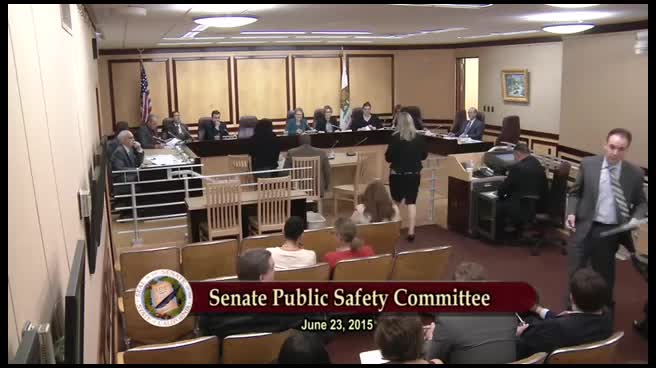 14MIN
Senate Standing Committee on Public Safety
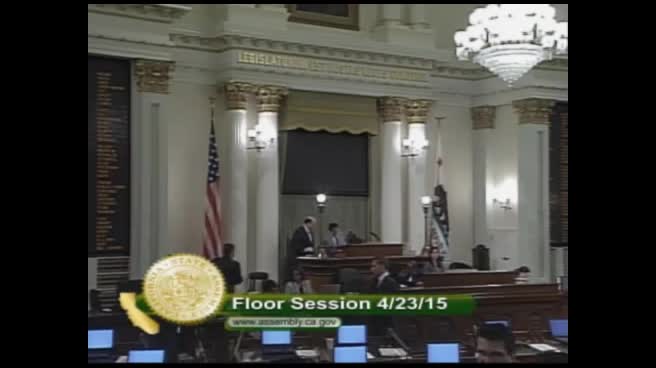 2MIN
Assembly Floor
Bill Author

Bill Co-Author(s):
