ACR 127: Abraham Lincoln’s birthday.
- Session Year: 2015-2016
- House: Assembly
- Latest Version Date: 2016-03-03
This measure would declare that President Abraham Lincoln be honored on February 12, 2016, the anniversary of his birthday.
This measure would declare that President Abraham Lincoln be honored on February 12, 2016, the anniversary of his birthday.
This measure would declare that President Abraham Lincoln be honored on February 12, 2016, the anniversary of his birthday.
This measure would declare that President Abraham Lincoln be honored on February 12, 2016, the anniversary of his birthday.
This measure would declare that President Abraham Lincoln be honored on February 12, 2016, the anniversary of his birthday.
WHEREAS, Abraham Lincoln the 16th President of the United States, and one of our nations most respected and admired Americans, rose from humble beginnings to become President of the United States and courageously led his country during its darkest time, the Civil War; and
WHEREAS, President Lincoln brought a profound honesty and integrity to the Office of the President, and will always be remembered as Honest Abe. Most of all, he will forever be associated with saving the Union and with the abolition of slavery; and
WHEREAS, President Abraham Lincoln was born on February 12, 1809, in Kentucky, and spent the first seven years of his life there; and
WHEREAS, In his entire life, President Lincoln was only able to attend school for a total of one year. This lack of formal education only made him hungrier for more knowledge, and he mastered the Bible, the works of William Shakespeare, and the law; and
WHEREAS, In 1846, he was elected to the United States Congress as the only member of the Whig Party in the Illinois congressional delegation, where he forthrightly articulated his views against the Mexican War and his vehement opposition to the extension of slavery, choosing not to run for reelection in 1848; and
WHEREAS, Soon after President Lincoln joined the Republican Party, a new political party opposed to the extension of slavery, in 1858 the Republicans nominated him for the United States Senate. In his nomination acceptance speech, Lincoln stated: A house divided against itself cannot stand. I believe this government cannot endure, permanently, half slave and half free. I do not expect the Union to be dissolved I do not expect the house to fall but I do expect it will cease to be divided. It will become all one thing or all the other. Either the opponents of slavery will arrest the further spread of it, and place it where the public mind shall rest in the belief that it is in the course of ultimate extinction; or its advocates will push it forward, till it shall become lawful in all the States, old as well as new North as well as South. He lost in a close election to Stephen Douglas, the Democratic Party candidate; and
WHEREAS, Just two years later, having won the Republican party nomination for President of the United States, President Lincoln won election by a small margin, defeating, among other candidates, Senator Stephen Douglas; and
WHEREAS, Shortly after assuming office, the Civil War began. As the war continued, President Lincoln expanded the objectives of the war beyond saving and restoring the Union, but also to freeing the slaves and abolishing the institution of slavery; and
WHEREAS, On September 22, 1862, President Lincoln took the first major step toward the total abolition of slavery in the United States by issuing the Emancipation Proclamation, which took effect on January 1, 1863; and
WHEREAS, President Lincoln enunciated the nations loftiest ideals during its darkest moment following the bloodiest battle of the Civil War. His Gettysburg Address, regarded as one of the finest speeches in the English language, was delivered by him at Gettysburg, Pennsylvania, on November 19, 1863, while dedicating a cemetery for those killed in the Battle of Gettysburg, which took place from July 1 to July 3, 1863, between the Army of the Potomac and the Army of Northern Virginia; and
WHEREAS, In his Gettysburg Address, President Lincoln reaffirmed the nations foremost founding principles, declaring the United States to be a nation conceived in Liberty, and dedicated to the proposition that all men are created equal, while assuring a nation still consumed by war that this nation, under God, shall have a new birth of freedom and that government of the people, by the people, for the people, shall not perish from the earth; and
WHEREAS, To ensure that the provisions of the Emancipation Proclamation could not be construed as a mere wartime measure, President Lincoln insisted that enactment of a constitutional amendment abolishing slavery be included in the 1864 Republican Party platform; and
WHEREAS, Upon reelection to a second term as President in 1864, President Lincoln actively supported the passage in Congress of what became the 13th Amendment to the United States Constitution, with the copy of the joint resolution referring the 13th Amendment to the states for ratification, which to this day is housed in the National Archives, actually bearing President Lincolns signature, even though the President has no formal constitutional role in the amendment process, and joint resolutions do not go to the White House for either signature or approval; and
WHEREAS, President Lincoln ultimately reunified the nation and brought about a successful conclusion to our nations bloodiest war, as the Civil War ended on April 9, 1865, with the surrender of General Robert E. Lee and the Army of Northern Virginia to the Union General, Ulysses S. Grant, at Appomattox Court House; and
WHEREAS, Only five days later, on April 14, 1865, President Lincoln was shot while viewing a performance of Our American Cousin at Fords Theater in Washington, D.C., and died the next day, not living to see his dreams of the formal abolition of slavery and the restoration of the Union realized; and
WHEREAS, President Lincolns accomplishments and legacy as the Great Emancipator and Preserver of Our Union are perhaps unsurpassed in the history of our nation, and it is particularly appropriate to recognize President Lincoln, a portrait of whom hangs in a place of honor in the Assembly Chamber; now, therefore, be it
Resolved by the Assembly of the State of California, the Senate thereof concurring, That the Legislature hereby declares that President Abraham Lincoln be honored on February 12, 2016, the anniversary of his birthday, not only in recognition of his numerous accomplishments and contributions to our nation, but also as the virtual symbol of the American dream, whereby an ordinary person from the most humble beginnings can reach the pinnacle of American society to be elected President, and to serve his country with honor and courage; and be it further
Resolved, That the Chief Clerk of the Assembly transmit copies of this resolution to the author for appropriate distribution.
WHEREAS, Abraham Lincoln the 16th President of the United States, and one of our nations most respected and admired Americans, rose from humble beginnings to become President of the United States and courageously led his country during its darkest time, the Civil War; and
WHEREAS, President Lincoln brought a profound honesty and integrity to the Office of the President, and will always be remembered as Honest Abe. Most of all, he will forever be associated with saving the Union and with the abolition of slavery; and
WHEREAS, President Abraham Lincoln was born on February 12, 1809, in Kentucky, and spent the first seven years of his life there; and
WHEREAS, In his entire life, President Lincoln was only able to attend school for a total of one year. This lack of formal education only made him hungrier for more knowledge, and he mastered the Bible, the works of William Shakespeare, and the law; and
WHEREAS, In 1846, he was elected to the United States Congress as the only member of the Whig Party in the Illinois congressional delegation, where he forthrightly articulated his views against the Mexican War and his vehement opposition to the extension of slavery, choosing not to run for reelection in 1848; and
WHEREAS, Soon after President Lincoln joined the Republican Party, a new political party opposed to the extension of slavery, in 1858 the Republicans nominated him for the United States Senate. In his nomination acceptance speech, Lincoln stated: A house divided against itself cannot stand. I believe this government cannot endure, permanently, half slave and half free. I do not expect the Union to be dissolved I do not expect the house to fall but I do expect it will cease to be divided. It will become all one thing or all the other. Either the opponents of slavery will arrest the further spread of it, and place it where the public mind shall rest in the belief that it is in the course of ultimate extinction; or its advocates will push it forward, till it shall become lawful in all the States, old as well as new North as well as South. He lost in a close election to Stephen Douglas, the Democratic Party candidate; and
WHEREAS, Just two years later, having won the Republican party nomination for President of the United States, President Lincoln won election by a small margin, defeating, among other candidates, Senator Stephen Douglas; and
WHEREAS, Shortly after assuming office, the Civil War began. As the war continued, President Lincoln expanded the objectives of the war beyond saving and restoring the Union, but also to freeing the slaves and abolishing the institution of slavery; and
WHEREAS, On September 22, 1862, President Lincoln took the first major step toward the total abolition of slavery in the United States by issuing the Emancipation Proclamation, which took effect on January 1, 1863; and
WHEREAS, President Lincoln enunciated the nations loftiest ideals during its darkest moment following the bloodiest battle of the Civil War. His Gettysburg Address, regarded as one of the finest speeches in the English language, was delivered by him at Gettysburg, Pennsylvania, on November 19, 1863, while dedicating a cemetery for those killed in the Battle of Gettysburg, which took place from July 1 to July 3, 1863, between the Army of the Potomac and the Army of Northern Virginia; and
WHEREAS, In his Gettysburg Address, President Lincoln reaffirmed the nations foremost founding principles, declaring the United States to be a nation conceived in Liberty, and dedicated to the proposition that all men are created equal, while assuring a nation still consumed by war that this nation, under God, shall have a new birth of freedom and that government of the people, by the people, for the people, shall not perish from the earth; and
WHEREAS, To ensure that the provisions of the Emancipation Proclamation could not be construed as a mere wartime measure, President Lincoln insisted that enactment of a constitutional amendment abolishing slavery be included in the 1864 Republican Party platform; and
WHEREAS, Upon reelection to a second term as President in 1864, President Lincoln actively supported the passage in Congress of what became the 13th Amendment to the United States Constitution, with the copy of the joint resolution referring the 13th Amendment to the states for ratification, which to this day is housed in the National Archives, actually bearing President Lincolns signature, even though the President has no formal constitutional role in the amendment process, and joint resolutions do not go to the White House for either signature or approval; and
WHEREAS, President Lincoln ultimately reunified the nation and brought about a successful conclusion to our nations bloodiest war, as the Civil War ended on April 9, 1865, with the surrender of General Robert E. Lee and the Army of Northern Virginia to the Union General, Ulysses S. Grant, at Appomattox Court House; and
WHEREAS, Only five days later, on April 14, 1865, President Lincoln was shot while viewing a performance of Our American Cousin at Fords Theater in Washington, D.C., and died the next day, not living to see his dreams of the formal abolition of slavery and the restoration of the Union realized; and
WHEREAS, President Lincolns accomplishments and legacy as the Great Emancipator and Preserver of Our Union are perhaps unsurpassed in the history of our nation, and it is particularly appropriate to recognize President Lincoln, a portrait of whom hangs in a place of honor in the Assembly Chambers; Chamber; now, therefore, be it
Resolved by the Assembly of the State of California, the Senate thereof concurring, That the Legislature hereby declares that President Abraham Lincoln be honored on February 12, 2016, the anniversary of his birthday, not only in recognition of his numerous accomplishments and contributions to our nation, but also as the virtual symbol of the American dream, whereby an ordinary person from the most humble beginnings can reach the pinnacle of American society to be elected President, and to serve his country with honor and courage; and be it further
Resolved, That the Chief Clerk of the Assembly transmit copies of this resolution to the author for appropriate distribution.
WHEREAS, Abraham Lincoln the 16th President of the United States, and one of our nations most respected and admired Americans, rose from humble beginnings to become President of the United States and courageously led his country during its darkest time, the Civil War; and
WHEREAS, President Lincoln brought a profound honesty and integrity to the Office of the President, and will always be remembered as Honest Abe. Most of all, he will forever be associated with saving the Union and with the abolition of slavery; and
WHEREAS, President Abraham Lincoln was born on February 12, 1809, in Kentucky, and spent the first seven years of his life there; and
WHEREAS, In his entire life, President Lincoln was only able to attend school for a total of one year. This lack of formal education only made him hungrier for more knowledge, and he mastered the Bible, the works of William Shakespeare, and the law; and
WHEREAS, In 1846, he was elected to the United States Congress as the only member of the Whig Party in the Illinois congressional delegation, where he forthrightly articulated his views against the Mexican War and his vehement opposition to the extension of slavery, choosing not to run for reelection in 1848; and
WHEREAS, Soon after President Lincoln joined the Republican Party, a new political party opposed to the extension of slavery, in 1858 the Republicans nominated him for the United States Senate. In his nomination acceptance speech, Lincoln stated: A house divided against itself cannot stand. I believe this government cannot endure, permanently, half slave and half free. I do not expect the Union to be dissolved I do not expect the house to fall but I do expect it will cease to be divided. It will become all one thing or all the other. Either the opponents of slavery will arrest the further spread of it, and place it where the public mind shall rest in the belief that it is in the course of ultimate extinction; or its advocates will push it forward, till it shall become lawful in all the States, old as well as new North as well as South. He lost in a close election to Stephen Douglas, the Democratic Party candidate; and
WHEREAS, Just two years later, having won the Republican party nomination for President of the United States, President Lincoln won election by a small margin, defeating, among other candidates, Senator Stephen Douglas; and
WHEREAS, Shortly after assuming office, the Civil War began. As the war continued, President Lincoln expanded the objectives of the war beyond saving and restoring the Union, but also to freeing the slaves and abolishing the institution of slavery; and
WHEREAS, On September 22, 1862, President Lincoln took the first major step toward the total abolition of slavery in the United States by issuing the Emancipation Proclamation, which took effect on January 1, 1863; and
WHEREAS, President Lincoln enunciated the nations loftiest ideals during its darkest moment following the bloodiest battle of the Civil War. His Gettysburg Address, regarded as one of the finest speeches in the English language, was delivered by him at Gettysburg, Pennsylvania, on November 19, 1863, while dedicating a cemetery for those killed in the Battle of Gettysburg, which took place from July 1 to July 3, 1863, between the Army of the Potomac and the Army of Northern Virginia; and
WHEREAS, In his Gettysburg Address, President Lincoln reaffirmed the nations foremost founding principles, declaring the United States to be a nation conceived in Liberty, and dedicated to the proposition that all men are created equal, while assuring a nation still consumed by war that this nation, under God, shall have a new birth of freedom and that government of the people, by the people, for the people, shall not perish from the earth; and
WHEREAS, To ensure that the provisions of the Emancipation Proclamation could not be construed as a mere wartime measure, President Lincoln insisted that enactment of a constitutional amendment abolishing slavery be included in the 1864 Republican Party platform; and
WHEREAS, Upon reelection to a second term as President in 1864, President Lincoln actively supported the passage in Congress of what became the 13th Amendment to the United States Constitution, with the copy of the joint resolution referring the 13th Amendment to the states for ratification, which to this day is housed in the National Archives, actually bearing President Lincolns signature, even though the President has no formal constitutional role in the amendment process, and joint resolutions do not go to the White House for either signature or approval; and
WHEREAS, President Lincoln ultimately reunified the nation and brought about a successful conclusion to our nations bloodiest war, as the Civil War ended on April 9, 1865, with the surrender of General Robert E. Lee and the Army of Northern Virginia to the Union General, Ulysses S. Grant, at Appomattox Court House; and
WHEREAS, Only five days later, on April 14, 1865, President Lincoln was shot while viewing a performance of Our American Cousin at Fords Theater in Washington, D.C., and died the next day, not living to see his dreams of the formal abolition of slavery and the restoration of the Union realized; and
WHEREAS, President Lincolns accomplishments and legacy as the Great Emancipator and Preserver of Our Union are perhaps unsurpassed in the history of our nation, and it is particularly appropriate to recognize President Lincoln, a portrait of whom hangs in a place of honor in the Assembly Chambers; now, therefore, be it
Resolved by the Assembly of the State of California, the Senate thereof concurring, That the Legislature hereby declares that President Abraham Lincoln be honored on February 12, 2016, the anniversary of his birthday, not only in recognition of his numerous accomplishments and contributions to our nation, but also as the virtual symbol of the American dream, whereby an ordinary person from the most humble beginnings can reach the pinnacle of American society to be elected President, and to serve his country with honor and courage; and be it further
Resolved, That the Chief Clerk of the Assembly transmit copies of this resolution to the author for appropriate distribution.
|
Date
|
Status
|
|---|---|
| Jan 28, 2016 | Introduced. To print. |
| Jan 29, 2016 | From printer. |
| Feb 4, 2016 | Referred to Com. on RLS. |
| Feb 8, 2016 | From committee: Amend, and be adopted as amended. (Ayes 7. Noes 0.) (February 8). |
| Feb 12, 2016 | Amended, adopted, and to Senate. |
| Feb 12, 2016 | Amended, adopted, and to Senate. (Page 3622.) |
| Feb 16, 2016 | In Senate. To Com. on RLS. |
| Feb 24, 2016 | From committee: Ordered to third reading. |
| Feb 29, 2016 | Adopted and to Assembly. |
| Feb 29, 2016 | Adopted and to Assembly. (Ayes 40. Noes 0. Page 3146.) |
| Feb 29, 2016 | In Assembly. Ordered to Engrossing and Enrolling. |
| Mar 3, 2016 | Chaptered by Secretary of State - Res. Chapter 8, Statutes of 2016. |
| Mar 3, 2016 | Enrolled and filed with the Secretary of State at 2 p.m. |
|
Date
|
Description
|
Location
|
Votes
|
|
|---|---|---|---|---|
| Feb 29, 2016 | Assembly 3rd Reading ACR127 Baker By Runner | Senate Floor |
Passed |
|
| Feb 8, 2016 | Be adopted as amended. | Assembly Standing Committee on Rules |
Passed |
This list shows positions taken on this bill by organizations on the date displayed, which is linked to the original source.
Positions by individuals are not included.
Office of Senate Floor Analyses (916) 651-1520 Fax: (916) 327-4478 | ACR 127 |
THIRD READING
Bill No: ACR 127
Amended: 2/12/16 in Assembly
ASSEMBLY FLOOR: Read and adopted, 2/12/16
SUBJECT: Abraham Lincoln’s birthday
DIGEST:
This resolution declares that President Abraham Lincoln be honored on February 12, 2016, the anniversary of his birthday.
ANALYSIS: This resolution makes the following legislative findings:
- Abraham Lincoln, the 16th President of the United States, and one of our nation's most respected and admired Americans, rose from humble beginnings to become President of the United States and courageously led his country during its darkest time, the Civil War.
- In 1846, he was elected to the United States Congress as the only member of the Whig Party in the Illinois congressional delegation, where he forthrightly articulated his views against the Mexican War and his vehement opposition to the extension of slavery, choosing not to run for reelection in 1848.
- In 1860, Abraham Lincoln won election by a small margin and became the 16th President of the United States.
- On September 22, 1862, President Lincoln took the first major step toward the total abolition of slavery in the United States by issuing the Emancipation Proclamation, which took effect on January 1, 1863.
- President Lincoln's accomplishments and legacy as the "Great Emancipator" and "Preserver of Our Union" are perhaps unsurpassed in the history of our nation, and it is particularly appropriate to recognize President Lincoln, a portrait of whom hangs in a place of honor in the Assembly Chamber.
This resolution declares that President Abraham Lincoln be honored on February 12, 2016, the anniversary of his birthday, not only in recognition of his numerous accomplishments and contributions to our nation, but also as the virtual symbol of the American dream, whereby an ordinary person from the most humble beginnings can reach the pinnacle of American society to be elected President, and to serve his country with honor and courage.
Prior Legislation
ACR 11 (Lackey, Resolution Chapter 9, Statutes of 2015) declared that President Abraham Lincoln be honored on February 12, 2015, the anniversary of his birthday.
ACR 88 (Linder, Resolution Chapter 11, Statutes of 2014) declared that President Abraham Lincoln be honored on February 12, 2014, the anniversary of his birthday.
ACR 8 (Chavez, Resolution Chapter 7, Statutes of 2013) declared that President Abraham Lincoln be honored on February 12, 2013, the anniversary of his birthday.
FISCAL EFFECT: Appropriation: No Fiscal Com.: No Local: No
None received
OPPOSITION: (Verified 2/22/16)
None received
Prepared by: Jonas Austin / SFA / (916) 651-1520
2/24/16 15:22:24
**** END ****
ASSEMBLY THIRD READING
ATR Bill Id:ACR 127
Author:(Baker)
As Amended Ver:February 9, 2016
Majority vote
Committee | Votes | Ayes | Noes |
Rules | 7-0 | Gordon, Chang, Burke, Cooley, Jones, Rodriguez, Wood |
SUMMARY: Declares that President Abraham Lincoln be honored on February 12, 2016, the anniversary of his birthday, not only in recognition of his numerous accomplishments and contributions to our nation, but also as the virtual symbol of the American dream, whereby an ordinary person from the most humble beginnings can reach the pinnacle of American society to be elected President, and to serve his country with honor and courage. Specifically, this resolution makes the following legislative findings:
- Abraham Lincoln, the 16th President of the United States, and one of our nation's most respected and admired Americans, rose from humble beginnings to become President of the United States and courageously led his country during its darkest time, the Civil War.
- In 1846, he was elected to the United States Congress as the only member of the Whig Party in the Illinois congressional delegation, where he forthrightly articulated his views against the Mexican War and his vehement opposition to the extension of slavery, choosing not to run for reelection in 1848.
- In 1860, Abraham Lincoln won election by a small margin and became the 16th President of the United States.
- On September 22, 1862, President Lincoln took the first major step toward the total abolition of slavery in the United States by issuing the Emancipation Proclamation, which took effect on January 1, 1863.
- President Lincoln's accomplishments and legacy as the "Great Emancipator" and "Preserver of Our Union" are perhaps unsurpassed in the history of our nation, and it is particularly appropriate to recognize President Lincoln, a portrait of whom hangs in a place of honor in the Assembly Chamber.
FISCAL EFFECT: None
Analysis Prepared by: Nicole Willis / RLS. / (916) 319-2800 FN: 0002620
Date of Hearing: February 8, 2016
ASSEMBLY COMMITTEE ON
, Chair
ABPCA Bill Id:
Author:() – As Ver:
SUBJECT:
SUMMARY: Declares that President Abraham Lincoln be honored on February 12, 2016, the anniversary of his birthday, not only in recognition of his numerous accomplishments and contributions to our nation, but also as the virtual symbol of the American dream, whereby an ordinary person from the most humble beginnings can reach the pinnacle of American society to be elected President, and to serve his country with honor and courage. Specifically, this resolution makes the following legislative findings:
- Abraham Lincoln, the 16th President of the United States, and one of our nation’s most respected and admired Americans, rose from humble beginnings to become President of the United States and courageously led his country during its darkest time, the Civil War.
- In 1846, he was elected to the United States Congress as the only member of the Whig Party in the Illinois congressional delegation, where he forthrightly articulated his views against the Mexican War and his vehement opposition to the extension of slavery, choosing not to run for reelection in 1848.
- In 1860, Abraham Lincoln won election by a small margin and became the 16th President of the United States.
- On September 22, 1862, President Lincoln took the first major step toward the total abolition of slavery in the United States by issuing the Emancipation Proclamation, which took effect on January 1, 1863.
- President Lincoln’s accomplishments and legacy as the “Great Emancipator” and “Preserver of Our Union” are perhaps unsurpassed in the history of our nation, and it is particularly appropriate to recognize President Lincoln, a portrait of whom hangs in a place of honor in the Assembly Chamber.
FISCAL EFFECT: None
REGISTERED SUPPORT / OPPOSITION:
Support
None on file
Opposition
None on file
Analysis Prepared by:
Discussed in Hearing
View Older Hearings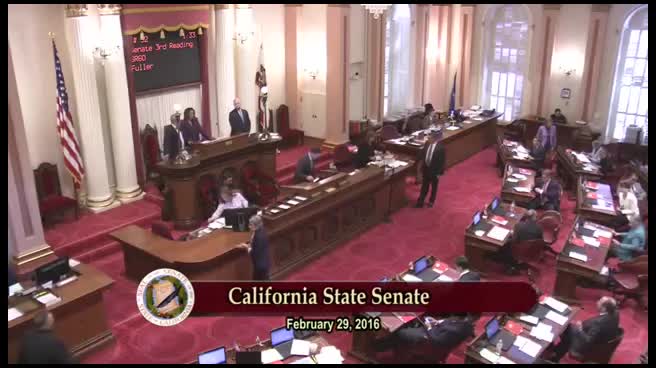
Bill Author

Bill Co-Author(s):