ACR 128: Sickle Cell Anemia Awareness Month.
- Session Year: 2015-2016
- House: Assembly
- Latest Version Date: 2016-09-07
This measure would recognize the month of September 2016 as Sickle Cell Anemia Awareness Month.
This measure would recognize the month of September 2016 as Sickle Cell Anemia Awareness Month.
This measure would recognize the month of September 2016 as Sickle Cell Anemia Awareness Month.
This measure would recognize the month of September 2016 as Sickle Cell Anemia Awareness Month.
This measure would designate the interchange of Interstate Routes 15 and 215 in the County of San Bernardino as the San Bernardino County Deputy Sheriff Jeffery A. Hill Memorial Interchange. The measure would request the Department of Transportation to determine the cost for appropriate signs showing this special designation and, upon receiving donations from nonstate sources covering that cost, to erect those signs.
This measure would designate the interchange of Interstate Routes 15 and 215 in the County of San Bernardino as the San Bernardino County Deputy Sheriff Jeffrey Jeffery A. Hill Memorial Interchange. The measure would request the Department of Transportation to determine the cost for appropriate signs showing this special designation and, upon receiving donations from nonstate sources covering that cost, to erect those signs.
This measure would designate the interchange of Interstate Routes 15 and 215 in the County of San Bernardino as the San Bernardino County Deputy Sheriff Jeffrey A. Hill Memorial Interchange. The measure would request the Department of Transportation to determine the cost for appropriate signs showing this special designation and, upon receiving donations from nonstate sources covering that cost, to erect those signs.
WHEREAS, Sickle cell anemia and sickle cell disease, used interchangeably, refer to a group of inherited disorders that affect the red blood cells; and
WHEREAS, Sickle cell anemia is a disease in which a persons body produces abnormally shaped red blood cells that resemble a crescent or sickle and that do not last as long as normal round red blood cells, which leads to anemia. The sickle cells also get stuck in blood vessels and block blood flow, which can cause pain and organ damage; and
WHEREAS, Sickle cell anemia is a genetic disorder that occurs in individuals who are born with two sickle cell genes, each inherited from one parent. An individual with only one sickle cell gene has sickle cell trait, which occurs in one out of every 12 African Americans and in one out of every 100 Latinos in the United States; and
WHEREAS, According to the United States Department of Health and Human Services Office of Minority Health, approximately two million Americans carry the sickle cell trait, and unlike most people with sickle cell anemia, most people who have sickle cell trait never know they have it and can live their entire lives without any complications from it; and
WHEREAS, Serious problems associated with sickle cell trait are rare. However, exercise-related sudden death in individuals who have sickle cell trait most commonly occurs in those undergoing intense physical exertion, such as military recruits in basic training and athletes during conditioning workouts; and
WHEREAS, Individuals with sickle cell trait should not be excluded from physical activity, including sports, unless recommended by medical personnel. Instead, people should be educated about precautions that should be taken, including drinking adequate amounts of fluids, pacing training with longer periods of rest and recovery, avoiding participation in performance tests such as sprints and mile runs, and, most importantly, being familiar with the symptoms of overexertion; and
WHEREAS, According to the federal Centers for Disease Control and Prevention, it is estimated that more than 90,000 Americans have sickle cell anemia. Sickle cell anemia occurs in one out of every 500 African American births and in one out of every 36,000 Latino births; and
WHEREAS, Sickle cell anemia can be a life-threatening condition, and access to comprehensive care can be limited by social, economic, cultural, and geographic barriers; and
WHEREAS, The average cost of hospitalization for sickle cell anemia in 2004 was $6,223, for more than 84,000 hospital admissions that year. Total hospitalization costs for individuals with sickle cell anemia equaled $488,000,000, of which 65 percent were covered by Medicaid funds; and
WHEREAS, Individuals living with sickle cell anemia encounter barriers to obtaining quality care and improving their quality of life. These barriers include limitations in geographic access to comprehensive care, the varied use of effective treatments, the high reliance on emergency care and public health programs, and the limited number of health care providers with knowledge and experience to manage and treat sickle cell anemia; and
WHEREAS, The Sickle Cell Anemia Control Act was signed into law in 1972 by President Richard Nixon after pledging that his administration would reverse the record of neglect of the dreaded disease by increasing funding for and expanding sickle cell anemia-related programs, including the development of comprehensive sickle cell anemia centers; and
WHEREAS, In 1975, the Sickle Cell Disease Association of America, Inc., and its member organizations began conducting month-long events in September to call attention to sickle cell anemia and the need to address the problem at national and local levels, and chose September as National Sickle Cell Awareness Month in order for the public to reflect on the children and adults whose lives, education, and careers have been affected by this disease; and
WHEREAS, Sickle cell disease is a chronic condition that can affect any organ, including the kidneys, lungs, and spleen. Research indicates that patients experience many severe complications, including stroke, infections, and pulmonary embolism; and
WHEREAS, Pain is the most common complication of sickle cell disease and the primary reason that people with the disease go to the emergency room or hospital; and
WHEREAS, While there is no widely available cure for sickle cell disease, emerging treatments, including medications that prevent blood cells from sickling, are being studied; and
WHEREAS, A potentially groundbreaking investigational drug, GMI 1070, designed to treat painful vaso-occlusive crises, which occur when red blood cells lump together and impede blood flow in sickle cell patients, has been found to be safe following a clinical trial at the University of California, Davis; and
WHEREAS, In 2003, the Sickle Cell Treatment Act was signed into law; and
WHEREAS, The effort to officially recognize Sickle Cell Anemia Awareness Month succeeded at the federal level in 1983 when the United States House of Representatives unanimously passed, and President Ronald Reagan signed, the first resolution introduced by the Congressional Black Caucus that recognized September as National Sickle Cell Anemia Awareness Month; now, therefore, be it
Resolved by the Assembly of the State of California, the Senate thereof concurring, That the Legislature recognizes the month of September 2016 as Sickle Cell Anemia Awareness Month; and be it further
Resolved, That the Chief Clerk of the Assembly transmit copies of this resolution to the author for appropriate distribution.
WHEREAS, Sickle cell anemia and sickle cell disease, used interchangeably, refer to a group of inherited disorders that affect the red blood cells; and
WHEREAS, Sickle cell anemia is a disease in which a persons body produces abnormally shaped red blood cells that resemble a crescent or sickle and that do not last as long as normal round red blood cells, which leads to anemia. The sickle cells also get stuck in blood vessels and block blood flow, which can cause pain and organ damage; and
WHEREAS, Sickle cell anemia is a genetic disorder that occurs in individuals who are born with two sickle cell genes, each inherited from one parent. An individual with only one sickle cell gene has sickle cell trait, which occurs in one out of every 12 African Americans and in one out of every 100 Latinos in the United States; and
WHEREAS, According to the United States Department of Health and Human Services Office of Minority Health, approximately two million Americans carry the sickle cell trait, and unlike most people with sickle cell anemia, most people who have sickle cell trait never know they have it and can live their entire lives without any complications from it; and
WHEREAS, Serious problems associated with sickle cell trait are rare. However, exercise-related sudden death in individuals who have sickle cell trait most commonly occurs in those undergoing intense physical exertion, such as military recruits in basic training and athletes during conditioning workouts; and
WHEREAS, Individuals with sickle cell trait should not be excluded from physical activity, including sports, unless recommended by medical personnel. Instead, people should be educated about precautions that should be taken, including drinking adequate amounts of fluids, pacing training with longer periods of rest and recovery, avoiding participation in performance tests such as sprints and mile runs, and, most importantly, being familiar with the symptoms of overexertion; and
WHEREAS, According to the federal Centers for Disease Control and Prevention, it is estimated that more than 90,000 Americans have sickle cell anemia. Sickle cell anemia occurs in one out of every 500 African American births and in one out of every 36,000 Latino births; and
WHEREAS, Sickle cell anemia can be a life-threatening condition, and access to comprehensive care can be limited by social, economic, cultural, and geographic barriers; and
WHEREAS, The average cost of hospitalization for sickle cell anemia in 2004 was $6,223, for more than 84,000 hospital admissions that year. Total hospitalization costs for individuals with sickle cell anemia equaled $488,000,000, of which 65 percent were covered by Medicaid funds; and
WHEREAS, Individuals living with sickle cell anemia encounter barriers to obtaining quality care and improving their quality of life. These barriers include limitations in geographic access to comprehensive care, the varied use of effective treatments, the high reliance on emergency care and public health programs, and the limited number of health care providers with knowledge and experience to manage and treat sickle cell anemia; and
WHEREAS, The Sickle Cell Anemia Control Act was signed into law in 1972 by President Richard Nixon after pledging that his administration would reverse the record of neglect of the dreaded disease by increasing funding for and expanding sickle cell anemia-related programs, including the development of comprehensive sickle cell anemia centers; and
WHEREAS, In 1975, the Sickle Cell Disease Association of America, Inc., and its member organizations began conducting month-long events in September to call attention to sickle cell anemia and the need to address the problem at national and local levels, and chose September as National Sickle Cell Awareness Month in order for the public to reflect on the children and adults whose lives, education, and careers have been affected by this disease; and
WHEREAS, Sickle cell disease is a chronic condition that can affect any organ, including the kidneys, lungs, and spleen. Research indicates that patients experience many severe complications, including stroke, infections, and pulmonary embolism; and
WHEREAS, Pain is the most common complication of sickle cell disease and the primary reason that people with the disease go to the emergency room or hospital; and
WHEREAS, While there is no widely available cure for sickle cell disease, emerging treatments, including medications that prevent blood cells from sickling, are being studied; and
WHEREAS, A potentially groundbreaking investigational drug, GMI 1070, designed to treat painful vaso-occlusive crises, which occur when red blood cells lump together and impede blood flow in sickle cell patients, has been found to be safe following a clinical trial at the University of California, Davis; and
WHEREAS, In 2003, the Sickle Cell Treatment Act was signed into law; and
WHEREAS, The effort to officially recognize Sickle Cell Anemia Awareness Month succeeded at the federal level in 1983 when the United States House of Representatives unanimously passed, and President Ronald Reagan signed, the first resolution introduced by the Congressional Black Caucus that recognized September as National Sickle Cell Anemia Awareness Month; now, therefore, be it
Resolved by the Assembly of the State of California, the Senate thereof concurring, that the Legislature recognizes the month of September 2016 as Sickle Cell Anemia Awareness Month; and be it further
Resolved, That the Chief Clerk of the Assembly transmit copies of this resolution to the author for appropriate distribution.
WHEREAS, Deputy Sheriff Jeffery Allan Hill was born on March 9, 1962, in Los Angeles, California, to John R. Hill and Ernestine Hill, and died on December 18, 1994; and
WHEREAS, Deputy Sheriff Hill devoted his life to his community and was passionate about helping families and young people; and
WHEREAS, Deputy Sheriff Hill spent the last four years of his life developing the Self Education Law Enforcement Family (S.E.L.F.) Youth Center, a nonprofit organization that provide provided classes and mentoring to African-American boys between seven and 17 years of age; and
WHEREAS, Deputy Sheriff Hill is survived by his wife, Linda, and his two children, Jabrael Ali and Kaylie Rose; and
WHEREAS, In recognition of Deputy Sheriff Hills service to his community in both his personal and professional lives, it would be fitting to designate the interchange at the junction of Interstate Routes 15 and 215 in the County of San Bernardino in his honor; now, therefore, be it
Resolved by the Assembly of the State of California, the Senate thereof concurring, That the Legislature hereby designates the interchange of Interstate Routes 15 and 215 in the County of San Bernardino as the San Bernardino County Deputy Sheriff Jeffery A. Hill Memorial Interchange; and be it further
Resolved, That the Department of Transportation is requested to determine the costs of erecting appropriate signs, consistent with the signing requirements for the state highway system, showing this special designation and which shall include the star of the California Highway Patrol and, upon receiving donations from nonstate sources covering the cost, to erect those signs; and be it further
Resolved, That the Chief Clerk of the Assembly transmit copies of this resolution to the Director of Transportation and to the author for appropriate distribution.
WHEREAS, Deputy Sheriff Jeffery Allan Hill was born on March 9, 1962, in Los Angeles, California, to John R. Hill and Ernestine Hill, and died on December 18, 1994; and
WHEREAS, Deputy Sheriff Hill devoted his life to his community and was passionate about helping families and young people; and
WHEREAS, Deputy Sheriff Hill spent the last four years of his life developing the Self Education Law Enforcement Family (S.E.L.F.) Youth Center, a nonprofit organization that provide classes and mentoring to African-American boys between seven and 17 years of age; and
WHEREAS, Deputy Sheriff Hill is survived by his wife, Linda, and his two children, Jabrael Ali and Kaylie Rose; and
WHEREAS, In recognition of Deputy Sheriff Hills service to his community in both his personal and professional lives, it would be fitting to designate the interchange at the junction of Interstate Routes 15 and 215 in the County of San Bernardino in his honor; now, therefore, be it
Resolved by the Assembly of the State of California, the Senate thereof concurring, That the Legislature hereby designates the interchange of Interstate Routes 15 and 215 in the County of San Bernardino as the San Bernardino County Deputy Sheriff Jeffery A. Hill Memorial Interchange; and be it further
Resolved, That the Department of Transportation is requested to determine the costs of erecting appropriate signs, consistent with the signing requirements for the state highway system, showing this special designation and which shall include the star of the California Highway Patrol and, upon receiving donations from nonstate sources covering the cost, to erect those signs; and be it further
Resolved, That the Chief Clerk of the Assembly transmit copies of this resolution to the Director of Transportation and to the author for appropriate distribution.
|
Date
|
Status
|
|---|---|
| Aug 4, 2016 | From committee: Be adopted. Ordered to Third Reading. (Ayes 9. Noes 0.) (August 4). |
| Sep 7, 2016 | Enrolled and filed with the Secretary of State at 10:30 a.m. |
| Sep 7, 2016 | Chaptered by Secretary of State - Res. Chapter 171, Statutes of 2016. |
| Aug 30, 2016 | In Assembly. Ordered to Engrossing and Enrolling. |
| Aug 29, 2016 | Adopted and to Assembly. (Ayes 39. Noes 0. Page 5485.) |
| Aug 29, 2016 | Adopted and to Assembly. |
| Aug 16, 2016 | From committee: Ordered to third reading. |
| Aug 15, 2016 | In Senate. To Com. on RLS. |
| Aug 11, 2016 | Amended, adopted, and to Senate. (Page 5773.) |
| Aug 11, 2016 | Amended, adopted, and to Senate. |
| Jan 28, 2016 | Introduced. To print. |
| Jun 30, 2016 | Re-referred to Com. on RLS. pursuant to Assembly Rule 96. |
| Jun 28, 2016 | Re-referred to Com. on APPR. |
| Jun 27, 2016 | From committee chair, with author's amendments: Amend, and re-refer to Com. on APPR. Amended. |
| Mar 15, 2016 | From committee: Be adopted, and re-refer to Com. on APPR. with recommendation: To Consent Calendar. (Ayes 16. Noes 0.) (March 14). Re-referred to Com. on APPR. |
| Feb 8, 2016 | Re-referred to Com. on TRANS. |
| Feb 4, 2016 | Referred to Com. on TRANS. |
| Feb 4, 2016 | From committee chair, with author's amendments: Amend, and re-refer to Com. on TRANS. Amended. |
| Jan 29, 2016 | From printer. |
|
Date
|
Description
|
Location
|
Votes
|
|
|---|---|---|---|---|
| Aug 29, 2016 | Assembly 3rd Reading ACR128 Brown By Mitchell | Senate Floor |
Passed |
|
| Aug 4, 2016 | Be adopted. To third reading. | Assembly Standing Committee on Rules |
Passed |
|
| Mar 14, 2016 | Be adopted, and re-refer to the Committee on [Appropriations] with recommendation: To Consent Calendar | Assembly Standing Committee on Transportation |
Passed |
This list shows positions taken on this bill by organizations on the date displayed, which is linked to the original source.
Positions by individuals are not included.
|
Organization
|
Position
|
Date
|
|---|---|---|
| American Federation Of State, County And Municipal Employees, Afl-Cio | ** Support | Aug 11, 2016 |
| Association For Los Angeles Deputy Sheriffs | ** Support | Aug 11, 2016 |
| Los Angeles Police Protective League | ** Support | Aug 11, 2016 |
| Los Angeles Professional Peace Officers Association | ** Support | Aug 11, 2016 |
| Riverside Sheriffs' Association | ** Support | Aug 11, 2016 |
Office of Senate Floor Analyses (916) 651-1520 Fax: (916) 327-4478 | ACR 128 |
THIRD READING
Bill No: ACR 128
Amended: 8/11/16 in Assembly
ASSEMBLY FLOOR: Read and adopted, 8/11/16
SUBJECT: Sickle Cell Anemia Awareness Month
DIGEST: This resolution recognizes the month of September 2016 as Sickle Cell Anemia Awareness Month.
ANALYSIS: This resolution makes the following legislative findings:
- Sickle cell anemia and sickle cell disease refer to a group of inherited disorders that affect red blood cells causing the person's body to produce abnormally shaped red blood cells that resemble a crescent or sickle of which do not last as long as round blood cells, causing anemia.
- It is estimated that more than 90,000 Americans have sickle cell anemia; one in every 500 African Americans and one in every 36,000 Latino births are affected.
- Sickle cell anemia can be a life-threatening condition, and access to comprehensive care can be limited by social, economic, cultural, and geographic barriers; and the average cost of hospitalization for sickle cell anemia in 2004 was $6,223 and the total cost for 84,000 hospital admissions was $488,000,000; of which 65% was covered by Medicaid funds.
- In 1972, the Sickle Cell Anemia Control Act was signed into law by President Richard Nixon after pledging that his administration would "reverse the record of neglect of the dreaded disease" by increasing funding for and expanding sickle cell anemia-related programs, including the development of comprehensive sickle cell anemia centers.
- A potentially groundbreaking investigational drug, GMI 1070, designed to treat painful vaso-occlusive crises, which occur when red blood cells lump together and impede blood flow in sickle cell patients, has been found to be safe following clinical trials at the University of California, Davis.
This resolution recognizes the month of September 2016 as Sickle Cell Anemia Awareness Month.
FISCAL EFFECT: Appropriation: No Fiscal Com.: No Local: No
None received
OPPOSITION: (Verified 8/16/16)
None received
Prepared by: Melissa Ward / SFA / (916) 651-1520
8/16/16 17:52:54
**** END ****
ASSEMBLY THIRD READING
ATR Bill Id:ACR 128
Author:(Brown)
As Amended Ver:June 27, 2016
Majority vote
Committee | Votes | Ayes | Noes |
Transportation | 16-0 | Frazier, Linder, Baker, Bloom, Brown, Chu, Daly, Dodd, Eduardo Garcia, Gomez, Kim, Mathis, Medina, Melendez, Nazarian, O'Donnell | |
Rules | 9-0 | Gordon, Chang, Arambula, Brough, Holden, Jones, Quirk, Rodriguez, Waldron |
SUMMARY: Recognizes the month of September 2016 as Sickle Cell Anemia Awareness Month. Specifically, this resolution makes the following legislative findings:
- Sickle cell anemia and sickle cell disease refer to a group of inherited disorders that affect red blood cells causing the person's body to produce abnormally shaped red blood cells that resemble a crescent or sickle of which do not last as long as round blood cells, causing anemia.
- It is estimated that more than 90,000 Americans have sickle cell anemia; one in every 500 African Americans and one in every 36,000 Latino births are affected.
- Sickle cell anemia can be a life-threatening condition, and access to comprehensive care can be limited by social, economic, cultural, and geographic barriers; and the average cost of hospitalization for sickle cell anemia in 2004 was $6,223 and the total cost for 84,000 hospital admissions was $488,000,000; of which 65% was covered by Medicaid funds.
- In 1972, the Sickle Cell Anemia Control Act was signed into law by President Richard Nixon after pledging that his administration would "reverse the record of neglect of the dreaded disease" by increasing funding for and expanding sickle cell anemia-related programs, including the development of comprehensive sickle cell anemia centers.
- A potentially groundbreaking investigational drug, GMI 1070, designed to treat painful vaso-occlusive crises, which occur when red blood cells lump together and impede blood flow in sickle cell patients, has been found to be safe following clinical trials at the University of California, Davis.
FISCAL EFFECT: None
Analysis Prepared by: Nicole Willis / RLS. / (916) 319-2800 FN: 0003802
Date of Hearing: August 4, 2016
ASSEMBLY COMMITTEE ON
, Chair
ABPCA Bill Id:
Author:() – As Ver:
SUBJECT:
SUMMARY: Recognizes the month of September 2016 as Sickle Cell Anemia Awareness Month. Specifically, this resolution makes the following legislative findings:
- Sickle cell anemia and sickle cell disease refer to a group of inherited disorders that affect red blood cells causing the person's body to produce abnormally shaped red blood cells that resemble a crescent or sickle of which do not last as long as round blood cells, causing anemia.
- It is estimated that more than 90,000 Americans have sickle cell anemia; one in every 500 African Americans and one in every 36,000 Latino births are affected.
- Sickle cell anemia can be a life-threatening condition, and access to comprehensive care can be limited by social, economic, cultural, and geographic barriers; and the average cost of hospitalization for sickle cell anemia in 2004 was $6,223 and the total cost for 84,000 hospital admissions was $488,000,000; of which 65 percent was covered by Medicaid funds.
- In 1972, the Sickle Cell Anemia Control Act was signed into law by President Richard Nixon after pledging that his administration would "reverse the record of neglect of the dreaded disease" by increasing funding for and expanding sickle cell anemia-related programs, including the development of comprehensive sickle cell anemia centers.
- A potentially groundbreaking investigational drug, GMI 1070, designed to treat painful vaso-occlusive crises, which occur when red blood cells lump together and impede blood flow in sickle cell patients, has been found to be safe following clinical trials at the University of California, Davis.
FISCAL EFFECT: None
REGISTERED SUPPORT / OPPOSITION:
Support
None on file
Opposition
None on file
Analysis Prepared by:
Date of Hearing: March 14, 2016
ASSEMBLY COMMITTEE ON TRANSPORTATION
Jim Frazier, Chair
ABPCA Bill Id:ACR 128 (
Author:Brown) – As Amended Ver:February 4, 2016
SUBJECT: San Bernardino County Deputy Sheriff Jeffery A. Hill Memorial Interchange
SUMMARY: Designates the interchange of Interstate Route 15 (I-15) and Interstate Route 215 (I-215) in San Bernardino County as the “San Bernardino County Deputy Sheriff Jeffery A. Hill Memorial Interchange.” Specifically, this resolution:
- Recounts the life and accomplishments of Jeffery Allan Hill, a sheriff’s deputy in the San Bernardino County Sheriff’s Department.
- Designates the interchange of I-15 and I-215 in San Bernardino County as the “San Bernardino County Deputy Sheriff Jeffery A. Hill Memorial Interchange.”
- Requests that the California Department of Transportation (Caltrans) determine the cost of appropriate signs, consistent with the signing requirements for the state highway system, showing the special designation and, upon receiving donations from non-state sources covering that cost, to erect those signs.
EXISTING LAW: Assigns Caltrans the responsibility of operating and maintaining state highways including the installation and maintenance of highway signs.
FISCAL EFFECT: Unknown, but the measure requests that Caltrans only erect the appropriate signage upon receiving donations from non-state sources covering the cost.
COMMENTS: Jeffery Allan Hill served as a sheriff’s deputy in the San Bernardino County Sheriff’s Department. Deputy Sheriff Hill devoted his life to his community and spent the last four years of his life developing the Self Education Law Enforcement Family (SELF) Youth Center, a non-profit organization that provided classes and mentoring to African-American boys between seven and 17 years of age. In 1994, he received the San Bernardino County Association of African American Employees Outstanding Service to Youth award. Deputy Sheriff Hill died on December 18, 1994 at the age of 32, and is survived by his wife and two children. This resolution designating the interchange at SR 15 and SR 215 in his honor acknowledges the significant role Deputy Sheriff Hill played in his community in both his personal and professional lives.
REGISTERED SUPPORT / OPPOSITION:
Support
American Federation of State, County and Municipal Employees, AFL-CIO
Association for Los Angeles Deputy Sheriffs
Los Angeles Police Protective League
Los Angeles Probation Officers’ Union
Los Angeles Professional Peace Officers Association
Riverside Sheriffs’ Association
Opposition
None on file
Analysis Prepared by: Justin Behrens / TRANS. / (916) 319-2093
Discussed in Hearing
View Older Hearings
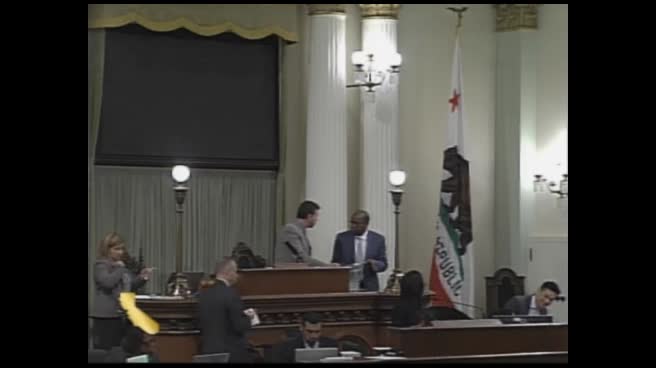
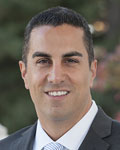
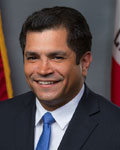
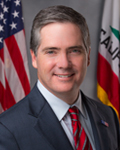
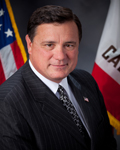
Bill Author

Bill Co-Author(s):