ACR 146: Civil rights: Roberto Alvarez v. Board of Trustees of the Lemon Grove School District.
- Session Year: 2015-2016
- House: Assembly
- Latest Version Date: 2016-05-05
This measure would commemorate March 30, 2016, as the 85th anniversary of the historic ruling in the case of Roberto Alvarez v. Board of Trustees of the Lemon Grove School District, which invalidated that districts attempt to restrict its pupils of Mexican heritage to an inferior, segregated educational experience.
This measure would commemorate March 30, 2016, as the 85th anniversary of the historic ruling in the case of Roberto Alvarez v. Board of Trustees of the Lemon Grove School District, which invalidated that districts attempt to restrict its pupils of Mexican heritage to an inferior, segregated educational experience.
This measure would commemorate March 30, 2016, as the 85th anniversary of the historic ruling in the case of Roberto Alvarez v. Board of Trustees of the Lemon Grove School District, which invalidated that districts attempt to restrict its pupils of Mexican heritage to an inferior, segregated educational experience.
This measure would commemorate March 30, 2016, as the 85th anniversary of the historic ruling in the case of Roberto Alvarez v. Board of Trustees of the Lemon Grove School District, which invalidated that districts attempt to restrict its pupils of Mexican heritage to an inferior, segregated educational experience.
WHEREAS, The history of the struggle for school desegregation in the United States is not often associated with the Mexican community in southern California, and is usually thought to have begun with the landmark 1954 United States Supreme Court case of Brown v. Board of Education of Topeka (1954) 347 U.S. 483; and
WHEREAS, The earliest court cases concerning school desegregation actually occurred in the Southwest and California in the 1930s; and
WHEREAS, In these early school desegregation cases, Mexican immigrants and their communities were the groups targeted for segregated treatment by school officials; and
WHEREAS, A case of particular importance, which has begun to take a special place in the social history of civil rights, took place in San Diego County during the 1930s, in the then-rural community of Lemon Grove; and
WHEREAS, This important case is Roberto Alvarez v. Board of Trustees of the Lemon Grove School District, which was the first successful case challenging school segregation in the United States; and
WHEREAS, The Alvarez case is important because it was an historic first, and because it was an example of a community taking action and establishing the rights of their children to equal education, despite the local, regional, and national sentiment of that era that favored not just segregation, but the actual deportation from the United States of persons of Mexican heritage; and
WHEREAS, In January 1931, the principal of the Lemon Grove Grammar School, acting under instructions from the school district trustees, stood in the schoolhouse door and refused to admit Mexican pupils, who had previously constituted almost half of the schools student body; and many of the excluded children were American citizens by birth who came from families that had lived in Lemon Grove for many years; and
WHEREAS, The school district trustees directed the Mexican pupils to attend school in a substandard, two-room building; and
WHEREAS, The parents of the excluded pupils refused to accept this injustice, and organized themselves into the Comite de Vecinos de Lemon Grove (the Lemon Grove Neighbors Committee), sought help from the local Mexican community at large, and eventually obtained the professional services of distinguished San Diego attorneys Fred C. Noon and A.C. Brinkely; and
WHEREAS, A petition for a writ of mandate was filed in the San Diego County Superior Court challenging the actions of the Lemon Grove School District in segregating the Mexican pupils, and a young pupil named Roberto Alvarez was chosen as the lead plaintiff because he was an outstanding student with excellent proficiency in English; and
WHEREAS, The actions of the Lemon Grove School District, and the policy of segregating Mexican and Mexican American pupils, had significant support in San Diego County as well as other parts of the state; and in January 1931, a bill was introduced in the State Assembly by a member from Santa Barbara County that would have legalized the segregation of Mexican and Mexican American pupils in California schools; and
WHEREAS, Ultimately, however, the Honorable Claude Chambers, Judge of the San Diego County Superior Court, issued a ruling granting the writ of mandate sought by the parents of the excluded pupils; and
WHEREAS, Judge Chambers order, issued on March 30, 1931, deemed the separation of the children to be an illegal segregation that had no basis in California law, and he ordered the school district to immediately reinstate the pupils who had been excluded; and
WHEREAS, The Lemon Grove School District did not appeal Judge Chambers order, and it duly readmitted the excluded pupils; now, therefore be it
Resolved by the Assembly of the State of California, the Senate thereof concurring, That the Legislature of the State of California recognizes and commemorates March 30, 2016, as the 85th anniversary of the historic ruling in the case of Roberto Alvarez v. Board of Trustees of the Lemon Grove School District, which invalidated that districts attempt to restrict its pupils of Mexican heritage to an inferior, segregated educational experience; and be it further
Resolved, That schools and community organizations throughout the state are encouraged to acknowledge this historic anniversary with appropriate activities; and be it further
Resolved, That the Chief Clerk of the Assembly transmit copies of this resolution to the author for appropriate distribution.
|
Date
|
Status
|
|---|---|
| Feb 29, 2016 | Introduced. To print. |
| Mar 1, 2016 | From printer. |
| Mar 8, 2016 | Referred to Com. on JUD. |
| Mar 28, 2016 | In committee: Hearing cancelled at the request of author. |
| Mar 29, 2016 | From committee: Be adopted. To Consent Calendar. (Ayes 10. Noes 0.) (March 29). |
| Mar 31, 2016 | From Consent Calendar. |
| Mar 31, 2016 | Ordered to third reading. |
| Apr 7, 2016 | Amended, adopted, and to Senate. |
| Apr 7, 2016 | Amended, adopted, and to Senate. (Page 4227.) |
| Apr 11, 2016 | In Senate. To Com. on RLS. |
| Apr 28, 2016 | From committee: Ordered to third reading. |
| May 2, 2016 | Adopted and to Assembly. |
| May 2, 2016 | Adopted and to Assembly. (Ayes 37. Noes 0. Page 3739.) |
| May 3, 2016 | In Assembly. Ordered to Engrossing and Enrolling. |
| May 5, 2016 | Chaptered by Secretary of State - Res. Chapter 33, Statutes of 2016. |
| May 5, 2016 | Enrolled and filed with the Secretary of State at 11:30 a.m. |
|
Date
|
Description
|
Location
|
Votes
|
|
|---|---|---|---|---|
| May 2, 2016 | Assembly 3rd Reading ACR146 Weber By Anderson | Senate Floor |
Passed |
|
| Mar 29, 2016 | Be adopted. To Consent Calendar. | Assembly Standing Committee on Judiciary |
Passed |
This list shows positions taken on this bill by organizations on the date displayed, which is linked to the original source.
Positions by individuals are not included.
|
Organization
|
Position
|
Date
|
|---|---|---|
| Lemon Grove Historical Society | ** Support | May 2, 2016 |
| Lemon Grove School District | ** Support | May 2, 2016 |
Office of Senate Floor Analyses (916) 651-1520 Fax: (916) 327-4478 | ACR 146 |
THIRD READING
Bill No: ACR 146
Amended: 4/7/16 in Assembly
ASSEMBLY FLOOR: Read and adopted, 4/7/16
SUBJECT: Civil rights: Roberto Alvarez v. Board of Trustees of the Lemon Grove School District
DIGEST:
This resolution commemorates March 30, 2016, as the 85th anniversary of the historic ruling in the case of Roberto Alvarez v. Board of Trustees of the Lemon Grove School District, which invalidated that district’s attempt to restrict its pupils of Mexican heritage to an inferior, segregated educational experience.
ANALYSIS: This resolution commemorates the 1931 San Diego County Superior Court ruling that invalidated an attempt by the Lemon Grove School District to segregate students of Mexican-American descent. Specifically, this resolution:
- Makes findings and declarations detailing the historical background to, and historical significance of, the decision in the case of Roberto Alvarez v. Board of Trustees of the Lemon Grove School District (Case No. 66625, San Diego County Superior Court, March 30, 1951)
- Finds that the Alvarez case is important because it was an historic first, and because it was an example of a community taking action and establishing the rights of their children to equal education, despite the local, regional, and national sentiment of that era that favored not just segregation, but the actual deportation from the United States of persons of Mexican heritage.
- Resolves that schools and community organizations throughout the state are encouraged to acknowledge this historic anniversary with appropriate activities.
This resolution commemorates March 30, 2016, as the 85th anniversary of the historic ruling in the case of Roberto Alvarez v. Board of Trustees of the Lemon Grove School District, which invalidated that district’s attempt to restrict its pupils of Mexican heritage to an inferior, segregated educational experience.
FISCAL EFFECT: Appropriation: No Fiscal Com.: No Local: No
Lemon Grove Historical Society
Lemon Grove School District
OPPOSITION: (Verified 4/27/16)
None received
ARGUMENTS IN SUPPORT: The Lemon Grove Historical Society writes, “This crucial court decision ended the school district’s attempt to segregate students of Mexican descent and set a precedent for integrated, equal, public education that led straight to Mendez v. Westminster (1946-74) and the great landmark case, Brown v. Topeka School Board (1954).
The Lemon Grove School District states that Alvarez “was the first successful school desegregation court decision in the United States. It also helped establish the idea of equality in education within California.”
Prepared by: Melissa Ward / SFA / (916) 651-1520
4/29/16 12:39:18
**** END ****
ASSEMBLY THIRD READING
ATR Bill Id:ACR 146
Author:(Weber)
As Introduced Ver:February 29, 2016
Majority vote
Committee | Votes | Ayes | Noes |
Judiciary | 10-0 | Mark Stone, Wagner, Alejo, Chau, Chiu, Gallagher, Cristina Garcia, Holden, Maienschein, Ting |
SUMMARY: Commemorates the 1931 San Diego County Superior Court ruling that invalidated an attempt by the Lemon Grove School District to segregate students of Mexican-American descent. Specifically, this measure:
- Makes findings and declarations detailing the historical background to, and historical significance of, the decision in the case of Roberto Alvarez v. Board of Trustees of the Lemon Grove School District (Case No. 66625, San Diego County Superior Court, March 30, 1951).
- Resolves that the Legislature of the State of California recognizes and commemorates March 30, 2016, as the 85th anniversary of the historic ruling in the case of Roberto Alvarez v. the Board of Trustees of the Lemon Grove School District, which invalidated a school district's attempt to restrict its pupils of Mexican heritage to an inferior, segregated educational experience.
- Resolves that schools and community organizations throughout the state are encouraged to acknowledge this historic anniversary with appropriate activities.
- Resolves that the Chief Clerk of the Assembly transmit copies of this resolution to the author for appropriate distribution.
EXISTING LAW provides that no person shall be deprived of life, liberty, or property without due process of law or denied equal protection of the laws. (California Constitution Article I, Section 7.)
FISCAL EFFECT: None.
COMMENTS: It seems safe to say that when most people think of successful legal challenges to racial segregation in the United States (U.S.), the first case that comes to mind is Brown v. the Board of Education, the 1954 U.S. Supreme Court ruling finding that racial segregation in public education violated the equal protection clause of the Fourteenth Amendment to the U.S Constitution. Brown did not emerge in a vacuum, but rather it reflected a decades-long litigation strategy by the NAACP and others to challenge the infamous "separate but equal" doctrine set forth in Plessy v. Ferguson (1896). Finding that separate schools were "inherently unequal," in part because they imposed a badge of inferiority on students forcefully segregated by the political majority, a unanimous Court overturned nearly 60 years of precedent by holding that the doctrine of "separate but equal" had no place in the field of public education.
The Brown decision grew from the struggles of African-Americans and their allies to challenge racial segregation in the Jim Crow South, and it justifiably holds a privileged position in the history of the Civil Rights movement in the United States. This resolution, however, turns our attention to a lesser-known history of school desegregation efforts in California and the Southwest during the 1930s. Specifically, on March 30, 1931, Judge Claude Chambers of the San Diego County Superior Court issued a writ of mandate ordering the Lemon Grove School District to cease its effort to force Mexican-American students to attend a separate and, by all accounts, inferior school. Judge Chambers' order was, according to a history of the Lemon Grove case, "the first successful school desegregation decision in the history of the United States." (Robert Alvarez, Jr., "The Lemon Grove Incident: The Nation's First Successful School Desegregation Court Case," Journal of San Diego History Vol. 32 (Spring 1986).)
This resolution commemorates the 85th anniversary of the court ruling in Alvarez v. Lemon Grove School District (1931). Twenty-three years before the United States Supreme Court found school segregation unconstitutional in Brown v. Board of Education (1954), Judge Claude Chambers of the San Diego County Superior Court issued a writ of mandate ordering the Lemon Grove School District to cease its effort to force Mexican-American students to attend a separate and, by all accounts, inferior school. Judge Chambers' order was apparently the first successful legal challenge to racial segregation in the United States. Because this decision was never appealed, the case was not precedent setting and was largely omitted from the state's historical narrative until Robert Alvarez, Jr., professor emeritus of Ethnic Studies at the University of California, San Diego, and the son of the named plaintiff, recovered the story. Not only does the case illustrate California's leadership in promoting equal access to education, it also illustrates the power of community organization and collective resistance to social injustice. There is no opposition to this timely reminder about the dangers of bigotry and the power of people to challenge it.
Analysis Prepared by: Thomas Clark / JUD. / (916) 319-2334 FN: 0002666
Date of Hearing: March 29, 2016
ASSEMBLY COMMITTEE ON JUDICIARY
Mark Stone, Chair
ABPCA Bill Id:ACR 146
Author:(Weber) – As Introduced Ver:February 29, 2016
PROPOSED CONSENT
SUBJECT: Civil rights: Roberto Alvarez v. Board of Trustees of the Lemon Grove School District
KEY ISSUE: Should California recognize and commemorate March 30, 2016, as the 85th Anniversary of the historic California desegregation ruling in Roberto Alvarez v. Lemon Grove School District?
SYNOPSIS
This resolution commemorates the 85th anniversary of the court ruling in Alvarez v. Lemon Grove School District (1931). Twenty-three years before the United States Supreme Court found school segregation unconstitutional in Brown v. Board of Education (1954), Judge Claude Chambers of the San Diego County Superior Court issued a writ of mandate ordering the Lemon Grove School District to cease its effort to force Mexican-American students to attend a separate and, by all accounts, inferior school. Judge Chambers' order was apparently the first successful legal challenge to racial segregation in the United States. Because this decision was never appealed, the case was not precedent setting and was largely omitted from the state's historical narrative until Robert Alvarez, Jr., professor emeritus of Ethnic Studies at the University of California, San Diego, and the son of the named plaintiff, recovered the story. Not only does the case illustrate California's leadership in promoting equal access to education, it also illustrates the power of community organization and collective resistance to social injustice. There is no opposition to this timely reminder about the dangers of bigotry and the power of people to challenge it.
SUMMARY: Commemorates the 1931 San Diego County Superior Court ruling that invalidated an attempt by the Lemon Grove School District to segregate students of Mexican-American descent. Specifically, this measure:
- Makes findings and declarations detailing the historical background to, and historical significance of, the decision in the case of Roberto Alvarez v. Board of Trustees of the Lemon Grove School District (Case No. 66625, San Diego County Superior Court, March 30, 1951).
- Resolves that the Legislature of the State of California recognizes and commemorates March 30, 2016, as the 85th anniversary of the historic ruling in the case of Roberto Alvarez v. the Board of Trustees of the Lemon Grove School District, which invalidated a school district's attempt to restrict its pupils of Mexican heritage to an inferior, segregated educational experience.
- Resolves that schools and community organizations throughout the state are encouraged to acknowledge this historic anniversary with appropriate activities.
- Resolves that the Chief Clerk of the Assembly transmit copies of this resolution to the author for appropriate distribution.
EXISTINGN LAW provides that no person shall be deprived of life, liberty, or property without due process of law or denied equal protection of the laws. (California Constitution Article I, Section 7.)
FISCAL EFFECT: As currently in print this resolution is keyed non-fiscal.
COMMENTS: It seems safe to say that when most people think of successful legal challenges to racial segregation in the United States, the first case that comes to mind is Brown v. the Board of Education, the 1954 U.S. Supreme Court ruling finding that racial segregation in public education violated the equal protection clause of the Fourteenth Amendment to the U.S. Constitution. Brown did not emerge in a vacuum, but rather it reflected a decades-long litigation strategy by the NAACP and others to challenge the infamous "separate but equal" doctrine set forth in Plessy v. Ferguson (1896). Finding that separate schools were "inherently unequal," in part because they imposed a badge of inferiority on students forcefully segregated by the political majority, a unanimous Court overturned nearly 60 years of precedent by holding that the doctrine of "separate but equal" had no place in the field of public education.
The Brown decision grew from the struggles of African-Americans and their allies to challenge racial segregation in the Jim Crow South, and it justifiably holds a privileged position in the history of the Civil Rights movement in the United States. This resolution, however, turns our attention to a lesser-known history of school desegregation efforts in California and the Southwest during the 1930s. Specifically, on March 30, 1931, Judge Claude Chambers of the San Diego County Superior Court issued a writ of mandate ordering the Lemon Grove School District to cease its effort to force Mexican-American students to attend a separate and, by all accounts, inferior school. Judge Chambers' order was, according to a history of the Lemon Grove case, "the first successful school desegregation decision in the history of the United States." (Robert Alvarez, Jr., "The Lemon Grove Incident: The Nation's First Successful School Desegregation Court Case," Journal of San Diego History Vol. 32 (Spring 1986).)
Background to the Lemon Grove Case: In 1931, Lemon Grove was just a small rural community in San Diego County. Like many rural, agricultural communities in Southern California at this time, it had a racially and ethnically diverse population of persons of European, Mexican, and Japanese descent. According to the petition for a writ of mandate that launched the case, the community of Lemon Grove had a "commodious and modern" five-room school building providing instruction to 169 students from the first to eighth grades. Of these 169 students, 87 were described in the petition as of "American or European parentage," about 75 were described as being "of Mexican parentage," and seven were of "Japanese parentage." About 95% of the students were born in the United States and were therefore citizens. However, sometime in the summer of 1930, the Lemon Grove school board "conceived the idea of separating and segregating the pupils of Mexican parentage and isolating them in a distinct and separate school building, away from the pupils of American, European and Japanese parentage." In order to carry out the plan the district built a two-room school building about seven or eight blocks away from the main school for students of "Mexican parentage." On the morning of January 5, 1931, the school principal stood at the door of the five-room school building, that had previously been attended by all of the students, "and admitted all pupils except the pupils of Mexican parentage," redirecting the Mexican-American students to the two-room school building. ("Petition for Writ of Mandate," Roberto Alvarez v. Board of Trustees of Lemon Grove School District, Case No. 66625, Superior Court of San Diego County, 1931; see also Alvarez, supra.)
The parents of the Mexican-American students, however, refused to accept the school board's plan without a fight. Organized as the Comite de Vecinos de Lemon Grove (Lemon Grove Neighbors Committee), the parents refused to send their students to the separate school. They contacted the Mexican consul in San Diego who, in turn, contacted two San Diego attorneys, Fred Noon and A.C. Brinkley, to seek legal redress for the parents and their children. The leading Spanish language newspaper in California, La Opinion, took an interest in the case and published a letter written by the Neighbor Committee which read: "We are not in agreement, which is very natural, nor do we consider just, the separation of our children, without any reason, to send them to another establishment that distinguishes Mexican children from other nationalities." The letter also included a request for funds from the community, so that the Committee could "do the work necessary to convince the school authorities that they should not continue the segregation." Apparently this appeal worked, as the Committee raised enough money to cover court costs. (Alvarez, supra.)
Judge Chambers Writ of Mandate: Attorneys Noon and Brinkley filed a petition for a writ of mandate on behalf of Roberto Alvarez and all the other Mexican-American students to Judge Claude Chambers of the San Diego Superior Court. The petition for writ of mandate alleged that the exclusion of the children was "clearly an attempt at racial segregation" and done without legal authority. The petition pointed out that 95% of the students of Mexican parentage were American-born citizens and were, therefore "entitled to all rights and privileges common to all citizens of the United States." The refusal to admit all of the students on an equal basis deprived the students of their right, under California law, "to attend the public schools on a basis of equality with other American children." The petition asked that a writ of mandate be issued to the principal and members of the school board, ordering them to admit Roberto Alvarez and all other students of Mexican parentage to the five-room school building and to receive instruction "on a basis of equality" with all other students.
The school board's answer to the petition for the writ of mandate admitted that the school had adopted a policy of segregating the Mexican-American students. It claimed, however, that this was not because of the students' race, but because the students were "deficient in their knowledge of the English language" and therefore required "special attention from the instructors." The school's answer also claimed that the new building was closer to the neighborhood where the Mexican-American students lived and, as such, would protect the children's safety by eliminating the need for them to cross a major boulevard through Lemon Grove to the main school. Although the answer denied any intent to denigrate the Mexican-American students, as the petition for writ had claimed, the language of the school's answer suggested otherwise, describing the separate school as an "Americanization School" for "backward and deficient children." ("Answer to Petition for Writ of Mandate," Roberto Alvarez v. Board of Trustees of Lemon Grove School District, Case No. 66625, Superior Court of San Diego County, 1931.)
Judge Chambers rejected the school board's claims and ordered the school to admit Roberto Alvarez, and all of the other Mexican-American students, into the five-room school building and to receive instruction "on a basis of equality with other children of said school district, and without separation or segregation in a separate school because of race or nationality." ("Order for Alternative Writ of Mandate," Roberto Alvarez v. Board of Trustees of Lemon Grove School District, Case No. 66625, Superior Court of San Diego County, March 30, 1931.) Although Judge Chambers' terse order did not reveal his reasoning, the scholar Robert Alvarez, Jr. – the son of the named petitioner and currently a professor emeritus of Ethnic Studies at U.C. San Diego – examined the trial court transcripts. These transcripts show that Chambers rejected the school's claim that the separate school served the legitimate goal of "Americanization." Judge Chambers opined in his questioning of the school's attorney that Americanization and the learning of English (if that in fact was needed) would be better achieved if all students attended school together. The Judge conceded that the school might have an interest in offering separate instruction to students of differing academic and language abilities, "but to separate all the Mexicans in one group can only be done by infringing the laws of the State of California. And I do not blame the Mexican children because a few of them are behind in school work [as a justification for] this segregation. On the contrary, this is a fact in their favor. I believe that this separation denies the Mexican children the presence of the American [sic] children, which is so necessary to learn the English language." (Alvarez, supra.)
Equal Access to Education in California Legal History: While the Lemon Grove case was the first to successfully challenge segregation in public schools, it was not the first California case to successfully use the judicial branch to challenge a denial of access to public education on the basis of race. In 1885 the parents of a Chinese-American child in San Francisco, Mamie Tape, filed a petition for a writ of mandate ordering the principal of a public grammar school to admit their daughter, notwithstanding a San Francisco ordinance prohibiting Chinese-American students from attending the public schools. The ordinance, that is, did not just provide for segregated public schools; it excluded Chinese-American students from attending any public schools at all. If Chinese-American children received any schooling, it would have to be in private mission schools. But the Tapes insisted on sending their daughter, who was an American-born citizen, to the public school. When the San Francisco Superior Court dismissed the Tape's writ, however, they appealed to the California Supreme Court (the California courts of appeal had not yet been established.)
On appeal, the California Supreme Court held that the San Francisco ordinance barring Chinese-American students from attending public schools violated both a state law and the equal protection clause of the Fourteenth Amendment of the U.S. Constitution. Specifically, the Court cited what was then Political Code Section 1667, which stated that, "Every school . . . must be open for the admission of all children between six and twenty-one years of age residing in the district." The state statute allowed a school board to "exclude children of filthy or vicious habits, or children suffering from contagious or infectious disease," but, the Court reasoned, that statute did not allow a school to exclude on the basis of "race, color, or nationality." (Tape v. Hurley (1885) 66 Cal. 473, 473-475.) The Supreme Court in Tape v. Hurley did not go as far as Judge Chambers had gone in the Lemon Grove case by prohibiting racial segregation in schools; rather, it merely said that Chinese-American students born and residing in California had a right to a public school education. San Francisco responded by creating a separate public school for Chinese-American students. Mamie Tape still could not attend the public school near her home, but would be forced to attend the separate school for Chinese-American students. The Tapes then resisted with their feet, moving across the San Francisco Bay to Berkeley, where Chinese-American students attended integrated public schools. (For a three-generation history of the Tape family see Mae Ngai, The Lucky Ones: One Family and the Extraordinary Invention of Chinese America (2010).)
Legacy of the Lemon Grove Case: Judge Chambers' order in the Lemon Grove case was never appealed. As a result it never produced a published opinion and did not provide any clear precedent. It is unclear whether the other school districts in California ceased segregation policy in the wake of the decision. The Lemon Grove case was a mostly forgotten part of the state's history until it was uncovered by Robert Alvarez, Jr., professor emeritus at the University of California, San Diego, the son of the named plaintiff. In many ways, the Lemon Grove case illustrates that the California courts have sometimes been a progressive force in Civil Rights. Just as the order in Lemon Grove came twenty-three years before Brown v. Board of Education, the California Supreme Court struck down its anti-miscegenation law in Perez v. Sharp in 1948, seventeen years before the U.S. Supreme Court found such laws unconstitutional in Loving v. Virginia (1967). And, more recently, the California Supreme Court upheld marriage equality before the U.S. Supreme Court eventually did the same. However, the Lemon Grove incident is not just a case study of California's leadership in promoting civil rights and equal access to education; of equal if not greater importance, it illustrates the power of ordinary people to collectively resist social injustice.
ARGUMENTS IN SUPPORT: According to the author: "This resolution seeks to raise awareness and commemorate an important court decision in 1931. Roberto Alvarez v. Board of Trustees of the Lemon Grove School District was the first successful school desegregation court decision in the United States." The author contends that this case "helped establish the idea of equality in education within California" and that ACR 146 will appropriately commemorate March 30, 2016, as the 85th anniversary of that historic ruling. The author contends that the court's ruling "stopped the school district’s attempt to segregate students of Mexican heritage and set a precedent for equal access and the de-segregation of public education."
REGISTERED SUPPORT / OPPOSITION:
Support
None on file
Opposition
None on file
Analysis Prepared by: Thomas Clark / JUD. / (916) 319-2334
Discussed in Hearing
View Older Hearings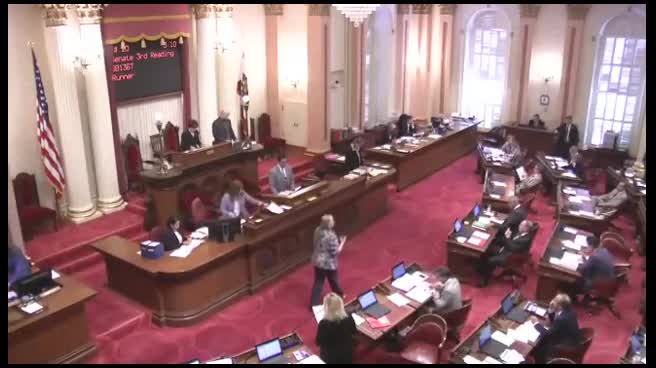
Bill Author

Bill Co-Author(s):