ACR 158: Postsecondary education: transfers.
- Session Year: 2015-2016
- House: Assembly
- Latest Version Date: 2016-08-25
This measure would encourage the Academic Senates of the University of California, the California State University, and the California Community Colleges to expedite their current efforts to streamline the transfer process and ensure that all general education credits can transfer between the University of California, the California State University, and the California Community Colleges educational systems.
This measure would encourage the Academic Senates of the University of California, the California State University, and the California Community Colleges to expedite their current efforts to streamline the transfer process and ensure that all general education credits can transfer between the University of California, the California State University, and the California Community Colleges educational systems.
This measure would encourage the Academic Senates of the University of California, the California State University, and the California Community Colleges to expedite their current efforts to streamline the transfer process and ensure that all general education credits can transfer between the University of California, the California State University, and the California Community Colleges educational systems.
WHEREAS, All students deserve the right to choose an educational institution that best fits their needs; and
WHEREAS, Students should be able to transfer as their circumstances change throughout their educational experience; and
WHEREAS, Students of low-income and minority backgrounds are the most adversely affected by the lack of articulation agreements across California public postsecondary educational institutions; and
WHEREAS, Students should be given clear and concise information on how to transfer and how their credits will transfer; and
WHEREAS, In a public postsecondary educational system where it is already challenging to get the classes one needs to graduate in a timely manner, students should not have to retake classes as a result of transferring; and
WHEREAS, The University of California and the California State University educational systems should have articulation agreements with each other so students transferring from campus to campus or across the systems should not incur additional expenses or time to retake classes previously taken at another University of California or California State University campus; and
WHEREAS, Special attention should be given to ensure Science, Technology, Engineering, and Mathematics (STEM) classes transfer across Californias public postsecondary educational institutions; and
WHEREAS, The University of California and the California State University educational systems should have common course numbering in order to improve articulation across campuses; and
WHEREAS, All general education credits should transfer between the University of California, the California State University, and the California Community Colleges systems; and
WHEREAS, Transferring within the University of California and the California State University educational systems should be seamless for students and not require students to retake courses; and
WHEREAS, The Legislature recognizes the necessity for a more cohesive, robust, and fair articulation process across the University of California, the California State University, and the California Community Colleges educational systems so students are not unduly burdened while trying to transfer and are able to graduate in a timely manner; now, therefore, be it
Resolved by the Assembly of the State of California, the Senate thereof concurring, That the Legislature encourages the Academic Senates of the University of California, the California State University, and the California Community Colleges to expedite their current efforts to streamline the transfer process and ensure that all general education credits can transfer between the University of California, the California State University, and the California Community Colleges educational systems; and be it further
Resolved, That the Chief Clerk of the Assembly transmit copies of this resolution to the author for appropriate distribution.
|
Date
|
Status
|
|---|---|
| Aug 3, 2016 | Re-referred to Com. on ED. |
| Aug 25, 2016 | Enrolled and filed with the Secretary of State at 1:30 p.m. |
| Aug 25, 2016 | Chaptered by Secretary of State - Res. Chapter 142, Statutes of 2016. |
| Aug 19, 2016 | In Assembly. Ordered to Engrossing and Enrolling. |
| Aug 19, 2016 | Adopted and to Assembly. (Ayes 37. Noes 0.) |
| Aug 19, 2016 | Adopted and to Assembly. (Ayes 37. Noes 0. Page 5158.) |
| Aug 15, 2016 | Read second time. Ordered to third reading. |
| Aug 11, 2016 | From committee: Be placed on second reading file pursuant to Senate Rule 28.8. |
| Aug 9, 2016 | From committee: Be adopted, and re-refer to Com. on APPR. Re-referred. (Ayes 8. Noes 0.) (August 9). Re-referred to Com. on APPR. |
| Mar 29, 2016 | Introduced. To print. |
| Aug 1, 2016 | In Senate. To Com. on RLS. |
| Aug 1, 2016 | Adopted and to Senate. (Ayes 76. Noes 0. Page 5643.) |
| Aug 1, 2016 | Adopted and to Senate. |
| Jun 29, 2016 | From committee: Be adopted. To Consent Calendar. (Ayes 18. Noes 0.) (June 29). |
| Jun 22, 2016 | From committee: Be adopted, and re-refer to Com. on APPR. Re-referred. (Ayes 12. Noes 0.) (June 21). Re-referred to Com. on APPR. |
| Apr 4, 2016 | Referred to Com. on HIGHER ED. |
| Mar 30, 2016 | From printer. |
|
Date
|
Description
|
Location
|
Votes
|
|
|---|---|---|---|---|
| Aug 19, 2016 | Assembly 3rd Reading ACR158 Holden By Pan | Senate Floor |
Passed |
|
| Aug 9, 2016 | Be adopted, but first be re-referred to the Committee on [Appropriations] | Senate Standing Committee on Education |
Passed |
|
| Aug 1, 2016 | ACR 158 HOLDEN Consent Calendar Second Day Regular Session | Assembly Floor |
Passed |
|
| Jun 29, 2016 | Be adopted. To Consent Calendar. | Assembly Standing Committee on Appropriations |
Passed |
|
| Jun 21, 2016 | Be adopted and re-referred to the Committee on [Appropriations] | Assembly Standing Committee on Higher Education |
Passed |
This list shows positions taken on this bill by organizations on the date displayed, which is linked to the original source.
Positions by individuals are not included.
|
Organization
|
Position
|
Date
|
|---|---|---|
| Association Of California School Administrators | ** Support | Aug 19, 2016 |
| u None received. | ** Against | Aug 9, 2016 |
Office of Senate Floor Analyses (916) 651-1520 Fax: (916) 327-4478 | ACR |
THIRD READING
Bill No: ACR 158
:
SENATE EDUCATION COMMITTEE: 8-0, 8/9/16
AYES: Liu, Block, Huff, Leyva, Mendoza, Monning, Pan, Vidak
NO VOTE RECORDED: Hancock
SENATE APPROPRIATIONS COMMITTEE: Senate Rule 28.8
ASSEMBLY FLOOR: 76-0, 8/1/16 (Consent) - See last page for vote
DIGEST: This resolution encourages the Academic Senates of the University of California (UC), the California State University (CSU), and the California Community Colleges (CCC) to expedite their current efforts to streamline the transfer process and ensure that all general education credits can transfer between the UC, CSU, and the CCC systems.
Existing law:
- Requires the governing bodies of the three public postsecondary segments, with appropriate consultation with the academic senates of the respective segments, to develop, maintain, and disseminate a common core curriculum in general education courses for the purposes of transfer. This provision requires that a person who has successfully completed the transfer core curriculum is to be deemed to have completed all lower division general education requirements for the UC and the CSU. (Education Code § 66720)
- Requires each department, school and major of the UC and CSU to establish discipline-specific articulation and transfer program agreements for majors with lower division prerequisites and establishes a number of related reporting and other requirements. (EC § 66740, § 66741, § 66742)
- Requires a CCC district to develop and grant a transfer associate degree that deems the student eligible for transfer into the CSU, when the student meets specified course requirements. (EC § 66746)
- Requires the CSU to guarantee admission with junior status to any CCC student who meets specified requirements, but provides that the student is not guaranteed admission for specific majors or campuses. However, the CSU is required to grant a student priority admission to his or her local CSU campus and to a program or major that is similar to his or her community college major or area of emphasis, as determined by the CSU campus to which the student is admitted. Students that utilize the associate transfer degree process are required to receive priority over all other community college transfer students, except for community college students who have entered into a transfer agreement between a community college and the CSU prior to the fall term of the 2012-13 academic year. (EC § 66747)
This resolution encourages the Academic Senates of the UC, the CSU, and the CCC to expedite their current efforts to streamline the transfer process and ensure that all general education credits can transfer between the UC, CSU, and the CCC systems. Specifically this resolution:
- States that:
- All students deserve the right to choose an educational institution that best fits their needs;
- Students should be able to transfer as their circumstances change throughout their educational experience;
- Students of low-income and minority backgrounds are the most adversely affected by the lack of articulation agreements across California public postsecondary educational institutions;
- Students should be given clear and concise information on how to transfer and how their credits will transfer;
- Students should not have to retake classes as a result of transferring;
- The UC and CSU should have articulation agreements with each other so students transferring from campus to campus or across the systems should not incur additional expenses or time to retake classes previously taken at another UC or CSU;
- Special attention should be given to ensure Science, Technology, Engineering, and mathematics classes transfer across California’s public postsecondary education institutions;
- The UC and CSU should have common course numbering in order to improve articulation across campuses;
- All general education credits should transfer between UC, CSU, and the CCC systems;
- Transferring within the UC and CSU educational systems should be seamless for students and not require students to retake courses; and,
- The Legislature recognizes the necessity for a more cohesive, robust, and fair articulation process across the UC, CSU, and the CCC educational systems so students are not unduly burdened while trying to transfer and are able to graduate in a timely manner.
- Resolves that the Legislature encourages the Academic Senates of the UC, the CSU, and the CCC to expedite their current efforts to streamline the transfer process and ensure that all general education credits can transfer between the UC, CSU, and the CCC systems.
Comments
- Rationale for the resolution. This resolution stems from a constituent concern regarding transferability of credits from one CSU campus to another CSU campus. According to the author, “This resolution is seeking to streamline the student credit transfer processes from across University of California campuses and California State Universities.” The author asserts that although improvements have been made with regard to transferring from CCC to UC and from CCC to CSU, the same level of effort has not been applied to transferring from one UC campus to another UC campus, from one CSU campus to another CSU campus, or from a CSU campus to a UC campus.
- CSU and UC sister campus transfer process. The CSU and UC have policies that facilitate the transfer of students from one campus to another within their respective segments. According to the CSU, due to budget restrictions, campuses are only enrolling first time freshman and upper division transfers. CSU policy requires a student to transfer as an upper division student and to have completed basic skill requirements known as the “Golden Four” which include Oral Communication, Written Communication, Critical Thinking and Mathematics/Quantitative Reasoning. A student completing the “Golden Four,” requirement is considered to have met that requirement at the campus to which they transfer. It appears that a student who has not completed the “Golden Four,” requirement and transfers to another CSU is subject to the regulations of the receiving campus. As such course credit may not automatically transfer in the same manner as if they had completed the “Golden Four,” requirement.
Under the current UC policy, any student may be transferred from one college or school of the UC to another upon approval of the dean or other responsible entity of the college or school to which admission is sought. According to the UC, transferring from one UC to another is rare but should it occur at all, UC course credit on a main campus is transferable to a sister campus.
- CCC transfer pathways. For the past several years, transfer reform efforts have focused on establishing a clear, transparent and more navigable transfer process for students transferring from a CCC. Most notably, SB 1440 (Padilla, Chapter 428, Statutes of 2010) established the Student Transfer Achievement Act, which took effect January 1, 2011. The Act required community colleges to create two-year 60 unit associate degrees for transfer that are fully transferable to CSU. Students who earn such a degree are automatically eligible to transfer to the CSU system as an upper-division student in a bachelor’s degree program. The Academic Senates of the Community Colleges and CSU continue to work collaboratively to create and approve new transfer degrees. According the Community College Chancellor’s Office Web site 1,000, associate degrees for transfer are being offered system wide.
In addition, UC’s transfer pathways plan for the CCC students streamlines the admissions process and help students better prepare for transfer to the UC system. The pathways outline a single set of courses that will prepare transfer students for a particular major at any of the university’s undergraduate campuses. This commitment to ease transfer from CCC was included in the 2015 budget framework agreed upon by the Governor and the President of the University in an effort to create capacity and serve more resident students.
- Common course numbering across segments. This resolution seeks to encourage Academic Senates to adopt common course numbering in order to improve articulation across campuses. The project that is currently underway, the Course Identification Numbering System, is administered by the Academic Senate for CCCs as a faculty-driven numbering system for colleges and universities to facilitate the identification of comparable courses and increase articulation across all segments of higher education in the state. The system is a collaborative effort of the Academic Senate of the CCCs, the Academic Senate of the CSU, the Academic Senate of the UC, and the Association of Independent California Colleges and Universities.
- Is this resolution necessary? It appears that there are a number of standardize policies already in place to facilitate transfer including to a sister campus within a segment. According to the author’s office, although policies are currently in place, students still face hurdles particularly when transferring from on CSU campus to another CSU without completing certain general education requirements. If the intent of this resolution is to streamline the process for CSU students that have not completed general education requirements, should the Academic Senates be encouraged to expedite this process when the legislative priority has been focused on improving and creating transfer pathways for CCC students?
FISCAL EFFECT: Appropriation: No Fiscal Com.: Yes Local: No
Association of California School Administrators
OPPOSITION: (Verified 8/12/16)
None received
ASSEMBLY FLOOR: 76-0, 8/1/16
AYES: Achadjian, Alejo, Travis Allen, Arambula, Atkins, Baker, Bigelow, Bloom, Bonilla, Bonta, Brough, Brown, Burke, Calderon, Chang, Chau, Chávez, Chiu, Chu, Cooley, Cooper, Dahle, Daly, Dodd, Eggman, Frazier, Beth Gaines, Gallagher, Cristina Garcia, Eduardo Garcia, Gatto, Gipson, Gomez, Gonzalez, Gordon, Gray, Grove, Hadley, Harper, Holden, Irwin, Jones, Jones-Sawyer, Kim, Lackey, Levine, Lopez, Low, Maienschein, Mathis, Mayes, McCarty, Medina, Melendez, Mullin, Nazarian, Obernolte, O'Donnell, Olsen, Patterson, Quirk, Ridley-Thomas, Rodriguez, Salas, Santiago, Steinorth, Mark Stone, Thurmond, Ting, Wagner, Waldron, Weber, Wilk, Williams, Wood, Rendon
NO VOTE RECORDED: Campos, Dababneh, Roger Hernández, Linder
8/15/16 20:30:10
**** END ****
SENATE COMMITTEE ON EDUCATION
Senator Carol Liu, Chair
2015 - 2016 Regular
Bill No: ACR 158
Author: | |||
Version: | March 29, 2016 Hearing Date: August 9, 2016 | ||
Urgency: |
| Fiscal: | Yes |
Consultant: | Olgalilia Ramirez | ||
Subject: Postsecondary education: transfers
SUMMARY
This measure encourages the Academic Senates of the University of California (UC), the California State University (CSU), and the California Community Colleges (CCC) to expedite their current efforts to streamline the transfer process and ensure that all general education credits can transfer between the UC, CSU, and the CCC systems.
BACKGROUND
Existing law:
- Requires the governing bodies of the three public postsecondary segments, with appropriate consultation with the academic senates of the respective segments, to develop, maintain, and disseminate a common core curriculum in general education courses for the purposes of transfer. This provision requires that a person who has successfully completed the transfer core curriculum is to be deemed to have completed all lower division general education requirements for the University of California and the California State University.
(Education Code § 66720)
- Requires each department, school and major of the UC and CSU to establish discipline-specific articulation and transfer program agreements for majors with lower division prerequisites and establishes a number of related reporting and other requirements. (EC § 66740, § 66741, § 66742)
- Requires a CCC district to develop and grant a transfer associate degree that deems the student eligible for transfer into the CSU, when the student meets specified course requirements. (EC § 66746)
- Requires the CSU to guarantee admission with junior status to any CCC student who meets specified requirements, but provides that the student is not guaranteed admission for specific majors or campuses. However, the CSU is required to grant a student priority admission to his or her local CSU campus and to a program or major that is similar to his or her community college major or area of emphasis, as determined by the CSU campus to which the student is admitted. Students that utilize the associate transfer degree process are required to receive priority over all other community college transfer students, except for community college students who have entered into a transfer agreement between a community college and the California State University prior to the fall term of the 2012-13 academic year. (EC § 66747)
ANALYSIS
This measure encourages the Academic Senates of the University of California (UC), the California State University (CSU), and the California Community Colleges (CCC) to expedite their current efforts to streamline the transfer process and ensure that all general education credits can transfer between the UC, CSU, and the CCC systems. Specifically this measure:
- States that:
- All students deserve the right to choose an educational institution that best
fits their needs;
- Students should be able to transfer as their circumstances change
throughout their educational experience;
- Students of low-income and minority backgrounds are the most adversely
affected by the lack of articulation agreements across California public
postsecondary educational institutions;
- Students should be given clear and concise information on how to transfer
and how their credits will transfer;
- Students should not have to retake classes as a result of transferring;
- The UC and CSU should have articulation agreements with each other so
students transferring from campus to campus or across the systems should not incur additional expenses or time to retake classes previously taken at another UC or CSU;
- Special attention should be given to ensure Science, Technology,
Engineering, and mathematics (STEM) classes transfer across California’s public postsecondary education institutions;
- The UC and CSU should have common course numbering in order to
improve articulation across campuses;
- All general education credits should transfer between UC, CSU, and the
CCC systems;
- Transferring within the UC and CSU educational systems should be
seamless for students and not require students to retake courses; and,
- The Legislature recognizes the necessity for a more cohesive, robust, and
fair articulation process across the UC, CSU, and the CCC educational systems so students are not unduly burdened while trying to transfer and are able to graduate in a timely manner.
- Resolves that the Legislature encourages the Academic Senates of the University of California (UC), the California State University (CSU), and the California Community College (CCC) to expedite their current efforts to streamline the transfer process and ensure that all general education credits can transfer between the UC, CSU, and the CCC systems.
STAFF COMMENTS
- Rationale for the bill. This bill stems from a constituent concern regarding transferability of credits from one CSU campus to another CSU campus. According to the author, “This resolution is seeking to streamline the student credit transfer processes from across University of California campuses and California State Universities.” The author asserts that although improvements have been made with regard to transferring from CCC to UC and from CCC to CSU, the same level of effort has not been applied to transferring from one UC campus to another UC campus, from one CSU campus to another CSU campus, or from a CSU campus to a UC campus.
- CSU and UC sister campus transfer process. CSU and UC have policies that facilitate the transfer of students from one campus to another within their respective segments. According to CSU, due to budget restrictions, campuses are only enrolling first time freshman and upper division transfers. CSU policy requires a student to transfer as an upper division student and to have completed basic skill requirements known as the “Golden Four” which include Oral Communication, Written Communication, Critical Thinking and Mathematics/Quantitative Reasoning. A student completing the “Golden Four,” requirement is considered to have met that requirement at the campus to which they transfer. It appears that a student who has not completed the “Golden Four,” requirement and transfers to another CSU is subject to the regulations of the receiving campus. As such course credit may not automatically transfer in the same manner as if they had completed the “Golden Four.”
Under the current UC policy, any student may be transferred from one college or school of the UC to another upon approval of the dean or other responsible entity of the college or school to which admission is sought. According to UC, transferring from one UC to another is rare but should it occur at all, UC course credit on a main campus is transferable to a sister campus.
- CCC transfer pathways. For the past several years, transfer reform efforts have focused on establishing a clear, transparent and more navigable transfer process for students transferring from a CCC. Most notably, SB 1440 (Padilla, Chapter 428, Statutes of 2010) established the Student Transfer Achievement Act, which took effect January 1, 2011. The Act required community colleges to create two-year 60 unit associate degrees for transfer (AA-T or AS-T) that are fully transferable to CSU. Students who earn such a degree are automatically eligible to transfer to the CSU system as an upper-division student in a bachelor’s degree program. The Academic Senates of the Community Colleges and CSU continue to work collaboratively to create and approve new transfer degrees. According the Community College Chancellor’s Office Web site 1,000, associate degrees for transfer are being offered system wide.
In addition, UC’s transfer pathways plan for the California Community College (CCC) students streamlines the admissions process and help students better prepare for transfer to the University of California (UC) system. The pathways outline a single set of courses that will prepare transfer students for a particular major at any of the university’s undergraduate campuses. This commitment to ease transfer from CCC was included in the 2015 budget framework agreed upon by the Governor and the President of the University in an effort to create capacity and serve more resident students.
- Common course numbering across segments. This measure seeks to encourage Academic Senates to adopt common course numbering in order to improve articulation across campuses. The project that is currently underway, the Course Identification Numbering System, is administered by the Academic Senate for California Community Colleges as a faculty-driven numbering system for colleges and universities to facilitate the identification of comparable courses and increase articulation across all segments of higher education in the state. The system is a collaborative effort of the Academic Senate of the California Community Colleges, the Academic Senate of the California State University, the Academic Senate of the University of California, and the Association of Independent California Colleges and Universities.
- Is this measure necessary? It appears that there are a number of standardize policies already in place to facilitate transfer including to a sister campus within a segment. As such, the Committee may want to consider whether legislation is necessary to request the Academic Senates to expedite current efforts. According to the author’s office, although polices are currently in place, students still face hurdles particularly when transferring from on CSU campus to another CSU without completing certain general education requirements. If the intent of the measure is to streamline the process for CSU students that have not completed general education requirements, should the Academic Senates be encouraged to expedite this process when the legislative priority has been focused on improving and creating transfer pathways for CCC students?
SUPPORT
Association of California School Administrators
OPPOSITION
None received.
-- END --
Date of Hearing: June 29, 2016
ASSEMBLY COMMITTEE ON APPROPRIATIONS
Lorena Gonzalez, Chair
ABPCA Bill Id:ACR 158
Author:(Holden) – As Introduced Ver:March 29, 2016
Policy Committee: | Higher Education | Vote: | 12 - 0 |
Urgency: State Mandated Local Program: No Reimbursable: No
SUMMARY:
This measure encourages the Academic Senates of the University of California (UC), the California State University (CSU), and the California Community Colleges (CCC) to expedite their current efforts to streamline the transfer process and ensure that all general education credits can transfer between the UC, CSU, and the CCC systems.
FISCAL EFFECT:
No direct state costs.
COMMENTS:
Purpose. According to the author, "This resolution is seeking to streamline the student credit transfer process from and across University of California campuses and California State Universities. AB 2303, from 2010, requires UC, CSU, and CCC to develop an intersegmental common core transfer curriculum in major preparation courses in which the major preparation common core curriculum shall be the same for all transfer students, regardless of the public four-year institution or the campus to which the student transfers, yet in 2016 this still is not happening. It appears that the Community Colleges hold most of the articulation agreements and therefore students need to go to a CCC in order to take advantage of transferring credits in the most effective way. Community Colleges are measured on their transfer rates of students who go to UC and Cal States. California State Universities and University of California do not have the same incentive to help students transfer across or within their two systems."
A constituent of the author, after completing three semesters at one CSU decided to change majors and sought to transfer to another CSU campus that offers the new major. During the transfer process, only three of the constituent's classes transferred. The constituent had to enroll in a CCC, which accepted his credits from the initial CSU campus, and continues to seek ways as to how to allow all of the credits to be accepted at the new CSU. It is unknown how many students are impacted by similar circumstances. According to CSU, this student's case will soon have an appeal hearing.
According to CSU, in general, a pathway for transfer from one CSU to another CSU exists, but it requires a student to transfer as an upper division student and to have completed the “Golden Four” requirements—basic skills required of all university students: oral communication, written communication, critical thinking, and mathematics/quantitative reasoning.
Analysis Prepared by: Chuck Nicol / APPR. / (916) 319-2081
Date of Hearing: June 21, 2016
ASSEMBLY COMMITTEE ON HIGHER EDUCATION
Jose Medina, Chair
ABPCA Bill Id:ACR 158 (
Author:Holden) – As Introduced Ver:March 29, 2016
SUBJECT: Postsecondary education: transfers.
SUMMARY: Encourages the Academic Senates of the University of California (UC), the California State University (CSU), and the California Community Colleges (CCC) to expedite their current efforts to streamline the transfer process and ensure that all general education credits can transfer between the UC, CSU, and the CCC systems. Specifically, this bill:
- Makes numerous declarations and findings, including, among others:
- All students deserve the right to choose an educational institution that best fits their needs;
- Students should be able to transfer as their circumstances change throughout their educational experience;
- Students should be given clear and concise information on how to transfer and how their credits will transfer;
- The UC and the CSU educational systems should have articulation agreements with each other so students transferring from campus to campus or across the systems should not incur additional expenses or time to retake classes previously taken at another UC or CSU campus;
- Special attention should be given to ensure Science, Technology, Engineering, and Mathematics (STEM) classes transfer across California’s public postsecondary educational institutions; and,
- Transferring within the University of California and the California State University educational systems should be seamless for students and not require students to retake courses.
- Recognizes the necessity for a more cohesive, robust, and fair articulation process across the UC, CSU, and CCC educational systems so students are not unduly burdened while trying to transfer and are able to graduate in a timely manner.
- Encourages the Academic Senates of the UC, CSU and CCC to accelerate their current efforts to streamline the transfer process and ensure that all general education credits can transfer between the UC, CSU, and CCC educational systems.
EXISTING LAW:
- Requires each department school and major of the UC and CSU to establish discipline specific articulation and transfer program agreements for majors with lower division prerequisites and establishes a number of related reporting and other requirements (Education Code (EC) Sections 66740, 66741, 66742).
- Requires a CCC district to develop and grant a transfer associate degree that deems the student eligible for transfer into the CSU, when the student meets specified course requirements (EC Section 66746).
- Requires the CSU to guarantee admission with junior status to any CCC student who meets specified requirements, but provides that the student is not guaranteed admission for specific majors or campuses. However, the CSU is required to grant a student priority admission to his or her local CSU campus and to a program or major that is similar to his or her community college major or area of emphasis, as determined by the CSU campus to which the student is admitted. Students that utilize the associate transfer degree process are required to receive priority over all other community college transfer students, except for community college students who have entered into a transfer agreement between a community college and the California State University prior to the fall term of the 2012-13 academic year (EC Section 66747).
FISCAL EFFECT: Unknown
COMMENTS: Background. A constituent of the author, after completing three semesters at one CSU decided to change majors and sought to transfer to another CSU campus that offers the new major. During the transfer process, only three of the constituent's classes transferred. The constituent had to enroll in a CCC, which accepted his credits from the initial CSU campus, and continues to seek ways as to how to allow all of the credits to be accepted at the new CSU.
According to the CSU, the constituent's case will soon have an appeal hearing. At this time, no additional information is available.
Purpose for this measure. According to the author, "This resolution is seeking to streamline the student credit transfer process from and across University of California campuses and California State Universities. AB 2303 from 2010 Requires UC, CSU, and CCC to develop an intersegmental common core transfer curriculum in major preparation courses in which the major preparation common core curriculum shall be the same for all transfer students, regardless of the public four-year institution or the campus to which the student transfers, yet in 2016 this still is not happening. It appears that the Community Colleges hold most of the articulation agreements and therefore students need to go to a CCC in order to take advantage of transferring credits in the most effective way. Community Colleges are measured on their transfer rates of students who go to UC and Cal States. California State Universities and University of California do not have the same incentive to help students transfer across or within their two systems."
UC and CSU transfer process. According to the UC Academic Senate Regulation, Chapter 6, any student may be transferred from one college or school of the UC to another upon approve of the dean or other responsible officer or committee of the college or school to which admission is sought. Additionally, all UC course credit earned on a main campus is transferable to a sister campus.
According to the CSU, courses that are considered university-level at one CSU main campus will transfer that way to any CSU campus. That is to say, if the course is not a remedial course (mathematics or English), then the course will transfer to the other CSU campus at the very least as general, transferable units. To note, if the courses taken were approved general education courses at the CSU where they were taken, then they will be counted as general education courses at the other CSU campuses (via reciprocity agreements). However, if there is formal articulation between two campuses for the exact courses a student took at the first CSU campus, then the courses will transfer to the second CSU campus as specific courses.
Additionally, according to the CSU, there may not be a large number of articulated courses between CSU campuses due to the articulation workload being focused on the 113 community colleges and CCC students being the majority of transfer students.
Committee consideration. The Legislature made improving the transfer pathways for CCC students to the UC and CSU a legislative priority when it passed key pieces of legislation in order to streamline the process and enable greater ability for CCC students to transfer (see "Existing Law" section of this analysis). The Committee may wish to consider whether or not it is feasible or a legislative priority to encourage the UC and CSU to now have to expedite creating articulation agreements for students seeking to transfer from campus to campus within the UC and CSU while they are still working to continue to improve and create more articulation agreements for CCC students.
REGISTERED SUPPORT / OPPOSITION:
Support
None on file.
Opposition
None on file.
Analysis Prepared by: Jeanice Warden / HIGHER ED. / (916) 319-3960
Discussed in Hearing
View Older Hearings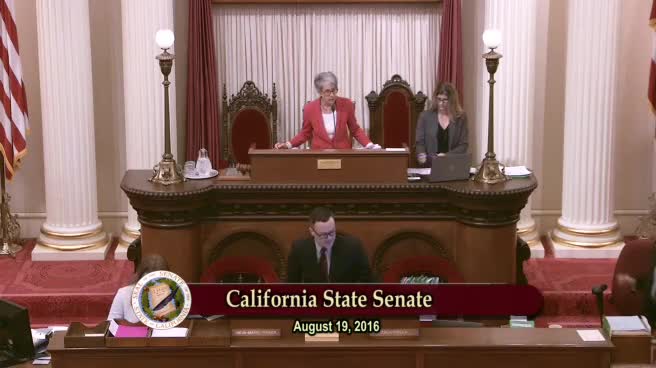

Bill Author

Bill Co-Author(s):