ACR 38: California Task Force on Family Caregiving.
- Session Year: 2015-2016
- House: Assembly
- Latest Version Date: 2015-09-25
This measure would establish the California Task Force on Family Caregiving, to meet, if a nonstate organization agrees to provide administrative support to the task force, to examine issues relative to the challenges faced by family caregivers and opportunities to improve caregiver support, review the current network and the services and supports available to caregivers, and make policy recommendations to the Legislature. The task force would be required to submit an interim report to the Legislature no later than January 1, 2017, and a final report no later than July 1, 2018.
This measure would establish the California Task Force on Family Caregiving, to meet, if a nonstate organization agrees to provide administrative support to the task force, to examine issues relative to the challenges faced by family caregivers and opportunities to improve caregiver support, review the current network and the services and supports available to caregivers, and make policy recommendations to the Legislature. The task force would be required to submit an interim report to the Legislature no later than January 1, 2017, and a final report no later than July 1, 2018.
This measure would establish the California Task Force on Family Caregiving, to meet, if a nonstate organization agrees to provide administrative support to the task force, to examine issues relative to the challenges faced by family caregivers and opportunities to improve caregiver support, review the current network and the services and supports available to caregivers, and make policy recommendations to the Legislature. The task force would be required to submit an interim report to the Legislature no later than January 1, 2017, and a final report no later than July 1, 2018.
This measure would establish the California Task Force on Family Caregiving, to meet monthly meet, if a nonstate organization agrees to provide administrative support to the task force, to examine issues relative to the challenges faced by family caregivers and opportunities to improve caregiver support, review the current network and the services and supports available to caregivers, and make policy recommendations to the Legislature. The task force would be required to submit an interim report to the Legislature no later than January 1, 2017, and a final report no later than July 1, 2018.
This measure would establish the California Task Force on Family Caregiving, to meet monthly to examine issues relative to the challenges faced by family caregivers and opportunities to improve caregiver support, review the current network and the services and supports available to caregivers, and make policy recommendations to the Legislature. The task force would be required to submit an interim report to the Legislature no later than January 1, 2017, and a final report no later than July 1, 2018.
This measure would establish the California Task Force on Family Caregiving, to meet monthly to examine issues relative to the challenges faced by family caregivers and opportunities to improve caregiver support, review the current network and the services and supports available to caregivers, and make policy recommendations to the Legislature. The task force would be required to submit an interim report to the Legislature no later than January 1, 2017, and a final report no later than July 1, 2018.
This measure would establish the California Task Force on Family Caregiving, to meet monthly to examine issues relative to the challenges faced by family caregivers and opportunities to improve caregiver support, review the current network and the services and supports available to caregivers, and make policy recommendations to the Legislature. The task force would be required to submit an interim report to the Legislature no later than January 1, 2017, and a final report no later than July 1, 2018.
This measure would establish the California Task Force on Family Caregiving, to collaborate with a broad range of stakeholders to examine resources available to caregivers and make legislative recommendations regarding the development of an Internet Web site containing resources for caregivers, the enhancement of outreach and education efforts, and the development of a caregiver screening and assessment tool. meet monthly to examine issues relative to the challenges faced by family caregivers and opportunities to improve caregiver support, review the current network and the services and supports available to caregivers, and make policy recommendations to the Legislature. The task force would be required to submit an interim report to the Legislature no later than January 1, 2017, and a final report no later than July 1, 2018.
This measure would establish the California Task Force on Family Caregiving, to collaborate with a broad range of stakeholders to examine resources available to caregivers and make legislative recommendations regarding the development of an Internet Web site containing resources for caregivers, the enhancement of outreach and education efforts, and the development of a caregiver screening and assessment tool. The task force would be required to submit an interim report to the Legislature no later than January 1, 2017, and a final report no later than July 1, 2018.
WHEREAS, A caregiver can be any relative, spouse, partner, friend, or neighbor who has a significant relationship with, and who provides a broad range of assistance to, an older person or an adult with a chronic or disabling condition; and
WHEREAS, Almost three-fourths of older people living in a typical community who receive personal assistance rely exclusively on unpaid caregivers for help; and
WHEREAS, At present, there is no complete inventory of caregiving programs available to Californians performing unpaid caregiving services for an aging or disabled family member, friend, or neighbor; and
WHEREAS, An estimated 5.8 million adults in the state provide care to adult relatives or friends, which equates to an estimated 3.9 billion hours a year at an estimated value of $47 billion each year; and
WHEREAS, The economic value of caregivers unpaid contributions is equivalent to 1.25 times the total Medi-Cal spending, and 4.1 times the funding allotted to Medi-Cal long-term services and supports; and
WHEREAS, If family caregivers were no longer available, the economic cost to Californias health care and long-term services and supports systems would increase astronomically; and
WHEREAS, Family support is a key driver in remaining in ones home and community, but it comes at substantial physical, emotional, and financial cost to the caregivers, their families, and to society; and
WHEREAS, Fifty-nine percent of all family caregivers are employed full or part time and family caregivers typically spend 20 hours a week caring for a family member who needs help with bathing, dressing, and other kinds of personal care, as well as household tasks such as shopping and managing finances; and
WHEREAS, Seventy percent of people with Alzheimers disease or a related disorder live at home and need assistance with activities of daily living; and
WHEREAS, Testimony and data acquired during an Assembly Faces of Aging hearing series in 2014, conducted by the Assembly Committee on Aging and Long-Term Care, documented variations in the way different populations respond to caregiving needs and responsibilities, thus informing policymakers of specific cultural competencies necessary to meet a diverse populations needs, as well as specific untapped resources and strategies that could relieve caregiver stress; and
WHEREAS, It is critical to family caregivers for there to be a state-led effort to compile an inventory of the resources available to family caregivers, determine where access barriers in the current system exist, and consider the cultural and linguistic factors that impact caregivers and care recipients who are from diverse populations; and
WHEREAS, Consistency of access across the counties is critical for caregivers and the vulnerable population they serve, so the best practices in California and in other states should be identified and considered as means to improve caregiving programs; and
WHEREAS, Technology is a critical tool for family caregivers, and the development of an internet Web site or portal that contains information about Californias current resources and supports available in the states family caregivers community will help family caregivers better navigate current support services; and
WHEREAS, To successfully address the surging population of older adults who have significant needs for long-term services and supports, the state must develop methods to both encourage and support families to assist their aging loved ones and develop ways to recruit and retain a qualified, culturally competent, responsive in-home care workforce; now, therefore, be it
Resolved by the Assembly of the State of California, the Senate thereof concurring, That the California Task Force on Family Caregiving is hereby established, which shall consist of 12 members as follows:
(a)The Speaker of the Assembly and the Senate Committee on Rules shall each appoint 6 members of the task force.
(b)These 12 members shall include some who have demonstrated knowledge and expertise in any of the following:
(1)Family caregiving.
(2)Geriatric research.
(3)Alzheimers disease research.
(4)Senior and disability advocacy; and be it further
Resolved, That the task force shall perform the following duties:
(a)Meet to examine issues relative to the challenges faced by family caregivers and opportunities to improve caregiver support, review the current network and the services and supports available to caregivers, and make policy recommendations to the Legislature.
(b)Consult, as necessary, with a broad range of stakeholders, including, but not limited to, family caregivers, community-based and institutional providers, caregiving researchers and academics, caregiver resource centers, and other state entities; and be it further
Resolved, That the task force is encouraged to partner, whenever possible, with the California Commission on Aging in order to link the efforts of the Legislature and the administration; and be it further
Resolved, That state funds shall not be used to support task force activities, but the task force may solicit and accept private funds and in-kind donations from public and private foundations to pay expenses incurred in conducting its business, as long as that support would not pose any conflict of interest. These expenses include, but are not limited to, staff, administrative, meeting, and other expenses incurred by task force members in the performance of their official duties; and be it further
Resolved, That the task force shall convene, once members have been appointed, if a nonstate organization agrees to provide administrative support to the task force; and be it further
Resolved, That the task force shall be subject to the Bagley-Keene Open Meeting Act (Article 9 (commencing with Section 11120) of Chapter 1 of Part 1 of Division 3 of Title 2 of the Government Code); and be it further
Resolved, That the task force shall submit one or more reports to the Legislature and to the Governor, including an interim report no later than January 1, 2017, and a final report no later than July 1, 2018; and be it further
Resolved, That the task force is authorized to act until July 31, 2018; and be it further
Resolved, That members of the task force shall serve without compensation, but shall receive reimbursement for travel and other necessary expenses actually incurred in the performance of their official duties, to the extent that private funds are available; and be it further
Resolved, That members of the task force shall be appointed to serve for the duration of the task force; and be it further
Resolved, That the Chief Clerk of the Assembly transmit copies of this resolution to the author for appropriate distribution.
WHEREAS, A caregiver can be any relative, spouse, partner, friend, or neighbor who has a significant relationship with, and who provides a broad range of assistance to, an older person or an adult with a chronic or disabling condition; and
WHEREAS, Almost three-fourths of older people living in a typical community who receive personal assistance rely exclusively on unpaid caregivers for help; and
WHEREAS, At present, there is no complete inventory of caregiving programs available to Californians performing unpaid caregiving services for an aging or disabled family member, friend, or neighbor; and
WHEREAS, An estimated 5.8 million adults in the state provide care to adult relatives or friends, which equates to an estimated 3.9 billion hours a year at an estimated value of $47 billion each year; and
WHEREAS, The economic value of caregivers unpaid contributions is equivalent to 1.25 times the total Medi-Cal spending, and 4.1 times the funding allotted to Medi-Cal long-term services and supports; and
WHEREAS, If family caregivers were no longer available, the economic cost to Californias health care and long-term services and supports systems would increase astronomically; and
WHEREAS, Family support is a key driver in remaining in ones home and community, but it comes at substantial physical, emotional, and financial cost to the caregivers, their families, and to society; and
WHEREAS, Fifty-nine percent of all family caregivers are employed full or part time and family caregivers typically spend 20 hours a week caring for a family member who needs help with bathing, dressing, and other kinds of personal care, as well as household tasks such as shopping and managing finances; and
WHEREAS, Seventy percent of people with Alzheimers disease or a related disorder live at home and need assistance with activities of daily living; and
WHEREAS, Testimony and data acquired during an Assembly Faces of Aging hearing series in 2014, conducted by the Assembly Committee on Aging and Long-Term Care, documented variations in the way different populations respond to caregiving needs and responsibilities, thus informing policymakers of specific cultural competencies necessary to meet a diverse populations needs, as well as specific untapped resources and strategies that could relieve caregiver stress; and
WHEREAS, It is critical to family caregivers for there to be a state-led effort to compile an inventory of the resources available to family caregivers, determine where access barriers in the current system exist, and consider the cultural and linguistic factors that impact caregivers and care recipients who are from diverse populations; and
WHEREAS, Consistency of access across the counties is critical for caregivers and the vulnerable population they serve, so the best practices in California and in other states should be identified and considered as means to improve caregiving programs; and
WHEREAS, Technology is a critical tool for family caregivers, and the development of an internet Web site or portal that contains information about Californias current resources and supports available in the states family caregivers community will help family caregivers better navigate current support services; and
WHEREAS, To successfully address the surging population of older adults who have significant needs for long-term services and supports, the state must develop methods to both encourage and support families to assist their aging loved ones and develop ways to recruit and retain a qualified, culturally competent, responsive in-home care workforce; now, therefore, be it
Resolved by the Assembly of the State of California, the Senate thereof concurring, That the California Task Force on Family Caregiving is hereby established, which shall consist of 12 members as follows:
(a)The Speaker of the Assembly and the Senate Committee on Rules shall each appoint 6 members of the task force.
(b)These 12 members shall include some who have demonstrated knowledge and expertise in any of the following:
(1)Family caregiving.
(2)Geriatric research.
(3)Alzheimers disease research.
(4)Senior and disability advocacy; and be it further
Resolved, That the task force shall perform the following duties:
(a)Meet to examine issues relative to the challenges faced by family caregivers and opportunities to improve caregiver support, review the current network and the services and supports available to caregivers, and make policy recommendations to the Legislature.
(b)Consult, as necessary, with a broad range of stakeholders, including, but not limited to, family caregivers, community-based and institutional providers, caregiving researchers and academics, caregiver resource centers, and other state entities; and be it further
Resolved, That the task force is encouraged to partner, whenever possible, with the California Commission on Aging in order to link the efforts of the Legislature and the administration; and be it further
Resolved, That state funds shall not be used to support task force activities, but the task force may solicit and accept private funds and in-kind donations from public and private foundations to pay expenses incurred in conducting its business, as long as that support would not pose any conflict of interest. These expenses include, but are not limited to, staff, administrative, meeting, and other expenses incurred by task force members in the performance of their official duties; and be it further
Resolved, That the task force shall convene, once members have been appointed, if a non-state nonstate organization agrees to provide administrative support to the task force; and be it further
Resolved, That the task force shall be subject to the Bagley-Keene Open Meeting Act (Article 9 (commencing with Section 11120) of Chapter 1 of Part 1 of Division 3 of Title 2 of the Government Code); and be it further
Resolved, That the task force shall submit one or more reports to the Legislature and to the Governor, including an interim report no later than January 1, 2017, and a final report no later than July 1, 2018; and be it further
Resolved, That the task force is authorized to act until July 31, 2018; and be it further
Resolved, That members of the task force shall serve without compensation, but shall receive reimbursement for travel and other necessary expenses actually incurred in the performance of their official duties, to the extent that private funds are available; and be it further
Resolved, That members of the task force shall be appointed to serve for the duration of the task force; and be it further
Resolved, That the Chief Clerk of the Assembly transmit copies of this resolution to the author for appropriate distribution.
WHEREAS, A caregiver can be any relative, spouse, partner, friend, or neighbor who has a significant relationship with, and who provides a broad range of assistance to, an older person or an adult with a chronic or disabling condition; and
WHEREAS, Almost three-fourths of older people living in a typical community who receive personal assistance rely exclusively on unpaid caregivers for help; and
WHEREAS, At present, there is no complete inventory of caregiving programs available to Californians performing unpaid caregiving services for an aging or disabled family member, friend, or neighbor; and
WHEREAS, An estimated 5.8 million adults in the state provide care to adult relatives or friends, which equates to an estimated 3.9 billion hours a year at an estimated value of $47 billion each year; and
WHEREAS, The economic value of caregivers unpaid contributions is equivalent to 1.25 times the total Medi-Cal spending, and 4.1 times the funding allotted to Medi-Cal long-term services and supports; and
WHEREAS, If family caregivers were no longer available, the economic cost to Californias health care and long-term services and supports systems would increase astronomically; and
WHEREAS, Family support is a key driver in remaining in ones home and community, but it comes at substantial physical, emotional, and financial cost to the caregivers, their families, and to society; and
WHEREAS, Fifty-nine percent of all family caregivers are employed full or part time and family caregivers typically spend 20 hours a week caring for a family member who needs help with bathing, dressing, and other kinds of personal care, as well as household tasks such as shopping and managing finances; and
WHEREAS, Seventy percent of people with Alzheimers disease or a related disorder live at home and need assistance with activities of daily living; and
WHEREAS, Testimony and data acquired during an Assembly Faces of Aging hearing series in 2014, conducted by the Assembly Committee on Aging and Long-Term Care, documented variations in the way different populations respond to caregiving needs and responsibilities, thus informing policymakers of specific cultural competencies necessary to meet a diverse populations needs, as well as specific untapped resources and strategies that could relieve caregiver stress; and
WHEREAS, It is critical to family caregivers for there to be a state-led effort to compile an inventory of the resources available to family caregivers, determine where access barriers in the current system exist, and consider the cultural and linguistic factors that impact caregivers and care recipients who are from diverse populations; and
WHEREAS, Consistency of access across the counties is critical for caregivers and the vulnerable population they serve, so the best practices in California and in other states should be identified and considered as means to improve caregiving programs; and
WHEREAS, Technology is a critical tool for family caregivers, and the development of an internet Web site or portal that contains information about Californias current resources and supports available in the states family caregivers community will help family caregivers better navigate current support services; and
WHEREAS, To successfully address the surging population of older adults who have significant needs for long-term services and supports, the state must develop methods to both encourage and support families to assist their aging loved ones and develop ways to recruit and retain a qualified, culturally competent, responsive in-home care workforce; now, therefore, be it
Resolved by the Assembly of the State of California, the Senate thereof concurring, That the California Task Force on Family Caregiving is hereby established, which shall consist of 20 12 members as follows:
(a)The Speaker of the Assembly and the Senate Committee on Rules shall each appoint 10 6 members of the task force.
(b)These 20 12 members shall include some who have demonstrated knowledge and expertise in any of the following:
(1)Family caregiving.
(2)Geriatric research.
(3)Alzheimers disease research.
(4)Senior and disability advocacy; and be it further
Resolved, That the task force shall perform the following duties:
(a)Meet monthly to examine issues relative to the challenges faced by family caregivers and opportunities to improve caregiver support, review the current network and the services and supports available to caregivers, and make policy recommendations to the Legislature.
(b)Consult, as necessary, with a broad range of stakeholders, including, but not limited to, family caregivers, community-based and institutional providers, caregiving researchers and academics, caregiver resource centers, and other state entities; and be it further
Resolved, That the task force is encouraged to partner, whenever possible, with the California Commission on Aging in order to link the efforts of the Legislature and the administration; and be it further
Resolved, That the task force shall convene, once members have been appointed, if a non-state organization agrees to provide administrative support to the task force; and be it further
Resolved, That the task force shall be subject to the Bagley-Keene Open Meeting Act (Article 9 (commencing with Section 11120) of Chapter 1 of Part 1 of Division 3 of Title 2 of the Government Code); and be it further
Resolved, That the task force shall submit one or more reports to the Legislature and to the Governor, including an interim report no later than January 1, 2017, and a final report no later than July 1, 2018; and be it further
Resolved, That the task force is authorized to act until July 31, 2018; and be it further
Resolved, That members of the task force shall be appointed to serve for the duration of the task force; and be it further
Resolved, That the Chief Clerk of the Assembly transmit copies of this resolution to the author for appropriate distribution.
WHEREAS, A caregiver can be any relative, spouse, partner, friend, or neighbor who has a significant relationship with, and who provides a broad range of assistance to, an older person or an adult with a chronic or disabling condition; and
WHEREAS, Almost three-fourths of older people living in a typical community who receive personal assistance rely exclusively on unpaid caregivers for help; and
WHEREAS, At present, there is no complete inventory of caregiving programs available to Californians performing unpaid caregiving services for an aging or disabled family member, friend, or neighbor; and
WHEREAS, An estimated 5.8 million adults in the state provide care to adult relatives or friends, which equates to an estimated 3.9 billion hours a year at an estimated value of $47 billion each year; and
WHEREAS, The economic value of caregivers unpaid contributions is equivalent to 1.25 times the total Medi-Cal spending, and 4.1 times the funding allotted to Medi-Cal long-term services and supports; and
WHEREAS, If family caregivers were no longer available, the economic cost to Californias health care and long-term services and supports systems would increase astronomically; and
WHEREAS, Family support is a key driver in remaining in ones home and community, but it comes at substantial physical, emotional, and financial cost to the caregivers, their families, and to society; and
WHEREAS, Fifty-nine percent of all family caregivers are employed full or part time and family caregivers typically spend 20 hours a week caring for a family member who needs help with bathing, dressing, and other kinds of personal care, as well as household tasks such as shopping and managing finances; and
WHEREAS, Seventy percent of people with Alzheimers disease or a related disorder live at home and need assistance with activities of daily living; and
WHEREAS, Testimony and data acquired during an Assembly Faces of Aging hearing series in 2014, conducted by the Assembly Committee on Aging and Long-Term Care, documented variations in the way different populations respond to caregiving needs and responsibilities, thus informing policymakers of specific cultural competencies necessary to meet a diverse populations needs, as well as specific untapped resources and strategies that could relieve caregiver stress; and
WHEREAS, It is critical to family caregivers for there to be a state-led effort to compile an inventory of the resources available to family caregivers, determine where access barriers in the current system exist, and consider the cultural and linguistic factors that impact caregivers and care recipients who are from diverse populations; and
WHEREAS, Consistency of access across the counties is critical for caregivers and the vulnerable population they serve, so the best practices in California and in other states should be identified and considered as means to improve caregiving programs; and
WHEREAS, Technology is a critical tool for family caregivers, and the development of an internet Web site or portal that contains information about Californias current resources and supports available in the states family caregivers community will help family caregivers better navigate current support services; and
WHEREAS, To successfully address the surging population of older adults who have significant needs for long-term services and supports, the state must develop methods to both encourage and support families to assist their aging loved ones and develop ways to recruit and retain a qualified, culturally competent, responsive in-home care workforce; now, therefore, be it
Resolved by the Assembly of the State of California, the Senate thereof concurring, That the California Task Force on Family Caregiving is hereby established, which shall consist of 20 members as follows:
(a)The Speaker of the Assembly and the Senate Committee on Rules shall each appoint 10 members of the task force.
(b)These 20 members shall include some who have demonstrated knowledge and expertise in any of the following:
(1)Family caregiving.
(2)Geriatric research.
(3)Alzheimers disease research.
(4)Senior and disability advocacy; and be it further
Resolved, That the task force shall perform the following duties:
(a)Meet monthly to examine issues relative to the challenges faced by family caregivers and opportunities to improve caregiver support, review the current network and the services and supports available to caregivers, and make policy recommendations to the Legislature.
(b)Consult, as necessary, with a broad range of stakeholders, including, but not limited to, family caregivers, community-based and institutional providers, caregiving researchers and academics, caregiver resource centers, and other state entities; and be it further
Resolved, That the task force is encouraged to partner, whenever possible, with the California Commission on Aging in order to link the efforts of the Legislature and the administration; and be it further
Resolved, That state funds shall not be used to support task force activities, but the task force may solicit and accept private funds and in-kind donations from public and private foundations to pay expenses incurred in conducting its business. business, as long as that support would not pose any conflict of interest. These expenses include, but are not limited to, staff, administrative, meeting, and other expenses incurred by task force members in the performance of their official duties; and be it further
Resolved, That the task force shall be subject to the Bagley-Keene Open Meeting Act (Article 9 (commencing with Section 11120) of Chapter 1 of Part 1 of Division 3 of Title 2 of the Government Code); and be it further
Resolved, That the task force shall submit one or more reports to the Legislature and to the Governor, including an interim report no later than January 1, 2017, and a final report no later than July 1, 2018; and be it further
Resolved, That the task force is authorized to act until July 31, 2018; and be it further
Resolved, That members of the task force shall serve without compensation, but shall receive reimbursement for travel and other necessary expenses actually incurred in the performance of their official duties; duties, to the extent that private funds are available; and be it further
Resolved, That members of the task force shall be appointed to serve for the duration of the task force; and be it further
Resolved, That the Chief Clerk of the Assembly transmit copies of this resolution to the author for appropriate distribution.
WHEREAS, A caregiver can be any relative, spouse, partner, friend, or neighbor who has a significant relationship with, and who provides a broad range of assistance to, an older person or an adult with a chronic or disabling condition; and
WHEREAS, Almost three-fourths of older people living in a typical community who receive personal assistance rely exclusively on unpaid caregivers for help; and
WHEREAS, At present, there is no complete inventory of caregiving programs available to Californians performing unpaid caregiving services for an aging or disabled family member, friend, or neighbor; and
WHEREAS, An estimated 5.8 million adults in the state provide care to adult relatives or friends, which equates to an estimated 3.9 billion hours a year at an estimated value of $47 billion each year; and
WHEREAS, The economic value of caregivers unpaid contributions is equivalent to 1.25 times the total Medi-Cal spending, and 4.1 times the funding allotted to Medi-Cal long-term services and supports; and
WHEREAS, If family caregivers were no longer available, the economic cost to Californias health care and long-term services and supports systems would increase astronomically; and
WHEREAS, Family support is a key driver in remaining in ones home and community, but it comes at substantial physical, emotional, and financial cost to the caregivers, their families, and to society; and
WHEREAS, Fifty-nine percent of all family caregivers are employed full or part time and family caregivers typically spend 20 hours a week caring for a family member who needs help with bathing, dressing, and other kinds of personal care, as well as household tasks such as shopping and managing finances; and
WHEREAS, Seventy percent of people with Alzheimers disease or a related disorder live at home and need assistance with activities of daily living; and
WHEREAS, Testimony and data acquired during an Assembly Faces of Aging hearing series in 2014, conducted by the Assembly Committee on Aging and Long-Term Care, documented variations in the way different populations respond to caregiving needs and responsibilities, thus informing policymakers of specific cultural competencies necessary to meet a diverse populations needs, as well as specific untapped resources and strategies that could relieve caregiver stress; and
WHEREAS, It is critical to family caregivers for there to be a state-led effort to compile an inventory of the resources available to family caregivers, determine where access barriers in the current system exist, and consider the cultural and linguistic factors that impact caregivers and care recipients who are from diverse populations; and
WHEREAS, Consistency of access across the counties is critical for caregivers and the vulnerable population they serve, so the best practices in California and in other states should be identified and considered as means to improve caregiving programs; and
WHEREAS, Technology is a critical tool for family caregivers, and the development of an internet Web site or portal that contains information about Californias current resources and supports available in the states family caregivers community will help family caregivers better navigate current support services; and
WHEREAS, To successfully address the surging population of older adults who have significant needs for long-term services and supports, the state must develop methods to both encourage and support families to assist their aging loved ones and develop ways to recruit and retain a qualified, culturally competent, responsive in-home care workforce; now, therefore, be it
Resolved by the Assembly of the State of California, the Senate thereof concurring, That the California Task Force on Family Caregiving is hereby established, which shall consist of 20 members as follows:
(a)The Speaker of the Assembly and the Senate Committee on Rules shall each appoint 10 members of the task force.
(b)These 20 members shall include some who have demonstrated knowledge and expertise in any of the following:
(1)Family caregiving.
(2)Geriatric research.
(3)Alzheimers disease research.
(4)Senior and disability advocacy; and be it further
Resolved, That the task force shall perform the following duties:
(a)Meet monthly to examine issues relative to the challenges faced by family caregivers and opportunities to improve caregiver support, review the current network and the services and supports available to caregivers, and make policy recommendations to the Legislature.
(b)Consult, as necessary, with a broad range of stakeholders, including, but not limited to, family caregivers, community-based and institutional providers, caregiving researchers and academics, caregiver resource centers, and other state entities; and be it further
Resolved, That the task force is encouraged to partner, whenever possible, with the California Commission on Aging in order to link the efforts of the Legislature and the administration; and be it further
Resolved, That state funds shall not be used to support task force activities, but the task force may solicit and accept private funds and in-kind donations from public and private foundations to pay expenses incurred in conducting its business. These expenses include, but are not limited to, staff, administrative, meeting, and other expenses incurred by task force members in the performance of their official duties; and be it further
Resolved, That the task force shall be subject to the Bagley-Keene Open Meeting Act (Article 9 (commencing with Section 11120) of Chapter 1 of Part 1 of Division 3 of Title 2 of the Government Code); and be it further
Resolved, That the task force shall submit one or more reports to the Legislature and to the Governor, including an interim report no later than January 1, 2017, and a final report no later than July 1, 2018; and be it further
Resolved, That the task force is authorized to act until July 31, 2018; and be it further
Resolved, That members of the task force shall serve without compensation, but shall receive reimbursement for travel and other necessary expenses actually incurred in the performance of their official duties; and be it further
Resolved, That members of the task force shall be appointed to serve for the duration of the task force; and be it further
Resolved, That the Chief Clerk of the Assembly transmit copies of this resolution to the author for appropriate distribution.
WHEREAS, A caregiver can be any relative, spouse, partner, friend, or neighbor who has a significant relationship with, and who provides a broad range of assistance to, an older person or an adult with a chronic or disabling condition; and
WHEREAS, Almost three-fourths of older people living in a typical community who receive personal assistance rely exclusively on unpaid caregivers for help; and
WHEREAS, At present, there is no complete inventory of caregiving programs available to Californians performing unpaid caregiving services for an aging or disabled family member, friend, or neighbor; and
WHEREAS, An estimated 5.8 million adults in the state provide care to adult relatives or friends, which equates to an estimated 3.9 billion hours a year at an estimated value of $47 billion each year; and
WHEREAS, The economic value of caregivers unpaid contributions is equivalent to 1.25 times the total Medi-Cal spending, and 4.1 times the funding allotted to Medi-Cal long-term services and supports; and
WHEREAS, If family caregivers were no longer available, the economic cost to Californias health care and long-term services and supports systems would increase astronomically; and
WHEREAS, Family support is a key driver in remaining in ones home and community, but it comes at substantial physical, emotional, and financial cost to the caregivers, their families, and to society; and
WHEREAS, Fifty-nine percent of all family caregivers are employed full or part time and family caregivers typically spend 20 hours a week caring for a family member who needs help with bathing, dressing, and other kinds of personal care, as well as household tasks such as shopping and managing finances; and
WHEREAS, Seventy percent of people with Alzheimers disease or a related disorder live at home and need assistance with activities of daily living; and
WHEREAS, Testimony and data acquired during an Assembly Faces of Aging hearing series in 2014, conducted by the Assembly Committee on Aging and Long-Term Care, documented variations in the way different populations respond to caregiving needs and responsibilities, thus informing policymakers of specific cultural competencies necessary to meet a diverse populations needs, as well as specific untapped resources and strategies that could relieve caregiver stress; and
WHEREAS, It is critical to family caregivers for there to be a state-led effort to compile an inventory of the resources available to family caregivers, determine where access barriers in the current system exist, and consider the cultural and linguistic factors that impact caregivers and care recipients who are from diverse populations; and
WHEREAS, Consistency of access across the counties is critical for caregivers and the vulnerable population they serve, so the best practices in California and in other states should be identified and considered as means to improve caregiving programs; and
WHEREAS, Technology is a critical tool for family caregivers, and the development of an internet Web site or portal that contains information about Californias current resources and supports available in the states family caregivers community will help family caregivers better navigate current support services; and
WHEREAS, To successfully address the surging population of older adults who have significant needs for long-term services and supports, the state must develop methods to both encourage and support families to assist their aging loved ones and develop ways to recruit and retain a qualified, culturally competent, responsive in-home care workforce; now, therefore, be it
Resolved by the Assembly of the State of California, the Senate thereof concurring, That the California Task Force on Family Caregiving is hereby established, which shall consist of 20 members as follows:
(a)The Speaker of the Assembly and the Senate Committee on Rules shall each appoint 10 members of the task force.
(b)These 20 members shall include some who have demonstrated knowledge and expertise in any of the following:
(1)Family caregiving.
(2)Geriatric research.
(3)Alzheimers disease research.
(4)Senior advocacy; and be it further
Resolved, That the task force shall perform the following duties:
(a)Meet monthly to examine issues relative to the challenges faced by family caregivers and opportunities to improve caregiver support, review the current network and the services and supports available to caregivers, and make policy recommendations to the Legislature.
(b)Consult, as necessary, with a broad range of stakeholders, including, but not limited to, family caregivers, community-based and institutional providers, caregiving researchers and academics, caregiver resource centers, and other state entities; and be it further
Resolved, That the task force is encouraged to partner, whenever possible, with the California Commission on Aging in order to link the efforts of the Legislature and the administration; and be it further
Resolved, That state funds shall not be used to support task force activities, but the task force may solicit and accept private funds and in-kind donations from public and private foundations to pay expenses incurred in conducting its business. These expenses include, but are not limited to, staff, administrative, meeting, and other expenses incurred by task force members in the performance of their official duties; and be it further
Resolved, That the task force shall be subject to the Bagley-Keene Open Meeting Act (Article 9 (commencing with Section 11120) of Chapter 1 of Part 1 of Division 3 of Title 2 of the Government Code); and be it further
Resolved, That the task force shall submit one or more reports to the Legislature and to the Governor, including an interim report no later than January 1, 2017, and a final report no later than July 1, 2018; and be it further
Resolved, That the task force is authorized to act until July 31, 2018; and be it further
Resolved, That members of the task force shall serve without compensation, but shall receive reimbursement for travel and other necessary expenses actually incurred in the performance of their official duties; and be it further
Resolved, That members of the task force shall be appointed to serve for the duration of the task force; and be it further
Resolved, That the Chief Clerk of the Assembly transmit copies of this resolution to the author for appropriate distribution.
WHEREAS, A caregiver can be any relative, spouse, partner, friend, or neighbor who has a significant relationship with, and who provides a broad range of assistance to, an older person or an adult with a chronic or disabling condition; and
WHEREAS, Almost three-fourths of older people living in a typical community who receive personal assistance rely exclusively on unpaid caregivers for help; and
WHEREAS, At present, there is no complete inventory of caregiving programs available to Californians performing unpaid caregiving services for an aging or disabled family member, friend, or neighbor; and
WHEREAS, An estimated 5.8 million adults in the state provide care to adult relatives or friends, which equates to an estimated 3.9 billion hours a year at an estimated value of $47 billion each year; and
WHEREAS, The economic value of caregivers unpaid contributions is equivalent to 1.25 times the total Medi-Cal spending, and 4.1 times the funding allotted to Medi-Cal long-term services and supports; and
WHEREAS, If family caregivers were no longer available, the economic cost to Californias health care and long-term services and supports systems would increase astronomically; and
WHEREAS, Family support is a key driver in remaining in ones home and community, but it comes at substantial physical, emotional, and financial cost to the caregivers, their families, and to society; and
WHEREAS, Fifty-nine percent of all family caregivers are employed full or part time and family caregivers typically spend 20 hours a week caring for a family member who needs help with bathing, dressing, and other kinds of personal care, as well as household tasks such as shopping and managing finances; and
WHEREAS, Seventy percent of people with Alzheimers disease or a related disorder live at home and need assistance with activities of daily living; and
WHEREAS, Testimony and data acquired during an Assembly Faces of Aging hearing series in 2014, conducted by the Assembly Committee on Aging and Long-Term Care, documented variations in the way different populations respond to caregiving needs and responsibilities, thus informing policymakers of specific cultural competencies necessary to meet a diverse populations needs, as well as specific untapped resources and strategies that could relieve caregiver stress; and
WHEREAS, It is critical to family caregivers for there to be a state-led effort to compile an inventory of the resources available to family caregivers, determine where access barriers in the current system exist, and consider the cultural and linguistic factors that impact caregivers and care recipients who are from diverse populations; and
WHEREAS, Consistency of access across the counties is critical for caregivers and the vulnerable population they serve, so the best practices in California and in other states should be identified and considered as means to improve caregiving programs; and
WHEREAS, Technology is a critical tool for family caregivers, and the development of an internet Web site or portal that contains information about Californias current resources and supports available in the states family caregivers community will help family caregivers better navigate current support services; and
WHEREAS, To successfully address the surging population of older adults who have significant needs for long-term services and supports, the state must develop methods to both encourage and support families to assist their aging loved ones and develop ways to recruit and retain a qualified, culturally competent, responsive in-home care workforce; now, therefore, be it
Resolved by the Assembly of the State of California, the Senate thereof concurring, That the California Task Force on Family Caregiving is hereby established to examine and investigate issues relative to the challenges faced by family caregivers and opportunities to improve caregiver support, and to make specific policy recommendations along with legislative strategies to advance them; and be it further established, which shall consist of 20 members as follows:
(a)The Speaker of the Assembly and the Senate Committee on Rules shall each appoint 10 members of the task force.
(b)These 20 members shall include some who have demonstrated knowledge and expertise in any of the following:
(1)Family caregiving.
(2)Geriatric research.
(3)Alzheimers disease research.
(4)Senior advocacy; and be it further
Resolved, That the task force shall perform the following duties:
(a)Meet monthly to examine issues relative to the challenges faced by family caregivers and opportunities to improve caregiver support, review the current network and the services and supports available to caregivers, and make policy recommendations to the Legislature.
(b)Consult, as necessary, with a broad range of stakeholders, including, but not limited to, family caregivers, community-based and institutional providers, caregiving researchers and academics, caregiver resource centers, and other state entities; and be it further
Resolved, That the task force is encouraged to partner, whenever possible, with the California Commission on Aging in order to link the efforts of the Legislature and the administration; and be it further
Resolved, That state funds shall not be used to support task force activities, but the task force may solicit and accept private funds and in-kind donations from public and private foundations to pay expenses incurred in conducting its business. These expenses include, but are not limited to, staff, administrative, meeting, and other expenses incurred by task force members in the performance of their official duties; and be it further
Resolved, That the task force shall be subject to the Bagley-Keene Open Meeting Act (Article 9 (commencing with Section 11120) of Chapter 1 of Part 1 of Division 3 of Title 2 of the Government Code); and be it further
Resolved, That the task force shall submit one or more reports to the Legislature and to the Governor, including an interim report no later than January 1, 2017, and a final report no later than July 1, 2018; and be it further
Resolved, That the task force is authorized to act until July 31, 2018; and be it further
Resolved, That members of the task force shall serve without compensation, but shall receive reimbursement for travel and other necessary expenses actually incurred in the performance of their official duties; and be it further
Resolved, That members of the task force shall be appointed to serve for the duration of the task force; and be it further
Resolved, That the Chief Clerk of the Assembly transmit copies of this resolution to the author for appropriate distribution.
WHEREAS, A caregiver can be any relative, spouse, partner, friend, or neighbor who has a significant relationship with, and who provides a broad range of assistance to, an older person or an adult with a chronic or disabling condition; and
WHEREAS, Almost three-fourths of older people living in a typical community who receive personal assistance rely exclusively on unpaid caregivers for help; and
WHEREAS, At present, there is no complete inventory of caregiving programs available to Californians performing unpaid caregiving services for an aging or disabled family member, friend, or neighbor; and
WHEREAS, An estimated 5.8 million adults in the state provide care to adult relatives or friends, which equates to an estimated 3.9 billion hours a year at an estimated value of $47 billion each year; and
WHEREAS, The economic value of caregivers unpaid contributions is equivalent to 1.25 times the total Medi-Cal spending, and 4.1 times the funding allotted to Medi-Cal long-term services and supports; and
WHEREAS, If family caregivers were no longer available, the economic cost to Californias health care and long-term services and supports systems would increase astronomically; and
WHEREAS, Family support is a key driver in remaining in ones home and community, but it comes at substantial physical, emotional, and financial cost to the caregivers, their families, and to society; and
WHEREAS, Fifty-nine percent of all family caregivers are employed full or part time and family caregivers typically spend 20 hours a week caring for a family member who needs help with bathing, dressing, and other kinds of personal care, as well as household tasks such as shopping and managing finances; and
WHEREAS, Seventy percent of people with Alzheimers disease or a related disorder live at home and need assistance with activities of daily living; and
WHEREAS, Testimony and data acquired during an Assembly Faces of Aging hearing series in 2014, conducted by the Assembly Committee on Aging and Long-Term Care, documented variations in the way different populations respond to caregiving needs and responsibilities, thus informing policymakers of specific cultural competencies necessary to meet a diverse populations needs, as well as specific untapped resources and strategies that could relieve caregiver stress; and
WHEREAS, To successfully address the surging population of older adults who have significant needs for long-term services and supports, the state must develop methods to both encourage and support families to assist their aging loved ones and develop ways to recruit and retain a qualified, culturally competent, responsive in-home care workforce; now, therefore, be it
Resolved by the Assembly of the State of California, the Senate thereof concurring, That the California Task Force on Family Caregiving is hereby established to examine and investigate issues relative to the challenges faced by family caregivers and opportunities to improve caregiver support, and to make specific policy recommendations along with legislative strategies to advance them; and be it further
Resolved, That the task force shall do all of the following:
(1)Review the current network and how the system, which provides information about community-based services and programs to support family caregivers of adults with chronic or disabling conditions, is set up and to consider improving how family caregivers access information about the services and supports available to them so that they can continue in their caregiving role without being overburdened.
(2)Consider the recommendations of other state plans, including, but not limited to, the Olmstead Plan, the Strategic Plan for an Aging California Population, the State Plan for Alzheimers Disease, and the State Plan on Aging.
(3)Determine gaps in services to family caregivers and identify barriers to participation in current programs.
(4)Consult with a broad range of stakeholders, including, but not limited to, people diagnosed with Alzheimers disease, adults with disabling or chronic conditions, family caregivers, community-based and institutional providers, caregiving researchers and academicians, formal caregivers, caregiver resource centers, the California Commission on Aging, and other state entities.
(5)Solicit testimony on the needs of family caregivers, including the designation of caregivers during care transitions, caregiver training, assessment of caregiver needs, respite services, medical leave policies, delegation of tasks to nonmedical aides, and other policies.
(6)Assess information referral and resource sharing systems used by family caregivers by doing all of the following:
(A)Compiling an inventory of the resources available to family caregivers.
(B)Determining access barriers in the current system.
(C)Considering the cultural and linguistic factors that impact caregivers and care recipients who are from diverse populations.
(D)Comparing consistency of access across the counties.
(7)Identify best practices in California and in other states and explore expanding those best practices in caregiving programs to adult populations that are not currently receiving these services because they do not qualify based on income, diagnosis, or disability.
(8)Make specific legislative recommendations that address, at a minimum, each of the following:
(A)The development of an Internet Web site or portal that contains a list of current resources and supports available in a family caregivers community, including the cultural competencies available, and the contact information of a person or organization that can help a family caregiver navigate these support services.
(B)The enhancement of outreach and education efforts by area agencies on aging and family resource centers.
(C)The development of a caregiver screening and assessment tool that will help identify which services and supports a family caregiver needs, including assessing caregivers of Medi-Cal recipients and beneficiaries.
(9)Prepare and provide to the Legislature a report of its findings and recommendations on or before July 1, 2018; and be it further
Resolved, That the task force shall consist of no more than 20 members, one of whom shall be appointed by the President pro Tempore of the Senate and one of whom shall be appointed by the Speaker of the Assembly; and be it further
Resolved, That the two members selected by the President pro Tempore of the Senate and the Speaker of the Assembly shall appoint the remaining members of the task force; and be it further
Resolved, That the task force shall be under the direction of a chair, selected from among its members and appointed by the members of the task force; and be it further
Resolved, That the task force shall submit one or more reports to the Legislature and to the Governor, including an interim report no later than January 1, 2017, and a final report no later than July 1, 2018; and be it further
Resolved, That the task force is authorized to act until July 31, 2018; and be it further
Resolved, That the task force shall seek funding, technical assistance, and other resources from foundations and other organizations as long as that support would not pose any conflict of interest and would be deemed as consistent with the goals and objectives of the task force; and be it further
Resolved, That the task force may seek staffing support from the University of Southern California Leonard Davis School of Gerontology upon receipt of private foundation funding; and be it further
Resolved, That members of the task force shall serve without compensation, but shall receive reimbursement for travel and other necessary expenses actually incurred in the performance of their official duties; and be it further
Resolved, That the task force shall meet every other month; and be it further
Resolved, That members of the task force shall be appointed to serve for the duration of the task force; and be it further
Resolved, That the Chief Clerk of the Assembly transmit copies of this resolution to the author for appropriate distribution.
|
Date
|
Status
|
|---|---|
| Jun 29, 2015 | In committee: Referred to APPR. suspense file. |
| Sep 25, 2015 | Enrolled and filed with the Secretary of State at 1:30 p.m. |
| Sep 25, 2015 | Chaptered by Secretary of State - Res. Chapter 200, Statutes of 2015. |
| Sep 9, 2015 | Senate amendments concurred in. To Engrossing and Enrolling. (Ayes 79. Noes 0.). |
| Sep 9, 2015 | Senate amendments concurred in. To Engrossing and Enrolling. (Ayes 79. Noes 0. Page 3025.). |
| Sep 9, 2015 | Senate amendments concurred in. To Engrossing and Enrolling. |
| Sep 8, 2015 | In Assembly. Concurrence in Senate amendments pending. |
| Sep 8, 2015 | Adopted and to Assembly. (Ayes 40. Noes 0. Page 2590.) |
| Sep 8, 2015 | Adopted and to Assembly. |
| Sep 3, 2015 | Read second time. Ordered to third reading. |
| Sep 2, 2015 | Read third time and amended. Ordered to second reading. |
| Sep 1, 2015 | Read second time and amended. Ordered to third reading. |
| Aug 31, 2015 | From committee: Amend, and be adopted as amended. (Ayes 7. Noes 0.) (August 27). |
| Feb 27, 2015 | Introduced. To print. |
| Jun 15, 2015 | Read second time and amended. Re-referred to Com. on APPR. |
| Jun 11, 2015 | From committee: Amend, and be adopted as amended, and re-refer to Com. on APPR. (Ayes 5. Noes 0.) (June 9). |
| Jun 2, 2015 | From committee chair, with author's amendments: Amend, and re-refer to committee. Amended and re-referred to Com. on HUMAN S. |
| May 21, 2015 | Re-referred to Coms. on HUMAN S. and APPR. |
| May 11, 2015 | In Senate. To Com. on RLS. |
| May 7, 2015 | Amended, adopted, and to Senate. (Page 1344.) |
| May 7, 2015 | Amended, adopted, and to Senate. |
| May 6, 2015 | From committee: Be adopted. Ordered to Third Reading. (Ayes 7. Noes 0.) (May 5). |
| Apr 28, 2015 | Re-referred to Com. on AGING & L.T.C. |
| Apr 27, 2015 | Referred to Com. on AGING & L.T.C. |
| Apr 27, 2015 | From committee chair, with author's amendments: Amend, and re-refer to Com. on AGING & L.T.C. Amended. |
| Mar 1, 2015 | From printer. |
|
Date
|
Description
|
Location
|
Votes
|
|
|---|---|---|---|---|
| Sep 9, 2015 | ACR 38 BROWN Concurrence in Senate Amendments | Assembly Floor |
Passed |
|
| Sep 8, 2015 | Assembly 3rd Reading ACR38 Brown By Liu | Senate Floor |
Passed |
|
| Aug 27, 2015 | Be adopted as amended | Senate Standing Committee on Appropriations |
Passed |
|
| Jun 29, 2015 | Placed on suspense file | Senate Standing Committee on Appropriations |
Passed |
|
| Jun 9, 2015 | Be adopted as amended, but first amend, and re-refer to the Committee on [Appropriations] | Senate Standing Committee on Human Services |
Passed |
|
| May 5, 2015 | Be adopted. To third reading. | Assembly Standing Committee on Aging and Long-Term Care |
Passed |
This list shows positions taken on this bill by organizations on the date displayed, which is linked to the original source.
Positions by individuals are not included.
|
Organization
|
Position
|
Date
|
|---|---|---|
| AARP | ** Support | Sep 9, 2015 |
| Alzheimer's Association | ** Support | Sep 9, 2015 |
| Association of California Caregiver Resource Centers | ** Support | Sep 9, 2015 |
| California Association For Adult Day Services | ** Support | Sep 9, 2015 |
| California Association Of Area Agencies On Aging | ** Support | Sep 9, 2015 |
| California Commission on Aging | ** Support | Sep 9, 2015 |
| California Senior Legislature | ** Support | Sep 9, 2015 |
| California Senior Legislature - Co-Sponsor | ** Support | May 5, 2015 |
| Congress of California Seniors | * Support | May 5, 2015 |
| Del Oro Caregiver Resource Center | * Support | May 5, 2015 |
| Family Caregiver Alliance | ** Support | Sep 9, 2015 |
| National Association Of Social Workers, California Chapter | ** Support | Sep 9, 2015 |
| On Lok Senior Health Services | ** Support | Sep 9, 2015 |
| United Domestic Workers Of America | ** Support | Sep 9, 2015 |
ACR 38
Page 2
CONCURRENCE IN SENATE AMENDMENTS
ACR 38
(Brown)
As Amended September 2, 2015
Majority vote
ASSEMBLY: |
|
(May 7, 2015) |
SENATE: |
40-0 |
(September 8, 2015) |
(adopted by unanimous consent)
Original Committee Reference: AGING & L.T.C.
SUMMARY: Establishes by resolution, the California Task Force on Family Caregiving to meet and report to the Legislature findings by January 1 of 2018, on challenges faced by family caregivers, opportunities to improve caregiver support, and to review the current network and the services and supports available to caregivers. Specifically, this resolution:
Identifies caregivers as people who provide a wide range of assistance to those with chronic disabling needs;
Declares that three-quarters of older people living in a community setting rely solely upon unpaid caregiving;
Describes the lack of resources for the state's 5.8 million caregivers who provide 3.9 billion hours of care estimated to be worth about $47 billion;
Describes the value of family support as a key-driver in permitting an individual to choose a home setting, though the physical, emotional and financial costs can be substantial;
Describes strategies undertaken by families of diverse ethnic or cultural origin may provide clues which could relieve caregiver stress, broadly;
Describes the critical need for state leadership to compile inventories of resources, identify barriers, and coordinate consistent access using the most efficient and up-to-date technologies; and,
Calls for a 12-member task force of experts to meet without compensation, under open-meeting standards, consult with stake-holders, partner with the California Commission on Aging, and report to the Legislature and the Governor by January 1, 2017, and January 1, 2018.
The Senate amendments:
Remove the resolution specifying monthly meetings;
Specifically acknowledges disability rights community interests;
Reduces the number of participants from 20 to 12; six appointed by the Senate Rules Committee and six appointed by the Speaker of the Assembly; and,
Conditions convening of the council upon appointment of the members, and the agreement to administer the council by a "non-state" organization.
Background: After the veto of AB 1744 (Brown) of 2014, Assembly Member Brown, a caregiver herself, resolved to see the establishment of a broadly recognized essential strategy to advance and secure adequate support and recognition of caregivers within the state's developing patch-work of services and supports. With 1,000 people turning 65 per day, (on average) for the next 13 years, an expanding population of older people and the corresponding increase in disability within our communities, demands a strategic plan to support the unpaid caregivers who care for them. Citing families as the major provider of long-term care, the author points to research that shows that caregiving exacts a heavy emotional, physical and financial toll. Many caregivers who work and provide care experience conflicts between their responsibilities. Twenty-two percent of caregivers are assisting two individuals, while 8% are caring for three or more. Almost half of all caregivers are over age 50, making them more vulnerable to a decline in their own health, and one-third describe their own health as fair to poor.
Women make up the majority of the unpaid caregiver workforce, often interrupting work careers to take on the burden of caring for a relative. Caregiving women face uncertain economic futures due to breaks from employment and the corresponding reductions to retirement plans and the Social Security system.
Analysis Prepared by: Robert MacLaughlin / AGING & L.T.C. / (916) 319-3990 FN: 0001988
ACR 38
Page 6
|
Office of Senate Floor Analyses (916) 651-1520 Fax: (916) 327-4478 |
THIRD READING
Bill No: ACR 38
Amended: 9/2/15 in Senate
SENATE HUMAN SERVICES COMMITTEE: 5-0, 6/9/15
AYES: McGuire, Berryhill, Hancock, Liu, Nguyen
SENATE APPROPRIATIONS COMMITTEE: 7-0, 8/27/15
AYES: Lara, Bates, Beall, Hill, Leyva, Mendoza, Nielsen
ASSEMBLY FLOOR: Read and adopted, 5/7/15
SUBJECT: California Task Force on Family Caregiving
Association of California Caregiver Resource Centers
DIGEST: This bill establishes a task force on family caregiving with 12 members appointed by the Senate and Assembly. The task force will be required to consider issues relating to family caregivers and report to the Legislature on those issues.
Senate Floor Amendments of 9/2/15 (1) reinstate provisions clarifying that state funds shall not be used to support task force activities, and permitting the task force to solicit and accept private funds and in-kind donations from public and private foundations, as specified; and (2) reinstate provisions clarifying that members of the task force shall service without compensation, as specified.
Existing law:
Enacts, through federal law, the Older Americans Act of 1965, administered at the state level by the California Department of Aging (CDA) which contracts with a network of 33 Area Agencies on Aging intended to coordinate and directly manage various state and federal services for older Californians, including the Family Caregiver Support Program, for family and other unpaid caregivers supporting older individuals. (42 U.S. Code, Chapter 35)
Enacts the Mello-Granlund Older Californians Act establishing CDA, appointing it with various duties, including the development of the federally mandated State Plan on Aging. (WIC 9000 et seq.)
Establishes the California Commission on Aging (CCoA) consisting of 25 volunteer commissioners appointed to three-year terms by the Governor (19 positions), the Speaker of the Assembly (three positions), and the Senate Rules Committee (three positions). Further establishes legislative intent that the CCoA be the coordinating agency of all programs for the aging in this state, except those programs designated elsewhere by the Governor or Legislature. (WIC 9200 et seq.)
Establishes the Olmstead Advisory Committee in response to the U.S. Supreme Court’s Olmstead v. L.C. decision. A responsibility of the Committee is to develop a state Olmstead Plan prescribing actions the state may take in order to comply with the Olmstead decision. (WIC 14181 and Executive Order S-18-04)
Requires the California Health and Human Services Agency (CHHS) to prepare a Long Range Strategic Plan on Aging by July of 2003, and consult or seek the advice of CCoA in the development of this strategic plan. Existing statute provided an appropriation to the University of California to undertake a survey of existing resources and gaps in California’s long-term care system and to establish a longitudinal database to inform the report. As mandated, CHHS prepared a 258-page report in 2003 entitled “Strategic Plan for An Aging California Population.” (WIC 9101.5)
Establishes Caregiver Resource Centers (CRCs) for the purpose of delivering services to and advocating for caregivers of cognitively impaired adults, including providing specialized information, family consultation and professional support, respite care, short-term counseling, support groups, legal and financial consultation, and education and training. (WIC 4364.5)
This bill:
Makes numerous findings regarding the contributions and significance of unpaid family caregivers, challenges faced by those caregivers, and the importance of establishing tools and supports to encourage and support family caregivers.
Resolves by the Assembly and Senate to establish the California Task Force on Family Caregiving (task force) consisting of 12 members, with the Speaker of the Assembly and the Senate Committee on Rules each appointing six members, and provides that appointed members shall serve for the duration of the task force.
Provides that members shall have demonstrated knowledge and expertise in family caregiving, geriatric research, Alzheimer’s disease research, or senior advocacy.
Requires the task force to meet to examine issues relative family caregivers, as specified, make policy recommendations to the Legislature and consult, as necessary, with a broad range of stakeholders, as specified.
Encourages the task force to partner, whenever possible, with CCoA in order to link the efforts of the Legislature and the administration.
Provides that the task force shall convene, once members have been appointed, if a non-state organization agrees to provide administrative support to the task force.
Provides that the task force shall be subject to the Bagley-Keene Open Meeting Act (GC 11120 et seq.)
Provides that state funds shall not be used to support task force activities, and permits the task force to solicit and accept private funds and in-kind donations from public and private foundations to pay expenses incurred, including staff, administrative meeting and other expenses incurred by task force members, as long as that support would not pose any conflict of interest.
Provides that members of the task force shall serve without compensation, but shall receive reimbursement for travel and other necessary expenses actually incurred in the performance of their official duties, to the extent that private funds are available.
Requires the task force to submit one or more reports to the Legislature and to the Governor, including an interim report no later than January 1, 2017 and a final report no later than July 1, 2018.
Background
The author cites research from the American Association of Retired Persons (AARP) showing that there are four million family caregivers currently in California, with over 5.8 million providing care at some point in time during the year. The author also cites research finding that the role of the family caregiver has expanded to include the performance of medical and nursing tasks and that support for caregivers in the performance of these tasks is lacking.
According to the author, by 2026, as baby boomers age into their 80’s, the ratio of caregivers to those needing care is projected to drop significantly. In 2010, the caregiver support ratio in California was 7.7 potential caregivers for every person in the high-risk years of 80-plus. By 2030, the ratio is projected to decline sharply to 3.9 caregivers available to every one person who requires assistance with daily activities and is expected to decline to a ratio of 2.7 to 1 by 2050.
Aging population. Nationally, according to the U.S. Administration on Aging (AoA), 40 million adults were aged 65 or older in 2009, the latest year for which data is available, or about one in every eight Americans. By 2030, the AoA calculated, there will be about 72.1 million older persons, more than twice their number in 2000. People aged 65 or older represented 12.4 percent of the population in the year 2000 but are expected to grow to be 19% of the population by 2030.
According to data on CDA website, California’s aging population has one of the nation’s fastest growth rates among the elderly. In California, the elderly population is expected to grow more than twice as fast as the total population and this growth will vary by region.
Family caregivers. A 2011 report issued by the AARP Public Policy Institute noted that about 42 million family caregivers in the United States provided care to an adult with limitations in daily activities in 2009, and nearly 62 million provided care at some point during the year. The estimated economic value of their unpaid contributions was approximately $450 billion in 2009, according to the report, based on an average of 18.4 hours of care per week at an average value of $11.16 per hour.
According to data from the Centers for Disease Control, unpaid caregivers provided an estimated 90 percent of the long-term care in 2008. The typical caregiver is a 46 year old woman with some college experience who provides more than 20 hours of care each week to her mother. Just over half of caregivers who said their health had gotten worse due to caregiving also said the decline in their health has affected their ability to provide care.
Caregiver Resource Centers. Every year, California's nonprofit CRC serve more than 14,000 families and caregivers of adults affected by chronic and debilitating health conditions including dementia, Alzheimer's disease, cerebrovascular diseases (such as stroke or aneurysms), degenerative diseases such as Parkinson's, Huntington's and multiple sclerosis, or traumatic brain injury among many others.
A 2012 report issued by CCoA noted that the state faces serious caregiver challenges in today’s economic climate. As budgets are cut at the state level, state policies are moving rapidly toward providing more services to frail elders in the home, according to the report, entitled “Celebrating Caregiving in California.” CCoA cautioned that policymakers must weigh the value of protecting the interest of family caregivers against the cost of institutionalization. A recent report of the Senate Select Committee on Aging and Long Term Care “A Shattered System, Reforming Long Term Care in California,” states that:
“Unpaid family caregivers are the forgotten workforce of the LTC system. Nearly six million unpaid caregivers – typically family and friends – provide LTC in California, valued at $47 billion annually. While a number of programs and policies exist to support family caregivers, most family caregivers are unaware of or unable to access these services. Many have had to sacrifice their jobs and family income to provide care for a loved one. The needs of the family caregivers must be addressed in order to support the population’s LTC workforce needs; this is particularly true for women, as they disproportionately bear the burden of caregiving.”
FISCAL EFFECT: Appropriation: No Fiscal Com.: No Local: No
According to the Senate Appropriations Committee, this bill will incur no state costs. Amendments taken in the Committee require a non-state organization to agree to provide administrative support to the task force before it can convene.
AARP (co-source)
Association of California Caregiver Resource Centers (co-source)
AFSCME
Alzheimer’s Association
California Association for Adult Day Services
California Association of Area Agencies on Aging
California Commission on Aging
California Senior Legislature
Family Caregiver Alliance
National Association of Social Workers, California Chapter
On Lok Senior Health Services
SEIU California
United Domestic Workers of America
None received
Prepared by: Sara Rogers / HUMAN S. / (916) 651-1524
9/3/15 14:31:54
**** END ****
ACR 38
Page 6
|
Office of Senate Floor Analyses (916) 651-1520 Fax: (916) 327-4478 |
THIRD READING
Bill No: ACR 38
Amended: 9/1/15 in Senate
SENATE HUMAN SERVICES COMMITTEE: 5-0, 6/9/15
AYES: McGuire, Berryhill, Hancock, Liu, Nguyen
SENATE APPROPRIATIONS COMMITTEE: 7-0, 8/27/15
AYES: Lara, Bates, Beall, Hill, Leyva, Mendoza, Nielsen
ASSEMBLY FLOOR: Read and adopted, 5/7/15
SUBJECT: California Task Force on Family Caregiving
Association of California Caregiver Resource Centers
DIGEST: This bill establishes a task force on family caregiving with 12 members appointed by the Senate and Assembly. The task force will be required to consider issues relating to family caregivers and report to the Legislature on those issues.
Existing law:
Enacts, through federal law, the Older Americans Act of 1965, administered at the state level by California Department of Aging which contracts with a network of 33 Area Agencies on Aging intended to coordinate and directly manage various state and federal services for older Californians, including the Family Caregiver Support Program, for family and other unpaid caregivers supporting older individuals. (42 U.S. Code, Chapter 35)
Enacts the Mello-Granlund Older Californians Act establishing the California Department of Aging, appointing it with various duties, including the development of the federally mandated State Plan on Aging. (WIC 9000 et seq.)
Establishes the California Commission on Aging (CCoA) consisting of 25 volunteer commissioners appointed to three-year terms by the Governor (19 positions), the Speaker of the Assembly (three positions), and the Senate Rules Committee (three positions). Further establishes legislative intent that the CCoA be the coordinating agency of all programs for the aging in this state, except those programs designated elsewhere by the Governor or Legislature. (WIC 9200 et seq.)
Establishes the Olmstead Advisory Committee in response to the U.S. Supreme Court’s Olmstead v. L.C. decision. A responsibility of the Committee is to develop a state Olmstead Plan prescribing actions the state may take in order to comply with the Olmstead decision. (WIC 14181 and Executive Order S-18-04)
Requires the California Health and Human Services Agency (CHHS) to prepare a Long Range Strategic Plan on Aging by July of 2003, and consult or seek the advice of CCoA in the development of this strategic plan. Existing statute provided an appropriation to the University of California to undertake a survey of existing resources and gaps in California’s long-term care system and to establish a longitudinal database to inform the report. As mandated, CHHS prepared a 258-page report in 2003 entitled “Strategic Plan for An Aging California Population.” (WIC 9101.5)
Establishes Caregiver Resource Centers (CRCs) for the purpose of delivering services to and advocating for caregivers of cognitively impaired adults, including providing specialized information, family consultation and professional support, respite care, short-term counseling, support groups, legal and financial consultation, and education and training. (WIC 4364.5)
This bill:
Makes numerous findings regarding the contributions and significance of unpaid family caregivers, challenges faced by those caregivers, and the importance of establishing tools and supports to encourage and support family caregivers.
Resolves by the Assembly and Senate to establish the California Task Force (Task Force) on Family Caregiving consisting of 12 members, with the Speaker of the Assembly and the Senate Committee on Rules each appointing six members.
Provides that members shall have demonstrated knowledge and expertise in any of the following:
Family caregiving.
Geriatric research.
Alzheimer’s disease research.
Senior advocacy.
Requires the Task Force to meet to examine issues relative family caregivers, as specified, make policy recommendations to the Legislature and consult, as necessary, with a broad range of stakeholders, as specified.
Encourages the Task Force to partner, whenever possible, with the California Commission on Aging in order to link the efforts of the Legislature and the Administration.
Provides that the Task Force shall convene, once members have been appointed, if a non-state organization agrees to provide administrative support to the Task Force.
Provides that the Task Force shall be subject to the Bagley-Keene Open Meeting Act (GC 11120 et seq.)
Requires the Task Force to submit one or more reports to the Legislature and to the Governor, including an interim report no later than January 1, 2017 and a final report no later than July 1, 2018.
Provides that appointed members shall serve for the duration of the Task Force.
Background
The author cites research from the American Association of Retired Persons (AARP) showing that there are four million family caregivers currently in California, with over 5.8 million providing care at some point in time during the year. The author also cites research finding that the role of the family caregiver has expanded to include the performance of medical and nursing tasks and that support for caregivers in the performance of these tasks is lacking.
According to the author, by 2026, as baby boomers age into their 80’s, the ratio of caregivers to those needing care is projected to drop significantly. In 2010, the caregiver support ratio in California was 7.7 potential caregivers for every person in the high-risk years of 80-plus. By 2030, the ratio is projected to decline sharply to 3.9 caregivers available to every one person who requires assistance with daily activities and is expected to decline to a ratio of 2.7 to 1 by 2050.
Aging population. Nationally, according to the U.S. Administration on Aging (AoA), 40 million adults were aged 65 or older in 2009, the latest year for which data is available, or about one in every eight Americans. By 2030, the AoA calculated, there will be about 72.1 million older persons, more than twice their number in 2000. People aged 65 or older represented 12.4 percent of the population in the year 2000 but are expected to grow to be 19% of the population by 2030.
According to data on the Department of Aging website, California’s aging population has one of the nation’s fastest growth rates among the elderly. In California, the elderly population is expected to grow more than twice as fast as the total population and this growth will vary by region.
Family caregivers. A 2011 report issued by the AARP Public Policy Institute noted that about 42 million family caregivers in the United States provided care to an adult with limitations in daily activities in 2009, and nearly 62 million provided care at some point during the year. The estimated economic value of their unpaid contributions was approximately $450 billion in 2009, according to the report, based on an average of 18.4 hours of care per week at an average value of $11.16 per hour.
According to data from the Centers for Disease Control, unpaid caregivers provided an estimated 90 percent of the long-term care in 2008. The typical caregiver is a 46 year old woman with some college experience who provides more than 20 hours of care each week to her mother. Just over half of caregivers who said their health had gotten worse due to caregiving also said the decline in their health has affected their ability to provide care.
Caregiver resource centers. Every year, California's nonprofit Caregiver Resource Centers serve more than 14,000 families and caregivers of adults affected by chronic and debilitating health conditions including dementia, Alzheimer's disease, cerebrovascular diseases (such as stroke or aneurysms), degenerative diseases such as Parkinson's, Huntington's and multiple sclerosis, or traumatic brain injury among many others.
A 2012 report issued by the CCoA noted that the state faces serious caregiver challenges in today’s economic climate. As budgets are cut at the state level, state policies are moving rapidly toward providing more services to frail elders in the home, according to the report, entitled “Celebrating Caregiving in California.” The CCoA cautioned that policymakers must weigh the value of protecting the interest of family caregivers against the cost of institutionalization. A recent report of the Senate Select Committee on Aging and Long Term Care “A Shattered System, Reforming Long Term Care in California,” states that:
“Unpaid family caregivers are the forgotten workforce of the LTC system. Nearly six million unpaid caregivers – typically family and friends – provide LTC in California, valued at $47 billion annually. While a number of programs and policies exist to support family caregivers, most family caregivers are unaware of or unable to access these services. Many have had to sacrifice their jobs and family income to provide care for a loved one. The needs of the family caregivers must be addressed in order to support the population’s LTC workforce needs; this is particularly true for women, as they disproportionately bear the burden of caregiving.”
FISCAL EFFECT: Appropriation: No Fiscal Com.: No Local: No
According to a Senate Appropriations Committee, this bill will incur no state costs. Amendments taken in the Committee require a non-state organization to agree to provide administrative support to the Task Force before it can convene.
AARP (co-source)
Association of California Caregiver Resource Centers (co-source)
AFSCME
Alzheimer’s Association
California Association for Adult Day Services
California Association of Area Agencies on Aging
California Commission on Aging
California Senior Legislature
Family Caregiver Alliance
National Association of Social Workers, California Chapter
On Lok Senior Health Services
SEIU California
United Domestic Workers of America
OPPOSITION: (Verified 8/31/15)
None received
Prepared by: Sara Rogers / HUMAN S. / (916) 651-1524
9/1/15 21:22:57
**** END ****
ACR 38 (Brown) Page 0 of 1
SENATE COMMITTEE ON APPROPRIATIONS
Senator Ricardo Lara, Chair
2015 - 2016 Regular Session
ACR 38 (Brown) - California Task Force on Family Caregiving
|
|
Version: June 15, 2015 |
Policy Vote: HUMAN S. 5 - 0 |
Urgency: |
Mandate: |
Hearing Date: August 27, 2015 |
Consultant: Brendan McCarthy |
*********** ANALYSIS ADDENDUM – SUSPENSE FILE ***********
The following information is revised to reflect amendments
adopted by the committee on August 27, 2015
Bill Summary:
ACR 38 would establish a task force on family caregiving with twenty members appointed by the Senate and Assembly. The task force would be required to consider issues relating to family caregivers and report to the Legislature on those issues.
Fiscal Impact:
No state costs. The amendments require a non-state organization to agree to provide administrative support to the task force before it can convene.
Committee Amendments:
Reduce the number of task force members to 12 members and require a non-state entity to agree to provide administrative support of the task force before the task force convenes.
-- END --
ACR 38 (Brown) Page 2 of 2
SENATE COMMITTEE ON APPROPRIATIONS
Senator Ricardo Lara, Chair
2015 - 2016 Regular Session
ACR 38 (Brown) - California Task Force on Family Caregiving
|
|
Version: June 15, 2015 |
Policy Vote: HUMAN S. 5 - 0 |
Urgency: No |
Mandate: No |
Hearing Date: June 29, 2015 |
Consultant: Brendan McCarthy |
This bill meets the criteria for referral to the Suspense File.
Bill Summary:
ACR 38 would establish a task force on family caregiving with twenty members appointed by the Senate and Assembly. The task force would be required to consider issues relating to family caregivers and report to the Legislature on those issues.
Fiscal Impact:
Annual costs of about $300,000 per year for three years to provide staff support to the task force and compensate taskforce members for travel costs (private funds). Staff anticipates that the task force will need two support positions and about $40,000 per year to reimburse members for travel costs.
Background:
According to a report by the AARP Public Policy Institute, there are 42 million family caregivers in the United States who provide care to a relative with limitations to their daily activities.
Proposed Law:
ACR 38 would establish a task force on family caregiving.
Specific provisions of the resolution would:
Establish the California Task Force on Family Caregiving with twenty members;
Require the Speaker of the Assembly and the Senate Rules Committee to each appoint ten members with specified backgrounds;
Require the task force to meet monthly to consider issues relating to family caregiving;
Require the task force to consult with appropriate stakeholders;
Prohibit the use of state funds to support the task force, but authorize the task force to solicit contributions and pay for staff costs and travel reimbursements;
Require the task force meetings to be subject to open meeting laws;
Require the task force to provide reports to the Legislature, including a final report by July 1, 2018;
Authorize the existence of the task force until July 1, 2018.
Related Legislation:
AB 1744 (Brown) was substantially similar to this resolution, but would have required the Department of Aging to convene a similar blue-ribbon panel. That bill was vetoed by Governor Brown.
Staff Comments:
The resolution does not specifically require any existing state agency or department to provide administrative support to the task force. The resolution does not address how an appointed task force would collect non-state funds, hire staff, provide fiscal oversight over donated funds, or provide reimbursements to task force members. Without clarity on how those administrative tasks will be performed, it is not clear how the task force envisioned in the resolution will function.
-- END --
ACR 38 (Brown) Page 6 of 6
SENATE COMMITTEE ON HUMAN SERVICES
Senator McGuire, Chair
2015 - 2016 Regular
Bill No: ACR 38
Author: |
Brown |
||
Version: |
June 2, 2015 |
Hearing Date: |
June 9, 2015 |
Urgency: |
|
Fiscal: |
Yes |
Consultant: |
Sara Rogers |
||
Subject: California Task Force on Family Caregiving
SUMMARY
Establishes, through resolution of the Assembly and Senate, the California Task Force on Family Caregiving to examine issues relative to family care giving and to make policy recommendations to the Legislature. Prohibits the use of state funds to support task force activities, but permits the solicitation and acceptance of private funds and in-kind donations from public and private foundations. Requires the task force to submit interim and final reports to the Legislature, as specified. Makes related findings pertaining to family caregivers.
ABSTRACT
Existing law:
Through federal law, enacts the Older Americans Act of 1965, administered at the state level by CDA which contracts with a network of 33 Area Agencies on Aging intended to coordinate and directly manage various state and federal services for older Californians, including the Family Caregiver Support Program, for family and other unpaid caregivers supporting older individuals. (42 U.S. Code, Chapter 35)
Enacts the Mello-Granlund Older Californians Act establishing the California Department of Aging, appointing it with various duties, including the development of the federally mandated State Plan on Aging. (WIC 9000 et seq.)
Establishes the California Commission on Aging consisting of 25 volunteer commissioners appointed to three-year terms by the Governor (19 positions), the Speaker of the Assembly (3 positions), and the Senate Rules Committee (3 positions). Further establishes legislative intent that the CCoA be the coordinating agency of all programs for the aging in this state, except those programs designated elsewhere by the Governor or Legislature. (WIC 9200 et seq.)
Establishes the Olmstead Advisory Committee in response to the U.S. Supreme Court’s Olmstead v. L.C. decision. A responsibility of the Committee is to develop a state Olmstead Plan prescribing actions the state may take in order to comply with the Olmstead decision. (WIC 14181 and Executive Order S-18-04)
Requires the California Health and Human Services Agency (CHHS) to prepare a Long Range Strategic Plan on Aging by July of 2003, and consult or seek the advice of CCoA in the development of this strategic plan. Existing statute provided an appropriation to the University of California to undertake a survey of existing resources and gaps in California’s long-term care system and to establish a longitudinal database to inform the report. As mandated, CHHS prepared a 258-page report in 2003 entitled “Strategic Plan for An Aging California Population.” (WIC 9101.5)
Establishes Caregiver Resource Centers (CRCs) for the purpose of delivering services to and advocating for caregivers of cognitively impaired adults, including providing specialized information, family consultation and professional support, respite care, short-term counseling, support groups, legal and financial consultation, and education and training. (WIC 4364.5)
This bill:
Makes numerous findings regarding the contributions and significance of unpaid family caregivers, challenges faced by those caregivers, and the importance of establishing tools and supports to encourage and support family caregivers.
Resolves by the Assembly and Senate to establish the California Task Force on Family Caregiving consisting of 20 members, with the Speaker of the Assembly and the Senate Committee on Rules each appointing 10 members.
Provides that members shall have demonstrated knowledge and expertise in any of the following:
Family caregiving.
Geriatric research.
Alzheimer’s disease research.
Senior advocacy.
Requires the task force to meet monthly to examine issues relative family caregivers, as specified, make policy recommendations to the Legislature and consult, as necessary, with a broad range of stakeholders, as specified.
Encourages the task force to partner, whenever possible, with the California Commission on Aging in order to link the efforts of the Legislature and the administration.
Provides that state funds shall not be used to support task force activities, and permits the task force to solicit and accept private funds and in-kind donations from public and private foundations to pay expenses incurred, including staff, administrative meeting and other expenses incurred by task force members.
Provides that the task force shall be subject to the Bagley-Keene Open Meeting Act (GC 11120 et seq.)
Requires the task force to submit one or more reports to the Legislature and to the Governor, including an interim report no later than January 1, 2017 and a final report no later than July 1, 2018.
Provides that members of the task force shall serve without compensation, but shall receive reimbursement for travel and other necessary expenses actually incurred in the performance of their official duties.
Provides that appointed members shall serve for the duration of the task force.
FISCAL IMPACT
This bill has not been analyzed by a fiscal committee, and has been tagged non-fiscal; however this bill has been referred to the Senate Appropriations Committee.
BACKGROUND AND DISCUSSION
Purpose of the bill:
The author cites research from the American Association of Retired Persons (AARP) showing that there are 4 million family caregivers currently in California, with over 5.8 million providing care at some point in time during the year. The author also cites research finding that the role of the family caregiver has expanded to include the performance of medical and nursing tasks and that support for caregivers in the performance of these tasks is lacking.
According to the author, by 2026, as baby boomers age into their 80’s, the ratio of caregivers to those needing care is projected to drop significantly. In 2010, the caregiver support ratio in California was 7.7 potential caregivers for every person in the high-risk years of 80-plus. By 2030, the ratio is projected to decline sharply to 3.9 caregivers available to every 1 person who requires assistance with daily activities and is expected to decline to a ratio of 2.7 to 1 by 2050.
Aging population
Nationally, according to the U.S. Administration on Aging (AoA), 40 million adults were aged 65 or older in 2009, the latest year for which data is available, or about one in every eight Americans. By 2030, the AoA calculated, there will be about 72.1 million older persons, more than twice their number in 2000. People aged 65 or older represented 12.4 percent of the population in the year 2000 but are expected to grow to be 19% of the population by 2030.1
According to data on the Department of Aging website, California’s aging population has one of the nation’s fastest growth rates among the elderly. In California, the elderly population is expected to grow more than twice as fast as the total population and this growth will vary by region.
Family caregivers
A 2011 report issued by the AARP Public Policy Institute noted that about 42 million family caregivers in the United States provided care to an adult with limitations in daily activities in 2009, and nearly 62 million provided care at some point during the year. The estimated economic value of their unpaid contributions was approximately $450 billion in 2009, according to the report, based on an average of 18.4 hours of care per week at an average value of $11.16 per hour.
According to data from the Centers for Disease Control, unpaid caregivers provided an estimated 90 percent of the long-term care in 2008. The typical caregiver is a 46 year old woman with some college experience who provides more than 20 hours of care each week to her mother. Just over half of caregivers who said their health had gotten worse due to caregiving also said the decline in their health has affected their ability to provide care.
According to the AARP survey, “Valuing the Invaluable,” one in five women reported that caregiving strains their household finances and that 42 percent of caregivers spend more than $5,000 a year on caregiving expenses. However, one of the more significant impacts on caregiving is the emotional and physical toll on caregivers.
“An extensive body of research finds that providing care to a chronically ill family member or close friend can have profound negative effects on the caregiver’s own physical and psychological health, increase social isolation and adversely impact quality of life and well-being. More than two-thirds of family caregivers responding to an online survey said that caring for a loved one was their number one source of stress, ahead of the economic downturn and other family health problems.”
Caregiver resource centers
Every year, California's nonprofit Caregiver Resource Centers serve more than 14,000 families and caregivers of adults affected by chronic and debilitating health conditions including dementia, Alzheimer's disease, cerebrovascular diseases (such as stroke or aneurysms), degenerative diseases such as Parkinson's, Huntington's and multiple sclerosis, or traumatic brain injury among many others.2
A 2012 report issued by the California Commission on Aging noted that the state faces serious caregiver challenges in today’s economic climate. As budgets are cut at the state level, state policies are moving rapidly toward providing more services to frail elders in the home, according to the report, entitled “Celebrating Caregiving in California.” The Commission cautioned that policymakers must weigh the value of protecting the interest of family caregivers against the cost of institutionalization. A recent report of the Senate Select Committee on Aging and Long Term Care “A Shattered System, Reforming Long Term Care in California,” states that:
“Unpaid family caregivers are the forgotten workforce of the LTC system. Nearly six million unpaid caregivers – typically family and friends – provide LTC in California, valued at $47 billion annually. While a number of programs and policies exist to support family caregivers, most family caregivers are unaware of or unable to access these services. Many have had to sacrifice their jobs and family income to provide care for a loved one. The needs of the family caregivers must be addressed in order to support the population’s LTC workforce needs; this is particularly true for women, as they disproportionately bear the burden of caregiving.”
Related legislation:
AB 1744 (Brown) would have required the California Department of Aging, upon securing $200,000 in non-state funds from private sources, to convene a blue-ribbon panel, comprised of at least 13 members, to make legislative recommendations to improve services for unpaid and family caregivers in California, as provided. The bill would have required the committee to prepare a report of its findings and recommendations and provide it to the Legislature on or before July 1, 2016. This bill was vetoed by the Governor with the following veto message:
To the Members of the California State Assembly:
I am returning Assembly Bill 1744 without my signature.
The bill would require the California Department of Aging to establish and support a 13-member blue ribbon task force on unpaid family caregiving, using only non-state funds from private sources.
The California State Plan on Aging, the California Plan for Alzheimer's Disease, the significant reports and action plans developed by the 33 Area Agencies on Aging, the Alzheimer's Association, the AARP and so many others have produced ample evidence for knowledgeable and caring people to recommend ways to improve support for family caregivers.
Establishing another task force in state law simply isn't necessary.
Sincerely,
Edmund G. Brown Jr.
AB 753 (Lowenthal, Chapter 708, Statutes of 2013) requires the Department of Health Care Services to contract directly with nonprofit caregiver resource centers (CRCs) to provide direct services to caregivers of cognitively impaired adults, including specialized information, family consultation, respite care, short-term counseling, and support groups.
AB 491 (Alquist, Chapter 339, Statutes of 2008) requires the California Department of Public Health to establish an Alzheimer’s Disease and Related Disorders Advisory Committee, appoint members, and develop recommendations about various policy issues related to Alzheimer’s disease.
COMMENTS
Staff recommends be amended to include a conflict of interest provision related to the acceptance of private funds and to clarify that members shall receive reimbursement for travel and other necessary expenses, to the extent that private funds are available.
Page 4, lines 19-25:
Resolved, that state funds shall not be used to support task force activities, but the task force may solicit and accept private funds and in-kind donations from public and private foundations to pay expenses incurred in conducting its business, as long as that support would not pose any conflict of interest. These expenses include, but are not limited to, staff, administrative, meeting, and other expenses incurred by task force members in the performance of their official duties; and be it further
Page 4, lines 36-39:
Resolved, that members of the task force shall serve without compensation, but shall receive reimbursement for travel and other necessary expenses actually incurred in the performance of their official duties, to the extent that private funds are available.
PRIOR VOTES
Assembly Floor: |
Voice. |
Assembly Appropriations Committee: |
|
Assembly Aging and Long Term Care Committee: |
7 - 0 |
POSITIONS
Support:
AARP (Sponsor)
Association of California Caregiver Resource Centers (Co-sponsor)
Alzheimer’s Association
California Association for Adult Day Services
California Commission on Aging
California Senior Legislature
National Association of Social Workers, California Chapter
SEIU California
United Domestic Workers of America
Oppose:
None received.
-- END --
1 http://www.aoa.gov/Aging_Statistics/
2 https://caregiver.org/californias-caregiver-resource-centers
ACR 38
Page 2
ASSEMBLY THIRD READING
ACR 38
(Brown)
As Amended April 27, 2015
Majority vote
Committee |
Votes |
Ayes |
Noes |
Aging |
7-0 |
Brown, Hadley, Gipson, Gray, Levine, Lopez, Mathis |
|
SUMMARY: Establishes by resolution, the California Task Force on Family Caregiving to meet monthly and report to the Legislature interim findings by January 1 of 2017, and final findings by January 1 of 2018, on issues relative to the challenges faced by family caregivers, opportunities to improve caregiver support, and to review the current network and the services and supports available to caregivers. Specifically, this resolution:
Identifies caregivers as people who provide a wide range of assistance to those with chronic disabling needs, such as the elderly;
Declares that three-quarters of older people living in a community setting rely solely upon unpaid caregiving;
Describes the lack of comprehensive resources describing services for the state's 5.8 million caregivers who provide 3.9 million hours of care estimated to be worth about $47 billion;
Describes the value of family support as a key-driver in permitting an individual to choose a home setting, including 70% of those with Alzheimer's disease, though the physical, emotional and financial costs can be substantial, as some 59% of informal caregivers are employed;
Describes that variations of strategies undertaken by families based upon ethnic or cultural origin may provide clues to untapped strategies and resources which could relieve caregiver stress;
Describes the critical need for state leadership to compile inventories of resources available, identify access barriers, and to coordinate consistent access using the most efficient and up-to-date technologies; and,
Calls for a 20-member task force of experts to meet monthly, without compensation, under open-meeting standards, consult with stake-holders, partner with the California Commission on Aging, and report to the Legislature and the Governor by January 1, 2017, and January 1, 2018.
BACKGROUND: After the veto of AB 1744 last year, Assembly Member Brown, a caregiver herself, resolved to see the establishment of a broadly recognized essential strategy to advance and secure adequate support and recognition of caregivers within the state's developing patch-work of services and supports for the corresponding expanding population of older people and those who care for them. Citing families as the major provider of long-term care, the author points to research that shows that caregiving exacts a heavy emotional, physical and financial toll. Many caregivers who work and provide care, experience conflicts between their responsibilities. Twenty-two percent of caregivers are assisting two individuals, while eight percent are caring for three or more. Almost half of all caregivers are over age 50, making them more vulnerable to a decline in their own health, and one-third describe their own health as fair to poor.
Women make up the majority of the unpaid caregiver workforce, often interrupting work careers to take on the burden of caring for a relative. Caregiving women face uncertain economic futures due to breaks from employment and the corresponding reductions to retirement plans and the Social Security system.
Analysis Prepared by: Robert MacLaughlin / AGING & L.T.C. / (916) 319-3990 FN: 0000294
Discussed in Hearing
 45SEC
Assembly Floor
 3MIN
Senate Standing Committee on Appropriations
 3MIN
Assembly Floor
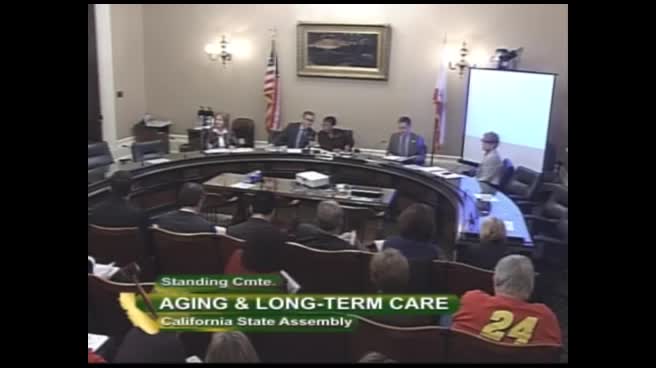 7MIN
Assembly Standing Committee on Aging and Long-Term Care
Bill Author

Bill Co-Author(s):