ACR 43: California Aerospace Week.
- Session Year: 2015-2016
- House: Assembly
- Latest Version Date: 2015-04-23
This measure would recognize the contributions of the aerospace industry to the history, economy, security, and educational system of California, its communities, and its citizens by proclaiming the week of March 23, 2015, through March 27, 2015, as California Aerospace Week.
This measure would recognize the contributions of the aerospace industry to the history, economy, security, and educational system of California, its communities, and its citizens by proclaiming the week of March 23, 2015, through March 27, 2015, as California Aerospace Week.
This measure would recognize the contributions of the aerospace industry to the history, economy, security, and educational system of California, its communities, and its citizens by proclaiming the week of March 23, 2015, through March 27, 2015, as California Aerospace Week.
This measure would recognize the contributions of the aerospace industry to the history, economy, security, and educational system of California, its communities, and its citizens by proclaiming the week of March 23, 2015, through March 27, 2015, as California Aerospace Week.
This measure would recognize the contributions of the aerospace industry to the history, economy, security, and educational system of California, its communities, and its citizens by proclaiming the week of March 23, 2015, through March 27, 2015, as California Aerospace Week.
WHEREAS, The California aerospace industry is a powerful, reliable source of employment, innovation, and export income, directly employing more than 203,000 people in California and supporting more than 511,000 jobs in related fields resulting in $2.9 billion in annual state income tax revenues; and
WHEREAS, The California aerospace industry leads the United States in aerospace and defense services, including the design and manufacture of aircraft, spacecraft, and commercial satellites, as well as a myriad of systems and instruments for search, detection, navigation, guidance, and radio and television broadcast and wireless communication systems; and
WHEREAS, California is home to many superb sites of air and space activity, including Vandenberg Air Force Base, two Federal Aviation Administration-licensed launch sites, the Mojave Air and Spaceport, more than 20 astronomical observatories, multiple international airports, many important defense aerospace bases, and hundreds of business and general aviation airfields; and
WHEREAS, California is also home to three National Aeronautics and Space Administration (NASA) research and engineering centers. These centers are recognized as the Ames Research Center, the NASA Neil A. Armstrong Flight Research Center, formerly known as the Dryden Flight Research Center, and the Jet Propulsion Laboratory (JPL); and
WHEREAS, California has led the nation in aeronautical firsts and Californias aerospace industry produced many of the significant and record-breaking aircraft that are now represented in the Smithsonian Institutions National Air and Space Museum. The Spirit of St. Louis, which in 1927 performed the first solo nonstop transatlantic flight from New York to Paris, France, was designed and built in California by Ryan Airlines and made Charles Lindbergh an international hero. The Douglas DC-3, recognized as the most successful airliner in history, dominating both commercial and military air transportation from its introduction in 1935 until after World War II, was designed and built in California by the Douglas Aircraft Company. The Space Shuttle was designed, built, assembled, and tested in California. California is home to Edwards Air Force Base, the site of five test flights of the Shuttle Enterprise, the landing site of 54 Space Shuttle missions, and the site of the 199 X-15 missions; and
WHEREAS, Edwards Air Force Base, known for its notable aeronautical achievements, was the location of many first flights of American aircraft, shuttles, and experimental jets flown from Rogers Dry Lake in the Mojave Desert of Kern County. Americas first jet, XP-59A, was first flown in California. General Charles Chuck Yeager made world history in California on October 14, 1947, when he became the first man to fly Mach 1, faster than the speed of sound, while piloting the Bell X-1 rocket plane. The rocket powered X-15, flown by former State Senator William J. Pete Knight, attained a speed of Mach 6.7 (4,520 miles per hour), a speed that remains, to this day, the highest ever attained in a manned aircraft. The Rutan Model 76 Voyager was the first aircraft to fly around the world without stopping or refueling; and
WHEREAS, California has led the nation in firsts in human space exploration, including the manufacture of the Apollo 11 command module that carried the first humans to the surface of our moon; the manufacture and landing of the Space Shuttle orbiters, the first reusable space vehicles, which include the Endeavour, on display at the California Science Center; and the manufacture and recovery of the SpaceX Dragon capsule and Falcon launch vehicle, the first privately funded space exploration system. The SpaceX Dragon cargo spacecraft will make its 5th commercial cargo resupply flight to the International Space Station in 2015; and
WHEREAS, California has led the nation in firsts in robotic space exploration, including the Explorer 1 Earth observation satellite as Americas first successful spacecraft, the Mariner 2 as the first spacecraft to explore another planet, the Viking landers as the first spacecrafts to perform experiments on another planet, and the development of the Pioneer 10 spacecraft as the first to exit our solar system; and
WHEREAS, Californians, through NASA and JPL, build, manage, and operate the majority of the spacecraft exploring our solar system, including the most recent Mars Science Laboratory Curiosity, and those spacecraft exploring other solar systems, like the Kepler exoplanet discovery mission, as well as the SOFIA, the Stratospheric Observatory for Infrared Astronomy, that administers the Airborne Astronomy Ambassadors program for educators who have inspired the dreams of California youth; and
WHEREAS, Sally Kristen Ride, Ph.D., who was born in California, stands in history as a pioneer in space exploration and academia, and serves as a role model for others, by virtue of having been the first American woman and the youngest person to go into space when she traveled aboard the Challenger spacecraft on June 18, 1983; and
WHEREAS, California aerospace industries assemble the legendary Boeing C-17 Globemaster III, build the impressive Northrop Grumman Global Hawk Unmanned Aircraft Systems, engineer radical new aircraft at the famous Lockheed Martin Skunk Works Advanced Development Programs facility, and create systems that assist and protect members of the Armed Forces of the United States through military communications, situational awareness, satellite-guided ordnance, and technologies yet to be dreamed of; and
WHEREAS, Los Angeles Air Force Base, home of the Space and Missile System Center (SMC) since 1962, carries out vitally important work, including managing research, development, and acquisition of aerospace technology for military space systems, and continues to be an irreplaceable economic hub and center of military space acquisition excellence for the nation; and
WHEREAS, California will continue to lead in aerospace education, through its superb science, technology, engineering, and mathematics (STEM) education programs and at its world-class research universities, and thus will continue to lead the world with the innovation that enabled advanced meteorological forecasting, the Global Positioning System, NextGen tools for air traffic management, green aviation, sophisticated wind tunnels and test facilities, and advanced supercomputing and robotics; and
WHEREAS, The American Institute of Aeronautics and Astronautics (AIAA), and the Aerospace States Association (ASA), California Chapter, are sponsoring a week of events to highlight the contributions of the aerospace community to California; now, therefore, be it
Resolved by the Assembly of the State of California, the Senate thereof concurring, That the Legislature recognizes the contributions of the aerospace industry to the history, economy, security, and educational system of California, its communities, and its citizens by proclaiming the week of March 23, 2015, through March 27, 2015, as California Aerospace Week; and be it further
Resolved, That the Chief Clerk of the Assembly transmit copies of this resolution to the author for appropriate distribution.
WHEREAS, The California aerospace industry is a powerful, reliable source of employment, innovation, and export income, directly employing more than 200,000 people in California and supporting more than 307,000 jobs in related fields; and
WHEREAS, The California aerospace industry leads the United States in aerospace and defense services, including the design and manufacture of aircraft, spacecraft, and commercial satellites, as well as a myriad of systems and instruments for search, detection, navigation, guidance, and radio and television broadcast and wireless communication systems; and
WHEREAS, California is home to many superb sites of air and space activity, including Vandenberg Air Force Base, two Federal Aviation Administration-licensed launch sites, the Mojave Air and Spaceport, more than 20 astronomical observatories, multiple international airports, many important defense aerospace bases, and hundreds of business and general aviation airfields; and
WHEREAS, California is also home to three National Aeronautics and Space Administration (NASA) research and engineering centers. These centers are recognized as the Ames Research Center, the NASA Neil A. Armstrong Flight Research Center, formerly known as the Dryden Flight Research Center, and the Jet Propulsion Laboratory (JPL); and
WHEREAS, California has led the nation in aeronautical firsts and Californias aerospace industry produced many of the significant and record-breaking aircraft that are now represented in The Smithsonian Institutions National Air and Space Museum. The Spirit of St. Louis, which in 1927 made the first solo nonstop transatlantic flight from New York to Paris, was designed and built in California by Ryan Airlines and made Charles Lindbergh an international hero. The Douglas DC-3, recognized as the most successful airliner in history, dominating both commercial and military air transportation from its introduction in 1935 until after World War II, was designed and built in California by the Douglas Aircraft Company. The Space Shuttle was designed, built, assembled, and tested in California. California is home to Edwards Air Force Base, the site of five test flights of the Shuttle Enterprise, the landing site of 54 Space Shuttle missions, and the site of the 199 X-15 missions; and
WHEREAS, Edwards Air Force Base, known for its notable aeronautical achievements, was the location of many first flights of American aircraft, shuttles, and experimental jets flown from Rogers Dry Lake in the Mojave Desert of Kern County. Americas first jet, XP-59A, was first flown in California. General Charles Chuck Yeager made world history in California on October 14, 1947, when he became the first man to fly Mach 1, faster than the speed of sound, while piloting the Bell X-1 rocket plane. The rocket powered X-15, flown by former State Senator William J. Pete Knight, attained a speed of Mach 6.7 (4,520 miles per hour), a speed that remains, to this day, the highest ever attained in a manned aircraft. The Rutan Model 76 Voyager was the first aircraft to fly around the world without stopping or refueling; and
WHEREAS, California has led the nation in firsts in human space exploration, including the manufacture of the Apollo 11 command module that carried the first humans to the surface of our moon; the manufacture and landing of the Space Shuttle orbiters, the first reusable space vehicles, which include the Endeavour, on display at the California Science Center; and the manufacture and recovery of the SpaceX Dragon capsule and Falcon launch vehicle, the first privately funded space exploration system; and
WHEREAS, California has led the nation in firsts in robotic space exploration, including the Explorer 1 Earth observation satellite as Americas first successful spacecraft, the Mariner 2 as the first spacecraft to explore another planet, the Viking landers as the first spacecrafts to perform experiments on another planet, and the development of the Pioneer 10 spacecraft as the first to exit our solar system; and
WHEREAS, Californians, through NASA and JPL, build, manage, and operate the majority of the spacecraft exploring our solar system, including the most recent Mars Science Laboratory Curiosity, and those spacecraft exploring other solar systems, like the Kepler exoplanet discovery mission, as well as the SOFIA, the Stratospheric Observatory for Infrared Astronomy, that administers the Airborne Astronomy Ambassadors program for educators who have inspired the dreams of California youth; and
WHEREAS, California aerospace industries build the impressive Northrop Grumman Global Hawk Unmanned Aircraft Systems, engineer radical new aircraft at the famous Lockheed Martin Skunk Works Advanced Development Programs facility, and create systems that assist and protect members of the United States Armed Forces through military communications, situational awareness, satellite-guided ordnance, and technologies yet to be dreamed of; and
WHEREAS, California will continue to lead in aerospace education, through its superb Science, Technology, Engineering and Mathematics (STEM) education programs and at its world-class research universities, and thus will continue to lead the world with the innovation that enabled advanced meteorological forecasting, the Global Positioning System, NextGen tools for air traffic management, green aviation, sophisticated wind tunnels and test facilities, and advanced supercomputing and robotics; and
WHEREAS, The American Institute of Aeronautics and Astronautics (AIAA), in conjunction with the Aerospace States Association (ASA), California Chapter, is sponsoring events to highlight the contributions of the aerospace community to California, including panel discussions and educational displays during March 2015; now, therefore, be it
Resolved by the Assembly of the State of California, the Senate thereof concurring, That the Legislature recognizes the contributions of the aerospace industry to the history, economy, security, and educational system of California, its communities, and its citizens by proclaiming the week of March 23, 2015, through March 27, 2015, as California Aerospace Week; and be it further
Resolved, That the Chief Clerk of the Assembly transmit copies of this resolution to the author for appropriate distribution.
|
Date
|
Status
|
|---|---|
| Mar 9, 2015 | Introduced. To print. |
| Mar 10, 2015 | From printer. |
| Mar 16, 2015 | Referred to Com. on RLS. |
| Mar 17, 2015 | From committee chair, with author's amendments: Amend, and re-refer to Com. on RLS. Amended. |
| Mar 18, 2015 | Re-referred to Com. on RLS. |
| Mar 19, 2015 | From committee: Be adopted. Ordered to Third Reading. (Ayes 11. Noes 0.) (March 19). |
| Mar 23, 2015 | Amended, adopted, and to Senate. (Page 653.) |
| Mar 24, 2015 | In Senate. To Com. on RLS. |
| Mar 25, 2015 | From committee: Ordered to third reading. |
| Apr 16, 2015 | Adopted and to Assembly. |
| Apr 16, 2015 | Adopted and to Assembly. (Ayes 37. Noes 0. Page 634.) |
| Apr 16, 2015 | In Assembly. Ordered to Engrossing and Enrolling. |
| Apr 23, 2015 | Chaptered by Secretary of State - Res. Chapter 27, Statutes of 2015. |
| Apr 23, 2015 | Enrolled and filed with the Secretary of State at 1:30 p.m. |
|
Date
|
Description
|
Location
|
Votes
|
|
|---|---|---|---|---|
| Apr 16, 2015 | Assembly 3rd Reading ACR43 O'Donnell By Fuller | Senate Floor |
Passed |
|
| Mar 19, 2015 | Be adopted. To third reading. | Assembly Standing Committee on Rules |
Passed |
This list shows positions taken on this bill by organizations on the date displayed, which is linked to the original source.
Positions by individuals are not included.
|
Organization
|
Position
|
Date
|
|---|---|---|
| Aerospace States Association, California Chapter | ** Support | Apr 16, 2015 |
ACR 43
Page 2
|
Office of Senate Floor Analyses (916) 651-1520 Fax: (916) 327-4478 |
THIRD READING
Bill No: ACR 43
Amended: 3/23/15 in Assembly
ASSEMBLY FLOOR: Read and adopted, 3/23/15
SUBJECT: California Aerospace Week
DIGEST: This resolution proclaims the week of March 23 through March 27, 2015, as California Aerospace Week and recognizes the contributions of the aerospace industry to the history, economy, security, and educational system of California.
ANALYSIS: This resolution makes the following legislative findings:
The California aerospace industry is a powerful, reliable source of employment, innovation, and export income, directly employing more than 203,000 people in California and supporting more than 511,000 jobs in related fields for an estimated $2.9 billion in annual state income tax revenues.
The California aerospace industry leads the United States in aerospace and defense services, including the design and manufacture of aircraft, spacecraft, and commercial satellites, as well as a myriad of systems and instruments for search, detection, navigation, guidance, and radio and television broadcast and wireless communication systems.
California is home to many superb sites of air and space activity, including Vandenberg Air Force Base, two Federal Aviation Administration-licensed launch sites, the Mojave Air and Spaceport, more than 20 astronomical observatories, multiple international airports, many important defense aerospace bases, and hundreds of business and general aviation airfields. California is also home to three National Aeronautics and Space Administration (NASA) research and engineering centers. These centers are the Ames Research Center, the NASA Neil A. Armstrong Flight Research Center, formerly known as the Dryden Flight Research Center, and the Jet Propulsion Laboratory.
California has led the nation in aeronautical firsts and California’s aerospace industry has produced many of the significant and record-breaking aircraft that are now represented in The Smithsonian Institution’s National Air and Space Museum.
California will continue to lead in aerospace education, through its superb Science, Technology, Engineering and Mathematics education programs and at its world-class research universities, and thus will continue to lead the world with the innovation that enabled advanced meteorological forecasting, the Global Positioning System, NextGen tools for air traffic management, green aviation, sophisticated wind tunnels and test facilities, and advanced supercomputing and robotics.
This resolution proclaims the week of March 23 through March 27, 2015, as California Aerospace Week and recognizes the contributions of the aerospace industry to the history, economy, security, and educational system of California.
FISCAL EFFECT: Appropriation: No Fiscal Com.: No Local: No
Aerospace States Association, California Chapter
OPPOSITION: (Verified 3/24/15)
None received
Prepared by: Jonas Austin / SFA / (916) 651-1520
3/25/15 17:37:54
**** END ****
ACR 43
Page 2
ASSEMBLY THIRD READING
ACR 43
(O'Donnell)
As Amended March 17, 2015
Majority vote
Committee |
Votes |
Ayes |
Noes |
Rules |
11-0 |
Gordon, Chang, Burke, Campos, Cooley, Dodd, Jones, Mayes, Rodriguez, Waldron, Wood |
|
SUMMARY: Proclaims the week of March 23, through March 27, 2015, as California Aerospace Week and recognizes the contributions of the aerospace industry to the history, economy, security, and educational system of California. Specifically, this resolution makes the following legislative findings:
The California aerospace industry is a powerful, reliable source of employment, innovation, and export income, directly employing more than 203,000 people in California and supporting more than 511,000 jobs in related fields for an estimated $2.9 billion in annual state income tax revenues.
The California aerospace industry leads the United States in aerospace and defense services, including the design and manufacture of aircraft, spacecraft, and commercial satellites, as well as a myriad of systems and instruments for search, detection, navigation, guidance, and radio and television broadcast and wireless communication systems.
California is home to many superb sites of air and space activity, including Vandenberg Air Force Base, two Federal Aviation Administration-licensed launch sites, the Mojave Air and Spaceport, more than 20 astronomical observatories, multiple international airports, many important defense aerospace bases, and hundreds of business and general aviation airfields. California is also home to three National Aeronautics and Space Administration (NASA) research and engineering centers. These centers are the Ames Research Center, the NASA Neil A. Armstrong Flight Research Center, formerly known as the Dryden Flight Research Center, and the Jet Propulsion Laboratory.
California has led the nation in aeronautical firsts and California’s aerospace industry has produced many of the significant and record-breaking aircraft that are now represented in The Smithsonian Institution’s National Air and Space Museum.
California will continue to lead in aerospace education, through its superb Science, Technology, Engineering and Mathematics education programs and at its world-class research universities, and thus will continue to lead the world with the innovation that enabled advanced meteorological forecasting, the Global Positioning System, NextGen tools for air traffic management, green aviation, sophisticated wind tunnels and test facilities, and advanced supercomputing and robotics.
FISCAL EFFECT: None
Analysis Prepared by: Nicole Willis / RLS. / (916) 319-2800 FN: 0000066
ACR 43
Page 2
Date of Hearing: March 19, 2015
ASSEMBLY COMMITTEE ON RULES
Richard Gordon, Chair
ACR 43
(O'Donnell) – As Amended March 17, 2015
SUBJECT: California Aerospace Week.
SUMMARY: Proclaims the week of March 23, 2015, through March 27, 2015, as California Aerospace Week and recognizes the contributions of the aerospace industry to the history, economy, security, and educational system of California. Specifically, this resolution makes the following legislative findings:
The California aerospace industry is a powerful, reliable source of employment, innovation, and export income, directly employing more than 203,000 people in California and supporting more than 511,000 jobs in related fields for an estimated $2.9 billion in annual state income tax revenues.
The California aerospace industry leads the United States in aerospace and defense services, including the design and manufacture of aircraft, spacecraft, and commercial satellites, as well as a myriad of systems and instruments for search, detection, navigation, guidance, and radio and television broadcast and wireless communication systems.
California is home to many superb sites of air and space activity, including Vandenberg Air Force Base, two Federal Aviation Administration-licensed launch sites, the Mojave Air and Spaceport, more than 20 astronomical observatories, multiple international airports, many important defense aerospace bases, and hundreds of business and general aviation airfields. California is also home to three National Aeronautics and Space Administration (NASA) research and engineering centers. These centers are the Ames Research Center, the NASA Neil A. Armstrong Flight Research Center, formerly known as the Dryden Flight Research Center, and the Jet Propulsion Laboratory.
California has led the nation in aeronautical firsts and California’s aerospace industry has produced many of the significant and record-breaking aircraft that are now represented in The Smithsonian Institution’s National Air and Space Museum.
California will continue to lead in aerospace education, through its superb Science, Technology, Engineering and Mathematics education programs and at its world-class research universities, and thus will continue to lead the world with the innovation that enabled advanced meteorological forecasting, the Global Positioning System, NextGen tools for air traffic management, green aviation, sophisticated wind tunnels and test facilities, and advanced supercomputing and robotics.
FISCAL EFFECT: None
REGISTERED SUPPORT / OPPOSITION:
Support
None on file
Opposition
None on file
Analysis Prepared by: Nicole Willis / RLS. / (916) 319-2800
Discussed in Hearing
View Older Hearings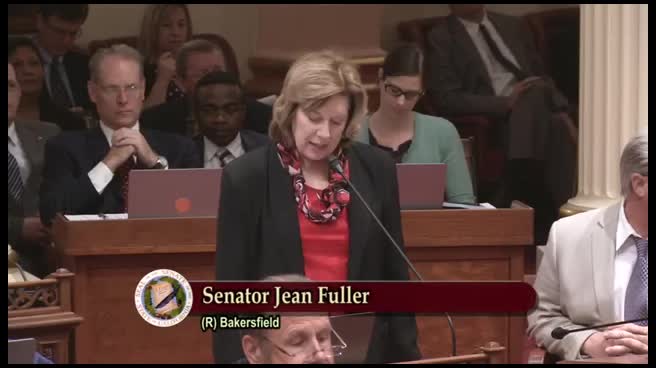

Bill Author

Bill Co-Author(s):