ACR 45: Ukrainian Famine of 1932–1933.
- Session Year: 2015-2016
- House: Assembly
- Latest Version Date: 2016-09-07
This measure would remember and honor the millions of victims of the man-made Ukrainian Famine of 19321933, known as Holodomor, and their descendants who are living throughout California. The measure would also designate November 26, 2016, as Holodomor Remembrance Day.
This measure would remember and honor the millions of victims of the man-made Ukrainian Famine of 19321933, known as Holodomor, and their descendants who are living throughout California. The measure would also designate November 26, 2016, as Holodomor Remembrance Day.
This measure would remember and honor the millions of victims of the man-made Ukrainian Famine of 19321933, known as Holodomor, and their descendants who are living throughout California. The measure would also designate November 26, 2016, as Holodomor Remembrance Day.
This measure would remember and honor the millions of victims of the man-made Ukrainian Famine of 19321933, known as Holodomor, and their descendants who are living throughout California. The measure would also designate November 26, 2016, as Holodomor Remembrance Day.
This measure would remember and honor the millions of victims of the man-made Ukrainian Famine of 19321933, known as Holodomor, and their descendants who are living throughout California. The measure would also designate November 26, 2016, as Holodomor Remembrance Day.
This measure would state the intent of the Legislature to conduct an in-depth review of the budgets of the 40 largest budgets of state agencies and departments over a period 5 years using a zero-based budgeting approach, as specified. The measure would also request that the the first 8 state agencies and departments selected for review provide specified information to the Assembly Committee on Budget and the Senate Committee on Budget and Fiscal Review before June 30, 2016.
This measure would state the intent of the Legislature to conduct an in-depth review of the budgets of the 40 largest budgets of state agencies and departments over a period 5 years using a zero-based budgeting approach, as specified. The measure would also request that the the first 8 state agencies and departments selected for review provide specified information to the Assembly Committee on Budget and the Senate Committee on Budget and Fiscal Review before June 30, 2016.
WHEREAS, The Ukrainian Famine of 19321933, known as Holodomor, was a man-made famine that caused the deaths of at least five million innocent men, women, and children in Ukraine, resulting in an annihilation of an estimated 25 percent of the rural population of that country, one of the most productive agricultural areas of the Soviet Union; and
WHEREAS, This man-made famine also resulted in the deaths of an estimated one to two million people in regions outside Ukraine, mostly in the largely ethnic Ukrainian North Caucasus territory; and
WHEREAS, These millions of people were starved to death by forced agricultural collectivization and grain seizures by the Soviet Union; and
WHEREAS, Western observers and scholars who accurately reported on the existence of the famine as it was occurring were subjected to disparagement and criticism for their reporting; and
WHEREAS, The Soviet Union and many scholars in the West denied the existence of the famine until the collapse of the Soviet Union in 1991 when Soviet Union archives became accessible, thereby making the documentation of the premeditated nature of the famine and its harsh enforcement possible; and
WHEREAS, The final report of the U.S. Commission on the Ukraine Famine, established on December 13, 1985, concluded that the victims were starved to death in a man-made famine; and
WHEREAS, Although the famine was one of the greatest losses of human life in the 20th century, its occurrence remains insufficiently known in the United States and throughout the world; and
WHEREAS, The official recognition of the famine by the government of Ukraine and the Verkhovna Rada of Ukraine represents a significant step in the reestablishment of Ukraines national identity and the advancement of efforts to establish a democratic and free Ukraine that is fully integrated into the Western community of nations; and
WHEREAS, Whether Ukrainian immigrants were fleeing political oppression or religious persecution to pursue better lives for themselves and their families, the desire to live in peace and enjoy liberty was so valued that it drew generations of Ukrainian immigrants to the United States and California in an effort to rebuild their lives; and
WHEREAS, California is now home to the third largest Ukrainian-American population in the United States, and Ukrainians living in California have enriched our state through their leadership and contributions in agriculture, business, academia, government, and the arts; and
WHEREAS, In August 2015, a memorial to the millions who perished in the Ukrainian Famine of 19321933, known as Holodomor, was erected in the United States capital, and the dedication ceremony took place on November 7, 2015; now, therefore, be it
Resolved by the Assembly of the State of California, the Senate thereof concurring, That the millions of victims of the man-made Ukrainian Famine of 19321933, known as Holodomor, and their descendants living throughout California should be solemnly remembered and honored; and be it further
Resolved, That the Legislature designates November 26, 2016, as Holodomor Remembrance Day in California and encourages individual citizens, educators, businesses, groups, organizations, and public institutions to observe Holodomor Remembrance Day with appropriate activities designed to honor the victims and educate Californians about this tragedy; and be it further
Resolved, That the Chief Clerk of the Assembly transmit copies of this resolution to the author for appropriate distribution.
WHEREAS, The Ukrainian Famine of 19321933, known as Holodomor, was a man-made famine that caused the deaths of at least five million innocent men, women, and children in Ukraine, resulting in an annihilation of an estimated 25 percent of the rural population of that country, one of the most productive agricultural areas of the Soviet Union; and
WHEREAS, This man-made famine also resulted in the deaths of an estimated one to two million people in regions outside Ukraine, mostly in the largely ethnic Ukrainian North Caucasus territory; and
WHEREAS, These millions of people were starved to death by forced agricultural collectivization and grain seizures by the Soviet Union; and
WHEREAS, Western observers and scholars who accurately reported on the existence of the famine as it was occurring were subjected to disparagement and criticism for their reporting; and
WHEREAS, The Soviet Union and many scholars in the West denied the existence of the famine until the collapse of the Soviet Union in 1991 when Soviet Union archives became accessible, thereby making the documentation of the premeditated nature of the famine and its harsh enforcement possible; and
WHEREAS, The final report of the U.S. Commission on the Ukraine Famine, established on December 13, 1985, concluded that the victims were starved to death in a man-made famine; famine; and
WHEREAS, Although the famine was one of the greatest losses of human life in the 20th century, its occurrence remains insufficiently known in the United States and throughout the world; and
WHEREAS, The official recognition of the famine by the government of Ukraine and the Verkhovna Rada of Ukraine represents a significant step in the reestablishment of Ukraines national identity and the advancement of efforts to establish a democratic and free Ukraine that is fully integrated into the Western community of nations; and
WHEREAS, Whether Ukrainian immigrants were fleeing political oppression or religious persecution to pursue better lives for themselves and their families, the desire to live in peace and enjoy liberty was so valued that it drew generations of Ukrainian immigrants to the United States and California in an effort to rebuild their lives; and
WHEREAS, California is now home to the third largest Ukrainian-American population in the United States, and Ukrainians living in California have enriched our state through their leadership and contributions in business, agriculture, agriculture, business, academia, government, and the arts; and
WHEREAS, In August 2015, a memorial to the millions who perished in the Ukrainian Famine of 19321933, known as Holodomor, was erected in the United States capital, and the dedication ceremony took place on November 7, 2015; now, therefore, be it
Resolved by the Assembly of the State of California, the Senate thereof concurring, That the millions of victims of the man-made Ukrainian Famine of 19321933, known as Holodomor, and their descendants living throughout California should be solemnly remembered and honored; and be it further
Resolved, That the Legislature designates November 26, 2016, as Holodomor Remembrance Day in California and encourages individual citizens, educators, businesses, groups, organizations, and public institutions to observe Holodomor Remembrance Day with appropriate activities designed to honor the victims and educate Californians about this tragedy; and be it further
Resolved, That the Chief Clerk of the Assembly transmit copies of this resolution to the author for appropriate distribution.
WHEREAS, The Ukrainian Famine of 19321933, known as Holodomor, was a man-made famine that caused the deaths of at least five million innocent men, women, and children in Ukraine, resulting in an annihilation of an estimated 25 percent of the rural population of that country, one of the most productive agricultural areas of the Soviet Union; and
WHEREAS, This man-made famine also resulted in the deaths of an estimated one to two million people in regions outside Ukraine, mostly in the largely ethnic Ukrainian North Caucasus territory; and
WHEREAS, These millions of people were starved to death by forced agricultural collectivization and grain seizures by the Soviet Union; and
WHEREAS, Western observers and scholars who accurately reported on the existence of the famine as it was occurring were subjected to disparagement and criticism for their reporting; and
WHEREAS, The Soviet Union and many scholars in the West denied the existence of the famine until the collapse of the Soviet Union in 1991 when Soviet Union archives became accessible, thereby making the documentation of the premeditated nature of the famine and its harsh enforcement possible; and
WHEREAS, The final report of the U.S. Commission on the Ukraine Famine, established on December 13, 1985, concluded that the victims were starved to death in a man-made famine; and
WHEREAS, Although the famine was one of the greatest losses of human life in the 20th century, its occurrence remains insufficiently known in the United States and throughout the world; and
WHEREAS, The official recognition of the famine by the government of Ukraine and the Verkhovna Rada of Ukraine represents a significant step in the reestablishment of Ukraines national identity and the advancement of efforts to establish a democratic and free Ukraine that is fully integrated into the Western community of nations; and
WHEREAS, Whether Ukrainian immigrants were fleeing political oppression or religious persecution to pursue better lives for themselves and their families, the desire to live in peace and enjoy liberty was so valued that it drew generations of Ukrainian immigrants to the United States and California in an effort to rebuild their lives; and
WHEREAS, California is now home to the third largest Ukrainian-American population in the United States, and Ukrainians living in California have enriched our state through their leadership and contributions in business, agriculture, academia, government, and the arts; and
WHEREAS, In August 2015, a memorial to the millions who perished in the Ukrainian Famine of 19321933, known as Holodomor, was erected in the United States capital, and the dedication ceremony took place on November 7, 2015; now, therefore, be it
Resolved by the Assembly of the State of California, the Senate thereof concurring, That the millions of victims of the man-made Ukrainian Famine of 19321933, known as Holodomor, and their descendants living throughout California should be solemnly remembered and honored; and be it further
Resolved, That the Legislature designates November 26, 2016, as Holodomor Remembrance Day in California and encourages individual citizens, educators, businesses, groups, organizations, and public institutions to observe Holodomor Remembrance Day with appropriate activities designed to honor the victims and educate Californians about this tragedy; and be it further
Resolved, That the Chief Clerk of the Assembly transmit copies of this resolution to the author for appropriate distribution.
WHEREAS, Article IV of the California Constitution provides that it is the responsibility of the Legislature to oversee the operations of the executive branch and its various agencies and departments; and
WHEREAS, Article IV further provides that it is the responsibility of the Legislature to develop a budget for the State of California; and
WHEREAS, A zero-based budgeting approach is one in which agency and department budgets are evaluated on program-level efficiencies, instead of only marginal changes; and
WHEREAS, In recent years, the National Conference of State Legislatures has reported that 17 states have used zero-based budgeting in some form and several more have made serious efforts to do so; and
WHEREAS, The National Conference of State Legislatures indicates that states such as Idaho have successfully used zero-based budgeting as a management tool as well as a budgetary tool; and
WHEREAS, The State of Washington, among others, successfully used a variant of zero-based budgeting starting in 2002 to align expenditures with desired outcomes and balanced the budget of the State of Washington without tax increases; and
WHEREAS, The elected representatives of the Legislature have a duty to guard taxpayer dollars against waste, fraud, and abuse; and
WHEREAS, The largest 40 state agency and department budgets account for more than one-half of the total budget for the State of California; and
WHEREAS, The largest 40 state agency and department budgets include all entities expending more than $100 million in state funds; now, therefore, be it
Resolved by The Assembly of The State of California, The Senate thereof concurring, That the Legislature intends to conduct an in-depth review, over a period of 5 years, of the 40 largest budgets of state agencies and departments with state positions; and be it further
Resolved, That the Legislature intends to use a zero-based budgeting approach during this review; and be it further
Resolved, That the 40 largest budgets of state agencies and departments with state positions will be identified by the Legislature on or before June 30, 2015, based on amounts allocated to these agencies in the 201415 budget; and be it further
Resolved, That the Legislature will choose the first eight agencies and departments for review before the 2015 Interim Study Recess; and be it further
Resolved, That those eight agencies and departments are requested, before June 30, 2016, to provide to the Assembly Committee on Budget and the Senate Committee on Budget and Fiscal Review a complete list of logical decision units within an agencys budget, which are programs, activities, or organizational entities. For each of these units, the agencies and departments are requested to provide all of the following:
(a)A proposed minimum level of funding for viability for the 201718 fiscal year.
(b)Current expenditures.
(c)Program goals that can be quantified, including any goals that are required by citations of existing law.
(d)Progress toward those goals; and be it further
Resolved, That the Chief Clerk of the Assembly transmit copies of this resolution to the author for appropriate distribution.
|
Date
|
Status
|
|---|---|
| Jun 15, 2016 | Re-referred to Com. on RLS. |
| Sep 7, 2016 | Enrolled and filed with the Secretary of State at 10:30 a.m. |
| Sep 7, 2016 | Chaptered by Secretary of State - Res. Chapter 170, Statutes of 2016. |
| Aug 30, 2016 | In Assembly. Ordered to Engrossing and Enrolling. |
| Aug 29, 2016 | Adopted and to Assembly. (Ayes 39. Noes 0. Page 5486.) |
| Aug 29, 2016 | Adopted and to Assembly. |
| Aug 22, 2016 | From committee: Ordered to third reading. |
| Aug 19, 2016 | In Senate. To Com. on RLS. |
| Aug 18, 2016 | Amended, adopted, and to Senate. (Page 5855.) |
| Aug 18, 2016 | Amended, adopted, and to Senate. |
| Aug 1, 2016 | From committee: Be adopted. Ordered to Third Reading. (Ayes 10. Noes 0.) (August 1). |
| Mar 11, 2015 | Introduced. To print. |
| Jun 14, 2016 | From committee chair, with author's amendments: Amend, and re-refer to Com. on RLS. Amended. |
| Apr 28, 2016 | From committee: Be re-referred to Com. on RLS. Re-referred. (Ayes 11. Noes 0.) (April 28). Re-referred to Com. on RLS. |
| Apr 14, 2016 | Re-referred to Com. on RLS. pursuant to Assembly Rule 96. |
| Apr 13, 2016 | Measure version as amended on April 11 corrected. |
| Apr 12, 2016 | Re-referred to Com. on BUDGET. |
| Apr 11, 2016 | From committee chair, with author's amendments: Amend, and re-refer to Com. on BUDGET. Amended. |
| Apr 11, 2016 | From committee chair, with author's amendments: Amend, and re-refer to Com. on . Amended. |
| Mar 19, 2015 | Referred to Com. on BUDGET. |
| Mar 12, 2015 | From printer. |
|
Date
|
Description
|
Location
|
Votes
|
|
|---|---|---|---|---|
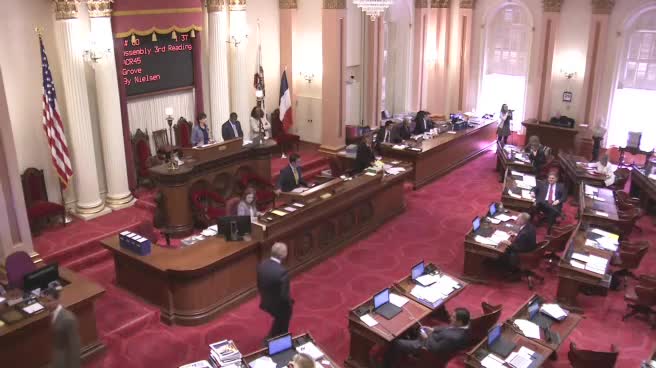
| Aug 29, 2016 | Assembly 3rd Reading ACR45 Grove By Nielsen | Senate Floor |
Passed |
|
| Aug 1, 2016 | Be adopted. To third reading. | Assembly Standing Committee on Rules |
Passed |
|
| Apr 28, 2016 | Be re-referred to the Committee on [Rules] | Assembly Standing Committee on Rules |
Passed |
This list shows positions taken on this bill by organizations on the date displayed, which is linked to the original source.
Positions by individuals are not included.
|
Organization
|
Position
|
Date
|
|---|---|---|
| Consulate General of Ukraine in San Francisco | ** Support | Aug 29, 2016 |
| Heritage School of Ukrainian Studies | ** Support | Aug 29, 2016 |
| Ukraine Relief | ** Support | Aug 29, 2016 |
| Ukrainian American Coordinating Council | ** Support | Aug 29, 2016 |
Office of Senate Floor Analyses (916) 651-1520 Fax: (916) 327-4478 | ACR 45 |
THIRD READING
Bill No: ACR 45
Amended: 8/18/16 in Assembly
ASSEMBLY FLOOR: Read and adopted, 8/18/16
SUBJECT: Ukrainian Famine of 1932–1933
DIGEST:
This resolution remembers and honors the millions of victims of the man-made Ukrainian Famine of 1932–1933, known as “Holodomor,” and their descendants who are living throughout California. This resolution also designates November 26, 2016, as Holodomor Remembrance Day.
ANALYSIS: This resolution makes the following legislative findings:
- The Ukrainian Famine of 1932–1933, known as “Holodomor,” was a man-made famine that caused the deaths of at least five million innocent men, women, and children in Ukraine, resulting in an annihilation of an estimated 25 percent of the rural population of that country, one of the most productive agricultural areas of the Soviet Union.
- This man-made famine also resulted in the deaths of an estimated one to two million people in regions outside Ukraine, mostly in the largely ethnic Ukrainian North Caucasus territory. These millions of people were starved to death by forced agricultural collectivization and grain seizures by the Soviet Union.
- The Soviet Union and many scholars in the West denied the existence of the famine until the collapse of the Soviet Union in 1991 when Soviet Union archives became accessible, thereby making the documentation of the premeditated nature of the famine and its harsh enforcement possible.
- Although the famine was one of the greatest losses of human life in the 20th century, its occurrence remains insufficiently known in the United States and throughout the world.
- The official recognition of the famine by the government of Ukraine and the Verkhovna Rada of Ukraine represents a significant step in the reestablishment of Ukraine’s national identity and the advancement of efforts to establish a democratic and free Ukraine that is fully integrated into the Western community of nations.
- Whether Ukrainian immigrants were fleeing political oppression or religious persecution to pursue better lives for themselves and their families, the desire to live in peace and enjoy liberty was so valued that it drew generations of Ukrainian immigrants to the United States and California in an effort to rebuild their lives.
This resolution:
- Honors the millions of victims of the man-made Ukrainian Famine of 1932–1933, known as “Holodomor,” and their descendants living throughout California should be solemnly remembered and honored.
- Designates November 26, 2016, as Holodomor Remembrance Day in California and encourages individual citizens, educators, businesses, groups, organizations, and public institutions to observe Holodomor Remembrance Day with appropriate activities designed to honor the victims and educate Californians about this tragedy.
FISCAL EFFECT: Appropriation: No Fiscal Com.: No Local: No
Consulate General of Ukraine in San Francisco
Heritage School of Ukrainian Studies
Ukraine Relief
Ukrainian American Coordinating Council
Ukrainian Culture Center, Inc.
OPPOSITION: (Verified 8/23/16)
None received
Prepared by: Karen Chow / SFA / (916) 651-1520
8/23/16 12:03:34
**** END ****
Office of Senate Floor Analyses (916) 651-1520 Fax: (916) 327-4478 | ACR 45 |
THIRD READING
Bill No: ACR 45
Amended: 8/18/16 in Assembly
ASSEMBLY FLOOR: Read and adopted, 8/18/16
SUBJECT: Ukrainian Famine of 1932–1933
DIGEST:
This resolution remembers and honors the millions of victims of the man-made Ukrainian Famine of 1932–1933, known as “Holodomor,” and their descendants who are living throughout California. This resolution also designates November 26, 2016, as Holodomor Remembrance Day.
ANALYSIS: This resolution makes the following legislative findings:
- The Ukrainian Famine of 1932–1933, known as “Holodomor,” was a man-made famine that caused the deaths of at least five million innocent men, women, and children in Ukraine, resulting in an annihilation of an estimated 25 percent of the rural population of that country, one of the most productive agricultural areas of the Soviet Union.
- This man-made famine also resulted in the deaths of an estimated one to two million people in regions outside Ukraine, mostly in the largely ethnic Ukrainian North Caucasus territory. These millions of people were starved to death by forced agricultural collectivization and grain seizures by the Soviet Union.
- The Soviet Union and many scholars in the West denied the existence of the famine until the collapse of the Soviet Union in 1991 when Soviet Union archives became accessible, thereby making the documentation of the premeditated nature of the famine and its harsh enforcement possible.
- Although the famine was one of the greatest losses of human life in the 20th century, its occurrence remains insufficiently known in the United States and throughout the world.
- The official recognition of the famine by the government of Ukraine and the Verkhovna Rada of Ukraine represents a significant step in the reestablishment of Ukraine’s national identity and the advancement of efforts to establish a democratic and free Ukraine that is fully integrated into the Western community of nations.
- Whether Ukrainian immigrants were fleeing political oppression or religious persecution to pursue better lives for themselves and their families, the desire to live in peace and enjoy liberty was so valued that it drew generations of Ukrainian immigrants to the United States and California in an effort to rebuild their lives.
This resolution:
- Honors the millions of victims of the man-made Ukrainian Famine of 1932–1933, known as “Holodomor,” and their descendants living throughout California should be solemnly remembered and honored.
- Designates November 26, 2016, as Holodomor Remembrance Day in California and encourages individual citizens, educators, businesses, groups, organizations, and public institutions to observe Holodomor Remembrance Day with appropriate activities designed to honor the victims and educate Californians about this tragedy.
FISCAL EFFECT: Appropriation: No Fiscal Com.: No Local: No
SUPPORT: (Unable to verify at time of writing)
None received
OPPOSITION: (Unable to verify at time of writing)
None received
Prepared by: Karen Chow / SFA / (916) 651-1520
8/22/16 23:12:32
**** END ****
ASSEMBLY THIRD READING
ATR Bill Id:ACR 45
Author:(Grove)
As Amended Ver:June 14, 2016
Majority vote
Committee | Votes | Ayes | Noes |
Rules | 10-0 | Gordon, Chang, Arambula, Cooley, Gomez, Holden, Jones, Quirk, Rodriguez, Waldron |
SUMMARY: Designates November 26, 2016, as Holodomor Remembrance Day and honors the millions of victims of the man-made Ukrainian Famine of 1932-1933, known as "Holodomor," and their descendants who are living throughout California. Specifically, this resolution makes the following legislative findings:
- The Ukrainian Famine of 1932-1933, known as "Holodomor," was a man-made famine that caused the deaths of at least five million innocent men, women, and children in Ukraine, resulting in an annihilation of an estimated 25% of the rural population of that country, one of the most productive agricultural areas of the Soviet Union.
- This man-made famine also resulted in the deaths of an estimated one to two million people in regions outside Ukraine, mostly in the largely ethnic Ukrainian North Caucasus territory.
- These millions of people were starved to death by forced agricultural collectivization and grain seizures by the Soviet Union.
- The Soviet Union and many scholars in the West denied the existence of the famine until the collapse of the Soviet Union in 1991 when Soviet Union archives became accessible, thereby making the documentation of the premeditated nature of the famine and its harsh enforcement possible.
- The official recognition of the famine by the government of Ukraine and the Verkhovna Rada of Ukraine represents a significant step in the reestablishment of Ukraine's national identity and the advancement of efforts to establish a democratic and free Ukraine that is fully integrated into the Western community of nations.
- California is now home to the third largest Ukrainian-American population in the United States, and Ukrainians living in California have enriched our state through their leadership and contributions in agriculture, business, academia, government, and the arts.
- In August 2015, a memorial to the millions who perished in the Ukrainian Famine of 1932-1933, known as "Holodomor," was erected in the United States capitol, and the dedication ceremony took place on November 7, 2015.
Analysis Prepared by: Nicole Willis / RLS. / (916) 319-2800 FN: 0003677
Date of Hearing: August 1, 2016
ASSEMBLY COMMITTEE ON
, Chair
ABPCA Bill Id:
Author:() – As Ver:
SUBJECT:
SUMMARY: Designates November 26, 2016, as Holodomor Remembrance Day and honors the millions of victims of the man-made Ukrainian Famine of 1932-1933, known as "Holodomor," and their descendants who are living throughout California. Specifically, this resolution makes the following legislative findings:
- The Ukrainian Famine of 1932-1933, known as "Holodomor," was a man-made famine that caused the deaths of at least five million innocent men, women, and children in Ukraine, resulting in an annihilation of an estimated 25 percent of the rural population of that country, one of the most productive agricultural areas of the Soviet Union.
- This man-made famine also resulted in the deaths of an estimated one to two million people in regions outside Ukraine, mostly in the largely ethnic Ukrainian North Caucasus territory.
- These millions of people were starved to death by forced agricultural collectivization and grain seizures by the Soviet Union.
- The Soviet Union and many scholars in the West denied the existence of the famine until the collapse of the Soviet Union in 1991 when Soviet Union archives became accessible, thereby making the documentation of the premeditated nature of the famine and its harsh enforcement possible.
- The official recognition of the famine by the government of Ukraine and the Verkhovna Rada of Ukraine represents a significant step in the reestablishment of Ukraine's national identity and the advancement of efforts to establish a democratic and free Ukraine that is fully integrated into the Western community of nations.
- California is now home to the third largest Ukrainian-American population in the United States, and Ukrainians living in California have enriched our state through their leadership and contributions in agriculture, business, academia, government, and the arts.
- In August 2015, a memorial to the millions who perished in the Ukrainian Famine of 1932-1933, known as "Holodomor," was erected in the United States capitol, and the dedication ceremony took place on November 7, 2015.
FISCAL EFFECT: None
REGISTERED SUPPORT / OPPOSITION:
Support
None on file
Opposition
None on file
Analysis Prepared by:
ACR 45
Page 2
Date of Hearing: May 7, 2015
ASSEMBLY COMMITTEE ON BUDGET
Shirley Weber, Chair
ACR 45
(Grove) – As Introduced March 11, 2015
SUBJECT: State agency budgets: legislative review: zero-based budgeting
SUMMARY: Resolves that a zero-based budgeting analysis be performed for the 40 largest State departments and agencies over a five-year period. The resolution outlines a process by which these departments and agencies are identified by June 30, 2015 and then the first eight agencies begin the analysis during the 2015 interim study recess.
COMMENTS: There has been considerable interest in adding some sort of “top to bottom” programmatic review of all departments to complement the existing budget process. On December 8, 2011, the Governor issued executive order B-13-11 directing the Department of Finance to create a strategy for program-evaluation methods into the budget process, zero-based budgeting was included as one approach. The intent of ACR 45 appears in line with this effort for greater oversight.
This resolution envisioned an approach of the legislature reviewing eight departments/agencies for the first year, and presumable eight each subsequent year, to review 40 different departments and agencies within five years. Such an approach differs from current efforts underway in the Assembly and in the Executive Branch.
Assembly Budget Subcommittee #2 is currently engaged in the zero-based budgeting analysis of the University of California. The Subcommittee 2 held its first hearing in February and is scheduled to follow up on the UC Budget on May 13th. The experience to date has shown that the effort requires significant staff resources as well as considerable time to sift through increasingly more detailed levels of financial, performance, and staffing data. The zero-based budgeting effort for the University of California may need to continue for more than an additional year, given the complexity of issues brought forward to date.
The Assembly Budget Committee has already been directed to explore expanding the role of zero-based budgeting to all State departments and agencies at least once every ten years. The Committee has not yet developed a work plan for achieving such a review, as the current experience with Subcommittee 2 is critical to informing the future approach. In addition, the Committee intends to develop templates and protocols so that several different departments can be analyzed at the same time in a consistent manner.
The Department of Finance must play a critical role in leading any zero-based budgeting effort. The Department's expertise and resources must be fully engaged in any effort for it to be successful. In meeting the requirements of Executive Order B-13-11, the Department of Finance has chosen to apply zero-based budgeting at the programmatic level in select departments. For example, the many programmatic functions of Caltrans have been the subject of this review over the last four years, and in 2014, the analysis focused on the Caltrans Legal Services division, rather than the entire department. This approach has allowed the Department of Finance to conduct programmatic evaluation within the existing staff resources at the department. Such an approach achieves the same goals as this resolution, but in a much slower and more gradual pace.
The process for conducting zero-based budgeting outlined in ACR 45 may be difficult to implement in the tight timelines envisioned by the resolution. Under the proposed language, work on the zero-based budgeting efforts would need to commence immediately to begin an analysis of eight departments and/agencies for this fall.
The Assembly’s effort to implement zero-based budgeting also overlaps with the implementation of the new state accounting system, FI$Cal. Over 80 state agencies and departments are scheduled to transition to this new system in 2015-2017. It may be unrealistic to try to have these departments undertake both difficult and resource intensive activities at the same time.
REGISTERED SUPPORT / OPPOSITION:
Support
None on file
Opposition
None on file
Analysis Prepared by: Christian Griffith / BUDGET /916-319-2099
Discussed in Hearing
 3MIN
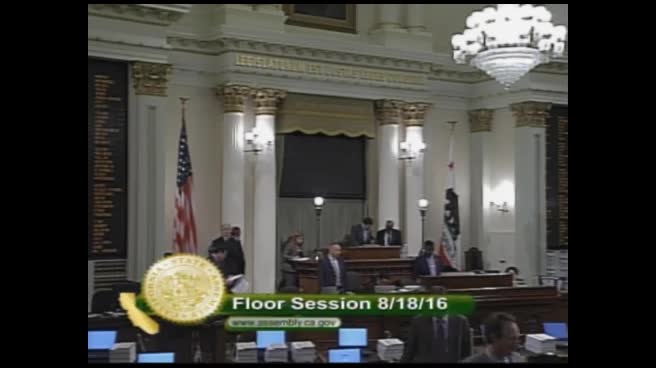
Senate Floor
 11MIN
Assembly Floor
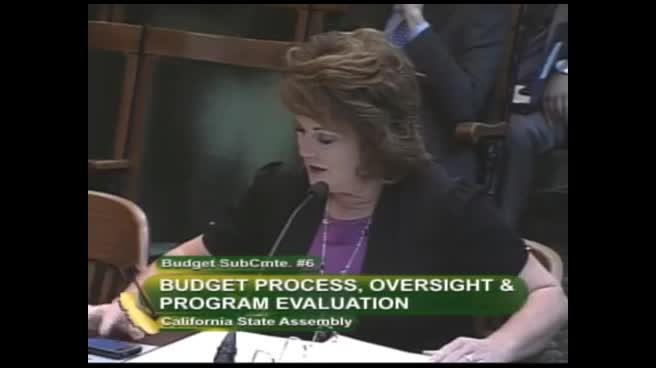 15MIN
Assembly Budget Subcommittee No. 6 on Budget Process Oversight and Program Evaluation
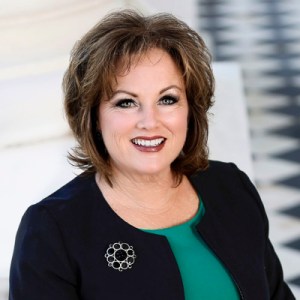
Bill Author
Bill Co-Author(s):