ACR 93: Fire safety: municipal ordinances.
- Session Year: 2015-2016
- House: Assembly
- Latest Version Date: 2015-09-10
This measure would encourage all California municipalities to reexamine regulations surrounding mandatory fire suppression ordinances.
This measure would encourage all California municipalities to reexamine regulations surrounding mandatory fire suppression ordinances.
This measure would encourage all California municipalities to reexamine regulations surrounding mandatory fire suppression ordinances.
This measure would encourage all California municipalities to reexamine regulations surrounding mandatory fire suppression ordinances.
WHEREAS, The first automatic sprinkler system was patented in England in 1723 and the first fire sprinkler system was developed in the United States in 1874.
WHEREAS, Fire suppression technology was first used in residential construction in the state in 1932 when the Union Oil Company constructed homes for employees in Santa Paula, California; and
WHEREAS, The City of San Clemente, California was the first city in the nation to adopt an ordinance requiring all new residential dwellings to contain fire sprinklers; and
WHEREAS, Senate Bill 2579 was introduced in the California State Senate in 1986 and would have required fire sprinklers in all residential buildings; and
WHEREAS, In January 1988, the California State Fire Marshall published Californias minimum design and installation standards for fire suppression systems; and
WHEREAS, On May 4, 1988, several floors of the First Interstate Tower, a downtown Los Angeles high-rise office tower built without fire sprinklers, ignited killing one and injuring 40 others. Subsequent reports indicated a working fire suppression system would have lessened the fires damage; and
WHEREAS, Following the First Interstate Tower fire, the City of Los Angeles mandated automatic fire suppression systems in all buildings over seven stories; and
WHEREAS, Buildings should be provided with built-in fire suppression systems to offset the negative impact of excessive response times; and
WHEREAS, On April 7, 2015, a massive fire burned through a six floor office building in Los Angeles, a building that was exempted from mandatory fire suppression regulations because of its age and size; now, therefore, be it
Resolved by the Assembly of the State of California, the Senate thereof concurring, That the Legislature encourages all California municipalities to reexamine regulations surrounding mandatory fire suppression ordinances; and be it further
Resolved, That the Chief Clerk of the Assembly transmit copies of this resolution to the author for appropriate distribution.
|
Date
|
Status
|
|---|---|
| Jun 30, 2015 | Introduced. To print. |
| Jul 1, 2015 | From printer. |
| Jul 6, 2015 | Referred to Com. on L. GOV. |
| Jul 16, 2015 | From committee: Be adopted. Ordered to Third Reading. (Ayes 9. Noes 0.) (July 15). |
| Aug 17, 2015 | Amended, adopted, and to Senate. |
| Aug 17, 2015 | Amended, adopted, and to Senate. (Page 2466.) |
| Aug 18, 2015 | In Senate. To Com. on RLS. |
| Aug 26, 2015 | From committee: Ordered to third reading. |
| Aug 31, 2015 | Adopted and to Assembly. |
| Aug 31, 2015 | Adopted and to Assembly. (Ayes 37. Noes 3. Page 2305.) |
| Aug 31, 2015 | In Assembly. Ordered to Engrossing and Enrolling. |
| Sep 10, 2015 | Chaptered by Secretary of State - Res. Chapter 173, Statutes of 2015. |
| Sep 10, 2015 | Enrolled and filed with the Secretary of State at 10:30 a.m. |
|
Date
|
Description
|
Location
|
Votes
|
|
|---|---|---|---|---|
| Aug 31, 2015 | Assembly 3rd Reading ACR93 Holden By Hueso | Senate Floor |
Passed |
|
| Jul 15, 2015 | Be adopted. To third reading. | Assembly Standing Committee on Local Government |
Passed |
This list shows positions taken on this bill by organizations on the date displayed, which is linked to the original source.
Positions by individuals are not included.
|
Organization
|
Position
|
Date
|
|---|---|---|
| California Fire Chiefs Association | ** Support | Aug 31, 2015 |
| Central Fire Protection District of Santa Cruz County | ** Support | Aug 31, 2015 |
| Fire Districts Association Of California | ** Support | Aug 31, 2015 |
ACR 93
Page 2
|
Office of Senate Floor Analyses (916) 651-1520 Fax: (916) 327-4478 |
THIRD READING
Bill No: ACR 93
Amended: 8/17/15 in Assembly
ASSEMBLY FLOOR: Read and adopted, 8/17/15
SUBJECT: Fire safety: municipal ordinances
DIGEST: This resolution encourages all California municipalities to reexamine regulations surrounding mandatory fire suppression ordinances.
ANALYSIS: This resolution makes the following legislative findings:
Fire suppression technology was first used in residential construction in the state in 1932 when the Union Oil Company constructed homes for employees in Santa Paula, California.
The City of San Clemente, California was the first city in the nation to adopt an ordinance requiring all new residential dwellings to contain fire sprinklers.
In January 1988, the State Fire Marshal published California’s minimum design and installation standards for fire suppression systems.
On May 4, 1988, several floors of the First Interstate Tower, a downtown Los Angeles high-rise office tower built without fire sprinklers, ignited killing one and injuring 40 others. Subsequent reports indicated a working fire suppression system would have lessened the fire’s damage. Following the fire, the City of Los Angeles mandated automatic fire suppression systems in all buildings over seven stories.
On April 7, 2015, a massive fire burned through a six floor office building in Los Angeles, a building that was exempted from mandatory fire suppression regulations because of its age and size.
Buildings should be provided with built-in fire suppression systems to offset the negative impact of excessive response times; and
This resolution encourages all California municipalities to reexamine regulations surrounding mandatory fire suppression ordinances.
FISCAL EFFECT: Appropriation: No Fiscal Com.: No Local: No
California Fire Chiefs Association
Central Fire Protection District of Santa Cruz County
Fire Districts Association of California
OPPOSITION: (Verified 8/26/15)
None received
ARGUMENTS IN SUPPORT: According to the author, “Assembly Concurrent Resolution 93 encourages California’s local governments to reexamine ordinances regarding the use of fire suppression technology in the wake of several fires in buildings adhering to older building codes.”
Prepared by: Melissa Ward / SFA / (916) 651-1520
8/26/15 16:48:51
**** END ****
ACR 93
Page 2
ASSEMBLY THIRD READING
ACR 93
(Holden)
As Introduced June 30, 2015
Majority vote
Committee |
Votes |
Ayes |
|
Local Government |
9-0 |
Maienschein, Gonzalez, Alejo, Chiu, Cooley, Linder, Low, Mullin, Waldron |
|
SUMMARY: Encourages all California municipalities to reexamine regulations surrounding mandatory fire suppression ordinances. Specifically, this resolution:
Resolves that the Legislature encourages all California municipalities to reexamine regulations surrounding mandatory fire suppression ordinances, and makes a number of findings, including the following:
The first automatic sprinkler system was patented in England in 1723 and the first fire sprinkler system was developed in the United States in 1874;
Fire suppression technology was first used in residential construction in the state in 1932 when the Union Oil Company constructed homes for employees in Santa Paula, California;
The City of San Clemente, California was the first city in the nation to adopt an ordinance requiring all new residential dwellings to contain fire sprinklers;
Senate Bill 2579 was introduced in the California State Senate in 1986 and would have required fire sprinklers in all residential buildings;
In January 1988, the California State Fire Marshall published California's minimum design and installation standards for fire suppression systems;
On May 4, 1988, several floors of the First Interstate Tower, a downtown Los Angeles high-rise office tower built without fire sprinklers, ignited killing one and injuring 40 others. Subsequent reports indicated a working fire suppression system would have lessened the fire's damage;
Following the First Interstate Tower fire, the City of Los Angeles mandated automatic fire suppression systems in all buildings over seven stories;
Buildings should be provided with built-in fire suppression systems to offset the negative impact of excessive response times;
On April 7, 2015, a massive fire burned through a six-floor office building in Los Angeles, a building that was exempted from mandatory fire suppression regulations because of its age and size.
FISCAL EFFECT: None
COMMENTS:
Bill Summary. This resolution makes a number of findings and encourages all California municipalities to reexamine regulations surrounding mandatory fire suppression ordinances, and is an author-sponsored measure.
Author's Statement. According to the author, "For decades, California cities have led the nation in the development and deployment of fire suppression technology. The City of Santa Paula was the first city in America to feature new home developments with built-in fire sprinklers. The City of San Clemente was the first city in the nation to mandate fire sprinklers in all new construction. Since the 1980's, the City of Los Angeles has been a leader in deploying fire suppression technology in high-rise buildings. Following the First Interstate Bank Tower building fire in 1988, Los Angeles required all buildings over seven-stories to install fire sprinklers, regardless of the building’s age.
"Numerous studies and state findings have shown that fire sprinklers significantly reduce the loss of life and property that stems from delayed response times inherent in firefighting. However, the state does not regulate fire suppression technology outside of school and buildings owned by the state. Existing law provides significant discretion to local governments to adopt ordinances related to fire suppression technology in buildings. According to the Los Angeles Times, over six thousand buildings are due for inspection by the Los Angeles Fire Department. More than half are large, high-occupancy buildings that are at risk of fire damage due to their age, size, approved use, and the quality of the internal fire suppression technology in place to prevent calamities. Recent fires, including a multi-alarm fire in an office building in Los Angeles, have highlighted the existing gap in fire suppression technology. Many older buildings have been 'grandfathered' into existing building codes related to fire suppression, causing a gap in existing fire safety measures."
Analysis Prepared by: Debbie Michel / L. GOV. / (916) 319-3958 FN: 0001264
ACR 93
Page 2
Date of Hearing: July 15, 2015
ASSEMBLY COMMITTEE ON LOCAL GOVERNMENT
Brian Maienschein, Chair
ACR 93 (
Holden) – As Introduced June 30, 2015
SUBJECT: Fire safety: municipal ordinances.
SUMMARY: Encourages all California municipalities to reexamine regulations surrounding mandatory fire suppression ordinances. Specifically, this bill:
Resolves that the Legislature encourages all California municipalities to reexamine regulations surrounding mandatory fire suppression ordinances, and makes a number of findings, including the following:
The first automatic sprinkler system was patented in England in 1723 and the first fire sprinkler system was developed in the United States in 1874;
Fire suppression technology was first used in residential construction in the state in 1932 when the Union Oil Company constructed homes for employees in Santa Paula, California;
The City of San Clemente, California was the first city in the nation to adopt an ordinance requiring all new residential dwellings to contain fire sprinklers;
Senate Bill 2579 was introduced in the California State Senate in 1986 and would have required fire sprinklers in all residential buildings;
In January 1988, the California State Fire Marshall published California’s minimum design and installation standards for fire suppression systems;
On May 4, 1988, several floors of the First Interstate Tower, a downtown Los Angeles high-rise office tower built without fire sprinklers, ignited killing one and injuring 40 others. Subsequent reports indicated a working fire suppression system would have lessened the fire’s damage;
Following the First Interstate Tower fire, the City of Los Angeles mandated automatic fire suppression systems in all buildings over seven stories;
Buildings should be provided with built-in fire suppression systems to offset the negative impact of excessive response times;
On April 7, 2015, a massive fire burned through a six-floor office building in Los Angeles, a building that was exempted from mandatory fire suppression regulations because of its age and size.
FISCAL EFFECT: None
COMMENTS:
Bill Summary. ACR 93 makes a number of findings and encourages all California municipalities to reexamine regulations surrounding mandatory fire suppression ordinances, and is an author-sponsored measure.
Author's Statement. According to the author, "For decades, California cities have led the nation in the development and deployment of fire suppression technology. The City of Santa Paula was the first city in America to feature new home developments with built-in fire sprinklers. The City of San Clemente was the first city in the nation to mandate fire sprinklers in all new construction. Since the 1980’s, the City of Los Angeles has been a leader in deploying fire suppression technology in high-rise buildings. Following the First Interstate Bank Tower building fire in 1988, Los Angeles required all buildings over seven-stories to install fire sprinklers, regardless of the building’s age.
"Numerous studies and state findings have shown that fire sprinklers significantly reduce the loss of life and property that stems from delayed response times inherent in firefighting. However, the state does not regulate fire suppression technology outside of school and buildings owned by the state. Existing law provides significant discretion to local governments to adopt ordinances related to fire suppression technology in buildings. According to the Los Angeles Times, over six thousand buildings are due for inspection by the Los Angeles Fire Department. More than half are large, high-occupancy buildings that are at risk of fire damage due to their age, size, approved use, and the quality of the internal fire suppression technology in place to prevent calamities. Recent fires, including a multi-alarm fire in an office building in Los Angeles, have highlighted the existing gap in fire suppression technology. Many older buildings have been "grandfathered" into existing building codes related to fire suppression, causing a gap in existing fire safety measures."
REGISTERED SUPPORT / OPPOSITION:
Support
California Fire Chiefs Association
Fire Districts Association of California
Opposition
None on file
Analysis Prepared by: Debbie Michel / L. GOV. / (916) 319-3958
Discussed in Hearing
View Older Hearings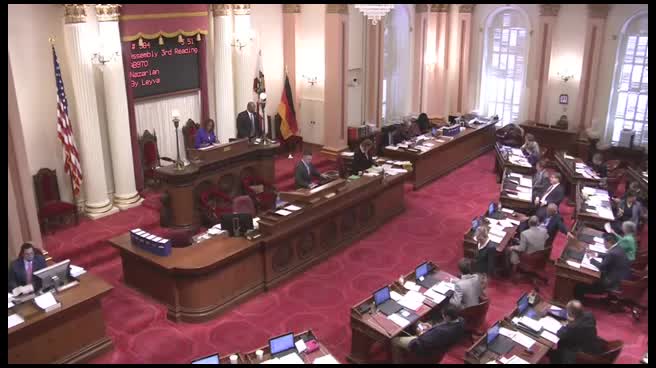
Bill Author

Bill Co-Author(s):