AJR 22: Federal poverty level measurement.
- Session Year: 2015-2016
- House: Assembly
- Latest Version Date: 2015-09-21
This measure would urge the federal government to take steps to reform the outdated and inadequate Official Poverty Measure to better reflect poverty and the unmet needs demonstrated by the Supplemental Poverty Measure.
This measure would urge the federal government to take steps to reform the outdated and inadequate Official Poverty Measure to better reflect poverty and the unmet needs demonstrated by the Supplemental Poverty Measure.
This measure would urge the federal government to take steps to reform the outdated and inadequate Official Poverty Measure to better reflect poverty and the unmet needs demonstrated by the Supplemental Poverty Measure.
WHEREAS, The Official Poverty Measure is determined by the United States Census Bureau and is instrumental in determining an individuals eligibility for a number of government programs, including the Supplemental Nutrition Assistance Program; Medicaid; School Lunch Program; Women, Infants, and Children Program; Housing Assistance; and others; and
WHEREAS, The method we use today was developed in 1964 by Mollie Orshansky of the Social Security Administration; and
WHEREAS, Orshanskys method used before-tax cash income to determine a familys resources, which was then compared to a poverty threshold; and
WHEREAS, In determining this poverty threshold, Orshansky used a food plan developed by the federal Department of Agriculture that was designed for temporary or emergency use when funds are low, and then multiplied the cost of the plan by three because, at the time, a family typically used about a third of their income on food; and
WHEREAS, Other than minor changes, the method has remained the same over time, despite significant economic and governmental changes, including the introduction of Medicare and Medicaid, the shift from a manufacturing to a service economy, welfare reform of the 1990s, and the general stagnation of wages; and
WHEREAS, The Official Poverty Measure is a one-size-fits-all policy that leads to a distorted perception of poverty and an inefficient allocation of resources to fight poverty; and
WHEREAS, The Official Poverty Measure has failed to accurately measure poverty because it has not kept up with the changes to our economy and social science research; and
WHEREAS, The Official Poverty Measure does not take into account that families no longer spend one-third of their income on food; they currently spend between 5 to 10 percent; and
WHEREAS, The Official Poverty Measure does not account for noncash transfers, such as the Supplemental Nutrition Assistance Program or Medicaid, as income; and
WHEREAS, The Official Poverty Measure does not account for variations in cost of living in different regions of our country; and
WHEREAS, Low-income working families in California are especially disadvantaged by the Official Poverty Measure due to our states high cost of living, which results in the denial of federally funded assistance to families living above the federal poverty line, but who are unable to meet their basic needs; and
WHEREAS, The Official Poverty Measure does not account for the increase in child care expenses due to the rise in the workforce participation of both parents; and
WHEREAS, The Official Poverty Measure does not account for variations in health care coverage and out-of-pocket medical costs; and
WHEREAS, Historically, there has been widespread agreement among analysts, advocates, and policymakers that the Official Poverty Measure is inadequate, leading to a 1990 Congressional appropriation that was made for an independent scientific study on a new calculation method; and
WHEREAS, This study was performed by The National Academy of Sciences, which established the Panel on Poverty and Family Assistance. The panel released a report in 1995 entitled Measuring Poverty: A New Approach, which established guidelines for creating a new method; and
WHEREAS, Fifteen years later, in 2010, the Interagency Technical Working Group on Developing a Supplemental Poverty Measure and the Census Bureau and the Bureau of Labor developed an alternative poverty measure known as the Supplemental Poverty Measure; and
WHEREAS, The Supplemental Poverty Measure was designed to take into account changes in the United States economy over time, cost-of-living variations in different parts of the country, and the changing role of government; and
WHEREAS, The Supplemental Poverty Measure more accurately measures poverty by using a basic set of goods that includes food, clothing, shelter, and utilities, adjusted to reflect the needs of different family types and to account for geographic differences in living costs to establish what is known as a poverty threshold; and
WHEREAS, The Supplemental Poverty Measure defines family resources as the value of cash income from all sources, plus the value of noncash benefits, including nutrition assistance, subsidized housing, home energy assistance, tax credits, and other benefits that are available to buy the basic bundle of goods, minus the necessary expenses for critical goods and services not included in the thresholds; and
WHEREAS, Necessary expenses include income taxes, Social Security payroll taxes, childcare and other work-related expenses, child support payments, and contributions toward the cost of medical care and health insurance premiums or out-of-pocket medical costs; and
WHEREAS, The Supplemental Poverty Measure offers a more accurate measure of poverty than the general Official Poverty Measure; and
WHEREAS, The use of the Official Poverty Measure can have a detrimental effect on policies to combat poverty because it results in less efficient and less accurately targeted policies and expenditures; and
WHEREAS, It is vital that we implement a fair poverty measure that allows us to efficiently allocate resources and focus on regions and populations that need help the most; and
WHEREAS, Given the numerous inadequacies of the Official Poverty Measure as a tool to accurately target and efficiently allocate antipoverty resources, the Supplemental Poverty Measure should guide the reform and updating of the Official Poverty Measure for administrative purposes in determining financial eligibility for programs intended to reduce poverty; now, therefore, be it
Resolved by the Assembly and the Senate of the State of California, jointly, That the Legislature of California urges the President and the Congress of the United States to take steps to reform the outdated and inadequate Official Poverty Measure to better reflect poverty and the unmet needs demonstrated by the Supplemental Poverty Measure; and be it further
Resolved, That the Chief Clerk of the Assembly transmit copies of this resolution to the President and the Vice President of the United States, to the Speaker of the House of Representatives, to the Majority Leader of the Senate, and to each Senator and Representative from California in the Congress of the United States, to the Governor of California, and to the author of this resolution.
|
Date
|
Status
|
|---|---|
| Jun 9, 2015 | Introduced. To print. |
| Jun 10, 2015 | From printer. |
| Jun 18, 2015 | Referred to Com. on HUM. S. |
| Jul 15, 2015 | From committee: Be adopted. Ordered to Third Reading. (Ayes 6. Noes 1.) (July 14). |
| Aug 27, 2015 | Adopted and to Senate. (Ayes 58. Noes 18. Page 2617.) |
| Aug 27, 2015 | Adopted and to Senate. (Ayes 58. Noes 18.) |
| Aug 27, 2015 | In Senate. To Com. on RLS. |
| Sep 1, 2015 | From committee: Ordered to third reading. |
| Sep 8, 2015 | Adopted and to Assembly. |
| Sep 8, 2015 | Adopted and to Assembly. (Ayes 29. Noes 10. Page 2584.) |
| Sep 8, 2015 | In Assembly. Ordered to Engrossing and Enrolling. |
| Sep 21, 2015 | Chaptered by Secretary of State - Res. Chapter 195, Statutes of 2015. |
| Sep 21, 2015 | Enrolled and filed with the Secretary of State at 4 p.m. |
|
Date
|
Description
|
Location
|
Votes
|
|
|---|---|---|---|---|
| Sep 8, 2015 | Assembly 3rd Reading AJR22 Mullin By Vidak | Senate Floor |
Passed |
|
| Aug 27, 2015 | AJR 22 MULLIN Assembly Third Reading | Assembly Floor |
Passed |
|
| Jul 14, 2015 | Be adopted. To third reading. | Assembly Standing Committee on Human Services |
Passed |
This list shows positions taken on this bill by organizations on the date displayed, which is linked to the original source.
Positions by individuals are not included.
|
Organization
|
Position
|
Date
|
|---|---|---|
| AFSCME, AFL-CIO | ** Support | Sep 8, 2015 |
| California Association Of Food Banks | ** Support | Sep 8, 2015 |
| California Primary Care Association | ** Support | Sep 8, 2015 |
| Children'S Defense Fund | * Support | Jul 14, 2015 |
| Coalition of California Reproductive Rights Organization | * Support | Jul 14, 2015 |
| Public Policy Institute of California | * Support | Jul 14, 2015 |
| Western Center On Law And Poverty Inc. | ** Support | Sep 8, 2015 |
AJR 22
Page 5
|
Office of Senate Floor Analyses (916) 651-1520 Fax: (916) 327-4478 |
THIRD READING
Bill No: AJR 22
Introduced: 6/9/15
ASSEMBLY FLOOR: 58-18, 8/27/15 - See last page for vote
SUBJECT: Federal poverty level measurement
DIGEST: This resolution urges the federal government to take steps to reform the outdated and inadequate Official Poverty Measure to better reflect poverty and the unmet needs demonstrated by the Supplemental Poverty Measure.
ANALYSIS: This resolution makes the following legislative findings:
The Official Poverty Measure is determined by the United States Census Bureau and is instrumental in determining an individual's eligibility for a number of government programs, including the Supplemental Nutrition Assistance Program; Medicaid; School Lunch Program; Women, Infants, and Children Program; Housing Assistance; and others.
The method we use today was developed in 1964 by Mollie Orshansky of the Social Security Administration, and that method used before-tax cash income to determine a family’s resources, which was then compared to a poverty threshold.
Other than minor changes, the method has remained the same over time, despite significant economic and governmental changes, including the introduction of Medicare and Medicaid, the shift from a manufacturing to a service economy, welfare reform of the 1990's, and the general stagnation of wages.
The Official Poverty Measure is a one-size-fits-all policy that leads to a distorted perception of poverty and an inefficient allocation of resources to fight poverty.
The Official Poverty Measure does not account for the increase in child care expenses due to the rise in the workforce participation of both parents.
The Supplemental Poverty Measure was designed to take into account changes in the United States economy over time, cost-of-living variations in different parts of the country, and the changing role of government.
The Supplemental Poverty Measure more accurately measures poverty by using a basic set of goods that includes food, clothing, shelter, and utilities, adjusted to reflect the needs of different family types and to account for geographic differences in living costs to establish what is known as a poverty threshold.
The Supplemental Poverty Measure defines family resources as the value of cash income from all sources, plus the value of noncash benefits, including nutrition assistance, subsidized housing, home energy assistance, tax credits, and other benefits that are available to buy the basic bundle of goods, minus the necessary expenses for critical goods and services not included in the thresholds.
The use of the Official Poverty Measure can have a detrimental effect on policies to combat poverty because it results in less efficient and less accurately targeted policies and expenditures.
It is vital that we implement a fair poverty measure that allows us to efficiently allocate resources and focus on regions and populations that need help the most.
This resolution urges the federal government to take steps to reform the outdated and inadequate Official Poverty Measure to better reflect poverty and the unmet needs demonstrated by the Supplemental Poverty Measure.
Comments
According to the Assembly Human Services Committee analysis of AJR 22:
The effects of poverty: Researchers have established that children who grow up in poverty often show poorer academic performance, have poorer physical health, poorer mental health, and lower intelligence quotient (IQ) than children from families with higher socioeconomic status. Poor children are at greater risk than higher income children for a range of problems, including poor socio-emotional functioning, developmental delays, behavioral problems, asthma, poor nutrition, low birth weight, and pneumonia. Socioeconomic status is one of the most powerful risk factors for poor adult health, as well. People living in poverty suffer disproportionately from nearly all diseases and have higher rates of mortality.
Families in poverty experience increased chronic stress related to difficulties in providing for each family member's needs, food insecurity, living in dangerous neighborhoods and other factors. Events in daily life associated with living in an impoverished household and neighborhood that produce a type of chronic stress can lead over time to wear and tear on the body and can have a negative impact on the developing brain. A number of researchers have linked domestic household crowding, commonly found to be a consequence of lower socioeconomic status, with higher psychological stress and poorer health outcomes. Other research shows that stress specifically impairs working memory and the ability to pay attention.
History of the Official Poverty Measure (OPM): In the early 1960s, amid the early conversations that eventually led federal anti-poverty policy changes, the U.S. Congress tasked the Social Security Administration with determining the cost of living for seniors and families with young children. A researcher at the Social Security Administration named Mollie Orshansky proceeded with a series of research projects, which quickly evolved into defining a national poverty standard. Prior to her work, the definition of poverty, which had been set by the Council of Economic Advisers, was annual family income of less than $3,000. For purposes of historical context, the average U.S. family income in 1962 was $6,000 ($2,800 per person), according to U.S. Census Bureau data. The $3,000 standard for determining poverty was questioned by researchers and policymakers, as it failed to take into consideration a number of variables that could increase or decrease per-person resources, including family size.
Mollie Orshansky's formula, which has contributed to the OPM formula for over 50 years, attempted to be less arbitrary than the $3,000 standard. She developed a measure of poverty by calculating the cost of a low-cost family food plan, as determined by the U.S. Department of Agriculture (USDA) in 1962, and multiplying that value by three to reflect the USDA's 1955 Household Food Consumption Survey, which found that families of three or more people persons spent an average of one third of their total income, after taxes, on food. The USDA's food plans, the Social Security Administration noted, had been used for decades to represent a translation of the criteria of nutritional adequacy, and anything below that level would represent deprivation. Since its development, the formula has been modified to account for variations in household size, but it still does not factor in certain variables that might worsen or improve a family's financial situation.
The poverty level used today is adjusted annually by the Consumer Price Index to reflect changes in the cost of living throughout the nation, and is itself used, or some multiplier of the level is used, as the foundation for setting eligibility thresholds for numerous federal programs. Programs for which eligibility relies on the federal poverty level include the Supplemental Nutrition Assistance Program (SNAP), known as CalFresh in California, the National School Lunch and School Breakfast Programs, the Special Supplemental Nutrition Program for Women, Infants, and Children (WIC), the Low-Income Home Energy Assistance Program (LIHEAP), and the Children's Health Insurance Program, to name a few.
The 2015 federal poverty guidelines provided by the U.S. Department of Health and Human Services set the poverty level for a family of three at $20,090 annually. Researchers continue to contest the accuracy of the measure, as the same level is applied across the nation (with the exception of Hawaii and Alaska) despite geographical differences, distinctions in labor and housing markets, and other factors like child care and work expenses.
FISCAL EFFECT: Appropriation: No Fiscal Com.: No Local: No
AFSCME, AFL-CIO
California Association of Food Banks
California Primary Care Association
Coalition of California Welfare Rights Organizations, Inc.
United Way of the Bay Area
Western Center on Law and Poverty
None received
ASSEMBLY FLOOR: 58-18, 8/27/15
AYES: Achadjian, Alejo, Baker, Bloom, Bonilla, Bonta, Brown, Burke, Calderon, Campos, Chau, Chávez, Chiu, Chu, Cooley, Cooper, Dababneh, Daly, Dodd, Eggman, Cristina Garcia, Eduardo Garcia, Gatto, Gipson, Gomez, Gonzalez, Gordon, Gray, Hadley, Roger Hernández, Holden, Irwin, Jones-Sawyer, Lackey, Levine, Lopez, Low, Mayes, McCarty, Medina, Mullin, Nazarian, O'Donnell, Olsen, Perea, Quirk, Rendon, Ridley-Thomas, Rodriguez, Salas, Santiago, Mark Stone, Thurmond, Ting, Weber, Williams, Wood, Atkins
NOES: Travis Allen, Brough, Dahle, Beth Gaines, Grove, Harper, Jones, Kim, Linder, Maienschein, Mathis, Melendez, Obernolte, Patterson, Steinorth, Wagner, Waldron, Wilk
NO VOTE RECORDED: Bigelow, Chang, Frazier, Gallagher
Prepared by: Jonas Austin / SFA / (916) 651-1520
9/2/15 11:08:22
**** END ****
AJR 22
Page 5
|
Office of Senate Floor Analyses (916) 651-1520 Fax: (916) 327-4478 |
THIRD READING
Bill No: AJR 22
Introduced: 6/9/15
ASSEMBLY FLOOR: 58-18, 8/27/15 - See last page for vote
SUBJECT: Federal poverty level measurement
DIGEST:
This resolution urges the federal government to take steps to reform the outdated and inadequate Official Poverty Measure to better reflect poverty and the unmet needs demonstrated by the Supplemental Poverty Measure.
ANALYSIS: This resolution makes the following legislative findings:
The Official Poverty Measure is determined by the United States Census Bureau and is instrumental in determining an individual's eligibility for a number of government programs, including the Supplemental Nutrition Assistance Program; Medicaid; School Lunch Program; Women, Infants, and Children Program; Housing Assistance; and others.
The method we use today was developed in 1964 by Mollie Orshansky of the Social Security Administration, and that method used before-tax cash income to determine a family’s resources, which was then compared to a poverty threshold.
Other than minor changes, the method has remained the same over time, despite significant economic and governmental changes, including the introduction of Medicare and Medicaid, the shift from a manufacturing to a service economy, welfare reform of the 1990's, and the general stagnation of wages.
The Official Poverty Measure is a one-size-fits-all policy that leads to a distorted perception of poverty and an inefficient allocation of resources to fight poverty.
The Official Poverty Measure does not account for the increase in child care expenses due to the rise in the workforce participation of both parents.
The Supplemental Poverty Measure was designed to take into account changes in the United States economy over time, cost-of-living variations in different parts of the country, and the changing role of government.
The Supplemental Poverty Measure more accurately measures poverty by using a basic set of goods that includes food, clothing, shelter, and utilities, adjusted to reflect the needs of different family types and to account for geographic differences in living costs to establish what is known as a poverty threshold.
The Supplemental Poverty Measure defines family resources as the value of cash income from all sources, plus the value of noncash benefits, including nutrition assistance, subsidized housing, home energy assistance, tax credits, and other benefits that are available to buy the basic bundle of goods, minus the necessary expenses for critical goods and services not included in the thresholds.
The use of the Official Poverty Measure can have a detrimental effect on policies to combat poverty because it results in less efficient and less accurately targeted policies and expenditures.
It is vital that we implement a fair poverty measure that allows us to efficiently allocate resources and focus on regions and populations that need help the most.
This resolution urges the federal government to take steps to reform the outdated and inadequate Official Poverty Measure to better reflect poverty and the unmet needs demonstrated by the Supplemental Poverty Measure.
Comments
According to the Assembly Human Services Committee analysis of AJR 22:
The effects of poverty: Researchers have established that children who grow up in poverty often show poorer academic performance, have poorer physical health, poorer mental health, and lower intelligence quotient (IQ) than children from families with higher socioeconomic status. Poor children are at greater risk than higher income children for a range of problems, including poor socio-emotional functioning, developmental delays, behavioral problems, asthma, poor nutrition, low birth weight, and pneumonia. Socioeconomic status is one of the most powerful risk factors for poor adult health, as well. People living in poverty suffer disproportionately from nearly all diseases and have higher rates of mortality.
Families in poverty experience increased chronic stress related to difficulties in providing for each family member's needs, food insecurity, living in dangerous neighborhoods and other factors. Events in daily life associated with living in an impoverished household and neighborhood that produce a type of chronic stress can lead over time to wear and tear on the body and can have a negative impact on the developing brain. A number of researchers have linked domestic household crowding, commonly found to be a consequence of lower socioeconomic status, with higher psychological stress and poorer health outcomes. Other research shows that stress specifically impairs working memory and the ability to pay attention.
History of the Official Poverty Measure (OPM): In the early 1960s, amid the early conversations that eventually led federal anti-poverty policy changes, the U.S. Congress tasked the Social Security Administration with determining the cost of living for seniors and families with young children. A researcher at the Social Security Administration named Mollie Orshansky proceeded with a series of research projects, which quickly evolved into defining a national poverty standard. Prior to her work, the definition of poverty, which had been set by the Council of Economic Advisers, was annual family income of less than $3,000. For purposes of historical context, the average U.S. family income in 1962 was $6,000 ($2,800 per person), according to U.S. Census Bureau data. The $3,000 standard for determining poverty was questioned by researchers and policymakers, as it failed to take into consideration a number of variables that could increase or decrease per-person resources, including family size.
Mollie Orshansky's formula, which has contributed to the OPM formula for over 50 years, attempted to be less arbitrary than the $3,000 standard. She developed a measure of poverty by calculating the cost of a low-cost family food plan, as determined by the U.S. Department of Agriculture (USDA) in 1962, and multiplying that value by three to reflect the USDA's 1955 Household Food Consumption Survey, which found that families of three or more people persons spent an average of one third of their total income, after taxes, on food. The USDA's food plans, the Social Security Administration noted, had been used for decades to represent a translation of the criteria of nutritional adequacy, and anything below that level would represent deprivation. Since its development, the formula has been modified to account for variations in household size, but it still does not factor in certain variables that might worsen or improve a family's financial situation.
The poverty level used today is adjusted annually by the Consumer Price Index to reflect changes in the cost of living throughout the nation, and is itself used, or some multiplier of the level is used, as the foundation for setting eligibility thresholds for numerous federal programs. Programs for which eligibility relies on the federal poverty level include the Supplemental Nutrition Assistance Program (SNAP), known as CalFresh in California, the National School Lunch and School Breakfast Programs, the Special Supplemental Nutrition Program for Women, Infants, and Children (WIC), the Low-Income Home Energy Assistance Program (LIHEAP), and the Children's Health Insurance Program, to name a few.
The 2015 federal poverty guidelines provided by the U.S. Department of Health and Human Services set the poverty level for a family of three at $20,090 annually. Researchers continue to contest the accuracy of the measure, as the same level is applied across the nation (with the exception of Hawaii and Alaska) despite geographical differences, distinctions in labor and housing markets, and other factors like child care and work expenses.
FISCAL EFFECT: Appropriation: No Fiscal Com.: No Local: No
SUPPORT: (Unable to verify at time of writing)
None received
OPPOSITION: (Unable to verify at time of writing)
None received
ASSEMBLY FLOOR: 58-18, 8/27/15
AYES: Achadjian, Alejo, Baker, Bloom, Bonilla, Bonta, Brown, Burke, Calderon, Campos, Chau, Chávez, Chiu, Chu, Cooley, Cooper, Dababneh, Daly, Dodd, Eggman, Cristina Garcia, Eduardo Garcia, Gatto, Gipson, Gomez, Gonzalez, Gordon, Gray, Hadley, Roger Hernández, Holden, Irwin, Jones-Sawyer, Lackey, Levine, Lopez, Low, Mayes, McCarty, Medina, Mullin, Nazarian, O'Donnell, Olsen, Perea, Quirk, Rendon, Ridley-Thomas, Rodriguez, Salas, Santiago, Mark Stone, Thurmond, Ting, Weber, Williams, Wood, Atkins
NOES: Travis Allen, Brough, Dahle, Beth Gaines, Grove, Harper, Jones, Kim, Linder, Maienschein, Mathis, Melendez, Obernolte, Patterson, Steinorth, Wagner, Waldron, Wilk
NO VOTE RECORDED: Bigelow, Chang, Frazier, Gallagher
Prepared by: Jonas Austin / SFA / (916) 651-1520
9/1/15 20:10:27
**** END ****
AJR 22
Page 4
ASSEMBLY THIRD READING
AJR 22
(Mullin)
As Introduced June 9, 2015
Majotity vote
Committee |
Votes |
Ayes |
Noes |
Human Services |
6-1 |
Chu, Mayes, Calderon, Lopez, Mark Stone, Thurmond |
Maienschein |
SUMMARY: Memorializes the California Legislature's request to the United States (U.S.) President and Congress to reform the Official Poverty Measure to better reflect poverty. Specifically, this bill:
Makes a number of declarations, including:
The Official Poverty Measure is determined by the United States Census Bureau and is instrumental in determining an individual's eligibility for a number of government programs, including the Supplemental Nutrition Assistance Program; Medicaid; School Lunch Program; Women, Infants, and Children Program; Housing Assistance; and others;
The method we use today was developed in 1964 by Mollie Orshansky of the Social Security Administration, and that method used before-tax cash income to determine a family’s resources, which was then compared to a poverty threshold;
Other than minor changes, the method has remained the same over time, despite significant economic and governmental changes, including the introduction of Medicare and Medicaid, the shift from a manufacturing to a service economy, welfare reform of the 1990's, and the general stagnation of wages;
The Official Poverty Measure is a one-size-fits-all policy that leads to a distorted perception of poverty and an inefficient allocation of resources to fight poverty;
The Official Poverty Measure does not account for the increase in child care expenses due to the rise in the workforce participation of both parents;
The Supplemental Poverty Measure was designed to take into account changes in the United States economy over time, cost-of-living variations in different parts of the country, and the changing role of government;
The Supplemental Poverty Measure more accurately measures poverty by using a basic set of goods that includes food, clothing, shelter, and utilities, adjusted to reflect the needs of different family types and to account for geographic differences in living costs to establish what is known as a poverty threshold;
The Supplemental Poverty Measure defines family resources as the value of cash income from all sources, plus the value of noncash benefits, including nutrition assistance, subsidized housing, home energy assistance, tax credits, and other benefits that are available to buy the basic bundle of goods, minus the necessary expenses for critical goods and services not included in the thresholds;
The use of the Official Poverty Measure can have a detrimental effect on policies to combat poverty because it results in less efficient and less accurately targeted policies and expenditures; and
It is vital that we implement a fair poverty measure that allows us to efficiently allocate resources and focus on regions and populations that need help the most.
Resolves that the Legislature of California urges the President and the Congress of the United States to take steps to reform the outdated and inadequate Official Poverty Measure to better reflect poverty and the unmet needs demonstrated by the Supplemental Poverty Measure.
EXISTING LAW: Annually establishes the federal poverty line based on data available from the Census Bureau and provides that the poverty line shall be used as a criterion of eligibility for anti-poverty programs that fall under the community services block grant authorized in 42 United States Code (U.S.C.) Section 9904. (42 U.S.C. Section 9902)
FISCAL EFFECT: Unknown. This resolution is keyed non-fiscal by the Legislative Counsel.
COMMENTS:
The effects of poverty: Researchers have established that children who grow up in poverty often show poorer academic performance, have poorer physical health, poorer mental health, and lower intelligence quotient (IQ) than children from families with higher socioeconomic status. Poor children are at greater risk than higher income children for a range of problems, including poor socio-emotional functioning, developmental delays, behavioral problems, asthma, poor nutrition, low birth weight, and pneumonia. Socioeconomic status is one of the most powerful risk factors for poor adult health, as well. People living in poverty suffer disproportionately from nearly all diseases and have higher rates of mortality.
Families in poverty experience increased chronic stress related to difficulties in providing for each family member's needs, food insecurity, living in dangerous neighborhoods and other factors. Events in daily life associated with living in an impoverished household and neighborhood that produce a type of chronic stress can lead over time to wear and tear on the body and can have a negative impact on the developing brain. A number of researchers have linked domestic household crowding, commonly found to be a consequence of lower socioeconomic status, with higher psychological stress and poorer health outcomes. Other research shows that stress specifically impairs working memory and the ability to pay attention.
History of the Official Poverty Measure (OPM): In the early 1960s, amid the early conversations that eventually led federal anti-poverty policy changes, the U.S. Congress tasked the Social Security Administration with determining the cost of living for seniors and families with young children. A researcher at the Social Security Administration named Mollie Orshansky proceeded with a series of research projects, which quickly evolved into defining a national poverty standard. Prior to her work, the definition of poverty, which had been set by the Council of Economic Advisers, was annual family income of less than $3,000. For purposes of historical context, the average U.S. family income in 1962 was $6,000 ($2,800 per person), according to U.S. Census Bureau data. The $3,000 standard for determining poverty was questioned by researchers and policymakers, as it failed to take into consideration a number of variables that could increase or decrease per-person resources, including family size.
Mollie Orshansky's formula, which has contributed to the OPM formula for over 50 years, attempted to be less arbitrary than the $3,000 standard. She developed a measure of poverty by calculating the cost of a low-cost family food plan, as determined by the U.S. Department of Agriculture (USDA) in 1962, and multiplying that value by three to reflect the USDA's 1955 Household Food Consumption Survey, which found that families of three or more people persons spent an average of one third of their total income, after taxes, on food. The USDA's food plans, the Social Security Administration noted, had been used for decades to represent a translation of the criteria of nutritional adequacy, and anything below that level would represent deprivation. Since its development, the formula has been modified to account for variations in household size, but it still does not factor in certain variables that might worsen or improve a family's financial situation.
The poverty level used today is adjusted annually by the Consumer Price Index to reflect changes in the cost of living throughout the nation, and is itself used, or some multiplier of the level is used, as the foundation for setting eligibility thresholds for numerous federal programs. Programs for which eligibility relies on the federal poverty level include the Supplemental Nutrition Assistance Program (SNAP), known as CalFresh in California, the National School Lunch and School Breakfast Programs, the Special Supplemental Nutrition Program for Women, Infants, and Children (WIC), the Low-Income Home Energy Assistance Program (LIHEAP), and the Children's Health Insurance Program, to name a few.
The 2015 federal poverty guidelines provided by the U.S. Department of Health and Human Services set the poverty level for a family of three at $20,090 annually. Researchers continue to contest the accuracy of the measure, as the same level is applied across the nation (with the exception of Hawaii and Alaska) despite geographical differences, distinctions in labor and housing markets, and other factors like child care and work expenses.
Redefining poverty: After decades of controversy around the appropriateness and accuracy of the OPM, Congress authorized an appropriation for an independent scientific study of the measure to be conducted. The result was a lengthy report published by the National Academy of Sciences (NAS) in 1995, which highlighted the inadequacy of the current measure and recommended that a new measure be created to more accurately reflect the pressures of current family costs. The NAS report identified a number of factors that are essential in calculating poverty, including child care costs, differences in medical care expenses across population groups, and significant price variations in housing and other costs between geographic regions.
In 2011, and again in 2012, the U.S. Census Bureau, in conjunction with the Bureau of Labor Statistics and other federal agencies, which were together called the Interagency Technical Working Group on Developing a Supplemental Poverty Measure (ITWG), published a Supplemental Poverty Measure (SPM) intended to provide a more refined look at poverty in the nation. This measure, for the first time, attempts to balance a family’s receipt of tax credits, food and other aid, and child support with costs that otherwise are not considered, such as housing expenses, work-related transportation costs, child care, health care, and others.
Under the SPM, California became the state with the highest poverty rate in the country. Whereas a three year average calculated between 2010 and 2012 under the official measure put California’s poverty rate at 16.5%, applying the SPM for the same three year period increased California’s poverty rate to 23.8%. According to the U.S. Census Bureau, a primary reason for this change is California’s high housing costs.
The current poverty measure is a simple formula that identifies resources as gross income before taxes and compares that amount to set of presumed expenses, adjusted for family size. The SPM, on the other hand, also includes factors such as tax benefits and public social services benefits on the resource side of the formula, which can potentially put a household above the poverty level that would have otherwise been considered to be below the poverty level under the current measure. By way of example, most conversations about public social services exclude things like federal nutritional benefits received through SNAP from any income calculations because they are not flexible cash benefits and can only be used for food purchases (a person can’t use SNAP to pay rent or buy medication). However, the SPM includes money from all sources (liquid or not) on the resource side of its poverty level calculation and assumes that use of a benefit, like the nutrition supplement under SNAP, frees up other dollars within the household income to be used for other expenses, such as housing.
Need for this bill: This joint resolution expresses the author's continued effort to ensure that poverty is eventually measured in a way that is more accurate, and therefore more beneficial to poor Californians. Although the formula used to calculate the Official Poverty Measure relies on a formula developed in the early 1960s, it is still used as a means of measuring the number of people living in poverty and as a baseline for determining eligibility for federally funded anti-poverty programs. This joint resolution seeks to apply a more appropriate standard for assessing and addressing poverty by calling on the President of the United States and Congress to transition from use of the OPM to the widely researched and more accurate Supplemental Poverty Measure.
Analysis Prepared by: Myesha Jackson / HUM. S. / (916) 319-2089 FN: 0001250
AJR 22
Page 5
Date of Hearing: July 14, 2015
ASSEMBLY COMMITTEE ON HUMAN SERVICES
Kansen Chu, Chair
AJR 22 (
Mullin) – As Introduced June 9, 2015
SUBJECT: Federal poverty level measurement.
SUMMARY: Memorializes the California Legislature’s request to the U.S. President and Congress to reform the Official Poverty Measure to better reflect poverty.
Specifically, this bill:
Makes a number of declarations, including:
The Official Poverty Measure is determined by the United States Census Bureau and is instrumental in determining an individual’s eligibility for a number of government programs, including the Supplemental Nutrition Assistance Program; Medicaid; School Lunch Program; Women, Infants, and Children Program; Housing Assistance; and others;
The method we use today was developed in 1964 by Mollie Orshansky of the Social Security Administration, and that method used before-tax cash income to determine a family’s resources, which was then compared to a poverty threshold;
Other than minor changes, the method has remained the same over time, despite significant economic and governmental changes, including the introduction of Medicare and Medicaid, the shift from a manufacturing to a service economy, welfare reform of the 1990’s, and the general stagnation of wages;
The Official Poverty Measure is a one-size-fits-all policy that leads to a distorted perception of poverty and an inefficient allocation of resources to fight poverty;
The Official Poverty Measure does not take into account that families no longer spend one-third of their income on food; they currently spend between 5 to 10%;
The Official Poverty Measure does not account for the increase in child care expenses due to the rise in the workforce participation of both parents;
Historically, there has been widespread agreement among analysts, advocates, and policymakers that the Official Poverty Measure is inadequate, leading to a 1990 Congressional appropriation that was made for an independent scientific study on a new calculation method;
The Supplemental Poverty Measure was designed to take into account changes in the United States economy over time, cost-of-living variations in different parts of the country, and the changing role of government;
The Supplemental Poverty Measure more accurately measures poverty by using a basic set of goods that includes food, clothing, shelter, and utilities, adjusted to reflect the needs of different family types and to account for geographic differences in living costs to establish what is known as a poverty threshold;
The Supplemental Poverty Measure defines family resources as the value of cash income from all sources, plus the value of noncash benefits, including nutrition assistance, subsidized housing, home energy assistance, tax credits, and other benefits that are available to buy the basic bundle of goods, minus the necessary expenses for critical goods and services not included in the thresholds;
The use of the Official Poverty Measure can have a detrimental effect on policies to combat poverty because it results in less efficient and less accurately targeted policies and expenditures; and
It is vital that we implement a fair poverty measure that allows us to efficiently allocate resources and focus on regions and populations that need help the most.
Resolves that the Legislature of California urges the President and the Congress of the United States to take steps to reform the outdated and inadequate Official Poverty Measure to better reflect poverty and the unmet needs demonstrated by the Supplemental Poverty Measure
EXISTING LAW: Annually establishes the federal poverty line based on data available from the Census Bureau and provides that the poverty line shall be used as a criterion of eligibility for anti-poverty programs that fall under the community services block grant authorized in 42 U.S.C. 9904. (42 U.S.C. 9902)
FISCAL EFFECT: Unknown.
COMMENTS:
The effects of poverty: Researchers have established that children who grow up in poverty often show poorer academic performance, have poorer physical health, poorer mental health, and lower IQ than children from families with higher socioeconomic status. Poor children are at greater risk than higher income children for a range of problems, including poor socio-emotional functioning, developmental delays, behavioral problems, asthma, poor nutrition, low birth weight, and pneumonia. Socioeconomic status is one of the most powerful risk factors for poor adult health, as well. People living in poverty suffer disproportionately from nearly all diseases and have higher rates of mortality.
Families in poverty experience increased chronic stress related to difficulties in providing for each family member’s needs, food insecurity, living in dangerous neighborhoods and other factors. Events in daily life associated with living in an impoverished household and neighborhood that produce a type of chronic stress can lead over time to wear and tear on the body and can have a negative impact on the developing brain. A number of researchers have linked domestic household crowding, commonly found to be a consequence of lower socioeconomic status, with higher psychological stress and poorer health outcomes. Other research shows that stress specifically impairs working memory and the ability to pay attention.
History of the Official Poverty Measure (OPM): In the early 1960s, amid the early conversations that eventually led federal anti-poverty policy changes, the US Congress tasked the Social Security Administration with determining the cost of living for seniors and families with young children. A researcher at the Social Security Administration named Mollie Orshansky proceeded with a series of research projects, which quickly evolved into defining a national poverty standard. Prior to her work, the definition of poverty, which had been set by the Council of Economic Advisers, was annual family income of less than $3,000. For purposes of historical context, the average US family income in 1962 was $6,000 ($2,800 per person), according to US Census Bureau data. The $3,000 standard for determining poverty was questioned by researchers and policymakers, as it failed to take into consideration a number of variables that could increase or decrease per-person resources, including family size.
Mollie Orshansky’s formula, which has contributed to the OPM formula for over fifty years, attempted to be less arbitrary than the $3,000 standard. She developed a measure of poverty by calculating the cost of a low-cost family food plan, as determined by the US Department of Agriculture in 1962, and multiplying that value by three to reflect the USDA’s 1955 Household Food Consumption Survey, which found that families of three or more people persons spent an average of one third of their total income, after taxes, on food. The USDA’s food plans, the Social Security Administration noted, had been used for decades to represent a translation of the criteria of nutritional adequacy, and anything below that level would represent deprivation. Since its development, the formula has been modified to account for variations in household size, but it still does not factor in certain variables that might worsen or improve a family’s financial situation.
The poverty level used today is adjusted annually by the Consumer Price Index to reflect changes in the cost of living throughout the nation, and is itself used, or some multiplier of the level is used, as the foundation for setting eligibility thresholds for numerous federal programs. Programs for which eligibility relies on the federal poverty level include the Supplemental Nutrition Assistance Program (SNAP), known as CalFresh in California, the National School Lunch and School Breakfast Programs, the Special Supplemental Nutrition Program for Women, Infants, and Children (WIC), the Low-Income Home Energy Assistance Program (LIHEAP), and the Children’s Health Insurance Program, to name a few.
The 2015 federal poverty guidelines provided by the US Department of Health and Human Services set the poverty level for a family of three at $20,090 annually. Researchers continue to contest the accuracy of the measure, as the same level is applied across the nation (with the exception of Hawaii and Alaska) despite geographical differences, distinctions in labor and housing markets, and other factors like child care and work expenses.
Redefining poverty: After decades of controversy around the appropriateness and accuracy of the OPM, Congress authorized an appropriation for an independent scientific study of the measure to be conducted. The result was a lengthy report published by the National Academy of Sciences (NAS) in 1995, which highlighted the inadequacy of the current measure and recommended that a new measure be created to more accurately reflect the pressures of current family costs. The NAS report identified a number of factors that are essential in calculating poverty, including child care costs, differences in medical care expenses across population groups, and significant price variations in housing and other costs between geographic regions.
In 2011, and again in 2012, the U.S. Census Bureau, in conjunction with the Bureau of Labor Statistics and other federal agencies, which were together called the Interagency Technical Working Group on Developing a Supplemental Poverty Measure (ITWG), published a Supplemental Poverty Measure (SPM) intended to provide a more refined look at poverty in the nation. This measure, for the first time, attempts to balance a family’s receipt of tax credits, food and other aid, and child support with costs that otherwise are not considered, such as housing expenses, work-related transportation costs, child care, health care, and others.
Under the SPM, California became the state with the highest poverty rate in the country. Whereas a three year average calculated between 2010 and 2012 under the official measure put California’s poverty rate at 16.5%, applying the SPM for the same three year period increased California’s poverty rate to 23.8%. According to the US Census Bureau, a primary reason for this change is California’s high housing costs.
The current poverty measure is a simple formula that identifies resources as gross income before taxes and compares that amount to set of presumed expenses, adjusted for family size. The SPM, on the other hand, also includes factors such as tax benefits and public social services benefits on the resource side of the formula, which can potentially put a household above the poverty level that would have otherwise been considered to be below the poverty level under the current measure. By way of example, most conversations about public social services exclude things like federal nutritional benefits received through SNAP from any income calculations because they are not flexible cash benefits and can only be used for food purchases (a person can’t use SNAP to pay rent or buy medication). However, the SPM includes money from all sources (liquid or not) on the resource side of its poverty level calculation and assumes that use of a benefit, like the nutrition supplement under SNAP, frees up other dollars within the household income to be used for other expenses, such as housing.
Need for this bill: This joint resolution expresses the author’s continued effort to ensure that poverty is eventually measured in a way that is more accurate, and therefore more beneficial to poor Californians. Although the formula used to calculate the Official Poverty Measure relies on a formula developed in the early 1960s, it is still used as a means of measuring the number of people living in poverty and as a baseline for determining eligibility for federally funded anti-poverty programs. This joint resolution seeks to apply a more appropriate standard for assessing and addressing poverty by calling on the President of the United States and Congress to transition from use of the OPM to the widely researched and more accurate Supplemental Poverty Measure.
PRIOR LEGISLATION:
AJR 40 (Mullin), Chapter 163, Statutes of 2014, was identical to this joint resolution.
REGISTERED SUPPORT / OPPOSITION:
Support
American Federation of State, County and Municipal Employees (AFSCME), AFL-CIO
California Association of Food Banks
Coalition of California Welfare Rights Organizations, Inc.
Western Center on Law and Poverty
Opposition
None on file.
Analysis Prepared by: Myesha Jackson / HUM. S. / (916) 319-2089
Discussed in Hearing
 1MIN
Senate Floor
 2MIN
Assembly Floor
 17MIN
Assembly Standing Committee on Human Services
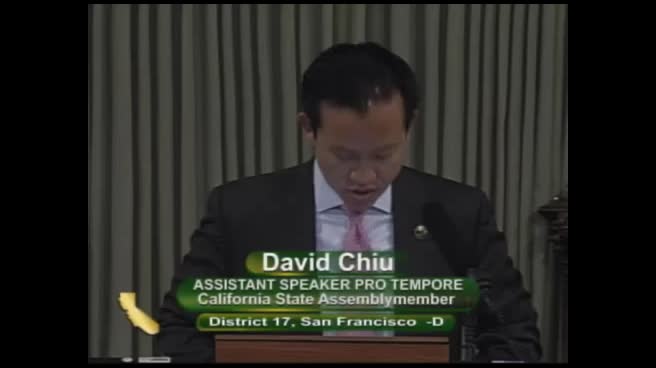 2MIN
Assembly Floor
Bill Author