AJR 25: Access to financial institutions.
- Session Year: 2015-2016
- House: Assembly
- Latest Version Date: 2015-09-25
This measure would memorialize the President and Congress of the United States to support legislation that will provide a comprehensive solution to allow banks and credit unions to perform financial services for marijuana businesses.
This measure would memorialize the President and Congress of the United States to support legislation that will provide a comprehensive solution to allow banks and credit unions to perform financial services for marijuana businesses.
This measure would memorialize the President and Congress of the United States to support legislation that will provide a comprehensive solution to allow banks and credit unions to perform financial services for marijuana businesses.
WHEREAS, Cannabis use for medical purposes is legal in 23 states and is legal for recreational purposes in four states and in the District of Columbia. The expansion of cannabis businesses across the United States requires action from Congress and the federal government; and
WHEREAS, While many states have laws permitting various degrees of commercial activity using cannabis, it remains illegal under federal law. The conflict between federal and state laws has left financial institutions serving cannabis-related businesses on uncertain legal ground. Banks and credit unions are concerned that providing financial services for businesses selling a product that is illegal under federal law exposes them to possible charges of money laundering and drug trafficking; and
WHEREAS, Federal laws, including the Controlled Substances Act, the Bank Secrecy Act, and the Annunzio-Wylie Anti-Money Laundering Act, prohibit financial institutions from providing financial services to cannabis and hemp businesses. Directives from federal regulatory agencies such as the Federal Reserve, the Federal Deposit Insurance Corporation, the National Credit Union Administration, and the Office of the Comptroller of the Currency also prohibit bankers from accepting deposits from cannabis or hemp businesses; and
WHEREAS, In February 2014, the United States Treasurys Financial Crimes Enforcement Network, or FinCEN, in coordination with the United States Department of Justice, also issued a memo outlining expectations for compliance with the Bank Secrecy Act. Despite this progress, remaining uncertainties under current federal law still prevent banks and credit unions from accepting cannabis-based businesses as customers; and
WHEREAS, The medical, retail, and hemp agricultural businesses are unable to accept credit or debit cards from customers because electronic payments are handled through the banking system. Therefore, transactions must be conducted in cash. Further, these businesses cannot deposit cash from sales into financial institutions. This is a major problem in California as many businesses now have hundreds of thousands of dollars in cash at their locations, which poses a public safety risk to businesses, employees, and customers; and
WHEREAS, The lack of financial services makes paying taxes to local governments and the California State Board of Equalization a challenge because tax payments must be made in cash by cannabis-related businesses, leading to hundreds of thousands of dollars in cash being brought directly into government offices. It is difficult for the State Board of Equalization to audit cash-based businesses, especially when records of wholesale transactions are not available; and
WHEREAS, Cannabis businesses cannot easily comply with California tax laws, which has led to a significant underpayment of revenue owed the state. In response, the State Board of Equalization launched the Cannabis Compliance Pilot Project in January 2015 to help determine both the degree of noncompliance with state tax law and the amount of lost tax revenue. However, state efforts alone cannot solve the problem; now, therefore, be it
Resolved by the Assembly and the Senate of the State of California, jointly, That the Legislature respectfully urges the President and Congress to support legislation which will provide a comprehensive solution to allow banks and credit unions to perform financial services for cannabis businesses without federal retribution. The current system that requires cash-based transactions poses a risk to public safety and leads to reduced collection of taxes; and be it further
Resolved, That the Chief Clerk of the Assembly transmit copies of this resolution to the President and the Vice President of the United States, to the Speaker of the House of Representatives, to the Minority Leader of the House of Representatives, to the Majority Leader of the Senate, to the Minority Leader of the Senate, and to each Senator and Representative from California in the Congress of the United States.
WHEREAS, Cannabis use for medical purposes is legal in 23 states and is legal for recreational purposes in four states and in the District of Columbia. The expansion of cannabis businesses across the United States requires action from Congress and the federal government; and
WHEREAS, While many states have laws permitting various degrees of commercial activity using cannabis, it remains illegal under federal law. The conflict between federal and state laws has left financial institutions serving cannabis-related businesses on uncertain legal ground. Banks and credit unions are concerned that providing financial services for businesses selling a product that is illegal under federal law exposes them to possible charges of money laundering and drug trafficking; and
WHEREAS, Federal laws, including the Controlled Substances Act, the Bank Secrecy Act, and the Annunzio-Wylie Anti-Money Laundering Act, prohibit financial institutions from providing financial services to cannabis and hemp businesses. Directives from federal regulatory agencies such as the Federal Reserve, the Federal Deposit Insurance Corporation, the National Credit Union Administration, and the Office of the Comptroller of the Currency also prohibit bankers from accepting deposits from cannabis or hemp businesses; and
WHEREAS, In February 2014, the United States Treasurys Financial Crimes Enforcement Network, or FinCEN, in coordination with the United States Department of Justice, also issued a memo outlining expectations for compliance with the Bank Secrecy Act. Despite this progress, remaining uncertainties under current federal law still prevent banks and credit unions from accepting cannabis-based businesses as customers; and
WHEREAS, The medical, retail, and hemp agricultural businesses are unable to accept credit or debit cards from customers because electronic payments are handled through the banking system. Therefore, transactions must be conducted in cash. Further, these businesses cannot deposit cash from sales into financial institutions. This is a major problem in California as many businesses now have hundreds of thousands of dollars in cash at their locations, which poses a public safety risk to businesses, employees, and customers; and
WHEREAS, The lack of financial services makes paying taxes to local governments and the California State Board of Equalization a challenge because tax payments must be made in cash by cannabis-related businesses, leading to hundreds of thousands of dollars in cash being brought directly into government offices. It is difficult for the State Board of Equalization to audit cash-based businesses, especially when records of wholesale transactions are not available; and
WHEREAS, Cannabis businesses cannot easily comply with California tax laws, which has led to a significant underpayment of revenue owed the state. In response, the State Board of Equalization launched the Cannabis Compliance Pilot Project in January 2015 to help determine both the degree of noncompliance with state tax law and the amount of lost tax revenue. However, state efforts alone cannot solve the problem; now, therefore, be it
Resolved by the Assembly and the Senate of the State of California, jointly, That the Legislature respectfully urges the President and Congress to support legislation which will provide a comprehensive solution to allow banks and credit unions to perform financial services for cannabis businesses without federal retribution. The current system that requires cash-based transactions poses a risk to public safety and leads to reduced collection of taxes; and be it further
Resolved, That the Chief Clerk of the Assembly transmit copies of this resolution to the President and the Vice President of the United States, to the Speaker of the House of Representatives, to the Minority Leader of the House of Representatives, to the Majority Leader of the Senate, to the Minority Leader of the Senate, and to each Senator and Representative from California in the Congress of the United States.
WHEREAS, Cannabis use for medical purposes is legal in 23 states and is legal for recreational purposes in four states and in the District of Columbia. The expansion of cannabis businesses across the United States requires action from Congress and the federal government; and
WHEREAS, While many states have laws permitting various degrees of commercial activity using cannabis, it remains illegal under federal law. The conflict between federal and state laws has left financial institutions serving cannabis-related businesses on uncertain legal ground. Banks and credit unions are concerned that providing financial services for businesses selling a product that is illegal under federal law exposes them to possible charges of money laundering and drug trafficking; and
WHEREAS, Federal laws, including the Controlled Substances Act, the Bank Secrecy Act, and the Annunzio-Wylie Anti-Money Laundering Act, prohibit financial institutions from providing financial services to cannabis and hemp businesses. Directives from federal regulatory agencies such as the Federal Reserve, the Federal Deposit Insurance Corporation, the National Credit Union Administration, and the Office of the Comptroller of the Currency also prohibit bankers from accepting deposits from cannabis or hemp businesses; and
WHEREAS, In February 2014, the United States Treasurys Financial Crimes Enforcement Network, or FinCEN, in coordination with the United States Department of Justice, also issued a memo outlining expectations for compliance with the Bank Secrecy Act. Despite this progress, remaining uncertainties under current federal law still prevent banks and credit unions from accepting cannabis-based businesses as customers; and
WHEREAS, The medical, retail, and hemp agricultural businesses are unable to accept credit or debit cards from customers because electronic payments are handled through the banking system. Therefore, transactions must be conducted in cash. Further, these businesses cannot deposit cash from sales into financial institutions. This is a major problem in California as many businesses now have hundreds of thousands of dollars in cash at their locations, which poses a public safety risk to businesses, employees, and customers; and
WHEREAS, The lack of financial services makes paying taxes to local governments and the California State Board of Equalization a challenge because tax payments must be made in cash by cannabis-related businesses, leading to hundreds of thousands of dollars in cash being brought directly into government offices. It is difficult for the State Board of Equalization to audit cash-based businesses, especially when records of wholesale transactions are not available; and
WHEREAS, Cannabis businesses cannot easily comply with California tax laws, which has led to a significant underpayment of revenue owed the state. In response, the State Board of Equalization launched the Cannabis Compliance Pilot Project in January 2015 to help determine both the degree of noncompliance with state tax law and the amount of lost tax revenue. However, state efforts alone cannot solve the problem; now, therefore, be it
Resolved by the Assembly and the Senate of the State of California, jointly, That the Legislature respectfully urges the President and Congress to support legislation which will provide a comprehensive solution to allow banks and credit unions to perform financial services for cannabis businesses without federal retribution. The current system that requires cash-based transactions poses a risk to public safety and leads to reduced collection of taxes; and be it further
Resolved, That the Chief Clerk of the Assembly transmit copies of this resolution to the President and the Vice President of the United States, to the Speaker of the House of Representatives, to the Minority Leader of the House of Representatives, to the Majority Leader of the Senate, to the Minority Leader of the Senate, and to each Senator and Representative from California in the Congress of the United States.
|
Date
|
Status
|
|---|---|
| Sep 9, 2015 | Joint Rule 62(a) suspended. (Ayes 27. Noes 6. Page 2646.) |
| Sep 25, 2015 | Enrolled and filed with the Secretary of State at 1:30 p.m. |
| Sep 25, 2015 | Chaptered by Secretary of State - Res. Chapter 202, Statutes of 2015. |
| Sep 11, 2015 | In Assembly. Ordered to Engrossing and Enrolling. |
| Sep 11, 2015 | Adopted and to Senate. (Ayes 36. Noes 3. Page 2755.) |
| Sep 11, 2015 | Adopted and to Senate. |
| Sep 10, 2015 | From committee: Be adopted. Ordered to Third Reading. (Ayes 4. Noes 1.) (September 10). |
| Sep 9, 2015 | Re-referred to Com. on B. & F.I. |
| Sep 9, 2015 | Joint Rule 62(a) suspended. (Ayes 27. Noes 6.) |
| Jun 25, 2015 | Introduced. To print. |
| Sep 9, 2015 | Joint Rule 61(a) suspended. (Ayes 27. Noes 6. Page 2645.) |
| Sep 9, 2015 | Joint Rule 61 suspended. (Ayes 27. Noes 6.) |
| Aug 27, 2015 | In Senate. To Com. on RLS. |
| Aug 27, 2015 | Adopted and to Senate. (Ayes 67. Noes 3.) |
| Aug 27, 2015 | Adopted and to Senate. (Ayes 67. Noes 3. Page 2620.) |
| Aug 25, 2015 | From committee: Be adopted. Ordered to Third Reading. (Ayes 9. Noes 1.) (August 24). |
| Jul 2, 2015 | Referred to Com. on B. & F. |
| Jun 26, 2015 | From printer. |
|
Date
|
Description
|
Location
|
Votes
|
|
|---|---|---|---|---|
| Sep 11, 2015 | Assembly 3rd Reading AJR25 Lackey By McGuire | Senate Floor |
Passed |
|
| Aug 27, 2015 | AJR 25 LACKEY Assembly Third Reading | Assembly Floor |
Passed |
|
| Aug 24, 2015 | Be adopted. To third reading. | Assembly 1st Extraordinary Session on Finance |
Passed |
This list shows positions taken on this bill by organizations on the date displayed, which is linked to the original source.
Positions by individuals are not included.
|
Organization
|
Position
|
Date
|
|---|---|---|
| Board of Equalization Member Fiona Ma | ** Support | Sep 10, 2015 |
| Board of Equalization Member George Runner | ** Support | Sep 10, 2015 |
| California Cannabis Industry Association | ** Support | Sep 10, 2015 |
| California Credit Union League | * Support | Sep 10, 2015 |
AJR 25 (Lackey) Page 5 of 5
SENATE COMMITTEE ON
BANKING AND FINANCIAL INSTITUTIONS
Senator Marty Block, Chair
2015 - 2016 Regular
Bill No: AJR 25 Hearing Date: September 10, 2015
Author: |
Lackey |
||
Version: |
June 25, 2015 Introduced |
||
Urgency: |
|
Fiscal: |
No |
Consultant: |
Eileen Newhall |
||
Subject: Access to financial institutions.
SUMMARY
Memorializes the President and Congress to support legislation that will provide a comprehensive solution to allow banks and credit unions to perform financial services for marijuana businesses.
DESCRIPTION
Contains several findings, including the following:
Cannabis use is legal for medical purposes in 23 states and for recreational purposes in four states and the District of Columbia.
While many states have laws permitting various degrees of commercial activity using cannabis, the drug remains illegal under federal law. The conflict between federal and state laws has left financial institutions serving cannabis-related businesses on uncertain legal ground. Banks and credit unions are concerned that providing financial services for businesses selling a product that is illegal under federal law exposes them to possible charges of money laundering and drug trafficking.
Federal law, including the Controlled Substances Act, Bank Secrecy Act, and the Annunzio-Wylie Anti-Money Laundering Act, prohibit financial institutions from providing financial services to cannabis and hemp businesses. Directives from federal regulatory agencies such as the Federal Reserve, Federal Deposit Insurance Corporation, National Credit Union Administration, and Office of the Comptroller of the Currency also prohibit bankers from accepting deposits from cannabis or hemp businesses.
In February 2014, the United States Treasury’s Financial Crimes Enforcement Network (FinCEN), in coordination with the United States Department of Justice, issued a memo outlining expectations for marijuana businesses seeking to comply with the Bank Secrecy Act. Despite this progress, remaining uncertainties under current federal law still prevent banks and credit unions from accepting cannabis-based businesses as customers.
The medical, retail, and help agricultural businesses are unable to accept credit or debit cards from customers, because electronic payments are handled through the banking system. Therefore, transactions must be conducted in cash. Further, these businesses cannot deposit cash from sales into financial institutions. This is a major problem in California, as many businesses now have hundreds of thousands of dollars in cash in their locations, which poses a public safety risk to businesses, employees, and customers.
The lack of financial services makes paying taxes to local governments and the California State Board of Equalization (BOE) a challenge, because tax payments must be made in cash by cannabis-related businesses, leading to hundreds of thousands of dollars in cash being brought directly into government offices. It is difficult for BOE to audit cash-based businesses, especially when records of wholesale transactions are not available.
Cannabis businesses cannot easily comply with California tax laws, which has led to a significant underpayment of revenue owed the state. In response, BOE launched the Cannabis Compliance Pilot Project in January, 2015, to help determine both the degree of noncompliance with state tax law and the amount of lost tax revenue. However, state efforts alone cannot solve the problem.
Urges the President and Congress to support legislation that will provide a comprehensive solution to allow banks and credit unions to perform financial services for cannabis businesses without federal retribution. States that the current system, which requires cash-based transactions, poses a risk to public safety and leads to reduced collection of taxes.
EXISTING LAW
Provides for the Compassionate Use Act of 1996 (Health and Safety Code Section 11362.5), added by Proposition 215, an initiative statute approved by the voters on November 5, 1996. Under the Compassionate Use Act of 1996, Health and Safety Code Section 11357, making it unlawful to possess marijuana, and Section 11358, making it unlawful to cultivate marijuana, do not apply to a patient or to a patient’s primary caregiver, who possesses or cultivates marijuana for the personal medical purposes of the patient upon the written or oral recommendation or approval of a physician.
Requires the State Department of Health Services to establish and maintain a voluntary program for the issuance of identification cards to qualified patients and establish procedures under which qualified patients with an identification card may use marijuana for medical purposes. Authorizes the State Attorney General to ensure the security and nondiversion of marijuana grown for medical use, and to set forth and clarify details concerning possession and cultivation limits, as specified (Article 2.5 of Chapter 6 of Division 10 of the Health and Safety Code), commencing with Section 11362.7).
COMMENTS
Purpose: This bill is co-sponsored by BOE Members Fiona Ma and George Runner, to encourage the federal government to remove roadblocks that have prevented banks and credit unions from serving cannabis businesses in California and, in doing so, reduce the amount of unpaid taxes owed by cannabis businesses and reduce the public safety concerns associated with cash payments of tax liability by these businesses.
Background: California is one of 23 states that have decriminalized the use of marijuana for medical purposes. However, those who cultivate marijuana in compliance with California law and who run medical marijuana dispensaries in compliance with California law are currently shut off from the banking system. Because the federal government classifies marijuana as a Class I drug, whose cultivation, sale, and possession can constitute felonies, banks and credit unions risk federal regulatory sanctions if they knowingly accept marijuana businesses as customers.
Although federal regulators, including the U.S. Department of Justice, FinCEN, and the Federal Deposit Insurance Corporation, have issued guidance intended to assuage bankers’ fears about providing banking services to marijuana businesses that are operating in accordance with the laws of their states, the guidance has had little effect. According to an August, 2014 speech by FinCEN’s director, less than 1% of all banks and credit unions nationwide provide banking services to cannabis businesses.
The challenges faced by financial institutions seeking to serve cannabis businesses were recently illustrated, when the Federal Reserve Bank of Kansas City rejected an application from Denver, Colorado-based Fourth Corner Credit Union to open a master account, and the National Credit Union Administration denied the credit union’s application for deposit insurance. Although the credit union holds a charter from the State of Colorado, it has effectively been denied the ability to operate by the actions of the Federal Reserve Bank of Kansas City and the National Credit Union Administration. The credit union, which is seeking to be the first in the nation to cater specifically to the marijuana industry, has sued both federal agencies, but the lawsuits remain pending.
Within California, there are anecdotal accounts of certain credit unions being willing to open accounts for local cannabis businesses, but the vast majority of cannabis businesses operating in accordance with California’s medical marijuana laws remain unbanked.
Discussion: The widespread inability of cannabis businesses in California to access the banking system has created several practical problems. For example, these businesses are at increased risk of theft due to the large amounts of money they hold. Furthermore, because they lack access to the banking system, they are not only unable to obtain bank accounts, but cannot obtain debit or credit cards or business loans, and cannot process debit or credit cards that their customers might want to use to purchase cannabis products.
Cannabis businesses also pose problems for California’s tax agencies, which do not typically deal in cash. The sponsors of AJR 25, BOE Members Fiona Ma and George Runner, believe that a significant amount of tax revenue goes uncollected, due to the lack of electronic bank records. Ms. Ma and Mr. Runner launched the Cannabis Compliance Pilot Project in January, 2015, in an effort to quantify the degree of tax compliance among cannabis businesses, and identify the corresponding lost tax revenue.
A Solution: At the present time, it appears that a solution to these problems must come from the federal government. Senator Jeff Merkley from Oregon and Congressman Ed Perlmutter from Colorado have introduced legislation in the current Congress titled Marijuana Businesses Access to Banking Act of 2015 (S. 1726 and H.R. 2076), but the future success of that legislation is unknown.
Summary of Arguments in Support:
BOE Members George Runner and Fiona Ma are co-sponsoring AJR 25 as an important step toward improving industry compliance with existing tax laws. BOE, which is responsible for collecting sales tax, has provided seller’s permits to medical cannabis-based businesses since 2005. However, due to the lack of electronic bank records stemming from these business’ lack of access to banking services, BOE estimates that millions of dollars in tax revenue goes uncollected every year. “As long as financial institutions are unable to provide access to their services, legitimate cannabis-based businesses will be unable to take advantage of bank accounts, debit or credit cards and business loans. They will continue to complete all business transactions in cash, making audits nearly impossible. Not only does this reduce tax revenue, it is also a serious public safety concern.”
The California Cannabis Industry Association observes that in states like California, where medical cannabis use is legal, both banks and the cannabis industry face regulatory uncertainty. “Rather than assume the risk of affiliating with businesses that handle a drug considered illegal under federal law, banks choose not to provide services to cannabis businesses. Consequently, these business are forced to operate on a largely cash basis, discouraging financial transparency, encouraging tax evasion, and creating public safety risks. Opening up banking access to the cannabis industry will ensure better security for California’s medical cannabis industry and patients, allow for easier accounting and financial transparency, and provide the industry with more resources to invest in our state and local economies.” The California Chapter of the National Organization for the Reform of Marijuana Laws expresses similar arguments in support.
The California Credit Union League writes, “Credit unions and banks face significant regulatory uncertainty when considering banking the cannabis industry. Furthermore, credit unions and banks may have problems with their federal and state regulators and access to the U.S. Federal Reserve. Federal legislation providing guidelines to financial institutions on how to efficiently serve the cannabis industry would mitigate the regulatory uncertainty facing financial institutions.”
Summary of Arguments in Opposition: None received.
LIST OF REGISTERED SUPPORT/OPPOSITION
Support
Board of Equalization Member Fiona Ma (co-sponsor)
Board of Equalization Member George Runner (co-sponsor)
California Cannabis Industry Association
California Chapter of the National Organization for the Reform of Marijuana Laws
California Credit Union League
Opposition
None received
-- END --
AJR 25
Page 6
|
Office of Senate Floor Analyses (916) 651-1520 Fax: (916) 327-4478 |
THIRD READING
Bill No: AJR 25
Introduced: 6/25/15
SENATE BANKING & F.I. COMMITTEE: 4-1, 9/10/15
AYES: Block, Vidak, Hueso, Lara
NOES: Morrell
NO VOTE RECORDED: Galgiani, Hall
ASSEMBLY FLOOR: 67-3, 8/27/15 - See last page for vote
SUBJECT: Access to financial institutions
SOURCE: Board of Equalization Member Fiona Ma
Board of Equalization Member George Runner
DIGEST: This resolution memorializes the President and Congress to support legislation that will provide a comprehensive solution to allow banks and credit unions to perform financial services for marijuana businesses.
Existing
law:
Provides for the Compassionate Use Act of 1996 (Health and Safety Code Section 11362.5), added by Proposition 215, an initiative statute approved by the voters on November 5, 1996. Under the Compassionate Use Act of 1996, Health and Safety Code Section 11357, making it unlawful to possess marijuana, and Health and Safety Code Section 11358, making it unlawful to cultivate marijuana, do not apply to a patient or to a patient’s primary caregiver, who possesses or cultivates marijuana for the personal medical purposes of the patient upon the written or oral recommendation or approval of a physician.
Requires the State Department of Health Services to establish and maintain a voluntary program for the issuance of identification cards to qualified patients and establish procedures under which qualified patients with an identification card may use marijuana for medical purposes. Authorizes the State Attorney General to ensure the security and nondiversion of marijuana grown for medical use, and to set forth and clarify details concerning possession and cultivation limits, as specified (Article 2.5 of Chapter 6 of Division 10 of the Health and Safety Code, commencing with Section 11362.7).
This resolution:
Contains several findings, including the following:
Cannabis use is legal for medical purposes in 23 states and for recreational purposes in four states and the District of Columbia.
While many states have laws permitting various degrees of commercial activity using cannabis, the drug remains illegal under federal law. The conflict between federal and state laws has left financial institutions serving cannabis-related businesses on uncertain legal ground. Banks and credit unions are concerned that providing financial services for businesses selling a product that is illegal under federal law exposes them to possible charges of money laundering and drug trafficking.
Federal law, including the Controlled Substances Act, Bank Secrecy Act, and the Annunzio-Wylie Anti-Money Laundering Act, prohibit financial institutions from providing financial services to cannabis and hemp businesses. Directives from federal regulatory agencies such as the Federal Reserve Board, Federal Deposit Insurance Corporation (FDIC), National Credit Union Administration (NCUA), and Office of the Comptroller of the Currency also prohibit bankers from accepting deposits from cannabis or hemp businesses.
In February 2014, the United States Treasury’s Financial Crimes Enforcement Network (FinCEN), in coordination with the United States Department of Justice, issued a memo outlining expectations for marijuana businesses seeking to comply with the Bank Secrecy Act. Despite this progress, remaining uncertainties under current federal law still prevent banks and credit unions from accepting cannabis-based businesses as customers.
The medical, retail, and hemp agricultural businesses are unable to accept credit or debit cards from customers, because electronic payments are handled through the banking system. Therefore, transactions must be conducted in cash. Further, these businesses cannot deposit cash from sales into financial institutions. This is a major problem in California, as many businesses now have hundreds of thousands of dollars in cash in their locations, which poses a public safety risk to businesses, employees, and customers.
The lack of financial services makes paying taxes to local governments and the California State Board of Equalization (BOE) a challenge, because tax payments must be made in cash by cannabis-related businesses, leading to hundreds of thousands of dollars in cash being brought directly into government offices. It is difficult for BOE to audit cash-based businesses, especially when records of wholesale transactions are not available.
Cannabis businesses cannot easily comply with California tax laws, which has led to a significant underpayment of revenue owed the state. In response, BOE launched the Cannabis Compliance Pilot Project in January, 2015, to help determine both the degree of noncompliance with state tax law and the amount of lost tax revenue. However, state efforts alone cannot solve the problem.
Urges the President and Congress to support legislation that will provide a comprehensive solution to allow banks and credit unions to perform financial services for cannabis businesses without federal retribution. States that the current system, which requires cash-based transactions, poses a risk to public safety and leads to reduced collection of taxes.
Background
California is one of 23 states that have decriminalized the use of marijuana for medical purposes. However, those who cultivate marijuana in compliance with California law and who run medical marijuana dispensaries in compliance with California law are currently shut off from the banking system. Because the federal government classifies marijuana as a Class I drug, whose cultivation, sale, and possession can constitute felonies, banks and credit unions risk federal regulatory sanctions if they knowingly accept marijuana businesses as customers.
Although federal regulators, including the U.S. Department of Justice, FinCEN, and the FDIC, have issued guidance intended to assuage bankers’ fears about providing banking services to marijuana businesses that are operating in accordance with the laws of their states, the guidance has had little effect. According to an August, 2014 speech by FinCEN’s director, less than 1% of all banks and credit unions nationwide provide banking services to cannabis businesses.
The challenges faced by financial institutions seeking to serve cannabis businesses were recently illustrated, when the Federal Reserve Bank of Kansas City rejected an application from Denver, Colorado-based Fourth Corner Credit Union to open a master account, and the NCUA denied the credit union’s application for deposit insurance. Although the credit union holds a charter from the State of Colorado, it has effectively been denied the ability to operate by the actions of the Federal Reserve Bank of Kansas City and the NCUA. The credit union, which is seeking to be the first in the nation to cater specifically to the marijuana industry, has sued both federal agencies, but the lawsuits remain pending.
Within California, there are anecdotal accounts of certain credit unions being willing to open accounts for local cannabis businesses, but the vast majority of cannabis businesses operating in accordance with California’s medical marijuana laws remain unbanked.
Comments
The widespread inability of cannabis businesses in California to access the banking system has created several practical problems. For example, these businesses are at increased risk of theft due to the large amounts of money they hold. Furthermore, because they lack access to the banking system, they are not only unable to obtain bank accounts, but cannot obtain debit or credit cards or business loans, and cannot process debit or credit cards that their customers might want to use to purchase cannabis products.
Cannabis businesses also pose problems for California’s tax agencies, which do not typically deal in cash. The sponsors of AJR 25, BOE Members Fiona Ma and George Runner, believe that a significant amount of tax revenue goes uncollected, due to the lack of electronic bank records. Ms. Ma and Mr. Runner launched the Cannabis Compliance Pilot Project in January, 2015, in an effort to quantify the degree of tax compliance among cannabis businesses, and identify the corresponding lost tax revenue.
At the present time, it appears that a solution to these problems must come from the federal government. Senator Jeff Merkley from Oregon and Congressman Ed Perlmutter from Colorado have introduced legislation in the current Congress titled Marijuana Businesses Access to Banking Act of 2015 (S. 1726 and H.R. 2076), but the future success of that legislation is unknown.
FISCAL EFFECT: Appropriation: No Fiscal Com.: No Local: No
Board of Equalization Member Fiona Ma (co-source)
Board of Equalization Member George Runner (co-source)
California Cannabis Industry Association
California Chapter of the National Organization for the Reform of Marijuana Laws
California Credit Union League
OPPOSITION: (Verified 9/10/15)
None received
ARGUMENTS IN SUPPORT: Board of Equalization Members George
Runner and Fiona Ma are co-sponsoring AJR 25 as an important step
toward improving industry compliance with existing tax laws. BOE,
which is responsible for collecting sales tax, has provided seller’s
permits to medical cannabis-based businesses since 2005. However,
due to the lack of electronic bank records stemming from these
business’ lack of access to banking services, BOE estimates that
millions of dollars in tax revenue goes uncollected every year. “As
long as financial institutions are unable to provide access to their
services, legitimate cannabis-based businesses will be unable to take
advantage of bank accounts, debit or credit cards and business loans.
They will continue to complete all business transactions in cash,
making audits nearly impossible. Not only does this reduce tax
revenue, it is also a serious public safety concern.”
The California Credit Union League writes, “Credit unions and banks face significant regulatory uncertainty when considering banking the cannabis industry. Furthermore, credit unions and banks may have problems with their federal and state regulators and access to the U.S. Federal Reserve. Federal legislation providing guidelines to financial institutions on how to efficiently serve the cannabis industry would mitigate the regulatory uncertainty facing financial institutions.”
ASSEMBLY FLOOR: 67-3, 8/27/15
AYES: Achadjian, Alejo, Baker, Bigelow, Bloom, Bonilla, Bonta, Burke, Calderon, Campos, Chang, Chau, Chávez, Chiu, Chu, Cooley, Dababneh, Dahle, Dodd, Eggman, Gallagher, Cristina Garcia, Eduardo Garcia, Gipson, Gomez, Gonzalez, Gordon, Gray, Hadley, Roger Hernández, Holden, Irwin, Jones, Jones-Sawyer, Kim, Lackey, Levine, Linder, Lopez, Low, Maienschein, Mathis, Mayes, McCarty, Medina, Melendez, Mullin, Obernolte, O'Donnell, Olsen, Perea, Quirk, Rendon, Ridley-Thomas, Rodriguez, Salas, Santiago, Steinorth, Mark Stone, Thurmond, Ting, Wagner, Weber, Wilk, Williams, Wood, Atkins
NOES: Travis Allen, Gatto, Harper
NO VOTE RECORDED: Brough, Brown, Cooper, Daly, Frazier, Beth Gaines, Grove, Nazarian, Patterson, Waldron
Prepared by: Eileen Newhall / B. & F.I. / (916) 651-4102
9/10/15 23:17:22
**** END ****
AJR 25
Page 5
ASSEMBLY THIRD READING
AJR 25
(Lackey)
As Introduced June 25, 2015
Majority vote
Committee |
Votes |
Ayes |
Noes |
Banking |
9-1 |
Dababneh, Achadjian, Chau, Hadley, Kim, Low, Perea, Ridley-Thomas, Mark Stone |
Gatto |
SUMMARY: Memorializes the President and Congress of the United States to support legislation that will provide a comprehensive solution to allow banks and credit unions to perform financial services for cannabis businesses. Specifically, this bill:
Makes the following findings:
Cannabis use for medical purposes is legal in 23 states and is legal for recreational purposes in four states and in the District of Columbia. The expansion of cannabis businesses across the United States requires action from Congress and the federal government;
Many states have laws permitting various degrees of commercial activity using cannabis, it still remains illegal under federal law;
The conflict between federal and state laws has left financial institutions serving cannabis-related businesses on uncertain legal ground. Banks and credit unions are concerned that providing financial services for businesses selling a product that is illegal under federal law exposes them to possible charges of money laundering and drug trafficking;
Federal laws, including the Controlled Substances Act, the Bank Secrecy Act (BSA), and the Annunzio-Wylie Anti-Money Laundering Act, prohibit financial institutions from providing financial services to cannabis and hemp businesses;
Directives from federal regulatory agencies such as the Federal Reserve, the Federal Deposit Insurance Corporation, the National Credit Union Administration, and the Office of the Comptroller of the Currency also prohibit bankers from accepting deposits from cannabis or hemp businesses;
In February 2014, the United States Treasury's Financial Crimes Enforcement Network (FinCEN), in coordination with the United States Department of Justice, also issued a memo outlining expectations for compliance with the BSA;
The medical, retail, and hemp agricultural businesses are unable to accept credit or debit cards from customers because electronic payments are handled through the banking system. Therefore, transactions must be conducted in cash;
The lack of financial services makes paying taxes to local governments and the California State Board of Equalization (BOE) a challenge because tax payments must be made in cash by cannabis-related businesses, leading to hundreds of thousands of dollars in cash being brought directly into government offices. It is difficult for the BOE to audit cash-based businesses, especially when records of wholesale transactions are not available;
Cannabis businesses cannot easily comply with California tax laws, which has led to a significant underpayment of revenue owed the state; and,
The BOE launched the Cannabis Compliance Pilot Project in January 2015 to help determine both the degree of noncompliance with state tax law and the amount of lost tax revenue.
Urges the President and Congress to support legislation which will provide a comprehensive solution to allow banks and credit unions to perform financial services for cannabis businesses without federal retribution. The current system that requires cash-based transactions poses a risk to public safety and leads to reduced collection of taxes.
Requests that the Chief Clerk of the Assembly transmit copies of this resolution to the President and the Vice President of the United States, to the Speaker of the House of Representatives, to the Minority Leader of the House of Representatives, to the Majority Leader of the Senate, to the Minority Leader of the Senate, and to each Senator and Representative from California in the Congress of the United States.
EXISTING LAW: In 1996, voters approved Proposition 215, known as the Compassionate use Act of 1996 (CUA). The CUA allowed patients and primary caregivers to obtain and use medical cannabis, as recommended by a physician, and prohibited physicians from being punished or denied any right or privilege for making a medical cannabis recommendation to a patient. In 2003, SB 420 (Vasconcellos), Chapter 875, Statutes of 2003, allowed patients and primary caregivers to collectively and cooperatively cultivate medical cannabis, and established a medical cannabis card program for patients to use on a voluntary basis. Despite the CUA and SB 420, cannabis is still illegal under federal law.
FISCAL EFFECT: None
COMMENTS: A longstanding issue faced by those operating in the medical cannabis business in California is the lack of banking services. Stories abound of businesses ranging from dispensaries to growers all operating within California's legal framework facing the closure of bank accounts and being denied access to bank accounts. This has led to fees and taxes being paid at government offices with large bags of cash that only raise further suspicion or create security concerns.
On February 14, 2014, the FinCEN issued guidance (FIC-2014-G001) to clarify BSA expectations for financial institutions seeking to provide services to cannabis-related businesses. Financial institutions and those in the legal cannabis business had hoped that the guidance would provide greater clarity and potentially open up more financial institutions for access. Unfortunately those hopes were up in smoke as the guidance only added further confusion and did little to eliminate the risk faced by financial institutions.
Banks are required to file suspicious activity reports (SARs) when they think that a transaction might have a drug connection. Rather than clarify the existing SAR process for legal cannabis business the new guidance outlines three tiers of SARs to use just for cannabis businesses: "cannabis limited," "cannabis priority," and "cannabis termination." In spite of expanding paperwork requirements FinCEN was quoted in the press as saying that these changes would reduce the burden on banks. A year and half after the issuance of this guidance, financial institutions are still hesitant to open accounts for legal cannabis businesses whether they are in California or other states that have legal medical or recreational cannabis.
A solution was almost found in Colorado as Denver-based Fourth Corner Credit Union was established to serve the financial needs of the cannabis and hemp industries. Fourth Corner ran into problems when it reached out to the Federal Bank of Kansas City to get a master account. A master account is effectively a bank's bank account. Master accounts at Fed branches allow banks to not only deposit their cash reserves, but gives banks the ability to easily transact business with other financial institutions by settling credits and debits through the account at that Fed branch bank. A financial institution without a master account would be prevented from conducting most types of electronic funds transfers. Fourth Corner has filed legal action against the Federal Reserve Bank of Kansas City.
California impact. In October 2005 the BOE directed staff to issue seller's permits to all retailers of medical cannabis in order for those retailers to collect and remit sales tax. In spite of this policy it is still difficult to determine the total amount of cannabis business in California because taxpayers can "decline to state" the type of property they sell in order to avoid self-incrimination.
In February 2014, BOE established a policy to no longer accept cash payments and instead encourage taxpayers to pay online using their bank account information. A "No Cash Exemption Request" was created to assist medical cannabis retailers as they have mostly cash-based businesses and have fears of having assets seized if they were able to open a bank account. These cash based businesses have put additional cost pressures on BOE as it makes it difficult to conduct record verification and track gross retail sales of medical cannabis.
Earlier this year, BOE established the Cannabis Compliance Pilot Project (project) to assess the degree of tax compliance in the industry and identify the corresponding lost tax revenue.
Congressional action. Congressman Perlmutter (D-Colorado) has introduced H.R. 2076 - Marijuana Businesses Access to Banking Act of 2015. H.R. 2076 would provide a safe harbor for depository institutions that provide products or services to legal cannabis businesses and prohibits a federal banking regulators from: 1) terminating or limiting the deposit or share insurance of a depository institution solely because it provides financial services to a cannabis-related legitimate business; or 2) prohibiting, penalizing, or otherwise discouraging a depository institution from offering such services.
Additional considerations. The complex issues associated with banking legal medical cannabis businesses cannot easily be rolled up. Medicinal cannabis is legal in 23 states and legal for recreational purposes in four states and the District of Columbia yet still illegal under federal law. At any given moment those entities operating legally under state law could face legal action from federal prosecutors and have their assets seized. The current federal enforcement policy is contained in a document known as the Cole memo. The Cole memo was issued on August 29, 2013, by James M. Cole, United States Department of Justice Deputy Attorney General. This memo provides guidance to federal enforcement authorities giving the status of cannabis as legal for medical or recreational use in several states. The Cole memo illuminates how federal prosecutorial resources will be focused on the issue of cannabis by providing the following enforcement priorities:
Preventing the distribution of cannabis to minors;
Preventing revenue from the sale of cannabis from going to criminal enterprises, gangs, and cartels;
Preventing the diversion of cannabis from states where it is legal under state law in some form to other states;
Preventing state-authorized cannabis activity from being used as a cover or pretext for the trafficking of other illegal drugs or other illegal activity;
Preventing violence and the use of firearms in the cultivation and distribution of cannabis;
Preventing drugged driving and the exacerbation of other adverse public health consequences associated with cannabis use;
Preventing the growing of cannabis on public lands and the attendant public safety and environmental dangers posed by cannabis production on public lands; and
Preventing cannabis possession or use on federal property.
This list of priorities would seem to blunt any arguments that the federal government is looking to override the state laws that allow some use of cannabis. Yet the Cole memo also includes the following language left open to broad interpretations.
If state enforcement efforts are not sufficiently robust to protect against the harms set forth above, the federal government may seek to challenge the regulatory structure itself in addition to continuing to bring individual enforcement actions, including criminal prosecutions, focused on those harms.
Even in the event that financial institutions are given a safe harbor to bank cannabis businesses such safe harbors may not go far enough to protect assets from seizure, particularly assets that have been used as collateral for loans and lines of credit with financial institutions. Without a change to the status of cannabis as a Schedule I drug at the federal level, businesses legal under state law will continue to operate in a murky area where enforcement of federal law is only as consistent as federal policy, versus statute, wants it to be. A change in Presidential administration could drastically alter the views and actions of federal law enforcement entities. Providing greater clarity for financial institutions may provide a temporary short-term solution to the banking question. However, only when federal law is changed to remove cannabis from Schedule I of the Controlled Substances Act or the federal courts clearly recognizes the right of states to establish their own policy in this regard will the cannabis industry have true legal protection when using financial institutions.
Until then, both financial institutions and cannabis businesses will still operate in a cloudy legal space.
Analysis Prepared by: Mark Farouk / B. & F. / (916) 319-3081 FN: 0001509
AJR 25
Page 6
Date of Hearing: August 24, 2015
ASSEMBLY COMMITTEE ON BANKING AND FINANCE
Matthew Dababneh, Chair
AJR 25 (
Lackey) – As Introduced June 25, 2015
SUBJECT: Access to financial institutions
SUMMARY: Memorializes the President and Congress of the United States to support legislation that will provide a comprehensive solution to allow banks and credit unions to perform financial services for cannabis businesses. Specifically, this bill:
Makes the following findings:
Cannabis use for medical purposes is legal in 23 states and is legal for recreational purposes in four states and in the District of Columbia. The expansion of cannabis businesses across the United States requires action from Congress and the federal government;
Many states have laws permitting various degrees of commercial activity using cannabis, it still remains illegal under federal law;
The conflict between federal and state laws has left financial institutions serving cannabis-related businesses on uncertain legal ground. Banks and credit unions are concerned that providing financial services for businesses selling a product that is illegal under federal law exposes them to possible charges of money laundering and drug trafficking;
Federal laws, including the Controlled Substances Act, the Bank Secrecy Act (BSA), and the Annunzio-Wylie Anti-Money Laundering Act, prohibit financial institutions from providing financial services to cannabis and hemp businesses;
Directives from federal regulatory agencies such as the Federal Reserve, the Federal Deposit Insurance Corporation, the National Credit Union Administration, and the Office of the Comptroller of the Currency also prohibit bankers from accepting deposits from cannabis or hemp businesses;
In February 2014, the United States Treasury’s Financial Crimes Enforcement Network (FinCEN), in coordination with the United States Department of Justice, also issued a memo outlining expectations for compliance with the BSA;
The medical, retail, and hemp agricultural businesses are unable to accept credit or debit cards from customers because electronic payments are handled through the banking system. Therefore, transactions must be conducted in cash;
The lack of financial services makes paying taxes to local governments and the California State Board of Equalization (BOE) a challenge because tax payments must be made in cash by cannabis-related businesses, leading to hundreds of thousands of dollars in cash being brought directly into government offices. It is difficult for the BOE to audit cash-based businesses, especially when records of wholesale transactions are not available;
Cannabis businesses cannot easily comply with California tax laws, which has led to a significant underpayment of revenue owed the state; and,
The BOE launched the Cannabis Compliance Pilot Project in January 2015 to help determine both the degree of noncompliance with state tax law and the amount of lost tax revenue.
Urges the President and Congress to support legislation which will provide a comprehensive solution to allow banks and credit unions to perform financial services for cannabis businesses without federal retribution. The current system that requires cash-based transactions poses a risk to public safety and leads to reduced collection of taxes.
Requests that the Chief Clerk of the Assembly transmit copies of this resolution to the President and the Vice President of the United States, to the Speaker of the House of Representatives, to the Minority Leader of the House of Representatives, to the Majority Leader of the Senate, to the Minority Leader of the Senate, and to each Senator and Representative from California in the Congress of the United States.
EXISTING LAW: In 1996, voters approved Proposition 215, known as the Compassionate use Act of 1996 (CUA). The CUA allowed patients and primary caregivers to obtain and use medical cannabis, as recommended by a physician, and prohibited physicians from being punished or denied any right or privilege for making a medical cannabis recommendation to a patient. In 2003, SB 420 (Vasconcellos, 2003) allowed patients and primary caregivers to collectively and cooperatively cultivate medical cannabis, and established a medical cannabis card program for patients to use on a voluntary basis. Despite the CUA and SB 420, cannabis is still illegal under federal law.
FISCAL EFFECT: None
COMMENTS:
A longstanding issue faced by those operating in the medical cannabis business in California is the lack of banking services. Stories abound of businesses ranging from dispensaries to growers all operating within California's legal framework facing the closure of bank accounts and being denied access to bank accounts. This has led to fees and taxes being paid at government offices with large bags of cash that only raise further suspicion or create security concerns.
On February 14, 2014 the FinCEN issued guidance (FIC-2014-G001) to clarify BSA expectations for financial institutions seeking to provide services to cannabis-related businesses. Financial institutions and those in the legal cannabis business had hoped that the guidance would provide greater clarity and potentially open up more financial institutions for access. Unfortunately those hopes were up in smoke as the guidance only added further confusion and did little to eliminate the risk faced by financial institutions.
Banks are required to file suspicious activity reports (SARs) when they think that a transaction might have a drug connection. Rather than clarify the existing SAR process for legal cannabis business the new guidance outlines three tiers of SARs to use just for cannabis businesses: “cannabis limited,” “cannabis priority,” and “cannabis termination.” In spite of expanding paperwork requirements FinCEN was quoted in the press as saying that these changes would reduce the burden on banks. A year and half after the issuance of this guidance, financial institutions are still hesitant to open accounts for legal cannabis businesses whether they are in California or other states that have legal medical or recreational cannabis.
A solution was almost found in Colorado as Denver-based Fourth Corner Credit Union was established to serve the financial needs of the cannabis and hemp industries. Fourth Corner ran into problems when it reached out to the Federal Bank of Kansas City to get a master account. A master account is effectively a bank's bank account. Master accounts at Fed branches allow banks to not only deposit their cash reserves, but gives banks the ability to easily transact business with other financial institutions by settling credits and debits through the account at that Fed branch bank. A financial institution without a master account would be prevented from conducting most types of electronic funds transfers. Fourth Corner has filed legal action against the Federal Reserve Bank of Kansas City.
California impact.
In October 2005 the BOE directed staff to issue seller's permits to all retailers of medical cannabis in order for those retailers to collect and remit sales tax. In spite of this policy it is still difficult to determine the total amount of cannabis business in California because taxpayers can "decline to state" the type of property they sell in order to avoid self-incrimination.
In February 2014, BOE established a policy to no longer accept cash payments and instead encourage taxpayers to pay online using their bank account information. A "No Cash Exemption Request" was created to assist medical cannabis retailers as they have mostly cash-based businesses and have fears of having assets seized if they were able to open a bank account. These cash based businesses have put additional cost pressures on BOE as it makes it difficult to conduct record verification and track gross retail sales of medical cannabis.
Earlier this year, BOE established the Cannabis Compliance Pilot Project (project) to assess the degree of tax compliance in the industry and identify the corresponding lost tax revenue. The project has the following goals:
Determine the scope of non-compliance and identify the current and potential tax revenue, volume of cannabis produced, California’s rate of consumption, lost revenue due to non-compliance, and current industry practices;
Identify barriers that impede voluntary tax compliance by each segment of the industry (e.g., growers, distributors, retailers) for the purpose of developing strategies to address the barriers;
In coordination with Legislative Division and relevant program staff, provide recommendations (statutory, regulatory, policy) for increasing voluntary compliance among growers and retailers; and,
Coordinate with Legislative Division and relevant program staff on issues related to cannabis.
Project Objectives:
Provide estimates for the following: current sales and use tax revenue, potential sales and use tax revenue, volume of cannabis produced, volume necessary to satisfy California’s current rate of consumption, and lost revenue due to non-compliance.
Provide an agency strategy and recommendations to overcome barriers and increase voluntary compliance.
Identify key industry stakeholders and their legal and government affairs representatives to gain a better understanding of industry specific business practices, while helping establish and leverage credibility among local retailers and growers to proactively address current and future obstacles to industry compliance.
Collaborate with other state and federal agencies (ABC, EDD, FTB, IRS, DOJ, SWQCB, etc.) to identify current and potential regulatory and administrative issues related to the taxation of cannabis.
Congressional action.
Congressman Perlmutter (D-Colorado) has introduced H.R. 2076 - Marijuana Businesses Access to Banking Act of 2015. H.R. 2076 would provide a safe harbor for depository institutions that provide products or services to legal cannabis businesses and prohibits a federal banking regulators from: (1) terminating or limiting the deposit or share insurance of a depository institution solely because it provides financial services to a cannabis-related legitimate business; or (2) prohibiting, penalizing, or otherwise discouraging a depository institution from offering such services.
Additional considerations.
The complex issues associated with banking legal medical cannabis businesses cannot easily be rolled up. Medicinal cannabis is legal in 23 states and legal for recreational purposes in four states and the District of Columbia yet still illegal under federal law. At any given moment those entities operating legally under state law could face legal action from federal prosecutors and have their assets seized. The current federal enforcement policy is contained in a document known as the Cole memo. The Cole memo was issued on August 29th, 2013 by James M. Cole, United States Department of Justice Deputy Attorney General. This memo provides guidance to federal enforcement authorities giving the status of cannabis as legal for medical or recreational use in several states. The Cole memo illuminates how federal prosecutorial resources will be focused on the issue of cannabis by providing the following enforcement priorities:
Preventing the distribution of cannabis to minors;
Preventing revenue from the sale of cannabis from going to criminal enterprises, gangs, and cartels;
Preventing the diversion of cannabis from states where it is legal under state law in some form to other states;
Preventing state-authorized cannabis activity from being used as a cover or pretext for the trafficking of other illegal drugs or other illegal activity;
Preventing violence and the use of firearms in the cultivation and distribution of cannabis;
Preventing drugged driving and the exacerbation of other adverse public health consequences associated with cannabis use;
Preventing the growing of cannabis on public lands and the attendant public safety and environmental dangers posed by cannabis production on public lands; and
Preventing cannabis possession or use on federal property.
This list of priorities would seem to blunt any arguments that the federal government is looking to override the state laws that allow some use of cannabis. Yet the Cole memo also includes the following language left open to broad interpretations.
If state enforcement efforts are not sufficiently robust to protect against the harms set forth above, the federal government may seek to challenge the regulatory structure itself in addition to continuing to bring individual enforcement actions, including criminal prosecutions, focused on those harms.
Even in the event that financial institutions are given a safe harbor to bank cannabis businesses such safe harbors may not go far enough to protect assets from seizure, particularly assets that have been used as collateral for loans and lines of credit with financial institutions. Without a change to the status of cannabis as a Schedule I drug at the federal level, businesses legal under state law will continue to operate in a murky area where enforcement of federal law is only as consistent as federal policy, versus statute, wants it to be. A change in Presidential administration could drastically alter the views and actions of federal law enforcement entities. Providing greater clarity for financial institutions may provide a temporary short-term solution to the banking question. However, only when federal law is changed to remove cannabis from Schedule I of the Controlled Substances Act or the federal courts clearly recognizes the right of states to establish their own policy in this regard will the cannabis industry have true legal protection when using financial institutions.
Until then, both financial institutions and cannabis businesses will still operate in a cloudy legal space.
REGISTERED SUPPORT / OPPOSITION:
Support
State Board of Equalization, Fiona Ma, (Co-Sponsor)
State Board of Equalization, George Runner, Vice Chair (Co-Sponsor)
California Cannabis Industry Association
California Credit Union League
Opposition
None on file.
Analysis Prepared by: Mark Farouk / B. & F. / (916) 319-3081
Discussed in Hearing
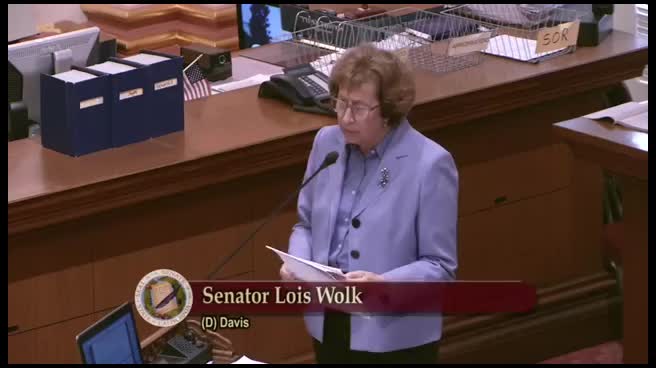 7MIN
Senate Floor
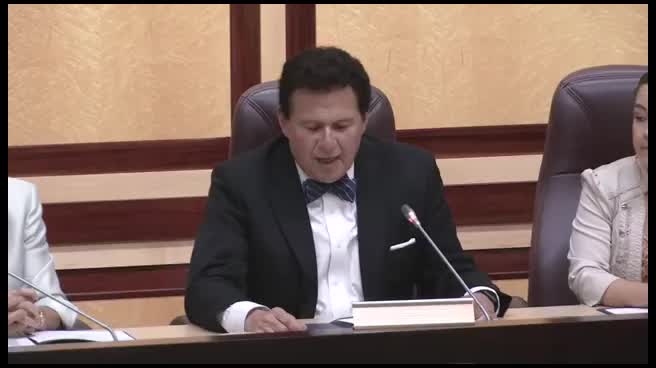 11MIN
Senate Standing Committee on Banking and Financial Institutions
 2MIN
Assembly Floor
Bill Author