AJR 28: Daylight saving time.
- Session Year: 2015-2016
- House: Assembly
- Latest Version Date: 2016-09-01
This measure would memorialize the Congress and the President to enact legislation that would allow a state to adopt daylight saving time year round.
This measure would memorialize the Congress and the President to enact legislation that would allow a state to adopt daylight saving time year round.
This measure would memorialize the Congress and the President to enact legislation that would allow a state to adopt daylight saving time year round.
This measure would memorialize the Congress and the President to enact legislation that would allow a state to adopt daylight saving time year round.
This measure would memorialize the Congress and the President to enact legislation that would allow a state to adopt daylight saving time year round.
This measure would memorialize the Congress and the President to enact legislation that would allow a state to adopt daylight saving time year round.
This measure would memorialize the Congress and the President to enact legislation that would allow a state to adopt daylight saving time year round.
WHEREAS, The State of California is committed to attaining 50 percent of its energy generation from renewable sources; and
WHEREAS, Daylight saving time was a widely used 20th century energy reduction tool that can be expanded to meet 21st century energy shortages; and
WHEREAS, A 2004 study from Rutgers University titled The Effects of Daylight and Daylight Saving Time on United States Pedestrian Fatalities and Motor Vehicle Occupant Fatalities found that year-round daylight saving time would reduce pedestrian fatalities by 171 or 13 percent of all pedestrian fatalities per year in the 5 to 10 a.m. and 4 to 9 p.m. time periods and reduce motor vehicle occupants fatalities by 195 or 3 percent per year in the same time period; and
WHEREAS, A 2015 study in The Review of Economics and Statistics titled Under the Cover of Darkness: How Ambient Light Influences Criminal Activity estimated a 7 percent decrease in robberies following the shift to daylight saving time; and
WHEREAS, Scientists have connected a number of health consequences with the act of switching between standard time and daylight saving time, including greater risks of heart attacks (New England Journal of Medicine, 2008), more frequent traffic accidents (New England Journal of Medicine, 1996) and workplace injuries (Journal of Applied Psychology, 2009), and increased suicide rates in the days immediately after the switch (Sleep and Biological Rhythms, 2008); and
WHEREAS, Although neither standard time nor daylight saving time produces much energy reduction for the coldest states during the more frigid months of the year, California enjoys a temperate climate that would afford greater reductions in energy use by utilizing a year-round daylight saving time plan; and
WHEREAS, The federal Uniform Time Act of 1966 allows states to decline application of daylight saving time and provides states with the option of practicing standard time year round, but does not allow states to practice daylight saving time year round; and
WHEREAS, By applying daylight saving time uniformly, the state could avoid any inconsistencies in time application that would otherwise impact and confuse the broadcasting, rail, airline, and motor coach industries; and
WHEREAS, In House of Representatives Report No. 99-185 from the Committee on Energy and Commerce, numerous benefits are listed in support of the extension of daylight saving time, including significant energy conservation, improved traffic safety, reduction in crime, economic growth, and overwhelming public support; and
WHEREAS, The state would greatly benefit from having the option of extending daylight saving time year round; now, therefore, be it
Resolved by the Assembly and the Senate of the State of California, jointly, That the Legislature of the State of California respectfully memorializes the United States Congress and the President of the United States to enact legislation that would allow a state to adopt daylight saving time year round; and be it further
Resolved, That the Chief Clerk of the Assembly transmit copies of this resolution to the President and Vice President of the United States, to the Speaker of the House of Representatives, and to each Senator and Representative from California in the Congress of the United States.
WHEREAS, The State of California is committed to attaining 50 percent of its energy generation from renewable sources and to the reduction of greenhouse gas emissions to 40 percent below its 1990 level by 2030; sources; and
WHEREAS, Daylight saving time was a widely used 20th century energy reduction tool that can be expanded to meet 21st century energy shortages; and
WHEREAS, A 2004 study from Rutgers University titled The Effects of Daylight and Daylight Saving Time on United States Pedestrian Fatalities and Motor Vehicle Occupant Fatalities found that year-round daylight saving time would reduce pedestrian fatalities by 171 or 13 percent of all pedestrian fatalities per year in the 5 to 10 a.m. and 4 to 9 p.m. time periods and reduce motor vehicle occupants fatalities by 195 or 3 percent per year in the same time period; and
WHEREAS, A 2015 study in The Review of Economics and Statistics titled Under the Cover of Darkness: How Ambient Light Influences Criminal Activity estimated a 7 percent decrease in robberies following the shift to daylight saving time; and
WHEREAS, Scientists have connected a number of health consequences with the act of switching between standard time and daylight saving time, including greater risks of heart attacks (New England Journal of Medicine, 2008), more frequent traffic accidents (New England Journal of Medicine, 1996) and workplace injuries (Journal of Applied Psychology, 2009), and increased suicide rates in the days immediately after the switch (Sleep and Biological Rhythms, 2008); and
WHEREAS, Although neither standard time nor daylight saving time produces much energy reduction for the coldest states during the more frigid months of the year, California enjoys a temperate climate that would afford greater reductions in energy use by utilizing a year-round daylight saving time plan; and
WHEREAS, The federal Uniform Time Act of 1966 allows states to decline application of daylight saving time and provides states with the option of practicing standard time year round, but does not allow states to practice daylight saving time year round; and
WHEREAS, By applying daylight saving time uniformly, the state could avoid any inconsistencies in time application that would otherwise impact and confuse the broadcasting, rail, airline, and motor coach industries; and
WHEREAS, In House of Representatives Report No. 99-185 from the Committee on Energy and Commerce, numerous benefits are listed in support of the extension of daylight saving time, including significant energy conservation, improved traffic safety, reduction in crime, economic growth, and overwhelming public support; and
WHEREAS, The state would greatly benefit from having the option of extending daylight saving time year round; now, therefore, be it
Resolved by the Assembly and the Senate of the State of California, jointly, That the Legislature of the State of California respectfully memorializes the United States Congress and the President of the United States to enact legislation that would allow a state to adopt daylight saving time year round; and be it further
Resolved, That the Chief Clerk of the Assembly transmit copies of this resolution to the President and Vice President of the United States, to the Speaker of the House of Representatives, and to each Senator and Representative from California in the Congress of the United States.
WHEREAS, The State of California is committed to attaining 50 percent of its energy generation from renewable sources and to the reduction of greenhouse gas emissions to 40 percent below its 1990 level by 2030; and
WHEREAS, Daylight saving time was a widely used 20th century energy reduction tool that can be expanded to meet 21st century energy shortages; and
WHEREAS, A 2004 study from Rutgers University titled The Effects of Daylight and Daylight Saving Time on United States Pedestrian Fatalities and Motor Vehicle Occupant Fatalities found that year-round daylight saving time would reduce pedestrian fatalities by 171 or 13 percent of all pedestrian fatalities per year in the 5 to 10 a.m. and 4 to 9 p.m. time periods and reduce motor vehicle occupants fatalities by 195 or 3 percent per year in the same time period; and
WHEREAS, A 2015 study in The Review of Economics and Statistics titled Under the Cover of Darkness: How Ambient Light Influences Criminal Activity estimated a 7 percent decrease in robberies following the shift to daylight saving time; and
WHEREAS, Scientists have connected a number of health consequences with the act of switching between standard time and daylight saving time, including greater risks of heart attacks, attacks (New England Journal of Medicine, 2008), more frequent traffic accidents (New England Journal of Medicine, 1996) and workplace injuries, injuries (Journal of Applied Psychology, 2009), and increased suicide rates in the days immediately after the switch; switch (Sleep and Biological Rhythms, 2008); and
WHEREAS, Although neither standard time nor daylight saving time produces much energy reduction for the coldest states during the more frigid months of the year, California enjoys a temperate climate that would afford greater reductions in energy use by utilizing a year-round daylight saving time plan; and
WHEREAS, The federal Uniform Time Act of 1966 allows states to decline application of daylight saving time and provides states with the option of practicing standard time year round, but does not allow states to practice daylight saving time year round; and
WHEREAS, By applying daylight saving time uniformly, the state could avoid any inconsistencies in time application that would otherwise impact and confuse the broadcasting, rail, airline, and motor coach industries; and
WHEREAS, In House of Representatives Report No. 99-185 from the Committee on Energy and Commerce, numerous benefits are listed in support of the extension of daylight saving time, including significant energy conservation, improved traffic safety, reduction in crime, economic growth, and overwhelming public support; and
WHEREAS, The state would greatly benefit from having the option of extending daylight saving time year round; now, therefore, be it
Resolved by the Assembly and the Senate of the State of California, jointly, That the Legislature of the State of California respectfully memorializes the United States Congress and the President of the United States to enact legislation that would allow a state to adopt daylight saving time year round; and be it further
Resolved, That the Chief Clerk of the Assembly transmit copies of this resolution to the President and Vice President of the United States, to the Speaker of the House of Representatives, and to each Senator and Representative from California in the Congress of the United States.
WHEREAS, The State of California is committed to attaining 50 percent of its energy generation from renewable sources and to the reduction of greenhouse gas emissions to 40 percent below its 1990 level by 2030; and
WHEREAS, It is the responsibility of the state to employ any and all means of energy reduction that will reduce reliance and pressure on energy infrastructure in the state; and
WHEREAS, Daylight saving time was a widely used 20th century energy reduction tool that can be expanded to meet 21st century energy shortages; and
WHEREAS, A report by the State Energy Resources Conservation and Development Commission, issued in May 2001, and titled Effects of Daylight Saving Time on California Electricity Use, indicates that winter daylight saving time, as that term is defined in the report, would likely reduce electricity use by 3,400 megawatt hours per day and that summer double daylight saving time, as that term is defined in the report, would likely reduce electricity use by 1,500 megawatt hours per day, producing a cost savings of $300,000,000 to $1,025,000,000 per year for California ratepayers; and
WHEREAS, A 2004 study from Rutgers University titled The Effects of Daylight and Daylight Saving Time on United States Pedestrian Fatalities and Motor Vehicle Occupant Fatalities found that year-round daylight saving time would reduce pedestrian fatalities by 171 or 13 percent of all pedestrian fatalities per year in the 5 to 10 a.m. and 4 to 9 p.m. time periods and reduce motor vehicle occupants fatalities by 195 or 3 percent per year in the same time period; and
WHEREAS, A 2015 study in The Review of Economics and Statistics titled Under the Cover of Darkness: How Ambient Light Influences Criminal Activity estimated a 7 percent decrease in robberies following the shift to daylight saving time; and
WHEREAS, Scientists have connected a number of health consequences with the act of switching between standard time and daylight saving time, including greater risks of heart attacks, more frequent traffic accidents and workplace injuries, and increased suicide rates in the days immediately after the switch; and
WHEREAS, The citizens of California are being asked to make major changes in their personal and professional lives to conserve energy and would be grateful to receive the benefits of year-round daylight saving time in return; and
WHEREAS, Although neither standard time nor daylight saving time produces much energy reduction for the coldest states during the more frigid months of the year, California enjoys a temperate climate that would afford greater reductions in energy use by utilizing a year-round daylight saving time plan; and
WHEREAS, The federal Uniform Time Act of 1966 allows states to decline application of daylight saving time and provides states with the option of practicing standard time year round, but does not allow states to practice daylight saving time year round; and
WHEREAS, By applying daylight saving time uniformly, the state could avoid any inconsistencies in time application that would otherwise impact and confuse the broadcasting, rail, airline, and motor coach industries; and
WHEREAS, In House of Representatives Report No. 99-185 from the Committee on Energy and Commerce, numerous benefits are listed in support of the extension of daylight saving time, including significant energy conservation, improved traffic safety, reduction in crime, economic growth, and overwhelming public support; and
WHEREAS, The state would greatly benefit from having the option of extending daylight saving time year round; now, therefore, be it
Resolved by the Assembly and the Senate of the State of California, jointly, That the Legislature of the State of California respectfully memorializes the United States Congress and the President of the United States to enact legislation that would allow a state to adopt daylight saving time year round; and be it further
Resolved, That the Chief Clerk of the Assembly transmit copies of this resolution to the President and Vice President of the United States, to the Speaker of the House of Representatives, and to each Senator and Representative from California in the Congress of the United States.
WHEREAS, The State of California is committed to attaining 50 percent of its energy generation from renewable sources and to the reduction of greenhouse gas emissions to 40 percent below its 1990 level by 2030; and
WHEREAS, It is the responsibility of the state to employ any and all means of energy reduction that will reduce reliance and pressure on energy infrastructure in the state; and
WHEREAS, Daylight saving time was a widely used 20th century energy reduction tool that can be expanded to meet 21st century energy shortages; and
WHEREAS, A 2008 federal Department of Energy report concluded that extended daylight saving time saves the United States approximately 0.5 percent energy each day that it is used, and;
WHEREAS, A report by the State Energy Resources Conservation and Development Commission, issued in May 2001, and titled Effects of Daylight Saving Time on California Electricity Use, indicates that winter daylight saving time, as that term is defined in the report, would likely reduce electricity use by 3,400 megawatt hours per day and that summer double daylight saving time, as that term is defined in the report, would likely reduce electricity use by 1,500 megawatt hours per day, producing a cost savings of $300,000,000 to $1,025,000,000 per year for California ratepayers; and
WHEREAS, A 2004 study from Rutgers University titled The Effects of Daylight and Daylight Saving Time on United States Pedestrian Fatalities and Motor Vehicle Occupant Fatalities found that year-round daylight saving time would reduce pedestrian fatalities by 171 or 13 percent of all pedestrian fatalities per year in the 5 to 10 a.m. and 4 to 9 p.m. time periods and reduce motor vehicle occupants fatalities by 195 or 3 percent per year in the same time period; and
WHEREAS, A 2015 study in The Review of Economics and Statistics titled Under the Cover of Darkness: How Ambient Light Influences Criminal Activity estimated a 7 percent decrease in robberies following the shift to daylight saving time; and
WHEREAS, Scientists have connected a number of health consequences with the act of switching between standard time and daylight saving time, including greater risks of heart attacks, more frequent traffic accidents and workplace injuries, and increased suicide rates in the days immediately after the switch; and
WHEREAS, The citizens of California are being asked to make major changes in their personal and professional lives to conserve energy and would be grateful to receive the benefits of year-round daylight saving time in return; and
WHEREAS, Although neither standard time nor daylight saving time produces much energy reduction for the coldest states during the more frigid months of the year, California enjoys a temperate climate that would afford greater reductions in energy use by utilizing a year-round daylight saving time plan; and
WHEREAS, The federal Uniform Time Act of 1966 allows states to decline application of daylight saving time and provides states with the option of practicing standard time year round, but does not allow states to practice daylight saving time year round; and
WHEREAS, By applying daylight saving time uniformly, the state could avoid any inconsistencies in time application that would otherwise impact and confuse the broadcasting, rail, airline, and motor coach industries; and
WHEREAS, In House of Representatives Report No. 99-185 from the Committee on Energy and Commerce, numerous benefits are listed in support of the extension of daylight saving time, including significant energy conservation, improved traffic safety, reduction in crime, economic growth, and overwhelming public support; and
WHEREAS, The state would greatly benefit from having the option of extending daylight saving time year round; now, therefore, be it
Resolved by the Assembly and the Senate of the State of California, jointly, That the Legislature of the State of California respectfully memorializes the United States Congress and the President of the United States to enact legislation that would allow a state to adopt daylight saving time year round; and be it further
Resolved, That the Chief Clerk of the Assembly transmit copies of this resolution to the President and Vice President of the United States, to the Speaker of the House of Representatives, and to each Senator and Representative from California in the Congress of the United States.
|
Date
|
Status
|
|---|---|
| May 9, 2016 | In Senate. To Com. on RLS. |
| Sep 1, 2016 | Enrolled and filed with the Secretary of State at 11:45 a.m. |
| Sep 1, 2016 | Chaptered by Secretary of State - Res. Chapter 167, Statutes of 2016. |
| Aug 23, 2016 | Senate amendments concurred in. To Engrossing and Enrolling. (Ayes 74. Noes 0. Page 6148.). |
| Aug 23, 2016 | Senate amendments concurred in. To Engrossing and Enrolling. |
| Aug 17, 2016 | In Assembly. Concurrence in Senate amendments pending. |
| Aug 17, 2016 | Adopted and to Assembly. (Ayes 33. Noes 1.) |
| Aug 17, 2016 | Adopted and to Assembly. (Ayes 33. Noes 1. Page 5054.) |
| Aug 17, 2016 | Adopted and to Assembly. |
| Jun 14, 2016 | From committee: Be adopted. Ordered to Third Reading. (Ayes 9. Noes 0.) (June 13). |
| May 27, 2016 | From committee chair, with author's amendments: Amend, and re-refer to committee. Amended and re-referred to Com. on E., U., & C. |
| May 19, 2016 | Re-referred to Com. on E., U., & C. |
| Jan 26, 2016 | Introduced. To print. |
| May 5, 2016 | Amended, adopted, and to Senate. (Ayes 69. Noes 2. Page 4682.) |
| May 5, 2016 | Amended, adopted, and to Senate. |
| May 3, 2016 | Amended. Ordered to third reading. |
| May 2, 2016 | From committee: Amend, and be adopted as amended. (Ayes 15. Noes 0.) (April 27). |
| Apr 7, 2016 | From committee: Be adopted, and re-refer to Com. on U. & C. Re-referred. (Ayes 17. Noes 0.) (April 6). Re-referred to Com. on U. & C. |
| Mar 29, 2016 | Re-referred to Com. on G.O. |
| Mar 28, 2016 | From committee chair, with author's amendments: Amend, and re-refer to Com. on G.O. Amended. |
| Mar 28, 2016 | From committee chair, with author's amendments: Amend, and re-refer to Com. on . Amended. |
| Mar 8, 2016 | Referred to Coms. on G.O. and U. & C. |
| Jan 27, 2016 | From printer. |
|
Date
|
Description
|
Location
|
Votes
|
|
|---|---|---|---|---|
| Aug 23, 2016 | AJR 28 OBERNOLTE Concurrence in Senate Amendments | Assembly Floor |
Passed |
|
| Aug 17, 2016 | Assembly 3rd Reading AJR28 Obernolte By Leyva | Senate Floor |
Passed |
|
| Jun 13, 2016 | Be adopted. Ordered to third reading | Senate Standing Committee on Energy, Utilities and Communications |
Passed |
|
| May 5, 2016 | AJR 28 OBERNOLTE Assembly Third Reading | Assembly Floor |
Passed |
|
| Apr 27, 2016 | Be adopted as amended. | Assembly Standing Committee on Utilities and Commerce |
Passed |
|
| Apr 6, 2016 | Be adopted and re-referred to the Committee on [Utilities and Commerce] | Assembly Standing Committee on Governmental Organization |
Passed |
This list shows positions taken on this bill by organizations on the date displayed, which is linked to the original source.
Positions by individuals are not included.
CONCURRENCE IN SENATE AMENDMENTS
CSA1 Bill Id:AJR 28
Author:(Obernolte)
As Amended Ver:May 27, 2016
Majority
ASSEMBLY: | 69-2 | (May 5, 2016) | SENATE: | 33-1 | (August 17, 2016) |
Original Committee Reference: G.O.
SUMMARY: This measure would urge the Congress of the United States and the President of the United States (U.S.) to enact legislation that would allow a state to adopt daylight saving time (DST) year round. Specifically, this resolution makes the following legislative findings:
- Daylight saving time was a widely used 20th century energy reduction tool that can be expanded to meet 21st century energy shortages.
- Although neither standard time nor daylight saving time produces much energy reduction for the coldest states during the more frigid months of the year, California enjoys a temperate climate that would afford greater reductions in energy use by utilizing a year-round daylight saving time plan.
- The federal Uniform Time Act of 1966 allows states to decline application of daylight saving time and provides states with the option of practicing standard time year round, but does not allow states to practice daylight saving time year round.
- By applying daylight saving time uniformly, the state could avoid any inconsistencies in time application that would otherwise impact and confuse the broadcasting, rail, airline, and motor coach industries.
- In House of Representatives Report No. 99-185 from the Committee on Energy and Commerce, numerous benefits are listed in support of the extension of daylight saving time, including significant energy conservation, improved traffic safety, reduction in crime, economic growth, and overwhelming public support.
- The state would greatly benefit from having the option of extending daylight saving time year round.
The Senate amendments: Make a minor and technical change to the legislative findings.
EXISTING LAW:
- Federal law establishes the standard time of the United States for each of nine zones and advances the standard time of each zone by one hour during the period commencing at 2 a.m. on the 2nd Sunday of March of each year and ending at 2 a.m. on the first Sunday of November of each year.
- The Daylight Saving Time Act, which was adopted as an initiative measure by the voters at the November 8, 1949, special election, provides that the standard time within the state is that which is known, described, and designated by federal law as United States Standard Pacific Time.
- Requires, from 1 a.m. on the last Sunday of April, until 2 a.m. on the last Sunday of October, the standard time within the state to be one hour in advance of United States Standard Pacific Time.
FISCAL EFFECT: Unknown
COMMENTS:
Purpose of Bill: According to the author, switching our clocks to observe daylight saving time twice a year is an outdated practice that is hazardous to our health and well-being and it is time to end it. While opting to stay on standard time year round is one solution to this problem, there are number of advantages to staying on permanent daylight saving time that make it a more attractive option. Permanent daylight saving time would result in a reduction in traffic accidents and robberies, offer net energy savings and could potentially provide a great boon to the tourism industry and local businesses. Ultimately, it should be up to the voters to decide whether or not to observe permanent daylight saving time. However, under federal law, states only have the option of opting for standard time. This bill would urge Congress to enact legislation to allow states to observe daylight saving time permanently and give the voters the power to decide.
Background: DST has been used in the United States and in many European countries since World War I. At that time, in an effort to conserve fuel needed to produce electric power, Germany and Austria took time by the forelock, and began saving daylight at 11:00 p.m. on April 30, 1916, by advancing the hands of the clock one hour until the following October. Other countries immediately adopted this 1916 action: Belgium, Denmark, France, Italy, Luxembourg, Netherlands, Norway, Portugal, Sweden, Turkey, and Tasmania. Nova Scotia and Manitoba adopted it as well, with Britain following suit three weeks later, on May 21, 1916. In 1917, Australia and Newfoundland began saving daylight.
The plan was not formally adopted in the U.S. until 1918. An Act to preserve daylight and provide standard time for the United States was enacted on March 19, 1918. It both established standard time zones and set summer DST to begin on March 31, 1918. DST was observed for seven months in 1918 and 1919. After the War ended, the law proved so unpopular (mostly because people rose earlier and went to bed earlier than people do today) that it was repealed in 1919 with a Congressional override of President Wilson's veto. DST became a local option, and was continued in a few states, such as Massachusetts and Rhode Island, and in some cities, such as New York, Philadelphia, and Chicago.
During World War II, President Franklin Roosevelt instituted year-round DST, called "War Time," from February 9, 1942 to September 30, 1945. From 1945 to 1966, there was no federal law regarding DST, so states and localities were free to choose whether or not to observe DST and could choose when it began and ended. This understandably caused confusion, especially for the broadcasting industry, as well as for railways, airlines, and bus companies. Because of the different local customs and laws, radio and TV stations and the transportation companies had to publish new schedules every time a state or town began or ended DST.
In the early 1960s, observance of DST was quite inconsistent, with a hodgepodge of time observances, and no agreement about when to change clocks. The Interstate Commerce Commission, the nation's timekeeper, was immobilized, and the matter remained deadlocked. Many business interests were supportive of standardization, although it became a bitter fight between the indoor and outdoor theater industries. The farmers, however, were opposed to such uniformity. State and local governments were a mixed bag, depending on local conditions.
The Uniform Act (Federal Law): By 1966, some 100 million Americans were observing DST based on their local laws and customs. Congress decided to step in and end the confusion, and to establish one pattern across the country. The Uniform Time Act of 1966 (15 U.S. Code Section 260a), signed into law on April 12, 1966, by President Lyndon Johnson, created DST to begin on the last Sunday of April and to end on the last Sunday of October. Any State that wanted to be exempt from DST could do so by passing a state law – only Arizona and Hawaii have done so. The Federal Law does not, however, give states the option to remain on DST year round.
The Uniform Time Act of 1966 established a system of uniform (within each time zone) DST throughout the U.S. and its possessions, exempting only those states in which the legislatures voted to keep the entire state on standard time.
In 1972, Congress revised the law to provide that, if a state was in two or more time zones, the state could exempt the part of the state that was in one time zone while providing that the part of the state in a different time zone would observe DST. The Federal law was amended in 1986 to begin DST on the first Sunday in April.
Under legislation enacted in 1986, DST in the U.S. began at 2:00 a.m. on the first Sunday of April and ended at 2:00 a.m. on the last Sunday of October.
The Energy Policy Act of 2005 extended DST in the U.S. beginning in 2007, though Congress retained the right to revert to the 1986 law should the change prove unpopular or if energy savings are not significant. Going from 2007 forward, DST in the U.S. begins at 2:00 a.m. on the second Sunday of March and ends at 2:00 a.m. on the first Sunday of November.
The Daylight Saving Time Act: California voters passed Proposition 12 in 1949, approving DST in the state, and that the standard time within the state is that which is known, described, and designated by federal law as United States Standard Pacific Time. The act also requires, from 1 a.m. on the last Sunday of April, until 2 a.m. on the last Sunday of October, the standard time within the state to be one hour in advance of United States Standard Pacific Time, which is consistent with the federal law enacted in in 1966 and 1986. However, as stated above, the Energy Policy Act of 2005 extended DST in the U.S. beginning in 2007. Since then, California has begun DST at 2:00 a.m. on the second Sunday of March and ended at 2:00 a.m. on the first Sunday of November. Should congress act and enact legislation that would allow a state to adopt DST year round, the change would have to be approved by California voters.
Prior/Related legislation: AB 385 (Chu) of the current legislative session. This bill would place a question before the voters regarding whether to keep Daylight Saving Time (DST) as it currently exists or switch to year round standard time. As a result, a change would require the Legislature's approval of an initiative to be placed on the ballot giving California voters the option of deciding to remain in DST or eliminate it entirely. (Pending on Senate Floor)
AB 2496 (Chu) of the current legislative session. Would declare the intent of the Legislature to enact legislation to establish United States Standard Pacific Time as the standard time within the state during the entire year. (Pending referral at the Assembly Desk)
AJR 56 (Longville), Resolution Chapter 127, Statutes of 2000. Memorializes the President and the Congress to enact legislation to allow states the opportunity to choose year-round daylight saving time, in addition to standard time or the current system of "traditional" daylight saving time.
SJR 1 X2 (Karnette), Resolution Chapter 1, Statutes of the 2001-02 Second Extraordinary Session. This measure would memorialize the Congress to approve legislation that allows a state to uniformly apply daylight saving time year round.
Analysis Prepared by: Kenton Stanhope / G.O. / (916) 319-2531 FN: 0004461
Office of Senate Floor Analyses (916) 651-1520 Fax: (916) 327-4478 | AJR 28 |
THIRD READING
Bill No: AJR 28
Amended: 5/27/16 in Senate
SENATE ENERGY, U. & C. COMMITTEE: 9-0, 6/13/16
AYES: Hueso, Morrell, Cannella, Gaines, Hertzberg, Hill, Lara, Leyva, McGuire
NO VOTE RECORDED: Pavley, Wolk
ASSEMBLY FLOOR: 69-2, 5/5/16 - See last page for vote
DIGEST: This resolution urges the Congress of the United States and the President of the United States to enact legislation that would allow a state to adopt daylight saving time (DST) year round.
ANALYSIS: Existing federal law establishes the standard time of the United States for each of nine zones and advances the standard time of each zone by one hour during the period commencing at 2:00 a.m. on the second Sunday of March of each year and ending at 2:00 a.m. on the first Sunday of November of each year.
Existing state law, under the Daylight Saving Time Act:
- Provides that the standard time within California is that which is known, described, and designated by federal law as United States Standard Pacific Time.
- Requires, from 1:00 a.m. on the last Sunday of April, until 2:00 a.m. on the last Sunday of October, the standard time within the state to be one hour in advance of United States Standard Pacific Time.
This resolution urges the Congress of the United States and the President of the United States to enact legislation that would allow a state to adopt DST year round considering that the Uniform Time Act (1966) allows states to choose to remain on standard time, but does not provide the states the option to stay on DST.
Background
Benjamin Franklin (1784) is credited with the basic idea of DST after observing that people were sleeping during sunlit hours in the early morning and burning candles for illumination in the evening. However, DST didn't "officially” begin in the U.S. until World War I (1918), when it was enacted primarily to extend the length of the production day and save fuel by reducing the need to use artificial lighting.
Although some states and communities observed DST after the war ended, DST wasn't officially observed nationally again until 1942, when it was re-enacted for World War II, then repealed after the war in 1945.
From 1945 to 1966, there was no federal law regarding DST, so states and localities were free to choose whether to observe DST and could choose when it began and ended. This understandably caused confusion, especially for the broadcasting industry, as well as for railways, airlines, and bus companies. [“Daylight Savings Time”. WebExhibits. http://www.webexhibits.org/ daylightsaving/e.html]
The Daylight Saving Time Act. California voters passed Proposition 12 in 1949, approving DST in the state and that the standard time within the state is that which is known, described, and designated by federal law as United States Standard Pacific Time.
The Uniform Time Act of 1966. This federal act established a standardized system of operating DST throughout the U.S. and its territories, exempting only states and territories that enacted laws to keep their entire state or territory on standard time. Most states opted for a coordinated DST. However, the Uniform Time Act allows states to choose to remain only on standard time as an alternative but does not provide states the option to remain on DST.
In 1972, Congress revised the law to provide that, if a state was in two or more time zones, the state could exempt the part of the state that was in one time zone while providing that the part of the state in a different time zone would observe DST. The federal law was amended in 1986 to begin DST on the first Sunday in April.
Energy Policy Act of 2005. This federal act extended DST in the U.S. by three weeks in the spring and one week in the fall, beginning on March 11, 2007, in the hope that the extension would save energy. Since then, California has begun DST at 2:00 a.m. on the second Sunday of March and ended at 2:00 a.m. on the first Sunday of November. Should Congress enact legislation that allows a state to adopt DST year round, the change would have to be approved by California voters.
Findings:
- Today, the Uniform Time Act provides that either Congress or the Secretary of Transportation can change a time-zone boundary. [U.S. Department of Transportation]
- DST is currently practiced in 76 countries and directly affects more than 1.6 billion people worldwide. [Matthew J. Kotchen and Laura E. Grant, “Does Daylight Saving Time Save Energy? Evidence form a Natural Experiment in Indiana”. The National Bureau of Economic Research. http://www.nber.org/ papers/w14429]
- States and territories in the United States that do not observe DST include: most of Arizona, Hawaii, American Samoa, Guam, Puerto Rico, and the Virgin Islands.
- Some parts of Indiana did not observe DST in the past.
- A national telephone survey of 1,000 adults conducted March 5-6, 2014, by Rasmussen Reports, concluded that only 33 percent of American adults think DST is worth the hassle. 48 percent do not think the clock changing ritual is worth it, but 19 percent are not sure.
Estimates of DST effects. The California Energy Commission (CEC) conducted a research on DST, which it published in 2007, that examined whether and how much the Policy Act of 2005 changed daily electricity. The extension of DST to March 2007 had little or no effect on energy consumption in California, according to CEC. The most likely approximation is a 0.2 percent decrease during these three weeks.
In 2008, a study was published by the National Bureau of Economic Research, who studied energy use in Indiana. The experiment in the State of Indiana provided the first empirical estimates of DST effects on electricity consumption in the United States since the mid-1970s focusing on residential electricity demand. The main finding, contrary to the policy's intent: DST increases residential electricity demand. An estimate of the overall increase is approximately one percent. DST causes the greatest increase in electricity consumption in the fall, when estimates range between two and four percent.
Potential cost in California. According to a 2008 study by the National Bureau of Economic Research, Indiana households pay an additional $9 million per year in energy bills. Also, the study estimated a social cost of increased pollution emissions that range from $1.7 million to $5.5 million per year. The study concluded that the effect is likely to be even stronger in other regions of the United States.
Another Step Away From Uniformity. The purpose of the Uniform Time Act of 1966 was to put states on a relatively uniform time schedule within their specific times zones. Granted, the fact that Hawaii, most of Arizona, and the eastern portion of Indiana have exercised the option under the Uniform Time Act not to move to DST during the summer means that states already aren't operating on a uniform time system. However, this proposal, if enacted by the federal government, gives states the option to move even further away from the notion of a uniform time system by going to DST on a year-round basis.
Intended benefits. Reports indicate that in regions with a temperate climate, DST results in energy savings and year-round DST could increase these savings as well as industrial efficiency. Additionally, extra daylight in the evening hours could provide a boost to the tourism and shopping industries. [American College of Cardiology. "Daylight saving impacts timing of heart attacks." ScienceDaily. ScienceDaily, 29 March 2014. www.sciencedaily.com/releases/2014/ 03/ 140329175108.htm]
According to the U.S. National Library of Medicine National Institutes of Health, studies have connected DST with a reduction in pedestrian and driver fatalities, as well as a decrease in robberies.
Unintended consequences. Seniors may be among the most affected by DST since it can result in confusion for seniors who forget about time change. Also giving up an hour of sleep can have more impact on one’s physical condition, regardless of age.
According to research presented at the American College of Cardiology's 63rd Annual Scientific Session it seems moving the clock forward or backward may alter the timing of when heart attacks occur in the week following these time changes.
Final thoughts. Studies have shown ongoing debate about whether DST is needed anymore. Widely implemented during World War I, it was primarily adopted to save energy. Some experts question whether it saves energy and if it has negative health effects beyond just leaving people feeling groggy and out of sorts. [American College of Cardiology. "Daylight saving impacts timing of heart attacks." ScienceDaily. ScienceDaily, 29 March 2014. www.sciencedaily.com/ releases/2014/03/140329175108.htm]
Comments
According to the author:
Switching our clocks to observe daylight saving time twice a year is an outdated practice that is hazardous to our health and well-being and it is time to end it. While opting to stay on standard time year round is one solution to this problem, there are number of advantages to staying on permanent daylight saving time that make it a more attractive option. Permanent daylight saving time would result in a reduction in traffic accidents and robberies, offer net energy savings and could potentially provide a great boost to the tourism industry and local businesses. Ultimately, it should be up to the voters to decide whether or not to observe permanent daylight saving time. However, under federal law, states only have the option of opting for standard time. ACR 28 would urge Congress to enact legislation to allow states to observe daylight saving time permanently and give the voters the power to decide.
Related/Prior Legislation
AB 2496 (Chu, 2016) declares the intent of the Legislature to enact legislation to establish United States Standard Pacific Time as the standard time within the state during the entire year. The bill is pending referral at the Assembly desk.
AB 385 (Chu, 2015) repeals the Daylight Saving Time Act, and requires the standard time within the state to be designated by federal law as Pacific standard time. The bill is pending in the Senate Committee on Appropriations.
SJRX2 1 (Karnette, Resolution Chapter 1, Statutes of 2001-02 Second Extraordinary Session) memorialized the Congress to approve legislation that allows a state to uniformly apply DST year round.
AJR 56 (Longville, Chapter 127, Statutes of 2000) memorialized the President and the Congress to enact legislation to allow states the opportunity to choose year-round DST, in addition to standard time or the current system of "traditional" DST.
FISCAL EFFECT: Appropriation: No Fiscal Com.: No Local: No
None received
OPPOSITION: (Verified 6/14/16)
None received
ASSEMBLY FLOOR: 69-2, 5/5/16
AYES: Achadjian, Alejo, Arambula, Atkins, Baker, Bigelow, Bloom, Bonta, Brown, Burke, Campos, Chang, Chau, Chávez, Chiu, Chu, Cooley, Cooper, Dababneh, Dahle, Daly, Dodd, Eggman, Frazier, Gallagher, Cristina Garcia, Eduardo Garcia, Gatto, Gipson, Gonzalez, Gordon, Gray, Grove, Hadley, Harper, Roger Hernández, Holden, Irwin, Jones, Jones-Sawyer, Kim, Lackey, Levine, Linder, Lopez, Mathis, Mayes, McCarty, Medina, Melendez, Mullin, Nazarian, Obernolte, O'Donnell, Olsen, Quirk, Ridley-Thomas, Rodriguez, Salas, Santiago, Steinorth, Mark Stone, Thurmond, Ting, Weber, Wilk, Williams, Wood, Rendon
NOES: Brough, Wagner
NO VOTE RECORDED: Travis Allen, Bonilla, Calderon, Beth Gaines, Gomez, Low, Maienschein, Patterson, Waldron
Prepared by: Jay Dickenson/Genesis Tang / E., U., & C. / (916) 651-4107
8/15/16 10:17:15
**** END ****
SENATE COMMITTEE ON ENERGY, UTILITIES AND COMMUNICATIONS
Senator Ben Hueso, Chair
2015 - 2016 Regular
Bill No: Hearing Date: 6/13/2016
Author: | |||
Version: | As Amended | ||
Urgency: | Fiscal: | ||
Consultant: | , Genesis Tang | ||
SUBJECT:
DIGEST: This bill urges the Congress of the United States and the President of the United States to enact legislation that would allow a state to adopt daylight saving time (DST) year round.
ANALYSIS:
Existing law:
- Federal law establishes the standard time of the United States for each of nine zones and advances the standard time of each zone by one hour during the period commencing at 2:00 a.m. on the second Sunday of March of each year and ending at 2:00 a.m. on the first Sunday of November of each year.
- The DST Act provides that the standard time within California is that which is known, described, and designated by federal law as United States Standard Pacific Time.
- Requires, from 1:00 a.m. on the last Sunday of April, until 2:00 a.m. on the last Sunday of October, the standard time within the state to be one hour in advance of United States Standard Pacific Time.
This bill urges the Congress of the United States and the President of the United States to enact legislation that would allow a state to adopt DST year round considering that, the Uniform Time Act (1966) allows states to choose to remain on standard time, but does not provide the states the option to stay on daylight saving time.
Background
Benjamin Franklin (1784) is credited with the basic idea of DST after observing that people were sleeping during sunlit hours in the early morning and burning candles for illumination in the evening. However, DST didn't "officially” begin in the U.S. until World War I (1918), when it was enacted primarily to extend the length of the production day and save fuel by reducing the need to use artificial lighting.
Although some states and communities observed daylight saving time after the war ended, DST wasn't officially observed nationally again until 1942, when it was re-enacted for World War II, then repealed after the war in 1945.
From 1945 to 1966, there was no federal law regarding DST, so states and localities were free to choose whether to observe DST and could choose when it began and ended. This understandably caused confusion, especially for the broadcasting industry, as well as for railways, airlines, and bus companies.[1]
The Daylight Saving Time Act. California voters passed Proposition 12 in 1949, approving DST in the state and that the standard time within the state is that which is known, described, and designated by federal law as United States Standard Pacific Time.
The Uniform Time Act of 1966. This federal act established a standardized system of operating DST throughout the U.S. and its territories, exempting only states and territories that enacted laws to keep their entire state or territory on standard time. Most states opted for a coordinated daylight saving time. However, the Uniform Time Act allows states to choose to remain only on standard time as an alternative but does not provide states the option to remain on DST.
In 1972, Congress revised the law to provide that, if a state was in two or more time zones, the state could exempt the part of the state that was in one time zone while providing that the part of the state in a different time zone would observe DST. The federal law was amended in 1986 to begin DST on the first Sunday in April.[2]
Energy Policy Act of 2005. This federal act extended DST in the U.S. by three weeks in the spring and one week in the fall, beginning on March 11, 2007, in the hope that the extension would save energy. Since then, California has begun DST at 2:00 a.m. on the second Sunday of March and ended at 2:00 a.m. on the first Sunday of November. Should Congress enact legislation that allows a state to adopt DST year round, the change would have to be approved by California voters.
Findings:
- Today, the Uniform Time Act provides that either Congress or the Secretary of Transportation can change a time-zone boundary.[3]
- DST is currently practiced in 76 countries and directly affects more than 1.6 billion people worldwide.[4]
- States and territories in the United States that do not observe DST include: most of Arizona, Hawaii, American Samoa, Guam, Puerto Rico, and the Virgin Islands.
- Some parts of Indiana did not observe daylight saving time in the past.
- According to a national telephone survey of 1,000 adults conducted March 5-6, 2014, by Rasmussen Reports concluded that only 33 percent of American adults think DST is worth the hassle. 48 percent do not think the clock changing ritual is worth it, but 19 percent are not sure.
Estimates of DST effects. The California Energy Commission (CEC) conducted a research on DST, which it published in 2007, that examined whether and how much the Policy Act of 2005 changed daily electricity. The extension of DST to March 2007 had little or no effect on energy consumption in California, according to CEC. The most likely approximation is a 0.2 percent decrease during these three weeks.
In 2008 a study was published by the National Bureau of Economic Research, who studied energy use in Indiana. The experiment in the state of Indiana provided the first empirical estimates of DST effects on electricity consumption in the United States since the mid-1970s focusing on residential electricity demand. The main finding, contrary to the policy's intent: DST increases residential electricity demand. An estimate of the overall increase is approximately one percent. DST causes the greatest increase in electricity consumption in the fall, when estimates range between two and four percent.
Potential cost in California. According to a 2008 study by the National Bureau of Economic Research, Indiana households pay an additional $9 million per year in energy bills. Also, the study estimated a social cost of increased pollution emissions that range from $1.7 million to $5.5 million per year. The study concluded that the effect is likely to be even stronger in other regions of the United States.
Another Step Away From Uniformity. The purpose of the Uniform Time Act of 1966 was to put states on a relatively uniform time schedule within their specific times zones. Granted, the fact that Hawaii, most of Arizona, and the eastern portion of Indiana have exercised the option under the Uniform Time Act not to move to DST during the summer means that states already aren't operating on a uniform time system. However, this proposal, if enacted by the federal government, gives states the option to move even further away from the notion of a uniform time system by going to DST on a year-round basis.
Intended benefits. Reports indicate that in regions with a temperate climate, DST results in energy savings and year-round DST could increase these savings as well as industrial efficiency. Additionally, extra daylight in the evening hours could provide a boost to the tourism and shopping industries.[5]
According to the U.S. National Library of Medicine National Institutes of Health, studies have connected DST with a reduction in pedestrian and driver fatalities, as well as a decrease in robberies.
Unintended consequences. Seniors may be among the most affected by DST since it can result in confusion for seniors who forget about time change. Also giving up an hour of sleep can have more impact on one’s physical condition, regardless of age.
According to research presented at the American College of Cardiology's 63rd Annual Scientific Session it seems moving the clock forward or backward may alter the timing of when heart attacks occur in the week following these time changes.
Final thoughts. Studies have shown ongoing debate about whether DST is needed anymore. Widely implemented during World War I, it was primarily adopted to save energy. Some experts question whether it saves energy and if it has negative health effects beyond just leaving people feeling groggy and out of sorts.[6]
Prior/Related Legislation
AB 385 (Chu, 2015) repeals the Daylight Saving Time Act, and requires the standard time within the state to be designated by federal law as Pacific standard time. The bill is under consideration by this committee.
AB 2496 (Chu, 2016) declares the intent of the Legislature to enact legislation to establish United States Standard Pacific Time as the standard time within the state during the entire year. The bill is pending referral at the Assembly desk.
AJR 56 (Longville, Chapter 127, Statutes of 2000) memorialized the President and the Congress to enact legislation to allow states the opportunity to choose year-round daylight saving time, in addition to standard time or the current system of "traditional" daylight saving time.
SJRX2 1 (Karnette, Chapter 1, Statutes of 2001) memorialized the Congress to approve legislation that allows a state to uniformly apply daylight saving time year round.
FISCAL EFFECT: Appropriation: Fiscal Com.: Local:
SUPPORT:
None received
OPPOSITION:
None received
ARGUMENTS IN SUPPORT: According to the author:
Switching our clocks to observe daylight saving time twice a year is an outdated practice that is hazardous to our health and well-being and it is time to end it. While opting to stay on standard time year round is one solution to this problem, there are number of advantages to staying on permanent daylight saving time that make it a more attractive option. Permanent daylight saving time would result in a reduction in traffic accidents and robberies, offer net energy savings and could potentially provide a great boost to the tourism industry and local businesses. Ultimately, it should be up to the voters to decide whether or not to observe permanent daylight saving time. However, under federal law, states only have the option of opting for standard time. ACR 28 would urge Congress to enact legislation to allow states to observe daylight saving time permanently and give the voters the power to decide.
-- END --
“Daylight Savings Time”. WebExhibits. http://www.webexhibits.org/daylightsaving/e.html ↑
“Daylight Savings Time” ↑
US Department of Transportation ↑
Matthew J. Kotchen and Laura E. Grant, “Does Daylight Saving Time Save Energy? Evidence form a Natural Experiment in Indiana”. The National Bureau of Economic Research. http://www.nber.org/papers/w14429 ↑
American College of Cardiology. "Daylight saving impacts timing of heart attacks." ScienceDaily. ScienceDaily, 29 March 2014. <www.sciencedaily.com/releases/2014/03/140329175108.htm>. ↑
American College of Cardiology. "Daylight saving impacts timing of heart attacks." ScienceDaily. ScienceDaily, 29 March 2014. <www.sciencedaily.com/releases/2014/03/140329175108.htm>. ↑
ASSEMBLY THIRD READING
ATR Bill Id:AJR 28
Author:()
As Amended Ver:May 3, 2016
Majority vote
Committee | Votes | Ayes | Noes |
Governmental Organization | 17-0 | Gray, Bigelow, Bonta, Cooley, Cooper, Daly, Gallagher, Cristina Garcia, Eduardo Garcia, Gipson, Jones-Sawyer, Levine, Linder, Salas, Steinorth, Waldron, Wilk | |
Utilities | 15-0 | Gatto, Patterson, Burke, Chávez, Dahle, Eggman, Cristina Garcia, Eduardo Garcia, Hadley, Roger Hernández, Obernolte, Quirk, Santiago, Ting, Williams |
SUMMARY: Would urge the Congress of the United States and the President of the United States to enact legislation that would allow a state to adopt daylight saving time (DST) year round. Specifically, this resolution makes the following legislative findings:
- Daylight saving time was a widely used 20th century energy reduction tool that can be expanded to meet 21st century energy shortages.
- Although neither standard time nor daylight saving time produces much energy reduction for the coldest states during the more frigid months of the year, California enjoys a temperate climate that would afford greater reductions in energy use by utilizing a year-round daylight saving time plan.
- The federal Uniform Time Act of 1966 allows states to decline application of daylight saving time and provides states with the option of practicing standard time year round, but does not allow states to practice daylight saving time year round.
- By applying daylight saving time uniformly, the state could avoid any inconsistencies in time application that would otherwise impact and confuse the broadcasting, rail, airline, and motor coach industries.
- In House of Representatives Report No. 99-185 from the Committee on Energy and Commerce, numerous benefits are listed in support of the extension of daylight saving time, including significant energy conservation, improved traffic safety, reduction in crime, economic growth, and overwhelming public support.
- The state would greatly benefit from having the option of extending daylight saving time year round.
EXISTING LAW:
- Federal law establishes the standard time of the United States for each of nine zones and advances the standard time of each zone by one hour during the period commencing at 2 a.m. on the 2nd Sunday of March of each year and ending at 2 a.m. on the first Sunday of November of each year.
- The Daylight Saving Time Act, which was adopted as an initiative measure by the voters at the November 8, 1949, special election, provides that the standard time within the state is that which is known, described, and designated by federal law as United States Standard Pacific Time.
- Requires, from 1 a.m. on the last Sunday of April, until 2 a.m. on the last Sunday of October, the standard time within the state to be one hour in advance of United States Standard Pacific Time.
FISCAL EFFECT: Unknown. This bill is keyed non-fiscal by the Legislative Counsel.
COMMENTS:
Purpose of Bill: According to the author, switching our clocks to observe daylight saving time twice a year is an outdated practice that is hazardous to our health and well-being and it is time to end it. While opting to stay on standard time year round is one solution to this problem, there are number of advantages to staying on permanent daylight saving time that make it a more attractive option. Permanent daylight saving time would result in a reduction in traffic accidents and robberies, offer net energy savings and could potentially provide a great boon to the tourism industry and local businesses. Ultimately, it should be up to the voters to decide whether or not to observe permanent daylight saving time. However, under federal law, states only have the option of opting for standard time. This resolution would urge Congress to enact legislation to allow states to observe daylight saving time permanently and give the voters the power to decide.
Background: DST has been used in the United States (U.S.) and in many European countries since World War I. At that time, in an effort to conserve fuel needed to produce electric power, Germany and Austria took time by the forelock, and began saving daylight at 11:00 p.m. on April 30, 1916, by advancing the hands of the clock one hour until the following October. Other countries immediately adopted this 1916 action: Belgium, Denmark, France, Italy, Luxembourg, Netherlands, Norway, Portugal, Sweden, Turkey, and Tasmania. Nova Scotia and Manitoba adopted it as well, with Britain following suit three weeks later, on May 21, 1916. In 1917, Australia and Newfoundland began saving daylight.
The plan was not formally adopted in the U.S. until 1918. An Act to preserve daylight and provide standard time for the U.S. was enacted on March 19, 1918. It both established standard time zones and set summer DST to begin on March 31, 1918. DST was observed for seven months in 1918 and 1919. After the War ended, the law proved so unpopular (mostly because people rose earlier and went to bed earlier than people do today) that it was repealed in 1919 with a Congressional override of President Wilson's veto. DST became a local option, and was continued in a few states, such as Massachusetts and Rhode Island, and in some cities, such as New York, Philadelphia, and Chicago.
During World War II, President Franklin Roosevelt instituted year-round DST, called "War Time," from February 9, 1942 to September 30, 1945. From 1945 to 1966, there was no federal law regarding DST, so states and localities were free to choose whether or not to observe DST and could choose when it began and ended. This understandably caused confusion, especially for the broadcasting industry, as well as for railways, airlines, and bus companies. Because of the different local customs and laws, radio and TV stations and the transportation companies had to publish new schedules every time a state or town began or ended DST.
In the early 1960s, observance of DST was quite inconsistent, with a hodgepodge of time observances, and no agreement about when to change clocks. The Interstate Commerce Commission, the nation's timekeeper, was immobilized, and the matter remained deadlocked. Many business interests were supportive of standardization, although it became a bitter fight between the indoor and outdoor theater industries. The farmers, however, were opposed to such uniformity. State and local governments were a mixed bag, depending on local conditions.
The Uniform Act (Federal Law): By 1966, some 100 million Americans were observing DST based on their local laws and customs. Congress decided to step in and end the confusion, and to establish one pattern across the country. The Uniform Time Act of 1966 (15 U.S. Code Section 260a), signed into law on April 12, 1966, by President Lyndon Johnson, created DST to begin on the last Sunday of April and to end on the last Sunday of October. Any State that wanted to be exempt from DST could do so by passing a state law – only Arizona and Hawaii have done so. The Federal Law does not, however, give states the option to remain on DST year round.
The Uniform Time Act of 1966 established a system of uniform (within each time zone) DST throughout the U.S. and its possessions, exempting only those states in which the legislatures voted to keep the entire state on standard time.
In 1972, Congress revised the law to provide that, if a state was in two or more time zones, the state could exempt the part of the state that was in one time zone while providing that the part of the state in a different time zone would observe DST. The Federal law was amended in 1986 to begin DST on the first Sunday in April.
Under legislation enacted in 1986, DST in the U.S. began at 2:00 a.m. on the first Sunday of April and ended at 2:00 a.m. on the last Sunday of October.
The Energy Policy Act of 2005 extended DST in the U.S. beginning in 2007, though Congress retained the right to revert to the 1986 law should the change prove unpopular or if energy savings are not significant. Going from 2007 forward, DST in the U.S. begins at 2:00 a.m. on the second Sunday of March and ends at 2:00 a.m. on the first Sunday of November.
The Daylight Saving Time Act: California voters passed Proposition 12 in 1949, approving DST in the state, and that the standard time within the state is that which is known, described, and designated by federal law as United States Standard Pacific Time. The act also requires, from 1 a.m. on the last Sunday of April, until 2 a.m. on the last Sunday of October, the standard time within the state to be one hour in advance of United States Standard Pacific Time, which is consistent with the federal law enacted in in 1966 and 1986. However, as stated above, the Energy Policy Act of 2005 extended DST in the U.S. beginning in 2007. Since then, California has begun DST at 2:00 a.m. on the second Sunday of March and ended at 2:00 a.m. on the first Sunday of November. Should Congress act and enact legislation that would allow a state to adopt DST year round, the change would have to be approved by California voters.
Prior/Related legislation: AB 2496 (Chu) of the current legislative session. Would declare the intent of the Legislature to enact legislation to establish United States Standard Pacific Time as the standard time within the state during the entire year.
AJR 56 (Longville), Resolution Chapter 127, Statutes of 2000. Memorializes the President and the Congress to enact legislation to allow states the opportunity to choose year-round daylight saving time, in addition to standard time or the current system of "traditional" daylight saving time.
Analysis Prepared by: Kenton Stanhope / G.O. / (916) 319-2531 FN: 0002846
Date of Hearing: April 27, 2016
ASSEMBLY COMMITTEE ON UTILITIES AND COMMERCE
Mike Gatto, Chair
ABPCA Bill Id:AJR 28 (
Author:Obernolte) – As Amended Ver:March 28, 2016
SUBJECT: Daylight saving time
SUMMARY: Urges the Congress of the United States and the President of the United States to enact legislation that would allow a state to adopt daylight saving time (DST) year round. Specifically, this resolution makes the following legislative findings:
- DST was a widely used 20th century energy reduction tool that can be expanded to meet 21st century energy shortages.
- Although neither standard time nor DST produces much energy reduction for the coldest states during the more frigid months of the year, California enjoys a temperate climate that would afford greater reductions in energy use by utilizing a year-round DST plan.
- The federal Uniform Time Act of 1966 allows states to decline application of DST and provides states with the option of practicing standard time year round, but does not allow states to practice DST year round.
- By applying DST uniformly, the state could avoid any inconsistencies in time application that would otherwise impact and confuse the broadcasting, rail, airline, and motor coach industries.
- In House of Representatives Report No. 99-185 from the Committee on Energy and Commerce, numerous benefits are listed in support of the extension of DST, including significant energy conservation, improved traffic safety, reduction in crime, economic growth, and overwhelming public support.
- The state would greatly benefit from having the option of extending DST year round.
EXISTING LAW:
- Federal law establishes the standard time of the United States for each of nine zones and advances the standard time of each zone by one hour during the period commencing at 2 a.m. on the second Sunday of March of each year and ending at 2 a.m. on the first Sunday of November of each year.
- The DST Act, which was adopted as an initiative measure by the voters at the November 8, 1949, special election, provides that the standard time within the state is that which is known, described, and designated by federal law as United States Standard Pacific Time.
- Requires, from 1 a.m. on the last Sunday of April, until 2 a.m. on the last Sunday of October, the standard time within the state to be one hour in advance of United States Standard Pacific Time.
FISCAL EFFECT: Unknown. This resolution is keyed non-fiscal by the Legislative Counsel.
COMMENTS:
- Author's Statement: "Switching our clocks to observe daylight saving time twice a year is an outdated practice that is hazardous to our health and well-being and it is time to end it. While opting to stay on standard time year round is one solution to this problem, there are number of advantages to staying on permanent daylight saving time that make it a more attractive option. Permanent daylight saving time would result in a reduction in traffic accidents and robberies, offer net energy savings and could potentially provide a great boost to the tourism industry and local businesses. Ultimately, it should be up to the voters to decide whether or not to observe permanent daylight saving time. However, under federal law, states only have the option of opting for standard time. ACR 28 would urge Congress to enact legislation to allow states to observe daylight saving time permanently and give the voters the power to decide."
- Background: DST has been used in the United States (U.S.) and in many European countries since World War I. At that time, in an effort to conserve fuel needed to produce electric power, Germany and Austria took time by the forelock, and began saving daylight at 11:00 p.m. on April 30, 1916, by advancing the hands of the clock one hour until the following October. Other countries immediately adopted this 1916 action: Belgium, Denmark, France, Italy, Luxembourg, Netherlands, Norway, Portugal, Sweden, Turkey, and Tasmania. Nova Scotia and Manitoba adopted it as well, with Britain following suit three weeks later, on May 21, 1916. In 1917, Australia and Newfoundland began saving daylight.
The plan was not formally adopted in the U.S. until 1918. An Act to preserve daylight and provide standard time for the United States was enacted on March 19, 1918. It both established standard time zones and set summer DST to begin on March 31, 1918. DST was observed for seven months in 1918 and 1919. After the War ended, the law proved so unpopular (mostly because people rose earlier and went to bed earlier than people do today) that it was repealed in 1919 with a Congressional override of President Wilson's veto. DST became a local option, and was continued in a few states, such as Massachusetts and Rhode Island, and in some cities, such as New York, Philadelphia, and Chicago.
During World War II, President Franklin Roosevelt instituted year-round DST, called "War Time," from February 9, 1942, to September 30, 1945. From 1945 to 1966, there was no federal law regarding DST, so states and localities were free to choose whether or not to observe DST and could choose when it began and ended. This understandably caused confusion, especially for the broadcasting industry, as well as for railways, airlines, and bus companies. Because of the different local customs and laws, radio and TV stations and the transportation companies had to publish new schedules every time a state or town began or ended DST.
In the early 1960s, observance of DST was quite inconsistent, with a hodgepodge of time observances, and no agreement about when to change clocks. The Interstate Commerce Commission, the nation's timekeeper, was immobilized, and the matter remained deadlocked. Many business interests were supportive of standardization, although it became a bitter fight between the indoor and outdoor theater industries. The farmers, however, were opposed to such uniformity. State and local governments were a mixed bag, depending on local conditions.
- The Uniform Act (Federal Law): By 1966, some 100 million Americans were observing DST based on their local laws and customs. Congress decided to step in and end the confusion, and to establish one pattern across the country. The Uniform Time Act of 1966 (15 U.S. Code Section 260a), signed into law on April 12, 1966, by President Lyndon Johnson, created DST to begin on the last Sunday of April and to end on the last Sunday of October. Any State that wanted to be exempt from DST could do so by passing a state law - only Arizona and Hawaii have done so. The Federal Law does not, however, give states the option to remain on DST year round. The Uniform Time Act of 1966 established a system of uniform (within each time zone) DST throughout the U.S. and its possessions, exempting only those states in which the legislatures voted to keep the entire state on standard time.
In 1972, Congress revised the law to provide that, if a state was in two or more time zones, the state could exempt the part of the state that was in one time zone while providing that the part of the state in a different time zone would observe DST. The Federal law was amended in 1986 to begin DST on the first Sunday in April.
Under legislation enacted in 1986, DST in the U.S. began at 2:00 a.m. on the first Sunday of April and ended at 2:00 a.m. on the last Sunday of October.
The Energy Policy Act of 2005 extended DST in the U.S. beginning in 2007, though Congress retained the right to revert to the 1986 law should the change prove unpopular or if energy savings were not significant. Going from 2007 forward, DST in the U.S. begins at 2:00 a.m. on the second Sunday of March and ends at 2:00 a.m. on the first Sunday of November.
- The Daylight Saving Time Act: California voters passed Proposition 12 in 1949, approving DST in the state, and that the standard time within the state is that which is known, described, and designated by federal law as United States Standard Pacific Time. The act also requires, from 1 a.m. on the last Sunday of April, until 2 a.m. on the last Sunday of October, the standard time within the state to be one hour in advance of United States Standard Pacific Time, which is consistent with the federal law enacted in 1966 and 1986. However, as stated above, the Energy Policy Act of 2005 extended DST in the U.S. beginning in 2007. Since then, California has begun DST at 2:00 a.m. on the second Sunday of March and ended at 2:00 a.m. on the first Sunday of November. Should Congress act and enact legislation that would allow a state to adopt DST year round, the change would have to be approved by California voters.
- Potential Energy Savings Nationally: In 2008, the U.S. Department of Energy issued a report to Congress regarding the impact of extended DST on national energy consumption. According the report, key findings include:
- Total energy savings was about 0.5% savings each day or 0.03% savings each year. In reference, the total 2007 U.S. electricity consumption in the United States was 3,900 TWh.
- Electricity savings translated to a reduction of roughly 0.02% of total U.S. energy consumption during 2007.
- Changes in traffic volume and motor gasoline consumption for passenger vehicles in 2007 were statistically insignificant and, therefore, could not be attributed to extended daylight saving time.
- Potential California Energy Savings: According to a study published by the California Energy Commission (CEC):[1]
"…if people do maintain their daily schedules then spring and fall Daylight Savings Time extension would probably cause a 2 to 5% drop in the evening peak load. Meanwhile, morning electricity use would grow some, but probably not enough to offset evening savings. The net effect is small and uncertain: a best guess of total net energy savings on the order of ½ of one percent, but savings could just as well be zero. Moreover, our statistical analysis leaves us with one change in four there could be a very small increase in electricity use."
- Potential economic disruptions: It is unclear whether changing DST would save more than it costs. For example, if a business has already adapted to California's daylight savings time schedule, would a change in current practice cause an expense to re-program devices that are automatically set to adjust to Daylight Savings Time (computers, clocks, automated machinery).
- Suggested amendments: In the body of the resolution a number of statements are made that are discussed below:
Page 1, line 5: WHEREAS, It is the responsibility of the state to employ any and all means of energy reduction that will reduce reliance and pressure on energy infrastructure in the state; and
The author may wish to consider striking this statement as there it no current law that requires the state to employ any and all means to reduce energy use.
Page 2, line 1: WHEREAS, A report by the State Energy Resources line 2 Conservation and Development Commission, issued in May 2001, line 3 and titled “Effects of Daylight Saving Time on California line 4 Electricity Use,” indicates that winter daylight saving time, as that line 5 term is defined in the report, would likely reduce electricity use line 6 by 3,400 megawatt hours per day and that summer double daylight line 7 saving time, as that term is defined in the report, would likely line 8 reduce electricity use by 1,500 megawatt hours per day, producing line 9 a cost savings of $300,000,000 to $1,025,000,000 per year for line 10 California ratepayers; and
The author may wish to consider striking this statement as there is a more recent CEC study that offers a different conclusion.
Page 2, line 23: WHEREAS, Scientists have connected a number of health line 24 consequences with the act of switching between standard time and line 25 daylight saving time, including greater risks of heart attacks, more line 26 frequent traffic accidents and workplace injuries, and increased line 27 suicide rates in the days immediately after the switch; and
The author may wish to consider an amendment to cite the sources of these studies.
Page 2, line 28: WHEREAS, The citizens of California are being asked to make major changes in their personal and professional lives to conserve energy and would be grateful to receive the benefits of year-round daylight saving time in return; and
The author may wish to consider striking this statement as it does not cite a source of the requests to make major changes in their personal and professional lives to conserve energy.
- Suggested amendments:
WHEREAS, The State of California is committed to attaining 50 percent of its energy generation from renewable sources and to the reduction of greenhouse gas emissions to 40 percent below its 1990 level by 2030; and
WHEREAS, It is the responsibility of the state to employ any and all means of energy reduction that will reduce reliance and pressure on energy infrastructure in the state; and
WHEREAS, Daylight saving time was a widely used 20th century energy reduction tool that can be expanded to meet 21st century energy shortages; and
WHEREAS, A report by the State Energy Resources Conservation and Development Commission, issued in May 2001, and titled “Effects of Daylight Saving Time on California Electricity Use,” indicates that winter daylight saving time, as that term is defined in the report, would likely reduce electricity use by 3,400 megawatt hours per day and that summer double daylight saving time, as that term is defined in the report, would likely reduce electricity use by 1,500 megawatt hours per day, producing a cost savings of $300,000,000 to $1,025,000,000 per year for California ratepayers; and
WHEREAS, A 2004 study from Rutgers University titled “The Effects of Daylight and Daylight Saving Time on United States Pedestrian Fatalities and Motor Vehicle Occupant Fatalities” found that year-round daylight saving time would reduce pedestrian fatalities by 171 or 13 percent of all pedestrian fatalities per year in the 5 to 10 a.m. and 4 to 9 p.m. time periods and reduce motor vehicle occupants fatalities by 195 or 3 percent per year in the same time period; and
WHEREAS, A 2015 study in The Review of Economics and Statistics titled “Under the Cover of Darkness: How Ambient Light Influences Criminal Activity” estimated a 7 percent decrease in robberies following the shift to daylight saving time; and
WHEREAS, Scientists have connected a number of health consequences with the act of switching between standard time and daylight saving time, including greater risks of heart attacks (New England Journal of Medicine, 2008), more frequent traffic accidents (New England Journal of Medicine, 1996) and workplace injuries (Journal of Applied Psychology, 2009), and increased suicide rates in the days immediately after the switch (Sleep and Biological Rhythms, 2008); and
WHEREAS, The citizens of California are being asked to make major changes in their personal and professional lives to conserve energy and would be grateful to receive the benefits of year-round daylight saving time in return; and
WHEREAS, Although neither standard time nor daylight saving time produces much energy reduction for the coldest states during the more frigid months of the year, California enjoys a temperate climate that would afford greater reductions in energy use by utilizing a year-round daylight saving time plan; and
WHEREAS, The federal Uniform Time Act of 1966 allows states to decline application of daylight saving time and provides states with the option of practicing standard time year round, but does not allow states to practice daylight saving time year round; and
WHEREAS, By applying daylight saving time uniformly, the state could avoid any inconsistencies in time application that would otherwise impact and confuse the broadcasting, rail, airline, and motor coach industries; and
WHEREAS, In House of Representatives Report No. 99-185 from the Committee on Energy and Commerce, numerous benefits are listed in support of the extension of daylight saving time, including significant energy conservation, improved traffic safety, reduction in crime, economic growth, and overwhelming public support; and
WHEREAS, The state would greatly benefit from having the option of extending daylight saving time year round; now, therefore, be it
Resolved by the Assembly and the Senate of the State of California, jointly, That the Legislature of the State of California respectfully memorializes the United States Congress and the President of the United States to enact legislation that would allow a state to adopt daylight saving time year round; and be it further
Resolved, That the Chief Clerk of the Assembly transmit copies of this resolution to the President and Vice President of the United States, to the Speaker of the House of Representatives, and to each Senator and Representative from California in the Congress of the United States.
- Prior/Related legislation:
AB 2496 (Chu) 2016: Declares the intent of the Legislature to enact legislation to establish United States Standard Pacific Time as the standard time within the state during the entire year. Pending referral at the Assembly Desk.
AJR 56 (Longville), Resolution Chapter 127, Statutes of 2000. Memorializes the President and the Congress to enact legislation to allow states the opportunity to choose year-round daylight saving time, in addition to standard time or the current system of "traditional" daylight saving time.
REGISTERED SUPPORT / OPPOSITION:
Support
None on file.
Opposition
None on file.
Analysis Prepared by: Darion Johnston / U. & C. / (916) 319-2083
Date of Hearing: April 6, 2016
ASSEMBLY COMMITTEE ON GOVERNMENTAL ORGANIZATION
Adam Gray, Chair
ABPCA Bill Id:AJR 28 (
Author:Obernolte) – As Amended Ver:March 28, 2016
SUBJECT: Daylight saving time
SUMMARY: This measure would urge the Congress of the United States and the President of the United States to enact legislation that would allow a state to adopt daylight saving time (DST) year round. Specifically, this resolution makes the following legislative findings:
- Daylight saving time was a widely used 20th century energy reduction tool that can be expanded to meet 21st century energy shortages.
- Although neither standard time nor daylight saving time produces much energy reduction for the coldest states during the more frigid months of the year, California enjoys a temperate climate that would afford greater reductions in energy use by utilizing a year-round daylight saving time plan.
- The federal Uniform Time Act of 1966 allows states to decline application of daylight saving time and provides states with the option of practicing standard time year round, but does not allow states to practice daylight saving time year round.
- By applying daylight saving time uniformly, the state could avoid any inconsistencies in time application that would otherwise impact and confuse the broadcasting, rail, airline, and motor coach industries.
- In House of Representatives Report No. 99-185 from the Committee on Energy and Commerce, numerous benefits are listed in support of the extension of daylight saving time, including significant energy conservation, improved traffic safety, reduction in crime, economic growth, and overwhelming public support.
- The state would greatly benefit from having the option of extending daylight saving time year round.
EXISTING LAW:
- Federal law establishes the standard time of the United States for each of 9 zones and advances the standard time of each zone by one hour during the period commencing at 2 a.m. on the 2nd Sunday of March of each year and ending at 2 a.m. on the first Sunday of November of each year.
- The Daylight Saving Time Act, which was adopted as an initiative measure by the voters at the November 8, 1949, special election, provides that the standard time within the state is that which is known, described, and designated by federal law as United States Standard Pacific Time.
- Requires, from 1 a.m. on the last Sunday of April, until 2 a.m. on the last Sunday of October, the standard time within the state to be one hour in advance of United States Standard Pacific Time.
FISCAL EFFECT: Unknown
COMMENTS:
Purpose of Bill: According to the author, switching our clocks to observe daylight saving time twice a year is an outdated practice that is hazardous to our health and well-being and it is time to end it. While opting to stay on standard time year round is one solution to this problem, there are number of advantages to staying on permanent daylight saving time that make it a more attractive option. Permanent daylight saving time would result in a reduction in traffic accidents and robberies, offer net energy savings and could potentially provide a great boon to the tourism industry and local businesses. Ultimately, it should be up to the voters to decide whether or not to observe permanent daylight saving time. However, under federal law, states only have the option of opting for standard time. AJR 28 would urge Congress to enact legislation to allow states to observe daylight saving time permanently and give the voters the power to decide.
Background: DST has been used in the U.S. and in many European countries since World War I. At that time, in an effort to conserve fuel needed to produce electric power, Germany and Austria took time by the forelock, and began saving daylight at 11:00 p.m. on April 30, 1916, by advancing the hands of the clock one hour until the following October. Other countries immediately adopted this 1916 action: Belgium, Denmark, France, Italy, Luxembourg, Netherlands, Norway, Portugal, Sweden, Turkey, and Tasmania. Nova Scotia and Manitoba adopted it as well, with Britain following suit three weeks later, on May 21, 1916. In 1917, Australia and Newfoundland began saving daylight.
The plan was not formally adopted in the U.S. until 1918. An Act to preserve daylight and provide standard time for the United States was enacted on March 19, 1918. It both established standard time zones and set summer DST to begin on March 31, 1918. DST was observed for seven months in 1918 and 1919. After the War ended, the law proved so unpopular (mostly because people rose earlier and went to bed earlier than people do today) that it was repealed in 1919 with a Congressional override of President Wilson's veto. DST became a local option, and was continued in a few states, such as Massachusetts and Rhode Island, and in some cities, such as New York, Philadelphia, and Chicago.
During World War II, President Franklin Roosevelt instituted year-round DST, called "War Time," from February 9, 1942 to September 30, 1945. From 1945 to 1966, there was no federal law regarding DST, so states and localities were free to choose whether or not to observe DST and could choose when it began and ended. This understandably caused confusion, especially for the broadcasting industry, as well as for railways, airlines, and bus companies. Because of the different local customs and laws, radio and TV stations and the transportation companies had to publish new schedules every time a state or town began or ended DST.
In the early 1960s, observance of DST was quite inconsistent, with a hodgepodge of time observances, and no agreement about when to change clocks. The Interstate Commerce Commission, the nation's timekeeper, was immobilized, and the matter remained deadlocked. Many business interests were supportive of standardization, although it became a bitter fight between the indoor and outdoor theater industries. The farmers, however, were opposed to such uniformity. State and local governments were a mixed bag, depending on local conditions.
The Uniform Act (Federal Law): By 1966, some 100 million Americans were observing DST based on their local laws and customs. Congress decided to step in and end the confusion, and to establish one pattern across the country. The Uniform Time Act of 1966 (15 U.S. Code Section 260a), signed into law on April 12, 1966, by President Lyndon Johnson, created DST to begin on the last Sunday of April and to end on the last Sunday of October. Any State that wanted to be exempt from DST could do so by passing a state law – only Arizona and Hawaii have done so. The Federal Law does not, however, give states the option to remain on DST year round.
The Uniform Time Act of 1966 established a system of uniform (within each time zone) DST throughout the U.S. and its possessions, exempting only those states in which the legislatures voted to keep the entire state on standard time.
In 1972, Congress revised the law to provide that, if a state was in two or more time zones, the state could exempt the part of the state that was in one time zone while providing that the part of the state in a different time zone would observe DST. The Federal law was amended in 1986 to begin DST on the first Sunday in April.
Under legislation enacted in 1986, DST in the U.S. began at 2:00 a.m. on the first Sunday of April and ended at 2:00 a.m. on the last Sunday of October.
The Energy Policy Act of 2005 extended DST in the U.S. beginning in 2007, though Congress retained the right to revert to the 1986 law should the change prove unpopular or if energy savings are not significant. Going from 2007 forward, DST in the U.S. begins at 2:00 a.m. on the second Sunday of March and ends at 2:00 a.m. on the first Sunday of November.
The Daylight Saving Time Act: California voters passed Proposition 12 in 1949, approving DST in the state, and that the standard time within the state is that which is known, described, and designated by federal law as United States Standard Pacific Time. The act also requires, from 1 a.m. on the last Sunday of April, until 2 a.m. on the last Sunday of October, the standard time within the state to be one hour in advance of United States Standard Pacific Time, which is consistent with the federal law enacted in in 1966 and 1986. However, as stated above, the Energy Policy Act of 2005 extended DST in the U.S. beginning in 2007. Since then, California has begun DST at 2:00 a.m. on the second Sunday of March and ended at 2:00 a.m. on the first Sunday of November. Should congress act and enact legislation that would allow a state to adopt DST year round, the change would have to be approved by California voters.
Double referral: Should AB 2202 pass the Assembly Committee on Governmental Organization on Wednesday, April 6, 2016, this bill will be referred to the Assembly Committee on Public Safety for further consideration.
Prior/Related legislation: AB 2496 (Chu) of 2015 /2016 Session. Would declare the intent of the Legislature to enact legislation to establish United States Standard Pacific Time as the standard time within the state during the entire year. (Introduced 2/19/16)
AJR 56 (Longville), Statutes of 2000, Res. Chapter 127. Memorializes the President and the Congress to enact legislation to allow states the opportunity to choose year-round daylight saving time, in addition to standard time or the current system of “traditional” daylight saving time.
REGISTERED SUPPORT / OPPOSITION:
Support
None on file
Opposition
None on file
Analysis Prepared by: Kenton Stanhope / G.O. / (916) 319-2531
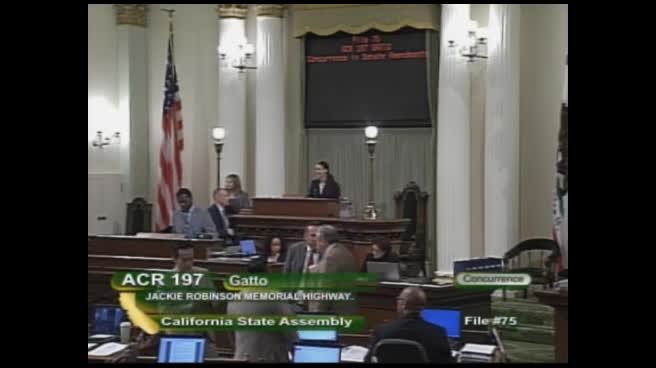
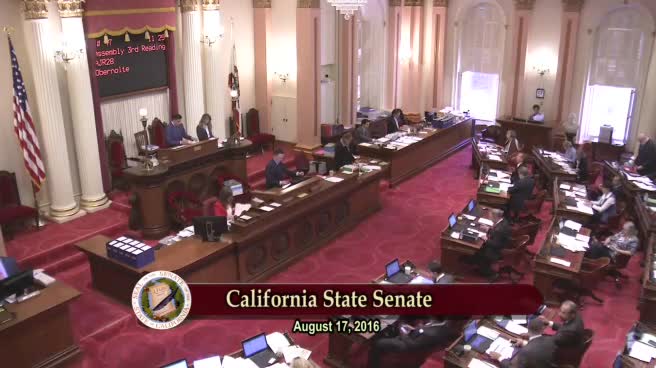
Bill Author

Bill Co-Author(s):