AJR 32: United States Supreme Court: nominations.
- Session Year: 2015-2016
- House: Assembly
- Latest Version Date: 2016-08-30
This measure would urge the United States Senate to fairly consider the nomination for Justice to the United States Supreme Court submitted by President Obama and to vote up or down on the nomination.
This measure would urge the United States Senate to fairly consider the nomination for Justice to the United States Supreme Court submitted by President Obama and to vote up or down on the nomination.
This measure would urge the United States Senate to fairly consider the nomination for Justice to the United States Supreme Court submitted by President Obama and to vote up or down on the nomination.
This measure would urge the United States Senate to fairly consider the nomination for Justice to the United States Supreme Court submitted by President Obama and to vote up or down on the nomination.
This measure would urge the United States Senate to fairly consider the nomination for Justice to the United States Supreme Court submitted by President Obama and to vote up or down on the nomination.
This measure would urge the United States Senate to fairly consider the nomination for Justice to the United States Supreme Court submitted by President Obama and to vote up or down on the nomination.
WHEREAS, The Supreme Court of the United States is the highest Court in the Nation and considers important national questions whose determination is necessary for the orderly operation of the federal government and the government of the several states; and
WHEREAS, Having an even number of justices on the Supreme Court of the United States makes it possible to have numerical ties in controversial decisions before the Court, which could leave unresolved conflicts of law between the several Circuit Courts of Appeal across the Nation; and
WHEREAS, A failure to ensure conformity of federal and state law across the several states would severely compromise the fundamental constitutional principles of due process and equal protection under the law; and
WHEREAS, Section 2 of Article II of the United States Constitution provides the President of the United States with the power to nominate justices to the Supreme Court of the United States with the advice and consent of the United States Senate; and
WHEREAS, Barack Obama was duly reelected as President of the United States on November 6, 2012, with 332 electoral votes and nearly 5 million more votes than his opponent, and retains the full powers and privileges of that office until his term ends on January 20, 2017; and
WHEREAS, By reelecting Barack Obama as President of the United States, the American people have already voiced their affirmation that he is their choice to exercise the powers of the Presidency, including filling vacancies on the Supreme Court of the United States that arise during his term in office; and
WHEREAS, There is historical precedence for confirming nominees for Justice of the Supreme Court of the United States during the final year of a presidents term, including Justice Anthony Kennedy of California by President Ronald Reagan in 1988; Justice Frank Murphy of Michigan by President Franklin D. Roosevelt in 1940; Justice Louis Brandeis of Kentucky by President Woodrow Wilson in 1916; Justice George Shiras, Jr. by President Benjamin Harrison in 1892; Justice Melville Fuller by President Grover Cleveland in 1888; Justice William Johnson by President Thomas Jefferson in 1804; and Chief Justice John Marshall by President John Adams in 1801; and
WHEREAS, The United States Senate has a duty afforded by Section 2 of Article II of the United States Constitution to provide the President of the United States with their advice and consent to nominations to the Supreme Court of the United States made by the President, and refusing to even give due consideration to a presidential nomination would be a dereliction of the Senates constitutional duties; now, therefore, be it
Resolved by the Assembly and the Senate of the State of California, jointly, That the Legislature urges the United States Senate to give President Obamas nominee to the Supreme Court of the United States fair and honest consideration through an up or down vote, both on the Senate Judiciary Committee and on the floor of the United States Senate; and be it further
Resolved, That the Chief Clerk of the Assembly transmit copies of this resolution to the President and Vice President of the United States, to the Speaker of the House of Representatives, to the Minority Leader of the House of Representatives, to the Majority Leader of the Senate, to the Minority Leader of the Senate, and to each Senator and Representative from California in the Congress of the United States.
WHEREAS, The Supreme Court of the United States is the highest Court in the Nation and considers important national questions whose determination is necessary for the orderly operation of the federal government and the government of the several states; and
WHEREAS, Having an even number of justices on the Supreme Court of the United States makes it possible to have numerical ties in controversial decisions before the Court, which could leave unresolved conflicts of law between the several Circuit Courts of Appeal across the Nation; and
WHEREAS, A failure to ensure conformity of federal and state law across the several states would severely compromise the fundamental constitutional principles of due process and equal protection under the law; and
WHEREAS, Section 2 of Article II of the United States Constitution provides the President of the United States with the power to nominate justices to the Supreme Court of the United States with the advice and consent of the United States Senate; and
WHEREAS, Barack Obama was duly reelected as President of the United States on November 6, 2012, with 332 electoral votes and nearly 5 million more votes than his opponent, and retains the full powers and privileges of that office until his term ends on January 20, 2017; and
WHEREAS, By reelecting Barack Obama as President of the United States, the American people have already voiced their affirmation that he is their choice to exercise the powers of the Presidency, including filling vacancies on the Supreme Court of the United States that arise during his term in office; and
WHEREAS, There is historical precedence for confirming nominees for Justice of the Supreme Court of the United States during the final year of a presidents term, including Justice Anthony Kennedy of California by President Ronald Reagan in 1988; Justice Frank Murphy of Michigan by President Franklin D. Roosevelt in 1940; and Justice Louis Brandeis of Kentucky by President Woodrow Wilson in 1916; Justice George Shiras, Jr. by President Benjamin Harrison in 1892; Justice Melville Fuller by President Grover Cleveland in 1888; Justice William Johnson by President Thomas Jefferson in 1804; and Chief Justice John Marshall by President John Adams in 1801; and
WHEREAS, The United States Senate has a duty afforded by Section 2 of Article II of the United States Constitution to provide the President of the United States with their advice and consent to nominations to the Supreme Court of the United States made by the President, and refusing to even give due consideration to a presidential nomination would be a dereliction of the Senates constitutional duties; now, therefore, be it
Resolved by the Assembly and the Senate of the State of California, jointly, That the Legislature urges the United States Senate to give whomever President Obama nominates President Obamas nominee to the Supreme Court of the United States fair and honest consideration through an up or down vote, both on the Senate Judiciary Committee and on the floor of the United States Senate; and be it further
Resolved, That the Chief Clerk of the Assembly transmit copies of this resolution to the President and Vice President of the United States, to the Speaker of the House of Representatives, to the Minority Leader of the House of Representatives, to the Majority Leader of the Senate, to the Minority Leader of the Senate, and to each Senator and Representative from California in the Congress of the United States.
WHEREAS, The Supreme Court of the United States is the highest court Court in the nation Nation and considers important national questions whose determination is necessary for the orderly operation of the federal government and the government of the several states; and
WHEREAS, Having an even number of justices on the Supreme Court of the United States makes it possible to have numerical ties in controversial decisions before the Court, which could leave unresolved conflicts of law between the several Circuit Courts of Appeal across the nation; Nation; and
WHEREAS, A failure to ensure conformity of federal and state law across the several states would severely compromise the fundamental constitutional principles of due process and equal protection under the law; and
WHEREAS, Section 2 of Article II of the United States Constitution provides the President of the United States with the power to nominate justices to the Supreme Court of the United States with the advice and consent of the United States Senate; and
WHEREAS, Barack Obama was duly reelected as President of the United States on November 6, 2012, with 332 electoral votes and nearly 5 million more votes than his opponent, and retains the full powers and privileges of that office until his term ends on January 20, 2017; and
WHEREAS, By reelecting Barack Obama as President of the United States, the American people have already voiced their affirmation that he is their choice to exercise the powers of the Presidency, including filling vacancies on the Supreme Court of the United States that arise during his term in office; and
WHEREAS, There is historical precedence for confirming nominees for Justice of the Supreme Court of the United States during the final year of a presidents term, including Justice Anthony Kennedy of California by President Ronald Reagan in 1988; Justice Frank Murphy of Michigan by President Franklin D. Roosevelt in 1940; and Justice Louis Brandeis of Kentucky by President Woodrow Wilson in 1916; Justice George Shiras, Jr. by President Benjamin Harrison in 1892; Justice Melville Fuller by President Grover Cleveland in 1888; Justice William Johnson by President Thomas Jefferson in 1804; and Chief Justice John Marshall by President John Adams in 1801; and
WHEREAS, The United States Senate has a duty afforded by Section 2 of Article II of the United States Constitution to provide the President of the United States with their advice and consent to nominations to the Supreme Court of the United States made by the President, and refusing to even give due consideration to a presidential nomination would be a dereliction of the Senates constitutional duties; now, therefore, be it
Resolved by the Assembly and the Senate of the State of California, jointly, That the Legislature urges the United States Senate to give whomever President Obama nominates to the Supreme Court of the United States fair and honest consideration through an up or down vote, both on the Senate Judiciary Committee and on the floor of the United States Senate; and be it further
Resolved, That the Chief Clerk of the Assembly transmit copies of this resolution to the President and Vice President of the United States, to the Speaker of the House of Representatives, to the Minority Leader of the House of Representatives, to the Majority Leader of the Senate, to the Minority Leader of the Senate, and to each Senator and Representative from California in the Congress of the United States.
WHEREAS, The Supreme Court of the United States is the highest court in the nation and considers important national questions whose determination is necessary for the orderly operation of the federal government and the government of the several states; and
WHEREAS, Having an even number of justices on the Supreme Court of the United States makes it possible to have numerical ties in controversial decisions before the Court, which could leave unresolved conflicts of law between the several Circuit Courts of Appeal across the Nation; nation; and
WHEREAS, A failure to ensure conformity of federal and state law across the several states, states would severely compromise the fundamental constitutional principles of due process and equal protection under the law will be severely compromised; law; and
WHEREAS, Section 2 of Article II of the United States Constitution provides the President of the United States with the power to nominate justices to the Supreme Court of the United States with the advice and consent of the United States Senate; and
WHEREAS, Barack Obama was duly reelected as President of the United States on November 6, 2012, with 332 electoral votes and nearly 5 million more votes than his opponent, and retains the full powers and privileges of that office until his term ends on January 20, 2017; and
WHEREAS, By reelecting Barack Obama as President of the United States, the American people have already voiced their affirmation that he is their choice to exercise the powers of the Presidency, including filling vacancies on the Supreme Court of the United States that arise during his term in office; and
WHEREAS, There is historical precedence for confirming nominees for Justice of the Supreme Court of the United States during the final year of a presidents term, including Justice Anthony Kennedy of California by President Ronald Reagan in 1988; Justice Frank Murphy of Michigan by President Franklin D. Roosevelt in 1940; and Justice Louis Brandeis of Kentucky by President Woodrow Wilson in 1916; now, therefore, be it and
WHEREAS, The United States Senate has a duty afforded by Section 2 of Article II of the United States Constitution to provide the President of the United States with their advice and consent to nominations to the Supreme Court of the United States made by the President, and refusing to even give due consideration to a presidential nomination would be a dereliction of the Senates constitutional duties; now, therefore, be it
Resolved by the Assembly and the Senate of the State of California, jointly, That the Legislature urges the United States Senate to give whomever President Obama nominates to the Supreme Court of the United States fair and honest consideration through an up or down vote, both on the Senate Judiciary Committee and on the floor of the United States Senate; and be it further
Resolved, That the Chief Clerk of the Assembly transmit copies of this resolution to the President and Vice President of the United States, to the Speaker of the House of Representatives, to the Minority Leader of the House of Representatives, to the Majority Leader of the Senate, to the Minority Leader of the Senate, and to each Senator and Representative from California in the Congress of the United States.
WHEREAS, The Supreme Court of the United States is the highest court in the nation and considers important national questions whose determination is necessary for the orderly operation of the federal government and the government of the several states; and
WHEREAS, Having an even number of justices on the Supreme Court of the United States makes it possible to have numerical ties in controversial decisions before the Court, which could leave unresolved conflicts of law between the several Circuit Courts of Appeal across the Nation; and
WHEREAS, A failure to ensure conformity of federal and state law across the several states, the fundamental constitutional principles of due process and equal protection under the law will be severely compromised; and
WHEREAS, Section 2 of Article II of the United States Constitution provides the President of the United States with the power to nominate justices to the Supreme Court of the United States with the advice and consent of the United States Senate; and
WHEREAS, Barack Obama was duly reelected as President of the United States on November 6, 2012, with 332 electoral votes and nearly 5 million more votes than his opponent, and retains the full powers and privileges of that office until his term ends on January 20, 2017; and
WHEREAS, By reelecting Barack Obama as President of the United States, the American people have already voiced their affirmation that he is their choice to exercise the powers of the Presidency, including filling vacancies on the Supreme Court of the United States that arise during his term in office; and
WHEREAS, There is historical precedence for confirming nominees for Justice of the Supreme Court of the United States during the final year of a presidents term, including Justice Anthony Kennedy of California by President Ronald Reagan in 1988; Justice Frank Murphy of Michigan by President Franklin D. Roosevelt in 1940; and Justice Louis Brandeis of Kentucky by President Woodrow Wilson in 1916; now, therefore, be it
Resolved by the Assembly and the Senate of the State of California, jointly, That the Legislature urges the United States Senate to give whomever President Obama nominates to the Supreme Court of the United States fair and honest consideration through an up or down vote, both on the Senate Judiciary Committee and on the floor of the United States Senate; and be it further
Resolved, That the Chief Clerk of the Assembly transmit copies of this resolution to the President and Vice President of the United States, to the Speaker of the House of Representatives, to the Minority Leader of the House of Representatives, to the Majority Leader of the Senate, to the Minority Leader of the Senate, and to each Senator and Representative from California in the Congress of the United States.
|
Date
|
Status
|
|---|---|
| May 5, 2016 | From committee chair, with author's amendments: Amend, and re-refer to committee. Amended and re-referred to Com. on JUD. |
| Aug 30, 2016 | Enrolled and filed with the Secretary of State at 11 a.m. |
| Aug 30, 2016 | Chaptered by Secretary of State - Res. Chapter 151, Statutes of 2016. |
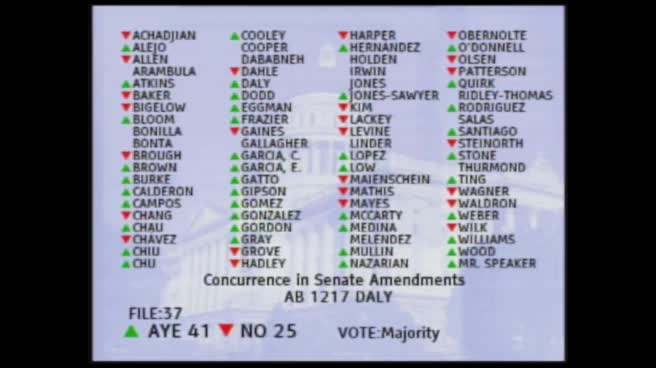
| Aug 22, 2016 | Senate amendments concurred in. To Engrossing and Enrolling. (Ayes 54. Noes 20. Page 6049.). |
| Aug 22, 2016 | Senate amendments concurred in. To Engrossing and Enrolling. |
| Aug 16, 2016 | In Assembly. Concurrence in Senate amendments pending. |
| Aug 15, 2016 | Adopted and to Assembly. (Ayes 26. Noes 12.) |
| Aug 15, 2016 | Adopted and to Assembly. (Ayes 26. Noes 12. Page 4950.) |
| Aug 15, 2016 | Adopted and to Assembly. |
| Jun 15, 2016 | From committee: Be adopted. Ordered to Third Reading. (Ayes 4. Noes 2.) (June 14). |
| May 5, 2016 | Re-referred to Com. on JUD. |
| Feb 19, 2016 | Introduced. To print. |
| Apr 26, 2016 | From committee chair, with author's amendments: Amend, and re-refer to committee. Amended and re-referred to Com. on RLS. |
| Apr 21, 2016 | In Senate. To Com. on RLS. |
| Apr 21, 2016 | Adopted and to Senate. (Ayes 54. Noes 22. Page 4458.) |
| Apr 21, 2016 | Adopted and to Senate. |
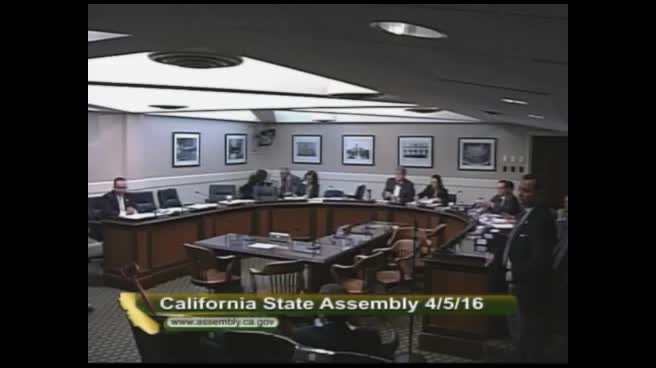
| Apr 5, 2016 | From committee: Be adopted. Ordered to Third Reading. (Ayes 7. Noes 2.) (April 5). |
| Mar 14, 2016 | Re-referred to Com. on JUD. |
| Mar 10, 2016 | From committee chair, with author's amendments: Amend, and re-refer to Com. on JUD. Amended. |
| Mar 8, 2016 | Referred to Com. on JUD. |
| Feb 21, 2016 | From printer. |
|
Date
|
Description
|
Location
|
Votes
|
|
|---|---|---|---|---|
| Aug 22, 2016 | AJR 32 ALEJO Concurrence in Senate Amendments | Assembly Floor |
Passed |
|
| Aug 15, 2016 | Assembly 3rd Reading AJR32 Alejo By Hertzberg | Senate Floor |
Passed |
|
| Jun 14, 2016 | Be adopted. Ordered to third reading | Senate Standing Committee on Judiciary |
Passed |
|
| Apr 21, 2016 | AJR 32 ALEJO Assembly Third Reading | Assembly Floor |
Passed |
|
| Apr 5, 2016 | Be adopted. To third reading. | Assembly Standing Committee on Judiciary |
Passed |
This list shows positions taken on this bill by organizations on the date displayed, which is linked to the original source.
Positions by individuals are not included.
CONCURRENCE IN SENATE AMENDMENTS
CSA1 Bill Id:AJR 32
Author:(Alejo)
As Amended Ver:May 5, 2016
Majority vote
ASSEMBLY: | 54-22 | (April 21, 2016) | SENATE: | 26-12 | (August 15, 2016) |
Original Committee Reference: JUD.
SUMMARY: Urges the United States Senate to fairly consider President Barack Obama's nominee to the United States Supreme Court. Specifically, this resolution:
- Makes findings and declarations relating to the importance of the Unites States Supreme Court, and the respective constitutional duties of the President and the Senate in the process of nominating and confirming justices to the Supreme Court.
- Makes findings and declarations that President Barack Obama was duly reelected as President of the United States in 2012, and that having reelected President Barack Obama the American people have already voiced their choice as to who should exercise the powers of the Presidency, including filling any vacancies on the Supreme Court that arise during the President's term of office.
- Finds that there is historical precedent for confirming nominees for Supreme Court nominees during the final year of a president's term.
- Declares that it would be a dereliction of the Senate's constitutional duties should it fail to give due consideration to the President's nominee and offer the President its advice and consent.
- Resolves that the California Legislature urges the United States Senate to give whomever President Obama nominates to the Supreme Court of the United States fair and honest consideration through an up or down vote, both on the Senate Judiciary Committee and on the floor of the United States Senate.
- Resolves that the Chief Clerk shall transmit copies of this resolution to the President and Vice-President of the United States, to the Speaker of the House of Representatives, to the Minority Leader of the House of Representatives, to the Majority Leader of the Senate, to the Minority Leader of the Senate, and to each Senator and Representative from California in the Congress of the United States.
The Senate amendments make minor clarifying amendments and add a co-author.
EXISTING LAW provides that the President shall nominate, with the advice and consent of the Senate, judges of the Supreme Court. (United States (U.S.) Constitution, Article II, Section 2.)
FISCAL EFFECT: None
COMMENTS: Within hours after Supreme Court Justice Antonin Scalia's death was announced, on February 13, 2016, U.S. Senate majority leader Mitch McConnell announced that the Senate had no intention to hold confirmation hearings on a replacement. "The American people should have a voice in the selection of their next Supreme Court justice," McConnell claimed. "Therefore, this vacancy should not be filled until we have a new president. Not surprisingly many Democrats disagreed. Senator Elizabeth Warren responded by noting that "Senator McConnell is right that the American people should have a voice in the selection of the next Supreme Court justice. In fact, they did — when President Obama won the 2012 election by five million votes." Within the first few days of Scalia's death, each side in the debate had presented purported instances in which the Senate did, or did not, confirm a Supreme Court nominee in a presidential election year. (New York Times, February 13-17, 2016.)
Election Year Appointments and Confirmations are not Unprecedented: The claim that it is "unprecedented" for the President to nominate, and the Senate to confirm, a justice to the Supreme Court in a presidential election year is simply false. As the resolution points out, the Senate has confirmed Supreme Court nominees during a presidential election year three times in the 20th century: Anthony Kennedy in 1988 (appointed in 1987); Frank Murphy in 1940; and Louis Brandeis in 1916. The resolution could cite more examples if it looked to the 19th century. Indeed, Chief Justice John Marshall – perhaps the most renowned Chief Justice in the Court's history – was appointed by President John Adams in 1801. President Adams went one better than appointing Marshall in a presidential election year; he appointed him after he had already lost the November, 1800, election to Thomas Jefferson. Through the remainder of the 19th century justices were nominated and confirmed during the election years of 1804, 1888, and 1892.
To be sure there have been relatively few instances of a President nominating someone to the U.S. Supreme Court during an election year, but this is only because the situation has rarely presented itself. While it may be true that there have been few examples of a President nominating someone to the Court during an election year, there have been no examples of a President deciding not to nominate someone during an election year when given the chance. In short, President Obama's failure to nominate someone, and the Senate's failure to initiate hearings, would be truly unprecedented. Indeed, the Constitution does not give the President a choice in the matter. Constitution Article II Section 2 clearly states that the President "shall" nominate members of the Supreme Court, with the advice and consent of the Senate.
Finally, as to the argument that waiting until after the election will give the people a say, the voters already had a say when they re-elected President Obama in 2012 knowing that his term would last until January 20, 2017. After all, the President made two appointments in his first term, Sonia Sotomayor in 2009, and Elena Kagan in 2010. To the extent that voters base their votes for President on likely Supreme Court nominations, the majority of voters knew what kind of person that President Obama would appoint; they could have rejected him in 2012 if they had found his first-term nominees unacceptable, but they did not.
Analysis Prepared by: Thomas Clark / JUD. / (916) 319-2334 FN: 0003470
Office of Senate Floor Analyses (916) 651-1520 Fax: (916) 327-4478 | AJR |
THIRD READING
Bill No: AJR 32
:
SENATE JUDICIARY COMMITTEE: 4-2, 6/14/16
AYES: Jackson, Leno, Monning, Wieckowski
NOES: Moorlach, Anderson
NO VOTE RECORDED: Hertzberg
ASSEMBLY FLOOR: 54-22, 4/21/16 - See last page for vote
DIGEST: This resolution makes various declarations relating to the importance of the United States Supreme Court, and the respective constitutional duties of the President and the Senate in the process of nominating and confirming justices to the Supreme Court. This resolution urges the U.S. Senate to give President Obama’s nominee to the Supreme Court fair and honest consideration through an up or down vote, both on the Senate Judiciary Committee and on the floor of the U.S. Senate.
ANALYSIS: Existing federal law, the U.S. Constitution, provides in relevant part that the President shall nominate, and by and with the advice and consent of the Senate, shall appoint judges of the Supreme Court. (U.S. Const., Art. II, Sec. 2.)
This resolution:
- Declares, among other things, that:
- The U.S. Supreme Court is the highest Court in the Nation and considers important national questions whose determination is necessary for the orderly operation of the federal government and the government of the several states;
- Having an even number of justices on the U.S. Supreme Court makes it possible to have numerical ties in controversial decisions before the Court, which could leave unresolved conflicts of law between the several Circuit Courts of Appeal across the Nation;
- A failure to ensure conformity of federal and state law across the several states would severely compromise the fundamental constitutional principles of due process and equal protection under the law;
- Section 2 of Article II of the U.S. Constitution provides the President with the power to nominate justices to the U.S. Supreme Court with the advice and consent of the U.S. Senate;
- By reelecting Barack Obama as President, the American people have already voiced their affirmation that he is their choice to exercise the powers of the Presidency, including filling vacancies on the Supreme Court that arise during his term in office;
- There is historical precedence for confirming nominees for Justice of the Supreme Court during the final year of a president’s term, including Justice Anthony Kennedy by President Ronald Reagan in 1988; Justice Frank Murphy by President Franklin D. Roosevelt in 1940; Justice Louis Brandeis by President Woodrow Wilson in 1916; Justice George Shiras, Jr. by President Benjamin Harrison in 1892; Justice Melville Fuller by President Grover Cleveland in 1888; Justice William Johnson by President Thomas Jefferson in 1804; and Chief Justice John Marshall by President John Adams in 1801; and
- The U.S. Senate has a duty afforded by Section 2 of Article II of the U.S. Constitution to provide the President of the United States with their advice and consent to nominations to the U.S. Supreme Court made by the President, and refusing to even give due consideration to a presidential nomination would be a dereliction of the Senate’s constitutional duties.
- Urges the U.S. Senate to give President Obama’s nominee to the Supreme Court fair and honest consideration through an up or down vote, both on the Senate Judiciary Committee and on the floor of the U.S. Senate.
Background
On February 13, 2016, U.S. Supreme Court Justice Antonin Scalia, who had served over three decades on the high court, was found dead at a West Texas resort. (Liptak, New York Times, Antonin Scalia, Justice on the Supreme Court, Dies at 79 (Feb. 13, 2016) <http://www.nytimes.com/2016/02/14/us/antonin-scalia-death.html?_r=0 [as of May 9, 2016].) A conservative jurist, his death sparked immediate declarations from prominent congressional Republicans that no nominee of the democratic president, President Barack Obama, would be confirmed. Indeed, Senate Majority Leader Mitch McConnell reportedly declared that the Senate should not confirm a replacement until after the 2016 election roughly an hour after Justice Scalia’s death was confirmed. (Everett and Thrush, Politico, McConnell Throws Down the Gauntlet: No Scalia Replacement Under Obama (Feb. 13, 2016) <http://www.politico.com/story/2016/02/mitch-mcconnell-antonin-scalia-supreme-court-nomination-219248 [as of May 9, 2016].)
Nonetheless, on March 16, President Obama nominated the Chief Judge of the U.S. Court of Appeals for the D.C. Circuit, Judge Merrick Garland, to fill the seat left vacant by the late Justice Scalia. (Chappell and Johnson, National Public Radio, Merrick Garland is Named as President Obama’s Supreme Court Nominee (Mar. 16, 2016) <http://www.npr.org/sections/thetwo-way/2016/03/16/470643431/ -i-ve-made-my-decision-on-supreme-court-nominee-president-obama-says [as of May 9, 2016].) To date, the U.S. Senate has yet to hold any hearings to consider the President’s nominee.
This resolution seeks to urge the U.S. Senate to give President Obama’s nominee to the Supreme Court fair and honest consideration through an up or down vote, both on the Senate Judiciary Committee and on the floor of the U.S. Senate.
FISCAL EFFECT: Appropriation: No Fiscal Com.: Local: No
None received
OPPOSITION: (Verified 6/14/16)
None received
ASSEMBLY FLOOR: 54-22, 4/21/16
AYES: Alejo, Arambula, Atkins, Baker, Bloom, Bonilla, Bonta, Brown, Burke, Calderon, Campos, Chau, Chiu, Chu, Cooley, Cooper, Dababneh, Daly, Dodd, Eggman, Frazier, Cristina Garcia, Eduardo Garcia, Gatto, Gipson, Gomez, Gonzalez, Gordon, Gray, Roger Hernández, Holden, Irwin, Jones-Sawyer, Lackey, Levine, Lopez, Low, McCarty, Medina, Mullin, Nazarian, O'Donnell, Quirk, Ridley-Thomas, Rodriguez, Salas, Santiago, Mark Stone, Thurmond, Ting, Weber, Williams, Wood, Rendon
NOES: Travis Allen, Bigelow, Brough, Chávez, Dahle, Beth Gaines, Gallagher, Grove, Harper, Jones, Kim, Maienschein, Mathis, Mayes, Melendez, Obernolte, Olsen, Patterson, Steinorth, Wagner, Waldron, Wilk
NO VOTE RECORDED: Achadjian, Chang, Hadley, Linder
Prepared by: Ronak Daylami / JUD. / (916) 651-4113
6/15/16 17:24:54
**** END ****
Senator Hannah-Beth Jackson, Chair
2015-2016 Regular Session
Bill No: AJR 32 (Author:Alejo)
Version: May 5, 2016
Hearing Date: June 14, 2016
Fiscal: No
Urgency: No
Consultant: RD
SUBJECT
United States Supreme Court: nominations
DESCRIPTION
This measure would make various declarations relating to the importance of the United States Supreme Court, and the respective constitutional duties of the President and the Senate in the process of nominating and confirming justices to the Supreme Court. This measure would urge the U.S. Senate to give President Obama’s nominee to the Supreme Court fair and honest consideration through an up or down vote, both on the Senate Judiciary Committee and on the floor of the U.S. Senate.
BACKGROUND
On February 13, 2016, U.S. Supreme Court Justice Antonin Scalia, who had served over three decades on the high court, was found dead at a West Texas resort. (Liptak, New York Times, Antonin Scalia, Justice on the Supreme Court, Dies at 79 (Feb. 13, 2016) <http://www.nytimes.com/2016/02/14/us/antonin-scalia-death.html?_r=0> [as of May 9, 2016].) A conservative jurist, his death sparked immediate declarations from prominent congressional Republicans that no nominee of the democratic president, President Barack Obama, would be confirmed. Indeed, Senate Majority Leader Mitch McConnell reportedly declared that the Senate should not confirm a replacement until after the 2016 election roughly an hour after Justice Scalia’s death was confirmed. (Everett and Thrush, Politico, McConnell Throws Down the Gauntlet: No Scalia Replacement Under Obama (Feb. 13, 2016) <http://www.politico.com/story/2016/02/mitch-mcconnell-antonin-scalia-supreme-court-nomination-219248> [as of May 9, 2016].)
Nonetheless, on March 16, President Obama nominated the Chief Judge of the U.S. Court of Appeals for the D.C. Circuit, Judge Merrick Garland, to fill the seat left vacant by the late Justice Scalia. (Chappell and Johnson, National Public Radio, Merrick Garland is Named as President Obama’s Supreme Court Nominee (Mar. 16, 2016) <http://www.npr.org/sections/thetwo-way/2016/03/16/470643431/-i-ve-made-my-decision-on-supreme-court-nominee-president-obama-says> [as of May 9, 2016].) To date, the U.S. Senate has yet to hold any hearings to consider the President’s nominee.
This measure seeks to urge the U.S. Senate to give President Obama’s nominee to the Supreme Court fair and honest consideration through an up or down vote, both on the Senate Judiciary Committee and on the floor of the U.S. Senate.
CHANGES TO EXISTING LAW
Existing federal law, the U.S. Constitution, provides in relevant part that the President shall nominate, and by and with the advice and consent of the Senate, shall appoint judges of the Supreme Court. (U.S. Const., art. II, Sec. 2.)
This measure would declare, among other things, that:
- the Supreme Court of the United States is the highest Court in the Nation and considers important national questions whose determination is necessary for the orderly operation of the federal government and the government of the several states;
- having an even number of justices on the Supreme Court of the United States makes it possible to have numerical ties in controversial decisions before the Court, which could leave unresolved conflicts of law between the several Circuit Courts of Appeal across the Nation;
- a failure to ensure conformity of federal and state law across the several states would severely compromise the fundamental constitutional principles of due process and equal protection under the law;
- Section 2 of Article II of the U.S. Constitution provides the President with the power to nominate justices to the U.S. Supreme Court with the advice and consent of the U.S. Senate;
- by reelecting Barack Obama as President, the American people have already voiced their affirmation that he is their choice to exercise the powers of the Presidency, including filling vacancies on the Supreme Court that arise during his term in office;
- there is historical precedence for confirming nominees for Justice of the Supreme Court during the final year of a president’s term, including Justice Anthony Kennedy by President Ronald Reagan in 1988; Justice Frank Murphy by President Franklin D. Roosevelt in 1940; Justice Louis Brandeis by President Woodrow Wilson in 1916; Justice George Shiras, Jr. by President Benjamin Harrison in 1892; Justice Melville Fuller by President Grover Cleveland in 1888; Justice William Johnson by President Thomas Jefferson in 1804; and Chief Justice John Marshall by President John Adams in 1801; and
- the U.S. Senate has a duty afforded by Section 2 of Article II of the United States Constitution to provide the President of the United States with their advice and consent to nominations to the Supreme Court of the United States made by the President, and refusing to even give due consideration to a presidential nomination would be a dereliction of the Senate’s constitutional duties.
This measure would urge the U.S. Senate to give President Obama’s nominee to the Supreme Court fair and honest consideration through an up or down vote, both on the Senate Judiciary Committee and on the floor of the U.S. Senate.
COMMENT
1. Stated need for the bill
According to the author:
The American People have already spoken. Barack Obama was reelected in 2012 by nearly five million votes and is President of the United States until his term ends in 2017. Just as the President will follow the Constitution by sending the Senate a nominee for the Supreme Court of the United States, the Senate must honor its constitutional obligations by giving the President’s nominee fair consideration with an up-or-down vote.
After the death of Justice Antonin Scalia, the Supreme Court currently has an even number of justices. This leaves open the possibility that important and controversial cases may be subject to a tie vote by the Court. Without adjudication by the highest court in the nation, different interpretations of state and federal law across the several appellate courts may remain unresolved for months, perhaps years. This would hamper the functioning of both the federal government and the governments of states like California.
In addition, the Supreme Court is considering controversial cases this term, including affirmative action, principle of “one person one vote,“ and President Obama’s executive actions on immigration. These questions of national importance should not be left unanswered because of the obstructionist efforts of a group of United States senators who place partisan politics above the national well-being.
AJR 32 calls upon the United States Senate to give President Obama’s nominee to the Supreme Court of the United States a fair hearing or vote.
2. Power and duty to nominate and appoint U.S. Supreme Court justices
The U.S. Constitution, under Article II, Section 2 (“the Appointment’s Clause”) gives not only the power, but in fact charges the President with the duty, to nominate and to appoint judges of the Supreme Court. In doing so, the Appointment’s Clause also relegates the duty to provide advice and consent on the president’s nominee to the U.S. Senate.
Election year nominations, while perhaps not altogether common, are not as uncommon or unprecedented as some have attempted to argue in recent months against President Obama’s recent act of nominating Merrick Garland to the Court. As noted in the resolution, several nominees have been confirmed to the Supreme Court during the final year of a president’s term, including: Justice Anthony Kennedy by President Ronald Reagan in 1988 (nominated in November 1987, but confirmed in February 1988); Justice Frank Murphy by President Franklin D. Roosevelt in 1940 (nominated and confirmed in January 1940); Justice Louis Brandeis by President Woodrow Wilson in 1916 (nominated and confirmed in the months prior to the 1916 election); Justice George Shiras, Jr. by President Benjamin Harrison in 1892 (nominated and confirmed in July 1892); Justice Melville Fuller by President Grover Cleveland in 1888 (nominated in April and confirmed by July 1888); Justice William Johnson by President Thomas Jefferson in 1804 (nominated and confirmed in March 1804); and Chief Justice John Marshall by President John Adams in 1801 (nominated and confirmed in January 1801).
Arguably, to suggest that an outgoing president would lack the power and duty to nominate and appoint a Supreme Court justice simply because of an election would suggest that the members of the Senate who are up for re-election, or who are retiring, also lack the power and duty to give or withhold their advice and consent on the nominee as well. Notably, nothing in the Constitution, itself, which clearly envisions the need to hold a presidential election every four years and to hold reelection of Senators every six years (of whom a third come up for reelection every two years), limits the appointment power and duty of the president or of the advice and consent duty of the Senate to non-election years.
In contrast, in all of the above-referenced instances, a president nominated and/or the U.S. Senate confirmed a new Supreme Court justice in the president’s final year, thereby suggesting that an absolute refusal by the U.S. Senate to provide advice and consent on a nominee simply because an election is looming and there is a possibility that a new president might make a different nomination would actually be unprecedented. While in the case of Justice Kennedy, the nomination was made in the year prior to the election, his appointment, for which advice and consent of the Senate is required, occurred in the election year. In the case of John Marshall—who turned out to be perhaps the most influential Chief Justice to have served on the Court, particularly in establishing the power of the Court—President John Adams actually nominated Chief Justice Marshall after he had already lost the 1800 presidential election to Thomas Jefferson. Regardless, it appears that, historically, nominations are made whenever vacancies actually occur, regardless of whether the timing might coincide with an election year. In this case, the vacancy occurred after Justice Scalia unexpectedly passed away in February, and the appointment process, beginning with the President’s nomination and involving the advice and consent of the U.S. Senate, should follow.
Support: None Known
Opposition: None Known
HISTORY
Source: Author
Related Pending Legislation: None Known
Prior Legislation: None Known
Prior Vote:
Assembly Floor (Ayes 54, Noes 22)
Assembly Judiciary Committee (Ayes 7, Noes 2)
**************
ASSEMBLY THIRD READING
ATR Bill Id:AJR 32
Author:(Alejo)
As Amended Ver:March 10, 2016
Majority vote
Committee | Votes | Ayes | Noes |
Judiciary | 7-2 | Mark Stone, Alejo, Chau, Chiu, Weber, Holden, Ting | Wagner, Gallagher |
SUMMARY: Urges the United States Senate to fairly consider President Barak Obama's nominee to the United States Supreme Court. Specifically, this resolution:
- Makes findings and declarations relating to the importance of the Unites States Supreme Court, and the respective constitutional duties of the President and the Senate in the process of nominating and confirming justices to the Supreme Court.
- Makes findings and declarations that Barack Obama was duly reelected as President of the United States in 2012, and that having reelected Barack Obama the American people have already voiced their choice as to who should exercise the powers of the Presidency, including filling any vacancies on the Supreme Court that arise during the President's term of office.
- Finds that there is historical precedent for confirming nominees for Supreme Court nominees during the final year of a president's term.
- Declares that it would be a dereliction of the Senate's constitutional duties should it fail to give due consideration to the President's nominee and offer the President its advice and consent.
- Resolves that the California Legislature urges the United States Senate to give whomever President Obama nominates to the Supreme Court of the United States fair and honest consideration through an up or down vote, both on the Senate Judiciary Committee and on the floor of the United States Senate.
- Resolves that the Chief Clerk shall transmit copies of this resolution to the President and Vice-President of the United States, to the Speaker of the House of Representatives, to the Minority Leader of the House of Representatives, to the Majority Leader of the Senate, to the Minority Leader of the Senate, and to each Senator and Representative from California in the Congress of the United States.
EXISTING LAW provides that the President shall nominate, with the advice and consent of the Senate, judges of the Supreme Court. (United States (U.S.) Constitution, Article II, Section 2.)
FISCAL EFFECT: None
COMMENTS: Within hours after Supreme Court Justice Antonin Scalia's death was announced, on February 13, 2016, U.S. Senate majority leader Mitch McConnell announced that the Senate had no intention to hold confirmation hearings on a replacement. "The American people should have a voice in the selection of their next Supreme Court justice," McConnell claimed. "Therefore, this vacancy should not be filled until we have a new president. Not surprisingly many Democrats disagreed. Senator Elizabeth Warren responded by noting that "Senator McConnell is right that the American people should have a voice in the selection of the next Supreme Court justice. In fact, they did — when President Obama won the 2012 election by five million votes." Within the first few days of Scalia's death, each side in the debate had presented purported instances in which the Senate did, or did not, confirm a Supreme Court nominee in a presidential election year. (New York Times, February 13-17, 2016.)
Election Year Appointments and Confirmations are not Unprecedented: The claim that it is "unprecedented" for the President to nominate, and the Senate to confirm, a justice to the Supreme Court in a presidential election year is simply false. As the resolution points out, the Senate has confirmed Supreme Court nominees during a presidential election year three times in the 20th century: Anthony Kennedy in 1988 (appointed in 1987); Frank Murphy in 1940; and Louis Brandeis in 1916. The resolution could cite more examples if it looked to the 19th century. Indeed, Chief Justice John Marshall – perhaps the most renowned Chief Justice in the Court's history – was appointed by President John Adams in 1801. President Adams went one better than appointing Marshall in a presidential election year; he appointed him after he had already lost the November, 1800, election to Thomas Jefferson. Through the remainder of the 19th century justices were nominated and confirmed during the election years of 1804, 1888, and 1892.
To be sure there have been relatively few instances of a President nominating someone to the U.S. Supreme Court during an election year, but this is only because the situation has rarely presented itself. While it may be true that there have been few examples of a President nominating someone to the Court during an election year, there have been no examples of a President deciding not to nominate someone during an election year when given the chance. In short, President Obama's failure to nominate someone, and the Senate's failure to initiate hearings, would be truly unprecedented. Indeed, the Constitution does not give the President a choice in the matter. Section 2 of Article II of the Constitution clearly states that the President "shall" nominate members of the Supreme Court, with the advice and consent of the Senate.
Finally, as to the argument that waiting until after the election will give the people a say, the voters already had a say when they re-elected President Obama in 2012 knowing that his term would last until January 20, 2017. After all, the President made two appointments in his first term, Sonia Sotomayor in 2009, and Elena Kagan in 2010. To the extent that voters base their votes for President on likely Supreme Court nominations, the majority of voters knew what kind of person that President Obama would appoint; they could have rejected him in 2012 if they had found his first-term nominees unacceptable, but they did not.
In support of this resolution the author writes:
The American People have already spoken. Barack Obama was reelected in 2012 by nearly five million votes and is President of the United States until his term ends in 2017. Just as the President will follow the Constitution by sending the Senate a nominee for the Supreme Court of the United States, the Senate must honor its constitutional obligations by giving the President's nominee fair consideration with an up-or-down vote. After the death of Justice Antonin Scalia, the Supreme Court currently has an even number of justices. This leaves open the possibility that important and controversial cases may be subject to a tie vote by the Court. Without adjudication by the highest court in the nation, different interpretations of state and federal law across the several appellate courts may remain unresolved for months, perhaps years. This would hamper the functioning of both the federal government and the governments of states like California. In addition, the Supreme Court is considering controversial cases this term, including affirmative action, principle of "one person one vote," and President Obama's executive actions on immigration. These questions of national importance should not be left unanswered because of the obstructionist efforts of a group of United States senators who place partisan politics above the national well-being.
Analysis Prepared by: Thomas Clark / JUD. / (916) 319-2334 FN: 0002685
Date of Hearing: April 5, 2016
ASSEMBLY COMMITTEE ON JUDICIARY
Mark Stone, Chair
ABPCA Bill Id:AJR 32
Author:(Alejo) – As Amended Ver:March 10, 2016
SUBJECT: United States Supreme Court: nominations
KEY ISSUE: Should the California Legislature urge the United States senate to perform its constitutional duty and give a fair hearing to president Obama's choice to replace the late justice Antonin Scalia?
SYNOPSIS
The recent passing of Justice Antonin Scalia created a vacancy on the United States Supreme Court, and under the U.S. Constitution, it is the duty of the President to nominate a person to fill the vacancy "with the advice and consent of the Senate." However, the Republican Senate majority leader, Mitch McConnell, announced that the Senate will not consider any nominee that President Obama puts forward during an election year. McConnell's questionable reasoning is that it is "unprecedented" to consider a Supreme Court nominee during a presidential election year. The apparent justification for this position is that waiting until after the election will give voters a say in deciding who shall replace Justice Scalia. As pointed out in this resolution and discussed below, the claim that it is unprecedented for a President to nominate, and the Senate to confirm, a justice to the Supreme Court during a presidential election year is simply false. The resolution points out that it has happened three times in the 20th century, and the resolution might have added that it happened several additional times in the 19th century. To be sure there have been relatively few instances of a President nominating someone to the U.S. Supreme Court during an election year, but this is only because the situation rarely presents itself. While it may be true that there have been few examples of a President nominating someone to the Court during an election year, there have been zero examples of a President forgoing his duty to nominate someone because it was an election year. Indeed, the Constitution does not give the President a choice in the matter. Section 2 of Article II of the Constitution clearly states that the President "shall" nominate members of the Supreme Court, with the advice and consent of the Senate. Finally, as to the argument that waiting until after the election will give the people a say, the voters already had a say when they re-elected President Obama in 2012 knowing that his term would last until January 20, 2017. After all, the President made two appointments in his first term, Sonia Sotomayor in 2009, and Elena Kagan in 2010. To the extent that voters base their vote for President on likely Supreme Court nominations, they could have rejected President Obama in 2012 if they had found his first-term nominees unacceptable.
SUMMARY: Urges the United States Senate to fairly consider President Barak Obama's nominee to the United States Supreme Court. Specifically, this measure:
- Makes findings and declarations relating to the importance of the Unites States Supreme Court, and the respective constitutional duties of the President and the Senate in the process of nominating and confirming justices to the Supreme Court.
- Makes findings and declarations that Barack Obama was duly reelected as President of the United States in 2012, and that having reelected Barack Obama the American people have already voiced their choice as to who should exercise the powers of the Presidency, including filling any vacancies on the Supreme Court that arise during the President's term of office.
- Finds that there is historical precedent for confirming nominees for Supreme Court nominees during the final year of a president's term.
- Declares that it would be a dereliction of the Senate's constitutional duties should it fail to give due consideration to the President's nominee and offer the President its advice and consent.
- Resolves that the California Legislature urges the United States Senate to give whomever President Obama nominates to the Supreme Court of the United States fair and honest consideration through an up or down vote, both on the Senate Judiciary Committee and on the floor of the United States Senate.
- Resolves that the Chief Clerk shall transmit copies of this resolution to the President and Vice-President of the United States, to the Speaker of the House of Representatives, to the Minority Leader of the House of Representatives, to the Majority Leader of the Senate, to the Minority Leader of the Senate, and to each Senator and Representative from California in the Congress of the United States.
EXISTING LAW provides that the President shall nominate, with the advice and consent of the Senate, judges of the Supreme Court. (U.S. Constitution, Article II, Section 2.)
FISCAL EFFECT: None
COMMENTS: Within hours after Supreme Court Justice Antonin Scalia's death was announced, on February 13, 2016, U.S. Senate majority leader Mitch McConnell announced that the Senate had no intention to hold confirmation hearings on a replacement. "The American people should have a voice in the selection of their next Supreme Court justice," McConnell claimed. "Therefore, this vacancy should not be filled until we have a new president." (New York Times, February 14, 2016.)
Later that same day, the Republican presidential primary candidates opened their debate by concurring that the nomination and confirmation should await the next president. Republican candidates repeated the claim that it was "unprecedented" for a President to appoint, and the Senate to confirm, a Supreme Court nominee in a presidential election year. Not surprisingly many Democrats disagreed. Senator Elizabeth Warren responded by noting that “Senator McConnell is right that the American people should have a voice in the selection of the next Supreme Court justice. In fact, they did — when President Obama won the 2012 election by five million votes.” Within the first few days of Scalia's death, each side in the debate had presented purported instances in which the Senate did, or did not, confirm a Supreme Court nominee in a presidential election year. (New York Times, February 13-17, 2016.)
Election Year Appointments and Confirmations are not Unprecedented: The claim that it is "unprecedented" for the President to nominate, and the Senate to confirm, a justice to the Supreme Court in a presidential election year is simply false. As the resolution points out, the Senate has confirmed Supreme Court nominees during a presidential election year three times in the 20th century: Anthony Kennedy in 1988 (appointed in 1987); Frank Murphy in 1940; and Louis Brandeis in 1916. The resolution could cite more examples if it looked to the 19th century. Indeed, Chief Justice John Marshall – perhaps the most renowned Chief Justice in the Court's history – was appointed by President John Adams in 1801. Adams went one better than appointing Marshall in a presidential election year; he appointed him after he had already lost the November, 1800, election to Thomas Jefferson. Marshall, along with several other judges appointed to the federal courts, was one of President Adams "midnight appointments" that led to the celebrated case of Marbury v. Madison (1803). Through the remainder of the 19th century justices were nominated and confirmed during the election years of 1804, 1888, and 1892. The 1892 was an especially closely contested election. When Justice Joseph Bradley died in January of 1892, President Benjamin Harrison nominated George Shiras, even though Harrison was running for re-election against Grover Cleveland. The Senate confirmed Shiras in late July, just a few months before the election. By the time Harrison lost the election, Shiras had already taken his seat. (Robert Murray, A History of the Supreme Court (1968 edition); see also Timothy Huebner, "In Election Years, A History of Confirming Court Nominees," New York Times, February 16, 2016.)
To be sure there have been relatively few instances of a President nominating someone to the U.S. Supreme Court during an election year, but this is only because the situation has rarely presented itself. While it may be true that there have been few examples of a President nominating someone to the Court during an election year, there have been no examples of a President deciding not to nominate someone during an election year when given the chance. In short, President Obama's failure to nominate someone, and the Senate's failure to initiate hearings, would be truly unprecedented. Indeed, the Constitution does not give the President a choice in the matter. Section 2 of Article II of the Constitution clearly states that the President "shall" nominate members of the Supreme Court, with the advice and consent of the Senate.
Finally, as to the argument that waiting until after the election will give the people a say, the voters already had a say when they re-elected President Obama in 2012 knowing that his term would last until January 20, 2017. After all, the President made two appointments in his first term, Sonia Sotomayor in 2009, and Elena Kagan in 2010. To the extent that voters base their votes for President on likely Supreme Court nominations, the majority of voters knew what kind of person that President Obama would appoint; they could have rejected him in 2012 if they had found his first-term nominees unacceptable, but they did not.
Be Careful What You Wish For: Perhaps the closest historical analogy to the present situation was the nomination and confirmation hearing of Justice Abe Fortas during the presidential election year of 1968. In June of 1968, before the November election but after President Lyndon Johnson had announced his intention not to seek another term, Chief Justice Earl Warren announced his intention to resign. Many historians believe that Warren decided to resign so that Johnson could nominate his successor, fearing the prospect that the choice would fall to Richard Nixon should he win the election. Johnson appointed Abe Fortas to the Chief Justice position and intended to appoint another person to fill the seat vacated by Fortas. Fortas faced strong opposition in the Senate from Southern Democrats and conservative Republicans, largely because of the liberal justice's support for civil rights and, some would argue, his Judaism. Significantly, however, the Senate leaders who opposed Fortas did not claim that Johnson had no right to appoint Fortas in an election year or, more important, that the Senate should not hold confirmation hearings. Indeed, the Senate moved quickly to hold hearings. However, when Fortas came up for a vote, his opponents sustained a filibuster until Fortas, realizing he had no chance, withdrew his nomination. At the time a New York Times editorial condemned the filibuster and withdrawal as a "defeat for democracy" and an abdication of constitutional duty. ("Defeat for Democracy," New York Times, October 3, 1968.)
In the short term, the opponents of Abe Fortas won a victory insofar as Richard Nixon won the election and earned the right to make the appointment. In the long run, however, the Southern Democrats and conservative Republicans who led the filibuster may have won only a pyrrhic victory. Nixon eventually nominated to that seat Harry Blackmun, the author of Roe v. Wade who would become one of the Court's liberal stalwarts. (See Linda Greenhouse, Becoming Justice Blackmun: Harry Blackmun's Supreme Court Journey (2006).) Similarly, should the Democrats win the White House and regain a majority in the U.S. Senate, the new Democratic president could nominate, and a newly Democratic Senate confirm, a very liberal justice to the Court, making Mitch McConnell and his fellow Republicans wish that they had considered the allegedly "moderate" Merrick Garland, President Obama's current nominee.
ARGUMENTS IN SUPPORT: In support of this resolution the author writes:
The American People have already spoken. Barack Obama was reelected in 2012 by nearly five million votes and is President of the United States until his term ends in 2017. Just as the President will follow the Constitution by sending the Senate a nominee for the Supreme Court of the United States, the Senate must honor its constitutional obligations by giving the President’s nominee fair consideration with an up-or-down vote.
After the death of Justice Antonin Scalia, the Supreme Court currently has an even number of justices. This leaves open the possibility that important and controversial cases may be subject to a tie vote by the Court. Without adjudication by the highest court in the nation, different interpretations of state and federal law across the several appellate courts may remain unresolved for months, perhaps years. This would hamper the functioning of both the federal government and the governments of states like California.
In addition, the Supreme Court is considering controversial cases this term, including affirmative action, principle of “one person one vote,“ and President Obama’s executive actions on immigration. These questions of national importance should not be left unanswered because of the obstructionist efforts of a group of United States senators who place partisan politics above the national well-being.
REGISTERED SUPPORT / OPPOSITION:
Support
None on file
Opposition
None on file
Analysis Prepared by: Thomas Clark / JUD. / (916) 319-2334
Bill Author

Bill Co-Author(s):
