AJR 45: Civil rights: the Equality Act.
- Session Year: 2015-2016
- House: Assembly
- Latest Version Date: 2016-09-01
This act would urge the United States Congress to enact the Equality Act of 2015, which would amend the Civil Rights Act of 1964 to include protections on the basis of sexual orientation, gender identity, and sex for, among other things, employment, housing, public education, and public accommodations.
This act would urge the United States Congress to enact the Equality Act of 2015, which would amend the Civil Rights Act of 1964 to include protections on the basis of sexual orientation, gender identity, and sex for, among other things, employment, housing, public education, and public accommodations.
This act would urge the United States Congress to enact the Equality Act of 2015, which would amend the Civil Rights Act of 1964 to include protections on the basis of sexual orientation, gender identity, and sex for, among other things, employment, housing, public education, and public accommodations.
This act would urge the United States Congress to enact the Equality Act of 2015, which would amend the Civil Rights Act of 1964 to include protections on the basis of sexual orientation, gender identity, and sex for, among other things, employment, housing, public education, and public accommodations.
This act would urge the United States Congress to enact the Equality Act of 2015, which would amend the Civil Rights Act of 1964 to include protections on the basis of sexual orientation, gender identity, and sex for, among other things, employment, housing, public education, and public accommodations.
WHEREAS, While the Fourteenth Amendment of the United States Constitution guarantees all citizens equal protection under the law and the Civil Rights Act of 1964 outlaws discrimination based on race, color, religion, sex, or national origin, no federal law enumerates discrimination protections for lesbian, gay, bisexual, and transgender (LGBT) Americans. While the United States Supreme Courts ruling in Obergefell v. Hodges (2015) 192 L.Ed.2d 609 brought marriage equality to all 50 states, LGBT Americans still face discrimination in their daily lives and remain at risk of being fired or denied services on the basis of who they are or who they love because the majority of states still lack explicit, comprehensive nondiscrimination protections; and
WHEREAS, The Equality Act of 2015 amends the Civil Rights Act of 1964 to include sex, sexual orientation, and gender identity among the prohibited categories of discrimination, effectively protecting LGBT Americans in the areas of employment, housing, public accommodations, public education, access to federal funding, access to credit, and the opportunity to serve on a jury. The 2015 Equality Acts comprehensive approach to updating the Civil Rights Act of 1964 would include protections for many Americans beyond the LGBT community; and
WHEREAS, Despite the 1964 Civil Rights Acts prohibition against gender discrimination in certain areas, such as employment and housing, women still face discrimination in public facilities and in receiving federal financial assistance. The Equality Act of 2015 would ensure that women have equal access to public accommodations and public funds, and that federal funding could not be spent in a manner that encourages discrimination based on sex; and
WHEREAS, While many public accommodations are considered protected places under current law, people of color still face discrimination in places that include stores, banks, transportation services, and health care services. The Equality Act of 2015 updates the federal definition of public accommodations to ensure all individuals are able to fully access and utilize social and public places regardless of who they are; and
WHEREAS, In a growing number of states, Religious Freedom Restoration Acts (RFRAs) and similar laws are being invoked in an attempt to justify discrimination against the LGBT community. The Equality Act of 2015 retains exemptions that religious organizations and schools already enjoy, but would ensure that religion could not be used as a justification for refusing service on the basis of race, color, religion, sex, national origin, sexual orientation, or gender identity; now, therefore, be it
Resolved by the Assembly and the Senate of the State of California, jointly, That the Legislature calls upon the United States Congress to pass the Equality Act of 2015, which would amend the Civil Rights Act of 1964 to include protections on the basis of sexual orientation, gender identity, and sex in the areas of employment, housing, public accommodations, public education, federal funding, credit, and the jury system; and be it further
Resolved, That the Chief Clerk of the Assembly transmit copies of this resolution to the Speaker of the House of Representatives, to the Majority Leader of the Senate, and to each Senator and Representative from California in the Congress of the United States.
WHEREAS, While the Fourteenth Amendment of the United States Constitution guarantees all citizens equal protection under the law and the Civil Rights Act of 1964 outlaws discrimination based on race, color, religion, sex, or national origin, no federal law enumerates discrimination protections for lesbian, gay, bisexual, and transgender (LGBT) Americans. While the United States Supreme Courts ruling in Obergefell v. Hodges (2015) 192 L.Ed.2d 609 brought marriage equality to all 50 states, LGBT Americans still face discrimination in their daily lives and remain at risk of being fired or denied services on the basis of who they are or who they love because the majority of states still lack explicit, comprehensive nondiscrimination protections; and
WHEREAS, The Equality Act of 2015 amends the Civil Rights Act of 1964 to include sex, sexual orientation, and gender identity among the prohibited categories of discrimination, effectively protecting LGBT Americans in the areas of employment, housing, public accommodations, public education, access to federal funding, access to credit, and the opportunity to serve on a jury. The 2015 Equality Acts comprehensive approach to updating the Civil Rights Act of 1964 would include protections for many Americans beyond the LGBT community; and
WHEREAS, Despite the 1964 Civil Rights Acts prohibition against gender discrimination in certain areas, such as employment and housing, women still face discrimination in public facilities and in receiving federal financial assistance. The Equality Act of 2015 would ensure that women have equal access to public accommodations and public funds, and that federal funding could not be spent in a way manner that encourages discrimination based on sex; and
WHEREAS, While many public accommodations are considered protected places under current law, people of color still face discrimination in places that include stores, banks, transportation services, and health care services. The Equality Act of 2015 updates the federal definition of public accommodations to ensure all individuals are able to fully access and utilize social and public places regardless of who they are; and
WHEREAS, In a growing number of states, Religious Freedom Restoration Acts (RFRAs) and similar laws are being invoked in an attempt to justify discrimination against the LGBT community. The Equality Act of 2015 retains exemptions that religious organizations and schools already enjoy, but would ensure that religion could not be used as a justification for refusing service on the basis of race, color, religion, sex, national origin, sexual orientation, or gender identity; now, therefore, be it
Resolved by the Assembly and the Senate of the State of California, jointly, That the Legislature calls upon the United States Congress to pass the Equality Act of 2015, which would amend the Civil Rights Act of 1964 to include protections on the basis of sexual orientation, gender identity, and sex in the areas of employment, housing, public accommodations, public education, federal funding, credit, and the jury system; and be it further
Resolved, That the Chief Clerk of the Assembly transmit copies of this resolution to the Speaker of the House of Representatives, to the Majority Leader of the Senate, and to each Senator and Representative from California in the Congress of the United States.
WHEREAS, While the Fourteenth Amendment of the United States Constitution guarantees all citizens equal protection under the law and the Civil Rights Act of 1964 outlaws discrimination based on race, color, religion, sex, or national origin, no federal law enumerates discrimination protections for lesbian, gay, bisexual, and transgender (LGBT) Americans. While the United States Supreme Courts ruling in Obergefell v. Hodges (2015) 192 L.Ed.2d 609 brought marriage equality to all 50 states, LGBT Americans still face discrimination in their daily lives and remain at risk of being fired or denied services on the basis of who they are or who they love because the majority of states still lack explicit, comprehensive nondiscrimination protections; and
WHEREAS, The Equality Act of 2015 amends the Civil Rights Act of 1964 to include sex, sexual orientation, and gender identity among the prohibited categories of discrimination, effectively protecting LGBT Americans in the areas of employment, housing, public accommodations, public education, access to federal funding, access to credit, and the opportunity to serve on a jury. The 2015 Equality Acts comprehensive approach to updating the Civil Rights Act of 1964 would include protections for many Americans beyond the LGBT community; and
WHEREAS, Despite the 1964 Civil Rights Acts prohibition against gender discrimination in certain areas, such as employment and housing, women still face discrimination in public facilities and in receiving federal financial assistance. The Equality Act of 2015 would ensure that women have equal access to public accommodations and public funds, and that federal funding could not be spent in a way that encourages discrimination based on sex; and
WHEREAS, While many public accommodations are considered protected places under current law, people of color still face discrimination in places that include stores, banks, transportation services, and health care services. The Equality Act of 2015 updates the federal definition of public accommodations to ensure all individuals are able to fully access and utilize social and public places regardless of who they are; and
WHEREAS, In a growing number of states, Religious Freedom Restoration Acts (RFRAs) and similar laws are being invoked in an attempt to justify discrimination against the LGBT community. The Equality Act of 2015 retains exemptions that religious organizations and schools already enjoy, but would ensure that religion could not be used as a justification for refusing service on the basis of race, color, religion, sex, national origin, sexual orientation, or gender identity; now, therefore, be it
Resolved by the Assembly and the Senate of the State of California, jointly, That the Legislature calls upon the United States Congress to pass the Equality Act of 2015, which would amend the Civil Rights Act of 1964 to include protections on the basis of sexual orientation, gender identity, and sex in the areas of employment, housing, public accommodations, public education, federal funding, credit, and the jury system; and be it further
Resolved, That the Chief Clerk of the Assembly transmit copies of this resolution to the Speaker of the House of Representatives, to the Majority Leader of the Senate, and to each Senator and Representative from California in the Congress of the United States.
|
Date
|
Status
|
|---|---|
| Aug 18, 2016 | Read third time and amended. Ordered to second reading. |
| Sep 1, 2016 | Enrolled and filed with the Secretary of State at 11:45 a.m. |
| Sep 1, 2016 | Chaptered by Secretary of State - Res. Chapter 169, Statutes of 2016. |
| Aug 24, 2016 | Senate amendments concurred in. To Engrossing and Enrolling. (Ayes 55. Noes 11. Page 6218.). |
| Aug 24, 2016 | Senate amendments concurred in. To Engrossing and Enrolling. |
| Aug 23, 2016 | In Assembly. Concurrence in Senate amendments pending. |
| Aug 22, 2016 | Adopted and to Assembly. (Ayes 29. Noes 5. Page 5237.) |
| Aug 22, 2016 | Adopted and to Assembly. |
| Aug 19, 2016 | Read second time. Ordered to third reading. |
| Jun 9, 2016 | Introduced. To print. |
| Aug 9, 2016 | From committee: Be adopted. Ordered to Third Reading. (Ayes 5. Noes 1.) (August 9). |
| Jun 30, 2016 | Re-referred to Com. on JUD. |
| Jun 27, 2016 | In Senate. To Com. on RLS. |
| Jun 23, 2016 | Amended, adopted, and to Senate. (Ayes 52. Noes 11. Page 5484.) |
| Jun 23, 2016 | Amended, adopted, and to Senate. |
| Jun 21, 2016 | From committee: Be adopted. Ordered to Third Reading. (Ayes 7. Noes 2.) (June 21). |
| Jun 13, 2016 | Referred to Com. on JUD. |
| Jun 10, 2016 | From printer. |
|
Date
|
Description
|
Location
|
Votes
|
|
|---|---|---|---|---|
| Aug 24, 2016 | AJR 45 CHIU Concurrence in Senate Amendments | Assembly Floor |
Passed |
|
| Aug 22, 2016 | Assembly 3rd Reading AJR45 Chiu By Leno | Senate Floor |
Passed |
|
| Aug 9, 2016 | Be adopted. Ordered to third reading | Senate Standing Committee on Judiciary |
Passed |
|
| Jun 23, 2016 | AJR 45 CHIU Assembly Third Reading | Assembly Floor |
Passed |
|
| Jun 21, 2016 | Be adopted. To third reading. | Assembly Standing Committee on Judiciary |
Passed |
This list shows positions taken on this bill by organizations on the date displayed, which is linked to the original source.
Positions by individuals are not included.
|
Organization
|
Position
|
Date
|
|---|---|---|
| Aids Project Los Angeles | ** Support | Aug 22, 2016 |
| Anti-Defamation League | ** Support | Aug 22, 2016 |
| API Equality - LA | ** Support | Aug 22, 2016 |
| Asian & Pacific Islander Wellness Center | ** Support | Aug 22, 2016 |
| Asian Americans Advancing Justice, California | ** Support | Aug 22, 2016 |
| Bakersfield LGBTQ | ** Support | Aug 22, 2016 |
| California National Organization For Women | ** Support | Aug 22, 2016 |
| California Voices for Progress | ** Support | Aug 22, 2016 |
| California Young Democrats | ** Support | Aug 22, 2016 |
| Courage Campaign | ** Support | Aug 22, 2016 |
| Equality California | ** Support | Aug 22, 2016 |
| Lambda Legal | ** Support | Aug 22, 2016 |
| LGBTQ Center of Long Beach | ** Support | Aug 22, 2016 |
| Los Angeles LGBT Center | ** Support | Aug 22, 2016 |
| Mexican American Legal Defense and Educational Fund | ** Support | Aug 22, 2016 |
| Our Family Coalition | ** Support | Aug 22, 2016 |
| Planned Parenthood Affiliates Of California | ** Support | Aug 22, 2016 |
| Sacramento LGBT Center | ** Support | Aug 22, 2016 |
| The Trevor Project | ** Support | Aug 22, 2016 |
| Transgender Law Center | ** Support | Aug 22, 2016 |
CONCURRENCE IN SENATE AMENDMENTS
CSA1 Bill Id:AJR 45
Author:(Chiu)
As Amended Ver:August 18, 2016
Majority vote
ASSEMBLY: | 52-11 | (June 23, 2016) | SENATE: | 29-5 | (August 22, 2016) |
Original Committee Reference: JUD.
SUMMARY: Urges Congress to enact the 2015 Equality Act. Specifically, this measure:
- Makes various findings and declarations relating to the Civil Rights Act of 1964.
- Declares the necessity to amend the Civil Rights Act of 1964 by detailing the lack of enumerated discrimination protections for lesbian, gay, bisexual, and transgender (LGBT) Americans.
- Declares the 2015 Equality Act's comprehensive approach will:
- Protect LGBT Americans from employment, housing, public accommodations, public education, access to federal funding, and access to credit discrimination.
- Give women equal access to public accommodation and public funds while not using federal funds to encourage discrimination.
- Update the definition of public accommodations to allow all individuals, including people of color, full access and utilization of social and public places.
- Ensure religion cannot be used as a justification for refusing service based on race, color, religion, sex, nation original, sexual orientation, or gender identity.
- Resolves that the Assembly and the Senate of the State of California, jointly, call upon the United States Congress to pass the 2015 Equality Act.
- Resolves that the Chief Clerk of the Assembly transmit copies of this resolution to the author for appropriate distribution.
The Senate amendments add co-authors and make one technical change.
EXISTING LAW:
- Federal law guarantees equal protection of the laws and prohibits discrimination based on race, color, religion, sex, or national origin. (Public Law 88–352; 78 Statute 241.)
- Provides that no person in the State of California shall, on the basis of race, national origin, ethnic group identification, religion, age, sex, sexual orientation, color, genetic information, or disability, be unlawfully denied full and equal access to the benefits of, or be unlawfully subjected to discrimination under, any program or activity that is conducted, operated, or administered by the state or by any state agency, is funded directly by the state, or receives any financial assistance from the state. (California Government Code 11135.)
- Provides, under the Unruh Civil Rights Act, that all persons within this state are free and equal, and no matter what their sex, race, color, religion, ancestry, national origin, disability, medical condition, genetic information, marital status, sexual orientation, citizenship, primary language, or immigration status, are entitled to the full and equal accommodations, advantages, facilities, or services of all business establishments of every kind whatsoever. Defines "sex" to include gender identity and gender expression. (California Civil Code Section 51.)
- Provides, under the California Fair Employment and Housing Act, that it is unlawful to discriminate against or harass any person because of the race, color, religion, sex, gender, gender identity, gender expression, sexual orientation, marital status, national origin, ancestry, familial status, source of income, disability, or genetic information of that person. (California Government Code 12955.)
FISCAL EFFECT: None
COMMENTS: The Civil Rights Act of 1964 bans segregation on the basis of race, color, religion, gender, or national origin at all places of public accommodation and prohibits discrimination by employers and labor unions and the use of federal funds for any discriminatory program. The Civil Rights Act of 1964 was a monumental step for advancing the equal treatment of Americans. After 52 years, however, the author believes that the law should be amended in order to become truly inclusive and to specifically encompass LGBT Americans. According to the author, the 2015 Equality Act, introduced as H.R. 3185 by U.S. Representative David Cicilline of Rhode Island, will provide a much-needed update to the Civil Rights Act of 1964. This resolution urges Congress to pass the 2015 Equality Act.
Federal Anti-Discrimination Laws: While the United States Supreme Court gave all 50 states marriage equality in Obergefell v. Hodges (2015) 135 S.Ct. 2071, LGBT Americans are still faced with discrimination in employment, housing, public accommodation, education, access to federal funds, access to credit, and the right to serve on a jury. Under current federal law, there are no specific equal employment protections for LGBT Americans; instead states are given the responsibly to pass anti-discrimination laws and mostly fail to do so. .
Religious Freedom Restoration Act: The federal Religious Freedom Restoration Act (RFRA) was passed in 1993 a response to the U.S. Supreme Court's decision in Employment Division v. Smith (1990) 494 U.S. 872. Prior to the Smith decision, the Supreme Court had issued a number of decisions holding that, under the Free Exercise clause of the First Amendment, government policies need to accommodate the rights of religiously observant persons, unless there was a "compelling state interest" for not accommodating religious concerns. However, the Smith decision, written by the late Justice Scalia, reversed this trend, holding that the state did not need to show a compelling interest in order to discriminate on the basis of religion. As a response, Congress passed RFRA. In essence, RFRA provides that a state must show a compelling state interest in order to infringe upon a religious practice. Following the passage of RFRA, the U.S. Supreme Court said RFRA did not apply to some actions of several states. (City of Boerne v. Flores (1997) 521 U.S. 507.) Subsequently, states began passing their own RFRA laws. Essentially, state RFRA laws go beyond the federal RFRA law by offering more protection for religious freedom, as they are entitled to do under the City of Boerne decision, than the First Amendment requires. In order to better balance religious rights and the right to be free of discrimination, the 2015 Equality Act would stop organizations from using state RFRAs or similar laws as a reason to discriminate or refuse service on the basis of race, color, religion, sex, national origin, sexual orientation, or gender identity.
California Anti-Discrimination Laws: While recently some states have been moving backwards in terms of protecting rights for the LGBT community, California has been a consistent leader in enacting legislation to ensure equal rights over the years. California law is consistent with the 2015 Equality Act and protects against discrimination in employment, housing, public accommodations, funds, and services. Most notably, California's most important anti-discrimination laws, the Unruh Civil Rights Act and the Fair Employment and Housing Act, have been amended to include sexual orientation and gender identity as protected classes. In light of California's historic commitments in this area, it would seem entirely appropriate for California to urge Congress to similarly update the federal Civil Rights Act of 1964.
Analysis Prepared by: Thomas Clark / JUD. / (916) 319-2334 FN: 0004779
Office of Senate Floor Analyses (916) 651-1520 Fax: (916) 327-4478 | AJR |
THIRD READING
Bill No: AJR 45
:
SENATE JUDICIARY COMMITTEE: 5-1, 8/9/16
AYES: Jackson, Hertzberg, Leno, Monning, Wieckowski
NOES: Moorlach
NO VOTE RECORDED: Anderson
ASSEMBLY FLOOR: 52-11, 6/23/16 - See last page for vote
DIGEST: This resolution calls upon Congress to pass the Equality Act of 2015, which amends the Civil Rights Act of 1964 to include protections on the basis of sexual orientation, gender identity, and sex in the areas of employment, housing, public accommodations, public education, federal funding, credit, and the jury system.
Senate Floor Amendments of 8/18/16 make a technical change and add Senators Jackson and Leno as co-authors to the bill.
Existing federal law:
- Provides, under the Fourteenth Amendment to the U.S. Constitution, that no state shall make or enforce any law which shall abridge the privileges or immunities of citizens of the United States; nor shall any State deprive any person of life, liberty, or property, without due process of law; nor deny to any person within its jurisdiction the equal protection of the laws. (U.S. Const., 14th Amend., Sec. 1.)
- Enforces, under the federal Civil Rights Act of 1964, the constitutional right to vote, confers jurisdiction upon the district courts of the United States to provide injunctive relief against discrimination in public accommodations, authorizes the U.S. Attorney General to institute suits to protect constitutional rights in public facilities and public education, extends the Commission on Civil Rights, prevents discrimination in federally assisted programs, and establishes a Commission on Equal Employment Opportunity, among other things. (Pub. Law 88-352, 78 Stat. 241.) For example:
- Title I of the Act pertains to voting rights (barring unequal application of voter registration requirements);
- Title II to injunctive relief against discrimination in places of public accommodation (prohibiting discrimination based on race, color, religion, or national origin in hotels, motels, restaurants, theaters, and all other public accommodations engaged in interstate commerce; exempting “private” clubs);
- Title III to desegregation of public facilities (prohibiting state and municipal governments from denying access to public facilities on grounds of race, color, religion, or national origin);
- Title IV to desegregation of public education (authorizing the U.S. Attorney General to file suits to desegregate public schools);
- Title VI to nondiscrimination in federally assisted programs (preventing discrimination on the basis of race, color, or national origin by government agencies that receive federal funding, subject to loss of that federal funding); and
- Title VII to equal employment opportunity (generally prohibiting discrimination by covered employers on the basis of race, color, religion, sex, or national origin).
This resolution:
- Declares, among other things that:
- While the Fourteenth Amendment of the U.S. Constitution guarantees all citizens equal protection under the law and the Civil Rights Act of 1964 outlaws discrimination based on race, color, religion, sex, or national origin, no federal law enumerates discrimination protections for LGBT Americans. While the U.S. Supreme Court’s ruling in Obergefell v. Hodges (2015) brought marriage equality to all 50 states, LGBT Americans still face discrimination in their daily lives and remain at risk of being fired or denied services on the basis of who they are or who they love because the majority of states still lack explicit, comprehensive nondiscrimination protections;
- The Equality Act of 2015 amends the Civil Rights Act of 1964 to include sex, sexual orientation, and gender identity among the prohibited categories of discrimination, effectively protecting LGBT Americans in the areas of employment, housing, public accommodations, public education, access to federal funding, access to credit, and the opportunity to serve on a jury. The Equality Act’s comprehensive approach to updating the Civil Rights Act of 1964 would include protections for many Americans beyond the LGBT community;
- Despite the 1964 Civil Rights Act’s prohibition against gender discrimination in certain areas, such as employment and housing, women still face discrimination in public facilities and in receiving federal financial assistance. The Equality Act would ensure that women have equal access to public accommodations and funds, and that federal funding could not be spent in a manner that encourages discrimination based on sex;
- While many public accommodations are considered protected places under current law, people of color still face discrimination in places that include stores, banks, transportation services, and health care services. The Equality Act updates the federal definition of public accommodations to ensure all individuals are able to fully access and utilize social and public places regardless of who they are; and
- In a growing number of states, Religious Freedom Restoration Acts and similar laws are being invoked in an attempt to justify discrimination against the LGBT community. The Equality Act retains exemptions that religious organizations and schools already enjoy, but would ensure that religion could not be used as a justification for refusing service on the basis of race, color, religion, sex, national origin, sexual orientation, or gender identity.
- Sets forth that the Legislature calls upon the U.S. Congress to pass the Equality Act of 2015, which would amend the Civil Rights Act of 1964 to include protections on the basis of sexual orientation, gender identity, and sex in the areas of employment, housing, public accommodations, public education, federal funding, credit, and the jury system.
Background
The Civil Rights Act of 1964, a landmark piece of federal civil rights legislation, outlawed major forms of discrimination on the basis of race, color, religion, sex, or national origin. The Civil Rights Act sought to put an end to the unequal application of voter registration requirements, racial segregation in schools, and discrimination at the workplace or by facilities that served the public (i.e., in public accommodations). Other civil rights movements have resulted in federal legislation which offer protections against discrimination as well, including the Age Discrimination in Employment Act, the Equal Credit Opportunity Act, and the Fair Housing Act, among others. These federal laws represent the minimum level of protection that state governments must provide for individuals within that state.
Introduced in the U.S. House of Representatives as H.R. 3185 and in the U.S. Senate as S. 1858, the Equality Act of 2015 would enact express anti-discrimination protections for lesbian, gay, bisexual and transgender (LGBT) individuals across key areas of life, including employment, housing, credit, education, public spaces and services, federally funded programs, and jury service. More specifically, the Equality Act proposes to include sexual orientation and gender identity among those characteristics that are protected under existing federal civil rights laws – including the Civil Rights Act of 1964, the Fair Housing Act, the Equal Credit Opportunity Act, the Jury Selection and Services Act, and several laws regarding employment with the federal government. The Act also seeks to amend the Civil Rights Act of 1964 to prohibit discrimination in public spaces and services and federally funded programs on the basis of sex, as well, in specific titles of the Act where that trait is currently not included among the protected characteristics. Additionally, the Equality Act would update the public spaces and services covered in current law to include any establishment that provides a good, service, or program (such as retail stores, shopping centers, banks, and health care, accounting, or legal service establishments), as well as places or establishments that provide transportation services (such as any train, bus, car, or taxi service, or any station, or depot). Notably, the Equality Act also clearly states that the federal Religious Freedom Restoration Act of 1993 shall not provide a claim concerning, or a defense to a claim under, the Civil Rights Act, or provide a basis for challenging the application or enforcement of the Civil Rights Act.
This resolution seeks to call upon Congress to pass the Equality Act of 2015.
Comment
As stated by the author:
California has a long and proud history of continually supporting its lesbian, gay, bisexual, and transgender (LGBT) communities. The state has well codified prohibitions on discrimination against individuals on the basis of actual or perceived sex, sexual orientation, gender identity, and gender-related appearance and behavior. However, this is not true across the nation as the majority of states currently lack explicit and comprehensive nondiscrimination protections for LGBT Americans. Notwithstanding the United States Supreme Court’s ruling in Obergefell v. Hodges (2015) which established marriage equality to all 50 states, no federal law enumerates discrimination protections for LGBT people. This lack of clear legal protections leaves many LGBT Americans to face daily discrimination and remain at risk of being fired or denied services because of who they love. In addition, disadvantaged groups including women and people of color continue to face discrimination in areas of public accommodation.
Today, someone who identifies as gay could be rejected from being hired at a corporation, a lesbian teacher could be fired once her principal finds out she’s planning to have a child with her partner, a transgender individual could be turned away from a hospital and a same-sex couple could face the possibility of not finding service from a bakery for their wedding cake. These stories are all too common across the nation.
The Equality Act provides essential updates to the Civil Rights Act of 1964 to include protections based on sexual orientation, gender identity, and sex in the areas of employment, housing, public accommodations, public education, federal funding, credit, and the jury system. These updates also address discrimination still facing women and people of color. By adding “sex” and updating the federal definition of public accommodations of the list of protections under the 1964 Civil Rights Act, women would have equal access to public places and people of color would be protected in stores, salons, or when hailing a cab. Consistent with California’s legacy as a leader in LGBT civil rights, this Assembly Joint Resolution calls upon Congress to pass The Equality Act.
FISCAL EFFECT: Appropriation: No Fiscal Com.: No Local: No
Equality California (source)
AIDS Project Los Angeles
American Civil Liberties Union
Anti-Defamation League
Asian Americans Advancing Justice, California
API Equality – LA
Asian & Pacific Islander Wellness Center
Bakersfield LGBTQ
Bienestar Human Services
California National Organization for Women
California Voices for Progress
California Young Democrats
Courage Campaign
Lambda Legal
Los Angeles LGBT Center
Los Angeles Unified School District, District 5 Board Member
LGBTQ Center of Long Beach
Mexican American Legal Defense and Educational Fund
Our Family Coalition
Planned Parenthood Affiliates of California
Sacramento LGBT Center
Transgender Law Center
The Trevor Project
The Wall Las Memorias Project
None received
ARGUMENTS IN SUPPORT: The sponsor of this bill, Equality California, writes:
The majority of states currently lack explicit and comprehensive nondiscrimination protections for lesbian, gay, bisexual, and transgender (LGBT) Americans. Because no federal law enumerates discrimination protections for LGBT people, many LGBT
Americans still face daily discrimination and remain at risk of being fired or denied services because of who they are. To make matters worse, a growing number of states are invoking Religious Freedom Restoration Acts or similar legislation to justify discrimination against the LGBT community. In addition, disadvantaged groups including women and people of color continue to face discrimination in areas of public accommodation. [ . . . ] The Equality Act would maintain exemptions that religious organizations and schools currently enjoy, but would make clear that religion cannot be used to justify refusal of service based on a person’s race, color, religion, sex, national origin, sexual orientation, or gender identity. This resolution calls upon Congress to pass The Equality Act, exemplifying California’s dedication to strong nondiscrimination protections for the LGBT community, and urging Congress to take action in support of equality.”
ASSEMBLY FLOOR: 52-11, 6/23/16
AYES: Alejo, Arambula, Atkins, Bloom, Bonilla, Bonta, Brown, Burke, Calderon, Campos, Chang, Chau, Chiu, Chu, Cooley, Cooper, Dababneh, Daly, Dodd, Eggman, Frazier, Cristina Garcia, Eduardo Garcia, Gatto, Gipson, Gomez, Gonzalez, Gordon, Roger Hernández, Holden, Irwin, Jones-Sawyer, Levine, Lopez, Low, Maienschein, McCarty, Medina, Mullin, Nazarian, Quirk, Ridley-Thomas, Rodriguez, Salas, Santiago, Mark Stone, Thurmond, Ting, Weber, Williams, Wood, Rendon
NOES: Brough, Chávez, Dahle, Beth Gaines, Gallagher, Grove, Harper, Lackey, Mathis, Obernolte, Wagner
NO VOTE RECORDED: Achadjian, Travis Allen, Baker, Bigelow, Gray, Hadley, Jones, Kim, Linder, Mayes, Melendez, O'Donnell, Olsen, Patterson, Steinorth, Waldron, Wilk
8/19/16 18:44:36
**** END ****
Office of Senate Floor Analyses (916) 651-1520 Fax: (916) 327-4478 | AJR |
THIRD READING
Bill No: AJR 45
:
SENATE JUDICIARY COMMITTEE: 5-1, 8/9/16
AYES: Jackson, Hertzberg, Leno, Monning, Wieckowski
NOES: Moorlach
NO VOTE RECORDED: Anderson
ASSEMBLY FLOOR: 52-11, 6/23/16 - See last page for vote
DIGEST: This resolution calls upon Congress to pass the Equality Act of 2015, which amends the Civil Rights Act of 1964 to include protections on the basis of sexual orientation, gender identity, and sex in the areas of employment, housing, public accommodations, public education, federal funding, credit, and the jury system.
Existing federal law:
- Provides, under the Fourteenth Amendment to the U.S. Constitution, that no state shall make or enforce any law which shall abridge the privileges or immunities of citizens of the United States; nor shall any State deprive any person of life, liberty, or property, without due process of law; nor deny to any person within its jurisdiction the equal protection of the laws. (U.S. Const., 14th Amend., Sec. 1.)
- Enforces, under the federal Civil Rights Act of 1964, the constitutional right to vote, confers jurisdiction upon the district courts of the United States to provide injunctive relief against discrimination in public accommodations, authorizes the U.S. Attorney General to institute suits to protect constitutional rights in public facilities and public education, extends the Commission on Civil Rights, prevents discrimination in federally assisted programs, and establishes a Commission on Equal Employment Opportunity, among other things. (Pub. Law 88-352, 78 Stat. 241.) For example:
- Title I of the Act pertains to voting rights (barring unequal application of voter registration requirements);
- Title II to injunctive relief against discrimination in places of public accommodation (prohibiting discrimination based on race, color, religion, or national origin in hotels, motels, restaurants, theaters, and all other public accommodations engaged in interstate commerce; exempting “private” clubs);
- Title III to desegregation of public facilities (prohibiting state and municipal governments from denying access to public facilities on grounds of race, color, religion, or national origin);
- Title IV to desegregation of public education (authorizing the U.S. Attorney General to file suits to desegregate public schools);
- Title VI to nondiscrimination in federally assisted programs (preventing discrimination on the basis of race, color, or national origin by government agencies that receive federal funding, subject to loss of that federal funding); and
- Title VII to equal employment opportunity (generally prohibiting discrimination by covered employers on the basis of race, color, religion, sex, or national origin).
This resolution:
- Declares, among other things that:
- While the Fourteenth Amendment of the U.S. Constitution guarantees all citizens equal protection under the law and the Civil Rights Act of 1964 outlaws discrimination based on race, color, religion, sex, or national origin, no federal law enumerates discrimination protections for LGBT Americans. While the U.S. Supreme Court’s ruling in Obergefell v. Hodges (2015) brought marriage equality to all 50 states, LGBT Americans still face discrimination in their daily lives and remain at risk of being fired or denied services on the basis of who they are or who they love because the majority of states still lack explicit, comprehensive nondiscrimination protections;
- The Equality Act of 2015 amends the Civil Rights Act of 1964 to include sex, sexual orientation, and gender identity among the prohibited categories of discrimination, effectively protecting LGBT Americans in the areas of employment, housing, public accommodations, public education, access to federal funding, access to credit, and the opportunity to serve on a jury. The Equality Act’s comprehensive approach to updating the Civil Rights Act of 1964 would include protections for many Americans beyond the LGBT community;
- Despite the 1964 Civil Rights Act’s prohibition against gender discrimination in certain areas, such as employment and housing, women still face discrimination in public facilities and in receiving federal financial assistance. The Equality Act would ensure that women have equal access to public accommodations and funds, and that federal funding could not be spent in a way that encourages discrimination based on sex;
- While many public accommodations are considered protected places under current law, people of color still face discrimination in places that include stores, banks, transportation services, and health care services. The Equality Act updates the federal definition of public accommodations to ensure all individuals are able to fully access and utilize social and public places regardless of who they are; and
- In a growing number of states, Religious Freedom Restoration Acts and similar laws are being invoked in an attempt to justify discrimination against the LGBT community. The Equality Act retains exemptions that religious organizations and schools already enjoy, but would ensure that religion could not be used as a justification for refusing service on the basis of race, color, religion, sex, national origin, sexual orientation, or gender identity.
- Sets forth that the Legislature calls upon the U.S. Congress to pass the Equality Act of 2015, which would amend the Civil Rights Act of 1964 to include protections on the basis of sexual orientation, gender identity, and sex in the areas of employment, housing, public accommodations, public education, federal funding, credit, and the jury system.
Background
The Civil Rights Act of 1964, a landmark piece of federal civil rights legislation, outlawed major forms of discrimination on the basis of race, color, religion, sex, or national origin. The Civil Rights Act sought to put an end to the unequal application of voter registration requirements, racial segregation in schools, and discrimination at the workplace or by facilities that served the public (i.e., in public accommodations). Other civil rights movements have resulted in federal legislation which offer protections against discrimination as well, including the Age Discrimination in Employment Act, the Equal Credit Opportunity Act, and the Fair Housing Act, among others. These federal laws represent the minimum level of protection that state governments must provide for individuals within that state.
Introduced in the U.S. House of Representatives as H.R. 3185 and in the U.S. Senate as S. 1858, the Equality Act of 2015 would enact express anti-discrimination protections for lesbian, gay, bisexual and transgender (LGBT) individuals across key areas of life, including employment, housing, credit, education, public spaces and services, federally funded programs, and jury service. More specifically, the Equality Act proposes to include sexual orientation and gender identity among those characteristics that are protected under existing federal civil rights laws – including the Civil Rights Act of 1964, the Fair Housing Act, the Equal Credit Opportunity Act, the Jury Selection and Services Act, and several laws regarding employment with the federal government. The Act also seeks to amend the Civil Rights Act of 1964 to prohibit discrimination in public spaces and services and federally funded programs on the basis of sex, as well, in specific titles of the Act where that trait is currently not included among the protected characteristics. Additionally, the Equality Act would update the public spaces and services covered in current law to include any establishment that provides a good, service, or program (such as retail stores, shopping centers, banks, and health care, accounting, or legal service establishments), as well as places or establishments that provide transportation services (such as any train, bus, car, or taxi service, or any station, or depot). Notably, the Equality Act also clearly states that the federal Religious Freedom Restoration Act of 1993 shall not provide a claim concerning, or a defense to a claim under, the Civil Rights Act, or provide a basis for challenging the application or enforcement of the Civil Rights Act.
This reolutuion seeks to call upon Congress to pass the Equality Act of 2015.
Comment
As stated by the author:
California has a long and proud history of continually supporting its lesbian, gay, bisexual, and transgender (LGBT) communities. The state has well codified prohibitions on discrimination against individuals on the basis of actual or perceived sex, sexual orientation, gender identity, and gender-related appearance and behavior. However, this is not true across the nation as the majority of states currently lack explicit and comprehensive nondiscrimination protections for LGBT Americans. Notwithstanding the United States Supreme Court’s ruling in Obergefell v. Hodges (2015) which established marriage equality to all 50 states, no federal law enumerates discrimination protections for LGBT people. This lack of clear legal protections leaves many LGBT Americans to face daily discrimination and remain at risk of being fired or denied services because of who they love. In addition, disadvantaged groups including women and people of color continue to face discrimination in areas of public accommodation.
Today, someone who identifies as gay could be rejected from being hired at a corporation, a lesbian teacher could be fired once her principal finds out she’s planning to have a child with her partner, a transgender individual could be turned away from a hospital and a same-sex couple could face the possibility of not finding service from a bakery for their wedding cake. These stories are all too common across the nation.
The Equality Act provides essential updates to the Civil Rights Act of 1964 to include protections based on sexual orientation, gender identity, and sex in the areas of employment, housing, public accommodations, public education, federal funding, credit, and the jury system. These updates also address discrimination still facing women and people of color. By adding “sex” and updating the federal definition of public accommodations of the list of protections under the 1964 Civil Rights Act, women would have equal access to public places and people of color would be protected in stores, salons, or when hailing a cab. Consistent with California’s legacy as a leader in LGBT civil rights, this Assembly Joint Resolution calls upon Congress to pass The Equality Act.
FISCAL EFFECT: Appropriation: No Fiscal Com.: No Local: No
Equality California (source)
AIDS Project Los Angeles
American Civil Liberties Union
Anti-Defamation League
Asian Americans Advancing Justice, California
API Equality – LA
Asian & Pacific Islander Wellness Center
Bakersfield LGBTQ
Bienestar Human Services
California National Organization for Women
California Voices for Progress
California Young Democrats
Courage Campaign
Lambda Legal
Los Angeles LGBT Center
Los Angeles Unified School District, District 5 Board Member
LGBTQ Center of Long Beach
Mexican American Legal Defense and Educational Fund
Our Family Coalition
Planned Parenthood Affiliates of California
Sacramento LGBT Center
Transgender Law Center
The Trevor Project
The Wall Las Memorias Project
None received
ARGUMENTS IN SUPPORT: The sponsor of this bill, Equality California, writes:
The majority of states currently lack explicit and comprehensive nondiscrimination protections for lesbian, gay, bisexual, and transgender (LGBT) Americans. Because no federal law enumerates discrimination protections for LGBT people, many LGBT
Americans still face daily discrimination and remain at risk of being fired or denied services because of who they are. To make matters worse, a growing number of states are invoking Religious Freedom Restoration Acts or similar legislation to justify discrimination against the LGBT community. In addition, disadvantaged groups including women and people of color continue to face discrimination in areas of public accommodation. [ . . . ] The Equality Act would maintain exemptions that religious organizations and schools currently enjoy, but would make clear that religion cannot be used to justify refusal of service based on a person’s race, color, religion, sex, national origin, sexual orientation, or gender identity. This resolution calls upon Congress to pass The Equality Act, exemplifying California’s dedication to strong nondiscrimination protections for the LGBT community, and urging Congress to take action in support of equality.”
ASSEMBLY FLOOR: 52-11, 6/23/16
AYES: Alejo, Arambula, Atkins, Bloom, Bonilla, Bonta, Brown, Burke, Calderon, Campos, Chang, Chau, Chiu, Chu, Cooley, Cooper, Dababneh, Daly, Dodd, Eggman, Frazier, Cristina Garcia, Eduardo Garcia, Gatto, Gipson, Gomez, Gonzalez, Gordon, Roger Hernández, Holden, Irwin, Jones-Sawyer, Levine, Lopez, Low, Maienschein, McCarty, Medina, Mullin, Nazarian, Quirk, Ridley-Thomas, Rodriguez, Salas, Santiago, Mark Stone, Thurmond, Ting, Weber, Williams, Wood, Rendon
NOES: Brough, Chávez, Dahle, Beth Gaines, Gallagher, Grove, Harper, Lackey, Mathis, Obernolte, Wagner
NO VOTE RECORDED: Achadjian, Travis Allen, Baker, Bigelow, Gray, Hadley, Jones, Kim, Linder, Mayes, Melendez, O'Donnell, Olsen, Patterson, Steinorth, Waldron, Wilk
8/10/16 15:58:40
**** END ****
Senator Hannah-Beth Jackson, Chair
2015-2016 Regular Session
Bill No: AJR 45 (Author:Chiu)
Version: June 23, 2016
Hearing Date: August 9, 2016
Fiscal: No
Urgency: No
Consultant: RD
SUBJECT
Civil rights: the Equality Act
DESCRIPTION
This measure would call upon Congress to pass the Equality Act of 2015, which would amend the Civil Rights Act of 1964 to include protections on the basis of sexual orientation, gender identity, and sex in the areas of employment, housing, public accommodations, public education, federal funding, credit, and the jury system.
BACKGROUND
The Civil Rights Act of 1964, a landmark piece of federal civil rights legislation, outlawed major forms of discrimination on the basis of race, color, religion, sex, or national origin. The act sought to put an end to the unequal application of voter registration requirements, racial segregation in schools, and discrimination at the workplace or by facilities that served the public (i.e., in public accommodations). Other civil rights movements have resulted in federal legislation which offer protections against discrimination as well, including the Age Discrimination in Employment Act, the Equal Credit Opportunity Act, and the Fair Housing Act, among others. These federal laws represent the minimum level of protection that state governments must provide for individuals within that state.
Introduced in the U.S. House of Representatives as H.R. 3185 and in the U.S. Senate as S. 1858, the Equality Act of 2015 would enact express anti-discrimination protections for lesbian, gay, bisexual and transgender (LGBT) individuals across key areas of life, including employment, housing, credit, education, public spaces and services, federally funded programs, and jury service. More specifically, the Equality Act proposes to include sexual orientation and gender identity among those characteristics that are protected under existing federal civil rights laws – including the Civil Rights Act of 1964, the Fair Housing Act, the Equal Credit Opportunity Act, the Jury Selection and Services Act, and several laws regarding employment with the federal government. The Act also seeks to amend the Civil Rights Act of 1964 to prohibit discrimination in public spaces and services and federally funded programs on the basis of sex, as well, in specific titles of the Act where that trait is currently not included among the protected characteristics. Additionally, the Act would update the public spaces and services covered in current law to include any establishment that provides a good, service, or program (such as retail stores, shopping centers, banks, and health care, accounting, or legal service establishments), as well as places or establishments that provide transportation services (such as any train, bus, car, or taxi service, or any station, or depot). Notably, the Act also clearly states that the federal Religious Freedom Restoration Act of 1993 shall not provide a claim concerning, or a defense to a claim under, the Civil Rights Act, or provide a basis for challenging the application or enforcement of the Civil Rights Act. (See Comment 3 for more.)
This measure seeks to call upon Congress to pass the Equality Act of 2015.
CHANGES TO EXISTING LAW
Existing federal law, the U.S. Constitution, provides that no state shall make or enforce any law which shall abridge the privileges or immunities of citizens of the United States; nor shall any State deprive any person of life, liberty, or property, without due process of law; nor deny to any person within its jurisdiction the equal protection of the laws. (U.S. Const., 14th Amend., Sec. 1.)
Existing federal law, the Civil Rights Act of 1964, enforces the constitutional right to vote, confers jurisdiction upon the district courts of the United States to provide injunctive relief against discrimination in public accommodations, authorizes the U.S. Attorney General to institute suits to protect constitutional rights in public facilities and public education, extends the Commission on Civil Rights, prevents discrimination in federally assisted programs, and establishes a Commission on Equal Employment Opportunity, among other things. (Pub. Law 88-352, 78 Stat. 241.) For example:
- Title I of the Act pertains to voting rights (barring unequal application of voter registration requirements);
- Title II to injunctive relief against discrimination in places of public accommodation (prohibiting discrimination based on race, color, religion, or national origin in hotels, motels, restaurants, theaters, and all other public accommodations engaged in interstate commerce; exempting “private” clubs);
- Title III to desegregation of public facilities (prohibiting state and municipal governments from denying access to public facilities on grounds of race, color, religion, or national origin);
- Title IV to desegregation of public education (authorizing the U.S. Attorney General to file suits to desegregate public schools);
- Title VI to nondiscrimination in federally assisted programs (preventing discrimination on the basis of race, color, or national origin by government agencies that receive federal funding, subject to loss of that federal funding); and
- Title VII to equal employment opportunity (generally prohibiting discrimination by covered employers on the basis of race, color, religion, sex, or national origin).
This measure would declare, among other things that:
- while the Fourteenth Amendment of the U.S. Constitution guarantees all citizens equal protection under the law and the Civil Rights Act of 1964 outlaws discrimination based on race, color, religion, sex, or national origin, no federal law enumerates discrimination protections for LGBT Americans. While the U.S. Supreme Court’s ruling in Obergefell v. Hodges (2015) brought marriage equality to all 50 states, LGBT Americans still face discrimination in their daily lives and remain at risk of being fired or denied services on the basis of who they are or who they love because the majority of states still lack explicit, comprehensive nondiscrimination protections;
- the Equality Act of 2015 amends the Civil Rights Act of 1964 to include sex, sexual orientation, and gender identity among the prohibited categories of discrimination, effectively protecting LGBT Americans in the areas of employment, housing, public accommodations, public education, access to federal funding, access to credit, and the opportunity to serve on a jury. The Equality Act’s comprehensive approach to updating the Civil Rights Act of 1964 would include protections for many Americans beyond the LGBT community;
- despite the 1964 Civil Rights Act’s prohibition against gender discrimination in certain areas, such as employment and housing, women still face discrimination in public facilities and in receiving federal financial assistance. The Equality Act would ensure that women have equal access to public accommodations and funds, and that federal funding could not be spent in a way that encourages discrimination based on sex;
- while many public accommodations are considered protected places under current law, people of color still face discrimination in places that include stores, banks, transportation services, and health care services. The Equality Act updates the federal definition of public accommodations to ensure all individuals are able to fully access and utilize social and public places regardless of who they are; and
- in a growing number of states, Religious Freedom Restoration Acts and similar laws are being invoked in an attempt to justify discrimination against the LGBT community. The Equality Act retains exemptions that religious organizations and schools already enjoy, but would ensure that religion could not be used as a justification for refusing service on the basis of race, color, religion, sex, national origin, sexual orientation, or gender identity.
This measure would set forth that the Legislature calls upon the U.S. Congress to pass the Equality Act of 2015, which would amend the Civil Rights Act of 1964 to include protections on the basis of sexual orientation, gender identity, and sex in the areas of employment, housing, public accommodations, public education, federal funding, credit, and the jury system.
COMMENT
1. Stated need for the bill
According to the author:
California has a long and proud history of continually supporting its lesbian, gay, bisexual, and transgender (LGBT) communities. The state has well codified prohibitions on discrimination against individuals on the basis of actual or perceived sex, sexual orientation, gender identity, and gender-related appearance and behavior. However, this is not true across the nation as the majority of states currently lack explicit and comprehensive nondiscrimination protections for LGBT Americans. Notwithstanding the United States Supreme Court’s ruling in Obergefell v. Hodges (2015) which established marriage equality to all 50 states, no federal law enumerates discrimination protections for LGBT people. This lack of clear legal protections leaves many LGBT Americans to face daily discrimination and remain at risk of being fired or denied services because of who they love. In addition, disadvantaged groups including women and people of color continue to face discrimination in areas of public accommodation.
Today, someone who identifies as gay could be rejected from being hired at a corporation, a lesbian teacher could be fired once her principal finds out she’s planning to have a child with her partner, a transgender individual could be turned away from a hospital and a same-sex couple could face the possibility of not finding service from a bakery for their wedding cake. These stories are all too common across the nation.
The Equality Act provides essential updates to the Civil Rights Act of 1964 to include protections based on sexual orientation, gender identity, and sex in the areas of employment, housing, public accommodations, public education, federal funding, credit, and the jury system. These updates also address discrimination still facing women and people of color. By adding “sex” and updating the federal definition of public accommodations of the list of protections under the 1964 Civil Rights Act, women would have equal access to public places and people of color would be protected in stores, salons, or when hailing a cab. Consistent with California’s legacy as a leader in LGBT civil rights, this Assembly Joint Resolution calls upon Congress to pass The Equality Act.
2. Obergefell et al. v. Hodges
The U.S. Supreme Court has interpreted the Fourteenth Amendment’s due process clause as “a promise of the Constitution that there is a realm of personal liberty which the government may not enter,” such as, for example, the right of parents to direct the upbringing of their children. (Planned Parenthood v. Casey (1992) 505 U.S. 833, 847; see also Truxel v. Granville (2000) 530 U.S. 57, 65 (internal citations omitted): “We have long recognized that [the clause]. . . ‘guarantees more than fair process.’ The Clause also includes a substantive component that ‘provides heightened protection against government interference with certain fundamental rights and liberty interests.’”)
On June 26, 2015, in the case of Obergefell et al. v. Hodges (2015) 135 S.Ct. 2584, the Court confirmed that the due process clause, as well as the equal protection clause, also protects yet another fundamental right: the fundamental right to marry a person of the same sex. Once again, the Court emphasized that the fundamental liberties protected by this clause extend to certain personal choices central to individual dignity and autonomy, including intimate choices that define personal identity and beliefs. (Id. at 2597-8, citing Eisenstadt v. Baird (1972) 405 U.S. 438, 453; Griswold v. Connecticut (1965) 381 U.S. 479, 484-486.) “The nature of injustice,” the Court wrote, “is that one may not always see it in one’s own time. The generations that wrote and ratified the Bill of Rights and the Fourteenth Amendment did not presume to know the extent of freedom in all of its dimensions, and so they entrusted to future generations a charter protecting the right of all persons to enjoy liberty as they learn its meaning.” It is by these established tenets that the Court has long held that the right to marry is protected by the Constitution, and that the Court has reiterated time and again, in different contexts, that the right to marry is fundamental under the due process clause. (Id. at 2598-9, citing Loving v. Virginia (1967) 388 U.S. 1, 12, Zablocki v. Redhail (1978) 434 U.S. 374, 384.) Applying the same principles and traditions demonstrating that marriage is fundamental under the Constitution, the Court found that they “apply with equal force to same-sex couples.” (Id.)
Moreover, as stated by the Court:
The right of same-sex couples to marry that is part of the liberty promised by the Fourteenth Amendment is derived, too, from that Amendment’s guarantee of the equal protection of the laws. The Due Process Clause and the Equal Protection Clause are connected in a profound way, though they set forth independent principles. [ . . . ] This interrelation of the two principles furthers our understanding of what freedom is and must become. [ . . . ]
It is now clear that the challenged laws burden the liberty of same-sex couples, and it must be further acknowledged that they abridge central precepts of equality. Here the marriage laws enforced by the respondents are in essence unequal: same-sex couples are denied all the benefits afforded to opposite-sex couples and are barred from exercising a fundamental right. Especially against a long history of disapproval of their relationships, this denial to same-sex couples of the right to marry works a grave and continuing harm. The imposition of this disability on gays and lesbians serves to disrespect and subordinate them. And the Equal Protection Clause, like the Due Process Clause, prohibits this unjustified infringement of the fundamental right to marry. (Id. at 2602-4 (internal citations omitted).)
Accordingly, the Court held, “the right to marry is a fundamental right inherent in the liberty of the person, and under the Due Process and Equal Protection Clauses of the Fourteenth Amendment, couples of the same-sex may not be deprived of that right and that liberty. The Court now holds that same-sex couples may exercise the fundamental right to marry. No longer may this liberty be denied to them. Baker v. Nelson [(1972) 409 U.S. 810] must be and now is overruled, and the State laws challenged [ . . . ] are now held invalid to the extent they exclude same-sex couples from civil marriage on the same terms and conditions as opposite-sex couples.” (Id. at 2604-5.)
In calling for the U.S. Congress to pass the Equality Act of 2015, this measure sets forth that while Obergefell “brought marriage equality to all 50 states, LGBT Americans still face discrimination in their daily lives and remain at risk of being fired or denied services on the basis of who they are or who they love because the majority of states still lack explicit, comprehensive nondiscrimination protections.”
3. Federal Religious Freedom Restoration Act of 1993 and state counterparts
Prior to 1990, Supreme Court jurisprudence on the First Amendment’s free exercise clause reflected a general rule that government actions burdening religions would only be upheld if they were necessary to achieve a compelling governmental purpose. Then, in 1990, the Court expressly changed the law in Employment Division v. Smith (1990) 474 U.S. 772, holding that the free exercise clause cannot be used to challenge neutral laws of general applicability. As interpreted in more recent Supreme Court cases, Smith “largely repudiated the method of analysis used in prior free exercise cases like Wisconsin v. Yoder [(1972) 406 U.S. 205] and Sherbert v. Verner [(1963) 374 U.S. 398]” where the Court previously “employed a balancing test that considered whether a challenged government action that substantially burdened the exercise of religion was necessary to further a compelling state interest.” (Holt v. Hobbs (2015) 135 S. Ct. 853, 859; see also Burwell v. Hobby Lobby Inc. (2014) 134 S.Ct. 2751, 2760.)
In 1993, Congress enacted the Religious Freedom Restoration Act (RFRA) in an attempt to negate the Smith decision and ensure that strict scrutiny is applied when the law substantially burdens religion. Specifically, under RFRA, federal law provides that “Government shall not substantially burden a person’s exercise of religion even if the burden results from a rule of general applicability.” (42 U.S.C. Sec. 2000bb-1(a).) If it does, the person is entitled to an exemption from the rule unless the government “demonstrates that the application of the burden to the person – (1) is in furtherance of a compelling governmental interest; and (2) is the least restrictive means of furthering that compelling governmental interest.” (42 U.S.C. Sec. 2000bb-1(b).)
For RFRA purposes, as amended by the Religious Land Use and Institutionalized Persons Act of 2000 (RLUIPA), “exercise of religion” means “any exercise of religion, whether or not compelled by, or central to a system of religious belief.” That term, according to the Supreme Court in Burwell v. Hobby Lobby, Inc. (2014) 134 S.Ct. 2751, 2767 was “designed to provide very broad protection for religious liberty. By enacting RFRA, Congress went far beyond what the U.S. Supreme Court has held is constitutionally required.” (Id.)[1] As interpreted in Hobby Lobby, RFRA protects the right of “men and women who wish to run their businesses as for-profit corporations in the manner required by their religious beliefs,” ultimately holding that federal regulations to the Affordable Care Act violate RFRA by imposing on companies the obligation to provide health insurance coverage for these four contraception methods, despite their religious objections. (Id. at 2759.) While the Court clarified that it does “not hold or suggest that ‘RFRA demands accommodation of a for-profit corporation’s religious beliefs no matter the impact that accommodation may have on . . . thousands of women employed by Hobby Lobby,’” the Court held that a less restrictive means was available by which the government could achieve the same compelling interest (providing access to all contraceptives), without infringing upon Hobby Lobby’s “free exercise of religion.” (Id at 2560.)
Notably, despite the congressional effort to make strict scrutiny the test for all free exercise clause claims with the passage of RFRA, in City of Boerne v. Flores (1997) 521 U.S. 507, the Supreme Court invalidated the federal RFRA as applied to state and local governments. Thus, ultimately, as a matter of state law, unless a state enacts a RFRA-counterpart, Smith remains the controlling precedent and the free exercise clause cannot be used to challenge neutral state laws of general applicability.[2] To that end, numerous states have begun to enact RFRA-like laws, essentially allowing businesses to discriminate against LGBT individuals in accordance with religious beliefs. Such laws do not necessarily authorize or require discrimination against same-sex couples or their families or on the basis of sexual orientation, gender identity, or gender expression, but they may grant individuals exemptions from otherwise generally applicable anti-discrimination laws, thus having the same effect as voiding or repealing those protections for LGBT individuals. California—a state with strong anti-discrimination statutes protecting individuals from discrimination on protected bases such as race, sex, sexual orientation, and gender in every context from business, to employment, to schools, and state-funded programs and activities—has no such RFRA-counterpart.
As noted in the Background, the Equality Act of 2015 has been introduced in Congress, to not only add protections to federal civil rights laws for LGBT individuals, but to also amend Title XI of the Civil Rights Act of 1964, to provide that the federal RFRA law does not provide a claim concerning, or a defense to a claim under, the Civil Rights Act, or provide a basis for challenging the application or enforcement of the Civil Rights Act. As stated by the sponsor of this bill, Equality California:
The majority of states currently lack explicit and comprehensive nondiscrimination protections for lesbian, gay, bisexual, and transgender (LGBT) Americans. Because no federal law enumerates discrimination protections for LGBT people, many LGBT
Americans still face daily discrimination and remain at risk of being fired or denied services because of who they are. To make matters worse, a growing number of states are invoking Religious Freedom Restoration Acts or similar legislation to justify discrimination against the LGBT community. In addition, disadvantaged groups including women and people of color continue to face discrimination in areas of public accommodation. [ . . . ] The Equality Act would maintain exemptions that religious organizations and schools currently enjoy, but would make clear that religion cannot be used to justify refusal of service based on a person’s race, color, religion, sex, national origin, sexual orientation, or gender identity. This resolution calls upon Congress to pass The Equality Act, exemplifying California’s dedication to strong nondiscrimination protections for the LGBT community, and urging Congress to take action in support of equality.”
Support: AIDS Project Los Angeles; American Civil Liberties Union; Anti-Defamation League; Asian Americans Advancing Justice, California; API Equality – LA; Asian & Pacific Islander Wellness Center; Bakersfield LGBTQ; Bienestar Human Services; California National Organization for Women; California Voices for Progress; California Young Democrats; Courage Campaign; Los Angeles LGBT Center; LGBTQ Center of Long Beach; Mexican American Legal Defense and Educational Fund; Our Family Coalition; Planned Parenthood Affiliates of California; Sacramento LGBT Center; Transgender Law Center; The Trevor Project; The Wall Las Memorias Project
Opposition: None Known
HISTORY
Source: Equality California
Related Pending Legislation: None Known
Prior Legislation: None Known
Prior Vote:
Assembly Floor (Ayes 52, Noes 11)
Assembly Judiciary Committee (Ayes 7, Noes 2)
**************
Indeed, the Hobby Lobby dissent argued further that the company would not have even had a valid free exercise claim under the pre-Smith First Amendment jurisprudence, which had previously made it clear that accommodations for religious beliefs or observances must not significantly impinge upon the interests of third parties. (Id. at 2790 (J. Ginsberg, dissenting).) ↑
There is an exception to this rule—namely, three years later after City of Boerne, Congress enacted RLUIPA, requiring states, pursuant to Congress’s commerce power and spending power as a condition on federal funds, to meet strict scrutiny when they significantly burden religion in two areas: land use decisions and institutionalized persons. (See 42 U.S.C. Sec. 2000cc, 2000cc-1.) ↑
ASSEMBLY THIRD READING
ATR Bill Id:
Author:(Chiu)
As Introduced Ver:June 9, 2016
Majority vote
Committee | Votes | Ayes | Noes |
Judiciary | 7-2 | Mark Stone, Alejo, Chau, Chiu, Holden, Maienschein, Ting | Wagner, Gallagher |
SUMMARY: Urges Congress to enact the 2015 Equality Act. Specifically, this measure:
- Makes various findings and declarations relating to the Civil Rights Act of 1964.
- Declares the necessity to amend the Civil Rights Act of 1964 by detailing the lack of enumerated discrimination protections for lesbian, gay, bisexual, and transgender (LGBT) Americans.
- Declares the 2015 Equality Act's comprehensive approach will:
- Protect LGBT Americans from employment, housing, public accommodations, public education, access to federal funding, and access to credit discrimination.
- Give women equal access to public accommodation and public funds while not using federal funds to encourage discrimination.
- Update the definition of public accommodations to allow all individuals, including people of color, full access and utilization of social and public places.
- Ensure religion cannot be used as a justification for refusing service based on race, color, religion, sex, nation original, sexual orientation, or gender identity.
- Resolves that the Assembly and the Senate of the State of California, jointly, call upon the United States Congress to pass the 2015 Equality Act.
- Resolves that the Chief Clerk of the Assembly transmit copies of this resolution to the author for appropriate distribution.
EXISTING LAW:
- Federal law guarantees equal protection of the laws and prohibits discrimination based on race, color, religion, sex, or national origin. (Public Law 88–352; 78 Statute 241.)
- Provides that no person in the State of California shall, on the basis of race, national origin, ethnic group identification, religion, age, sex, sexual orientation, color, genetic information, or disability, be unlawfully denied full and equal access to the benefits of, or be unlawfully subjected to discrimination under, any program or activity that is conducted, operated, or administered by the state or by any state agency, is funded directly by the state, or receives any financial assistance from the state. (California Government Code 11135.)
- Provides, under the Unruh Civil Rights Act, that all persons within this state are free and equal, and no matter what their sex, race, color, religion, ancestry, national origin, disability, medical condition, genetic information, marital status, sexual orientation, citizenship, primary language, or immigration status, are entitled to the full and equal accommodations, advantages, facilities, or services of all business establishments of every kind whatsoever. Defines "sex" to include gender identity and gender expression. (California Civil Code Section 51.)
- Provides, under the California Fair Employment and Housing Act, that it is unlawful to discriminate against or harass any person because of the race, color, religion, sex, gender, gender identity, gender expression, sexual orientation, marital status, national origin, ancestry, familial status, source of income, disability, or genetic information of that person. (California Government Code 12955.)
FISCAL EFFECT: This measure is keyed non-fiscal by the Legislative Counsel.
COMMENTS: The Civil Rights Act of 1964 bans segregation on the basis of race, color, religion, gender, or national origin at all places of public accommodation and prohibits discrimination by employers and labor unions and the use of federal funds for any discriminatory program. The Civil Rights Act of 1964 was a monumental step for advancing the equal treatment of Americans. After 52 years, however, the author believes that the law should be amended in order to become truly inclusive and to specifically encompass LGBT Americans. According to the author, the 2015 Equality Act, introduced as H.R. 3185 by U.S. Representative David Cicilline of Rhode Island, will provide a much-needed update to the Civil Rights Act of 1964. This resolution urges Congress to pass the 2015 Equality Act.
Federal Anti-Discrimination Laws: While the United States Supreme Court gave all 50 states marriage equality in Obergefell v. Hodges (2015) 135 S.Ct. 2071, LGBT Americans are still faced with discrimination in employment, housing, public accommodation, education, access to federal funds, access to credit, and the right to serve on a jury. Under current federal law, there are no specific equal employment protections for LGBT Americans; instead states are given the responsibly to pass anti-discrimination laws and mostly fail to do so. .
Religious Freedom Restoration Act: The federal Religious Freedom Restoration Act (RFRA) was passed in 1993 a response to the U.S. Supreme Court's decision in Employment Division v. Smith (1990) 494 U.S. 872. Prior to the Smith decision, the Supreme Court had issued a number of decisions holding that, under the Free Exercise clause of the First Amendment, government policies need to accommodate the rights of religiously observant persons, unless there was a "compelling state interest" for not accommodating religious concerns. However, the Smith decision, written by the late Justice Scalia, reversed this trend, holding that the state did not need to show a compelling interest in order to discriminate on the basis of religion. As a response, Congress passed RFRA. In essence, RFRA provides that a state must show a compelling state interest in order to infringe upon a religious practice. Following the passage of RFRA, the U.S. Supreme Court said RFRA did not apply to some actions of several states. (City of Boerne v. Flores (1997) 521 U.S. 507.) Subsequently, states began passing their own RFRA laws. Essentially, state RFRA laws go beyond the federal RFRA law by offering more protection for religious freedom, as they are entitled to do under the City of Boerne decision, than the First Amendment requires. In order to better balance religious rights and the right to be free of discrimination, the 2015 Equality Act would stop organizations from using state RFRAs or similar laws as a reason to discriminate or refuse service on the basis of race, color, religion, sex, national origin, sexual orientation, or gender identity.
California Anti-Discrimination Laws: While recently some states have been moving backwards in terms of protecting rights for the LGBT community, California has been a consistent leader in enacting legislation to ensure equal rights over the years. California law is consistent with the 2015 Equality Act and protects against discrimination in employment, housing, public accommodations, funds, and services. Most notably, California's most important anti-discrimination laws, the Unruh Civil Rights Act and the Fair Employment and Housing Act, have been amended to include sexual orientation and gender identity as protected classes. In light of California's historic commitments in this area, it would seem entirely appropriate for California to urge Congress to similarly update the federal Civil Rights Act of 1964.
Analysis Prepared by: Alexandria Smith-Davis, Thomas Clark / JUD. / (916) 319-2334 FN: 0003498
Date of Hearing:
ASSEMBLY COMMITTEE ON
, Chair
ABPCA Bill Id:
Author:() – As Ver:
SUBJECT: Civil rights: the Equality Act
KEY ISSUE: Should the legislature urge the united states congress to enact the 2015 equality act?
SYNOPSIS
Although the historic Civil Rights Act of 1964 prohibits discrimination on the basis of race, color, sex, religion, or national origin, it does not yet expressly guarantee the equal rights of lesbian, gay, bisexual, and transgender (LGBT) Americans. In order to make federal law more inclusive, the 2015 Equality Act would extend the reach of the Civil Rights Act to protect members of the LGBT community from discrimination in employment, housing, public accommodations, public education, access to federal funding, and access to credit. To further ensure equal treatment of all individuals, the 2015 Equality Act would ensure that religion will not be used as a justification to refuse service. While many states have yet to enact laws that protect all of their citizens, including members of the LGBT community, California has been a leader for the LGBT rights and the 2015 Equality Act is consistent with California law and our state’s values. This resolution urges Congress to enact the 2015 Equality Act in order to end discriminatory practices across the country.
SUMMARY: Urges Congress to enact the 2015 Equality Act. Specifically, this measure:
- Makes various findings and declarations relating to the Civil Rights Act of 1964.
- Declares the necessity to amend the Civil Rights Act of 1964 by detailing the lack of enumerated discrimination protections for LGBT Americans.
- Declares the 2015 Equality Act’s comprehensive approach will:
- Protect LGBT Americans’ from employment, housing, public accommodations, public education, access to federal funding, and access to credit discrimination.
- Give women equal access to public accommodation and public funds while not using federal funds to encourage discrimination.
- Update the definition of public accommodations to allow all individuals, including people of color, full access and utilization of social and public places.
- Ensure religion cannot be used as a justification for refusing service based on race, color, religion, sex, nation original, sexual orientation, or gender identity.
- Resolves that the Assembly and the Senate of the State of California, jointly, call upon the United States Congress to pass the 2015 Equality Act.
- Resolves that the Chief Clerk of the Assembly transmit copies of this resolution to the author for appropriate distribution.
EXISTING LAW:
- Federal law guarantees equal protection of the laws and prohibits discrimination based on race, color, religion, sex, or national origin. (Public Law 88–352; 78 Stat. 241.)
- Provides that no person in the State of California shall, on the basis of race, national origin, ethnic group identification, religion, age, sex, sexual orientation, color, genetic information, or disability, be unlawfully denied full and equal access to the benefits of, or be unlawfully subjected to discrimination under, any program or activity that is conducted, operated, or administered by the state or by any state agency, is funded directly by the state, or receives any financial assistance from the state. (California Government Code 11135.)
- Provides, under the Unruh Civil Rights Act, that all persons within this state are free and equal, and no matter what their sex, race, color, religion, ancestry, national origin, disability, medical condition, genetic information, marital status, sexual orientation, citizenship, primary language, or immigration status, are entitled to the full and equal accommodations, advantages, facilities, or services of all business establishments of every kind whatsoever. Defines "sex" to include gender identity and gender expression. (California Civil Code Section 51.)
- Provides, under the California Fair Employment and Housing Act, that it is unlawful to discriminate against or harass any person because of the race, color, religion, sex, gender, gender identity, gender expression, sexual orientation, marital status, national origin, ancestry, familial status, source of income, disability, or genetic information of that person. (California Government Code 12955.)
FISCAL EFFECT: As currently in print this measure is keyed non-fiscal.
COMMENTS: On July 2, 1964, President Lyndon Baines Johnson signed the Civil Rights Act of 1964, legislation initially proposed by President John F. Kennedy and the most sweeping civil rights legislation since Reconstruction. The Civil Rights Act of 1964 bans segregation on the basis of race, color, religion, gender, or national origin at all places of public accommodation and prohibits discrimination by employers and labor unions and the use of federal funds for any discriminatory program. The Civil Rights Act of 1964 was a monumental step for advancing the equal treatment of Americans. After fifty-two years, however, the author believes that the law should be amended in order to become truly inclusive and to specifically encompass LGBT Americans. According to the author, The 2015 Equality Act, introduced as H.R. 3185 by U.S. Representative David Cicilline of Rhode Island, will provide a much-needed update to the Civil Rights Act of 1964.
Federal Anti-Discrimination Laws: While the United States Supreme Court gave all 50 states marriage equality in Obergefell v. Hodges (2015) 135 S.Ct. 2071, LGBT Americans are still faced with discrimination in employment, housing, public accommodation, education, access to federal funds, access to credit, and the right to serve on a jury. Under current federal law, there are no specific equal employment protections for LGBT Americans; instead states are given the responsibly to pass anti-discrimination laws and mostly fail to do so. According to the National Conference of State Legislators, only 17 states have passed comprehensive legislation to incorporate sexual orientation and gender identity into employment protection laws, while 17 other states have some type of prohibition on discrimination based upon gender identity or sexual orientation. (http://www.ncsl.org/blog/2015/07/01/what-is-the-status-of-employment-protections-for-lgbt-people.aspx)
In addition to its lack of employment protections for the LGBT community, federal law does not provide protection from discrimination in housing based upon sexual orientation or gender identity. Similarly to employment, states must pass their own laws to protect citizens against housing discrimination. According to the Human Rights Campaign, only 17 states provide housing discrimination protection based on sexual orientation and gender identity. Four other states prohibit housing discrimination on the basis of sexual orientation only. (http://www.hrc.org/resources/housing-for-lgbt-people-what-you-need-to-know-about-property-ownership-and) Not surprisingly, a study published by the U.S. Department of Housing and Urban Development concluded that, “Same-sex couples experience discrimination in the online rental housing market, relative to heterosexual couples.” (https://www.huduser.gov /portal/ Publications/pdf/Hsg_Disc_against_SameSexCpls_v3.pdf)
Religious Freedom Restoration Act: The federal Religious Freedom Restoration Act (RFRA) was passed in 1993 a response to the U.S. Supreme Court's decision in Employment Division v. Smith (1990) 494 U.S. 872. Prior to the Smith decision, the Supreme Court had issued a number of decisions holding that, under the Free Exercise clause of the First Amendment, government policies need to accommodate the rights of religiously observant persons, unless there was a "compelling state interest" for not accommodating religious concerns. However, the Smith decision, written by the late Justice Scalia, reversed this trend, holding that the state did not need to show a compelling interest in order to discriminate on the basis of religion. As a response, Congress passed RFRA. In essence, RFRA provides that a state must show a compelling state interest in order to infringe upon a religious practice. Following the passage of RFRA, the U.S. Supreme Court said RFRA did not apply to some actions of several states. (City of Boerne v. Flores (1997) 521 U.S. 507.) Subsequently, states began passing their own RFRA laws. Essentially, state RFRA laws go beyond the federal RFRA law by offering more protection for religious freedom, as they are entitled to do under the City of Boerne decision, than the First Amendment requires. In order to better balance religious rights and the right to be free of discrimination, the 2015 Equality Act would stop organizations from using state RFRAs or similar laws as a reason to discriminate or refuse service on the basis of race, color, religion, sex, national origin, sexual orientation, or gender identity.
California Anti-Discrimination Laws: While recently some states have been moving backwards in terms of protecting rights for the LGBT community, California has been a consistent leader in enacting legislation to ensure equal rights over the years. California law is consistent with the 2015 Equality Act and protects against discrimination in employment, housing, public accommodations, funds, and services. Most notably, California's most important anti-discrimination laws, the Unruh Civil Rights Act and the Fair Employment and Housing Act, have been amended to include sexual orientation and gender identity as protected classes. In light of California's historic commitments in this area, it would seem entirely appropriate for California to urge Congress to similarly update the federal Civil Rights Act of 1964.
ARGUMENTS IN SUPPORT: This resolution urges Congress to enact similar laws to California to protect all Americans, not just those who live in the few states with all-inclusive laws. According to the sponsor:
The majority of states currently lack explicit and comprehensive nondiscrimination protections for lesbian, gay, bisexual, and transgender (LGBT) Americans. Because no federal law enumerates discrimination protections for LGBT people, many LGBT Americans still face daily discrimination and remain at risk of being fired or denied services because of who they are. To make matters worse, a growing number of states are invoking Religious Freedom Restoration Acts or similar legislation to justify discrimination against the LGBT community. In addition, disadvantaged groups including women and people of color continue to face discrimination in areas of public accommodation.
The Equality Act updates the Civil Rights Act of 1964 to include protections based on sexual orientation, gender identity, and sex in the areas of employment, housing, public accommodations, public education, federal funding, credit, and the jury system. To cite one of example of the importance of these protections, updating the federal definition of public accommodations would ensure that all individuals will be able to access and use social and public places.
REGISTERED SUPPORT / OPPOSITION:
Support
Equality California (sponsor)
Opposition
None on file
Analysis Prepared by: Alexandria Smith-Davis and
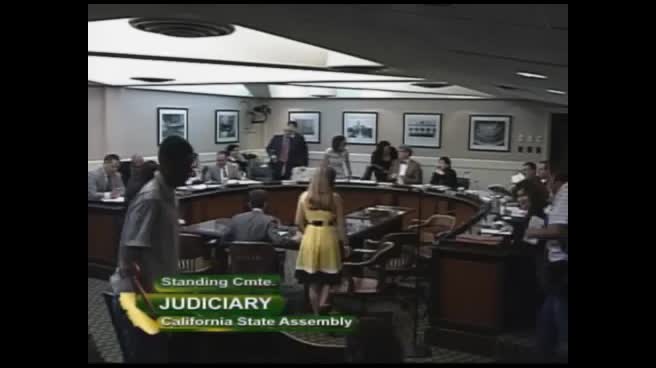
Bill Author

Bill Co-Author(s):