AJR 9: Patent reform.
- Session Year: 2015-2016
- House: Assembly
- Latest Version Date: 2015-07-21
This measure would urge the President and the Congress of the United States to craft a balanced and workable approach to reduce incentives for and minimize unnecessary patent litigation while ensuring that legitimate patent enforcement rights are protected and maintained.
This measure would urge the President and the Congress of the United States to craft a balanced and workable approach to reduce incentives for and minimize unnecessary patent litigation while ensuring that legitimate patent enforcement rights are protected and maintained.
This measure would urge the President and the Congress of the United States to craft a balanced and workable approach to reduce incentives for and minimize unnecessary patent litigation while ensuring that legitimate patent enforcement rights are protected and maintained.
This measure would urge the President and the Congress of the United States to craft a balanced and workable approach to reduce incentives for and minimize abusive and frivolous unnecessary patent litigation while ensuring that legitimate patent enforcement rights are protected and maintained.
This measure would urge the President and the Congress of the United States to craft a balanced and workable approach to reduce incentives for and minimize abusive and frivolous patent litigation while ensuring that legitimate patent enforcement rights are protected and maintained.
WHEREAS, The principle of intellectual property is enshrined in the United States Constitution, specifically under clause 8 of Section 8 of Article I of the United States Constitution, which empowers Congress to promote the Progress of Science and useful Arts, by securing for limited Times to Authors and Inventors the exclusive Right to their respective Writings and Discoveries; and
WHEREAS, A robust patent system is critical to promote economic growth and innovation and ensure just compensation for the labor and proliferation of beneficial ideas and innovations; and
WHEREAS, California accounts for 25 percent of the nations patents; and
WHEREAS, The state recognizes and respects the importance of patent protections and patent enforcement rights to driving continued research, investment, technological innovation, and job creation across multiple sectors of our economy; and
WHEREAS, Small businesses depend on patents to secure investments, and firms with fewer than 25 employees hold nearly one-quarter of United States-held patents in innovative emerging technologies; and
WHEREAS, Enforcement of legitimate patent rights is essential to promoting an innovation environment that fuels economic growth; and
WHEREAS, There is increasing concern about litigation by predatory Patent Assertion Entities (PAEs), which are built on a rent-seeking business model that exploits the patent legal system for financial gain without producing or manufacturing anything of value for society; and
WHEREAS, Many PAEs attain ambiguous patents with the sole intent of filing patent infringement lawsuits. PAEs assert these patents against businesses of all sizes and in all industries, often years after the product has become standard and widely used; and
WHEREAS, PAEs rarely earn successful judgments in court, underscoring the questionable merits of these particular patent cases. However, given the high cost and risks associated with patent litigation, most defendants choose to settle in order to avoid further financial loss. Indeed, many PAEs will offer royalty settlements below market value in order to encourage settlement and avoid trial; and
WHEREAS, Predatory PAEs have a detrimental impact on the economy and innovation. PAE activities cost businesses $29 billion directly, mostly borne by small- and medium-sized businesses; and
WHEREAS, The growth of patent litigation is directly tied to aggressive PAEs in recent years. In 2010, PAEs were responsible for 29 percent of patent litigation, and by 2012 PAEs represented 62 percent of all patent suits; and
WHEREAS, The California economy is especially vulnerable to lawsuits directed at information technology patents; and
WHEREAS, Federal legislation is necessary to prevent and deter abusive patent litigation; now, therefore, be it
Resolved by the Assembly and the Senate of the State of California, jointly, That the Legislature urges the President and the Congress of the United States to craft a balanced and workable approach to reduce incentives for and minimize unnecessary patent litigation while ensuring that legitimate patent enforcement rights are protected and maintained; and be it further
Resolved, That the Chief Clerk of the Assembly transmit copies of this resolution to the President and Vice President of the United States, the Speaker and Minority Leader of the House of Representatives, the Majority Leader and Minority Leader of the Senate, and each member of the California delegation to the United States Congress.
WHEREAS, The principle of intellectual property is enshrined in the United States Constitution, specifically under clause 8 of Section 8 of Article I of the United States Constitution, which empowers Congress to promote the Progress of Science and useful Arts, by securing for limited Times to Authors and Inventors the exclusive Right to their respective Writings and Discoveries; and
WHEREAS, A robust patent system is critical to promote economic growth and innovation and ensure just compensation for the labor and proliferation of beneficial ideas and innovations; and
WHEREAS, California accounts for 25 percent of the nations patents; and
WHEREAS, The state recognizes and respects the importance of patent protections and patent enforcement rights to driving continued research, investment, technological innovation, and job creation across multiple sectors of our economy; and
WHEREAS, Small businesses depend on patents to secure investments, and firms with fewer than 25 employees hold nearly one-quarter of United States-held patents in innovative emerging technologies; and
WHEREAS, Enforcement of legitimate patent rights is essential to promoting an innovation environment that fuels economic growth; and
WHEREAS, There is increasing concern about abusive litigation by predatory Patent Assertion Entities (PAEs), which are built on a rent-seeking business model that exploits the patent legal system for financial gain without producing or manufacturing anything of value for society; and
WHEREAS, Many PAEs attain ambiguous patents with the sole intent of filing patent infringement lawsuits. PAEs assert these patents against businesses of all sizes and in all industries, often years after the product has become standard and widely used; and
WHEREAS, PAEs rarely earn successful judgments in court, underscoring the questionable merits of these particular patent cases. However, given the high cost and risks associated with patent litigation, most defendants choose to settle in order to avoid further financial loss. Indeed, many PAEs will offer royalty settlements below market value in order to encourage settlement and avoid trial; and
WHEREAS, Predatory PAEs have a detrimental impact on the economy. economy and innovation. PAE activities cost businesses $29 billion directly, mostly borne by small and medium small- and medium-sized businesses; and
WHEREAS, The growth of patent litigation is directly tied to aggressive PAEs in recent years. In 2010, PAEs were responsible for 29 percent of patent litigation, and by 2012 PAEs represented 62 percent of all patent suits; and
WHEREAS, The California economy is especially vulnerable to opportunistic litigation given a high proportion of lawsuits directed at information technology patents; and
WHEREAS, Federal legislation is necessary to prevent and deter abusive patent litigation; now, therefore, be it
Resolved by the Assembly and the Senate of the State of California, jointly, That the Legislature urges the President and the Congress of the United States to craft a balanced and workable approach to reduce incentives for and minimize abusive and frivolous unnecessary patent litigation while ensuring that legitimate patent enforcement rights are protected and maintained; and be it further
Resolved, That the Chief Clerk of the Assembly transmit copies of this resolution to the President and Vice President of the United States, the Speaker and Minority Leader of the House of Representatives, the Majority Leader and Minority Leader of the Senate, and each member of the California delegation to the United States Congress.
WHEREAS, The principle of intellectual property is enshrined in the United States Constitution, specifically under clause 8 of Section 8 of Article I of the United States Constitution, which empowers Congress to promote the Progress of Science and useful Arts, by securing for limited Times to Authors and Inventors the exclusive Right to their respective Writings and Discoveries; and
WHEREAS, A robust patent system is critical to promote economic growth and innovation and ensure just compensation for the labor and proliferation of beneficial ideas and innovations; and
WHEREAS, California accounts for 25 percent of the nations patents; and
WHEREAS, The state recognizes and respects the importance of patent protections and patent enforcement rights to driving continued research, investment, technological innovation, and job creation across multiple sectors of our economy; and
WHEREAS, Small businesses depend on patents to secure investments, and firms with fewer than 25 employees hold nearly one-quarter of United States-held patents in innovative emerging technologies; and
WHEREAS, Enforcement of legitimate patent rights is essential to promoting an innovation environment that fuels economic growth; and
WHEREAS, There is increasing concern about abusive litigation by predatory Patent Assertion Entities (PAEs), which are built on a rent-seeking business model that exploits the patent legal system for financial gain without producing or manufacturing anything of value for society; and
WHEREAS, Many PAEs attain ambiguous patents with the sole intent of filing patent infringement lawsuits. PAEs assert these patents against businesses of all sizes and in all industries, often years after the product has become standard and widely used; and
WHEREAS, PAEs rarely earn successful judgments in court, underscoring the questionable merits of these particular patent cases. However, given the high cost and risks associated with patent litigation, most defendants choose to settle in order to avoid further financial loss. Indeed, many PAEs will offer royalty settlements below market value in order to encourage settlement and avoid trial; and
WHEREAS, Predatory PAEs have a detrimental impact on the economy. PAE activities cost businesses $29 billion directly, mostly borne by small and medium businesses; and
WHEREAS, The costs of frivolous patent lawsuits constrain innovation by increasing the risk to investors and businesses of introducing new products into the marketplace; and
WHEREAS, The growth of patent litigation is directly tied to aggressive PAEs in recent years. In 2010, PAEs were responsible for 29 percent of patent litigation, and by 2012 PAEs represented 62 percent of all patent suits; and
WHEREAS, The California economy is especially vulnerable to opportunistic litigation given a high proportion of lawsuits directed at information technology patents; and
WHEREAS, Federal legislation is necessary to prevent and deter abusive patent litigation; now, therefore, be it
Resolved by the Assembly and the Senate of the State of California, jointly, That the Legislature urges the President and the Congress of the United States to craft a balanced and workable approach to reduce incentives for and minimize abusive and frivolous patent litigation while ensuring that legitimate patent enforcement rights are protected and maintained; and be it further
Resolved, That the Chief Clerk of the Assembly transmit copies of this resolution to the President and Vice President of the United States, the Speaker and Minority Leader of the House of Representatives, the Majority Leader and Minority Leader of the Senate, and each member of the California delegation to the United States Congress.
|
Date
|
Status
|
|---|---|
| May 19, 2015 | In Senate. To Com. on RLS. |
| Jul 21, 2015 | Enrolled and filed with the Secretary of State at 2 p.m. |
| Jul 21, 2015 | Chaptered by Secretary of State - Res. Chapter 123, Statutes of 2015. |
| Jul 6, 2015 | In Assembly. Ordered to Engrossing and Enrolling. |
| Jul 6, 2015 | Adopted and to Assembly. (Ayes 39. Noes 0. Page 1791.) |
| Jul 6, 2015 | Adopted and to Assembly. |
| Jul 1, 2015 | Ordered to special consent calendar. |
| Jun 18, 2015 | From committee: Be adopted. Ordered to Third Reading. (Ayes 6. Noes 0.) (June 16). |
| Jun 9, 2015 | In committee: Hearing cancelled at the request of author. |
| May 28, 2015 | Re-referred to Com. on JUD. |
| Feb 25, 2015 | Introduced. To print. |
| May 18, 2015 | Amended, adopted, and to Senate. (Ayes 76. Noes 0. Page 1481.) |
| May 18, 2015 | Amended, adopted, and to Senate. |
| May 11, 2015 | Ordered to third reading. |
| May 11, 2015 | From Consent Calendar. |
| May 7, 2015 | Amended. Ordered to Consent Calendar. |
| May 6, 2015 | From committee: Amend, and be adopted as amended. To Consent Calendar. (Ayes 10. Noes 0.) (May 5). |
| Apr 6, 2015 | Referred to Com. on JUD. |
| Feb 26, 2015 | From printer. |
|
Date
|
Description
|
Location
|
Votes
|
|
|---|---|---|---|---|
| Jul 6, 2015 | Special Consent #4 AJR9 Chang | Senate Floor |
Passed |
|
| Jun 16, 2015 | Be adopted. Ordered to third reading | Senate Standing Committee on Judiciary |
Passed |
|
| May 18, 2015 | AJR 9 CHANG Assembly Third Reading | Assembly Floor |
Passed |
|
| May 5, 2015 | Be adopted as amended. To Consent Calendar. | Assembly Standing Committee on Judiciary |
Passed |
This list shows positions taken on this bill by organizations on the date displayed, which is linked to the original source.
Positions by individuals are not included.
|
Organization
|
Position
|
Date
|
|---|---|---|
| California Citizens Against Lawsuit Abuse | * Support | Jun 16, 2015 |
| California Healthcare Institute | ** Support | May 18, 2015 |
| California Hotel & Lodging Association | ** Support | May 18, 2015 |
| California Life Sciences Association | * Support | Jun 16, 2015 |
| California Manufacturers And Technology Association | * Support | Jun 16, 2015 |
| California Restaurant Association | ** Support | May 18, 2015 |
| Electronic Frontier Foundation | * Support | Jun 16, 2015 |
| Technet | * Support | Jun 16, 2015 |
| The Internet Association | * Support | Jun 16, 2015 |
AJR 9
Page 5
|
Office of Senate Floor Analyses (916) 651-1520 Fax: (916) 327-4478 |
THIRD READING
Bill No: AJR 9
Amended: 5/18/15 in Assembly
SENATE JUDICIARY COMMITTEE: 6-0, 6/16/15
AYES: Jackson, Moorlach, Anderson, Hertzberg, Leno, Monning
NO VOTE RECORDED: Wieckowski
ASSEMBLY FLOOR: 76-0, 5/18/15 - See last page for vote
DIGEST: This resolution urges the President and the Congress of the United States to craft a balanced and workable approach to reduce incentives for and minimize unnecessary patent litigation while ensuring that legitimate patent enforcement rights are protected and maintained.
Existing federal law:
Reserves to Congress, in the United States Constitution, the power “to promote the progress of science and useful arts, by securing for limited times to authors and inventors the exclusive right to their respective writings and discoveries.” (U.S. Const., art. I, Sec. 8.)
Provides, in the Patent Act, for the issuance of patents to any person who invents or discovers any new and useful process, machine, manufacture, or composition of matter, or any new and useful improvement thereof. (35 U.S.C. Sec. 101.)
Existing law:
Renders, in the Unfair Competition Law, an individual liable for any unlawful, unfair or fraudulent business act or practice and any unfair, deceptive, untrue or misleading advertising. (Bus. Prof. Code Sec. 17200.)
Provides that one who willfully deceives another with intent to induce him to alter his position to his injury or risk, is liable for any damage which he thereby suffers. (Civ. Code Sec. 1709.)
This resolution:
Makes the following findings and declarations:
the principle of intellectual property is enshrined in the United States Constitution, specifically under clause 8 of Section 8 of Article I of the United States Constitution, which empowers Congress to “promote the Progress of Science and useful Arts, by securing for limited Times to Authors and Inventors the exclusive Right to their respective Writings and Discoveries;”
a robust patent system is critical to promote economic growth and innovation and ensure just compensation for the labor and proliferation of beneficial ideas and innovations;
California accounts for 25 percent of the nation’s patents;
the state recognizes and respects the importance of patent protections and patent enforcement rights to driving continued research, investment, technological innovation, and job creation across multiple sectors of our economy;
small businesses depend on patents to secure investments, and firms with fewer than 25 employees hold nearly one-quarter of United States-held patents in innovative emerging technologies; and
enforcement of legitimate patent rights is essential to promoting an innovation environment that fuels economic growth.
Makes the following additional findings and declarations:
there is increasing concern about litigation by predatory Patent Assertion Entities (PAEs), which are built on a rent-seeking business model that exploits the patent legal system for financial gain without producing or manufacturing anything of value for society;
many PAEs attain ambiguous patents with the sole intent of filing patent infringement lawsuits. PAEs assert these patents against businesses of all sizes and in all industries, often years after the product has become standard and widely used;
PAEs rarely earn successful judgments in court, underscoring the questionable merits of these particular patent cases. However, given the high cost and risks associated with patent litigation, most defendants choose to settle in order to avoid further financial loss. Indeed, many PAEs will offer royalty settlements below market value in order to encourage settlement and avoid trial;
predatory PAEs have a detrimental impact on the economy and innovation. PAE activities cost businesses $29 billion directly, mostly borne by small- and medium-sized businesses;
the growth of patent litigation is directly tied to aggressive PAEs in recent years. In 2010, PAEs were responsible for 29 percent of patent litigation, and by 2012 PAEs represented 62 percent of all patent suits;
the California economy is especially vulnerable to lawsuits directed at information technology patents; and
federal legislation is necessary to prevent and deter abusive patent litigation.
Urges the President and the Congress of the United States to craft a balanced and workable approach to reduce incentives for and minimize unnecessary patent litigation while ensuring that legitimate patent enforcement rights are protected and maintained.
Background
In recent years, much attention has been focused on the business model practiced by certain firms that make money not by producing goods, but by licensing patent use or asserting patent claims against other companies that produce goods using patented technologies and methods. The activities of these so-called “patent trolls,” “non-practicing entities,” or “patent assertion entities” are thought by some to be harming innovation and causing the market as a whole to reduce venture investing and research and development spending. Whether or not these entities actually harm the market is a hotly debated topic, as is the nature of what – if anything – should be done about it. Indeed, even the definition of who constitutes a non-practicing entity is contentious, with some commentators pointing out that the concept may include universities that license use of their patents.
This resolution makes specified findings about the detrimental impact predatory patent assertion entities are having on the economy and innovation, and would urge the federal government to enact federal legislation to prevent and deter abusive patent litigation while ensuring that legitimate patent enforcement rights are protected and maintained.
Comments
The author writes:
In recent years there have been efforts to abuse the US patent system for financial gain in a way that is an affront to the spirit and intent of the protections set up under patent laws. The US has seen a marked increase in Patent Assertion Entities (PAEs) which have no other purpose than to file predatory patent lawsuits, with a particular focus on technology and software. PAEs do not manufacture or create anything. Their only purpose is to acquire patents and assert them against entrepreneurs.
Victims of PAEs are mostly small to medium sized businesses that cannot afford the costs of defending a lawsuit. While technological patents are most often abused, PAEs threaten lawsuits on any number of businesses including restaurants, small offices or podcasts for using standard technology like WiFi or copier machines.
Abusive patent lawsuits have grown in recent years at jarring rates. In 2009 PAEs accounted for 27 [percent] of patent lawsuits but by 2012 they made up 62 [percent] of all patent lawsuits. Together these lawsuits cost businesses $29 billion per year. The result of these opportunistic schemes to extract money from employers is less innovation and slower job growth.
Current federal law does not provide protections for victims of patent lawsuit abuse and struggles to distinguish between legitimate efforts to protect patents and [PAEs]. Reform is needed on a federal level to address this rapidly growing problem that threatens economic growth and innovation . . . AJR 9 urges the President and the Congress of the United States to craft a balanced and workable approach to reduce incentives for and minimize unnecessary patent litigation while ensuring that legitimate patent enforcement rights are protected and maintained.
Related/Prior Legislation
SB 681 (Hill, 2015) makes it unlawful to send a written communication stating that the recipient may have infringed on a United States patent if, in bad faith, the sender makes specified statements, seeks compensation for specified conduct, or fails to include specified information in the communication. This bill also provides specific remedies for sending such unlawful communications, and specifies that those remedies may only be obtained by the Attorney General or an attorney acting on behalf of the state. This bill is pending in the Senate Rules Committee.
FISCAL EFFECT: Appropriation: Fiscal Com.: No Local:
California Citizens Against Lawsuit Abuse
California Healthcare Institute
California Hotel & Lodging Association
California Restaurant Association
Electronic Frontier Foundation
Greater Santa Barbara Lodging & Restaurant Association
Internet Association
TechNet
ASSEMBLY FLOOR: 76-0, 5/18/15
AYES: Achadjian, Alejo, Travis Allen, Baker, Bigelow, Bloom, Bonilla, Bonta, Brough, Brown, Burke, Calderon, Campos, Chang, Chau, Chávez, Chiu, Chu, Cooley, Cooper, Dababneh, Dahle, Daly, Dodd, Eggman, Frazier, Beth Gaines, Gallagher, Cristina Garcia, Eduardo Garcia, Gatto, Gipson, Gomez, Gonzalez, Gordon, Gray, Grove, Hadley, Harper, Roger Hernández, Holden, Irwin, Jones, Jones-Sawyer, Lackey, Levine, Linder, Lopez, Low, Maienschein, Mayes, McCarty, Medina, Mullin, Nazarian, Obernolte, O'Donnell, Olsen, Perea, Quirk, Rendon, Ridley-Thomas, Rodriguez, Salas, Santiago, Steinorth, Mark Stone, Thurmond, Ting, Wagner, Waldron, Weber, Wilk, Williams, Wood, Atkins
NO VOTE RECORDED: Kim, Mathis, Melendez, Patterson
Prepared by: Tobias Halvarson / JUD. / (916) 651-4113
6/18/15 16:26:48
**** END ****
AJR 9 (Chang)
Page 8 of 8
Senator Hannah-Beth Jackson, Chair
2015-2016 Regular Session
AJR 9 (Chang)
Version: May 18, 2015
Hearing Date: June 16, 2015
Fiscal: No
Urgency: No
TH
SUBJECT
Patent Reform
DESCRIPTION
This measure would urge the President and the Congress of the United States to craft a balanced and workable approach to reduce incentives for and minimize unnecessary patent litigation while ensuring that legitimate patent enforcement rights are protected and maintained.
BACKGROUND
In recent years, much attention has been focused on the business model practiced by certain firms that make money not by producing goods, but by licensing patent use or asserting patent claims against other companies that produce goods using patented technologies and methods. The activities of these so-called “patent trolls,” “non-practicing entities,” or “patent assertion entities” are thought by some to be harming innovation and causing the market as a whole to reduce venture investing and research and development spending. Whether or not these entities actually harm the market is a hotly debated topic, as is the nature of what – if anything – should be done about it. Indeed, even the definition of who constitutes a non-practicing entity is contentious, with some commentators pointing out that the concept may include universities that license use of their patents.
This resolution would make specified findings about the detrimental impact predatory patent assertion entities are having on the economy and innovation, and would urge the federal government to enact federal legislation to prevent and deter abusive patent litigation while ensuring that legitimate patent enforcement rights are protected and maintained.
CHANGES TO EXISTING LAW
Existing federal law, the United States Constitution, reserves to Congress the power “to promote the progress of science and useful arts, by securing for limited times to authors and inventors the exclusive right to their respective writings and discoveries.” (U.S. Const., art. I, Sec. 8.)
Existing federal law, the Patent Act, provides for the issuance of patents to any person who invents or discovers any new and useful process, machine, manufacture, or composition of matter, or any new and useful improvement thereof. (35 U.S.C. Sec. 101.)
Existing law, the Unfair Competition Law, renders an individual liable for any unlawful, unfair or fraudulent business act or practice and any unfair, deceptive, untrue or misleading advertising. (Bus. Prof. Code Sec. 17200.)
Existing law provides that one who willfully deceives another with intent to induce him to alter his position to his injury or risk, is liable for any damage which he thereby suffers. (Civ. Code Sec. 1709.)
This measure would make the following statements:
the principle of intellectual property is enshrined in the United States Constitution, specifically under clause 8 of Section 8 of Article I of the United States Constitution, which empowers Congress to “promote the Progress of Science and useful Arts, by securing for limited Times to Authors and Inventors the exclusive Right to their respective Writings and Discoveries;”
a robust patent system is critical to promote economic growth and innovation and ensure just compensation for the labor and proliferation of beneficial ideas and innovations;
California accounts for 25 percent of the nation’s patents;
the state recognizes and respects the importance of patent protections and patent enforcement rights to driving continued research, investment, technological innovation, and job creation across multiple sectors of our economy;
small businesses depend on patents to secure investments, and firms with fewer than 25 employees hold nearly one-quarter of United States-held patents in innovative emerging technologies; and
enforcement of legitimate patent rights is essential to promoting an innovation environment that fuels economic growth.
This measure would make the following additional statements:
there is increasing concern about litigation by predatory Patent Assertion Entities (PAEs), which are built on a rent-seeking business model that exploits the patent legal system for financial gain without producing or manufacturing anything of value for society;
many PAEs attain ambiguous patents with the sole intent of filing patent infringement lawsuits. PAEs assert these patents against businesses of all sizes and in all industries, often years after the product has become standard and widely used;
PAEs rarely earn successful judgments in court, underscoring the questionable merits of these particular patent cases. However, given the high cost and risks associated with patent litigation, most defendants choose to settle in order to avoid further financial loss. Indeed, many PAEs will offer royalty settlements below market value in order to encourage settlement and avoid trial;
predatory PAEs have a detrimental impact on the economy and innovation. PAE activities cost businesses $29 billion directly, mostly borne by small- and medium-sized businesses;
the growth of patent litigation is directly tied to aggressive PAEs in recent years. In 2010, PAEs were responsible for 29 percent of patent litigation, and by 2012 PAEs represented 62 percent of all patent suits;
the California economy is especially vulnerable to lawsuits directed at information technology patents; and
federal legislation is necessary to prevent and deter abusive patent litigation.
This measure would urge the President and the Congress of the United States to craft a balanced and workable approach to reduce incentives for and minimize unnecessary patent litigation while ensuring that legitimate patent enforcement rights are protected and maintained.
COMMENT
Stated need for the bill
The author writes:
In recent years there have been efforts to abuse the US patent system for financial gain in a way that is an affront to the spirit and intent of the protections set up under patent laws. The US has seen a marked increase in Patent Assertion Entities (PAEs) which have no other purpose than to file predatory patent lawsuits, with a particular focus on technology and software. PAEs do not manufacture or create anything. Their only purpose is to acquire patents and assert them against entrepreneurs.
Victims of PAEs are mostly small to medium sized businesses that cannot afford the costs of defending a lawsuit. While technological patents are most often abused, PAEs threaten lawsuits on any number of businesses including restaurants, small offices or podcasts for using standard technology like WiFi or copier machines.
Abusive patent lawsuits have grown in recent years at jarring rates. In 2009 PAEs accounted for 27 [percent] of patent lawsuits but by 2012 they made up 62 [percent] of all patent lawsuits. Together these lawsuits cost businesses $29 billion per year. The result of these opportunistic schemes to extract money from employers is less innovation and slower job growth.
Current federal law does not provide protections for victims of patent lawsuit abuse and struggles to distinguish between legitimate efforts to protect patents and [PAEs]. Reform is needed on a federal level to address this rapidly growing problem that threatens economic growth and innovation . . . AJR 9 urges the President and the Congress of the United States to craft a balanced and workable approach to reduce incentives for and minimize unnecessary patent litigation while ensuring that legitimate patent enforcement rights are protected and maintained.
Evidence of Problematic Behavior
This resolution is premised on the proposition that non-producing patent holders who make money by licensing their patents (non-practicing entities) are harmful to the marketplace, and that some who engage in this business model carry out their activities in a manner that borders upon fraud. As noted above, these premises are highly contested among scholars and commentators. For example, one recent opinion piece in the Wall Street Journal states:
Patent-reform activists point out that the number of patent lawsuits has increased by about 60 [percent] since 2000, which they cite as evidence that there is a serious problem with the patent system. But does the uptick in lawsuits actually indicate such a problem?
In short, no. It might instead reflect a healthy, dynamic economy. Rapid technological advances have spurred more innovation and patents, and courts are now clarifying the nature and boundaries of intellectual property and contract rights. (Stephen Haber and Ross Levine, The Myth Of the Wicked Patent Troll (June 29, 2014) < http://www.wsj.com/articles/stephen-haber-and-ross-levine-the-myth-of-the-wicked-patent-troll-1404085391> [as of Apr. 16, 2015].)
A counterpoint piece in the Harvard Business Review illustrates the opposing position, stating:
But there is evidence of significant harm. The White House and the Congressional Research Service both cited many research studies suggesting that patent litigation harms innovation. And three new empirical studies provide strong confirmation that patent litigation is reducing venture capital investment in startups and is reducing R&D spending, especially in small firms.
. . .
The economic burden of today’s patent lawsuits is, in fact, historically unprecedented. Research shows that patent trolls cost defendant firms $29 billion per year in direct out-of-pocket costs; in aggregate, patent litigation destroys over $60 billion in firm wealth each year.
. . .
[A]cross a significant number of studies using different methodologies and performed by different researchers, a consistent picture is emerging about the effects of patent litigation: it costs innovators money; many innovators and venture capitalists report that it significantly impacts their businesses; innovators respond by investing less in [research and development] and venture capitalists respond by investing less in startups. (James Bessen, The Evidence Is In: Patent Trolls Do Hurt Innovation, Harvard Business Report (Nov. 2014) < https://hbr.org/2014/07/the-evidence-is-in-patent-trolls-do-hurt-innovation> [as of Apr. 16, 2015].)
Yet a third article takes a more nuanced view:
One common criticism of [non-practicing entities] (however that term is defined) is that they initiate patent infringement lawsuits seeking to enforce patents of dubious quality or with questionable infringement claims, and then settling for amounts far less than the defendants’ litigation costs. The story is that NPEs (non-practicing entities) take strategic advantage of the notoriously high cost of patent litigation, which requires several million dollars in attorneys’ fees to litigate through the close of discovery.
There is a little firm empirical evidence supporting this scenario of the combination of dubious patent assertions with low settlement demands. There is evidence that NPEs settle more quickly compared to other patent holders, which could indicate the possibility of nuisance settlements. But there is also evidence that the patents asserted by NPEs are similar to patents asserted by practicing entities. There is some evidence that the most litigious NPEs lose more often when the cases are taken to a final judgment, but like other types of complex civil litigation, the vast majority of patent cases settle before judgment. (David Schwartz and Jay Kesan, Analyzing the Role of NPEs in the Patent System < http://patentlyo.com/patent/2012/08/ analyzing-the-role-of-npes-in-the-patent-system.html> [as of Apr. 16, 2015].)
Some commentators suggest that the reason such diametrically opposed viewpoints on the issue of patent litigation abuse have emerged is because “patent litigators appear to be polarizing into a plaintiffs’ bar and a defense bar.” (Id.) Others suggest the debate is more about gaining a competitive advantage in the marketplace:
There is one basic reason behind the attacks on [patent] trolls: Big Money. Many patent-intensive products . . . are produced by big corporations that license many patents. . . . These corporations can make higher profits the less they pay to use patented technology they do not own, and higher profits still by paying nothing at all. . . . some corporations are looking to gain a competitive edge by changing the rules of the game. The strategy is to pass patent-reform legislation that weakens the negotiating position of patent holders. Corporations that pay large sums for patented technologies will point to lawsuits, trolls and anything else that will encourage lawmakers to pass such reforms. (Haber and Levine, The Myth Of the Wicked Patent Troll.)
Given the significant disagreement over whether abusive patent lawsuits are, indeed, a problem, the Committee may wish to study this issue in more depth before weighing resolutions seeking curative legislation.
Existing Legal Remedies
According to the California Restaurant Association, demand letters sent by Patent Assertion Entities (PAEs):
. . . are often vague, uninformative and lack sufficient information for restaurants to determine the potential liability. Restaurants report numerous egregious practices involving the demand letters from PAEs. They are frequently vague and make broad claims without providing an adequate basis to assess those claims. They demand broad licensees while refusing to disclose what patents are involved and what patents are infringed. This puts our industry in a very difficult position to determine liability or respond to the claims.
Staff notes that this sort of conduct may already be prohibited under California’s robust consumer protection laws. The Unfair Competition Law (UCL), as an example, renders an individual liable for any unlawful, unfair or fraudulent business act or practice and any unfair, deceptive, untrue or misleading advertising. (Bus. Prof. Code Sec. 17200.) In describing the unfair competition law's broad scope, the Supreme Court explained “it does not proscribe specific practices. Rather . . . it defines unfair competition to include any unlawful, unfair or fraudulent business act or practice. Its coverage is sweeping, embracing anything that can properly be called a business practice and that at the same time is forbidden by law.” (Cel-Tech Communications, Inc. v. Los Angeles Cellular Telephone Co. (1999) 20 Cal.4th 163, 180 (internal quotation marks and citations omitted).) Importantly, the UCL’s “statutory language referring to any unlawful, unfair or fraudulent practice makes clear that a practice may be deemed unfair even if not specifically proscribed by some other law.” (Id.) “[T]he Legislature . . . intended by this sweeping language to permit tribunals to enjoin on-going wrongful business conduct in whatever context such activity might occur. Indeed, . . . the section was intentionally framed in its broad, sweeping language, precisely to enable judicial tribunals to deal with the innumerable new schemes which the fertility of man’s invention would contrive.” (Id.)
On its face, the UCL would appear to already prohibit the sort of dishonest business practice this resolution seeks to address. (See e.g. Patent Trust v. Microsoft Corp. (2007, SD Cal) 525 F.Supp.2d 1200 (upholding defendant’s fraudulent act or practice UCL counterclaim against patent assertion entity).) Similarly, other existing California law may also provide remedies for businesses and individuals harmed by bad faith patent demands. To the extent a patent assertion entity’s bad faith patent demands constitute willful efforts to deceive others with an intent to induce them to alter their position to their detriment, California’s civil fraud statute may already provide adequate relief. (See Civ. Code Sec. 1709.) While these existing remedies in California law may not preclude the need for federal patent reform, the Committee may wish to study whether aggrieved parties are taking advantage of these remedies, as well as ways to reduce barriers that may keep parties from asserting their rights under California’s consumer protection statutes.
Support: California Citizens Against Lawsuit Abuse; California Healthcare Institute; California Hotel & Lodging Association; California Restaurant Association; Electronic Frontier Foundation; Greater Santa Barbara Lodging & Restaurant Association; Internet Association; TechNet
Opposition: None Known
HISTORY
Source: Author
Related Pending Legislation: SB 681 (Hill, 2015) would make it unlawful to send a written communication stating that the recipient may have infringed on a United States patent if, in bad faith, the sender makes specified statements, seeks compensation for specified conduct, or fails to include specified information in the communication. This bill would also provide specific remedies for sending such unlawful communications, and would specify that those remedies may only be obtained by the Attorney General or an attorney acting on behalf of the state. This bill is pending on the Senate Floor.
Prior Legislation: None Known
Prior Vote:
Assembly Floor (Ayes 76, Noes 0)
Assembly Judiciary Committee (Ayes 10, Noes 0)
**************
AJR 9
Page 3
ASSEMBLY THIRD READING
AJR 9
(Chang)
As Amended May 7, 2015
Majority vote
Committee |
Votes |
Ayes |
Noes |
Judiciary |
10-0 |
Mark Stone, Wagner, Alejo, Chau, Chiu, Gallagher, Cristina Garcia, Holden, Maienschein, O'Donnell |
|
SUMMARY: Urges the United States (U.S.) Congress (Congress) and the U.S. President (President) to protect patent rights. Specifically, this measure makes the following findings:
The principle of intellectual property is enshrined in the United States Constitution, which empowers Congress to "promote the Progress of Science and useful Arts, by securing for limited Times to Authors and Inventors the exclusive Right to their respective Writings and Discoveries."
A robust patent system is critical to promote economic growth and innovation and ensure just compensation for the labor and proliferation of beneficial ideas and innovations;
California accounts for 25% of the nation's patents;
The state recognizes and respects the importance of patent protections and patent enforcement rights to driving continued research, investment, technological innovation, and job creation across multiple sectors of our economy;
Small businesses depend on patents to secure investments, and firms with fewer than 25 employees hold nearly one-quarter of United States-held patents in innovative emerging technologies;
Enforcement of legitimate patent rights is essential to promoting an innovation environment that fuels economic growth;
There is increasing concern about litigation by patent assertion entities (PAEs), built on a rent-seeking business model that exploits the patent legal system for financial gain without producing or manufacturing anything of value for society;
Many PAEs attain ambiguous patents with the sole intent of filing patent infringement lawsuits. PAEs assert these patents against businesses of all sizes and in all industries, often years after the product has become standard and widely used;
PAEs rarely earn successful judgments in court, underscoring the questionable merits of these patent cases. However, given the high cost and risks associated with patent litigation, most defendants settle to avoid further financial loss. Many PAEs will offer royalty settlements below market value to encourage settlement and avoid trial;
PAEs have a detrimental impact on the economy and innovation. PAE activities cost businesses $29 billion directly, mostly borne by small and medium-sized businesses;
The growth of patent litigation is directly tied to aggressive PAEs in recent years. In 2010, PAEs were responsible for 29% of patent litigation, and by 2012 PAEs represented 62% of all patent suits;
The California economy is especially vulnerable to lawsuits directed at information technology patents; and
Federal legislation is necessary to prevent and deter patent litigation.
Resolves that the Legislature calls upon Congress and the President to craft a balanced and workable approach to reduce incentives for and minimize unnecessary patent litigation while ensuring that legitimate patent enforcement rights are protected and maintained.
EXISTING LAW:
Provides that Congress is empowered to promote Progress of Science and useful Arts, by securing for limited times to authors and inventors the exclusive right to their respective writings and discoveries. (United States Constitution, Article I, Section 8, Clause 8.)
Provides that a patent grants the patent holder the exclusive right to exclude others from making, using, importing, and selling the patented innovation for a limited period of time. (United States Patent Act, 35 United States Code 1 et seq.)
Requires that the inventor who first files a patent application with the U.S. Patent Office for an invention must be named in the patent application. (Leahy–Smith America Invents Act (2011).)
FISCAL EFFECT: None
COMMENTS: According to the author:
Intellectual property and its practical application under the U.S. patent system serve as a catalyst for modern advancements and ensure just compensation for the labor and proliferation of beneficial ideas and innovations. This concept is enshrined in the U.S. Constitution which empowers Congress to "promote the Progress of Science and useful Arts, by securing for limited Times to Authors and Inventors the exclusive Right to their respective Writings and Discoveries."
There has been a marked increase in PAEs in recent years that have no purpose other than to file patent lawsuits, particularly focusing on technology and software. PAEs have abused this system for financial gain in a way that is an affront to the spirit and intent of the protections set up under patent laws. Victims of PAEs are mostly small to medium-sized businesses that cannot afford the costs of defending a patent lawsuit, which are expensive due to the cost expert witnesses that are necessary in order to lodge an adequate defense. While technological patents are most often abused, PAEs threaten lawsuits on any number of businesses including restaurants, hospitals, small offices or podcasts for using standard technology like Wi-Fi, or copier machines.
Abusive patent lawsuits have grown in recent years at jarring rates. In 2009 PAEs accounted for 27% of patent lawsuits but by 2012 they made up 62% of all patent lawsuits. Together these lawsuits cost businesses $29 billion per year. The result of these opportunistic schemes to extract money from employers is less innovation and slower job growth.
The author's office notes that California accounts for 25% of the nation's patents, mainly due to the large technology industry in California. The state recognizes the importance of patent protections and patent enforcement rights to research, investment, technological innovation and job creation across multiple sectors of our economy. According to the California Small Business Profile, published in 2014, California's small businesses employed half or 6.3 million of the state's private workforce in 2011. Almost all firms with employees are small, making 99.2% of all employers in the state. According to the author, small businesses depend on patents to secure investments and firms with fewer than 25 employees hold nearly-one-quarter of the patents held in the United States. These statistics support the need for California to encourage the enforcement of legitimate patent rights, to ensure the promotion of an innovative environment that fuels economic growth. (U.S. Small Business Administration, Office of Advocacy, California Small Business Profile, (2014).)
To address abusive litigation by PAEs, H.R. 9, The Innovation Act was introduced on February 5, 2015, seeking to require a party alleging patent infringement in a civil action to include the following information in the court pleadings, if the information is reasonably accessible:
Each claim of each patent allegedly infringed;
For each claim of indirect infringement, the acts of the alleged indirect infringer that contribute to, or are inducing, a direct infringement;
The principal business of the party alleging infringement;
The authority of the party alleging infringement to assert each patent and the grounds for the court's jurisdiction;
Each complaint filed that asserts any of the same patents; and
Whether the patent is essential or has potential to become essential to a standard-setting body, and whether the United States or a foreign government has imposed any specific licensing requirements.
While the regulation of patents and trademarks is solely within the federal government's jurisdiction, California has a vested interest in ensuring that the aggressive litigation tactics of PAEs do not negatively affect California businesses or the California economy. It is within the power of the California Legislature to weigh in and urge Congress to take action to protect innovation, research, small businesses, job creation and the technology sector.
Analysis Prepared by: Khadijah Hargett / JUD. / (916) 319-2334 FN: 0000369
AJR 9
Page 5
Date of Hearing: May 5, 2015
ASSEMBLY COMMITTEE ON JUDICIARY
Mark Stone, Chair
AJR 9
(Chang) – As Introduced February 25, 2015
PROPOSED CONSENT (As Proposed to be Amended)
SUBJECT: PATENT PROTECTION
KEY ISSUE: SHOULD THE LEGISLATURE URGE THE FEDERAL GOVERNMENT TO CRAFT A BALANCED AND WORKABLE APPROACH TO MINIMIZE MERITLESS PATENT LITIGATION WHILE ENSURING THAT LEGIMATE PATENT ENFORCEMENT RIGHTS ARE PROTECTED AND MAINTAINED?
SYNOPSIS
In this non-controversial resolution, the Legislature calls upon Congress and the president to support the principle of intellectual property as ratified in the United States Constitution, by crafting a balanced and workable approach to reduce incentives for patent assertion entities (PAEs) to initiate meritless patent lawsuits. These entities exploit the legal system by filing meritless patent infringement lawsuits, mainly directed at information technology and hospital equipment patents. Federal legislation is necessary to reduce unnecessary patent litigation while ensuring that legitimate patent enforcement rights are protected and maintained. There is no known opposition to this resolution.
SUMMARY: Urges Congress and the President to protect patent rights. Specifically, this measure (as proposed to be amended) makes the following findings:
The principle of intellectual property is enshrined in the United States Constitution, which empowers Congress to “promote the Progress of Science and useful Arts, by securing for limited Times to Authors and Inventors the exclusive Right to their respective Writings and Discoveries.”
A robust patent system is critical to promote economic growth and innovation and ensure just compensation for the labor and proliferation of beneficial ideas and innovations;
California accounts for 25 percent of the nation’s patents;
The state recognizes and respects the importance of patent protections and patent enforcement rights to driving continued research, investment, technological innovation, and job creation across multiple sectors of our economy;
Small businesses depend on patents to secure investments, and firms with fewer than 25 employees hold nearly one-quarter of United States-held patents in innovative emerging technologies;
Enforcement of legitimate patent rights is essential to promoting an innovation environment that fuels economic growth;
There is increasing concern about litigation by PAEs, built on a rent-seeking business model that exploits the patent legal system for financial gain without producing or manufacturing anything of value for society;
Many PAEs attain ambiguous patents with the sole intent of filing patent infringement lawsuits. PAEs assert these patents against businesses of all sizes and in all industries, often years after the product has become standard and widely used;
PAEs rarely earn successful judgments in court, underscoring the questionable merits of these patent cases. However, given the high cost and risks associated with patent litigation, most defendants settle to avoid further financial loss. Many PAEs will offer royalty settlements below market value to encourage settlement and avoid trial;
PAEs have a detrimental impact on the economy and innovation. PAE activities cost businesses $29 billion directly, mostly borne by small and medium-sized businesses;
The growth of patent litigation is directly tied to aggressive PAEs in recent years. In 2010, PAEs were responsible for 29 percent of patent litigation, and by 2012 PAEs represented 62 percent of all patent suits;
The California economy is especially vulnerable to lawsuits directed at information technology patents; and
Federal legislation is necessary to prevent and deter patent litigation.
Resolves that the Legislature calls upon Congress and the president to craft a balanced and workable approach to reduce incentives for and minimize unnecessary patent litigation while ensuring that legitimate patent enforcement rights are protected and maintained.
EXISTING LAW:
Provides that Congress is empowered to promote Progress of Science and useful Arts, by securing for limited times to authors and inventors the exclusive right to their respective writings and discoveries. (United States Constitution, Article I, Section 8, Clause 8.)
Provides that a patent grants the patent holder the exclusive right to exclude others from making, using, importing, and selling the patented innovation for a limited period of time. (United States Patent Act, 35 U.S.C. 1 et seq.)
Requires that the inventor who first files a patent application with the U.S. Patent Office for an invention must be named in the patent application. (Leahy–Smith America Invents Act (2011).)
FISCAL EFFECT: As currently in print this measure is keyed non-fiscal.
COMMENTS: According to the author:
Intellectual property and its practical application under the U.S. patent system serve as a catalyst for modern advancements and ensure just compensation for the labor and proliferation of beneficial ideas and innovations. This concept is enshrined in the U.S. Constitution which empowers Congress to “promote the Progress of Science and useful Arts, by securing for limited Times to Authors and Inventors the exclusive Right to their respective Writings and Discoveries.”
There has been a marked increase in PAEs in recent years that have no purpose other than to file patent lawsuits, particularly focusing on technology and software. PAEs have abused this system for financial gain in a way that is an affront to the spirit and intent of the protections set up under patent laws. Victims of PAEs are mostly small to medium-sized businesses that cannot afford the costs of defending a patent lawsuit, which are expensive due to the cost expert witnesses that are necessary in order to lodge an adequate defense. While technological patents are most often abused, PAEs threaten lawsuits on any number of businesses including restaurants, hospitals, small offices or podcasts for using standard technology like Wi-Fi, or copier machines.
Abusive patent lawsuits have grown in recent years at jarring rates. In 2009 PAEs accounted for 27% of patent lawsuits but by 2012 they made up 62% of all patent lawsuits. Together these lawsuits cost businesses $29 billion per year. The result of these opportunistic schemes to extract money from employers is less innovation and slower job growth.
Background. The United States Patent and Trademark Office was established by Congress, is subject to the policy direction of the Secretary of Commerce, and is responsible for the granting and issuing of patents and the registration of trademarks; and for disseminating to the public information regarding patents and trademarks. Therefore, patents are under the exclusive authority of federal law and states are preempted from regulating them. (United States Patent Act, 35 U.S.C. Section 1 et seq.)
Need for this Measure. The author’s office notes that California accounts for 25 percent of the nation’s patents, mainly due to the large technology industry in California. The state recognizes the importance of patent protections and patent enforcement rights to research, investment, technological innovation and job creation across multiple sectors of our economy. According to the California Small Business Profile, published in 2014, California’s small businesses employed half or 6.3 million of the state’s private workforce in 2011. Almost all firms with employees are small, making 99.2 percent of all employers in the state. According to the author, small businesses depend on patents to secure investments and firms with fewer than 25 employees hold nearly-one-quarter of the patents held in the United States. These statistics support the need for California to encourage the enforcement of legitimate patent rights, to ensure the promotion of an innovative environment that fuels economic growth. (U.S. Small Business Administration, Office of Advocacy, California Small Business Profile, (2014).)
How the Federal Government is Addressing Concerns Regarding PAEs. According to a September 2013 news release from the Federal Trade Commission (FTC), FTC Seeks to Examine Patent Assertion Entities and Their Impact on Innovation, Competition, there is increasing concern about litigation by PAEs with a business model based primarily on purchasing patents and then attempting to generate revenue by asserting the intellectual property rights against persons already practicing the patented technologies. The FTC voted to conduct a study of PAE behavior. Earlier studies had focused primarily on publicly available litigation data and concluded that PAE litigation activity is on the rise. The Commission, however, has unique authority to collect nonpublic information, such as licensing agreements, patent acquisition information, and cost and revenue data, which will provide a more complete picture of PAE activity. The FTC study is ongoing.
A report prepared by the President’s Council of Economic Advisers, the National Economic Council, and the Office of Science & Technology Policy in June of 2013, revealed:
PAEs “focus on aggressive litigation, using such tactics as: threatening to sue thousands of companies at once, without specific evidence of infringement against any of them; creating shell companies that make it difficult for defendants to know who is suing them; and asserting that their patents cover inventions not imagined at the time they were granted. Suits brought by PAEs have tripled in just the last two years, rising from 29 percent of all infringement suits to 62 percent of all infringement suits. Estimates suggest that PAEs may have threatened over 100,000 companies with patent infringement in 2012. (Patent Assertion And U.S. Innovation, President’s Council of Economic Advisers, the National Economic Council, and the Office of Science & Technology Policy (2013).)
Pending Federal Legislation. To address abusive litigation by PAEs, H.R. 9, The Innovation Act was introduced on February 5, 2015, seeking to require a party alleging patent infringement in a civil action to include the following information in the court pleadings, if the information is reasonably accessible:
each claim of each patent allegedly infringed;
for each claim of indirect infringement, the acts of the alleged indirect infringer that contribute to, or are inducing, a direct infringement;
the principal business of the party alleging infringement;
the authority of the party alleging infringement to assert each patent and the grounds for the court's jurisdiction;
each complaint filed that asserts any of the same patents; and
whether the patent is essential or has potential to become essential to a standard-setting body, and whether the United States or a foreign government has imposed any specific licensing requirements.
While the regulation of patents and trademarks is solely within the federal government’s jurisdiction, California has a vested interest in ensuring that the aggressive litigation tactics of PAEs do not negatively affect California businesses or the California economy. It is within the power of the Legislature to weigh in and urge Congress to take action to protect innovation, research, small businesses, job creation and the technology sector.
Author’s Amendments: Proposed author amendments delete disparaging terms regarding litigation and lawsuits to clarify that while valid claims have a right to be pursued and litigated, these patent lawsuits are meritless and need to be addressed at the federal level.
ARGUMENTS IN SUPPORT: Writing in support of the bill, the California Hotel 7 Lodging Association states:
The business model of a PAE is simple: they purchase patents with the sole intention to sue businesses for infringement. Patent trolls (another name for PAEs) threaten businesses with lawsuits that will cost millions of dollars to defend but are quick to offer a smaller settlement amount. The cost of litigating and even just settling can cripple a small business and negatively affect their day-to-day operations. Many in our industry have been attacked over common business practices like using a 3-in-1 print, copy, and fax machine, offering an online store locator, printing receipts at a cash register, providing comparison online shopping, etc.
REGISTERED SUPPORT / OPPOSITION:
Support
California Healthcare Institute
California Hotel & Lodging Association
California Restaurant Association
Electronic Frontier Foundation
Internet Association
TechNet
Opposition
None on file
Analysis Prepared by: Khadijah Hargett / JUD. / (916) 319-2334
Discussed in Hearing
View Older Hearings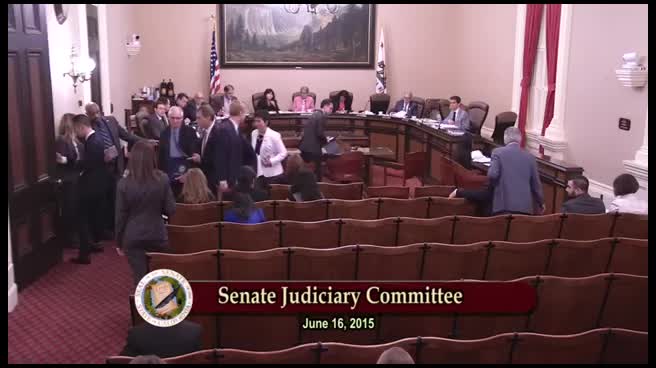

Bill Author

Bill Co-Author(s):