SB 1028: Electrical corporations: local publicly owned electric utilities: electrical cooperatives: wildfire mitigation plans.
- Session Year: 2015-2016
- House: Senate
- Latest Version Date: 2016-09-24
The California Constitution establishes the Public Utilities Commission, authorizes the commission to establish rules for all public utilities, subject to control by the Legislature, and authorizes the Legislature, unlimited by the other provisions of the California Constitution, to confer additional authority and jurisdiction upon the commission that is cognate and germane to the regulation of public utilities. The Public Utilities Act provides the commission with broad authority over public utilities, including electrical corporations, while local publicly owned electric utilities and electrical cooperatives are under the direction of their governing boards. Existing law establishes requirements for equipment, practices, and facilities for public utilities, including standards, enforceable by the commission, for installation and maintenance of wires or cables used to conduct electricity. Under existing law, a violation of the Public Utilities Act or any order, decision, rule, direction, demand, or requirement of the commission is a crime.
This bill would require each electrical corporation, local publicly owned electric utility, and electrical cooperative to construct, maintain, and operate its electrical lines and equipment in a manner that will minimize the risk of catastrophic wildfire posed by those electrical lines and equipment. The bill would require each electrical corporation to annually prepare a wildfire mitigation plan. The bill would require each electrical corporation to submit its plan to the commission for review, as specified. The bill would require the commission to review and comment on the submitted plan, as specified. The bill would require the governing board of a local publicly owned electric utility or electrical cooperative to determine whether any portion of the geographical area where the utilitys overhead electrical lines and equipment are located has a significant risk of catastrophic wildfire resulting from those electrical lines and equipment and, if so, would require the local publicly owned electric utility or electrical cooperative, at an interval determined by the board, to present to the board for its approval those wildfire mitigation measures the utility intends to undertake to minimize the risk of its overhead electrical lines and equipment causing a catastrophic wildfire. By placing additional duties upon local publicly owned electric utilities, the bill would impose a state-mandated local program. Because a violation of these provisions by an electrical corporation would be a crime, the bill would impose a state-mandated local program.
The California Constitution requires the state to reimburse local agencies and school districts for certain costs mandated by the state. Statutory provisions establish procedures for making that reimbursement.
This bill would provide that no reimbursement is required by this act for specified reasons.
The California Constitution establishes the Public Utilities Commission, authorizes the commission to establish rules for all public utilities, subject to control by the Legislature, and authorizes the Legislature, unlimited by the other provisions of the California Constitution, to confer additional authority and jurisdiction upon the commission that is cognate and germane to the regulation of public utilities. The Public Utilities Act provides the commission with broad authority over public utilities, including electrical corporations, while local publicly owned electric utilities and electrical cooperatives are under the direction of their governing boards. Existing law establishes requirements for equipment, practices, and facilities for public utilities, including standards, enforceable by the commission, for installation and maintenance of wires or cables used to conduct electricity. Under existing law, a violation of the Public Utilities Act or any order, decision, rule, direction, demand, or requirement of the commission is a crime.
This bill would require each electrical corporation, local publicly owned electric utility, and electrical cooperative to construct, maintain, and operate its electrical lines and equipment in a manner that will minimize the risk of catastrophic wildfire posed by those electrical lines and equipment. The bill would require each electrical corporation to annually prepare a wildfire mitigation plan. The bill would require each electrical corporation to submit its plan to the commission for approval, review, as specified. The bill would require the commission to accept, accept provisionally, or reject review and comment on the submitted plan, as specified. The bill would require the governing board of a local publicly owned electric utility or electrical cooperative to determine whether any portion of the geographical area where the utilitys overhead electrical lines and equipment are located has a significant risk of catastrophic wildfire resulting from those electrical lines and equipment and, if so, would require the local publicly owned electric utility or electrical cooperative, at an interval determined by the board, to present to the board for its approval those wildfire mitigation measures the utility intends to undertake to minimize the risk of its overhead electrical lines and equipment causing a catastrophic wildfire. By placing additional duties upon local publicly owned electric utilities, the bill would impose a state-mandated local program. Because a violation of these provisions by an electrical corporation would be a crime, the bill would impose a state-mandated local program.
The California Constitution requires the state to reimburse local agencies and school districts for certain costs mandated by the state. Statutory provisions establish procedures for making that reimbursement.
This bill would provide that no reimbursement is required by this act for specified reasons.
The California Constitution establishes the Public Utilities Commission, authorizes the commission to establish rules for all public utilities, subject to control by the Legislature, and authorizes the Legislature, unlimited by the other provisions of the California Constitution, to confer additional authority and jurisdiction upon the commission that is cognate and germane to the regulation of public utilities. The Public Utilities Act provides the commission with broad authority over public utilities, including electrical corporations, while local publicly owned electric utilities and electrical cooperatives are under the direction of their governing boards. Existing law establishes requirements for equipment, practices, and facilities for public utilities, including standards, enforceable by the commission, for installation and maintenance of wires or cables used to conduct electricity. Under existing law, a violation of the Public Utilities Act or any order, decision, rule, direction, demand, or requirement of the commission is a crime.
This bill would require each electrical corporation, local publicly owned electric utility, and electrical cooperative to construct, maintain, and operate its electrical lines and equipment in a manner that will minimize the risk of catastrophic wildfire posed by those electrical lines and equipment. The bill would require each electrical corporation to annually prepare a wildfire mitigation plan. The bill would require each electrical corporation to submit its plan to the commission for approval, as specified. The bill would require the commission to accept, accept provisionally, or reject the submitted plan, as specified. The bill would require the governing board of a local publicly owned electric utility or electrical cooperative to determine whether any portion of the geographical area where the utilitys overhead electrical lines and equipment are located has a significant risk of catastrophic wildfire resulting from those electrical lines and equipment and, if so, would require the local publicly owned electric utility or electrical cooperative to annually cooperative, at an interval determined by the board, to present to the board for its approval those wildfire mitigation measures the utility intends to undertake to minimize the risk of its overhead electrical lines and equipment causing a catastrophic wildfire. By placing additional duties upon local publicly owned electric utilities, the bill would impose a state-mandated local program. Because a violation of these provisions by an electrical corporation would be a crime, the bill would impose a state-mandated local program.
The California Constitution requires the state to reimburse local agencies and school districts for certain costs mandated by the state. Statutory provisions establish procedures for making that reimbursement.
This bill would provide that no reimbursement is required by this act for specified reasons.
The California Constitution establishes the Public Utilities Commission, authorizes the commission to establish rules for all public utilities, subject to control by the Legislature, and authorizes the Legislature, unlimited by the other provisions of the California Constitution, to confer additional authority and jurisdiction upon the commission that is cognate and germane to the regulation of public utilities. The Public Utilities Act provides the commission with broad authority over public utilities, including electrical corporations and local publicly owned electric utilities or electrical cooperatives. corporations, while local publicly owned electric utilities and electrical cooperatives are under the direction of their governing boards. Existing law establishes requirements for equipment, practices, and facilities for public utilities, including standards, enforceable by the commission, for installation and maintenance of wires or cables used to conduct electricity. Under existing law, a violation of the Public Utilities Act or any order, decision, rule, direction, demand, or requirement of the commission is a crime.
This bill would require each electrical corporation and each corporation, local publicly owned electric utility or utility, and electrical cooperative to construct and maintain its electric plant construct, maintain, and operate its electrical lines and equipment in a manner that would prevent it from causing a catastrophic wildfire. will minimize the risk of catastrophic wildfire posed by those electrical lines and equipment. The bill would require each electrical corporation and each local publicly owned electric utility or electrical cooperative to annually prepare a wildfire mitigation plan. The bill would require each electrical corporation to submit its plan to the commission and each local publicly owned electric utility or electrical cooperative to submit its plan to its governing board for approval, as specified. The bill would require the commission and the governing board to accept, accept provisionally, or reject the submitted plan, as specified. The bill would require the governing board of a local publicly owned electric utility or electrical cooperative to determine whether any portion of the geographical area where the utilitys overhead electrical lines and equipment are located has a significant risk of catastrophic wildfire resulting from those electrical lines and equipment and, if so, would require the local publicly owned electric utility or electrical cooperative to annually present to the board for its approval those wildfire mitigation measures the utility intends to undertake to minimize the risk of its overhead electrical lines and equipment causing a catastrophic wildfire. By placing additional duties upon local publicly owned electric utilities, the bill would impose a state-mandated local program. Because a violation of these provisions by an electrical corporation would be a crime, the bill would impose a state-mandated local program.
The California Constitution requires the state to reimburse local agencies and school districts for certain costs mandated by the state. Statutory provisions establish procedures for making that reimbursement.
This bill would provide that no reimbursement is required by this act for specified reasons.
The California Constitution requires the state to reimburse local agencies and school districts for certain costs mandated by the state. Statutory provisions establish procedures for making that reimbursement.
This bill would provide that with regard to certain mandates no reimbursement is required by this act for a specified reason.
With regard to any other mandates, this bill would provide that, if the Commission on State Mandates determines that the bill contains costs so mandated by the state, reimbursement for those costs shall be made pursuant to the statutory provisions noted above.
The California Constitution establishes the Public Utilities Commission, authorizes the commission to establish rules for all public utilities, subject to control by the Legislature, and authorizes the Legislature, unlimited by the other provisions of the California Constitution, to confer additional authority and jurisdiction upon the commission that is cognate and germane to the regulation of public utilities. The Public Utilities Act provides the commission with broad authority over public utilities, including electrical corporations and local publicly owned electric utilities or electrical cooperatives. Existing law establishes requirements for equipment, practices, and facilities for public utilities, including standards, enforceable by the commission, for installation and maintenance of wires or cables used to conduct electricity. Under existing law, a violation of the Public Utilities Act or any order, decision, rule, direction, demand, or requirement of the commission is a crime.
This bill would require each electrical corporation and each local publicly owned electric utility or electrical cooperative to construct and maintain its electric plant in a manner that would prevent it from causing a catastrophic wildfire. The bill would require each electrical corporation and each local publicly owned electric utility or electrical cooperative to annually prepare a wildfire mitigation plan. The bill would require each electrical corporation to submit its plan to the commission and each local publicly owned electric utility or electrical cooperative to submit its plan to its governing board for approval, as specified. The bill would require the commission and the governing board to accept, accept provisionally, or reject the submitted plan, as specified. By placing additional duties upon local publicly owned electric utilities, the bill would impose a state-mandated local program. Because a violation of these provisions would be a crime, the bill would impose a state-mandated local program.
The California Constitution requires the state to reimburse local agencies and school districts for certain costs mandated by the state. Statutory provisions establish procedures for making that reimbursement.
This bill would provide that with regard to certain mandates no reimbursement is required by this act for a specified reason.
With regard to any other mandates, this bill would provide that, if the Commission on State Mandates determines that the bill contains costs so mandated by the state, reimbursement for those costs shall be made pursuant to the statutory provisions noted above.
(a)For purposes of this chapter, the following shall apply:
(1)Compliance period means a period of approximately one year.
(2)Electrical cooperative has the same meaning as defined in Section 2776.
(b)The commission shall supervise an electrical corporations compliance with the requirements of this chapter pursuant to the Public Utilities Act (Part 1 (commencing with Section 201) of Division 1). Nothing in this chapter affects the commissions authority or jurisdiction over an electrical cooperative or local publicly owned electrical corporation.
8386.(a)Each electrical corporation shall construct, maintain, and operate its electrical lines and equipment in a manner that will minimize the risk of catastrophic wildfire posed by those electrical lines and equipment.
(b)Each electrical corporation shall annually prepare and submit a wildfire mitigation plan for the next compliance period to the commission for review. The wildfire mitigation plan shall include:
(1)An accounting of the responsibilities of persons responsible for executing the plan.
(2)The objectives of the plan.
(3)A description of the preventive strategies and programs to be adopted by the electrical corporation to minimize the risk of its electrical lines and equipment causing catastrophic wildfires.
(4)A description of the metrics the electrical corporation plans to use to evaluate the plans performance and the assumptions that underlie the use of those metrics.
(5)A discussion of how the application of previously identified metrics to previous plan performances has informed the plan.
(6)A description of the processes and procedures the electrical corporation will use to do the following:
(A)Monitor and audit the implementation of the plan.
(B)Identify any deficiencies in the plan or the plans implementation and correct those deficiencies.
(C)Monitor and audit the effectiveness of electrical line and equipment inspections, including inspections performed by contractors, carried out under the plan and other applicable statutes and commission rules.
(7)Any other information that the commission may require.
(c)The commission shall act expeditiously, but no later than 30 days before the beginning of the compliance period, to review and comment on the electrical corporations wildfire mitigation plan.
(d)The commission shall provide the electrical corporation with an opportunity to amend a wildfire mitigation plan in response to commission comments within 30 days.
(e)The commission shall conduct or contract for audits to determine if an electrical corporation is satisfactorily complying with its wildfire mitigation plan.
(f)The commission may contract with an independent third party to evaluate wildfire mitigation plans or to conduct audits and inspections authorized by this section, and may require electrical corporations to reimburse any related expenses.
8387.(a)Each local publicly owned electric utility and electrical cooperative shall construct, maintain, and operate its electrical lines and equipment in a manner that will minimize the risk of catastrophic wildfire posed by those electrical lines and equipment.
(b)The governing board of the local publicly owned electric utility or electrical cooperative shall determine, based on historical fire data and local conditions, and in consultation with the fire departments or other entities responsible for control of wildfires within the geographical area where the utilitys overhead electrical lines and equipment are located, whether any portion of that geographical area has a significant risk of catastrophic wildfire resulting from those electrical lines and equipment.
(c)If, pursuant to subdivision (b), the governing board determines that there is a significant risk of catastrophic wildfire resulting from the utilitys electrical lines and equipment, the local publicly owned electric utility or electrical cooperative shall, at an interval determined by the board, present to the board for its approval those wildfire mitigation measures the utility intends to undertake to minimize the risk of its overhead electrical lines and equipment causing a catastrophic wildfire.
(d)A fire prevention plan prepared by the local publicly owned electric utility or electrical cooperative, submitted to and approved by a federal agency as a license condition pursuant to subsection (e) of Section 4 of the Federal Power Act (16 U.S.C. Sec. 797 (e)) may, at the discretion of the governing board, be deemed to meet the requirements of this chapter for those areas covered by the fire prevention plan.
SEC. 2.No reimbursement is required by this act pursuant to Section 6 of Article XIIIB of the California Constitution because a local agency or school district has the authority to levy service charges, fees, or assessments sufficient to pay for the program or level of service mandated by this act or because costs that may be incurred by a local agency or school district will be incurred because this act creates a new crime or infraction, eliminates a crime or infraction, or changes the penalty for a crime or infraction, within the meaning of Section 17556 of the Government Code, or changes the definition of a crime within the meaning of Section 6 of Article XIIIB of the California Constitution.
(a)For purposes of this chapter, the following shall apply:
(1)Compliance period means a one-year period beginning approximately with the start of the fall fire season for the service territory of the electrical corporation, electrical cooperative, or local publicly owned electric utility. period of approximately one year.
(2)Electrical cooperative has the same meaning as defined in Section 2776.
(b)The commission shall supervise an electrical corporations compliance with the requirements of this chapter pursuant to the Public Utilities Act (Part 1 (commencing with Section 201) of Division 1). Nothing in this chapter provides the commission with affects the commissions authority or jurisdiction over an electrical cooperative or local publicly owned electrical corporation.
8386.(a)Each electrical corporation shall construct, maintain, and operate its electrical lines and equipment in a manner that will minimize the risk of catastrophic wildfire posed by those electrical lines and equipment.
(b)Each electrical corporation shall annually, on or before February 1, annually prepare and submit a wildfire mitigation plan for the next compliance period to the commission for acceptance. review. The wildfire mitigation plan shall include:
(1)An accounting of the responsibilities of persons responsible for executing the plan.
(2)The objectives of the plan.
(3)A description of the preventive strategies and programs to be adopted by the electrical corporation to minimize the risk of its electrical lines and equipment causing catastrophic wildfires.
(4)A description of the metrics the electrical corporation plans to use to evaluate the plans performance and the assumptions that underlie the use of those metrics.
(5)A discussion of how the application of previously identified metrics to previous plan performances has informed the plan.
(6)A description of the processes and procedures the electrical corporation will use to do the following:
(A)Monitor and audit the implementation of the plan.
(B)Identify any deficiencies in the plan or the plans implementation and correct those deficiencies.
(C)Monitor and audit the effectiveness of electrical line and equipment inspections, including inspections performed by contractors, carried out under the plan. plan and other applicable statutes and commission rules.
(7)Any other information that the commission may require.
(c)The commission shall act expeditiously, but no later than 30 days before the beginning of the compliance period, to accept, accept provisionally, or reject review and comment on the electrical corporations wildfire mitigation plan.
(1)Any provisional acceptance by the commission shall state all of the following:
(A)The period for which the provisional acceptance will be in force.
(B)The extent to which the wildfire mitigation plan has been accepted.
(C)Any limitations or conditions that shall apply during the provisional acceptance period.
(2)If the commission rejects the electrical corporations wildfire mitigation plan, the
(d)The commission shall provide the electrical corporation with an opportunity to resubmit amend a wildfire mitigation plan in response to commission comments within 30 days.
(3)If the commission determines that an electrical corporation will not be able to prepare an acceptable wildfire mitigation plan before the beginning of the compliance period, the commission may determine the contents of the electrical corporations wildfire mitigation plan.
(d)
(e)The commission shall conduct or contract for audits to determine if an electrical corporation is satisfactorily complying with its accepted wildfire mitigation plan.
(e)
(f)The commission may contract with an independent third party to evaluate wildfire mitigation plans or to conduct audits and inspections authorized by this section, and may require electrical corporations to reimburse any related expenses.
8387.(a)Each local publicly owned electric utility and electrical cooperative shall construct, maintain, and operate its electrical lines and equipment in a manner that will minimize the risk of catastrophic wildfire posed by those electrical lines and equipment.
(b)The governing board of the local publicly owned electric utility or electrical cooperative shall determine, based on historical fire data and local conditions, and in consultation with the fire departments or other entities responsible for control of wildfires within the geographical area where the utilitys overhead electrical lines and equipment are located, whether any portion of that geographical area has a significant risk of catastrophic wildfire resulting from those electrical lines and equipment.
(c)If, pursuant to subdivision (b), the governing board determines that there is a significant risk of catastrophic wildfire resulting from the utilitys electrical lines and equipment, the local publicly owned electric utility or electrical cooperative shall, at an interval determined by the board, present to the board for its approval those wildfire mitigation measures the utility intends to undertake to minimize the risk of its overhead electrical lines and equipment causing a catastrophic wildfire.
(d)A fire prevention plan prepared by the local publicly owned electric utility or electrical cooperative, submitted to and approved by a federal agency as a license condition pursuant to subsection (e) of Section 4 of the Federal Power Act (16 U.S.C. Sec. 797 (e)) may, at the discretion of the governing board, be deemed to meet the requirements of this chapter for those areas covered by the fire prevention plan.
SEC. 2.No reimbursement is required by this act pursuant to Section 6 of Article XIIIB of the California Constitution because a local agency or school district has the authority to levy service charges, fees, or assessments sufficient to pay for the program or level of service mandated by this act or because costs that may be incurred by a local agency or school district will be incurred because this act creates a new crime or infraction, eliminates a crime or infraction, or changes the penalty for a crime or infraction, within the meaning of Section 17556 of the Government Code, or changes the definition of a crime within the meaning of Section 6 of Article XIIIB of the California Constitution.
(a)For purposes of this chapter, the following shall apply:
(1)Compliance period means a one-year period beginning approximately with the start of the fall fire season for the service territory of the electrical corporation, electrical cooperative, or local publicly owned electric utility.
(2)Electrical cooperative has the same meaning as defined in Section 2776.
(b)The commission shall supervise an electrical corporations compliance with the requirements of this chapter pursuant to the Public Utilities Act (Part 1 (commencing with Section 201) of Division 1). Nothing in this chapter provides the commission with authority or jurisdiction over an electrical cooperative or local publicly owned electrical corporation.
8386.(a)Each electrical corporation shall construct, maintain, and operate its electrical lines and equipment in a manner that will minimize the risk of catastrophic wildfire posed by those electrical lines and equipment.
(b)Each electrical corporation shall annually, on or before February 1, prepare and submit a wildfire mitigation plan for the next compliance period to the commission for acceptance. The wildfire mitigation plan shall include:
(1)An accounting of the responsibilities of persons responsible for executing the plan.
(2)The objectives of the plan.
(3)A description of the preventive strategies and programs to be adopted by the electrical corporation to minimize the risk of its electrical lines and equipment causing catastrophic wildfires.
(4)A description of the metrics the electrical corporation plans to use to evaluate the plans performance and the assumptions that underlie the use of those metrics.
(5)A discussion of how the application of previously identified metrics to previous plan performances has informed the plan.
(6)A description of the processes and procedures the electrical corporation will use to do the following:
(A)Monitor and audit the implementation of the plan.
(B)Identify any deficiencies in the plan or the plans implementation and correct those deficiencies.
(C)Monitor and audit the effectiveness of inspections, including inspections performed by contractors, carried out under the plan.
(7)Any other information that the commission may require.
(c)The commission shall act expeditiously, but no later than 30 days before the beginning of the compliance period, to accept, accept provisionally, or reject the electrical corporations wildfire mitigation plan.
(1)Any provisional acceptance by the commission shall state all of the following:
(A)The period for which the provisional acceptance will be in force.
(B)The extent to which the wildfire mitigation plan has been accepted.
(C)Any limitations or conditions that shall apply during the provisional acceptance period.
(2)If the commission rejects the electrical corporations wildfire mitigation plan, the commission shall provide the electrical corporation with an opportunity to resubmit a wildfire mitigation plan within 30 days.
(3)If the commission determines that an electrical corporation will not be able to prepare an acceptable wildfire mitigation plan before the beginning of the compliance period, the commission may determine the contents of the electrical corporations wildfire mitigation plan.
(d)The commission shall conduct or contract for audits to determine if an electrical corporation is satisfactorily complying with its accepted wildfire mitigation plan.
(e)The commission may contract with an independent third party to evaluate wildfire mitigation plans or to conduct audits and inspections authorized by this section, and may require electrical corporations to reimburse any related expenses.
8387.(a)Each local publicly owned electric utility and electrical cooperative shall construct, maintain, and operate its electrical lines and equipment in a manner that will minimize the risk of catastrophic wildfire posed by those electrical lines and equipment.
(b)The governing board of the local publicly owned electric utility or electrical cooperative shall determine, based on historical fire data and local conditions, and in consultation with the fire departments or other entities responsible for control of wildfires within the geographical area where the utilitys overhead electrical lines and equipment are located, whether any portion of that geographical area has a significant risk of catastrophic wildfire resulting from those electrical lines and equipment.
(c)If, pursuant to subdivision (b), the governing board determines that there is a significant risk of catastrophic wildfire resulting from the utilitys electrical lines and equipment, the local publicly owned electric utility or electrical cooperative shall annually shall, at an interval determined by the board, present to the board for its approval those wildfire mitigation measures the utility intends to undertake to minimize the risk of its overhead electrical lines and equipment causing a catastrophic wildfire.
(d)A fire prevention plan prepared by the local publicly owned electric utility or electrical cooperative, submitted to and approved by a federal agency as a license condition pursuant to subsection (e) of Section 4 of the Federal Power Act (16 U.S.C. Sec. 797 (e)) may, at the discretion of the governing board, be deemed to meet the requirements of this chapter for those areas covered by the fire prevention plan.
SEC. 2.No reimbursement is required by this act pursuant to Section 6 of Article XIIIB of the California Constitution because a local agency or school district has the authority to levy service charges, fees, or assessments sufficient to pay for the program or level of service mandated by this act or because costs that may be incurred by a local agency or school district will be incurred because this act creates a new crime or infraction, eliminates a crime or infraction, or changes the penalty for a crime or infraction, within the meaning of Section 17556 of the Government Code, or changes the definition of a crime within the meaning of Section 6 of Article XIIIB of the California Constitution.
(a)For purposes of this chapter, the following shall apply:
(1)Compliance period means a one-year period beginning approximately with the start of the fall fire season for the service territory of the electrical corporation, electrical cooperative, or local publicly owned electric utility.
(2)Electrical cooperative has the same meaning as defined in Section 2776.
(b)The commission shall supervise an electrical corporations compliance with the requirements of this chapter pursuant to the Public Utilities Act (Part 1 (commencing with Section 201) of Division 1). Nothing in this chapter provides the commission with authority or jurisdiction over an electrical cooperative or local publicly owned electrical corporation.
8386.(a)Each electrical corporation shall construct, maintain, and operate its electrical lines and equipment in a manner that will minimize the risk of catastrophic wildfire posed by those electrical lines and equipment.
(b)Each electrical corporation shall annually, on or before February 1, prepare and submit a wildfire mitigation plan for the next compliance period to the commission for acceptance. The wildfire mitigation plan shall include:
(1)An accounting of the responsibilities of persons responsible for executing the plan.
(2)The objectives of the plan.
(3)A description of the preventive strategies and programs to be adopted by the electrical corporation to minimize the risk of its electrical lines and equipment causing catastrophic wildfires.
(4)A description of the metrics the electrical corporation plans to use to evaluate the plans performance and the assumptions that underlie the use of those metrics.
(5)A discussion of how the application of previously identified metrics to previous plan performances has informed the plan.
(6)A description of the processes and procedures the electrical corporation will use to do the following:
(A)Monitor and audit the implementation of the plan.
(B)Identify any deficiencies in the plan or the plans implementation and correct those deficiencies.
(C)Monitor and audit the effectiveness of inspections, including inspections performed by contractors, carried out under the plan.
(7)Any other information that the commission may require.
(c)The commission shall act expeditiously, but no later than 30 days before the beginning of the compliance period, to accept, accept provisionally, or reject the electrical corporations wildfire mitigation plan.
(1)Any provisional acceptance by the commission shall state all of the following:
(A)The period for which the provisional acceptance will be in force.
(B)The extent to which the wildfire mitigation plan has been accepted.
(C)Any limitations or conditions that shall apply during the provisional acceptance period.
(2)If the commission rejects the electrical corporations wildfire mitigation plan, the commission shall provide the electrical corporation with an opportunity to resubmit a wildfire mitigation plan within 30 days.
(3)If the commission determines that an electrical corporation will not be able to prepare an acceptable wildfire mitigation plan before the beginning of the compliance period, the commission may determine the contents of the electrical corporations wildfire mitigation plan.
(d)The commission shall conduct or contract for audits to determine if an electrical corporation is satisfactorily complying with its accepted wildfire mitigation plan.
(e)The commission may contract with an independent third party to evaluate wildfire mitigation plans or to conduct audits and inspections authorized by this section, and may require electrical corporations to reimburse any related expenses.
8387.(a)Each local publicly owned electric utility and electrical cooperative shall construct, maintain, and operate its electrical lines and equipment in a manner that will minimize the risk of catastrophic wildfire posed by those electrical lines and equipment.
(b)The governing board of the local publicly owned electric utility or electrical cooperative shall determine, based on historical fire data and local conditions, and in consultation with the fire departments or other entities responsible for control of wildfires within the geographical area where the utilitys overhead electrical lines and equipment are located, whether any portion of that geographical area has a significant risk of catastrophic wildfire resulting from those electrical lines and equipment.
(c)If, pursuant to subdivision (b), the governing board determines that there is a significant risk of catastrophic wildfire resulting from the utilitys electrical lines and equipment, the local publicly owned electric utility or electrical cooperative shall annually present to the board for its approval those wildfire mitigation measures the utility intends to undertake to minimize the risk of its overhead electrical lines and equipment causing a catastrophic wildfire.
SEC. 2.No reimbursement is required by this act pursuant to Section 6 of Article XIIIB of the California Constitution because a local agency or school district has the authority to levy service charges, fees, or assessments sufficient to pay for the program or level of service mandated by this act or because costs that may be incurred by a local agency or school district will be incurred because this act creates a new crime or infraction, eliminates a crime or infraction, or changes the penalty for a crime or infraction, within the meaning of Section 17556 of the Government Code, or changes the definition of a crime within the meaning of Section 6 of Article XIIIB of the California Constitution.
SECTION 1.Section 761.1 is added to the Public Utilities Code, to read:761.1.(a)For purposes of this section, the following terms shall have the following meanings:
(1)Electric plant means electric plant as defined in Section 217.
(2)Compliance period means a one-year period beginning approximately with the start of the fall fire season.
(b)Each electrical corporation shall construct and maintain its electric plant in a manner that will prevent the electric plant from causing a catastrophic wildfire.
(c)Each electrical corporation shall annually, on or before April 1, prepare and submit a wildfire mitigation plan for the next compliance period to the commission for acceptance. The wildfire mitigation plan shall include:
(1)An accounting of the responsibilities of persons responsible for executing the plan.
(2)The objectives of the plan.
(3)A description of the preventative strategies and programs to be adopted by the electrical corporation to minimize the risk of its electric plant causing catastrophic wildfires.
(4)A description of the metrics the electrical corporation plans to use to evaluate the plans performance and the assumptions that underlie the use of those metrics.
(5)A discussion of how the application of previously identified metrics to previous plan performances has informed the plan.
(6)A description of the processes and procedures the electrical corporation will use to do the following:
(A)Monitor and audit the implementation of the plan.
(B)Identify any deficiencies in the plan or the plans implementation and correct those deficiencies.
(C)Monitor and audit the effectiveness of inspections, including inspections performed by contractors, carried out under the plan.
(7)Any other information that the commission may require.
(d)The commission shall act expeditiously, but no later than 30 days before the beginning of the compliance period, to accept, accept provisionally, or reject the electrical corporations wildfire mitigation plan.
(1)Any provisional acceptance by the commission shall state all of the following:
(A)The period for which the provisional acceptance will be in force.
(B)The extent to which the wildfire mitigation plan has been accepted.
(C)Any limitations or conditions that shall apply during the provisional acceptance period.
(2)If the commission rejects the electrical corporations wildfire mitigation plan, the commission shall provide the electrical corporation with an opportunity to resubmit a wildfire mitigation plan within 30 days.
(3)If the commission determines that an electrical corporation will not be able to prepare an acceptable wildfire mitigation plan before the beginning of the compliance period, the commission may determine the contents of the electrical corporations wildfire mitigation plan.
(e)The commission shall conduct or contract for audits to determine if an electrical corporation is satisfactorily complying with its accepted wildfire mitigation plan.
(f)The commission may contract with an independent third party to evaluate wildfire mitigation plans or to conduct audits and inspections authorized by this section, and may require electrical corporations to reimburse any related expenses.
SEC. 2.Section 761.2 is added to the Public Utilities Code, to read:761.2.(a)For purposes of this section, the following terms shall have the following meanings:
(1)Electric plant means electric plant as defined in Section 217.
(2)Compliance period means a one-year period beginning approximately with the start of the fall fire season.
(b)Each local publicly owned electric utility or electrical cooperative shall construct and maintain its electric plant in a manner that will prevent the electric plant from causing a catastrophic wildfire.
(c)Each local publicly owned electric utility or electrical cooperative shall annually prepare and submit a wildfire mitigation plan for the next compliance period to its governing board for acceptance.
(d)Each governing board of a local publicly owned electric utility or electrical cooperative shall act to accept, accept provisionally, or reject the wildfire mitigation plan submitted by the local publicly owned electric utility or electrical cooperative.
SEC. 3.No reimbursement is required by this act pursuant to Section 6 of Article XIIIB of the California Constitution for certain costs that may be incurred by a local agency or school district because, in that regard, this act creates a new crime or infraction, eliminates a crime or infraction, or changes the penalty for a crime or infraction, within the meaning of Section 17556 of the Government Code, or changes the definition of a crime within the meaning of Section 6 of Article XIIIB of the California Constitution.
However, if the Commission on State Mandates determines that this act contains other costs mandated by the state, reimbursement to local agencies and school districts for those costs shall be made pursuant to Part 7 (commencing with Section 17500) of Division 4 of Title 2 of the Government Code.
(a)For purposes of this section, the following terms shall have the following meanings:
(1)Electric plant means electric plant as defined in Section 217.
(2)Compliance period means a one-year period beginning approximately with the start of the fall fire season.
(b)Each electrical corporation shall construct and maintain its electric plant in a manner that will prevent the electric plant from causing a catastrophic wildfire.
(c)Each electrical corporation shall annually, on or before April 1, prepare and submit a wildfire mitigation plan for the next compliance period to the commission for acceptance. The wildfire mitigation plan shall include:
(1)An accounting of the responsibilities of persons responsible for executing the plan.
(2)The objectives of the plan.
(3)A description of the preventative strategies and programs to be adopted by the electrical corporation to minimize the risk of its electric plant causing catastrophic wildfires.
(4)A description of the metrics the electrical corporation plans to use to evaluate the plans performance and the assumptions that underlie the use of those metrics.
(5)A discussion of how the application of previously identified metrics to previous plan performances has informed the plan.
(6)A description of the processes and procedures the electrical corporation will use to do the following:
(A)Monitor and audit the implementation of the plan.
(B)Identify any deficiencies in the plan or the plans implementation and correct those deficiencies.
(C)Monitor and audit the effectiveness of inspections, including inspections performed by contractors, carried out under the plan.
(7)Any other information that the commission may require.
(d)The commission shall act expeditiously, but no later than 30 days before the beginning of the compliance period, to accept, accept provisionally, or reject the electrical corporations wildfire mitigation plan.
(1)Any provisional acceptance by the commission shall state all of the following:
(A)The period for which the provisional acceptance will be in force.
(B)The extent to which the wildfire mitigation plan has been accepted.
(C)Any limitations or conditions that shall apply during the provisional acceptance period.
(2)If the commission rejects the electrical corporations wildfire mitigation plan, the commission shall provide the electrical corporation with an opportunity to resubmit a wildfire mitigation plan within 30 days.
(3)If the commission determines that an electrical corporation will not be able to prepare an acceptable wildfire mitigation plan before the beginning of the compliance period, the commission may determine the contents of the electrical corporations wildfire mitigation plan.
(e)The commission shall conduct or contract for audits to determine if an electrical corporation is satisfactorily complying with its accepted wildfire mitigation plan.
(f)The commission may contract with an independent third party to evaluate wildfire mitigation plans or to conduct audits and inspections authorized by this section, and may require electrical corporations to reimburse any related expenses.
SEC. 2.Section 761.2 is added to the Public Utilities Code, to read:761.2.(a)For purposes of this section, the following terms shall have the following meanings:
(1)Electric plant means electric plant as defined in Section 217.
(2)Compliance period means a one-year period beginning approximately with the start of the fall fire season.
(b)Each local publicly owned electric utility or electrical cooperative shall construct and maintain its electric plant in a manner that will prevent the electric plant from causing a catastrophic wildfire.
(c)Each local publicly owned electric utility or electrical cooperative shall annually prepare and submit a wildfire mitigation plan for the next compliance period to its governing board for acceptance.
(d)Each governing board of a local publicly owned electric utility or electrical cooperative shall act to accept, accept provisionally, or reject the wildfire mitigation plan submitted by the local publicly owned electric utility or electrical cooperative.
SEC. 3.No reimbursement is required by this act pursuant to Section 6 of Article XIIIB of the California Constitution for certain costs that may be incurred by a local agency or school district because, in that regard, this act creates a new crime or infraction, eliminates a crime or infraction, or changes the penalty for a crime or infraction, within the meaning of Section 17556 of the Government Code, or changes the definition of a crime within the meaning of Section 6 of Article XIIIB of the California Constitution.
However, if the Commission on State Mandates determines that this act contains other costs mandated by the state, reimbursement to local agencies and school districts for those costs shall be made pursuant to Part 7 (commencing with Section 17500) of Division 4 of Title 2 of the Government Code.
|
Date
|
Status
|
|---|---|
| Aug 18, 2016 | Ordered to third reading. |
| Jun 2, 2016 | In Assembly. Read first time. Held at Desk. |
| Jun 2, 2016 | Read third time. Passed. (Ayes 39. Noes 0. Page 4148.) Ordered to the Assembly. |
| Jun 2, 2016 | Read third time. Passed. (Ayes 39. Noes 0.) Ordered to the Assembly. |
| Jun 9, 2016 | Referred to Com. on U. & C. |
| Jun 22, 2016 | From committee: Do pass and re-refer to Com. on APPR. with recommendation: To consent calendar. (Ayes 15. Noes 0.) (June 22). Re-referred to Com. on APPR. |
| Jun 29, 2016 | June 29 set for first hearing. Placed on APPR. suspense file. |
| Aug 12, 2016 | From committee: Do pass. (Ayes 15. Noes 0.) (August 11). |
| Aug 15, 2016 | Read second time. Ordered to third reading. |
| May 31, 2016 | Read second time and amended. Ordered to third reading. |
| Aug 18, 2016 | Read third time and amended. |
| Aug 23, 2016 | In Senate. Concurrence in Assembly amendments pending. |
| Aug 23, 2016 | Read third time. Passed. Ordered to the Senate. |
| Aug 23, 2016 | Read third time. Passed. (Ayes 80. Noes 0. Page 6081.) Ordered to the Senate. |
| Aug 25, 2016 | Assembly amendments concurred in. (Ayes 39. Noes 0. Page 5427.) Ordered to engrossing and enrolling. |
| Aug 25, 2016 | Assembly amendments concurred in. (Ayes 39. Noes 0.) Ordered to engrossing and enrolling. |
| Aug 31, 2016 | Enrolled and presented to the Governor at 3 p.m. |
| Feb 12, 2016 | Introduced. Read first time. To Com. on RLS. for assignment. To print. |
| May 31, 2016 | Ordered to special consent calendar. |
| May 27, 2016 | From committee: Do pass as amended. (Ayes 7. Noes 0.) (May 27). |
| May 27, 2016 | From committee: Do pass as amended. (Ayes 7. Noes 0. Page 4002.) (May 27). |
| May 24, 2016 | Set for hearing May 27. |
| May 23, 2016 | May 23 hearing: Placed on APPR. suspense file. (Ayes 7. Noes 0.) |
| May 13, 2016 | Set for hearing May 23. |
| May 10, 2016 | May 16 set for first hearing canceled at the request of author. |
| May 6, 2016 | Set for hearing May 16. |
| Apr 5, 2016 | From committee: Do pass and re-refer to Com. on APPR. (Ayes 9. Noes 0. Page 3392.) (April 5). Re-referred to Com. on APPR. |
| Mar 17, 2016 | Set for hearing April 5. |
| Mar 17, 2016 | From committee with author's amendments. Read second time and amended. Re-referred to Com. on E., U., & C. |
| Mar 14, 2016 | March 29 hearing postponed by committee. |
| Mar 9, 2016 | Set for hearing March 29. |
| Feb 25, 2016 | Referred to Com. on E., U., & C. |
| Feb 16, 2016 | From printer. May be acted upon on or after March 17. |
|
Date
|
Description
|
Location
|
Votes
|
|
|---|---|---|---|---|
| Aug 25, 2016 | Unfinished Business SB1028 Hill Concurrence | Senate Floor |
Passed |
|
| Aug 23, 2016 | SB 1028 Hill Senate Third Reading By BIGELOW | Assembly Floor |
Passed |
|
| Aug 11, 2016 | Do pass. | Assembly Standing Committee on Appropriations |
Passed |
|
| Jun 22, 2016 | Do pass and be re-referred to the Committee on [Appropriations] with recommendation: To Consent Calendar | Assembly Standing Committee on Utilities and Commerce |
Passed |
|
| Jun 2, 2016 | Special Consent # SB1028 Hill | Senate Floor |
Passed |
|
| May 27, 2016 | Do pass as amended | Senate Standing Committee on Appropriations |
Passed |
|
| May 23, 2016 | Placed on suspense file | Senate Standing Committee on Appropriations |
Passed |
|
| Apr 5, 2016 | Do pass, but first be re-referred to the Committee on [Appropriations] | Senate Standing Committee on Energy, Utilities and Communications |
Passed |
This list shows positions taken on this bill by organizations on the date displayed, which is linked to the original source.
Positions by individuals are not included.
|
Organization
|
Position
|
Date
|
|---|---|---|
| Northern California Power Agency | ** Support | Aug 23, 2016 |
| Rural County Representatives of California | ** Support | Aug 23, 2016 |
Office of Senate Floor Analyses (916) 651-1520 Fax: (916) 327-4478 | SB |
UNFINISHED BUSINESS
Bill No: SB 1028
:
SENATE ENERGY, U. & C. COMMITTEE: 9-0, 4/5/16
AYES: Hueso, Morrell, Cannella, Hertzberg, Hill, Lara, Leyva, McGuire, Pavley
NO VOTE RECORDED: Gaines, Wolk
SENATE APPROPRIATIONS COMMITTEE: 7-0, 5/27/16
AYES: Lara, Bates, Beall, Hill, McGuire, Mendoza, Nielsen
SENATE FLOOR: 39-0, 6/2/16
AYES: Allen, Anderson, Bates, Beall, Berryhill, Block, Cannella, De León, Fuller, Gaines, Galgiani, Glazer, Hall, Hancock, Hernandez, Hertzberg, Hill, Hueso, Huff, Jackson, Lara, Leno, Leyva, Liu, McGuire, Mendoza, Mitchell, Monning, Moorlach, Morrell, Nguyen, Nielsen, Pan, Pavley, Roth, Stone, Vidak, Wieckowski, Wolk
NO VOTE RECORDED: Runner
ASSEMBLY FLOOR: 80-0, 8/23/16 - See last page for vote
DIGEST: This bill requires the California Public Utilities Commission (CPUC)-regulated electric utilities to file annual wildfire mitigation plans and requires the CPUC to review and comment on those plans. This bill also requires publicly owned utilities (POU) and electrical cooperatives to determine their risk of catastrophic wildfire that can be caused by their electric lines and equipment and, if a risk exists, submit wildfire mitigation plans to their governing board for its approval. This bill provides a POU or electrical cooperative, at the discretion of their governing board, may utilize a federally approved fire prevention plan to meet the requirements of the wildfire mitigation plan.
Assembly Amendments require the CPUC to review and comment on an electrical corporation’s wildfire mitigation plan, instead of the previous language that required the CPUC to approve the plans. Additional amendments are technical or clarifying.
Existing law:
- Provides that the CPUC has regulatory authority over public utilities, including electric corporations. (California Constitution, Article 3 and 4)
- Requires the CPUC to develop formal procedures to incorporate safety in a rate case application by an electrical corporation or gas corporations. (Public Utilities Code §750)
- Requires the Federal Energy Regulatory Commission (FERC) to issue licenses to any state or municipality or others, for the purposes of constructing, operating and maintaining dams, water conduits, reservoirs, and transmission lines to improve navigation and to develop power from streams and other bodies of water over which it has jurisdiction. (16 United States Code §797 (e))
This bill:
- Establishes a new chapter in the Public Utilities Code to address wildfire mitigation and requires each electrical corporation to construct, maintain and operate its electrical lines and equipment in a manner that will minimize the risk of catastrophic wildfire posed by electrical lines and equipment.
- Requires electrical corporations to annually prepare a wildfire mitigation plan for the upcoming compliance period.
- Requires the wildfire mitigation plan to include specified information, including: accounting of responsible persons for executing the plan, a description of the preventive strategies and programs to be adopted by the electrical corporation to minimize the risk of its electric systems causing catastrophic wildfires, the metrics that will be used to evaluate the plan’s performance, how it will monitor and audit the plan, and any other information required by the CPUC.
- Requires the CPUC to expeditiously, but no later than 30 days before the beginning of the compliance period, review and comment on the electrical corporation’s wildfire mitigation plan.
- Requires the CPUC to provide the electrical corporation an opportunity to amend a wildfire mitigation plan in response to CPUC comments within 30 days.
- Requires the CPUC to conduct audits to determine if the electrical corporation is satisfactorily complying with its plan.
- Authorizes the CPUC to contract with a third-party to conduct audits, evaluate plans or conduct inspections, and to require the electrical corporation to reimburse for any related expenses.
- Requires each POU and electrical cooperative to construct, maintain, and operate its electrical lines and equipment in a manner that will minimize the risk of catastrophic wildfire posed by those electrical lines and equipment.
- Requires the governing board of the local POU or electrical cooperative to determine, in consultation with fire department(s) or relevant agencies, whether any portion of the geographical area where the utility’s overhead lines and equipment are located poses a significant risk of catastrophic wildfire from electrical lines and equipment and requires the utility to present to its governing board, at an interval determined by the governing board, for its approval wildfire mitigation measures that the utility will undertake.
- Provides that a POU or electrical cooperative may utilize a fire mitigation plan submitted and approved by the FERC as part of the conditions of its license to operate or utilize power from a dam to meet the requirements of developing and approving wildfire mitigation measures.
Background
California wildfire and electric systems. In October of 2007, a series of large wildfires ignited and burned hundreds of thousands of acres in several counties in Southern California. The fires displaced nearly one million residents, destroyed thousands of homes, and took the lives of ten people and an additional seven who died from efforts to evacuate or from other fire-related causes. Among the fires was the Witch Fire, one of the nation’s most damaging, which was ignited by power lines. More recently, the September 2015 Butte Fire – which burned over 70,000 acres in Amador and Calaveras Counties, destroyed 818 structures, and caused two fatalities – was caused by contact between an electric overhead line and a tree. According to CAL FIRE, power lines were the second-leading cause of wildfires in 2013. Electrical equipment can act as an ignition source, including downed power lines, arcing, and conductor contact with trees. Although electric systems do not routinely cause catastrophic fires, they are known to cause hundreds of small fires every year. Risks for wildfires have also increased with the extended drought and bark beetle infestation that has increased tree mortalities and, as a result, increased the risk and fuel for wildfires.
CPUC efforts to address wildfires. After the 2007 fires ravaged several areas of the state, in 2008, the CPUC initiated rulemaking proceeding to address fires related to utility poles. The CPUC’s efforts have resulted in additional requirements on electric utilities to reduce the likelihood of fires started by or threatening utility facilities, including improved vegetation management, as well as, requiring the utilities to develop electric utility fire prevention plans. The first phase of the proceeding also adopted fire hazard maps of high-risk areas in Southern California. In May 2015, the CPUC opened a new rulemaking proceeding to develop and adopt fire-threat maps and fire-safety regulations (R. 15-05-006). The CPUC tasked CAL FIRE to oversee and select outside experts to develop a more refined statewide fire hazard map. As noted in the Scoping Memo, the fire-threat map will be based on approximately 150 terabytes of fire-weather data, which will be used to run millions of fire simulations to build a high resolution, statewide fire-treat map. The CPUC and CAL FIRE have conducted workshops to solicit feedback on the draft map. After a couple of delays, a final map was issued February 2016. Additionally, the CPUC conducted a safety en banc related to utility pole safety on April 28, 2016, in Los Angeles. The agenda for the en banc included representatives from CAL FIRE, electric utilities, communications utilities and providers and other stakeholders.
Performance-based rules vs. prescriptive rules. As noted, the CPUC’s rulemaking efforts to address wildfires and electric systems have been active since 2008, with several phases, in two separate proceedings. As the author notes, these efforts have resulted in the adoption of rules that require prescriptive standards – such as dictating clearances between power lines and trees. The author advocates for the need to establish performance, or risk-based, safety rules that focus on the identification of hazards, sets goals and provides utilities flexibility in how to achieve the goals. This approach would be akin to the CPUC efforts to address pipeline safety after the PG&E San Bruno fatal explosion. A performance-based approach, according to the author, would stand in contrast to a prescriptive approach which has experienced long delays in assessing individual measures. However, it is reasonable that the two approaches do not need to be mutual exclusive. The recommendations in this bill to require electrical corporations to develop mitigation plans and have them reviewed by the CPUC can both compliment, and be informed, by the CPUC’s efforts to establish prescriptive measures.
Existing federal requirements for some projects. Senate author amendments provide POUs and electrical cooperatives greater discretion to utilize the fire mitigation and response plan developed as a condition of the permit to operate a dam under federal jurisdiction, as is the case for the Sacramento Municipal Utility District (SMUD). Specifically, the FERC issued SMUD a 50-year license to operate the Upper American River Project on July 23, 2014. U.S Forest Service 4(e) Condition No. 60 in the License, and Article 1-34 in the FERC Relicensing Settlement Agreement for the project, require that within one year of license issuance, SMUD shall file with FERC a Fire Prevention and Response Plan developed in consultation with appropriate state and local fire agencies and approved by United States Forest Service. With these amendments, SMUD may utilize this plan to help meet the requirements of this bill.
Related/Prior Legislation
SB 1463 (Moorlach) requires the CPUC, in consultation with the CAL FIRE, to use specified criteria in determining areas that are at high risk from wildfires and require undergrounding of any replacement, relocation or construction of transmission, subtransmission, and distribution systems in those areas. The bill is pending consideration in the full Senate.
FISCAL EFFECT: Appropriation: Fiscal Com.: Local:
According to the Assembly Appropriations Committee:
- Increased costs of approximately $620,000 Utilities Reimbursement Account) to the CPUC for staffing, training, and equipment costs.
- Increased contracting costs of approximately $250,000 annually for three years for the CPUC to contract with a fire mitigation consultant.
- POU requirements will not result in reimbursable state-mandates because the utilities have the authority to charge fees and generate revenue to offset their costs.
Northern California Power Agency
Rural County Representatives of California
OPPOSITION: (Verified 8/23/16)
None received
ARGUMENTS IN SUPPORT: The author comments that the CPUC opened a proceeding meant to address wildfire prevention more than seven years ago. In the proceeding the electric and telecommunications utilities have continued to be allowed to postpone discussion of increased construction standards in high wildfire risk areas. Contrast the slowness of the CPUC’s regulatory proceeding with that of the electric safety regulator in the Australian state of Victoria in response to catastrophic “Black Saturday” bush fires of 2009. California’s electric utilities currently file annual fire prevention plans with the CPUC, but these plans are of varying quality, have never been evaluated to determine their adequacy, and have never been audited.
ASSEMBLY FLOOR: 80-0, 8/23/16
AYES: Achadjian, Alejo, Travis Allen, Arambula, Atkins, Baker, Bigelow, Bloom, Bonilla, Bonta, Brough, Brown, Burke, Calderon, Campos, Chang, Chau, Chávez, Chiu, Chu, Cooley, Cooper, Dababneh, Dahle, Daly, Dodd, Eggman, Frazier, Beth Gaines, Gallagher, Cristina Garcia, Eduardo Garcia, Gatto, Gipson, Gomez, Gonzalez, Gordon, Gray, Grove, Hadley, Harper, Roger Hernández, Holden, Irwin, Jones, Jones-Sawyer, Kim, Lackey, Levine, Linder, Lopez, Low, Maienschein, Mathis, Mayes, McCarty, Medina, Melendez, Mullin, Nazarian, Obernolte, O'Donnell, Olsen, Patterson, Quirk, Ridley-Thomas, Rodriguez, Salas, Santiago, Steinorth, Mark Stone, Thurmond, Ting, Wagner, Waldron, Weber, Wilk, Williams, Wood, Rendon
8/23/16 19:58:24
**** END ****
SENATE THIRD READING
STR Bill Id:SB 1028
Author:(Hill)
As Amended Ver:May 31, 2016
Majority vote
SENATE VOTE: 39-0
Committee | Votes | Ayes | Noes |
Utilities | 15-0 | Gatto, Patterson, Burke, Chávez, Dahle, Eggman, Cristina Garcia, Eduardo Garcia, Hadley, Roger Hernández, Obernolte, Quirk, Santiago, Ting, Williams | |
Appropriations | 15-0 | Gonzalez, Bigelow, Bloom, Bonilla, Bonta, Chang, Eggman, Eduardo Garcia, Jones, Obernolte, Quirk, Santiago, Weber, Wood, McCarty |
SUMMARY: Requires electric utilities to construct, maintain and operate their electric lines and equipment in a manner to minimize the risk of catastrophic wildfire, and to prepare and submit wildfire mitigation plans. Specifically, this bill:
- Requires electrical corporations regulated by the California Public Utilities Commission (CPUC) to develop and submit wildfire mitigation plans, and requires the CPUC to act expeditiously, as defined, on each plan submitted, and to conduct audits to ensure electrical corporations are satisfactorily complying with accepted plans.
- Authorizes the CPUC to determine the content of an electrical corporation's wildfire mitigation plan if it determines an electrical corporation will not be able to prepare an acceptable one.
- Requires publicly-owned utilities to file wildfire mitigation plans with their governing boards, at an interval to be determined by the board. Fire prevention plans prepared pursuant to the Federal Power Act and approved by federal government may be used to meet this requirement.
FISCAL EFFECT: According to the Assembly Appropriations Committee:
- Increases costs of approximately $620,000 (Utilities Reimbursement Account) to the CPUC for staffing, training, and equipment costs.
- Increases contracting costs of approximately $250,000 annually for three years for the CPUC to contract with a fire mitigation consultant.
- Publicly-owned utility requirements will not result in reimbursable state-mandates because the utilities have the authority to charge fees and generate revenue to offset their costs.
COMMENTS:
- Purpose: Fire prevention efforts have traditionally focused on measures to prevent utilities' equipment and infrastructure from sparking fires. This bill, modeled after a similar effort in Victoria, Australia, is intended to provide a different approach to fire prevention by requiring a utility to prepare wildfire mitigation plans.
- Background: In October of 2007, a series of large wildfires ignited and burned hundreds of thousands of acres in several counties in Southern California. The fires displaced nearly one million residents, destroyed thousands of homes, and took the lives of 17 people. The Witch Fire, one of the nation's most damaging, was ignited by power lines.
More recently, the September 2015 Butte Fire burned more than 70,000 acres in Amador and Calaveras Counties, destroyed 818 structures, and caused two fatalities. This fire may have been caused by contact between an electric overhead line and a tree.
In 2008, the CPUC initiated a rulemaking proceeding to address fires related to utility poles. The CPUC's efforts have resulted in additional requirements on utilities to reduce the likelihood of fires started by or threatening utility facilities, including improved vegetation management. Utilities are now also required to develop electric utility fire prevention plans.
The first phase also adopted fire hazard maps of high-risk areas in Southern California. In May 2015, the CPUC opened a new rulemaking proceeding to develop and adopt fire-threat maps and fire-safety regulations (R. 15-05-006).
Analysis Prepared by: Darion Johnston / U. & C. / (916) 319-2083 FN: 0004093
SENATE THIRD READING
STR Bill Id:SB 1028
Author:(Hill)
As Amended Ver:August 18, 2016
Majority vote
SENATE VOTE: 39-0
Committee | Votes | Ayes | Noes |
Utilities | 15-0 | Gatto, Patterson, Burke, Chávez, Dahle, Eggman, Cristina Garcia, Eduardo Garcia, Hadley, Roger Hernández, Obernolte, Quirk, Santiago, Ting, Williams | |
Appropriations | 15-0 | Gonzalez, Bigelow, Bloom, Bonilla, Bonta, Chang, Eggman, Eduardo Garcia, Jones, Obernolte, Quirk, Santiago, Weber, Wood, McCarty |
SUMMARY: Requires electric utilities to construct, maintain and operate their electric lines and equipment in a manner to minimize the risk of catastrophic wildfire, and to prepare and submit wildfire mitigation plans. Specifically, this bill:
- Requires electrical corporations regulated by the California Public Utilities Commission (CPUC) to develop and submit wildfire mitigation plans.
- Requires the CPUC to review and comment on a wildfire mitigation plan within 30 days, and conduct audits to ensure electrical corporations are satisfactorily complying with accepted plans.
- Allows an electrical corporation to amend a wildfire mitigation plan in response to CPUC comments within 30 days.
- Requires publicly-owned utilities to file wildfire mitigation plans with their governing boards, at an interval to be determined by the board. Fire prevention plans prepared pursuant to the Federal Power Act and approved by federal government may be used to meet this requirement.
FISCAL EFFECT: According to the Assembly Appropriations Committee:
- Increases costs of approximately $620,000 (Utilities Reimbursement Account) to the CPUC for staffing, training, and equipment costs.
- Increases contracting costs of approximately $250,000 annually for three years for the CPUC to contract with a fire mitigation consultant.
- Publicly-owned utility requirements will not result in reimbursable state-mandates because the utilities have the authority to charge fees and generate revenue to offset their costs.
COMMENTS:
- Purpose: Fire prevention efforts have traditionally focused on measures to prevent utilities' equipment and infrastructure from sparking fires. This bill, modeled after a similar effort in Victoria, Australia, is intended to provide a different approach to fire prevention by requiring a utility to prepare wildfire mitigation plans.
- Background: In October of 2007, a series of large wildfires ignited and burned hundreds of thousands of acres in several counties in Southern California. The fires displaced nearly one million residents, destroyed thousands of homes, and took the lives of seventeen people. The Witch Fire, one of the nation’s most damaging, was ignited by power lines.
More recently, the September 2015 Butte Fire burned more than 70,000 acres in Amador and Calaveras Counties, destroyed 818 structures, and caused two fatalities. This fire may have been caused by contact between an electric overhead line and a tree.
In 2008, the CPUC initiated a rulemaking proceeding to address fires related to utility poles. The CPUC's efforts have resulted in additional requirements on utilities to reduce the likelihood of fires started by or threatening utility facilities, including improved vegetation management. Utilities are now also required to develop electric utility fire prevention plans.
The CPUC has also adopted rules to implement fire hazard maps of high-risk areas in Southern California. In May 2015, the CPUC opened a new rulemaking proceeding to develop and adopt fire-threat maps and fire-safety regulations (R. 15-05-006).
Analysis Prepared by: Darion Johnston / U. & C. / (916) 319-2083 FN: 0004520
Date of Hearing: June 29, 2016
ASSEMBLY COMMITTEE ON APPROPRIATIONS
Lorena Gonzalez, Chair
SBPCA Bill Id:SB 1028
Author:(Hill) – As Amended Ver:May 31, 2016
Policy Committee: | Utilities and Commerce | Vote: | 15 - 0 |
Urgency: No State Mandated Local Program: Yes Reimbursable: No
SUMMARY:
This bill requires electric utilities to construct, maintain and operate their electric lines and equipment in a manner to minimize the risk of catastrophic wildfire, and to prepare and submit wildlife mitigation plans. Specifically, this bill:
- Requires electrical corporations regulated by the Public Utilities Commission (PUC) to develop and submit wildfire mitigation plans, and requires the PUC to act expeditiously, as defined, on each plan submitted, and to conduct audits to ensure electrical corporations are satisfactorily complying with accepted plans.
- Authorizes the PUC to determine the content of an electrical corporation's wildlife mitigation plan if it determines an electrical corporation will not be able to prepare an acceptable one.
- Requires publicly-owned utilities to file wildfire mitigation plans with their governing boards, at an interval to be determined by the board. Fire prevention plans prepared pursuant to the Federal Power Act and approved by federal government may be used to meet this requirement
FISCAL EFFECT:
- Increased costs of approximately $620,000 Utilities Reimbursement Account) to the PUC for staffing, training, and equipment costs.
- Increased contracting costs of approximately $250,000 annually for three years for the PUC to contract with a fire mitigation consultant.
- Publicly-owned utility requirements will not result in reimbursable state-mandates because the utilities have the authority to charge fees and generate revenue to offset their costs.
COMMENTS:
- Purpose. Traditionally, fire prevention efforts have focused on measures to prevent utilities' equipment and infrastructure from sparking fires. This bill, modeled after a similar effort in Victoria, Australia, is intended to provide a different approach to fire prevention by requiring utility to prepare wildlife management plans.
- Background. In October of 2007, a series of large wildfires ignited and burned hundreds of thousands of acres in several counties in Southern California. The fires displaced nearly one million residents, destroyed thousands of homes, and took the lives of seventeen people. The Witch Fire, one of the nation’s most damaging, was ignited by power lines.
More recently, the September 2015 Butte Fire burned more than 70,000 acres in Amador and Calaveras Counties, destroyed 818 structures, and caused two fatalities. This fire may have been caused by contact between an electric overhead line and a tree.
In 2008, the PUC initiated a rulemaking proceeding to address fires related to utility poles. The PUC’s efforts have resulted in additional requirements on utilities to reduce the likelihood of fires started by or threatening utility facilities, including improved vegetation management. Utilities are now also required to develop electric utility fire prevention plans.
The first phase also adopted fire hazard maps of high-risk areas in Southern California. In May 2015, the PUC opened a new rulemaking proceeding to develop and adopt fire-threat maps and fire-safety regulations (R. 15-05-006).
Analysis Prepared by: Jennifer Galehouse / APPR. / (916) 319-2081
Date of Hearing: June 22, 2016
ASSEMBLY COMMITTEE ON UTILITIES AND COMMERCE
Mike Gatto, Chair
SBPCA Bill Id:SB 1028
Author:(Hill) – As Amended Ver:May 31, 2016
SENATE VOTE: 39-0
SUBJECT: Electrical corporations: local publicly owned electric utilities: electrical cooperatives: wildfire mitigation plans
SUMMARY: Requires California Public Utilities Commission (CPUC) regulated utilities to file wildfire mitigation plans and requires the CPUC to vote to approve and audit those plans. Requires publicly-owned utilities to file wildfire mitigation plans with their governing boards. Specifically, this bill:
- Establishes a new chapter in the Public Utilities Code to address wildfire mitigation and requires each electrical corporation to construct, maintain and operate its electrical lines and equipment in a manner that will minimize the risk of catastrophic wildfire posed by electrical lines and equipment.
- Requires electrical corporations to annually prepare a wildfire mitigation plan for the upcoming compliance period, which would begin roughly at the start of the fall fire season.
- Requires the wildfire mitigation plan to include specified information, including: accounting of responsible persons for executing the plan, a description of the preventive strategies and programs to be adopted by the electrical corporation to minimize the risk of its electric systems causing catastrophic wildfires, the metrics that will be used to evaluate the plan's performance, how it will monitor and audit the plan, and any other information required by the CPUC.
- Requires the CPUC to accept, accept provisionally, or reject the electrical corporation's wildfire mitigation plan as expeditiously as possible, but no later than 30 days before the start of the compliance period.
- Requires the CPUC when it provisionally accepts a plan to include any limitations or conditions, the timespan the provisional acceptance will be in force, and other requirements.
- Requires the CPUC when rejecting an electrical corporation's plan to allow them to resubmit a plan within 30 days.
- Authorizes the CPUC to determine the contents of the electrical corporation's plan if the CPUC determines they will not be able to prepare an acceptable plan.
- Requires the CPUC to conduct audits to determine if the electrical corporation is satisfactorily complying with its plan.
- Authorizes the CPUC to contract with a third-party to conduct the audits, evaluate the plans or conduct inspections, and to require the electrical corporation to reimburse for any related expenses.
- Requires each publicly-owned electric utility and electrical cooperative to construct, maintain, and operate is electrical lines and equipment in a manner that will minimize the risk of catastrophic wildfire posed by those electrical lines and equipment.
- Requires the governing board of the local publicly-owned electric utility or electrical cooperative to determine, in consultation with fire department(s) or relevant agencies, whether any portion of the geographical area where the utility's overhead lines and equipment are located poses a significant risk of catastrophic wildfire from electrical lines and equipment.
- Requires the electric utility to present to the board at an interval to be determined by the board for its approval wildfire mitigation measures that the utility will undertake should it determine that a portion of its area is at risk of catastrophic wildfire.
- Allows a local publicly-owned electric utility and electrical cooperative, at the discretion of its governing board, to use a fire prevention plan approved by a federal agency as a license condition for constructing, operating, and maintaining dams, water conduits, reservoirs, power houses, transmission lines in the areas covered by that plan.
EXISTING LAW:
- Provides that the CPUC has regulatory authority over public utilities, including electric corporations. (California Constitution, Articles 3 and 4)
- Requires the CPUC to develop formal procedures to incorporate safety in a rate case application by an electrical corporation or gas corporation. (Public Utilities Code Section 750)
FISCAL EFFECT: Unknown.
COMMENTS:
- Author's Statement: "September's Butte Fire—which burned 70,868 acres in Amador and Calaveras Counties, destroyed 818 structures, and caused two fatalities—was caused by contact between a power line and a tree. California’s largest electric utilities spent considerable sums of ratepayer money on measures to prevent their infrastructure from sparking destructive wildfires like those of 2007, but the CPUC has been bogged down for 7 years in the process to adopt prescriptive, lowest common denominator safety regulations that have little bearing on those measures.
"Victoria, Australia took a different approach for wildfire prevention after their 'Black Saturday' in 2009, when high winds caused 15 fires, four of which were caused by power lines—one of which killed 120 people. Victoria's parliament required electric utilities to file wildfire mitigation plans and required the regulator to approve and audit those plans. Victoria’s energy regulator completed its regulations years ago, while the CPUC's proceeding slogs on.
"This bill would require electric utilities to develop wildfire mitigation plans and require the CPUC to approve those plans and audit their implementations—an approach much more likely to be successful in preventing power line fires."
- California Wildfire and Electric Systems: In October of 2007, a series of large wildfires ignited and burned hundreds of thousands of acres in several counties in Southern California. The fires displaced nearly one million residents, destroyed thousands of homes, and took the lives of 10 people and an additional seven who died from efforts to evacuate or from other fire-related causes. Among the fires was the Witch Fire, one of the nation's most damaging, which was ignited by power lines. More recently, the September 2015 Butte Fire – which burned over 70,000 acres in Amador and Calaveras Counties, destroyed 818 structures, and caused two fatalities – may have been caused by contact between an electric overhead line and a tree. According to the California Department of Forestry and Fire Protection (CAL FIRE), power lines were the second-leading cause of wildfires in 2013. Electrical equipment can act as an ignition source, including downed power lines, arcing, and conductor contact with trees. Although electric systems do not routinely cause catastrophic fires, they are known to cause hundreds of small fires every year. Risks for wildfires have also increased with the extended drought and bark beetle infestation that has increased tree mortalities and, as a result, increased the risk and fuel for wildfires.
- CPUC Efforts to Address Wildfires: After the 2007 fires ravaged several areas of the state, in 2008, the CPUC initiated a rulemaking proceeding to address fires related to utility poles. The CPUC's efforts have resulted in additional requirements on utilities to reduce the likelihood of fires started by or threatening utility facilities, including improved vegetation management, and requiring the utilities to develop electric utility fire prevention plans. The first phase also adopted fire hazard maps of high-risk areas in Southern California. In May 2015, the CPUC open a new rulemaking proceeding to develop and adopt fire-threat maps and fire-safety regulations (R. 15-05-006). The CPUC tasked CAL FIRE to oversee and select outside experts to develop a more refined statewide fire hazard map. As noted in the Scoping Memo, the fire-threat map will be based on approximately 150 terabytes of fire-weather data, which will be used to run millions of fire simulations to build a high resolution, statewide fire-threat map. The CPUC and CAL FIRE have conducted workshops to solicit feedback on the draft map. After a couple of delays, a final map was issued on February 12, 2016. Additionally, the CPUC has announced a safety en banc related to utility pole safety to occur on April 28, 2016, in Los Angeles. The agenda for the en banc includes representatives from CAL FIRE, electric utilities, communications utilities and providers and other stakeholders.
- Performance-Based Rules vs. Prescriptive Rules: As noted, the CPUC's rulemaking efforts to address wildfires and electric systems have been active since 2008, with several phases, in two separate proceedings. As the author notes, these efforts have resulted in the adoption of over 70 proposed rule changes with often prescriptive standards – such as dictating clearances between power lines and trees. The author advocates for the need to establish performance or risk-based safety rules that focus on the identification of hazards and set goals, providing the utilities flexibility in achieving the goals. This approach would be akin to the CPUC efforts to address pipeline safety after the Pacific, Gas and Electric Company San Bruno fatal explosion. A performance-based approach, according to the author, would stand in contrast to the length of time used in assessing individual measures with the prescriptive approach. However, it would seem reasonable that the two approaches do not need to be mutually exclusive. Requiring electrical corporations to develop mitigation plans and have them appropriately evaluated may both compliment and be informed by the efforts to establish prescriptive measures.
- Ratepayer Impact: This bill allows the CPUC to request reimbursement from electrical corporations for expenses related to wildfire mitigation plan oversight. Therefore, this bill may end up shifting costs of auditing wildfire mitigation plans onto electric ratepayers. According to the author, electric utilities already spend a considerable amount of ratepayer money to prevent wildfires. It is unclear how ratepayers are protected from additional cost burdens that may be created by this bill.
- CPUC Oversight: It should be noted that the CPUC has been under particular scrutiny from the Legislature for failing to adequately carry out their current responsibilities and protect the safety and wellbeing of Californians. The disasters resulting from poor CPUC regulation over the past few years are well documented and cover virtually every area under CPUC jurisdiction: gas line explosion at San Bruno; power outages of up to six days in the Los Angeles region due to windstorms; contaminated steam leaks at San Onofre Nuclear Power Station (SONGS); the gas well leak in Aliso Canyon; and deaths on rail tracks in the Bay Area. The members of the Assembly Utilities and Commerce Committee should consider whether or not the CPUC should be entrusted with additional and important responsibility.
- Arguments in Support: According to the Rural County Representatives of California (RCRC), "RCRC member counties contain much of California's forested lands including more than 70 percent of the State's national forest lands. Drought, invasive pests and a need for increased pace and scale of the management of our State's forests have caused a dramatic increase in forest fires in California both in terms of acreage and intensity in recent years, with many of the most damaging fires occurring in RCRC member counties. RCRC member counties are also among those experiencing the highest rates of tree mortality due to invasive pests from recent severe drought conditions, which will only worsen wildfire risk over the next several years because of the resulting dead and dying trees. The provisions in SB 1028 will help mitigate and prevent wildfires ignited by electrical lines and equipment in those areas with exceptionally high rates of tree mortality, particularly as local governments and private landowners work with the State and utilities to remove dead and dying trees from forest lands surrounding rural communities."
- Related Legislation:
SB 1463 (Moorlach) of 2016: Requires the CPUC, in consultation with CAL FIRE, to prioritize areas in which communities are at high risk from the consequences of wildfires in order to determine areas in which to require enhanced mitigation measures for wildfire hazards posed by overhead electrical lines and equipment. This bill also requires the CPUC to define “enhanced mitigation measures” and to describe how the agency incorporated the concerns of local governments and/or fire departments in determining the areas. Pending in the Assembly Utilities and Commerce Committee.
REGISTERED SUPPORT / OPPOSITION:
Support
Northern California Power Agency
Rural County Representatives of California
Opposition
None on file.
Analysis Prepared by: Darion Johnston / U. & C. / (916) 319-2083
Office of Senate Floor Analyses (916) 651-1520 Fax: (916) 327-4478 | SB |
THIRD READING
Bill No: SB 1028
:
SENATE ENERGY, U. & C. COMMITTEE: 9-0, 4/5/16
AYES: Hueso, Morrell, Cannella, Hertzberg, Hill, Lara, Leyva, McGuire, Pavley
NO VOTE RECORDED: Gaines, Wolk
SENATE APPROPRIATIONS COMMITTEE: 7-0, 5/27/16
AYES: Lara, Bates, Beall, Hill, McGuire, Mendoza, Nielsen
DIGEST: This bill requires the California Public Utilities Commission (CPUC)-regulated utilities to file wildfire mitigation plans and requires the CPUC to vote to approve and audit those plans. This bill also requires publicly owned utilities (POU) and electrical cooperatives to determine their risk of catastrophic wildfire that can be caused by their lines and equipment and, if a risk exists, submit wildfire mitigation plans to their governing board for its approval. This bill provides a POU or electrical cooperative, at the discretion of their governing board, may utilize a federally approved fire prevention plan to meet the requirements of the wildfire mitigation plan.
Existing law:
- Provides that the CPUC has regulatory authority over public utilities, including electric corporations. (California Constitution, Article 3 and 4)
- Requires the CPUC to develop formal procedures to incorporate safety in a rate case application by an electrical corporation or gas corporations. (Public Utilities Code §750)
- Requires the Federal Energy Regulatory Commission (FERC) to issue licenses to any state or municipality or others, for the purposes of constructing, operating and maintaining dams, water conduits, reservoirs, and transmission lines to improve navigation and to develop power from streams and other bodies of water over which it has jurisdiction. (16 United States Code § 797 (e))
This bill:
- Establishes a new chapter in the Public Utilities Code to address wildfire mitigation and requires each electrical corporation to construct, maintain and operate its electrical lines and equipment in a manner that will minimize the risk of catastrophic wildfire posed by electrical lines and equipment.
- Requires electrical corporations to annually prepare a wildfire mitigation plan for the upcoming compliance period, which would begin roughly at the start of the fall fire season.
- Requires the wildfire mitigation plan to include specified information, including: accounting of responsible persons for executing the plan, a description of the preventive strategies and programs to be adopted by the electrical corporation to minimize the risk of its electric systems causing catastrophic wildfires, the metrics that will be used to evaluate the plan’s performance, how it will monitor and audit the plan, and any other information required by the CPUC.
- Requires the CPUC to accept, accept provisionally, or reject the electrical corporation’s wildfire mitigation plan as expeditiously as possible, but no later than 30 days before the start of the compliance period.
- Requires the CPUC when it provisionally accepts a plan to include any limitations or conditions, the timespan the provisional acceptance will be in force, and other requirements.
- Requires the CPUC when rejecting an electrical corporation’s plan to allow them to resubmit a plan within 30 days.
- Authorizes the CPUC to determine the contents of the electrical corporation’s plan if the CPUC determines they will not be able to prepare an acceptable plan.
- Requires the CPUC to conduct audits to determine if the electrical corporation is satisfactorily complying with its plan.
- Authorizes the CPUC to contract with a third-party to conduct audits, evaluate plans or conduct inspections, and to require the electrical corporation to reimburse for any related expenses.
- Requires each POU and electrical cooperative to construct, maintain, and operate its electrical lines and equipment in a manner that will minimize the risk of catastrophic wildfire posed by those electrical lines and equipment.
- Requires the governing board of the local POU or electrical cooperative to determine, in consultation with fire department(s) or relevant agencies, whether any portion of the geographical area where the utility’s overhead lines and equipment are located poses a significant risk of catastrophic wildfire from electrical lines and equipment and requires the utility to present to its governing board, at an interval determined by the governing board, for its approval wildfire mitigation measures that the utility will undertake.
- Provides that a POU or electrical cooperative may utilize a fire mitigation plan submitted and approved by the FERC as part of the conditions of its license to operate or utilize power from a dam to meet the requirements of developing and approving wildfire mitigation measures.
Background
California wildfire and electric systems. In October of 2007, a series of large wildfires ignited and burned hundreds of thousands of acres in several counties in Southern California. The fires displaced nearly one million residents, destroyed thousands of homes, and took the lives of ten people and an additional seven who died from efforts to evacuate or from other fire-related causes. Among the fires was the Witch Fire, one of the nation’s most damaging, which was ignited by power lines. More recently, the September 2015 Butte Fire – which burned over 70,000 acres in Amador and Calaveras Counties, destroyed 818 structures, and caused two fatalities – was caused by contact between an electric overhead line and a tree. According to CAL FIRE, power lines were the second-leading cause of wildfires in 2013. Electrical equipment can act as an ignition source, including downed power lines, arcing, and conductor contact with trees. Although electric systems do not routinely cause catastrophic fires, they are known to cause hundreds of small fires every year. Risks for wildfires have also increased with the extended drought and bark beetle infestation that has increased tree mortalities and, as a result, increased the risk and fuel for wildfires.
CPUC efforts to address wildfires. After the 2007 fires ravaged several areas of the state, in 2008, the CPUC initiated rulemaking proceeding to address fires related to utility poles. The CPUC’s efforts have resulted in additional requirements on utilities to reduce the likelihood of fires started by or threatening utility facilities, including improved vegetation management, as well as, requiring the utilities to develop electric utility fire prevention plans. The first phase also adopted fire hazard maps of high-risk areas in Southern California. In May 2015, the CPUC opened a new rulemaking proceeding to develop and adopt fire-threat maps and fire-safety regulations (R. 15-05-006). The CPUC tasked CAL FIRE to oversee and select outside experts to develop a more refined statewide fire hazard map. As noted in the Scoping Memo, the fire-threat map will be based on approximately 150 terabytes of fire-weather data, which will be used to run millions of fire simulations to build a high resolution, statewide fire-treat map. The CPUC and CAL FIRE have conducted workshops to solicit feedback on the draft map. After a couple of delays, a final map was issued February 2016. Additionally, the CPUC conducted a safety en banc related to utility pole safety on April 28, 2016, in Los Angeles. The agenda for the en banc included representatives from CAL FIRE, electric utilities, communications utilities and providers and other stakeholders.
Performance-based rules vs. prescriptive rules. As noted, the CPUC’s rulemaking efforts to address wildfires and electric systems have been active since 2008, with several phases, in two separate proceedings. As the author notes, these efforts have resulted in the adoption of rules that require prescriptive standards – such as dictating clearances between power lines and trees. The author advocates for the need to establish performance, or risk-based, safety rules that focus on the identification of hazards, sets goals and provides utilities flexibility in how to achieve the goals. This approach would be akin to the CPUC efforts to address pipeline safety after the PG&E San Bruno fatal explosion. A performance-based approach, according to the author, would stand in contrast to a prescriptive approach which has experienced long delays in assessing individual measures. However, it is reasonable that the two approaches do not need to be mutual exclusive. The recommendations in this bill to require electrical corporations to develop mitigation plans and have them appropriately evaluated by the CPUC can both compliment and be informed by the CPUC’s efforts to establish prescriptive measures.
Existing federal requirements for some projects. Recent author amendments provide POUs and electrical cooperatives greater discretion to utilize the fire mitigation and response plan developed as a condition of the permit to operate a dam under federal jurisdiction, as is the case for the Sacramento Municipal Utility District (SMUD). Specifically, the FERC issued SMUD a 50-year license to operate the Upper American River Project on July 23, 2014. U.S Forest Service 4(e) Condition No. 60 in the License, and Article 1-34 in the FERC Relicensing Settlement Agreement for the project, require that within one year of license issuance, SMUD shall file with FERC a Fire Prevention and Response Plan developed in consultation with appropriate state and local fire agencies and approved by the U.S. Forest Service. With these amendments, SMUD may utilize this plan to help meet the requirements of this bill.
Related/Prior Legislation
SB 1463 (Moorlach) requires the CPUC, in consultation with the CAL FIRE, to use specified criteria in determining areas that are at high risk from wildfires and require undergrounding of any replacement, relocation or construction of transmission, subtransmission, and distribution systems in those areas. The bill is on the Senate Floor.
FISCAL EFFECT: Appropriation: Fiscal Com.: Local:
According to the Senate Appropriations Committee:
- Approximately $617,000 (Public Utilities Commission Utilities Reimbursement Account) to the CPUC for staffing, training, and equipment costs.
- Approximately $250,000 annually for three years to contract with a fire mitigation consultant.
Rural County Representatives of California
OPPOSITION: (Verified 5/31/16)
None received
ARGUMENTS IN SUPPORT: The author comments that the CPUC opened a proceeding meant to address wildfire prevention more than seven years ago. In the proceeding the electric and telecommunications utilities have continued to be allowed to postpone discussion of increased construction standards in high wildfire risk areas. Contrast the slowness of the CPUC’s regulatory proceeding with that of the electric safety regulator in the Australian state of Victoria in response to catastrophic “Black Saturday” bush fires of 2009. California’s electric utilities currently file annual fire prevention plans with the CPUC, but these plans are of varying quality, have never been evaluated to determine their adequacy, and have never been audited.
5/31/16 22:11:40
**** END ****
SENATE COMMITTEE ON APPROPRIATIONS
Senator Ricardo Lara, Chair
2015 - 2016 Regular Session
SB 1028 (Hill) - Electrical corporations: local publicly owned electric utilities: electrical cooperatives: wildfire mitigation plans
Version: March 17, 2016 | Policy Vote: E., U., & C. 9 - 0 |
Urgency: No | Mandate: Yes |
Hearing Date: May 27, 2016 | Consultant: Narisha Bonakdar |
Bill Summary:
SB 1028 requires utilities regulated by the California Public Utilities Commission (CPUC) to file wildfire mitigation plans and requires the CPUC to vote to approve and audit those plans. The bill also requires publicly-owned utilities to file wildfire mitigation plans with their governing boards.
*********** ANALYSIS ADDENDUM – SUSPENSE FILE ***********
The following information is revised to reflect amendments
adopted by the committee on May 27, 2016
Fiscal Impact:
Approximately $617,000 (Public Utilities Commission Utilities Reimbursement Account) to the CPUC for staffing, training, and equipment costs.
Approximately $250,000 annually for three years to contract with a fire mitigation consultant.
Author Amendments:
- Requires the governing board to determine the frequency of wildlife mitigation plan submittals, instead of requiring that they are submitted annually.
- Allows fire prevention plans prepared pursuant to the Federal Power Act and approved by a federal government agency to meet the wildlife mitigation planning requirements of the bill.
-- END --
SENATE COMMITTEE ON
Senator Ricardo Lara, Chair
2015 - 2016 Regular Session
SB 1028 (Hill) - Electrical corporations: local publicly owned electric utilities: electrical cooperatives: wildfire mitigation plans
Version: | Policy Vote: |
Urgency: | Mandate: |
Hearing Date: | Consultant: |
This bill meets the criteria for referral to the Suspense File.
Bill Summary:
SB 1028 requires utilities regulated by the California Public Utilities Commission (CPUC) to file wildfire mitigation plans and requires the CPUC to vote to approve and audit those plans. The bill also requires publicly-owned utilities to file wildfire mitigation plans with their governing boards.
Fiscal Impact:
Approximately $617,000 (Public Utilities Commission Utilities Reimbursement Account) to the CPUC for staffing, training, and equipment costs. (See staff comments).
Approximately $250,000 annually for three years to contract with a fire mitigation consultant.
Background:
California wildfire and electric systems. In October of 2007, a series of large wildfires ignited and burned hundreds of thousands of acres in several counties in Southern California. The fires displaced nearly one million residents, destroyed thousands of homes, and took the lives of seventeen people (including seven who died from efforts to evacuate or from other fire-related causes). The Witch Fire, one of the nation’s most damaging, was ignited by power lines. More recently, the September 2015 Butte Fire burned more than 70,000 acres in Amador and Calaveras Counties, destroyed 818 structures, and caused two fatalities. This fire may have been caused by contact between an electric overhead line and a tree.
According to CalFIRE, power lines were the second-leading cause of wildfires in 2013. Electrical equipment can act as an ignition source, including downed power lines, arcing, and conductor contact with trees. Although electric systems do not routinely cause catastrophic fires, they are known to cause hundreds of small fires every year. Risks for wildfires have also increased with the extended drought and bark beetle infestation that has increased tree mortalities and, as a result, increased the risk and fuel for wildfires.
CPUC efforts to address wildfires. After the 2007 fires ravaged several areas of the state, in 2008, the CPUC initiated rulemaking proceeding to address fires related to utility poles. The CPUC’s efforts have resulted in additional requirements on utilities to reduce the likelihood of fires started by or threatening utility facilities, including improved vegetation management, as well as, requiring the utilities to develop electric utility fire prevention plans. The first phase also adopted fire hazard maps of high-risk areas in Southern California. In May 2015, the CPUC opened a new rulemaking proceeding to develop and adopt fire-threat maps and fire-safety regulations (R. 15-05-006). The CPUC tasked CalFIRE to oversee and select outside experts to develop a more refined statewide fire hazard map.
As noted in the Scoping Memo, the fire-threat map will be based on approximately 150 terabytes of fire-weather data, which will be used to run millions of fire simulations to build a high resolution, statewide fire-treat map. The CPUC and CalFIRE have conducted workshops to solicit feedback on the draft map. After a couple of delays, a final map was issued on February 12, 2016. Additionally, the CPUC has announced a safety en banc related to utility pole safety to occur on April 28, 2016 in Los Angeles. The agenda for the en banc includes representatives from CalFIRE, electric utilities, communications utilities and providers, and other stakeholders.
Proposed Law:
This bill:
- Defines compliance period and electrical cooperative.
- Requires the CPUC to supervise an electrical corporation’s compliance with the requirements of this chapter pursuant to the Public Utilities Act (Part 1 (commencing with Section 201) of Division 1).
- States that this bill does not provide the CPUC with authority or jurisdiction over an electrical cooperative or local publicly owned electrical corporation.
- Requires each electrical corporation to construct, maintain, and operate its electrical lines and equipment in a manner that will minimize the risk of catastrophic wildfire posed by those electrical lines and equipment.
- Requires each electrical corporation to annually, on or before February 1, prepare and submit a wildfire mitigation plan for the next compliance period to the commission for acceptance, and specifies the plan requirements.
- Requires the CPUC to act expeditiously, but no later than 30 days before the beginning of the compliance period, to accept, accept provisionally, or reject the electrical corporation’s wildfire mitigation plan, and outlines specific activities that must be undertaken if the CPUC rejects or approves the plan.
- Requires the CPUC to conduct or contract for audits to determine if an electrical corporation is satisfactorily complying with its accepted wildfire mitigation plan.
- Authorizes the CPUC to contract with an independent third party to evaluate wildfire mitigation plans or to conduct audits and inspections authorized by this section, and may require electrical corporations to reimburse any related expenses.
- Requires each local publicly owned electric utility and electrical cooperative to construct, maintain, and operate its electrical lines and equipment in a manner that will minimize the risk of catastrophic wildfire posed by those electrical lines and equipment.
- Requires the governing board of the local publicly owned electric utility or electrical cooperative to determine, based on historical fire data and local conditions, and in consultation with the fire departments or other entities responsible for control of wildfires within the geographical area where the utility’s overhead electrical lines and equipment are located, whether any portion of that geographical area has a significant risk of catastrophic wildfire resulting from those electrical lines and equipment.
- Requires the local publicly owned electric utility or electrical cooperative, if the governing board determines that there is a significant risk of catastrophic wildfire resulting from the utility’s electrical lines and equipment, to annually present to the board for its approval those wildfire mitigation measures the utility intends to undertake to minimize the risk of its overhead electrical lines and equipment causing a catastrophic wildfire.
Related Legislation:
SB 1463 (Moorlach) would require the CPUC, in consultation with the CalFIRE, to prioritize areas that are at high risk from wildfires. The bill is on the Suspense File.
Staff Comments:
CPUC staff note, that implementation of this bill “would require new skillsets for SED [Safety and Enforcement Division] engineering and analytic staff, including in-depth knowledge and expertise regarding fire behavior, fire weather, fire mitigation strategies and measures, and climatology impacting fire behavior. This is a wholly separate discipline not currently part of the CPUC’s core competency.”
They further note that, “In addition to SED staff requirements, the Commission likely would need to retain consultants, at least during the initial implementation (at least one year), to assess the initial plans while Commission staff capabilities are being developed. Beyond the initial period, consultants might still be needed to help assess changing mitigation measures and industry best practices.” This bill would also require travel costs and at least two vehicles (one for the southern part of the state and one for the northern portion).
This bill constitutes a state mandate. However, no reimbursement is required because a local agency or school district has the authority to levy service charges, fees, or assessments sufficient to pay for the program or level of service mandated.
-- END --
SENATE COMMITTEE ON ENERGY, UTILITIES AND COMMUNICATIONS
Senator Ben Hueso, Chair
2015 - 2016 Regular
Bill No: Hearing Date: 4/5/2016
Author: | |||
Version: | As Amended | ||
Urgency: | Fiscal: | ||
Consultant: | |||
SUBJECT:
DIGEST: This bill would require CPUC-regulated utilities to file wildfire mitigation plans and requires the CPUC to vote to approve and audit those plans. The bill also requires publicly-owned utilities to file wildfire mitigation plans with their governing boards.
ANALYSIS:
Existing law:
- Provides that the CPUC has regulatory authority over public utilities, including electric corporations. (California Constitution, Article 3 and 4)
- Requires the CPUC to develop formal procedures to incorporate safety in a rate case application by an electrical corporation or gas corporations. (Public Utilities Code §750)
This bill:
- Establishes a new chapter in the Public Utilities Code to address wildfire mitigation and requires each electrical corporation to construct, maintain and operate its electrical lines and equipment in a manner that will minimize the risk of catastrophic wildfire posed by electrical lines and equipment.
- Requires electrical corporations to annually prepare a wildfire mitigation plan for the upcoming compliance period, which would begin roughly at the start of the fall fire season.
- Requires the wildfire mitigation plan to include specified information, including: accounting of responsible persons for executing the plan, a description of the preventive strategies and programs to be adopted by the electrical corporation to minimize the risk of its electric systems causing catastrophic wildfires, the metrics that will be used to evaluate the plan’s performance, how it will monitor and audit the plan, and any other information required by the CPUC.
- Requires the CPUC to accept, accept provisionally, or reject the electrical corporation’s wildfire mitigation plan as expeditiously as possible, but no later than 30 days before the start of the compliance period.
- Requires the CPUC when it provisionally accepts a plan to include any limitations or conditions, the timespan the provisional acceptance will be in force, and other requirements.
- Requires the CPUC when rejecting an electrical corporation’s plan to allow them to resubmit a plan within 30 days.
- Authorizes the CPUC to determine the contents of the electrical corporation’s plan if the CPUC determines they will not be able to prepare an acceptable plan.
- Requires the CPUC to conduct audits to determine if the electrical corporation is satisfactorily complying with its plan.
- Authorizes the CPUC to contract with a third-party to conduct the audits, evaluate the plans or conduct inspections, and to require the electrical corporation to reimburse for any related expenses.
- Requires each publicly-owned electric utility and electrical cooperative to construct, maintain, and operate is electrical lines and equipment in a manner that will minimize the risk of catastrophic wildfire posed by those electrical lines and equipment.
- Requires the governing board of the local publicly owned electric utility or electrical cooperative to determine, in consultation with fire department(s) or relevant agencies, whether any portion of the geographical area where the utility’s overhead lines and equipment are located poses a significant risk of catastrophic wildfire from electrical lines and equipment.
- Requires the electric utility to annually present to the board for its approval wildfire mitigation measures that the utility will undertake should it determine that a portion of its area is at risk of catastrophic wildfire.
Background
California wildfire and electric systems. In October of 2007, a series of large wildfires ignited and burned hundreds of thousands of acres in several counties in Southern California. The fires displaced nearly one million residents, destroyed thousands of homes, and took the lives of ten people and an additional seven who died from efforts to evacuate or from other fire-related causes. Among the fires was the Witch Fire, one of the nation’s most damaging, which was ignited by power lines. More recently, the September 2015 Butte Fire – which burned over 70,000 acres in Amador and Calaveras Counties, destroyed 818 structures, and caused two fatalities – may have been caused by contact between an electric overhead line and a tree. According to CAL FIRE’s, power lines were the second-leading cause of wildfires in 2013. Electrical equipment can act as an ignition source, including downed power lines, arcing, and conductor contact with trees. Although electric systems do not routinely cause catastrophic fires, they are known to cause hundreds of small fires every year. Risks for wildfires have also increased with the extended drought and bark beetle infestation that has increased tree mortalities and, as a result, increased the risk and fuel for wildfires.
CPUC efforts to address wildfires. After the 2007 fires ravaged several areas of the state, in 2008, the CPUC initiated rulemaking proceeding to address fires related to utility poles. The CPUC’s efforts have resulted in additional requirements on utilities to reduce the likelihood of fires started by or threatening utility facilities, including improved vegetation management, as well as, requiring the utilities to develop electric utility fire prevention plans. The first phase also adopted fire hazard maps of high-risk areas in Southern California. In May 2015, the CPUC open a new rulemaking proceeding to develop and adopt fire-threat maps and fire-safety regulations (R. 15-05-006). The CPUC tasked CAL FIRE to oversee and select outside experts to develop a more refined statewide fire hazard map. As noted in the Scoping Memo, the fire-threat map will be based on approximately 150 terabytes of fire-weather data, which will be used to run millions of fire simulations to build a high resolution, statewide fire-treat map. The CPUC and CAL FIRE have conducted workshops to solicit feedback on the draft map. After a couple of delays, a final map was issued on February 12, 2016. Additionally, the CPUC has announced a safety en banc related to utility pole safety to occur on April 28, 2016 in Los Angeles. The agenda for the en banc includes representatives from CAL FIRE, electric utilities, communications utilities and providers and other stakeholders.
Performance-based rules vs. prescriptive rules. As noted, the CPUC’s rulemaking efforts to address wildfires and electric systems have been active since 2008, with several phases, in two separate proceedings. As the author notes, these efforts have resulted in the adoption of over 70 proposed rule changes with often prescriptive standards – such as dictating clearances between power lines and trees. The author advocates for the need to establish performance or risk-based safety rules that focus on the identification of hazards and set goals, providing the utilities flexibility in achieving the goals. This approach would be akin to the CPUC efforts to address pipeline safety after the PG&E San Bruno fatal explosion. A performance-based approach, according to the author, would stand in contrast to the length of time used in assessing individual measures with the prescriptive approach. However, it would seem reasonable that the two approaches do not need to be mutual exclusive. The recommendations in this bill to require electrical corporations to develop mitigation plans and have them appropriately evaluated can both compliment and be informed by the efforts to establish prescriptive measures.
Prior/Related Legislation
SB 1463 (Moorlach) would require the CPUC, in consultation with the CAL FIRE, to use specified criteria in determining areas that are at high risk from wildfires and require undergrounding of any replacement, relocation or construction of transmission, subtransmission, and distribution systems in those areas. The bill is scheduled to be heard in this committee.
FISCAL EFFECT: Appropriation: Fiscal Com.: Local:
SUPPORT:
Rural County Representatives of California
OPPOSITION:
None received
ARGUMENTS IN SUPPORT: The author comments that the CPUC opened a proceeding meant to address wildfire prevention more than seven years ago. In the proceeding the electric and telecommunications utilities have continued to be allowed to postpone discussion of increased construction standards in high wildfire risk areas. contrast the slowness of the CPUC’s regulatory proceeding with that of the electric safety regulator in the Australian state of Victoria in response to catastrophic “Black Saturday” bush fires of 2009. California’s electric utilities currently file annual fire prevention plans with the CPUC, but these plans are of varying quality, have never been evaluated to determine their adequacy, and they have never been audited.
-- END --
Discussed in Hearing
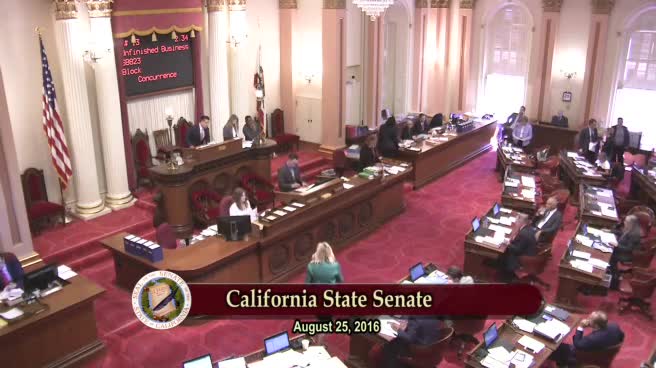 1MIN
Senate Floor
 1MIN
Assembly Floor
 35SEC
Assembly Floor
 4MIN
Senate Standing Committee on Energy, Utilities and Communications
Bill Author

Bill Co-Author(s):