SB 1030: Sonoma County Regional Climate Protection Authority.
- Session Year: 2015-2016
- House: Senate
- Latest Version Date: 2016-08-19
Existing law, until December 1, 2019, creates the Sonoma County Regional Climate Protection Authority. Existing law provides for the authority to be governed by the same board as that governing the Sonoma County Transportation Authority and imposes certain duties on the authority. Existing law authorizes the authority to perform coordination and implementation activities within the boundaries of the County of Sonoma, in cooperation with local agencies, as defined, that elect to participate, to assist those agencies in meeting their greenhouse gas emissions reduction goals. Existing law authorizes the authority to develop, coordinate, and implement programs and policies to comply with the California Global Warming Solutions Act of 2006 and other federal or state mandates and programs designed to respond to greenhouse gas emissions and climate change.
This bill would extend these provisions indefinitely. By extending the duties of the Sonoma County Regional Climate Protection Authority, the bill would impose a state-mandated local program.
The California Constitution requires the state to reimburse local agencies and school districts for certain costs mandated by the state. Statutory provisions establish procedures for making that reimbursement.
This bill would provide that no reimbursement is required by this act for a specified reason.
Existing law, until December 1, 2019, creates the Sonoma County Regional Climate Protection Authority. Existing law provides for the authority to be governed by the same board as that governing the Sonoma County Transportation Authority and imposes certain duties on the authority. Existing law authorizes the authority to perform coordination and implementation activities within the boundaries of the County of Sonoma, in cooperation with local agencies, as defined, that elect to participate, to assist those agencies in meeting their greenhouse gas emissions reduction goals. Existing law authorizes the authority to develop, coordinate, and implement programs and policies to comply with the California Global Warming Solutions Act of 2006 and other federal or state mandates and programs designed to respond to greenhouse gas emissions and climate change.
This bill would extend these provisions indefinitely. By extending the duties of the Sonoma County Regional Climate Protection Authority, this bill would impose a state-mandated local program.
The California Constitution requires the state to reimburse local agencies and school districts for certain costs mandated by the state. Statutory provisions establish procedures for making that reimbursement.
This bill would provide that no reimbursement is required by this act for a specified reason.
No reimbursement is required by this act pursuant to Section 6 of Article XIIIB of the California Constitution because the only costs that may be incurred by a local agency or school district are the result of a program for which legislative authority was requested by that local agency or school district, within the meaning of Section 17556 of the Government Code and Section 6 of Article XIIIB of the California Constitution.
No reimbursement is required by this act pursuant to Section 6 of Article XIIIB of the California Constitution because the only costs that may be incurred by a local agency or school district are the result of a program for which legislative authority was requested by that local agency or school district, within the meaning of Section 17556 of the Government Code and Section 6 of Article XIIIB of the California Constitution.
This division shall become inoperative on December 1, 2019, and, as of January 1, 2020, is repealed, unless a later enacted statute, that becomes operative on or before January 1, 2020, deletes or extends the dates on which it becomes inoperative and is repealed.
SEC. 2.No reimbursement is required by this act pursuant to Section 6 of Article XIIIB of the California Constitution because the only costs that may be incurred by a local agency or school district are the result of a program for which legislative authority was requested by that local agency or school district, within the meaning of Section 17556 of the Government Code and Section 6 of Article XIIIB of the California Constitution.
HeadingLine 3.|
Date
|
Status
|
|---|---|
| May 9, 2016 | Read third time. Passed. (Ayes 27. Noes 8. Page 3804.) Ordered to the Assembly. |
| Aug 19, 2016 | Chaptered by Secretary of State. Chapter 151, Statutes of 2016. |
| Aug 19, 2016 | Approved by the Governor. |
| Aug 10, 2016 | Enrolled and presented to the Governor at 10 a.m. |
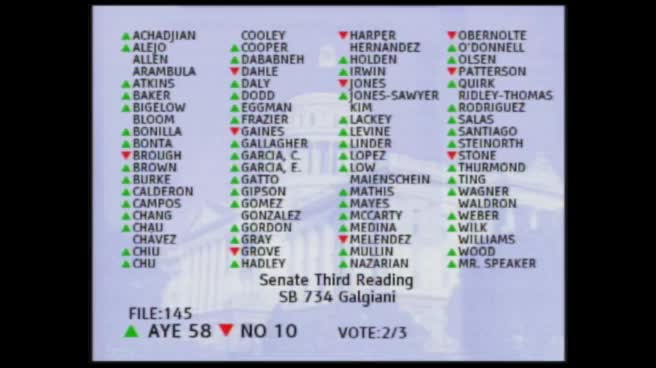
| Aug 4, 2016 | Read third time. Passed. (Ayes 54. Noes 22. Page 5712.) Ordered to the Senate. |
| Aug 4, 2016 | Read third time. Passed. Ordered to the Senate. |
| Aug 4, 2016 | In Senate. Ordered to engrossing and enrolling. |
| Jun 30, 2016 | Read second time. Ordered to third reading. |
| Jun 29, 2016 | From committee: Do pass. (Ayes 12. Noes 6.) (June 29). |
| Jun 15, 2016 | From committee: Do pass and re-refer to Com. on APPR. (Ayes 6. Noes 3.) (June 15). Re-referred to Com. on APPR. |
| May 16, 2016 | Referred to Com. on L. GOV. |
| May 10, 2016 | In Assembly. Read first time. Held at Desk. |
| May 9, 2016 | Read third time. Passed. (Ayes 27. Noes 8.) Ordered to the Assembly. |
| Feb 12, 2016 | (Corrected February 16). |
| May 3, 2016 | Read second time. Ordered to third reading. |
| May 2, 2016 | From committee: Be ordered to second reading pursuant to Senate Rule 28.8. |
| Apr 22, 2016 | Set for hearing May 2. |
| Apr 21, 2016 | From committee: Do pass and re-refer to Com. on APPR. (Ayes 5. Noes 2.) (April 20). Re-referred to Com. on APPR. |
| Apr 21, 2016 | From committee: Do pass and re-refer to Com. on APPR. (Ayes 5. Noes 2. Page 3642.) (April 20). Re-referred to Com. on APPR. |
| Mar 30, 2016 | From committee: Do pass and re-refer to Com. on E.Q. (Ayes 8. Noes 2.) (March 29). Re-referred to Com. on E.Q. |
| Mar 30, 2016 | From committee: Do pass and re-refer to Com. on E.Q. (Ayes 8. Noes 2. Page 3336.) (March 29). Re-referred to Com. on E.Q. |
| Mar 10, 2016 | Set for hearing March 29. |
| Feb 25, 2016 | Referred to Coms. on T. & H. and E.Q. |
| Feb 16, 2016 | From printer. May be acted upon on or after March 17. |
| Feb 12, 2016 | Introduced. Read first time. To Com. on RLS. for assignment. To print. |
|
Date
|
Description
|
Location
|
Votes
|
|
|---|---|---|---|---|
| Aug 4, 2016 | SB 1030 McGuire Senate Third Reading By DODD | Assembly Floor |
Passed |
|
| Jun 29, 2016 | Do pass. | Assembly Standing Committee on Appropriations |
Passed |
|
| Jun 15, 2016 | Do pass and be re-referred to the Committee on [Appropriations] | Assembly Standing Committee on Local Government |
Passed |
|
| May 9, 2016 | Senate 3rd Reading SB1030 McGuire | Senate Floor |
Passed |
|
| Apr 20, 2016 | Do pass, but first be re-referred to the Committee on [Appropriations] | Senate Standing Committee on Environmental Quality |
Passed |
|
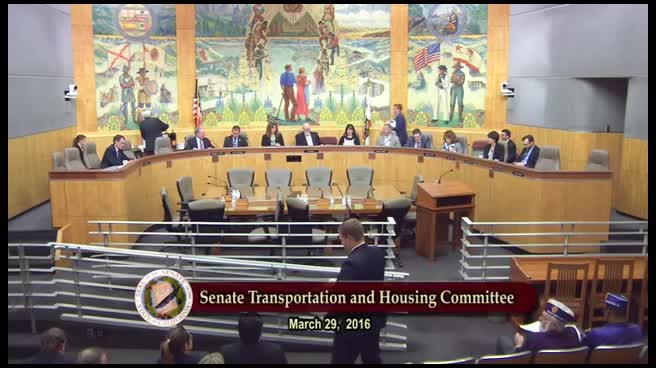
| Mar 29, 2016 | Do pass, but first be re-referred to the Committee on [Environmental Quality] | Senate Standing Committee on Transportation and Housing |
Passed |
This list shows positions taken on this bill by organizations on the date displayed, which is linked to the original source.
Positions by individuals are not included.
|
Organization
|
Position
|
Date
|
|---|---|---|
| Bay Area Regional Energy Network | ** Support | Jun 15, 2016 |
| California Transit Association | * Indeterminate | Jun 29, 2016 |
| Center for Climate Protection | ** Support | Jun 15, 2016 |
| Cities of Cloverdale, Cotati, Petaluma, Santa Rosa, Sebastopol | ** Support | Jun 15, 2016 |
| City of Cloverdale | ** Support | May 9, 2016 |
| City of Cotati | ** Support | May 9, 2016 |
| City of Petaluma | ** Support | May 9, 2016 |
| City of Sebastopol | ** Support | May 9, 2016 |
| Northern Sonoma County Air Pollution Control District | ** Support | Jun 15, 2016 |
| Sacramento Sierra Club | * Indeterminate | Jun 29, 2016 |
| Santa Rosa, City Of | ** Support | May 9, 2016 |
| Sonoma Clean Power | ** Support | Jun 15, 2016 |
| Sonoma County Agricultural Preservation And Open Space District | ** Support | Jun 15, 2016 |
| Sonoma County Board of Supervisors | * Support | Jun 15, 2016 |
| Sonoma County Regional Climate Protection Authority | * Support | Jun 15, 2016 |
| Sonoma County Transportation Authority | * Support | Mar 29, 2016 |
| Sonoma County Water Agency | * Support | Jun 15, 2016 |
| The Nature Conservancy | ** Support | Jun 15, 2016 |
| Town of Windsor | ** Support | Jun 15, 2016 |
SENATE THIRD READING
STR Bill Id:SB 1030
Author:(McGuire)
As Introduced Ver:February 12, 2016
Majority vote
SENATE VOTE: 27-8
Committee | Votes | Ayes | Noes |
Local Government | 6-3 | Eggman, Alejo, Bonilla, Chiu, Cooley, Gordon | Waldron, Beth Gaines, Linder |
Appropriations | 12-6 | Gonzalez, Bloom, Bonta, Calderon, Daly, Eggman, Roger Hernández, Holden, Quirk, Santiago, Weber, Wood | Bigelow, Chang, Gallagher, Jones, Obernolte, Wagner |
SUMMARY: Removes the sunset date on the Sonoma County Regional Climate Protection Authority (RCPA), thus making the RCPA permanent. Specifically, this bill:
- Removes the existing sunset date of December 1, 2019, contained in the statutes for the RCPA.
- Declares that no reimbursement is necessary because the only costs incurred by a local agency are the result of a program for which legislative authority was requested by that local agency, as specified.
EXISTING LAW:
- Establishes the RCPA, and authorizes it to perform coordination and implementation activities within Sonoma County to assist agencies that choose to participate in meeting their greenhouse gas emission reduction goals as set forth in resolutions and adopted plans. The RCPA may also develop, coordinate, and implement programs and policies to comply with AB 32 (Núñez), Chapter 488, Statutes of 2006, and other state or federal mandates and programs designed to respond to greenhouse gas (GHG) emissions and climate change.
- Sunsets the RCPA on December 1, 2019.
FISCAL EFFECT: According to the Assembly Appropriations Committee:
- No direct state fiscal impact. The RCPA does not receive any state money.
- The bill contains a "Local Request Disclaimer" meaning that no state reimbursement of local costs is required.
COMMENTS:
- Bill Summary. This bill removes the existing sunset date of December 1, 2019, for the Sonoma County RCPA, and by doing so, will allow RCPA to continue on permanently, with no need for legislative approval.
This bill is sponsored by the author.
- Author's Statement. According to the author, "California's diversity of geography, infrastructure and natural resources make it difficult to use a one size fits all approach to greenhouse gas mitigation. And, while overarching regulations and guidelines are necessary, and serve the state in developing targets and goals for emissions reductions, greenhouse gas mitigation strategies must be implemented at the local level. Local government agencies like the RCPA have the necessary knowledge to execute climate action plans provided the uniqueness of varying localities.
"The RCPA has a proven track record of achieving more ambitious goals than are required by AB 32's Scoping Plan. According to the climate action strategies set forth by the RCPA, Sonoma County climate action efforts will complement the State's efforts to nearly a 1 to 1 match. Their collaborative approach ensures communities with limited resources are not left out because of budget constraints."
- Background and Previous Legislation. Existing law establishes, pursuant to AB 881 (Huffman), Chapter 375, Statutes of 2009, the RCPA. The RCPA is a stand-alone agency, but governed by the same board as the Sonoma County Transportation Authority. AB 881 authorized the RCPA to apply for funds and receive grants to carry out its functions, required it to conduct meetings under the Ralph M. Brown Act, and required a financial audit. The RCPA coordinates with other agencies within the county to implement programs and policies relating to GHG reduction goals pursuant to AB 32. AB 881 established the RCPA until December 1, 2015. AB 693 (Huffman), Chapter 599, Statutes of 2012, extended the sunset until December 1, 2019.
The RCPA, in cooperation with local agencies, elects to participate, develop, coordinate, and implement activities within Sonoma County to comply with local, state, and federal mandates and programs designed to respond to GHG emissions and climate change. In addition to the County of Sonoma, the RCPA's current members include nine cities within Sonoma County. Seven other local entities, including Sonoma County Water Agency, Northern Sonoma County Air Pollution Control District, Sonoma Clean Power, Sonoma County Agricultural Preservation and Open Space District, Sonoma County Energy Independence Program, Sonoma County Health Action, and Sonoma County Solid Waste Management Authority, also serve as partners to support the RCPA.
- Arguments in Support. Supporters argue that deleting the sunset will enable the RCPA to work long-term on the climate challenges ahead.
- Arguments in Opposition. None on file.
Analysis Prepared by: Debbie Michel / L. GOV. / (916) 319-3958 FN: 0003572
Date of Hearing: June 29, 2016
ASSEMBLY COMMITTEE ON APPROPRIATIONS
Lorena Gonzalez, Chair
SBPCA Bill Id:SB 1030
Author:(McGuire) – As Introduced Ver:February 12, 2016
Policy Committee: | Local Government | Vote: | 6 - 3 |
|
| ||
|
|
Urgency: No State Mandated Local Program: Yes Reimbursable: No
SUMMARY:
This bill removes the sunset date on the Sonoma County Regional Climate Protection Authority (RCPA), making it permanent.
FISCAL EFFECT:
- No direct state fiscal impact. The RCPA does not receive any state money.
- The bill contains a "Local Request Disclaimer" meaning that no state reimbursement of local costs is required.
COMMENTS:
- Purpose. The author states that the RCPA makes it possible for the jurisdictions of Sonoma County — including small communities without large staff resources — to work together to deliver a coordinated, efficient, and comprehensive local response to climate change. The Air Resources Board (ARB) web site notes that “Many of the measures in the Scoping Plan to reduce greenhouse gases (GHG) emissions rely on local government actions.” RCPA has helped Sonoma County match state GHG reductions on nearly a 1-to-1 basis. The 2019 sunset, however, is generating concerns among grant-making entities; in addition, it is difficult for the RCPA to retain highly qualified and capable staff without a long-term guarantee.
- Background. The RCPA is a stand-alone agency, but governed by the same board as the Sonoma County Transportation Authority. Existing law authorizes the RCPA to apply for funds and receive grants to carry out its functions. The RCPA coordinates with other agencies within the county to implement programs and policies relating to GHG reduction goals pursuant to AB 32 (Nuñez, 2006).
In addition to the County of Sonoma, the RCPA’s current members include nine cities within Sonoma County. Seven other local entities, including Sonoma County Water Agency, Northern Sonoma County Air Pollution Control District, Sonoma Clean Power, Sonoma County Agricultural Preservation and Open Space District, Sonoma County Energy Independence Program, Sonoma County Health Action, and Sonoma County Solid Waste Management Authority, also serve as partners to support the RCPA.
- Prior Legislation.
- AB 693 (Huffman) Chapter 599, Statutes of 2012, extended the sunset date on the RCPA until December 1, 2019.
- AB 881 (Huffman) Chapter 375, Statutes of 2009, established the RCPA until December 1, 2015. Among its provisions, AB 881 required RCPA to conduct meetings under the Ralph M. Brown Act, required a financial audit, and authorized the RCPA to apply for funds and receive grants to carry out its functions.
Analysis Prepared by: Jennifer Swenson / APPR. / (916) 319-2081
Date of Hearing: June 15, 2016
ASSEMBLY COMMITTEE ON LOCAL GOVERNMENT
Susan Talamantes Eggman, Chair
SBPCA Bill Id:SB 1030
Author:(McGuire) – As Introduced Ver:February 12, 2016
SENATE VOTE: 27-8
SUBJECT: Sonoma County Regional Climate Protection Authority.
SUMMARY: Removes the sunset date on the Sonoma County Regional Climate Protection Authority (RCPA), thus making the RCPA permanent. Specifically, this bill:
- Removes the existing sunset date of December 1, 2019, contained in the statutes for the RCPA.
- Declares that no reimbursement is necessary because the only costs incurred by a local agency are the result of a program for which legislative authority was requested by that local agency, as specified.
EXISTING LAW:
- Establishes the RCPA, and authorizes it to perform coordination and implementation activities within Sonoma County to assist agencies that choose to participate in meeting their greenhouse gas emission reduction goals as set forth in resolutions and adopted plans. The RCPA may also develop, coordinate, and implement programs and policies to comply with AB 32 and other state or federal mandates and programs designed to respond to greenhouse gas (GHG) emissions and climate change.
- Sunsets the RCPA on December 1, 2019.
FISCAL EFFECT: According to the Senate Appropriations Committee, pursuant to Senate Rule 28.8, negligible state costs.
COMMENTS:
- Bill Summary. This bill removes the existing sunset date of December 1, 2019, for the Sonoma County RCPA, and by doing so, will allow RCPA to continue on permanently, with no need for legislative approval.
This bill is sponsored by the author.
- Author’s Statement. According to the author, “California’s diversity of geography, infrastructure and natural resources make it difficult to use a one size fits all approach to greenhouse gas mitigation. And, while overarching regulations and guidelines are necessary, and serve the state in developing targets and goals for emissions reductions, greenhouse gas mitigation strategies must be implemented at the local level. Local government agencies like the RCPA have the necessary knowledge to execute climate action plans provided the uniqueness of varying localities.
“The RCPA has a proven track record of achieving more ambitious goals than are required by AB 32’s Scoping Plan. According to the climate action strategies set forth by the RCPA, Sonoma County climate action efforts will complement the State’s efforts to nearly a 1 to 1 match. Their collaborative approach ensures communities with limited resources are not left out because of budget constraints.”
- Background and Previous Legislation. Existing law establishes, pursuant to AB 881 (Huffman), Chapter 375, Statutes of 2009, the RCPA. The RCPA is a stand-alone agency, but governed by the same board as the Sonoma County Transportation Authority. AB 881 authorized the RCPA to apply for funds and receive grants to carry out its functions, required it to conduct meetings under the Ralph M. Brown Act, and required a financial audit. The RCPA coordinates with other agencies within the county to implement programs and policies relating to GHG reduction goals pursuant to AB 32. AB 881 established the RCPA until December 1, 2015. AB 693 (Huffman), Chapter 599, Statutes of 2012, extended the sunset until December 1, 2019.
The RCPA, in cooperation with local agencies, elects to participate, develop, coordinate, and implement activities within Sonoma County to comply with local, state, and federal mandates and programs designed to respond to GHG emissions and climate change. In addition to the County of Sonoma, the RCPA’s current members include nine cities within Sonoma County. Seven other local entities, including Sonoma County Water Agency, Northern Sonoma County Air Pollution Control District, Sonoma Clean Power, Sonoma County Agricultural Preservation and Open Space District, Sonoma County Energy Independence Program, Sonoma County Health Action, and Sonoma County Solid Waste Management Authority, also serve as partners to support the RCPA.
- Arguments in Support. Supporters argue that deleting the sunset will enable the RCPA to work long-term on the climate challenges ahead.
- Arguments in Opposition. None on file.
REGISTERED SUPPORT / OPPOSITION:
Support
Bay Area Regional Energy Network
Center for Climate Protection
Cities of Cloverdale, Cotati, Petaluma, Santa Rosa, Sebastopol
Northern Sonoma County Air Pollution Control District
Sierra Club California
Sonoma Clean Power
Sonoma County Agricultural Preservation and Open Space District
Sonoma County Board of Supervisors
Sonoma County Water Agency
Town of Windsor
The Nature Conservancy
Opposition
None on file
Analysis Prepared by: Debbie Michel / L. GOV. / (916) 319-3958
Office of Senate Floor Analyses (916) 651-1520 Fax: (916) 327-4478 | SB |
THIRD READING
Bill No: SB 1030
:
SENATE TRANS. & HOUSING COMMITTEE: 8-2, 3/29/16
AYES: Beall, Cannella, Allen, Galgiani, Leyva, McGuire, Mendoza, Roth
NOES: Bates, Gaines
NO VOTE RECORDED: Wieckowski
SENATE ENVIRONMENTAL QUALITY COMMITTEE: 5-2, 4/20/16
AYES: Wieckowski, Hill, Jackson, Leno, Pavley
NOES: Gaines, Bates
SENATE APPROPRIATIONS COMMITTEE: Senate Rule 28.8
DIGEST: This bill removes the sunset on the Sonoma County Regional Climate Protection Authority (RCPA).
Existing law:
- Establishes, pursuant to AB 32 (Núñez and Pavley, Chapter 488, Statutes of 2006), a statewide greenhouse gas (GHG) emissions goal for 2020. AB 32 requires the state Air Resources Board (ARB) to determine the 1990 statewide GHG emissions level and approve a statewide GHG emissions limit equivalent to that level, to be achieved by 2020. AB 32 requires ARB to, among other things, prepare and approve a scoping plan to achieve the maximum technologically feasible and cost-effective reduction of GHG emissions by 2020, to be updated every five years.
- Requires, pursuant to SB 375 (Steinberg, Chapter 728, Statutes of 2008), ARB to set regional targets for GHG emissions reductions from passenger vehicle use. SB 375 requires each of California’s metropolitan planning organizations to prepare a sustainable communities strategy as an integral part of its regional transportation plan. This strategy must include land use, housing, and transportation strategies that, if implemented, would allow the region to meet its GHG emission reduction targets.
- Establishes, pursuant to AB 881 (Huffman, Chapter 375, Statutes of 2009), the RCPA. The RCPA is a stand-alone agency, but governed by the same board as the Sonoma County Transportation Authority. AB 881 authorized the RCPA to apply for funds and receive grants to carry out its functions, required it to conduct meetings under the Ralph M. Brown Act, and required a financial audit. The RCPA coordinates with other agencies within the county to implement programs and policies relating to GHG reduction goals pursuant to AB 32. AB 881 established the RCPA until December 1, 2015. AB 693 (Huffman, Chapter 599, Statutes of 2012) extended the sunset until December 1, 2019.
This bill removes the sunset on the RCPA, making it permanent.
Comments
- Purpose. The author states that the RCPA makes it possible for the jurisdictions of Sonoma County — including small communities without large staff resources — to work together to deliver a coordinated, efficient, and comprehensive local response to climate change. The ARB web site notes that “Many of the measures in the Scoping Plan to reduce GHG emissions rely on local government actions.” RCPA has helped Sonoma County match state GHG reductions on nearly a 1-to-1 basis. The 2019 sunset, however, is generating concerns among grant-making entities; in addition, it is difficult for the RCPA to retain highly qualified and capable staff without a long-term guarantee.
- What does the RCPA do? The draft climate action plan prepared by the RCPA includes, among other things, an inventory of GHG emissions by sector; a strategy for reducing GHG emissions in each section to meet the goal of reducing emissions to 25% of 1990 levels by 2020; and action and management plans for implementing specific GHG reduction measures. The RCPA is also working with the Sonoma County Transportation Authority to develop “Shift Sonoma County,” a strategic plan to promote a shift in both the mode and fuel used for personal transportation in the county, and with the Bay Area Regional Network, a collaborative that implements energy saving programs.
- How is the RCPA funded? Statute provides that the RCPA may only use designated transportation funds for transportation-related activities, and prohibits the RCPA from using local transportation tax revenues. It also authorizes the RCPA to apply for grants. The RCPA does not receive any state appropriations.
FISCAL EFFECT: Appropriation: Fiscal Com.: Local:
Bay Area Regional Energy Network
Center for Climate Protection
Cloverdale, City of
Cotati, City of
Northern Sonoma County Air Pollution Control District
Petaluma, City of
Santa Rosa; City of
Sebastopol; City of
Sierra Club
Sonoma Clean Power
Sonoma County Agricultural Preservation and Open Space District
Sonoma County Board of Supervisors
Sonoma County Water Agency
The Nature Conservancy
Windsor; Town of
None received
5/4/16 14:58:00
**** END ****
Office of Senate Floor Analyses (916) 651-1520 Fax: (916) 327-4478 | SB |
THIRD READING
Bill No: SB 1030
:
SENATE TRANS. & HOUSING COMMITTEE: 8-2, 3/29/16
AYES: Beall, Cannella, Allen, Galgiani, Leyva, McGuire, Mendoza, Roth
NOES: Bates, Gaines
NO VOTE RECORDED: Wieckowski
SENATE ENVIRONMENTAL QUALITY COMMITTEE: 5-2, 4/20/16
AYES: Wieckowski, Hill, Jackson, Leno, Pavley
NOES: Gaines, Bates
SENATE APPROPRIATIONS COMMITTEE: Senate Rule 28.8
DIGEST: This bill removes the sunset on the Sonoma County Regional Climate Protection Authority (RCPA).
Existing law:
- Establishes, pursuant to AB 32 (Núñez and Pavley, Chapter 488, Statutes of 2006), a statewide greenhouse gas (GHG) emissions goal for 2020. AB 32 requires the state Air Resources Board (ARB) to determine the 1990 statewide GHG emissions level and approve a statewide GHG emissions limit equivalent to that level, to be achieved by 2020. AB 32 requires ARB to, among other things, prepare and approve a scoping plan to achieve the maximum technologically feasible and cost-effective reduction of GHG emissions by 2020, to be updated every five years.
- Requires, pursuant to SB 375 (Steinberg, Chapter 728, Statutes of 2008), ARB to set regional targets for GHG emissions reductions from passenger vehicle use. SB 375 requires each of California’s metropolitan planning organizations to prepare a sustainable communities strategy as an integral part of its regional transportation plan. This strategy must include land use, housing, and transportation strategies that, if implemented, would allow the region to meet its GHG emission reduction targets.
- Establishes, pursuant to AB 881 (Huffman, Chapter 375, Statutes of 2009), the RCPA. The RCPA is a stand-alone agency, but governed by the same board as the Sonoma County Transportation Authority. AB 881 authorized the RCPA to apply for funds and receive grants to carry out its functions, required it to conduct meetings under the Ralph M. Brown Act, and required a financial audit. The RCPA coordinates with other agencies within the county to implement programs and policies relating to GHG reduction goals pursuant to AB 32. AB 881 established the RCPA until December 1, 2015. AB 693 (Huffman, Chapter 599, Statutes of 2012) extended the sunset until December 1, 2019.
This bill removes the sunset on the RCPA, making it permanent.
Comments
- Purpose. The author states that the RCPA makes it possible for the jurisdictions of Sonoma County — including small communities without large staff resources — to work together to deliver a coordinated, efficient, and comprehensive local response to climate change. The ARB web site notes that “Many of the measures in the Scoping Plan to reduce GHG emissions rely on local government actions.” RCPA has helped Sonoma County match state GHG reductions on nearly a 1-to-1 basis. The 2019 sunset, however, is generating concerns among grant-making entities; in addition, it is difficult for the RCPA to retain highly qualified and capable staff without a long-term guarantee.
- What does the RCPA do? The draft climate action plan prepared by the RCPA includes, among other things, an inventory of GHG emissions by sector; a strategy for reducing GHG emissions in each section to meet the goal of reducing emissions to 25% of 1990 levels by 2020; and action and management plans for implementing specific GHG reduction measures. The RCPA is also working with the Sonoma County Transportation Authority to develop “Shift Sonoma County,” a strategic plan to promote a shift in both the mode and fuel used for personal transportation in the county, and with the Bay Area Regional Network, a collaborative that implements energy saving programs.
- How is the RCPA funded? Statute provides that the RCPA may only use designated transportation funds for transportation-related activities, and prohibits the RCPA from using local transportation tax revenues. It also authorizes the RCPA to apply for grants. The RCPA does not receive any state appropriations.
FISCAL EFFECT: Appropriation: Fiscal Com.: Local:
Bay Area Regional Energy Network
Center for Climate Protection
City of Cloverdale
City of Cotati
City of Petaluma
City of Santa Rosa
City of Sebastopol
Northern Sonoma County Air Pollution Control District
Sierra Club
Sonoma Clean Power
Sonoma County Agricultural Preservation and Open Space District
Sonoma County Board of Supervisors
Sonoma County Water Agency
The Nature Conservancy
Town of Windsor
None received
5/4/16 16:17:20
**** END ****
SENATE COMMITTEE ON ENVIRONMENTAL QUALITY
Senator Wieckowski, Chair
2015 - 2016 Regular
Bill No: SB 1030
Author: | McGuire | ||
Version: | 2/12/2016 | Hearing Date: | 4/20/2016 |
Urgency: | No | Fiscal: | Yes |
Consultant: | Dan Brumbaugh | ||
SUBJECT: Sonoma County Regional Climate Protection Authority
ANALYSIS:
Existing law:
- Under the California Global Warming Solutions Act of 2006 (AB 32, Núñez and Pavley), requires the California Air Resources Board (ARB) to determine the 1990 statewide greenhouse gas (GHG) emissions level and approve a statewide GHG emissions limit equivalent to that level, to be achieved by 2020. AB 32 also requires ARB to, among other things, prepare and approve a scoping plan to achieve the maximum technologically feasible and cost-effective reduction of GHG emissions by 2020, to be updated every five years. (Health and Safety Code §38500 et seq.)
- Establishes the Sonoma County Regional Climate Protection Authority (RCPA), and authorizes it to perform coordination and implementation activities within Sonoma County to assist agencies that choose to participate in meeting their greenhouse gas emission reduction goals as set forth in resolutions and adopted plans. The RCPA may also develop, coordinate, and implement programs and policies to comply with AB 32 and other state or federal mandates and programs designed to respond to greenhouse gas emissions and climate change. (Public Utilities Code §181000 et seq.)
- Sunsets the RCPA on December 1, 2019. (PUC §181016)
This bill:
- Repeals the December 1, 2019 sunset provision for the RCPA, making it permanently authorized.
Background
- The Regional Climate Protection Authority is a unique governance structure, requested by the County of Sonoma County and statutorily created through AB 881 (Huffman, Chapter 375, Statutes of 2009) to better address climate change and the local government response to reducing GHG emissions. Sonoma County communities had been working on climate change in various ways since the early 2000s, by adopting GHG reduction targets, developing municipal climate action plans, and pursuing individual projects and programs. However, many of these efforts were being done piecemeal and only as funding allowed. The idea for the RCPA emerged in the late 2000s, after the passage of AB 32 and the stimulus funding directed to energy efficiency and conservation block grants.
As Suzanne Smith, the Executive Director of the RCPA, wrote in submitted testimony for a Senate Environmental Quality Committee Informational Hearing in 2015, “it became apparent that the state and federal landscape for climate policy and funding was evolving rapidly. It was also apparent that our jurisdictions could better navigate the challenges created by climate change by working together. The RCPA was created to mirror the model of the transportation authority – to pool resources, maximize the efficiency of programs, and create structured platforms for collaboration. Our agencies also serve as a conduit for funding for implementation on a local level and as a liaison to state and federal agencies.”
The RCPA, in cooperation with local agencies that elect to participate, develops, coordinates, and implements activities within Sonoma County to comply with local, state, and federal mandates and programs designed to respond to GHG emissions and climate change. In addition to the County of Sonoma, the RCPA’s current members include nine cities within Sonoma County. Seven other local entities – including Sonoma County Water Agency, Northern Sonoma County Air Pollution Control District, Sonoma Clean Power, Sonoma County Agricultural Preservation and Open Space District, Sonoma County Energy Independence Program, Sonoma County Health Action, and Sonoma County Solid Waste Management Authority – also serve as partners to support the RCPA.
AB 881 originally authorized the RCPA until December 1, 2015, and AB 693 (Huffman, Chapter 599, Statutes of 2012) extended the sunset date until December 1, 2019. A state-mandated local government entity, the RCPA is governed and managed by the same board and executive director as governs and manages the Sonoma County Transportation Authority, which was created pursuant to the Local Transportation Authority and Improvement Act (SB 142, Deddeh, Chapter 786, Statutes of 1987). Nonetheless, the two authorities are administered separately. AB 881 authorizes RCPA to apply for grants and receive funds to carry out its functions, but it prohibits the use of transportation funds by RCPA other than for transportation activities.
The Public Review Draft Climate Action 2020 Plan, released in March 2016 by the RCPA on behalf of the ten local government jurisdictions of Sonoma County, reflects the opportunity for an efficient regional effort in response to climate change (i.e., developing one plan instead of ten), economies of scale (emphasizing regional programs and consistent policies), and the importance of RCPA staff support for implementation. The proposed approach puts the RCPA in charge of implementation plans, securing funding, community engagement, monitoring and reporting, and plan updates based on the next State Scoping Plan.
According to the RCPA’s Plan, local climate actions will account for over 677,000 metric tons of CO2 equivalents (MTCO2e) annually and reach their target of a 25% reduction below 1990 emission levels by 2020. This compares to state-level efforts that are expected to generate reductions of over 750,000 MTCO2e in Sonoma County. Through the RCPA, Sonoma County will be matching State efforts by approximately 90%. Echoing state-wide goals, the Plan also includes targets of local reductions below 1990 levels of 40% by 2030 and 80% by 2050. In addition to emissions reductions, the Plan also focuses on “climate readiness” through analysis of economic and social vulnerabilities and adaptation planning.
In December 2014, 16 local government “Climate Action Champions” across the U.S. were recognized as leaders in climate change by the White House, including two in the Bay Area: San Francisco for a wide-range of climate and sustainability targets and goals to measure progress, and RCPA, as the first local government agency created to specifically address climate change and in recognition of the successes achieved via their collaborative model in Sonoma County.
Comments
- Purpose of Bill.
According to the author, “California’s diversity of geography, infrastructure and resources make it difficult to use a one size fits all approach to greenhouse gas mitigation. And, while overarching regulations and guidelines are necessary and serve the state in developing targets and goals for emissions reductions, greenhouse gas mitigation strategies must be implemented at the local level. Local government agencies like the RCPA have the necessary knowledge to execute climate action plans provided the uniqueness of differing localities.”
“The RCPA has a proven track record of achieving more ambitious goals than are required by AB 32’s Scoping Plan. According to the climate action strategies set forth by the RCPA, Sonoma County climate action efforts will complement the State’s efforts to nearly a 1 to 1 match. Their collaborative approach ensures communities with limited resources are not left out because of budgets constraints.”
- Why is a bill needed? Although major policies have been established at the state and federal levels to reduce GHG emissions, current actions at the local planning and service levels can also contribute a substantial fraction of GHG reductions. Arguably in the future, local emissions reductions may increase even more so to represent a larger share of overall societal emissions reductions.
Because the RPCA was the first of its kind to be created, the Legislature placed a sunset date on it to provide an opportunity to assess its effectiveness before making it permanent. This sunset date has been extended once in 2012. However, the author contends that the RCPA now has sufficient history to demonstrate effectiveness over the longer term.
SB 1030 repeals the sunset provision to allow RCPA greater certainty for the long term challenges of climate change mitigation and adaptation.
- How is the RPCA funded? The RCPA receives core financial support from its local government members, and does not receive any state appropriations. Statute allows the RCPA to also apply for and receive grants. Designated transportation funds may only be used for transportation-related climate actions, and RCPA is prohibited from using local transportation tax revenues from the 2004 voter approved Traffic Relief Act for Sonoma County (Measure M).
DOUBLE REFERRAL:
This measure was heard in Senate Transportation and Housing Committee on
March 29, 2016, and passed out of committee with a vote of 8-2.
SOURCE:
Author
SUPPORT:
Bay Area Regional Energy Network
Center for Climate Protection
City of Cloverdale
City of Cotati
City of Petaluma
City of Santa Rosa
City of Sebastopol
Northern Sonoma County Air Pollution Control District
Sierra Club California
Sonoma Clean Power
Sonoma County Agricultural Preservation and Open Space District
Sonoma County Board of Supervisors
Sonoma County Water Agency
The Nature Conservancy
Town of Windsor
OPPOSITION:
None received
ARGUMENTS IN SUPPORT:
The Center for Climate Protection and multiple cities note that “Sonoma County communities rely on the RCPA to advance a countywide long term response to climate change by providing a regional policy forum, staff level coordination, public education, program management, grant administration, and reporting. The RCPA is able to efficiently develop climate action strategies on behalf of multiple local agencies at once. It also helps to align projects across entities towards maximum, integrated benefits.”
The Bay Area Regional Energy Network (BayREN) writes that “RCPA has been a statewide local government leader in the development of programs like Energy Upgrade California, Pay As You Save™, local Adaptation Forums, Community Choice Energy, and other innovations in climate action. The RCPA was instrumental during the creation of the BayREN, and RCPA staff continue to serve as a leader in the delivery of BayREN programs.”
The Northern Sonoma County Air Protection Control District (NSCAPCD) writes that it “is a partner of the RCPA and has been a supporter since its inception. The RCPA assists Sonoma County and the Bay Area in reducing greenhouse gases (GHG) by coordinating with climate change organizations to implement best practices and utilizing available resources most effectively. The NSCAPCD collaborates with the RCPA on many projects including energy efficiency rebates and financing, renewable energy implementation, low carbon transportation planning, electric vehicle infrastructure planning, public outreach, and planning for climate resilience.”
The Sonoma County Agricultural Preservation and Open Space District writes that “The District is a partner to the RCPA and collaborates with the RCPA on many projects including the Climate Action through Conservation initiative, Urban Footprint climate scenario modeling tool, Climate Action 2020, and climate adaptation planning. The RCPA is an essential partner as we work to conserve land and reduce sprawl and associated vehicle emissions.
Other letters offered similar praise about the vital role of the RCPA in initiating and supporting local and regional cross-cutting programs.
-- END --
SENATE COMMITTEE ON TRANSPORTATION AND HOUSING
Senator Jim Beall, Chair
2015 - 2016 Regular
Bill No: SB 1030 Hearing Date: 3/29/2016
Author: | McGuire | ||
Version: | 2/12/2016 | ||
Urgency: | No | Fiscal: | Yes |
Consultant: | Erin Riches | ||
SUBJECT: Sonoma County Regional Climate Protection Authority
DIGEST: This bill removes the sunset on the Sonoma County Regional Climate Protection Authority (RPCA).
ANALYSIS:
AB 32, Núñez and Pavley, Chapter 488, Statutes of 2006, established a statewide greenhouse gas (GHG) emissions goal for 2020. AB 32 requires the state Air Resources Board (ARB) to determine the 1990 statewide GHG emissions level and approve a statewide GHG emissions limit equivalent to that level, to be achieved by 2020. AB 32 requires ARB to, among other things, prepare and approve a scoping plan to achieve the maximum technologically feasible and cost-effective reduction of GHG emissions by 2020, to be updated every five years.
SB 375, Steinberg, Chapter 728, Statutes of 2008, requires ARB to set regional targets for GHG emissions reductions from passenger vehicle use. It requires each of California’s metropolitan planning organizations to prepare a sustainable communities strategy as an integral part of its regional transportation plan. This strategy must include land use, housing, and transportation strategies that, if implemented, would allow the region to meet its GHG emission reduction targets.
AB 881, Huffman, Chapter 375, Statutes of 2009, established the RCPA. The RPCA is stand-alone agency, but governed by the same board as the Sonoma County Transportation Authority. AB 881 authorized the RPCA to apply for funds and receive grants to carry out its functions, required it to conduct meetings under the Ralph M. Brown Act, and required an financial audit.
The RPCA coordinates with other agencies within the county to implement programs and policies relating to GHG reduction goals pursuant to AB 32. These activities include, but are not limited to, reduction of energy consumption; coordination and implementation of energy efficiency projects; increasing efficiency of water use; utilizing carbon sequestration opportunities; administration of grants to local entities; alternative transportation options; and measuring and quantifying ongoing GHG reductions.
AB 881 established the RPCA until December 1, 2015. AB 693, Huffman, Chapter 599, Statutes of 2012, extended the sunset until December 1, 2019.
This bill removes the sunset on the RCPA, making it permanent.
COMMENTS:
- Purpose. The author states that the Authority makes it possible for the jurisdictions of Sonoma County — including small communities without large staff resources — to work together to deliver a coordinated, efficient, and comprehensive local response to climate change. The ARB website notes that “Many of the measures in the Scoping Plan to reduce GHG emissions rely on local government actions.” The author points out that RPCA has helped Sonoma County match state GHG reductions on nearly a 1-to-1 basis. The 2019 sunset, however, is generating concerns among grant-making entities; in addition, it is difficult for the RPCA to retain highly qualified and capable staff without a long-term guarantee. Eliminating the statutory sunset will enable the RPCA to maintain and increase its efforts to meet AB 32 goals.
- Why is a bill needed? The RPCA was established through legislation because it is governed by the same board as the Sonoma County Transportation Authority; all local transportation authorities are established in statute. Because the RPCA was the first of its kind to be created, the Legislature placed a sunset date on it to provide an opportunity to assess its effectiveness before making it permanent.
- What does the RPCA do? Climate Action 2020 and Beyond, the draft climate action plan prepared by the RPCA, includes, among other things, an inventory of GHG emissions by sector; a strategy for reducing GHG emissions in each section to meet the goal of reducing emissions to 25% of 1990 levels by 2020; and action and management plans for implementing specific GHG reduction measures. The RPCA is also working with the Sonoma County Transportation Authority to develop “Shift Sonoma County,” a strategic plan to promote a shift in both the mode and fuel used for personal transportation in the county, and with the Bay Area Regional Network (BayREN), a collaborative that implements energy saving programs.
- How is the RPCA funded? Statute provides that the RPCA may only use designated transportation funds for transportation-related activities, and prohibits the RPCA from using local transportation tax revenues. It also authorizes the RPCA to apply for grants. The RPCA does not receive any state appropriations.
- Double-referred. This bill has also been referred to the Environmental Quality Committee.
FISCAL EFFECT: Appropriation: Fiscal Com.: Local:
POSITIONS: (Communicated to the committee before noon on Wednesday,
March 23, 2016.)
SUPPORT:
Bay Area Regional Energy Network
Center for Climate Protection
Northern Sonoma County Air Pollution Control District
Santa Rosa; City of
Sebastopol; City of
Sonoma Clean Power
Sonoma County Water Agency
Windsor; Town of
OPPOSITION:
None received.
-- END --
Discussed in Hearing
 1MIN
Assembly Floor
 2MIN
Assembly Standing Committee on Appropriations
 6MIN
Assembly Standing Committee on Local Government
 4MIN
Senate Floor
 6MIN
Senate Standing Committee on Transportation and Housing
Bill Author