SB 1040: Postadoption instability: unlawful transfer of custody.
- Session Year: 2015-2016
- House: Senate
- Latest Version Date: 2016-08-29
Existing law regulates adoption services by the State Department of Social Services, county adoption agencies, licensed adoption agencies, and other adoption service providers and requires the department to adopt regulations pertaining to those services.
Existing law makes it a misdemeanor for a parent of a minor to willfully omit, without lawful excuse, to furnish necessary clothing, food, shelter, or medical attendance, or other remedial care for his or her child. Existing law makes it a crime for a parent of a child under 14 years of age, and a person to whom the child has been confided for nurture or education, to desert the child in any place with intent to abandon the child, as specified. Existing law makes it a misdemeanor for a parent or organization, without holding a valid and unrevoked license to place children for adoption, to advertise in a public medium, as specified, that he, she, or it will place children for adoption, or accept, supply, provide, or obtain children for adoption, or to cause an advertisement to be published in or by a public medium soliciting, requesting, or asking for a child or children for adoption.
This bill would require the State Department of Social Services, in consultation with specified individuals and entities, to establish a working group to review the challenges facing families with adopted children, to identify resources within the community that will assist families with these challenges, and to make recommendations to the Legislature as to the services that may be helpful to these families. The bill would require the working group to meet no later than April 1, 2017, and would require the working groups recommendations to be submitted in a report to the appropriate policy committees of the Legislature on or before April 1, 2018.
(1)Existing law regulates adoption services by the State Department of Social Services, county adoption agencies, licensed adoption agencies, and other adoption service providers and requires the department to adopt regulations pertaining to those services.
Existing law makes it a misdemeanor for a parent of a minor to willfully omit, without lawful excuse, to furnish necessary clothing, food, shelter, or medical attendance, or other remedial care for his or her child. Existing law makes it a crime for a parent of a child under 14 years of age, and a person to whom the child has been confided for nurture or education, to desert the child in any place with intent to abandon the child, as specified. Existing law makes it a misdemeanor for a parent or organization, without holding a valid and unrevoked license to place children for adoption, to advertise in a public medium, as specified, that he, she, or it will place children for adoption, or accept, supply, provide, or obtain children for adoption, or to cause an advertisement to be published in or by a public medium soliciting, requesting, or asking for a child or children for adoption.
This bill would require the State Department of Social Services, in consultation with specified individuals and entities, to establish a working group to review the challenges facing families with adopted children, to identify resources within the community that will assist families with these challenges, and to make recommendations to the Legislature as to the services that may be helpful to these families. The bill would require the working group to meet no later than April 1, 2017, and would require the working groups recommendations to be submitted in a report to the appropriate policy committees of the Legislature on or before April 1, 2018.
(2)Existing law makes it a misdemeanor for a parent of a minor to willfully omit, without lawful excuse, to furnish necessary clothing, food, shelter, or medical attendance, or other remedial care for his or her child. Existing law makes it a crime for a parent of a child under 14 years of age, and a person to whom the child has been confided for nurture or education, to desert the child in any place with intent to abandon the child, as specified. Existing law makes it a misdemeanor for a parent or organization, without holding a valid and unrevoked license to place children for adoption, to advertise in a public medium, as specified, that he, she, or it will place children for adoption, or accept, supply, provide, or obtain children for adoption, or to cause an advertisement to be published in or by a public medium soliciting, requesting, or asking for a child or children for adoption.
This bill would make it a crime to solicit to take custody of a minor under 14 years of age and to subsequently take custody of the minor without initiating a lawful guardianship proceeding or adoption proceeding within 90 days of taking physical custody of the minor. By creating a new crime, this bill would impose a state-mandated local program.
(3)The California Constitution requires the state to reimburse local agencies and school districts for certain costs mandated by the state. Statutory provisions establish procedures for making that reimbursement.
This bill would provide that no reimbursement is required by this act for a specified reason.
(1)Existing law regulates adoption services by the State Department of Social Services, county adoption agencies, licensed adoption agencies, and other adoption service providers and requires the department to adopt regulations pertaining to those services.
This bill would require the State Department of Social Services, in consultation with specified individuals and entities, to establish a working group to review the challenges facing families with adopted and special needs children, to identify resources within the community that will assist families with these challenges, and to make recommendations to the Legislature as to the services that may be helpful to these families. The bill would require the working group to meet no later than June April 1, 2017, and would require the working groups recommendations to be submitted in a report to the appropriate policy committees of the Legislature on or before June April 1, 2018.
(2)Existing law makes it a misdemeanor for a parent of a minor to willfully omit, without lawful excuse, to furnish necessary clothing, food, shelter, or medical attendance, or other remedial care for his or her child. Existing law makes it a crime for a parent of a child under 14 years of age, and a person to whom the child has been confided for nurture or education, to desert the child in any place with intent to abandon the child, as specified. Existing law makes it a misdemeanor for a parent or organization, without holding a valid and unrevoked license to place children for adoption, to advertise in a public medium, as specified, that he, she, or it will place children for adoption, or accept, supply, provide, or obtain children for adoption, or to cause an advertisement to be published in or by a public medium soliciting, requesting, or asking for a child or children for adoption.
This bill would make it a crime to solicit to rehome, as defined, a minor take custody of a minor under 14 years of age and to subsequently rehome the minor take custody of the minor without initiating a lawful guardianship proceeding or adoption proceeding within 90 days of taking physical custody of the minor. By creating a new crime, this bill would impose a state-mandated local program.
(3)The California Constitution requires the state to reimburse local agencies and school districts for certain costs mandated by the state. Statutory provisions establish procedures for making that reimbursement.
This bill would provide that no reimbursement is required by this act for a specified reason.
Existing
(1)Existing law regulates adoption services by the State Department of Social Services, county adoption agencies, licensed adoption agencies, and other adoption service providers and requires the department to adopt regulations pertaining to those services.
The bill would authorize an adoptive parent, individual, or entity having custody of an adopted minor to rehome, as defined, that minor if specified requirements are met. The
This bill would require the State Department of Social Services, in consultation with specified individuals and entities, to establish a working group to review the challenges facing families with adopted and special needs children, to identify resources within the community that will assist families with these challenges, and to make recommendations to the Legislature as to the services that may be helpful to these families. The bill would require the working group to meet no later than June 1, 2017, and would require the working groups recommendations to be submitted in a report to the appropriate policy committees of the Legislature on or before June 1, 2018.
(2)Existing law makes it a misdemeanor for a parent of a minor to willfully omit, without lawful excuse, to furnish necessary clothing, food, shelter, or medical attendance, or other remedial care for his or her child.
This bill would make it a crime to solicit to rehome, as defined, a minor under 14 years of age and to subsequently rehome the minor without initiating a lawful guardianship proceeding or adoption proceeding within 90 days of taking physical custody of the minor. By creating a new crime, this bill would impose a state-mandated local program.
(3)The California Constitution requires the state to reimburse local agencies and school districts for certain costs mandated by the state. Statutory provisions establish procedures for making that reimbursement.
This bill would provide that no reimbursement is required by this act for a specified reason.
Existing law regulates adoption services by the State Department of Social Services, county adoption agencies, licensed adoption agencies, and other adoption service providers and requires the department to adopt regulations pertaining to those services.
This bill would prohibit the rehoming, as defined, of an adopted child. The bill would also require the department to adopt regulations to ensure that postadoptive services are provided to adoptive parents who seek the assistance of the department.
The bill would authorize an adoptive parent, individual, or entity having custody of an adopted minor to rehome, as defined, that minor if specified requirements are met. The bill would require the State Department of Social Services, in consultation with specified individuals and entities, to establish a working group to review the challenges facing families with adopted and special needs children, to identify resources within the community that will assist families with these challenges, and to make recommendations to the Legislature as to the services that may be helpful to these families. The bill would require the working group to meet no later than June 1, 2017, and would require the working groups recommendations to be submitted in a report to the appropriate policy committees of the Legislature on or before June 1, 2018.
Existing law makes it a misdemeanor for a person or organization to advertise adoption services in any periodical or newspaper, by radio, or by other public medium, if the person or organization does not hold a valid license to place children for adoption.
This bill would additionally make it a misdemeanor for these persons or organizations to advertise adoption services using an electronic means of communication, including, but not limited to, email, an Internet Web site, an Internet profile, or another computerized communication system. By expanding the scope of a crime, this bill would impose a state-mandated local program.
Existing law regulates adoption services by the State Department of Social Services, county adoption agencies, licensed adoption agencies, and other adoption service providers and requires the department to adopt regulations pertaining to those services.
This bill would prohibit the rehoming rehoming, as defined, of an adopted child, as defined. child. The bill would also require the department to adopt regulations to ensure that postadoptive services are provided to adoptive parents who seek the assistance of the department.
The California Constitution requires the state to reimburse local agencies and school districts for certain costs mandated by the state. Statutory provisions establish procedures for making that reimbursement.
This bill would provide that no reimbursement is required by this act for a specified reason.
Existing law makes it a misdemeanor for a person or organization to advertise adoption services in any periodical or newspaper, by radio, or by other public medium, if the person or organization does not hold a valid license to place children for adoption.
This bill would additionally make it a misdemeanor for these persons or organizations to advertise adoption services using an electronic means of communication, including, but not limited to, email, an Internet Web site, an Internet profile, or another computerized communication system. By expanding the scope of a crime, this bill would impose a state-mandated local program.
Existing law regulates adoption services by the State Department of Social Services, county adoption agencies, licensed adoption agencies, and other adoption service providers and requires the department to adopt regulations pertaining to those services.
This bill would prohibit the rehoming of an adopted child, as defined. The bill would also require the department to adopt regulations to ensure that postadoptive services are provided to adoptive parents who seek the assistance of the department.
The California Constitution requires the state to reimburse local agencies and school districts for certain costs mandated by the state. Statutory provisions establish procedures for making that reimbursement.
This bill would provide that no reimbursement is required by this act for a specified reason.
(a)The Legislature acknowledges that adoptive families often face special challenges. This is particularly true in the case of international adoptions, adoptions of special needs children, and adoptions of dependent children who have experienced abuse, neglect, and, often, multiple placements. The Legislature finds and declares that it is the public policy of the State of California to assist adoptive families and adopted children, and intends this section to ensure that these families receive the support needed to maintain the family unit, and when necessary, find new, permanent homes for youth.
(b)(1)In order to address and prevent the circumstances in which an adoptive parent seeks to engage in the unlawful transfer of the custody of a child, the State Department of Social Services shall, in consultation with child advocacy organizations, attorneys specializing in adoption and guardianships, counsel representing minors in dependency proceedings, the Judicial Council, the office of the Attorney General, local law enforcement agencies, foster caregiver organizations, county welfare officials, and individuals with expertise in the area of positive youth development, establish a working group to review the challenges facing families with adopted children, to identify resources within the community that will assist families with these challenges, and to make recommendations to the Legislature as to the services that may be helpful to these families.
(2)In developing the recommendations, the working group shall consider all of the following:
(A)Education and resources that would benefit prospective adoptive families prior to an adoption, and whether certain services and education should be required before an adoption can be completed.
(B)The specific challenges facing the following families: families with special needs children, families with children adopted through the foster care system, and families with internationally adopted children.
(C)The distinct resources that are available to the different types of families specified in subparagraph (B), and whether any of the resources available to one type of family would also be beneficial to another type.
(D)The training and education that are necessary to equip mental health professionals with the tools necessary to provide the families specified in subparagraph (B) with services tailored to their unique needs.
(E)How to effectively recruit more prospective adoptive families that are able to provide new, permanent, and loving homes to children coming out of disrupted adoptions.
(F)The feasibility of creating a clearinghouse of persons and entities that are knowledgeable in addressing the needs of, and finding subsequent placements for, children at risk of having their custody unlawfully transferred, including adoption agencies, social workers, attorneys, mental health professionals, and prospective adoptive parents.
(G)Data currently available at the state and local levels for assessing the frequency of postadoption instability and the factors and causes associated with postadoption instability. The working group shall identify the gaps or limitations in data on postadoption instability.
(H)Identified best practices for collecting and tracking, on an ongoing basis, both quantitative and qualitative data to understand the extent of postadoption instability and to tailor supports to meet the needs of children and families experiencing postadoption instability.
(I)An assessment of any gaps or limitations in existing law, including provisions within the Penal Code, relating to the solicitation to take custody of a minor and the subsequent taking of custody of the minor without initiating a lawful guardianship proceeding or adoption proceeding.
(c)(1)The working group shall meet no later than April 1, 2017. The recommendations developed pursuant to this section shall be submitted in a report to the appropriate policy committees of the Legislature on or before April 1, 2018.
(2)A report to be submitted pursuant to this subdivision shall be submitted in compliance with Section 9795 of the Government Code.
(3)The requirement for submitting a report pursuant to this subdivision is inoperative on June 1, 2022, pursuant to Section 10231.5 of the Government Code.
(d)For purposes of this section, postadoption instability includes regulated circumstances, including, but not limited to, adoption nullification or dissolution, and unregulated circumstances, including, but not limited to, the unlawful transfer of custody of an adopted child from the adoptive parent to another person or entity.
(a)The Legislature acknowledges that adoptive families often face special challenges. This is particularly true in the case of international adoptions, adoptions of special needs children, and adoptions of dependent children who have experienced abuse, neglect, and, often, multiple placements. The Legislature finds and declares that it is the public policy of the State of California to assist adoptive families and adopted children, and intends this section to ensure that these families receive the support needed to maintain the family unit, and when necessary, find new, permanent homes for youth.
(b)(1)In order to address and prevent the circumstances in which an adoptive parent seeks to engage in the unlawful transfer of the custody of a child, the State Department of Social Services shall, in consultation with child advocacy organizations, attorneys specializing in adoption and guardianships, counsel representing minors in dependency proceedings, the Judicial Council, the office of the Attorney General, local law enforcement agencies, foster caregiver organizations, county welfare officials, and individuals with expertise in the area of positive youth development, establish a working group to review the challenges facing families with adopted children, to identify resources within the community that will assist families with these challenges, and to make recommendations to the Legislature as to the services that may be helpful to these families.
(2)In developing the recommendations, the working group shall consider all of the following:
(A)Education and resources that would benefit prospective adoptive families prior to an adoption, and whether certain services and education should be required before an adoption can be completed.
(B)The specific challenges facing the following families: families with special needs children, families with children adopted through the foster care system, and families with internationally adopted children.
(C)The distinct resources that are available to the different types of families specified in subparagraph (B), and whether any of the resources available to one type of family would also be beneficial to another type.
(D)The training and education that is are necessary to equip mental health professionals with the tools necessary to provide the families specified in subparagraph (B) with services tailored to their unique needs.
(E)How to effectively recruit more prospective adoptive families that are able to provide new, permanent, and loving homes to children coming out of disrupted adoptions.
(F)The feasibility of creating a clearinghouse of persons and entities that are knowledgeable in addressing the needs of, and finding subsequent placements for, children at risk of having their custody unlawfully transferred, including adoption agencies, social workers, attorneys, mental health professionals, and prospective adoptive parents.
(G)Data currently available at the state and local levels for assessing the frequency of postadoption instability and the factors and causes associated with postadoption instability. The working group shall identify the gaps or limitations in data on postadoption instability.
(H)Identified best practices for collecting and tracking, on an ongoing basis, both quantitative and qualitative data to understand the extent of postadoption instability and to tailor supports to meet the needs of children and families experiencing postadoption instability.
(I)An assessment of any gaps or limitations in existing law, including provisions within the Penal Code, relating to the solicitation to take custody of a minor and the subsequent taking of custody of the minor without initiating a lawful guardianship proceeding or adoption proceeding.
(c)(1)The working group shall meet no later than April 1, 2017. The recommendations developed pursuant to this section shall be submitted in a report to the appropriate policy committees of the Legislature on or before April 1, 2018.
(2)A report to be submitted pursuant to this subdivision shall be submitted in compliance with Section 9795 of the Government Code.
(3)The requirement for submitting a report pursuant to this subdivision is inoperative on June 1, 2022, pursuant to Section 10231.5 of the Government Code.
(d)For purposes of this section, postadoption instability includes regulated circumstances, including, but not limited to, adoption nullification or dissolution, and unregulated circumstances, including, but not limited to, the unlawful transfer of custody of an adopted child from the adoptive parent to another person or entity.
SEC. 2.Section 272.5 is added to the Penal Code, to read:272.5.(a)It is unlawful for a person to solicit by any means, including, but not limited to, electronic communication via the Internet, to take custody of a minor under 14 years of age and to subsequently take custody of the minor without initiating a lawful guardianship proceeding or adoption proceeding within 90 days of taking physical custody of the minor consistent with the requirements of Division 4 (commencing with Section 1400) of the Probate Code or Division 13 (commencing with Section 8500) of the Family Code. A violation of this section is punishable by imprisonment pursuant to subdivision (h) of Section 1170, in a county jail not exceeding one year, by a fine not exceeding one thousand dollars ($1,000), or by both that fine and imprisonment.
(b)This section does not apply to either of the following:
(1)A minor placed with a relative, as defined by paragraph (2) of subdivision (c) of Section 361.3 of the Welfare and Institutions Code.
(2)Temporary placement of a minor by a parent, individual, or entity for a designated short-term period with a specified intent and time period for return of the minor, if the temporary placement is due to a vacation or a school-sponsored function or activity or the incarceration, military service, medical treatment, or incapacity of a parent or guardian.
SEC. 3.No reimbursement is required by this act pursuant to Section 6 of Article XIIIB of the California Constitution because the only costs that may be incurred by a local agency or school district will be incurred because this act creates a new crime or infraction, eliminates a crime or infraction, or changes the penalty for a crime or infraction, within the meaning of Section 17556 of the Government Code, or changes the definition of a crime within the meaning of Section 6 of Article XIIIB of the California Constitution.
(a)The Legislature acknowledges that adoptive families often face special challenges. This is particularly true in the case of international adoptions, adoptions of special needs children, and adoptions of dependent children who often have experienced abuse, neglect, and and, often, multiple placements. The Legislature finds and declares that it is the public policy of the State of California to assist adoptive families and adopted children, and intends this section to ensure that these families receive the support needed to maintain the family unit, and when necessary, find new, permanent homes for youth.
(b)(1)In order to address and prevent the circumstances in which an adoptive parent, individual, or entity having custody of an adopted minor seeks to rehome the minor, parent seeks to engage in the unlawful transfer of the custody of a child, the State Department of Social Services shall, in consultation with child advocacy organizations, attorneys specializing in adoption and guardianships, counsel representing minors in dependency proceedings, the Judicial Council, foster caregiver organizations, county welfare officials, and individuals with expertise in the area of positive youth development, establish a working group to review the challenges facing families with adopted and special needs children, to identify resources within the community that will assist families with these challenges, and to make recommendations to the Legislature as to the services that may be helpful to these families.
(2)In developing the recommendations, the working group shall consider all of the following:
(A)Education and resources that would benefit prospective adoptive families prior to an adoption, and whether certain services and education should be required before an adoption can be completed.
(A)
(B)The specific challenges facing the following families: families with special needs children, families with children adopted through the foster care system, and families with internationally adopted children.
(B)
(C)The distinct resources that are available to the different types of families specified in subparagraph (A), (B), and whether any of the resources available to one type of family would also be beneficial to another type.
(C)
(D)The training and education that is necessary to equip mental health professionals with the tools necessary to provide the families specified in subparagraph (A) (B) with services tailored to their unique needs.
(D)
(E)How to effectively recruit more prospective adoptive families that are able to provide new, permanent, and loving homes to children coming out of disrupted adoptions.
(E)
(F)The feasibility of creating a clearinghouse of persons and entities that are knowledgeable in addressing the needs of, and finding subsequent placements for, children at risk of being rehomed, having their custody unlawfully transferred, including adoption agencies, social workers, attorneys, mental health professionals, and prospective adoptive parents.
(c)(1)The working group shall meet no later than June April 1, 2017. The recommendations developed pursuant to this section shall be submitted in a report to the appropriate policy committees of the Legislature on or before June April 1, 2018.
(2)A report to be submitted pursuant to this subdivision shall be submitted in compliance with Section 9795 of the Government Code.
(3)The requirement for submitting a report pursuant to this subdivision is inoperative on June 1, 2022, pursuant to Section 10231.5 of the Government Code.
SEC. 2.Section 272.5 is added to the Penal Code, to read:272.5.(a)It is unlawful for a person to solicit by any means, including, but not limited to, electronic communication via the Internet, to rehome a minor take custody of a minor under 14 years of age and to subsequently rehome the minor take custody of the minor without initiating a lawful guardianship proceeding or adoption proceeding within 90 days of taking physical custody of the minor consistent with the requirements of Division 4 (commencing with Section 1400) of the Probate Code or Division 13 (commencing with Section 8500) of the Family Code. A violation of this section is punishable by imprisonment pursuant to subdivision (h) of Section 1170, in a county jail not exceeding one year, by a fine not exceeding one thousand dollars ($1,000), or by both that fine and imprisonment.
(b)For purposes of this section, rehome means an action taken to provide a new, permanent home for a minor with a person or persons other than the minors parents, except as provided in subdivision (c).
(c)
(b)This section does not apply to either of the following:
(1)A minor placed with a relative, as defined by paragraph (2) of subdivision (c) of Section 361.3 of the Welfare and Institutions Code.
(2)Temporary placement of a minor by a parent, individual, or entity for a designated short-term period with a specified intent and time period for return of the minor, if the temporary placement is due to a vacation or a school-sponsored function or activity or the incarceration, military service, medical treatment, or incapacity of a parent or guardian.
SEC. 3.No reimbursement is required by this act pursuant to Section 6 of Article XIIIB of the California Constitution because the only costs that may be incurred by a local agency or school district will be incurred because this act creates a new crime or infraction, eliminates a crime or infraction, or changes the penalty for a crime or infraction, within the meaning of Section 17556 of the Government Code, or changes the definition of a crime within the meaning of Section 6 of Article XIIIB of the California Constitution.
(a)For purposes of this chapter, rehome or rehoming means an action taken to provide a new, permanent home for an adopted minor with a person or persons other than the adoptive parents, except as provided in subdivision (c).
(b)An adoptive parent, individual, or entity having custody of an adopted minor may rehome that minor only if both of the following requirements are met:
(1)The adoptive parent, individual, or entity having custody of the minor and the prospective parent or guardian both obtain independent counsel within 60 days of placing the minor in the physical custody of the prospective parent or guardian.
(2)The adoptive parent, individual, or entity having custody of the minor initiates a lawful guardianship or adoption proceeding within 90 days of placing the minor in the physical custody of the prospective parent or guardian, consistent with the requirements of Division 4 (commencing with Section 1400) of the Probate Code or Division 13 (commencing with Section 8500) of the Family Code.
(c)This section does not apply to either of the following:
(1)A child placed with a relative, as defined by paragraph (2) of subdivision (c) of Section 361.3 of the Welfare and Institutions Code.
(2)Temporary placement of a minor by a parent, individual, or entity for a designated short-term period with a specified intent and time period for return of the minor, if the temporary placement is due to a vacation or a school-sponsored function or activity or the incarceration, military service, medical treatment, or incapacity of a parent or guardian.
9221.(a)The Legislature acknowledges that adoptive families often face special challenges. This is particularly true in the case of international adoptions, adoptions of special needs children, and adoptions of dependent children who often have experienced abuse, neglect, and multiple placements. The Legislature finds and declares that it is the public policy of the State of California to assist adoptive families and adopted children, and intends this section to ensure that these families receive the support needed to maintain the family unit, and when necessary, find new, permanent homes for youth.
(b)(1)In order to address and prevent the circumstances in which an adoptive parent, individual, or entity having custody of an adopted minor seeks to rehome the minor, the State Department of Social Services shall, in consultation with child advocacy organizations, attorneys specializing in adoption and guardianships, the Judicial Council, foster caregiver organizations, and individuals with expertise in the area of positive youth development, establish a working group to review the challenges facing families with adopted and special needs children, to identify resources within the community that will assist families with these challenges, and to make recommendations to the Legislature as to the services that may be helpful to these families.
(2)In developing the recommendations, the working group shall consider all of the following:
(A)The specific challenges facing the following families: families with special needs children, families with children adopted through the foster care system, and families with internationally adopted children.
(B)The distinct resources that are available to the different types of families specified in subparagraph (A), and whether any of the resources available to one type of family would also be beneficial to another type.
(C)The training and education that is necessary to equip mental health professionals with the tools necessary to provide the families specified in subparagraph (A) with services tailored to their unique needs.
(D)How to effectively recruit more prospective adoptive families that are able to provide new, permanent, and loving homes to children coming out of disrupted adoptions.
(E)The feasibility of creating a clearinghouse of persons and entities that are knowledgeable in addressing the needs of, and finding subsequent placements for, children at risk of being rehomed, including adoption agencies, social workers, attorneys, mental health professionals, and prospective adoptive parents.
(c)(1)The working group shall meet no later than June 1, 2017. The recommendations developed pursuant to this section shall be submitted in a report to the appropriate policy committees of the Legislature on or before June 1, 2018.
(2)A report to be submitted pursuant to this subdivision shall be submitted in compliance with Section 9795 of the Government Code.
(3)The requirement for submitting a report pursuant to this subdivision is inoperative on June 1, 2022, pursuant to Section 10231.5 of the Government Code.
SEC. 2.Section 272.5 is added to the Penal Code, to read:272.5.(a)It is unlawful for a person to solicit by any means, including, but not limited to, electronic communication via the Internet, to rehome a minor under 14 years of age and to subsequently rehome the minor without initiating a lawful guardianship proceeding or adoption proceeding within 90 days of taking physical custody of the minor consistent with the requirements of Division 4 (commencing with Section 1400) of the Probate Code or Division 13 (commencing with Section 8500) of the Family Code. A violation of this section is punishable by imprisonment pursuant to subdivision (h) of Section 1170, in a county jail not exceeding one year, by a fine not exceeding one thousand dollars ($1,000), or by both that fine and imprisonment.
(b)For purposes of this section, rehome means an action taken to provide a new, permanent home for a minor with a person or persons other than the minors parents, except as provided in subdivision (c).
(c)This section does not apply to either of the following:
(1)A minor placed with a relative, as defined by paragraph (2) of subdivision (c) of Section 361.3 of the Welfare and Institutions Code.
(2)Temporary placement of a minor by a parent, individual, or entity for a designated short-term period with a specified intent and time period for return of the minor, if the temporary placement is due to a vacation or a school-sponsored function or activity or the incarceration, military service, medical treatment, or incapacity of a parent or guardian.
SEC. 3.No reimbursement is required by this act pursuant to Section 6 of Article XIIIB of the California Constitution because the only costs that may be incurred by a local agency or school district will be incurred because this act creates a new crime or infraction, eliminates a crime or infraction, or changes the penalty for a crime or infraction, within the meaning of Section 17556 of the Government Code, or changes the definition of a crime within the meaning of Section 6 of Article XIIIB of the California Constitution.
(a)For purposes of this chapter, rehome or rehoming means an action taken to provide a new, permanent home for an adopted minor with a person or persons other than the adoptive parents, except as provided in subdivision (c).
(b)An adoptive parent, individual, or entity having custody of an adopted minor may rehome that minor only if both of the following requirements are met:
(1)The adoptive parent, individual, or entity having custody of the minor and the prospective parent or guardian both obtain independent counsel within 60 days of placing the minor in the physical custody of the prospective parent or guardian.
(2)The adoptive parent, individual, or entity having custody of the minor initiates a lawful guardianship or adoption proceeding within 90 days of placing the minor in the physical custody of the prospective parent or guardian, consistent with the requirements of Division 4 (commencing with Section 1400) of the Probate Code or Division 13 (commencing with Section 8500) of the Family Code.
(c)This section does not apply to either of the following:
(1)A child placed with a relative, as defined by paragraph (2) of subdivision (c) of Section 361.3 of the Welfare and Institutions Code.
(2)Temporary placement of a minor by a parent, individual, or entity for a designated short-term period with a specified intent and time period for return of the minor, if the temporary placement is due to a vacation or a school-sponsored function or activity or the incarceration, military service, medical treatment, or incapacity of a parent or guardian.
9221.(a)The Legislature acknowledges that adoptive families often face special challenges. This is particularly true in the case of international adoptions, adoptions of special needs children, and adoptions of dependent children who often have experienced abuse, neglect, and multiple placements. The Legislature finds and declares that it is the public policy of the State of California to assist adoptive families and adopted children, and intends this section to ensure that these families receive the support needed to maintain the family unit, and when necessary, find new, permanent homes for youth.
(b)(1)In order to address and prevent the circumstances in which an adoptive parent, individual, or entity having custody of an adopted minor seeks to rehome the minor, the State Department of Social Services shall, in consultation with child advocacy organizations, attorneys specializing in adoption and guardianships, the Judicial Council, foster caregiver organizations, and individuals with expertise in the area of positive youth development, establish a working group to review the challenges facing families with adopted and special needs children, to identify resources within the community that will assist families with these challenges, and to make recommendations to the Legislature as to the services that may be helpful to these families.
(2)In developing the recommendations, the working group shall consider all of the following:
(A)The specific challenges facing the following families: families with special needs children, families with children adopted through the foster care system, and families with internationally adopted children.
(B)The distinct resources that are available to the different types of families specified in subparagraph (A), and whether any of the resources available to one type of family would also be beneficial to another type.
(C)The training and education that is necessary to equip mental health professionals with the tools necessary to provide the families specified in subparagraph (A) with services tailored to their unique needs.
(D)How to effectively recruit more prospective adoptive families that are able to provide new, permanent, and loving homes to children coming out of disrupted adoptions.
(E)The feasibility of creating a clearinghouse of persons and entities that are knowledgeable in addressing the needs of, and finding subsequent placements for, children at risk of being rehomed, including adoption agencies, social workers, attorneys, mental health professionals, and prospective adoptive parents.
(c)(1)The working group shall meet no later than June 1, 2017. The recommendations developed pursuant to this section shall be submitted in a report to the appropriate policy committees of the Legislature on or before June 1, 2018.
(2)A report to be submitted pursuant to this subdivision shall be submitted in compliance with Section 9795 of the Government Code.
(3)The requirement for submitting a report pursuant to this subdivision is inoperative on June 1, 2022, pursuant to Section 10231.5 of the Government Code.
SECTION 1.Chapter 9 (commencing with Section 9220) is added to Part 2 of Division 13 of the Family Code, to read:9.Rehoming9220.(a)An adoptive parent, an individual, or an entity having custody of an adopted minor shall not rehome an adopted minor.
(b)For purposes of this chapter, rehome or rehoming means an action taken to facilitate a transaction by an adoptive parent, an individual, or an entity having custody of an adopted minor that is done with both of the following:
(1)Without court approval.
(2)To avoid permanent parental responsibility by placing the minor in the physical custody of another person or entity, except as provided in subdivision (c).
(c)This section does not apply to any of the following:
(1)A child placed with a relative, as defined by paragraph (2) of subdivision (c) of Section 361.3 of the Welfare and Institutions Code.
(2)A child placed with a nonrelative extended family member, as defined by Section 362.7 of the Welfare and Institutions Code.
(3)Temporary placement of a minor by a parent, individual, or entity for a designated short-term period with a specified intent and time period for return of the minor, if the temporary placement is due to a vacation or a school-sponsored function or activity or the incarceration, military service, medical treatment, or incapacity of a parent or guardian.
9221.In order to address and prevent circumstances in which an adoptive parent, individual, or entity having custody of an adopted minor seeks to rehome an adopted minor, the State Department of Social Services shall adopt regulations to ensure that postadoptive services are provided to adoptive parents who seek the assistance of the department.
(a)Any person or organization that, without holding a valid and unrevoked license to place children for adoption issued by the department, advertises that he, she, or it will place children for adoption, or accept, supply, provide, or obtain children for adoption, or that causes any advertisement to be published soliciting, requesting, or asking for any child or children for adoption, using any of the following mediums, is guilty of a misdemeanor:
(1)A periodical or newspaper, radio, or any other public medium.
(2)An electronic means of communication, including, but not limited to, email, an Internet Web site, an Internet profile, or another computerized communication system.
(b)Any person, other than a birth parent, or any organization, association, or corporation that, without holding a valid and unrevoked license to place children for adoption issued by the department, places any child for adoption is guilty of a misdemeanor.
SEC. 2.SECTION 1.Chapter 9 (commencing with Section 9220) is added to Part 2 of Division 13 of the Family Code, to read:9.Re-Homing Rehoming9220.(a)An adoptive parent, an individual, or an entity having custody of an adopted minor shall not rehome an adopted minor.
(b)For purposes of this chapter, rehome or rehoming means an action taken to facilitate a transaction through electronic means or otherwise by an adoptive parent, an individual, or an entity having custody of an adopted minor that is done with both of the following:
(1)Without court approval.
(2)To avoid permanent parental responsibility by placing the minor in the physical custody of another person or entity, except as provided in subdivision (c).
(c)This section does not apply to any of the following:
(1)A child placed with a relative, as defined by paragraph (2) of subdivision (c) of Section 361.3 of the Welfare and Institutions Code.
(2)A child placed with a nonrelative extended family member, as defined by Section 362.7 of the Welfare and Institutions Code.
(3)Temporary placement of a minor by a parent, individual, or entity for a designated short-term period with a specified intent and time period for return of the minor, if the temporary placement is due to a vacation or a school-sponsored function or activity or the incarceration, military service, medical treatment, or incapacity of a parent or guardian.
9221.In order to address and present prevent circumstances in which an adoptive parent, individual, or entity having custody of an adopted minor seeks to rehome an adopted minor, the State Department of Social Services shall adopt regulations to ensure that postadoptive services are provided to adoptive parents who seek the assistance of the department.
SEC. 3.No reimbursement is required by this act pursuant to Section 6 of Article XIIIB of the California Constitution because the only costs that may be incurred by a local agency or school district will be incurred because this act creates a new crime or infraction, eliminates a crime or infraction, or changes the penalty for a crime or infraction, within the meaning of Section 17556 of the Government Code, or changes the definition of a crime within the meaning of Section 6 of Article XIIIB of the California Constitution.
(a)Any person or organization that, without holding a valid and unrevoked license to place children for adoption issued by the department, advertises in any periodical or newspaper, by radio, or other public medium, advertises that he, she, or it will place children for adoption, or accept, supply, provide, or obtain children for adoption, or that causes any advertisement to be published in or by any public medium soliciting, requesting, or asking for any child or children for adoption adoption, using any of the following mediums, is guilty of a misdemeanor. misdemeanor:
(1)A periodical or newspaper, radio, or any other public medium.
(2)An electronic means of communication, including, but not limited to, email, an Internet Web site, an Internet profile, or another computerized communication system.
(b)Any person, other than a birth parent, or any organization, association, or corporation that, without holding a valid and unrevoked license to place children for adoption issued by the department, places any child for adoption is guilty of a misdemeanor.
SEC. 2.Chapter 9 (commencing with Section 9220) is added to Part 2 of Division 13 of the Family Code, to read:9.Re-Homing9220.(a)An adoptive parent, an individual, or an entity having custody of an adopted minor shall not rehome an adopted minor.
(b)For purposes of this chapter, rehome or rehoming means an action taken to facilitate a transaction through electronic means or otherwise by an adoptive parent, an individual, or an entity having custody of an adopted minor that is done with both of the following:
(1)Without court approval.
(2)To avoid permanent parental responsibility by placing the minor in the physical custody of another person or entity, except as provided in subdivision (c).
(c)This section does not apply to any of the following:
(1)A child placed with a relative, as defined by paragraph (2) of subdivision (c) of Section 361.3 of the Welfare and Institutions Code.
(2)A child placed with a nonrelative extended family member, as defined by Section 362.7 of the Welfare and Institutions Code.
(3)Temporary placement of a minor by a parent, individual, or entity for a designated short-term period with a specified intent and time period for return of the minor, if the temporary placement is due to a vacation or a school-sponsored function or activity or the incarceration, military service, medical treatment, or incapacity of a parent or guardian.
9221.In order to address and present circumstances in which an adoptive parent, individual, or entity having custody of an adopted minor seeks to rehome an adopted minor, the State Department of Social Services shall adopt regulations to ensure that postadoptive services are provided to adoptive parents who seek the assistance of the department.
SEC. 3.No reimbursement is required by this act pursuant to Section 6 of Article XIIIB of the California Constitution because the only costs that may be incurred by a local agency or school district will be incurred because this act creates a new crime or infraction, eliminates a crime or infraction, or changes the penalty for a crime or infraction, within the meaning of Section 17556 of the Government Code, or changes the definition of a crime within the meaning of Section 6 of Article XIIIB of the California Constitution.
|
Date
|
Status
|
|---|---|
| Jun 1, 2016 | In Assembly. Read first time. Held at Desk. |
| Aug 31, 2016 | Enrolled and presented to the Governor at 3 p.m. |
| Aug 25, 2016 | Assembly amendments concurred in. (Ayes 39. Noes 0.) Ordered to engrossing and enrolling. |
| Aug 25, 2016 | Assembly amendments concurred in. (Ayes 39. Noes 0. Page 5429.) Ordered to engrossing and enrolling. |
| Aug 23, 2016 | Ordered to special consent calendar. |
| Aug 19, 2016 | In Senate. Concurrence in Assembly amendments pending. |
| Aug 18, 2016 | Read third time. Passed. (Ayes 78. Noes 0. Page 5920.) Ordered to the Senate. |
| Aug 18, 2016 | Read third time. Passed. Ordered to the Senate. |
| Aug 16, 2016 | Read second time. Ordered to third reading. |
| Aug 15, 2016 | Read second time and amended. Ordered to second reading. |
| Aug 12, 2016 | From committee: Do pass as amended. (Ayes 20. Noes 0.) (August 11). |
| Jun 29, 2016 | June 29 set for first hearing. Placed on APPR. suspense file. |
| Jun 21, 2016 | Read second time and amended. Re-referred to Com. on APPR. |
| Jun 20, 2016 | From committee: Do pass as amended and re-refer to Com. on APPR. (Ayes 7. Noes 0.) (June 14). |
| Jun 8, 2016 | From committee with author's amendments. Read second time and amended. Re-referred to Com. on HUM. S. |
| Jun 6, 2016 | Referred to Coms. on HUM. S. and JUD. |
| Feb 12, 2016 | Introduced. Read first time. To Com. on RLS. for assignment. To print. |
| May 31, 2016 | Read third time. Passed. (Ayes 39. Noes 0.) Ordered to the Assembly. |
| May 31, 2016 | Read third time. Passed. (Ayes 39. Noes 0. Page 4041.) Ordered to the Assembly. |
| May 27, 2016 | Read second time. Ordered to third reading. |
| May 27, 2016 | From committee: Do pass. (Ayes 7. Noes 0.) (May 27). |
| May 27, 2016 | From committee: Do pass. (Ayes 7. Noes 0. Page 4002.) (May 27). |
| May 20, 2016 | Set for hearing May 27. |
| May 9, 2016 | May 9 hearing: Placed on APPR. suspense file. |
| Apr 29, 2016 | Set for hearing May 9. |
| Apr 26, 2016 | Read second time and amended. Re-referred to Com. on APPR. |
| Apr 25, 2016 | From committee: Do pass as amended and re-refer to Com. on APPR. with recommendation: To consent calendar. (Ayes 7. Noes 0.) (April 19). |
| Apr 25, 2016 | From committee: Do pass as amended and re-refer to Com. on APPR. with recommendation: To consent calendar. (Ayes 7. Noes 0. Page 3610.) (April 19). |
| Apr 7, 2016 | Set for hearing April 19. |
| Mar 28, 2016 | From committee with author's amendments. Read second time and amended. Re-referred to Com. on JUD. |
| Feb 25, 2016 | Referred to Com. on JUD. |
| Feb 16, 2016 | From printer. May be acted upon on or after March 17. |
|
Date
|
Description
|
Location
|
Votes
|
|
|---|---|---|---|---|
| Aug 25, 2016 | Special Consent SB1040 Hill | Senate Floor |
Passed |
|
| Aug 18, 2016 | SB 1040 Hill Senate Third Reading By MAIENSCHEIN | Assembly Floor |
Passed |
|
| Aug 11, 2016 | Do pass as amended. | Assembly Standing Committee on Appropriations |
Passed |
|
| Jun 14, 2016 | Do pass as amended and be re-referred to the Committee on [Appropriations] | Assembly Standing Committee on Human Services |
Passed |
|
| May 31, 2016 | Senate 3rd Reading SB1040 Hill | Senate Floor |
Passed |
|
| May 27, 2016 | Do pass | Senate Standing Committee on Appropriations |
Passed |
|
| May 9, 2016 | Placed on suspense file | Senate Standing Committee on Appropriations |
Passed |
|
| Apr 19, 2016 | Do pass as amended, but first amend, and re-refer to the Committee on [Appropriations] with the recommendation: To Consent Calendar | Senate Standing Committee on Judiciary |
Passed |
This list shows positions taken on this bill by organizations on the date displayed, which is linked to the original source.
Positions by individuals are not included.
|
Organization
|
Position
|
Date
|
|---|---|---|
| AARP California | * Support | Jun 27, 2018 |
| California Association of Public Authorities | * Support | Jun 27, 2018 |
| California Foundation for Living Centers | * Support | Jun 27, 2018 |
| Disability Rights California | * Support | Jun 27, 2018 |
| UDW AFSCME Local 3930 | * Support | Jun 27, 2018 |
Office of Senate Floor Analyses (916) 651-1520 Fax: (916) 327-4478 | SB |
VETO
Bill No: SB 1040
:
SENATE JUDICIARY COMMITTEE: 7-0, 4/19/16
AYES: Jackson, Moorlach, Anderson, Hertzberg, Leno, Monning, Wieckowski
SENATE APPROPRIATIONS COMMITTEE: 7-0, 5/27/16
AYES: Lara, Bates, Beall, Hill, McGuire, Mendoza, Nielsen
SENATE FLOOR: 39-0, 5/31/16
AYES: Allen, Anderson, Bates, Beall, Berryhill, Block, Cannella, De León, Fuller, Gaines, Galgiani, Glazer, Hall, Hancock, Hernandez, Hertzberg, Hill, Hueso, Huff, Jackson, Lara, Leno, Leyva, Liu, McGuire, Mendoza, Mitchell, Monning, Moorlach, Morrell, Nguyen, Nielsen, Pan, Pavley, Roth, Stone, Vidak, Wieckowski, Wolk
NO VOTE RECORDED: Runner
SENATE FLOOR: 39-0, 8/25/16
AYES: Allen, Anderson, Bates, Beall, Berryhill, Block, Cannella, De León, Fuller, Gaines, Galgiani, Glazer, Hall, Hancock, Hernandez, Hertzberg, Hill, Hueso, Huff, Jackson, Lara, Leno, Leyva, Liu, McGuire, Mendoza, Mitchell, Monning, Moorlach, Morrell, Nguyen, Nielsen, Pan, Pavley, Roth, Stone, Vidak, Wieckowski, Wolk
ASSEMBLY FLOOR: 78-0, 8/18/16 - See last page for vote
DIGEST: This bill requires the Department of Social Services (DSS) to establish a working group to examine the unique challenges facing adoptive families, and makes it unlawful for anyone to solicit custody of a child without pursuing a legal adoption or guardianship, as specified.
Existing law:
- Allows for a parent to relinquish a child to DSS, county adoption agency, or licensed adoption agency for adoption by a written statement signed before two subscribing witnesses and acknowledged before an authorized official of the department, county adoption agency, or licensed adoption agency. (Fam. Code Sec. 8700 et seq.)
- Allows for agency and independent adoptions of children. (Fam. Code Sec. 8700 et seq.)
- Establishes a procedure to declare a child free from parental custody and control. (Fam. Code Sec. 7840 et seq.)
- States that any person or organization without proper authorization who advertises in any periodical or newspaper, by radio, or other public medium, that they will place children for adoption, or accept, supply, provide or obtain children for option, is guilty of a misdemeanor. (Fam. Code Sec. 8609.)
- States that any person, other than a birth parent or any organization, association, or corporation with proper authorization, who places any child for adoption is guilty of a misdemeanor. (Fam. Code Sec. 8609.)
- States that every parent of any child under the age of 14, and every person to whom any such child has been confided for nurture, or education, which deserts such child in any place with intent to abandon the child is guilty of a misdemeanor. (Pen. Code Sec. 271.)
- Requires prospective adoptive parents to meet certain requirements prior to receiving custody of a minor. (Fam. Code Sec. 8700 et seq.)
This bill requires DSS to establish a working group to review the challenges facing families with adopted and special needs children including the following:
- Requires DSS to establish the working group in consultation with child advocacy organizations, attorneys specializing in adoption and guardianships, the Judicial Council, foster caregiver organizations, the Office of the Attorney General, local law enforcement agencies, and individuals with expertise in the area of positive youth development.
- Requires the working group to consider all of the following as it develops recommendations to the Legislature as to the services that may be helpful to these adoptive families:
- The specific challenges facing the following families: families with special needs children, families with children adopted through the foster care system, and families with internationally adopted children.
- The distinct resources that are available to the different types of families specified above, and whether any of the resources available to one type of family would also be beneficial to another type.
- The training and education that is necessary to equip mental health professionals with the tools necessary to provide the specified families with services tailored to their unique needs.
- How to effectively recruit more prospective adoptive families that are able to provide new, permanent, and loving homes to children coming out of disrupted adoptions.
- The feasibility of creating a clearinghouse of persons and entities that are knowledgeable in addressing the needs of, and finding subsequent placements for, children at risk of being rehomed, including adoption agencies, social workers, attorneys, mental health professionals, and prospective adoptive parents.
- Data currently available at the state and local levels for assessing the frequency of postadoption instability and the factors and causes associated with postadoption instability. The working group shall identify the gaps or limitations in data on postadoption instability.
- Identified best practices for collecting and tracking, on an ongoing basis, both quantitative and qualitative data to understand the extent of postadoption instability and to tailor supports to meet the needs of children and families experiencing postadoption instability.
- An assessment of any gaps or limitations in existing law, including provisions within the Penal Code, relating to the solicitation to take custody of a minor and the subsequent taking of custody of the minor without initiating a lawful guardianship proceeding or adoption proceeding.
- Requires the working group to meet no later than April 1, 2017, and submit the recommendations in a report to the appropriate policy committees of the Legislature on or before April 1, 2018.
Background
Over the past few years, headlines highlighting dramatic failures in international adoptions have captivated the public. In 2010, Torry Hansen outraged the adoption community when she sent her seven year old adopted son on a plane back to Russia with a note claiming that the child was mentally unstable and had violent and severe psychopathic issues/behaviors. (See <http://abcnews.go.com/blogs/ headlines/ 2012/07/ woman-who-sent-adopted-son-back-to-russia-alone-must-pay-child-support [as of April 6, 2016].) In September 2013, Thomson Reuters uncovered a large underground market where hundreds of adopted parents look to find permanent homes for their unwanted adopted children without the involvement of adoption agencies, child welfare officials, lawyers, or the courts. These parents advertise on Internet forums their unwanted children and the ability to transfer guardianship of children through a simple power of attorney document. “Reuters analyzed over 5,000 posts on Yahoo’s ‘Adopting From Disruption’ forum and discovered that, on average, a child was advertised for ‘rehoming’ once a week. Most children ranged from ages six to fourteen and most had been adopted internationally from countries such as Russia, China, Ethiopia, and Ukraine.” (Nobile, Adoptions Gone Awry: Enhancing Adoption Outcomes Through Post-Adoption Services and Federal and State Laws Imposing Criminal Sanctions for Private Internet Rehoming, (2015) 53 Fam. Ct. Rev. 474.)
Seeking to provide services to families struggling with the special needs of adopted children, this requires DSS to establish a working group to review the challenges facing families with adopted and special needs children.
FISCAL EFFECT: Appropriation: Fiscal Com.: Local:
According to the Assembly Appropriations Committee, one-time costs likely in the range of $125,000 to $145,000 (GF) to DSS to establish the working group, collaborate with working group members to develop recommendations, and submit the report to the Legislature, and minor costs (GF) to the Judicial Council to participate in the working group.
Children Now
Families Now
OPPOSITION: (Verified 10/10/16)
None received
ARGUMENTS IN SUPPORT: According to the author, “‘Rehoming’ is an issue that has garnered public attention as headlines have highlighted dramatic failures in international adoptions. California laws already clearly prohibit parents from abandoning their children, but there also needs to be clarity in the penal code that soliciting and taking children unlawfully is a crime. [This bill] allows prosecutors to go after these unscrupulous criminals, many of which are human traffickers. Additionally, [this bill] will help frame the conversation and inform the Legislature on the unique needs of internationally adopted children, many of which are from war-torn countries with terrible emotional scarring. The working group led by Department of Social Services will help provide feedback on how better to help these children and families that adopt them.”
GOVERNOR'S VETO MESSAGE:
I am returning Senate Bill 1040 without my signature.
This bill requires the Department of Social Services to convene a work group to review challenges faced by families with children adopted from the foster care system, children adopted with special needs, or internationally adopted children.
The intent of this bill is to prevent the transfer of these children from one home to another outside of the adoption process. Rather than establishing another work group, I believe that these issues should be handled by the Department of Social Services in the normal course of its work on adoptions with counties, adoption agencies and interested stakeholders.
ASSEMBLY FLOOR: 78-0, 8/18/16
AYES: Achadjian, Alejo, Travis Allen, Arambula, Atkins, Baker, Bigelow, Bloom, Bonilla, Bonta, Brough, Brown, Burke, Calderon, Campos, Chang, Chau, Chávez, Chiu, Chu, Cooley, Cooper, Dababneh, Dahle, Daly, Dodd, Eggman, Frazier, Beth Gaines, Gallagher, Cristina Garcia, Eduardo Garcia, Gatto, Gipson, Gomez, Gonzalez, Gordon, Gray, Grove, Hadley, Harper, Holden, Irwin, Jones, Jones-Sawyer, Lackey, Levine, Linder, Lopez, Low, Maienschein, Mathis, Mayes, McCarty, Medina, Melendez, Mullin, Nazarian, Obernolte, O'Donnell, Olsen, Patterson, Quirk, Ridley-Thomas, Rodriguez, Salas, Santiago, Steinorth, Mark Stone, Thurmond, Ting, Wagner, Waldron, Weber, Wilk, Williams, Wood, Rendon
NO VOTE RECORDED: Roger Hernández, Kim
10/19/16 9:41:35
**** END ****
Office of Senate Floor Analyses (916) 651-1520 Fax: (916) 327-4478 | SB |
UNFINISHED BUSINESS
Bill No: SB 1040
:
SENATE JUDICIARY COMMITTEE: 7-0, 4/19/16
AYES: Jackson, Moorlach, Anderson, Hertzberg, Leno, Monning, Wieckowski
SENATE APPROPRIATIONS COMMITTEE: 7-0, 5/27/16
AYES: Lara, Bates, Beall, Hill, McGuire, Mendoza, Nielsen
SENATE FLOOR: 39-0, 5/31/16
AYES: Allen, Anderson, Bates, Beall, Berryhill, Block, Cannella, De León, Fuller, Gaines, Galgiani, Glazer, Hall, Hancock, Hernandez, Hertzberg, Hill, Hueso, Huff, Jackson, Lara, Leno, Leyva, Liu, McGuire, Mendoza, Mitchell, Monning, Moorlach, Morrell, Nguyen, Nielsen, Pan, Pavley, Roth, Stone, Vidak, Wieckowski, Wolk
NO VOTE RECORDED: Runner
ASSEMBLY FLOOR: 78-0, 8/18/16 - See last page for vote
DIGEST: This bill requires the Department of Social Services (DSS) to establish a working group to examine the unique challenges facing adoptive families, and makes it unlawful for anyone to solicit custody of a child without pursuing a legal adoption or guardianship, as specified.
Assembly Amendments remove provisions defining and penalizing “rehoming” and narrow the bill to include only the working group and the group’s required report.
Existing law:
- Allows for a parent to relinquish a child to DSS, county adoption agency, or licensed adoption agency for adoption by a written statement signed before two subscribing witnesses and acknowledged before an authorized official of the department, county adoption agency, or licensed adoption agency. (Fam. Code Sec. 8700 et seq.)
- Allows for agency and independent adoptions of children. (Fam. Code Sec. 8700 et seq.)
- Establishes a procedure to declare a child free from parental custody and control. (Fam. Code Sec. 7840 et seq.)
- States that any person or organization without proper authorization who advertises in any periodical or newspaper, by radio, or other public medium, that they will place children for adoption, or accept, supply, provide or obtain children for option, is guilty of a misdemeanor. (Fam. Code Sec. 8609.)
- States that any person, other than a birth parent or any organization, association, or corporation with proper authorization, who places any child for adoption is guilty of a misdemeanor. (Fam. Code Sec. 8609.)
- States that every parent of any child under the age of 14, and every person to whom any such child has been confided for nurture, or education, which deserts such child in any place with intent to abandon the child is guilty of a misdemeanor. (Pen. Code Sec. 271.)
- Requires prospective adoptive parents to meet certain requirements prior to receiving custody of a minor. (Fam. Code Sec. 8700 et seq.)
This bill requires DSS to establish a working group to review the challenges facing families with adopted and special needs children including the following:
- Requires DSS to establish the working group in consultation with child advocacy organizations, attorneys specializing in adoption and guardianships, the Judicial Council, foster caregiver organizations, the Office of the Attorney General, local law enforcement agencies, and individuals with expertise in the area of positive youth development.
- Requires the working group to consider all of the following as it develops recommendations to the Legislature as to the services that may be helpful to these adoptive families:
- The specific challenges facing the following families: families with special needs children, families with children adopted through the foster care system, and families with internationally adopted children.
- The distinct resources that are available to the different types of families specified above, and whether any of the resources available to one type of family would also be beneficial to another type.
- The training and education that is necessary to equip mental health professionals with the tools necessary to provide the specified families with services tailored to their unique needs.
- How to effectively recruit more prospective adoptive families that are able to provide new, permanent, and loving homes to children coming out of disrupted adoptions.
- The feasibility of creating a clearinghouse of persons and entities that are knowledgeable in addressing the needs of, and finding subsequent placements for, children at risk of being rehomed, including adoption agencies, social workers, attorneys, mental health professionals, and prospective adoptive parents.
- Data currently available at the state and local levels for assessing the frequency of postadoption instability and the factors and causes associated with postadoption instability. The working group shall identify the gaps or limitations in data on postadoption instability.
- Identified best practices for collecting and tracking, on an ongoing basis, both quantitative and qualitative data to understand the extent of postadoption instability and to tailor supports to meet the needs of children and families experiencing postadoption instability.
- An assessment of any gaps or limitations in existing law, including provisions within the Penal Code, relating to the solicitation to take custody of a minor and the subsequent taking of custody of the minor without initiating a lawful guardianship proceeding or adoption proceeding.
- Requires the working group to meet no later than April 1, 2017, and submit the recommendations in a report to the appropriate policy committees of the Legislature on or before April 1, 2018.
Background
Over the past few years, headlines highlighting dramatic failures in international adoptions have captivated the public. In 2010, Torry Hansen outraged the adoption community when she sent her seven year old adopted son on a plane back to Russia with a note claiming that the child was mentally unstable and had violent and severe psychopathic issues/behaviors. (See <http://abcnews.go.com/blogs/ headlines/ 2012/07/ woman-who-sent-adopted-son-back-to-russia-alone-must-pay-child-support [as of April 6, 2016].) In September 2013, Thomson Reuters uncovered a large underground market where hundreds of adopted parents look to find permanent homes for their unwanted adopted children without the involvement of adoption agencies, child welfare officials, lawyers, or the courts. These parents advertise on Internet forums their unwanted children and the ability to transfer guardianship of children through a simple power of attorney document. “Reuters analyzed over 5,000 posts on Yahoo’s ‘Adopting From Disruption’ forum and discovered that, on average, a child was advertised for ‘rehoming’ once a week. Most children ranged from ages six to fourteen and most had been adopted internationally from countries such as Russia, China, Ethiopia, and Ukraine.” (Nobile, Adoptions Gone Awry: Enhancing Adoption Outcomes Through Post-Adoption Services and Federal and State Laws Imposing Criminal Sanctions for Private Internet Rehoming, (2015) 53 Fam. Ct. Rev. 474.)
Seeking to provide services to families struggling with the special needs of adopted children, this requires DSS to establish a working group to review the challenges facing families with adopted and special needs children.
FISCAL EFFECT: Appropriation: Fiscal Com.: Local:
According to the Assembly Appropriations Committee, one-time costs likely in the range of $125,000 to $145,000 (GF) to DSS to establish the working group, collaborate with working group members to develop recommendations, and submit the report to the Legislature, and minor costs (GF) to the Judicial Council to participate in the working group.
None received
OPPOSITION: (Verified 8/17/16)
None received
ARGUMENTS IN SUPPORT: According to the author, “‘Rehoming’ is an issue that has garnered public attention as headlines have highlighted dramatic failures in international adoptions. California laws already clearly prohibit parents from abandoning their children, but there also needs to be clarity in the penal code that soliciting and taking children unlawfully is a crime. [This bill] allows prosecutors to go after these unscrupulous criminals, many of which are human traffickers. Additionally, [this bill] will help frame the conversation and inform the Legislature on the unique needs of internationally adopted children, many of which are from war-torn countries with terrible emotional scarring. The working group led by Department of Social Services will help provide feedback on how better to help these children and families that adopt them.”
ASSEMBLY FLOOR: 78-0, 8/18/16
AYES: Achadjian, Alejo, Travis Allen, Arambula, Atkins, Baker, Bigelow, Bloom, Bonilla, Bonta, Brough, Brown, Burke, Calderon, Campos, Chang, Chau, Chávez, Chiu, Chu, Cooley, Cooper, Dababneh, Dahle, Daly, Dodd, Eggman, Frazier, Beth Gaines, Gallagher, Cristina Garcia, Eduardo Garcia, Gatto, Gipson, Gomez, Gonzalez, Gordon, Gray, Grove, Hadley, Harper, Holden, Irwin, Jones, Jones-Sawyer, Lackey, Levine, Linder, Lopez, Low, Maienschein, Mathis, Mayes, McCarty, Medina, Melendez, Mullin, Nazarian, Obernolte, O'Donnell, Olsen, Patterson, Quirk, Ridley-Thomas, Rodriguez, Salas, Santiago, Steinorth, Mark Stone, Thurmond, Ting, Wagner, Waldron, Weber, Wilk, Williams, Wood, Rendon
NO VOTE RECORDED: Roger Hernández, Kim
Prepared by: Nichole Rapier / JUD. / (916) 651-4113
8/19/16 19:29:27
**** END ****
SENATE THIRD READING
STR Bill Id:SB 1040
Author:(Hill)
As Amended Ver:August 15, 2016
Majority vote
SENATE VOTE: 39-0
Committee | Votes | Ayes | Noes |
Human Services | 7-0 | Bonilla, Grove, Arambula, Lopez, Maienschein, Mark Stone, Thurmond | |
Appropriations | 20-0 | Gonzalez, Bigelow, Bloom, Bonilla, Bonta, Calderon, Chang, Daly, Eggman, Gallagher, Eduardo Garcia, Holden, Jones, Obernolte, Quirk, Santiago, Wagner, Weber, Wood, McCarty |
|
SUMMARY: Requires the Department of Social Services (DSS) to establish a working group to examine the unique challenges facing adoptive families, identify resources within the community to assist families with these challenges and to make recommendations to the Legislature as to services that will help these families. Specifically, this bill:
- Makes Legislative findings and declarations acknowledging that certain adoptive families face unique challenges and stating Legislative intent to ensure that adoptive families receive necessary supports to maintain the family unit, and when necessary, find new, permanent homes for youth.
- Requires the DSS to create a working group, in consultation with specified stakeholders and to convene by April 1, 2017, to review the unique challenges facing families with adopted children and children with special needs and to identify resources within the community that will assist families with these challenges, and to make recommendations to the Legislature by April 1, 2018, as specified, regarding services for these families.
- Requires the working group, when developing its recommendations, to consider all of the following:
- Education and resources that would benefit prospective adoptive families prior to an adoption, and whether certain education and services should be required prior to the completion of an adoption;
- The specific challenges facing families with children with special needs, children adopted through the foster care system, and internationally adopted children;
- The distinct resources that are available to families with specific circumstances, as specified;
- Training and education necessary to equip mental health professionals with the requisite tools to provide these families with appropriate services;
- Means for recruiting families capable of adopting children coming out of disrupted adoptions;
- The feasibility of creating a clearinghouse of individuals with expertise in addressing the needs of, and finding placements for, children at risk of unlawful custody transfer, as specified;
- Available state and local data for assessing the frequency of postadoption instability and the associated factors and causes, as well as the gaps or limitations in postadoption instability data; and
- Identified best practices for collecting and tracking quantitative and qualitative data to understand the extent of postadoption instability and to tailor supports to meet the needs of children and families experiencing postadoption instability; and
- An assessment of any gaps or limitations in existing law relating to the solicitation to take custody of a minor and the subsequent taking of custody of a minor and the subsequent taking of custody of the minor without initiating a lawful guardianship or adoption proceeding.
- Defines "postadoption instability" to include regulated circumstances, including but not limited to, adoption nullification or dissolution, and unregulated circumstances, including but not limited to, the unlawful transfer of custody of an adopted child from the adoptive parent to another person or entity.
EXISTING LAW:
- Allows for a parent to relinquish a child to DSS, county adoption agency, or licensed adoption agency for adoption by a written statement signed before two subscribing witnesses and acknowledged before an authorized official of the department, county adoption agency, or licensed adoption agency. (Family Code (FAM) Section 8700 et seq.)
- Allows for agency and independent adoptions of children. (FAM Section 8700 et seq. and 8880 et seq.)
- Establishes a procedure to declare a child free from parental custody and control. (FAM Section 7840 et seq.)
- States that any person or organization without proper authorization who advertises in any periodical or newspaper, by radio, or other public medium, that they will place children for adoption, or accept, supply, provide or obtain children for option, is guilty of a misdemeanor. (FAM Section 8609)
- States that any person, other than a birth parent or any organization, association, or corporation with proper authorization, who places any child for adoption is guilty of a misdemeanor. (FAM 8609)
- States that every parent of any child under the age of 14, and every person to whom any such child has been confided for nurture, or education, which deserts such child in any place with intent to abandon the child is guilty of a misdemeanor. (PEN 271)
- Requires prospective adoptive parents to meet certain requirements prior to receiving custody of a minor. (FAM 8700 et seq.)
FISCAL EFFECT: According the Assembly Appropriations Committee:
- One-time costs likely in the range of $125,000 to $145,000 (General Fund) to DSS to establish the working group, collaborate with working group members to develop recommendations, and submit the report to the Legislature.
- Minor costs (General Fund) to the Judicial Council to participate in the working group.
COMMENTS:
Adoption proceedings: Adoption is a legal process by which parental rights are given permanently to adoptive parents and a child is taken into the home of a family as a permanent family member. Many children are adopted out of the foster care system, though some are placed for adoption by their biological parents who choose to relinquish their parental rights and forfeit custody of their child. Currently there are over 62,000 children and youth in California's child welfare system, and while a number of these children eventually reunify with their birth families, a significant portion of them remain in foster care for long periods of time. While in foster care, children may live temporarily with relatives, in foster family homes, or in other settings. If a child is unable to be reunited with his or her birth family, a county social worker may try and find a safe and loving adoptive family for the child. Adoptions are divided into several categories:
Agency adoption: In an agency adoption, a public or private adoption agency that is licensed through DSS places a child for adoption. The birth parent's parental rights are terminated by the courts or by relinquishment of the parents, thus the adoption agency becomes legally responsible for the care and well-being of the child until an adoptive family is found. The agency is responsible for reviewing and approving prospective adoptive parents and ensuring that prospective families are capable of handling the unique needs and challenges of the child.
Independent adoption: In an independent adoption, birth parents choose prospective adoptive parents and place the child directly with them. Birth parents are required to receive an advisement of rights, responsibilities, and options from an Adoption Service Provider, and must sign an Independent Adoption Placement Agreement. This agreement becomes an irrevocable consent to adoption within 30 days, unless otherwise revoked within the 30 day period.
Intercountry adoption: Intercountry adoptions consist of prospective parents adopting foreign-born children for whom the federal law makes a special immigration entry visa available. Intercountry adoptions are often facilitated by licensed private adoption agencies that specialize in assisting families adopt foreign-born children that have been classified as orphans by the United States Citizenship and Immigration Services.
In some cases, adoptions are unsuccessful. According to the federal Office of the Administration for Children & Families, between 10% and 25% of adoptions are disrupted. The term "disruption" is used to define an instance when a child has been placed with an adoptive family but the adoption is not yet legal, while "dissolution" refers to the termination of the legal relationship between the adoptive parents and the adopted child, either voluntarily or involuntarily. These instances often result in the child returning to the child welfare system or being placed with another adoptive family. Other times however, postadoption instability can lead to harmful situations for the child, including the practice of “rehoming.”
Government Accountability Office report on unregulated custody transfer: In September 2015, the United States Government Accountability Office (GAO) published a report entitled "Child Welfare: Steps Have Been Taken to Address Unregulated Custody Transfers of Adopted Children," which examined recent media reports of a practice known as "rehoming." Rehoming consists of the unregulated custody transfer of adopted children by their adoptive parents to new homes that are often found on the internet or other unregulated networks. These unregulated transfers are conducted without the safeguards and oversight of the courts or the child welfare system and prospective homes are not subject to the same scrutiny that prospective parents are subject to when going through legal adoption processes, including home studies, criminal background checks, and pre-adoption training. Unlike adoptions that result in disruption or dissolution, unregulated transfers occur when parents intend to permanently transfer custody of their child to a new family without following the specific steps taken during the disruption or dissolution process. Because unregulated custody transfers are conducted outside the purview of the law, it is unknown how many of these transfers occur.
Special needs of adopted children: The GAO report found that adoptive families face unique challenges when adopting children, particularly those children adopted internationally or from foster care and who likely need special care as a result of prolonged institutionalization and/or frequent trauma. Children in foster care may be more likely to have special behavioral and mental health needs than children that are not involved in the child welfare system; a national survey conducted in 2009 found that 42% of children ages 18 months to 17 years who were placed in a foster family home were at risk for an emotional or behavioral problem and potentially in need of mental health services.
Studies indicate that abuse and maltreatment can cause physical changes in the development of a child's brain, thereby increasing a child's vulnerability to depression, post-traumatic stress disorder, and other behavioral issues. Institutionalization, for example, can lead to deprivation of affection and neglect for children placed in these facilities and can result in poor attention span, hyperactivity, difficulty in regulating emotion, increased levels of anxiety, and the potential for attachment disorders. Severe behavioral or mental health issues can result in the violent behavior by the adopted child. According to the GAO report, in 2014, 23% of dissolved adoption cases nationwide were the result of the adopted child posing a threat to the safety of other children in the home.
Need for this bill: According to the author, "[This bill] will help frame the conversation and inform the Legislature of the unique needs of internationally adopted children. Many are from war-torn countries and suffer from terrible emotional scarring. A working group led by the Department of Social Services will help provide feedback on how to better help these children and the families that adopt them."
Analysis Prepared by: Kelsy Castillo / HUM. S. / (916) 319-2089 FN: 0004165
Date of Hearing: June 29, 2016
ASSEMBLY COMMITTEE ON APPROPRIATIONS
Lorena Gonzalez, Chair
SBPCA Bill Id:SB 1040
Author:(Hill) – As Amended Ver:June 21, 2016
Policy Committee: | Human Services | Vote: | 7 - 0 |
Urgency: No State Mandated Local Program: Yes Reimbursable: No
SUMMARY: This bill requires the Department of Social Services (DSS) to establish a working group to examine the unique challenges facing adoptive families, and makes it unlawful for anyone to solicit custody of a child without pursuing a legal adoption or guardianship, as specified. Specifically, this bill:
- Requires (DSS) to create a working group, in consultation with specified stakeholders, and to convene by April 1, 2017, to review the unique challenges facing families with adopted children and children with special needs to identify resources within the community that will assist families with these challenges, and to make recommendations to the Legislature by April 1, 2018, as specified, regarding services for these families.
- Makes unlawful the act of soliciting, by electronic or any other means, to take custody of a minor child under the age of 14 and to subsequently take custody of the minor without pursuing a legal adoption or guardianship within 90 days of taking the child into physical custody.
FISCAL EFFECT:
- One-time costs likely in the range of $125,000 to $145,000 (GF) to DSS to establish the working group, collaborate with working group members to develop recommendations, and submit the report to the Legislature.
- Minor costs (GF) to the Judicial Council to participate in the working group.
COMMENTS:
- Purpose. According to the author, the unlawful transfer of custody of a minor "is an issue that has garnered public attention as headlines have highlighted dramatic failures in international adoptions. California laws already clearly prohibit parents from abandoning their children, but there also needs to be clarity in the penal code that soliciting and taking children unlawfully is a crime. This bill allows prosecutors to go after these unscrupulous criminals, many of which are human traffickers. Additionally, this bill will help frame the conversation and inform the Legislature on the unique needs of internationally adopted children, many of which are from war-torn countries with terrible emotional scarring. The working group led by Department of Social Services will help provide feedback on how better to help these children and families that adopt them.”
- Background. Existing law makes it a misdemeanor for a person or organization to advertise adoption services in any periodical or newspaper, by radio, or by other public medium, if the person or organization does not hold a valid license to place children for adoption.
Despite this prohibition under existing law, numerous articles have highlighted the existence of the practice of adoptive parents seeking permanent homes for their children without the involvement of adoption agencies, child welfare officials, attorneys, or the courts. As reported, in part, by Thomson Reuters in its series of investigations entitled, “The Child Exchange: Americans use the internet to abandon children adopted from overseas (September 2013).”
“The teenager had been tossed into America's underground market for adopted children, a loose Internet network where desperate parents seek new homes for kids they regret adopting. Like Quita, now 21, these children are often the casualties of international adoptions gone sour.
Through Yahoo and Facebook groups, parents and others advertise the unwanted children and then pass them to strangers with little or no government scrutiny, sometimes illegally, a Reuters investigation has found. It is a largely lawless marketplace. Often, the children are treated as chattel, and the needs of parents are put ahead of the welfare of the orphans they brought to America.
Reuters analyzed 5,029 posts from a five-year period on one Internet message board, a Yahoo group. On average, a child was advertised for re-homing there once a week. Most of the children ranged in age from 6 to 14 and had been adopted from abroad – from countries such as Russia and China, Ethiopia and Ukraine. The youngest was 10 months old.
After learning what Reuters found, Yahoo acted swiftly. Within hours, it began shutting down Adopting-from-Disruption, the six-year-old bulletin board. A spokeswoman said the activity in the group violated the company's terms-of-service agreement. The company subsequently took down five other groups that Reuters brought to its attention.”
In September 2015, the United States Government Accountability Office (GAO) published a report entitled “Child Welfare: Steps Have Been Taken to Address Unregulated Custody Transfers of Adopted Children,” which examined recent media reports of the unregulated custody transfer of adopted children by their adoptive parents to new homes that are often found on the internet or other unregulated networks. These unregulated transfers are conducted without the safeguards and oversight of the courts or the child welfare system, and prospective homes are not subject to the same scrutiny that prospective parents are subject to when going through legal adoption processes, including home studies, criminal background checks, and pre-adoption training. Unlike adoptions that result in disruption or dissolution, unregulated transfers occur when parents intend to permanently transfer custody of their child to a new family without following the specific steps taken during the disruption or dissolution process. Because unregulated custody transfers are conducted outside the purview of the law, it is unknown how many of these transfers occur.
Analysis Prepared by: Jennifer Swenson / APPR. / (916) 319-2081
Date of Hearing: June 14, 2016
ASSEMBLY COMMITTEE ON HUMAN SERVICES
Susan Bonilla, Chair
SBPCA Bill Id:SB 1040
Author:(Hill) – As Amended Ver:June 8, 2016
SENATE VOTE: 39-0
SUBJECT: Adoptions: rehoming
SUMMARY: Requires the Department of Social Services to establish a working group to examine the unique challenges facing adoptive families, and makes it unlawful for anyone to solicit custody of a child without pursuing a legal adoption or guardianship, as specified.
Specifically, this bill:
- Makes Legislative findings and declarations acknowledging that certain adoptive families face unique challenges and stating Legislative intent to ensure that adoptive families receive necessary supports to maintain the family unit, and when necessary, find new, permanent homes for youth.
- Requires the Department of Social Services (DSS) to create a working group, in consultation with specified stakeholders and to convene by June 1, 2017, to review the unique challenges facing families with adopted children and children with special needs and to identify resources within the community that will assist families with these challenges, and to make recommendations to the Legislature by June 1, 2018, as specified, regarding services for these families.
- Requires the working group, when developing its recommendations, to consider all of the following:
- The specific challenges facing families with children with special needs, children adopted through the foster care system, and internationally adopted children;
- The distinct resources that are available to families with specific circumstances, as specified;
- Training and education necessary to equip mental health professionals with the requisite tools to provide these families with appropriate services;
- Means for recruiting families capable of adopting children coming out of disrupted adoptions; and
- The feasibility of creating a clearinghouse of individuals with expertise in addressing the needs of, and finding placements for, children at risk of unlawful custody transfer, as specified.
- Defines “rehome” to mean an action taken to provide a new, permanent home for a minor with a person or persons other than the minor’s parents, with the following exceptions:
- A minor who is placed with a relative, as specified; or
- Temporary placement of a minor by a parent, individual, or entity for a designated short-term period with intent to return the minor, as specified.
- Makes unlawful the act of soliciting, by electronic or any other means, to rehome a child under the age of 14 and to subsequently rehome that minor without pursuing a legal adoption or guardianship within 90 days of taking the child into physical custody.
EXISTING LAW:
- Allows for a parent to relinquish a child to DSS, county adoption agency, or licensed adoption agency for adoption by a written statement signed before two subscribing witnesses and acknowledged before an authorized official of the department, county adoption agency, or licensed adoption agency. (FAM 8700 et seq.)
- Allows for agency and independent adoptions of children. (FAM 8700 et seq. and 8880 et seq.)
- Establishes a procedure to declare a child free from parental custody and control. (FAM 7840 et seq.)
- States that any person or organization without proper authorization who advertises in any periodical or newspaper, by radio, or other public medium, that they will place children for adoption, or accept, supply, provide or obtain children for option, is guilty of a misdemeanor. (FAM 8609)
- States that any person, other than a birth parent or any organization, association, or corporation with proper authorization, who places any child for adoption is guilty of a misdemeanor. (FAM 8609)
- States that every parent of any child under the age of 14, and every person to whom any such child has been confided for nurture, or education, which deserts such child in any place with intent to abandon the child is guilty of a misdemeanor. (PEN 271)
- Requires prospective adoptive parents to meet certain requirements prior to receiving custody of a minor. (FAM 8700 et seq.)
FISCAL EFFECT: According to the Senate Appropriations Committee on May 9, 2016, this bill may result in the following costs:
- DSS working group: One-time costs potentially in excess of $150,000 (General Fund) to establish the working group, collaborate with working group members to develop recommendations, and submit the report to the Legislature.
- Judicial Council: Minor costs (General Fund) to participate in the working group.
COMMENTS:
Adoption proceedings: Adoption is a legal process by which parental rights are given permanently to adoptive parents and a child is taken into the home of a family as a permanent family member. Many children are adopted out of the foster care system, though some are placed for adoption by their biological parents who choose to relinquish their parental rights and forfeit custody of their child. Currently there are over 62,000 children and youth in California’s child welfare system, and while a number of these children eventually reunify with their birth families, a significant portion of them remain in foster care for long periods of time. While in foster care, children may live temporarily with relatives, in foster family homes, or in other settings. If a child is unable to be reunited with his or her birth family, a county social worker may try and find a safe and loving adoptive family for the child. Adoptions are divided into several categories:
Agency adoption: In an agency adoption, a public or private adoption agency that is licensed through DSS places a child for adoption. The birth parent’s parental rights are terminated by the courts or by relinquishment of the parents, thus the adoption agency becomes legally responsible for the care and well-being of the child until an adoptive family is found. The agency is responsible for reviewing and approving prospective adoptive parents and ensuring that prospective families are capable of handling the unique needs and challenges of the child.
Independent adoption: In an independent adoption, birth parents choose prospective adoptive parents and place the child directly with them. Birth parents are required to receive an advisement of rights, responsibilities, and options from an Adoption Service Provider, and must sign an Independent Adoption Placement Agreement. This agreement becomes an irrevocable consent to adoption within 30 days, unless otherwise revoked within the 30 day period.
Intercountry adoption: Intercountry adoptions consist of prospective parents adopting foreign-born children for whom the federal law makes a special immigration entry visa available. Intercountry adoptions are often facilitated by licensed private adoption agencies that specialize in assisting families adopt foreign-born children that have been classified as orphans by the United States Citizenship and Immigration Services.
In some cases, adoptions are unsuccessful. According to the federal Office of the Administration for Children & Families, between 10% and 25% of adoptions are disrupted. The term “disruption” is used to define an instance when a child has been placed with an adoptive family but the adoption is not yet legal, while “dissolution” refers to the termination of the legal relationship between the adoptive parents and the adopted child, either voluntarily or involuntarily. These instances often result in the child returning to the child welfare system or being placed with another adoptive family.
Government Accountability Office report on unregulated custody transfer: In September 2015, the United States Government Accountability Office (GAO) published a report entitled “Child Welfare: Steps Have Been Taken to Address Unregulated Custody Transfers of Adopted Children,” which examined recent media reports of a practice known as “rehoming.” Rehoming consists of the unregulated custody transfer of adopted children by their adoptive parents to new homes that are often found on the internet or other unregulated networks. These unregulated transfers are conducted without the safeguards and oversight of the courts or the child welfare system and prospective homes are not subject to the same scrutiny that prospective parents are subject to when going through legal adoption processes, including home studies, criminal background checks, and pre-adoption training. Unlike adoptions that result in disruption or dissolution, unregulated transfers occur when parents intend to permanently transfer custody of their child to a new family without following the specific steps taken during the disruption or dissolution process. Because unregulated custody transfers are conducted outside the purview of the law, it is unknown how many of these transfers occur.
Special needs of adopted children: The GAO report found that adoptive families face unique challenges when adopting children, particularly those children adopted internationally or from foster care and who likely need special care as a result of prolonged institutionalization and/or frequent trauma. Children in foster care may be more likely to have special behavioral and mental health needs than children that are not involved in the child welfare system; a national survey conducted in 2009 found that 42% of children ages 18 months to 17 years who were placed in a foster family home were at risk for an emotional or behavioral problem and potentially in need of mental health services.
Studies indicate that abuse and maltreatment can cause physical changes in the development of a child’s brain, thereby increasing a child’s vulnerability to depression, post-traumatic stress disorder, and other behavioral issues. Institutionalization, for example, can lead to deprivation of affection and neglect for children placed in these facilities and can result in poor attention span, hyperactivity, difficulty in regulating emotion, increased levels of anxiety, and the potential for attachment disorders. Severe behavioral or mental health issues can result in the violent behavior by the adopted child. According to the GAO report, in 2014, 23% of dissolved adoption cases nationwide were the result of the adopted child posing a threat to the safety of other children in the home.
According to the GAO report, families may choose to pursue an unregulated custody transfer because they are not sufficiently prepared for the unique challenges faced by the adopted child caused by inadequate information about the child’s health, an insufficient home study to ensure a good match, and/or minimal pre-adoption training for parents. Despite the fact that adopted children may continue to face emotional and behavioral problems post-adoption, services to help adoptive families can be difficult to secure as children with severe behavioral needs may require more intensive services.
Need for this bill: According to the author, “‘Rehoming’ is an issue that has garnered public attention as headlines have highlighted dramatic failures in international adoptions. California laws already clearly prohibit parents from abandoning their children, but there also needs to be clarity in the penal code that soliciting and taking children unlawfully is a crime. [This bill] allows prosecutors to go after these unscrupulous criminals, many of which are human traffickers. Additionally, [this bill] will help frame the conversation and inform the Legislature on the unique needs of internationally adopted children, many of which are from war-torn countries with terrible emotional scarring. The working group led by Department of Social Services will help provide feedback on how better to help these children and families that adopt them.”
Staff comments: While this bill addresses the unlawful custody transfer of minors who are under 14 years of age, the bill does not address the unlawful custody transfer of older minors. Should this bill move forward, the author may wish to consider expanding the scope of the bill to include minors who are 14 years of age and older.
Also, the bill currently makes it unlawful to transfer custody of a minor, unless a lawful guardianship proceeding or adoption proceeding is initiated within 90 days of taking physical custody of a child. This process may conflict with current adoption proceedings in which prospective adoptive parents must first undergo a screening and approval process before receiving a child into their home. This bill may circumvent that existing process by allowing an adopted minor to be placed in a home prior to the completion of the screening process. Should this bill move forward, the author may wish to ensure that the provisions of this bill do not conflict with current law regarding adoptions in California.
Recommended amendments: Because the term “rehome” is an unofficial name for the unlawful transfer of custody of adopted children and not a term or practice recognized in statute, and in order to ensure that prospective adoptive families receive necessary information about the adoption process and to provide technical clarification of certain language in the bill, committee staff recommends the following amendments
- Committee staff recommends the following amendments starting on page 3 of the bill:
18
9221. (a) The Legislature acknowledges that adoptive families
19
often face special challenges. This is particularly true in the case
20
of international adoptions, adoptions of special needs children with special needs,
21
and adoptions of dependent children who often have experienced
22
abuse, neglect, and often multiple placements. The Legislature finds and
23
declares that it is the public policy of the State of California to
24
assist adoptive families and adopted children, and intends this
25
section to ensure that these families receive the support needed to
26
maintain the family unit, and when necessary, find new, permanent
27
homes for youth.
28
(b) (1) In order to address and prevent the circumstances in
29
which an adoptive parent, individual, or entity having custody of
30
an adopted minor seeks to rehome engage in the unlawful custody transfer of the minor a child, the State Department
31
of Social Services shall, in consultation with child advocacy
32
organizations, attorneys specializing in adoption and guardianships,
33
the Judicial Council, foster caregiver organizations, county welfare officials, minor dependency counsel, and individuals
34
with expertise in the area of positive youth development, establish
35
a working group to review the challenges facing families with
36
adopted and special needs children, to identify resources within
37
the community that will assist families with these challenges, and
38
to make recommendations to the Legislature as to the services that
39
may be helpful to these families.
- Committee staff recommends the following amendments starting on page 4 of the bill:
1
(2) In developing the recommendations, the working group shall
2
consider all of the following:
- Education and resources that would benefit prospective adoptive families prior to an adoption and whether certain services and education should be required before an adoption can be completed.
3
(A) (B)The specific challenges facing the following families:
4
families with special needs children of children with special needs, families with children adopted
5
through the foster care system, and families with internationally
6
adopted children.
7
(B) (C)The distinct resources that are available to the different
8
types of families specified in subparagraph (A), and whether any
9
of the resources available to one type of family would also be
10
beneficial to another type.
11
(C) (D) The training and education that is necessary to equip mental
12
health professionals with the tools necessary to provide the families
13
specified in subparagraph (A) with services tailored to their unique
14
needs.
15
(D) (E)How to effectively recruit more prospective adoptive
16
families that are able to provide new, permanent, and loving homes
17
to children coming out of disrupted adoptions.
18
(E) (F)The feasibility of creating a clearinghouse of persons and
19
entities that are knowledgeable in addressing the needs of, and
20
finding subsequent placements for, children at risk of being
21
rehomed, having their custody unlawfully transferred, including adoption agencies, social workers, attorneys,
22
mental health professionals, and prospective adoptive parents.
23
(c) (1) The working group shall meet no later than June April 1, 2017.
24
The recommendations developed pursuant to this section shall be
25
submitted in a report to the appropriate policy committees of the
26
Legislature on or before June April 1, 2018.
27
(2) A report to be submitted pursuant to this subdivision shall
28
be submitted in compliance with Section 9795 of the Government
29
Code.
30
(3) The requirement for submitting a report pursuant to this
31
subdivision is inoperative on June 1, 2022, pursuant to Section
32
10231.5 of the Government Code.
33
SEC. 2. Section 272.5 is added to the Penal Code, to read:
34
272.5. (a) It is unlawful for a person to solicit by any means,
35
including, but not limited to, electronic communication via the
36
Internet, to rehome a minor unlawfully transfer custody of a child under 14 years of age and to
37
subsequently rehome the minor unlawfully transfer custody of a child without initiating a lawful
38
guardianship proceeding or adoption proceeding within 90 days
39
of taking physical custody of the minor consistent with the
40
requirements of Division 4 (commencing with Section 1400) of the
- Committee staff recommends the following amendments starting on page 5 of the bill:
1
Probate Code or Division 13 (commencing with Section 8500) of
2
the Family Code. A violation of this section is punishable by
3
imprisonment pursuant to subdivision (h) of Section 1170, in a
4
county jail not exceeding one year, by a fine not exceeding one
5
thousand dollars ($1,000), or by both that fine and imprisonment.
6
(b) For purposes of this section, “rehome” means an action
7
taken to provide a new, permanent home for a minor with a person
8
or persons other than the minors parents, except as provided in
9
subdivision (c).
REGISTERED SUPPORT / OPPOSITION:
Support
None on file.
Opposition
None on file.
Analysis Prepared by: Kelsy Castillo / HUM. S. / (916) 319-2089
Date of Hearing: June 14, 2016
ASSEMBLY COMMITTEE ON HUMAN SERVICES
Susan Bonilla, Chair
SBPCA Bill Id:SB 1040
Author:(Hill) – As Amended Ver:June 8, 2016
SENATE VOTE: 39-0
SUBJECT: Adoptions: rehoming
SUMMARY: Requires the Department of Social Services to establish a working group to examine the unique challenges facing adoptive families, and makes it unlawful for anyone to solicit custody of a child without pursuing a legal adoption or guardianship, as specified.
Specifically, this bill:
- Makes Legislative findings and declarations acknowledging that certain adoptive families face unique challenges and stating Legislative intent to ensure that adoptive families receive necessary supports to maintain the family unit, and when necessary, find new, permanent homes for youth.
- Requires the Department of Social Services (DSS) to create a working group, in consultation with specified stakeholders and to convene by June 1, 2017, to review the unique challenges facing families with adopted children and children with special needs and to identify resources within the community that will assist families with these challenges, and to make recommendations to the Legislature by June 1, 2018, as specified, regarding services for these families.
- Requires the working group, when developing its recommendations, to consider all of the following:
- The specific challenges facing families with children with special needs, children adopted through the foster care system, and internationally adopted children;
- The distinct resources that are available to families with specific circumstances, as specified;
- Training and education necessary to equip mental health professionals with the requisite tools to provide these families with appropriate services;
- Means for recruiting families capable of adopting children coming out of disrupted adoptions; and
- The feasibility of creating a clearinghouse of individuals with expertise in addressing the needs of, and finding placements for, children at risk of unlawful custody transfer, as specified.
- Defines “rehome” to mean an action taken to provide a new, permanent home for a minor with a person or persons other than the minor’s parents, with the following exceptions:
- A minor who is placed with a relative, as specified; or
- Temporary placement of a minor by a parent, individual, or entity for a designated short-term period with intent to return the minor, as specified.
- Makes unlawful the act of soliciting, by electronic or any other means, to rehome a child under the age of 14 and to subsequently rehome that minor without pursuing a legal adoption or guardianship within 90 days of taking the child into physical custody.
EXISTING LAW:
- Allows for a parent to relinquish a child to DSS, county adoption agency, or licensed adoption agency for adoption by a written statement signed before two subscribing witnesses and acknowledged before an authorized official of the department, county adoption agency, or licensed adoption agency. (FAM 8700 et seq.)
- Allows for agency and independent adoptions of children. (FAM 8700 et seq. and 8880 et seq.)
- Establishes a procedure to declare a child free from parental custody and control. (FAM 7840 et seq.)
- States that any person or organization without proper authorization who advertises in any periodical or newspaper, by radio, or other public medium, that they will place children for adoption, or accept, supply, provide or obtain children for option, is guilty of a misdemeanor. (FAM 8609)
- States that any person, other than a birth parent or any organization, association, or corporation with proper authorization, who places any child for adoption is guilty of a misdemeanor. (FAM 8609)
- States that every parent of any child under the age of 14, and every person to whom any such child has been confided for nurture, or education, which deserts such child in any place with intent to abandon the child is guilty of a misdemeanor. (PEN 271)
- Requires prospective adoptive parents to meet certain requirements prior to receiving custody of a minor. (FAM 8700 et seq.)
FISCAL EFFECT: According to the Senate Appropriations Committee on May 9, 2016, this bill may result in the following costs:
- DSS working group: One-time costs potentially in excess of $150,000 (General Fund) to establish the working group, collaborate with working group members to develop recommendations, and submit the report to the Legislature.
- Judicial Council: Minor costs (General Fund) to participate in the working group.
COMMENTS:
Adoption proceedings: Adoption is a legal process by which parental rights are given permanently to adoptive parents and a child is taken into the home of a family as a permanent family member. Many children are adopted out of the foster care system, though some are placed for adoption by their biological parents who choose to relinquish their parental rights and forfeit custody of their child. Currently there are over 62,000 children and youth in California’s child welfare system, and while a number of these children eventually reunify with their birth families, a significant portion of them remain in foster care for long periods of time. While in foster care, children may live temporarily with relatives, in foster family homes, or in other settings. If a child is unable to be reunited with his or her birth family, a county social worker may try and find a safe and loving adoptive family for the child. Adoptions are divided into several categories:
Agency adoption: In an agency adoption, a public or private adoption agency that is licensed through DSS places a child for adoption. The birth parent’s parental rights are terminated by the courts or by relinquishment of the parents, thus the adoption agency becomes legally responsible for the care and well-being of the child until an adoptive family is found. The agency is responsible for reviewing and approving prospective adoptive parents and ensuring that prospective families are capable of handling the unique needs and challenges of the child.
Independent adoption: In an independent adoption, birth parents choose prospective adoptive parents and place the child directly with them. Birth parents are required to receive an advisement of rights, responsibilities, and options from an Adoption Service Provider, and must sign an Independent Adoption Placement Agreement. This agreement becomes an irrevocable consent to adoption within 30 days, unless otherwise revoked within the 30 day period.
Intercountry adoption: Intercountry adoptions consist of prospective parents adopting foreign-born children for whom the federal law makes a special immigration entry visa available. Intercountry adoptions are often facilitated by licensed private adoption agencies that specialize in assisting families adopt foreign-born children that have been classified as orphans by the United States Citizenship and Immigration Services.
In some cases, adoptions are unsuccessful. According to the federal Office of the Administration for Children & Families, between 10% and 25% of adoptions are disrupted. The term “disruption” is used to define an instance when a child has been placed with an adoptive family but the adoption is not yet legal, while “dissolution” refers to the termination of the legal relationship between the adoptive parents and the adopted child, either voluntarily or involuntarily. These instances often result in the child returning to the child welfare system or being placed with another adoptive family.
Government Accountability Office report on unregulated custody transfer: In September 2015, the United States Government Accountability Office (GAO) published a report entitled “Child Welfare: Steps Have Been Taken to Address Unregulated Custody Transfers of Adopted Children,” which examined recent media reports of a practice known as “rehoming.” Rehoming consists of the unregulated custody transfer of adopted children by their adoptive parents to new homes that are often found on the internet or other unregulated networks. These unregulated transfers are conducted without the safeguards and oversight of the courts or the child welfare system and prospective homes are not subject to the same scrutiny that prospective parents are subject to when going through legal adoption processes, including home studies, criminal background checks, and pre-adoption training. Unlike adoptions that result in disruption or dissolution, unregulated transfers occur when parents intend to permanently transfer custody of their child to a new family without following the specific steps taken during the disruption or dissolution process. Because unregulated custody transfers are conducted outside the purview of the law, it is unknown how many of these transfers occur.
Special needs of adopted children: The GAO report found that adoptive families face unique challenges when adopting children, particularly those children adopted internationally or from foster care and who likely need special care as a result of prolonged institutionalization and/or frequent trauma. Children in foster care may be more likely to have special behavioral and mental health needs than children that are not involved in the child welfare system; a national survey conducted in 2009 found that 42% of children ages 18 months to 17 years who were placed in a foster family home were at risk for an emotional or behavioral problem and potentially in need of mental health services.
Studies indicate that abuse and maltreatment can cause physical changes in the development of a child’s brain, thereby increasing a child’s vulnerability to depression, post-traumatic stress disorder, and other behavioral issues. Institutionalization, for example, can lead to deprivation of affection and neglect for children placed in these facilities and can result in poor attention span, hyperactivity, difficulty in regulating emotion, increased levels of anxiety, and the potential for attachment disorders. Severe behavioral or mental health issues can result in the violent behavior by the adopted child. According to the GAO report, in 2014, 23% of dissolved adoption cases nationwide were the result of the adopted child posing a threat to the safety of other children in the home.
According to the GAO report, families may choose to pursue an unregulated custody transfer because they are not sufficiently prepared for the unique challenges faced by the adopted child caused by inadequate information about the child’s health, an insufficient home study to ensure a good match, and/or minimal pre-adoption training for parents. Despite the fact that adopted children may continue to face emotional and behavioral problems post-adoption, services to help adoptive families can be difficult to secure as children with severe behavioral needs may require more intensive services.
Need for this bill: According to the author, “‘Rehoming’ is an issue that has garnered public attention as headlines have highlighted dramatic failures in international adoptions. California laws already clearly prohibit parents from abandoning their children, but there also needs to be clarity in the penal code that soliciting and taking children unlawfully is a crime. [This bill] allows prosecutors to go after these unscrupulous criminals, many of which are human traffickers. Additionally, [this bill] will help frame the conversation and inform the Legislature on the unique needs of internationally adopted children, many of which are from war-torn countries with terrible emotional scarring. The working group led by Department of Social Services will help provide feedback on how better to help these children and families that adopt them.”
Staff comments: While this bill addresses the unlawful custody transfer of minors who are under 14 years of age, the bill does not address the unlawful custody transfer of older minors. Should this bill move forward, the author may wish to consider expanding the scope of the bill to include minors who are 14 years of age and older.
Also, the bill currently makes it unlawful to transfer custody of a minor, unless a lawful guardianship proceeding or adoption proceeding is initiated within 90 days of taking physical custody of a child. This process may conflict with current adoption proceedings in which prospective adoptive parents must first undergo a screening and approval process before receiving a child into their home. This bill may circumvent that existing process by allowing an adopted minor to be placed in a home prior to the completion of the screening process. Should this bill move forward, the author may wish to ensure that the provisions of this bill do not conflict with current law regarding adoptions in California.
Recommended amendments: Because the term “rehome” is an unofficial name for the unlawful transfer of custody of adopted children and not a term or practice recognized in statute, and in order to ensure that prospective adoptive families receive necessary information about the adoption process and to provide technical clarification of certain language in the bill, committee staff recommends the following amendments
- Committee staff recommends the following amendments starting on page 3 of the bill:
18
9221. (a) The Legislature acknowledges that adoptive families
19
often face special challenges. This is particularly true in the case
20
of international adoptions, adoptions of special needs children with special needs,
21
and adoptions of dependent children who often have experienced
22
abuse, neglect, and often multiple placements. The Legislature finds and
23
declares that it is the public policy of the State of California to
24
assist adoptive families and adopted children, and intends this
25
section to ensure that these families receive the support needed to
26
maintain the family unit, and when necessary, find new, permanent
27
homes for youth.
28
(b) (1) In order to address and prevent the circumstances in
29
which an adoptive parent, individual, or entity having custody of
30
an adopted minor seeks to rehome engage in the unlawful custody transfer of the minor a child, the State Department
31
of Social Services shall, in consultation with child advocacy
32
organizations, attorneys specializing in adoption and guardianships,
33
the Judicial Council, foster caregiver organizations, county welfare officials, minor dependency counsel, and individuals
34
with expertise in the area of positive youth development, establish
35
a working group to review the challenges facing families with
36
adopted and special needs children, to identify resources within
37
the community that will assist families with these challenges, and
38
to make recommendations to the Legislature as to the services that
39
may be helpful to these families.
- Committee staff recommends the following amendments starting on page 4 of the bill:
1
(2) In developing the recommendations, the working group shall
2
consider all of the following:
- Education and resources that would benefit prospective adoptive families prior to an adoption and whether certain services and education should be required before an adoption can be completed.
3
(A) (B)The specific challenges facing the following families:
4
families with special needs children of children with special needs, families with children adopted
5
through the foster care system, and families with internationally
6
adopted children.
7
(B) (C)The distinct resources that are available to the different
8
types of families specified in subparagraph (A), and whether any
9
of the resources available to one type of family would also be
10
beneficial to another type.
11
(C) (D) The training and education that is necessary to equip mental
12
health professionals with the tools necessary to provide the families
13
specified in subparagraph (A) with services tailored to their unique
14
needs.
15
(D) (E)How to effectively recruit more prospective adoptive
16
families that are able to provide new, permanent, and loving homes
17
to children coming out of disrupted adoptions.
18
(E) (F)The feasibility of creating a clearinghouse of persons and
19
entities that are knowledgeable in addressing the needs of, and
20
finding subsequent placements for, children at risk of being
21
rehomed, having their custody unlawfully transferred, including adoption agencies, social workers, attorneys,
22
mental health professionals, and prospective adoptive parents.
23
(c) (1) The working group shall meet no later than June April 1, 2017.
24
The recommendations developed pursuant to this section shall be
25
submitted in a report to the appropriate policy committees of the
26
Legislature on or before June April 1, 2018.
27
(2) A report to be submitted pursuant to this subdivision shall
28
be submitted in compliance with Section 9795 of the Government
29
Code.
30
(3) The requirement for submitting a report pursuant to this
31
subdivision is inoperative on June 1, 2022, pursuant to Section
32
10231.5 of the Government Code.
33
SEC. 2. Section 272.5 is added to the Penal Code, to read:
34
272.5. (a) It is unlawful for a person to solicit by any means,
35
including, but not limited to, electronic communication via the
36
Internet, to rehome a minor unlawfully transfer custody of a child under 14 years of age and to
37
subsequently rehome the minor unlawfully transfer custody of a child without initiating a lawful
38
guardianship proceeding or adoption proceeding within 90 days
39
of taking physical custody of the minor consistent with the
40
requirements of Division 4 (commencing with Section 1400) of the
- Committee staff recommends the following amendments starting on page 5 of the bill:
1
Probate Code or Division 13 (commencing with Section 8500) of
2
the Family Code. A violation of this section is punishable by
3
imprisonment pursuant to subdivision (h) of Section 1170, in a
4
county jail not exceeding one year, by a fine not exceeding one
5
thousand dollars ($1,000), or by both that fine and imprisonment.
6
(b) For purposes of this section, “rehome” means an action
7
taken to provide a new, permanent home for a minor with a person
8
or persons other than the minors parents, except as provided in
9
subdivision (c).
DOUBLE REFERRAL. This bill has been double-referred. Should this bill pass out of this committee, it will be referred to the Assembly Judiciary Committee.
REGISTERED SUPPORT / OPPOSITION:
Support
None on file.
Opposition
None on file.
Analysis Prepared by: Kelsy Castillo / HUM. S. / (916) 319-2089
Office of Senate Floor Analyses (916) 651-1520 Fax: (916) 327-4478 | SB |
THIRD READING
Bill No: SB 1040
:
SENATE JUDICIARY COMMITTEE: 7-0, 4/19/16
AYES: Jackson, Moorlach, Anderson, Hertzberg, Leno, Monning, Wieckowski
SENATE APPROPRIATIONS COMMITTEE: 7-0, 5/27/16
AYES: Lara, Bates, Beall, Hill, McGuire, Mendoza, Nielsen
DIGEST: This bill authorizes an adoptive parent, individual, or entity having custody of an adopted minor to rehome, as defined, that minor if specified requirements are met. This bill requires the State Department of Social Services, in consultation with specified individuals and entities, to establish a working group to review the challenges facing families with adopted and special needs children, to identify resources within the community that will assist families with these challenges, and to make recommendations to the Legislature as to the services that may be helpful to these families. This bill requires the working group to meet no later than June 1, 2017, and requires the working group’s recommendations to be submitted in a report to the appropriate policy committees of the Legislature on or before June 1, 2018.
ANALYSIS: Existing law makes it a misdemeanor for a person or organization to advertise adoption services in any periodical or newspaper, by radio, or by other public medium, if the person or organization does not hold a valid license to place children for adoption (Family Code § 8609.)
This bill:
- Defines “rehome” or “rehoming” to mean an action taken to provide a new, permanent home for an adopted minor with a person or persons other than the adoptive parents, and provides that an adoptive parent, individual, or entity having custody of an adopted minor may rehome that minor only if both of the following requirements are met:
- The adoptive parent, individual, or entity having custody of the minor and the prospective parent or guardian both obtain independent counsel within 60 days of placing the minor in the physical custody of the prospective parent or guardian.
- The adoptive parent, individual, or entity having custody of the minor initiates a lawful guardianship or adoption proceeding within 90 days of placing the minor in the physical custody of the prospective parent or guardian, consistent with the requirements under existing law.
- Provides that “rehoming” does not apply to either of the following:
- A child placed with a relative, as defined in Welfare and Institutions Code Section 361.3(c)(2).
- Temporary placement of a minor by a parent, individual, or entity for a designated short-term period with a specified intent and time period for return of the minor, if the temporary placement is due to a vacation or a school-sponsored function or activity or the incarceration, military service, medical treatment, or incapacity of a parent or guardian.
- Requires the State Department of Social Services (DSS) to establish a working group to review the challenges facing families with adopted and special needs children including the following:
- Requires DSS to establish the working group in consultation with child advocacy organizations, attorneys specializing in adoption and guardianships, the Judicial Council, foster caregiver organizations, and individuals with expertise in the area of positive youth development.
- Requires the working group to consider all of the following as it develops recommendations to the Legislature as to the services that may be helpful to these adoptive families:
- The specific challenges facing the following families: families with special needs children, families with children adopted through the foster care system, and families with internationally adopted children.
- The distinct resources that are available to the different types of families specified above, and whether any of the resources available to one type of family would also be beneficial to another type.
- The training and education that is necessary to equip mental health professionals with the tools necessary to provide the specified families with services tailored to their unique needs.
- How to effectively recruit more prospective adoptive families that are able to provide new, permanent, and loving homes to children coming out of disrupted adoptions.
- The feasibility of creating a clearinghouse of persons and entities that are knowledgeable in addressing the needs of, and finding subsequent placements for, children at risk of being rehomed, including adoption agencies, social workers, attorneys, mental health professionals, and prospective adoptive parents.
- Requires the working group to meet no later than June 1, 2017, and submit the recommendations in a report to the appropriate policy committees of the Legislature on or before June 1, 2018.
- Includes codified language stating, “The Legislature acknowledges that adoptive families often face special challenges. This is particularly true in the case of international adoptions, adoptions of special needs children, and adoptions of dependent children who often have experienced abuse, neglect, and multiple placements. The Legislature finds and declares that it is the public policy of the State of California to assist adoptive families and adopted children, and intends this section to ensure that these families receive the support needed to maintain the family unit, and when necessary, find new, permanent homes for youth.”
Background
Over the past few years, headlines highlighting dramatic failures in international adoptions have captivated the public. In 2010, Torry Hansen outraged the adoption community when she sent her seven year old adopted son on a plane back to Russia with a note claiming that the child was mentally unstable and had violent and severe psychopathic issues/behaviors. (See <http://abcnews.go.com/blogs/ headlines/ 2012/07/ woman-who-sent-adopted-son-back-to-russia-alone-must-pay-child-support [as of April 6, 2016].) In September 2013, Thomson Reuters uncovered a large underground market where hundreds of adopted parents look to find permanent homes for their unwanted adopted children without the involvement of adoption agencies, child welfare officials, lawyers, or the courts. These parents advertise on Internet forums their unwanted children and the ability to transfer guardianship of children through a simple power of attorney document. “Reuters analyzed over 5,000 posts on Yahoo’s ‘Adopting From Disruption’ forum and discovered that, on average, a child was advertised for “rehoming” once a week. Most children ranged from ages six to fourteen and most had been adopted internationally from countries such as Russia, China, Ethiopia, and Ukraine.” (Nobile, Adoptions Gone Awry: Enhancing Adoption Outcomes Through Post-Adoption Services and Federal and State Laws Imposing Criminal Sanctions for Private Internet Rehoming, (2015) 53 Fam. Ct. Rev. 474.)
Seeking to curb the practice or rehoming and also provide services to families struggling with the special needs of adopted children, this bill defines rehoming and outlines how an adoptive parent may find more appropriate home for a child after a failed adoption. This bill also requires DSS to establish a working group to review the challenges facing families with adopted and special needs children.
FISCAL EFFECT: Appropriation: Fiscal Com.: Local:
According to the Senate Appropriations Committee:
- DSS working group: One-time costs potentially in excess of $150,000 (General Fund) to establish the working group, collaborate with working group members to develop recommendations, and submit the legislative report.
- Judicial Council: Minor costs (General Fund) to participate in the working group.
Executive Committee of the Family Law Section of the State Bar
OPPOSITION: (Verified 5/27/16)
None received
ARGUMENTS IN SUPPORT: The Executive Committee of the Family Law Section of the State Bar writes:
A disproportionate number of children adopted from overseas show signs of Reactive Attachment Disorder, a condition requiring specialized knowledge and skills to treat. Children being adopted out of foster care also frequently suffer enduring symptoms related to the traumas they endured prior to being adopted. Not all adoptive parents understand the challenges they may face in parenting the children they are adopting, and this can lead to a need to find a new family better able to meet the needs of a particular child. In our experience, the practice of “rehoming” adopted children is frequently met with judgment, when in fact compassion is needed to assist these families and children through a time of crisis. We appreciate the efforts to research the issues surrounding disrupted adoptions and to propose some concrete solutions, as well as the establishment of a working group to further study the complex issues raised by these cases.
Prepared by: Nichole Rapier / JUD. / (916) 651-4113
5/28/16 16:57:28
**** END ****
SENATE COMMITTEE ON APPROPRIATIONS
Senator Ricardo Lara, Chair
2015 - 2016 Regular Session
SB 1040 (Hill) - Adoptions: rehoming
Version: April 26, 2016 | Policy Vote: JUD. 7 - 0 |
Urgency: No | Mandate: No |
Hearing Date: May 9, 2016 | Consultant: Jolie Onodera |
This bill meets the criteria for referral to the Suspense File.
Bill Summary:
SB 1040 would define “rehoming” as an action taken by an adoptive parent to avoid permanent parental responsibility by placing the adopted minor in the physical custody of another person without court approval. This bill would authorize the rehoming of an adopted child if specified requirements are met. Additionally, this bill would require the Department of Social Services (DSS) to establish a working group to review the challenges faced by families with adopted and special needs children, and would require a report to be submitted to the Legislature by June 1, 2018, as specified.
Fiscal Impact:
- DSS working group: One-time costs potentially in excess of $150,000 (General Fund) to establish the working group, collaborate with working group members to develop recommendations, and submit the legislative report.
- Judicial Council: Minor costs (General Fund) to participate in the working group.
Background:
Existing law makes it a misdemeanor for a person or organization to advertise adoption services in any periodical or newspaper, by radio, or by other public medium, if the person or organization does not hold a valid license to place children for adoption (Family Code § 8609.)
Despite this prohibition under existing law, numerous articles have highlighted the existence of the practice of adoptive parents seeking permanent homes for their children without the involvement of adoption agencies, child welfare officials, attorneys, or the courts. As reported by Thomson Reuters in its series of investigations entitled, “The Child Exchange: Americans use the internet to abandon children adopted from overseas (September 2013),”
The teenager had been tossed into America's underground market for adopted children, a loose Internet network where desperate parents seek new homes for kids they regret adopting. Like Quita, now 21, these children are often the casualties of international adoptions gone sour.
Through Yahoo and Facebook groups, parents and others advertise the unwanted children and then pass them to strangers with little or no government scrutiny, sometimes illegally, a Reuters investigation has found. It is a largely lawless marketplace. Often, the children are treated as chattel, and the needs of parents are put ahead of the welfare of the orphans they brought to America.
The practice is called "private re-homing," a term typically used by owners seeking new homes for their pets. Based on solicitations posted on one of eight similar online bulletin boards, the parallels are striking…
Reuters analyzed 5,029 posts from a five-year period on one Internet message board, a Yahoo group. On average, a child was advertised for re-homing there once a week. Most of the children ranged in age from 6 to 14 and had been adopted from abroad – from countries such as Russia and China, Ethiopia and Ukraine. The youngest was 10 months old.
After learning what Reuters found, Yahoo acted swiftly. Within hours, it began shutting down Adopting-from-Disruption, the six-year-old bulletin board. A spokeswoman said the activity in the group violated the company's terms-of-service agreement. The company subsequently took down five other groups that Reuters brought to its attention.
Proposed Law:
This bill defines “rehome” or “rehoming” to mean an action taken to provide a new, permanent home for an adopted minor with a person or persons other than the adoptive parents, and provides that an adoptive parent, individual, or entity having custody of an adopted minor may rehome that minor only if both of the following requirements are met:
- The adoptive parent, individual, or entity having custody of the minor and the prospective parent or guardian both obtain independent counsel within 60 days of placing the minor in the physical custody of the prospective parent or guardian.
- The adoptive parent, individual, or entity having custody of the minor initiates a lawful guardianship or adoption proceeding within 90 days of placing the minor in the physical custody of the prospective parent or guardian, consistent with the requirements under existing law.
This bill provides that “rehoming” does not apply to either of the following:
- A child placed with a relative, as defined in WIC § 361.3(c)(2).
- Temporary placement of a minor by a parent, individual, or entity for a designated short-term period with a specified intent and time period for return of the minor, if the temporary placement is due to a vacation or a school-sponsored function or activity or the incarceration, military service, medical treatment, or incapacity of a parent or guardian.
This bill would require the DSS to establish a working group to review the challenges facing families with adopted and special needs children. Specifically, this bill:
- Requires DSS to establish the working group in consultation with child advocacy organizations, attorneys specializing in adoption and guardianships, the Judicial Council, foster caregiver organizations, and individuals with expertise in the area of positive youth development.
- Requires the working group to consider all of the following as it develops recommendations to the Legislature as to the services that may be helpful to these adoptive families:
- The specific challenges facing the following families: families with special needs children, families with children adopted through the foster care system, and families with internationally adopted children.
- The distinct resources that are available to the different types of families specified above, and whether any of the resources available to one type of family would also be beneficial to another type.
- The training and education that is necessary to equip mental health professionals with the tools necessary to provide the specified families with services tailored to their unique needs.
- How to effectively recruit more prospective adoptive families that are able to provide new, permanent, and loving homes to children coming out of disrupted adoptions.
- The feasibility of creating a clearinghouse of persons and entities that are knowledgeable in addressing the needs of, and finding subsequent placements for, children at risk of being rehomed, including adoption agencies, social workers, attorneys, mental health professionals, and prospective adoptive parents.
- Requires the working group to meet no later than June 1, 2017, and submit the recommendations in a report to the appropriate policy committees of the Legislature on or before June 1, 2018.
- Includes codified language stating, “The Legislature acknowledges that adoptive families often face special challenges. This is particularly true in the case of international adoptions, adoptions of special needs children, and adoptions of dependent children who often have experienced abuse, neglect, and multiple placements. The Legislature finds and declares that it is the public policy of the State of California to assist adoptive families and adopted children, and intends this section to ensure that these families receive the support needed to maintain the family unit, and when necessary, find new, permanent homes for youth.”
Staff Comments:
The DSS would likely incur additional workload to establish the workgroup, facilitate meetings and discussions with workgroup members, develop recommendations, and submit the report to the Legislature. The impact on the Judicial Council to participate in the workgroup is estimated to be minor and absorbable.
Recommended Amendments: The duties of the working group appear to conclude with the submission of the legislative report by June 1, 2018, however, there is no specific sunset to the existence of the working group itself. The author may wish to consider an amendment to address this issue.
-- END --
Senator Hannah-Beth Jackson, Chair
2015-2016 Regular Session
Bill No: SB 1040 (Author:Hill)
Version: March 28, 2016
Hearing Date:
Fiscal: Yes
Urgency: No
Consultant: NR
SUBJECT
Adoptions: rehoming
DESCRIPTION
This bill would define “rehoming” as an action taken to facilitate a transaction by an adoptive parent to avoid permanent parental responsibility by placing the minor in the physical custody of another person and without court approval.
This bill would prohibit the rehoming of an adopted child and would require the Department of Social Services to adopt regulations to ensure that postadoptive services are provided to adoptive parents who seek the assistance of the Department.
BACKGROUND
Over the past few years, headlines highlighting dramatic failures in international adoptions have captivated the public. In 2010, Torry Hansen outraged the adoption community when she sent her seven year old adopted son on a plane back to Russia with a note claiming that the child was mentally unstable and had violent and severe psychopathic issues/behaviors. (See <http://abcnews.go.com/blogs/headlines/ 2012/07/ woman-who-sent-adopted-son-back-to-russia-alone-must-pay-child-support>[as of April 6, 2016].) In September 2013, Thomson Reuters uncovered a large underground market where hundreds of adopted parents look to find permanent homes for their unwanted adopted children without the involvement of adoption agencies, child welfare officials, lawyers, or the courts. These parents advertise on Internet forums their unwanted children and the ability to transfer guardianship of children through a simple power of attorney document. “Reuters analyzed over 5,000 posts on Yahoo’s ‘Adopting From Disruption’ forum and discovered that, on average, a child was advertised for “rehoming” once a week. Most children ranged from ages six to fourteen and most had been adopted internationally from countries such as Russia, China, Ethiopia, and Ukraine.” (Nobile, Adoptions Gone Awry: Enhancing Adoption Outcomes Through Post-Adoption Services and Federal and State Laws Imposing Criminal Sanctions for Private Internet Rehoming, (2015) 53 Fam. Ct. Rev. 474.) However, rehoming youth adopted domestically through the foster system happens frequently as well.
[V]ery little attention has been paid to the many children who are a product of the foster care system and who return to family court through its revolving doors after achieving so-called "permanency" through adoption.
In the field of child welfare, changes in policy goals and objectives to achieve permanency for children in foster care have, in practice, resulted in an increase in adoptions. Although there are no federal standards for data collection to track broken adoptions, attorneys for children who regularly practice in family court frequently see cases in which children who were previously adopted return to family court or to the foster care system as subjects in subsequent cases, whether in abuse or neglect, custody or guardianship, voluntary placements, “persons in need of supervision” (PINS), or delinquency cases. (Post and Zimmerman, The Revolving Doors of Family Court: Confronting Broken Adoptions, (2012) 40 Cap. U.L. Rev. 437.)
Children adopted through the dependency system and private international organizations have frequently suffered abuse, neglect, and/or abandonment and are therefore at a disproportionately higher risk of having developmental delays and behavior problems than children of the general population. Thus, despite a general lack of data collection on the topic, it is not surprising that these adopted youth are the most vulnerable to the practice of rehoming, which may be triggered by behavioral and emotional issues of the child, prior placement history, sexual abuse history, attachments of sibling groups, attachment to the birth parent, prenatal drug and alcohol exposure, and the lack of services and resources to properly address these issues. (Donaldson What's Working for Children: A Policy Study of Adoption Stability and Termination, Adoption Inst., 12-16 (Nov. 2004).)
Seeking to curb the practice or rehoming and also provide services to families struggling with the special needs of adopted children, this bill would define and prohibit the rehoming of an adopted minor, and require the Department of Social Services to adopt regulations to ensure that parents can be connected with postadoptive support services.
CHANGES TO EXISTING LAW
Existing law makes it a misdemeanor for a person or organization to advertise adoption services in any periodical or newspaper, by radio, or by other public medium, if the person or organization does not hold a valid license to place children for adoption. (Fam. Code Sec. 8609.)
This bill would define “rehoming” as an action taken to facilitate a transaction by an adoptive parent, an individual, or an entity having custody of an adopted minor that is done without court approval, and to avoid permanent parental responsibility by placing the minor in the physical custody of another person or entity.
This bill would provide an exception for adopted minors placed with relatives and nonrelative extended family members, as specified, and temporary placements due to a vacation, school-sponsored activity, or the incarceration, military service, medical treatment, or incapacity of a parent or guardian.
This bill would prohibit an adoptive parent, an individual, or an entity having custody of an adopted minor from rehoming the minor.
This bill would require the Department of Social Services to adopt regulations to ensure that postadoptive services are provided to adoptive parents who seek the assistance of the Department.
COMMENT
- Stated need for the bill
According to the author:
Rehoming is an unregulated child custody transfer in which parents seek new homes for their children without the safeguards and oversight of the courts or the child welfare system. Rehoming has allowed abusers and others who escape scrutiny to easily obtain children.
The process of rehoming is cheaper and less time consuming than formal adoptions. The transfers are often completed with nothing more than a notarized power of attorney. The Internet makes it easy for adoptive parents to find complete strangers willing to take in unwanted children. In some cases rehomed children are taken in to care of adults with history of neglect, abuse or sexual exploitation. Currently, there are no laws in place to protect children from being rehomed in most states. According to the United States Government Accountability Office, only 7 states have enacted laws to safeguard children who may be subject to rehoming.
- Challenges facing families with adopted children
With the publication of the Reuters findings (see Background), much attention has been focused on the rehoming of internationally adopted children. Not as popular with the media, but arguably just as common, is the rehoming of children who have been adopted out of the foster system. Attorneys who specialize in adoption point out that families experiencing a disrupted adoption or seeking to rehome a special needs child are often desperate and suffering from extreme guilt over the fact that they have failed to provide the environment or attention that the child needs. Frequently, the minor’s emotional and behavioral issues stem from “attachment” issues. Attachment is the social and emotional relationship children develop early on with significant people in their lives (initially with their mother), and the quality of the attachment ultimately affects the child’s ability to develop subsequent healthy relationships.
Healthy attachments are clinically associated with healthy interpersonal relationships, while poor attachments are “associated with a host of emotional and behavioral problems” starting in childhood and lasting later in life. Children who begin their lives with unhealthy attachments are at risk for serious problems in the future. Abuse, neglect, or other forms of maltreatment can also compromise the ability of a child to securely attach to the child’s parent or primary caregiver. To compound that, when a child experiences loss or separation from the child’s primary attachment figure, such as placement in foster care, the child’s ability to bond and attach is further impacted. The attachment issues are intensified by the myriad of problems that children may have owing to their maltreatment, including: health, physical growth, motor delays, compromised physiological systems, cognitive and socio-emotional disturbances, and psychopathology. (Post and Zimmerman, pp. 492-3.)
Adoption attorneys argue that often rehoming provides a better home for a troubled child because the needs of a child are better known and the parents and counsel are able to find appropriate homes with families that have the experience or a better environment for the child’s specific needs. For example, internationally adopted children frequently suffer from reactive attachment disorder, which is a rare but serious condition that arises from a failure to form normal attachments to primary caregivers in early childhood. Mainstream treatment for reactive attachment disorder focuses on increasing the responsiveness and sensitivity of the caregiver, or if that is not possible, placing the child with a different caregiver. Often, families with no other children or with the financial ability to dedicate significant time and resources to the troubled child are a “better fit” because of the time and dedication it may take to develop bonds later in life.
Staff notes that there is an important distinction between the arguably rare stories reported in the media where parents transfer responsibility of a minor with seemingly little thought to the child’s safety, and the experiences as reported by professionals practicing in the adoption field, who serve families that are seeking to find a home for a child that is more appropriate than the one they, themselves, could provide. Accordingly, the author offers the following amendments that would allow parents to find new, permanent homes for children, as long as the parties are represented by counsel and initiate a lawful guardianship or adoption proceeding within a specified period of time. These amendments would ensure that a court has oversight of the process and ensures the best interest of the minor.
Author’s amendments:
- Page 2, strike lines 27-28
- Page 3, strike lines 1–9 and insert the following:
9220. (a) For purposes of this chapter, “rehome” or “rehoming” means an action taken to provide a new, permanent home for a previously adopted minor with a person or persons other than the adoptive parents, except as provided in subdivision (c).
(b) A parent, an individual, or an entity having custody of a minor may only rehome that minor if the following requirements are met:
(1) the parent, individual, or an entity having custody of a minor, and the prospective parent(s) or guardian both obtain independent counsel within 60 days of placing the minor in the physical custody of the prospective parent or guardian;
(2) the parent, individual, or an entity having custody of a minor shall initiate a lawful guardianship or adoption proceeding within 90 days of placing the minor in the physical custody of the prospective parent, consistent with the requirements of Probate Code Section 2100 et seq., Family Code Section 8700 or 8800 et seq, or as otherwise provided in the Family Code.
- Page 3, strike lines 14 and 5.
- Need for postadoptive resources for families
This bill would require the Department of Social Services to adopt regulations to ensure that postadoptive services are provided to adoptive parents who seek the assistance of the Department. Connecting families with appropriate services is of critical importance when dealing with special needs children.
States require much pre-adoption education and training for foster parents, but there is no real equivalent for prospective parents seeking an international adoption. Further compounding the problem, the mental health needs of internationally adopted children and children adopted out of the foster system are arguably unique. Studies show a high usage of postadoption counseling, but that families are generally dissatisfied with the therapy because the mental health professionals lacked knowledge of unique adoption-related issues. A recent law review article noted that the majority of therapists are not trained in the emotional, psychological, and behavior issues of an adopted child and the intricacies of an adoptive family. That same article quoted an adoptive parent detailing the struggle she experienced in finding adequate support:
Most of the adoption professionals in our area are not trained to recognize infant attachment challenges and trauma. We went to our first of many adoption counselors/therapists within three weeks of coming home and although our daughter was showing signs of Reactive Attachment Disorder, the therapist totally missed those signs. It took us three years to finally find help and we found it in a neighboring state so we had to travel 800 miles bi-weekly to get our daughter (and family) the help she needed. (Nobile, 53 Fam. Ct. Rev. 474 (2015).)
From a public policy perspective, increasing the accessibility and effectiveness of postadoption services to adoptive families, will arguably help many families find the help they need before reaching a point of crisis where the parents feel that the only option is rehoming. However, noting the potential lack of appropriate resources discussed above, the Department of Social Services may not have enough information or accessible community resources to satisfy this bill’s requirement of connecting families with supportive services.
Accordingly, this bill should instead require the Department to establish a working group for the purpose of considering the unique needs of adoptive families that find themselves at risk of, or considering, the rehoming of a child. Recommendations made by the group could then be used by the Legislature and Department to create regulations that would better connect families with meaningful postadoption support. Accordingly, the author offers the following amendments which will govern the establishment, focus, and reporting requirements of the aforementioned working group.
Author’s amendments:
Sec. 9221 is added to the Family Code, to read:
(a) The Legislature acknowledges that adoptive families often face special challenges. This is particularly true in the case of international adoptions, adoptions of special needs children, and adoptions of dependent children who often have experienced abuse, neglect, and multiple placements. The Legislature finds and declares that it is the public policy of the State of California to assist adoptive families and adopted children, and intends this legislation to ensure that these families receive the support needed to maintain the family unit, and when necessary, find new, permanent homes for youth.
(b)(1) In order to address and prevent the circumstances in which a parent, individual, or entity having custody of a minor seeks to rehome a minor, the State Department of Social Services shall, in consultation with child advocacy organizations, attorneys specializing in adoption and guardianships, Judicial Council, foster caregiver organizations, and individuals with expertise in the area of positive youth development, establish a working group to review the challenges facing families with adopted and special needs children, to identify resources within the community that will assist families with these challenges, and to make recommendations to the Legislature as to the services that may be helpful to these families.
(2) In developing the recommendations, the working group shall consider all of the following questions:
(A) What are the specific challenges facing the following families: families with special needs children; families with children adopted through the foster system; and families with internationally adopted children?
(B) What distinct resources are available to the different types of families listed above, and would any of the resources available to one group also be beneficial to another?
(C) What training and education is necessary to equip mental health professionals with the tools necessary to provide the families listed above with services tailored to their unique needs?
(D) How can California effectively recruit more prospective adoptive families that are able to provide new, permanent, and loving homes to children coming out of disrupted adoptions?
(E) What is the feasibility of California creating a Clearinghouse of persons and entities whom are knowledgeable in addressing the needs of and/or finding of subsequent placements for children at risk of being rehomed, including adoption agencies, social workers, attorneys, mental health professionals, and prospective adoptive parents.
(c) The working group shall meet no later than June 1, 2017. The recommendations developed pursuant to this section shall be submitted in a report to the appropriate policy committees of the Legislature on or before June 1, 2018.
Support: Executive Committee of the Family Law Section of the State Bar (as proposed to be amended)
Opposition: None Known
HISTORY
Source: Author
Related Pending Legislation: None Known
Prior Legislation: None Known
**************
Discussed in Hearing
 5MIN
Assembly Standing Committee on Housing and Community Development
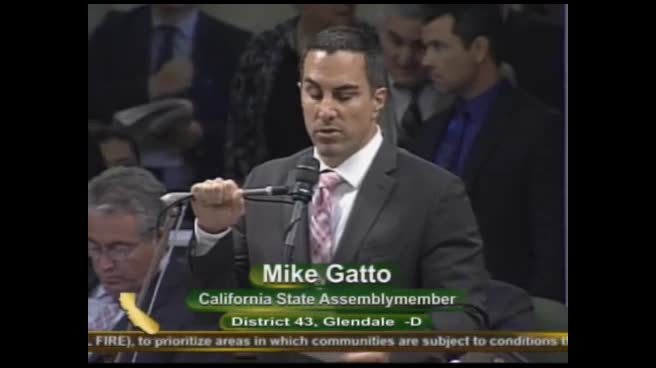 55SEC
Assembly Floor
 49SEC
Senate Floor
Bill Author

Bill Co-Author(s):
