SB 1108: Elections: state and local reapportionment.
- Session Year: 2015-2016
- House: Senate
- Latest Version Date: 2016-09-28
Existing law authorizes a county board of supervisors to appoint a committee, composed of county residents, to study the matter of changing the boundaries of its supervisorial districts. Existing law directs a committee created pursuant to that provision to report its findings to the board of supervisors, as specified, and it expressly states that recommendations of the committee are advisory only. Existing law similarly authorizes a city council to appoint a committee, composed of city residents, to study the matter of changing the boundaries of its council districts, directs a committee so created to report its findings to the city council, and expressly states that recommendations of the committee are advisory only.
This bill would delete those provisions and instead authorize a county or general law city to establish a commission, composed of residents of the county or city, to either change the boundaries of the districts or recommend to the governing body changes to the boundaries of the districts. The bill would also require an advisory commission that recommends changes to district boundaries to report to the governing body its findings on the need for changes to the boundaries. For a commission empowered to change district boundaries, this bill would prohibit the appointment of a person or family member, as defined, of a person who engaged in specified activities during the preceding 8 years, and it would also prohibit commission members from engaging in specified activities while serving and for a specified period of time after serving.
Existing law authorizes a county board of supervisors to appoint a committee, composed of county residents, to study the matter of changing the boundaries of its supervisorial districts. Existing law directs a committee created pursuant to that provision to report its findings to the board of supervisors, as specified, and it expressly states that recommendations of the committee are advisory only. Existing law similarly authorizes a city council to appoint a committee, composed of city residents, to study the matter of changing the boundaries of its council districts, directs a committee so created to report its findings to the city council, and expressly states that recommendations of the committee are advisory only.
This bill would delete those provisions and instead authorize a county or general law city to establish a commission, composed of residents of the county or city, to either change the boundaries of the districts or recommend to the governing body changes to the boundaries of the districts. The bill would also require a an advisory commission so created that recommends changes to district boundaries to report to the governing body its findings on the need for changes to the boundaries, and its adopted or recommended changes, as specified. This boundaries. For a commission empowered to change district boundaries, this bill would prohibit the appointment of a person or family member, as defined, of a person who engaged in specified activities during the preceding 8 years, years to that commission, and it would also prohibit commission members from engaging in specified activities while serving and for a specified period of time after serving.
Existing law authorizes a county board of supervisors to appoint a committee, composed of county residents, to study the matter of changing the boundaries of its supervisorial districts. Existing law directs a committee created pursuant to that provision to report its findings to the board of supervisors, as specified, and it expressly states that recommendations of the committee are advisory only. Existing law similarly authorizes a city council to appoint a committee, composed of city residents, to study the matter of changing the boundaries of its council districts, directs a committee so created to report its findings to the city council, and expressly states that recommendations of the committee are advisory only.
This bill would delete those provisions and instead authorize a county or city to establish a commission, composed of residents of the county or city, to either change the boundaries of the districts or recommend to the governing body changes to the boundaries of the districts. The bill would also require a commission so created to report to the governing body its findings on the need for changes to the boundaries, and its adopted or recommended changes, as specified. This bill would prohibit the appointment of a person or family member, as defined, of a person who engaged in specified activities during the preceding 8 years, and it would also prohibit commission members from engaging in specified activities while serving and for a specified period of time after serving.
Existing law authorizes a county board of supervisors to appoint a committee, composed of county residents, to study the matter of changing the boundaries of its supervisorial districts. Existing law directs a committee created pursuant to that provision to report its findings to the board of supervisors, as specified, and it expressly states that recommendations of the committee are advisory only. Existing law similarly authorizes a city council to appoint a committee, composed of city residents, to study the matter of changing the boundaries of its council districts, directs a committee so created to report its findings to the city council, and expressly states that recommendations of the committee are advisory only.
This bill would delete those provisions and instead authorize a county or city to establish a commission, composed of residents of the county or city, to either change the boundaries of the districts or recommend to the governing body changes to the boundaries of the districts. The bill would also require a commission so created to report to the governing body its findings on the need for changes to the boundaries, and its adopted or recommended changes, as specified.
For purposes of this chapter, the following terms have the following meanings:
(a)Advisory redistricting commission means a body that recommends to a legislative body placement of the district boundaries for that legislative body.
(b)Family member means a spouse, registered domestic partner, parent, sibling, child, or in-law.
(c)Independent redistricting commission means a body, other than a legislative body, that is empowered to adopt the district boundaries of a legislative body.
(d)Legislative body means either a city council of a general law city or a county board of supervisors.
(e)Local jurisdiction means either a general law city or a county.
23001.A local jurisdiction may establish by resolution or ordinance an independent redistricting commission or an advisory redistricting commission composed of residents of the local jurisdiction to change the legislative bodys district boundaries or to recommend to the legislative body changes to those district boundaries.
23002.(a)This section applies to advisory redistricting commissions.
(b)Notwithstanding any other law, the local jurisdiction may prescribe the manner in which members are appointed to the commission.
(c)A person who is an elected official of the local jurisdiction, or a family member, staff member, or paid campaign staff of an elected official of the local jurisdiction, shall not be appointed to serve on the commission.
(d)The commission shall submit a report to the legislative body of its findings on the need for changes to the boundaries, and its recommended changes, within six months after the final population figures determined in each federal decennial census have been released, but in any event not later than August 1 of the year following the year in which the census is taken.
23003.(a)This section applies to independent redistricting commissions.
(b)Notwithstanding any other law, the local jurisdiction may prescribe the manner in which members are appointed to the commission, provided that the jurisdiction uses an application process open to all eligible residents. A local jurisdiction may also impose additional qualifications and restrictions on members of the commission in excess of those prescribed by this section.
(c)A person, or the family member of a person, who has done any of the following in the preceding eight years, shall not be appointed to serve on a commission:
(1)Been elected or appointed to, or been a candidate for, an elective office of the local jurisdiction.
(2)Served as an officer of, employee of, or paid consultant to, a campaign committee or a candidate for elective office of the local jurisdiction.
(3)Served as an officer of, employee of, or paid consultant to, a political party or as an elected or appointed member of a political party central committee.
(4)Served as a staff member of, consultant to, or contracted with, a currently serving elected officer of the local jurisdiction.
(5)Been registered to lobby the local jurisdiction.
(6)Contributed five hundred dollars ($500) or more in a year to any candidate for an elective office of the local jurisdiction. The local jurisdiction may adjust this amount by the cumulative change in the California Consumer Price Index, or its successor, in every year ending in zero.
(d)A member of the commission shall not do any of the following:
(1)While serving on the commission, endorse, work for, volunteer for, or make a campaign contribution to, a candidate for an elective office of the local jurisdiction.
(2)Be a candidate for an elective office of the local jurisdiction for 10 years commencing with the date of his or her appointment to the commission.
(3)For four years commencing with the date of his or her appointment to the commission:
(A)Accept an appointment to an office of the local jurisdiction.
(B)Accept employment as a staff member of, or consultant to, an elected official or candidate for elective office of the local jurisdiction.
(C)Receive a noncompetitively bid contract with the local jurisdiction.
(D)Register as a lobbyist for the local jurisdiction.
(e)A commission established pursuant to this section shall not be comprised entirely of members who are registered to vote with the same political party preference.
(f)Each member of the commission shall be a designated employee in the conflict of interest code for the commission pursuant to Article 3 (commencing with Section 87300) of Chapter 7 of Title 9 of the Government Code.
(g)The commission is subject to the Ralph M. Brown Act (Chapter 9 (commencing with Section 54950) of Part 1 of Division 2 of Title 5 of the Government Code) and the California Public Records Act (Chapter 3.5 (commencing with Section 6250) of Division 7 of Title 1 of the Government Code).
(h)The commission shall adopt new boundaries within six months after the final population figures determined in each federal decennial census have been released, but in any event not later than November 1 of the year following the year in which the census is taken. A map of the proposed boundaries shall be published and made available to the public for at least seven days before being adopted. Before adopting new boundaries, the commission shall hold at least three public hearings preceding the hearing at which the new boundaries are adopted. The commission shall not draw districts for the purpose of favoring or discriminating against an incumbent or political candidate.
(a)For purposes of this section, family member means a spouse, registered domestic partner, parent, sibling, child, or in-law.
(b)A county may establish a commission composed of county residents to change the boundaries of the supervisorial districts or to recommend to the board changes to the boundaries of the supervisorial districts. The commission shall submit a report to the board of its findings on the need for changes to the boundaries, and its adopted or recommended changes, within six months after the final population figures determined in each federal decennial census have been released, but in any event not later than August 1st of the year following the year in which the census is taken. A commission established pursuant to this section shall not be comprised entirely of members who are registered to vote with the same political party.
(c)A person, or the family member of a person, who has done any of the following in the preceding eight years, shall not be appointed to serve on a commission established pursuant to subdivision (b):
(1)Been elected or appointed to, or been a candidate for, a county elective office.
(2)Served as an officer of, employee of, or paid consultant to, a campaign committee or a candidate for elective office in that county.
(3)Served as an officer of, employee of, or paid consultant to, a political party or as an elected or appointed member of a political party central committee.
(4)Served as a staff member of, consultant to, or contracted with, a currently-serving elected officer of the county.
(5)Been registered to lobby the county.
(6)Contributed five hundred dollars ($500) or more to a candidate for a county elective office.
(d)A member of a commission established pursuant to subdivision (b) shall not do any of the following:
(1)While serving on the commission, endorse, work for, volunteer for, or make a campaign contribution to, a candidate for a county elective office.
(2)Be a candidate for a county elective office for 10 years commencing with the date of his or her appointment to the commission.
(3)For four years commencing with the date of his or her appointment to the commission:
(A)Accept an appointment to a county office.
(B)Accept employment as a staff member of, or consultant to, an elected official or candidate for elective office in the county.
(C)Receive a non-competitively bid contract with the county.
(D)Register as a lobbyist for the county.
(e)Each member of a commission established pursuant to subdivision (b) shall be a designated employee in the conflict of interest code for the commission pursuant to Article 3 (commencing with Section 87300) of Chapter 7 of Title 9 of the Government Code.
(f)A commission established pursuant to subdivision (b) is subject to the Ralph M. Brown Act (Chapter 9 (commencing with Section 54950) of Part 1 of Division 2 of Title 5 of the Government Code) and the California Public Records Act (Chapter 3.5 (commencing with Section 6250) of Division 7 of Title 1 of the Government Code).
SEC. 3.SEC. 2.Section 21605 of the Elections Code is repealed.SEC. 4.Section 21605 is added to the Elections Code, to read:21605.(a)For purposes of this section, family member means a spouse, registered domestic partner, parent, sibling, child, or in-law.
(b)A city may establish a commission composed of city residents to change the boundaries of the council districts or to recommend to the council changes to the boundaries of the council districts. The commission shall submit a report to the council of its findings on the need for changes to the boundaries, and its adopted or recommended changes, within six months after the final population figures determined in each federal decennial census have been released, but in any event not later than August 1st of the year following the year in which the census is taken. A commission established pursuant to this section shall not be comprised entirely of members who are registered to vote with the same political party.
(c)A person, or the family member of a person, who has done any of the following in the preceding eight years, shall not be appointed to serve on a commission established pursuant to subdivision (b):
(1)Been elected or appointed to, or been a candidate for, a city elective office.
(2)Served as an officer of, employee of, or paid consultant to, a campaign committee or a candidate for elective office in that city.
(3)Served as an officer of, employee of, or paid consultant to, a political party or as an elected or appointed member of a political party central committee.
(4)Served as a staff member of, consultant to, or contracted with, a currently-serving elected officer of the city.
(5)Been registered to lobby the city.
(6)Contributed five hundred dollars ($500) or more to a candidate for a city elective office.
(d)A member of a commission established pursuant to subdivision (b) shall not do any of the following:
(1)While serving on the commission, endorse, work for, volunteer for, or make a campaign contribution to, a candidate for a city elective office.
(2)Be a candidate for a city elective office for 10 years commencing with the date of his or her appointment to the commission.
(3)For four years commencing with the date of his or her appointment to the commission:
(A)Accept an appointment to a city office.
(B)Accept employment as a staff member of, or consultant to, an elected official or candidate for elective office in the city.
(C)Receive a non-competitively bid contract with the city.
(D)Register as a lobbyist for the city.
(e)Each member of a commission established pursuant to subdivision (b) shall be a designated employee in the conflict of interest code for the commission pursuant to Article 3 (commencing with Section 87300) of Chapter 7 of Title 9 of the Government Code.
(f)A commission established pursuant to subdivision (b) is subject to the Ralph M. Brown Act (Chapter 9 (commencing with Section 54950) of Part 1 of Division 2 of Title 5 of the Government Code) and the California Public Records Act (Chapter 3.5 (commencing with Section 6250) of Division 7 of Title 1 of the Government Code).
SEC. 3.Chapter 9 (commencing with Section 23000) is added to Division 21 of the Elections Code, to read:9.Advisory and Independent Redistricting Commissions23000.For purposes of this chapter, the following terms have the following meanings:
(a)Advisory redistricting commission means a body that recommends to a legislative body placement of the district boundaries for that legislative body.
(b)Family member means a spouse, registered domestic partner, parent, sibling, child, or in-law.
(c)Independent redistricting commission means a body, other than a legislative body, that is empowered to adopt the district boundaries of a legislative body.
(d)Legislative body means either a city council of a general law city or a county board of supervisors.
(e)Local jurisdiction means either a general law city or a county.
23001.A local jurisdiction may establish by resolution or ordinance an independent redistricting commission or an advisory redistricting commission composed of residents of the local jurisdiction to change the legislative bodys district boundaries or to recommend to the legislative body changes to those district boundaries.
23002.(a)This section applies to advisory redistricting commissions.
(b)Notwithstanding any other law, the local jurisdiction may prescribe the manner in which members are appointed to the commission.
(c)A person who is an elected official of the local jurisdiction, or a family member, staff member, or paid campaign staff of an elected official of the local jurisdiction, shall not be appointed to serve on the commission.
(d)The commission shall submit a report to the legislative body of its findings on the need for changes to the boundaries, and its recommended changes, within six months after the final population figures determined in each federal decennial census have been released, but in any event not later than August 1 of the year following the year in which the census is taken.
23003.(a)This section applies to independent redistricting commissions.
(b)Notwithstanding any other law, the local jurisdiction may prescribe the manner in which members are appointed to the commission, provided that the jurisdiction uses an application process open to all eligible residents. A local jurisdiction may also impose additional qualifications and restrictions on members of the commission in excess of those prescribed by this section.
(c)A person, or the family member of a person, who has done any of the following in the preceding eight years, shall not be appointed to serve on a commission:
(1)Been elected or appointed to, or been a candidate for, an elective office of the local jurisdiction.
(2)Served as an officer of, employee of, or paid consultant to, a campaign committee or a candidate for elective office of the local jurisdiction.
(3)Served as an officer of, employee of, or paid consultant to, a political party or as an elected or appointed member of a political party central committee.
(4)Served as a staff member of, consultant to, or contracted with, a currently-serving elected officer of the local jurisdiction.
(5)Been registered to lobby the local jurisdiction.
(6)Contributed five hundred dollars ($500) or more in a year to any candidate for an elective office of the local jurisdiction. The local jurisdiction may adjust this amount by the cumulative change in the California Consumer Price Index, or its successor, in every year ending in zero.
(d)A member of the commission shall not do any of the following:
(1)While serving on the commission, endorse, work for, volunteer for, or make a campaign contribution to, a candidate for an elective office of the local jurisdiction.
(2)Be a candidate for an elective office of the local jurisdiction for 10 years commencing with the date of his or her appointment to the commission.
(3)For four years commencing with the date of his or her appointment to the commission:
(A)Accept an appointment to an office of the local jurisdiction.
(B)Accept employment as a staff member of, or consultant to, an elected official or candidate for elective office of the local jurisdiction.
(C)Receive a non-competitively bid contract with the local jurisdiction.
(D)Register as a lobbyist for the local jurisdiction.
(e)A commission established pursuant to this section shall not be comprised entirely of members who are registered to vote with the same political party preference.
(f)Each member of the commission shall be a designated employee in the conflict of interest code for the commission pursuant to Article 3 (commencing with Section 87300) of Chapter 7 of Title 9 of the Government Code.
(g)The commission is subject to the Ralph M. Brown Act (Chapter 9 (commencing with Section 54950) of Part 1 of Division 2 of Title 5 of the Government Code) and the California Public Records Act (Chapter 3.5 (commencing with Section 6250) of Division 7 of Title 1 of the Government Code).
(h)The commission shall adopt new boundaries within six months after the final population figures determined in each federal decennial census have been released, but in any event not later than November 1 of the year following the year in which the census is taken. A map of the proposed boundaries shall be published and made available to the public for at least seven days before being adopted. Before adopting new boundaries, the commission shall hold at least three public hearings preceding the hearing at which the new boundaries are adopted. The commission shall not draw districts for the purpose of favoring or discriminating against an incumbent or political candidate.
A (a)For purposes of this section, family member means a spouse, registered domestic partner, parent, sibling, child, or in-law.
(b)A county may establish a commission composed of county residents to change the boundaries of the supervisorial districts or to recommend to the board changes to the boundaries of the supervisorial districts. The commission shall submit a report to the board of its findings on the need for changes to the boundaries, and its adopted or recommended changes, within six months after the final population figures determined in each federal decennial census have been released, but in any event not later than August 1st of the year following the year in which the census is taken. A commission established pursuant to this section shall not be comprised entirely of members who are registered to vote with the same political party.
(c)A person, or the family member of a person, who has done any of the following in the preceding eight years, shall not be appointed to serve on a commission established pursuant to subdivision (b):
(1)Been elected or appointed to, or been a candidate for, a county elective office.
(2)Served as an officer of, employee of, or paid consultant to, a campaign committee or a candidate for elective office in that county.
(3)Served as an officer of, employee of, or paid consultant to, a political party or as an elected or appointed member of a political party central committee.
(4)Served as a staff member of, consultant to, or contracted with, a currently-serving elected officer of the county.
(5)Been registered to lobby the county.
(6)Contributed five hundred dollars ($500) or more to a candidate for a county elective office.
(d)A member of a commission established pursuant to subdivision (b) shall not do any of the following:
(1)While serving on the commission, endorse, work for, volunteer for, or make a campaign contribution to, a candidate for a county elective office.
(2)Be a candidate for a county elective office for 10 years commencing with the date of his or her appointment to the commission.
(3)For four years commencing with the date of his or her appointment to the commission:
(A)Accept an appointment to a county office.
(B)Accept employment as a staff member of, or consultant to, an elected official or candidate for elective office in the county.
(C)Receive a non-competitively bid contract with the county.
(D)Register as a lobbyist for the county.
(e)Each member of a commission established pursuant to subdivision (b) shall be a designated employee in the conflict of interest code for the commission pursuant to Article 3 (commencing with Section 87300) of Chapter 7 of Title 9 of the Government Code.
(f)A commission established pursuant to subdivision (b) is subject to the Ralph M. Brown Act (Chapter 9 (commencing with Section 54950) of Part 1 of Division 2 of Title 5 of the Government Code) and the California Public Records Act (Chapter 3.5 (commencing with Section 6250) of Division 7 of Title 1 of the Government Code).
SEC. 3.Section 21605 of the Elections Code is repealed.SEC. 4.Section 21605 is added to the GovernmentElections Code, to read:21605.A (a)For purposes of this section, family member means a spouse, registered domestic partner, parent, sibling, child, or in-law.
(b)A city may establish a commission composed of city residents to change the boundaries of the council districts or to recommend to the council changes to the boundaries of the council districts. The commission shall submit a report to the council of its findings on the need for changes to the boundaries, and its adopted or recommended changes, within six months after the final population figures determined in each federal decennial census have been released, but in any event not later than August 1st of the year following the year in which the census is taken. A commission established pursuant to this section shall not be comprised entirely of members who are registered to vote with the same political party.
(c)A person, or the family member of a person, who has done any of the following in the preceding eight years, shall not be appointed to serve on a commission established pursuant to subdivision (b):
(1)Been elected or appointed to, or been a candidate for, a city elective office.
(2)Served as an officer of, employee of, or paid consultant to, a campaign committee or a candidate for elective office in that city.
(3)Served as an officer of, employee of, or paid consultant to, a political party or as an elected or appointed member of a political party central committee.
(4)Served as a staff member of, consultant to, or contracted with, a currently-serving elected officer of the city.
(5)Been registered to lobby the city.
(6)Contributed five hundred dollars ($500) or more to a candidate for a city elective office.
(d)A member of a commission established pursuant to subdivision (b) shall not do any of the following:
(1)While serving on the commission, endorse, work for, volunteer for, or make a campaign contribution to, a candidate for a city elective office.
(2)Be a candidate for a city elective office for 10 years commencing with the date of his or her appointment to the commission.
(3)For four years commencing with the date of his or her appointment to the commission:
(A)Accept an appointment to a city office.
(B)Accept employment as a staff member of, or consultant to, an elected official or candidate for elective office in the city.
(C)Receive a non-competitively bid contract with the city.
(D)Register as a lobbyist for the city.
(e)Each member of a commission established pursuant to subdivision (b) shall be a designated employee in the conflict of interest code for the commission pursuant to Article 3 (commencing with Section 87300) of Chapter 7 of Title 9 of the Government Code.
(f)A commission established pursuant to subdivision (b) is subject to the Ralph M. Brown Act (Chapter 9 (commencing with Section 54950) of Part 1 of Division 2 of Title 5 of the Government Code) and the California Public Records Act (Chapter 3.5 (commencing with Section 6250) of Division 7 of Title 1 of the Government Code).
The board may appoint a committee composed of residents of the county to study the matter of changing the boundaries of the supervisorial districts. The committee shall make its report to the board of its findings on the need for change of boundaries, and the recommended changes, within six months after the final population figures determined in each federal decennial census have been released, but in any event not later than August 1st of the year following the year in which the census is taken. Recommendations of the committee are advisory only.
SEC. 2.Section 21505 is added to the Elections Code, to read:21505.A county may establish a commission composed of county residents to change the boundaries of the supervisorial districts or to recommend to the board changes to the boundaries of the supervisorial districts. The commission shall submit a report to the board of its findings on the need for changes to the boundaries, and its adopted or recommended changes, within six months after the final population figures determined in each federal decennial census have been released, but in any event not later than August 1st of the year following the year in which the census is taken.
SEC. 3.Section 21605 of the Elections Code is repealed.21605.The council may appoint a committee composed of residents of the city to study the matter of changing the boundaries of the council districts. The committee shall make its report to the council of its findings on the need for change of boundaries, and the recommended changes by the first day of August of the year following the year in which the decennial federal census is taken. Recommendations of the committee are advisory only.
SEC. 4.Section 21605 is added to the Government Code, to read:21605.A city may establish a commission composed of city residents to change the boundaries of the council districts or to recommend to the council changes to the boundaries of the council districts. The commission shall submit a report to the council of its findings on the need for changes to the boundaries, and its adopted or recommended changes, within six months after the final population figures determined in each federal decennial census have been released, but in any event not later than August 1st of the year following the year in which the census is taken.
|
Date
|
Status
|
|---|---|
| May 12, 2016 | Read third time. Passed. (Ayes 34. Noes 0. Page 3843.) Ordered to the Assembly. |
| Aug 30, 2016 | Enrolled and presented to the Governor at 1:30 p.m. |
| Aug 24, 2016 | Assembly amendments concurred in. (Ayes 35. Noes 3.) Ordered to engrossing and enrolling. |
| Aug 19, 2016 | In Senate. Concurrence in Assembly amendments pending. |
| Aug 18, 2016 | Read third time. Passed. (Ayes 62. Noes 14. Page 5883.) Ordered to the Senate. |
| Aug 18, 2016 | Read third time. Passed. Ordered to the Senate. |
| Aug 1, 2016 | Read second time. Ordered to third reading. |
| Jun 30, 2016 | From committee: Do pass. (Ayes 6. Noes 1.) (June 29). |
| Jun 15, 2016 | From committee: Do pass and re-refer to Com. on L. GOV. (Ayes 5. Noes 2.) (June 15). Re-referred to Com. on L. GOV. |
| Jun 8, 2016 | From committee with author's amendments. Read second time and amended. Re-referred to Com. on E. & R. |
| May 19, 2016 | Referred to Coms. on E. & R. and L. GOV. |
| May 12, 2016 | Read third time. Passed. (Ayes 34. Noes 0.) Ordered to the Assembly. |
| Feb 17, 2016 | Introduced. Read first time. To Com. on RLS. for assignment. To print. |
| May 12, 2016 | In Assembly. Read first time. Held at Desk. |
| May 4, 2016 | Read second time and amended. Ordered to third reading. |
| May 3, 2016 | From committee: Do pass as amended. (Ayes 5. Noes 0.) (April 27). |
| May 3, 2016 | From committee: Do pass as amended. (Ayes 5. Noes 0. Page 3698.) (April 27). |
| Apr 15, 2016 | Set for hearing April 27. |
| Apr 14, 2016 | April 20 set for first hearing canceled at the request of author. |
| Apr 8, 2016 | Set for hearing April 20. |
| Apr 5, 2016 | From committee: Do pass and re-refer to Com. on GOV. & F. (Ayes 5. Noes 0.) (April 5). Re-referred to Com. on GOV. & F. |
| Apr 5, 2016 | From committee: Do pass and re-refer to Com. on GOV. & F. (Ayes 5. Noes 0. Page 3392.) (April 5). Re-referred to Com. on GOV. & F. |
| Feb 25, 2016 | Referred to Coms. on E. & C.A. and GOV. & F. |
| Feb 18, 2016 | From printer. May be acted upon on or after March 19. |
|
Date
|
Description
|
Location
|
Votes
|
|
|---|---|---|---|---|
| Aug 24, 2016 | Unfinished Business SB1108 Allen Concurrence | Senate Floor |
Passed |
|
| Aug 18, 2016 | SB 1108 Allen Senate Third Reading By WILLIAMS | Assembly Floor |
Passed |
|
| Jun 29, 2016 | Do pass. | Assembly Standing Committee on Local Government |
Passed |
|
| Jun 15, 2016 | Do pass and be re-referred to the Committee on [Local Government] | Assembly Standing Committee on Elections and Redistricting |
Passed |
|
| May 12, 2016 | Senate 3rd Reading SB1108 Allen | Senate Floor |
Passed |
|
| Apr 27, 2016 | Do pass as amended | Senate Standing Committee on Governance and Finance |
Passed |
|
| Apr 5, 2016 | Do pass, but first be re-referred to the Committee on [Governance and Finance] | Senate Standing Committee on Elections and Constitutional Amendments |
Passed |
This list shows positions taken on this bill by organizations on the date displayed, which is linked to the original source.
Positions by individuals are not included.
|
Organization
|
Position
|
Date
|
|---|---|---|
| American Academy of Pediatrics | * Support | Jun 26, 2018 |
| American Diabetes Association | * Support | Jun 26, 2018 |
| Asian Americans Advancing Justice California | * Support | Jun 26, 2018 |
| California Academy Of Family Physicians | * Support | Jun 26, 2018 |
| California Chronic Care Coalition | * Support | Jun 26, 2018 |
| California Common Cause | ** Support | Aug 24, 2016 |
| California Forward Action Fund | ** Support | Aug 24, 2016 |
| California Immigrant Policy Center | * Support | Jun 26, 2018 |
| California Labor Federation | * Support | Jun 26, 2018 |
| California Pan- Ethnic Health Network | * Support | Jun 26, 2018 |
| Disability Rights California | * Indeterminate | Jun 26, 2018 |
| Health Access California | * Support | Jun 26, 2018 |
| League Of California Cities | ** Support | Aug 24, 2016 |
| League Of Women Voters Of California | ** Support | Aug 24, 2016 |
| Legal Services of Northern California | * Support | Jun 26, 2018 |
| Private Essential Access Community Hospitals | * Support | Jun 26, 2018 |
| The Western Center on Law and Poverty | * Support | Jun 26, 2018 |
Office of Senate Floor Analyses (916) 651-1520 Fax: (916) 327-4478 | SB |
UNFINISHED BUSINESS
Bill No: SB 1108
:
SENATE ELECTIONS & C.A. COMMITTEE: 5-0, 4/5/16
AYES: Allen, Anderson, Hancock, Hertzberg, Liu
SENATE GOVERNANCE & FIN. COMMITTEE: 5-0, 4/27/16
AYES: Hertzberg, Beall, Hernandez, Lara, Pavley
NO VOTE RECORDED: Nguyen, Moorlach
SENATE FLOOR: 34-0, 5/12/16
AYES: Allen, Anderson, Beall, Berryhill, Block, De León, Galgiani, Glazer, Hall, Hancock, Hernandez, Hertzberg, Hill, Hueso, Huff, Jackson, Lara, Leno, Leyva, McGuire, Mendoza, Mitchell, Monning, Moorlach, Morrell, Nguyen, Nielsen, Pan, Pavley, Roth, Stone, Vidak, Wieckowski, Wolk
NO VOTE RECORDED: Bates, Cannella, Fuller, Gaines, Liu, Runner
ASSEMBLY FLOOR: 62-14, 8/18/16 - See last page for vote
SOURCE: California Common Cause
DIGEST: This bill permits a county or a general law city to establish a commission charged with adjusting the boundaries of supervisorial districts or city council districts after each decennial federal census, subject to certain conditions.
Assembly Amendments (1) define “family member” as a spouse, registered domestic partner, sibling, parent, child, or in-law; (2) provide that, notwithstanding any other law, the local jurisdiction may prescribe the manner in which members are appointed to a commission provided they use an open application process; (3) prohibit an independent commission from drawing lines to favor an incumbent or political candidate; (4) provide that advisory commissions cannot have a family member of an elected official, their personal staff, or their campaign staff serve on the commission; (5) provide that a person is not eligible to serve on an independent commission if he or she has contributed $500 or more in a year to any candidate in the local jurisdiction; and (6) require at least three hearings prior to a final vote and the final map must be in print for seven days prior to adoption.
Existing law:
- Requires the governing bodies of each city and county, following each decennial federal census, and using that census as a basis, to adjust the boundaries of any or all of the council districts and supervisorial districts so that the districts are as nearly equal in populations as may be and comply with the applicable provisions of Section 2 of the federal Voting Rights Act (VRA), as amended.
- Permits a city council or county board of supervisors to appoint a committee composed of residents of the city or county to study the matter of changing the boundaries of the council or supervisorial districts but provides that the recommendations of the committee are advisory only unless otherwise permitted by state law.
- Provides, pursuant to the California Constitution, that charter counties are subject to state statutes that relate to redistricting seats of the counties' boards of supervisors.
- Establishes a redistricting commission in San Diego County and charges it with adjusting the boundaries of supervisorial districts after each decennial federal census. The San Diego County redistricting commission is comprised of five members former or retired state or federal judges who are residents and voters in the county. The commission members are picked from among qualified applicants through a random drawing.
This bill:
- Permits a county or a general law city (hereinafter referred to as the "local jurisdiction"), by resolution or ordinance, to establish an independent redistricting commission (independent commission) that has the power to adopt the district boundaries of the legislative body.
- Permits a local jurisdiction to decide how members are appointed to an independent commission, but requires the application process to be open to all eligible residents.
- Prohibits an independent commission from being comprised entirely of members who are registered to vote with the same political party preference.
- Prohibits a person from being appointed to an independent commission if that person or a family member has done any of the following in the preceding eight years:
- Been elected or appointed to, or a candidate for, elective office of the local jurisdiction;
- Served as an officer, employee, or paid consultant of a political party or of a campaign committee or a candidate for elective office of the local jurisdiction;
- Served as an elected or appointed member of a political party central committee;
- Served as a staff member of, consultant to, or contracted with, a currently-serving elected officer of the local jurisdiction;
- Been registered to lobby the local jurisdiction; or,
- Contributed $500 or more in a year to any candidate for an elective office of the local jurisdiction, provided that the jurisdiction may adjust this amount to reflect inflation.
- Been elected or appointed to, or a candidate for, elective office of the local jurisdiction;
- Permits the local jurisdiction to impose additional qualifications and restrictions for members of the independent commission.
- Requires each member of an independent commission to be a designated employee for the purposes of the commission's conflict of interest code.
- Prohibits a member, while serving on the independent commission, from endorsing, working for, volunteering for, or making a campaign contribution to, a candidate for elective office of the jurisdiction.
- Prohibits a member, for 10 years following his or her appointment to an independent commission, from being a candidate for an elective office of the local jurisdiction.
- Prohibits a member, for four years following his or her appointment to an independent commission, from doing any of the following:
- Accepting an appointment to an office of the local jurisdiction;
- Accepting employment as a staff member of, or consultant to, an elected official or candidate for elective office of the local jurisdiction;
- Receiving a non-competitively bid contract with the local jurisdiction; or,
- Registering as a lobbyist for the local jurisdiction.
- Accepting an appointment to an office of the local jurisdiction;
- Requires an independent commission to comply with applicable provisions of the Brown Act and the Public Records Act.
- Requires an independent commission to adopt new boundaries within six months after the final population figures from the census have been released, but not later than November 1 of the year following the year in which the census is taken.
- Requires an independent commission to publish and make available to the public a map of proposed boundaries for at least seven days prior to adopting those boundaries. Requires the commission to hold at least three public hearings prior to the hearing at which the new boundaries are adopted.
- Prohibits an independent commission from drawing districts for the purpose of favoring or discriminating against any incumbent or political candidate.
- Prohibits any of the following individuals from serving on an advisory redistricting commission (advisory commission):
- An elected official of the jurisdiction; or,
- Family, staff, or paid campaign staff of an elected official of the jurisdiction.
- An elected official of the jurisdiction; or,
Background
California Counties Must Follow State Law Governing Redistricting. A number of California cities have established redistricting commissions to adjust city council districts following each decennial census. In some cities, these commissions are advisory, and only make recommendations to the city council, but in some charter cities, the redistricting commission has the authority to adopt a redistricting plan independent of the city council. Charter cities are able to establish such commissions because the state Constitution gives charter cities broad authority over the conduct of city elections and over the manner in which, method by which, times at which, and terms for which municipal officers are elected.
General law cities and all counties, on the other hand, are not granted the same level of authority over the conduct of county elections, and in fact, the state Constitution explicitly provides that "[c]harter counties are subject to statutes that relate to apportioning population of governing body districts." In light of this provision of the state Constitution, charter counties are unable to provide for the creation of a redistricting commission through an amendment to the county charter unless statutory authority is provided to allow a county to have such a commission.
The San Diego County Commission. SB 1331 (Kehoe, Chapter 508, Statutes of 2012) established an independent redistricting commission in San Diego County to adjust the boundaries of supervisorial districts after each decennial federal census. The bill was requested by the San Diego County Board of Supervisors who sought the change in state law necessary to create such a commission. As mentioned above, because the Elections Code controls and limits the redistricting process, the County Board could not reformulate its redistricting process unless the Legislature changed the code. Furthermore, because the county board requested the bill, the state was not subject to a reimbursable local mandate.
California Citizens Redistricting Commission. Proposition 11, which was approved by the voters at the 2008 Statewide General Election, created the Citizens Redistricting Commission (CRC), and gave it the responsibility for establishing district lines for Assembly, Senate, and Board of Equalization. Proposition 11 also modified the criteria to be used when drawing district lines. Proposition 20, which was approved by the voters at the 2010 statewide General Election, gave the CRC the responsibility for establishing lines for California's congressional districts, and made other changes to the procedures and criteria to be used by the CRC. The CRC consists of 14 registered voters, including five Democrats, five Republicans, and four others, all of whom are chosen according to procedures specified in Proposition 11.
Comments
- According to the author, existing law authorizes county boards of supervisors and city councils to appoint committees to study the matter of changing the boundaries of its supervisorial and council districts but expressly states that recommendations of the committees are advisory only. There is an exception however, for charter cities where these redistricting commissions have the authority to adopt a redistricting plan independent of the city council. Charter cities are able to establish such commissions because the state Constitution gives charter cities broad authority over the conduct of city elections.
Charter counties, general law counties and general law cities, on the other hand, are not granted the same level of authority over the conduct of elections. Therefore, these jurisdictions are unable to provide for the creation of a redistricting commission that has the authority to adopt a redistricting plan.
This bill authorizes all counties and cities to establish a commission, composed of residents of the county or city, to either adopt a redistricting plan themselves or recommend changes as currently permitted.
Cities and counties that wish to establish independent citizen redistricting commissions should not be prevented from doing so by state law. This bill will not require any city or county to create such a commission, it merely grants them the authority to do so.
Related/Prior Legislation
SB 1331 (Kehoe, Chapter 508, Statutes of 2012) established a redistricting commission in San Diego County to adjust the boundaries of supervisorial districts after each decennial federal census.
SB 958 (Lara, 2016), which was pending on the Assembly Floor at the time this analysis was written, establishes a Citizens Redistricting Commission in the County of Los Angeles, which would be charged with adjusting the boundary lines of the districts of the Board of Supervisors in accordance with specified criteria.
FISCAL EFFECT: Appropriation: Fiscal Com.: Local:
California Common Cause (source)
California Forward Action Fund
League of California Cities
League of Women Voters of California
OPPOSITION: (Verified 8/18/16)
None received
ASSEMBLY FLOOR: 62-14, 8/18/16
AYES: Achadjian, Alejo, Arambula, Atkins, Baker, Bloom, Bonilla, Bonta, Brown, Burke, Calderon, Campos, Chang, Chau, Chiu, Chu, Cooley, Cooper, Dababneh, Daly, Dodd, Eggman, Frazier, Cristina Garcia, Eduardo Garcia, Gatto, Gipson, Gomez, Gonzalez, Gordon, Gray, Hadley, Holden, Irwin, Jones, Jones-Sawyer, Kim, Levine, Linder, Lopez, Low, Mayes, McCarty, Medina, Mullin, Nazarian, Obernolte, O'Donnell, Quirk, Ridley-Thomas, Rodriguez, Salas, Santiago, Mark Stone, Thurmond, Ting, Wagner, Weber, Wilk, Williams, Wood, Rendon
NOES: Travis Allen, Brough, Chávez, Dahle, Beth Gaines, Grove, Harper, Lackey, Maienschein, Mathis, Melendez, Patterson, Steinorth, Waldron
NO VOTE RECORDED: Bigelow, Gallagher, Roger Hernández, Olsen
8/19/16 19:37:17
**** END ****
SENATE THIRD READING
STR Bill Id:SB 1108
Author:(Allen)
As Amended Ver:
Majority vote
SENATE VOTE: 34-0
Committee | Votes | Ayes | Noes |
Elections | 5-2 | Weber, Gordon, Low, Mullin, Nazarian | Harper, Travis Allen |
Local Government | 6-1 | Eggman, Bonilla, Chiu, Cooley, Gordon, Linder | Beth Gaines |
SUMMARY: Permits a county or a general law city to establish a commission charged with adjusting the boundaries of supervisorial districts or city council districts after each decennial federal census, subject to certain conditions. Specifically, this bill:
- Permits a county or a general law city (hereinafter referred to as the "local jurisdiction"), by resolution or ordinance, to establish an independent redistricting commission (independent commission) that has the power to adopt the district boundaries of the legislative body.
- Permits a local jurisdiction to decide how members are appointed to an independent commission, but requires the application process to be open to all eligible residents.
- Prohibits an independent commission from being comprised entirely of members who are registered to vote with the same political party preference.
- Prohibits a person from being appointed to an independent commission if that person or a family member has done any of the following in the preceding eight years:
- Been elected or appointed to, or a candidate for, elective office of the local jurisdiction;
- Served as an officer, employee, or paid consultant of a political party or of a campaign committee or a candidate for elective office of the local jurisdiction;
- Served as an elected or appointed member of a political party central committee;
- Served as a staff member of, consultant to, or contracted with, a currently-serving elected officer of the local jurisdiction;
- Been registered to lobby the local jurisdiction; or,
- Contributed $500 or more in a year to any candidate for an elective office of the local jurisdiction, provided that the jurisdiction may adjust this amount to reflect inflation.
- Permits the local jurisdiction to impose additional qualifications and restrictions for members of the independent commission.
- Requires each member of an independent commission to be a designated employee for the purposes of the commission's conflict of interest code.
- Prohibits a member, while serving on the independent commission, from endorsing, working for, volunteering for, or making a campaign contribution to, a candidate for elective office of the jurisdiction.
- Prohibits a member, for 10 years following his or her appointment to an independent commission, from being a candidate for an elective office of the local jurisdiction.
- Prohibits a member, for four years following his or her appointment to an independent commission, from doing any of the following:
- Accepting an appointment to an office of the local jurisdiction;
- Accepting employment as a staff member of, or consultant to, an elected official or candidate for elective office of the local jurisdiction;
- Receiving a non-competitively bid contract with the local jurisdiction; or,
- Registering as a lobbyist for the local jurisdiction.
- Requires an independent commission to comply with applicable provisions of the Brown Act and the Public Records Act.
- Requires an independent commission to adopt new boundaries within six months after the final population figures from the census have been released, but not later than November 1 of the year following the year in which the census is taken.
- Requires an independent commission to publish and make available to the public a map of proposed boundaries for at least seven days prior to adopting those boundaries. Requires the commission to hold at least three public hearings prior to the hearing at which the new boundaries are adopted.
- Prohibits an independent commission from drawing districts for the purpose of favoring or discriminating against any incumbent or political candidate.
- Prohibits any of the following individuals from serving on an advisory redistricting commission (advisory commission):
- An elected official of the jurisdiction; or,
- Family, staff, or paid campaign staff of an elected official of the jurisdiction.
FISCAL EFFECT: None. This bill is keyed non-fiscal by the Legislative Counsel.
COMMENTS: According to the author, "Existing law permits cities and counties to create redistricting commissions but limits these commissions to making recommendations on an advisory basis only. They cannot actually establish the new districts. The lone exception to this are charter cities. SB 1108 would permit all cities and counties to establish redistricting commissions that actually have the authority to establish new council and supervisorial districts.
"This bill does not force any city or county to create a commission, it just gives them the authority if they so choose. The bill also provides, much like our state redistricting commission, that local commission members may have no familial, political, or professional relationships with any officeholders or candidates in the city or county. Following service on the commission, members may not seek elective office themselves or employment from an officeholder within the jurisdiction for specified time periods."
Existing law permits a county or a city to create an advisory commission (described in state law as a "committee" of residents of the jurisdiction), but does not expressly permit local jurisdictions to create commissions that have the authority to establish district boundaries. Instead, the authority to establish district boundaries for a local jurisdiction generally is held by the governing body of that jurisdiction. Charter cities are able to establish redistricting commissions that have the authority to establish district boundaries because the state Constitution gives charter cities broad authority over the conduct of city elections and over the manner in which, method by which, times at which, and terms for which municipal officers are elected.
Please see the policy committee analysis for a full discussion of this bill.
Analysis Prepared by: Ethan Jones / E. & R. / (916) 319-2094 FN: 0003591
Date of Hearing: June 29, 2016
ASSEMBLY COMMITTEE ON LOCAL GOVERNMENT
Susan Talamantes Eggman, Chair
SBPCA Bill Id:SB 1108
Author:(Allen) – As Amended Ver:June 8, 2016
SENATE VOTE: 34-0
SUBJECT: Elections: state and local reapportionment.
SUMMARY: Allows a county or a general law city to establish an independent redistricting commission with the power to adopt district boundaries of the county's or city's legislative body. Specifically, this bill:
- Allows a county or a general law city (local jurisdiction), by resolution or ordinance, to establish an independent redistricting commission (independent commission) that has the power to adopt the district boundaries of the legislative body of the jurisdiction.
- Provides that the following conditions shall apply to the selection of members of an independent commission that is created in accordance with this bill:
- Allows the local jurisdiction to prescribe the manner in which members are appointed to the independent commission, provided that the application process must be open to all eligible residents;
- Prohibits an independent commission from being comprised entirely of members who are registered to vote with the same political party preference;
- Prohibits a person from being appointed to the independent commission if that person or a family member of that person has done any of the following in the preceding eight years:
- Been elected or appointed to, or been a candidate for, an elective office of the local jurisdiction;
- Served as an officer, employee, or paid consultant of a campaign committee or a candidate for elective office of the local jurisdiction;
- Served as an officer, employee, or paid consultant of a political party or as an elected or appointed member of a political party central committee;
- Served as a staff member of, consultant to, or contracted with, a currently-serving elected officer of the local jurisdiction;
- Been registered to lobby the local jurisdiction; or,
- Contributed $500 or more in a year to any candidate for an elective office of the local jurisdiction, provided that the local jurisdiction may adjust this amount to reflect changes in the California Consumer Price Index, as specified; and,
- Allows the local jurisdiction to impose additional qualifications and restrictions for members of the independent commission in excess of those otherwise required by this bill.
- Imposes the following requirements on members of an independent commission that is created in accordance with this bill:
- Requires each independent commission member to be a designated employee for the purposes of the conflict of interest code of the independent commission, as specified, thereby requiring members to file statements of economic interests and to comply with specified state laws regarding conflicts of interests and limits on gifts and honoraria;
- Prohibits a member, while serving on the independent commission, from endorsing, working for, volunteering for, or making a campaign contribution to, a candidate for elective office of the local jurisdiction;
- Prohibits a member, for 10 years following his or her appointment to the independent commission, from being a candidate for an elective office of the local jurisdiction; and,
- Prohibits a member, for four years following his or her appointment to the independent commission, from doing any of the following:
- Accepting an appointment to an office of the local jurisdiction;
- Accepting employment as a staff member of, or consultant to, an elected official or candidate for elective office of the local jurisdiction;
- Receiving a non-competitively bid contract with the local jurisdiction; or,
- Registering as a lobbyist for the local jurisdiction.
- Imposes the following requirements on the conduct of an independent commission that is created in accordance with this bill:
- Requires the independent commission to comply with applicable provisions of the Ralph M. Brown Act and the Public Records Act;
- Requires the independent commission to adopt new boundaries within six months after the final population figures determined in each federal decennial census have been released, but in any event not later than November 1 of the year following the year in which the census is taken;
- Requires a map of proposed boundaries to be published and made available to the public for at least seven days prior to being adopted;
- Requires the independent commission to hold at least three public hearings prior to the hearing at which the new boundaries are adopted; and,
- Prohibits the independent commission from drawing districts for the purpose of favoring or discriminating against any incumbent or political candidate.
- Prohibits any of the following individuals from serving on an advisory redistricting commission (advisory commission) that is otherwise established in accordance with existing law:
- An elected official of the jurisdiction; or,
- A family member, staff member, or paid campaign staff of an elected official of the jurisdiction.
- Requires an advisory commission to submit a report to the legislative body of its findings on the need for changes to the boundaries, and its recommended changes, within six months after the final population figures determined in each federal decennial census have been released, but in any event not later than August 1 of the year following the year in which the census is taken.
- Defines "family member," for the purposes of this bill, as a spouse, registered domestic partner, parent, sibling, child, or in-law.
- Makes conforming and technical changes.
EXISTING LAW:
- Requires the governing body of each county and each city, following the decennial federal census, and using that census as a basis, to adjust the boundaries of any or all of the supervisorial or council districts so that the districts are as nearly equal in population as may be and comply with the applicable provisions of Section 2 of the federal Voting Rights Act (VRA), as amended.
- Allows the board of supervisors of a county or the city council of a city to appoint a committee composed of residents of the county or city, respectively, to study the matter of changing the boundaries of supervisorial or council districts, as appropriate. Provides that recommendations of the committee are advisory only.
- Establishes a procedure for a county to adopt a charter by a majority vote of its electors voting on the question.
- Provides that counties that have adopted charters are subject to statutes that relate to apportioning population of governing body districts.
FISCAL EFFECT: None
COMMENTS:
- Bill Summary. This bill allows counties and general law cities to establish independent redistricting commissions that have the power to draw district boundaries. The bill establishes requirements for the selection of independent commission members, their conduct, and the conduct of the independent commission itself. The bill also prohibits a number of individuals from serving on an advisory commission that is established pursuant to current law. This bill is sponsored by California Common Cause.
- Author's Statement. According to the author, "Existing law permits cities and counties to create redistricting commissions but limits these commissions to making recommendations on an advisory basis only. They cannot actually establish the new districts. The lone exception to this are charter cities. SB 1108 would permit all cities and counties to establish redistricting commissions that actually have the authority to establish new council and supervisorial districts.
"In 2012, San Diego County wanted to create one of these empowered redistricting commissions but had to seek special legislation to do so. This should not be the case. Cities and counties that wish to take the admirable step of creating independent redistricting commissions made up of local residents should be free to do so without having to seek our permission. This bill does not force any city or county to create a commission, it just gives them the authority if they so choose."
- Background. The California Citizens Redistricting Commission (CRC) was created by Proposition 11, which voters approved in 2008. The CRC is responsible for establishing district lines for the Assembly, Senate, and Board of Equalization. Proposition 11 also modified the criteria used when drawing district lines. Proposition 20, approved by voters in 2010, gave the CRC the responsibility for establishing lines for California's congressional districts, and made other changes to the procedures and criteria to be used by the CRC. The CRC consists of 14 registered voters, including five Democrats, five Republicans, and four others, all of whom are chosen according to procedures specified in Proposition 11.
Existing law allows a county or a city to create an advisory redistricting commission (described in state law as a "committee" of residents of the jurisdiction), but does not expressly permit local jurisdictions to create commissions that have the authority to establish district boundaries. Instead, the authority to establish district boundaries for a local jurisdiction generally is held by the governing body of that jurisdiction. Charter cities are able to establish redistricting commissions that have the authority to establish district boundaries because the state Constitution gives charter cities broad authority over the conduct of city elections and over the manner in which, method by which, times at which, and terms for which municipal officers are elected. As a result, a number of California cities have established redistricting commissions to adjust city council districts following each decennial census.
Charter counties, on the other hand, are not granted the same level of authority over the conduct of county elections. The state Constitution explicitly provides that "[c]harter counties are subject to statutes that relate to apportioning population of governing body districts." In light of this constitutional provision, charter counties are unable to provide for the creation of a redistricting commission that has the authority to establish district boundaries, unless statutory authority is provided to allow a county to have such a commission.
The Legislature granted such authority in 2012, when it passed SB 1331 (Kehoe), Chapter 508, Statutes of 2012, which established a redistricting commission in San Diego County and charged it with adjusting the boundaries of supervisorial districts after each decennial federal census. The San Diego County redistricting commission is comprised of five former or retired state or federal judges who are residents and voters in the county. The commission members are chosen from among qualified applicants through a random drawing.
- Related Legislation. SB 958 (Lara), which is also being heard in this committee today, establishes a redistricting commission in Los Angeles County and charges it with adjusting the boundaries of supervisorial districts after each decennial federal census.
- Previous Legislation. SB 1331 (Kehoe), Chapter 508, Statutes of 2012, gave San Diego County the authority to establish a redistricting commission, charged with adjusting the boundaries of supervisorial districts after each decennial federal census.
- Arguments in Support. California Common Cause, sponsor of this bill, writes, "The commission approach which voters approved with Prop. 11 is a redistricting best practice. There has been considerable interest in extending the commission model to the local level. Already several charter cities have exercised their home rule powers to adopt independent commissions…Unfortunately, under current law, general law cities and counties cannot establish independent commissions with the power to adopt new district boundaries. For this reason, when San Diego County wanted to establish an independent commission in 2012 it had to seek special authorization from the Legislature…SB 1108 eliminates this needless state barrier to local redistricting by giving cities and counties the power to establish their own independent redistricting commissions, if they so choose."
- Arguments in Opposition. None on file.
- Double-Referral. This bill was heard by the Elections and Redistricting Committee on
June 15, 2016, where it passed with a 5-2 vote.
REGISTERED SUPPORT / OPPOSITION:
Support
California Common Cause [SPONSOR]
California Forward Action Fund
League of California Cities
League of Women Voters of California
Opposition
None on file
Analysis Prepared by: Angela Mapp / L. GOV. / (916) 319-3958
Date of Hearing: June 15, 2016
ASSEMBLY COMMITTEE ON ELECTIONS AND REDISTRICTING
Shirley Weber, Chair
SBPCA Bill Id:SB 1108
Author:(Allen) – As Amended Ver:June 8, 2016
SENATE VOTE: 34-0
SUBJECT: Elections: state and local reapportionment.
SUMMARY: Permits a county or a general law city to establish a commission charged with adjusting the boundaries of supervisorial districts or city council districts after each decennial federal census, subject to certain conditions. Specifically, this bill:
- Permits a county or a general law city (hereinafter referred to as the "local jurisdiction"), by resolution or ordinance, to establish an independent redistricting commission (independent commission) that has the power to adopt the district boundaries of the legislative body of the jurisdiction.
- Selection of Independent Commission Members. Provides that the following conditions shall apply to the selection of members of an independent commission that is created in accordance with this bill:
- Permits the local jurisdiction to prescribe the manner in which members are appointed to the independent commission, provided that the application process must be open to all eligible residents.
- Prohibits an independent commission from being comprised entirely of members who are registered to vote with the same political party preference.
- Prohibits a person from being appointed to the independent commission if that person or a family member of that person has done any of the following in the preceding eight years:
- Been elected or appointed to, or been a candidate for, an elective office of the local jurisdiction;
- Served as an officer, employee, or paid consultant of a campaign committee or a candidate for elective office of the local jurisdiction;
- Served as an officer, employee, or paid consultant of a political party or as an elected or appointed member of a political party central committee;
- Served as a staff member of, consultant to, or contracted with, a currently-serving elected officer of the local jurisdiction;
- Been registered to lobby the local jurisdiction; or,
- Contributed $500 or more in a year to any candidate for an elective office of the local jurisdiction, provided that the local jurisdiction may adjust this amount to reflect changes in the California Consumer Price Index, as specified.
- Permits the local jurisdiction to impose additional qualifications and restrictions for members of the independent commission in excess of those otherwise required by this bill.
- Independent Commission Member Requirements. Imposes the following requirements on members of an independent commission that is created in accordance with this bill:
- Requires each independent commission member to be a designated employee for the purposes of the conflict of interest code of the independent commission, as specified, thereby requiring members to file statements of economic interests and to comply with specified state laws regarding conflicts of interests and limits on gifts and honoraria.
- Prohibits a member, while serving on the independent commission, from endorsing, working for, volunteering for, or making a campaign contribution to, a candidate for elective office of the local jurisdiction.
- Prohibits a member, for 10 years following his or her appointment to the independent commission, from being a candidate for an elective office of the local jurisdiction.
- Prohibits a member, for four years following his or her appointment to the independent commission, from doing any of the following:
- Accepting an appointment to an office of the local jurisdiction;
- Accepting employment as a staff member of, or consultant to, an elected official or candidate for elective office of the local jurisdiction;
- Receiving a non-competitively bid contract with the local jurisdiction; or,
- Registering as a lobbyist for the local jurisdiction.
- Independent Commission Conduct. Imposes the following requirements on the conduct of an independent commission that is created in accordance with this bill:
- Requires the independent commission to comply with applicable provisions of the Brown Act and the Public Records Act.
- Requires the independent commission to adopt new boundaries within six months after the final population figures determined in each federal decennial census have been released, but in any event not later than November 1 of the year following the year in which the census is taken.
- Requires a map of proposed boundaries to be published and made available to the public for at least seven days prior to being adopted.
- Requires the independent commission to hold at least three public hearings prior to the hearing at which the new boundaries are adopted.
- Prohibits the independent commission from drawing districts for the purpose of favoring or discriminating against any incumbent or political candidate.
- Selection of Independent Commission Members. Provides that the following conditions shall apply to the selection of members of an independent commission that is created in accordance with this bill:
- Prohibits any of the following individuals from serving on an advisory redistricting commission (advisory commission) that is otherwise established in accordance with existing law:
- An elected official of the jurisdiction; or,
- A family member, staff member, or paid campaign staff of an elected official of the jurisdiction.
- Defines "family member," for the purposes of this bill, as a spouse, registered domestic partner, parent, sibling, child, or in-law.
- Makes corresponding and technical changes.
EXISTING LAW:
- Requires the governing body of each county and each city, following the decennial federal census, and using that census as a basis, to adjust the boundaries of any or all of the supervisorial or council districts so that the districts are as nearly equal in populations as may be and comply with the applicable provisions of Section 2 of the federal Voting Rights Act (VRA), as amended.
- Permits the board of supervisors of a county or the city council of a city to appoint a committee composed of residents of the county or city, respectively, to study the matter of changing the boundaries of supervisorial or council districts, as appropriate. Provides that recommendations of the committee are advisory only.
- Establishes a procedure for a government of a county to adopt a charter by a majority vote of its electors voting on the question. Generally provides greater autonomy over county affairs to counties that have adopted charters.
- Provides that counties that have adopted charters are subject to statutes that relate to apportioning population of governing body districts.
FISCAL EFFECT: This bill has been keyed non-fiscal by the Legislative Counsel.
COMMENTS:
- Purpose of the Bill: According to the author:
Existing law permits cities and counties to create redistricting commissions but limits these commissions to making recommendations on an advisory basis only. They cannot actually establish the new districts. The lone exception to this are charter cities. SB 1108 would permit all cities and counties to establish redistricting commissions that actually have the authority to establish new council and supervisorial districts.
In 2012, San Diego County wanted to create one of these empowered redistricting commissions but had to seek special legislation to do so. This should not be the case. Cities and counties that wish to take the admirable step of creating independent redistricting commissions made up of local residents should be free to do so without having to seek our permission.
This bill does not force any city or county to create a commission, it just gives them the authority if they so choose. The bill also provides, much like our state redistricting commission, that local commission members may have no familial, political, or professional relationships with any officeholders or candidates in the city or county. Following service on the commission, members may not seek elective office themselves or employment from an officeholder within the jurisdiction for specified time periods.
Commission members would have to file statements of economic interest pursuant to the Political Reform Act and the commissions would have to comply with all relevant provisions of the Brown Act and the Public Records Act. Lastly, a commission could not be comprised entirely of members who are registered to vote with the same political party.
- California Citizens Redistricting Commission: Proposition 11, which was approved by the voters at the 2008 statewide general election, created the Citizens Redistricting Commission (CRC), and gave it the responsibility for establishing district lines for Assembly, Senate, and Board of Equalization. Proposition 11 also modified the criteria to be used when drawing district lines. Proposition 20, which was approved by the voters at the 2010 statewide general election, gave the CRC the responsibility for establishing lines for California's congressional districts, and made other changes to the procedures and criteria to be used by the CRC. The CRC consists of 14 registered voters, including five Democrats, five Republicans, and four others, all of whom are chosen according to procedures specified in Proposition 11.
- Local Redistricting Commissions and Existing Law: As noted above, existing law permits a county or a city to create an advisory redistricting commission (described in state law as a "committee" of residents of the jurisdiction), but does not expressly permit local jurisdictions to create commissions that have the authority to establish district boundaries. Instead, the authority to establish district boundaries for a local jurisdiction generally is held by the governing body of that jurisdiction. Charter cities are able to establish redistricting commissions that have the authority to establish district boundaries because the state Constitution gives charter cities broad authority over the conduct of city elections and over the manner in which, method by which, times at which, and terms for which municipal officers are elected. As a result, a number of California cities have established redistricting commissions to adjust city council districts following each decennial census.
Charter counties, on the other hand, are not granted the same level of authority over the conduct of county elections, and in fact, the state Constitution explicitly provides that "[c]harter counties are subject to statutes that relate to apportioning population of governing body districts." In light of this provision of the state Constitution, charter counties are unable to provide for the creation of a redistricting commission that has the authority to establish district boundaries unless statutory authority is provided to allow a county to have such a commission. - Could This Bill's Conditions Discourage the Creation of Redistricting Commissions? While this bill would allow local jurisdictions to create redistricting commissions that have the authority to establish district boundaries, it imposes a number of significant conditions on any such commission that is created, including substantial restrictions on who may be appointed to serve on such a commission. For example, if a county created an independent redistricting commission in accordance with this bill, a person would not be eligible to serve on that commission if the person's sister in-law made a $500 campaign contribution to a candidate for district attorney eight years prior to the creation of the commission. Because this bill does not force local jurisdictions to create redistricting commissions, the substantial conditions imposed on independent commissions could serve as a disincentive for local governments to make the decision to establish such commissions.
On the other hand, most local governments lack the ability to establish independent redistricting commissions at all under existing law. Furthermore, while this bill does impose certain new restrictions on advisory commissions, those restrictions are considerably more modest than the ones imposed on independent commissions, as specified. - Related Legislation: SB 958 (Lara), which is also being heard in this committee today, establishes a redistricting commission in Los Angeles County and charges it with adjusting the boundaries of supervisorial districts after each decennial federal census.
- Previous Legislation: SB 1331 (Kehoe), Chapter 508, Statutes of 2012, gave San Diego County the authority to establish a redistricting commission, charged with adjusting the boundaries of supervisorial districts after each decennial federal census.
- Double-Referral: This bill has been double-referred to the Assembly Local Government Committee.
REGISTERED SUPPORT / OPPOSITION:
Support
California Common Cause (sponsor)
California Forward Action Fund (prior version)
League of California Cities (prior version)
League of Women Voters of California
Opposition
None on file.
Analysis Prepared by: Ethan Jones / E. & R. / (916) 319-2094
Office of Senate Floor Analyses (916) 651-1520 Fax: (916) 327-4478 | SB |
THIRD READING
Bill No: SB 1108
Amended: 5/4/16
SENATE ELECTIONS & C.A. COMMITTEE: 5-0, 4/5/16
AYES: Allen, Anderson, Hancock, Hertzberg, Liu
SENATE GOVERNANCE & FIN. COMMITTEE: 5-0, 4/27/16
AYES: Hertzberg, Beall, Hernandez, Lara, Pavley
NO VOTE RECORDED: Nguyen, Moorlach
SOURCE: California Common Cause
DIGEST: This bill permits a county or city to establish a redistricting commission, composed of residents of the county or city, that has the authority to adjust the boundaries of the supervisorial or city council districts.
Existing law:
- Requires the governing bodies of each city and county, following each decennial federal census, and using that census as a basis, to adjust the boundaries of any or all of the council districts and supervisorial districts so that the districts are as nearly equal in populations as may be and comply with the applicable provisions of Section 2 of the federal Voting Rights Act, as amended.
- Permits a city council or county board of supervisors to appoint a committee composed of residents of the city or county to study the matter of changing the boundaries of the council or supervisorial districts but provides that the recommendations of the committee are advisory only unless otherwise permitted by state law.
- Provides, pursuant to the California Constitution, that charter counties are subject to state statutes that relate to redistricting seats of the counties' boards of supervisors.
- Establishes a redistricting commission in San Diego County and charges it with adjusting the boundaries of supervisorial districts after each decennial federal census. The San Diego County redistricting commission is comprised of five members, former or retired state or federal judges who are residents and voters in the county. The commission members are picked from among qualified applicants through a random drawing.
- Requires specified public officials to periodically file statements of economic interest pursuant to the Political Reform Act, as specified.
- Establishes the Brown Act, located within the California Government Code, which guarantees the public’s right to attend and participate in meetings of local legislative bodies.
- Establishes the Public Records Act within the Government Code to permit inspection or disclosure of governmental records to the public upon request, unless otherwise exempted by law.
This bill:
- Permits any city or county to establish a commission, composed of residents of the city or county, that has the authority to enact changes to the boundaries of the districts rather than only recommend to the governing body changes to the boundaries of the districts.
- Provides that a commission may not be comprised entirely of members who are registered to vote with the same political party.
- Provides that a commission must be composed of residents of the city or county, but shall not include any person or family member of a person who has, in the eight years preceding serving on the commission, done any of the following:
- Been elected or appointed to, or been a candidate for, a city or county elective office.
- Served as an officer, employee, or paid consultant of a campaign committee or a candidate for elective office for the city or county.
- Served as an officer, employee, or paid consultant of a political party or as an elected or appointed member of a political party central committee.
- Served as a staff member of, consultant to, or contracted with, a currently-serving elected officer of the city or county.
- Been registered to lobby the city or county.
- Made a contribution of $500 or more to a candidate for elective office for a city or county.
- Provides that a member of a commission shall not do any of the following
- While serving on a commission, endorse, work or volunteer for, or make a campaign contribution to a candidate for elective office for a city or county.
- Be a candidate for a city or county elective office for 10 years following his or her appointment.
- Accept appointment to a city or county office for four years following his or her appointment.
- Accept employment as a staff member of, or consultant to, an elected official or candidate for elective office in the city or county for four years following his or her appointment.
- Receive a non-competitively bid contract with the city or county for four years following his or her appointment.
- Register as a lobbyist for the city or county for four years following his or her appointment.
- Requires commission members to file statements of economic interest pursuant to the Political Reform Act of 1974.
- Defines “family member” as a spouse, registered domestic partner, parent, sibling, child, or in-law.
- Requires a commission to comply with all applicable provisions of the Brown Act and the Public Records Act.
Background
California Counties Must Follow State Law Governing Redistricting. A number of California cities have established redistricting commissions to adjust city council districts following each decennial census. In some cities, these commissions are advisory, and only make recommendations to the city council, but in some charter cities, the redistricting commission has the authority to adopt a redistricting plan independent of the city council. Charter cities are able to establish such commissions because the state Constitution gives charter cities broad authority over the conduct of city elections and over the manner in which, method by which, times at which, and terms for which municipal officers are elected.
General law cities and all counties, on the other hand, are not granted the same level of authority over the conduct of county elections, and in fact, the state Constitution explicitly provides that "[c]harter counties are subject to statutes that relate to apportioning population of governing body districts." In light of this provision of the state Constitution, charter counties are unable to provide for the creation of a redistricting commission through an amendment to the county charter unless statutory authority is provided to allow a county to have such a commission.
The San Diego County Commission. SB 1331 (Kehoe, Chapter 508, Statutes of 2012) established an independent redistricting commission in San Diego County to adjust the boundaries of supervisorial districts after each decennial federal census. The bill was requested by the San Diego County Board of Supervisors who sought the change in state law necessary to create such a commission. As mentioned above, because the Elections Code controls and limits the redistricting process, the County Board could not reformulate its redistricting process unless the Legislature changed the code. Furthermore, because the county board requested the bill, the state was not subject to a reimbursable local mandate.
California Citizens Redistricting Commission (CRC). Proposition 11, which was approved by the voters at the 2008 statewide general election, created the CRC, and gave it the responsibility for establishing district lines for the Assembly, Senate, and Board of Equalization. Proposition 11 also modified the criteria to be used when drawing district lines. Proposition 20, which was approved by the voters at the 2010 statewide general election, gave the CRC the responsibility for establishing lines for California's congressional districts, and made other changes to the procedures and criteria to be used by the CRC. The CRC consists of 14 registered voters, including five Democrats, five Republicans, and four others, all of whom are chosen according to procedures specified in Proposition 11. Members of the CRC are subject to conflict of interest provisions similar to those proposed in this bill for city and county redistricting commission members.
Comments
- According to the author, existing law authorizes county boards of supervisors and city councils to appoint committees to study the matter of changing the boundaries of its supervisorial and council districts but expressly states that recommendations of the committees are advisory only. There is an exception however, for charter cities where these redistricting commissions have the authority to adopt a redistricting plan independent of the city council. Charter cities are able to establish such commissions because the state Constitution gives charter cities broad authority over the conduct of city elections.
Charter counties, general law counties and general law cities, on the other hand, are not granted the same level of authority over the conduct of elections. Therefore, these jurisdictions are unable to provide for the creation of a redistricting commission that has the authority to adopt a redistricting plan.
This bill authorizes all counties and cities to establish a commission, composed of residents of the county or city, to either adopt a redistricting plan themselves or recommend changes as currently permitted.
Cities and counties that wish to establish independent citizen redistricting commissions should not be prevented from doing so by state law. This bill will not require any city or county to create such a commission, it merely grants them the authority to do so.
This bill will also require members of these commissions to comply with conflict of interest restrictions similar to those in place for the CRC.
Related/Prior Legislation
SB 958 (Lara, 2016), which is pending in the Senate Appropriations Committee, establishes a 14-member CRC in the County of Los Angeles, which would be charged with adjusting the boundary lines of the districts of the Board of Supervisors in accordance with specified criteria.
SB 1331 (Kehoe, Chapter 508 Statutes of 2012) established a redistricting commission in San Diego County to adjust the boundaries of supervisorial districts after each decennial federal census.
FISCAL EFFECT: Appropriation: Fiscal Com.: Local:
California Common Cause (source)
League of California Cities
League of Women Voters of California
None received
5/11/16 15:45:07
**** END ****
Office of Senate Floor Analyses (916) 651-1520 Fax: (916) 327-4478 | SB |
THIRD READING
Bill No: SB 1108
Amended: 5/4/16
SENATE ELECTIONS & C.A. COMMITTEE: 5-0, 4/5/16
AYES: Allen, Anderson, Hancock, Hertzberg, Liu
SENATE GOVERNANCE & FIN. COMMITTEE: 5-0, 4/27/16
AYES: Hertzberg, Beall, Hernandez, Lara, Pavley
NO VOTE RECORDED: Nguyen, Moorlach
SOURCE: California Common Cause
DIGEST: This bill permits a county or city to establish a redistricting commission, composed of residents of the county or city, that has the authority to adjust the boundaries of the supervisorial or city council districts.
Existing law:
- Requires the governing bodies of each city and county, following each decennial federal census, and using that census as a basis, to adjust the boundaries of any or all of the council districts and supervisorial districts so that the districts are as nearly equal in populations as may be and comply with the applicable provisions of Section 2 of the federal Voting Rights Act, as amended.
- Permits a city council or county board of supervisors to appoint a committee composed of residents of the city or county to study the matter of changing the boundaries of the council or supervisorial districts but provides that the recommendations of the committee are advisory only unless otherwise permitted by state law.
- Provides, pursuant to the California Constitution, that charter counties are subject to state statutes that relate to redistricting seats of the counties' boards of supervisors.
- Establishes a redistricting commission in San Diego County and charges it with adjusting the boundaries of supervisorial districts after each decennial federal census. The San Diego County redistricting commission is comprised of five members, former or retired state or federal judges who are residents and voters in the county. The commission members are picked from among qualified applicants through a random drawing.
- Requires specified public officials to periodically file statements of economic interest pursuant to the Political Reform Act, as specified.
- Establishes the Brown Act, located within the California Government Code, which guarantees the public’s right to attend and participate in meetings of local legislative bodies.
- Establishes the Public Records Act within the Government Code to permit inspection or disclosure of governmental records to the public upon request, unless otherwise exempted by law.
This bill:
- Permits any city or county to establish a commission, composed of residents of the city or county, that has the authority to enact changes to the boundaries of the districts rather than only recommend to the governing body changes to the boundaries of the districts.
- Provides that a commission may not be comprised entirely of members who are registered to vote with the same political party.
- Provides that a commission must be composed of residents of the city or county, but shall not include any person or family member of a person who has, in the eight years preceding serving on the commission, done any of the following:
- Been elected or appointed to, or been a candidate for, a city or county elective office.
- Served as an officer, employee, or paid consultant of a campaign committee or a candidate for elective office for the city or county.
- Served as an officer, employee, or paid consultant of a political party or as an elected or appointed member of a political party central committee.
- Served as a staff member of, consultant to, or contracted with, a currently-serving elected officer of the city or county.
- Been registered to lobby the city or county.
- Made a contribution of $500 or more to a candidate for elective office for a city or county.
- Provides that a member of a commission shall not do any of the following
- While serving on a commission, endorse, work or volunteer for, or make a campaign contribution to a candidate for elective office for a city or county.
- Be a candidate for a city or county elective office for 10 years following his or her appointment.
- Accept appointment to a city or county office for four years following his or her appointment.
- Accept employment as a staff member of, or consultant to, an elected official or candidate for elective office in the city or county for four years following his or her appointment.
- Receive a non-competitively bid contract with the city or county for four years following his or her appointment.
- Register as a lobbyist for the city or county for four years following his or her appointment.
- Requires commission members to file statements of economic interest pursuant to the Political Reform Act of 1974.
- Defines “family member” as a spouse, registered domestic partner, parent, sibling, child, or in-law.
- Requires a commission to comply with all applicable provisions of the Brown Act and the Public Records Act.
Background
California Counties Must Follow State Law Governing Redistricting. A number of California cities have established redistricting commissions to adjust city council districts following each decennial census. In some cities, these commissions are advisory, and only make recommendations to the city council, but in some charter cities, the redistricting commission has the authority to adopt a redistricting plan independent of the city council. Charter cities are able to establish such commissions because the state Constitution gives charter cities broad authority over the conduct of city elections and over the manner in which, method by which, times at which, and terms for which municipal officers are elected.
General law cities and all counties, on the other hand, are not granted the same level of authority over the conduct of county elections, and in fact, the state Constitution explicitly provides that "[c]harter counties are subject to statutes that relate to apportioning population of governing body districts." In light of this provision of the state Constitution, charter counties are unable to provide for the creation of a redistricting commission through an amendment to the county charter unless statutory authority is provided to allow a county to have such a commission.
The San Diego County Commission. SB 1331 (Kehoe, Chapter 508, Statutes of 2012) established an independent redistricting commission in San Diego County to adjust the boundaries of supervisorial districts after each decennial federal census. The bill was requested by the San Diego County Board of Supervisors who sought the change in state law necessary to create such a commission. As mentioned above, because the Elections Code controls and limits the redistricting process, the County Board could not reformulate its redistricting process unless the Legislature changed the code. Furthermore, because the county board requested the bill, the state was not subject to a reimbursable local mandate.
California Citizens Redistricting Commission (CRC). Proposition 11, which was approved by the voters at the 2008 statewide general election, created the CRC, and gave it the responsibility for establishing district lines for the Assembly, Senate, and Board of Equalization. Proposition 11 also modified the criteria to be used when drawing district lines. Proposition 20, which was approved by the voters at the 2010 statewide general election, gave the CRC the responsibility for establishing lines for California's congressional districts, and made other changes to the procedures and criteria to be used by the CRC. The CRC consists of 14 registered voters, including five Democrats, five Republicans, and four others, all of whom are chosen according to procedures specified in Proposition 11. Members of the CRC are subject to conflict of interest provisions similar to those proposed in this bill for city and county redistricting commission members.
Comments
- According to the author, existing law authorizes county boards of supervisors and city councils to appoint committees to study the matter of changing the boundaries of its supervisorial and council districts but expressly states that recommendations of the committees are advisory only. There is an exception however, for charter cities where these redistricting commissions have the authority to adopt a redistricting plan independent of the city council. Charter cities are able to establish such commissions because the state Constitution gives charter cities broad authority over the conduct of city elections.
Charter counties, general law counties and general law cities, on the other hand, are not granted the same level of authority over the conduct of elections. Therefore, these jurisdictions are unable to provide for the creation of a redistricting commission that has the authority to adopt a redistricting plan.
This bill authorizes all counties and cities to establish a commission, composed of residents of the county or city, to either adopt a redistricting plan themselves or recommend changes as currently permitted.
Cities and counties that wish to establish independent citizen redistricting commissions should not be prevented from doing so by state law. This bill will not require any city or county to create such a commission, it merely grants them the authority to do so.
This bill will also require members of these commissions to comply with conflict of interest restrictions similar to those in place for the CRC.
Related/Prior Legislation
SB 958 (Lara, 2016), which is pending in the Senate Appropriations Committee, establishes a 14-member CRC in the County of Los Angeles, which would be charged with adjusting the boundary lines of the districts of the Board of Supervisors in accordance with specified criteria.
SB 1331 (Kehoe, Chapter 508 Statutes of 2012) established a redistricting commission in San Diego County to adjust the boundaries of supervisorial districts after each decennial federal census.
FISCAL EFFECT: Appropriation: Fiscal Com.: Local:
California Common Cause (source)
League of Women Voters of California
None received
5/4/16 15:04:24
**** END ****
SENATE COMMITTEE ON GOVERNANCE AND FINANCE
Senator Robert M. Hertzberg, Chair
2015 - 2016 Regular
Bill No: | SB 1108 | Hearing Date: | 4/27/16 |
Author: | Allen | Tax Levy: | No |
Version: | 2/17/16 | Fiscal: | No |
Consultant: | Weinberger | ||
Elections: state and local reapportionment
Allows a city or county to establish a commission to change the boundaries of county supervisors’ or city council members’ electoral districts after a federal census.
Background
State law requires the board of supervisors of each county, following each decennial federal census, and using that census as a basis, to adjust the boundaries of any or all of the supervisorial districts of the county so that the districts are as nearly equal in populations as possible and comply with the applicable provisions of the federal Voting Rights Act (VRA), as amended. A board of supervisors, when adjusting the boundaries of supervisorial districts, may give consideration to: topography, geography, communities of interests, and cohesiveness, contiguity, integrity, and compactness of territory.
A board of supervisors must hold at least one public hearing on any proposal to adjust the boundaries of a supervisorial district before the public hearing at which the board votes to approve or defeat the proposal.
In 2008, California voters approved Proposition 11 which amended the California Constitution to transfer the power to redraw electoral district boundaries for seats in the state legislature to an independent 14-member citizen’s redistricting commission. The California Constitution provides that charter cities, without being bound by state general laws, may control their own municipal affairs, including matters related to the election of their city councils. Using their authority under the constitution’s municipal affairs doctrine, some charter cities have established independent citizen’s commissions to redraw city council district boundaries.
State law allows a county board of supervisors, following a decennial federal census, to appoint an advisory committee, comprised of county residents, to study and make recommendations on changes to supervisorial boundaries (SB 407, Bradley, 1970). Similarly, state law allows a city council, following a decennial federal census, to appoint an advisory committee, composed of city residents, to study and make recommendations regarding changing city council districts’ boundaries (AB 329, Quimby, 1970). Unlike charter cities, counties and general law cities can’t create citizens redistricting commissions to redraw their governing bodies’ electoral districts unless state law is amended to specifically authorize them to do so.
In 2012, at the request of San Diego County officials, the Legislature passed a bill to establish a redistricting commission in San Diego County and charge it with adjusting the boundaries of supervisorial districts after each decennial federal census (SB 1331, Kehoe, 2012). The San Diego County redistricting commission is comprised of five former or retired state or federal judges who are residents and voters in the county. The commission members are picked from among qualified applicants through a random drawing.
Some elected officials want the Legislature to enact similar legislation to create a citizens redistricting commission to redraw Los Angeles County’s supervisorial districts after each decennial federal census.
Proposed Law
Senate Bill 1108 repeals state laws that allow county supervisors or city council member to appoint advisory committees to study and make recommendations regarding changes to supervisorial or council district boundaries.
SB 1108, instead, allows a county or a city to establish a commission composed of county or city residents to either:
- Change the boundaries of county supervisors’ or city council members’ electoral districts, or
- Recommend changes to the boundaries of county supervisors’ or city council members’ electoral districts.
SB 1108 requires a commission to submit a report of its findings on the need for changes to the boundaries, and its adopted or recommended changes, within six months after the final population figures determined in each federal decennial census have been released, but in any event not later than August 1st of the year following the year in which the census is taken.
State Revenue Impact
No estimate
Comments
1. Purpose of the bill. Existing law authorizes county boards of supervisors and city councils to appoint committees to study the matter of changing the boundaries of its supervisorial and council districts but expressly states that recommendations of the committees are advisory only. Charter cities are the only type of local government in which a redistricting commission can be created to adopt a redistricting plan independent of the local governing body. Charter counties, general law counties and general law cities, on the other hand, are not granted the same level of authority over the conduct of elections. Electoral district boundaries drawn by an independent citizen’s commission, compared to districts drawn by a city council or county board of supervisors, may produce electoral districts that are more competitive and better reflect local demographic and regional diversity. SB 958 broadly authorizes all counties and cities to establish a commission, composed of residents of the county or city, to either adopt a redistricting plan themselves or recommend changes as currently permitted. The bill would not require any city or county to create such a commission, it merely grants them the authority to do so.
2. Too much of a good thing? Providing local officials and residents with enough discretion to structure independent redistricting commissions in various ways that reflect local circumstances is a good thing. However, SB 1108 imposes almost no limits on how local redistricting commissions can be structured or how the commission members can exercise the redistricting power. It might make sense for state law to impose some statewide requirements on all local redistricting commissions to ensure that the commissions will operate as intended and produce truly independent results. For example, state law could:
- Prohibit a commission’s membership from being comprised entirely of members who are all registered to vote with the same political party.
- Prohibit a commission from including members whose recent employment history or political activity casts doubt on their ability to perform their responsibilities independently.
- Require commission members to comply with open government provisions of the Brown Act, Public Records Act, and Political Reform Act to ensure that they remain accountable to the public.
The committee may wish to consider amending SB 1108 to impose some minimum statewide standards on all local redistricting commissions.
3. Related legislation. SB 958 (Lara), creates a citizens redistricting commission to adjust the Los Angeles County Board of Supervisors’ district boundaries after each decennial federal census. The Senate Governance & Finance Committee approved that bill at its April 20, 2016 hearing on a 5-2 vote.
Support and Opposition
(4/21/16)
Support: California Common Cause; League of Women Voters of California.
Opposition: Unknown.
-- END --
SENATE COMMITTEE ON
ELECTIONS AND CONSTITUTIONAL AMENDMENTS
Senator Ben Allen, Chair
2015 - 2016 Regular
Bill No: 1108 Hearing Date: 4/5/16
Author: | Allen | ||
Version: |
| ||
Urgency: | Fiscal: | ||
Consultant: | |||
Subject:
DIGEST
This bill would permit a county or city to establish a redistricting commission, composed of residents of the county or city, that has the authority to adjust the boundaries of the supervisorial or city council districts.
ANALYSIS
Existing law:
- Requires the governing bodies of each city and county, following each decennial federal census, and using that census as a basis, to adjust the boundaries of any or all of the council districts and supervisorial districts so that the districts are as nearly equal in populations as may be and comply with the applicable provisions of Section 2 of the federal Voting Rights Act (VRA), as amended.
- Permits a city council or county board of supervisors to appoint a committee composed of residents of the city or county to study the matter of changing the boundaries of the council or supervisorial districts but provides that the recommendations of the committee are advisory only unless otherwise permitted by state law.
- Provides, pursuant to the California Constitution, that charter counties are subject to state statutes that relate to redistricting seats of the counties' boards of supervisors.
- Establishes a redistricting commission in San Diego County and charges it with adjusting the boundaries of supervisorial districts after each decennial federal census. The San Diego County redistricting commission is comprised of five members former or retired state or federal judges who are residents and voters in the county. The commission members are picked from among qualified applicants through a random drawing.
This bill:
This bill would additionally permit any city or county to establish a commission, composed of residents of the city or county, that has the authority to enact changes to the boundaries of the districts rather than only recommend to the governing body changes to the boundaries of the districts.
BACKGROUND
California Counties Must Follow State Law Governing Redistricting. A number of California cities have established redistricting commissions to adjust city council districts following each decennial census. In some cities, these commissions are advisory, and only make recommendations to the city council, but in some charter cities, the redistricting commission has the authority to adopt a redistricting plan independent of the city council. Charter cities are able to establish such commissions because the state Constitution gives charter cities broad authority over the conduct of city elections and over the manner in which, method by which, times at which, and terms for which municipal officers are elected.
General law cities and all counties, on the other hand, are not granted the same level of authority over the conduct of county elections, and in fact, the state Constitution explicitly provides that "[c]harter counties are subject to statutes that relate to apportioning population of governing body districts." In light of this provision of the state Constitution, charter counties are unable to provide for the creation of a redistricting commission through an amendment to the county charter unless statutory authority is provided to allow a county to have such a commission.
The San Diego County Commission. SB 1331 (Kehoe, Ch. 508 of 2012), established an independent redistricting commission in San Diego County to adjust the boundaries of supervisorial districts after each decennial federal census. The bill was requested by the San Diego County Board of Supervisors who sought the change in state law necessary to create such a commission. As mentioned above, because the Elections Code controls and limits the redistricting process, the County Board could not reformulate its redistricting process unless the Legislature changed the code. Furthermore, because the county board requested the bill, the state was not subject to a reimbursable local mandate.
California Citizens Redistricting Commission. Proposition 11, which was approved by the voters at the 2008 statewide general election, created the Citizens Redistricting Commission (CRC), and gave it the responsibility for establishing district lines for Assembly, Senate, and Board of Equalization. Proposition 11 also modified the criteria to be used when drawing district lines. Proposition 20, which was approved by the voters at the 2010 statewide general election, gave the CRC the responsibility for establishing lines for California's congressional districts, and made other changes to the procedures and criteria to be used by the CRC. The CRC consists of 14 registered voters, including five Democrats, five Republicans, and four others, all of whom are chosen according to procedures specified in Proposition 11.
COMMENTS
- According to the author: Existing law authorizes county boards of supervisors and city councils to appoint committees to study the matter of changing the boundaries of its supervisorial and council districts but expressly states that recommendations of the committees are advisory only. There is an exception however, for charter cities where these redistricting commissions have the authority to adopt a redistricting plan independent of the city council. Charter cities are able to establish such commissions because the state Constitution gives charter cities broad authority over the conduct of city elections.
Charter counties, general law counties and general law cities, on the other hand, are not granted the same level of authority over the conduct of elections. Therefore, these jurisdictions are unable to provide for the creation of a redistricting commission that has the authority to adopt a redistricting plan.
This bill would authorize all counties and cities to establish a commission, composed of residents of the county or city, to either adopt a redistricting plan themselves or recommend changes as currently permitted.
Cities and counties that wish to establish independent citizen redistricting commissions should not be prevented from doing so by state law. This bill would not require any city or county to create such a commission, it merely grants them the authority to do so.
RELATED/PRIOR LEGISLATION
SB 1331 (Kehoe, Ch. 508 of 2012), established a redistricting commission in San Diego County to adjust the boundaries of supervisorial districts after each decennial federal census.
SB 958 (Lara), which is also before this committee, establishes a 14-member Citizens Redistricting Commission in the County of Los Angeles, which would be charged with adjusting the boundary lines of the districts of the Board of Supervisors in accordance with specified criteria.
POSITIONS
Sponsor: California Common Cause
Support: None received
Oppose: None received
-- END --
Discussed in Hearing
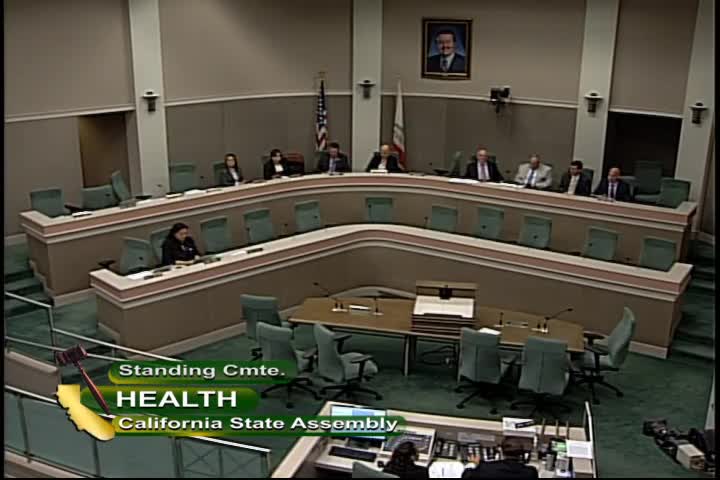 8MIN
Assembly Standing Committee on Health
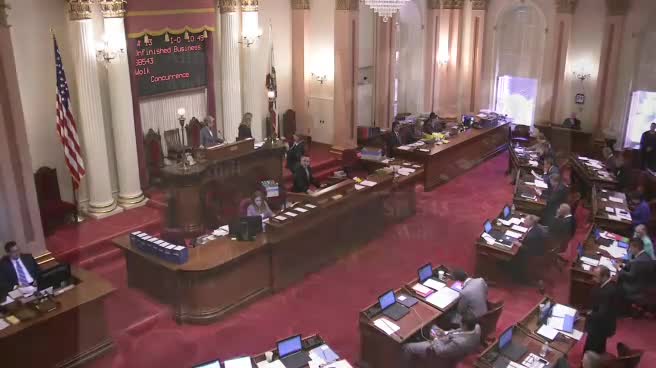 2MIN
Senate Floor
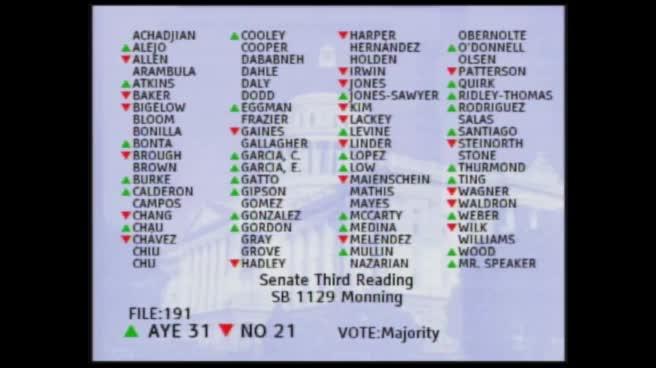 2MIN
Assembly Floor
 2MIN
Assembly Standing Committee on Local Government
 1H
Assembly Standing Committee on Elections and Redistricting
 9MIN
Senate Floor
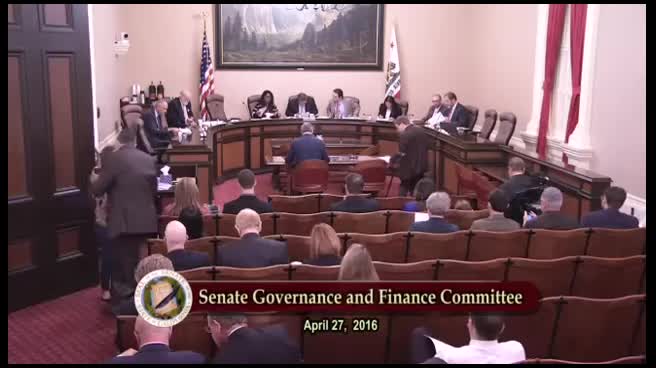 12MIN
Senate Standing Committee on Governance and Finance
Bill Author

Bill Co-Author(s):
