SB 1138: Space Day.
- Session Year: 2015-2016
- House: Senate
- Latest Version Date: 2016-08-25
Existing law requires the Governor to proclaim certain days each year for specified reasons. Existing law also designates particular days each year as having special significance in public schools and educational institutions, and encourages those entities to conduct suitable commemorative exercises on those dates.
This bill would require the Governor to proclaim the first Friday in May of each year to be Space Day, and designate that date as having special significance in public schools and educational institutions. The bill would require the Governor to encourage public schools and educational institutions to conduct suitable commemorative exercises on that date. The bill would additionally require the Governor to direct the Department of General Services to turn off nonessential lights on the State Capitol Building on Space Day, as specified, to encourage every resident, business, and public entity to dim or turn off their lights between 9 p.m. and 10 p.m. on Space Day.
Existing law requires the Governor to proclaim certain days each year for specified reasons. Existing law also designates particular days each year as having special significance in public schools and educational institutions, and encourages those entities to conduct suitable commemorative exercises on those dates.
This bill would require the Governor to proclaim an undetermined date in the first Friday in May of each year to be Space Day, and designate that date as having special significance in public schools and educational institutions. The bill would require the Governor to encourage public schools and educational institutions to conduct suitable commemorative exercises on that date. The bill would additionally require the legislative body of each city, county, or city and county to, by ordinance, require Governor to encourage every resident, business, and public entity to dim or turn off their lights between 9 p.m. and 10 p.m. on the date designated as Space Day. By imposing additional duties on local officials, this bill would impose a state-mandated local program.
The California Constitution requires the state to reimburse local agencies and school districts for certain costs mandated by the state. Statutory provisions establish procedures for making that reimbursement.
This bill would provide that, if the Commission on State Mandates determines that the bill contains costs mandated by the state, reimbursement for those costs shall be made pursuant to these statutory provisions.
Existing law requires the Governor to proclaim certain days each year for specified reasons. Existing law also designates particular days each year as having special significance in public schools and educational institutions, and encourages those entities to conduct suitable commemorative exercises on those dates.
This bill would require the Governor to proclaim an undetermined date in each year to be Space Day, and designate that date as having special significance in public schools and educational institutions. The bill would require the Governor to encourage public schools and educational institutions to conduct suitable commemorative exercises on that date. The bill would additionally require the legislative body of each city, county, or city and county to, by ordinance, require every resident, business, and public entity to dim or turn off their lights between 9 p.m. and 10 p.m. on the date designated as Space Day. By imposing additional duties on local officials, this bill would impose a state-mandated local program.
The California Constitution requires the state to reimburse local agencies and school districts for certain costs mandated by the state. Statutory provisions establish procedures for making that reimbursement.
This bill would provide that, if the Commission on State Mandates determines that the bill contains costs mandated by the state, reimbursement for those costs shall be made pursuant to these statutory provisions.
(a)The Governor shall proclaim the first Friday in May of each year to be Space Day and designate that date as having special significance in public schools and educational institutions. The Governor shall encourage public schools and educational institutions to conduct suitable commemorative exercises on that date.
(b)The Governor shall encourage every resident, business, and public entity to dim or turn off their lights between 9 p.m. and 10 p.m. on Space Day.
(c)Space Day shall promote space observation and appreciation, promote Californias aerospace industry, and encourage students to pursue careers in science, technology, engineering, and mathematics.
(d)The Governor shall direct the Department of General Services to turn off the nonessential lights on the State Capitol Building between 9:00 p.m. and 10:00 p.m. on Space Day as a symbolic act designed to encourage all California citizens, businesses, and other entities to voluntarily dim or turn off their lights on Space Day.
(a)The Governor shall proclaim ____ the first Friday in May of each year to be Space Day and designate that date as having special significance in public schools and educational institutions. The Governor shall encourage public schools and educational institutions to conduct suitable commemorative exercises on that date.
(b)The Governor shall encourage every resident, business, and public entity to dim or turn off their lights between 9 p.m. and 10 p.m. on Space Day.
(b)
(c)Space Day shall promote space observation and appreciation, promote Californias aerospace industry, and encourage students to pursue careers in science, technology, engineering, and mathematics.
SEC. 2.Section 50035 is added to the Government Code, to read:50035.The legislative body of each city, county, or city and county shall, by ordinance, require every resident, business, and public entity to dim or turn off their lights between 9 p.m. and 10 p.m. on the date designated as Space Day pursuant to Section 6726.
SEC. 3.If the Commission on State Mandates determines that this act contains costs mandated by the state, reimbursement to local agencies and school districts for those costs shall be made pursuant to Part 7 (commencing with Section 17500) of Division 4 of Title 2 of the Government Code.
(a)The Governor shall proclaim ____ of each year to be Space Day and designate that date as having special significance in public schools and educational institutions. The Governor shall encourage public schools and educational institutions to conduct suitable commemorative exercises on that date.
(b)Space Day shall promote space observation and appreciation, promote Californias aerospace industry, and encourage students to pursue careers in science, technology, engineering, and mathematics.
SEC. 2.Section 50035 is added to the Government Code, to read:50035.The legislative body of each city, county, or city and county shall, by ordinance, require every resident, business, and public entity to dim or turn off their lights between 9 p.m. and 10 p.m. on the date designated as Space Day pursuant to Section 6726.
SEC. 3.If the Commission on State Mandates determines that this act contains costs mandated by the state, reimbursement to local agencies and school districts for those costs shall be made pursuant to Part 7 (commencing with Section 17500) of Division 4 of Title 2 of the Government Code.
|
Date
|
Status
|
|---|---|
| May 12, 2016 | In Assembly. Read first time. Held at Desk. |
| Aug 25, 2016 | Chaptered by Secretary of State. Chapter 196, Statutes of 2016. |
| Aug 25, 2016 | Approved by the Governor. |
| Aug 16, 2016 | Enrolled and presented to the Governor at 11:30 a.m. |
| Aug 11, 2016 | Assembly amendments concurred in. (Ayes 37. Noes 0. Page 4864.) Ordered to engrossing and enrolling. |
| Aug 11, 2016 | Assembly amendments concurred in. (Ayes 36. Noes 0.) Ordered to engrossing and enrolling. |
| Aug 4, 2016 | Read third time. Passed. (Ayes 77. Noes 0. Page 5719.) Ordered to the Senate. |
| Aug 4, 2016 | Read third time. Passed. Ordered to the Senate. |
| Aug 4, 2016 | In Senate. Concurrence in Assembly amendments pending. |
| Jun 30, 2016 | Read second time. Ordered to consent calendar. |
| Jun 29, 2016 | From committee: Do pass. Ordered to consent calendar. (Ayes 18. Noes 0.) (June 29). |
| Jun 22, 2016 | From committee with author's amendments. Read second time and amended. Re-referred to Com. on APPR. |
| Jun 9, 2016 | From committee: Do pass and re-refer to Com. on APPR. with recommendation: To consent calendar. (Ayes 17. Noes 0.) (June 8). Re-referred to Com. on APPR. |
| May 19, 2016 | Referred to Com. on G.O. |
| May 12, 2016 | Read third time. Passed. (Ayes 38. Noes 0.) Ordered to the Assembly. |
| May 12, 2016 | Read third time. Passed. (Ayes 38. Noes 0. Page 3846.) Ordered to the Assembly. |
| Feb 18, 2016 | Introduced. Read first time. To Com. on RLS. for assignment. To print. |
| May 10, 2016 | Read second time. Ordered to third reading. |
| May 9, 2016 | From committee: Be ordered to second reading pursuant to Senate Rule 28.8. |
| Apr 29, 2016 | Set for hearing May 9. |
| Apr 28, 2016 | Withdrawn from committee. |
| Apr 28, 2016 | Re-referred to Com. on APPR. |
| Apr 21, 2016 | Withdrawn from committee. |
| Apr 21, 2016 | Re-referred to Com. on RLS. |
| Apr 18, 2016 | Read second time and amended. Re-referred to Com. on GOV. & F. |
| Apr 18, 2016 | Read second time and amended. Re-referred to Com. on G.O. |
| Apr 14, 2016 | From committee: Do pass as amended and re-refer to Com. on GOV. & F. (Ayes 11. Noes 0.) (April 12). |
| Apr 14, 2016 | From committee: Do pass as amended and re-refer to Com. on GOV. & F. (Ayes 11. Noes 0. Page 3493.) (April 12). |
| Mar 15, 2016 | Set for hearing April 12. |
| Mar 3, 2016 | Referred to Coms. on G.O. and GOV. & F. |
| Feb 19, 2016 | From printer. May be acted upon on or after March 20. |
|
Date
|
Description
|
Location
|
Votes
|
|
|---|---|---|---|---|
| Aug 11, 2016 | Unfinished Business SB1138 Hueso Concurrence | Senate Floor |
Passed |
|
| Aug 4, 2016 | SB 1138 Hueso Consent Calendar Second Day Regular Session | Assembly Floor |
Passed |
|
| Jun 29, 2016 | Do pass. To Consent Calendar. | Assembly Standing Committee on Appropriations |
Passed |
|
| Jun 8, 2016 | Do pass and be re-referred to the Committee on [Appropriations] with recommendation: To Consent Calendar | Assembly Standing Committee on Governmental Organization |
Passed |
|
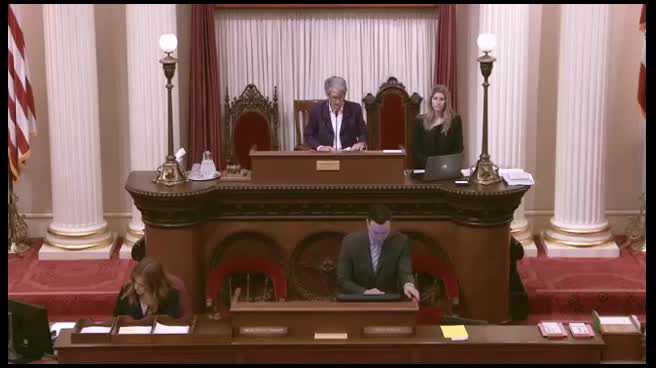
| May 12, 2016 | Senate 3rd Reading SB1138 Hueso | Senate Floor |
Passed |
|
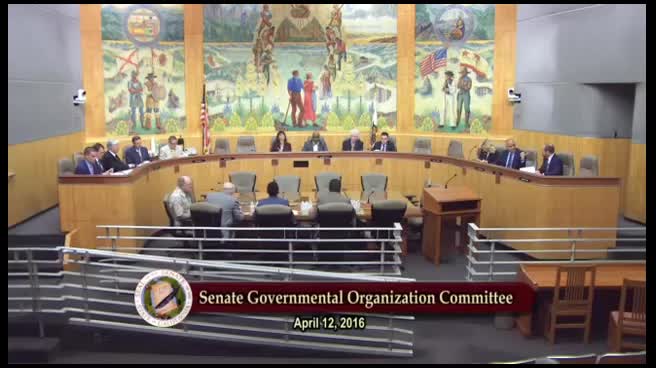
| Apr 12, 2016 | Do pass as amended, but first amend, and re-refer to the Committee on [Governance and Finance] | Senate Standing Committee on Governmental Organization |
Passed |
This list shows positions taken on this bill by organizations on the date displayed, which is linked to the original source.
Positions by individuals are not included.
|
Organization
|
Position
|
Date
|
|---|---|---|
| CalAsian Chamber of Commerce | ** Against | Apr 12, 2016 |
| California Attractions And Parks Association | ** Against | Apr 12, 2016 |
| California Chamber Of Commerce | ** Against | Apr 12, 2016 |
| California Grocers Association | ** Against | Apr 12, 2016 |
| California Hotel & Lodging Association | ** Against | Apr 12, 2016 |
| California Restaurant Association | * Against | Apr 12, 2016 |
| California Retailers Association | ** Against | Apr 12, 2016 |
| International Dark-Sky Association | ** Support | May 12, 2016 |
| National Federation Of Independent Business | ** Against | Apr 12, 2016 |
| Sacramento Valley Astronomical Society | * Support | Apr 12, 2016 |
| San Diego Air & Space Museum | ** Support | May 12, 2016 |
Office of Senate Floor Analyses (916) 651-1520 Fax: (916) 327-4478 | SB |
UNFINISHED BUSINESS
Bill No: SB 1138
:
SENATE GOVERNMENTAL ORG. COMMITTEE: 11-0, 4/12/16
AYES: Hall, Berryhill, Block, Gaines, Galgiani, Glazer, Hernandez, Hueso, Lara, McGuire, Vidak
NO VOTE RECORDED: Hill, Runner
SENATE APPROPRIATIONS COMMITTEE: Senate Rule 28.8
SENATE FLOOR: 38-0, 5/12/16
AYES: Allen, Anderson, Bates, Beall, Berryhill, Block, Cannella, De León, Fuller, Gaines, Galgiani, Glazer, Hall, Hancock, Hernandez, Hertzberg, Hill, Hueso, Huff, Jackson, Lara, Leno, Leyva, McGuire, Mendoza, Mitchell, Monning, Moorlach, Morrell, Nguyen, Nielsen, Pan, Pavley, Roth, Stone, Vidak, Wieckowski, Wolk
NO VOTE RECORDED: Liu, Runner
ASSEMBLY FLOOR: 77-0, 8/4/16 (Consent) - See last page for vote
SOURCE: San Diego Air & Space Museum
DIGEST: This bill requires the Governor to proclaim the first Friday in May of each year to be Space Day.
Assembly Amendments require the Governor to direct the Department of General Services (DGS) to turn off the nonessential lights on the State Capitol Building between 9:00 p.m. and 10:00 p.m. on Space Day as a symbolic act designed to encourage all California citizens, businesses, and other entities to voluntarily dim or turn off their lights on Space Day.
ANALYSIS: Existing law requires the Governor to Proclaim the following days each year as follows:
- September 28 as “Cabrillo Day.”
- January 15 as “Dr. Martin Luther King, Jr., Day.”
- March 7 as “Arbor Day.”
- February 19 as “A Day of Remembrance: Japanese American Evacuation.”
- Fourth Friday in September as “Native American Day.”
- First Sunday in October as “Stepparents Day.”
- April 21 as “John Muir Day.”
- March 30 as “Welcome Home Vietnam Veterans Day.”
- December 7 as “Pearl Harbor Day.”
- March 31 as “Cesar Chavez Day.”
- Month of February as “Black History Month.”
- Third Saturday in June as “Juneteenth National Freedom Day: A Day of Observance.”
- April 24 as “California Day of Remembrance of the Armenian Genocide.”
- May 22 as “Harvey Milk Day.”
- January 30 as “Fred Korematsu Day of Civil Liberties and the Constitution.”
- February 6 as “Ronald Reagan Day.”
- January 23 as “Ed Roberts Day.”
- October 25 as “Larry Itliong Day.”
This bill:
- Requires the Governor to proclaim the first Friday in May of each year to be Space Day.
- Requires the Governor to encourage public schools and educational institutions to conduct suitable commemorative exercises on that date.
- Specifies Space Day to promote space observation and appreciation, promote California’s aerospace industry, and encourage students to pursue careers in science, technology, engineering, and mathematics.
- Requires the Governor to encourage every resident, business, and public entity to dim or turn off their lights between 9 p.m. and 10 p.m. on Space Day.
- Requires the Governor to direct DGS to turn off the nonessential lights on the State Capitol Building between 9:00 p.m. and 10:00 p.m. on Space Day as a symbolic act designed to encourage all California citizens, businesses, and other entities to voluntarily dim or turn off their lights on Space Day.
Background
Purpose of the bill. According to the author, “today in urban regions of California light pollution, a term which is used to describe the adverse effects of artificial light, has greatly inhibited observation of the night sky. Researchers have noted that increased urban sky glow is responsible for making the Milky Way nearly impossible to view for many of California’s urban regions. Unfortunately, many Californians must now travel far from their home, away from the glow of artificial light sources, to view the majestic night sky.”
FISCAL EFFECT: Appropriation: Fiscal Com.: Local:
According to the Assembly Appropriations Committee, no additional state costs.
San Diego Air & Space Museum (source)
International Dark-Sky Association
SpaceX
None received
ARGUMENTS IN SUPPORT: According to the San Diego Air & Space Museum, “space day is designed to promote space observations and appreciation among California’s citizens, promote California’s global aerospace industry, and to encourage students to pursue careers in science, technology, engineering and math.
8/8/16 9:47:36
**** END ****
Date of Hearing: June 29, 2016
ASSEMBLY COMMITTEE ON APPROPRIATIONS
Lorena Gonzalez, Chair
SBPCA Bill Id:SB 1138
Author:(Hueso) – As Amended June 22Ver:, 2016
Policy Committee: | Governmental Organization | Vote: | 17 - 0 |
Urgency: No State Mandated Local Program: No Reimbursable: No
SUMMARY:
This bill requires the Governor to proclaim the first Friday in May each year to be Space Day and to encourage every resident, business, and public entity to dim or turn off their lights between 9 P.M. and 10 P.M on Space Day. The bill also requires the Governor to direct the Department of General Services (DGS) to turn off nonessential lights on the State Capitol Building during this time.
FISCAL EFFECT:
No additional state costs.
COMMENTS:
- Purpose. According to the author, SB 1138 will help spread awareness about light pollution and help Californians enjoy the night sky. By requiring the Governor to encourage every resident, business, and public entity to dim or turn off their lights between 9 p.m. and 10p.m. on Space Day, Californians will learn about the impact of light pollution and increase observation capabilities for star gazers.
- Background. While California does not officially recognize Space Day, National Space Day is observed annually on the first Friday in May. This day is dedicated to the extraordinary achievements, benefits and opportunities in the exploration and use of space. The goal of National Space Day is to promote math, science, technology and engineering education in young people to inspire them to pursue a career in science, especially a career in space-related jobs.
National Space Day was created in 1997 by the Lockheed Martin Corporation as a one-day event. In 2001, due to its extreme popularity, former astronaut and Senator John Glenn expanded Space Day to International Space Day.
Analysis Prepared by: Luke Reidenbach / APPR. / (916) 319-2081
Date of Hearing: June 8, 2016
ASSEMBLY COMMITTEE ON GOVERNMENTAL ORGANIZATION
Adam Gray, Chair
SBPCA Bill Id:SB 1138
Author:(Hueso) – As Amended Ver:April 18, 2016
SENATE VOTE: 38-0
SUBJECT: Space Day
SUMMARY: Requires the Governor to proclaim the first Friday in May of each year to be Space Day, and designate that date as having special significance in public schools and educational institutions. Specifically, this bill:
- Requires the Governor to encourage public schools and educational institutions to conduct suitable commemorative exercises on the specified date.
- Requires the Governor to encourage every resident, business, and public entity to dim or turn off their lights between 9 p.m. and 10 p.m. on Space Day.
EXISTING LAW:
1) Requires the Governor to Proclaim the following days each year as follows:
a) September 28 as “Cabrillo Day.”
b) January 15 as “Dr. Martin Luther King, Jr., Day.”
c) March 7 as “Arbor Day.”
d) February 19 as “A Day of Remembrance: Japanese American Evacuation.”
e) Fourth Friday in September as “Native American Day.”
f) First Sunday in October as “Stepparents Day.”
g) April 21 as “John Muir Day.”
h) March 30 as “Welcome Home Vietnam Veterans Day.”
i) December 7 as “Pearl Harbor Day.”
j) March 31 as “Cesar Chavez Day.”
k) Month of February as “Black History Month.”
l) Third Saturday in June as “Juneteenth National Freedom Day: A Day of Observance.”
m) April 24 as “California Day of Remembrance of the Armenian Genocide.”
n) May 22 as “Harvey Milk Day.”
o) January 30 as “Fred Korematsu Day of Civil Liberties and the Constitution.”
p) February 6 as “Ronald Reagan Day.”
q) January 23 as “Ed Roberts Day.”
r) October 25 as “Larry Itliong Day.”
FISCAL EFFECT: Unknown
COMMENTS:
Purpose of the bill: According to the author, for centuries humankind has gazed into the dark night skies to view the magnificent display of stars, constellations, galaxies and planets. These images arrayed across the night sky inspired questions about our universe, the origins of humanity, and spurred humankind’s fascination with exploration of space. Today, however, light pollution, light emitted at night that extends beyond the horizontal plane, shining up instead of down, in many urban regions of California has greatly inhibited observation of the night sky.
Researchers have noted that increased light pollution is responsible for making the Milky Way nearly impossible to view from many of California’s urban regions. Unfortunately, many Californians must now travel far from their homes, away from the glow of artificial light sources, to view the majestic night sky. Light pollution has not only had an adverse impact on armature astronomers but also on world class observatories located in California. One observatory that has faced such problems is San Diego County’s Palomar Observatory.
SB 1138 is a modest attempt to draw attention to the growing problem light pollution is having on night sky observation. By designating the first Friday in May of each year as “Space Day” in California I hope to promote space observation and appreciation among Californians. By requiring the Governor to encourage every resident, business, and public entity to dim or turn off their lights between 9 p.m. and 10p.m. on Space Day in a concerted effort to reduce light pollution and urban sky glow it is my hope that all Californians can enjoy viewing the magnificent night sky.”
Background: While California does not officially recognize Space Day, National Space Day is observed annually on the first Friday in May. This day is dedicated to the extraordinary achievements, benefits and opportunities in the exploration and use of space. The goal of National Space Day is to promote math, science, technology and engineering education in young people to inspire them to pursue a career in science, especially a career in space-related jobs.
National Space Day was created in 1997 by the Lockheed Martin Corporation as a one-day event. In 2001, due to its extreme popularity, former astronaut and Senator John Glenn expanded Space Day to International Space Day.
Light Pollution: Light pollution is a term that refers to the brightening of the night sky caused by streetlights and other man-mad sources, which inhibits the observation of stars and planets and has been argued to have a disruptive effect on natural cycles.
Light pollution is a side effect of industrial civilization. Its sources include building exterior and interior lighting, advertising, commercial properties, offices, factories, streetlights, and illuminated sporting venues. The biggest contributor to light pollution includes roadway lightings, especially in major cities and highways. Most experts state that light emitted from roadways, is approximated to constitute about 35% to 50% of all light pollution.
Should SB 1138 become law, it would require the Governor to encourage every resident, business, and public entity to dim or turn off their lights between 9 p.m. and 10 p.m. on the first Friday in May, which could decrease light pollution and increase observation capabilities for those participating in Space Day.
Prior/Related Legislation: AB 2598 (Ting) of 2015/2016 Session. Requires the Governor to annually proclaim the date corresponding with the start of the lunar calendar as Lunar New Year’s Day. (Pending in Assembly Education Committee)
AB 7 (Bonta), Chapter 29, Statutes of 2015. Requires the Governor to annually proclaim October 25 as Larry Itliong Day.
AB 1775 (Furutani), Chapter 241, Statutes of 2010. Requires the Governor to annually proclaim January 30 as Fred Korematsu Day of Civil Liberties and the Constitution.
SB 944 (Runner), Chapter 114, Statutes of 2010. Requires the Governor to annually proclaim February 6 as Ronald Reagan Day.
SB 1256 (Hancock), Chapter 115, 2010. Requires the Governor to annually proclaim January 23 as Ed Roberts Day.
SB 572 (Leno), Chapter 626, Statutes of 2009. Requires the Governor to annually proclaim May 22 as Harvey Milk Day.
AB 717 (Cook), Chapter 158, Statutes of 2009. Requires the governor to annually proclaim March 30 as Welcome Home Vietnam Veterans Day.
REGISTERED SUPPORT / OPPOSITION:
Support
San Diego Air & Space Museum (Sponsor)
International Dark-Sky Association
Space X
Opposition
None on file
Analysis Prepared by: Kenton Stanhope / G.O. / (916) 319-2531
Office of Senate Floor Analyses (916) 651-1520 Fax: (916) 327-4478 | SB |
THIRD READING
Bill No: SB 1138
:
SENATE GOVERNMENTAL ORG. COMMITTEE: 11-0, 4/12/16
AYES: Hall, Berryhill, Block, Gaines, Galgiani, Glazer, Hernandez, Hueso, Lara, McGuire, Vidak
NO VOTE RECORDED: Hill, Runner
SENATE APPROPRIATIONS COMMITTEE: Senate Rule 28.8
SOURCE: San Diego Air & Space Museum
DIGEST: This bill requires the Governor to proclaim the first Friday in May of each year to be Space Day.
ANALYSIS:
Existing law requires the Governor to Proclaim the following days each year as follows:
- September 28 as “Cabrillo Day.”
- January 15 as “Dr. Martin Luther King, Jr., Day.”
- March 7 as “Arbor Day.”
- February 19 as “A Day of Remembrance: Japanese American Evacuation.”
- Fourth Friday in September as “Native American Day.”
- First Sunday in October as “Stepparents Day.”
- April 21 as “John Muir Day.”
- March 30 as “Welcome Home Vietnam Veterans Day.”
- December 7 as “Pearl Harbor Day.”
- March 31 as “Cesar Chavez Day.”
- Month of February as “Black History Month.”
- Third Saturday in June as “Juneteenth National Freedom Day: A Day of Observance.”
- April 24 as “California Day of Remembrance of the Armenian Genocide.”
- May 22 as “Harvey Milk Day.”
- January 30 as “Fred Korematsu Day of Civil Liberties and the Constitution.”
- February 6 as “Ronald Reagan Day.”
- January 23 as “Ed Roberts Day.”
- October 25 as “Larry Itliong Day.”
This bill:
- Requires the Governor to proclaim the first Friday in May of each year to be Space Day.
- Requires the Governor to encourage public schools and educational institutions to conduct suitable commemorative exercises on that date.
- Requires Space Day promote space observation and appreciation, promote California’s aerospace industry, and encourage students to pursue careers in science, technology, engineering, and mathematics.
- Requires the Governor to encourage every resident, business, and public entity to dim or turn off their lights between 9 p.m. and 10 p.m. on Space Day.
Background
Purpose of the bill. According to the author, “today in urban regions of California light pollution, a term which is used to describe the adverse effects of artificial light, has greatly inhibited observation of the night sky. Researchers have noted that increased urban sky glow is responsible for making the Milky Way nearly impossible to view for many of California’s urban regions. Unfortunately, many Californians must now travel far from their home, away from the glow of artificial light sources, to view the majestic night sky.”
Light Pollution. Light pollution is a term that refers to the brightening of the night sky caused by streetlights and other man-mad sources, which inhibits the observation of stars and planets and has been argued to have a disruptive effect on natural cycles.
Light pollution is a side effect of industrial civilization. Its sources include building exterior and interior lighting, advertising, commercial properties, offices, factories, streetlights, and illuminated sporting venues. The biggest contributor to light pollution includes roadway lightings, especially in major cities and highways.
FISCAL EFFECT: Appropriation: Fiscal Com.: Local:
San Diego Air & Space Museum (source)
International Dark-Sky Association
OPPOSITION: (Verified 5/10/16)
None received
ARGUMENTS IN SUPPORT: According to the San Diego Air & Space Museum, “space day is designed to promote space observations and appreciation among California’s citizens, promote California’s global aerospace industry, and to encourage students to pursue careers in science, technology, engineering and math.”
5/11/16 15:12:39
**** END ****
SENATE COMMITTEE ON GOVERNMENTAL ORGANIZATION
Senator Isadore Hall, III
Chair
2015 - 2016 Regular
Bill No: 1138 Hearing Date: 4/12/2016
Author: | |||
Version: | 2/18/2016 Introduced | ||
Urgency: | No | Fiscal: | Yes |
Consultant: | Felipe Lopez | ||
SUBJECT: Space Day
DIGEST: This bill requires the Governor to proclaim an undetermined date in each year to be Space Day and requires the legislative body of each city, county, or city and county to, by ordinance, require every resident, business, and public entity to dim or turn off their lights between 9 p.m. and 10 p.m. on the date designated as Space Day.
ANALYSIS:
Existing law:
- Requires the Governor to Proclaim the following days each year as follows:
- September 28 as “Cabrillo Day.”
- January 15 as “Dr. Martin Luther King, Jr., Day.”
- March 7 as “Arbor Day.”
- February 19 as “A Day of Remembrance: Japanese American Evacuation.”
- Fourth Friday in September as “Native American Day.”
- First Sunday in October as “Stepparents Day.”
- April 21 as “John Muir Day.”
- March 30 as “Welcome Home Vietnam Veterans Day.”
- December 7 as “Pearl Harbor Day.”
- March 31 as “Cesar Chavez Day.”
- Month of February as “Black History Month.”
- Third Saturday in June as “Juneteenth National Freedom Day: A Day of Observance.”
- April 24 as “California Day of Remembrance of the Armenian Genocide.”
- May 22 as “Harvey Milk Day.”
- January 30 as “Fred Korematsu Day of Civil Liberties and the Constitution.”
- February 6 as “Ronald Reagan Day.”
- January 23 as “Ed Roberts Day.”
- October 25 as “Larry Itliong Day.”
This bill:
- Requires the Governor to proclaim an undetermined date in each year to be Space Day and designate that date as having special significance in public schools and educational institutions.
- Requires the Governor to encourage public schools and educational institutions to conduct suitable commemorative exercises on that date.
- Specifies Space Day to promote space observation and appreciation, promote California’s aerospace industry, and encourage students to pursue careers in science, technology, engineering, and mathematics.
- Requires the legislative body of each city, county, or city and county to, by ordinance, require every resident, business, and public entity to dim or turn off their lights between 9 p.m. and 10 p.m. on the date designated as Space Day.
Background
Purpose of the bill. According to the author, “today in urban regions of California light pollution, a term which is used to describe the adverse effects of artificial light, has greatly inhibited observation of the night sky. Researchers have noted that increased urban sky glow is responsible for making the Milky Way nearly impossible to view for many of California’s urban regions. Unfortunately, many Californian’s must now travel far from their home, away from the glow of artificial light sources, to view the majestic night sky.”
Light Pollution. Light pollution is a term that refers to the brightening of the night sky caused by streetlights and other man-mad sources, which inhibits the observation of stars and planets and has been argued to have a disruptive effect on natural cycles.
Light pollution is a side effect of industrial civilization. Its sources include building exterior and interior lighting, advertising, commercial properties, offices, factories, streetlights, and illuminated sporting venues. The biggest contributor to light pollution includes roadway lightings, especially in major cities and highways. Most experts state that light emitted from roadways, is approximated to constitute about 35% to 50% of all light pollution.
Unintended Consequences. The bill currently requires that the legislative body of each city, county, or city and county shall, by ordinance, require every resident, business, and public entity to dim or turn off their lights between 9 p.m. and 10 p.m. on the date designated as Space Day. While the intention is to reduce light pollution and make the night sky more visible, such a requirement raises various issues.
The bill’s current requirement is unclear as to which lights should be dimmed or turned off. A strict reading of the bill would mean that all lights, including street lights, car lights, hospital lights, etc, would be required to be turned off. This would mean that all businesses, including restaurants, gas stations, bars, etc., that do not have dimming lights would be forced to either turn off their lights, or more realistically close their business during this time period. Sporting events would be affected since the requirement to turn off their lights would make playing any sporting event practically impossible. In addition, it is unclear what the enforcement of such an ordinance would entail.
Suggested Amendments. As previously stated, the current requirement to turn off the lights would have a plethora of unintended consequences. Therefore, the author may wish to delete the current requirement and instead specify that the Governor shall encourage residents, businesses, and public entities to dim or turn off their lights between 9 p.m. and 10 p.m. on the date designated as Space Day.
The bill currently does not specify what date the Governor shall proclaim as Space Day. However, National Space Day as well as International Space Day is observed on the first Friday in May. Therefore, the author may wish to amend the bill to specify that the Governor shall proclaim the first Friday in May as Space Day.
Author’s Amendments. The author will be presenting amendments in committee to exempt from the light reduction requirements public safety providers and first responders which include, city or county law enforcement agencies, jails, fire departments, hospitals, clinics, mental health hospitals, or any other entity that is deemed to provide necessary public services.
In addition, the author will be presenting amendments in committee to exempt from the light reduction requirements agencies necessary for critical community services which shall include airports, bridges, port authorities, public spaces where large numbers of citizens congregate or any other entity that is deemed to provide necessary community services.
It is unclear what would be defined as entities that are deemed to provide necessary community services and what are public spaces where large numbers of citizens congregate. However, it should be noted that if enough entities are exempted, light pollution would remain an issue and thus eliminate the intended goal of the bill.
Prior/Related Legislation
AB 2598 (Ting, 2016) requires the Governor to annually proclaim the date corresponding with the start of the lunar calendar as Lunar New Year’s Day. (Pending in Assembly Education Committee)
AB 7 (Bonta, Chapter 29, Statutes of 2015) required the Governor to annually proclaim October 25 as Larry Itliong Day.
AB 1775 (Furutani, Chapter 241, Statutes of 2010) required the Governor to annually proclaim January 30 as Fred Korematsu Day of Civil Liberties and the Constitution.
SB 944 (Runner, Chapter 114, Statutes of 2010) required the Governor to annually proclaim February 6 as Ronald Reagan Day.
SB 1256 (Hancock, Chapter 115, 2010) required the Governor to annually proclaim January 23 as Ed Roberts Day.
SB 572 (Leno, Chapter 626, Statutes of 2009) required the Governor to annually proclaim May 22 as Harvey Milk Day.
AB 717 (Cook, Chapter 158, Statutes of 2009) required the governor to annually proclaim March 30 as Welcome Home Vietnam Veterans Day.
FISCAL EFFECT: Appropriation: Fiscal Com.: Local:
SUPPORT:
San Diego Air & Space Museum (Sponsor)
International Dark-Sky Association
OPPOSITION:
CalAsian Chamber of Commerce
California Attractions and Parks Association
California Chamber of Commerce
California Grocers Association
California Hotel & Lodging Association
California Manufacturers & Technology Association
California Restaurant Association
California Retailers Association
National Federation of Independent Business
ARGUMENTS IN SUPPORT: According to the San Diego Air & Space Museum, “space day is designed to promote space observations and appreciation among California’s citizens, promote California’s global aerospace industry, and to encourage students to pursue careers in science, technology, engineering and math.”
ARGUMENTS IN OPPOSSITION: Opponents of the bill argue that, “the impacts that SB 1138 would have on private business and the public health and safety system will be substantial as it will not just disrupt operations for that single hour blackout period but, depending on the operation, several hours before and after companies have to shut down then restart their processes. This would pose a logistical challenge as many businesses would not have a choice but to make a calculated decision that could result in prematurely terminating afternoon and/or evening shifts or eliminating hours. For example, restaurants would likely close the entire evening therefore not scheduling employees to work, which would result in personnel not working their anticipated hours during that pay period.”
Opponents also argue that, “dimming or eliminating lighting in a workplace or business is not always safe or feasible. It is not practical and almost always unsafe to have employees working in dimmed conditions when operating machinery, cooking or preparing food, or using industrial equipment. It could also put employees and/or consumers in an unwanted health or public safety situation, which could potentially expose the business to costly litigation. The unintended consequence of this requirement would be to deny certain businesses the ability to operate safely and efficiently, not just during the timeframe called for in this bill but for the additional preparation time on both ends of this lighting ban/restriction.”
DUAL REFERRAL: Senate Governance and Finance Committee
Discussed in Hearing
 5MIN
Senate Floor
 22MIN
Senate Standing Committee on Governmental Organization
Bill Author

Bill Co-Author(s):