SB 1167: Employment safety: indoor workers: heat regulations.
- Session Year: 2015-2016
- House: Senate
- Latest Version Date: 2016-09-29
Under existing law, the California Occupational Safety and Health Act of 1973, the Division of Occupational Safety and Health investigates complaints that a workplace is not safe and may issue orders necessary to ensure employee safety. Under existing law, certain violations of that act or a standard, order, or special order authorized by the act are a crime. Under existing law, the division has adopted regulations establishing a heat illness prevention standard for outdoor workers.
This bill would require the division, by January 1, 2019, to propose to the Occupational Safety and Health Standards Board for the boards review and adoption, a heat illness and injury prevention standard applicable to workers working in indoor places of employment. The bill would specify that this requirement does not prohibit the division from proposing, or the standards board from adopting, a standard that limits the application of high heat provisions to certain industry sectors. Because this bill would expand the definition of an existing crime, it would impose a state-mandated local program.
The California Constitution requires the state to reimburse local agencies and school districts for certain costs mandated by the state. Statutory provisions establish procedures for making that reimbursement.
This bill would provide that no reimbursement is required by this act for a specified reason.
Under existing law, the California Occupational Safety and Health Act of 1973, the Division of Occupational Safety and Health investigates complaints that a workplace is not safe and may issue orders necessary to ensure employee safety. Under existing law, certain violations of that act or a standard, order, or special order authorized by the act are a crime. Under existing law, the division has adopted regulations establishing a heat illness prevention standard for outdoor workers.
This bill would require the division, by July 1, 2018, January 1, 2019, to propose to the Occupational Safety and Health Standards Board for the boards review and adoption, a heat illness and injury prevention standard applicable to indoor workers. workers working in indoor places of employment. The bill would specify that this requirement does not prohibit the division from proposing, or the standards board from adopting, a standard that limits the application of high heat provisions to certain industry sectors. Because this bill would expand the definition of an existing crime, it would impose a state-mandated local program.
The California Constitution requires the state to reimburse local agencies and school districts for certain costs mandated by the state. Statutory provisions establish procedures for making that reimbursement.
This bill would provide that no reimbursement is required by this act for a specified reason.
Under existing law, the California Occupational Safety and Health Act of 1973, the Division of Occupational Safety and Health investigates complaints that a workplace is not safe and may issue orders necessary to ensure employee safety. Under existing law, certain violations of that act or a standard, order, or special order authorized by the act are a crime. Under existing law, the division has adopted regulations establishing a heat illness prevention standard for outdoor workers.
This bill would require the division, by July 1, 2018, to propose to the Occupational Safety and Health Standards Board for its the boards review and adoption, a heat illness and injury prevention standard applicable to indoor workers. The bill would specify that this requirement does not prohibit the division from proposing, or the standards board from adopting, a standard that limits the application of high heat provisions to certain industry sectors. Because this bill would expand the definition of an existing crime, it would impose a state-mandated local program.
The California Constitution requires the state to reimburse local agencies and school districts for certain costs mandated by the state. Statutory provisions establish procedures for making that reimbursement.
This bill would provide that no reimbursement is required by this act for a specified reason.
Under existing law, the Occupational Safety and Health Act of 1973, the Division of Occupational Safety and Health investigates complaints that a workplace is not safe and may issue orders necessary to ensure employee safety. Under existing law, certain violations of that act or a standard, order, or special order authorized by the act are a crime. Under existing law, the division has adopted regulations establishing a heat illness prevention standard for outdoor workers.
This bill would require the division, by July 1, 2017, 2018, to propose to the standards board Occupational Safety and Health Standards Board for its adoption, a heat illness and injury prevention standard applicable to indoor workers that provides equal or greater protection. workers. The bill would specify that this requirement does not prohibit the division from proposing, or the standards board from adopting, a standard that limits the application of high heat provisions to certain industry sectors. Because this bill would expand the definition of an existing crime, it would impose a state-mandated local program.
The California Constitution requires the state to reimburse local agencies and school districts for certain costs mandated by the state. Statutory provisions establish procedures for making that reimbursement.
This bill would provide that no reimbursement is required by this act for a specified reason.
Under existing law, the Occupational Safety and Health Act of 1973, the Division of Occupational Safety and Health investigates complaints that a workplace is not safe and may issue orders necessary to ensure employee safety. Under existing law, the division has adopted regulations establishing a heat illness prevention standard for outdoor workers.
This bill would require the division, by July 1, 2017, to propose to the standards board for its adoption, a heat illness and injury prevention standard applicable to indoor workers that provides equal or greater protection. Because this bill would expand the definition of an existing crime, it would impose a state-mandated local program.
The California Constitution requires the state to reimburse local agencies and school districts for certain costs mandated by the state. Statutory provisions establish procedures for making that reimbursement.
This bill would provide that no reimbursement is required by this act for a specified reason.
By January 1, 2019, the division shall propose to the standards board for the boards review and adoption a standard that minimizes heat-related illness and injury among workers working in indoor places of employment. The standard shall be based on environmental temperatures, work activity levels, and other factors. In developing the standard, the division shall take into consideration heat stress and heat strain guidelines in the 2016 Threshold Limit Values and Biological Exposure Indices developed by the American Conference of Governmental Industrial Hygienists. This section does not prohibit the division from proposing, or the standards board from adopting, a standard that limits the application of high heat provisions to certain industry sectors.
SEC. 2.No reimbursement is required by this act pursuant to Section 6 of Article XIIIB of the California Constitution because the only costs that may be incurred by a local agency or school district will be incurred because this act creates a new crime or infraction, eliminates a crime or infraction, or changes the penalty for a crime or infraction, within the meaning of Section 17556 of the Government Code, or changes the definition of a crime within the meaning of Section 6 of Article XIIIB of the California Constitution.
By July 1, 2018, January 1, 2019, the division shall propose to the standards board for the boards review and adoption a standard that minimizes heat-related illness and injury among indoor workers. workers working in indoor places of employment. The standard shall be based on environmental temperatures, work activity levels, and other factors. In developing the standard, the division shall take into consideration heat stress and heat strain guidelines in the 2016 Threshold Limit Values and Biological Exposure Indices developed by the American Conference of Governmental Industrial Hygienists. This section does not prohibit the division from proposing, or the standards board from adopting, a standard that limits the application of high heat provisions to certain industry sectors.
SEC. 2.No reimbursement is required by this act pursuant to Section 6 of Article XIIIB of the California Constitution because the only costs that may be incurred by a local agency or school district will be incurred because this act creates a new crime or infraction, eliminates a crime or infraction, or changes the penalty for a crime or infraction, within the meaning of Section 17556 of the Government Code, or changes the definition of a crime within the meaning of Section 6 of Article XIIIB of the California Constitution.
By July 1, 2018, the division shall propose to the standards board for its the boards review and adoption a standard that minimizes heat-related illness and injury among indoor workers. This section does not prohibit the division from proposing, or the standards board from adopting, a standard that limits the application of high heat provisions to certain industry sectors.
SEC. 2.No reimbursement is required by this act pursuant to Section 6 of Article XIIIB of the California Constitution because the only costs that may be incurred by a local agency or school district will be incurred because this act creates a new crime or infraction, eliminates a crime or infraction, or changes the penalty for a crime or infraction, within the meaning of Section 17556 of the Government Code, or changes the definition of a crime within the meaning of Section 6 of Article XIIIB of the California Constitution.
By July 1, 2017, 2018, the division shall propose to the standards board for its review and adoption a standard that protects the health and safety of indoor workers from minimizes heat-related illness and injury. The standard shall offer protections for indoor workers that meet or exceed the protections for outdoor places of employment. injury among indoor workers. This section does not prohibit the division from proposing, or the standards board from adopting, a standard that limits the application of high heat provisions to certain industry sectors.
SEC. 2.No reimbursement is required by this act pursuant to Section 6 of Article XIIIB of the California Constitution because the only costs that may be incurred by a local agency or school district will be incurred because this act creates a new crime or infraction, eliminates a crime or infraction, or changes the penalty for a crime or infraction, within the meaning of Section 17556 of the Government Code, or changes the definition of a crime within the meaning of Section 6 of Article XIIIB of the California Constitution.
By July 1, 2017, the division shall propose to the standards board for its review and adoption a standard that protects the health and safety of indoor workers from heat-related illness and injury. The standard shall offer protections for indoor workers that meet or exceed the protections for outdoor places of employment.
SEC. 2.No reimbursement is required by this act pursuant to Section 6 of Article XIIIB of the California Constitution because the only costs that may be incurred by a local agency or school district will be incurred because this act creates a new crime or infraction, eliminates a crime or infraction, or changes the penalty for a crime or infraction, within the meaning of Section 17556 of the Government Code, or changes the definition of a crime within the meaning of Section 6 of Article XIIIB of the California Constitution.
|
Date
|
Status
|
|---|---|
| Jun 9, 2016 | Referred to Com. on L. & E. |
| Sep 1, 2016 | Enrolled and presented to the Governor at 5 p.m. |
| Aug 26, 2016 | Assembly amendments concurred in. (Ayes 26. Noes 12. Page 5450.) Ordered to engrossing and enrolling. |
| Aug 26, 2016 | Assembly amendments concurred in. (Ayes 25. Noes 12.) Ordered to engrossing and enrolling. |
| Aug 25, 2016 | In Senate. Concurrence in Assembly amendments pending. |
| Aug 24, 2016 | Read third time. Passed. Ordered to the Senate. |
| Aug 19, 2016 | Read third time and amended. (Ayes 73. Noes 0. Page 5970.) |
| Aug 19, 2016 | Read third time and amended. |
| Aug 19, 2016 | Ordered to third reading. |
| Aug 17, 2016 | Read second time. Ordered to third reading. |
| Aug 16, 2016 | Read second time and amended. Ordered to second reading. |
| Aug 15, 2016 | From committee: Do pass as amended. (Ayes 13. Noes 6.) (August 11). |
| Aug 3, 2016 | August 3 set for first hearing. Placed on APPR. suspense file. |
| Jun 29, 2016 | June 29 hearing postponed by committee. |
| Jun 23, 2016 | From committee: Do pass and re-refer to Com. on APPR. (Ayes 5. Noes 2.) (June 22). Re-referred to Com. on APPR. |
| Feb 18, 2016 | Introduced. Read first time. To Com. on RLS. for assignment. To print. |
| Jun 2, 2016 | In Assembly. Read first time. Held at Desk. |
| Jun 1, 2016 | Read third time. Passed. (Ayes 25. Noes 12.) Ordered to the Assembly. |
| Jun 1, 2016 | Read third time. Passed. (Ayes 25. Noes 12. Page 4104.) Ordered to the Assembly. |
| May 31, 2016 | Read second time and amended. Ordered to third reading. |
| May 27, 2016 | From committee: Do pass as amended. (Ayes 5. Noes 2.) (May 27). |
| May 27, 2016 | From committee: Do pass as amended. (Ayes 5. Noes 2. Page 4004.) (May 27). |
| May 20, 2016 | Set for hearing May 27. |
| Apr 18, 2016 | April 18 hearing: Placed on APPR. suspense file. |
| Apr 8, 2016 | Set for hearing April 18. |
| Apr 6, 2016 | From committee: Do pass and re-refer to Com. on APPR. (Ayes 4. Noes 1.) (April 6). Re-referred to Com. on APPR. |
| Apr 6, 2016 | From committee: Do pass and re-refer to Com. on APPR. (Ayes 4. Noes 1. Page 3421.) (April 6). Re-referred to Com. on APPR. |
| Mar 18, 2016 | Set for hearing April 6. |
| Mar 3, 2016 | Referred to Com. on L. & I.R. |
| Feb 19, 2016 | From printer. May be acted upon on or after March 20. |
|
Date
|
Description
|
Location
|
Votes
|
|
|---|---|---|---|---|
| Aug 26, 2016 | Unfinished Business SB1167 Mendoza Concurrence | Senate Floor |
Passed |
|
| Aug 24, 2016 | SB 1167 Mendoza Senate Third Reading By THURMOND | Assembly Floor |
Passed |
|
| Aug 19, 2016 | SB 1167 Mendoza Senate Third Reading By L. GOV. Amendment Set #1 | Assembly Floor |
Passed |
|
| Aug 11, 2016 | Do pass as amended. | Assembly Standing Committee on Appropriations |
Passed |
|
| Jun 22, 2016 | Do pass and be re-referred to the Committee on [Appropriations] | Assembly Standing Committee on Labor and Employment |
Passed |
|
| Jun 1, 2016 | Senate 3rd Reading SB1167 Leyva | Senate Floor |
Passed |
|
| May 27, 2016 | Do pass as amended | Senate Standing Committee on Appropriations |
Passed |
|
| Apr 18, 2016 | Placed on suspense file | Senate Standing Committee on Appropriations |
Passed |
|
| Apr 6, 2016 | Do pass, but first be re-referred to the Committee on [Appropriations] | Senate Standing Committee on Labor and Industrial Relations |
Passed |
This list shows positions taken on this bill by organizations on the date displayed, which is linked to the original source.
Positions by individuals are not included.
|
Organization
|
Position
|
Date
|
|---|---|---|
| Agricultural Council Of California | ** Against | Aug 26, 2016 |
| American Federation of State, County and Municipal Employees | ** Support | Aug 24, 2016 |
| Associated Builders And Contractors Of California | ** Against | Aug 26, 2016 |
| Associated General Contractors Of California | ** Against | Aug 26, 2016 |
| CalAsian Chamber of Commerce | ** Against | Aug 26, 2016 |
| California Association Of Joint Powers Authorities | ** Against | Aug 26, 2016 |
| California Association Of Nurseries And Garden Centers | ** Against | Aug 26, 2016 |
| California Attractions And Parks Association | ** Against | Aug 26, 2016 |
| California Building Industry Association | ** Against | Aug 26, 2016 |
| California Chamber Of Commerce | ** Against | Aug 26, 2016 |
| California Conference Board Of The Amalgamated Transit Union | ** Support | Aug 26, 2016 |
| California Construction And Industrial Materials Association | ** Against | Aug 26, 2016 |
| California Cotton Ginners and Growers Association | ** Against | Aug 26, 2016 |
| California Cut Flower Commission | ** Against | Aug 26, 2016 |
| California Farm Bureau Federation | ** Against | Aug 26, 2016 |
| California Framing Contractors Association | ** Against | Aug 26, 2016 |
| California Fresh Fruit Association | ** Against | Aug 26, 2016 |
| California Grocers Association | ** Against | Aug 26, 2016 |
| California Immigrant Policy Center | ** Support | Aug 24, 2016 |
| California Labor Federation, Afl-Cio | ** Support | Aug 26, 2016 |
| California League of Food Processors | ** Against | Aug 26, 2016 |
| California Lodging Industry Association | ** Against | Aug 26, 2016 |
| California Nurseries and Garden Centers | ** Against | Aug 26, 2016 |
| California Professional Association Of Specialty Contractors | ** Against | Aug 26, 2016 |
| California Professional Firefighters | ** Support | Aug 26, 2016 |
| California Restaurant Association | ** Against | Aug 26, 2016 |
| California Retailers Association | ** Against | Aug 26, 2016 |
| California Rural Legal Assistance Foundation, Inc. | ** Support | Aug 26, 2016 |
| California Teamsters Public Affairs Council | ** Support | Aug 26, 2016 |
| California Travel Association | ** Against | Aug 26, 2016 |
| Centro Legal de la Raza | ** Support | Aug 24, 2016 |
| Condon-Johnson & Associates, Inc. | ** Against | Aug 26, 2016 |
| Engineers & Scientists of California, IFPTE Local 20 | ** Support | Aug 24, 2016 |
| FarWest Equipment Dealers Association | ** Against | Aug 26, 2016 |
| Independent Lodging Industry Association | ** Against | Aug 26, 2016 |
| International Longshore and Warehouse Union | ** Support | Aug 26, 2016 |
| Maintenance Cooperation Trust Fund | ** Support | Aug 24, 2016 |
| National Employment Law Project | ** Support | Aug 24, 2016 |
| National Lawyers Guild - Labor & Employment Committee | ** Support | Aug 26, 2016 |
| Professional and Technical Engineers, IFPTE Local 21, AFL-CIO | ** Support | Aug 26, 2016 |
| UNITE-HERE, AFL-CIO | ** Support | Aug 26, 2016 |
| United Farm Workers | ** Support | Aug 26, 2016 |
| Utility Workers Union of America | ** Support | Aug 26, 2016 |
| Western Occupational and Environmental Medicine Association | ** Support | Aug 26, 2016 |
| Worksafe | ** Support | Aug 26, 2016 |
Office of Senate Floor Analyses (916) 651-1520 Fax: (916) 327-4478 | SB |
UNFINISHED BUSINESS
Bill No: SB 1167
:
SENATE LABOR & IND. REL. COMMITTEE: 4-1, 4/6/16
AYES: Mendoza, Jackson, Leno, Mitchell
NOES: Stone
SENATE APPROPRIATIONS COMMITTEE: 5-2, 5/27/16
AYES: Lara, Beall, Hill, McGuire, Mendoza
NOES: Bates, Nielsen
SENATE FLOOR: 25-12, 6/1/16
AYES: Allen, Beall, Block, De León, Glazer, Hall, Hancock, Hernandez, Hertzberg, Hill, Hueso, Jackson, Lara, Leno, Leyva, Liu, McGuire, Mendoza, Mitchell, Monning, Pan, Pavley, Roth, Wieckowski, Wolk
NOES: Anderson, Bates, Berryhill, Fuller, Gaines, Huff, Moorlach, Morrell, Nguyen, Nielsen, Stone, Vidak
NO VOTE RECORDED: Cannella, Galgiani, Runner
ASSEMBLY FLOOR: 48-28, 8/24/16 - See last page for vote
SOURCE: California Labor Federation, AFL-CIO
Northern California District Council of the International Longshore & Warehouse Union
DIGEST: This bill requires the Division of Occupational Safety and Health (DOSH) to propose to the Occupational Safety and Health Standards Board (Standards Board) for review and adoption, a standard that minimizes heat-related illness and injury among workers working in indoor places of employment by January 1, 2019.
Assembly Amendments (1) delay the due date for the standard from July 1, 2018, to January 1, 2019; (2) require the standard to be based on environmental temperatures, work activity levels, and other factors; (3) require DOSH to take into consideration heat stress and heat strain guidelines developed by the American Conference of Governmental Industrial Hygienists; and (4) change the authorship of the bill.
Existing law:
- Provides a framework for a safe and healthy workplace through DOSH (also known as Cal/OSHA) and the Standards Board in the adoption and enforcement of standards.
- Requires all employers to provide a safe and healthy workplace, and empowers DOSH to issue citations if evidence is found of employee exposure to workplace hazards in violation of a DOSH standard.
- Requires employers, with some exceptions, to establish, implement and maintain an effective Injury and Illness Prevention Program (IIPP) that includes, among other things, the following (Labor Code §6401.7):
- A system for identifying workplace hazards, including scheduled periodic inspections to identify unsafe conditions and practices - as well as methods and procedures for correcting them;
- A training program designed to instruct employees in general safe and healthy work practices; and
- A system for communicating with employees, including provisions that encourage employees to inform employers of hazards at the worksite without fear of reprisal.
- Requires, under the DOSH Heat Illness Prevention regulations, all employers with outdoor worksites to take the following steps to protect their employees from heat illnesses:
- Provide heat illness prevention training to all employees;
- Provide enough fresh water free of charge so that each employee can drink at least one quart per hour, or four 8-ounce glasses, for the shift;
- Provide access to shade and encourage employees to take a cool-down rest period in the shade for at least five minutes when an employee believes he or she needs a preventive recovery period; and
- Develop and implement written procedures for complying with the heat illness prevention standard.
This bill:
- Requires that by January 1, 2019, the DOSH propose for review and adoption by the Standards Board, a standard that minimizes heat-related illness and injury among workers working in indoor places of employment.
- Requires the standard to be based on environmental temperatures, work activity levels, and other factors.
- Requires, in developing the standard, that DOSH take into consideration heat stress and heat strain guidelines in the 2016 Threshold Limit Values and Biological Exposure Indices developed by the American Conference of Governmental Industrial Hygienists.
- Specifies that these provisions do not prohibit DOSH from proposing, or the Standards Board from adopting, a standard that limits the application of high heat provisions to certain industry sectors.
Background
Following a rash of heat-related deaths in the agricultural industry in July of 2005, AB 805 (Chu) was introduced to address heat illness by requiring the Standards Board to adopt an occupational safety and health standard for heat illness prevention and response for all employees at risk of heat illness. The bill was held under submission by the Senate Appropriations Committee; however, as a result of this legislative push for regulatory action, the Standards Board promulgated an outdoor heat illness prevention regulation. This regulation requires employers to follow specified guidelines to prevent heat illness in outdoor places of employment, as detailed above.
Need for this bill?
A recent Occupational Safety and Health Appeals Board (Appeals Board) decision affirms the responsibility of employers to ensure indoor heat illness is addressed through their IIPP. The case stemmed from a 2012 serious citation issued to Tri-State Staffing and warehouse operator National Distribution Center for the heat illness suffered by an employee who was working inside a metal freight container with a temperature of over 100 degrees. DOSH penalized both companies for failing to implement an effective IIPP and both companies appealed the citation winning their case before an administrative law judge (ALJ). In March 2015, DOSH appealed that decision to the Appeals Board stating that the employers had failed to effectively correct the indoor hazard and had not trained employees on indoor heat exposure. In November 2015, the ALJ’s decision was overturned by the Appeals Board reinforcing the responsibility that employers have to protect the health and safety of their workers, including those working indoors.
While this recent Appeals Board decision helps reinforce the importance of indoor heat preparedness, proponents argue that it is not enough to protect workers. This bill requires the adoption of a standard that minimizes heat-related illness and injury among indoor workers by January 1, 2019.
FISCAL EFFECT: Appropriation: Fiscal Com.: Local:
According to the Assembly Appropriations Committee, administrative costs to the Department of Industrial Relations of approximately $232,000 (special funds) in the first year of implementation and $224,000 (special funds) in the second year, to create the indoor heat standard.
Enforcement costs are unknown and difficult to predict. DOSH currently utilizes six safety engineers to enforce outdoor heat requirements at a cost of $1.4 million annually. Cost estimates related to enforcement of this bill could be in the $1.4 million range if DOSH needs the same resources to enforce a new indoor heat standard.
California Labor Federation, AFL-CIO (co-source)
Northern California District Council of the International Longshore & Warehouse Union (co-source)
California Conference Board of the Amalgamated Transit Union
California Professional Firefighters
California Rural Legal Assistance Foundation
California Teamsters Public Affairs Council
Engineers & Scientists of California, IFPTE Local 20, AFL-CIO
International Longshore and Warehouse Union
National Lawyers Guild - Labor & Employment Committee
Professional and Technical Engineers, IFPTE Local 21, AFL-CIO
United Farm Workers
UNITE-HERE, AFL-CIO
Utility Workers Union of America
Western Occupational and Environmental Medicine Association
WORKSAFE
OPPOSITION: (Verified 8/24/16)
Agricultural Council of California
Associated Builders and Contractors of California
Associated General Contractors of California
CalAsian Chamber of Commerce
California Association of Joint Powers Authorities
California Association of Nurseries and Garden Centers
California Attractions and Parks Association
California Building Industry Association
California Chamber of Commerce
California Construction and Industrial Materials Association
California Cotton Ginners and Growers Association
California Cut Flower Commission
California Farm Bureau Federation
California Framing Contractors Association
California Fresh Fruit Association
California Grocers Association
California League of Food Processors
California Lodging Industry Association
California Manufacturers & Technology Association
California Nurseries and Garden Centers
California Professional Association of Specialty Contractors
California Restaurant Association
California Retailers Association
California Travel Association
Condon-Johnson & Associates, Inc.
FarWest Equipment Dealers Association
Independent Lodging Industry Association
Motion Picture Association of America
National Federation of Independent Business
Residential Contractor’s Association
Southwest California Legislative Council
Western Agricultural Processors Association
Western Growers Association
Western Steel Council
Wine Institute
ARGUMENTS IN SUPPORT: According to proponents, every year, an unknown number of workers in California die from heat illness. More are hospitalized, and even far more suffer exposure but fear retaliation and never report symptoms to their employer. They argue that the problem affects a wide range of workers, from warehouse workers to laundry workers to restaurant workers where temperatures can quickly reach unsafe and deadly levels without the proper temperature controls or cooling systems. While current law requires employers to address all known hazards as part of their IIPP, proponents argue that many employers fail to maintain an adequate prevention program and thus many workers remain at risk. Furthermore, they argue that the IIPP is general in nature and the basic procedures set forth in the outdoor heat illness regulations would better protect employees facing the same hazard in indoor environments.
ARGUMENTS IN OPPOSITION: Opponents argue that this bill is unnecessary since existing regulations already require employers to have written procedures, conduct worksite evaluations, identify and correct worksite hazards, and train employees through their IIPPs. They argue that the IIPP provides both the guidance as well as the flexibility in designing a proposal that responsibly balances the health and safety of workers with employer needs. Additionally, they note that Cal/OSHA has prepared an instructive informational piece with recommendations for the prevention of heat illness for indoor working environments. Further, they argue that if in fact indoor heat illness prevention presents a hazard which is not being adequately addressed, Cal/OSHA has other methods with which to effect compliance.
ASSEMBLY FLOOR: 48-28, 8/24/16
AYES: Alejo, Arambula, Atkins, Bloom, Bonilla, Bonta, Brown, Burke, Calderon, Campos, Chau, Chiu, Chu, Cooley, Dababneh, Dodd, Eggman, Cristina Garcia, Gatto, Gipson, Gomez, Gonzalez, Gordon, Roger Hernández, Holden, Irwin, Jones-Sawyer, Levine, Lopez, Low, Maienschein, McCarty, Medina, Mullin, Nazarian, O'Donnell, Quirk, Ridley-Thomas, Rodriguez, Salas, Santiago, Mark Stone, Thurmond, Ting, Weber, Williams, Wood, Rendon
NOES: Achadjian, Travis Allen, Baker, Bigelow, Brough, Chang, Chávez, Dahle, Beth Gaines, Gallagher, Gray, Grove, Hadley, Harper, Jones, Kim, Lackey, Linder, Mathis, Mayes, Melendez, Obernolte, Olsen, Patterson, Steinorth, Wagner, Waldron, Wilk
NO VOTE RECORDED: Cooper, Daly, Frazier, Eduardo Garcia
8/25/16 17:37:28
**** END ****
SENATE THIRD READING
STR Bill Id:SB 1167
Author:(Mendoza)
As Amended Ver:August 19, 2016
Majority vote
SENATE VOTE: 25-12
Committee | Votes | Ayes | Noes |
Labor | 5-2 | Roger Hernández, Chu, McCarty, O'Donnell, Thurmond | Patterson, Linder |
Appropriations | 13-6 | Gonzalez, Bloom, Bonilla, Bonta, Calderon, Eggman, Eduardo Garcia, Holden, Quirk, Santiago, Weber, Wood, McCarty | Bigelow, Chang, Gallagher, Jones, Obernolte, Wagner |
SUMMARY: Requires the Division of Occupational Safety and Health (DOSH) to propose for the Occupational Safety and Health Standards Board (Standards Board) review and adoption, specified standards that minimize heat-related illness and injury among workers working in indoor places of employment by January 1, 2019. Specifies that this requirement does not prohibit the DOSH from proposing, or the Standards Board from adopting, a standard that limits the application of high heat provisions to certain industries and DOSH shall consider specified heat stress and heat strain guidelines for the standard.
EXISTING LAW:
- Provides a framework for a safe and healthy workplace through the DOSH and the Standards Board in the adoption and enforcement of standards.
- Requires all employers to provide a safe and healthy workplace, and empowers DOSH to issue citations if evidence is found of employee exposure to workplace hazards in violation of a DOSH standard.
- Requires employers, with some exceptions, to establish, implement and maintain an effective Injury and Illness Prevention Program (IIPP) that includes, among other things, the following:
- A system for identifying workplace hazards, including scheduled periodic inspections to identify unsafe conditions and practices - as well as methods and procedures for correcting them.
- A training program designed to instruct employees in general safe and healthy work practices, and
- A system for communicating with employees, including provisions that encourage employees to inform employers of hazards at the worksite without fear of reprisal.
- Requires, under the DOSH Heat Illness Prevention regulations, all employers with outdoor worksites to take the following steps to protect their employees from heat illnesses:
- Provide heat illness prevention training to all employees.
- Provide enough fresh water free of charge so that each employee can drink at least one quart per hour, or four eight-ounce glasses, for the shift.
- Provide access to shade and encourage employees to take a cool-down rest period in the shade for at least five minutes when an employee believes he or she needs a preventive recovery period.
- Develop and implement written procedures for complying with the heat illness prevention standard.
FISCAL EFFECT: According to the Assembly Appropriations Committee, administrative costs to the Department of Industrial Relations (DIR) of approximately $232,000 (special funds) in the first year of implementation and $224,000 (special funds) in the second year, to create the indoor heat standard.
Enforcement costs are unknown and difficult to predict. DOSH currently utilizes six safety engineers to enforce outdoor heat requirements at a cost of $1.4 million annually. Cost estimates related to enforcement of this bill could be in the $1.4 million range if DOSH needs the same resources to enforce a new indoor heat standard.
COMMENTS: A recent Occupational Safety and Health Appeals Board decision affirms the responsibility of employers to ensure indoor heat illness is addressed through their IIPP. The case stemmed from a 2012 serious citation issued to Tri-State Staffing and warehouse operator National Distribution Center for the heat illness suffered by an employee who was working inside a metal freight container with a temperature of over 100 degrees. DOSH penalized both companies for failing to implement an effective IIPP and both companies appealed the citation winning, their case before an administrative law judge (ALJ). In March 2015, DOSH appealed that decision to the Occupational Safety and Health Appeals Board stating that the employers had failed to effectively correct the indoor hazard and had not trained employees on indoor heat exposure.
In November 2015, the ALJ's decision was overturned by the Appeals Board reinforcing the responsibility that employers have to protect the health and safety of their workers, including those working indoors. While this recent Appeals Board decision helps reinforce the importance of indoor heat preparedness, proponents argue that it is not enough to protect workers. This bill requires the adoption of a standard that minimizes heat-related illness and injury among indoor workers.
Arguments in Support
According to proponents, every year, an unknown number of workers in California die from heat illness. More are hospitalized, and even far more suffer exposure but fear retaliation and never report symptoms to their employer. They argue that the problem goes beyond just one industry since affected workers range from warehouse workers to laundry workers to restaurant workers where temperatures can quickly reach unsafe and deadly levels without the proper temperature controls or cooling systems.
While current law requires employers to address all known hazards as part of their IIPP, proponents argue that many employers fail to maintain an adequate prevention program and thus many workers remain at risk.
Lastly, they state that the IIPP is general in nature and the basic procedures set forth in the outdoor heat illness regulations would better protect employees facing the same hazard in indoor environments.
Arguments in Opposition
Opponents of this bill argue that this bill is unnecessary since existing regulations already require employers to have written procedures, to conduct worksite evaluations, to identify and correct worksite hazards, and train employees through their IIPP. They argue that the IIPP provides both the guidance as well as the flexibility in designing a prevention, training and response proposal that responsibly balances the health and safety of workers with employer needs. Additionally, they note that Cal/Occupational Safety and Health Administration (OSHA) has prepared an instructive informational piece with recommendations for the prevention of heat illness for indoor working environments.
Analysis Prepared by: Lorie Alvarez / L. & E. / (916) 319-2091 FN: 0004513
SENATE THIRD READING
STR Bill Id:SB 1167
Author:(Mendoza)
As Amended Ver:August 16, 2016
Majority vote
SENATE VOTE: 25-12
Committee | Votes | Ayes | Noes |
Labor | 5-2 | Roger Hernández, Chu, McCarty, O'Donnell, Thurmond | Patterson, Linder |
Appropriations | 13-6 | Gonzalez, Bloom, Bonilla, Bonta, Calderon, Eggman, Eduardo Garcia, Holden, Quirk, Santiago, Weber, Wood, McCarty | Bigelow, Chang, Gallagher, Jones, Obernolte, Wagner |
SUMMARY: Requires the Division of Occupational Safety and Health (DOSH) to propose for the Occupational Safety and Health Standards Board (Standards Board) review and adoption, standards that minimize heat-related illness and injury among indoor workers by July 1, 2018. Specifies that this requirement does not prohibit the DOSH from proposing, or the Standards Board from adopting, a standard that limits the application of high heat provisions to certain industries.
EXISTING LAW:
- Provides a framework for a safe and healthy workplace through the DOSH and the Standards Board in the adoption and enforcement of standards.
- Requires all employers to provide a safe and healthy workplace, and empowers DOSH to issue citations if evidence is found of employee exposure to workplace hazards in violation of a DOSH standard.
- Requires employers, with some exceptions, to establish, implement and maintain an effective Injury and Illness Prevention Program (IIPP) that includes, among other things, the following:
- A system for identifying workplace hazards, including scheduled periodic inspections to identify unsafe conditions and practices - as well as methods and procedures for correcting them.
- A training program designed to instruct employees in general safe and healthy work practices, and
- A system for communicating with employees, including provisions that encourage employees to inform employers of hazards at the worksite without fear of reprisal.
- Requires, under the DOSH Heat Illness Prevention regulations, all employers with outdoor worksites to take the following steps to protect their employees from heat illnesses:
- Provide heat illness prevention training to all employees.
- Provide enough fresh water free of charge so that each employee can drink at least one quart per hour, or four eight-ounce glasses, for the shift.
- Provide access to shade and encourage employees to take a cool-down rest period in the shade for at least five minutes when an employee believes he or she needs a preventive recovery period.
- Develop and implement written procedures for complying with the heat illness prevention standard.
FISCAL EFFECT: According to the Assembly Appropriations Committee, administrative costs to the Department of Industrial Relations (DIR) of approximately $232,000 (special funds) in the first year of implementation and $224,000 (special funds) in the second year, to create the indoor heat standard.
Enforcement costs are unknown and difficult to predict. DOSH currently utilizes six safety engineers to enforce outdoor heat requirements at a cost of $1.4 million annually. Cost estimates related to enforcement of this bill could be in the $1.4 million range if DOSH needs the same resources to enforce a new indoor heat standard.
COMMENTS: A recent Occupational Safety and Health Appeals Board decision affirms the responsibility of employers to ensure indoor heat illness is addressed through their IIPP. The case stemmed from a 2012 serious citation issued to Tri-State Staffing and warehouse operator National Distribution Center for the heat illness suffered by an employee who was working inside a metal freight container with a temperature of over 100 degrees. DOSH penalized both companies for failing to implement an effective IIPP and both companies appealed the citation winning, their case before an administrative law judge (ALJ). In March 2015, DOSH appealed that decision to the Occupational Safety and Health Appeals Board stating that the employers had failed to effectively correct the indoor hazard and had not trained employees on indoor heat exposure.
In November 2015, the ALJ's decision was overturned by the Appeals Board reinforcing the responsibility that employers have to protect the health and safety of their workers, including those working indoors. While this recent Appeals Board decision helps reinforce the importance of indoor heat preparedness, proponents argue that it is not enough to protect workers. This bill requires the adoption of a standard that minimizes heat-related illness and injury among indoor workers.
Arguments in Support
According to proponents, every year, an unknown number of workers in California die from heat illness. More are hospitalized, and even far more suffer exposure but fear retaliation and never report symptoms to their employer. They argue that the problem goes beyond just one industry since affected workers range from warehouse workers to laundry workers to restaurant workers where temperatures can quickly reach unsafe and deadly levels without the proper temperature controls or cooling systems.
While current law requires employers to address all known hazards as part of their IIPP, proponents argue that many employers fail to maintain an adequate prevention program and thus many workers remain at risk. Lastly, they state that the IIPP is general in nature and the basic procedures set forth in the outdoor heat illness regulations would better protect employees facing the same hazard in indoor environments.
Arguments in Opposition
Opponents of this bill argue that this bill is unnecessary since existing regulations already require employers to have written procedures, to conduct worksite evaluations, to identify and correct worksite hazards, and train employees through their IIPP. They argue that the IIPP provides both the guidance as well as the flexibility in designing a prevention, training and response proposal that responsibly balances the health and safety of workers with employer needs. Additionally, they note that Cal/Occupational Safety and Health Administration (OSHA) has prepared an instructive informational piece with recommendations for the prevention of heat illness for indoor working environments.
Analysis Prepared by: Lorie Alvarez / L. & E. / (916) 319-2091 FN: 0003987
Date of Hearing: August 3, 2016
ASSEMBLY COMMITTEE ON APPROPRIATIONS
Lorena Gonzalez, Chair
SBPCA Bill Id:SB 1167
Author:(Leyva) – As Amended Ver:May 31, 2016
Policy Committee: | Labor | Vote: | 5-2 |
Urgency: No State Mandated Local Program: Yes Reimbursable: No
SUMMARY:
This bill requires, by July 1, 2018, the Division of Occupational Safety and Health (DOSH), to propose to the Occupational Safety and Health Standards Board (standards board) for its review and adoption a standard that minimizes heat-related illness and injury among indoor workers. Specifies DOSH is not prohibited from proposing, or the standards board from adopting, a standard that limits the application of high heat provisions to certain industry sectors.
FISCAL EFFECT:
Administrative costs to the Department of Industrial Relations (DIR) of approximately $232,000 (special funds) in the first year of implementation and $224,000 (special funds) in the second year, to create the indoor heat standard.
Enforcement costs are unknown and difficult to predict. DOSH currently utilizes six safety engineers to enforce outdoor heat requirements at a cost of $1.4 million annually. Cost estimates related to enforcement of this bill could be in the $1.4 million range if DOSH needs the same resources to enforce a new indoor heat standard.
COMMENTS:
- Background. All employers are required to provide a safe and healthy workplace environment, and DOSH is authorized to issue citations if there is evidence that an employee was exposed to a workplace hazard in violation of a DOSH requirement.
Currently, DOSH’s Heat Illness Prevention standard requirements apply only to outdoor environments. When the standards board considered regulations for heat illness prevention, stakeholders expressed concern that the regulation failed to protect indoor workers. The standards board committed to reconvene an advisory committee to address the risk of heat illness in indoor work environments. The Board also noted that existing regulations, particularly with respect to Injury and Illness Prevention Program (IIPP), First Aid and Emergency Services, and Provision of Drinking Water apply to employers with indoor workplaces.
In July of 2007, DOSH decided not to seek an indoor heat illness standard citing a small number of cases of indoor heat investigated since 2006. Due to the low case load, DOSH staff concluded the situation was best handled with more attention to existing worker training regulations as part of the IIPP. Additionally, DOSH produced a flyer that focuses on five key areas of prevention: a written IIPP; frequent drinking of water; rest breaks; acclimation and weather monitoring; and emergency preparedness.
- Purpose. This bill is sponsored by the California Labor Federation, AFL-CIO and the Northern CA District Council of the International Longshore & Warehouse Union.
While current law requires employers to address all known hazards as part of their IIPP, proponents state that many employers fail to maintain an adequate prevention program and thus many workers remain at risk. Furthermore, they state that the IIPP is general in nature. They believe basic procedures set forth in the outdoor heat illness regulations would better protect employees facing the same hazard in indoor environments. Supporters note the problem goes beyond just one industry since affected workers range from warehouse workers to laundry workers to restaurant workers where temperatures can quickly reach unsafe and deadly levels without the proper temperature controls or cooling systems.
- Opposition. Several business groups, including the Chamber of Commerce, are opposed to this bill. The opposition states this bill is unnecessary since existing regulations require employers to have written procedures, to conduct worksite evaluations, to identify and correct worksite hazards, and train employees through their IIPP. Additionally, they note that DOSH has prepared an instructive informational piece with recommendations for the prevention of heat illness for indoor working environments. They believe that DOSH has been effective in developing and implementing special emphasis programs to increase compliance, and argue that a collaborative approach can be more effective rather than adopting duplicative regulations.
Analysis Prepared by: Misty Feusahrens / APPR. / (916) 319-2081
Date of Hearing: June 22, 2016
ASSEMBLY COMMITTEE ON LABOR AND EMPLOYMENT
Roger Hernández, Chair
SBPCA Bill Id:SB 1167
Author:(Leyva) – As Amended Ver:May 31, 2016
SENATE VOTE: 25-12
SUBJECT: Employment safety: indoor workers: heat regulations
SUMMARY: Requires the Division of Occupational Safety and Health (DOSH) to propose for the Occupational Safety and Health Standards Board (Standards Board) review and adoption, standards that minimize heat-related illness and injury among indoor workers by July 1, 2018. Specifies that this requirement does not prohibit the DOSH from proposing, or the Standards Board from adopting, a standard that limits the application of high heat provisions to certain industries.
EXISTING LAW:
- Provides a framework for a safe and healthy workplace through the DOSH and the Standards Board in the adoption and enforcement of standards.
- Requires all employers to provide a safe and healthy workplace, and empowers DOSH to issue citations if evidence is found of employee exposure to workplace hazards in violation of a DOSH standard.
- Requires employers, with some exceptions, to establish, implement and maintain an effective Injury and Illness Prevention Program (IIPP) that includes, among other things, the following:
- A system for identifying workplace hazards, including scheduled periodic inspections to identify unsafe conditions and practices - as well as methods and procedures for correcting them.
- A training program designed to instruct employees in general safe and healthy work practices, and
- A system for communicating with employees, including provisions that encourage employees to inform employers of hazards at the worksite without fear of reprisal.
- Requires, under the DOSH Heat Illness Prevention regulations, all employers with outdoor worksites to take the following steps to protect their employees from heat illnesses:
- Provide heat illness prevention training to all employees.
- Provide enough fresh water free of charge so that each employee can drink at least one quart per hour, or four 8-ounce glasses, for the shift.
- Provide access to shade and encourage employees to take a cool-down rest period in the shade for at least five minutes when an employee believes he or she needs a preventive recovery period.
- Develop and implement written procedures for complying with the heat illness prevention standard.
FISCAL EFFECT: According to the Senate Appropriations Committee, the Department of Industrial Relations (DIR) indicates that it would incur first-year costs of $232,000 and second-year costs of $224,000 to create the indoor hear standard. Enforcement costs are unknown, but could total $1.4 million annually.
COMMENTS: Following a rash of heat-related deaths in the agricultural industry in July of 2005, AB 805 (Chu) was introduced to address heat illness by requiring the Standards Board to adopt an effective occupational safety and health standard for heat illness prevention and response for all employees at risk of heat illness. The bill was held by the Senate Appropriations Committee; however, as a result of this legislative push for regulatory action, the Standards Board promulgated an outdoor heat illness prevention regulation. This regulation requires employers to follow specified guidelines to prevent heat illness in outdoor places of employment, which were detailed above.
During the public comment period for the regulation, some stakeholders argued that the regulation failed to protect many at-risk workers who work indoors and are exposed to heat-related illness. The Standards Board's Final Statement of Reasons in support of the regulation responded to these concerns by recognizing that heat illness is not limited to outdoor work environments and committing to reconvene an advisory committee to address the risk of heat illness in indoor work environments. The Standards Board also noted that existing regulations, particularly with respect to IIPP, First Aid and Emergency Services, and Provision of Drinking Water still apply to employers with indoor workplaces.
In July 2007, the DOSH announced that it would not be seeking an indoor heat illness standard citing a small number of cases of indoor heat investigated since 2006. Due to the low case load, DOSH staff concluded the situation was best handled with more attention to existing worker training regulations as part of the IIPP. Additionally, DOSH produced a flyer entitled "Cal/OSHA Heat Illness Prevention for Indoor Working Environments” which focuses on five key areas of prevention, a written IIPP; frequent drinking of water; rest breaks; acclimation and weather monitoring; and emergency preparedness.
A recent Occupational Safety and Health Appeals Board decision affirms the responsibility of employers to ensure indoor heat illness is addressed through their IIPP. The case stemmed from a 2012 serious citation issued to Tri-State Staffing and warehouse operator National Distribution Center for the heat illness suffered by an employee who was working inside a metal freight container with a temperature of over 100 degrees. DOSH penalized both companies for failing to implement an effective IIPP and both companies appealed the citation winning, their case before an administrative law judge (ALJ). In March 2015, DOSH appealed that decision to the Occupational Safety and Health Appeals Board stating that the employers had failed to effectively correct the indoor hazard and had not trained employees on indoor heat exposure.
In November 2015, the ALJ’s decision was overturned by the Appeals Board reinforcing the responsibility that employers have to protect the health and safety of their workers, including those working indoors.
While this recent Appeals Board decision helps reinforce the importance of indoor heat preparedness, proponents argue that it is not enough to protect workers. This bill requires the adoption of a standard that minimizes heat-related illness and injury among indoor workers. (According to the Senate LIR Committee analysis.)
Arguments in Support
According to proponents, every year, an unknown number of workers in California die from heat illness. More are hospitalized, and even far more suffer exposure but fear retaliation and never report symptoms to their employer. They argue that the problem goes beyond just one industry since affected workers range from warehouse workers to laundry workers to restaurant workers where temperatures can quickly reach unsafe and deadly levels without the proper temperature controls or cooling systems.
While current law requires employers to address all known hazards as part of their IIPP, proponents argue that many employers fail to maintain an adequate prevention program and thus many workers remain at risk. Lastly, they state that the IIPP is general in nature and the basic procedures set forth in the outdoor heat illness regulations would better protect employees facing the same hazard in indoor environments.
Arguments in Opposition
Opponents of this bill argue that this bill is unnecessary since existing regulations already require employers to have written procedures, to conduct worksite evaluations, to identify and correct worksite hazards, and train employees through their IIPP. They argue that the IIPP provides both the guidance as well as the flexibility in designing a prevention, training and response proposal that responsibly balances the health and safety of workers with employer needs. Additionally, they note that Cal/OSHA has prepared an instructive informational piece with recommendations for the prevention of heat illness for indoor working environments.
Additionally, they contend that if in fact indoor heat illness prevention presents a hazard which is not being adequately addressed, Cal/OSHA has other methods with which to effect compliance with current regulations. The Consultation Unit creates educational materials, provides employer workplace consultations and inspections, and provides outreach and educational workshops and forums for employers. They believe that Cal/OSHA has been very effective in developing and implementing special emphasis programs to increase compliance and argue that a collaborative approach can be more effective rather than adopting duplicative regulations.
Prior Related Legislation
AB 838 (Swanson) of 2009 would have required the Standards Board to adopt a standard for controlling the risk of occurrence of heat illness where employees work indoors by July 1, 2011. The bill was vetoed by the Governor, whose message stated, "As I said when vetoing similar legislation two years ago, there is no need to legislate a mandate in this area.
The OSHSB has the authority to adopt regulations in this area and will do so when it determines the need for a specific standard on indoor heat."
AB 1045 (Richardson) of 2007 would have required the Board to adopt a standard for indoor heat illness prevention and prescribes certain requirements for that standard. The bill was vetoed by the Governor.
AB 805 (Chu) of 2005 would have addressed heat illness by requiring the Standards Board to adopt an effective occupational safety and health standard for heat illness prevention and response for all employees at risk of heat illness. The bill was held in Senate Appropriations Committee.
REGISTERED SUPPORT / OPPOSITION:
Support
American Federation of State, County and Municipal Employees
California Conference Board of the Amalgamated Transit Union
California Immigrant Policy Center
California Labor Federation, AFL-CIO (co sponsor)
California Professional Firefighters
California Rural Legal Assistance Foundation
California Teamsters Public Affairs Council
Centro Legal de la Raza
Engineers & Scientists of California, IFPTE Local 20
International Longshore and Warehouse Union
Maintenance Cooperation Trust Fund
National Employment Law Project
National Lawyers Guild - Labor & Employment Committee
Northern CA District Council of the International Longshore & Warehouse Union (co sponsor)
Professional and Technical Engineers, IFPTE Local 21
SEIU California
United Farm Workers
UNITE-HERE
Utility Workers Union of America, Local 132
Western Occupational and Environmental Medicine Association
WORKSAFE
Opposition
Agricultural Council of California
Associated Builders and Contractors of California
Associated General Contractors of California
CalAsian Chamber of Commerce
California Association of Joint Powers Authorities
California Association of Nurseries and Garden Centers
California Attractions and Parks Association
California Building Industry Association
California Chamber of Commerce
California Construction and Industrial Materials Association
California Cotton Ginners and Growers Association
California Cut Flower Commission
California Farm Bureau Federation
California Framing Contractors Association
California Fresh Fruit Association
California Grocers Association
California League of Food Processors
California Lodging Industry Association
California Manufacturers & Technology Association
California Nurseries and Garden Centers
California Professional Association of Specialty Contractors
California Restaurant Association
California Retailers Association
California Travel Association
Condon-Johnson & Associates, Inc.
FarWest Equipment Dealers Association
Independent Lodging Industry Association
Motion Picture Association of America
National Federation of Independent Business
Residential Contractor’s Association
Southwest California Legislative Council
Western Agricultural Processors Association
Western Growers Association
Western Steel Council
Wine Institute
Analysis Prepared by: Lorie Alvarez / L. & E. / (916) 319-2091
Office of Senate Floor Analyses (916) 651-1520 Fax: (916) 327-4478 | SB |
THIRD READING
Bill No: SB 1167
Amended: 5/31/16
SENATE LABOR & IND. REL. COMMITTEE: 4-1, 4/6/16
AYES: Mendoza, Jackson, Leno, Mitchell
NOES: Stone
SENATE APPROPRIATIONS COMMITTEE: 5-2, 5/27/16
AYES: Lara, Beall, Hill, McGuire, Mendoza
NOES: Bates, Nielsen
SOURCE: California Labor Federation, AFL-CIO
Northern California District Council of the International Longshore
& Warehouse Union
DIGEST: This bill requires the Division of Occupational Safety and Health to propose for review and adoption a standard that minimizes heat-related illness and injury among indoor workers by July 1, 2018. In the creation and adoption of this standard, this bill authorizes the division to limit the application of high heat provisions to certain industry sectors.
Existing law:
- Provides a framework for a safe and healthy workplace through the Division of Occupational Safety and Health (DOSH, also known as Cal/OSHA) and the Occupational Safety and Health Standards Board (Standards Board) in the adoption and enforcement of standards.
- Requires all employers to provide a safe and healthy workplace, and empowers DOSH to issue citations if evidence is found of employee exposure to workplace hazards in violation of a DOSH standard.
- Requires employers, with some exceptions, to establish, implement and maintain an effective Injury and Illness Prevention Program (IIPP) that includes, among other things, the following (Labor Code §6401.7):
- A system for identifying workplace hazards, including scheduled periodic inspections to identify unsafe conditions and practices - as well as methods and procedures for correcting them;
- A training program designed to instruct employees in general safe and healthy work practices; and
- A system for communicating with employees, including provisions that encourage employees to inform employers of hazards at the worksite without fear of reprisal.
- Requires, under the DOSH Heat Illness Prevention regulations, all employers with outdoor worksites to take the following steps to protect their employees from heat illnesses:
- Provide heat illness prevention training to all employees;
- Provide enough fresh water free of charge so that each employee can drink at least one quart per hour, or four 8-ounce glasses, for the shift; and
- Provide access to shade and encourage employees to take a cool-down rest period in the shade for at least five minutes when an employee believes he or she needs a preventive recovery period.
- Develop and implement written procedures for complying with the heat illness prevention standard.
This bill requires that by July 1, 2018, the DOSH propose for review and adoption by the Standards Board, a standard that minimizes heat-related illness and injury among indoor workers. This bill authorizes the DOSH to propose, and the Standards Board to adopt, a standard that limits the application of high heat provisions to certain industry sectors.
Background
Following a rash of heat-related deaths in the agricultural industry in July of 2005, AB 805 (Chu) was introduced to address heat illness by requiring the Standards Board to adopt an effective occupational safety and health standard for heat illness prevention and response for all employees at risk of heat illness. The bill was held under submission by the Senate Appropriations Committee; however, as a result of this legislative push for regulatory action, the Standards Board promulgated an outdoor heat illness prevention regulation. This regulation requires employers to follow specified guidelines to prevent heat illness in outdoor places of employment, which were detailed above.
During the public comment period for the regulation, some stakeholders argued that the regulation failed to protect many at-risk workers who work indoors and are exposed to heat-related illness. The Standards Board's Final Statement of Reasons in support of the regulation responded to these concerns by recognizing that heat illness is not limited to outdoor work environments and committing to reconvene an advisory committee to address the risk of heat illness in indoor work environments. The Standards Board also noted that existing regulations, particularly with respect to Injury and Illness Prevention Program, First Aid and Emergency Services, and Provision of Drinking Water still apply to employers with indoor workplaces.
In July 2007, the DOSH announced that it would not be seeking an indoor heat illness standard citing a small number of cases of indoor heat investigated since 2006. Due to the low case load, DOSH staff concluded the situation was best handled with more attention to existing worker training regulations as part of the Injury and Illness Prevention Program (IIPP). Additionally, DOSH produced a flyer entitled "Cal/OSHA Heat Illness Prevention for Indoor Working Environments” which focuses on five key areas of prevention, a written IIPP; frequent drinking of water; rest breaks; acclimation and weather monitoring; and emergency preparedness.
Need for this bill? A recent Occupational Safety and Health Appeals Board decision affirms the responsibility of employers to ensure indoor heat illness is addressed through their IIPP. The case stemmed from a 2012 serious citation issued to Tri-State Staffing and warehouse operator National Distribution Center for the heat illness suffered by an employee who was working inside a metal freight container with a temperature of over 100 degrees. DOSH penalized both companies for failing to implement an effective IIPP and both companies appealed the citation winning their case before an administrative law judge (ALJ). In March 2015, DOSH appealed that decision to the Occupational Safety and Health Appeals Board stating that the employers had failed to effectively correct the indoor hazard and had not trained employees on indoor heat exposure. In November 2015, the ALJ’s decision was overturned by the Appeals Board reinforcing the responsibility that employers have to protect the health and safety of their workers, including those working indoors.
While this recent Appeals Board decision helps reinforce the importance of indoor heat preparedness, proponents argue that it is not enough to protect workers. This bill requires the adoption of a standard that minimizes heat-related illness and injury among indoor workers by July 1, 2018.
FISCAL EFFECT: Appropriation: Fiscal Com.: Local:
According to the Senate Appropriations Committee, DIR indicates that it would incur first-year costs of $232,000 and second-year costs of $224,000 (special funds) to create the indoor heat standard. Enforcement costs are unknown, but could total $1.4 million annually.
California Labor Federation, AFL-CIO (co-source)
Northern California District Council of the International Longshore & Warehouse Union (co-source)
California Conference Board of the Amalgamated Transit Union
California Professional Firefighters
California Rural Legal Assistance Foundation
California Teamsters Public Affairs Council
Engineers & Scientists of California, IFPTE Local 20, AFL-CIO
International Longshore and Warehouse Union
National Lawyers Guild - Labor & Employment Committee
Professional and Technical Engineers, IFPTE Local 21, AFL-CIO
United Farm Workers
UNITE-HERE, AFL-CIO
Utility Workers Union of America
Western Occupational and Environmental Medicine Association
WORKSAFE
OPPOSITION: (Verified 5/27/16)
Agricultural Council of California
Associated Builders and Contractors of California
Associated General Contractors of California
CalAsian Chamber of Commerce
California Association of Joint Powers Authorities
California Attractions and Parks Association
California Building Industry Association
California Chamber of Commerce
California Construction and Industrial Materials Association
California Cotton Ginners and Growers Association
California Farm Bureau Federation
California Framing Contractors Association
California Fresh Fruit Association
California Grocers Association
California League of Food Processors
California Lodging Industry Association
California Manufacturers & Technology Association
California Nurseries and Garden Centers
California Professional Association of Specialty Contractors
California Restaurant Association
California Retailers Association
California Travel Association
Condon-Johnson & Associates, Inc.
FarWest Equipment Dealers Association
Independent Lodging Industry Association
Motion Picture Association of America
National Federation of Independent Business
Residential Contractor’s Association
Southwest California Legislative Council
Western Agricultural Processors Association
Western Steel Council
Wine Institute
ARGUMENTS IN SUPPORT: According to proponents, every year, an unknown number of workers in California die from heat illness. More are hospitalized, and even far more suffer exposure but fear retaliation and never report symptoms to their employer. They argue that the problem goes beyond just one industry since affected workers range from warehouse workers to laundry workers to restaurant workers where temperatures can quickly reach unsafe and deadly levels without the proper temperature controls or cooling systems.
While current law requires employers to address all known hazards as part of their IIPP, proponents argue that many employers fail to maintain an adequate prevention program and thus many workers remain at risk. Furthermore, they argue that the IIPP is general in nature and the basic procedures set forth in the outdoor heat illness regulations would better protect employees facing the same hazard in indoor environments.
ARGUMENTS IN OPPOSITION: Opponents of this bill argue that this bill is unnecessary since existing regulations already require employers to have written procedures, to conduct worksite evaluations, to identify and correct worksite hazards, and train employees through their IIPP. They argue that the IIPP provides both the guidance as well as the flexibility in designing a prevention, training and response proposal that responsibly balances the health and safety of workers with employer needs. Additionally, they note that Cal/OSHA has prepared an instructive informational piece with recommendations for the prevention of heat illness for indoor working environments.
Further, they argue that if in fact indoor heat illness prevention presents a hazard which is not being adequately addressed, Cal/OSHA has other methods with which to effect compliance with current regulations. The Consultation Unit creates educational materials, provides employer workplace consultations and inspections, and provides outreach and educational workshops and forums for employers. They believe that Cal/OSHA has been very effective in developing and implementing special emphasis programs to increase compliance and argue that a collaborative approach can be more effective rather than adopting duplicative regulations.
5/31/16 22:13:14
**** END ****
SENATE COMMITTEE ON APPROPRIATIONS
Senator Ricardo Lara, Chair
2015 - 2016 Regular Session
SB 1167 (Leyva) - Employment safety: indoor workers: heat regulations
Version: February 18, 2016 | Policy Vote: L. & I.R. 4 - 1 |
Urgency: No | Mandate: Yes |
Hearing Date: May 27, 2016 | Consultant: Robert Ingenito |
Bill Summary:
SB 1167 would require the Occupational Safety and Health Standards Board within the Department of Industrial Relations (DIR) to adopt indoor heat prevention standards by July 1, 2017 that provide equal or greater protection than existing outdoor heat regulations.
*********** ANALYSIS ADDENDUM – SUSPENSE FILE ***********
The following information is revised to reflect amendments
adopted by the committee on May 27, 2016
Fiscal Impact:
DIR indicates that it would incur first-year costs of $232,000 and second-year costs of $224,000 (special funds) to create the indoor hear standard. Enforcement costs are unknown, but could total $1.4 million annually (special funds).
Author Amendments:
Delay implementation until July 1, 2018, and create two tiers of implementation.
-- END --
SENATE COMMITTEE ON
Senator Ricardo Lara, Chair
2015 - 2016 Regular Session
SB 1167 (Leyva) - Employment safety: indoor workers: heat regulations
Version: | Policy Vote: |
Urgency: | Mandate: |
Hearing Date: | Consultant: |
This bill meets the criteria for referral to the Suspense File.
Bill Summary:
SB 1167 would require the Occupational Safety and Health Standards Board within the Department of Industrial Relations (DIR) to adopt indoor heat prevention standards by July 1, 2017 that provide equal or greater protection than existing outdoor heat regulations.
Fiscal Impact:
DIR indicates that it would incur first-year costs of $232,000 and second-year costs of $224,000 (special funds) to create the indoor hear standard. Enforcement costs are unknown, but could total $1.4 million annually (special funds, see Staff Comments).
Background:
Current law provides a framework for a safe workplace through DIR’s Division of Occupational Safety and Health (DOSH, also known as Cal/OSHA) and the Occupational Safety and Health Standards Board (Standards Board) in the adoption and enforcement of standards. All employers are required to provide a safe and healthy workplace environment, and DOSH is empowered to issue citations if there is evidence that an employee was exposed to a workplace hazard in violation of a DOSH requirement. Current law requires employers (with certain exceptions) to establish, implement and maintain an effective Injury and Illness Prevention Program (IIPP) that includes, among other things, (1) a system for identifying workplace hazards, including scheduled periodic inspections to identify and correct for unsafe conditions and practices, (2) a training program designed to instruct employees in general safe and healthy work practices, and (3) a system for communicating with employees, including provisions that encourage employees to inform employers of hazards at the worksite without fear of reprisal.
In the wake of a series of heat-related deaths in the agricultural industry in July 2005, AB 805 (Chu) was introduced to address heat illness by requiring the Standards Board to adopt an effective occupational safety and health standard for heat illness prevention and response for all employees at risk of heat illness. The bill was held under submission on the suspense file of this Committee; subsequently, however, the Standards Board promulgated an outdoor heat illness prevention regulation. This regulation (CA Code of Regulations, Title 8 §3395) requires employers to follow specified guidelines to prevent heat illness in outdoor places of employment. Specifically, all employers with outdoor worksites are required to take the following steps to protect their employees from heat illnesses:
- Provide heat illness prevention training to all employees, including supervisors.
- Provide enough fresh water free of charge so that each employee can drink at least one quart per hour, or four 8 ounce glasses, for the entire shift.
- Provide access to shade and encourage employees to take a cool-down rest period in the shade for at least 5 minutes when an employee believes he or she needs a preventive recovery period.
- Develop and implement written procedures for complying with the heat illness prevention standard.
During the public comment period for the regulation, some stakeholders argued that the regulation failed to protect many at-risk workers who work indoors and are exposed to heat-related illness. The Standard Board's Final Statement of Reasons in support of the regulation responded to these concerns by recognizing that heat illness is not limited to outdoor work environments and committing to reconvene an advisory committee to address the risk of heat illness in indoor work environments. The Board also noted that existing regulations, particularly with respect to IIPP, First Aid and Emergency Services, and Provision of Drinking Water still apply to employers with indoor workplaces.
In July 2007, DOSH indicated that it would not be seeking an indoor heat illness standard, citing a small number of cases of indoor heat investigated since 2006. Instead, DOSH concluded the situation was best addressed with more attention to existing worker training regulations as part of IIPP.
Proposed Law:
This bill would require that by July 1, 2017, DOSH propose for review and adoption by the Standards Board, an indoor health and safety standard that protects workers from heat-related illness and injury and that meet or exceed the protections for outdoor places of employment.
Related Legislation:
- AB 838 (Swanson, 2009) and AB 1045 (Richardson, 2007) would have required the Occupational Safety and Health Standards Board to adopt a standard for controlling the risk of occurrence of heat illness where employees work indoors. Both measures were vetoed by Governor Schwarzenegger.
Staff Comments:
As previously noted, DOSH’s Heat Illness Prevention standard requirements apply only to outdoor environments; however, employers are still required to prevent hazardous exposure to high indoor temperatures under the IIPP standard. All IIPPs must include effective procedures for hazard identification, evaluation and control, hazard correction, investigation of employee injuries and illnesses, and communication with employees about health and safety matters.
A recent Occupational Safety and Health Appeal Board decision affirms the responsibility of employers to ensure indoor heat illness is addressed through their IIPP. The case stemmed from a 2012 serious citation issued to Tri-State Staffing and warehouse operator National Distribution Center for the heat illness suffered by an employee who was working inside a metal freight container with a temperature of over 100 degrees. DOSH penalized both companies for failing to implement an effective IIPP and both companies appealed the citation winning their case before an administrative law judge (ALJ). In March 2015, DOSH appealed that decision to the Occupational Safety and Health Appeals Board stating that the employers had failed to effectively correct the indoor hazard and had not trained employees on indoor heat exposure. In November 2015, the ALJ’s decision was overturned by the Appeals Board reinforcing the responsibility that employers have to protect the health and safety of their workers, including those working indoors.
The bill’s language is broad in nature. This, combined with the complexity and potential contentiousness of the subject matter increases the probability that the rulemaking process would be fairly lengthy, requiring multiple advisory committee meetings. DIR estimates that it would require at least 0.5 PY attorney from DOSH’s legal unit and 0.5 PY Senior Safety Engineer for a minimum of 12 to 24 months to develop the proposed standard. Staffing costs are estimated to be $232,000 in the first year, and $224,000 in the second year.
At the same time, DOSH has prescribed state and federal mandates to respond within certain time frames to complaints and accidents depending on the severity of an incident. In order to meet these mandates, and fulfill Cal/OSHA’s duty to under an approved state plan, DOSH would need sufficient resources to respond to complaints and accidents resulting from violations of the standard.
Additionally, DOSH would incur increased costs to enforcing the new standard once it is developed. Enforcement costs cannot be predicted with certainty until the scope of the new standard is known. However, as an order of magnitude, DOSH currently utilizes approximately 6 PY safety engineers in outdoor heat enforcement. If the proposed regulation generated a similar enforcement workload to that of outdoor heat, it would require 6 senior safety engineers totaling an additional $1.4 million annually.
Any local government costs resulting from the mandate in this measure are not state-reimbursable because the mandate only involves the definition of a crime or the penalty for conviction of a crime.
-- END --
SENATE COMMITTEE ON LABOR AND INDUSTRIAL RELATIONS
Senator Tony Mendoza, Chair
2015 - 2016 Regular
Bill No: SB 1167 Hearing Date: April 6, 2016
Author: | Leyva | ||
Version: | February 18, 2016 | ||
Urgency: | No | Fiscal: | Yes |
Consultant: | Alma Perez-Schwab | ||
Subject: Employment safety: indoor workers: heat regulations
KEY ISSUE
Should the Legislature require the Occupational Safety and Health Standards Board to adopt indoor heat prevention standards by July 1, 2017 that provides equal or greater protection than existing outdoor heat regulations?
ANALYSIS
Existing law:
- Provides a framework for a safe and healthy workplace in the Department of Industrial Relations (DIR) through the Division of Occupational Safety and Health (DOSH, also known as Cal/OSHA) and the Occupational Safety and Health Standards Board (Standards Board) in the adoption and enforcement of standards.
- Requires all employers to provide a safe and healthy workplace environment, and empowers DOSH to issue citations if there is evidence that an employee was exposed to a workplace hazard in violation of a DOSH requirement.
- Requires employers, with some exceptions, to establish, implement and maintain an effective Injury and Illness Prevention Program (IIPP) that includes, among other things, the following (Labor Code §6401.7):
- A system for identifying workplace hazards, including scheduled periodic inspections to identify unsafe conditions and practices - as well as methods and procedures for correcting these in a timely manner;
- A training program designed to instruct employees in general safe and healthy work practices;
- A system for communicating with employees, including provisions that encourage employees to inform employers of hazards at the worksite without fear of reprisal.
- Under DOSH Heat Illness Prevention regulations (CA Code of Regulations, Title 8 §3395), all employers with outdoor worksites are required to take the following steps to protect their employees from heat illnesses:
- Provide heat illness prevention training to all employees, including supervisors.
- Provide enough fresh water free of charge so that each employee can drink at least one quart per hour, or four 8 ounce glasses, for the entire shift.
- Provide access to shade and encourage employees to take a cool-down rest period in the shade for at least 5 minutes when an employee believes he or she needs a preventive recovery period. They should not wait until they feel sick to do so.
- Develop and implement written procedures for complying with the heat illness prevention standard.
This Bill would require that by July 1, 2017, the Division of Occupational Safety and Health propose for review and adoption by the Standards Board, an indoor health and safety standard that protects workers from heat-related illness and injury and that meet or exceed the protections for outdoor places of employment.
COMMENTS
1. Background on Heat Illness Standards:
Following a rash of heat-related deaths in the agricultural industry in July of 2005, AB 805 (Chu) was introduced to address heat illness by requiring the Occupational Safety and Health Standards Board to adopt an effective occupational safety and health standard for heat illness prevention and response for all employees at risk of heat illness. The bill was held under submission by the Senate Appropriations Committee; however, as a result of this legislative push for regulatory action, the Standards Board promulgated an outdoor heat illness prevention regulation. This regulation requires employers to follow specified guidelines to prevent heat illness in outdoor places of employment, which were detailed above.
During the public comment period for the regulation, some stakeholders argued that the regulation failed to protect many at-risk workers who work indoors and are exposed to heat-related illness. The Board's Final Statement of Reasons in support of the regulation responded to these concerns by recognizing that heat illness is not limited to outdoor work environments and committing to reconvene an advisory committee to address the risk of heat illness in indoor work environments. The Board also noted that existing regulations, particularly with respect to Injury and Illness Prevention Program, First Aid and Emergency Services, and Provision of Drinking Water still apply to employers with indoor workplaces.
In July 2007, the Division of Occupational Safety and Health (DOSH) announced that it would not be seeking an indoor heat illness standard citing a small number of cases of indoor heat investigated since 2006. Due to the low case load, DOSH staff concluded the situation was best handled with more attention to existing worker training regulations as part of the Injury and Illness Prevention Program (IIPP). Additionally, DOSH produced a flyer entitled "Cal/OSHA Heat Illness Prevention for Indoor Working Environments” which focuses on five key areas of prevention, a written IIPP; frequent drinking of water; rest breaks; acclimation and weather monitoring; and emergency preparedness.
2. Need for this bill?
Although DOSH’s Heat Illness Prevention standard requirements apply only to outdoor environments, employers are still required to prevent hazardous exposure to high indoor temperatures under the Injury and Illness Prevention Program (IIPP) standard. All IIPPs must include effective procedures for hazard identification, evaluation and control, hazard correction, investigation of employee injuries and illnesses, and communication with employees about health and safety matters.
A recent Occupational Safety and Health Appeal Board decision affirms the responsibility of employers to ensure indoor heat illness is addressed through their IIPP. The case stemmed from a 2012 serious citation issued to Tri-State Staffing and warehouse operator National Distribution Center for the heat illness suffered by an employee who was working inside a metal freight container with a temperature of over 100 degrees. DOSH penalized both companies for failing to implement an effective IIPP and both companies appealed the citation winning their case before an administrative law judge (ALJ). In March 2015, DOSH appealed that decision to the Occupational Safety and Health Appeals Board stating that the employers had failed to effectively correct the indoor hazard and had not trained employees on indoor heat exposure. In November 2015, the ALJ’s decision was overturned by the Appeals Board reinforcing the responsibility that employers have to protect the health and safety of their workers, including those working indoors.
While this recent Appeals Board decision helps reinforce the importance of indoor heat preparedness, proponents argue that it is not enough to protect workers. This bill would require the adoption of an indoor health and safety standard that protects workers from indoor heat-related illnesses and injuries that meet or exceed the protections already available for outdoor places of employment.
3. Proponent Arguments:
According to proponents, every year, an unknown number of workers in California die from heat illness. More are hospitalized, and even far more suffer exposure but fear retaliation and never report symptoms to their employer. They argue that the problem goes beyond just one industry since affected workers range from warehouse workers to laundry workers to restaurant workers where temperatures can quickly reach unsafe and deadly levels without the proper temperature controls or cooling systems.
While current law requires employers to address all known hazards as part of their IIPP, proponents argue that many employers fail to maintain an adequate prevention program and thus many workers remain at risk. Furthermore, they argue that the IIPP is general in nature and the basic procedures set forth in the outdoor heat illness regulations would better protect employees facing the same hazard in indoor environments. They conclude by stating that without an indoor heat illness regulation, many workers remain at risk.
4. Opponent Arguments:
Opponents of the measure argue that this bill is unnecessary since existing regulations already require employers to have written procedures, to conduct worksite evaluations, to identify and correct worksite hazards, and train employees through their Injury and Illness Prevention Plans. These provisions apply to all workplace hazards, and to all employees. They argue that the IIPP provides both the guidance as well as the flexibility in designing a prevention, training and response proposal that responsibly balances the health and safety of workers with employer needs. Additionally, they note that Cal/OSHA has prepared an instructive informational piece with recommendations for the prevention of heat illness for indoor working environments for employers to use.
Further, they argue that if in fact indoor heat illness prevention presents a hazard which is not being adequately addressed, Cal/OSHA has other methods with which to effect compliance with current regulations. The Consultation Unit creates educational materials, provides employer workplace consultations and inspections, and provides outreach and educational workshops and forums for employers. They believe that Cal/OSHA has been very effective in developing and implementing special emphasis programs to increase compliance and argue that a collaborative approach can be more effective in encouraging compliance rather than adopting duplicative regulation as proposed by this bill.
5. Prior Legislation:
AB 838(Swanson, 2009) and AB 1045(Richardson, 2007) would have required the Occupational Safety and Health Standards Board to adopt a standard for controlling the risk of occurrence of heat illness where employees work indoors. Both measures were vetoed by Governor Schwarzenegger.
AB 805 (Chu, 2005), discussed earlier, would have required the Occupational Safety and Health Standards Board to adopt a standard on heat illness prevention at all workplaces. AB 805 was held under submission by the Senate Appropriations Committee.
SUPPORT
California Labor Federation, AFL-CIO (Co-Sponsor)
Northern CA District Council of the International Longshore & Warehouse Union (Co-Sponsor)
California Conference Board of the Amalgamated Transit Union
California Professional Firefighters
California Rural Legal Assistance Foundation
California Teamsters Public Affairs Council
Engineers & Scientists of California, IFPTE Local 20, AFL-CIO
International Longshore and Warehouse Union
National Lawyers Guild - Labor & Employment Committee
Professional and Technical Engineers, IFPTE Local 21, AFL-CIO
United Farm Workers
UNITE-HERE, AFL-CIO
Utility Workers Union of America
OPPOSITION
Agricultural Council of California
Associated Builders and Contractors of California
Associated General Contractors of California
CalAsian Chamber of Commerce
California Association of Joint Powers Authorities
California Attractions and Parks Association
California Building Industry Association
California Chamber of Commerce
California Construction and Industrial Materials Association
California Cotton Ginners and Growers Association
California Farm Bureau Federation
California Framing Contractors Association
California Fresh Fruit Association
California Grocers Association
California League of Food Processors
California Lodging Industry Association
California Manufacturers & Technology Association
California Nurseries and Garden Centers
California Professional Association of Specialty Contractors
California Restaurant Association
California Retailers Association
California Travel Association (CalTravel)
Condon-Johnson & Associates, Inc.
FarWest Equipment Dealers Association
Independent Lodging Industry Association
Motion Picture Association of America
National Federation of Independent Business
Residential Contractor’s Association
Western Agricultural Processors Association
Western Steel Council
Wine Institute
-- END --
Discussed in Hearing
View Older Hearings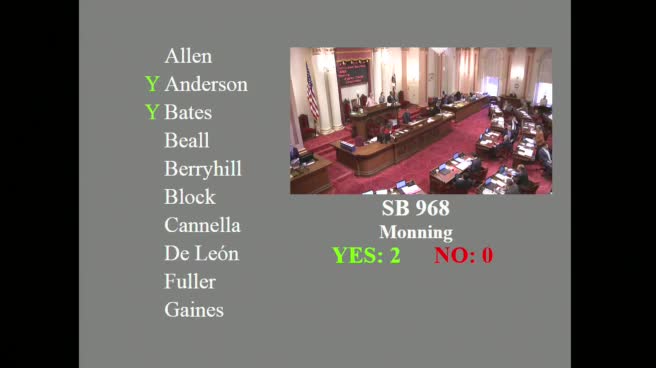


Bill Co-Author(s):