SB 1203: Retirement systems: joint powers authorities: benefit formulas.
- Session Year: 2015-2016
- House: Senate
- Latest Version Date: 2016-09-27
The California Public Employees Pension Reform Act of 2013 (PEPRA) requires a public retirement system, as defined, to modify its plan or plans to comply with the act and, among other provisions, establishes new retirement formulas that may not be exceeded by a public employer offering a defined benefit pension plan for employees first hired on or after January 1, 2013. Existing law, the Joint Exercise of Powers Act, generally authorizes 2 or more public agencies, by agreement, to jointly exercise any common power, which may include hiring employees and establishing retirement systems.
This bill would authorize a joint powers authority to offer defined benefit plans or formulas that are not PEPRA plans or formulas provided that the plans or formulas were those the employees received prior to the creation of the authority, the employees are not new members under PEPRA, and they are employed by the authority within 180 days, as specified.
The California Public Employees Pension Reform Act of 2013 (PEPRA) requires a public retirement system, as defined, to modify its plan or plans to comply with the act and, among other provisions, establishes new retirement formulas that may not be exceeded by a public employer offering a defined benefit pension plan for employees first hired on or after January 1, 2013. Existing law, the Joint Exercise of Powers Act, generally authorizes 2 or more public agencies, by agreement, to jointly exercise any common power, which may include hiring employees and establishing retirement systems.
This bill would require authorize a joint powers authority to offer defined benefit plans or formulas that are not PEPRA plans or formulas provided that the plans or formulas were those the employees received prior to the creation of the authority, the employees are not new members under PEPRA, and they are employed by the authority with 180 days, as specified.
The California Public Employees Pension Reform Act of 2013 (PEPRA) requires a public retirement system, as defined, to modify its plan or plans to comply with the act and, among other provisions, establishes new retirement formulas that may not be exceeded by a public employer offering a defined benefit pension plan for employees first hired on or after January 1, 2013. Existing law, the Joint Exercise of Powers Act, generally authorizes 2 or more public agencies, by agreement, to jointly exercise any common power, which may include hiring employees and establishing retirement systems.
This bill would require a joint powers authority to offer defined benefit plans or formulas that are not PEPRA plans or formulas provided that the plans or formulas were those the employees received prior to the creation of the authority, the employees are not new members under PEPRA, and they are employed by the authority with 180 days, as specified.
Under the Public Employees Medical and Hospital Care Act (PEMHCA), an uninsured surviving spouse or other eligible family member of a deceased firefighter or peace officer is eligible to enroll in a health benefit plan approved or maintained by the Board of Administration of the Public Employees Retirement System if the death of the firefighter or peace officer occurred as a result of injury or disease arising out of, and in the course of, the firefighters or peace officers official duties, as specified. Under PEMHCA, the employer of a deceased firefighter or peace officer is required to notify the board within 10 days of the death of the firefighter or peace officer if a spouse or a family member may be so eligible for enrollment.
This bill would require the employer to also provide the board with updated contact information of the spouse or family member. By requiring local government employers to provide this contact information, the bill would impose a state-mandated local program.
The California Constitution requires the state to reimburse local agencies and school districts for certain costs mandated by the state. Statutory provisions establish procedures for making that reimbursement.
This bill would provide that, if the Commission on State Mandates determines that the bill contains costs mandated by the state, reimbursement for those costs shall be made pursuant to these statutory provisions.
(a)A joint powers authority formed on or after January 1, 2013, and formed pursuant to the provisions of the Joint Exercise of Powers Act (Article 1 (commencing with Section 6500) of Chapter 5), where at least one member agency provided benefits on or before December 31, 2012, as described in subdivision (c) of Section 7522.02, may provide employees of that joint powers authority the defined benefit plan or formula that those employees received from their respective employers prior to the exercise of a common power where that employee was not a new member with that employer and subsequently is employed by the joint powers authority within 180 days of the member agency providing for the exercise of a common power.
(b)The formation of a joint powers authority on or after January 1, 2013, shall not act in a manner as to exempt a new employee or a new member, as defined by Section 7522.04, hired by that joint powers authority from the requirements of the Public Employees Pension Reform Act of 2013. New members may only participate in a defined benefit plan or formula that conforms to the requirements of the Public Employees Pension Reform Act of 2013.
(a)A joint powers authority formed on or after January 1, 2013, and formed pursuant to the provisions of the Joint Exercise of Powers Act (Article 1 (commencing with Section 6500) of Chapter 5), where at least one member agency provided benefits on or before December 31, 2012, as described in subdivision (c) of Section 7522.02, shall may provide employees of that joint powers authority the defined benefit plan or formula that those employees received from their respective employers prior to the exercise of a common power where that employee was not a new member with that employer and subsequently is employed by the joint powers authority within 180 days of the member agency providing for the exercise of a common power.
(b)The formation of a joint powers authority on or after January 1, 2013, shall not act in a manner as to exempt a new employee or a new member, as defined by Section 7522.04, hired by that joint powers authority from the requirements of the Public Employees Pension Reform Act of 2013. New members may only participate in a defined benefit plan or formula that conforms to the requirements of the Public Employees Pension Reform Act of 2013.
(a)A joint powers authority formed on or after January 1, 2013, and formed pursuant to the provisions of the Joint Exercise of Powers Act (Article 1 (commencing with Section 6500) of Chapter 5), where at least one member agency provided benefits on or before December 31, 2012, as described in subdivision (c) of Section 7522.02, shall provide employees of that joint powers authority the defined benefit plan or formula that those employees received from their respective employers prior to the exercise of a common power where that employee was not a new member with that employer and subsequently is employed by the joint powers authority within 180 days of the member agency providing for the exercise of a common power.
(b)The formation of a joint powers authority on or after January 1, 2013, shall not act in a manner as to exempt a new employee or a new member, as defined by Section 7522.04, hired by that joint powers authority from the requirements of the Public Employees Pension Reform Act of 2013. New members may only participate in a defined benefit plan or formula that conforms to the requirements of the Public Employees Pension Reform Act of 2013.
SECTION 1.Section 22820 of the Government Code is amended to read:22820.(a)Upon the death, on or after January 1, 2002, of a firefighter employed by a county, city, city and county, district, or other political subdivision of the state, a firefighter employed by the Department of Forestry and Fire Protection, a firefighter employed by the federal government who was a resident of this state and whose regular duty assignment was to perform firefighting services within this state, or a peace officer as defined in Section 830.1, 830.2, 830.3, 830.31, 830.32, 830.33, 830.34, 830.35, 830.36, 830.37, 830.38, 830.39, 830.4, 830.5, 830.55, or 830.6 of the Penal Code, if the death occurred as a result of injury or disease arising out of and in the course of his or her official duties, the surviving spouse or other eligible family member of the deceased firefighter or peace officer, if uninsured, is deemed to be an annuitant under Section 22760 for purposes of enrollment. All eligible family members of the deceased firefighter or peace officer who are uninsured may enroll in a health benefit plan of the surviving spouses choice. However, an unmarried child of the surviving spouse is not eligible to enroll in a health benefit plan under this section if the child was not a family member under Section 22775 and regulations pertinent thereto prior to the firefighters or peace officers date of death. The employer of the deceased firefighter or peace officer shall notify the board within 10 business days of the death of the employee if a spouse or family member may be eligible for enrollment in a health benefit plan under this section, and shall provide the board with updated contact information of the spouse or family member.
(b)Upon notification, the board shall promptly determine eligibility and shall forward to the eligible spouse or family member the materials necessary for enrollment. In the event of a dispute regarding whether a firefighters or peace officers death occurred as a result of injury or disease arising out of and in the course of his or her official duties as required under subdivision (a), that dispute shall be determined by the Workers Compensation Appeals Board, subject to the same procedures and standards applicable to hearings relating to claims for workers compensation benefits. The jurisdiction of the Workers Compensation Appeals Board under this section is limited to the sole issue of industrial causation and this section does not authorize the Workers Compensation Appeals Board to award costs against the system.
(c)(1)Notwithstanding any other provision of law, and except as otherwise provided in subdivision (d), the state shall pay the employer contribution required for enrollment under this part for the uninsured surviving spouse of a deceased firefighter or peace officer for life, and the other uninsured eligible family members of a deceased firefighter or peace officer, provided the family member meets the eligibility requirements of Section 22775 and regulations pertinent thereto.
(2)The contribution payable by the state for each uninsured surviving spouse and other uninsured eligible family members shall be adjusted annually and be equal to the amount specified in Section 22871.
(3)The states contribution under this section shall commence on the effective date of enrollment of the uninsured surviving spouse or other uninsured eligible family members. The contribution of each surviving spouse and eligible family member shall be the total cost per month of the benefit coverage afforded him or her under the plan less the portion contributed by the state pursuant to this section.
(d)The cancellation of coverage by an annuitant, as defined in this section, shall be final without option to reenroll, unless coverage is canceled because of enrollment in an insurance plan from another source.
(e)For purposes of this section, surviving spouse means a spouse who was married to the deceased firefighter or peace officer on the deceaseds date of death and either was married for a continuous period of at least one year prior to the date of death or was married to the deceased prior to the date the deceased firefighter or peace officer sustained the injury or disease resulting in death.
(f)For purposes of this section, uninsured means that the surviving spouse is not enrolled in an employer-sponsored health plan under which the employer contribution covers 100 percent of the cost of health care premiums.
(g)The board has no duty to identify, locate, or notify any surviving spouse or eligible family member who may be or may become eligible for benefits under this section.
SEC. 2.If the Commission on State Mandates determines that this act contains costs mandated by the state, reimbursement to local agencies and school districts for those costs shall be made pursuant to Part 7 (commencing with Section 17500) of Division 4 of Title 2 of the Government Code.
(a)Upon the death, on or after January 1, 2002, of a firefighter employed by a county, city, city and county, district, or other political subdivision of the state, a firefighter employed by the Department of Forestry and Fire Protection, a firefighter employed by the federal government who was a resident of this state and whose regular duty assignment was to perform firefighting services within this state, or a peace officer as defined in Section 830.1, 830.2, 830.3, 830.31, 830.32, 830.33, 830.34, 830.35, 830.36, 830.37, 830.38, 830.39, 830.4, 830.5, 830.55, or 830.6 of the Penal Code, if the death occurred as a result of injury or disease arising out of and in the course of his or her official duties, the surviving spouse or other eligible family member of the deceased firefighter or peace officer, if uninsured, is deemed to be an annuitant under Section 22760 for purposes of enrollment. All eligible family members of the deceased firefighter or peace officer who are uninsured may enroll in a health benefit plan of the surviving spouses choice. However, an unmarried child of the surviving spouse is not eligible to enroll in a health benefit plan under this section if the child was not a family member under Section 22775 and regulations pertinent thereto prior to the firefighters or peace officers date of death. The employer of the deceased firefighter or peace officer shall notify the board within 10 business days of the death of the employee if a spouse or family member may be eligible for enrollment in a health benefit plan under this section. section, and shall provide the board with updated contact information of the spouse or family member.
(b)Upon notification, the board shall promptly determine eligibility and shall forward to the eligible spouse or family member the materials necessary for enrollment. In the event of a dispute regarding whether a firefighters or peace officers death occurred as a result of injury or disease arising out of and in the course of his or her official duties as required under subdivision (a), that dispute shall be determined by the Workers Compensation Appeals Board, subject to the same procedures and standards applicable to hearings relating to claims for workers compensation benefits. The jurisdiction of the Workers Compensation Appeals Board under this section is limited to the sole issue of industrial causation and this section does not authorize the Workers Compensation Appeals Board to award costs against the system.
(c)(1)Notwithstanding any other provision of law, and except as otherwise provided in subdivision (d), the state shall pay the employer contribution required for enrollment under this part for the uninsured surviving spouse of a deceased firefighter or peace officer for life, and the other uninsured eligible family members of a deceased firefighter or peace officer, provided the family member meets the eligibility requirements of Section 22775 and regulations pertinent thereto.
(2)The contribution payable by the state for each uninsured surviving spouse and other uninsured eligible family members shall be adjusted annually and be equal to the amount specified in Section 22871.
(3)The states contribution under this section shall commence on the effective date of enrollment of the uninsured surviving spouse or other uninsured eligible family members. The contribution of each surviving spouse and eligible family member shall be the total cost per month of the benefit coverage afforded him or her under the plan less the portion contributed by the state pursuant to this section.
(d)The cancellation of coverage by an annuitant, as defined in this section, shall be final without option to reenroll, unless coverage is canceled because of enrollment in an insurance plan from another source.
(e)For purposes of this section, surviving spouse means a spouse who was married to the deceased firefighter or peace officer on the deceaseds date of death and either was married for a continuous period of at least one year prior to the date of death or was married to the deceased prior to the date the deceased firefighter or peace officer sustained the injury or disease resulting in death.
(f)For purposes of this section, uninsured means that the surviving spouse is not enrolled in an employer-sponsored health plan under which the employer contribution covers 100 percent of the cost of health care premiums.
(g)The board has no duty to identify, locate, or notify any surviving spouse or eligible family member who may be or may become eligible for benefits under this section.
SEC. 2.If the Commission on State Mandates determines that this act contains costs mandated by the state, reimbursement to local agencies and school districts for those costs shall be made pursuant to Part 7 (commencing with Section 17500) of Division 4 of Title 2 of the Government Code.
|
Date
|
Status
|
|---|---|
| May 27, 2016 | Read second time. Ordered to third reading. |
| Aug 24, 2016 | Enrolled and presented to the Governor at 5 p.m. |
| Aug 19, 2016 | In Senate. Ordered to engrossing and enrolling. |
| Aug 18, 2016 | Read third time. Passed. (Ayes 74. Noes 1. Page 5922.) Ordered to the Senate. |
| Aug 18, 2016 | Read third time. Passed. Ordered to the Senate. |
| Aug 15, 2016 | Read second time. Ordered to third reading. |
| Aug 12, 2016 | From committee: Do pass. (Ayes 18. Noes 1.) (August 11). |
| Jun 29, 2016 | June 29 set for first hearing. Placed on APPR. suspense file. |
| Jun 22, 2016 | From committee: Do pass and re-refer to Com. on APPR. (Ayes 6. Noes 0.) (June 22). Re-referred to Com. on APPR. |
| Jun 6, 2016 | Referred to Com. on P.E., R., & S.S. |
| Jun 1, 2016 | In Assembly. Read first time. Held at Desk. |
| May 31, 2016 | Read third time. Passed. (Ayes 29. Noes 4.) Ordered to the Assembly. |
| May 31, 2016 | Read third time. Passed. (Ayes 29. Noes 4. Page 4048.) Ordered to the Assembly. |
| Feb 18, 2016 | Introduced. Read first time. To Com. on RLS. for assignment. To print. |
| May 27, 2016 | From committee: Do pass. (Ayes 5. Noes 0.) (May 27). |
| May 27, 2016 | From committee: Do pass. (Ayes 5. Noes 0. Page 4006.) (May 27). |
| May 20, 2016 | Set for hearing May 27. |
| Apr 25, 2016 | April 25 hearing: Placed on APPR. suspense file. |
| Apr 15, 2016 | Set for hearing April 25. |
| Apr 13, 2016 | Read second time and amended. Re-referred to Com. on APPR. |
| Apr 12, 2016 | From committee: Do pass as amended and re-refer to Com. on APPR. (Ayes 3. Noes 0.) (April 11). |
| Apr 12, 2016 | From committee: Do pass as amended and re-refer to Com. on APPR. (Ayes 3. Noes 0. Page 3497.) (April 11). |
| Apr 6, 2016 | Set for hearing April 11. |
| Mar 28, 2016 | From committee with author's amendments. Read second time and amended. Re-referred to Com. on P.E. & R. |
| Mar 3, 2016 | Referred to Com. on P.E. & R. |
| Feb 19, 2016 | From printer. May be acted upon on or after March 20. |
|
Date
|
Description
|
Location
|
Votes
|
|
|---|---|---|---|---|
| Aug 18, 2016 | SB 1203 Hertzberg Senate Third Reading By BONTA | Assembly Floor |
Passed |
|
| Aug 11, 2016 | Do pass. | Assembly Standing Committee on Appropriations |
Passed |
|
| Jun 22, 2016 | Do pass and be re-referred to the Committee on [Appropriations] | Assembly Standing Committee on Public Employees, Retirement, and Social Security |
Passed |
|
| May 31, 2016 | Senate 3rd Reading SB1203 Hertzberg | Senate Floor |
Passed |
|
| May 27, 2016 | Do pass | Senate Standing Committee on Appropriations |
Passed |
|
| Apr 25, 2016 | Placed on suspense file | Senate Standing Committee on Appropriations |
Passed |
|
| Apr 11, 2016 | Do pass as amended, but first amend, and re-refer to the Committee on [Appropriations] | Senate Standing Committee on Public Employment and Retirement |
Passed |
This list shows positions taken on this bill by organizations on the date displayed, which is linked to the original source.
Positions by individuals are not included.
|
Organization
|
Position
|
Date
|
|---|---|---|
| California Professional Firefighters | ** Support | Aug 18, 2016 |
| California State Firefighters' Association | ** Support | May 31, 2016 |
| California Statewide Law Enforcement Association | ** Support | May 31, 2016 |
| LIUNA Locals 777 & 792 | ** Support | Aug 18, 2016 |
| Orange County Professional Firefighters Association, Local 3631 | ** Support | Aug 18, 2016 |
SENATE THIRD READING
STR Bill Id:SB 1203
Author:(Hertzberg)
As Amended Ver:April 13, 2016
Majority vote
SENATE VOTE: 29-4
Committee | Votes | Ayes | Noes |
Public Employees | 6-0 | Waldron, Cooley, Cooper, Cristina Garcia, O'Donnell, Wagner | |
Appropriations | 18-1 | Gonzalez, Bigelow, Bloom, Bonilla, Bonta, Calderon, Daly, Eggman, Eduardo Garcia, Holden, Jones, Obernolte, Quirk, Santiago, Wagner, Weber, Wood, McCarty | Gallagher |
SUMMARY: Authorizes a joint powers authority (JPA) formed on or after January 1, 2013, as specified, to provide employees who transfer to the JPA the same defined benefit plan or formula that they received from their respective employer prior to the JPAs formation rather than the benefit required under the California Public Employees' Pension Reform Act of 2013 (PEPRA). Specifically, this bill:
- Allows a JPA formed on or after January 1, 2013, as specified, to provide employees the defined benefit plan or formula that the employees received from their respective employers prior to the employers forming the JPA.
- Provides that the employee must not be a new member with that employer and must be employed by the JPA within 180 days of the formation of the JPA.
- Prohibits the formation of a JPA on or after January 1, 2013, in a manner that exempts a new member from the requirements of PEPRA. New members may only participate in a plan that conforms to the requirements of PEPRA.
EXISTING LAW:
- Authorizes, under the Joint Exercise of Powers Act, public agencies to enter into agreements to jointly exercise any power common to the contracting parties, including providing for the creation of an agency or entity that is separate from the parties to the agreement and is responsible for the administration of the agreement.
- Allows local public employers forming a JPA to contract with the California Public Employees' Retirement System (CalPERS) to offer retirement benefits to their employees if the JPA meets the federal definition of a governmental plan. The JPA is then a new contracting employer in the retirement system.
- Establishes, under PEPRA, a new retirement plan formula and requires public employers to offer the PEPRA formula to new employees first hired into public service after January 1, 2013, as defined.
- Requires pre-PEPRA members who were first hired into public service prior to January 1, 2013, and who move between public employers within a 180-day time period, to be grandfathered under pre-PEPRA retirement formulas and eligible to receive the benefit plans offered to employees of the public employer on December 31, 2012 (i.e., the benefit plan in place prior to PEPRA implementation).
- Authorizes a JPA formed by the cities of Brea and Fullerton on or after January 1, 2013, to provide employees who transfer to the JPA from Brea or Fullerton with the "classic" retirement formulas that the employees were receiving from their respective employers within 180 days of the cities providing for the exercise of the common power, to which the employee was associated, by the JPA.
- Specifies that on or before January 1, 2017, up to three cities in Orange County that are contiguous with Brea or Fullerton may join the JPA and extend the same protections, with regard to classic retirement formulas, to their transferred employees and prohibits the formation of the JPA in a manner that would exempt a new employee or member from the requirements of PEPRA. New members may only participate in a plan that conforms to the requirements of PEPRA.
FISCAL EFFECT: According to the Assembly Appropriations Committee, one-time special fund costs to CalPERS of approximately $200,000 for implementation and systems changes.
COMMENTS: According to the sponsor of the bill, the California Professional Firefighters, "For some communities, the most efficient, cost-effective model for providing fire protection and emergency medical services in the wake of the Great Recession is to form a JPA so that local agencies can integrate their respective services in those jurisdictions and in doing so, achieve economies of scale and cost savings. However, one barrier to these consolidations has arisen and created a significant obstacle to full integration of fire protection and EMS [emergency management system] services in this regard because of the inability to transfer existing, classic employees to a newly formed JPA without an interruption or loss of those employees' classic retirement formulas or benefit plans.
"PEPRA allows classic employees (employees hired on or before January 1, 2013) who move between public employers within a 180-day window to be grandfathered under pre-PEPRA retirement formulas. Understanding this, PEPRA further specifies that a classic employee who moves between public employers within a 180-day period will receive the benefit formula that the employer was offering on December 31, 2012. Because PEPRA took effect on January 1, 2013, a JPA formed after that date is considered a new employer and therefore, has no classic retirement formula or benefit to offer its classic employees.
"Realizing the aforementioned unintended consequence of PEPRA, a handful of local agency employers and their respective employee organizations collectively seeking to form JPAs in recent years, have since pursued special legislation authorizing PEPRA exceptions specific to their agencies. Therefore, authorizing legislation applicable statewide, which remedies the aforementioned unintended consequence is needed so as to alleviate not only the existing burden that falls on individual agencies to introduce authorizing bills specific to their respective, proposed JPA agreements, but also to eliminate the cost incurred by taxpayers and time delays for implementation each time an agency-specific bill is introduced.
"Furthermore, SB 1203 aids local public agencies in their efforts to effectively recruit and retain the most experienced, qualified public safety professionals. Indeed, by providing equity for all seasoned and veteran firefighters and other public workers who wish to continue to serve in their communities without being forced to consider transferring to another public agency, SB 1203 advances the public's interest. And, when lives are on the line, every second counts. SB 1203 ultimately also allows local public agencies to achieve economies of scale for the taxpayers, which in turn translates into better response times."
Related/Prior Legislation
SB 24 (Hill) of the current legislative session, currently in the Assembly Public Employees, Retirement, and Social Security Committee, authorizes a JPA formed by the Cities of Belmont, Foster City, and San Mateo to provide the JPA employees a defined benefit plan or formula that those employees received as classic CalPERS members from their employment with the cities. The language of SB 24 is substantially the same as statutory language enacted for the Cities of Fullerton and Brea (SB 1251 (Huff), Chapter 757, Statutes of 2014).
SB 354 (Huff), Chapter 158, Statutes of 2015, clarified the time period during which a CalPERS classic member employed in the Cities of Brea and Fullerton may transfer to a JPA formed by those two cites and retain classic benefit formulas received prior to the transfer.
SB 1251 (Huff), Chapter 757, Statutes of 2014, created an exemption in PEPRA to allow classic employees transferred to a new JPA formed by the Cities of Brea and Fullerton after January 1, 2013, to retain their classic retirement benefits following transfer to and employment in the JPA.
AB 340 (Furutani), Chapter 296, Statutes of 2012, enacted PEPRA, effective January 1, 2013, which implemented statewide reform of pension plans and related public employment benefits.
Analysis Prepared by: Karon Green / P.E.,R., & S.S. / (916) 319-3957 FN: 0004000
Date of Hearing: June 29, 2016
ASSEMBLY COMMITTEE ON APPROPRIATIONS
Lorena Gonzalez, Chair
SBPCA Bill Id:SB 1203
Author:(Hertzberg) – As Amended Ver:April 13, 2016
Policy Committee: | Public Employees, Retirement/Soc Sec | Vote: | 6 - 0 |
|
| ||
|
|
Urgency: No State Mandated Local Program: No Reimbursable: No
SUMMARY:
This bill authorizes a joint powers authority (JPA) formed on or after January 1, 2013, to provide employees who transfer to the JPA the same defined benefit plan or formula that they received from their respective employer prior to the JPA’s formation rather than the benefit required under the California Public Employees' Pension Reform Act of 2013 (PEPRA).
FISCAL EFFECT:
One-time special fund costs to the California Public Employees' Retirement System (CalPERS) of approximately $200,000 for implementation and systems changes.
COMMENTS:
- JPA and PEPRA. A JPA is the authority created by an agreement between multiple public agencies to exercise powers common to each of them for the purpose of accomplishing specific common goals. A JPA can be used by agencies to share regional responsibilities, such as fire services.
Under PEPRA, new public agencies formed after January 1, 2013 must use the new pension formulas for their employees. As a result, current employees cannot be transferred into a JPA without losing their benefits, even if no lapse in public service or change in duties and responsibilities occur.
- Purpose. This bill is intended to allow local agencies to leverage the cost benefits and efficiency advantages JPAs can offer without prejudice to existing employee pensions.
- Related legislation. SB 24 (Hill) of 2016, currently in this committee, authorizes a JPA formed by the Cities of Belmont, Foster City, and San Mateo to provide the JPA employees a defined benefit plan or formula that those employees received as classic CalPERS members from their employment with the cities.
Analysis Prepared by: Luke Reidenbach / APPR. / (916) 319-2081
Office of Senate Floor Analyses (916) 651-1520 Fax: (916) 327-4478 | SB |
THIRD READING
Bill No: SB 1203
:
SENATE PUBLIC EMP. & RET. COMMITTEE: 3-0, 4/11/16
AYES: Pan, Beall, Hall
NO VOTE RECORDED: Morrell, Moorlach
SENATE APPROPRIATIONS COMMITTEE: 5-0, 5/27/16
AYES: Lara, Beall, Hill, McGuire, Mendoza
NO VOTE RECORDED: Bates, Nielsen
SOURCE: California Professional Firefighters
DIGEST: This bill requires that, in the case of a joint powers authority (JPA) formed on or after January 1, 2013 that contracts with the California Public Employees’ Retirement System (CalPERS), any employee moving from employment with a public agency forming the JPA to employment with the JPA be provided the same defined benefit plan or formula that they had as an employee of the public agency on or before December 31, 2012.
ANALYSIS:
Existing law:
- Authorizes, under the Joint Exercise of Powers Act, public agencies to enter into agreements to jointly exercise any power common to the contracting parties, including providing for the creation of an agency or entity that is separate from the parties to the agreement and is responsible for the administration of the agreement.
- Allows local public employers forming a JPA to contract with CalPERS to offer retirement benefits to their employees if the JPA meets the federal definition of a governmental plan. The JPA is then a new contracting employer in the retirement system.
- Establishes, under the Public Employees’ Pension Reform Act (PEPRA), a new retirement plan formula and requires public employers to offer the PEPRA formula to new employees first hired into public service after January 1, 2013, as defined.
- Requires pre-PEPRA members—referred to as “classic” members by CalPERS—who were first hired into public service prior to January 1, 2013, and who move between public employers within a 180-day time period, to be grandfathered under pre-PEPRA retirement formulas and eligible to receive the benefit plans offered to employees of the public employer on December 31, 2012 (i.e., the benefit plan in place prior to PEPRA implementation).
- Allows a JPA formed by the Cities of Brea and Fullerton on or after January 1, 2013, to provide employees who transfer to the JPA from Brea or Fullerton with the “classic” retirement formulas that the employees were receiving on December 31, 2012, from their respective employers.
- Clarifies that the formation of the JPA by Brea and Fullerton shall not act in a manner so as to exempt a member from PEPRA who would otherwise be subject to PEPRA.
This bill requires the following when public agencies form a JPA on or after January 1, 2013, and contract with CalPERS for benefit coverage for employees of the JPA:
- Employers that form the JPA, if they provided employee benefits on or before December 31, 2012, must provide classic employees who transfer to the JPA with continuance of the same benefit plans or formulas that those employees received from their respective employers on or before December 31, 2012.
- In order to receive continuance of the classic member benefits, the classic employees must transfer between the member agency and the JPA within 180 days of the member agency providing for the exercise of the common power.
- The formation of a JPA on or after January 1, 2013, may not act in a manner to exempt someone from PEPRA who would otherwise have been subject to PEPRA. Employees who became new members of CalPERS after January 1, 2013, must be subject to PEPRA.
Background
PEPRA allows classic employees who move between public employers to be grandfathered under pre-PEPRA retirement formulas. Since employers, over time, could have more than one retirement formula for specific classes of employees, PEPRA further specifies that a classic employee who moves between public employers within a 6-month period will receive the benefit formula that the employer was offering on December 31, 2012 (i.e., one day prior to implementation of PEPRA). A JPA formed after that date would be a new employer in CalPERS and would therefore have no classic formula to offer classic employees.
Related/Prior Legislation
SB 24 (Hill, 2016), currently in the Assembly Public Employment and Social Security Committee, authorizes a JPA formed by the Cities of Belmont, Foster City, and San Mateo to provide the JPA employees a defined benefit plan or formula that those employees received as classic CalPERS members from their employment with the cities. The language of SB 24 is substantially the same as statutory language enacted for the Cities of Fullerton and Brea (SB 1251, Huff, Chapter 757, Statutes of 2014).
SB 354 (Huff, Chapter 158, Statutes of 2015) clarified the time period during which a CalPERS classic member employed in the Cities of Brea and Fullerton may transfer to a JPA formed by those two cites and retain classic benefit formulas received prior to the transfer.
SB 1251 (Huff, Chapter 757, Statutes of 2014) created an exemption in PEPRA to allow classic employees transferred to a new JPA formed by the Cities of Brea and Fullerton after January 1, 2013, to retain their classic retirement benefits following transfer to and employment in the JPA.
AB 340 (Furutani, Chapter 296, Statutes of 2012) enacted PEPRA, effective January 1, 2013, which implemented statewide reform of pension plans and related public employment benefits.
FISCAL EFFECT: Appropriation: Fiscal Com.: Local:
According to the Senate Appropriations Committee, CalPERS estimates that it would incur one-time costs of $200,000 (special fund) to implement the provisions of the bill. Specifically, the cost would apply to “information technology changes in order to provide each JPA employee the same benefit formula as that employee had with one of the cities forming the JPA.”
California Professional Firefighters (source)
California State Firefighters’ Association
California Statewide Law Enforcement Association
Laborers’ International Union of North America, Local 777
Laborers’ International Union of North America, Local 792
Orange County Professional Firefighters Association, Local 3631
OPPOSITION: (Verified 5/27/16)
None received
ARGUMENTS IN SUPPORT: From a letter from the California Professional Firefighters:
The Great Recession forced local public agencies up and down our state to implement hard-dollar cuts in core public services, including fire protection, as a result of severely squeezed budgets. Over the last few years in many of our communities, fire stations have been closed, or rolling “brown-outs” have been implemented, in an effort to save money. Firefighters have been laid off, and a whole host of other safety-net services have been eliminated or severely pared back.
For some communities, the most efficient, cost-effective model for providing fire protection and emergency medical services in the wake of the Great Recession is to form a JPA so that local agencies can integrate their respective services in those jurisdictions and in doing so, achieve economies of scale and cost savings. However, one barrier to these consolidations has arisen and created a significant obstacle to full integration of fire protection and EMS services in this regard because of the inability to transfer existing, classic employees to a newly formed JPA without an interruption or loss of those employees’ classic retirement formulas or benefit plans.
Therefore, legislation applicable statewide, which remedies the aforementioned unintended consequence, is needed so as to alleviate not only the existing burden that falls on individual agencies to introduce authorizing bills specific to their respective, proposed JPA agreements, but also to eliminate the cost incurred by taxpayers and time delays for implementation each time an agency-specific bill is introduced.
Furthermore, SB 1203 aids local public agencies in their efforts to effectively recruit and retain the most experienced, qualified public safety professionals. Indeed, by providing equity for all seasoned and veteran firefighters and other public workers who wish to continue to serve in their communities without being forced to consider transferring to another public agency, SB 1203 advances the public’s interest. And, when lives are on the line, every second counts. SB 1203 ultimately also allows local public agencies to achieve economies of scale for the taxpayers, which in turn translates into better response times.
5/28/16 16:46:02
**** END ****
SENATE COMMITTEE ON APPROPRIATIONS
Senator Ricardo Lara, Chair
2015 - 2016 Regular Session
SB 1203 (Hertzberg) - Retirement systems: joint powers authorities: benefit formulas
Version: April 13, 2016 | Policy Vote: P.E. & R. 3 - 0 |
Urgency: No | Mandate: No |
Hearing Date: April 25, 2016 | Consultant: Robert Ingenito |
This bill meets the criteria for referral to the Suspense File.
Bill Summary: With respect to a joint powers authority (JPA) formed on or after January 1, 2013 that contracts with the California Public Employees’ Retirement System (CalPERS), this bill would authorize that any employees moving from employment with a public agency forming the JPA to employment with the JPA be provided the same defined benefit plan or formula that they had as an employee of the public agency on or before December 31, 2012.
Fiscal Impact: CalPERS estimates that it would incur one-time costs of $200,000 (special fund) to implement the provisions of the bill.
Background: Current law authorizes public agencies to enter into agreements to jointly exercise any power common to the contracting parties, including providing for the creation of an agency or entity (a Joint Powers Authority, or JPA) that is separate from the parties to the agreement and is responsible for the administration of the agreement. The JPA can then contract with CalPERS to offer retirement benefits if it meets certain requirements, and becomes a contracting employer in the retirement system.
Current law, the Public Employees’ Pension Reform Act of 2013 (PEPRA), establishes a new retirement plan formula and requires public employers to offer the PEPRA formula to new employees first hired into public service after January 1, 2013, as defined. Pre-PEPRA members (also known as “classic” members) who were first hired into public service prior to January 1, 2013, and who move between public employers within a 180-day time period, are grandfathered under pre-PEPRA retirement formulas and consequently are eligible to receive the benefit plans offered to employees of the public employer on December 31, 2012 (i.e., the benefit plan in place prior to PEPRA implementation). Since employers, over time, could have more than one retirement formula for specific classes of employees, PEPRA further specifies that a classic employee who moves between public employers within a 180-day period will receive the benefit formula that the employer was offering on December 31, 2012 (i.e., one day prior to implementation of PEPRA). A JPA formed after that date would be a new employer in CalPERS and would therefore have no classic formula to offer classic employees.
Bill Summary: This bill would authorize that when public agencies form a JPA on or after January 1, 2013, and contract with CalPERS for benefit coverage for its employees, employers that form the JPA, if they provided employee benefits on or before December 31, 2012, must provide classic employees who transfer to the JPA with continuance of the same benefit plans or formulas that those employees received from their respective employers on or before December 31, 2012, as specified.
The formation of a JPA on or after January 1, 2013, may not act in a manner to exempt someone from PEPRA who would otherwise have been subject to it. Employees who became new members of CalPERS after January 1, 2013, must be subject to PEPRA.
Related Legislation:
- SB 24 (Hill, 2016), currently in the Assembly Rules Committee, authorizes a JPA formed by the Cities of Belmont, Foster City, and San Mateo to provide the JPA employees a defined benefit plan or formula that those employees received as classic CalPERS members from their employment with the cities. The language of SB 24 is substantially the same as statutory language enacted for the Cities of Fullerton and Brea (SB 1251, 2014).
- SB 354 (Huff, Chapter 158, Statutes of 2015) clarified the time period during which a CalPERS “classic” member who is employed in the cities of Brea and Fullerton can transfer to a Joint Powers Authority (JPA) formed by those two cites and retain classic benefit formulas received prior to the transfer.
- SB 1251 (Huff, Chapter 757, Statutes of 2014) created the current exemption in PEPRA to allow classic employees transferred to a new JPA formed by the cities of Brea and Fullerton after January 1, 2013, to retain their classic retirement benefits following transfer to and employment in the JPA.
Staff Comments: CalPERS estimates that the bill would result in a one-time cost of about $200,000 for information technology changes in order to provide each JPA employee the same benefit formula as that employee had with one of the cities forming the JPA.
-- END --
SENATE COMMITTEE ON
PUBLIC EMPLOYMENT AND RETIREMENT
Dr. Richard Pan, Chair
2015 - 2016 Regular
Bill No: SB 1203 Hearing Date: 4/11/16
Author: | Hertzberg | ||
Version: | 3/28/16 As amended | ||
Urgency: | No | Fiscal: | Yes |
Consultant: | Pamela Schneider | ||
Subject: Retirement systems: joint powers authorities: benefit formulas
SOURCE: California Professional Firefighters
DIGEST: In the case of a joint powers authority (JPA) formed on or after January 1, 2013 that contracts with the California Public Employees’ Retirement System (CalPERS), this bill requires that any employees moving from employment with a public agency forming the JPA to employment with the JPA be provided the same defined benefit plan or formula that they had as an employee of the public agency on or before December 31, 2012.
ANALYSIS:
Existing law:
- Authorizes, under the Joint Exercise of Powers Act, public agencies to enter into agreements to jointly exercise any power common to the contracting parties, including providing for the creation of an agency or entity that is separate from the parties to the agreement and is responsible for the administration of the agreement.
- Allows local public employers forming a JPA to contract with the California Public Employees’ Retirement System (CalPERS) to offer retirement benefits to their employees if the JPA meets the federal definition of a governmental plan. The JPA is then a new contracting employer in the retirement system.
- Establishes, under the Public Employees’ Pension Reform Act (PEPRA) a new retirement plan formula and requires public employers to offer the PEPRA formula to new employees first hired into public service after January 1, 2013, as defined.
- Requires pre-PEPRA members—referred to as “classic” members by CalPERS—who were first hired into public service prior to January 1, 2013, and who move between public employers within a 180-day time period, to be grandfathered under pre-PEPRA retirement formulas and eligible to receive the benefit plans offered to employees of the public employer on December 31, 2012 (i.e., the benefit plan in place prior to PEPRA implementation).
- Allows a JPA formed by the cities of Brea and Fullerton on or after January 1, 2013, to provide employees who transfer to the JPA from Brea or Fullerton with the “classic” retirement formulas that the employees were receiving on December 31, 2012, from their respective employers.
- Clarifies that the formation of the JPA by Brea and Fullerton shall not act in a manner so as to exempt a member from PEPRA who would otherwise be subject to PEPRA.
This bill:
Requires the following when public agencies form a JPA on or after January 1, 2013, and contract with CalPERS for benefit coverage for employees of the JPA:
- Employers that form the joint powers authority, if they provided employee benefits on or before December 31, 2012, must provide classic employees who transfer to the JPA with continuance of the same benefit plans or formulas that those employees received from their respective employers on or before December 31, 2012.
- In order to receive continuance of the classic member benefits, the classic employees must transfer between the member agency and the JPA within 180 days of the member agency providing for the exercise of the common power.
- The formation of a JPA on or after January 1, 2013, may not act in a manner to exempt someone from PEPRA who would otherwise have been subject to PEPRA. Employees who became new members of CalPERS after January 1, 2013, must be subject to PEPRA.
Background
PEPRA allows classic employees who move between public employers to be grandfathered under pre-PEPRA retirement formulas. Since employers, over time, could have more than one retirement formula for specific classes of employees, PEPRA further specifies that a classic employee who moves between public employers within a 6 month period will receive the benefit formula that the employer was offering on December 31, 2012 (i.e., one day prior to implementation of PEPRA). A JPA formed after that date would be a new employer in CalPERS and would therefore have no classic formula to offer classic employees.
Related/Prior Legislation
SB 24 (Hill, 2016), currently in Assembly Rules Committee, authorizes a JPA formed by the Cities of Belmont, Foster City, and San Mateo to provide the JPA employees a defined benefit plan or formula that those employees received as classic CalPERS members from their employment with the cities. The language of SB 24 is substantially the same as statutory language enacted for the Cities of Fullerton and Brea (SB 1251, 2014).
SB 354 (Huff, Chapter 158, Statutes of 2015) clarified the time period during which a CalPERS classic member employed in the cities of Brea and Fullerton may transfer to a Joint Powers Authority (JPA) formed by those two cites and retain classic benefit formulas received prior to the transfer.
SB 1251 (Huff, Chapter 757, Statutes of 2014) created an exemption in PEPRA to allow classic employees transferred to a new JPA formed by the cities of Brea and Fullerton after January 1, 2013, to retain their classic retirement benefits following transfer to and employment in the JPA.
AB 340 (Furutani, Chapter 296, Statutes of 2012) enacted PEPRA, effective January 1, 2013, which implemented statewide reform of pension plans and related public employment benefits.
FISCAL EFFECT: Appropriation: No Fiscal Com.: Yes Local: Yes
SUPPORT:
California Professional Firefighters (source)
California State Firefighters’ Association
Laborers’ International Union of North America, Local 777
Laborers’ International Union of North America, Local 792
Orange County Professional Firefighters Association, Local 3631
OPPOSITION:
None received
ARGUMENTS IN SUPPORT:
From a letter from California Professional Firefighters:
The Great Recession forced local public agencies up and down our state to implement hard-dollar cuts in core public services, including fire protection, as a result of severely squeezed budgets. Over the last few years in many of our communities, fire stations have been closed, or rolling “brown-outs” have been implemented, in an effort to save money. Firefighters have been laid off, and a whole host of other safety-net services have been eliminated or severely pared back.
For some communities, the most efficient, cost-effective model for providing fire protection and emergency medical services in the wake of the Great Recession is to form a JPA so that local agencies can integrate their respective services in those jurisdictions and in doing so, achieve economies of scale and cost savings. However, one barrier to these consolidations has arisen and created a significant obstacle to full integration of fire protection and EMS services in this regard because of the inability to transfer existing, classic employees to a newly formed JPA without an interruption or loss of those employees’ classic retirement formulas or benefit plans.
Therefore, legislation applicable statewide, which remedies the aforementioned unintended consequence, is needed so as to alleviate not only the existing burden that falls on individual agencies to introduce authorizing bills specific to their respective, proposed JPA agreements, but also to eliminate the cost incurred by taxpayers and time delays for implementation each time an agency-specific bill is introduced.
Furthermore, SB 1203 aids local public agencies in their efforts to effectively recruit and retain the most experienced, qualified public safety professionals. Indeed, by providing equity for all seasoned and veteran firefighters and other public workers who wish to continue to serve in their communities without being forced to consider transferring to another public agency, SB 1203 advances the public’s interest. And, when lives are on the line, every second counts. SB 1203 ultimately also allows local public agencies to achieve economies of scale for the taxpayers, which in turn translates into better response times.
Discussed in Hearing
 1MIN
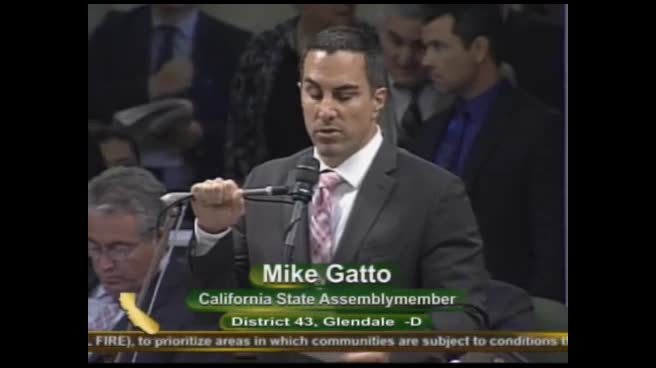
Assembly Floor
 2MIN
Senate Floor
 4MIN
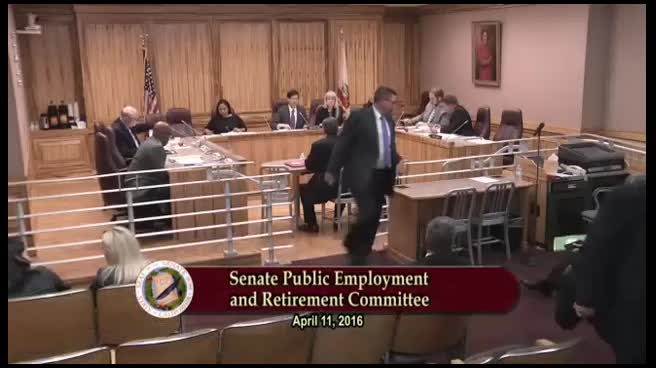
Senate Standing Committee on Public Employment and Retirement
Bill Author

Bill Co-Author(s):