SB 1212: “2-1-1” information and referral network.
- Session Year: 2015-2016
- House: Senate
- Latest Version Date: 2016-09-29
Under existing law, the Public Utilities Commission has regulatory authority over public utilities, including telephone corporations. The Federal Communications Commission (FCC), pursuant to its existing authority over the North American Numbering Plan, has established several abbreviated dialing codes, including designating the number 9-1-1 for persons to dial to obtain emergency services, designating the number 3-1-1 for persons to dial for nonemergency police assistance, and designating the number 2-1-1 for persons to dial to obtain information about, and referral to, community social services. Pursuant to authority delegated by the FCC to state regulatory bodies and its existing statutory authority, the Public Utilities Commission has established procedures for implementing 2-1-1 dialing in California.
This bill would state the intent of the Legislature to facilitate the expansion of 2-1-1 services into those counties in California where they are lacking and to support a comprehensive statewide database that will connect all callers to information and referrals they need. The bill would additionally state the intent of the Legislature to facilitate access to disaster preparedness, response, and recovery information, and referral services, uniformly in the state, especially in hard-to-serve rural areas, through a universally available telephone service.
Existing law requires the commission to develop, implement, and administer a program to advance universal service by providing discounted rates to qualifying schools, community colleges, libraries, hospitals, health clinics, and community organizations. Existing law requires that all revenues collected by telephone corporations in rates authorized by the commission to fund this program be deposited in the California Teleconnect Fund Administrative Committee Fund. Existing law provides that moneys in the fund are held in trust and may be expended only upon appropriation in the annual Budget Act or upon supplemental appropriation and requires that all moneys appropriated to the commission from the fund be used exclusively for the program.
If the commission determines that doing so is an appropriate use of funds collected from ratepayers, the bill would, until January 1, 2023, authorize the commission to expend up to $1,500,000 from the fund to help close 2-1-1 service gaps in counties lacking access to disaster preparedness, response, and recovery information and referral services, where technically feasible, through available 2-1-1 service.
Under existing law, the Public Utilities Commission has regulatory authority over public utilities, including telephone corporations. The Federal Communications Commission (FCC), pursuant to its existing authority over the North American Numbering Plan, has established several abbreviated dialing codes, including designating the number 9-1-1 for persons to dial to obtain emergency services, designating the number 3-1-1 for persons to dial for nonemergency police assistance, and designating the number 2-1-1 for persons to dial to obtain information about, and referral to, community social services. Pursuant to authority delegated by the FCC to state regulatory bodies and its existing statutory authority, the Public Utilities Commission has established procedures for implementing 2-1-1 dialing in California.
This bill would state the intent of the Legislature to facilitate the expansion of 2-1-1 services into those counties in California where they are lacking and to support a comprehensive statewide database that will connect all callers to information and referrals they need. The bill would additionally state the intent of the Legislature to facilitate access to disaster preparedness, response, and recovery information, and referral services, uniformly in the state, especially in hard-to-serve rural areas, through a universally available telephone service.
Existing law requires the commission to develop, implement, and administer a program to advance universal service by providing discounted rates to qualifying schools, community colleges, libraries, hospitals, health clinics, and community organizations. Existing law requires that all revenues collected by telephone corporations in rates authorized by the commission to fund this program be deposited in the California Teleconnect Fund Administrative Committee Fund. Existing law provides that moneys in the fund are held in trust and may be expended only upon appropriation in the annual Budget Act or upon supplemental appropriation and requires that all moneys appropriated to the commission from the fund be used exclusively for the program.
This
If the commission determines that doing so is an appropriate use of funds collected from ratepayers, the bill would, until January 1, 2023, authorize the commission to expend up to $1,500,000 from the fund to help close 2-1-1 service gaps in counties lacking access to disaster preparedness, response, and recovery information and referral services, where technically feasible, through available 2-1-1 service.
Under existing law, the Public Utilities Commission has regulatory authority over public utilities, including telephone corporations. The Federal Communications Commission (FCC), pursuant to its existing authority over the North American Numbering Plan, has established several abbreviated dialing codes, including designating the number 9-1-1 for persons to dial to obtain emergency services, designating the number 3-1-1 for persons to dial for nonemergency police assistance, and designating the number 2-1-1 for persons to dial to obtain information about, and referral to, community social services. Pursuant to authority delegated by the FCC to state regulatory bodies and its existing statutory authority, the Public Utilities Commission has established procedures for implementing 2-1-1 dialing in California.
This bill would state the intent of the Legislature to facilitate the expansion of 2-1-1 services into those counties in California where they are lacking and to support a comprehensive statewide database that will connect all callers to information and referrals they need. The bill would additionally state the intent of the Legislature to facilitate access to disaster preparedness, response, and recovery information, and referral services, uniformly in the state, especially in hard-to-serve rural areas, through a universally available telephone service. The bill would authorize moneys appropriated to the Public Utilities Commission to be expended to help close telephone service gaps in counties lacking access to disaster preparedness, response, and recovery information, and referral services, through a universally available high-quality basic telephone service to all residents of California regardless of region, if the Public Utilities Commission determines that doing so is an appropriate use of funds collected from ratepayers. The bill would additionally authorize moneys appropriated to the Public Utilities Commission to be used to fund and improve a coordinated, publicly owned database to provide regional referrals to help with all aspects of disaster planning, recovery, and response, if the Public Utilities Commission determines that doing so is an appropriate use of funds collected from ratepayers.
Existing law requires the commission to develop, implement, and administer a program to advance universal service by providing discounted rates to qualifying schools, community colleges, libraries, hospitals, health clinics, and community organizations. Existing law requires that all revenues collected by telephone corporations in rates authorized by the commission to fund this program be deposited in the California Teleconnect Fund Administrative Committee Fund. Existing law provides that moneys in the fund are held in trust and may be expended only upon appropriation in the annual Budget Act or upon supplemental appropriation and requires that all moneys appropriated to the commission from the fund be used exclusively for the program.
This bill would, until January 1, 2023, authorize the commission to expend up to $1,500,000 from the fund to help close 2-1-1 service gaps in counties lacking access to disaster preparedness, response, and recovery information and referral services, where technically feasible, through available 2-1-1 service.
Under existing law, the Public Utilities Commission has regulatory authority over public utilities, including telephone corporations. The Federal Communications Commission (FCC), pursuant to its existing authority over the North American Numbering Plan, has established several abbreviated dialing codes, including designating the number 9-1-1 for persons to dial to obtain emergency services, designating the number 3-1-1 for persons to dial for nonemergency police assistance, and designating the number 2-1-1 for persons to dial to obtain information about, and referral to, community social services. Pursuant to authority delegated by the FCC to state regulatory bodies and its existing statutory authority, the Public Utilities Commission has established procedures for implementing 2-1-1 dialing in California.
This bill would state the intent of the Legislature to facilitate the expansion of 2-1-1 services into those counties in California where they are lacking and to support a comprehensive statewide database that will connect all callers to information and referrals they need. The bill would additionally state the intent of the Legislature to facilitate access to disaster preparedness, response, and recovery information, and referral services, uniformly in the state, especially in hard-to-serve rural areas, through a universally available telephone service. The bill would authorize moneys appropriated to the Public Utilities Commission to be expended to help close telephone service gaps in counties lacking access to disaster preparedness, response, and recovery information, and referral services, through a universally available high-quality basic telephone service to all residents of California regardless of region. region, if the Public Utilities Commission determines that doing so is an appropriate use of funds collected from ratepayers. The bill would additionally authorize moneys appropriated to the Public Utilities Commission to be used to fund and improve a coordinated, publicly owned database to provide regional referrals to help with all aspects of disaster planning, recovery, and response. response, if the Public Utilities Commission determines that doing so is an appropriate use of funds collected from ratepayers.
Under existing law, the Public Utilities Commission has regulatory authority over public utilities, including telephone corporations. The Federal Communications Commission (FCC), pursuant to its existing authority over the North American Numbering Plan, has established several abbreviated dialing codes, including designating the number 9-1-1 for persons to dial to obtain emergency services, designating the number 3-1-1 for persons to dial for nonemergency police assistance, and designating the number 2-1-1 for persons to dial to obtain information about, and referral to, community social services. Pursuant to authority delegated by the FCC to state regulatory bodies and its existing statutory authority, the Public Utilities Commission has established procedures for implementing 2-1-1 dialing in California.
This bill would state the intent of the Legislature to facilitate the expansion of 2-1-1 services into those counties in California where they are lacking and to support a comprehensive statewide database that will connect all callers to information and referrals they need. The bill would additionally state the intent of the Legislature to facilitate access to disaster preparedness, response, and recovery information, and referral services, uniformly in the state, especially in hard-to-serve rural areas, through a universally available telephone service. The bill would authorize moneys appropriated to the Public Utilities Commission to be expended to help close telephone service gaps in counties lacking access to disaster preparedness, response, and recovery information, and referral services, through a universally available high-quality basic telephone service to all residents of California regardless of region. The bill would additionally authorize moneys appropriated to the Public Utilities Commission to be used to fund and improve a coordinated coordinated, publicly owned database to provide regional referrals to help with all aspects of disaster planning, recovery, and response.
Under existing law, the Public Utilities Commission has regulatory authority over public utilities, including telephone corporations. The Federal Communications Commission (FCC), pursuant to its existing authority over the North American Numbering Plan, has established several abbreviated dialing codes, including designating the number 9-1-1 for persons to dial to obtain emergency services, designating the number 3-1-1 for persons to dial for nonemergency police assistance, and designating the number 2-1-1 for persons to dial to obtain information about, and referral to, community social services. Pursuant to authority delegated by the FCC to state regulatory bodies and its existing statutory authority, the Public Utilities Commission has established procedures for implementing 2-1-1 dialing in California.
This bill would state the intent of the Legislature to facilitate the expansion of 2-1-1 services into those counties in California where they are lacking and to support a comprehensive statewide database that will connect all callers to information and referrals they need. The bill would additionally state the intent of the Legislature to facilitate access to disaster preparedness, response, and recovery information, and referral services, uniformly in the state, especially in hard-to-serve rural areas, through a universally available telephone service. The bill would authorize moneys appropriated to the Public Utilities Commission to be expended to help close telephone service gaps in counties lacking access to disaster preparedness, response, and recovery information, and referral services, through a universally available high-quality basic telephone service to all residents of California regardless of region. The bill would additionally authorize moneys appropriated to the Public Utilities Commission to be used to fund and improve a coordinated database to provide regional referrals to help with all aspects of disaster planning, recovery, and response.
Existing law authorizes a local public agency, as defined, to establish a nonemergency 311 telephone system, and authorizes the Public Safety Communications Division in the Office of Emergency Services to, among other things, aid local public agencies in the formulation of concepts, methods, and procedures that will improve the operation of the 311 systems and to increase cooperation among public agencies.
This bill would state the intent of the Legislature to enact legislation to enhance the status and system of the 211 information and referral network to provide coordinated services and resources to all California residents.
Existing law authorizes a local public agency, as defined, to establish a nonemergency 311 telephone system, and authorizes the Public Safety Communications Division in the Office of Emergency Services to, among other things, aid local public agencies in the formulation of concepts, methods, and procedures that will improve the operation of the 311 systems and to increase cooperation among public agencies.
This bill would state the intent of the Legislature to enact legislation to enhance the status and system of the 2-1-1 information and referral network to provide coordinated services and resources to all California residents.
(a)The Legislature finds and declares all of the following:
(1)In order to create a statewide disaster preparedness, response, and recovery system and to facilitate the reach of local services to vulnerable populations, this act is established to expand 2-1-1 services to all areas of California that do not currently have access to this vital service.
(2)2-1-1 service is a free, accessible, three-digit telephone number that gives everyone in covered areas access to needed community services. First established in 2005, 2-1-1 service now covers 38 California counties. It is available 24 hours a day, seven days a week, allowing residents to access information about health and human services, emergency care, crisis intervention, and disaster preparedness, response, and recovery when they need it most.
(3)2-1-1 service is a natural hub for disaster-related information and plays a critical role during emergencies and disasters, such as fires, floods, earthquakes, terrorist attacks, and epidemics, reducing nonemergency call volume on 9-1-1 lines, which frees up emergency responders to deal with true life-or-death situations, thus leveraging local public safety resources.
(4)2-1-1 service also increases the reach of government, nonprofit, and community programs by offering callers information on and access to a variety of health and human services, rent and utility assistance, physical and mental health resources, employment opportunities, support for older Americans and persons with disabilities, and support for families with special needs.
(5)2-1-1 service call centers are staffed with highly trained specialists who have expertise in navigating the web of health and human services in a particular community and who have up-to-date information and guidance for callers in times of disaster.
(6)2-1-1 service call center specialists are able to answer calls in over 150 different languages; they are able to provide critical health information to otherwise hard-to-reach ethnic populations.
(7)Twenty rural counties in California currently do not have access to 2-1-1 services, creating holes in referral services and disaster response capability.
(b)It is the intent of the Legislature, in enacting this act, to facilitate the expansion of 2-1-1 services into those counties in California where they are lacking and to support a comprehensive statewide database that will connect all callers to the information and referrals they need.
(c)It is the intent of the Legislature to facilitate access to disaster preparedness, response, and recovery information, and referral services, uniformly in the state, especially in hard-to-serve rural areas, through a universally available 2-1-1 telephone service.
SEC. 2.Section 280 of the Public Utilities Code is amended to read:280.(a)The commission shall develop, implement, and administer a program to advance universal service by providing discounted rates to qualifying schools maintaining kindergarten or any of grades 1 to 12, inclusive, community colleges, libraries, hospitals, health clinics, and community organizations, consistent with Chapter 278 of the Statutes of 1994.
(b)There is hereby created the California Teleconnect Fund Administrative Committee, which is an advisory board to advise the commission regarding the development, implementation, and administration of a program to advance universal service by providing discounted rates to qualifying schools maintaining kindergarten or any of grades 1 to 12, inclusive, community colleges, libraries, hospitals, health clinics, and community organizations, consistent with Chapter 278 of the Statutes of 1994, and to carry out the program pursuant to the commissions direction, control, and approval.
(c)All revenues collected by telephone corporations in rates authorized by the commission to fund the program specified in subdivision (a) shall be submitted to the commission pursuant to a schedule established by the commission. The commission shall transfer the moneys received to the Controller for deposit in the California Teleconnect Fund Administrative Committee Fund. All interest earned by moneys in the fund shall be deposited in the fund.
(d)Except as provided in subdivisions (e) and (g), moneys appropriated from the California Teleconnect Fund Administrative Committee Fund to the commission shall be utilized exclusively by the commission for the program specified in subdivision (a), including all costs of the board and the commission associated with the administration and oversight of the program and the fund.
(e)Moneys loaned from the California Teleconnect Fund Administrative Committee Fund in the Budget Act of 2003 are subject to Section 16320 of the Government Code. If the commission determines a need for moneys in the California Teleconnect Fund Administrative Committee Fund, the commission shall notify the Director of Finance of the need, as specified in Section 16320 of the Government Code. The commission may not increase the rates authorized by the commission to fund the program specified in subdivision (b) while moneys loaned from the California Teleconnect Fund Administrative Committee Fund in the Budget Act of 2003 are outstanding unless both of the following conditions are satisfied:
(1)The Director of Finance, after making a determination pursuant to subdivision (b) of Section 16320 of the Government Code, does not order repayment of all or a portion of any loan from the California Teleconnect Fund Administrative Committee Fund within 30 days of notification by the commission of the need for the moneys.
(2)The commission notifies the Director of Finance and the Chairperson of the Joint Legislative Budget Committee in writing that it intends to increase the rates authorized by the commission to fund the program specified in subdivision (a). The notification required pursuant to this paragraph shall be made 30 days in advance of the intended rate increase.
(f)Subdivision (e) shall become inoperative upon full repayment or discharge of all moneys loaned from the California Teleconnect Fund Administrative Committee Fund in the Budget Act of 2003.
(g)(1)Consistent with Decision 11-09-016 (September 8, 2011) Decision Granting Authority to Provide Emergency Access to 211 Services in Counties and Localities Without Existing 211 Centers and to Appoint a 211 Lead Entity, if it determines that doing so is an appropriate use of funds collected from ratepayers, the commission may expend up to one million five hundred thousand dollars ($1,500,000) from the California Teleconnect Fund Administrative Committee Fund for one-time costs to help close 2-1-1 service gaps in counties lacking access to disaster preparedness, response, and recovery information and referral services, where technically feasible, through available 2-1-1 service. As the lead agency appointed by the commission in Decision 11-09-016, 2-1-1 California may apply to the commission for use of the funds in the counties that lack 2-1-1 service. If the commission determines that doing so is an appropriate use of funds collected from ratepayers, these costs may include local implementation of a coordinated database that is owned by a city or county to provide referrals to help with nonemergency aspects of disaster planning, recovery, and response.
(2)This subdivision shall become inoperative on January 1, 2023.
(a)The Legislature finds and declares all of the following:
(1)In order to create a statewide disaster preparedness, response, and recovery system and to facilitate the reach of local services to vulnerable populations, this act is established to expand 2-1-1 services to all areas of California that do not currently have access to this vital service.
(2)2-1-1 service is a free, accessible, three-digit telephone number that gives everyone in covered areas access to needed community services. First established in 2005, 2-1-1 service now covers 38 California counties. It is available 24 hours a day, seven days a week, allowing residents to access information about health and human services, emergency care, crisis intervention, and disaster preparedness, response, and recovery when they need it most.
(3)2-1-1 service is a natural hub for disaster-related information and plays a critical role during emergencies and disasters, such as fires, floods, earthquakes, terrorist attacks, and epidemics, reducing nonemergency call volume on 9-1-1 lines, which frees up emergency responders to deal with true life-or-death situations, thus leveraging local public safety resources.
(4)2-1-1 service also increases the reach of government, nonprofit, and community programs by offering callers information on and access to a variety of health and human services, rent and utility assistance, physical and mental health resources, employment opportunities, support for older Americans and persons with disabilities, and support for families with special needs.
(5)2-1-1 service call centers are staffed with highly trained specialists who have expertise in navigating the web of health and human services in a particular community and who have up-to-date information and guidance for callers in times of disaster.
(6)2-1-1 service call center specialists are able to answer calls in over 150 different languages; they are able to provide critical health information to otherwise hard-to-reach ethnic populations.
(7)Twenty rural counties in California currently do not have access to 2-1-1 services, creating holes in referral services and disaster response capability.
(b)It is the intent of the Legislature, in enacting this act, to facilitate the expansion of 2-1-1 services into those counties in California where they are lacking and to support a comprehensive statewide database that will connect all callers to the information and referrals they need.
(c)It is the intent of the Legislature to facilitate access to disaster preparedness, response, and recovery information, and referral services, uniformly in the state, especially in hard-to-serve rural areas, through a universally available 2-1-1 telephone service.
SEC. 2.Section 280 of the Public Utilities Code is amended to read:280.(a)The commission shall develop, implement, and administer a program to advance universal service by providing discounted rates to qualifying schools maintaining kindergarten or any of grades 1 to 12, inclusive, community colleges, libraries, hospitals, health clinics, and community organizations, consistent with Chapter 278 of the Statutes of 1994.
(b)There is hereby created the California Teleconnect Fund Administrative Committee, which is an advisory board to advise the commission regarding the development, implementation, and administration of a program to advance universal service by providing discounted rates to qualifying schools maintaining kindergarten or any of grades 1 to 12, inclusive, community colleges, libraries, hospitals, health clinics, and community organizations, consistent with Chapter 278 of the Statutes of 1994, and to carry out the program pursuant to the commissions direction, control, and approval.
(c)All revenues collected by voice communications providers telephone corporations in rates authorized by the commission to fund the program specified in subdivision (a) shall be submitted to the commission pursuant to a schedule established by the commission. The commission shall transfer the moneys received to the Controller for deposit in the California Teleconnect Fund Administrative Committee Fund. All interest earned by moneys in the fund shall be deposited in the fund.
(d)Except as provided in subdivisions (e) and (g), moneys appropriated from the California Teleconnect Fund Administrative Committee Fund to the commission shall be utilized exclusively by the commission for the program specified in subdivision (a), including all costs of the board and the commission associated with the administration and oversight of the program and the fund.
(e)Moneys loaned from the California Teleconnect Fund Administrative Committee Fund in the Budget Act of 2003 are subject to Section 16320 of the Government Code. If the commission determines a need for moneys in the California Teleconnect Fund Administrative Committee Fund, the commission shall notify the Director of Finance of the need, as specified in Section 16320 of the Government Code. The commission may not increase the rates authorized by the commission to fund the program specified in subdivision (b) while moneys loaned from the California Teleconnect Fund Administrative Committee Fund in the Budget Act of 2003 are outstanding unless both of the following conditions are satisfied:
(1)The Director of Finance, after making a determination pursuant to subdivision (b) of Section 16320 of the Government Code, does not order repayment of all or a portion of any loan from the California Teleconnect Fund Administrative Committee Fund within 30 days of notification by the commission of the need for the moneys.
(2)The commission notifies the Director of Finance and the Chairperson of the Joint Legislative Budget Committee in writing that it intends to increase the rates authorized by the commission to fund the program specified in subdivision (a). The notification required pursuant to this paragraph shall be made 30 days in advance of the intended rate increase.
(f)Subdivision (e) shall become inoperative upon full repayment or discharge of all moneys loaned from the California Teleconnect Fund Administrative Committee Fund in the Budget Act of 2003.
(g)(1)Consistent with Decision 11-09-016 (September 8, 2011) Decision Granting Authority to Provide Emergency Access to 211 Services in Counties and Localities Without Existing 211 Centers and to Appoint a 211 Lead Entity, if it determines that doing so is an appropriate use of funds collected from ratepayers, the commission may expend up to one million five hundred thousand dollars ($1,500,000) from the California Teleconnect Fund Administrative Committee Fund for one-time costs to help close 2-1-1 service gaps in counties lacking access to disaster preparedness, response, and recovery information and referral services, where technically feasible, through available 2-1-1 service. As the lead agency appointed by the commission in Decision 11-09-016, 2-1-1 California may apply to the commission for use of the funds in the counties that lack 2-1-1 service. If the commission determines that doing so is an appropriate use of funds collected from ratepayers, these costs may include local implementation of a coordinated database that is owned by a city or county to provide referrals to help with nonemergency aspects of disaster planning, recovery, and response.
(2)This subdivision shall become inoperative on January 1, 2023.
(a)The Legislature finds and declares all of the following:
(1)In order to create a statewide disaster preparedness, response, and recovery system and to facilitate the reach of local services to vulnerable populations, this act is established to expand 2-1-1 services to all areas of California that do not currently have access to this vital service.
(2)2-1-1 service is a free, accessible, three-digit telephone number that gives everyone in covered areas access to needed community services. First established in 2005, 2-1-1 service now covers 38 California counties. It is available 24 hours a day, seven days a week, allowing residents to access information about health and human services, emergency care, crisis intervention, and disaster preparedness, response, and recovery when they need it most.
(3)2-1-1 service is a natural hub for disaster-related information and plays a critical role during emergencies and disasters, such as fires, floods, earthquakes, terrorist attacks, and epidemics, reducing nonemergency call volume on 9-1-1 lines, which frees up emergency responders to deal with true life-or-death situations, thus leveraging local public safety resources.
(4)2-1-1 service also increases the reach of government, nonprofit, and community programs by offering callers information on and access to a variety of health and human services, rent and utility assistance, physical and mental health resources, employment opportunities, support for older Americans and persons with disabilities, and support for families with special needs.
(5)2-1-1 service call centers are staffed with highly trained specialists who have expertise in navigating the web of health and human services in a particular community and who have up-to-date information and guidance for callers in times of disaster.
(6)2-1-1 service call center specialists are able to answer calls in over 150 different languages; they are able to provide critical health information to otherwise hard-to-reach ethnic populations.
(7)Twenty rural counties in California currently do not have access to 2-1-1 services, creating holes in referral services and disaster response capability.
(b)It is the intent of the Legislature, in enacting this act, to facilitate the expansion of 2-1-1 services into those counties in California where they are lacking and to support a comprehensive statewide database that will connect all callers to the information and referrals they need.
(c)It is the intent of the Legislature to facilitate access to disaster preparedness, response, and recovery information, and referral services, uniformly in the state, especially in hard-to-serve rural areas, through a universally available 2-1-1 telephone service.
SEC. 2.Section 280 of the Public Utilities Code is amended to read:280.(a)The commission shall develop, implement, and administer a program to advance universal service by providing discounted rates to qualifying schools maintaining kindergarten or any of grades 1 to 12, inclusive, community colleges, libraries, hospitals, health clinics, and community organizations, consistent with Chapter 278 of the Statutes of 1994.
(b)There is hereby created the California Teleconnect Fund Administrative Committee, which is an advisory board to advise the commission regarding the development, implementation, and administration of a program to advance universal service by providing discounted rates to qualifying schools maintaining kindergarten or any of grades 1 to 12, inclusive, community colleges, libraries, hospitals, health clinics, and community organizations, consistent with Chapter 278 of the Statutes of 1994, and to carry out the program pursuant to the commissions direction, control, and approval.
(c)All revenues collected by voice communications providers in rates authorized by the commission to fund the program specified in subdivision (a) shall be submitted to the commission pursuant to a schedule established by the commission. The commission shall transfer the moneys received to the Controller for deposit in the California Teleconnect Fund Administrative Committee Fund. All interest earned by moneys in the fund shall be deposited in the fund.
(d)Except as provided in subdivisions (e) and (g), moneys appropriated from the California Teleconnect Fund Administrative Committee Fund to the commission shall be utilized exclusively by the commission for the program specified in subdivision (a), including all costs of the board and the commission associated with the administration and oversight of the program and the fund.
(e)Moneys loaned from the California Teleconnect Fund Administrative Committee Fund in the Budget Act of 2003 are subject to Section 16320 of the Government Code. If the commission determines a need for moneys in the California Teleconnect Fund Administrative Committee Fund, the commission shall notify the Director of Finance of the need, as specified in Section 16320 of the Government Code. The commission may not increase the rates authorized by the commission to fund the program specified in subdivision (b) while moneys loaned from the California Teleconnect Fund Administrative Committee Fund in the Budget Act of 2003 are outstanding unless both of the following conditions are satisfied:
(1)The Director of Finance, after making a determination pursuant to subdivision (b) of Section 16320 of the Government Code, does not order repayment of all or a portion of any loan from the California Teleconnect Fund Administrative Committee Fund within 30 days of notification by the commission of the need for the moneys.
(2)The commission notifies the Director of Finance and the Chairperson of the Joint Legislative Budget Committee in writing that it intends to increase the rates authorized by the commission to fund the program specified in subdivision (a). The notification required pursuant to this paragraph shall be made 30 days in advance of the intended rate increase.
(f)Subdivision (e) shall become inoperative upon full repayment or discharge of all moneys loaned from the California Teleconnect Fund Administrative Committee Fund in the Budget Act of 2003.
(g)(1)Consistent with Decision 10-06-002 (June 7, 2010) Decision Granting Petition for Rulemaking and Order Instituting Rulemaking as to Whether to Enable Emergency Access to 211 Services in Counties and Localities Without Existing 211 Centers, as modified in Decision 10-12-060 (December 20, 2016), 11-09-016 (September 8, 2011) Decision Granting Authority to Provide Emergency Access to 211 Services in Counties and Localities Without Existing 211 Centers and to Appoint a 211 Lead Entity, if it determines that doing so is an appropriate use of funds collected from ratepayers, the commission may expend up to one million five hundred thousand dollars ($1,500,000) from the California Teleconnect Fund Administrative Committee Fund for one-time costs to help close 2-1-1 service gaps in counties lacking access to disaster preparedness, response, and recovery information and referral services, where technically feasible, through available 2-1-1 service. One-time costs may include implementation of a coordinated publicly owned database As the lead agency appointed by the commission in Decision 11-09-016, 2-1-1 California may apply to the commission for use of the funds in the counties that lack 2-1-1 service. If the commission determines that doing so is an appropriate use of funds collected from ratepayers, these costs may include local implementation of a coordinated database that is owned by a city or county to provide referrals to help with nonemergency aspects of disaster planning, recovery, and response.
(2)This subdivision shall become inoperative on January 1, 2023.
(a)The Legislature finds and declares all of the following:
(1)In order to create a statewide disaster preparedness, response, and recovery system and to facilitate the reach of local services to vulnerable populations, this act is established to expand 2-1-1 services to all areas of California that do not currently have access to this vital service.
(2)2-1-1 service is a free, accessible, three-digit telephone number that gives everyone in covered areas access to needed community services. First established in 2005, 2-1-1 service now covers 38 California counties. It is available 24 hours a day, seven days a week, allowing residents to access information about health and human services, emergency care, crisis intervention, and disaster preparedness, response, and recovery when they need it most.
(3)2-1-1 service is a natural hub for disaster-related information and plays a critical role during emergencies and disasters, such as fires, floods, earthquakes, terrorist attacks, and epidemics, reducing nonemergency call volume on 9-1-1 lines, which frees up emergency responders to deal with true life-or-death situations, thus leveraging local public safety resources.
(4)2-1-1 service also increases the reach of government, nonprofit, and community programs by offering callers information on and access to a variety of health and human services, rent and utility assistance, physical and mental health resources, employment opportunities, support for older Americans and persons with disabilities, and support for families with special needs.
(5)2-1-1 service call centers are staffed with highly trained specialists who have expertise in navigating the web of health and human services in a particular community and who have up-to-date information and guidance for callers in times of disaster.
(6)2-1-1 service call center specialists are able to answer calls in over 150 different languages; they are able to provide critical health information to otherwise hard-to-reach ethnic populations.
(7)Twenty rural counties in California currently do not have access to 2-1-1 services, creating holes in referral services and disaster response capability.
(b)It is the intent of the Legislature, in enacting this act, to facilitate the expansion of 2-1-1 services into those counties in California where they are lacking and to support a comprehensive statewide database that will connect all callers to the information and referrals they need.
(c)It is the intent of the Legislature to facilitate access to disaster preparedness, response, and recovery information, and referral services, uniformly in the state, especially in hard-to-serve rural areas, through a universally available 2-1-1 telephone service.
(d)If the commission determines that doing so is an appropriate use of funds collected from ratepayers, moneys appropriated to the Public Utilities Commission may be expended to help close telephone service gaps in counties lacking access to disaster preparedness, response, and recovery information, and referral services, through a universally available, high-quality basic 2-1-1 telephone service to all residents of California regardless of region. If the commission determines that doing so is an appropriate use of funds collected from ratepayers, moneys appropriated to the Public Utilities Commission may also be used to fund and improve a coordinated, publicly owned database to provide regional referrals to help with all aspects of disaster planning, recovery, and response.
SEC. 2.Section 280 of the Public Utilities Code is amended to read:280.(a)The commission shall develop, implement, and administer a program to advance universal service by providing discounted rates to qualifying schools maintaining kindergarten or any of grades 1 to 12, inclusive, community colleges, libraries, hospitals, health clinics, and community organizations, consistent with Chapter 278 of the Statutes of 1994.
(b)There is hereby created the California Teleconnect Fund Administrative Committee, which is an advisory board to advise the commission regarding the development, implementation, and administration of a program to advance universal service by providing discounted rates to qualifying schools maintaining kindergarten or any of grades 1 to 12, inclusive, community colleges, libraries, hospitals, health clinics, and community organizations, consistent with Chapter 278 of the Statutes of 1994, and to carry out the program pursuant to the commissions direction, control, and approval.
(c)All revenues collected by telephone corporations voice communications providers in rates authorized by the commission to fund the program specified in subdivision (a) shall be submitted to the commission pursuant to a schedule established by the commission. The commission shall transfer the moneys received to the Controller for deposit in the California Teleconnect Fund Administrative Committee Fund. All interest earned by moneys in the fund shall be deposited in the fund.
(d)Moneys Except as provided in subdivisions (e) and (g), moneys appropriated from the California Teleconnect Fund Administrative Committee Fund to the commission shall be utilized exclusively by the commission for the program specified in subdivision (a), including all costs of the board and the commission associated with the administration and oversight of the program and the fund.
(e)Moneys loaned from the California Teleconnect Fund Administrative Committee Fund in the Budget Act of 2003 are subject to Section 16320 of the Government Code. If the commission determines a need for moneys in the California Teleconnect Fund Administrative Committee Fund, the commission shall notify the Director of Finance of the need, as specified in Section 16320 of the Government Code. The commission may not increase the rates authorized by the commission to fund the program specified in subdivision (b) while moneys loaned from the California Teleconnect Fund Administrative Committee Fund in the Budget Act of 2003 are outstanding unless both of the following conditions are satisfied:
(1)The Director of Finance, after making a determination pursuant to subdivision (b) of Section 16320 of the Government Code, does not order repayment of all or a portion of any loan from the California Teleconnect Fund Administrative Committee Fund within 30 days of notification by the commission of the need for the moneys.
(2)The commission notifies the Director of Finance and the Chairperson of the Joint Legislative Budget Committee in writing that it intends to increase the rates authorized by the commission to fund the program specified in subdivision (a). The notification required pursuant to this paragraph shall be made 30 days in advance of the intended rate increase.
(f)Subdivision (e) shall become inoperative upon full repayment or discharge of all moneys loaned from the California Teleconnect Fund Administrative Committee Fund in the Budget Act of 2003.
(g)(1)Consistent with Decision 10-06-002 (June 7, 2010) Decision Granting Petition for Rulemaking and Order Instituting Rulemaking as to Whether to Enable Emergency Access to 211 Services in Counties and Localities Without Existing 211 Centers, as modified in Decision 10-12-060 (December 20, 2016), the commission may expend up to one million five hundred thousand dollars ($1,500,000) from the California Teleconnect Fund Administrative Committee Fund to help close 2-1-1 service gaps in counties lacking access to disaster preparedness, response, and recovery information and referral services, where technically feasible, through available 2-1-1 service. One-time costs may include implementation of a coordinated publicly owned database to provide referrals to help with nonemergency aspects of disaster planning, recovery, and response.
(2)This subdivision shall become inoperative on January 1, 2023.
(a)The Legislature finds and declares all of the following:
(1)In order to create a statewide disaster preparedness, response, and recovery system and to facilitate the reach of local services to vulnerable populations, this act is established to expand 2-1-1 services to all areas of California that do not currently have access to this vital service.
(2)2-1-1 service is a free, accessible, three-digit telephone number that gives everyone in covered areas access to needed community services. First established in 2005, 2-1-1 service now covers 38 California counties. It is available 24 hours a day, seven days a week, allowing residents to access information about health and human services, emergency care, crisis intervention, and disaster preparedness, response, and recovery when they need it most.
(3)2-1-1 service is a natural hub for disaster-related information and plays a critical role during emergencies and disasters, such as fires, floods, earthquakes, terrorist attacks, and epidemics, reducing nonemergency call volume on 9-1-1 lines, which frees up emergency responders to deal with true life-or-death situations, thus leveraging local public safety resources.
(4)2-1-1 service also increases the reach of government, nonprofit, and community programs by offering callers information on and access to a variety of health and human services, rent and utility assistance, physical and mental health resources, employment opportunities, support for older Americans and persons with disabilities, and support for families with special needs.
(5)2-1-1 service call centers are staffed with highly trained specialists who have expertise in navigating the web of health and human services in a particular community and who have up-to-date information and guidance for callers in times of disaster.
(6)2-1-1 service call center specialists are able to answer calls in over 150 different languages; they are able to provide critical health information to otherwise hard-to-reach ethnic populations.
(7)Twenty rural counties in California currently do not have access to 2-1-1 services, creating holes in referral services and disaster response capability.
(b)It is the intent of the Legislature, in enacting this act, to facilitate the expansion of 2-1-1 services into those counties in California where they are lacking and to support a comprehensive statewide database that will connect all callers to the information and referrals they need.
(c)It is the intent of the Legislature to facilitate access to disaster preparedness, response, and recovery information, and referral services, uniformly in the state, especially in hard-to-serve rural areas, through a universally available 2-1-1 telephone service.
(d)Moneys If the commission determines that doing so is an appropriate use of funds collected from ratepayers, moneys appropriated to the Public Utilities Commission may be expended to help close telephone service gaps in counties lacking access to disaster preparedness, response, and recovery information, and referral services, through a universally available, high-quality basic 2-1-1 telephone service to all residents of California regardless of region. Moneys If the commission determines that doing so is an appropriate use of funds collected from ratepayers, moneys appropriated to the Public Utilities Commission may also be used to fund and improve a coordinated, publicly owned database to provide regional referrals to help with all aspects of disaster planning, recovery, and response.
(a)The Legislature finds and declares all of the following:
(1)In order to create a statewide disaster preparedness, response, and recovery system and to facilitate the reach of local services to vulnerable populations, this act is established to expand 2-1-1 services to all areas of California that do not currently have access to this vital service.
(2)2-1-1 service is a free, accessible, three-digit telephone number that gives everyone in covered areas access to needed community services. First established in 2005, 2-1-1 service now covers 38 California counties. It is available 24 hours a day, seven days a week, allowing residents to access information about health and human services, emergency care, crisis intervention, and disaster preparedness, response, and recovery when they need it most.
(3)2-1-1 service is a natural hub for disaster-related information and plays a critical role during emergencies and disasters, such as fires, floods, earthquakes, terrorist attacks, and epidemics, reducing nonemergency call volume on 9-1-1 lines, which frees up emergency responders to deal with true life-or-death situations, thus leveraging local public safety resources.
(4)2-1-1 service also increases the reach of government, nonprofit, and community programs by offering callers information on and access to a variety of health and human services, rent and utility assistance, physical and mental health resources, employment opportunities, support for older Americans and persons with disabilities, and support for families with special needs.
(5)2-1-1 service call centers are staffed with highly trained specialists who have expertise in navigating the web of health and human services in a particular community and who have up-to-date information and guidance for callers in times of disaster.
(6)2-1-1 service call center specialists are able to answer calls in over 150 different languages; they are able to provide critical health information to otherwise hard-to-reach ethnic populations.
(7)Twenty rural counties in California currently do not have access to 2-1-1 services, creating holes in referral services and disaster response capability.
(b)It is the intent of the Legislature, in enacting this act, to facilitate the expansion of 2-1-1 services into those counties in California where they are lacking and to support a comprehensive statewide database that will connect all callers to the information and referrals they need.
(c)It is the intent of the Legislature to facilitate access to disaster preparedness, response, and recovery information, and referral services, uniformly in the state, especially in hard-to-serve rural areas, through a universally available 2-1-1 telephone service.
(d)Moneys appropriated to the Public Utilities Commission may be expended to help close telephone service gaps in counties lacking access to disaster preparedness, response, and recovery information, and referral services, through a universally available, high-quality basic 2-1-1 telephone service to all residents of California regardless of region. Moneys appropriated to the Public Utilities Commission may also be used to fund and improve a coordinated coordinated, publicly owned database to provide regional referrals to help with all aspects of disaster planning, recovery, and response.
(a)The Legislature finds and declares all of the following:
(1)In order to create a statewide disaster preparedness, response, and recovery system and to facilitate the reach of local services to vulnerable populations, this act is established to expand 2-1-1 services to all areas of California that do not currently have access to this vital service.
(2)2-1-1 service is a free, accessible, three-digit telephone number that gives everyone in covered areas access to needed community services. First established in 2005, 2-1-1 service now covers 38 California counties. It is available 24 hours a day, seven days a week, allowing residents to access information about health and human services, emergency care, crisis intervention, and disaster preparedness, response, and recovery when they need it most.
(3)2-1-1 service is a natural hub for disaster-related information and plays a critical role during emergencies and disasters, such as fires, floods, earthquakes, terrorist attacks, and epidemics, reducing nonemergency call volume on 9-1-1 lines, which frees up emergency responders to deal with true life-or-death situations, thus leveraging local public safety resources.
(4)2-1-1 service also increases the reach of government, nonprofit, and community programs by offering callers information on and access to a variety of health and human services, rent and utility assistance, physical and mental health resources, employment opportunities, support for older Americans and persons with disabilities, and support for families with special needs.
(5)2-1-1 service call centers are staffed with highly trained specialists who have expertise in navigating the web of health and human services in a particular community and who have up-to-date information and guidance for callers in times of disaster.
(6)2-1-1 service call center specialists are able to answer calls in over 150 different languages; they are able to provide critical health information to otherwise hard-to-reach ethnic populations.
(7)Twenty rural counties in California currently do not have access to 2-1-1 services, creating holes in referral services and disaster response capability.
(b)It is the intent of the Legislature, in enacting this act, to facilitate the expansion of 2-1-1 services into those counties in California where they are lacking and to support a comprehensive statewide database that will connect all callers to the information and referrals they need.
(c)It is the intent of the Legislature to facilitate access to disaster preparedness, response, and recovery information, and referral services, uniformly in the state, especially in hard-to-serve rural areas, through a universally available telephone service.
(d)Moneys appropriated to the Public Utilities Commission may be expended to help close telephone service gaps in counties lacking access to disaster preparedness, response, and recovery information, and referral services, through a universally available, high-quality basic telephone service to all residents of California regardless of region. Moneys appropriated to the Public Utilities Commission may also be used to fund and improve a coordinated database to provide regional referrals to help with all aspects of disaster planning, recovery, and response.
SECTION 1.It is the intent of the Legislature to enact legislation to enhance the status and system of the 2-1-1 information and referral network to provide coordinated services and resources to all California residents.
It is the intent of the Legislature to enact legislation to enhance the status and system of the 2-1-1 information and referral network to provide coordinated services and resources to all California residents.
|
Date
|
Status
|
|---|---|
| Aug 15, 2016 | Read second time and amended. Ordered to second reading. |
| May 31, 2016 | Read third time. Passed. (Ayes 35. Noes 3.) Ordered to the Assembly. |
| Jun 1, 2016 | In Assembly. Read first time. Held at Desk. |
| Jun 6, 2016 | Referred to Com. on U. & C. |
| Jun 14, 2016 | June 22 set for first hearing canceled at the request of author. |
| Jun 20, 2016 | From committee with author's amendments. Read second time and amended. Re-referred to Com. on U. & C. |
| Jun 30, 2016 | From committee: Do pass and re-refer to Com. on APPR. with recommendation: To consent calendar. (Ayes 15. Noes 0.) (June 29). Re-referred to Com. on APPR. |
| Aug 3, 2016 | August 3 set for first hearing. Placed on APPR. suspense file. |
| Aug 12, 2016 | From committee: Do pass as amended. (Ayes 15. Noes 0.) (August 11). |
| May 31, 2016 | Read third time. Passed. (Ayes 35. Noes 3. Page 4049.) Ordered to the Assembly. |
| Aug 16, 2016 | Read second time. Ordered to third reading. |
| Aug 23, 2016 | In Senate. Concurrence in Assembly amendments pending. |
| Aug 23, 2016 | Read third time. Passed. Ordered to the Senate. |
| Aug 23, 2016 | Read third time. Passed. (Ayes 79. Noes 0. Page 6093.) Ordered to the Senate. |
| Aug 25, 2016 | Assembly amendments concurred in. (Ayes 36. Noes 1.) Ordered to engrossing and enrolling. |
| Aug 25, 2016 | Assembly amendments concurred in. (Ayes 37. Noes 1. Page 5406.) Ordered to engrossing and enrolling. |
| Aug 31, 2016 | Enrolled and presented to the Governor at 6 p.m. |
| Apr 26, 2016 | Read second time and amended. Re-referred to Com. on APPR. |
| Feb 19, 2016 | From printer. May be acted upon on or after March 20. |
| Mar 3, 2016 | Referred to Com. on RLS. |
| Mar 28, 2016 | From committee with author's amendments. Read second time and amended. Re-referred to Com. on RLS. |
| Mar 31, 2016 | Re-referred to Com. on E., U., & C. |
| Apr 1, 2016 | Set for hearing April 19. |
| Apr 12, 2016 | From committee with author's amendments. Read second time and amended. Re-referred to Com. on E., U., & C. |
| Apr 25, 2016 | From committee: Do pass as amended and re-refer to Com. on APPR. (Ayes 10. Noes 0. Page 3593.) (April 19). |
| Apr 25, 2016 | From committee: Do pass as amended and re-refer to Com. on APPR. (Ayes 10. Noes 0.) (April 19). |
| Feb 18, 2016 | Introduced. Read first time. To Com. on RLS. for assignment. To print. |
| May 3, 2016 | From committee with author's amendments. Read second time and amended. Re-referred to Com. on APPR. |
| May 6, 2016 | Set for hearing May 16. |
| May 16, 2016 | May 16 hearing: Placed on APPR. suspense file. (Ayes 7. Noes 0.) |
| May 20, 2016 | Set for hearing May 27. |
| May 27, 2016 | From committee: Do pass. (Ayes 6. Noes 1. Page 4006.) (May 27). |
| May 27, 2016 | From committee: Do pass. (Ayes 6. Noes 1.) (May 27). |
| May 27, 2016 | Read second time. Ordered to third reading. |
|
Date
|
Description
|
Location
|
Votes
|
|
|---|---|---|---|---|
| Aug 25, 2016 | Unfinished Business SB1212 Hueso Concurrence | Senate Floor |
Passed |
|
| Aug 23, 2016 | SB 1212 Hueso Senate Third Reading By DODD | Assembly Floor |
Passed |
|
| Aug 11, 2016 | Do pass as amended. | Assembly Standing Committee on Appropriations |
Passed |
|
| Jun 29, 2016 | Do pass and be re-referred to the Committee on [Appropriations] with recommendation: To Consent Calendar | Assembly Standing Committee on Utilities and Commerce |
Passed |
|
| May 31, 2016 | Senate 3rd Reading SB1212 Hueso | Senate Floor |
Passed |
|
| May 27, 2016 | Do pass | Senate Standing Committee on Appropriations |
Passed |
|
| May 16, 2016 | Placed on suspense file | Senate Standing Committee on Appropriations |
Passed |
|
| Apr 19, 2016 | Do pass as amended, but first amend, and re-refer to the Committee on [Appropriations] | Senate Standing Committee on Energy, Utilities and Communications |
Passed |
This list shows positions taken on this bill by organizations on the date displayed, which is linked to the original source.
Positions by individuals are not included.
|
Organization
|
Position
|
Date
|
|---|---|---|
| 2-1-1 Alameda County | ** Support | Aug 23, 2016 |
| 2-1-1 California | ** Support | Aug 23, 2016 |
| 2-1-1 Nevada County | ** Support | Aug 23, 2016 |
| 2-1-1 Orange County | ** Support | Aug 23, 2016 |
| Advancement Project | ** Support | Aug 23, 2016 |
| American Red Cross | ** Support | Aug 23, 2016 |
| California Alliance of Information and Referral Systems Cares | * Support | Apr 19, 2016 |
| California Emergency Services Association | ** Support | Aug 23, 2016 |
| California State Association Of Counties | ** Support | Aug 23, 2016 |
| Community Action Commission of Santa Barbara County | ** Support | Aug 23, 2016 |
| Contra Costa Crisis Center | ** Support | Aug 23, 2016 |
| Corona-Norco United Way | ** Support | Aug 23, 2016 |
| Eden I&R | ** Support | Aug 23, 2016 |
| First 5 Humboldt | ** Support | Aug 23, 2016 |
| Greenburg | * Support | Apr 19, 2016 |
| Humboldt County | ** Support | Aug 23, 2016 |
| Humboldt County Sheriff's Office of Emergency Services | ** Support | Aug 23, 2016 |
| Humboldt Network of Family Resource Centers | ** Support | Aug 23, 2016 |
| One individual | ** Support | Aug 23, 2016 |
| Orange County United Way | ** Support | Aug 23, 2016 |
| Riverside University Health System-Behavioral Health Prevention Early Intervention | ** Support | Aug 23, 2016 |
| Rural County Representatives of California | ** Support | Aug 23, 2016 |
| Sacramento Region Voluntary Organizations Active in Disaster | ** Support | Aug 23, 2016 |
| San Bernardino County | ** Support | Aug 23, 2016 |
| Supervisor Greg Cox, San Diego County | ** Support | Aug 23, 2016 |
| United Way of San Diego County | ** Support | Aug 23, 2016 |
| United Way of San Luis Obispo County | ** Support | Aug 23, 2016 |
| United Ways Of California | ** Support | Aug 23, 2016 |
| Ventura County Board of Supervisors | ** Support | Aug 23, 2016 |
| Yolo County | ** Support | Aug 23, 2016 |
Office of Senate Floor Analyses (916) 651-1520 Fax: (916) 327-4478 | SB |
UNFINISHED BUSINESS
Bill No: SB 1212
:
SENATE ENERGY, U. & C. COMMITTEE: 10-0, 4/19/16
AYES: Hueso, Cannella, Gaines, Hertzberg, Hill, Lara, Leyva, McGuire, Pavley, Wolk
NO VOTE RECORDED: Morrell
SENATE APPROPRIATIONS COMMITTEE: 6-1, 5/27/16
AYES: Lara, Beall, Hill, McGuire, Mendoza, Nielsen
NOES: Bates
SENATE FLOOR: 35-3, 5/31/16
AYES: Allen, Bates, Beall, Berryhill, Block, Cannella, De León, Fuller, Gaines, Galgiani, Glazer, Hall, Hancock, Hernandez, Hertzberg, Hill, Hueso, Huff, Jackson, Lara, Leno, Leyva, Liu, McGuire, Mendoza, Mitchell, Monning, Nguyen, Nielsen, Pan, Pavley, Roth, Stone, Wieckowski, Wolk
NOES: Anderson, Morrell, Vidak
NO VOTE RECORDED: Moorlach, Runner
ASSEMBLY FLOOR: 79-0, 8/23/16 - See last page for vote
DIGEST: This bill authorizes the California Public Utilities Commission (CPUC) to expend up to $1.5 million from the California Teleconnect Fund (CTF) Administrative Committee to help close telephone service gaps in counties lacking access to 2-1-1 referral service, including implementation of a coordinated publicly owned database.
Assembly Amendments are technical and clarify that the funding may be used for a coordinated database to provide referrals if the CPUC determines that doing so is an appropriate use of funds collected from ratepayers.
Existing law:
- Provides that the CPUC may supervise and regulate every public utility in the State and may do all things, whether specifically designated in this part or in addition thereto, which are necessary and convenient in the exercise of such power and jurisdiction. (Public Utilities Code §701)
- Establishes procedures for implementing 2-1-1 dialing in California. (CPUC D. 03-02-029, February 13, 2003)
- Assigns 2-1-1 as a national abbreviated dialing code to be used for access to community information and referral services. Delegates to state commissions, including the CPUC, the authority to certify informational and referral (I&R) providers that will enable them to receive calls from those who dial 2-1-1. Requires all local exchange carriers to provide 2-1-1 call origination services at reasonable rates in those territories that will be served by 2-1-1 (Federal Communications Commission N11 Third Report and Order)
- Establishes the CTF and CTF Administrative Committee which is a program to an advisory board to advise the CPUC regarding the deployment, implementation, and administration of a program to advance universal service by providing discounted rates to qualifying schools maintaining kindergarten or any of grades 1 to 12, community colleges, libraries, hospitals, health clinics, and community organizations. (Public Utilities Code §280)
This bill:
- States the intent of the Legislature to facilitate the expansion of 2-1-1 telephone services into those counties in California where they are lacking and to support a comprehensive statewide database that will connect all callers to the information and referral providers they need.
- States the intent of the Legislature to facilitate access to disaster preparedness, response, and recovery information, and referral services, uniformly in the state, especially in hard-to-serve rural areas, though a universally available 2-1-1 telephone service.
- Authorizes the CPUC to expend up to $1.5 million from the CTF Administrative Committee for one-time costs to help close 2-1-1 service gaps in counties lacking access, where technically feasible, through available 2-1-1 service, if the CPUC determines that doing so is an appropriate use of funds collected from ratepayers
- Authorizes 2-1-1 California to apply to the CPUC for use of the funds in the counties that lack 2-1-1 service which may include local implementation of a coordinated database that is owned by a city or county, if the CPUC determines that doing so is an appropriate use of funds collected from ratepayers.
- States this subdivision is inoperative on January 1, 2023.
Background
N11 Codes. Under its authority over the North American Numbering Plan, the FCC establishes several abbreviated dialing codes, including designating three digit numbers such as 9-1-1 for emergency services. On July 31, 2000, the FCC issued its N11 Third Report and Order assigning the 2-1-1 dialing code as a national abbreviated dialing code to be used for access to community I&R providers. The FCC noted in its N11 Third Report and Order that the assignment of the 2-1-1 code to I&R providers satisfies the public interest standards for assignments of N11 codes, and recognizes that a great public need can be met through the implementation of a 2-1-1 dialing program. The FCC noted that the use of the 2-1-1 dialing code has the potential to provide Californians with easy access to information concerning child care services, housing assistance, physical and mental health resources, aging and hospice services, educational and other programs. Such information is not currently available through the 9-1-1 emergency code or the 3-1-1 police non-emergency code, two previously authorized N11 codes.
About 2-1-1 services. 2-1-1 is the free telephone number by which Californians can obtain I&R to health and human service programs. Generally, 2-1-1 provides telephone and web services that promote public safety during non-emergency situations. During emergency or disaster situations, 2-1-1 provides critical public information, such as information on shelters, food distribution, evacuations, road closures and transportation issues, utility outages, school closures, medical and housing assistance, government aid, mitigation and repairs, such as sand bags, emergency alerts, such as riots and looting, as well as public health warnings. Additionally, 2-1-1 service providers offer contact information and access to many local, state and national hotlines, including poison control, suicide, child abuse, adult abuse, teen bullying/cyber-bullying and other crises, domestic violence, veteran issues, immediate shelter, food and health needs, and many other social services that are not currently addressed by either 9-1-1 or 3-1-1 services.
2-1-1 use in California. In 2014, over 1.7 million Californians called 2-1-1 for help finding needed community services such as rent and mortgage assistance, food and shelter, healthcare, job training, transportation, childcare, and senior care. For example, 2-1-1 services have been important gateways for enrolling low- and moderate-income families in health insurance programs, including Healthy Families and county-based Children's Health Initiatives. In the same year, over 1 million unique hits were tracked on 211 Web sites across the state. 2-1-1 also plays a critical role in providing information and support in times of disaster, such as evacuation, shelter, food, medical and recovery information, and providing public officials with feedback from callers about changing conditions. For example, in 2007 during the San Diego wild fires local 2-1-1s handled 130,000 calls in five days.
CPUC role. The CPUC authorizes one qualifying local agency in a county the use of the 2-1-1 dial code. This designation allows the lead agency to provide the 2-1-1 referral services for the county. I&R centers seeking to utilize the 2-1-1 dial code must apply directly to the CPUC for rights to use this special three digit dialing code. The CPUC has approved 2-1-1 services in 37 counties serving approximately 95 percent of California’s population (noted on the following map). Most of these counties have funded their 2-1-1 services via partnerships between local health and human services agencies and nonprofits. For example, Sacramento County notes its program is funded by First 5 Sacramento Commission, Sacramento County Office of Emergency Services, Agency on Aging, Goodwill Industries of Sacramento Valley & Northern Nevada, Sacramento Superior Court, Kaiser and contributions from the community.
Some counties are left out. While most counties have 2-1-1 I&R providers, 21 counties currently lack the service. Specifically, the following 10 counties are currently developing their 2-1-1 service: Colusa, El Dorado, Glenn, Lassen, Mono, Plumas, Placer, Siskiyou, Sutter, and Yuba. Another 11 counties lack the service and do not have programs in development: Alpine, Amador, Calaveras, Del Norte, Inyo, Lake, Madera, Modoc, Sierra, Trinity, and Tuolumne.
California Teleconnect Fund Administrative Committee. The CTF is a program to advance universal service by providing discounted rates to qualifying schools maintaining kindergarten or any of grades 1 to 12, community colleges, libraries, hospitals, health clinics, and community organizations. The program is funded by a surcharge assessed on revenues collected from endusers for intrastate telecommunications services subject to surcharge. The current surcharge rate is 1.080 percent. According to the CPUC, the CTF Administrative Committee is required to submit a proposed budget to the CPUC on or before June 1 of each year. The CTF Administrative Committee submitted a letter, dated August 10, 2015, to the CPUC’s Executive Director seeking approval of a proposed budget for the program of $117,915,000 for FY 2016-17. It’s unclear whether the use of this or any other ratepayer fund is appropriate to fund the 2-1-1 program.
This bill. This bill authorizes the CPUC, if it determines that doing so is in an appropriate use of funds collected from ratepayers, to expend up to $1.5 million from the CTF Administrative Committee Fund to help close 2-1-1 service gaps in counties lacking access to disaster preparedness, response, and recovery information and referral services, where technically feasible, through available 2-1-1 services. The sponsor of this bill states the additional costs for both the expanded service and the coordinated statewide referral database may be about one million dollars. Since all the currently covered counties have largely utilized local resources and contributions from charitable organizations and individuals, the CPUC may want to ensure the counties served by this funding have made reasonable efforts to secure local and other funding.
FISCAL EFFECT: Appropriation: Fiscal Com.: Local:
According to the Assembly Appropriations Committee:
Up to $1.5 million (CTF Administrative Committee Fund), over five years, to assist California 2-1-1 with efforts to close service gaps. The CPUC indicates they do not have prior expertise with funding third party entities and would need to develop a new administrative process to administer these funds. The CPUC estimates annual administrative costs of approximately $131,000 to fund one position to administer the program.
2-1-1 California (source)
2-1-1 Nevada County
2-1-1 Orange County
Advancement Project
American Red Cross
California Emergency Services Association
California State Association of Counties
Community Action Commission of Santa Barbara County
Contra Costa Crisis Center
Corona-Norco United Way
Eden I&R/2-1-1 Alameda County
First 5 Humboldt
Humboldt County
Humboldt County Sheriff’s Office of Emergency Services
Humboldt Network of Family Resource Centers
Los Angeles County, Chief Executive Office, Office of Emergency Management
Orange County United Way
Riverside University Health System-Behavioral Health Prevention Early Intervention
Rural County Representatives of California
Sacramento Region Voluntary Organizations Active in Disaster
San Bernardino County
Supervisor Greg Cox, San Diego County
United Way of San Diego County
United Way of San Luis Obispo County
United Ways of California
Ventura County Board of Supervisors
Yolo County
One Individual
OPPOSITION: (Verified 8/23/16)
None received
ARGUMENTS IN SUPPORT: The author states: “SB 1212 will take the next step in developing a statewide 2-1-1 disaster response network and close the gap in 211 coverage to provide access for rural areas in California that do not currently have 211 service. It will make eligible the 2-1-1 network for state funding. This bill will lay the groundwork for statewide coordination and funding to ensure all residents of California can access this critical service regardless of the region from which they are calling.”
ASSEMBLY FLOOR: 79-0, 8/23/16
AYES: Achadjian, Alejo, Travis Allen, Arambula, Atkins, Baker, Bigelow, Bloom, Bonilla, Bonta, Brough, Brown, Burke, Calderon, Campos, Chang, Chau, Chávez, Chiu, Chu, Cooley, Cooper, Dababneh, Dahle, Daly, Dodd, Eggman, Frazier, Gallagher, Cristina Garcia, Eduardo Garcia, Gatto, Gipson, Gomez, Gonzalez, Gordon, Gray, Grove, Hadley, Harper, Roger Hernández, Holden, Irwin, Jones, Jones-Sawyer, Kim, Lackey, Levine, Linder, Lopez, Low, Maienschein, Mathis, Mayes, McCarty, Medina, Melendez, Mullin, Nazarian, Obernolte, O'Donnell, Olsen, Patterson, Quirk, Ridley-Thomas, Rodriguez, Salas, Santiago, Steinorth, Mark Stone, Thurmond, Ting, Wagner, Waldron, Weber, Wilk, Williams, Wood, Rendon
NO VOTE RECORDED: Beth Gaines
8/23/16 19:54:36
**** END ****
SENATE THIRD READING
STR Bill Id:SB 1212
Author:(Hueso)
As Amended Ver:August 15, 2016
Majority vote
SENATE VOTE: 35-3
Committee | Votes | Ayes | Noes |
Utilities | 15-0 | Gatto, Patterson, Burke, Chávez, Dahle, Eggman, Cristina Garcia, Eduardo Garcia, Hadley, Roger Hernández, Obernolte, Quirk, Santiago, Ting, Williams | |
Appropriations | 15-0 | Gonzalez, Bigelow, Bloom, Bonilla, Bonta, Chang, Eggman, Eduardo Garcia, Jones, Obernolte, Quirk, Santiago, Weber, Wood, McCarty |
SUMMARY: Authorizes the California Public Utilities Commission (CPUC) to expend up to $1.5 million from the California Teleconnect Fund (CTF) Administrative Committee Fund to help close 2-1-1 service gaps. Specifically, this bill:
- Authorizes the CPUC, if it determines that doing so is an appropriate use of funds collected from ratepayers, to expend up to $1.5 million from the CTF Administrative Committee Fund to help close 2-1-1 service gaps in counties lacking access to disaster preparedness, response, and recovery information and referral services, where technically feasible, through available 2-1-1 service.
- Authorizes 2-1-1 California to apply for use of the funds in the counties that lack 2-1-1 services.
- Specifies, if the CPUC determines that doing so is an appropriate use of funds collected from ratepayers that the costs may include implementation of a coordinated database that is owned by a city or county to provide referrals to help with nonemergency aspects of disaster planning, recovery, and response.
- Sunsets the provisions of this bill on January 1, 2023.
- States the intent of the Legislature to facilitate the expansion of 2-1-1 services into those counties in California where they are lacking and to support a comprehensive statewide database that will connect all callers to the information and referrals they need.
- States the intent of the Legislature to facilitate access to disaster preparedness, response, and recovery information, and referral services, uniformly in the state, especially in hard-to-serve rural areas, through a universally available 2-1-1 telephone service.
FISCAL EFFECT: According to the Assembly Appropriations Committee, this bill would have costs of up to $1.5 million, over five years, to assist California 2-1-1 with efforts to close service gaps. The CPUC indicates they do not have prior expertise with funding third party entities and would need to develop a new administrative process to administer these funds. The CPUC estimates annual administrative costs of approximately $131,000 to fund one position to administer the program.
COMMENTS:
- Author's Statement: According to the author, "When an earthquake or natural disaster strikes, many Californians rely on the services that 2-1-1 California provides them, such as information regarding evacuations, return routes, access to food and water, traffic closures and safe zones. However, there are 21 counties in this state that currently lack this service […] This bill will lay the groundwork for statewide coordination and funding to ensure all residents of California can access this critical service regardless of the region from which they are calling."
- Background: 2-1-1 is a nationally designated three digit number used for accessing community information and referral providers. In addition, during emergency or disaster situations, 2-1-1 serves as a public information hub, in which callers may call for information on shelters, food distribution, evaluations, road closures, etc. Furthermore, 2-1-1 provides contact information and access to many service hotlines, such as poison control, suicide prevention, child and adult abuse, domestic violence, shelter, etc.
Thirty-seven counties in California have 2-1-1 information and referral providers. Ten counties have 2-1-1 services in development. Eleven counties do not have 2-1-1 services, including Del Norte, Modoc, Trinity, Lake, Sierra, Amador, Alpine, Calaveras, Tuolumne, Madera, and Inyo County. In 2015, counties with 2-1-1 received approximately 1.6 million 2-1-1 calls.
- 2-1-1 California: 2-1-1 California is a statewide network of 2-1-1 information and referral providers. In California, 2-1-1 is operated by private non-profit community service organizations, local governments, or local affiliates of the national organization of the United Way of America. Currently, most counties with 2-1-1- services were funded through partnerships between local health and human service agencies and nonprofits. The CPUC is tasked with authorizing one qualified local agency or information and referral center in a county to use the 2-1-1 dialing code.
- California Teleconnect Fund: The CTF was created by the CPUC in 1996 to foster the development of a telecommunications infrastructure for California and reduce the digital divide. The program provides a 50% discount on select telecommunications and Internet access services to qualifying entities. The program is funded by a surcharge on all end users of intrastate telecommunications services. As of October 2015, the CTF surcharge is at 1.080% on all telecommunications end users.
This bill authorizes the CPUC, if it determines that doing so is an appropriate use of funds collected from ratepayers, to expend up to $1.5 million from the CTF Administrative Committee Fund to help close 2-1-1 service gaps in counties lacking access to disaster preparedness, response, and recovery information and referral services, where technically feasible, through available 2-1-1 services. This bill authorizes 2-1-1 California to apply for use of the funds in the counties that lack 2-1-1 services. In addition, this bill specifies that the costs may include implementation of a coordinated database that is owned by a city or county to provide referrals to help with nonemergency aspects of disaster planning, recovery, and response.
Analysis Prepared by: Edmond Cheung / U. & C. / (916) 319-2083 FN: 0004222
Date of Hearing: June 29, 2016
ASSEMBLY COMMITTEE ON UTILITIES AND COMMERCE
Mike Gatto, Chair
SBPCA Bill Id:SB 1212
Author:(Hueso) – As Amended Ver:June 20, 2016
SENATE VOTE: 35-3
SUBJECT: “2-1-1” information and referral network
SUMMARY: Authorizes the California Public Utilities Commission (CPUC) to expend up to $1.5 million from the California Teleconnect Fund (CTF) Administrative Committee Fund to help close 2-1-1 service gaps. Specifically, this bill:
- Authorizes the CPUC, if it determines that doing so is an appropriate use of funds collected from ratepayers, to expend up to $1.5 million from the CTF Administrative Committee Fund to help close 2-1-1 service gaps in counties lacking access to disaster preparedness, response, and recovery information and referral services, where technically feasible, through available 2-1-1 service.
- Authorizes 2-1-1 California to apply for use of the funds in the counties that lack 2-1-1 services.
- Specifies, if the CPUC determines that doing so is an appropriate use of funds collected from ratepayers that the costs may include implementation of a coordinated database that is owned by a city or county to provide referrals to help with nonemergency aspects of disaster planning, recovery, and response.
- Sunsets the provisions of the bill on January 1, 2023.
- States the intent of the Legislature to facilitate the expansion of 2-1-1 services into those counties in California where they are lacking and to support a comprehensive statewide database that will connect all callers to the information and referrals they need.
- States the intent of the Legislature to facilitate access to disaster preparedness, response, and recovery information, and referral services, uniformly in the state, especially in hard-to-serve rural areas, through a universally available 2-1-1 telephone service.
EXISTING LAW:
- Authorizes the CPUC to supervise and regulate every public utility in the State and may do all things, whether specifically designated as specified or in addition thereto, which are necessary and convenient in the exercise of such power and jurisdiction. (Public Utilities Code Section 701)
- Creates the CTF Administrative Committee, which is an advisory board to advise the CPUC regarding the development, implementation, and administration of a program to advance universal service by providing discounted rates to qualifying schools maintaining kindergarten or any of grades 1 to 12, inclusive, community colleges, libraries, hospitals, health clinics, and community organizations, as specified, and to carry out the program pursuant to the CPUC direction, control, and approval. (Public Utilities Code Section 280)
- Specifies that moneys appropriated from the CTF Administrative Committee Fund to the CPUC shall be utilized exclusively by the CPUC for the specified program, including all costs of the board and the commission associated with the administration and oversight of the program and the fund. (Public Utilities Code Section 280)
FISCAL EFFECT: Unknown.
COMMENTS:
- Author's Statement: "When an earthquake or natural disaster strikes, many Californians rely on the services that 2-1-1 California provides them, such as information regarding evacuations, return routes, access to food and water, traffic closures and safe zones. However, there are 21 counties in this state that currently lack this service […] We should be doing everything in our power to ensure that people of this state have access to the services they need. That is why 2-1-1 is a powerful tool as it is designed to accomplish just that and connect people with services available locally and provide access to needs such as food insecurity, housing resources and mental health needs in addition to disaster relief. This bill will lay the groundwork for statewide coordination and funding to ensure all residents of California can access this critical service regardless of the region from which they are calling."
- Background: Similar to 9-1-1, for emergency services, and 3-1-1, for non-emergency services, 2-1-1 is a nationally designated three digit number used for accessing community information and referral providers. 2-1-1 is available 24 hours a day, seven days a week and in 150 different languages. Upon dialing 2-1-1 a caller is routed to a 2-1-1 call center, where, depending on the type of information being sought, the caller is referred to an appropriate social services agency, for information regarding housing, utility bills, food, child care, senior service, counseling, job services, and other non-emergency situations not addressed by either 9-1-1 or 3-1-1.
In addition, during emergency or disaster situations, 2-1-1 serves as a public information hub, in which callers may call for information on shelters, food distribution, evaluations, road closures and transportation issues, utility outages, school closures, medical and housing assistance, government aid, mitigation and repairs, such as sand bags, emergency alerts, such as riots and looting, as well as public health warnings. Furthermore, 2-1-1 provides contact information and access to many service hotlines, such as poison control, suicide prevention, child and adult abuse, bullying, domestic violence, veteran's issues, shelter, etc.
- 2-1-1 California: 2-1-1 California is a statewide network of 2-1-1 information and referral providers, and is a joint endeavor of the California Alliance of Information and Referral Services and the United Ways of California. 2-1-1 California works closely with local, state, and federal government agencies and legislators, as well as the California Office of Emergency Services, to ensure that Californians are able to find help by calling 2-1-1. In California, 2-1-1 is operated by private non-profit community service organizations, local governments, or local affiliates of the national organization of the United Way of America. Currently, most counties with 2-1-1- services were funded through partnerships between local health and human service agencies and nonprofits. The CPUC is tasked with authorizing one qualified local agency or information and referral center in a county to use the 2-1-1 dialing code.
- 2-1-1 Availability: Currently, 37 counties in California have 2-1-1 information and referral providers. Ten counties have 2-1-1 services in development, including Siskiyou, Lassen, Plumas, Glenn, Colusa, Sutter, Yuba, Placer, El Dorado, and Mono County. Ten counties do not have 2-1-1 services, including Del Norte, Modoc, Trinity, Lake, Sierra, Amador, Alpine, Calaveras, Tuolumne, Madera, and Inyo County. In 2015, counties with 2-1-1 received approximately 1.6 million 2-1-1 calls. Approximately 22% of those calls were for housing related information, 13% for food and meals information, 10% for health care information, and 9% for utilities assistance information. Furthermore, during the 2007 San Diego wildfires, 2-1-1 receive an average of 11,837 calls per day, a 30 time increase from its average of 400 calls per day at the time. As there becomes more awareness of 2-1-1 and its resources, arguably the number of 2-1-1 calls will continue to increase.
- California Teleconnect Fund: The CTF was created by the CPUC in 1996, under Decision 96-10-066, to foster the development of a telecommunications infrastructure for California and reduce the digital divide. The program provides a 50% discount on select telecommunications and Internet access services to qualifying entities. Qualifying entities include K-12 schools, libraries, municipal, county government, district-owned and operated hospitals and health clinics, non-profit community based organizations, California community colleges, and the California Telehealth Network. The program is funded by a surcharge on all end users of intrastate telecommunications services. As of October 2015, the CTF surcharge is at 1.080% on all telecommunications end users. Communication services eligible for the 50% discount include T1 and T3 lines, cable internet, digital subscriber lines, wireless internet, and dial-up.
This bill authorizes the CPUC, if it determines that doing so is an appropriate use of funds collected from ratepayers, to expend up to $1.5 million from the CTF Administrative Committee Fund to help close 2-1-1 service gaps in counties lacking access to disaster preparedness, response, and recovery information and referral services, where technically feasible, through available 2-1-1 services. This bill authorizes 2-1-1 California to apply for use of the funds in the counties that lack 2-1-1 services.
In addition, this bill specifies that the costs may include implementation of a coordinated database that is owned by a city or county to provide referrals to help with nonemergency aspects of disaster planning, recovery, and response. According to the sponsors, the funds are necessary to help support startup costs for counties without 2-1-1 services, such as connecting new counties to the existing 2-1-1 infrastructure and updating its databases to include relevant information and resources from the new counties.
- Arguments in Support: According to 2-1-1 California, the sponsor of this bill, "Currently only 37 counties in California have 2-1-1 services. The remaining 21 counties that lack access to 2-1-1 services, while representing a small percentage of the overall population, are some of the most rural areas in California and are the most likely to be negatively impacted in a disaster. Not only does lack of coverage for these rural areas impact the area's current residents, it also has statewide implications during emergency and disaster response. As we all know, emergencies do not discriminate by county line and, in some instances, residents of one county are evacuated into a neighboring county depending on the severity of the disaster. Furthermore, individuals traveling across this great state for business, work, or pleasure should have the ability to access the same resources regardless of location. SB 1212 will help close this gap and ensure that all residents of the state have information on local services available to them in times of emergency."
REGISTERED SUPPORT / OPPOSITION:
Support
2-1-1 California (Sponsor)
2-1-1 Orange County
Advancement Project
American Red Cross
California Emergency Services Association
California State Association of Counties
Community Action Commission of Santa Barbara County
Contra Costa Crisis Center
Corona-Norco United Way
Eden I&R/2-1-1 Alameda County
First 5 Humboldt
Humboldt County
Humboldt County Sheriff’s Office of Emergency Services
Humboldt Network of Family Resource Centers
Los Angeles County, Chief Executive Office, Office of Emergency Management
Orange County United Way
Riverside University Health System-Behavioral Health Prevention Early Intervention
Rural County Representatives of California
Sacramento Region Voluntary Organizations Active in Disaster
San Bernardino County
Supervisor Greg Cox, San Diego County
United Way of San Diego County
United Way of San Luis Obispo County
United Ways of California
Ventura County Board of Supervisors
Yolo County
One Individual
Opposition
None on file.
Analysis Prepared by: Edmond Cheung / U. & C. / (916) 319-2083
Date of Hearing: August 3, 2016
ASSEMBLY COMMITTEE ON APPROPRIATIONS
Lorena Gonzalez, Chair
SBPCA Bill Id:SB 1212
Author:(Hueso) – As Amended Ver:June 20, 2016
Policy Committee: | Utilities and Commerce | Vote: | 15 - 0 |
|
| ||
|
|
Urgency: No State Mandated Local Program: No Reimbursable: No
SUMMARY:
This bill authorizes the California Public Utilities Commission (CPUC) to expend up to $1.5 million from the California Teleconnect Fund (CTF) Administrative Committee Fund for one-time costs to help close the 2-1-1 gap in counties lacking access to disaster preparedness, response, and recovery information and referral services. Specifically, this bill:
- Authorizes the CPUC to determine if expending funds from the CTF Administrative Committee Fund for purposes of 2-1-1 expansion is an appropriate use of funds collected from ratepayers. If the CPUC determines this is an appropriate use of funds, costs may include local implementation of a coordinated database that is owned by a city or county to provide referrals to help with nonemergency aspects of disaster planning, recovery, and response.
- Authorizes California 2-1-1 to apply for use of the funds in counties that lack 2-1-1 services.
- Sunsets provisions of the bill on January 1, 2023.
FISCAL EFFECT:
- Up to $1.5 million (CTF Administrative Committee Fund), over five years, to assist California 2-1-1 with efforts to close service gaps. The CPUC indicates they do not have prior expertise with funding third party entities and would need to develop a new administrative process to administer these funds. The CPUC estimates annual administrative costs of approximately $131,000 to fund one position to administer the program.
COMMENTS:
- Purpose. While most counties have 2-1-1 information and referral providers, 21 counties currently lack the service. Specifically, the following 10 counties are currently developing their 2-1-1 service: Colusa, El Dorado, Glenn, Lassen, Mono, Plumas, Placer, Siskiyou, Sutter, and Yuba. Another 11 counties lack the service and do not have programs in development: Alpine, Amador, Calaveras, Del Norte, Inyo, Lake, Madera, Modoc, Sierra, Trinity, and Tuolumne.
This bill authorizes the CPUC to expend up to $1.5 million in CTF Administrative Committee Funds, over a five year period, for one-time activities to expand 2-1-1 services. The CTF is the California program that funds discounts for schools, libraries, and community-based organizations for certain communication services. The program is funded through a surcharge on all customers that purchase intrastate telecommunications services.
According to the sponsors, 2-1-1 California, the funds are necessary to help support startup costs for counties without 2-1-1 services, such as connecting new counties to the existing infrastructure and updating databases to include relevant information and resources from the new counties.
- Background. The national abbreviated dialing code for access to health and human services information and referral is 2-1-1. The 2-1-1 dialing code makes a connection between individuals and families in need and the appropriate community based organizations and government agencies. During emergency or disaster situations, 2-1-1 provides critical public information, such as information on shelters, food distribution, evacuations, road closures and transportation issues, utility outages, school closures, medical and housing assistance, government aid, mitigation and repairs, emergency alerts, as well as public health warnings. Additionally, 2-1-1 service providers offer contact information and access to many local, state and national hotlines, including poison control, suicide, child abuse, adult abuse, teen bullying/cyber-bullying and other crises, domestic violence, veteran issues, immediate shelter, food and health needs, and many other social services that are not currently addressed by either 9-1-1 or 3-1-1 services.
The CPUC authorizes one qualifying local agency in a county the use of the 2-1-1 dial code. The CPUC ruled in 2003 that 2-1-1 service would be established on a county-by-county basis. California’s first 2-1-1 service launched on February 11, 2005 in Ventura County. Currently, 2-1-1 service has been approved in 37 counties, serving approximately 95 percent of California’s population. Most of these counties have funded their 2-1-1 services via partnerships between local health and human services agencies and nonprofits.
Analysis Prepared by: Misty Feusahrens / APPR. / (916) 319-2081
Office of Senate Floor Analyses (916) 651-1520 Fax: (916) 327-4478 | SB |
THIRD READING
Bill No: SB 1212
:
SENATE ENERGY, U. & C. COMMITTEE: 10-0, 4/19/16
AYES: Hueso, Cannella, Gaines, Hertzberg, Hill, Lara, Leyva, McGuire, Pavley, Wolk
NO VOTE RECORDED: Morrell
SENATE APPROPRIATIONS COMMITTEE: 6-1, 5/27/16
AYES: Lara, Beall, Hill, McGuire, Mendoza, Nielsen
NOES: Bates
DIGEST: This bill states it is the intent of the Legislature to facilitate the expansion of 2-1-1 informational and referral services (I&R) into those counties in California where they are lacking, to support a comprehensive statewide database that will connect all callers to I&R services, and to facilitate access to disaster preparedness and I&R services uniformly in the state especially in hard-to-serve rural areas through a 2-1-1 telephone service. This bill authorizes the California Public Utilities Commission (CPUC) to expend up to $1.5 million from the California Teleconnect Fund Administrative Committee to help close telephone service gaps in counties lacking access to 2-1-1 referral service, including implementation of a coordinated publicly owned database.
Existing law:
- Provides that the CPUC may supervise and regulate every public utility in the State and may do all things, whether specifically designated in this part or in addition thereto, which are necessary and convenient in the exercise of such power and jurisdiction. (Public Utilities Code §701)
- Establishes procedures for implementing 2-1-1 dialing in California. (CPUC D. 03-02-029, February 13, 2003)
- Assigns 2-1-1 as a national abbreviated dialing code to be used for access to community information and referral services. Delegates to state commissions, including the CPUC, the authority to certify I&R providers that will enable them to receive calls from those who dial 2-1-1. Requires all local exchange carriers to provide 2-1-1 call origination services at reasonable rates in those territories that will be served by 2-1-1 (Federal Communications Commission N11 Third Report and Order)
- Establishes the California Teleconnect Fund and California Teleconnect Fund Administrative Committee which is a program to an advisory board to advise the CPUC regarding the deployment, implementation, and administration of a program to advance universal service by providing discounted rates to qualifying schools maintaining kindergarten or any of grades 1 to 12, community colleges, libraries, hospitals, health clinics, and community organizations. (Public Utilities Code §280)
This bill:
- States the intent of the Legislature to facilitate the expansion of 2-1-1 telephone services into those counties in California where they are lacking and to support a comprehensive statewide database that will connect all callers to the I&Rs they need.
- States the intent of the Legislature to facilitate access to disaster preparedness, response, and recovery information, and referral services, uniformly in the state, especially in hard-to-serve rural areas, though a universally available 2-1-1 telephone service.
- Authorizes the CPUC to expend up to $1.5 million from the California Teleconnect Fund Administrative Committee to help close telephone service gaps in counties lacking access to 2-1-1 referral service, including implementation of a coordinated publicly owned database.
- States this subdivision is inoperative on January 1, 2023.
Background
N11 Codes. Under its authority over the North American Numbering Plan, the FCC establishes several abbreviated dialing codes, including designating three digit numbers such as 9-1-1 for emergency services. On July 31, 2000, the FCC issued its N11 Third Report and Order assigning the 2-1-1 dialing code as a national abbreviated dialing code to be used for access to community I&R providers. The FCC noted in its N11 Third Report and Order that the assignment of the 2-1-1 code to I&R providers satisfies the public interest standards for assignments of N11 codes, and recognizes that a great public need can be met through the implementation of a 2-1-1 dialing program. The FCC noted that the use of the 2-1-1 dialing code has the potential to provide Californians with easy access to information concerning child care services, housing assistance, physical and mental health resources, aging and hospice services, educational and other programs. Such information is not currently available through the 9-1-1 emergency code or the 3-1-1 police non-emergency code, two previously authorized N11 codes.
About 2-1-1 services. 2-1-1 is the free telephone number by which Californians can obtain I&R to health and human service programs. Generally, 2-1-1 provides telephone and web services that promote public safety during non-emergency situations. During emergency or disaster situations, 2-1-1 provides critical public information, such as information on shelters, food distribution, evacuations, road closures and transportation issues, utility outages, school closures, medical and housing assistance, government aid, mitigation and repairs, such as sand bags, emergency alerts, such as riots and looting, as well as public health warnings. Additionally, 2-1-1 service providers offer contact information and access to many local, state and national hotlines, including poison control, suicide, child abuse, adult abuse, teen bullying/cyber-bullying and other crises, domestic violence, veteran issues, immediate shelter, food and health needs, and many other social services that are not currently addressed by either 9-1-1 or 3-1-1 services.
2-1-1 use in California. In 2014, over 1.7 million Californians called 2-1-1 for help finding needed community services such as rent and mortgage assistance, food and shelter, healthcare, job training, transportation, childcare, and senior care. For example, 2-1-1 services have been important gateways for enrolling low- and moderate-income families in health insurance programs, including Healthy Families and county-based Children's Health Initiatives. In the same year, over 1 million unique hits were tracked on 211 Web sites across the state.
2-1-1 also plays a critical role in providing information and support in times of disaster, such as evacuation, shelter, food, medical and recovery information, and providing public officials with feedback from callers about changing conditions. For example, in 2007 during the San Diego wild fires local 2-1-1s handled 130,000 calls in five days.
CPUC role. The CPUC authorizes one qualifying local agency in a county the use of the 2-1-1 dial code. This designation allows the lead agency to provide the 2-1-1 referral services for the county. I&R centers seeking to utilize the 2-1-1 dial code must apply directly to the CPUC for rights to use this special three digit dialing code. The CPUC has approved 2-1-1 services in 37 counties serving approximately 95 percent of California’s population (noted on the following map). Most of these counties have funded their 2-1-1 services via partnerships between local health and human services agencies and nonprofits. For example, Sacramento County notes its program is funded by First 5 Sacramento Commission, Sacramento County Office of Emergency Services, Agency on Aging, Goodwill Industries of Sacramento Valley & Northern Nevada, Sacramento Superior Court, Kaiser and contributions from the community.
Some counties are left out. While most counties have 2-1-1 I&R providers, 21 counties currently lack the service. Specifically, the following 10 counties are currently developing their 2-1-1 service: Colusa, El Dorado, Glenn, Lassen, Mono, Plumas, Placer, Siskiyou, Sutter, and Yuba. Another 11 counties lack the service and do not have programs in development: Alpine, Amador, Calaveras, Del Norte, Inyo, Lake, Madera, Modoc, Sierra, Trinity, and Tuolumne.
California Teleconnect Fund Administrative Committee. This bill authorizes the CPUC to expend $1,500,000 from the California Teleconnect Fund Administrative Committee to fund 2-1-1 service in the counties that currently lack the service, including a publicly owned coordinated database. The California Teleconnect Fund is a program to advance universal service by providing discounted rates to qualifying schools maintaining kindergarten or any of grades 1 to 12, community colleges, libraries, hospitals, health clinics, and community organizations. The program is funded by a surcharge assessed on revenues collected from endusers for intrastate telecommunications services subject to surcharge. The current surcharge rate is 1.080 percent. According to the CPUC, the Administrative Committee is required to submit a proposed budget to the CPUC on or before June 1 of each year. The Administrative Committee submitted a letter, dated August 10, 2015, to the CPUC’s Executive Director seeking approval of a proposed budget for the program of $117,915,000 for FY 2016-17. It’s unclear whether the use of this or any other ratepayer fund is appropriate to fund the 2-1-1 program. The sponsor of this bill states the additional costs for both the expanded service and the coordinated statewide referral database may be about one million dollars. Since all the currently covered counties have largely utilized local resources and contributions from charitable organizations and individuals, the CPUC may want to ensure the counties served by this funding have made reasonable efforts to secure local and other funding.
FISCAL EFFECT: Appropriation: Fiscal Com.: Local:
According to the Senate Appropriations Committee, up to $1.5 million (California Teleconnect Fund Administrative Committee Fund) to potentially fund the following implementation activities:
- One-time costs of approximately $350,000 to activate and program the 2-1-1 services in the expanded territories.
- One-time costs of approximately $1 million to develop a publicly owned database.
- Unknown, but potentially significant costs, to maintain the database.
- Approximately $131,000 annually to cover staff costs for implementation and program administration.
2-1-1 California (source)
2-1-1 Nevada County
Contra Costa Crisis Center
Eden I&R/2-1-1, Alameda County
Rural County Representatives of California
United Ways of California
United Ways of San Diego County
Ventura County Board of Supervisors
Yolo County
OPPOSITION: (Verified 5/27/16)
None received
ARGUMENTS IN SUPPORT: The author states: “SB 1212 will take the next step in developing a statewide 2-1-1 disaster response network and close the gap in 211 coverage to provide access for rural areas in California that do not currently have 211 service. It will make eligible the 2-1-1 network for state funding. This bill will lay the groundwork for statewide coordination and funding to ensure all residents of California can access this critical service regardless of the region from which they are calling.”
5/28/16 17:15:27
**** END ****
SENATE COMMITTEE ON APPROPRIATIONS
Senator Ricardo Lara, Chair
2015 - 2016 Regular Session
SB 1212 (Hueso) - “2-1-1” information and referral network
Version: May 3, 2016 | Policy Vote: E., U., & C. 10 - 0 |
Urgency: No | Mandate: No |
Hearing Date: May 16, 2016 | Consultant: Narisha Bonakdar |
This bill meets the criteria for referral to the Suspense File.
Bill Summary:
- SB 1212 authorizes the California Public Utilities Commission (CPUC) to expend up to $1.5 million from the California Teleconnect Fund Administrative Committee Fund to help close 2-1-1 service gaps in counties lacking access to disaster preparedness, response, and recovery information and referral services, where technically feasible, through available 2-1-1 service. Specifies that the subdivision sunsets on January 1, 2023.
Fiscal Impact:
Up to $1.5 million (California Teleconnect Fund Administrative Committee Fund) to potentially fund the following implementation activities (See staff comments):
- One-time costs of approximately $350,000 to activate and program the 2-1-1 services in the expanded territories.
- One-time costs of approximately $1 million to develop a publicly owned database.
- Unknown, but potentially significant costs, to maintain the database.
- Approximately $131,000 annually to cover staff costs for implementation and program administration.
Background:
2-1-1 services. 2-1-1 is the free telephone number by which Californians can obtain information and referral to health and human service programs. Generally, 2-1-1 provides telephone and web services that promote public safety during non-emergency situations. During emergency or disaster situations, 2-1-1 provides critical public information, such as information on shelters, food distribution, evacuations, road closures and transportation issues, utility outages, school closures, medical and housing assistance, government aid, mitigation and repairs, such as sand bags, emergency alerts, such as riots and looting, as well as public health warnings.
Additionally, 2-1-1 service providers offer contact information and access to many local, state and national hotlines, including poison control, suicide, child abuse, adult abuse, teen bullying/cyber-bullying and other crises, domestic violence, veteran issues, immediate shelter, food and health needs, and many other social services that are not currently addressed by either 9-1-1 or 3-1-1 services.
2-1-1 use in California. In 2014, over 1.7 million Californians called 2-1-1 for help finding needed community services such as rent and mortgage assistance, food and shelter, healthcare, job training, transportation, childcare, and senior care. For example, 2-1-1 services have been important gateways for enrolling low- and moderate-income families in health insurance programs, including Healthy Families and county-based Children's Health Initiatives. In the same year, over 1 million unique hits were tracked on 211 websites across the state. 2-1-1 also plays a critical role in providing information and support in times of disaster, such as evacuation, shelter, food, medical and recovery information, and providing public officials with feedback from callers about changing conditions. For example, in 2007 during the San Diego wild fires local 2-1-1s handled 130,000 calls in five days.
CPUC role. The CPUC authorizes one qualifying local agency in a county the use of the 2-1-1 dial code. This designation allows the lead agency to provide the 2-1-1 referral services for the county. Information and referral centers seeking to utilize the 2-1-1 dial code must apply directly to the CPUC for rights to use this special three digit dialing code. The CPUC has approved 2-1-1 services in 37 counties serving approximately 95 percent of California’s population. Most of these counties have funded their 2-1-1 services via partnerships between local health and human services agencies and nonprofits. For example, Sacramento County notes its program is funded by First 5 Sacramento Commission, Sacramento County Office of Emergency Services, Agency on Aging, Goodwill Industries of Sacramento Valley & Northern Nevada, Sacramento Superior Court, Kaiser and contributions from the community.
Some counties are left out. While most counties have 2-1-1 information and referral providers, 21 counties currently lack the service. Specifically, the following 10 counties are currently developing their 2-1-1 service: Colusa, El Dorado, Glenn, Lassen, Mono, Plumas, Placer, Siskiyou, Sutter, and Yuba. Another 11 counties lack the service and do not have programs in development: Alpine, Amador, Calaveras, Del Norte, Inyo, Lake, Madera, Modoc, Sierra, Trinity, and Tuolumne.
Proposed Law:
This bill:
- States the intent of the Legislature to facilitate the expansion of 2-1-1 telephone services into those counties in California where they are lacking and to support a comprehensive statewide database that will connect all callers to the information and referrals they need.
- States the intent of the Legislature to facilitate access to disaster preparedness, response, and recovery information, and referral services, uniformly in the state, especially in hard-to-serve rural areas, though a universally available 2-1-1 telephone service.
- Authorizes the CPUC to expend up to $1,500,000 from the California Teleconnect Fund Administrative Committee Fund to help close 2-1-1 service gaps in counties lacking access to disaster preparedness, response, and recovery information and referral services, where technically feasible, through available 2-1-1 service.
- Specifies that one-time costs may include implementation of a coordinated publicly owned database to provide referrals to help with nonemergency aspects of disaster planning, recovery, and response.
- Sunsets the subdivision on January 1, 2023.
Staff comments:
According to the CPUC, implementation of this bill will require a new position to oversee contracting for the database and to implement and conduct ongoing administration activities. It will also require funds to be allocated to activate and program switches required to direct 2-1-1 calls to the appropriate 800#. These costs are estimated to be approximately $350,000 (based on AT&T’s rate, through rates vary by carrier).
The CPUC also notes costs to develop a publicly owned database (approximately $1 million, but potentially more based on functionality), and potentially significant ongoing costs to update and host the database. The CPUC notes that “in previous 2-1-1 requests, the 2-1-1 service provider assumes the responsibility of updating the 2-1-1 referral database as needed. Absent a 2-1-1 service provider taking on that responsibility, the CPUC will need to assume the responsibility and that will generate ongoing costs—either through employee costs or contractor costs.”
This bill may require a small increase in the California Teleconnect Fund line item. This could result in a minor increase in costs to the state as a ratepayer. Also, the PUC notes that the line item and required appropriation require that bill implementation be delayed until 2018.
The sponsor notes that SB 1212 will result in less fiscal pressure to the 911 system, will leverage existing state and local resources, and will act as a “force multiplier” for local first responders that conserves scarce resources. The sponsor further notes that SB 1212 is permissive and does not mandate any higher level of spending. It simply authorizes the PUC to use the Teleconnect Fund to address the service gaps in the system.
-- END --
SENATE COMMITTEE ON ENERGY, UTILITIES AND COMMUNICATIONS
Senator Ben Hueso, Chair
2015 - 2016 Regular
Bill No: SB 1212 Hearing Date: 4/19/2016
Author: | Hueso | ||
Version: | 4/12/2016 As Amended | ||
Urgency: | No | Fiscal: | Yes |
Consultant: | Nidia Bautista | ||
SUBJECT: “2-1-1” information and referral network
DIGEST: This bill would state it is the intent of the Legislature to facilitate the expansion of 2-1-1 informational and referral services (I&R) into those counties in California where they are lacking and support a comprehensive statewide database that will connect all callers to I&R services. This bill would authorize moneys appropriated to the California Public Utilities Commission (CPUC) to be expended to help close telephone service gaps in counties lacking access to 2-1-1 referral service.
ANALYSIS:
Existing law:
- Provides that the CPUC may supervise and regulate every public utility in the State and may do all things, whether specifically designated in this part or in addition thereto, which are necessary and convenient in the exercise of such power and jurisdiction. (Public Utilities Code §701)
- Establishes procedures for implementing 2-1-1 dialing in California. (CPUC D. 03-02-029, February 13, 2003)
- Assigns 2-1-1 as a national abbreviated dialing code to be used for access to community information and referral services. Delegates to state commissions, including the CPUC, the authority to certify information and referral providers that will enable them to receive calls from those who dial 2-1-1. Requires all local exchange carriers to provide 2-1-1 call origination services at reasonable rates in those territories that will be served by 2-1-1 (Federal Communications Commission N11 Third Report and Order)
This bill:
- States the intent of the Legislature to facilitate the expansion of 2-1-1 telephone services into those counties in California where they are lacking and to support a comprehensive statewide database that will connect all callers to the information and referrals they need.
- States the intent of the Legislature to facilitate access to disaster preparedness, response, and recovery information, and referral services, uniformly in the state, especially in hard-to-serve rural areas, though a universally available 2-1-1 telephone service.
- Authorizes the CPUC to expend moneys appropriated to it to help close telephone service gaps in counties lacking access to disaster preparedness, response, and recovery information, and referral services, through a universally available, high-quality basic 2-1-1 telephone service to all residents of California regardless of region.
- Authorizes the CPUC to use moneys appropriated to it to fund and improve a coordinated, publicly owned database to provide regional referrals to help with all aspects of disaster planning, recovery, and response.
Background
N11 Codes. Under its authority over the North American Numbering Plan, the FCC establishes several abbreviated dialing codes, including designating three digit numbers such as 9-1-1 for emergency services. On July 31, 2000, the FCC issued its N11 Third Report and Order assigning the 2-1-1 dialing code as a national abbreviated dialing code to be used for access to community information and referral providers. The FCC noted in its N11 Third Report and Order that the assignment of the 2-1-1 code to information and referral providers satisfies the public interest standards for assignments of N11 codes, and recognizes that a great public need can be met through the implementation of a 2-1-1 dialing program. The FCC noted that the use of the 2-1-1 dialing code has the potential to provide Californians with easy access to information concerning child care services, housing assistance, physical and mental health resources, aging and hospice services, educational and other programs. Such information is not currently available through the 9-1-1 emergency code or the 3-1-1 police non-emergency code, two previously authorized N11 codes.
About 2-1-1 services. 2-1-1 is the free telephone number by which Californians can obtain information and referral to health and human service programs. Generally,
2-1-1 provides telephone and web services that promote public safety during non-emergency situations. During emergency or disaster situations, 2-1-1 provides critical public information, such as information on shelters, food distribution, evacuations, road closures and transportation issues, utility outages, school closures, medical and housing assistance, government aid, mitigation and repairs, such as sand bags, emergency alerts, such as riots and looting, as well as public health warnings. Additionally, 2-1-1 service providers offer contact information and access to many local, state and national hotlines, including poison control, suicide, child abuse, adult abuse, teen bullying/cyber-bullying and other crises, domestic violence, veteran issues, immediate shelter, food and health needs, and many other social services that are not currently addressed by either 9-1-1 or 3-1-1 services.
2-1-1 use in California. In 2014, over 1.7 million Californians called 2-1-1 for help finding needed community services such as rent and mortgage assistance, food and shelter, healthcare, job training, transportation, childcare, and senior care. For example, 2-1-1 services have been important gateways for enrolling low- and moderate-income families in health insurance programs, including Healthy Families and county-based Children's Health Initiatives. In the same year, over 1 million unique hits were tracked on 211 websites across the state.
2-1-1 also plays a critical role in providing information and support in times of disaster, such as evacuation, shelter, food, medical and recovery information, and providing public officials with feedback from callers about changing conditions. For example, in 2007 during the San Diego wild fires local 2-1-1s handled 130,000 calls in five days.
CPUC role. The CPUC authorizes one qualifying local agency in a county the use of the 2-1-1 dial code. This designation allows the lead agency to provide the 2-1-1 referral services for the county. Information and referral centers seeking to utilize the 2-1-1 dial code must apply directly to the CPUC for rights to use this special three digit dialing code. The CPUC has approved 2-1-1 services in 37 counties serving approximately 95 percent of California’s population (noted on the following map). Most of these counties have funded their 2-1-1 services via partnerships between local health and human services agencies and nonprofits. For example, Sacramento County notes its program is funded by First 5 Sacramento Commission, Sacramento County Office of Emergency Services, Agency on Aging, Goodwill Industries of Sacramento Valley & Northern Nevada, Sacramento Superior Court, Kaiser and contributions from the community.
Some counties are left out. While most counties have 2-1-1 information and referral providers, 21 counties currently lack the service. Specifically, the following 10 counties are currently developing their 2-1-1 service: Colusa, El Dorado, Glenn, Lassen, Mono, Plumas, Placer, Siskiyou, Sutter, and Yuba. Another 11 counties lack the service and do not have programs in development: Alpine, Amador, Calaveras, Del Norte, Inyo, Lake, Madera, Modoc, Sierra, Trinity, and Tuolumne.
Funding source not identified. This bill currently authorizes the CPUC to utilize moneys appropriated to it to fund 2-1-1 service in the counties that currently lack the service. The sponsor of this bill states the additional costs for both the expanded service and the coordinated statewide referral database may be about one million dollars. Since all the currently covered counties have largely utilized local resources and contributions from charitable organizations and individuals, the CPUC may want to ensure the counties have made reasonable efforts to secure local and other funding. Most of the CPUC funds are rate-payer based whose use is directed for specific purposes, such as the Universal Lifeline Program which is already well-subscribed and has grown in use with the expansion of the service to cell phone providers. The author and committee may wish to require that use of ratepayer funds shall only be used if it determined to be an appropriate use of those funds.
FISCAL EFFECT: Appropriation: No Fiscal Com.: Yes Local: No
SUPPORT:
2-1-1 California (Source)
2-1-1 Nevada County
Contra Costa Crisis Center
Eden I&R/2-1-1, Alameda County
Rural County Representatives of California
United Ways of California
United Ways of San Diego County
Ventura County Board of Supervisors
Yolo County
OPPOSITION:
None received
ARGUMENTS IN SUPPORT: The author states: “SB 1212 will take the next step in developing a statewide 2-1-1 disaster response network and close the gap in 211 coverage to provide access for rural areas in California that do not currently have 211 service. It will make eligible the 2-1-1 network for state funding. This bill will lay the groundwork for statewide coordination and funding to ensure all residents of California can access this critical service regardless of the region from which they are calling.”
-- END --
Discussed in Hearing
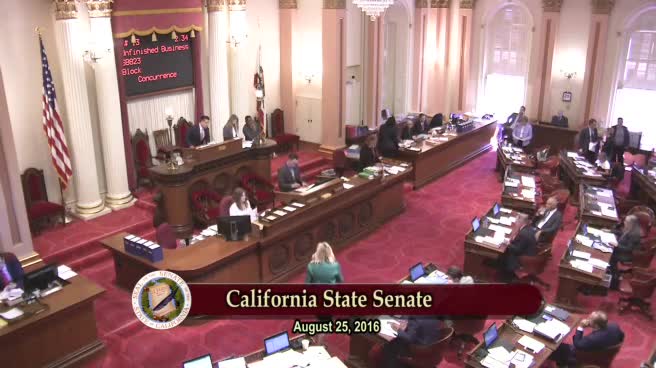 1MIN
Senate Floor
 1MIN
Assembly Floor
 5MIN
Senate Floor
 9MIN
Senate Standing Committee on Energy, Utilities and Communications
Bill Author

Bill Co-Author(s):
