SB 1227: California Conservation Corps.
- Session Year: 2015-2016
- House: Senate
- Latest Version Date: 2016-09-22
Existing law establishes the California Conservation Corps in the Natural Resources Agency and requires the corps to implement and administer the conservation corps program. Existing law requires the corps, in conjunction with the Employment Development Department, to place an emphasis on developing and executing plans to assist corpsmembers in obtaining employment following their participation in the corps program.
This bill would additionally require the corps to collaborate with the Department of Veterans Affairs and the Employment Development Department to assist any corpsmember who is a veteran of the United States Armed Forces in obtaining employment after participating in the corps program. The bill would specify that the collaboration efforts by the Department of Veterans Affairs and the Employment Development Department shall include, but not be limited to, providing access to veterans supportive services and workforce services, respectively.
Existing law establishes the California Conservation Corps in the Natural Resources Agency and requires the corps to implement and administer the conservation corps program. Existing law requires the corps, in conjunction with the Employment Development Department, to place an emphasis on developing and executing plans to assist corpsmembers in obtaining employment following their participation in the corps program.
This bill would additionally require the corps to collaborate with the Department of Veterans Affairs and the Employment Development Department to assist any corpsmember who is a veteran of the United States Armed Forces in obtaining employment after participating in the corps program. The bill would specify that the collaboration efforts by the Department of Veterans Affairs and the Employment Development Department shall include, but not be limited to, veterans supportive services and workforce services, respectively.
Existing law establishes the California Conservation Corps in the Natural Resources Agency and requires the corps to implement and administer the conservation corps program. Existing law requires the corps, in conjunction with the Employment Development Department, to place an emphasis on developing and executing plans to assist corpsmembers in obtaining employment following their participation in the corps program.
This bill would additionally require the corps to collaborate with the Department of Veterans Affairs and the Employment Development Department, Department to assist any corpsmember who is a veteran of the United States Armed Forces in obtaining permanent employment after participating in the corps program. The bill would specify that the collaboration efforts by the Department of Veterans Affairs and the Employment Development Department shall include, but not be limited to, veterans supportive services and workforce services, respectively.
Existing law establishes the California Conservation Corps in the Natural Resources Agency and requires the corps to implement and administer the conservation corps program. Existing law requires the corps, in conjunction with the Employment Development Department, to place an emphasis on developing and executing plans to assist corpsmembers in obtaining employment following their participation in the corps program.
This bill would additionally require the corps to collaborate with the Department of Veterans Affairs and the Employment Development Department, to assist any corpsmember who is a veteran of the United States Armed Forces in obtaining permanent employment after participating in the corps program.
The Legislature finds and declares all of the following:
(a)California has the largest veteran population in the country with 1.9 million former servicemen and servicewomen.
(b)Veterans between the ages of 18 and 34 years have a higher unemployment rate than their civilian peers.
(c)The California Conservation Corps provides young veterans with a unique opportunity to transition into the civilian workforce and various workforce training opportunities, including maintaining hiking trails, planting trees, and assisting in emergency response situations by, among other things, fighting fires, floods, earthquakes, and pest infestations.
(d)By statute, the Employment Development Department, working with the California Conservation Corps, provides transitional services for all corpsmembers.
(e)The Department of Veterans Affairs provides assistance to access various supportive services and benefits for veterans, including healthcare, tuition assistance, and home loans.
(f)Most young veterans do not use the state benefits afforded to them through their military service.
(g)Bringing the Department of Veterans Affairs into the transitional process for young veterans exiting the California Conservation Corps will connect young veterans with the benefits they have earned, support the current efforts of the California Conservation Corps and the Employment Development Department, and ensure that those young veterans smoothly transition from corpsmembership into the civilian workforce.
SEC. 2.Section 14302.5 is added to the Public Resources Code, to read:14302.5.(a)The corps shall collaborate with the Department of Veterans Affairs and the Employment Development Department to assist any corpsmember who is a veteran of the United States Armed Forces in obtaining employment after participating in the corps program.
(b)Collaboration efforts by the Department of Veterans Affairs shall include, but not be limited to, providing access to veterans supportive services. Collaboration efforts by the Employment Development Department shall include, but not be limited to, providing access to workforce services.
The Legislature finds and declares all of the following:
(a)California has the largest veteran population in the country with 1.9 million former servicemen and servicewomen.
(b)Veterans between the ages of 18 and 34 years have a higher unemployment rate than their civilian peers.
(c)The California Conservation Corps provides young veterans with a unique opportunity to transition into the civilian workforce and various workforce training opportunities, including maintaining hiking trails, planting trees, and assisting in emergency response situations by, among other things, fighting fires, floods, earthquakes, and pest infestations.
(d)By statute, the Employment Development Department, working with the California Conservation Corps, provides transitional services for all corpsmembers.
(e)The Department of Veterans Affairs provides assistance to access to various supportive services and benefits for veterans, including healthcare healthcare, tuition assistance, and home loans.
(f)Most young veterans do not use the state benefits afforded to them through their military service.
(g)Bringing the Department of Veterans Affairs into the transitional process for young veterans exiting the California Conservation Corps will connect young veterans with the benefits they have earned, support the current efforts of the California Conservation Corps and the Employment Development Department, and ensure that those young veterans smoothly transition from corpsmembership into the civilian workforce.
SEC. 2.Section 14302.5 is added to the Public Resources Code, to read:14302.5.(a)The corps shall collaborate with the Department of Veterans Affairs and the Employment Development Department to assist any corpsmember who is a veteran of the United States Armed Forces in obtaining employment after participating in the corps program.
(b)Collaboration efforts by the Department of Veterans Affairs shall include, but not be limited to, providing access to veterans supportive services. Collaboration efforts by the Employment Development Department shall include, but not be limited to, providing access to workforce services.
The Legislature finds and declares all of the following:
(a)California has the largest veteran population in the country with 1.9 million former servicemen and servicewomen.
(b)Veterans between the ages of 18 and 34 years have a higher unemployment rate than their civilian peers.
(c)The California Conservation Corps provides young veterans with a unique opportunity to transition into the civilian workforce and various workforce training opportunities, including maintaining hiking trails, planting trees, and assisting in emergency response situations by, among other things, fighting fires, floods, earthquakes, and pest infestations.
(d)By statute, the Employment Development Department, working with the California Conservation Corps, provides transitional services for all corpsmembers.
(e)The Department of Veterans Affairs provides access to various supportive services and benefits for veterans, including healthcare, tuition assistance, and home loans.
(f)Most young veterans do not use the state benefits afforded to them through their military service.
(g)Bringing the Department of Veterans Affairs into the transitional process for young veterans exiting the California Conservation Corps will connect young veterans with the benefits they have earned, support the current efforts of the California Conservation Corps and the Employment Development Department, and ensure that those young veterans smoothly transition from corpsmembership into the civilian workforce.
SECTION 1.SEC. 2.Section 14302.5 is added to the Public Resources Code, to read:14302.5.(a)The corps shall collaborate with the Department of Veterans Affairs and the Employment Development Department to assist any corpsmember who is a veteran of the United States Armed Forces in obtaining employment after participating in the corps program.
(b)Collaboration efforts by the Department of Veterans Affairs shall include, but not be limited to, veterans supportive services. Collaboration efforts by the Employment Development Department shall include, but not be limited to, workforce services.
(a)The corps shall collaborate with the Department of Veterans Affairs and the Employment Development Department to assist any corpsmember who is a veteran of the United States Armed Forces in obtaining permanent employment after participating in the corps program.
(b)Collaboration efforts by the Department of Veterans Affairs shall include, but not be limited to, veterans supportive services. Collaboration efforts by the Employment Development Department shall include, but not be limited to, workforce services.
The corps shall collaborate with the Department of Veterans Affairs and the Employment Development Department to assist any corpsmember who is a veteran of the United States Armed Forces in obtaining permanent employment after participating in the corps program.
|
Date
|
Status
|
|---|---|
| Aug 8, 2016 | Ordered to third reading. |
| Jun 6, 2016 | Referred to Coms. on L. & E. and V.A. |
| Jun 14, 2016 | From committee with author's amendments. Read second time and amended. Re-referred to Com. on L. & E. |
| Jun 23, 2016 | From committee: Do pass and re-refer to Com. on V.A. with recommendation: To consent calendar. (Ayes 7. Noes 0.) (June 22). Re-referred to Com. on V.A. |
| Jun 29, 2016 | From committee: Do pass and re-refer to Com. on APPR. (Ayes 7. Noes 0.) (June 28). Re-referred to Com. on APPR. |
| Aug 1, 2016 | From committee with author's amendments. Read second time and amended. Re-referred to Com. on APPR. |
| Aug 3, 2016 | From committee: Do pass. Ordered to consent calendar. (Ayes 20. Noes 0.) (August 3). |
| Aug 4, 2016 | Read second time. Ordered to consent calendar. |
| Aug 8, 2016 | From consent calendar on motion of Assembly Member Calderon. |
| Jun 1, 2016 | In Assembly. Read first time. Held at Desk. |
| Aug 11, 2016 | Ordered to third reading. |
| Aug 11, 2016 | Read third time and amended. |
| Aug 18, 2016 | Read third time. Passed. Ordered to the Senate. |
| Aug 18, 2016 | Read third time. Passed. (Ayes 79. Noes 0. Page 5902.) Ordered to the Senate. |
| Aug 30, 2016 | Assembly amendments concurred in. (Ayes 39. Noes 0. Page 5522.) Ordered to engrossing and enrolling. |
| Aug 30, 2016 | Assembly amendments concurred in. (Ayes 39. Noes 0.) Ordered to engrossing and enrolling. |
| Aug 30, 2016 | In Senate. Concurrence in Assembly amendments pending. |
| Sep 8, 2016 | Enrolled and presented to the Governor at 5 p.m. |
| Apr 22, 2016 | Set for hearing May 2. |
| Feb 19, 2016 | From printer. May be acted upon on or after March 20. |
| Mar 3, 2016 | Referred to Coms. on N.R. & W. and V.A. |
| Mar 9, 2016 | Set for hearing March 29. |
| Mar 29, 2016 | From committee: Do pass and re-refer to Com. on V.A. (Ayes 9. Noes 0. Page 3313.) (March 29). Re-referred to Com. on V.A. |
| Mar 29, 2016 | From committee: Do pass and re-refer to Com. on V.A. (Ayes 9. Noes 0.) (March 29). Re-referred to Com. on V.A. |
| Mar 31, 2016 | Set for hearing April 12. |
| Apr 13, 2016 | From committee: Do pass and re-refer to Com. on APPR. with recommendation: To consent calendar. (Ayes 5. Noes 0. Page 3524.) (April 12). Re-referred to Com. on APPR. |
| Apr 13, 2016 | From committee: Do pass and re-refer to Com. on APPR. with recommendation: To consent calendar. (Ayes 5. Noes 0.) (April 12). Re-referred to Com. on APPR. |
| Feb 18, 2016 | Introduced. Read first time. To Com. on RLS. for assignment. To print. |
| May 2, 2016 | May 2 hearing: Placed on APPR. suspense file. |
| May 20, 2016 | Set for hearing May 27. |
| May 27, 2016 | From committee: Do pass. (Ayes 7. Noes 0. Page 4006.) (May 27). |
| May 27, 2016 | From committee: Do pass. (Ayes 7. Noes 0.) (May 27). |
| May 27, 2016 | Read second time. Ordered to third reading. |
| May 31, 2016 | Read third time. Passed. (Ayes 39. Noes 0. Page 4063.) Ordered to the Assembly. |
| May 31, 2016 | Read third time. Passed. (Ayes 39. Noes 0.) Ordered to the Assembly. |
|
Date
|
Description
|
Location
|
Votes
|
|
|---|---|---|---|---|
| Aug 30, 2016 | Unfinished Business (Supplemental File 1) SB1227 Lara Concurrence | Senate Floor |
Passed |
|
| Aug 18, 2016 | SB 1227 Lara Senate Third Reading By EGGMAN | Assembly Floor |
Passed |
|
| Aug 3, 2016 | Do pass. To Consent Calendar. | Assembly Standing Committee on Appropriations |
Passed |
|
| Jun 28, 2016 | Do pass and be re-referred to the Committee on [Appropriations] | Assembly Standing Committee on Veterans Affairs |
Passed |
|
| Jun 22, 2016 | Do pass and be re-referred to the Committee on [Veterans Affairs] with recommendation: To Consent Calendar | Assembly Standing Committee on Labor and Employment |
Passed |
|
| May 31, 2016 | Senate 3rd Reading SB1227 Lara | Senate Floor |
Passed |
|
| May 27, 2016 | Do pass | Senate Standing Committee on Appropriations |
Passed |
|
| May 2, 2016 | Placed on suspense file | Senate Standing Committee on Appropriations |
Passed |
|
| Apr 12, 2016 | Do pass, but first be re-referred to the Committee on [Appropriations] with the recommendation: To Consent Calendar | Senate Standing Committee on Veterans Affairs |
Passed |
|
| Mar 29, 2016 | Do pass, but first be re-referred to the Committee on [Veterans Affairs] | Senate Standing Committee on Natural Resources and Water |
Passed |
This list shows positions taken on this bill by organizations on the date displayed, which is linked to the original source.
Positions by individuals are not included.
|
Organization
|
Position
|
Date
|
|---|---|---|
| American G.I. Forum of California | ** Support | Aug 30, 2016 |
| AMVETS-Department of California | ** Support | Aug 30, 2016 |
| California Association Of County Veterans Service Officers | ** Support | Aug 30, 2016 |
| California Association Of Local Conservation Corps | ** Support | Aug 30, 2016 |
| California Association Of Realtors | * Against Unless Amend | Mar 29, 2016 |
| Clean Water Action | * Against Unless Amend | Mar 29, 2016 |
| Community Water Center | * Support | Mar 29, 2016 |
| Conservation Corps of Long Beach | ** Support | Aug 30, 2016 |
| Habitat for Humanity of Greater Los Angeles | ** Support | Aug 30, 2016 |
| Military Officers Association Of America, California Council Of Chapters | ** Support | Aug 30, 2016 |
| Paramount American Legion Post #134 | ** Support | Aug 30, 2016 |
| Val Lerch, former Vice Mayor of Long Beach | ** Support | Mar 29, 2016 |
| Veterans Corps | * Support | Jun 28, 2016 |
| VFW-Department of California | ** Support | Aug 30, 2016 |
| Vietnam Veterans of America-California State Council | ** Support | Aug 30, 2016 |
Office of Senate Floor Analyses (916) 651-1520 Fax: (916) 327-4478 | SB 1227 |
UNFINISHED BUSINESS
Bill No: SB 1227
Amended: 8/11/16
SENATE NATURAL RES. & WATER COMMITTEE: 9-0, 3/29/16
AYES: Pavley, Stone, Allen, Hertzberg, Hueso, Jackson, Monning, Vidak, Wolk
SENATE VETERANS AFFAIRS COMMITTEE: 5-0, 4/12/16
AYES: Nielsen, Hueso, Allen, Nguyen, Roth
SENATE APPROPRIATIONS COMMITTEE: 7-0, 5/27/16
AYES: Lara, Bates, Beall, Hill, McGuire, Mendoza, Nielsen
SENATE FLOOR: 39-0, 5/31/16
AYES: Allen, Anderson, Bates, Beall, Berryhill, Block, Cannella, De León, Fuller, Gaines, Galgiani, Glazer, Hall, Hancock, Hernandez, Hertzberg, Hill, Hueso, Huff, Jackson, Lara, Leno, Leyva, Liu, McGuire, Mendoza, Mitchell, Monning, Moorlach, Morrell, Nguyen, Nielsen, Pan, Pavley, Roth, Stone, Vidak, Wieckowski, Wolk
NO VOTE RECORDED: Runner
ASSEMBLY FLOOR: 79-0, 8/18/16 - See last page for vote
SUBJECT: California Conservation Corps
DIGEST: This bill requires the California Conservation Corps (corps) to collaborate with the Department of Veteran Affairs (CalVet) and the Employment Development Department (EDD) to assist any corpsmember who is a veteran in obtaining permanent employment after participating in the corps.
Assembly Amendments add legislative findings and specify how CalVet and EDD shall collaborate with each other.
Existing law:
- Establishes the corps and requires the corps to implement and administer the conservation corps program.
- Requires the corps, in conjunction with EDD, to place an emphasis on developing and executing plans to assist corpsmembers in obtaining employment following their participation in the corps program.
This bill requires the corps to collaborate, as specified, with CalVet and EDD to assist any corpsmember who is a veteran in obtaining permanent employment after participating in the corps, and makes relevant legislative findings.
Background
The corps was created in 1976 and employs for one year young adults between the ages of 18 – 25 (veterans up to the age of 29 may participate in some circumstances). The corps offers both residential and nonresidential programs throughout the state and aims to, among other things, provide youth with educational and training opportunities and increase their understanding and appreciation of the environment. Over 120,000 individuals have participated in the program to date with roughly 3,000 new corpsmembers joining each year.
According to a 2013 report by the California Research Bureau, California has the largest veteran population at approximately 1.9 million of any state, and over half of the state’s veterans are over the age of 60. While the statewide employment rates for both female and male veterans of all ages is greater than for non-veterans, young veterans have higher unemployment rates. Male veterans between the ages of 18 – 24 have a 4% higher unemployment rate than their civilian peers (20.4% vs. 16.4%), and female veterans between the ages of 25 – 34 years of age have a 3.3% higher unemployment rate (11.6% vs. 8.3%).
CalVet estimates that 35,000 – 40,000 veterans will return to California each year for the next few years as the military downsizes following the reduction in troop deployments to Iraq and Afghanistan. In addition, according to the U.S. Equal Opportunity Commission, 25 percent of recent veterans have service-connected disabilities, compared to about 13 percent of all veterans, which aggravates the veteran employment situation.
EDD assists Californians, including veterans, with obtaining employment through its Workforce Services Branch. All veterans receive priority for workforce services through U.S. Department of Labor funding. In addition, the Jobs for Veterans State Grant also provides funding for specialized staff to assist veterans in finding work and to conduct outreach to employers on behalf of veterans.
There have been and are veterans-specific programs at the corps. According to the corps, there are numerous corps crews composed of veterans active today. Two current active programs are in fisheries and firefighting. For eligible veterans, participating in corps programs is one method to return to the civilian workforce. According to 2011 - 2016 data from the corps, 554 veterans participated in corps programs for veterans of which about 57% either found employment after completion (289) or enrolled in school or returned to the military (28).
Comments
This bill mandates collaboration between the corps, CalVet and EDD. Existing law already requires the corps, in conjunction with EDD, to place an emphasis on developing and executing plans to assist corpsmembers in obtaining employment following their participation in the corps. EDD has existing expertise and existing programs in place that emphasize veteran employment. No metrics are included to monitor or assess the impact of this required collaboration.
FISCAL EFFECT: Appropriation: No Fiscal Com.: Yes Local: No
According to the Assembly Appropriations Committee, there are no significant costs to the corps, CalVet and EDD as all agencies indicate the activities required by the bill are consistent with existing efforts.
American G.I. Forum of California
AMVETS-Department of California
California Association of County Veterans Service Officers
California Association of Local Conservation Corps
Conservation Corps of Long Beach
Habitat for Humanity of Greater Los Angeles
Hon. Val Lerch, former Vice Mayor, City of Long Beach
Military Officers Association of America, California Council of Chapters
Paramount American Legion Post #134
VFW-Department of California
Vietnam Veterans of America-California State Council
Three individuals
OPPOSITION: (Verified 8/18/16)
None received
ARGUMENTS IN SUPPORT: According to the author, “SB 1227, the California VET (Veteran Employment & Training) Initiative would require the [corps] to collaborate with the California Department of Veterans Affairs in addition to the Employment Development Department to better assist corpsmembers who are veterans transition to employment after completion of the [corps] program.”
The author continues that while transition services for corpsmembers currently exist, existing law provides no specific direction to the corps on employment assistance for veterans, and he notes that veterans may face unique transition needs due to the differences between civilian workplace culture and the military or multiple combat deployments. The author states that CalVet’s experience in helping veterans makes them best suited to assist the existing efforts of the corps and EDD in finding work placement for veterans.
“These brave women and men fought for us, it’s time that we fight for them.”
ASSEMBLY FLOOR: 79-0, 8/18/16
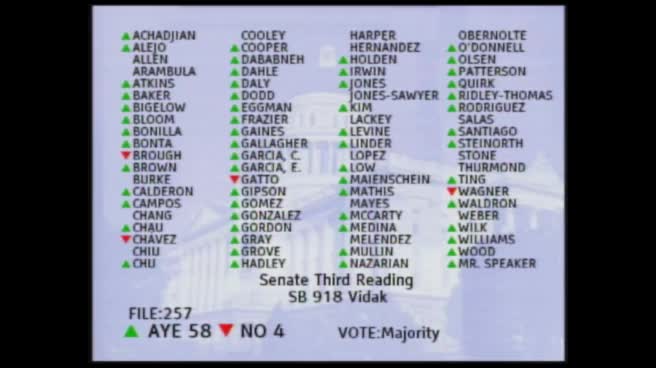
AYES: Achadjian, Alejo, Travis Allen, Arambula, Atkins, Baker, Bigelow, Bloom, Bonilla, Bonta, Brough, Brown, Burke, Calderon, Campos, Chang, Chau, Chávez, Chiu, Chu, Cooley, Cooper, Dababneh, Dahle, Daly, Dodd, Eggman, Frazier, Beth Gaines, Gallagher, Cristina Garcia, Eduardo Garcia, Gatto, Gipson, Gomez, Gonzalez, Gordon, Gray, Grove, Hadley, Harper, Holden, Irwin, Jones, Jones-Sawyer, Kim, Lackey, Levine, Linder, Lopez, Low, Maienschein, Mathis, Mayes, McCarty, Medina, Melendez, Mullin, Nazarian, Obernolte, O'Donnell, Olsen, Patterson, Quirk, Ridley-Thomas, Rodriguez, Salas, Santiago, Steinorth, Mark Stone, Thurmond, Ting, Wagner, Waldron, Weber, Wilk, Williams, Wood, Rendon
NO VOTE RECORDED: Roger Hernández
Prepared by: Katharine Moore / N.R. & W. / (916) 651-4116
8/30/16 14:37:40
SENATE THIRD READING
STR Bill Id:SB 1227
Author:(Lara)
As Amended Ver:August 11, 2016
Majority vote
SENATE VOTE: 39-0
Committee | Votes | Ayes | Noes |
Labor | 7-0 | Roger Hernández, Patterson, Chu, Linder, McCarty, O'Donnell, Thurmond | |
Veterans Affairs | 7-0 | Irwin, Achadjian, Arambula, Daly, Frazier, Mathis, Salas | |
Appropriations | 20-0 | Gonzalez, Bigelow, Bloom, Bonilla, Bonta, Calderon, Chang, Daly, Eggman, Gallagher, Eduardo Garcia, Holden, Jones, Obernolte, Quirk, Santiago, Wagner, Weber, Wood, Chau |
SUMMARY: Specifically, this bill:
- Requires the California Conservation Corps (CCC) to collaborate with the Department of Veterans Affairs (CalVet) and the Employment Development Department (EDD) to assist any corps member who is a veteran of the United States Armed Forces in obtaining employment after participating in the corps program. Specifies efforts must include, but are not limited to, providing access to veteran supportive services and workforce services.
- Makes related findings and declarations.
EXISTING LAW: Requires the CCC, in conjunction with EDD, to place an emphasis on developing and executing plans to assist corps members in obtaining employment following their participation in the corps.
FISCAL EFFECT: According to the Assembly Appropriations Committee, no significant costs to the CCC, CalVet and EDD as all agencies indicate the activities required by the bill are consistent with existing efforts.
COMMENTS: Current law requires the CCC, in conjunction with the EDD, to develop and execute plans to assist corps members in gaining employment following their participation in the program. To this end, the CCC provides career transition support services to Corps participants. These services help Corps members apply their experiences towards employment or furthering their academic goals.
According to the author, although transition services for corps members are in place, the statute is silent regarding corps members who are veterans. The author states that veterans have unique circumstances, such as the difference in work culture between military and civilian life, or veterans who have been through multiple combat deployments. The author also states these issues may not be fully addressed through the EDD and CCC's employment efforts. This can present a gap in transitional services for veterans participating within the CCC. This bill is intended to better assist veterans with their transition to employment after completion of a CCC program.
Analysis Prepared by: Lorie Alvarez / L. & E. / (916) 319-2091 FN: 0003943
SENATE THIRD READING
STR Bill Id:SB 1227
Author:(Lara)
As Amended Ver:August 1, 2016
Majority vote
SENATE VOTE: 39-0
Committee | Votes | Ayes | Noes |
Labor | 7-0 | Roger Hernández, Patterson, Chu, Linder, McCarty, O'Donnell, Thurmond | |
Veterans Affairs | 7-0 | Irwin, Achadjian, Arambula, Daly, Frazier, Mathis, Salas | |
Appropriations | 20-0 | Gonzalez, Bigelow, Bloom, Bonilla, Bonta, Calderon, Chang, Daly, Eggman, Gallagher, Eduardo Garcia, Holden, Jones, Obernolte, Quirk, Santiago, Wagner, Weber, Wood, Chau |
SUMMARY: Specifically, this bill:
- Requires the California Conservation Corps (CCC) to collaborate with the Department of Veterans Affairs (CalVet) and the Employment Development Department (EDD) to assist any corps member who is a veteran of the United States Armed Forces in obtaining employment after participating in the corps program. Specifies efforts must include, but are not limited to, veteran supportive services and workforce services.
- Makes related findings and declarations.
EXISTING LAW: Requires the CCC, in conjunction with EDD, to place an emphasis on developing and executing plans to assist corps members in obtaining employment following their participation in the corps.
FISCAL EFFECT: According to the Assembly Appropriations Committee, no significant costs to the CCC, CalVet and EDD as all agencies indicate the activities required by the bill are consistent with existing efforts.
COMMENTS: Current law requires the CCC, in conjunction with the EDD, to develop and execute plans to assist corps members in gaining employment following their participation in the program. To this end, the CCC provides career transition support services to Corps participants. These services help Corps members apply their experiences towards employment or furthering their academic goals.
According to the author, although transition services for corps members are in place, the statute is silent regarding corps members who are veterans. The author states that veterans have unique circumstances, such as the difference in work culture between military and civilian life, or veterans who have been through multiple combat deployments. The author also states these issues may not be fully addressed through the EDD and CCC's employment efforts. This can present a gap in transitional services for veterans participating within the CCC. This bill is intended to better assist veterans with their transition to employment after completion of a CCC program.
Analysis Prepared by: Lorie Alvarez / L. & E. / (916) 319-2091 FN: 0003892
Date of Hearing: August 3, 2016
ASSEMBLY COMMITTEE ON APPROPRIATIONS
Lorena Gonzalez, Chair
SBPCA Bill Id:SB 1227
Author:(Lara) – As Amended Ver:August 1, 2016
Policy Committee: | Labor and Employment | Vote: | 7 - 0 |
Veterans Affairs | 7 - 0 |
Urgency: No State Mandated Local Program: No Reimbursable: No
SUMMARY:
This bill requires the California Conservation Corps (CCC) to collaborate with the Department of Veterans Affairs (CalVet) and the Employment Development Department (EDD) to assist any corps member who is a veteran of the United States Armed Forces in obtaining employment after participating in the corps program. Specifies efforts must include, but are not limited to, veteran supportive services and workforce services.
FISCAL EFFECT:
No significant costs to the CCC, CalVet and EDD as all agencies indicate the activities required by the bill are consistent with existing efforts.
COMMENTS:
Background and Purpose. Current law requires the CCC, in conjunction with the EDD, to develop and execute plans to assist corps members in gaining employment following their participation in the program. To this end, the CCC provides career transition support services to Corps participants. These services help Corps members apply their experiences towards employment or furthering their academic goals.
According to the author, although transition services for corps members are in place, the statute is silent regarding corps members who are veterans. The author states that veterans have unique circumstances, such as the difference in work culture between military and civilian life, or veterans who have been through multiple combat deployments. The author also states these issues may not be fully addressed through the EDD and CCC’s employment efforts. This can present a gap in transitional services for veterans participating within the CCC. This bill is intended to better assist veterans with their transition to employment after completion of a CCC program.
Analysis Prepared by: Misty Feusahrens / APPR. / (916) 319-2081
Date of Hearing: June 28, 2016
ASSEMBLY COMMITTEE ON VETERANS AFFAIRS
Jacqui Irwin, Chair
SBPCA Bill Id:SB 1227
Author:(Lara) – As Amended Ver:June 14, 2016
SENATE VOTE: 39-0
SUBJECT: California Conservation Corps
SUMMARY:
- Requires the California Conservation Corps (CCC) to collaborate with the Department of Veteran Affairs (CalVet) and the Employment Development Department (EDD) to assist any corpsmember who is a veteran in obtaining employment after participating in the corps.
- States that collaboration efforts by the CalVet shall include, but not be limited to, veteran's supportive services and efforts by EDD shall include, but not be limited to, workforce services.
EXISTING LAW: Requires the CCC, in conjunction with EDD, to place an emphasis on developing and executing plans to assist corpsmembers in obtaining employment following their participation in the corps.
FISCAL EFFECT: According to the Senate Appropriations Committee, CalVet estimates the need for one ongoing position and about $100,000 General Fund to implement the collaboration required by this bill. Minor and absorbable costs to the CCC and EDD, when individuals complete their work with the corps, EDD provides them with services that help them obtain other employment.
COMMENTS:
Current law states the CCC in conjunction with the EDD shall develop and execute plans to assist corps members in gaining employment, following their participation in the program. To this end, the CCC provides career transition support services to Corps participants. These services help Corps members apply their experiences towards employment or furthering their academic goals.
According to the author:
Although transition services for corps members are in place, the statute is silent regarding corps members who are Veterans. Veterans participating in the program have access to the current support services, but the unique characteristics attributed to a Veterans experience such as; the difference is work culture between military and civilian life and Veterans who have been through multiple combat deployments, may not be fully addressed through the EDD and CCC’s employment efforts, thus presenting a gap in transitional services for Veterans participating within the CCC.
What problem will the bill solve?
Under existing law the state agencies involved already must support the transition of CCC members. There is no indication that the overall existing degree and form of such support is insufficient. Military cultural competency is an important issue in serving veterans but it has been not shown to be lacking here. There is no demonstrated need for a directive that these agencies collaborate nor a showing that they don’t already collaborate or refuse to collaborate in response to a request.
What material result or benefit will the bill achieve?
The bill language is vaguely worded even after amendments, particularly in its use of “collaborate” and “collaboration.” Without a clear expression of Legislative intent, legislation may produce a spectrum of outcomes, including no result, other than the desired result, or a negative result. This bill cannot be certain to produce any tangible result or measurable benefit to veterans. The problem with the wording of the bill arises from the lack of a clear Legislative objective.
Veterans face challenges and have unique needs that urgently need attention.
There are critical challenges and unmet needs of the veteran community arising from their service to the Nation. There are critical challenges and unmet needs of the veteran community arising from their service to the Nation. Though the bill may result in an incremental positive change for the limited number of veterans in the CCC, the bill does not focus on a known area of need and it may divert policymakers from addressing such areas.
REGISTERED SUPPORT / OPPOSITION:
Support
American G.I. Forum of California
AMVETS-Department of California
California Association of County Veterans Service Officers
California Association of Local Conservation Corps
Conservation Corps of Long Beach
Habitat for Humanity
Military Officers Association of America, California Council of Chapters
Paramount American Legion Post #134
VFW-Department of California
Vietnam Veterans of America-California State Council
Opposition
None on File.
Analysis Prepared by: John Spangler / V.A. / (916) 319-3550
Date of Hearing: June 22, 2016
ASSEMBLY COMMITTEE ON LABOR AND EMPLOYMENT
Roger Hernández, Chair
SBPCA Bill Id:SB 1227
Author:(Lara) – As Amended Ver:June 14, 2016
SENATE VOTE: 39-0
SUBJECT: California Conservation Corps (CCC)
SUMMARY:
- Requires the CCC to collaborate with the Department of Veteran Affairs (CalVet) and the Employment Development Department (EDD) to assist any corpsmember who is a veteran in obtaining employment after participating in the corps.
- States that collaboration efforts by the CalVet shall include, but not be limited to, veteran's supportive services and efforts by EDD shall include, but not be limited to, workforce services.
EXISTING LAW: Requires the CCC, in conjunction with EDD, to place an emphasis on developing and executing plans to assist corpsmembers in obtaining employment following their participation in the corps.
FISCAL EFFECT: According to the Senate Appropriations Committee, CalVet estimates the need for one ongoing position and about $100,000 General Fund to implement the collaboration required by this bill. Minor and absorbable costs to the CCC and EDD, when individuals complete their work with the corps, EDD provides them with services that help them obtain other employment.
COMMENTS: CCC is a work development program specifically for men and women between the ages of 18 to 25 (up to 29 for veterans), offering work in environmental conservation, fire protection, land maintenance, and emergency response to natural disasters. To date approximately 120,000 individuals have participated in the program. Under current law, the CCC in conjunction with EDD, develops and executes plans to assist corpsmembers in gaining employment following their participation in the program. Additionally, the CCC has operated a number of veterans programs since 2011 designed to provide military veterans, who are corpsmembers, between 18-29 years of age with training and experience to transition to jobs. For eligible veterans, participating in CCC programs is one method to return to the civilian workforce. According to 2011 - 2016 data from the corps, 554 veterans participated in corps programs for veterans of which about 57 percent either found employment after completion or enrolled in school or returned to the military. Under this bill, the CCC will be well positioned to expand its collaboration efforts with CalVet and EDD to address gaps in transitional employment services that may not be fully addressed currently
According to a 2013 report by the California Research Bureau, California has the largest veteran's population of any state, nearly two million and our state's young veterans have higher unemployment rates. Male veterans between the ages of 18-24 have a 4 percent higher unemployment rate than their civilian peers and female veterans under the age of 34 have a 3.3 percent higher unemployment rate.
Within EDD's workforce services system, the Veterans Program assists veterans and their eligible spouses to maximize their employment and training opportunities. Veterans are entitled to receive priority of the many resources designed to help in their search for employment.
The EDD veterans’ service representatives specialize in assisting veterans in their efforts to return to work and are located in many local EDD offices. Services provided include a veteran 24-hour priority hold on all job listings, customized job search assistance, job fairs, employer recruitments, and other events and resources to help translate military skills into civilian careers.
Arguments in Support
The author states that while transition services for corpsmembers currently exist, existing law provides no specific direction to the CCC on employment assistance for veterans, and he notes that veterans may face unique transition needs due to the differences between civilian workplace culture and the military or multiple combat deployments. The author states that the Department of Veterans Affairs’ experience in helping veterans makes them best suited to assist the existing efforts of the CCC and EDD in finding work placement for veterans.
Additional supporters contend this bill is important to ensuring young veterans working towards transitioning to civilian life have access to critical support services.
No known opposition on file
Staff Comment
This bill is double-referred to Veterans Affairs Committee upon passage out of this Committee.
REGISTERED SUPPORT / OPPOSITION:
Support
American G.I. Forum of California
AMVETS-Department of California
California Association of County Veterans Service Officers
California Association of Local Conservation Corps
Conservation Corps of Long Beach
Habitat for Humanity of Greater Los Angeles
Honorable Val Lerch, former Vice Mayor, City of Long Beach
Military Officers Association of America, California Council of Chapters
Numerous individuals
Paramount American Legion Post #134
VFW-Department of California
Vietnam Veterans of America-California State Council
Opposition
None on file.
Analysis Prepared by: Lorie Alvarez / L. & E. / (916) 319-2091
Office of Senate Floor Analyses (916) 651-1520 Fax: (916) 327-4478 | SB |
THIRD READING
Bill No: SB 1227
:
SENATE NATURAL RES. & WATER COMMITTEE: 9-0, 3/29/16
AYES: Pavley, Stone, Allen, Hertzberg, Hueso, Jackson, Monning, Vidak, Wolk
SENATE VETERANS AFFAIRS COMMITTEE: 5-0, 4/12/16
AYES: Nielsen, Hueso, Allen, Nguyen, Roth
SENATE APPROPRIATIONS COMMITTEE: 7-0, 5/27/16
AYES: Lara, Bates, Beall, Hill, McGuire, Mendoza, Nielsen
DIGEST: This bill requires the California Conservation Corps (corps) to collaborate with the Department of Veteran Affairs (CalVet) and the Employment Development Department (EDD) to assist any corpsmember who is a veteran in obtaining permanent employment after participating in the corps.
Existing law:
- Establishes the corps and requires the corps to implement and administer the conservation corps program.
- Requires the corps, in conjunction with EDD, to place an emphasis on developing and executing plans to assist corpsmembers in obtaining employment following their participation in the corps program.
This bill requires the corps to collaborate with CalVet and EDD to assist any corpsmember who is a veteran in obtaining permanent employment after participating in the corps.
Background
The corps was created in 1976 and employs for one year young adults between the ages of 18 – 25 (veterans up to the age of 29 may participate in some circumstances). The corps offers both residential and nonresidential programs throughout the state and aims to, among other things, provide youth with educational and training opportunities and increase their understanding and appreciation of the environment. Over 120,000 individuals have participated in the program to date with roughly 3,000 new corpsmembers joining each year.
According to a 2013 report by the California Research Bureau, California has the largest veteran population at approximately 1.9 million of any state, and over half of the state’s veterans are over the age of 60. While the statewide employment rates for both female and male veterans of all ages is greater than for non-veterans, young veterans have higher unemployment rates. Male veterans between the ages of 18 – 24 have a 4% higher unemployment rate than their civilian peers (20.4% vs. 16.4%), and female veterans between the ages of 25 – 34 years of age have a 3.3% higher unemployment rate (11.6% vs. 8.3%).
CalVet estimates that 35,000 – 40,000 veterans will return to California each year for the next few years as the military downsizes following the reduction in troop deployments to Iraq and Afghanistan. In addition, according to the U.S. Equal Opportunity Commission, 25 percent of recent veterans have service-connected disabilities, compared to about 13 percent of all veterans, which aggravates the veteran employment situation.
EDD assists Californians, including veterans, with obtaining employment through its Workforce Services Branch. All veterans receive priority for workforce services through U.S. Department of Labor funding. In addition, the Jobs for Veterans State Grant also provides funding for specialized staff to assist veterans in finding work and to conduct outreach to employers on behalf of veterans.
There have been and are veterans-specific programs at the corps. According to the corps, there are numerous corps crews composed of veterans active today. Two current active programs are in fisheries and firefighting. For eligible veterans, participating in corps programs is one method to return to the civilian workforce. According to 2011 - 2016 data from the corps, 554 veterans participated in corps programs for veterans of which about 57% either found employment after completion (289) or enrolled in school or returned to the military (28).
Comments
This bill mandates broad and expanded collaboration between the corps, CalVet and EDD. Existing law already requires the corps, in conjunction with EDD, to place an emphasis on developing and executing plans to assist corpsmembers in obtaining employment following their participation in the corps. EDD has existing expertise and existing programs in place that emphasize veteran employment. No metrics are included to monitor or assess the impact of this expanded collaboration.
FISCAL EFFECT: Appropriation: Fiscal Com.: Local:
According to the Senate Appropriations Committee:
- CalVet estimates the need for one ongoing position and about $100,000 General Fund to implement the collaboration required by this bill. This assumes resources to enable CalVet to work with closely with veteran corpsmembers to assist them in obtaining employment. To the extent the intent of this bill would be satisfied by the corps simply consulting with the CalVet in this effort, costs would likely decrease.
- Minor and absorbable costs to the corps and EDD. When individuals complete their work with the corps, EDD provides them with services that help them obtain other employment. (General Fund and federal funds).
American G.I. Forum of California
AMVETS-Department of California
California Association of County Veterans Service Officers
California Association of Local Conservation Corps
Conservation Corps of Long Beach
Habitat for Humanity of Greater Los Angeles
Hon. Val Lerch, former Vice Mayor, City of Long Beach
Military Officers Association of America, California Council of Chapters
Paramount American Legion Post #134
Three individuals
VFW-Department of California
Vietnam Veterans of America-California State Council
OPPOSITION: (Verified 5/27/16)
None received
ARGUMENTS IN SUPPORT: According to the author, “SB 1227, the California VET (Veteran Employment & Training) Initiative would require the [corps] to collaborate with the California Department of Veterans Affairs in addition to the Employment Development Department to better assist corpsmembers who are veterans transition to employment after completion of the [corps] program.”
The author continues that while transition services for corpsmembers currently exist, existing law provides no specific direction to the corps on employment assistance for veterans, and he notes that veterans may face unique transition needs due to the differences between civilian workplace culture and the military or multiple combat deployments. The author states that CalVet’s experience in helping veterans makes them best suited to assist the existing efforts of the corps and EDD in finding work placement for veterans.
“These brave women and men fought for us, it’s time that we fight for them.”
5/28/16 16:57:35
**** END ****
SENATE COMMITTEE ON
Senator Ricardo Lara, Chair
2015 - 2016 Regular Session
SB 1227 (Lara) - California Conservation Corps
Version: | Policy Vote: |
Urgency: | Mandate: |
Hearing Date: | Consultant: |
This bill meets the criteria for referral to the Suspense File.
Bill Summary:
This bill requires the California Conservation Corps (corps) to collaborate with the Department of Veteran Affairs (CalVet) and the Employment Development Department (EDD) to assist any corpsmember who is a veteran in obtaining permanent employment after participating in the corps.
Fiscal Impact:
- The CalVet estimates the need for one ongoing position and about $100,000 General Fund to implement the collaboration required by this bill. This assumes resources to enable CalVet to work with closely with veteran corpsmembers to assist them in obtaining employment. To the extent the intent of this bill would be satisfied by the corps simply consulting with the CalVet in this effort, costs would likely decrease.
- Minor and absorbable costs to the corps and EDD. When individuals complete their work with the corps, the EDD provides them with services that help them obtain other employment. (General Fund and federal funds)
Background:
The corps was created in 1976 and operates within the Natural Resources Agency. It aims to, among other things, provide youth with educational and training opportunities and increase their understanding and appreciation of the environment. It employs for one year young adults between ages of 18 to 25 (veterans up to the age of 29 may participate in some circumstances). Over 120,000 individuals have participated in the program to date with roughly 3,000 new corpsmembers joining each year.
California Conservation Corps and Veterans
According to 2011 to 2016 data from the corps, 554 veterans participated in corps programs for veterans of which about 57 percent either found employment after completion or enrolled in school or returned to the military. The Veterans Fire AmeriCorps is part of the national AmeriCorps veterans program with funding provided for three years. Veterans join this program to obtain training and work experience to qualify for the US Forest Service firefighting apprenticeship programs. The National Oceanic and Atmospheric Administration-corps program for fisheries provides veterans with opportunities to gain training and work experience in habitat restoration for endangered anadromous fisheries.
EDD Veteran Employment Services
Existing law also requires the corps, in conjunction with the EDD, to place an emphasis on developing and executing plans to assist corpsmembers in obtaining employment following their participation in the corps program. (Public Resources Code Section 14302) Through its Workforce Services Branch, EDD assists Californians, including veterans, with finding employment. The Disabled Veterans Outreach Program funds specialists who provide intensive services to disabled and other eligible veterans, with an emphasis on meeting the employment needs of veterans who are economically or educationally disadvantaged.
The Local Veterans Employment Representative Program funds specialists who conduct outreach to employers, which includes seminars for employers and job search workshops as well as establishing job search groups and facilitating employment, training, and placement services for veterans. Both of these programs have veteran employment representatives that provide services to veterans at one-stop centers.
Proposed Law:
This bill requires the corps to collaborate with CalVet and EDD to assist any corpsmember who is a veteran of the United States Armed Forces in obtaining permanent employment after participating in the corps.
Staff Comments:
CalVet offers a number of services to veterans, including but not limited to, regional outreach to ensure veterans get assistance and benefits they need; assistance in accessing federal and state benefits; mental health programs; homeless outreach support; and approving schools for GI Bill education. CalVet also works with EDD regularly regarding things like job fairs and also works with the corps to get veterans into the program, but specific job-finding services are not typical of CalVet. The department provides numerous resources on its website regarding employment services and benefits available to veterans including: a link to state and federal employment assistance program, veteran preference programs, how-to-get-a-job tutorials, job fairs, GI Bill benefits, a link to EDD employment services, information on obtaining a state job, and a link to information on the Disabled Veteran Business Enterprise program (DVBE).
The DVBE program aims to award 3 percent of all state contracts to certified veterans, disabled veterans, and disabled veteran business enterprises. The Office of Small Business within the Department of General Services and DVBE assist small and disabled veteran businesses by providing certification assistance, participating in outreach events, and supporting businesses through advocacy. CalVet participates in this program. The program, however, does not provide direct assistance to veterans for starting a business.
Assembly Bill 1509 (Chapter 647, Statutes of 2014) requires CalVet to develop a transition assistance program for veterans to assist them in transitioning from military to civilian life in California, including providing information on certain topics such as vocational training assistance and small business resources and information. This information is offered on CalVet’s website and in resource books related to employment services.
-- END --
SENATE COMMITTEE ON VETERANS AFFAIRS
Senator Jim Nielsen, Chair
2015 - 2016 Regular
Bill No: SB 1227 Hearing Date: 4/12/16
Author: | |||
Version: | 2/18/16 | ||
Urgency: | No | Fiscal: | Yes |
Consultant: | Wade Teasdale | ||
Subject: California Conservation Corps
DESCRIPTION
Summary:
Requires the California Conservation Corps (Corps), in conjunction with the Employment Development Department (EDD), to place an emphasis on developing and executing plans to assist Corps members in obtaining employment following their participation in the Corps program
Existing law:
- Establishes the Corps within the Natural Resources Agency and requires the Corps to implement and administer the “Conservation Corps” program
- Requires the Corps, in conjunction with EDD, to place an emphasis on developing and executing plans to assist Corps members in obtaining employment following their participation in the Corps program
This bill:
Requires the Corps to collaborate with the Department of Veterans Affairs (CalVet) and EDD to assist any Corps member who is a veteran to obtain permanent employment post-Corps.
BACKGROUND
California Veterans and Employment
According to the CalVet, California is home to more than 1.8 million veterans—representing roughly nine percent of the veteran population nationwide. Furthermore, CalVet estimates that 35,000 to 40,000 veterans will return to California each year for the next few years as the military downsizes in the wake of the Iraq and Afghanistan conflicts. Most of these veterans are members of the younger age cohorts, which have experienced the highest levels of unemployment. This is confirmed by a 2013 report by the California Research Bureau, which noted that that while statewide employment rates for veterans, both female and male, of all ages is greater than for non-veterans, younger veterans, both male and female, have higher unemployment rates than their non-veteran peers.
According to the U.S. Equal Opportunity Commission, 25 percent of recent veterans have service‑connected disabilities, compared to about 13 percent of all veterans, which aggravates the veteran employment situation.
Through its Workforce Services Branch, EDD assists Californians, including veterans, with finding employment. Funding for this work comes from the U. S. Department of Labor via the Workforce Investment Act of 1998 (WIA) and the Wagner-Peyser Act of 1933 (Wagner-Peyser). All veterans receive priority for workforce services offered through the WIA and Wagner-Peyser.
An additional grant – the Jobs for Veterans State Grant (veterans grant) –provides funding for specialized staff to assist veterans in finding work and to conduct outreach to employers on behalf of veterans. The veterans grant focuses on providing services to disabled and economically disadvantaged veterans. The veterans grant is actually two separate programs, each funding different positions at the department.
- The Disabled Veterans Outreach Program funds specialists who provide intensive services to disabled and other eligible veterans, with an emphasis on meeting the employment needs of veterans who are economically or educationally disadvantaged.
- The Local Veterans Employment Representative Program funds specialists who conduct outreach to employers, which includes seminars for employers and job search workshops as well as establishing job search groups and facilitating employment, training, and placement services for veterans. We refer to staff in both of these programs as veterans employment representatives, and representatives from both programs provide services to veterans at one‑stop centers. Federal law requires, to the extent practicable, that these positions work only with veterans and that the veterans employment representatives be—with limited exceptions—veterans themselves.
Veterans, who are job‑ready and require little or no direct assistance, can enroll and enter their resumes in CalJOBS, either remotely or at one‑stop centers. In contrast, veterans who require one‑on‑one intensive services can work with veterans employment representatives at the one‑stop centers.
California Conservation Corps and Veterans
Created in 1976, the Corps employs, for one year, young adults between the ages of 18 – 25. (Military veterans up to the age 29 may participate in some circumstances). The Corps offers both residential and nonresidential programs throughout the state and aims to, among other things, provide youth with educational and training opportunities and increase their understanding and appreciation of the environment (PRC §14000). Much of the Corps’ projects are outdoors and Corps members help to maintain California’s natural resources by planting trees, and improving parks and recreation areas, among other activities. Corps members also may help with emergency response to natural disasters including, for example, fighting forest fires. Over 120,000 individuals have participated in the program to date with roughly 3,000 new Corps members joining each year.
According to the Senate Natural Resources and Water Committee Analysis:
“Existing and previous veterans-specific programs at the Corps. There are existing programs for veterans through the Corps that have successfully provided educational and employment opportunities for veterans. According to information obtained from the Corps, there are numerous Corps crews composed of veterans active today. There was a successful pilot program in 2011 and current efforts grew out of a partnership with Veterans Green Jobs (a non-profit organization that helps veterans find career opportunities in natural resources conservation, clean and renewable energy and related fields).
“There are two current programs – one related to firefighting and the other to fisheries. The Veterans Fire AmeriCorps – Corps program is part of national AmeriCorps veterans program with funding for three years. Veterans join this program to obtain training and work experience to qualify for US Forest Service firefighting apprenticeship programs. Through mid-March, 2016, 132 veterans have joined and the Corps is in the process of recruiting 60 members for the current year.
“For the first two years of the program, over 30% of the veteran Corps members transitioned to US Forest Service employment upon completing the fire training. Veterans also were hired by other private sector and governmental agencies. Approximately half of the veterans participating in this program left before completing the program. The National Oceanic and Atmospheric Administration–Corps program for fisheries provides veterans opportunities to gain training and work experience in habitat restoration for endangered anadromous fisheries. From 2012 – 2016, 29 veterans participated of which 4 are still active in the Corps, 16 have found employment and 7 have left the program early.
“Three previous Corps programs also served veterans. These include a 2011 – 2013 Corps forestry/fire program that preceded the current firefighting program which served 339 veterans, a 2012 – 2013 backcountry trails program which included 12 veterans, and a 2012 energy program that included efforts to reduce energy use in state buildings, and skills training in energy efficiency and basic electrical work that 42 veterans participated in.”
COMMENT
Author’s Comments:
“According to a report by the California Research Bureau, male Veterans between the ages of 18-24 have a higher unemployment rate at 20.4 percent compared to their civilian peers at 16.4 percent. Within the same report, female Veterans under the age of 34 also have higher unemployment rates than their civilian peers at 11.6 percent, compared to 8.3 percent.
“Although transition services for Corps members are in place, the statute is silent regarding Corps members who are Veterans. Veterans participating in the program have access to the current support services, but the unique characteristics attributed to a Veterans experience such as; the difference is work culture between military and civilian life and Veterans who have been through multiple combat deployments, may not be fully addressed through the EDD and CCC’s employment efforts, thus presenting a gap in transitional services for Veterans participating within the CCC.
“To address this gap SB 1227 would require the CCC to collaborate with the California Department of Veterans Affairs, in addition to EDD, to better assist Corps members who are Veterans transition to employment after completion of the CCC program.”
Committee Comments:
- This measure was approved by the Senate Natural Resources and Water Committee (DO PASS, 9-0) on 3/29/2016.
- Existing law already requires the Corps, in conjunction with EDD, to place an emphasis on developing and executing plans to assist Corps members in obtaining employment following their participation in the Corps program. EDD already has expertise and extensive programs in place that emphasize veteran employment. This measure mandates expanded collaboration between the Corps, EDD, and CalVet in the broadest possible way. It provides no goals, timelines, or benchmarks and requires no feedback to the Legislature on progress.
POSITIONS
Sponsor: Author
Support:
American G.I. Forum of California
AMVETS-Department of California
California Association of County Veterans Service Officers
California Association of Local Conservation Corps
Conservation Corps of Long Beach
Habitat for Humanity of Greater Los Angeles
Military Officers Association of America, California Council of Chapters
VFW-Department of California
Vietnam Veterans of America-California State Council
Hon. Val Lerch, former Vice Mayor, City of Long Beach
Three other individuals
Oppose: None received
-- END --
SENATE COMMITTEE ON NATURAL RESOURCES AND WATER
Senator Fran Pavley, Chair
2015 - 2016 Regular
Bill No: SB 1227 Hearing Date: March 29, 2016
Author: | |||
Version: |
| ||
Urgency: | Fiscal: | ||
Consultant: | |||
Subject: California Conservation Corps
BACKGROUND AND EXISTING LAW
Existing law establishes the California Conservation Corps (corps) in the Natural Resources Agency and requires the corps to implement and administer the conservation corps program (see Public Resources Code (PRC) §§14000 et seq.).
The corps was created in 1976 and employs for one year young adults between the ages of 18 – 25 (veterans up to the age of 29 may participate in some circumstances). The corps offers both residential and nonresidential programs throughout the state and aims to, among other things, provide youth with educational and training opportunities and increase their understanding and appreciation of the environment (PRC §14000). Much of the corps’ projects are outdoors and corpsmembers help to maintain California’s natural resources by planting trees, and improving parks and recreation areas, among other activities. Corpsmembers also may help with emergency response to natural disasters including, for example, fighting forest fires. Over 120,000 individuals have participated in the program to date with roughly 3,000 new corpsmembers joining each year.
Existing law requires the corps, in conjunction with the Employment Development Department, to place an emphasis on developing and executing plans to assist corpsmembers in obtaining employment following their participation in the corps program (PRC §14302).
According to a 2013 report by the California Research Bureau, California has the largest veteran population at approximately 1.9 million of any state, and over half of the state’s veterans are over the age of 60. While the statewide employment rates for both female and male veterans of all ages is greater than for non-veterans, young veterans have higher unemployment rates (2013 data). Male veterans between the ages of 18 – 24 have a 4% higher unemployment rate than their civilian peers (20.4% vs. 16.4%), and female veterans between the ages of 25 – 34 years of age have a 3.3% higher unemployment rate (11.6% vs. 8.3%).
For eligible veterans, participating in corps programs is one method to return to the civilian workforce. According to 2011 - 2016 data from the corps, 554 veterans participated in corps programs for veterans of which about 57% either found employment after completion (289) or enrolled in school or returned to the military (28).
PROPOSED LAW
This bill would require the corps to collaborate with the Department of Veterans Affairs and the Employment Development Department to assist any corpsmember who is a veteran to obtain permanent employment post-corps.
ARGUMENTS IN SUPPORT
According to the author, “SB 1227, the California VET (Veteran Employment & Training) Initiative would require the [corps] to collaborate with the California Department of Veterans Affairs in addition to the Employment Development Department to better assist corpsmembers who are veterans transition to employment after completion of the [corps] program.”
The author continues that while transition services for corpsmembers currently exist, existing law provides no specific direction to the corps on employment assistance for veterans, and he notes that veterans may face unique transition needs due to the differences between civilian workplace culture and the military or multiple combat deployments. The author states that the Department of Veterans Affairs’ experience in helping veterans makes them best suited to assist the existing efforts of the corps and Employment Development Department in finding work placement for veterans.
“These brave women and men fought for us, it’s time that we fight for them.”
ARGUMENTS IN OPPOSITION
None received
COMMENTS
Double-referred. This bill is double-referred to both the Senate Natural Resources and Water and Veterans Affairs Committees. Elements of this bill under the Veterans Affairs Committee’s jurisdiction are included here for context and completeness.
Existing and previous veterans-specific programs at the corps. There are existing programs for veterans through the corps that have successfully provided educational and employment opportunities for veterans. According to information obtained from the corps, there are numerous corps crews composed of veterans active today. There was a successful pilot program in 2011 and current efforts grew out of a partnership with Veterans Green Jobs (a non-profit organization that helps veterans find career opportunities in natural resources conservation, clean and renewable energy and related fields).
There are two current programs – one related to firefighting and the other to fisheries. The Veterans Fire AmeriCorps – corps program is part of national AmeriCorps veterans program with funding for three years. Veterans join this program to obtain training and work experience to qualify for US Forest Service firefighting apprenticeship programs. Through mid-March, 2016, 132 veterans have joined and the corps is in the process of recruiting 60 members for the current year. For the first two years of the program, over 30% of the veteran corpsmembers transitioned to US Forest Service employment upon completing the fire training. Veterans also were hired by other private sector and governmental agencies. Approximately half of the veterans participating in this program left before completing the program. The National Oceanic and Atmospheric Administration–corps program for fisheries provides veterans opportunities to gain training and work experience in habitat restoration for endangered anadromous fisheries. From 2012 – 2016, 29 veterans participated of which 4 are still active in the corps, 16 have found employment and 7 have left the program early.
Three previous corps programs also served veterans. These include a 2011 – 2013 corps forestry/fire program that preceded the current firefighting program which served 339 veterans, a 2012 – 2013 backcountry trails program which included 12 veterans, and a 2012 energy program that included efforts to reduce energy use in state buildings, and skills training in energy efficiency and basic electrical work that 42 veterans participated in.
SUPPORT
American G.I. Forum of California
AMVETS-Department of California
California Association of County Veterans Service Officers
Habitat for Humanity of Greater Los Angeles
Val Lerch, former Vice Mayor of Long Beach
Military Officers Association of America, California Council of Chapters
VFW-Department of California
Vietnam Veterans of America-California State Council
Three individuals
OPPOSITION
None Received
-- END --
Discussed in Hearing
 1MIN
Senate Floor
 54SEC
Assembly Floor
 51SEC
Assembly Floor
 4MIN
Assembly Standing Committee on Veterans Affairs
 1MIN
Senate Floor
Senate Standing Committee on Natural Resources and Water
Bill Author

Bill Co-Author(s):