SB 1255: Dissolution of marriage: date of separation.
- Session Year: 2015-2016
- House: Senate
- Latest Version Date: 2016-07-25
Existing law regulates the characterization and division of property upon the dissolution of marriage or the legal separation of the parties. Under existing law, debt incurred by a spouse after the date of separation is generally confirmed to that spouse. Existing law similarly provides that the earnings of a spouse are separate property if the spouse is living separate and apart from the other spouse.
Under existing case law, a spouse is required to be living in a separate residence in order to be considered living separate and apart from the other spouse for purposes of characterizing the earnings of the spouse.
This bill would define date of separation for purposes of the Family Code to mean the date that a complete and final break in the marital relationship has occurred, as evidenced by the spouses expression of his or her intent to end the marriage and conduct that is consistent with that intent. The bill would direct a court to take into account all relevant evidence in determining the date of separation.
Existing law regulates the characterization and division of property upon the dissolution of marriage or the legal separation of the parties. Under existing law, debt incurred by a spouse after the date of separation is generally confirmed to that spouse. Existing law similarly provides that the earnings of a spouse are separate property if the spouse is living separate and apart from the other spouse.
Under existing case law, a spouse is required to be living in a separate residence in order to be considered living separate and apart from the other spouse for purposes of characterizing the earnings of the spouse.
This bill would define date of separation for purposes of the Family Code to mean the date that a complete and final break in the marital relationship has occurred, as evidenced by the spouses expression of his or her intent to end the marriage and conduct that is consistent with that intent. The bill would direct a court to take into account all relevant evidence in determining the date of separation. The bill would specify that its provisions apply to all cases filed on or after January 1, 2017. The bill would also make related, conforming changes.
Existing law regulates the characterization and division of property upon the dissolution of marriage or the legal separation of the parties. Under existing law, debt incurred by a spouse after the date of separation is generally confirmed to that spouse. Existing law similarly provides that the earnings of a spouse are separate property if the spouse is living separate and apart from the other spouse.
Under existing case law, a spouse is required to be living in a separate residence in order to be considered living separate and apart from the other spouse, spouse for purposes of characterizing the earnings of the spouse.
This bill would define date of separation for purposes of the Family Code to mean the date that a complete and final break in the marital relationship has occurred, as evidenced by the spouses expression of his or her intent to end the marriage and conduct that is consistent with that intent. The bill would direct a court to take into account all relevant evidence in determining the date of separation. The bill would specify that its provisions apply retroactively to all cases pending on filed on or after January 1, 2017. The bill would also make related, conforming changes.
Existing law regulates the characterization and division of property upon the dissolution of marriage or the legal separation of the parties. Under existing law, debt incurred by a spouse after the date of separation is generally confirmed to that spouse. Existing law similarly provides that the earnings of a spouse are separate property if the spouse is living separate and apart from the other spouse.
Under existing case law, a spouse is required to be living in a separate residence in order to be considered living separate and apart from the other spouse, for purposes of characterizing the earnings of the spouse.
This bill would define date of separation for purposes of the Family Code to mean the date that a complete and final break in the marital relationship has occurred, as evidenced by the spouses expression of his or her intent to end the marriage and conduct that is consistent with that intent. The bill would direct a court to take into account all relevant evidence in determining the date of separation. The bill would specify that its provisions apply retroactively to cases pending on January 1, 2017. The bill would also make related, conforming changes.
(a)Date of separation means the date that a complete and final break in the marital relationship has occurred, as evidenced by both of the following:
(1)The spouse has expressed to the other spouse his or her intent to end the marriage.
(2)The conduct of the spouse is consistent with his or her intent to end the marriage.
(b)In determining the date of separation, the court shall take into consideration all relevant evidence.
(c)It is the intent of the Legislature in enacting this section to abrogate the decisions in In re Marriage of Davis (2015) 61 Cal.4th 846 and In re Marriage of Norviel (2002) 102 Cal.App.4th 1152.
SEC. 2.Section 771 of the Family Code is amended to read:771.(a)The earnings and accumulations of a spouse and the minor children living with, or in the custody of, the spouse, after the date of separation of the spouses, are the separate property of the spouse.
(b)Notwithstanding subdivision (a), the earnings and accumulations of an unemancipated minor child related to a contract of a type described in Section 6750 shall remain the sole legal property of the minor child.
SEC. 3.Section 910 of the Family Code is amended to read:910.(a)Except as otherwise expressly provided by statute, the community estate is liable for a debt incurred by either spouse before or during marriage, regardless of which spouse has the management and control of the property and regardless of whether one or both spouses are parties to the debt or to a judgment for the debt.
(b)During marriage for purposes of this section does not include the period after the date of separation, as defined in Section 70, and before a judgment of dissolution of marriage or legal separation of the parties.
SEC. 4.Section 914 of the Family Code is amended to read:914.(a)Notwithstanding Section 913, a married person is personally liable for the following debts incurred by the persons spouse during marriage:
(1)A debt incurred for necessaries of life of the persons spouse before the date of separation of the spouses.
(2)Except as provided in Section 4302, a debt incurred for common necessaries of life of the persons spouse after the date of separation of the spouses.
(b)The separate property of a married person may be applied to the satisfaction of a debt for which the person is personally liable pursuant to this section. If separate property is so applied at a time when nonexempt property in the community estate or separate property of the persons spouse is available but is not applied to the satisfaction of the debt, the married person is entitled to reimbursement to the extent such property was available.
(c)(1)Except as provided in paragraph (2), the statute of limitations set forth in Section 366.2 of the Code of Civil Procedure shall apply if the spouse for whom the married person is personally liable dies.
(2)If the surviving spouse had actual knowledge of the debt prior to expiration of the period set forth in Section 366.2 of the Code of Civil Procedure and the personal representative of the deceased spouses estate failed to provide the creditor asserting the claim under this section with a timely written notice of the probate administration of the estate in the manner provided for pursuant to Section 9050 of the Probate Code, the statute of limitations set forth in Section 337 or 339 of the Code of Civil Procedure, as applicable, shall apply.
(d)For purposes of this section, date of separation has the same meaning as set forth in Section 70.
SEC. 5.Section 4338 of the Family Code is amended to read:4338.In the enforcement of an order for spousal support, the court shall resort to the property described below in the order indicated:
(a)The earnings, income, or accumulations of either spouse after the date of separation, as defined in Section 70, which would have been community property if the spouse had not been separated from the other spouse.
(b)The community property.
(c)The quasi-community property.
(d)The other separate property of the party required to make the support payments.
(a)Date of separation means the date that a complete and final break in the marital relationship has occurred, as evidenced by both of the following:
(1)The spouse has expressed to the other spouse his or her intent to end the marriage to the other spouse. marriage.
(2)The conduct of the spouse is consistent with his or her intent to end the marriage.
(b)In determining the date of separation, the court shall take into consideration all relevant evidence.
(c)It is the intent of the Legislature in enacting this section to abrogate the decisions in In re Marriage of Davis (2015) 61 Cal.4th 846 and In re Marriage of Norviel (2002) 102 Cal.App.4th 1152.
SEC. 2.Section 771 of the Family Code is amended to read:771.(a)The earnings and accumulations of a spouse and the minor children living with, or in the custody of, the spouse, after the date of separation of the spouses, are the separate property of the spouse.
(b)Notwithstanding subdivision (a), the earnings and accumulations of an unemancipated minor child related to a contract of a type described in Section 6750 shall remain the sole legal property of the minor child.
SEC. 3.Section 910 of the Family Code is amended to read:910.(a)Except as otherwise expressly provided by statute, the community estate is liable for a debt incurred by either spouse before or during marriage, regardless of which spouse has the management and control of the property and regardless of whether one or both spouses are parties to the debt or to a judgment for the debt.
(b)During marriage for purposes of this section does not include the period after the date of separation, as defined in Section 70, and before a judgment of dissolution of marriage or legal separation of the parties.
SEC. 4.Section 914 of the Family Code is amended to read:914.(a)Notwithstanding Section 913, a married person is personally liable for the following debts incurred by the persons spouse during marriage:
(1)A debt incurred for necessaries of life of the persons spouse before the date of separation of the spouses.
(2)Except as provided in Section 4302, a debt incurred for common necessaries of life of the persons spouse after the date of separation of the spouses.
(b)The separate property of a married person may be applied to the satisfaction of a debt for which the person is personally liable pursuant to this section. If separate property is so applied at a time when nonexempt property in the community estate or separate property of the persons spouse is available but is not applied to the satisfaction of the debt, the married person is entitled to reimbursement to the extent such property was available.
(c)(1)Except as provided in paragraph (2), the statute of limitations set forth in Section 366.2 of the Code of Civil Procedure shall apply if the spouse for whom the married person is personally liable dies.
(2)If the surviving spouse had actual knowledge of the debt prior to expiration of the period set forth in Section 366.2 of the Code of Civil Procedure and the personal representative of the deceased spouses estate failed to provide the creditor asserting the claim under this section with a timely written notice of the probate administration of the estate in the manner provided for pursuant to Section 9050 of the Probate Code, the statute of limitations set forth in Section 337 or 339 of the Code of Civil Procedure, as applicable, shall apply.
(d)For purposes of this section, date of separation has the same meaning as set forth in Section 70.
SEC. 5.Section 4338 of the Family Code is amended to read:4338.In the enforcement of an order for spousal support, the court shall resort to the property described below in the order indicated:
(a)The earnings, income, or accumulations of either spouse after the date of separation, as defined in Section 70, which would have been community property if the spouse had not been separated from the other spouse.
(b)The community property.
(c)The quasi-community property.
(d)The other separate property of the party required to make the support payments.
SEC. 6.This act shall apply to all cases filed on or after January 1, 2017.
(a)Date of separation means the date that a complete and final break in the marital relationship has occurred, as evidenced by both of the following:
(1)The spouse has expressed his or her intent to end the marriage to the other spouse.
(2)The conduct of the spouse is consistent with his or her intent to end the marriage.
(b)In determining the date of separation, the court shall take into consideration all relevant evidence.
(c)It is the intent of the Legislature in enacting this section to abrogate the decisions in In re Marriage of Davis (2015) 61 Cal.4th 846 and In re Marriage of Norviel (2002) 102 Cal.App.4th 1152.
SEC. 2.Section 771 of the Family Code is amended to read:771.(a)The earnings and accumulations of a spouse and the minor children living with, or in the custody of, the spouse, after the date of separation of the spouses, are the separate property of the spouse.
(b)Notwithstanding subdivision (a), the earnings and accumulations of an unemancipated minor child related to a contract of a type described in Section 6750 shall remain the sole legal property of the minor child.
SEC. 3.Section 910 of the Family Code is amended to read:910.(a)Except as otherwise expressly provided by statute, the community estate is liable for a debt incurred by either spouse before or during marriage, regardless of which spouse has the management and control of the property and regardless of whether one or both spouses are parties to the debt or to a judgment for the debt.
(b)During marriage for purposes of this section does not include the period after the date of separation, as defined in Section 70, and before a judgment of dissolution of marriage or legal separation of the parties.
SEC. 4.Section 914 of the Family Code is amended to read:914.(a)Notwithstanding Section 913, a married person is personally liable for the following debts incurred by the persons spouse during marriage:
(1)A debt incurred for necessaries of life of the persons spouse before the date of separation of the spouses.
(2)Except as provided in Section 4302, a debt incurred for common necessaries of life of the persons spouse after the date of separation of the spouses.
(b)The separate property of a married person may be applied to the satisfaction of a debt for which the person is personally liable pursuant to this section. If separate property is so applied at a time when nonexempt property in the community estate or separate property of the persons spouse is available but is not applied to the satisfaction of the debt, the married person is entitled to reimbursement to the extent such property was available.
(c)(1)Except as provided in paragraph (2), the statute of limitations set forth in Section 366.2 of the Code of Civil Procedure shall apply if the spouse for whom the married person is personally liable dies.
(2)If the surviving spouse had actual knowledge of the debt prior to expiration of the period set forth in Section 366.2 of the Code of Civil Procedure and the personal representative of the deceased spouses estate failed to provide the creditor asserting the claim under this section with a timely written notice of the probate administration of the estate in the manner provided for pursuant to Section 9050 of the Probate Code, the statute of limitations set forth in Section 337 or 339 of the Code of Civil Procedure, as applicable, shall apply.
(d)For purposes of this section, date of separation has the same meaning as set forth in Section 70.
SEC. 5.Section 4338 of the Family Code is amended to read:4338.In the enforcement of an order for spousal support, the court shall resort to the property described below in the order indicated:
(a)The earnings, income, or accumulations of either spouse after the date of separation, as defined in Section 70, which would have been community property if the spouse had not been separated from the other spouse.
(b)The community property.
(c)The quasi-community property.
(d)The other separate property of the party required to make the support payments.
SEC. 6.This act shall apply retroactively to all cases pending on filed on or after January 1, 2017.
(a)Date of separation means the date that a complete and final break in the marital relationship has occurred, as evidenced by both of the following:
(1)The spouse has expressed his or her intent to end the marriage to the other spouse.
(2)The conduct of the spouse is consistent with his or her intent to end the marriage.
(b)In determining the date of separation, the court shall take into consideration all relevant evidence.
(c)It is the intent of the Legislature in enacting this section to abrogate the decisions in In re Marriage of Davis (2015) 61 Cal.4th 846 and In re Marriage of Norviel (2002) 102 Cal.App.4th 1152.
SEC. 2.Section 771 of the Family Code is amended to read:771.(a)The earnings and accumulations of a spouse and the minor children living with, or in the custody of, the spouse, while living separate and apart from the other spouse, after the date of separation of the spouses, are the separate property of the spouse.
(b)Notwithstanding subdivision (a), the earnings and accumulations of an unemancipated minor child related to a contract of a type described in Section 6750 shall remain the sole legal property of the minor child.
SEC. 3.Section 910 of the Family Code is amended to read:910.(a)Except as otherwise expressly provided by statute, the community estate is liable for a debt incurred by either spouse before or during marriage, regardless of which spouse has the management and control of the property and regardless of whether one or both spouses are parties to the debt or to a judgment for the debt.
(b)During marriage for purposes of this section does not include the period during which the spouses are living separate and apart after the date of separation, as defined in Section 70, and before a judgment of dissolution of marriage or legal separation of the parties.
SEC. 4.Section 914 of the Family Code is amended to read:914.(a)Notwithstanding Section 913, a married person is personally liable for the following debts incurred by the persons spouse during marriage:
(1)A debt incurred for necessaries of life of the persons spouse while the spouses are living together. before the date of separation of the spouses.
(2)Except as provided in Section 4302, a debt incurred for common necessaries of life of the persons spouse while the spouses are living separately. after the date of separation of the spouses.
(b)The separate property of a married person may be applied to the satisfaction of a debt for which the person is personally liable pursuant to this section. If separate property is so applied at a time when nonexempt property in the community estate or separate property of the persons spouse is available but is not applied to the satisfaction of the debt, the married person is entitled to reimbursement to the extent such property was available.
(c)(1)Except as provided in paragraph (2), the statute of limitations set forth in Section 366.2 of the Code of Civil Procedure shall apply if the spouse for whom the married person is personally liable dies.
(2)If the surviving spouse had actual knowledge of the debt prior to expiration of the period set forth in Section 366.2 of the Code of Civil Procedure and the personal representative of the deceased spouses estate failed to provide the creditor asserting the claim under this section with a timely written notice of the probate administration of the estate in the manner provided for pursuant to Section 9050 of the Probate Code, the statute of limitations set forth in Section 337 or 339 of the Code of Civil Procedure, as applicable, shall apply.
(d)For purposes of this section, date of separation has the same meaning as set forth in Section 70.
SEC. 5.Section 4338 of the Family Code is amended to read:4338.In the enforcement of an order for spousal support, the court shall resort to the property described below in the order indicated:
(a)The earnings, income, or accumulations of either spouse, while living separate and apart from the other spouse, spouse after the date of separation, as defined in Section 70, which would have been community property if the spouse had not been living separate and apart separated from the other spouse.
(b)The community property.
(c)The quasi-community property.
(d)The other separate property of the party required to make the support payments.
SEC. 6.This act shall apply retroactively to cases pending on January 1, 2017.
|
Date
|
Status
|
|---|---|
| Jun 1, 2016 | From committee with author's amendments. Read second time and amended. Re-referred to Com. on JUD. |
| Jul 25, 2016 | Chaptered by Secretary of State. Chapter 114, Statutes of 2016. |
| Jul 25, 2016 | Approved by the Governor. |
| Jul 13, 2016 | Enrolled and presented to the Governor at 4 p.m. |
| Jun 30, 2016 | Assembly amendments concurred in. (Ayes 38. Noes 0.) Ordered to engrossing and enrolling. |
| Jun 30, 2016 | Assembly amendments concurred in. (Ayes 38. Noes 0. Page 4638.) Ordered to engrossing and enrolling. |
| Jun 27, 2016 | Read third time. Passed. (Ayes 66. Noes 4. Page 5516.) Ordered to the Senate. |
| Jun 27, 2016 | Read third time. Passed. Ordered to the Senate. |
| Jun 27, 2016 | In Senate. Concurrence in Assembly amendments pending. |
| Jun 13, 2016 | Read second time. Ordered to third reading. |
| Jun 9, 2016 | From committee: Do pass. (Ayes 7. Noes 1.) (June 8). |
| Feb 18, 2016 | Introduced. Read first time. To Com. on RLS. for assignment. To print. |
| May 16, 2016 | Referred to Com. on JUD. |
| May 10, 2016 | In Assembly. Read first time. Held at Desk. |
| May 9, 2016 | Read third time. Passed. (Ayes 35. Noes 0.) Ordered to the Assembly. |
| May 9, 2016 | Read third time. Passed. (Ayes 35. Noes 0. Page 3809.) Ordered to the Assembly. |
| May 5, 2016 | Read second time and amended. Ordered to third reading. |
| May 4, 2016 | From committee: Do pass as amended. (Ayes 6. Noes 0.) (May 3). |
| May 4, 2016 | From committee: Do pass as amended. (Ayes 6. Noes 0. Page 3766.) (May 3). |
| Apr 21, 2016 | Set for hearing May 3. |
| Mar 3, 2016 | Referred to Com. on JUD. |
| Feb 19, 2016 | From printer. May be acted upon on or after March 20. |
|
Date
|
Description
|
Location
|
Votes
|
|
|---|---|---|---|---|
| Jun 30, 2016 | Unfinished Business SB1255 Moorlach Concurrence | Senate Floor |
Passed |
|
| Jun 27, 2016 | SB 1255 Moorlach Senate Third Reading By WILK | Assembly Floor |
Passed |
|
| Jun 8, 2016 | Do pass. | Assembly Standing Committee on Judiciary |
Passed |
|
| May 9, 2016 | Senate 3rd Reading SB1255 Moorlach | Senate Floor |
Passed |
|
| May 3, 2016 | Do pass as amended | Senate Standing Committee on Judiciary |
Passed |
This list shows positions taken on this bill by organizations on the date displayed, which is linked to the original source.
Positions by individuals are not included.
|
Organization
|
Position
|
Date
|
|---|---|---|
| Alameda County Board of Supervisors | * Support | Jun 26, 2018 |
| American Academy of Matrimonial Lawyers, Southern California Chapter | ** Support | Jun 30, 2016 |
| American Academy of Pediatrics | * Support | Jun 26, 2018 |
| Association of Certified Family Law Specialists | ** Support | Jun 30, 2016 |
| Association of Family and Conciliation Courts, California | ** Support | Jun 8, 2016 |
| Association of Family Conciliation Courts | ** Support | Jun 30, 2016 |
| California Alliance of Retired Americans | * Support | Jun 26, 2018 |
| California Immigrant Policy Center | * Support | Jun 26, 2018 |
| California Labor Federation | * Support | Jun 26, 2018 |
| California Pan Ethnic Health Network | * Support | Jun 26, 2018 |
| Californians for Disability Rights | * Support | Jun 26, 2018 |
| Family Law Section Beverly Hills Bar Association | ** Support | Jun 30, 2016 |
| Family Law Section of the State Bar | ** Support | Jun 8, 2016 |
| FLEXCOM | * Support | May 3, 2016 |
| Health Access California | * Support | Jun 26, 2018 |
| Kaiser Permanante | * Support | Jun 26, 2018 |
| NextGen America | * Support | Jun 26, 2018 |
| One individual | ** Support | Jun 8, 2016 |
| Small Business Majority | * Support | Jun 26, 2018 |
| The Association of Family and Conciliation Courts | * Support | May 3, 2016 |
| The Western Center on Law and Poverty | * Support | Jun 26, 2018 |
Office of Senate Floor Analyses (916) 651-1520 Fax: (916) 327-4478 | SB |
UNFINISHED BUSINESS
Bill No: SB 1255
:
SENATE JUDICIARY COMMITTEE: 6-0, 5/3/16
AYES: Jackson, Moorlach, Anderson, Leno, Monning, Wieckowski
NO VOTE RECORDED: Hertzberg
SENATE FLOOR: 35-0, 5/9/16
AYES: Allen, Anderson, Berryhill, Block, Cannella, De León, Fuller, Galgiani, Glazer, Hall, Hancock, Hernandez, Hertzberg, Hill, Hueso, Huff, Jackson, Lara, Leno, Leyva, Liu, McGuire, Mendoza, Mitchell, Monning, Moorlach, Morrell, Nguyen, Pan, Pavley, Roth, Stone, Vidak, Wieckowski, Wolk
NO VOTE RECORDED: Bates, Beall, Gaines, Nielsen, Runner
ASSEMBLY FLOOR: 66-4, 6/27/16 - See last page for vote
DIGEST: This bill defines “date of separation” for purposes of the Family Code as the date that a complete and final break in the marital relationship has occurred, as evidenced by a spouse’s expression of his or her intent to end the marriage and conduct that is consistent with that intent, and updates the Family Code to reflect this definition.
Assembly Amendments remove the language that clarifies that the bill will be applied on a prospective basis and make other technical changes.
Existing law:
- Establishes that, except as otherwise provided by statute, all property, real or personal, wherever situated, acquired by a married person during the marriage while domiciled in California is community property. (Fam. Code Sec. 760.
- Provides that the earnings and accumulations of a spouse while living separate and apart are the separate property of the spouse. (Fam. Code Sec. 771.)
- Provides that the community estate is liable for a debt incurred before or during marriage, which does not, subject to agreement, include any period during which the spouses are living separate and apart. (Fam. Code Secs. 910, 914, and 4302.)
This bill:
- Defines “date of separation” to mean the date that a complete and final break in the marital relationship has occurred, as evidenced by the spouse’s expression of his or her intent to end the marriage and conduct that is consistent with that intent.
- Requires a court to consider all relevant evidence in determining the date of separation.
- Recasts provisions of the Family Code in terms of “date of separation” rather than any period in which spouses are “living separate and apart.”
- States that the Legislature intends to abrogate In re Marriage Davis and In re Marriage Norviel.
Background
California is a community property state. Except as otherwise provided by statute, community property is generally defined as all property, real or personal, wherever situated, acquired by a married person during the marriage while domiciled in California. (Fam. Code Sec. 760.) Under a community property system, one-half the earnings of each spouse is owned by the other spouse. Separate property, which is property acquired before marriage, by gift or inheritance, or after the spouses are living “separate and apart,” is the separate property of that spouse. (Fam. Code Secs. 770-771.)
Unlike a determination of spousal support where courts are given certain amounts of discretion to create a fair award based on the circumstances of the parties (see Fam. Code Sec. 4320), the disposition of separate and community property are strictly governed by statute. Existing case law over the past 140 years (with the exception of the Supreme Court’s decision In re Marriage of Davis (2015) 61 Cal.4th 846) has required that to qualify as living “separate and apart” a party must have no intention of resuming marital relations and that the conduct of the party evidences a complete and final break in the marital relationship. Davis and In re Norviel (2002) 102 Cal.App.4th 1152 are the only published cases to analyze the circumstances of a party claiming to be separated while living in the same residence, and both cases concluded that living in separate residences is a threshold requirement.
In Davis, the husband argued that spouses cannot be living “separate and apart” while maintaining a single residence. He contended that this bright-line rule served to provide clear guidance to judges and offered predictability to litigants. Inversely, the wife argued that the court should instead consider the totality of the circumstances when determining the date of separation based on the conduct of the spouse(s) “evidencing a complete and final intent to part ways with no plan of resuming the marital relationship, even if at that time they are still living in the same residence.” (Davis at 850.) Both parties claimed that the other spouse’s proposed interpretation was unworkable and would lead to harsh results.
The California Supreme Court reversed the lower court’s decision, thereby affirming Norviel which held that “living in separate residences is an indispensable threshold requirement for finding that spouses are living separate and apart” for the purposes of determining what is separate, and not community, property. (Davis at 865.) Chief Justice Tani Cantil-Sakauye, writing for a unanimous Supreme Court, emphasized both the plain language and historical interpretations of the statute, and the public policy considerations behind the statutory language, namely that a bright-line rule protects the lower earning spouse.
This bill, seeking to restore the discretion that many courts exercised in determining the date of separation, abrogates both the Davis and Norviel cases, and defines “date of separation” as the date that a complete and final breakdown of the marital relationship has occurred, as evidenced by a spouse’s express intent to end the marriage, coupled with conduct consistent with that intent, and requires the court to consider all relevant evidence when determining a date of separation.
FISCAL EFFECT: Appropriation: Fiscal Com.: Local:
American Academy of Matrimonial Lawyers, Southern California Chapter
Association of Certified Family Law Specialists
Association of Family Conciliation Courts
Executive Committee of the Family Law Section of the State Bar
Family Law Section Beverly Hills Bar Association
OPPOSITION: (Verified 6/27/16)
None received
ARGUMENTS IN SUPPORT: The Executive Committee of the Family Law Section of the State Bar (FLEXCOM) argues that the bright-line rule created by the Supreme Court could result in unfairness, which this bill remedies. FLEXCOM writes:
The Supreme Court’s ruling removes the ability for a divorcing couple to continue to co-parent their children in the same house during the divorce proceedings and still keep their finances separate. This forces at least one spouse to find and pay for alternative housing in order to establish a date of separation earlier than the final court order date at a time when families are trying to closely monitor their spending and transition the family unit through a trying time. Often, one spouse cannot afford to move to a separate residence, and can only afford such a move once a divorce is finalized. This bill would remedy this situation, ensuring nobody is forced to either continue in a bad marriage, or face being forced out of the residence.
ASSEMBLY FLOOR: 66-4, 6/27/16
AYES: Achadjian, Alejo, Travis Allen, Arambula, Baker, Bloom, Bonilla, Bonta, Brough, Brown, Burke, Calderon, Campos, Chau, Chiu, Chu, Cooley, Cooper, Dababneh, Dodd, Eggman, Frazier, Beth Gaines, Gallagher, Cristina Garcia, Eduardo Garcia, Gatto, Gipson, Gomez, Gonzalez, Gordon, Gray, Grove, Hadley, Roger Hernández, Holden, Irwin, Jones-Sawyer, Kim, Lackey, Levine, Linder, Lopez, Low, Maienschein, Mathis, Mayes, McCarty, Melendez, Mullin, Nazarian, Obernolte, O'Donnell, Olsen, Quirk, Ridley-Thomas, Rodriguez, Salas, Steinorth, Mark Stone, Ting, Waldron, Weber, Wilk, Williams, Wood
NOES: Bigelow, Chávez, Jones, Wagner
NO VOTE RECORDED: Atkins, Chang, Dahle, Daly, Harper, Medina, Patterson, Santiago, Thurmond, Rendon
Prepared by: Nichole Rapier / JUD. / (916) 651-4113
6/29/16 15:56:21
**** END ****
SENATE THIRD READING
STR Bill Id:SB 1255
Author:(Moorlach)
As Amended Ver:June 1, 2016
Majority vote
SENATE VOTE: 35-0
Committee | Votes | Ayes | Noes |
Judiciary | 7-1 | Mark Stone, Burke, Chau, Chiu, Cristina Garcia, Holden, Ting | Wagner |
SUMMARY: Defines "date of separation" for purposes of property division in a dissolution. Specifically, this bill:
- Defines "date of separation" to mean the date that a complete and final break in the marital relationship has occurred, as evidenced by a spouse's expression to the other spouse of his or her intent to end the marriage and conduct that is consistent with that intent.
- Requires a court to consider all relevant evidence in determining the date of separation.
- Recasts provisions of the Family Code in terms of "date of separation" rather than any period in which spouses are "living separate and apart."
- States the intent of Legislature to abrogate the recent California Supreme Court decision In re Marriage of Davis and the 2002 appellate court decision In re Marriage of Norviel.
EXISTING LAW:
- Provides that, except as otherwise provided by statute, all property, real or personal, wherever situated, acquired by a married person during the marriage while domiciled in California is community property. (Family Code Section 760. Unless stated otherwise, all further statutory references are to that code.)
- Provides that the earnings and accumulations of a spouse while living separate and apart are the separate property of the spouse. (Section 771.)
- Provides that the community estate is liable for a debt incurred before or during marriage, which does not, subject to agreement, include any period during which the spouses are living separate and apart. (Sections 910, 914, and 4302.)
- Provides that a new law in the Family Code will apply retroactively, unless, among other things, the new law would substantially interfere with the rights of the parties or other interested person in connection with an event that occurred or circumstances that existed before the operative date of the new law. (Section 4.)
FISCAL EFFECT: None.
COMMENTS: California is a community property state. Except as otherwise provided by statute, community property is generally defined as all property acquired by a married person during the marriage while living in California. Under California's community property system, one-half the earnings of each spouse is owned by the other spouse. Separate property is property acquired before marriage, by gift or inheritance, or after the spouses are living "separate and apart," and is the separate property of each spouse.
Unlike a determination of spousal support where courts are given certain amounts of discretion to create a fair award based on the circumstances of the parties, the disposition of separate and community property is strictly governed by statute. There is no discretion. Existing case law has required that to qualify as living "separate and apart" a party must have no intention of resuming marital relations and that the conduct of the party evidences a complete and final break in the marital relationship. However, In re Marriage of Norviel (2002) 102 Cal. App. 4th 1152 and the recent California Supreme Court case of In re Marriage of Davis (2015) 61 Cal.4th 846 both concluded that living in separate residences is a threshold requirement for living "separate and apart" and thus community property rules will continue to apply at least until the parties live in separate residences.
This bill, seeking to restore discretion that many courts had previously exercised in determining the date of separation, abrogates both the Davis and Norviel decisions, and defines the "date of separation" as the date that a complete and final breakdown of the marital relationship has occurred, as evidenced by a spouse's express intent to end the marriage, coupled with conduct consistent with that intent, and requires the court to consider all relevant evidence when determining a date of separation.
This bill abrogates both Davis and Norviel, and instead requires that a court look at the particulars of a situation and determine a date of separation that reflects both a party's express intent and actions supporting that intent, basically the law before both Davis and Norviel. Requiring courts to determine the date of separation based on a totality of the evidence should benefit the parties by ensuring the court apply the facts of the case to the law and determine what is fair given the parties' unique circumstances. While this could increase litigation costs, it will increase just outcomes.
Moreover, families may definitively separate, but be unable to move to separate residences because of the high price of housing here in California, where an average two-bedroom apartment in Los Angeles rents for almost $2,500 a month (https://www.rentjungle.com/average-rent-in-los-angeles-rent-trends) and the median house price in the Bay Area is over $650,000 (http://blog.sfgate.com/pender/2016/01/21/median-bay-area-home-price-rose-barely-in-december). Alternatively, couples may choose to divorce, but remain in the same house for other reasons, such as more effective co-parenting. The Supreme Court's bright-line rule does not allow courts to recognize these realities and better assist these families. The law should be sufficiently flexible so that trial courts can address the various factual situations that will arise and issue just decisions. The Supreme Court, in Davis, acknowledged that the bright-line rule its ruling requires "may work hardship in some specific situations," but "if there are other policy concerns that now advise the adoption of a different rule, it is up to the Legislature to craft one." (61 Cal.4th at 865.) This bill takes up that challenge and sets forth a different rule that provides courts with broader discretion to properly consider each particular case.
Bright-line rules, like the rule established in Davis and Norviel, generally provide clear directives and guidance to judges and a measure of predictability to attorneys and litigants. They create uniformity among courts in the dispensing of justice and the enforcement of statutes. Uniformity, in turn, encourages a general understanding that laws are applied fairly, without an undue subjectivity that would allow certain people to be treated differently than others. However, bright-line rules and uniformity often fail to achieve a just result. This is particularly troubling in family law where courts are given significant flexibility to provide just results in each unique fact pattern in, for example, child custody and spousal support cases. This bill provides slightly greater flexibility with property division.
Ultimately, either approach will, in at least some situations, yield unfair or harsh results. As a matter of public policy, the Legislature should seek to approve the method by which fair and just results are most often achieved, taking into account the growing percentage of self-represented litigants in family law. It goes without saying that the option that considers all relevant evidence allows for a more just result than a bright-line rule that cannot necessarily do justice in particular cases, even if the facts warrant it. And this bill, by choosing the all relevant evidence option, will provide for the most just results.
This bill, as amended, does not address retroactivity, so the bill's impact on existing cases is based on Family Code Section 4, which provides that a new law in the Family Code will apply retroactively, unless, among other things, the new law would substantially interfere with the rights of the parties or other interested person in connection with an event that occurred or circumstances that existed before the operative date of the new law. The Davis case in 2015 changed the law on date of separation in all but the Sixth Appellate District (which already had the Norviel case). This bill changes the law effectively back to what it was before both Davis and Norviel and that change will impact existing cases (cases where the date of separation has not yet been determined by a court), unless doing so would substantially interfere with the rights of the parties. This general retroactive effect, unless there is substantial interference with a party's rights, provides the court with sufficient flexibility to protect the rights of all parties, as appropriate under the facts of each particular case. By following the general Family Code rule, this bill provides for both maximum fairness and maximum protection of the parties.
Analysis Prepared by: Leora Gershenzon / JUD. / (916) 319-2334 FN: 0003412
Date of Hearing: June 8, 2016
ASSEMBLY COMMITTEE ON JUDICIARY
Mark Stone, Chair
SBPCA Bill Id:SB 1255
Author:(Moorlach) – As Amended Ver:June 1, 2016
SENATE VOTE: 35-0
SUBJECT: Dissolution of marriage: date of separation
KEY ISSUE: SHOULD THE "DATE OF SEPARATION" FOR PURPOSES OF PROPERTY DIVISION IN A DISSOLUTION BE BASED ON ALL RELEVANT EVIDENCE AND NOT JUST ON THE DATE OF PHYSICAL SEPARATION, WHICH MAY NOT ALWAYS BE POSSIBLE TODAY DUE TO THE HIGH COST OF HOUSING IN CALIFORNIA?
SYNOPSIS
California is a community property state. As a general rule, property acquired during a marriage is community property, with one-half the earnings of each spouse owned by the other spouse. Separate property is property acquired before marriage, by gift or inheritance, or after the spouses are living “separate and apart.” Case law had required that to qualify as living “separate and apart” a party must have no intention of resuming marital relations and that the conduct of the party evidences a complete and final break in the marital relationship. However, In re Marriage of Norviel (2002) 102 Cal. App. 4th 1152 and the recent California Supreme Court case of In re Marriage of Davis (2015) 61 Cal.4th 846 both concluded that living in separate residences is a threshold requirement for living "separate and apart" and thus community property rules will continue to apply at least until the parties live in separate residences. As a result, courts now have no discretion on community vs separate property when couples live together even after they have had a final break in their marital relationships. However, a couple may remain in the same house not because they have not definitively separated, but because they are unable to afford two homes or because they may choose to do so to aid in co-parenting or some other reason. But, without any discretion, courts will be unable to reach a just result in particular cases.
This bill, seeking to restore the discretion that many courts had previously exercised in determining the date of separation, abrogates both the Davis and Norviel decisions, and defines the “date of separation” as the date that a complete and final breakdown of the marital relationship has occurred, as evidenced by a spouse’s express intent to end the marriage, coupled with conduct consistent with that intent, and requires the court to consider all relevant evidence when determining the date of separation. The author notes that under this bill "nobody is forced to either continue in a bad marriage, or face being thrown out in the streets." This bill is supported by the family law bar and has no reported opposition.
SUMMARY: Defines "date of separation" for purposes of property division in a dissolution. Specifically, this bill:
- Defines “date of separation” to mean the date that a complete and final break in the marital relationship has occurred, as evidenced by a spouse’s expression to the other spouse of his or her intent to end the marriage and conduct that is consistent with that intent.
- Requires a court to consider all relevant evidence in determining the date of separation.
- Recasts provisions of the Family Code in terms of “date of separation” rather than any period in which spouses are “living separate and apart.”
- States the intent of Legislature to abrogate the recent California Supreme Court decision In re Marriage of Davis and the 2002 appellate court decision In re Marriage of Norviel.
EXISTING LAW:
- Provides that, except as otherwise provided by statute, all property, real or personal, wherever situated, acquired by a married person during the marriage while domiciled in California is community property. (Family Code Section 760. Unless stated otherwise, all further statutory references are to that code.)
- Provides that the earnings and accumulations of a spouse while living separate and apart are the separate property of the spouse. (Section 771.)
- Provides that the community estate is liable for a debt incurred before or during marriage, which does not, subject to agreement, include any period during which the spouses are living separate and apart. (Sections 910, 914, and 4302.)
- Provides that a new law in the Family Code will apply retroactively, unless, among other things, the new law would substantially interfere with the rights of the parties or other interested person in connection with an event that occurred or circumstances that existed before the operative date of the new law. (Section 4.)
FISCAL EFFECT: As currently in print this bill is keyed non-fiscal.
COMMENTS: California is a community property state. Except as otherwise provided by statute, community property is generally defined as all property acquired by a married person during the marriage while living in California. (Section 760.) Under California's community property system, one-half the earnings of each spouse is owned by the other spouse. Separate property is property acquired before marriage, by gift or inheritance, or after the spouses are living “separate and apart,” and is the separate property of each spouse. (Sections 770-771.)
Unlike a determination of spousal support where courts are given certain amounts of discretion to create a fair award based on the circumstances of the parties, the disposition of separate and community property is strictly governed by statute. There is no discretion. Existing case law has required that to qualify as living “separate and apart” a party must have no intention of resuming marital relations and that the conduct of the party evidences a complete and final break in the marital relationship. (See, e.g., In re Marriage of Hardin (1995) 38 Cal. App. 4th 448; In re Marriage of Baragry (1997) 77 Cal. App. 3rd 444; In re Marriage of von der Nuell (1994) 23 Cal. App. 4th 730.) However, In re Marriage of Norviel (2002) 102 Cal. App. 4th 1152 and the recent California Supreme Court case of In re Marriage of Davis (2015) 61 Cal.4th 846, which appear to be the only published cases to analyze the circumstances of a party claiming to be separated while living in the same residence, both concluded that living in separate residences is a threshold requirement for living "separate and apart" and thus community property rules will continue to apply at least until the parties live in separate residences.
This bill, seeking to restore discretion that many courts had previously exercised in determining the date of separation, abrogates both the Davis and Norviel decisions, and defines the “date of separation” as the date that a complete and final breakdown of the marital relationship has occurred, as evidenced by a spouse’s express intent to end the marriage, coupled with conduct consistent with that intent, and requires the court to consider all relevant evidence when determining a date of separation.
In support of the bill, the author writes:
Currently, under the California Family Code, in order to establish date of separation in anticipation of dividing property through divorce proceedings, a couple must demonstrate that they are “living separate and apart.” In the recent case of In re Marriage of Davis (2015), the California Supreme Court ruled that in order to be living separate and apart, a couple must have separate residences.
The Court’s ruling removes the ability for a divorcing couple to continue to co-parent their children in the same house during the divorce proceedings and still keep their finances separate. This forces at least one spouse to find and pay for alternative housing in order to establish a date of separation earlier than the final court order date at a time when families are trying to closely monitor their spending and transition the family unit through a trying time.
Often, one spouse cannot afford to move to a separate residence, and can only afford such a move once a divorce is finalized. This bill would remedy this situation, ensuring nobody is forced to either continue in a bad marriage, or face being thrown out in the streets.
Recent California Supreme Court case creating a bright line rule for "living separate and apart" appears to unnecessarily limit judicial discretion and to create difficulty for courts seeking to make just decisions. No court had required that spouses actually live in separate residences in order to be "living separate and apart" until In re Marriage of Norviel in 2002. In that case, a couple whose marriage had "always been difficult" finally discussed divorce, with the husband announcing the marriage was over and immediately taking steps to prepare a rental house for his occupancy. The court determined that, in absence of moving out, such steps were not sufficient: "[L]iving apart physically is an indispensable threshold requirement to separation, whether or not it is sufficient, by itself, to establish separation." (Norviel, 102 Cal. App. 4th at 1162.) The court noted that any different result required legislative action. The court did leave open the possibility that there might be some case that satisfied separation while the couple lived under the same roof, but that "unambiguous, objectively ascertainable conduct amounting to physical separation" must be demonstrated. (Id. at 1164.)
In Davis, the wife announced in June 2006 that she was "through" with the marriage and began to keep separate finances, though the couple had years earlier begun living separate lives. However the couple continued to live in the same house, and continued to do so even after the wife filed for divorce in December 2008. The wife finally moved out of the house in July 2011. The husband argued that spouses cannot be living “separate and apart” while maintaining a single residence. He contended that this bright-line rule served to provide clear guidance to judges and offered predictability to litigants. The wife, however, argued that the court should instead consider the totality of the circumstances when determining the date of separation based on the conduct of the spouses “evidencing a complete and final intent to part ways with no plan of resuming the marital relationship, even if at that time they are still living in the same residence.” (Davis, 61 Cal.4th at 850.) Both parties claimed that the other spouse’s proposed interpretation was unworkable and would lead to harsh results. The trial court found that the "date of separation" was June 1, 2006, and the appellate court affirmed.
The California Supreme Court reversed the lower court’s decision, thereby affirming Norviel's holding that “living in separate residences is an indispensable threshold requirement for finding that spouses are “living separate and apart” for the purposes of determining what is separate, and not community, property. (Id. at 865.) Chief Justice Tani Cantil-Sakauye, writing for a unanimous Supreme Court, emphasized both the plain language and historical interpretations of the statute, and the public policy considerations behind the statutory language. The Court also noted that the Legislature had a decade post-Norviel to amend the "separate and apart" statutory language and "has failed to do so," thus convincing the Supreme Court "that the Legislature intended the statutory phrase 'living separate and apart' to require both separate residences and accompanying demonstrated intent to end the marital relationship." (Id. at 863-64.)
It is important to note that the Davis Court did not completely rule out the possibility that a couple living under the same roof could be found to be living separate and apart. In a footnote, the Court stated that under the facts presented by this case, "we have no occasion to consider, and expressly reserve the question, whether there could be circumstances that would support a finding that the spouses were ‘living separate and apart,’ i.e., that they had established separate residences with the requisite objectively evidenced intent, even though they continued to literally share one roof.” (Id. at 864, footnote 7.) However, given the strong facts of the Davis case, it is difficult to imagine a fact pattern that would satisfy the Court's requirements, short of building a wall down the center of a couple's home.
This bill provides courts with more discretion instead of a bright-line rule. This bill abrogates both Davis and Norviel, and instead requires that a court look at the particulars of a situation and determine a date of separation that reflects both a party’s express intent and actions supporting that intent, basically the law before both Davis and Norviel. Requiring courts to determine the date of separation based on a totality of the evidence should benefit the parties by ensuring the court apply the facts of the case to the law and determine what is fair given the parties’ unique circumstances. While this could increase litigation costs, it will increase just outcomes.
Moreover, families may definitively separate, but be unable to move to separate residences because of the high price of housing here in California, where an average two-bedroom apartment in Los Angeles rents for almost $2,500 a month (https://www.rentjungle.com/average-rent-in-los-angeles-rent-trends) and the median house price in the Bay Area is over $650,000 (http://blog.sfgate.com/pender/2016/01/21/median-bay-area-home-price-rose-barely-in-december). Alternatively, couples may choose to divorce, but remain in the same house for other reasons, such as more effective co-parenting. The Supreme Court's bright-line rule does not allow courts to recognize these realities and better assist these families. The law should be sufficiently flexible so that trial courts can address the various factual situations that will arise and issue just decisions. The Supreme Court, in Davis, acknowledged that the bright-line rule its ruling requires "may work hardship in some specific situations," but "if there are other policy concerns that now advise the adoption of a different rule, it is up to the Legislature to craft one." (Id. at 865.) This bill takes up that challenge and sets forth a different rule that provides courts with broader discretion to properly consider each particular case.
Bright-line rules, like the rule established in Davis and Norviel, generally provide clear directives and guidance to judges and a measure of predictability to attorneys and litigants. They create uniformity among courts in the dispensing of justice and the enforcement of statutes. Uniformity, in turn, encourages a general understanding that laws are applied fairly, without an undue subjectivity that would allow certain people to be treated differently than others. However, bright-line rules and uniformity often fail to achieve a just result. This is particularly troubling in family law where courts are given significant flexibility to provide just results in each unique fact pattern in, for example, child custody and spousal support cases. This bill provides slightly greater flexibility with property division.
Ultimately, either approach will, in at least some situations, yield unfair or harsh results. As a matter of public policy, the Legislature should seek to approve the method by which fair and just results are most often achieved, taking into account the growing percentage of self-represented litigants in family law. It goes without saying that the option that considers all relevant evidence allows for a more just result than a bright-line rule that cannot necessarily do justice in particular cases, even if the facts warrant it. And this bill, by choosing the all relevant evidence option, will provide for the most just results.
Retroactive effect of new family law statutes. This bill, as amended, does not address retroactivity, so the bill's impact on existing cases is based on Section 4 of the Family Code, which provides that a new law in the Family Code will apply retroactively, unless, among other things, the new law would substantially interfere with the rights of the parties or other interested person in connection with an event that occurred or circumstances that existed before the operative date of the new law. The Davis case in 2015 changed the law on date of separation in all but the Sixth Appellate District (which already had the Norviel case). This bill changes the law effectively back to what it was before both Davis and Norviel and that change will impact existing cases (cases where the date of separation has not yet been determined by a court), unless doing so would substantially interfere with the rights of the parties. This general retroactive effect, unless there is substantial interference with a party's rights, provides the court with sufficient flexibility to protect the rights of all parties, as appropriate under the facts of each particular case. By following the general Family Code rule, this bill provides for both maximum fairness and maximum protection of the parties.
ARGUMENTS IN SUPPORT: The Family Law Section of the State writes in support:
The Supreme Court’s ruling removes the ability for a divorcing couple to continue to co-parent their children in the same house during the divorce proceedings and still keep their finances separate. This forces at least one spouse to find and pay for alternative housing in order to establish a date of separation earlier than the final court order date at a time when families are trying to closely monitor their spending and transition the family unit through a trying time. Often, one spouse cannot afford to move to a separate residence, and can only afford such a move once a divorce is finalized. This bill would remedy this situation, ensuring nobody is forced to either continue in a bad marriage, or face being forced out of the residence.
REGISTERED SUPPORT / OPPOSITION:
Support
American Academy of Matrimonial Lawyers, Southern California Chapter
Association of Family and Conciliation Courts, California
Family Law Section of the State Bar
Family Law Section of the Beverly Hills Bar Association
One individual
Opposition
None on file
Analysis Prepared by: Leora Gershenzon / JUD. / (916) 319-2334
Office of Senate Floor Analyses (916) 651-1520 Fax: (916) 327-4478 | SB |
THIRD READING
Bill No: SB 1255
Amended:
SENATE JUDICIARY COMMITTEE: 6-0, 5/3/16
AYES: Jackson, Moorlach, Anderson, Leno, Monning, Wieckowski
NO VOTE RECORDED: Hertzberg
DIGEST: This bill defines “date of separation” for purposes of the Family Code as the date that a complete and final break in the marital relationship has occurred, as evidenced by a spouse’s expression of his or her intent to end the marriage and conduct that is consistent with that intent, and updates the Family Code to reflect this definition.
Existing law:
- Establishes that, except as otherwise provided by statute, all property, real or personal, wherever situated, acquired by a married person during the marriage while domiciled in California is community property. (Fam. Code Sec. 760.
- Provides that the earnings and accumulations of a spouse while living separate and apart are the separate property of the spouse. (Fam. Code Sec. 771.)
- Provides that the community estate is liable for a debt incurred before or during marriage, which does not, subject to agreement, include any period during which the spouses are living separate and apart. (Fam. Code Secs. 910, 914, and 4302.)
This bill:
- Defines “date of separation” to mean the date that a complete and final break in the marital relationship has occurred, as evidenced by the spouse’s expression of his or her intent to end the marriage and conduct that is consistent with that intent.
- Requires a court to consider all relevant evidence in determining the date of separation.
- Recasts provisions of the Family Code in terms of “date of separation” rather than any period in which spouses are “living separate and apart.”
- States that the Legislature intends to abrogate In re Marriage Davis and In re Marriage Norviel.
Background
California is a community property state. Except as otherwise provided by statute, community property is generally defined as all property, real or personal, wherever situated, acquired by a married person during the marriage while domiciled in California. (Fam. Code Sec. 760.) Under a community property system, one-half the earnings of each spouse is owned by the other spouse. Separate property, which is property acquired before marriage, by gift or inheritance, or after the spouses are living “separate and apart,” is the separate property of that spouse. (Fam. Code Secs. 770-771.)
Unlike a determination of spousal support where courts are given certain amounts of discretion to create a fair award based on the circumstances of the parties (see Fam. Code Sec. 4320), the disposition of separate and community property are strictly governed by statute. Existing case law over the past 140 years (with the exception of the Supreme Court’s decision In re Marriage of Davis (2015) 61 Cal.4th 846) has required that to qualify as living “separate and apart” a party must have no intention of resuming marital relations and that the conduct of the party evidences a complete and final break in the marital relationship. Davis and In re Norviel (2002) 102 Cal.App.4th 1152 are the only published cases to analyze the circumstances of a party claiming to be separated while living in the same residence, and both cases concluded that living in separate residences is a threshold requirement.
In Davis, the husband argued that spouses cannot be living “separate and apart” while maintaining a single residence. He contended that this bright-line rule served to provide clear guidance to judges and offered predictability to litigants. Inversely, the wife argued that the court should instead consider the totality of the circumstances when determining the date of separation based on the conduct of the spouse(s) “evidencing a complete and final intent to part ways with no plan of resuming the marital relationship, even if at that time they are still living in the same residence.” (Davis at 850.) Both parties claimed that the other spouse’s proposed interpretation was unworkable and would lead to harsh results.
The California Supreme Court reversed the lower court’s decision, thereby affirming Norviel which held that “living in separate residences is an indispensable threshold requirement for finding that spouses are living separate and apart” for the purposes of determining what is separate, and not community, property. (Davis at 865.) Chief Justice Tani Cantil-Sakauye, writing for a unanimous Supreme Court, emphasized both the plain language and historical interpretations of the statute, and the public policy considerations behind the statutory language, namely that a bright-line rule protects the lower earning spouse.
This bill, seeking to restore the discretion that many courts exercised in determining the date of separation, abrogates both the Davis and Norviel cases, and defines “date of separation” as the date that a complete and final breakdown of the marital relationship has occurred, as evidenced by a spouse’s express intent to end the marriage, coupled with conduct consistent with that intent, and requires the court to consider all relevant evidence when determining a date of separation.
FISCAL EFFECT: Appropriation: Fiscal Com.: Local:
American Academy of Matrimonial Lawyers, Southern California Chapter
Association of Family Conciliation Courts
Executive Committee of the Family Law Section of the State Bar
Family Law Section Beverly Hills Bar Association
None received
ARGUMENTS IN SUPPORT: The Executive Committee of the Family Law Section of the State Bar (FLEXCOM) argues that the bright-line rule created by the Supreme Court could result in unfairness, which this bill remedies. FLEXCOM writes:
The Supreme Court’s ruling removes the ability for a divorcing couple to continue to co-parent their children in the same house during the divorce proceedings and still keep their finances separate. This forces at least one spouse to find and pay for alternative housing in order to establish a date of separation earlier than the final court order date at a time when families are trying to closely monitor their spending and transition the family unit through a trying time. Often, one spouse cannot afford to move to a separate residence, and can only afford such a move once a divorce is finalized. This bill would remedy this situation, ensuring nobody is forced to either continue in a bad marriage, or face being forced out of the residence.
Prepared by: Nichole Rapier / JUD. / (916) 651-4113
5/6/16 14:26:30
**** END ****
Senator Hannah-Beth Jackson, Chair
2015-2016 Regular Session
Bill No: SB 1255 (Author:Moorlach)
Version: February 18, 2016
Hearing Date: May 3, 2016
Fiscal: No
Urgency: No
Consultant: NR
SUBJECT
Dissolution of marriage: date of separation
DESCRIPTION
This bill would define “date of separation” for purposes of the Family Code as the date that a complete and final break in the marital relationship has occurred, as evidenced by a spouse’s expression of his or her intent to end the marriage and conduct that is consistent with that intent, and would update the Family Code to reflect this definition.
BACKGROUND
California is a community property state. Except as otherwise provided by statute, community property is generally defined as all property, real or personal, wherever situated, acquired by a married person during the marriage while domiciled in California. (Fam. Code Sec. 760.) Under a community property system, one-half the earnings of each spouse is owned by the other spouse. Separate property, which is property acquired before marriage, by gift or inheritance, or after the spouses are living “separate and apart,” is the separate property of that spouse. (Fam. Code Secs. 770-771.)
Unlike a determination of spousal support where courts are given certain amounts of discretion to create a fair award based on the circumstances of the parties (see Fam. Code Sec. 4320), the disposition of separate and community property are strictly governed by statute. Existing case law over the past 140 years (with the exception of the Supreme Court’s decision In re Marriage of Davis (2015) 61 Cal.4th 846) has required that to qualify as living “separate and apart” a party must have no intention of resuming marital relations and that the conduct of the party evidences a complete and final break in the marital relationship. Davis and In re Norviel (2002) 102 Cal.App.4th 1152 are the only published cases to analyze the circumstances of a party claiming to be separated while living in the same residence, and both cases concluded that living in separate residences is a threshold requirement.
In Davis, the husband argued that spouses cannot be living “separate and apart” while maintaining a single residence. He contended that this bright-line rule served to provide clear guidance to judges and offered predictability to litigants. Inversely, the wife argued that the court should instead consider the totality of the circumstances when determining the date of separation based on the conduct of the spouse(s) “evidencing a complete and final intent to part ways with no plan of resuming the marital relationship, even if at that time they are still living in the same residence.” (Davis at 850.) Both parties claimed that the other spouse’s proposed interpretation was unworkable and would lead to harsh results.
The California Supreme Court reversed the lower court’s decision, thereby affirming Norviel which held that “living in separate residences is an indispensable threshold requirement for finding that spouses are “living separate and apart” for the purposes of determining what is separate, and not community, property. (Davis at 865.) Chief Justice Tani Cantil-Sakauye, writing for a unanimous Supreme Court, emphasized both the plain language and historical interpretations of the statute, and the public policy considerations behind the statutory language, namely that a bright-line rule protects the lower earning spouse.
This bill, seeking to restore the discretion that many courts exercised in determining the date of separation, would abrogate both the Davis and Norviel cases, and would define “date of separation” as the date that a complete and final breakdown of the marital relationship has occurred, as evidenced by a spouse’s express intent to end the marriage, coupled with conduct consistent with that intent, and would require the court to consider all relevant evidence when determining a date of separation.
CHANGES TO EXISTING LAW
Existing law provides that, except as otherwise provided by statute, all property, real or personal, wherever situated, acquired by a married person during the marriage while domiciled in California is community property. (Fam. Code Sec. 760.)
Existing law provides that the earnings and accumulations of a spouse while living separate and apart are the separate property of the spouse. (Fam. Code Sec. 771.)
Existing law provides that the community estate is liable for a debt incurred before or during marriage, which does not, subject to agreement, include any period during which the spouses are living separate and apart. (Fam. Code Secs. 910, 914, and 4302.)
This bill would define “date of separation” to mean the date that a complete and final break in the marital relationship has occurred, as evidenced by the spouse’s expression of his or her intent to end the marriage and conduct that is consistent with that intent.
This bill would require a court to consider all relevant evidence in determining the date of separation.
This bill would recast provisions of the Family Code in terms of “date of separation” rather than any period in which spouses are “living separate and apart.”
This bill would state that the Legislature intends to abrogate In re Marriage Davis and In re Marriage Norviel.
COMMENT
- Stated need for the bill
According to the author:
Currently, under the California Family Code, in order to establish date of separation in anticipation of dividing property through divorce proceedings, a couple must demonstrate that they are “living separate and apart.” In the recent case of In re Marriage of Davis (2015), the California Supreme Court ruled that in order to be living separate and apart, a couple must have separate residences.
The Court’s ruling removes the ability for a divorcing couple to continue to co-parent their children in the same house during the divorce proceedings and still keep their finances separate. This forces at least one spouse to find and pay for alternative housing in order to establish a date of separation earlier than the final court order date at a time when families are trying to closely monitor their spending and transition the family unit through a trying time.
Often, one spouse cannot afford to move to a separate residence, and can only afford such a move once a divorce is finalized. This bill would remedy this situation, ensuring nobody is forced to either continue in a bad marriage, or face being thrown out in the streets.
- This bill would require a court to evaluate parties’ opposing evidence in determining a date of separation
This bill would require a court to look at the particulars of a situation and determine a date of separation that reflects both a party’s express intent and actions supporting that intent. If courts are required to determine the date of separation based on evidence, the parties may benefit from the court’s ability to apply the facts of the case to the law and determine what is fair given the parties’ unique circumstances. However, creating a rule which relies heavily on judicial discretion encourages parties to litigate the facts of each case, which results in more litigation and higher attorney’s fees. Money spent on these disputes often comes out of the community estate, thereby reducing the award to both parties.
In addition, discretionary rules arguably also open the door for manipulation of the facts. Unless a physical separation is required for a married couple to be “living separate and apart,” one spouse may be able to manipulate the finances by “back-dating” the date of separation upon filing for dissolution to a date during which the parties continued to reside together but the marriage was rocky and difficult. Thus the higher-earning spouse may continue to reap the benefits of living in the home – eating meals, doing laundry, and receiving mail – and then years later, upon filing for dissolution, refer back to other, more subtle conduct as evidencing a breakdown in the marriage and claim that all earnings form that day forward are separate. (See, e.g., In re Marriage of Baragry (1977) 73 Cal.App.3d 444, 446-448.)
The proposed legislation would also affect cases falling outside the Davis scenario (see Background). Specifically, existing law provides for a “period of separation” where the parties are living separate and apart and have the requisite intent to make a final and complete break. Nothing in the existing law, however, has been interpreted to foreclose the possibility of multiple periods of separation. For example, Family Code Section 4336 refers to “periods of separation” in determining whether a marriage is of long duration. By requiring that a court pinpoint a final break in determining a “date of separation,” this bill could inadvertently prevent a court from finding multiple periods of separation. This could arguably require parties, who have separated but later reconcile, to account for all of their earnings and accumulations that they may have spent or given away, based on a genuine belief that they had the right to do so, during “separation.” A party may also end up being liable for debts incurred by the other party during the period they believed that they were separated. This may have the unintended consequence of discouraging separated parties from reconciling, which is contrary to California’s stated public policy of preserving marriages. Additionally, this bill would not account for “conditional separations,” such as where one spouse separates in all respects not intending to return unless the other spouse corrects some undesired behavior (substance abuse, infidelity, gambling, inattention, etc.).
- Judicial discretion versus bright-line rule
This bill would abrogate both In re Davis and In re Norviel, which established a bright-line rule that required parties to live separately in order for income to be considered separate property. The bill would instead define “date of separation” to mean the date that a complete and final break in the marital relationship has occurred as evidenced by a party’s express intent to end the marriage and conduct consistent with that intent.
In 2002, the Sixth District in Norviel created a bright-line rule that parties cannot live together and yet be separated. The court specifically held that, in the absence of what it termed unambiguous, objectively ascertainable conduct amounting to a physical separation under the same roof, parties could not be deemed living separate and apart under Family Code Section 771 while they still lived in the same house. (Norviel at 1164.)
Bright-line rules generally provide clear directives and guidance to judges and a measure of predictability to attorneys and litigants. They create uniformity among courts in the dispensing of justice and the enforcement of statutes. Uniformity, in turn, encourages a general understanding that laws are applied fairly, without an undue subjectivity that would allow certain people to be treated differently than others. Pointing out practical benefits of bright-line rules in the Davis controversy, the petitioner argued that “family courts have enough difficulty trying to determine date of separation in contested cases without the standard for ‘living separate and apart’ to include couples who continue to live together. While the existence of separate residences is easy enough to prove, the existence of objective conduct evidencing ‘a final break in marriage’ and trying to determine when that occurred based upon the totality of the circumstances is not.” (Petitioner’s Opening Brief On the Merits (2014) WL 1674529, p. 6.)
However, in support of this bill, the Executive Committee of the Family Law Section of the State Bar (FLEXCOM) argues that a bright-line rule creates harsh results. FLEXCOM writes:
The Supreme Court’s ruling removes the ability for a divorcing couple to continue to co-parent their children in the same house during the divorce proceedings and still keep their finances separate. This forces at least one spouse to find and pay for alternative housing in order to establish a date of separation earlier than the final court order date at a time when families are trying to closely monitor their spending and transition the family unit through a trying time. Often, one spouse cannot afford to move to a separate residence, and can only afford such a move once a divorce is finalized. This bill would remedy this situation, ensuring nobody is forced to either continue in a bad marriage, or face being forced out of the residence.
While the reasoning noted by FLEXCOM supports a discretionary rule in a situation where both parties have adequate income to support themselves because both parties would be equally effected by the division of community property, a question remains as to whether a discretionary rule best protects a lower earning (or unemployed) spouse when the breadwinner decides to “separate” but remains in the home. A discretionary rule in this situation allows the breadwinner, who presumably has resources to attain an attorney, to backdate the “date of separation” without the knowledge or consent of the economically vulnerable spouse. The further back in time the “date of separation,” and the longer it takes to resolve the disputed “date of separation,”the more community property an economically vulnerable spouse stands to lose. Thus, if a divorce is not finalized until years later, the economically vulnerable spouse (who arguably contributed to the household with domestic activities and caretaking) may lose a significant amount of money that would otherwise have been community property and could have helped her establish a new residence after dissolution.
At the same time, a discretionary rule would allow a court to protect a party against a spouse that refuses to contribute or to move out, and thereby drains the community estate. That being said, staff notes that the court in both Norviel and Davis did not foreclose on the possibility that a couple may live “separate and apart” even though they continued to share a residence. (See, e.g., In re Davis, fn. 7, stating: “Under the facts presented by this case, we have no occasion to consider, and expressly reserve the question, whether there could be circumstances that would support a finding that the spouses were ‘living separate and apart,’ i.e., that they had established separate residences with the requisite objectively evidenced intent, even though they continued to literally share one roof;” see also In re Norviel at 1164.)
Ultimately, either approach will, in at least some situations, yield unfair or harsh results. As a matter of public policy, the Legislature should seek to approve the method by which fair and just results are most often achieved, taking into account the growing percentage of self-represented litigants in family law and the continuing stress on judicial resources.
- Retroactivity
This bill would apply retroactively to cases pending on January 1, 2017. Proponents argue that Norviel was an “outlier” and courts typically looked to a “totality of the circumstances” in determining the legal date of separation, and therefore retroactivity is necessary to provide uniform treatment to cases filed prior to the Supreme Court’s decision in Davis through the enactment of this bill.
As a matter of public policy, it is preferable to ensure that bills apply prospectively, so as not to change the outcome of ongoing litigation in favor of one party. Looking specifically at marital property classification, applying this bill retroactively will affect thousands of cases and awards that would have otherwise been governed by the holdings in Norviel and Davis. Such retroactive application could unconstitutionally affect property rights. Given the concerns that arise with retroactive application of any bill, the Committee may wish to consider whether the bill should be limited to apply prospectively only. The following amendment would remove the retroactive language, as well as the language that would affect pending litigation.
Author’s amendment:
Section 6 reads: This act shall apply to all cases filed on or after January 1, 2017.
Support: American Academy of Matrimonial Lawyers, Southern California Chapter; Association of Family Conciliation Courts; Executive Committee of the Family Law Section of the State Bar; Family Law Section Beverly Hills Bar Association
Opposition: None Known
HISTORY
Source: Author
Related Pending Legislation: None Known
Prior Legislation: None Known
**************
Discussed in Hearing
 4MIN
Assembly Standing Committee on Health
 3MIN
Senate Floor
 7MIN
Assembly Floor
 14MIN
Assembly Standing Committee on Judiciary
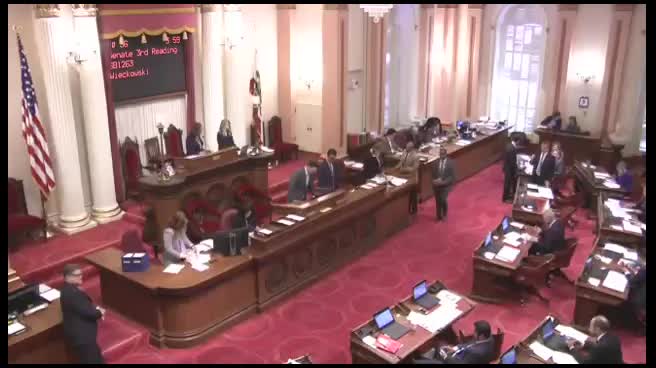 11MIN
Senate Floor
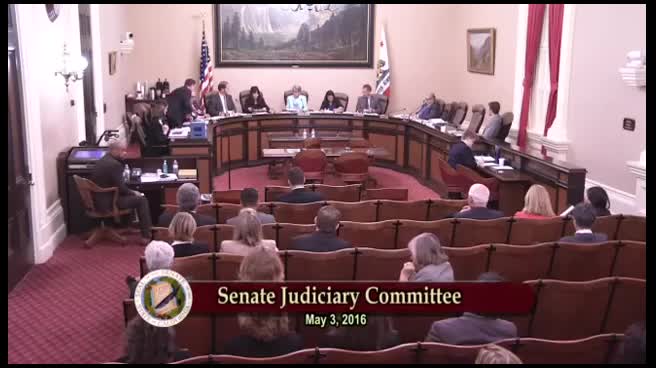 22MIN
Senate Standing Committee on Judiciary
Bill Author

Bill Co-Author(s):