SB 1266: Joint Exercise of Powers Act: agreements: filings.
- Session Year: 2015-2016
- House: Senate
- Latest Version Date: 2016-08-22
The Joint Exercise of Powers Act generally authorizes 2 or more public agencies, by agreement, to jointly exercise any common power, which is generally termed a joint powers agreement. When a joint powers agreement provides for the creation of an agency or entity, separate from the parties to the agreement and responsible for its administration, existing law requires that agency or entity to cause a notice of the agreement or amendment to be prepared and filed, as specified, with the Secretary of State. Existing law requires an agency or entity that files a notice of agreement or amendment with the Secretary of State to also file a copy of the original joint powers agreement, and any amendment to the agreement, with the Controller.
This bill would require an agency or entity required to file documents with the Controller, as described above, that meets the definition of a joint powers authority or joint powers agency, as specified, that was formed for the purpose of providing municipal services and that includes a local agency member, as specified, to also file a copy of the agreement or amendment to the agreement with the local agency formation commission in each county within which all or any part of a local agency members territory is located within 30 days after the effective date of the agreement or amendment to the agreement. The bill would also require an agency or entity that meets the definition of a joint powers authority or joint powers agency, as specified, that was formed for the purpose of providing municipal services prior to the effective date of this act and that includes a local agency member, as specified, to file a copy of the agreement and any amendments to the agreement with the local agency formation commission in each county within which all or any part of a local agency members territory is located no later than July 1, 2017. This bill would prohibit an agency or entity administering an agreement or amendment that has failed to make the required filings within the specified timeframes from issuing bonds or incurring any indebtedness until those filings have been made.
By requiring specified joint powers agencies to file certain documents with a local agency formation commission, this bill would impose a state-mandated local program.
The California Constitution requires the state to reimburse local agencies and school districts for certain costs mandated by the state. Statutory provisions establish procedures for making that reimbursement.
This bill would provide that, if the Commission on State Mandates determines that the bill contains costs mandated by the state, reimbursement for those costs shall be made pursuant to these statutory provisions.
The Joint Exercise of Powers Act generally authorizes 2 or more public agencies, by agreement, to jointly exercise any common power, which is generally termed a joint powers agreement. When a joint powers agreement provides for the creation of an agency or entity, separate from the parties to the agreement and responsible for its administration, existing law requires that agency or entity to cause a notice of the agreement or amendment to be prepared and filed, as specified, with the Secretary of State. Existing law requires an agency or entity that files a notice of agreement or amendment with the Secretary of State to also file a copy of the original joint powers agreement, and any amendments to the agreement, with the Controller.
This bill would require an agency or entity required to file documents with the Controller, as described above, that meets the definition of a joint powers authority or joint powers agency, as specified, that was formed for the purpose of providing municipal services, and that includes a local agency member, as specified, to also file a copy of the agreement or amendment to the agreement with the local agency formation commission in each county within which all or any part of a local agency members territory is located within 90 30 days after the effective date of the agreement or amendment to the agreement. The bill would also require an agency or entity that meets the definition of a joint powers authority or joint powers agency, as specified, that was formed for the purpose of providing municipal services prior to the effective date of this act, and that includes a local agency member, as specified, to file a copy of the agreement and any amendments to the agreement with the local agency formation commission in each county within which all or any part of a local agency members territory is located no later than July 1, 2017. This bill would prohibit an agency or entity administering an agreement or amendment that has failed to make the required filings within the specified timeframes from issuing bonds or incurring any indebtedness until those filings have been made.
By requiring specified joint powers agencies to file certain documents with a local agency formation commission, this bill would impose a state-mandated local program.
The California Constitution requires the state to reimburse local agencies and school districts for certain costs mandated by the state. Statutory provisions establish procedures for making that reimbursement.
This bill would provide that, if the Commission on State Mandates determines that the bill contains costs mandated by the state, reimbursement for those costs shall be made pursuant to these statutory provisions.
The Joint Exercise of Powers Act generally authorizes 2 or more public agencies, by agreement, to jointly exercise any common power, which is generally termed a joint powers agreement. When a joint powers agreement provides for the creation of an agency or entity, separate from the parties to the agreement and responsible for its administration, existing law requires that agency or entity to cause a notice of the agreement or amendment to be prepared and filed, as specified, with the Secretary of State. Existing law requires an agency or entity that files a notice of agreement or amendment with the Secretary of State to also file a copy of the original joint powers agreement, and any amendments to the agreement, with the Controller.
This bill would require an agency or entity required to file documents with the Controller, as described above, that includes a member that is a local agency and is meets the definition of a joint powers authority or joint powers agency, as specified, that was formed for the purpose of providing municipal services, and that includes a local agency member, as specified, to also file a copy of the agreement or amendment to the agreement with the local agency formation commission in each of the counties in each county within which all or any part of a local agency members territory is located within 90 days after the effective date of the agreement or amendment. amendment to the agreement. The bill would also require a separate an agency or entity that is a meets the definition of a joint powers authority or joint powers agency and was constituted pursuant to a joint powers agreement that includes as a member a local agency and was entered into prior to January 1, 2017, and is responsible for the administration of the agreement, agency, as specified, that was formed for the purpose of providing municipal services prior to the effective date of this act, and that includes a local agency member, as specified, to file a copy of the agreement and any amendments to the agreement with the local agency formation commission in each of the counties in each county within which all or any part of a local agency members territory is located no later than July 1, 2017. The bill would define the terms local agency, joint powers authority, and joint powers agency by reference to specified statutes for these purposes.
By requiring specified joint powers agencies to file certain documents with a local agency formation commission, this bill would impose a state-mandated local program.
The California Constitution requires the state to reimburse local agencies and school districts for certain costs mandated by the state. Statutory provisions establish procedures for making that reimbursement.
This bill would provide that, if the Commission on State Mandates determines that the bill contains costs mandated by the state, reimbursement for those costs shall be made pursuant to these statutory provisions.
The Joint Exercise of Powers Act generally authorizes 2 or more public agencies, by agreement, to jointly exercise any common power, which is generally termed a joint powers agreement. When a joint powers agreement provides for the creation of an agency or entity, separate from the parties to the agreement and responsible for its administration, existing law requires that agency or entity to cause a notice of the agreement or amendment to be prepared and filed, as specified, with the Secretary of State. Existing law requires an agency or entity that files a notice of agreement or amendment with the Secretary of State to also file a copy of the original joint powers agreement, and any amendments to the agreement, with the Controller.
This bill would require an agency or entity required to file documents with the Controller, as described above, that includes a member that is a local agency and is a joint powers authority or joint powers agency, to also file a copy of the agreement or amendment with the local agency formation commission in each of the counties in each county within which all or any part a local agency members territory is located within 90 days after the effective date of the agreement or amendment. The bill would also require a separate agency or entity that is a joint powers authority or joint powers agency and was constituted pursuant to a joint powers agreement that includes as a member a local agency and was entered into prior to January 1, 2017, and is responsible for the administration of the agreement, to file a copy of the agreement with the local agency formation commission in each of the counties in each county within which all or any part a local agency members territory is located no later than July 1, 2017. The bill would define the terms local agency, joint powers authority, and joint powers agency by reference to specified statutes for these purposes.
By requiring specified joint powers agencies to file certain documents with a local agency formation commission, this bill would impose a state-mandated local program.
The California Constitution requires the state to reimburse local agencies and school districts for certain costs mandated by the state. Statutory provisions establish procedures for making that reimbursement.
This bill would provide that, if the Commission on State Mandates determines that the bill contains costs mandated by the state, reimbursement for those costs shall be made pursuant to these statutory provisions.
(a)When an agency or entity files a notice of agreement or amendment to the agreement with the office of the Secretary of State pursuant to Section 6503.5, the agency or entity shall file a copy of the full text of the original joint powers agreement, and any amendment to the agreement, with the Controller. An agency or entity that meets the definition of a joint powers authority or joint powers agency under Section 56047.7 that was formed for the purpose of providing municipal services and that includes a local agency member that is a city, district, or county shall, within 30 days after the effective date of the agreement or amendment to the agreement, file a copy of the agreement or amendment to the agreement with the local agency formation commission in each county within which all or any part of a local agency members territory is located.
(b)Notwithstanding any other provision of this chapter, any agency or entity administering a joint powers agreement or amendment to such an agreement, which agreement or amendment becomes effective on or after the effective date of this section, which fails to file the notice with a local agency formation commission required by this section within 30 days after the effective date of the agreement or amendment shall not thereafter, and until those filings are completed, issue any bonds or incur indebtedness of any kind.
SEC. 2.Section 6503.8 is added to the Government Code, to read:6503.8.(a)No later than July 1, 2017, an agency or entity that meets the definition of a joint powers authority or joint powers agency under Section 56047.7 that was formed for the purpose of providing municipal services prior to the effective date of this section, and that includes a local agency member that is a city, district, or county, shall cause a copy of the agreement and any amendments to the agreement to be filed with the local agency formation commission in each county within which all or any part of a local agency members territory is located.
(b)Notwithstanding any other provision of this chapter, any agency or entity administering a joint powers agreement or amendment to such an agreement, which fails to file the notice with a local agency formation commission required by this section on or before July 1, 2017, shall not thereafter, and until those filings are completed, issue any bonds or incur indebtedness of any kind.
SEC. 3.If the Commission on State Mandates determines that this act contains costs mandated by the state, reimbursement to local agencies and school districts for those costs shall be made pursuant to Part 7 (commencing with Section 17500) of Division 4 of Title 2 of the Government Code.
(a)When an agency or entity files a notice of agreement or amendment to the agreement with the office of the Secretary of State pursuant to Section 6503.5, the agency or entity shall file a copy of the full text of the original joint powers agreement, and any amendment to the agreement, with the Controller. An agency or entity that meets the definition of a joint powers authority or joint powers agency under Section 56047.7 that was formed for the purpose of providing municipal services and that includes a local agency member that is a city, district, or county shall, within 90 30 days after the effective date of the agreement or amendment to the agreement, file a copy of the agreement or amendment to the agreement with the local agency formation commission in each county within which all or any part of a local agency members territory is located.
(b)Notwithstanding any other provision of this chapter, any agency or entity administering a joint powers agreement or amendment to such an agreement, which agreement or amendment becomes effective on or after the effective date of this section, which fails to file the notice with a local agency formation commission required by this section within 30 days after the effective date of the agreement or amendment shall not thereafter, and until those filings are completed, issue any bonds or incur indebtedness of any kind.
SEC. 2.Section 6503.8 is added to the Government Code, to read:6503.8.(a)No later than July 1, 2017, an agency or entity that meets the definition of a joint powers authority or joint powers agency under Section 56047.7 that was formed for the purpose of providing municipal services prior to the effective date of this section, and that includes a local agency member that is a city, district, or county, shall cause a copy of the agreement and any amendments to the agreement to be filed with the local agency formation commission in each county within which all or any part of a local agency members territory is located.
(b)Notwithstanding any other provision of this chapter, any agency or entity administering a joint powers agreement or amendment to such an agreement, which fails to file the notice with a local agency formation commission required by this section on or before July 1, 2017, shall not thereafter, and until those filings are completed, issue any bonds or incur indebtedness of any kind.
SEC. 3.If the Commission on State Mandates determines that this act contains costs mandated by the state, reimbursement to local agencies and school districts for those costs shall be made pursuant to Part 7 (commencing with Section 17500) of Division 4 of Title 2 of the Government Code.
When an agency or entity files a notice of agreement or amendment amendment to the agreement with the office of the Secretary of State pursuant to Section 6503.5, the agency or entity shall file a copy of the full text of the original joint powers agreement, and any amendments amendment to the agreement, with the Controller. If the agency or entity includes a member that is a local agency, as defined in Section 56054, and is a joint powers authority or joint powers agency, as defined in Section 56047.7, the agency or entity An agency or entity that meets the definition of a joint powers authority or joint powers agency under Section 56047.7 that was formed for the purpose of providing municipal services and that includes a local agency member that is a city, district, or county shall, within 90 days after the effective date of the agreement or amendment, amendment to the agreement, file a copy of the agreement or amendment to the agreement with the local agency formation commission in each county within which all or any part of a local agency members territory is located.
SEC. 2.Section 6503.8 is added to the Government Code, to read:6503.8.No later than July 1, 2017, a separate an agency or entity that is a joint powers authority or joint powers agency, as defined in Section 56047.7, and was constituted pursuant to a joint powers agreement that includes as a member a local agency, as defined in Section 56054, and was entered into prior to January 1, 2017, shall, as the agency responsible for the administration of the agreement, meets the definition of a joint powers authority or joint powers agency under Section 56047.7 that was formed for the purpose of providing municipal services prior to the effective date of this section, and that includes a local agency member that is a city, district, or county, shall cause a copy of the agreement and any amendments to the agreement to be filed with the local agency formation commission in each affected county. county within which all or any part of a local agency members territory is located.
SEC. 3.If the Commission on State Mandates determines that this act contains costs mandated by the state, reimbursement to local agencies and school districts for those costs shall be made pursuant to Part 7 (commencing with Section 17500) of Division 4 of Title 2 of the Government Code.
Whenever When an agency or entity files a notice of agreement or amendment with the office of the Secretary of State pursuant to Section 6503.5, the agency or entity shall file a copy of the full text of the original joint powers agreement, and any amendments to the agreement, with the Controller. If the agency or entity includes a member that is a local agency, as defined in Section 56054, and is a joint powers authority or joint powers agency, as defined in Section 56047.7, the agency or entity shall, within 90 days after the effective date of the agreement or amendment, file a copy of the agreement or amendment with the local agency formation commission in each county within which all or any part a local agency members territory is located.
SEC. 2.Section 6503.8 is added to the Government Code, to read:6503.8.No later than July 1, 2017, a separate agency or entity that is a joint powers authority or joint powers agency, as defined in Section 56047.7, and was constituted pursuant to a joint powers agreement that includes as a member a local agency, as defined in Section 56054, and was entered into prior to January 1, 2017, shall, as the agency responsible for the administration of the agreement, cause a copy of the agreement and any amendments to the agreement to be filed with the local agency formation commission in each affected county.
SEC. 3.If the Commission on State Mandates determines that this act contains costs mandated by the state, reimbursement to local agencies and school districts for those costs shall be made pursuant to Part 7 (commencing with Section 17500) of Division 4 of Title 2 of the Government Code.
|
Date
|
Status
|
|---|---|
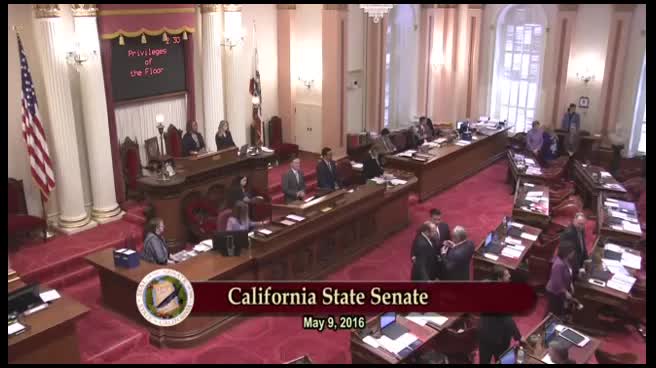
| May 9, 2016 | Read third time. Passed. (Ayes 36. Noes 0.) Ordered to the Assembly. |
| Aug 22, 2016 | Chaptered by Secretary of State. Chapter 173, Statutes of 2016. |
| Aug 22, 2016 | Approved by the Governor. |
| Aug 10, 2016 | Enrolled and presented to the Governor at 10 a.m. |
| Aug 4, 2016 | Read third time. Passed. (Ayes 77. Noes 0. Page 5720.) Ordered to the Senate. |
| Aug 4, 2016 | Read third time. Passed. Ordered to the Senate. |
| Aug 4, 2016 | In Senate. Ordered to engrossing and enrolling. |
| Jun 30, 2016 | Read second time. Ordered to consent calendar. |
| Jun 29, 2016 | From committee: Do pass. Ordered to consent calendar. (Ayes 18. Noes 0.) (June 29). |
| Jun 15, 2016 | From committee: Do pass and re-refer to Com. on APPR. with recommendation: To consent calendar. (Ayes 9. Noes 0.) (June 15). Re-referred to Com. on APPR. |
| May 16, 2016 | Referred to Com. on L. GOV. |
| May 10, 2016 | In Assembly. Read first time. Held at Desk. |
| Feb 18, 2016 | Introduced. Read first time. To Com. on RLS. for assignment. To print. |
| May 9, 2016 | Read third time. Passed. (Ayes 36. Noes 0. Page 3800.) Ordered to the Assembly. |
| Apr 26, 2016 | Read second time. Ordered to third reading. |
| Apr 25, 2016 | From committee: Be ordered to second reading pursuant to Senate Rule 28.8. |
| Apr 15, 2016 | Set for hearing April 25. |
| Apr 12, 2016 | Read second time and amended. Re-referred to Com. on APPR. |
| Apr 11, 2016 | From committee: Do pass as amended and re-refer to Com. on APPR. (Ayes 7. Noes 0.) (April 6). |
| Apr 11, 2016 | From committee: Do pass as amended and re-refer to Com. on APPR. (Ayes 7. Noes 0. Page 3420.) (April 6). |
| Mar 29, 2016 | Set for hearing April 6. |
| Mar 28, 2016 | From committee with author's amendments. Read second time and amended. Re-referred to Com. on GOV. & F. |
| Mar 3, 2016 | Referred to Com. on GOV. & F. |
| Feb 19, 2016 | From printer. May be acted upon on or after March 20. |
|
Date
|
Description
|
Location
|
Votes
|
|
|---|---|---|---|---|
| Aug 4, 2016 | SB 1266 McGuire Consent Calendar Second Day Regular Session | Assembly Floor |
Passed |
|
| Jun 29, 2016 | Do pass. To Consent Calendar. | Assembly Standing Committee on Appropriations |
Passed |
|
| Jun 15, 2016 | Do pass and be re-referred to the Committee on [Appropriations] with recommendation: To Consent Calendar | Assembly Standing Committee on Local Government |
Passed |
|
| May 9, 2016 | Senate 3rd Reading SB1266 McGuire | Senate Floor |
Passed |
|
| Apr 6, 2016 | Do pass as amended, but first amend, and re-refer to the Committee on [Appropriations] | Senate Standing Committee on Governance and Finance |
Passed |
This list shows positions taken on this bill by organizations on the date displayed, which is linked to the original source.
Positions by individuals are not included.
|
Organization
|
Position
|
Date
|
|---|---|---|
| Alameda County LAFCO | ** Support | May 9, 2016 |
| California Association Of Joint Powers Authorities | ** Support | May 9, 2016 |
| California Association of Local Agency Formation Commissions | ** Support | May 9, 2016 |
| Contra Costa County LAFCO | ** Support | May 9, 2016 |
| Imperial County LAFCO | ** Support | May 9, 2016 |
| Marin County LAFCO | ** Support | May 9, 2016 |
| Merced County LAFCO | ** Support | May 9, 2016 |
| Napa County LAFCO | ** Support | May 9, 2016 |
| Riverside County LAFCO | ** Support | May 9, 2016 |
| San Diego County LAFCO | ** Support | May 9, 2016 |
| San Luis Obispo County LAFCO | ** Support | May 9, 2016 |
| San Mateo County LAFCO | ** Support | May 9, 2016 |
| Yolo County LAFCO | ** Support | May 9, 2016 |
Date of Hearing: June 29, 2016
ASSEMBLY COMMITTEE ON APPROPRIATIONS
Lorena Gonzalez, Chair
SBPCA Bill Id:SB 1266
Author:(McGuire) – As Amended Ver:April 12, 2016
Policy Committee: | Local Government | Vote: | 9 - 0 |
Urgency: No State Mandated Local Program: Yes Reimbursable: Yes
SUMMARY: This bill requires joint powers authorities (JPA) or joint powers agencies that provide municipal services to file joint powers agreements and amendments with local agency formation commissions (LAFCOs). Specifically, this bill:
- Requires a JPA to file with a LAFCO the full text of the joint powers agreement, and any amendments to the agreement, in the same manner as filed with the State Controller under existing law, if the JPA:
- Meets the definition of a JPA provided in existing law which defines a JPA formed for the local performance of governmental functions that includes the provision of municipal services; and,
- Includes a local agency member that is a city, county, or district.
- Requires the filing to be with the LAFCO in each county within which all or any part of a local agency's member's territory is located.
- Requires a JPA formed prior to January 1, 2017, and that meets the criteria in 1) above, to file a copy of the agreement and any amendments to the agreement with the LAFCO in each county which all or any part of a local agency's territory is located no later than July 1, 2017.
- Prohibits any agency or entity administering a joint powers agreement or amendment to an agreement which fails to file the notice with a LAFCO, from issuing any bonds or incurring indebtedness of any kind until filings are completed.
FISCAL EFFECT:
Negligible state fiscal impact. This bill requires JPAs to provide LAFCOs with information that is similar to what they already must submit to the State Controller. JPAs have limited authority to submit claims for reimbursable mandates and it is highly unlikely that reimbursement claims would be filed as a result of this bill.
COMMENTS:
- Purpose. Many existing JPAs provide municipal services to communities throughout California. However, LAFCO officials frequently possess no information about the existence and activities of some JPAs that provide municipal services. This lack of information makes it difficult for LAFCOs to fulfill their statutory responsibility to plan and oversee the responsive, efficient and effective delivery local government services. A 2011 report produced by the Legislative Analyst’s Office (LAO) noted that LAFCOs lack the legal authority to ensure that JPAs are providing services and using public funds efficiently and in a manner consistent with current law. The LAO suggested that JPAs should be subject to a higher level of LAFCO oversight and identified “providing LAFCOs with copies of all JPA agreements, including amendments” as a policy option.
This bill does not grant LAFCOs any authority over JPAs’ formation, boundaries, organization, or services, fully preserving the flexibility and autonomy that JPAs enjoy under current law. This bill helps LAFCOs provide better oversight of municipal service delivery by providing them with crucial information about JPAs that provide those services.
- Background. State law requires LAFCOs to conduct studies of existing governmental agencies, including studies to inventory those agencies and determine their maximum service area and service capacities. To support those studies, government agencies must comply with a LAFCO’s request for information. The Legislature recently included JPAs that provide municipal services in the list of agencies from which a LAFCO can request information and added joint powers agreements to the list of documents that a LAFCO may request (AB 2156, Achadjian, Chapter 21, Statutes of 2014). Despite this new statutory authority, some LAFCO officials still find it difficult to obtain sufficient information about the activities of JPAs that provide municipal services. In some cases, they are not even aware of the existence of these JPAs and have no knowledge of amendments that are made to existing agreements. Despite the fact that JPAs are submitting information to the State Controller, LAFCOs cannot request this information if they do not know when new JPAs are formed or when existing agreements are amended. LAFCO officials want the Legislature to require JPAs to provide LAFCOs with information that is similar to what JPAs already must submit to the State Controller under current law.
Analysis Prepared by: Jennifer Swenson / APPR. / (916) 319-2081
Date of Hearing: June 15, 2016
ASSEMBLY COMMITTEE ON LOCAL GOVERNMENT
Susan Talamantes Eggman, Chair
SBPCA Bill Id:SB 1266
Author:(McGuire) – As Amended Ver:April 12, 2016
SENATE VOTE: 36-0
SUBJECT: Joint Exercise of Powers Act: agreements: filings
SUMMARY: Requires joint powers authorities (JPA) or joint powers agencies that provide municipal services to file joint powers agreements and amendments with local agency formation commissions. Specifically, this bill:
- Requires a JPA to file with a local agency formation commission (LAFCO) the full text of the joint powers agreement, and any amendments to the agreement, in the same manner as filed with the State Controller under existing law, if the JPA:
- Meets the definition of a JPA provided in existing law which defines a JPA formed for the local performance of governmental functions that includes the provision of municipal services; and,
- Includes a local agency member that is a city, county, or district.
- Requires the filing to be with the LAFCO in each county within which all or any part of a local agency's member's territory is located.
- Requires a JPA formed prior to January 1, 2017, and that meets the criteria in 1) above, to file a copy of the agreement and any amendments to the agreement with the LAFCO in each county which all or any part of a local agency's territory is located no later than July 1, 2017.
- Prohibits any agency or entity administering a joint powers agreement or amendment to an agreement which fails to file the notice with a LAFCO, from issuing any bonds or incurring indebtedness of any kind until filings are completed.
- Provides that, if the Commission on State Mandates determines that this bill contains costs mandated by the state, reimbursement to local agencies and school districts for those costs shall be made, pursuant to current law governing state mandated local costs.
EXISTING LAW:
- Establishes the Cortese-Knox-Hertzberg Local Government Reorganization Act of 2000 (Act).
- Requires LAFCOs to initiate and make studies of existing governmental agencies, which include, but not be limited to, inventorying agencies and determining their maximum service area and service capacities.
- Authorizes LAFCOs, in conducting the studies, to request for land use information, studies, and plans of cities, counties, districts, including school districts, community college districts, regional agencies, JPAs, and state agencies and departments.
- Requires cities, counties, districts, including school districts, community college districts, regional agencies, JPAs, and state agencies and departments to comply with a LAFCO's request for information.
- Defines, in the Act, a "joint powers agency or a joint powers authority" to mean an agency or entity formed, pursuant to the Joint Exercise of Powers Act, that is formed for the local performance of governmental functions that includes the provision of municipal services.
- Establishes the Joint Exercise of Powers Act.
- Requires a JPA, when a joint powers agreement provides for the creation or an agency or entity that is separate from the parties to the agreement, to prepare and file notice of the agreement or amendment within 30 days after the effective date with the office of the Secretary of State and with the State Controller.
- Requires the notice to contain a) the name of each public agency party to the agreement;
b) the effective date of the agreement; c) a statement of the purpose of the agreement or the power to be exercised; and d) a description of the amendment, if any. - Prohibits a JPA that failed to file notice, pursuant to 7), above, from issuing any bonds or incurring indebtedness until such filings are completed.
FISCAL EFFECT: According to the Senate Appropriations Committee, pursuant to Senate Rule 28.8, negligible state costs.
COMMENTS:
- Bill Summary. This bill requires JPAs that are formed for the purposes of providing municipal services, which include a local agency member that is a city, district, or county, to file a copy of the full text of the joint powers agreement and any amendments to the agreement with LAFCOs. JPAs that fit the specified criteria, but were formed prior to January 1, 2017, would be required to file the agreement and amendments with LAFCO, no later than July 1, 2017. Similar to the prohibition established in existing law for failing to file with the Controller's office, JPAs would be prohibited from issuing bonds or incurring indebtedness until filings are completed with LAFCO.
- Author's Statement. According to the author, "Many existing JPAs provide municipal services to communities throughout California. However, LAFCO officials frequently possess no information about the existence and activities of some JPAs that provide municipal services. This lack of information about municipal service-providing JPAs makes it difficult for LAFCOs to fulfill their statutory responsibility to plan and oversee the responsive, efficient and effective delivery local government services. A 2011 report produced by the Legislative Analyst’s Office [LAO] noted that LAFCOs lack the legal authority to ensure that JPAs are providing services and using public funds efficiently and in a manner consistent with current law. The LAO suggested that JPAs should be subject to a higher level of LAFCO oversight and identified “providing LAFCOs with copies of all JPA agreements, including amendments” as a policy option.
"SB 1266 does not grant LAFCOs any authority over JPAs’ formation, boundaries, organization, or services, fully preserving the flexibility and autonomy that JPAs enjoy under current law. The bill helps LAFCOs provide better oversight of municipal service delivery by providing them with crucial information about JPAs that provide those services."
- Background. With a LAFCO in each of California’s 58 counties, every commission is responsible for coordinating changes in governmental boundaries, conducting studies that review ways to reorganize, simplify, and streamline governmental structures and ensure that services are provided efficiently and economically. As part of their oversight, LAFCOs are authorized to request information and governmental agencies under their review are required to comply with the commission’s request.
Current law authorizes LAFCOs, in conducting studies, to request specified information from local and state agencies in order to inventory agencies and examine issues like their maximum service area and service capacities. AB 2156 (Achadjian), Chapter 21, Statutes of 2014, added JPAs that provide municipal services to the list of existing governmental agencies that must comply with requests from LAFCOs for information. AB 2156 sought to address some of the issues identified by the LAO in 2012.
In a January 2012 letter to Assembly Member Dickinson, the LAO recommended that the Legislature consider expanding JPA oversight authority to LAFCOs.
"We would also suggest the Legislature consider expanding LAFCO authority to oversee JPAs. As we describe, LAFCOs have no statutory authority to oversee the JPAs that districts or general-purpose governments enter into. This includes JPAs that are providing services, such as wastewater treatment or water supply. Consequently, LAFCOs have no statutory authority to review the financial and service data of these JPA's boundaries or services in the same way that it can for individual special districts and other local government agencies. We do not think this expanded authority should be undertaken with the intent of discouraging the use of JPAs because those agreements are one strategy that special districts use to achieve higher efficiencies. However, we think that it is important that the entities created under JPAs be subject to some level of oversight akin to the districts and general-purpose governments that utilize them."
- JPAs. The Joint Exercise of Powers Act provides the statutory authority for public entities to create and use a joint powers agreement, which is a legal framework for state and local governments to exercise common powers and even create new public entities. They are an attractive tool for local governments because they facilitate more efficient service provision through collaboration, and because they permit local entities to issue bonds without voter ratification.
On March 21, 2012, the Committee held an informational hearing on the state of oversight of JPAs. The hearing found that data collection on JPAs appears to be incomplete and under-resourced, filing compliance is less than ideal, and oversight remains somewhat fragmentary. The uses of JPAs fall into five groups: general public services, financial services, insurance pooling and purchasing discounts, planning services, and regulatory enforcement. This bill only pertains to those JPAs formed for the local performance of governmental functions that includes the provision of municipal services.
- Arguments in Support. The California Association of Local Agency Formation Commissions argues "Under existing law, there is no means for LAFCOs to be informed of the existence and activities of local municipal service providing JPAs, which creates an increasing challenge for LAFCOs in meeting their standing directive to plan and oversee the responsive, efficient and effective delivery local government services. This is especially true given the expanding role of JPAs in delivering municipal services. This bill closes that gap."
- Arguments in Opposition. None on file.
REGISTERED SUPPORT / OPPOSITION:
Support
California Association of Local Agency Formation Commissions [SPONSOR]
Local Agency Formation Commissions of Alameda, Contra Costa, Imperial, Marin, Merced,
Napa, Riverside, San Diego. San Luis Obispo, San Mateo, and Yolo
Opposition
None on file
Analysis Prepared by: Misa Lennox / L. GOV. / (916) 319-3958
Office of Senate Floor Analyses (916) 651-1520 Fax: (916) 327-4478 | SB |
THIRD READING
Bill No: SB 1266
:
SENATE GOVERNANCE & FIN. COMMITTEE: 7-0, 4/6/16
AYES: Hertzberg, Nguyen, Beall, Hernandez, Lara, Moorlach, Pavley
SENATE APPROPRIATIONS COMMITTEE: Senate Rule 28.8
DIGEST: This bill requires joint powers agencies and joint powers authorities that provide municipal services to file copies of specified documents with local agency formation commissions.
Existing law:
- Sets forth, pursuant to the Cortese-Knox-Hertzberg Local Government Reorganization Act of 2000, the powers and duties of local agency formation commissions (LAFCOs). Located in every county, LAFCOs are responsible for coordinating changes in governmental boundaries and conducting studies that review ways to reorganize, simplify, and streamline governmental structures to ensure that services are provided efficiently and economically. A LAFCO must make its studies available to public agencies and any interested person.
- Allows, pursuant to the Joint Exercise of Powers Act, two or more public agencies to use their powers in common if they sign a joint powers agreement. Sometimes an agreement creates a new, separate government called a joint powers agency or joint powers authority (JPA).
- Requires a JPA to file a notice of its joint powers agreement, or any amendment to the agreement, with the Secretary of State’s Office within 30 days after the agreement or amendment takes effect.
- Requires that whenever a JPA is required to submit a notice of a joint powers agreement or amendment to the Secretary of State’s Office, the JPA must also file a copy of the full text of the original joint powers agreement, and any amendments to the agreement, with the State Controller.
This bill:
- Requires that whenever current law requires a JPA to file a copy of the full text of its joint powers agreement, and any amendments to the agreement, with the State Controller, it must also file those same documents with a LAFCO, if the JPA:
- Meets a specified statutory definition of a JPA formed for the purposes of providing municipal services, and
- Includes a local agency member that is a city, county, or district.
- Directs that, within 30 days after the agreement or amendment takes effect, any JPA that meets these conditions must file a copy of the agreement or amendment with the LAFCO in each county within which all or any part of a local agency member’s territory is located.
- Requires that a JPA that was formed before January 1, 2017 must, by July 1, 2017, file a copy of its agreement or amendment with the LAFCO in each county within which all or any part of a local agency member’s territory is located, if the JPA:
- Was formed for the purposes of providing municipal services before January 1, 2017,
- Meets a specified statutory definition of a JPA formed for the purposes of providing municipal services, and
- Includes a local agency member that is a city, county, or district.
- Prohibits a JPA that has failed to make the required filings with LAFCOs within the specified timeframes from issuing bonds or incurring any indebtedness until those filings have been made.
Background
State law requires LAFCOs to conduct studies of existing governmental agencies, including studies to inventory those agencies and determine their maximum service area and service capacities. To support those studies government agencies must comply with a LAFCO’s request for information. The Legislature recently included JPAs that provide municipal services in the list of agencies from which a LAFCO can request information and added joint powers agreements to the list of documents that a LAFCO may request (AB 2156, Achadjian, Chapter 21, Statutes of 2014). Despite this new statutory authority, some LAFCO officials still find it difficult to obtain sufficient information about the activities of JPAs that provide municipal services. In some cases, they are not even aware of the existence of these JPAs and have no knowledge of amendments that are made to existing agreements. Despite the fact that JPAs are submitting information to the State Controller, LAFCOs can’t request this information if they don’t know when new JPAs are formed or when existing agreements are amended. LAFCO officials want the Legislature to require JPAs to provide LAFCOs with information that is similar to what JPAs already must submit to the State Controller under current law.
Comments
Purpose of the bill. Many existing JPAs provide municipal services to communities throughout California. However, LAFCO officials frequently possess no information about the existence and activities of some JPAs that provide municipal services. This lack of information about municipal service-providing JPAs makes it difficult for LAFCOs to fulfill their statutory responsibility to plan and oversee the responsive, efficient and effective delivery local government services. A 2011 report produced by the Legislative Analyst’s Office noted that LAFCOs lack the legal authority to ensure that JPAs are providing services and using public funds efficiently and in a manner consistent with current law. The LAO suggested that JPAs should be subject to a higher level of LAFCO oversight and identified “provid[ing] LAFCOs with copies of all JPA agreements, including amendments” as a policy option. This bill does not grant LAFCOs any authority over JPAs’ formation, boundaries, organization, or services, fully preserving the flexibility and autonomy that JPAs enjoy under current law. This bill helps LAFCOs provide better oversight of municipal service delivery by providing them with crucial information about JPAs that provide those services.
FISCAL EFFECT: Appropriation: Fiscal Com.: Local:
Alameda County LAFCO
California Association of Joint Powers Authorities
California Association of Local Agency Formation Commissions
Contra Costa County LAFCO
Imperial County LAFCO
Marin County LAFCO
Merced County LAFCO
Napa County LAFCO
Riverside County LAFCO
San Diego County LAFCO
San Luis Obispo County LAFCO
San Mateo County LAFCO
Yolo County LAFCO
OPPOSITION: (Verified 4/25/16)
None received
4/27/16 15:57:28
**** END ****
SENATE COMMITTEE ON GOVERNANCE AND FINANCE
Senator Robert M. Hertzberg, Chair
2015 - 2016 Regular
Bill No: | SB 1266 | Hearing Date: | 4/6/16 |
Author: | McGuire | Tax Levy: | No |
Version: | 3/28/16 Amended | Fiscal: | Yes |
Consultant: | Weinberger | ||
Joint Exercise of Powers Act: agreements: filings
Requires joint powers agencies and joint powers authorities that provide municipal services to file copies of specified documents with local agency formation commissions.
Background
The Cortese-Knox-Hertzberg Local Government Reorganization Act of 2000 sets forth the powers and duties of local agency formation commissions (LAFCOs). Located in every county, LAFCOs are responsible for coordinating changes in governmental boundaries and conducting studies that review ways to reorganize, simplify, and streamline governmental structures to ensure that services are provided efficiently and economically. A LAFCO must make its studies available to public agencies and any interested person.
The Joint Exercise of Powers Act allows two or more public agencies to use their powers in common if they sign a joint powers agreement. Sometimes an agreement creates a new, separate government called a joint powers agency or joint powers authority (JPA). State law requires a JPA to file a notice of its joint powers agreement, or any amendment to the agreement, with the Secretary of State’s Office within 30 days after the agreement or amendment takes effect. State law requires that whenever a JPA is required to submit a notice of a joint powers agreement or amendment to the Secretary of State’s Office, the JPA must also file a copy of the full text of the original joint powers agreement, and any amendments to the agreement, with the State Controller.
State law requires LAFCOs to conduct studies of existing governmental agencies, including studies to inventory those agencies and determine their maximum service area and service capacities. To support those studies government agencies must comply with a LAFCO’s request for information. The Legislature recently included JPAs that provide municipal services in the list of agencies from which a LAFCO can request information and added joint powers agreements to the list of documents that a LAFCO may request (AB 2156, Achadjian, 2014). Despite this new statutory authority, some LAFCO officials still find it difficult to obtain sufficient information about the activities of JPAs that provide municipal services. In some cases, they are not even aware of the existence of these JPAs and have no knowledge of amendments that are made to existing agreements. Despite the fact that JPAs are submitting information to the State Controller, LAFCOs can’t request this information if they don’t know when new JPAs are formed or when existing agreements are amended. LAFCO officials want the Legislature to require JPAs to provide LAFCOs with information that is similar to what JPAs already must submit to the State Controller under current law.
Proposed Law
Senate Bill 1266 requires that whenever current law requires a JPA to file a copy of the full text of its joint powers agreement, and any amendments to the agreement, with the State Controller, it must also file those same documents with a LAFCO, if the JPA:
- Meets a specified statutory definition of a JPA formed for the purposes of providing municipal services, and
- Includes a local agency member that is a city, county, or district.
Within 90 days after the agreement or amendment takes effect, any JPA that meets these conditions must file a copy of the agreement or amendment with the LAFCO in each county within which all or any part of a local agency member’s territory is located.
SB 1266 also applies retroactively to qualifying JPAs that were formed before January 1, 2017. Specifically, the bill requires that a JPA must, by July 1, 2017, file a copy of its agreement or amendment with the LAFCO in each county within which all or any part of a local agency member’s territory is located, if the JPA:
- Was formed for the purposes of providing municipal services before January 1, 2017,
- Meets a specified statutory definition of a JPA formed for the purposes of providing municipal services,
- Includes a local agency member that is a city, county, or district.
State Revenue Impact
No estimate.
Comments
1. Purpose of the bill. Many existing JPAs provide municipal services to communities throughout California. However, LAFCO officials frequently possess no information about the existence and activities of some JPAs that provide municipal services. This lack of information about municipal service-providing JPAs makes it difficult for LAFCOs to fulfill their statutory responsibility to plan and oversee the responsive, efficient and effective delivery local government services. A 2011 report produced by the Legislative Analyst’s Office noted that LAFCOs lack the legal authority to ensure that JPAs are providing services and using public funds efficiently and in a manner consistent with current law. The LAO suggested that JPAs should be subject to a higher level of LAFCO oversight and identified “provid[ing] LAFCOs with copies of all JPA agreements, including amendments” as a policy option. SB 1266 does not grant LAFCOs any authority over JPAs’ formation, boundaries, organization, or services, fully preserving the flexibility and autonomy that JPAs enjoy under current law. The bill helps LAFCOs provide better oversight of municipal service delivery by providing them with crucial information about JPAs that provide those services.
2. Truth or consequences. SB 1266 requires JPAs to submit documents that will help LAFCO officials learn more about JPAs’ true role in providing municipal services to communities throughout California. The bill does not, however, impose any consequences on JPAs that fail to provide LAFCOs with the required information. Existing law prohibits any JPA that fails to provide notice to the Secretary of State’s office within the required time period from issuing bond or other indebtedness until the required notice is filed with the Secretary of State. To encourage compliance with SB 1266’s provisions, the Committee may wish to consider amending the bill to impose the same consequences on JPAs that fail to provide required information to LAFCOs that current law imposes on JPAs that fail to provide notice to the Secretary of State.
3. Timing. SB 1266 requires a JPA to submit specified information to a LAFCO within 90 days of the effective date of a joint powers agreement or amendment. However, state law already requires a JPA to submit the same information to the State Controller’s Office within 30 days of the effective date of a joint powers agreement or amendment. It’s unclear what purpose is served by having a longer filing period for submitting information to LAFCOs. To avoid confusion and conform SB 1266’s provisions to deadlines in existing state law, the Committee may wish to consider amending SB 1266 to require that JPAs must submit information to LAFCOs within 30 days of the effective date of a joint powers agreement or amendment.
4. Mandate. The California Constitution requires the state to reimburse local governments for the costs of new or expanded state mandated local programs. Because SB 1266 imposes new filing duties on joint powers agency officials, Legislative Counsel says that it imposes a new state mandate. SB 1266 requires the state to reimburse local agencies if the Commission on State Mandates determines that the bill imposes a reimbursable mandate.
Support and Opposition
(3/31/16)
Support: California Association of Local Agency Formation Commissions; Alameda County LAFCO; California Association of Joint Powers Authorities; Contra Costa County LAFCO; Imperial County LAFCO; Marin County LAFCO; San Mateo County LAFCO; Yolo County LAFCO.
Opposition: Unknown.
-- END --
Bill Author

Bill Co-Author(s):