SB 1322: Commercial sex acts: minors.
- Session Year: 2015-2016
- House: Senate
- Latest Version Date: 2016-09-26
Existing law makes it a crime to solicit or engage in any act of prostitution. Existing law makes it a crime to loiter in any public place with the intent to commit prostitution.
This bill would make the above provisions inapplicable to a child under 18 years of age who is alleged to have engaged in conduct that would, if committed by an adult, violate the above provisions. The bill would authorize the minor to be taken into temporary custody under limited circumstances.
This bill would incorporate additional changes to Section 647 of the Penal Code, proposed by SB 420, SB 1129, and AB 1708, that would become operative only if this bill and one or more of those other bills are enacted and become effective on or before January 1, 2017, and this bill is chaptered last.
This bill would incorporate additional changes to Section 653.22 of the Penal Code, proposed by AB 1771, that would become operative only if this bill and AB 1771 are enacted and become effective on or before January 1, 2017, and this bill is chaptered last.
Existing law makes it a crime to solicit or engage in any act of prostitution. Existing law makes it a crime to loiter in any public place with the intent to commit prostitution.
This bill would make the above provisions inapplicable to a child under 18 years of age who is alleged to have engaged in conduct that would, if committed by an adult, violate the above provisions. The bill would authorize the minor to be taken into temporary custody under limited circumstances.
Existing law makes it a crime to solicit or engage in any act of prostitution. Existing law makes it a crime to loiter in any public place with the intent to commit prostitution.
This bill would make the above provisions inapplicable to a child under 18 years of age who is alleged to have engaged in conduct that would, if committed by an adult, violate the above provisions. Pursuant to those provisions, the bill would require a peace officer to report suspected abuse or neglect of that minor to the county child welfare agency. The bill would authorize the minor to be taken into temporary custody under limited circumstances. By imposing new duties on local law enforcement agencies, the bill would impose a state-mandated local program.
The California Constitution requires the state to reimburse local agencies and school districts for certain costs mandated by the state. Statutory provisions establish procedures for making that reimbursement.
This bill would provide that, if the Commission on State Mandates determines that the bill contains costs mandated by the state, reimbursement for those costs shall be made pursuant to these statutory provisions.
Except as provided in paragraph (2) of subdivision (b) and subdivision (l), every person who commits any of the following acts is guilty of disorderly conduct, a misdemeanor:
(a)Who solicits anyone to engage in or who engages in lewd or dissolute conduct in any public place or in any place open to the public or exposed to public view.
(b)(1)Who solicits or who agrees to engage in or who engages in any act of prostitution. A person agrees to engage in an act of prostitution when, with specific intent to so engage, he or she manifests an acceptance of an offer or solicitation to so engage, regardless of whether the offer or solicitation was made by a person who also possessed the specific intent to engage in prostitution. No agreement to engage in an act of prostitution shall constitute a violation of this subdivision unless some act, in addition to the agreement, is done within this state in furtherance of the commission of an act of prostitution by the person agreeing to engage in that act. As used in this subdivision, prostitution includes any lewd act between persons for money or other consideration.
(2)Notwithstanding paragraph (1), this subdivision does not apply to a child under 18 years of age who is alleged to have engaged in conduct to receive money or other consideration that would, if committed by an adult, violate this subdivision. A commercially exploited child under this paragraph may be adjudged a dependent child of the court pursuant to paragraph (2) of subdivision (b) of Section 300 of the Welfare and Institutions Code and may be taken into temporary custody pursuant to subdivision (a) of Section 305 of the Welfare and Institutions Code, if the conditions allowing temporary custody without warrant are met.
(c)Who accosts other persons in any public place or in any place open to the public for the purpose of begging or soliciting alms.
(d)Who loiters in or about any toilet open to the public for the purpose of engaging in or soliciting any lewd or lascivious or any unlawful act.
(e)Who lodges in any building, structure, vehicle, or place, whether public or private, without the permission of the owner or person entitled to the possession or in control of it.
(f)Who is found in any public place under the influence of intoxicating liquor, any drug, controlled substance, toluene, or any combination of any intoxicating liquor, drug, controlled substance, or toluene, in a condition that he or she is unable to exercise care for his or her own safety or the safety of others, or by reason of his or her being under the influence of intoxicating liquor, any drug, controlled substance, toluene, or any combination of any intoxicating liquor, drug, or toluene, interferes with or obstructs or prevents the free use of any street, sidewalk, or other public way.
(g)When a person has violated subdivision (f), a peace officer, if he or she is reasonably able to do so, shall place the person, or cause him or her to be placed, in civil protective custody. The person shall be taken to a facility, designated pursuant to Section 5170 of the Welfare and Institutions Code, for the 72-hour treatment and evaluation of inebriates. A peace officer may place a person in civil protective custody with that kind and degree of force which would be lawful were he or she effecting an arrest for a misdemeanor without a warrant. A person who has been placed in civil protective custody shall not thereafter be subject to any criminal prosecution or juvenile court proceeding based on the facts giving rise to this placement. This subdivision shall not apply to the following persons:
(1)Any person who is under the influence of any drug, or under the combined influence of intoxicating liquor and any drug.
(2)Any person who a peace officer has probable cause to believe has committed any felony, or who has committed any misdemeanor in addition to subdivision (f).
(3)Any person who a peace officer in good faith believes will attempt escape or will be unreasonably difficult for medical personnel to control.
(h)Who loiters, prowls, or wanders upon the private property of another, at any time, without visible or lawful business with the owner or occupant. As used in this subdivision, loiter means to delay or linger without a lawful purpose for being on the property and for the purpose of committing a crime as opportunity may be discovered.
(i)Who, while loitering, prowling, or wandering upon the private property of another, at any time, peeks in the door or window of any inhabited building or structure, without visible or lawful business with the owner or occupant.
(j)(1)Any person who looks through a hole or opening, into, or otherwise views, by means of any instrumentality, including, but not limited to, a periscope, telescope, binoculars, camera, motion picture camera, camcorder, or mobile phone, the interior of a bedroom, bathroom, changing room, fitting room, dressing room, or tanning booth, or the interior of any other area in which the occupant has a reasonable expectation of privacy, with the intent to invade the privacy of a person or persons inside. This subdivision shall not apply to those areas of a private business used to count currency or other negotiable instruments.
(2)Any person who uses a concealed camcorder, motion picture camera, or photographic camera of any type, to secretly videotape, film, photograph, or record by electronic means, another, identifiable person under or through the clothing being worn by that other person, for the purpose of viewing the body of, or the undergarments worn by, that other person, without the consent or knowledge of that other person, with the intent to arouse, appeal to, or gratify the lust, passions, or sexual desires of that person and invade the privacy of that other person, under circumstances in which the other person has a reasonable expectation of privacy.
(3)(A)Any person who uses a concealed camcorder, motion picture camera, or photographic camera of any type, to secretly videotape, film, photograph, or record by electronic means, another, identifiable person who may be in a state of full or partial undress, for the purpose of viewing the body of, or the undergarments worn by, that other person, without the consent or knowledge of that other person, in the interior of a bedroom, bathroom, changing room, fitting room, dressing room, or tanning booth, or the interior of any other area in which that other person has a reasonable expectation of privacy, with the intent to invade the privacy of that other person.
(B)Neither of the following is a defense to the crime specified in this paragraph:
(i)The defendant was a cohabitant, landlord, tenant, cotenant, employer, employee, or business partner or associate of the victim, or an agent of any of these.
(ii)The victim was not in a state of full or partial undress.
(4)(A)Any person who intentionally distributes the image of the intimate body part or parts of another identifiable person, or an image of the person depicted engaged in an act of sexual intercourse, sodomy, oral copulation, sexual penetration, or an image of masturbation by the person depicted or in which the person depicted participates, under circumstances in which the persons agree or understand that the image shall remain private, the person distributing the image knows or should know that distribution of the image will cause serious emotional distress, and the person depicted suffers that distress.
(B)A person intentionally distributes an image described in subparagraph (A) when he or she personally distributes the image, or arranges, specifically requests, or intentionally causes another person to distribute that image.
(C)As used in this paragraph, intimate body part means any portion of the genitals, the anus and in the case of a female, also includes any portion of the breasts below the top of the areola, that is either uncovered or clearly visible through clothing.
(D)It shall not be a violation of this paragraph to distribute an image described in subparagraph (A) if any of the following applies:
(i)The distribution is made in the course of reporting an unlawful activity.
(ii)The distribution is made in compliance with a subpoena or other court order for use in a legal proceeding.
(iii)The distribution is made in the course of a lawful public proceeding.
(5)This subdivision shall not preclude punishment under any section of law providing for greater punishment.
(k)In any accusatory pleading charging a violation of subdivision (b), if the defendant has been once previously convicted of a violation of that subdivision, the previous conviction shall be charged in the accusatory pleading. If the previous conviction is found to be true by the jury, upon a jury trial, or by the court, upon a court trial, or is admitted by the defendant, the defendant shall be imprisoned in a county jail for a period of not less than 45 days and shall not be eligible for release upon completion of sentence, on probation, on parole, on work furlough or work release, or on any other basis until he or she has served a period of not less than 45 days in a county jail. In all cases in which probation is granted, the court shall require as a condition thereof that the person be confined in a county jail for at least 45 days. In no event does the court have the power to absolve a person who violates this subdivision from the obligation of spending at least 45 days in confinement in a county jail.
In any accusatory pleading charging a violation of subdivision (b), if the defendant has been previously convicted two or more times of a violation of that subdivision, each of these previous convictions shall be charged in the accusatory pleading. If two or more of these previous convictions are found to be true by the jury, upon a jury trial, or by the court, upon a court trial, or are admitted by the defendant, the defendant shall be imprisoned in a county jail for a period of not less than 90 days and shall not be eligible for release upon completion of sentence, on probation, on parole, on work furlough or work release, or on any other basis until he or she has served a period of not less than 90 days in a county jail. In all cases in which probation is granted, the court shall require as a condition thereof that the person be confined in a county jail for at least 90 days. In no event does the court have the power to absolve a person who violates this subdivision from the obligation of spending at least 90 days in confinement in a county jail.
In addition to any punishment prescribed by this section, a court may suspend, for not more than 30 days, the privilege of the person to operate a motor vehicle pursuant to Section 13201.5 of the Vehicle Code for any violation of subdivision (b) that was committed within 1,000 feet of a private residence and with the use of a vehicle. In lieu of the suspension, the court may order a persons privilege to operate a motor vehicle restricted, for not more than six months, to necessary travel to and from the persons place of employment or education. If driving a motor vehicle is necessary to perform the duties of the persons employment, the court may also allow the person to drive in that persons scope of employment.
(l)(1)A second or subsequent violation of subdivision (j) is punishable by imprisonment in a county jail not exceeding one year, or by a fine not exceeding two thousand dollars ($2,000), or by both that fine and imprisonment.
(2)If the victim of a violation of subdivision (j) was a minor at the time of the offense, the violation is punishable by imprisonment in a county jail not exceeding one year, or by a fine not exceeding two thousand dollars ($2,000), or by both that fine and imprisonment.
(m)(1)If a crime is committed in violation of subdivision (b) and the person who was solicited was a minor at the time of the offense, and if the defendant knew or should have known that the person who was solicited was a minor at the time of the offense, the violation is punishable by imprisonment in a county jail for not less than two days and not more than one year, or by a fine not exceeding ten thousand dollars ($10,000), or by both that fine and imprisonment.
(2)The court may, in unusual cases, when the interests of justice are best served, reduce or eliminate the mandatory two days of imprisonment in a county jail required by this subdivision. If the court reduces or eliminates the mandatory two days imprisonment, the court shall specify the reason on the record.
SEC. 1.1.Section 647 of the Penal Code is amended to read:647.Except as provided in paragraph (5) of subdivision (b) and subdivision (l), every person who commits any of the following acts is guilty of disorderly conduct, a misdemeanor:
(a)An individual who solicits anyone to engage in or who engages in lewd or dissolute conduct in any public place or in any place open to the public or exposed to public view.
(b)(1) An individual who solicits, or who agrees to engage in, or who engages in, any act of prostitution with the intent to receive compensation, money, or anything of value from another person. An individual agrees to engage in an act of prostitution when, with specific intent to so engage, he or she manifests an acceptance of an offer or solicitation by another person to so engage, regardless of whether the offer or solicitation was made by a person who also possessed the specific intent to engage in an act of prostitution.
(2) An individual who solicits, or who agrees to engage in, or who engages in, any act of prostitution with another person who is 18 years of age or older in exchange for the individual providing compensation, money, or anything of value to the other person. An individual agrees to engage in an act of prostitution when, with specific intent to so engage, he or she manifests an acceptance of an offer or solicitation by another person who is 18 years of age or older to so engage, regardless of whether the offer or solicitation was made by a person who also possessed the specific intent to engage in an act of prostitution.
(3)An individual who solicits, or who agrees to engage in, or who engages in, any act of prostitution with another person who is a minor in exchange for the individual providing compensation, money, or anything of value to the minor. An individual agrees to engage in an act of prostitution when, with specific intent to so engage, he or she manifests an acceptance of an offer or solicitation by someone who is a minor to so engage, regardless of whether the offer or solicitation was made by a minor who also possessed the specific intent to engage in an act of prostitution.
(4)A manifestation of acceptance of an offer or solicitation to engage in an act of prostitution does not constitute a violation of this subdivision unless some act, in addition to the manifestation of acceptance is done within this state in furtherance of the commission of the act of prostitution by the person manifesting an acceptance of an offer or solicitation to engage in that act. As used in this subdivision, prostitution includes any lewd act between persons for money or other consideration.
(5)Notwithstanding paragraphs (1) to (3), inclusive, this subdivision does not apply to a child under 18 years of age who is alleged to have engaged in conduct to receive money or other consideration that would, if committed by an adult, violate this subdivision. A commercially exploited child under this paragraph may be adjudged a dependent child of the court pursuant to paragraph (2) of subdivision (b) of Section 300 of the Welfare and Institutions Code and may be taken into temporary custody pursuant to subdivision (a) of Section 305 of the Welfare and Institutions Code, if the conditions allowing temporary custody without warrant are met.
(c)Who accosts other persons in any public place or in any place open to the public for the purpose of begging or soliciting alms.
(d)Who loiters in or about any toilet open to the public for the purpose of engaging in or soliciting any lewd or lascivious or any unlawful act.
(e)Who lodges in any building, structure, vehicle, or place, whether public or private, without the permission of the owner or person entitled to the possession or in control of it.
(f)Who is found in any public place under the influence of intoxicating liquor, any drug, controlled substance, toluene, or any combination of any intoxicating liquor, drug, controlled substance, or toluene, in a condition that he or she is unable to exercise care for his or her own safety or the safety of others, or by reason of his or her being under the influence of intoxicating liquor, any drug, controlled substance, toluene, or any combination of any intoxicating liquor, drug, or toluene, interferes with or obstructs or prevents the free use of any street, sidewalk, or other public way.
(g)When a person has violated subdivision (f), a peace officer, if he or she is reasonably able to do so, shall place the person, or cause him or her to be placed, in civil protective custody. The person shall be taken to a facility, designated pursuant to Section 5170 of the Welfare and Institutions Code, for the 72-hour treatment and evaluation of inebriates. A peace officer may place a person in civil protective custody with that kind and degree of force which would be lawful were he or she effecting an arrest for a misdemeanor without a warrant. A person who has been placed in civil protective custody shall not thereafter be subject to any criminal prosecution or juvenile court proceeding based on the facts giving rise to this placement. This subdivision shall not apply to the following persons:
(1)Any person who is under the influence of any drug, or under the combined influence of intoxicating liquor and any drug.
(2)Any person who a peace officer has probable cause to believe has committed any felony, or who has committed any misdemeanor in addition to subdivision (f).
(3)Any person who a peace officer in good faith believes will attempt escape or will be unreasonably difficult for medical personnel to control.
(h)Who loiters, prowls, or wanders upon the private property of another, at any time, without visible or lawful business with the owner or occupant. As used in this subdivision, loiter means to delay or linger without a lawful purpose for being on the property and for the purpose of committing a crime as opportunity may be discovered.
(i)Who, while loitering, prowling, or wandering upon the private property of another, at any time, peeks in the door or window of any inhabited building or structure, without visible or lawful business with the owner or occupant.
(j)(1)Any person who looks through a hole or opening, into, or otherwise views, by means of any instrumentality, including, but not limited to, a periscope, telescope, binoculars, camera, motion picture camera, camcorder, or mobile phone, the interior of a bedroom, bathroom, changing room, fitting room, dressing room, or tanning booth, or the interior of any other area in which the occupant has a reasonable expectation of privacy, with the intent to invade the privacy of a person or persons inside. This subdivision does not apply to those areas of a private business used to count currency or other negotiable instruments.
(2)Any person who uses a concealed camcorder, motion picture camera, or photographic camera of any type, to secretly videotape, film, photograph, or record by electronic means, another, identifiable person under or through the clothing being worn by that other person, for the purpose of viewing the body of, or the undergarments worn by, that other person, without the consent or knowledge of that other person, with the intent to arouse, appeal to, or gratify the lust, passions, or sexual desires of that person and invade the privacy of that other person, under circumstances in which the other person has a reasonable expectation of privacy.
(3)(A)Any person who uses a concealed camcorder, motion picture camera, or photographic camera of any type, to secretly videotape, film, photograph, or record by electronic means, another, identifiable person who may be in a state of full or partial undress, for the purpose of viewing the body of, or the undergarments worn by, that other person, without the consent or knowledge of that other person, in the interior of a bedroom, bathroom, changing room, fitting room, dressing room, or tanning booth, or the interior of any other area in which that other person has a reasonable expectation of privacy, with the intent to invade the privacy of that other person.
(B)Neither of the following is a defense to the crime specified in this paragraph:
(i)The defendant was a cohabitant, landlord, tenant, cotenant, employer, employee, or business partner or associate of the victim, or an agent of any of these.
(ii)The victim was not in a state of full or partial undress.
(4)(A)Any person who intentionally distributes the image of the intimate body part or parts of another identifiable person, or an image of the person depicted engaged in an act of sexual intercourse, sodomy, oral copulation, sexual penetration, or an image of masturbation by the person depicted or in which the person depicted participates, under circumstances in which the persons agree or understand that the image shall remain private, the person distributing the image knows or should know that distribution of the image will cause serious emotional distress, and the person depicted suffers that distress.
(B)A person intentionally distributes an image described in subparagraph (A) when he or she personally distributes the image, or arranges, specifically requests, or intentionally causes another person to distribute that image.
(C)As used in this paragraph, intimate body part means any portion of the genitals, the anus and in the case of a female, also includes any portion of the breasts below the top of the areola, that is either uncovered or clearly visible through clothing.
(D)It shall not be a violation of this paragraph to distribute an image described in subparagraph (A) if any of the following applies:
(i)The distribution is made in the course of reporting an unlawful activity.
(ii)The distribution is made in compliance with a subpoena or other court order for use in a legal proceeding.
(iii)The distribution is made in the course of a lawful public proceeding.
(5)This subdivision shall not preclude punishment under any section of law providing for greater punishment.
(k)(1)In any accusatory pleading charging a violation of subdivision (b), if the defendant has been once previously convicted of a violation of that subdivision, the previous conviction shall be charged in the accusatory pleading. If the previous conviction is found to be true by the jury, upon a jury trial, or by the court, upon a court trial, or is admitted by the defendant, the defendant shall be imprisoned in a county jail for a period of not less than 45 days and shall not be eligible for release upon completion of sentence, on probation, on parole, on work furlough or work release, or on any other basis until he or she has served a period of not less than 45 days in a county jail. In all cases in which probation is granted, the court shall require as a condition thereof that the person be confined in a county jail for at least 45 days. In no event does the court have the power to absolve a person who violates this subdivision from the obligation of spending at least 45 days in confinement in a county jail.
(2)In any accusatory pleading charging a violation of subdivision (b), if the defendant has been previously convicted two or more times of a violation of that subdivision, each of these previous convictions shall be charged in the accusatory pleading. If two or more of these previous convictions are found to be true by the jury, upon a jury trial, or by the court, upon a court trial, or are admitted by the defendant, the defendant shall be imprisoned in a county jail for a period of not less than 90 days and shall not be eligible for release upon completion of sentence, on probation, on parole, on work furlough or work release, or on any other basis until he or she has served a period of not less than 90 days in a county jail. In all cases in which probation is granted, the court shall require as a condition thereof that the person be confined in a county jail for at least 90 days. In no event does the court have the power to absolve a person who violates this subdivision from the obligation of spending at least 90 days in confinement in a county jail.
(3) In addition to any punishment prescribed by this section, a court may suspend, for not more than 30 days, the privilege of the person to operate a motor vehicle pursuant to Section 13201.5 of the Vehicle Code for any violation of subdivision (b) that was committed within 1,000 feet of a private residence and with the use of a vehicle. In lieu of the suspension, the court may order a persons privilege to operate a motor vehicle restricted, for not more than six months, to necessary travel to and from the persons place of employment or education. If driving a motor vehicle is necessary to perform the duties of the persons employment, the court may also allow the person to drive in that persons scope of employment.
(l)(1)A second or subsequent violation of subdivision (j) is punishable by imprisonment in a county jail not exceeding one year, or by a fine not exceeding two thousand dollars ($2,000), or by both that fine and imprisonment.
(2)If the victim of a violation of subdivision (j) was a minor at the time of the offense, the violation is punishable by imprisonment in a county jail not exceeding one year, or by a fine not exceeding two thousand dollars ($2,000), or by both that fine and imprisonment.
(m)(1)If a crime is committed in violation of subdivision (b) and the person who was solicited was a minor at the time of the offense, and if the defendant knew or should have known that the person who was solicited was a minor at the time of the offense, the violation is punishable by imprisonment in a county jail for not less than two days and not more than one year, or by a fine not exceeding ten thousand dollars ($10,000), or by both that fine and imprisonment.
(2)The court may, in unusual cases, when the interests of justice are best served, reduce or eliminate the mandatory two days of imprisonment in a county jail required by this subdivision. If the court reduces or eliminates the mandatory two days imprisonment, the court shall specify the reason on the record.
SEC. 1.2.Section 647 of the Penal Code is amended to read:647.Except as provided in paragraph (2) of subdivision (b) and subdivision (l), every person who commits any of the following acts is guilty of disorderly conduct, a misdemeanor:
(a)Who solicits anyone to engage in or who engages in lewd or dissolute conduct in any public place or in any place open to the public or exposed to public view.
(b)(1)Who solicits or who agrees to engage in or who engages in any act of prostitution. A person agrees to engage in an act of prostitution when, with specific intent to so engage, he or she manifests an acceptance of an offer or solicitation to so engage, regardless of whether the offer or solicitation was made by a person who also possessed the specific intent to engage in prostitution. An agreement to engage in an act of prostitution does not constitute a violation of this subdivision unless some act, in addition to the agreement, is done within this state in furtherance of the commission of an act of prostitution by the person agreeing to engage in that act. As used in this subdivision, prostitution includes any lewd act between persons for money or other consideration.
(2)Notwithstanding paragraph (1), this subdivision does not apply to a child under 18 years of age who is alleged to have engaged in conduct to receive money or other consideration that would, if committed by an adult, violate this subdivision. A commercially exploited child under this paragraph may be adjudged a dependent child of the court pursuant to paragraph (2) of subdivision (b) of Section 300 of the Welfare and Institutions Code and may be taken into temporary custody pursuant to subdivision (a) of Section 305 of the Welfare and Institutions Code, if the conditions allowing temporary custody without warrant are met.
(c)Who accosts other persons in any public place or in any place open to the public for the purpose of begging or soliciting alms.
(d)Who loiters in or about any toilet open to the public for the purpose of engaging in or soliciting any lewd or lascivious or any unlawful act.
(e)Who lodges in any building, structure, vehicle, or place, whether public or private, without the permission of the owner or person entitled to the possession or in control of it.
(f)Who is found in any public place under the influence of intoxicating liquor, any drug, controlled substance, toluene, or any combination of any intoxicating liquor, drug, controlled substance, or toluene, in a condition that he or she is unable to exercise care for his or her own safety or the safety of others, or by reason of his or her being under the influence of intoxicating liquor, any drug, controlled substance, toluene, or any combination of any intoxicating liquor, drug, or toluene, interferes with or obstructs or prevents the free use of any street, sidewalk, or other public way.
(g)If a person has violated subdivision (f), a peace officer, if he or she is reasonably able to do so, shall place the person, or cause him or her to be placed, in civil protective custody. The person shall be taken to a facility, designated pursuant to Section 5170 of the Welfare and Institutions Code, for the 72-hour treatment and evaluation of inebriates. A peace officer may place a person in civil protective custody with that kind and degree of force that would be lawful were he or she effecting an arrest for a misdemeanor without a warrant. A person who has been placed in civil protective custody shall not thereafter be subject to any criminal prosecution or juvenile court proceeding based on the facts giving rise to this placement. This subdivision does not apply to the following persons:
(1)A person who is under the influence of any drug, or under the combined influence of intoxicating liquor and any drug.
(2)A person who a peace officer has probable cause to believe has committed any felony, or who has committed any misdemeanor in addition to subdivision (f).
(3)A person who a peace officer in good faith believes will attempt escape or will be unreasonably difficult for medical personnel to control.
(h)Who loiters, prowls, or wanders upon the private property of another, at any time, without visible or lawful business with the owner or occupant. As used in this subdivision, loiter means to delay or linger without a lawful purpose for being on the property and for the purpose of committing a crime as opportunity may be discovered.
(i)Who, while loitering, prowling, or wandering upon the private property of another, at any time, peeks in the door or window of any inhabited building or structure, without visible or lawful business with the owner or occupant.
(j)(1)A person who looks through a hole or opening, into, or otherwise views, by means of any instrumentality, including, but not limited to, a periscope, telescope, binoculars, camera, motion picture camera, camcorder, or mobile phone, the interior of a bedroom, bathroom, changing room, fitting room, dressing room, or tanning booth, or the interior of any other area in which the occupant has a reasonable expectation of privacy, with the intent to invade the privacy of a person or persons inside. This subdivision does not apply to those areas of a private business used to count currency or other negotiable instruments.
(2)A person who uses a concealed camcorder, motion picture camera, or photographic camera of any type, to secretly videotape, film, photograph, or record by electronic means, another, identifiable person under or through the clothing being worn by that other person, for the purpose of viewing the body of, or the undergarments worn by, that other person, without the consent or knowledge of that other person, with the intent to arouse, appeal to, or gratify the lust, passions, or sexual desires of that person and invade the privacy of that other person, under circumstances in which the other person has a reasonable expectation of privacy.
(3)(A)A person who uses a concealed camcorder, motion picture camera, or photographic camera of any type, to secretly videotape, film, photograph, or record by electronic means, another, identifiable person who may be in a state of full or partial undress, for the purpose of viewing the body of, or the undergarments worn by, that other person, without the consent or knowledge of that other person, in the interior of a bedroom, bathroom, changing room, fitting room, dressing room, or tanning booth, or the interior of any other area in which that other person has a reasonable expectation of privacy, with the intent to invade the privacy of that other person.
(B)Neither of the following is a defense to the crime specified in this paragraph:
(i)The defendant was a cohabitant, landlord, tenant, cotenant, employer, employee, or business partner or associate of the victim, or an agent of any of these.
(ii)The victim was not in a state of full or partial undress.
(4)(A)A person who intentionally distributes the image of the intimate body part or parts of another identifiable person, or an image of the person depicted engaged in an act of sexual intercourse, sodomy, oral copulation, sexual penetration, or an image of masturbation by the person depicted or in which the person depicted participates, under circumstances in which the persons agree or understand that the image shall remain private, the person distributing the image knows or should know that distribution of the image will cause serious emotional distress, and the person depicted suffers that distress.
(B)A person intentionally distributes an image described in subparagraph (A) when he or she personally distributes the image, or arranges, specifically requests, or intentionally causes another person to distribute that image.
(C)As used in this paragraph, intimate body part means any portion of the genitals, the anus and in the case of a female, also includes any portion of the breasts below the top of the areola, that is either uncovered or clearly visible through clothing.
(D)It shall not be a violation of this paragraph to distribute an image described in subparagraph (A) if any of the following applies:
(i)The distribution is made in the course of reporting an unlawful activity.
(ii)The distribution is made in compliance with a subpoena or other court order for use in a legal proceeding.
(iii)The distribution is made in the course of a lawful public proceeding.
(5)This subdivision does not preclude punishment under any section of law providing for greater punishment.
(k)In addition to any punishment prescribed by this section, a court may suspend, for not more than 30 days, the privilege of the person to operate a motor vehicle pursuant to Section 13201.5 of the Vehicle Code for any violation of subdivision (b) that was committed within 1,000 feet of a private residence and with the use of a vehicle. In lieu of the suspension, the court may order a persons privilege to operate a motor vehicle restricted, for not more than six months, to necessary travel to and from the persons place of employment or education. If driving a motor vehicle is necessary to perform the duties of the persons employment, the court may also allow the person to drive in that persons scope of employment.
(l)(1)A second or subsequent violation of subdivision (j) is punishable by imprisonment in a county jail not exceeding one year, or by a fine not exceeding two thousand dollars ($2,000), or by both that fine and imprisonment.
(2)If the victim of a violation of subdivision (j) was a minor at the time of the offense, the violation is punishable by imprisonment in a county jail not exceeding one year, or by a fine not exceeding two thousand dollars ($2,000), or by both that fine and imprisonment.
(m)(1)If a crime is committed in violation of subdivision (b) and the person who was solicited was a minor at the time of the offense, and if the defendant knew or should have known that the person who was solicited was a minor at the time of the offense, the violation is punishable by imprisonment in a county jail for not less than two days and not more than one year, or by a fine not exceeding ten thousand dollars ($10,000), or by both that fine and imprisonment.
(2)The court may, in unusual cases, when the interests of justice are best served, reduce or eliminate the mandatory two days of imprisonment in a county jail required by this subdivision. If the court reduces or eliminates the mandatory two days imprisonment, the court shall specify the reason on the record.
SEC. 1.3.Section 647 of the Penal Code is amended to read:647.Except as provided in paragraph (8) of subdivision (b) and subdivision (l), a person who commits any of the following acts is guilty of disorderly conduct, a misdemeanor:
(a)An individual who solicits anyone to engage in or who engages in lewd or dissolute conduct in any public place or in any place open to the public or exposed to public view.
(b)(1)An individual who solicits, or who agrees to engage in, or who engages in, any act of prostitution with another person with the intent to receive compensation, money, or anything of value, and with the specific intent to so engage.
(2)An individual who solicits, or who agrees to engage in, or who engages in, any act of prostitution with another person who is 18 years of age or older in exchange for the individual providing compensation, money, or anything of value to the other person. An individual agrees to engage in an act of prostitution when, with specific intent to so engage, he or she manifests an acceptance of an offer or solicitation by another person who is 18 years of age or older to so engage, regardless of whether the offer or solicitation was made by a person who also possessed the specific intent to engage in an act of prostitution.
(3)An individual who solicits, or who agrees to engage in, or who engages in, any act of prostitution with another person who is a minor in exchange for the individual providing compensation, money, or anything of value to the minor. An individual agrees to engage in an act of prostitution when, with specific intent to so engage, he or she manifests an acceptance of an offer or solicitation by someone who is a minor to so engage, regardless of whether the offer or solicitation was made by a minor who also possessed the specific intent to engage in an act of prostitution.
(4)A manifestation of acceptance of an offer or solicitation to engage in an act of prostitution does not constitute a violation of this subdivision unless some act, in addition to the manifestation of acceptance, is done within this state in furtherance of the commission of the act of prostitution by the person manifesting an acceptance of an offer or solicitation to engage in that act. As used in this subdivision, prostitution includes any lewd act between persons for money or other consideration.
(5)Except as provided in paragraph (6) and subdivision (k), a violation of paragraph (2) or (3) is punishable by imprisonment in a county jail for not less than 72 hours and not more than six months and by a fine of not less than two hundred fifty dollars ($250) but not exceeding one thousand dollars ($1,000). An amount of two hundred fifty dollars ($250) of the fine shall be deposited in the treasury of the county in which the offense occurred and used by the county to fund services for victims of human trafficking. Upon a violation of paragraph (2) or (3), a person is not eligible for release upon completion of sentence, on probation, on parole, on work furlough or work release, or on any other basis until he or she has served a period of not less than 24 continuous hours in a county jail. In all cases in which probation is granted, the court shall require as a condition of probation that the person be confined in a county jail for at least 24 hours. The court shall order that a person punished under this subdivision, who is to be punished by imprisonment in the county jail, be imprisoned on days other than days of regular employment of the person, as determined by the court. If the court determines that 24 hours of continuous imprisonment would interfere with the persons work schedule, the court shall allow the person to serve the imprisonment whenever the person is normally scheduled for time off from work. The court may make this determination based upon a representation from the defendants attorney or upon an affidavit or testimony from the defendant.
(6)If a defendant violates paragraph (3) and knew or should have known that the person who was solicited was a minor at the time of the offense, or if a defendant violates paragraph (2) and the person who was solicited was a person posing as a minor and the defendant had specific intent to solicit a minor, the violation is punishable by imprisonment in a county jail for not less than 72 hours and not more than one year and by a fine of not less than one thousand dollars ($1,000) but not exceeding ten thousand dollars ($10,000). The fine imposed shall be deposited in the treasury of the county in which the offense occurred and used by the county to fund services for victims of human trafficking. Upon a violation of this paragraph, a person is not eligible for release upon completion of sentence, on probation, on parole, on work furlough or work release, or on any other basis until he or she has served a period of not less than 48 continuous hours in a county jail. In all cases in which probation is granted, the court shall require as a condition of probation that the person be confined in a county jail for at least 48 hours. The court shall order that a person punished under this paragraph, who is to be punished by imprisonment in the county jail, be imprisoned on days other than days of regular employment of the person, as determined by the court. If the court determines that 48 hours of continuous imprisonment would interfere with the persons work schedule, the court shall allow the person to serve the imprisonment whenever the person is normally scheduled for time off from work. The court may make this determination based upon a representation from the defendants attorney or upon an affidavit or testimony from the defendant.
(7)This subdivision does not prohibit prosecution under any other law.
(8)Notwithstanding paragraphs (1) to (3), inclusive, this subdivision does not apply to a child under 18 years of age who is alleged to have engaged in conduct to receive money or other consideration that would, if committed by an adult, violate this subdivision. A commercially exploited child under this paragraph may be adjudged a dependent child of the court pursuant to paragraph (2) of subdivision (b) of Section 300 of the Welfare and Institutions Code and may be taken into temporary custody pursuant to subdivision (a) of Section 305 of the Welfare and Institutions Code, if the conditions allowing temporary custody without warrant are met.
(c)Who accosts other persons in any public place or in any place open to the public for the purpose of begging or soliciting alms.
(d)Who loiters in or about any toilet open to the public for the purpose of engaging in or soliciting any lewd or lascivious or any unlawful act.
(e)Who lodges in any building, structure, vehicle, or place, whether public or private, without the permission of the owner or person entitled to the possession or in control of it.
(f)Who is found in any public place under the influence of intoxicating liquor, any drug, controlled substance, toluene, or any combination of any intoxicating liquor, drug, controlled substance, or toluene, in a condition that he or she is unable to exercise care for his or her own safety or the safety of others, or by reason of his or her being under the influence of intoxicating liquor, any drug, controlled substance, toluene, or any combination of any intoxicating liquor, drug, or toluene, interferes with or obstructs or prevents the free use of any street, sidewalk, or other public way.
(g)When a person has violated subdivision (f), a peace officer, if he or she is reasonably able to do so, shall place the person, or cause him or her to be placed, in civil protective custody. The person shall be taken to a facility, designated pursuant to Section 5170 of the Welfare and Institutions Code, for the 72-hour treatment and evaluation of inebriates. A peace officer may place a person in civil protective custody with that kind and degree of force which would be lawful were he or she effecting an arrest for a misdemeanor without a warrant. A person who has been placed in civil protective custody shall not thereafter be subject to any criminal prosecution or juvenile court proceeding based on the facts giving rise to this placement. This subdivision shall not apply to the following persons:
(1)Any person who is under the influence of any drug, or under the combined influence of intoxicating liquor and any drug.
(2)Any person who a peace officer has probable cause to believe has committed any felony, or who has committed any misdemeanor in addition to subdivision (f).
(3)Any person who a peace officer in good faith believes will attempt escape or will be unreasonably difficult for medical personnel to control.
(h)Who loiters, prowls, or wanders upon the private property of another, at any time, without visible or lawful business with the owner or occupant. As used in this subdivision, loiter means to delay or linger without a lawful purpose for being on the property and for the purpose of committing a crime as opportunity may be discovered.
(i)Who, while loitering, prowling, or wandering upon the private property of another, at any time, peeks in the door or window of any inhabited building or structure, without visible or lawful business with the owner or occupant.
(j)(1)Any person who looks through a hole or opening, into, or otherwise views, by means of any instrumentality, including, but not limited to, a periscope, telescope, binoculars, camera, motion picture camera, camcorder, or mobile phone, the interior of a bedroom, bathroom, changing room, fitting room, dressing room, or tanning booth, or the interior of any other area in which the occupant has a reasonable expectation of privacy, with the intent to invade the privacy of a person or persons inside. This subdivision shall not apply to those areas of a private business used to count currency or other negotiable instruments.
(2)Any person who uses a concealed camcorder, motion picture camera, or photographic camera of any type, to secretly videotape, film, photograph, or record by electronic means, another, identifiable person under or through the clothing being worn by that other person, for the purpose of viewing the body of, or the undergarments worn by, that other person, without the consent or knowledge of that other person, with the intent to arouse, appeal to, or gratify the lust, passions, or sexual desires of that person and invade the privacy of that other person, under circumstances in which the other person has a reasonable expectation of privacy.
(3)(A)Any person who uses a concealed camcorder, motion picture camera, or photographic camera of any type, to secretly videotape, film, photograph, or record by electronic means, another, identifiable person who may be in a state of full or partial undress, for the purpose of viewing the body of, or the undergarments worn by, that other person, without the consent or knowledge of that other person, in the interior of a bedroom, bathroom, changing room, fitting room, dressing room, or tanning booth, or the interior of any other area in which that other person has a reasonable expectation of privacy, with the intent to invade the privacy of that other person.
(B)Neither of the following is a defense to the crime specified in this paragraph:
(i)The defendant was a cohabitant, landlord, tenant, cotenant, employer, employee, or business partner or associate of the victim, or an agent of any of these.
(ii)The victim was not in a state of full or partial undress.
(4)(A)Any person who intentionally distributes the image of the intimate body part or parts of another identifiable person, or an image of the person depicted engaged in an act of sexual intercourse, sodomy, oral copulation, sexual penetration, or an image of masturbation by the person depicted or in which the person depicted participates, under circumstances in which the persons agree or understand that the image shall remain private, the person distributing the image knows or should know that distribution of the image will cause serious emotional distress, and the person depicted suffers that distress.
(B)A person intentionally distributes an image described in subparagraph (A) when he or she personally distributes the image, or arranges, specifically requests, or intentionally causes another person to distribute that image.
(C)As used in this paragraph, intimate body part means any portion of the genitals, the anus and in the case of a female, also includes any portion of the breasts below the top of the areola, that is either uncovered or clearly visible through clothing.
(D)It shall not be a violation of this paragraph to distribute an image described in subparagraph (A) if any of the following applies:
(i)The distribution is made in the course of reporting an unlawful activity.
(ii)The distribution is made in compliance with a subpoena or other court order for use in a legal proceeding.
(iii)The distribution is made in the course of a lawful public proceeding.
(5)This subdivision shall not preclude punishment under any section of law providing for greater punishment.
(k)In any accusatory pleading charging a violation of subdivision (b), if the defendant has been once previously convicted of a violation of that subdivision, the previous conviction shall be charged in the accusatory pleading. If the previous conviction is found to be true by the jury, upon a jury trial, or by the court, upon a court trial, or is admitted by the defendant, the defendant shall be imprisoned in a county jail for a period of not less than 45 days and is not eligible for release upon completion of sentence, on probation, on parole, on work furlough or work release, or on any other basis until he or she has served a period of not less than 45 days in a county jail. In all cases in which probation is granted, the court shall require as a condition thereof that the person be confined in a county jail for at least 45 days. The court shall not absolve a person who violates this subdivision from the obligation of spending at least 45 days in confinement in a county jail.
In any accusatory pleading charging a violation of subdivision (b), if the defendant has been previously convicted two or more times of a violation of that subdivision, each of these previous convictions shall be charged in the accusatory pleading. If two or more of these previous convictions are found to be true by the jury, upon a jury trial, or by the court, upon a court trial, or are admitted by the defendant, the defendant shall be imprisoned in a county jail for a period of not less than 90 days and is not eligible for release upon completion of sentence, on probation, on parole, on work furlough or work release, or on any other basis until he or she has served a period of not less than 90 days in a county jail. In all cases in which probation is granted, the court shall require as a condition thereof that the person be confined in a county jail for at least 90 days. The court shall not absolve a person who violates this subdivision from the obligation of spending at least 90 days in confinement in a county jail.
In addition to any punishment prescribed by this section, a court may suspend, for not more than 30 days, the privilege of the person to operate a motor vehicle pursuant to Section 13201.5 of the Vehicle Code for any violation of subdivision (b) that was committed within 1,000 feet of a private residence and with the use of a vehicle. In lieu of the suspension, the court may order a persons privilege to operate a motor vehicle restricted, for not more than six months, to necessary travel to and from the persons place of employment or education. If driving a motor vehicle is necessary to perform the duties of the persons employment, the court may also allow the person to drive in that persons scope of employment.
(l)(1)A second or subsequent violation of subdivision (j) is punishable by imprisonment in a county jail not exceeding one year, or by a fine not exceeding two thousand dollars ($2,000), or by both that fine and imprisonment.
(2)If the victim of a violation of subdivision (j) was a minor at the time of the offense, the violation is punishable by imprisonment in a county jail not exceeding one year, or by a fine not exceeding two thousand dollars ($2,000), or by both that fine and imprisonment.
SEC. 1.4.Section 647 of the Penal Code is amended to read:647.Except as provided in paragraph (5) of subdivision (b) and subdivision (l), every person who commits any of the following acts is guilty of disorderly conduct, a misdemeanor:
(a)An individual who solicits anyone to engage in or who engages in lewd or dissolute conduct in any public place or in any place open to the public or exposed to public view.
(b)(1)An individual who solicits, or who agrees to engage in, or who engages in, any act of prostitution with the intent to receive compensation, money, or anything of value from another person. An individual agrees to engage in an act of prostitution when, with specific intent to so engage, he or she manifests an acceptance of an offer or solicitation by another person to so engage, regardless of whether the offer or solicitation was made by a person who also possessed the specific intent to engage in an act of prostitution.
(2)An individual who solicits, or who agrees to engage in, or who engages in, any act of prostitution with another person who is 18 years of age or older in exchange for the individual providing compensation, money, or anything of value to the other person. An individual agrees to engage in an act of prostitution when, with specific intent to so engage, he or she manifests an acceptance of an offer or solicitation by another person who is 18 years of age or older to so engage, regardless of whether the offer or solicitation was made by a person who also possessed the specific intent to engage in an act of prostitution.
(3) An individual who solicits, or who agrees to engage in, or who engages in, any act of prostitution with another person who is a minor in exchange for the individual providing compensation, money, or anything of value to the minor. An individual agrees to engage in an act of prostitution when, with specific intent to so engage, he or she manifests an acceptance of an offer or solicitation by someone who is a minor to so engage, regardless of whether the offer or solicitation was made by a minor who also possessed the specific intent to engage in an act of prostitution.
(4)A manifestation of acceptance of an offer or solicitation to engage in an act of prostitution does not constitute a violation of this subdivision unless some act, in addition to the manifestation of acceptance, is done within this state in furtherance of the commission of the act of prostitution by the person manifesting an acceptance of an offer or solicitation to engage in that act. As used in this subdivision, prostitution includes any lewd act between persons for money or other consideration.
(5)Notwithstanding paragraphs (1) to (3), inclusive, this subdivision does not apply to a child under 18 years of age who is alleged to have engaged in conduct to receive money or other consideration that would, if committed by an adult, violate this subdivision. A commercially exploited child under this paragraph may be adjudged a dependent child of the court pursuant to paragraph (2) of subdivision (b) of Section 300 of the Welfare and Institutions Code and may be taken into temporary custody pursuant to subdivision (a) of Section 305 of the Welfare and Institutions Code, if the conditions allowing temporary custody without warrant are met.
(c)Who accosts other persons in any public place or in any place open to the public for the purpose of begging or soliciting alms.
(d)Who loiters in or about any toilet open to the public for the purpose of engaging in or soliciting any lewd or lascivious or any unlawful act.
(e)Who lodges in any building, structure, vehicle, or place, whether public or private, without the permission of the owner or person entitled to the possession or in control of it.
(f)Who is found in any public place under the influence of intoxicating liquor, any drug, controlled substance, toluene, or any combination of any intoxicating liquor, drug, controlled substance, or toluene, in a condition that he or she is unable to exercise care for his or her own safety or the safety of others, or by reason of his or her being under the influence of intoxicating liquor, any drug, controlled substance, toluene, or any combination of any intoxicating liquor, drug, or toluene, interferes with or obstructs or prevents the free use of any street, sidewalk, or other public way.
(g)If a person has violated subdivision (f), a peace officer, if he or she is reasonably able to do so, shall place the person, or cause him or her to be placed, in civil protective custody. The person shall be taken to a facility, designated pursuant to Section 5170 of the Welfare and Institutions Code, for the 72-hour treatment and evaluation of inebriates. A peace officer may place a person in civil protective custody with that kind and degree of force that would be lawful were he or she effecting an arrest for a misdemeanor without a warrant. A person who has been placed in civil protective custody shall not thereafter be subject to any criminal prosecution or juvenile court proceeding based on the facts giving rise to this placement. This subdivision does not apply to the following persons:
(1)A person who is under the influence of any drug, or under the combined influence of intoxicating liquor and any drug.
(2)A person who a peace officer has probable cause to believe has committed any felony, or who has committed any misdemeanor in addition to subdivision (f).
(3)A person who a peace officer in good faith believes will attempt escape or will be unreasonably difficult for medical personnel to control.
(h)Who loiters, prowls, or wanders upon the private property of another, at any time, without visible or lawful business with the owner or occupant. As used in this subdivision, loiter means to delay or linger without a lawful purpose for being on the property and for the purpose of committing a crime as opportunity may be discovered.
(i)Who, while loitering, prowling, or wandering upon the private property of another, at any time, peeks in the door or window of any inhabited building or structure, without visible or lawful business with the owner or occupant.
(j)(1)A person who looks through a hole or opening, into, or otherwise views, by means of any instrumentality, including, but not limited to, a periscope, telescope, binoculars, camera, motion picture camera, camcorder, or mobile phone, the interior of a bedroom, bathroom, changing room, fitting room, dressing room, or tanning booth, or the interior of any other area in which the occupant has a reasonable expectation of privacy, with the intent to invade the privacy of a person or persons inside. This subdivision does not apply to those areas of a private business used to count currency or other negotiable instruments.
(2)A person who uses a concealed camcorder, motion picture camera, or photographic camera of any type, to secretly videotape, film, photograph, or record by electronic means, another, identifiable person under or through the clothing being worn by that other person, for the purpose of viewing the body of, or the undergarments worn by, that other person, without the consent or knowledge of that other person, with the intent to arouse, appeal to, or gratify the lust, passions, or sexual desires of that person and invade the privacy of that other person, under circumstances in which the other person has a reasonable expectation of privacy.
(3)(A)A person who uses a concealed camcorder, motion picture camera, or photographic camera of any type, to secretly videotape, film, photograph, or record by electronic means, another, identifiable person who may be in a state of full or partial undress, for the purpose of viewing the body of, or the undergarments worn by, that other person, without the consent or knowledge of that other person, in the interior of a bedroom, bathroom, changing room, fitting room, dressing room, or tanning booth, or the interior of any other area in which that other person has a reasonable expectation of privacy, with the intent to invade the privacy of that other person.
(B)Neither of the following is a defense to the crime specified in this paragraph:
(i)The defendant was a cohabitant, landlord, tenant, cotenant, employer, employee, or business partner or associate of the victim, or an agent of any of these.
(ii)The victim was not in a state of full or partial undress.
(4)(A)A person who intentionally distributes the image of the intimate body part or parts of another identifiable person, or an image of the person depicted engaged in an act of sexual intercourse, sodomy, oral copulation, sexual penetration, or an image of masturbation by the person depicted or in which the person depicted participates, under circumstances in which the persons agree or understand that the image shall remain private, the person distributing the image knows or should know that distribution of the image will cause serious emotional distress, and the person depicted suffers that distress.
(B)A person intentionally distributes an image described in subparagraph (A) when he or she personally distributes the image, or arranges, specifically requests, or intentionally causes another person to distribute that image.
(C)As used in this paragraph, intimate body part means any portion of the genitals, the anus and in the case of a female, also includes any portion of the breasts below the top of the areola, that is either uncovered or clearly visible through clothing.
(D)It shall not be a violation of this paragraph to distribute an image described in subparagraph (A) if any of the following applies:
(i)The distribution is made in the course of reporting an unlawful activity.
(ii)The distribution is made in compliance with a subpoena or other court order for use in a legal proceeding.
(iii)The distribution is made in the course of a lawful public proceeding.
(5)This subdivision does not preclude punishment under any section of law providing for greater punishment.
(k)In addition to any punishment prescribed by this section, a court may suspend, for not more than 30 days, the privilege of the person to operate a motor vehicle pursuant to Section 13201.5 of the Vehicle Code for any violation of subdivision (b) that was committed within 1,000 feet of a private residence and with the use of a vehicle. In lieu of the suspension, the court may order a persons privilege to operate a motor vehicle restricted, for not more than six months, to necessary travel to and from the persons place of employment or education. If driving a motor vehicle is necessary to perform the duties of the persons employment, the court may also allow the person to drive in that persons scope of employment.
(l)(1)A second or subsequent violation of subdivision (j) is punishable by imprisonment in a county jail not exceeding one year, or by a fine not exceeding two thousand dollars ($2,000), or by both that fine and imprisonment.
(2)If the victim of a violation of subdivision (j) was a minor at the time of the offense, the violation is punishable by imprisonment in a county jail not exceeding one year, or by a fine not exceeding two thousand dollars ($2,000), or by both that fine and imprisonment.
(m)(1)If a crime is committed in violation of subdivision (b) and the person who was solicited was a minor at the time of the offense, and if the defendant knew or should have known that the person who was solicited was a minor at the time of the offense, the violation is punishable by imprisonment in a county jail for not less than two days and not more than one year, or by a fine not exceeding ten thousand dollars ($10,000), or by both that fine and imprisonment.
(2)The court may, in unusual cases, when the interests of justice are best served, reduce or eliminate the mandatory two days of imprisonment in a county jail required by this subdivision. If the court reduces or eliminates the mandatory two days imprisonment, the court shall specify the reason on the record.
SEC. 1.5.Section 647 of the Penal Code is amended to read:647.Except as provided in paragraph (8) of subdivision (b) and subdivision (l), a person who commits any of the following acts is guilty of disorderly conduct, a misdemeanor:
(a)An individual who solicits anyone to engage in or who engages in lewd or dissolute conduct in any public place or in any place open to the public or exposed to public view.
(b)(1) An individual who solicits, or who agrees to engage in, or who engages in, any act of prostitution with the intent to receive compensation, money, or anything of value from another person. An individual agrees to engage in an act of prostitution when, with specific intent to so engage, he or she manifests an acceptance of an offer or solicitation by another person to so engage, regardless of whether the offer or solicitation was made by a person who also possessed the specific intent to engage in an act of prostitution.
(2)An individual who solicits, or who agrees to engage in, or who engages in, any act of prostitution with another person who is 18 years of age or older in exchange for the individual providing compensation, money, or anything of value to the other person. An individual agrees to engage in an act of prostitution when, with specific intent to so engage, he or she manifests an acceptance of an offer or solicitation by another person who is 18 years of age or older to so engage, regardless of whether the offer or solicitation was made by a person who also possessed the specific intent to engage in an act of prostitution.
(3) An individual who solicits, or who agrees to engage in, or who engages in, any act of prostitution with another person who is a minor in exchange for the individual providing compensation, money, or anything of value to the minor. An individual agrees to engage in an act of prostitution when, with specific intent to so engage, he or she manifests an acceptance of an offer or solicitation by someone who is a minor to so engage, regardless of whether the offer or solicitation was made by a minor who also possessed the specific intent to engage in an act of prostitution.
(4)A manifestation of acceptance of an offer or solicitation to engage in an act of prostitution does not constitute a violation of this subdivision unless some act, in addition to the manifestation of acceptance, is done within this state in furtherance of the commission of the act of prostitution by the person manifesting an acceptance of an offer or solicitation to engage in that act. As used in this subdivision, prostitution includes any lewd act between persons for money or other consideration.
(5)Except as provided in paragraph (6) and subdivision (k), a violation of paragraph (2) or (3) is punishable by imprisonment in a county jail for not less than 72 hours and not more than six months and by a fine of not less than two hundred fifty dollars ($250) but not exceeding one thousand dollars ($1,000). An amount of two hundred fifty dollars ($250) of the fine shall be deposited in the treasury of the county in which the offense occurred and used by the county to fund services for victims of human trafficking. Upon a violation of paragraph (2) or (3), a person is not eligible for release upon completion of sentence, on probation, on parole, on work furlough or work release, or on any other basis until he or she has served a period of not less than 24 continuous hours in a county jail. In all cases in which probation is granted, the court shall require as a condition of probation that the person be confined in a county jail for at least 24 hours. The court shall order that a person punished under this subdivision, who is to be punished by imprisonment in the county jail, be imprisoned on days other than days of regular employment of the person, as determined by the court. If the court determines that 24 hours of continuous imprisonment would interfere with the persons work schedule, the court shall allow the person to serve the imprisonment whenever the person is normally scheduled for time off from work. The court may make this determination based upon a representation from the defendants attorney or upon an affidavit or testimony from the defendant.
(6)If a defendant violates paragraph (3) and knew or should have known that the person who was solicited was a minor at the time of the offense, or if a defendant violates paragraph (2) and the person who was solicited was a person posing as a minor and the defendant had specific intent to solicit a minor, the violation is punishable by imprisonment in a county jail for not less than 72 hours and not more than one year and by a fine of not less than one thousand dollars ($1,000) but not exceeding ten thousand dollars ($10,000). The fine imposed shall be deposited in the treasury of the county in which the offense occurred and used by the county to fund services for victims of human trafficking. Upon a violation of this paragraph, a person is not eligible for release upon completion of sentence, on probation, on parole, on work furlough or work release, or on any other basis until he or she has served a period of not less than 48 continuous hours in a county jail. In all cases in which probation is granted, the court shall require as a condition of probation that the person be confined in a county jail for at least 48 hours. The court shall order that a person punished under this paragraph, who is to be punished by imprisonment in the county jail, be imprisoned on days other than days of regular employment of the person, as determined by the court. If the court determines that 48 hours of continuous imprisonment would interfere with the persons work schedule, the court shall allow the person to serve the imprisonment whenever the person is normally scheduled for time off from work. The court may make this determination based upon a representation from the defendants attorney or upon an affidavit or testimony from the defendant.
(7)This subdivision does not prohibit prosecution under any other law.
(8)Notwithstanding paragraphs (1) to (3), inclusive, this subdivision does not apply to a child under 18 years of age who is alleged to have engaged in conduct to receive money or other consideration that would, if committed by an adult, violate this subdivision. A commercially exploited child under this paragraph may be adjudged a dependent child of the court pursuant to paragraph (2) of subdivision (b) of Section 300 of the Welfare and Institutions Code and may be taken into temporary custody pursuant to subdivision (a) of Section 305 of the Welfare and Institutions Code, if the conditions allowing temporary custody without warrant are met.
(c)Who accosts other persons in any public place or in any place open to the public for the purpose of begging or soliciting alms.
(d)Who loiters in or about any toilet open to the public for the purpose of engaging in or soliciting any lewd or lascivious or any unlawful act.
(e)Who lodges in any building, structure, vehicle, or place, whether public or private, without the permission of the owner or person entitled to the possession or in control of it.
(f)Who is found in any public place under the influence of intoxicating liquor, any drug, controlled substance, toluene, or any combination of any intoxicating liquor, drug, controlled substance, or toluene, in a condition that he or she is unable to exercise care for his or her own safety or the safety of others, or by reason of his or her being under the influence of intoxicating liquor, any drug, controlled substance, toluene, or any combination of any intoxicating liquor, drug, or toluene, interferes with or obstructs or prevents the free use of any street, sidewalk, or other public way.
(g)When a person has violated subdivision (f), a peace officer, if he or she is reasonably able to do so, shall place the person, or cause him or her to be placed, in civil protective custody. The person shall be taken to a facility, designated pursuant to Section 5170 of the Welfare and Institutions Code, for the 72-hour treatment and evaluation of inebriates. A peace officer may place a person in civil protective custody with that kind and degree of force which would be lawful were he or she effecting an arrest for a misdemeanor without a warrant. A person who has been placed in civil protective custody shall not thereafter be subject to any criminal prosecution or juvenile court proceeding based on the facts giving rise to this placement. This subdivision shall not apply to the following persons:
(1)Any person who is under the influence of any drug, or under the combined influence of intoxicating liquor and any drug.
(2)Any person who a peace officer has probable cause to believe has committed any felony, or who has committed any misdemeanor in addition to subdivision (f).
(3)Any person who a peace officer in good faith believes will attempt escape or will be unreasonably difficult for medical personnel to control.
(h)Who loiters, prowls, or wanders upon the private property of another, at any time, without visible or lawful business with the owner or occupant. As used in this subdivision, loiter means to delay or linger without a lawful purpose for being on the property and for the purpose of committing a crime as opportunity may be discovered.
(i)Who, while loitering, prowling, or wandering upon the private property of another, at any time, peeks in the door or window of any inhabited building or structure, without visible or lawful business with the owner or occupant.
(j)(1)Any person who looks through a hole or opening, into, or otherwise views, by means of any instrumentality, including, but not limited to, a periscope, telescope, binoculars, camera, motion picture camera, camcorder, or mobile phone, the interior of a bedroom, bathroom, changing room, fitting room, dressing room, or tanning booth, or the interior of any other area in which the occupant has a reasonable expectation of privacy, with the intent to invade the privacy of a person or persons inside. This subdivision shall not apply to those areas of a private business used to count currency or other negotiable instruments.
(2)Any person who uses a concealed camcorder, motion picture camera, or photographic camera of any type, to secretly videotape, film, photograph, or record by electronic means, another, identifiable person under or through the clothing being worn by that other person, for the purpose of viewing the body of, or the undergarments worn by, that other person, without the consent or knowledge of that other person, with the intent to arouse, appeal to, or gratify the lust, passions, or sexual desires of that person and invade the privacy of that other person, under circumstances in which the other person has a reasonable expectation of privacy.
(3)(A)Any person who uses a concealed camcorder, motion picture camera, or photographic camera of any type, to secretly videotape, film, photograph, or record by electronic means, another, identifiable person who may be in a state of full or partial undress, for the purpose of viewing the body of, or the undergarments worn by, that other person, without the consent or knowledge of that other person, in the interior of a bedroom, bathroom, changing room, fitting room, dressing room, or tanning booth, or the interior of any other area in which that other person has a reasonable expectation of privacy, with the intent to invade the privacy of that other person.
(B)Neither of the following is a defense to the crime specified in this paragraph:
(i)The defendant was a cohabitant, landlord, tenant, cotenant, employer, employee, or business partner or associate of the victim, or an agent of any of these.
(ii)The victim was not in a state of full or partial undress.
(4)(A)Any person who intentionally distributes the image of the intimate body part or parts of another identifiable person, or an image of the person depicted engaged in an act of sexual intercourse, sodomy, oral copulation, sexual penetration, or an image of masturbation by the person depicted or in which the person depicted participates, under circumstances in which the persons agree or understand that the image shall remain private, the person distributing the image knows or should know that distribution of the image will cause serious emotional distress, and the person depicted suffers that distress.
(B)A person intentionally distributes an image described in subparagraph (A) when he or she personally distributes the image, or arranges, specifically requests, or intentionally causes another person to distribute that image.
(C)As used in this paragraph, intimate body part means any portion of the genitals, the anus and in the case of a female, also includes any portion of the breasts below the top of the areola, that is either uncovered or clearly visible through clothing.
(D)It shall not be a violation of this paragraph to distribute an image described in subparagraph (A) if any of the following applies:
(i)The distribution is made in the course of reporting an unlawful activity.
(ii)The distribution is made in compliance with a subpoena or other court order for use in a legal proceeding.
(iii)The distribution is made in the course of a lawful public proceeding.
(5)This subdivision shall not preclude punishment under any section of law providing for greater punishment.
(k)(1)In any accusatory pleading charging a violation of subdivision (b), if the defendant has been once previously convicted of a violation of that subdivision, the previous conviction shall be charged in the accusatory pleading. If the previous conviction is found to be true by the jury, upon a jury trial, or by the court, upon a court trial, or is admitted by the defendant, the defendant shall be imprisoned in a county jail for a period of not less than 45 days and is not eligible for release upon completion of sentence, on probation, on parole, on work furlough or work release, or on any other basis until he or she has served a period of not less than 45 days in a county jail. In all cases in which probation is granted, the court shall require as a condition thereof that the person be confined in a county jail for at least 45 days. The court shall not absolve a person who violates this subdivision from the obligation of spending at least 45 days in confinement in a county jail.
(2)In any accusatory pleading charging a violation of subdivision (b), if the defendant has been previously convicted two or more times of a violation of that subdivision, each of these previous convictions shall be charged in the accusatory pleading. If two or more of these previous convictions are found to be true by the jury, upon a jury trial, or by the court, upon a court trial, or are admitted by the defendant, the defendant shall be imprisoned in a county jail for a period of not less than 90 days and is not eligible for release upon completion of sentence, on probation, on parole, on work furlough or work release, or on any other basis until he or she has served a period of not less than 90 days in a county jail. In all cases in which probation is granted, the court shall require as a condition thereof that the person be confined in a county jail for at least 90 days. The court shall not absolve a person who violates this subdivision from the obligation of spending at least 90 days in confinement in a county jail.
(3)In addition to any punishment prescribed by this section, a court may suspend, for not more than 30 days, the privilege of the person to operate a motor vehicle pursuant to Section 13201.5 of the Vehicle Code for any violation of subdivision (b) that was committed within 1,000 feet of a private residence and with the use of a vehicle. In lieu of the suspension, the court may order a persons privilege to operate a motor vehicle restricted, for not more than six months, to necessary travel to and from the persons place of employment or education. If driving a motor vehicle is necessary to perform the duties of the persons employment, the court may also allow the person to drive in that persons scope of employment.
(l)(1)A second or subsequent violation of subdivision (j) is punishable by imprisonment in a county jail not exceeding one year, or by a fine not exceeding two thousand dollars ($2,000), or by both that fine and imprisonment.
(2)If the victim of a violation of subdivision (j) was a minor at the time of the offense, the violation is punishable by imprisonment in a county jail not exceeding one year, or by a fine not exceeding two thousand dollars ($2,000), or by both that fine and imprisonment.
SEC. 1.6.Section 647 of the Penal Code is amended to read:647.Except as provided in paragraph (8) of subdivision (b) and subdivision (l), a person who commits any of the following acts is guilty of disorderly conduct, a misdemeanor:
(a) An individual who solicits anyone to engage in or who engages in lewd or dissolute conduct in any public place or in any place open to the public or exposed to public view.
(b)(1)An individual who solicits, or who agrees to engage in, or who engages in, any act of prostitution with another person with the intent to receive compensation, money, or anything of value, and with the specific intent to so engage.
(2)An individual who solicits, or who agrees to engage in, or who engages in, any act of prostitution with another person who is 18 years of age or older in exchange for the individual providing compensation, money, or anything of value to the other person. An individual agrees to engage in an act of prostitution when, with specific intent to so engage, he or she manifests an acceptance of an offer or solicitation by another person who is 18 years of age or older to so engage, regardless of whether the offer or solicitation was made by a person who also possessed the specific intent to engage in an act of prostitution.
(3)An individual who solicits, or who agrees to engage in, or who engages in, any act of prostitution with another person who is a minor in exchange for the individual providing compensation, money, or anything of value to the minor. An individual agrees to engage in an act of prostitution when, with specific intent to so engage, he or she manifests an acceptance of an offer or solicitation by someone who is a minor to so engage, regardless of whether the offer or solicitation was made by a minor who also possessed the specific intent to engage in an act of prostitution.
(4)A manifestation of acceptance of an offer or solicitation to engage in an act of prostitution does not constitute a violation of this subdivision unless some act, in addition to the manifestation of acceptance, is done within this state in furtherance of the commission of the act of prostitution by the person manifesting an acceptance of an offer or solicitation to engage in that act. As used in this subdivision, prostitution includes any lewd act between persons for money or other consideration.
(5)Except as provided in paragraph (6), a violation of paragraph (2) or (3) is punishable by imprisonment in a county jail for not less than 72 hours and not more than six months and by a fine of not less than two hundred fifty dollars ($250) but not exceeding one thousand dollars ($1,000). An amount of two hundred fifty dollars ($250) of the fine shall be deposited in the treasury of the county in which the offense occurred and used by the county to fund services for victims of human trafficking. Upon a violation of paragraph (2) or (3), a person is not eligible for release upon completion of sentence, on probation, on parole, on work furlough or work release, or on any other basis until he or she has served a period of not less than 24 continuous hours in a county jail. In all cases in which probation is granted, the court shall require as a condition of probation that the person be confined in a county jail for at least 24 hours. The court shall order that a person punished under this subdivision, who is to be punished by imprisonment in the county jail, be imprisoned on days other than days of regular employment of the person, as determined by the court. If the court determines that 24 hours of continuous imprisonment would interfere with the persons work schedule, the court shall allow the person to serve the imprisonment whenever the person is normally scheduled for time off from work. The court may make this determination based upon a representation from the defendants attorney or upon an affidavit or testimony from the defendant.
(6)If a defendant violates paragraph (3) and knew or should have known that the person who was solicited was a minor at the time of the offense, or if a defendant violates paragraph (2) and the person who was solicited was a person posing as a minor and the defendant had specific intent to solicit a minor, the violation is punishable by imprisonment in a county jail for not less than 72 hours and not more than one year and by a fine of not less than one thousand dollars ($1,000) but not exceeding ten thousand dollars ($10,000). The fine imposed shall be deposited in the treasury of the county in which the offense occurred and used by the county to fund services for victims of human trafficking. Upon a violation of this paragraph, a person is not eligible for release upon completion of sentence, on probation, on parole, on work furlough or work release, or on any other basis until he or she has served a period of not less than 48 continuous hours in a county jail. In all cases in which probation is granted, the court shall require as a condition of probation that the person be confined in a county jail for at least 48 hours. The court shall order that a person punished under this paragraph, who is to be punished by imprisonment in the county jail, be imprisoned on days other than days of regular employment of the person, as determined by the court. If the court determines that 48 hours of continuous imprisonment would interfere with the persons work schedule, the court shall allow the person to serve the imprisonment whenever the person is normally scheduled for time off from work. The court may make this determination based upon a representation from the defendants attorney or upon an affidavit or testimony from the defendant.
(7)This subdivision does not prohibit prosecution under any other law.
(8)Notwithstanding paragraphs (1) to (3), inclusive, this subdivision does not apply to a child under 18 years of age who is alleged to have engaged in conduct to receive money or other consideration that would, if committed by an adult, violate this subdivision. A commercially exploited child under this paragraph may be adjudged a dependent child of the court pursuant to paragraph (2) of subdivision (b) of Section 300 of the Welfare and Institutions Code and may be taken into temporary custody pursuant to subdivision (a) of Section 305 of the Welfare and Institutions Code, if the conditions allowing temporary custody without warrant are met.
(c)Who accosts other persons in any public place or in any place open to the public for the purpose of begging or soliciting alms.
(d)Who loiters in or about any toilet open to the public for the purpose of engaging in or soliciting any lewd or lascivious or any unlawful act.
(e)Who lodges in any building, structure, vehicle, or place, whether public or private, without the permission of the owner or person entitled to the possession or in control of it.
(f)Who is found in any public place under the influence of intoxicating liquor, any drug, controlled substance, toluene, or any combination of any intoxicating liquor, drug, controlled substance, or toluene, in a condition that he or she is unable to exercise care for his or her own safety or the safety of others, or by reason of his or her being under the influence of intoxicating liquor, any drug, controlled substance, toluene, or any combination of any intoxicating liquor, drug, or toluene, interferes with or obstructs or prevents the free use of any street, sidewalk, or other public way.
(g)If a person has violated subdivision (f), a peace officer, if he or she is reasonably able to do so, shall place the person, or cause him or her to be placed, in civil protective custody. The person shall be taken to a facility, designated pursuant to Section 5170 of the Welfare and Institutions Code, for the 72-hour treatment and evaluation of inebriates. A peace officer may place a person in civil protective custody with that kind and degree of force that would be lawful were he or she effecting an arrest for a misdemeanor without a warrant. A person who has been placed in civil protective custody shall not thereafter be subject to any criminal prosecution or juvenile court proceeding based on the facts giving rise to this placement. This subdivision does not apply to the following persons:
(1)A person who is under the influence of any drug, or under the combined influence of intoxicating liquor and any drug.
(2)A person who a peace officer has probable cause to believe has committed any felony, or who has committed any misdemeanor in addition to subdivision (f).
(3)A person who a peace officer in good faith believes will attempt escape or will be unreasonably difficult for medical personnel to control.
(h)Who loiters, prowls, or wanders upon the private property of another, at any time, without visible or lawful business with the owner or occupant. As used in this subdivision, loiter means to delay or linger without a lawful purpose for being on the property and for the purpose of committing a crime as opportunity may be discovered.
(i)Who, while loitering, prowling, or wandering upon the private property of another, at any time, peeks in the door or window of any inhabited building or structure, without visible or lawful business with the owner or occupant.
(j)(1)A person who looks through a hole or opening, into, or otherwise views, by means of any instrumentality, including, but not limited to, a periscope, telescope, binoculars, camera, motion picture camera, camcorder, or mobile phone, the interior of a bedroom, bathroom, changing room, fitting room, dressing room, or tanning booth, or the interior of any other area in which the occupant has a reasonable expectation of privacy, with the intent to invade the privacy of a person or persons inside. This subdivision does not apply to those areas of a private business used to count currency or other negotiable instruments.
(2)A person who uses a concealed camcorder, motion picture camera, or photographic camera of any type, to secretly videotape, film, photograph, or record by electronic means, another, identifiable person under or through the clothing being worn by that other person, for the purpose of viewing the body of, or the undergarments worn by, that other person, without the consent or knowledge of that other person, with the intent to arouse, appeal to, or gratify the lust, passions, or sexual desires of that person and invade the privacy of that other person, under circumstances in which the other person has a reasonable expectation of privacy.
(3)(A)A person who uses a concealed camcorder, motion picture camera, or photographic camera of any type, to secretly videotape, film, photograph, or record by electronic means, another, identifiable person who may be in a state of full or partial undress, for the purpose of viewing the body of, or the undergarments worn by, that other person, without the consent or knowledge of that other person, in the interior of a bedroom, bathroom, changing room, fitting room, dressing room, or tanning booth, or the interior of any other area in which that other person has a reasonable expectation of privacy, with the intent to invade the privacy of that other person.
(B)Neither of the following is a defense to the crime specified in this paragraph:
(i)The defendant was a cohabitant, landlord, tenant, cotenant, employer, employee, or business partner or associate of the victim, or an agent of any of these.
(ii)The victim was not in a state of full or partial undress.
(4)(A)A person who intentionally distributes the image of the intimate body part or parts of another identifiable person, or an image of the person depicted engaged in an act of sexual intercourse, sodomy, oral copulation, sexual penetration, or an image of masturbation by the person depicted or in which the person depicted participates, under circumstances in which the persons agree or understand that the image shall remain private, the person distributing the image knows or should know that distribution of the image will cause serious emotional distress, and the person depicted suffers that distress.
(B)A person intentionally distributes an image described in subparagraph (A) when he or she personally distributes the image, or arranges, specifically requests, or intentionally causes another person to distribute that image.
(C)As used in this paragraph, intimate body part means any portion of the genitals, the anus and in the case of a female, also includes any portion of the breasts below the top of the areola, that is either uncovered or clearly visible through clothing.
(D)It shall not be a violation of this paragraph to distribute an image described in subparagraph (A) if any of the following applies:
(i)The distribution is made in the course of reporting an unlawful activity.
(ii)The distribution is made in compliance with a subpoena or other court order for use in a legal proceeding.
(iii)The distribution is made in the course of a lawful public proceeding.
(5)This subdivision does not preclude punishment under any section of law providing for greater punishment.
(k)In addition to any punishment prescribed by this section, a court may suspend, for not more than 30 days, the privilege of the person to operate a motor vehicle pursuant to Section 13201.5 of the Vehicle Code for any violation of subdivision (b) that was committed within 1,000 feet of a private residence and with the use of a vehicle. In lieu of the suspension, the court may order a persons privilege to operate a motor vehicle restricted, for not more than six months, to necessary travel to and from the persons place of employment or education. If driving a motor vehicle is necessary to perform the duties of the persons employment, the court may also allow the person to drive in that persons scope of employment.
(l)(1)A second or subsequent violation of subdivision (j) is punishable by imprisonment in a county jail not exceeding one year, or by a fine not exceeding two thousand dollars ($2,000), or by both that fine and imprisonment.
(2)If the victim of a violation of subdivision (j) was a minor at the time of the offense, the violation is punishable by imprisonment in a county jail not exceeding one year, or by a fine not exceeding two thousand dollars ($2,000), or by both that fine and imprisonment.
SEC. 1.7.Section 647 of the Penal Code is amended to read:647.Except as provided in paragraph (8) of subdivision (b) and subdivision (l), a person who commits any of the following acts is guilty of disorderly conduct, a misdemeanor:
(a)An individual who solicits anyone to engage in or who engages in lewd or dissolute conduct in any public place or in any place open to the public or exposed to public view.
(b)(1) An individual who solicits, or who agrees to engage in, or who engages in, any act of prostitution with the intent to receive compensation, money, or anything of value from another person. An individual agrees to engage in an act of prostitution when, with specific intent to so engage, he or she manifests an acceptance of an offer or solicitation by another person to so engage, regardless of whether the offer or solicitation was made by a person who also possessed the specific intent to engage in an act of prostitution.
(2)An individual who solicits, or who agrees to engage in, or who engages in, any act of prostitution with another person who is 18 years of age or older in exchange for the individual providing compensation, money, or anything of value to the other person. An individual agrees to engage in an act of prostitution when, with specific intent to so engage, he or she manifests an acceptance of an offer or solicitation by another person who is 18 years of age or older to so engage, regardless of whether the offer or solicitation was made by a person who also possessed the specific intent to engage in an act of prostitution.
(3) An individual who solicits, or who agrees to engage in, or who engages in, any act of prostitution with another person who is a minor in exchange for the individual providing compensation, money, or anything of value to the minor. An individual agrees to engage in an act of prostitution when, with specific intent to so engage, he or she manifests an acceptance of an offer or solicitation by someone who is a minor to so engage, regardless of whether the offer or solicitation was made by a minor who also possessed the specific intent to engage in an act of prostitution.
(4)A manifestation of acceptance of an offer or solicitation to engage in an act of prostitution does not constitute a violation of this subdivision unless some act, in addition to the manifestation of acceptance, is done within this state in furtherance of the commission of the act of prostitution by the person manifesting an acceptance of an offer or solicitation to engage in that act. As used in this subdivision, prostitution includes any lewd act between persons for money or other consideration.
(5)Except as provided in paragraph (6), a violation of paragraph (2) or (3) is punishable by imprisonment in a county jail for not less than 72 hours and not more than six months and by a fine of not less than two hundred fifty dollars ($250) but not exceeding one thousand dollars ($1,000). An amount of two hundred fifty dollars ($250) of the fine shall be deposited in the treasury of the county in which the offense occurred and used by the county to fund services for victims of human trafficking. Upon a violation of paragraph (2) or (3), a person is not eligible for release upon completion of sentence, on probation, on parole, on work furlough or work release, or on any other basis until he or she has served a period of not less than 24 continuous hours in a county jail. In all cases in which probation is granted, the court shall require as a condition of probation that the person be confined in a county jail for at least 24 hours. The court shall order that a person punished under this subdivision, who is to be punished by imprisonment in the county jail, be imprisoned on days other than days of regular employment of the person, as determined by the court. If the court determines that 24 hours of continuous imprisonment would interfere with the persons work schedule, the court shall allow the person to serve the imprisonment whenever the person is normally scheduled for time off from work. The court may make this determination based upon a representation from the defendants attorney or upon an affidavit or testimony from the defendant.
(6)If a defendant violates paragraph (3) and knew or should have known that the person who was solicited was a minor at the time of the offense, or if a defendant violates paragraph (2) and the person who was solicited was a person posing as a minor and the defendant had specific intent to solicit a minor, the violation is punishable by imprisonment in a county jail for not less than 72 hours and not more than one year and by a fine of not less than one thousand dollars ($1,000) but not exceeding ten thousand dollars ($10,000). The fine imposed shall be deposited in the treasury of the county in which the offense occurred and used by the county to fund services for victims of human trafficking. Upon a violation of this paragraph, a person is not eligible for release upon completion of sentence, on probation, on parole, on work furlough or work release, or on any other basis until he or she has served a period of not less than 48 continuous hours in a county jail. In all cases in which probation is granted, the court shall require as a condition of probation that the person be confined in a county jail for at least 48 hours. The court shall order that a person punished under this paragraph, who is to be punished by imprisonment in the county jail, be imprisoned on days other than days of regular employment of the person, as determined by the court. If the court determines that 48 hours of continuous imprisonment would interfere with the persons work schedule, the court shall allow the person to serve the imprisonment whenever the person is normally scheduled for time off from work. The court may make this determination based upon a representation from the defendants attorney or upon an affidavit or testimony from the defendant.
(7)This subdivision does not prohibit prosecution under any other law.
(8)Notwithstanding paragraphs (1) to (3), inclusive, this subdivision does not apply to a child under 18 years of age who is alleged to have engaged in conduct to receive money or other consideration that would, if committed by an adult, violate this subdivision. A commercially exploited child under this paragraph may be adjudged a dependent child of the court pursuant to paragraph (2) of subdivision (b) of Section 300 of the Welfare and Institutions Code and may be taken into temporary custody pursuant to subdivision (a) of Section 305 of the Welfare and Institutions Code, if the conditions allowing temporary custody without warrant are met.
(c)Who accosts other persons in any public place or in any place open to the public for the purpose of begging or soliciting alms.
(d)Who loiters in or about any toilet open to the public for the purpose of engaging in or soliciting any lewd or lascivious or any unlawful act.
(e)Who lodges in any building, structure, vehicle, or place, whether public or private, without the permission of the owner or person entitled to the possession or in control of it.
(f)Who is found in any public place under the influence of intoxicating liquor, any drug, controlled substance, toluene, or any combination of any intoxicating liquor, drug, controlled substance, or toluene, in a condition that he or she is unable to exercise care for his or her own safety or the safety of others, or by reason of his or her being under the influence of intoxicating liquor, any drug, controlled substance, toluene, or any combination of any intoxicating liquor, drug, or toluene, interferes with or obstructs or prevents the free use of any street, sidewalk, or other public way.
(g)If a person has violated subdivision (f), a peace officer, if he or she is reasonably able to do so, shall place the person, or cause him or her to be placed, in civil protective custody. The person shall be taken to a facility, designated pursuant to Section 5170 of the Welfare and Institutions Code, for the 72-hour treatment and evaluation of inebriates. A peace officer may place a person in civil protective custody with that kind and degree of force that would be lawful were he or she effecting an arrest for a misdemeanor without a warrant. A person who has been placed in civil protective custody shall not thereafter be subject to any criminal prosecution or juvenile court proceeding based on the facts giving rise to this placement. This subdivision does not apply to the following persons:
(1)A person who is under the influence of any drug, or under the combined influence of intoxicating liquor and any drug.
(2)A person who a peace officer has probable cause to believe has committed any felony, or who has committed any misdemeanor in addition to subdivision (f).
(3)A person who a peace officer in good faith believes will attempt escape or will be unreasonably difficult for medical personnel to control.
(h)Who loiters, prowls, or wanders upon the private property of another, at any time, without visible or lawful business with the owner or occupant. As used in this subdivision, loiter means to delay or linger without a lawful purpose for being on the property and for the purpose of committing a crime as opportunity may be discovered.
(i)Who, while loitering, prowling, or wandering upon the private property of another, at any time, peeks in the door or window of any inhabited building or structure, without visible or lawful business with the owner or occupant.
(j)(1)A person who looks through a hole or opening, into, or otherwise views, by means of any instrumentality, including, but not limited to, a periscope, telescope, binoculars, camera, motion picture camera, camcorder, or mobile phone, the interior of a bedroom, bathroom, changing room, fitting room, dressing room, or tanning booth, or the interior of any other area in which the occupant has a reasonable expectation of privacy, with the intent to invade the privacy of a person or persons inside. This subdivision does not apply to those areas of a private business used to count currency or other negotiable instruments.
(2)A person who uses a concealed camcorder, motion picture camera, or photographic camera of any type, to secretly videotape, film, photograph, or record by electronic means, another, identifiable person under or through the clothing being worn by that other person, for the purpose of viewing the body of, or the undergarments worn by, that other person, without the consent or knowledge of that other person, with the intent to arouse, appeal to, or gratify the lust, passions, or sexual desires of that person and invade the privacy of that other person, under circumstances in which the other person has a reasonable expectation of privacy.
(3)(A)A person who uses a concealed camcorder, motion picture camera, or photographic camera of any type, to secretly videotape, film, photograph, or record by electronic means, another, identifiable person who may be in a state of full or partial undress, for the purpose of viewing the body of, or the undergarments worn by, that other person, without the consent or knowledge of that other person, in the interior of a bedroom, bathroom, changing room, fitting room, dressing room, or tanning booth, or the interior of any other area in which that other person has a reasonable expectation of privacy, with the intent to invade the privacy of that other person.
(B)Neither of the following is a defense to the crime specified in this paragraph:
(i)The defendant was a cohabitant, landlord, tenant, cotenant, employer, employee, or business partner or associate of the victim, or an agent of any of these.
(ii)The victim was not in a state of full or partial undress.
(4)(A)A person who intentionally distributes the image of the intimate body part or parts of another identifiable person, or an image of the person depicted engaged in an act of sexual intercourse, sodomy, oral copulation, sexual penetration, or an image of masturbation by the person depicted or in which the person depicted participates, under circumstances in which the persons agree or understand that the image shall remain private, the person distributing the image knows or should know that distribution of the image will cause serious emotional distress, and the person depicted suffers that distress.
(B)A person intentionally distributes an image described in subparagraph (A) when he or she personally distributes the image, or arranges, specifically requests, or intentionally causes another person to distribute that image.
(C)As used in this paragraph, intimate body part means any portion of the genitals, the anus and in the case of a female, also includes any portion of the breasts below the top of the areola, that is either uncovered or clearly visible through clothing.
(D)It shall not be a violation of this paragraph to distribute an image described in subparagraph (A) if any of the following applies:
(i)The distribution is made in the course of reporting an unlawful activity.
(ii)The distribution is made in compliance with a subpoena or other court order for use in a legal proceeding.
(iii)The distribution is made in the course of a lawful public proceeding.
(5)This subdivision does not preclude punishment under any section of law providing for greater punishment.
(k)In addition to any punishment prescribed by this section, a court may suspend, for not more than 30 days, the privilege of the person to operate a motor vehicle pursuant to Section 13201.5 of the Vehicle Code for any violation of subdivision (b) that was committed within 1,000 feet of a private residence and with the use of a vehicle. In lieu of the suspension, the court may order a persons privilege to operate a motor vehicle restricted, for not more than six months, to necessary travel to and from the persons place of employment or education. If driving a motor vehicle is necessary to perform the duties of the persons employment, the court may also allow the person to drive in that persons scope of employment.
(l)(1)A second or subsequent violation of subdivision (j) is punishable by imprisonment in a county jail not exceeding one year, or by a fine not exceeding two thousand dollars ($2,000), or by both that fine and imprisonment.
(2)If the victim of a violation of subdivision (j) was a minor at the time of the offense, the violation is punishable by imprisonment in a county jail not exceeding one year, or by a fine not exceeding two thousand dollars ($2,000), or by both that fine and imprisonment.
SEC. 2.Section 653.22 of the Penal Code is amended to read:653.22.(a)(1)Except as specified in paragraph (2), it is unlawful for any person to loiter in any public place with the intent to commit prostitution. This intent is evidenced by acting in a manner and under circumstances that openly demonstrate the purpose of inducing, enticing, or soliciting prostitution, or procuring another to commit prostitution.
(2)Notwithstanding paragraph (1), this subdivision does not apply to a child under 18 years of age who is alleged to have engaged in conduct that would, if committed by an adult, violate this subdivision. A commercially exploited child under this paragraph may be adjudged a dependent child of the court pursuant to paragraph (2) of subdivision (b) of Section 300 of the Welfare and Institutions Code and may be taken into temporary custody pursuant to subdivision (a) of Section 305 of the Welfare and Institutions Code, if the conditions allowing temporary custody without warrant are met.
(b)Among the circumstances that may be considered in determining whether a person loiters with the intent to commit prostitution are that the person:
(1)Repeatedly beckons to, stops, engages in conversations with, or attempts to stop or engage in conversations with passersby, indicative of soliciting for prostitution.
(2)Repeatedly stops or attempts to stop motor vehicles by hailing the drivers, waving arms, or making any other bodily gestures, or engages or attempts to engage the drivers or passengers of the motor vehicles in conversation, indicative of soliciting for prostitution.
(3)Has been convicted of violating this section, subdivision (a) or (b) of Section 647, or any other offense relating to or involving prostitution, within five years of the arrest under this section.
(4)Circles an area in a motor vehicle and repeatedly beckons to, contacts, or attempts to contact or stop pedestrians or other motorists, indicative of soliciting for prostitution.
(5)Has engaged, within six months prior to the arrest under this section, in any behavior described in this subdivision, with the exception of paragraph (3), or in any other behavior indicative of prostitution activity.
(c)The list of circumstances set forth in subdivision (b) is not exclusive. The circumstances set forth in subdivision (b) should be considered particularly salient if they occur in an area that is known for prostitution activity. Any other relevant circumstances may be considered in determining whether a person has the requisite intent. Moreover, no one circumstance or combination of circumstances is in itself determinative of intent. Intent must be determined based on an evaluation of the particular circumstances of each case.
SEC. 2.1.Section 653.22 of the Penal Code is amended to read:653.22.(a)(1)Except as specified in paragraph (2), it is unlawful for any person to loiter in any public place with the intent to commit prostitution. This intent is evidenced by acting in a manner and under circumstances that openly demonstrate the purpose of inducing, enticing, or soliciting prostitution, or procuring another to commit prostitution.
(2)Notwithstanding paragraph (1), this subdivision does not apply to a child under 18 years of age who is alleged to have engaged in conduct that would, if committed by an adult, violate this subdivision. A commercially exploited child under this paragraph may be adjudged a dependent child of the court pursuant to paragraph (2) of subdivision (b) of Section 300 of the Welfare and Institutions Code and may be taken into temporary custody pursuant to subdivision (a) of Section 305 of the Welfare and Institutions Code, if the conditions allowing temporary custody without warrant are met.
(b)Among the circumstances that may be considered in determining whether a person loiters with the intent to commit prostitution are that the person:
(1)Repeatedly beckons to, stops, engages in conversations with, or attempts to stop or engage in conversations with passersby, indicative of soliciting for prostitution.
(2)Repeatedly stops or attempts to stop motor vehicles by hailing the drivers, waving arms, or making any other bodily gestures, or engages or attempts to engage the drivers or passengers of the motor vehicles in conversation, indicative of soliciting for prostitution.
(3)Has been convicted of violating this section, subdivision (a) or (b) of Section 647, or any other offense relating to or involving prostitution, within five years of the arrest under this section.
(4)Circles an area in a motor vehicle and repeatedly beckons to, contacts, or attempts to contact or stop pedestrians or other motorists, indicative of soliciting for prostitution.
(5)Has engaged, within six months prior to the arrest under this section, in any behavior described in this subdivision, with the exception of paragraph (3), or in any other behavior indicative of prostitution activity.
(c)The list of circumstances set forth in subdivision (b) is not exclusive. The circumstances set forth in subdivision (b) should be considered particularly salient if they occur in an area that is known for prostitution activity. Any other relevant circumstances may be considered in determining whether a person has the requisite intent. Moreover, no one circumstance or combination of circumstances is in itself determinative of intent. Intent must be determined based on an evaluation of the particular circumstances of each case.
(d)A violation of this section is a misdemeanor.
SEC. 3.(a)Section 1.1 of this bill incorporates amendments to Section 647 of the Penal Code proposed by both this bill and Senate Bill 420. It shall only become operative if (1) both bills are enacted and become effective on or before January 1, 2017, (2) each bill amends Section 647 of the Penal Code, (3) Senate Bill 1129 and Assembly Bill 1708 are not enacted or as enacted do not amend that section, and (4) this bill is enacted after Senate Bill 420, in which case Sections 1, 1.2, 1.3, 1.4, 1.5, 1.6, and 1.7 of this bill shall not become operative.
(b)Section 1.2 of this bill incorporates amendments to Section 647 of the Penal Code proposed by both this bill and Senate Bill 1129. It shall only become operative if (1) both bills are enacted and become effective on or before January 1, 2017, (2) each bill amends Section 647 of the Penal Code, (3) Senate Bill 420 and Assembly Bill 1708 are not enacted or as enacted do not amend that section, and (4) this bill is enacted after Senate Bill 1129, in which case Sections 1, 1.1, 1.3, 1.4, 1.5, 1.6, and 1.7 of this bill shall not become operative.
(c)Section 1.3 of this bill incorporates amendments to Section 647 of the Penal Code proposed by both this bill and Assembly Bill 1708. It shall only become operative if (1) both bills are enacted and become effective on or before January 1, 2017, (2) each bill amends Section 647 of the Penal Code, (3) Senate Bill 420 and Senate Bill 1129 are not enacted or as enacted do not amend that section, and (4) this bill is enacted after Assembly Bill 1708, in which case Sections 1, 1.1, 1.2, 1.4, 1.5, 1.6, and 1.7 of this bill shall not become operative.
(d)Section 1.4 of this bill incorporates amendments to Section 647 of the Penal Code proposed by this bill, Senate Bill 420, and Senate Bill 1129. It shall only become operative if (1) all three bills are enacted and become effective on or before January 1, 2017, (2) all three bills amend Section 647 of the Penal Code, (3) Assembly Bill 1708 is not enacted or as enacted does not amend that section, and (4) this bill is enacted after Senate Bill 420 and Senate Bill 1129, in which case Sections 1, 1.1, 1.2, 1.3, 1.5, 1.6, and 1.7 of this bill shall not become operative.
(e)Section 1.5 of this bill incorporates amendments to Section 647 of the Penal Code proposed by this bill, Senate Bill 420, and Assembly Bill 1708. It shall only become operative if (1) all three bills are enacted and become effective on or before January 1, 2017, (2) all three bills amend Section 647 of the Penal Code, (3) Senate Bill 1129 is not enacted or as enacted does not amend that section, and (4) this bill is enacted after Senate Bill 420 and Assembly Bill 1708, in which case Sections 1, 1.1, 1.2, 1.3, 1.4, 1.6, and 1.7 of this bill shall not become operative.
(f)Section 1.6 of this bill incorporates amendments to Section 647 of the Penal Code proposed by this bill, Senate Bill 1129, and Assembly Bill 1708. It shall only become operative if (1) all three bills are enacted and become effective on or before January 1, 2017, (2) all three bills amend Section 647 of the Penal Code, (3) Senate Bill 420 is not enacted or as enacted does not amend that section, and (4) this bill is enacted after Senate Bill 1129 and Assembly Bill 1708, in which case Sections 1, 1.1, 1.2, 1.3, 1.4, 1.5, and 1.7 of this bill shall not become operative.
(g)Section 1.7 of this bill incorporates amendments to Section 647 of the Penal Code proposed by this bill, Senate Bill 420, Senate Bill 1129, and Assembly Bill 1708. It shall only become operative if (1) all four bills are enacted and become effective on or before January 1, 2017, (2) all four bills amend Section 647 of the Penal Code, and (3) this bill is enacted after Senate Bill 420, Senate Bill 1129, and Assembly Bill 1708, in which case Sections 1, 1.1, 1.2, 1.3, 1.4, 1.5, and 1.6 of this bill shall not become operative.
SEC. 4.Section 2.1 of this bill incorporates amendments to Section 653.22 of the Penal Code proposed by both this bill and Assembly Bill 1771. It shall only become operative if (1) both bills are enacted and become effective on or before January 1, 2017, (2) each bill amends Section 653.22 of the Penal Code, and (3) this bill is enacted after Assembly Bill 1771, in which case Section 2 of this bill shall not become operative.
Except as provided in paragraph (2) of subdivision (b) and subdivision (l), every person who commits any of the following acts is guilty of disorderly conduct, a misdemeanor:
(a)Who solicits anyone to engage in or who engages in lewd or dissolute conduct in any public place or in any place open to the public or exposed to public view.
(b)(1)Who solicits or who agrees to engage in or who engages in any act of prostitution. A person agrees to engage in an act of prostitution when, with specific intent to so engage, he or she manifests an acceptance of an offer or solicitation to so engage, regardless of whether the offer or solicitation was made by a person who also possessed the specific intent to engage in prostitution. No agreement to engage in an act of prostitution shall constitute a violation of this subdivision unless some act, in addition to the agreement, is done within this state in furtherance of the commission of an act of prostitution by the person agreeing to engage in that act. As used in this subdivision, prostitution includes any lewd act between persons for money or other consideration.
(2)Notwithstanding paragraph (1), this subdivision does not apply to a child under 18 years of age who is alleged to have engaged in conduct to receive money or other consideration that would, if committed by an adult, violate this subdivision. A commercially exploited child under this paragraph may be adjudged a dependent child of the court pursuant to paragraph (2) of subdivision (b) of Section 300 of the Welfare and Institutions Code and may be taken into temporary custody pursuant to subdivision (a) of Section 305 of the Welfare and Institutions Code, if the conditions allowing temporary custody without warrant are met.
(c)Who accosts other persons in any public place or in any place open to the public for the purpose of begging or soliciting alms.
(d)Who loiters in or about any toilet open to the public for the purpose of engaging in or soliciting any lewd or lascivious or any unlawful act.
(e)Who lodges in any building, structure, vehicle, or place, whether public or private, without the permission of the owner or person entitled to the possession or in control of it.
(f)Who is found in any public place under the influence of intoxicating liquor, any drug, controlled substance, toluene, or any combination of any intoxicating liquor, drug, controlled substance, or toluene, in a condition that he or she is unable to exercise care for his or her own safety or the safety of others, or by reason of his or her being under the influence of intoxicating liquor, any drug, controlled substance, toluene, or any combination of any intoxicating liquor, drug, or toluene, interferes with or obstructs or prevents the free use of any street, sidewalk, or other public way.
(g)When a person has violated subdivision (f), a peace officer, if he or she is reasonably able to do so, shall place the person, or cause him or her to be placed, in civil protective custody. The person shall be taken to a facility, designated pursuant to Section 5170 of the Welfare and Institutions Code, for the 72-hour treatment and evaluation of inebriates. A peace officer may place a person in civil protective custody with that kind and degree of force which would be lawful were he or she effecting an arrest for a misdemeanor without a warrant. A person who has been placed in civil protective custody shall not thereafter be subject to any criminal prosecution or juvenile court proceeding based on the facts giving rise to this placement. This subdivision shall not apply to the following persons:
(1)Any person who is under the influence of any drug, or under the combined influence of intoxicating liquor and any drug.
(2)Any person who a peace officer has probable cause to believe has committed any felony, or who has committed any misdemeanor in addition to subdivision (f).
(3)Any person who a peace officer in good faith believes will attempt escape or will be unreasonably difficult for medical personnel to control.
(h)Who loiters, prowls, or wanders upon the private property of another, at any time, without visible or lawful business with the owner or occupant. As used in this subdivision, loiter means to delay or linger without a lawful purpose for being on the property and for the purpose of committing a crime as opportunity may be discovered.
(i)Who, while loitering, prowling, or wandering upon the private property of another, at any time, peeks in the door or window of any inhabited building or structure, without visible or lawful business with the owner or occupant.
(j)(1)Any person who looks through a hole or opening, into, or otherwise views, by means of any instrumentality, including, but not limited to, a periscope, telescope, binoculars, camera, motion picture camera, camcorder, or mobile phone, the interior of a bedroom, bathroom, changing room, fitting room, dressing room, or tanning booth, or the interior of any other area in which the occupant has a reasonable expectation of privacy, with the intent to invade the privacy of a person or persons inside. This subdivision shall not apply to those areas of a private business used to count currency or other negotiable instruments.
(2)Any person who uses a concealed camcorder, motion picture camera, or photographic camera of any type, to secretly videotape, film, photograph, or record by electronic means, another, identifiable person under or through the clothing being worn by that other person, for the purpose of viewing the body of, or the undergarments worn by, that other person, without the consent or knowledge of that other person, with the intent to arouse, appeal to, or gratify the lust, passions, or sexual desires of that person and invade the privacy of that other person, under circumstances in which the other person has a reasonable expectation of privacy.
(3)(A)Any person who uses a concealed camcorder, motion picture camera, or photographic camera of any type, to secretly videotape, film, photograph, or record by electronic means, another, identifiable person who may be in a state of full or partial undress, for the purpose of viewing the body of, or the undergarments worn by, that other person, without the consent or knowledge of that other person, in the interior of a bedroom, bathroom, changing room, fitting room, dressing room, or tanning booth, or the interior of any other area in which that other person has a reasonable expectation of privacy, with the intent to invade the privacy of that other person.
(B)Neither of the following is a defense to the crime specified in this paragraph:
(i)The defendant was a cohabitant, landlord, tenant, cotenant, employer, employee, or business partner or associate of the victim, or an agent of any of these.
(ii)The victim was not in a state of full or partial undress.
(4)(A)Any person who intentionally distributes the image of the intimate body part or parts of another identifiable person, or an image of the person depicted engaged in an act of sexual intercourse, sodomy, oral copulation, sexual penetration, or an image of masturbation by the person depicted or in which the person depicted participates, under circumstances in which the persons agree or understand that the image shall remain private, the person distributing the image knows or should know that distribution of the image will cause serious emotional distress, and the person depicted suffers that distress.
(B)A person intentionally distributes an image described in subparagraph (A) when he or she personally distributes the image, or arranges, specifically requests, or intentionally causes another person to distribute that image.
(C)As used in this paragraph, intimate body part means any portion of the genitals, the anus and in the case of a female, also includes any portion of the breasts below the top of the areola, that is either uncovered or clearly visible through clothing.
(D)It shall not be a violation of this paragraph to distribute an image described in subparagraph (A) if any of the following applies:
(i)The distribution is made in the course of reporting an unlawful activity.
(ii)The distribution is made in compliance with a subpoena or other court order for use in a legal proceeding.
(iii)The distribution is made in the course of a lawful public proceeding.
(5)This subdivision shall not preclude punishment under any section of law providing for greater punishment.
(k)In any accusatory pleading charging a violation of subdivision (b), if the defendant has been once previously convicted of a violation of that subdivision, the previous conviction shall be charged in the accusatory pleading. If the previous conviction is found to be true by the jury, upon a jury trial, or by the court, upon a court trial, or is admitted by the defendant, the defendant shall be imprisoned in a county jail for a period of not less than 45 days and shall not be eligible for release upon completion of sentence, on probation, on parole, on work furlough or work release, or on any other basis until he or she has served a period of not less than 45 days in a county jail. In all cases in which probation is granted, the court shall require as a condition thereof that the person be confined in a county jail for at least 45 days. In no event does the court have the power to absolve a person who violates this subdivision from the obligation of spending at least 45 days in confinement in a county jail.
In any accusatory pleading charging a violation of subdivision (b), if the defendant has been previously convicted two or more times of a violation of that subdivision, each of these previous convictions shall be charged in the accusatory pleading. If two or more of these previous convictions are found to be true by the jury, upon a jury trial, or by the court, upon a court trial, or are admitted by the defendant, the defendant shall be imprisoned in a county jail for a period of not less than 90 days and shall not be eligible for release upon completion of sentence, on probation, on parole, on work furlough or work release, or on any other basis until he or she has served a period of not less than 90 days in a county jail. In all cases in which probation is granted, the court shall require as a condition thereof that the person be confined in a county jail for at least 90 days. In no event does the court have the power to absolve a person who violates this subdivision from the obligation of spending at least 90 days in confinement in a county jail.
In addition to any punishment prescribed by this section, a court may suspend, for not more than 30 days, the privilege of the person to operate a motor vehicle pursuant to Section 13201.5 of the Vehicle Code for any violation of subdivision (b) that was committed within 1,000 feet of a private residence and with the use of a vehicle. In lieu of the suspension, the court may order a persons privilege to operate a motor vehicle restricted, for not more than six months, to necessary travel to and from the persons place of employment or education. If driving a motor vehicle is necessary to perform the duties of the persons employment, the court may also allow the person to drive in that persons scope of employment.
(l)(1)A second or subsequent violation of subdivision (j) is punishable by imprisonment in a county jail not exceeding one year, or by a fine not exceeding two thousand dollars ($2,000), or by both that fine and imprisonment.
(2)If the victim of a violation of subdivision (j) was a minor at the time of the offense, the violation is punishable by imprisonment in a county jail not exceeding one year, or by a fine not exceeding two thousand dollars ($2,000), or by both that fine and imprisonment.
(m)(1)If a crime is committed in violation of subdivision (b) and the person who was solicited was a minor at the time of the offense, and if the defendant knew or should have known that the person who was solicited was a minor at the time of the offense, the violation is punishable by imprisonment in a county jail for not less than two days and not more than one year, or by a fine not exceeding ten thousand dollars ($10,000), or by both that fine and imprisonment.
(2)The court may, in unusual cases, when the interests of justice are best served, reduce or eliminate the mandatory two days of imprisonment in a county jail required by this subdivision. If the court reduces or eliminates the mandatory two days imprisonment, the court shall specify the reason on the record.
SEC. 1.1.Section 647 of the Penal Code is amended to read:647.Except as provided in paragraph (5) of subdivision (b) and subdivision (l), every person who commits any of the following acts is guilty of disorderly conduct, a misdemeanor:
(a)Who An individual who solicits anyone to engage in or who engages in lewd or dissolute conduct in any public place or in any place open to the public or exposed to public view.
(b)(1) An individual who solicits, or who agrees to engage in, or who engages in, any act of prostitution with the intent to receive compensation, money, or anything of value from another person. An individual agrees to engage in an act of prostitution when, with specific intent to so engage, he or she manifests an acceptance of an offer or solicitation by another person to so engage, regardless of whether the offer or solicitation was made by a person who also possessed the specific intent to engage in an act of prostitution.
(2) An individual who solicits, or who agrees to engage in, or who engages in, any act of prostitution with another person who is 18 years of age or older in exchange for the individual providing compensation, money, or anything of value to the other person. An individual agrees to engage in an act of prostitution when, with specific intent to so engage, he or she manifests an acceptance of an offer or solicitation by another person who is 18 years of age or older to so engage, regardless of whether the offer or solicitation was made by a person who also possessed the specific intent to engage in an act of prostitution.
(3)An individual who solicits, or who agrees to engage in, or who engages in, any act of prostitution with another person who is a minor in exchange for the individual providing compensation, money, or anything of value to the minor. An individual agrees to engage in an act of prostitution when, with specific intent to so engage, he or she manifests an acceptance of an offer or solicitation by someone who is a minor to so engage, regardless of whether the offer or solicitation was made by a minor who also possessed the specific intent to engage in an act of prostitution.
(b)Who solicits or who agrees to engage in or who engages in any act of prostitution. A person agrees to engage in an act of prostitution when, with specific intent to so engage, he or she manifests an
(4)A manifestation of acceptance of an offer or solicitation to so engage, regardless of whether the offer or solicitation was made by a person who also possessed the specific intent to engage in prostitution. No agreement to engage in an act of prostitution shall does not constitute a violation of this subdivision unless some act, in addition to the agreement, manifestation of acceptance is done within this state in furtherance of the commission of an the act of prostitution by the person agreeing manifesting an acceptance of an offer or solicitation to engage in that act. As used in this subdivision, prostitution includes any lewd act between persons for money or other consideration.
(5)Notwithstanding paragraphs (1) to (3), inclusive, this subdivision does not apply to a child under 18 years of age who is alleged to have engaged in conduct to receive money or other consideration that would, if committed by an adult, violate this subdivision. A commercially exploited child under this paragraph may be adjudged a dependent child of the court pursuant to paragraph (2) of subdivision (b) of Section 300 of the Welfare and Institutions Code and may be taken into temporary custody pursuant to subdivision (a) of Section 305 of the Welfare and Institutions Code, if the conditions allowing temporary custody without warrant are met.
(c)Who accosts other persons in any public place or in any place open to the public for the purpose of begging or soliciting alms.
(d)Who loiters in or about any toilet open to the public for the purpose of engaging in or soliciting any lewd or lascivious or any unlawful act.
(e)Who lodges in any building, structure, vehicle, or place, whether public or private, without the permission of the owner or person entitled to the possession or in control of it.
(f)Who is found in any public place under the influence of intoxicating liquor, any drug, controlled substance, toluene, or any combination of any intoxicating liquor, drug, controlled substance, or toluene, in a condition that he or she is unable to exercise care for his or her own safety or the safety of others, or by reason of his or her being under the influence of intoxicating liquor, any drug, controlled substance, toluene, or any combination of any intoxicating liquor, drug, or toluene, interferes with or obstructs or prevents the free use of any street, sidewalk, or other public way.
(g)When a person has violated subdivision (f), a peace officer, if he or she is reasonably able to do so, shall place the person, or cause him or her to be placed, in civil protective custody. The person shall be taken to a facility, designated pursuant to Section 5170 of the Welfare and Institutions Code, for the 72-hour treatment and evaluation of inebriates. A peace officer may place a person in civil protective custody with that kind and degree of force which would be lawful were he or she effecting an arrest for a misdemeanor without a warrant. A person who has been placed in civil protective custody shall not thereafter be subject to any criminal prosecution or juvenile court proceeding based on the facts giving rise to this placement. This subdivision shall not apply to the following persons:
(1)Any person who is under the influence of any drug, or under the combined influence of intoxicating liquor and any drug.
(2)Any person who a peace officer has probable cause to believe has committed any felony, or who has committed any misdemeanor in addition to subdivision (f).
(3)Any person who a peace officer in good faith believes will attempt escape or will be unreasonably difficult for medical personnel to control.
(h)Who loiters, prowls, or wanders upon the private property of another, at any time, without visible or lawful business with the owner or occupant. As used in this subdivision, loiter means to delay or linger without a lawful purpose for being on the property and for the purpose of committing a crime as opportunity may be discovered.
(i)Who, while loitering, prowling, or wandering upon the private property of another, at any time, peeks in the door or window of any inhabited building or structure, without visible or lawful business with the owner or occupant.
(j)(1)Any person who looks through a hole or opening, into, or otherwise views, by means of any instrumentality, including, but not limited to, a periscope, telescope, binoculars, camera, motion picture camera, camcorder, or mobile phone, the interior of a bedroom, bathroom, changing room, fitting room, dressing room, or tanning booth, or the interior of any other area in which the occupant has a reasonable expectation of privacy, with the intent to invade the privacy of a person or persons inside. This subdivision shall does not apply to those areas of a private business used to count currency or other negotiable instruments.
(2)Any person who uses a concealed camcorder, motion picture camera, or photographic camera of any type, to secretly videotape, film, photograph, or record by electronic means, another, identifiable person under or through the clothing being worn by that other person, for the purpose of viewing the body of, or the undergarments worn by, that other person, without the consent or knowledge of that other person, with the intent to arouse, appeal to, or gratify the lust, passions, or sexual desires of that person and invade the privacy of that other person, under circumstances in which the other person has a reasonable expectation of privacy.
(3)(A)Any person who uses a concealed camcorder, motion picture camera, or photographic camera of any type, to secretly videotape, film, photograph, or record by electronic means, another, identifiable person who may be in a state of full or partial undress, for the purpose of viewing the body of, or the undergarments worn by, that other person, without the consent or knowledge of that other person, in the interior of a bedroom, bathroom, changing room, fitting room, dressing room, or tanning booth, or the interior of any other area in which that other person has a reasonable expectation of privacy, with the intent to invade the privacy of that other person.
(B)Neither of the following is a defense to the crime specified in this paragraph:
(i)The defendant was a cohabitant, landlord, tenant, cotenant, employer, employee, or business partner or associate of the victim, or an agent of any of these.
(ii)The victim was not in a state of full or partial undress.
(4)(A)Any person who intentionally distributes the image of the intimate body part or parts of another identifiable person, or an image of the person depicted engaged in an act of sexual intercourse, sodomy, oral copulation, sexual penetration, or an image of masturbation by the person depicted or in which the person depicted participates, under circumstances in which the persons agree or understand that the image shall remain private, the person distributing the image knows or should know that distribution of the image will cause serious emotional distress, and the person depicted suffers that distress.
(B)A person intentionally distributes an image described in subparagraph (A) when he or she personally distributes the image, or arranges, specifically requests, or intentionally causes another person to distribute that image.
(C)As used in this paragraph, intimate body part means any portion of the genitals, the anus and in the case of a female, also includes any portion of the breasts below the top of the areola, that is either uncovered or clearly visible through clothing.
(D)It shall not be a violation of this paragraph to distribute an image described in subparagraph (A) if any of the following applies:
(i)The distribution is made in the course of reporting an unlawful activity.
(ii)The distribution is made in compliance with a subpoena or other court order for use in a legal proceeding.
(iii)The distribution is made in the course of a lawful public proceeding.
(5)This subdivision shall not preclude punishment under any section of law providing for greater punishment.
(k)(1)In any accusatory pleading charging a violation of subdivision (b), if the defendant has been once previously convicted of a violation of that subdivision, the previous conviction shall be charged in the accusatory pleading. If the previous conviction is found to be true by the jury, upon a jury trial, or by the court, upon a court trial, or is admitted by the defendant, the defendant shall be imprisoned in a county jail for a period of not less than 45 days and shall not be eligible for release upon completion of sentence, on probation, on parole, on work furlough or work release, or on any other basis until he or she has served a period of not less than 45 days in a county jail. In all cases in which probation is granted, the court shall require as a condition thereof that the person be confined in a county jail for at least 45 days. In no event does the court have the power to absolve a person who violates this subdivision from the obligation of spending at least 45 days in confinement in a county jail.
(2)In any accusatory pleading charging a violation of subdivision (b), if the defendant has been previously convicted two or more times of a violation of that subdivision, each of these previous convictions shall be charged in the accusatory pleading. If two or more of these previous convictions are found to be true by the jury, upon a jury trial, or by the court, upon a court trial, or are admitted by the defendant, the defendant shall be imprisoned in a county jail for a period of not less than 90 days and shall not be eligible for release upon completion of sentence, on probation, on parole, on work furlough or work release, or on any other basis until he or she has served a period of not less than 90 days in a county jail. In all cases in which probation is granted, the court shall require as a condition thereof that the person be confined in a county jail for at least 90 days. In no event does the court have the power to absolve a person who violates this subdivision from the obligation of spending at least 90 days in confinement in a county jail.
(3) In addition to any punishment prescribed by this section, a court may suspend, for not more than 30 days, the privilege of the person to operate a motor vehicle pursuant to Section 13201.5 of the Vehicle Code for any violation of subdivision (b) that was committed within 1,000 feet of a private residence and with the use of a vehicle. In lieu of the suspension, the court may order a persons privilege to operate a motor vehicle restricted, for not more than six months, to necessary travel to and from the persons place of employment or education. If driving a motor vehicle is necessary to perform the duties of the persons employment, the court may also allow the person to drive in that persons scope of employment.
(l)(1)A second or subsequent violation of subdivision (j) is punishable by imprisonment in a county jail not exceeding one year, or by a fine not exceeding two thousand dollars ($2,000), or by both that fine and imprisonment.
(2)If the victim of a violation of subdivision (j) was a minor at the time of the offense, the violation is punishable by imprisonment in a county jail not exceeding one year, or by a fine not exceeding two thousand dollars ($2,000), or by both that fine and imprisonment.
(m)(1)If a crime is committed in violation of subdivision (b) and the person who was solicited was a minor at the time of the offense, and if the defendant knew or should have known that the person who was solicited was a minor at the time of the offense, the violation is punishable by imprisonment in a county jail for not less than two days and not more than one year, or by a fine not exceeding ten thousand dollars ($10,000), or by both that fine and imprisonment.
(2)The court may, in unusual cases, when the interests of justice are best served, reduce or eliminate the mandatory two days of imprisonment in a county jail required by this subdivision. If the court reduces or eliminates the mandatory two days imprisonment, the court shall specify the reason on the record.
SEC. 1.2.Section 647 of the Penal Code is amended to read:647.Except as provided in paragraph (2) of subdivision (b) and subdivision (l), every person who commits any of the following acts is guilty of disorderly conduct, a misdemeanor:
(a)Who solicits anyone to engage in or who engages in lewd or dissolute conduct in any public place or in any place open to the public or exposed to public view.
(b)(1)Who solicits or who agrees to engage in or who engages in any act of prostitution. A person agrees to engage in an act of prostitution when, with specific intent to so engage, he or she manifests an acceptance of an offer or solicitation to so engage, regardless of whether the offer or solicitation was made by a person who also possessed the specific intent to engage in prostitution. No An agreement to engage in an act of prostitution shall does not constitute a violation of this subdivision unless some act, in addition to the agreement, is done within this state in furtherance of the commission of an act of prostitution by the person agreeing to engage in that act. As used in this subdivision, prostitution includes any lewd act between persons for money or other consideration.
(2)Notwithstanding paragraph (1), this subdivision does not apply to a child under 18 years of age who is alleged to have engaged in conduct to receive money or other consideration that would, if committed by an adult, violate this subdivision. A commercially exploited child under this paragraph may be adjudged a dependent child of the court pursuant to paragraph (2) of subdivision (b) of Section 300 of the Welfare and Institutions Code and may be taken into temporary custody pursuant to subdivision (a) of Section 305 of the Welfare and Institutions Code, if the conditions allowing temporary custody without warrant are met.
(c)Who accosts other persons in any public place or in any place open to the public for the purpose of begging or soliciting alms.
(d)Who loiters in or about any toilet open to the public for the purpose of engaging in or soliciting any lewd or lascivious or any unlawful act.
(e)Who lodges in any building, structure, vehicle, or place, whether public or private, without the permission of the owner or person entitled to the possession or in control of it.
(f)Who is found in any public place under the influence of intoxicating liquor, any drug, controlled substance, toluene, or any combination of any intoxicating liquor, drug, controlled substance, or toluene, in a condition that he or she is unable to exercise care for his or her own safety or the safety of others, or by reason of his or her being under the influence of intoxicating liquor, any drug, controlled substance, toluene, or any combination of any intoxicating liquor, drug, or toluene, interferes with or obstructs or prevents the free use of any street, sidewalk, or other public way.
(g)When If a person has violated subdivision (f), a peace officer, if he or she is reasonably able to do so, shall place the person, or cause him or her to be placed, in civil protective custody. The person shall be taken to a facility, designated pursuant to Section 5170 of the Welfare and Institutions Code, for the 72-hour treatment and evaluation of inebriates. A peace officer may place a person in civil protective custody with that kind and degree of force which that would be lawful were he or she effecting an arrest for a misdemeanor without a warrant. A person who has been placed in civil protective custody shall not thereafter be subject to any criminal prosecution or juvenile court proceeding based on the facts giving rise to this placement. This subdivision shall does not apply to the following persons:
(1)Any A person who is under the influence of any drug, or under the combined influence of intoxicating liquor and any drug.
(2)Any A person who a peace officer has probable cause to believe has committed any felony, or who has committed any misdemeanor in addition to subdivision (f).
(3)Any A person who a peace officer in good faith believes will attempt escape or will be unreasonably difficult for medical personnel to control.
(h)Who loiters, prowls, or wanders upon the private property of another, at any time, without visible or lawful business with the owner or occupant. As used in this subdivision, loiter means to delay or linger without a lawful purpose for being on the property and for the purpose of committing a crime as opportunity may be discovered.
(i)Who, while loitering, prowling, or wandering upon the private property of another, at any time, peeks in the door or window of any inhabited building or structure, without visible or lawful business with the owner or occupant.
(j)(1)Any A person who looks through a hole or opening, into, or otherwise views, by means of any instrumentality, including, but not limited to, a periscope, telescope, binoculars, camera, motion picture camera, camcorder, or mobile phone, the interior of a bedroom, bathroom, changing room, fitting room, dressing room, or tanning booth, or the interior of any other area in which the occupant has a reasonable expectation of privacy, with the intent to invade the privacy of a person or persons inside. This subdivision shall does not apply to those areas of a private business used to count currency or other negotiable instruments.
(2)Any A person who uses a concealed camcorder, motion picture camera, or photographic camera of any type, to secretly videotape, film, photograph, or record by electronic means, another, identifiable person under or through the clothing being worn by that other person, for the purpose of viewing the body of, or the undergarments worn by, that other person, without the consent or knowledge of that other person, with the intent to arouse, appeal to, or gratify the lust, passions, or sexual desires of that person and invade the privacy of that other person, under circumstances in which the other person has a reasonable expectation of privacy.
(3)(A)Any A person who uses a concealed camcorder, motion picture camera, or photographic camera of any type, to secretly videotape, film, photograph, or record by electronic means, another, identifiable person who may be in a state of full or partial undress, for the purpose of viewing the body of, or the undergarments worn by, that other person, without the consent or knowledge of that other person, in the interior of a bedroom, bathroom, changing room, fitting room, dressing room, or tanning booth, or the interior of any other area in which that other person has a reasonable expectation of privacy, with the intent to invade the privacy of that other person.
(B)Neither of the following is a defense to the crime specified in this paragraph:
(i)The defendant was a cohabitant, landlord, tenant, cotenant, employer, employee, or business partner or associate of the victim, or an agent of any of these.
(ii)The victim was not in a state of full or partial undress.
(4)(A)Any A person who intentionally distributes the image of the intimate body part or parts of another identifiable person, or an image of the person depicted engaged in an act of sexual intercourse, sodomy, oral copulation, sexual penetration, or an image of masturbation by the person depicted or in which the person depicted participates, under circumstances in which the persons agree or understand that the image shall remain private, the person distributing the image knows or should know that distribution of the image will cause serious emotional distress, and the person depicted suffers that distress.
(B)A person intentionally distributes an image described in subparagraph (A) when he or she personally distributes the image, or arranges, specifically requests, or intentionally causes another person to distribute that image.
(C)As used in this paragraph, intimate body part means any portion of the genitals, the anus and in the case of a female, also includes any portion of the breasts below the top of the areola, that is either uncovered or clearly visible through clothing.
(D)It shall not be a violation of this paragraph to distribute an image described in subparagraph (A) if any of the following applies:
(i)The distribution is made in the course of reporting an unlawful activity.
(ii)The distribution is made in compliance with a subpoena or other court order for use in a legal proceeding.
(iii)The distribution is made in the course of a lawful public proceeding.
(5)This subdivision shall does not preclude punishment under any section of law providing for greater punishment.
(k)In any accusatory pleading charging a violation of subdivision (b), if the defendant has been once previously convicted of a violation of that subdivision, the previous conviction shall be charged in the accusatory pleading. If the previous conviction is found to be true by the jury, upon a jury trial, or by the court, upon a court trial, or is admitted by the defendant, the defendant shall be imprisoned in a county jail for a period of not less than 45 days and shall not be eligible for release upon completion of sentence, on probation, on parole, on work furlough or work release, or on any other basis until he or she has served a period of not less than 45 days in a county jail. In all cases in which probation is granted, the court shall require as a condition thereof that the person be confined in a county jail for at least 45 days. In no event does the court have the power to absolve a person who violates this subdivision from the obligation of spending at least 45 days in confinement in a county jail.
In any accusatory pleading charging a violation of subdivision (b), if the defendant has been previously convicted two or more times of a violation of that subdivision, each of these previous convictions shall be charged in the accusatory pleading. If two or more of these previous convictions are found to be true by the jury, upon a jury trial, or by the court, upon a court trial, or are admitted by the defendant, the defendant shall be imprisoned in a county jail for a period of not less than 90 days and shall not be eligible for release upon completion of sentence, on probation, on parole, on work furlough or work release, or on any other basis until he or she has served a period of not less than 90 days in a county jail. In all cases in which probation is granted, the court shall require as a condition thereof that the person be confined in a county jail for at least 90 days. In no event does the court have the power to absolve a person who violates this subdivision from the obligation of spending at least 90 days in confinement in a county jail.
In
(k)In addition to any punishment prescribed by this section, a court may suspend, for not more than 30 days, the privilege of the person to operate a motor vehicle pursuant to Section 13201.5 of the Vehicle Code for any violation of subdivision (b) that was committed within 1,000 feet of a private residence and with the use of a vehicle. In lieu of the suspension, the court may order a persons privilege to operate a motor vehicle restricted, for not more than six months, to necessary travel to and from the persons place of employment or education. If driving a motor vehicle is necessary to perform the duties of the persons employment, the court may also allow the person to drive in that persons scope of employment.
(l)(1)A second or subsequent violation of subdivision (j) is punishable by imprisonment in a county jail not exceeding one year, or by a fine not exceeding two thousand dollars ($2,000), or by both that fine and imprisonment.
(2)If the victim of a violation of subdivision (j) was a minor at the time of the offense, the violation is punishable by imprisonment in a county jail not exceeding one year, or by a fine not exceeding two thousand dollars ($2,000), or by both that fine and imprisonment.
(m)(1)If a crime is committed in violation of subdivision (b) and the person who was solicited was a minor at the time of the offense, and if the defendant knew or should have known that the person who was solicited was a minor at the time of the offense, the violation is punishable by imprisonment in a county jail for not less than two days and not more than one year, or by a fine not exceeding ten thousand dollars ($10,000), or by both that fine and imprisonment.
(2)The court may, in unusual cases, when the interests of justice are best served, reduce or eliminate the mandatory two days of imprisonment in a county jail required by this subdivision. If the court reduces or eliminates the mandatory two days imprisonment, the court shall specify the reason on the record.
SEC. 1.3.Section 647 of the Penal Code is amended to read:647.Except as provided in paragraph (8) of subdivision (b) and subdivision (l), every a person who commits any of the following acts is guilty of disorderly conduct, a misdemeanor:
(a)Who An individual who solicits anyone to engage in or who engages in lewd or dissolute conduct in any public place or in any place open to the public or exposed to public view.
(b)(1)An individual who solicits, or who agrees to engage in, or who engages in, any act of prostitution with another person with the intent to receive compensation, money, or anything of value, and with the specific intent to so engage.
(2)An individual who solicits, or who agrees to engage in, or who engages in, any act of prostitution with another person who is 18 years of age or older in exchange for the individual providing compensation, money, or anything of value to the other person. An individual agrees to engage in an act of prostitution when, with specific intent to so engage, he or she manifests an acceptance of an offer or solicitation by another person who is 18 years of age or older to so engage, regardless of whether the offer or solicitation was made by a person who also possessed the specific intent to engage in an act of prostitution.
(3)An individual who solicits, or who agrees to engage in, or who engages in, any act of prostitution with another person who is a minor in exchange for the individual providing compensation, money, or anything of value to the minor. An individual agrees to engage in an act of prostitution when, with specific intent to so engage, he or she manifests an acceptance of an offer or solicitation by someone who is a minor to so engage, regardless of whether the offer or solicitation was made by a minor who also possessed the specific intent to engage in an act of prostitution.
(4)Who solicits or who agrees to engage in or who engages in any act of prostitution. A person agrees to engage in an act of prostitution when, with specific intent to so engage, he or she manifests an
(4)A manifestation of acceptance of an offer or solicitation to so engage, regardless of whether the offer or solicitation was made by a person who also possessed the specific intent to engage in prostitution. No agreement to engage in an act of prostitution shall does not constitute a violation of this subdivision unless some act, in addition to the agreement, manifestation of acceptance, is done within this state in furtherance of the commission of an the act of prostitution by the person agreeing manifesting an acceptance of an offer or solicitation to engage in that act. As used in this subdivision, prostitution includes any lewd act between persons for money or other consideration.
(5)Except as provided in paragraph (6) and subdivision (k), a violation of paragraph (2) or (3) is punishable by imprisonment in a county jail for not less than 72 hours and not more than six months and by a fine of not less than two hundred fifty dollars ($250) but not exceeding one thousand dollars ($1,000). An amount of two hundred fifty dollars ($250) of the fine shall be deposited in the treasury of the county in which the offense occurred and used by the county to fund services for victims of human trafficking. Upon a violation of paragraph (2) or (3), a person is not eligible for release upon completion of sentence, on probation, on parole, on work furlough or work release, or on any other basis until he or she has served a period of not less than 24 continuous hours in a county jail. In all cases in which probation is granted, the court shall require as a condition of probation that the person be confined in a county jail for at least 24 hours. The court shall order that a person punished under this subdivision, who is to be punished by imprisonment in the county jail, be imprisoned on days other than days of regular employment of the person, as determined by the court. If the court determines that 24 hours of continuous imprisonment would interfere with the persons work schedule, the court shall allow the person to serve the imprisonment whenever the person is normally scheduled for time off from work. The court may make this determination based upon a representation from the defendants attorney or upon an affidavit or testimony from the defendant.
(6)If a defendant violates paragraph (3) and knew or should have known that the person who was solicited was a minor at the time of the offense, or if a defendant violates paragraph (2) and the person who was solicited was a person posing as a minor and the defendant had specific intent to solicit a minor, the violation is punishable by imprisonment in a county jail for not less than 72 hours and not more than one year and by a fine of not less than one thousand dollars ($1,000) but not exceeding ten thousand dollars ($10,000). The fine imposed shall be deposited in the treasury of the county in which the offense occurred and used by the county to fund services for victims of human trafficking. Upon a violation of this paragraph, a person is not eligible for release upon completion of sentence, on probation, on parole, on work furlough or work release, or on any other basis until he or she has served a period of not less than 48 continuous hours in a county jail. In all cases in which probation is granted, the court shall require as a condition of probation that the person be confined in a county jail for at least 48 hours. The court shall order that a person punished under this paragraph, who is to be punished by imprisonment in the county jail, be imprisoned on days other than days of regular employment of the person, as determined by the court. If the court determines that 48 hours of continuous imprisonment would interfere with the persons work schedule, the court shall allow the person to serve the imprisonment whenever the person is normally scheduled for time off from work. The court may make this determination based upon a representation from the defendants attorney or upon an affidavit or testimony from the defendant.
(7)This subdivision does not prohibit prosecution under any other law.
(8)Notwithstanding paragraphs (1) to (3), inclusive, this subdivision does not apply to a child under 18 years of age who is alleged to have engaged in conduct to receive money or other consideration that would, if committed by an adult, violate this subdivision. A commercially exploited child under this paragraph may be adjudged a dependent child of the court pursuant to paragraph (2) of subdivision (b) of Section 300 of the Welfare and Institutions Code and may be taken into temporary custody pursuant to subdivision (a) of Section 305 of the Welfare and Institutions Code, if the conditions allowing temporary custody without warrant are met.
(c)Who accosts other persons in any public place or in any place open to the public for the purpose of begging or soliciting alms.
(d)Who loiters in or about any toilet open to the public for the purpose of engaging in or soliciting any lewd or lascivious or any unlawful act.
(e)Who lodges in any building, structure, vehicle, or place, whether public or private, without the permission of the owner or person entitled to the possession or in control of it.
(f)Who is found in any public place under the influence of intoxicating liquor, any drug, controlled substance, toluene, or any combination of any intoxicating liquor, drug, controlled substance, or toluene, in a condition that he or she is unable to exercise care for his or her own safety or the safety of others, or by reason of his or her being under the influence of intoxicating liquor, any drug, controlled substance, toluene, or any combination of any intoxicating liquor, drug, or toluene, interferes with or obstructs or prevents the free use of any street, sidewalk, or other public way.
(g)When a person has violated subdivision (f), a peace officer, if he or she is reasonably able to do so, shall place the person, or cause him or her to be placed, in civil protective custody. The person shall be taken to a facility, designated pursuant to Section 5170 of the Welfare and Institutions Code, for the 72-hour treatment and evaluation of inebriates. A peace officer may place a person in civil protective custody with that kind and degree of force which would be lawful were he or she effecting an arrest for a misdemeanor without a warrant. A person who has been placed in civil protective custody shall not thereafter be subject to any criminal prosecution or juvenile court proceeding based on the facts giving rise to this placement. This subdivision shall not apply to the following persons:
(1)Any person who is under the influence of any drug, or under the combined influence of intoxicating liquor and any drug.
(2)Any person who a peace officer has probable cause to believe has committed any felony, or who has committed any misdemeanor in addition to subdivision (f).
(3)Any person who a peace officer in good faith believes will attempt escape or will be unreasonably difficult for medical personnel to control.
(h)Who loiters, prowls, or wanders upon the private property of another, at any time, without visible or lawful business with the owner or occupant. As used in this subdivision, loiter means to delay or linger without a lawful purpose for being on the property and for the purpose of committing a crime as opportunity may be discovered.
(i)Who, while loitering, prowling, or wandering upon the private property of another, at any time, peeks in the door or window of any inhabited building or structure, without visible or lawful business with the owner or occupant.
(j)(1)Any person who looks through a hole or opening, into, or otherwise views, by means of any instrumentality, including, but not limited to, a periscope, telescope, binoculars, camera, motion picture camera, camcorder, or mobile phone, the interior of a bedroom, bathroom, changing room, fitting room, dressing room, or tanning booth, or the interior of any other area in which the occupant has a reasonable expectation of privacy, with the intent to invade the privacy of a person or persons inside. This subdivision shall not apply to those areas of a private business used to count currency or other negotiable instruments.
(2)Any person who uses a concealed camcorder, motion picture camera, or photographic camera of any type, to secretly videotape, film, photograph, or record by electronic means, another, identifiable person under or through the clothing being worn by that other person, for the purpose of viewing the body of, or the undergarments worn by, that other person, without the consent or knowledge of that other person, with the intent to arouse, appeal to, or gratify the lust, passions, or sexual desires of that person and invade the privacy of that other person, under circumstances in which the other person has a reasonable expectation of privacy.
(3)(A)Any person who uses a concealed camcorder, motion picture camera, or photographic camera of any type, to secretly videotape, film, photograph, or record by electronic means, another, identifiable person who may be in a state of full or partial undress, for the purpose of viewing the body of, or the undergarments worn by, that other person, without the consent or knowledge of that other person, in the interior of a bedroom, bathroom, changing room, fitting room, dressing room, or tanning booth, or the interior of any other area in which that other person has a reasonable expectation of privacy, with the intent to invade the privacy of that other person.
(B)Neither of the following is a defense to the crime specified in this paragraph:
(i)The defendant was a cohabitant, landlord, tenant, cotenant, employer, employee, or business partner or associate of the victim, or an agent of any of these.
(ii)The victim was not in a state of full or partial undress.
(4)(A)Any person who intentionally distributes the image of the intimate body part or parts of another identifiable person, or an image of the person depicted engaged in an act of sexual intercourse, sodomy, oral copulation, sexual penetration, or an image of masturbation by the person depicted or in which the person depicted participates, under circumstances in which the persons agree or understand that the image shall remain private, the person distributing the image knows or should know that distribution of the image will cause serious emotional distress, and the person depicted suffers that distress.
(B)A person intentionally distributes an image described in subparagraph (A) when he or she personally distributes the image, or arranges, specifically requests, or intentionally causes another person to distribute that image.
(C)As used in this paragraph, intimate body part means any portion of the genitals, the anus and in the case of a female, also includes any portion of the breasts below the top of the areola, that is either uncovered or clearly visible through clothing.
(D)It shall not be a violation of this paragraph to distribute an image described in subparagraph (A) if any of the following applies:
(i)The distribution is made in the course of reporting an unlawful activity.
(ii)The distribution is made in compliance with a subpoena or other court order for use in a legal proceeding.
(iii)The distribution is made in the course of a lawful public proceeding.
(5)This subdivision shall not preclude punishment under any section of law providing for greater punishment.
(k)In any accusatory pleading charging a violation of subdivision (b), if the defendant has been once previously convicted of a violation of that subdivision, the previous conviction shall be charged in the accusatory pleading. If the previous conviction is found to be true by the jury, upon a jury trial, or by the court, upon a court trial, or is admitted by the defendant, the defendant shall be imprisoned in a county jail for a period of not less than 45 days and shall is not be eligible for release upon completion of sentence, on probation, on parole, on work furlough or work release, or on any other basis until he or she has served a period of not less than 45 days in a county jail. In all cases in which probation is granted, the court shall require as a condition thereof that the person be confined in a county jail for at least 45 days. In no event does the court have the power to The court shall not absolve a person who violates this subdivision from the obligation of spending at least 45 days in confinement in a county jail.
In any accusatory pleading charging a violation of subdivision (b), if the defendant has been previously convicted two or more times of a violation of that subdivision, each of these previous convictions shall be charged in the accusatory pleading. If two or more of these previous convictions are found to be true by the jury, upon a jury trial, or by the court, upon a court trial, or are admitted by the defendant, the defendant shall be imprisoned in a county jail for a period of not less than 90 days and shall is not be eligible for release upon completion of sentence, on probation, on parole, on work furlough or work release, or on any other basis until he or she has served a period of not less than 90 days in a county jail. In all cases in which probation is granted, the court shall require as a condition thereof that the person be confined in a county jail for at least 90 days. In no event does the court have the power to The court shall not absolve a person who violates this subdivision from the obligation of spending at least 90 days in confinement in a county jail.
In addition to any punishment prescribed by this section, a court may suspend, for not more than 30 days, the privilege of the person to operate a motor vehicle pursuant to Section 13201.5 of the Vehicle Code for any violation of subdivision (b) that was committed within 1,000 feet of a private residence and with the use of a vehicle. In lieu of the suspension, the court may order a persons privilege to operate a motor vehicle restricted, for not more than six months, to necessary travel to and from the persons place of employment or education. If driving a motor vehicle is necessary to perform the duties of the persons employment, the court may also allow the person to drive in that persons scope of employment.
(l)(1)A second or subsequent violation of subdivision (j) is punishable by imprisonment in a county jail not exceeding one year, or by a fine not exceeding two thousand dollars ($2,000), or by both that fine and imprisonment.
(2)If the victim of a violation of subdivision (j) was a minor at the time of the offense, the violation is punishable by imprisonment in a county jail not exceeding one year, or by a fine not exceeding two thousand dollars ($2,000), or by both that fine and imprisonment.
(m)(1)If a crime is committed in violation of subdivision (b) and the person who was solicited was a minor at the time of the offense, and if the defendant knew or should have known that the person who was solicited was a minor at the time of the offense, the violation is punishable by imprisonment in a county jail for not less than two days and not more than one year, or by a fine not exceeding ten thousand dollars ($10,000), or by both that fine and imprisonment.
(2)The court may, in unusual cases, when the interests of justice are best served, reduce or eliminate the mandatory two days of imprisonment in a county jail required by this subdivision. If the court reduces or eliminates the mandatory two days imprisonment, the court shall specify the reason on the record.
SEC. 1.4.Section 647 of the Penal Code is amended to read:647.Except as provided in paragraph (5) of subdivision (b) and subdivision (l), every person who commits any of the following acts is guilty of disorderly conduct, a misdemeanor:
(a)Who An individual who solicits anyone to engage in or who engages in lewd or dissolute conduct in any public place or in any place open to the public or exposed to public view.
(b)(1)An individual who solicits, or who agrees to engage in, or who engages in, any act of prostitution with the intent to receive compensation, money, or anything of value from another person. An individual agrees to engage in an act of prostitution when, with specific intent to so engage, he or she manifests an acceptance of an offer or solicitation by another person to so engage, regardless of whether the offer or solicitation was made by a person who also possessed the specific intent to engage in an act of prostitution.
(2)An individual who solicits, or who agrees to engage in, or who engages in, any act of prostitution with another person who is 18 years of age or older in exchange for the individual providing compensation, money, or anything of value to the other person. An individual agrees to engage in an act of prostitution when, with specific intent to so engage, he or she manifests an acceptance of an offer or solicitation by another person who is 18 years of age or older to so engage, regardless of whether the offer or solicitation was made by a person who also possessed the specific intent to engage in an act of prostitution.
(3) An individual who solicits, or who agrees to engage in, or who engages in, any act of prostitution with another person who is a minor in exchange for the individual providing compensation, money, or anything of value to the minor. An individual agrees to engage in an act of prostitution when, with specific intent to so engage, he or she manifests an acceptance of an offer or solicitation by someone who is a minor to so engage, regardless of whether the offer or solicitation was made by a minor who also possessed the specific intent to engage in an act of prostitution.
(b)Who solicits or who agrees to engage in or who engages in any act of prostitution. A person agrees to engage in an act of prostitution when, with specific intent to so engage, he or she manifests an acceptance of an offer or solicitation to so engage, regardless of whether the offer or solicitation was made by a person who also possessed the specific intent to engage in prostitution. No agreement to engage in an act of prostitution shall constitute a violation of this subdivision unless some act, in addition to the agreement, is done within this state in furtherance of the commission of an act of prostitution by the person agreeing to engage in that act.
(4)A manifestation of acceptance of an offer or solicitation to engage in an act of prostitution does not constitute a violation of this subdivision unless some act, in addition to the manifestation of acceptance, is done within this state in furtherance of the commission of the act of prostitution by the person manifesting an acceptance of an offer or solicitation to engage in that act. As used in this subdivision, prostitution includes any lewd act between persons for money or other consideration.
(5)Notwithstanding paragraphs (1) to (3), inclusive, this subdivision does not apply to a child under 18 years of age who is alleged to have engaged in conduct to receive money or other consideration that would, if committed by an adult, violate this subdivision. A commercially exploited child under this paragraph may be adjudged a dependent child of the court pursuant to paragraph (2) of subdivision (b) of Section 300 of the Welfare and Institutions Code and may be taken into temporary custody pursuant to subdivision (a) of Section 305 of the Welfare and Institutions Code, if the conditions allowing temporary custody without warrant are met.
(c)Who accosts other persons in any public place or in any place open to the public for the purpose of begging or soliciting alms.
(d)Who loiters in or about any toilet open to the public for the purpose of engaging in or soliciting any lewd or lascivious or any unlawful act.
(e)Who lodges in any building, structure, vehicle, or place, whether public or private, without the permission of the owner or person entitled to the possession or in control of it.
(f)Who is found in any public place under the influence of intoxicating liquor, any drug, controlled substance, toluene, or any combination of any intoxicating liquor, drug, controlled substance, or toluene, in a condition that he or she is unable to exercise care for his or her own safety or the safety of others, or by reason of his or her being under the influence of intoxicating liquor, any drug, controlled substance, toluene, or any combination of any intoxicating liquor, drug, or toluene, interferes with or obstructs or prevents the free use of any street, sidewalk, or other public way.
(g)When If a person has violated subdivision (f), a peace officer, if he or she is reasonably able to do so, shall place the person, or cause him or her to be placed, in civil protective custody. The person shall be taken to a facility, designated pursuant to Section 5170 of the Welfare and Institutions Code, for the 72-hour treatment and evaluation of inebriates. A peace officer may place a person in civil protective custody with that kind and degree of force which that would be lawful were he or she effecting an arrest for a misdemeanor without a warrant. A person who has been placed in civil protective custody shall not thereafter be subject to any criminal prosecution or juvenile court proceeding based on the facts giving rise to this placement. This subdivision shall does not apply to the following persons:
(1)Any A person who is under the influence of any drug, or under the combined influence of intoxicating liquor and any drug.
(2)Any A person who a peace officer has probable cause to believe has committed any felony, or who has committed any misdemeanor in addition to subdivision (f).
(3)Any A person who a peace officer in good faith believes will attempt escape or will be unreasonably difficult for medical personnel to control.
(h)Who loiters, prowls, or wanders upon the private property of another, at any time, without visible or lawful business with the owner or occupant. As used in this subdivision, loiter means to delay or linger without a lawful purpose for being on the property and for the purpose of committing a crime as opportunity may be discovered.
(i)Who, while loitering, prowling, or wandering upon the private property of another, at any time, peeks in the door or window of any inhabited building or structure, without visible or lawful business with the owner or occupant.
(j)(1)Any A person who looks through a hole or opening, into, or otherwise views, by means of any instrumentality, including, but not limited to, a periscope, telescope, binoculars, camera, motion picture camera, camcorder, or mobile phone, the interior of a bedroom, bathroom, changing room, fitting room, dressing room, or tanning booth, or the interior of any other area in which the occupant has a reasonable expectation of privacy, with the intent to invade the privacy of a person or persons inside. This subdivision shall does not apply to those areas of a private business used to count currency or other negotiable instruments.
(2)Any A person who uses a concealed camcorder, motion picture camera, or photographic camera of any type, to secretly videotape, film, photograph, or record by electronic means, another, identifiable person under or through the clothing being worn by that other person, for the purpose of viewing the body of, or the undergarments worn by, that other person, without the consent or knowledge of that other person, with the intent to arouse, appeal to, or gratify the lust, passions, or sexual desires of that person and invade the privacy of that other person, under circumstances in which the other person has a reasonable expectation of privacy.
(3)(A)Any A person who uses a concealed camcorder, motion picture camera, or photographic camera of any type, to secretly videotape, film, photograph, or record by electronic means, another, identifiable person who may be in a state of full or partial undress, for the purpose of viewing the body of, or the undergarments worn by, that other person, without the consent or knowledge of that other person, in the interior of a bedroom, bathroom, changing room, fitting room, dressing room, or tanning booth, or the interior of any other area in which that other person has a reasonable expectation of privacy, with the intent to invade the privacy of that other person.
(B)Neither of the following is a defense to the crime specified in this paragraph:
(i)The defendant was a cohabitant, landlord, tenant, cotenant, employer, employee, or business partner or associate of the victim, or an agent of any of these.
(ii)The victim was not in a state of full or partial undress.
(4)(A)Any A person who intentionally distributes the image of the intimate body part or parts of another identifiable person, or an image of the person depicted engaged in an act of sexual intercourse, sodomy, oral copulation, sexual penetration, or an image of masturbation by the person depicted or in which the person depicted participates, under circumstances in which the persons agree or understand that the image shall remain private, the person distributing the image knows or should know that distribution of the image will cause serious emotional distress, and the person depicted suffers that distress.
(B)A person intentionally distributes an image described in subparagraph (A) when he or she personally distributes the image, or arranges, specifically requests, or intentionally causes another person to distribute that image.
(C)As used in this paragraph, intimate body part means any portion of the genitals, the anus and in the case of a female, also includes any portion of the breasts below the top of the areola, that is either uncovered or clearly visible through clothing.
(D)It shall not be a violation of this paragraph to distribute an image described in subparagraph (A) if any of the following applies:
(i)The distribution is made in the course of reporting an unlawful activity.
(ii)The distribution is made in compliance with a subpoena or other court order for use in a legal proceeding.
(iii)The distribution is made in the course of a lawful public proceeding.
(5)This subdivision shall does not preclude punishment under any section of law providing for greater punishment.
(k)In any accusatory pleading charging a violation of subdivision (b), if the defendant has been once previously convicted of a violation of that subdivision, the previous conviction shall be charged in the accusatory pleading. If the previous conviction is found to be true by the jury, upon a jury trial, or by the court, upon a court trial, or is admitted by the defendant, the defendant shall be imprisoned in a county jail for a period of not less than 45 days and shall not be eligible for release upon completion of sentence, on probation, on parole, on work furlough or work release, or on any other basis until he or she has served a period of not less than 45 days in a county jail. In all cases in which probation is granted, the court shall require as a condition thereof that the person be confined in a county jail for at least 45 days. In no event does the court have the power to absolve a person who violates this subdivision from the obligation of spending at least 45 days in confinement in a county jail.
In any accusatory pleading charging a violation of subdivision (b), if the defendant has been previously convicted two or more times of a violation of that subdivision, each of these previous convictions shall be charged in the accusatory pleading. If two or more of these previous convictions are found to be true by the jury, upon a jury trial, or by the court, upon a court trial, or are admitted by the defendant, the defendant shall be imprisoned in a county jail for a period of not less than 90 days and shall not be eligible for release upon completion of sentence, on probation, on parole, on work furlough or work release, or on any other basis until he or she has served a period of not less than 90 days in a county jail. In all cases in which probation is granted, the court shall require as a condition thereof that the person be confined in a county jail for at least 90 days. In no event does the court have the power to absolve a person who violates this subdivision from the obligation of spending at least 90 days in confinement in a county jail.
In
(k)In addition to any punishment prescribed by this section, a court may suspend, for not more than 30 days, the privilege of the person to operate a motor vehicle pursuant to Section 13201.5 of the Vehicle Code for any violation of subdivision (b) that was committed within 1,000 feet of a private residence and with the use of a vehicle. In lieu of the suspension, the court may order a persons privilege to operate a motor vehicle restricted, for not more than six months, to necessary travel to and from the persons place of employment or education. If driving a motor vehicle is necessary to perform the duties of the persons employment, the court may also allow the person to drive in that persons scope of employment.
(l)(1)A second or subsequent violation of subdivision (j) is punishable by imprisonment in a county jail not exceeding one year, or by a fine not exceeding two thousand dollars ($2,000), or by both that fine and imprisonment.
(2)If the victim of a violation of subdivision (j) was a minor at the time of the offense, the violation is punishable by imprisonment in a county jail not exceeding one year, or by a fine not exceeding two thousand dollars ($2,000), or by both that fine and imprisonment.
(m)(1)If a crime is committed in violation of subdivision (b) and the person who was solicited was a minor at the time of the offense, and if the defendant knew or should have known that the person who was solicited was a minor at the time of the offense, the violation is punishable by imprisonment in a county jail for not less than two days and not more than one year, or by a fine not exceeding ten thousand dollars ($10,000), or by both that fine and imprisonment.
(2)The court may, in unusual cases, when the interests of justice are best served, reduce or eliminate the mandatory two days of imprisonment in a county jail required by this subdivision. If the court reduces or eliminates the mandatory two days imprisonment, the court shall specify the reason on the record.
SEC. 1.5.Section 647 of the Penal Code is amended to read:647.Except as provided in paragraph (8) of subdivision (b) and subdivision (l), every a person who commits any of the following acts is guilty of disorderly conduct, a misdemeanor:
(a)Who An individual who solicits anyone to engage in or who engages in lewd or dissolute conduct in any public place or in any place open to the public or exposed to public view.
(b)(1) An individual who solicits, or who agrees to engage in, or who engages in, any act of prostitution with the intent to receive compensation, money, or anything of value from another person. An individual agrees to engage in an act of prostitution when, with specific intent to so engage, he or she manifests an acceptance of an offer or solicitation by another person to so engage, regardless of whether the offer or solicitation was made by a person who also possessed the specific intent to engage in an act of prostitution.
(2)An individual who solicits, or who agrees to engage in, or who engages in, any act of prostitution with another person who is 18 years of age or older in exchange for the individual providing compensation, money, or anything of value to the other person. An individual agrees to engage in an act of prostitution when, with specific intent to so engage, he or she manifests an acceptance of an offer or solicitation by another person who is 18 years of age or older to so engage, regardless of whether the offer or solicitation was made by a person who also possessed the specific intent to engage in an act of prostitution.
(3) An individual who solicits, or who agrees to engage in, or who engages in, any act of prostitution with another person who is a minor in exchange for the individual providing compensation, money, or anything of value to the minor. An individual agrees to engage in an act of prostitution when, with specific intent to so engage, he or she manifests an acceptance of an offer or solicitation by someone who is a minor to so engage, regardless of whether the offer or solicitation was made by a minor who also possessed the specific intent to engage in an act of prostitution.
(b)Who solicits or who agrees to engage in or who engages in any act of prostitution. A person agrees to engage in an act of prostitution when, with specific intent to so engage, he or she manifests an acceptance of an offer or solicitation to so engage, regardless of whether the offer or solicitation was made by a person who also possessed the specific intent to engage in prostitution. No agreement to engage in an act of prostitution shall constitute a violation of this subdivision unless some act, in addition to the agreement, is done within this state in furtherance of the commission of an act of prostitution by the person agreeing to engage in that act.
(4)A manifestation of acceptance of an offer or solicitation to engage in an act of prostitution does not constitute a violation of this subdivision unless some act, in addition to the manifestation of acceptance, is done within this state in furtherance of the commission of the act of prostitution by the person manifesting an acceptance of an offer or solicitation to engage in that act. As used in this subdivision, prostitution includes any lewd act between persons for money or other consideration.
(5)Except as provided in paragraph (6) and subdivision (k), a violation of paragraph (2) or (3) is punishable by imprisonment in a county jail for not less than 72 hours and not more than six months and by a fine of not less than two hundred fifty dollars ($250) but not exceeding one thousand dollars ($1,000). An amount of two hundred fifty dollars ($250) of the fine shall be deposited in the treasury of the county in which the offense occurred and used by the county to fund services for victims of human trafficking. Upon a violation of paragraph (2) or (3), a person is not eligible for release upon completion of sentence, on probation, on parole, on work furlough or work release, or on any other basis until he or she has served a period of not less than 24 continuous hours in a county jail. In all cases in which probation is granted, the court shall require as a condition of probation that the person be confined in a county jail for at least 24 hours. The court shall order that a person punished under this subdivision, who is to be punished by imprisonment in the county jail, be imprisoned on days other than days of regular employment of the person, as determined by the court. If the court determines that 24 hours of continuous imprisonment would interfere with the persons work schedule, the court shall allow the person to serve the imprisonment whenever the person is normally scheduled for time off from work. The court may make this determination based upon a representation from the defendants attorney or upon an affidavit or testimony from the defendant.
(6)If a defendant violates paragraph (3) and knew or should have known that the person who was solicited was a minor at the time of the offense, or if a defendant violates paragraph (2) and the person who was solicited was a person posing as a minor and the defendant had specific intent to solicit a minor, the violation is punishable by imprisonment in a county jail for not less than 72 hours and not more than one year and by a fine of not less than one thousand dollars ($1,000) but not exceeding ten thousand dollars ($10,000). The fine imposed shall be deposited in the treasury of the county in which the offense occurred and used by the county to fund services for victims of human trafficking. Upon a violation of this paragraph, a person is not eligible for release upon completion of sentence, on probation, on parole, on work furlough or work release, or on any other basis until he or she has served a period of not less than 48 continuous hours in a county jail. In all cases in which probation is granted, the court shall require as a condition of probation that the person be confined in a county jail for at least 48 hours. The court shall order that a person punished under this paragraph, who is to be punished by imprisonment in the county jail, be imprisoned on days other than days of regular employment of the person, as determined by the court. If the court determines that 48 hours of continuous imprisonment would interfere with the persons work schedule, the court shall allow the person to serve the imprisonment whenever the person is normally scheduled for time off from work. The court may make this determination based upon a representation from the defendants attorney or upon an affidavit or testimony from the defendant.
(7)This subdivision does not prohibit prosecution under any other law.
(8)Notwithstanding paragraphs (1) to (3), inclusive, this subdivision does not apply to a child under 18 years of age who is alleged to have engaged in conduct to receive money or other consideration that would, if committed by an adult, violate this subdivision. A commercially exploited child under this paragraph may be adjudged a dependent child of the court pursuant to paragraph (2) of subdivision (b) of Section 300 of the Welfare and Institutions Code and may be taken into temporary custody pursuant to subdivision (a) of Section 305 of the Welfare and Institutions Code, if the conditions allowing temporary custody without warrant are met.
(c)Who accosts other persons in any public place or in any place open to the public for the purpose of begging or soliciting alms.
(d)Who loiters in or about any toilet open to the public for the purpose of engaging in or soliciting any lewd or lascivious or any unlawful act.
(e)Who lodges in any building, structure, vehicle, or place, whether public or private, without the permission of the owner or person entitled to the possession or in control of it.
(f)Who is found in any public place under the influence of intoxicating liquor, any drug, controlled substance, toluene, or any combination of any intoxicating liquor, drug, controlled substance, or toluene, in a condition that he or she is unable to exercise care for his or her own safety or the safety of others, or by reason of his or her being under the influence of intoxicating liquor, any drug, controlled substance, toluene, or any combination of any intoxicating liquor, drug, or toluene, interferes with or obstructs or prevents the free use of any street, sidewalk, or other public way.
(g)When a person has violated subdivision (f), a peace officer, if he or she is reasonably able to do so, shall place the person, or cause him or her to be placed, in civil protective custody. The person shall be taken to a facility, designated pursuant to Section 5170 of the Welfare and Institutions Code, for the 72-hour treatment and evaluation of inebriates. A peace officer may place a person in civil protective custody with that kind and degree of force which would be lawful were he or she effecting an arrest for a misdemeanor without a warrant. A person who has been placed in civil protective custody shall not thereafter be subject to any criminal prosecution or juvenile court proceeding based on the facts giving rise to this placement. This subdivision shall not apply to the following persons:
(1)Any person who is under the influence of any drug, or under the combined influence of intoxicating liquor and any drug.
(2)Any person who a peace officer has probable cause to believe has committed any felony, or who has committed any misdemeanor in addition to subdivision (f).
(3)Any person who a peace officer in good faith believes will attempt escape or will be unreasonably difficult for medical personnel to control.
(h)Who loiters, prowls, or wanders upon the private property of another, at any time, without visible or lawful business with the owner or occupant. As used in this subdivision, loiter means to delay or linger without a lawful purpose for being on the property and for the purpose of committing a crime as opportunity may be discovered.
(i)Who, while loitering, prowling, or wandering upon the private property of another, at any time, peeks in the door or window of any inhabited building or structure, without visible or lawful business with the owner or occupant.
(j)(1)Any person who looks through a hole or opening, into, or otherwise views, by means of any instrumentality, including, but not limited to, a periscope, telescope, binoculars, camera, motion picture camera, camcorder, or mobile phone, the interior of a bedroom, bathroom, changing room, fitting room, dressing room, or tanning booth, or the interior of any other area in which the occupant has a reasonable expectation of privacy, with the intent to invade the privacy of a person or persons inside. This subdivision shall not apply to those areas of a private business used to count currency or other negotiable instruments.
(2)Any person who uses a concealed camcorder, motion picture camera, or photographic camera of any type, to secretly videotape, film, photograph, or record by electronic means, another, identifiable person under or through the clothing being worn by that other person, for the purpose of viewing the body of, or the undergarments worn by, that other person, without the consent or knowledge of that other person, with the intent to arouse, appeal to, or gratify the lust, passions, or sexual desires of that person and invade the privacy of that other person, under circumstances in which the other person has a reasonable expectation of privacy.
(3)(A)Any person who uses a concealed camcorder, motion picture camera, or photographic camera of any type, to secretly videotape, film, photograph, or record by electronic means, another, identifiable person who may be in a state of full or partial undress, for the purpose of viewing the body of, or the undergarments worn by, that other person, without the consent or knowledge of that other person, in the interior of a bedroom, bathroom, changing room, fitting room, dressing room, or tanning booth, or the interior of any other area in which that other person has a reasonable expectation of privacy, with the intent to invade the privacy of that other person.
(B)Neither of the following is a defense to the crime specified in this paragraph:
(i)The defendant was a cohabitant, landlord, tenant, cotenant, employer, employee, or business partner or associate of the victim, or an agent of any of these.
(ii)The victim was not in a state of full or partial undress.
(4)(A)Any person who intentionally distributes the image of the intimate body part or parts of another identifiable person, or an image of the person depicted engaged in an act of sexual intercourse, sodomy, oral copulation, sexual penetration, or an image of masturbation by the person depicted or in which the person depicted participates, under circumstances in which the persons agree or understand that the image shall remain private, the person distributing the image knows or should know that distribution of the image will cause serious emotional distress, and the person depicted suffers that distress.
(B)A person intentionally distributes an image described in subparagraph (A) when he or she personally distributes the image, or arranges, specifically requests, or intentionally causes another person to distribute that image.
(C)As used in this paragraph, intimate body part means any portion of the genitals, the anus and in the case of a female, also includes any portion of the breasts below the top of the areola, that is either uncovered or clearly visible through clothing.
(D)It shall not be a violation of this paragraph to distribute an image described in subparagraph (A) if any of the following applies:
(i)The distribution is made in the course of reporting an unlawful activity.
(ii)The distribution is made in compliance with a subpoena or other court order for use in a legal proceeding.
(iii)The distribution is made in the course of a lawful public proceeding.
(5)This subdivision shall not preclude punishment under any section of law providing for greater punishment.
(k)(1)In any accusatory pleading charging a violation of subdivision (b), if the defendant has been once previously convicted of a violation of that subdivision, the previous conviction shall be charged in the accusatory pleading. If the previous conviction is found to be true by the jury, upon a jury trial, or by the court, upon a court trial, or is admitted by the defendant, the defendant shall be imprisoned in a county jail for a period of not less than 45 days and shall is not be eligible for release upon completion of sentence, on probation, on parole, on work furlough or work release, or on any other basis until he or she has served a period of not less than 45 days in a county jail. In all cases in which probation is granted, the court shall require as a condition thereof that the person be confined in a county jail for at least 45 days. In no event does the court have the power to The court shall not absolve a person who violates this subdivision from the obligation of spending at least 45 days in confinement in a county jail.
In
(2)In any accusatory pleading charging a violation of subdivision (b), if the defendant has been previously convicted two or more times of a violation of that subdivision, each of these previous convictions shall be charged in the accusatory pleading. If two or more of these previous convictions are found to be true by the jury, upon a jury trial, or by the court, upon a court trial, or are admitted by the defendant, the defendant shall be imprisoned in a county jail for a period of not less than 90 days and shall is not be eligible for release upon completion of sentence, on probation, on parole, on work furlough or work release, or on any other basis until he or she has served a period of not less than 90 days in a county jail. In all cases in which probation is granted, the court shall require as a condition thereof that the person be confined in a county jail for at least 90 days. In no event does the court have the power to The court shall not absolve a person who violates this subdivision from the obligation of spending at least 90 days in confinement in a county jail.
In
(3)In addition to any punishment prescribed by this section, a court may suspend, for not more than 30 days, the privilege of the person to operate a motor vehicle pursuant to Section 13201.5 of the Vehicle Code for any violation of subdivision (b) that was committed within 1,000 feet of a private residence and with the use of a vehicle. In lieu of the suspension, the court may order a persons privilege to operate a motor vehicle restricted, for not more than six months, to necessary travel to and from the persons place of employment or education. If driving a motor vehicle is necessary to perform the duties of the persons employment, the court may also allow the person to drive in that persons scope of employment.
(l)(1)A second or subsequent violation of subdivision (j) is punishable by imprisonment in a county jail not exceeding one year, or by a fine not exceeding two thousand dollars ($2,000), or by both that fine and imprisonment.
(2)If the victim of a violation of subdivision (j) was a minor at the time of the offense, the violation is punishable by imprisonment in a county jail not exceeding one year, or by a fine not exceeding two thousand dollars ($2,000), or by both that fine and imprisonment.
(m)(1)If a crime is committed in violation of subdivision (b) and the person who was solicited was a minor at the time of the offense, and if the defendant knew or should have known that the person who was solicited was a minor at the time of the offense, the violation is punishable by imprisonment in a county jail for not less than two days and not more than one year, or by a fine not exceeding ten thousand dollars ($10,000), or by both that fine and imprisonment.
(2)The court may, in unusual cases, when the interests of justice are best served, reduce or eliminate the mandatory two days of imprisonment in a county jail required by this subdivision. If the court reduces or eliminates the mandatory two days imprisonment, the court shall specify the reason on the record.
SEC. 1.6.Section 647 of the Penal Code is amended to read:647.Except as provided in paragraph (8) of subdivision (b) and subdivision (l), every a person who commits any of the following acts is guilty of disorderly conduct, a misdemeanor:
(a)Who An individual who solicits anyone to engage in or who engages in lewd or dissolute conduct in any public place or in any place open to the public or exposed to public view.
(b)(1)An individual who solicits, or who agrees to engage in, or who engages in, any act of prostitution with another person with the intent to receive compensation, money, or anything of value, and with the specific intent to so engage.
(2)An individual who solicits, or who agrees to engage in, or who engages in, any act of prostitution with another person who is 18 years of age or older in exchange for the individual providing compensation, money, or anything of value to the other person. An individual agrees to engage in an act of prostitution when, with specific intent to so engage, he or she manifests an acceptance of an offer or solicitation by another person who is 18 years of age or older to so engage, regardless of whether the offer or solicitation was made by a person who also possessed the specific intent to engage in an act of prostitution.
(3)An individual who solicits, or who agrees to engage in, or who engages in, any act of prostitution with another person who is a minor in exchange for the individual providing compensation, money, or anything of value to the minor. An individual agrees to engage in an act of prostitution when, with specific intent to so engage, he or she manifests an acceptance of an offer or solicitation by someone who is a minor to so engage, regardless of whether the offer or solicitation was made by a minor who also possessed the specific intent to engage in an act of prostitution.
(b)Who solicits or who agrees to engage in or who engages in any act of prostitution. A person agrees to engage in an act of prostitution when, with specific intent to so engage, he or she manifests an
(4)A manifestation of acceptance of an offer or solicitation to so engage, regardless of whether the offer or solicitation was made by a person who also possessed the specific intent to engage in prostitution. No agreement to engage in an act of prostitution shall does not constitute a violation of this subdivision unless some act, in addition to the agreement, manifestation of acceptance, is done within this state in furtherance of the commission of an the act of prostitution by the person agreeing manifesting an acceptance of an offer or solicitation to engage in that act. As used in this subdivision, prostitution includes any lewd act between persons for money or other consideration.
(5)Except as provided in paragraph (6), a violation of paragraph (2) or (3) is punishable by imprisonment in a county jail for not less than 72 hours and not more than six months and by a fine of not less than two hundred fifty dollars ($250) but not exceeding one thousand dollars ($1,000). An amount of two hundred fifty dollars ($250) of the fine shall be deposited in the treasury of the county in which the offense occurred and used by the county to fund services for victims of human trafficking. Upon a violation of paragraph (2) or (3), a person is not eligible for release upon completion of sentence, on probation, on parole, on work furlough or work release, or on any other basis until he or she has served a period of not less than 24 continuous hours in a county jail. In all cases in which probation is granted, the court shall require as a condition of probation that the person be confined in a county jail for at least 24 hours. The court shall order that a person punished under this subdivision, who is to be punished by imprisonment in the county jail, be imprisoned on days other than days of regular employment of the person, as determined by the court. If the court determines that 24 hours of continuous imprisonment would interfere with the persons work schedule, the court shall allow the person to serve the imprisonment whenever the person is normally scheduled for time off from work. The court may make this determination based upon a representation from the defendants attorney or upon an affidavit or testimony from the defendant.
(6)If a defendant violates paragraph (3) and knew or should have known that the person who was solicited was a minor at the time of the offense, or if a defendant violates paragraph (2) and the person who was solicited was a person posing as a minor and the defendant had specific intent to solicit a minor, the violation is punishable by imprisonment in a county jail for not less than 72 hours and not more than one year and by a fine of not less than one thousand dollars ($1,000) but not exceeding ten thousand dollars ($10,000). The fine imposed shall be deposited in the treasury of the county in which the offense occurred and used by the county to fund services for victims of human trafficking. Upon a violation of this paragraph, a person is not eligible for release upon completion of sentence, on probation, on parole, on work furlough or work release, or on any other basis until he or she has served a period of not less than 48 continuous hours in a county jail. In all cases in which probation is granted, the court shall require as a condition of probation that the person be confined in a county jail for at least 48 hours. The court shall order that a person punished under this paragraph, who is to be punished by imprisonment in the county jail, be imprisoned on days other than days of regular employment of the person, as determined by the court. If the court determines that 48 hours of continuous imprisonment would interfere with the persons work schedule, the court shall allow the person to serve the imprisonment whenever the person is normally scheduled for time off from work. The court may make this determination based upon a representation from the defendants attorney or upon an affidavit or testimony from the defendant.
(7)This subdivision does not prohibit prosecution under any other law.
(8)Notwithstanding paragraphs (1) to (3), inclusive, this subdivision does not apply to a child under 18 years of age who is alleged to have engaged in conduct to receive money or other consideration that would, if committed by an adult, violate this subdivision. A commercially exploited child under this paragraph may be adjudged a dependent child of the court pursuant to paragraph (2) of subdivision (b) of Section 300 of the Welfare and Institutions Code and may be taken into temporary custody pursuant to subdivision (a) of Section 305 of the Welfare and Institutions Code, if the conditions allowing temporary custody without warrant are met.
(c)Who accosts other persons in any public place or in any place open to the public for the purpose of begging or soliciting alms.
(d)Who loiters in or about any toilet open to the public for the purpose of engaging in or soliciting any lewd or lascivious or any unlawful act.
(e)Who lodges in any building, structure, vehicle, or place, whether public or private, without the permission of the owner or person entitled to the possession or in control of it.
(f)Who is found in any public place under the influence of intoxicating liquor, any drug, controlled substance, toluene, or any combination of any intoxicating liquor, drug, controlled substance, or toluene, in a condition that he or she is unable to exercise care for his or her own safety or the safety of others, or by reason of his or her being under the influence of intoxicating liquor, any drug, controlled substance, toluene, or any combination of any intoxicating liquor, drug, or toluene, interferes with or obstructs or prevents the free use of any street, sidewalk, or other public way.
(g)When If a person has violated subdivision (f), a peace officer, if he or she is reasonably able to do so, shall place the person, or cause him or her to be placed, in civil protective custody. The person shall be taken to a facility, designated pursuant to Section 5170 of the Welfare and Institutions Code, for the 72-hour treatment and evaluation of inebriates. A peace officer may place a person in civil protective custody with that kind and degree of force which that would be lawful were he or she effecting an arrest for a misdemeanor without a warrant. A person who has been placed in civil protective custody shall not thereafter be subject to any criminal prosecution or juvenile court proceeding based on the facts giving rise to this placement. This subdivision shall does not apply to the following persons:
(1)Any A person who is under the influence of any drug, or under the combined influence of intoxicating liquor and any drug.
(2)Any A person who a peace officer has probable cause to believe has committed any felony, or who has committed any misdemeanor in addition to subdivision (f).
(3)Any A person who a peace officer in good faith believes will attempt escape or will be unreasonably difficult for medical personnel to control.
(h)Who loiters, prowls, or wanders upon the private property of another, at any time, without visible or lawful business with the owner or occupant. As used in this subdivision, loiter means to delay or linger without a lawful purpose for being on the property and for the purpose of committing a crime as opportunity may be discovered.
(i)Who, while loitering, prowling, or wandering upon the private property of another, at any time, peeks in the door or window of any inhabited building or structure, without visible or lawful business with the owner or occupant.
(j)(1)Any A person who looks through a hole or opening, into, or otherwise views, by means of any instrumentality, including, but not limited to, a periscope, telescope, binoculars, camera, motion picture camera, camcorder, or mobile phone, the interior of a bedroom, bathroom, changing room, fitting room, dressing room, or tanning booth, or the interior of any other area in which the occupant has a reasonable expectation of privacy, with the intent to invade the privacy of a person or persons inside. This subdivision shall does not apply to those areas of a private business used to count currency or other negotiable instruments.
(2)Any A person who uses a concealed camcorder, motion picture camera, or photographic camera of any type, to secretly videotape, film, photograph, or record by electronic means, another, identifiable person under or through the clothing being worn by that other person, for the purpose of viewing the body of, or the undergarments worn by, that other person, without the consent or knowledge of that other person, with the intent to arouse, appeal to, or gratify the lust, passions, or sexual desires of that person and invade the privacy of that other person, under circumstances in which the other person has a reasonable expectation of privacy.
(3)(A)Any A person who uses a concealed camcorder, motion picture camera, or photographic camera of any type, to secretly videotape, film, photograph, or record by electronic means, another, identifiable person who may be in a state of full or partial undress, for the purpose of viewing the body of, or the undergarments worn by, that other person, without the consent or knowledge of that other person, in the interior of a bedroom, bathroom, changing room, fitting room, dressing room, or tanning booth, or the interior of any other area in which that other person has a reasonable expectation of privacy, with the intent to invade the privacy of that other person.
(B)Neither of the following is a defense to the crime specified in this paragraph:
(i)The defendant was a cohabitant, landlord, tenant, cotenant, employer, employee, or business partner or associate of the victim, or an agent of any of these.
(ii)The victim was not in a state of full or partial undress.
(4)(A)Any A person who intentionally distributes the image of the intimate body part or parts of another identifiable person, or an image of the person depicted engaged in an act of sexual intercourse, sodomy, oral copulation, sexual penetration, or an image of masturbation by the person depicted or in which the person depicted participates, under circumstances in which the persons agree or understand that the image shall remain private, the person distributing the image knows or should know that distribution of the image will cause serious emotional distress, and the person depicted suffers that distress.
(B)A person intentionally distributes an image described in subparagraph (A) when he or she personally distributes the image, or arranges, specifically requests, or intentionally causes another person to distribute that image.
(C)As used in this paragraph, intimate body part means any portion of the genitals, the anus and in the case of a female, also includes any portion of the breasts below the top of the areola, that is either uncovered or clearly visible through clothing.
(D)It shall not be a violation of this paragraph to distribute an image described in subparagraph (A) if any of the following applies:
(i)The distribution is made in the course of reporting an unlawful activity.
(ii)The distribution is made in compliance with a subpoena or other court order for use in a legal proceeding.
(iii)The distribution is made in the course of a lawful public proceeding.
(5)This subdivision shall does not preclude punishment under any section of law providing for greater punishment.
(k)In any accusatory pleading charging a violation of subdivision (b), if the defendant has been once previously convicted of a violation of that subdivision, the previous conviction shall be charged in the accusatory pleading. If the previous conviction is found to be true by the jury, upon a jury trial, or by the court, upon a court trial, or is admitted by the defendant, the defendant shall be imprisoned in a county jail for a period of not less than 45 days and shall not be eligible for release upon completion of sentence, on probation, on parole, on work furlough or work release, or on any other basis until he or she has served a period of not less than 45 days in a county jail. In all cases in which probation is granted, the court shall require as a condition thereof that the person be confined in a county jail for at least 45 days. In no event does the court have the power to absolve a person who violates this subdivision from the obligation of spending at least 45 days in confinement in a county jail.
In any accusatory pleading charging a violation of subdivision (b), if the defendant has been previously convicted two or more times of a violation of that subdivision, each of these previous convictions shall be charged in the accusatory pleading. If two or more of these previous convictions are found to be true by the jury, upon a jury trial, or by the court, upon a court trial, or are admitted by the defendant, the defendant shall be imprisoned in a county jail for a period of not less than 90 days and shall not be eligible for release upon completion of sentence, on probation, on parole, on work furlough or work release, or on any other basis until he or she has served a period of not less than 90 days in a county jail. In all cases in which probation is granted, the court shall require as a condition thereof that the person be confined in a county jail for at least 90 days. In no event does the court have the power to absolve a person who violates this subdivision from the obligation of spending at least 90 days in confinement in a county jail.
In
(k)In addition to any punishment prescribed by this section, a court may suspend, for not more than 30 days, the privilege of the person to operate a motor vehicle pursuant to Section 13201.5 of the Vehicle Code for any violation of subdivision (b) that was committed within 1,000 feet of a private residence and with the use of a vehicle. In lieu of the suspension, the court may order a persons privilege to operate a motor vehicle restricted, for not more than six months, to necessary travel to and from the persons place of employment or education. If driving a motor vehicle is necessary to perform the duties of the persons employment, the court may also allow the person to drive in that persons scope of employment.
(l)(1)A second or subsequent violation of subdivision (j) is punishable by imprisonment in a county jail not exceeding one year, or by a fine not exceeding two thousand dollars ($2,000), or by both that fine and imprisonment.
(2)If the victim of a violation of subdivision (j) was a minor at the time of the offense, the violation is punishable by imprisonment in a county jail not exceeding one year, or by a fine not exceeding two thousand dollars ($2,000), or by both that fine and imprisonment.
(m)(1)If a crime is committed in violation of subdivision (b) and the person who was solicited was a minor at the time of the offense, and if the defendant knew or should have known that the person who was solicited was a minor at the time of the offense, the violation is punishable by imprisonment in a county jail for not less than two days and not more than one year, or by a fine not exceeding ten thousand dollars ($10,000), or by both that fine and imprisonment.
(2)The court may, in unusual cases, when the interests of justice are best served, reduce or eliminate the mandatory two days of imprisonment in a county jail required by this subdivision. If the court reduces or eliminates the mandatory two days imprisonment, the court shall specify the reason on the record.
SEC. 1.7.Section 647 of the Penal Code is amended to read:647.Except as provided in paragraph (8) of subdivision (b) and subdivision (l), every a person who commits any of the following acts is guilty of disorderly conduct, a misdemeanor:
(a)Who An individual who solicits anyone to engage in or who engages in lewd or dissolute conduct in any public place or in any place open to the public or exposed to public view.
(b)(1) An individual who solicits, or who agrees to engage in, or who engages in, any act of prostitution with the intent to receive compensation, money, or anything of value from another person. An individual agrees to engage in an act of prostitution when, with specific intent to so engage, he or she manifests an acceptance of an offer or solicitation by another person to so engage, regardless of whether the offer or solicitation was made by a person who also possessed the specific intent to engage in an act of prostitution.
(2)An individual who solicits, or who agrees to engage in, or who engages in, any act of prostitution with another person who is 18 years of age or older in exchange for the individual providing compensation, money, or anything of value to the other person. An individual agrees to engage in an act of prostitution when, with specific intent to so engage, he or she manifests an acceptance of an offer or solicitation by another person who is 18 years of age or older to so engage, regardless of whether the offer or solicitation was made by a person who also possessed the specific intent to engage in an act of prostitution.
(3) An individual who solicits, or who agrees to engage in, or who engages in, any act of prostitution with another person who is a minor in exchange for the individual providing compensation, money, or anything of value to the minor. An individual agrees to engage in an act of prostitution when, with specific intent to so engage, he or she manifests an acceptance of an offer or solicitation by someone who is a minor to so engage, regardless of whether the offer or solicitation was made by a minor who also possessed the specific intent to engage in an act of prostitution.
(b)Who solicits or who agrees to engage in or who engages in any act of prostitution. A person agrees to engage in an act of prostitution when, with specific intent to so engage, he or she manifests an acceptance of an offer or solicitation to so engage, regardless of whether the offer or solicitation was made by a person who also possessed the specific intent to engage in prostitution. No agreement to engage in an act of prostitution shall constitute a violation of this subdivision unless some act, in addition to the agreement, is done within this state in furtherance of the commission of an act of prostitution by the person agreeing to engage in that act. A
(4)A manifestation of acceptance of an offer or solicitation to engage in an act of prostitution does not constitute a violation of this subdivision unless some act, in addition to the manifestation of acceptance, is done within this state in furtherance of the commission of the act of prostitution by the person manifesting an acceptance of an offer or solicitation to engage in that act. As used in this subdivision, prostitution includes any lewd act between persons for money or other consideration.
(5)Except as provided in paragraph (6), a violation of paragraph (2) or (3) is punishable by imprisonment in a county jail for not less than 72 hours and not more than six months and by a fine of not less than two hundred fifty dollars ($250) but not exceeding one thousand dollars ($1,000). An amount of two hundred fifty dollars ($250) of the fine shall be deposited in the treasury of the county in which the offense occurred and used by the county to fund services for victims of human trafficking. Upon a violation of paragraph (2) or (3), a person is not eligible for release upon completion of sentence, on probation, on parole, on work furlough or work release, or on any other basis until he or she has served a period of not less than 24 continuous hours in a county jail. In all cases in which probation is granted, the court shall require as a condition of probation that the person be confined in a county jail for at least 24 hours. The court shall order that a person punished under this subdivision, who is to be punished by imprisonment in the county jail, be imprisoned on days other than days of regular employment of the person, as determined by the court. If the court determines that 24 hours of continuous imprisonment would interfere with the persons work schedule, the court shall allow the person to serve the imprisonment whenever the person is normally scheduled for time off from work. The court may make this determination based upon a representation from the defendants attorney or upon an affidavit or testimony from the defendant.
(6)If a defendant violates paragraph (3) and knew or should have known that the person who was solicited was a minor at the time of the offense, or if a defendant violates paragraph (2) and the person who was solicited was a person posing as a minor and the defendant had specific intent to solicit a minor, the violation is punishable by imprisonment in a county jail for not less than 72 hours and not more than one year and by a fine of not less than one thousand dollars ($1,000) but not exceeding ten thousand dollars ($10,000). The fine imposed shall be deposited in the treasury of the county in which the offense occurred and used by the county to fund services for victims of human trafficking. Upon a violation of this paragraph, a person is not eligible for release upon completion of sentence, on probation, on parole, on work furlough or work release, or on any other basis until he or she has served a period of not less than 48 continuous hours in a county jail. In all cases in which probation is granted, the court shall require as a condition of probation that the person be confined in a county jail for at least 48 hours. The court shall order that a person punished under this paragraph, who is to be punished by imprisonment in the county jail, be imprisoned on days other than days of regular employment of the person, as determined by the court. If the court determines that 48 hours of continuous imprisonment would interfere with the persons work schedule, the court shall allow the person to serve the imprisonment whenever the person is normally scheduled for time off from work. The court may make this determination based upon a representation from the defendants attorney or upon an affidavit or testimony from the defendant.
(7)This subdivision does not prohibit prosecution under any other law.
(8)Notwithstanding paragraphs (1) to (3), inclusive, this subdivision does not apply to a child under 18 years of age who is alleged to have engaged in conduct to receive money or other consideration that would, if committed by an adult, violate this subdivision. A commercially exploited child under this paragraph may be adjudged a dependent child of the court pursuant to paragraph (2) of subdivision (b) of Section 300 of the Welfare and Institutions Code and may be taken into temporary custody pursuant to subdivision (a) of Section 305 of the Welfare and Institutions Code, if the conditions allowing temporary custody without warrant are met.
(c)Who accosts other persons in any public place or in any place open to the public for the purpose of begging or soliciting alms.
(d)Who loiters in or about any toilet open to the public for the purpose of engaging in or soliciting any lewd or lascivious or any unlawful act.
(e)Who lodges in any building, structure, vehicle, or place, whether public or private, without the permission of the owner or person entitled to the possession or in control of it.
(f)Who is found in any public place under the influence of intoxicating liquor, any drug, controlled substance, toluene, or any combination of any intoxicating liquor, drug, controlled substance, or toluene, in a condition that he or she is unable to exercise care for his or her own safety or the safety of others, or by reason of his or her being under the influence of intoxicating liquor, any drug, controlled substance, toluene, or any combination of any intoxicating liquor, drug, or toluene, interferes with or obstructs or prevents the free use of any street, sidewalk, or other public way.
(g)When If a person has violated subdivision (f), a peace officer, if he or she is reasonably able to do so, shall place the person, or cause him or her to be placed, in civil protective custody. The person shall be taken to a facility, designated pursuant to Section 5170 of the Welfare and Institutions Code, for the 72-hour treatment and evaluation of inebriates. A peace officer may place a person in civil protective custody with that kind and degree of force which that would be lawful were he or she effecting an arrest for a misdemeanor without a warrant. A person who has been placed in civil protective custody shall not thereafter be subject to any criminal prosecution or juvenile court proceeding based on the facts giving rise to this placement. This subdivision shall does not apply to the following persons:
(1)Any A person who is under the influence of any drug, or under the combined influence of intoxicating liquor and any drug.
(2)Any A person who a peace officer has probable cause to believe has committed any felony, or who has committed any misdemeanor in addition to subdivision (f).
(3)Any A person who a peace officer in good faith believes will attempt escape or will be unreasonably difficult for medical personnel to control.
(h)Who loiters, prowls, or wanders upon the private property of another, at any time, without visible or lawful business with the owner or occupant. As used in this subdivision, loiter means to delay or linger without a lawful purpose for being on the property and for the purpose of committing a crime as opportunity may be discovered.
(i)Who, while loitering, prowling, or wandering upon the private property of another, at any time, peeks in the door or window of any inhabited building or structure, without visible or lawful business with the owner or occupant.
(j)(1)Any A person who looks through a hole or opening, into, or otherwise views, by means of any instrumentality, including, but not limited to, a periscope, telescope, binoculars, camera, motion picture camera, camcorder, or mobile phone, the interior of a bedroom, bathroom, changing room, fitting room, dressing room, or tanning booth, or the interior of any other area in which the occupant has a reasonable expectation of privacy, with the intent to invade the privacy of a person or persons inside. This subdivision shall does not apply to those areas of a private business used to count currency or other negotiable instruments.
(2)Any A person who uses a concealed camcorder, motion picture camera, or photographic camera of any type, to secretly videotape, film, photograph, or record by electronic means, another, identifiable person under or through the clothing being worn by that other person, for the purpose of viewing the body of, or the undergarments worn by, that other person, without the consent or knowledge of that other person, with the intent to arouse, appeal to, or gratify the lust, passions, or sexual desires of that person and invade the privacy of that other person, under circumstances in which the other person has a reasonable expectation of privacy.
(3)(A)Any A person who uses a concealed camcorder, motion picture camera, or photographic camera of any type, to secretly videotape, film, photograph, or record by electronic means, another, identifiable person who may be in a state of full or partial undress, for the purpose of viewing the body of, or the undergarments worn by, that other person, without the consent or knowledge of that other person, in the interior of a bedroom, bathroom, changing room, fitting room, dressing room, or tanning booth, or the interior of any other area in which that other person has a reasonable expectation of privacy, with the intent to invade the privacy of that other person.
(B)Neither of the following is a defense to the crime specified in this paragraph:
(i)The defendant was a cohabitant, landlord, tenant, cotenant, employer, employee, or business partner or associate of the victim, or an agent of any of these.
(ii)The victim was not in a state of full or partial undress.
(4)(A)Any A person who intentionally distributes the image of the intimate body part or parts of another identifiable person, or an image of the person depicted engaged in an act of sexual intercourse, sodomy, oral copulation, sexual penetration, or an image of masturbation by the person depicted or in which the person depicted participates, under circumstances in which the persons agree or understand that the image shall remain private, the person distributing the image knows or should know that distribution of the image will cause serious emotional distress, and the person depicted suffers that distress.
(B)A person intentionally distributes an image described in subparagraph (A) when he or she personally distributes the image, or arranges, specifically requests, or intentionally causes another person to distribute that image.
(C)As used in this paragraph, intimate body part means any portion of the genitals, the anus and in the case of a female, also includes any portion of the breasts below the top of the areola, that is either uncovered or clearly visible through clothing.
(D)It shall not be a violation of this paragraph to distribute an image described in subparagraph (A) if any of the following applies:
(i)The distribution is made in the course of reporting an unlawful activity.
(ii)The distribution is made in compliance with a subpoena or other court order for use in a legal proceeding.
(iii)The distribution is made in the course of a lawful public proceeding.
(5)This subdivision shall does not preclude punishment under any section of law providing for greater punishment.
(k)In any accusatory pleading charging a violation of subdivision (b), if the defendant has been once previously convicted of a violation of that subdivision, the previous conviction shall be charged in the accusatory pleading. If the previous conviction is found to be true by the jury, upon a jury trial, or by the court, upon a court trial, or is admitted by the defendant, the defendant shall be imprisoned in a county jail for a period of not less than 45 days and shall not be eligible for release upon completion of sentence, on probation, on parole, on work furlough or work release, or on any other basis until he or she has served a period of not less than 45 days in a county jail. In all cases in which probation is granted, the court shall require as a condition thereof that the person be confined in a county jail for at least 45 days. In no event does the court have the power to absolve a person who violates this subdivision from the obligation of spending at least 45 days in confinement in a county jail.
In any accusatory pleading charging a violation of subdivision (b), if the defendant has been previously convicted two or more times of a violation of that subdivision, each of these previous convictions shall be charged in the accusatory pleading. If two or more of these previous convictions are found to be true by the jury, upon a jury trial, or by the court, upon a court trial, or are admitted by the defendant, the defendant shall be imprisoned in a county jail for a period of not less than 90 days and shall not be eligible for release upon completion of sentence, on probation, on parole, on work furlough or work release, or on any other basis until he or she has served a period of not less than 90 days in a county jail. In all cases in which probation is granted, the court shall require as a condition thereof that the person be confined in a county jail for at least 90 days. In no event does the court have the power to absolve a person who violates this subdivision from the obligation of spending at least 90 days in confinement in a county jail.
In
(k)In addition to any punishment prescribed by this section, a court may suspend, for not more than 30 days, the privilege of the person to operate a motor vehicle pursuant to Section 13201.5 of the Vehicle Code for any violation of subdivision (b) that was committed within 1,000 feet of a private residence and with the use of a vehicle. In lieu of the suspension, the court may order a persons privilege to operate a motor vehicle restricted, for not more than six months, to necessary travel to and from the persons place of employment or education. If driving a motor vehicle is necessary to perform the duties of the persons employment, the court may also allow the person to drive in that persons scope of employment.
(l)(1)A second or subsequent violation of subdivision (j) is punishable by imprisonment in a county jail not exceeding one year, or by a fine not exceeding two thousand dollars ($2,000), or by both that fine and imprisonment.
(2)If the victim of a violation of subdivision (j) was a minor at the time of the offense, the violation is punishable by imprisonment in a county jail not exceeding one year, or by a fine not exceeding two thousand dollars ($2,000), or by both that fine and imprisonment.
(m)(1)If a crime is committed in violation of subdivision (b) and the person who was solicited was a minor at the time of the offense, and if the defendant knew or should have known that the person who was solicited was a minor at the time of the offense, the violation is punishable by imprisonment in a county jail for not less than two days and not more than one year, or by a fine not exceeding ten thousand dollars ($10,000), or by both that fine and imprisonment.
(2)The court may, in unusual cases, when the interests of justice are best served, reduce or eliminate the mandatory two days of imprisonment in a county jail required by this subdivision. If the court reduces or eliminates the mandatory two days imprisonment, the court shall specify the reason on the record.
SEC. 2.Section 653.22 of the Penal Code is amended to read:653.22.(a)(1)Except as specified in paragraph (2), it is unlawful for any person to loiter in any public place with the intent to commit prostitution. This intent is evidenced by acting in a manner and under circumstances that openly demonstrate the purpose of inducing, enticing, or soliciting prostitution, or procuring another to commit prostitution.
(2)Notwithstanding paragraph (1), this subdivision does not apply to a child under 18 years of age who is alleged to have engaged in conduct that would, if committed by an adult, violate this subdivision. A commercially exploited child under this paragraph may be adjudged a dependent child of the court pursuant to paragraph (2) of subdivision (b) of Section 300 of the Welfare and Institutions Code and may be taken into temporary custody pursuant to subdivision (a) of Section 305 of the Welfare and Institutions Code, if the conditions allowing temporary custody without warrant are met.
(b)Among the circumstances that may be considered in determining whether a person loiters with the intent to commit prostitution are that the person:
(1)Repeatedly beckons to, stops, engages in conversations with, or attempts to stop or engage in conversations with passersby, indicative of soliciting for prostitution.
(2)Repeatedly stops or attempts to stop motor vehicles by hailing the drivers, waving arms, or making any other bodily gestures, or engages or attempts to engage the drivers or passengers of the motor vehicles in conversation, indicative of soliciting for prostitution.
(3)Has been convicted of violating this section, subdivision (a) or (b) of Section 647, or any other offense relating to or involving prostitution, within five years of the arrest under this section.
(4)Circles an area in a motor vehicle and repeatedly beckons to, contacts, or attempts to contact or stop pedestrians or other motorists, indicative of soliciting for prostitution.
(5)Has engaged, within six months prior to the arrest under this section, in any behavior described in this subdivision, with the exception of paragraph (3), or in any other behavior indicative of prostitution activity.
(c)The list of circumstances set forth in subdivision (b) is not exclusive. The circumstances set forth in subdivision (b) should be considered particularly salient if they occur in an area that is known for prostitution activity. Any other relevant circumstances may be considered in determining whether a person has the requisite intent. Moreover, no one circumstance or combination of circumstances is in itself determinative of intent. Intent must be determined based on an evaluation of the particular circumstances of each case.
SEC. 2.1.Section 653.22 of the Penal Code is amended to read:653.22.(a)It (1)Except as specified in paragraph (2), it is unlawful for any person to loiter in any public place with the intent to commit prostitution. This intent is evidenced by acting in a manner and under circumstances which that openly demonstrate the purpose of inducing, enticing, or soliciting prostitution, or procuring another to commit prostitution.
(2)Notwithstanding paragraph (1), this subdivision does not apply to a child under 18 years of age who is alleged to have engaged in conduct that would, if committed by an adult, violate this subdivision. A commercially exploited child under this paragraph may be adjudged a dependent child of the court pursuant to paragraph (2) of subdivision (b) of Section 300 of the Welfare and Institutions Code and may be taken into temporary custody pursuant to subdivision (a) of Section 305 of the Welfare and Institutions Code, if the conditions allowing temporary custody without warrant are met.
(b)Among the circumstances that may be considered in determining whether a person loiters with the intent to commit prostitution are that the person:
(1)Repeatedly beckons to, stops, engages in conversations with, or attempts to stop or engage in conversations with passersby, indicative of soliciting for prostitution.
(2)Repeatedly stops or attempts to stop motor vehicles by hailing the drivers, waving arms, or making any other bodily gestures, or engages or attempts to engage the drivers or passengers of the motor vehicles in conversation, indicative of soliciting for prostitution.
(3)Has been convicted of violating this section, subdivision (a) or (b) of Section 647, or any other offense relating to or involving prostitution, within five years of the arrest under this section.
(4)Circles an area in a motor vehicle and repeatedly beckons to, contacts, or attempts to contact or stop pedestrians or other motorists, indicative of soliciting for prostitution.
(5)Has engaged, within six months prior to the arrest under this section, in any behavior described in this subdivision, with the exception of paragraph (3), or in any other behavior indicative of prostitution activity.
(c)The list of circumstances set forth in subdivision (b) is not exclusive. The circumstances set forth in subdivision (b) should be considered particularly salient if they occur in an area that is known for prostitution activity. Any other relevant circumstances may be considered in determining whether a person has the requisite intent. Moreover, no one circumstance or combination of circumstances is in itself determinative of intent. Intent must be determined based on an evaluation of the particular circumstances of each case.
(d)A violation of this section is a misdemeanor.
SEC. 3.(a)Section 1.1 of this bill incorporates amendments to Section 647 of the Penal Code proposed by both this bill and Senate Bill 420. It shall only become operative if (1) both bills are enacted and become effective on or before January 1, 2017, (2) each bill amends Section 647 of the Penal Code, (3) Senate Bill 1129 and Assembly Bill 1708 are not enacted or as enacted do not amend that section, and (4) this bill is enacted after Senate Bill 420, in which case Sections 1, 1.2, 1.3, 1.4, 1.5, 1.6, and 1.7 of this bill shall not become operative.
(b)Section 1.2 of this bill incorporates amendments to Section 647 of the Penal Code proposed by both this bill and Senate Bill 1129. It shall only become operative if (1) both bills are enacted and become effective on or before January 1, 2017, (2) each bill amends Section 647 of the Penal Code, (3) Senate Bill 420 and Assembly Bill 1708 are not enacted or as enacted do not amend that section, and (4) this bill is enacted after Senate Bill 1129, in which case Sections 1, 1.1, 1.3, 1.4, 1.5, 1.6, and 1.7 of this bill shall not become operative.
(c)Section 1.3 of this bill incorporates amendments to Section 647 of the Penal Code proposed by both this bill and Assembly Bill 1708. It shall only become operative if (1) both bills are enacted and become effective on or before January 1, 2017, (2) each bill amends Section 647 of the Penal Code, (3) Senate Bill 420 and Senate Bill 1129 are not enacted or as enacted do not amend that section, and (4) this bill is enacted after Assembly Bill 1708, in which case Sections 1, 1.1, 1.2, 1.4, 1.5, 1.6, and 1.7 of this bill shall not become operative.
(d)Section 1.4 of this bill incorporates amendments to Section 647 of the Penal Code proposed by this bill, Senate Bill 420, and Senate Bill 1129. It shall only become operative if (1) all three bills are enacted and become effective on or before January 1, 2017, (2) all three bills amend Section 647 of the Penal Code, (3) Assembly Bill 1708 is not enacted or as enacted does not amend that section, and (4) this bill is enacted after Senate Bill 420 and Senate Bill 1129, in which case Sections 1, 1.1, 1.2, 1.3, 1.5, 1.6, and 1.7 of this bill shall not become operative.
(e)Section 1.5 of this bill incorporates amendments to Section 647 of the Penal Code proposed by this bill, Senate Bill 420, and Assembly Bill 1708. It shall only become operative if (1) all three bills are enacted and become effective on or before January 1, 2017, (2) all three bills amend Section 647 of the Penal Code, (3) Senate Bill 1129 is not enacted or as enacted does not amend that section, and (4) this bill is enacted after Senate Bill 420 and Assembly Bill 1708, in which case Sections 1, 1.1, 1.2, 1.3, 1.4, 1.6, and 1.7 of this bill shall not become operative.
(f)Section 1.6 of this bill incorporates amendments to Section 647 of the Penal Code proposed by this bill, Senate Bill 1129, and Assembly Bill 1708. It shall only become operative if (1) all three bills are enacted and become effective on or before January 1, 2017, (2) all three bills amend Section 647 of the Penal Code, (3) Senate Bill 420 is not enacted or as enacted does not amend that section, and (4) this bill is enacted after Senate Bill 1129 and Assembly Bill 1708, in which case Sections 1, 1.1, 1.2, 1.3, 1.4, 1.5, and 1.7 of this bill shall not become operative.
(g)Section 1.7 of this bill incorporates amendments to Section 647 of the Penal Code proposed by this bill, Senate Bill 420, Senate Bill 1129, and Assembly Bill 1708. It shall only become operative if (1) all four bills are enacted and become effective on or before January 1, 2017, (2) all four bills amend Section 647 of the Penal Code, and (3) this bill is enacted after Senate Bill 420, Senate Bill 1129, and Assembly Bill 1708, in which case Sections 1, 1.1, 1.2, 1.3, 1.4, 1.5, and 1.6 of this bill shall not become operative.
SEC. 4.Section 2.1 of this bill incorporates amendments to Section 653.22 of the Penal Code proposed by both this bill and Assembly Bill 1771. It shall only become operative if (1) both bills are enacted and become effective on or before January 1, 2017, (2) each bill amends Section 653.22 of the Penal Code, and (3) this bill is enacted after Assembly Bill 1771, in which case Section 2 of this bill shall not become operative.
Except as provided in paragraph (2) of subdivision (b) and subdivision (l), every person who commits any of the following acts is guilty of disorderly conduct, a misdemeanor:
(a)Who solicits anyone to engage in or who engages in lewd or dissolute conduct in any public place or in any place open to the public or exposed to public view.
(b)(1)Who solicits or who agrees to engage in or who engages in any act of prostitution. A person agrees to engage in an act of prostitution when, with specific intent to so engage, he or she manifests an acceptance of an offer or solicitation to so engage, regardless of whether the offer or solicitation was made by a person who also possessed the specific intent to engage in prostitution. No agreement to engage in an act of prostitution shall constitute a violation of this subdivision unless some act, in addition to the agreement, is done within this state in furtherance of the commission of an act of prostitution by the person agreeing to engage in that act. As used in this subdivision, prostitution includes any lewd act between persons for money or other consideration.
(2)Notwithstanding paragraph (1), this subdivision does not apply to a child under 18 years of age who is alleged to have engaged in conduct to receive money or other consideration that would, if committed by an adult, violate this subdivision. A commercially exploited child under this paragraph may be adjudged a dependent child of the court pursuant to paragraph (2) of subdivision (b) of Section 300 of the Welfare and Institutions Code and may be taken into temporary custody pursuant to subdivision (a) of Section 305 of the Welfare and Institutions Code, if the conditions allowing temporary custody without warrant are met.
(c)Who accosts other persons in any public place or in any place open to the public for the purpose of begging or soliciting alms.
(d)Who loiters in or about any toilet open to the public for the purpose of engaging in or soliciting any lewd or lascivious or any unlawful act.
(e)Who lodges in any building, structure, vehicle, or place, whether public or private, without the permission of the owner or person entitled to the possession or in control of it.
(f)Who is found in any public place under the influence of intoxicating liquor, any drug, controlled substance, toluene, or any combination of any intoxicating liquor, drug, controlled substance, or toluene, in a condition that he or she is unable to exercise care for his or her own safety or the safety of others, or by reason of his or her being under the influence of intoxicating liquor, any drug, controlled substance, toluene, or any combination of any intoxicating liquor, drug, or toluene, interferes with or obstructs or prevents the free use of any street, sidewalk, or other public way.
(g)When a person has violated subdivision (f), a peace officer, if he or she is reasonably able to do so, shall place the person, or cause him or her to be placed, in civil protective custody. The person shall be taken to a facility, designated pursuant to Section 5170 of the Welfare and Institutions Code, for the 72-hour treatment and evaluation of inebriates. A peace officer may place a person in civil protective custody with that kind and degree of force which would be lawful were he or she effecting an arrest for a misdemeanor without a warrant. A person who has been placed in civil protective custody shall not thereafter be subject to any criminal prosecution or juvenile court proceeding based on the facts giving rise to this placement. This subdivision shall not apply to the following persons:
(1)Any person who is under the influence of any drug, or under the combined influence of intoxicating liquor and any drug.
(2)Any person who a peace officer has probable cause to believe has committed any felony, or who has committed any misdemeanor in addition to subdivision (f).
(3)Any person who a peace officer in good faith believes will attempt escape or will be unreasonably difficult for medical personnel to control.
(h)Who loiters, prowls, or wanders upon the private property of another, at any time, without visible or lawful business with the owner or occupant. As used in this subdivision, loiter means to delay or linger without a lawful purpose for being on the property and for the purpose of committing a crime as opportunity may be discovered.
(i)Who, while loitering, prowling, or wandering upon the private property of another, at any time, peeks in the door or window of any inhabited building or structure, without visible or lawful business with the owner or occupant.
(j)(1)Any person who looks through a hole or opening, into, or otherwise views, by means of any instrumentality, including, but not limited to, a periscope, telescope, binoculars, camera, motion picture camera, camcorder, or mobile phone, the interior of a bedroom, bathroom, changing room, fitting room, dressing room, or tanning booth, or the interior of any other area in which the occupant has a reasonable expectation of privacy, with the intent to invade the privacy of a person or persons inside. This subdivision shall not apply to those areas of a private business used to count currency or other negotiable instruments.
(2)Any person who uses a concealed camcorder, motion picture camera, or photographic camera of any type, to secretly videotape, film, photograph, or record by electronic means, another, identifiable person under or through the clothing being worn by that other person, for the purpose of viewing the body of, or the undergarments worn by, that other person, without the consent or knowledge of that other person, with the intent to arouse, appeal to, or gratify the lust, passions, or sexual desires of that person and invade the privacy of that other person, under circumstances in which the other person has a reasonable expectation of privacy.
(3)(A)Any person who uses a concealed camcorder, motion picture camera, or photographic camera of any type, to secretly videotape, film, photograph, or record by electronic means, another, identifiable person who may be in a state of full or partial undress, for the purpose of viewing the body of, or the undergarments worn by, that other person, without the consent or knowledge of that other person, in the interior of a bedroom, bathroom, changing room, fitting room, dressing room, or tanning booth, or the interior of any other area in which that other person has a reasonable expectation of privacy, with the intent to invade the privacy of that other person.
(B)Neither of the following is a defense to the crime specified in this paragraph:
(i)The defendant was a cohabitant, landlord, tenant, cotenant, employer, employee, or business partner or associate of the victim, or an agent of any of these.
(ii)The victim was not in a state of full or partial undress.
(4)(A)Any person who intentionally distributes the image of the intimate body part or parts of another identifiable person, or an image of the person depicted engaged in an act of sexual intercourse, sodomy, oral copulation, sexual penetration, or an image of masturbation by the person depicted or in which the person depicted participates, under circumstances in which the persons agree or understand that the image shall remain private, the person distributing the image knows or should know that distribution of the image will cause serious emotional distress, and the person depicted suffers that distress.
(B)A person intentionally distributes an image described in subparagraph (A) when he or she personally distributes the image, or arranges, specifically requests, or intentionally causes another person to distribute that image.
(C)As used in this paragraph, intimate body part means any portion of the genitals, the anus and in the case of a female, also includes any portion of the breasts below the top of the areola, that is either uncovered or clearly visible through clothing.
(D)It shall not be a violation of this paragraph to distribute an image described in subparagraph (A) if any of the following applies:
(i)The distribution is made in the course of reporting an unlawful activity.
(ii)The distribution is made in compliance with a subpoena or other court order for use in a legal proceeding.
(iii)The distribution is made in the course of a lawful public proceeding.
(5)This subdivision shall not preclude punishment under any section of law providing for greater punishment.
(k)In any accusatory pleading charging a violation of subdivision (b), if the defendant has been once previously convicted of a violation of that subdivision, the previous conviction shall be charged in the accusatory pleading. If the previous conviction is found to be true by the jury, upon a jury trial, or by the court, upon a court trial, or is admitted by the defendant, the defendant shall be imprisoned in a county jail for a period of not less than 45 days and shall not be eligible for release upon completion of sentence, on probation, on parole, on work furlough or work release, or on any other basis until he or she has served a period of not less than 45 days in a county jail. In all cases in which probation is granted, the court shall require as a condition thereof that the person be confined in a county jail for at least 45 days. In no event does the court have the power to absolve a person who violates this subdivision from the obligation of spending at least 45 days in confinement in a county jail.
In any accusatory pleading charging a violation of subdivision (b), if the defendant has been previously convicted two or more times of a violation of that subdivision, each of these previous convictions shall be charged in the accusatory pleading. If two or more of these previous convictions are found to be true by the jury, upon a jury trial, or by the court, upon a court trial, or are admitted by the defendant, the defendant shall be imprisoned in a county jail for a period of not less than 90 days and shall not be eligible for release upon completion of sentence, on probation, on parole, on work furlough or work release, or on any other basis until he or she has served a period of not less than 90 days in a county jail. In all cases in which probation is granted, the court shall require as a condition thereof that the person be confined in a county jail for at least 90 days. In no event does the court have the power to absolve a person who violates this subdivision from the obligation of spending at least 90 days in confinement in a county jail.
In addition to any punishment prescribed by this section, a court may suspend, for not more than 30 days, the privilege of the person to operate a motor vehicle pursuant to Section 13201.5 of the Vehicle Code for any violation of subdivision (b) that was committed within 1,000 feet of a private residence and with the use of a vehicle. In lieu of the suspension, the court may order a persons privilege to operate a motor vehicle restricted, for not more than six months, to necessary travel to and from the persons place of employment or education. If driving a motor vehicle is necessary to perform the duties of the persons employment, the court may also allow the person to drive in that persons scope of employment.
(l)(1)A second or subsequent violation of subdivision (j) is punishable by imprisonment in a county jail not exceeding one year, or by a fine not exceeding two thousand dollars ($2,000), or by both that fine and imprisonment.
(2)If the victim of a violation of subdivision (j) was a minor at the time of the offense, the violation is punishable by imprisonment in a county jail not exceeding one year, or by a fine not exceeding two thousand dollars ($2,000), or by both that fine and imprisonment.
(m)(1)If a crime is committed in violation of subdivision (b) and the person who was solicited was a minor at the time of the offense, and if the defendant knew or should have known that the person who was solicited was a minor at the time of the offense, the violation is punishable by imprisonment in a county jail for not less than two days and not more than one year, or by a fine not exceeding ten thousand dollars ($10,000), or by both that fine and imprisonment.
(2)The court may, in unusual cases, when the interests of justice are best served, reduce or eliminate the mandatory two days of imprisonment in a county jail required by this subdivision. If the court reduces or eliminates the mandatory two days imprisonment, the court shall specify the reason on the record.
SEC. 2.Section 653.22 of the Penal Code is amended to read:653.22.(a)(1)Except as specified in paragraph (2), it is unlawful for any person to loiter in any public place with the intent to commit prostitution. This intent is evidenced by acting in a manner and under circumstances that openly demonstrate the purpose of inducing, enticing, or soliciting prostitution, or procuring another to commit prostitution.
(2)Notwithstanding paragraph (1), this subdivision does not apply to a child under 18 years of age who is alleged to have engaged in conduct that would, if committed by an adult, violate this subdivision. A commercially exploited child under this paragraph may be adjudged a dependent child of the court pursuant to paragraph (2) of subdivision (b) of Section 300 of the Welfare and Institutions Code and may be taken into temporary custody pursuant to subdivision (a) of Section 305 of the Welfare and Institutions Code, if the conditions allowing temporary custody without warrant are met.
(b)Among the circumstances that may be considered in determining whether a person loiters with the intent to commit prostitution are that the person:
(1)Repeatedly beckons to, stops, engages in conversations with, or attempts to stop or engage in conversations with passersby, indicative of soliciting for prostitution.
(2)Repeatedly stops or attempts to stop motor vehicles by hailing the drivers, waving arms, or making any other bodily gestures, or engages or attempts to engage the drivers or passengers of the motor vehicles in conversation, indicative of soliciting for prostitution.
(3)Has been convicted of violating this section, subdivision (a) or (b) of Section 647, or any other offense relating to or involving prostitution, within five years of the arrest under this section.
(4)Circles an area in a motor vehicle and repeatedly beckons to, contacts, or attempts to contact or stop pedestrians or other motorists, indicative of soliciting for prostitution.
(5)Has engaged, within six months prior to the arrest under this section, in any behavior described in this subdivision, with the exception of paragraph (3), or in any other behavior indicative of prostitution activity.
(c)The list of circumstances set forth in subdivision (b) is not exclusive. The circumstances set forth in subdivision (b) should be considered particularly salient if they occur in an area that is known for prostitution activity. Any other relevant circumstances may be considered in determining whether a person has the requisite intent. Moreover, no one circumstance or combination of circumstances is in itself determinative of intent. Intent must be determined based on an evaluation of the particular circumstances of each case.
Except as provided in paragraph (2) of subdivision (b) and subdivision (l), every person who commits any of the following acts is guilty of disorderly conduct, a misdemeanor:
(a)Who solicits anyone to engage in or who engages in lewd or dissolute conduct in any public place or in any place open to the public or exposed to public view.
(b)(1)Who solicits or who agrees to engage in or who engages in any act of prostitution. A person agrees to engage in an act of prostitution when, with specific intent to so engage, he or she manifests an acceptance of an offer or solicitation to so engage, regardless of whether the offer or solicitation was made by a person who also possessed the specific intent to engage in prostitution. No agreement to engage in an act of prostitution shall constitute a violation of this subdivision unless some act, in addition to the agreement, is done within this state in furtherance of the commission of an act of prostitution by the person agreeing to engage in that act. As used in this subdivision, prostitution includes any lewd act between persons for money or other consideration.
(2)Notwithstanding paragraph (1), this subdivision does not apply to a child under 18 years of age who is alleged to have engaged in conduct that would, if committed by an adult, violate this subdivision. A peace officer who encounters a child involved in a commercial sex act pursuant to this paragraph, shall report suspected abuse or neglect of the minor to the county child welfare agency in accordance with Article 2.5 (commencing with Section 11164) of Chapter 2 of Title 1 of Part 4. A commercially exploited child under this paragraph may be adjudged a dependent child of the court pursuant to paragraph (2) of subdivision (b) of Section 300 of the Welfare and Institutions Code and may be taken into temporary custody pursuant to subdivision (a) of Section 305 of the Welfare and Institutions Code, if the conditions allowing temporary custody without warrant are met.
(c)Who accosts other persons in any public place or in any place open to the public for the purpose of begging or soliciting alms.
(d)Who loiters in or about any toilet open to the public for the purpose of engaging in or soliciting any lewd or lascivious or any unlawful act.
(e)Who lodges in any building, structure, vehicle, or place, whether public or private, without the permission of the owner or person entitled to the possession or in control of it.
(f)Who is found in any public place under the influence of intoxicating liquor, any drug, controlled substance, toluene, or any combination of any intoxicating liquor, drug, controlled substance, or toluene, in a condition that he or she is unable to exercise care for his or her own safety or the safety of others, or by reason of his or her being under the influence of intoxicating liquor, any drug, controlled substance, toluene, or any combination of any intoxicating liquor, drug, or toluene, interferes with or obstructs or prevents the free use of any street, sidewalk, or other public way.
(g)When a person has violated subdivision (f), a peace officer, if he or she is reasonably able to do so, shall place the person, or cause him or her to be placed, in civil protective custody. The person shall be taken to a facility, designated pursuant to Section 5170 of the Welfare and Institutions Code, for the 72-hour treatment and evaluation of inebriates. A peace officer may place a person in civil protective custody with that kind and degree of force which would be lawful were he or she effecting an arrest for a misdemeanor without a warrant. A person who has been placed in civil protective custody shall not thereafter be subject to any criminal prosecution or juvenile court proceeding based on the facts giving rise to this placement. This subdivision shall not apply to the following persons:
(1)Any person who is under the influence of any drug, or under the combined influence of intoxicating liquor and any drug.
(2)Any person who a peace officer has probable cause to believe has committed any felony, or who has committed any misdemeanor in addition to subdivision (f).
(3)Any person who a peace officer in good faith believes will attempt escape or will be unreasonably difficult for medical personnel to control.
(h)Who loiters, prowls, or wanders upon the private property of another, at any time, without visible or lawful business with the owner or occupant. As used in this subdivision, loiter means to delay or linger without a lawful purpose for being on the property and for the purpose of committing a crime as opportunity may be discovered.
(i)Who, while loitering, prowling, or wandering upon the private property of another, at any time, peeks in the door or window of any inhabited building or structure, without visible or lawful business with the owner or occupant.
(j)(1)Any person who looks through a hole or opening, into, or otherwise views, by means of any instrumentality, including, but not limited to, a periscope, telescope, binoculars, camera, motion picture camera, camcorder, or mobile phone, the interior of a bedroom, bathroom, changing room, fitting room, dressing room, or tanning booth, or the interior of any other area in which the occupant has a reasonable expectation of privacy, with the intent to invade the privacy of a person or persons inside. This subdivision shall not apply to those areas of a private business used to count currency or other negotiable instruments.
(2)Any person who uses a concealed camcorder, motion picture camera, or photographic camera of any type, to secretly videotape, film, photograph, or record by electronic means, another, identifiable person under or through the clothing being worn by that other person, for the purpose of viewing the body of, or the undergarments worn by, that other person, without the consent or knowledge of that other person, with the intent to arouse, appeal to, or gratify the lust, passions, or sexual desires of that person and invade the privacy of that other person, under circumstances in which the other person has a reasonable expectation of privacy.
(3)(A)Any person who uses a concealed camcorder, motion picture camera, or photographic camera of any type, to secretly videotape, film, photograph, or record by electronic means, another, identifiable person who may be in a state of full or partial undress, for the purpose of viewing the body of, or the undergarments worn by, that other person, without the consent or knowledge of that other person, in the interior of a bedroom, bathroom, changing room, fitting room, dressing room, or tanning booth, or the interior of any other area in which that other person has a reasonable expectation of privacy, with the intent to invade the privacy of that other person.
(B)Neither of the following is a defense to the crime specified in this paragraph:
(i)The defendant was a cohabitant, landlord, tenant, cotenant, employer, employee, or business partner or associate of the victim, or an agent of any of these.
(ii)The victim was not in a state of full or partial undress.
(4)(A)Any person who intentionally distributes the image of the intimate body part or parts of another identifiable person, or an image of the person depicted engaged in an act of sexual intercourse, sodomy, oral copulation, sexual penetration, or an image of masturbation by the person depicted or in which the person depicted participates, under circumstances in which the persons agree or understand that the image shall remain private, the person distributing the image knows or should know that distribution of the image will cause serious emotional distress, and the person depicted suffers that distress.
(B)A person intentionally distributes an image described in subparagraph (A) when he or she personally distributes the image, or arranges, specifically requests, or intentionally causes another person to distribute that image.
(C)As used in this paragraph, intimate body part means any portion of the genitals, the anus and in the case of a female, also includes any portion of the breasts below the top of the areola, that is either uncovered or clearly visible through clothing.
(D)It shall not be a violation of this paragraph to distribute an image described in subparagraph (A) if any of the following applies:
(i)The distribution is made in the course of reporting an unlawful activity.
(ii)The distribution is made in compliance with a subpoena or other court order for use in a legal proceeding.
(iii)The distribution is made in the course of a lawful public proceeding.
(5)This subdivision shall not preclude punishment under any section of law providing for greater punishment.
(k)In any accusatory pleading charging a violation of subdivision (b), if the defendant has been once previously convicted of a violation of that subdivision, the previous conviction shall be charged in the accusatory pleading. If the previous conviction is found to be true by the jury, upon a jury trial, or by the court, upon a court trial, or is admitted by the defendant, the defendant shall be imprisoned in a county jail for a period of not less than 45 days and shall not be eligible for release upon completion of sentence, on probation, on parole, on work furlough or work release, or on any other basis until he or she has served a period of not less than 45 days in a county jail. In all cases in which probation is granted, the court shall require as a condition thereof that the person be confined in a county jail for at least 45 days. In no event does the court have the power to absolve a person who violates this subdivision from the obligation of spending at least 45 days in confinement in a county jail.
In any accusatory pleading charging a violation of subdivision (b), if the defendant has been previously convicted two or more times of a violation of that subdivision, each of these previous convictions shall be charged in the accusatory pleading. If two or more of these previous convictions are found to be true by the jury, upon a jury trial, or by the court, upon a court trial, or are admitted by the defendant, the defendant shall be imprisoned in a county jail for a period of not less than 90 days and shall not be eligible for release upon completion of sentence, on probation, on parole, on work furlough or work release, or on any other basis until he or she has served a period of not less than 90 days in a county jail. In all cases in which probation is granted, the court shall require as a condition thereof that the person be confined in a county jail for at least 90 days. In no event does the court have the power to absolve a person who violates this subdivision from the obligation of spending at least 90 days in confinement in a county jail.
In addition to any punishment prescribed by this section, a court may suspend, for not more than 30 days, the privilege of the person to operate a motor vehicle pursuant to Section 13201.5 of the Vehicle Code for any violation of subdivision (b) that was committed within 1,000 feet of a private residence and with the use of a vehicle. In lieu of the suspension, the court may order a persons privilege to operate a motor vehicle restricted, for not more than six months, to necessary travel to and from the persons place of employment or education. If driving a motor vehicle is necessary to perform the duties of the persons employment, the court may also allow the person to drive in that persons scope of employment.
(l)(1)A second or subsequent violation of subdivision (j) is punishable by imprisonment in a county jail not exceeding one year, or by a fine not exceeding two thousand dollars ($2,000), or by both that fine and imprisonment.
(2)If the victim of a violation of subdivision (j) was a minor at the time of the offense, the violation is punishable by imprisonment in a county jail not exceeding one year, or by a fine not exceeding two thousand dollars ($2,000), or by both that fine and imprisonment.
(m)(1)If a crime is committed in violation of subdivision (b) and the person who was solicited was a minor at the time of the offense, and if the defendant knew or should have known that the person who was solicited was a minor at the time of the offense, the violation is punishable by imprisonment in a county jail for not less than two days and not more than one year, or by a fine not exceeding ten thousand dollars ($10,000), or by both that fine and imprisonment.
(2)The court may, in unusual cases, when the interests of justice are best served, reduce or eliminate the mandatory two days of imprisonment in a county jail required by this subdivision. If the court reduces or eliminates the mandatory two days imprisonment, the court shall specify the reason on the record.
SEC. 2.Section 653.22 of the Penal Code is amended to read:653.22.(a)(1)Except as specified in paragraph (2), it is unlawful for any person to loiter in any public place with the intent to commit prostitution. This intent is evidenced by acting in a manner and under circumstances that openly demonstrate the purpose of inducing, enticing, or soliciting prostitution, or procuring another to commit prostitution.
(2)Notwithstanding paragraph (1), this subdivision does not apply to a child under 18 years of age who is alleged to have engaged in conduct that would, if committed by an adult, violate this subdivision. A peace officer who encounters a child involved in a commercial sex act pursuant to this paragraph, shall report suspected abuse or neglect of the minor to the county child welfare agency in accordance with Article 2.5 (commencing with Section 11164) of Chapter 2 of Title 1 of Part 4. A commercially exploited child under this paragraph may be adjudged a dependent child of the court pursuant to paragraph (2) of subdivision (b) of Section 300 of the Welfare and Institutions Code and may be taken into temporary custody pursuant to subdivision (a) of Section 305 of the Welfare and Institutions Code, if the conditions allowing temporary custody without warrant are met.
(b)Among the circumstances that may be considered in determining whether a person loiters with the intent to commit prostitution are that the person:
(1)Repeatedly beckons to, stops, engages in conversations with, or attempts to stop or engage in conversations with passersby, indicative of soliciting for prostitution.
(2)Repeatedly stops or attempts to stop motor vehicles by hailing the drivers, waving arms, or making any other bodily gestures, or engages or attempts to engage the drivers or passengers of the motor vehicles in conversation, indicative of soliciting for prostitution.
(3)Has been convicted of violating this section, subdivision (a) or (b) of Section 647, or any other offense relating to or involving prostitution, within five years of the arrest under this section.
(4)Circles an area in a motor vehicle and repeatedly beckons to, contacts, or attempts to contact or stop pedestrians or other motorists, indicative of soliciting for prostitution.
(5)Has engaged, within six months prior to the arrest under this section, in any behavior described in this subdivision, with the exception of paragraph (3), or in any other behavior indicative of prostitution activity.
(c)The list of circumstances set forth in subdivision (b) is not exclusive. The circumstances set forth in subdivision (b) should be considered particularly salient if they occur in an area that is known for prostitution activity. Any other relevant circumstances may be considered in determining whether a person has the requisite intent. Moreover, no one circumstance or combination of circumstances is in itself determinative of intent. Intent must be determined based on an evaluation of the particular circumstances of each case.
SEC. 3.If the Commission on State Mandates determines that this act contains costs mandated by the state, reimbursement to local agencies and school districts for those costs shall be made pursuant to Part 7 (commencing with Section 17500) of Division 4 of Title 2 of the Government Code.
Except as provided in paragraph (2) of subdivision (b) and subdivision (l), every person who commits any of the following acts is guilty of disorderly conduct, a misdemeanor:
(a)Who solicits anyone to engage in or who engages in lewd or dissolute conduct in any public place or in any place open to the public or exposed to public view.
(b)(1)Who solicits or who agrees to engage in or who engages in any act of prostitution. A person agrees to engage in an act of prostitution when, with specific intent to so engage, he or she manifests an acceptance of an offer or solicitation to so engage, regardless of whether the offer or solicitation was made by a person who also possessed the specific intent to engage in prostitution. No agreement to engage in an act of prostitution shall constitute a violation of this subdivision unless some act, in addition to the agreement, is done within this state in furtherance of the commission of an act of prostitution by the person agreeing to engage in that act. As used in this subdivision, prostitution includes any lewd act between persons for money or other consideration.
(2)Notwithstanding paragraph (1), this subdivision does not apply to a child under 18 years of age who is alleged to have engaged in conduct that would, if committed by an adult, violate this subdivision. A peace officer who encounters a child involved in a commercial sex act pursuant to this paragraph, shall report suspected abuse or neglect of the minor to the county child welfare agency in accordance with Article 2.5 (commencing with Section 11164) of Chapter 2 of Title 1 of Part 4. A commercially exploited child under this paragraph may be adjudged a dependent child of the court pursuant to paragraph (2) of subdivision (b) of Section 300 of the Welfare and Institutions Code and may be taken into temporary custody pursuant to subdivision (a) of Section 305 of the Welfare and Institutions Code, if the conditions allowing temporary custody without warrant are met.
(c)Who accosts other persons in any public place or in any place open to the public for the purpose of begging or soliciting alms.
(d)Who loiters in or about any toilet open to the public for the purpose of engaging in or soliciting any lewd or lascivious or any unlawful act.
(e)Who lodges in any building, structure, vehicle, or place, whether public or private, without the permission of the owner or person entitled to the possession or in control of it.
(f)Who is found in any public place under the influence of intoxicating liquor, any drug, controlled substance, toluene, or any combination of any intoxicating liquor, drug, controlled substance, or toluene, in a condition that he or she is unable to exercise care for his or her own safety or the safety of others, or by reason of his or her being under the influence of intoxicating liquor, any drug, controlled substance, toluene, or any combination of any intoxicating liquor, drug, or toluene, interferes with or obstructs or prevents the free use of any street, sidewalk, or other public way.
(g)When a person has violated subdivision (f), a peace officer, if he or she is reasonably able to do so, shall place the person, or cause him or her to be placed, in civil protective custody. The person shall be taken to a facility, designated pursuant to Section 5170 of the Welfare and Institutions Code, for the 72-hour treatment and evaluation of inebriates. A peace officer may place a person in civil protective custody with that kind and degree of force which would be lawful were he or she effecting an arrest for a misdemeanor without a warrant. A person who has been placed in civil protective custody shall not thereafter be subject to any criminal prosecution or juvenile court proceeding based on the facts giving rise to this placement. This subdivision shall not apply to the following persons:
(1)Any person who is under the influence of any drug, or under the combined influence of intoxicating liquor and any drug.
(2)Any person who a peace officer has probable cause to believe has committed any felony, or who has committed any misdemeanor in addition to subdivision (f).
(3)Any person who a peace officer in good faith believes will attempt escape or will be unreasonably difficult for medical personnel to control.
(h)Who loiters, prowls, or wanders upon the private property of another, at any time, without visible or lawful business with the owner or occupant. As used in this subdivision, loiter means to delay or linger without a lawful purpose for being on the property and for the purpose of committing a crime as opportunity may be discovered.
(i)Who, while loitering, prowling, or wandering upon the private property of another, at any time, peeks in the door or window of any inhabited building or structure, without visible or lawful business with the owner or occupant.
(j)(1)Any person who looks through a hole or opening, into, or otherwise views, by means of any instrumentality, including, but not limited to, a periscope, telescope, binoculars, camera, motion picture camera, camcorder, or mobile phone, the interior of a bedroom, bathroom, changing room, fitting room, dressing room, or tanning booth, or the interior of any other area in which the occupant has a reasonable expectation of privacy, with the intent to invade the privacy of a person or persons inside. This subdivision shall not apply to those areas of a private business used to count currency or other negotiable instruments.
(2)Any person who uses a concealed camcorder, motion picture camera, or photographic camera of any type, to secretly videotape, film, photograph, or record by electronic means, another, identifiable person under or through the clothing being worn by that other person, for the purpose of viewing the body of, or the undergarments worn by, that other person, without the consent or knowledge of that other person, with the intent to arouse, appeal to, or gratify the lust, passions, or sexual desires of that person and invade the privacy of that other person, under circumstances in which the other person has a reasonable expectation of privacy.
(3)(A)Any person who uses a concealed camcorder, motion picture camera, or photographic camera of any type, to secretly videotape, film, photograph, or record by electronic means, another, identifiable person who may be in a state of full or partial undress, for the purpose of viewing the body of, or the undergarments worn by, that other person, without the consent or knowledge of that other person, in the interior of a bedroom, bathroom, changing room, fitting room, dressing room, or tanning booth, or the interior of any other area in which that other person has a reasonable expectation of privacy, with the intent to invade the privacy of that other person.
(B)Neither of the following is a defense to the crime specified in this paragraph:
(i)The defendant was a cohabitant, landlord, tenant, cotenant, employer, employee, or business partner or associate of the victim, or an agent of any of these.
(ii)The victim was not in a state of full or partial undress.
(4)(A)Any person who intentionally distributes the image of the intimate body part or parts of another identifiable person, or an image of the person depicted engaged in an act of sexual intercourse, sodomy, oral copulation, sexual penetration, or an image of masturbation by the person depicted or in which the person depicted participates, under circumstances in which the persons agree or understand that the image shall remain private, the person distributing the image knows or should know that distribution of the image will cause serious emotional distress, and the person depicted suffers that distress.
(B)A person intentionally distributes an image described in subparagraph (A) when he or she personally distributes the image, or arranges, specifically requests, or intentionally causes another person to distribute that image.
(C)As used in this paragraph, intimate body part means any portion of the genitals, the anus and in the case of a female, also includes any portion of the breasts below the top of the areola, that is either uncovered or clearly visible through clothing.
(D)It shall not be a violation of this paragraph to distribute an image described in subparagraph (A) if any of the following applies:
(i)The distribution is made in the course of reporting an unlawful activity.
(ii)The distribution is made in compliance with a subpoena or other court order for use in a legal proceeding.
(iii)The distribution is made in the course of a lawful public proceeding.
(5)This subdivision shall not preclude punishment under any section of law providing for greater punishment.
(k)In any accusatory pleading charging a violation of subdivision (b), if the defendant has been once previously convicted of a violation of that subdivision, the previous conviction shall be charged in the accusatory pleading. If the previous conviction is found to be true by the jury, upon a jury trial, or by the court, upon a court trial, or is admitted by the defendant, the defendant shall be imprisoned in a county jail for a period of not less than 45 days and shall not be eligible for release upon completion of sentence, on probation, on parole, on work furlough or work release, or on any other basis until he or she has served a period of not less than 45 days in a county jail. In all cases in which probation is granted, the court shall require as a condition thereof that the person be confined in a county jail for at least 45 days. In no event does the court have the power to absolve a person who violates this subdivision from the obligation of spending at least 45 days in confinement in a county jail.
In any accusatory pleading charging a violation of subdivision (b), if the defendant has been previously convicted two or more times of a violation of that subdivision, each of these previous convictions shall be charged in the accusatory pleading. If two or more of these previous convictions are found to be true by the jury, upon a jury trial, or by the court, upon a court trial, or are admitted by the defendant, the defendant shall be imprisoned in a county jail for a period of not less than 90 days and shall not be eligible for release upon completion of sentence, on probation, on parole, on work furlough or work release, or on any other basis until he or she has served a period of not less than 90 days in a county jail. In all cases in which probation is granted, the court shall require as a condition thereof that the person be confined in a county jail for at least 90 days. In no event does the court have the power to absolve a person who violates this subdivision from the obligation of spending at least 90 days in confinement in a county jail.
In addition to any punishment prescribed by this section, a court may suspend, for not more than 30 days, the privilege of the person to operate a motor vehicle pursuant to Section 13201.5 of the Vehicle Code for any violation of subdivision (b) that was committed within 1,000 feet of a private residence and with the use of a vehicle. In lieu of the suspension, the court may order a persons privilege to operate a motor vehicle restricted, for not more than six months, to necessary travel to and from the persons place of employment or education. If driving a motor vehicle is necessary to perform the duties of the persons employment, the court may also allow the person to drive in that persons scope of employment.
(l)(1)A second or subsequent violation of subdivision (j) is punishable by imprisonment in a county jail not exceeding one year, or by a fine not exceeding two thousand dollars ($2,000), or by both that fine and imprisonment.
(2)If the victim of a violation of subdivision (j) was a minor at the time of the offense, the violation is punishable by imprisonment in a county jail not exceeding one year, or by a fine not exceeding two thousand dollars ($2,000), or by both that fine and imprisonment.
(m)(1)If a crime is committed in violation of subdivision (b) and the person who was solicited was a minor at the time of the offense, and if the defendant knew or should have known that the person who was solicited was a minor at the time of the offense, the violation is punishable by imprisonment in a county jail for not less than two days and not more than one year, or by a fine not exceeding ten thousand dollars ($10,000), or by both that fine and imprisonment.
(2)The court may, in unusual cases, when the interests of justice are best served, reduce or eliminate the mandatory two days of imprisonment in a county jail required by this subdivision. If the court reduces or eliminates the mandatory two days imprisonment, the court shall specify the reason on the record.
SEC. 2.Section 653.22 of the Penal Code is amended to read:653.22.(a)It (1)Except as specified in paragraph (2), it is unlawful for any person to loiter in any public place with the intent to commit prostitution. This intent is evidenced by acting in a manner and under circumstances which that openly demonstrate the purpose of inducing, enticing, or soliciting prostitution, or procuring another to commit prostitution.
(2)Notwithstanding paragraph (1), this subdivision does not apply to a child under 18 years of age who is alleged to have engaged in conduct that would, if committed by an adult, violate this subdivision. A peace officer who encounters a child involved in a commercial sex act pursuant to this paragraph, shall report suspected abuse or neglect of the minor to the county child welfare agency in accordance with Article 2.5 (commencing with Section 11164) of Chapter 2 of Title 1 of Part 4. A commercially exploited child under this paragraph may be adjudged a dependent child of the court pursuant to paragraph (2) of subdivision (b) of Section 300 of the Welfare and Institutions Code and may be taken into temporary custody pursuant to subdivision (a) of Section 305 of the Welfare and Institutions Code, if the conditions allowing temporary custody without warrant are met.
(b)Among the circumstances that may be considered in determining whether a person loiters with the intent to commit prostitution are that the person:
(1)Repeatedly beckons to, stops, engages in conversations with, or attempts to stop or engage in conversations with passersby, indicative of soliciting for prostitution.
(2)Repeatedly stops or attempts to stop motor vehicles by hailing the drivers, waving arms, or making any other bodily gestures, or engages or attempts to engage the drivers or passengers of the motor vehicles in conversation, indicative of soliciting for prostitution.
(3)Has been convicted of violating this section, subdivision (a) or (b) of Section 647, or any other offense relating to or involving prostitution, within five years of the arrest under this section.
(4)Circles an area in a motor vehicle and repeatedly beckons to, contacts, or attempts to contact or stop pedestrians or other motorists, indicative of soliciting for prostitution.
(5)Has engaged, within six months prior to the arrest under this section, in any behavior described in this subdivision, with the exception of paragraph (3), or in any other behavior indicative of prostitution activity.
(c)The list of circumstances set forth in subdivision (b) is not exclusive. The circumstances set forth in subdivision (b) should be considered particularly salient if they occur in an area that is known for prostitution activity. Any other relevant circumstances may be considered in determining whether a person has the requisite intent. Moreover, no one circumstance or combination of circumstances is in itself determinative of intent. Intent must be determined based on an evaluation of the particular circumstances of each case.
SEC. 3.If the Commission on State Mandates determines that this act contains costs mandated by the state, reimbursement to local agencies and school districts for those costs shall be made pursuant to Part 7 (commencing with Section 17500) of Division 4 of Title 2 of the Government Code.
|
Date
|
Status
|
|---|---|
| May 31, 2016 | Read third time and amended. |
| Aug 30, 2016 | Enrolled and presented to the Governor at 1:30 p.m. |
| Aug 24, 2016 | Assembly amendments concurred in. (Ayes 29. Noes 9.) Ordered to engrossing and enrolling. |
| Aug 19, 2016 | In Senate. Concurrence in Assembly amendments pending. |
| Aug 18, 2016 | Read third time. Passed. (Ayes 42. Noes 29. Page 5929.) Ordered to the Senate. |
| Aug 18, 2016 | Read third time. Passed. Ordered to the Senate. |
| Aug 4, 2016 | Read third time and amended. |
| Aug 4, 2016 | Ordered to third reading. |
| Jun 29, 2016 | Read second time. Ordered to third reading. |
| Jun 28, 2016 | From committee: Do pass. (Ayes 6. Noes 1.) (June 28). |
| Jun 13, 2016 | Referred to Com. on PUB. S. |
| Jun 2, 2016 | Read third time. Passed. (Ayes 28. Noes 10.) Ordered to the Assembly. |
| Jun 2, 2016 | Read third time. Passed. (Ayes 28. Noes 10. Page 4144.) Ordered to the Assembly. |
| Jun 2, 2016 | In Assembly. Read first time. Held at Desk. |
| Jun 1, 2016 | Read second time. Ordered to third reading. |
| Feb 19, 2016 | Introduced. To Com. on RLS. for assignment. To print. |
| May 31, 2016 | Ordered to second reading. |
| May 27, 2016 | Read second time. Ordered to third reading. |
| May 27, 2016 | From committee: Do pass. (Ayes 5. Noes 2.) (May 27). |
| May 27, 2016 | From committee: Do pass. (Ayes 5. Noes 2. Page 4008.) (May 27). |
| May 20, 2016 | Set for hearing May 27. |
| May 9, 2016 | May 9 hearing: Placed on APPR. suspense file. |
| Apr 29, 2016 | Set for hearing May 9. |
| Apr 26, 2016 | From committee with author's amendments. Read second time and amended. Re-referred to Com. on APPR. |
| Apr 20, 2016 | From committee: Do pass and re-refer to Com. on APPR. (Ayes 4. Noes 3.) (April 19). Re-referred to Com. on APPR. |
| Apr 20, 2016 | From committee: Do pass and re-refer to Com. on APPR. (Ayes 4. Noes 3. Page 3614.) (April 19). Re-referred to Com. on APPR. |
| Apr 7, 2016 | Set for hearing April 19. |
| Mar 3, 2016 | Referred to Com. on PUB. S. |
| Feb 22, 2016 | Read first time. |
| Feb 22, 2016 | From printer. May be acted upon on or after March 23. |
|
Date
|
Description
|
Location
|
Votes
|
|
|---|---|---|---|---|
| Aug 24, 2016 | Unfinished Business SB1322 Mitchell Concurrence | Senate Floor |
Passed |
|
| Aug 18, 2016 | SB 1322 Mitchell Senate Third Reading By STONE | Assembly Floor |
Passed |
|
| Jun 28, 2016 | Do pass. | Assembly Standing Committee on Public Safety |
Passed |
|
| Jun 2, 2016 | Senate 3rd Reading SB1322 Mitchell | Senate Floor |
Passed |
|
| May 27, 2016 | Do pass | Senate Standing Committee on Appropriations |
Passed |
|
| May 9, 2016 | Placed on suspense file | Senate Standing Committee on Appropriations |
Passed |
|
| Apr 19, 2016 | Do pass, but first be re-referred to the Committee on [Appropriations] | Senate Standing Committee on Public Safety |
Passed |
This list shows positions taken on this bill by organizations on the date displayed, which is linked to the original source.
Positions by individuals are not included.
|
Organization
|
Position
|
Date
|
|---|---|---|
| Act for Women and Girls | ** Support | Aug 4, 2016 |
| Alameda County District Attorney | ** Against | Jun 2, 2016 |
| Alliance for Children's Rights | ** Support | Aug 4, 2016 |
| American Civil Liberties Union of California | ** Support | Aug 4, 2016 |
| Aviva Family and Children's Services | ** Support | Aug 4, 2016 |
| Bay Area Youth Center | ** Support | Aug 4, 2016 |
| black women for wellness | ** Support | Aug 4, 2016 |
| California Alliance | ** Support | Jun 2, 2016 |
| California Attorneys For Criminal Justice | ** Support | Aug 4, 2016 |
| California District Attorneys Association | ** Against | Aug 4, 2016 |
| California Police Chiefs Association | * Against | May 9, 2016 |
| California State Sheriffs' Association | ** Against | Aug 4, 2016 |
| Children Now | ** Support | Aug 4, 2016 |
| Children'S Law Center Of California | ** Support | Aug 4, 2016 |
| Coalition to Abolish Slavery & Trafficking Courage Campaign | ** Support | Aug 4, 2016 |
| County Of Los Angeles | ** Support | Aug 4, 2016 |
| County Welfare Directors of California | ** Support | Aug 4, 2016 |
| Crittenton Services for Children and Families | ** Support | Aug 4, 2016 |
| David and Margaret Youth and Family Services | ** Support | Aug 4, 2016 |
| District Attorney of Alameda County, Nancy O'Malley | ** Support | Aug 4, 2016 |
| Family Assistance Program | ** Support | Aug 4, 2016 |
| Girls Incorporated of Alameda County | ** Support | Aug 4, 2016 |
| Hathaway Sycamores Child and Family Services | ** Support | Aug 4, 2016 |
| Legal Services for Prisoners with Children | ** Support | Aug 4, 2016 |
| Los Angeles County District Attorney'S Office | ** Against | Aug 4, 2016 |
| Maryvale | ** Support | Aug 4, 2016 |
| National Association of Social Workers | ** Support | Aug 4, 2016 |
| National Center for Youth Law | ** Support | Aug 4, 2016 |
| New Way of Life Re-Entry Project | ** Support | Aug 4, 2016 |
| Pacific Juvenile Defender Center | ** Support | Aug 4, 2016 |
| PUB. S. | ** Against | Aug 4, 2016 |
| Rights4Girls | ** Support | Aug 4, 2016 |
| Sacramento County District Attorney's Office | ** Against | Aug 4, 2016 |
| San Diego County District Attorney's Office | ** Against | Aug 4, 2016 |
| San Francisco Department on the Status of Women | ** Support | Aug 4, 2016 |
| San Francisco Women's Political Committee | ** Support | Aug 4, 2016 |
| Shared Hope | ** Support | Aug 4, 2016 |
| The Child Abuse Prevention Center | ** Support | Aug 4, 2016 |
| Triad Family Services | ** Support | Aug 4, 2016 |
| Trinity Youth Services | ** Support | Aug 4, 2016 |
| Westcoast Children's Clinic | ** Support | Aug 4, 2016 |
Office of Senate Floor Analyses (916) 651-1520 Fax: (916) 327-4478 | SB 1322 |
UNFINISHED BUSINESS
Bill No: SB 1322
Amended: 8/4/16
SENATE PUBLIC SAFETY COMMITTEE: 4-3, 4/19/16
AYES: Hancock, Leno, Liu, Monning
NOES: Anderson, Glazer, Stone
SENATE APPROPRIATIONS COMMITTEE: 5-2, 5/27/16
AYES: Lara, Beall, Hill, McGuire, Mendoza
NOES: Bates, Nielsen
SENATE FLOOR: 28-10, 6/2/16
AYES: Allen, Anderson, Beall, Block, Cannella, De León, Galgiani, Hall, Hancock, Hernandez, Hertzberg, Hill, Hueso, Huff, Jackson, Lara, Leno, Leyva, Liu, McGuire, Mendoza, Mitchell, Monning, Pan, Pavley, Roth, Wieckowski, Wolk
NOES: Bates, Berryhill, Fuller, Gaines, Glazer, Moorlach, Morrell, Nielsen, Stone, Vidak
NO VOTE RECORDED: Nguyen, Runner
ASSEMBLY FLOOR: 42-29, 8/18/16 - See last page for vote
SUBJECT: Commercial sex acts: minors
This bill (1) provides that a minor engaged in commercial sexual activity will not be arrested for a prostitution offense; (2) directs a law enforcement officer who comes upon a minor engaged in a commercial sexual act to report the conduct or situation to county social services as abuse or neglect; and (3) provides that a commercially sexually exploited child (CSEC) may be adjudged a dependent child of the juvenile court and taken into temporary custody to protect the minor’s health or safety.
Assembly Amendments are chaptering amendments to protect SB 420 (Huff), SB 1129 (Monning), AB 1708 (Gonzalez) AB 1771 (O’Donnell) and this bill.
Existing law:
- Provides that engaging in sexual conduct with a minor is a crime. The penalties range from misdemeanors to felonies carrying life terms, depending on the ages of the participants and the circumstances of the offenses (Pen. Code §§ 261.5, 286, 288a and 289)
- Includes numerous crimes concerning sexual exploitation of minors for commercial purposes. These crimes include:
- Pimping: Deriving income from the earnings of a prostitute, deriving income from a place of prostitution, or receiving compensation for soliciting a prostitute. Where the victim is a minor under the age of 16, the crime is a punishable by a prison term of three, six or eight years. (Pen. Code § 266h, subds. (a)-(b).)
- Pandering: Procuring another for prostitution, inducing another to become a prostitute, procuring another person to be placed in a house of prostitution, persuading a person to remain in a house of prostitution, procuring another for prostitution by fraud, duress or abuse of authority, and commercial exchange for procurement. (Pen. Code § 266i, subd. (a).)
- Procurement: Transporting or providing a child under 16 to another person for purposes of any lewd or lascivious act. The crime is punishable by a prison term of three, six, or eight years, and by a fine not to exceed $15,000. (Pen. Code § 266j.)
- Taking a minor from her or his parents or guardian for purposes of prostitution. This is a felony punishable by a prison term of 16 months, two years, or three years and a fine of up to $2,000. (Pen. Code § 267.)
- Provides that where a person is convicted of pimping or pandering involving a minor the court may order the defendant to pay an additional fine of up to $5,000. (Pen. Code § 266k, subd. (a).)
- Provides that where a defendant is convicted of taking a minor under the age 16 from his or her parents to provide to others for prostitution (Pen. Code § 267) or transporting or providing a child under the age of 16 for purposes of any lewd or lascivious act (Pen. Code § 266j), the court may impose an additional fine of up to $20,000. (Pen. Code § 266k, subd. (b).)
- Provides that where a defendant is convicted of taking a minor (under the age of 18) from his or her parents for purposes of prostitution (Pen. Code § 267), or transporting or providing a child under the age of 16 for purposes of any lewd or lascivious act (266j), the court, if it decides to impose a specified additional fine, the fine must be no less than $5,000, but no more than $20,000. (Pen. Code § 266k, subd. (b).)
- States that any person who causes, induces, or persuades a minor to engage in a commercial sex act, or attempts to do so, with the intent to affect or maintain a violation of specified sex crimes is guilty of human trafficking, punishable by imprisonment in the state prison for five, eight, or 12 years and a fine of not more than $500,000 or 15 years to life and a fine of not more than $500,000 when the offense involves force, fear, fraud, deceit, coercion, violence, duress, menace, or threat of unlawful injury to the victim or to another person. (Pen. Code § 236.1, subd. (c).)
- Provides that if the person solicited in a prostitution offense was a minor, and the defendant knew or should have known that the person who was solicited was a minor, the violation is punishable by imprisonment in a county jail for not less than two days and not more than one year, or by a fine not exceeding $10,000, or by both that fine and imprisonment.
- Includes the Commercially Sexually Exploited Children Program (CSECP), as administered by the Department of Social Services (DSS), to serve children who have been sexually exploited. Specifically, CSECP does the following:
- Requires DSS, in consultation with the County Welfare Directors Association of California, to develop an allocation methodology to distribute funding for the Program.
- Authorizes the use of these funds by counties electing to participate in the program for prevention and intervention activities and services to children who are victims, or at risk of becoming victims, of commercial sexual exploitation.
- Requires DSS to contract for training for county children’s services workers to identify, intervene, and provide case management services to children who are victims of commercial sexual exploitation, and for the training of foster caregivers for the prevention and identification of potential victims.
- Requires DSS, no later than April 1, 2017, to provide to the Legislature information regarding the implementation of the Program
- Requires each county, electing to receive funds, to develop an interagency protocol to be utilized in serving sexually exploited children who have been adjudged to be a dependent child of the juvenile court.
- Requires the county interagency protocol to be developed by a team led by a representative of the county human services department and to include representatives from specified county agencies and the juvenile court.
- Specifies that nothing precludes a county from providing a supplemental rate to serve commercially exploited foster children.
- Provides that, to the extent federal financial participation is available, federal funds should be utilized. (Welf. & Inst. Code §§ 16524.6-16524.11.)
This bill:
- Provides that a minor who engages in conduct that would constitute a prostitution offense shall not be arrested for a criminal offense, if the minor was the party who received or agreed to receive money or other consideration in exchange for a sex act.
- Provides that a peace officer who encounters a minor engaged in a commercial sex act shall report these circumstances as abuse or neglect of a minor to the county child welfare agency in accordance with the CSECP, as defined in the Welfare and Institutions Code Sections 16524.6-16524.11.
- Provides that a CSEC may be adjudged a dependent child of the juvenile court.
- Provides that a CSEC may be taken into temporary custody “if the minor has an immediate need for medical care, or … is in immediate danger of physical or sexual abuse, or the physical environment” or the child’s unattended status “poses an immediate threat to the child’s health or safety.”
Background
The author states:
In the state of California a person under the age of 18 years old is a minor and cannot legally consent to sexual intercourse. Any person who engages in sex with a minor victim, knowingly or not, has committed the crime of unlawful sexual intercourse. Nevertheless, California currently allows for criminalization of Commercial Sexual Exploitation of Children (CSEC) victims by charging them with crimes committed while being victimized. Under current law a victim can be detained in juvenile hall and prosecuted for prostitution. This is not an effective or ethical response to this growing epidemic.
SB 1322 will stop the criminalization of CSEC victims by decriminalizing prostitution charges for minors. If it is determined that the person suspected of soliciting prostitution is under the age of 18, law enforcement shall immediately report any allegation of commercial sexual exploitation to the county child welfare department.
Sexual conduct with a minor generally constitutes a felony, regardless of whether anything of value was exchanged for the sexual acts. Arguably, the exchange of money could be an aggravating factor in the underlying sex crime, as it could be seen as an improper attempt to normalize the behavior or coerce the victim.
There appears to be general agreement that sex trafficking of children is increasing and profitable. However, the 2007 Final Report of the California Alliance to Combat Trafficking and Slavery Task Force noted that California lacked comprehensive statistics on human trafficking. Trafficked minors are isolated, controlled by and made dependent on their exploiters, and can even be perversely loyal because of the manufactured dependency.
A detailed 2008 study by the Center for Court Innovation and John Jay College of Criminal Justice found that most of the minors engaging in commercial sex in New York City are homeless, runaway minors who engage in “survival sex” to obtain small amounts of money for necessities. A significant number of are gay, lesbian and transgender youth who left unsupportive families and communities. Most CSEC were recruited or initiated into survival sex by their peers, with no involvement by pimps. Many CSEC were simply approached on the street by would-be customers, without any solicitation by the CSEC.
Rachel Aviv’s December 2012 profile of homeless young people in the New Yorker documented the lives of homeless young people in New York City. They often formed informal communities or street families for support. Aviv showed how difficult it is to live on the streets and engage in survival sex. The rate of HIV among homeless youth is triple that of the general population. Hunger, illness and psychiatric disorders are common. Many face chronic homelessness.
There has been a growing awareness of the value of special social welfare and court programs for girls involved in commercial sex. It has been argued that treating juveniles engaged in prostitution as criminal offenders does little to address the underlying causes - homelessness, physical and sexual abuse, and drug or alcohol dependency. This bill creates a model for services provided to CSEC through the juvenile dependency and treatment process, rather reliance on the juvenile delinquency court system. Providing services to sexually exploited minors more quickly and directly than under current practice may be effective.
FISCAL EFFECT: Appropriation: No Fiscal Com.: No Local: No
Alameda County District Attorney
American Civil Liberties Union of California
California Alliance
California Attorneys for Criminal Justice
Child Abuse Prevention Center
Children Now
Children’s Law Center of California
National Association of Social Workers
National Center for Youth Law
OPPOSITION: (Verified 8/22/16)
California District Attorneys Association
ASSEMBLY FLOOR: 42-29, 8/18/16
AYES: Alejo, Arambula, Atkins, Bloom, Bonilla, Bonta, Brown, Burke, Calderon, Campos, Chiu, Chu, Cooley, Dababneh, Cristina Garcia, Eduardo Garcia, Gatto, Gipson, Gomez, Gonzalez, Gordon, Holden, Jones-Sawyer, Lackey, Levine, Lopez, Low, Maienschein, McCarty, Medina, Mullin, Nazarian, O'Donnell, Quirk, Ridley-Thomas, Santiago, Mark Stone, Thurmond, Ting, Weber, Wood, Rendon
NOES: Travis Allen, Baker, Bigelow, Brough, Chávez, Cooper, Dahle, Dodd, Beth Gaines, Gallagher, Gray, Grove, Hadley, Harper, Irwin, Jones, Kim, Linder, Mathis, Mayes, Melendez, Obernolte, Patterson, Salas, Steinorth, Wagner, Waldron, Wilk, Williams
NO VOTE RECORDED: Achadjian, Chang, Chau, Daly, Eggman, Frazier, Roger Hernández, Olsen, Rodriguez
Prepared by: Jerome McGuire / PUB. S. /
8/22/16 10:59:06
**** END ****
Office of Senate Floor Analyses (916) 651-1520 Fax: (916) 327-4478 | SB 1322 |
UNFINISHED BUSINESS
Bill No: SB 1322
Amended: 8/4/16
SENATE PUBLIC SAFETY COMMITTEE: 4-3, 4/19/16
AYES: Hancock, Leno, Liu, Monning
NOES: Anderson, Glazer, Stone
SENATE APPROPRIATIONS COMMITTEE: 5-2, 5/27/16
AYES: Lara, Beall, Hill, McGuire, Mendoza
NOES: Bates, Nielsen
SENATE FLOOR: 28-10, 6/2/16
AYES: Allen, Anderson, Beall, Block, Cannella, De León, Galgiani, Hall, Hancock, Hernandez, Hertzberg, Hill, Hueso, Huff, Jackson, Lara, Leno, Leyva, Liu, McGuire, Mendoza, Mitchell, Monning, Pan, Pavley, Roth, Wieckowski, Wolk
NOES: Bates, Berryhill, Fuller, Gaines, Glazer, Moorlach, Morrell, Nielsen, Stone, Vidak
NO VOTE RECORDED: Nguyen, Runner
ASSEMBLY FLOOR: 42-29, 8/18/16 - See last page for vote
SUBJECT: Commercial sex acts: minors
This bill (1) provides that a minor engaged in commercial sexual activity will not be arrested for a prostitution offense; (2) directs a law enforcement officer who comes upon a minor engaged in a commercial sexual act to report the conduct or situation to county social services as abuse or neglect; and (3) provides that a commercially sexually exploited child (CSEC) may be adjudged a dependent child of the juvenile court and taken into temporary custody to protect the minor’s health or safety.
Assembly Amendments are chaptering amendments to protect SB 420 (Huff), SB 1129 (Monning), AB 1708 (Gonzalez) AB 1771 (O’Donnell) and this bill.
Existing law:
- Provides that engaging in sexual conduct with a minor is a crime. The penalties range from misdemeanors to felonies carrying life terms, depending on the ages of the participants and the circumstances of the offenses (Pen. Code §§ 261.5, 286, 288a and 289)
- Includes numerous crimes concerning sexual exploitation of minors for commercial purposes. These crimes include:
- Pimping: Deriving income from the earnings of a prostitute, deriving income from a place of prostitution, or receiving compensation for soliciting a prostitute. Where the victim is a minor under the age of 16, the crime is a punishable by a prison term of three, six or eight years. (Pen. Code § 266h, subds. (a)-(b).)
- Pandering: Procuring another for prostitution, inducing another to become a prostitute, procuring another person to be placed in a house of prostitution, persuading a person to remain in a house of prostitution, procuring another for prostitution by fraud, duress or abuse of authority, and commercial exchange for procurement. (Pen. Code § 266i, subd. (a).)
- Procurement: Transporting or providing a child under 16 to another person for purposes of any lewd or lascivious act. The crime is punishable by a prison term of three, six, or eight years, and by a fine not to exceed $15,000. (Pen. Code § 266j.)
- Taking a minor from her or his parents or guardian for purposes of prostitution. This is a felony punishable by a prison term of 16 months, two years, or three years and a fine of up to $2,000. (Pen. Code § 267.)
- Provides that where a person is convicted of pimping or pandering involving a minor the court may order the defendant to pay an additional fine of up to $5,000. (Pen. Code § 266k, subd. (a).)
- Provides that where a defendant is convicted of taking a minor under the age 16 from his or her parents to provide to others for prostitution (Pen. Code § 267) or transporting or providing a child under the age of 16 for purposes of any lewd or lascivious act (Pen. Code § 266j), the court may impose an additional fine of up to $20,000. (Pen. Code § 266k, subd. (b).)
- Provides that where a defendant is convicted of taking a minor (under the age of 18) from his or her parents for purposes of prostitution (Pen. Code § 267), or transporting or providing a child under the age of 16 for purposes of any lewd or lascivious act (266j), the court, if it decides to impose a specified additional fine, the fine must be no less than $5,000, but no more than $20,000. (Pen. Code § 266k, subd. (b).)
- States that any person who causes, induces, or persuades a minor to engage in a commercial sex act, or attempts to do so, with the intent to affect or maintain a violation of specified sex crimes is guilty of human trafficking, punishable by imprisonment in the state prison for five, eight, or 12 years and a fine of not more than $500,000 or 15 years to life and a fine of not more than $500,000 when the offense involves force, fear, fraud, deceit, coercion, violence, duress, menace, or threat of unlawful injury to the victim or to another person. (Pen. Code § 236.1, subd. (c).)
- Provides that if the person solicited in a prostitution offense was a minor, and the defendant knew or should have known that the person who was solicited was a minor, the violation is punishable by imprisonment in a county jail for not less than two days and not more than one year, or by a fine not exceeding $10,000, or by both that fine and imprisonment.
- Includes the Commercially Sexually Exploited Children Program (CSECP), as administered by the Department of Social Services (DSS), to serve children who have been sexually exploited. Specifically, CSECP does the following:
- Requires DSS, in consultation with the County Welfare Directors Association of California, to develop an allocation methodology to distribute funding for the Program.
- Authorizes the use of these funds by counties electing to participate in the program for prevention and intervention activities and services to children who are victims, or at risk of becoming victims, of commercial sexual exploitation.
- Requires DSS to contract for training for county children’s services workers to identify, intervene, and provide case management services to children who are victims of commercial sexual exploitation, and for the training of foster caregivers for the prevention and identification of potential victims.
- Requires DSS, no later than April 1, 2017, to provide to the Legislature information regarding the implementation of the Program
- Requires each county, electing to receive funds, to develop an interagency protocol to be utilized in serving sexually exploited children who have been adjudged to be a dependent child of the juvenile court.
- Requires the county interagency protocol to be developed by a team led by a representative of the county human services department and to include representatives from specified county agencies and the juvenile court.
- Specifies that nothing precludes a county from providing a supplemental rate to serve commercially exploited foster children.
- Provides that, to the extent federal financial participation is available, federal funds should be utilized. (Welf. & Inst. Code §§ 16524.6-16524.11.)
This bill:
- Provides that a minor who engages in conduct that would constitute a prostitution offense shall not be arrested for a criminal offense, if the minor was the party who received or agreed to receive money or other consideration in exchange for a sex act.
- Provides that a peace officer who encounters a minor engaged in a commercial sex act shall report these circumstances as abuse or neglect of a minor to the county child welfare agency in accordance with the CSECP, as defined in the Welfare and Institutions Code Sections 16524.6-16524.11.
- Provides that a CSEC may be adjudged a dependent child of the juvenile court.
- Provides that a CSEC may be taken into temporary custody “if the minor has an immediate need for medical care, or … is in immediate danger of physical or sexual abuse, or the physical environment” or the child’s unattended status “poses an immediate threat to the child’s health or safety.”
Background
The author states:
In the state of California a person under the age of 18 years old is a minor and cannot legally consent to sexual intercourse. Any person who engages in sex with a minor victim, knowingly or not, has committed the crime of unlawful sexual intercourse. Nevertheless, California currently allows for criminalization of Commercial Sexual Exploitation of Children (CSEC) victims by charging them with crimes committed while being victimized. Under current law a victim can be detained in juvenile hall and prosecuted for prostitution. This is not an effective or ethical response to this growing epidemic.
SB 1322 will stop the criminalization of CSEC victims by decriminalizing prostitution charges for minors. If it is determined that the person suspected of soliciting prostitution is under the age of 18, law enforcement shall immediately report any allegation of commercial sexual exploitation to the county child welfare department.
Sexual conduct with a minor generally constitutes a felony, regardless of whether anything of value was exchanged for the sexual acts. Arguably, the exchange of money could be an aggravating factor in the underlying sex crime, as it could be seen as an improper attempt to normalize the behavior or coerce the victim.
There appears to be general agreement that sex trafficking of children is increasing and profitable. However, the 2007 Final Report of the California Alliance to Combat Trafficking and Slavery Task Force noted that California lacked comprehensive statistics on human trafficking. Trafficked minors are isolated, controlled by and made dependent on their exploiters, and can even be perversely loyal because of the manufactured dependency.
A detailed 2008 study by the Center for Court Innovation and John Jay College of Criminal Justice found that most of the minors engaging in commercial sex in New York City are homeless, runaway minors who engage in “survival sex” to obtain small amounts of money for necessities. A significant number of are gay, lesbian and transgender youth who left unsupportive families and communities. Most CSEC were recruited or initiated into survival sex by their peers, with no involvement by pimps. Many CSEC were simply approached on the street by would-be customers, without any solicitation by the CSEC.
Rachel Aviv’s December 2012 profile of homeless young people in the New Yorker documented the lives of homeless young people in New York City. They often formed informal communities or street families for support. Aviv showed how difficult it is to live on the streets and engage in survival sex. The rate of HIV among homeless youth is triple that of the general population. Hunger, illness and psychiatric disorders are common. Many face chronic homelessness.
There has been a growing awareness of the value of special social welfare and court programs for girls involved in commercial sex. It has been argued that treating juveniles engaged in prostitution as criminal offenders does little to address the underlying causes - homelessness, physical and sexual abuse, and drug or alcohol dependency. This bill creates a model for services provided to CSEC through the juvenile dependency and treatment process, rather reliance on the juvenile delinquency court system. Providing services to sexually exploited minors more quickly and directly than under current practice may be effective.
FISCAL EFFECT: Appropriation: No Fiscal Com.: No Local: No
American Civil Liberties Union of California
California Alliance
California Attorneys for Criminal Justice
Child Abuse Prevention Center
Children Now
Children’s Law Center of California
National Association of Social Workers
National Center for Youth Law
OPPOSITION: (Verified 8/18/16)
Alameda County District Attorney
California District Attorneys Association
ASSEMBLY FLOOR: 42-29, 8/18/16
AYES: Alejo, Arambula, Atkins, Bloom, Bonilla, Bonta, Brown, Burke, Calderon, Campos, Chiu, Chu, Cooley, Dababneh, Cristina Garcia, Eduardo Garcia, Gatto, Gipson, Gomez, Gonzalez, Gordon, Holden, Jones-Sawyer, Lackey, Levine, Lopez, Low, Maienschein, McCarty, Medina, Mullin, Nazarian, O'Donnell, Quirk, Ridley-Thomas, Santiago, Mark Stone, Thurmond, Ting, Weber, Wood, Rendon
NOES: Travis Allen, Baker, Bigelow, Brough, Chávez, Cooper, Dahle, Dodd, Beth Gaines, Gallagher, Gray, Grove, Hadley, Harper, Irwin, Jones, Kim, Linder, Mathis, Mayes, Melendez, Obernolte, Patterson, Salas, Steinorth, Wagner, Waldron, Wilk, Williams
NO VOTE RECORDED: Achadjian, Chang, Chau, Daly, Eggman, Frazier, Roger Hernández, Olsen, Rodriguez
Prepared by: Jerome McGuire / PUB. S. /
8/19/16 19:29:36
**** END ****
SENATE THIRD READING
STR Bill Id:SB 1322
Author:(Mitchell)
As Amended Ver:August 4, 2016
Majority vote
SENATE VOTE: 28-10
Committee | Votes | Ayes | Noes |
Public Safety | 6-1 | Jones-Sawyer, Lackey, Lopez, Low, Quirk, Santiago | Melendez |
SUMMARY: Decriminalizes prostitution for those under 18 years of age. Clarifies that a minor may be taken into temporary custody under limited circumstances. Specifically, this bill:
- Specifies that the statutes which makes solicitation of prostitution and loitering with intent to commit prostitution misdemeanors, does not apply to a child under 18 years of age who is alleged to have engaged in such conduct to receive money or other payment.
- States that a commercially sexually exploited child may be taken into temporary custody if the fact that the child is left unattended poses an immediate threat to the child's health or safety, or other specified criteria.
EXISTING LAW:
- States that any person who solicits or who agrees to engage in or who engages in any act of prostitution is guilty of a misdemeanor.
- Specifies that a person agrees to engage in an act of prostitution when, with specific intent to so engage, he or she manifests an acceptance of an offer or solicitation to so engage, regardless of whether the offer or solicitation was made by a person who also possessed the specific intent to engage in prostitution.
- States that "prostitution" includes "any lewd act between persons for money or other consideration."
- States that it is unlawful for any person to loiter in any public place with the intent to commit prostitution.
- Specifies that any peace officer may, without a warrant, take into temporary custody a minor when the officer has reasonable cause for believing that the minor has an immediate need for medical care, or the minor is in immediate danger of physical or sexual abuse, or the physical environment or the fact that the child is left unattended poses an immediate threat to the child's health or safety, and the minor meets other specified criteria.
- Specifies that if a child has suffered, or there is a substantial risk that the child will suffer, serious physical harm or illness, as a result of the failure or inability of his or her parent or guardian to adequately supervise or protect the child, or the willful or negligent failure of the child's parent or guardian to adequately supervise or protect the child from the conduct of the custodian with whom the child has been left, is within the jurisdiction of the juvenile court and may be found to be a dependent child of the court.
- States that a child who is sexually trafficked, as specified, or who receives food or shelter in exchange for, or who is paid to perform, sexual acts as specified, and whose parent or guardian failed to, or was unable to, protect the child, is within the jurisdiction of the juvenile court and may be found to be a dependent child of the court.
- Establishes the Commercially Sexually Exploited Children Program, (CSEC) as administered by Department of State Social Services (DSS), to serve children who have been sexually exploited.
- Requires DSS, in consultation with the County Welfare Directors Association of California, to develop an allocation methodology to distribute funding for the program.
- Authorizes the use of these funds by counties electing to participate in the program for prevention and intervention activities and services to children who are victims, or at risk of becoming victims, of commercial sexual exploitation.
- Requires DSS to contract for training for county children's services workers to identify, intervene, and provide case management services to children who are victims of commercial sexual exploitation, and for the training of foster caregivers for the prevention and identification of potential victims.
- Require each county, electing to receive funds, to develop an interagency protocol to be utilized in serving sexually exploited children who have been adjudged to be a dependent child of the juvenile court.
- States that except as specified, a mandated reporter shall make a report to an agency, as specified, whenever the mandated reporter, in his or her professional capacity or within the scope of his or her employment, has knowledge of or observes a child whom the mandated reporter knows or reasonably suspects has been the victim of child abuse or neglect.
- Specifies that peace officer standards and training (POST) shall implement by January 1, 2007, a course or courses of instruction for the training of law enforcement officers in California in the handling of human trafficking complaints and also shall develop guidelines for law enforcement response to human trafficking.
- Requires law enforcement agencies to use due diligence to identify all victims of human trafficking, regardless of the citizenship of the person.
FISCAL EFFECT: None. This bill is keyed non-fiscal by the Legislative Counsel.
COMMENTS: According to the author, "Under California law a child who is under the age of 18 cannot consent to sex. And yet we charge the child victims of commercial sex trafficking with crimes. Crimes like prostitution.
"Under current law a victim can be detained in juvenile hall and prosecuted for prostitution. This is not an appropriate, effective or ethical response to this growing epidemic.
"In 2014, SB 855, [(Committee on Budget and Fiscal Review), Chapter 29] a budget trailer bill, was signed into law by Governor Brown. This bill creates a clear path to the dependency system for CSEC victims while allocating $14 million in ongoing funding for counties and child welfare agencies for prevention, intervention and services for these victims.
"Even though SB 855 was directly setup to identify a clear path to the dependency court system for victims, these CSEC victims are still being prosecuted through the delinquency court system when a victim is arrested for prostitution, loitering, or a similar crime as a result of his/her victimization.
"SB 1322 is in keeping with this shift in policy. This bill will stop the criminalization of CSEC victims by decriminalizing prostitution charges for minors. If it is determined that the person suspected of soliciting prostitution is under the age of 18, law enforcement, as a mandated reporter, shall immediately report any allegation of commercial sexual exploitation to the county child welfare department."
Please see the policy committee analysis for a full discussion of this bill.
Analysis Prepared by: David Billingsley / PUB. S. / (916) 319-3744 FN: 0003762
SENATE THIRD READING
STR Bill Id:SB 1322
Author:(Mitchell)
As Amended Ver:May 31, 2016
Majority vote
SENATE VOTE: 28-10
Committee | Votes | Ayes | Noes |
Public Safety | 6-1 | Jones-Sawyer, Lackey, Lopez, Low, Quirk, Santiago | Melendez |
SUMMARY: Decriminalizes prostitution for those under 18 years of age. Clarifies that a minor may be taken into temporary custody under limited circumstances. Specifically, this bill:
- Specifies that the statutes which makes solicitation of prostitution and loitering with intent to commit prostitution misdemeanors, does not apply to a child under 18 years of age who is alleged to have engaged in such conduct to receive money or other payment.
- States that a commercially sexually exploited child may be taken into temporary custody if the fact that the child is left unattended poses an immediate threat to the child's health or safety, or other specified criteria.
EXISTING LAW:
- States that any person who solicits or who agrees to engage in or who engages in any act of prostitution is guilty of a misdemeanor.
- Specifies that a person agrees to engage in an act of prostitution when, with specific intent to so engage, he or she manifests an acceptance of an offer or solicitation to so engage, regardless of whether the offer or solicitation was made by a person who also possessed the specific intent to engage in prostitution.
- States that "prostitution" includes "any lewd act between persons for money or other consideration."
- States that it is unlawful for any person to loiter in any public place with the intent to commit prostitution.
- Specifies that any peace officer may, without a warrant, take into temporary custody a minor when the officer has reasonable cause for believing that the minor has an immediate need for medical care, or the minor is in immediate danger of physical or sexual abuse, or the physical environment or the fact that the child is left unattended poses an immediate threat to the child's health or safety, and the minor meets other specified criteria.
- Specifies that if a child has suffered, or there is a substantial risk that the child will suffer, serious physical harm or illness, as a result of the failure or inability of his or her parent or guardian to adequately supervise or protect the child, or the willful or negligent failure of the child's parent or guardian to adequately supervise or protect the child from the conduct of the custodian with whom the child has been left, is within the jurisdiction of the juvenile court and may be found to be a dependent child of the court.
- States that a child who is sexually trafficked, as specified, or who receives food or shelter in exchange for, or who is paid to perform, sexual acts as specified, and whose parent or guardian failed to, or was unable to, protect the child, is within the jurisdiction of the juvenile court and may be found to be a dependent child of the court.
- Establishes the Commercially Sexually Exploited Children Program, (CSEC) as administered by Department of State Social Services (DSS), to serve children who have been sexually exploited.
- Requires DSS, in consultation with the County Welfare Directors Association of California, to develop an allocation methodology to distribute funding for the program.
- Authorizes the use of these funds by counties electing to participate in the program for prevention and intervention activities and services to children who are victims, or at risk of becoming victims, of commercial sexual exploitation.
- Requires DSS to contract for training for county children’s services workers to identify, intervene, and provide case management services to children who are victims of commercial sexual exploitation, and for the training of foster caregivers for the prevention and identification of potential victims.
- Require each county, electing to receive funds, to develop an interagency protocol to be utilized in serving sexually exploited children who have been adjudged to be a dependent child of the juvenile court.
- States that except as specified, a mandated reporter shall make a report to an agency, as specified, whenever the mandated reporter, in his or her professional capacity or within the scope of his or her employment, has knowledge of or observes a child whom the mandated reporter knows or reasonably suspects has been the victim of child abuse or neglect.
- Specifies that peace officer standards and training (POST) shall implement by January 1, 2007, a course or courses of instruction for the training of law enforcement officers in California in the handling of human trafficking complaints and also shall develop guidelines for law enforcement response to human trafficking.
- Requires law enforcement agencies to use due diligence to identify all victims of human trafficking, regardless of the citizenship of the person.
FISCAL EFFECT: Unknown. This bill is keyed non-fiscal by the Legislative Counsel.
COMMENTS: According to the author, "Under California law a child who is under the age of 18 cannot consent to sex. And yet we charge the child victims of commercial sex trafficking with crimes. Crimes like prostitution.
"Under current law a victim can be detained in juvenile hall and prosecuted for prostitution. This is not an appropriate, effective or ethical response to this growing epidemic.
"In 2014, SB 855, [(Committee on Budget and Fiscal Review), Chapter 29] a budget trailer bill, was signed into law by Governor Brown. This bill creates a clear path to the dependency system for CSEC victims while allocating $14 million in ongoing funding for counties and child welfare agencies for prevention, intervention and services for these victims.
"Even though SB 855 was directly setup to identify a clear path to the dependency court system for victims, these CSEC victims are still being prosecuted through the delinquency court system when a victim is arrested for prostitution, loitering, or a similar crime as a result of his/her victimization.
"SB 1322 is in keeping with this shift in policy. This bill will stop the criminalization of CSEC victims by decriminalizing prostitution charges for minors. If it is determined that the person suspected of soliciting prostitution is under the age of 18, law enforcement, as a mandated reporter, shall immediately report any allegation of commercial sexual exploitation to the county child welfare department."
Analysis Prepared by: David Billingsley / PUB. S. / (916) 319-3744 FN: 0003548
Date of Hearing: June 28, 2016
Counsel: David Billingsley
ASSEMBLY COMMITTEE ON PUBLIC SAFETY
Reginald Byron Jones-Sawyer, Sr., Chair
SBPCA Bill Id:SB 1322
Author:(Mitchell) – As Amended Ver:May 31, 2016
SUMMARY: Decriminalizes prostitution for those under 18 years of age. Clarifies that a minor may be taken into temporary custody under limited circumstances. Specifically, this bill:
- Specifies that the statutes which makes solicitation of prostitution and loitering with intent to commit prostitution misdemeanors, does not apply to a child under 18 years of age who is alleged to have engaged in such conduct to receive money or other payment.
- States that a commercially sexually exploited child may be taken into temporary custody if the fact that the child is left unattended poses an immediate threat to the child's health or safety, or other specified criteria
.
EXISTING LAW:
- States that any person who solicits or who agrees to engage in or who engages in any act of prostitution is guilty of a misdemeanor. (Pen. Code, § 647, subd. (b).)
- Specifies that a person agrees to engage in an act of prostitution when, with specific intent to so engage, he or she manifests an acceptance of an offer or solicitation to so engage, regardless of whether the offer or solicitation was made by a person who also possessed the specific intent to engage in prostitution. (Pen. Code, § 647, subd. (b).)
- States that "prostitution" includes “any lewd act between persons for money or other consideration.” (Pen. Code, § 647, subd. (b).)
- States that it is unlawful for any person to loiter in any public place with the intent to commit prostitution. (Pen. Code, § 653.22, subd. (a).)
- Provides that the intent to loiter to commit prostitution is evidenced by acting in a manner and under circumstances which openly demonstrate the purpose of inducing, enticing, or soliciting prostitution, or procuring another to commit prostitution. (Pen. Code, § 653.22, subd. (a).)
- Provides that any person who causes or persuades, or attempts to cause or persuade, a person who is a minor to engage in a commercial sex act, with the intent to effect a violation of specified sex offenses is guilty of human trafficking. (Pen. Code § 236.1.)
- Specifies that any peace officer may, without a warrant, take into temporary custody a minor when the officer has reasonable cause for believing that the minor has an immediate need for medical care, or the minor is in immediate danger of physical or sexual abuse, or the physical environment or the fact that the child is left unattended poses an immediate threat to the child's health or safety, and the minor meets other specified criteria. (Welf. & Inst. Code, § 305.)
- Specifies that if a child has suffered, or there is a substantial risk that the child will suffer, serious physical harm or illness, as a result of the failure or inability of his or her parent or guardian to adequately supervise or protect the child, or the willful or negligent failure of the child's parent or guardian to adequately supervise or protect the child from the conduct of the custodian with whom the child has been left, is within the jurisdiction of the juvenile court and may be found to be a dependent child of the court. (Welf. & Inst. Code, § 300, subd. (b)(1).)
- States that a child who is sexually trafficked, as specified, or who receives food or shelter in exchange for, or who is paid to perform, sexual acts as specified, and whose parent or guardian failed to, or was unable to, protect the child, is within the jurisdiction of the juvenile court and may be found to be a dependent child of the court. (Welf. & Inst. Code, § 300, subd. (b)(2).)
- Establishes the Commercially Sexually Exploited Children Program, (CSECP) as administered by Department of State Social Services (DSS), to serve children who have been sexually exploited. (Welf. & Inst. Code §§ 16524.7.)
- Requires DSS, in consultation with the County Welfare Directors Association of California, to develop an allocation methodology to distribute funding for the program. (Welf. & Inst. Code §§ 16524.7.)
- Authorizes the use of these funds by counties electing to participate in the program for prevention and intervention activities and services to children who are victims, or at risk of becoming victims, of commercial sexual exploitation. (Welf. & Inst. Code §§ 16524.7.)
- Requires DSS to contract for training for county children’s services workers to identify, intervene, and provide case management services to children who are victims of commercial sexual exploitation, and for the training of foster caregivers for the prevention and identification of potential victims. (Welf. & Inst. Code §§ 16524.7.)
- Requires DSS, no later than April 1, 2017, to provide to the Legislature, information regarding the implementation of the program. (Welf. & Inst. Code §§ 16524.10.)
- Require each county, electing to receive funds, to develop an interagency protocol to be utilized in serving sexually exploited children who have been adjudged to be a dependent child of the juvenile court. (Welf. & Inst. Code §§ 16524.8.)
- Requires the county interagency protocol to be developed by a team led by a representative of the county human services department and to include representatives from specified county agencies and the juvenile court. (Welf. & Inst. Code §§ 16524.8.)
- States that except as specified, a mandated reporter shall make a report to an agency, as specified, whenever the mandated reporter, in his or her professional capacity or within the scope of his or her employment, has knowledge of or observes a child whom the mandated reporter knows or reasonably suspects has been the victim of child abuse or neglect. (Pen. Code, § 11166, subd. (a).)
- Requires the mandated reporter to make an initial report by telephone to the agency immediately or as soon as is practicably possible, and shall prepare and send, fax, or electronically transmit a written follow-up report within 36 hours of receiving the information concerning the incident. (Pen. Code, § 11166, subd. (a).)
- Specifies that POST shall implement by January 1, 2007, a course or courses of instruction for the training of law enforcement officers in California in the handling of human trafficking complaints and also shall develop guidelines for law enforcement response to human trafficking. (Pen. Code 13519.14, subd. (a).)
- Requires every law enforcement officer who is assigned field or investigative duties to complete a minimum of two hours of training in a course or courses of instruction pertaining to the handling of human trafficking complaints as described in subdivision (a) by July 1, 2014, or within six months of being assigned to that position, whichever is later. (Pen. Code 13519.14, subd. (e).)
- Requires law enforcement agencies to use due diligence to identify all victims of human trafficking, regardless of the citizenship of the person. (Pen. Code, § 236.2.):
- Specifies that when a peace officer comes into contact with a person who has been deprived of his or her personal liberty, a minor who has engaged in a commercial sex act, a person suspected of violating specified prostitution offenses, or a victim of a crime of domestic violence or sexual assault, the peace officer shall consider whether the following indicators of human trafficking are present (Pen. Code, § 236.2.):
- Signs of trauma, fatigue, injury, or other evidence of poor care;
- The person is withdrawn, afraid to talk, or his or her communication is censored by another person;
- The person does not have freedom of movement;
- The person lives and works in one place;
- The person owes a debt to his or her employer;
- Security measures are used to control who has contact with the person; and
- The person does not have control over his or her own government-issued identification or over his or her worker immigration documents.
- Signs of trauma, fatigue, injury, or other evidence of poor care;
FISCAL EFFECT: Unknown
COMMENTS:
- Author's Statement: According to the author, "Under California law a child who is under the age of 18 cannot consent to sex. And yet we charge the child victims of commercial sex trafficking with crimes. Crimes like prostitution.
“Under current law a victim can be detained in juvenile hall and prosecuted for prostitution. This is not an appropriate, effective or ethical response to this growing epidemic.
“In 2014, SB 855, a budget trailer bill, was signed into law by Governor Brown. This bill creates a clear path to the dependency system for CSEC victims while allocating $14 million in ongoing funding for counties and child welfare agencies for prevention, intervention and services for these victims.
“Even though SB 855 was directly setup to identify a clear path to the dependency court system for victims, these CSEC victims are still being prosecuted through the delinquency court system when a victim is arrested for prostitution, loitering, or a similar crime as a result of his/her victimization.
“SB 1322 is in keeping with this shift in policy. This bill will stop the criminalization of CSEC victims by decriminalizing prostitution charges for minors. If it is determined that the person suspected of soliciting prostitution is under the age of 18, law enforcement, as a mandated reporter, shall immediately report any allegation of commercial sexual exploitation to the county child welfare department.” - Decriminalization of Minors Engaged in Prostitution: This bill would prohibit the arrest or punishment of a minor who has exchanged or attempted to exchange sex acts in return for money or other forms of payment. Under current law, minors committing prostitution can be arrested by law enforcement. Arrested minors are dealt with through the juvenile justice system. By decriminalizing prostitution of minors, those minors could no longer be arrested and would not go through the juvenile justice system. This bill would instead allow a temporary detention of the minor and a referral to the child welfare system (child protective services).
There are tensions between addressing the problem of minors engaged in prostitution through the juvenile justice system versus child protective services. The ability to arrest a minor and go through the juvenile justice system arguably provides a higher likelihood that the minor will receive services. There is concern that without a court process that has the ability to impose sanctions, the minor will simply return to the situation in which they had been engaging in prostitution.
However, there are concerns about arresting minors engaged in prostitution and processing them through the juvenile justice system. To the extent that a minor engaged in prostitution is a victim of crime, arresting them and charging them with a crime are acts which treat them as a criminal. There is a concern that if a minor is subject to arrest they will be less likely to cooperate with law enforcement to seek help regarding their trafficker. There is also a concern that a minor would be less likely to seek services because of the minor is worried about coming in contact with authorities that might treat them as criminals.
Many district attorney offices throughout the state are choosing to handle minors involved in prostitution through the juvenile justice system, but diverting them very early in the process to programs that can provide the juvenile appropriate services. Such diversion programs allow the minor to avoid any juvenile conviction.
This bill clarifies that officers have the power to take temporary custody of minor’s in danger of commercial sexual exploitation for the purposes of their safety and getting the minor to social services. (Welf. & Inst. Code, §§, 300, 305.)
- Commercially Sexually Exploited Children Program (CSECP): In June 2014, California Governor Jerry Brown signed SB 855 into law. SB 855 established a state-funded Commercially Sexually Exploited Children (CSEC) Program with an allocation of $5 million in 2014-15 and $14 million annually thereafter to fund prevention, intervention, training, and services for trafficked children. SB 855 also clarified that a child who is sexually trafficked and whose parent or guardian has failed or is unable to protect him or her, can be served through child welfare as a victim of abuse and neglect. Children engaged in “survival sex” can also be served through the child dependency system. (http://youthlaw.org/policy/california-csec-program/)
The Commercially Sexually Exploited Children Program is administered by the State Department of Social Services and is intended to serve children who have been sexually exploited. The State Department of Social Services authorizes the use of funds by counties electing to participate in the program for certain prevention and intervention activities and services to children who are victims, or at risk of becoming victims, of commercial sexual exploitation. The State Department of Social Services provides training for county children’s services workers to identify, intervene, and provide case management services to children who are victims of commercial sexual exploitation, and the training of foster caregivers for the prevention and identification of potential victims, as specified. The bill would also require the department to ensure that the Child Welfare Services/Case Management System is capable of collecting data concerning children who are commercially sexually exploited, as specified. SB 855 requires each county electing to receive funds pursuant to the provisions described above to develop an interagency protocol to be utilized in serving sexually exploited children who have been adjudged to be a dependent child of the juvenile court.
The Commercially Sexually Exploited Children Program reflects a legislative commitment to provide funding and resources to county social services to help commercially sexually exploited youth. By decriminalizing minors engaged in prostitution, this bill would be directing those individuals away from the juvenile criminal justice system and toward the juvenile social services system. - Peace Officers are Already Mandated Reporters of Child Abuse or Neglect: The California Child Abuse Neglect Reporting Act (CANRA) requires mandatory reporting when certain individuals suspect that a child has been abused or neglected. Law enforcement officers are one of the groups which have mandatory reporting responsibilities.
A mandated reporter must make a report whenever, in his/her professional capacity or within the scope of his/her employment, he/she has knowledge of, or observes a child (a person under 18) whom the mandated reporter knows or reasonably suspects has been the victim of child abuse or neglect. Abuse includes the sexual exploitation of a child.
When law enforcement suspects abuse or neglect they inform child protective services and the district attorney’s office of the suspected abuse. - Argument in Support: According to The Coalition to Abolish Slavery & Trafficking, “In 2014, SB 855, a budget trailer bill was signed into law by Governor Brown. This bill allocates $14 million in funding split between CSEC training for county workers and foster care workers and launching and continuing the 'Commercially Sexually Exploited Children Program' which provides counties with funds for prevention, intervention and services for CSEC victims.
“Even though SB 855 was directly setup to identify a clear path to the dependency court system for victims, these CSEC victims are still being prosecuted through the delinquency court system when a victim is arrest for prostitution, loitering, or a similar crime as a result of his/her victimization. Currently, there is little guidance about when and how the decision is made regarding which system will serve the victim. SB 1322 will stop the criminalization of CSEC victims by ensuring minors are not charged with prostitution. If it is determined that the person suspected of soliciting prostitution is under the age of 18, law enforcement shall immediately report any allegation of commercial sexual exploitation to the county child welfare department.” - Argument in Opposition: According to The California District Attorneys Association, “While we understand that minors engaged in prostitution are often the victims of human trafficking, and share your desire to protect this vulnerable population from criminal prosecution, we do not believe that decriminalization of prostitution for minors is in the public interest, or the interest of the victim.
“The solution proposed by this bill, wherein law enforcement would notify child protective services and take the minor into custody as a dependent under Welfare & Institutions Code section 300, could actually serve to create new victims and undermine law enforcement’s ability to address those exploiting such minors.
“Juveniles who come under WIC section 300 dependency jurisdiction are not placed in secure facilities, and in unsecured facilities actually have access to recruit other potential victims.
“Additionally, this bill would allow an aider and abettor to juvenile prostitution, who is also a minor, to avoid punishment. It is our experience as prosecutors that most CSEC victims will not turn over their pimp. Under the language of SB 1322, if the operation uses a minor as the pimp or lookout, he would also avoid prosecution.”
- Related Legislation:
- AB 1675 (Stone), would specify that a minor who commits those crimes is not subject to criminal charges in the juvenile court, but he or she may be adjudged a dependent child of the child welfare court. AB 1675 is pending hearing in the Senate Public Safety Committee.
- AB 1760 (Santiago), would have provided immunity from arrest and prosecution for minors that exchange sex acts for payment, and would have required police officers to make an effort to determine if a minor arrestee is victim of human trafficking or has engaged in a commercial sex act. AB 1760 was amended in the Assembly Public Safety Committee to remove the immunity provisions for minors engaged in sex for payment. AB 1760 was held in the Assembly Appropriations Committee.
- AB 1675 (Stone), would specify that a minor who commits those crimes is not subject to criminal charges in the juvenile court, but he or she may be adjudged a dependent child of the child welfare court. AB 1675 is pending hearing in the Senate Public Safety Committee.
- Prior Legislation:
- AB 1585 (Alejo), Chapter, 708, Statutes of 2014, provides that a defendant who has been convicted of solicitation or prostitution may petition the court to set aside the conviction if the defendant can establish by clear and convincing evidence that the conviction was the result of his or her status as a victim of human trafficking.
- SB 855 (Budget Committee), Chapter 29, Statutes of 2014, established the Commercially Sexually Exploited Children Program to be administered by the State Department of Social Services in order to adequately serve children who have been sexually exploited.
- AB 2040 (Swanson), Chapter 197, Statutes of 2012, provides that a person who was adjudicated a ward of the court for the commission of a violation of specified provisions prohibiting prostitution may petition a court to have his or her records sealed as these records pertain to the prostitution offenses without showing that he or she has not been subsequently convicted of a felony or misdemeanor involving moral turpitude, or that rehabilitation has been attained.
- AB 1940 (Hill), of the 2011-12 Legislative Session, would have authorized a court to seal a record of conviction for prostitution based on a finding that the petitioner is a victim of human trafficking, that the offense is the result of the petitioner's status as a victim of that crime, and that the petitioner is therefore factually innocent. AB 1940 was held on the Assembly Committee on Appropriations' Suspense File.
- AB 702 (Swanson), of the 2011-12 Legislative Session, would have allowed a person adjudicated a ward of the court or a person convicted of prostitution to have his or her record sealed or conviction expunged without showing that he or she has not been subsequently convicted or that he or she has been rehabilitated. AB 702 was never heard by this Committee and was returned to the Chief Clerk.
- AB 22 (Lieber), Chapter 240, Statutes of 2005, created the California Trafficking Victims Protection Act, which established civil and criminal penalties for human trafficking and allowed for forfeiture of assets derived from human trafficking. In addition, the Act required law enforcement agencies to provide Law Enforcement Agency Endorsement to trafficking victims, providing trafficking victims with protection from deportation and created the human trafficking task force.
- AB 1585 (Alejo), Chapter, 708, Statutes of 2014, provides that a defendant who has been convicted of solicitation or prostitution may petition the court to set aside the conviction if the defendant can establish by clear and convincing evidence that the conviction was the result of his or her status as a victim of human trafficking.
REGISTERED SUPPORT / OPPOSITION:
Support
ACT for Women and Girls
American Civil Liberties Union of California
Alliance for Children’s Rights
Aviva Family and Children’s Services
Bay Area Youth Center
Black Women for Wellness
California Attorneys for Criminal Justice
Children Now
Child Abuse Prevention Center
Children’s Law Center of California
Coalition to Abolish Slavery & Trafficking
Courage Campaign
County of Los Angeles
County Welfare Directors of California
Crittenton Services for Children and Families
David and Margaret Youth and Family Services
District Attorney of Alameda County, Nancy O’Malley
Family Assistance Program
Girls Incorporated of Alameda County
Hathaway Sycamores Child and Family Services
John Burton Foundation
Legal Services for Prisoners with Children
Maryvale
National Association of Social Workers
National Center for Youth Law
New Way of Life Re-Entry Project
Pacific Juvenile Defender Center
Rights4Girls
San Francisco Department on the Status of Women
San Francisco Women’s Political Committee
Shared Hope
Summitview Child & Family Services
Triad Family Services
Trinity Youth Services
Westcoast Children’s Clinic
Opposition
California District Attorneys Association
California State Sheriffs' Association
Los Angeles County District Attorney’s Office
Sacramento County District Attorney's Office
San Diego County District Attorney's Office
Analysis Prepared by: David Billingsley / PUB. S. / (916) 319-3744
Office of Senate Floor Analyses (916) 651-1520 Fax: (916) 327-4478 | SB |
THIRD READING
Bill No: SB 1322
: 5/31/16
SENATE PUBLIC SAFETY COMMITTEE: 4-3, 4/19/16
AYES: Hancock, Leno, Liu, Monning
NOES: Anderson, Glazer, Stone
SENATE APPROPRIATIONS COMMITTEE: 5-2, 5/27/16
AYES: Lara, Beall, Hill, McGuire, Mendoza
NOES: Bates, Nielsen
DIGEST: This bill (1) provides that a minor engaged in commercial sexual activity will not be arrested for a prostitution offense; (2) directs a law enforcement officer who comes upon a minor engaged in a commercial sexual act to report the conduct or situation to county social services as abuse or neglect; and (3) provides that a commercially sexually exploited child (CSEC) may be adjudged a dependent child of the juvenile court and taken into temporary custody to protect the minor’s health or safety.
Senate Floor Amendments of 5/31/16 make explicit that the bill applies to a minor involved in a prostitution offense who has received money or other consideration in exchange for a sex act, or who has agreed to receive money or other consideration in exchange for a sex act.
Existing law:
- Defines “unlawful sexual intercourse” as an act of sexual intercourse accomplished with a person under the age of 18 years, when no other aggravating elements – such as force or duress – are present. (Pen. Code § 261.5, subd.)
- Provides the following penalties for unlawful sexual intercourse:
- Where the defendant is not more than three years older or three years younger than the minor, the offense is a misdemeanor.
- Where the defendant is more than three years older than the minor, the offense is an alternate felony-misdemeanor, punishable by a jail term of up to one year, a fine of up to $1,000, or both, or by a prison term of 16 months, two years or three years and a fine of up $10,000.
- Where the defendant is at least 21 years of age and the minor is under the age of 16, the offense is an alternate felony-misdemeanor, punishable by a jail term of up to one year, a fine of up to $1,000, or both, or by a prison term of 16 months, two years or three years and a fine of up $10,000. (Pen. Code § 261.5, subd (b)-(d).)
- Provides that in the absence of aggravating elements each crime of sodomy, oral copulation or penetration with a foreign or unknown object with a minor is punishable as follows:
- Where the defendant is over 21 and the minor under 16 years of age, the offense is a felony, with a prison term of 16 months, two years or three years.
- In other cases sodomy with a minor is a wobbler, with a felony prison term of 16 months, two years or three years. (Pen. Code §§ 286, subd. (b), 288a, subd. (b), 289, subd. (h).)
- Provides that where each crime of sodomy, oral copulation or penetration with a foreign or unknown object with a minor who is under 14 and the perpetrator is more than 10 years older than the minor, the offense is a felony, punishable by a prison term of three, six or eight years. (Pen. Code §§ 286, subd. (c)(1), 288a, subd. (c)(1), 289, subd. (j).)
- Provides that any person who engages in lewd conduct – any sexually motivated touching or a defined sex act – with a child under the age of 14 is guilty of a felony, punishable by a prison term of three, six or eight years. Where the offense involves force or coercion, the prison term is five, eight or 10 years. (Pen. Code § 288, subd. (b).)
- Provides that where any person who engages in lewd conduct with a child who is 14 or 15 years old, and the person is at least 10 years older than the child, the person is guilty of an alternate felony-misdemeanor, punishable by a jail term of up to one year, a fine of up to $1,000, or both, or by a prison term of 16 months, two years or three years and a fine of up $10,000. (Pen. Code § 288, subd. (c)(1).)
- Includes numerous crimes concerning sexual exploitation of minors for commercial purposes. These crimes include:
- Pimping: Deriving income from the earnings of a prostitute, deriving income from a place of prostitution, or receiving compensation for soliciting a prostitute. Where the victim is a minor under the age of 16, the crime is a punishable by a prison term of three, six or eight years. (Pen. Code § 266h, subds. (a)-(b).)
- Pandering: Procuring another for prostitution, inducing another to become a prostitute, procuring another person to be placed in a house of prostitution, persuading a person to remain in a house of prostitution, procuring another for prostitution by fraud, duress or abuse of authority, and commercial exchange for procurement. (Pen. Code § 266i, subd. (a).)
- Procurement: Transporting or providing a child under 16 to another person for purposes of any lewd or lascivious act. The crime is punishable by a prison term of three, six, or eight years, and by a fine not to exceed $15,000. (Pen. Code § 266j.)
- Taking a minor from her or his parents or guardian for purposes of prostitution. This is a felony punishable by a prison term of 16 months, two years, or three years and a fine of up to $2,000. (Pen. Code § 267.)
- Provides that where a person is convicted of pimping or pandering involving a minor the court may order the defendant to pay an additional fine of up to $5,000. In setting the fine, the court shall consider the seriousness and circumstances of the offense, the illicit gain realized by the defendant and the harm suffered by the victim. The proceeds of this fine shall be deposited in the Victim-Witness Assistance Fund and made available to fund programs for prevention of child sexual abuse and treatment of victims. (Pen. Code § 266k, subd. (a).)
- Provides that where a defendant is convicted of taking a minor under the age 16 from his or her parents to provide to others for prostitution (Pen. Code § 267) or transporting or providing a child under the age of 16 for purposes of any lewd or lascivious act (Pen. Code § 266j), the court may impose an additional fine of up to $20,000. (Pen. Code § 266k, subd. (b).)
- Provides that where a defendant is convicted of taking a minor (under the age of 18) from his or her parents for purposes of prostitution (Pen. Code § 267), or transporting or providing a child under the age of 16 for purposes of any lewd or lascivious act (266j), the court, if it decides to impose a specified additional fine, the fine must be no less than $5,000, but no more than $20,000. (Pen. Code § 266k, subd. (b).)
- Provides that any person who deprives or violates the personal liberty of another with the intent to obtain forced labor or services, is guilty of human trafficking and shall be punished by imprisonment in the state prison for five, eight, or 12 years and a fine of not more than $500,000. (Pen. Code § 236.1, subd. (a).)
- States that any person who causes, induces, or persuades, or attempts to cause, induce, or persuade, a person who is a minor at the time of commission of the offense to engage in a commercial sex act, with the intent to affect or maintain a violation of specified sex crimes is guilty of human trafficking. A violation of this subdivision is punishable by imprisonment in the state prison for five, eight, or 12 years and a fine of not more than $500,000 or 15 years to life and a fine of not more than $500,000 when the offense involves force, fear, fraud, deceit, coercion, violence, duress, menace, or threat of unlawful injury to the victim or to another person. (Pen. Code § 236.1, subd. (c).)
- Provides that in determining whether a minor was caused, induced, or persuaded to engage in a commercial sex act, the totality of the circumstances, including the age of the victim, his or her relationship to the trafficker or agents of the trafficker, and any handicap or disability of the victim, shall be considered. (Pen. Code § 236.1, subd. (d).)
- Provides that if the person solicited in a prostitution offense was a minor, and the defendant knew or should have known that the person who was solicited was a minor, the violation is punishable by imprisonment in a county jail for not less than two days and not more than one year, or by a fine not exceeding $10,000, or by both that fine and imprisonment.
- The court may, in unusual cases, when the interests of justice are best served, reduce or eliminate the mandatory two days of imprisonment in a county jail required by this subdivision.
- If the court reduces or eliminates the mandatory two days’ imprisonment, the court shall specify the reason on the record. (Pen. Code § 647, subds. (b) and (m)(1)-(2).)
- Includes the Commercially Sexually Exploited Children Program (CSECP), as administered by the Department of Social Services (DSS), to serve children who have been sexually exploited. Specifically, CSECP does the following:
- Requires DSS, in consultation with the County Welfare Directors Association of California, to develop an allocation methodology to distribute funding for the program.
- Authorizes the use of these funds by counties electing to participate in the program for prevention and intervention activities and services to children who are victims, or at risk of becoming victims, of commercial sexual exploitation.
- Requires DSS to contract for training for county children’s services workers to identify, intervene, and provide case management services to children who are victims of commercial sexual exploitation, and for the training of foster caregivers for the prevention and identification of potential victims.
- Requires DSS, no later than April 1, 2017, to provide to the Legislature information regarding the implementation of the program
- Requires each county, electing to receive funds, to develop an interagency protocol to be utilized in serving sexually exploited children who have been adjudged to be a dependent child of the juvenile court.
- Requires the county interagency protocol to be developed by a team led by a representative of the county human services department and to include representatives from specified county agencies and the juvenile court.
- Specifies that nothing precludes a county from providing a supplemental rate to serve commercially exploited foster children.
- Provides that, to the extent federal financial participation is available, federal funds should be utilized. (Welf. & Inst. Code §§ 16524.6-16524.11.)
This bill:
1) Provides that a minor who engages in conduct that would constitute a prostitution offense shall not be arrested for a criminal offense, if the minor was the party who received or agreed to receive money or other consideration in exchange for a sex act.
2) Provides that a peace officer who encounters a minor engaged in a commercial sex act shall report these circumstances as abuse or neglect of a minor to the county child welfare agency in accordance with the CSECP, as defined in the Welfare and Institutions Code Sections 16524.6-16524.11.
3) Provides that a CSEC may be adjudged a dependent child of the juvenile court.
4) Provides that a CSEC may be taken into temporary custody “if the minor has an immediate need for medical care, or … is in immediate danger of physical or sexual abuse, or the physical environment” or the child’s unattended status “poses an immediate threat to the child’s health or safety.”
Background
The author states:
In the state of California a person under the age of 18 years old is a minor and cannot legally consent to sexual intercourse. Any person who engages in sex with a minor victim, knowingly or not, has committed the crime of unlawful sexual intercourse.
Nevertheless, California currently allows for criminalization of Commercial Sexual Exploitation of Children (CSEC) victims by charging them with crimes committed while being victimized. Under current law a victim can be detained in juvenile hall and prosecuted for prostitution. This is not an effective or ethical response to this growing epidemic.
SB 1322 will stop the criminalization of CSEC victims by decriminalizing prostitution charges for minors. If it is determined that the person suspected of soliciting prostitution is under the age of 18, law enforcement shall immediately report any allegation of commercial sexual exploitation to the county child welfare department.
Sexual conduct with a minor generally constitutes a felony, regardless of whether anything of value was exchanged for the sexual acts. Arguably, the exchange of money could be an aggravating factor in the underlying sex crime, as it could be seen as an improper attempt to normalize the behavior or coerce the victim.
There appears to be general agreement that sex trafficking of children is increasing and profitable. However, the 2007 Final Report of the California Alliance to Combat Trafficking and Slavery Task Force noted that California lacked comprehensive statistics on human trafficking. Recent years have seen a great increase in awareness of and concerns about minors – most often girls - engaged in commercial sex activities. Organized, coerced trafficking has received the most attention. Sex trafficking has been described as sexual slavery. Trafficked minors are isolated, controlled by and made dependent on their exploiters, and can even be perversely loyal because of the manufactured dependency.
However, a detailed 2008 study by the Center for Court Innovation and John Jay College of Criminal Justice found that most of the minors engaging in commercial sex in New York City are homeless, runaway minors who engage in “survival sex” to obtain small amounts of money for food and other necessities. A significant number of these CSEC are gay, lesbian and transgender youth who left unsupportive families and communities. The study authors were surprised to find that most CSEC were recruited or initiated into survival sex by their peers, with no involvement by adult pimps. The John Jay study also reported that many CSEC were simply approached on the street by would-be customers, without any solicitation by the CSEC.
Rachel Aviv’s December 2012 profile of homeless young people in the New Yorker magazine documented the daily lives of a number of homeless young people on the New York City streets. They often formed informal communities or street families for support. Aviv showed how difficult it is to live on the streets and engage in survival sex. The rate of HIV among homeless youth is triple that of the general population. Hunger, illness and symptoms of psychiatric disorders are common. Many face the frightening prospect of becoming chronically or permanently homeless.
There has been a growing awareness of the value of special social welfare and juvenile court programs for girls found to be involved in commercial sex. It has been argued that treating juvenile’s engaged in prostitution as criminal offenders does little or nothing to address the underlying circumstances - homelessness, physical and sexual abuse, and drug and alcohol dependency - that bring minors to engage in commercial sex. Special collaborative courts can organize and monitor supervision and treatment of CSEC girls.
This bill creates a model for more direct services provided to CSEC through the juvenile dependency and treatment process, rather than relying on the juvenile delinquency court system to intervene. Providing services to sexually exploited minors more quickly and directly than under current practice may be effective.
FISCAL EFFECT: Appropriation: Fiscal Com.: Local:
According to the Senate Appropriations Committee:
- Decriminalization of prostitution by a minor: Potential local agency cost savings (Local Funds) to juvenile detention facilities, and to county probation departments for services and administration costs for these minors who otherwise may have been arrested and potentially adjudicated as juvenile delinquents or wards of the court. The Department of Justice (DOJ) statistics indicate 368 arrests in 2013, 267 arrests in 2014, and 235 arrests in 2015 of minors for the prostitution offenses specified in this measure. DOJ statistics indicate less than 10 percent of arrests are ultimately adjudicated in court each year.
- CSECP: Potential future cost pressure (General Fund*) to provide services and grants within the dependency system of care under the CSECP, which is administered by the DSS, to the extent services and case management activities are provided by participating counties to a greater number of minors, and/or to the extent additional counties opt into the program in the future. One-time costs, not including services, for an initial screening and assessment for CSEC eligibility of 200 minors is estimated to cost about $125,000 (General Fund*). The Fiscal Year (FY) 2016-17 Governor’s Budget reflects 38 counties electing to participate in the program, and $14 million General Fund provided for support of this program. Additionally, a budget issue to increase CSEC funding by an additional $19.7 million for participating counties has been held open in budget subcommittee hearings.
- *Proposition 30 (2012): Exempts the state from mandate reimbursement for realigned responsibilities for “public safety services” including the provision of child welfare services to prevent child exploitation, however, legislation enacted after September 30, 2012, that has an overall effect of increasing the costs already borne by a local agency for public safety services apply to local agencies only to the extent the State provides annual funding for the cost increase.
- Criminal justice system: Potentially significant future cost savings (General Fund/Local Funds) to numerous state and local agencies, including but not limited to the courts, state prisons, local correctional facilities, and human services agencies to the extent prohibiting these exploited minors from arrest and providing them with necessary supportive services results in reductions in future involvement in the criminal justice system.
American Civil Liberties Union of California
California Alliance
California Attorneys for Criminal Justice
Child Abuse Prevention Center
Children Now
Children’s Law Center of California
National Association of Social Workers
National Center for Youth Law
OPPOSITION: (Verified 5/31/16)
Alameda County District Attorney
California District Attorneys Association
Prepared by: Jerome McGuire / PUB. S. /
6/1/16 18:41:42
**** END ****
Office of Senate Floor Analyses (916) 651-1520 Fax: (916) 327-4478 | SB |
THIRD READING
Bill No: SB 1322
:
SENATE PUBLIC SAFETY COMMITTEE: 4-3, 4/19/16
AYES: Hancock, Leno, Liu, Monning
NOES: Anderson, Glazer, Stone
SENATE APPROPRIATIONS COMMITTEE: 5-2, 5/27/16
AYES: Lara, Beall, Hill, McGuire, Mendoza
NOES: Bates, Nielsen
DIGEST: This bill (1) provides that a minor engaged in commercial sexual activity will not be arrested for a prostitution offense; (2) directs a law enforcement officer who comes upon a minor engaged in a commercial sexual act to report the conduct or situation to county social services as abuse or neglect; and (3) provides that a commercially sexually exploited child (CSEC) may be adjudged a dependent child of the juvenile court and taken into temporary custody to protect the minor’s health or safety.
Existing law:
- Defines “unlawful sexual intercourse” as an act of sexual intercourse accomplished with a person under the age of 18 years, when no other aggravating elements – such as force or duress – are present. (Pen. Code § 261.5, subd.
- Provides the following penalties for unlawful sexual intercourse:
- Where the defendant is not more than three years older or three years younger than the minor, the offense is a misdemeanor.
- Where the defendant is more than three years older than the minor, the offense is an alternate felony-misdemeanor, punishable by a jail term of up to one year, a fine of up to $1,000, or both, or by a prison term of 16 months, two years or three years and a fine of up $10,000.
- Where the defendant is at least 21 years of age and the minor is under the age of 16, the offense is an alternate felony-misdemeanor, punishable by a jail term of up to one year, a fine of up to $1,000, or both, or by a prison term of 16 months, two years or three years and a fine of up $10,000. (Pen. Code § 261.5, subd (b)-(d).)
- Provides that in the absence of aggravating elements each crime of sodomy, oral copulation or penetration with a foreign or unknown object with a minor is punishable as follows:
- Where the defendant is over 21 and the minor under 16 years of age, the offense is a felony, with a prison term of 16 months, two years or three years.
- In other cases sodomy with a minor is a wobbler, with a felony prison term of 16 months, two years or three years. (Pen. Code §§ 286, subd. (b), 288a, subd. (b), 289, subd. (h).)
- Provides that where each crime of sodomy, oral copulation or penetration with a foreign or unknown object with a minor who is under 14 and the perpetrator is more than 10 years older than the minor, the offense is a felony, punishable by a prison term of three, six or eight years. (Pen. Code §§ 286, subd. (c)(1), 288a, subd. (c)(1), 289, subd. (j).)
- Provides that any person who engages in lewd conduct – any sexually motivated touching or a defined sex act – with a child under the age of 14 is guilty of a felony, punishable by a prison term of three, six or eight years. Where the offense involves force or coercion, the prison term is five, eight or 10 years. (Pen. Code § 288, subd. (b).)
- Provides that where any person who engages in lewd conduct with a child who is 14 or 15 years old, and the person is at least 10 years older than the child, the person is guilty of an alternate felony-misdemeanor, punishable by a jail term of up to one year, a fine of up to $1,000, or both, or by a prison term of 16 months, two years or three years and a fine of up $10,000. (Pen. Code § 288, subd. (c)(1).)
- Includes numerous crimes concerning sexual exploitation of minors for commercial purposes. These crimes include:
- Pimping: Deriving income from the earnings of a prostitute, deriving income from a place of prostitution, or receiving compensation for soliciting a prostitute. Where the victim is a minor under the age of 16, the crime is a punishable by a prison term of three, six or eight years. (Pen. Code § 266h, subds. (a)-(b).)
- Pandering: Procuring another for prostitution, inducing another to become a prostitute, procuring another person to be placed in a house of prostitution, persuading a person to remain in a house of prostitution, procuring another for prostitution by fraud, duress or abuse of authority, and commercial exchange for procurement. (Pen. Code § 266i, subd. (a).)
- Procurement: Transporting or providing a child under 16 to another person for purposes of any lewd or lascivious act. The crime is punishable by a prison term of three, six, or eight years, and by a fine not to exceed $15,000. (Pen. Code § 266j.)
- Taking a minor from her or his parents or guardian for purposes of prostitution. This is a felony punishable by a prison term of 16 months, two years, or three years and a fine of up to $2,000. (Pen. Code § 267.)
- Provides that where a person is convicted of pimping or pandering involving a minor the court may order the defendant to pay an additional fine of up to $5,000. In setting the fine, the court shall consider the seriousness and circumstances of the offense, the illicit gain realized by the defendant and the harm suffered by the victim. The proceeds of this fine shall be deposited in the Victim-Witness Assistance Fund and made available to fund programs for prevention of child sexual abuse and treatment of victims. (Pen. Code § 266k, subd. (a).)
- Provides that where a defendant is convicted of taking a minor under the age 16 from his or her parents to provide to others for prostitution (Pen. Code § 267) or transporting or providing a child under the age of 16 for purposes of any lewd or lascivious act (Pen. Code § 266j), the court may impose an additional fine of up to $20,000. (Pen. Code § 266k, subd. (b).)
- Provides that where a defendant is convicted of taking a minor (under the age of 18) from his or her parents for purposes of prostitution (Pen. Code § 267), or transporting or providing a child under the age of 16 for purposes of any lewd or lascivious act (266j), the court, if it decides to impose a specified additional fine, the fine must be no less than $5,000, but no more than $20,000. (Pen. Code § 266k, subd. (b).)
- Provides that any person who deprives or violates the personal liberty of another with the intent to obtain forced labor or services, is guilty of human trafficking and shall be punished by imprisonment in the state prison for five, eight, or 12 years and a fine of not more than $500,000. (Penal Code Section 236.1, subd. (a).)
- States that any person who causes, induces, or persuades, or attempts to cause, induce, or persuade, a person who is a minor at the time of commission of the offense to engage in a commercial sex act, with the intent to affect or maintain a violation of specified sex crimes is guilty of human trafficking. A violation of this subdivision is punishable by imprisonment in the state prison for five, eight, or 12 years and a fine of not more than $500,000 or 15 years to life and a fine of not more than $500,000 when the offense involves force, fear, fraud, deceit, coercion, violence, duress, menace, or threat of unlawful injury to the victim or to another person. (Pen. Code Section 236.1, subd. (c).)
- Provides that in determining whether a minor was caused, induced, or persuaded to engage in a commercial sex act, the totality of the circumstances, including the age of the victim, his or her relationship to the trafficker or agents of the trafficker, and any handicap or disability of the victim, shall be considered. (Pen. Code § 236.1, subd. (d).)
- Provides that if the person solicited in a prostitution offense was a minor, and the defendant knew or should have known that the person who was solicited was a minor, the violation is punishable by imprisonment in a county jail for not less than two days and not more than one year, or by a fine not exceeding $10,000, or by both that fine and imprisonment.
- The court may, in unusual cases, when the interests of justice are best served, reduce or eliminate the mandatory two days of imprisonment in a county jail required by this subdivision.
- If the court reduces or eliminates the mandatory two days’ imprisonment, the court shall specify the reason on the record. (Pen. Code § 647, subds. (b) and (m)(1)-(2).)
- Includes the Commercially Sexually Exploited Children Program (CSECP), as administered by the Department of Social Services (DSS), to serve children who have been sexually exploited. Specifically, CSECP does the following:
- Requires DSS, in consultation with the County Welfare Directors Association of California, to develop an allocation methodology to distribute funding for the program.
- Authorizes the use of these funds by counties electing to participate in the program for prevention and intervention activities and services to children who are victims, or at risk of becoming victims, of commercial sexual exploitation.
- Requires DSS to contract for training for county children’s services workers to identify, intervene, and provide case management services to children who are victims of commercial sexual exploitation, and for the training of foster caregivers for the prevention and identification of potential victims.
- Requires DSS, no later than April 1, 2017, to provide to the Legislature information regarding the implementation of the program
- Requires each county, electing to receive funds, to develop an interagency protocol to be utilized in serving sexually exploited children who have been adjudged to be a dependent child of the juvenile court.
- Requires the county interagency protocol to be developed by a team led by a representative of the county human services department and to include representatives from specified county agencies and the juvenile court.
- Specifies that nothing precludes a county from providing a supplemental rate to serve commercially exploited foster children.
- Provides that, to the extent federal financial participation is available, federal funds should be utilized. (Welf. & Inst. Code §§ 16524.6-16524.11.)
This bill:
1) Provides that a minor who engages in conduct that would constitute a prostitution offense shall not be arrested for a criminal offense.
2) Provides that a peace officer who encounters a minor engaged in a commercial sex act shall report these circumstances as abuse or neglect of a minor to the county child welfare agency in accordance with the CSECP, as defined in the Welfare and Institutions Code Sections 16524.6-16524.11.
3) Provides that a commercially sexually exploited child may be adjudged a dependent child of the juvenile court.
4) Provides that a commercially sexually exploited child may be taken into temporary custody “if the minor has an immediate need for medical care, or … is in immediate danger of physical or sexual abuse, or the physical environment” or the child’s unattended status “poses an immediate threat to the child’s health or safety.”
Background
The author states:
In the state of California a person under the age of 18 years old is a minor and cannot legally consent to sexual intercourse. Any person who engages in sex with a minor victim, knowingly or not, has committed the crime of unlawful sexual intercourse.
Nevertheless, California currently allows for criminalization of Commercial Sexual Exploitation of Children (CSEC) victims by charging them with crimes committed while being victimized. Under current law a victim can be detained in juvenile hall and prosecuted for prostitution. This is not an effective or ethical response to this growing epidemic.
SB 1322 will stop the criminalization of CSEC victims by decriminalizing prostitution charges for minors. If it is determined that the person suspected of soliciting prostitution is under the age of 18, law enforcement shall immediately report any allegation of commercial sexual exploitation to the county child welfare department.
Sexual conduct with a minor generally constitutes a felony, regardless of whether anything of value was exchanged for the sexual acts. Arguably, the exchange of money could be an aggravating factor in the underlying sex crime, as it could be seen as an improper attempt to normalize the behavior or coerce the victim.
There appears to be general agreement that sex trafficking of children is increasing and profitable. However, the 2007 Final Report of the California Alliance to Combat Trafficking and Slavery Task Force noted that California lacked comprehensive statistics on human trafficking. Recent years have seen a great increase in awareness of and concerns about minors – most often girls - engaged in commercial sex activities. Organized, coerced trafficking has received the most attention. Sex trafficking has been described as sexual slavery. Trafficked minors are isolated, controlled by and made dependent on their exploiters, and can even be perversely loyal because of the manufactured dependency.
However, a detailed 2008 study by the Center for Court Innovation and John Jay College of Criminal Justice found that most of the minors engaging in commercial sex in New York City are homeless, runaway minors who engage in “survival sex” to obtain small amounts of money for food and other necessities. A significant number of these CSEC are gay, lesbian and transgender youth who left unsupportive families and communities. The study authors were surprised to find that most CSEC were recruited or initiated into survival sex by their peers, with no involvement by adult pimps. The John Jay study also reported that many CSEC were simply approached on the street by would-be customers, without any solicitation by the CSEC.
Rachel Aviv’s December 2012 profile of homeless young people in the New Yorker magazine documented the daily lives of a number of homeless young people on the New York City streets. They often formed informal communities or street families for support. Aviv showed how difficult it is to live on the streets and engage in survival sex. The rate of HIV among homeless youth is triple that of the general population. Hunger, illness and symptoms of psychiatric disorders are common. Many face the frightening prospect of becoming chronically or permanently homeless.
There has been a growing awareness of the value of special social welfare and juvenile court programs for girls found to be involved in commercial sex. It has been argued that treating juvenile’s engaged in prostitution as criminal offenders does little or nothing to address the underlying circumstances - homelessness, physical and sexual abuse, and drug and alcohol dependency - that bring minors to engage in commercial sex. Special collaborative courts can organize and monitor supervision and treatment of CSEC girls.
This bill creates a model for more direct services provided to CSEC through the juvenile dependency and treatment process, rather than relying on the juvenile delinquency court system to intervene. Providing services to sexually exploited minors more quickly and directly than under current practice may be effective.
FISCAL EFFECT: Appropriation: Fiscal Com.: Local:
According to the Senate Appropriations Committee:
- Decriminalization of prostitution by a minor: Potential local agency cost savings (Local Funds) to juvenile detention facilities, and to county probation departments for services and administration costs for these minors who otherwise may have been arrested and potentially adjudicated as juvenile delinquents or wards of the court. The Department of Justice (DOJ) statistics indicate 368 arrests in 2013, 267 arrests in 2014, and 235 arrests in 2015 of minors for the prostitution offenses specified in this measure. DOJ statistics indicate less than 10 percent of arrests are ultimately adjudicated in court each year.
- CSECP: Potential future cost pressure (General Fund*) to provide services and grants within the dependency system of care under the CSECP, which is administered by the DSS, to the extent services and case management activities are provided by participating counties to a greater number of minors, and/or to the extent additional counties opt into the program in the future. One-time costs, not including services, for an initial screening and assessment for CSEC eligibility of 200 minors is estimated to cost about $125,000 (General Fund*). The Fiscal Year (FY) 2016-17 Governor’s Budget reflects 38 counties electing to participate in the program, and $14 million General Fund provided for support of this program. Additionally, a budget issue to increase CSEC funding by an additional $19.7 million for participating counties has been held open in budget subcommittee hearings.
- *Proposition 30 (2012): Exempts the state from mandate reimbursement for realigned responsibilities for “public safety services” including the provision of child welfare services to prevent child exploitation, however, legislation enacted after September 30, 2012, that has an overall effect of increasing the costs already borne by a local agency for public safety services apply to local agencies only to the extent the State provides annual funding for the cost increase.
- Criminal justice system: Potentially significant future cost savings (General Fund/Local Funds) to numerous state and local agencies, including but not limited to the courts, state prisons, local correctional facilities, and human services agencies to the extent prohibiting these exploited minors from arrest and providing them with necessary supportive services results in reductions in future involvement in the criminal justice system.
American Civil Liberties Union of California
California Alliance
California Attorneys for Criminal Justice
Child Abuse Prevention Center
Children Now
Children’s Law Center of California
National Association of Social Workers
National Center for Youth Law
OPPOSITION: (Verified 5/27/16)
Alameda County District Attorney
California District Attorneys Association
5/28/16 17:00:35
**** END ****
SENATE COMMITTEE ON APPROPRIATIONS
Senator Ricardo Lara, Chair
2015 - 2016 Regular Session
SB 1322 (Mitchell) - Commercial sex acts: minors
Version: April 26, 2016 | Policy Vote: PUB. S. 4 - 3 |
Urgency: No | Mandate: No |
Hearing Date: May 9, 2016 | Consultant: Jolie Onodera |
This bill meets the criteria for referral to the Suspense File.
Bill Summary:
SB 1322 would prohibit a minor from being arrested for a prostitution offense, as specified, and would provide that a commercially exploited child pursuant to the bill’s provisions may be adjudged a dependent child of the court, as specified, and may be taken into temporary custody if the conditions allowing temporary custody without warrant are met.
Fiscal Impact:
- Decriminalization of prostitution by a minor: Potential local agency cost savings (Local Funds) to juvenile detention facilities, and to county probation departments for services and administration costs for these minors who otherwise may have been arrested and potentially adjudicated as juvenile delinquents or wards of the court. DOJ statistics indicate 368 arrests in 2013, 267 arrests in 2014, and 235 arrests in 2015 of minors for the prostitution offenses specified in this measure. DOJ statistics indicate less than 10 percent of arrests are ultimately adjudicated in court each year.
- Commercially Sexually Exploited Children (CSEC) program: Potential future cost pressure (General Fund*) to provide services and grants within the dependency system of care under the CSEC Program, which is administered by the DSS, to the extent services and case management activities are provided by participating counties to a greater number of minors, and/or to the extent additional counties opt into the program in the future. One-time costs, not including services, for an initial screening and assessment for CSEC eligibility of 200 minors is estimated to cost about $125,000 (General Fund*). The Fiscal Year (FY) 2016-17 Governor’s Budget reflects 38 counties electing to participate in the program, and $14 million General Fund provided for support of this program. Additionally, a budget issue to increase CSEC funding by an additional $19.7 million for participating counties has been held open in budget subcommittee hearings.
- *Proposition 30 (2012): Exempts the State from mandate reimbursement for realigned responsibilities for “public safety services” including the provision of child welfare services to prevent child exploitation, however, legislation enacted after September 30, 2012, that has an overall effect of increasing the costs already borne by a local agency for public safety services apply to local agencies only to the extent the State provides annual funding for the cost increase.
- Criminal justice system: Potentially significant future cost savings (General Fund/Local Funds) to numerous state and local agencies, including but not limited to the courts, state prisons, local correctional facilities, and human services agencies to the extent prohibiting these exploited minors from arrest and providing them with necessary supportive services results in reductions in future involvement in the criminal justice system.
Background:
Existing law provides that a person who solicits or who agrees to engage in or who engages in any act of prostitution is guilty of a misdemeanor. No agreement to engage in an act of prostitution constitutes a violation unless some act, in addition to the agreement, is done within this state in furtherance of the commission of an act of prostitution by the person agreeing to engage in that act. As used is this subdivision, “prostitution” includes any lewd act between persons for money or other consideration. (Penal Code (PC) § 647(b).)
Existing law provides that it is unlawful for any person to loiter in any public place with the intent to commit prostitution. This intent is evidenced by acting in a manner and under circumstances which openly demonstrate the purpose of inducing, enticing, or soliciting prostitution, or procuring another to commit prostitution. (PC § 653.22(a).)
Commercially Sexually Exploited Children Program (CSEC) Program
Existing law establishes the federal and state CSEC Program, administered by the Department of Social Services (DSS), to provide prevention, intervention, services, and training for CSEC activities. Counties that elect to participate in state CSEC activities receive funding for specialized services for the CSEC population. (WIC §§ 16524.7-16524.10.)
A county electing to receive funding from the CSEC Program is required to submit a plan to DSS describing how the county intends to utilize the funds to be allocated. The county plan is required to include documentation indicating the county’s collaboration with county partner agencies and children-focused entities, which must include the formation of a multidisciplinary team to serve children.
Each county electing to receive funds from the CSEC Program is additionally required to develop an interagency protocol to be utilized in serving sexually exploited children, to be developed by a team led by a representative of the county human services department and must include representatives from county probation, county mental health, county public health department, the juvenile court. The team may also include, but shall not be limited to, representatives from local education agencies, local law enforcement, survivors of sexual exploitation and trafficking, and other providers as necessary.
The initial 35 counties that opted in were separated into two tiers: 13 Tier I counties received $25,000 to develop interagency protocols and 22 Tier II counties received enhanced funding based on their prevalence of CSEC youth, completion of a CSEC protocol, and the county’s readiness to serve. Shortly after the state program was enacted, federal CSEC legislation was enacted with statewide requirements.
Proposed funding levels have remained at $14 million General Fund since the Program’s inception.
Proposed Law:
This bill would prohibit a minor from being charged with the following offenses: soliciting or engaging in any act of prostitution (PC § 647(b)), or loitering in any public place with the intent to commit prostitution (PC § 653.22(a)). Additionally, this bill:
- Specifies that the aforementioned offenses do not apply to a child under 18 years of age who is alleged to have engaged in conduct that would, if committed by an adult, violate existing law pursuant to PC § 647(b) or PC § 653.22(a).
- Provides that a commercially exploited child under this paragraph may be adjudged a dependent child of the court pursuant to Welfare and Institutions Code (WIC) § 300(b)(2) and may be taken into temporary custody pursuant to WIC § 305(a), if the conditions allowing temporary custody without warrant are met.
Related Legislation:
SB 1064 (Hancock) 2016 would eliminate the sunset date on the discretionary Sexually Exploited Minors Pilot Project in Alameda County, and expand the program statewide to operate indefinitely. SB 1064 would expand the definition of “commercially sexually exploited minor” served by the program to include, among others, minors who have been adjudged dependents of the juvenile court. SB 1064 is pending on the Suspense File of this Committee.
AB 1675 (Stone) 2016 would require a probation officer, in a case in which a minor is alleged to have committed the crime of solicitation, prostitution, or loitering with the intent to commit prostitution, to provide informal supervision for the minor, instead of requesting that the prosecutor file a petition declaring the minor to be a ward of the juvenile court. AB 1675 is pending hearing in the Assembly Appropriations Committee.
AB 1730 (Atkins) 2016 would authorize a chief probation officer of a county to create a program to provide services to youth within the county relating to the commercial sexual exploitation of youth. Funding for the program is contingent upon an appropriation in the annual Budget Act, to be administered by the Board of State and Community Corrections. AB 1730 is pending on the Suspense File of the Assembly Appropriations Committee.
AB 1731 (Atkins) 2016 would create the Statewide Interagency Human Trafficking Task Force to gather statewide data on human trafficking, to recommend interagency protocols and best practices for training and outreach to law enforcement, victim service providers, and other state and private sector employees likely to encounter sex trafficking, and to evaluate and implement approaches to increase public awareness about human trafficking. AB 1731 is pending on the Suspense File of the Assembly Appropriations Committee.
AB 1760 (Santiago) 2016 directs a peace officer who determines that a minor is a victim of human trafficking to report such abuse, consult with a child welfare worker about a safe placement for the minor, and transport the minor to such placement, unless the minor is otherwise arrested. AB 1760 is pending hearing in the Assembly Appropriations Committee.
Prior Legislation: SB 794 (Committee on Human Services) Chapter 425/2015 provides for numerous amendments to state law intended to seek compliance with the federal Preventing Sex Trafficking and Strengthening Families Act (P.L. 113-183), as specified.
SB 855 (Committee on Budget and Fiscal Review) Chapter 29/2014 established the CSEC program, and authorized annual state funding for county agencies electing to participate in the program to provide services to child victims of commercial sexual exploitation.
Staff Comments: This bill provides that “a commercially exploited child under this paragraph may be adjudged a dependent child of the court pursuant to Welfare and Institutions Code (WIC) § 300(b)(2) and may be taken into temporary custody pursuant to WIC § 305(a), if the conditions allowing temporary custody without warrant are met.”
Staff notes it is unclear whether every child potentially impacted by this measure would necessarily be adjudged a dependent child of the court under the specified provision of WIC § 300(b)(2), which states:
The Legislature finds and declares that a child who is sexually trafficked, as described in Section 236.1 of the Penal Code, or who receives food or shelter in exchange for, or who is paid to perform, sexual acts described in Section 236.1 or 11165.1 of the Penal Code, and whose parent or guardian failed to, or was unable to, protect the child, is within the description of this subdivision, and that this finding is declaratory of existing law. These children shall be known as commercially sexually exploited children.
To ensure a child who is otherwise subject to potential harm due to the abuse or neglect of a parent or guardian under the general dependency statutes, even if not specifically meeting the criteria under WIC § 300(b)(2), may still be adjudged a dependent child of the court and taken into temporary custody for his or her protection, the author may wish to consider an amendment to specify that any child impacted by the provisions of this bill may be adjudged a dependent child of the court pursuant to any of the provisions of WIC § 300, which would include WIC § 300(b)(2).
-- END --
SENATE COMMITTEE ON PUBLIC SAFETY
Senator Loni Hancock, Chair
2015 - 2016 Regular
Bill No: SB 1322 Hearing Date: April 19, 2016
Author: | Mitchell | ||
Version: | February 19, 2016 | ||
Urgency: | No | Fiscal: | Yes |
Consultant: | JM | ||
Subject: Commercial Sex Acts: Minors
HISTORY
Source: Author
Prior Legislation: None Known
Support: American Civil Liberties Union of California; California Attorneys for Criminal Justice; California Alliance; Child Abuse Prevention Center; Children Now; National Association of Social Workers; National Center for Youth Law
Opposition: Alameda County District Attorney; California District Attorneys Association
PURPOSE
The purpose of this bill is to 1) provide that a minor engaged in commercial sexual activity will not be arrested for a prostitution offense; 2) direct a law enforcement officer who comes upon a minor engaged in a commercial sexual act to report the conduct or situation to county social services as abuse or neglect; and 3) provide that a commercially exploited child (CSEC) may be adjudged a dependent child of the juvenile court and taken into temporary custody to protect the minor’s health or safety.
Sex Crimes Against Minors
Existing law defines “unlawful sexual intercourse” as an act of sexual intercourse accomplished with a person under the age of 18 years, when no other aggravating elements – such as force or duress – are present. (Pen. Code § 261.5, subd. (a).) Existing law provides the following penalties for unlawful sexual intercourse:
Where the defendant is not more than three years older or three years younger than the minor, the offense is a misdemeanor.
Where the defendant is more than three years older than the minor, the offense is an alternate felony-misdemeanor, punishable by a jail term of up to one year, a fine of up to $1,000, or both, or by a prison term of 16 months, two years or three years and a fine of up $10,000.
Where the defendant is at least 21 years of age and the minor is under the age of 16, the offense is an alternate felony-misdemeanor, punishable by a jail term of up to one year, a fine of up to $1,000, or both, or by a prison term of 16 months, two years or three years and a fine of up $10,000. (Pen. Code § 261.5, subd (b)-(d).)
Existing law provides that in the absence of aggravating elements each crime of sodomy, oral copulation or penetration with a foreign or unknown object with a minor is punishable as follows:
Where the defendant is over 21 and the minor under 16 years of age, the offense is a felony, with a prison term of 16 months, 2 years or 3 years.
In other cases sodomy with a minor is a wobbler, with a felony prison term of 16 months, 2 years or 3 years. (Pen. Code §§ 286, subd. (b), 288a, subd. (b), 289, subd. (h).)
Existing law provides that where each crime of sodomy, oral copulation or penetration with a foreign or unknown object with a minor who is under 14 and the perpetrator is more than 10 years older than the minor, the offense is a felony, punishable by a prison term of 3, 6 or 8 years. (Pen. Code §§ 286, subd. (c)(1), 288a, subd. (c)(1), 289, subd. (j).)
Existing law provides that any person who engages in lewd conduct – any sexually motivated touching or a defined sex act – with a child under the age of 14 is guilty of a felony, punishable by a prison term of 3, 6 or 8 years. Where the offense involves force or coercion, the prison term is 5, 8 or 10 years. (Pen. Code § 288, subd. (b).)
Existing law provides that where any person who engages in lewd conduct with a child who is 14 or 15 years old, and the person is at least 10 years older than the child, the person is guilty of an alternate felony-misdemeanor, punishable by a jail term of up to one year, a fine of up to $1,000, or both, or by a prison term of 16 months, two years or three years and a fine of up $10,000. (Pen. Code § 288, subd. (c)(1).)
Commercial Sex Crimes Involving Minors
Existing law includes numerous crimes concerning sexual exploitation of minors for commercial purposes. These crimes include:
Pimping: Deriving income from the earnings of a prostitute, deriving income from a place of prostitution, or receiving compensation for soliciting a prostitute. Where the victim is a minor under the age of 16, the crime is a punishable by a prison term of three, six or eight years. (Pen. Code § 266h, subds. (a)-(b).)
Pandering: Procuring another for prostitution, inducing another to become a prostitute, procuring another person to be placed in a house of prostitution, persuading a person to remain in a house of prostitution, procuring another for prostitution by fraud, duress or abuse of authority, and commercial exchange for procurement. (Pen. Code § 266i, subd. (a).)
Procurement: Transporting or providing a child under 16 to another person for purposes of any lewd or lascivious act. The crime is punishable by a prison term of three, six, or eight years, and by a fine not to exceed $15,000. (Pen. Code § 266j.)
Taking a minor from her or his parents or guardian for purposes of prostitution. This is a felony punishable by a prison term of 16 months, two years, or three years and a fine of up to $2,000. (Pen. Code § 267.)
Existing law provides that where a person is convicted of pimping or pandering involving a minor the court may order the defendant to pay an additional fine of up to $5,000. In setting the fine, the court shall consider the seriousness and circumstances of the offense, the illicit gain realized by the defendant and the harm suffered by the victim. The proceeds of this fine shall be deposited in the Victim-Witness Assistance Fund and made available to fund programs for prevention of child sexual abuse and treatment of victims. (Pen. Code § 266k, subd. (a).)
Existing law provides that where a defendant is convicted of taking a minor under the age 16 from his or her parents to provide to others for prostitution (Pen. Code § 267) or transporting or providing a child under the age of 16 for purposes of any lewd or lascivious act (Pen. Code § 266j), the court may impose an additional fine of up to $20,000. (Pen. Code § 266k, subd. (b).)
Existing law provides that where a defendant is convicted of taking a minor (under the age of 18) from his or her parents for purposes of prostitution (Pen. Code § 267), or transporting or providing a child under the age of 16 for purposes of any lewd or lascivious act (266j), the court, if it decides to impose a specified additional fine, the fine must be no less than $5,000, but no more than $20,000. (Pen. Code § 266k, subd. (b).)
Existing law provides that any person who deprives or violates the personal liberty of another with the intent to obtain forced labor or services, is guilty of human trafficking and shall be punished by imprisonment in the state prison for 5, 8, or 12 years and a fine of not more than five hundred thousand dollars ($500,000). (Penal Code Section 236.1, subd. (a).)
Existing law states that any person who causes, induces, or persuades, or attempts to cause, induce, or persuade, a person who is a minor at the time of commission of the offense to engage in a commercial sex act, with the intent to affect or maintain a violation of specified sex crimes is guilty of human trafficking. A violation of this subdivision is punishable by imprisonment in the state prison for 5, 8, or 12 years and a fine of not more than five hundred thousand dollars ($500,000) or fifteen years to life and a fine of not more than five hundred thousand dollars ($500,000) when the offense involves force, fear, fraud, deceit, coercion, violence, duress, menace, or threat of unlawful injury to the victim or to another person. (Penal Code Section 236.1, subd. (c).)
Existing law provides that in determining whether a minor was caused, induced, or persuaded to engage in a commercial sex act, the totality of the circumstances, including the age of the victim, his or her relationship to the trafficker or agents of the trafficker, and any handicap or disability of the victim, shall be considered. (Penal Code § 236.1, subd. (d).)
Existing law provides that if the person solicited in a prostitution offense was a minor, and the defendant knew or should have known that the person who was solicited was a minor, the violation is punishable by imprisonment in a county jail for not less than two days and not more than one year, or by a fine not exceeding ten thousand dollars ($10,000), or by both that fine and imprisonment.
- The court may, in unusual cases, when the interests of justice are best served, reduce or eliminate the mandatory two days of imprisonment in a county jail required by this subdivision
- If the court reduces or eliminates the mandatory two days’ imprisonment, the court shall specify the reason on the record. (Pen. Code § 647, subds. (b) and (m)(1)-(2).)
Existing law includes the Commercially Sexually Exploited Children Program, (CSECP) as administered by DSS, to serve children who have been sexually exploited. Specifically, CSECP does the following:
- Requires DSS, in consultation with the County Welfare Directors Association of California, to develop an allocation methodology to distribute funding for the program.
- Authorizes the use of these funds by counties electing to participate in the program for prevention and intervention activities and services to children who are victims, or at risk of becoming victims, of commercial sexual exploitation.
- Requires DSS to contract for training for county children’s services workers to identify, intervene, and provide case management services to children who are victims of commercial sexual exploitation, and for the training of foster caregivers for the prevention and identification of potential victims.
- Requires DSS, no later than April 1, 2017, to provide to the Legislature, information regarding the implementation of the program.
- Require each county, electing to receive funds, to develop an interagency protocol to be utilized in serving sexually exploited children who have been adjudged to be a dependent child of the juvenile court.
- Requires the county interagency protocol to be developed by a team led by a representative of the county human services department and to include representatives from specified county agencies and the juvenile court. This bill makes these provisions operative on January 1, 2015.
- Specifies that nothing precludes a county from providing a supplemental rate to serve commercially exploited foster children.
- Provides that, to the extent federal financial participation is available, federal funds should be utilized. (Welf. & Inst. Code §§ 16524.6-16524.11.)
This bill provides that a minor who engages in conduct that would constitute a prostitution offense shall not be arrested for a criminal offense.
This bill provides that a peace officer who encounters a minor engaged in a commercial sex act shall report these circumstances as abuse or neglect of a minor to the county child welfare agency in accordance with the Commercially Sexually Exploited Children Program, as defined in Welfare and Institutions Code Sections 16524.6-16524.11.)
This bill provides that a commercially sexually exploited child may be adjudged a dependent child of the juvenile court.
This bill provides that a commercially sexually exploited child may be taken into temporary custody “if the minor has an immediate need for medical care, or … is in immediate danger of physical or sexual abuse, or the physical environment” or the child’s unattended status “poses an immediate threat to the child’s health or safety.”
RECEIVERSHIP/OVERCROWDING CRISIS AGGRAVATION
For the past several years this Committee has scrutinized legislation referred to its jurisdiction for any potential impact on prison overcrowding. Mindful of the United States Supreme Court ruling and federal court orders relating to the state’s ability to provide a constitutional level of health care to its inmate population and the related issue of prison overcrowding, this Committee has applied its “ROCA” policy as a content-neutral, provisional measure necessary to ensure that the Legislature does not erode progress in reducing prison overcrowding.
On February 10, 2014, the federal court ordered California to reduce its in-state adult institution population to 137.5% of design capacity by February 28, 2016, as follows:
- 143% of design bed capacity by June 30, 2014;
- 141.5% of design bed capacity by February 28, 2015; and,
- 137.5% of design bed capacity by February 28, 2016.
In December of 2015 the administration reported that as “of December 9, 2015, 112,510 inmates were housed in the State’s 34 adult institutions, which amounts to 136.0% of design bed capacity, and 5,264 inmates were housed in out-of-state facilities. The current population is 1,212 inmates below the final court-ordered population benchmark of 137.5% of design bed capacity, and has been under that benchmark since February 2015.” (Defendants’ December 2015 Status Report in Response to February 10, 2014 Order, 2:90-cv-00520 KJM DAD PC, 3-Judge Court, Coleman v. Brown, Plata v. Brown (fn. omitted).) One year ago, 115,826 inmates were housed in the State’s 34 adult institutions, which amounted to 140.0% of design bed capacity, and 8,864 inmates were housed in out-of-state facilities. (Defendants’ December 2014 Status Report in Response to February 10, 2014 Order, 2:90-cv-00520 KJM DAD PC, 3-Judge Court, Coleman v. Brown, Plata v. Brown (fn. omitted).)
While significant gains have been made in reducing the prison population, the state must stabilize these advances and demonstrate to the federal court that California has in place the “durable solution” to prison overcrowding “consistently demanded” by the court. (Opinion Re: Order Granting in Part and Denying in Part Defendants’ Request For Extension of December 31, 2013 Deadline, NO. 2:90-cv-0520 LKK DAD (PC), 3-Judge Court, Coleman v. Brown, Plata v. Brown (2-10-14). The Committee’s consideration of bills that may impact the prison population therefore will be informed by the following questions:
- Whether a proposal erodes a measure which has contributed to reducing the prison population;
- Whether a proposal addresses a major area of public safety or criminal activity for which there is no other reasonable, appropriate remedy;
- Whether a proposal addresses a crime which is directly dangerous to the physical safety of others for which there is no other reasonably appropriate sanction;
- Whether a proposal corrects a constitutional problem or legislative drafting error; and
- Whether a proposal proposes penalties which are proportionate, and cannot be achieved through any other reasonably appropriate remedy.
COMMENTS
- Need for This Bill
The author states:
In the state of California a person under the age of 18 years old is a minor and cannot legally consent to sexual intercourse. Any person who engages in sex with a minor victim, knowingly or not, has committed the crime of unlawful sexual intercourse.”
California currently allows for criminalization of Commercial Sexual Exploitation of Children (CSEC) victims by charging them with crimes committed while being victimized. Under current law a victim can be detained in juvenile hall and prosecuted for prostitution. This is not an effective or ethical response to this growing epidemic.
SB 1322 will stop the criminalization of CSEC victims by decriminalizing prostitution charges for minors. If it is determined that the person suspected of soliciting prostitution is under the age of 18, law enforcement shall immediately report any allegation of commercial sexual exploitation to the county child welfare department.
2. Sex Crimes Against Minors Related to Prostitution
This bill concerns “CSEC” - sexually exploited children. Sexual conduct with a minor constitutes a felony in most instances, regardless of whether anything of value was offered or exchanged for the sexual acts. Arguably, the exchange of money could be an aggravating factor in the underlying sex crime, as it could be seen as an improper attempt to normalize the behavior or coerce the victim. If the minor involved in a commercial sex of was under the age of 14, the defendant has committed the felony of lewd conduct, with a prison term of three, six or eight years. (Pen. Code § 288, subd. (a).) The crime is punishable by a term of 5, 8 or 10 years if the defendant used force, threats, duress or coercion. Solicitation of an act of prostitution from a minor under the age of 14 could likely be prosecuted as attempted lewd conduct – the intention to commit the crime and a direct step towards it commission. The prison or jail term of an attempt is generally one-half the punishment for the completed crime. Where the defendant solicited or employed a minor who was14 or 15 years old, and the defendant was at least 10 years older than the minor, the defendant has committed an alternate felony-misdemeanor.
Any defined sex act – sodomy, sexual penetration, oral copulation or sexual intercourse – with a minor is a crime. The penalties depend on the relative ages of the defendant and the minor and whether the crime involved some form of force, coercion or improper advantage. A defendant charged with a prostitution-related offense involving a minor could also be charged and convicted of a sex crime in the same case. Generally, because the defined sex crime and the sexual commerce offense would involve a single transaction or act, the defendant could only be punished for one offense – the offense carrying the greatest penalty. (Pen. Code § 654.)
3. Sex Trafficking of Minors – Estimated Prevalence and Available Data
General Trafficking Prevalence Estimates and Data; 2007 California Data
There appears to be general agreement that sex trafficking of children is increasing and profitable. However, the 2007 Final Report of the California Alliance to Combat Trafficking and Slavery Task Force noted that California lacked comprehensive statistics on human trafficking. Thus, many statistics on human trafficking in general, and sex trafficking of children in particular, are estimates. The 2007 report did cite statistics from various sources, including a study finding that 80% of documented cases in California occurred in urban areas and the majority of victims were non-citizens. A U.S. State Department report of global trafficking estimated that minors constituted 50% of trafficking victims. (2007Alliance to Combat Trafficking, Final Report, pp. 33-39. ) The State Department also noted that 14,500 to 17,500 persons are trafficked into the United States from other countries.
The Federal Bureau of Investigation (FBI) conducts 24 Innocence Lost child sexual exploitation task forces and working groups across the country. Through 2007, 365 cases were opened and 281 child victims were located. The Shared Hope International non-profit organization has reported that approximately 100,000 domestic minors are sexually trafficked each year. Numerous examples of trafficking cases were summarized in the California Alliance Report. In 2001, a Berkeley man was prosecuted for smuggling 15 girls from India for labor and sexual exploitation. In 2000, a man was prosecuted for bringing women and girls from Mexico and forcing them to work as prostitutes in Long Beach. (2007 Alliance to Combat Trafficking, Final Report, p. 18.)
2012 Report of the California Attorney General on Human Trafficking
The California Attorney General’s “Human Trafficking in California 2012” report stated that human trafficking investigations and prosecutions have become more comprehensive and organized. There are nine human trafficking task forces in California, composed of local, state and federal law enforcement and prosecutors.
Data on human trafficking has improved, although the data still does not reflect the actual extent and range of human trafficking. Data from 2010 through 2012 collected by the California task forces are set out in the following chart:
Investigations | 2,552 |
Victims Identified | 1,277 |
Arrests Made | 1,798 |
Trafficking by Category
Sex Trafficking | 56% |
Labor Trafficking | 23% |
Unclassified or Insufficient Information | 21% |
4. John Jay College of Criminal Justice Study Found That Most Commercially Exploited Children in New York City Were Introduced to Commercial Sex by Peers
Recent years have seen a great increase in awareness of and concerns about minors – most often girls - engaged in commercial sex activities. Organized, coerced trafficking has received the most attention. Sex trafficking has been described as sexual slavery. Trafficked minors are isolated, controlled by and made dependent on their exploiters, and can even be perversely loyal because of the manufactured dependency.
However, a detailed 2008 study by the Center for Court Innovation and John Jay College of Criminal Justice found that most of the minors engaging in commercial sex in New York City are homeless, runaway minors who engage in “survival sex” to obtain small amounts of money for food and other necessities. A significant number of these CSEC – commercially sexually exploited children – are gay, lesbian and transgender youth who left unsupportive families and communities. The study authors were surprised to find that most CSEC were recruited or initiated into survival sex by their peers, with no involvement by adult pimps. The John Jay study also reported that many CSEC were simply approached on the street by would-be customers, without any solicitation by the CSEC. Also surprising, there were as many male CSEC as female CSEC in New York City.
Rachel Aviv’s December 2012 profile of homeless young people in the New Yorker magazine noted the results of the John Jay study and then carefully documented the daily lives of a number of homeless young people on the New York City streets. They often formed informal communities or street families for support. They sometimes shared repeat customers and money earned from commercial sex, technically acting as pimps for each other. Adults who purchase sex from CSEC are certainly aware that they are taking advantage of these children. Some men use violence against the homeless young people.
Aviv’s profile documented that living on the streets and engaging in survival sex is extremely perilous. The rate of HIV among homeless youth is triple that of the general population. Hunger and illness are common and many show symptoms of psychiatric disorders. Many face the frightening prospect of becoming chronically or permanently homeless. Aviv wrote: “Samantha and Ryan were both terrified of becoming ‘lifers.’ They saw the signs in their friends, who stopped trying to get job interviews, missed appointments with caseworkers, and cycled in and out of psychiatric hospitals or rehab centers, becoming accustomed to people telling them what to do and when.”
5. Programs for Minors Engaged in Prostitution
The New Yorker profile noted above described a patchwork of services that are not coordinated or comprehensive. As the CSEC understood, they are constantly in danger of becoming lifers on the street, with the attendant harms of that life. The John Jay study may not reflect the populations of CSEC in cities and areas other than New York. However, the study does indicate that approaches that rely mostly on enforcement of criminal laws against human trafficking and pimping will not likely solve many of the problems of young people who are exploited for commercial sex.
There has been a growing awareness of the value of special social welfare and juvenile court programs for girls found to be involved in commercial sex. It has been argued that treating juvenile’s engaged in prostitution as criminal offenders does little or nothing to address the underlying circumstances - homelessness, physical and sexual abuse, and drug and alcohol dependency - that bring minors to engage in commercial sex. Special collaborative courts can organize and monitor supervision and treatment of CSEC girls. Special STAR (Succeeding through Achievement and Resilience) courts have been implemented in Los Angeles as a pilot project that is reportedly being expanded. Alameda County has an established a Girls Court. New York has created a network of 11 Human Trafficking Intervention Courts for juveniles who are at least 16 years old.
This bill would create a model for more direct services provided to CSEC through the juvenile dependency and treatment process, rather than relying on the juvenile delinquency court system to intervene. SB 1110 (Hancock) would create three projects of Law Enforcement Assisted Diversion (LEAD) in which police take low level drug and prostitution offenders directly to a case manager for services and treatment. LEAD completely bypasses the criminal court system. Charges are not deferred or placed aside while the LEAD participant or client engages in the program. In Seattle, LEAD has been remarkably successful on multiple fronts. Recidivism over three years’ time was nearly 60% lower for leas participants than for similar persons in the criminal justice system. The lives of LEAD participants are more stable and productive and LEAD areas safer. Providing services to sexually exploited minors more quickly and directly than under current practice may be effective.
6. Related Legislation Pending in the Assembly
There are two related bills pending in the Assembly - AB 1675 (Stone) and AB 1760 (Santiago). Hearing of AB 1760 in Assembly Public Health was postponed at the request of the author. AB 1675 was approved in Assembly Public Safety and has been referred to Assembly Appropriations.
The Assembly Public Safety Committee analysis of AB 1675 summarizes the bill as follows:
Requires a probation officer, in a case in which a minor is alleged to have committed the crime of solicitation, prostitution, or loitering with the intent to commit prostitution, to provide informal supervision for the minor, instead of requesting that the prosecutor file a petition declaring the minor to be a ward of the juvenile court.
Requires the probation officer to delineate a specific program of supervision for the minor.
The Assembly Public Safety Committee analysis of AB 1760 summarizes the bill as follows:
Directs a peace officer who determines that a minor is a victim of human trafficking to report such abuse, consult with a child welfare worker about a safe placement for the minor, and transport the minor to such placement, unless the minor is otherwise arrested. Specifies that the officer should provide information that the minor has committed crimes as a direct result of being a human trafficking victim to the district attorney’s office for independent evaluation.
-- END –
Discussed in Hearing
 29MIN
Assembly Floor
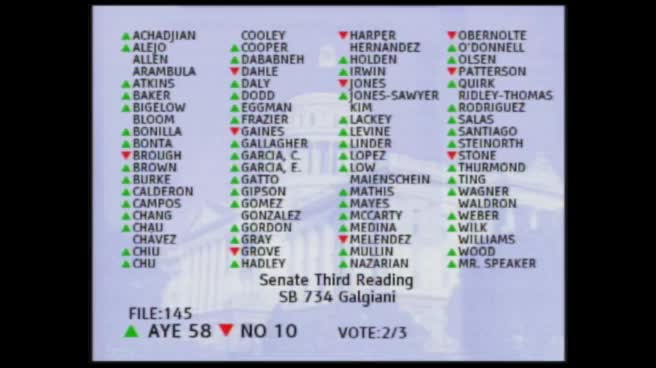 1MIN
Assembly Floor
 4MIN
Senate Floor
 5MIN
Senate Standing Committee on Appropriations
Senate Standing Committee on Public Safety
Bill Author


